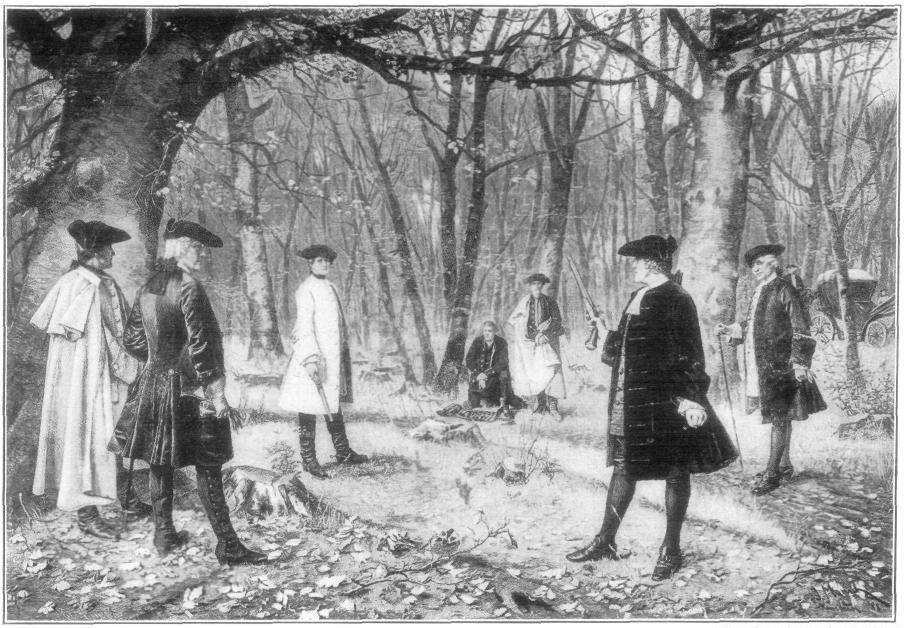
Alexander Hamilton and Aaron Burr met at a clearing in Weehawken, NJ, in the early morning on July 11, 1804, to mount the most famous duel in American history. But why did they do it?
This is the story of two New York lawyers — two Founding Fathers — that so detested each other that their vitriolic words (well, mostly Hamilton’s) led to these two grown men shooting each other out of honor and dignity, while robbing America of their brilliance, leadership and talent.
You may know the story of this duel from history class, but this podcast focuses on its proximity to New York City, to their homes Richmond Hill and Hamilton Grange and to the places they conducted their legal practices and political machinations.
Which side are you on?
ALSO: Find out the fates of sites that are associated with the duel, including the place Hamilton died and the rather disrespectful journey of the dueling grounds in Weehawken.
CORRECTION: Alexander Hamilton had his fateful dinner as the house of Judge James Kent, not John Kent, as I state here.
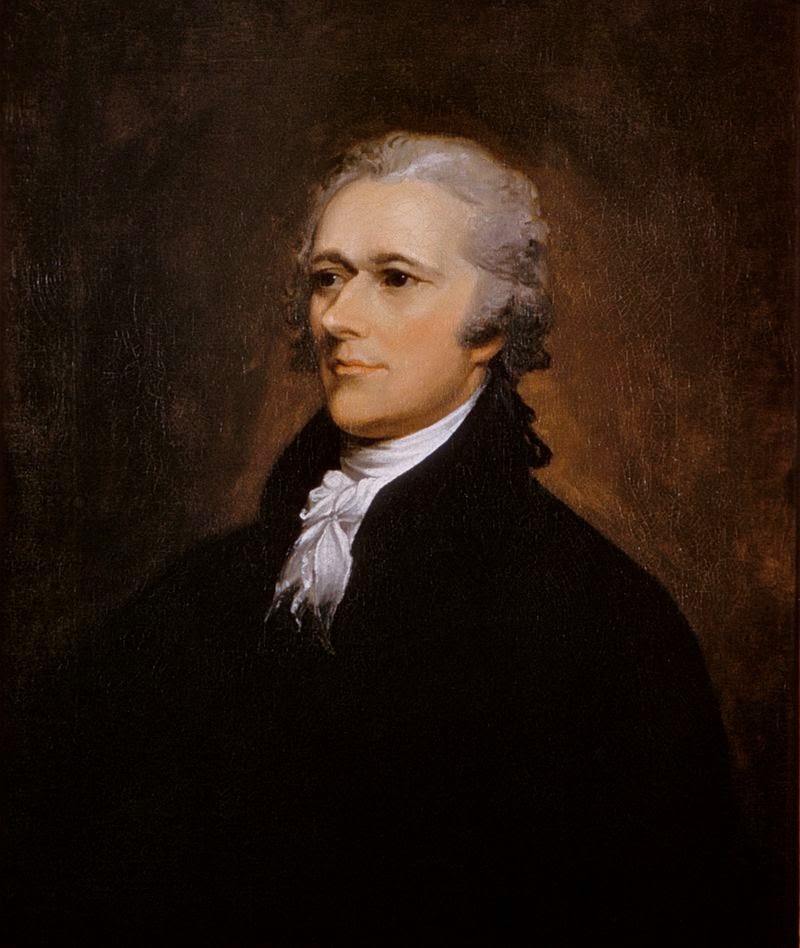
Alexander Hamilton, leader of the Federalists was a played out, stressed out, heavily in debt politician by June 1804. This is John Trumbull’s painting of Hamilton, completed almost over a year after the duel.
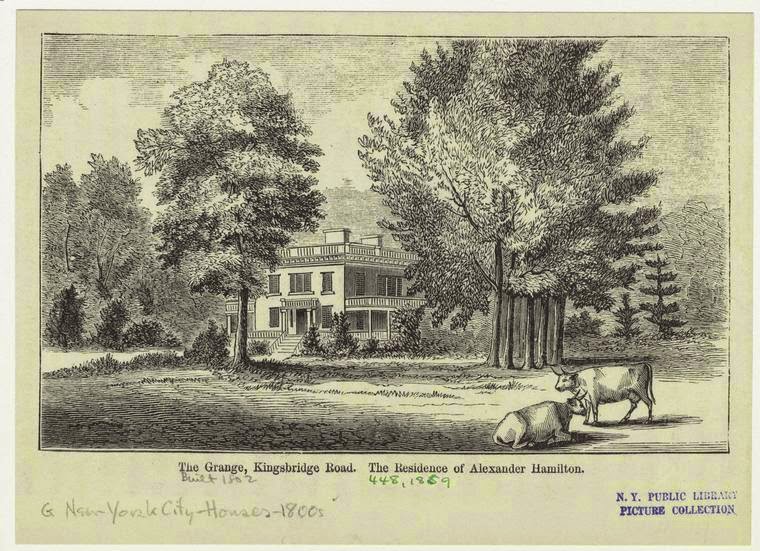
The Hamilton Grange, a beautiful home on the Hudson that Alexander only lived in for a couple years. (NYPL)
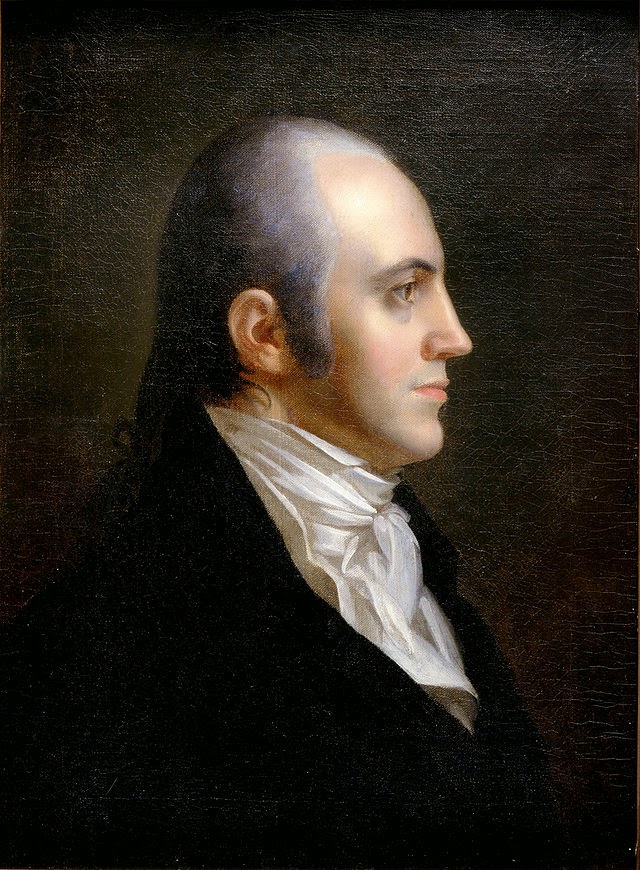
Aaron Burr, Vice President of the United States, was a played out, stressed out, heavily in debt politician by June 1804. This is John Vanderlyn’s portrait of Burr from 1802.
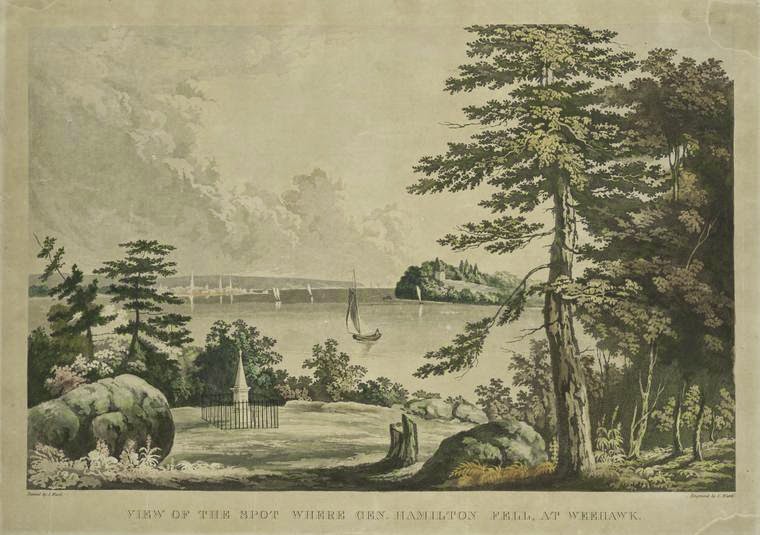
View of the Weekhawken dueling grounds in 1830s. This area most likely still saw some duels at this period. Note the small monument/obelisk marking the spot allegedly where Hamilton fell. (NYPL)
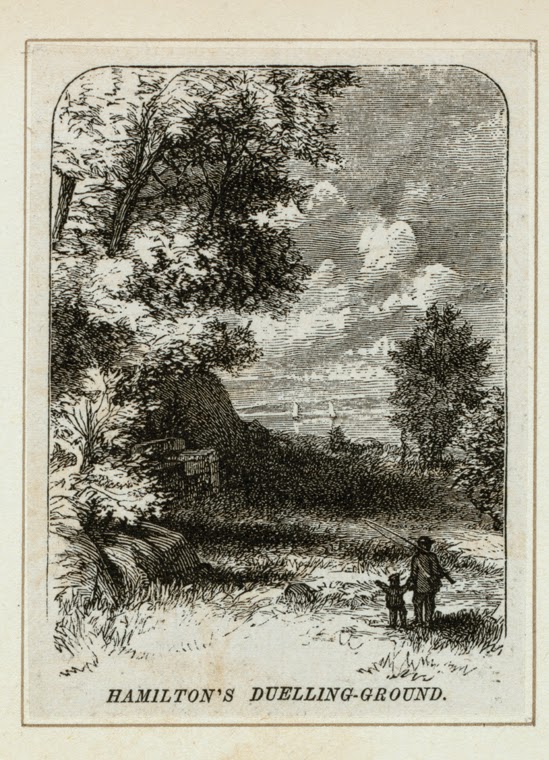
Thomas Addis Emmet’s quaint depiction of the dueling grounds was created in 1881, long after the actual grounds were destroyed by railroad construction. (NYPL)
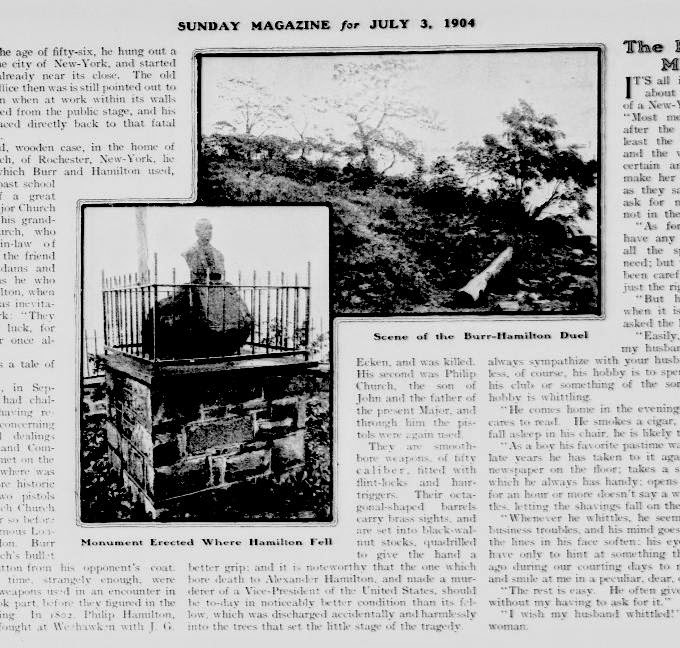
From the New York Tribune, July 1904, a look at the Hamilton bust that once sat in Weehawken. Several years later, vandals took the bust and hurled it off the cliff.
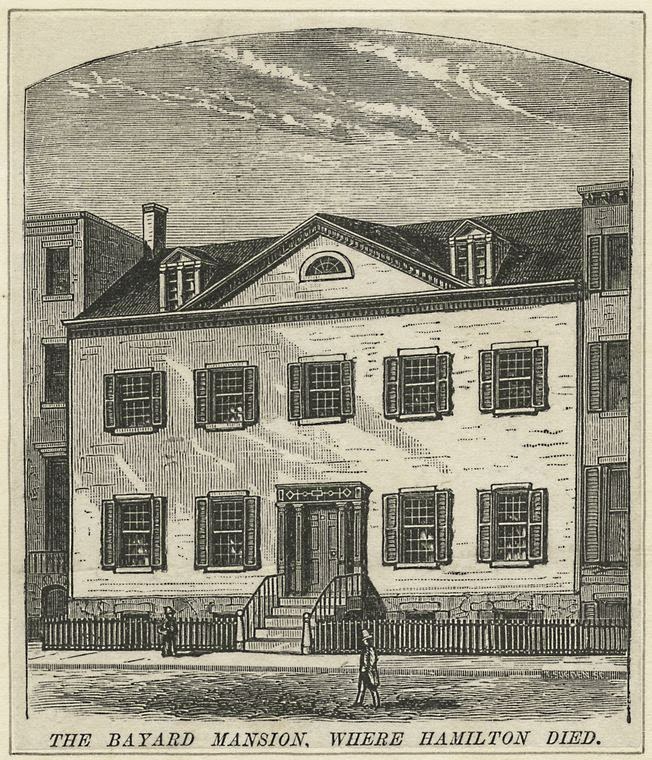
The William Bayard house in later years, with the lots surrounding it obviously sold and built up around it. (NYPL)
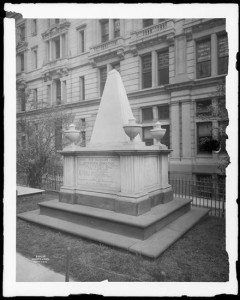
The Hamilton tomb at Trinity Church, picture taken in 1908, although it looks pretty much the same today! (Wurts Brothers, Courtesy MCNY)
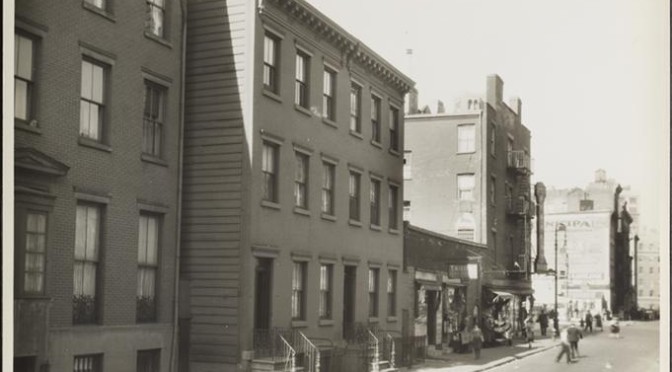
![[34-36 Barrow Street]](https://www.boweryboyshistory.com/wp-content/uploads/2013/10/MNY79988-300x242.jpg)