Categories
It's Showtime Music History Politics and Protest

The Academy of Music: Where High Society and Music Mixed in Old New York

When the Academy of Music opened in 1854, New York City was just about to become the richest, most powerful city in the nation. It was, in fact, almost there.

With the construction of the Erie Canal (which opened in 1825), the port city at the mouth of the Hudson River benefited greatly from the proximity.

The city grew in marvelous ways in the three decades after its opening with a new Croton water system, expanding gaslighting, and a growing grid plan, pushing the city north up the island of Manhattan.
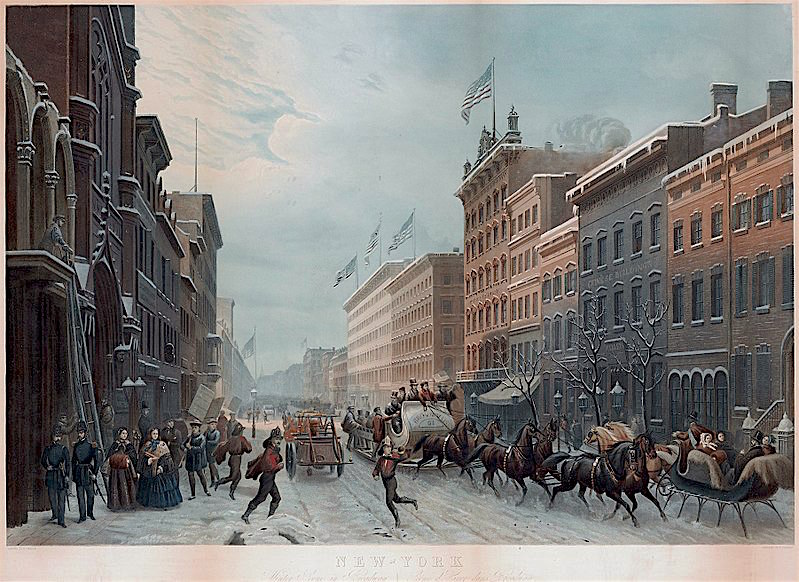
New York winter scene in Broadway, 1857 Eno, Amos F., 1836-1915 (Collector) Girardet, Paul, 1821-1893 (Engraver) Sebron, Hippolyte Victor Valentin, 1801-1879 (Artist); courtesy New York Public Library

The city’s old-money elites soon made room — with an upturned nose, naturally — for the new-money families enriched by both New York real estate and burgeoning American industries fueled by the growth of the railroad. The New York Stock Exchange, re-built after the Great Fire of 1835, was thriving with the nation’s booming (if often volitile) economy.

And so New York society, modeling itself after English and French elites, began importing high cultural venues in which to flaunt their love of the arts — and, more importantly, their money and station in the social pecking order.

The Astor Place Opera House, opening in 1847, had briefly been the center for upper-class entertainments, but the deadly Astor Place Riots a couple years later signaled the end of that venue.
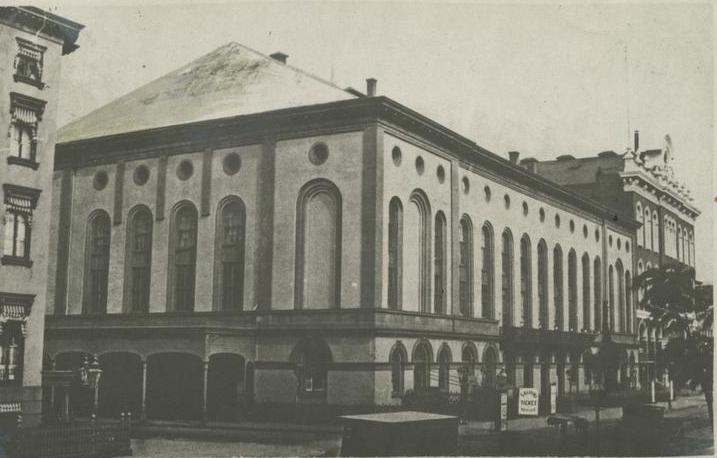
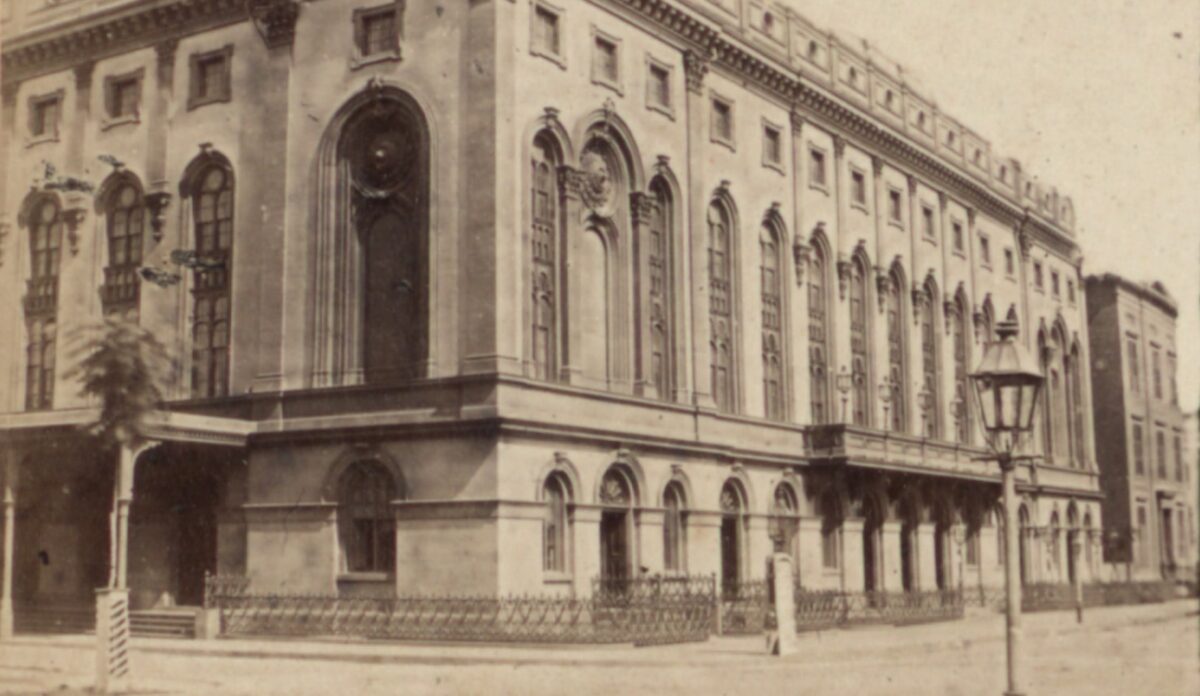
Early photograph of the Academy of Music, NYPL

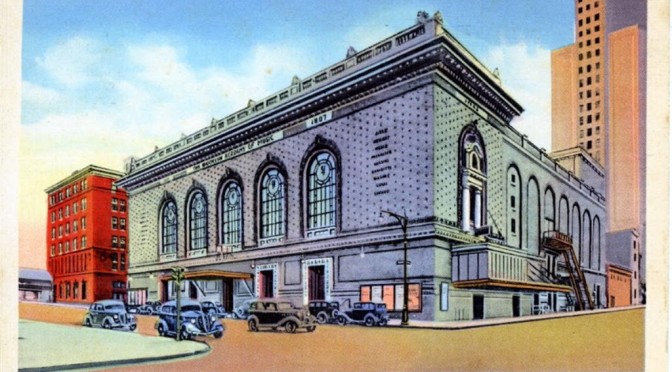
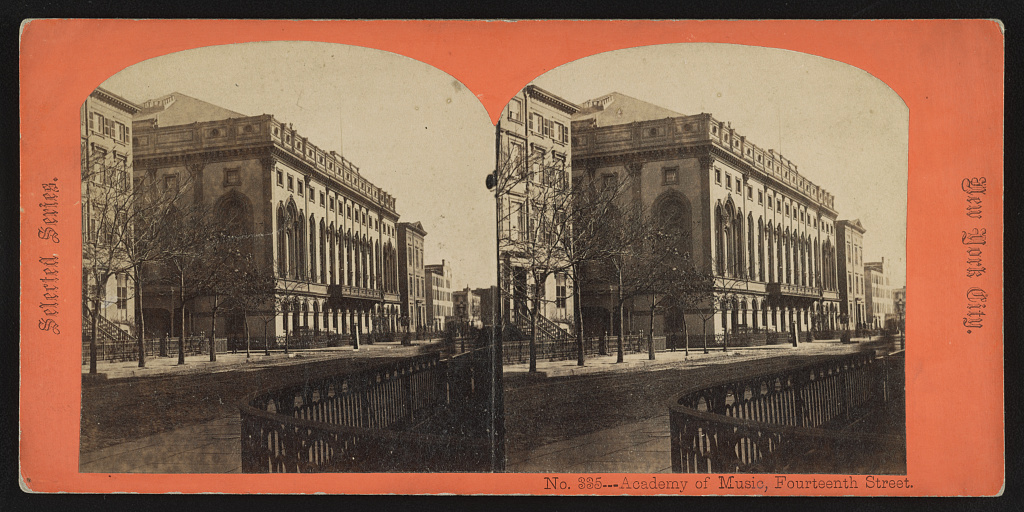
And thus New York got the Academy of Music in 1854. Located on 14th Street and Irving Place, the new music house was uniquely situated near both Gramercy Park and Union Square, both havens for the elite in the 1850s. (NOTE: The Academy of Music was only a few blocks north from the old Astor Place Opera House.)
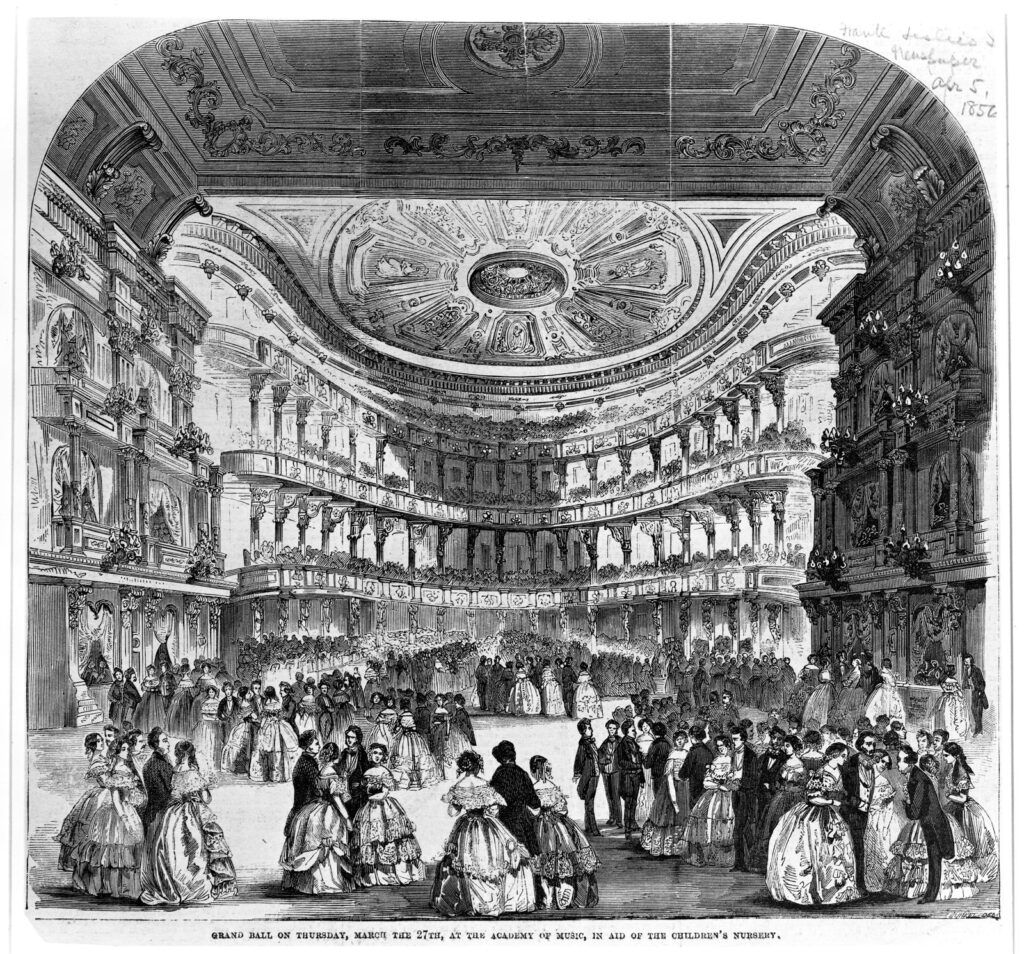
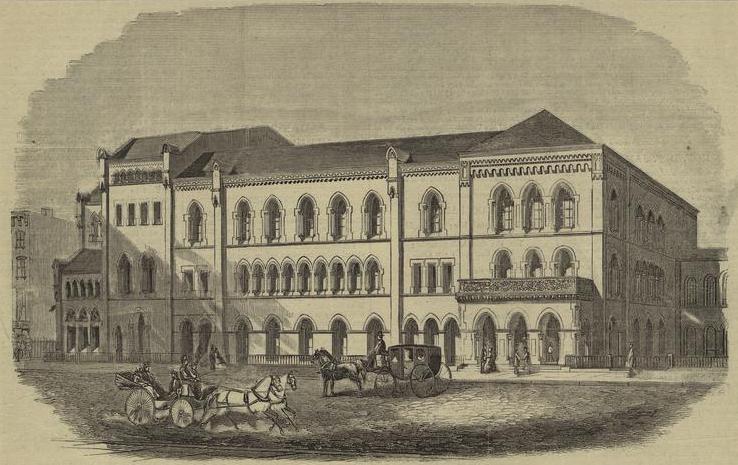
Inside the Academy of Music, 1856, NYPL

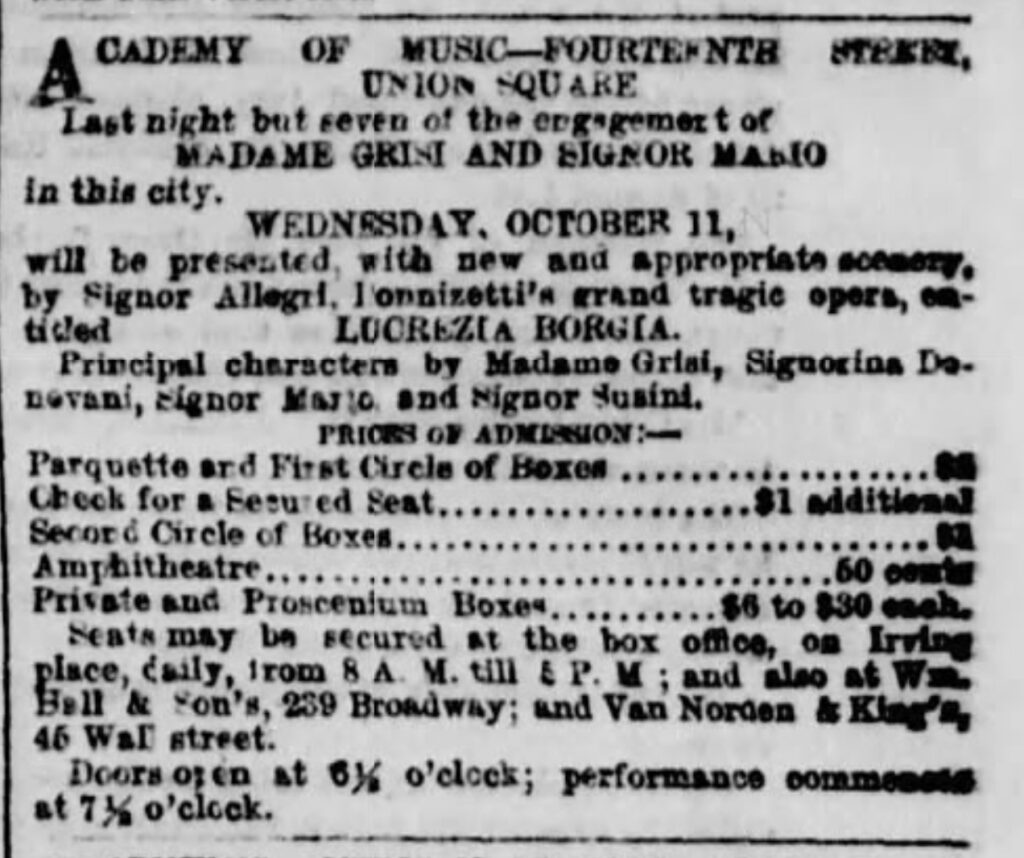
The opening bill on October 2 featured a performance of Vincenzo Bellini’s Norma featuring acclaimed Italian soprano Giulia Grisi. (America had very little homegrown talent in these days.) Underscoring its almost immediate dominance in the Americas cultural scene, the operas Rigoletto, La Traviata, Aida, Die Walküre and Carmen made their American debuts upon this stage.
The growing rival city of Brooklyn followed suit — had to follow suit, to satisfy its own elites who were situated mostly around the area of today’s Brooklyn Heights. The first Brooklyn Academy of Music opened there in 1861; after it was destroyed in fire in 1903, it moved to its present location. [More on its history here.]

Brooklyn’s original opera house was beautiful, sure, but it was no match in opulence for New York’s Academy of Music which was the largest opera venue in the world when it opened.
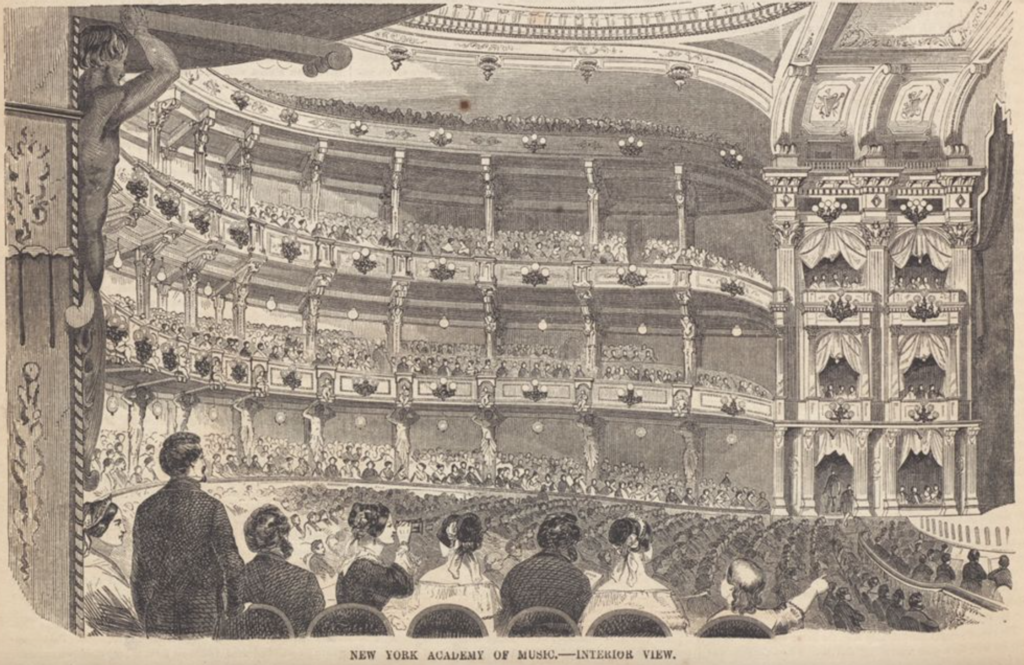
Interior of the Academy of Music 1856

But it designed to be so much more, a multi-purpose building which needed more space befitting the city’s growth. According to this announcement on August 28, 1854, “The New York Academy of Music will be used occasionally for concerts, balls, public meetings and theatrical performances.”
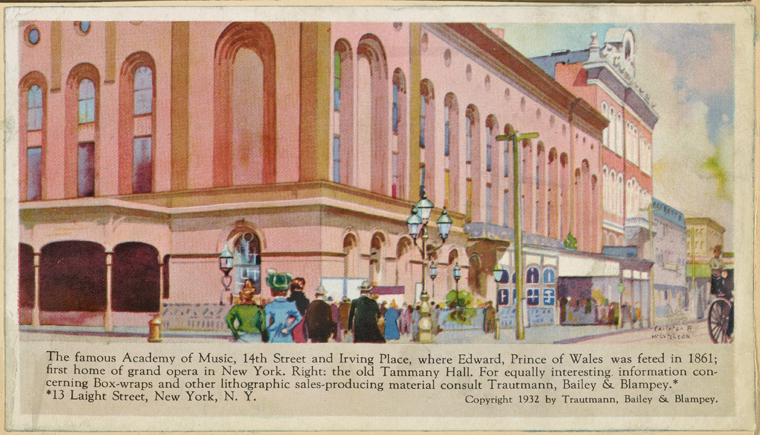
In fact due to its eventual neighbor — the headquarters of Tammany Hall — the Academy of Music would be the location of New York’s first national political convention in 1868.

Perhaps due to its many purposes, the reputation of the Academy of Music became tainted by rowdy “French balls” which took place here off season.
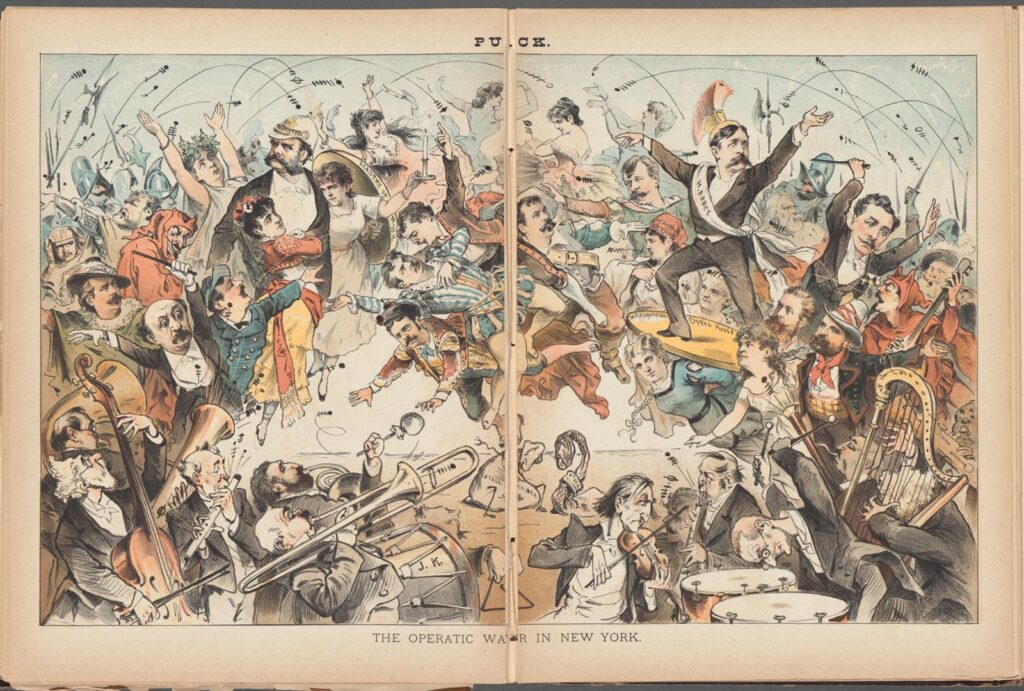
In 1883 Puck Magazine festively lampooned the ‘opera wars’ between the Academy of Music and the Met Opera house.

However it wasn’t until New York’s next wave of moneyed elites — its nouveau riche — opened the Metropolitan Opera House in 1883 further north that opera (and respectability) finally vacated the Academy of Music.

By that time, Union Square was the city’s destination for a more lowbrow entertainment — vaudeville! — and so the Academy welcomed that entertainment form onto its stage. But it could never recapture its glory, and the building was demolished to make way for a skyscraper owned by Consolidated Edison (which still remains).
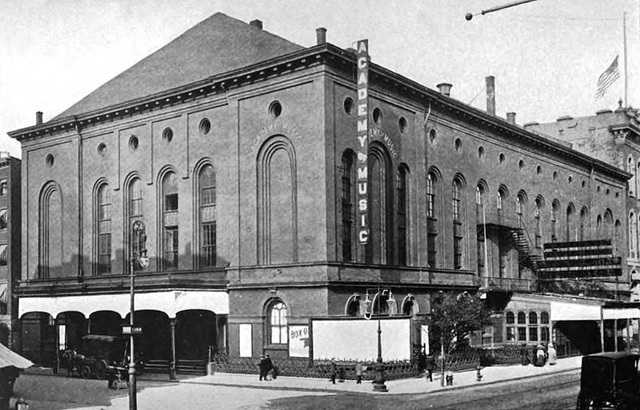
The Academy of Music from the vaudeville years

But the name would not leave the neighborhood! A movie palace opened across the street (eventually owned by William Fox) with the name the Academy of Music. During the 1970s it hosted rock music performances and, by the 1980s, had transformed into the seminal dance club the Palladium.
Categories
On The Waterfront

In 1863, the Russians invaded New York City

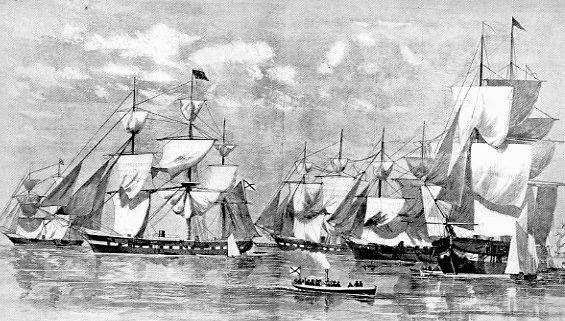
In 1863, New Yorkers flocked to the waterfront to see a startling sight — Russian war ships in New York Harbor. They were here as a display of force, but not to threaten the United States.

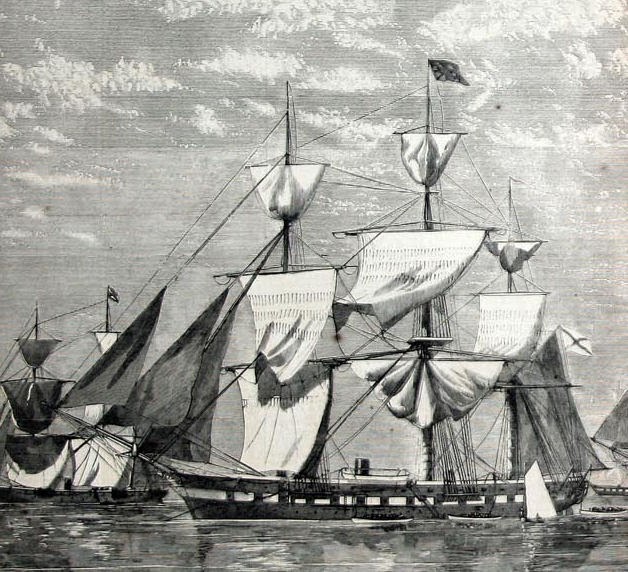
The fleet of Russian ships, sailing into New York Harbor in September 1863, as depicted by Harper’s Weekly.

Russia’s Atlantic Squadron, as the fleet was known, was patrolling the Atlantic Ocean as a show of strength against England’s Royal Navy.

They arrived in the harbor on September 24, 1863, initially anchoring in Flushing Bay, and stayed in the city for a couple months. (A description of the various Russian vessels can be found in this 1863 New York Times report.)

The fleet was led by the massive frigate Alexander Nevski (pictured below), an American-designed ship commissioned and built by the Russian government.

A reporter for Harper’s Weekly, joining a reception onboard the vessel, praised its beauty.  “A lady with the most immaculate skirts and kid gloves can move any where, on deck or below, without danger of soiling either, so perfectly clean every thing about the ship is kept.”

America was in the midst of the Civil War, and New York itself was still recovering from the Draft Riots that July. 

Many Americans believed the appearance by the Russians underscored a healthy support for the Union over the Confederacy, but most scholars today believe the Russians were acting with far more self-interest.

Still, most New Yorkers embittered by war welcomed the impressive show by friendly foreign powers, kicking off “a slight craze in the public mind.” 

Harper’s Weekly remarked, ” [E]very citizen felt bound to do what in him lay to testify to the Russians our sense of gratitude for the friendly manner in which Russia has stood by us in our present struggle, while the Western Powers [England and France] have done not a little to work our ruin.”

New Yorkers marveled at the mighty mast of the Alexander Nevsky, “lying almost on a line westward from Trinity Church,” as it shot off its cannons and a band on-board attempted to play ‘Yankee Doodle Dandy.’

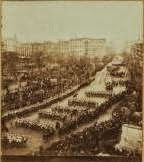
The ship officially docked on the west side at 23rd Street, and the procession, joined by city leaders, marched through the streets (pictured at left, courtesy NYPL), past Union Square and down Broadway.

“[T]he scene became splendidly animated.  The moving pageant rolled in a glittering stream down the broad thoroughfare between banks of upturned human faces, the trappings of the equipages, the gold and silver epaulets of the Muscovite guests and the sabres, helmets, and bayonets of the escort reflecting back in unnumbered dazzling lines the glory of the evening sun.”

In particular, New York women were captivated by the brawny Russian contingent in their handsome uniforms.  “Throngs of ladies in the windows most vigorously waved their ‘kerchiefs, to the great delight of the Russian officers, who never left off bowing, smiling, and even uttering their thanks aloud, while they doffed their gold-laced chapeau.”

(Not every woman was infatuated. The following day, two Russian officers reported being robbed by three women “at a disreputable house.“)

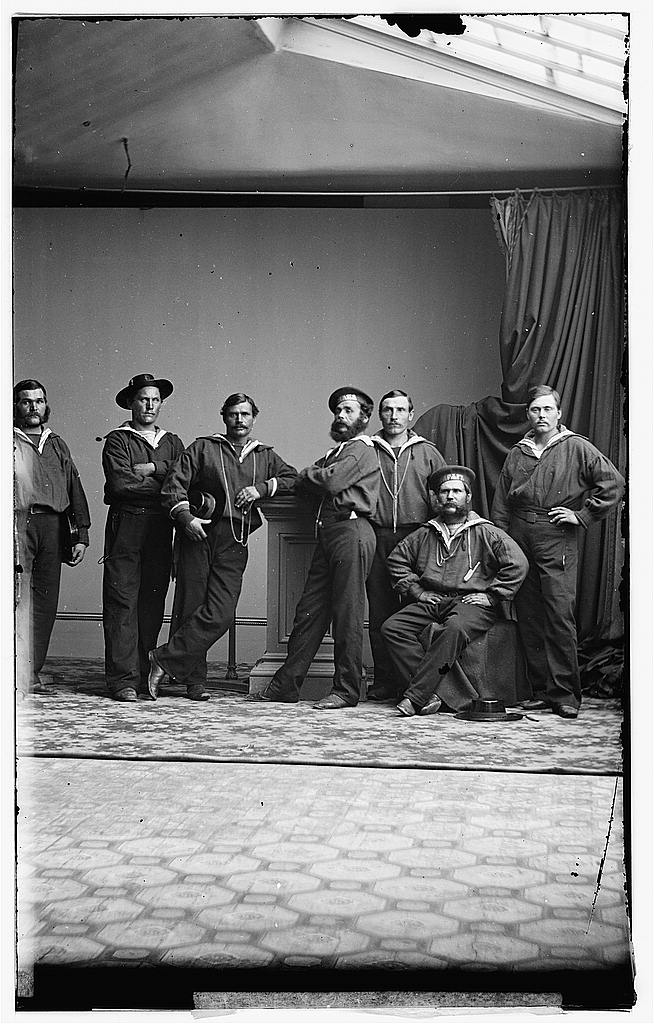
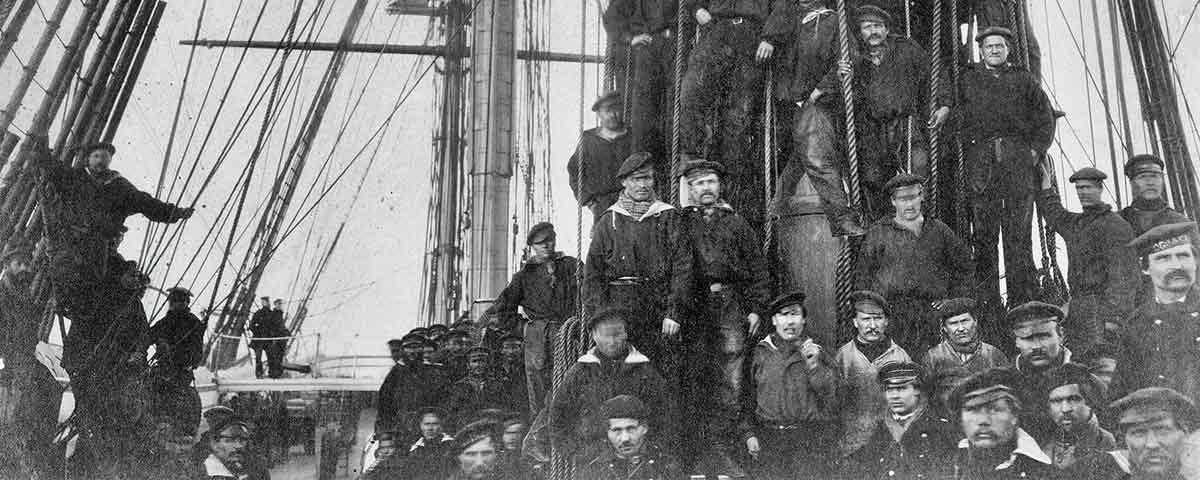
Below: A group of Russian soldiers, taken October 1863, courtesy Library of Congress


The finest hotels of New York were adorned with American and Russian flags. Tiffany’s, at its location on Broadway between Prince and Spring Streets, unfurled a gigantic Russian banner that stretched the length of the building.

Throughout the following weeks, the Russians were continually feted by the grateful Americans.  At a dinner with Mary Todd Lincoln and other American dignitaries, Mrs. Lincoln toasted the Russians for their kindness. 

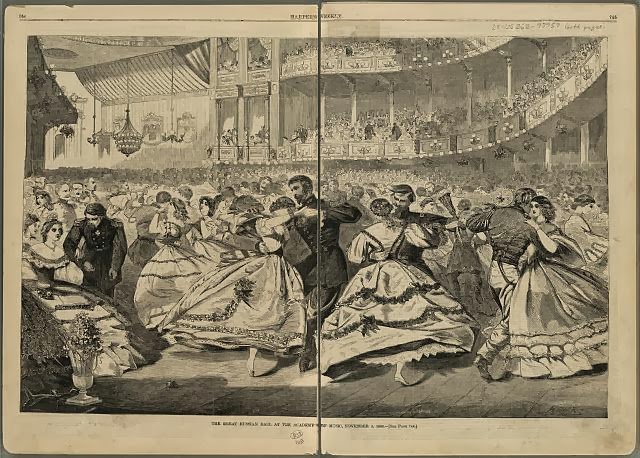
Russian dignitaries frequently met with Mayor George Opdyke and the Common Council and were wined and dined at virtually every hotel in town, including an opulent banquet at the Academy of Music in early November (depicted below in an illustration in Harper’s Weekly).


“They are dined, walked, driven, and are, with unconcealed gratification, availing themselves of the many opportunities of seeing us and all around and about us,” said the New York Times that October. “Yesterday, a number visited Central Park and enjoyed its fine drives and beautiful walks; others were whirled to High Bridge, and others were entertained with City sights of interest.”

The Russian ships would remain in American waters for almost seven months, darting up and down the coast, including a period of time in Washington D.C.

ORIGINALLY PUBLISHED ON THIS WEBSITE IN 2013.

Categories
Podcasts

The Brooklyn Academy of Music: Enduring floods, fires and snobbery to become New York’s oldest home for the arts

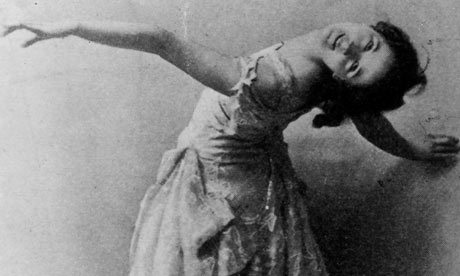
PODCAST One of America’s oldest cultural institutions, the Brooklyn Academy of Music (or BAM) has an unusual history that spans over 150 years and two separate locations. We trace the story from the earliest roots of a Manhattan-Brooklyn rivalry and a discussion of high-class tastes to the greatest stars of the performing arts, including a couple tragic tales and a bizarre event involving the mother of modern dance.

Featuring horse tricks, French balls, a ‘flirtation’ post office, a bit of ski jumping.and a cavalcade of BAM’s greatest stars — Enrico Caruso, Merce Cunningham, Edwin Booth and his brother John Wilkes Booth!

ALSO: We uncover what may be the very first foreign films ever shown at the Brooklyn Academy of Music, many decades before the opening of their movie theaters.


The first Brooklyn Academy of Music, on Montague Street, nearby Brooklyn City Hall. Among the decades of great events here were Brooklyn’s Sanitary Fair, a speech by Booker T. Washington, an amusing lecture by Mark Twain and the final stage performance of Shakespearean actor Edwin Booth. (source)

The building was destroyed by fire in 1903, and not everybody was sad to see it go. Here’s actual film footage of the flames atop the old Brooklyn building:

Compare this to New York’s own Academy of Music, at 14th Street and Irving Place. Although this venue brought the American debuts of many famous operas (including Carmen), festivities deteriorated once the Manhattan wealth moved up to the Metropolitan Opera House. This building was demolished in 1926. [source]

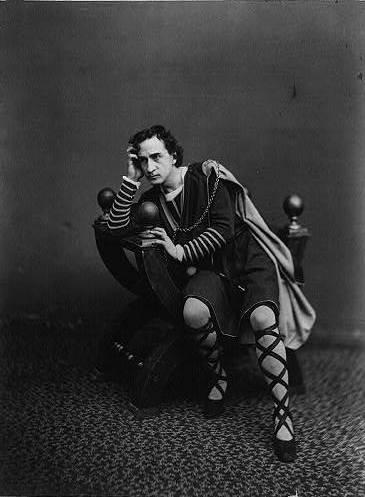
Edwin Booth, in his signature role as Hamlet, 1870. If some at the original Brooklyn Academy of Music had had their way, Booth would never have performed there! [LOC]


Isadora Duncan, who brought modern dance to BAM, and it never left. (source)


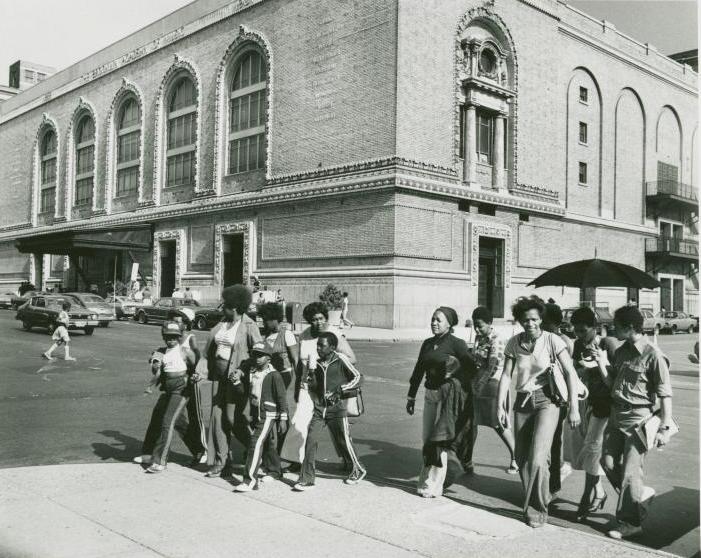
BAM in 1978: After a few decades of hardship, the venue, at its new home on Lafayette Avenue, rebounded in the 1960s, serving the artistic passions of the neighborhood and fostering a provocative relationship with the biggest names in avant garde performance. (Pic by Dinanda Nooney, NYPL)

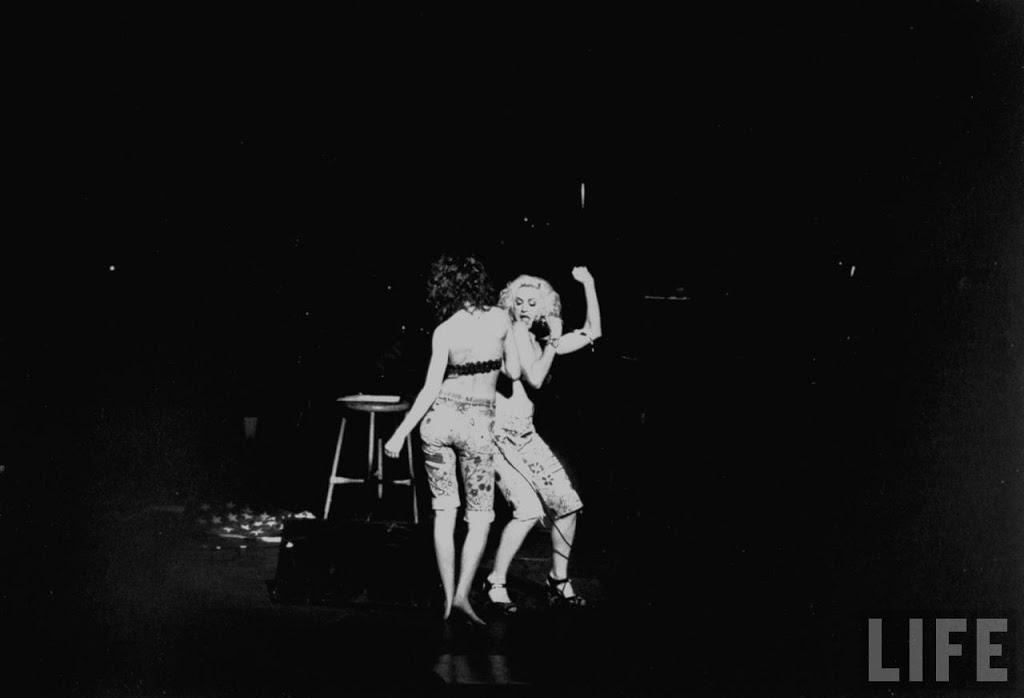
The fascinating directions that BAM executive direction Harvey Lichtenstein took the venue opened its stage up to new and exciting performances. And, often, a raucous good time as well, as with this 1989 rain forest benefit, featuring Madonna and Sandra Bernhard. (Photo by Albert Ferreira, LIFE)

MORE PICTURES ON THE WAY LATER THIS WEEKEND

For more information on their schedule, visit the BAM website. They also have a great history blog BAM 150 Years where we obtained some of our information.