Categories
On The Waterfront

In 1863, the Russians invaded New York City

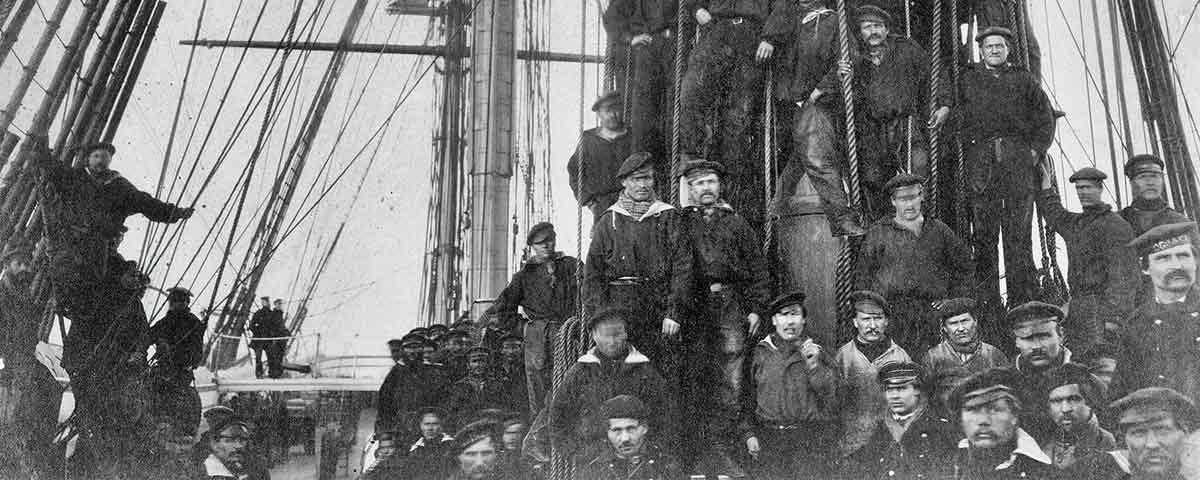
In 1863, New Yorkers flocked to the waterfront to see a startling sight — Russian war ships in New York Harbor. They were here as a display of force, but not to threaten the United States.

The fleet of Russian ships, sailing into New York Harbor in September 1863, as depicted by Harper’s Weekly.
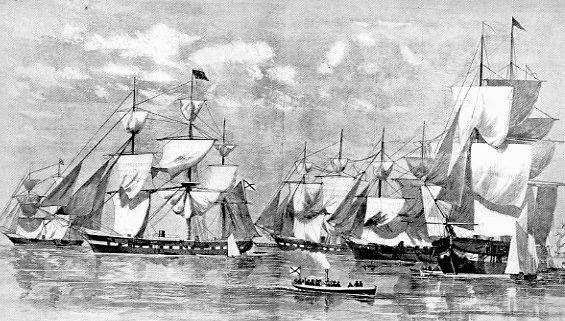
Russia’s Atlantic Squadron, as the fleet was known, was patrolling the Atlantic Ocean as a show of strength against England’s Royal Navy.

They arrived in the harbor on September 24, 1863, initially anchoring in Flushing Bay, and stayed in the city for a couple months. (A description of the various Russian vessels can be found in this 1863 New York Times report.)
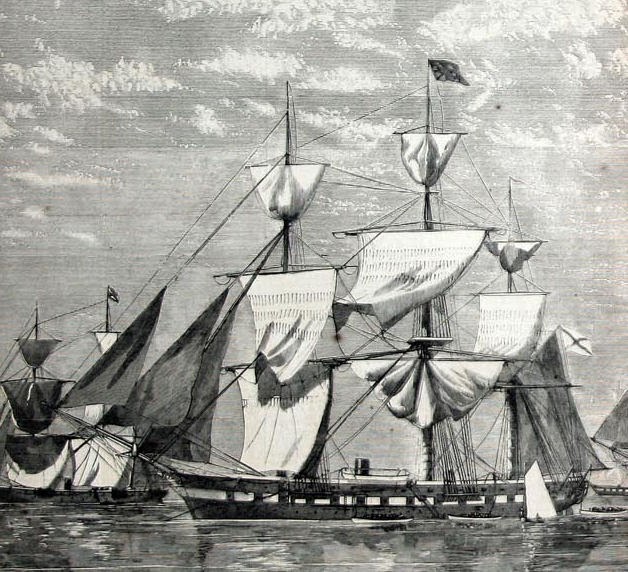
The fleet was led by the massive frigate Alexander Nevski (pictured below), an American-designed ship commissioned and built by the Russian government.

A reporter for Harper’s Weekly, joining a reception onboard the vessel, praised its beauty.  “A lady with the most immaculate skirts and kid gloves can move any where, on deck or below, without danger of soiling either, so perfectly clean every thing about the ship is kept.”

America was in the midst of the Civil War, and New York itself was still recovering from the Draft Riots that July. 

Many Americans believed the appearance by the Russians underscored a healthy support for the Union over the Confederacy, but most scholars today believe the Russians were acting with far more self-interest.

Still, most New Yorkers embittered by war welcomed the impressive show by friendly foreign powers, kicking off “a slight craze in the public mind.” 

Harper’s Weekly remarked, ” [E]very citizen felt bound to do what in him lay to testify to the Russians our sense of gratitude for the friendly manner in which Russia has stood by us in our present struggle, while the Western Powers [England and France] have done not a little to work our ruin.”
New Yorkers marveled at the mighty mast of the Alexander Nevsky, “lying almost on a line westward from Trinity Church,” as it shot off its cannons and a band on-board attempted to play ‘Yankee Doodle Dandy.’

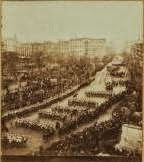
The ship officially docked on the west side at 23rd Street, and the procession, joined by city leaders, marched through the streets (pictured at left, courtesy NYPL), past Union Square and down Broadway.

“[T]he scene became splendidly animated.  The moving pageant rolled in a glittering stream down the broad thoroughfare between banks of upturned human faces, the trappings of the equipages, the gold and silver epaulets of the Muscovite guests and the sabres, helmets, and bayonets of the escort reflecting back in unnumbered dazzling lines the glory of the evening sun.”

In particular, New York women were captivated by the brawny Russian contingent in their handsome uniforms.  “Throngs of ladies in the windows most vigorously waved their ‘kerchiefs, to the great delight of the Russian officers, who never left off bowing, smiling, and even uttering their thanks aloud, while they doffed their gold-laced chapeau.”

(Not every woman was infatuated. The following day, two Russian officers reported being robbed by three women “at a disreputable house.“)

Below: A group of Russian soldiers, taken October 1863, courtesy Library of Congress
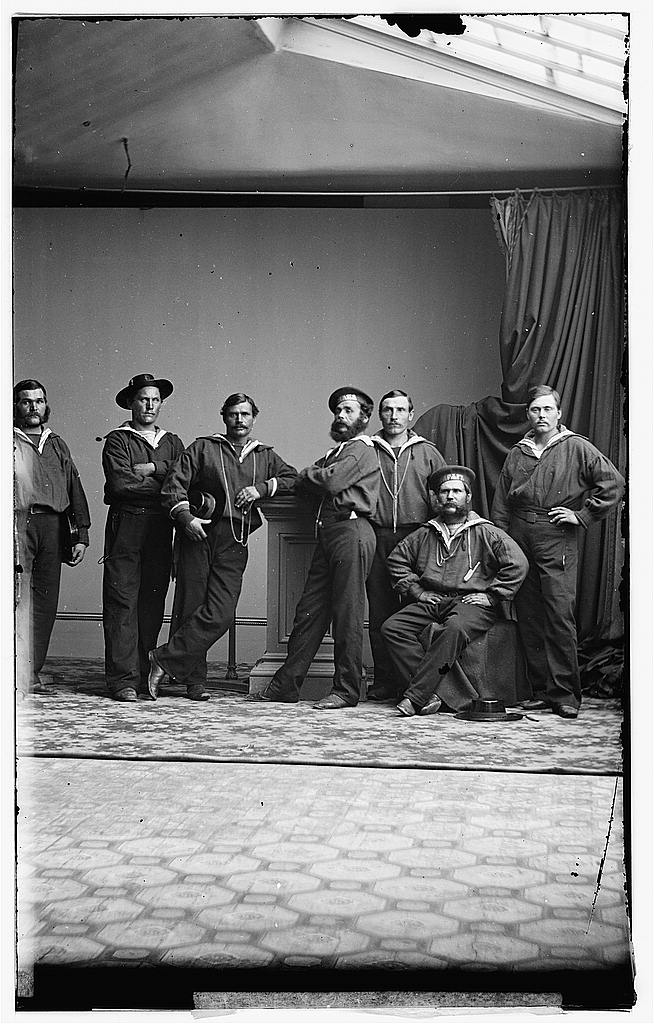


The finest hotels of New York were adorned with American and Russian flags. Tiffany’s, at its location on Broadway between Prince and Spring Streets, unfurled a gigantic Russian banner that stretched the length of the building.

Throughout the following weeks, the Russians were continually feted by the grateful Americans.  At a dinner with Mary Todd Lincoln and other American dignitaries, Mrs. Lincoln toasted the Russians for their kindness. 

Russian dignitaries frequently met with Mayor George Opdyke and the Common Council and were wined and dined at virtually every hotel in town, including an opulent banquet at the Academy of Music in early November (depicted below in an illustration in Harper’s Weekly).
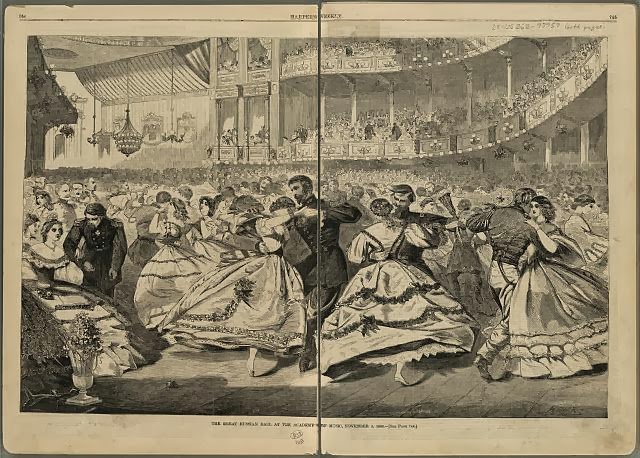


“They are dined, walked, driven, and are, with unconcealed gratification, availing themselves of the many opportunities of seeing us and all around and about us,” said the New York Times that October. “Yesterday, a number visited Central Park and enjoyed its fine drives and beautiful walks; others were whirled to High Bridge, and others were entertained with City sights of interest.”

The Russian ships would remain in American waters for almost seven months, darting up and down the coast, including a period of time in Washington D.C.

ORIGINALLY PUBLISHED ON THIS WEBSITE IN 2013.
Brooklyn’s Hell Gate: Dangerous tides off Coney Island

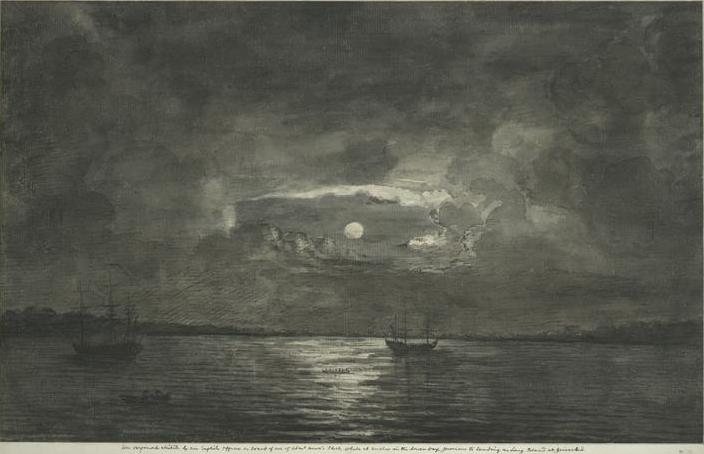
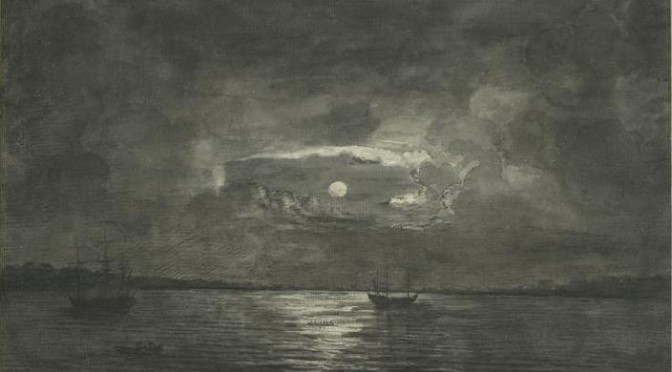
Above: The waters off Gravesend, Brooklyn, sketched by a British general in 1776. They too would have experienced the odd watery phenomenon known as ‘the Potato Patch’. [NYPL]

You may know the legend of the East River’s Hell Gate, a rush of violent waters borne from a tidal strait near Randall’s Island, so famous for wrecking ships that 19th century engineers took to dynamiting the surrounding rocks to alter the river’s flow. But the Hell Gate was not the only danger ships faced when traversing the waters around New York.

On the afternoon of October 24, 1912, two boys, Willie Taylor and Clinton Fox, playfully slipped out of their classrooms and tramped along the southern shore of Coney Island, near the edge of today’s Sea Gate neighborhood. Fox’s mongrel dog jumped into an abandoned rowboat floating off the shore near W. 25th Street.  The boys, already primed for mischief, climbed aboard, grabbed the oars and began paddling away.

They unwisely decided to steer toward the western tip of Coney Island, towards the lighthouse and Sea Gate’s most popular landmark of the day, the Atlantic Yacht Club.  They suddenly hit violent, churning seas created by a ‘strong ebb tide and a stiff wind’, and the boat smashed against a pier. Willie was thrown from the boat and eventually washed onto the shore unconscious.

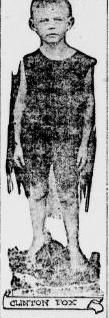
But Clinton and his dog were swept back into the inescapable, twisting waves, never to be seen again.  Near midnight, the damaged rowboat eventually reemerged ashore with no trace of Clinton Fox but his shoes. [Above: a photo of Clinton Fox from the front-page Evening World story, next to the banner ‘BOY SKIPPER GAVE UP LIFE FOR CANINE CREW OF ROWBOAT‘]

Fox was one of several deaths caused by the curious water occurrence off the Sea Gate shore known as The Potato Patch, a one-mile long watery stew of twisting currents near a row of jagged rocks and old piers, where Atlantic Ocean waters meet those of more tranquil Gravesend Bay.  A ‘peculiar rip‘ with a benign name, the choppy currents were a constant vexation one hundred years ago, “a miniature maelstrom where scores of small boats and boatsman have come to grief.”

A potato patch is an old nautical name for rough, choppy waters near a shoreline.  There is a similar occurrence in San Francisco also called the Potato Patch Shoal (watch video of it here) that frustrates ships and surfers to this day.

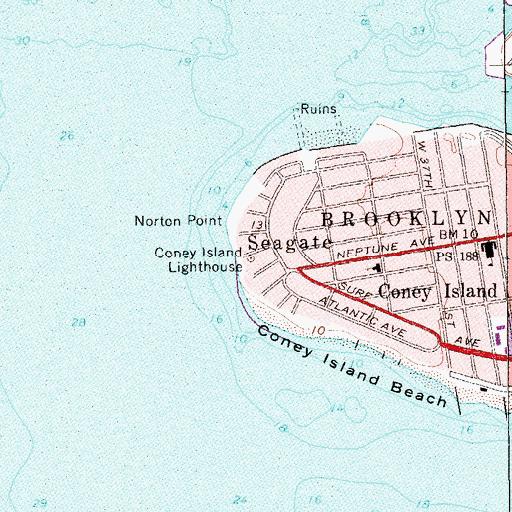
At left: location of the Brooklyn Potato Patch, off the coast of Sea Gate and the Coney Island beach.

The patch could overturn small boats and submerge their crewmen before anyone on shore could take notice. The Sun claimed in 1912 that it had an “unenviable record for boat mishaps and drownings.”

The area along the western portion of Coney Island had become more residential by this time. Once called Norton’s Point, a rowdy getaway popular with the likes of Boss Tweed, it had been redeveloped in the late 1890s as the respectable residential community of Sea Gate. The Atlantic Yacht Club operated as an upper-class alternative to the amusements of Coney Island further east, and, in fact, does so to this day.  All of this served only to increase small-craft traffic along the shore, particularly sporting and recreational crafts.

On March 1914, two men disappeared into the waters when their canoe was pulled into the tidal disturbance. The New York Times reported “it is feared that their boat was overturned in the rough water known as the potato patch.”

The effect of the patch were greatest in the late afternoon when the tide came in. A 1910 swim meet, delayed by only an hour, unceremoniously ended at the treacherous tidal scar. “[W]hen the swimmers came to it … they found in it their Waterloo, as not even a rowboat could pull through it with the current and wind that prevailed.”

Bearing witness to many of these disasters was an operating station for the Marconi Wireless Company, famous for its role in picking up messages from the RMS Carpathia after the sinking of the Titanic. And also Its most famous operator was David Sarnoff, later the founder of the Radio Corporation of America (RCA).

I found references to the Potato Patch well into the 1920s.  I’m sure the waters in this area are still turbulent to this day; however they are likely no match for modern vessels. It does not appear to have caused many injuries after this date. It’s also doubtful that children are jumping into random rowboats anymore.

Categories
Podcasts

Henry Hudson and the European Discovery of Mannahatta

We turn the clock back to the very beginnings of New York history — to the European discovery of Manahatta and the voyages of Henry Hudson.

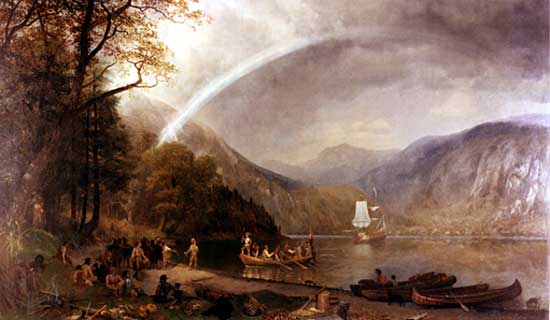
Originally looking for a passage to Asia, Hudson fell upon New York harbor and the Lenape inhabitants of lands that would later make up New York City. The river that was eventually named after Hudson may not have provided access to Asia, but it did offer something else (hint: PETA won’t be happy) that attracted the Dutch and eventually their very first settlement — New Amsterdam.

LISTEN NOW: Henry Hudson

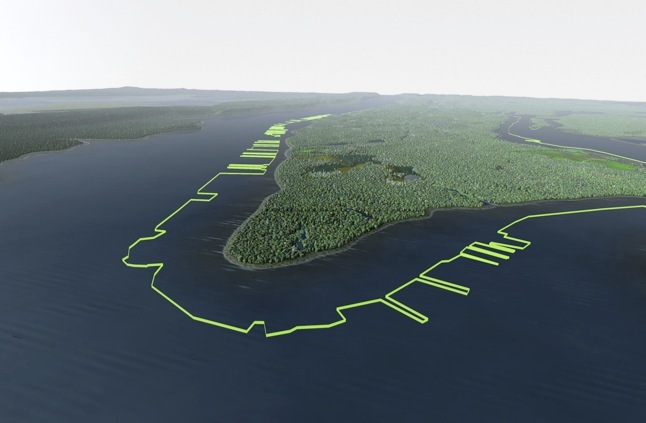
The island of Mannahatta in the days before the Dutch (courtesy the Mannahatta Project). Hudson would have anchored off the tip on the western side, his eyes on the river that stretched north.

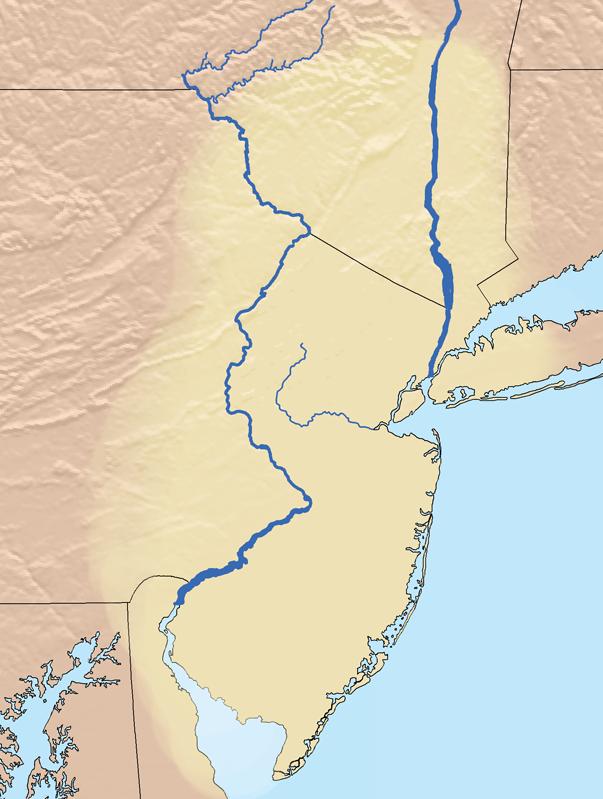
Lenapehoking: that’s what the original inhabitants of the area called the land that comprised the New York City metro area, New Jersey, western Long Island and surrounding areas (map courtesy wikimedia)

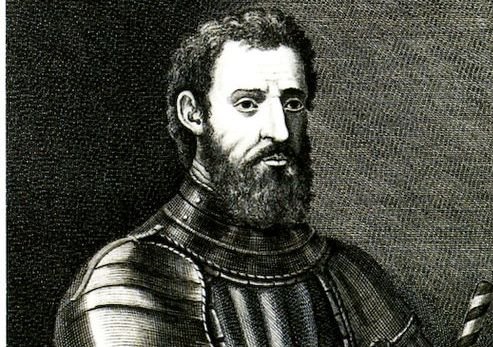
The first guy to arrive, Giovanni da Verrazano (or Verrazzano, depending on where you look), was greeted by the Lenape at the mouth of New York harbor. He touched down on today’s Staten Island but never ventured further into the harbor.

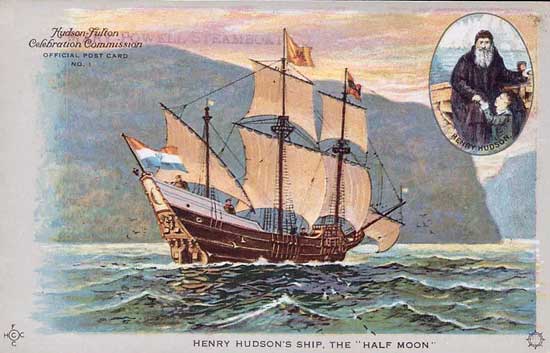
Hudson’s ship the Half Moon — or rather a replica that was launched for the 1909 Hudson-Fulton Celebration

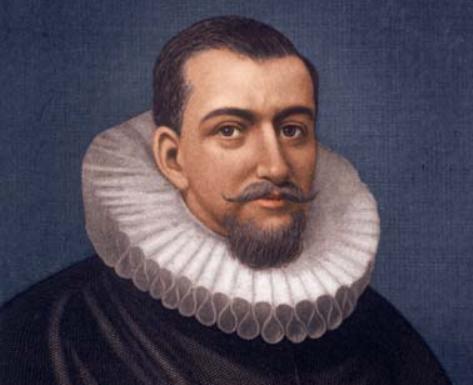
Henry Hudson, an Englishman who tried twice for his country to find a northern route to Asia before being enlisted by the Dutch East India Company. He never found a passage for them either, but he did find the river that today bares his name.

Hudson’s voyage up the Muhheakantuck (the Lenape name for the Hudson River) brought him into contact with several tribes, with encounters growing increasingly unfriendly. By the time he sailed back down the river to Mannahatta, they were flat out attacked by natives in canoes.

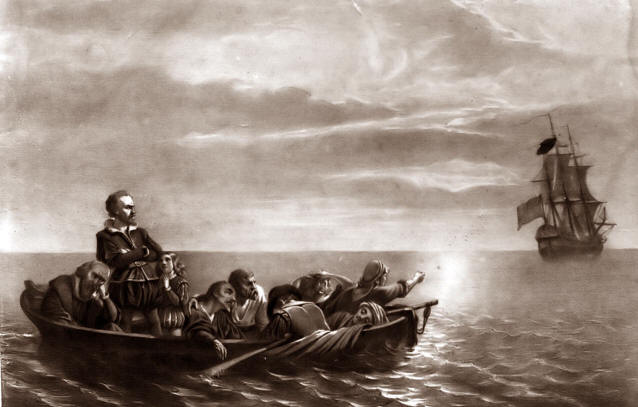
On his last voyage, Hudson’s crew mutinied, throwing the captain, his son and a few remaining loyal crewmen into a boat and setting it adrift in the Arctic.

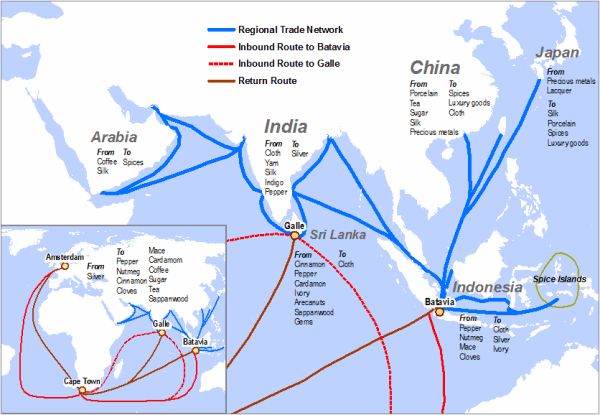
With no alternate route to Asia, the map below illustrates the trade routes the Dutch East India Company had to eventually travel to build their empire. (map courtesy Hofstra)

There are lots of events planned to celebrate the 400th anniversary of Hudson’s discovery. NY400: Holland on the Hudson celebrates New York’s Dutch heritage. Hudson 400 focuses on the explorer himself, with a timeline of events. Meanwhile Explore NY 400 lists statewide celebration.

I wrote about some of the more curious events of the Hudson-Fulton Celebration in a prior blog posting.

And for your immediate gratification, check out Amsterdam/New Amsterdam, the well reviewed show at the Museum of the City of New York

Apparently, the replica of the Half Moon was in Poughkeepsie just yesterday!