Categories
Brooklyn History Health and Living

The Brooklyn origin of Pfizer and the wild world of 19th century medicine

The origin of a true Brooklyn ‘start up’ — Charles Pfizer and Co, who went from developing intestinal worm medication in 1849 to being a leader in vaccine distribution in the 21st century.

This is story of Pfizer Pharmaceuticals before the 1950s, a tale of German immigration and of early medical practices and concoctions that might seem alien to us today. Patent medicines! Worm lozenges!

But this company’s biography is also a celebration of Brooklyn — the City of Brooklyn in the mid 19th century, developing into an economic force in the United States and in opposition to the city of New York across the East River. 

PLUS You can’t tell the Pfizer story without looking at the world of apothecaries and early drug stores in New York City in the 19th century.

Apothecaries were the first ‘natural’ medicine makers but their objectives were limited, seeking only to alleviate symptoms, not tend to the root cause of so many discomforts.

Later on, drugstores would stock up on manufactured medicines and questionable additions to the health regimen like soft drinks.

FEATURING Duane Reade, Kiehl’s, C.O. Bigelow, E. R. Squibb and Johnson & Johnson

ALSO: What important American figure today grew up delivering parcels for his family drugstore in Dyker Heights, Brooklyn?

LISTEN TODAY ON YOUR FAVORITE PODCAST PLAYER — PFIZER: A BROOKLYN ORIGIN STORY

FURTHER LISTENING

After listening to this show, take a dive in other episodes on similar or adjacent subjects.


The German biotechnology company Biopharmaceutical New Technologies (BioNTech) developed the COVID-19 vaccine injection with Pfizer, one of the world’s large pharmaceutical companies, who will manufacture and distribute it.

Let’s give our thanks to the scientists, researchers and physicians who helped get us to this moment. And yes, Brooklyn, you also get to share in a little bit of that pride today.

Because Charles Pfizer & Company — the originating business, founded in 1849 — first got its start in Brooklyn.

Or, to be more specific — the Brooklyn neighborhood of Williamsburg.

Or to be really, really specific — the independent Town (and later City) of Williamsburgh.
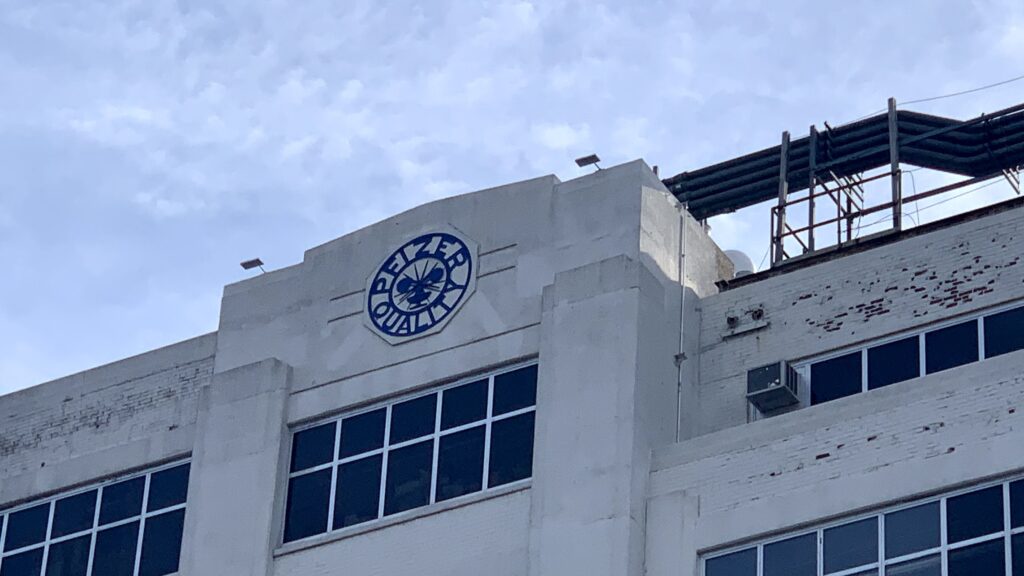
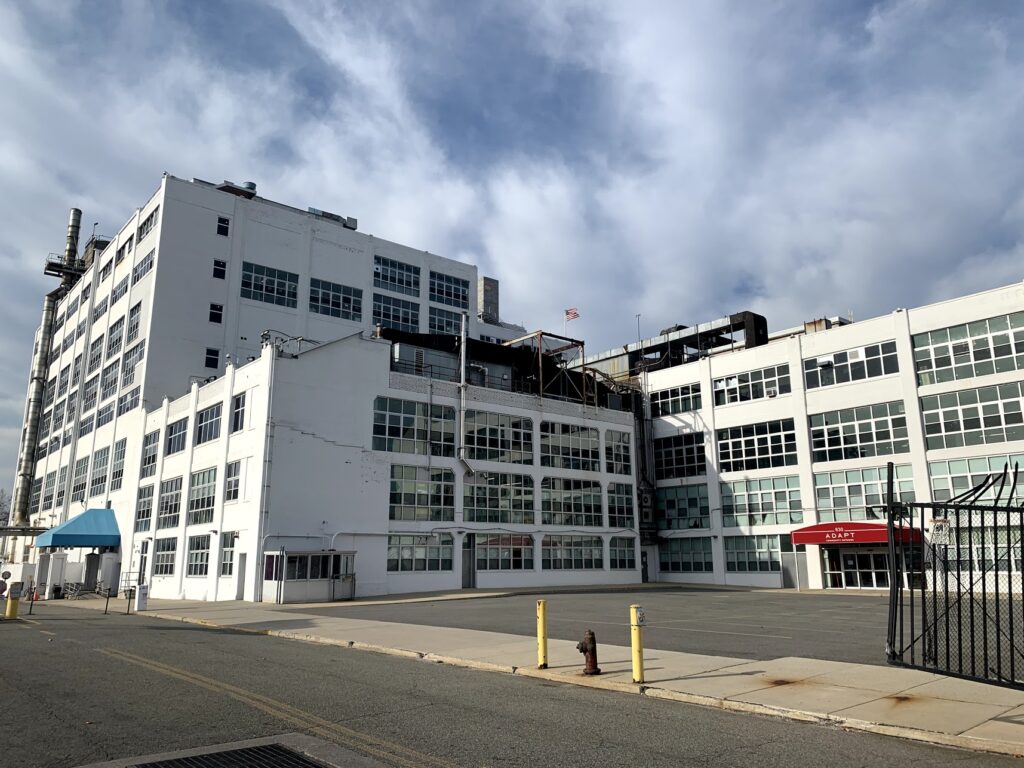
At their original Brooklyn location, the architectural details still gleam with ‘Pfizer Quality’.
A Company of Immigrants

Karl Christian Friedrich Pfizer (later Charles Pfizer), born in 1824 in the Kingdom of Württemberg, was one of the many thousands of Germans who would immigrate to the United States during the 1840s.

Pfizer came to America with his cousin Charles Erhart in the fall of 1848. Unlike the experiences of so many immigrants during this time, both Pfizer and Erhart came from wealthy families and were both highly educated — Pfizer as a chemist, Erhart in the grocery and confectionary trade.
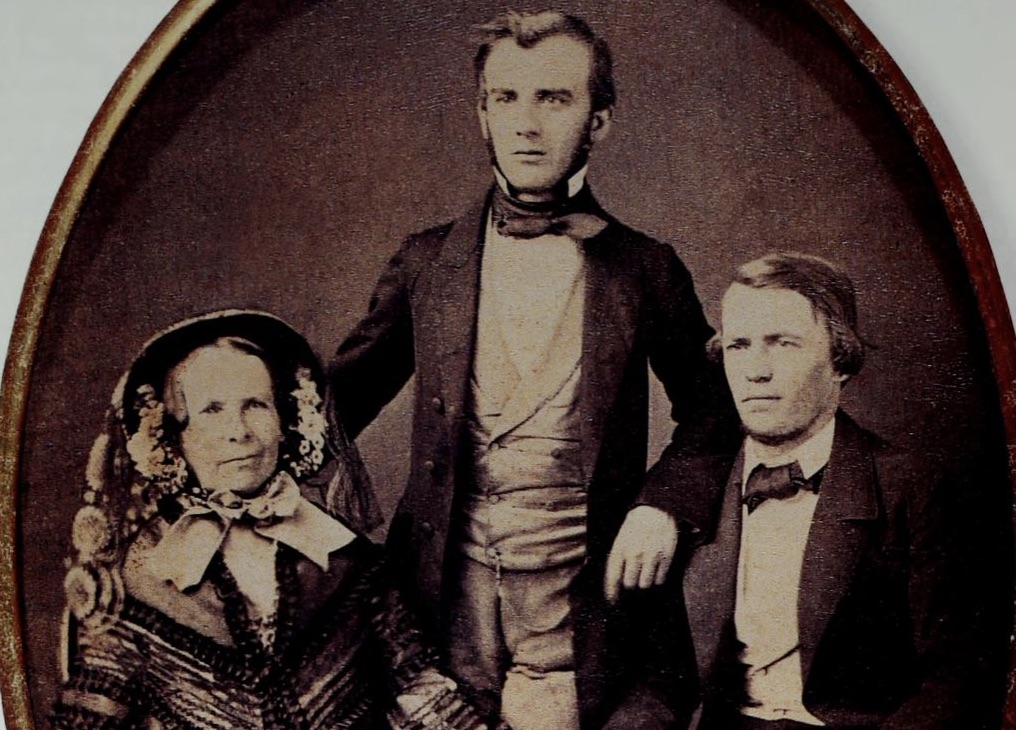
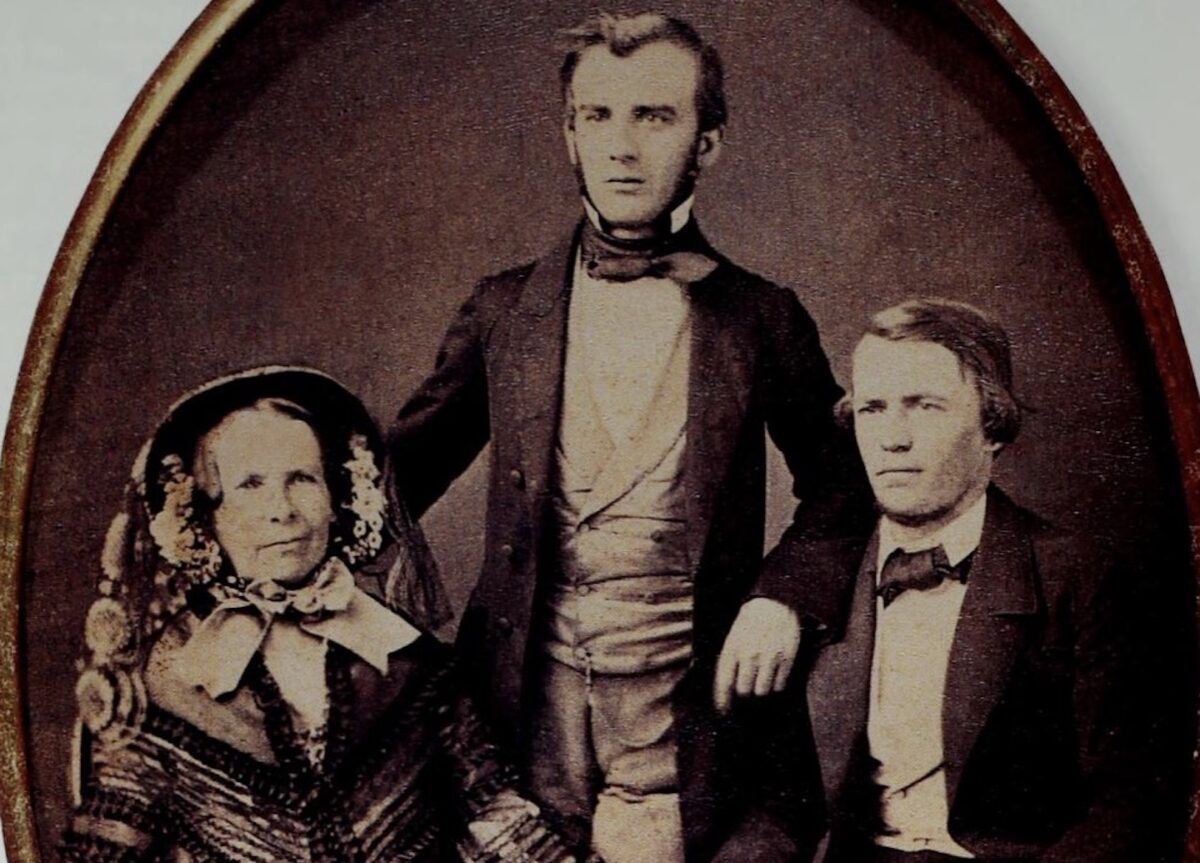
Wilhelmine Klotz Erhart, her son Charles Erhart, and her nephew Charles Pfizer standing. Photograph taken in 1855, courtesy the book The Legend of Pfizer

The practical applications of science to modern life were just beginning to be explored in the early 19th century. Pfizer was taking his training to a country not yet internationally known for scientific breakthrough.

According to author Jeffrey L. Rodengen, “Chemicals that once interested only scholars were becoming indispensable in manufacturing, agriculture and medicine. [Pfizer] also recognized that in the new nation of America, virtually no one was meeting the growing demand.”
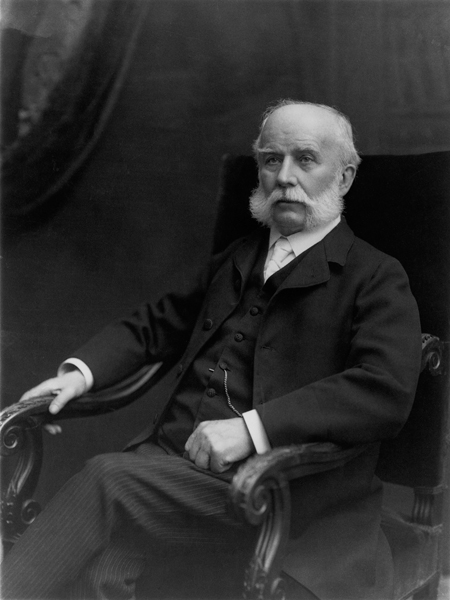
Charles Pfizer, photographed here in 1890
A Home Among The Factories

Pfizer and Erhart would form their new chemical operation in Long Island’s King County in 1849, shortly after their arrival in America.

But not in the thriving City of Brooklyn, located south of the Brooklyn Navy Yard. (No community on Long Island was a part of New York City until 1898.)

They had their eye on a spot near the Town of Williamsburgh, north of the burgeoning Brooklyn metropolis.
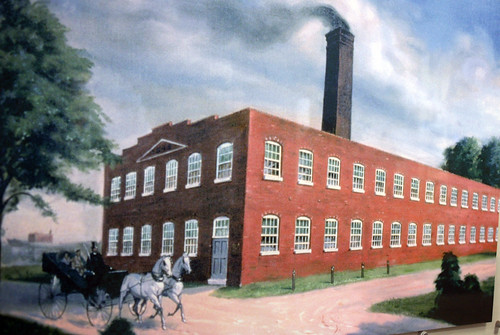
The first Pfizer building

Williamsburgh — a former village under the jurisdiction of the town of Bushwick — was a desirable destination for budding industrialists thanks to its proximity to a busy waterfront and the already busy waters of Newtown Creek. Chemical and oil plants were already home here when the cousins arrived.

Pfizer’s first headquarters was a bit far from the waterfront. They couldn’t quite afford to build a new factory.

Instead the cousins moved their operations into a pre-existing red brick building at Bartlett and Tompkins Streets thanks to a $2,500 loan from Pfizer’s father. (That’s about $78,000 today thanks to inflation.)
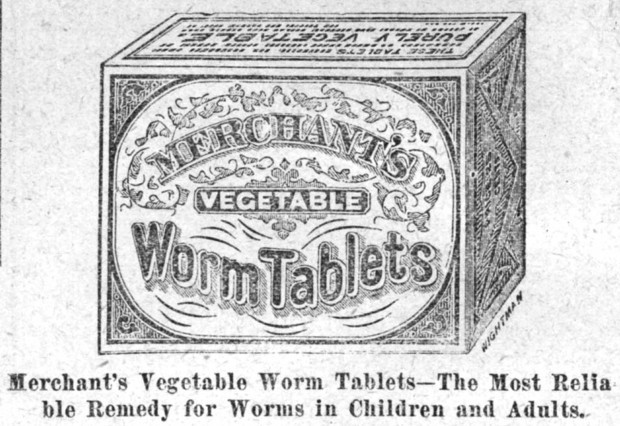
An example of 19th century medicine used to treat worms *shivers*.
How To Deal With Worms

A chemist and confectioner might seem like an odd couple today. But go to your medicine cabinet. How many of your medicines have flavor? Most pharmaceuticals would be hard to swallow without additives literally meant to make the medicine go down.

In 1849 the Pfizer company rolled out its first product — a product made from santonin. But this was santonin that tasted, well, not good exactly, but palatable enough to help relieve a very grotesque condition — intestinal worms.

Pfizer and Erhart produced santonin (made from the flower of Artemesia plants) with a relatively delicious almond-toffee taste.

Given that intestinal worms were a far bigger problem in the mid 19th century than they are today, the product flew off the shelves, allowing Pfizer to expand into other chemical remedies.
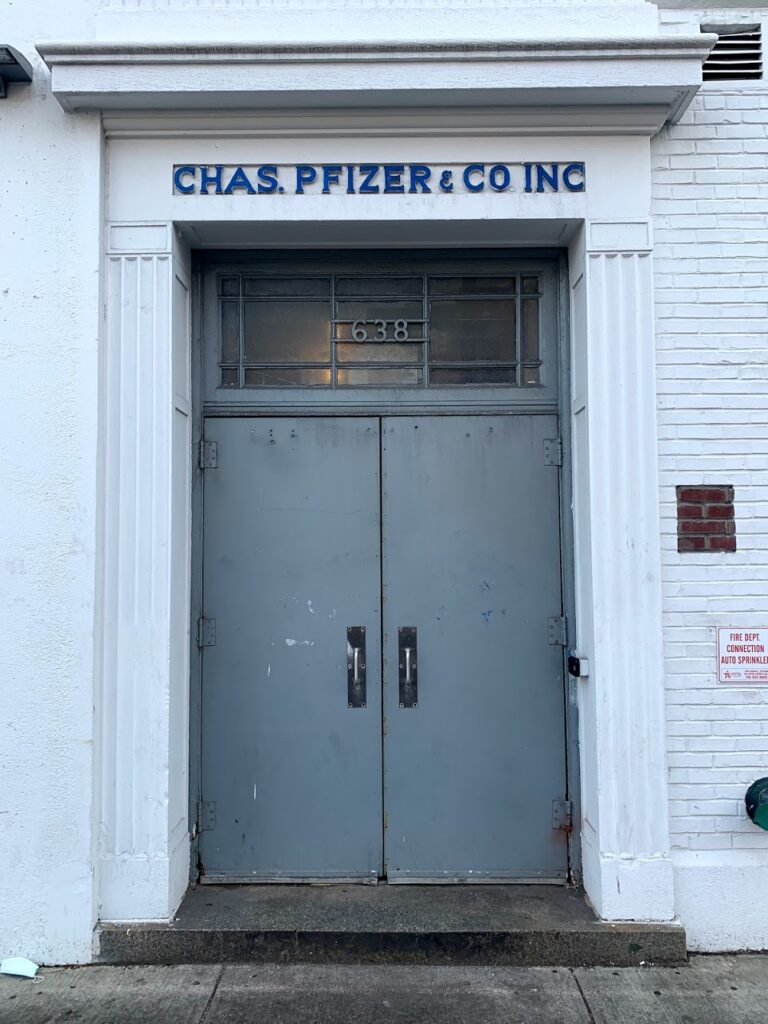
The original Brooklyn location of Pfizer still displays its history.
Room To Grow

As business was just getting off the ground, exciting things were happening in the neighborhood. In 1851, Williamsburgh briefly became its own incorporated city.

Less than four years later the city — along with the township of Bushwick and Greenpoint — would be incorporated into the expanding City of Brooklyn. It was collectively known as the Eastern District.

(At some point, the ‘h’ also disappeared from its name. For more information, listen to our shows on the history of Williamsburg and the Williamsburg Bridge.)

As the community was quickly growing, so too was business booming for the cousins who over the next three decades quickly expanded into the lots surrounding their original headquarters on Bartlett and Thompson.

Like many areas of the Eastern District by the late 19th century, the chemical aroma must have been remarkable.
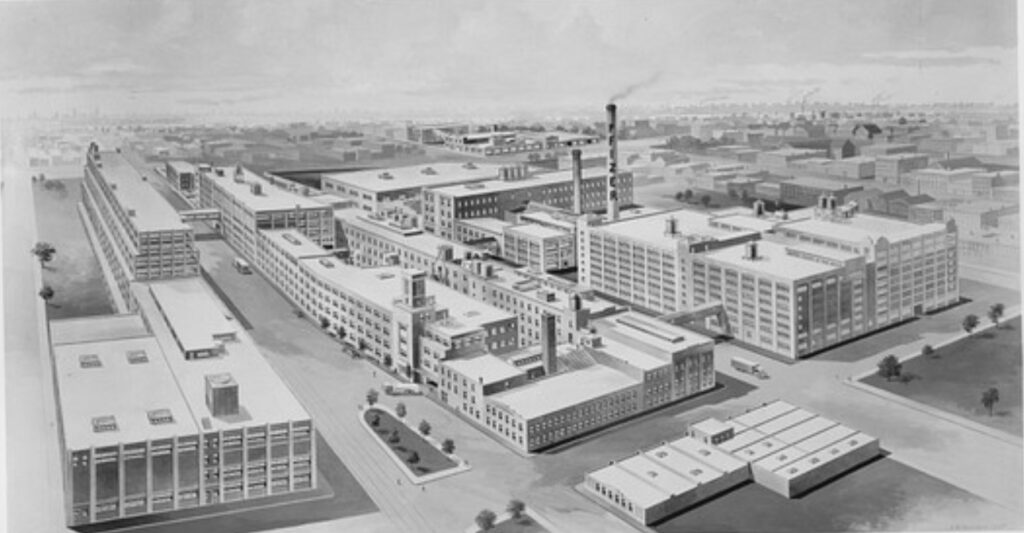
Brooklyn Public Library

Of course Pfizer also expanded outside of Brooklyn almost immediately. In 1868, they naturally moved their central headquarters closer to Wall Street — to 81 Maiden Lane.

Meanwhile their Brooklyn location was cranking out such products as iodine, chloroform, borax, camphor and even morphine. They also specialized in non-medicinal products like cream of tartar.
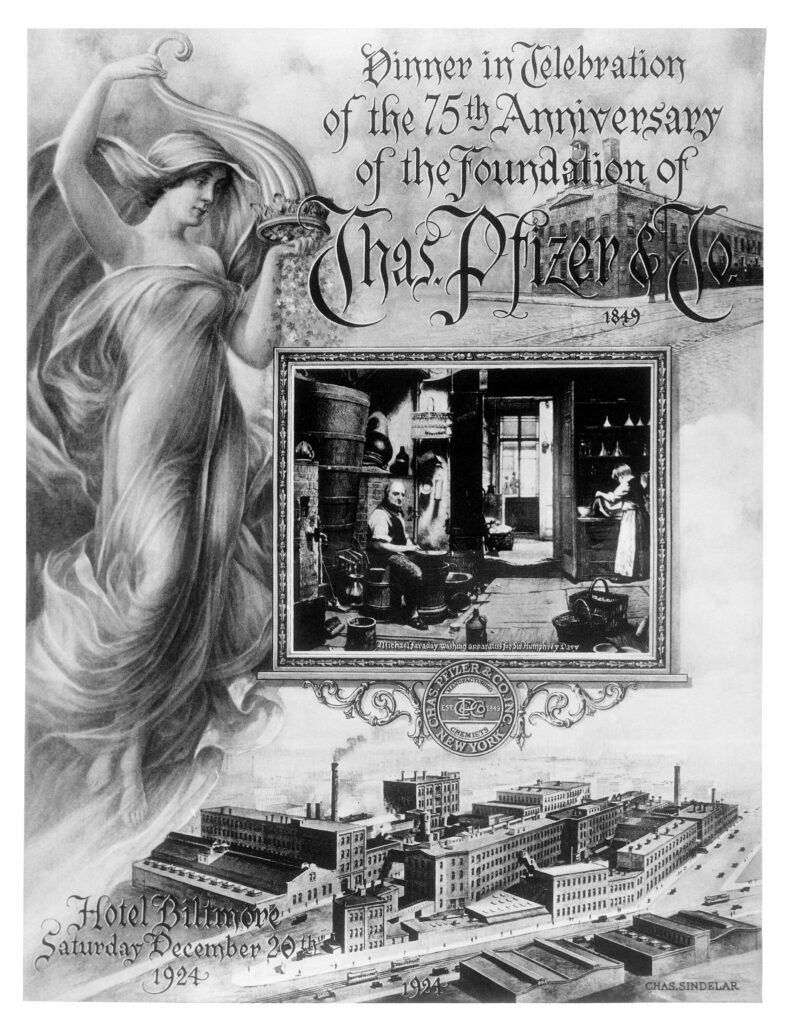
A celebration of their 75th anniversary featuring a depiction of their Brooklyn operation.

As Scott H. Podolsky writes in his journal article Antibiotics and the Social History of the Controlled Clinical Trial 1950-1970:

“For nearly a century of Pfizer’s existence, it did not market pharmaceuticals but rather had centered upon the production and refinement of chemicals such as citric acid, which Pfizer was the world’s largest producer by World War II.

“However the fermentation techniques used in the production of citric acid would render Pfizer a leader in the American World War II efforts to mass-produce penicillin and Pfizer soon followed as one of the largest producers of the equally nonexclusive streptomycin and dihydrostreptomycin (selling to other companies to distribute).”
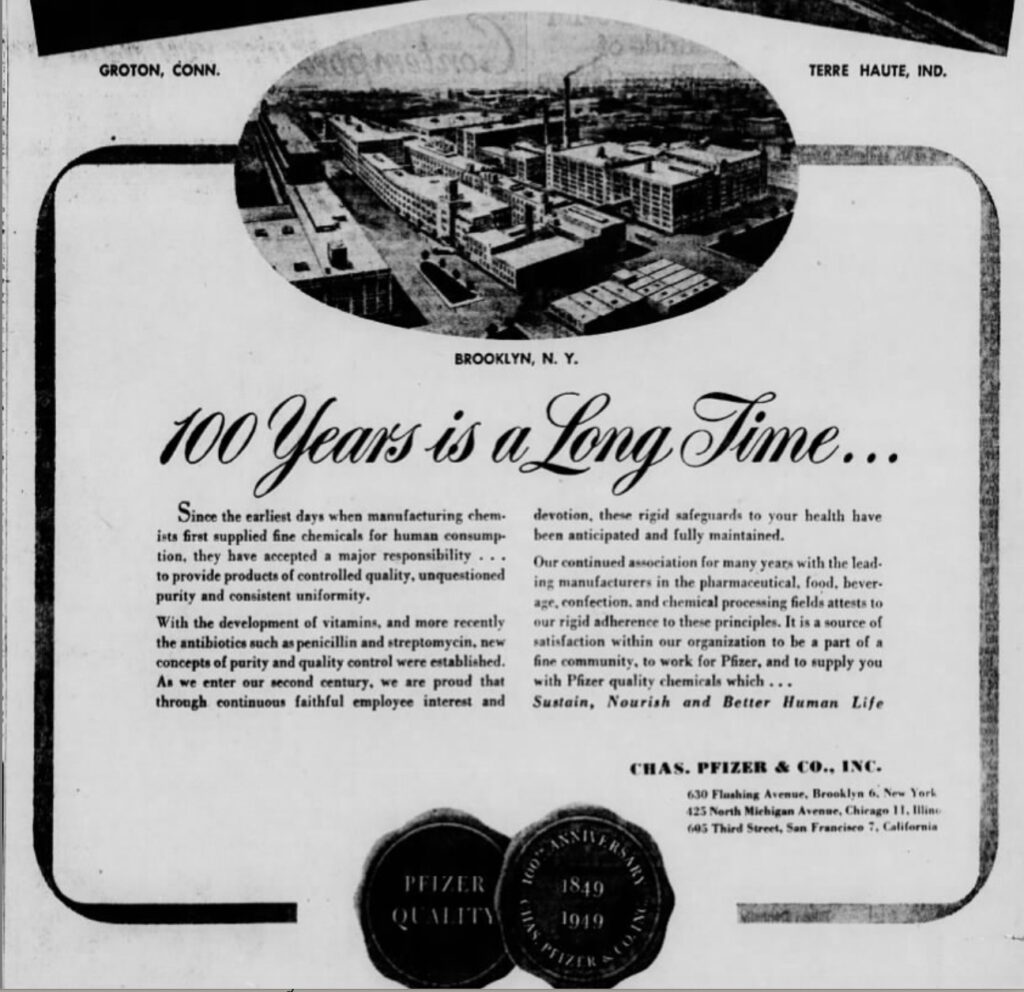
An advertisement touting their 100th anniversary

Penicillin would change the world — and significantly expand Pfizer’s profile by the second half of the 20th century through corporate mergers and expanded offices in several countries.

But Pfizer’s primary headquarters remain in Manhattan — on 42nd Street, across the street from the iconic Daily News Building.

But the company remained in their original Brooklyn location until 2008, when the aging plant was finally closed. Today many other businesses populate this historic spot:
Categories
It's Showtime Podcasts

Billie Holiday’s New York: Here’s to Swing Street, Harlem’s 133rd Street and other landmarks of jazz

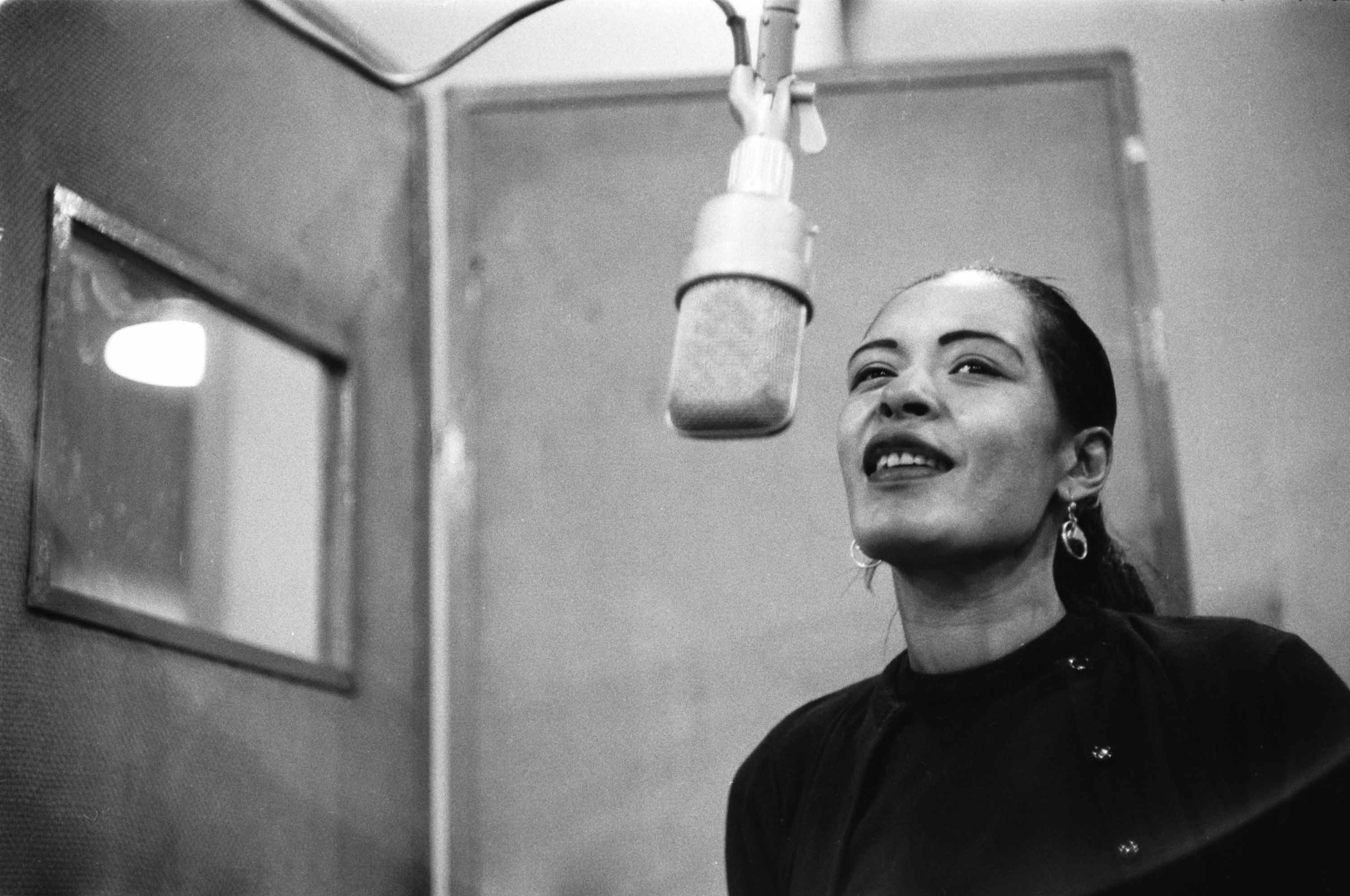
Courtesy Columbia Records

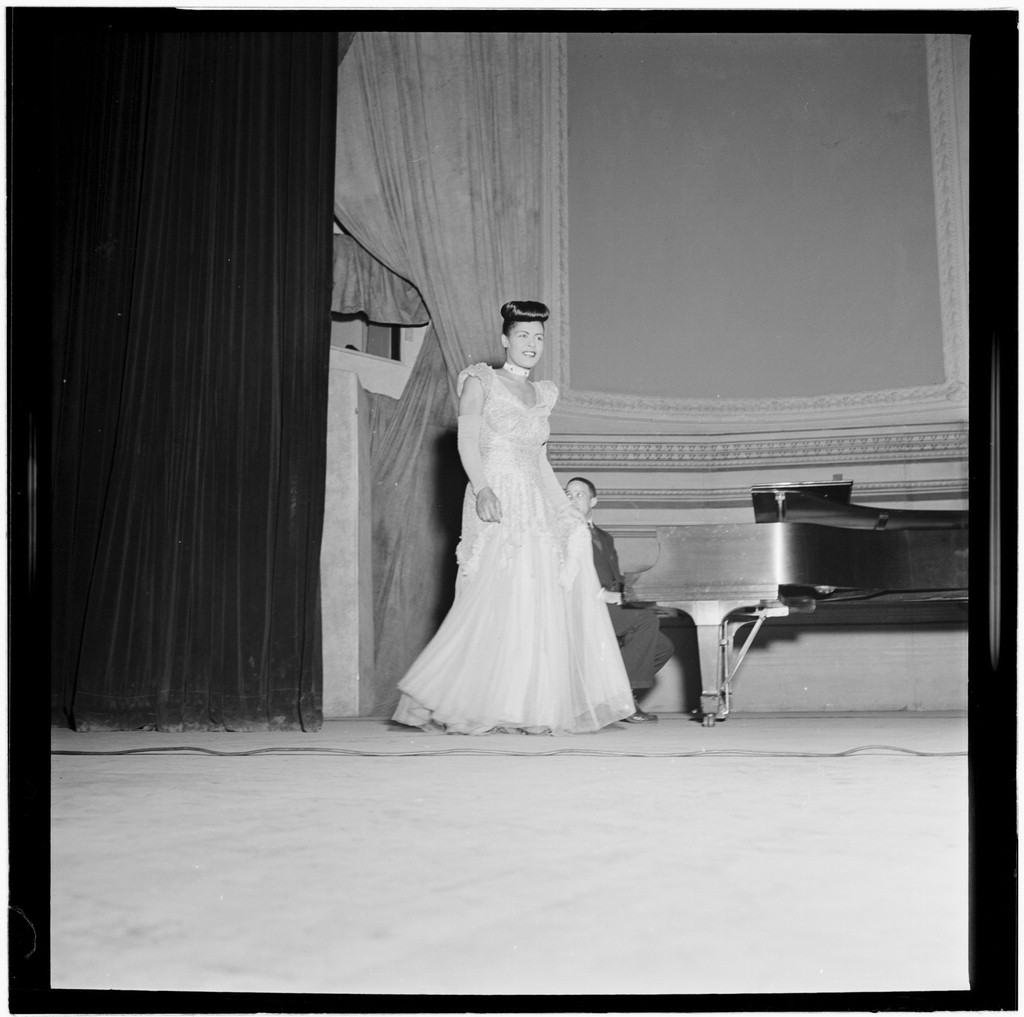
PODCAST Grab your fedora and take a trip with the Bowery Boys into the heart of New York City’s jazz scene — late nights, smoky bars, neon signs — through the eyes of one of the greatest American vocalists who ever lived here — Billie Holiday.

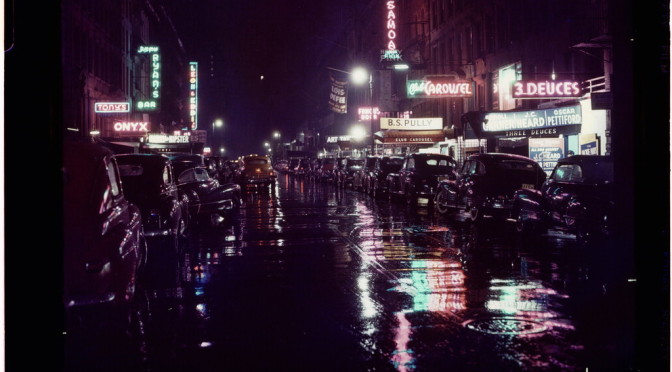
Eleanora Fagan walked out of Pennsylvania Station in 1929 and into the city that would help make her a superstar. Her early years were bleak, arrested for prostitution and thrown into the Welfare Island workhouse. But music would be her savior, breaking out in Harlem first in the nightclubs on 133rd Street, then in the basement clubs of ‘Swing Street’ on 52nd Street.

Her recordings make her an international star, but the venues of New York helped solidify her talents — from the Apollo Theater to Carnegie Hall. But one particular club in the West Village would provide her with a signature song, one that reflected the horrible realities of racism in the mid 20th century.


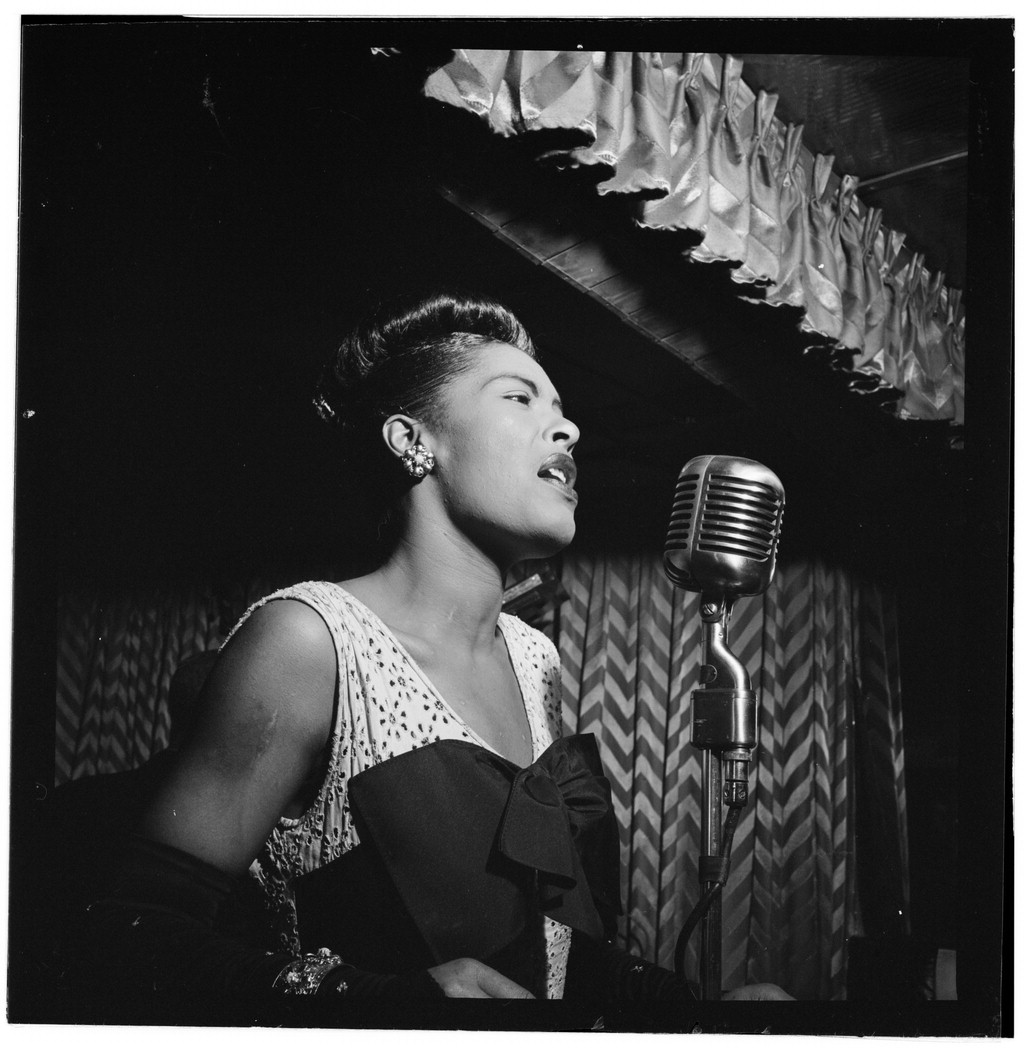
Billie Holiday at Club Downbeat, 1947

5020399920_ccd948ba9c_o

Locations featured in this episode:

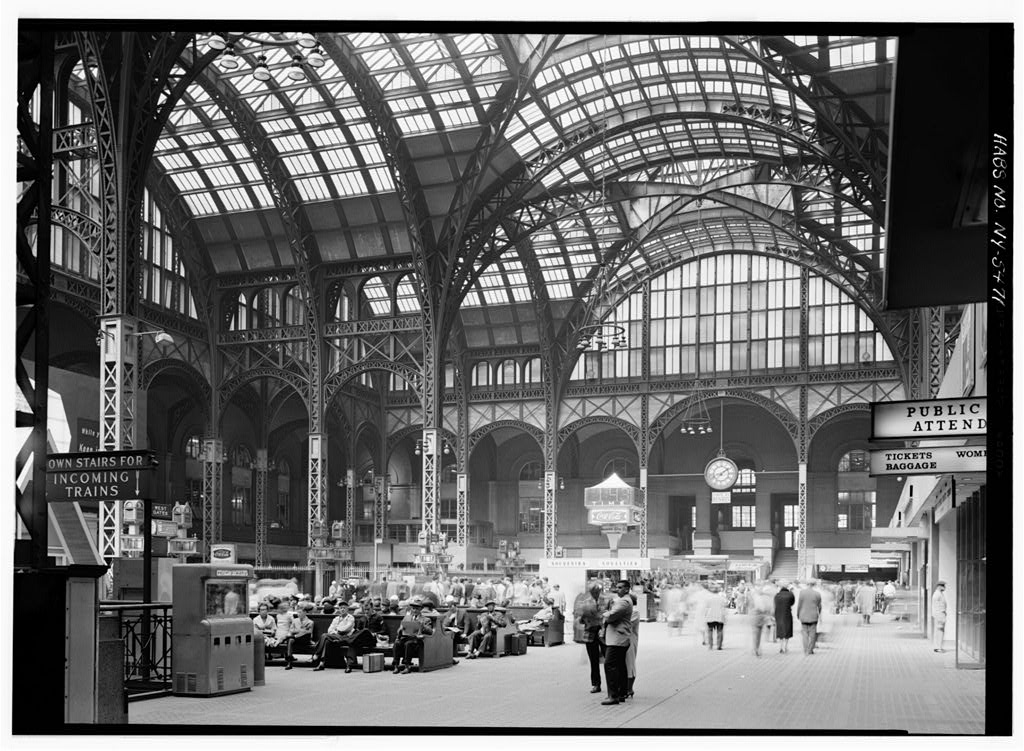
1) Pennsylvania Station (circa 1930s-40s)

Courtesy Library of Congress

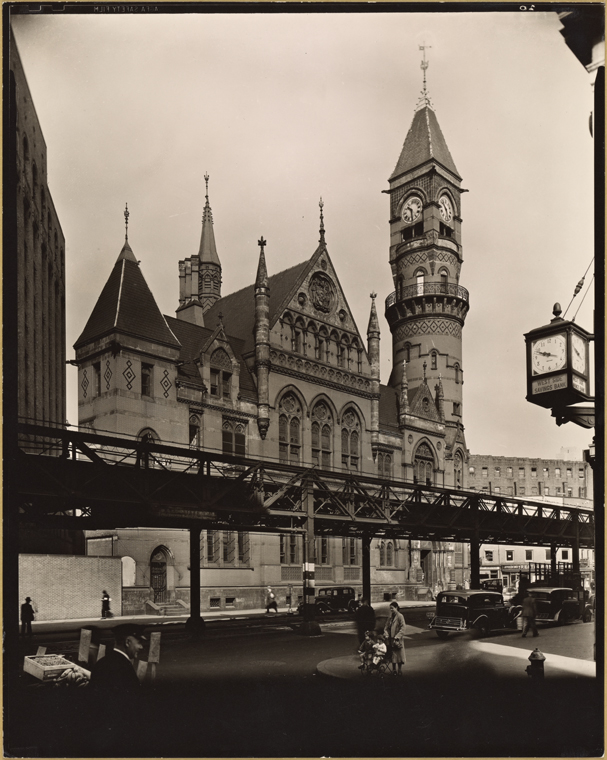
2) Jefferson Market Courthouse, pictured here in 1935

1
Photographed by Berenice Abbott, courtesy New York Public Library

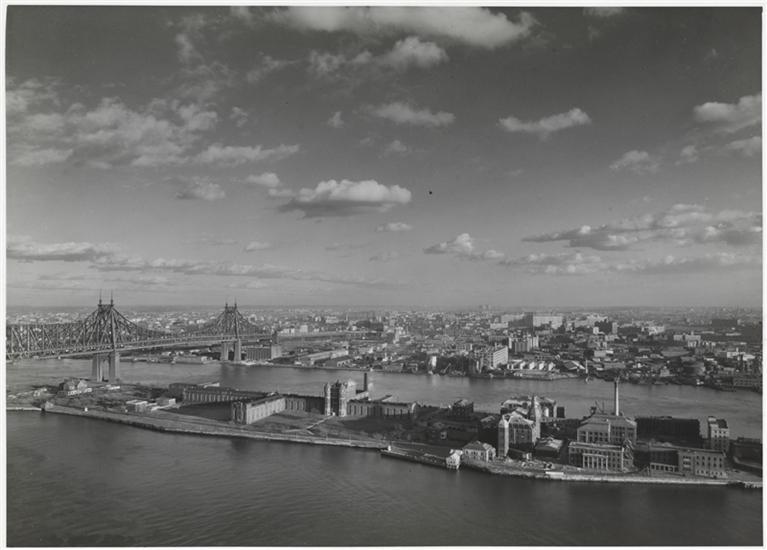
3) Welfare Island, pictured here in 1931

Photographed by Samuel H Gottscho, courtesy Museum of City of New York

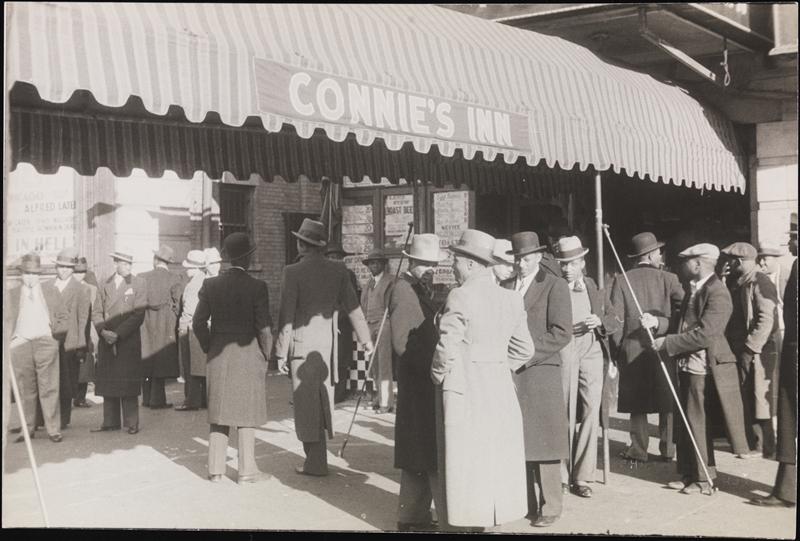
4) 133rd Street — “Jungle Alley” or The Street — outside Connie’s Inn

Courtesy Museum of the City of New York

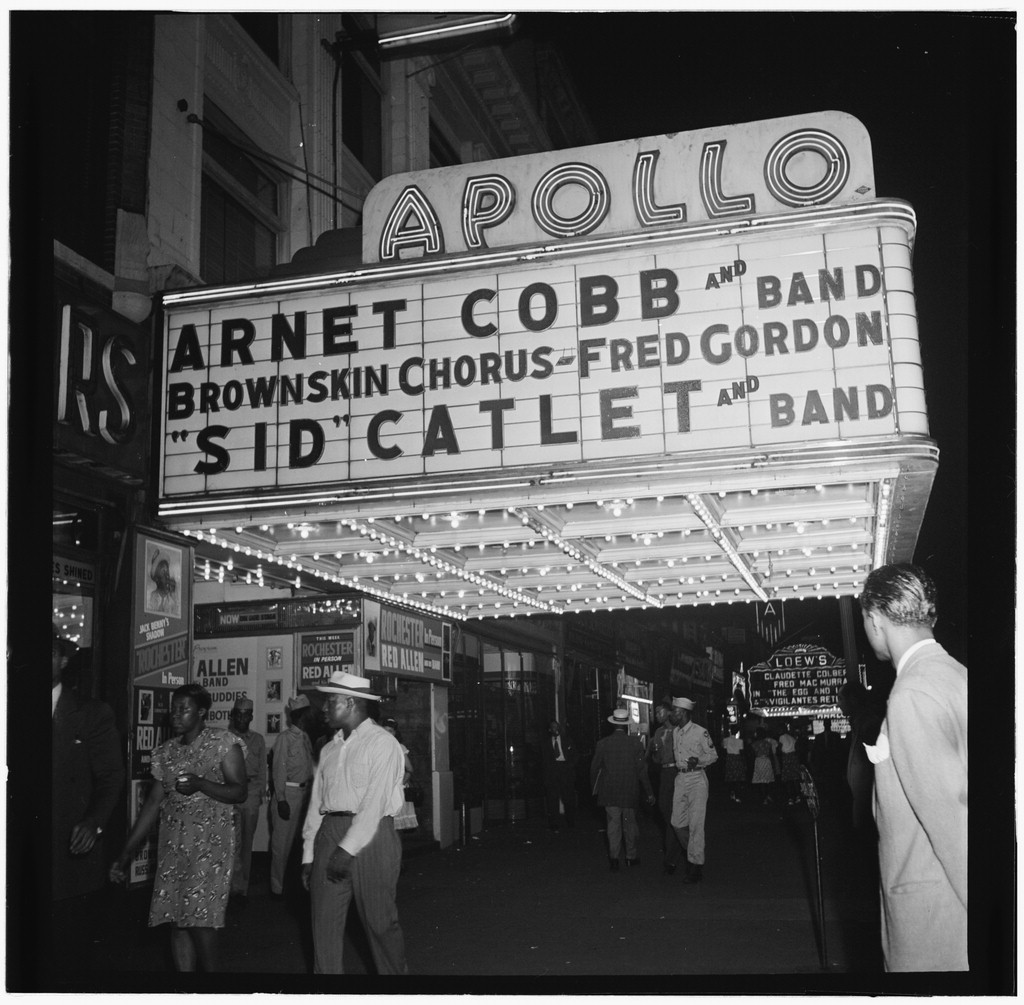
5) Apollo Theater, pictured here in the mid 1940s

Courtesy Library of Congress, photographer William Gottlieb

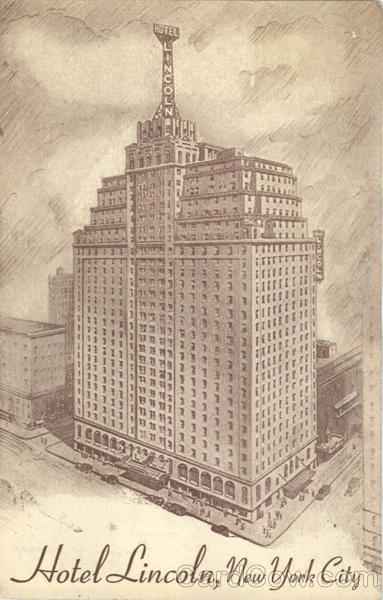
6) Lincoln Hotel

Hotel Lincoln, 44th to 45th Street at 8th Avenue New York City

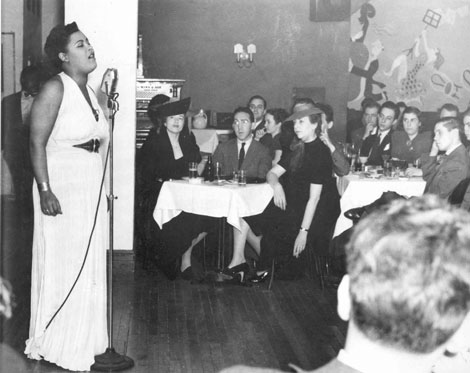
7) Billie Holiday at Cafe Society 1939

Photo by Charles B. Nadell

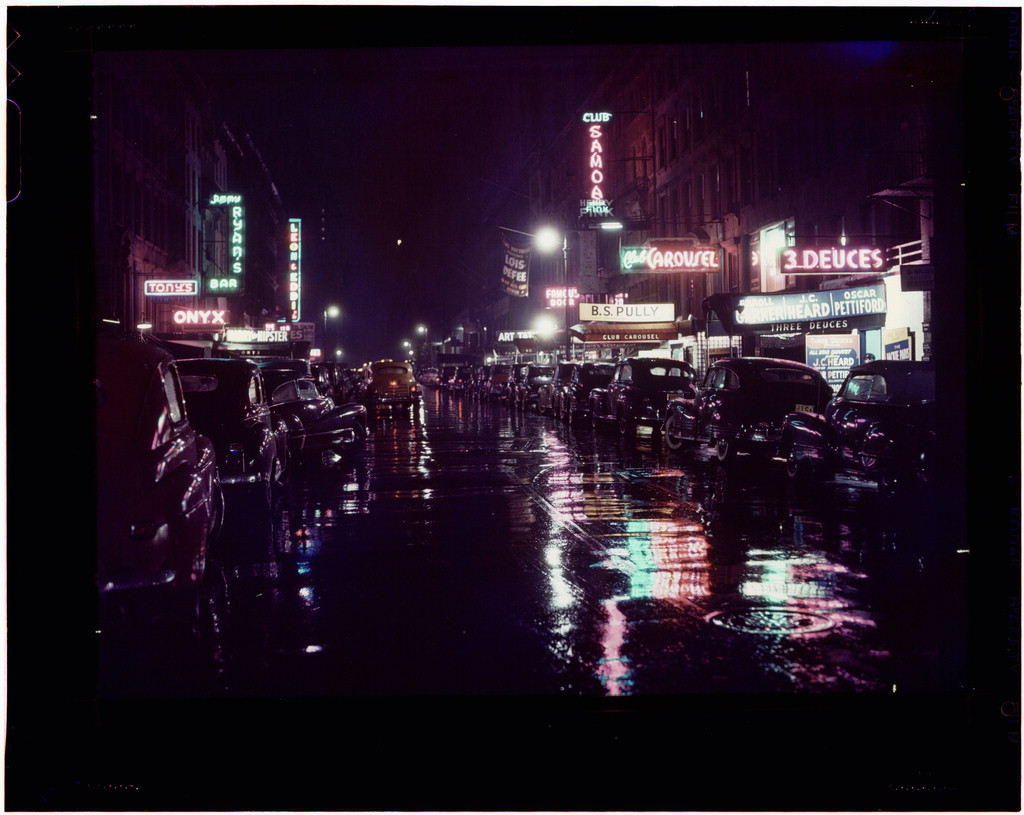
8) 52nd Street aka Swing Street

5268914553_ca77a01af0_o

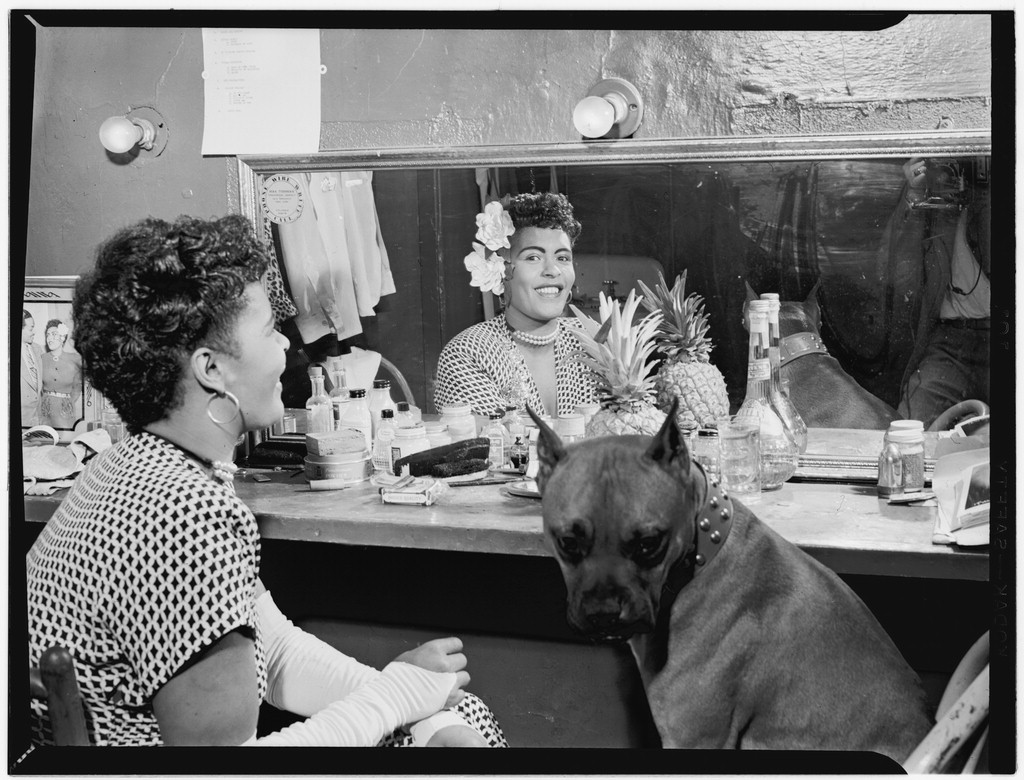
Billie at Club Downbeat (with her dog Mister) — June 1946

Courtesy Library of Congress

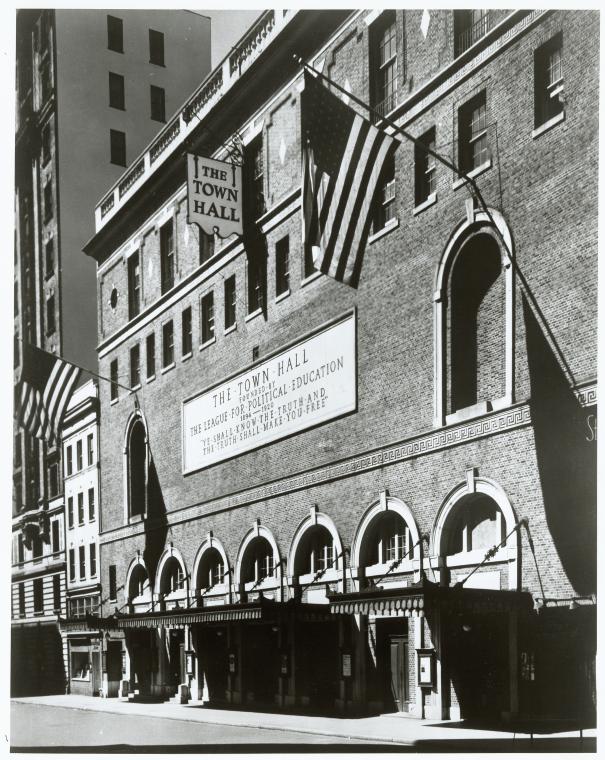
9) Town Hall, sometime in the 1940s

Exterior view of The Town Hall, courtesy New York Public Library

10) Billie Holiday at Carnegie Hall for her rave 1948 concert

Courtesy Library of Congress

An extraordinary performance of ‘Strange Fruit’, performed in February 1959, months before she died. This was recorded for a British television show called ‘Chelsea At Nine’.

https://www.youtube.com/watch?v=h4ZyuULy9zs

Billie Holiday — playing a maid — in the 1947 film New Orleans

And a live performance of one of her greatest songs — well, really, one of the greatest songs — “God Bless The Child”

http://youtu.be/U-3O-X6UUpY

Categories
The Knick Those Were The Days

The cocaine fiends of the Gilded Age: New York stages an intervention for its over-the-counter drug problem

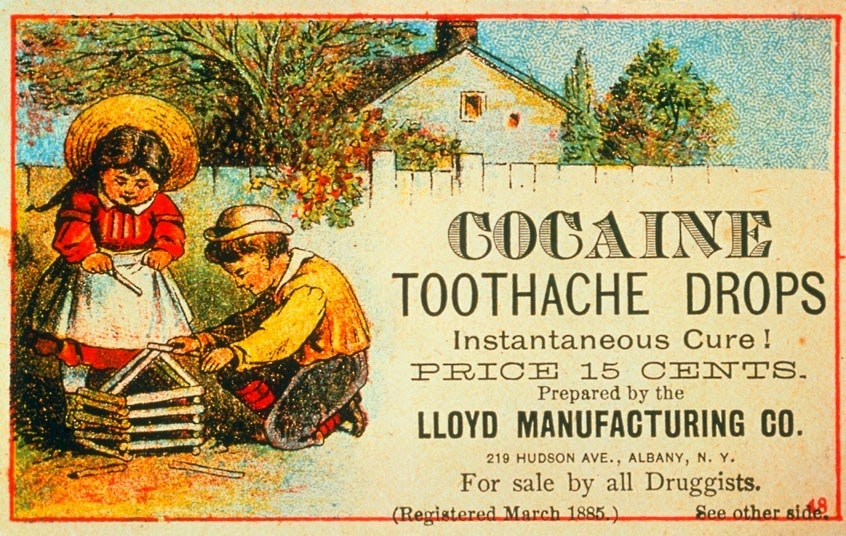
We once lived in a world when cocaine was in nearly everything — pain relievers, muscle relaxers, wine, fountain drinks, cigarettes, hair tonics, feminine products.  It was therapeutic, a “nerve stimulant,” a natural remedy and an over-the-counter drug sold in a variety of forms and doses. The coca plant, to many, was “the most tonic plant of the vegetable world.” [source]

The coca byproduct popped up in a variety of medicinal and recreational forms in the 1880s.  In particular, New Yorkers were wild about cocaine, especially those in the medical community.

“The therapeutic uses of cocaine are so numerous that the value of this wonderful remedy seems only beginning to be appreciated,” said the New York Times in 1885.   “The new uses to which cocaine has been applied with success in New York include hay fever, catarrh and toothache and it is now being experimented with in cases of seasickness.” They later report that even asthma could be eradicated by it.

Cocaine was the wonder drug of the early 1880s.  Not only could it cure disease; it could also dampen the senses.  In 1884, a doctor presented his findings at the College of Physicians and Surgeons (23rd/Park Avenue), heralding the successes of “anesthetic cocaine” in numbing patients during ear and eye surgeries.  It was even given as a pain reliever to horses.

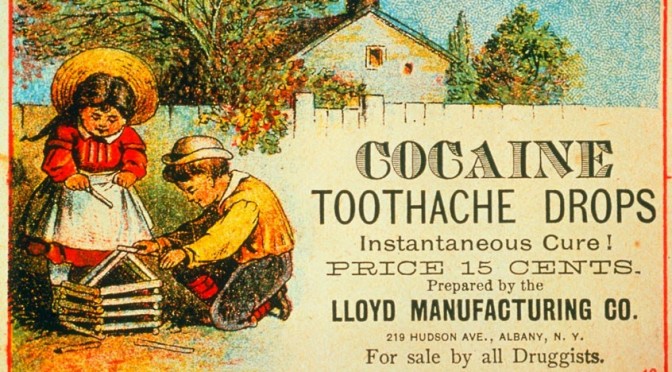
A cocaine ad touting its use for “female complaints, rectal diseases”:

By the 1890s, cocaine would be used as an anesthetic in a variety of cases, even injected directly into the spine.  As a miracle solution, “[t]hen came cocaine to claim her crown.” [source]

There was even a cocaine district in lower Manhattan — around the cross streets of William and Fulton — where more of the drug was produced than perhaps any other place in the United States, by such manufacturers as McKesson & Robbins (95-97 Fulton Street) and New York Quinine & Chemical Works (114 William Street).

Below: Helmbold’s Drug Store on Broadway and 17th Street, in Ladies Mile, would have sold a host of cocaine-related products in the 1880s. (NYPL)

“Cocaine looked to be the saviour of doctors the world over,” wrote author Dominic Streatfeild in his book Cocaine: An Unauthorized Biography,  “but, apart from its use as an anesthetic in surgical procedures, it was not really curing anything; it was just making people feel great for awhile.”

By the mid-1880s, there seemed to be little doubt of cocaine’s habit-forming qualities, but there were some notable holdouts.  William A. Hammond, the Surgeon General for the United States during the Civil War, didn’t think so, frequently experimenting upon himself and later batting away concerns from some notable Brooklyn doctors.

“At first I injected one grain and experienced an exhilaration of spirits similar to that produced by two or three glasses of champagne,” he told a newspaper in 1886.

But medical professionals soon grew weary as their hospitals and asylums soon filled with cocaine addicts, many who supplemented their habits with opium or morphine.

“No medical technique with such a short history  has claimed so many victims as cocaine,” reported the New York Medical Record in 1887.

Sometimes it would be the doctors and nurses themselves that were trapped “in the clutches of cocaine.” (The Cinemax show The Knick depicts this disturbing conflict within its main character, Dr. John Thackery, who at a certain point injects the drug straight into his penis and between his toes.)

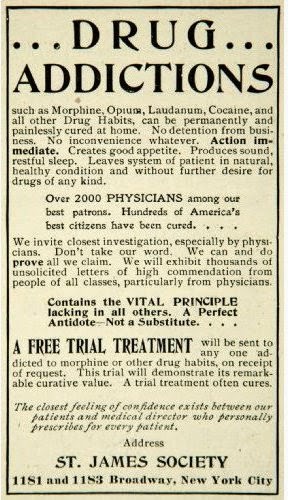
At right: A 1900 ad for an at-home drug therapy program provided by the St. James Society.  Interestingly, this was located on Tin Pan Alley and near the heart of the pre-Times Square theater district!

From a cursory perusal of newspaper from the late 1890s, one can find a notable doctor or two succumbing to drug addiction almost once a month. “COCAINE KILLS A DOCTOR,” blared a headline from January 2, 1898.  Another physician “WAS CRAZED BY COCAINE.” went another in 1895.

The euphoria over cocaine was over.  The number of cocaine addiction cases blossomed through the 1890s, just as moralists and social reformers were looking to eliminate vice from city streets.  In 1893, the first law aimed at cocaine (along with morphine, opium and chloral) made it available only by prescription which, like so many later pharmaceuticals, was merely a speed bump for the serious user.

Hysteria soon followed. Cocaine was associated with crime, with occultists, with loose women, with poor people, with African-American, Asians and Jews.  Here’s a rather startling quote from a druggist in 1895: “[W]ith the exception of a few abandoned white women, its use is confined almost exclusively to the colored folk.” (Several years later, the New York Times took this assertion to the next level.)

Meanwhile, newspapers seemed only concerned with the numerous rich, white addicts. And, of course, the many innocents who were lured by dealers on the streets and playgrounds.

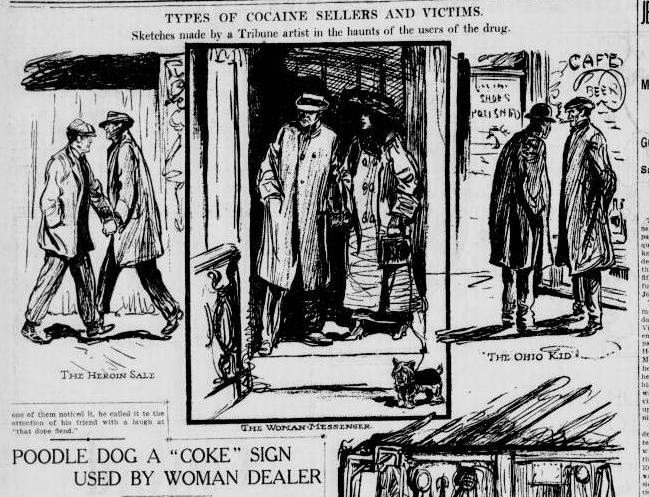
Below: An illustration from the New York Tribune, 1912.  A 1907 law prohibited most sales of cocaine over the counter, creating an illicit ‘street market’.  The Tribune dramatically displays the ways in which cocaine and other drugs were sold.  Note the headline underneath it!

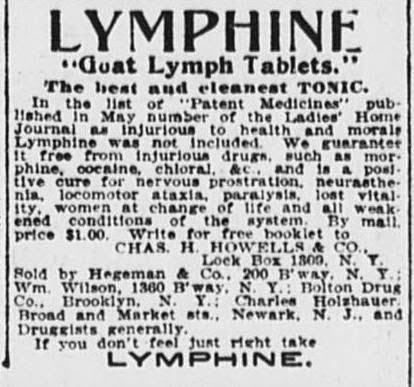
Although still a legal substance, most products began advertising themselves as an alternative to cocaine. In 1895, you might find products that touted cocaine as a pain reliever;  ten years later, medicines were now proclaiming they were cocaine-free.

Below: A 1904 ad for “goat lymph tablets” reminds its readers that its free of “injurious drugs.”

It would take several years to make cocaine entirely illegal.  During the 1910s, those who wanted it could make arrangements with a pharmacist, forge a prescription or, when all else failed, just rob the warehouses which stored cocaine.

In 1911, the drug was now a “poisonous snake,” “the perfect intoxicant of the devil,” its original uses in the United States now entirely forgotten and replaced with safer, less addictive alternatives.  (Dentists, for instance, would discover Novocaine.)

A series of local and federal laws in the mid-1900s assured that cocaine and other habit-forming drugs would be ushered off the market within the decade.

The Harrison Narcotics Tax Act, passed in 1914, imposed stiff taxes on coca and opiate products, virtually eliminating any legal market for the drugs and insuring its manufacture and distribution be driven underground.

And just in time, too, for Prohibition was just around the corner!

Categories
Mad Men

‘Mad Men’ notes: New York becomes an LSD playground


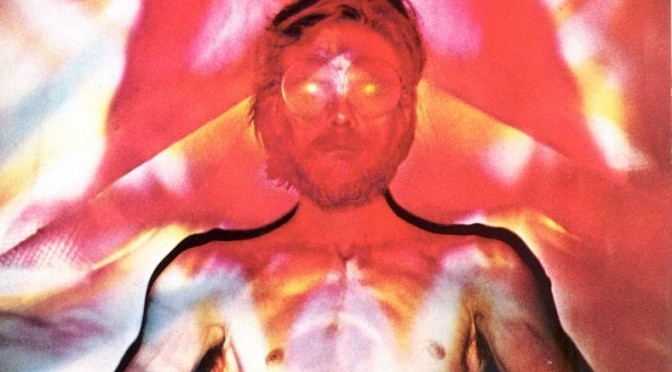
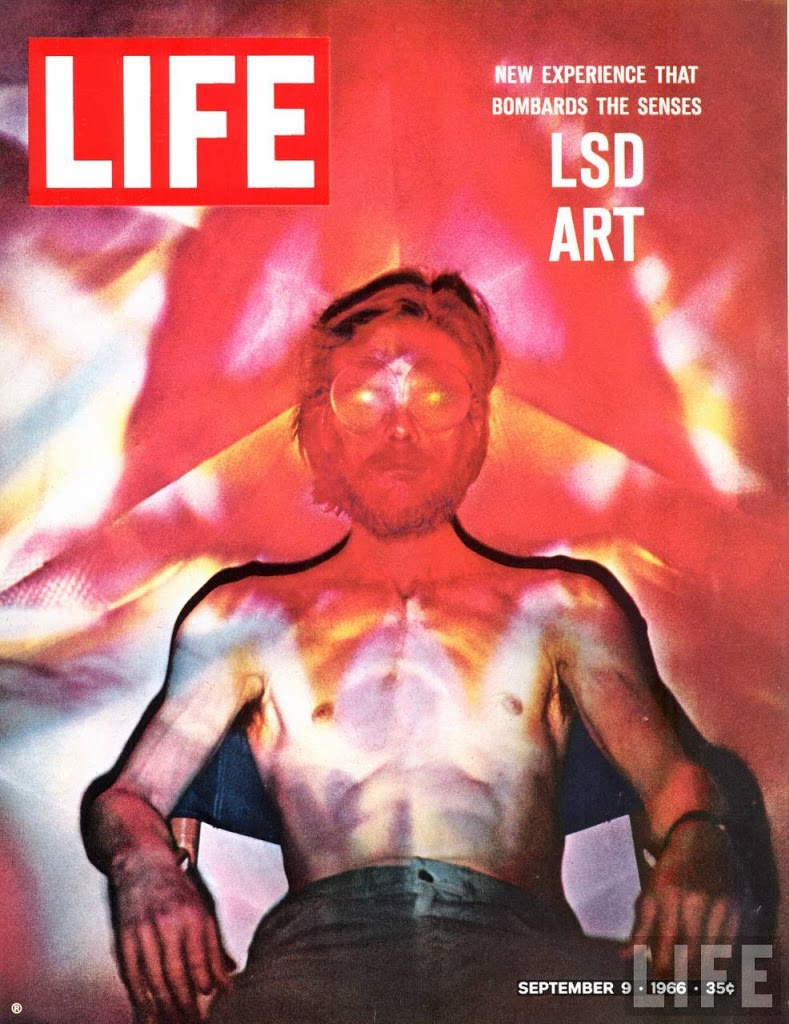
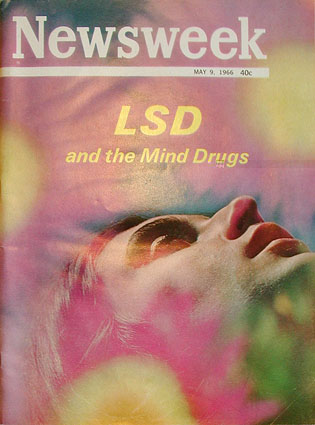
A mind-twisting exhibit at the Riverside Museum, formerly at 310 Riverside Drive/103rd Street, makes it on the cover of a national magazine. But not everybody would enjoy the trip.


WARNING The article contains a couple spoilers about last night’s ‘Mad Men’ on AMC. If you’re a fan of the show, come back once you’re watched the episode. But these posts are about a specific element of New York history from the 1960s and can be read even by those who don’t watch the show at all. You can find other articles in this series here.

Sure, it’s 1966. I thought maybe Peggy Olsen might be the one to trip the light fantastic. (She was otherwise engaged this week.) But I never expected hallucinogenics to materialize as they did on last night’s ‘Mad Men’. After a staggeringly serious dinner party narrated with empty philosophical conversation, Roger Sterling and his wife are invited to take the drug LSD by their host. Far from the dorm rooms and basement clubs of Greenwich Village where one might expect such experimentation, this evening of psychedelia was presented as a drawing-room intellectual exercise, with serene music unspooling from a reel-to-reel and no object more trippy than a mantel mirror.

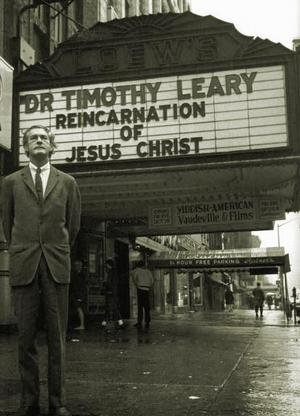
Lysergic acid diethylamide, which I doubt can actually be said while experiencing its effects, was considered a mind-opening tool for some early psychiatrists, laying bare subconscious feelings and forcing the user to confront difficult issues in a surreal environment. By the mid ’60s, its leading advocate was Timothy Leary (below), a psychologist who had studied the benefits of psychedelic drugs to explore the mental capacities. Today we might naturally lump him with the trappings of ’60s counter-culture, but in 1966, with the parameters of psychiatry still in flux, his experiments also appealed to intelligentsia.

The depiction of ‘Mad Men’s after-dinner drug soiree seem to follow Leary’s instruction quite explicitly. In 1966, he advised, “Don’t take LSD unless you are very well prepared, unless you are specifically prepared to go out of your mind. Don’t take it unless you have someone that’s very experienced with you to guide you through it. And don’t take it unless you are ready to have your perspective on yourself and your life radically changed, because you’re gonna be a different person, and you should be ready to face this possibility.”

An article in March 25, 1966, LIFE Magazine laid out the details of the drugs in almost an introductory fashion. “A black market dose costs only $3 to $5. But that’s enough to send a person on a 10-hour ‘trip’.”

The same article also underscored a growing fear: “A few pounds of it dumped into the water supply of a major city would be enough to disorient millions.”

The federal government had been concerned of this supposed conspiracy as early as the 1950s, fearful that Russians might pollute New York’s water and “turn drug-addled American citizens against their own government.” [source] Of course, the CIA itself experimented with LSD during this period with its covert Project MKULTRA, which conducted experiments in New York during the mid-50s, using prostitutes and junkies they found in local bars in Greenwich Village. An experiment performed on CIA operatives themselves led one agent in 1953 to leap from a window at the Statler Hilton, today’s Hotel Pennsylvania. (Or was it murder?)

By the 1960s, the drug had become a virtual entrance exam for New York’s blossoming counter-culture music scene, or so the more hysterical believed. “In New York, San Francisco and Los Angeles, a girl just off the bus from Boise can find it quicker than the YWCA merely by asking around for ‘a trip’,” warned Life Magazine.

The fear of an unwitting populace overtaken with LSD only grew with the 1960s, and this time, some thought it was New York’s counter-culture rebels itself who may be wielding it.  A 1967 journal opined on the urban legend with all seriousness. “[A] single ounce will provide fuel for 300,000 trips, reported one periodical, and it is believed that a few pounds dumped into the water supply of New York City would disorient the nearly 8,000,000 residents.”

Perceptions of LSD were slowly divorced from its supposed therapeutic qualities, especially as the drug soon found itself as the subject of films like Roger Corman‘s The Trip and ‘Enormous Midnight‘, where town water supply is poisoned with LSD and turns its citizens into orgiastic zombies. In New York, LSD entered the club world; hallucinogenic mid-60s destinations like Cerebrum and the Electric Circus (which became Andy Warhol‘s preferred spot in 1966) seem almost conceivable without it.

New York legislators quickly vowed to outlaw the new drug. Bellevue Hospital reported over 200 new patients affected by the drug. In April 1966, two local crimes energized the press: a Brooklyn girl accidentally ingested a sugarcube coated with LSD, and a week later, a ex-mental patient killed his mother-in-law, allegedly under the influence of the drug. With the Stagger-Dodd bill in 1968, the possession of LSD became illegal in the United States.

While that effectively ended the living-room therapy sessions such as the one experienced by Roger Sterling, the drug, now underground, would increasingly influence all aspects of New York bohemian culture.

From the Cerebrum club mentioned above:


Pictures courtesy Newsweek and Life Google Images. For more information on the CIA’s LSD experiments, you might be interested in watching this video.


If you’re watching ‘Mad Men’ when it broadcasts at 10 PM EST, then follow along with me on Twitter at @boweryboys. I’ll be giving a live fact-Tweeting, dropping little factoids about the events being depicted on the show