The art of the reservoir, New York’s forgotten architecture

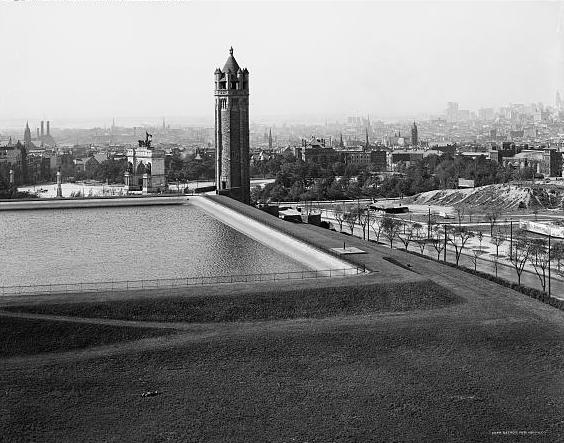
The Fortress of Fifth Avenue: the Murray Hill Reservoir

We share a lot of the same needs as New Yorkers of the past, but we’ve just gotten better at hiding the unpleasant ones.  There are a great many mental institutions and specialized medical facilities in the city; they just aren’t in creepy, old Gothic buildings anymore. Prisons are out on islands or in nondescript beige towers flaunting only the barest hint of iron bars. We don’t dress them up in Egyptian morbidity like the famous Tombs prison of Five Points.

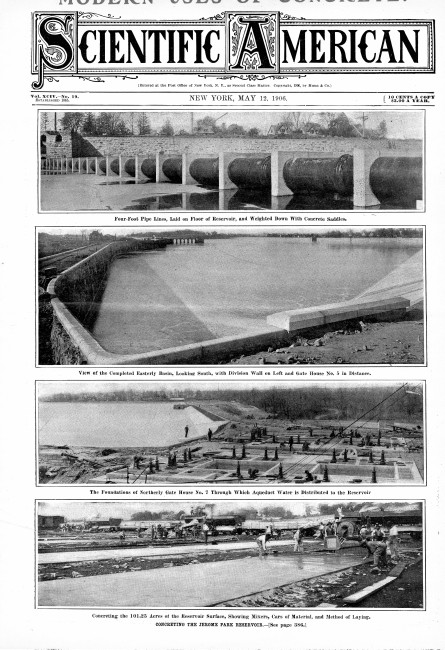
Our trains and our electricity reside underground, and so does our water, mostly. There are only a few places that seem to suggest that New York City’s water supply doesn’t just magically appear. Water towers dot the skyline, recalling romantic comic book landscapes, while water treatment plants, spread mostly through the outer boroughs, obviously do not. Then there are the reservoirs, the grandest of these, the Jerome Park Reservoir in the Bronx, is a landmarked structure of enormous, albeit hidden, beauty. It’s currently drained and sitting like the Earth’s largest off-season swimming pool.

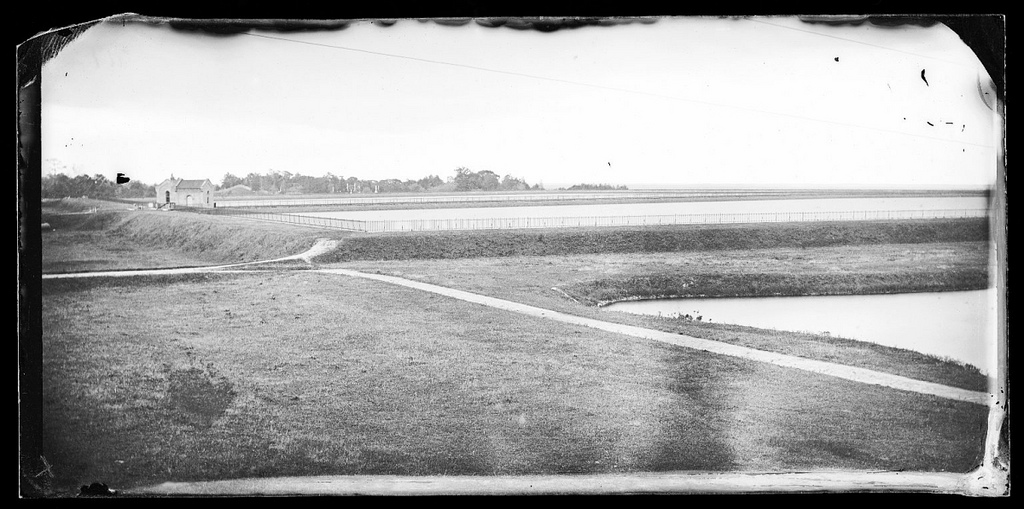
But New Yorkers used to live with their water, contained in reservoirs meant to evoke might, sophistication and security. After all, New York only got fresh water from the Croton Aqueduct in 1842; before that, it was mostly obtained from wells, cisterns, and that nasty old Collect Pond. People were proud of their new water system, so why not show it off?

Here’s a gallery of New York’s old 19th century reservoirs. In tomorrow’s podcast, we’ll elaborate on the marvelous story on how the city got its water:

The Manhattan Company reservoir on Chambers Street was opened in 1801 and was quickly deemed inadequate. Looks lovely though. If it were still around — it was demolished in the early 1900’s — it would probably be a nightclub today.
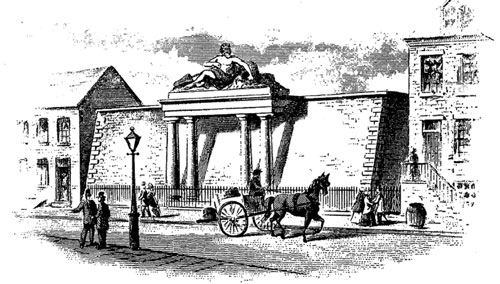
13th Street ReservoirOpened in 1830 as a water-pooling resource for fire fighting, it pumped water to hydrants on Broadway, the Bowery and other streets, but was little help in stopping the blazes of the Great Fire of 1835.
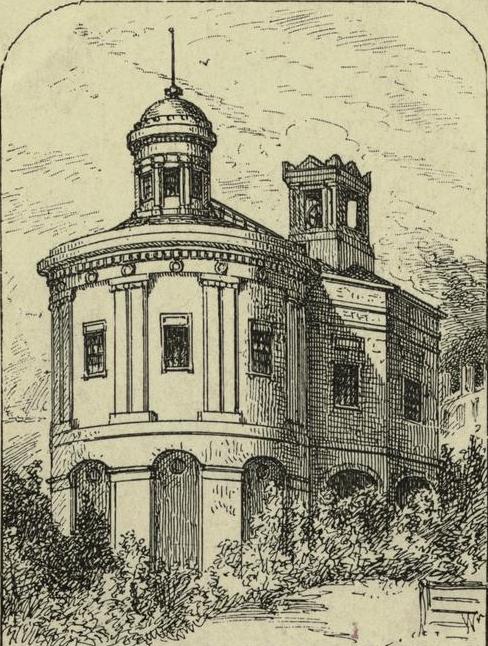
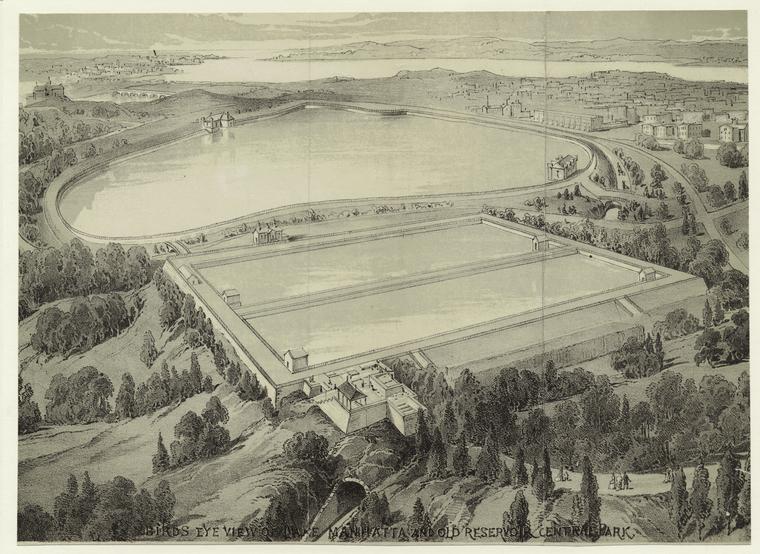
The Yorkville reservoir, how it looked on its opening in 1842. It was located between 79th and 86th Streets and between Sixth and Seventh Avenues. Many years later, was surrounded by Central Park and was later torn down to become the park’s Great Lawn. What does remain, however, is….
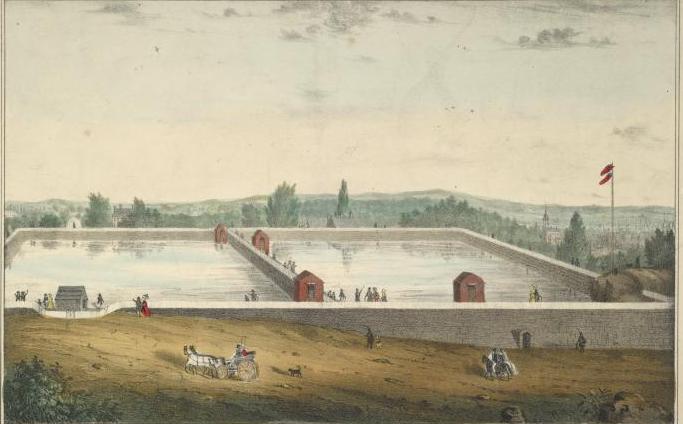
…the Central Park receiving reservoir, built in the 1850s and, unlike the Yorkville, incorporated into the park’s designs. Today it’s named for Jacqueline Kennedy Onassis, who lived nearby and frequently jogged around it.
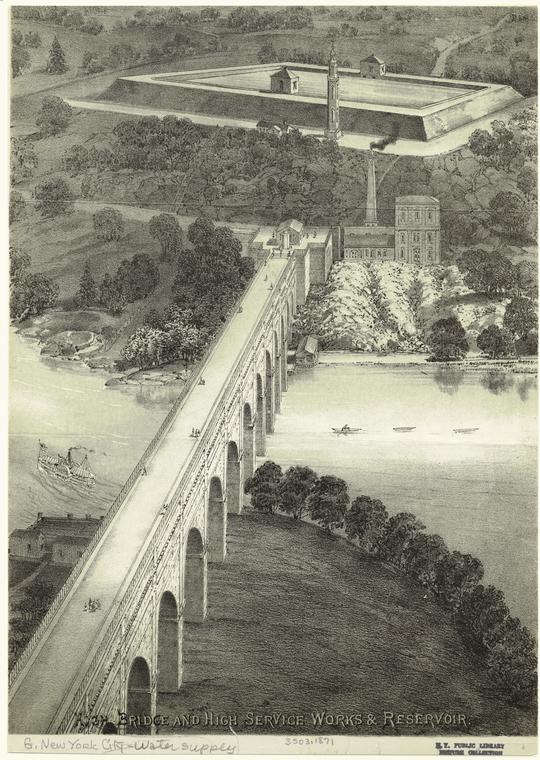
The spectacular High Bridge, part of the Croton system, with its adjoining smaller reservoir and water tower, serving the needs of residents of Manhattan’s higher elevations.
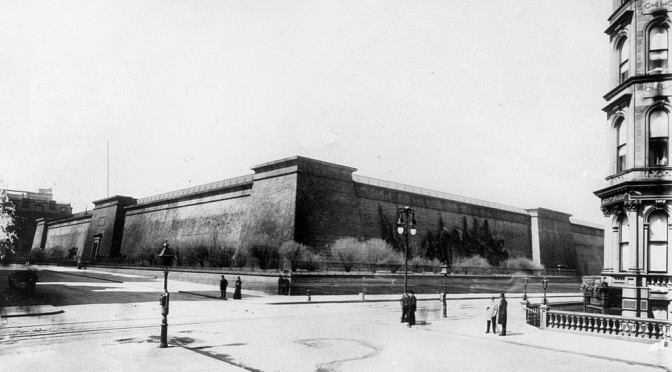
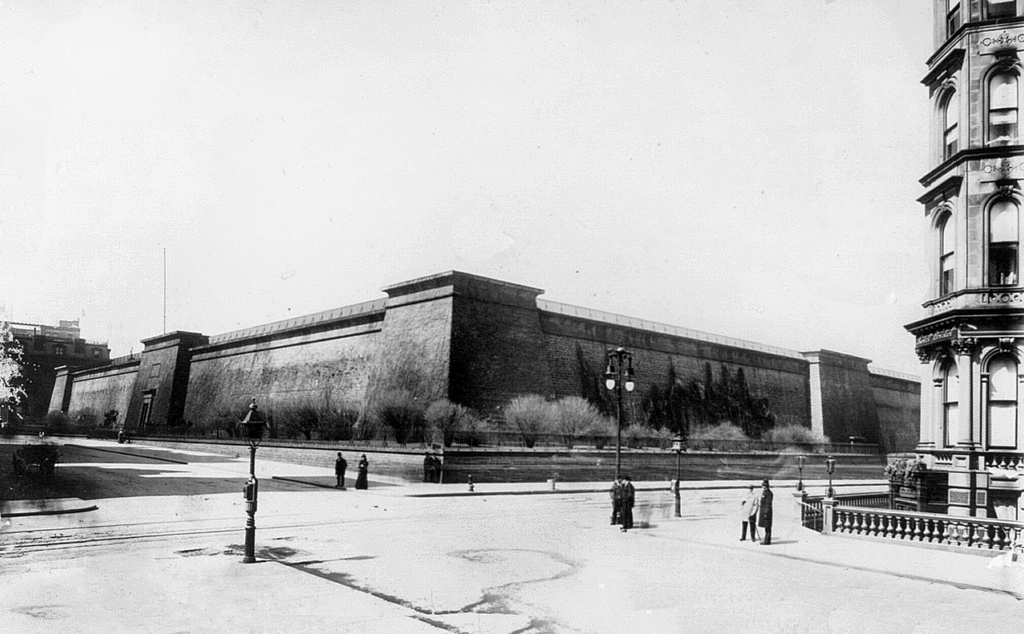
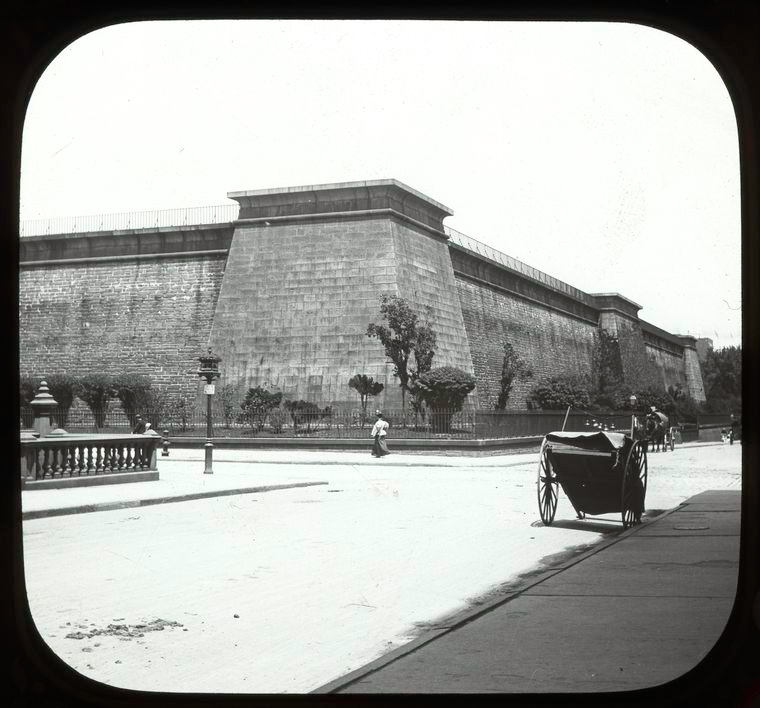
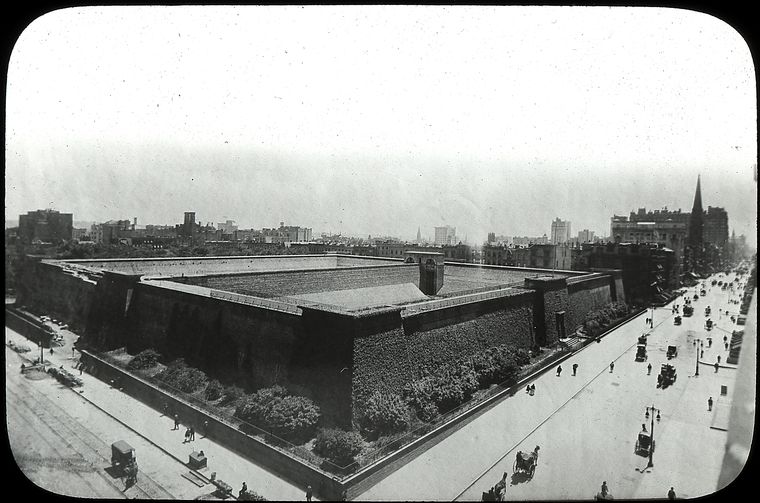
The grand Murray Hill Reservoir, probably the most popular of the reservoirs with 19th century tourists. Situated on land that had held the fabulous Crystal Palace (destroyed by fire in 1858), the reservoir was demolished in the 1890s to make room for Bryant Park and the New York Public Library.
Brooklyn was maintained in the 19th century in two reservoirs, one in Ridgewood and the other high atop Mount Prospect, although the ultimate source of the water came from a variety of places.
An issue of Scientific American in 1906, celebrating ‘the concreting’ of the Bronx’s Jerome Park Reservoir which opened that year and contained portions of both the old and new Croton Aqueduct systems.
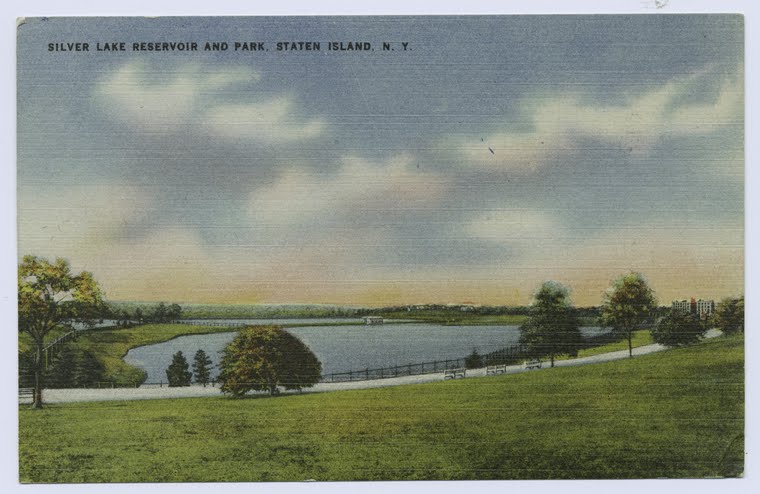
The 1917 Silver Lake reservoir in Staten Island was constructed, like the Central Park reservoir, to be a functional feature of a park setting.
Pictures courtesy the New York Public Library, the Brooklyn Museum and the Library of Congress. Thanks as always to these institutions. The Scientific American can be found here.
Why go to Kentucky? New York’s horseracing history

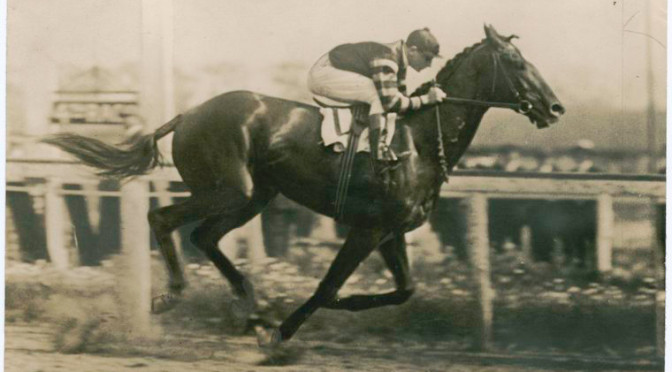
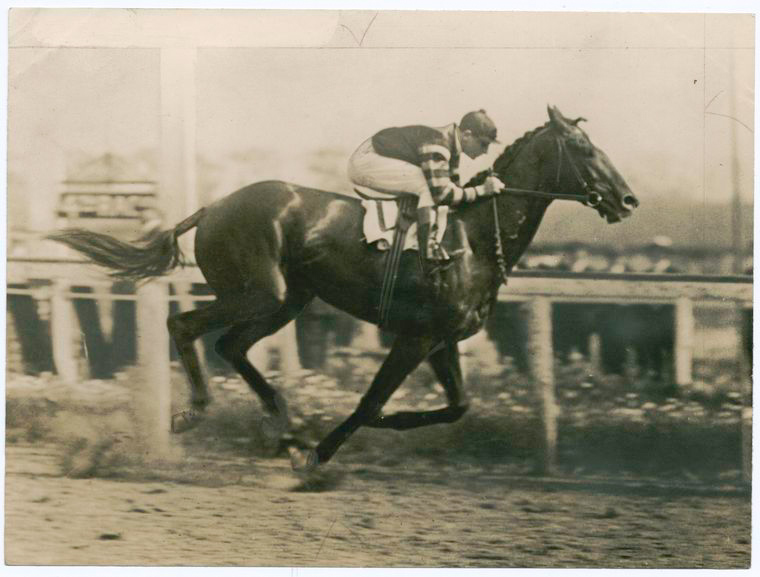
Above: Man O’ War, racing at Belmont, where one of the world’s greatest thoroughbreds cemented his reputation. The horse was actually owned by the son of Belmont Park namesake August Belmont. (NYPL)

The Kentucky Derby is this Saturday: two minutes of race and a day of fanciful hats, mint juleps and fanning oneself with a program at Churchill Downs. As the event that kicks off horse-racing’s Triple Crown competition, racing fans then gallop to Maryland for the Preakness before finishing in the Belmont Stakes. That final event takes place in New York City (well, kind of, a little bit, see below) at Belmont Park, which officially opened its gates 106 years ago today.

New York City has a healthy horse-racing tradition stretching to its very beginnings. In fact, the very first specially built race track in America was constructed in 1665 by New York’s colonial governor Richard Nicholl. Called Newmarket and located in the Hempstead Plains (just outside today’s border with Queens), it proved an enduring enterprise for colonists over a 100 years later. Smaller tracks were soon built in countryside closer to Manhattan island, some aristocratic British landowners would even built personal tracks on their estates.

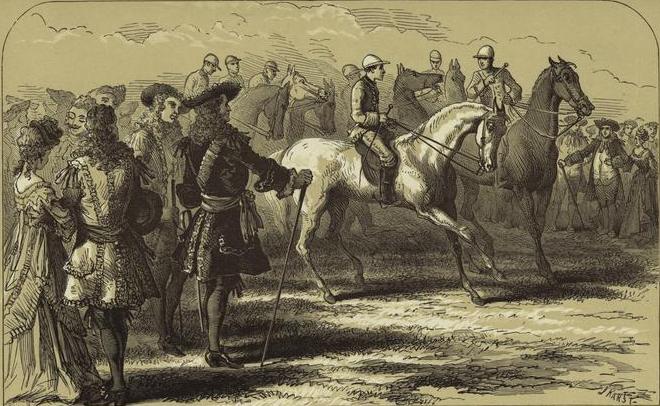
Below: The track at Newmarket, “sixteen miles long and four wide, unmarred by stick or stone.” [NYPL]

As it’s often considered today, horseracing represented vice, gambling and drinking among its prime distractions. It was discouraged by the Patriots during the Revolutionary War, but the British, holed up in New York for the entire conflict, blew off a little steam at the racetrack, constructing a new course, appropriately named Ascot Heath, approximately around today’s Brooklyn neighborhood of Flatlands.

New Yorkers threw the British out of the city in 1783 only to immediately indulge in their former oppressors’ racetrack pleasures. Seen as a corrupting British-era vice, horseracing was banned entirely for two decades then later allowed to carry on in one place — Queens County.

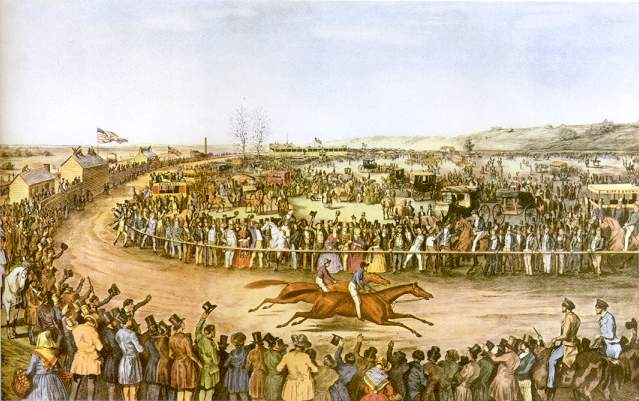
With regional exclusivity, horserace lovers looked to the popular trotting lane along Woodhaven Boulevard and built Union Course there in 1821. It became the most important race track in America and, for moral New Yorkers, a sesspool of sin. By the end of the decade, the track was being managed by former mayor Cadwallader D. Colden, once known for cracking down of alcohol consumption during his tenure.

Below: The galloping goings-on at Union Course, in the future neighborhood of Woodhaven

For those horrified by such vulgar activity, horsetrotting — a more civilized cousin to racing — was also popular in New York by this time, especially among the wealthy, making bucolic Harlem the prime destination for proper horsing around. Financiers and millionaires named Vanderbilt, Gould and Fisk made the upper reaches of Manhattan their own private race tracks, builting lavish stables in the neighborhoods near Harlem Lane.

By the start of a new century, horseracing defined a few region in Brooklyn. When William Engeman carved out some land east of Coney Island and called it Brighton Beach, one method they used of attracting city-goers to his luxury hotel there was building a racetrack. The Brighton Beach Race Course, located between Ocean Parkway and Coney Island Avenue, was soon joined by the nearby Sheepshead Bay Race Track, the product of a wealthy jockey club that included grandson to the Commodore, Willim Kissam Vanderbilt.

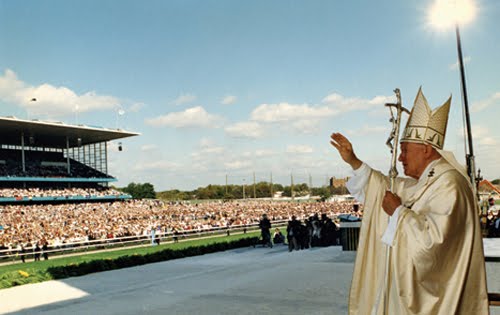
Not to be outdone, a former water conduit in Queens became the Aqueduct Racetrack in 1894 around the time the surrounding undeveloped land became the planned community of Ozone Park. It still enterains sports fans today and is one of the few venues in all of New York City to have hosted a visit by the Pope (the newly beatified Pope John Paul II, in 1995, see below).

The rich might have planted more racetracks for their amusement throughout the city had the the state not banned gambling in 1908. (Off-track betting returned to the city in the 1970s.) Some tracks tried to transition to speed competitions for those newfangled automobiles, but most closed.

Interestingly positioned by 1905 was Belmont Park, a swanky racing track near the original place where Newmarket once stood long ago. The Park is technically in Elmont, Long Island, but it abuts the border of Queens and can be easily reached by the Long Island Railroad. By this time, horseracing was neither the wiling of the rich or the indulgent of the poor, but a pasttime for all. According to the New York Tribute’s coverage of opening day, 106 years ago today, on May 4, 1905:

The attendance, morever, was not restricted to any one locality nor to any one class…. The Bowery and the Avenue mingled in the surging democracy of the betting ring. And both the Bowery and the Avenue wore its best clothes — and went home with them tattered and torn. In the more exclusive precincts of the clubhouse and the paddock there was a tendency to affect the raiment of Goodwood and Ascot, and tall hats and frock coats stood out conspicuously in the picture.”

It was so signficant that even Thomas Edison’s film crew was there to document the big day:

The famous third of the Triple Crown, today held at Belmont Park, became a part of the horseracing tradition in 1866 at the most famous former track in the Bronx — Jerome Park Racetrack, constructed by Belmont friend and racing afficionado Leonard Jerome. After moving briefly to a track in Morris Park, it moved to Belmont in the park’s opening year and has been saddled there ever since.