Categories
Brooklyn History Neighborhoods

No sheep in Sheepshead Bay, but lots of fish with human teeth

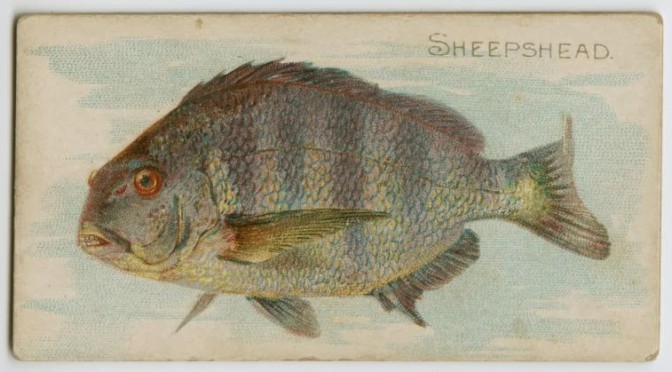
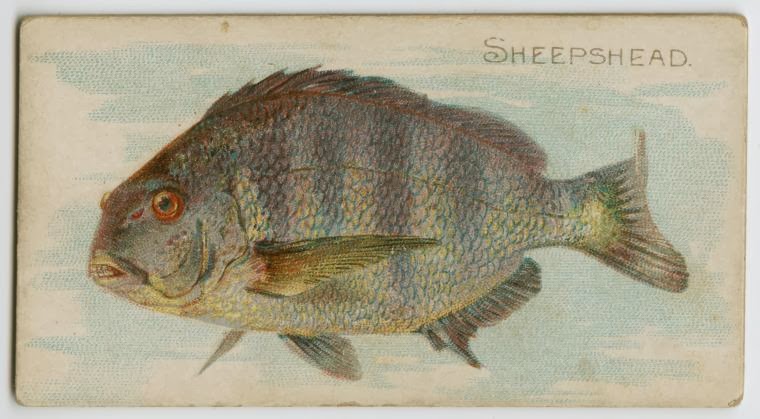
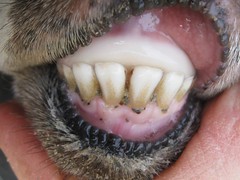
The sheepshead is a common variety marine fish known for its distinctive black stripes and a very scary looking set of teeth.  If you look too long at it, you will have nightmares tonight.  Some believe the fish’s unusual name comes from the notion that its teeth actually look like those of adult sheep.  I personally don’t see it, but you can compare here and here.

What we do know, however, is that the Sheepshead lends its name to one of Brooklyn’s loveliest places — Sheepshead Bay and the adjoining neighborhood.of the same name.

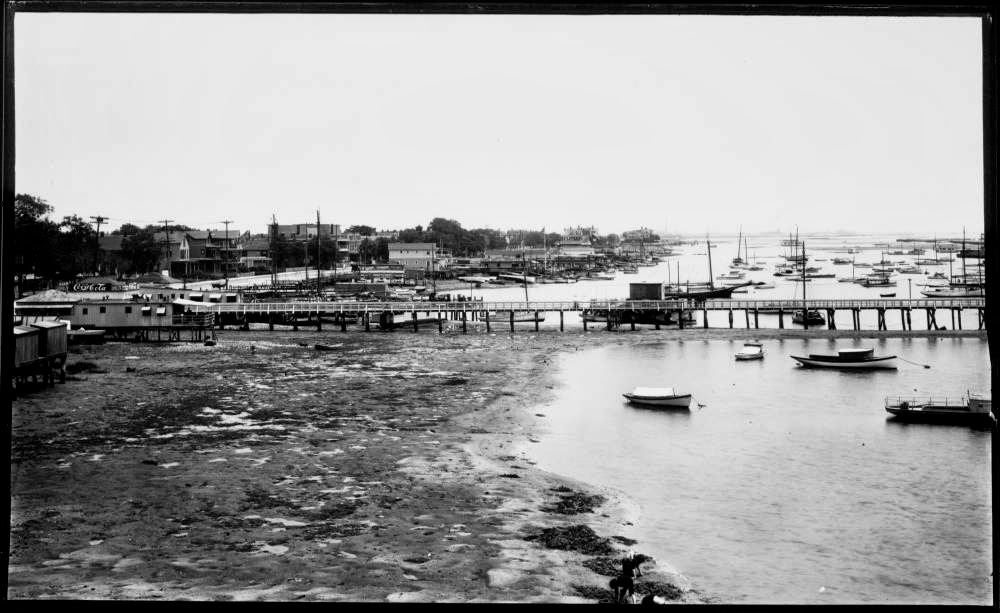
Below: Sheepshead Bay in 1905 (courtesy George Eastman House)

But who thought to name the area after one of its common aquatic residents?  We can probably bestow that honor onto Benjamin Freeman, who owned much of the land around the bay and became one of the first entrepreneurs to open a hotel here in 1844.  He called his establishment The Sheepshead, adorning the front with a large picture of a sheepshead.  This decision by Freeman would forever give the area its unusual name.

During the mid and late 19th century, the bay area would never hold the same luxurious reputation as Brighton Beach and Manhattan Beach to the south.  Its hotels and recreation spots had a less respectable appeal, though not without certain charms.

 A 1870 roundup in the Brooklyn Daily Eagle of Sheepshead Bay offering sings the praises of  the Union, “the largest hotel in the bay,” owned by a Brooklyn congressman Patrick Burns, a place of rambunctious entertainments.  From an 1873 report in the New York Tribune:  “[N]umerous roughs from New York and the Fifth Ward of Brooklyn were leaving in coaches to Burns Hotel in Sheepshead Bay to witness a prize-fight.”

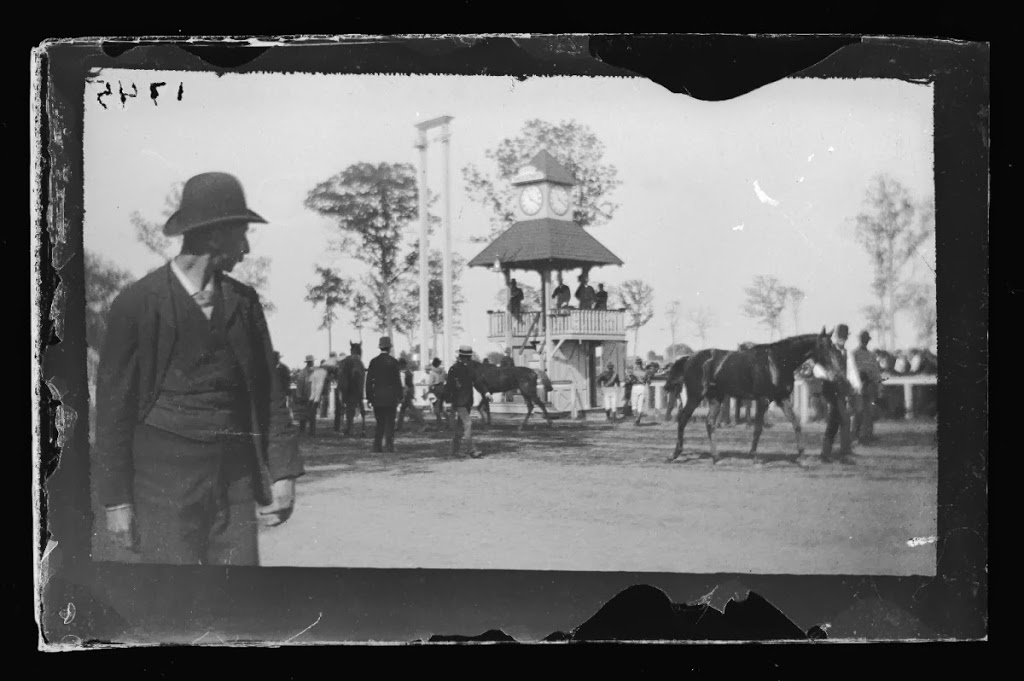
Below: The Sheepshead Bay racetrack, taken by George Bradford Brainard, courtesy the Brooklyn Museum

Sports would always define the early recreations of Sheepshead Bay, and not just fishing and boating pleasures.  In 1880, one of America’s great horse-racing tracks was constructed here, a popular draw due to the Gilded Age moguls who funded the venture, including the godfather of horse racing August Belmont Jr.  When racetrack betting became illegal in the 1910s, the track was refitted for auto racing.

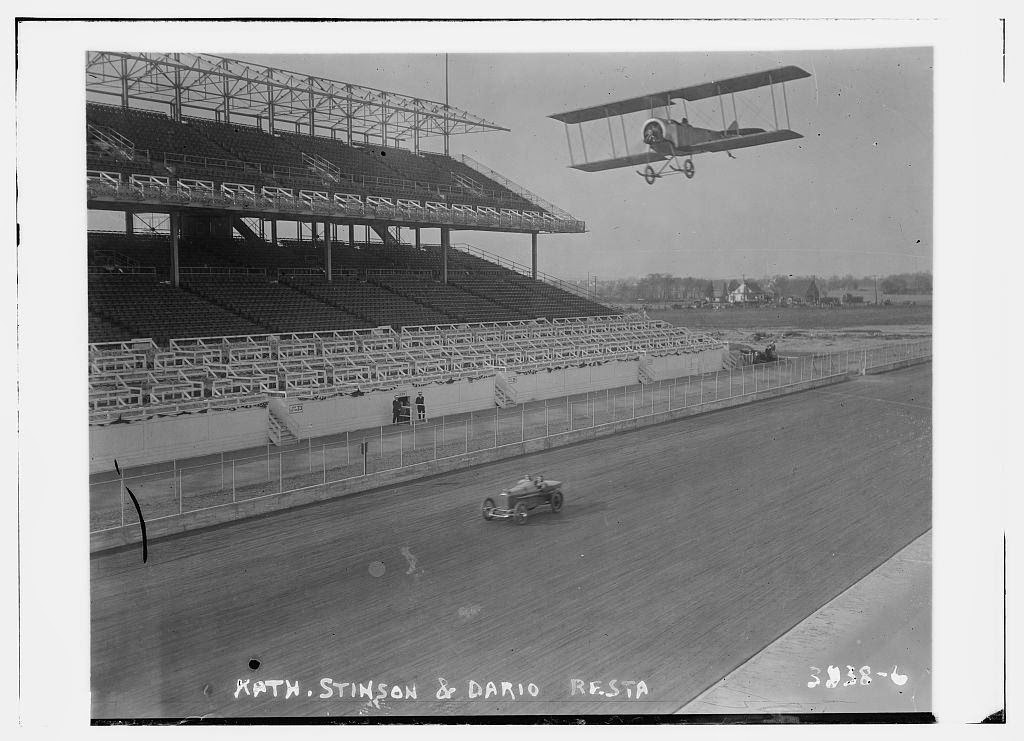
And, as you can see below, sometimes stunt airplane acrobatics!  This image, from the Library of Congress, shows a Sheepshead Bay ‘race’ between two very modern devices — an automobile driven by Italian racing legend Dario Resta and an airplane steered by pioneering pilot Katherine Stinson.

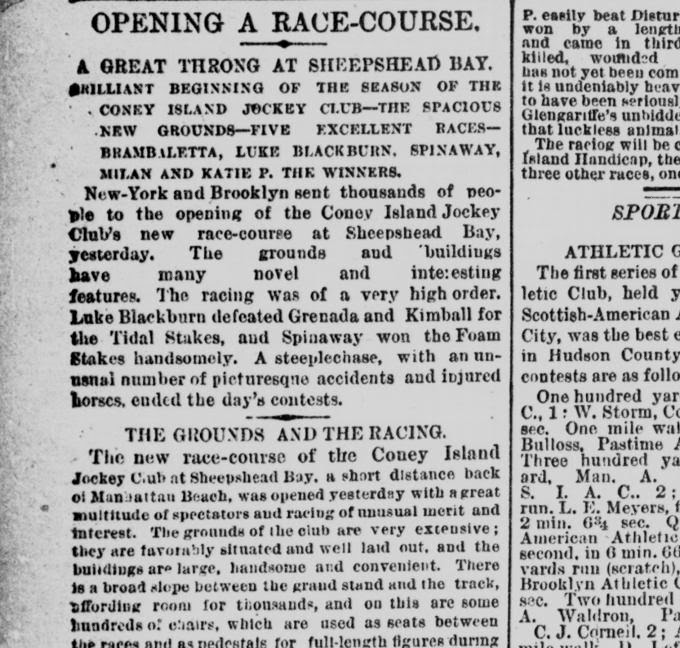
Below: From the June 1880 opening of the Sheepsead Bay Race Track.  Note this disturbing sentence: “A steeplechase, with an unusual number of picturesque accidents and injured horses, ended the days contests.”

Fish picture at top from a cigarette card, courtesy NYPL

South Bronx and the days of new American aristocracy

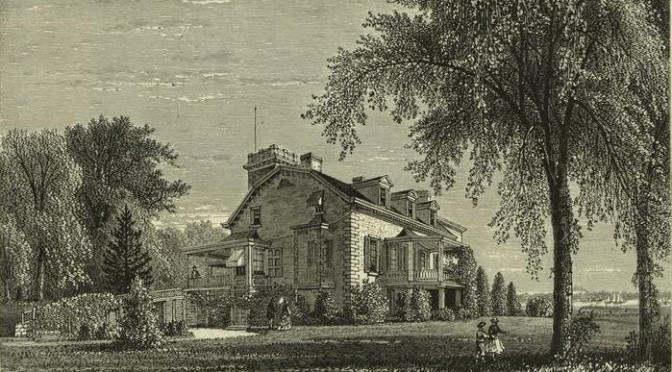
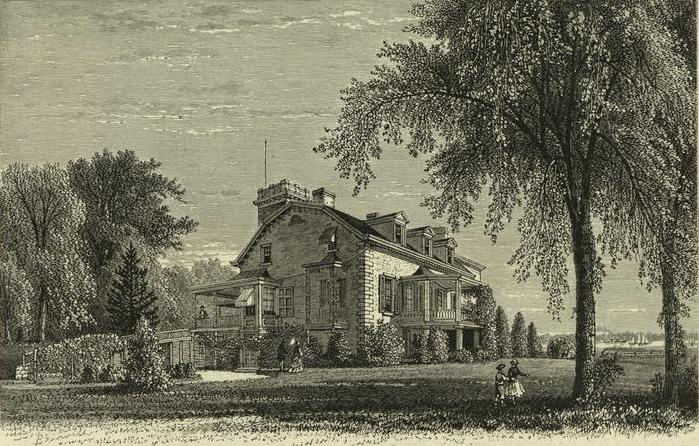
What you think about when you think about the South Bronx: the Morrisania estate built by Gouverneur Morris. (NYPL)

NAME THAT NEIGHBORHOOD Some New York neighborhoods are simply named for their location on a map (East Village, Midtown). Others are given prefabricated designations (SoHo, DUMBO). But a few retain names that link them intimately with their pasts. Other entries in this series can be found here.

NEIGHBORHOOD: Morrisania, the Bronx

Was there an estate in New York ever as beautiful as Morrisania, nearly 2,000 acres that hugged the Harlem River until it opened out into the turbulent East River as it coursed past small islands and flowed into the Long Island Sound? A property that varied from western hills looking over the river to the rolling spread of Manhattan below, to eastern marshes and flatlands suitable for farming.

Today’s Bronx neighborhood of Morrisania is only a small portion of the original property owned by the Morris family since the 1670s, during the dawning years of British dominance in the New York region. The original parcel, purchased by Welsh captain Richard Morris, was only 500 acres, a part of original land settled by Bronx namesake Jonas Bronck.

When Richard died, brother Lewis Morris (for reasons that will soon be evident, let’s call him Lewis 1) moved from the West Indies to claim the property. He would be one in a succession of Lewis Morrises to live here and place an imprint on what would some day contain much of the South Bronx.

The Morris family was feisty, business savvy, well connected, extremely aristocratic and entirely unoriginal with names. Another Lewis Morris (Richard’s son, or Lewis 2) became the governor, at separate times, of both New York and New Jersey. Yet another Lewis (Lewis 3) became a powerful New York justice. His son Lewis Morris (Lewis 4) was a signer of the Declaration of Independence.

If you haven’t gleaned it already, the clan carried themselves like some kind of royal family. They were, artificially at least, as were many families in the New World who quickly made fortunes here and staked claims in manners similar to what their forebears were accustomed to in Europe. Over the decades, the Lewises would blend by marriage into other elite, bold-faced families to form a tangled ball of interlinked faux American royalty.

Morrisania for most of the 18th century resembled a miniature British kingdom, with a spread of small farms, dairies and cattle pens operated by those leasing from the Morris family, a proper workaday serfdom common for the era. However, during the early decades, the land was even worked with slave labor, although the practice was phased out in later generations.

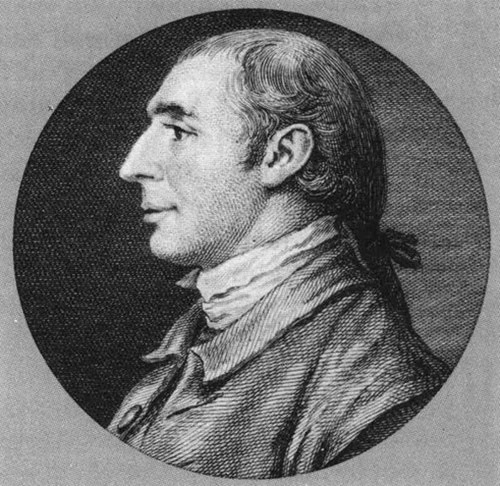
When Lewis 3 passed in 1762, this massive property was split in two. West of the small babbling Mill Brook (honored today with a playground and a housing development) belonged to Lewis 4 and his brothers, but the more bucolic eastern side fell to Lewis 3’s second wife Sarah and eventually her only son. That’s right, Gouverneur Morris (pictured below).

Gouverneur fled his home during the Revolutionary War, but his mother Sarah stayed behind. During this time, the rich farmland was vandalized and the family’s voluminous library, one of the largest collections in North America at the time, was ransacked.

Gouverneur was quite busy in the late 18th century doing things like penning the Constitution and being minister to France in the midst of their bloody revolution. But wherever he traveled, he always felt a closeness to Morrisania.

After the war, while Gouverneur in France, Lewis 4 offered up the family estate of Morrisania be used as the site for the new American capital. One can just imagine the history of New York had Congress taken him up on that offer!

In 1798, when Gouverneur returned from France and claimed the property for himself, he built a new home here and filled it with all his gathered French finery. Perhaps no household was more beautiful — or as pretentious — as Morris’ new manor.

Gouverneur, of course, facilitated the growth of New York with his roles in the development of both the Commissioners Plan of 1811 and the Erie Canal. His old farms, however, were technically part of Westchester Country. In the 1840s, his son Gouverneur Morris Jr. emulated New York’s former estate owners and began to develop his property for commercial and residential use.

Chief among these decisions was becoming vice president of the New York and Harlem Railroad (eventually to be owned by Cornelius Vanderbilt) and allowing the railroad to cut through the old property. Townships formed around the railroad station, include one small village named the old manor, Morrisania. That village is the root of today’s neighborhood of the same name.

Gouverneur Junior was cut from the visionary mold that would define many in the 19th Century. One pet project was the development of a port village along the old family property on the eastern shoreline, today’s Port Morris area.

Given that Gouverneur Senior was partially responsible for Manhattan’s grid, it’s no surprise that a different grid patterns were adhered to the old Morris properties over the years. In emulating Manhattan’s pattern, all traces of the area’s early farm existence was eradicated. The following years was hold many strange detours in the history of the South Bronx: opulent boulevards, the Yankees, 1970s crime sprees. But the Morrises live on, if in name only.

The original Farmville; or putting the ‘green’ in Greenpoint

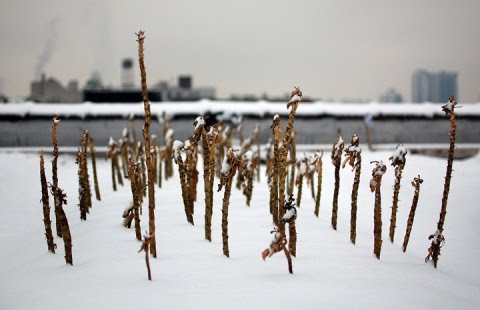
Frozen farm: The Eagle Street Rooftop Farm waits out the weather for a better day. (Courtesy Scott Nyerges)

NAME THAT NEIGHBORHOOD Some New York neighborhoods are simply named for their location on a map (East Village, Midtown). Others are given prefabricated designations (SoHo, DUMBO). But a few retain names that link them intimately with their pasts. Other entries in this series can be found here.

NEIGHBORHOOD: Greenpoint, Brooklyn

Last month I took in a terrific exhibition of photography by my old friend Scott Nyerges, documenting a year in the life of the Eagle Street Rooftop Farm in Greenpoint, Brooklyn. The farm (all 6,000 square feet of it) sits atop an old warehouse near the mouth of Newtown Creek as it spills into the East River.

Typical farming may not lend itself to photographic opportunity, but add a view from a few stories up, and you get something rather surreal. The rooftop farm, one of several sprouting up on top of New York buildings, offers local restaurants and budding farmers an opportunity to use organically grown produce and even grow their own food.

But the Eagle Street farm actually brings Greenpoint back to its roots. Literally. And nods to the origin of its name.

I’ve always associated Greenpoint with industry, its shores dominated by dockyards and its rows of streets, running in alphabetical order from north to south, defined by factories and warehouses. Its rich Polish community traces its development to immigrants who moved here to work in those very places.

But the original settlers to the area had a very good reason to call it Greenpoint. This was once a vigorous and fertile farming community, with ideal soil conditions and access to a waterway that could get farmers to the thriving markets of New York.

There was even an actual point of green, so to speak, a slender neck of land covered in grass that jutted into the East River at this location. (One source says the point was actually planted with green wheat.) Those travelling along the river in the early days called it as they saw it — Green Point. I’m not sure what happened to this long-gone natural feature, but eventually it lent its name to the entire neighborhood.

Also gone is a third body of water, filled in long ago, that helped define (and segregate) the region — Bushwick Creek (sometimes known as Norman Kill), which ran south, and separated it from the town of Williamsburgh to the south. For some idea of where this creek might have sat, simply erase everything between the Bushwick inlet and McCarren Park and replace it with a marsh.

The region became part of the Dutch town of Boswijck (Bushwick) in 1638 and would not become distinguished by its current name for almost 200 years. During the time, the area was noted for large farms, many in the early days worked by slave labor. One of the first farmers was the Nordic implant Dirck Volckertsen whose nickname, Dirck de Noorman, gave the creek its alternate name. By the age of the Revolutionary War, farmers with familiar names like Meserole, Calyer and Provoost all set up stakes here.

During these years, Greenpoint earned its nickname as the ‘garden spot’ of the region; but with the growth of New York, Brooklyn and Williamsburg in the early 19th century came the industrialization of the shores. The old farms were replaced with factories. Its name became a bit of a farce as oil refineries and shipyards soon defined the area. Bushwick Creek was filled in by the early 20th century.

The Eagle Street Rooftop Farm brings urban agriculture back to the neighborhood after almost 150 years. Too bad it’s the dead of winter here in New York and currently snowing, because a lovely stroll through some tended fields, high in the skyline, sounds like a really good idea right now.

You can see more of Scott’s rooftop photography at his website. The Eagle Street Rooftop Farm reopens in April.

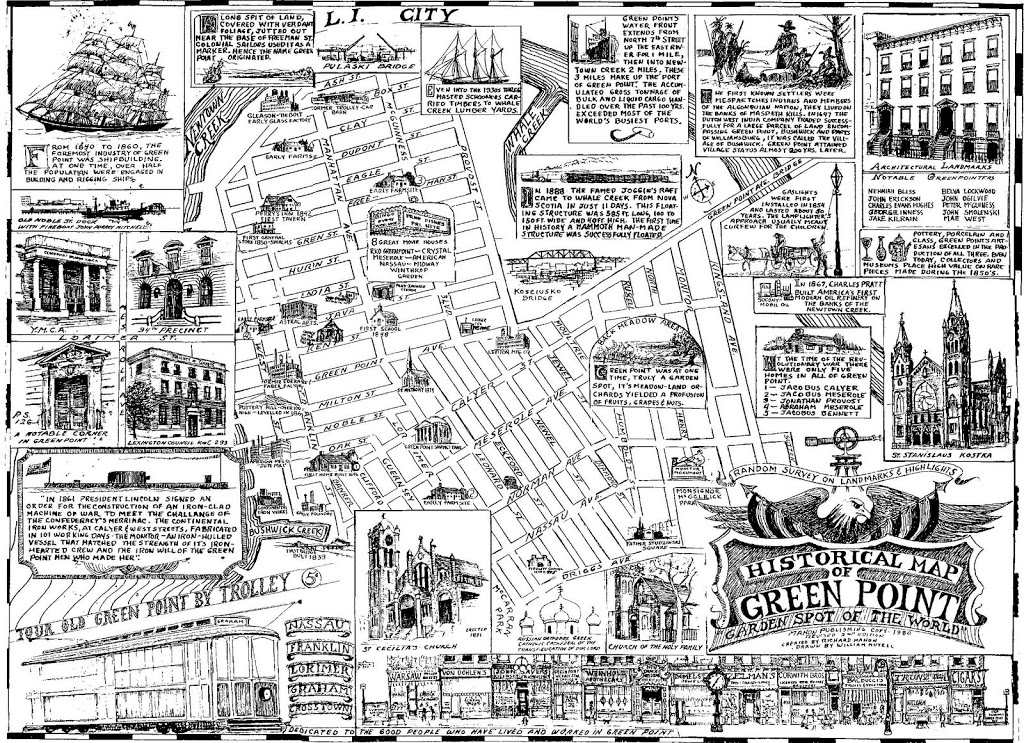
I found the best little ‘old time’ map of Greenpoint history which pinpoints the exact area of this original ‘green point’. But you’re going to want to click into this to see the details (Map courtesy Greenpt):

Polish heroes, unliked dams and peculiar misspellings: Origins of ten New York City bridge names

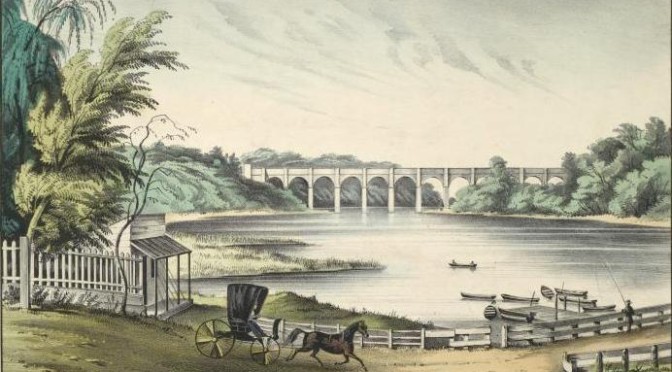
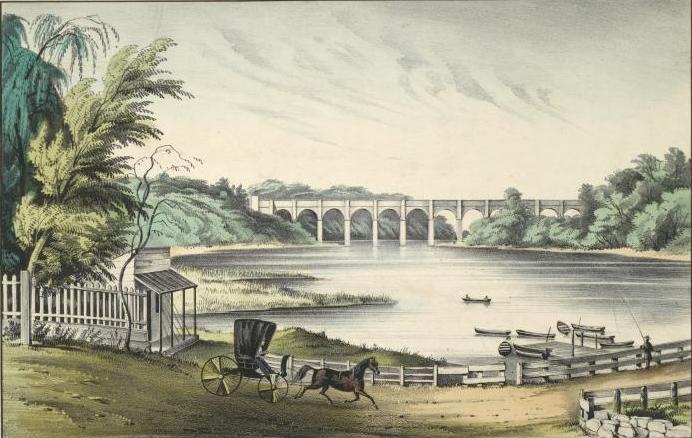
The newly built High Bridge over the Harlem River, as it looked in 1849. (NYPL)

Here’s a handy primer to ten of the most strangely named bridges in the New York City metropolitan area. Most of these names are probably familiar to you, and you probably pass over many of these bridges without giving a second thought to their name origin. Some are simply named for small neighborhoods or geographical features; others share the names of men that occasionally have little to no connection to the bridge at all. May you never drive over a body of water without being informed!

Bronx-Whitestone Bridge (Bronx/Queens) This intriguing span by Othmar Ammann (builder of six NYC bridges) has a slightly off-kilter name. Whitestone is a neighborhood in Queens and also gives its name to an expressway. To be consistent, shouldn’t it be the Bronx-Queens Bridge? Perhaps, but the bridge entrance in the Bronx is west of the neighborhood of Throggs Neck, and that neighborhood already has a bridge named after it — almost (see below).

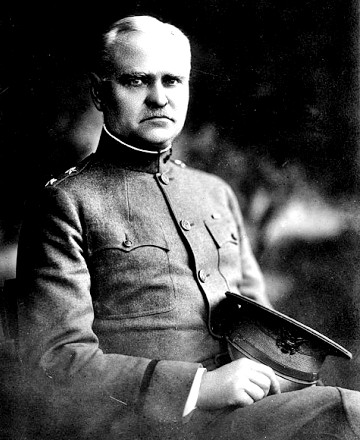
Goethals Bridge (Staten Island/New Jersey) The oldest vehicular bridge in Staten Island, this span over the Arthur Kill honors Brooklyn-born George Washington Goethals (at right) who helped construct the Panama Canal. He was also the first consulting engineer for an early version of Port Authority, not their only former employee to give their name to a bridge (see below).

High Bridge (Manhattan/Bronx) The oldest bridge in New York, created in 1848 as part of the Croton Aqueduct water system, is certainly high. But its name has a practical implication. Its creators considered a ‘low bridge’ — literally closer to the Harlem River — but that would require a draw mechanism for boat traffic. The ‘high’ bridge could transport water unimpeded.

Kosciuszko Bridge (Brooklyn/Queens) The brother of the Pulaski Bridge (see below), this oft-mispronounced crossing is named for Tadeusz KoÅ›ciuszko, a Polish volunteer in George Washington’s Continental Army who went on to lead battalions in Poland against Russian forces in the 1790s. Like the Marquis de Lafayette, you can find his name in towns and streets across the United States.

Lord Byron once said, “That sound that crashes in the tyrant’s ear – Kosciuszko!” He was probably not referring to the multiple pronunciations. (You’ll hear it either as “kahs-kee-OOSH-koh” or, more accutrately, “kohsh-CHOOSH-koh”.) [source]

Macombs Dam Bridge (Manhattan/Bronx) This bright swing bridge is familiar to anybody whose been to Yankees Stadium, hovering over the Harlem River. But it harbors perhaps the most violent history of any bridge in New York. Robert Macomb was a miller who received permission from the state in 1813 to place a dam in the Harlem. A private toll bridge sat above the dam, operated by Macomb, making him quite wealthy. Local residents, angered by the useless, ill maintained dam and the hazardous conditions it created, literally took axes to it in 1829.

Outerbridge Bridge (Staten Island/New Jersey) People really call it the Outerbridge Crossing or simply the Outerbridge. But if you’re being truly consistent, then it has to be Outerbridge Bridge. Because Outerbridge was an actual person — Eugenius Harvey Outerbridge, a Staten Islander who became the first president of Port Authority. Has there ever been a more perfect name for that particular function? As a bridge name, however, it continues to cause confusion.

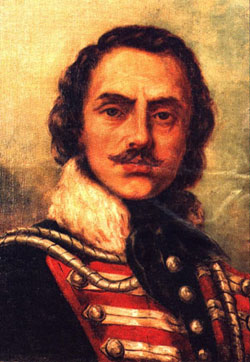
Pulaski Bridge (Brooklyn/Queens) This critical pass over Newtown Creek separating the two boroughs is yet another bridge named for a Polish hero, in this case Casimir Pułaski (at left). A revolutionary fighting against Russian forces, Pulaski was a political hot potato. But Lafayette and Benjamin Franklin were fans. He was recruited for the American Revolutionary War and once saved the life of George Washington (who also has his own New York City bridge) before dying in battle in Georgia.

Throgs Neck Bridge (Bronx/Queens) Inspired by the name of the neighborhood in which it passes — Throggs Neck. Popular legend has it that Robert Moses thought the extra ‘G’ made the name too long, so he chucked it. This would not be Moses’ first dance with spelling controversies. (See below) Whether with one G or two, Throg/gs Neck traces its name to an early settler here, the Rev. John Throggmorton. [Read more about it here.]

Verrazano-Narrows Bridge (Brooklyn/Staten Island) The longest suspension bridge in the United State, this glorious span, the last by Ammann, is named both for the slender pinch of water it rises over and the 16th century European explorer (Giovanni da Verrazzano) who first sailed through it. If you sometimes can’t remember how to spell the explorer’s name, you’re not alone. Long after they decided on a name, advocates debated whether he had one or two Zs in the name. (Read more about the debate here.) The bridge goes by one Z; the explorer is frequently spelled with two.

Fun fact: This is the only New York City bridge named for somebody who is believed to have been murdered and cannibalized in the West Indies.

Joseph P. Addabbo Memorial Bridge (Queens) This small bridge, spanning Jamaica Bay between the neighborhoods of Howard Beach and Broad Channel, is named for Queens native and U.S. House Representative Joseph Addabbo, a feisty Democrat who frequently sparred with Ronald Reagan. I put it last on this list specifically because it seems that all the Ds and Bs that appear in Mr. Addabbo’s name have successfully made it onto the name of the bridge as well.

City of Cities: Nine neighborhoods with ambitious names

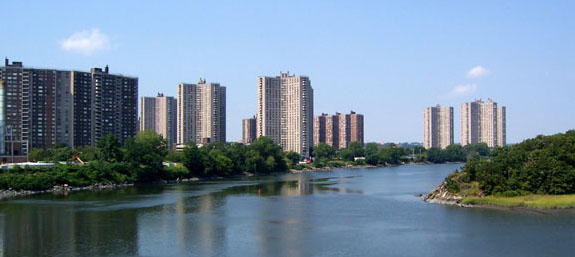
ABOVE Co-op City: the housing development most likely to be seen from space

NAME THAT NEIGHBORHOOD Some New York neighborhoods are simply named for their location on a map (East Village, Midtown). Others are given prefabricated designations (SoHo, DUMBO). But a few retain names that link them intimately with their pasts. Other entries in this series can be found here.

Why are there so many cities in the city of New York City?

New York neighborhoods are often products of their geographic and even geometric environments. They are made of Heights and Estates, Terraces, Channels and Ports, Parks, Hills and Kills, Beaches and Points, Villages and Towers and Gardens, Circles and Squares, not to mention Islands. Some of these name are reflections of the natural environment, others are artificial titles given to real estate properties hoping to lure residents with more natural sounding, civilized names.

But there’s actually quite a number of neighborhoods within the metropolitan area with loftier intentions — neighborhoods that have ‘city’ in their name. Many of them are only cities in the sense of being self-contained housing units. Others are virtual cities, unofficial collections of streets cut off from the main circulation of the city.

But a couple of these places, believe it or not, were once actually self-governing places, their names reminiscent of pre-consolidation days:

Alphabet City, Manhattan
By virtue of starting only at 14th Street, the avenues A through D feel segregated from the flow of the city. Almost from the moment they were carved into the city’s grid in 1811, the avenues were home to middle and lower classes. The heart of German culture thrived here in the 19th century, with Eastern Europeans taking it over the 20th. Where calling it a city might once have been derogatory, today as the anchor of the East Village, it underscores its individuality.


Battery Park City, Manhattan
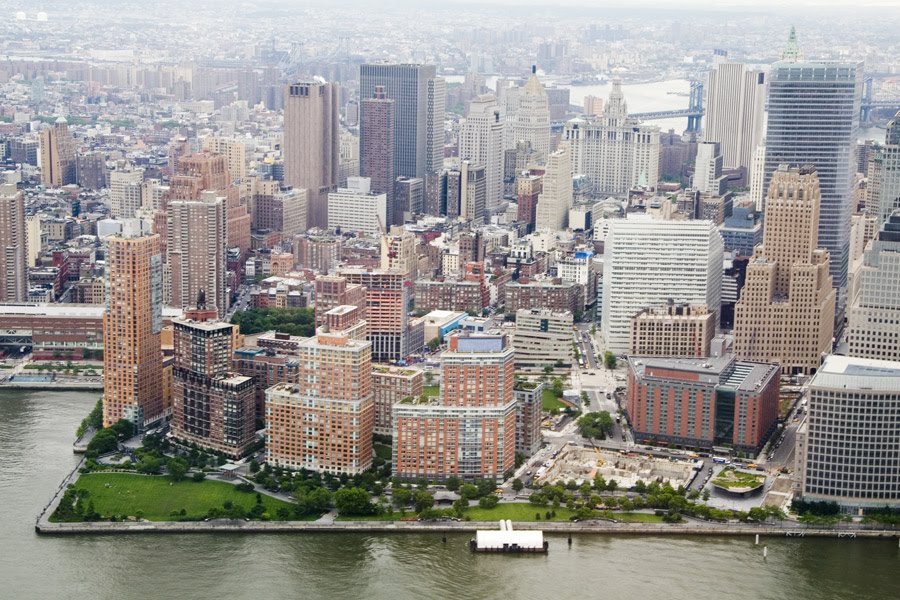
Like Alphabet City, this lower Manhattan planned community, nearby Battery Park, is removed by geography from the regular patterns of the city; unlike Alphabet, every structure is meticulously aligned with the rest. Created on a bed of World Trade Center landfill, most of BPC is younger than its average tenants, with the first structures only started in 1980. It doesn’t feel like New York, which is a benefit for some.


City Island, Bronx
For much of its pre-revolutionary European occupancy, this most New England-y of New York islands was owned by the Thomas Pell family (also owners of what would become Pelham Bay Park and Westchester County, among other things). In 1761, speculator Benjamin Palmer bought the property and renamed it New City Island in a bout of wishful thinking; by calling it a ‘new city’, he hoped to turn property into a thriving upriver port. Its future residents — mostly oyster farmers — dropped the ‘new’ from the name.

Co-Op City, Bronx
Still largely considered New York’s greatest ‘city within a city’. This super-massive housing community, still the largest co-op development in the world, rose from the ashes of failed amusement venture Freedomland U.S.A. (we have a podcast on that ) and opened in 1971. Like a regular city, Co-op City has its history of near bankruptcy, corrupt mismanagement and transportation woes.


Grant City, Staten Island
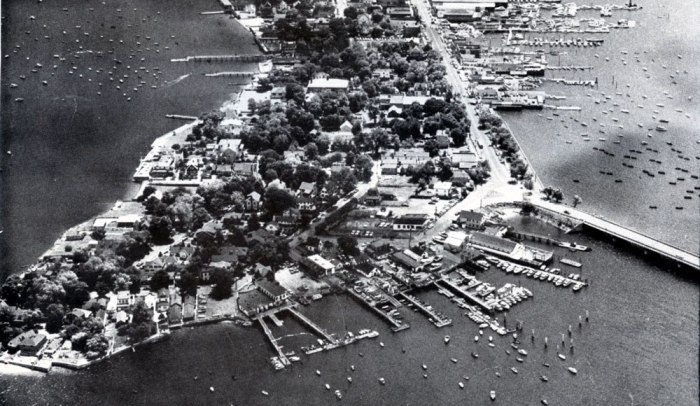
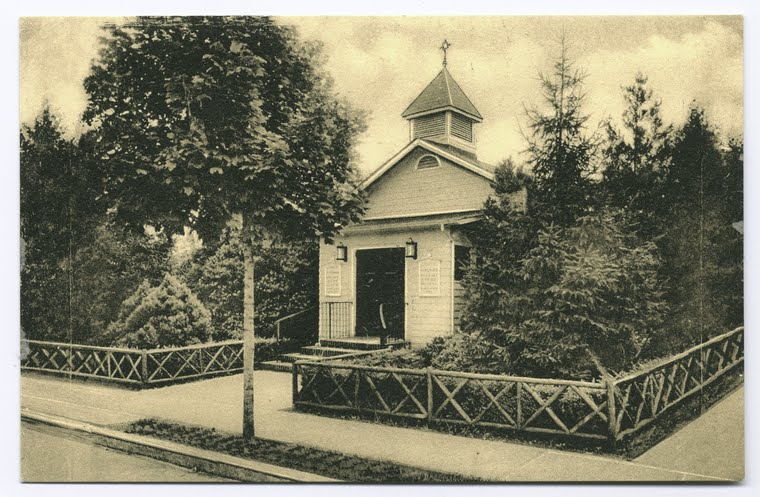
This eastern neighborhood of SI is actually one of New York’s oldest ‘cities’, starting off with the rather fancy names of Frenchtown, then Red Lane, before being renamed during the Civil War after the Union’s most famous general Ulysses S. Grant. Far from being secluded like other New York ‘cities’, Grant City sits nearby the borough’s most historical communities New Dorp and Richmondtown, as well as Staten Island’s highest point, at Todt Hill. (Above, St. Christopher’s Roman Catholic Church in Grant City, pic courtesy NYPL)


LeFrak City, Queens
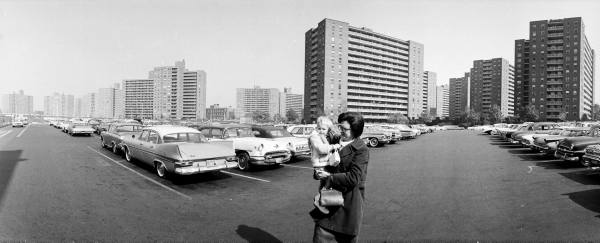
“Live a Little Better” is the slogan of this well-known housing development, started in 1960 and completed in 1969, from real estate mogul and “master of mass housing” Samuel LeFrak, the largest of several residential projects bearing the LeFrak name. The Lefrak Organization began over a hundred years ago with Aaron LeFrak. Samuel’s son Richard was recently a judge on the Miss Universe pageant. (Pic above courtesy Life)

Long Island City, Queens
This is one of the only ‘city’ neighborhoods to actually have, in fact, started as a city. The official Long Island City was cobbled together via charter in 1870 from a cluster of surrounding villages, including Astoria, Steinway, Hunter’s Point and others. It had a run of almost 30 years before being absorbed into the newly formed borough of Queens — and the newly consolidated city — in 1898. Among its many colorful mayors during this time of self-rule was one Paddy Gleason, nicknamed ‘Battle Axe’ for once personally chopping down an objectionable fence owned by the Long Island Railroad.

Starrett City, Brooklyn
Just west of JFK, this large housing development with almost 6,000 apartments sprang up in 1974 and by the 1980s became a controversial model of ‘racial quota’ rentals. It’s recently shed its city status, changing its name to Spring Creek Towers in 2002.

Starrett, by the way, was the name of the development company and, like LeFrak, has nothing to do with the area its built on. The Starrett brothers Theodore and Paul were apprentices of Chicago architect (and creator of the Flatiron Building) Daniel Burnham in the 1890s; much later, their construction company tore down the original Waldorf-Astoria to make room for the Empire State Building.

Tudor City, Manhattan
Tudor City is just like LeFrak and Starrett, but with the virtue of being far older and more aesthetically pleasing. Developer Fred F. French swept away a rather dingy set of tenements in the 1920s — the nearby slaughterhouses had yet to be cleared away to build the United Nations headquarters — and hoped to lure middle-class families with the promise of a “human residential enclave”.

His risky venture worked, partially because he elevated the buildings 30 feet above First Avenue and creating two 15,000-square foot private parks. Truly a ‘city above a city’.

Greenwich Village, when it was green and a village

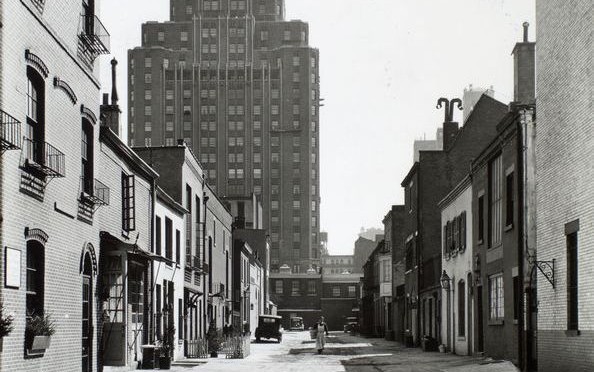
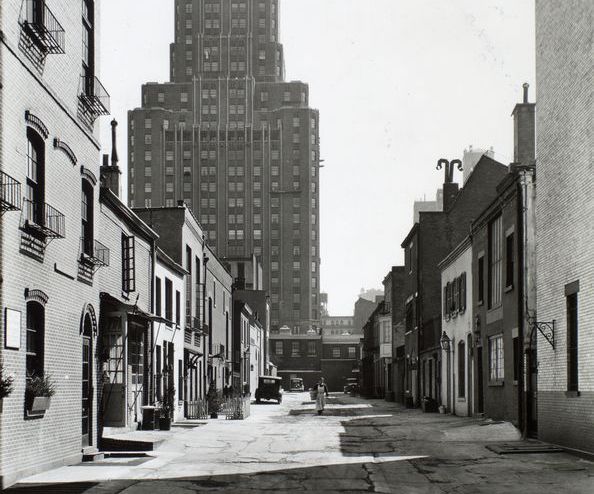
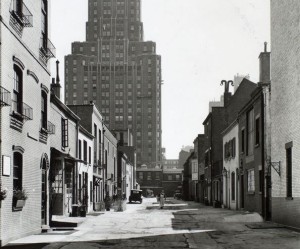
Above: Macdougal Alley in 1936. The plantation home of New Amsterdam director-general Wouter van Twiller would have been situated very close to where this picture was taken. (Find the alley here.)

NAME THAT NEIGHBORHOOD Some New York neighborhoods are simply named for their location on a map (East Village, Midtown). Others are given prefabricated designations (SoHo, DUMBO). But a few retain names that link them intimately with their pasts. Other entries in this series can be found here.

Greenwich Village has been the heart of New York’s cultural identity for over 150 years, the birthplace of city bohemia, where the upper and lower classes collide, the iconic outsider neighborhood between midtown and the financial district. It’s been New York’s home for counter-culture, gay liberation, artistic inspiration, musical innovation and groundbreaking urban renewal. No surprise that it was named New York’s very first historic district in 1969, even as some of its greatest moments were yet to come.

But why do we even call it Greenwich in the first place? And was it ever really a village at all?

I should preface this early history of the Village by saying that the information below deals with Greenwich Village and its sub-neighborhoods the West Village and part of the Meatpacking District (which actually extends farther north). Despite its name, the East Village is actually considered separate from Greenwich, being part of the Lower East Side.

In the wild days of early Dutch occupation of Manhattan, the area of today’s Village district lay 2-3 miles outside the border of the primary Dutch settlement New Amsterdam. That border is approximately Wall Street today.

Imagine the distance between it and 14th street (the generally accepted northern border of Greenwich Village today) as a gradually populated area of hills, swamps and streams, with only a few dirt pathways cutting through the meadows and dense foliage to lands beyond. There was enough farm land to go around if you were brave enough to settle outside city walls, with fears of attacks from both Indians and other Europeans.

To get an idea of how green Greenwich Village used to be, head on over to the Mannahatta Project and type in any Village street name (start with Washington Square North or any listed below).

Back in the day the shore of Manhattan’s west side approximately lay along today’s Greenwich Street; the rest is landfill from later in Manhattan’s development. Near the location of Gansevoort Street today (yes, the Meatpacking District) lay the first village within the Greenwich Village area — the Lenape Indian settlement Sapokanikan or ‘land where the tobacoo grows’. Sapokanikan was essentially a trading settlement and docking point for many traveling native American tribes.

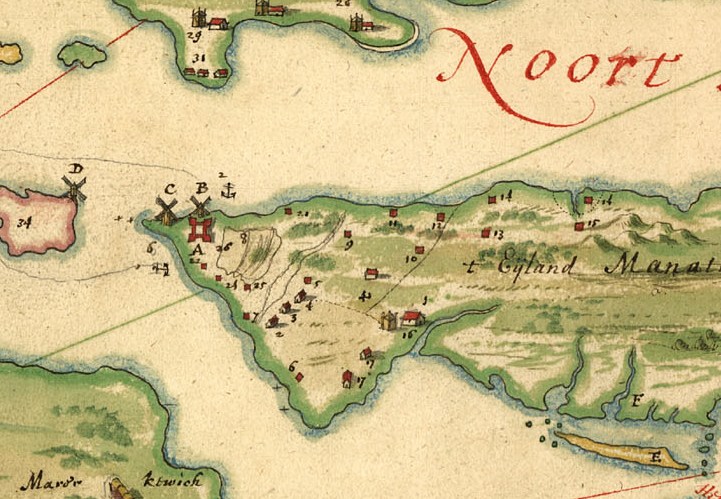
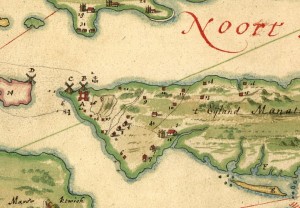
The Dutch took the tobacco reference to heart. The second director-general of New Amsterdam, the colorful Wouter Van Twiller, built a large tobacco plantation ostensibly for the Dutch West India Company but, Wouter being Wouter, mostly for his own personal profit. Wouter’s plantation occupied most of the West Village; his own home sat on plantation ground, at around the area of 8th Street and MacDougal Street. The plantation would be named for the old indian village and also referred to as Bossen Bouwerie (‘farm in the woods’).

Below: Wouter Van Twiller’s farm is marked #10 on this map by Johannes Vingboons from 1639, one of the earlier attempts at mapping the territory of New Netherland
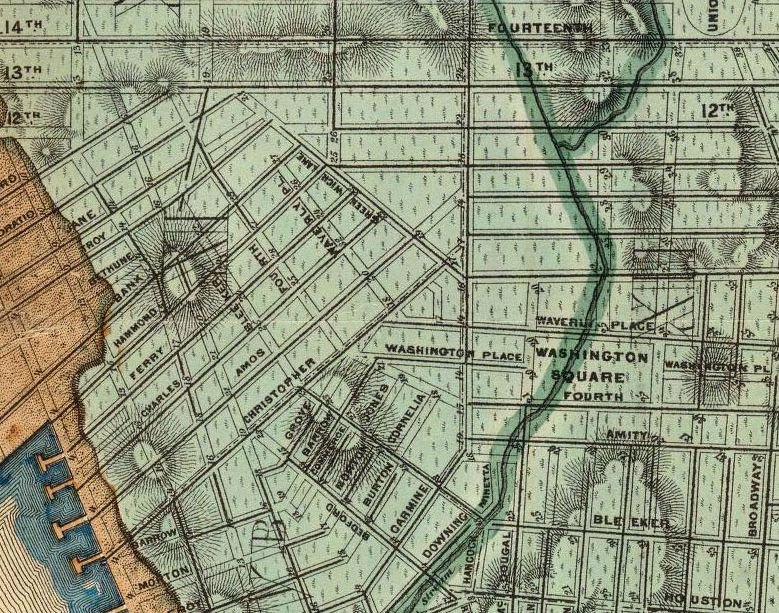
Van Twiller was later dispatched from his duties as the colony’s leader, but he did grant some of his slaves certain freedoms to build their own smaller farms, defenseless along the Minetta Brook (a vital stream that coursed through the region) and on the southern part of today’s Washington Square Park.

Meanwhile, other Dutch companymen came to the region, including two brothers, Jacob and Paulus Van Der Grift, who moved from old Amsterdam to New Amsterdam in 1644 and into this lush area, “co-patroons” of an area that would become known as Nortwyck or Noortwyck (simply ‘north of the city’).

Below: from an 1874 water map designed by Egbert L. Viele, you can see the old Minetta Brook, which formerly cut through the Village district
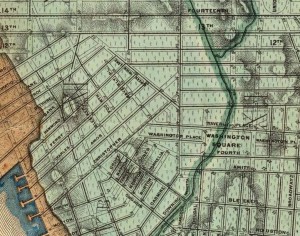
By 1664, the year of the British takeover of the island, the area was essentially dominated by a handful of landowners who had carefully cultivated their property, but had not changed the general properties of the land.

With the British came further development, as well-to-do English citizens began scooping up property for their own lavish mansions. In fact, it became quite fashionable for the wealthier of British citizens, too refined to deal with the growing and quite crowded New York, to situate just outside the city. This is where Nortwyck, a loose assemblage of farms, becomes Greenwich, the domain of idyllic estates.

I’ve seen reference to the name change as reflecting that of the London district of Greenwich, a very tony British resort in the 17th century. But the name may have first come to the area long before the British elites did. According to the New Netherland Institute, a settler in the 1670s, Yellis Mandeville, bought a farm here and named it for an old Long Island Dutch town — Greenwijck, or Pine District.

Once the wealthy British came, it must have seemed natural to simply alter the name to Greenwich, with all the upper-class and luxurious implications that came with it.

There were several principal British landowners of the Village area at this time. One of note, Thomas Randall, would own the area around Washington Square; later, his son Robert Richard Randall would bequeath the area to the city as a respite for retired sea captains and sailors. The city, seeing far greater value to this land for residential townhouses, instead moved the sailors rest home to the northern shore of Staten Island and called it Snug Harbor.

Another, Captain Thomas Clarke, would retire on property further north and call his mansion Chelsea, also named for a London neighborhood (or specifically for a hospital there).

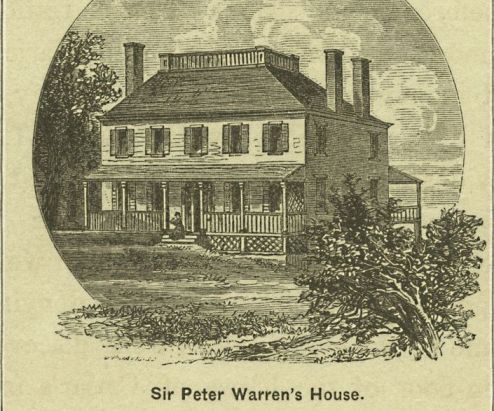
Below: an engraving of the Greenwich Village home of Peter Warren (courtesy NYPL)
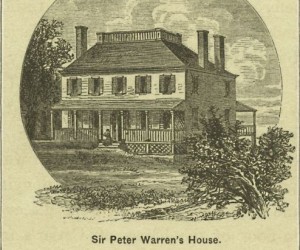
But the real forebear of the Village was an Irishman. Sir Peter Warren, vice-admiral of the British Navy and commander of its New York fleet, who amassed a vast land tract here in the 1740s, almost the entire ‘Green Village’. Warren was without a doubt one of New York’s more renown British citizens. Like the great old New York families that would influence society in the 19th century, Warren’s presence assured that other British clans would race to buy up countryside to create Manhattan’s first suburbia.

By the 18th century, these massive lots would be divvied up and sold off, as demand grew from New Yorkers fleeing the city to escape disease and overcrowding. In these years before far-thinking city planning, the Greenwich lots were haphazardly divided with unorganized streets. This urban chaos was preserved by the 1811 Commissioners Plan, which chopped most of the entire island into uniform blocks but left the Village in its uniquely confounding geography.

Still today, after so many years of living in the city, I routinely get lost there.

Run DMC and the Revolution: Historic Hollis, Queens

It’s like that: Rap pioneers and proud sons of Queens

NAME THAT NEIGHBORHOOD Some New York neighborhoods are simply named for their location on a map (East Village, Midtown). Others are given prefabricated designations (SoHo, DUMBO). But a few retain names that link them intimately with their pasts. Other entries in this series can be found here.
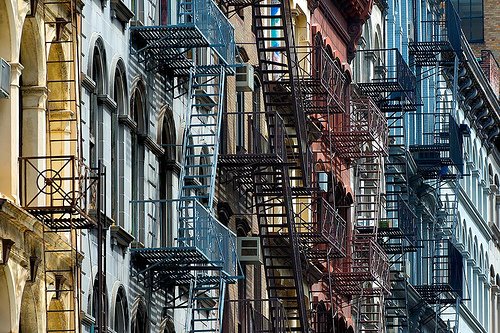
WHERE: HOLLIS — in the southeastern section of Queens. It’s next to the much larger Jamaica, a neighborhood with an even stranger origin to its name

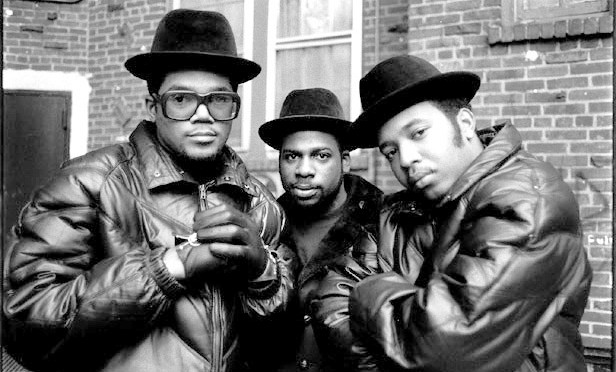
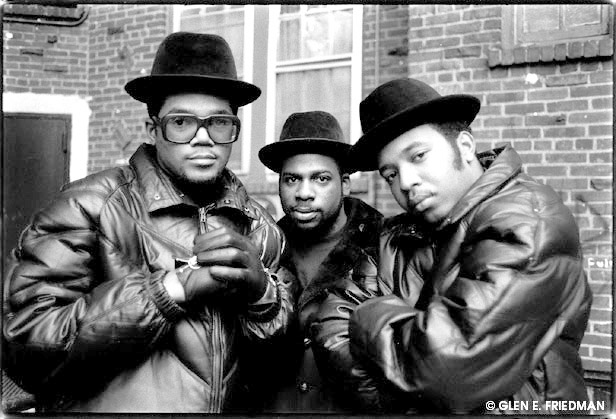
This Saturday the hip hop supergroup Run DMC will be inducted into the Rock And Roll Hall of Fame, representing Queens and specifically the neighborhood of Hollis. What may have been an average neighborhood under normal circumstances has become one of the birthplaces of hip hop, starting with music mogul Russell Simmons and his younger brother Joseph, the Run of Run DMC, and continuing today with current hip hop star, Hollis native Ja Rule.  Run DMC even immortalizes Hollis in their unusual holiday classic “Christmas In Hollis.”

Icons of a major musical movement, emanating from such a saccharine sounding community? But Hollis disguises some rather tragic moments in Queens history, its roots reaching all the way back to a horrifying, bloody moment of the Revolutionary War.

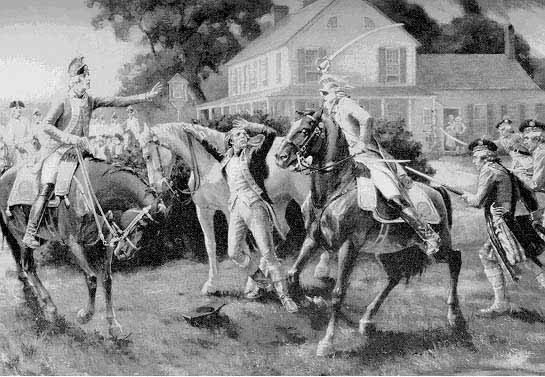
In a story now steeped in legend, it was here along the Jamaica road — back when Hollis was mere uninhabited hillside — that one of the Continental Army’s great generals Nathaniel Woodhull was brutally tortured by British soldiers.

Woodhull was in charge of the Queens and Suffolk county militias when the British invaded Brooklyn, spreading out along the countryside, pushing back Washington’s men, surging towards an invasion of Manhattan island. On that fateful day in August 27, 1776, however, Woodhull and his men were busy herding Brooklyn’s cattle east into Queens, ensuring the British had little to eat when they arrived.

While stranded at a tavern on Jamaica road (today’s Jamaica Avenue) near the center of today’s Hollis, Woodhull was captured and, as legend goes, forced to swear allegiance to England. Instead of “God Save The King” however, Woodhull allegedly cried, “God Save Us All!” For his defiance he was mutilated by British soldiers and died a few days later.

Below: Woodhull receives his mortal blow at Carpenter’s Tavern

This bucolic land outside of the town of Jamaica would not see much excitement for the next 100 years, the quiet hills and farms being referred only as East Jamaica, the memories of Woodhull’s sacrifice its only legacy.

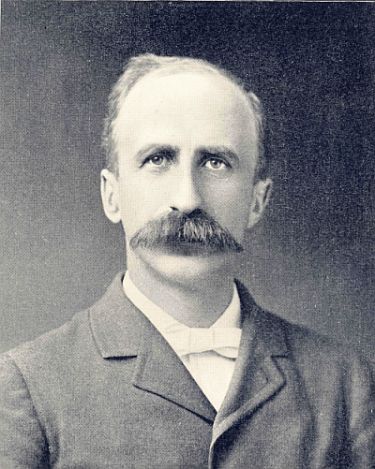
Then came Freddy. That would be Frederick W. Dunton (pictured at right), a young, ambitious and handsomely mustachioed man born with the benefit of calling the president of the Long Island Railroad, during the days of its unprecedented growth, his beloved uncle. 

Dunton was raised in the New Hampshire town of Hollis and obviously thought the most of it. When he went off to pursue his own real estate development in Long Island in 1884, he grew fond of this hilly area outside of Jamaica and, as an ardent history geek himself, most likely reveled at its importance in Revolutionary War history. He built his house here on a hilltop, sold plots to his friends and called the surrounding development Hollis and Holliswood — because there’s no place like home, right?* 

He also bought and named a community after himself — the now-vanished Dunton, which was later absorbed into today’s Richmond Hill neighborhood. (Ken Bausart does some fascinating detective work in digging up the back story.)

Apparently, Frederick is equally as known for something a bit more scandalous — a headline grabbing grand larceny trial in 1896.

The area developed slowly into a comfortable middle-class neighborhood, experiencing a bit of scandal now and then, as when Hollis Hall, Dunton’s old home in Holliswood, allegedly became a speakeasy during Prohibition. (An apartment complex stands in that spot today.) Hollis grew slowly and steadily, from 4,000 people in the 1920s to 31,000 people today.

Russell and Joseph were raised here in the 1960s, soon teaming with Darryl “D.M.C.” Matthews McDaniels (born in Hollis in 1965) and the late Jam Master Jay** (who moved here in the 1970s), performing together for the first time in 1980. Within four years, they would become rap music’s ambassadors to the world, the first rap act played on MTV, selling millions of records and paving the way for mainstream hip hop culture. God save us all.

(Frederick’s picture courtesy Dunton.org)

*  Okay, but if Hollis, Queens, got its name from Hollis, New Hampshire, then where did they get it from? Hollis is a vestige of British occupation of the entire region. British governor Bennign Wentworth gave the settlement the name Hollis in 1746, after one of his more colorful ancestors John Holles, the Earl of Clare. Holles was actually one of England’s wealthiest men ever; in today’s currency, his estate would be worth 5.1 billion pounds.
**Jam Master Jay, aka Jason Mizell, was also shot and killed in Hollis in 2002
Categories
Uncategorized

Name that Neighborhood: what exactly is a Throgs Neck?


Some New York neighborhoods are simply named for their location on a map (East Village, Midtown). Others are given prefabricated designations (SoHo, DUMBO). But a few retain names that link them intimately with their pasts. Other entries in this series can be found here.
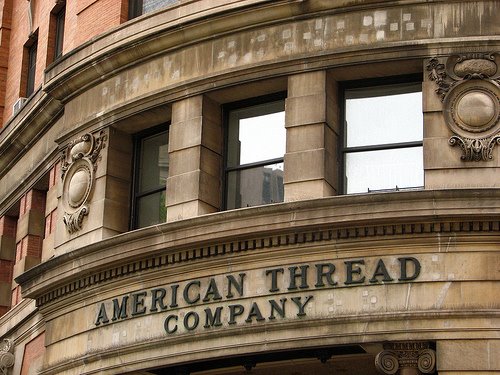
What is a Throgs Neck? And why isn’t it a Throggs Neck?

Of course that’s the name of a pleasant peninsular neighborhood in the Bronx. Many people with cars are probably as familiar with the Throgs Neck Bridge, a 1,800-foot Robert Moses/Othmar Ammann production which connects the Bronx to Queens. But where did that unusual name come from? Is a throg some kind of creature native to New England?

The “Neck” part is easy. The slender Throg’s Neck peninsula dangles where the East Rivers finally empties into the Long Island Sound. The neighborhood expands up the peninsula and out through the mainland.

For the throg, you’ll have to go back to the Dutch occupation of the region to find the answer. There was of course a contentious relationship between the Dutch and the British regarding territorial boundaries in the New World, a dispute that resulted in the eventual takeover of all Dutch lands in 1664. However, over 20 years earlier, the leader of the New Amsterdam colony, William Keift, seemed to take a more charitable view towards individual English families, especially those fleeing British rule due to religious intolerance.

The most famous of these satellite English settlements on alleged Dutch soil was that of Anne Hutchinson, a charismatic and determined leader who fled Massachusetts and Rhode Island out of religious persecution by the Puritans. Perhaps simmering with delight at Englishmen fleeing their own kind, Keift allowed Hutchinson and her flock to settle in the areas that are now called Pelham and Eastchester today. The Hutchinson River, which runs through these areas, reminds us of the impact of this ballsy lady.

Just a year earlier (1642) however, Keift allowed another persecuted religious leader to settle just downstream. The Rev. John Throggmorton (or Throgmorton or Throckmorton, take your pick, depending on which ancient document you prefer) and 35 others families were allowed to settle on this peninsula, valuable real estate if your living required contact with water, but dangerous because of the potential of being bottled in by an enemy.

The land had previously been known as Vredeland by the Dutch (or ‘land of peace’) owing to the lush natural beauty of the region. They dropped the old peaceful name and changed it to Throggmorton’s Neck.

Keift, who frequently provoked Indian anger, may have thought that additional European settlements could be used as a buffer against Lenape attacks to New Amsterdam, just 24 miles south. Eventually the Indians did attack; in one horrifying massacre on September 20, 1643, tribes exterminated the Hutchinson settlement, then traveled down to do the same to the Throggmortons. (Few in the future Bronx neighborhood escape the slaughter, including the borough’s namesake Jonas Bronck.)

Many families on Throggmorton’s Neck were brutally massacred, although a passing boat managed to rescue a few distraught family members. Strangely enough, Throggmorton himself was away that day. He never returned the area which would forever keep his name.

Within 150 years, the name would be shortened to Throgg’s Neck. Or, better yet, according to George Washington himself, “Frog’s Neck.”

You may have noticed that John’s last name has two g’s in it, while most common spellings have only one. Legend has it that this is another thing you can blame on Robert Moses. Not exactly known for reaching out to communities for their thoughts and opinions, Moses decided to drop a ‘g’ in 1955 when the bridge started construction, believing it would fit on more traffic signs without an additional and needless letter. Who cares if it was in use that way for over 300 years!

Purists prefer Throggs Neck. It is Throggs Neck. Either way, it’s an unforgettable name, with an unforgettable story.

Name That Neighborhood: TriBeCa not so triangular

Some New York neighborhoods are simply named for their location on a map (East Village, Midtown). Others are given prefabricated real-estate designations (SoHo, DUMBO). But a few retain names that link them intimately with their pasts. Other entries in this series can be found here.
For all the New York City neighborhoods with wonderful old names hearkening back to Lenape, Dutch and British settlers, we have a small number crafted by other, more venerable tribes — real estate brokers and community organizers. Dumbo is not a city in the Netherlands; NoLiTa is not Lenape for ‘neighborhood’. And at least one –TriBeCa, that fashionable neighborhood northwest of City Hall — is made of comprised of a complex portmanteau that isn’t even technically accurate.
The area bounded on the north by Canal, south by Vesey Street, east by Broadway and west by the Hudson River is calm and quirky compared to other neighborhoods, owing to its shape, sculpted by a cross work of diagonal streets braced against the grid-like blocks between Church and Broadway. While the Lower West Side, as it was earlier known, began as a residential district in the late 18th century, its proximity to the docks and to the Hudson River Railroad’s St. John’s Park Depot transformed the neighborhood into a center of industry, primarily textiles by the 1850s.
Like the Meatpacking District further north, the western edge of the area also became a grocery center for New Yorkers, with fresh produce, dairy and meat. The streets of Washington Market, as it was known then, were clogged with buyers and sellers with vendors even set up along the Hudson River docks. A chaotic mess to be sure, to contrast with many of the gorgeous Italianate and Romanesque Revival buildings built by wealthy companies to house their offices and factories.

Below: You can easily find remnants of TriBeCa’s ‘material’ past

Flash forward to the 1960s. The factories long abandoned and the western warehouses cleared away to construct the West Side Highway, the large now-empty spaces attracted artists, musicians and “bohemians”, slowly returning the neighborhood to its original residential leanings. Similar, in fact, to the phenomenon of SoHo just north, also a locus for artists, whose tenacious effort to turn industrial space residential led to the creation of its made-up name (SOuth of HOuston) and historical landmark designation in 1973.

The residents of Washington Market followed suit. Or rather, those centered around an actual triangular block — the one with Canal to its north, Lispenard to its south and Church to its west. (It narrows pointing to Broadway on its eastern edge.) They formed a block association called the Triangle Below Canal to rally behind a similar designation for their area. Although they too are technically south of Houston — and Washington Market has a cleaner, historical ring to it — the organization’s name was truncated, and TriBeCa was soon born.

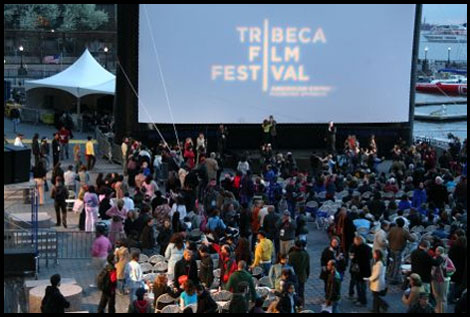
Although TriBeCa represents the entire area, in fact the neighborhood (outside of a few individual blocks) is not actually triangular at all. But as the true sign of the neighborhood’s drastic transformation, the area’s unofficial king is an Oscar-winning celebrity — Robert De Niro. The actor, who moved here in the ’90s, brought two restaurants and a film festival here, which allowed other celebrities to follow suit.

You can find more indepth information on the history of TriBeCa at its official website.

Below: Where once crowds of produce cellars clogged the streets, now filmgoers enjoy cocktails and watch film premieres

Name That Neighborhood: Wall Street Blues

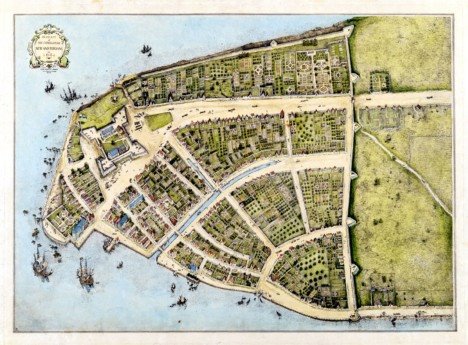
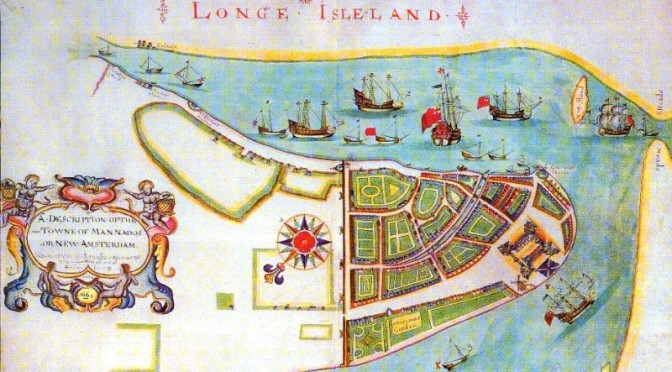
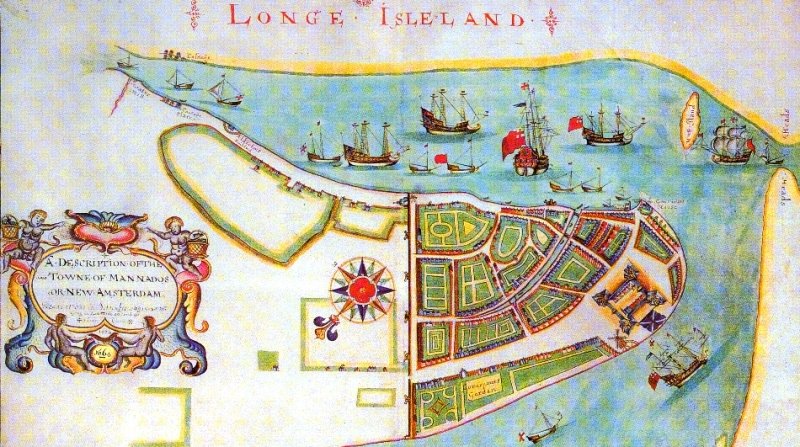
A simplistic but colorful view of “Man Mados” or “New Amsterdam” in 1664 (click in to inspect the detail)

One of the first facts you learn as a student of New York City history is that Wall Street, that canyon of tall buildings and center of the American financial world, is named for an actual wall that once stretched along this very spot during the days of the Dutch. The real story is rather fuzzied by the presence of a small community of French-speaking Belgians known as the Walloons.

The original ‘De Waal Straat’ was the center of a small Walloon community in New Amsterdam. There was most definitely a walled fortification nearby on New Amsterdam’s northern boundary, and it certainly did stretch along about the same area as Wall Street does today.

But the present name seems to be a formation of mixed meanings that only a tangle of languages and hundreds of years of history can create. The Dutch themselves referred to an actual street alongside the wall as the ‘Cingel’ — according to an old history, meaning “exterior, or encircling, street.”

The real reasons for New Amsterdam building its famous wall are also up for grabs. It’s commonly held that the wooden palisade was erected in defense of Indian attacks, and certainly the residents of New Amsterdam did their part to rile the anger of the native landowners. But the Dutch had been living at the tip of Manhattan for over 25 years by the time the wall was built in 1653. In truth, it was commissioned to keep out a different sort of enemy.

You’ll be pleased to know that one-legged director-general Peter Stuyvesant was the man who ordered the construction of the “high stockade and small breastwork” that cleaved the Dutch community from the natural wilds beyond.

This was an incredibly important year for New Amsterdam in two respects. In February 1653, New Amsterdam was chartered as a official Dutch city. Although Stuyvesant was quite against the outpost receiving such official recognition, he eventually took advantage of it, appointing the first town council himself rather than putting it up to such trivial inconveniences as elections.

But in 1653 the tides of the motherland spilled onto their shores, as the war between England and the Netherlands threatened the remote and undefended new city. The Dutch intended to launch ships from New Amsterdam harbor in battle against the English.

As a result, the English colonies up north were sure to retaliate, either by sea or, feared Stuyvesant, over land, possibly teaming with hostile Indian forces, down through undefended Manhattan island. Essentially, the wall that helped give us Wall Street was built because Stuyvesant feared attacks not just from Indian tribes, but from the European colonies of Connecticut, Massachusetts and New Haven!

Above: looking at this more well known map of New Amsterdam, once can see the two gates very clearly

Stuyvesant called upon the 43 richest residents of New Amsterdam to provide funding to fix up the ailing Fort Amsterdam and to construct a stockade across the island to prevent attacks from the north, while it took New Amsterdam’s most oppressed inhabitants — slave labor from the Dutch West India Company — to actually build the wall.

The barrier was constructed out of earth, rock, and 15 feet timber planks sold to the Dutch, ironically enough, by the “notorious” Englishman Thomas Baxter. In a turnabout that one would expect from hiring your enemy, Baxter later led a group of “Rhode Island marauders” and pirated Dutch fishing ships.

Early in the 1660s, the Dutch upgraded its wall to include brass cannons and two sturdy gates — one at today’s intersection of Wall and Broadway (for land), the other at Wall and Pearl Street (according to an early account, a water gate and access to a ‘river road’).

The British took over New Amsterdam in 1664 and renamed it New York, but the wall still remained, becoming more a relic than a serious defense.

By the turn of the century, the fear of land attacks had almost completely subsided and the city was beginning to feel crowded. So in 1699 the wall was torn down with some of the material salvaged to help construct a new City Hall at the corner of Nassau Street and the newly cristened Wall Street. When the British were forced out in 1783 by the Americans, the City Hall building was renamed Federal Hall — the first official center of American government.

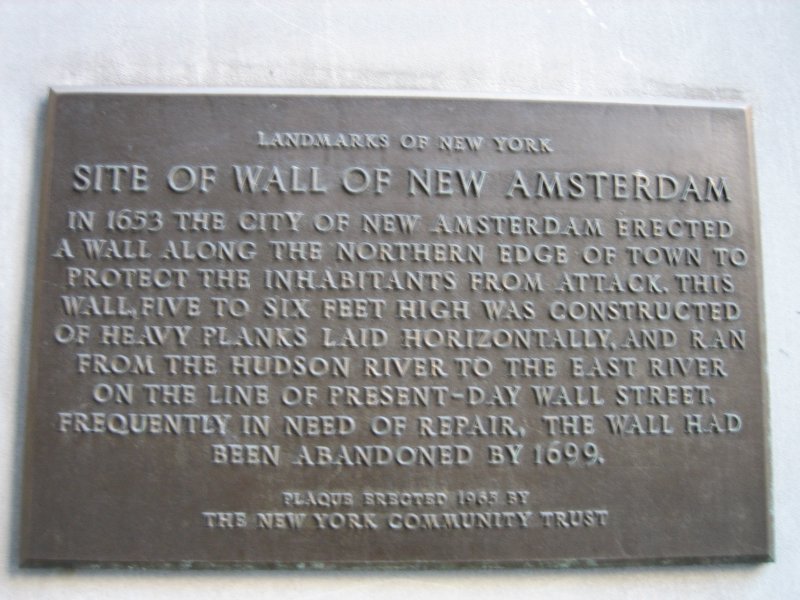
A plaque honoring the old wall sits today at the corner of Wall and Broadway, where the gate to the city once opened:

Categories
Uncategorized

Name That Neighborhood: Why is Jamaica in Queens?

Some New York neighborhoods are simply named for their location on a map (East Village, Midtown). Others are given prefabricated designations (SoHo, DUMBO). But a few retain names that link them intimately with their pasts. Other entries in this series can be found here.

I have a friend of Jamaican descent that lives in Jamaica, Queens. I used to think that was like a French Parisian moving to Paris, Texas. That’s wrong, actually. Paris, Texas, is actually named for the French capital. Jamaica, Queens, meanwhile, has almost nothing to do with the Carribean nation that shares its name. (Although many of Jamaican island descent do live in the Queens borough today.)

Jamaica is an English distortion of an Algonquin tribe that inhabited this Long Island outpost — the Jameco Indians (also referred to as the Yamecah tribe). They were named after the Algonquin word for beaver.

The Jameco lend their name to various parts of the city, from Jamaica Bay (the body of water in front of JFK airport) to Jamaica Avenue, a prime extension of East New York Avenue through Brooklyn and eastern Queens.

A pathway between Brooklyn and the city of Jamaica, called the Jamaica Pass, was used to the British’s benefit during the war of 1776, sneaking around American forces and chasing them back to Manhattan.

By then, the British were calling the town of Jamaica by its modern name. The Dutch before them, however, had referred to the village there as Rustdorp, settling there in 1656 and officially coined by none other than Peter Stuyvesant. I leave it up to you to determine which of these names sounds like more exciting and vibrant community.

As for the island of Jamaica, it was inhabited by a tribe of Arawak indians, who named their place Xaymaca, which holds the far more flattering translation of “land of wood and water.”

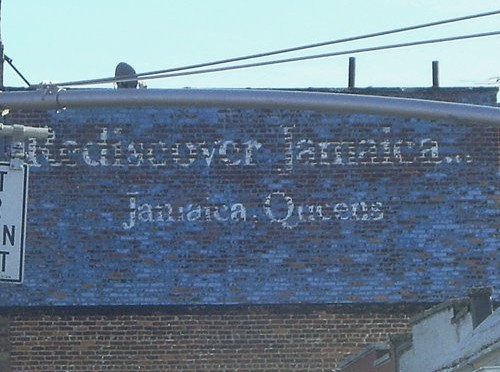
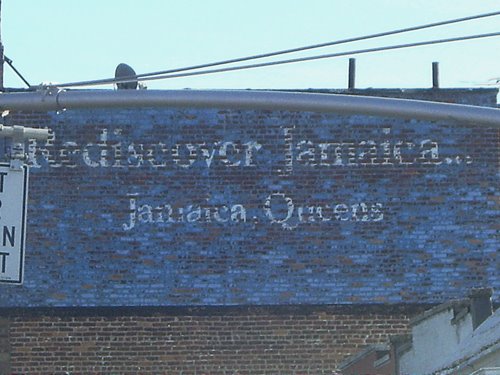
Photograph above is from the Fading Ad Blog.

Name That Neighborhood: Who is Jonas Bronck?


Some New York neighborhoods are simply named for their location on a map (East Village, Midtown). Others are given prefabricated designations (SoHo, Dumbo). But a few retain names that link them intimately with their pasts. Other entries in this series can be found here.

The Bronx is one of two boroughs with names derived from actual people. The residents of Queens can brag that their borough honors Charles II’s wife Catherine of Braganza. The Bronx, however, gets its name from less regal sources, from Swedish-born landowner Jonas Bronck. However the Bronx is not directly named after Bronck. Confused?

Despite Bronck’s tenacity in forging onto the unknown Lenape Indian territory of Rananchqua in the Dutch colony New Netherlands, his actual role in New York history is quite brief. An ardent intellectual who gave his ship the lofty name Brand van Trogen (The Fire of Troy), Bronck, his wife Teuntje and a boatload of eager voyagers traveled to the new world in 1639 and settled on a stretch of land, 500 acres, across the river from the village of Haarlem.

With permission from the West India company, Bronck had brought builders, his own cattle, boxes of books, and a desire to create a small community of his own. Spread out through the modern neighborhood of Motts Haven, Bronck’s farm (Broncksland) and those of the other settlers sat along a north-south river, called by the Lenape the river Aquahung.

Bronck grew tobacco and traded with the local Indians, keeping the peace through exchanges of goods. Jonas however had arrived at a rather unfortunate time to be a pale blond foreigner.

Relations between the Dutch and the native Indian population were tenuous at best, and not greatly assisted by hot-headed director-general William Kieft of the port city of New Amsterdam. In 1643, driven by growing animosities and the murder of a single settler, Kieft ordered troops to rout the Lenape populations at Corsairs Hook and the area now known as Jersey City, murdering dozens of Indians and ensuring years of bloody battles between settlers and natives.

Bronck was the unfortunate recipient of native Indian backlash. That same year, 1643, Bronck and most of his settlers were murdered in an Indian raid.

Kieft would be swept out of the new world by Peter Stuyvesant. Bronckland would pass into other hands, and after just a few years, the parcel of land would no longer be named for him. Jonas was almost erased from history.

Except for that rather sizable river that ran through his property, the Aquahung. Even as memories of Dutch settlers gave way to their British successors — his farm went to two officers in Oliver Cromwell’s army! — the river was still referred to as Bronck’s River. Eventually it was shortened to the Bronx River, and thus it’s the river that the borough is named after.

Had everybody just kept with the original name as given by the Lenape, we would be referring to our northernmost borough as Aquahung.

By the way, Bronck’s wife and son escaped the Indian raid, and later, Teuntje with her new husband moved to the area now known as Coxsackie, New York. Son Pieter Bronck became a landowner in his own right and built a house that still stands today. It is the oldest home in all of upstate New York.

Categories
Uncategorized

Name That Neighborhood: Fort Greene

Some New York neighborhoods are simply named for their location on a map (East Village, Midtown). Others are given prefabricated designations (Soho, Dumbo). But a few retain names that link them intimately with their pasts. Other entries in this series can be found here.

The Brooklyn neighborhood of Fort Greene gathers some of the borough’s best known riches within its boundaries, including Brooklyn’s tallest building the Williamsburgh Savings Bank, the Brooklyn Academy of Music, and the park in which the neighborhood gets its name — Fort Greene Park.

However, if I’m being critical, the neighborhood should probably be called Fort Putnam, not Fort Greene.

As you’d expect, this area was the location of a vital Revolutionary-era fort used by the Americans to defend themselves from encroaching British forces. Shaped like a traditional five-pronged star, the fort was named after Rufus Putnam, a general whose claim to fame would actually come post-war, as the head of the Ohio Company, which purchased and settled the territory of Ohio.

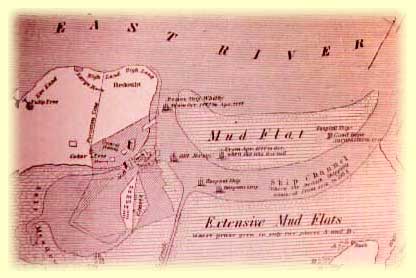
Below: An old map of Fort Putnam and Wallabout Bay

Fort Putnam was one of three forts in close proximity to create a (what would be unsuccessful) defensive barrier. One diamond-shaped fort called Fort Box (named after major Daniel Box) sat smack near the border of today’s Cobble Hill. The third fortification — get ready to be confused — was Fort Greene. The first Fort Greene, also a star shaped fortification, sat between Box and Putnam.

This fort was named after major general Nathaniel Greene, who would become one of the war’s most successful officers and essentially Washington’s most trusted adviser. Greene did oversee the construction of Fort Putnam, so figure in his post-war fame into the equation, and it will not be a surprise to discover that the fort was renamed Fort Greene for its potential use during the War of 1812.

Many old fortifications were refitted in 1812 in case of another British invasion, including the first Fort Greene (now called Fort Masonic). The British did attack Washington D.C. and Baltimore during the War of 1812, but never bothered to make it up to New York harbor this time around.

And just in case you’re interested, during the War of 1812, Fort Box was renamed Fort Fireman.

A neighborhood soon developed around Fort Greene, and by 1847 the fortification was replaced by a park — Washington Park — to be later replaced by the rolling, monument bedecked, Olmstead-and-Vaux designed Fort Greene Park in 1864.

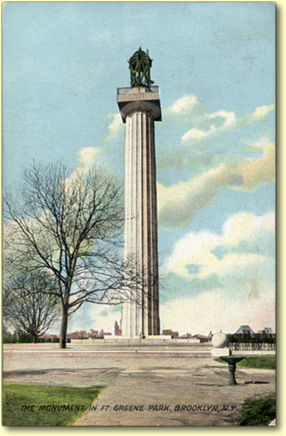
Tying the park back to its Revolutionary War past is its crowning monument, the Prison Ship Martyr’s Monument(at right), honoring those who died in British prison ships kept not that far from here in Wallabout Bay (that’s basically the small bay between the Williamsburg and Manhattan bridges on the Brooklyn side).

Categories
Neighborhoods

Name That Neighborhood: Murray Hill

Some New York neighborhoods are simply named for their location on a map (East Village, Midtown). Others are given prefabricated designations (SoHo, DUMBO). But a few retain names that link them intimately with their pasts.

Murray Hill is one of Manhattan’s quieter neighborhoods, extending on the east side from 42nd street to 34th street — or even down to 28th street, depending on who you speak to. Its eastern border bleeds into Kips Bay. Its one of downtown Manhattan’s most obvious hillsides, with its most dynamic centerpiece being the buildings along Madison Avenue, including the gorgeous Morgan Library & Museum.

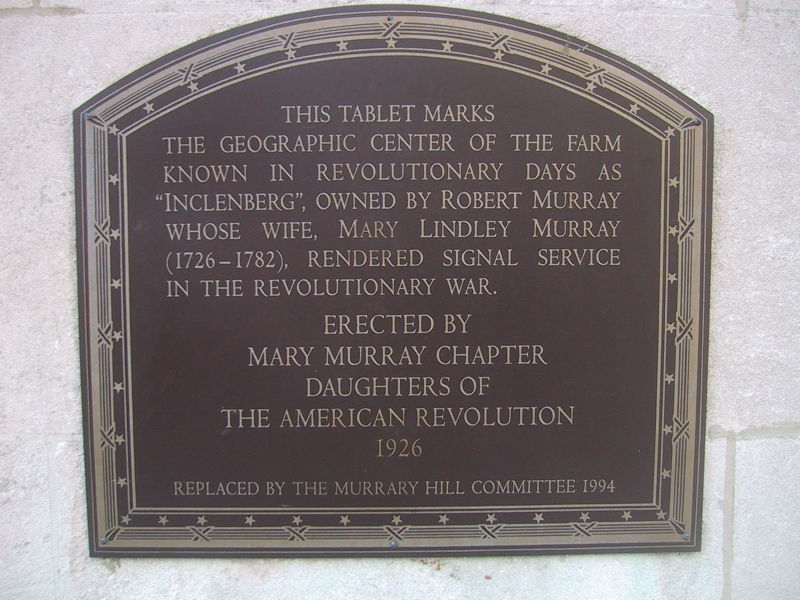
The Murray of Murray Hill was the successful Quaker merchant Robert Murray who bought this quiet hillside in 1762 and built a spacious home here, which he named Inclenberg, installing a large porch that looked out over the East River. Walk up the hilly part of any street between 33rd and 39th (the land where the farm approximately stretched out) and look east, trying to imagine the buildings melting away and an unobstructed view of the river emerging.

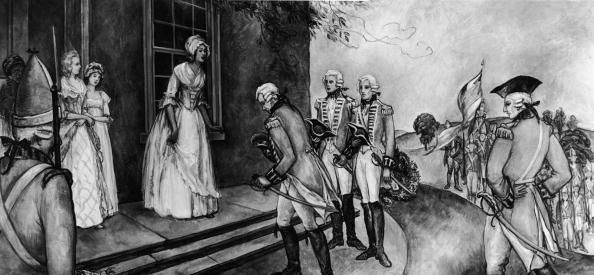
The pride of Murray Hill, however, is not Robert, but his wife Mary Lindley Murray. She was probably looking from her porch on September 15, 1776, when the British landed at Kip’s Bay in their eventual takeover of New York. Just a few days prior, Mrs. Murray had entertained the young commander George Washington, whose bedraggled Continental Army, under the command of general Israel Putnam, was heading out of town on the west side (along a path which is today the West Side Highway). With a superior British force in hot pursuit, they would have been easily captured and the American revolution effectively dissolved.

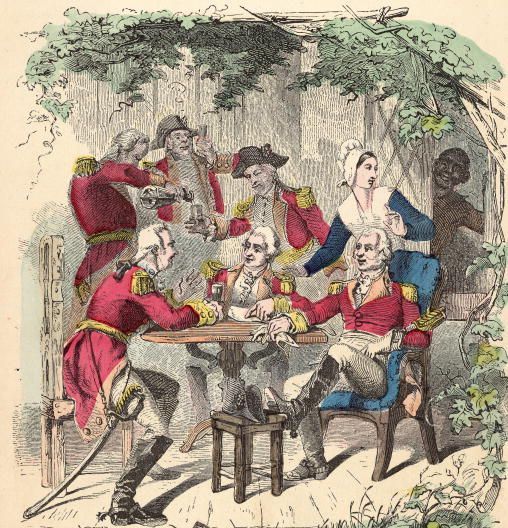
However, as the legend goes, many lives were saved that day and the fate of the Army spared because of a little gracious hosting. As the British force assembled, Mrs. Murray invited the officers, including General William Howe, up to her house for a spot of “cake and wine.” Her charms — and those of her daughters Savannah and Beulah — must have been irresistable, for the officers stayed for over two hours, while the rebel American forces escaped up to Harlem Heights.

While eventually some of Washington’s army would be captured nearby, the bulk of the forces were spared, simply because of the delay brought on by courteous party hosting.

What makes this story all the more compelling is that Mary probably differed politically from her own husband (away in London on business at the time of the invasion) who was a Loyalist to the crown. However members of her own clan, the Lindleys, fought with the Continental Army and Mrs. Murray was clearly sympathetic to the American cause. Of course, her real motives might have been altogether indifferent to the war entirely; regardless, she is undoubtedly one of New York’s great hostesses.

Today, the neighborhood has the unique distinction of having a drag king entertainer named after it.