Categories
Gilded Age New York Podcasts

The Gilded Age Mansions of Fifth Avenue: At Home with the Astors and Vanderbilts

So we don’t know if you’ve heard, but New York City is an expensive place to live these days. So we thought it might be time to revisit the tale of the city’s most famous district of luxury — Fifth Avenue.  

For about a hundred years, this avenue was mostly residential— but residences of the most extravagant kind.
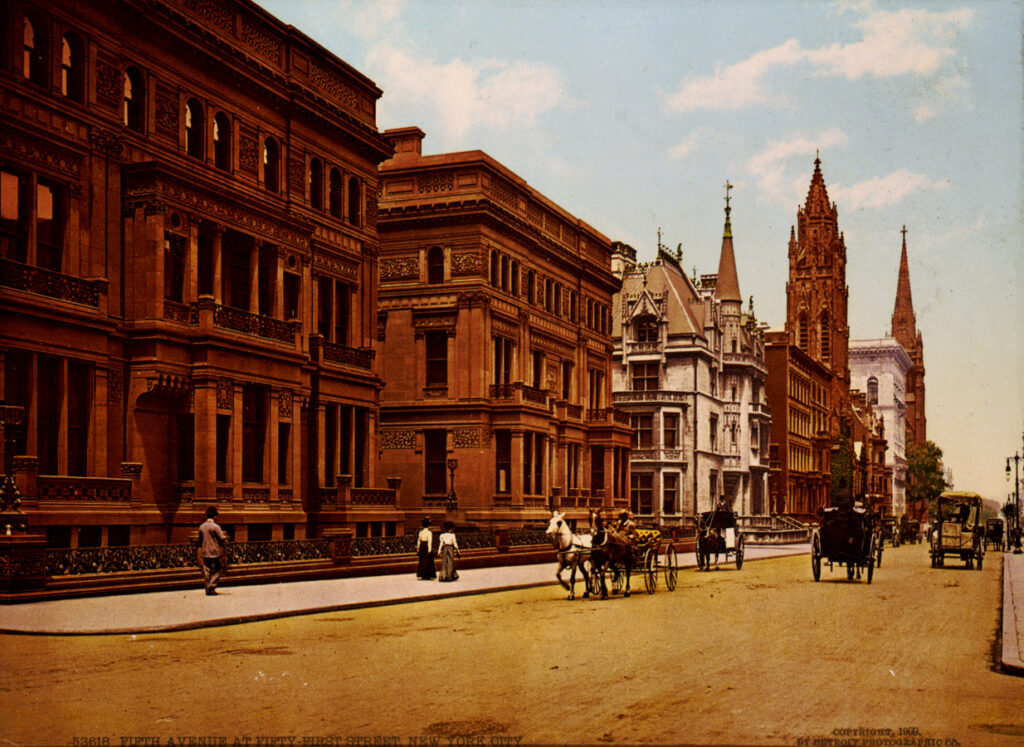
Fifth Avenue at Fifty-first Street in the year 1900. Image courtesy Library of Congress

At the heart of New York’s Gilded Age — the late 19th-century era of unprecedented American wealth and excess — were families with the names AstorWaldorfSchermerhorn, and Vanderbilt, alongside power players like A.T. StewartJay Gouldand William “Boss” Tweed.

They would all make their homes — and in the case of the Vanderbilts, their great many homes — on Manhattan’s Fifth Avenue.

The image of Fifth Avenue as a luxury retail destination today grew from the street’s aristocratic reputation in the 1800s. The rich were inextricably drawn to the avenue as early as the 1830s when rich merchants, anxious to be near the exquisite row houses of Washington Square Park, began turning it into an artery of expensive abodes.
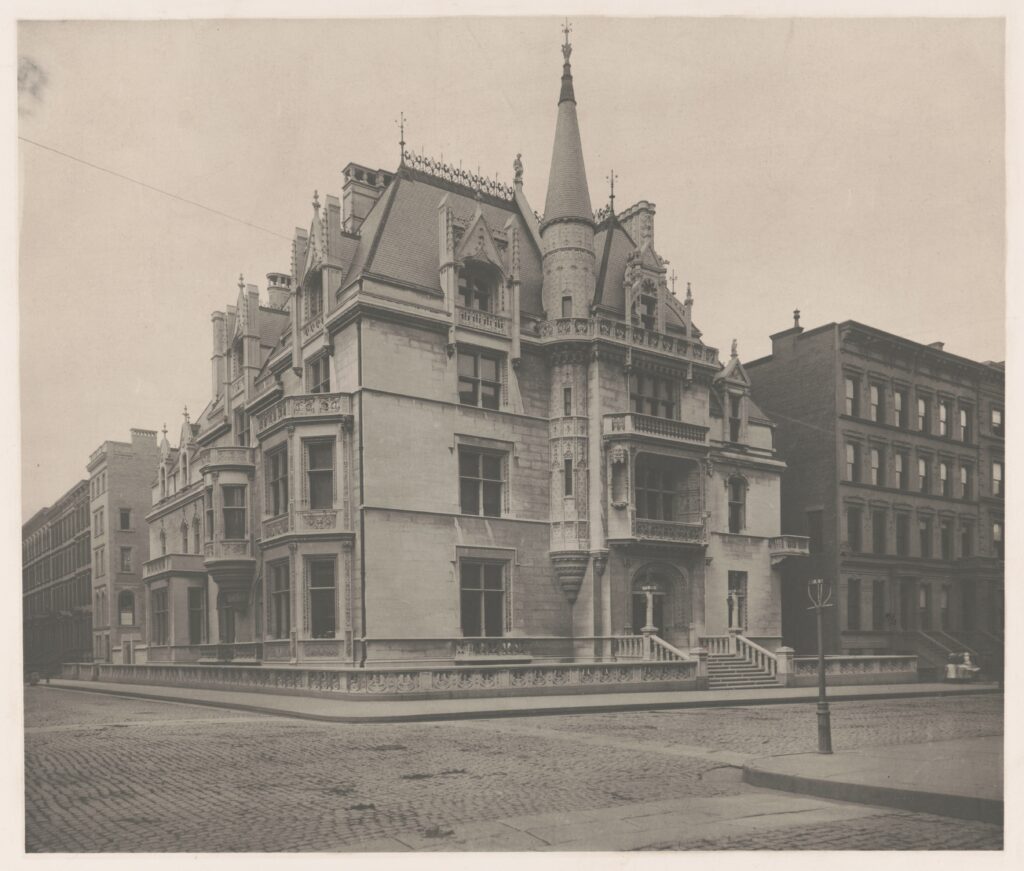
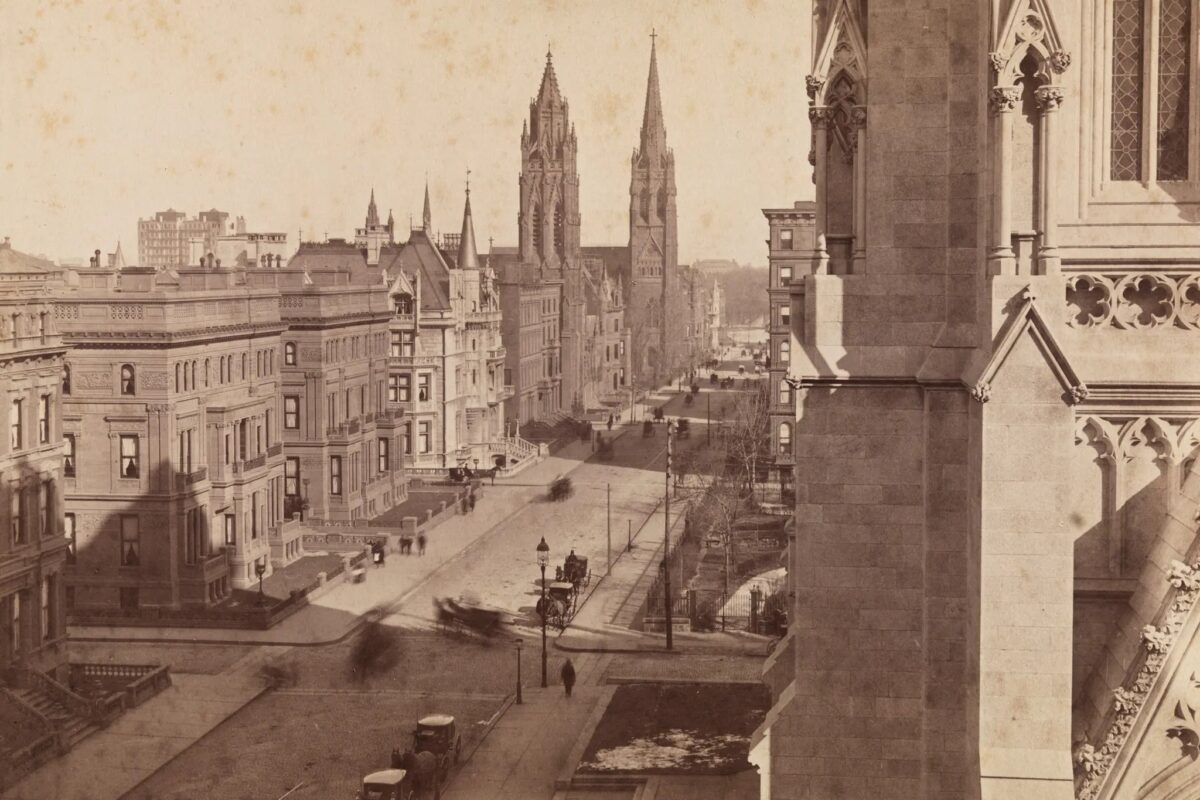
The Vanderbilt Mansion at 660 Fifth Avenue in 1885, Library of Congress

In this podcast, Tom and Greg present a world that’s somewhat hard to imagine — free-standing mansions in an exclusive corridor running right through the center of Manhattan.

Why was Fifth Avenue fated to become the domain of the so-called “Upper Ten”? And what changed about the city in the 20th century to ensure the eventual destruction of most of them?

The following is a re-edited, remastered version of two past Bowery Boys shows — the Rise and Fall of the Fifth Avenue Mansion. Combined, this tells the whole story of Fifth Avenue, from the initial development of streets in the 1820s to its Midtown transformation into a mecca of high-end shopping in the 1930s. 

LISTEN NOW: THE GILDED AGE MANSIONS OF FIFTH AVENUE


This could also serve as a primer to the HBO series The Gilded Age. Tom Meyers is currently co-hosting The Official Gilded Age Podcast for season three. Now on YouTube as well.
1.90.4-L6LHK2FGP3X7WNXO7W4RMZ4FAE.0.1-0

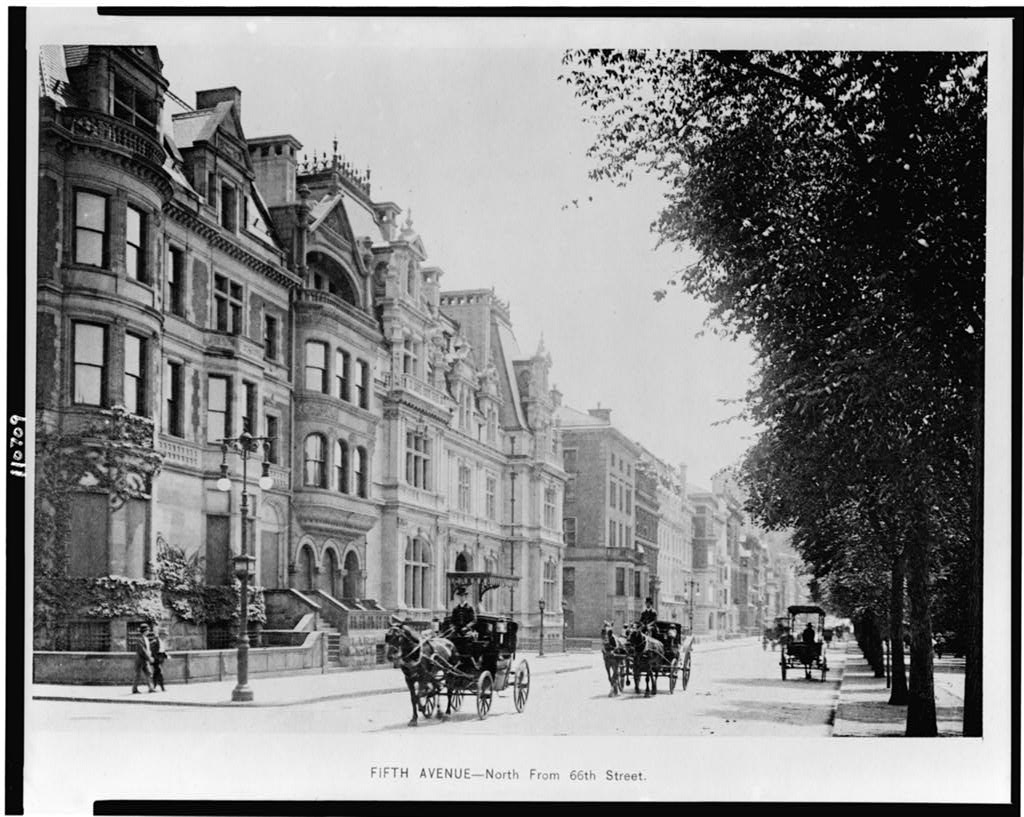
Fifth Avenue – north from 66th Street from the year 1900. LOC
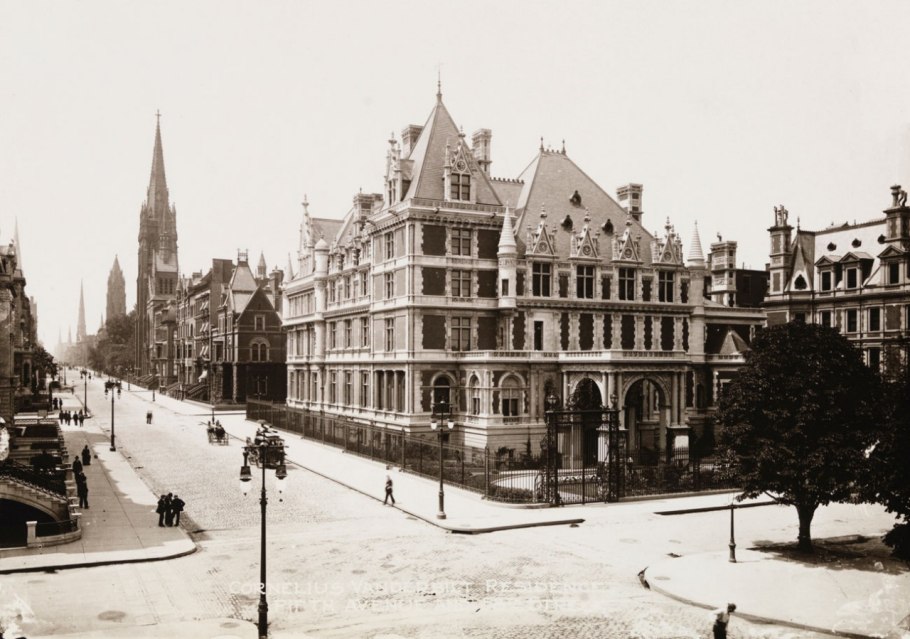
The Cornelius Vanderbilt Mansion

FURTHER LISTENING

Check out episodes of The Gilded Gentleman for all your Gilded Age needs. Here are a few episode that might intrigue you:

And these recent Bowery Boys episodes would make good companion to this episode as well:
Categories
American History

As Garfield fights for life, Arthur lays low in Murray Hill

There are several enemies in Candice Millard‘s ‘Destiny of the Republic, the terrific narrative history of the assassination of President James Garfield during the summer of 1881. The most obvious foe is the delusional Charles Guiteau, who believed himself the nation’s savior when he shot President Garfield twice at a Washington DC train station on July 2, 1881. Then there were the microbial infections transmitted during improperly sanitized operations performed by Garfield’s doctor at the White House, causing blood poisoning that worsened the president’s suffering and ultimately killed him.

For the purposes on this blog, however, I was drawn into the tales of two New York politicians who became victims of rumor-mongering that summer. Powerful New York senator Roscoe Conkling was seen as a political rival of Garfield’s, a thorn in the president’s side, especially considering Conkling’s own political protege — his pawn, really — was Garfield’s vice president, Chester A. Arthur. Traumatic crises in this country are frequently accompanied by a churning undercurrent of suspicion and conspiracy, and Conkling and Arthur became victims of just such a shadowy accusation that summer.

Many believed Conkling to be culpable of the assassination attempt himself — perhaps not of pulling the trigger, but of fostering and encouraging the discord that inspired it. It’s not a stretch to consider Conkling an embodiment of the spoils system which determined hundreds of government jobs through political affiliation. Guiteau thought himself unfairly left out of that patronage system when he attacked Garfield that hot July day.

A few weeks ago I wrote about the Fifth Avenue Hotel, the luxury accommodation at 23rd Street off Madison Square that became Conkling’s second home and a regular scene of political intrigue for the Republican Party. Conkling endured the disintegration of his political career from his rooms here.

Meanwhile, many were mortified at the very thought of Arthur, hardly a universally admired figure, ascending to the presidency. While the president lay incapacitated in Washington, there was even debate as to when presidential responsibilities should cede to the vice president. Nobody seemed enthusiastic at the prospect of a President Chester A. Arthur.

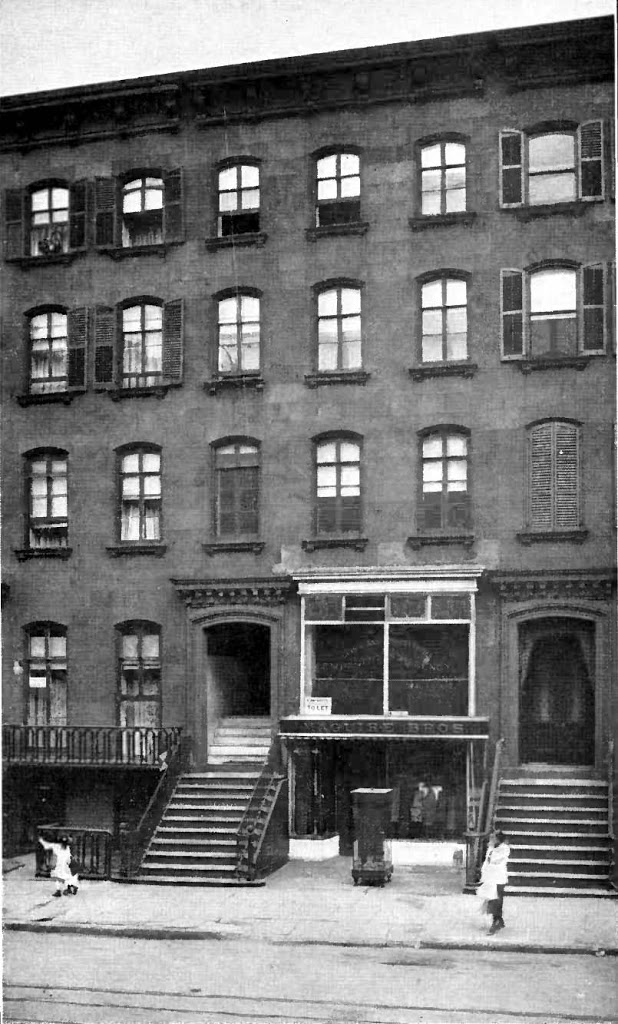
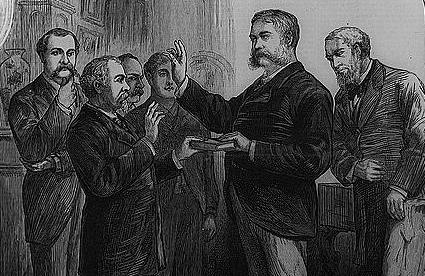
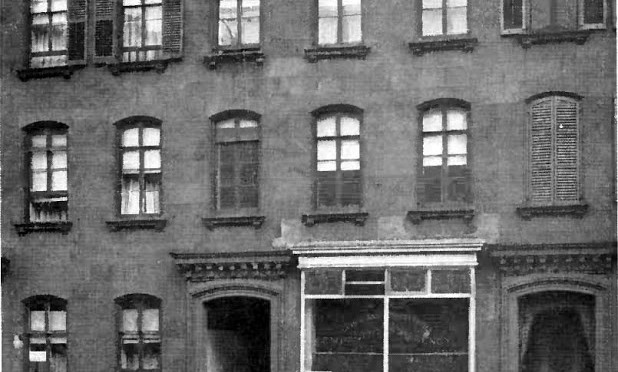
Thus, Arthur essentially spent his summer hiding out in his townhouse at 123 Lexington Avenue (at right), fearful of seeming overly ambitious even as the fate of President Garfield seemed uncertain. On the day the president finally succumbed to his injuries, Arthur sobbed uncontrollably from his shuttered home as servants shooed away the press. Several hours later, he was sworn in as the 21st President of the United States on September 20, at 2:15 a.m, from the green-shuttered parlor of his home here.

‘Destiny of the Republic’ is a swift, thrilling read, certainly worthy of the praise it received when it was released last year, bringing in a cast of icons (including Alexander Graham Bell and Joseph Lister) to present a frightening world of medical uncertainty and strange madness.

Chester A. Arthur’s Indian food connection

One hundred and twenty-three years ago today, the 21st president of the United States, Chester A. Arthur, died in his Murray Hill home in New York City.

That home, 123 Lexington Avenue, holds a unique distinction in American history; it’s the only extant building in New York City bearing witness to the swearing in of an American president.

George Washington, of course, was famously sworn in as our nation’s first president at Federal Hall; however, that building was demolished in 1812, with the current structure calling itself Federal Hall built in 1842.

Arthur was quickly sworn in here at his lifelong home at 123 Lexington after the tragic assassination of James Garfield in 1881. He returned to this home after his presidency and died here on the morning of November 18, 1886.

The building holds a fascinating history, but it’s difficult to tell from the outside. Today it is dominated by Kalustyan’s specialty food and spice market which, to be fair, have been in the building since 1944 and is officially an institution for serious chefs.

For more information,Walking Off The Big Apple wrote a nice article on Chester and his home earlier this year. You can read his New York Times obituary here.

Location of Chester’s home/Kalustyan’s market:

View Larger Map

ShareShare on Twitter

Categories
Neighborhoods

Name That Neighborhood: Murray Hill

Some New York neighborhoods are simply named for their location on a map (East Village, Midtown). Others are given prefabricated designations (SoHo, DUMBO). But a few retain names that link them intimately with their pasts.

Murray Hill is one of Manhattan’s quieter neighborhoods, extending on the east side from 42nd street to 34th street — or even down to 28th street, depending on who you speak to. Its eastern border bleeds into Kips Bay. Its one of downtown Manhattan’s most obvious hillsides, with its most dynamic centerpiece being the buildings along Madison Avenue, including the gorgeous Morgan Library & Museum.

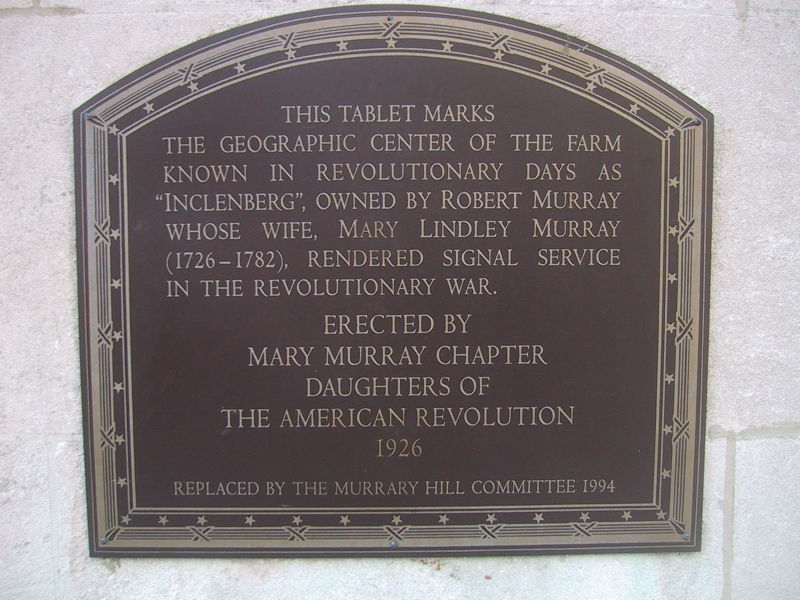
The Murray of Murray Hill was the successful Quaker merchant Robert Murray who bought this quiet hillside in 1762 and built a spacious home here, which he named Inclenberg, installing a large porch that looked out over the East River. Walk up the hilly part of any street between 33rd and 39th (the land where the farm approximately stretched out) and look east, trying to imagine the buildings melting away and an unobstructed view of the river emerging.

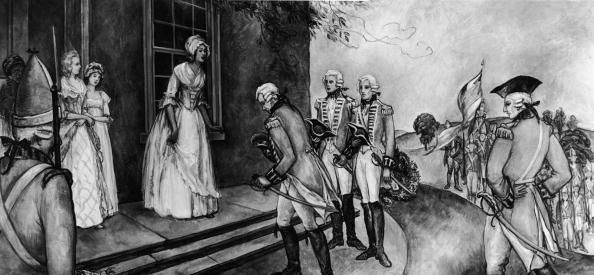
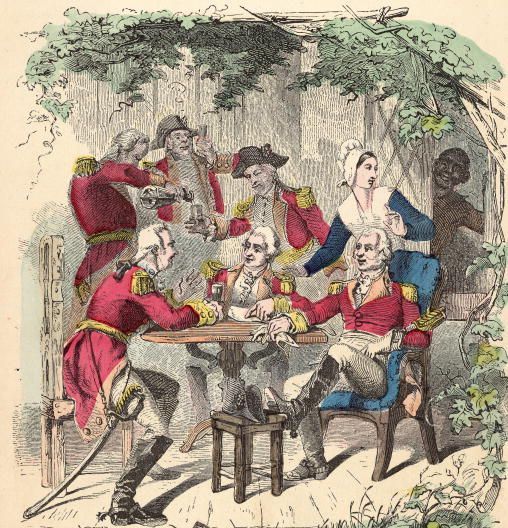
The pride of Murray Hill, however, is not Robert, but his wife Mary Lindley Murray. She was probably looking from her porch on September 15, 1776, when the British landed at Kip’s Bay in their eventual takeover of New York. Just a few days prior, Mrs. Murray had entertained the young commander George Washington, whose bedraggled Continental Army, under the command of general Israel Putnam, was heading out of town on the west side (along a path which is today the West Side Highway). With a superior British force in hot pursuit, they would have been easily captured and the American revolution effectively dissolved.

However, as the legend goes, many lives were saved that day and the fate of the Army spared because of a little gracious hosting. As the British force assembled, Mrs. Murray invited the officers, including General William Howe, up to her house for a spot of “cake and wine.” Her charms — and those of her daughters Savannah and Beulah — must have been irresistable, for the officers stayed for over two hours, while the rebel American forces escaped up to Harlem Heights.

While eventually some of Washington’s army would be captured nearby, the bulk of the forces were spared, simply because of the delay brought on by courteous party hosting.

What makes this story all the more compelling is that Mary probably differed politically from her own husband (away in London on business at the time of the invasion) who was a Loyalist to the crown. However members of her own clan, the Lindleys, fought with the Continental Army and Mrs. Murray was clearly sympathetic to the American cause. Of course, her real motives might have been altogether indifferent to the war entirely; regardless, she is undoubtedly one of New York’s great hostesses.

Today, the neighborhood has the unique distinction of having a drag king entertainer named after it.