Categories
Founded by NYC Podcasts The Immigrant Experience

Dominican New York: A History in the Heights

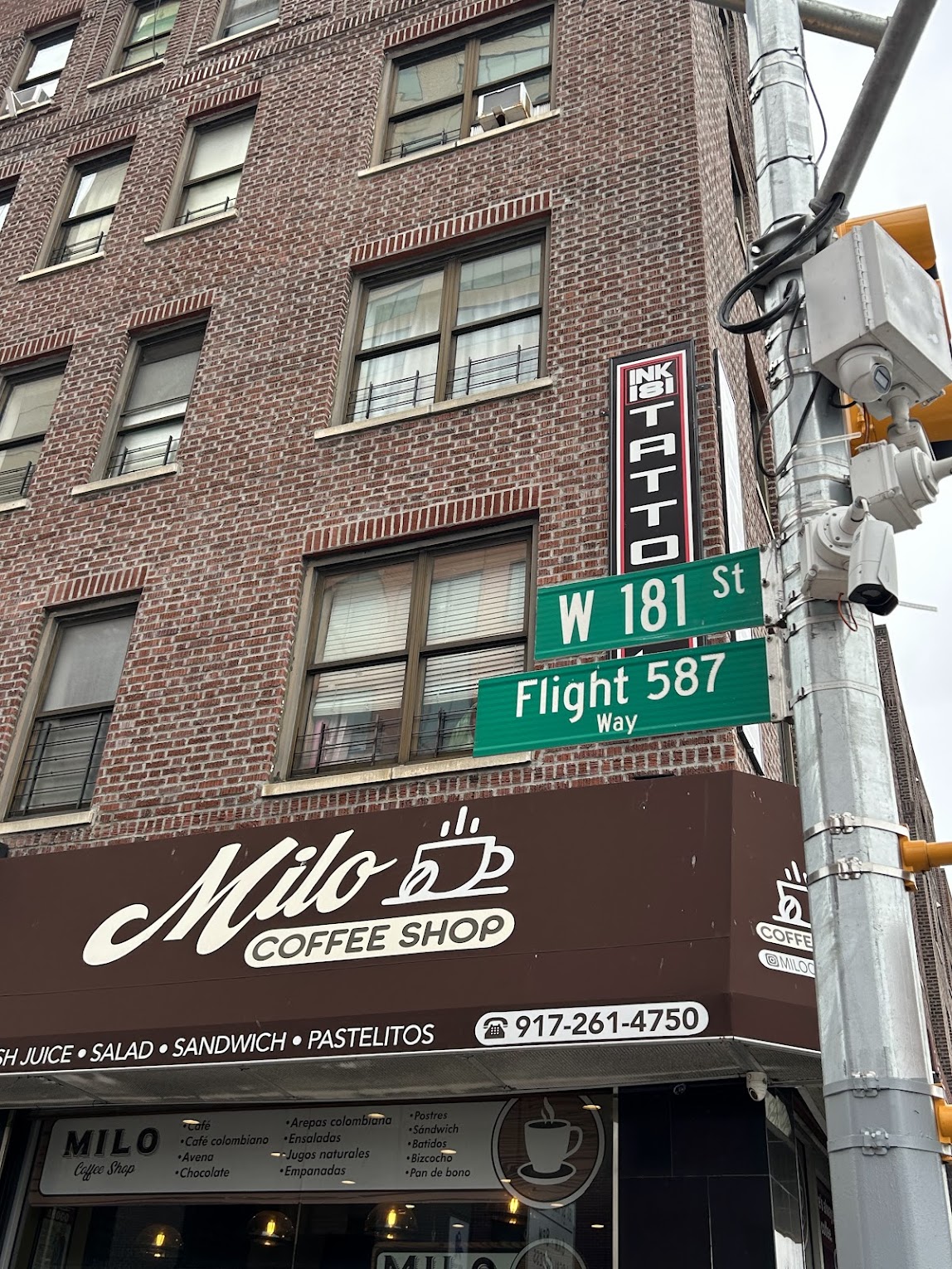
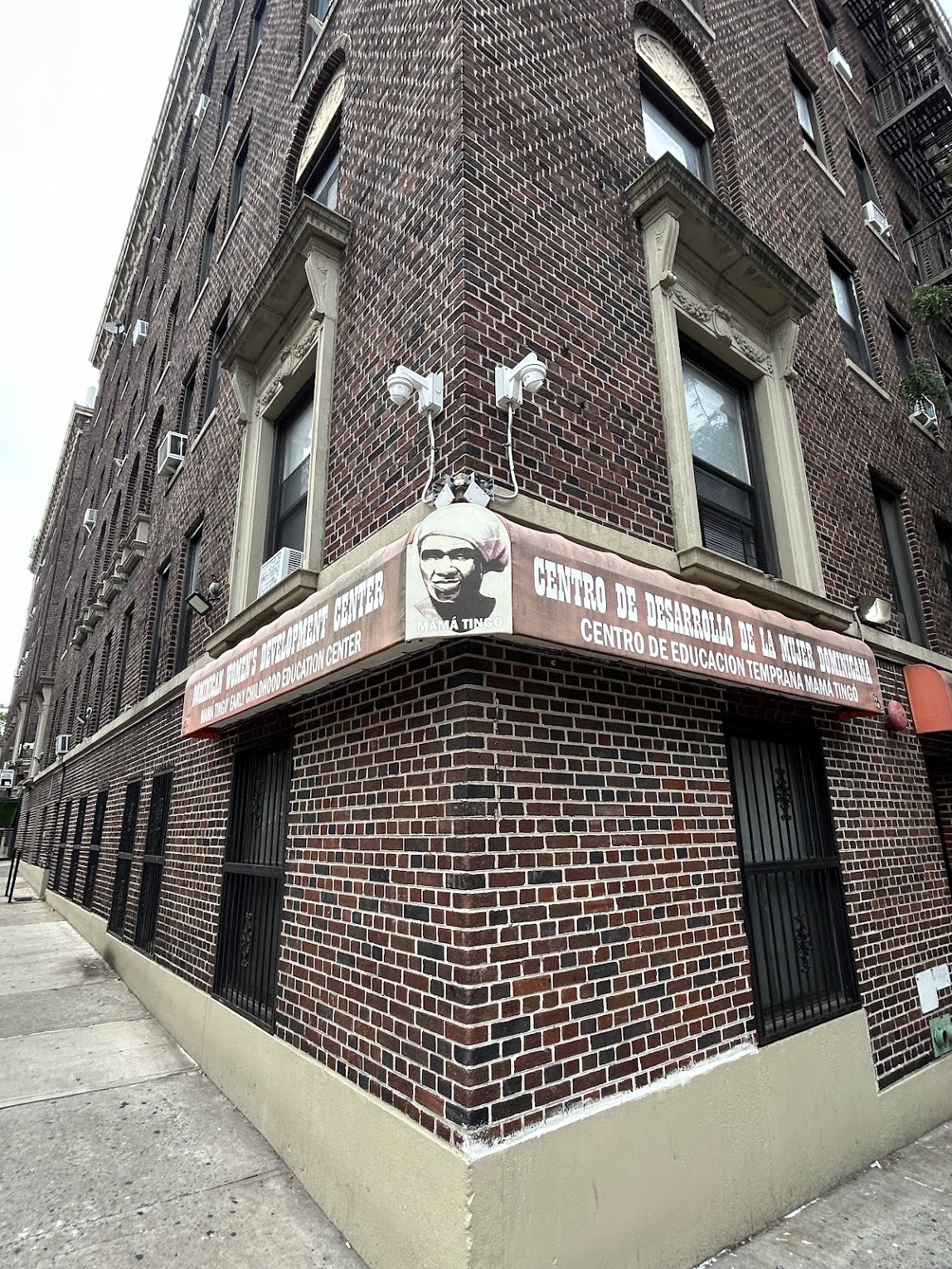
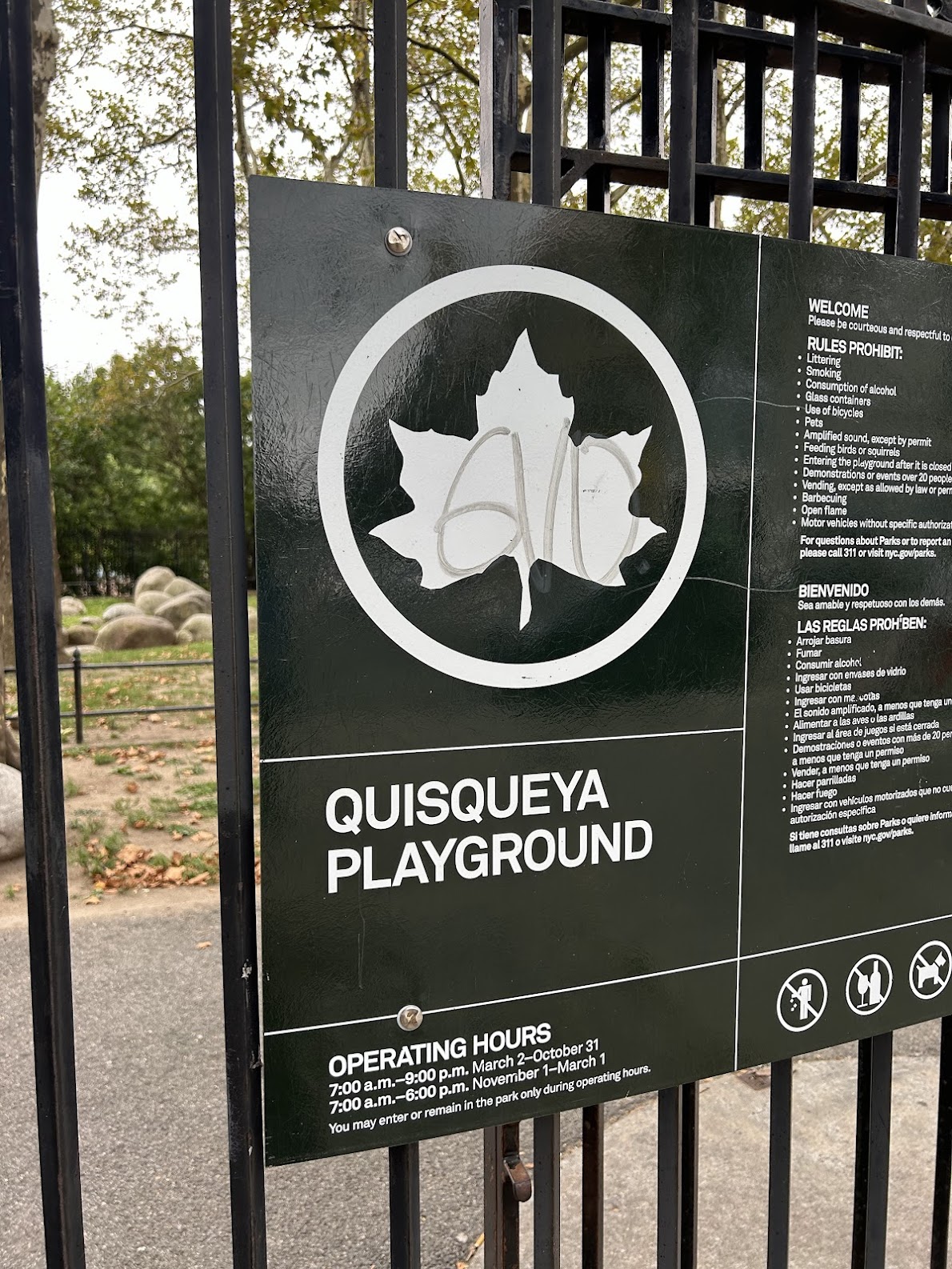
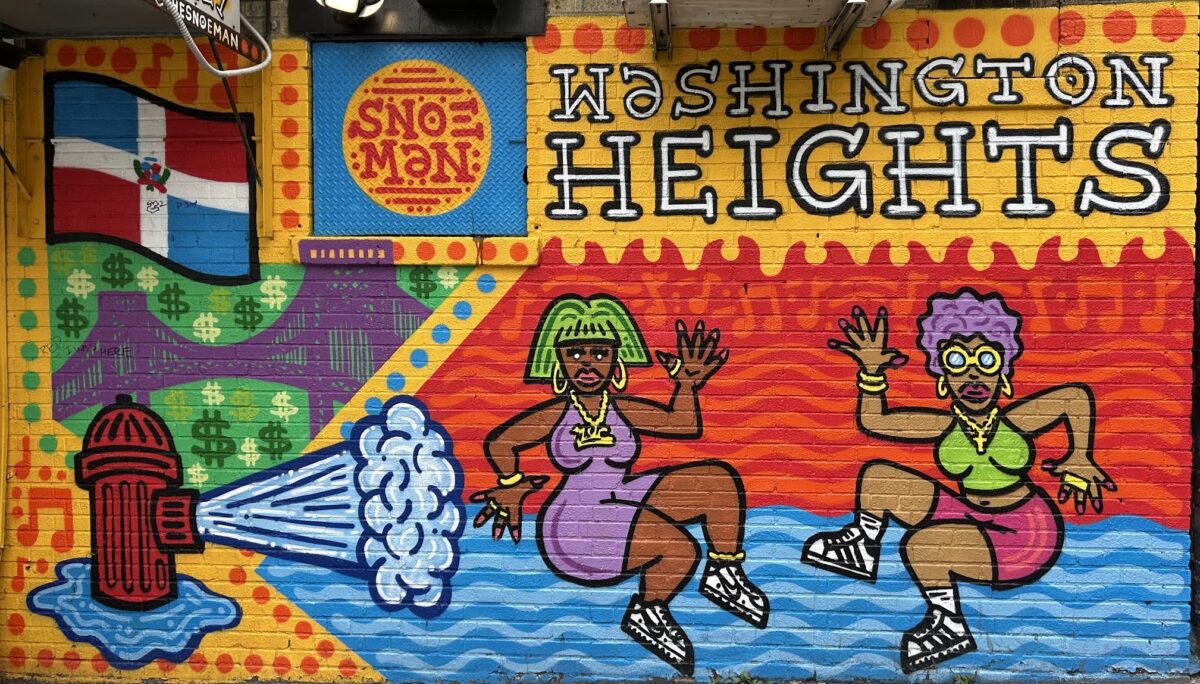
Dominicans comprise the largest immigration group in modern New York City, and Dominican culture has become embedded in the city’s rich fabric of immigrant history. And in one place in particular — Washington Heights.

This historic neighborhood of Upper Manhattan is named for George Washington, who led the Continental Army in an early, pivotal battle here during the Revolutionary War.

But this place is also named for its Heights, the highest elevation in Manhattan, which gives the modern neighborhood a unique feel, with rolling hills and avenues.
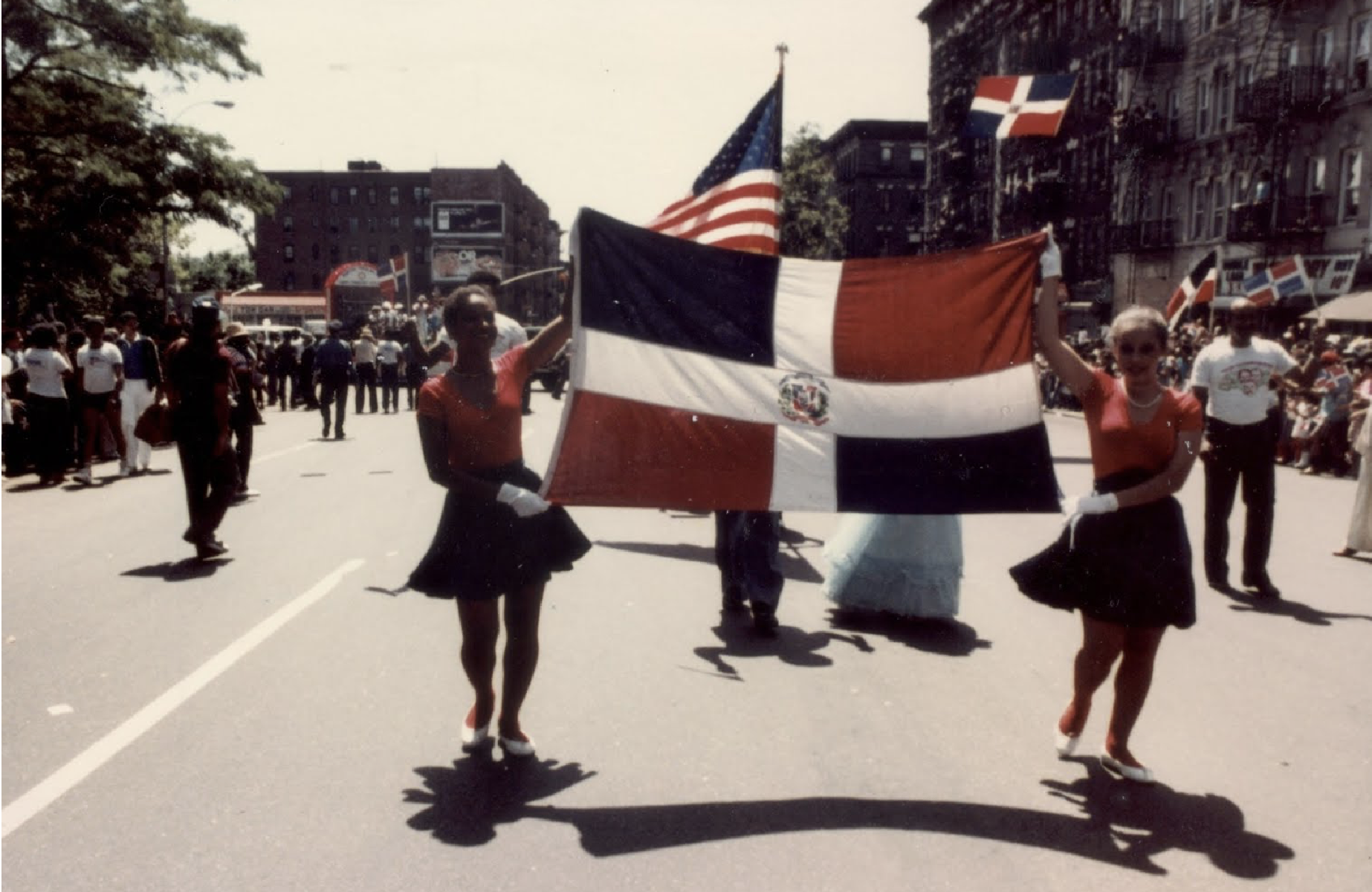
Image courtesy CUNY Dominican Studies Institute

Today, many call it “little Dominican Republic,” home to the largest Dominican neighborhood in the United States (although more Dominicans live in the Bronx overall).

It’s here that Dominican and Puerto Rican culture blend as well — from the shops and restaurants to the famous bodegas — alongside other Latin influences and the vestiges of groups who lived here before — Jewish, Irish, African-American.
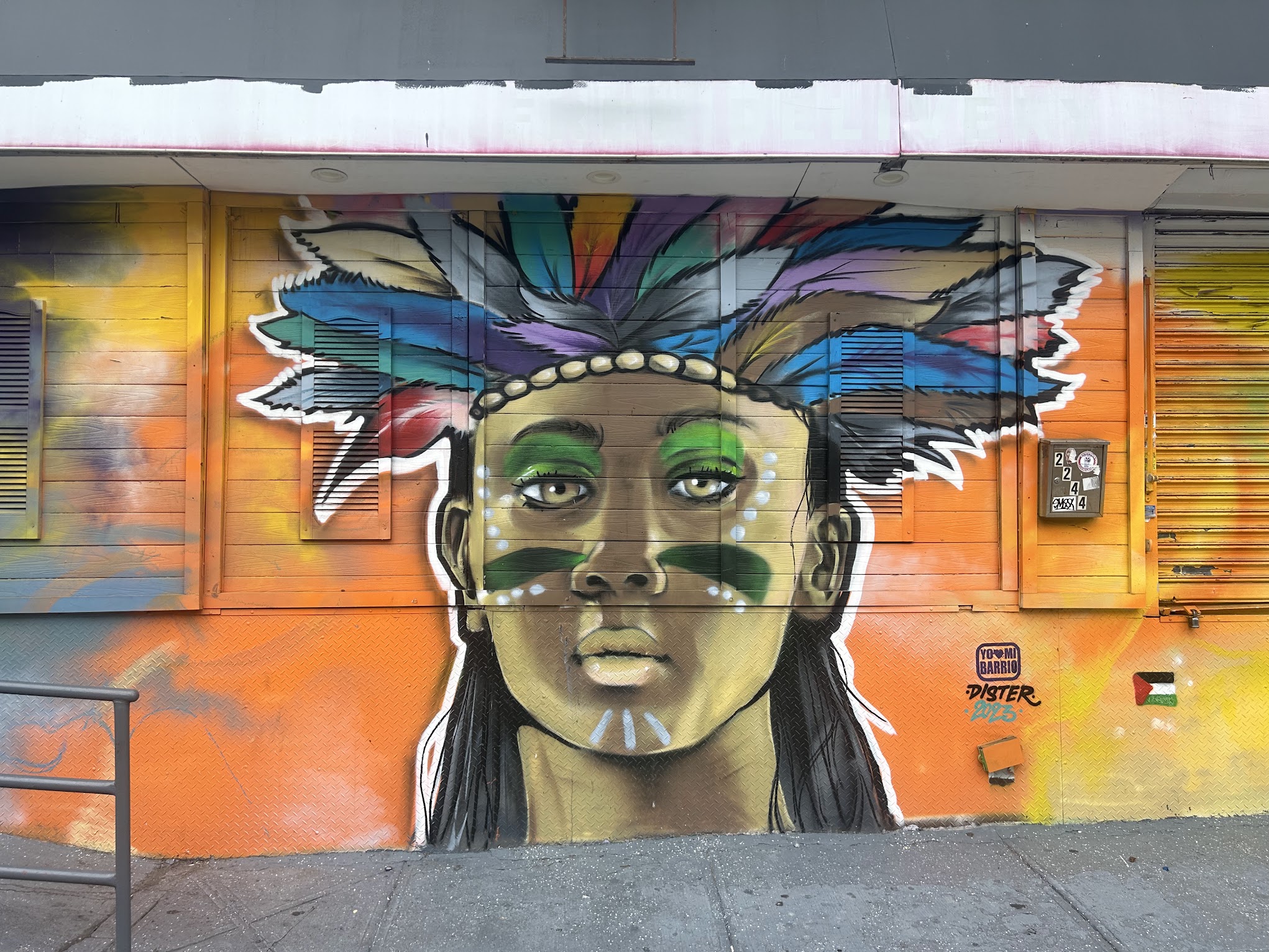
Taino mural by Dister Rondon

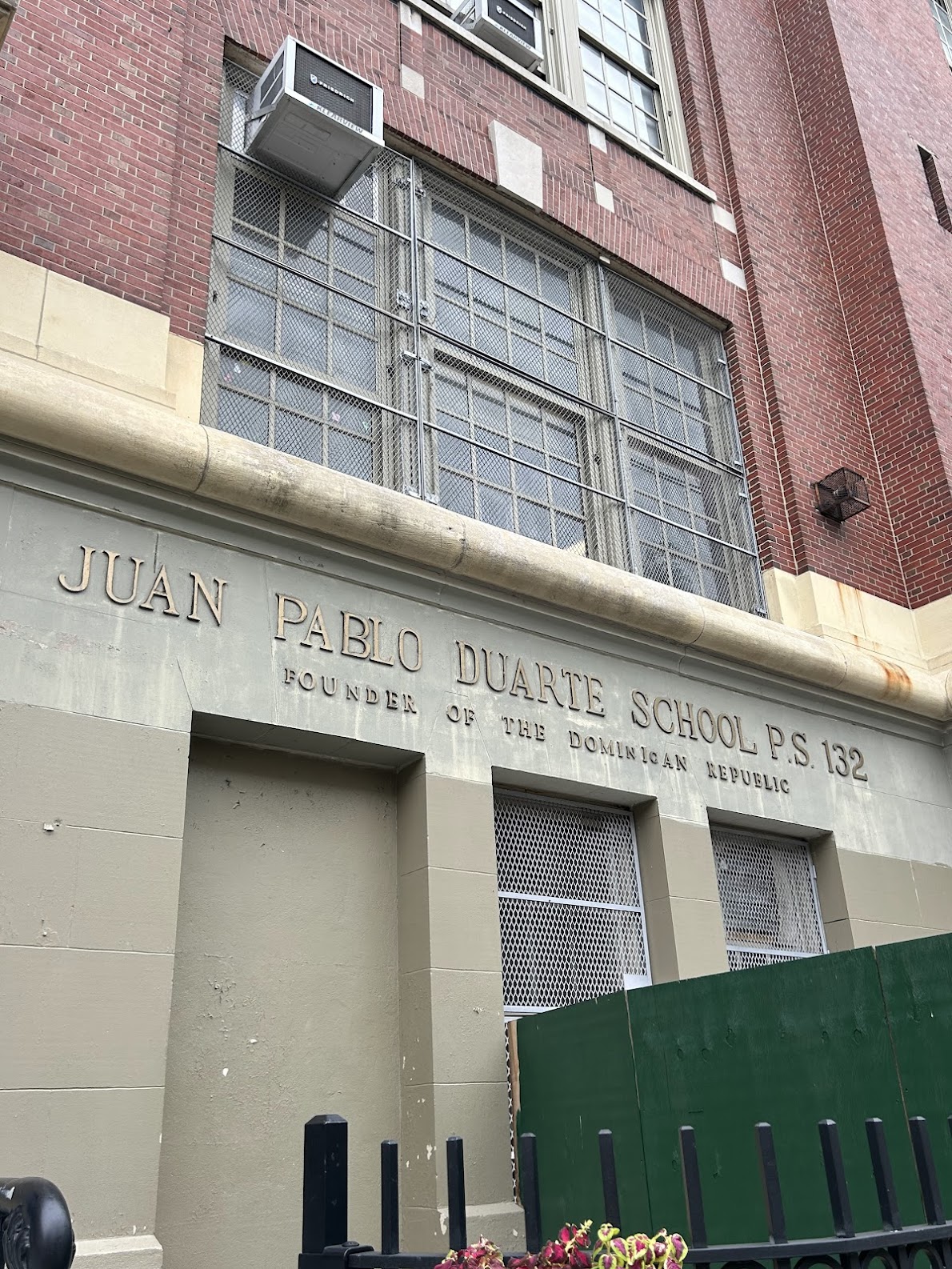
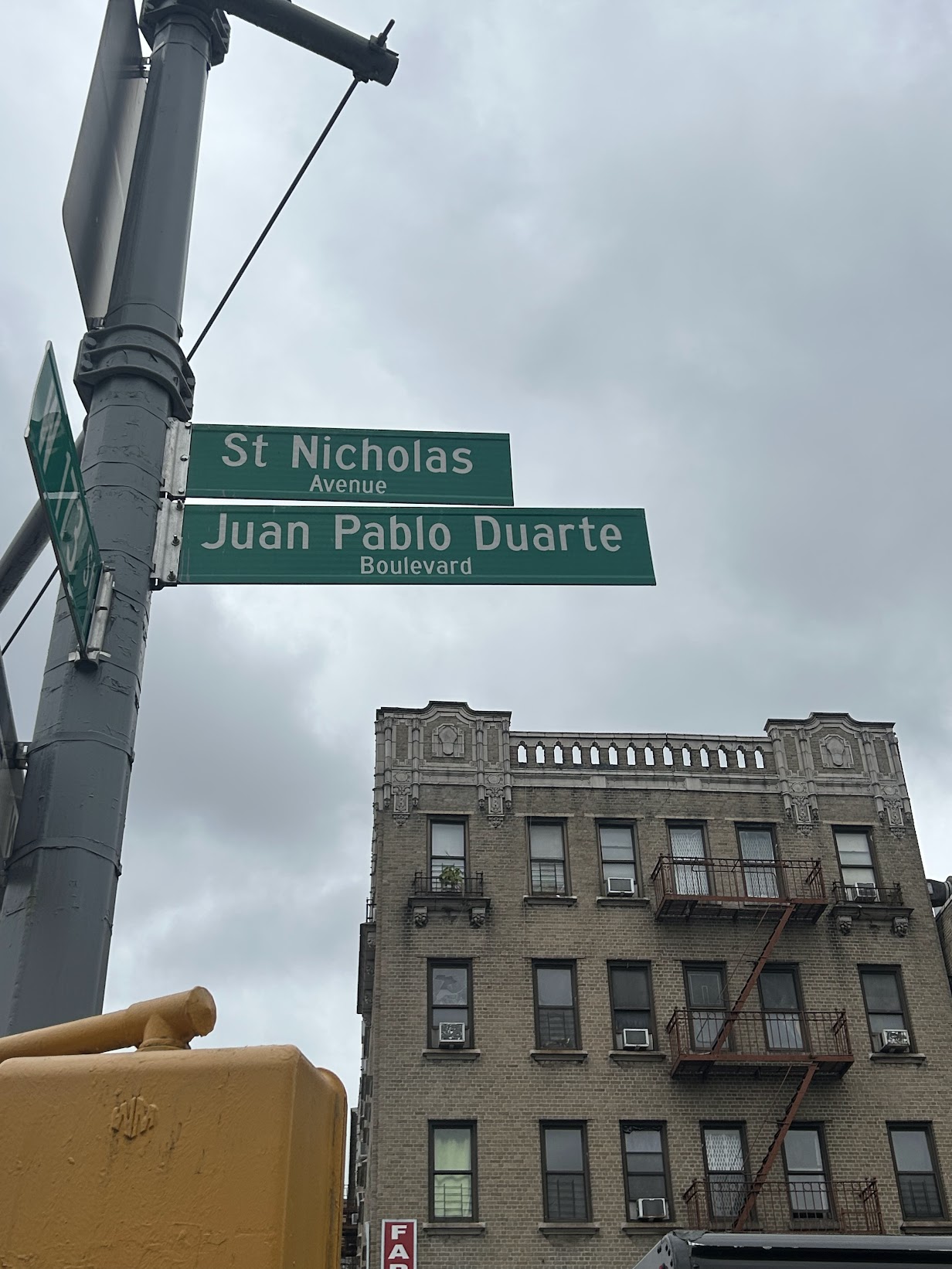
Greg and Tom explore the unique relationship between the Dominican Republic and New York City — and believe it or not, this story begins before the founding of New Amsterdam! It also includes the story of a particular plaza in lower Manhattan, dedicated to Juan Pablo Duarte, the ‘founding father of the Dominican Republic’.

Starting in the 1960s, thousands of Dominicans immigrated to the United States — and most to New York City. Special guest Dr. Ramona Hernández, the director of the CUNY Dominican Studies Institute, joins the Bowery Boys to discuss the extraordinary circumstances that led to this population influx and details the many reasons why Dominican culture still thrives in the Big Apple.

LISTEN NOW: DOMINICAN NEW YORK — HISTORY IN THE HEIGHTS
The Bowery Boys Podcast is proud to be sponsored by Founded By NYC, celebrating New York City’s 400th anniversary in 2025 and the 250th anniversary of the United States in 2026.

Discover the exciting events and world-class institutions that commemorate the five boroughs’ legacy of groundbreaking achievements, and find ways to celebrate the city that’s always making history at Founded by NYC.
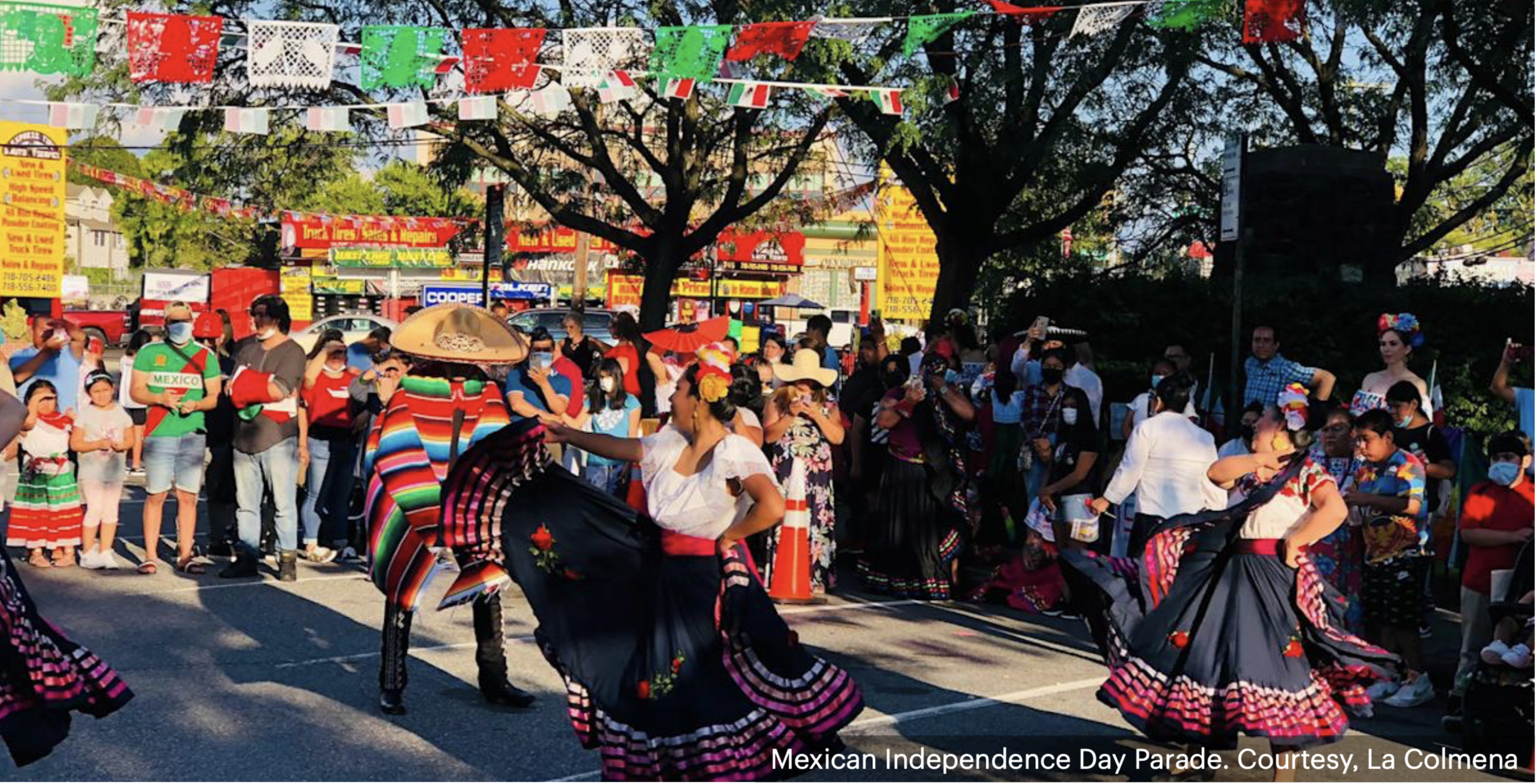

On behalf of Founded By NYC, we’d also like to invite you to celebrate Hispanic Heritage Month.

Through October 15th, cultural institutions and neighborhoods across the boroughs will be celebrating the contributions of Hispanic Americans and Latin American culture in New York City.

Check out the latest exhibitions at El Museo del Barrio, focusing on Cuban American and New York-born and based Coco Fusco, as well as new acquisitions for the permanent collection.

On September 21st, the Mexican Day Parade takes off down Madison Avenue toward Madison Square Park , while — the very same day! — The Hispanic Day parade proceeds through Jackson Heights, Queens, what a day.

The Center for Brooklyn History will host a two-day Afro-Latino film Festival on October 7th and 8th, focusing on Panama, highlighted by a documentary by musician Rubén Blades just a few days before the Panamanian Parade in Crown Heights.

And in late October, the Dominican Film Festival will be held at the United Palace and the Alianza Dominicana Cultural Center.

You can read about all of the other exciting events and world-class institutions that are commemorating the five boroughs’ legacy of groundbreaking achievements and find ways to celebrate the city that’s always making history at foundedbynyc.com.


Our thanks to Dr. Ramona Hernández for joining us on the Bowery Boys Podcast! Click here to see the interactive map showcasing the Geographic Boundaries of the Dominican Historic District 
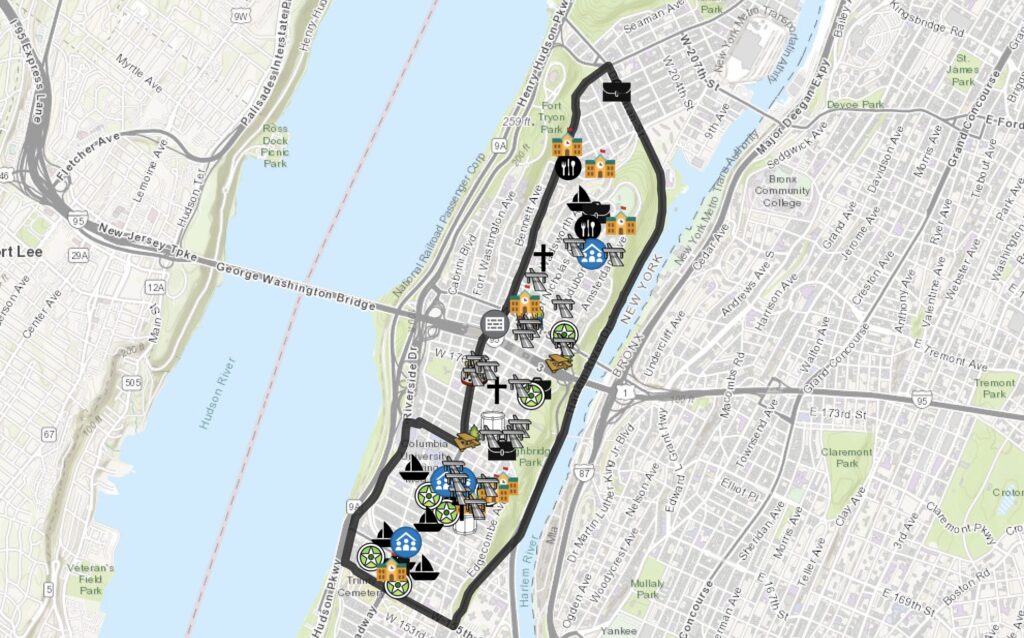
The Dominican Heritage District. Click this link to zoom in and read the listings.

A few stops along the Dominican Heritage District:
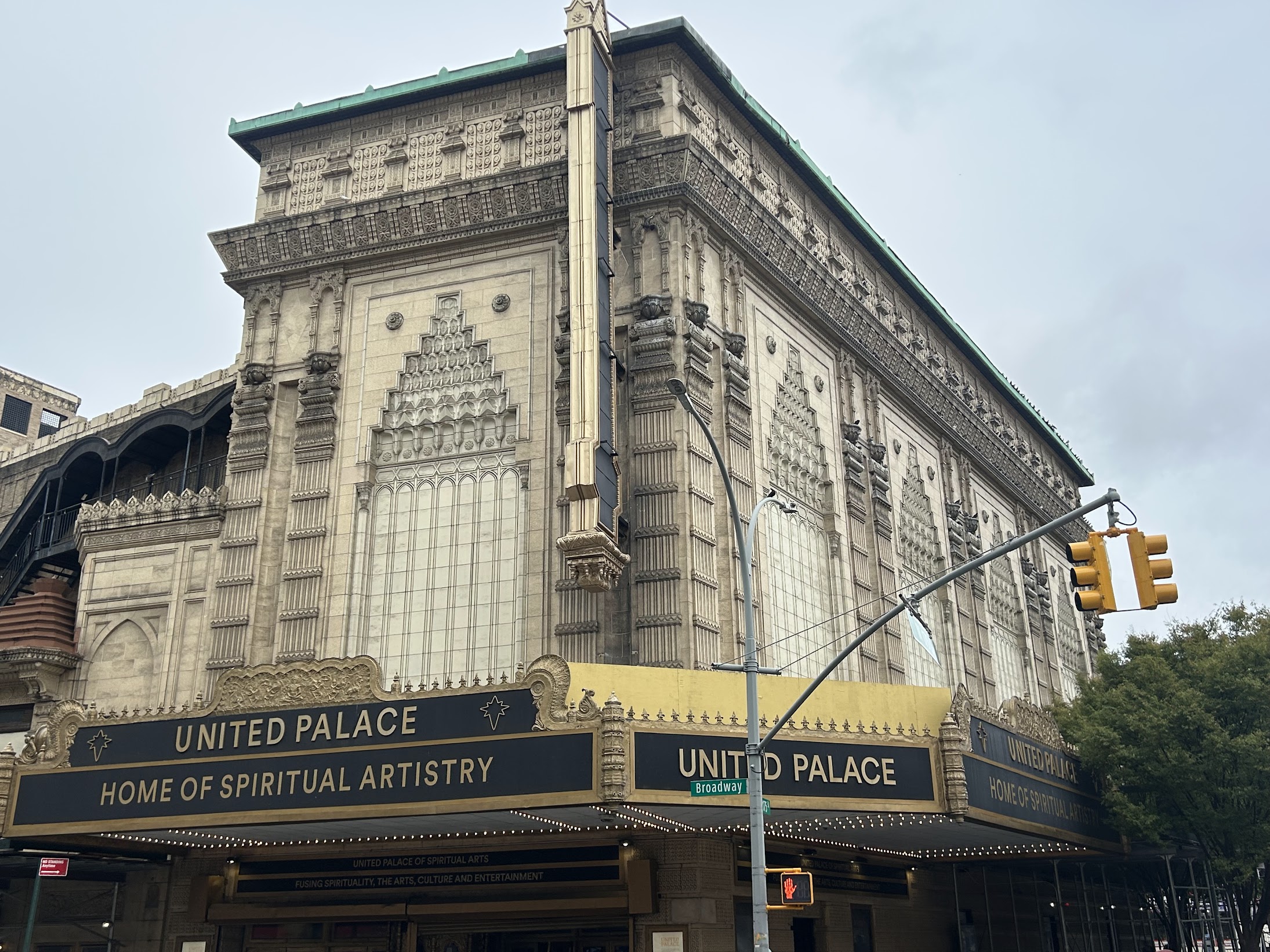
United Palace
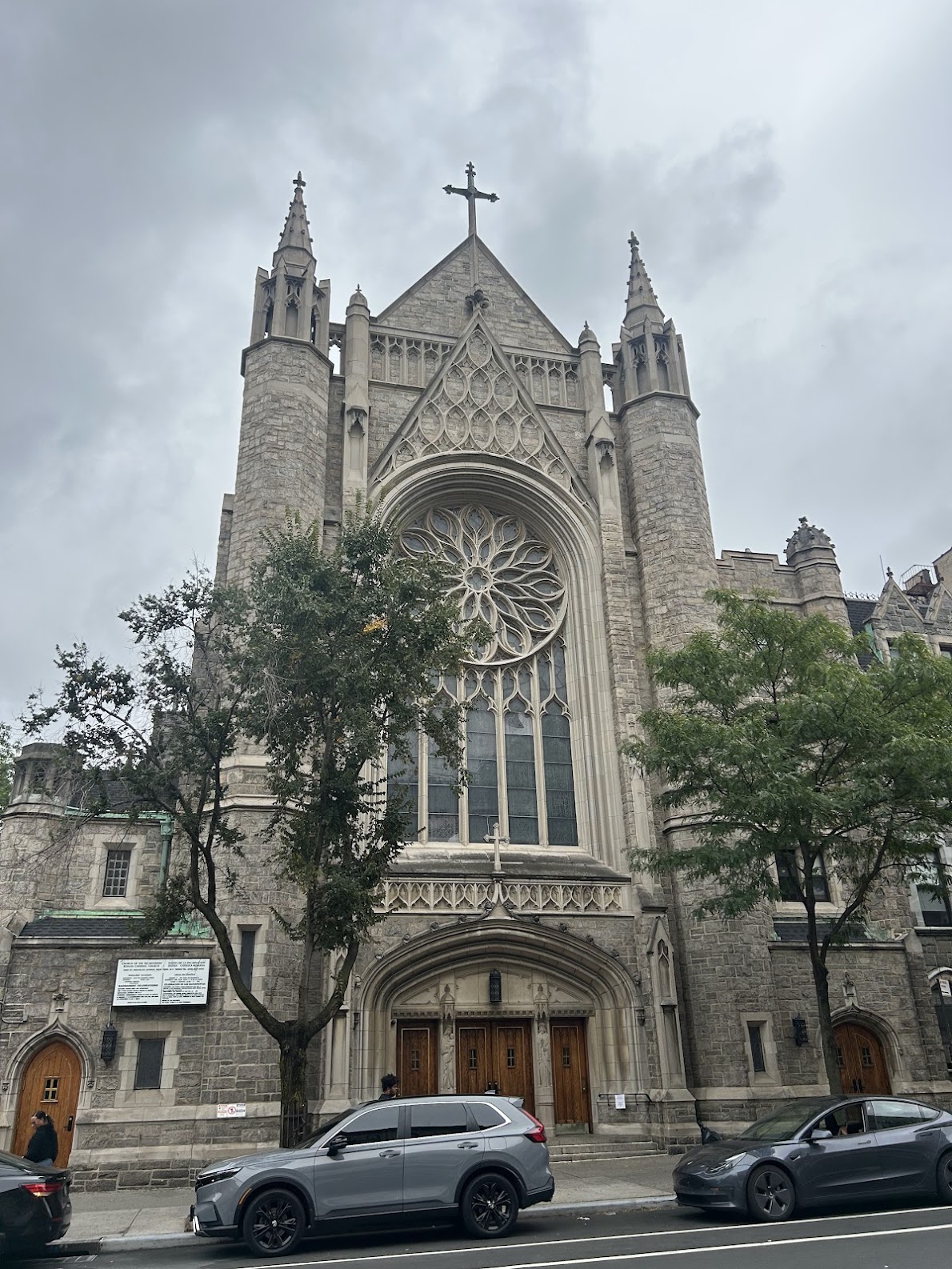
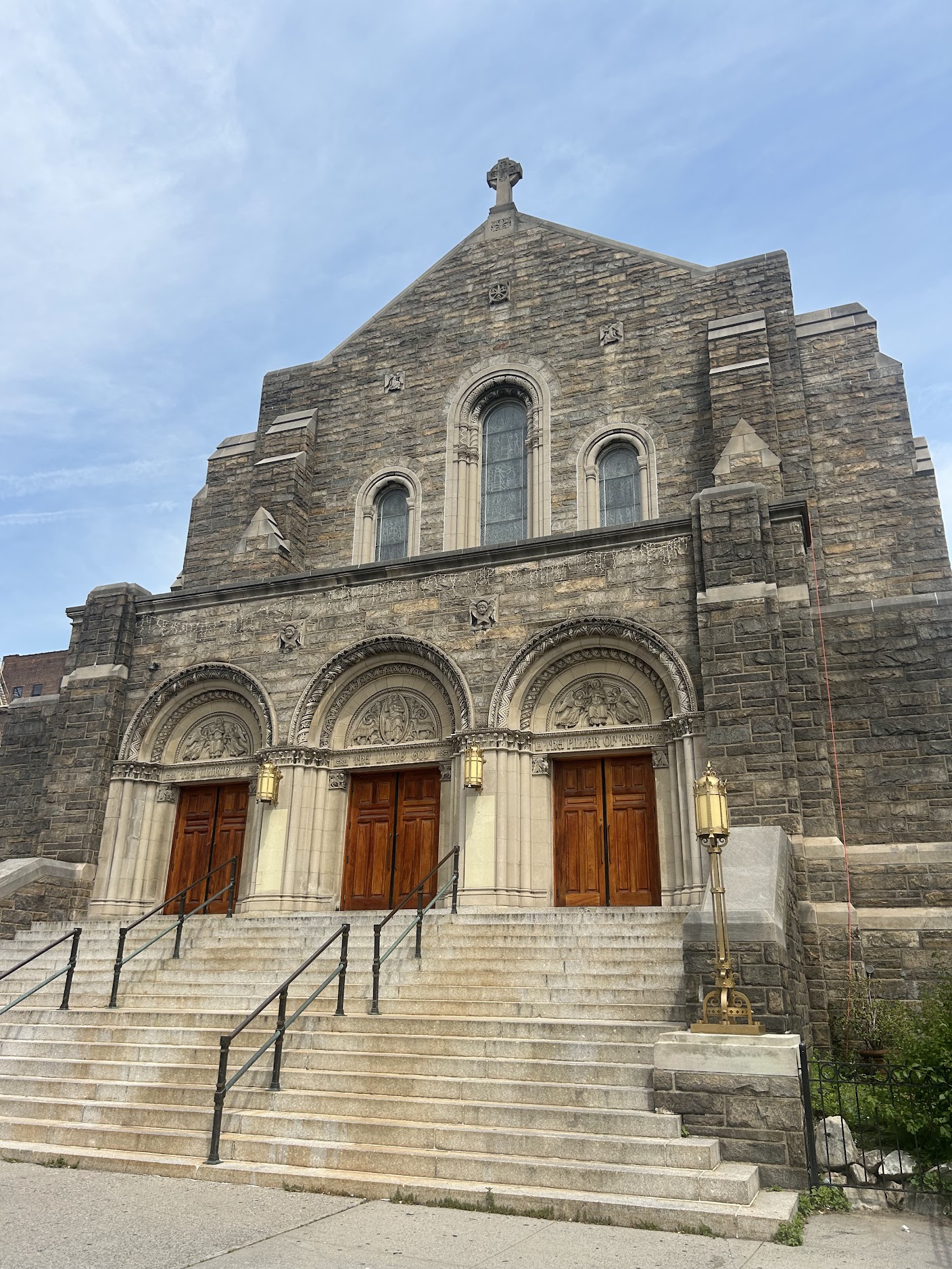
Church of the Incarnation on St. Nicholas Avenue

Not on the map but a good place to stop while making your way through the neighborhood:
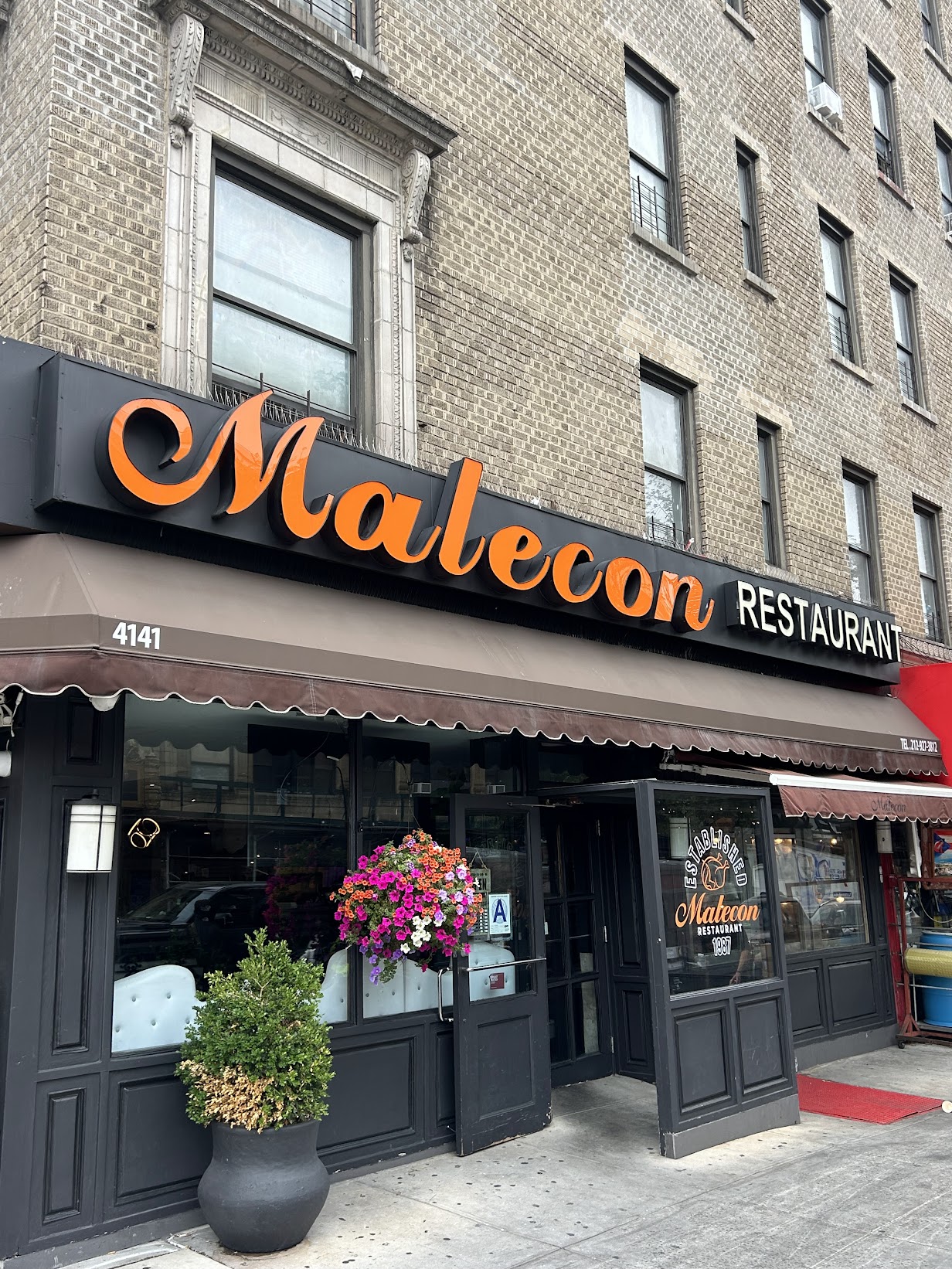
Malecon Restaurant (4141 Broadway) has been serving traditional Dominican food in Washington Heights since 1987

This shop also jumped out to me on my walk:
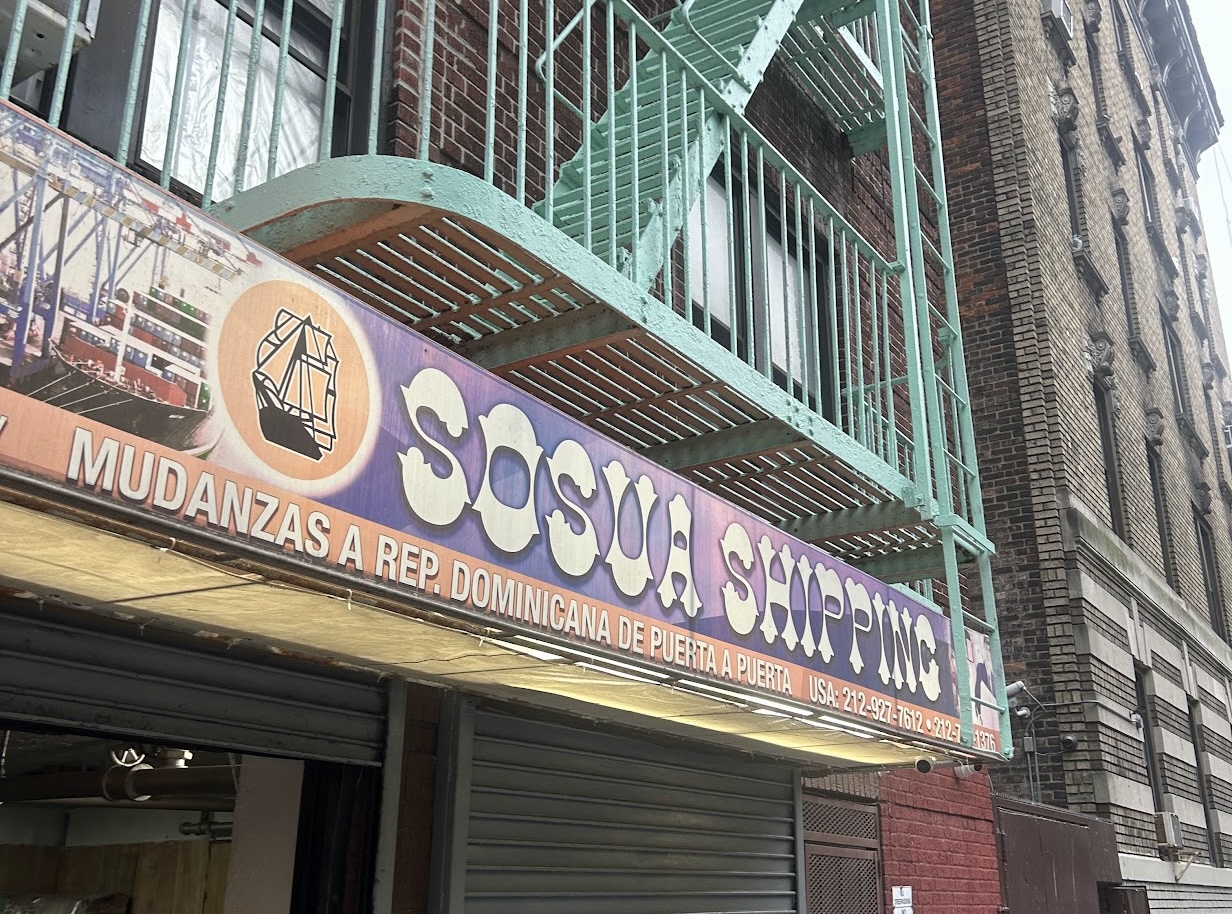

FURTHER LISTENING

After listening to this episode on Dominican New York, dive back into these episodes which share similar themes and locations.

Screenshot

TICKETS NOW ON SALE FOR

Founded by NYC: Historic Haunts of Lower Manhattan Walking Tour

As the leaves turn and October nights grow longer, there’s no better time to explore the ghostly side of New York City’s founding 400 years ago… with a haunted history walking tour!

The Founded by NYC: Historic Haunts of Lower Manhattan walking tour takes you on a spine-tingling journey through the very streets where our city began.

You’ll start at Bowling Green, where the spirits of Manhattan’s original inhabitants still wander, then venture to Fraunces Tavern, where Revolutionary War ghosts refuse to leave their posts.

Peek into Trinity Churchyard, where 120,000 bodies lie just 18 inches beneath your feet, and discover St. Paul’s Chapel, where ghostly actors search for their missing heads. You’ll encounter the corrupt spirit of Boss Tweed still haunting his courthouse… and wind up at one of the creepiest sites in the city, Blood Manor. 

This isn’t just any ghost tour – it’s a journey through 400 years of New York history, from Dutch New Amsterdam to the present day. 

Founded by NYC: Historic Haunts of Lower Manhattan runs select nights in September and October. Visit BoweryBoysWalks.com to book your spot on this limited edition walking tour before it sells out. That’s BoweryBoysWalks.com

Categories
Neighborhoods Podcasts

The Story of Inwood and Marble Hill: Tales of Caves, Old Mansions and Forgotten Amusement Parks

People who live in Inwood know how truly special it is. Manhattan’s northernmost neighborhood (aside from Marble Hill) feels like it’s outside of the city — and in some places, even outside of time and space.

Unlike the lower Manhattan’s flat avenues and organized streets, Inwood varies wildly in elevation and its streets wind up hills and down into valleys.

It’s a twenty minute walk from the mysterious “Indian caves” to some of the best Dominican food in New York City. You can experience the ghosts of Gilded Age mansions close to New York’s last remaining forest. Revolutionary War artifacts sit a few blocks away from vestiges of a 20th century Irish community.

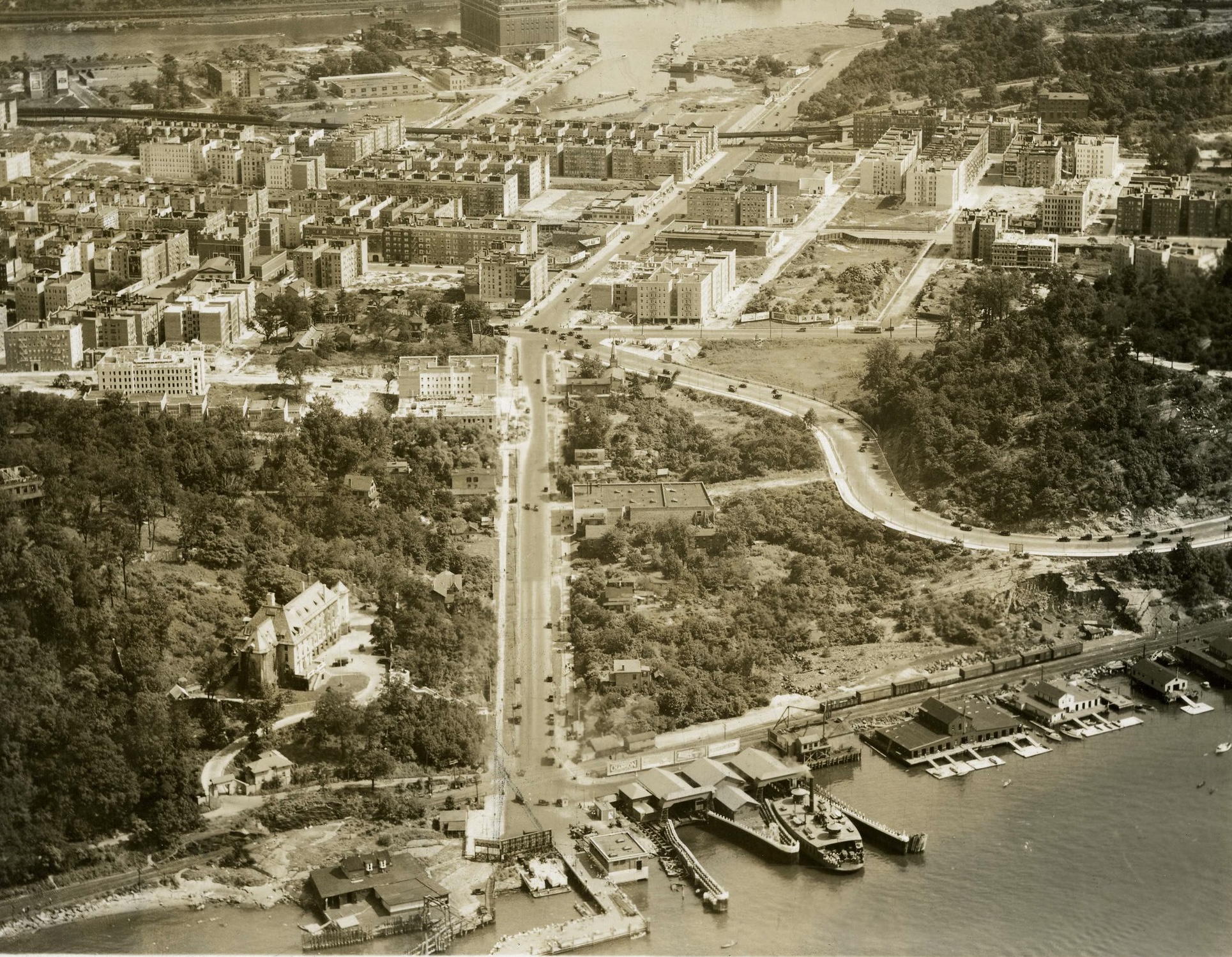
Below: Dyckman Street, date approximately 1930s? Note the mansion in the bottom left

In this special on-location episode, Greg Young and producer Kieran Gannon wind their way through the streets of Inwood and through (that’s right) thousands of years of history — from salt marshes to old amusement parks, from ancient arches to Broadway musicals, with ducks and egrets and dogs and beavers making guest appearances along the way.

And since we’re on the subject — what IS the deal with Marble Hill? What do you mean, it’s a Manhattan neighborhood?

Featuring special guests Melissa Kieweit (Dyckman Farmhouse), Cole Thompson (Lost Inwood) and Led Black (Uptown Collective)

This episode was produced and edited by Kieran Gannon.

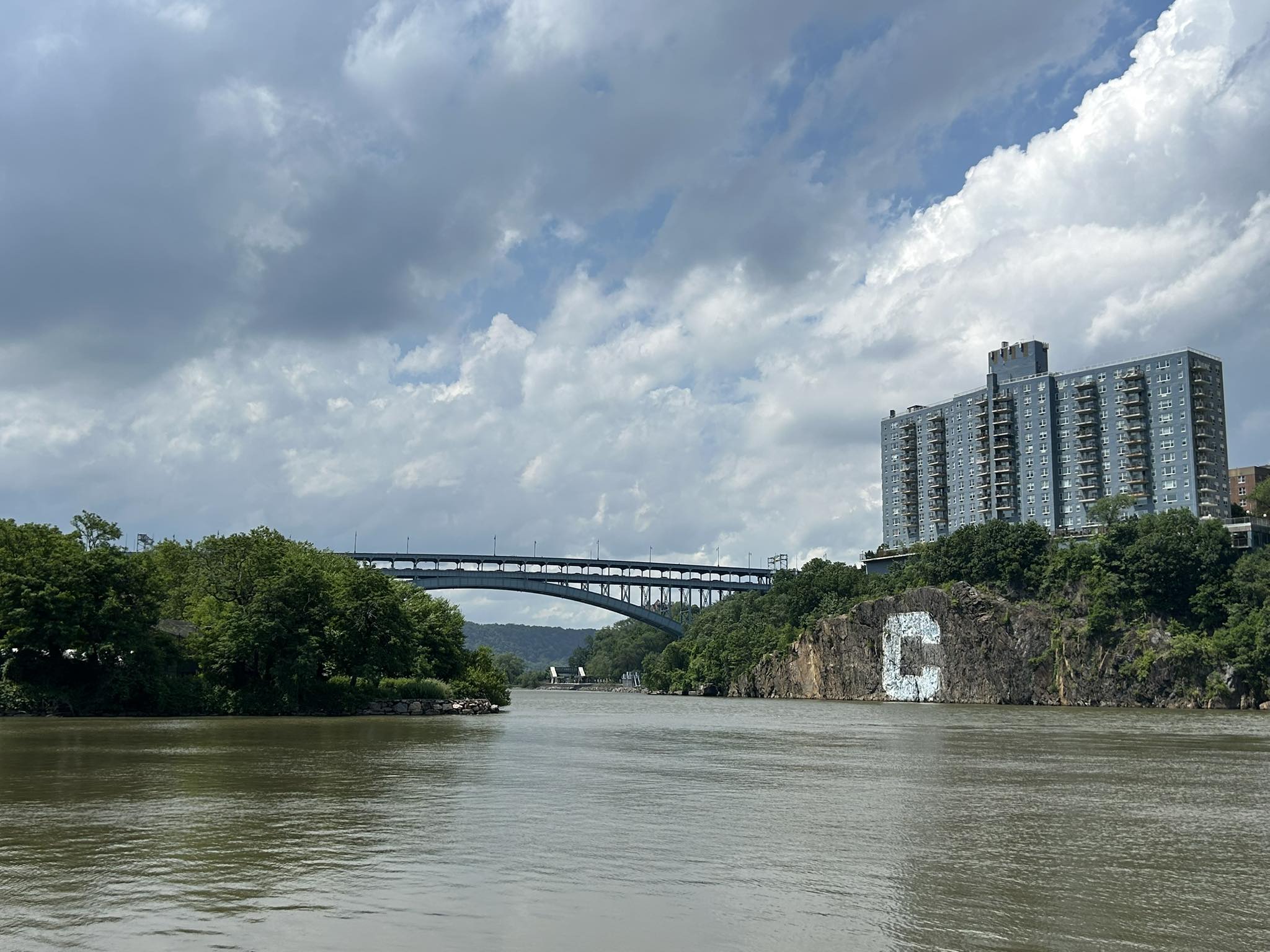
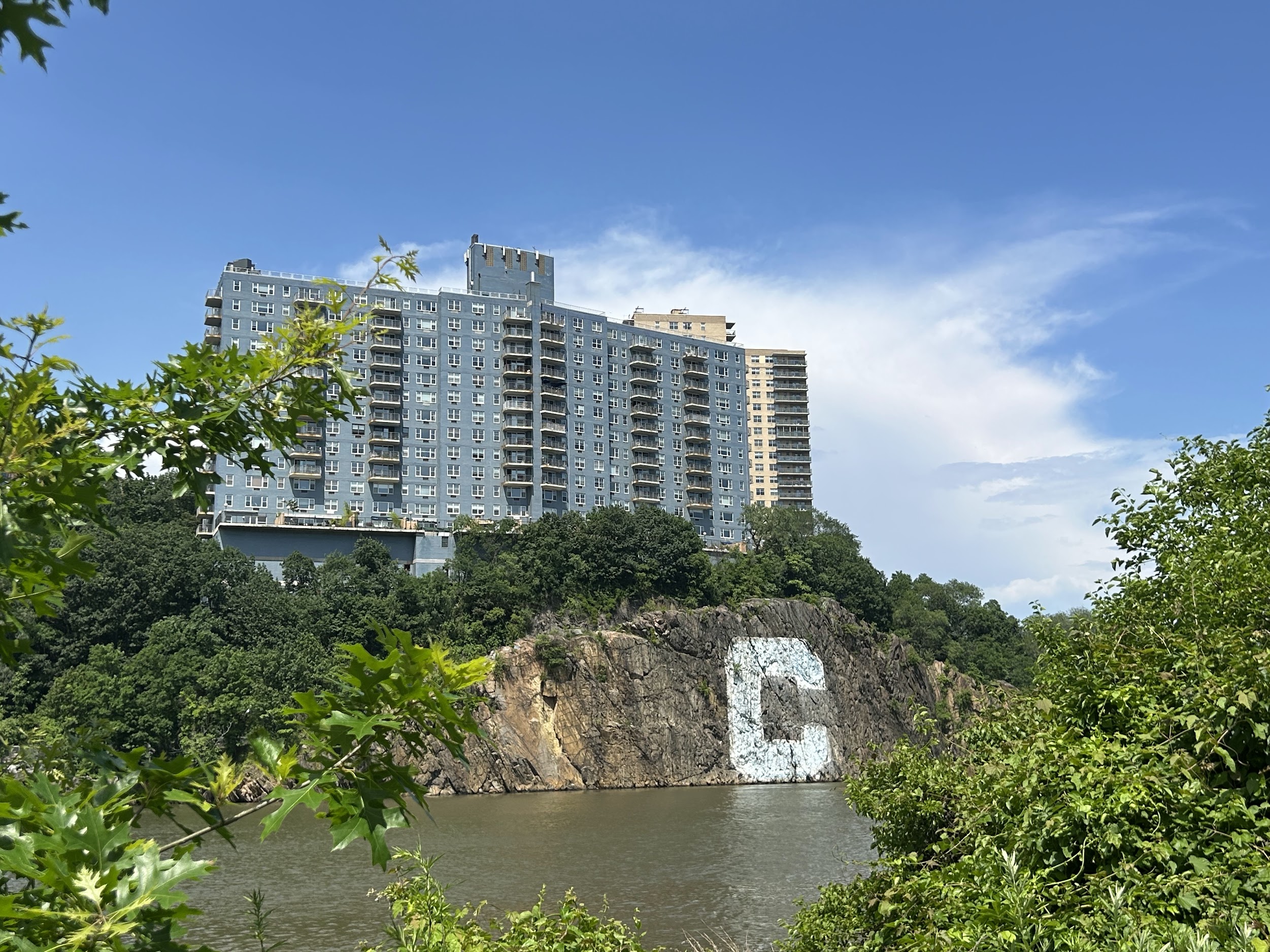
Below: The Henry Hudson Bridge and “the Big C”

LISTEN NOW: THE STORY OF INWOOD AND MARBLE HILL


Visit the Dyckman Farmhouse! Visit their website for information and a list of events.

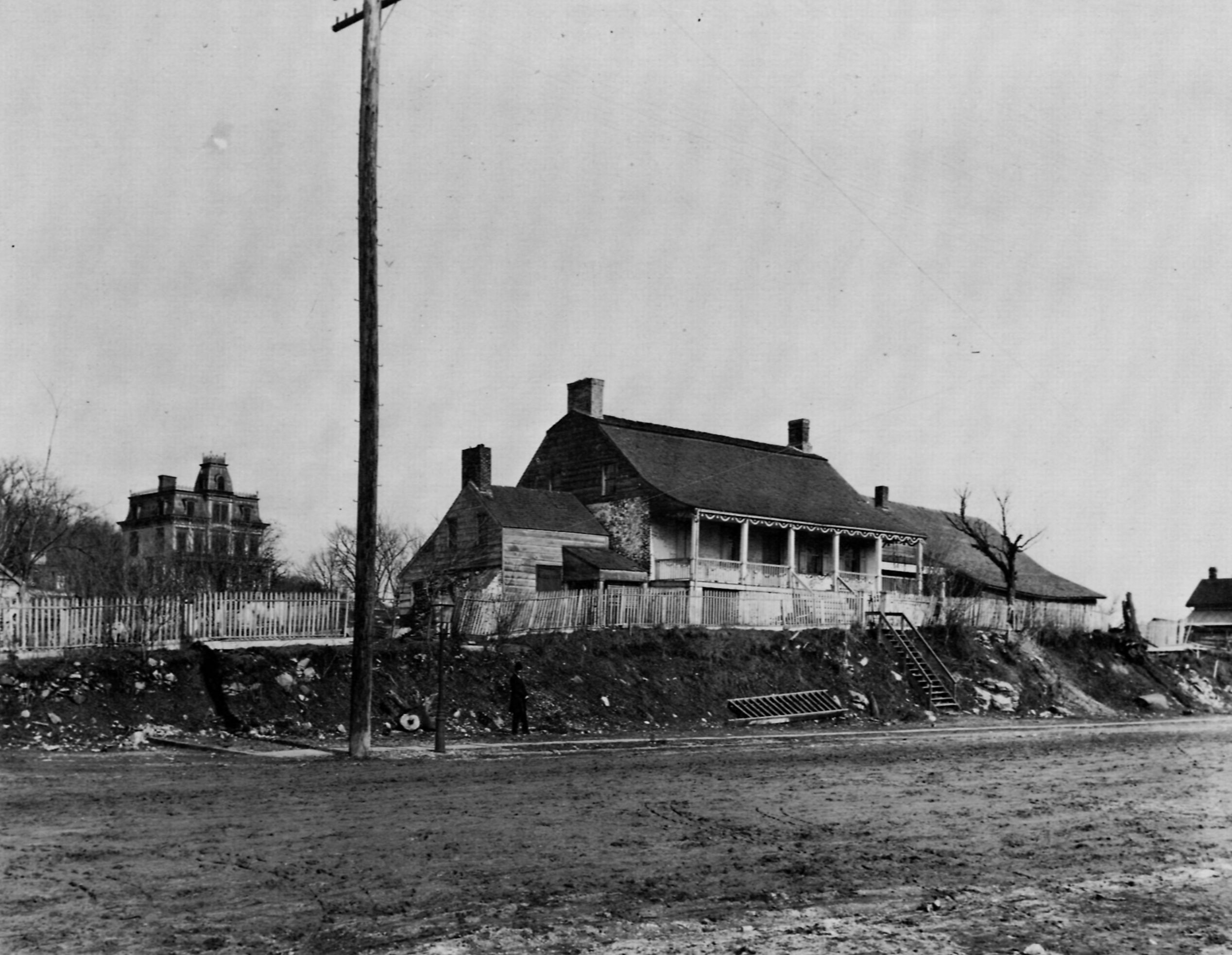
Dyckman Farmhouse and an unidentified mansion in the background. Wenzel, Edward, 1892

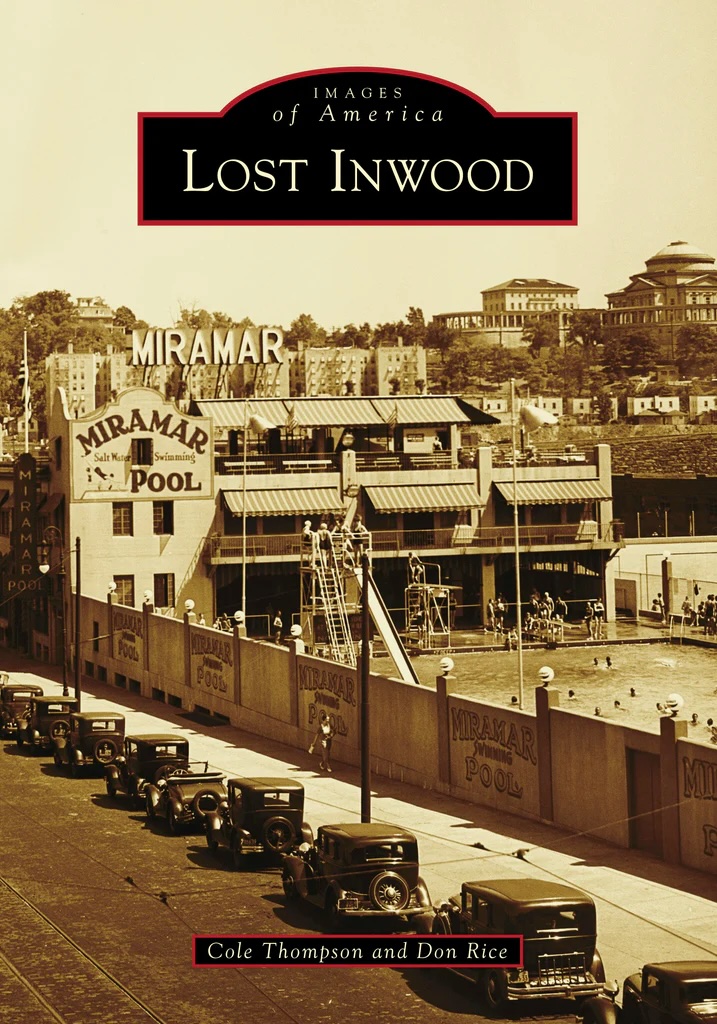
Cole Thompson and Don Rice leads monthly Lost Inwood talks at Inwood Farm, right off of Inwood Hill Park. In addition Thompson also operates the long running, deeply resource on Inwood history My Inwood. Their book on Inwood history is available in bookstores.

Led Black runs the Instagram account Uptown Collective and now records the new podcast Uptown Voices with Octavio Blanco.


The Bowery Boys Podcast is proud to be sponsored by FOUNDED BY NYC, celebrating New York City’s 400th anniversary in 2025 and the 250th anniversary of the United States in 2026. Read about all the exciting events and world class institutions commemorating the five boroughs legacy of groundbreaking achievements, and find ways to celebrate the city that’s always making history.  foundedbynyc.com


Chursh of the Good Shepherd, near Isham Park
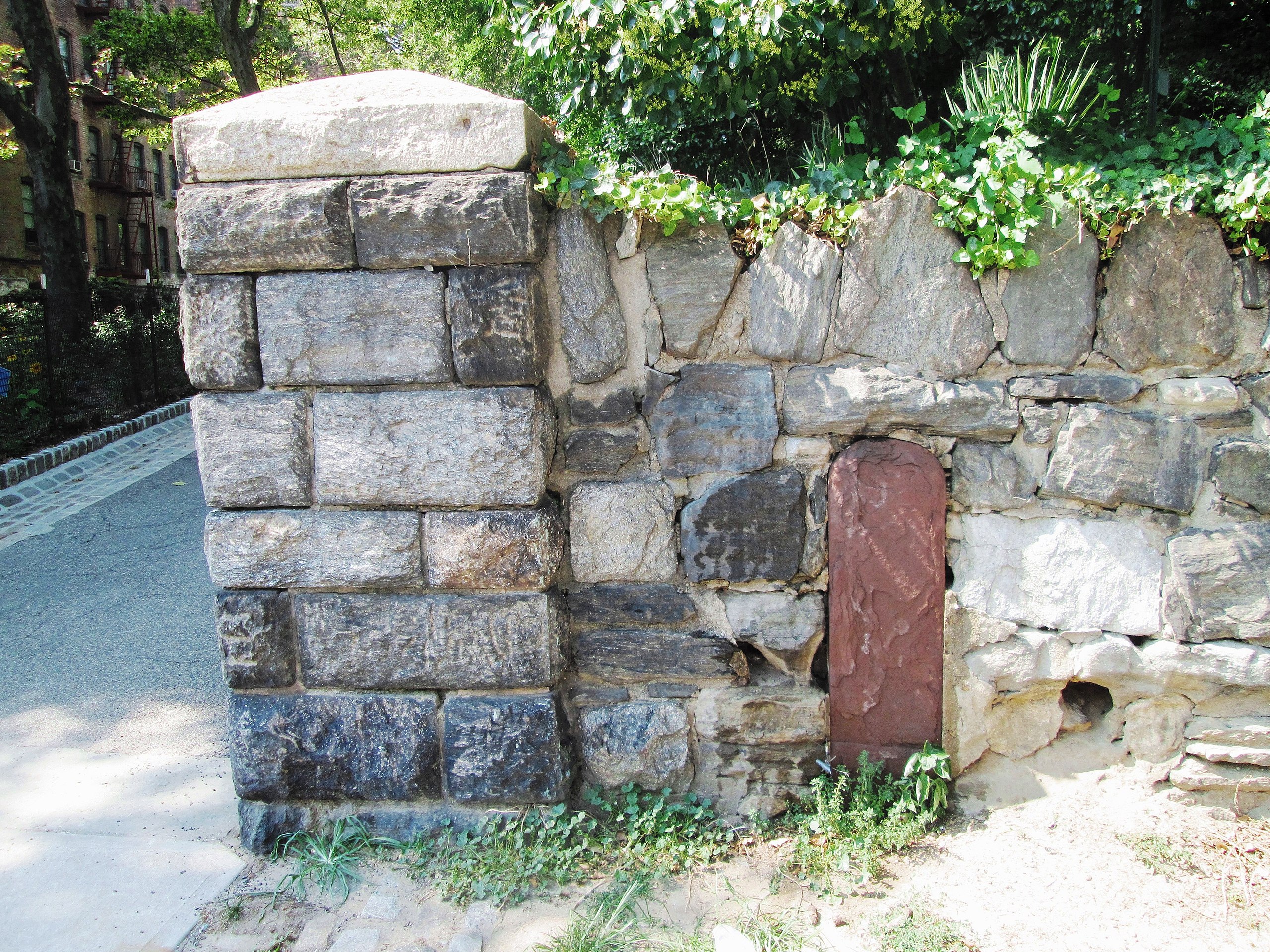
The Isham Park mile marker. Photo Beyond My Ken/Wikimedia
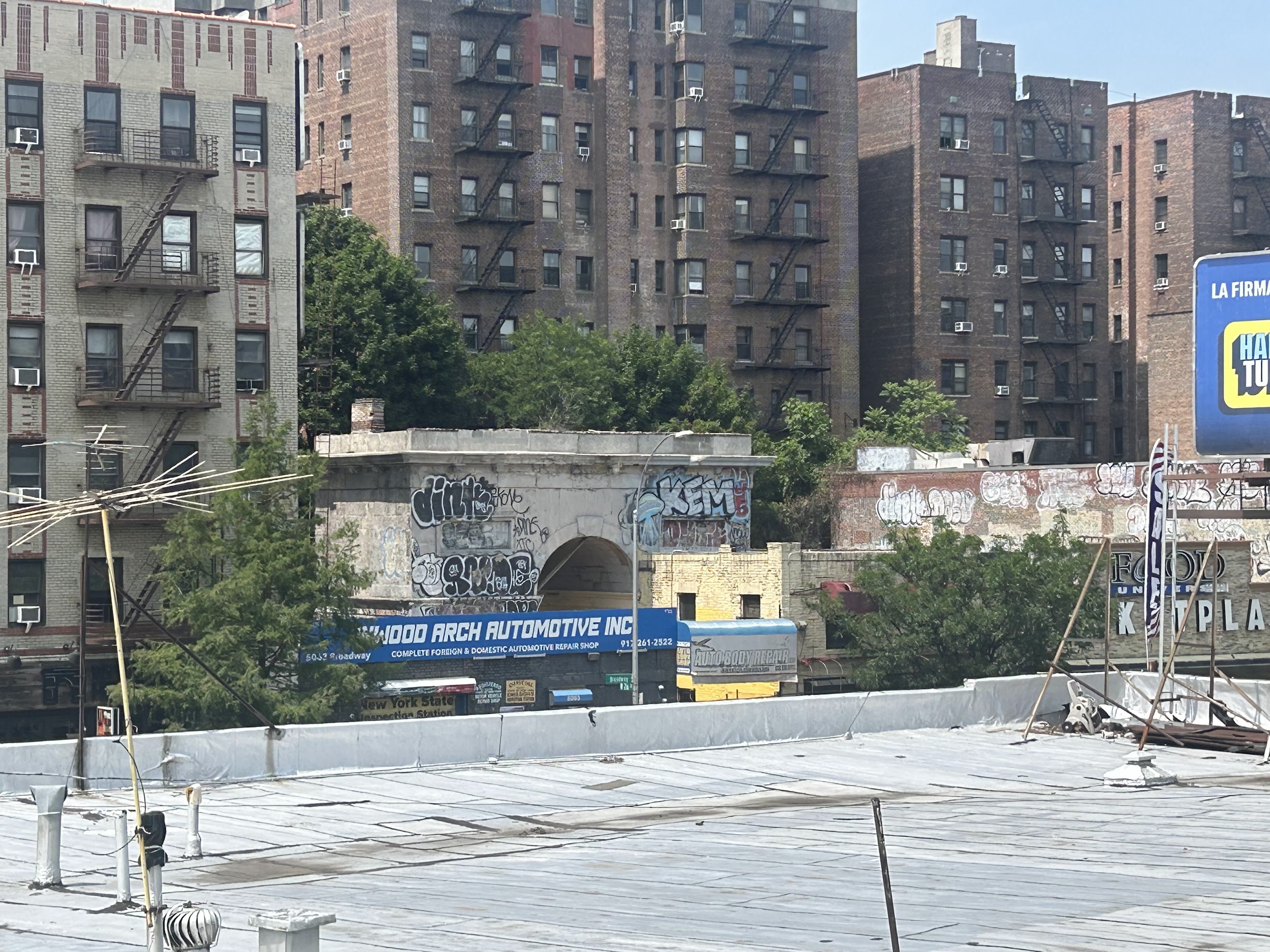
The Seaman Drake Arch, seen here in 1920s. Courtesy My Inwood where you can read an article on this remarkable artifact.
The arch today, as seen from the train.
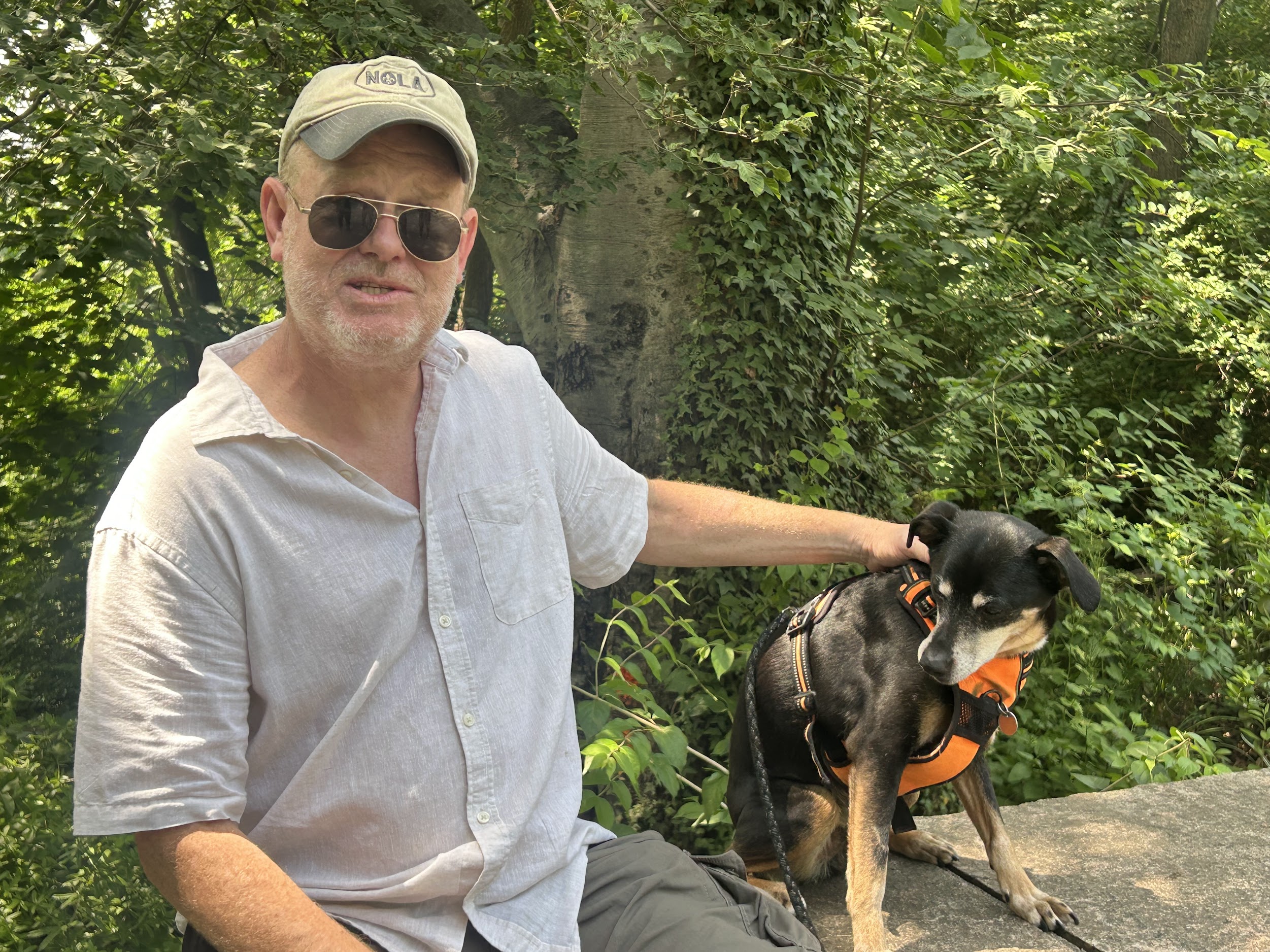
Inwood historians Cole Thompson and Billy
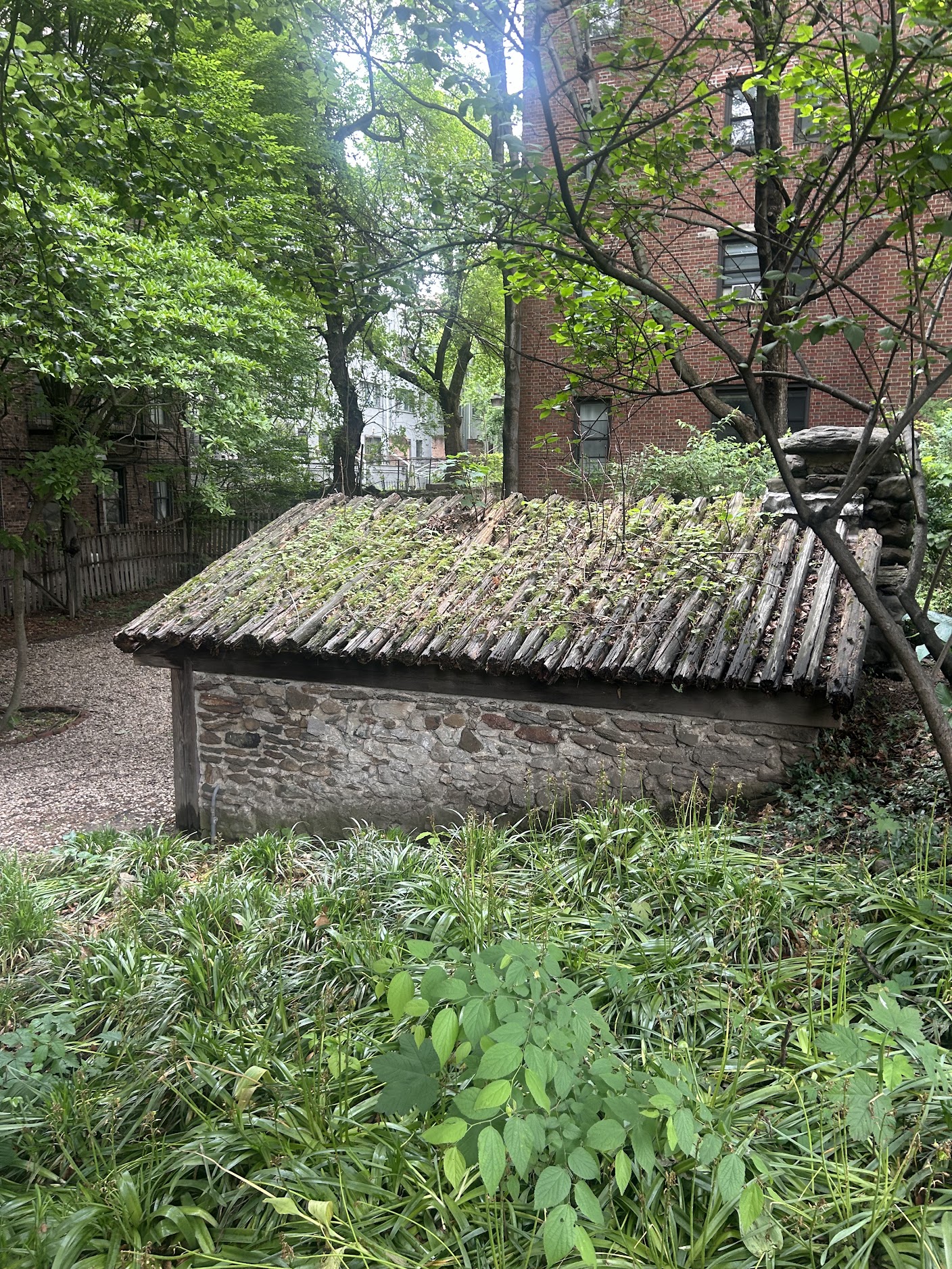
Queen Mallory on her roost atop the Hessian Hut.

FURTHER LISTENING

For more information on subjects discussed on this show, check out these past Bowery Boys podcasts


Categories
Amusements and Thrills Sports Those Were The Days

The New York Game: Baseball in the Early Years

Baseball, as American as apple pie, really is “the New York game.” While its precursors come from many places – from Jamestown to Prague – the rules of American baseball and the modern ways of enjoying it were born from the urban experience and, in particular, the 19th-century New York region.

The sport (in the form that we know it today) developed in the early 1800s, played in Manhattan’s many open lots or New Jersey public parklands and soon organized into regular teams and eventually leagues. The way that New Yorkers played baseball was soon the way most Americans played by the late 19th century.

But it wasn’t until the invention of regular ball fields – catering to paying customers – that baseball became truly an urban recreational experience. And that too was revolutionized in New York.

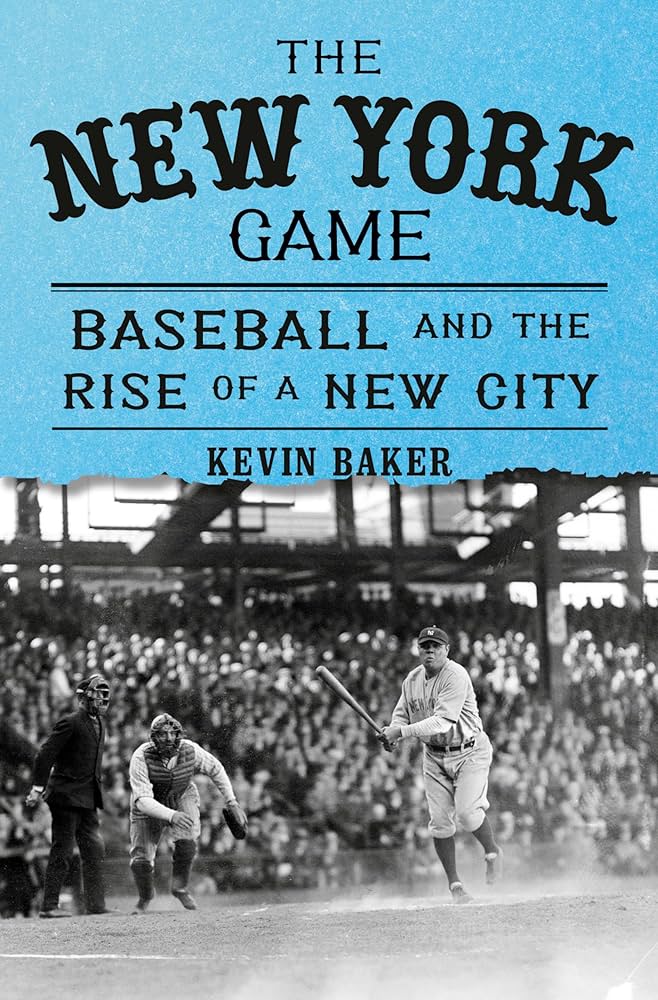
Just in time for spring and the new Major League baseball season, Tom and Greg are joined by the acclaimed Kevin Baker, author of The New York Game: Baseball and the Rise of a New City to discuss the early history of the sport and its unique connections to New York City.

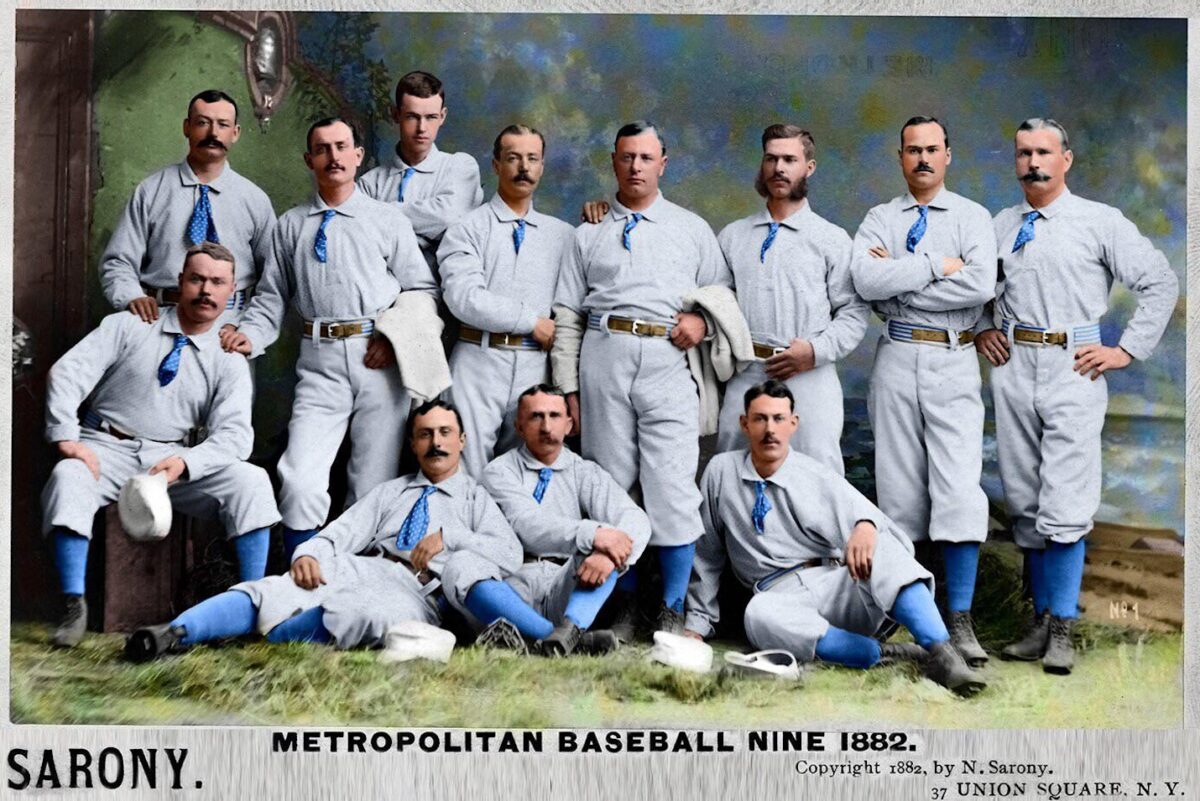
This show is truly the ultimate origin story of New York baseball, featuring tales of the city’s oldest and most legendary sports teams – the Yankees, the Dodgers, and the Giants. AND the New York Metropolitans – a different team than today’s Mets located in Queens.

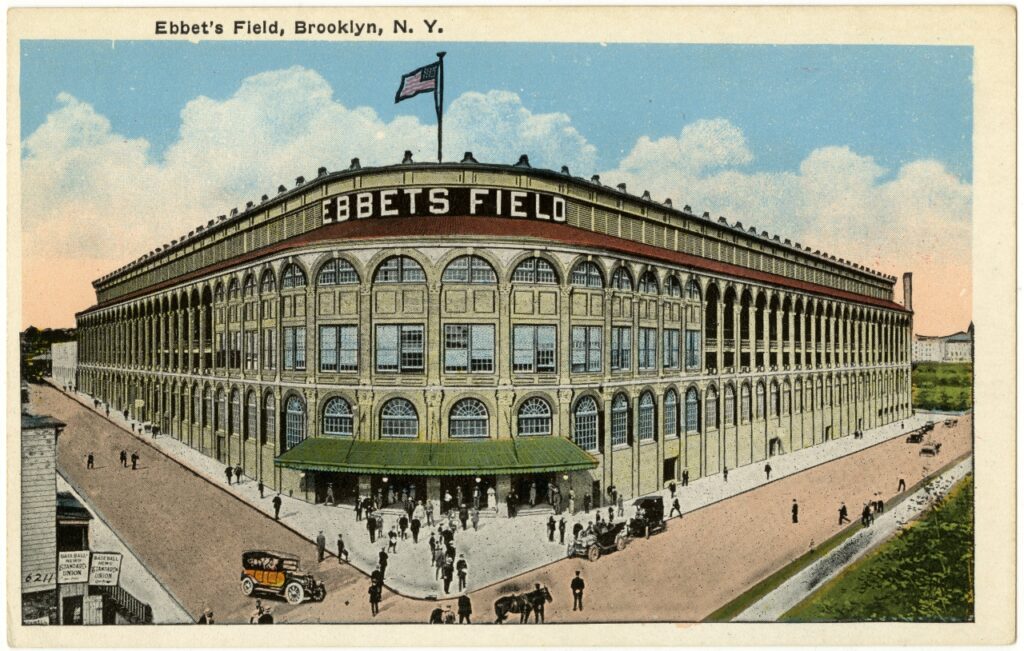
Where was baseball played? Kevin shares the secrets of New York baseball’s earliest venues – from the many Polo Grounds in upper Manhattan to Ebbets Field in Brooklyn

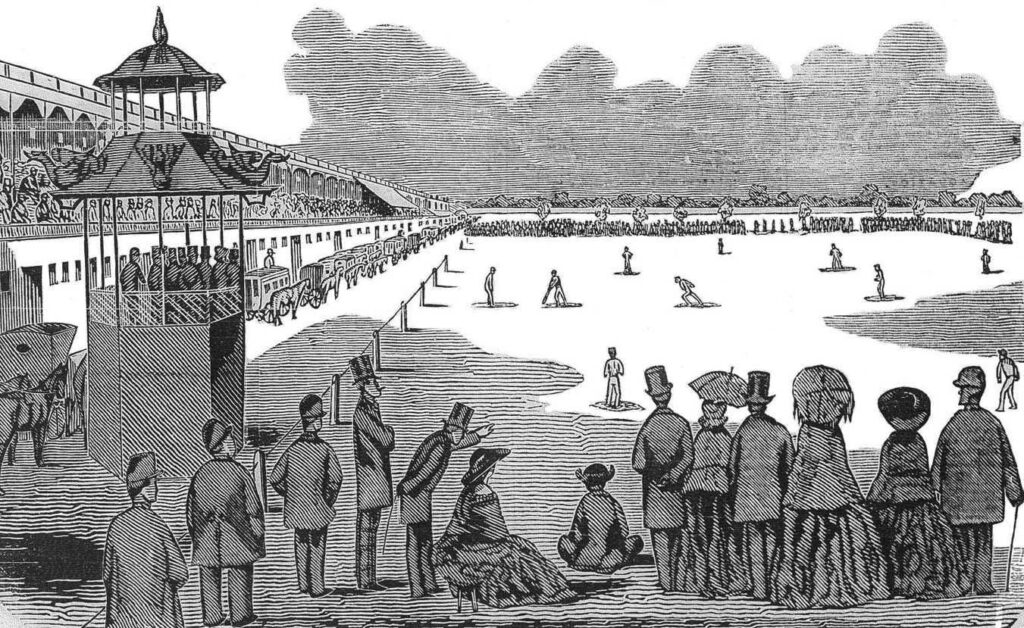
This is a true five-borough origin story! With stops at Hilltop Park (Manhattan), Yankee Stadium (Bronx), Fashion Race Course (Queens), Washington Park (Brooklyn), and St. George Cricket Grounds (Staten Island) among many other sites.

FEATURING the surprising link between baseball and Boss Tweed and his notorious political machine Tammany Hall

PLUS How did segregation distort the game and where did Black ballplayers play the sport? What was baseball like before Jackie Robinson?

LISTEN NOW: THE NEW YORK GAME


Fashion Race Course in Flushing, Queens, from The Clipper of July 24, 1858 (and via John Thorn/Our Game)
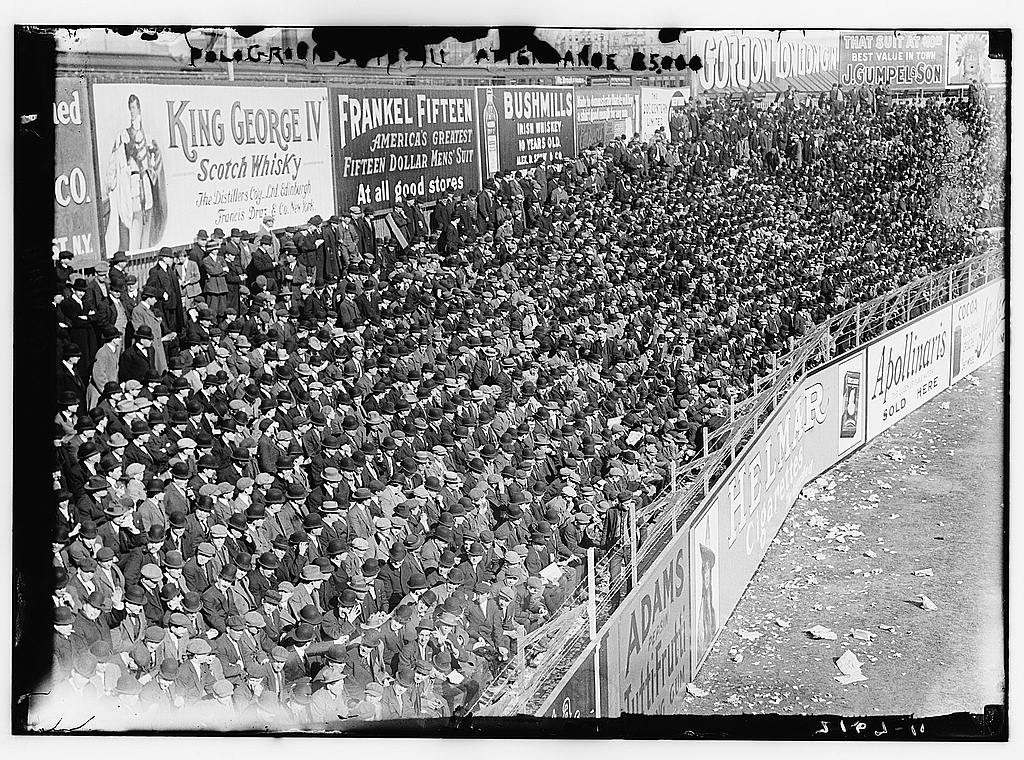
Many hatted men at the Polo Grounds, 1911 (Library of Congress)
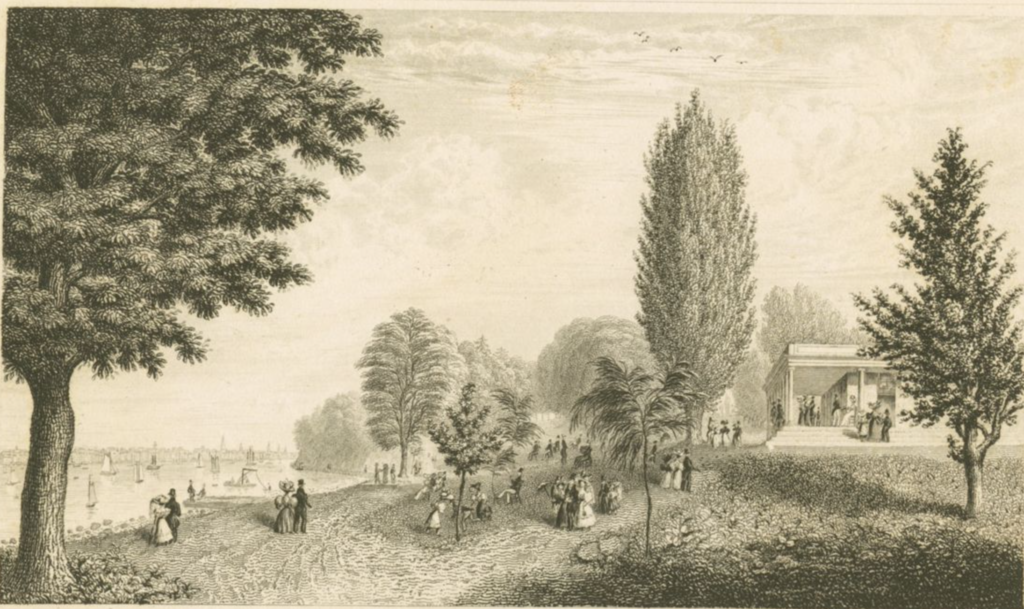
Elysian Fields in Hoboken, the site of America’s first baseball games (NYPL, image from Booth’s History of New York)
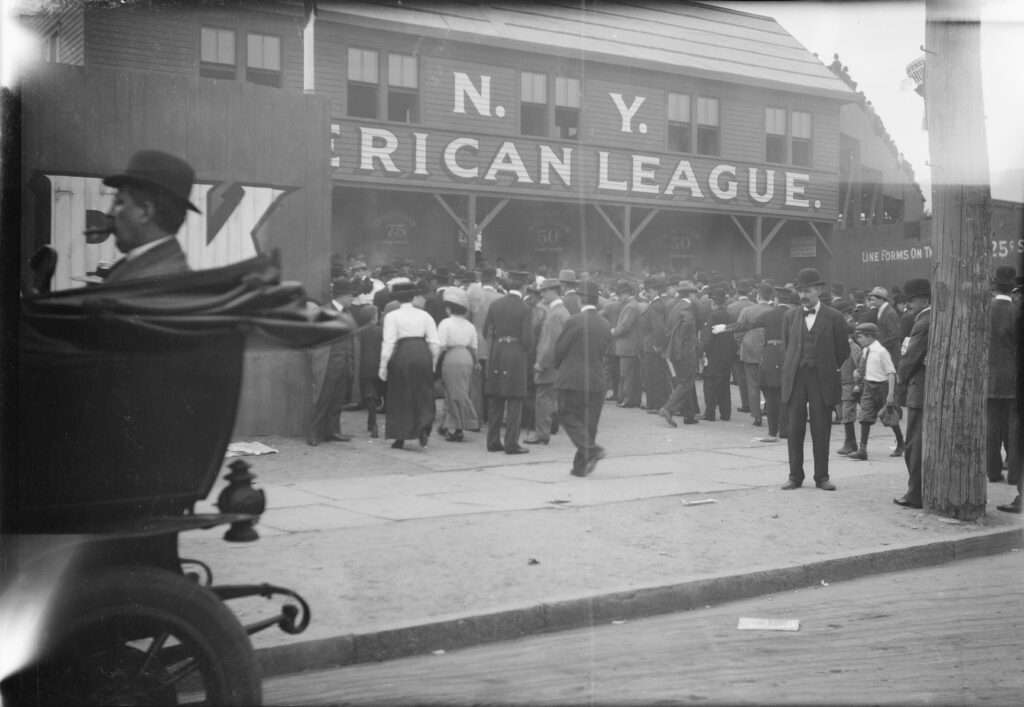
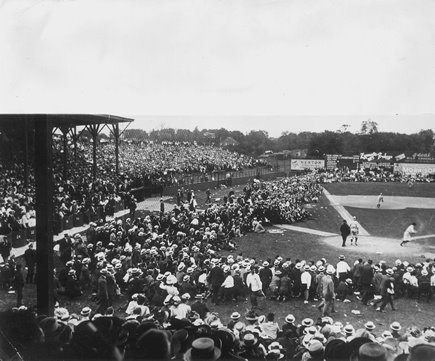
The entrance to Hilltop Park, 1912 (Library of Congress)
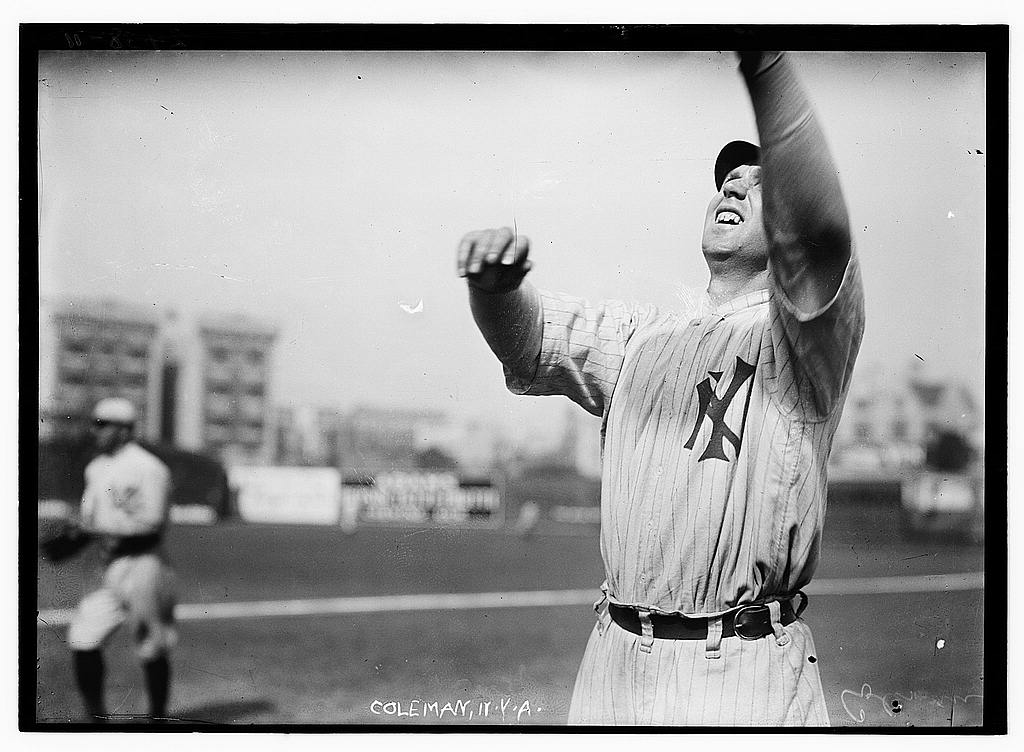
Curt Coleman at Hilltop Park, 1912
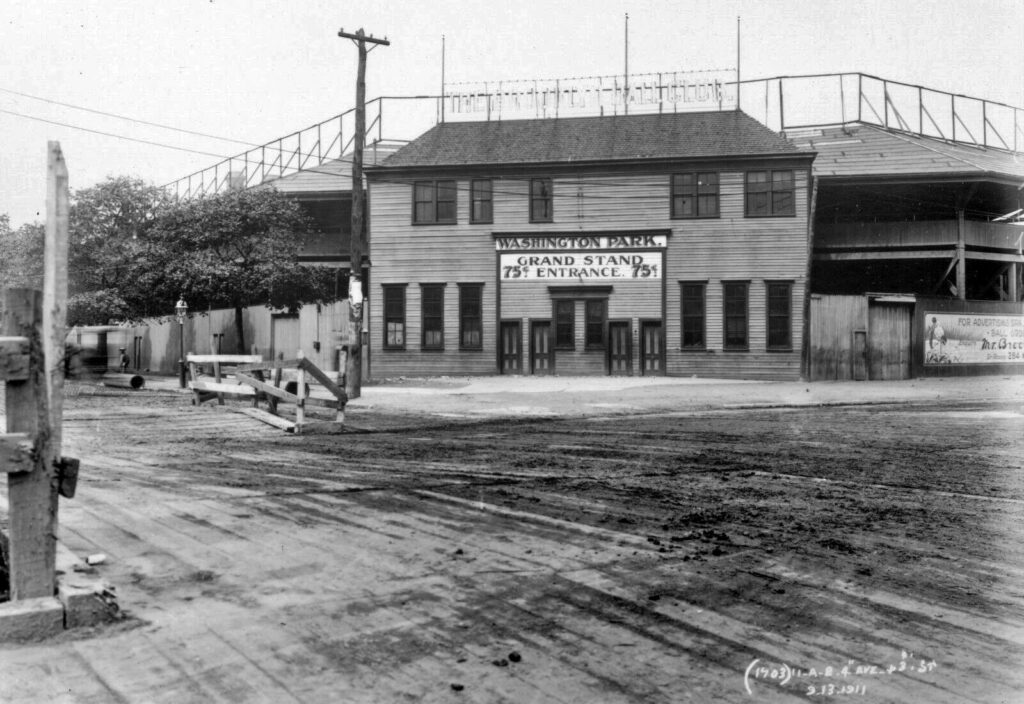
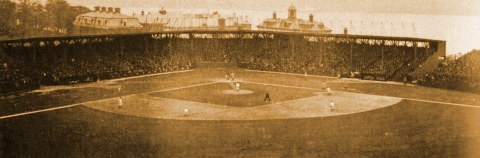
Washington Park taken September 13, 1911 from the intersection of 4th Avenue and 3rd Street in Park Slope, Brooklyn.
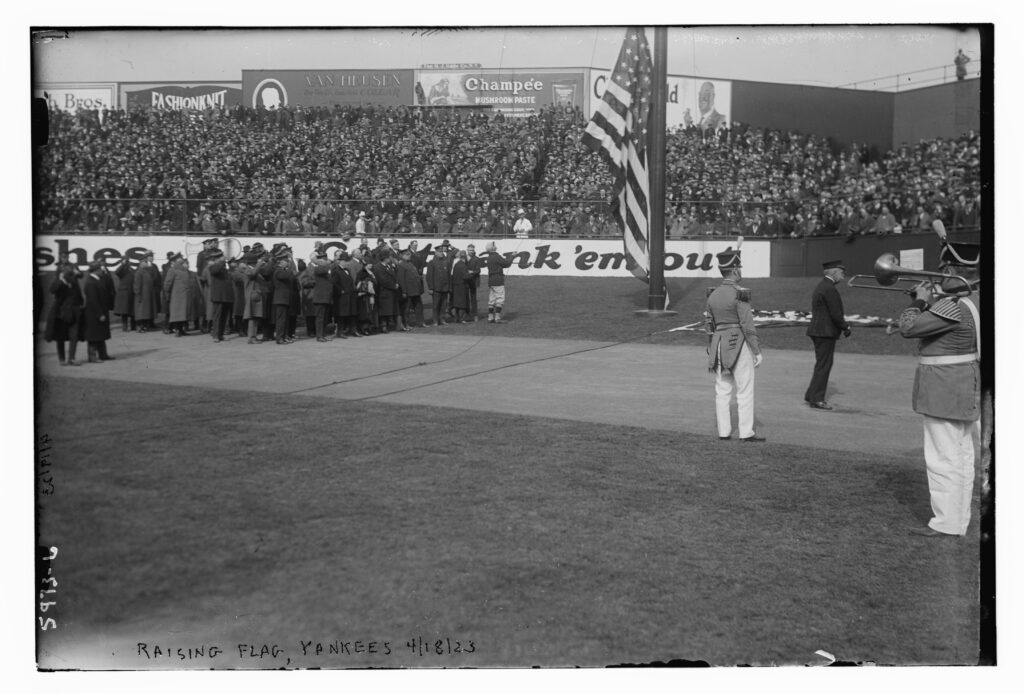
Opening Day at Yankee Stadium, 1923 (Library of Congress)
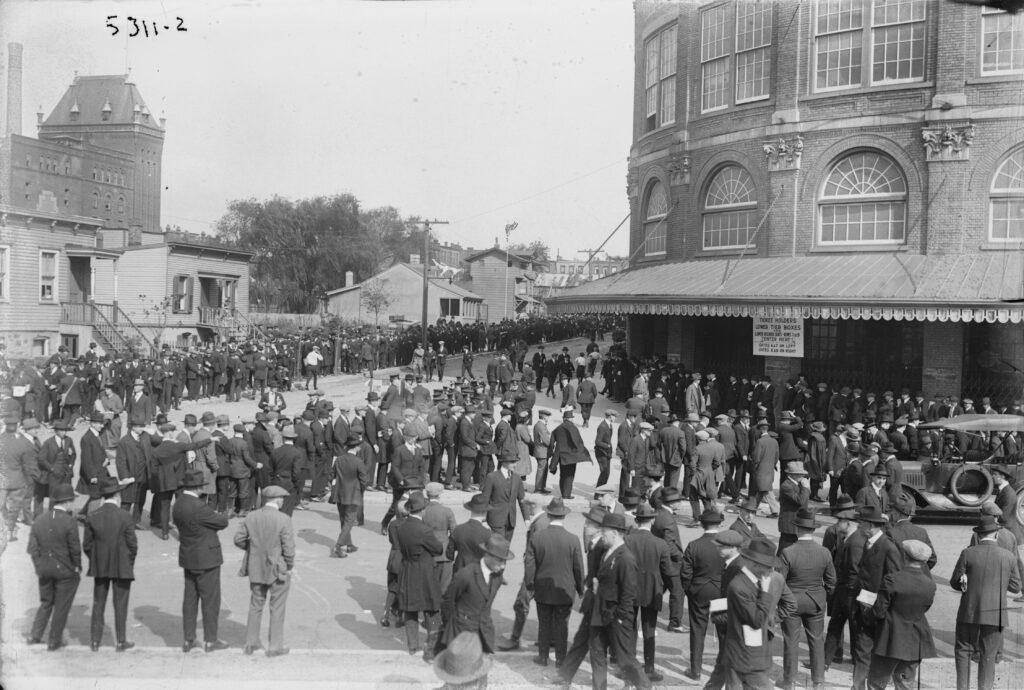
The crowd outside Ebbets Field for Game 1 of the 1920 World Series, the Brooklyn Dodgers against the Cleveland Indians.

FURTHER LISTENING

FURTHER READING

Brooklyn baseball: the Superbas and the worst batter ever

Brooklyn Dodgers vs. Cincinnati Reds at Ebbets Field — in the first Major League baseball game ever broadcast on television

Hilltop Park: home base for NYC’s premier baseball team

Meet the Mets! The Metropolitans, that is, an early NY baseball team

The short shelf life of the Tip-Tops, the Brooklyn baseball team situated near the Gowanus River and named for bread

Union Grounds: Baseball history in Williamsburg

The Wise Guy of Baseball: Getting To Know Leo ‘The Lip’ Durocher

100 years ago today, the Yankees played their first game at Yankee Stadium

Categories
Holidays

‘Twas The Night: A New York Christmas tradition in an uptown cemetery

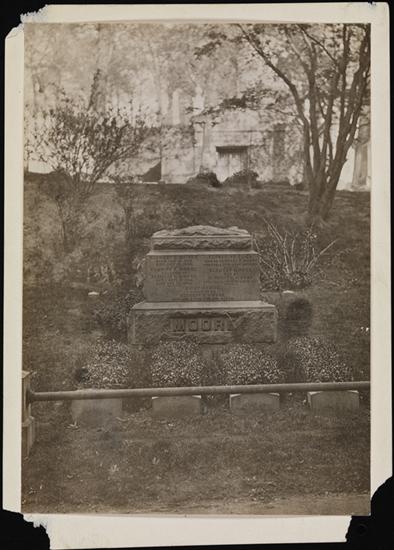
Clement Clarke Moore, the lord of Chelsea (the manor for which the neighborhood is named), lived a long and distinguished life as an educator and land developer, dying in 1863 at his home in Newport, Rhode Island.

He was originally buried in the churchyard of St. Luke-in-the-Field (pictured below) in the area of today’s West Village.

In 1891 the cemetery was redeveloped and the remains were transferred to Trinity Church’s graveyard in Washington Heights.

What does all this have to do with Christmas you ask?

Moore was a revered scholar, former president of Columbia College (later Columbia University) and the developer of the General Theological Seminary on his old Chelsea property.

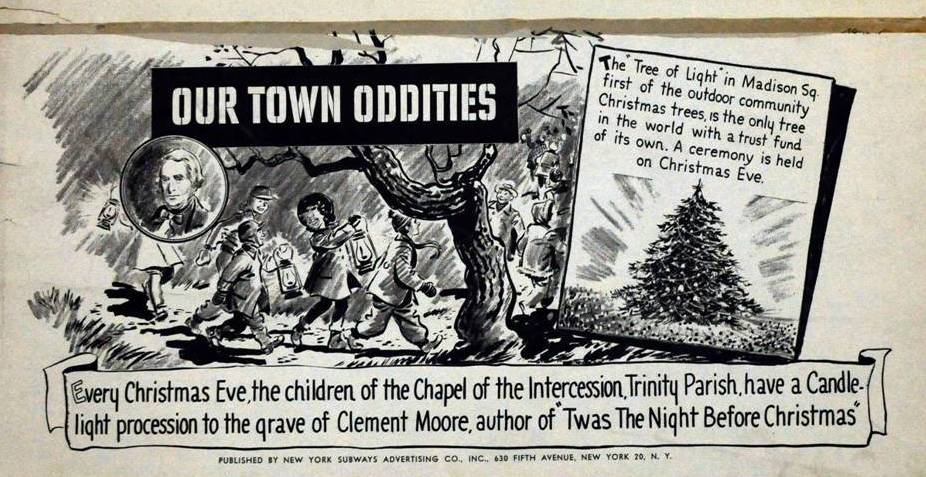
But most everybody knows him better as the author of “A Visit from St. Nicholas” or “Twas the Night Before Christmas,” a verse of holiday anticipation penned for his children.

For well over one hundred years an unusual and special ceremony has taken place at Church of the Intercession, the house of worship which sits upon the grounds of Trinity Church Cemetery.

Church of the Intercession

The tradition was apparently initiated by a vicar at the chapel named Milo Hudson Gates.

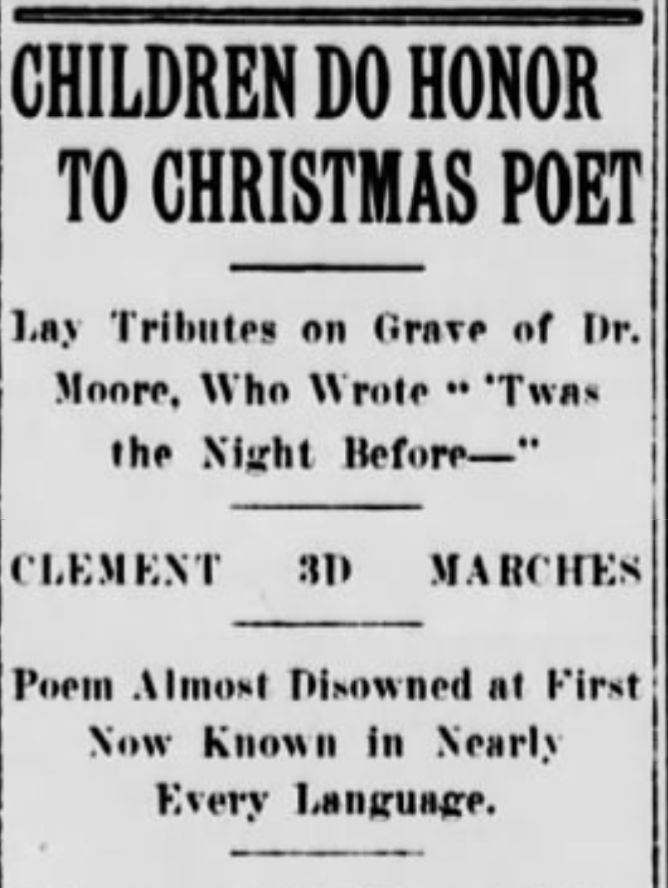
First initiated in 1911, Gates, according to a 1933 New York Daily News report, “and his child parishioners trouped across to Trinity Cemetery to pray and sing at the grave where Dr. Moore’s bones have rested since they were removed from the vault in St. Luke’s Church on Hudson Street.”

From the 1914 New York Sun

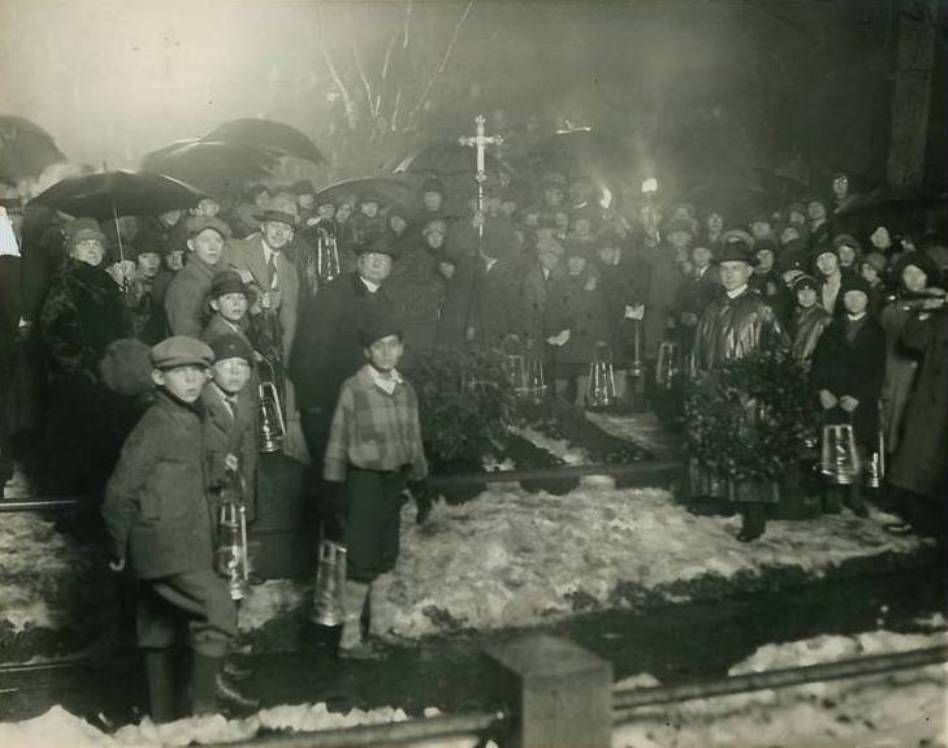
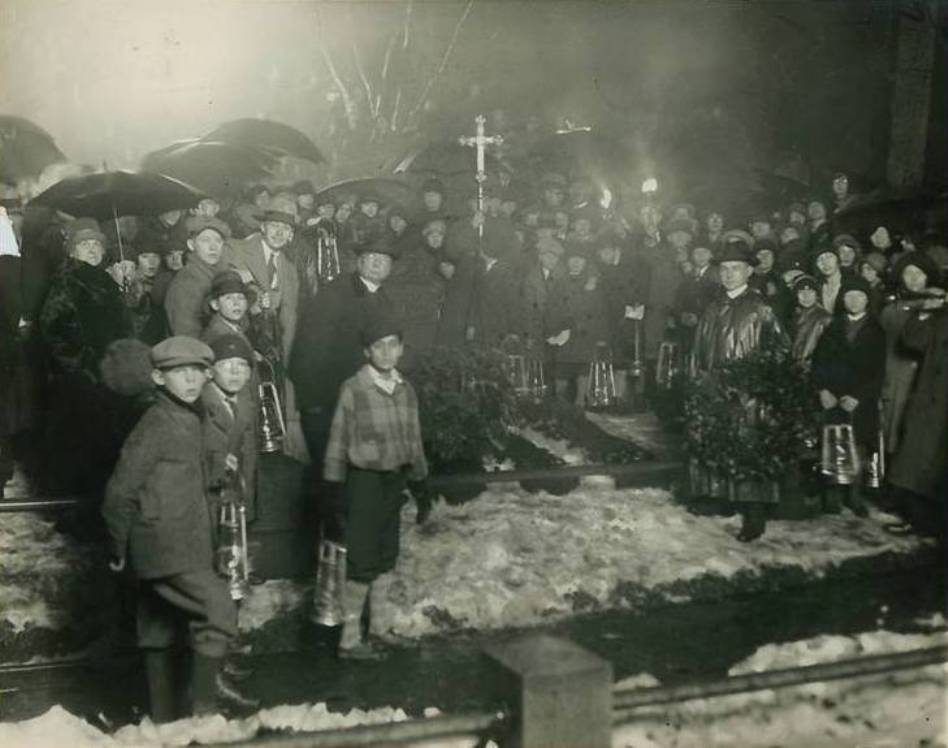
Hundreds of children, carrying lanterns and torches in the old days, have gathered around Moore’s gravestone and sang Christmas songs over the years.

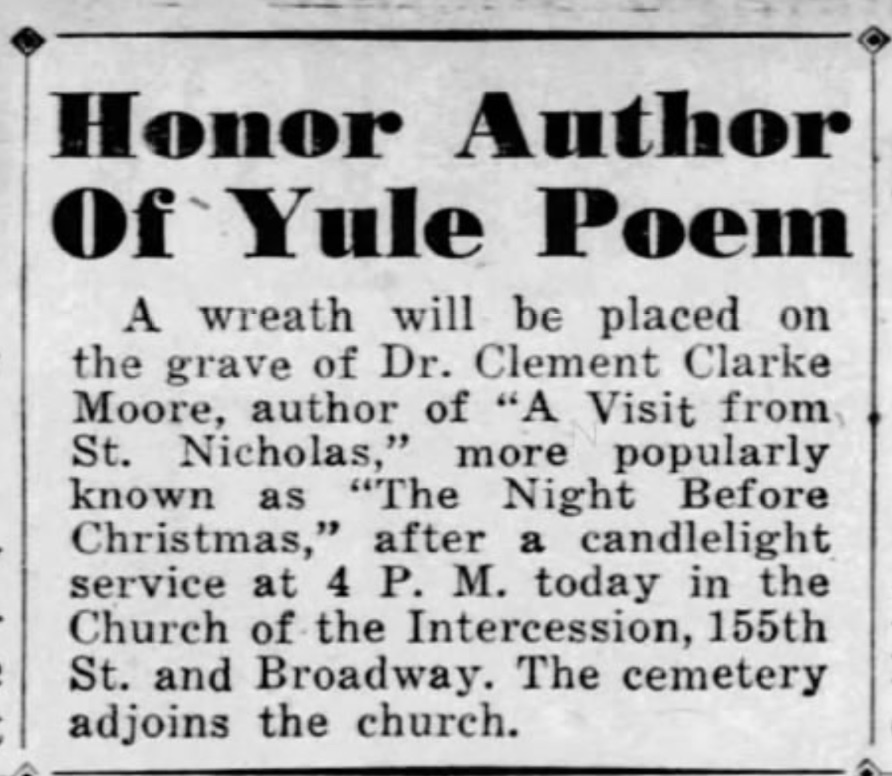
“Carols were sung and wreaths placed on the grave,” according to a 1919 report. The famous poem by Moore was then recited.

“His name was Clement C. Moore. His body sleeps beneath the Christmas trees that grow in Trinity Cemetery.” [December 23, 1918]

Below: Children surrounding the grave of Moore’s, sometime in the 1920s or 1930s (according the church website).

This tradition has survived into modern day with some interesting variations.

New York Daily News 1944

Frequently a person dressed as Saint Nicholas (the saint, not the Santa) leads the procession. In recent decades, a person of some renown reads the poem such as in 2003 when basketball great Isiah Thomas brought Moore’s words to life.

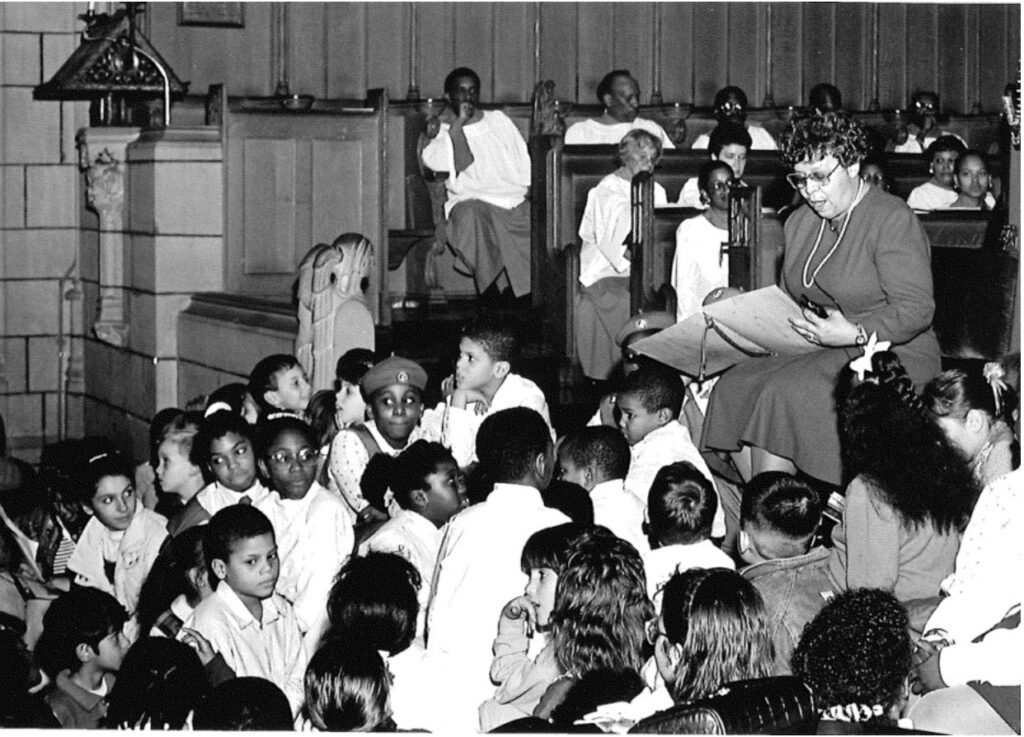
Below: In 1990, Joyce Dinkins, wife of the mayor David Dinkins, was invited to read the poem.
Courtesy Trinity Church

Details of this year’s event from their website:

THE 112TH CLEMENT CLARKE MOORE
MEMORIAL CANDLELIGHT SERVICE
WILL BE HELD ON
DECEMBER 18, 2022 AT 3:00PM

This year, the poem will be read by The Rt. Rev. Catherine S. Roskam, former Suffragan Bishop of New York.
Following the service, we will process out to Trinity Cemetery to lay the wreath on Clement Clarke Moore’s grave and sing “Silent Night” at the Trinity Cemetery and Mausoleum.

Categories
Bowery Boys Movie Club Neighborhoods

In The Heights: The Movie Club dives into Upper Manhattan’s musical romance

The new episode of the Bowery Boys Movie Club explores the new musical film In The Heights and the fascinating historical neighborhood at its center. An exclusive podcast for those who support us on Patreon.

Lin Manuel Miranda‘s first Broadway musical In The Heights was a critical and box office smash and won four Tony Awards — including Best Musical. And yet its success was dwarfed by Miranda’s second offering Hamilton: The Musical.

Now In The Heights comes to the big screen — both in movie theaters and on HBO Max — bringing the music, the dancing and a few of the same stars. But it also introduces the neighborhood of Washington Heights itself into the spotlight.

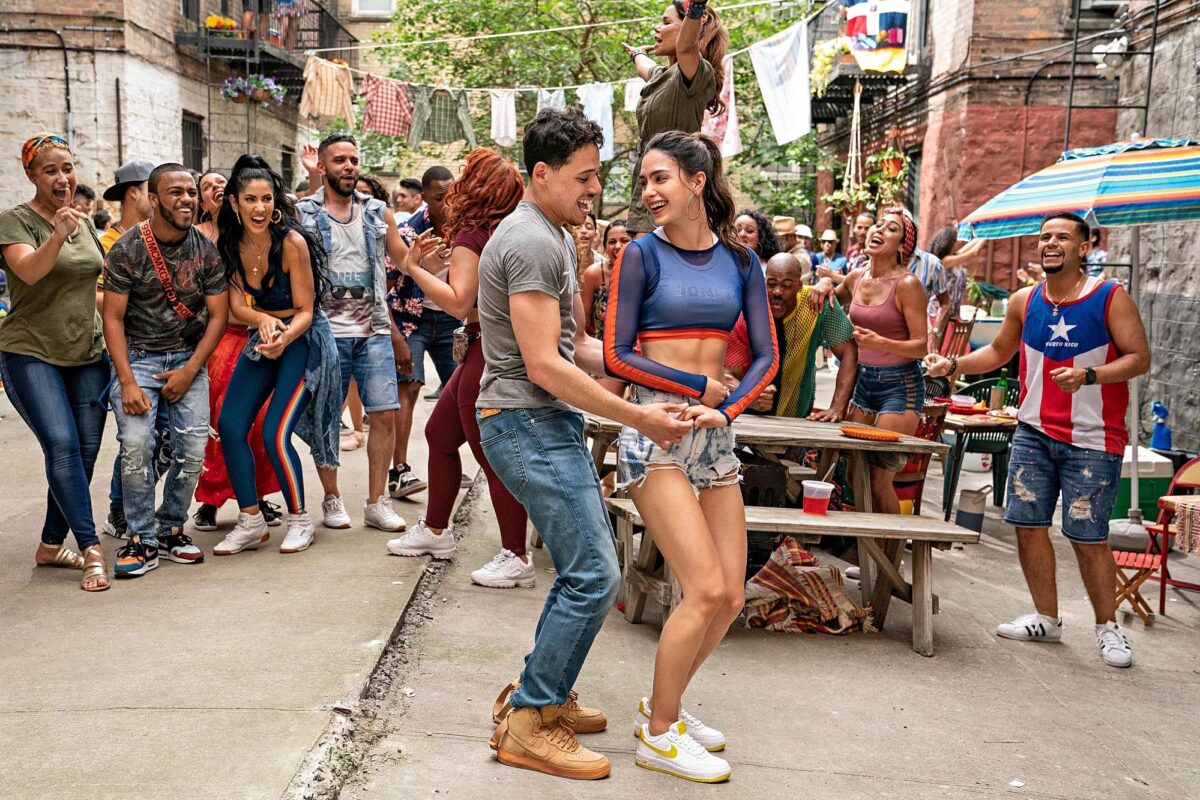
(Macall Polay/Warner Bros. Pictures via AP)

Where the stage musical had mere props, the movie musical features the glorious sights and sounds of the Heights itself — from the George Washington Bridge to the High Bridge tower.

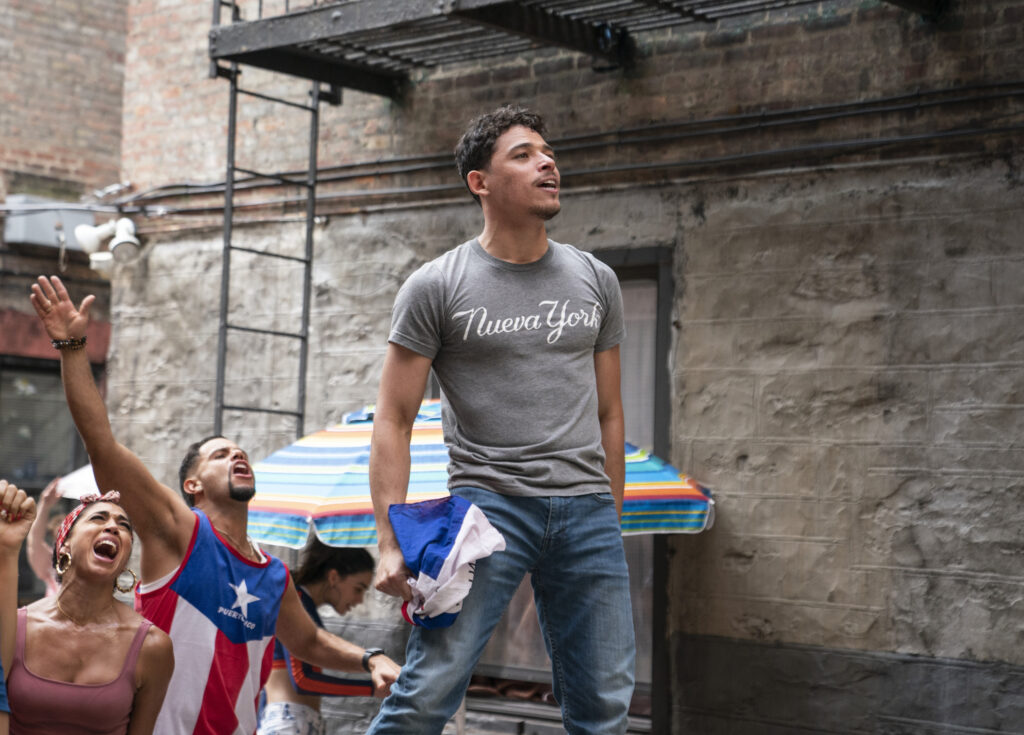
Washington Heights is as much an active character in In The Heights as Uznavi (Anthony Ramos) and Vanessa (Melissa Barrera) are. In particular, the film sets up a common lurking foe — gentrification — as the primary antagonist, threatening to disintegrate the vibrant mix of communities.

How do Miranda and director John M. Chu specifically bring the action and the music into the streets? And how well does the sincerity of a Broadway musical translate onto a real-life city?

PLUS: Greg and Tom relay their experiences of running into the filming of In The Heights while recording their podcast on Upper Manhattan!

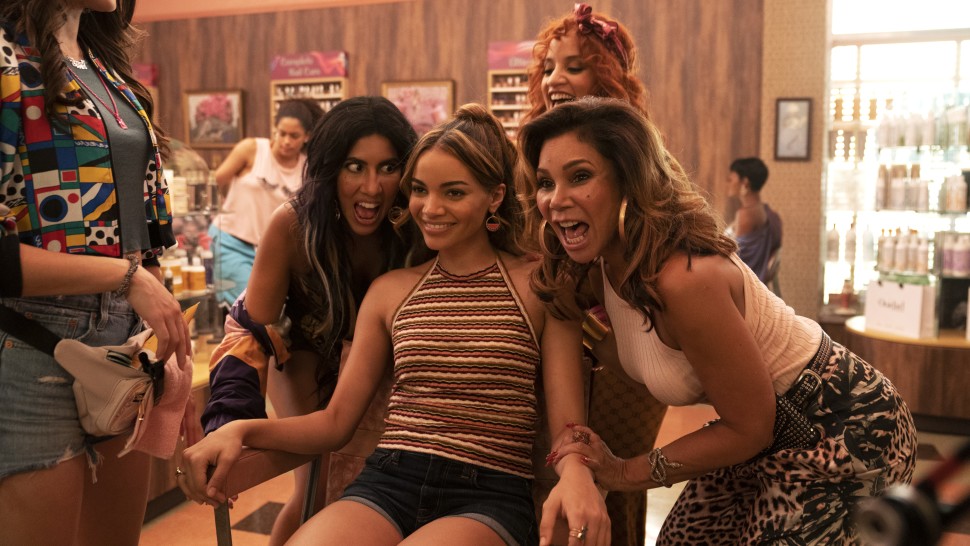
Macall Polay/Warner Bros. Entertainment, Inc

How do I listen the Bowery Boys Movie Club?  Once you’re signed in on Patreon, you’ll see a private RSS link that can be put directly into your favorite podcast player. Even easier, it can also be played directly from the Patreon app if you’re signed in.

Your support on Patreon assists us in producing our podcast and website and it helps as we endeavor to share our love of New York City history with the world.

Should you watch the movie before you listen to this episode? This podcast can be enjoyed both by those who have seen the film and those who’ve never even heard of it.  

We think our take on Auntie Mame might inspire you to look for the film’s many fascinating (but easy to overlook) historical details, so if you don’t mind being spoiled on the plot, give it a listen first, then watch the movie! Otherwise, come back to the show after you’ve watched it.


FURTHER LISTENING

After listening to this Bowery Boys Movie Club episode, relive the history of some of the places featured in the movie through a couple of our older shows:

Categories
Bridges

Visit the glorious High Bridge, New York’s tribute to the ancient world

The thirst for water has transformed New York.

The Dutch were sold on the island’s placement in the harbor at the mouth of the mighty Hudson River, making it a convenient waypoint for explorers and traders. Soon its ports had built the foundation for New York’s and later America’s financial sector.

The city’s most influential nineteenth-century businessman, Cornelius Vanderbilt, got his feet wet in business first with ferries and steamships before building his mighty railroad empire. Manhattan is surrounded by water, and yet early New York would almost be undone due to a lack of it.

Traces of the city’s centuries-long quest for clean drinking water can be found from the island’s tip to its top from the site of spring water wells down in Bowling Green to the relics of old water systems..

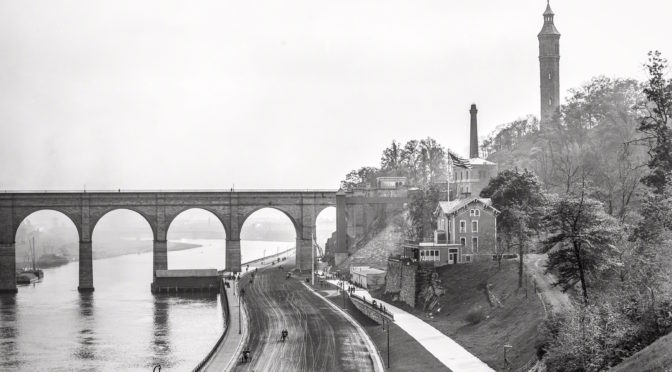
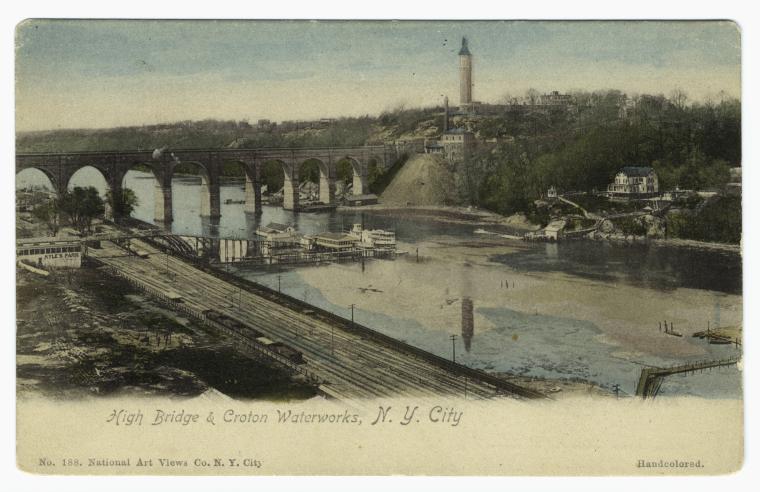
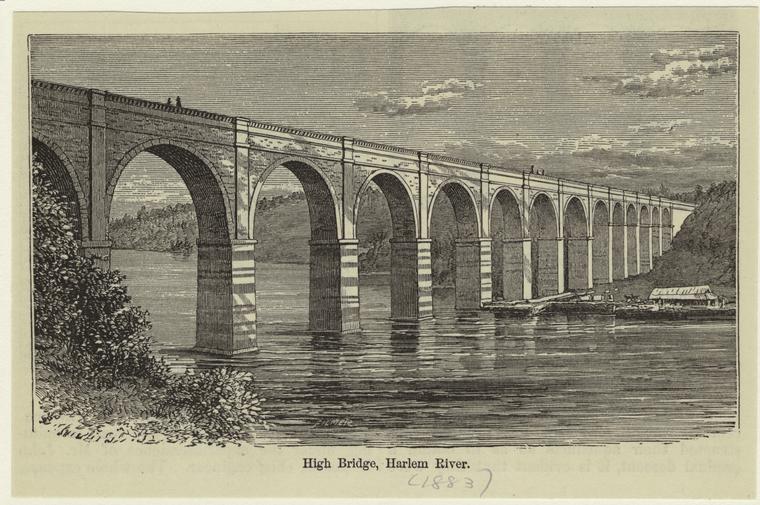
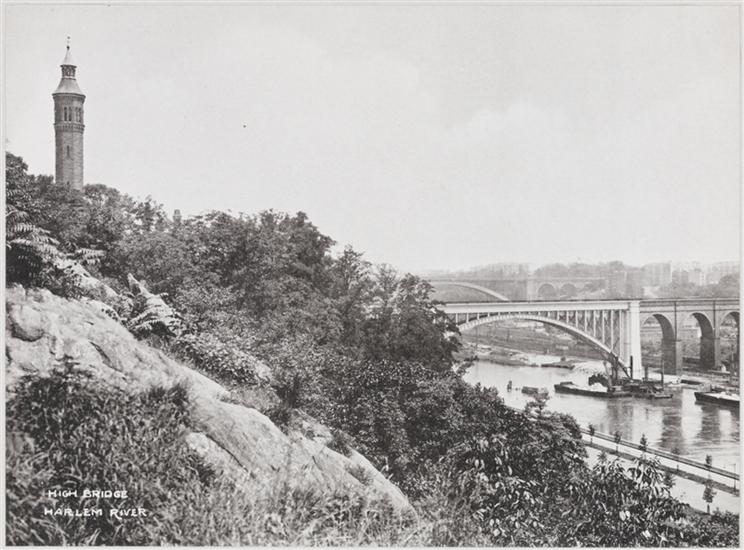
But no monument to freshwater dominates quite like the High Bridge, the Romanesque wonder linking Manhattan to the Bronx over the Harlem River.

Courtesy NYPL

For many decades this majestic artifact, seemingly plucked from the hills of ancient Gaul, was a vital link in that great engineering triumph: the Croton Aqueduct.

With the dense river traffic below and the icky-brackish composition of the surrounding rivers, early New Yorkers had to look beyond their waterways for drinking water. They dug cisterns and hunted down springs, but these couldn’t support the growing city.

By the late eighteenth century, Collect Pond, a so-called freshwater source located northeast of today’s City Hall, had become polluted by the industries that surrounded it, and valiant efforts to bring water from other sources during the Colonial era were dampened by debt and war.

Courtesy MCNY

In 1799 future vice president/murderer Aaron Burr hatched a grand business plan to construct a reservoir system that would distribute water via an elaborate network of hollowed-out logs. (Above: The reservoir and grandest structure of the Manhattan Company system, pictured here in 1825.)

Unfortunately for parched New Yorkers, he ended up using most of the funding for his company to establish a successful bank instead. More than a century and a half later, Manhattan Company merged with Chase National Bank to become Chase Manhattan, known today simply as Chase, one of the largest banks in the world. But his water distribution efforts ended up being woefully inadequate, and left Manhattan high and dry.

NYPL

By the 1830s the city was on the verge of a health crisis, as putrid water, poor sanitation, and all-around squalid living conditions culminated in a series of health epidemics and breakouts—which only heightened the urgent need for clean water.

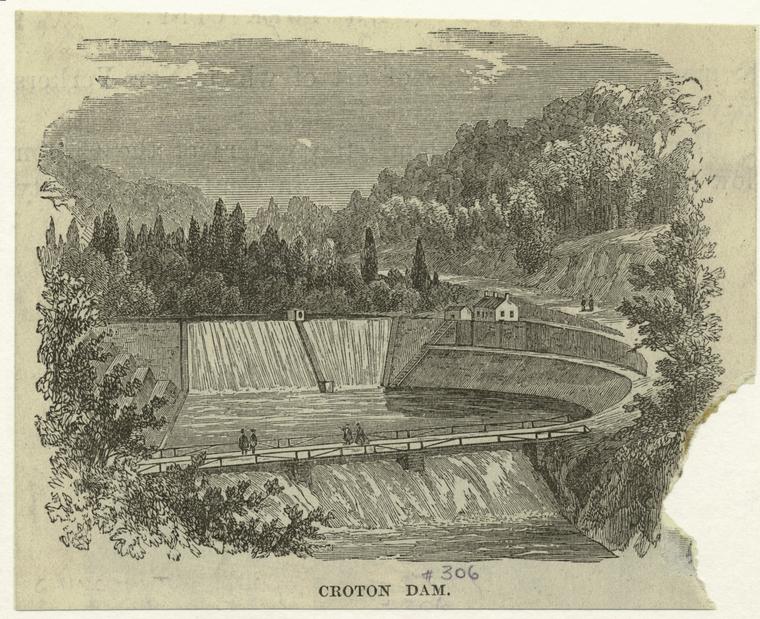
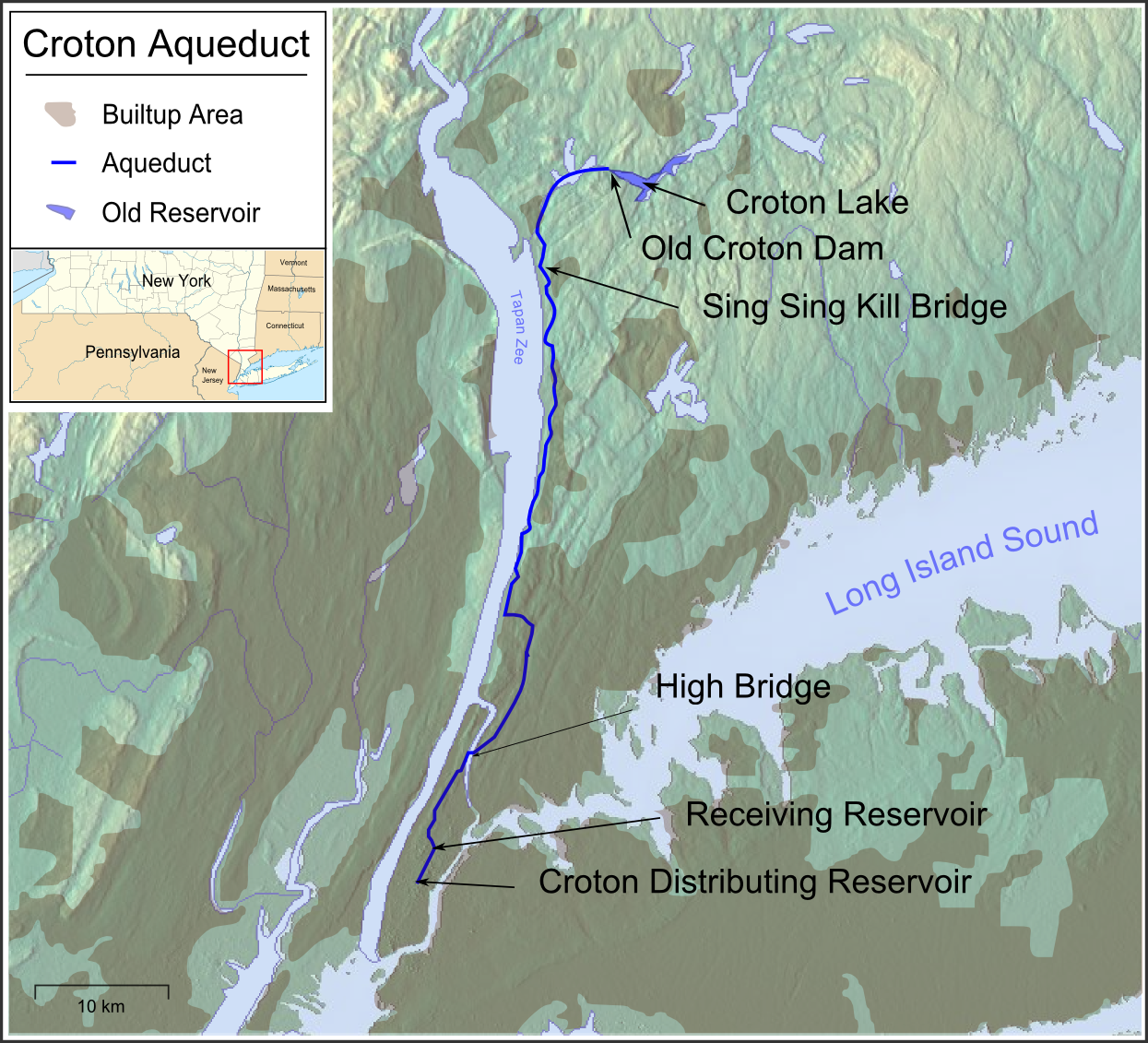
In April 1835 New Yorkers were so desperate for a freshwater supply that they voted in favor of a seemingly impossible plan: a pipeline that would bring the pure waters of the Croton River, forty miles north in Westchester County, down to city residents. Only underscoring the emergency, eight months later the Great Fire of 1835 would ravage the city. The aqueduct couldn’t be constructed quickly enough.

Wikipedia

The elaborate project employed thousands of mostly Irish immigrants for many years (1837-1842). They constructed a sophisticated system of iron piping and brick masonry, which drew upon gravity to run the water through pipes and over arches, across the lush terrain of Westchester, and through the small towns that would later form the nucleus of the Bronx.

But how would the water get into the island of Manhattan? The aqueduct’s architects would need to find a way to keep it flowing across the Harlem River. Drilling technologies were not advanced enough in the 1840s to allow for a tunnel, so planners thought bigger — and higher.

NYPL

The High Bridge, at an elegant 1,450 feet long, is the oldest surviving bridge in New York. Completed in 1848, it not only brought the Croton water into the city, but it also made one heck of a statement noticed around the world.

New Yorkers had pulled off a technological miracle, borrowing engineering and architecture principles not attempted, on this scale, since the glory days of the Roman Empire. They were changing the course of one river forty-one miles away and sending its waters high above another.

“Water! Water!” wrote diarist and former mayor Philip Hone on October 12, 1842, “is the universal note which is sounded through every part of the city, and infuses joy and exultation into the masses.”

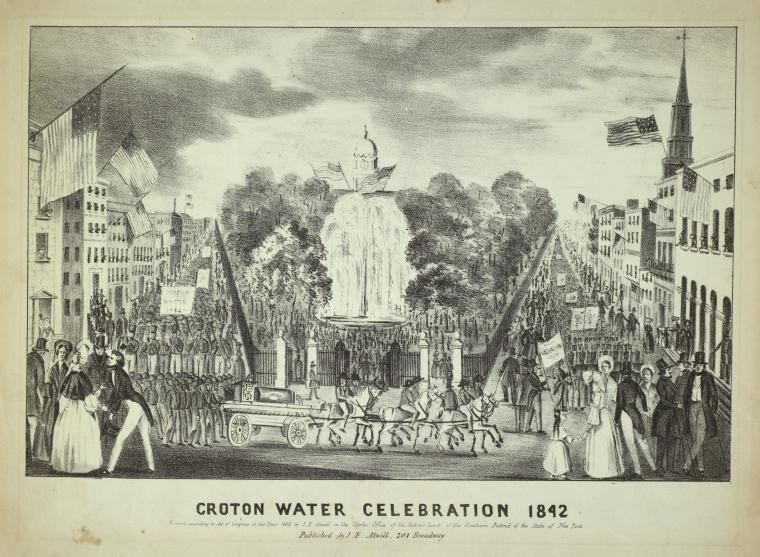
When the water was finally turned on — flowing on October 14, 1842 — the city threw a bash bigger than any since the expulsion of the British in 1783.

The water flowed through pipes across the High Bridge and to a receiving reservoir in the area of today’s Central Park, and from there to a distributing reservoir at 42nd Street and Fifth Avenue.

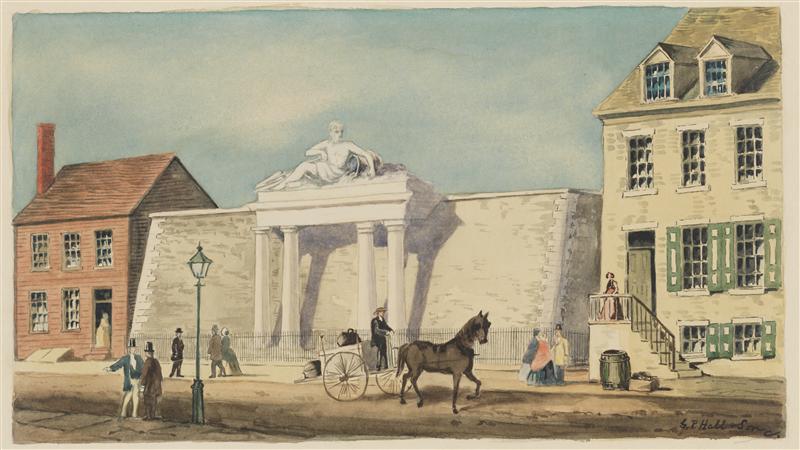
From there it moved through the city, eventually to City Hall Park, where good, clean water shot high into the air and down into the City Hall fountain, to the delight of the public. Imagine— enough water to waste in a fountain!

(At the time of the celebration, the High Bridge had not yet been completed, so Croton water crossed a temporary low bridge. The lofty span replaced the modest one a few years later.)

Below: New Yorkers gathering at City Hall in celebration at the completion of the Croton water system. For more information, check out our podcast on the construction of the Croton Aqueduct

NYPL

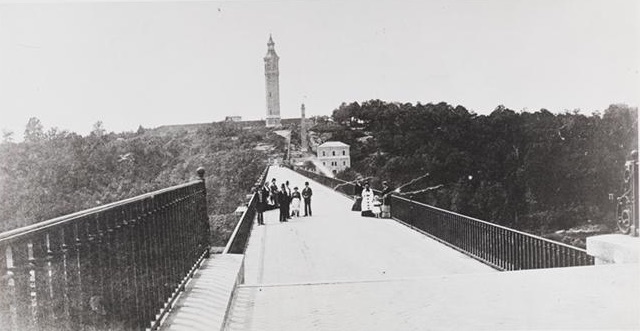
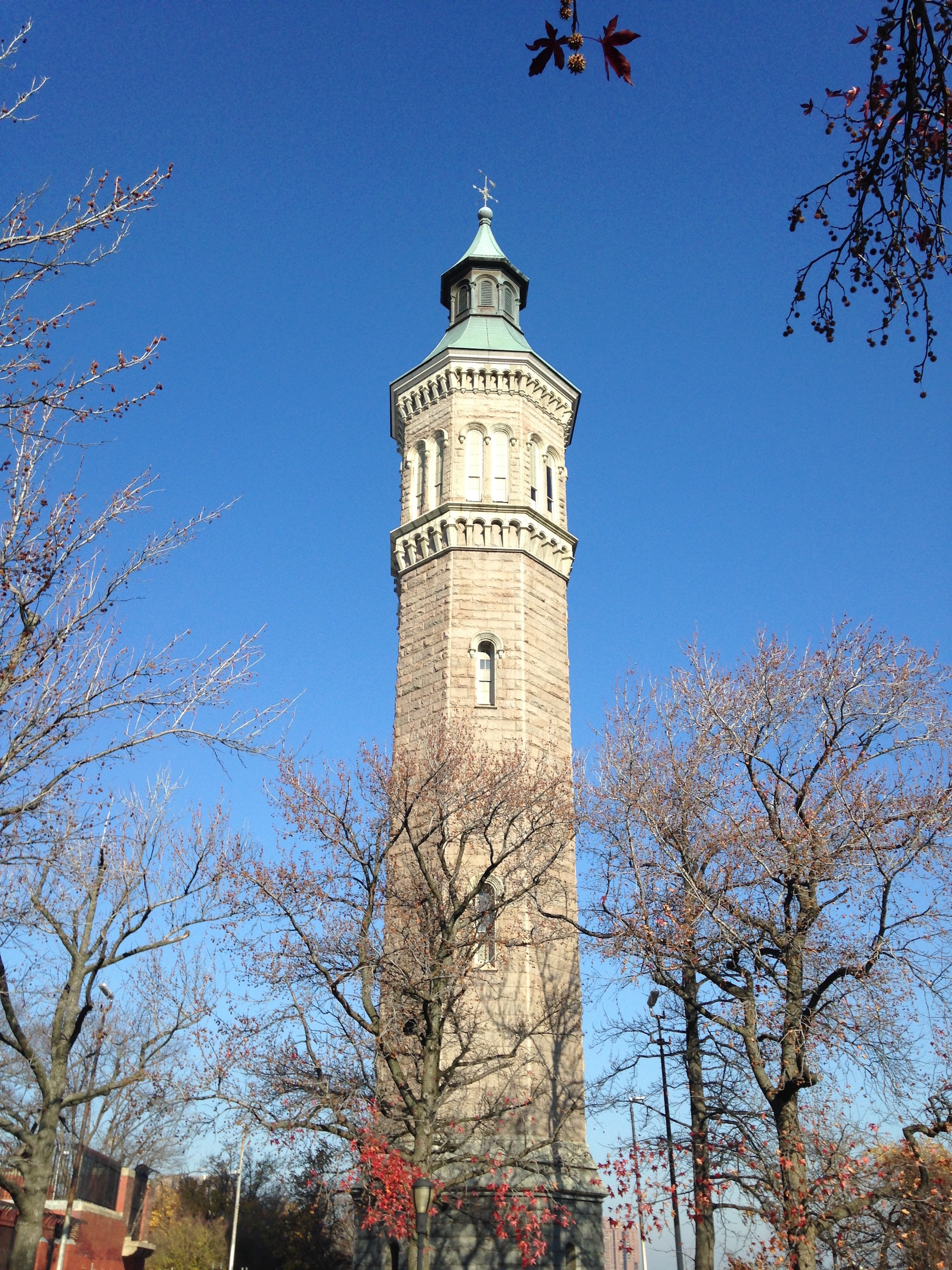
But the celebrated new system struggled to keep up with the demands of the growing city. In 1872, as masses of new arrivals from far-off lands crammed into tenements, an attractive water tower was constructed near the High Bridge to help increase the water pressure into the city.

The High Bridge and tower in 1915

By this time the High Bridge itself had turned into an attraction, a festive promenade where young gentlemen and their parasol-clinging lady companions could stroll, taking in the striking views of the still-forested landscape that surrounded them, while millions of gallons of clean water coursed beneath their feet.

MCNY

But New York, growing larger every day, would need more water. Much, much more. The introduction of indoor plumbing would require an entirely new and much larger Croton system to be built, which opened in 1890 and employed the massive Jerome Park Reservoir in the Bronx to satisfy the demand.

But alas, with a million flushes came the end of the High Bridge as an active part of the water system. Its function replaced by unromantic pipes buried underground, the bridge and water tower were retired from service by 1949, and soon these structures modeled after antiquity became historical relics themselves.

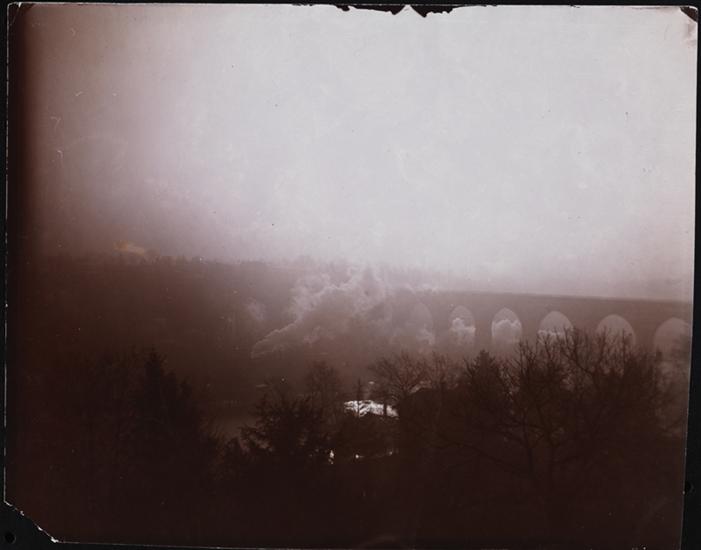
Below: The High Bridge, lost in a haze, photographed in 1920

MCNY

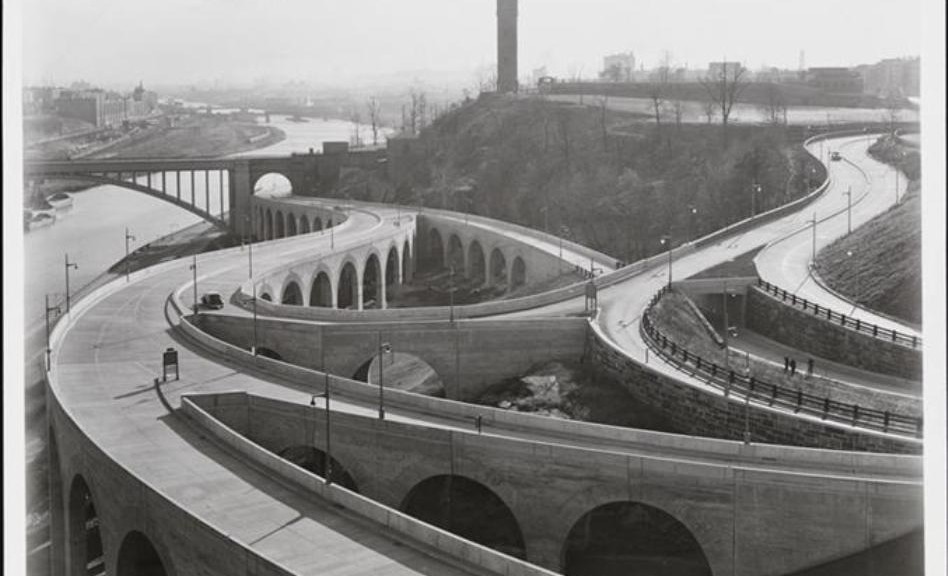
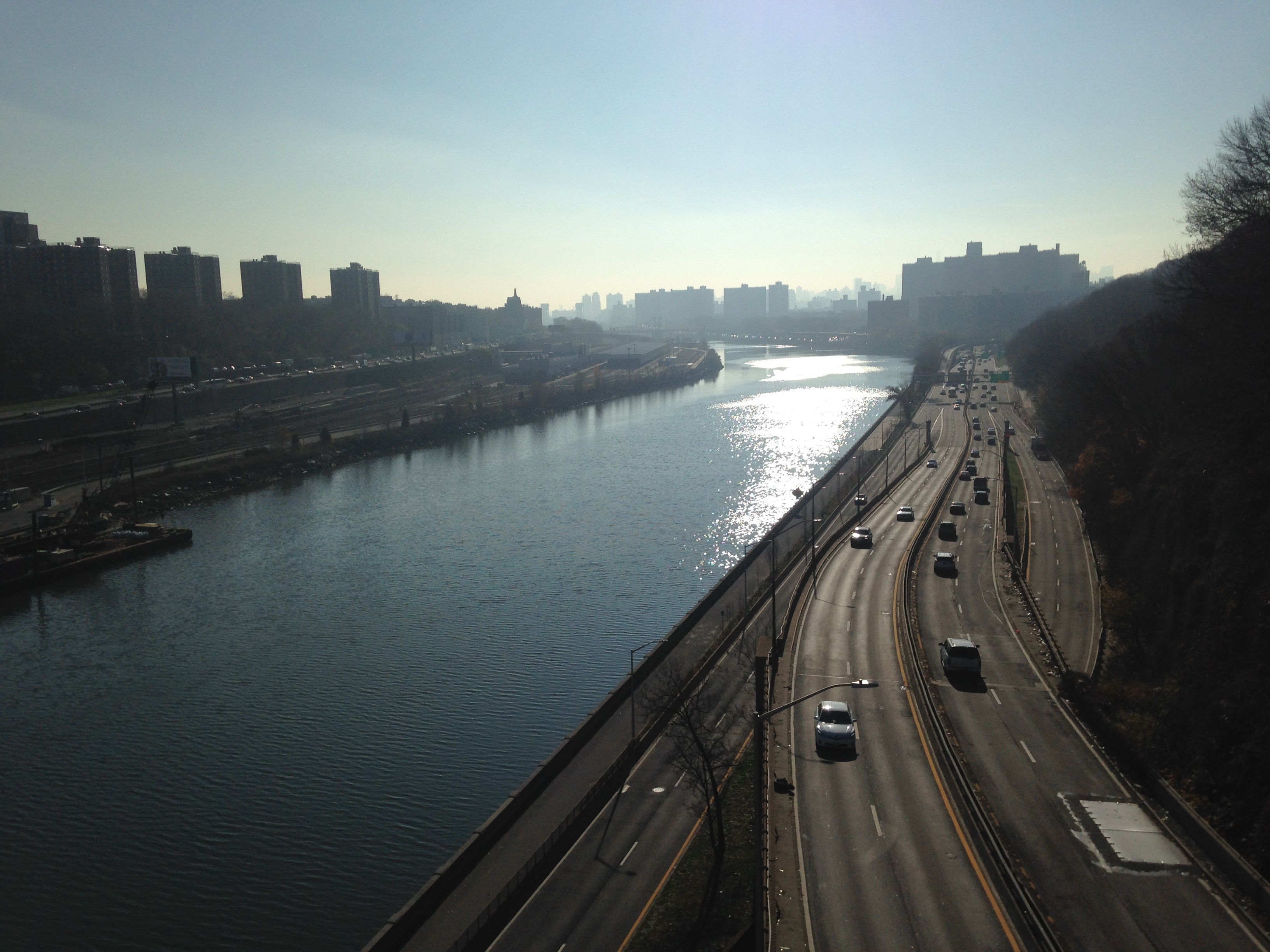
In a surprising twist given the unforgiving tendencies of city planners of the day, it was probably the beauty of the bridge and the tower that kept them from being ripped down in a bit of “progress.” Motorists along the Major Deegan Expressway took moments from their traffic jams to reflect on the possible story behind these strange and magnificent artifacts, which grew more incongruous as the modern highway system developed around them.

MCNY

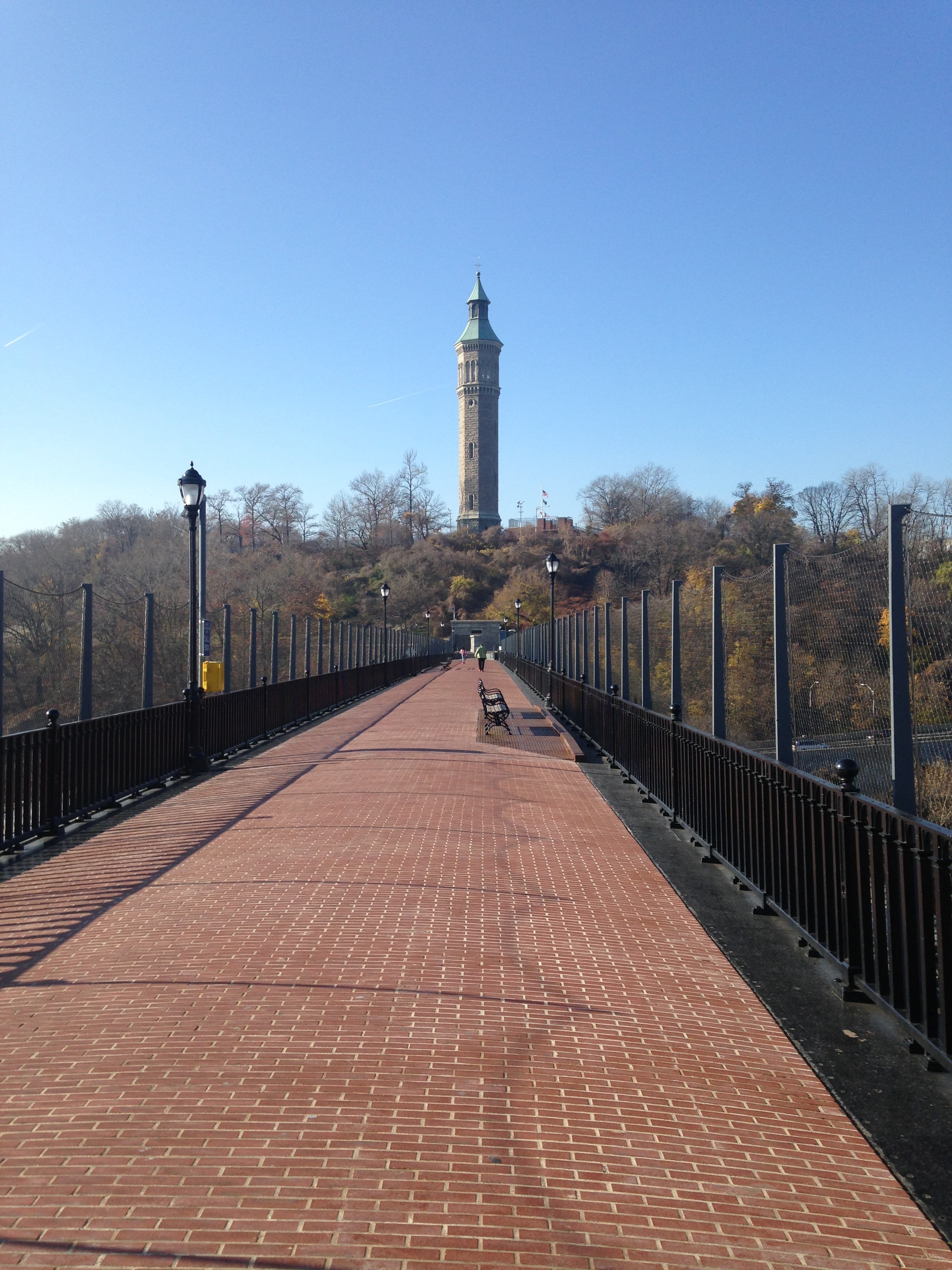
Two years ago this month, the High Bridge was restored, not for the movement of water but for those visitors and their parasols (replaced by headphones, we imagine) to enjoy a one-of-a-kind perspective on their buzzing metropolis.

If you go — or rather, when you go, because you really must see it — reflect upon the water that once passed below you. It helped this city grow.

HOW TO GET TO THE HIGH BRIDGE

Mass Transit: Take the A/C or the 1 train to 168th Street, get out and walk east. OR the M101 bus takes you right up to Highbridge Park

On the Bronx side, you can take the 4 train to Mt Eden Ave but it’s a bit of a walk west. Instead take the Bx11 or Bx13 bus

From the NYC Parks website:

“If you are entering the High Bridge from the Manhattan side, please enter Highbridge Park at West 172nd Street and Amsterdam Avenue and walk east to the High Bridge Water Tower Terrace staircase down to the bridge level. If entering from the Bronx side, enter at University Avenue and 170th Street in Highbridge, Bronx.”

Some images from my trip there in November. It’s three times as beautiful now!

The above is an excerpt from our book The Bowery Boys Adventures In Old New York, now available at bookstores everywhere.
Categories
Podcasts Uncategorized

Going medieval at the Cloisters and Fort Tryon Park

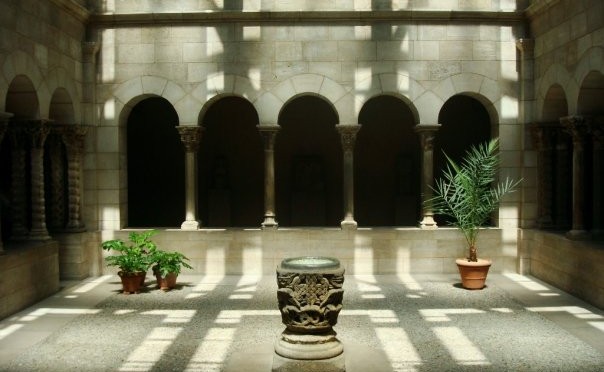
PODCAST The Cloisters, home of the Metropolitan Museum’s repository for medieval treasures, was a labor of love for many lovers of great European art. In this podcast, I highlight three of the most important men in its history — a passionate sculptor, a generous multimillionaire and a jet-setting curator. Equally as fascinating is the upper Manhattan park that houses the museum, Fort Tryon Park, a site of a Revolutionary War fort of the same name and the exploits of the war’s most heroic women.

Download this show it for FREE on iTunes or other podcasting services. Or listen to the show here:


___________________________________

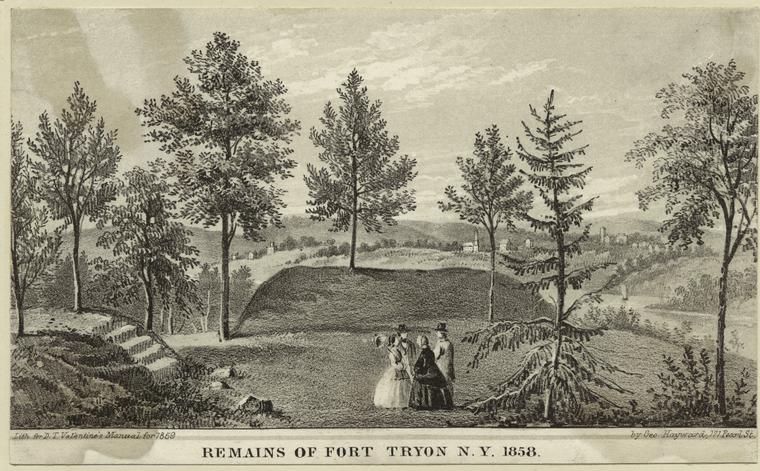
Fort Tryon circa 1858, after the war, before the millionaire mansions. (Courtesy NYPL)

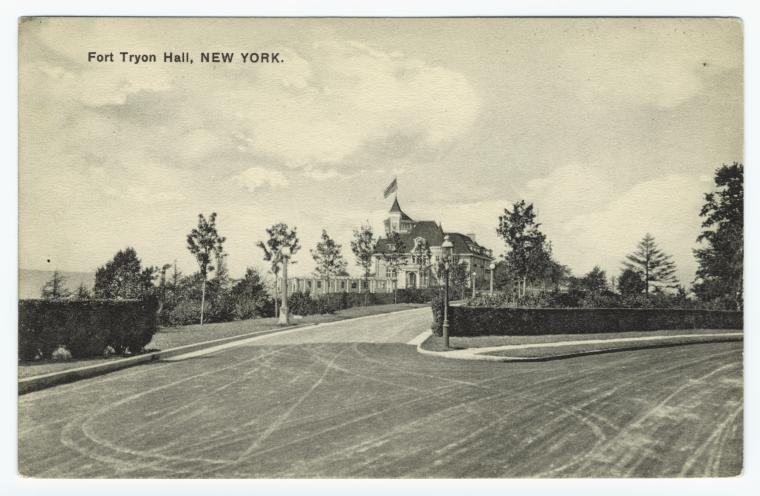
The lavish home of Cornelius Kingsley Garrison Billings, one of many spectacular homes bought up by Rockefeller to contruct Fort Tryon Park.


Check out our Facebook page for additional photographs of the Cloisters

Categories
Uncategorized

Where are New York City’s oldest living trees?

The oldest living New Yorkers outdate all the skyscrapers, the highways and the parks in which most of them live. They have seen generations of New Yorkers come and go. And at least one of them even remembers the region’s original indigenous people.

We’re talking about the native trees of New York City, those that were planted naturally and not transplanted from elsewhere, giants that have weathered storms and interactions with humans long gone.

Of course it is impossible to know with absolute certainty the oldest trees as not every single one has been measured. There are, in fact, according to MillionTreesNYC, 5. 2 million trees in New York City, about a tenth of which are actually on the streets.

Some other wonderful trivia from MillionTreesNYC:

“– Standing trunk to trunk, New York City street trees would form a line 118 miles long–the distance from Manhattan to Hartford.

— Number of tree species: 168

— Percent of land covered in trees: 24%  “

I was not able to find complete info for all five boroughs, and I will indicate where I could not come to a definitive answer. If you have any leads, please post them in the comments section.

I’m obviously no arborist, so the details below are based on the research of others. However maybe someday I’ll trek out to these various sites armed with a tape measure and an layman’s knowledge on how to evaluate tree age.

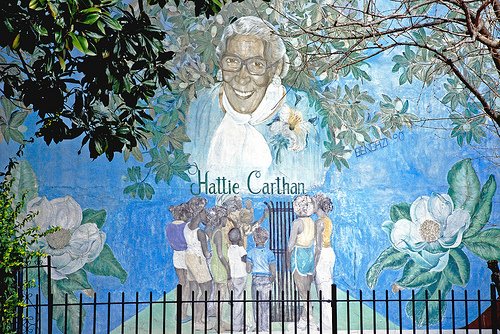
Hattie Carthan, Brooklyn’s tree saviour

BROOKLYN
It appears that the oldest tree in the borough — among, as Betty Smith well knows, the many, many trees that grow in Brooklyn — is undetermined. Most likely it sits in Prospect Park which contains most of the borough’s remaining natural forest — about 100 acres.

Formerly, the title holder was a 220-year old black oak which once stood here; sadly it uprooted during a storm many years ago and tumbled into the ravine.

However, one of Brooklyn’s most famous trees sits in the neighborhood of Bedford-Stuyvesant — a southern magnolia tree Magnolia Grandiflora, brought to Brooklyn from North Carolina in 1885 and located near 667 Lafayette St.

It happens to be the only landmarked living tree in the city, thanks to community leader and nature lover Hattie Carthan, back in 1970.

BRONX
With the borough’s thousands of acres of park land, the real candidate for borough’s oldest may as yet be undiscovered.

However, the leading candidate is currently a handsome white oak tree around the 18th hole of the Split Rock Golf Course in Pelham Bay Park. The oak is well ‘over 200 years old’ although its location by a golf course can’t be good for its health.

Hangin’ around with New York’s oldest and most legendary elm

MANHATTAN
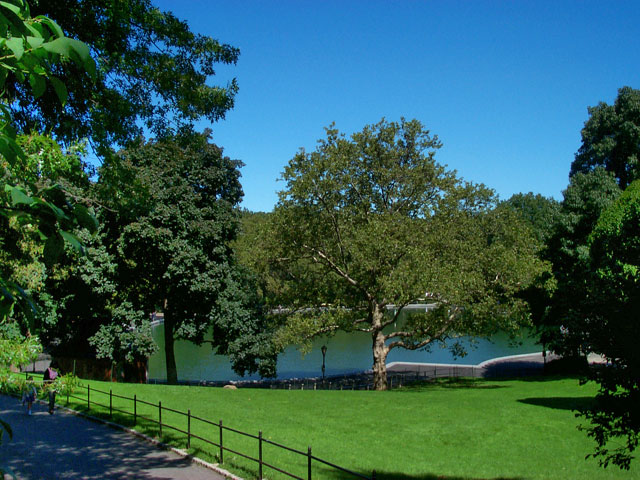
One might naturally assume Manhattan’s oldest tree must be in Central Park. It’s a very manicured place though, and most of its older vegetation was transplanted here. However, the great London plane tree near the Reservoir (pictured below) is said possibly pre-date its construction in 1862.

There are two other candidates for oldest tree on the island. One is in Washington Heights, a 110-foot elm at 163rd Street and St. Nicholas. Known as the Dinosaur, it reportedly shaded George Washington as he surveyed his shifting fortunes during the Battle of Washington Heights.

The most renown candidate is, of course, the Hangman’s Elm, in Washington Square Park. At a reported 310 years old, this arboreal old man in the northwest corner of the park most likely never really saw any hangings as its legend indicates, but its certainly fun to morbidly gander at its branches.

The top two candidates for New York’s oldest tree have been the fascination of tree lovers since their discovery.

Below: The London plane tree near the Reservoir, most likely Central Park’s oldest tree (pic courtesy Central Park 2000)

STATEN ISLAND
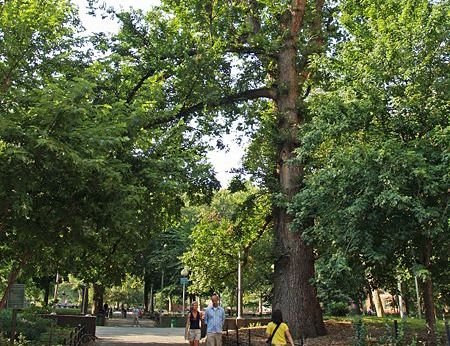
The two oldest trees in New York happen to be tulip trees, a common tree of the region named for its flower-shaped leaves. The charming Clove Lakes Park, at Forest Avenue and Clove Road, takes its name from the Dutch word “kloven” or cleft. Its granddaddy entry into the tree race is known as the Clove Lakes Colossus is a monstrous 119 feet tall with a circumference of 21.4 feet.

It’s reported to be well over 300 years old, predating all but the most rudimentary European settlement here in Staten Island. It’s actually a thicker tree than the tulip which is New York’s oldest, but that’s due to more ideal growing conditions. Unlike many other ‘oldest tree’ candidates, Clove Lakes takes good care of its elders, easily located at the park’s north end near a paved path.

QUEENS
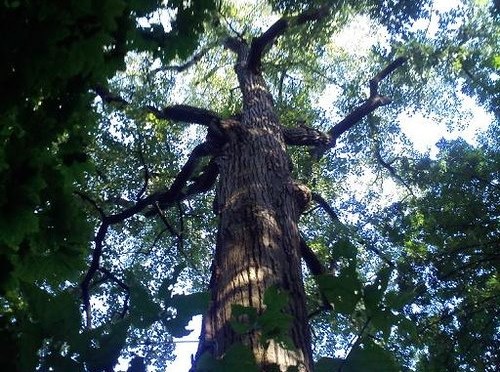
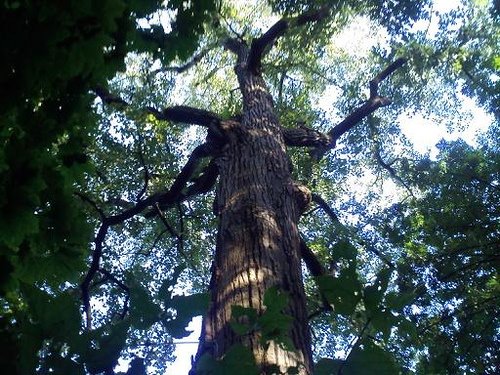
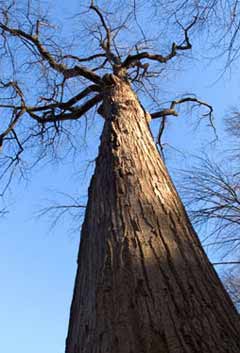
Say hello to the Queens Giant (pictured at top), the grandmother of all native New York City plants. Located along a secluded trail in Queens’ Alley Pond Park, this monster is also one of the city’s tallest trees at 133.8 feet — just 20 feet shorter than the Statue of Liberty.

It may be one of the few remaining living things from the era before Henry Hudson sailed into New York harbor, with its age calculated at anywhere from 350 to 450 years old. This would make it one of New York’s truly extraordinary natural features. Interestingly, in the past, the city has taken a stance of ‘benign neglect‘ to the tree, arguing that it shouldn’t be better accessed in order to protect it.

Revised from a previous article which ran in 2009

The Hilltop home of the Yankees


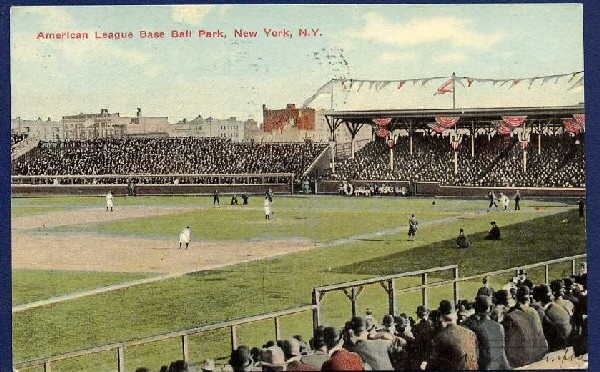
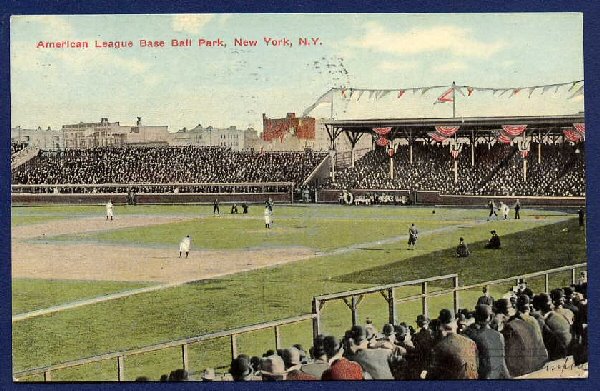
Before they went by their better known name — and before they were any good — the team that would become ‘the Yankees’ were known as the Highlanders, from 1903-1913. The name played to a couple dated references. The team captain was named Joseph Gordon, and the name referenced a British military outfit named Gordon’s Highlanders. More importantly, the team played on one of the highest points in the city, in a long forgotten ball field called Hilltop Park.

A large but spare field located in Washington Heights on Broadway between 165th and 168th streets, Hilltop Park could accommodate 15,000 to 16,000 spectators comfortably, though more exciting match-ups would draw clusters of almost 10,000 standing room only crowds. In fact, in the rather lax early days of formalized sports, fans were allowed to stand around, almost virtually on the playing field!

I’m sure it was at that capacity on opening day, April 30, 1903, when the Highlanders played the Washington Senators. Yet despite a cost of $200,000 and arresting views of the Hudson River, Hilltop had a swamp in right field and most of the bleacher seats were uncovered until 1912, making for many a hot, steamy game for fans.

The Highlanders were in equally good shape. In fact, many of the best moments in Hilltop Park’s brief history were made by players from other teams against the Highlanders. Cy Young (Boston Americans) and Ty Cobb (Washington Senators), the two best known players from this generation, had spectacular days on Hilltop beating the crap out of the local team.

Hilltop Park is almost completely gone save for one peculiar memorial. In 1914, almost as soon as the Highlanders moved to the nearby Polo Grounds (and thus changed their team name to their popular nickname ‘the Yankees’), the field was demolished. Within ten years, the hospital that today is known as the Columbia-Presbyterian Medical Center) would be built over it and it still stands there today.

However a small base-shaped plaque can be found in the grass outfront, placed there in 1993. It’s on the exact spot of the original home place — thank God it happened to be in a garden and not somebody’s room — honoring the now-forgotten home of the team that would become the most successful team in baseball.