Categories
Amusements and Thrills Sports Those Were The Days

The New York Game: Baseball in the Early Years

Baseball, as American as apple pie, really is “the New York game.” While its precursors come from many places – from Jamestown to Prague – the rules of American baseball and the modern ways of enjoying it were born from the urban experience and, in particular, the 19th-century New York region.

The sport (in the form that we know it today) developed in the early 1800s, played in Manhattan’s many open lots or New Jersey public parklands and soon organized into regular teams and eventually leagues. The way that New Yorkers played baseball was soon the way most Americans played by the late 19th century.

But it wasn’t until the invention of regular ball fields – catering to paying customers – that baseball became truly an urban recreational experience. And that too was revolutionized in New York.

Just in time for spring and the new Major League baseball season, Tom and Greg are joined by the acclaimed Kevin Baker, author of The New York Game: Baseball and the Rise of a New City to discuss the early history of the sport and its unique connections to New York City.

This show is truly the ultimate origin story of New York baseball, featuring tales of the city’s oldest and most legendary sports teams – the Yankees, the Dodgers, and the Giants. AND the New York Metropolitans – a different team than today’s Mets located in Queens.

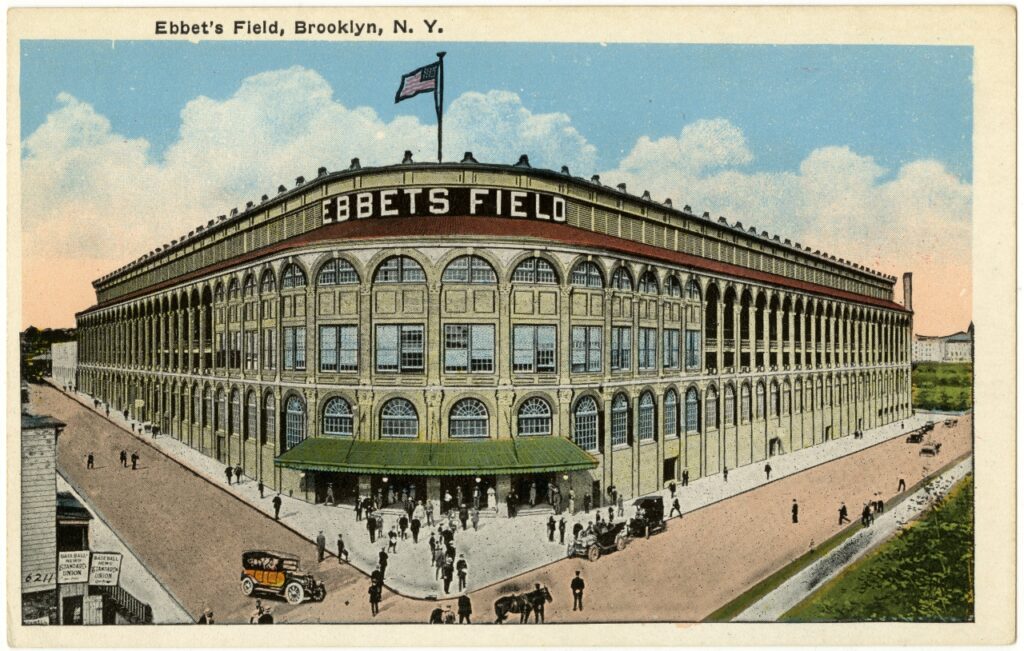
Where was baseball played? Kevin shares the secrets of New York baseball’s earliest venues – from the many Polo Grounds in upper Manhattan to Ebbets Field in Brooklyn

This is a true five-borough origin story! With stops at Hilltop Park (Manhattan), Yankee Stadium (Bronx), Fashion Race Course (Queens), Washington Park (Brooklyn), and St. George Cricket Grounds (Staten Island) among many other sites.

FEATURING the surprising link between baseball and Boss Tweed and his notorious political machine Tammany Hall

PLUS How did segregation distort the game and where did Black ballplayers play the sport? What was baseball like before Jackie Robinson?

LISTEN NOW: THE NEW YORK GAME


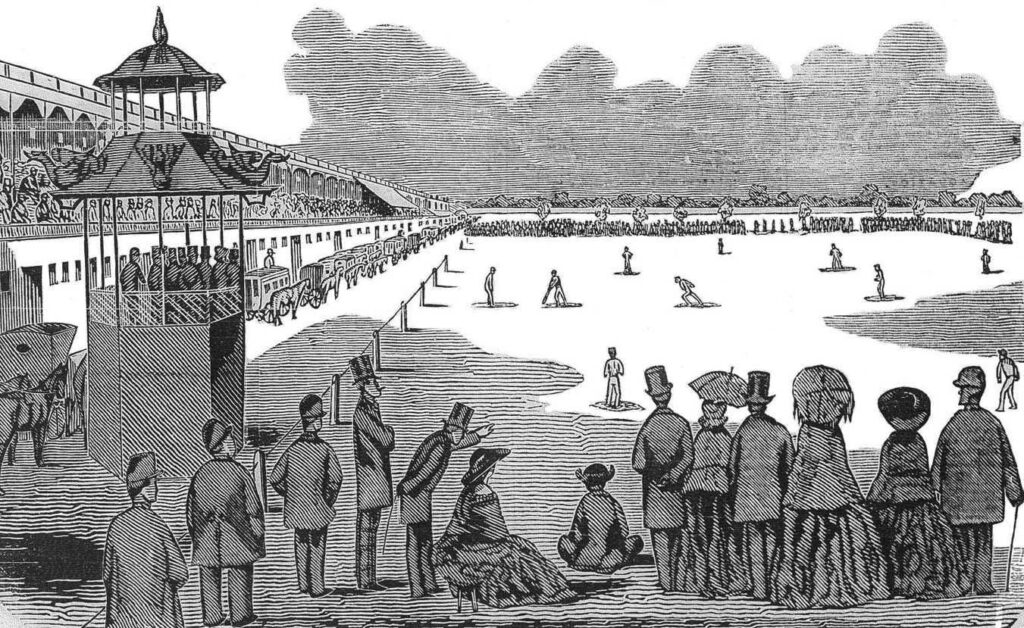
Fashion Race Course in Flushing, Queens, from The Clipper of July 24, 1858 (and via John Thorn/Our Game)
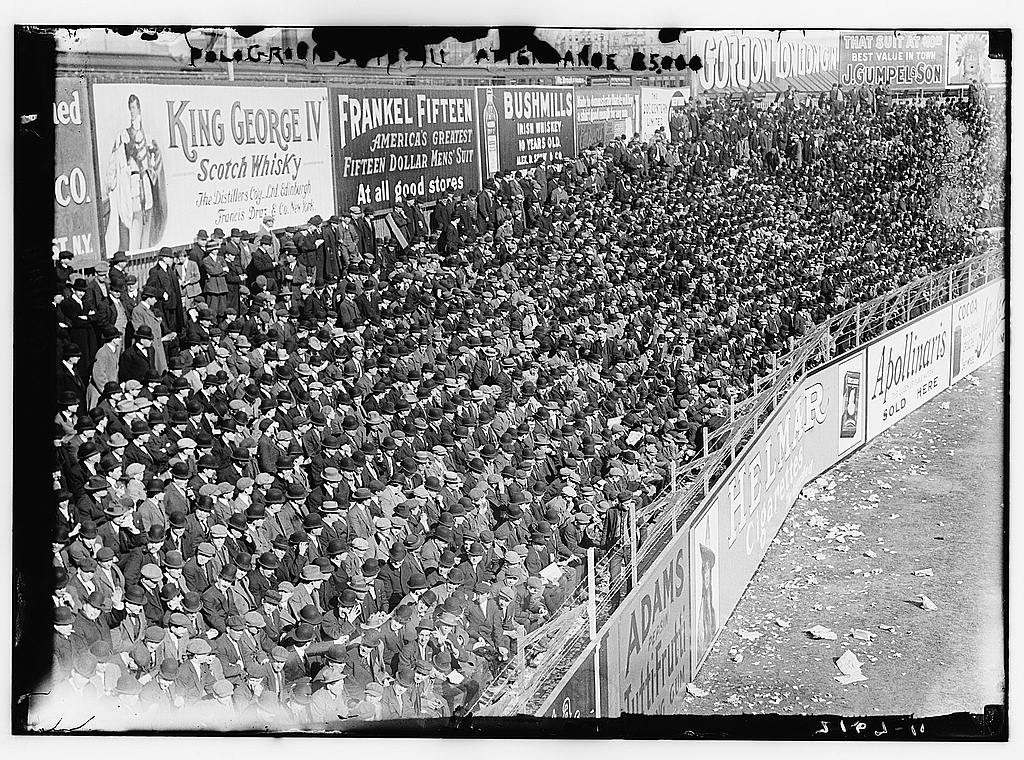
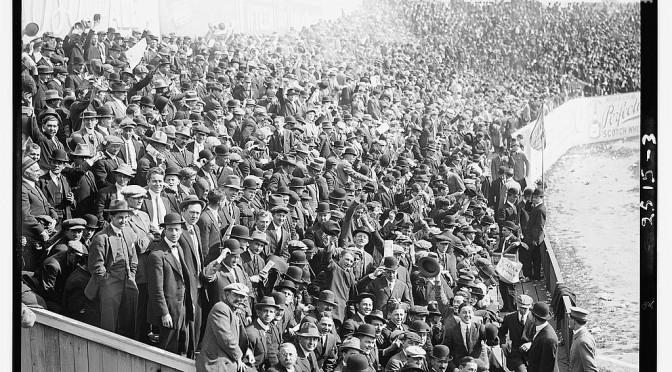
Many hatted men at the Polo Grounds, 1911 (Library of Congress)
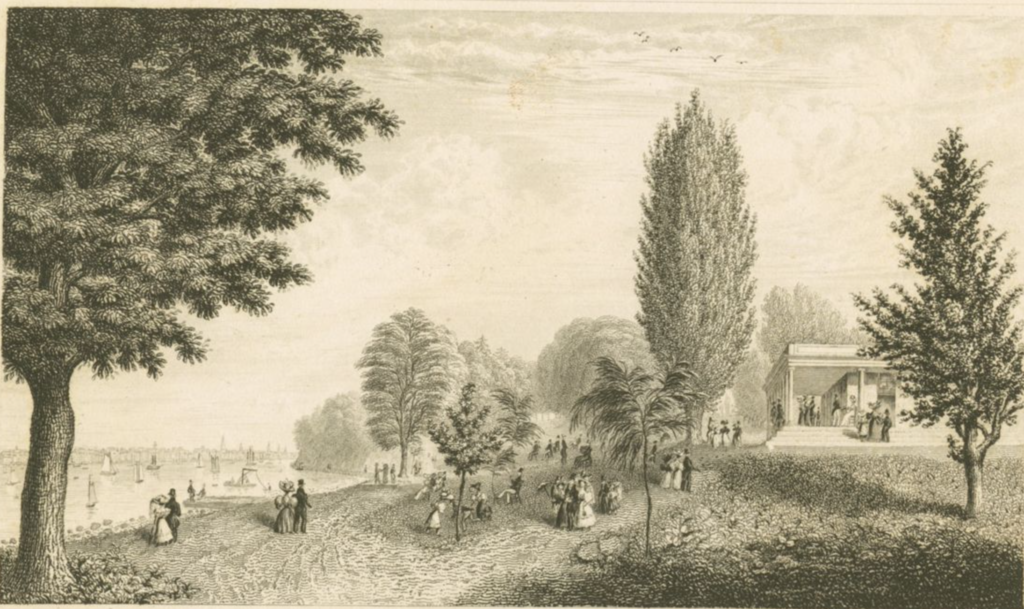
Elysian Fields in Hoboken, the site of America’s first baseball games (NYPL, image from Booth’s History of New York)
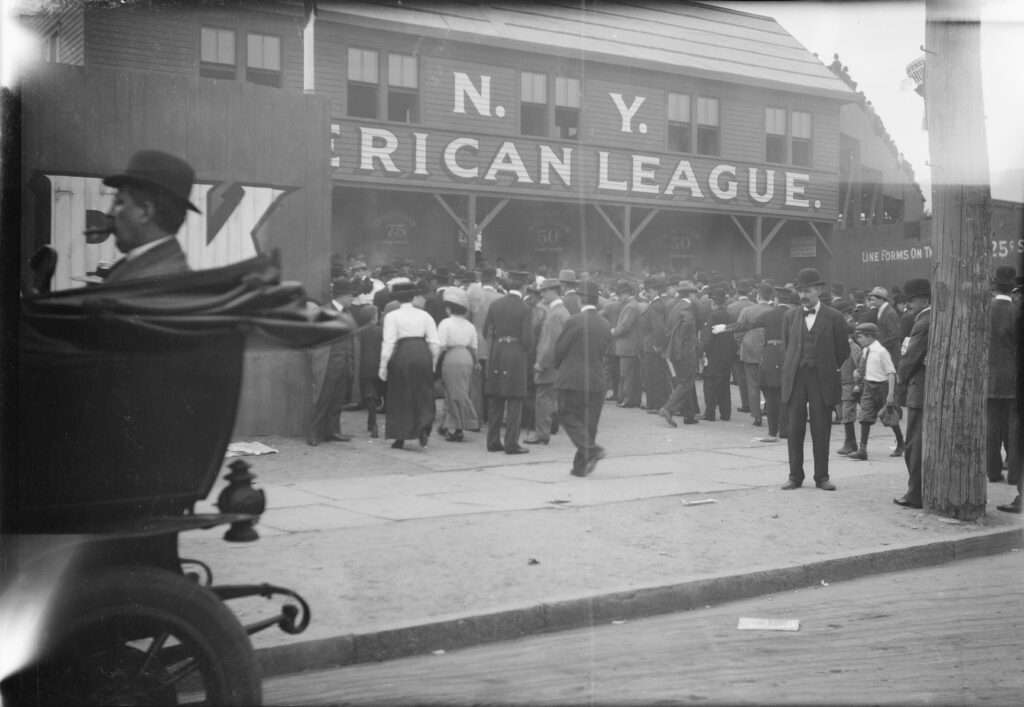
The entrance to Hilltop Park, 1912 (Library of Congress)
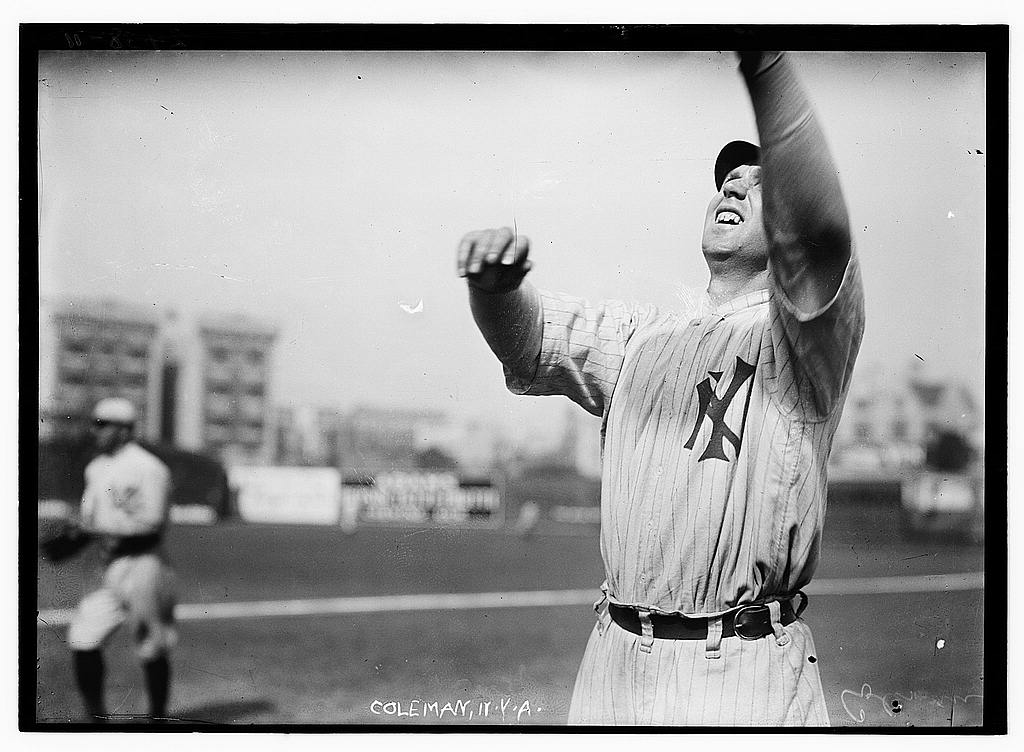
Curt Coleman at Hilltop Park, 1912
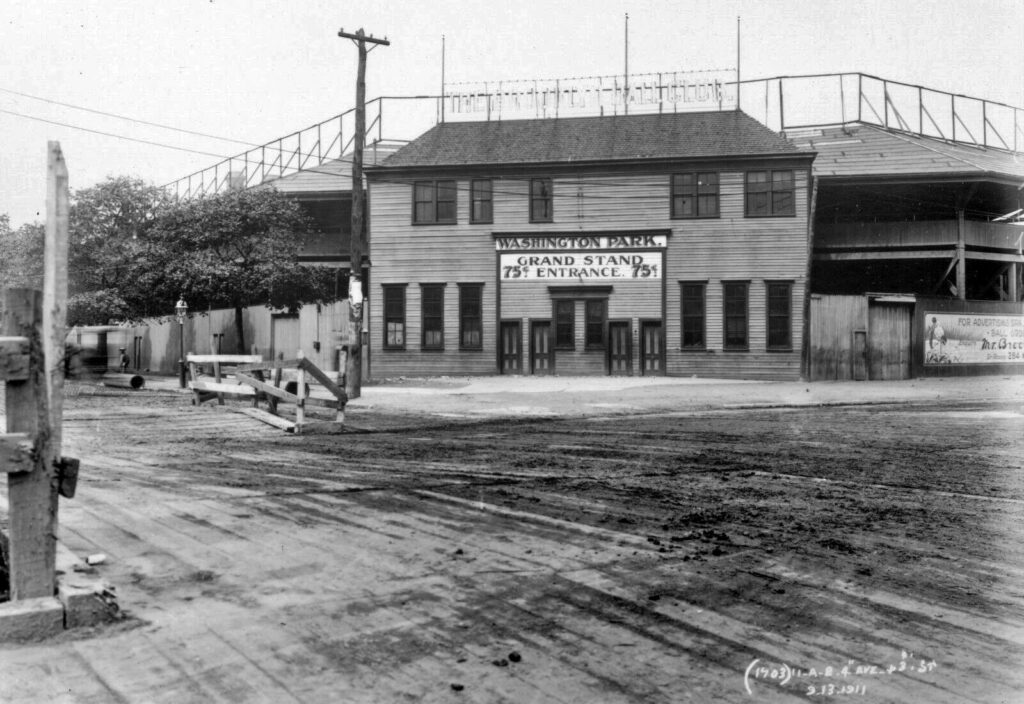
Washington Park taken September 13, 1911 from the intersection of 4th Avenue and 3rd Street in Park Slope, Brooklyn.
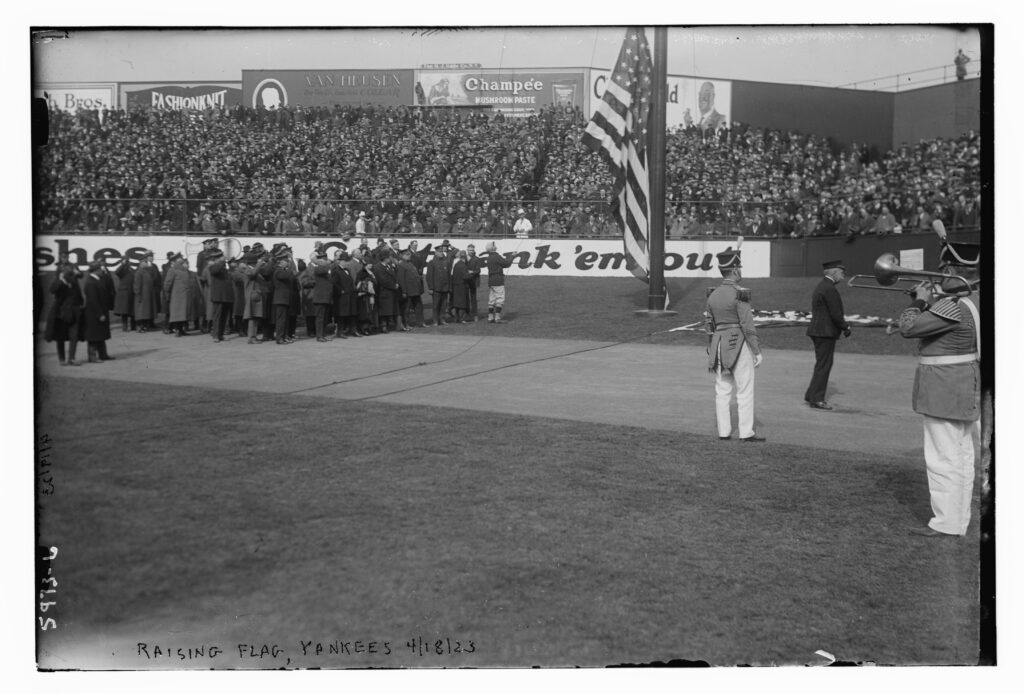
Opening Day at Yankee Stadium, 1923 (Library of Congress)
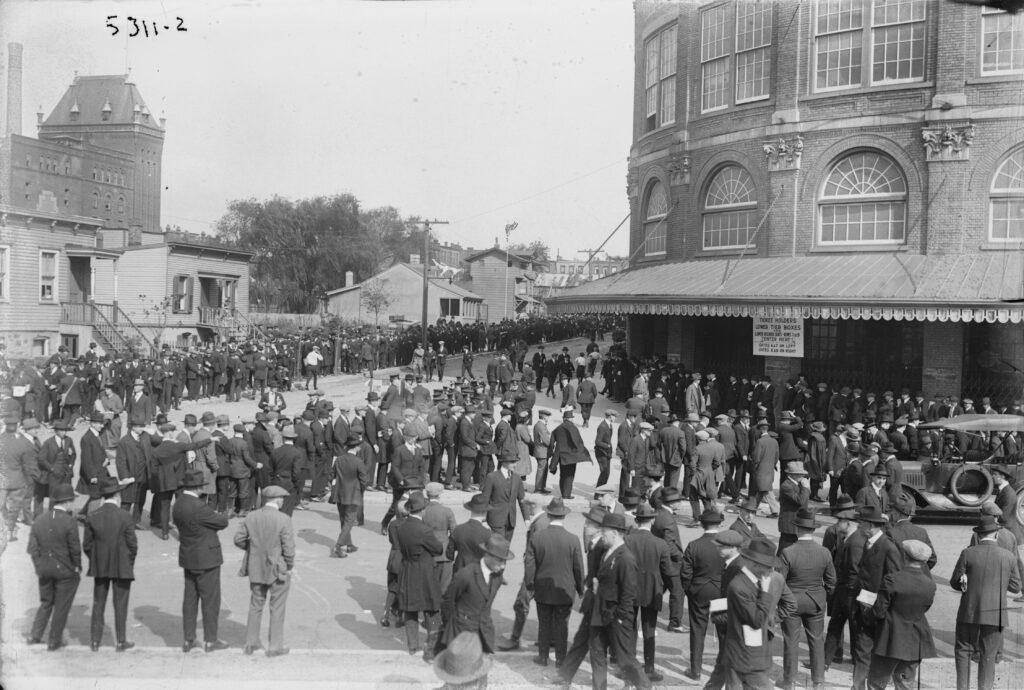
The crowd outside Ebbets Field for Game 1 of the 1920 World Series, the Brooklyn Dodgers against the Cleveland Indians.

FURTHER LISTENING

FURTHER READING

Brooklyn baseball: the Superbas and the worst batter ever

Brooklyn Dodgers vs. Cincinnati Reds at Ebbets Field — in the first Major League baseball game ever broadcast on television

Hilltop Park: home base for NYC’s premier baseball team

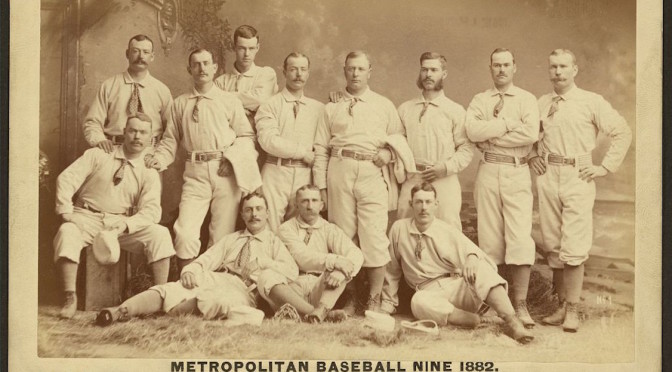
Meet the Mets! The Metropolitans, that is, an early NY baseball team

The short shelf life of the Tip-Tops, the Brooklyn baseball team situated near the Gowanus River and named for bread

Union Grounds: Baseball history in Williamsburg

The Wise Guy of Baseball: Getting To Know Leo ‘The Lip’ Durocher

100 years ago today, the Yankees played their first game at Yankee Stadium

Categories
Sports

Meet the Mets! The Metropolitans, that is, an early NY baseball team

The New York Mets, 2015 National League Champions and New York’s perpetual baseball underdogs, are only 53 years, formed in 1962 to fill the void after the departure of the Brooklyn Dodgers and the New  York Giants* to California. But in name, at least, they’re older than even the Yankees.

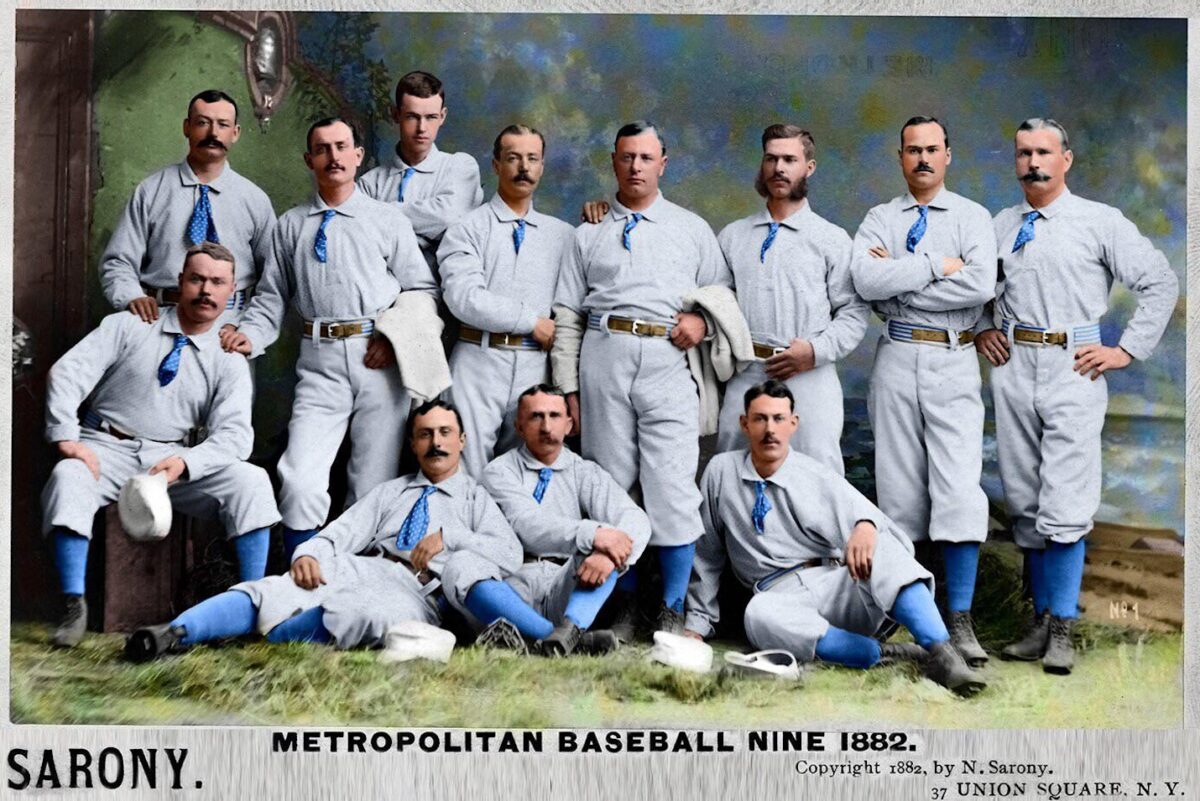
The first New York ball club to call themselves the Mets — or really, the Metropolitans, if we’re being fancy — made their first appearance 130 years ago.  They burned bright for many years, inaugurated New York’s first great sports venue, then faded away.

To be metropolitan in 1880 did not merely suggest a team representative of a city and its surrounding area.  It was code for the finest — from the Metropolitan Opera (which formed the same year) to the Metropolitan Museum (whose Central Park building also opened that year).

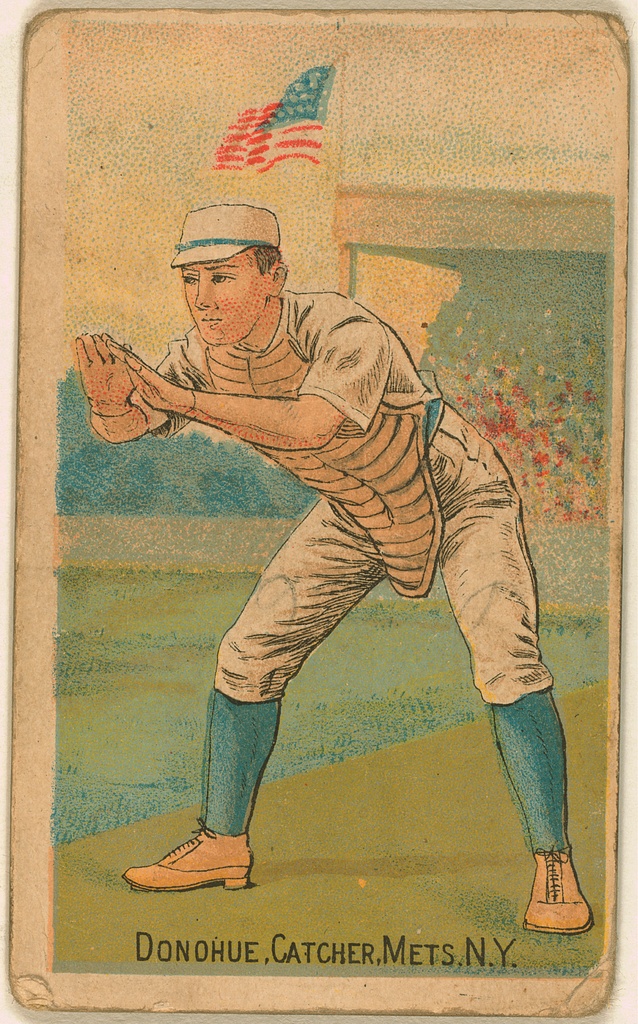
Jim Donahue, catcher

1

Baseball, however, was not a prestige sport by any means in 1880, but this did not matter to John Day, baseball fanatic and owner of a large tobacco plant on the Lower East Side. One day Day met Jim Mutrie, a shortstop from Boston, and agreed to fund a new team. In September, the New York Metropolitans made their debut on a field in Brooklyn.

A few weeks later they would take over a playing field used mostly for polo matches, located at the northeast corner of Central Park. While it would later be known as the Polo Grounds, it would soon host a variety of sports. A larger version of the Polo Grounds, further north on 155th Street, would later be home to the modern Mets franchise.

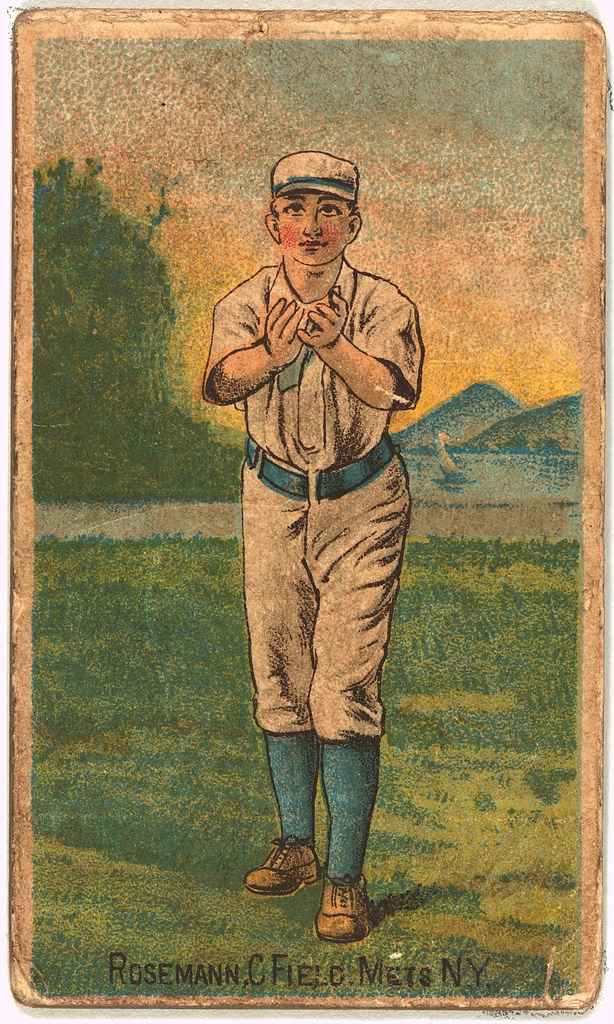
James John ‘Chief’ Roseman

Courtesy Library of Congress

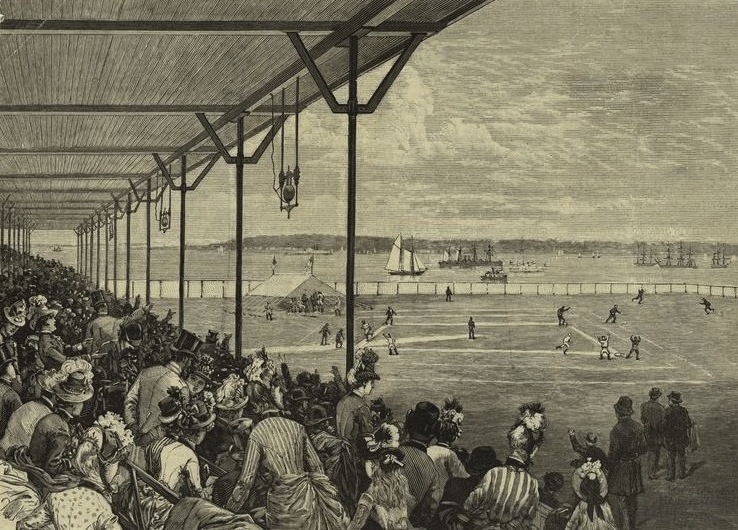
Day and Mutrie had also formed a second team — the New York Gothams — who proved to be more lucrative. In 1885 they sold the Metropolitans to  land developer Erasmus Wiman who then moved the team to Staten Island as a way to encourage growth for the underpopulated future borough. (Wiman also owned a ferry service.) The Metropolitans went from a polo grounds to a cricket’s ground — the St. George Cricket Grounds.

Below: The Metropolitans in Staten Island

mets

To no one’s surprise by Wiman’s, this idea didn’t work, and the Metropolitans were soon sold for $15,000 to their rivals the Brooklyn Dodgers who dismantled the team by recruiting its best players.  Their last game was 1887.

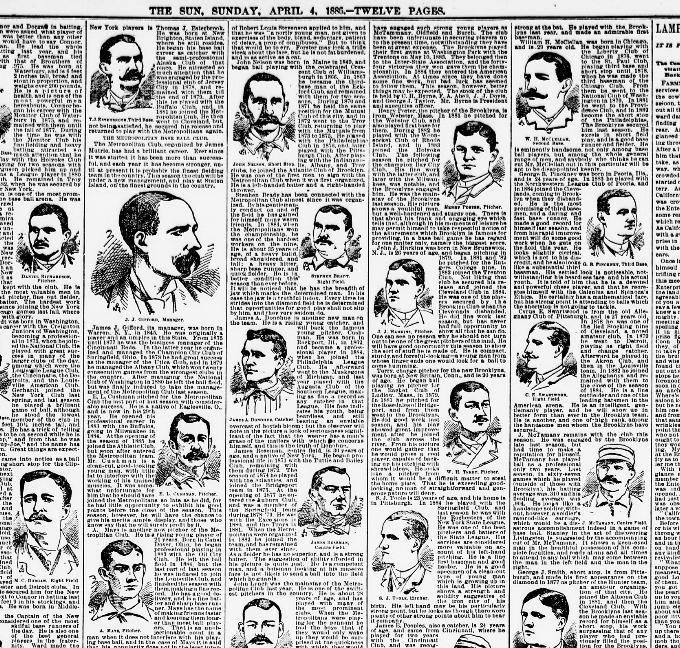
Below: At the pass off to Wiman, The New York Sun profiles all the players of the Metropolitans. You can read the entire article here.  “The Metropolitan Club, organized by James Mutrie, has had a brilliant career.  Ever since it was started it has been more than successful, and each year it has become stronger, until at present it is probably the finest fielding team in the country.”

1

Another reason the Metropolitans may have disappeared — their weight. The New York Sun, reporting on one of their last games, played on October 30, 1887: “The old men of the Metropolitan have grown very stout. Troy, with his 195 pounds is running a close race with Orr for avoirdupois, while Brady and Kennedy have gained remarkably in weight.” [source]

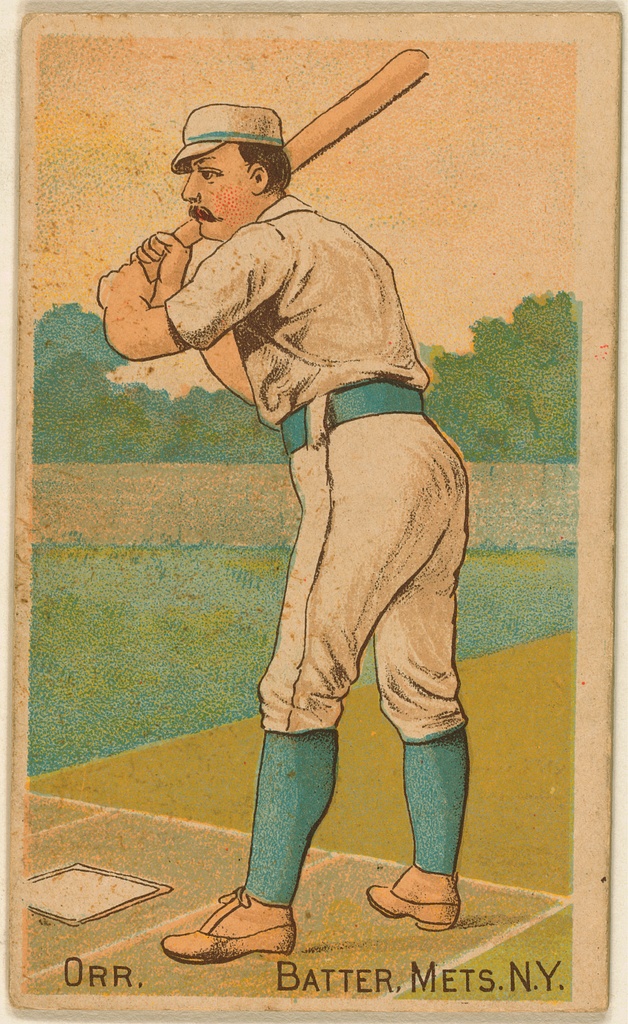
Dave Orr, first baseman

orr
Courtesy Library of Congress


**The original article neglected to mention the Giants.

Panic at the Polo Grounds: The first Boston-New York World Series sparks an insane stampede 100 years ago

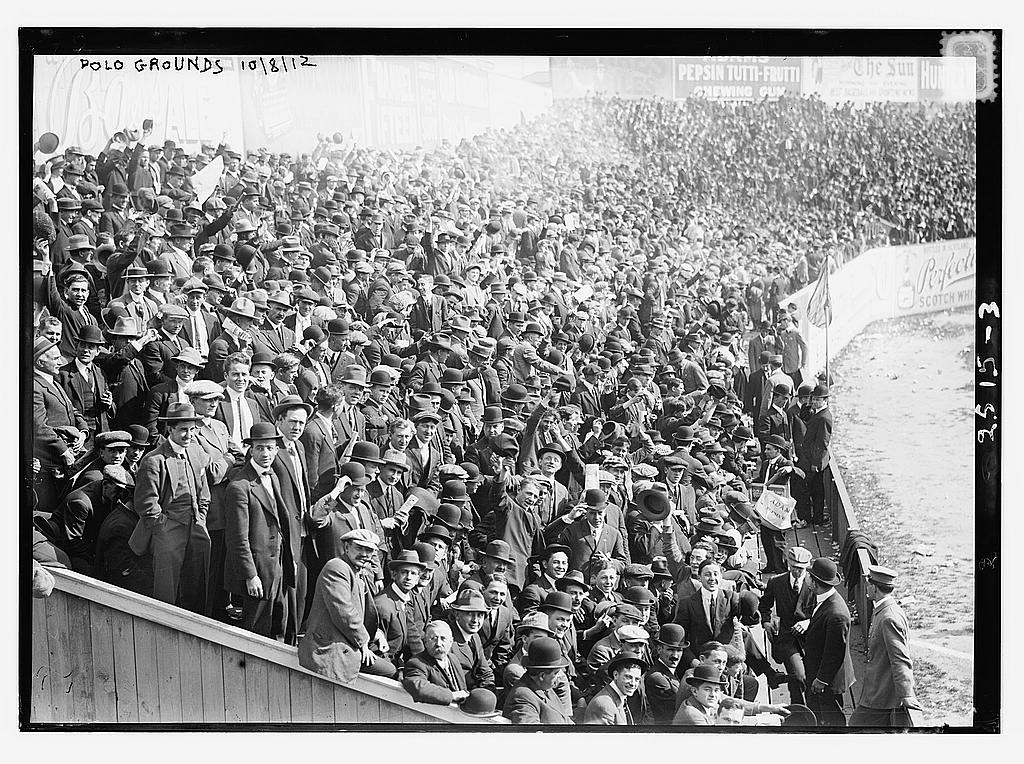
Above: the crowds at the Polo Ground for Game One. Many of these same people were certainly on hand for the fateful Game Four.

One hundred years ago today, in the frantic fall of 1912, even as the nation was in the midst of an intense three-way race to elect a new president, New Yorkers and Bostonians were overwhelmingly — perhaps even unnaturally — distracted.  For the first time ever — since the introduction of the World Series baseball championship in 1903 — a New York club was finally battling for ultimate victory against a Boston team.

The two cities had been in perpetual competition for most of their history; organized sport merely provided a formalized outlet to rally regional pride. [For more information, check out my article on the roots of the Boston-New York rivalry.]

The two cities should have already met on the diamond for the 1904 World Series, as the New York Giants were victors of the National League, while the Boston Americans led the American League.  Boston clutched that particular victory by defeating another team from New York, the upstart New York Highlanders (who later became the Yankees).

However, the Giants refused to play the Americans in the World Series, a tantrum thrown by managers aimed at the ‘inferior’ American League (originally the junior circuit). Rules were changed the following year to make championship play between the leagues compulsory.

Eight years later, in 1912, the New York Giants were matched against the same Boston team under their new name — the Boston Red Sox.  No hesitation this time around.  They were undeniably the two best terms in America, and both clubs were determined to win the title for their home cities.

For this Series, teams shuttled back and forth between Boston’s Fenway Park and New York’s premier baseball venue of the day, the Polo Grounds.
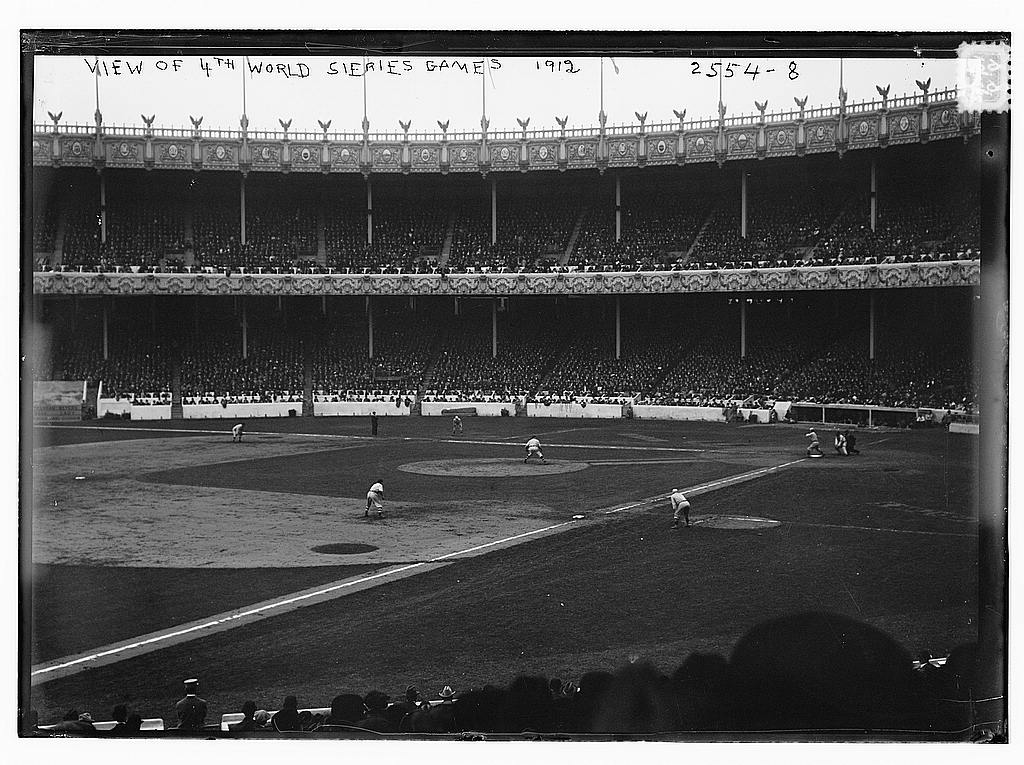
Above: A view of the Polo Grounds during Game Four, absolutely packed to the rafters

Game One, played at Polo Grounds, went to Boston.  Game 2, at Fenway, lasted so long — eleven innings — that the game was declared a tie on account of darkness. (Night baseball wouldn’t be played at Fenway until 1947!)  New York then won the second game at Fenway the following day, tying up the match.

For a fourth consecutive day of baseball, the teams were to return to the Polo Grounds (located at W. 157th Street and 8th Avenue). New Yorkers had the momentum, anxious to build upon their triumph in Game Three.  Both teams, already exhausted, packed into trains and headed back down to New York, arriving that evening at Grand Central. The Giants headed to their respective homes in the city, the Red Sox to their accommodations at Bretton Hall on Broadway and 86th Street.

Fans were already so excited for Game Four the next day that some were already lined up at Polo Grounds before the players even arrived in New York.

Unfortunately, one curious obstacle threatened to ruin everybody’s good time: mud.

The Polo Grounds were an uncovered grass field and throughout most of that evening it was pelted with rain, turning this fairly new ballfield (re-built in 1911 after a fire) into what the Evening World called “a mysty mystery” of gray and yellow-brown fog.  The infield was protected by a tarp, but the outfield was battered by the elements. Was it in any condition for a major baseball game?
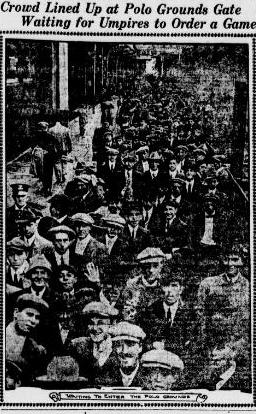
Commissioners failed to decide that morning whether the game could commence, and baseball fans grew restless. Well, that’s an understatement. Giants fans were enraged. “[T]he lynching-hungry scream of an infuriated mob” filled the air around the stadium, as thousands more joined the brave few  still in line from the night before should the field reopen.

An Evening World reporter followed a groundskeeper along the soggy field who lamented, “They can play on it, all right … Sure, they can play, but oh, me poor grass!”

Umpires were given a police escort into the Polo Grounds at 11 a.m. to inspect the condition of the field. By that time, the mob was practically foaming at the mouth, with “a blood-curdling shriek of 10,000 fans stretch[ing] from 157th Street to 140th Street, thousands and thousands of them.” [source]

At left: Photo from the Evening World, 10/11/12

Precisely at noon, the commission, located at the Waldorf-Astoria, telephoned to announce that the baseball game could be played, and the throng thundered into the stadium. The Evening World compared it to the Spanish running of the bulls. “[N]o man of this generation ever saw such racing and pounding along the sloping approaches of the Polo Grounds and began slamming down seats at one minute past twelve o’clock today.”

According to New York Post columnist Mike Vaccaro in his book on the 1912 World Series ‘The First Fall Classic’, the stadium filled to capacity with thousands more watching from various nooks and crannies, over 40,000 people, “officially…the third largest in this history of this stadium (and, thus, the history of the sport) but unofficially shattered that record to smithereens.” Many thousands more listened in to an announcer in Herald Square.

And so, here’s the punchline: after all that madness, the New York Giants lost the game, on the muddy and thoroughly distressed Polo Grounds, to the Boston Red Sox, 3-2! The New York Times intoned, “Nine Grim Innings To Red Sox Victory.”

In fact, they went on to lose the entire series to Red Sox.

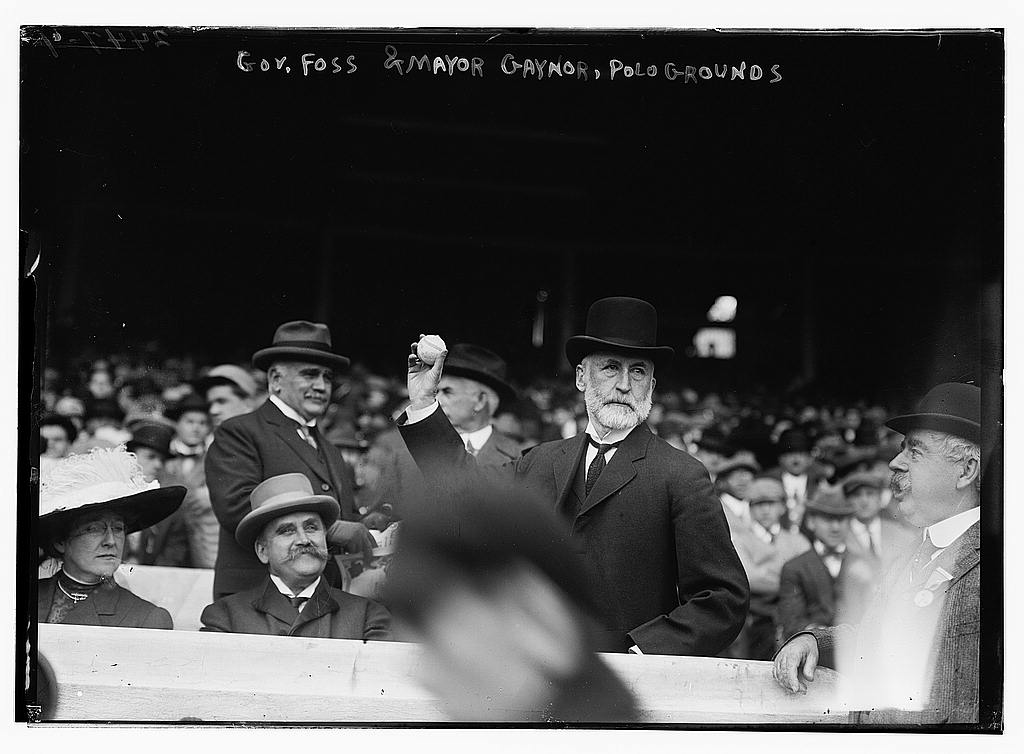
Below: For Game One, Mayor William Jay Gaynor threw out the first pitch, sitting alongside the mustachioed Massachusetts governor Eugene Foss. Less than a year later, Gaynor would succumb to injuries brought on by a bullet lodged in his throat, the unlucky souvenir of an 1910 assassination attempt. [Read more about Gaynor here.]
Categories
Sports

The New York Giants, before they were giants


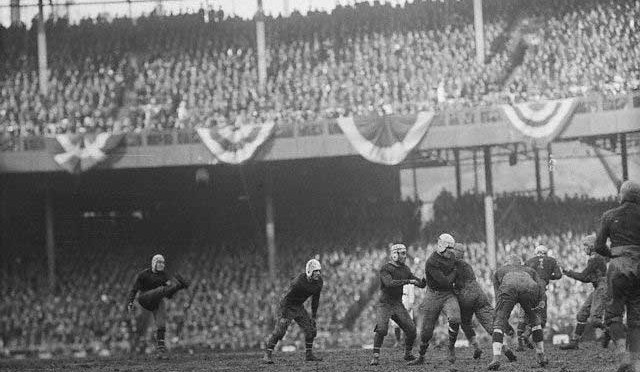
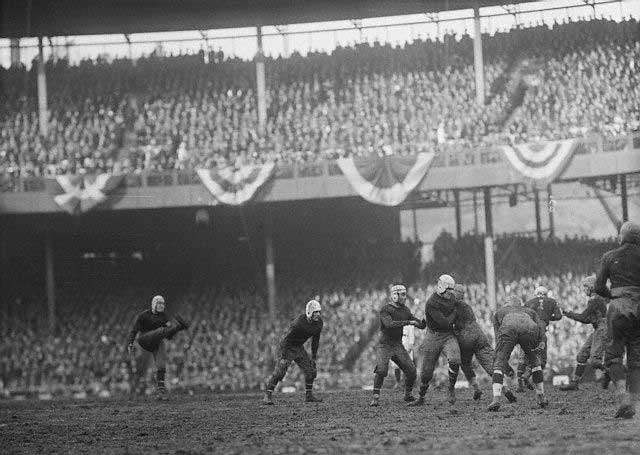
At the legendary Polo Grounds 1925, where the Giants football team (after a couple false starts) finally make their mark on the sport.


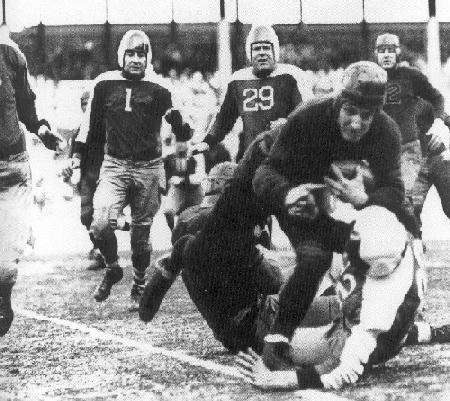
The New York Giants, currently in the playoffs and on their way to tackle the formidable Green Bay Packers this Sunday, are football’s oldest existing NFL team, and among its greatest — with seven total championship victories since their debut in 1925.  But that original team, dazzling with such stars as Jim Thorpe at their original home at the Polo Grounds, was not New York’s first professional football team. It wasn’t even New York’s first football team called the Giants!

The first try at a New York Giants football club came in 1919. They were a spin-off of the New York Giants baseball team*, a club considered the best of its day, dominating the sport from the late 19th century and into the 1910s.  Like the baseball franchise, the young Giants football team was to have played at the Polo Grounds as well, the location for many college football contests of the day. But those college games were played on Saturday, and on the month of October 1919, all Saturdays were fully booked.

So the Giants were scheduled to debut on a Sunday, against an Ohio team called the Massillon Tigers. This seemed possible, as team organizers understood that New York’s blue law, prohibiting Sunday play, had been removed from the books. But the city quickly clarified: the law had made way for Sunday baseball, not Sunday football.

Since football was more popularly considered a college pastime — many still questioned the validity of so-called ‘professional’ teams — nobody budged for the football Giants. And thus, the game was cancelled, and the team disbanded before they even hit the field.

The team’s coach, Harvard football star Charles Brickley, tried again two years later, managing to cobble together twenty-four players, a squad that is sometimes referred to as ‘Brickley’s Giants’ to distinguish them from the 1925 team. And people often choose to distinguish them, because Brickley’s Giants were a utter disaster. As one of 21 teams with the American Professional Football Association during its second season, Brickley’s team lost both its regular-season games. The Buffalo team actually destroyed them, 55-0.

During a bout with Jim Thorpe‘s Cleveland team, The New York Times noted, “The game was lopsided and had little to excite even the most rabid of rooters….[L]ittle can be said for the brand of football displayed.”

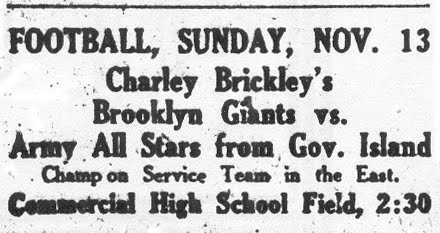
They were more successful at some exhibition games, such as the one advertised below in the Brooklyn Daily Eagle, Brickley’s ‘Brooklyn Giants’ (as they played at Ebbets Field by this time) against the Governors Island ‘Army All Stars’, whom they defeated. (Thanks to Paul Luchter for this image.) 

The following year, the American Professional Football Association changed its name to the National Football League, but Brickley’s team never made it that far, dropping out for good before the new season. They did continue to play exhibition games, but eventually disbanded by 1923. After these two disastrous attempts, nobody would attempt another Giants franchise for another couple years, when former newsie-turned-bookmaker Tim Mara joined the ascendant NFL with a third go at a New York team. And you know what they say about the third time.

By the way, the Maras have kept the Giants in the family since its 1925 debut. Tim’s grandson John Mara is an owner along Steve Tisch (whose last name should be familiar to any students at NYU’s Tisch School of the Arts).

*The original Giants baseball team now haunts and torments New York sports fans today in the form of the San Francisco Giants. The franchise moved to the West Coast in 1958.

A brief history of New York Giants

I’ve had a couple emails asking us to do a New York Giants podcast this week. Oh, had I known! We would have planned one. However, by the end of next month, we will unveil another major sports-themed podcast.

In the meantime, here’s a few New York Giants’ non-statistical, history-related factoids to chew on and toss out to your friends at Sunday night’s Superbowl party:

— The National Football League was all of five years old when the Giants, and four other teams, joined up in 1925. New York was an unusual place to host a professional football team back then; teams normally propped up the spirits of small to mid-size towns (Canton, Muncie, Rock Island, Portsmith, Akron, Buffalo) and many were particularly centered in Ohio. That’s why the Football Hall of Fame is in Canton.

— Promoter and bookie Tim Mara bought the New York Giants for all of $500 back in 1925, and for his troubles almost went bankrupt. The team thanks him by immediately losing their first three games, before charging through an amazing winning streak and ending the season 8-4.

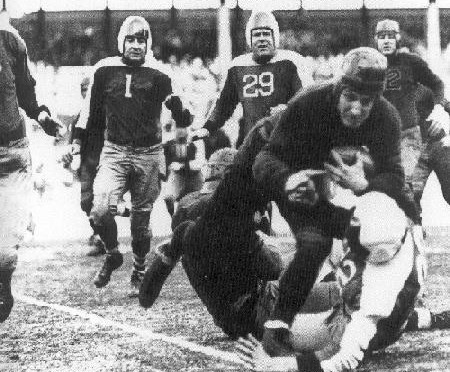
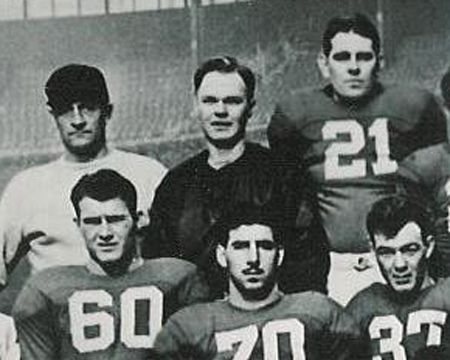
— In 1931, Mara passes ownership of his team to his two sons Jack Mara (age 22) and Wellington Mara (age 14). By far, Wellington is the youngest owner ever of a major league football team. Believe it or not, he would co-own the team all the way until his death in 2005! (That’s him in the pic below, with the team in 1941).

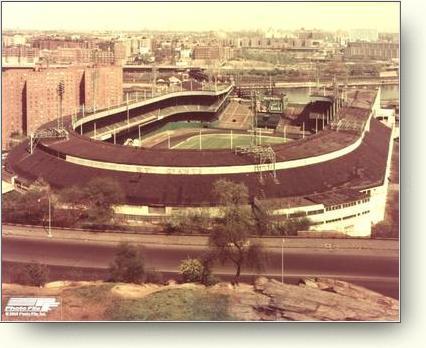
— The Giants played at Polo Grounds, at West 155th Street and Eighth Avenue, as did almost every other New York sports team at one time or another, including the New York Jets (even when they were known as the Titans). Sports enthusiasts referred to it as Polo Grounds IV, as three prior incarnations (including one in the same spot) have hosted New York sporting events since the 19th Century.

— In a 1934 game with the Chicago Bears, the temperature dipped to 9 degrees, and the grounds were so icy that the coach made the Giants switch to basketball sneakers in the Fourth Quarter, effectively winning them the game 30-13 against the slippery Bears. The game is infamously known as ‘The Sneaker Game’.

— A game against crosstown rivals the Brooklyn Dodgers (yes, they were a football team too) on Dec 7, 1941, was interrupted by the announcement of the attack on Pearl Harbor and the call for military personnel over the loudspeakers. Giants player Al Blozis would enlist in the Army and die in Vosges Mountains during the Battle of the Bulge; his number 32 would be permanently retired.

(Above: overhead shot of the Giants’ early home, the Polo Grounds)

— The Giants move to Yankee Stadium in 1956. That same year popular Giants player Frank Gifford (Kathee Lee’s husband) won the National Football League’s MVP honor.

— 1958 The Giants play the Baltimore Colts in the first-ever televised championship game, largely considered in football mythology as ‘The Greatest Game Ever Played’.

— 1966: the Giants worst season, going 1-12-1

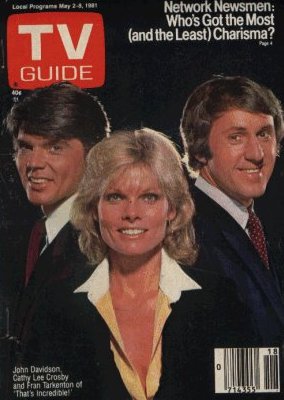
Fran Tarkenton, a Giant quarterback from 1967-72, became so popular that he became host of the 70s show That’s Incredible with co-hosts John Davidson and Cathy Lee Crosby.

— The Yankees kick out the Giants, and they prep for a new stadium to be built in East Rutherford, NJ. So from 1973 to 74, the Giants temporarily move their games to New Haven, Connecticut and the Yale campus. However, after terrible losses there, they double back to the city to share Shea Stadium with the Jets for a single season (1975)

— Yay! The Giants move into their new stadium in 1976. They rejoice by promptly losing almost every game they play there, ending with a 3-11 record.

— The Giants have won the Super Bowl exactly TWICE (1986 and 1990), however before the NFL-AFL merger in 1970, they did manage to be the NFL champs four times.

Eli Manning starts with the Giants in 2004. His first decisive performance came in January 2, 2005, in a 28-24 win against the Dallas Cowboys.

— Wellington Mara, a constant presence with the Giants since his teens, dies at age 89.

Check out the Giants official history. And thanks to Sports Encylopedia for the info…