Categories
Health and Living Podcasts Staten Island History

The Staten Island Quarantine War

EPISODE 325 In 1858, during two terrible nights of violence, the needs of the few outweighed the needs of the many when a community, endangered for decades and ignored by the state, finally reached its breaking point.

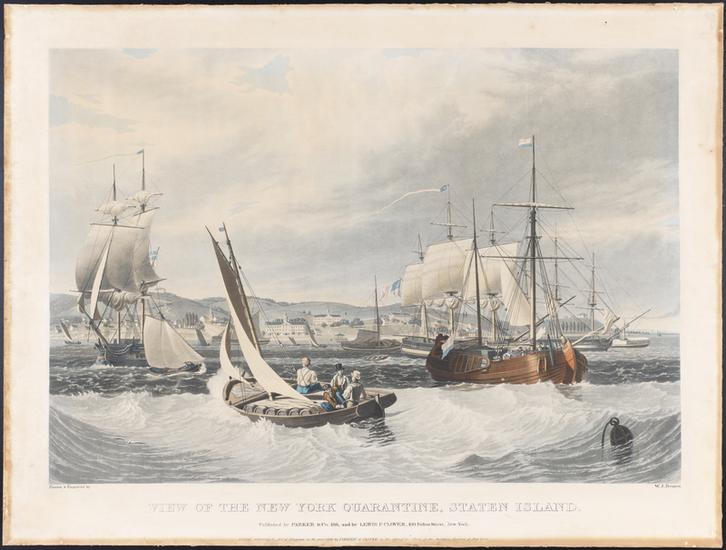
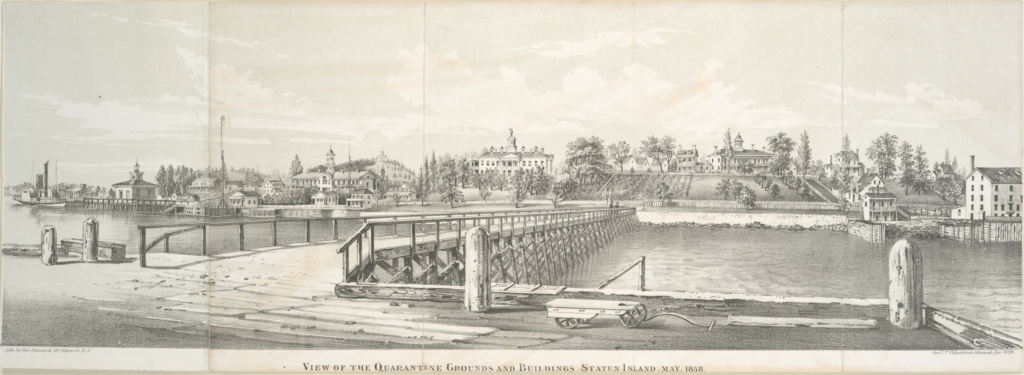
In Staten Island, just south the spot of today’s St. George Ferry Terminal, where thousands board and disembark the Staten Island Ferry everyday, was once America’s largest quarantine station – 30 acres of hospitals, medical facilities, shanties and homes, surrounded by a six-foot-tall brick wall.
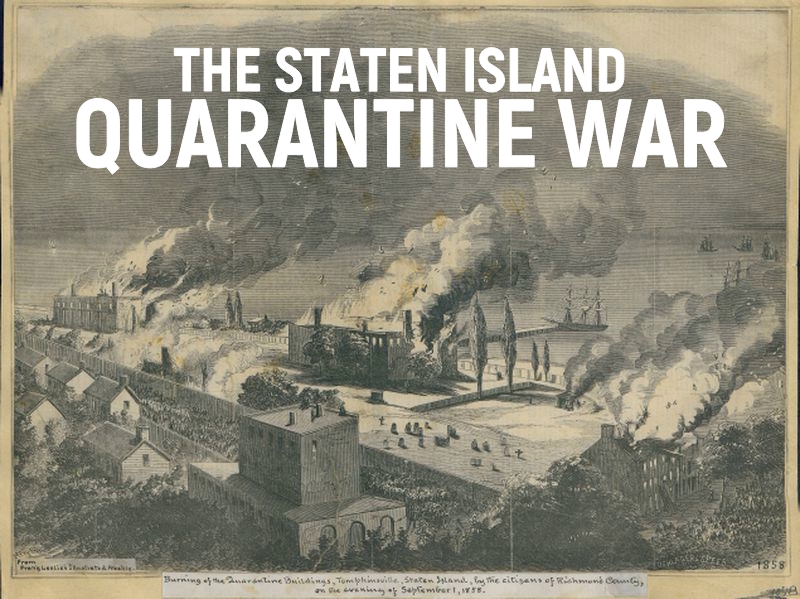
Since its construction in the year 1799, Staten Islanders had fought the its removal of the Quarantine Ground, considered a menacing danger to the health of residents and a blight upon any possible development.

Yet the need for such an extensive facility at the Narrows — the gateway to the New York Upper Bay and the Hudson River — was so important that the state of New York mostly turned a blind eye to their wishes.

And so the residents of Staten Island took matters into their own hands.

Was this a case of righteous revolution in the service of safety and well-being against a tyrannical state? Or a grave and malicious act of terror?

To get this episode, simply stream or download it from your favorite podcast player.

Or listen to it straight from here: THE STATEN ISLAND QUARANTINE WAR
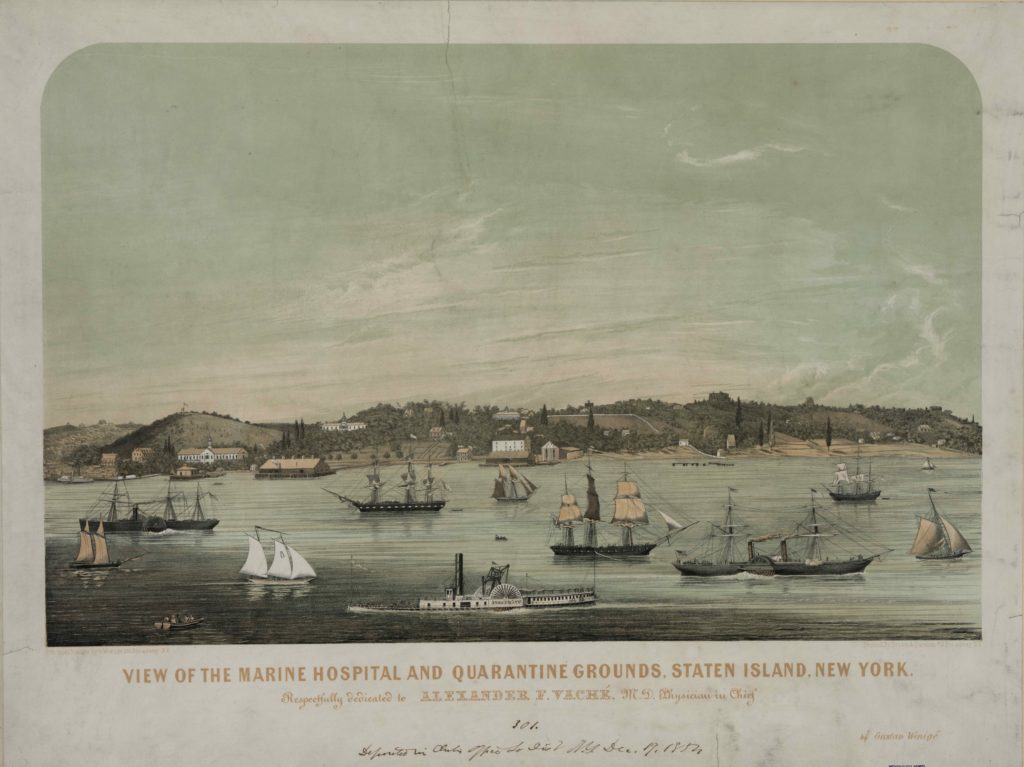

New York Public Library
Published by Parker & Co. 186, and by Lewis P. Clover, 180 Fulton Street, New-York. Entered according to Act of Congress in the year 1833 by Parker & Clover in the office of the Clerk of the Southern District of New York. — Museum of the City of New York
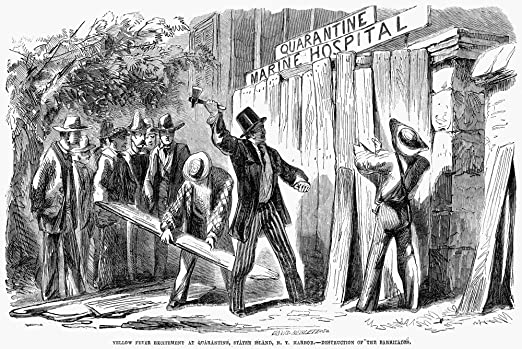
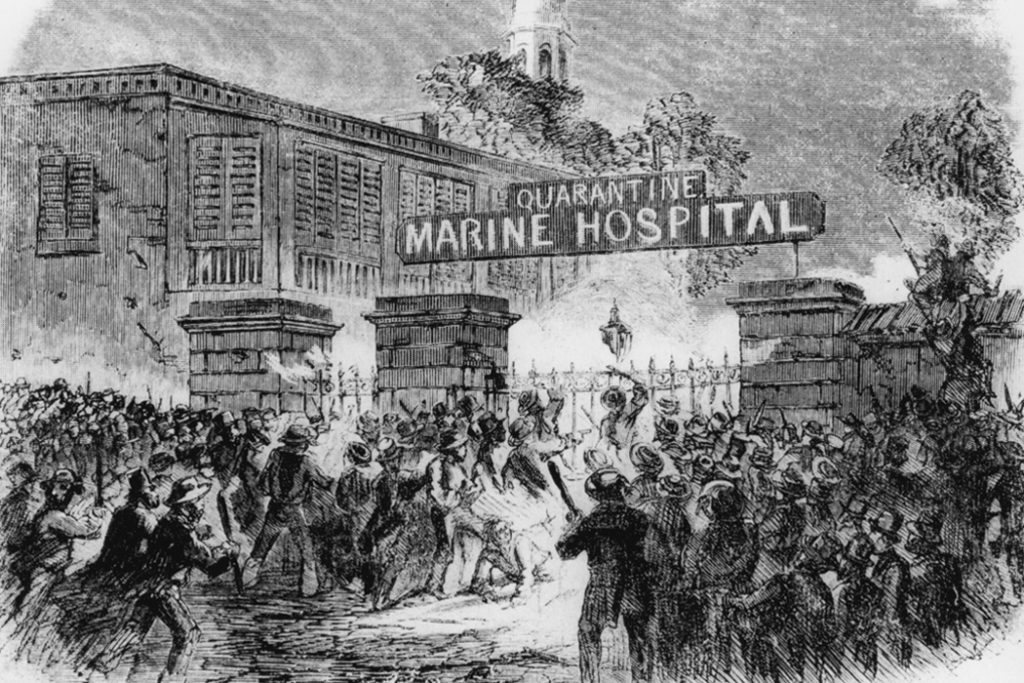
The Quarantine Hospital on Staten Island, 1858 — New York Public Library
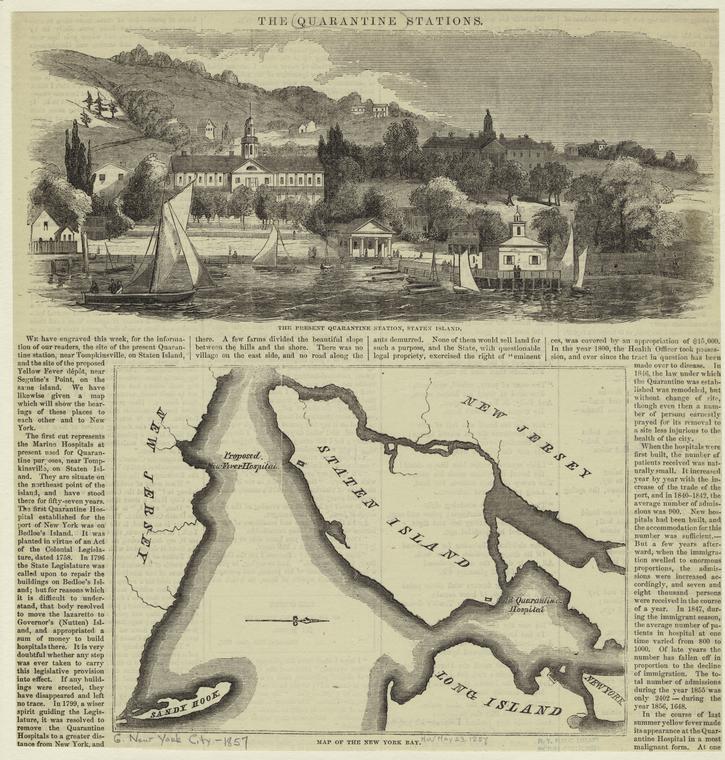
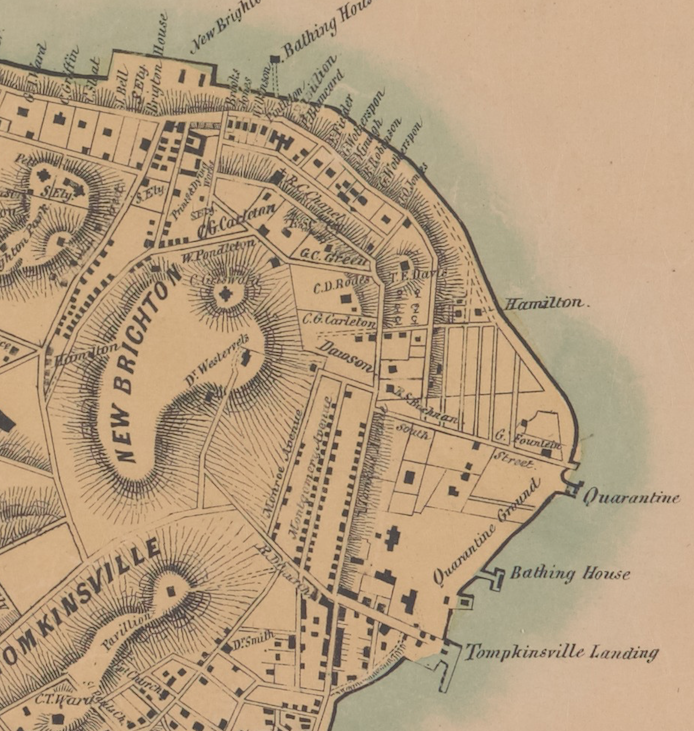
The present quarantine station, Staten Island ; Map of the New York Bay. 1857. Also marks the site of Sanguine’s Point, a proposed quarantine spot that was never constructed. New York Public Library
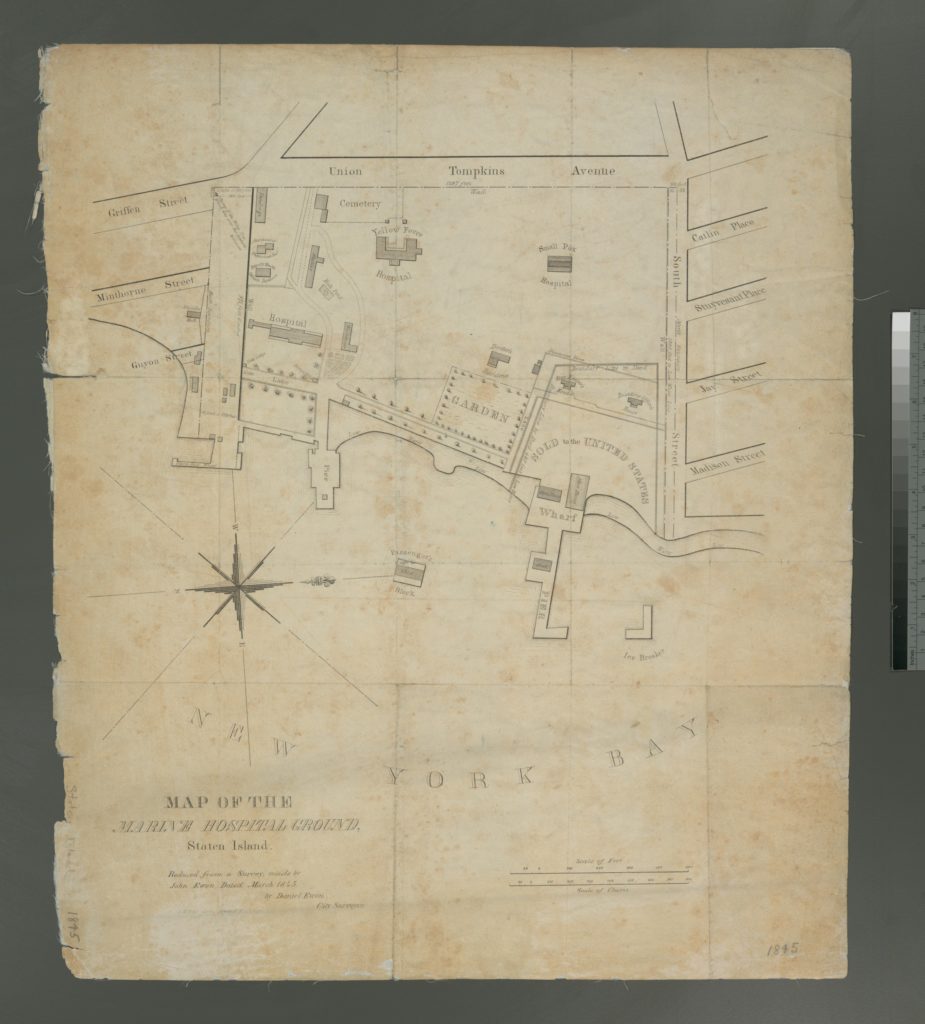
Map of the Quarantine Grounds, New York Public Library Digital Collections. 1845
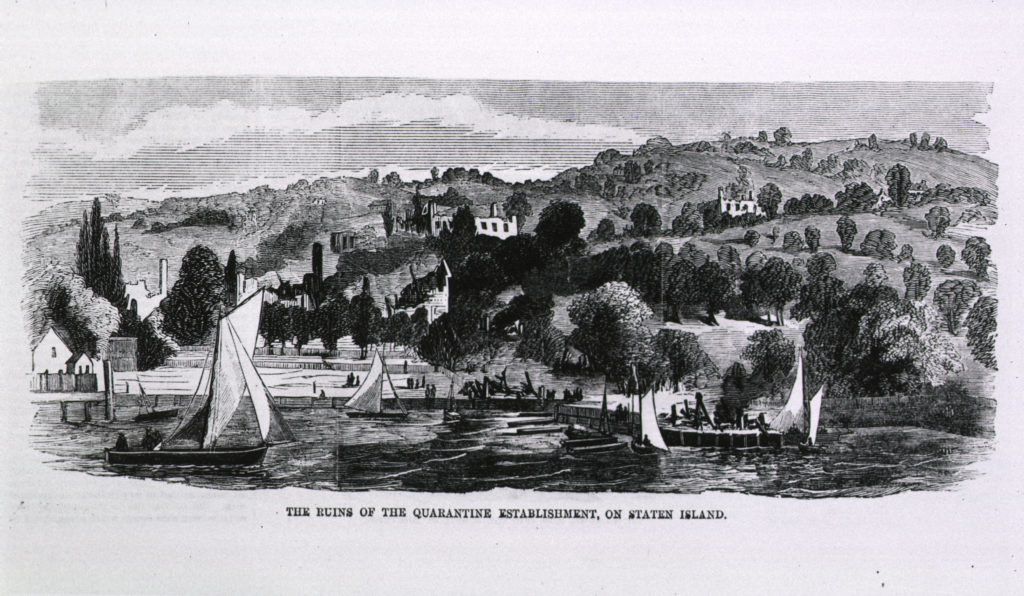
The Quarantine Grounds at Tompkinsville, Staten Island, in 1853 — courtesy the New York Cemeteries Project
Harper’s Weekly,1858/Getty Images
Harper’s Weekly / Sept. 11, 1858

FURTHER LISTENING

After listening to The Staten Island Quarantine War, check out these past Bowery Boys episodes on subjects featured in the latest show.


The Bowery Boys: New York City History podcast is brought to you …. by you!

We are now producing a new Bowery Boys podcast every week. We’re also looking to improve and expand the show in other ways — publishing, social media, live events and other forms of media. But we can only do this with your help!

We are now a creator on Patreon, a patronage platform where you can support your favorite content creators.

Please visit our page on Patreon and watch a short video of us recording the show and talking about our expansion plans. If you’d like to help out, there are six different pledge levels. Check them out and consider being a sponsor.

We greatly appreciate our listeners and readers and thank you for joining us on this journey so far.
Categories
Sports

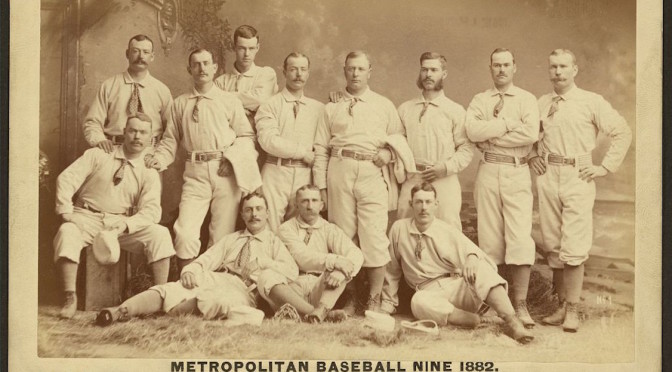
Meet the Mets! The Metropolitans, that is, an early NY baseball team

The New York Mets, 2015 National League Champions and New York’s perpetual baseball underdogs, are only 53 years, formed in 1962 to fill the void after the departure of the Brooklyn Dodgers and the New  York Giants* to California. But in name, at least, they’re older than even the Yankees.

The first New York ball club to call themselves the Mets — or really, the Metropolitans, if we’re being fancy — made their first appearance 130 years ago.  They burned bright for many years, inaugurated New York’s first great sports venue, then faded away.

To be metropolitan in 1880 did not merely suggest a team representative of a city and its surrounding area.  It was code for the finest — from the Metropolitan Opera (which formed the same year) to the Metropolitan Museum (whose Central Park building also opened that year).

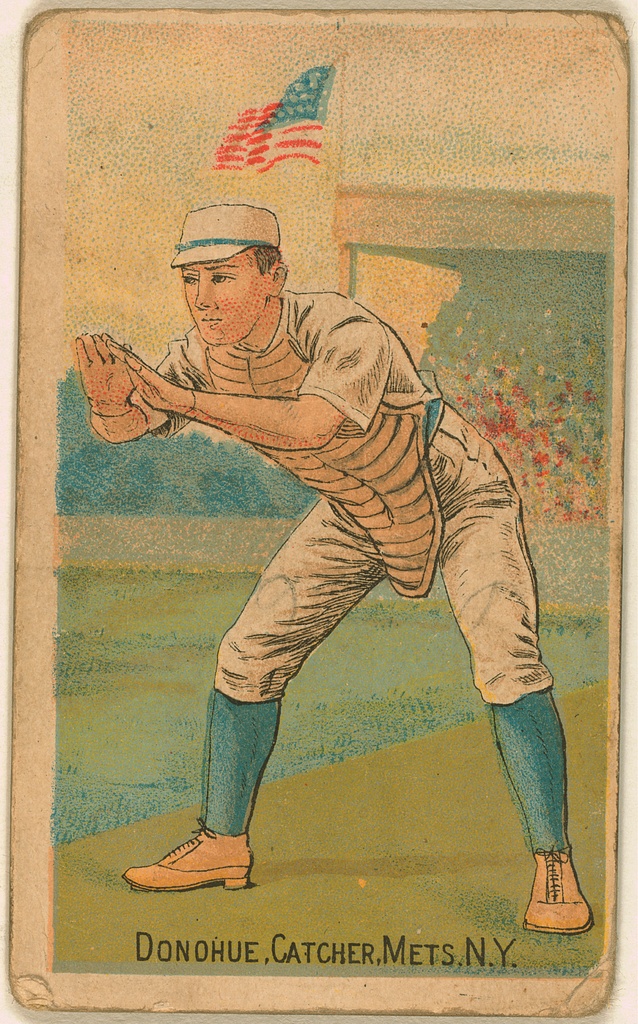
Jim Donahue, catcher

1

Baseball, however, was not a prestige sport by any means in 1880, but this did not matter to John Day, baseball fanatic and owner of a large tobacco plant on the Lower East Side. One day Day met Jim Mutrie, a shortstop from Boston, and agreed to fund a new team. In September, the New York Metropolitans made their debut on a field in Brooklyn.

A few weeks later they would take over a playing field used mostly for polo matches, located at the northeast corner of Central Park. While it would later be known as the Polo Grounds, it would soon host a variety of sports. A larger version of the Polo Grounds, further north on 155th Street, would later be home to the modern Mets franchise.

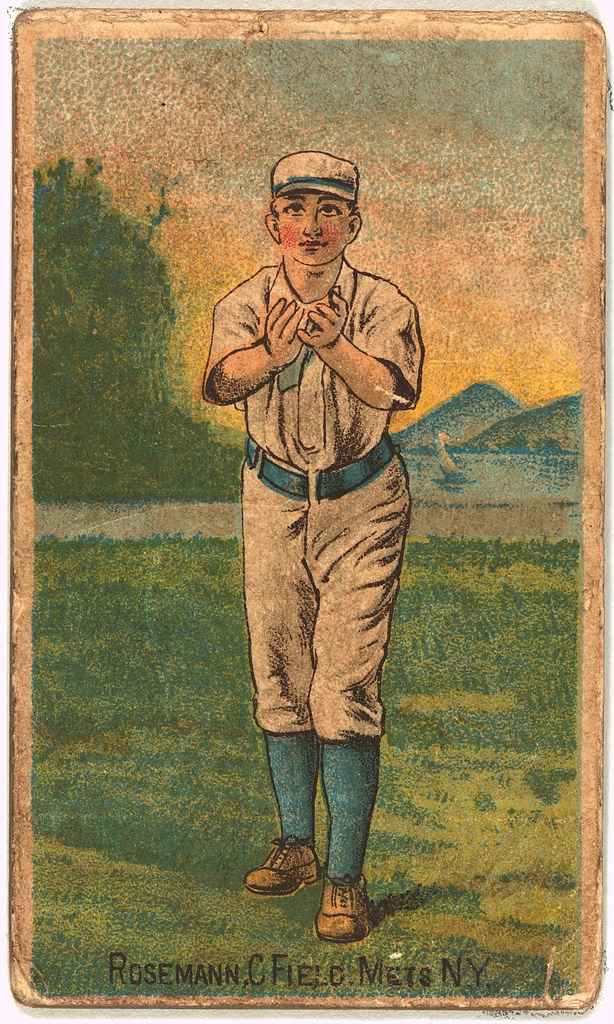
James John ‘Chief’ Roseman

Courtesy Library of Congress

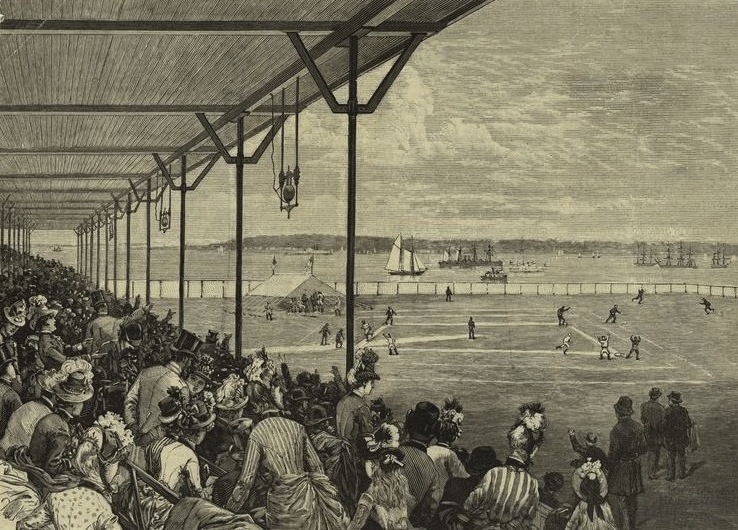
Day and Mutrie had also formed a second team — the New York Gothams — who proved to be more lucrative. In 1885 they sold the Metropolitans to  land developer Erasmus Wiman who then moved the team to Staten Island as a way to encourage growth for the underpopulated future borough. (Wiman also owned a ferry service.) The Metropolitans went from a polo grounds to a cricket’s ground — the St. George Cricket Grounds.

Below: The Metropolitans in Staten Island

mets

To no one’s surprise by Wiman’s, this idea didn’t work, and the Metropolitans were soon sold for $15,000 to their rivals the Brooklyn Dodgers who dismantled the team by recruiting its best players.  Their last game was 1887.

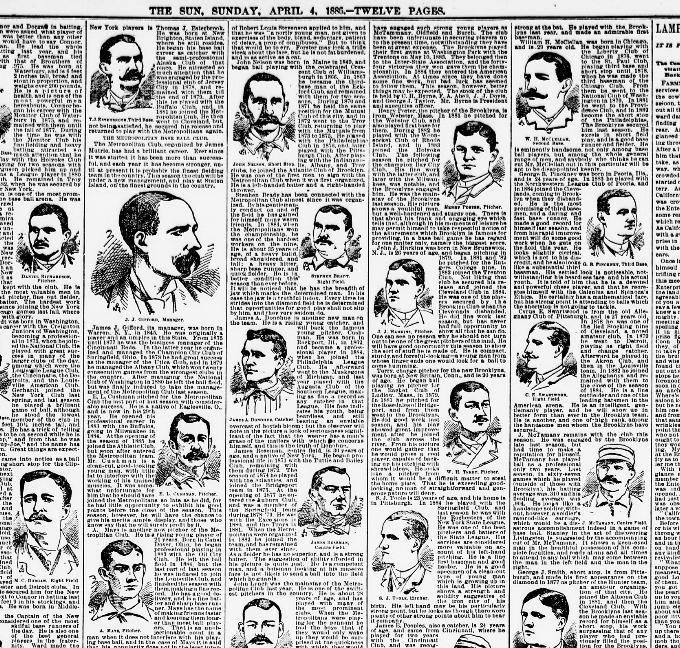
Below: At the pass off to Wiman, The New York Sun profiles all the players of the Metropolitans. You can read the entire article here.  “The Metropolitan Club, organized by James Mutrie, has had a brilliant career.  Ever since it was started it has been more than successful, and each year it has become stronger, until at present it is probably the finest fielding team in the country.”

1

Another reason the Metropolitans may have disappeared — their weight. The New York Sun, reporting on one of their last games, played on October 30, 1887: “The old men of the Metropolitan have grown very stout. Troy, with his 195 pounds is running a close race with Orr for avoirdupois, while Brady and Kennedy have gained remarkably in weight.” [source]

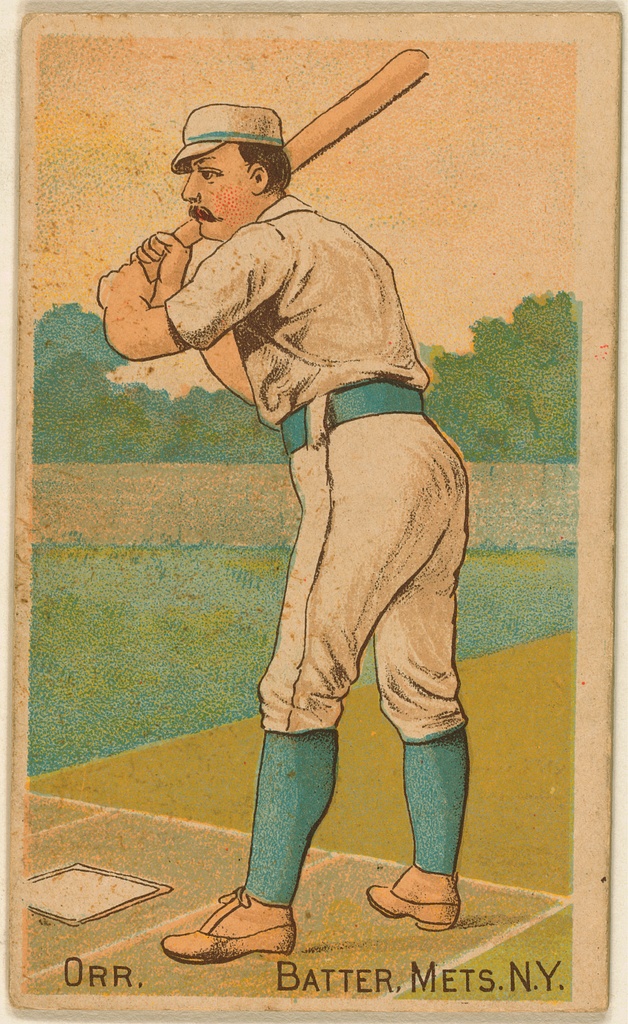
Dave Orr, first baseman

orr
Courtesy Library of Congress


**The original article neglected to mention the Giants.

Categories
On The Waterfront Podcasts

The Staten Island Ferry: its story, from sail to steam

PODCAST The Staten Island Ferry is one of the last remaining vestiges of an entire ferry system in New York, taking people between Manhattan and its future boroughs long before any bridges were built. In Staten Island, the northern shores were spiked in piers, competing ferry operators braving the busy waters of New York harbor.

In the first of our summer-long podcasts BOWERY BOYS ON THE GO on New York public transportation, I look at the history of Staten Island’s famous ferry, its early precursors, its connection to Cornelius Vanderbilt and a Monopoly property, and its evolution when the city took it over in 1905.

ALSO: Find out the curious story behind the name of Victory Boulevard and the neighborhoods of St. George and Tompkinsville.

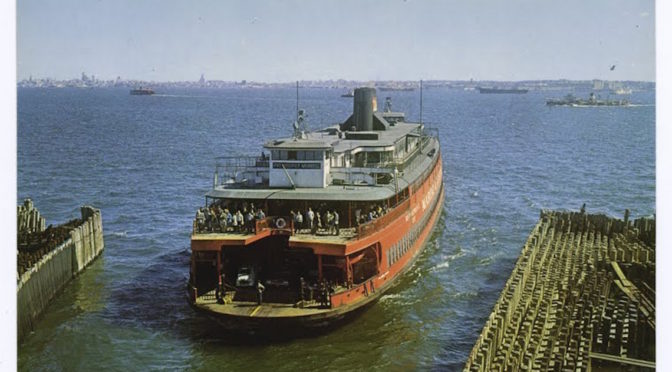
From an old postcard, illlustrating why the Staten Island Ferry has become more than just a way to get to and from work. [NYPL]

ferry2

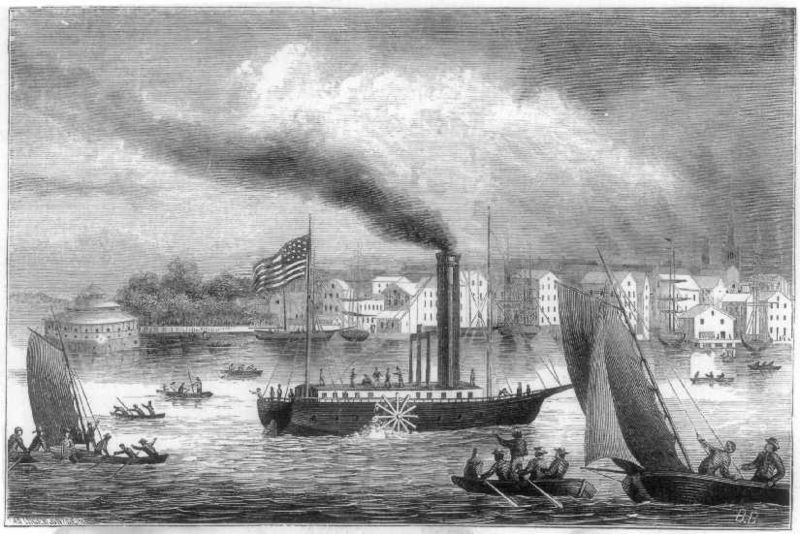
The Clermont in the waters of New York Harbor, 1807. Robert Fulton’s first steamship would revolutionize travel and change the rules of the ferry game. The first steamship off Staten Island waters would be the Nautilus in 1817, property of Daniel Tompkins. This Nautilus should not (obviously) be confused with Fulton’s famous submarine of the same name. Although the boat seems to have inspired a building, called Nautilus Hall, on Tompkins’ property. [Courtesy Gerald Massey]

clermont

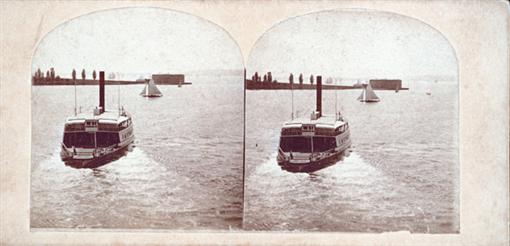
One of the earliest known photographs of a “Staten Island Steamboat”, taken in 1858 and about to chug by Castle William on Governor’s Island, one of “Anthony’s Instantaneous Views” from the George Eastman House archive.

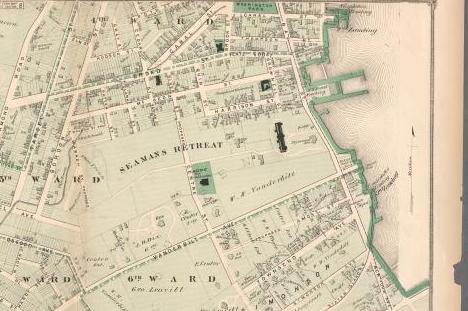
This is a detail from an 1874 map of Stapleton and Clifton along the northeast shore of Staten Island. The area in green along the waterfront is Vanderbilt’s Landing, at least the southern part of it. You can also find the Vanderbilt estate nearby. For a closer look, check out the map directly on the NYPL site and use the zoom in/out tools.

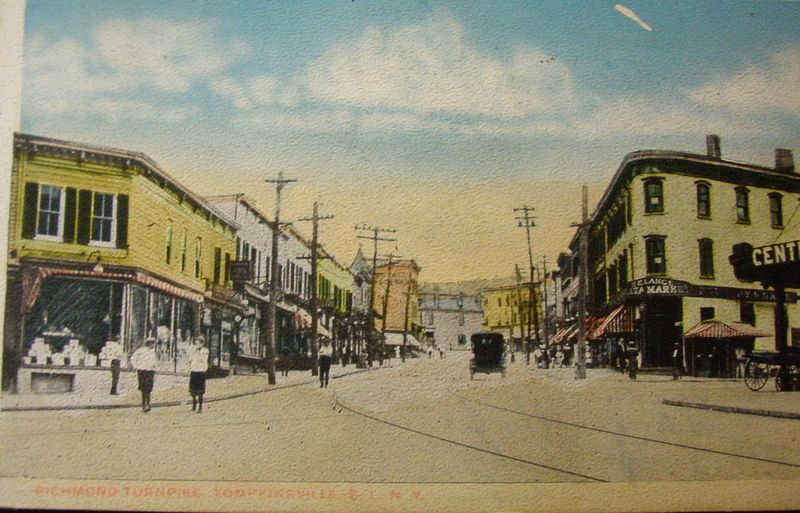
The Richmond Turnpike traveling through Tompkinsville, the town founded by Vice President Daniel D. Tompkins. The Turnpike, formerly a toll road and the basis of the Richmond Turnpike Company, would be renamed Victory Boulevard after World War I.

richmond

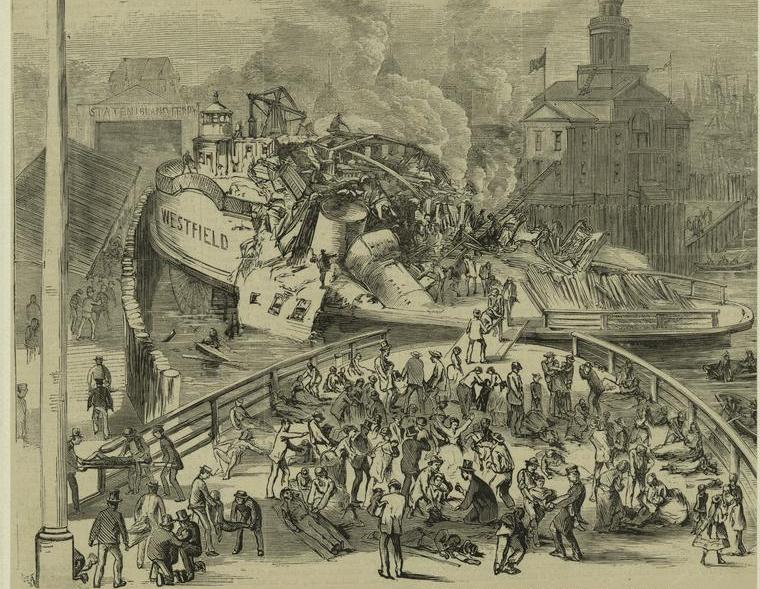
The Westfield disaster on July 1871, a boiler explosion that killed over 80 people, underscored the risks of early steam travel in the crowded waters of New York harbor. It remains the worst of several disasters in the Staten Island ferry’s long history.
westfield

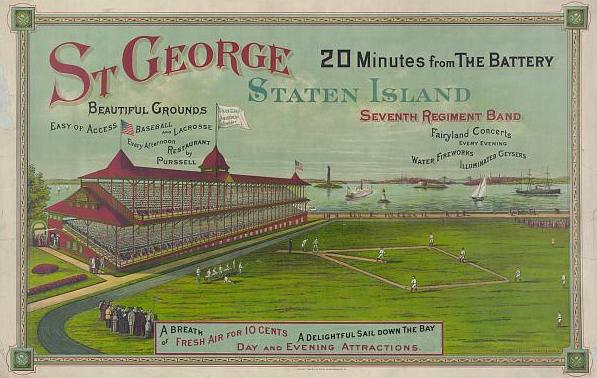
Named for George Law, the neighborhood of St. George was a bustling entertainment district, with hotels, light amusements and sports venues. This postcard is from 1886, illustrating the new St. George Cricket Grounds, built by developer Erastus Wiman.
1886

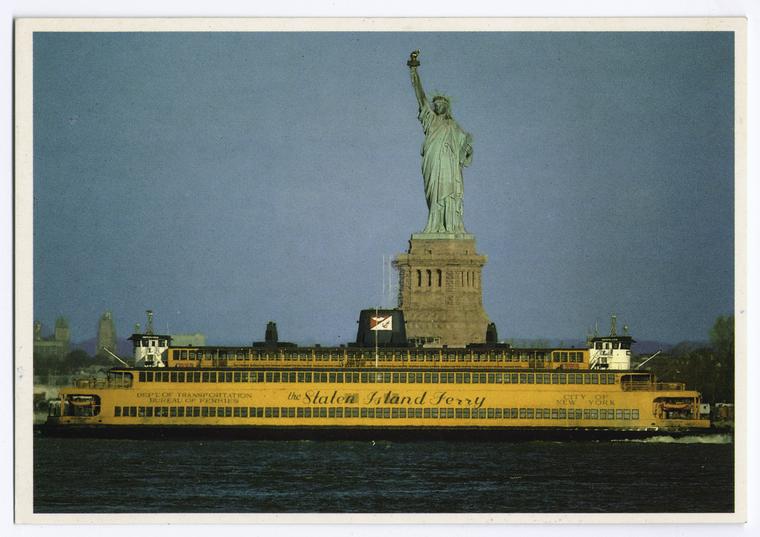
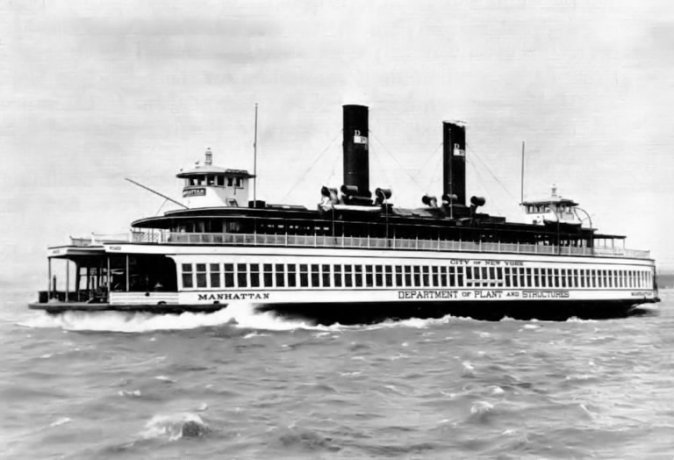
When the city took over operation of the Staten Island Ferry in 1905, they commissioned five new boats, each named for a borough. Here’s the Manhattan:
manhattan

If you want to thumb through a spread of old photographs of prior ferryboats, check out this great site.

And this Flickr picture might be one of my favorite pictures ever.

Categories
Podcasts

PODCAST: Staten Island: A Brief History

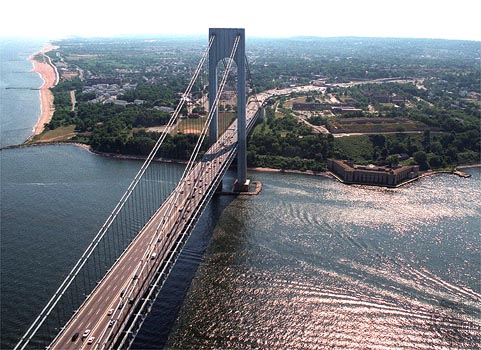
(flying over the Verrazano-Narrows Bridge)

The Bowery Boys take on the history of New York City’s most ‘forgotten’ borough, from its beginnings as a British outpost during the Revolutionary War to the controversy over that big stinky landfill. And we do it all in exactly the time it takes the Staten Island ferry to take you across the New York harbor! (No really, try it!)

Listen to it for free on iTunes or other podcasting services. Or you can download or listen to it HERE

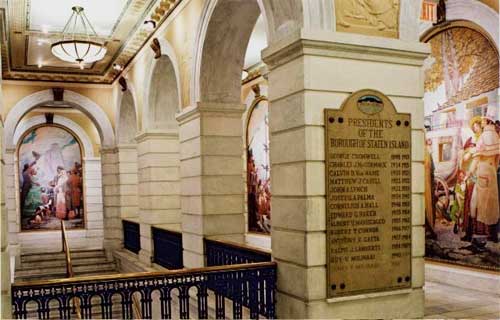
Take a look at the list of top 100 historical moments in Staten Island history that we mention in our podcast. By the way, here’s a peek inside Staten Island Borough Hall, which we mentioned was designed by Carrere & Hastings, best known for the New York Public Library.

And on to the final part in our Staten Island Snug Harbor series (other parts can be found here):

(A Neptune fountain on the front lawn, which would not look out of place in Rome)

Modern Snug Harbor offers the community a wide variety of cultural functions. In fact, the afternoon I was there, Snug Harbor was host to a regional American Girl Fashion Show. I would have taken some photographs of this unusual event — you can get the general idea of what an American Girl Fashion Show is like here — however it might have been a bit odd for a single man with a camera to be walking around taking pictures of young girls with their dolls.

The most dynamic of Snug’s new additions is the Staten Island Botanical Garden, sprouting up on the vast Snug Harbor campus in 1977, first as a traditional English garden, but quickly diversifying. I took a stroll last weekend, which was an odd time for a garden. Most of the budding flowers had disappeared, and the leaves were only beginning to change. I would recommend hitting Snug Harbor over the next couple weekends to experience the fall colors.

The Pond Garden was actually overrun with ducks, more than I could count actually, all encircling this curious sculpture:

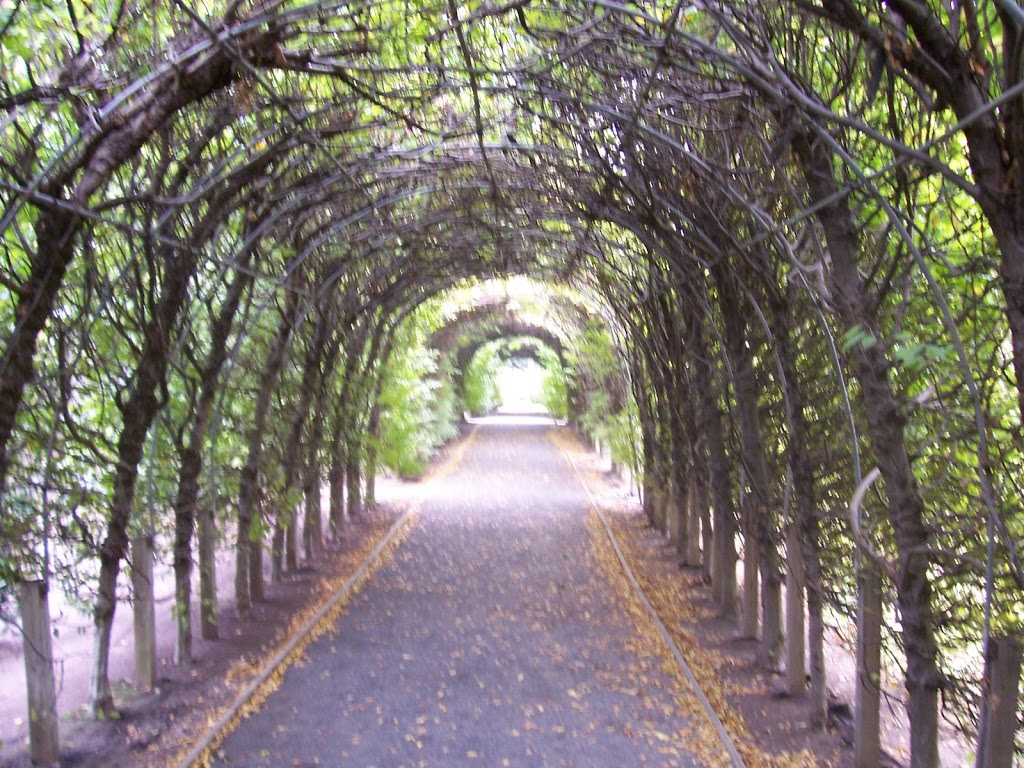
The canopied allie, planted in 1997, is created by the conjoining 120 European hornbeams, creating a disorienting path.

The path leads to the most sobering part of the entire center, the World Trade Center Educational Tribute. Created in 2003 to honor the residents of Staten Island killed in the 9/11 attacks, this small museum features a wall of victims and biographies, some eyeopening photos and artifacts from the tragedy. A very kind member of the fire department awaits inside to answer your questions. Its very intense inside, as you can imagine.

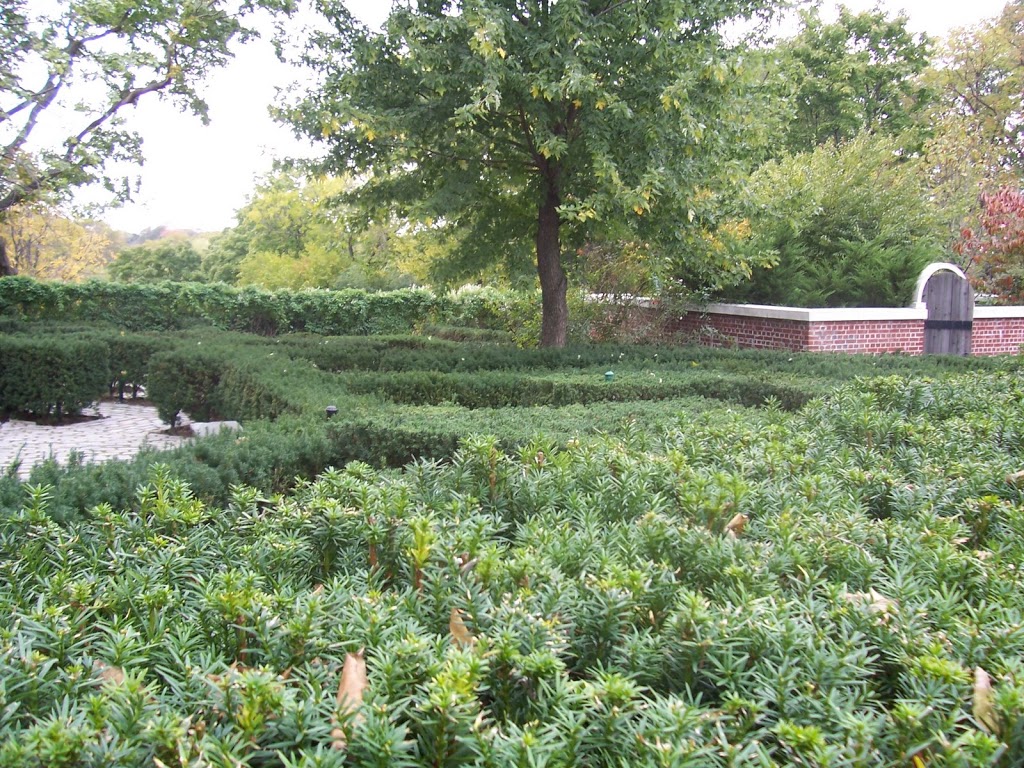
You might need to weave yourself through this hedge maze to take your mind off of some of the disrupting images. Although clearly designed for children — i.e. I didnt exactly get lost through it — it’s apparently the only maze of its type in New England. Who knew?

As it was slightly chilly when I strolled around, I obviously welcomed the Carl Grillo Glass House, with its three heated zones for arid, tropical and temperate vegetation, as well as a healthy selection of orchids.

Some of the more modern additions include a childrens museum, guarded by this startling creature:

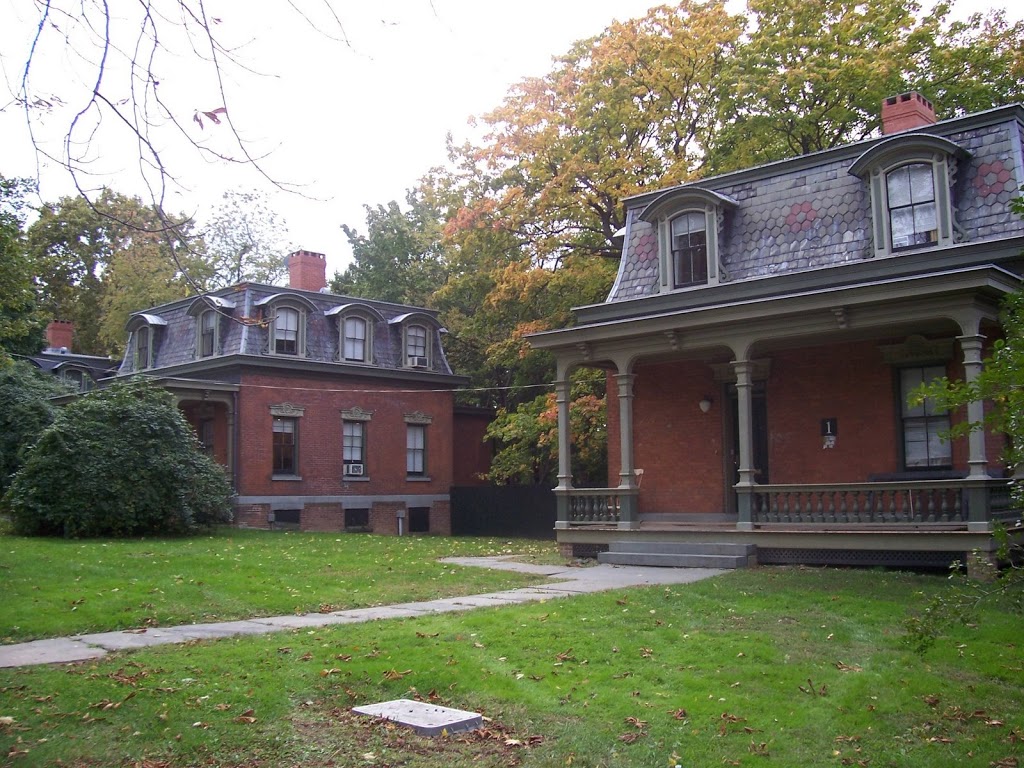
Along the eastern end are a row of identical former homes, one of which serves as the entrance to the newly built Chinese Scholar Garden. (Unfortunately I was not able to enter this on my visit; however you can view a map of its particular grounds.)

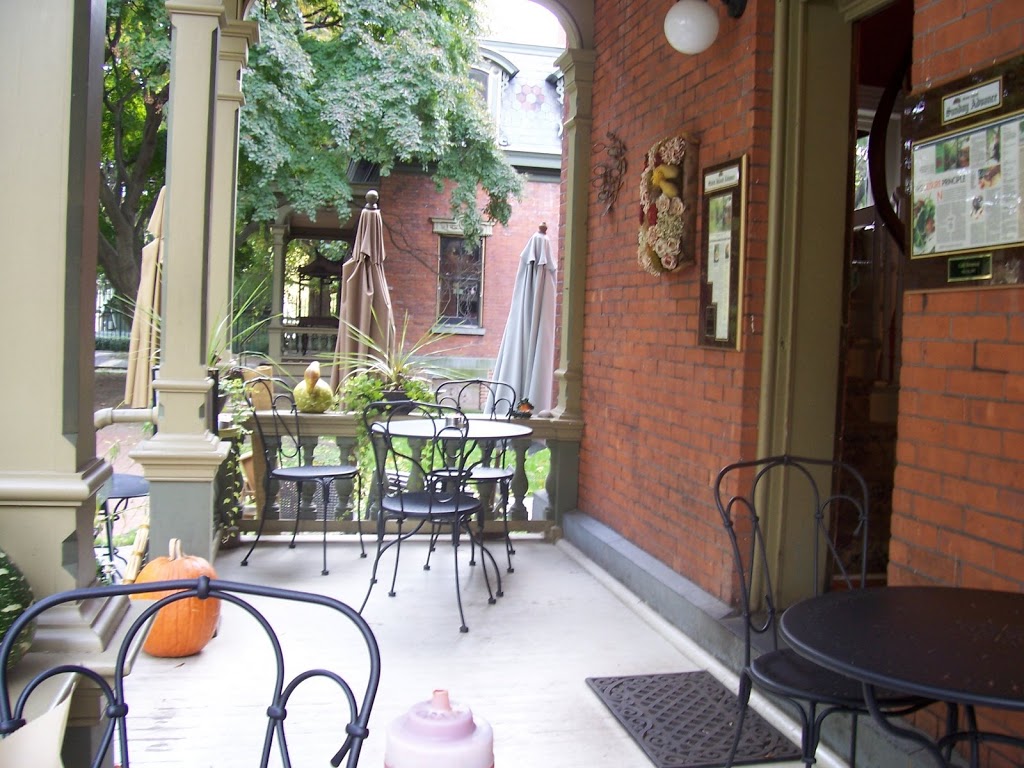
Another of the houses has been converted into a restaurant, Cafe Botanica. Its surreal to eat brunch on a big friendly porch. Inside there’s dining by a cozy fireplace:

Some parts of Snug Harbor are not currently open, including the healing garden, which is going through an extensive renovation, as is the Italian garden and vineyard. That’s right, a virtual vineyard is on the way!

Extra: when leaving Snug Harbor, just take a look in the trees across the street, right in front of the Kill Van Kull. What’s this mysterious thatch of boardwalks that runs along the side of the waterfront?

No more battery for downtown’s green ferry

(Battery Maritime, from the back)

That precious jade little music box with a copper top sitting next to the brand spanking new Staten Island Ferry terminal is about to get yet another makeover.

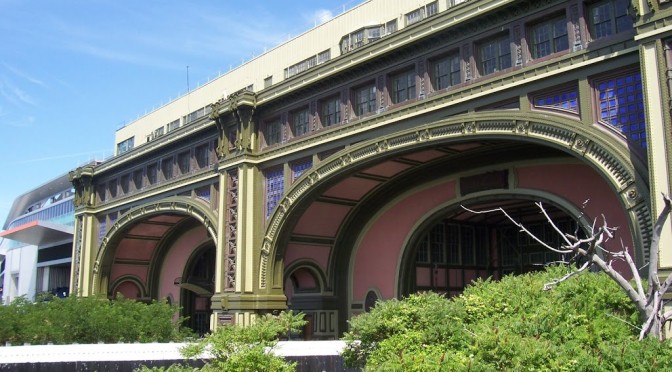
The Battery Maritime building, now landmarked, has probably been one of downtown Manhattan’s most mistreated buildings. There are probably a few reasons why this Beaux-Arts confection, finished in 1909, has been so maligned. It was designed by William and Morris, not exactly one of New York’s great design firms. (They’re responsible for a few lesser known buildings along Riverside Drive.)

Its primary function, as a ferry terminal for vessels to and from 39th street in Brooklyn, was eliminated in 1938 and lent to various private operations. Its second floor waiting room, with its grand ceilings and columns, hasn’t been open to the public in decades. At some point its most dazzling detail, a glazed glass ceiling of sparkling stained glass was, according to NYC Architecture, was unceremoniously demolished and built over.

It basically sat abused like some old jewel case washed up from the East River. Fortunately its been completely refurbished in a 2001 $60 million makeover that gives its pale green skin a glossy restored finish. However its vast upper floor remains unused. And its three slips are used only for minor ferry use, such as the Governor’s Island ferries — which don’t run outside of spring and summer months.

However it looks like the Battery Maritime may get seriously modernized if the Dermot Company have their way. They intend to install a glass-coverd hotel on the upper floors, a rooftop restaurant, and a gourmet market down below. The community is all over the board about it; according to Gothamist, architects love the idea, the Historic Districts Council hates it, and everybody else seems to want something in between.

One thing for sure — this battered green lady is finally getting the attention she deserves. Before jumping to too many conclusions regarding a potential radical re-design, keep in mind that it sits by the new, wildly dramatic Staten Island ferry terminal — once slotted to have a gigantic electronic message board slapped across the front.