Categories
Bronx History

Seven places to experience early Bronx history today and this weekend

We’ve received such an overwhelming positive response to our Bronx history podcast — and we’re just at Part One. You may know a few things about 20th century Bronx history, but it’s so important to familiarize yourself with the early stories as well. Almost all of these stories figure into the creation of the modern Bronx and will help shape the borough’s future.

But there’s need to wait for us to release Part Two next week. There are many institutions in the borough where you can experience the early history of the Bronx firsthand. May we suggest planning an afternoon adventure around a visit to these places? (NOTE: It’s always a good idea to call ahead before planning a visit. Some of these locations often host private events.)

For reasons which will become obvious, late summer and autumn are the perfect times to visit some of these sites. You’ll see why many people consider the Bronx to be the most beautiful borough in New York City.
IMG_0034

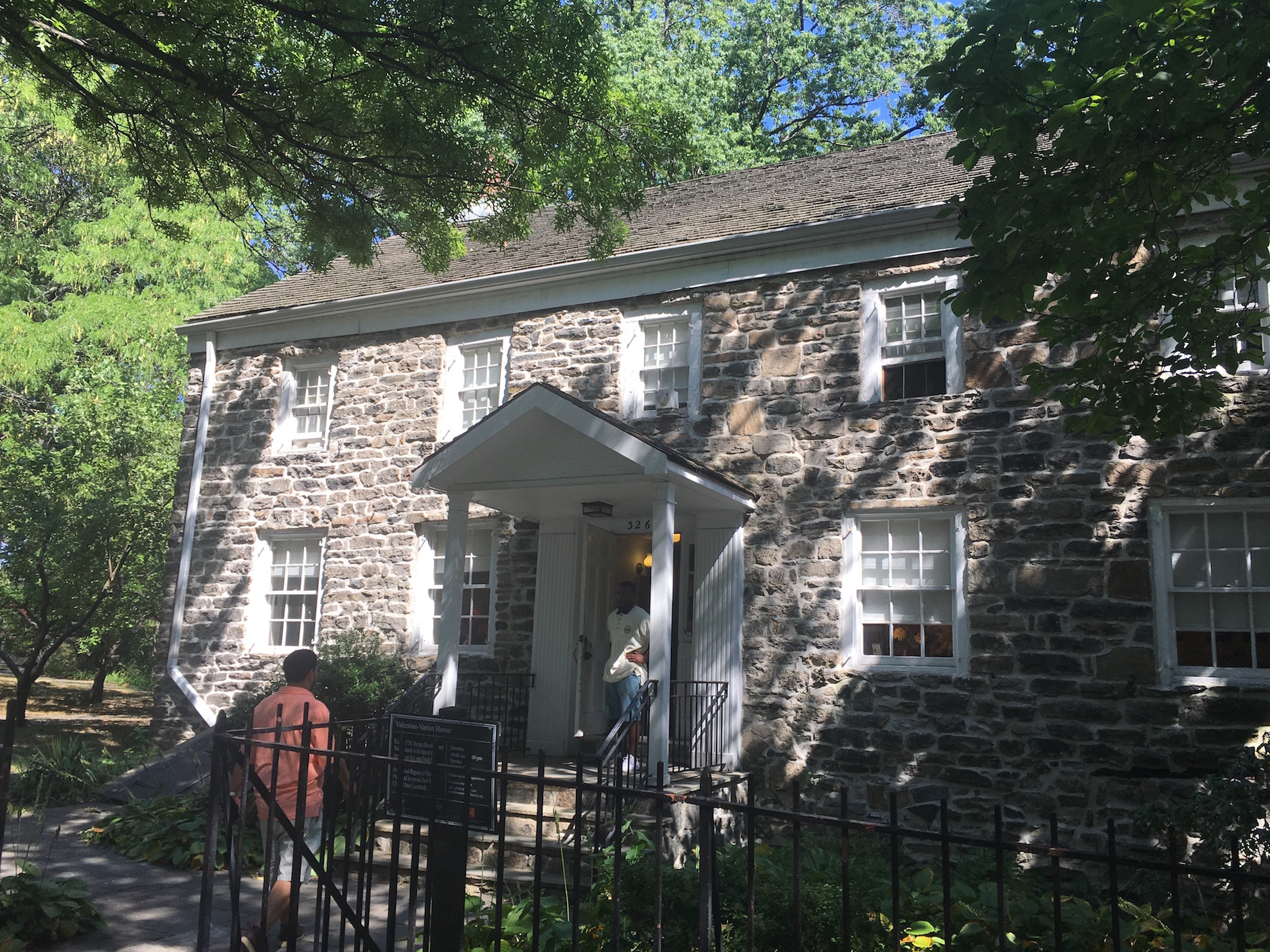
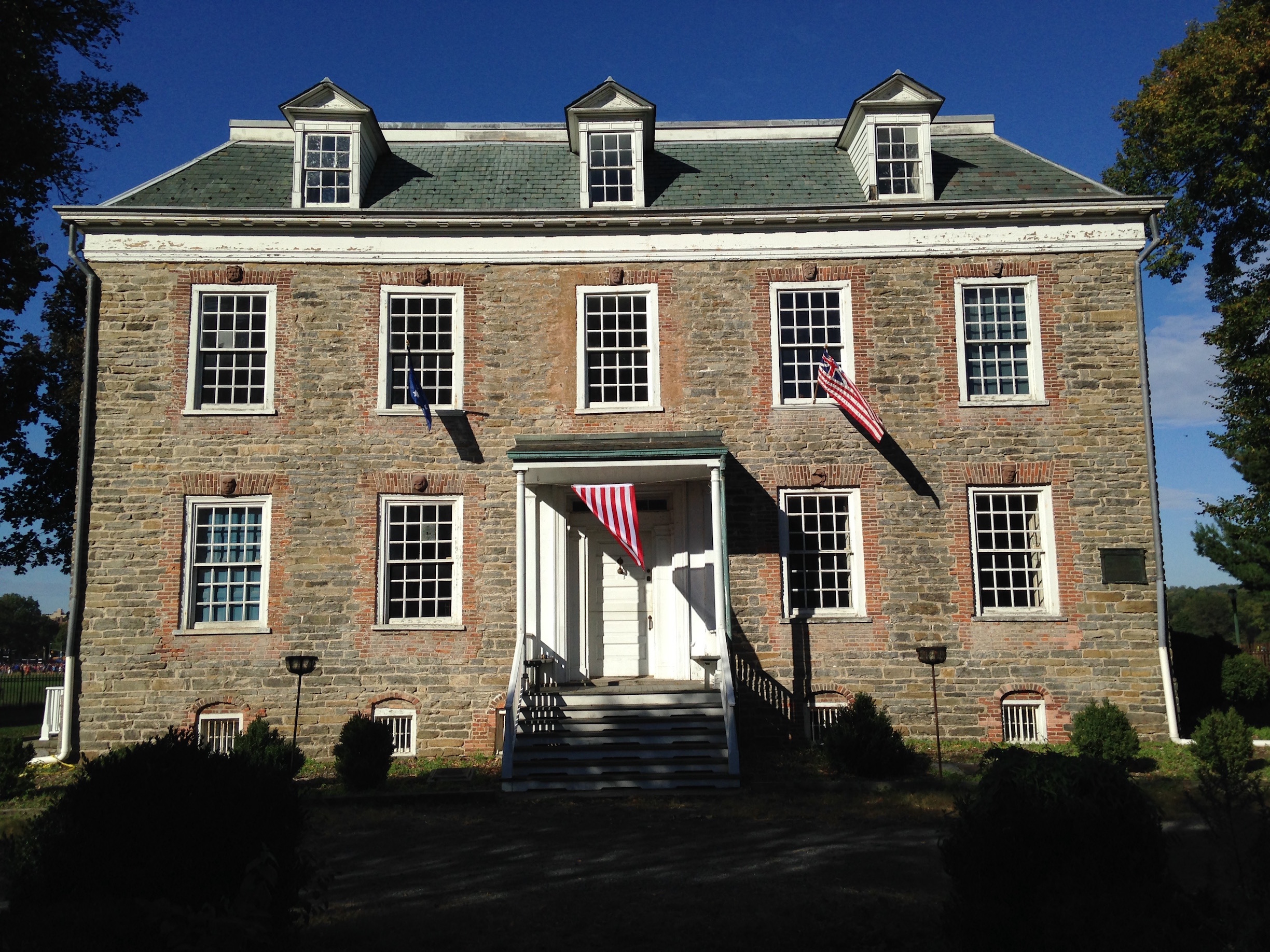
Bronx County Historical Society

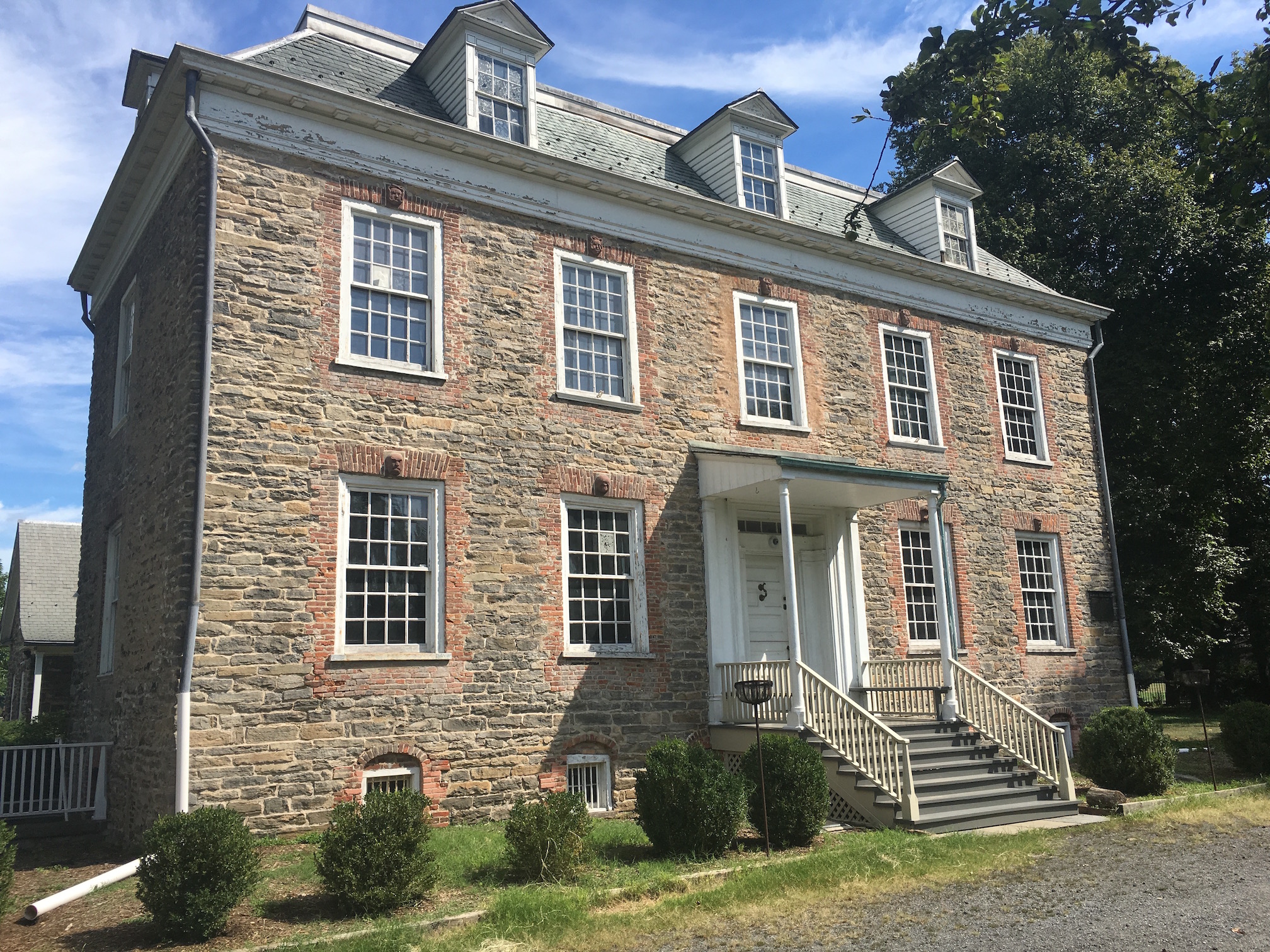
Start an exploration into Bronx history here, a non-profit organization located in the Valentine-Varian House, the oldest farmhouse in the Bronx (from 1758). As is the way with historical homes, this structure once owned by the family of New York mayor Isaac Varian and Bull’s Head Tavern owner Richard Varian was actually moved to its present location in the Williamsbridge Oval back in 1965. Inside you’ll find a complete display of exhibits and examples of colonial life in the Bronx.

LOCATION 3266 Bainbridge Avenue, Norwood, the Bronx
WHY YOU SHOULD VISIT SOON A special exhibition (open until October 9) explores the history of Westchester Town, one of the earliest settlements in the region. We recommend pairing a visit to the home with a trip to New York Botanical Garden, just a short walk down Mosholu Parkway.
HOURS AND ADMISSION Saturday 10AM-4PM; Sunday 1PM-5PM, $5 per adult, $3 for students, children and seniors
HOW TO GET THERE BY SUBWAY — The D train to East 205th Street or the 4 train to Mosholu Parkway
IMG_3009

Van Cortlandt House Museum

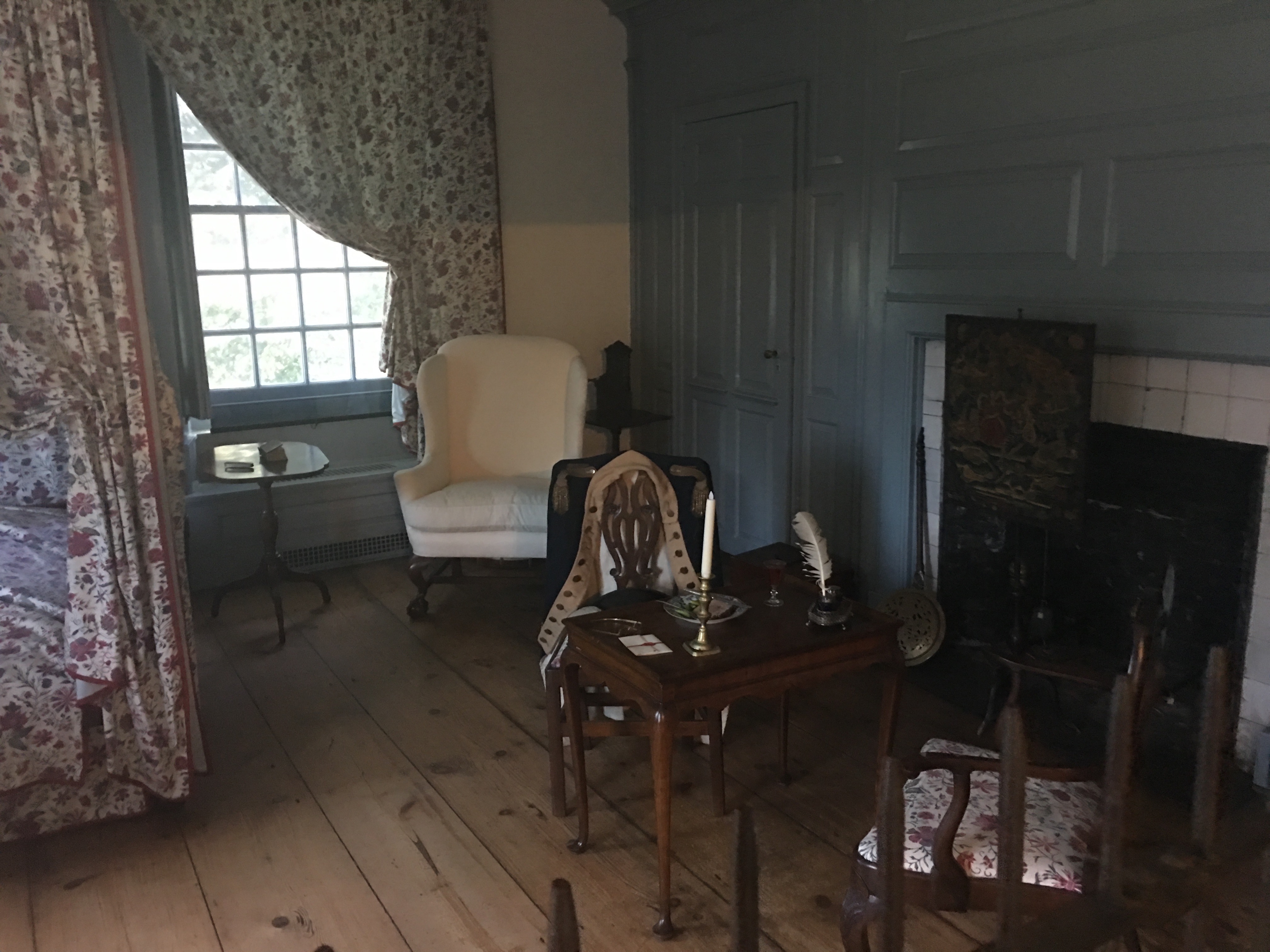
Few places in New York feel as authentically connected to the era of the Revolutionary War as the old 1748 home of the Van Cortlandts, sitting within the family’s former estate in the park named after them. Depending on the time you get there — call ahead just to be sure they’re open — you’ll take a guided tour (perhaps even with a costumed guide) or have the opportunity to explore the house yourself.

LOCATION 6036 Broadway, Van Cortlandt Park, the Bronx
WHY YOU SHOULD VISIT SOON The park is popular with joggers and sports fans, so you may want to join in the fun after a visit. Plan a trip here on the same day you go to Wave Hill.
HOURS AND ADMISSION Tuesday-Friday 10AM-4PM; Saturday and Sunday 11AM-4PM, $5 per adult, $3 for students, children and seniors, free on Wednesdays
HOW TO GET THERE BY SUBWAY — The 1 train to the last stop West 242nd Street
IMG_0021

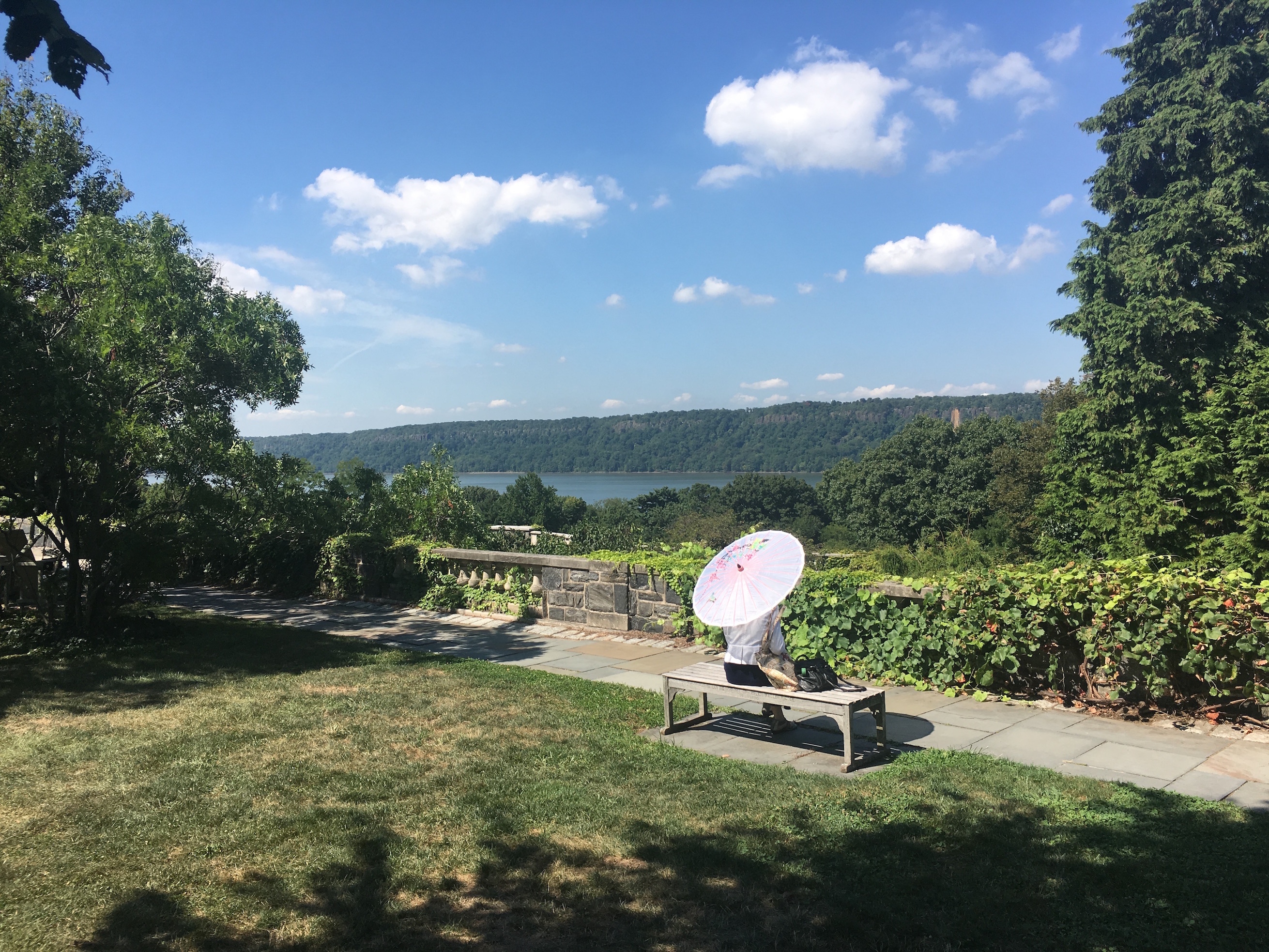
Wave Hill

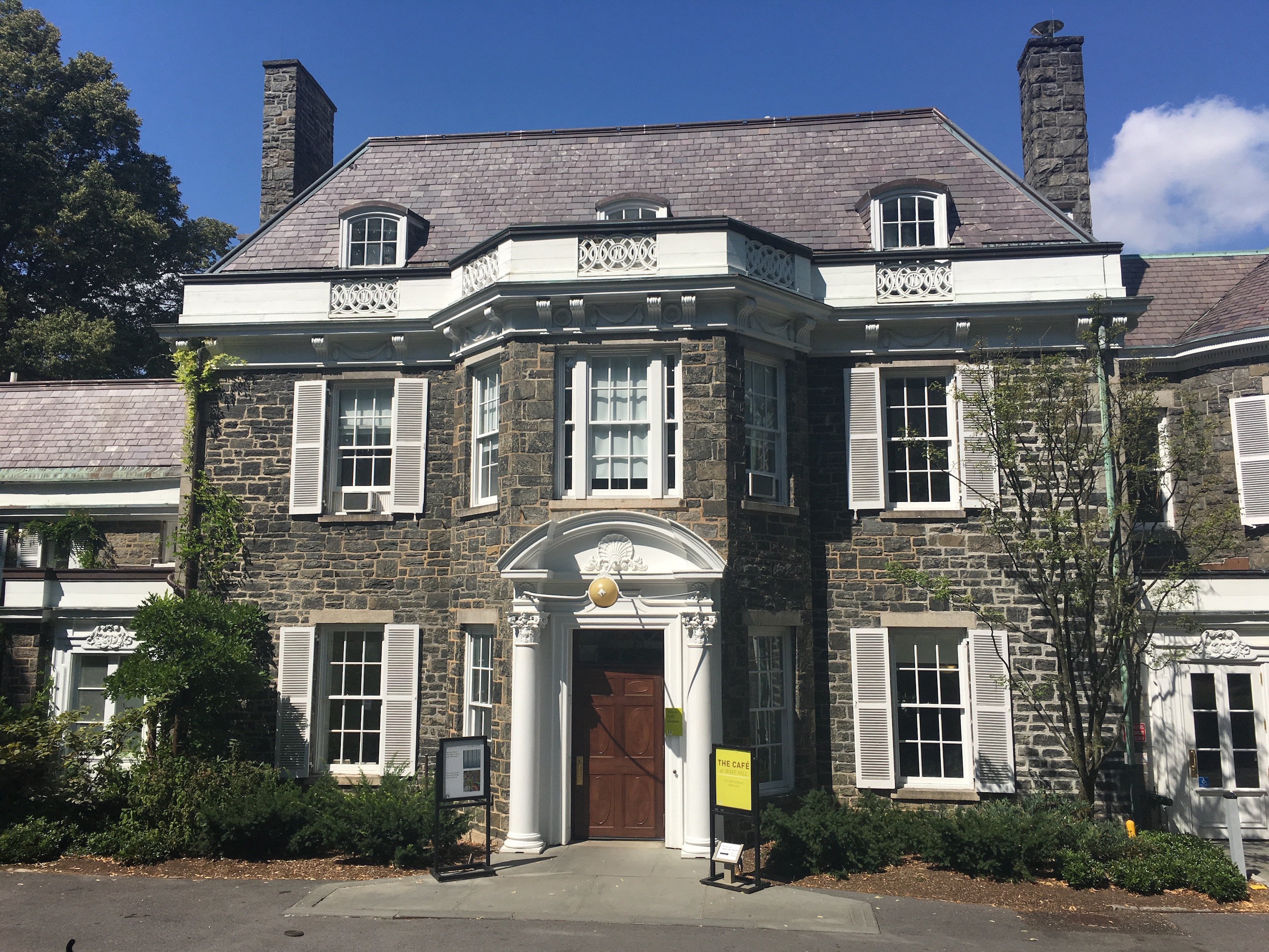
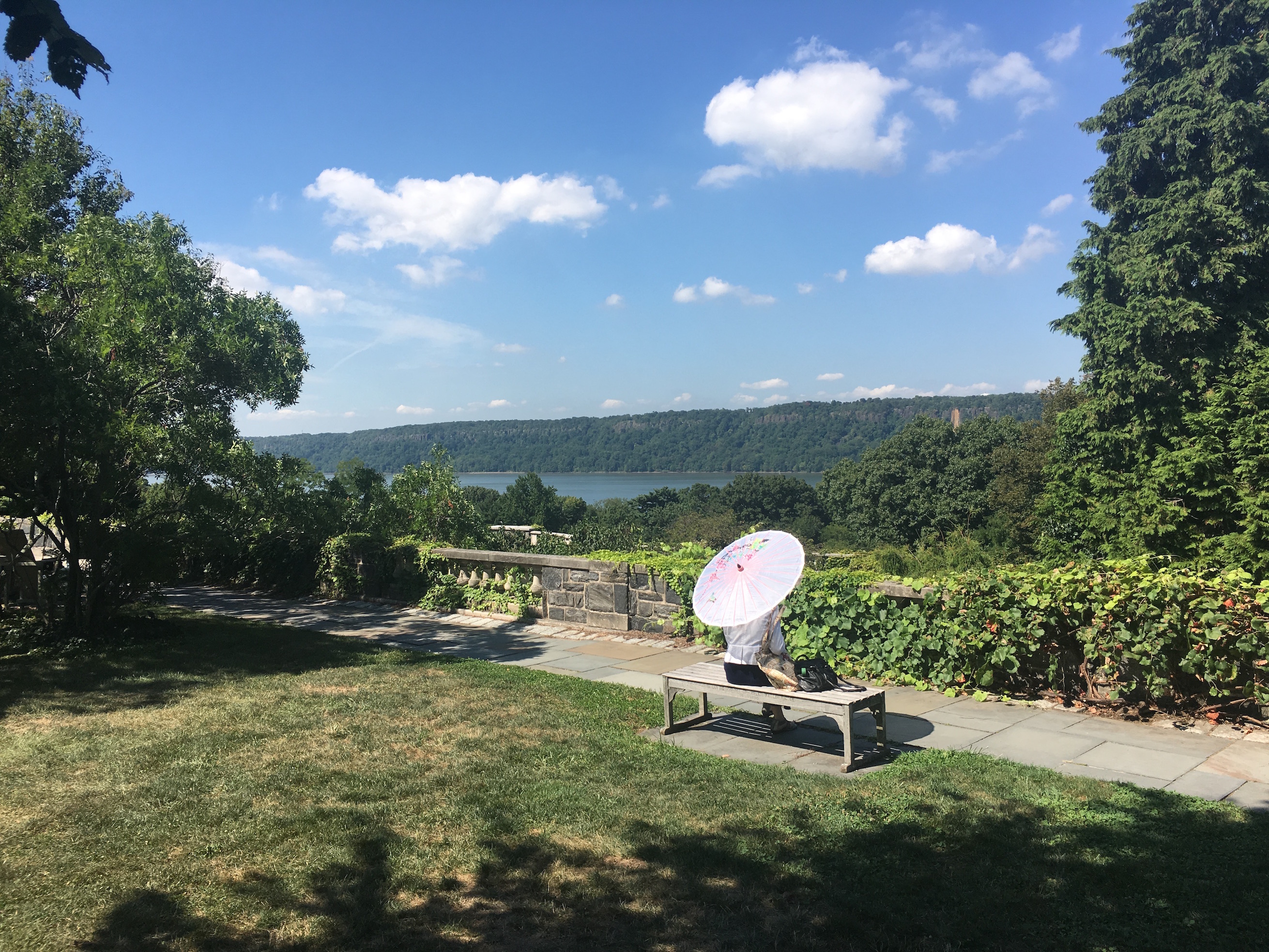
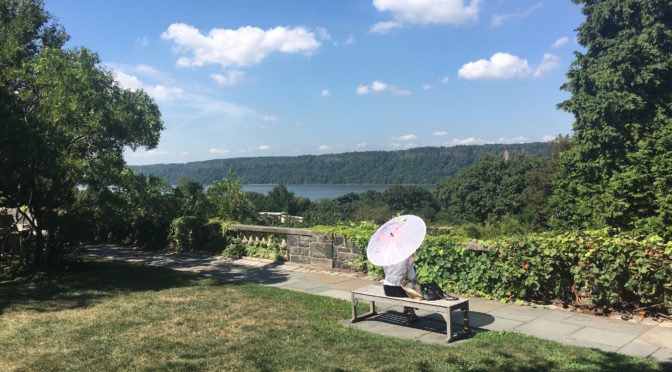
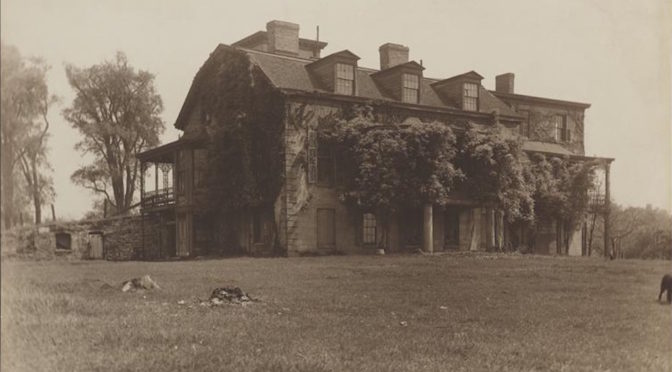
This is your home now! Well you can at least fantasize that this sumptuous 1843 mansion — and its 1927 companion Glyndor — is yours as you stroll the property, looking out at the splendid view of the Hudson River and the Palisades. The feeling of calm and isolation  you get from an afternoon here is almost impossible to find in the five boroughs.

LOCATION 649 W 249th St, Riverdale, the Bronx
WHY YOU SHOULD VISIT SOON They encourage you to take your shoes off and walk in the grass. The already-gorgeous surroundings become even more extraordinary starting in the early fall. Perfect day-trip with the Van Cortlandt House Museum (see above)
HOURS AND ADMISSION Tuesday-Sunday 9AM-5:30PM; $8 per adult, $4 for students and seniors, $2 children +2 (Parking is available)
HOW TO GET THERE BY SUBWAY — The 1 train to the last stop West 242nd Street. A free Wave Hill shuttle van meets passengers on the west side of Broadway in front of Burger King (!) at 10 minutes past the hour, from 9:10am to 4:10pm. The shuttle van returns visitors to Broadway in front of Burger King, departing Wave Hill’s front gate on the hour, from 10am until 5pm. (You can also get here via Metro-North Railroad. See website for more information.)
IMG_9961

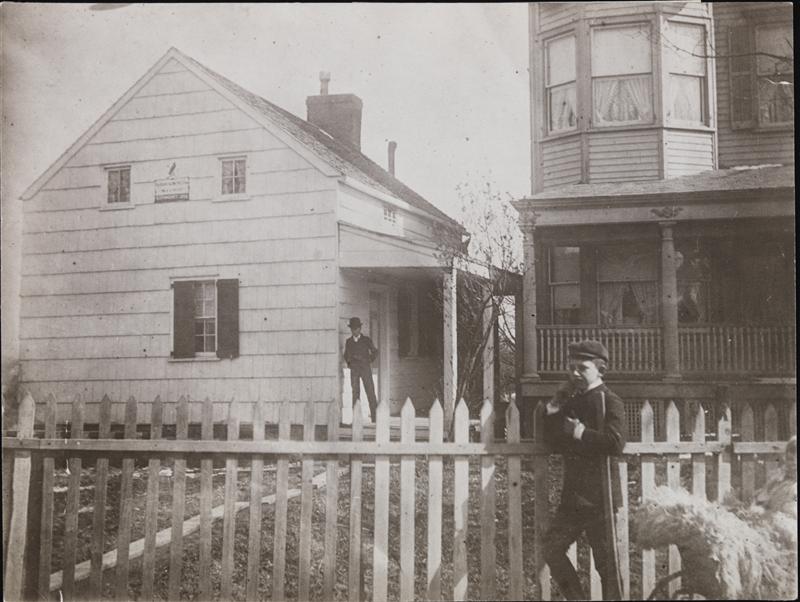
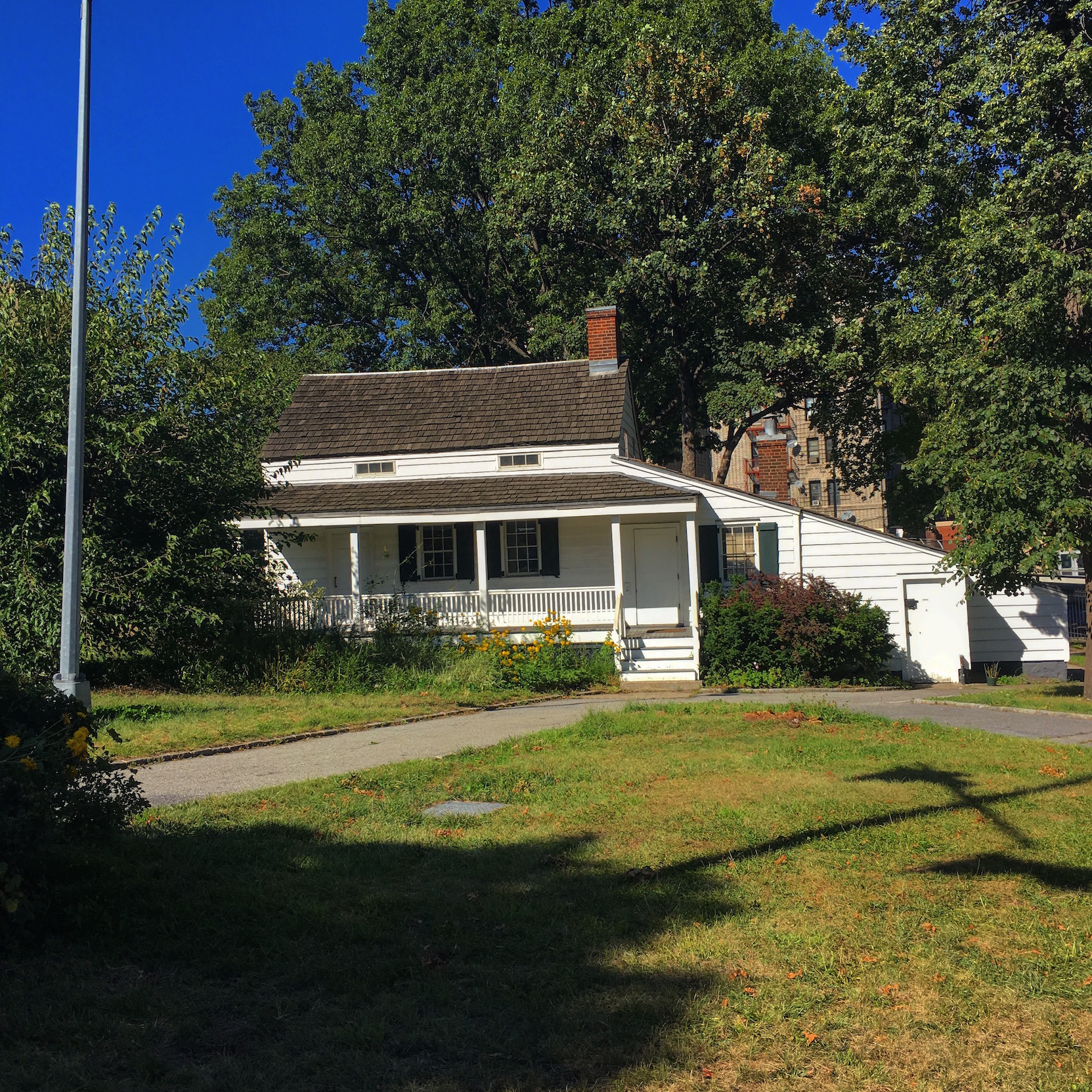
Edgar Allan Poe Cottage

This remains one of the strangest literary landmarks in New York City. Positioned in charming Poe Park, right off the Grand Concourse, the cottage has lost all of its original context but none of its allure. Standing on the porch, the more creative among you may be able to close your eyes and imagine the dark, sullen worlds the poet was able to conjure from here. (A few of his most famous poems were written at the cottage, and the short story “Landor’s Cottage” is believed to be heavily inspired by this place.)

LOCATION 2640 Grand Concourse, Fordham Manor, the Bronx
WHY YOU SHOULD VISIT SOON Fall is always the best time experience anything Poe-related.  You’re also a short walk to the culinary delights of Arthur Avenue.
HOURS AND ADMISSION Tuesday-Friday 10AM-3PM; Saturday and 10AM-4PM, Sunday 1PM-5PM, $5 per adult, $3 for students, children and seniors
HOW TO GET THERE BY SUBWAY — The D train to Kingsbridge Road lets you off right at the park, however the 4 train to Kingsbridge Road will also get you there too.
IMG_0046

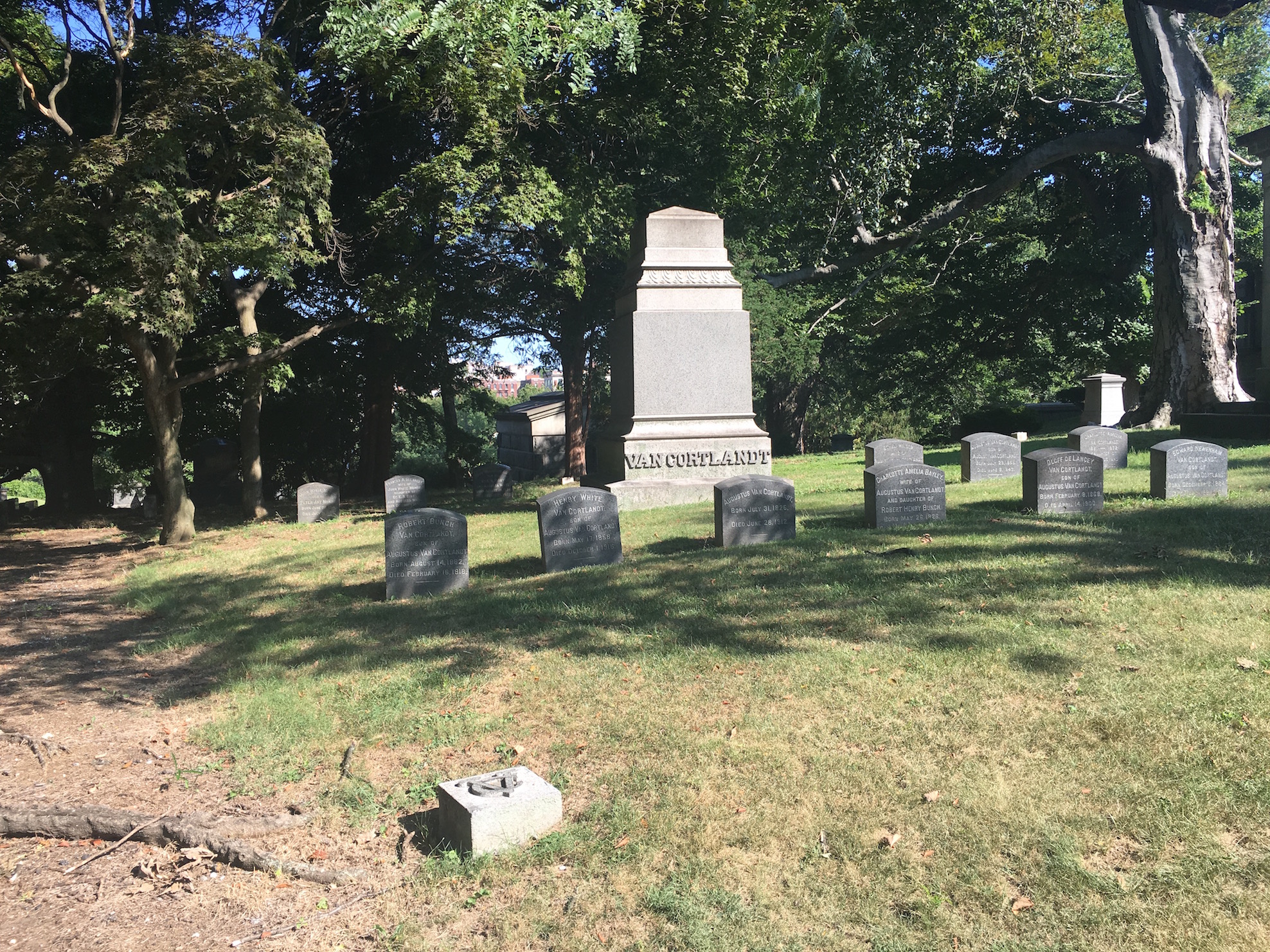
Woodlawn Cemetery

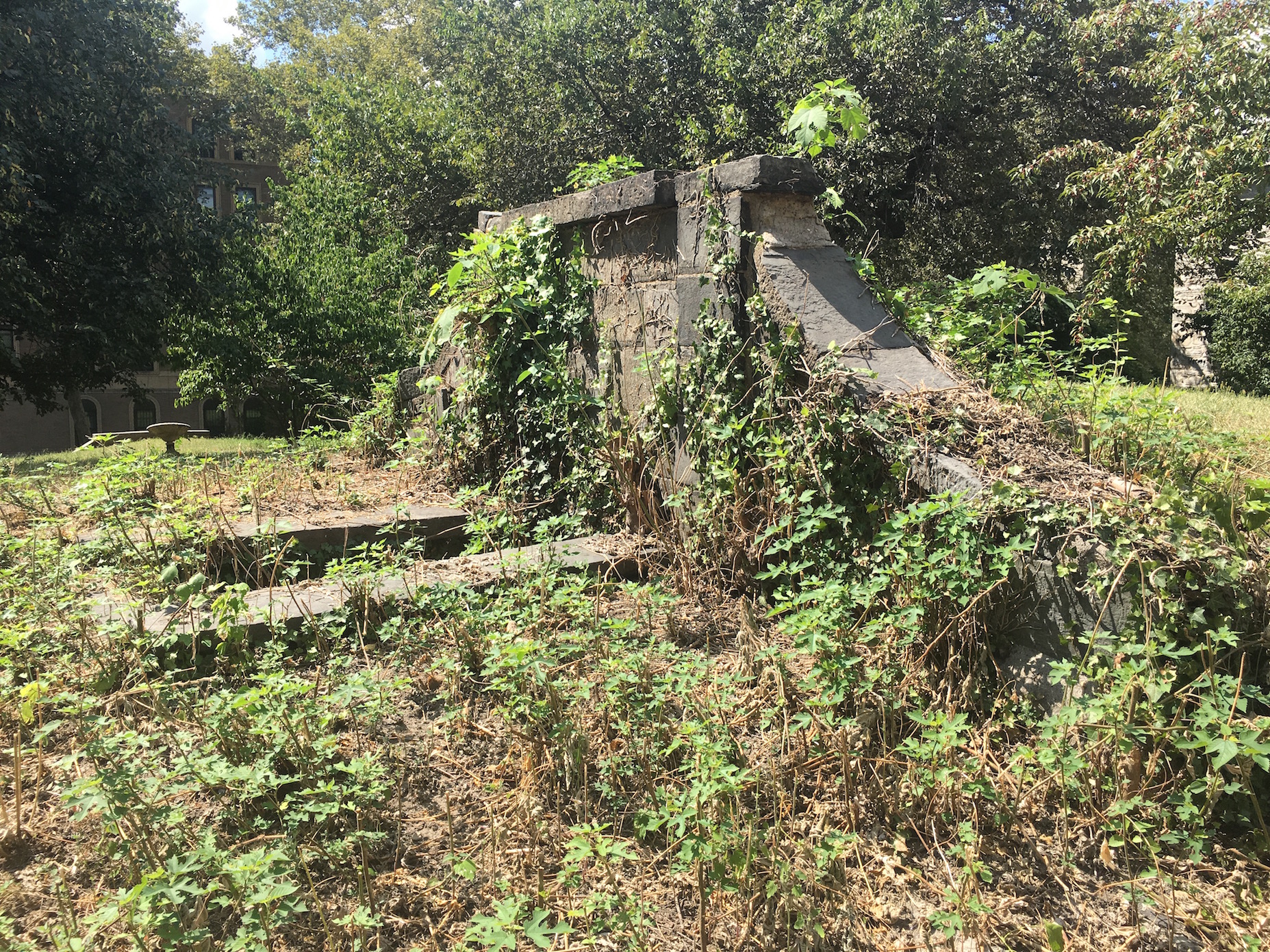
Sometimes you learn more about the great figures from the past by seeing how they’ve chosen to spend eternity. Woodlawn Cemetery, which opened in 1863 and was specifically notable for its access to the new railroad, is the final resting place of moguls, robber barons, politicians, socialites and musicians. A stroll along Woodlawn’s paths will tell you more about human vanity and the urge to preserve personal legacy than any college psych class.  (Above: the plot for members of the Van Cortlandt family — THE Van Cortlandt family — is relatively modest.)

LOCATION  517 E 233rd St, Woodlawn Heights, the Bronx
WHY YOU SHOULD VISIT SOON There are an abundance of intriguing public programs planned for the next couple months. Our favorites — a concert by the Bardekova Quintet on September 25 and a special walking tour on October 9 called “Shuffle Along and the Stories of Black Broadway.”  Visit their website for more information.
HOURS AND ADMISSION Monday-Sunday 8:30AM-4:30PM, free, no bicycles
HOW TO GET THERE BY SUBWAY – The 4 train to Woodlawn Station or the 2 or 5 trains to E 233rd Street
IMG_0092

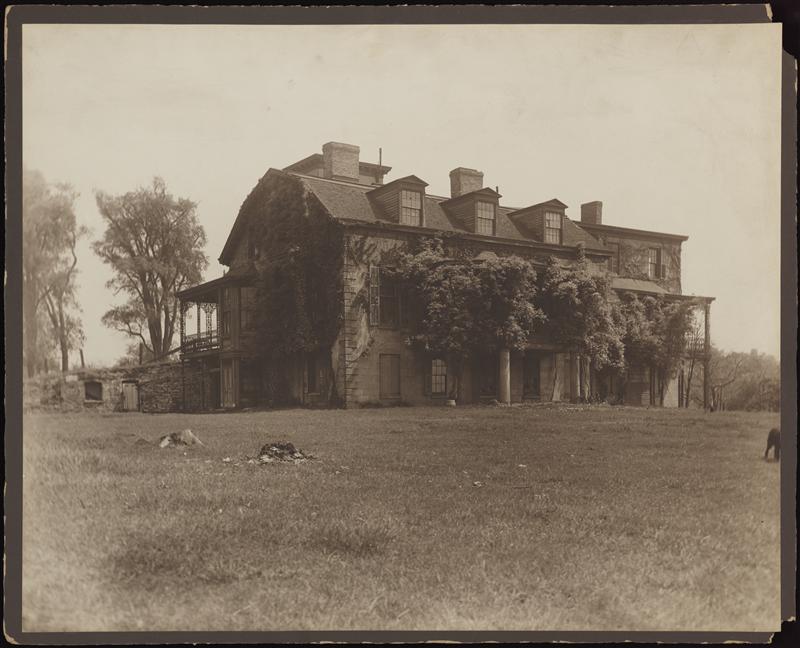
Bartow-Pell Mansion Museum

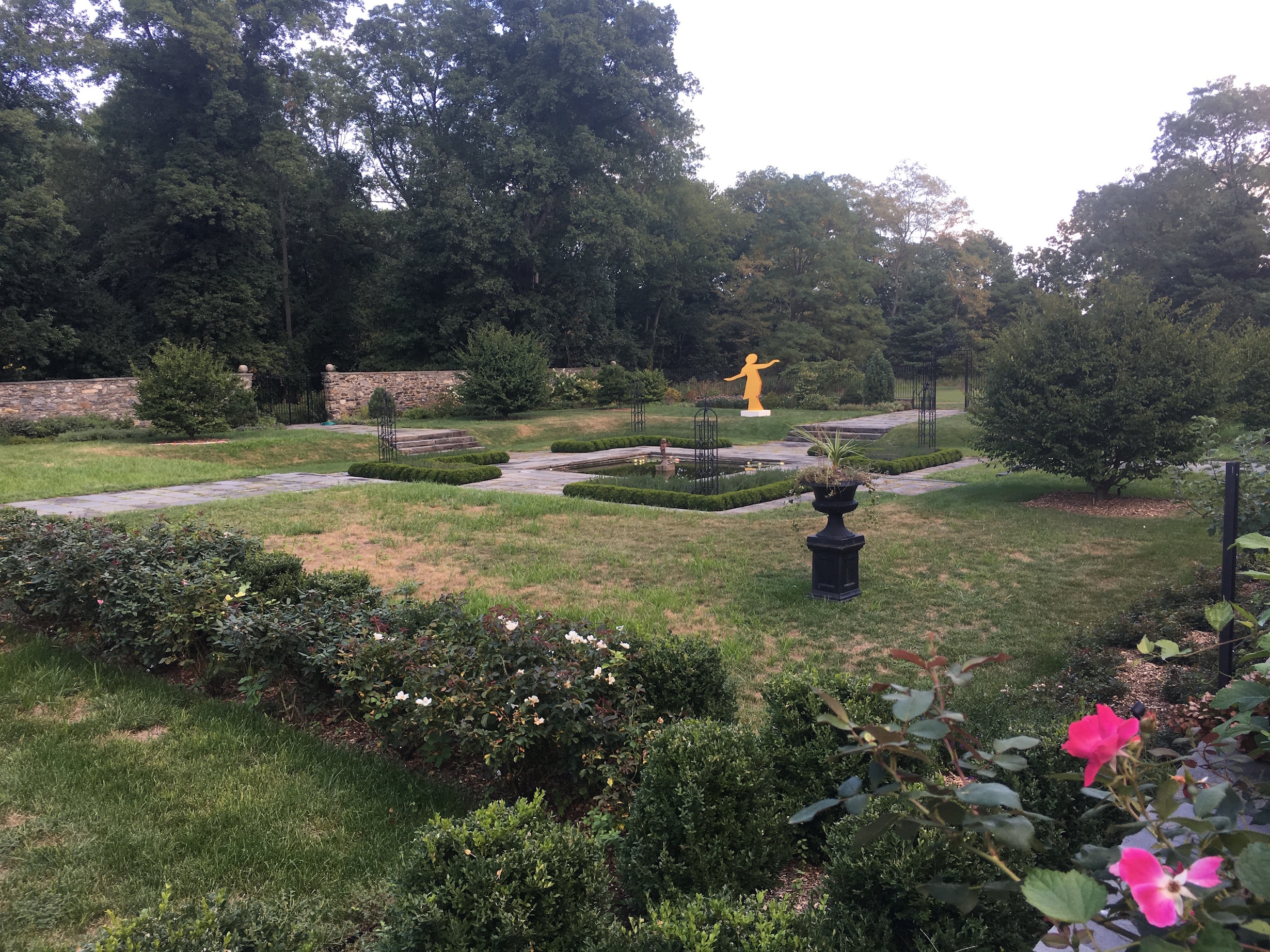
The Bartow-Pell Mansion, tracing its lineage back to the original Pell family, may not have the breathtaking view of the Palisades that Wave Hill has, but it has something else equally lush — an extraordinary formal garden in the back. This lovely and occasionally surreal feature has only been part of the house since 1916. It makes a perfect addition to the family home, originally constructed between 1836 and 1842.

LOCATION  895 Shore Road North, Pelham Bay Park, the Bronx
WHY YOU SHOULD VISIT SOON This is the 100th anniversary of that garden, and a new exhibit celebrating its centennial pairs the formal beauty with strange and unusual pieces of modern art. If you go this weekend, you’ll be able to pair your experience here with a trip to Orchard Beach, which closes for the season on September 11.
HOURS AND ADMISSION The house – Wednesday, Saturday-Sunday Noon-4PM, $5 adults, $3 seniors and students, free for kids under 6. The gardens — open daily, free, from 8:30AM to dusk.
HOW TO GET THERE BY SUBWAY – The 6 train to the Pelham Bay Park station, then transfer to a #45 bus. More information here.
 

IMG_4519

City Island Nautical Museum

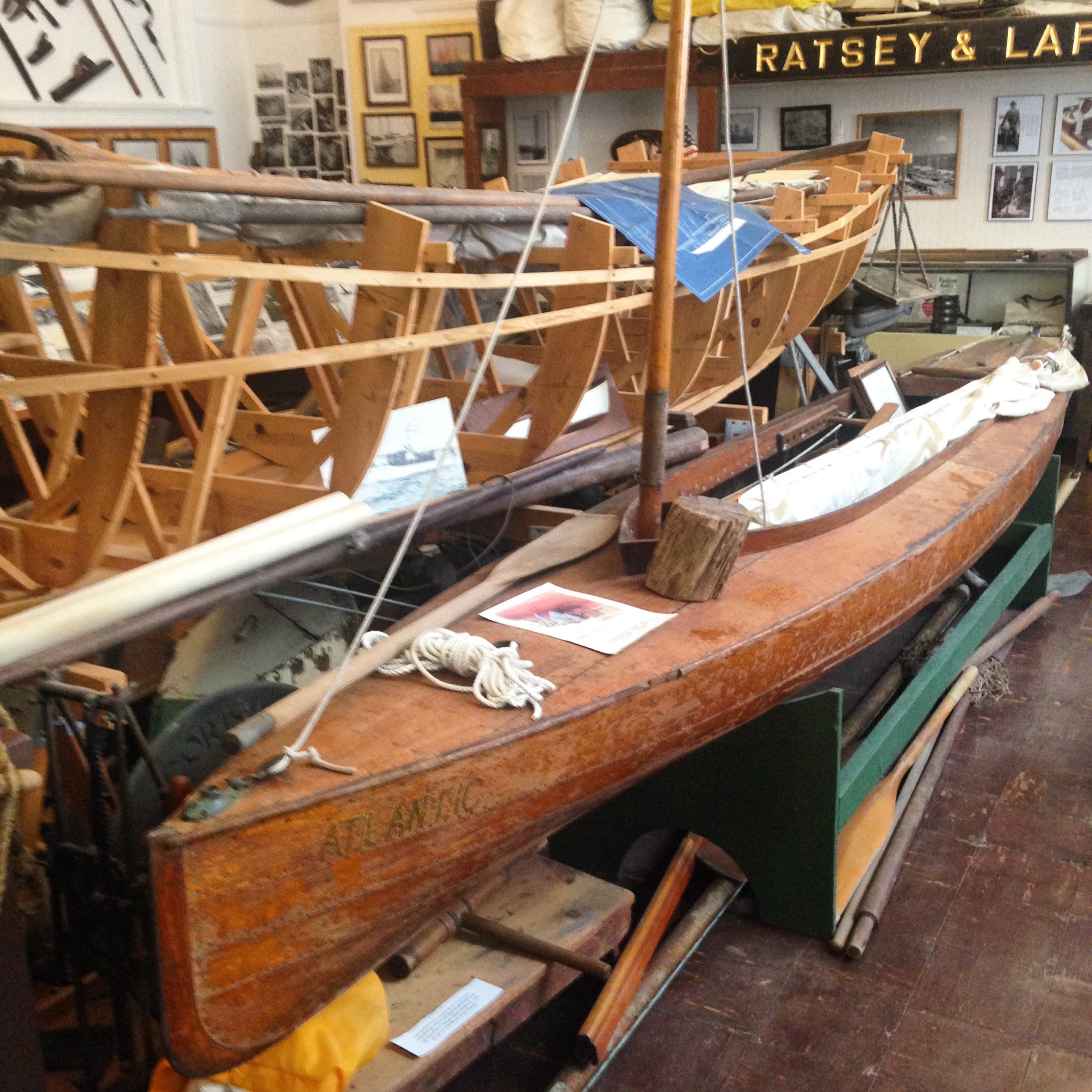
This lovely and strange little museum is tucked away off the main road and feels like a old ship in a bottle, dusty and preserved. If you can time your visit to City Island to coincide with its opening hours, it’s well worth a visit. You may think you’re in a small town in Maine! (But then again, the whole island often feels like that.)

LOCATION  190 Fordham Street, City Island, the Bronx
WHY YOU SHOULD VISIT SOON If you’re clinging on to the last scraps of summer, then a visit to City Island — and its delicious eateries on the southern point — will provide you with the inspiration you need.
HOURS AND ADMISSION Saturday and Sundays only, from 1PM to 5PM. Also by appointment.
HOW TO GET THERE BY SUBWAY – The 6 train to the Pelham Bay Park station, then transfer to a #29 bus to City Island.  More information here.
 

Categories
Bronx History Podcasts

Bronx Trilogy: The Bronx Is Born — Before It Was A Borough 1638-1874

PODCAST A history of the land which would become the Bronx, from the first European settlement to its debut in 1874 as New York’s Annexed District.

The story of the borough of the Bronx is so large, so spectacular, that we had to spread it out over three separate podcasts!

In Part One — The Bronx Is Born — we look at the land that is today’s borough, back when it was a part of Westchester County, a natural expanse of heights, rivers and forests occasionally interrupted by farm-estates and modest villages. Settlers during the Dutch era faced grave turmoil; those that came afterwards managed to tame the land with varying results. Speculators were everyone; City Island was born from the promise of a relationship with the city down south.

During the Revolutionary War, prominent families were faced with a dire choice — stay with the English or side with George Washington’s Continental Army? One prominent family would help shape the fate of the young nation and leave their name forever attached to one of the Bronx’s oldest neighborhoods. Sadly that family’s legacy is under-appreciated today.

By the 1840s, Westchester County was at last connected to New York via a new railroad line. It was a prosperous decade with the development of the area’s first college, a row of elegant homes and some of its very first ‘depot towns.’ Two decades later, the future borough would even cater to the dead — both the forgotten (at Hart Island) and the wealthy (Woodlawn Cemetery).

The year 1874 would mark a new chapter for a few quiet towns and begin the process of turning this area into the borough known as the Bronx.

FEATURING: Many places in the Bronx that you can visit today and experience this early history up close, including Wave Hill, Pelham Bay Park, Woodlawn Cemetery, City Island and more.


The Bowery Boys: New York City History podcast is brought to you …. by you!

We are now producing a new Bowery Boys podcast every two weeks. We’re also looking to improve the show in other ways and expand in other ways as well — through publishing, social media, live events and other forms of media. But we can only do this with your help!

We are now a member of Patreon, a patronage platform where you can support your favorite content creators for as little as a $1 a month.

Please visit our page on Patreon and watch a short video of us recording the show and talking about our expansion plans. If you’d like to help out, there are five different pledge levels (and with clever names too — Mannahatta, New Amsterdam, Five Points, Gilded Age, Jazz Age and Empire State). Check them out and consider being a sponsor.

We greatly appreciate our listeners and readers and thank you for joining us on this journey so far. And the best is yet to come!


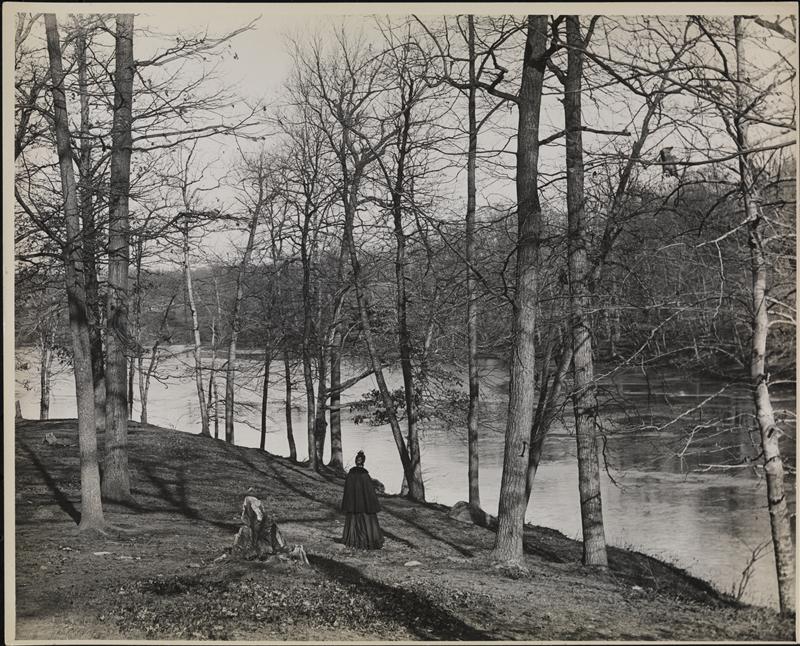
In this 1896 Robert Bracklow photograph, a solitary woman stands by the Bronx River, looking almost completely unchanged from how it would have looked when Jonas Bronck saw it.

MNY16942
Museum of the City of New York

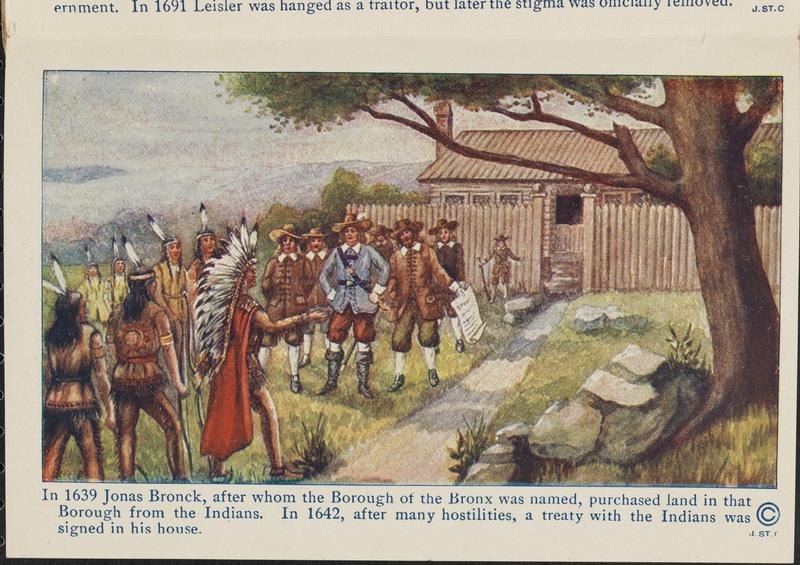
A 1914 illustration recounting the tale of Jonas Bronck:

Museum of the City of New York

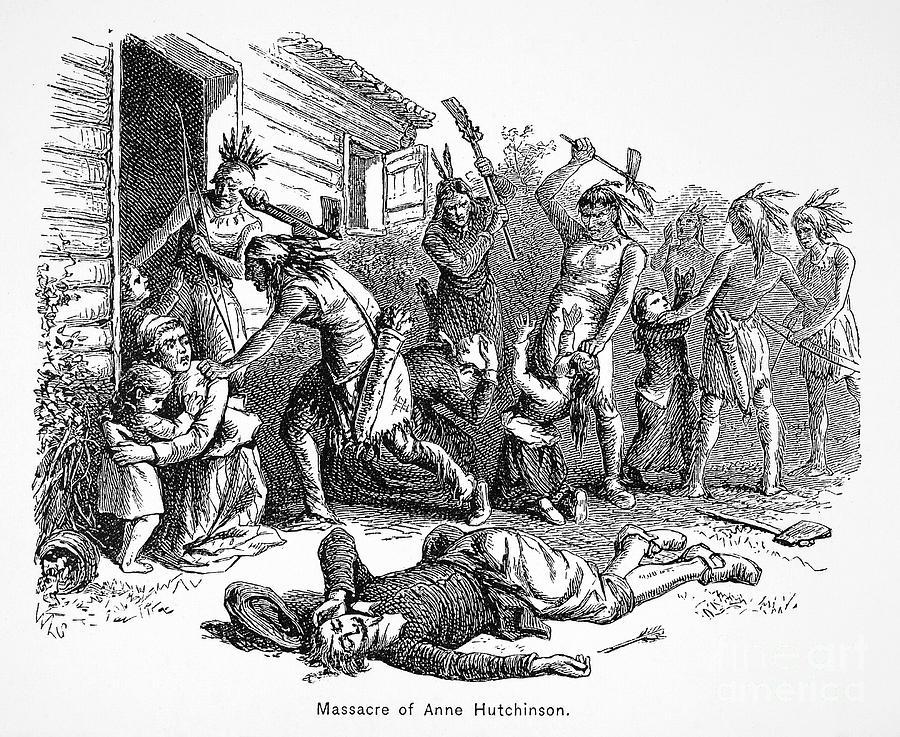
Another book illustration, this one of the massacre of Anne Hutchinson and her family.

NYPL
NYPL

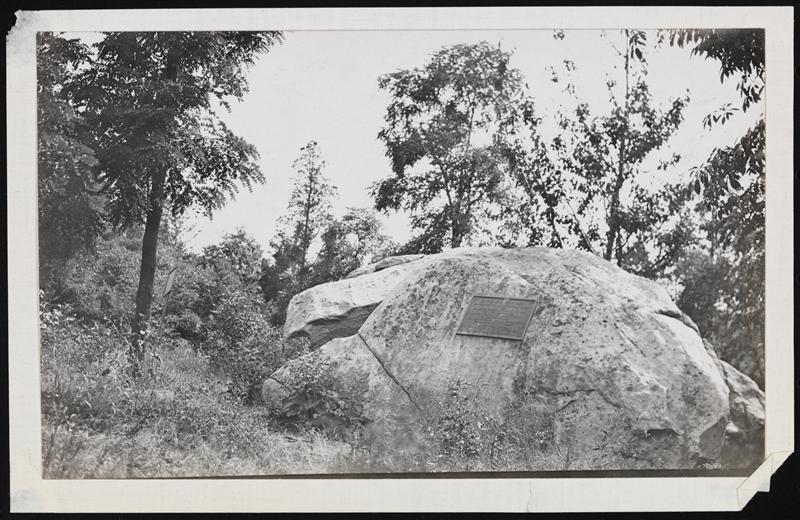
The Split Rock as it appeared in 1910, with a memorial plaque to Anne and her family and no highways anywhere around it. The rock today has no plaque but the impression of one can still be seen.

Courtesy MCNY
Courtesy MCNY

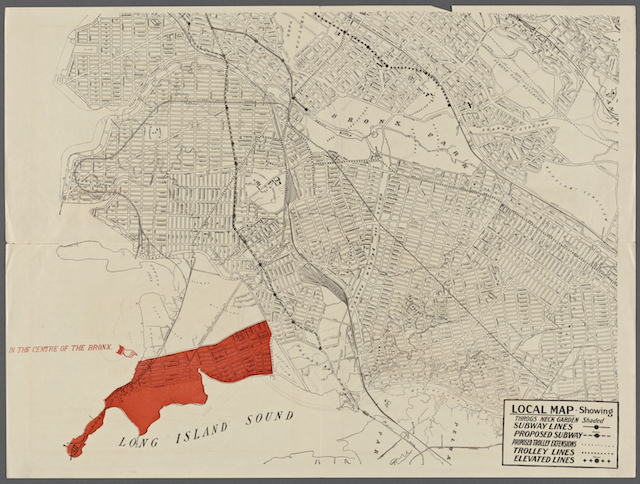
An auction map of the Bronx from 1910, highlighting the area of Throg’s Neck which gets its name from Throckmorton or Throgmorton.

NYPL
NYPL

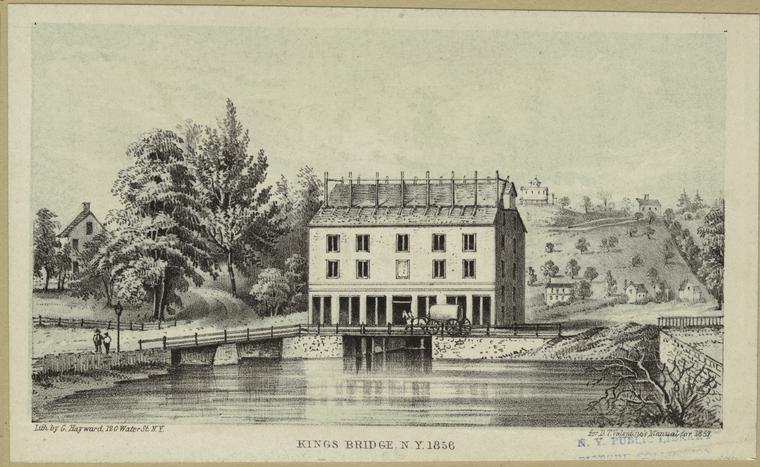
The King’s Bridge from an 1856 illustration.

nypl.digitalcollections.510d47e2-eba4-a3d9-e040-e00a18064a99.001.w
NYPL

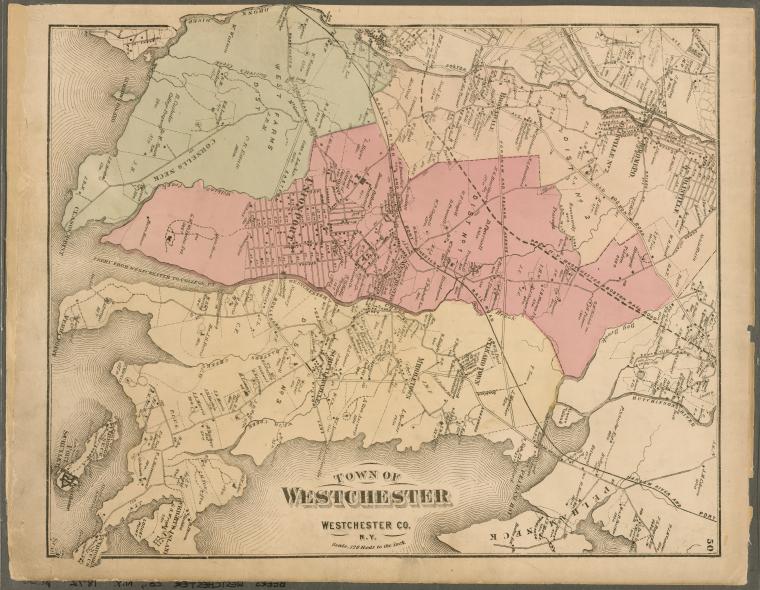
The town of Westchester in the East Bronx, pictured here in 1872. Throg’s Neck is in the lower portion of the map. Today’s neighborhood of Soundview comprises the green portion.

NYPL
NYPL

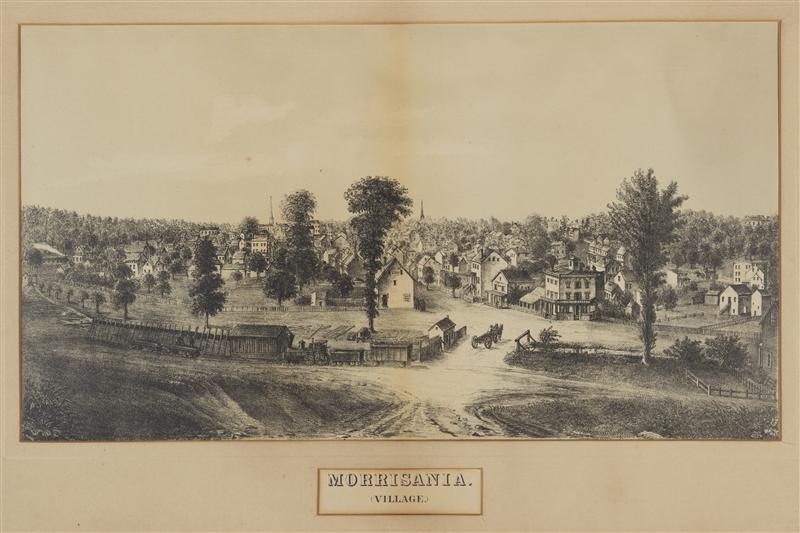
The village of Morrisania, pictured here in 1860, which arose from land owned by the Morrises after the railroad encouraged a row of ‘depot towns.’

MCNY
MCNY

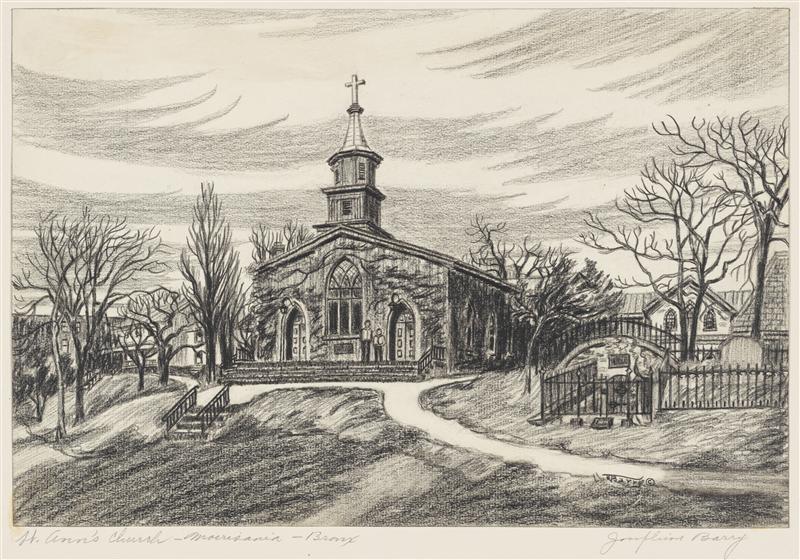
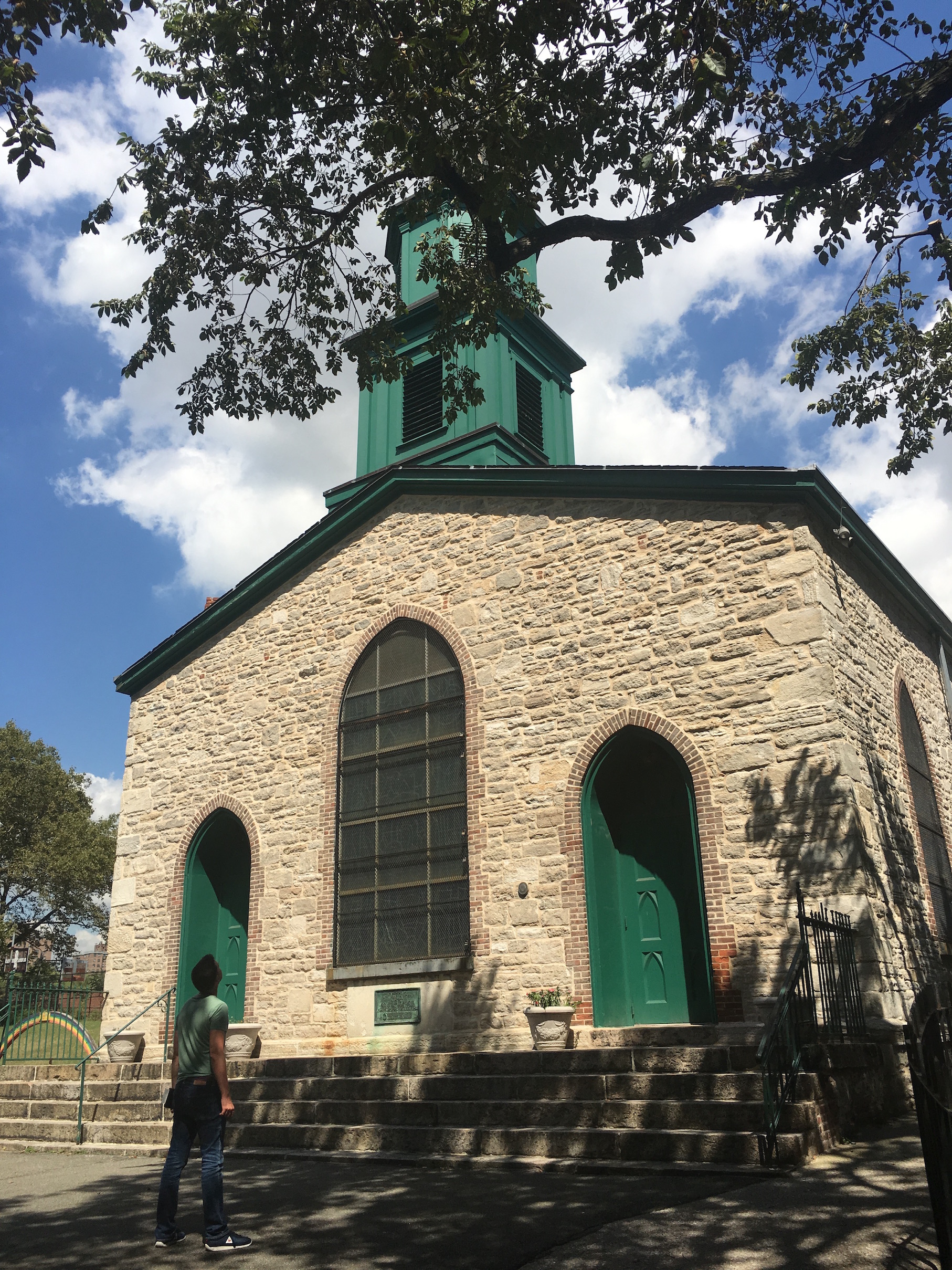
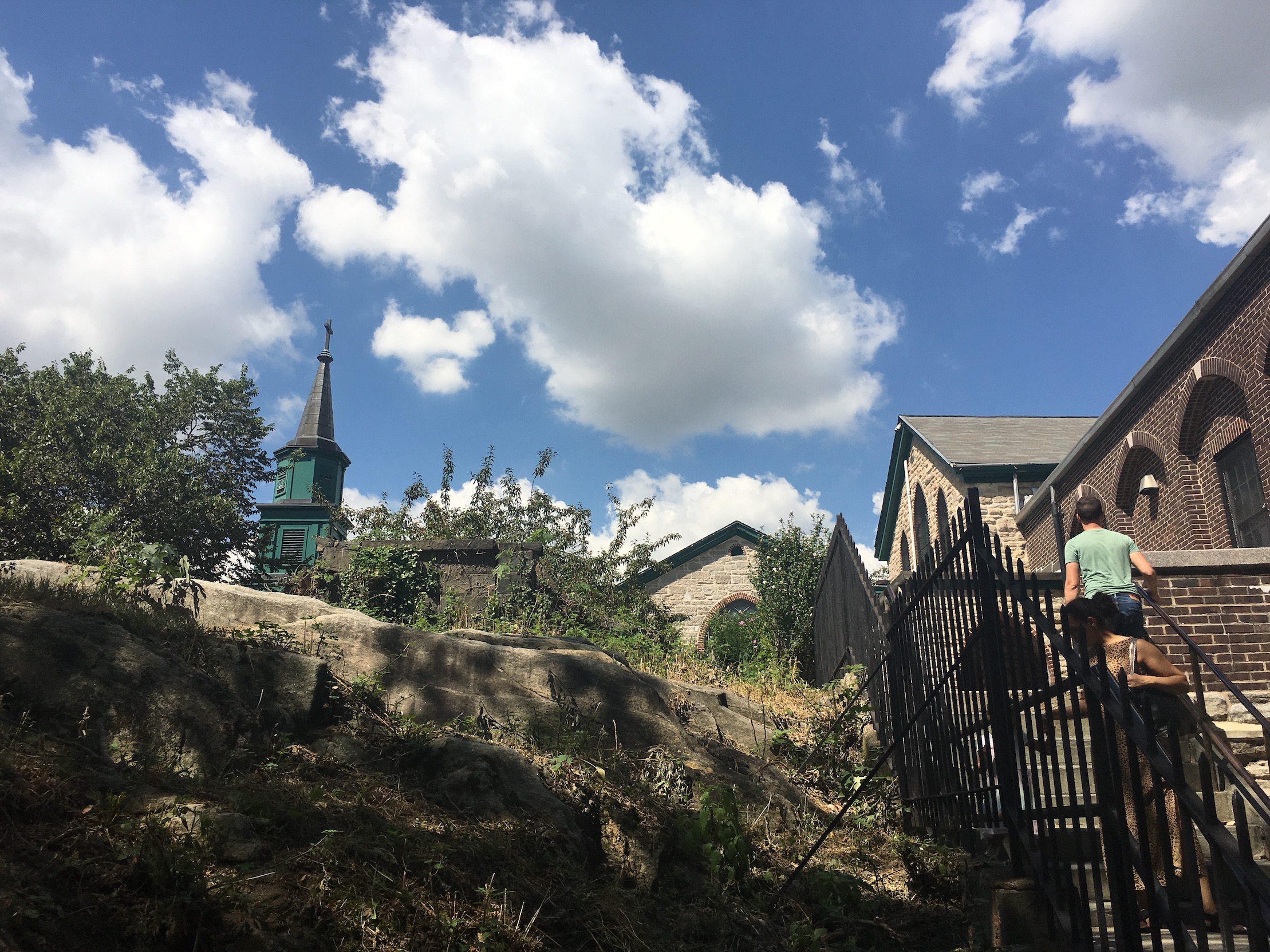
St Ann’s Episcopal Church in Morrisania, where both Lewis and Gouverneur Morris (and Gouverneur’s wife Ann) are buried.

M3Y33813
Courtesy MCNY

A view of St. Ann’s today:

IMG_0079 IMG_0078 IMG_0081

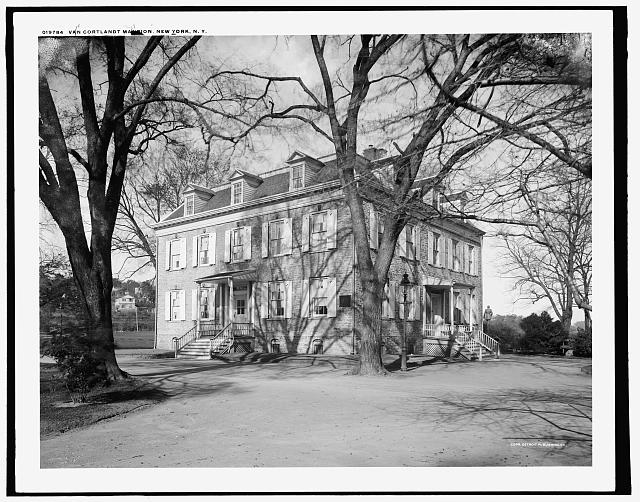
The Van Cortlandt Mansion then (in 1906)…

4a13693r

And today (featuring George Washington’s room):

IMG_0057 IMG_0067

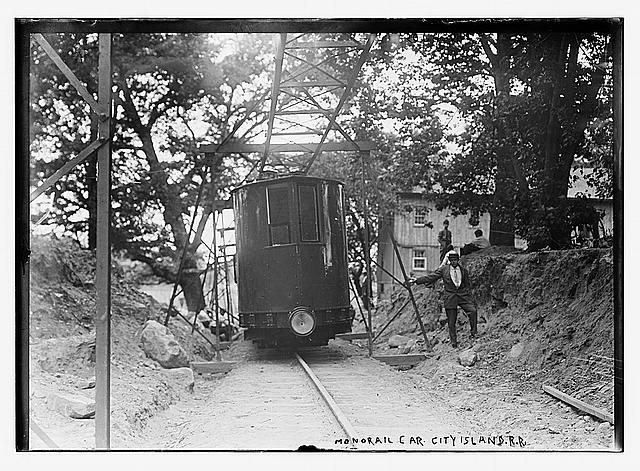
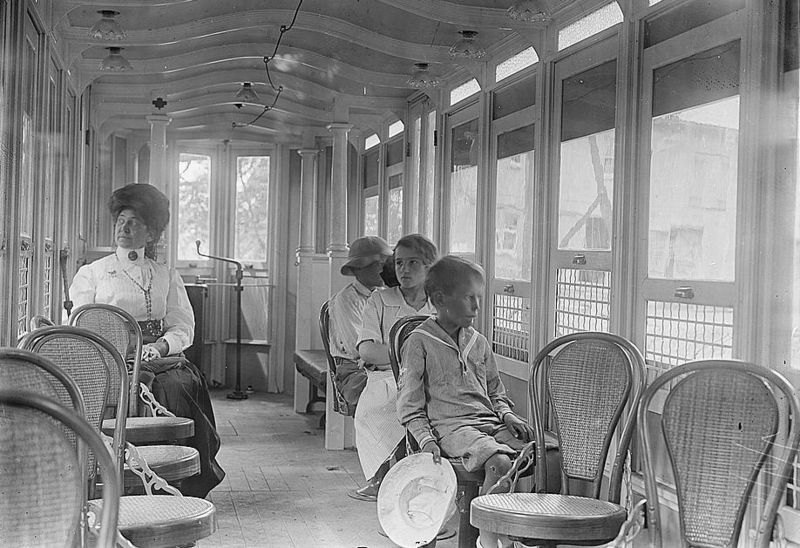
The old City Island monorail from 1910

LOC
LOC

mono

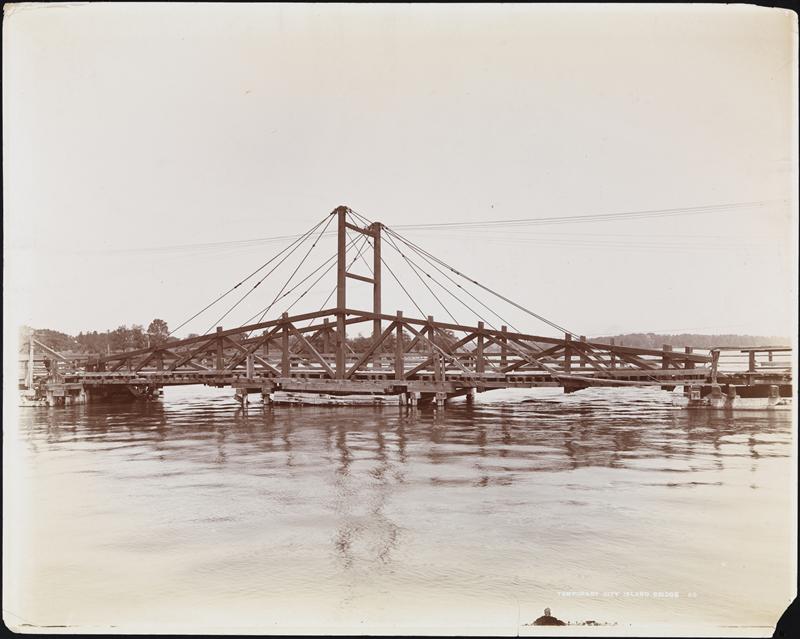
The old City Island Bridge, the only way on or off the island that’s not a boat. That remains true to this day, although the bridge is much sturdier-looking today!

MCNY
MCNY

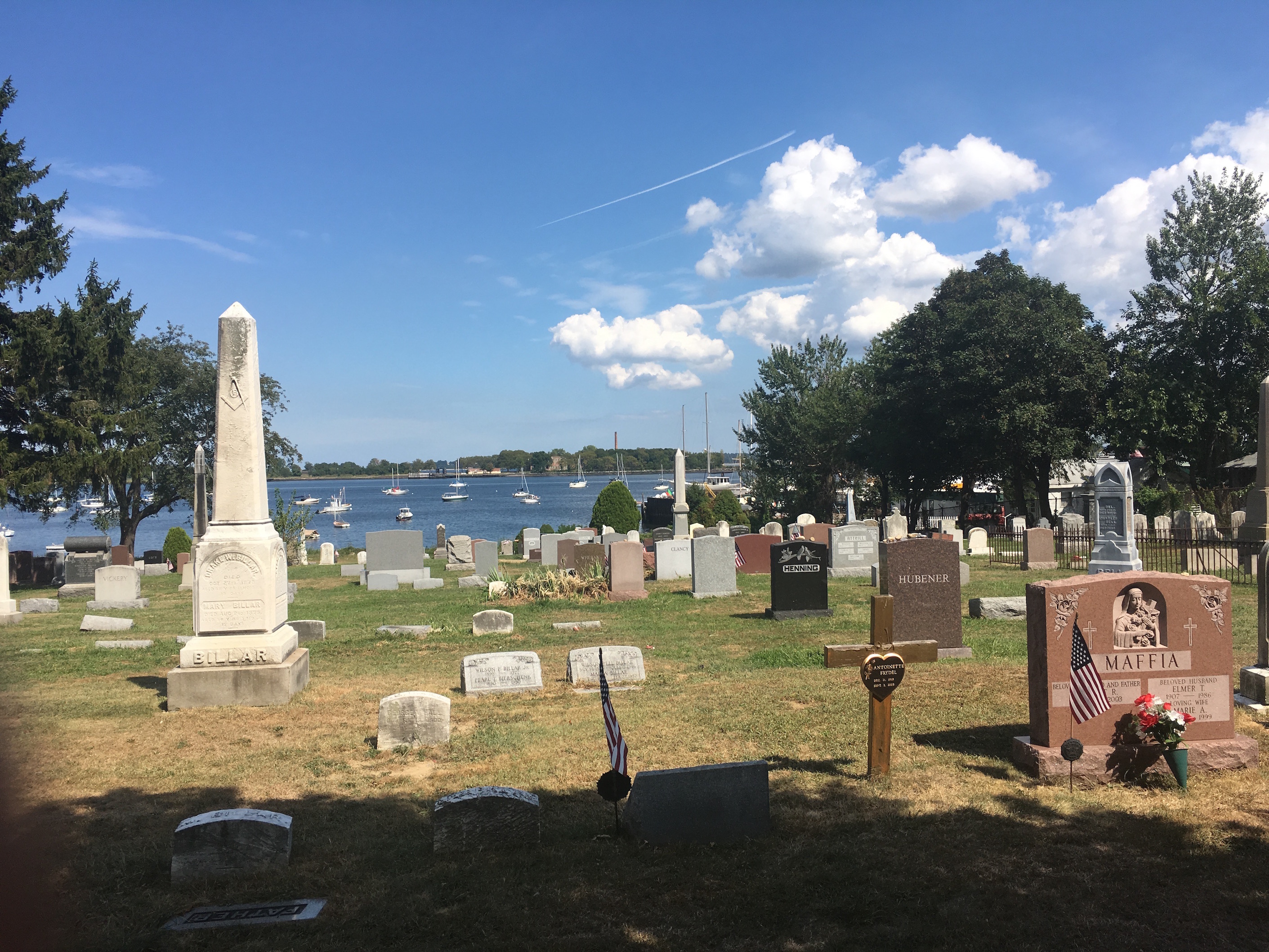
The old City Island Cemetery with Hart Island in the distance.

IMG_0088

Breathtaking Wave Hill and the grounds which provide an unbelievable view of the Hudson River and the Palisades.

IMG_0024 IMG_0021

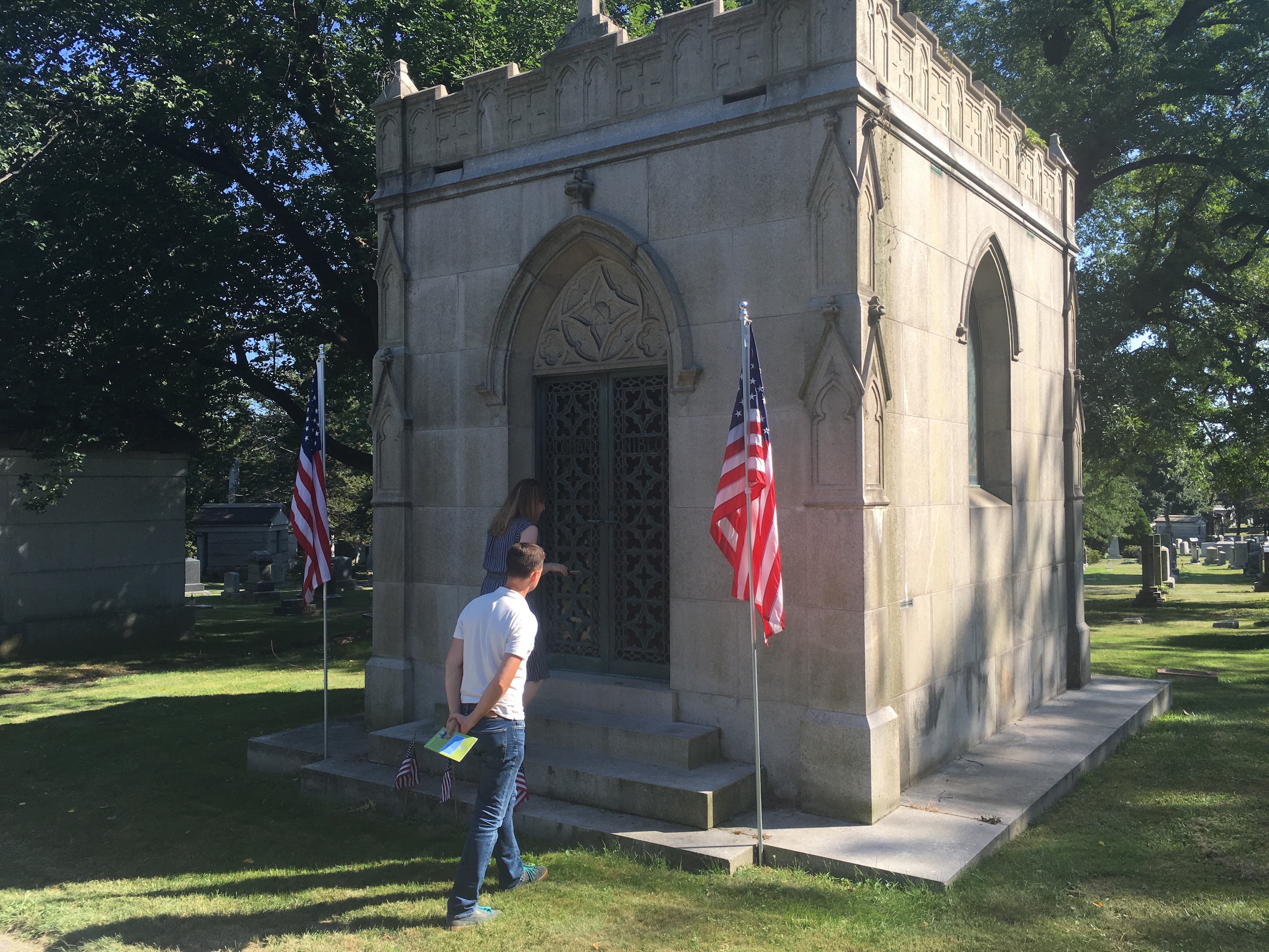
Here’s Tom, getting a peek inside George M Cohan’s mausoleum at Woodlawn Cemetery:

IMG_0039

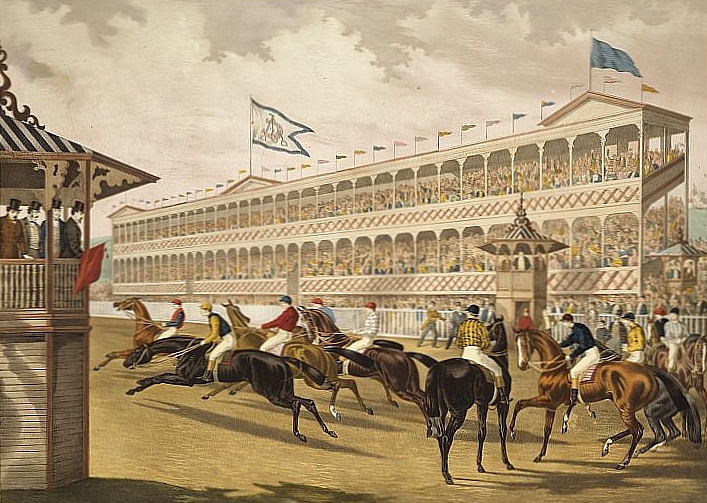
Jerome Park Racetrack where the Belmont Stakes were first run in 1867.

Jerome_Park_Racetrack_1868

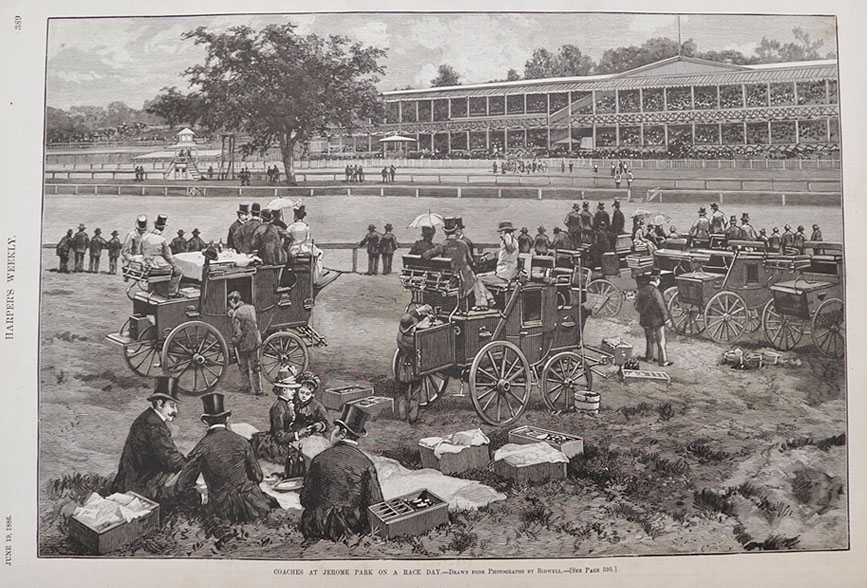
From Harpers Weekly, 1886:

jerome

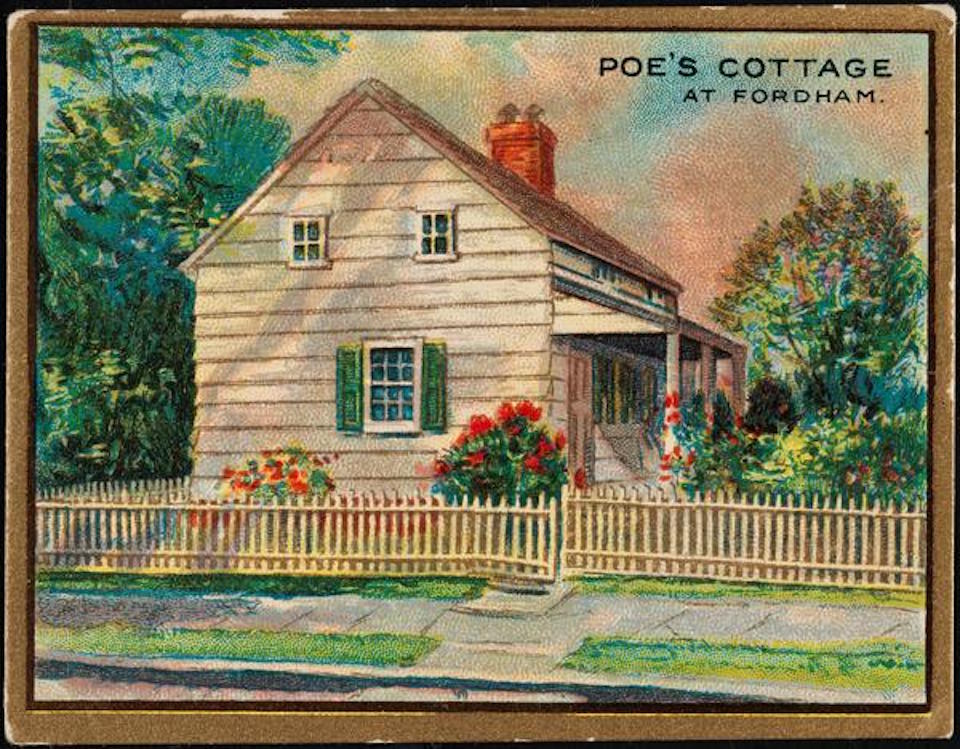
The former (awkward) location of Edgar Allan Poe’s cottage. It has since been moved to the Grand Concourse.

MN162570 MNY220989

And finally — Gouverneur Morris’ mansion which — believe it or not — stood at the foot of St. Ann’s Avenue until the 20th century.

MCNY
MCNY

We want to give a big thanks to the Bronx Historical Society, Wave Hill, Woodlawn Cemetery and St. Ann’s Episcopal Church for helping us with our research. Keep coming back to the blog throughout the month of September as we’ll have additional stories about these places and others.

Categories
Uncategorized

New York’s earliest parks, in all five boroughs

Have you ever just walked around and run smack into some strangely named park (Major Mark Park? Doughboy Park? WNYC Transmitter Park?) that you’ve never had any idea existed before?

There are parks crammed into every nook and cranny of the city, a testament to community groups and civic leaders who recognized that congested, overcrowded neighborhoods need relief.

The very first parks happen to say something about the formation of the boroughs themselves.

It was recognized early on that you can’t have a major city without some patch of public space. Places such as the Common Grounds (where City Hall is today) served as both a rallying spot and even a grazing ground during the 18th century. But these certainly wouldn’t be parks in the way we understand them today.

For this survey, a ‘park’ can actually also mean a ‘public square’ or ‘common grounds’. The birth of the modern park (Central Park) would happen many years after some of these places came into existence:


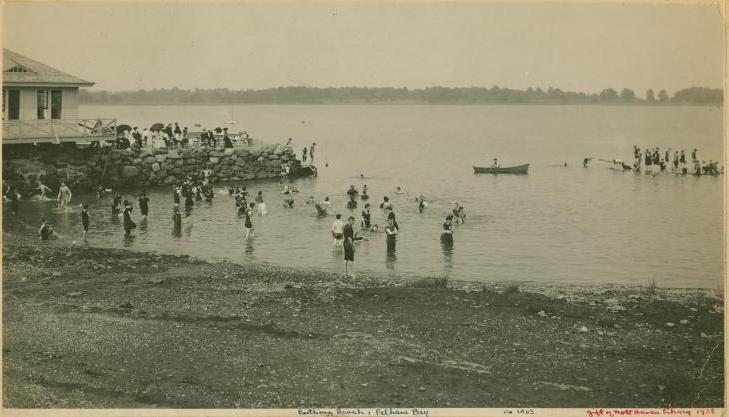
Bathers at Pelham Bay in 1903 (pic courtesy NYPL)

5) BRONX 1888
The New York park service gives the distinction of ‘first Bronx park’ to, well, most of the major ones — Bronx, Claremont, Crotona, St. Mary’s, Van Cortlandt and Pelham Bay Parks. They were all created at once, in sweeping state legislation in the early 1880s, buying up over 4,000 acres of private land to be specifically set aside for parkland.

Parks throughout Manhattan and the future boroughs of Queens, Brooklyn and Staten Island had been created as needed by their communities. The Bronx purchase would actually be the first organized park collective, consolidated in 1888, a notion dreamt of by community activists like John Mullaly, who worried that the growing city would eliminate much of the remaining natural terrain and trap city residents in greenless canyons of tenements.

These lands, however, had been areas for visitors well before being organized as official city parks. Crotona Park, for instance, was known as Bathgate Woods, a wild area that had beerhalls and picnicking grounds along the river. You can still visit the homes of the families who once owned some of these acreages, like the Van Cortlandt House (in Van Cortlandt park) and the Bartow-Pell Mansion (in Pelham Bay Park).

Of course, if you’re feeling charitable, you could also consider Woodlawn Cemetary, opened in 1863, the first Bronx park. It’s one of the most beautifully manicured spots in the Bronx, even today.


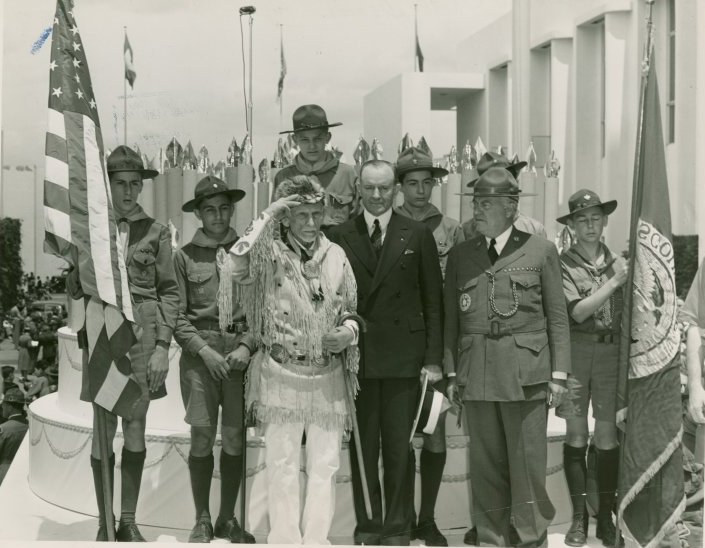
Beard the Scout leader, at the 1939 New York World’s Fair

4) QUEENS 1841
I’m giving the title of Queens oldest park to Flushing Park, or what is today known as Daniel Carter Beard Memorial Square. Although it’s not really much of a park, and its legitimacy to this title is a little up in the air.

According to the Queens book of lists, old maps reveal that the town of Flushing did lay out a small square in this exact spot in 1841. The area wasn’t officially named Flushing Park, however, until 1875.

The park was best known for a Neptune fountain which sat at its center and also became the first Queens park to ever display a Christmas tree. (Now that’s trivia!)

In 1942, this portion of the park was renamed for Daniel Carter Beard, a Flushing resident and godfather of the Boy Scouts. It’s located in Flushing at Northern Boulevard and Main Street.

2 TIE!) BROOKLYN 1836
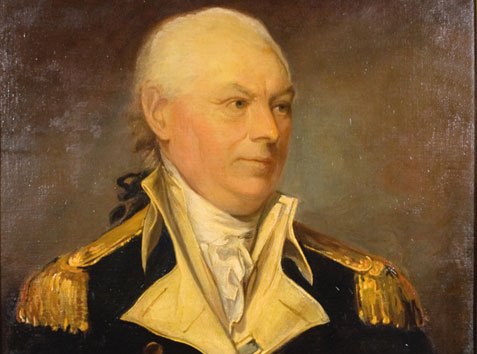
Who is Commodore Barry, and why is his name attached to Brooklyn’s oldest park, Commodore Barry Park, established in 1836 in the old neighborhood of Vinegar Hill?

John Barry was one of the Continental Army’s greatest sea captains, capturing British ships and even escorting American ally the Marquis De Lafayette back to France to drum up more financial support. He was also the very first commander in chief of the newly formed U.S. Navy.

The village of Brooklyn bought up this land in Vinegar Hill and officially called it City Park, giving the expanding young village its first real parkland. It was renamed, not surprising, due to its situation near the Brooklyn Navy Yards in 1951.

2) STATEN ISLAND 1836
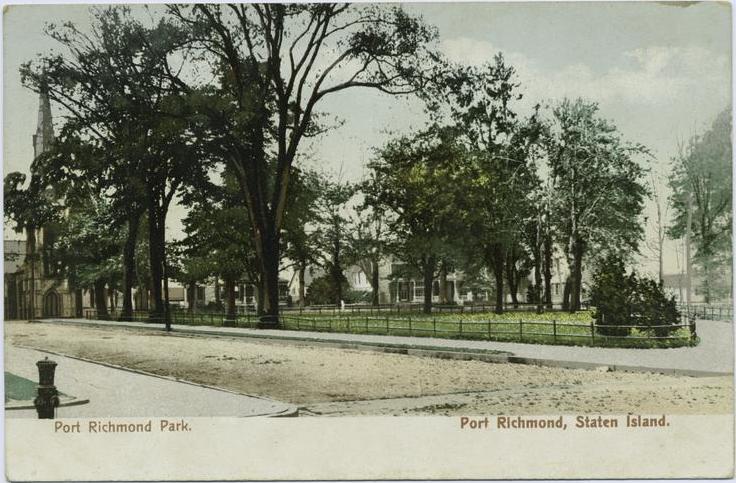
We can thank the well-organized community leaders of Port Richmond for Staten Island’s “park” (really more a common grounds), called Veterans Park today.

Port Richmond is on the Staten Island’s north shore; in fact Veterans Park isn’t too terribly far way from Liedy’s Shore Inn, the island’s oldest bar. Originally called Ryer’s Landing, the port town and ferry landing was carefully laid out by the town leaders in 1836 who built in space for a common area.

After Staten Island was incorporated into New York in 1898, the park was given the official name Port Richmond Park but was changed again 40 years later to its present moniker in honor of American war veterans.

1) MANHATTAN
The very first park in New York is appropriately near one of the very first spots of European settlement — Bowling Green.

When exactly this incredibly busy land became a ‘park’ is somewhat unclear. Situated right in front of Fort Amsterdam, it was a cattle ground for the Dutch and a marketplace for the British. But throughout that history it was also a parade ground for the military and a common ground for gatherings and to air grievances, such as when disgruntled New Yorkers in 1776 ripped down the statue of King George that once stood here.
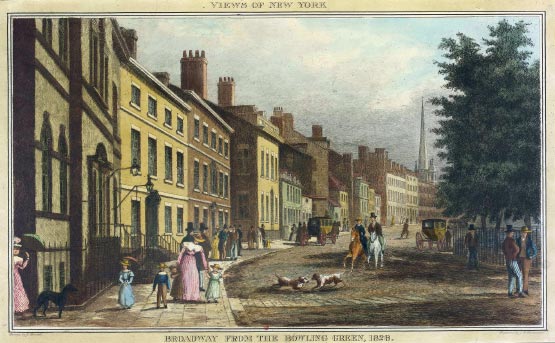
However, we get its name today from activities that began occurring here in 1733, when the ground here became an actual early version of bowling.

It was a magnet for wealthy New York townhouses until the grand trek northward began in earnest, leaving Bowling Green to suffer deterioration. A subway station opened underground here in 1905, but it wasn’t until the 1970s that it was restored to some sense of its original glory.

Categories
Uncategorized

Where are New York City’s oldest living trees?

The oldest living New Yorkers outdate all the skyscrapers, the highways and the parks in which most of them live. They have seen generations of New Yorkers come and go. And at least one of them even remembers the region’s original indigenous people.

We’re talking about the native trees of New York City, those that were planted naturally and not transplanted from elsewhere, giants that have weathered storms and interactions with humans long gone.

Of course it is impossible to know with absolute certainty the oldest trees as not every single one has been measured. There are, in fact, according to MillionTreesNYC, 5. 2 million trees in New York City, about a tenth of which are actually on the streets.

Some other wonderful trivia from MillionTreesNYC:

“– Standing trunk to trunk, New York City street trees would form a line 118 miles long–the distance from Manhattan to Hartford.

— Number of tree species: 168

— Percent of land covered in trees: 24%  “

I was not able to find complete info for all five boroughs, and I will indicate where I could not come to a definitive answer. If you have any leads, please post them in the comments section.

I’m obviously no arborist, so the details below are based on the research of others. However maybe someday I’ll trek out to these various sites armed with a tape measure and an layman’s knowledge on how to evaluate tree age.

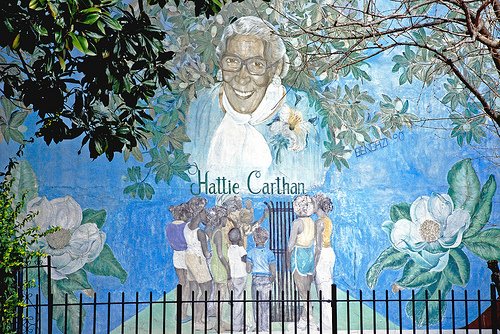
Hattie Carthan, Brooklyn’s tree saviour

BROOKLYN
It appears that the oldest tree in the borough — among, as Betty Smith well knows, the many, many trees that grow in Brooklyn — is undetermined. Most likely it sits in Prospect Park which contains most of the borough’s remaining natural forest — about 100 acres.

Formerly, the title holder was a 220-year old black oak which once stood here; sadly it uprooted during a storm many years ago and tumbled into the ravine.

However, one of Brooklyn’s most famous trees sits in the neighborhood of Bedford-Stuyvesant — a southern magnolia tree Magnolia Grandiflora, brought to Brooklyn from North Carolina in 1885 and located near 667 Lafayette St.

It happens to be the only landmarked living tree in the city, thanks to community leader and nature lover Hattie Carthan, back in 1970.

BRONX
With the borough’s thousands of acres of park land, the real candidate for borough’s oldest may as yet be undiscovered.

However, the leading candidate is currently a handsome white oak tree around the 18th hole of the Split Rock Golf Course in Pelham Bay Park. The oak is well ‘over 200 years old’ although its location by a golf course can’t be good for its health.

Hangin’ around with New York’s oldest and most legendary elm

MANHATTAN
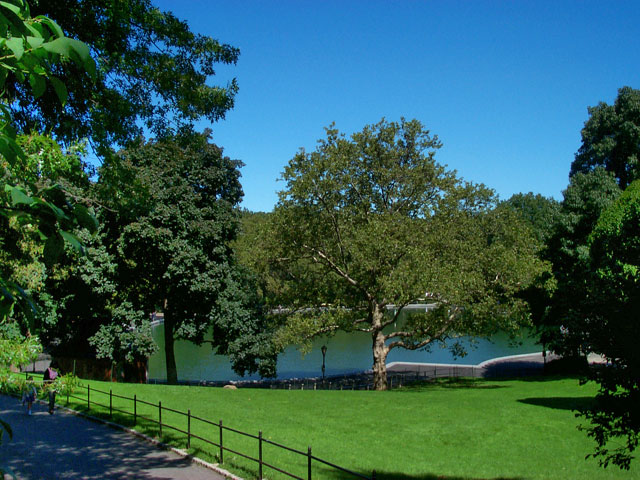
One might naturally assume Manhattan’s oldest tree must be in Central Park. It’s a very manicured place though, and most of its older vegetation was transplanted here. However, the great London plane tree near the Reservoir (pictured below) is said possibly pre-date its construction in 1862.
There are two other candidates for oldest tree on the island. One is in Washington Heights, a 110-foot elm at 163rd Street and St. Nicholas. Known as the Dinosaur, it reportedly shaded George Washington as he surveyed his shifting fortunes during the Battle of Washington Heights.

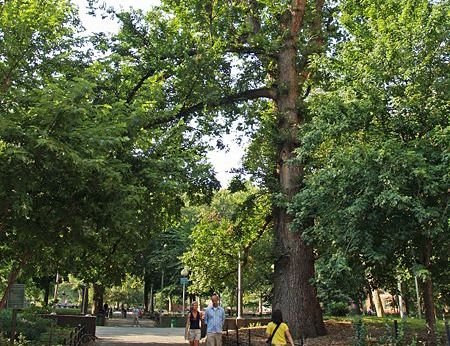
The most renown candidate is, of course, the Hangman’s Elm, in Washington Square Park. At a reported 310 years old, this arboreal old man in the northwest corner of the park most likely never really saw any hangings as its legend indicates, but its certainly fun to morbidly gander at its branches.

The top two candidates for New York’s oldest tree have been the fascination of tree lovers since their discovery.

Below: The London plane tree near the Reservoir, most likely Central Park’s oldest tree (pic courtesy Central Park 2000)

STATEN ISLAND
The two oldest trees in New York happen to be tulip trees, a common tree of the region named for its flower-shaped leaves. The charming Clove Lakes Park, at Forest Avenue and Clove Road, takes its name from the Dutch word “kloven” or cleft. Its granddaddy entry into the tree race is known as the Clove Lakes Colossus is a monstrous 119 feet tall with a circumference of 21.4 feet.

It’s reported to be well over 300 years old, predating all but the most rudimentary European settlement here in Staten Island. It’s actually a thicker tree than the tulip which is New York’s oldest, but that’s due to more ideal growing conditions. Unlike many other ‘oldest tree’ candidates, Clove Lakes takes good care of its elders, easily located at the park’s north end near a paved path.

QUEENS
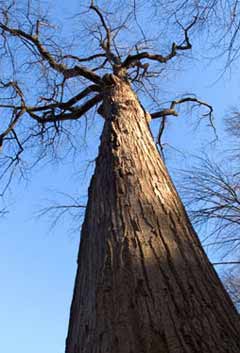
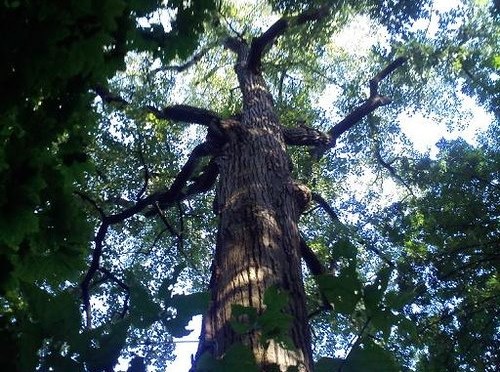
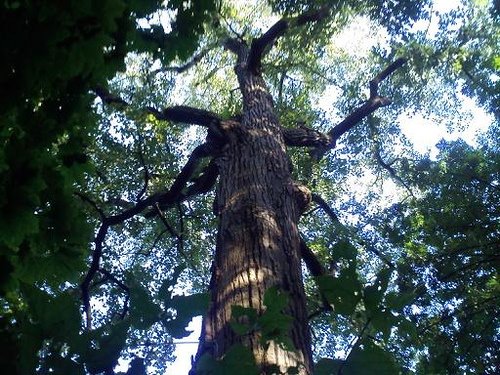
Say hello to the Queens Giant (pictured at top), the grandmother of all native New York City plants. Located along a secluded trail in Queens’ Alley Pond Park, this monster is also one of the city’s tallest trees at 133.8 feet — just 20 feet shorter than the Statue of Liberty.

It may be one of the few remaining living things from the era before Henry Hudson sailed into New York harbor, with its age calculated at anywhere from 350 to 450 years old. This would make it one of New York’s truly extraordinary natural features. Interestingly, in the past, the city has taken a stance of ‘benign neglect‘ to the tree, arguing that it shouldn’t be better accessed in order to protect it.

Revised from a previous article which ran in 2009

Mayor Franklin Edson: Bronx man and distillery king

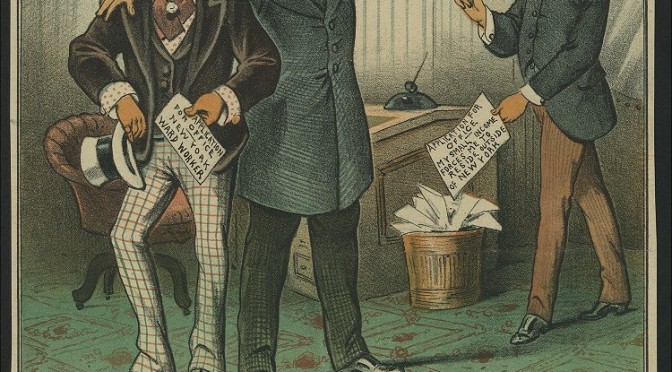
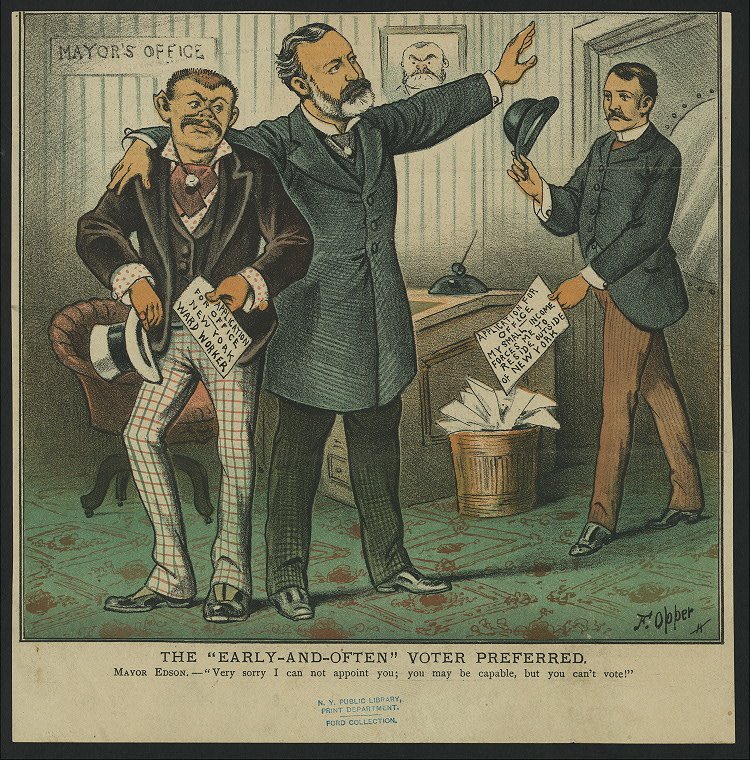
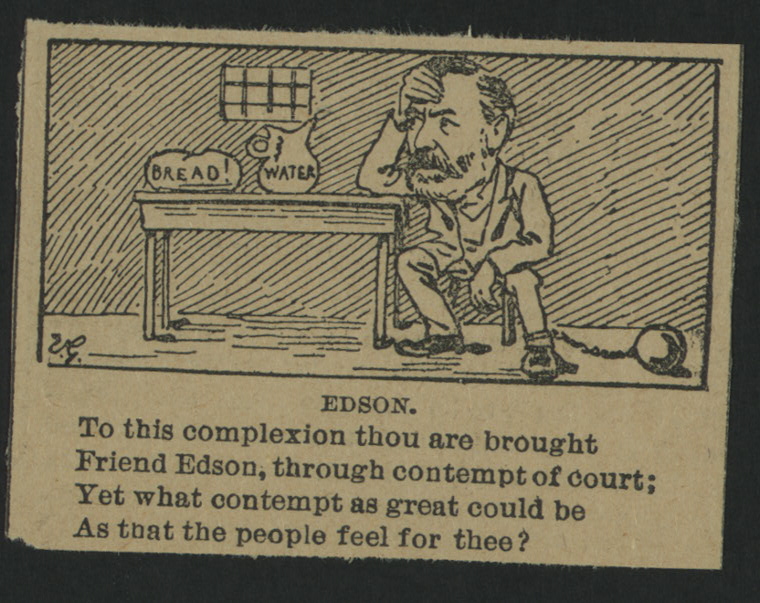
Above: a cartoon mocking Edson’s hiring practices (courtesy New York Public Library Digital Gallery)

KNOW YOUR MAYORS Our modest little series about some of the greatest, notorious, most important, even most useless, mayors of New York City. Other entrants in our mayoral survey can be found here.
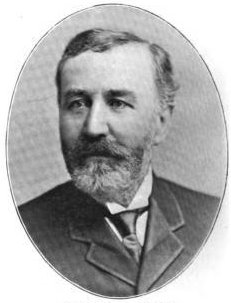
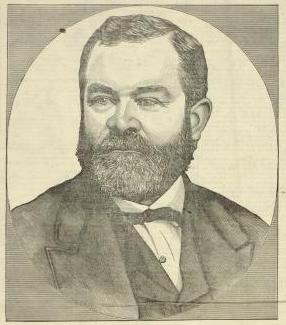
Mayor Franklin Edson

In office: 1883-1884

Although the political career of one-term mayor Franklin Edson was indeed brief, he helped commission both the city’s largest acquisition of park land and one of its biggest improvements in drinking water. And he was present for the opening of one of New York’s greatest landmarks. So how did the city thank him for his service? By nearly throwing him into Ludlow Street Jail — where Boss Tweed had been left to rot just a few years before.
Edson, a transplanted New Yorker, was a farmboy from Chester, Vermont, born in 1832, who distinguished himself in the art of whiskey distillery — distinghished with “precocious tact and sagacity,” in fact.

He worked his way over to Albany, New York, as a successful distiller and grain merchant with his brother. Franklin took full advantage of drink demands during the Civil War; his company soon became so profitable that he moved the entire venture to New York in 1866.

Edson, a burgeoning booze mogul of sorts, immediately became a prominent merchant voice in Manhattan, becoming the president of New York’s Produce Exchange three times, serving his first term in 1866 before he had to time to even unpack his moving boxes.

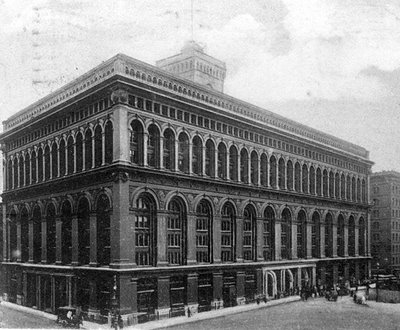
While this naturally afforded Franklin an incredible vantage for commercial power, it would soon place him in the crosshairs of political power as well. In later years he would be most proud of his Exchange days, priding himself in being one of the encouraging voices to tear down the inadequate castle-like Produce Exchange (designed by Leopold Eidlitz) and erecting the larger, more impressive George Post-designed Produce Exchange building near Bowling Green (which itself would be sadly torn down in 1957).

Below: the new Produce Exchange

What sets Edson apart from other future mayors of the time — and what might have potentially hindered his political ambitions — was that he loved the countryside, in this case Old Fordham Village, today a neighborhood in the Bronx.

He would live here for many years and would remain a member of the (now landmarked) Episcopal Saint James Church in Fordham for most of his days. Whether by design or coincidence, this love for what would become New York’s northern borough would soon prove fruitful for the city as a whole.
Franklin was also a practicing anti-Tammany Hall Democrat. And who wouldn’t be anti-Tammany during the 1870s? Edson became politically active in the years following the Boss Tweed scandals, when Tammany was still reeling for the highly publicized affair involving Tweed and then-mayor A. Oakley Hall.

Despite a slow rebounding, Tammany would never fully rinse off the stench of corruption. Naturally, Edson’s prominence among the business class married nicely with mayoral ambitions by the mid 1880s and would eventually include a denunciation of Tammany practices and condemnation of Tammany boss John Kelly (at right). But not at first.

For the election in November 1882, the various Democratic factions, including the still-potent Irving Hall, soon decided on the relatively green Edson, because he was a uncontroversial, neutral choice. To Tammany’s Kelly, Edson must have seemed a fairly agreeable pick indeed compared the previous mayor William Russell Grace, a reform Democrat rebelliously outside the realm of Tammany’s power.

Edson easily swept past his opponent, railroad man Allan Campbell — a sweet victory for John Kelly, as it was Campbell that had replaced Kelly as the city comptroller several years previous under the administration of mayor Edward Cooper. (Check out Edward’s entry for some juicy details of the Kelly/Cooper rivalry.)

How did a political nobody — a “seven day wonder in the political world” — sweep so handily into office? It helps to ride coattails; during that same election, the popular Democrat Grover Cleveland was elected the governor of New York.

At first, Edson gave in readily to political favoritism, paying back some of his Democratic cohorts — including many of the Tammany variety — with lucrative city jobs, a decision which disgruntled many of his former supporters. In fact, he even appointed Richard Croker as fire commissioner; Croker would become the head of Tammany Hall in the 1890s. (Harper’s Weekly has a coy little cartoon chiding the Croker decision.)

Like many before him, however, Edson soon grew tired of Tammany’s corrupting influence and began adopting reform policies which were currently being installed on the state level. And also like many before him, his against-the-wind attempts at reform would essentially spell the end of his political career. Edson would serve but a single term and would almost entirely vanish from politics afterwards.

But not before throwing his weight behind a major expansion of the Croton Aqueduct, which within in a few years would triple the supply of water into the city. (In fact, most of the expansion he pushed for is still in use today.)

Edson is also partially responsible for the huge increase in New York park land, commissioning a citizens group in 1884 to lobby the state to purchase lands in the area of today’s Bronx; accordiing to an old Bronx history, “the ‘new’ parks, as they were called, comprised 3,757 acres, now included in Van Corlandt, Bronx, Pelham Bay, Crotona, St. Mary’s and Claremont parks.”

And most notably, he was the first New York mayor to walk the Brooklyn Bridge, astride president Chester A. Arthur and governor Cleveland on the bridge’s opening day, May 24, 1883. He would be met in the middle by the mayor of Brooklyn — future New York mayor — Seth Low.

He might have crept quietly into obscurity had Edson not been accused of contempt of court shortly after he left office, threatening a man in his early 50s with jail time with a stint at the notorious Ludlow Street Jail. Apparently, despite a court injunction, Edson had quietly made promotions to two posts — the Commissioner of Public Works and the Corporation Council — on his last day in office. However, after a stressful two months in court, Edson was declared not guilty of the crime.

This did not stop people from imagining the ex-Mayor trapped behind bars, as the newspaper illustration below evidences:

Edson died in 1904, at his home on the Upper East Side. 42 West 71st Street, to be exact, a block from the Dakota Apartments, which were completed during his tenure as mayor.