Categories
Revolutionary History

George Washington’s copy of the Declaration of Independence

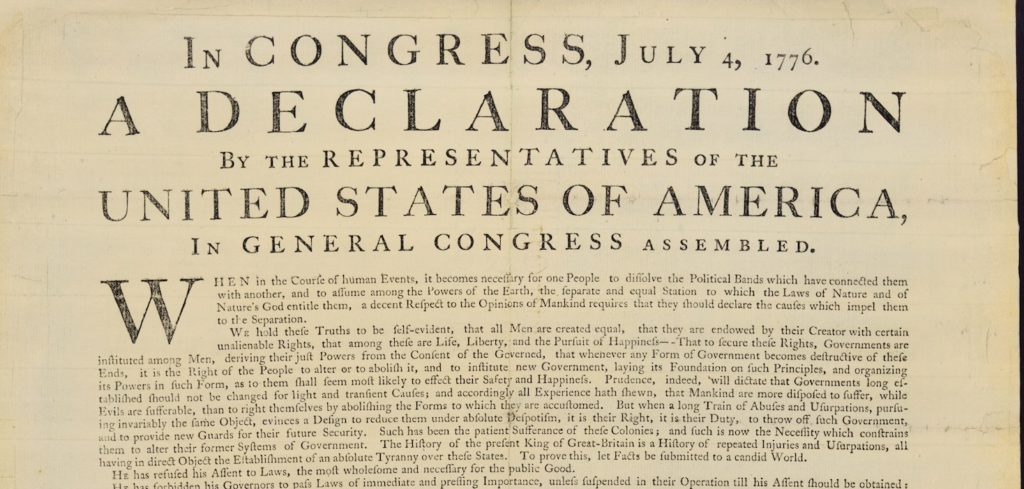
George Washington’s copy of the Declaration of Independence is perhaps the most well-known of the almost 200 copies first made of the document.

As a facsimile, it’s certainly not the the most valuable document held by the Library of Congress — after all, they have Thomas Jefferson’s actual rough draft of the Declaration, along with tens of thousands of his other papers — but it’s certainly an inspiring artifact in its own right.

Below: The document in question.
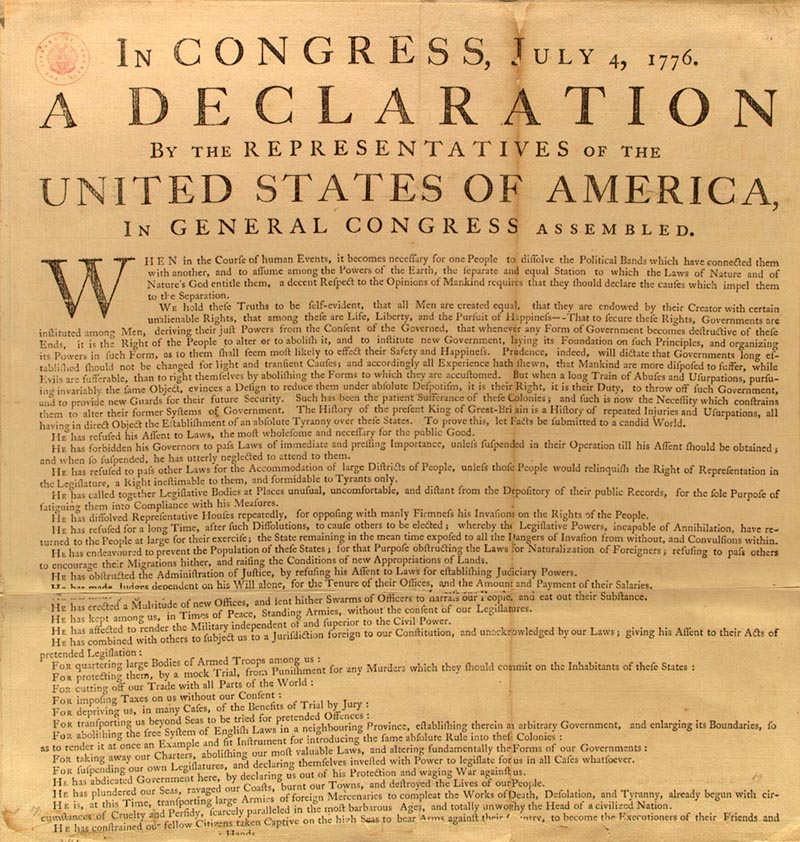
uc06330

Because Washington wasn’t in Philadelphia at the time of the actual declaration on July 2 or the completion by Jefferson of the finished copy on July 4.

Washington was in New York.

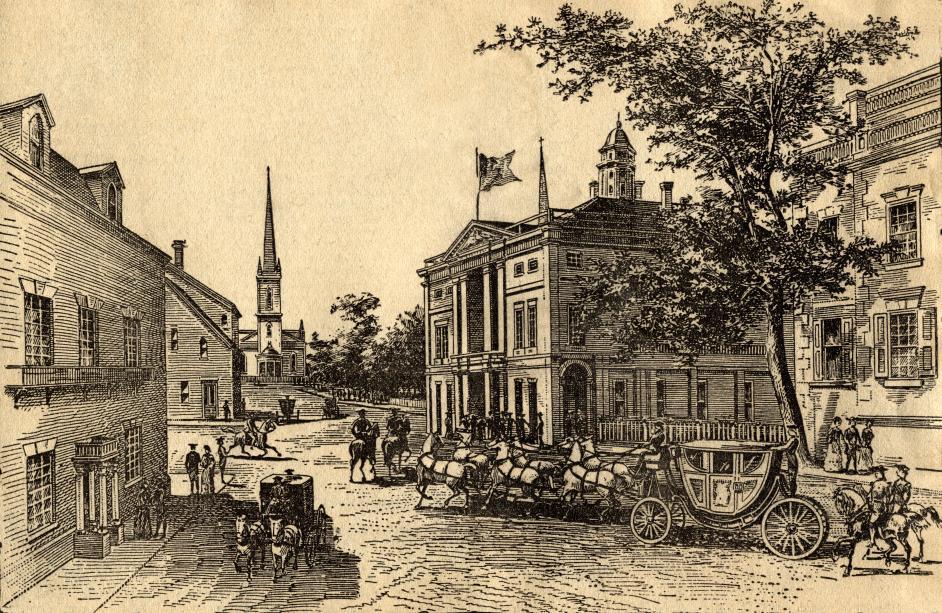
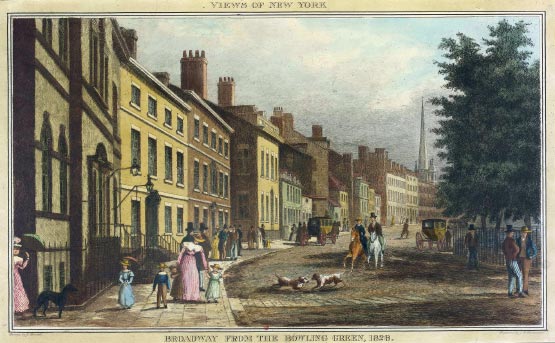
Indeed he had been stationed in Manhattan since April 9, 1776, headquartered at the Kennedy Mansion at 1 Broadway (pictured below), facing Bowling Green and the statue of King George at its center.

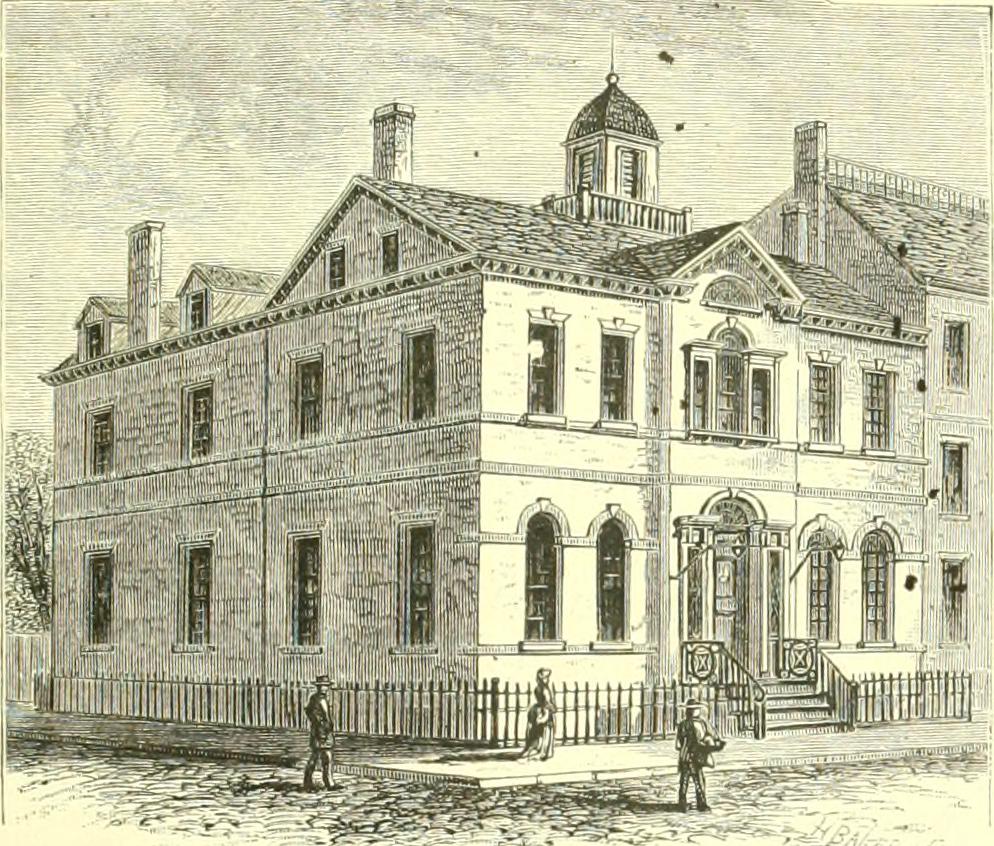
Later, as news of a British arrival to New York became evident, he moved his headquarters to City Hall, then on Wall Street and Broad Street.

Below: Washington’s two headquarters pre-July 1776:
Internet Archive Book Images
3409147326_e502e7c6c0_o

Hundreds of British war vessels had stationed themselves off of Sandy Hook by the first of July, so fearful a presence that many of New York’s 20,000 residents had fled in fear.

By July 9, thousands of Continental Army soldiers had amassed in New York, turning the port town overnight into a military outpost. The key gathering point for Washington and his men was the Commons, a former livestock area that had been the scene of protests against the British for over a decade.  Many a liberty pole had stood here, an age old protest against despotism.
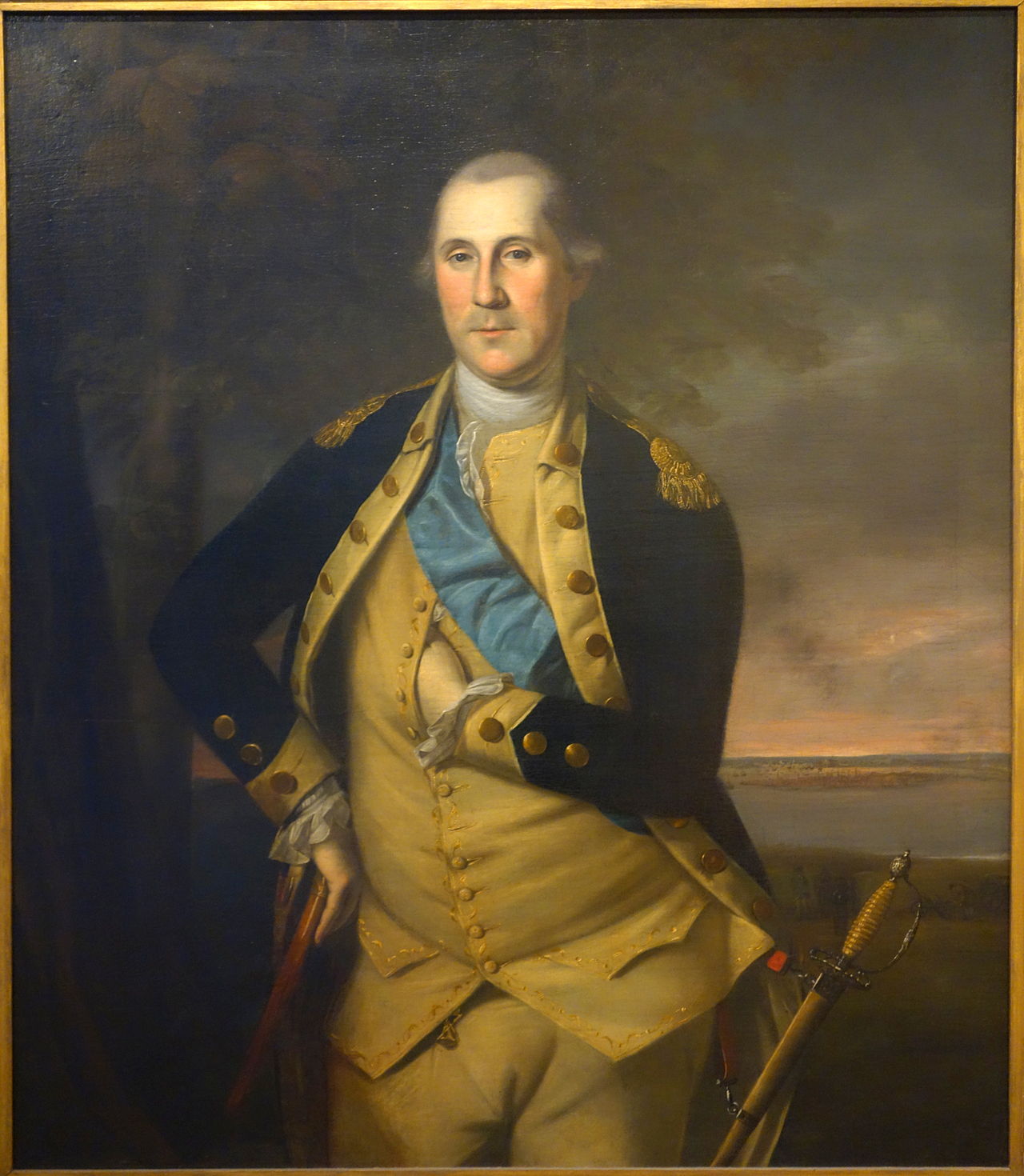
George Washington, painted by Charles Willson Peale in 1776

But on that day, July 9, there was not a single inanimate symbol of protest, but rather many thousands of animate ones, all summoned to gather by 6 p.m. to await Washington’s words.

From the text of Washington’s order that day:

The several brigades are to be drawn up this evening on their respective Parades, at Six O’Clock, when the declaration of Congress, shewing the grounds and reasons of this measure, is to be read with an audible voice.

The General hopes this important Event will serve as a fresh incentive to every officer, and soldier, to act with Fidelity and Courage, as knowing that now the peace and safety of his Country depends (under God) solely on the success of our arms: And that he is now in the service of a State, possessed of sufficient power to reward his merit, and advance him to the highest Honors of a free Country.

A copy of the Declaration — the one pictured above — had been hand-delivered to Washington on that very day. However the General himself did not read it aloud. Rather he had one of his aides read it to the gathered crowd.

Imagine hearing these words for the first time:

“When in the Course of human events, it becomes necessary for one people to dissolve the political bands which have connected them with another, and to assume among the powers of the earth, the separate and equal station to which the Laws of Nature and of Nature’s God entitle them, a decent respect to the opinions of mankind requires that they should declare the causes which impel them to the separation….”  

Below: A British map of New York as it was played out in 1776:
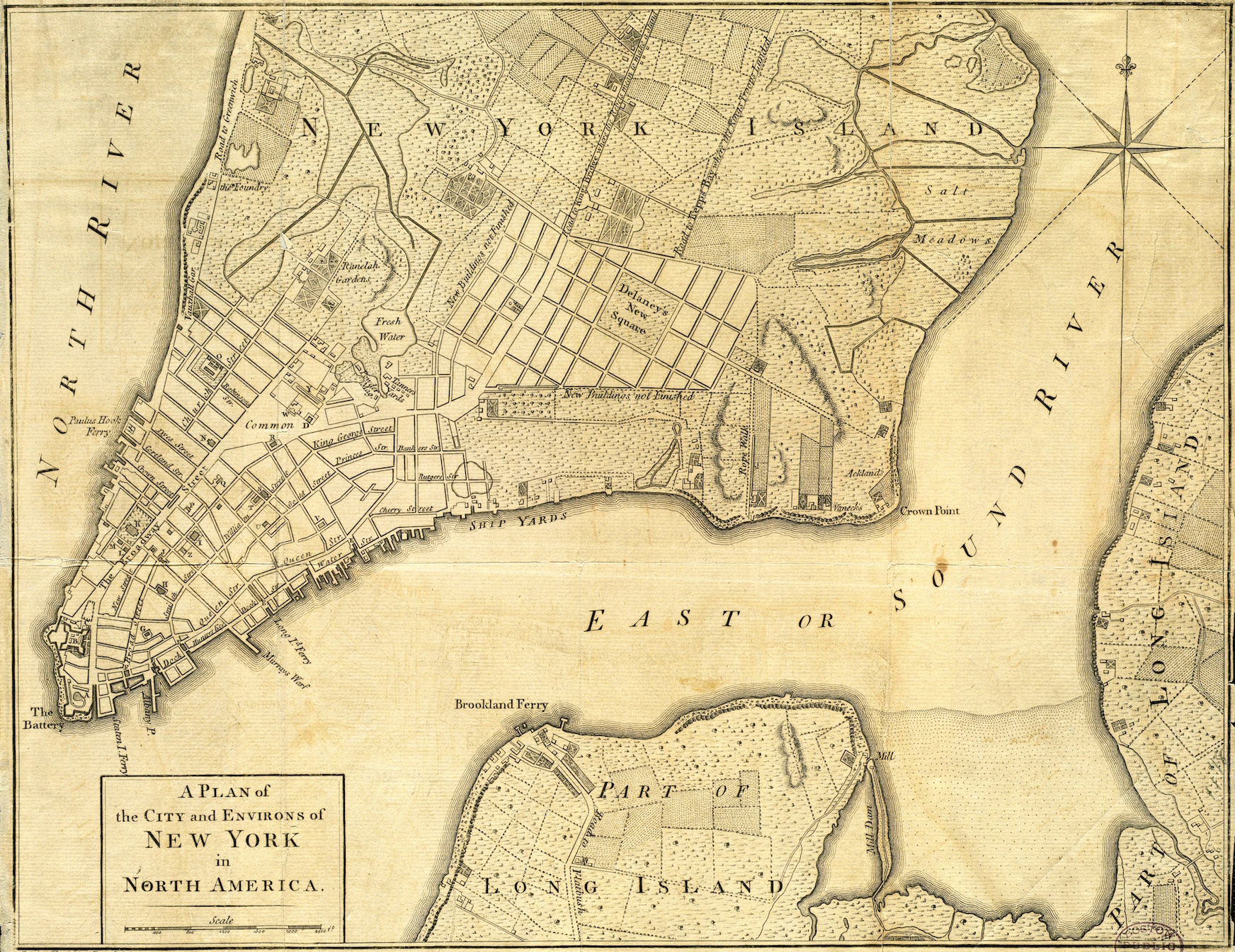
NYC1776

These weren’t empty phrases. Upon the completion of the reading, New Yorkers knew their city would be attacked. The men of Washington’s army knew they would fight and possibly die.

The words were greeted with joy, fear, anticipation and rage. The crowds surged with excitement.  Most ran to their places — to Kings College, to the counting-houses of Hanover Square, to the ships docked along the East River — and prepared for the world to change.

Many people certainly ran to their local taverns to get wasted. (Samuel Fraunces must have hosted a lively crowd that night.) Some New Yorkers went to their homes, packed their belongings and fled.

Needless to say, the reading had gone off as intended. General Washington’s letter to the Continental Congress is an almost amusing example in understatement:

“Agreeable to the request of Congress I caused the Declaration to be proclaimed before all the Army under my immediate Command, and have the pleasure to inform them, that the measure seemed to have their most hearty assent; the Expressions and behaviour both of Officers and Men testifying their warmest approbation of it.”

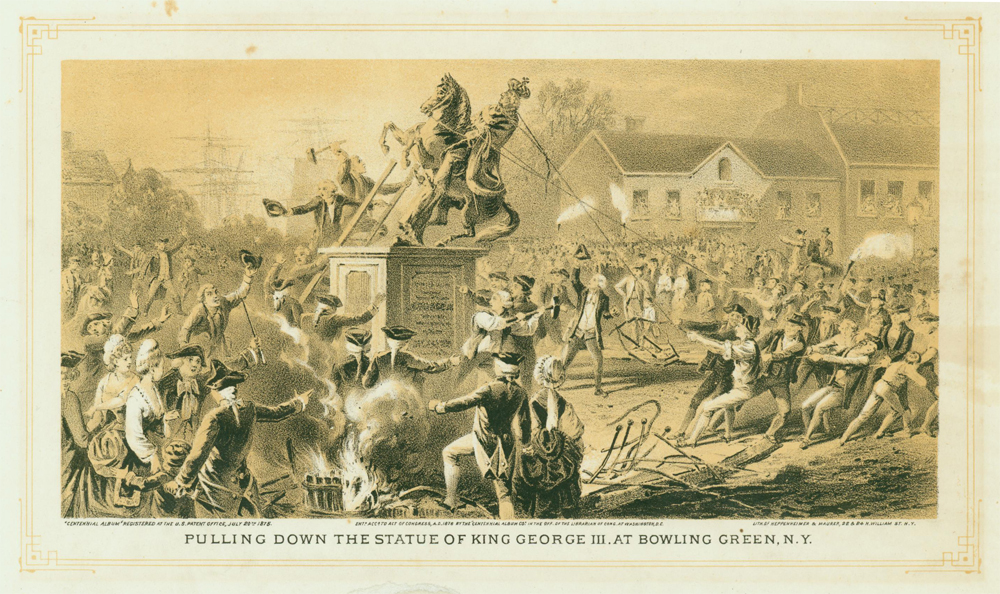
In fact, not only did his army and the gathered New Yorkers approve of the Declaration, but later that night, they actively demonstrated their approval by rushing down Broadway to Bowling Green, where they proceed to pull down the loathsome statue of King George!

114

Afterwards, Washington had his personal copy sent to Artemes Ward, his major general stationed in Massachusetts. Washington’s note to Ward also survives:

“The inclosed Declaration will shew you, that Congress at Length, impelled by Necessity, have dissolved the Connection between the American Colonies , and Great Britain, and declared them free and independent States; and in Compliance with their Order, I am to request you will cause this Declaration to be immediately proclaimed at the Head of the Continental Regiments in the Massachusetts Bay.”

Today the Washington Declaration — or rather, a fragment of it — is only one of 26 Dunlap copies that are still believed to exist. It lives, naturally, in Washington D.C. However three copies of the ‘Dunlap’ Declaration are in New York City — at the Morgan Library, at the New York Public Library and another, in the hands of an unknown private collector.

FOR MORE INFORMATION, CHECK OUT OUR PODCAST ON NEW YORK CITY DURING THE REVOLUTION.
Categories
Parks and Recreation

Ten Images of Bowling Green and Ten Facts about its Marvelous History

Bowling Green, at the very tip of Manhattan island, is a small oval park so calm in comparison to its surroundings that it’s hard to believe this is one of the oldest sections of the city of New York.  

Here are ten facts about Bowling Green, accompanied by ten images and photographs from various periods in this tiny park’s extraordinary history:

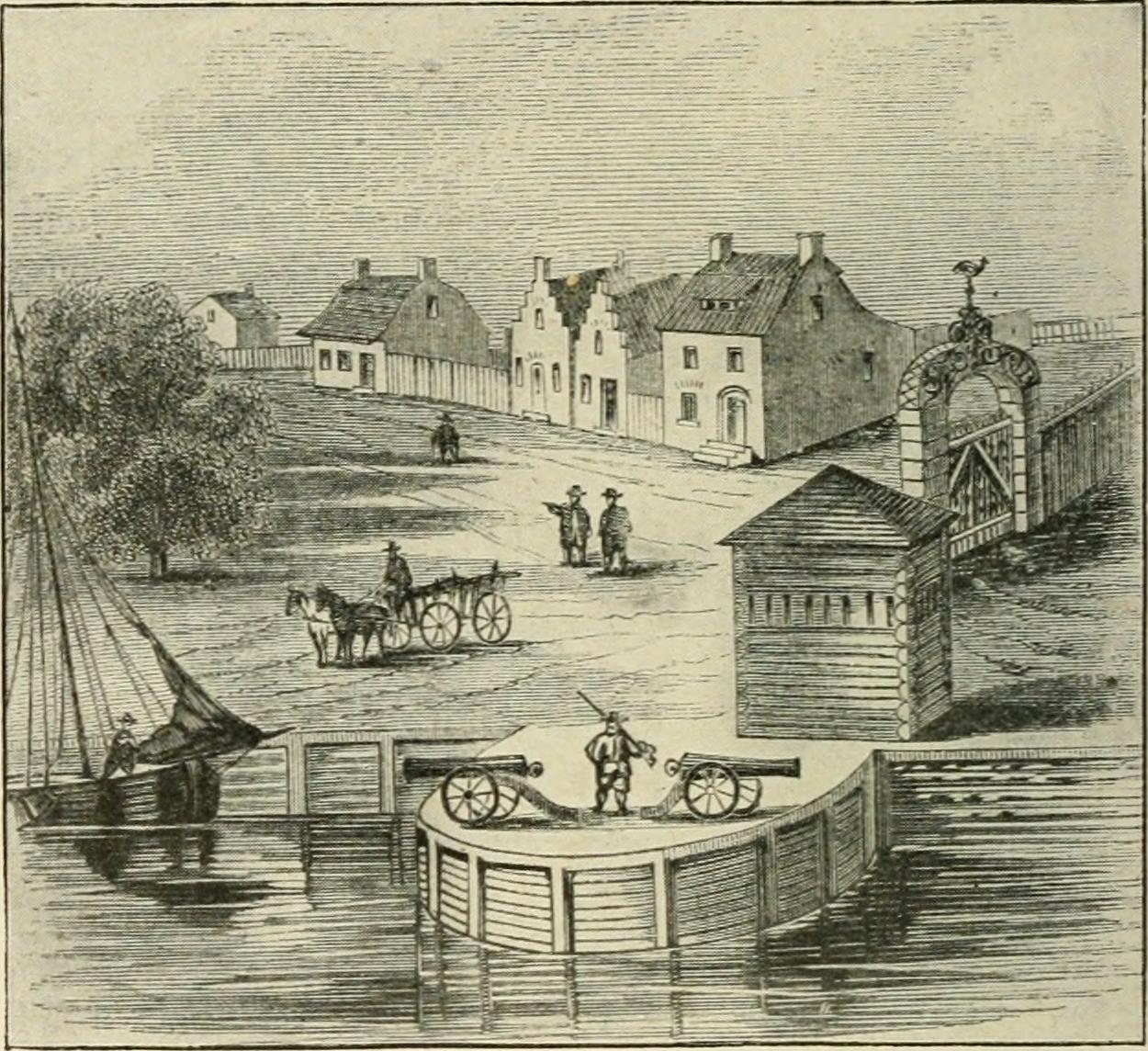
"The Plaine" -- where the trees are to the left -- is where Bowling Green would eventually be constructed. This depicts the early Dutch years. (Courtesy the Internet Book Archive)
“The Plaine” — where the trees are to the left — is where Bowling Green would eventually be constructed. This depicts the early Dutch years. (Courtesy the Internet Book Archive)

1) The land comprising Bowling Green was situated next to Fort Amsterdam. During the days of New Amsterdam, this was the site of the first public well, dug in 1658 and would remain the only well within the city until 1677, long after the Dutch were replaced by the British.

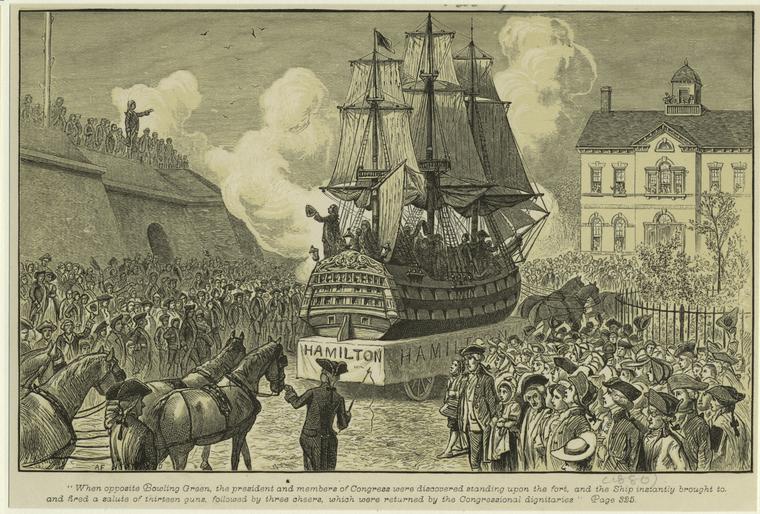
Ship On A Parade Float Drawn By Horses Past Bowling Green, New York, 18th Century. (Courtesy New York Public Library)

2) Since it was next to the fort, it’s not surprising to discover that the area was a parade ground during the early 18th century.  In 1733, it was leased to three local landlords — Peter Jay, John Chambers, and Peter Bayard — to develop an English-style park. It quickly became the destination of lavish homes of the wealthy.

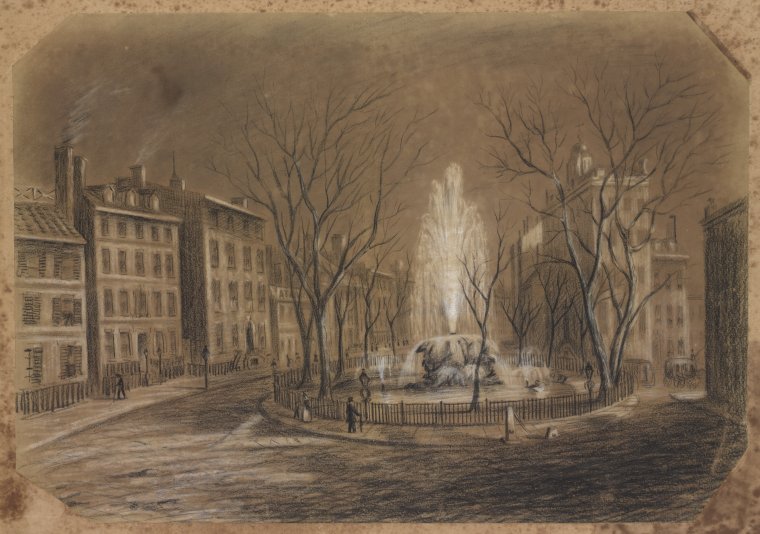
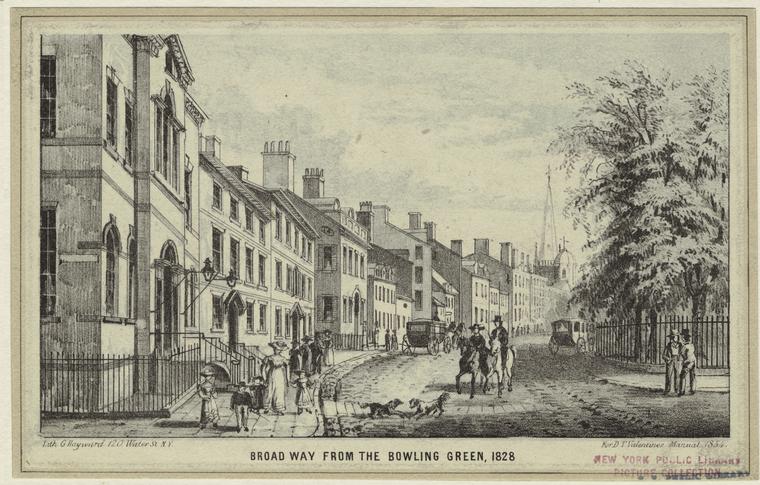
Charcoal drawing of Bowling Green, New York, 1845. (New York Public Library)

3) Yes there was actually bowling here. Or rather, the traditional form of lawn bowling, enjoyed by the residents that lived around the park. This required perpetual maintenance of the lawn. Before the invention of the lawnmower, this was usually accomplished by sheep. I’m not sure whether sheep were employed into service here at Bowling Green. But there were pigs in the street so you never know.

Pulling down the King George statue 1776

4) In 1770, loyalists to the crown erected an equestrian statue of King George III in the center of the park. Six years later, it was ingraciously torn down by New Yorkers after hearing George Washington read the newly crafted Declaration of Independence.  Parts of that statue still exist in the city.

nypl.digitalcollections.510d47e1-0ec5-a3d9-e040-e00a18064a99.001.w

5) George Washington lived here. No really. He had two residences here during the time when New York was briefly the nation’s capital.  The first, over on Cherry Street, provided him and his wife Martha with breathtaking views of the East River, but they soon found it quite unsuitable.  So in 1790 they moved to a home at 39-41 Broadway, at the northern tip of Bowling Green, residing here until the capital was finally moved to Philadelphia.

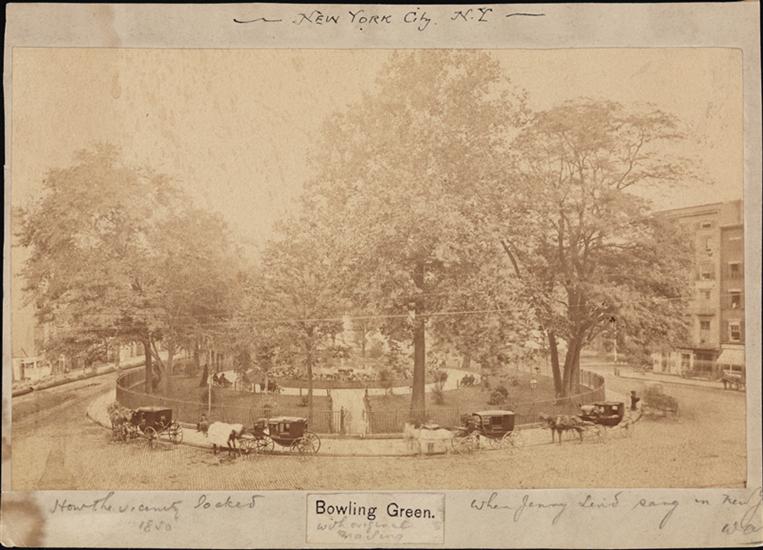
Bowling Green, how the vacinity looked in 1850 whnen Jenny Lind sang in New York.  (Courtesy Museum of the City of New  York)
Bowling Green, how the vacinity looked in 1850 whnen Jenny Lind sang in New York. (Courtesy Museum of the City of New York)

6) Bowling Green was still the destination for the New York’s oldest, snootiest families at the start of the 19th century.  In fact, it was given a rather inappropriate nickname — Nobs Row. As the town moved northward, the wealthy left their houses around Bowling Green.

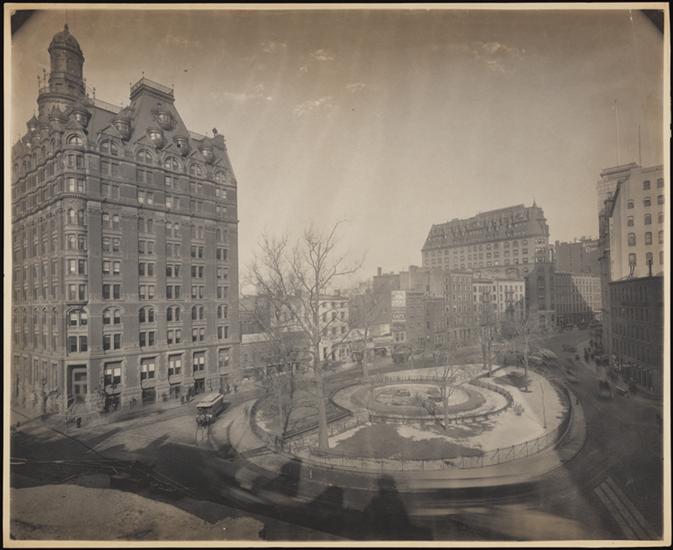
Bowling Green 1900 (Courtesy Museum of the City of New York)

7) In the 1820s, the first velodrome was situated near Bowling Green featuring a precursor to the bicycle called the draisine.  New Yorkers loved this curious device. “Near Bowling Green these vehicles were first exhibited.  Around City Hall Park and the Bowery, at all times of the days, riders might be seen.

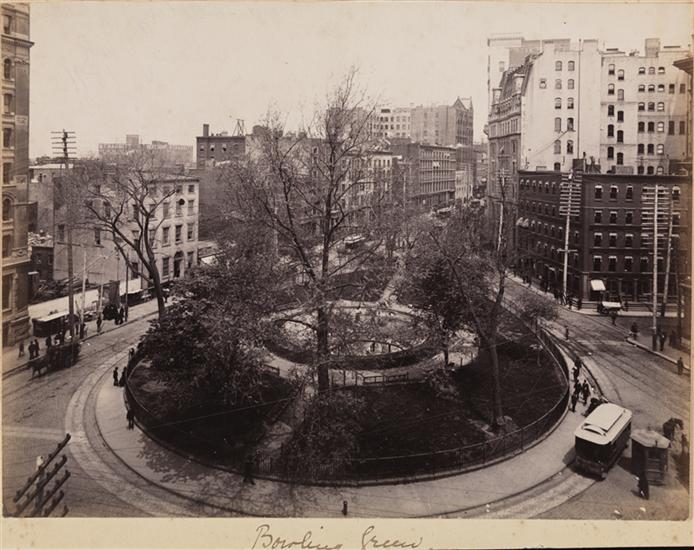
Bowling Green 1915 (Courtesy Museum of the City of New York)

8) Bowling Green soon became known as a transportation terminus for coaches and omnibuses which strode up and down Broadway. In the 1820s, when the entertainment venue Castle Garden opened, the streets around Bowling Green became clogged with busy street life. By the 1850s, Castle Garden became the principal immigration station, filling the once elite neighborhood with a bustling cross-section of classes. In the 1890s, New York’s short-lived cable-car line terminated here.

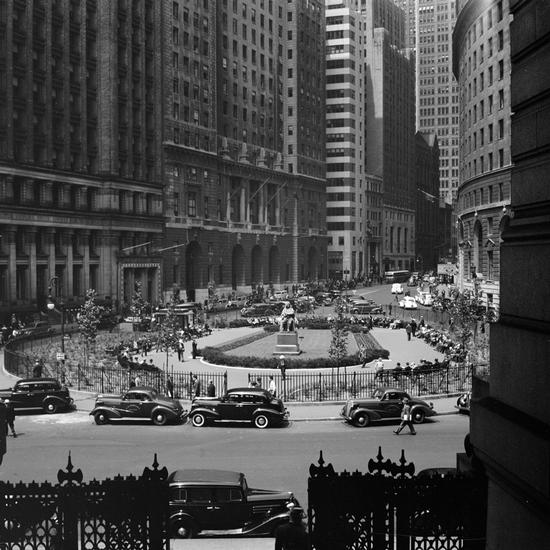
Bowling Green, 1939, Wurts Brothers photography (courtesy Museum of the City of New York)

9) The park was much abused and generally unimpressive during the 1950s and ’60s but was rebuilt during the 1970s to approximately resemble  how it once looked.  The fence which surrounds the park is the original which was first placed around the park in 1773. This makes it one of the oldest free-standing artifacts in all of Manhattan.

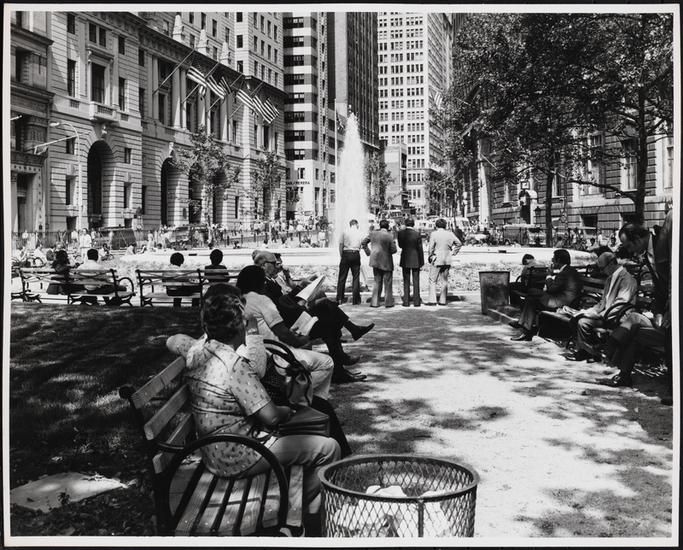
Bowling Green 1975, photo by Edmund V Gillon (Courtesy Museum of the City of New York)

10) During the late 1980s the park met its weirdest neighbor yet — the Charging Bull sculpture by Arturo Di Modica.  Arguably better known and more beloved by tourists, the bull was originally planted illegally in front of the New York Stock Exchange. By the time the city removed the statue, New Yorkers had come to love it. They eventually placed it next to Bowling Green in 1989.

Categories
Uncategorized

New York’s earliest parks, in all five boroughs

Have you ever just walked around and run smack into some strangely named park (Major Mark Park? Doughboy Park? WNYC Transmitter Park?) that you’ve never had any idea existed before?

There are parks crammed into every nook and cranny of the city, a testament to community groups and civic leaders who recognized that congested, overcrowded neighborhoods need relief.

The very first parks happen to say something about the formation of the boroughs themselves.

It was recognized early on that you can’t have a major city without some patch of public space. Places such as the Common Grounds (where City Hall is today) served as both a rallying spot and even a grazing ground during the 18th century. But these certainly wouldn’t be parks in the way we understand them today.

For this survey, a ‘park’ can actually also mean a ‘public square’ or ‘common grounds’. The birth of the modern park (Central Park) would happen many years after some of these places came into existence:


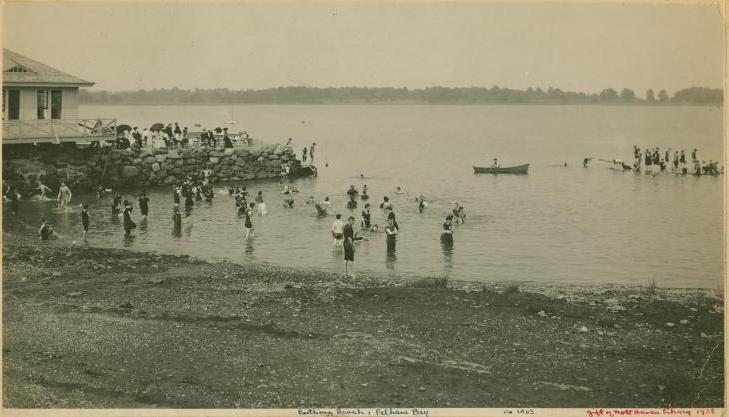
Bathers at Pelham Bay in 1903 (pic courtesy NYPL)

5) BRONX 1888
The New York park service gives the distinction of ‘first Bronx park’ to, well, most of the major ones — Bronx, Claremont, Crotona, St. Mary’s, Van Cortlandt and Pelham Bay Parks. They were all created at once, in sweeping state legislation in the early 1880s, buying up over 4,000 acres of private land to be specifically set aside for parkland.

Parks throughout Manhattan and the future boroughs of Queens, Brooklyn and Staten Island had been created as needed by their communities. The Bronx purchase would actually be the first organized park collective, consolidated in 1888, a notion dreamt of by community activists like John Mullaly, who worried that the growing city would eliminate much of the remaining natural terrain and trap city residents in greenless canyons of tenements.

These lands, however, had been areas for visitors well before being organized as official city parks. Crotona Park, for instance, was known as Bathgate Woods, a wild area that had beerhalls and picnicking grounds along the river. You can still visit the homes of the families who once owned some of these acreages, like the Van Cortlandt House (in Van Cortlandt park) and the Bartow-Pell Mansion (in Pelham Bay Park).

Of course, if you’re feeling charitable, you could also consider Woodlawn Cemetary, opened in 1863, the first Bronx park. It’s one of the most beautifully manicured spots in the Bronx, even today.


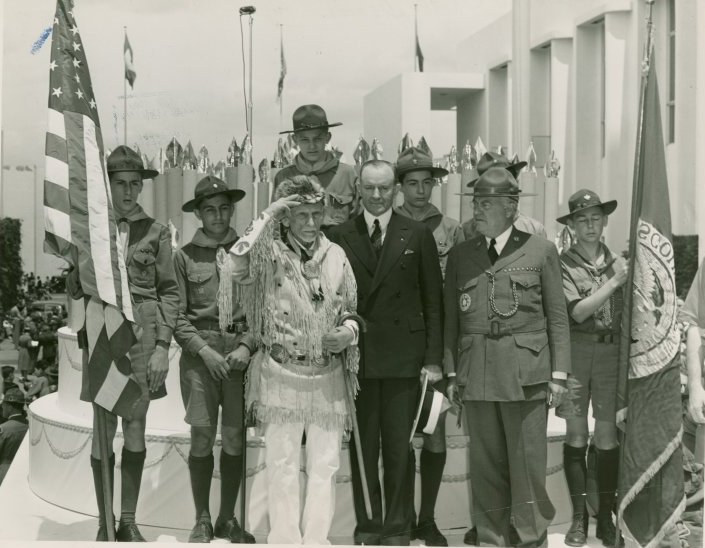
Beard the Scout leader, at the 1939 New York World’s Fair

4) QUEENS 1841
I’m giving the title of Queens oldest park to Flushing Park, or what is today known as Daniel Carter Beard Memorial Square. Although it’s not really much of a park, and its legitimacy to this title is a little up in the air.

According to the Queens book of lists, old maps reveal that the town of Flushing did lay out a small square in this exact spot in 1841. The area wasn’t officially named Flushing Park, however, until 1875.

The park was best known for a Neptune fountain which sat at its center and also became the first Queens park to ever display a Christmas tree. (Now that’s trivia!)

In 1942, this portion of the park was renamed for Daniel Carter Beard, a Flushing resident and godfather of the Boy Scouts. It’s located in Flushing at Northern Boulevard and Main Street.

2 TIE!) BROOKLYN 1836
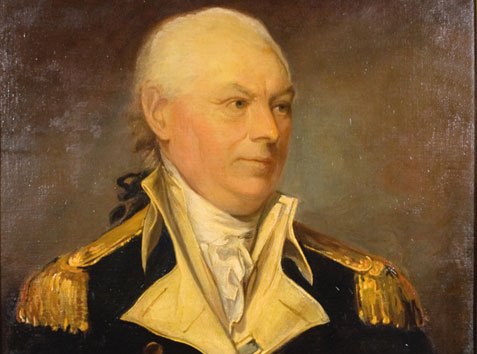
Who is Commodore Barry, and why is his name attached to Brooklyn’s oldest park, Commodore Barry Park, established in 1836 in the old neighborhood of Vinegar Hill?

John Barry was one of the Continental Army’s greatest sea captains, capturing British ships and even escorting American ally the Marquis De Lafayette back to France to drum up more financial support. He was also the very first commander in chief of the newly formed U.S. Navy.

The village of Brooklyn bought up this land in Vinegar Hill and officially called it City Park, giving the expanding young village its first real parkland. It was renamed, not surprising, due to its situation near the Brooklyn Navy Yards in 1951.

2) STATEN ISLAND 1836
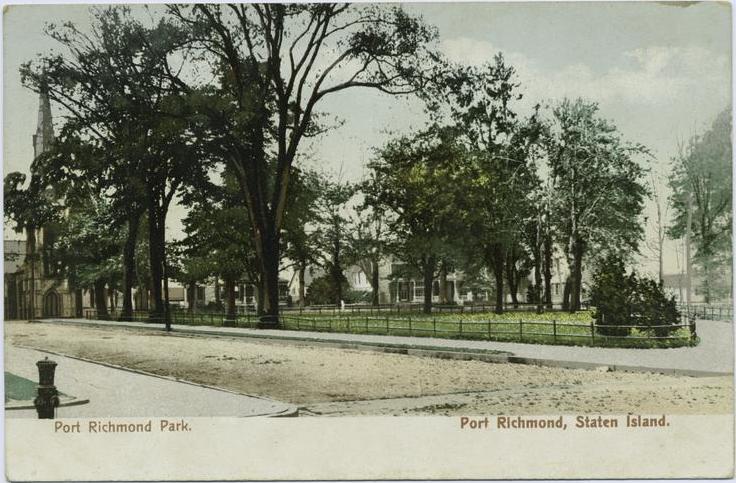
We can thank the well-organized community leaders of Port Richmond for Staten Island’s “park” (really more a common grounds), called Veterans Park today.

Port Richmond is on the Staten Island’s north shore; in fact Veterans Park isn’t too terribly far way from Liedy’s Shore Inn, the island’s oldest bar. Originally called Ryer’s Landing, the port town and ferry landing was carefully laid out by the town leaders in 1836 who built in space for a common area.

After Staten Island was incorporated into New York in 1898, the park was given the official name Port Richmond Park but was changed again 40 years later to its present moniker in honor of American war veterans.

1) MANHATTAN
The very first park in New York is appropriately near one of the very first spots of European settlement — Bowling Green.

When exactly this incredibly busy land became a ‘park’ is somewhat unclear. Situated right in front of Fort Amsterdam, it was a cattle ground for the Dutch and a marketplace for the British. But throughout that history it was also a parade ground for the military and a common ground for gatherings and to air grievances, such as when disgruntled New Yorkers in 1776 ripped down the statue of King George that once stood here.

However, we get its name today from activities that began occurring here in 1733, when the ground here became an actual early version of bowling.

It was a magnet for wealthy New York townhouses until the grand trek northward began in earnest, leaving Bowling Green to suffer deterioration. A subway station opened underground here in 1905, but it wasn’t until the 1970s that it was restored to some sense of its original glory.