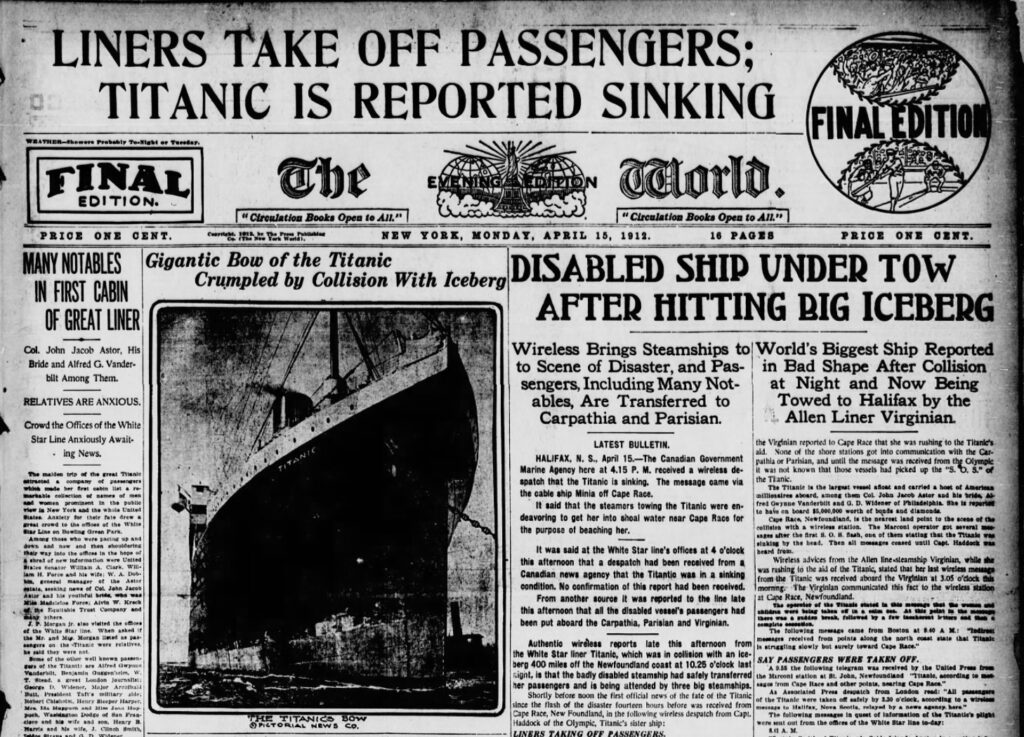
In the early morning hours of April 15, 1912. the White Star ocean liner RMS Titanic struck an iceberg en route to New York City and sank in the Atlantic Ocean.
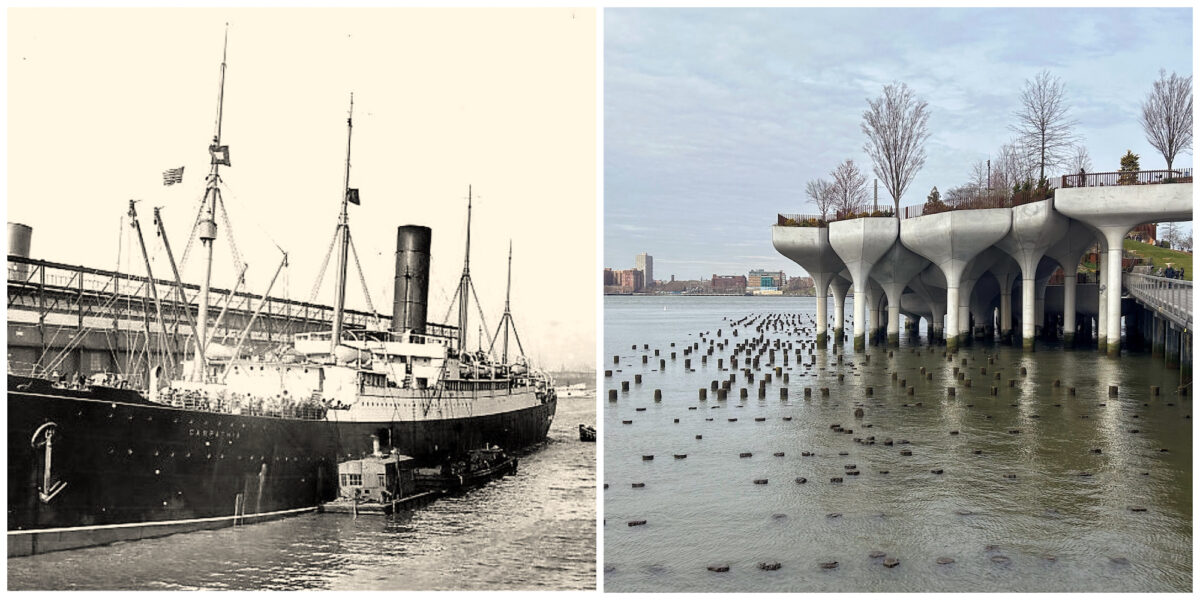
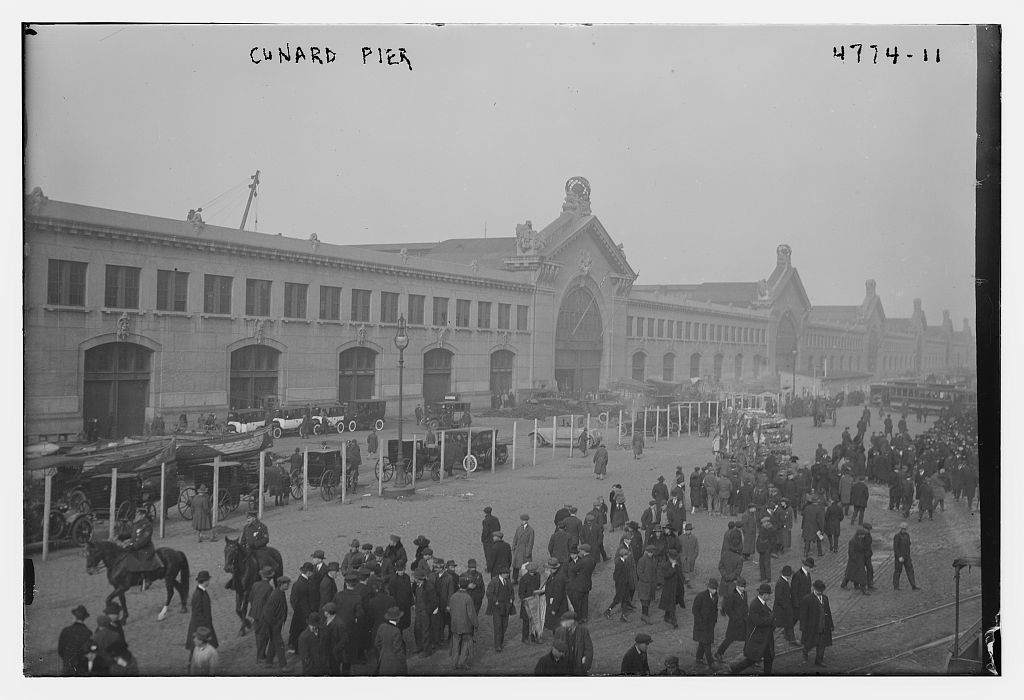
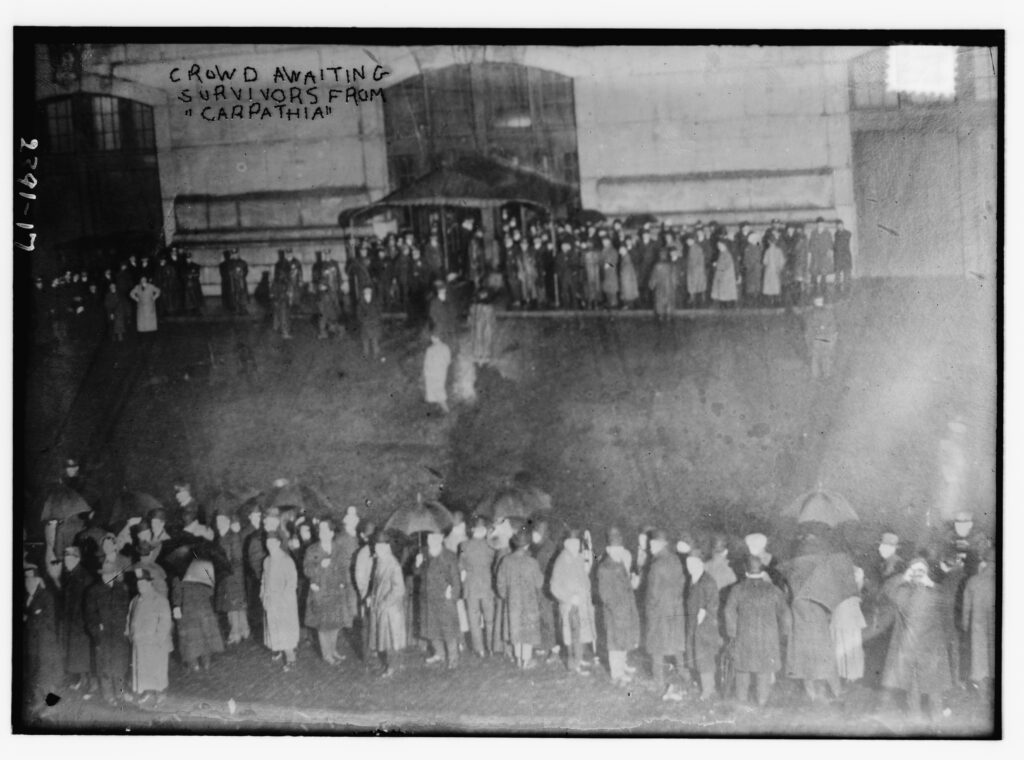
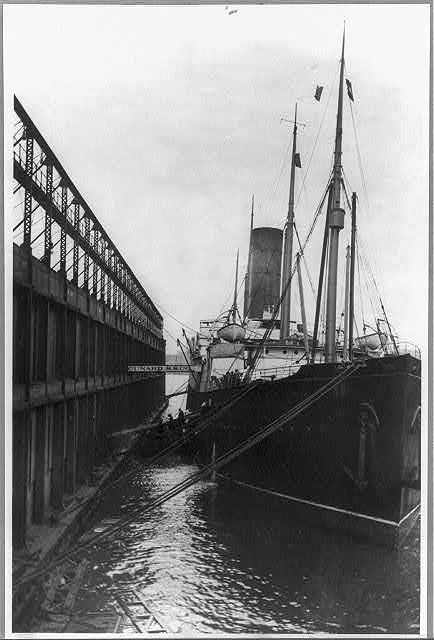
Survivors were rescued by the Cunard liner Carpathia and brought to their berth at Pier 54 at the Chelsea Piers.
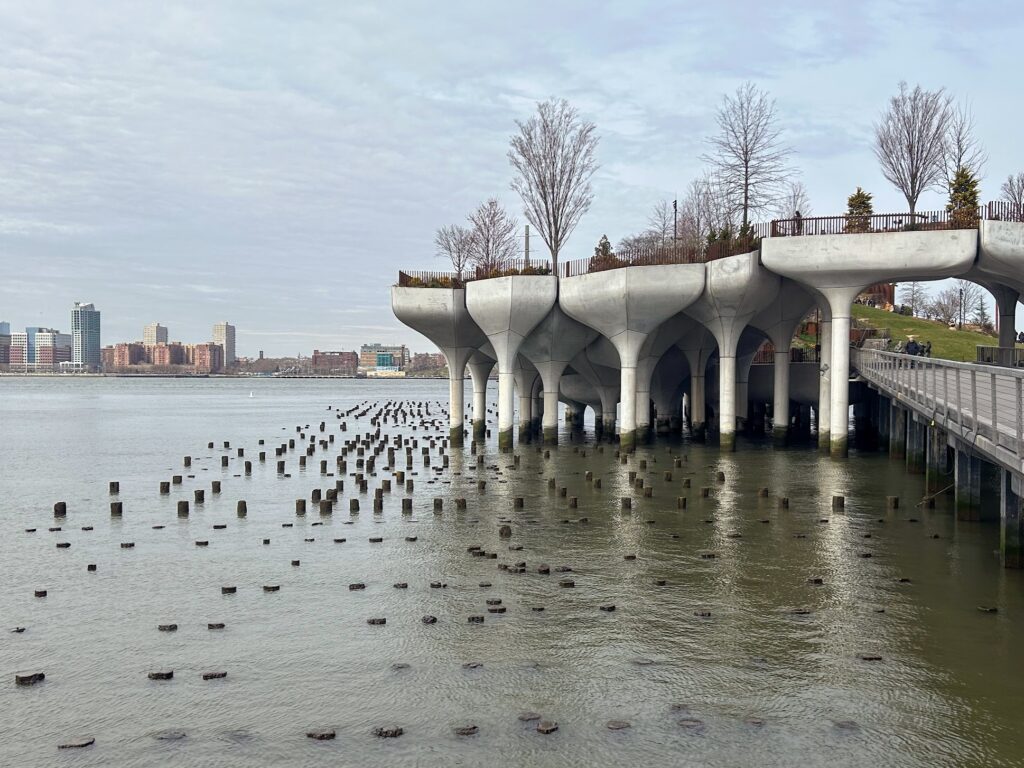
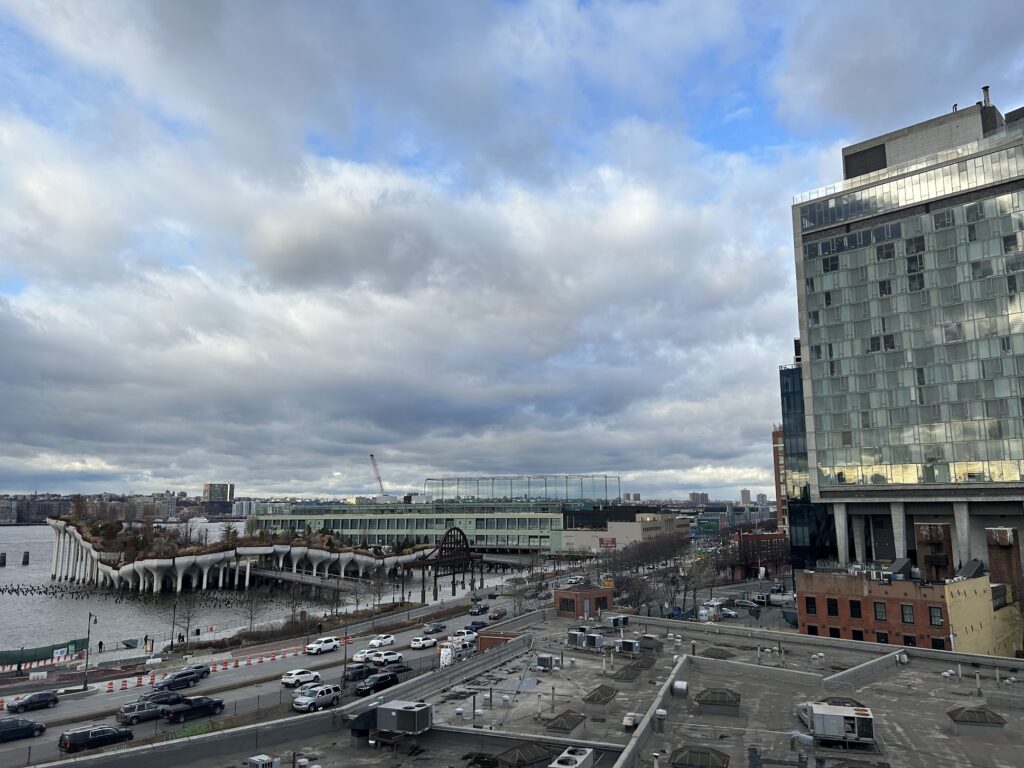
On that very spot today, a fanciful waterfront development juts out into the Hudson River, a place called Little Islandwhich opened in 2021. This recreational oasis will draw thousands of people, New Yorkers and tourists alike, this spring and summer.
But on the southern side of Little Island, peering out of the water, are dozens of wooden posts – these are the remains of the former Pier 54.
And it was on this pier, on April 18, 1912, that survivors of the Titanic disembarked and touched land.
The remains of Pier 54 jut out from the water on the southern side of Little Island. Photo by Greg Young
There are many, many books and documentaries on the subject of the Titanic’s sinking. (And of course a very popular movie.) But in this episode, Greg and Tom look at the story from the perspective of New York City – from the famous New Yorkers who were passengers to the experiences of New Yorkers anxiously awaiting news in those horrifying days following the ship’s sinking.
This is the story of the places that figured into the aftermath and the story of how New York memorialized those lost to the tragedy.
And in the end they return to Little Island and to the ghost of Pier 54, the place where this disaster became reality for most people.
Where survivors were greeted with joy and where many hundreds of people faced the reality that their loved ones were never coming home.
LISTEN NOW: THE TITANIC AND THE FATE OF PIER 54
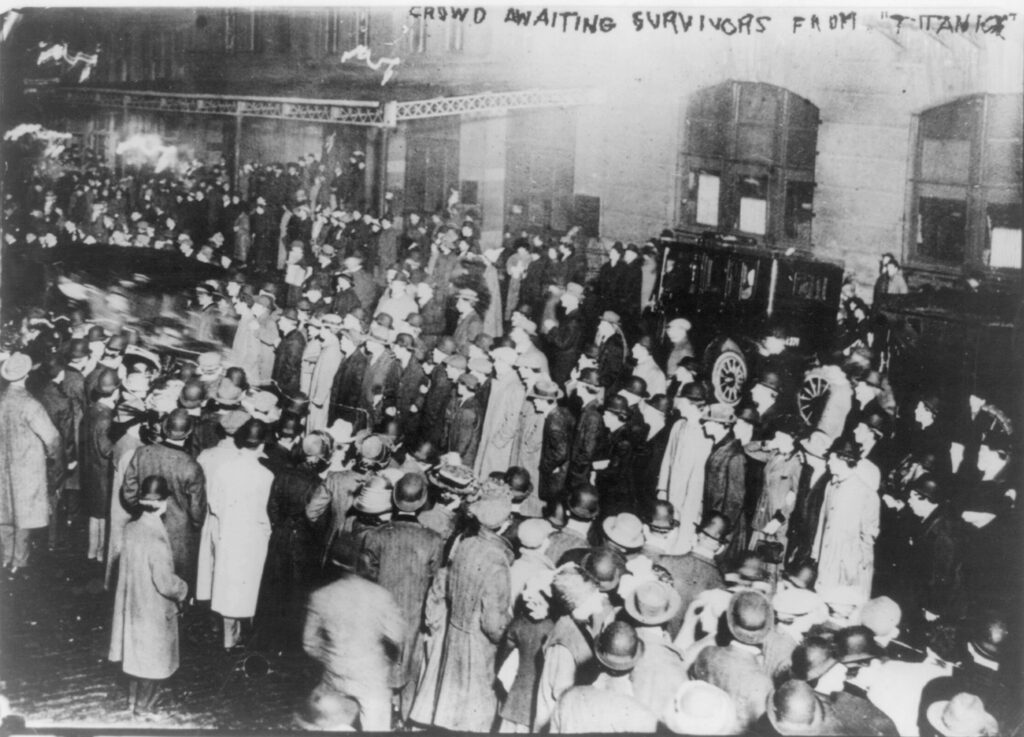
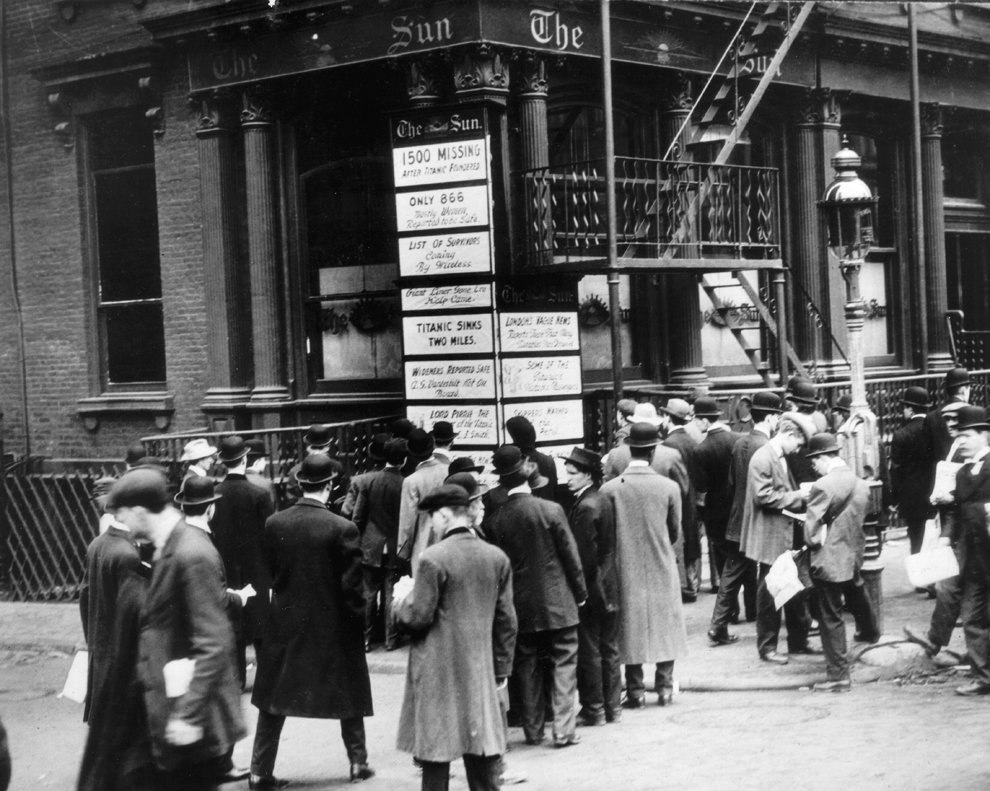
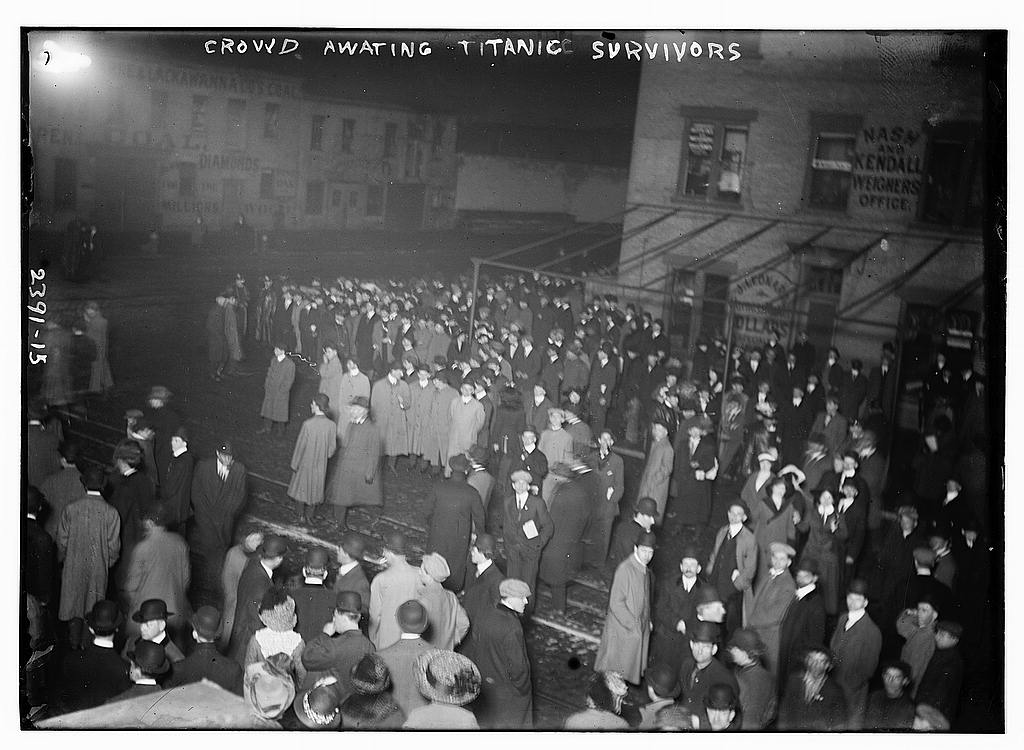
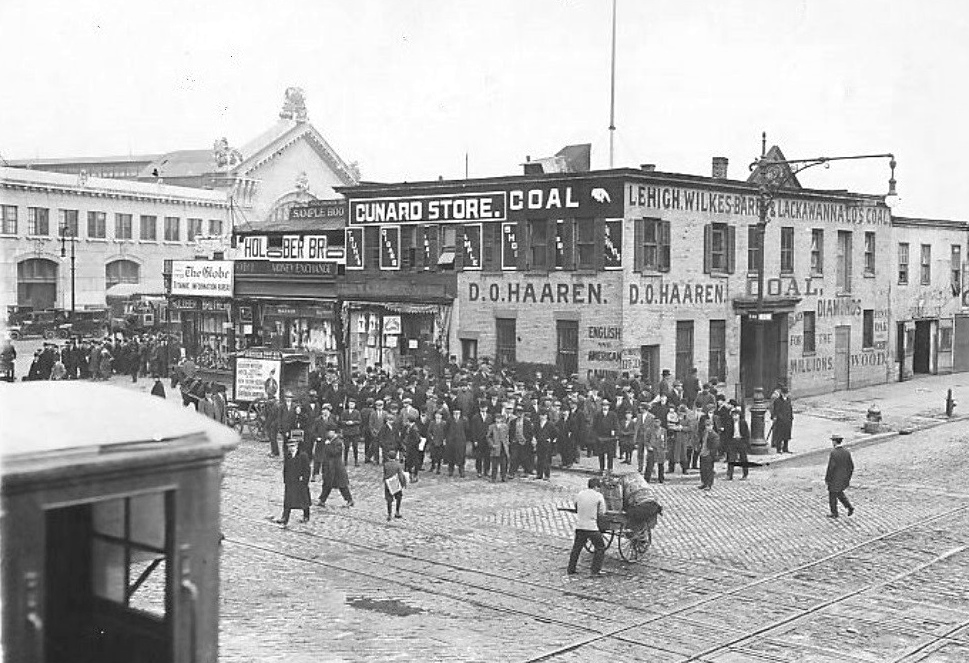
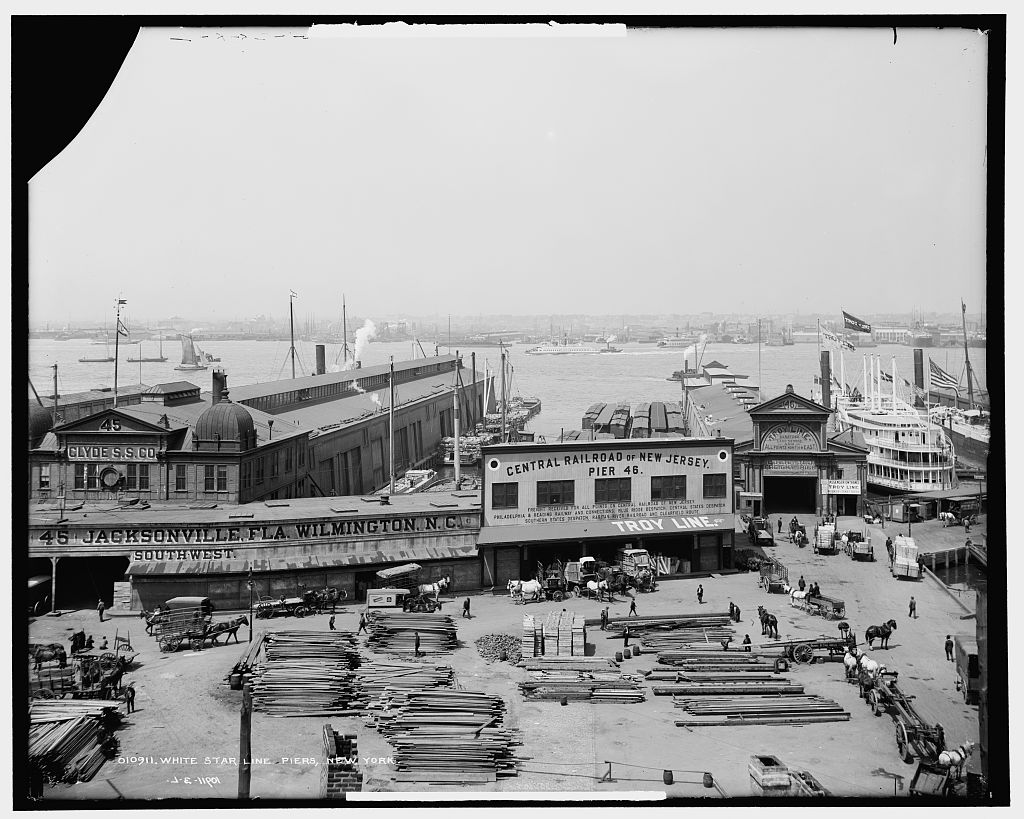
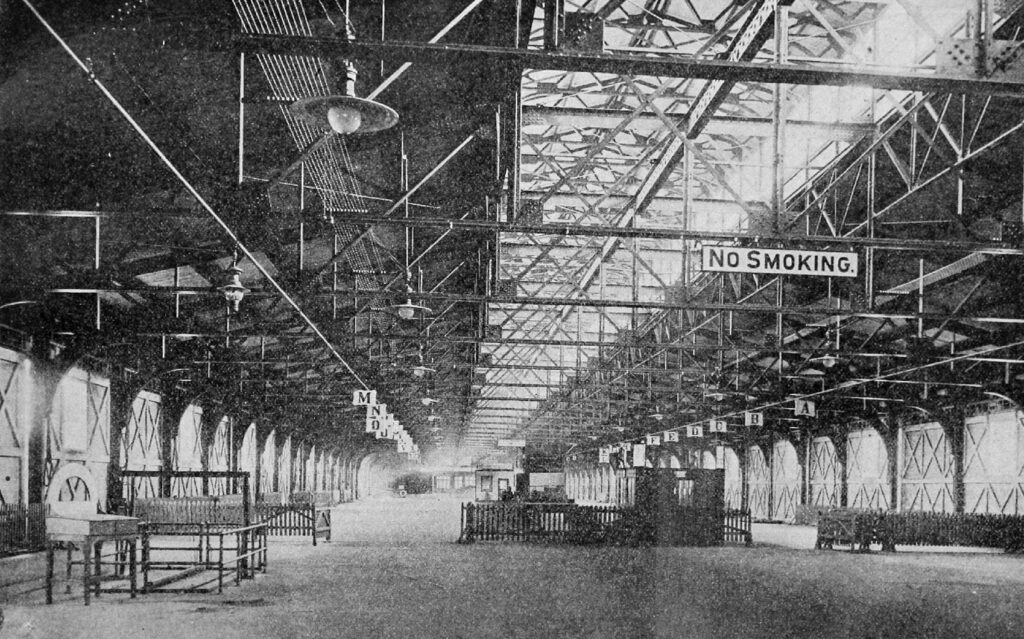
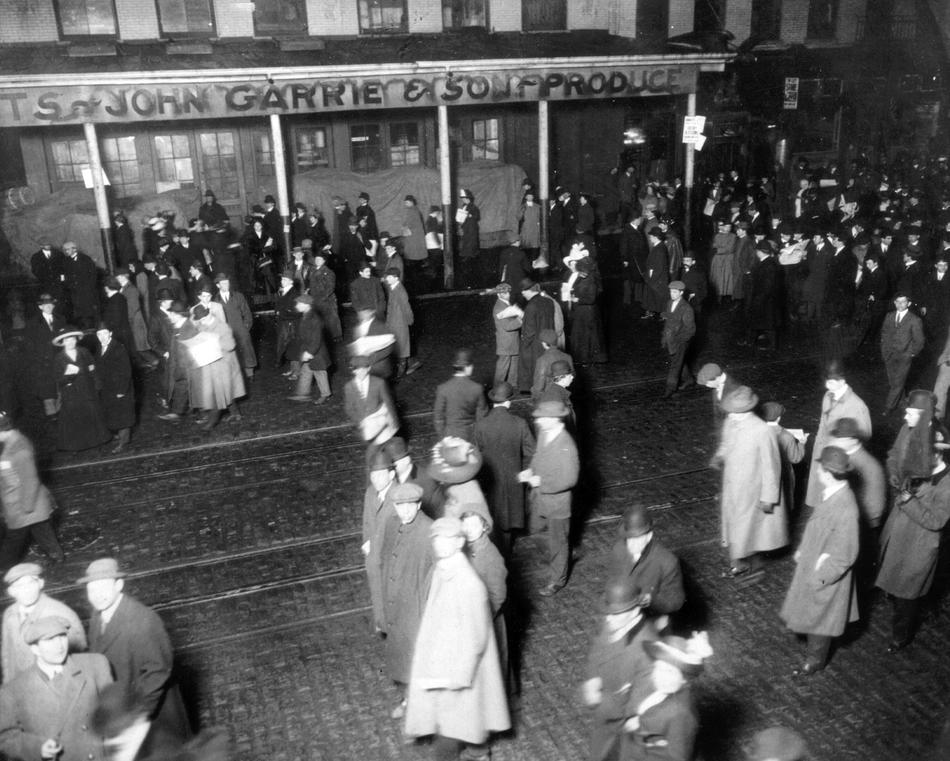
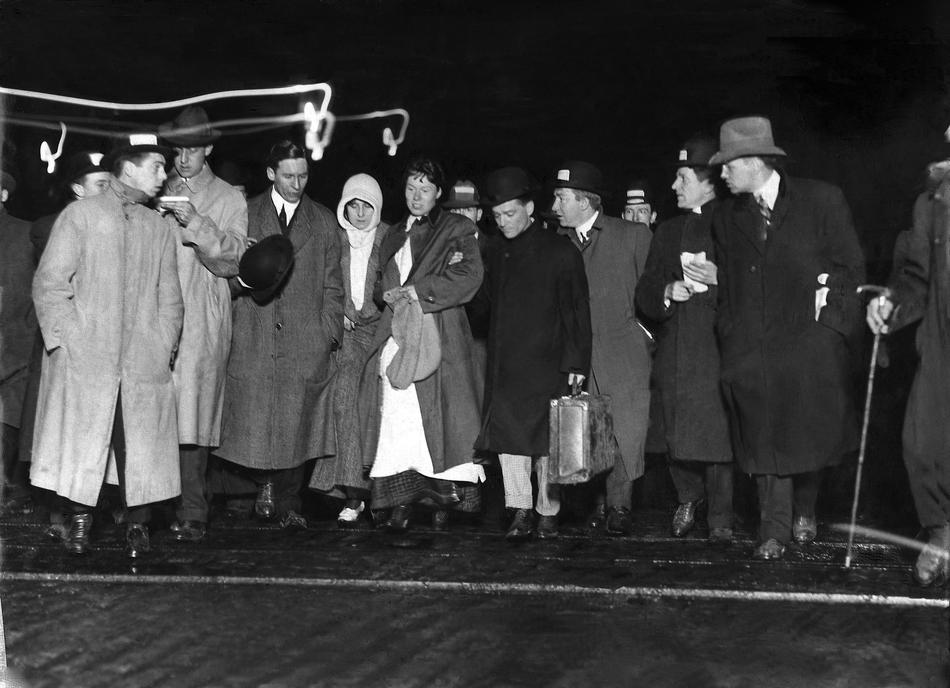
Little Island and the Meat Packing District. Photo by Greg YoungPier 54, 1912Many people found out about the Titanic disaster from newspaper bulletin boards where breaking news was posted.The streets were lined with people that night at Pier 54.The morning of April 19, 1912 — Crowds gather at the Cunard Pier 54 (at 14th Street) where the Carpathia landed with survivors of the Titanic disaster the previous evening. News accounts say there were up to 40,000 people gathered at the pier waiting for Carpathia on April 18. (Picture courtesy AP)The berth of the White Star lineInside Pier 54, the Cunard line, in 1912
The Carpathia at Pier 54
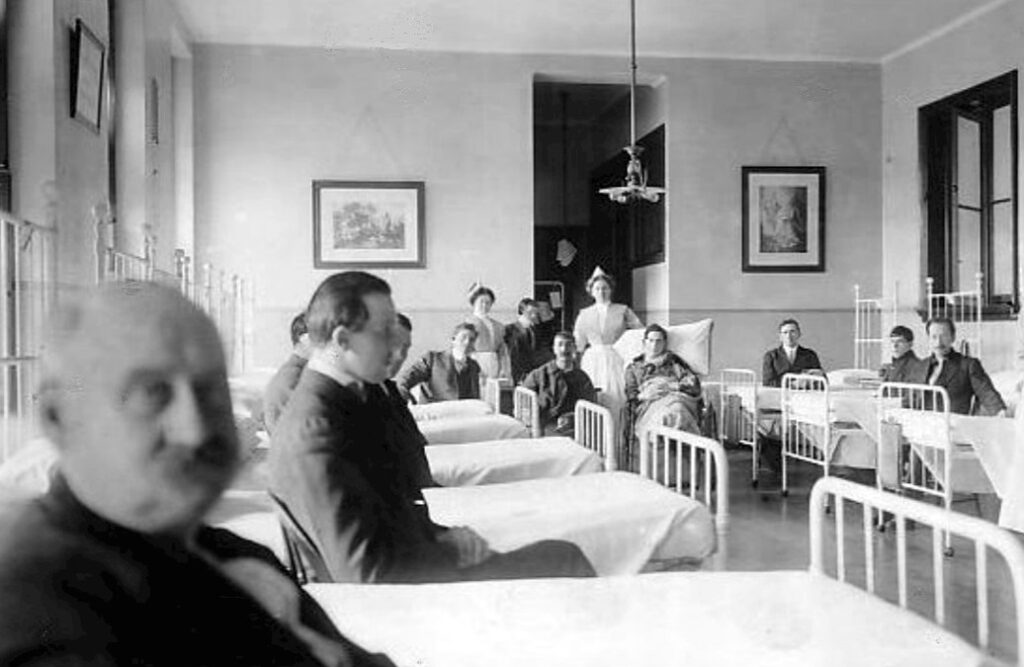
Titanic survivors are treated at St. Vincent’s Hospital (Picture courtesy AP)
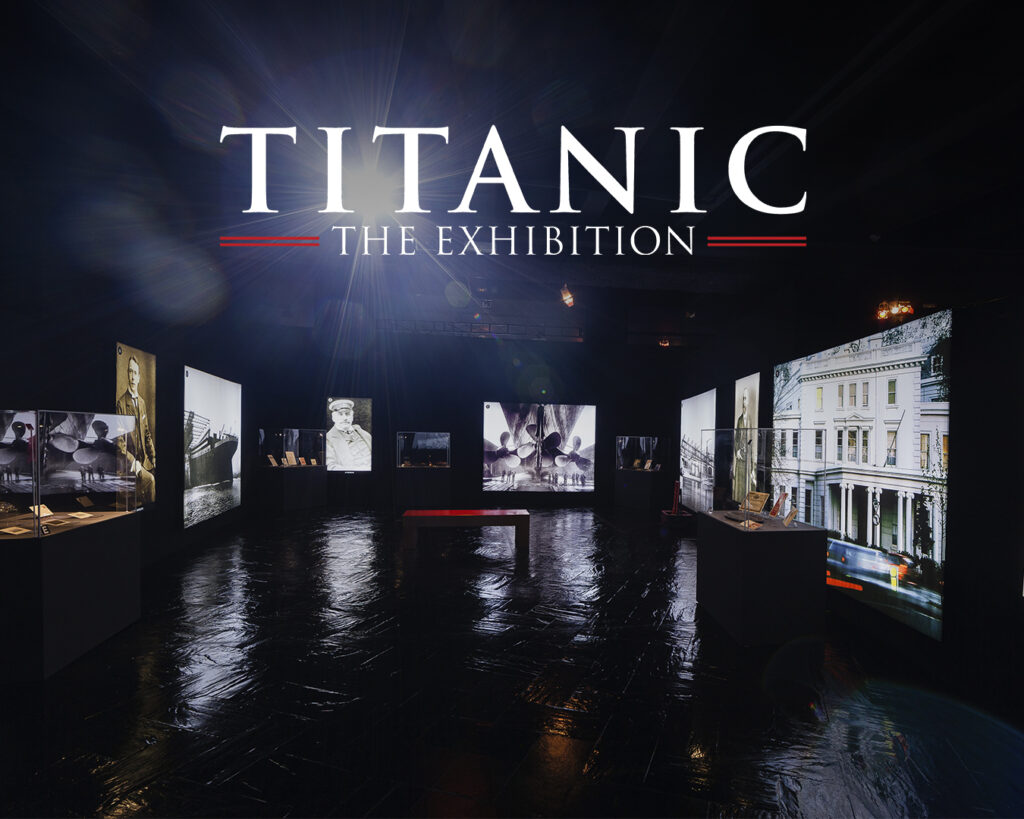
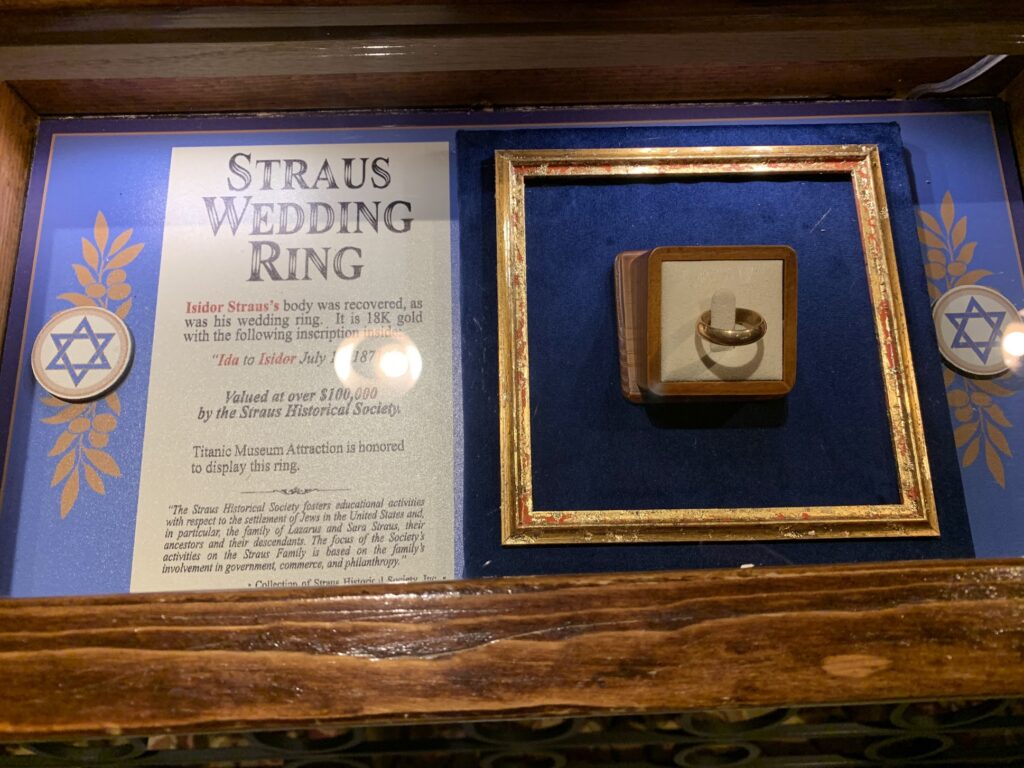
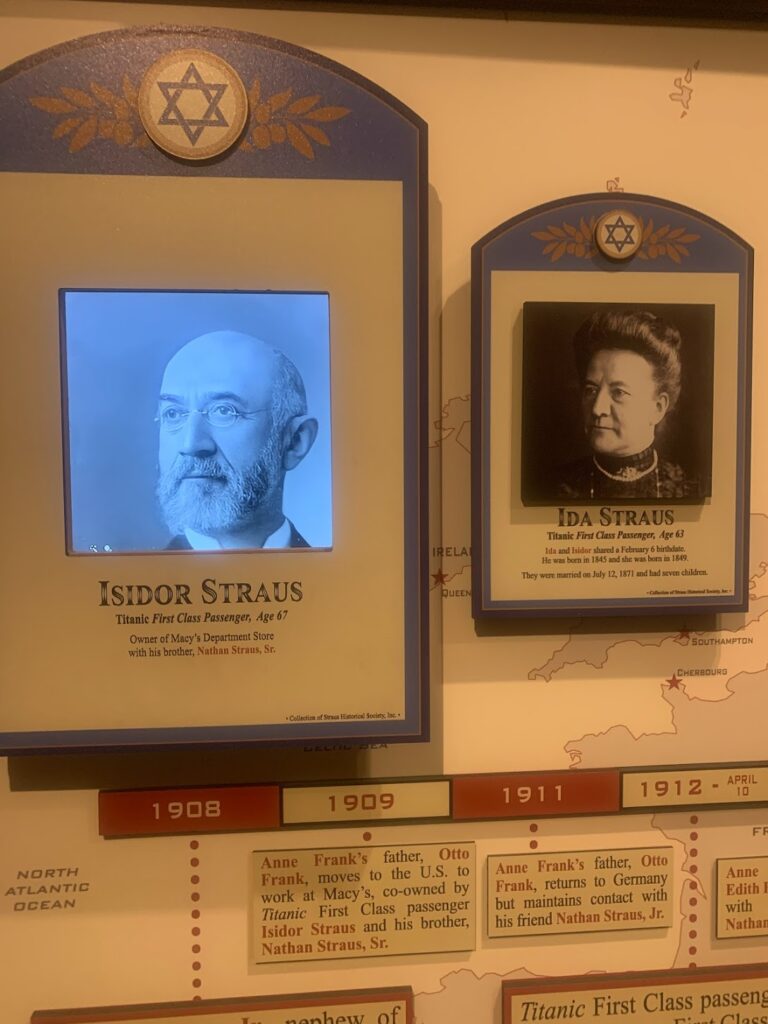
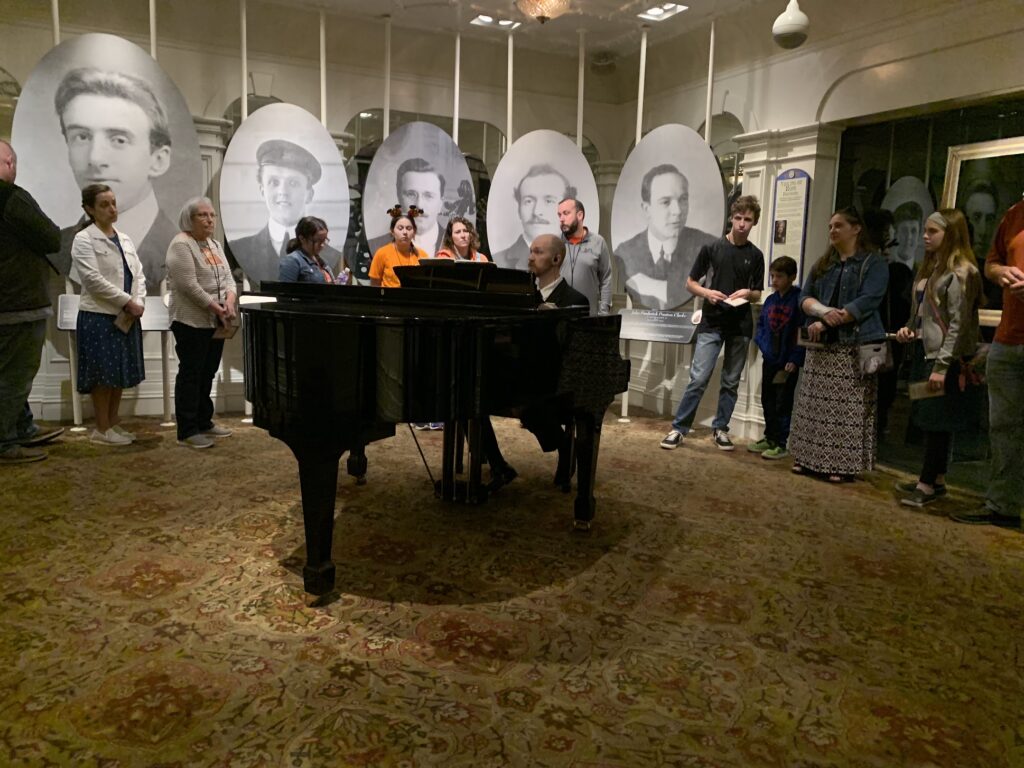
As Tom mentioned on the show, you can visit Titanic: The Exhibition in the same building where Macy’s opened and where Titanic passenger Isador Straus (with his brother Nathan) got their start with the department store. For more information, visit their website.
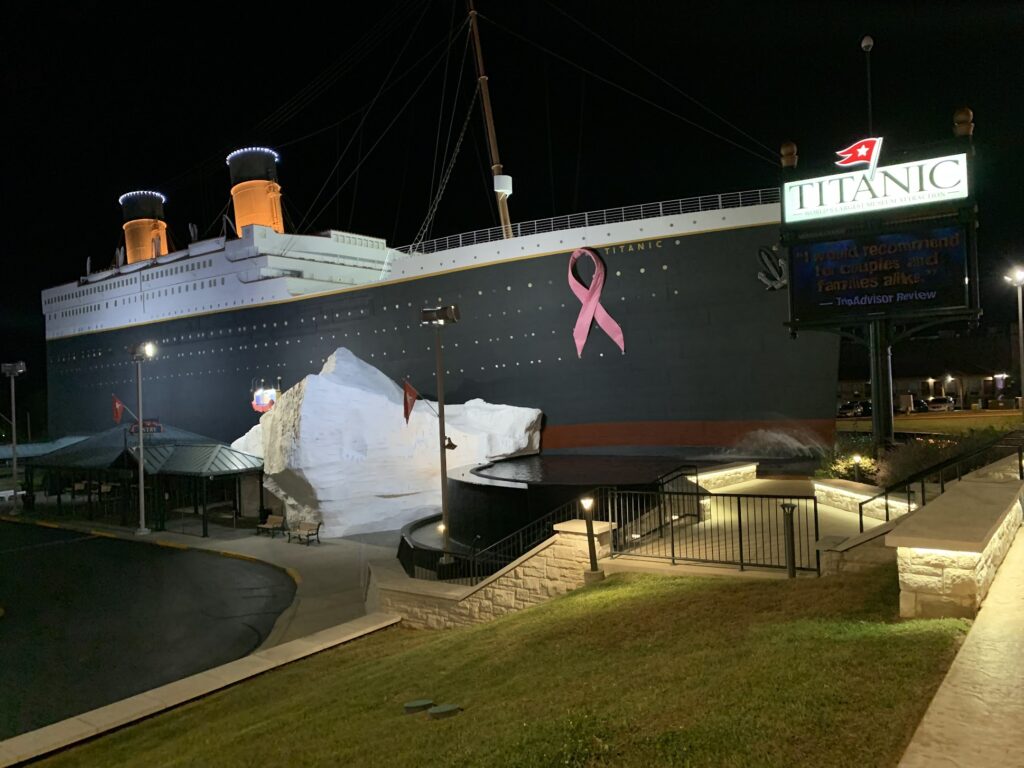
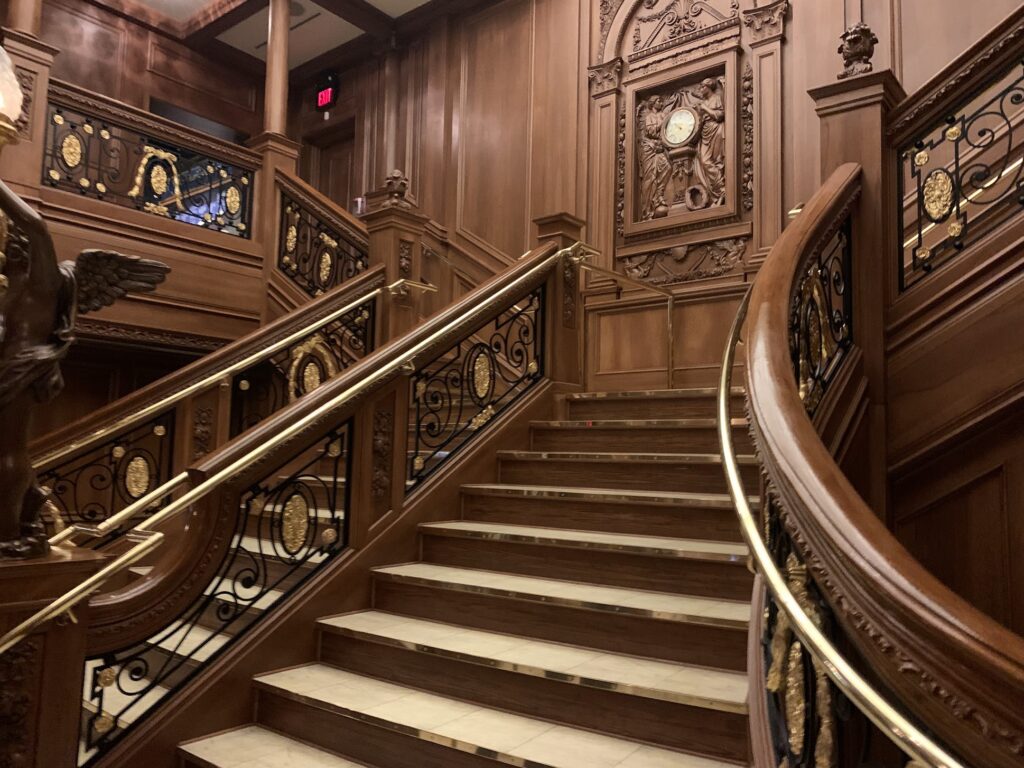
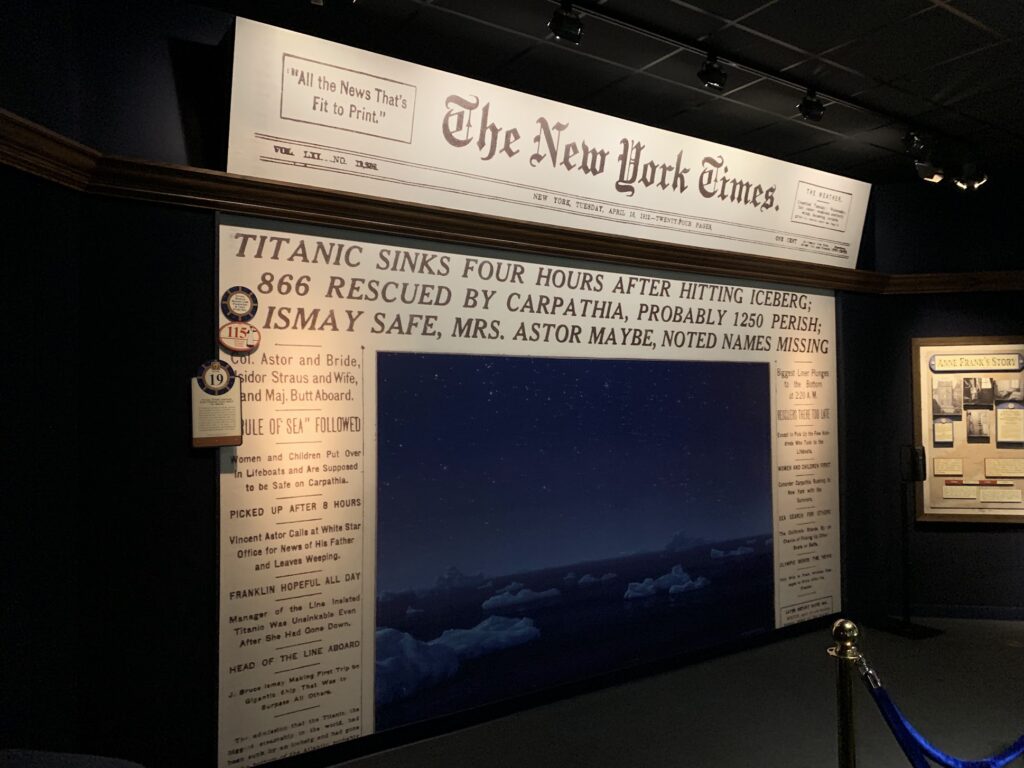
And for a more long distance experience, here are Greg’s pictures from the Titanic Museum in Branson, Missouri:
Clement Clarke Moore, the lord of Chelsea (the manor for which the neighborhood is named), lived a long and distinguished life as an educator and land developer, dying in 1863 at his home in Newport, Rhode Island.
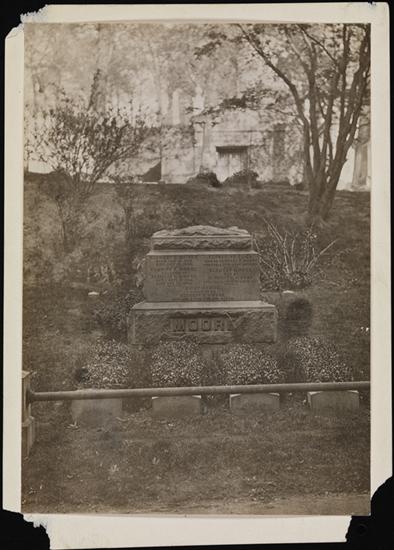
He was originally buried in the churchyard of St. Luke-in-the-Field (pictured below) in the area of today’s West Village.
What does all this have to do with Christmas you ask?
Moore was a revered scholar, former president of Columbia College (later Columbia University) and the developer of the General Theological Seminary on his old Chelsea property.
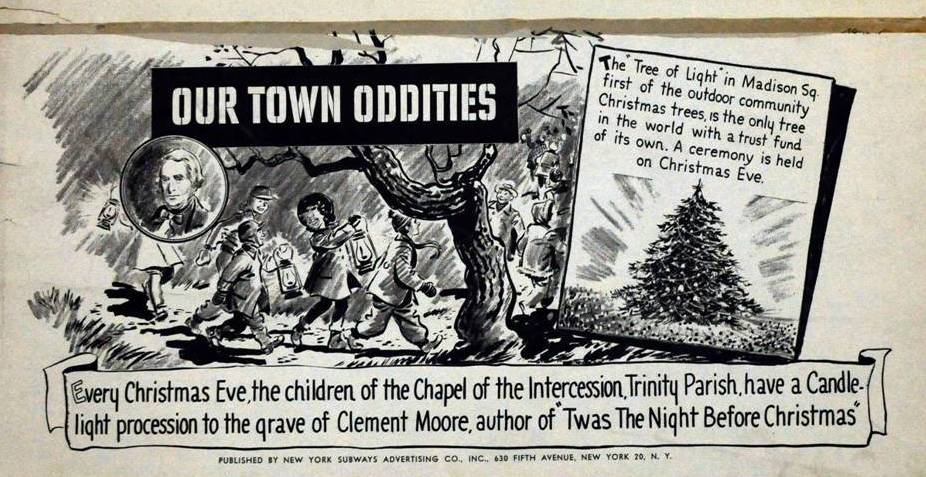
For well over one hundred years an unusual and special ceremony has taken place at Church of the Intercession, the house of worship which sits upon the grounds of Trinity Church Cemetery.
Church of the Intercession
The tradition was apparently initiated by a vicar at the chapel named Milo Hudson Gates.
First initiated in 1911, Gates, according to a 1933 New York Daily News report, “and his child parishioners trouped across to Trinity Cemetery to pray and sing at the grave where Dr. Moore’s bones have rested since they were removed from the vault in St. Luke’s Church on Hudson Street.”
From the 1914 New York Sun
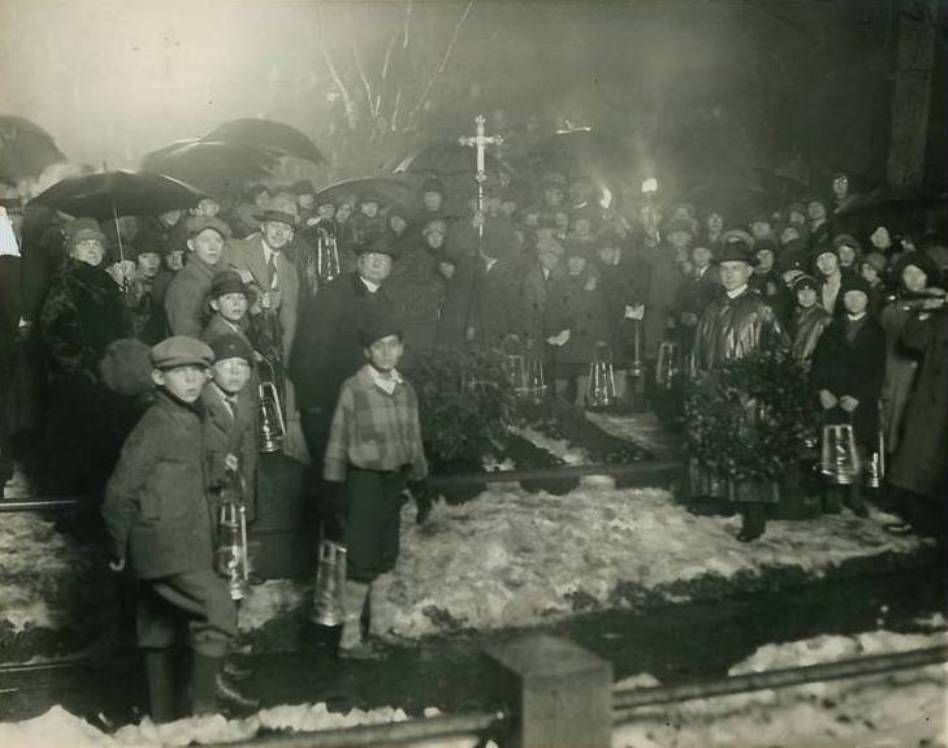
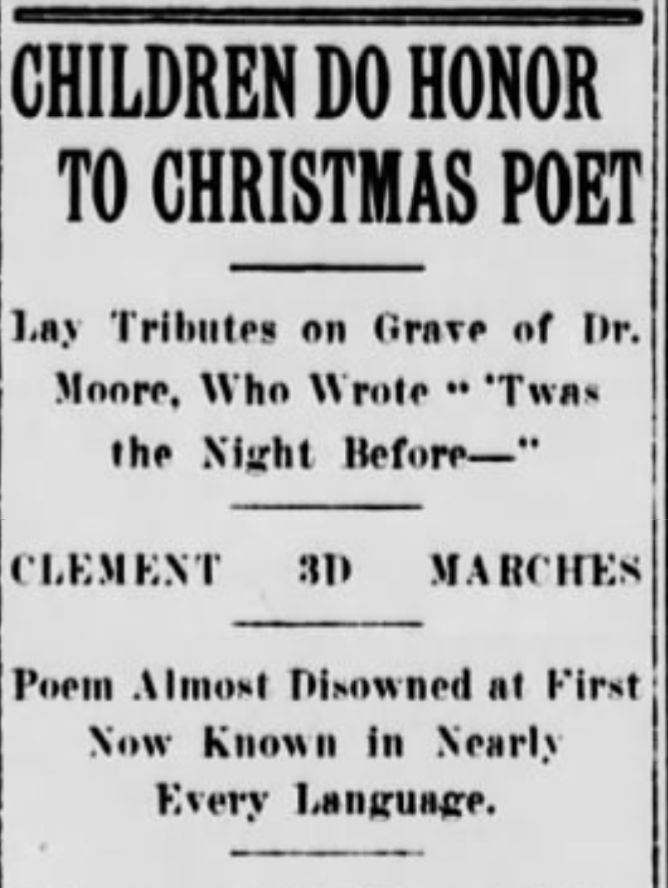
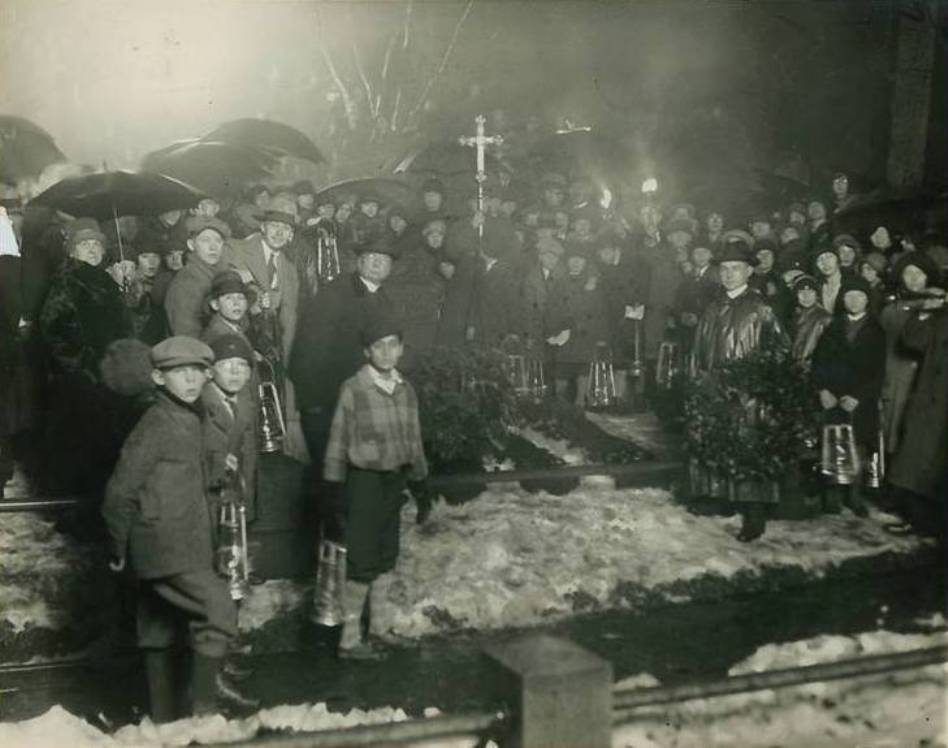
Hundreds of children, carrying lanterns and torches in the old days, have gathered around Moore’s gravestone and sang Christmas songs over the years.
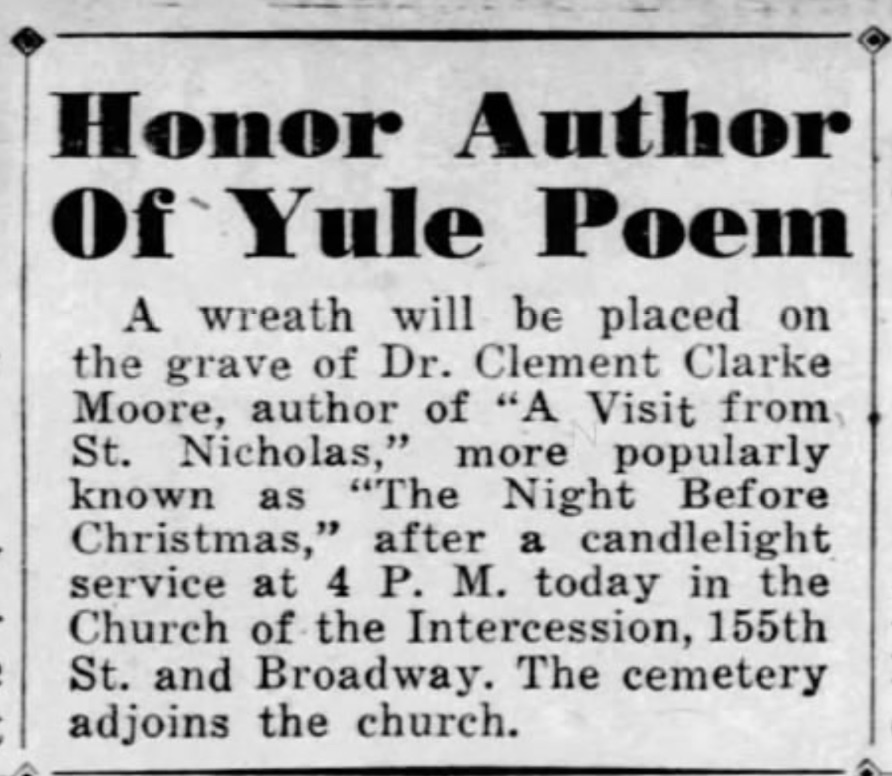
“Carols were sung and wreaths placed on the grave,” according to a 1919 report. The famous poem by Moore was then recited.
“His name was Clement C. Moore. His body sleeps beneath the Christmas trees that grow in Trinity Cemetery.” [December 23, 1918]
Below: Children surrounding the grave of Moore’s, sometime in the 1920s or 1930s (according the church website).
This tradition has survived into modern day with some interesting variations.
New York Daily News 1944
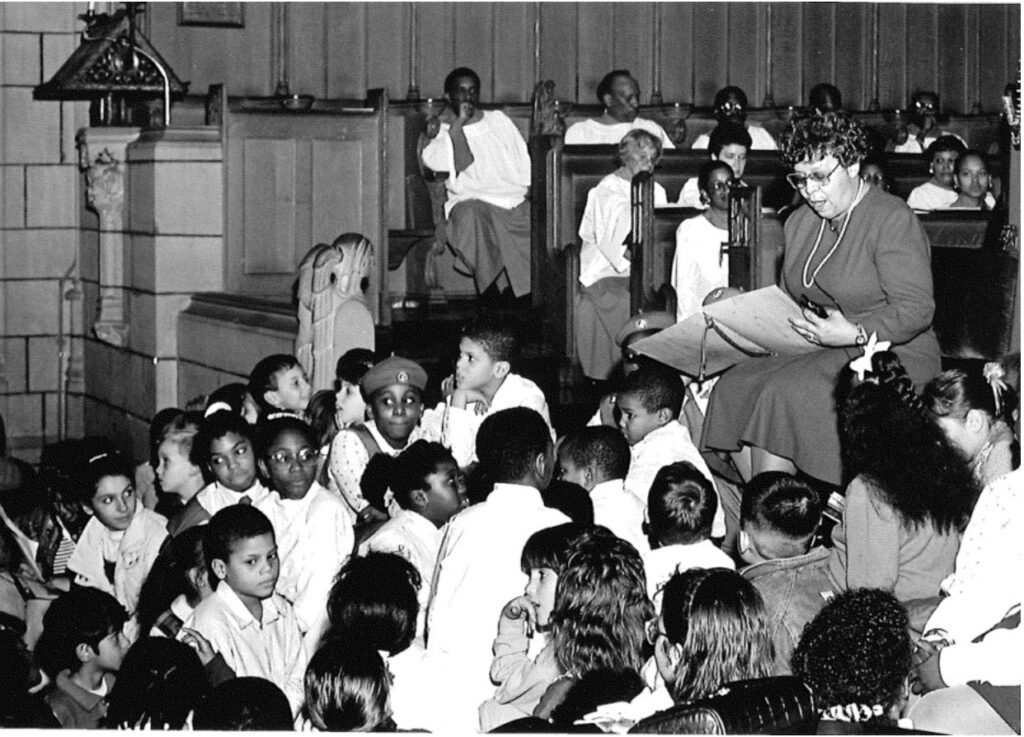
Frequently a person dressed as Saint Nicholas (the saint, not the Santa) leads the procession. In recent decades, a person of some renown reads the poem such as in 2003 when basketball great Isiah Thomas brought Moore’s words to life.
Below: In 1990, Joyce Dinkins, wife of the mayor David Dinkins, was invited to read the poem.
THE 112TH CLEMENT CLARKE MOORE MEMORIAL CANDLELIGHT SERVICE WILL BE HELD ON DECEMBER 18, 2022 AT 3:00PM
This year, the poem will be read by The Rt. Rev. Catherine S. Roskam, former Suffragan Bishop of New York.
Following the service, we will process out to Trinity Cemetery to lay the wreath on Clement Clarke Moore’s grave and sing “Silent Night” at the Trinity Cemetery and Mausoleum.
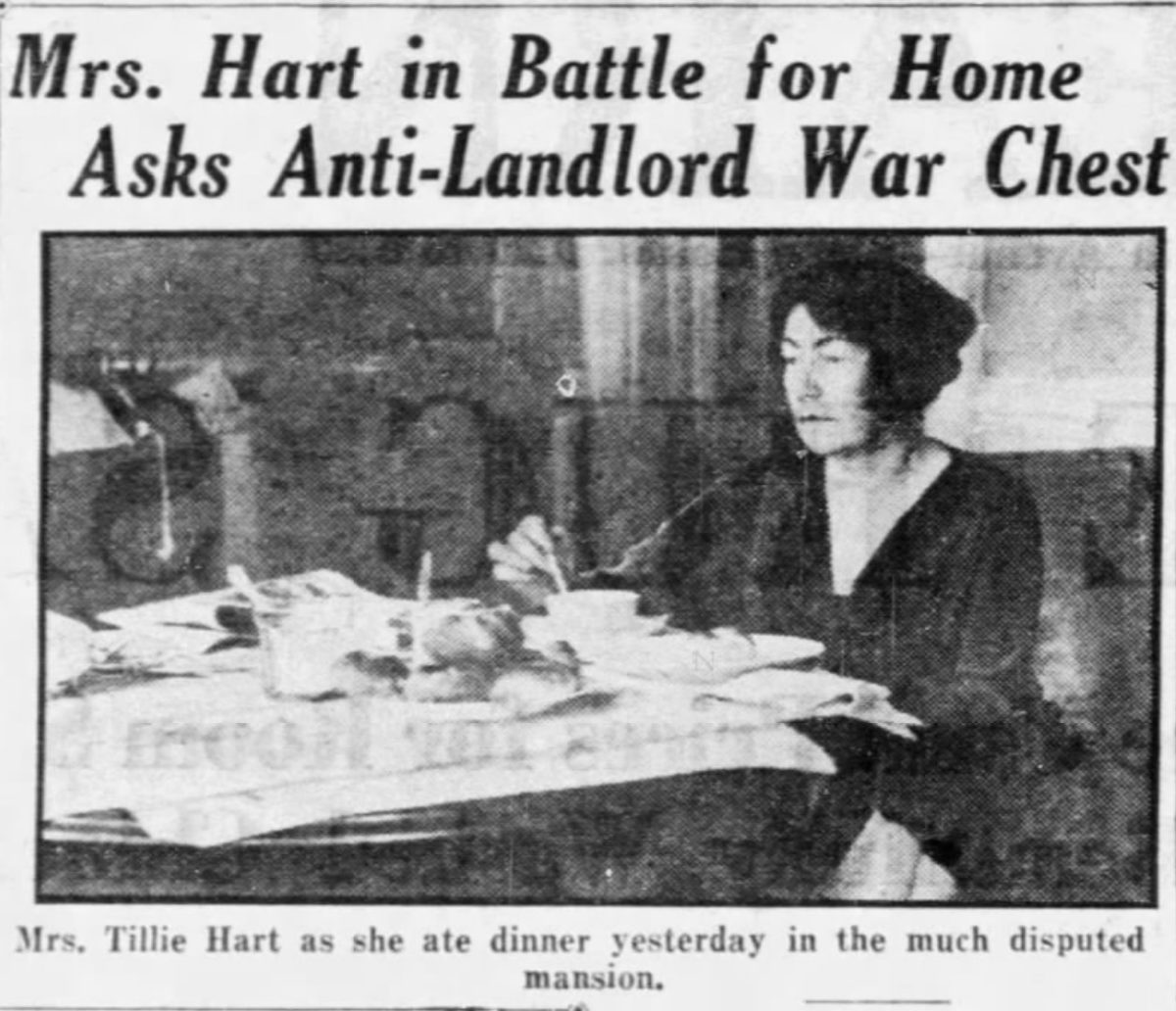
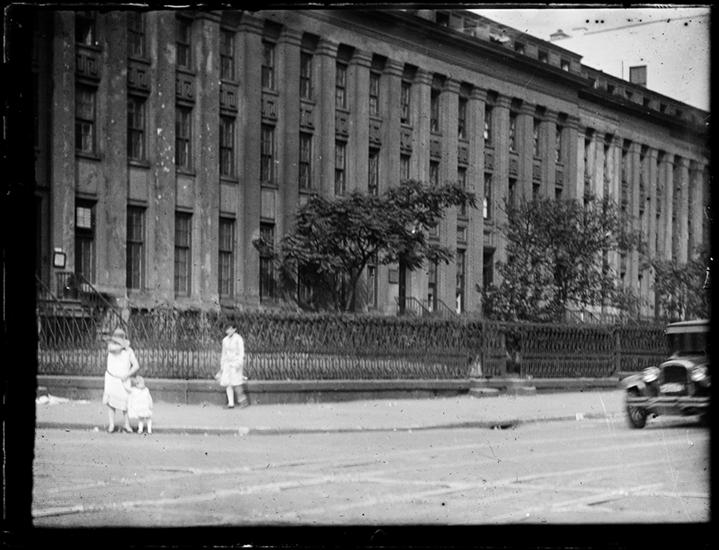
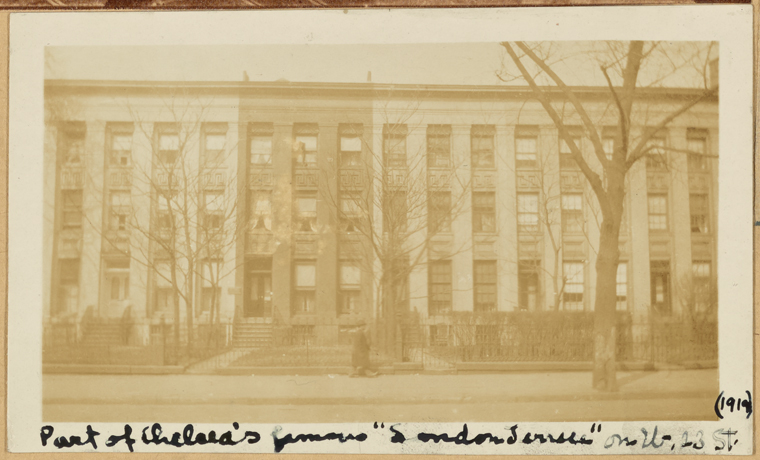
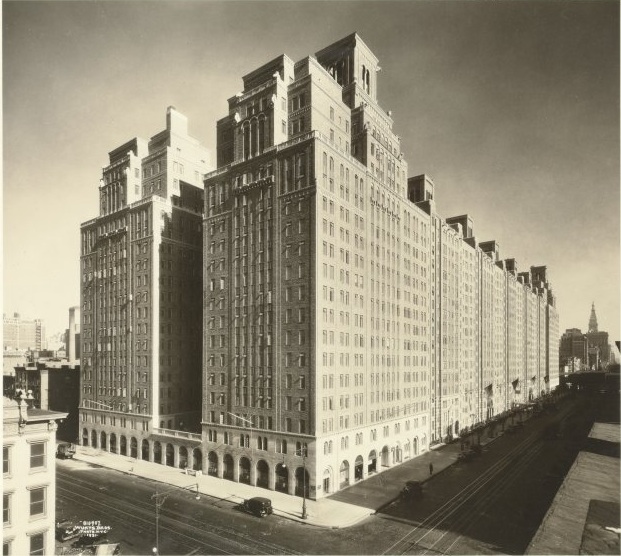
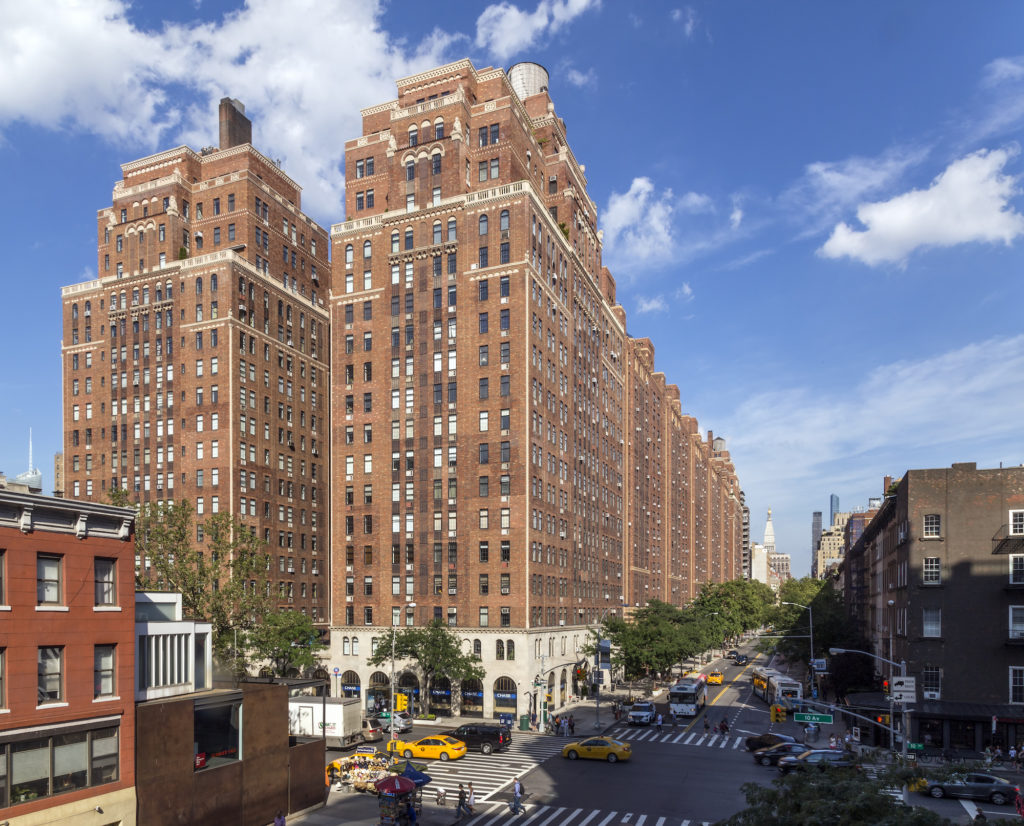
EPISODE 314 — London Terrace, an English-inspired apartment complex, is a jewel of apartment living in the neighborhood of Chelsea. In 1929, a set of unusual townhouses — also named London Terrace — were demolished to construct this spectacular set of buildings.
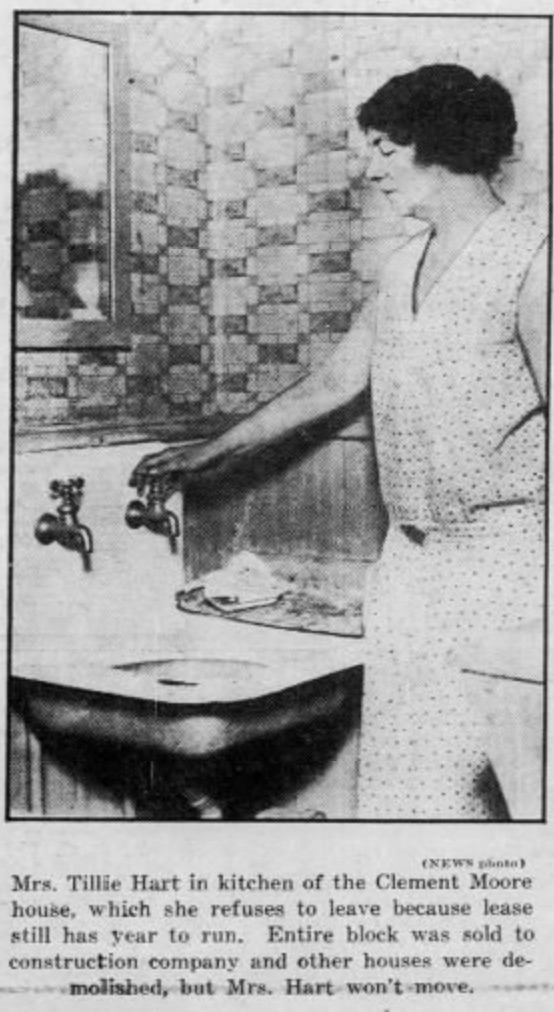
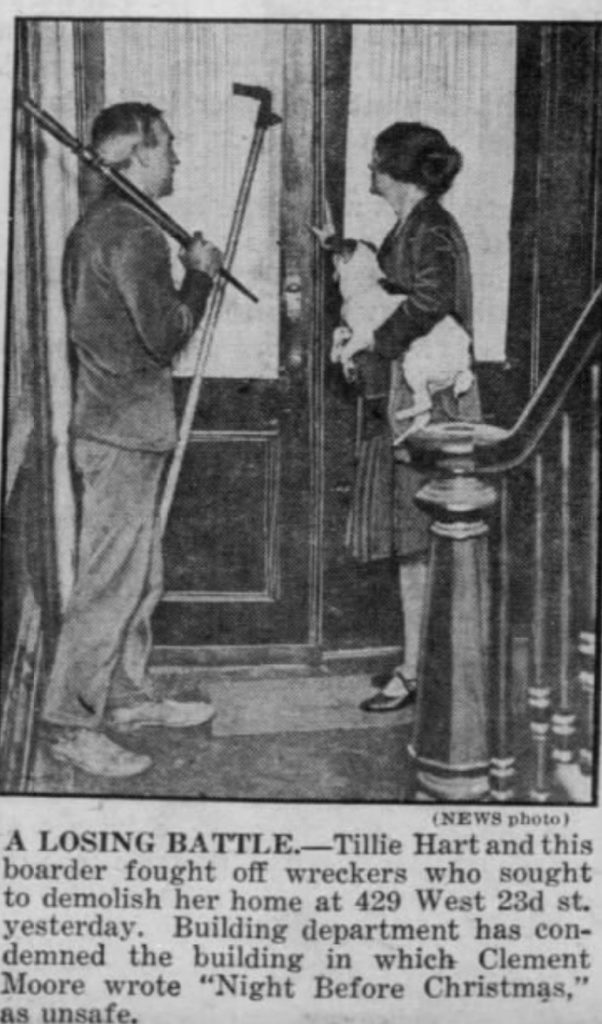
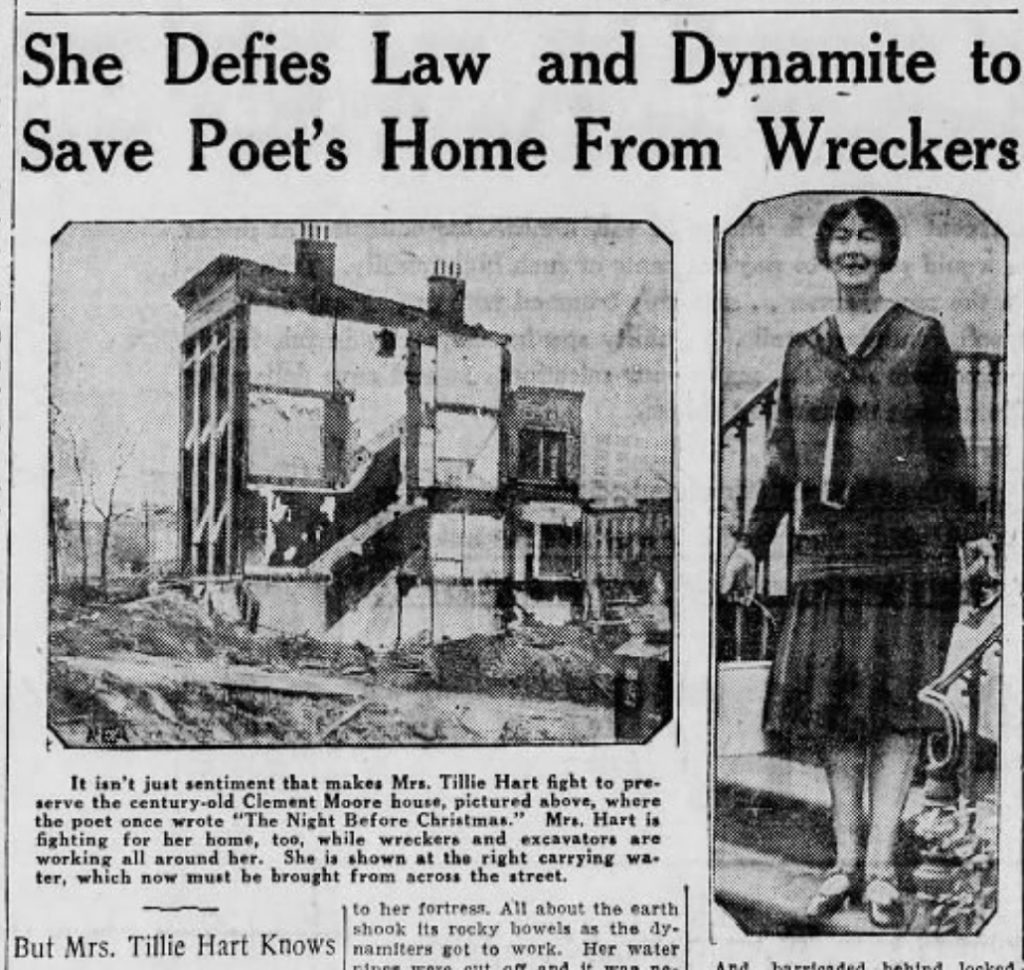
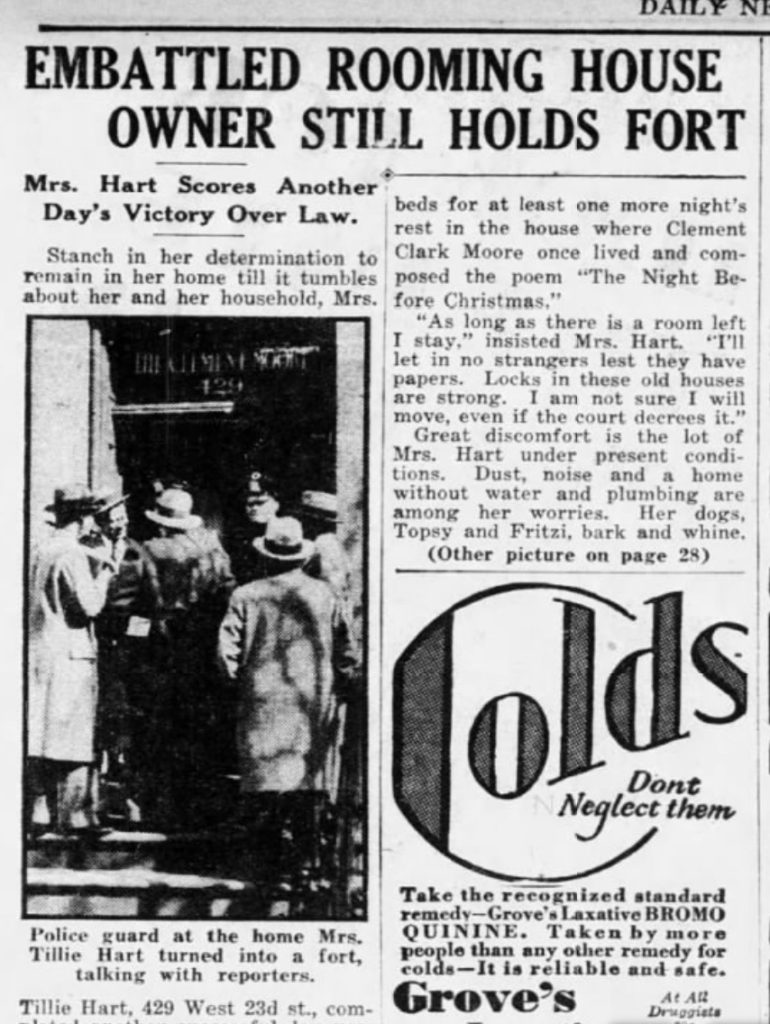
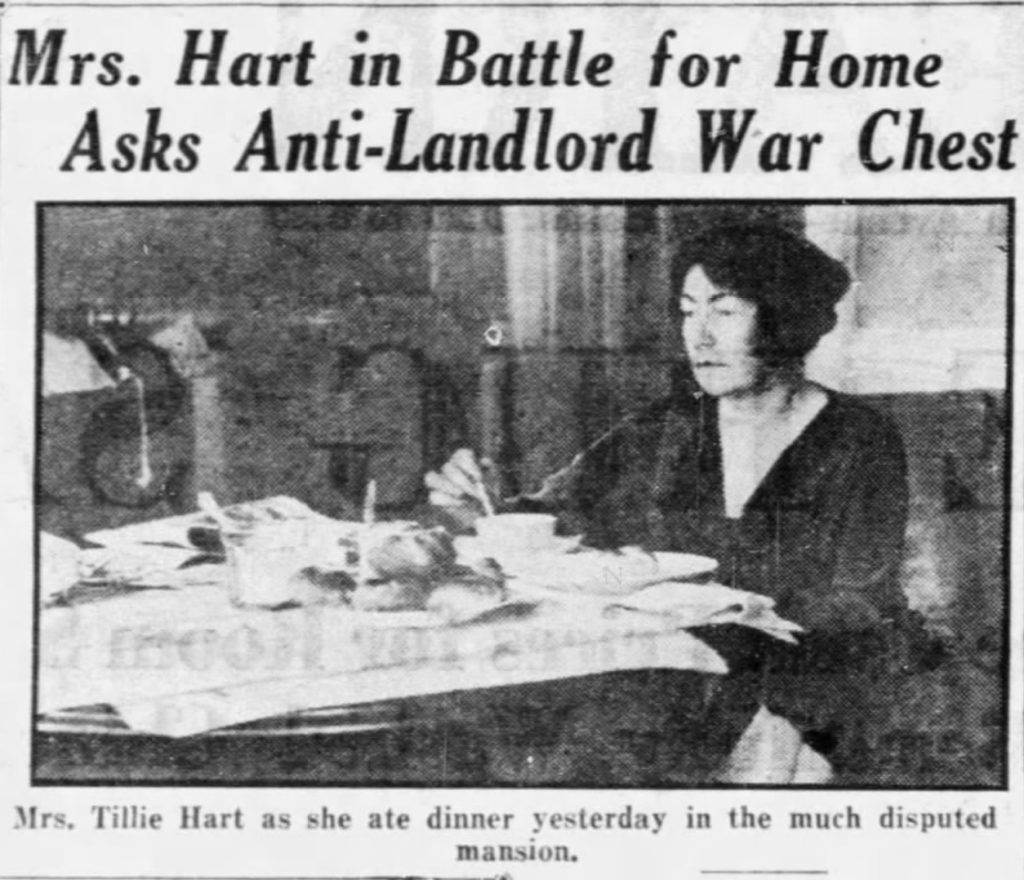
That is, all townhouses but one — the home of Mrs. Tillie Hart, a tenacious tenant who refused to leave.
In a real-life example of the movie Up, Hart’s tale is a battle between urban development and an individual’s right to their longtime home — a genuine David vs. Goliath tale on the landscape of New York City real estate.
In her favor — the support of the public and the regular attention of the New York Daily News. Will Hart prevail?
PLUS: A history of the Chelsea neighborhood and its ‘godfather’ Clement Clarke Moore.
LISTEN NOW — TILLIE HART, THE HOLDOUT OF LONDON TERRACE
15 London Terrace, 1916-21, Museum of the City of New YorkLondon Terrace 1919 / New York Public Library
Most newspapers — including the Daily News — erroneously reported that Clement Clarke Moore (reduced to “the poet”) lived in the home. It may have been Mrs. Hart herself who kept the fiction going in an effort to save her home.
New York Daily News, September 27, 1929New York Daily News, October 9, 1929An Owensboro, Kentucky, newspaper, Oct 14, 1929 — Most people erroneously reported that Clement Clarke Moore lived in the home.New York Daily News, October 17, 1929New York Daily News, October 20, 1929London Terrace in 1931.London Terrace 2017 / Acroterion/ Wikimedia Commons
The Bowery Boys: New York City History podcast is brought to you …. by you!
We are now producing a new Bowery Boys podcast every other week.
We’re also looking to improve and expand the show in other ways —
publishing, social media, live events and other forms of media. But we
can only do this with your help!
We are now a creator on Patreon, a patronage platform where you can support your favorite content creators.
Please visit our page on Patreon
and watch a short video of us recording the show and talking about our
expansion plans. If you’d like to help out, there are six different
pledge levels. Check them out and consider being a sponsor.
For the next several weeks, in addition to our new two-episodes-a-week schedules, all those who support us on Patreon will receive a BONUS EPISODE every other Sunday.
We greatly appreciate our listeners and readers and thank you for joining us on this journey so far.
PODCASTThe Chelsea Piers were once New York City’s portal to the world, a series of long docks along the west side of Manhattan that accommodated some of the most luxurious ocean liners of the early 20th century.
Passenger ocean travel became feasible in the mid 19th century due to innovations in steam transportation, allowing for both recreational voyages for the wealthy and a steep rise in immigration to the United States.
The Chelsea Piers were the finest along Manhattan’s busy waterfront, built by one of New York’s greatest architectural firms as a way to modernize the west side. Both the tragic tales of the Titanic and the Lusitania are also tied to the original Chelsea Piers.
But changes in ocean travel and the financial fortunes of New York left the piers without a purpose by the late 20th century. How did this important site for transatlantic travel transform into one of New York’s leading modern sports complexes?
ALSO: The death of Thirteenth Avenue, an avenue you probably never knew New York City ever had!
The offices of Steamship Row near Bowling Green and Battery Park. With the rise of ocean travel in the mid 19th century, passengers went to these buildings to make voyage accommodations.
These were later replaced with more lavish offices, many of which are still around in the neighborhood today.
Courtesy Museum of the City of New York
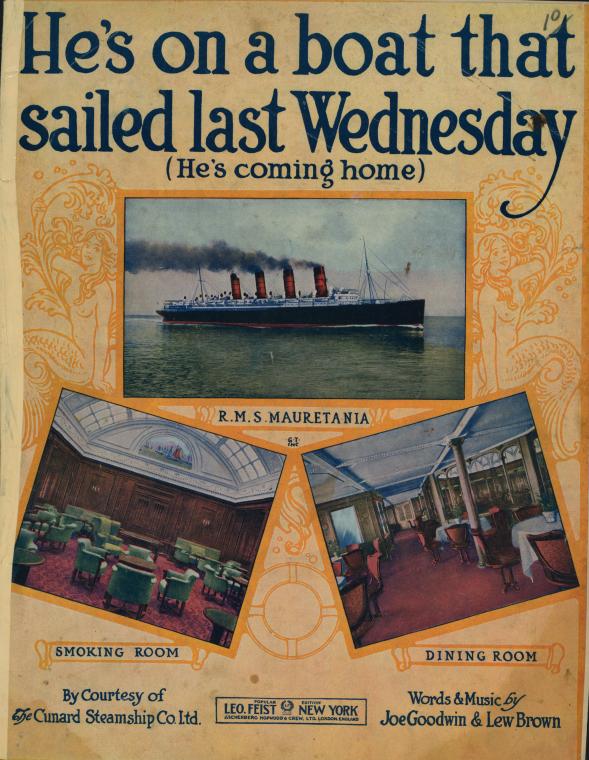
A jaunty song written for the Cunard ship Mauretania, sister ship of the Lusitania.
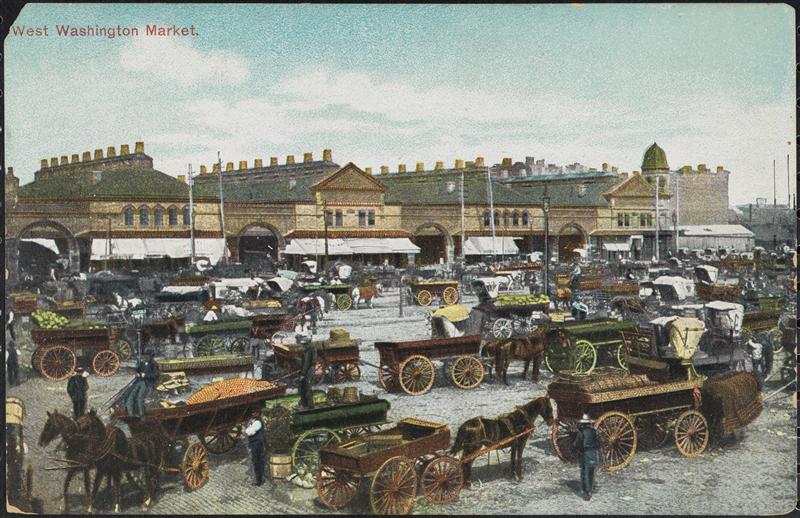
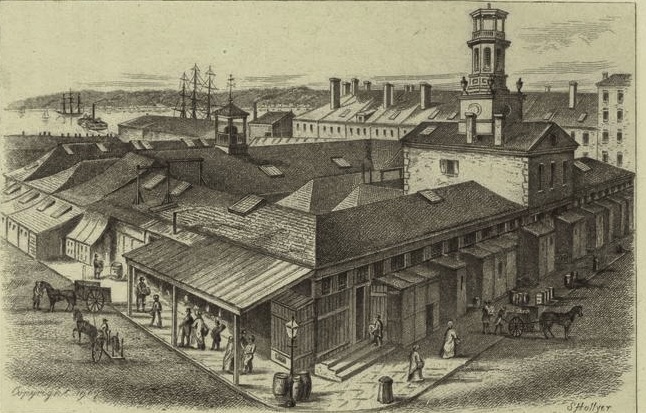
The crazy scene out in front of West Washington Market in 1905. The market was built well before the Chelsea Piers and helped preserve a bit of 13th Avenue when most of that street was eliminated for the Piers’ construction.
Courtesy Museum of the City of New York
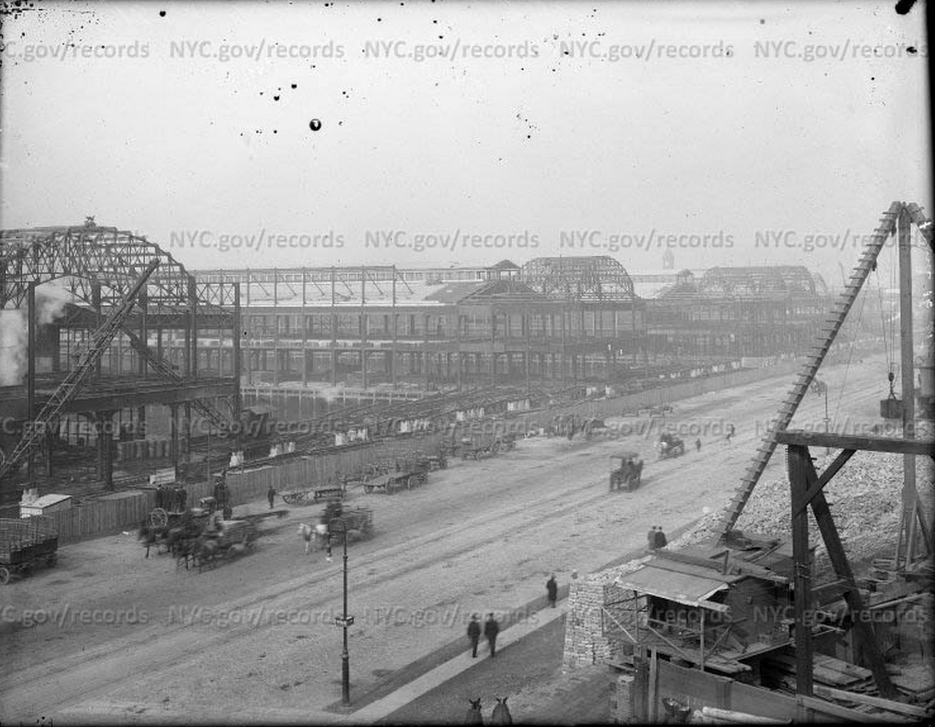
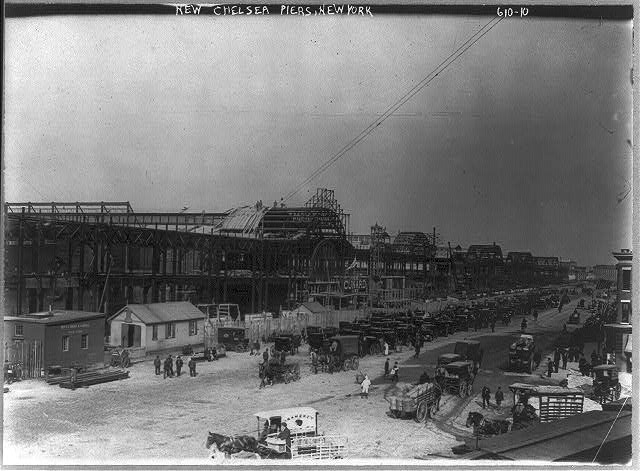
Construction of the Chelsea Piers complex in progress, looking northwest from 16th Street, 1910.
Courtesy New York Department of Records
Courtesy Library of Congress
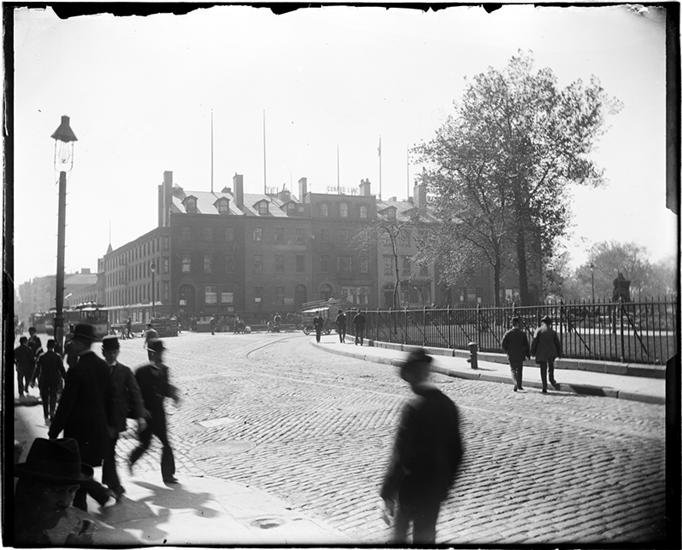
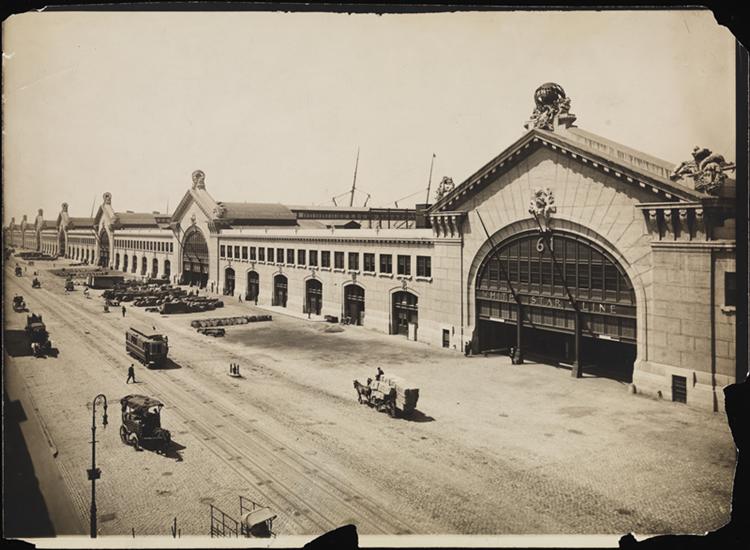
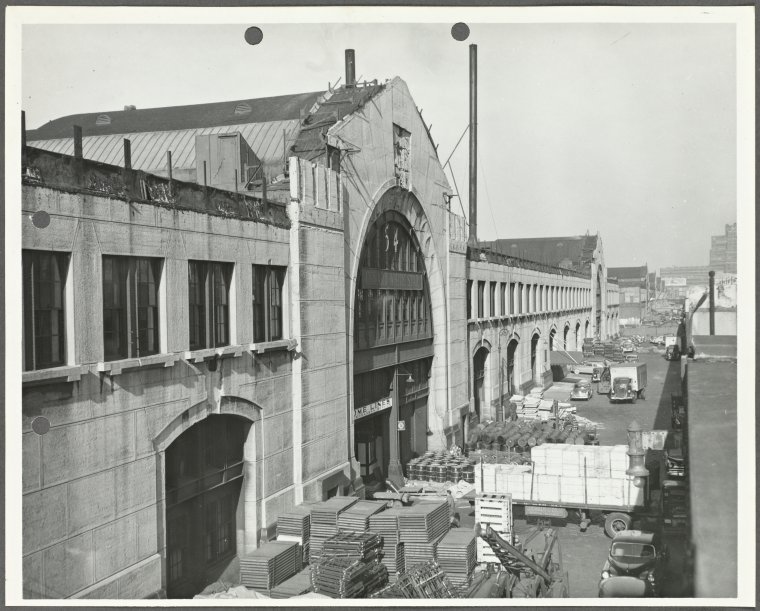
The lavish Chelsea Piers headhouse, designed by Warren and Wetmore of Grand Central Terminal. This picture was taken in 1910 at their completion. It looks very calm on the street in front, a rarity!
Courtesy the Museum of the City of New York
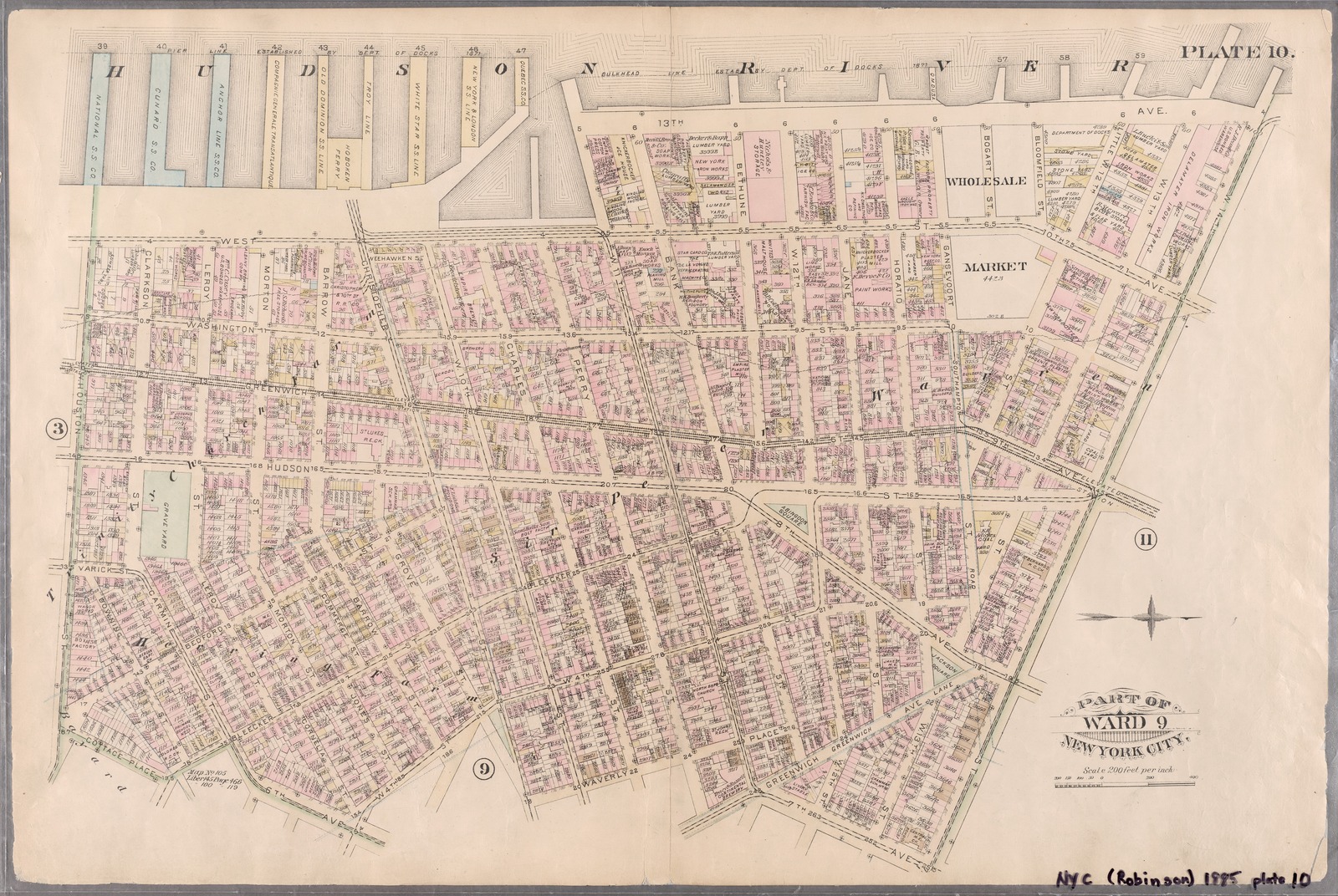
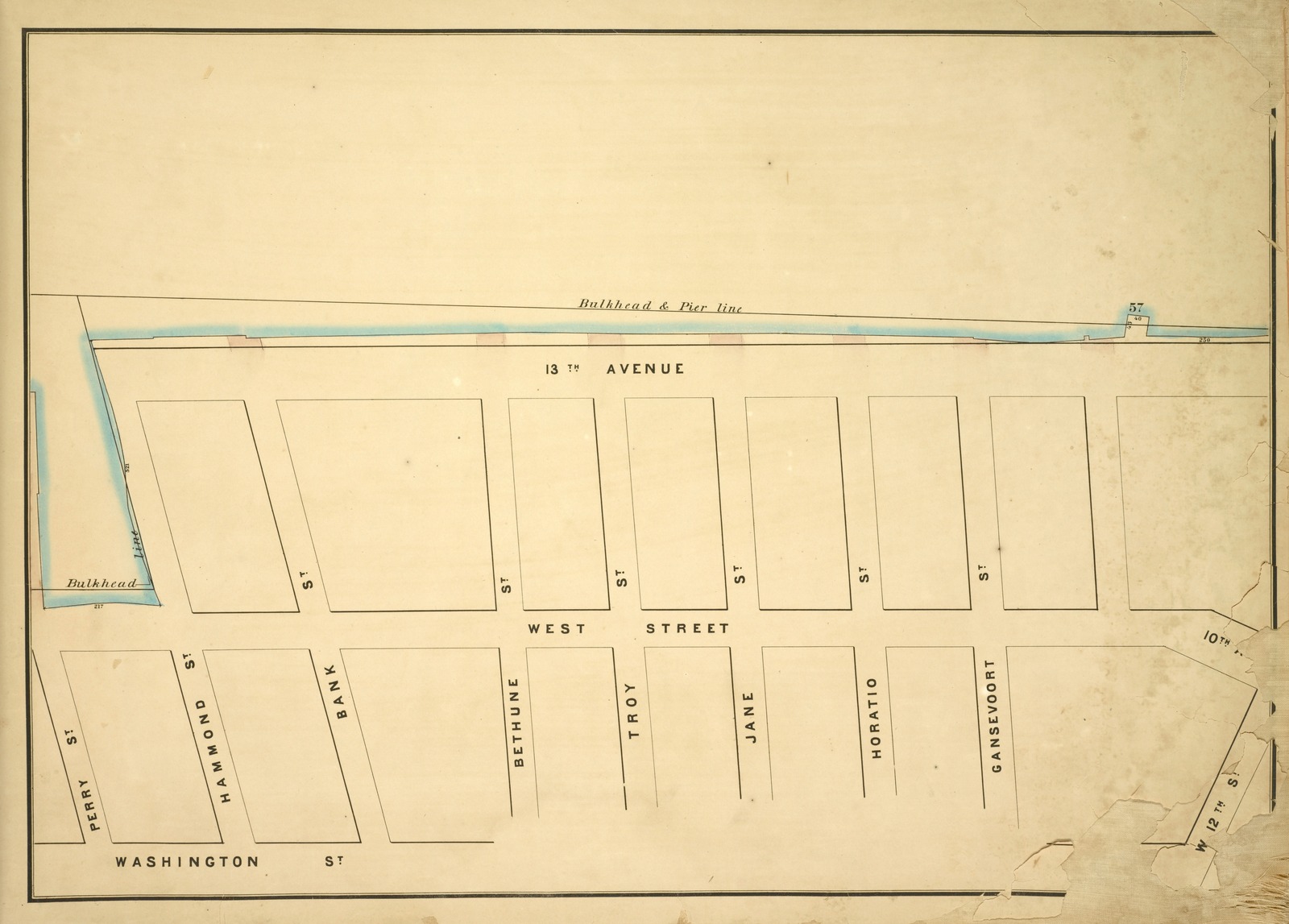
An insurance map from 1885, detailing the streets near the areas of waterfront along West Village and the Meat-Packing District. Note the location of 13th Avenue along the water, running along the top from center to right. Most of this was removed for the construction of the piers.
Courtesy New York Public Library
Courtesy New York Public Library
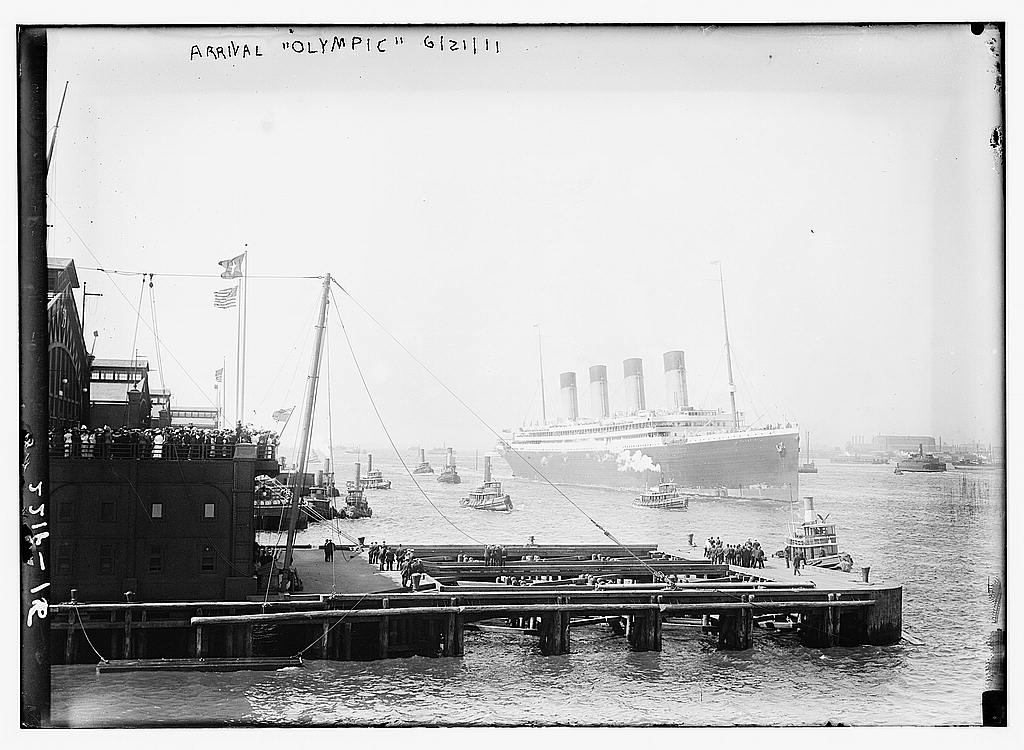
The arrival of the White Star ocean liner Olympic into New York harbor, 1911.
Courtesy Library of Congress
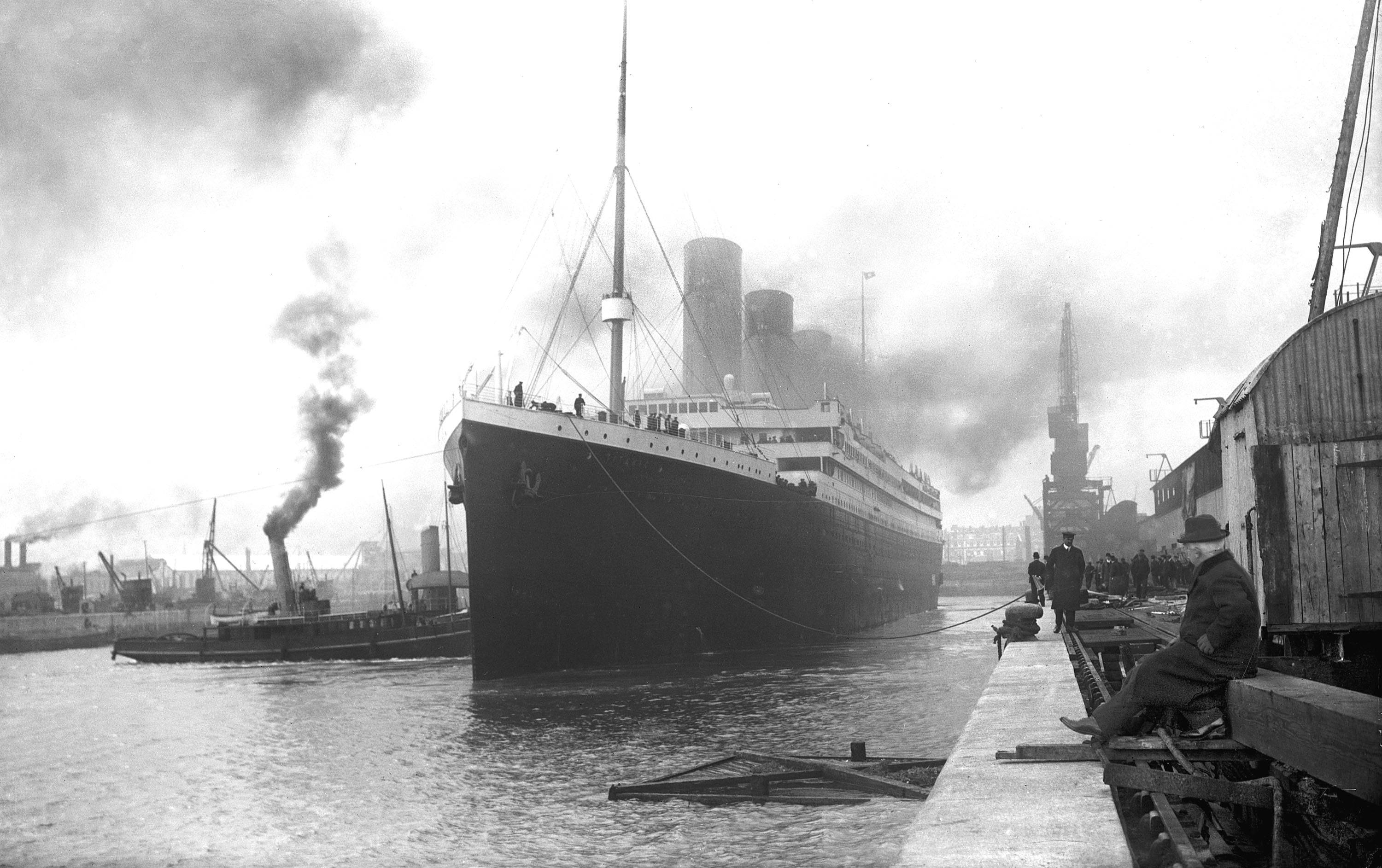
The Titanic on its maiden voyage on April 10, 1912. This was obviously taken from Southhampton where they had much more room for massive ocean vessels!
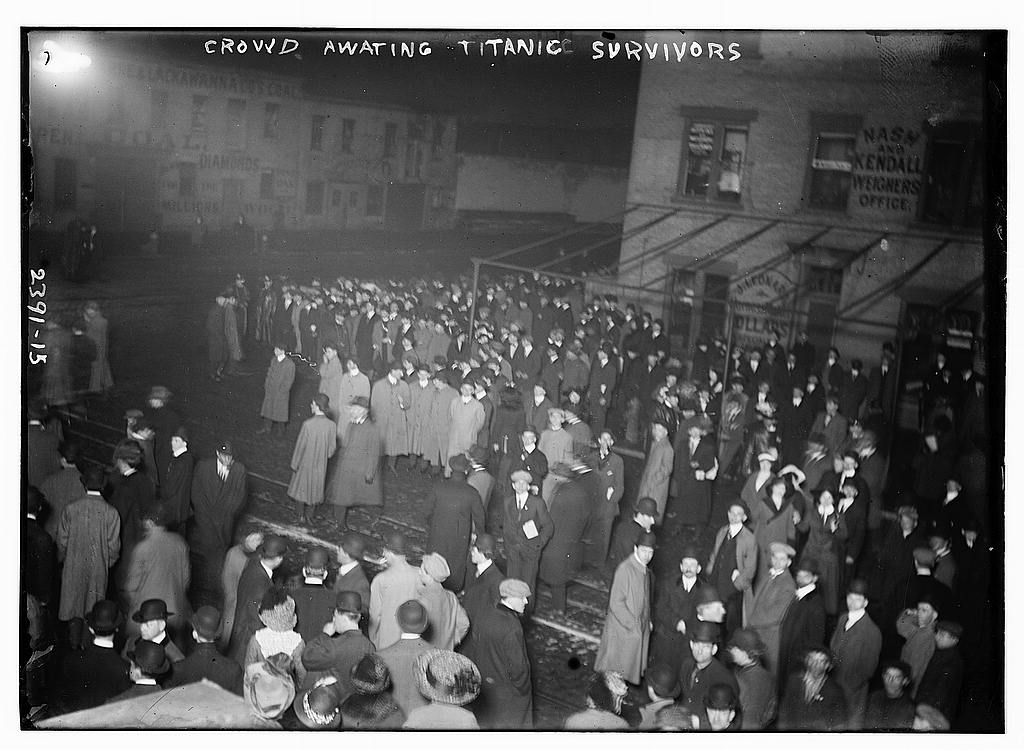
Crowds gather at a location near Chelsea Piers awaiting the survivors of the Titanic disaster.
Courtesy Library of Congress
The RMS Carpathia arrives at Pier 54 on April 18, 1912. Reporters scurry to interview survivors of the Titanic.
Courtesy New York Times
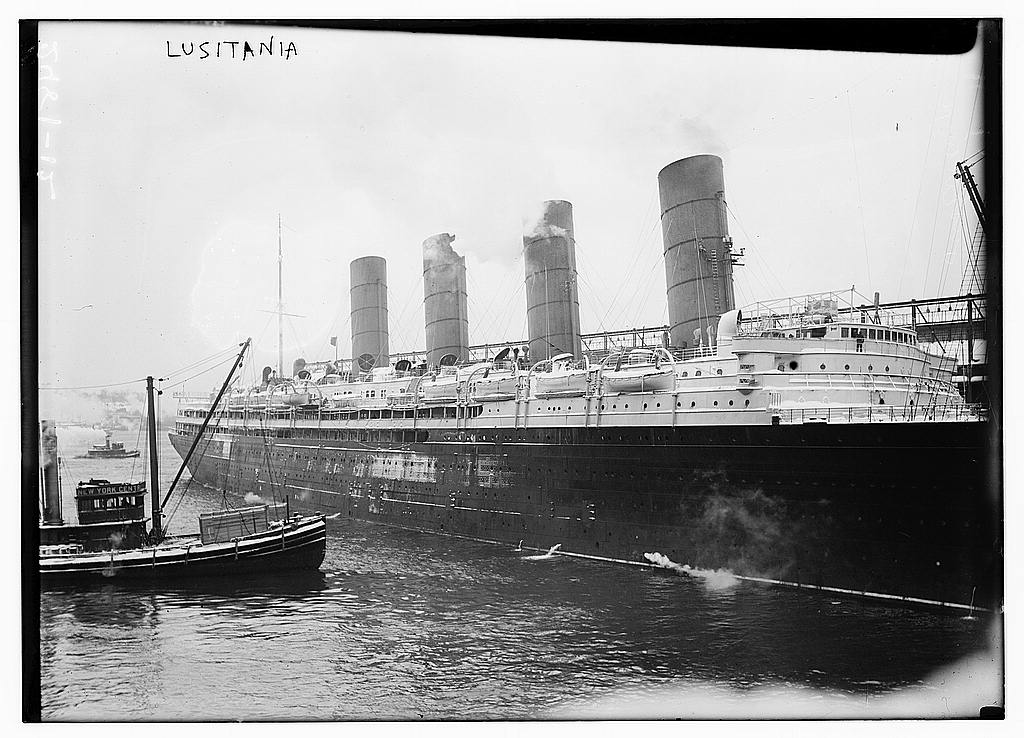
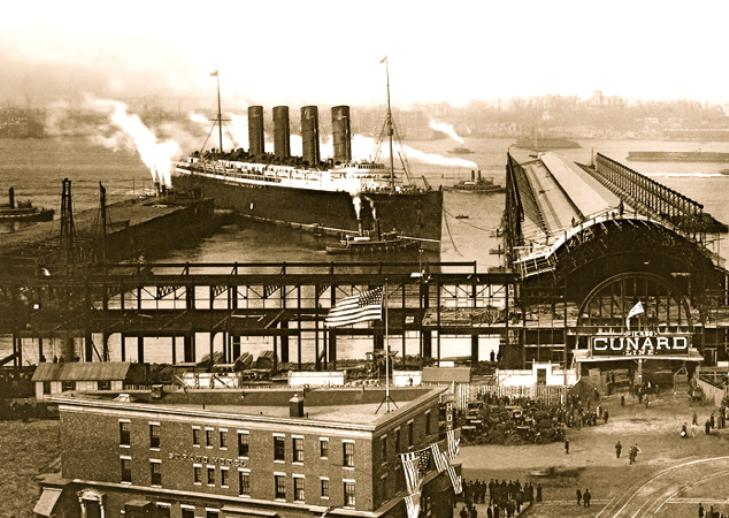
The Lusitania in New York Harbor, and other with the Lusitania at Pier 54 (date unknown but obviously before the Chelsea Piers were completed)
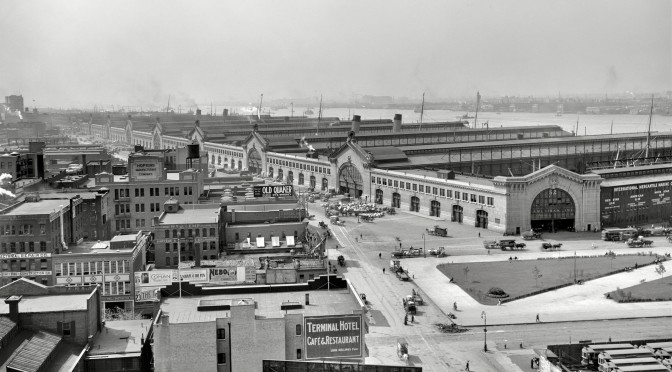
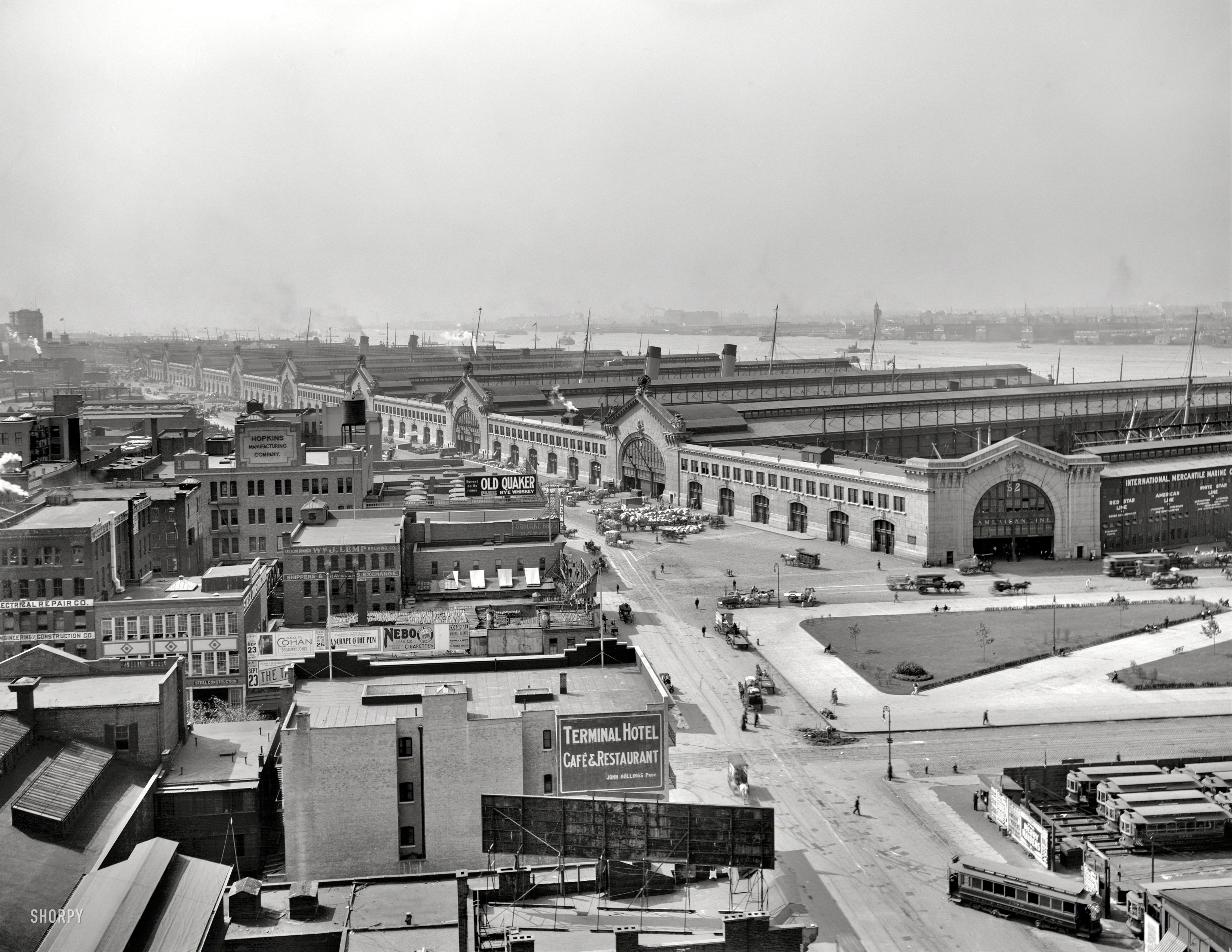
This striking image (cleaned-up photography courtesy of Shorpy) shows the Chelsea Piers in context with the streets of Chelsea in front of it. 1920
Courtesy Shorpy
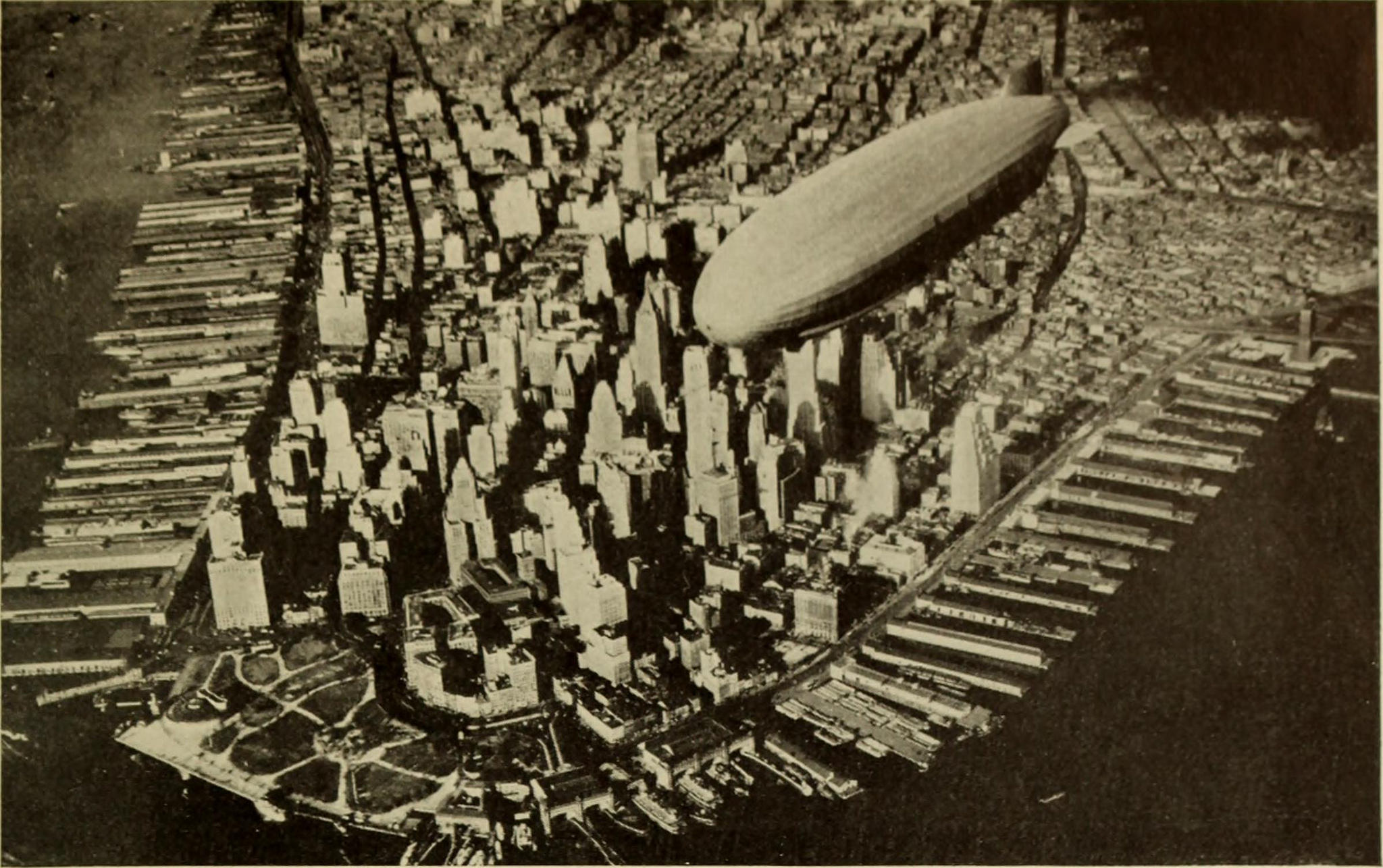
An excellent image of the crazy pier situation in lower Manhattan. This picture is from 1931. Chelsea Piers would be in the upper left-hand corner.
Courtesy Internet Book Image Archives
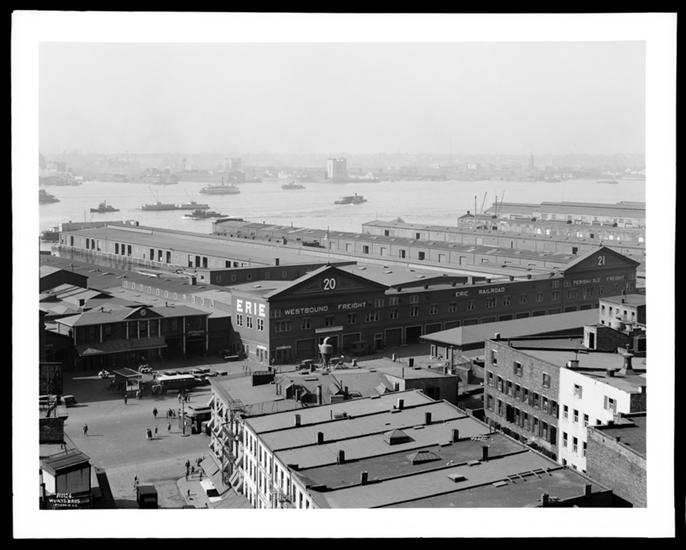
There were of course other pier structures running down the Hudson shoreline, many of them quite imposing such as this one at Pier 20 and 21 for the Erie Railroad Company at the foot of Chambers Street, picture taken in 1930.
Wurts Brothers, courtesy Museum of the City of New York
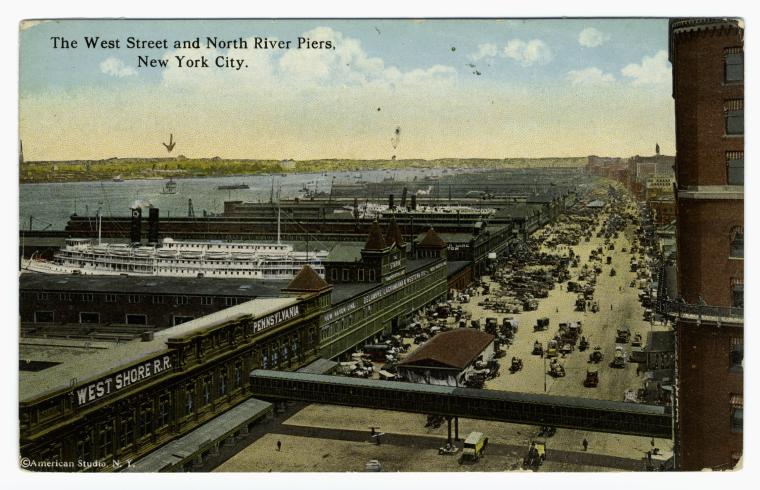
A photomechanical postcard of the piers further south of Chelsea Piers, 1916.
Courtesy New York Public Library
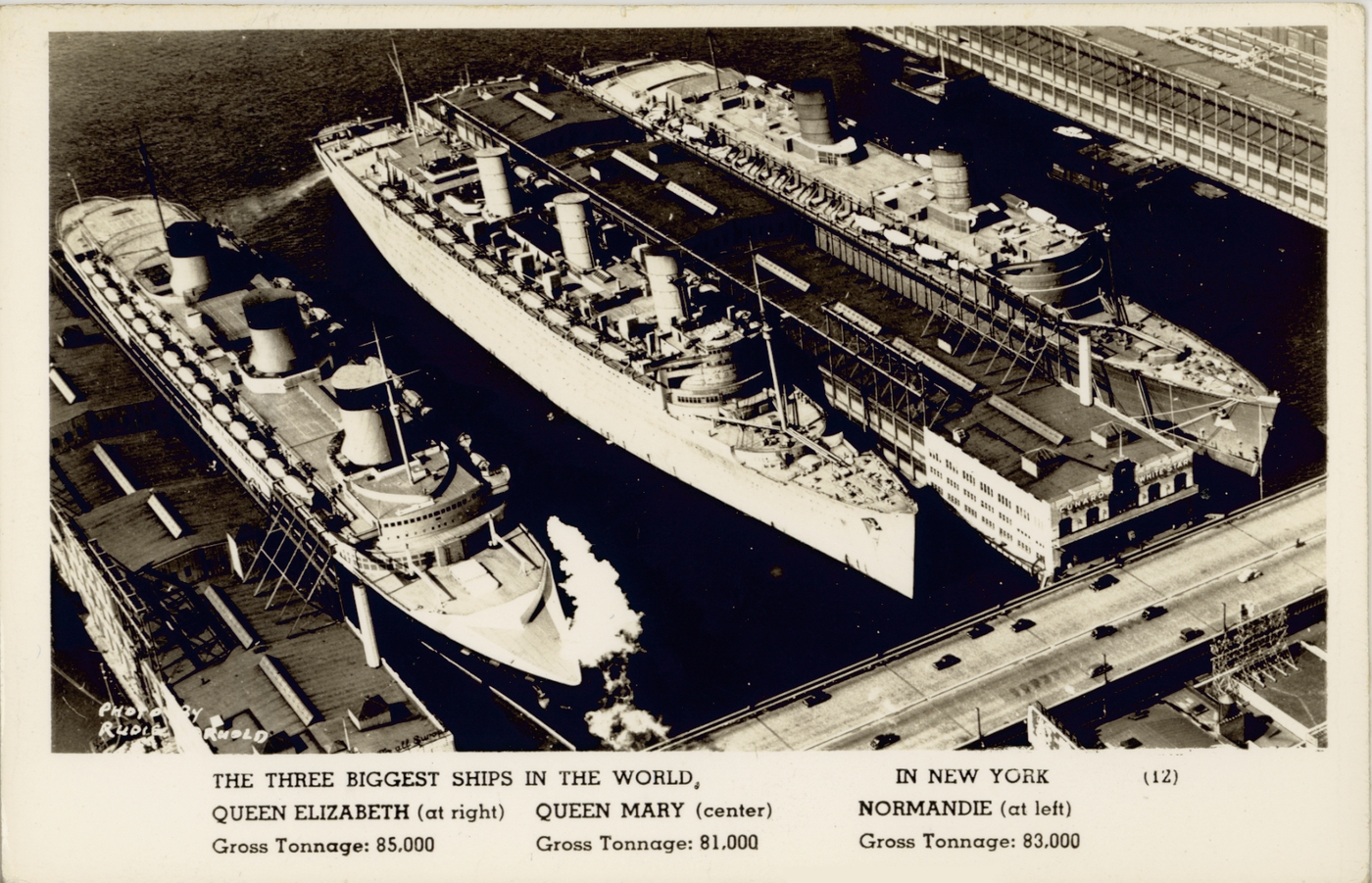
The three largest ships in the world in 1940, all docked in mid-Manhattan, not Chelsea Piers because it could not accommodate their size.
(Courtesy State Library of New South Wales)
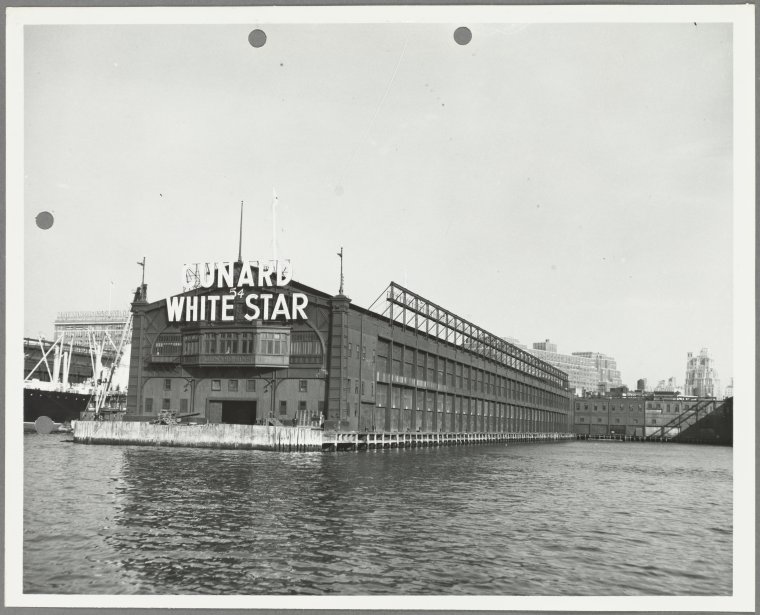
This is what Pier 54 looked like in 1951 after Cunard and White Star merged to become a single transatlantic company.
Courtesy New York Public Library
Courtesy New York Public Library
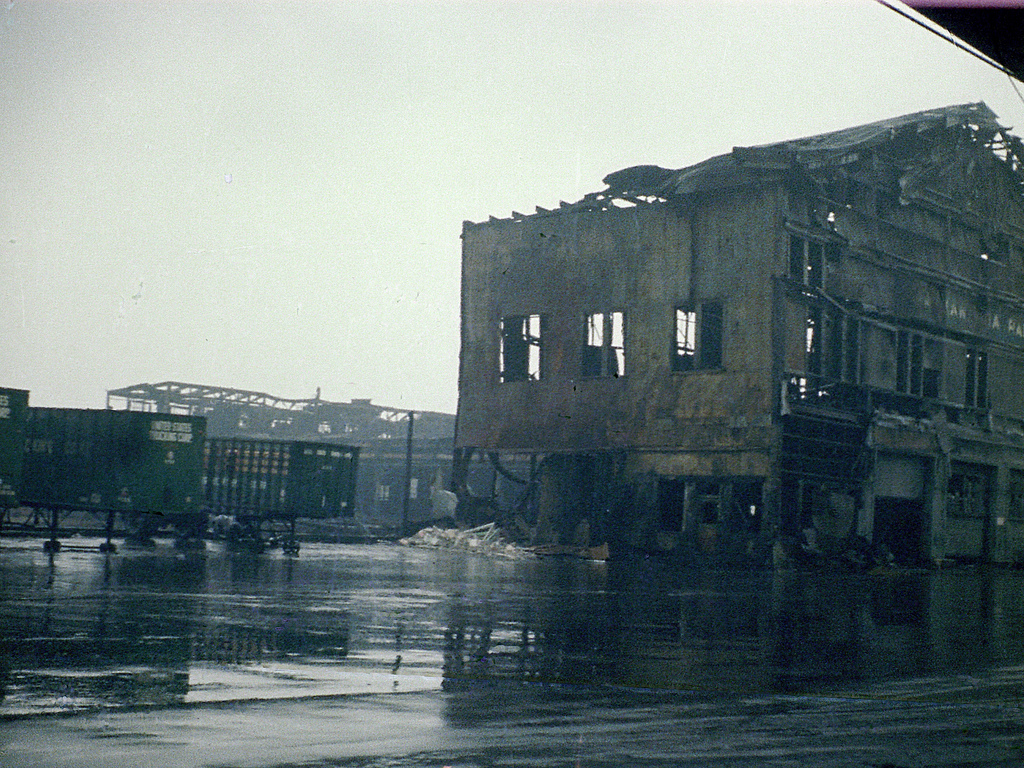
The piers of Washington Market in the 1970s. Most of the pier structures along the water had badly deteriorated by then.
Courtesy Andy Blair/Flickr
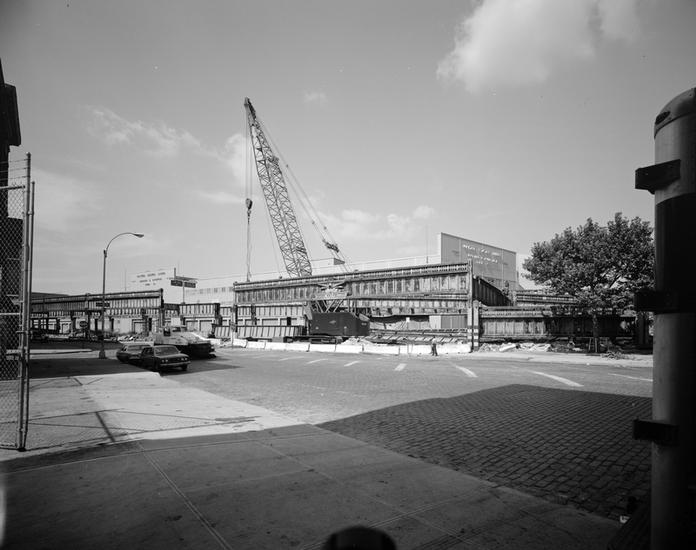
The Elevated West Side Highway being torn down in front of Pier 62. The area looks quite different today. In fact Pier 62 is part ofthe Hudson River Park system.
Photo by Edmund V. Gillon, courtesy the Museum of the City of New York
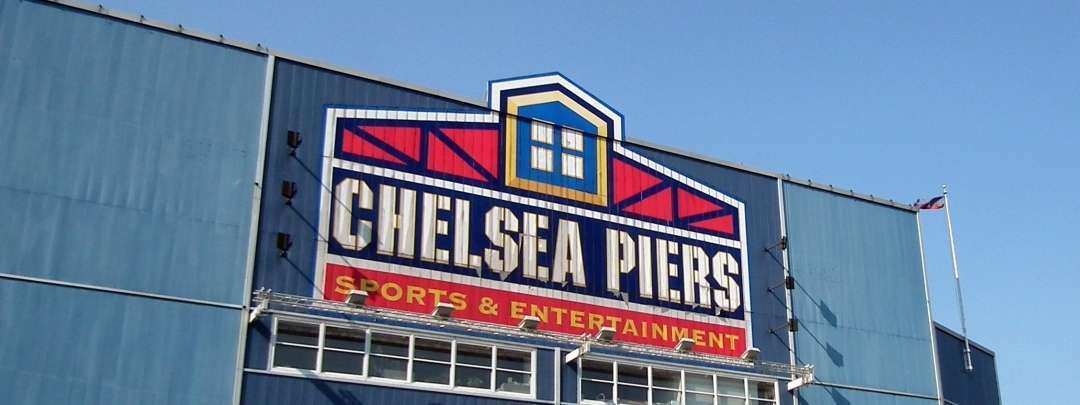
The Chelsea Piers sporting complex was constructed in the 1990s, saving a portion of the original Chelsea Piers from further deterioration. Although I think we can all agree the exterior could be a bit sexier.
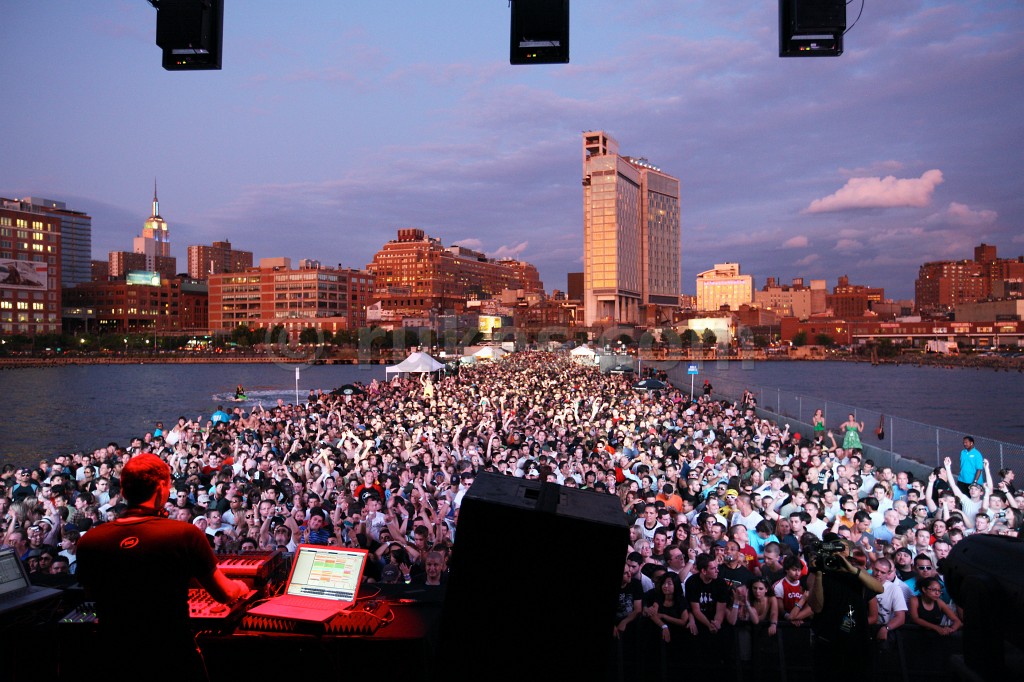
Meanwhile Pier 54 continues to find a variety of new uses. Here’s a dance party deejayed by Paul Van Dyk from 2008.
“To say that she [the ship] is flung down on her side in the waves, with her masts dipping into them, and that, springing up again, she rolls over on the other side, until a heavy sea strikes her with the noise of a hundred great guns, and hurls her back — that she stops, and staggers, and shivers, as though stunned, and then, with a violent throbbing of her heart, darts onwards like a monster goaded into madness, to be beaten down, and battered, and crushed, and leaped on by the angry sea — that thunder, lightening, hail, and rain, and wind, are all in fierce contention for the pastry — that every plant has its grown, every nail its shriek, and every drop of water in the great ocean its howling voice — is nothing. Â
To say that all is grand, and all appalling and horrible in the last degree is nothing. Words cannot express it. Thoughts cannot convey it. Only a dream can call it up again, in all its fury, rage and passion.“
This is in describing his voyage to the United States. Horrible, to be sure. But given the thousands of people who involuntarily traveled across the Atlantic in the decades earlier, and the wretched conditions they faced, it’s hard to be overly sympathetic to Mr. Dickens’ inconvenience!
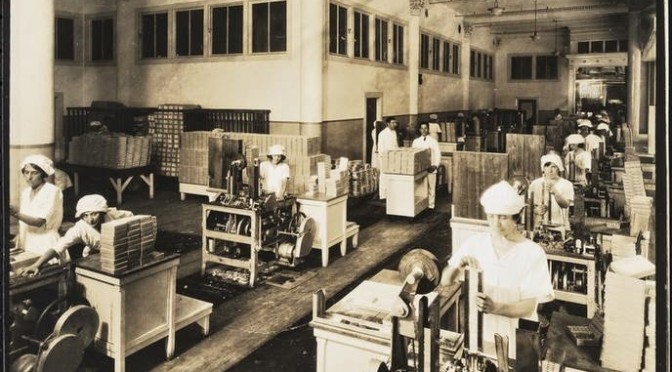
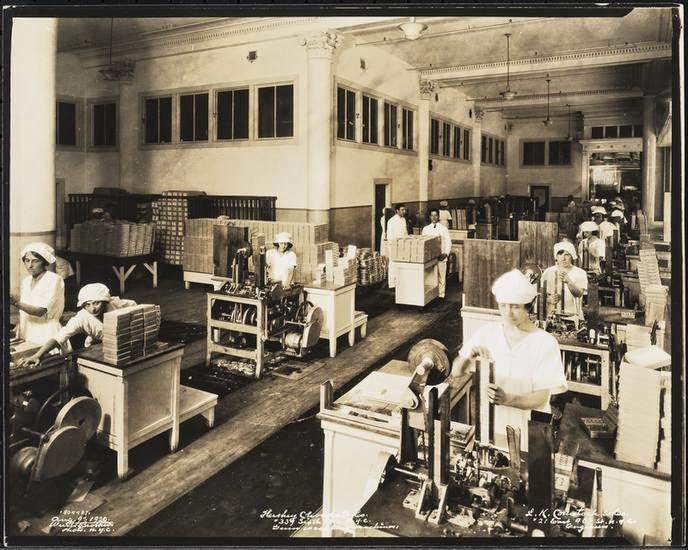
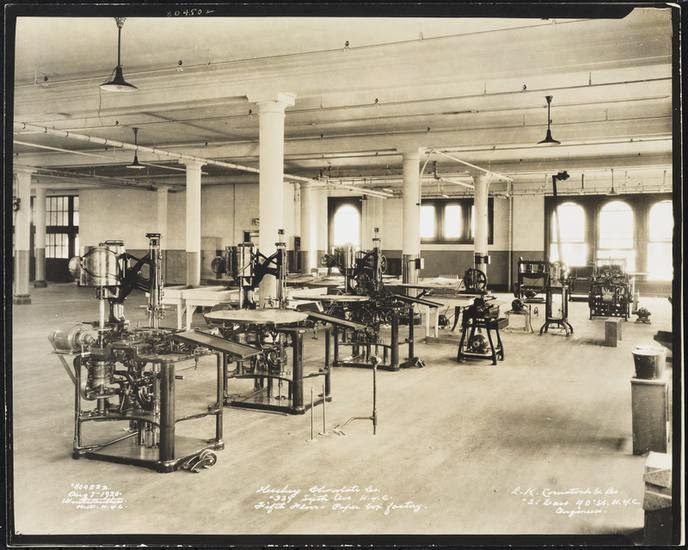
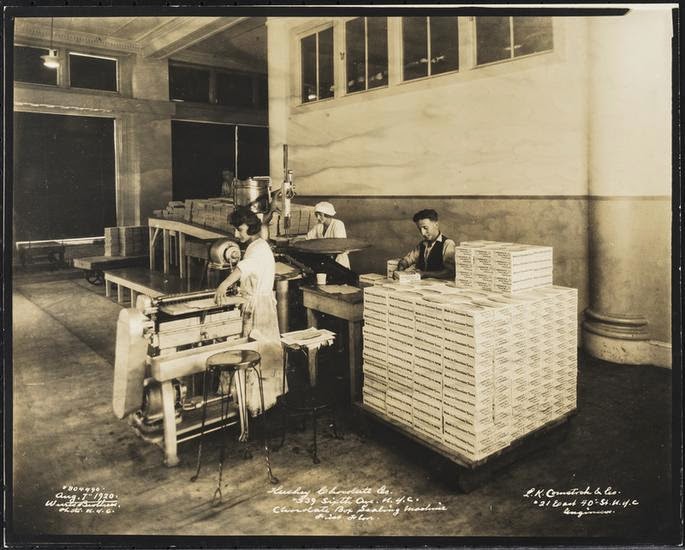
Hershey’s employees cut and pack chewing gum at Sixth Avenue and 21st Street.
For five glorious years in the early 1920s, Hershey’s Chocolate operated a candy plant at Sixth Avenue, in the neighborhood of Chelsea. While chocolate bars and chocolate coating for other candies were produced here, the Chelsea plant primarily focused on a new confection, one that ultimately failed — Hershey’s Chewing Gum.
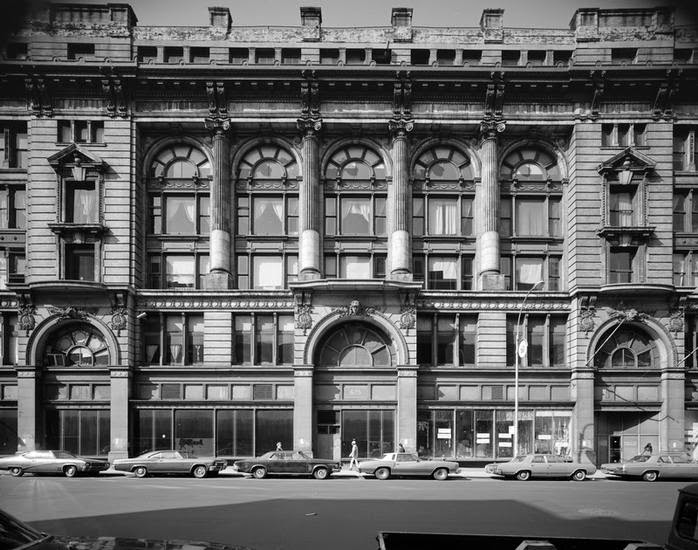
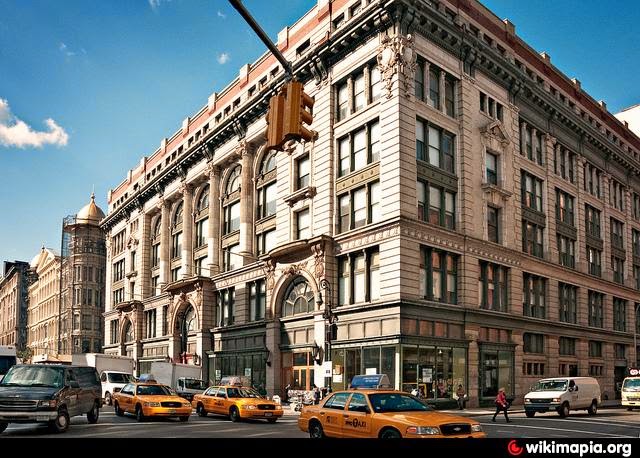
But let me back up. The grand building that sits there today — one of the prominent members of Ladies Mile Historic District and the current home of Trader Joe’s — was originally built for the department store Adams Dry Goods. Founded in the mid-1880s, Adams Dry Goods had been slowly expanding along this block, enjoying a surge of business thanks to the Sixth Avenue elevated train.
Below: The Adams Dry Goods building in 1978 (photo by Edmund V Gillon, MCNY):
Other department stores sprouted up along the street, most notably the Siegel-Cooper department store in 1896. (That building is home today to Bed, Bath and Beyond.) Siegel-Cooper was a sparkling Beaux-Arts treasure, 750,000 square feet with dozens of departments for shoppers, and its ambition and size drew headlines and the curiosity of New Yorkers.
Naturally, Samuel Adams, the proprietor of Adams Dry Goods, wanted to compete with this retail behemoth, so in 1899 he hired Siegel-Cooper architects DeLemos & Cordes to design a massive new store with an opulent interior central court. Large second floor windows offered views to elevated train passengers of the store’s most notable trade — men’s clothing. (Much of Ladies Mile, in contrast, catered to women.)
Below: Adams Dry Goods today. After a period in the 1990s-2000s as a Barnes and Noble bookstore, today it holds a Trader Joe’s:
But Adams’ timing was rather poor. For just a few years later, the more successful department stores (including Lord & Taylor and B Altman) fled to Herald Square and Fifth Avenue. Hugh O’Neill’s, the department store one block south, bought Adams Dry Goods and prepared to merge the businesses, even planning an underground tunnel under West 21st Street to link to two large structures. This never came to fruition, and both O’Neill’s and Adams Dry Goods went out of business for good.
The abandoned building was briefly used by the US Army for storage before being acquired by a most unusual new tenant — Hershey’s Chocolate.
Candy man Milton S. Hershey had been successfully manufacturing treats in his hometown of Derry Church, Pennsylvania (which now took the mogul’s name — Hershey) and was looking for a another hit after the success of the Hershey’s Kiss. He thought chewing gum was the logical next step.
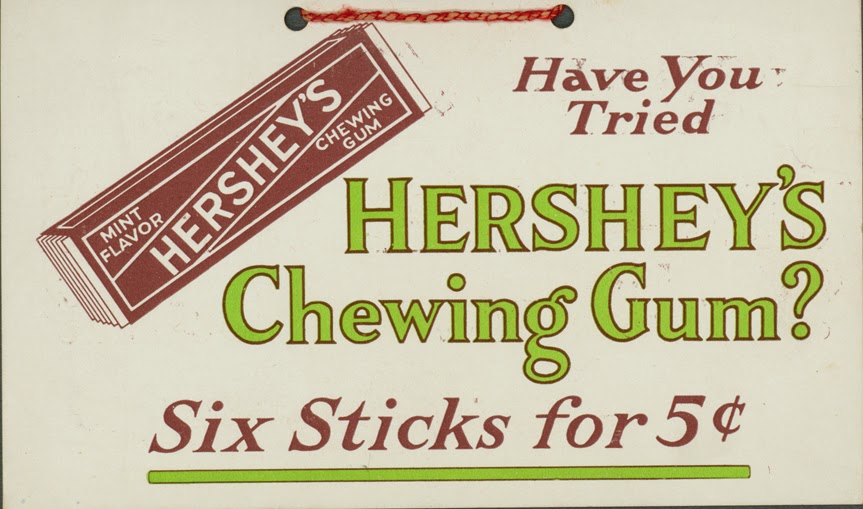
In New York he bought some gum-making equipment and had it shipped to his Pennsylvania plant where production began on Hershey’s Chewing Gum. “Six sticks for a nickel” went the slogan.
In January 1918, Hershey leased Adams’ former department store on Sixth Avenue and eventually moved elements of his candy production there, including his entire chewing gum business.
I haven’t been to locate the exact reason why. Early in his career, Hershey operated a candy shop on Sixth Avenue and 42nd Street, and his wife had been a clerk at B Altman’s a few blocks down. With his chief competitor Wrigley’s located in Chicago, perhaps his return to New York was his official stab at planting roots in an urban market.
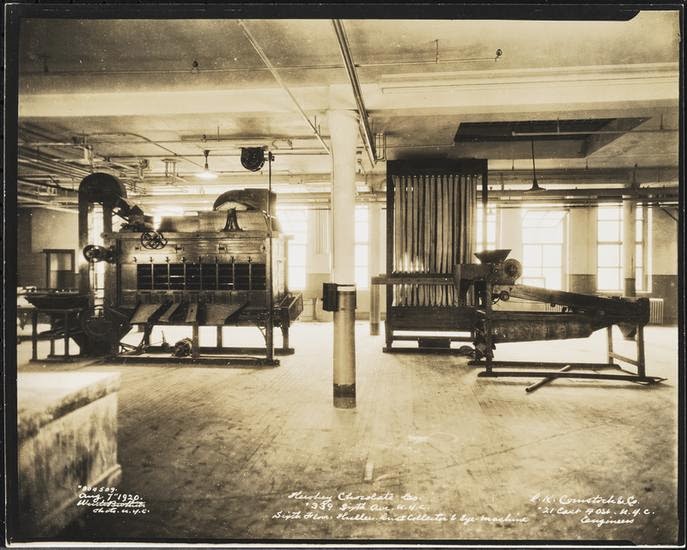
Soon the Sixth Avenue shop was whirring with the sound of boilers, mixers, candy presses and wrapping machines, sending out five thousand boxes of chewing gum a day, and a lesser amount of other candy items. Wheat was carried in from the Pennsylvania plant and added to the gum to make it more chewy.
As you can see here, the implements of candy-making fit oddly into the cavernous Sixth Avenue department store:
Sadly, future residents of Chelsea would be robbed of the delightful aromas of chicle and chocolate, as Hershey’s chewy offering did not take off. With raw ingredients being hard to obtain in the early 1920s, the product was discontinued, and Hershey eventually closed the plant in 1924.
However I’m sure you can buy gum at Trader Joe’s that currently occupies the building.
Hershey’s plant photographs courtesy the Museum of the City of New York (see originals here)
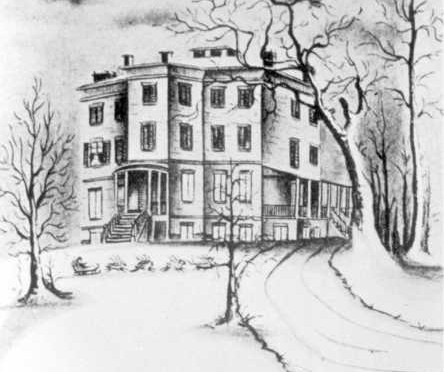
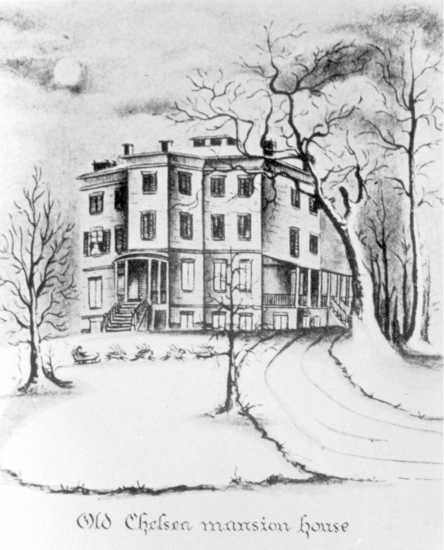
On Christmas Eve, one hundred and ninety years ago today, wealthy landowner and august Columbia professor Clement Clarke Moore completed a seasonal poem to read to his children. He penned the whimsical little tale — a throwaway, really, in comparison to his great and respected writings in Greek and biblical literature — from a desk at his comfortable, snow-covered mansion which the family called Chelsea.
The home sat atop an old hill (at around today’s modern addresses of 422-424 West 23rd Street) overlooking Moore’s estate which stretched south from here. His estate, of course, gives modern Chelsea its name. At right, the Chelsea estate on a cold winter’s night.
Moore was allegedly inspired that afternoon during an outing to Washington Market to purchase a Christmas turkey. The market (pictured below in 1829) would have another holiday claim to fame: it was the site of America’s first outdoor Christmas tree market.
The poem, “A Visit from St. Nicholas” and often referred to as “‘Twas The Night Before Christmas,” would eventually help define Santa Claus mythology. It’s perhaps the most important source in shaping the physical appearance and ritual behavior of the North Pole gift-giver and would provide inspiration to New York illustrators like Thomas Nast and, in the 20th century, the Coca-Cola advertising of Haddon Sunblom. Moore is even credited with naming the eight reindeer.
But the poem was only originally intended for Moore’s children. I’m not certain how many were around to hear it in 1822, but Moore and his wife Catherine Elizabeth Taylor would eventually have nine of them. One daughter, Mary Ogden, would later produce the first of dozens of illustrated versions of the poem.
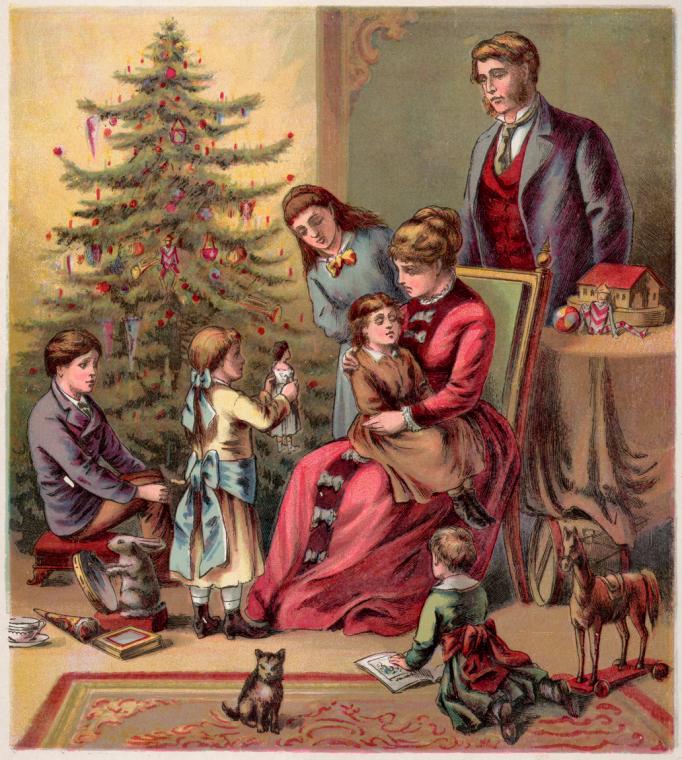
At left: An illustration of Moore and his family from an edition published in 1896 (source)
The poem was published anonymously the following year, and Moore would only take credit — at his children’s insistence — in 1844.
Given Moore’s original hesitation, some scholars have suggested that another New Yorker,Henry Livingston Jr., may have penned it. Until that is definitely proven, you are allowed to always think of the neighborhood of Chelsea — just two blocks west of the Chelsea Hotel — every time you hear it.
So jump in your ‘kerchief, open your shutters and throw up your sashes, and give this little holiday poem a ripe rendition this year. You can find the full text here. But to quote the final section:
He sprang to his sleigh, to his team gave a whistle,
And away they all flew like the down of a thistle.
But I heard him exclaim, ‘ere he drove out of sight,
“Happy Christmas to all, and to all a good-night!”
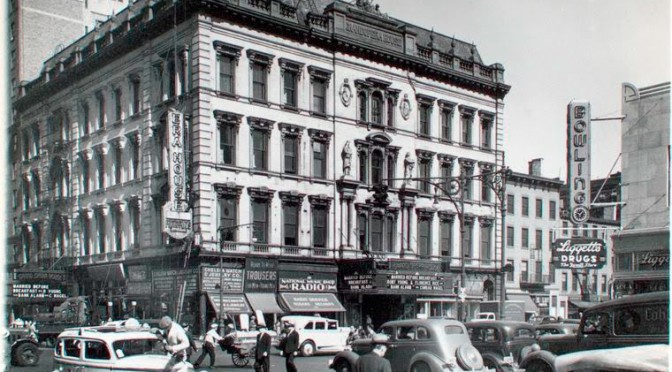
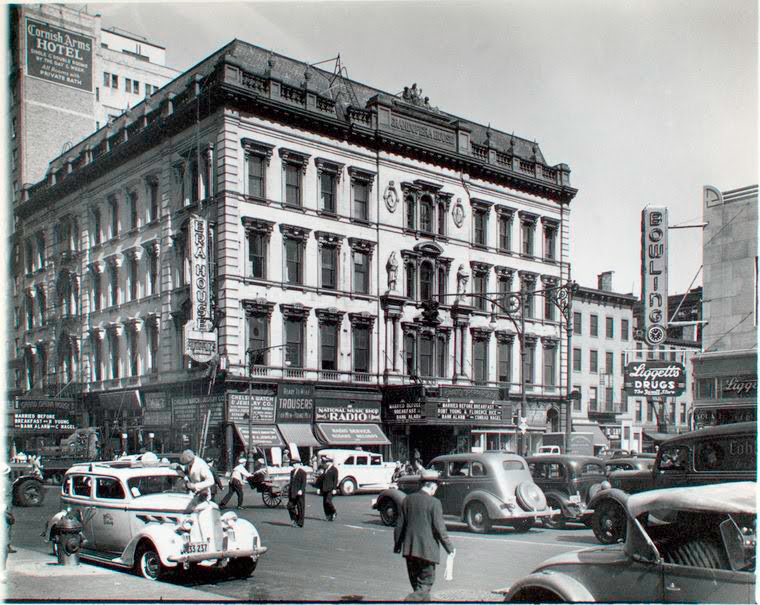
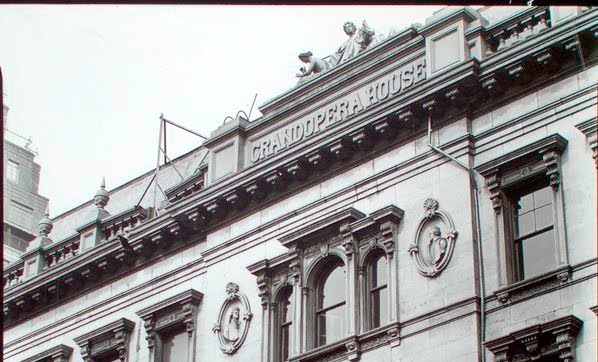
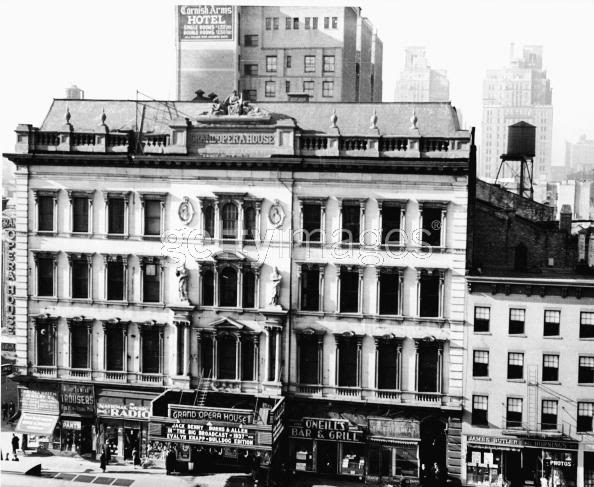
In last Friday’s podcast on the Hotel Chelsea, I mentioned a building that was located very near by called the Grand Opera House, at the northwest corner of 23rd Street and 8th Avenue. Here it is:
The opera house sprang up in 1868, the project of Samuel N. Pike, who purchased the land directly from Chelsea estate owner Clement Clarke Moore himself. In fact, the original Moore estate was only a block away.
The Pike Opera House, as it was called in those days, was Pike’s play for legitimacy in New York. A German immigrant who arrived in the U.S. in 1837, Pike lived in New York for a few years and made his fortunes in wine imports. Aspiring to upper-crust tastes, Pike fell in love with opera music after viewing performances by PT Barnum chanteuse Jenny Lind.
Pike constructed a massive opera house in his adopted home of Cincinnati in 1859 and many years later built a companion here in Manhattan at 23rd Street. Pike’s timing was off; theaters would crowd along 23rd Street in the coming years, but in 1860s, the wealthy preferred the Academy of Music down on 14th Street.
So the next year, Pike sold his lavish hall to two rather unlikely investors — Jim Fisk and Jay Gould, grade-A robber barons, pals of Boss Tweed and the orchestrators of the Black Friday Panic of 1869. Why would these two nefarious characters want an opera house?
The house’s upper floors doubled as the offices of their own Erie Railway venture. Fisk’s mistress Josie Mansfield was frequently installed into productions at the newly named Grand Opera House; it was even rumoured her next-door apartment was connected to the opera house with an underground tunnel.
However it does seem that Fisk and Gould were legitimately aficionados of the theater, or at very least fans of the elite who would attend them, and the profits that would follow. The Grand Opera House would soon showcase a great number of theater endeavors outside of opera.
Mansfield would prove Fisk’s downfall; her other lover Edward Stokes shot him in 1872. Mourners could stream through the lobby of the Opera House and observe Fisk’s body laying in state there. Gould would operate the Opera House for several years afterwards, eventually renting it out to vaudeville shows and ‘second-run’ Broadway productions, its fortunes disintegrating as theater moved uptown and the Chelsea neighborhood became more middle-class.
Like many old stages before it, the Grand Opera House switched to films in the 1920s. RKO tried its best to rehabilitate the space, hiring Thomas Lamb to renovate the theater with modern flourishes, reopening the space as the RKO 23rd Street Theatre. The picture below is actually from the year before the renovation, which stripped away some of the the Grand Opera’s frippery:
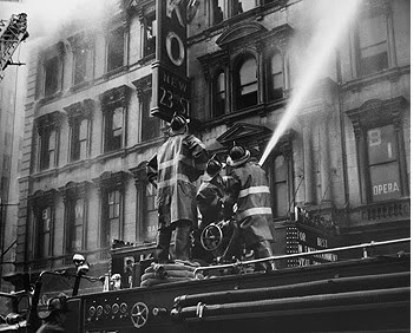
The site remained a movie house through the 40s and 50s, finally closing on June 15, 1960. In a further indignity, the Opera House was thoroughly gutted in a fire (seen in the picture below (courtesy Cinema Treasures):
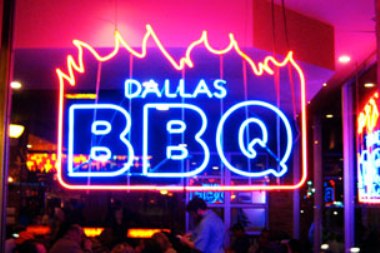
And thus it was time — to put in a strip mall! Today you can visit that very corner and enjoy a rather enduring Chicken Delight location or stop and have a Texas-sized margarita at the corner Dallas Barbecue.