Categories
Bowery Boys Movie Club Neighborhoods

In The Heights: The Movie Club dives into Upper Manhattan’s musical romance

The new episode of the Bowery Boys Movie Club explores the new musical film In The Heights and the fascinating historical neighborhood at its center. An exclusive podcast for those who support us on Patreon.

Lin Manuel Miranda‘s first Broadway musical In The Heights was a critical and box office smash and won four Tony Awards — including Best Musical. And yet its success was dwarfed by Miranda’s second offering Hamilton: The Musical.

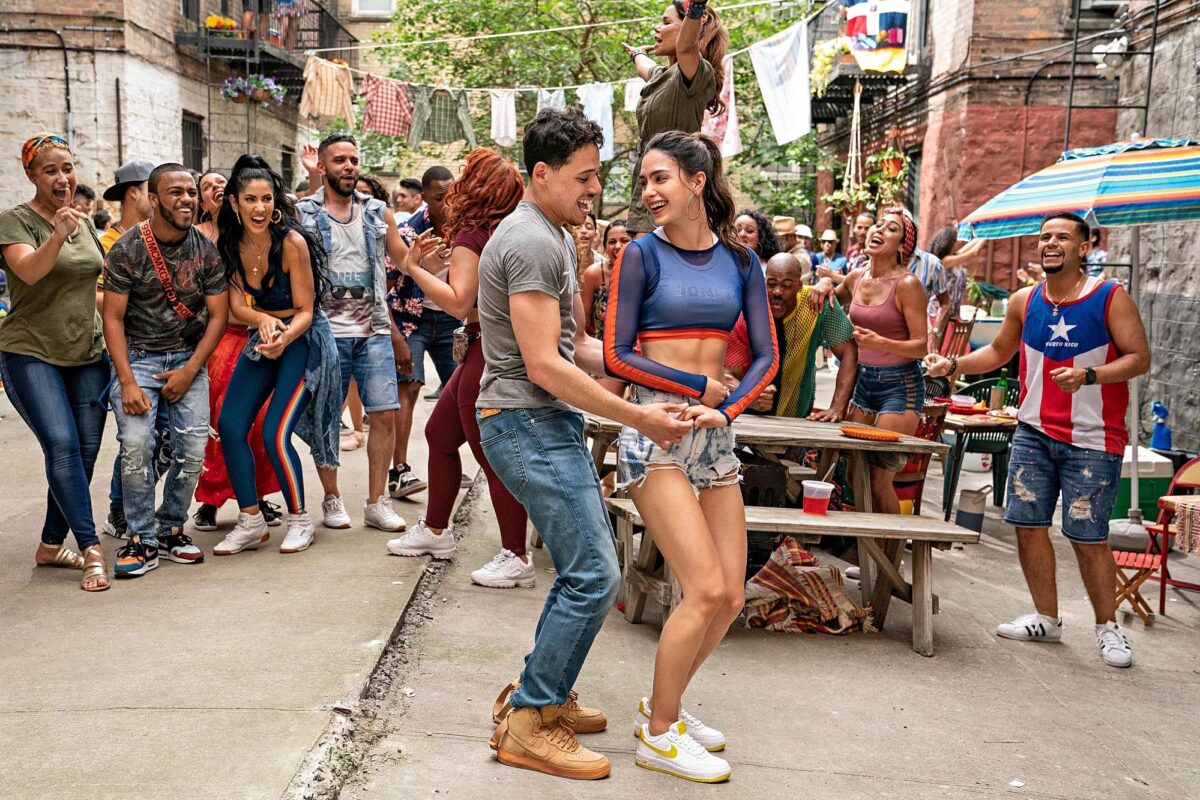
Now In The Heights comes to the big screen — both in movie theaters and on HBO Max — bringing the music, the dancing and a few of the same stars. But it also introduces the neighborhood of Washington Heights itself into the spotlight.
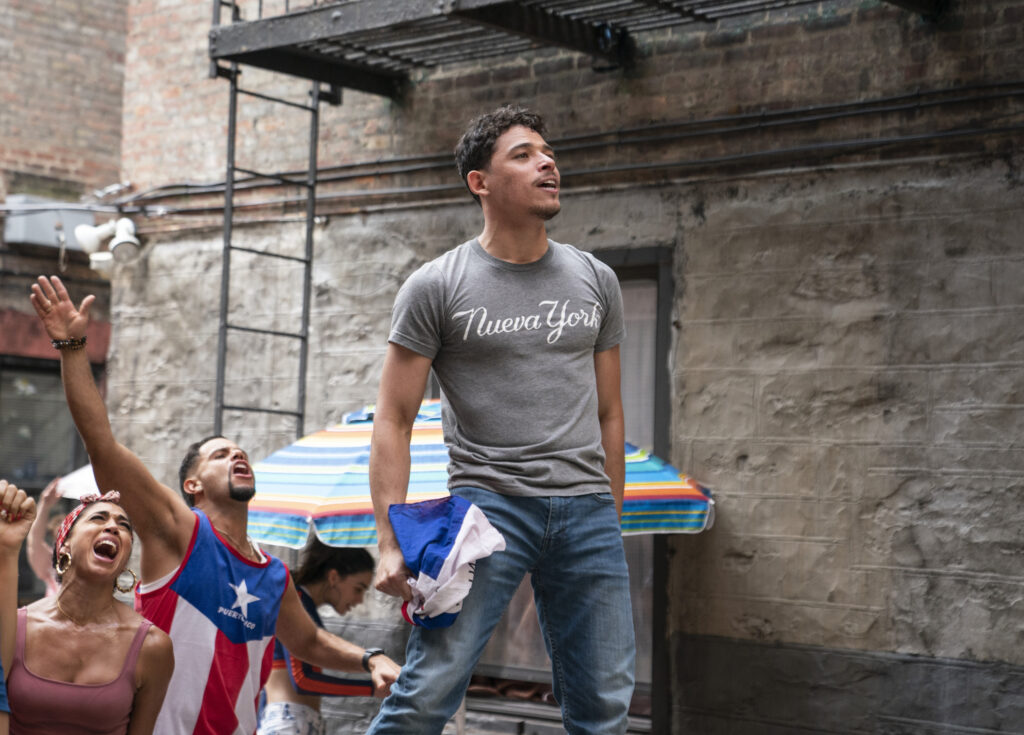
(Macall Polay/Warner Bros. Pictures via AP)

Where the stage musical had mere props, the movie musical features the glorious sights and sounds of the Heights itself — from the George Washington Bridge to the High Bridge tower.

Washington Heights is as much an active character in In The Heights as Uznavi (Anthony Ramos) and Vanessa (Melissa Barrera) are. In particular, the film sets up a common lurking foe — gentrification — as the primary antagonist, threatening to disintegrate the vibrant mix of communities.

How do Miranda and director John M. Chu specifically bring the action and the music into the streets? And how well does the sincerity of a Broadway musical translate onto a real-life city?

PLUS: Greg and Tom relay their experiences of running into the filming of In The Heights while recording their podcast on Upper Manhattan!
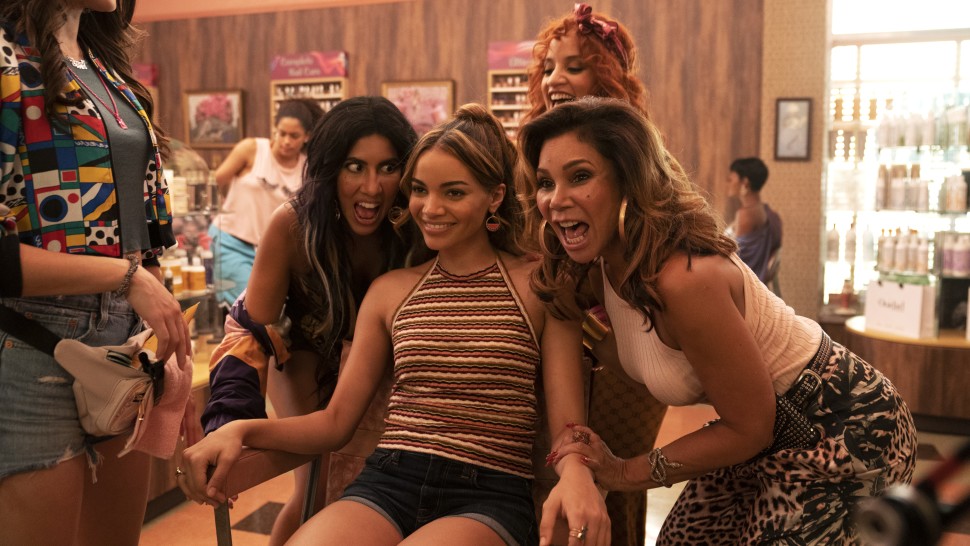
Macall Polay/Warner Bros. Entertainment, Inc

How do I listen the Bowery Boys Movie Club?  Once you’re signed in on Patreon, you’ll see a private RSS link that can be put directly into your favorite podcast player. Even easier, it can also be played directly from the Patreon app if you’re signed in.

Your support on Patreon assists us in producing our podcast and website and it helps as we endeavor to share our love of New York City history with the world.

Should you watch the movie before you listen to this episode? This podcast can be enjoyed both by those who have seen the film and those who’ve never even heard of it.  

We think our take on Auntie Mame might inspire you to look for the film’s many fascinating (but easy to overlook) historical details, so if you don’t mind being spoiled on the plot, give it a listen first, then watch the movie! Otherwise, come back to the show after you’ve watched it.


FURTHER LISTENING

After listening to this Bowery Boys Movie Club episode, relive the history of some of the places featured in the movie through a couple of our older shows:
Categories
The Knick Wartime New York

Knickerbocker Hospital: An inspiration for Cinemax’s The Knick

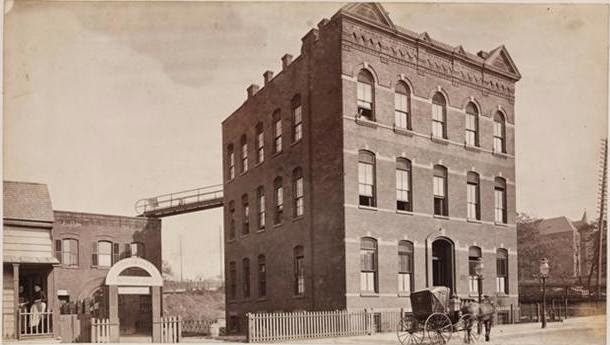
Photographed dated 1886, the institution was called Manhattan Hospital then, changing its name to J. Hood Wright Memorial Hospital, then to Knickerbocker Hospital in 1913 (Picture courtesy the Museum of the City of New York)

On Friday begins The Knick on Cinemax, a historical drama set in the turn-of-the-century Knickerbocker Hospital. . Last year, Tom wandered around the Broome Street set of The Knick. (Check out his pictures here.)  Are you checking this out live this Friday night (August 8, 10pm)?  Follow along with me on Twitter where I’ll try and keep up with historical tidbits about the era and the events that are depicted.

Although the hospital depicted in the show is technically fictional, there was a Knickerbocker Hospital in New York during this time period. It will be interesting to see if the show’s institution bears any resemblance to the real Knickerbocker:

Knickerbocker Hospital
Location: Covent Avenue and 131st Street
The hospital depicted in The Knick is much, much further downtown.  However, with the arrival of elevated trains and, later, the subway, some new immigrants would have settled in upper Manhattan to escape the crowded tenements. So the types of patients treated at these institutions would have been similar.

Purpose:  According to the 1914 Directory of Social and Health Agencies, “Gives free surgical and medical treatment to the worthy sick poor of New York City.  Incurable and contagious diseases and alcoholic, maternity and insane patients not admitted.  Emergency cases received at any hour.”
Statistics:  In 1914, they had 57 beds, 1,096 cases treated in a year
Funding: Care is free to “the worthy poor” and the hospital is supported by charitable contribution

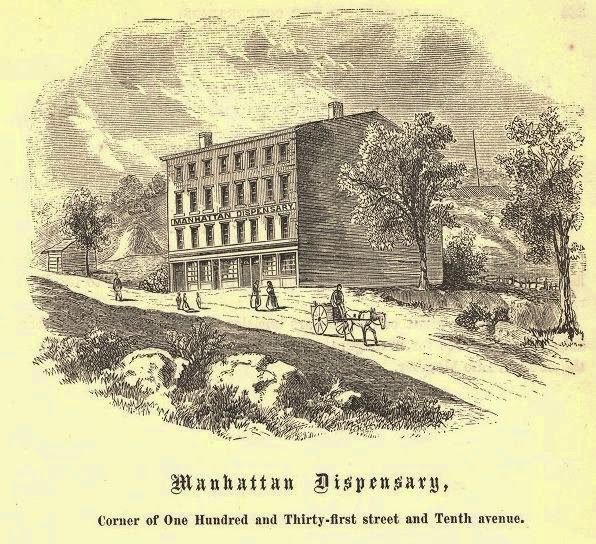
History:  The hospital began its existence as the Manhattan Dispensary in 1862, located in upper Manhattan when it pretty much looked like this:  (Image courtesy the US National Library of Medicine)

The hospital treated injured Civil War soldiers.  It was founded by a Philadelphia railroad man named James Hood Wright who worked for banker J.P. Morgan.  

Mr. Wright died suddenly on November 12, 1894, collapsing at an elevated train station on Rector Street and never regained consciousness.  In honor of his contributions, the hospital was renamed the J. Hood Wright Memorial Hospital, although, from reading the news clipping below, it seems that was not a great idea.

The name change was facilitated by a lack of funding for the hospital.  In 1910, hospital executives blatantly proclaimed “the hospital was inadequate to serve the needs of the west side of Harlem.”

From a notice in the New York Sun, June 23, 1913:

“The J. Hood Wright Memorial Hospital, which was incorporated in 1868 as the Manhattan Dispensary, has got permission from Supreme Court Justice Page to change its name to the Knickerbocker Hospital.

The petition says that since Mr. Wright’s death the population of the district served by the hospital has increased greatly and the necessity of more funds for the hospital has increased proportionately.


The hospital managers and Mr. Wright’s heirs believe that the present name of the hospital leads to the belief that it is so liberally endowed it does not require outside assistance and for this reason, none have been forthcoming.  They say Mr. Wright desired outsiders to contribute.”

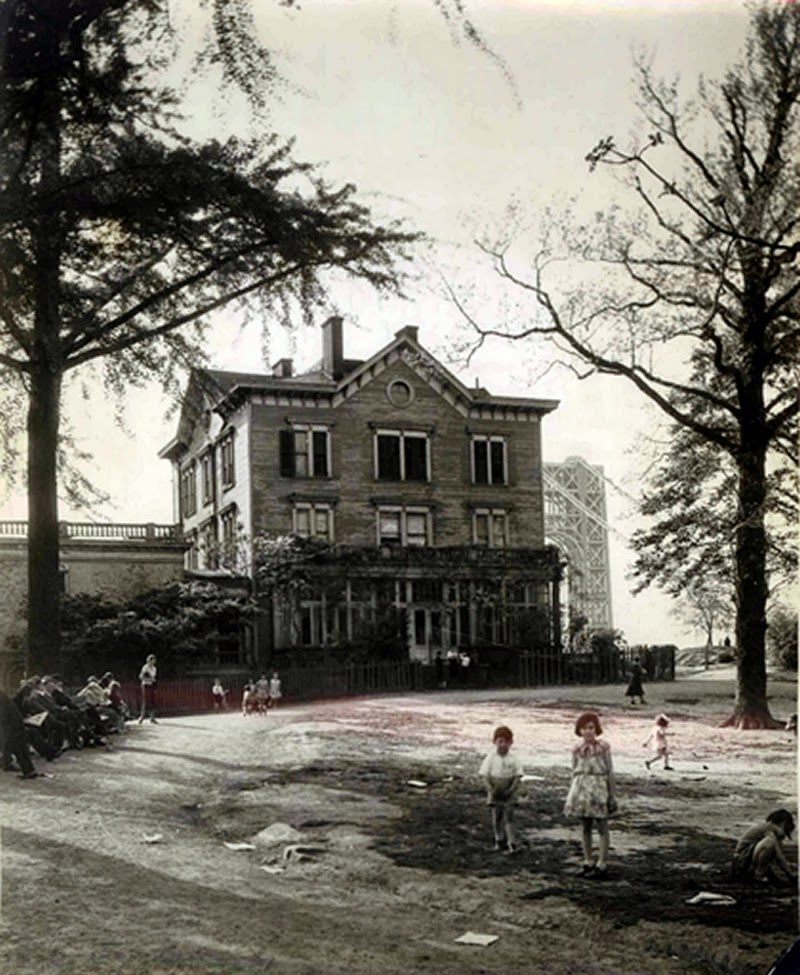
J. Hood Wright is memorialized in a public park just off the Manhattan approach to the George Washington Bridge. located on the land where Mr. Wright’s mansion once stood.

At right: A photo of the old Wright house. You can see the George Washington Bridge in the background. (Courtesy Museum of the City of New York)

The Knickerbocker’s neighborhood of Harlem became the heart of New York’s African-American culture, but hospital staffing did not reflect this change.

There were many reported incidents of black patients being poorly treated here during the 1920s and 30s.  According to author Nat Brandt, the wife of W.C. Handy “lay critically ill in an ambulance for more than an hour while officials of Knickerbocker Hospital discussed whether to admit her.” [source]

In May 1959, Billie Holiday was admitted here after collapsing in her apartment, but her liver and heart disease were so advanced that she was transferred to a hospital better suited for treatment. (She died a few weeks later.)

Knickerbocker Hospital remained open until the early 1970s when mounting debts almost forced it to close.  The state of New York took it over and renamed it Arthur C. Logan Memorial Hospital after a prominent black physician.  That hospital seemed to suffer from the same financial woes as the others and eventually closed for good in 1979.

I’m looking forward to doing more research New York’s medical institutions in the coming weeks, and I hope the show does it justice!

A scene from The Knick. There will be blood, I believe….

(Photograph courtesy Cinemax)
Categories
Bridges Podcasts

The Bridge to Everywhere: The George Washington Bridge strangely political, unexpectedly naked, undeniably beautiful


PODCAST  The George Washington Bridge is best known for being surprisingly graceful, darting between Washington Heights and the Palisades, a vital connection in the interstate highway system.  

Figuring out a way to cross over the Hudson River (not using a boat or ferry) between New York City and New Jersey has been a challenge that engineers and builders have tried to solve for over two hundred years.  With the formation of the Port Authority in 1921, there was finally an administrative body with the ability to bring a Hudson River bridge to life.

At the core of this story is a professional disagreement (or betrayal, depending on how you see it) between Gustav Lindenthal, the dreamer of a monumental crossing linking New Jersey with Midtown Manhattan, and his protegee Othmar Ammann who envisioned a simpler crossing in a less populated part of town.

The final bridge was eventually built thanks to a few strategic political moves by New Jersey’s Jazz Age governor George S. Silzer. But the original bridge design was quite ornamental, a bridge close in appearance (if twice the size) to the Brooklyn Bridge. The bridge you see today is technically unfinished.

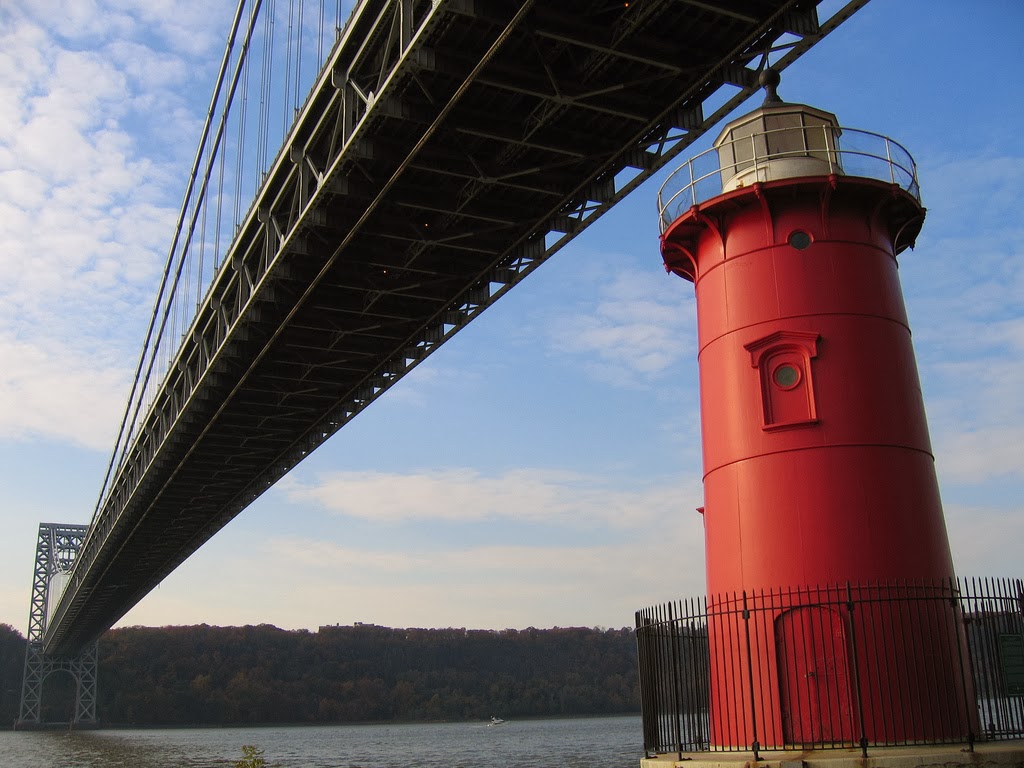
ALSO: The story of the little red lighthouse and the great big flag!


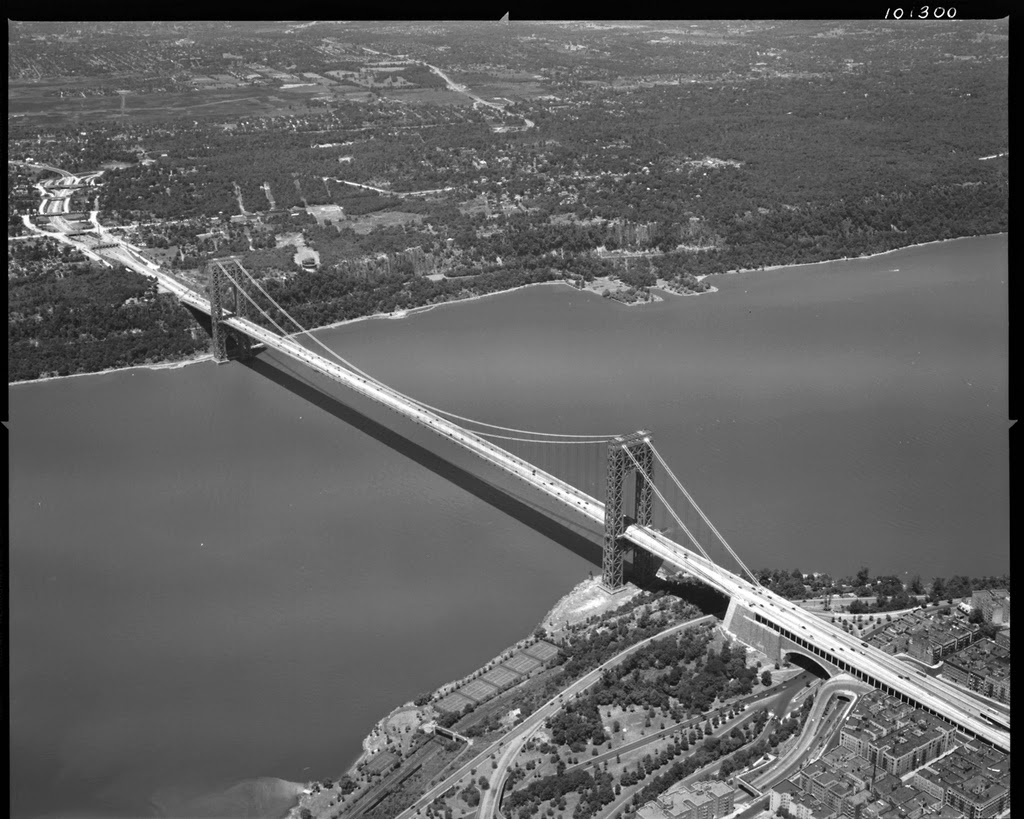
A view of the landscape around the George Washington Bridge, clearly illustrating the two different sets of conditions on both sides of the bridge.  The New York side abuts an existing neighborhood, while the New Jersey side retains a bit more of its natural beauty.  July 4, 1947 (Courtesy New York State Archives)

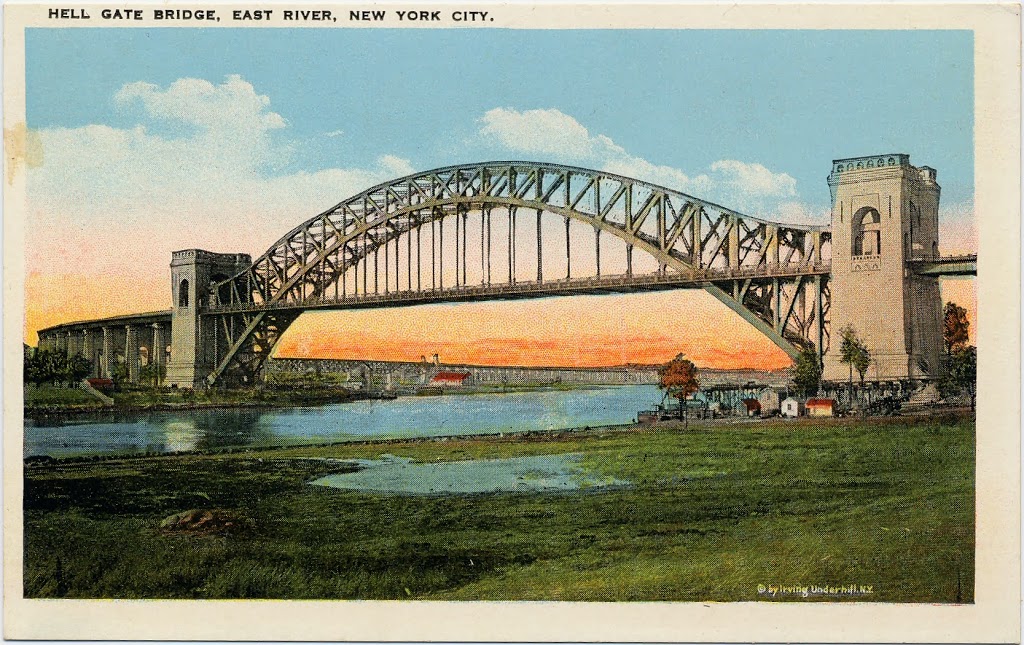
Gustav Lindenthal worked with Othmar Ammann on the construction of the Hell Gate Bridge, completed in 1917….

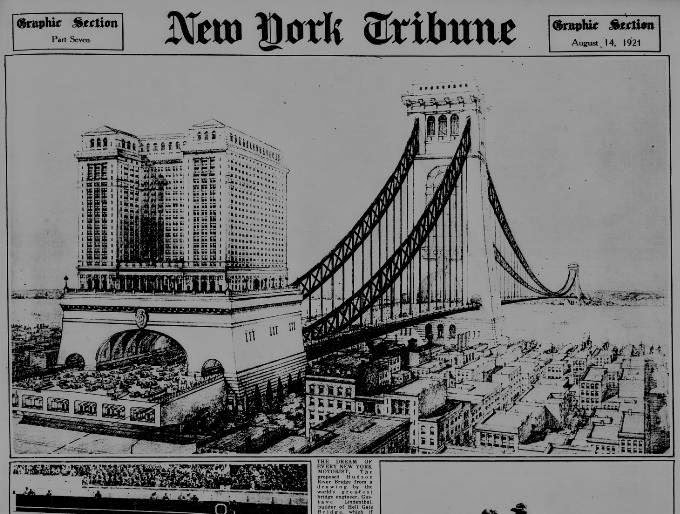
…but his ultimate dream of building a colossal Hudson River bridge, with a entrance point on the Manhattan side in Midtown, was never realized.  His vision of a dramatically large span was illustrated in the New York Tribune in 1921:

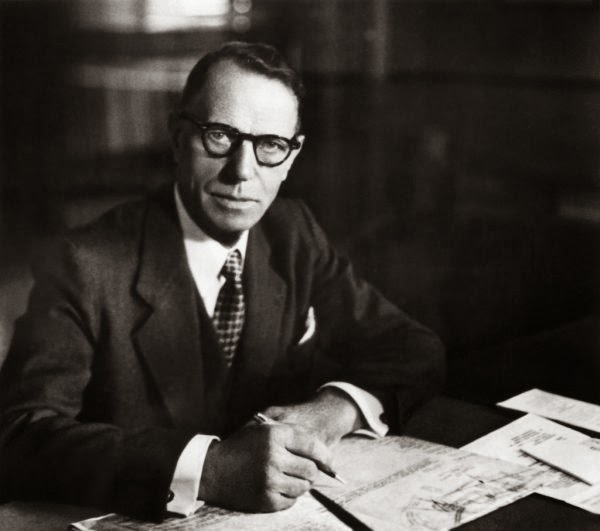
Othmar Ammann, whose bridge design eventually won out, due to its relative economy (compared to Gustav’s design) and choice of location:

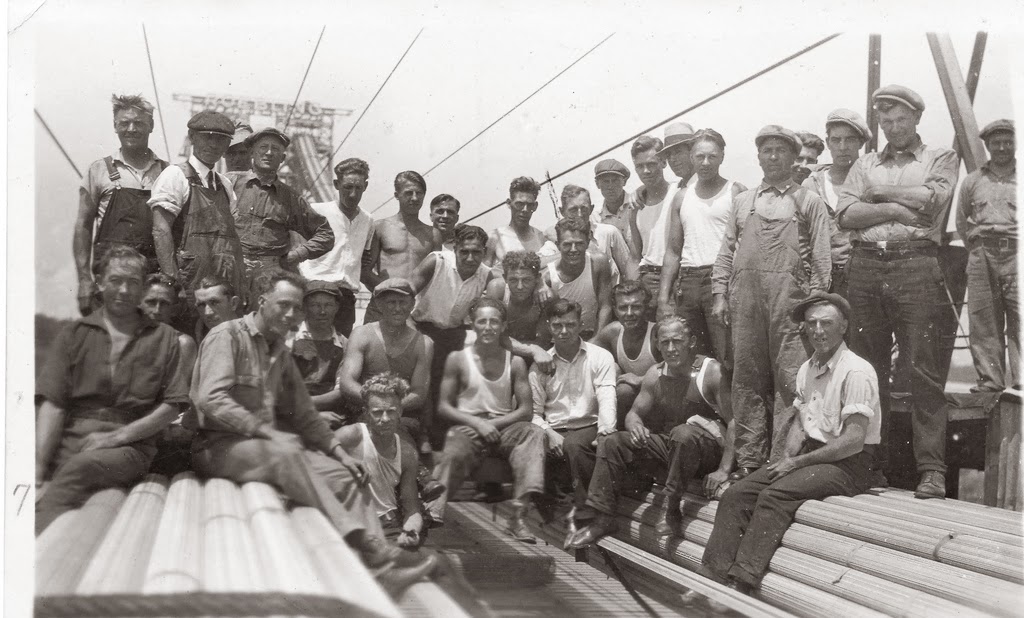
The cable crew of the George Washington Bridge. The daunting construction job was completed ahead of time. (Courtesy Flickr/dsearls whose father appears in this picture!)

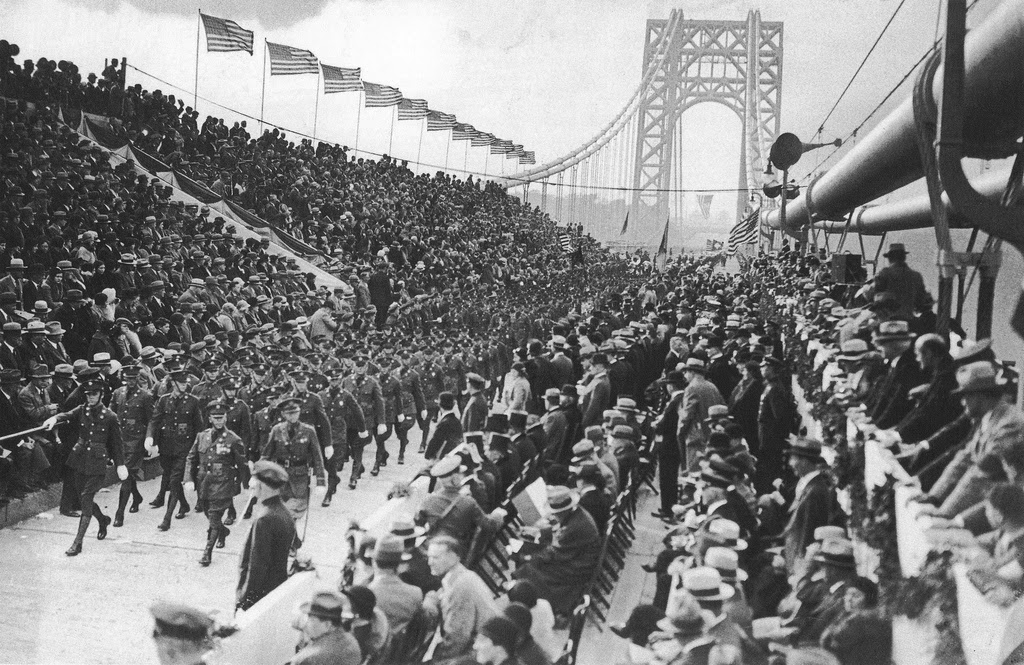
Opening day on the bridge, 1931, with 5,000 people in the stands and thousands more gathered around the New York and New Jersey sides.  New York governor Franklin D. Roosevelt was there, as with Lindenthal and Ammann.  Who was not there? The mayor of New York City Jimmy Walker, who was attending an NYU football game. (Flickr/wavz13)
 

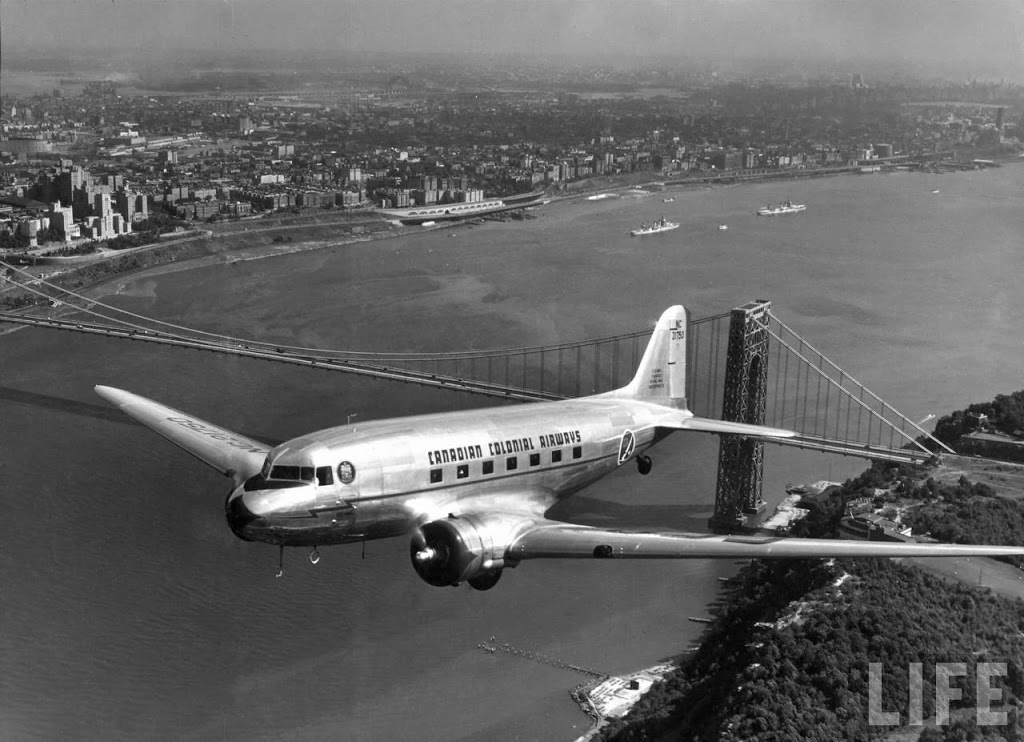
Margaret Bourke-White captures a Canadian Colonial Airways aircraft flying up the Hudson, October 1939.

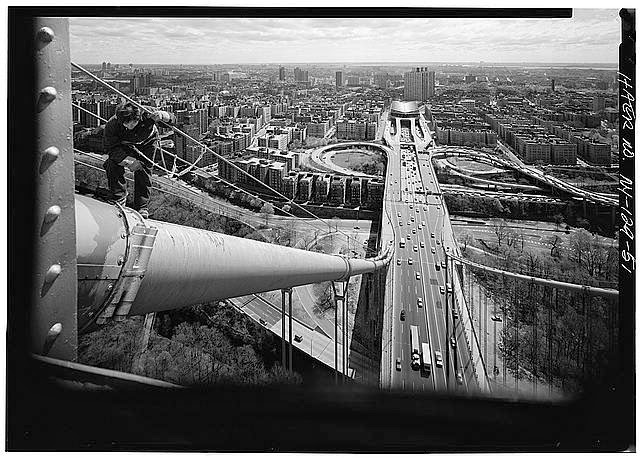
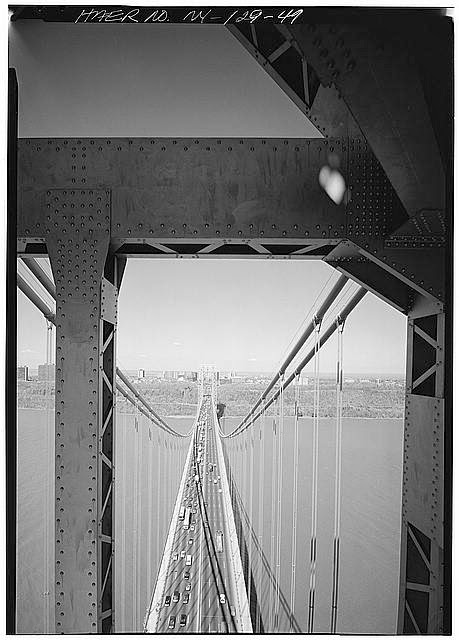
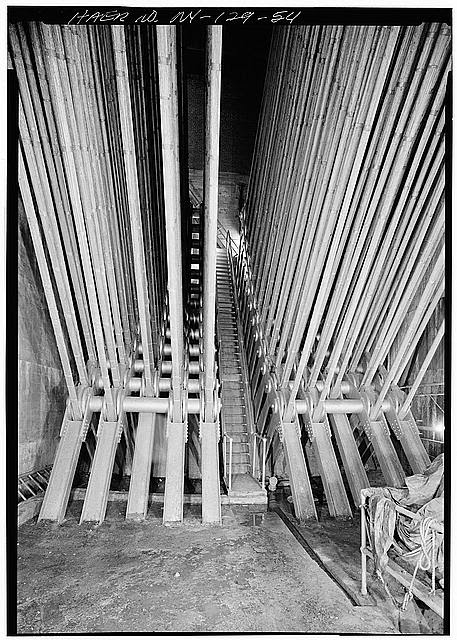
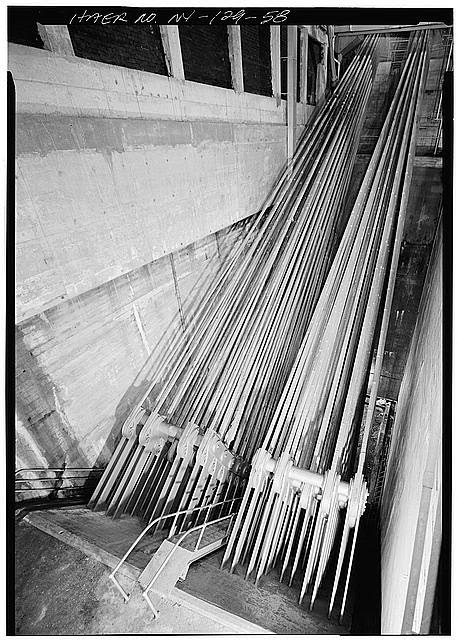
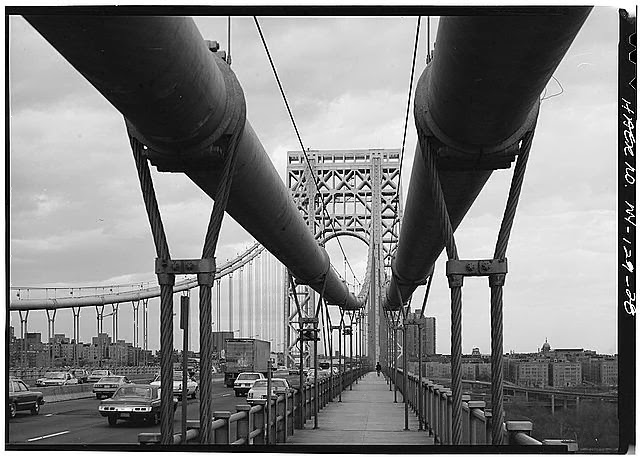
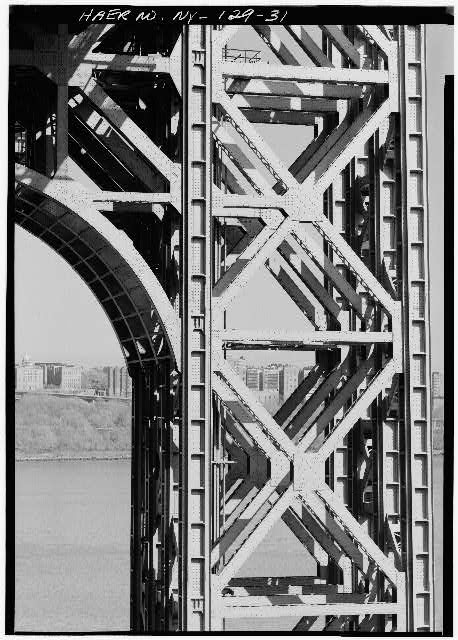
Inside the bridge: a selection of photos from the Library of Congress from atop the tower, inside the anchorages, way extremely overhead and incredibly close:

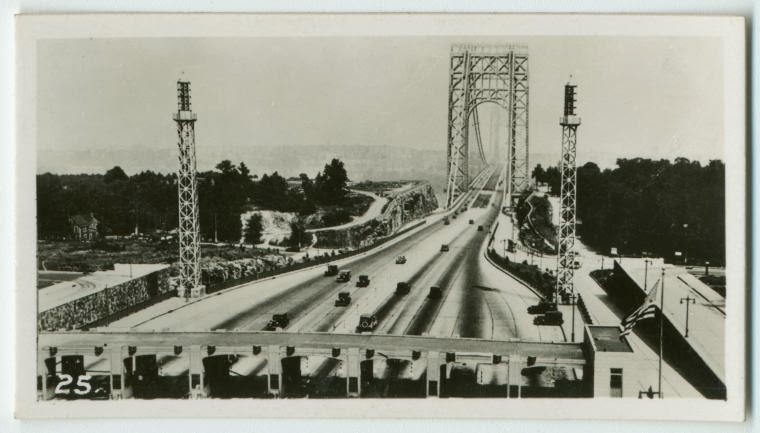
From a cigarette card, showing the New Jersey toll booths:

The Little Red Lighthouse and the Great Grey Bridge….(Flickr/CPWview)


Footage from the bridge’s opening day featuring FDR in a top hat:

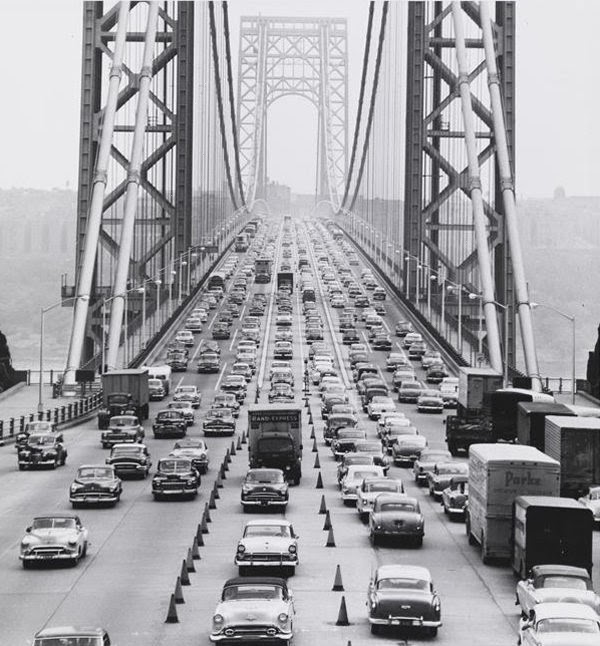
This is how a crossing would have looked in the late 1940s-early 1950s!