Categories
Bridges Podcasts

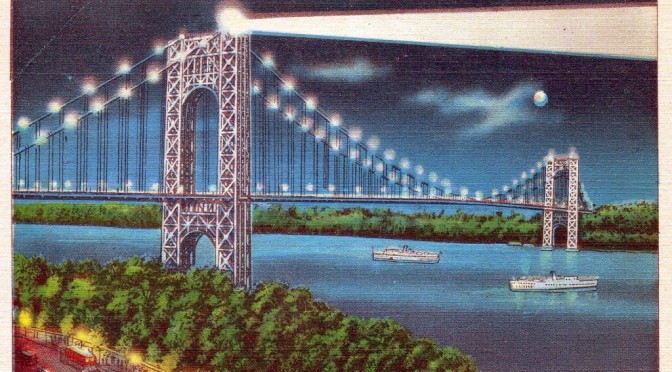
The Bridge to Everywhere: The George Washington Bridge strangely political, unexpectedly naked, undeniably beautiful


PODCAST  The George Washington Bridge is best known for being surprisingly graceful, darting between Washington Heights and the Palisades, a vital connection in the interstate highway system.  
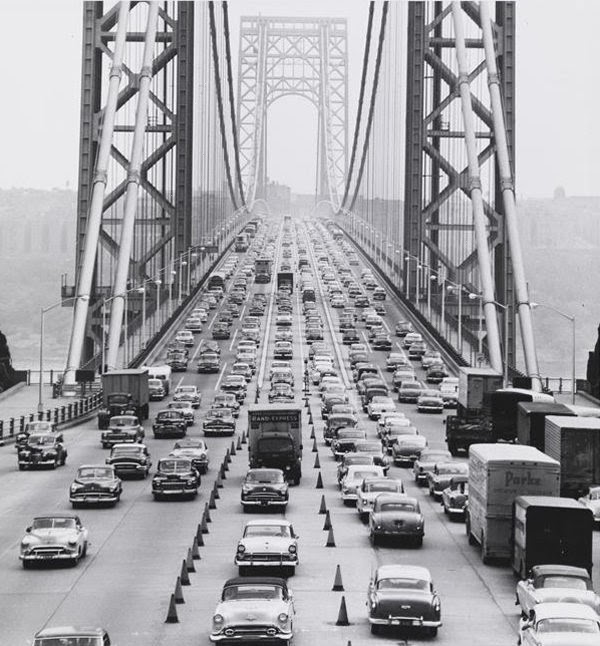
Figuring out a way to cross over the Hudson River (not using a boat or ferry) between New York City and New Jersey has been a challenge that engineers and builders have tried to solve for over two hundred years.  With the formation of the Port Authority in 1921, there was finally an administrative body with the ability to bring a Hudson River bridge to life.

At the core of this story is a professional disagreement (or betrayal, depending on how you see it) between Gustav Lindenthal, the dreamer of a monumental crossing linking New Jersey with Midtown Manhattan, and his protegee Othmar Ammann who envisioned a simpler crossing in a less populated part of town.

The final bridge was eventually built thanks to a few strategic political moves by New Jersey’s Jazz Age governor George S. Silzer. But the original bridge design was quite ornamental, a bridge close in appearance (if twice the size) to the Brooklyn Bridge. The bridge you see today is technically unfinished.

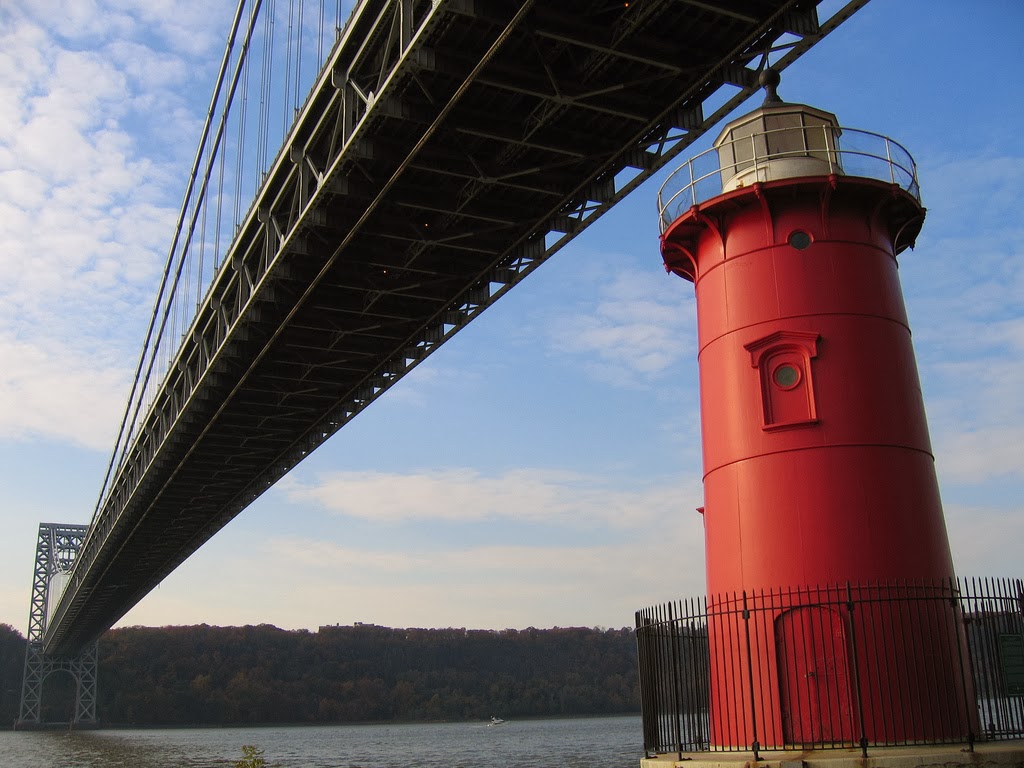
ALSO: The story of the little red lighthouse and the great big flag!


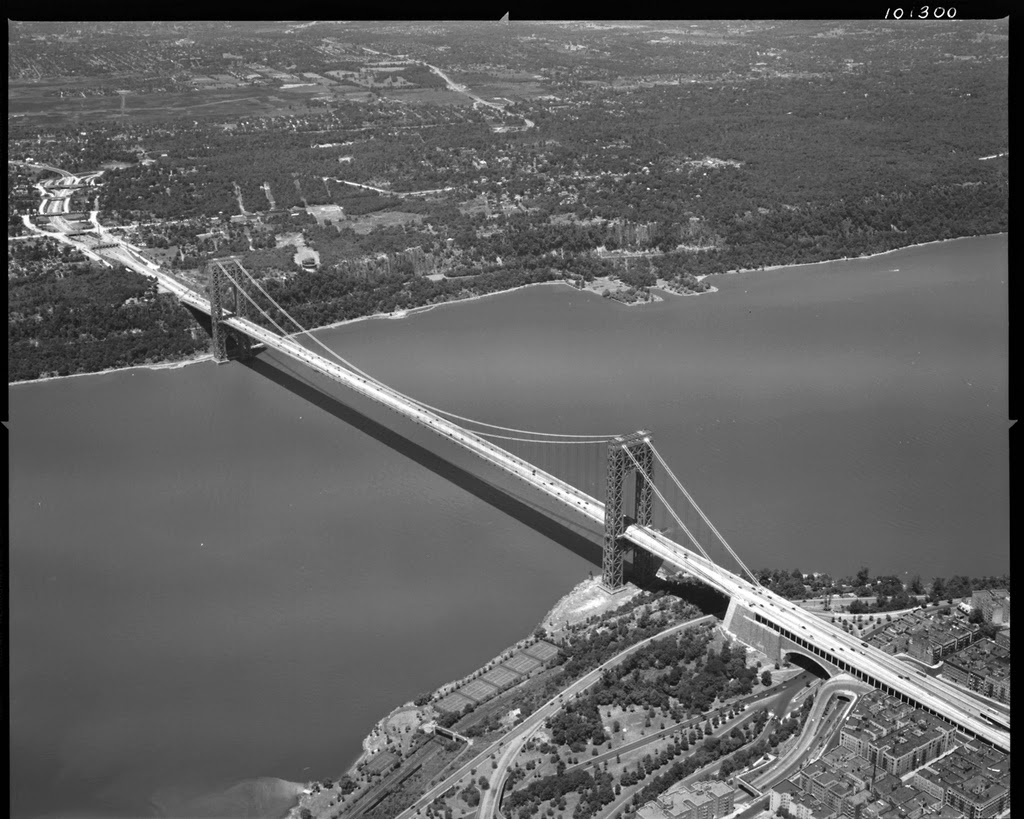
A view of the landscape around the George Washington Bridge, clearly illustrating the two different sets of conditions on both sides of the bridge.  The New York side abuts an existing neighborhood, while the New Jersey side retains a bit more of its natural beauty.  July 4, 1947 (Courtesy New York State Archives)
Gustav Lindenthal worked with Othmar Ammann on the construction of the Hell Gate Bridge, completed in 1917….
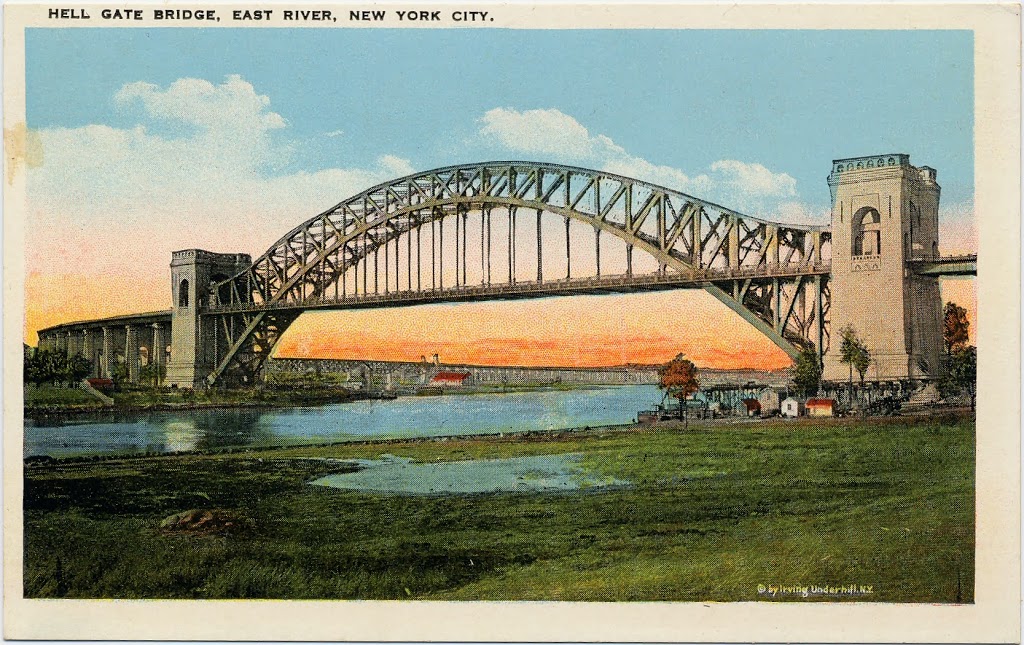
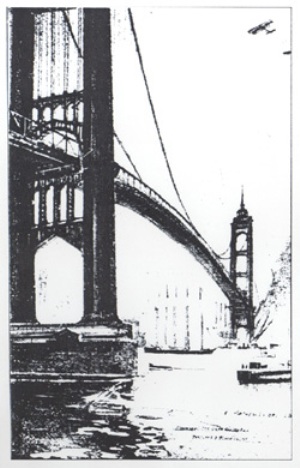
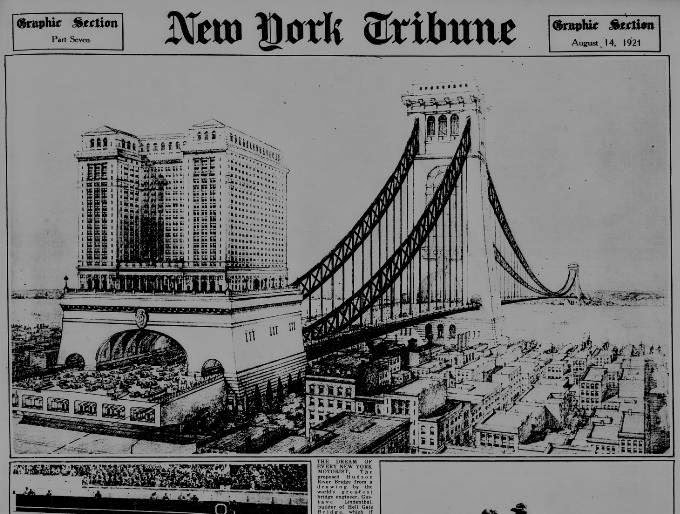
…but his ultimate dream of building a colossal Hudson River bridge, with a entrance point on the Manhattan side in Midtown, was never realized.  His vision of a dramatically large span was illustrated in the New York Tribune in 1921:
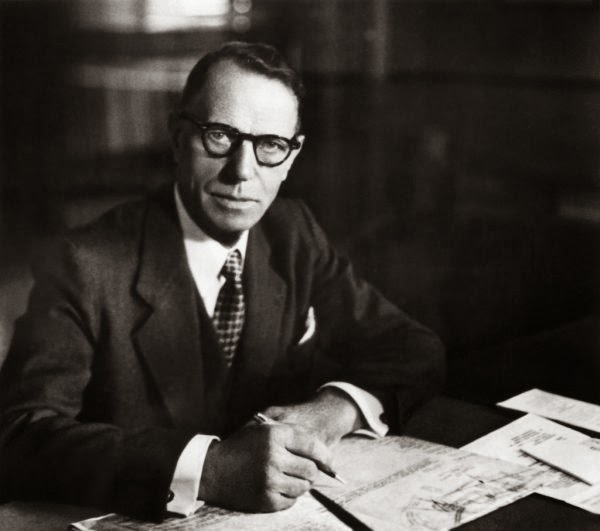
Othmar Ammann, whose bridge design eventually won out, due to its relative economy (compared to Gustav’s design) and choice of location:
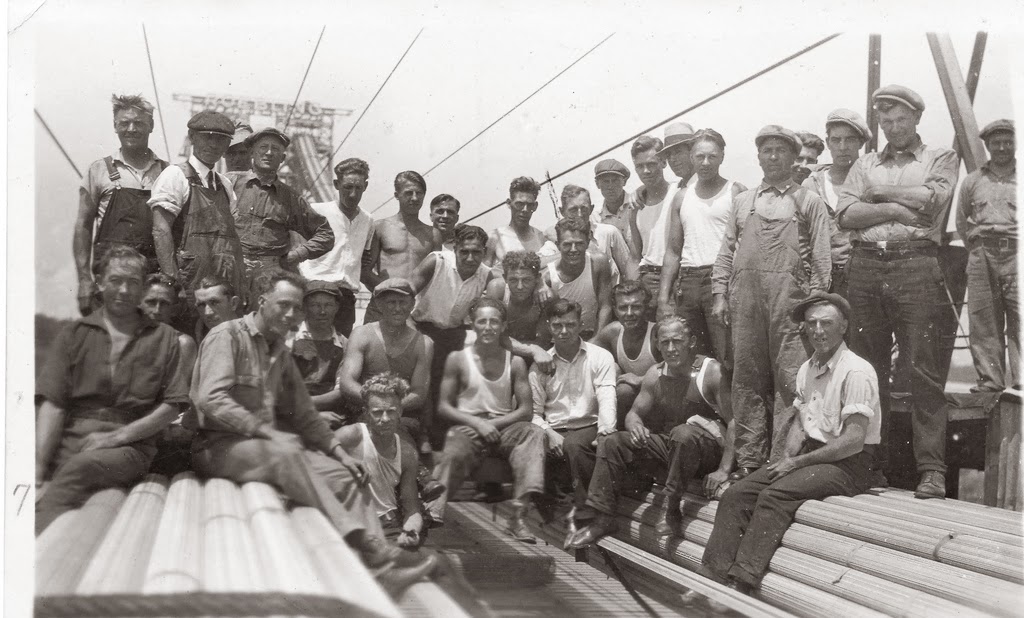
The cable crew of the George Washington Bridge. The daunting construction job was completed ahead of time. (Courtesy Flickr/dsearls whose father appears in this picture!)
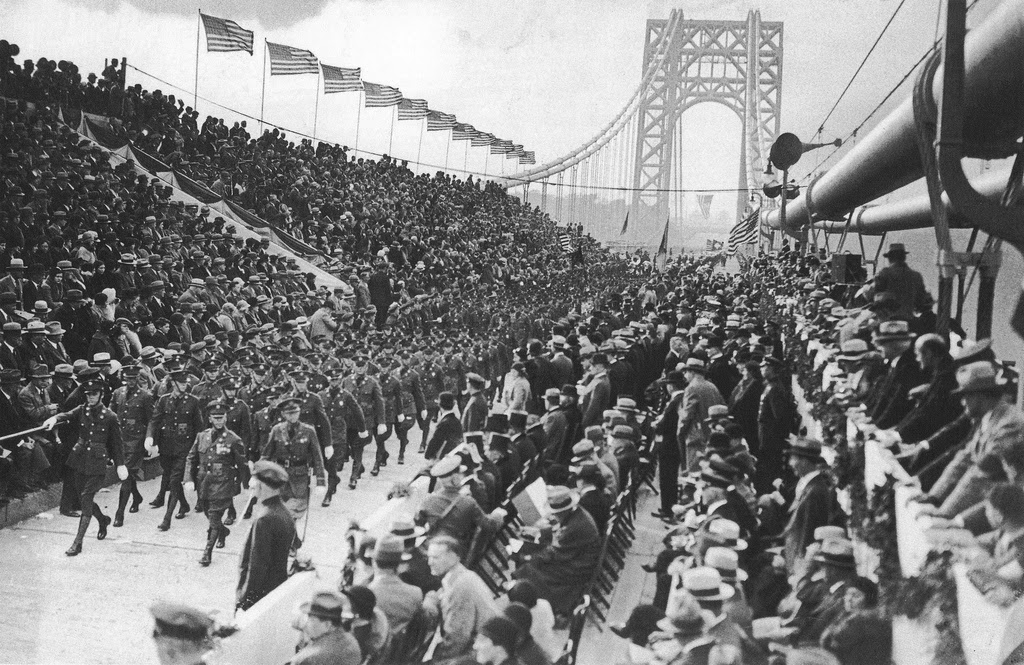
Opening day on the bridge, 1931, with 5,000 people in the stands and thousands more gathered around the New York and New Jersey sides.  New York governor Franklin D. Roosevelt was there, as with Lindenthal and Ammann.  Who was not there? The mayor of New York City Jimmy Walker, who was attending an NYU football game. (Flickr/wavz13)
 

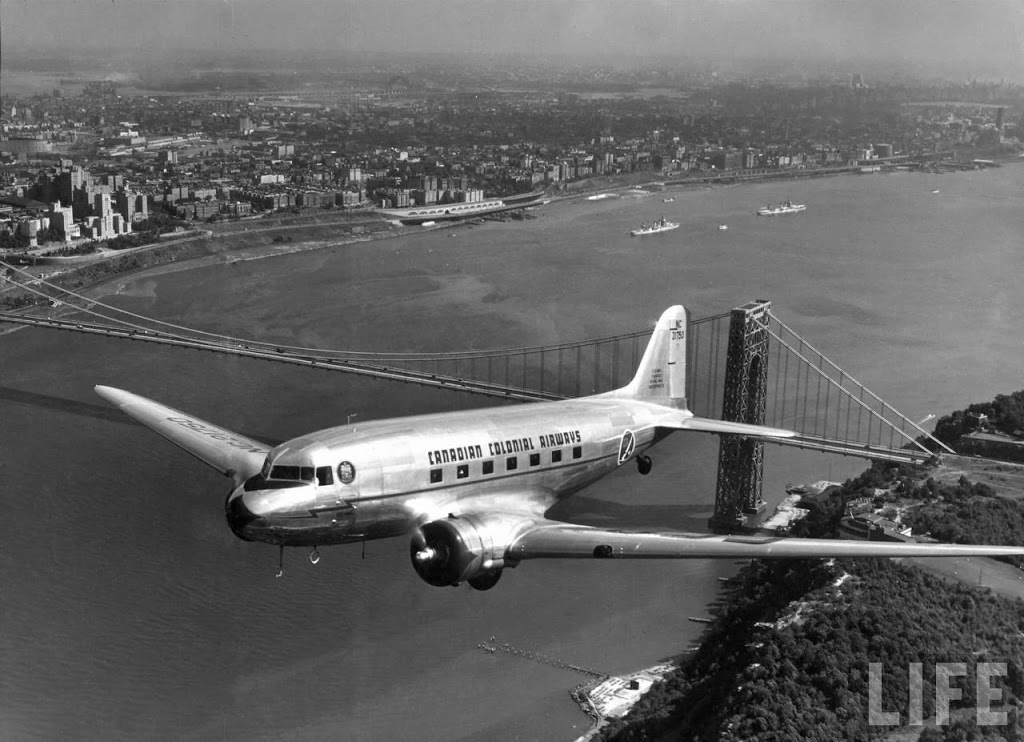
Margaret Bourke-White captures a Canadian Colonial Airways aircraft flying up the Hudson, October 1939.
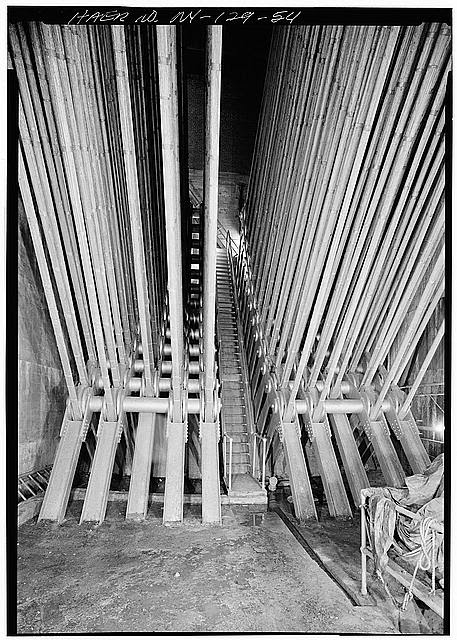
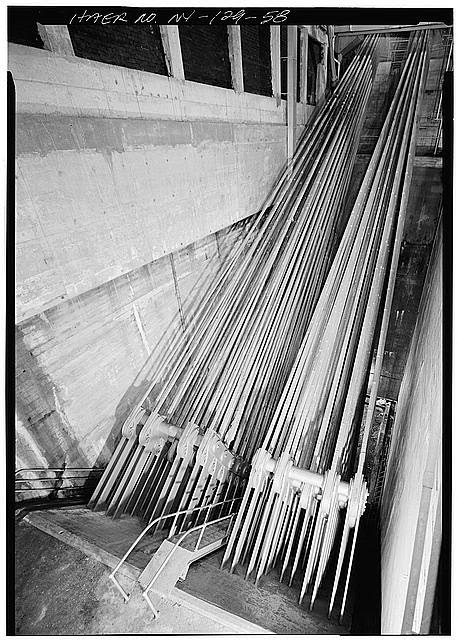
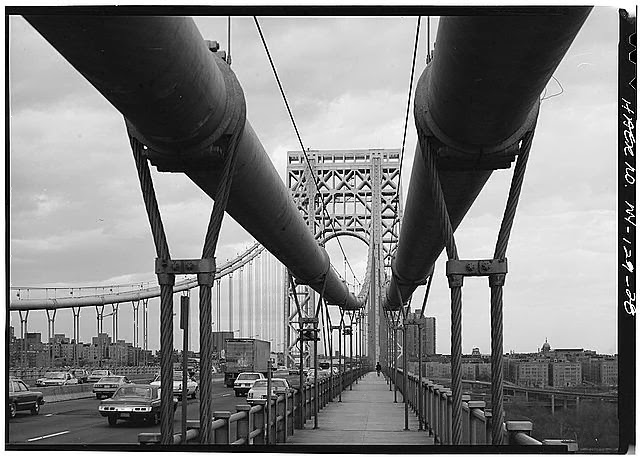
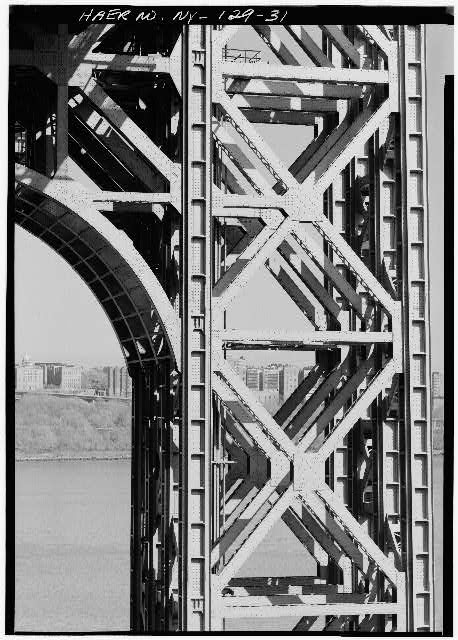
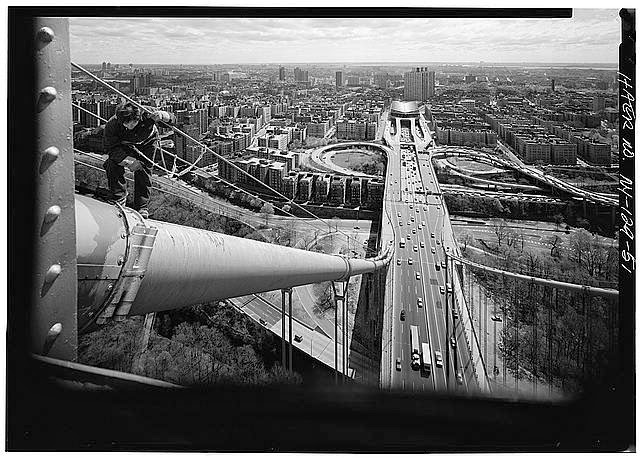
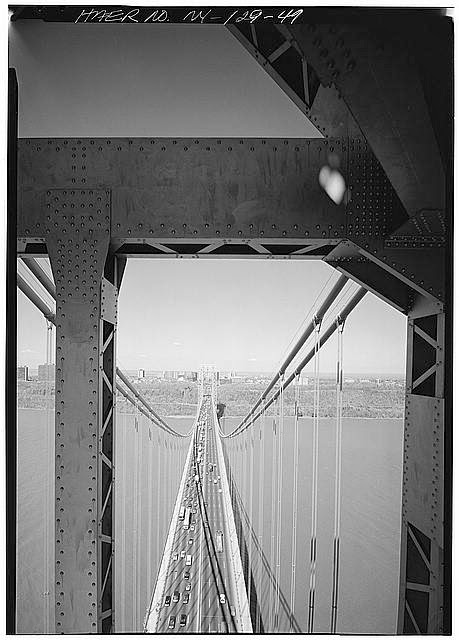
Inside the bridge: a selection of photos from the Library of Congress from atop the tower, inside the anchorages, way extremely overhead and incredibly close:
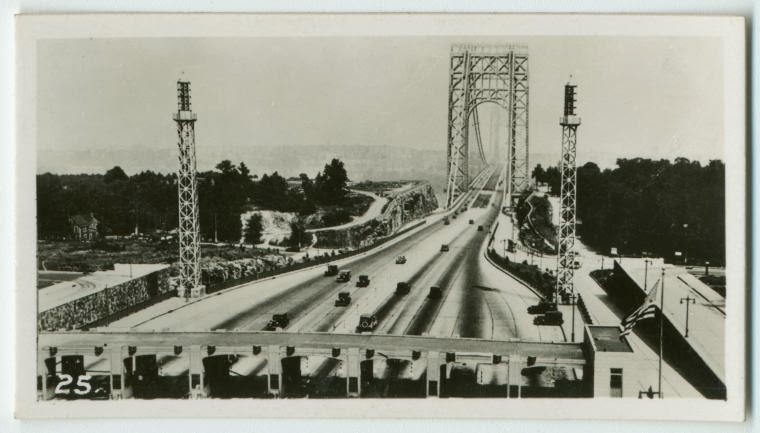
From a cigarette card, showing the New Jersey toll booths:
The Little Red Lighthouse and the Great Grey Bridge….(Flickr/CPWview)


Footage from the bridge’s opening day featuring FDR in a top hat:

This is how a crossing would have looked in the late 1940s-early 1950s!
Categories
Bridges Podcasts

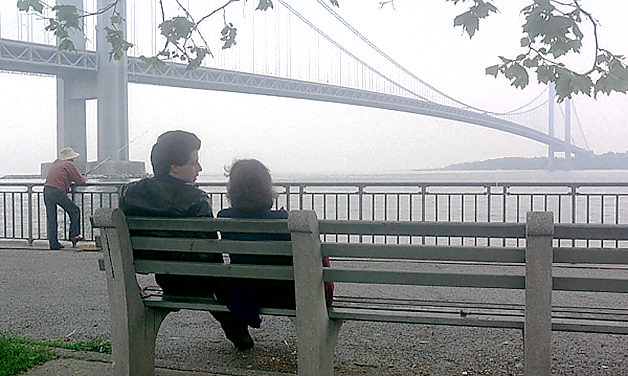
The Verrazano-Narrows Bridge: Robert Moses, Bay Ridge, and the birth of America’s longest suspension bridge

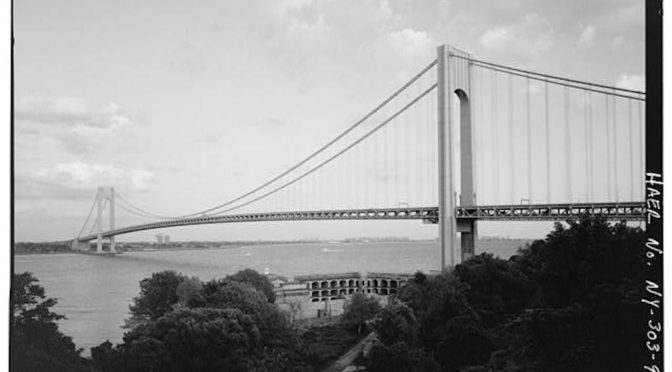
With Fort Wadsworth to its side, the last of Othmar Ammann’s New York bridges jets out over the Narrows.

PODCAST The longest suspension bridge in the United States, the Verrazano-Narrows Bridge was one of Robert Moses’ most ambitious projects, a commanding structure that would finally link Staten Island with Brooklyn. Today it soars above New York Harbor as one of the finest examples of architecture from the 1960s. But it didn’t get built without some serious community outcry, from a neighborhood that would be partially destroyed in its wake — Bay Ridge, Brooklyn.

This is the tale of a 16th century explorer, a 20th century builder and a timeless marvel of the harbor, with a design that takes the curvature of the earth — and one very, very large boat — into consideration.

ALSO: The bridge’s finest film performance, with co-star John Travolta.

You can tune into it below, download it for FREE from iTunes or other podcasting services, or get it straight from our satellite site.

Or listen to it here:
The Bowery Boys: The Verrazano-Narrows Bridge

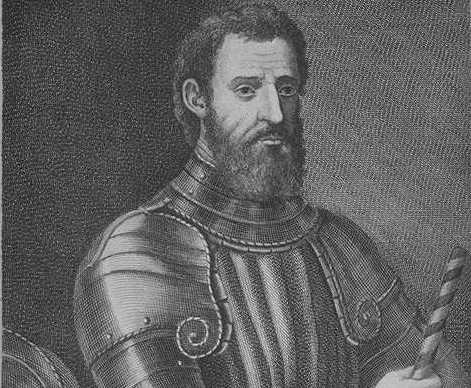
This is Italian explorer Giovanni da Verrazzano, who sailed into the Narrows in 1524, decades before Henry Hudson. Unfortunately, he miscalculated and thought the harbor was a big lake, so he left.

An existing sketch of David Steinman’s proposal for the Narrows span. Called the Liberty Bridge, it was a hybrid of the Golden Gate and the Brooklyn Bridge and features bells that would ring out periodically through the harbor. This came very close to being implemented, but the project died in Congress thanks to a New York representative: young Fiorello LaGuardia.

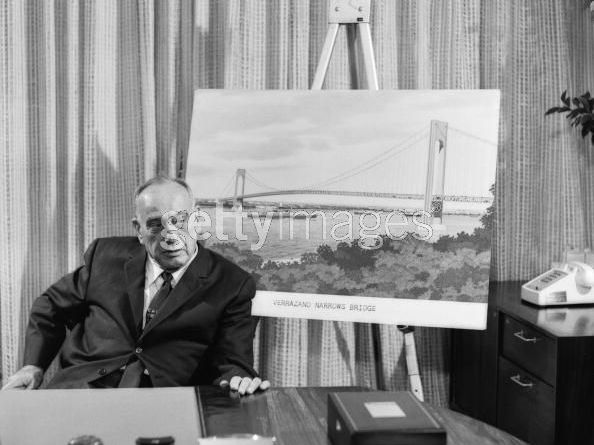
From a Getty Image we find the all-powerful Robert Moses discussing his project on the eve of its opening, November 1964. Many dreamed of spanning the Narrows, but only Moses had accumulated enough influence the see the project to fruition. (CBS Photo Archive/Getty Images)

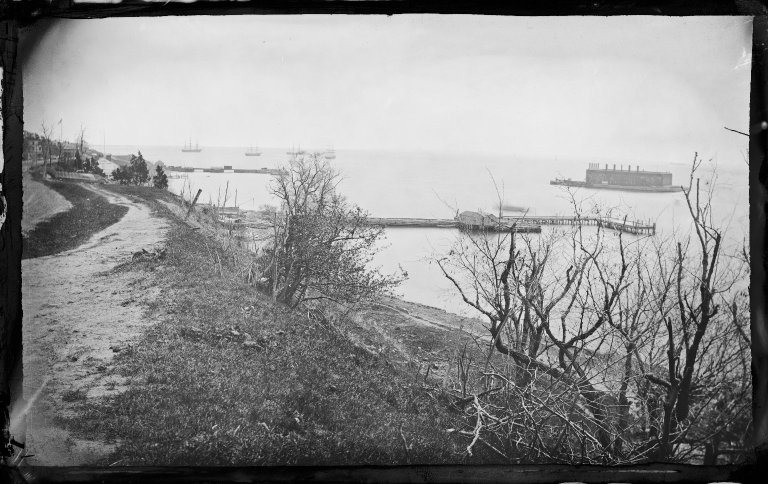
Along the Brooklyn shore in 1914 with old Fort Lafayette out on an old reef. The fort was demolished to make way for the base of the bridge. (Courtesy the Brooklyn Museum)

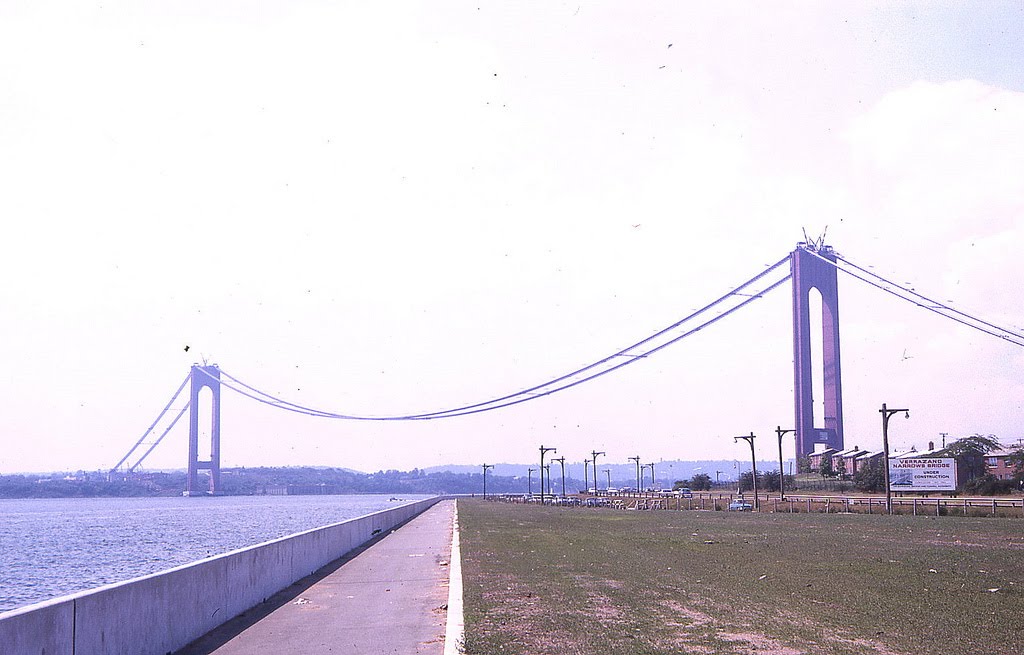
The view in 1963 and the bridge without its roadway, which would be delivered by barges in specifically crafted pieces and hoisted in place. (Courtesy petepix75/Flickr, and has some other great old New York pics in his photostream)

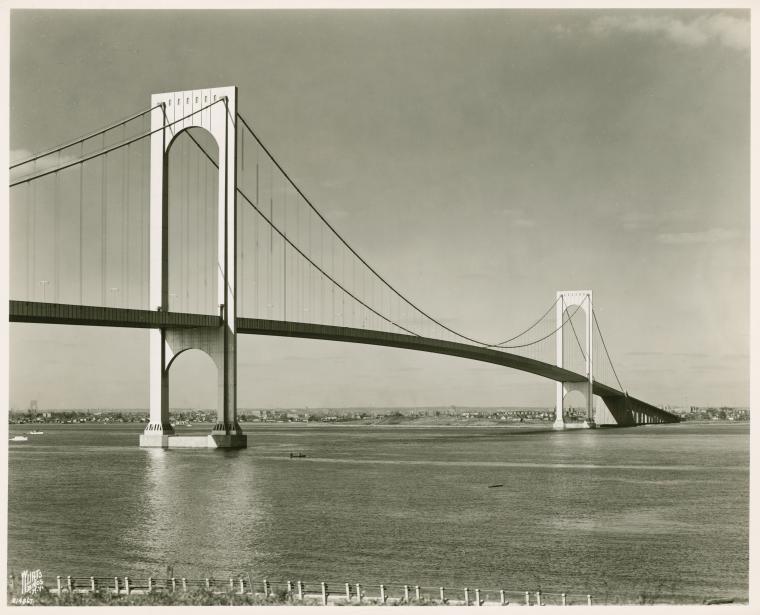
When the bridge opened in November 1964, it was the longest suspension bridge in the world, overtaking the Golden Gate Bridge in San Francisco. The Verrazano-Narrows held that title until 1981 when the Humber Bridge in the UK overtook it. (Pic courtesy NYPL)

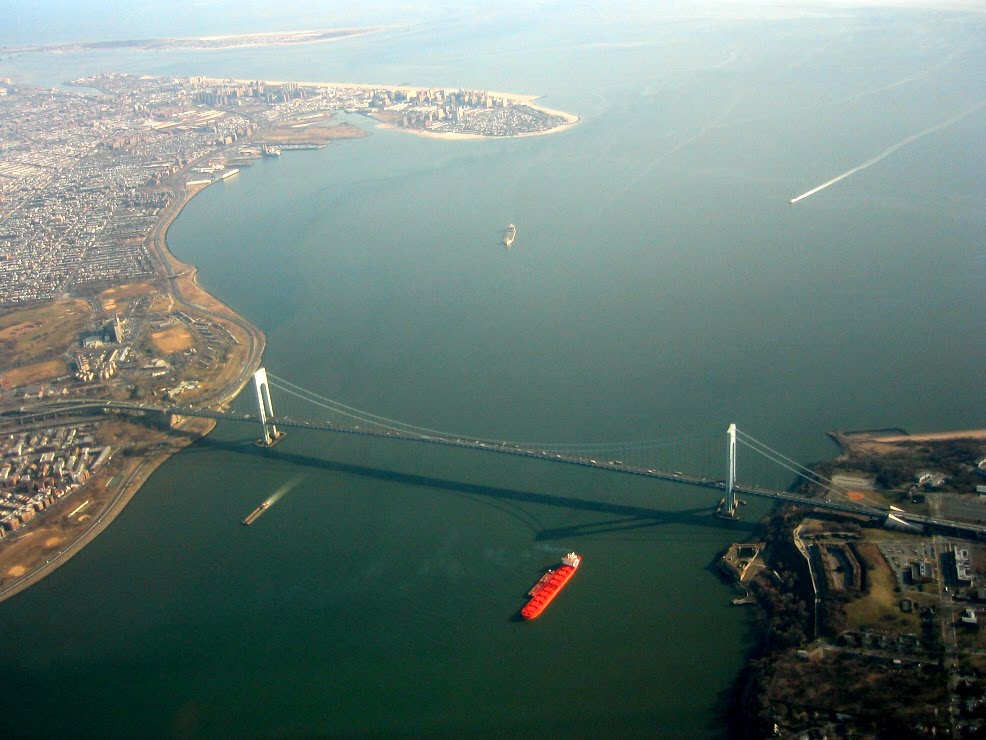
From overhead, it’s easy to see the challenges faced by Ammann and engineers in designing and constructing the bridge.

A newsreel from 1963, outlining the construction of the bridge and illustrating the dangers workers faced in building it.

The bridge plays a prominent role — and a tragic one — in the 1977 film Saturday Night Fever.

A deleted scene from the film prominently highlights the main character’s obsession with the bridge:

There are some terrific photos and additional history at Forgotten New York on the opening of the bridge. There’s even some aftermath photos of Bay Ridge, Brooklyn, after the city ripped away several homes.

You can take a preview peek of Gay Talese’s The Bridge here.

And if you ever wondered what it looks like to ride the Queen Mary 2 underneath the bridge, here you go:

NOTE: We mention the Outerbridge in the podcast, the official name of which is ‘the Outerbridge Crossing’ to sidestep that Outerbridge Bridge issue. Many refer to it as just ‘the Outerbridge’ to save the syllables.