Categories
Film History Landmarks

Cheers to the Ziegfeld Theatre, the ultimate screen for sweeping drama

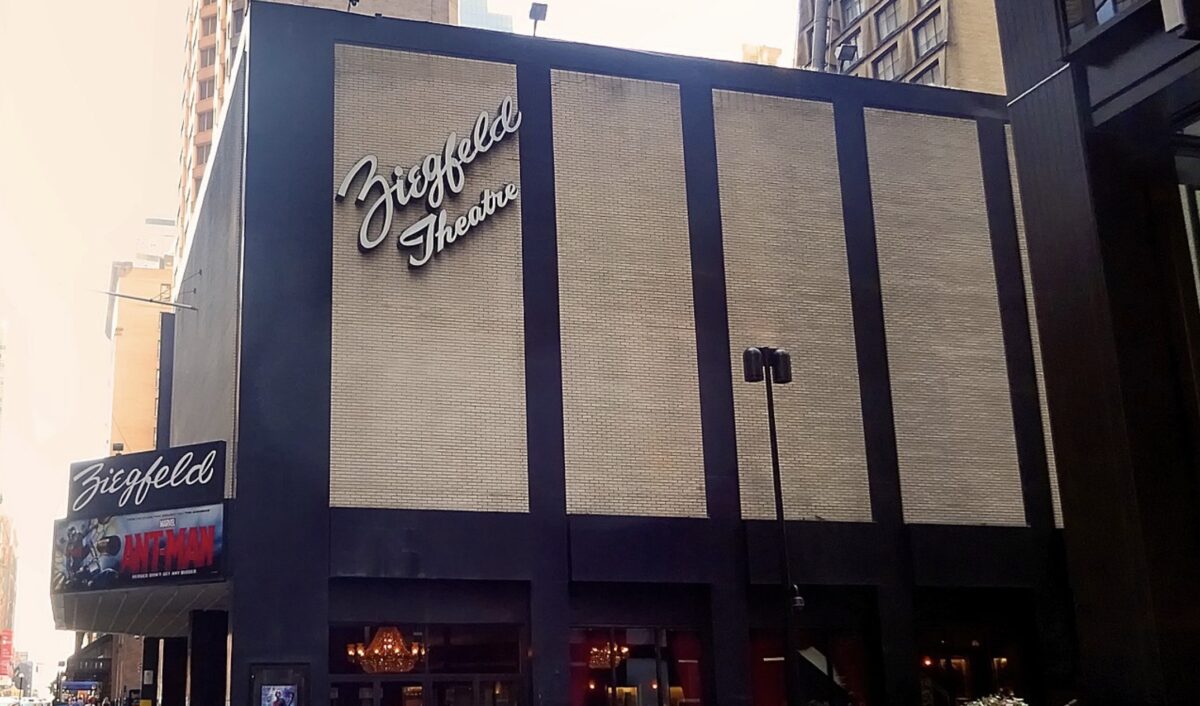
The Ziegfeld Theater, one of Manhattan’s last single-screen movie theaters, closed for regular film exhibition in 2016.* Its final film was Star Wars: The Force Awakens, an appropriate choice as tens of thousands of movie lovers had gone to the Ziegfeld to see previous films in the series — including the 1977 original.
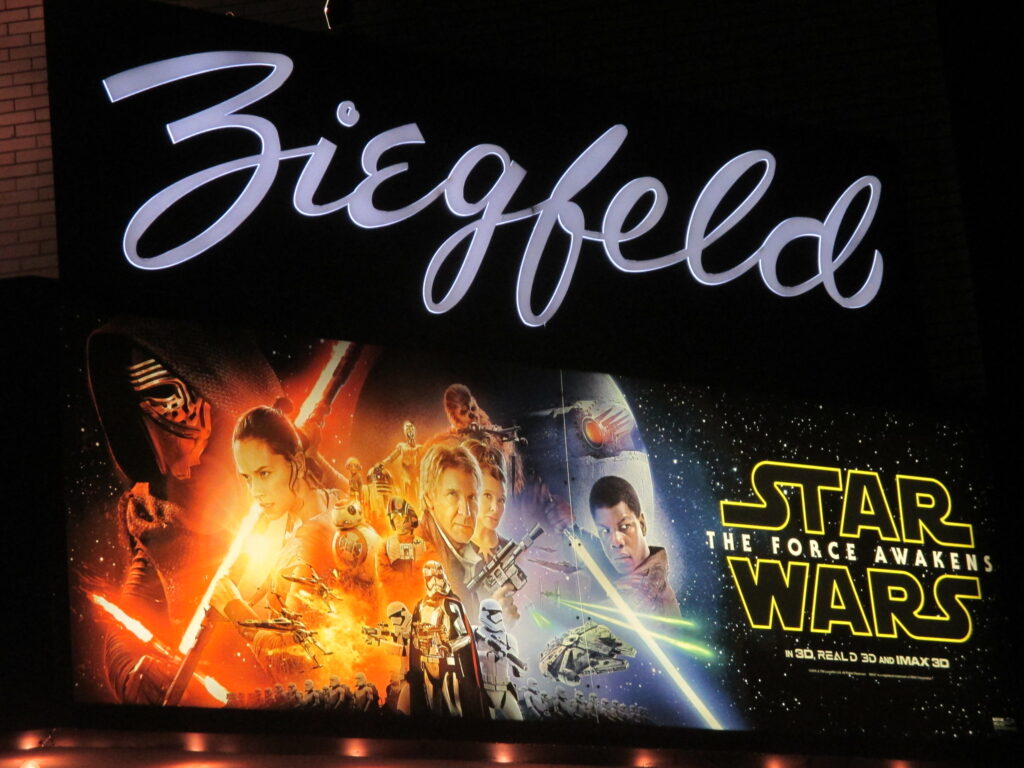
Courtesy Flickr/Brecht Bug

I think the real story here is how — in a landscape of multiplexes and state-of-the-art home theaters — this respected dinosaur, sitting amidst the most valuable real estate in the world, managed to stay open as long as it did, playing a single film at a time.

(The Paris Theater is the only Manhattan theater remaining with just one screen.)

Losing the Ziegfeld means that New York lost a valuable link to one of the city’s greatest theatrical icons, Florenz Ziegfeld. Although, to be fair, that link was already indirect.
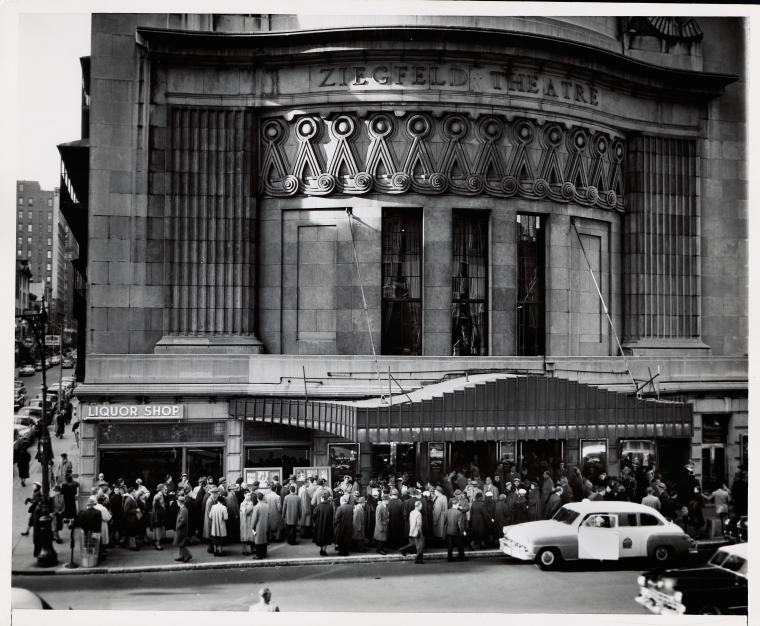
The original Ziegfeld Theater (at top), built especially for the showman by William Randolph Hearst, sat on Sixth Avenue close by the present movie theater. It was demolished in 1966, and a new Ziegfeld — devoted solely to film — was built nearby by Emory Roth & Sons. It opened in December 1969.

At 1,131 seats, the Ziegfeld movie house was hardly the biggest theater in New York. And it doesn’t even have the biggest movie screen (that title belonged to the IMAX at Lincoln Center).

But the grandiosity of design, the traditional show-palace style, and the dramatic trappings of its lobby make for a movie experience of special import. Even its bathrooms were extraordinary.
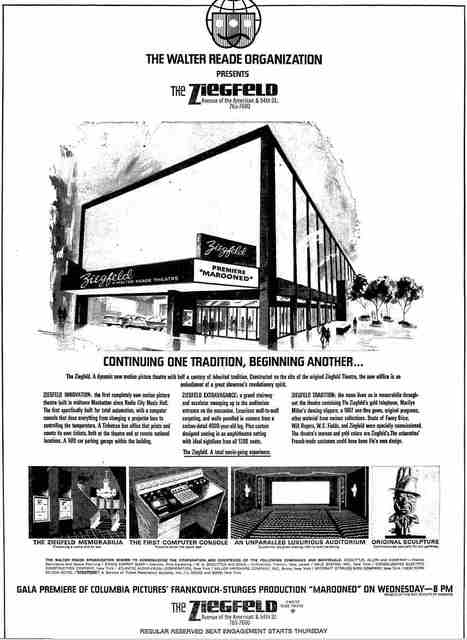
The Ziegfeld was a throwback to New York’s early single-screen theaters of yore like the Roxy, the Rivoli and the Capitol. It’s also much smaller than all of those. (The Capitol, for instance, sat 4,000 people!)

The Ziegfeld catered to films of a remarkable scope, and it built its reputation upon ‘serious’ films of pedigree.

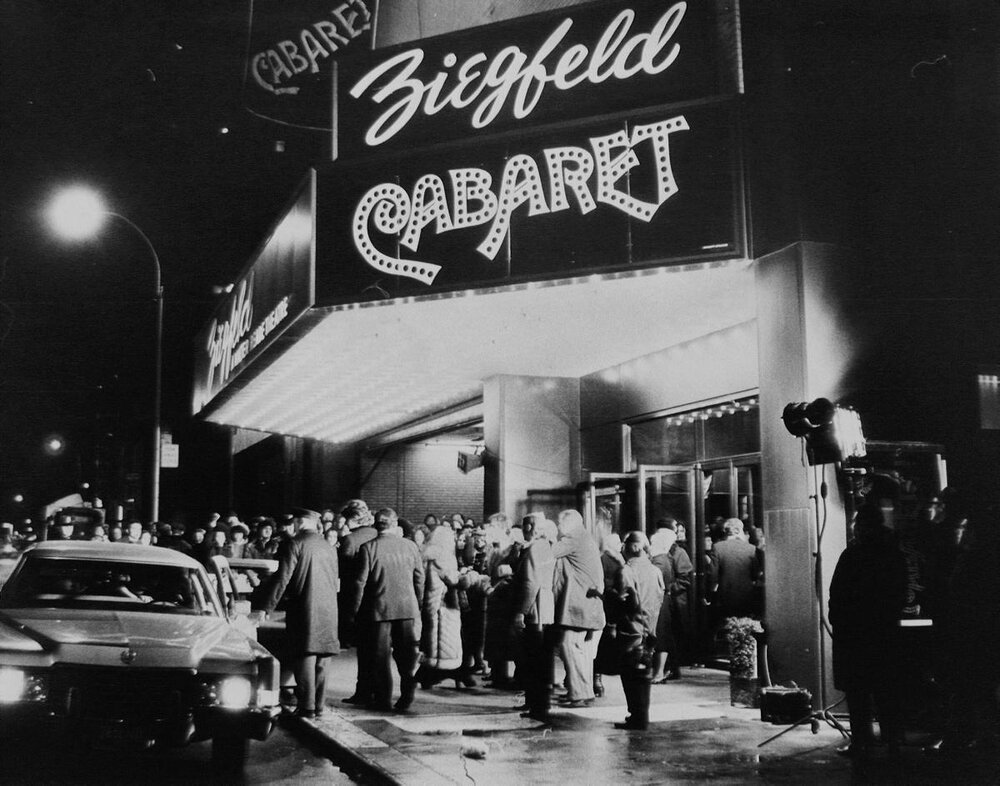
Some of the most successful films to ever play the Ziegfeld include Gandhi (1982, playing 31 weeks), Cabaret (1972, 26 weeks), and Close Encounters of the Third Kind (1977, 23 weeks, plus an additional month in its 1980 reissue).
Courtesy Ziegfeld Ballroom

But screen longevity doesn’t necessary auger quality. For instance, Raiders Of The Lost Ark played here for three weeks. Grease 2 played for five.

Less than a year after the theater’s opening, on November 9, 1970, came the film that currently holds the record for the longest-running film in Ziegfeld’s history — Ryan’s Daughter.

Perhaps not the traditional classic you might expect to hold such a record.
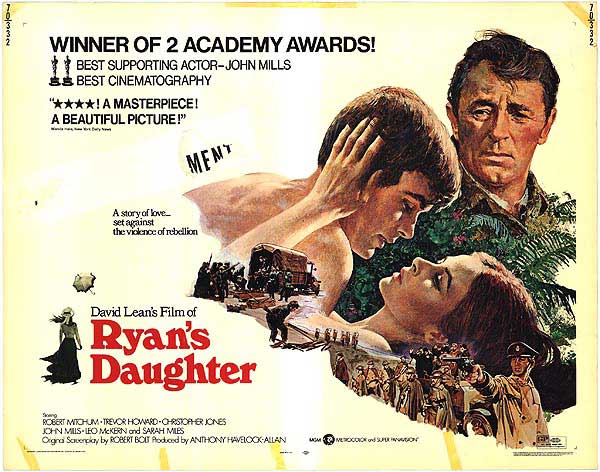
This blown-out, histrionic World War I drama by legendary filmmaker David Lean, loosely based on the book Madame Bovary, recounts an illicit love affair set along the Irish seashore, with crashing waves serenading the passionate kisses between a married pub owner’s daughter (played by Sarah Miles) and a maimed war veteran (Christoper Jones) who is intermittently tormented by battle flashbacks.

Star wattage was provided by Robert Mitchum as the jilted husband.

Lean’s previous film was Doctor Zhivago, a box office triumph that set international records and proved movie audiences would gratefully sit through lengthy costume dramas if they were any good.

Ryan’s Daughter, sadly, was no Doctor Zhivago.

New York Times critic Vincent Canby completely dismisses it — a film full of ‘soapy gestures’ — but adds a telling postscript to his review:

I first saw ‘Ryan’s Daughter’ at a press preview at the Ziegfeld Theater, where the audience reaction tended toward rudeness. Five days later, I returned to see it with a paying audience that stood patiently in line around the block before getting into the theater. The members of that audience loved the movie even before they entered the lobby, and, from the reverence with which they greeted the movie itself, they also loved it while seeing it.

The New Yorker’s Pauline Kael pulled no punches, calling it a “gush made respectable by millions of dollars ‘tastefully’ wasted”.

Afterwards, a brave Lean showed up for a function by the National Society of Film Critics held at the Algonquin Hotel, where he was mercilessly lambasted by the New York critics.

Lean recalls, “One of the most leading questions was, ‘Can you please explain how the man who directed Brief Encounter can have directed this load of sh*t you call Ryan’s Daughter?’ It really cut me to the heart, and that was Richard Schickel.”

 The experience was so scarring that Lean later claimed it caused him to withdraw from film making for over a decade
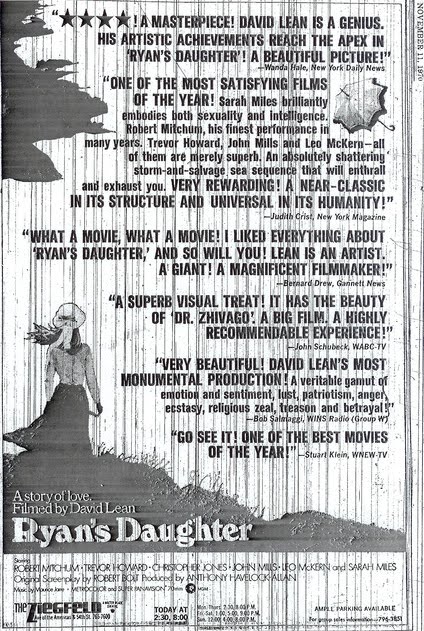
Yet still, New Yorkers flocked to Ryan’s Daughter, from its premiere that November and for thirty-three weeks afterwards.

The film, initially presented in the old ‘roadshow’ format including its overture and intermission, lasted three and a half hours, so the Ziegfeld could only schedule two or three shows a day.

Ryan’s Daughter — all of Lean’s pictures, actually — seemed ready-made for the Ziegfeld.  

By 1970, many of New York’s grandest movie screens were already torn down. Those that remained were in Times Square, and it’s doubtful that the Upper East Side crowd — older, wealthier New Yorkers — felt comfortable settling down in those theaters by this time.

The Ziegfeld, right off Sixth Avenue, was also nearby midtown’s swankiest restaurants (as Mad Men, which once mentioned the old Ziegfeld Theater, regularly demonstrates.)

The film was also presented in Super Panavision 70, a film process using ‘spherical optic’ lenses that had only been used by a few films. (2001: A Space Odyssey, another Ziegfeld success, used the same process.)

Such visual scope blasted out from the Ziegfeld’s immense screen, beguiling and even numbing audiences as the IMAX of its day.
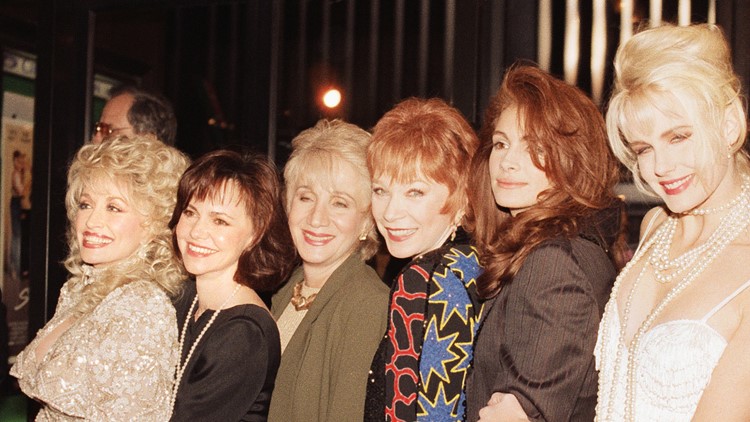
The theater was known for very splashy premieres — especially in the 1980s. Stars of the film Steel Magnolias pose backstage at the Ziegfeld Theater in New York Nov. 5, 1989 at the movie’s premiere. Shown from left: Dolly Parton, Sally Field, Olympia Dukakis, Shirley MacLaine, Julia Roberts and Daryl Hannah. (AP Photo/Ed Bailey)

Which is why Lean would always find a welcome audience at the Ziegfeld — his movies were too monumental in scale to be ignored.

His return to filmmaking A Passage To India would play for over three months at the Ziegfeld in 1984. And a reissue of his greatest masterpiece, Lawrence of Arabia, played to sold-out crowds here in 1989.

Personally, if I could go back in time, I’d probably want to attend the Ziegfeld premieres of The Last Temptation of Christ (met with offended protesters) or perhaps Apocalypse Now, which made its debut there in 1979 and played for twelve weeks.  
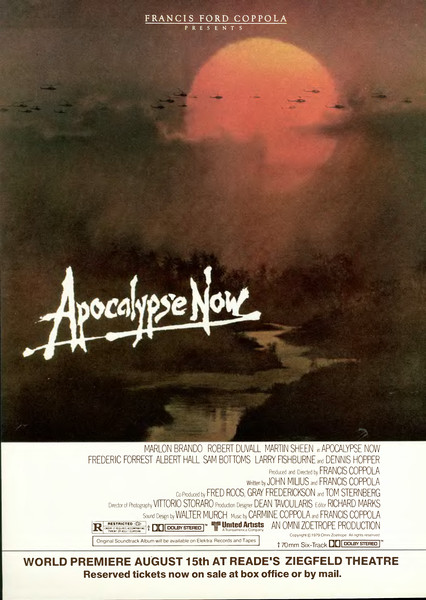
Data courtesy the amazing Cinema Treasures / Michael Coate, with verification using old New York magazines.

*Today the old theater is the luxurious event space Ziegfeld Ballroom. Looks swanky!
Categories
Preservation Skyscrapers Women's History

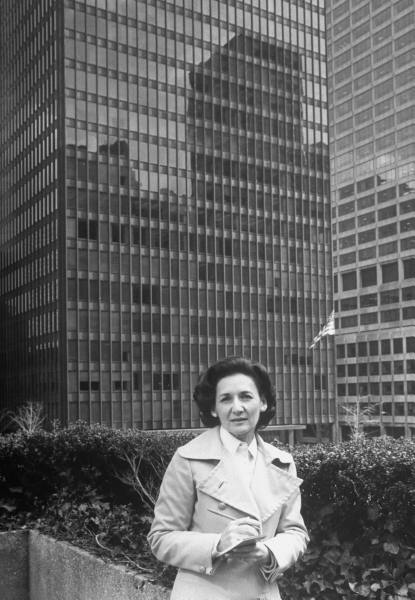
Ada Louise Huxtable, still shaping the New York skyline

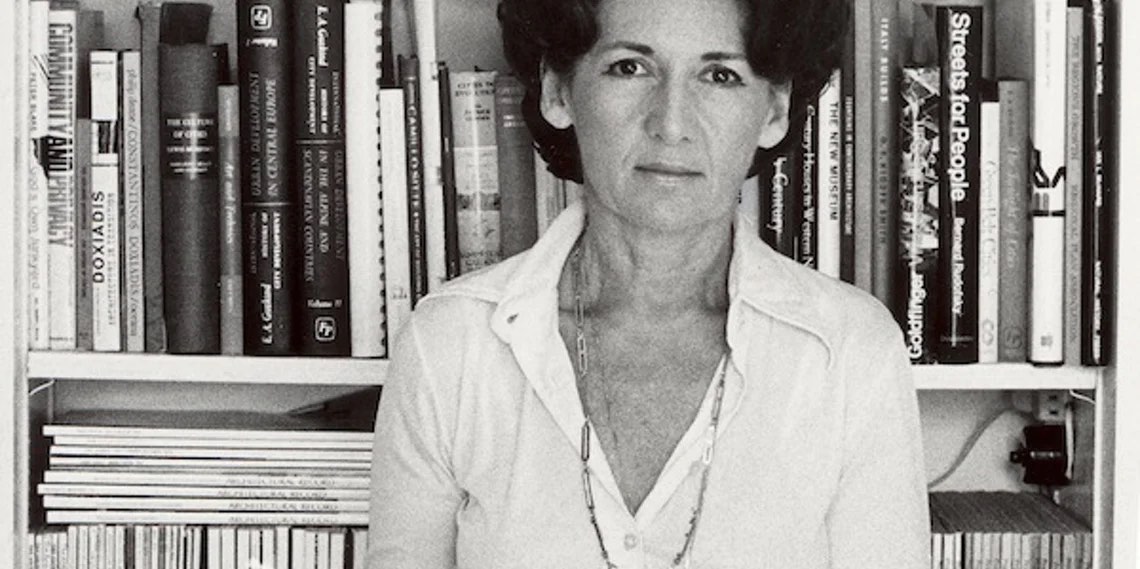
Ada Louise Huxtable, born 100 years ago today, redefined the field of architecture writing, first for the New York Times and then for the Wall Street Journal until her death in 2013.

We really can’t do a podcast an any building in the 20th century without first checking in with Ada to see what she has to say on the matter.

Her writing is elegant, persnickety, direct and affectionate to architectural aesthetic as a whole, and New York City in specific.

Here’s what she’s said over the years regarding a few Manhattan projects:

On her favorites:

“I like old buildings that are intriguing and quite wonderful but don’t make the history books. What you discover is there’s a little group of people that have been admiring them quietly by themselves all along.” [Metropolis Magazine]

On Rockefeller Center:

“If you look at Rockefeller Center in detail, it’s a very elegant plan: higher and lower levels that lead you from one to the other, streets cut through to keep the human scale. You always feel you’re going around a corner, not around a wind-swept plaza, into some other area that has an inviting activity.

First of all, Rockefeller Center was privately planned. It was planned for profit; it was a hard-nosed thing, and of course during the Depression it had to be rejiggered completely because it lost its anchor tenant, the Metropolitan Opera.

But while Rockefeller insisted on a certain return of profit, he did hire the best architects and let them alone, and they combined Beaux-Arts and modernist principles into a really complex, humanistic urban plan.” [New York Times]

On the radical changes to 2 Columbus Circle:

“This was an example of how you had to balance good against bad, past against future, reuse against what would happen to the building. The preservationists proved not only incapable of discussing it, but went into paranoia mode. I think the whole movement seems to be doing that.

Of course it was a complex issue but they should have been able to sort it out. And then to compare — you always get one crazy directing these things who has the quality of leadership — [Edward Durell] Stone’s poor little lollipop building to the loss of Penn Station! They were really doing this!” [Metropolis Magazine]

On 1001 Fifth Ave:

“The ‘honest,’ or tongue-in-cheek, gesture of stopping the moldings short of the sides of the building may be amusing for those in the know, but their use just seems unresolved. It does not help that the moldings look like sliced-off Tootsie Rolls.” [Her 1985 book, Architecture Anyone?]

On the original plan for Moynihan Station:

“It is hard to believe that teams with this much financial heft and assembled star power could come up with something so awesomely bad.” [New Penn Station]

On Trump International Hotel and Tower:

“The reasoning here seems to be that if a ship-shaped glass structure is a success in Hartford (the Phoenix Mutual Life Insurance Building by Wallace Harrison) and circular apartment towers made history in Chicago (Marina City by Bertrand Goldberg), New York can go two cities one better by building both, one on top of the other.” [ New York City Architecture]

On the Jacob K. Javits Federal Office Building:

“One of the most monumentally mediocre Federal buildings in history” [New York Architecture]

On the Pan Am Building:

“The Pan Am is a colossal collection of minimums. Its exterior and public spaces used a minimum of good materials of minimum acceptable quality executed with a minimum of imagination (always an expensive commodity), or distinction (which comes high) or finesse (which costs more). Pan Am is gigantically second-rate….a lesson in how to be mediocre without really trying. A monumental deal does not make it monumental. [from the Pan Am Building and the Shattering of the Modernist Dream]

On the South Street Seaport:

“I know what a fiasco that South Street Seaport plan turned out. I remember when they actually tore down the most important part of the seaport, Peck Slip, which had the oldest and most wonderful buildings. And those were demolished to make way for some Con Edison industrial addition.

Then they decided the heart of the seaport was Schermerhorn Row. Then they brought in the Rouse corporation to tie the place together with a shopping center. And Rouse said you have to have so many contiguous feet of shopping or it doesn’t work. So that meant that things had to be moved, torn down, adjusted, and look what we ended up with. I am exceptionally grateful for every inch that got saved. My basic preservation philosophy is: Change it but don’t destroy it.” [New York Times]

On the original World Trade Center:

“Port Authority has built the ultimate Disneyland fairytale blockbuster….the world’s daintiest architecture for the world’s biggest buildings.”

On the elimination of elements from the re-designed Freedom Tower:

“Because the entitlements of loss and grief are the third rail of the rebuilding effort, no one has challenged the subversion of the aims and intent of the plan. The parts that speak of hope and the future have not been able to survive the pressure for a singleminded commitment to the tragic past.

“Even at Ground Zero, not all the bereaved share the sentiments of the most politically active survivors. Some quietly want to get on with their lives, and there are those who would like to see a more constructive renewal as an antidote to grief.” [Wall Street Journal]

On Grand Central Terminal:

“To sit at the one small restaurant on the west balcony is to long for more. Rising into those vast heights is the buzz of all the voices of travelers and transients mingling in the upper air. Shafts of sunlight pierce long shadows, spotlighting the moving figures on the floor. The soft, susurring sound transforms activity and motion into a shared experience; it contains the timeless promise of the city’s, and the world’s, pleasures and adventures. This is the essence of urbanity.” [New York Times, November 28, 1994]

On the most beautiful architectural view in Manhattan in 1968:

“For a demonstration of New York at its physical best, go to Broadway between Cedar and Liberty Streets and face east. This small segment of New York compares in effect and elegance with any celebrated Renaissance plaza or Baroque vista” [New York Sun]

Categories
Holidays

Midnight in Times Square: The history of New Year’s Eve in New York City

PODCAST The tale of New York City’s biggest annual party from its inception on New Years Eve 1904 to the magnificent spectacle of the 21st century. 

In this episode, we look back on the one day of the year that New Yorkers look forward. New Years Eve is the one night that millions of people around the world focus their attentions on New York City — or more specifically, on the wedge shaped building in Times Square wearing a bright, illuminated ball on its rooftop.

1

In the 19th century, the ringing-in of the New Year was celebrated with gatherings near Trinity Church and a pleasant New Years Day custom of visiting young women in their parlors. But when the New York Times decided to celebrate the opening of their new offices — in the plaza that would take the name Times Square — a new tradition was born.

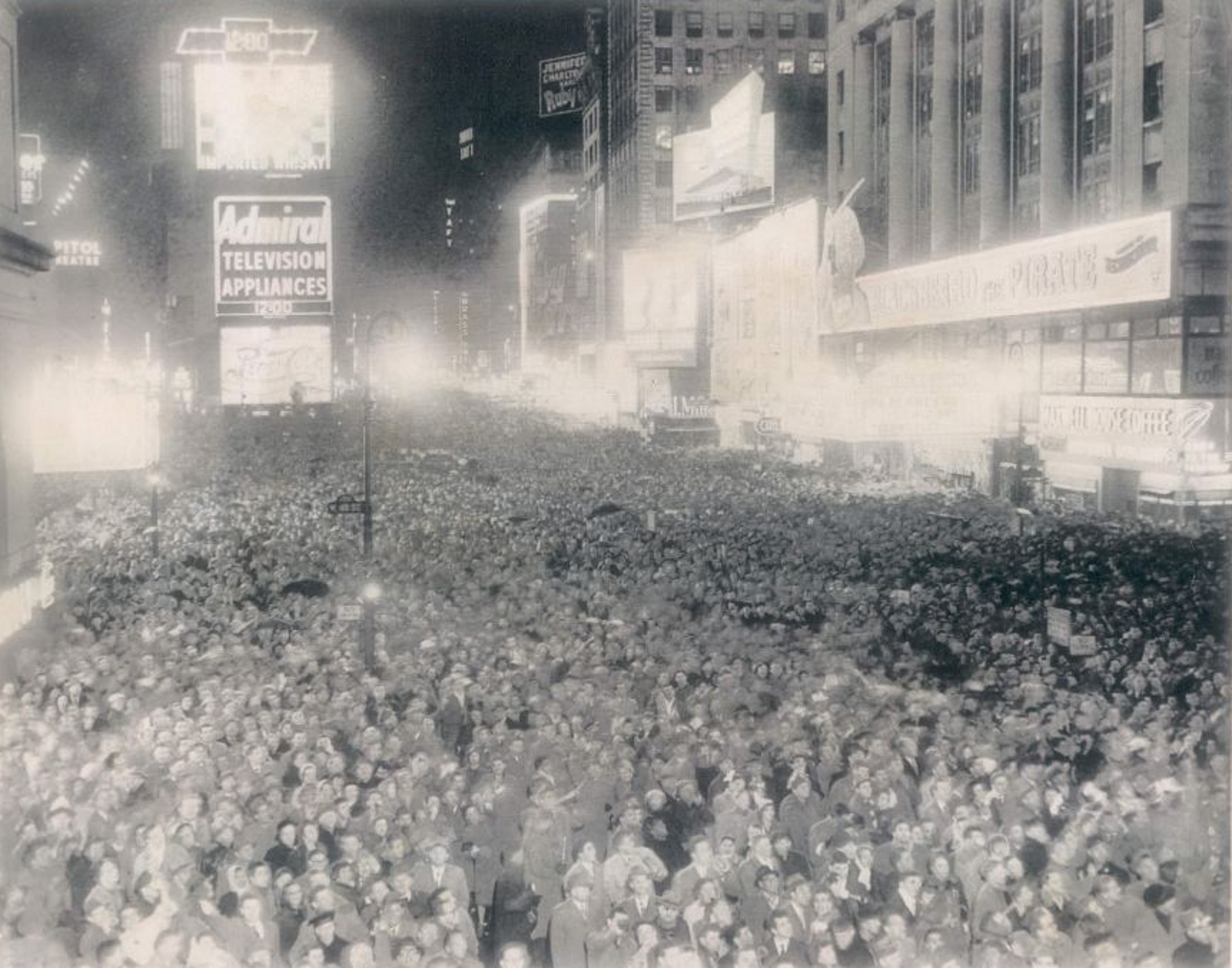
Tens of millions have visited Times Square over the years, gazing up to watch the electric ball drop, a time-telling mechanism taken from the maritime tradition. The event has been affected by world events — from Prohibition to World War II — and changed by the introduction of radio and television broadcasts.

ALSO: What happened to the celebration which it reached the gritty 1970s and a Times Square with a surly reputation?

PLUS: A few tips for those of you heading to the New Years Eve celebration this year!


The Bowery Boys: New York City History podcast is brought to you …. by you!

We are now producing a new Bowery Boys podcast every two weeks. We’re also looking to improve the show in other ways and expand in other ways as well — through publishing, social media, live events and other forms of media. But we can only do this with your help!

We are now a member of Patreon, a patronage platform where you can support your favorite content creators for as little as a $1 a month.

Please visit our page on Patreon and watch a short video of us recording the show and talking about our expansion plans. If you’d like to help out, there are five different pledge levels (and with clever names too — Mannahatta, New Amsterdam, Five Points, Gilded Age, Jazz Age and Empire State). Check them out and consider being a sponsor.

We greatly appreciate our listeners and readers and thank you for joining us on this journey so far. And the best is yet to come!


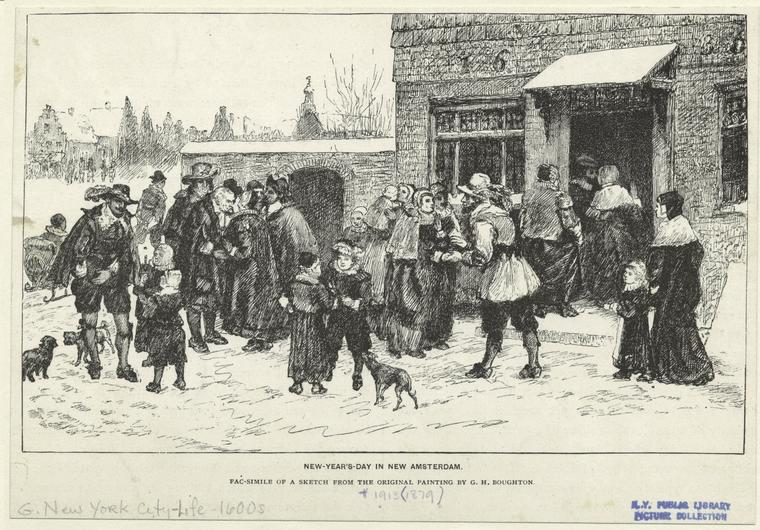
New Years Day celebrations have evolved since the days of New Amsterdam when visitations symbolized a ‘fresh start’ to the year.

Courtesy NYPL
Courtesy NYPL

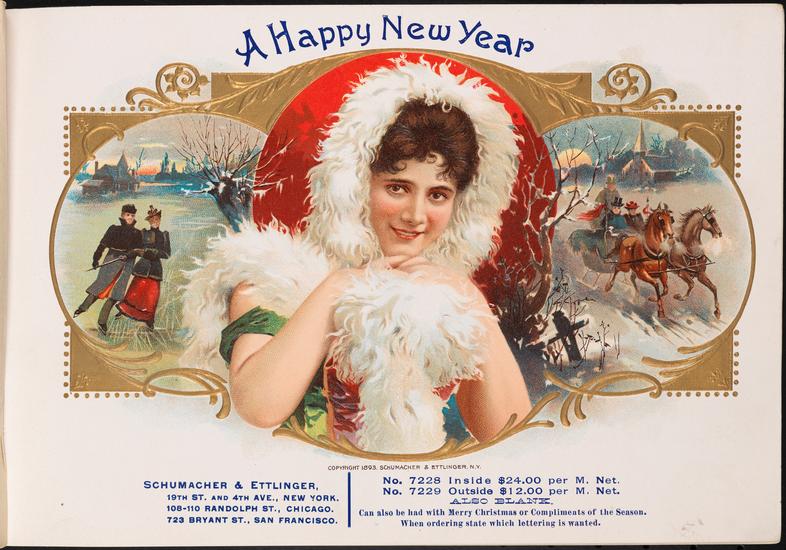
A decorative cigar box from the 1890s, ringing in the new year with a winsome damsel and wholesome scenes of winter beckoning you to smoke a cigar.

Courtesy Museum of the City of New York

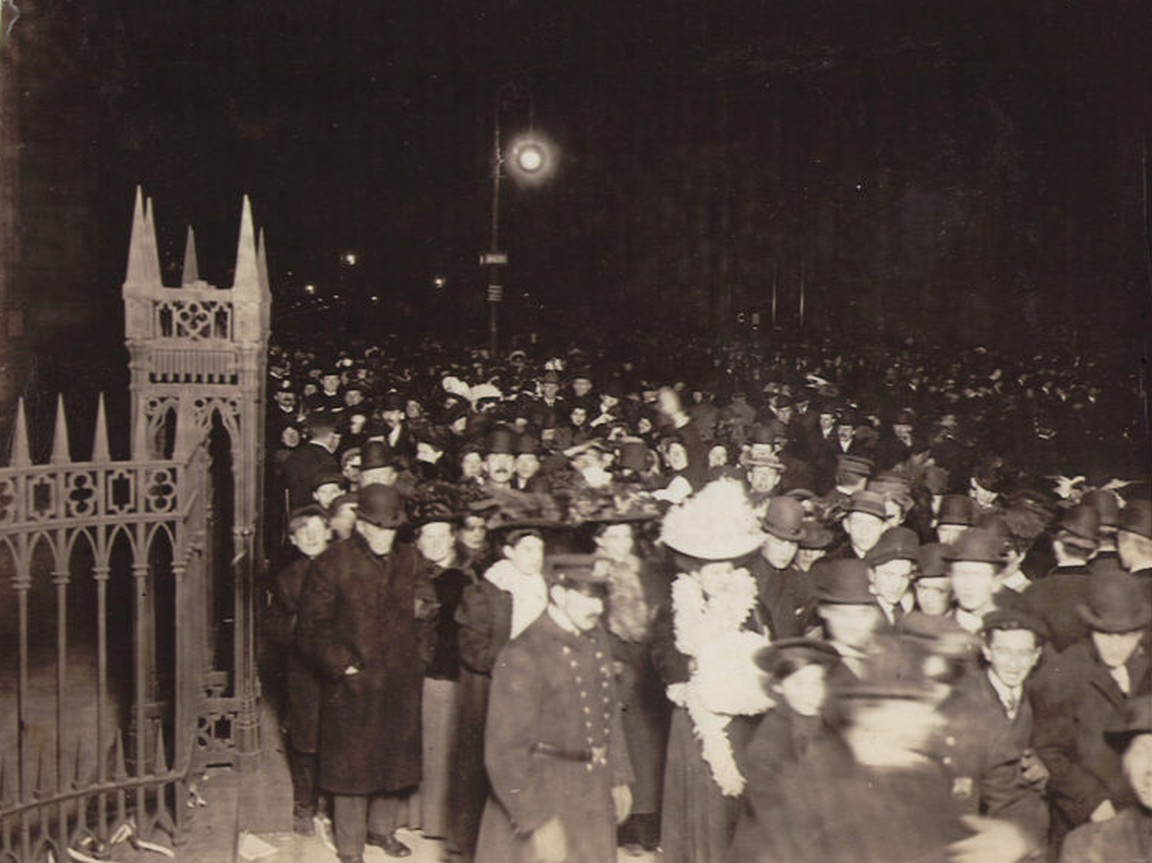
The crowds outside Trinity Church on 1906 gathered to usher in the new year. The church was traditionally the place people gathered before the Times Square celebration took off.

1

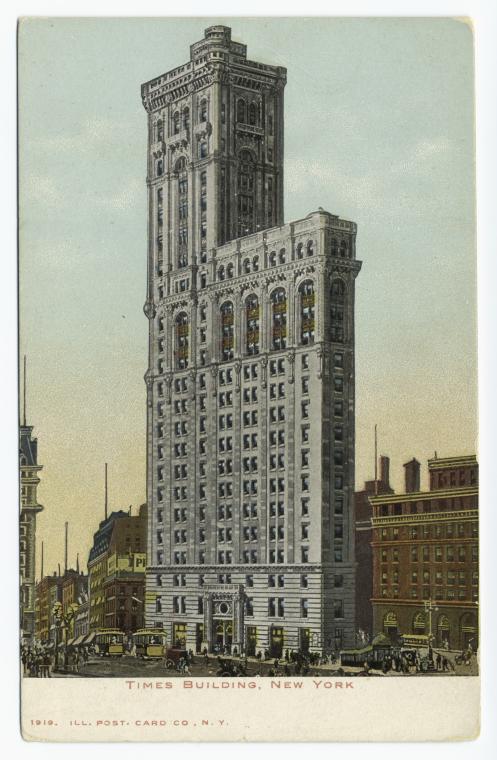
Fated to be the centerpiece of New Years Eve, One Times Square once wore some beautiful architecture until much of it was ripped off to accommodate a frenzy of electronic signs.

Courtesy NYPL
Courtesy NYPL

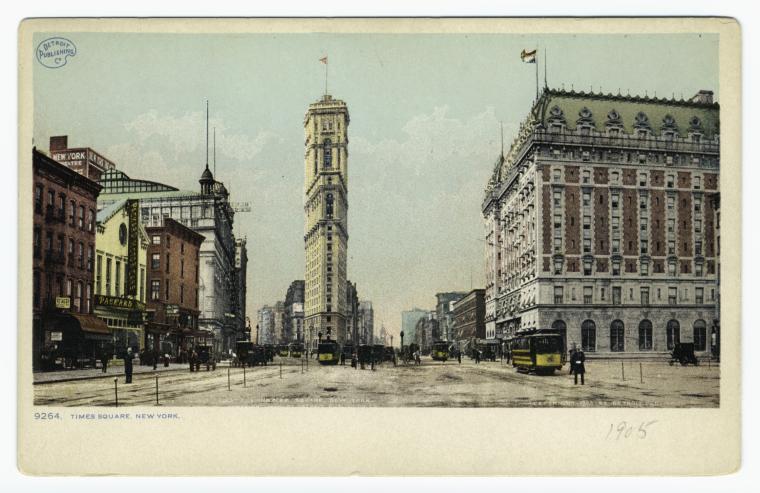
Times Square in 1905 for the very first New Years Eve celebration albeit one with fireworks, not a ball drop.

Courtesy NYPL
Courtesy NYPL

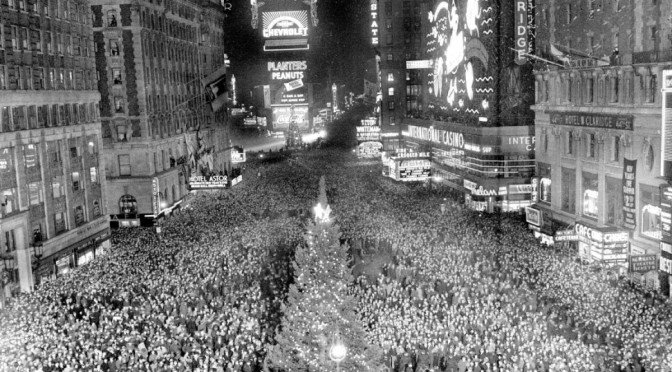
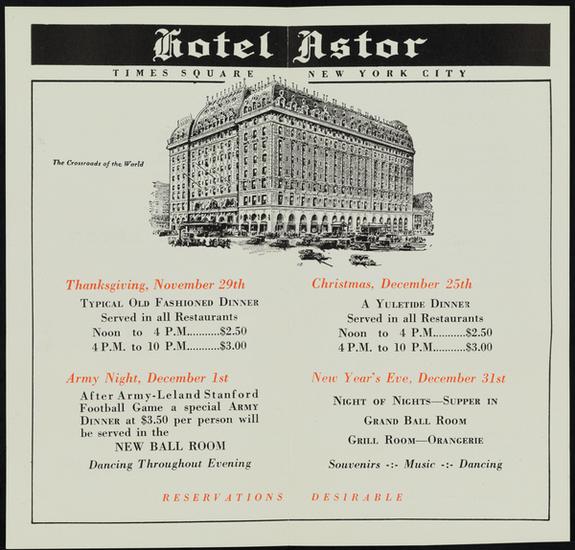
The party offerings at the Hotel Astor in Times Square in 1926.

Courtesy Museum of the City of New York

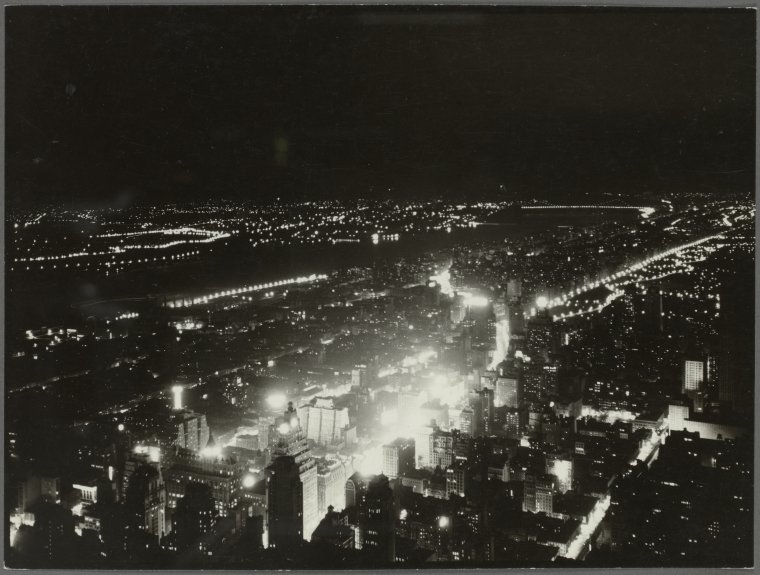
The view of Times Square from the Empire State Building.

Courtesy NYPL
Courtesy NYPL

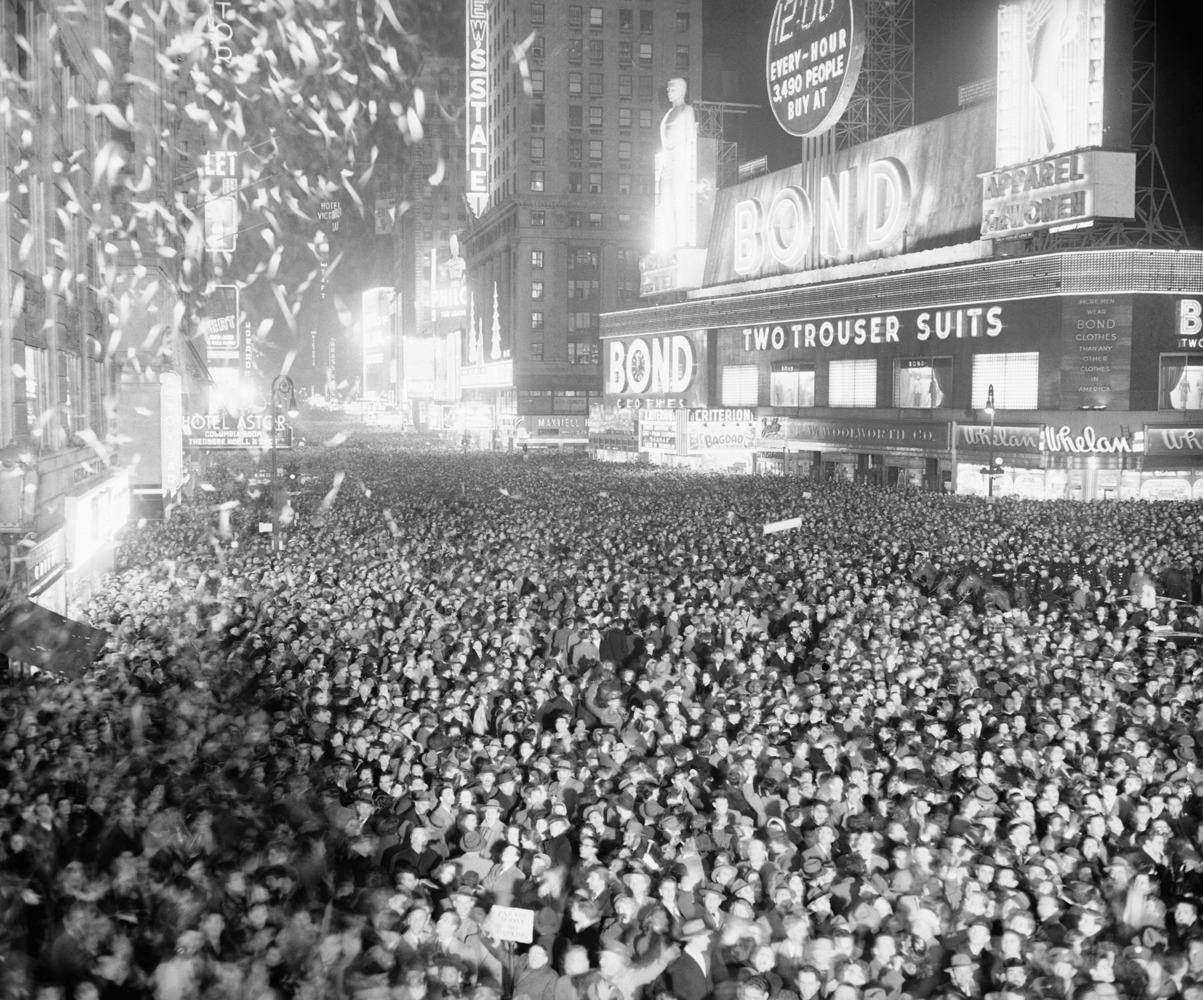
New Years Eve 1938

AP photo
AP photo

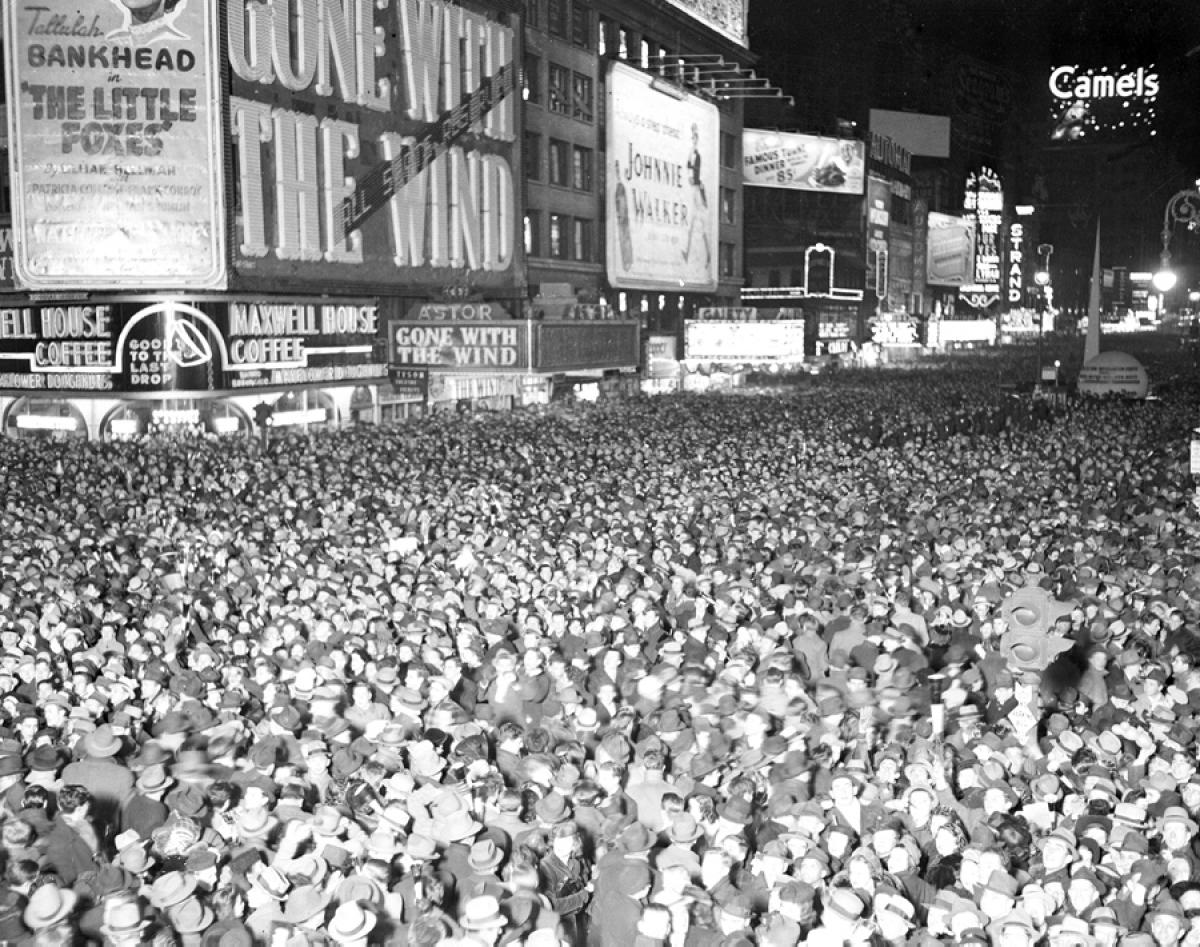
The throngs in 1940 with the Gone With The Wind marquee in the background (not to mention Tallulah Bankhead in the play The Little Foxes!)

Courtesy New York Daily News

Ushering in 1953:

9

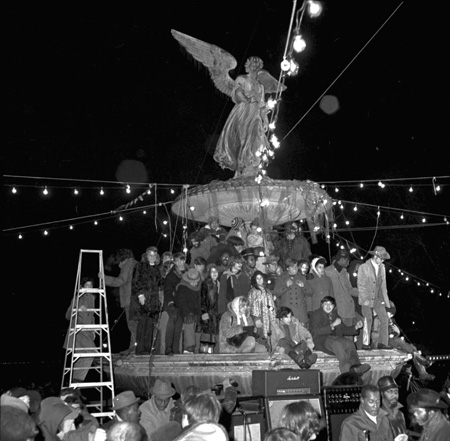
Celebrations were also held for a time in Central Park, like this festive group from 1969:

Courtesy New York Parks Department

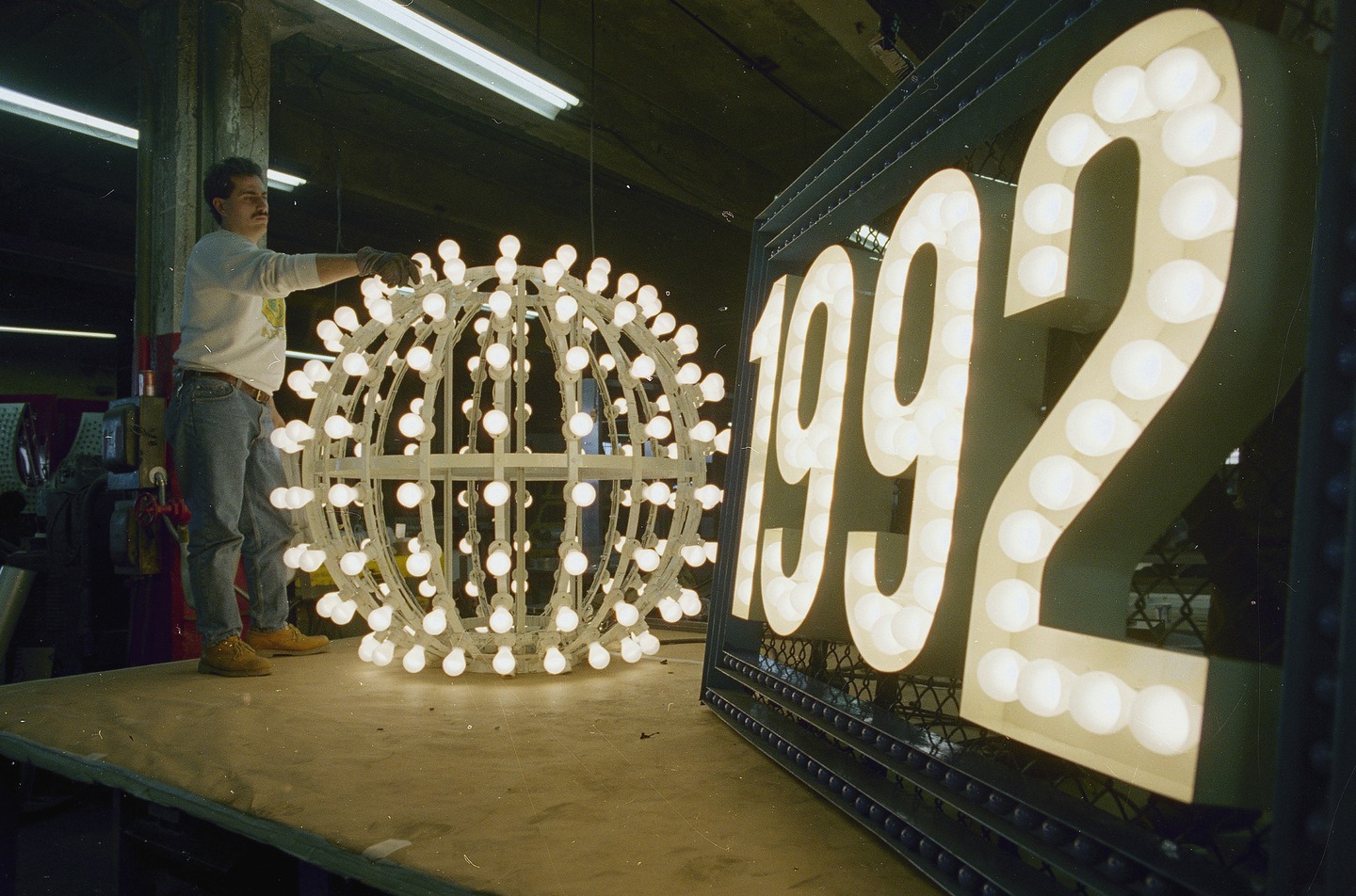
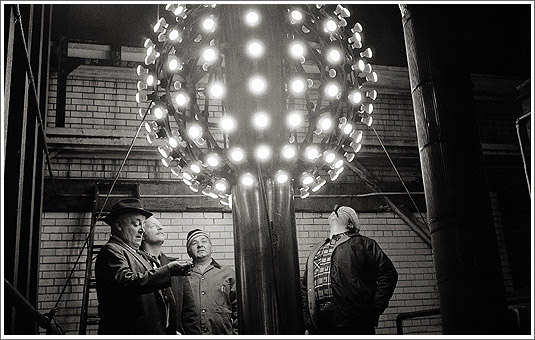
An electrician from the Artkraft Strauss Sign Corporation tests out the lighting effects that will greet the new year in 1992.

MARTY LEDERHANDLER/ASSOCIATED PRESS

And here’s some videos of New Years Eve countdown past!

Mr New Years Eve himself — Guy Lombardo — here at the Roosevelt Hotel, ringing in 1958

From 1965-66:

A clip from Dick Clark’s first appearance in Times Square. It cuts away to Three Dog Night in California!

CBS’s New Years Eve program featuring Catherine Bach from The Dukes of Hazzard.

The absolutely bonkers ball drop for the new millennium.

Last year’s commentary by those wacky cards Anderson Cooper and Kathy Griffin.

Categories
Newspapers and Newsies

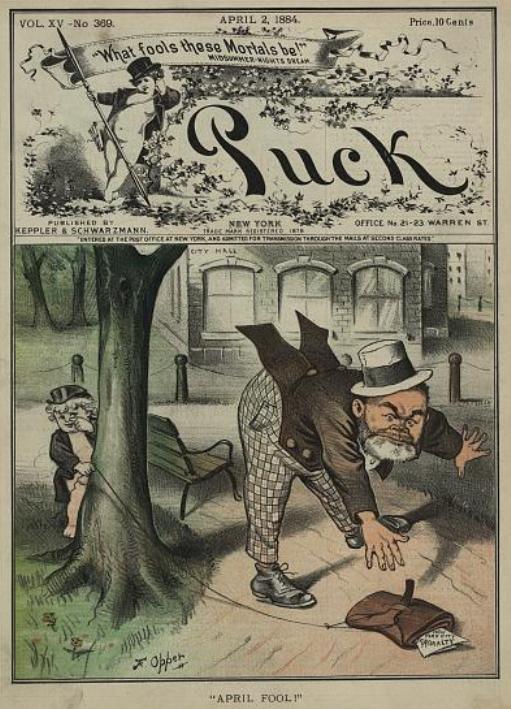
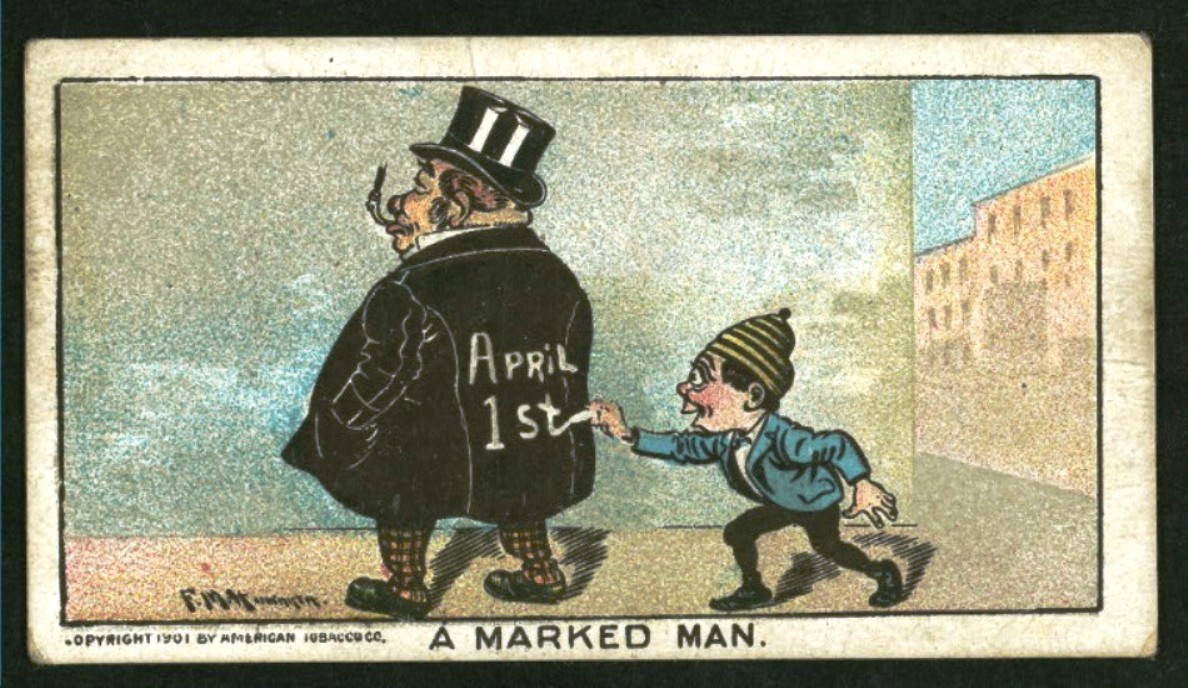
Shameless Urchins and Mighty Frauds: 19th Century Views of April Fools Day

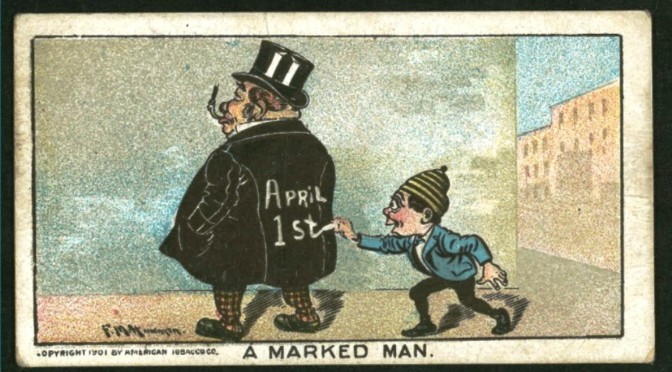
The celebration of April Fools Day traces back to the Middle Ages and possibly as far back as the Roman era. In the mid-19th century, the unofficial holiday for pranks provided a good excuse to attack political opponents.  Here are a couple samples of writing from New York publications from this period which I’m quoting at length because I’m a fan of the almighty air of jadedness that pervades these articles. Also — use of the words “operose” and “gew-gaws”:

1

From the New York Times, April 2, 1861:

“There is a time for all things, we are told. Every dog will have his day, and all fools must have theirs. All fools; and which are the wise ones? Let him among us who is most perfect in wisdom, play the first prank.

And the 1st of April in each year, is the day of all others by common usage consecrated to folly. If there are more senseless acts committed within its twenty-four hours than on any other single day of the three hundred and sixty-five, it has a record not much better than JAMES BUCHANAN’s.*

It is the anniversary on which half-witted people endeavor to make others appear to be so; and they labor to draw forth an ill-advised word or act from them much upon the principle that gave birth to the adage, “Set a thief to catch a thief.”

The custom of late years, it would seem, like an irreverent Dutchman, has more of breaches than observance. Little children honor it, and always will honor it, and may be excused for honoring it; but they who are at years of discretion should put away childish things.

We detest April Fool’s Day. We do not believe in it, and have not believed in it since — yesterday.

To be frank, the writer of this, in the pursuit of pabulum, yesterday, was “sold,” fooled, taken in, deluded, deceived, swindled at every step. He was sent on “Fool’s errands” to distant parts of the City by hypocritical friends whom he told to their double faces afterwards, when they taunted him, that if he had been on “Fool’s errands” it was their errands that he had gone to perform.

Then shameless little urchins threw tempting parcels in his path, and when he stooped to pick them up, behold! they were up before he could pick them, dangling high in air, pendant by cords from windows, from which deriding faces looked down upon him. And his pockets were turned inside out, and placards were hung on his back, or suspended from his coat-tails, and when, losing his way, he civily asked the name of a street. — “No you don’t,” was the answer. “April fool!”

And so, after a day spent in anxious but unrequited efforts to get leisure to write of it, he sat down late, and weary, and concluded to take revenge upon the reader, and say to him simply, “April Fool!””

* In 1861 James Buchanan was at the end of his presidency. He was also a Democrat and thus unfavored by the Republican-leaning New York Times of the mid-19th century.

1


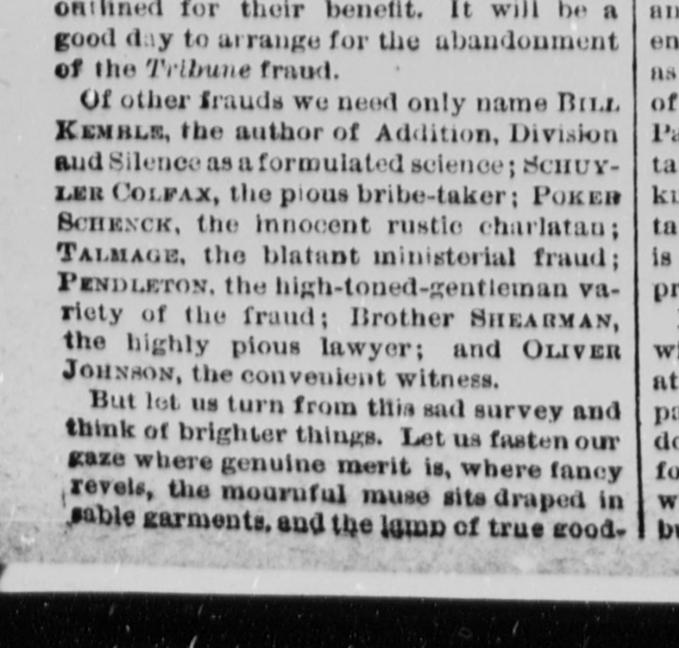
Other newspapers used the holiday as cover to rail against political opponents.   On April 1, 1876, the New York Sun ran down a list of so-called April Fools, calling out some of the biggest names in politics. An excerpt:

“We cannot better celebrate this day dedicated to fools and folly, than by considering some of the principal frauds, humbugs, charlatans, hypocrites and fools who infest the country, and dwelling for a moment on their history and prospects.

They are a large and thoroughly self-satisfied company, recruited from various ranks of society and armed with impudence, pretension, cant or simple stupidity.  They like to be observed and entertain a low opinion of those who criticize them.   They think they out to be permitted to practice their trade  unmolested by impertinent scrutinizers of their shoddy materials, short weights and other tricks of deception.

Today let us celebrate the glories of their enterprising company, carefully abstaining from any word or suggestion to which they can fairly take exception.”

Among their list of the greatest fools in 1876:

“Ulysses S Grant** — “cannot strictly be called a fraud. His practice of greed is open, and he believes in it.  Once of the very lowest estate, a social wreck and failure, he was lifted by a bloody war to the high ground of eminent position where all men could see him.  If ever a man had reason to be thankful for the happy fortune which enabled him to get out of the mire and to stand in clean places, it’s Grant.

Hamilton Fish — “is a pompous sailor, replete with the airs of an operose and ostentatious respectability …. and in fact, Fish is one of the hollowest of frauds.

Henry Ward Beecher*** — “the cheekiest fraud,” “old and unblushing in licentiousness, he takes the part of a manly fellow and a holy man, and with variations of buffoonery, plays it to the entire satisfaction of the brethren.  But paint and gew-gaws cannot cannot hide the foulness underneath.   His reputation is gone, and he lives on lies and perjuries.

Jay Gould — “is a great fraud, but he was a fool in buying the [New York]Tribune, hiring the young editor as a stool pigeon, and building the tall tower.****

There there’s this whole paragraph:

2

**He was at the end of a scandal-ridden presidency, and his cabinet was known for a bevy of corruption charges.

***His adultery trial had sullied his reputation the previous year. 

****Gould, his connections with Tammany Hall well publicized, had bought the Tribune, a rival to the New York Times, in the years before he began amassing railroad property.

Puck Magazine courtesy the Library of Congress

A Marked Man illustration courtesy New York Public Library


Categories
Podcasts

PODCAST: New Years Eve at One Times Square

The Times Square New Years Eve celebration would not be the same without One Times Square and its annual ball drop. But the quirky history of this sometimes abused building reaches all the way back to the naming of Times Square and its original tenent — the New York Times.

Download this show it for FREE on iTunes or other podcasting services. Click this link to download it directly from our satellite site. Or click below to listen here:

The Bowery Boys: One Times Square

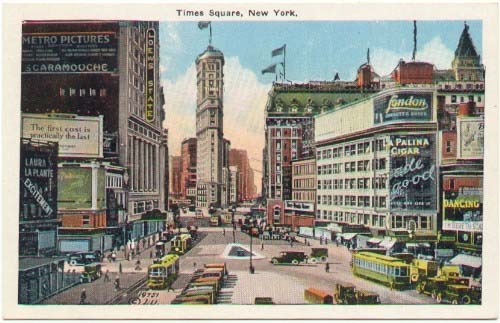
One Times Square, back in better days

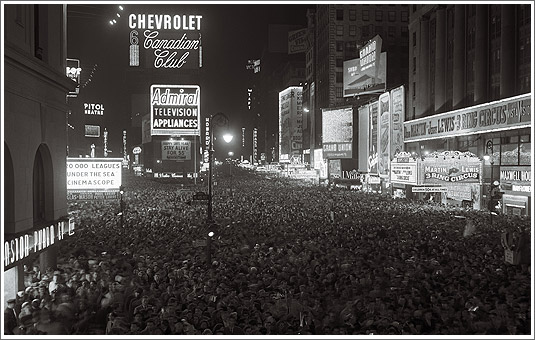
The crowds of Times Square

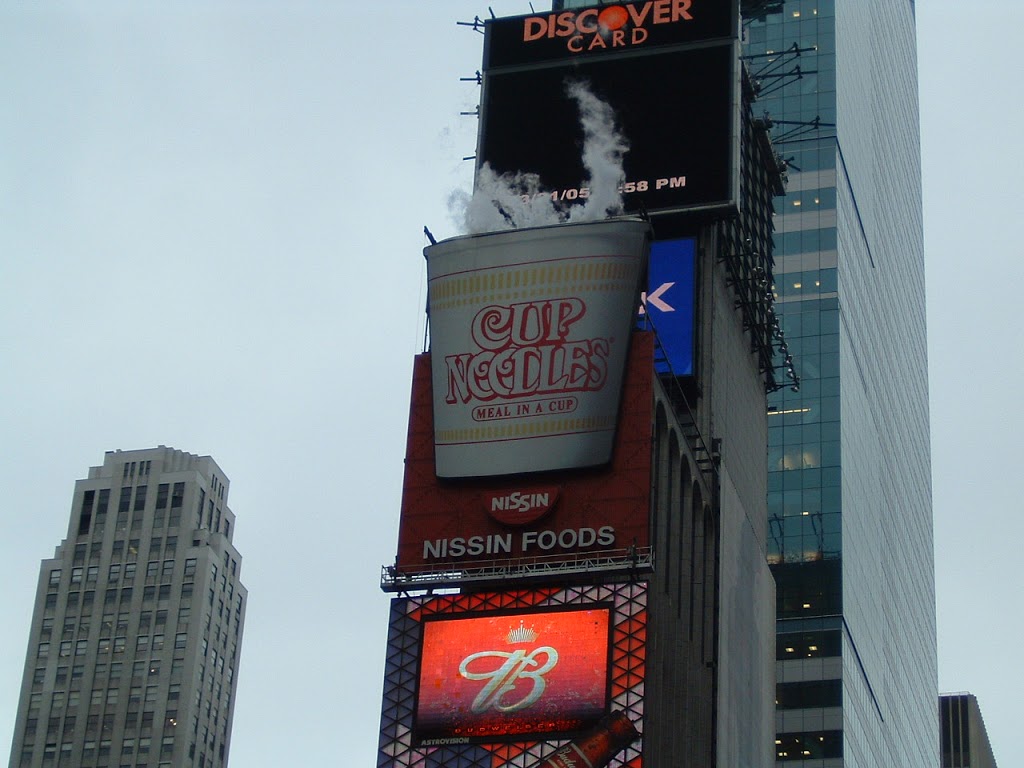
The Nissin Cup of Noodles sign

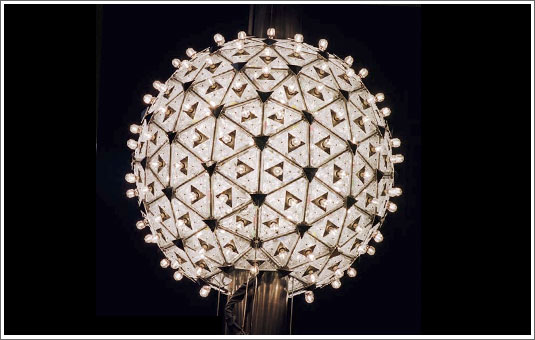
Here’s what the last ball looked like:

Gothamist tracks the journey of the number 8 from this year’s 2008 New Years Eve ceremony


Pic-Tina Fineberg/AP