PODCAST In celebration of 125 years of movie exhibition in New York City — from vaudeville houses to movie palaces, from arthouses to multiplexes.
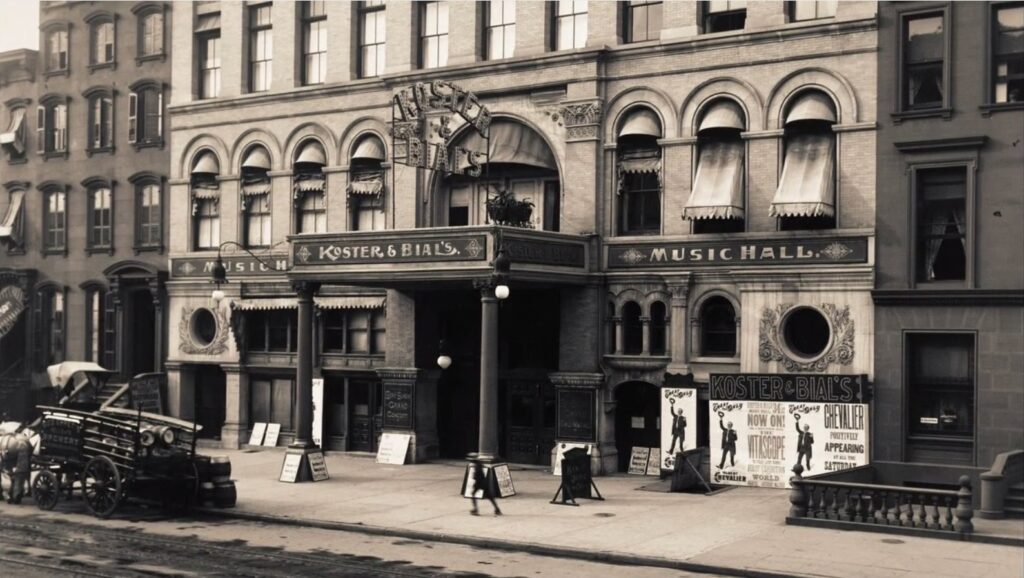
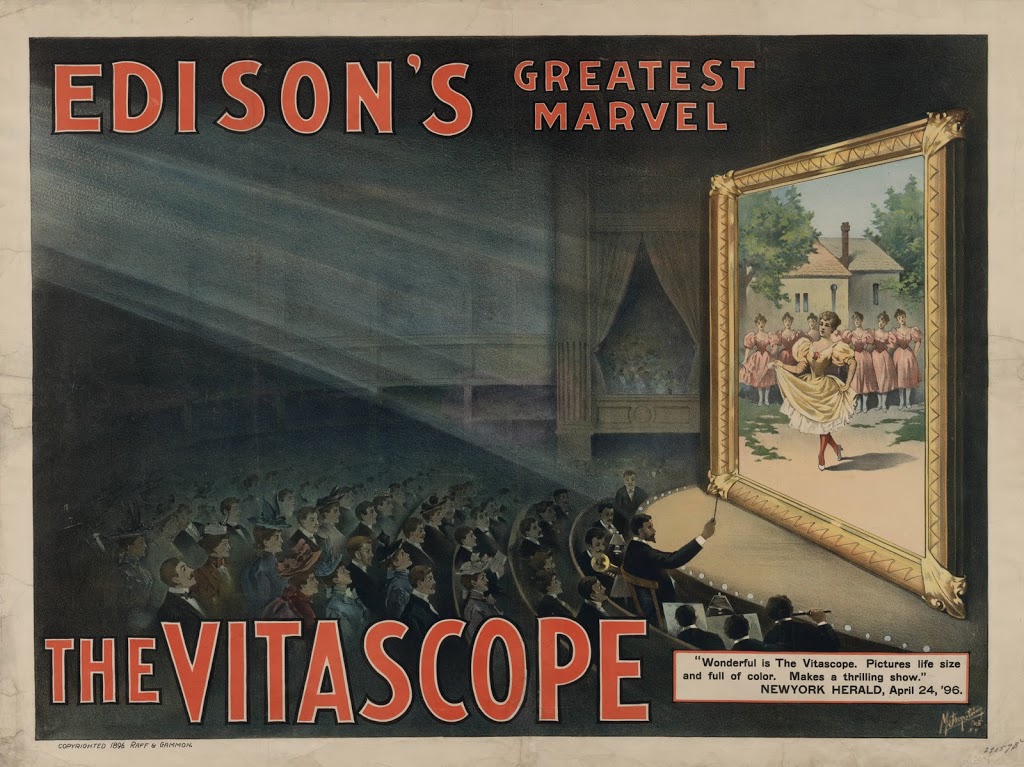
On April 23, 1896 an invention called the Vitascope projected moving images onto a screen at a Midtown Manhattan vaudeville theater named Koster and Bial’s Music Hall.
The business of movies was born.
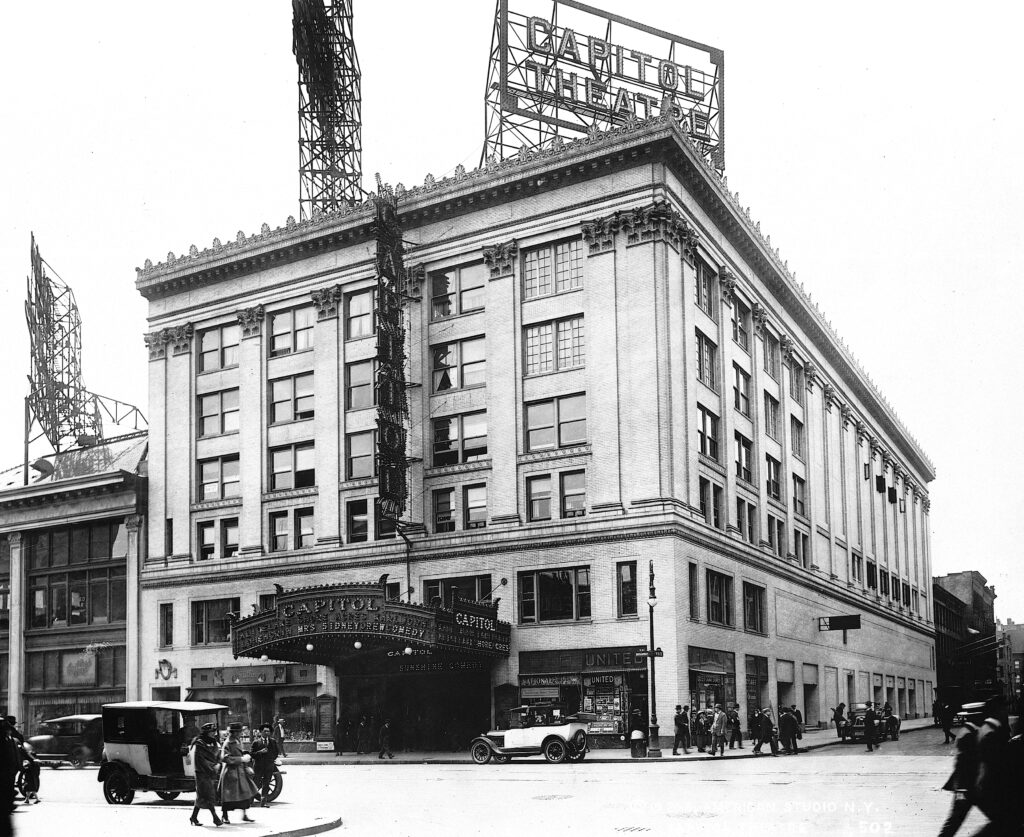
By the late 1910s, the movies were big, but the theaters were getting bigger! Thanks to men like architect Thomas Lamb and the impresario Samuel ‘Roxy’ Rothafel, movie theaters in New York City grew larger and more opulent.
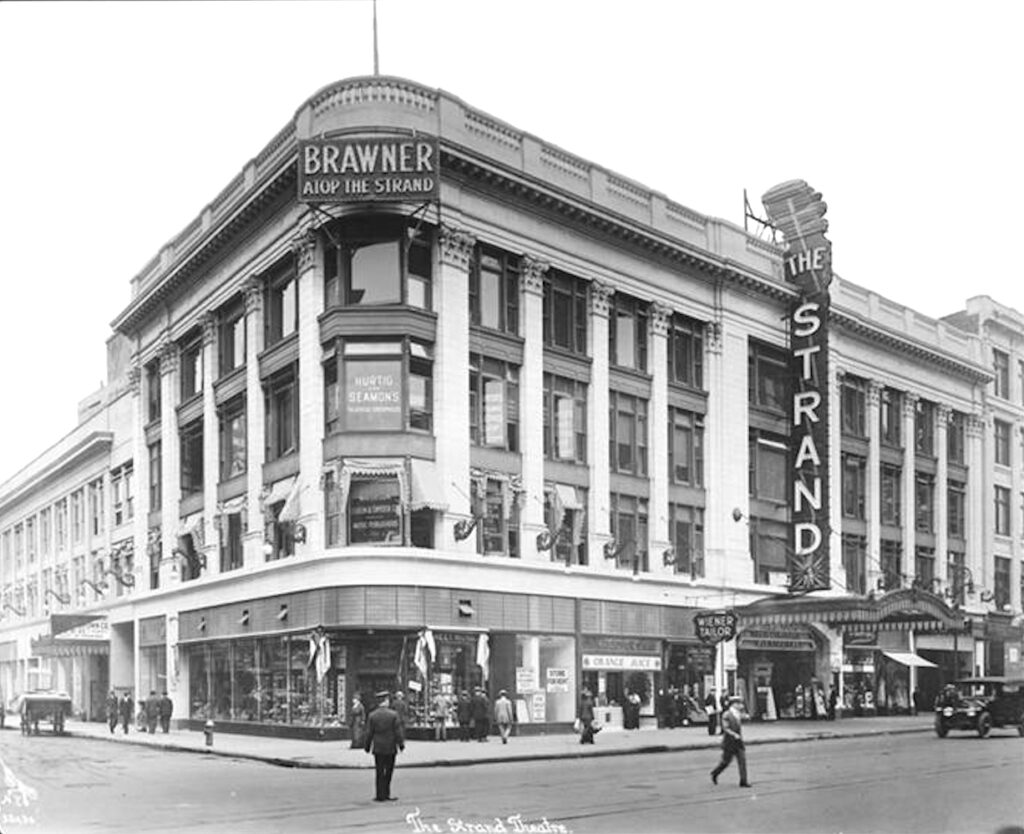
And in Times Square, they were so large that the became known as palaces — the Capitol, the Rialto, the Rivoli, the Strand, the Roxy. They were soon joined by the granddaddy of them all: Radio City Music Hall.
Even by the 1940s, movie theaters were a mix of film and live acts — singers, dancers, animal acrobats and the drama of a Wurlitzer organ!
But a major case at the Supreme Court brought a change to American film exhibition and diversity to the screen — both low brow (grindhouse) and high brow (foreign films and ‘art’ movies).
Today’s greatest arthouse cinemas trace their lineage back to the late 1960s/early 1970s and the new conception of movies as an art form.
Can these theaters survive the perennial villain of the movies (i.e. television) AND the current challenges of a pandemic?
FEATURING: All your favorite New York City movie theaters from A (Angelika) to Z (Ziegfeld).
Listen now on your favorite podcast player:
A special thanks to the website Cinema Treasures for inspiring us for many years and sending us out on many journeys, looking for the great old movie theaters of yore.
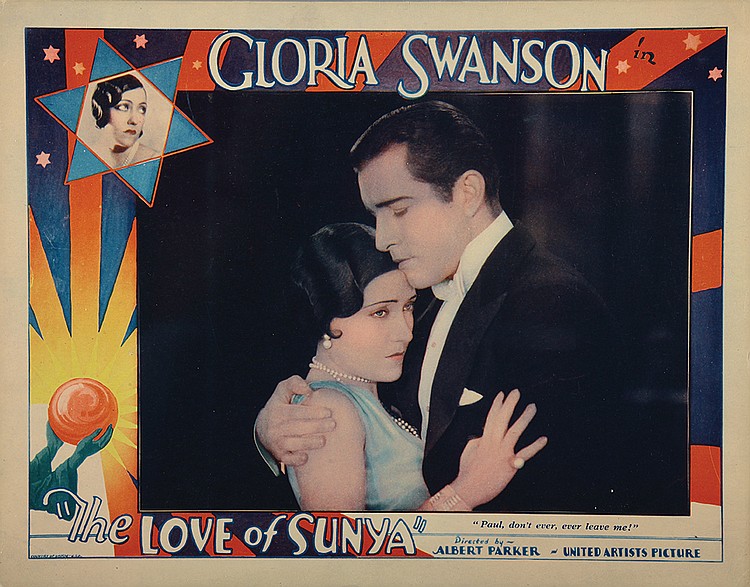
Gloria Swanson in The Love of Sunya, which played on the Roxy’s opening night — March 11, 1927.
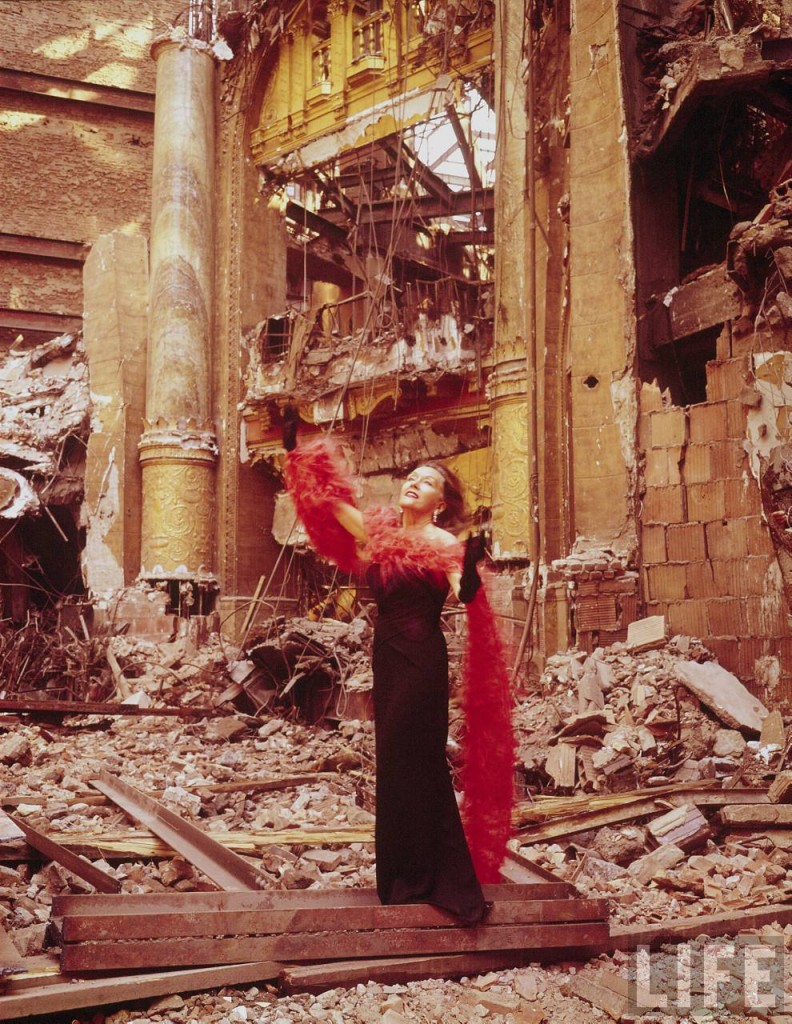
Gloria Swanson in the ruins of the Roxy Theatre, October 1960.
Eliot Elisofon for Life MagazineKoster and Bials at 34th Street — location of the first projected movie program for theatrical audiences in the United States.As with many of his ‘inventions’, Edison did not actually invent the Vitascope. But he bought the rights to say he did!
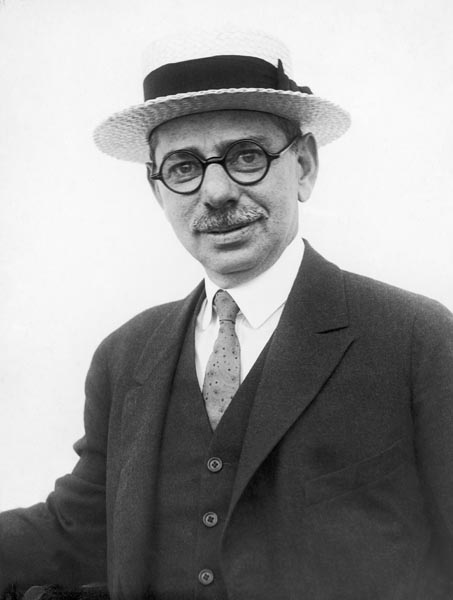
UNITED STATES – CIRCA 1925: Marcus Loew, Founder Of Loews Cinemas, In 1925, Usa. (Photo by Keystone-France/Gamma-Keystone via Getty Images)
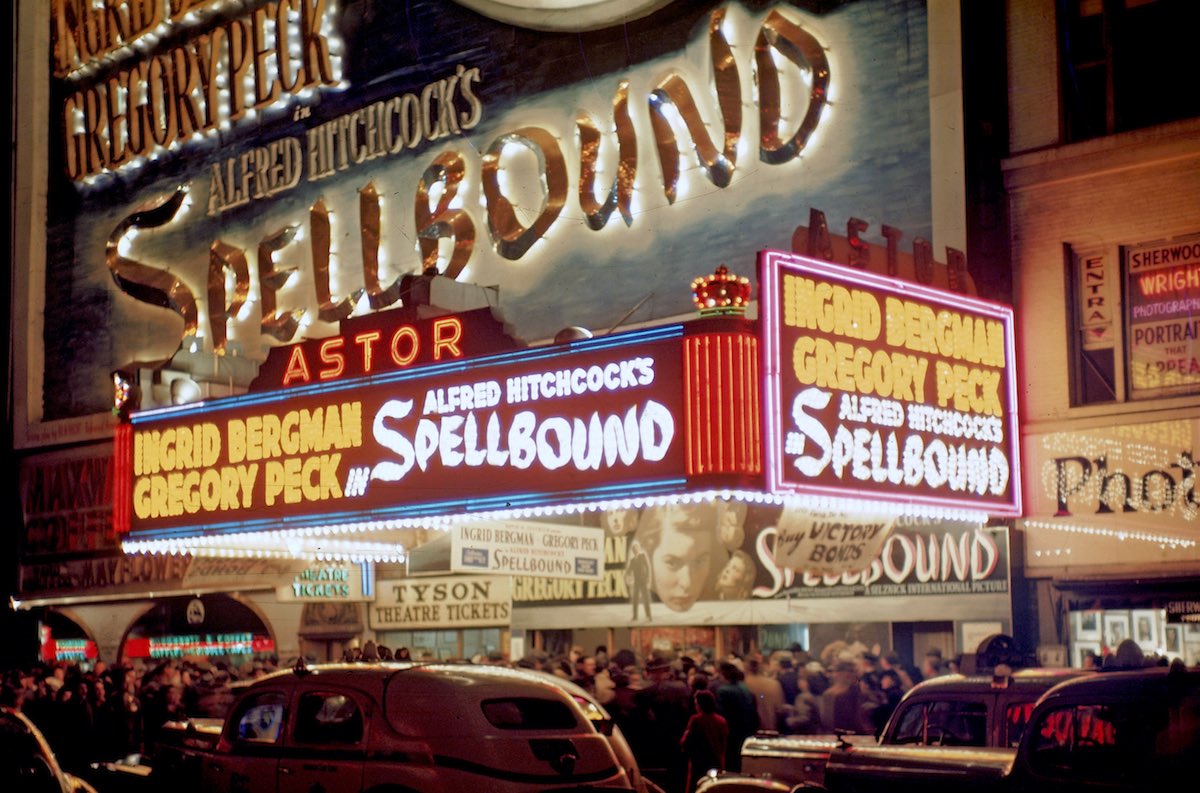
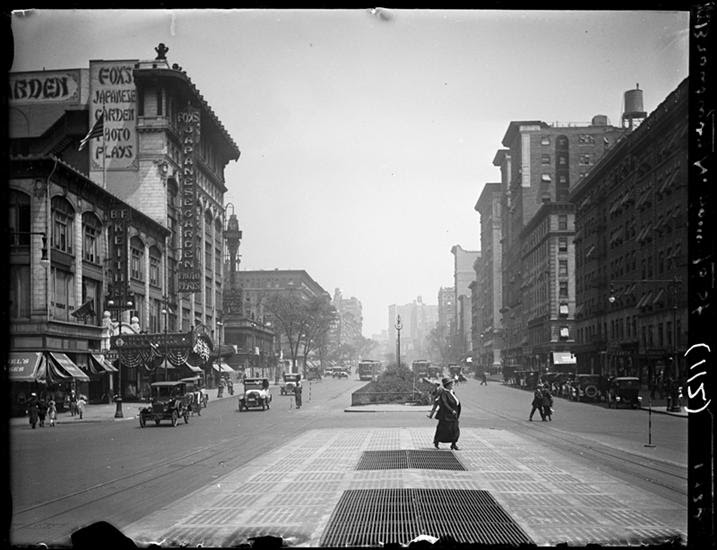
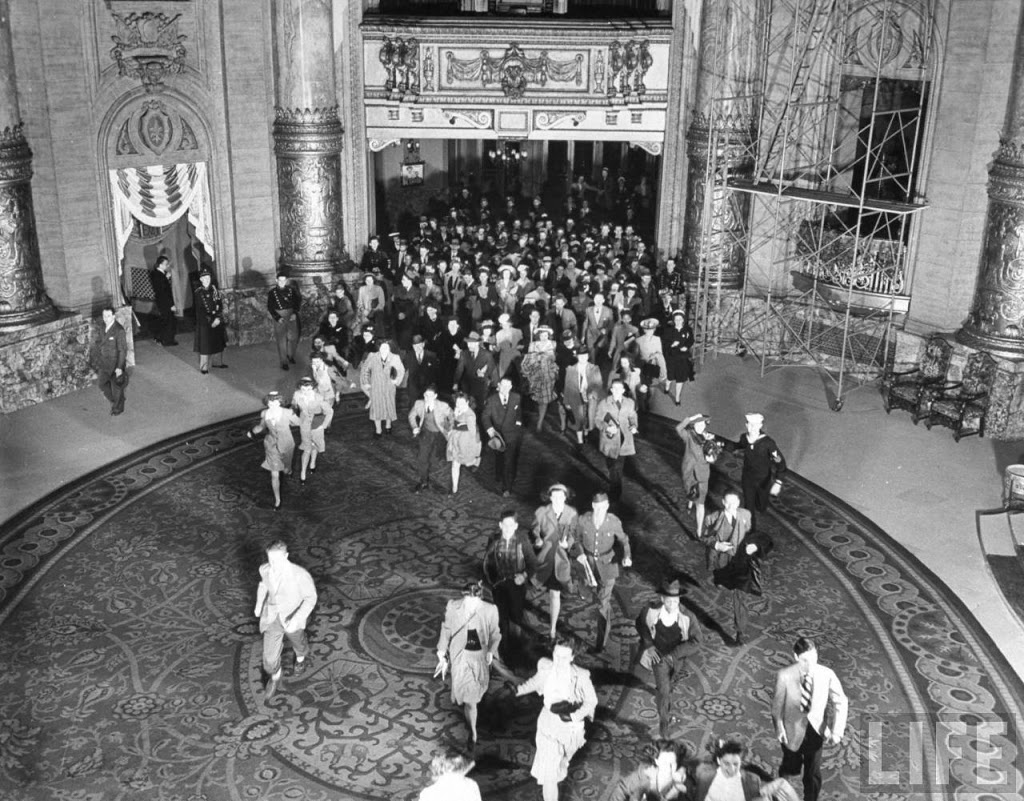
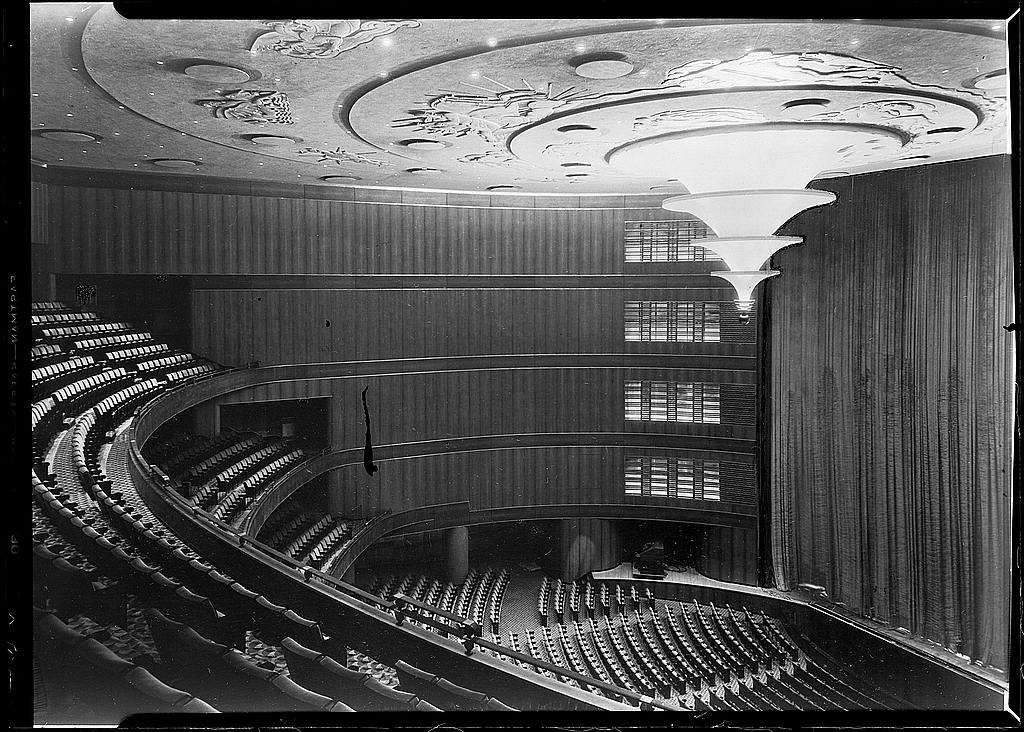
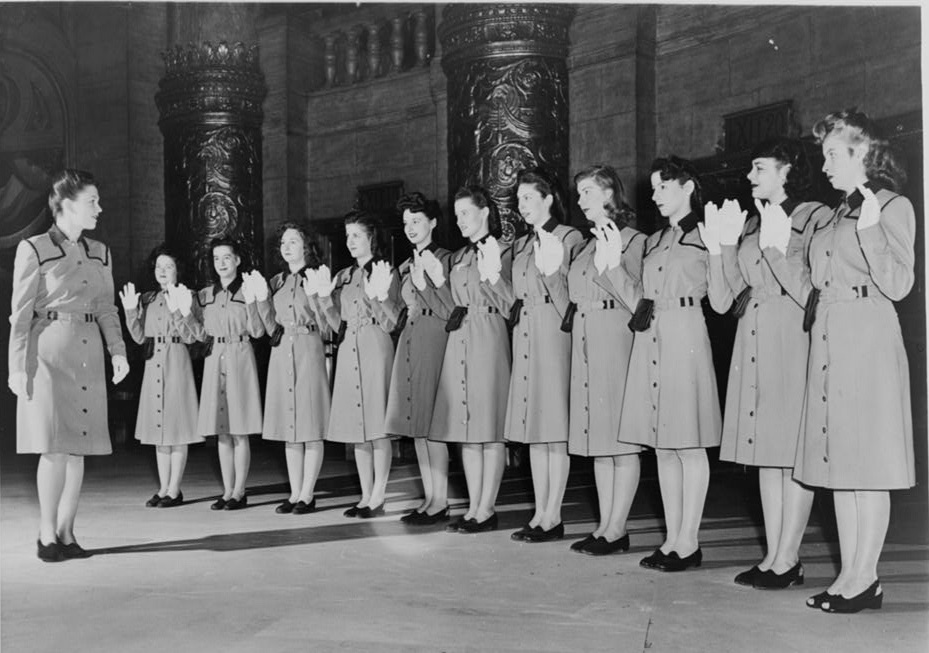
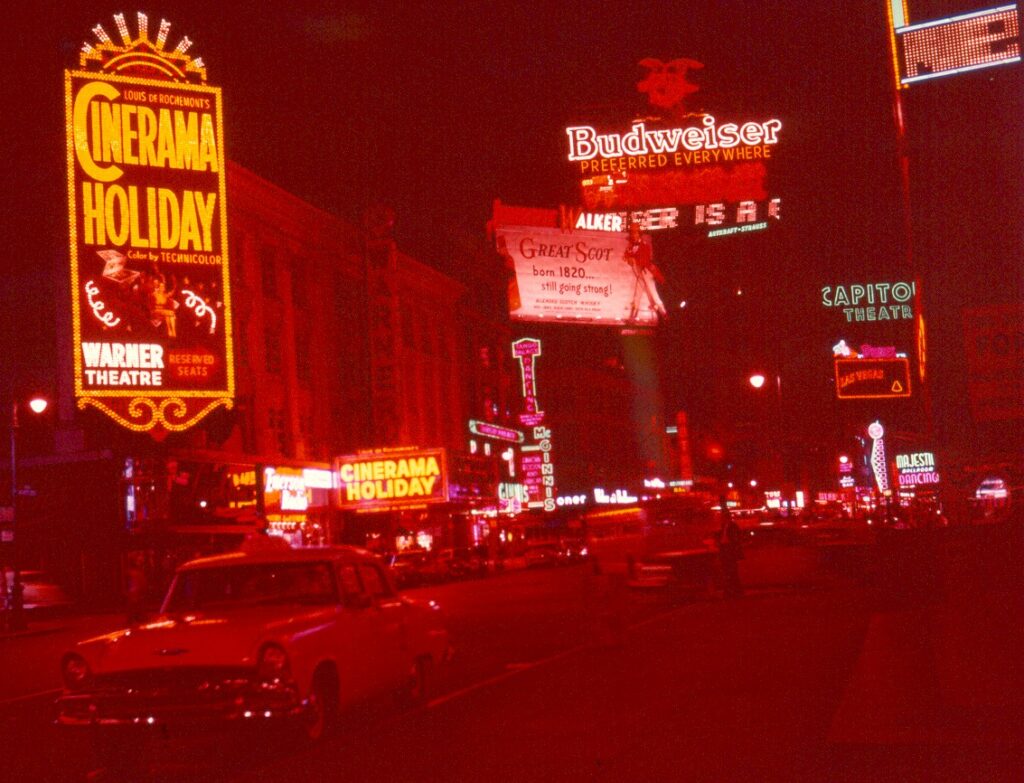
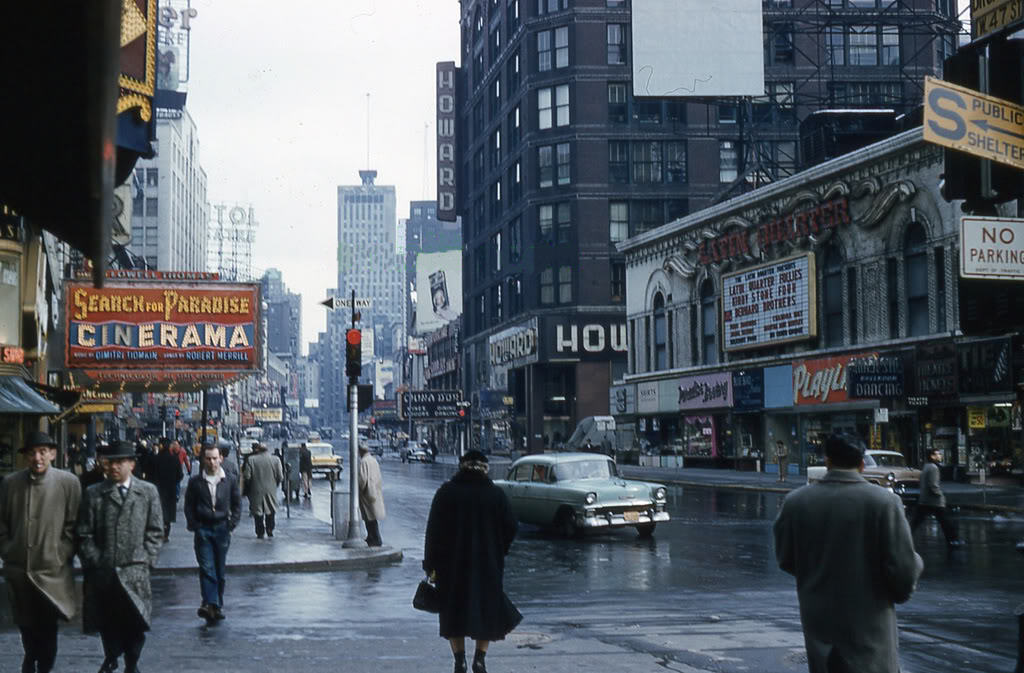
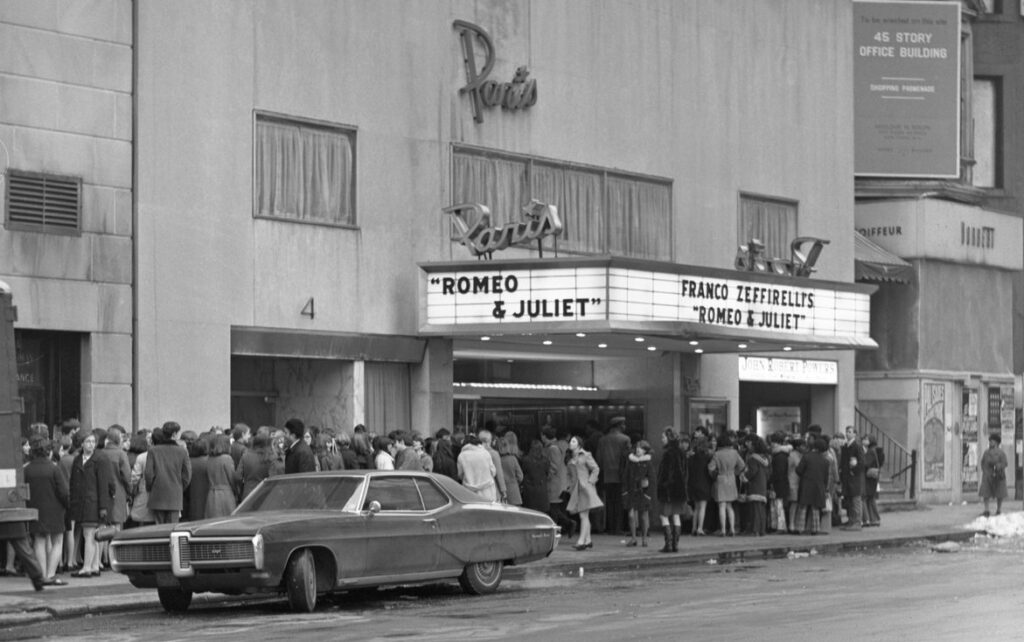
The Strand Theatre, 1914The Capitol Theater, 1920Fox’s Japanese Garden Theatre, at Broadway and 96th Street on the Upper West Side, 1920. Courtesy Museum of the City of New YorkSatisfied New York filmgoers at the Roxy exit into the lobby, May 1943. The 6,000-seat Roxy Theatre, at 153 W. 50th Street, “often cited as the most impressive movie palace ever built” according to Cinema Treasures. Movies at the Roxy were presented with live orchestras and vocals. In this case, the film was the Tyrone Power war thriller ‘Crash Dive’, accompanied by Jimmy Dorsey and His Orchestra and vocalists Bob Eberly and Kitty Kallen.The interior of the Roxy Theater 1932 (Library of Congress)1945 — Head usherette Capt. Rosemary Smith inspects line of uniformed usherettes who are holding gloved hands up to be examined, Roxy Theater, New York City. (Al Ravenna/Library of Congress)Courtesy In Cinerama In CineramaMore information on the Paris Theatre here. Courtesy the Paris TheatreMore information on the Ziegfeld Theater here. (Photo courtesy Ziegfeld Ballroom)
The Bowery Boys: New York City History podcast is brought to you …. by you!
We are now producing a new Bowery Boys podcast every other week. We’re also looking to improve and expand the show in other ways — publishing, social media, live events and other forms of media. But we can only do this with your help!
We are now a creator on Patreon, a patronage platform where you can support your favorite content creators.
Please visit our page on Patreon and watch a short video of us recording the show and talking about our expansion plans. If you’d like to help out, there are six different pledge levels. Check them out and consider being a sponsor.
We greatly appreciate our listeners and readers and thank you for joining us on this journey so far.
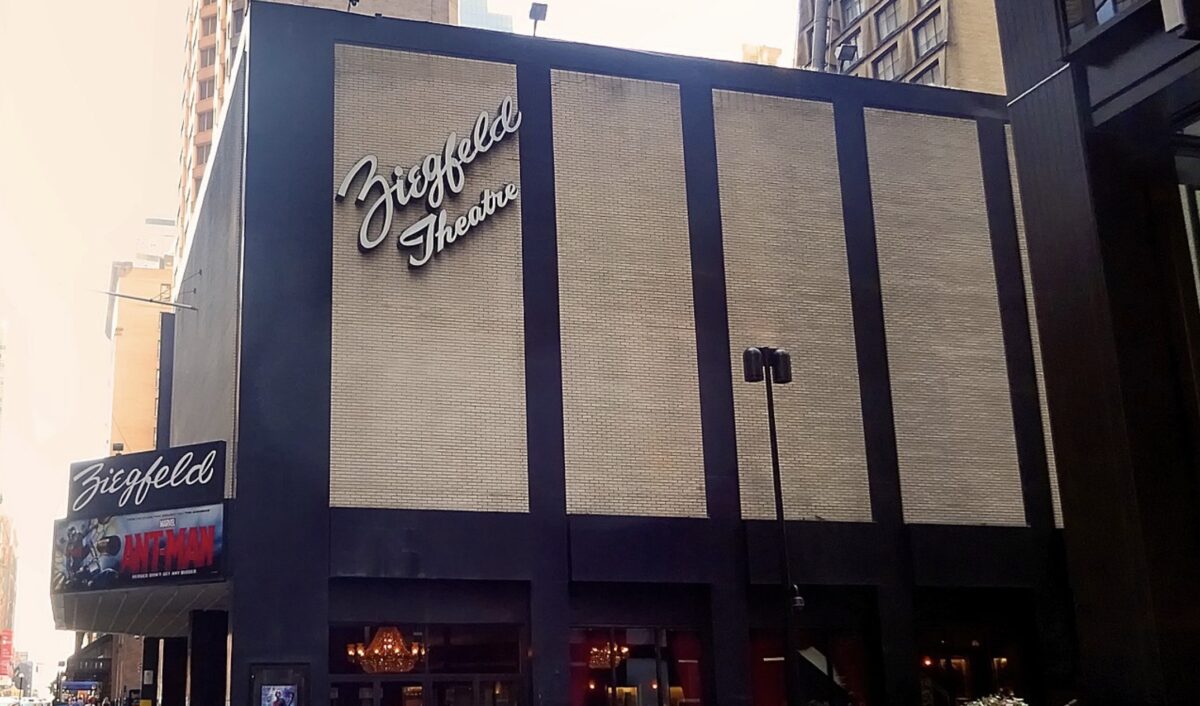
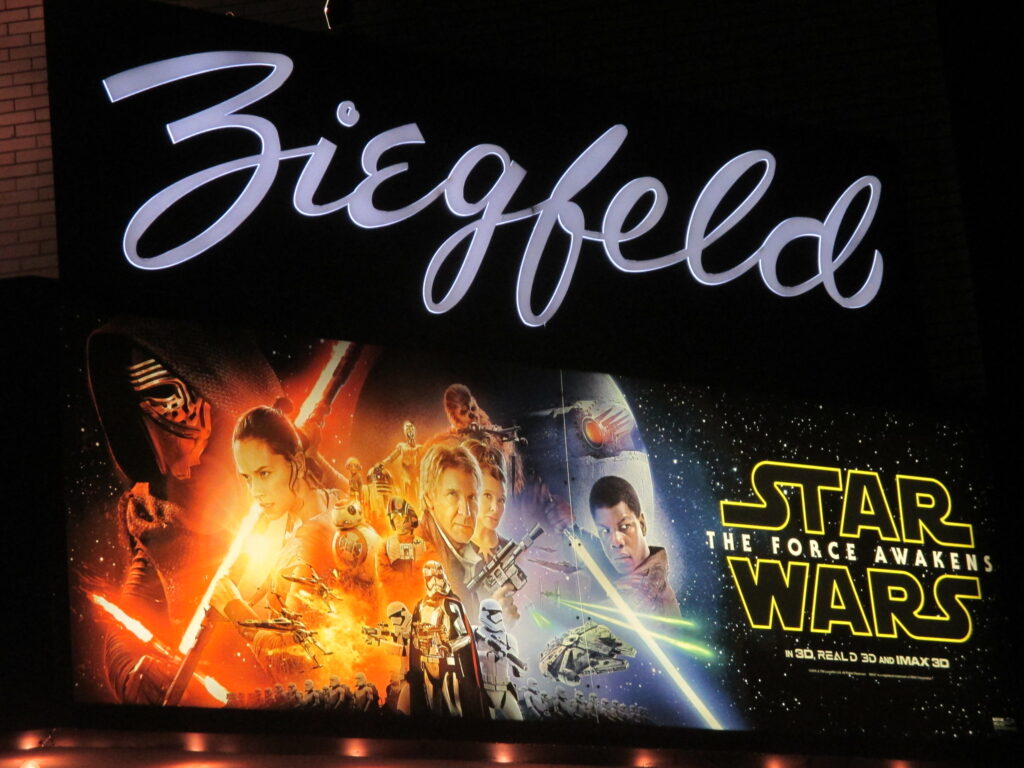
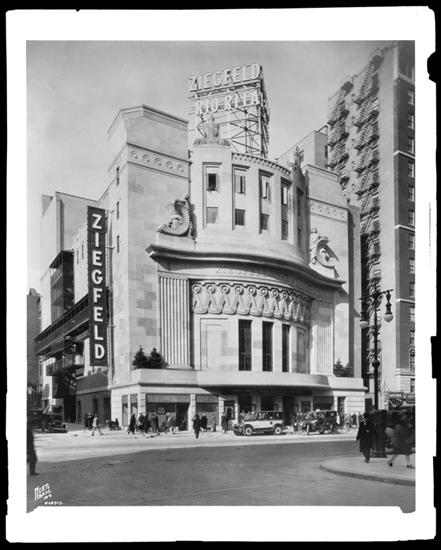
The Ziegfeld Theater, one of Manhattan’s last single-screen movie theaters, closed for regular film exhibition in 2016.* Its final film was Star Wars: The Force Awakens, an appropriate choice as tens of thousands of movie lovers had gone to the Ziegfeld to see previous films in the series — including the 1977 original.
I think the real story here is how — in a landscape of multiplexes and state-of-the-art home theaters — this respected dinosaur, sitting amidst the most valuable real estate in the world, managed to stay open as long as it did, playing a single film at a time.
(The Paris Theater is the only Manhattan theater remaining with just one screen.)
Losing the Ziegfeld means that New York lost a valuable link to one of the city’s greatest theatrical icons, Florenz Ziegfeld. Although, to be fair, that link was already indirect.
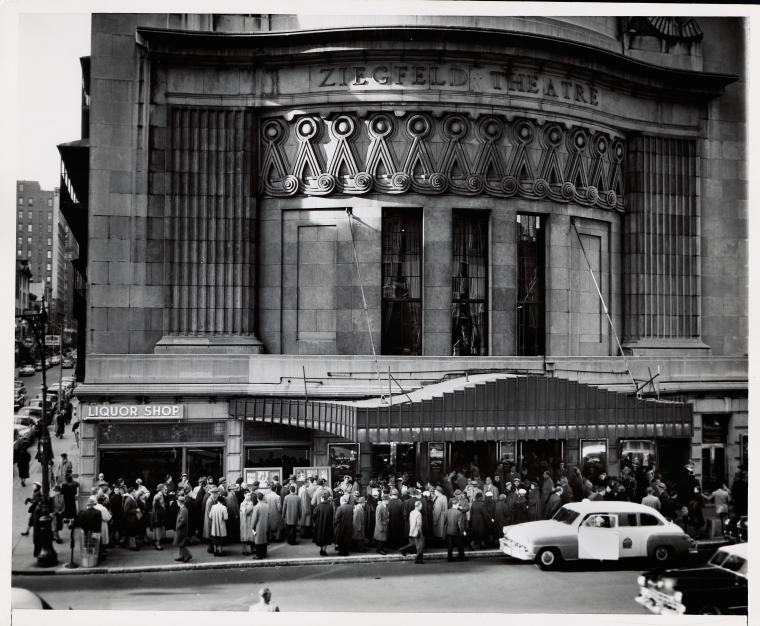
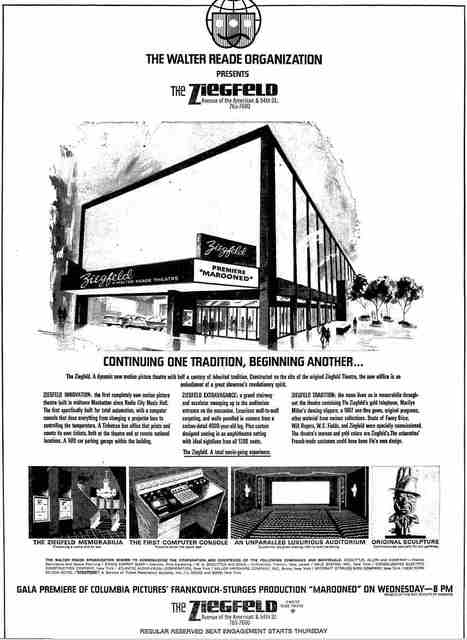
The original Ziegfeld Theater (at top), built especially for the showman by William Randolph Hearst, sat on Sixth Avenue close by the present movie theater. It was demolished in 1966, and a new Ziegfeld — devoted solely to film — was built nearby by Emory Roth & Sons. It opened in December 1969.
At 1,131 seats, the Ziegfeld movie house was hardly the biggest theater in New York. And it doesn’t even have the biggest movie screen (that title belonged to the IMAX at Lincoln Center).
But the grandiosity of design, the traditional show-palace style, and the dramatic trappings of its lobby make for a movie experience of special import. Even its bathrooms were extraordinary.
The Ziegfeld was a throwback to New York’s early single-screen theaters of yore like the Roxy, the Rivoli and the Capitol. It’s also much smaller than all of those. (The Capitol, for instance, sat 4,000 people!)
The Ziegfeld catered to films of a remarkable scope, and it built its reputation upon ‘serious’ films of pedigree.
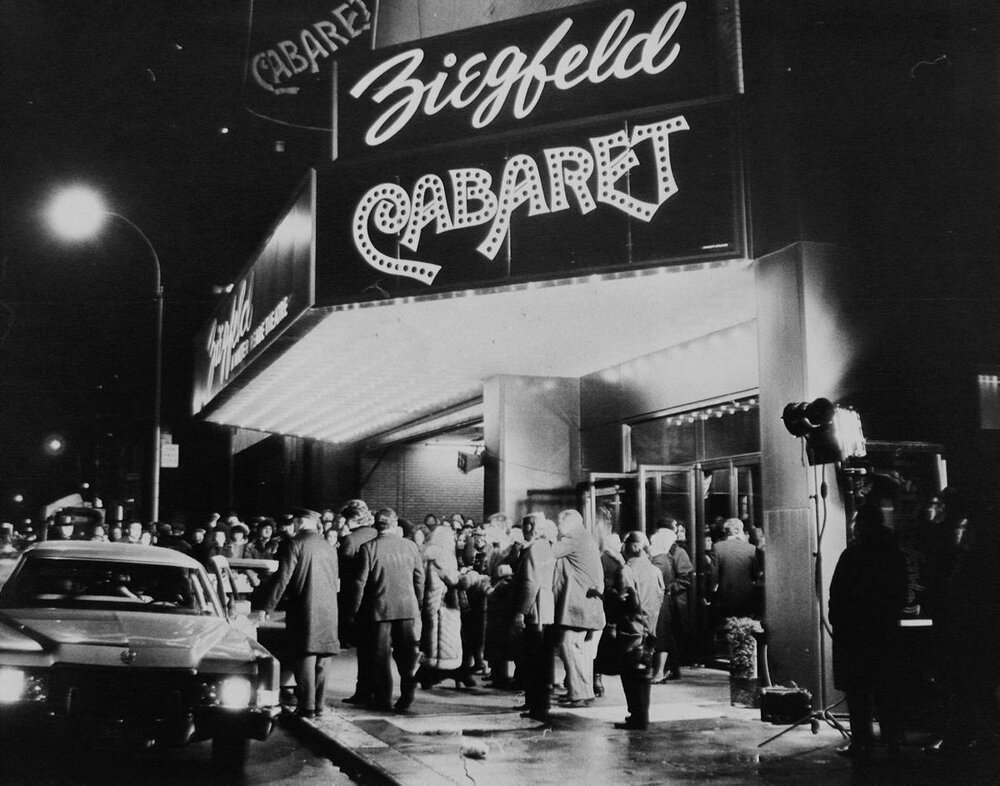
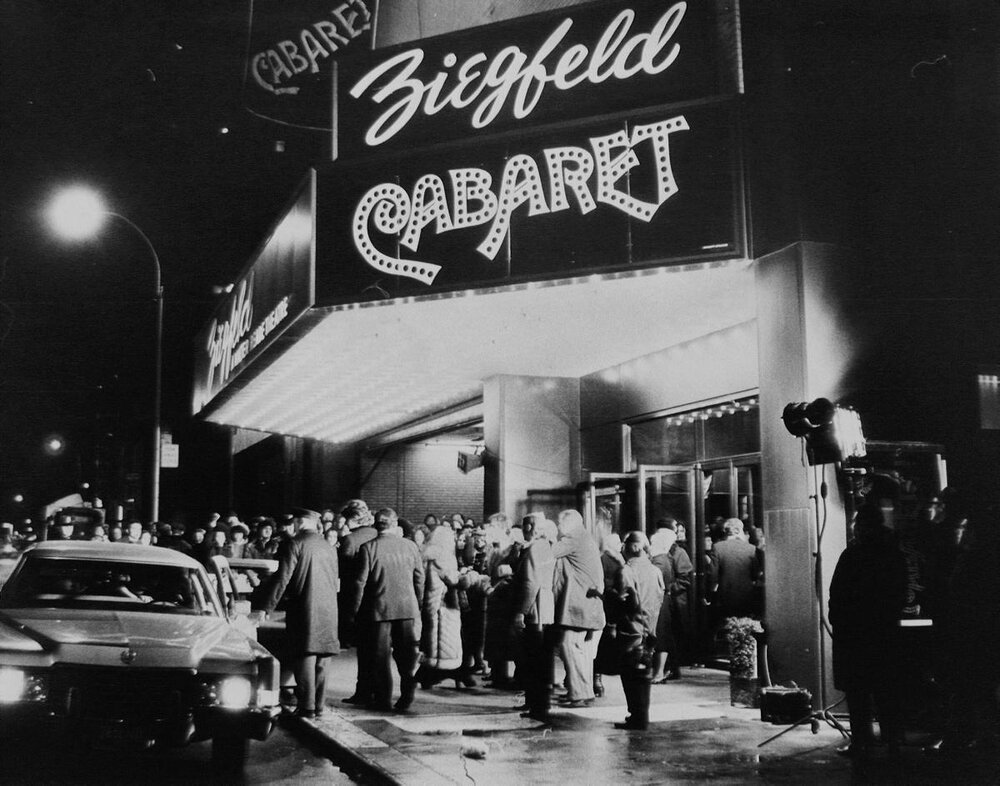
Some of the most successful films to ever play the Ziegfeld include Gandhi (1982, playing 31 weeks), Cabaret (1972, 26 weeks), and Close Encounters of the Third Kind (1977, 23 weeks, plus an additional month in its 1980 reissue).
Courtesy Ziegfeld Ballroom
But screen longevity doesn’t necessary auger quality. For instance, Raiders Of The Lost Ark played here for three weeks. Grease 2 played for five.
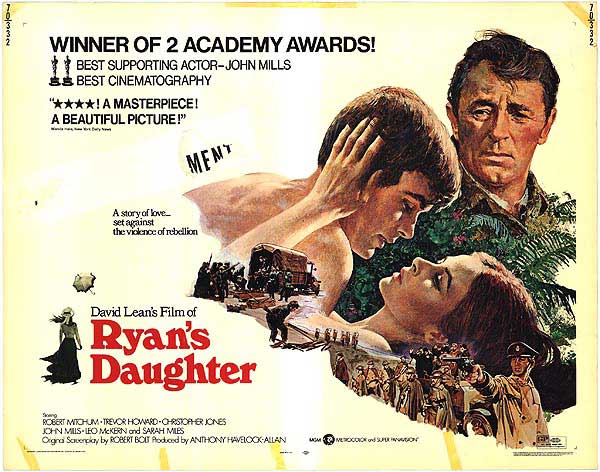
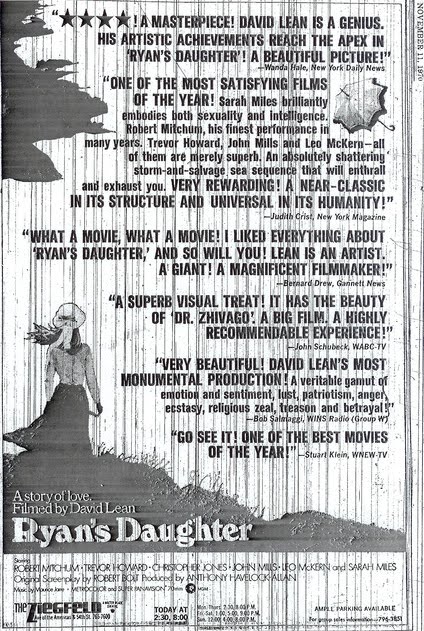
Less than a year after the theater’s opening, on November 9, 1970, came the film that currently holds the record for the longest-running film in Ziegfeld’s history — Ryan’s Daughter.
Perhaps not the traditional classic you might expect to hold such a record.
This blown-out, histrionic World War I drama by legendary filmmaker David Lean, loosely based on the book Madame Bovary, recounts an illicit love affair set along the Irish seashore, with crashing waves serenading the passionate kisses between a married pub owner’s daughter (played by Sarah Miles) and a maimed war veteran (Christoper Jones) who is intermittently tormented by battle flashbacks.
Star wattage was provided by Robert Mitchum as the jilted husband.
Lean’s previous film was Doctor Zhivago, a box office triumph that set international records and proved movie audiences would gratefully sit through lengthy costume dramas if they were any good.
Ryan’s Daughter, sadly, was no Doctor Zhivago.
New York Times critic Vincent Canby completely dismisses it — a film full of ‘soapy gestures’ — but adds a telling postscript to his review:
“I first saw ‘Ryan’s Daughter’ at a press preview at the Ziegfeld Theater, where the audience reaction tended toward rudeness. Five days later, I returned to see it with a paying audience that stood patiently in line around the block before getting into the theater. The members of that audience loved the movie even before they entered the lobby, and, from the reverence with which they greeted the movie itself, they also loved it while seeing it.“
The New Yorker’s Pauline Kael pulled no punches, calling it a “gush made respectable by millions of dollars ‘tastefully’ wasted”.
Afterwards, a brave Lean showed up for a function by the National Society of Film Critics held at the Algonquin Hotel, where he was mercilessly lambasted by the New York critics.
Lean recalls, “One of the most leading questions was, ‘Can you please explain how the man who directed Brief Encounter can have directed this load of sh*t you call Ryan’s Daughter?’ It really cut me to the heart, and that was Richard Schickel.”
The experience was so scarring that Lean later claimed it caused him to withdraw from film making for over a decade
Yet still, New Yorkers flocked to Ryan’s Daughter, from its premiere that November and for thirty-three weeks afterwards.
The film, initially presented in the old ‘roadshow’ format including its overture and intermission, lasted three and a half hours, so the Ziegfeld could only schedule two or three shows a day.
Ryan’s Daughter — all of Lean’s pictures, actually — seemed ready-made for the Ziegfeld.
By 1970, many of New York’s grandest movie screens were already torn down. Those that remained were in Times Square, and it’s doubtful that the Upper East Side crowd — older, wealthier New Yorkers — felt comfortable settling down in those theaters by this time.
The Ziegfeld, right off Sixth Avenue, was also nearby midtown’s swankiest restaurants (as Mad Men, which once mentioned the old Ziegfeld Theater, regularly demonstrates.)
The film was also presented in Super Panavision 70, a film process using ‘spherical optic’ lenses that had only been used by a few films. (2001: A Space Odyssey, another Ziegfeld success, used the same process.)
Such visual scope blasted out from the Ziegfeld’s immense screen, beguiling and even numbing audiences as the IMAX of its day.
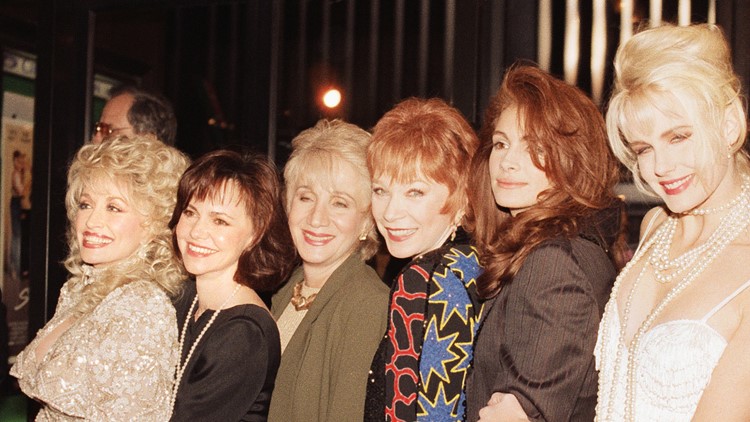
The theater was known for very splashy premieres — especially in the 1980s. Stars of the film Steel Magnolias pose backstage at the Ziegfeld Theater in New York Nov. 5, 1989 at the movie’s premiere. Shown from left: Dolly Parton, Sally Field, Olympia Dukakis, Shirley MacLaine, Julia Roberts and Daryl Hannah. (AP Photo/Ed Bailey)
Which is why Lean would always find a welcome audience at the Ziegfeld — his movies were too monumental in scale to be ignored.
His return to filmmaking A Passage To India would play for over three months at the Ziegfeld in 1984. And a reissue of his greatest masterpiece, Lawrence of Arabia, played to sold-out crowds here in 1989.
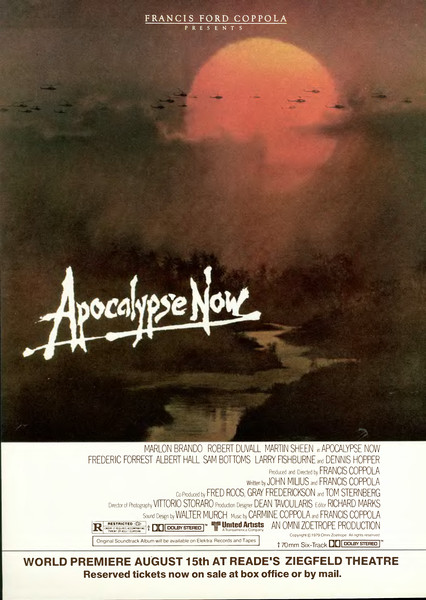
Personally, if I could go back in time, I’d probably want to attend the Ziegfeld premieres of The Last Temptation of Christ (met with offended protesters) or perhaps Apocalypse Now, which made its debut there in 1979 and played for twelve weeks.
Data courtesy the amazing Cinema Treasures / Michael Coate, with verification using old New York magazines.
*Today the old theater is the luxurious event space Ziegfeld Ballroom. Looks swanky!
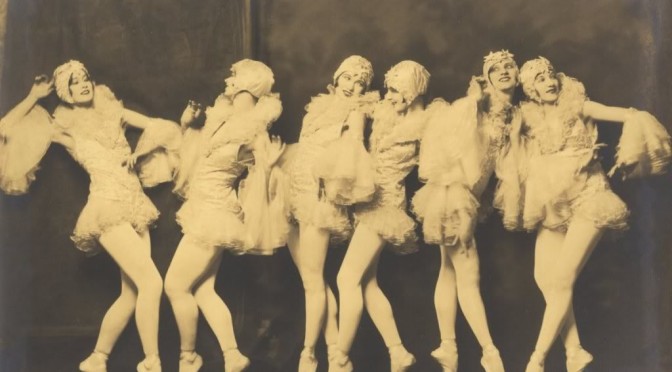
PODCASTCue the dancing girls, lower the props, raise the curtain 00” we’re taking on Broadway’s most famous producer, Florenz Ziegfeld! We give you a brief overview of the first days of Broadway, then sweep into Ziegfeld’s life from his early successes (both professional and personal) to his famous Follies. And find out how the current Ziegfeld Theatre, a movie house, relates to the original Ziegfeld Theatre, home of Broadway’s first “real” musical, Show Boat.
This was originally released on January 16, 2009.
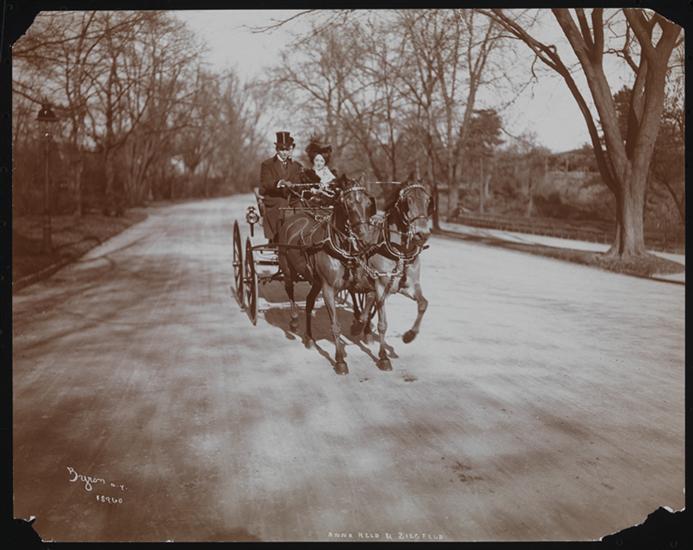
Florenz Ziegfeld and Anna Held on a quick carriage-ride jaunt in 1904
Courtesy the Museum of the City of New York
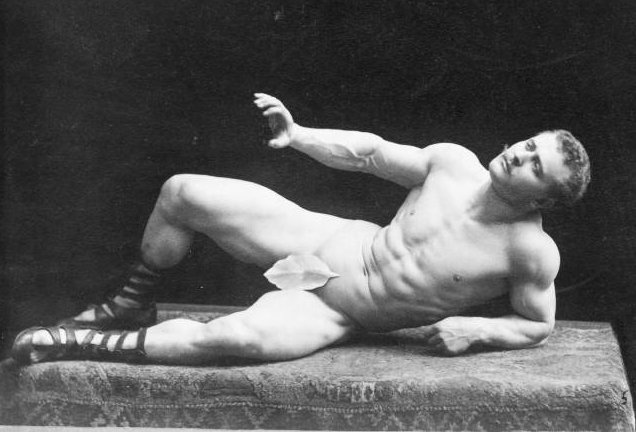
Ziegfeld’s first star — the strongman Eugen Sandow. As with his later female dancers in the Follies, Ziegfeld often posed his stars in scantily-clad ‘classical’ pose. As long as they didn’t move, this sort of tableaux vivant was not considered obscene!
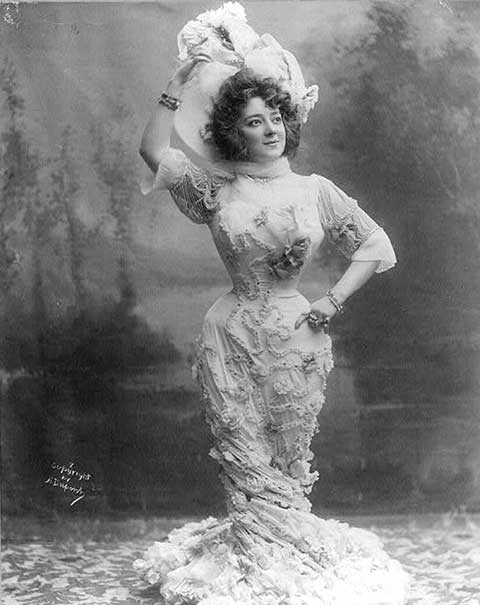
Anna Held — Ziegfeld’s lover and biggest star — posing for ‘A Parlor Match’
The original Ziegfeld Theatre at 54th Street and Sixth Avenue, taken in 1927
Courtesy Museum of the City of New York
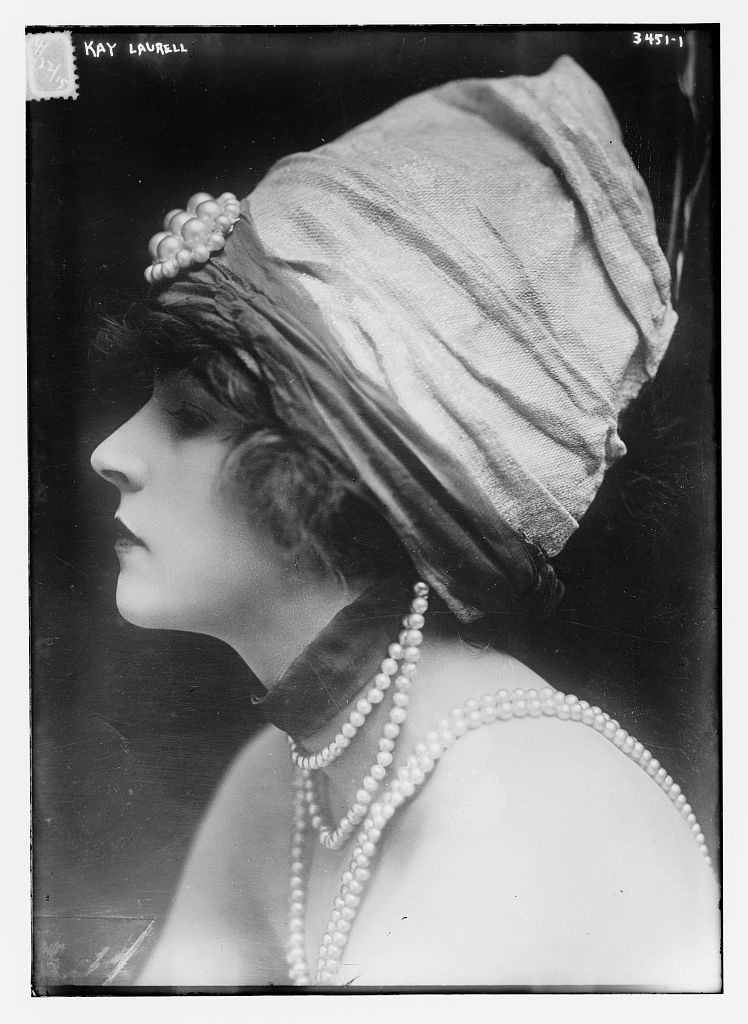
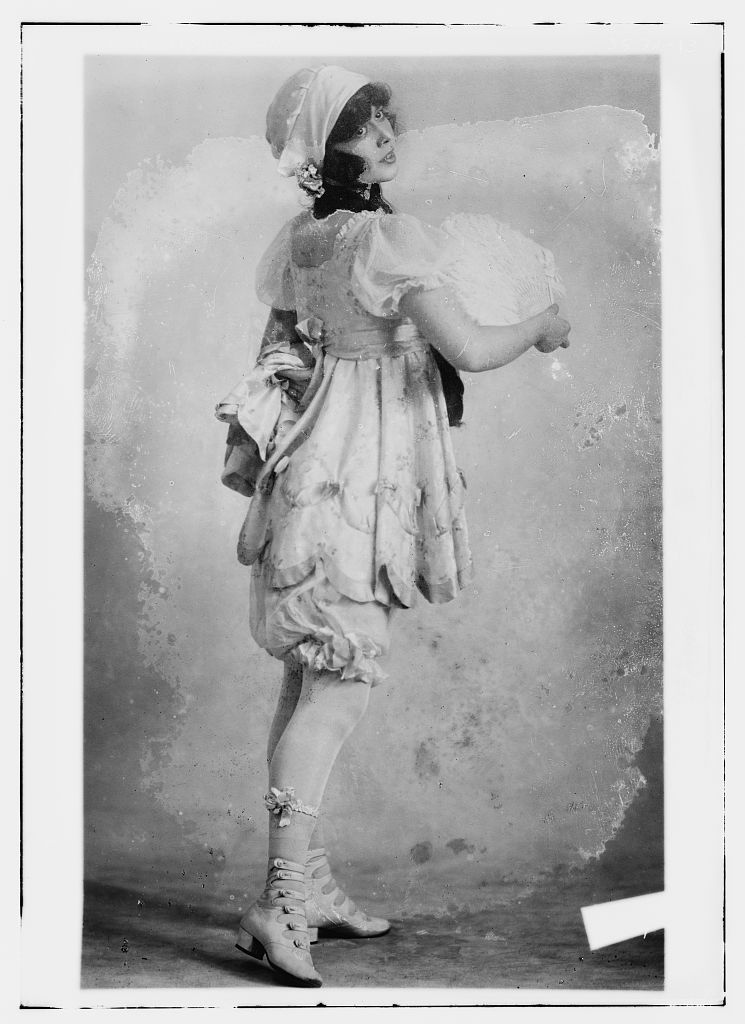
A few more notable Ziegfeld girls — like Kay Laurell (photo taken in 1915)
Courtesy Library of Congress
Anna Pennington, photo taken 1910-1915
Courtesy Library of Congress
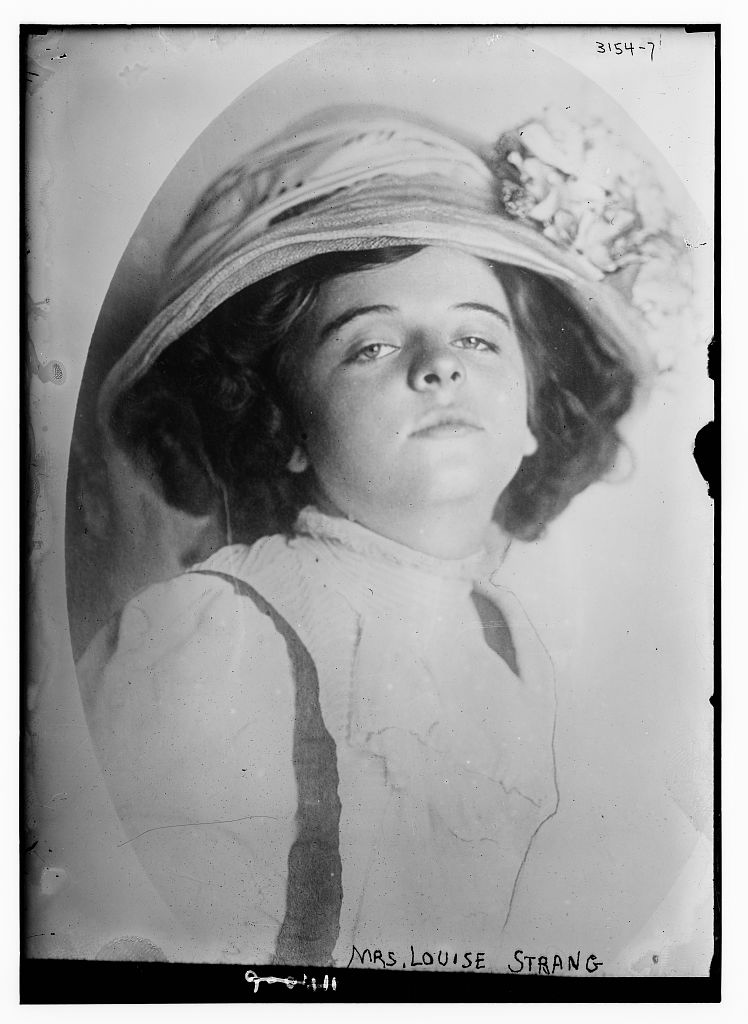
Louise Alexander, later Mrs. Louise Strang, photo taken 1908
Courtesy Library of Congress
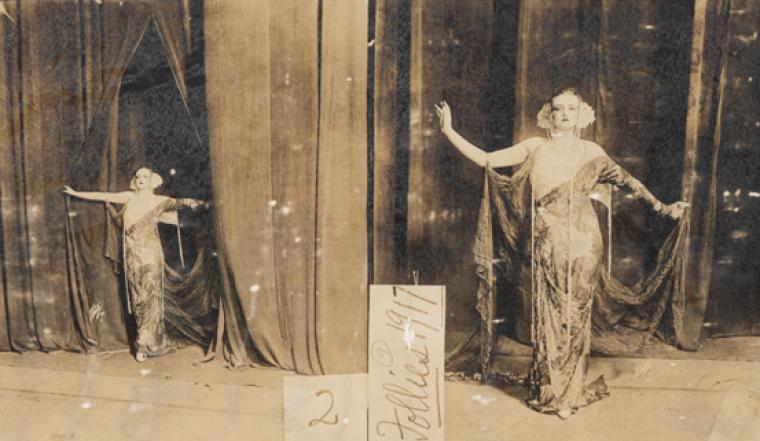
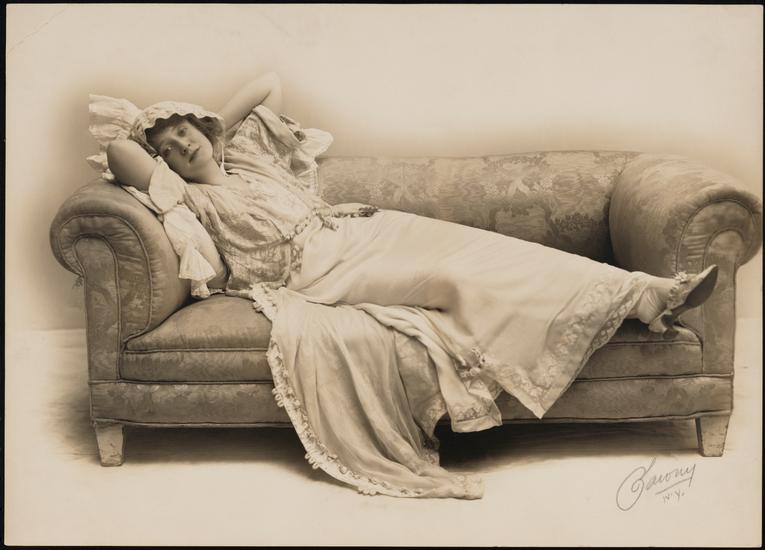
Unidentified showgirl from the Follies of 1917
Courtesy New York Public Library
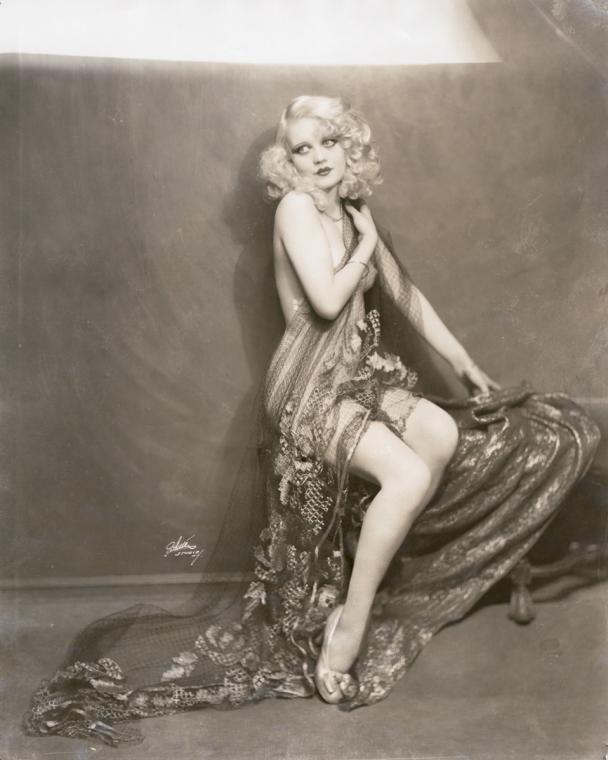
Unidentified performer in the Ziegfeld Follies of 1931