Categories
Newspapers and Newsies

Shameless Urchins and Mighty Frauds: 19th Century Views of April Fools Day

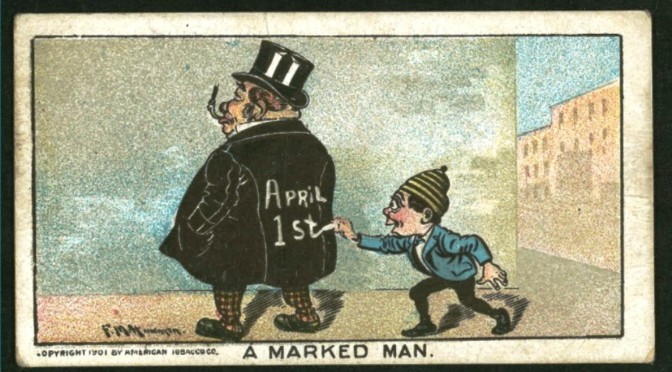
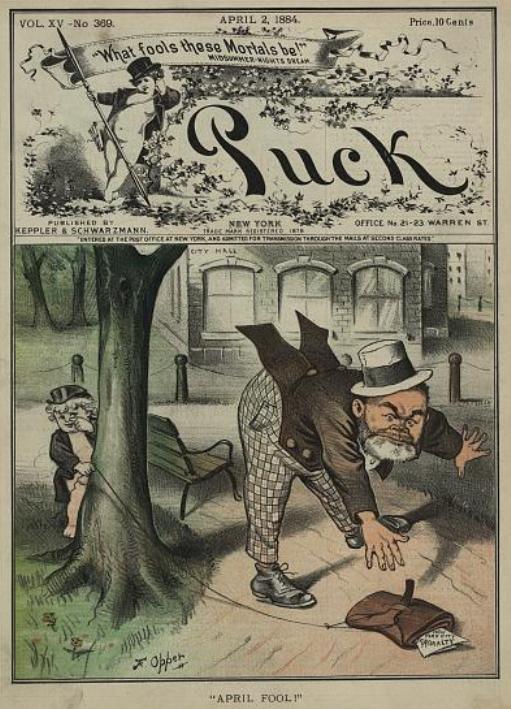
The celebration of April Fools Day traces back to the Middle Ages and possibly as far back as the Roman era. In the mid-19th century, the unofficial holiday for pranks provided a good excuse to attack political opponents.  Here are a couple samples of writing from New York publications from this period which I’m quoting at length because I’m a fan of the almighty air of jadedness that pervades these articles. Also — use of the words “operose” and “gew-gaws”:
1

From the New York Times, April 2, 1861:

“There is a time for all things, we are told. Every dog will have his day, and all fools must have theirs. All fools; and which are the wise ones? Let him among us who is most perfect in wisdom, play the first prank.

And the 1st of April in each year, is the day of all others by common usage consecrated to folly. If there are more senseless acts committed within its twenty-four hours than on any other single day of the three hundred and sixty-five, it has a record not much better than JAMES BUCHANAN’s.*

It is the anniversary on which half-witted people endeavor to make others appear to be so; and they labor to draw forth an ill-advised word or act from them much upon the principle that gave birth to the adage, “Set a thief to catch a thief.”

The custom of late years, it would seem, like an irreverent Dutchman, has more of breaches than observance. Little children honor it, and always will honor it, and may be excused for honoring it; but they who are at years of discretion should put away childish things.

We detest April Fool’s Day. We do not believe in it, and have not believed in it since — yesterday.

To be frank, the writer of this, in the pursuit of pabulum, yesterday, was “sold,” fooled, taken in, deluded, deceived, swindled at every step. He was sent on “Fool’s errands” to distant parts of the City by hypocritical friends whom he told to their double faces afterwards, when they taunted him, that if he had been on “Fool’s errands” it was their errands that he had gone to perform.

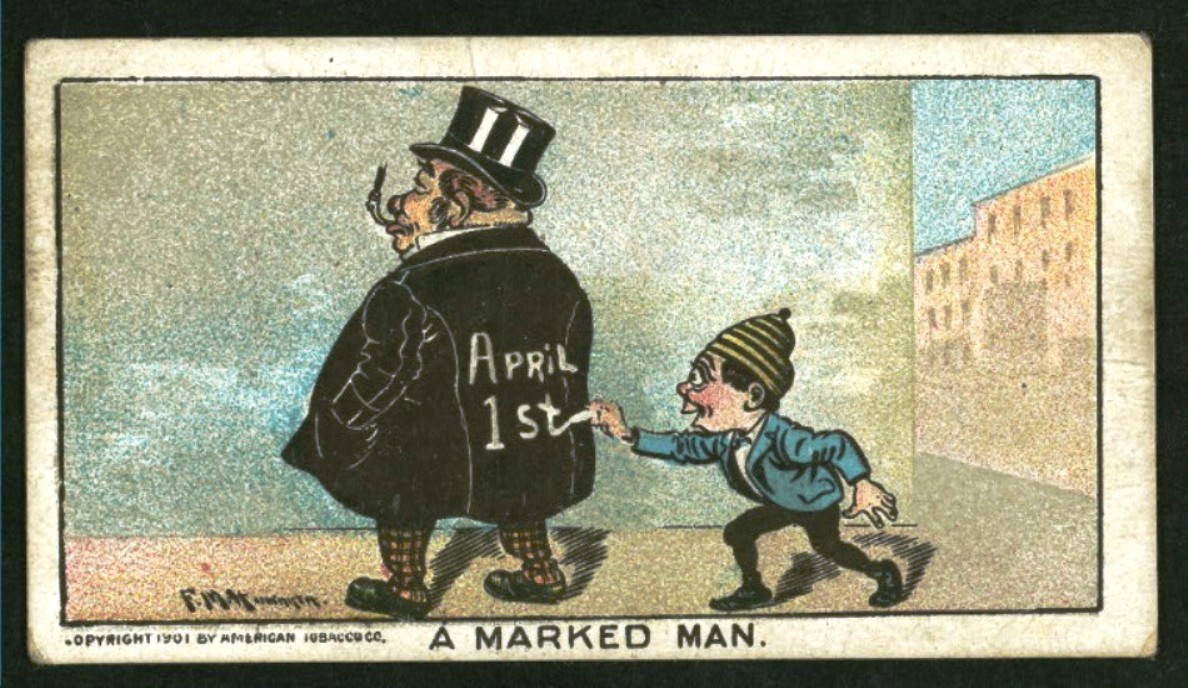
Then shameless little urchins threw tempting parcels in his path, and when he stooped to pick them up, behold! they were up before he could pick them, dangling high in air, pendant by cords from windows, from which deriding faces looked down upon him. And his pockets were turned inside out, and placards were hung on his back, or suspended from his coat-tails, and when, losing his way, he civily asked the name of a street. — “No you don’t,” was the answer. “April fool!”

And so, after a day spent in anxious but unrequited efforts to get leisure to write of it, he sat down late, and weary, and concluded to take revenge upon the reader, and say to him simply, “April Fool!””

* In 1861 James Buchanan was at the end of his presidency. He was also a Democrat and thus unfavored by the Republican-leaning New York Times of the mid-19th century.
1


Other newspapers used the holiday as cover to rail against political opponents.   On April 1, 1876, the New York Sun ran down a list of so-called April Fools, calling out some of the biggest names in politics. An excerpt:

“We cannot better celebrate this day dedicated to fools and folly, than by considering some of the principal frauds, humbugs, charlatans, hypocrites and fools who infest the country, and dwelling for a moment on their history and prospects.

They are a large and thoroughly self-satisfied company, recruited from various ranks of society and armed with impudence, pretension, cant or simple stupidity.  They like to be observed and entertain a low opinion of those who criticize them.   They think they out to be permitted to practice their trade  unmolested by impertinent scrutinizers of their shoddy materials, short weights and other tricks of deception.

Today let us celebrate the glories of their enterprising company, carefully abstaining from any word or suggestion to which they can fairly take exception.”

Among their list of the greatest fools in 1876:

“Ulysses S Grant** — “cannot strictly be called a fraud. His practice of greed is open, and he believes in it.  Once of the very lowest estate, a social wreck and failure, he was lifted by a bloody war to the high ground of eminent position where all men could see him.  If ever a man had reason to be thankful for the happy fortune which enabled him to get out of the mire and to stand in clean places, it’s Grant.

Hamilton Fish — “is a pompous sailor, replete with the airs of an operose and ostentatious respectability …. and in fact, Fish is one of the hollowest of frauds.

Henry Ward Beecher*** — “the cheekiest fraud,” “old and unblushing in licentiousness, he takes the part of a manly fellow and a holy man, and with variations of buffoonery, plays it to the entire satisfaction of the brethren.  But paint and gew-gaws cannot cannot hide the foulness underneath.   His reputation is gone, and he lives on lies and perjuries.

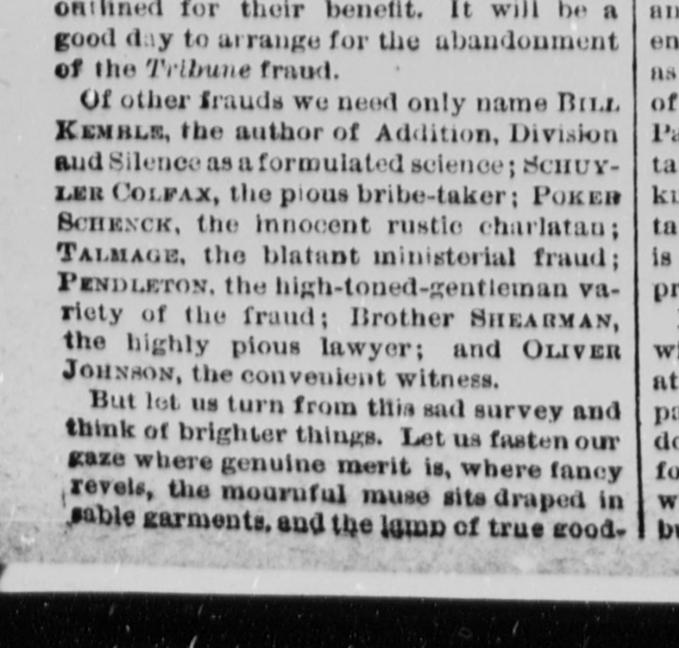
Jay Gould — “is a great fraud, but he was a fool in buying the [New York]Tribune, hiring the young editor as a stool pigeon, and building the tall tower.****

There there’s this whole paragraph:
2

**He was at the end of a scandal-ridden presidency, and his cabinet was known for a bevy of corruption charges.

***His adultery trial had sullied his reputation the previous year. 

****Gould, his connections with Tammany Hall well publicized, had bought the Tribune, a rival to the New York Times, in the years before he began amassing railroad property.

Puck Magazine courtesy the Library of Congress

A Marked Man illustration courtesy New York Public Library
 

Categories
Mysterious Stories True Crime

The Dictaphone Murder Trial of 1914: A Mystery In Pictures

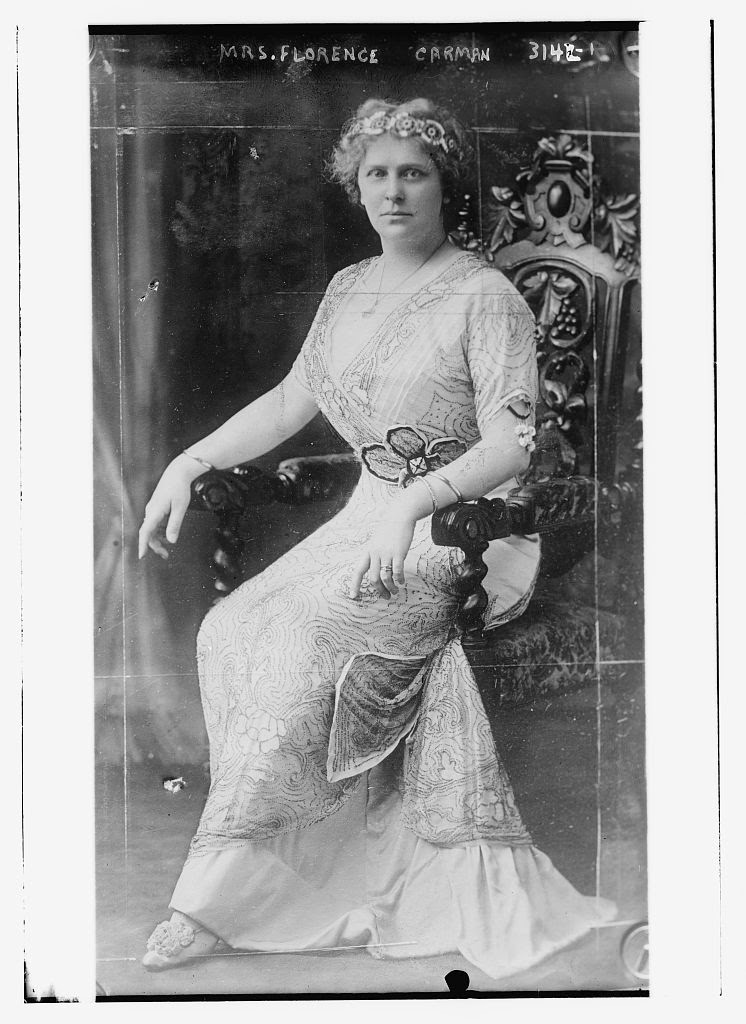
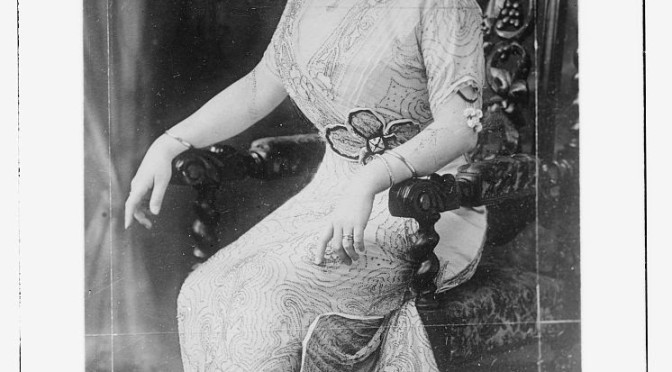
Does this woman look like a murderer to you?

This is Florence Carman, the wife of Dr. Edwin Carman, one of the most respected men in Freeport, on Long Island’s south shore.  Mrs. Carman would be at the center of a murder trial that captivated New Yorkers 100 years ago.

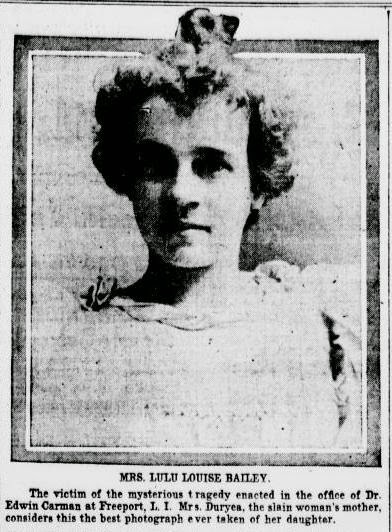
Dr. Carman received a visitor in his office on July 1, 1914, one Louise “Lulu” Bailey.  Her visit was after hours, so we can perhaps surmise the tenor of their engagement.  So, does it seem, did Mrs. Carman.

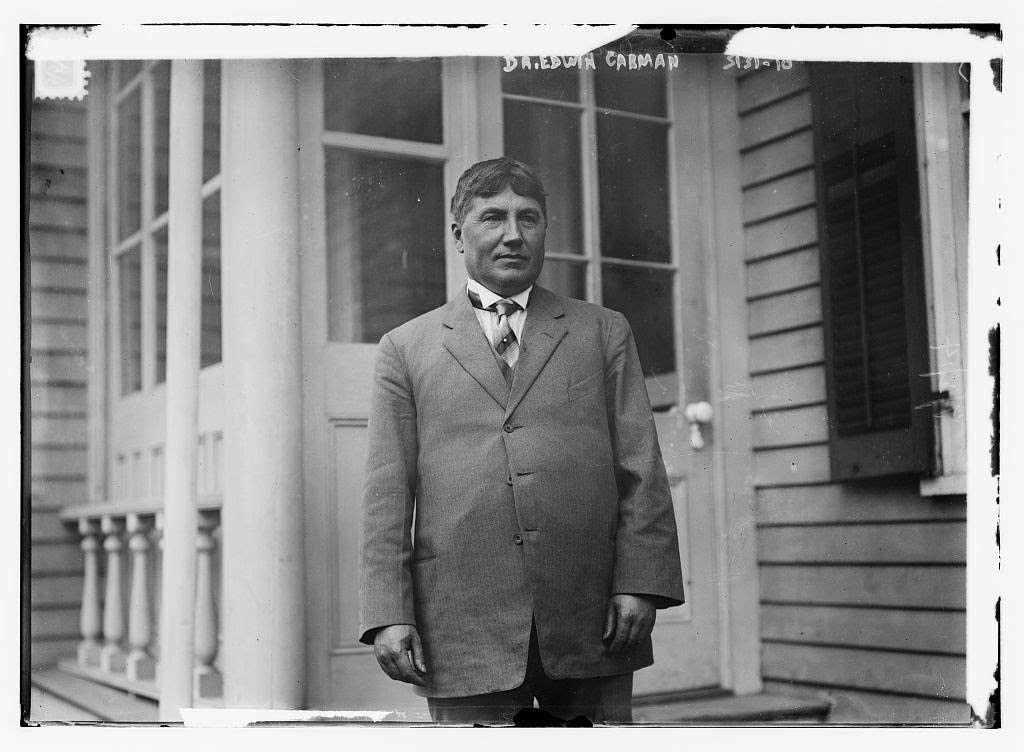
Here’s Dr. Carman, the subject of his wife’s suspicions and the possible recipient of Mrs. Bailey’s affections:

That evening, claimed Dr. Carman, as he entered his office to meet Mrs. Bailey, somebody shot at her through the window. She fell dead to the floor.  I should add that the office just happened to be on the ground floor of the Carman’s Freeport home, a handsome structure, “one of the show places of the village.”

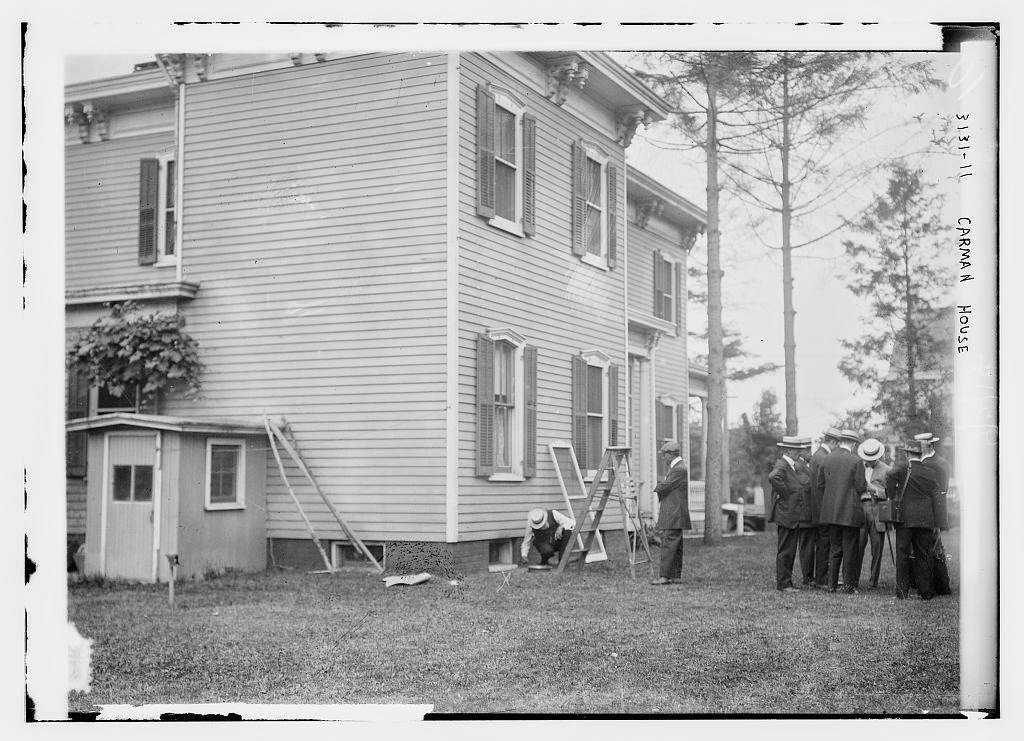
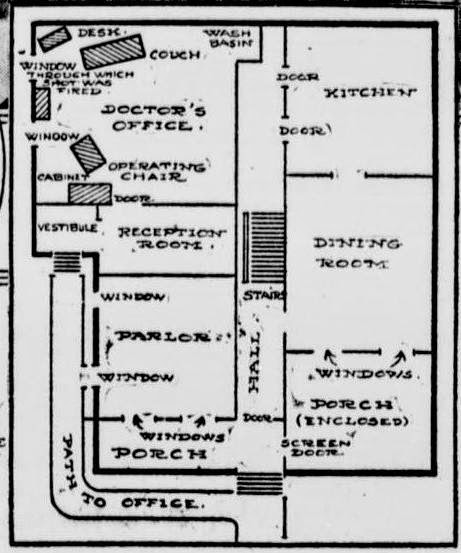
Below: Investigators case the Carman’s house for clues

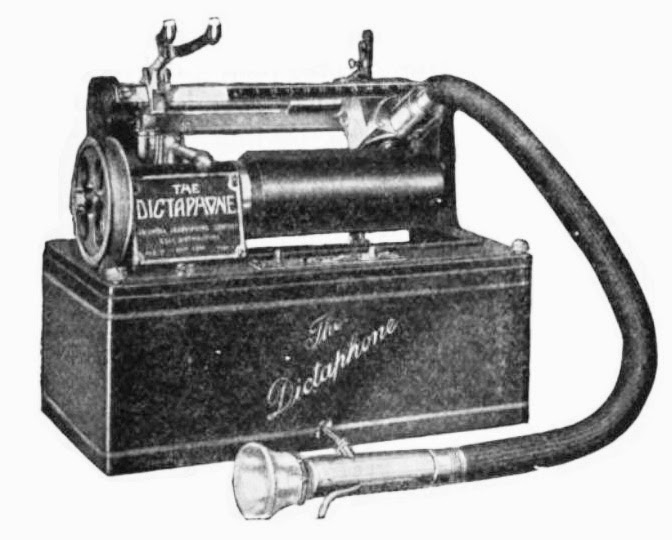
The following day revealed a bizarre twist — Florence had purposefully left on a Dictaphone machine on in the office.  After the police left, she removed it from the crime scene and hid it in the attic.

At right: One example of a Dictaphone machine from the 1920s..

Mrs. Carman, it seems, did not trust her husband with any female patients.  With the Dictaphone on, she could listen in on the conversations between the doctor and his patients.  In particular, she could spy upon any possible dalliance between her husband and Mrs. Bailey.

Her guilt seemed assured when witnesses declared seeing a “woman in white” standing on the porch at the time of the murder.

For many days, suspicions actually volleyed between the doctor and his wife.  For instance, some days later, Dr. Carman claimed that he was shot at by a man on a bicycle while entering his house, a tale others contradicted.  Detectives actually re-enacted the murder with the doctor and his wife.

From the New York Sun:  “The detective took the part of the assassin, creeping at dusk among the hemlocks and crawling, pistol in hand, to the window of Dr. Carman’s office through which Mrs. Bailey was shot.”

At left: A map of the murder scene from the New York Sun

Guilt eventually rested on Mrs.Carman, who was arrested exactly one week after the murder.

Meanwhile, Bailey’s murder swept away all other news of the day, filling the New York newspapers for weeks with the possibility of a salacious scandal.

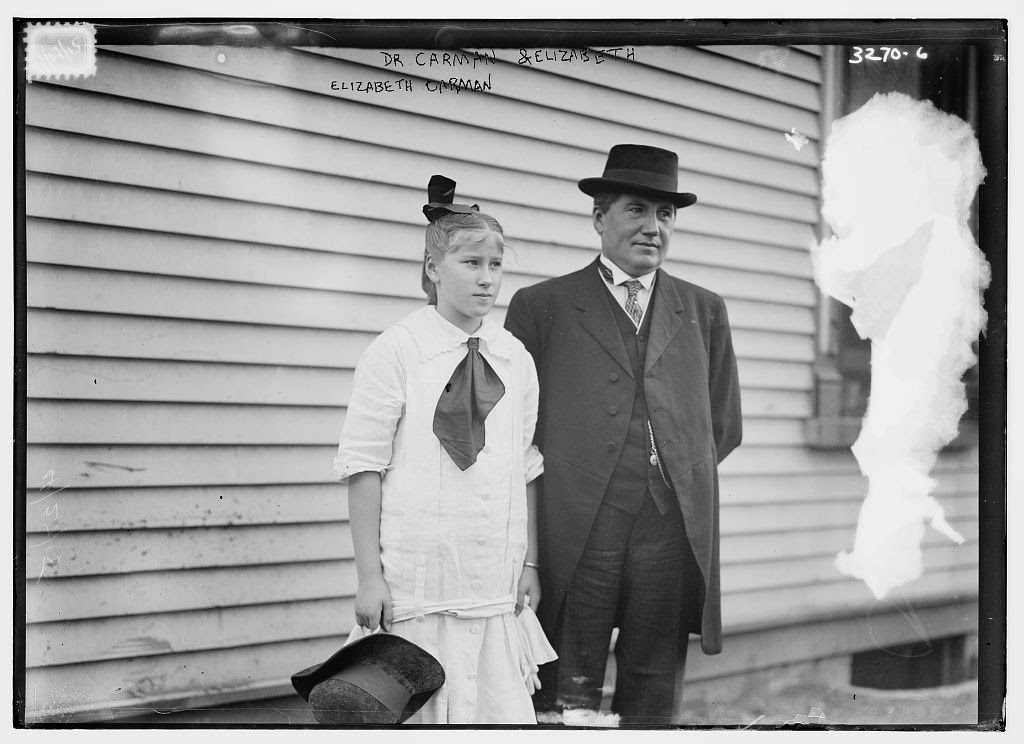
Here’s the Doctor with his daughter Elizabeth Carman, who later took the stand to defend her mother:

Florence was brought up on charges of murdering Bailey, and evidence was brought before the Freeport Justice of the Peace.  In October, the case went to trial in the nearby town of Mineola.

The following photographs were taken outside the courthouse.

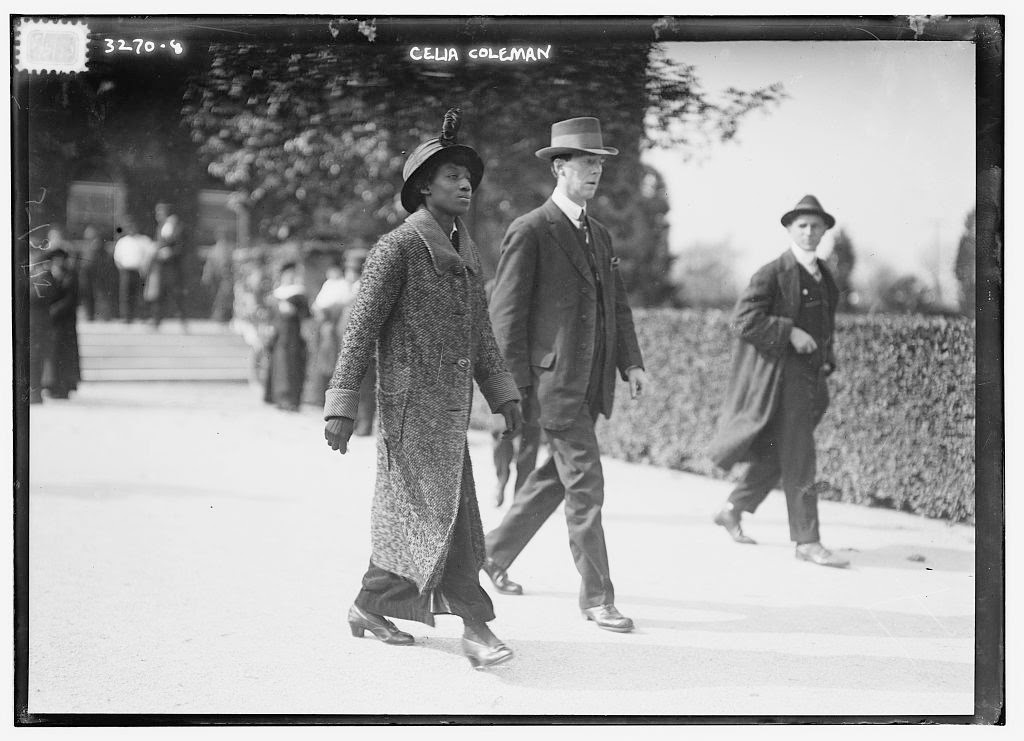
Florence’s defense rested on the testimony of Celia Coleman, the Carman’s maid, who produced a solid alibi for Mrs. Carman, proving she was inside the house the entire time, not on the porch, and thus not the “woman in white.”

However, by October, Coleman claimed that Florence had in fact crept out the back door moments before the fatal murder.  Then she testified….

The reasons for her conflicting stories are muddled, but she may have been covering for her employer then later told the truth.  Or else, she was bought off, as a later conspiracy theorized, brought forth a more tantalizing story to the delight of newspaper men everywhere.

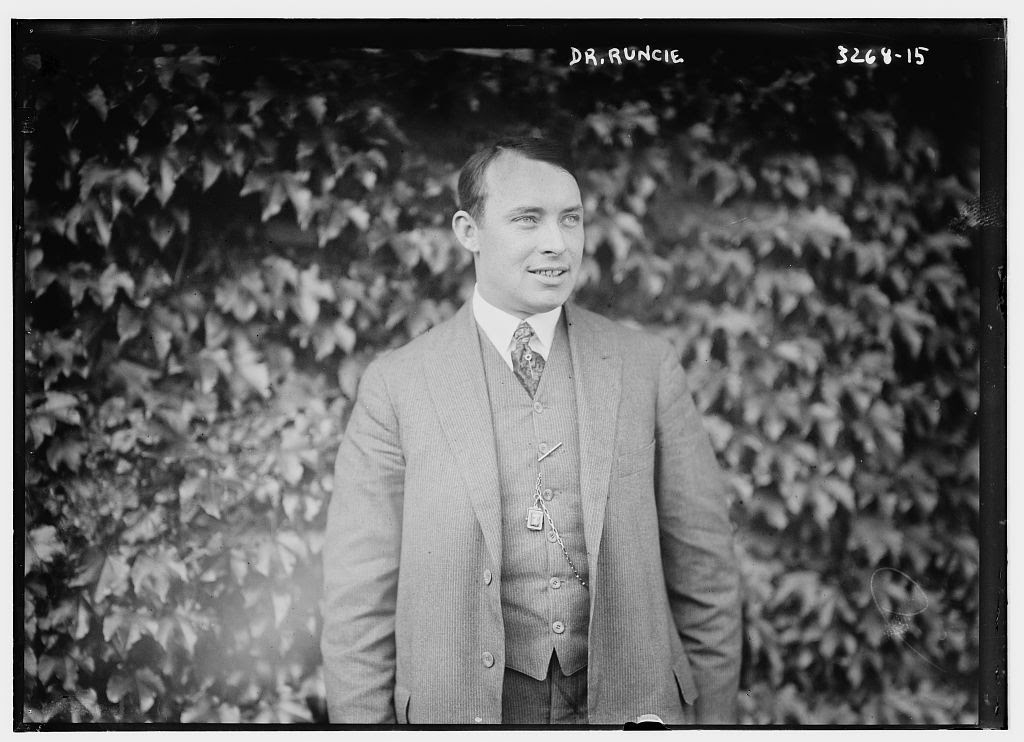
The dashing Dr. William Runcie also took to the stand in regards to the presence of the Dictaphone and whether it was an indication of her mental state.

Runcie had come to the house on the evening of the murder, and Florence had told her then of hiding the machine in the office. But she urged Runcie not to tell her husband this fact.  He tried to brush away this fact.  “While it is out of the ordinary, I cannot see why so much importance is given to it.” [source]

Another witness named George Golder, who had originally testified of Mrs. Carman’s guilt, now “made an affidavit practically repudiating his identification of the doctor’s wife as the woman he saw on the porch.” [source]  His testimony was later used to cast guilt upon Doctor Carman.

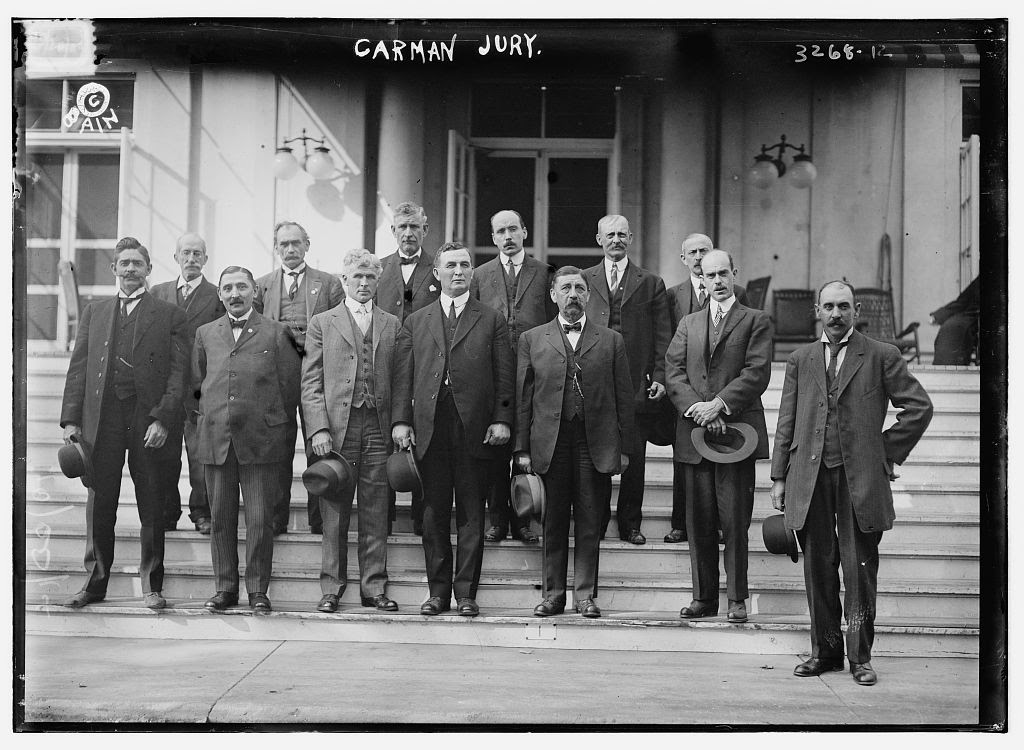
Below: A jury of her peers?

The family of the deceased woman made a dramatic entrance.  This is Lulu’s daughter, mother and husband.

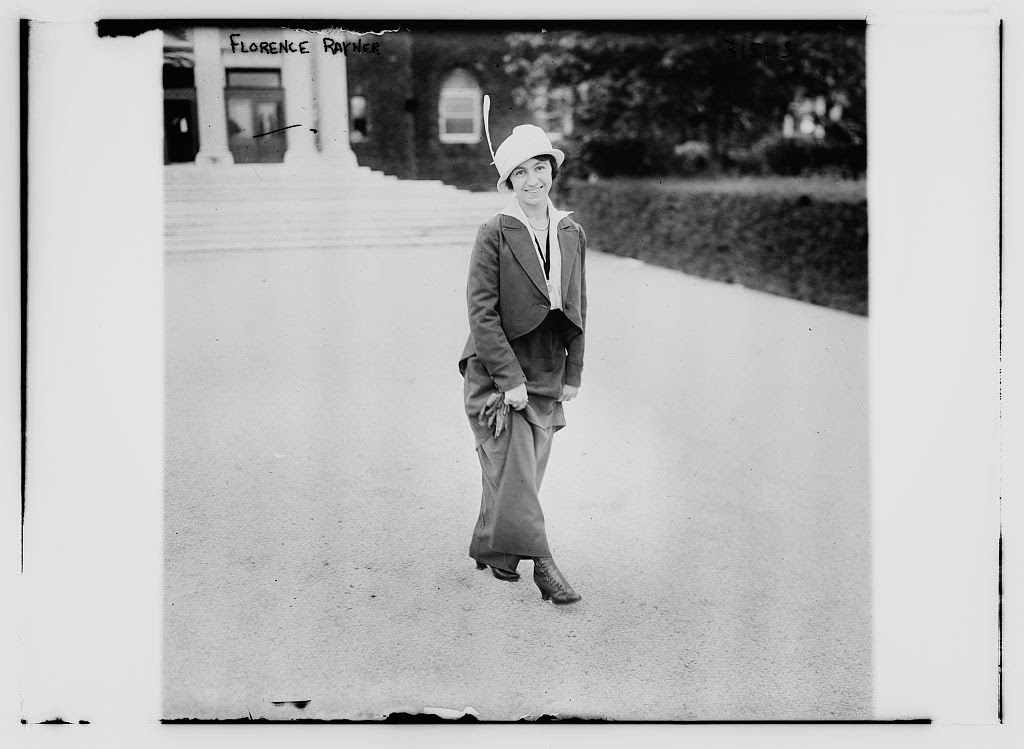
A little sex appeal was brought into the courtroom with the appearance of Florence Raynor, specifically there to contradict the testimony of another man who claimed to have seen Mrs. Carman on the porch that night.

In the end, the jury could not come to a consensus regarding Mrs. Carman’s guilt.  Wrote the New York Times, “After deliberating for thirteen and a quarter hours, the jurors in the trial of Mrs. Florence C. Carman for the alleged murder of Mrs. Lulu D. Bailey filed wearily into the Supreme Court room at 10:58 o’clock this morning and the foreman announced that it was impossible for them to come to any agreement.”

She was re-tried in May of 1915 and given a vigorous grilling on the stand. The New York Times makes note of the soft-spoken woman raising her voice for the very first time — evidence, so goes the inference, of the trial taking its toll upon her.  The jury sympathized with her and finally acquitted her of the murder.

By this time, of course, the story was relegated to the back pages, as world events — and other local murder cases — monopolized the attentions of New Yorkers.

To this day, the murder of Lulu Bailey has not been solved.  It’s unclear whether justice was really served that day.  “I do not believe a jury in Nassau County can be brought to convict a woman of murder in the first degree,” said the district attorney.

All the photographs above are courtesy the Library of Congress.

Categories
Those Were The Days

How well can you do on this New York history trivia quiz — from 1914? Prepare to be a little frustrated.


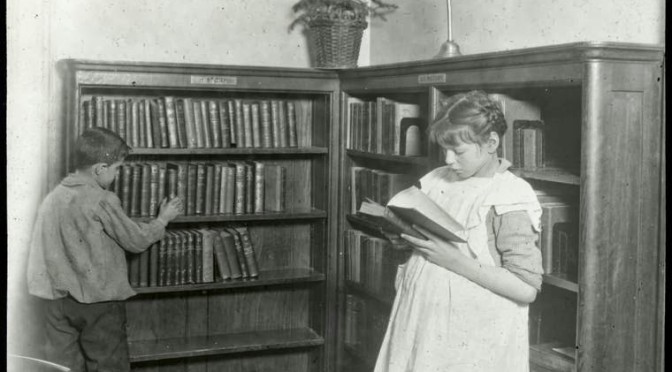
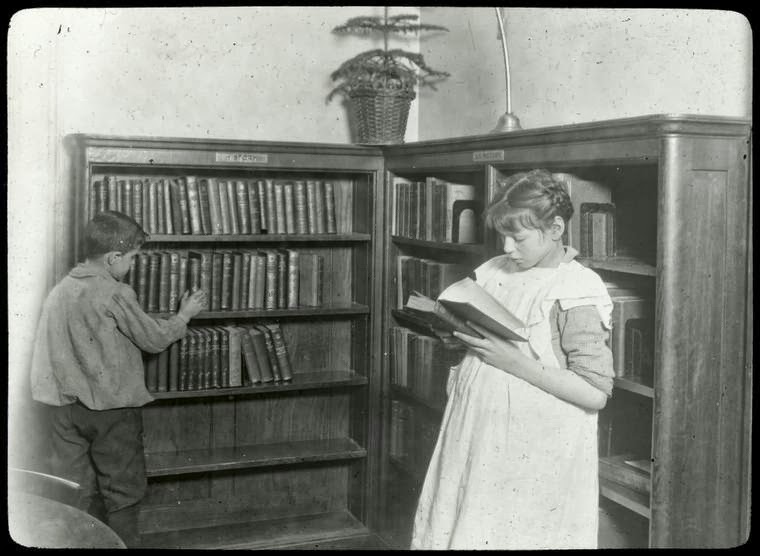
No amount of studying will prepare you for some of these odd questions.  (A girl at Seward Library, photographed by Lewis Hine.)

Trivia quizzes are very popular today in bars and pubs throughout the city, but in the past, they’ve had more elitist purposes.  In November 1914, a group of possibly insecure ex-New Yorkers in Chicago — united under the organization named the Empire State Society of Chicagoannounced a contest featuring fifteen questions on New York history.

The New York Sun got hold of this list of questions and posed them to people actually living in New York. What they got was mostly befuddlement and blank stares.  Rather than admit they were stumped, many basically said, whatever, they’re in Illinois.  “Some have been heard to give as an excuse for their ignorance — judged by the contest questions — that perhaps the Chicago-New York exiles have selected such queries as will reveal what is greatest and best in the State according to Illinois standards.”

From the Sun:

The fifteen history questions published by the New York Sun are below.  How many can you answer correctly?  The answers are below the jump.

Keep in mind these questions pertain to the entire state of New York, not just the city.  Good luck!

1. Where is the Milburn House (below) and with what event is it associated?

2. What happened at Dunkirk, May 15, 1851?

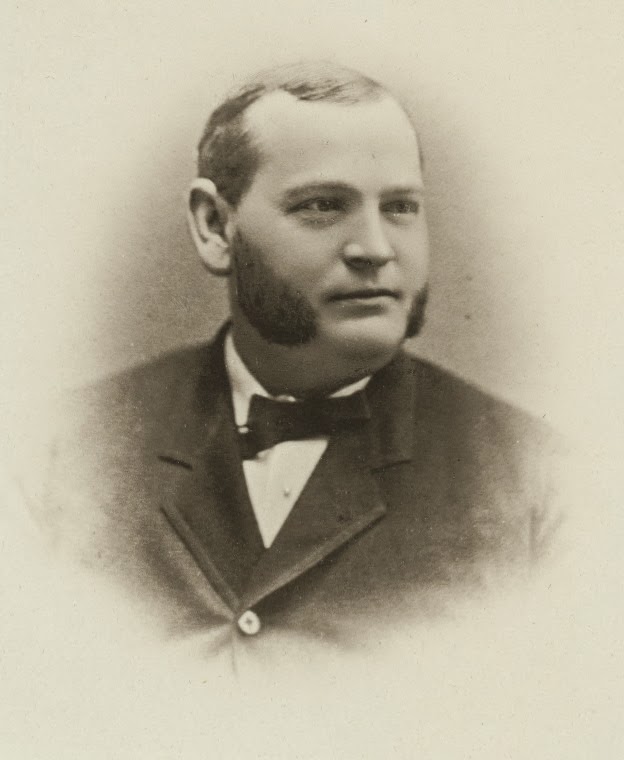
3. Identify the following well known New Yorkers:  Roswell P. Flower (below), Clement C. Moore, Marshall Lefferts, William Cooper


4. In what famous work of fiction is the story of the Bloody Pond massacre related?

5. In what great work of fiction does the character of Anthony Van Corlaer appear?

6. What great religious movement originated in Palmyra?

7. Whose monument stands at Stone Arabia and what occurrence does it commemorate?

8. From what does the town of Painted Post derive its name?

9. Name one person of national reputation whose name is prominently associated with each of the following places:  Auburn, Kinderhook, Tarrytown, North Elba, Yonkers

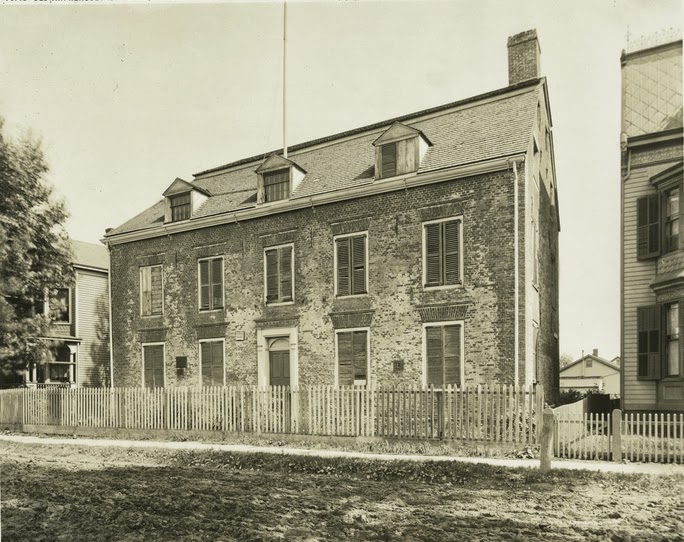
10.  Relate the history of the ‘Yankee Doodle’ house at Rensselaer. (Pictured above)

11. To what natural advantage is attributable the commercial supremacy of Rochester?

12. Give the name and work of a woman of Troy who made an important contribution to the cause of higher education of women.

13. Who was ‘the Poet of the Revolution‘ and where did he reside?

14. When and where was the New York City Chamber of Commerce organized?

15. What building once stood at the northeast corner of Wall and Nassau streets, and with what great event is it associated?

ANSWERS BELOW:

1. The house is in Buffalo, NY. It is where President William McKinley was taken after he was shot by the assassin Leon Czolgosz, and it’s where the president died.

2. According to the article: “What Happened in Dunkirk —  There was a celebration at Dunkirk about the time mentioned in the question, for the purpose of letting Dunkirk whoop and hurrah over getting railroad facilities.  The Erie Railroad entered the town and in consequence there was a celebration.  But as an event that has a place in New York history it takes a strain of the imagination to rate it so high.”

3. R.P. (Roswell Pettibone) Flower was the governor of New York (1892-94).  Clement Clarke Moore was owner of the Chelsea estate and author of ‘Twas The Night Before Christmas.  Marshall Lefferts was a Civil War veteran, the “long Colonel of [New York’s] Seventh Regiment.”  “He marched down Broadway at the head of his command when war broke out in 1861 and presented a martial figure that was long remembered.”  William Cooper was founder of Cooperstown and the father of James Fenimore Cooper.

4. Speaking of Cooper, the Bloody Pond massacre is from James Fenimore Cooper’s The Last of the Mohicans.

5. Washington Irving‘s A History of New-York from the Beginning of the World to the End of the Dutch Dynasty, by Diedrich Knickerbocker.

6. Mormonism.

7. Stone Arabia is today a hamlet in the town of Palatine, New York.  The Sun doubts there was ever such a monument here at all.  If there was one, it was dedicated to a Revolutionary War battle from 1780, “a battle fought between the colonists on the one hand and the Indians under Sir John Johnson, son of the famous Sir William Johnson.”

8. A Native American wooden post and alleged burial spot of Captain Montour, son of the famous Iroquois leader Queen Catherine.

9. This question is so open-ended!  But the answers they might have been looking for are William Seward (Auburn);  Martin Van Buren (Kinderhook);  John Andre or Washington Irving (Tarrytown);  John Brown (North Elba); and Samuel Tilden (Yonkers)

10.  I’ll quote the answer straight from the Sun article:   “The ‘Yankee Doodle’ House — Who really wrote ‘Yankee Doodle — the words and music — is not positively known, according to many authorities.  Therefore it cannot be told positively where it was written.  There is a Yankee Doodle House in Rensselaer-on-the-Hudson.  It was used as a British army headquarters in the French and Indian War, so it is said.  The author of the song is declared to have been Dr. Richard Shuckbergh….He was a surgeon in the British army.”

11. Rochester is known as the The Flour City, believe it or not.  Flour mills there used the waterfalls of the Genesee River.

12. “The Troy Woman Educator — This refers of course to Emma Willard, who in 1814 submitted to Gov. Clinton the manuscript of an article entitled: ‘A Plan For Improving Female Education.’ “

13. Philip Freneau and he was born in New York. (But odd question, as he’s often associated with Philadelphia and is in fact buried in Matewan, NJ.)

14. There’s a long-winded answer in the original article, but essentially the answer is — Fraunces Tavern.

15.  “The old City Hall at Wall and Nassau was altered for use as the first Capitol of the United States.”  In 1914, the building was the U.S. Custom House, later to be reclaimed as a historical relic and renamed after the original Federal Hall.

Pictures all courtesy New York Public Library
Categories
American History Wartime New York

Calm before the storm: Saturday before the Draft Riots, an ominous silence before New York’s most violent days


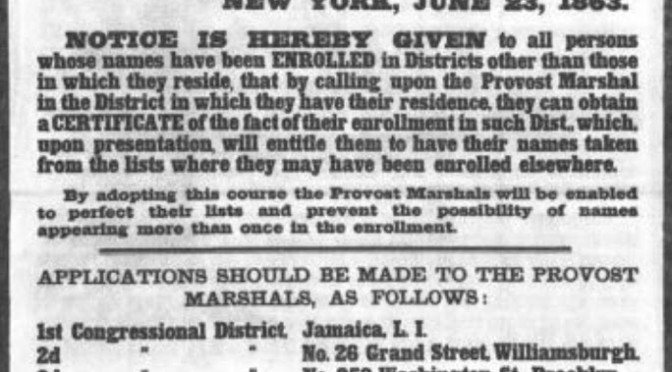
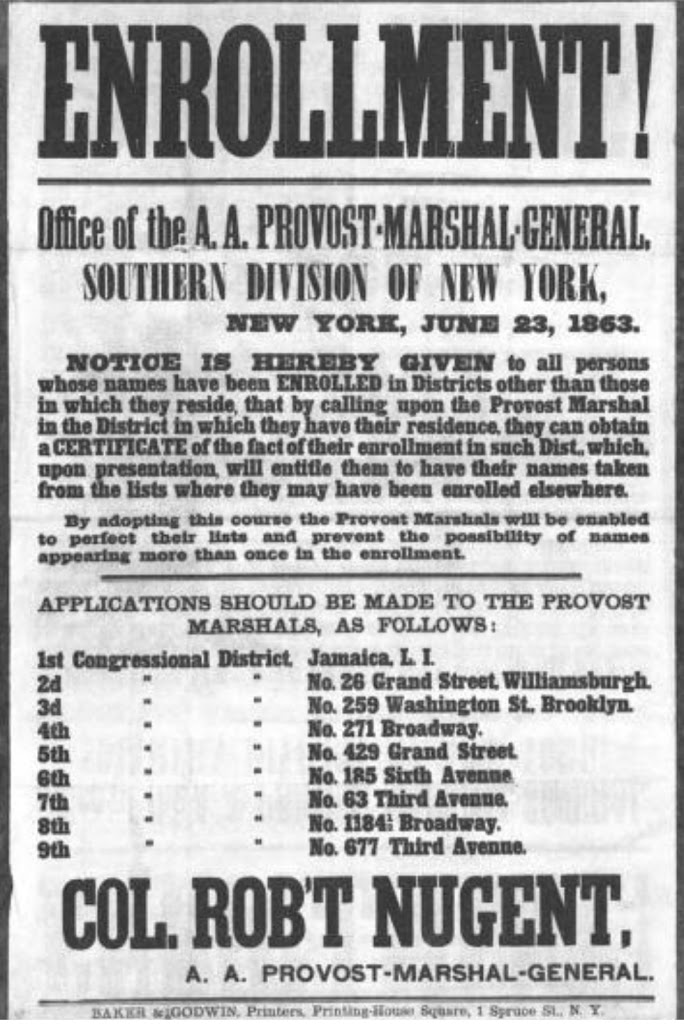
A list of the nine draft offices where lotteries would occur that Monday, July 13th. It would have already begun in Jamaica and at the Ninth District Office that Saturday.

One hundred and fifty years ago today, on July 11, 1863, the first round of lotteries to select able-bodied men for conscription into the Union Army began rolling out in New York.

It was a Saturday.  The day of the week is rather important to history. For on that day — the day that brought the draft that would inspire the horror of the notorious Draft Riots 48 hours later — the draft lotteries would arrive without violence.  Nobody in New York would die that day because they were following federal orders or because of the color of their skin.

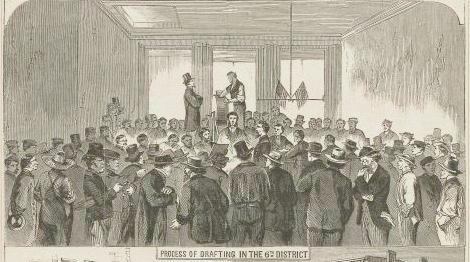
Below: The draft in New York in simpler times.  When a draft lottery was called two years earlier, in 1861, there was no such tension or violence.  A spirit of patriotism and a lack of cynicism about the war greeted the provost marshals as names were selected. [NYPL]

A few factors went into this surprising peace. Federal and state law enforcement knew there would be some trouble. The newspapers had grumbled about it and anti-draft factions gathered in halls around New York in the preceding days. Draft riots had already erupted in places like Buffalo, New York.

As a result, they decided to roll out the draft slowly, starting in less densely populated areas.  Thus, the first names were read out from the Ninth District draft office at Third Avenue and 46th Street which, in 1863, was neither the most fashionable neighborhood, nor the most squalid.  Being first, however, made it a prime target for agitators when it reopened on Monday.

Anger in New York was delayed.  Many assumed that a Democratic controlled state government and its Democratic governor Horatio Seymour would delay or even block the draft.  Many of those leaders campaigned on that very fact.  Yet as the ‘wheel of misfortune’ was turned that Saturday morning and names were selected for the draft, the horror began to sink in.

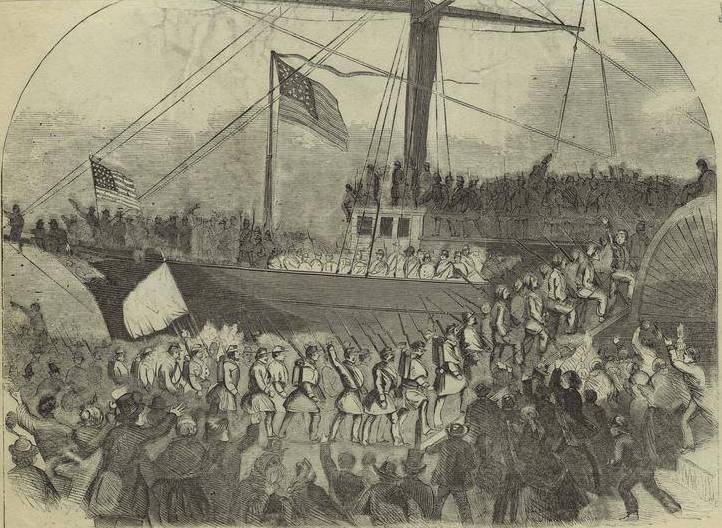
Below: The 69th Regiment leaves New York harbor, April 1861.  A largely Irish regiment, they are one of New York’s great military units.  They were so decimated during the Battle of Fredericksburg and the Battle of Gettysburg — which took place just two weeks before New York’s draft — that they were temporarily disbanded.


This is why Saturday is so important — the gestating anger that led to the draft riots that Monday broke out in the taverns of lower Manhattan that Saturday night, as news spread of friends and loved ones in other districts whose names had been chosen.

James Gordon Bennett of the New York Herald wrote: “Those who heard the scattered groups of laborers and mechanics who congregated in different quarters on Saturday evening, and who canvassed unsparingly the conscription law might have reasonably augured that a tumult was at hand.” [source]

In typical understated fashion, the New York Sun remarked, “Considerable feeling and warm discussion was manifested throughout the city as soon as it became generally known that the draft had actually commenced.”   Those words were published on July 13, the first and most incendiary day of the draft riots..

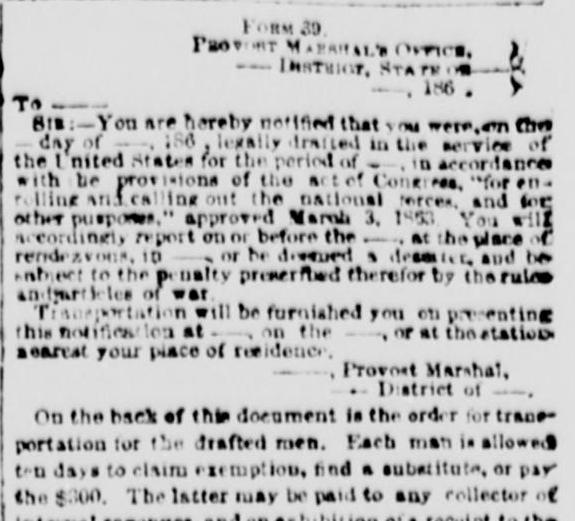
Had the draft actually proceeded without incident, those chosen would have received the following letter, reprinted in the same issue of the New York Sun mentioned above:

If you were chosen for the draft, you would have had ten days to “claim an exemption**, find a substitute, or pay the $300” commutation fee. Barring that, you were to report to Rikers Island for immediate training.

Prepping from some dissension on Monday, five hundred soldiers from Governors Island were summoned into the city to stand guard over the draft offices. Little did they know then that a mere 500 men would be no match for the surge of rabid mobs that would greet them on Monday.

** What were the various draft exemptions? The July 13, 1863 issue of the New York Daily Tribune had a list available for its readers which included 1) being the son of a widow or ailing parent; 2) being the only brother of a child dependent on him for support; 3) being the only parent to children under the age of 12; 4) having two family members already serving in the Union army; and 5) “unsuitableness of age,” meaning you were too old or too young to serve.