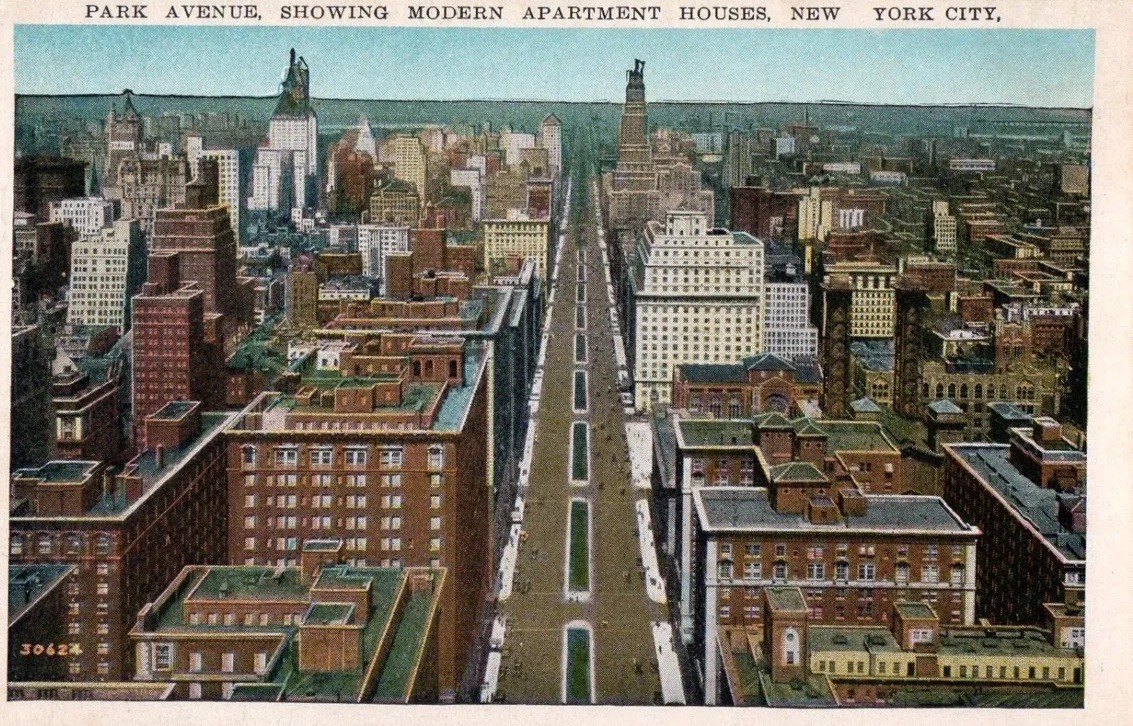
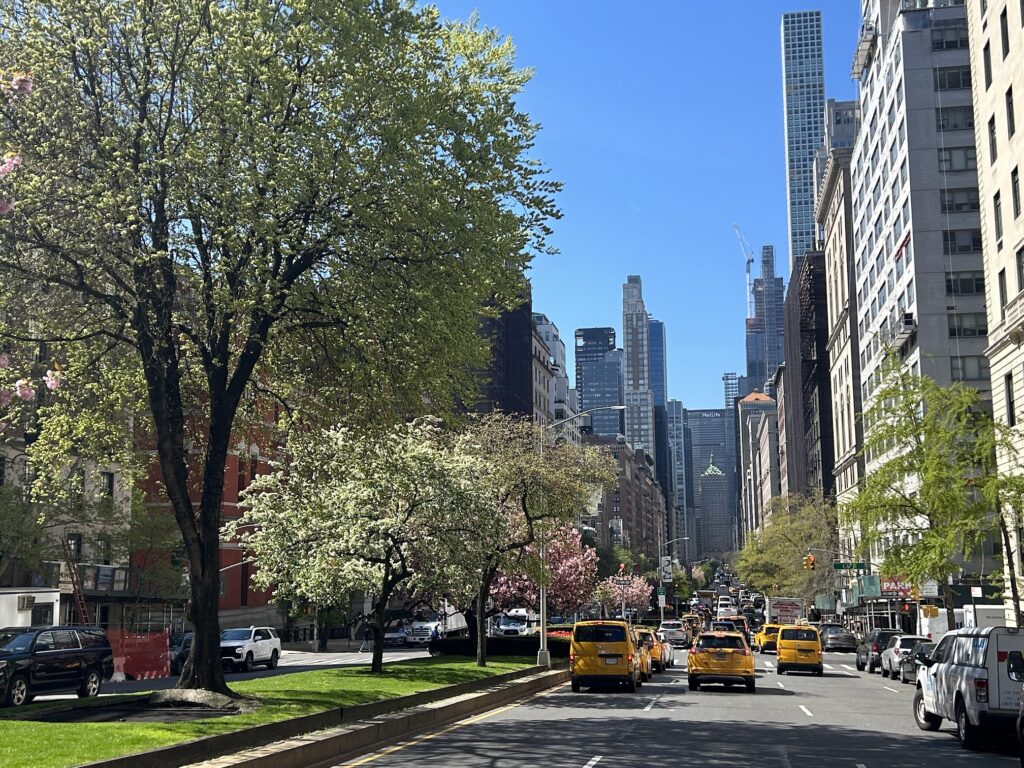
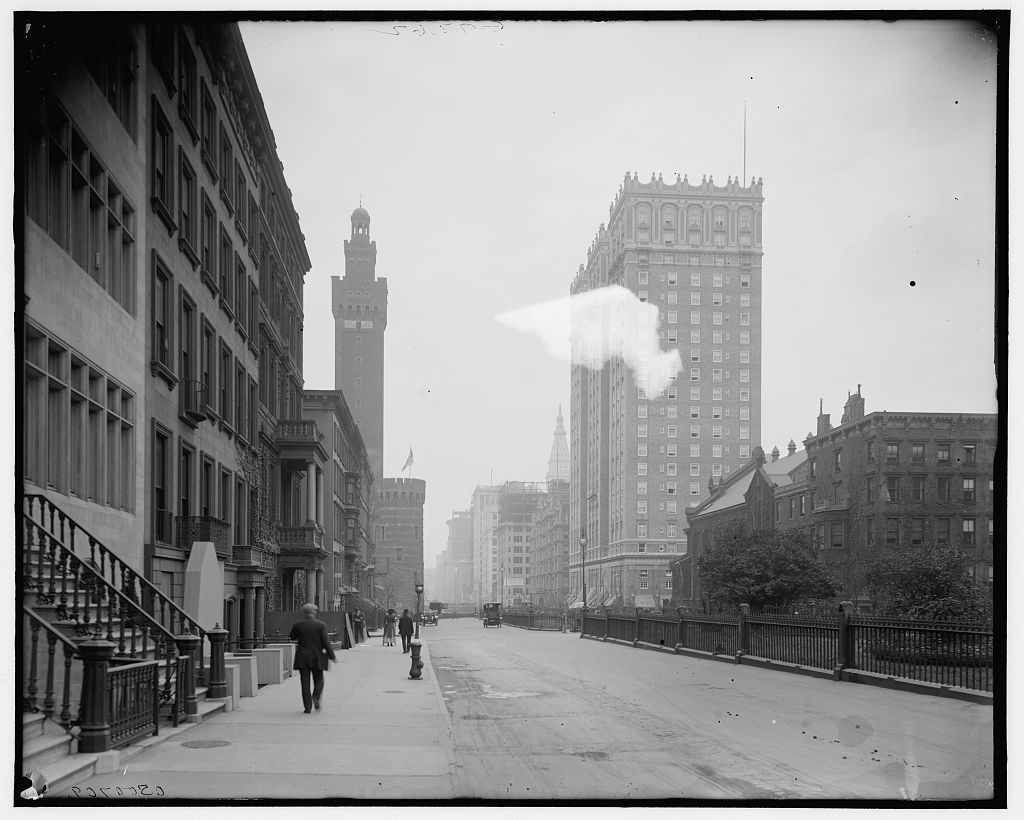
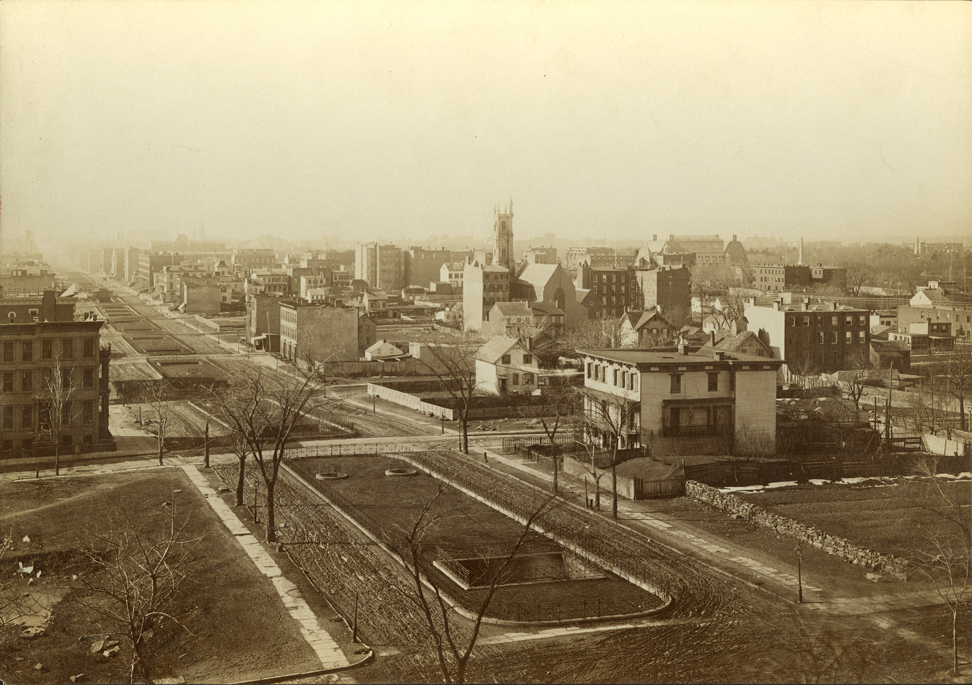
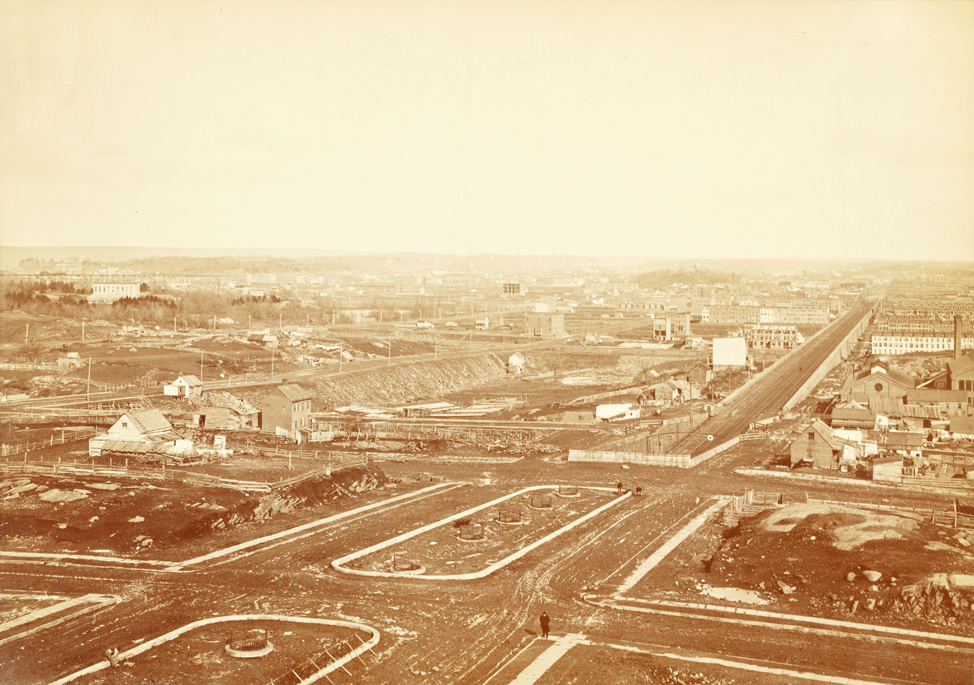
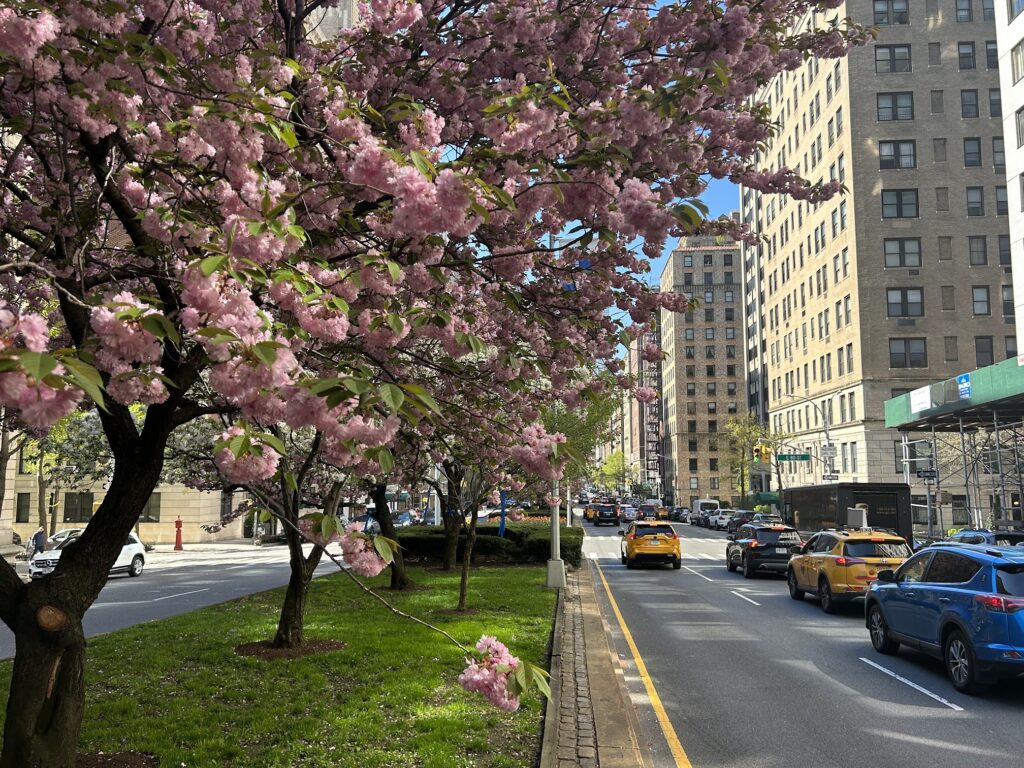
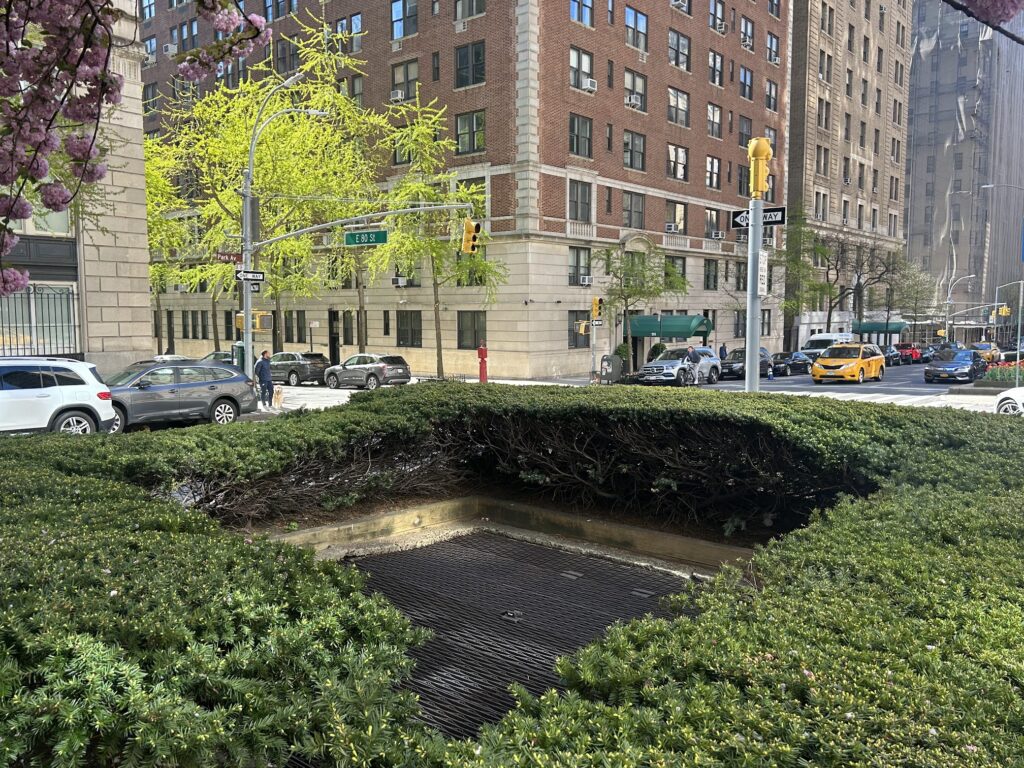
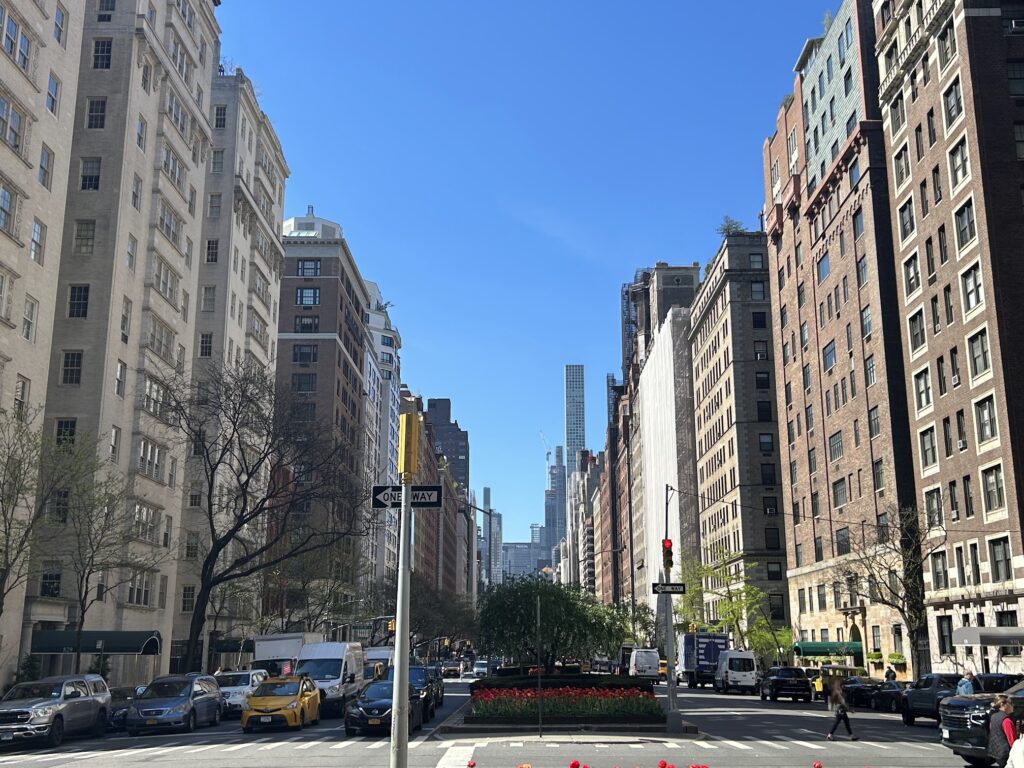
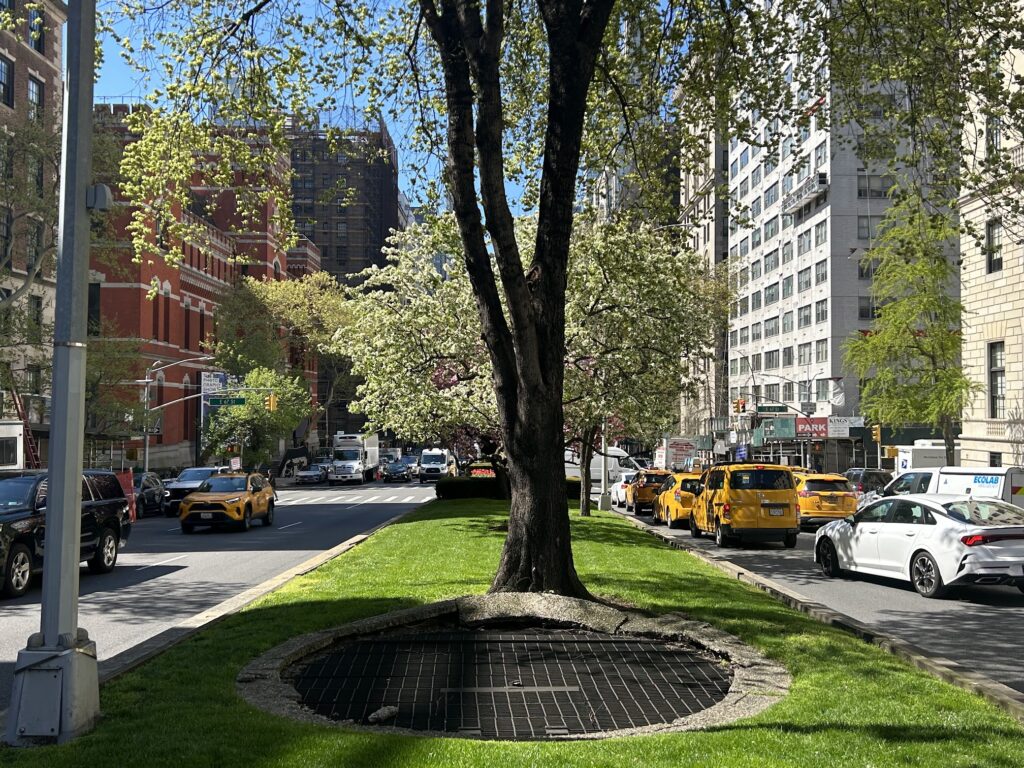
The story of a filthy and dangerous train ditch that became one of the swankiest addresses in the world — Park Avenue.
For over 100 years, a Park Avenue address meant wealth, glamour and the high life. The Fred Astaire version of the Irving Berlin classic “Puttin’ on the Ritz” revised the lyrics to pay tribute to Park Avenue: “High hats and Arrow collars/White spats and lots of dollars/Spending every dime for a wonderful time.”
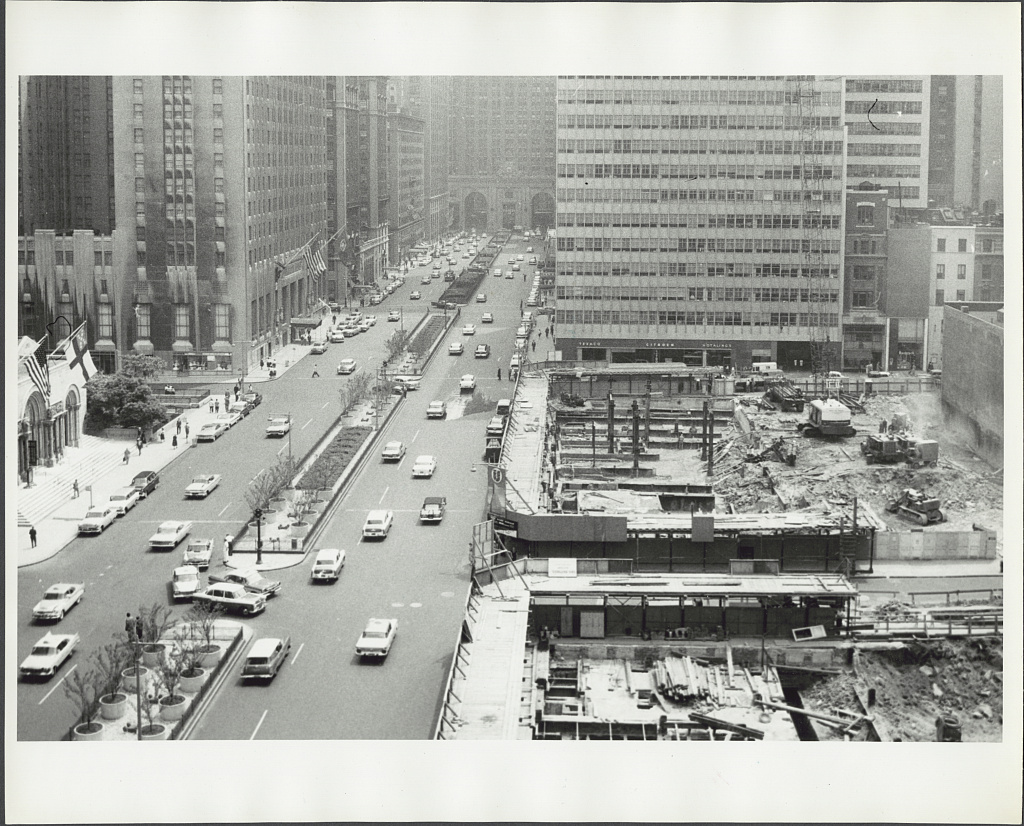
By the 1950s, the avenue was considered the backbone of New York City with corporations setting up glittering new office towers in the International Style — the Lever House, the Seagram Building, even the Pan Am Building.
But the foundation for all this wealth and success was, in actually, a train tunnel, originally operated by the New York Central Railroad. This street, formerly known as Fourth Avenue, was (and is) one of New York’s primary traffic thoroughfares. For many decades, steam locomotives dominated life along the avenue, heading into and out of Cornelius Vanderbilt’s Grand Central (first a depot, then a station, eventually a terminal).
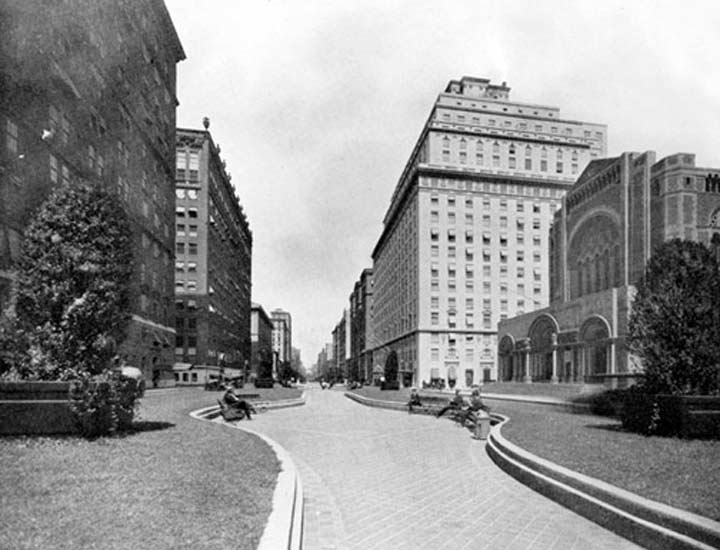
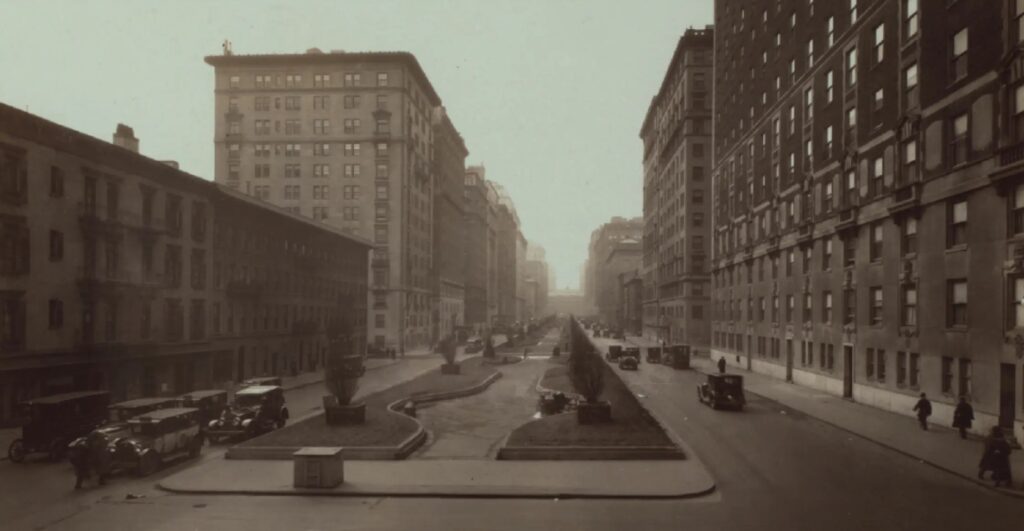
However train tracks running through a quickly growing city are neither safe nor conducive to prosperity. Eventually, the tracks were covered with beautiful flowers and trees, on traffic island malls which have gotten smaller over the years.
By the 1910s this allowed for glamorous apartment buildings to rise, the homes of a new wealthy elite attracted to apartment living in the post-Gilded Age era. But that lifestyle was not quite made available to everyone.
In this episode, Greg and Tom take you on a tour of the tunnels and viaducts that helped New York City to grow, creating billions of dollars of real estate in the process.
LISTEN NOW: UP AND DOWN PARK AVENUE
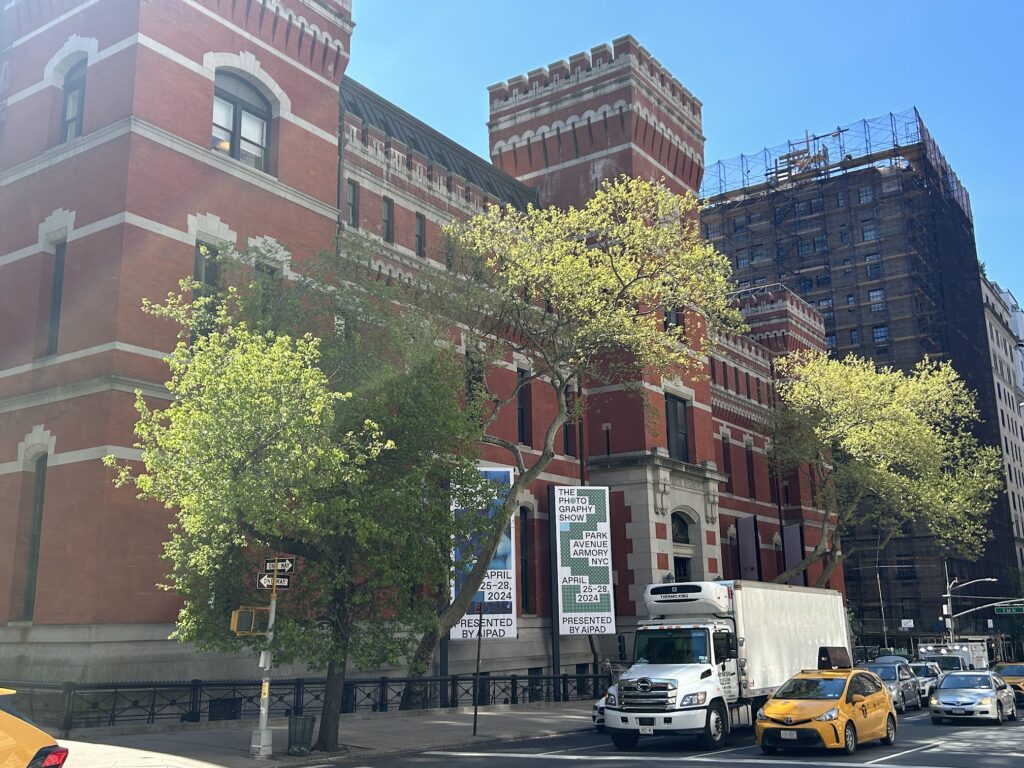
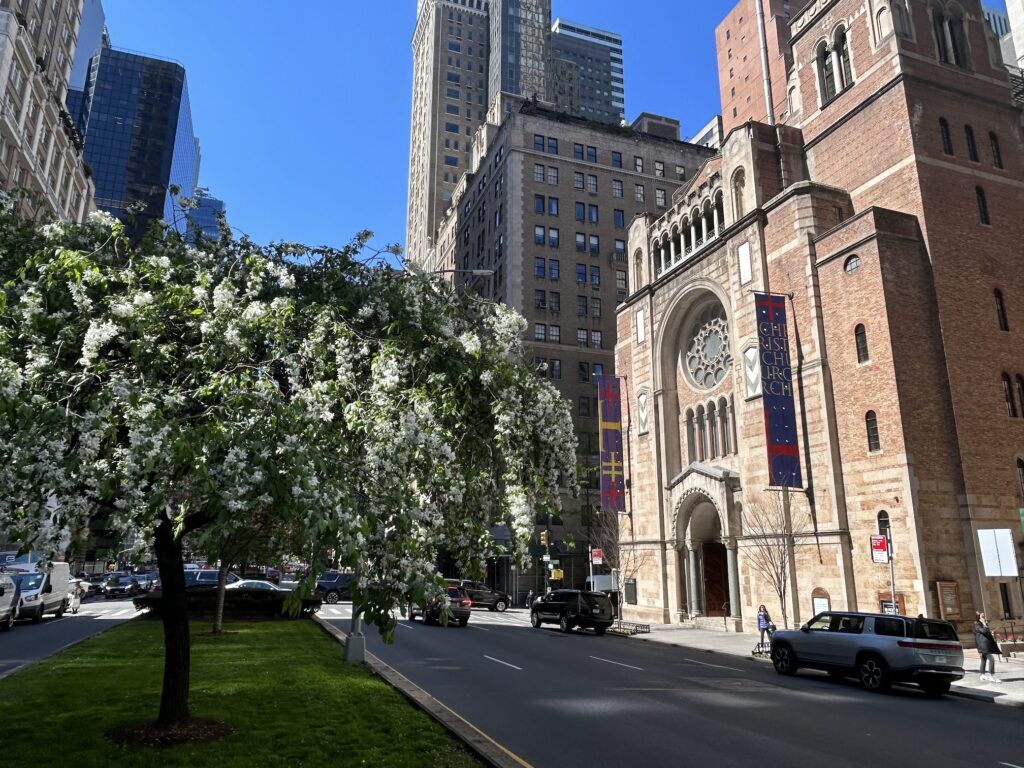
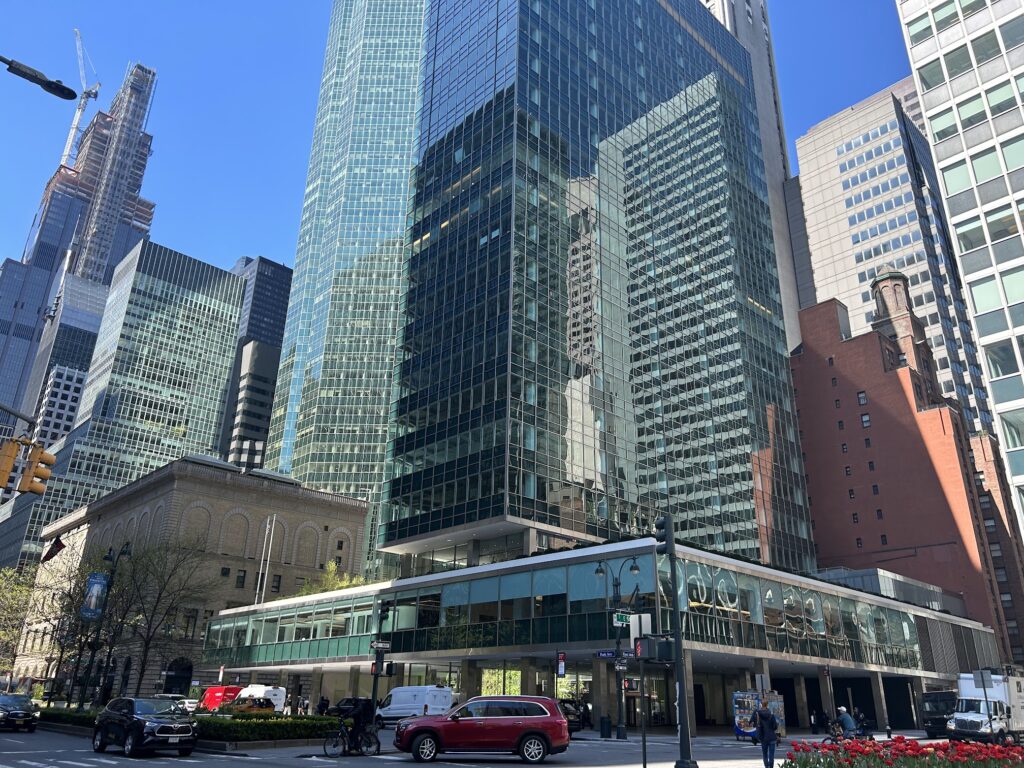
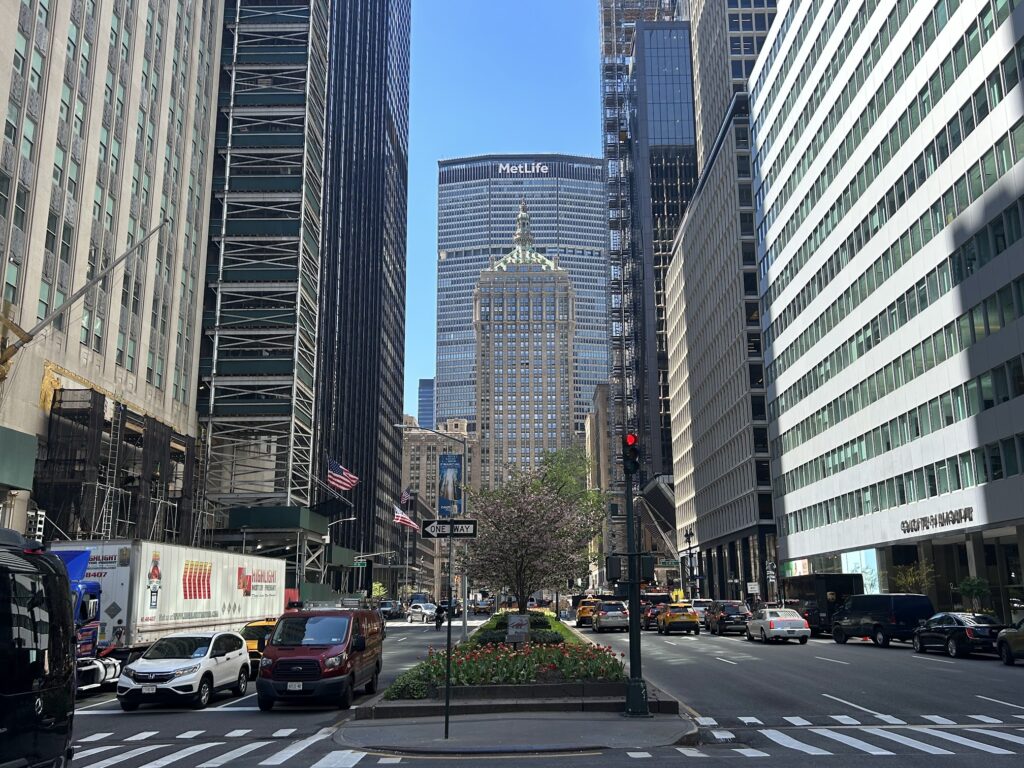
Park Avenue, looking south of 36th Street, 1900-1905 Library of CongressPark Avenue and 94th Street, Library of Congress Park Avenue, late 1800s, Musem of the City of New YorkPark Avenue, after St Bart’s came along in 1918 but before these lovely pedestrian areas were destroyed in the late 1920s. Park Avenue 1927, Department of Transportation“Photograph shows cars moving along Park Avenue as the road heads towards the tunnels of the Helmsley Building, known then as the New York General Building. Building construction visible to the right. St. Bartholomew’s Church slightly visible on left.” Library of Congress, 1959Photo by Greg YoungPhoto by Greg YoungPhoto by Greg YoungPhoto by Greg YoungPhoto by Greg YoungPhoto by Greg YoungPhoto by Greg YoungPhoto by Greg Young
FURTHER LISTENING
Listen to these related Bowery Boys episodes after you’re done listening to the Park Avenue show:
FURTHER READING
This week we’re suggesting a few historic designation reports for you history supergeeks looking for a deep dive into Park Avenue history. Dates indicated are when the structure or historic district was designated
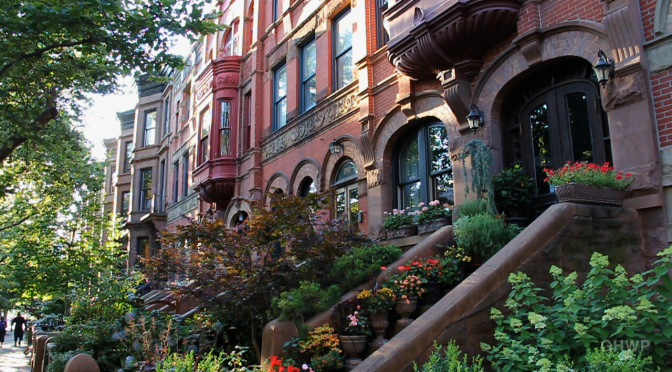
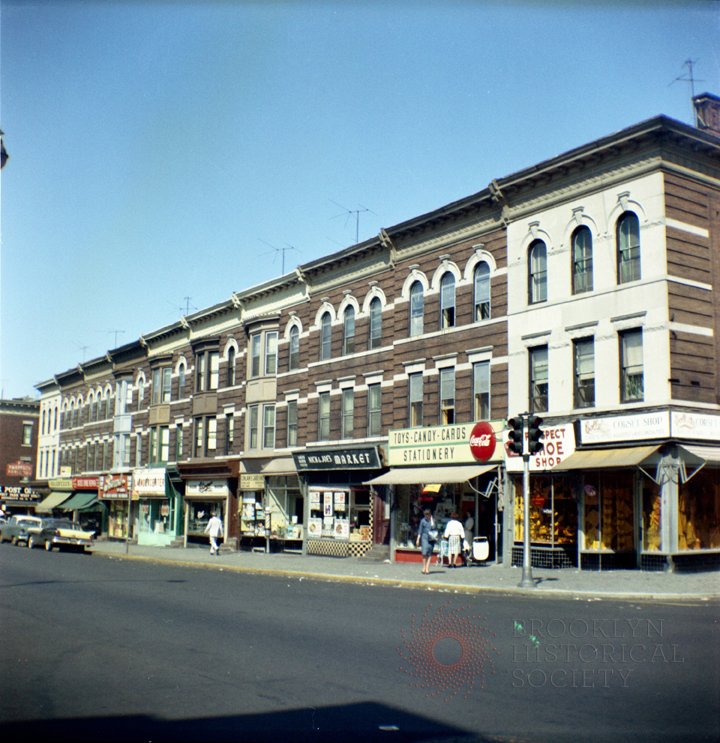
PODCASTPark Slope — or simply the park slope, as they used to say — is best known for its spectacular Victorian-era mansions and brownstones, one of the most romantic neighborhoods in all of Brooklyn. It’s also a leading example of the gentrifying forces that are currently changing the make-up of the borough of Brooklyn to this day.
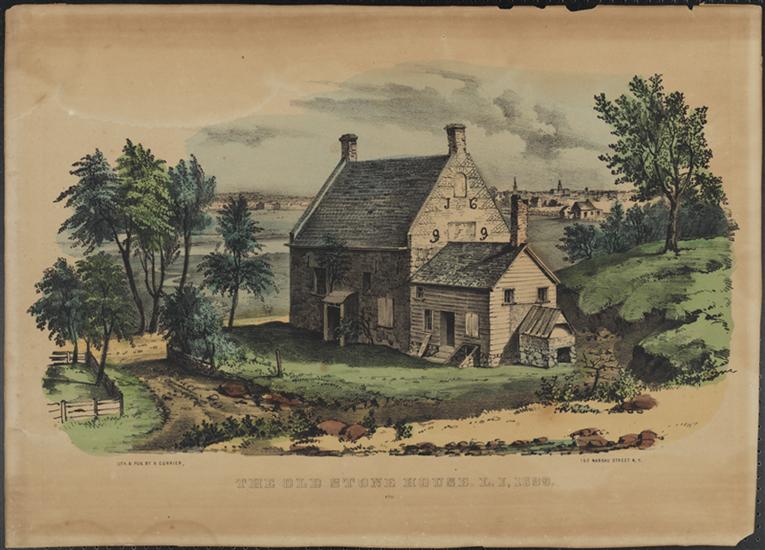
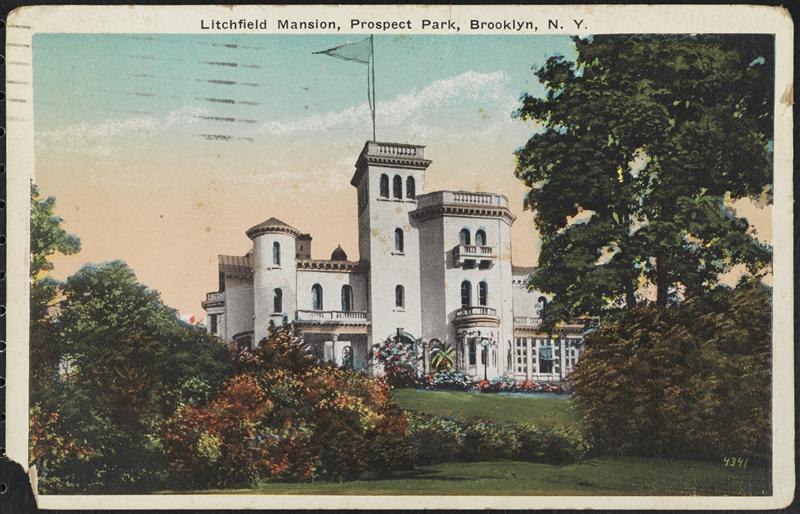
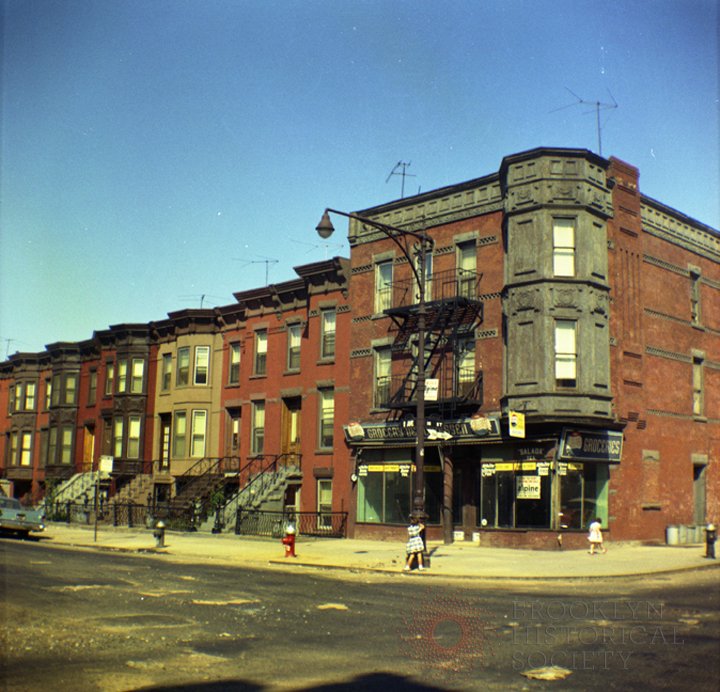
During the 18th century this sloping land was subject to one of the most demoralizing battles of the Revolutionary War, embodied today by the Old Stone House, an anchor of this changing neighborhood. In the 1850s, the railroad baron Edwin Clark Litchfield brought the first real estate development to this area in the form of his fabulous villa on the hill. By the 1890s the blocks were stacked with charming house, mostly for occupancy by wealthy families.
Circumstances during the Great Depression and World War II reconfigured most of these old (and old fashioned) homes into boarding houses and working-class housing. Then a funny thing happens, something of a surprising development in the 1960s: the arrival of the brownstoners, self-proclaimed — pioneers — who refurbished deteriorating homes.
The revitalization of Park Slope has been a mixed blessing as later waves of gentrification and rising prices threaten to push out both older residents and original gentrifiers alike.
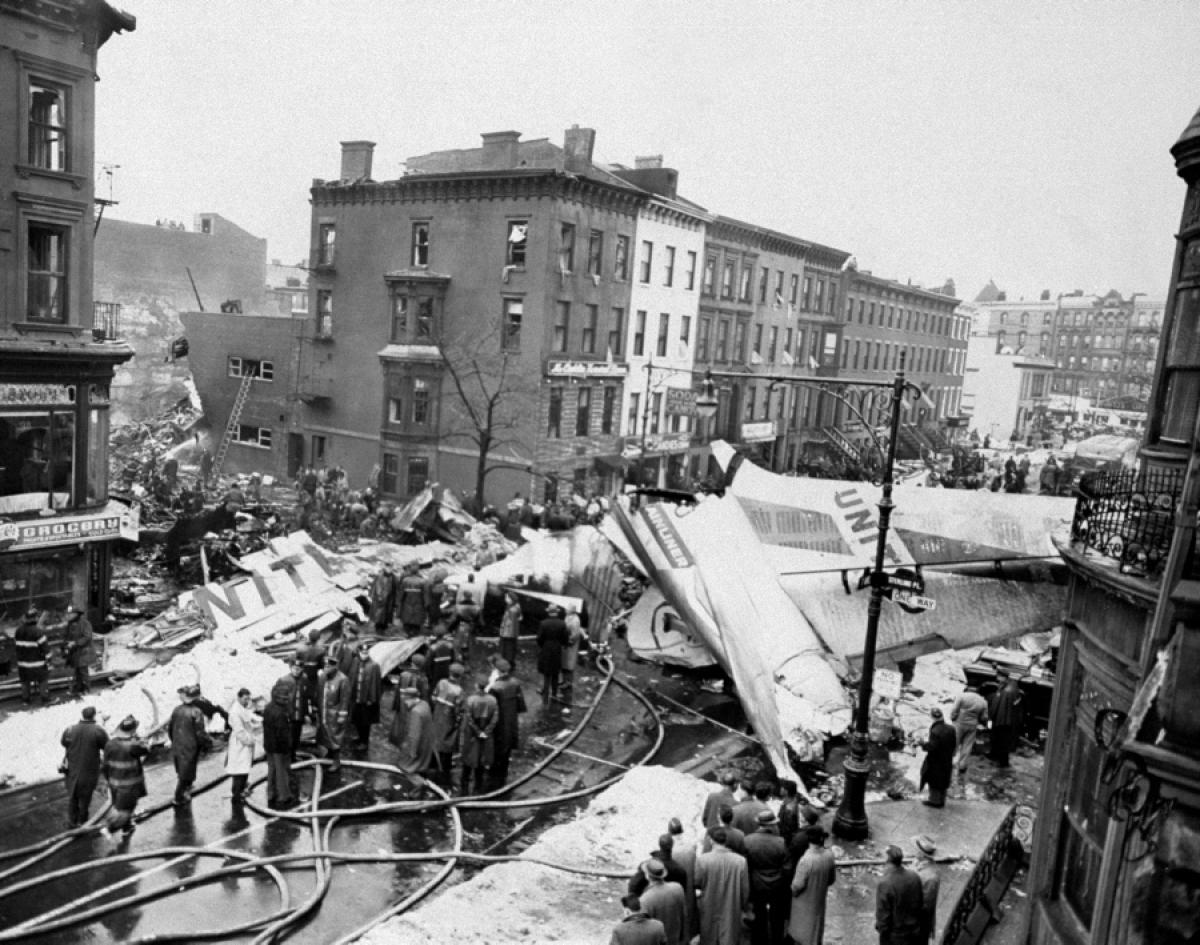
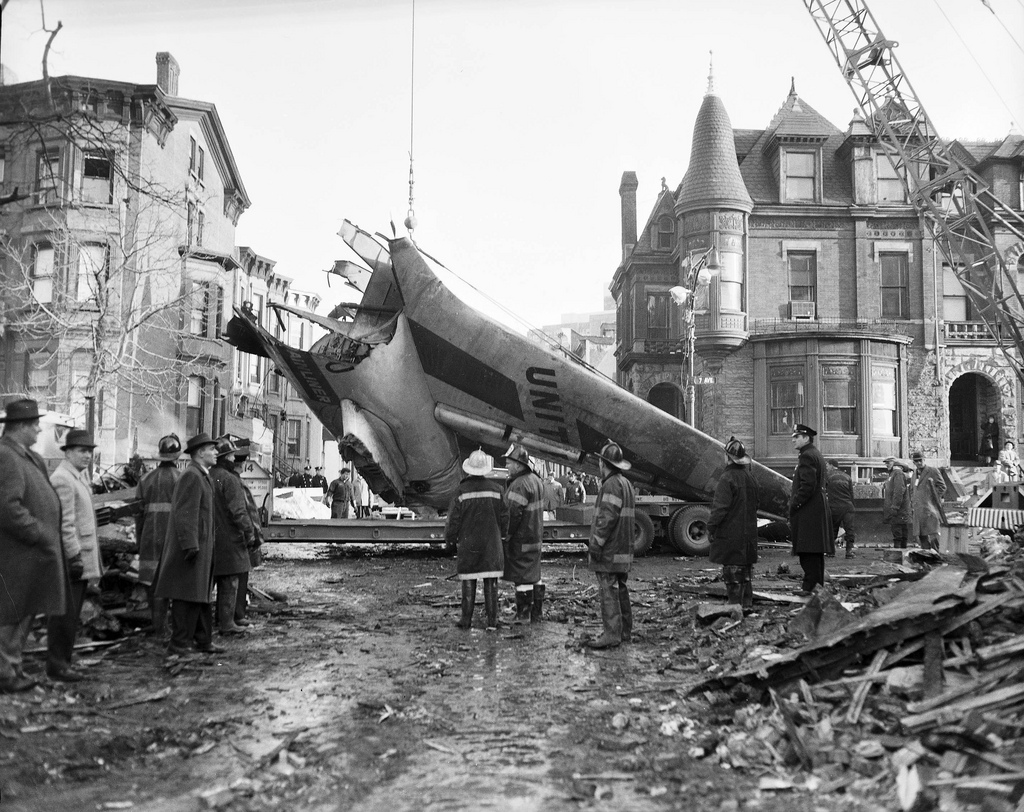
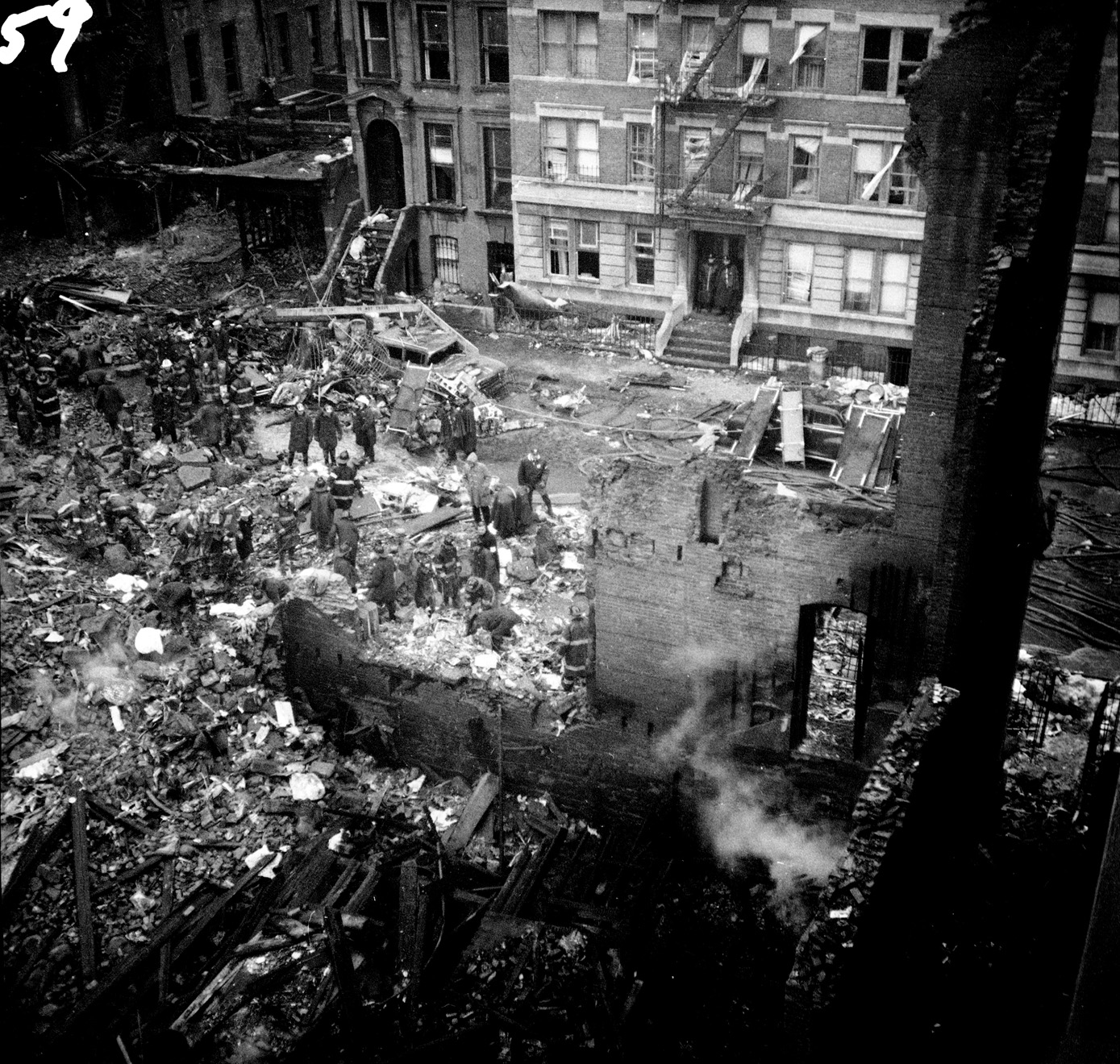
PLUS: The terrifying details of one of the worst plane crashes in American history, a disaster that almost took out one of the oldest corners of the neighborhood.
And a special thanks to our guests on this show — Kim Maier from the Old Stone House; Julie Golia, Director of Public History, Brooklyn Historical Society; and John Casson and Michael Cairl, both of Park Slope Civic Council.
The Bowery Boys: New York City History podcast is brought to you …. by you!
Starting this month, we are doubling our number of episodes per month. Now you’ll hear a new Bowery Boys podcast every two weeks. We’re also looking to improve the show in other ways and expand in other ways as well — through publishing, social media, live events and other forms of media. But we can only do this with your help!
We are now a member of Patreon, a patronage platform where you can support your favorite content creators for as little as a $1 a month.
Please visitour page on Patreon and watch a short video of us recording the show and talking about our expansion plans. If you’d like to help out, there are five different pledge levels (and with clever names too — Mannahatta, New Amsterdam, Five Points, Gilded Age, Jazz Age and Empire State). Check them out and consider being a sponsor.
We greatly appreciate our listeners and readers and thank you for joining us on this journey so far. And the best is yet to come!
The Vechte Cortelyou House (aka the Old Stone House) depicted as it looked in 1699 (from a hand colored lithograph by the firm of Nathaniel Currier, MCNY)
The old Litchfield Village, today located within the borders of Prospect Park. (Postcard dated 1926, MCNY)
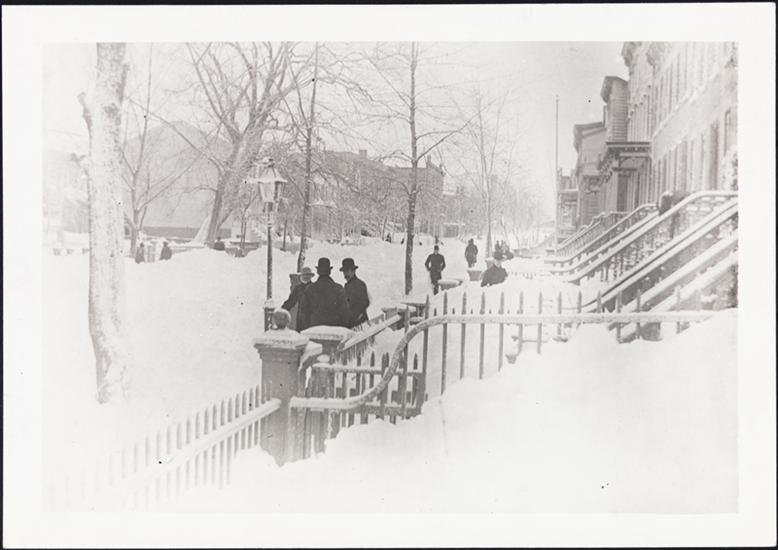
One of the most famous 19th century pictures of the park slope area, showing the streets after the Blizzard of 1888. (MCNY)
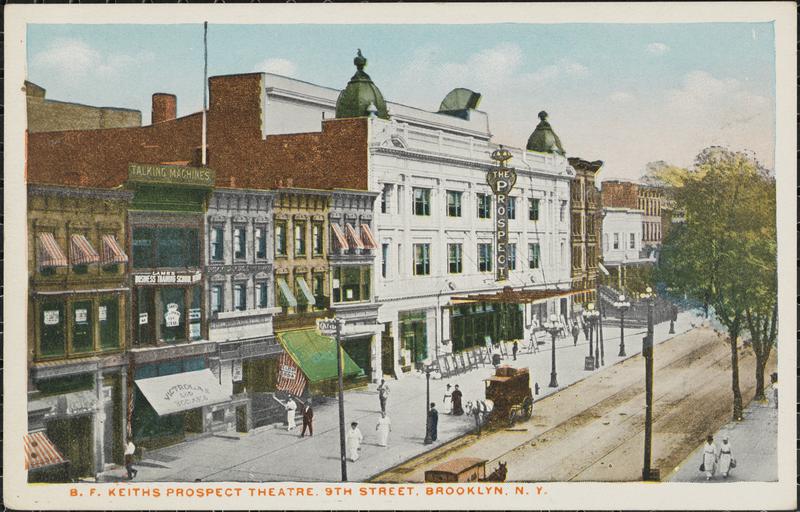
Down on 9th Street and 5th Avenue was the great old B.F. Keith Prospect Theater, a former film and vaudeville house. This post card is from the 1910s; the theater originally opened in 1914. This type of establishment might not have been welcomed further up the avenues. (MCNY)
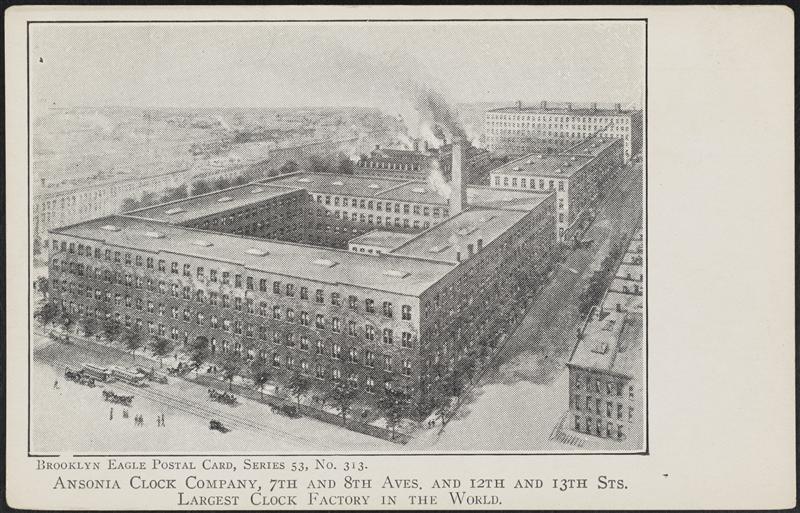
The Ansonia Clock Factory — “the world’s largest clock factory” — was located in the South Slope, between Seventh and Eighth Avenues, obviously a distance away from the old mansions. Today it’s been converted, like so many things, to luxury condos. (MCNY)
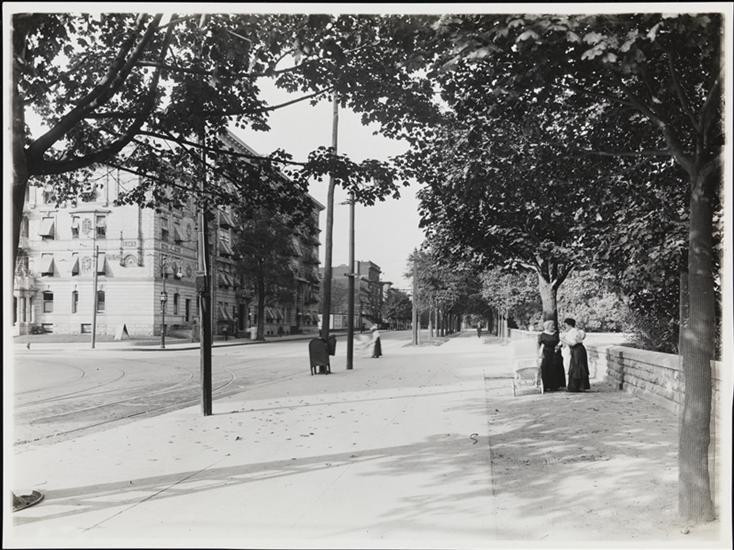
Park Slope in 1915. “The corner of Prospect Park West and 9th Street at the entrance to Prospect Park. Two women with a baby carriage are visible to the right and a mailbox and an apartment building are visible to the left.” (MCNY)
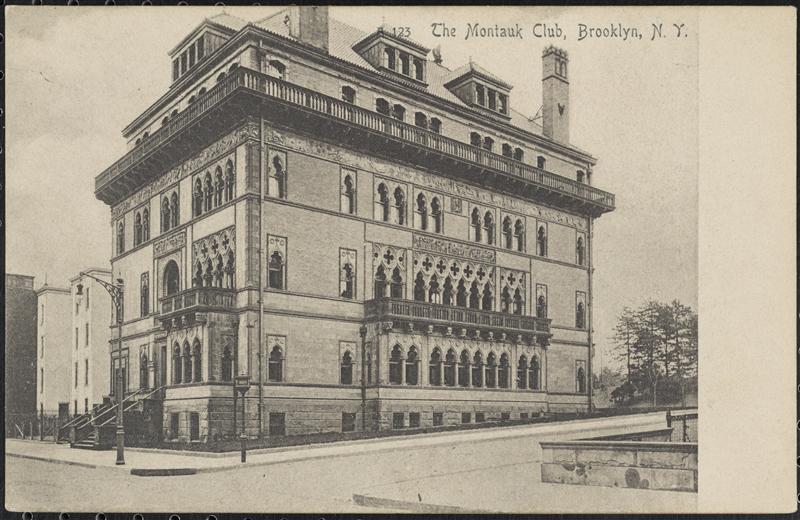
The Montauk Club, playground of Brooklyn’s wealthiest residents. Illustrated here from 1905. (Courtesy Museum of City of New York)
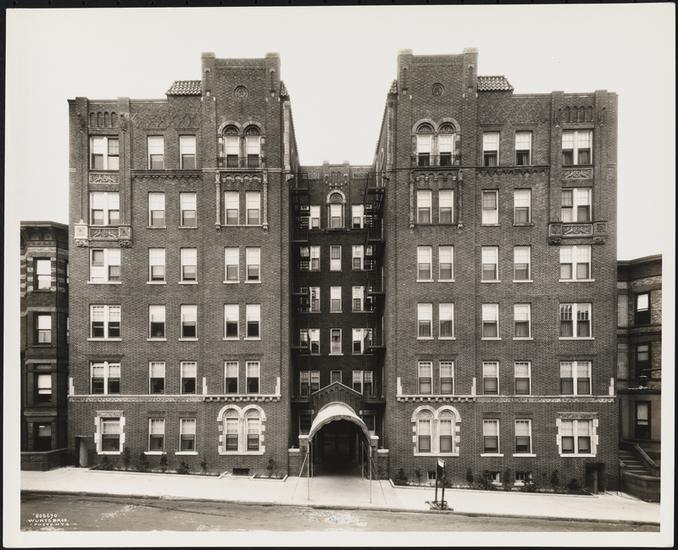
The Warwick Arms on 8th Avenue and 2nd Street, one of the first luxury apartment complexes that moved to Park Slope. (Photo by the Wurts Brothers, courtesy )
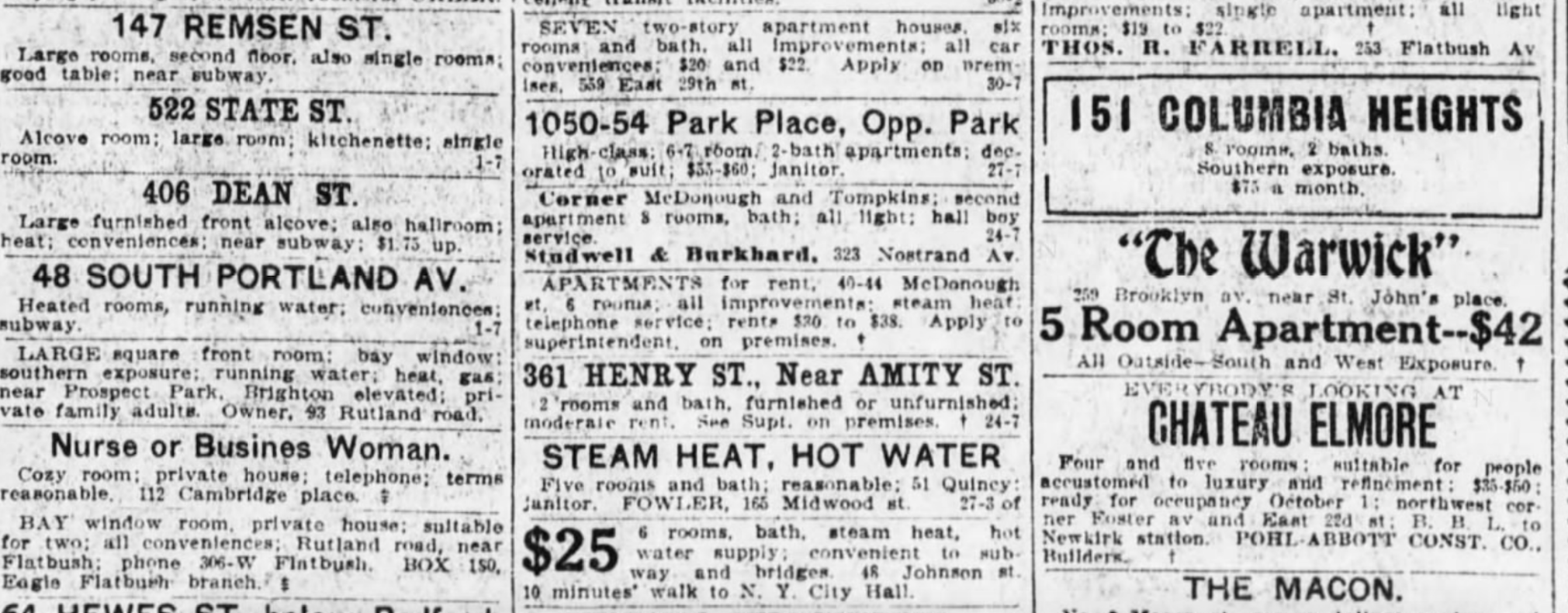
A collection of classified ads from the December 1, 1912 issue of the Brooklyn Daily Eagle, offering several living options in the park slope area.
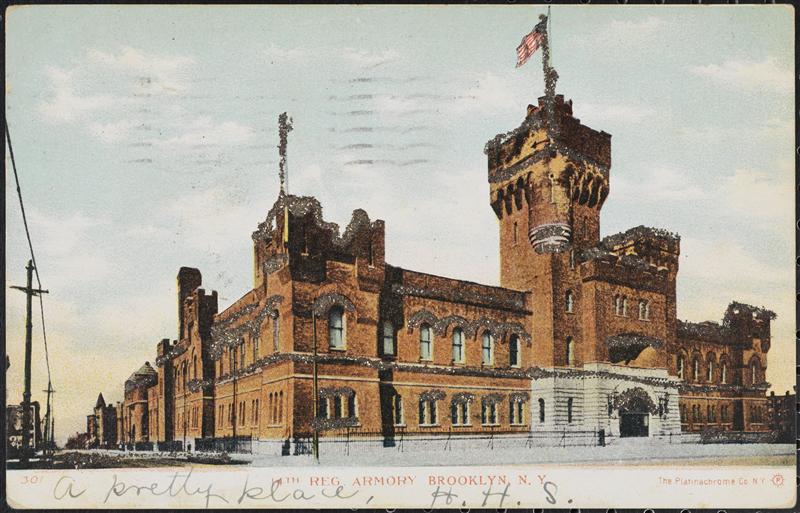
The stark Fourteenth Street Armory, located in the South Slope, depicted here as it looked in 1906 — “a pretty place” (MCNY)
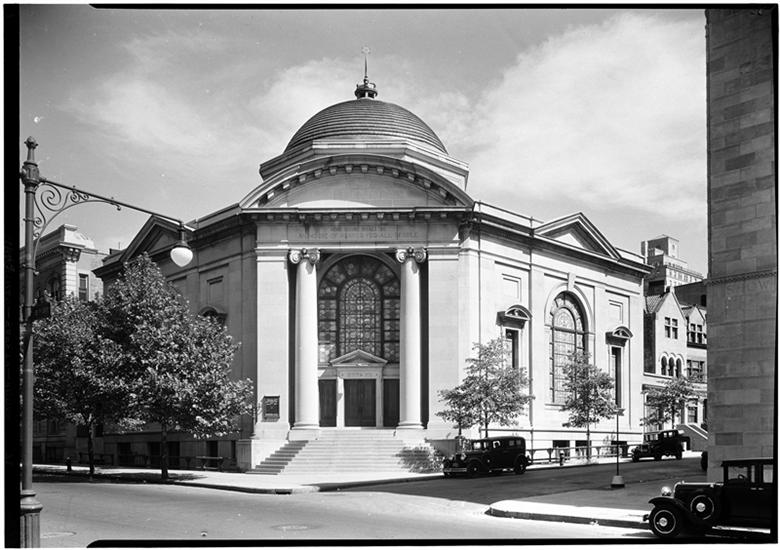
Congregation Beth Elohim, pictured here on September 16, 1929, located at Garfield Place and 8th Avenue. (MCNY)
The horrific place crash of December 16, 1960 — United Airlines Flight 826, bound for Idlewild Airport, colliding with Trans World Airlines Flight 266, heading to LaGuardia Airport. 128 passengers were killed, along with six people on the ground. (Top picture courtesy New York Daily News; the two after are from the New York Fire Deparment. You can find further images here)
A view along Prospect Park West at and 16th Street and Windsor Place.
View of east side of 8th Avenue between 15th and 16th Streets looking north. n.e. cor. 16th Street (right) & 8th Avenue.
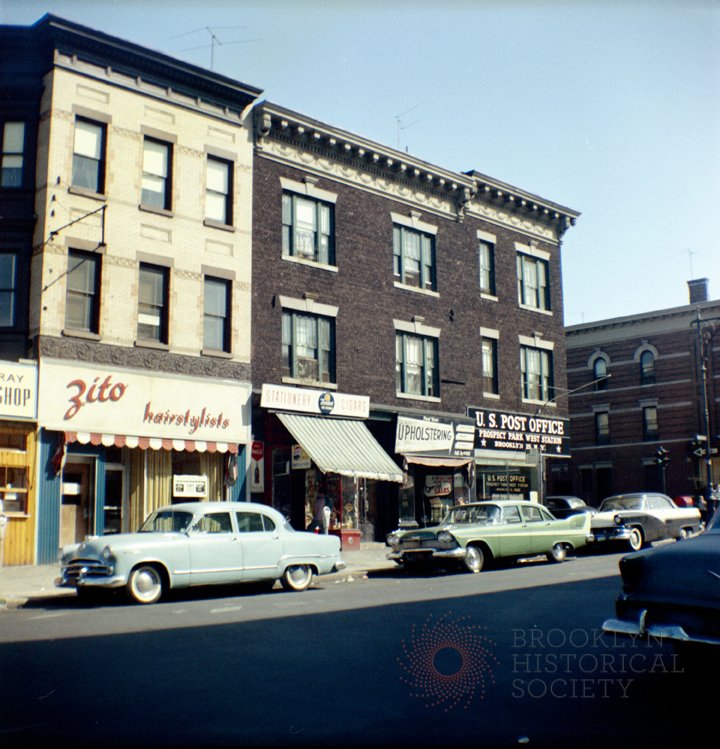
Prospect Park West looking south toward Prospect Park/branch, U.S. Post Office (at northeast corner of Prospect Park W. & 16th Street).
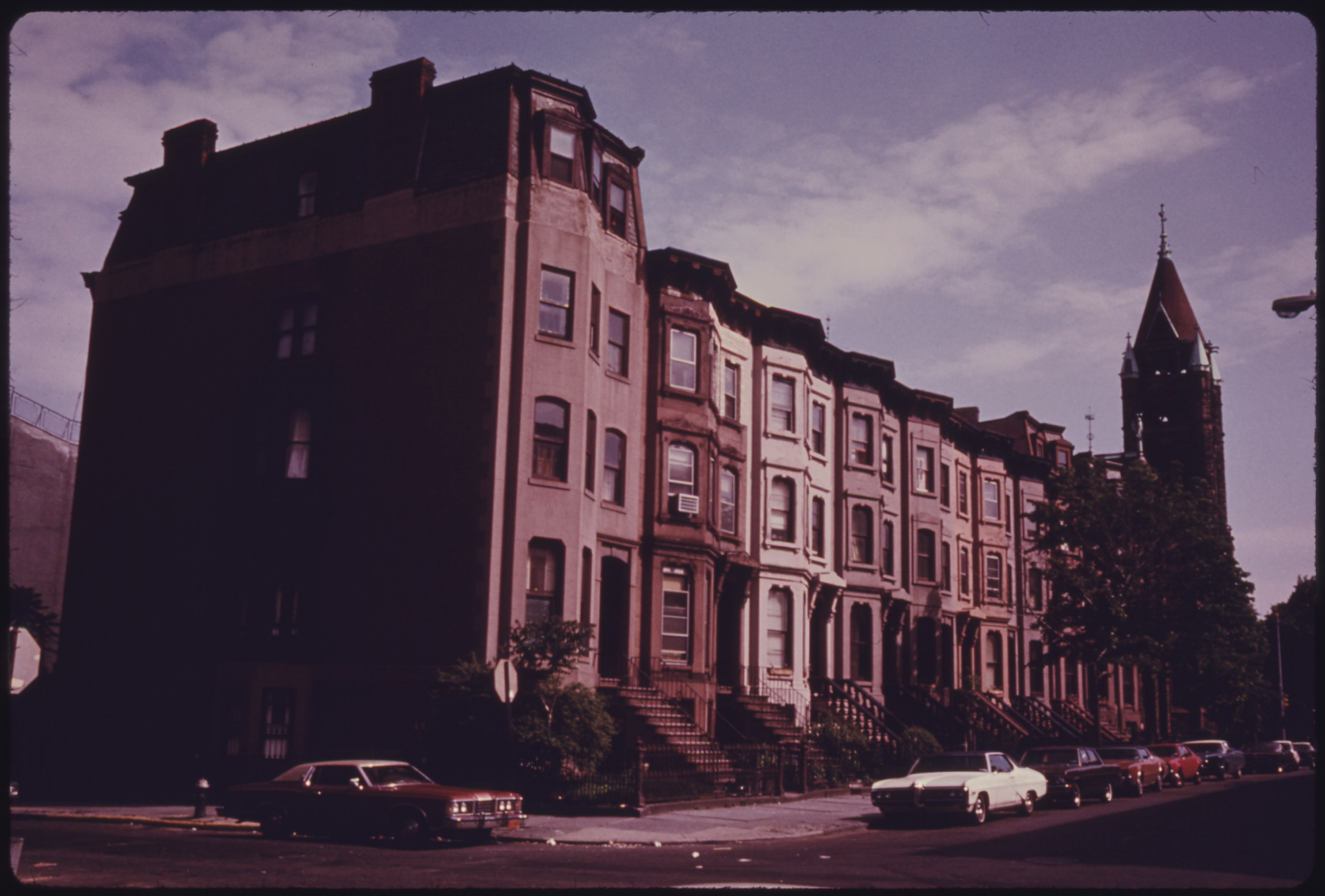
By the 1970s so mansions and brownstones close to the park were getting renovated by ‘pioneers’ with the means to restore these homes to their original splendor.
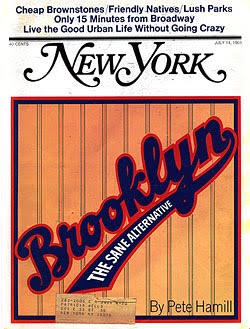
In 1969, New York Magazine touted the ‘radical’ alternative of moving to Brooklyn in an article by Pete Hamill:
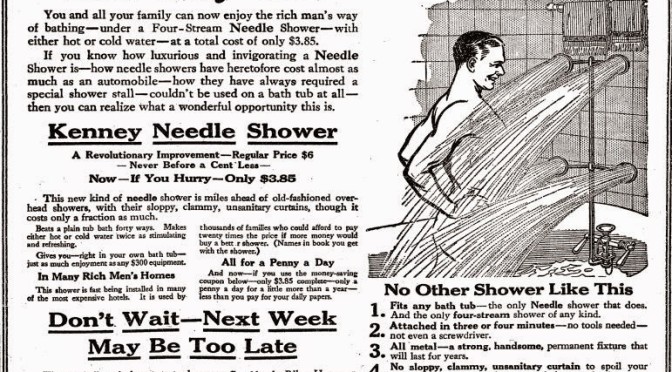
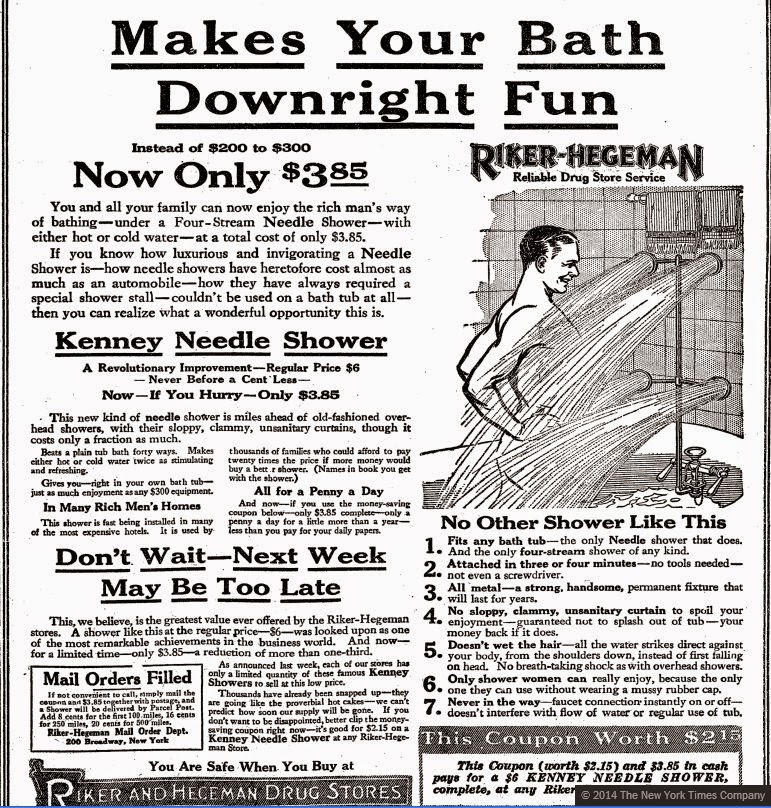
With major improvements in plumbing and home design, private ‘rain-baths’ or showers began to be installed in the wealthier American homes. This is a New York Times advertisement from November 11, 1914 for a Kenney Needle Shower which inundated the body with water from multiple showerheads.
The modern form of shower was once referred to as a “rain bath”, invented in Europe in the 19th century.
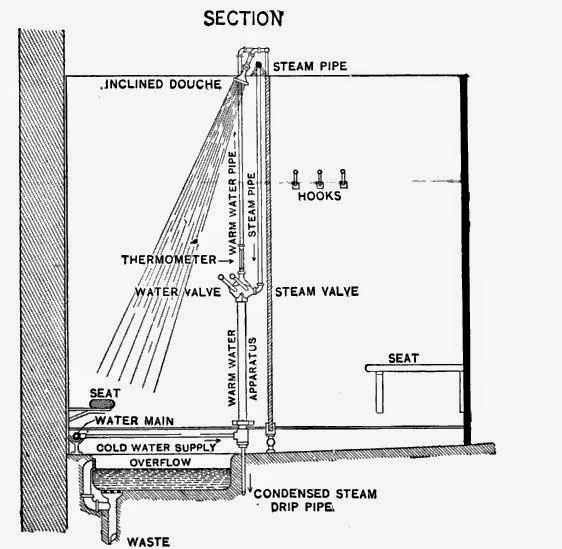
“The rain bath is the most important form of cleansing bath, from a hygienic point of view, hence it is deserving of special attention. Â Since the first introduction, about the year 1883, of the so-called ‘rain baths’ in Germany, I have followed with keen interest and close attention the gradual development and rapid spread of this new system of baths. In the modern ‘rain bath’ system …. tubs are entirely abolished, simple spray or shower baths being substituted for the same, and being installed in the bath compartments as a distinct and independent form of bath.
One feature of construction, which is novel and of much importance, is that the shower or spray in placed at an inclined angle in the rain bath, the object being to avoid a vertical stream from the shower striking the head of the bather, which to many person is quite disagreeable.
In the new form of rain bath .. the lukewarm water strikes the body only from the neck downwards, and the head is not wetted, except when the bather purposefully places the same under the descending shower of water.”
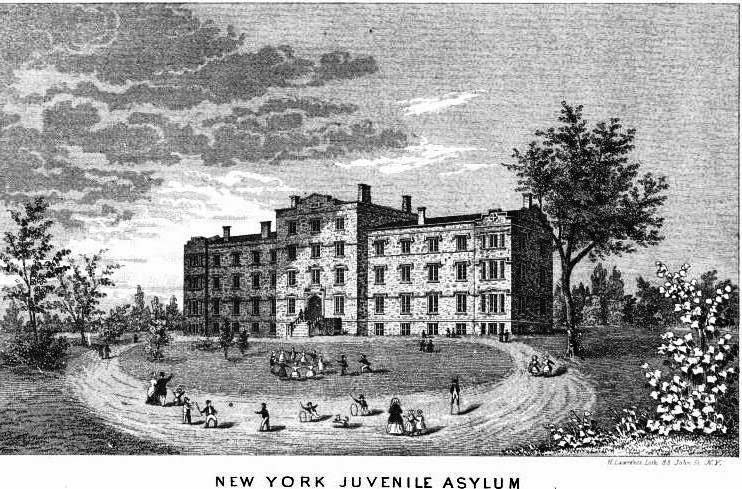
The very first ‘rain bath’ installed in New York, according to the 1908 journal, was at the New York City Juvenile Asylum, located at 175th Street and 10th Avenue. (Pictured below.) Delinquents taken to the asylum were stripped of their street clothing and thrown into the new showers, then provided proper uniforms.
After what appeared to be a successful trial upon these poor children, rain baths were installed in public hospitals and bathhouses throughout the city.
Private application of this technology, however, took a bit longer to catch on.
Home installations, such as the ones illustrated at top, came with the advent of improved apartment living in the early 20th century.
Apparently there was some concern that the rain bath could be successfully applied to private dwellings that weren’t for the wealthy.
“[T]he middle classes who, in New York City, for instance, are largely compelled to live in flats or apartment houses (the higher-sounding name for improved tenement houses), have, with rare exceptions, only a narrow, dark and generally uninviting bathroom, and the mistake is usually made by architects or buildings of locating the water-closet [toilet] almost invariably in the same room.”
Imagine, putting the shower in the same room as the toilet!
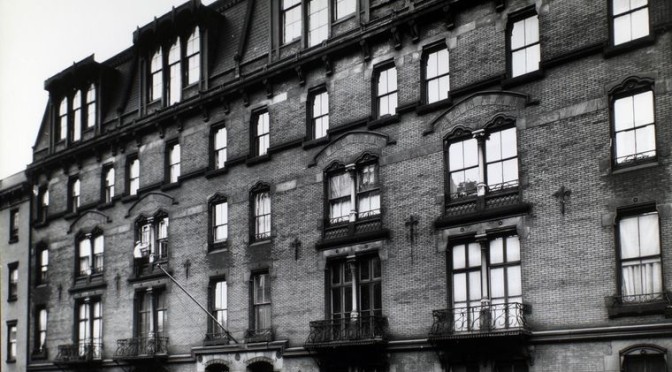
The creation of ‘acceptable’ communal living: The Stuyvesant Flats, at 142 East 18th Street, designed by Richard Morris Hunt, photographed by Berenice Abbott.
PODCASTWell, we’re movin’ on up….to the first New York apartment building ever constructed. New Yorkers of the emerging middle classes needed a place to live situated between the townhouse and the tenement, and the solution came from overseas — a daring style of communal and affordable living called the ‘apartment’ or ‘French flat’.
The city’s first was financed by Rutherford Stuyvesant, an old-money heir with an unusual story to his name. He hired one of the upper class’s hottest architects to create an apartment house, called the Stuyvesant Apartments, with many features that would have been shocking to more than a few New Yorkers of the day.
The building’s first tenants were sometimes well-known, often artists and publishers, and almost all of them with a fascinating story to tell. Listen in to hear about the vanguard first renters of this classic, long-gone building.
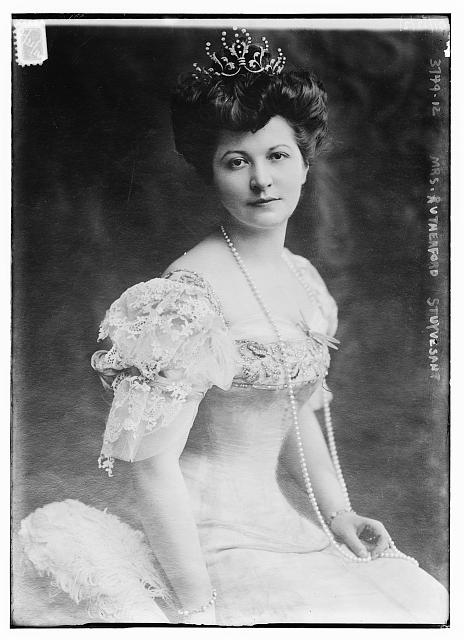
I have been unable to find any portraits of Mr. Rutherford Stuyvesant (aka Stuyvesant Rutherford), the man who financed the Stuyvesant for $100,000. However I have found a picture of Mrs. Rutherford Stuyvesant, who doesn’t look like the kind of lady to mettle around in her husband’s affairs. She would not have found the apartments which bore her name very accomodating. Many, many others did. (Courtesy LOC)
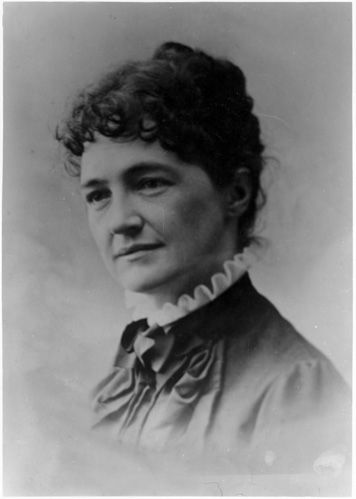
The tenacious Elizabeth ‘Libby’ Custer, photo taken in 1876, the year her husband was killed at the Battle of Little Bighorn. Mrs. Custer moved into Stuyvesant and successfully led her crusade to rehabilitate her husband’s reputation.
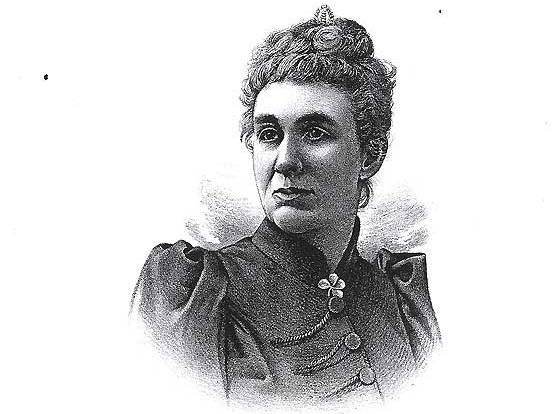
Maggie Custer Calhoun, younger sister to General Custer, lived with her sister-in-law at the Stuyvesant before embarking on a successful career as an elocutionist.
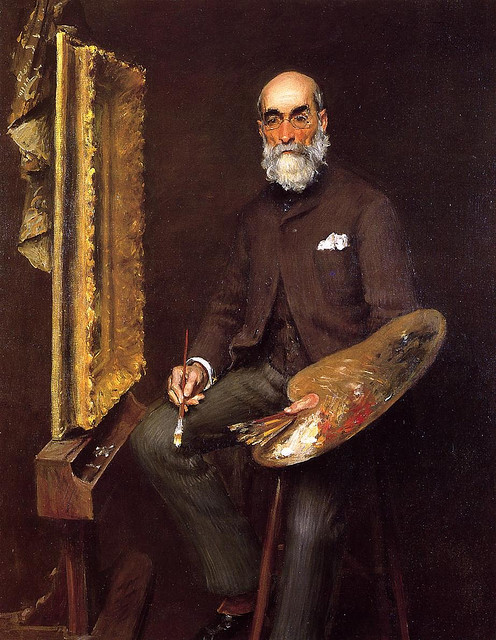
The landscape painter Worthington Whittredge also resided here. In fact, he beamed about it in his autobiography: “I was one of the first to subscribe for an apartment in this house, which was to be erected in 18th Street near Third Avenue and Stuyvesant Square.”
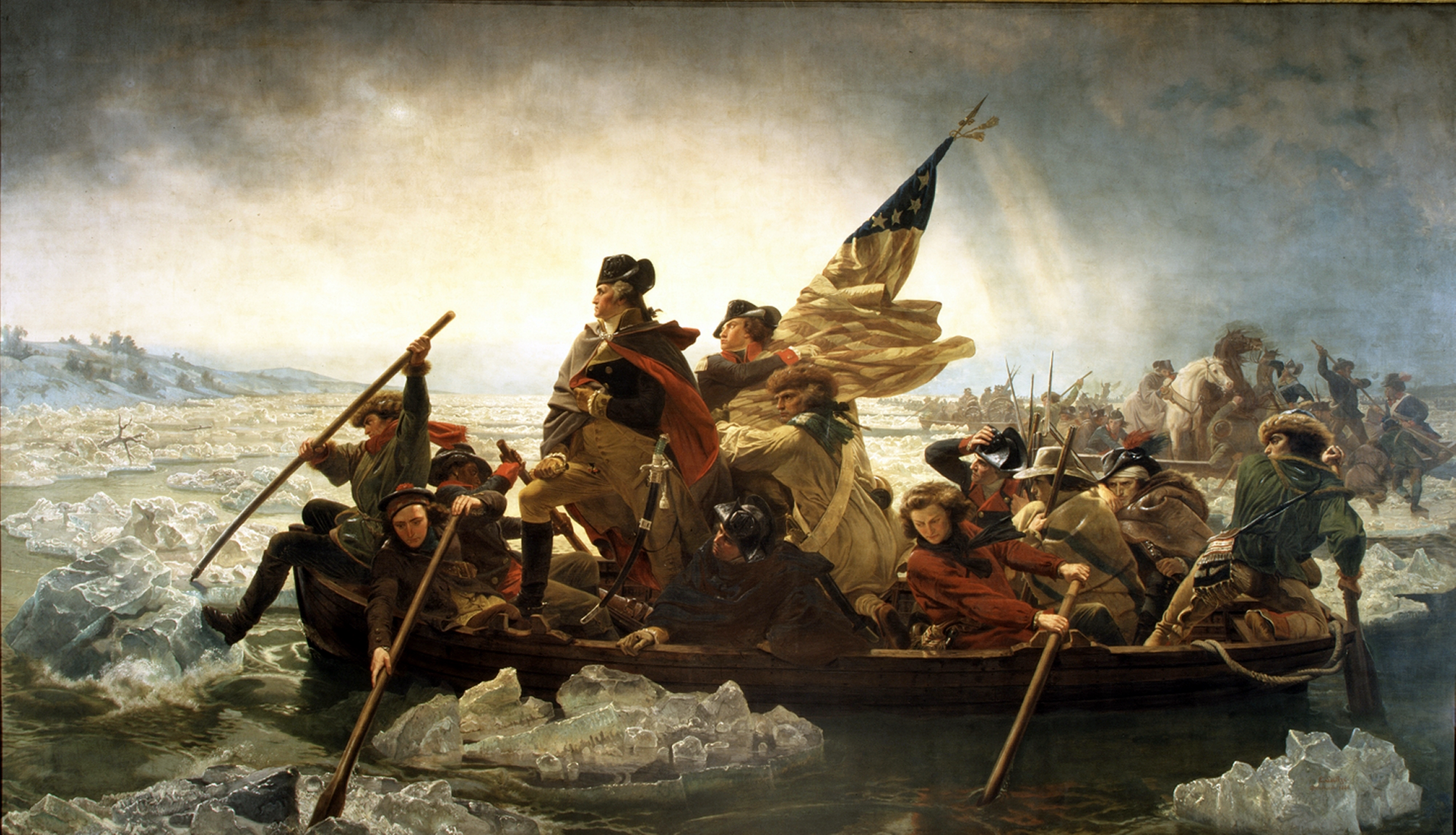
Earlier in his career, Whittredge posed as George Washington while Emanuel Leutze painted ‘Washington Crossing The Delaware’. (Worthington is quite comfortable on both sides of the easel The painting below is by William Merritt Chase.)
In its later years, the Stuyvesant was used as the set for a pivotal scene in the Oscar-nominated film noir ‘Kiss of Death’ starring Richard Widmark. Needless to say, this sort of activity very rarely went on at the Stuyvesant.