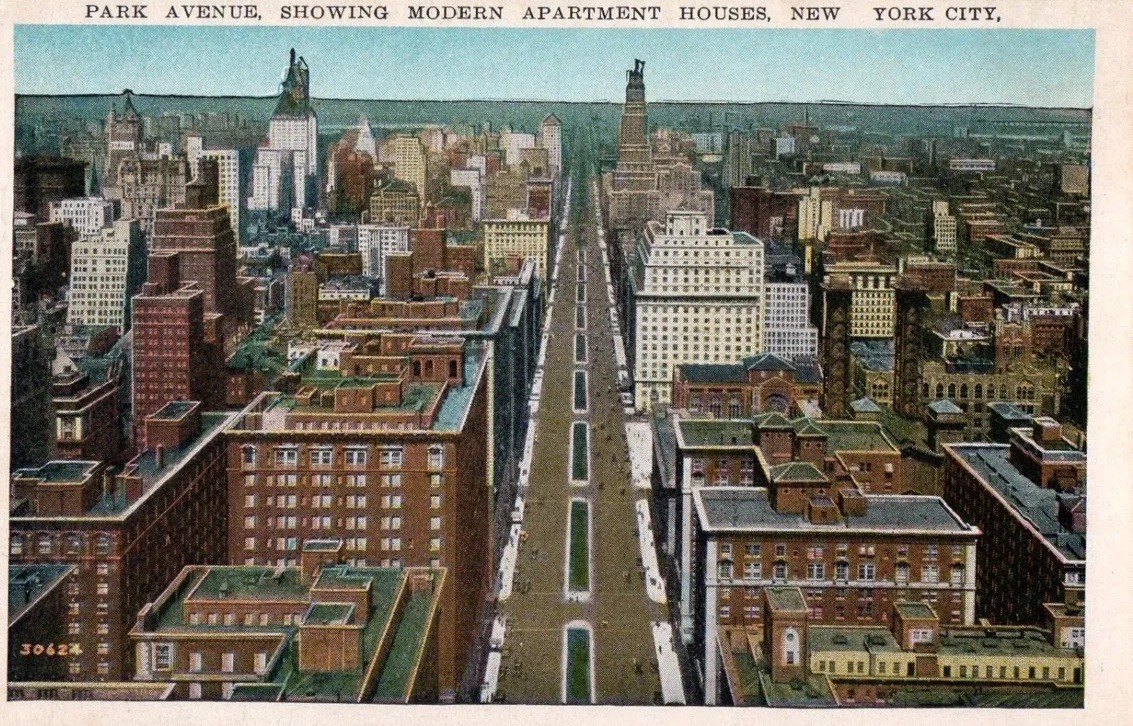
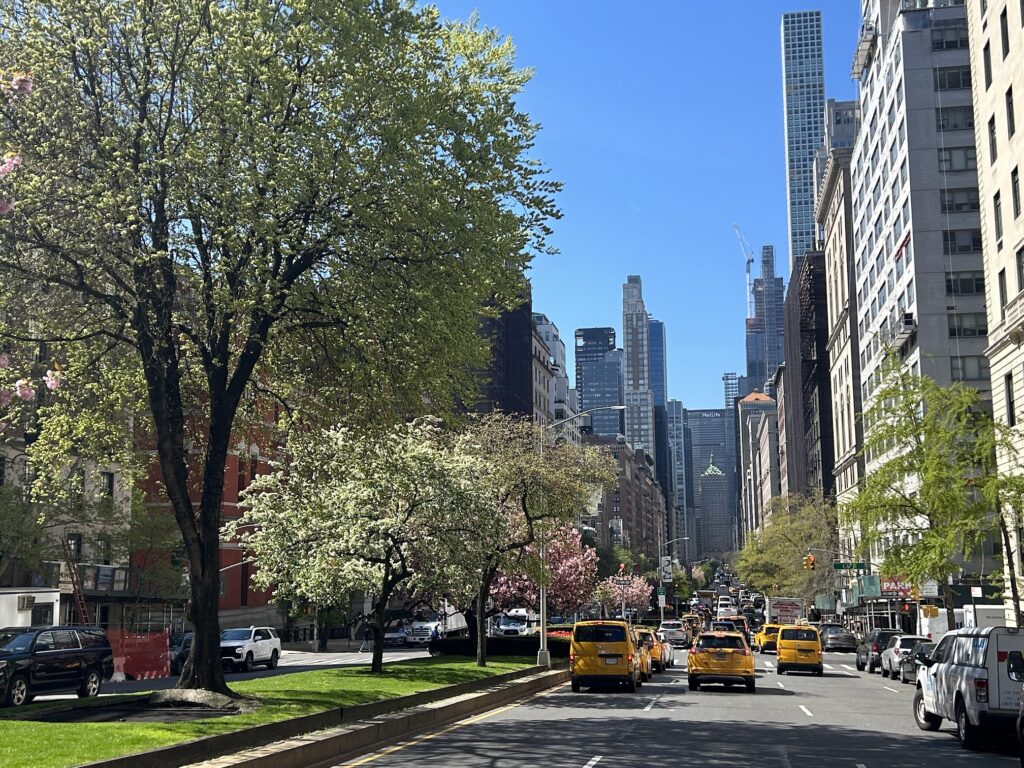
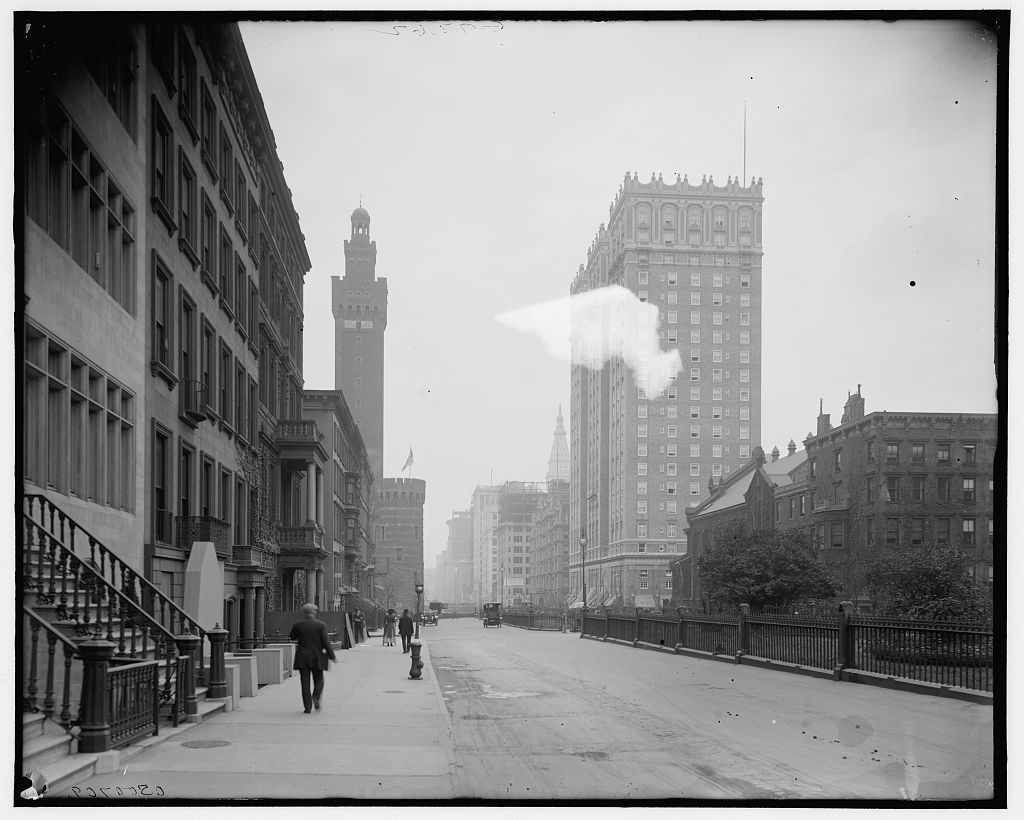
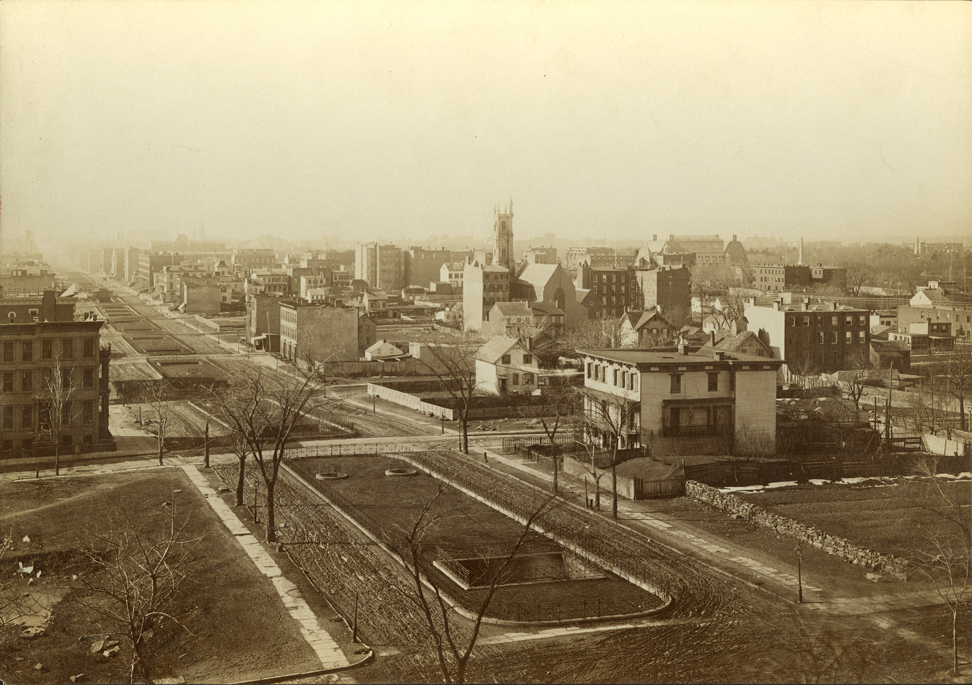
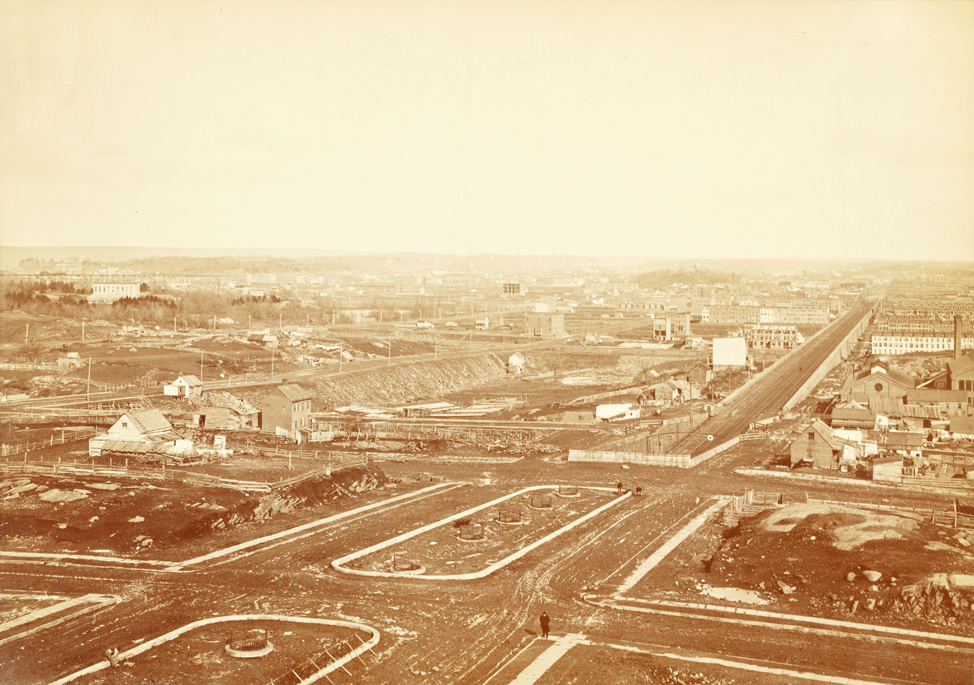
The story of a filthy and dangerous train ditch that became one of the swankiest addresses in the world — Park Avenue.
For over 100 years, a Park Avenue address meant wealth, glamour and the high life. The Fred Astaire version of the Irving Berlin classic “Puttin’ on the Ritz” revised the lyrics to pay tribute to Park Avenue: “High hats and Arrow collars/White spats and lots of dollars/Spending every dime for a wonderful time.”
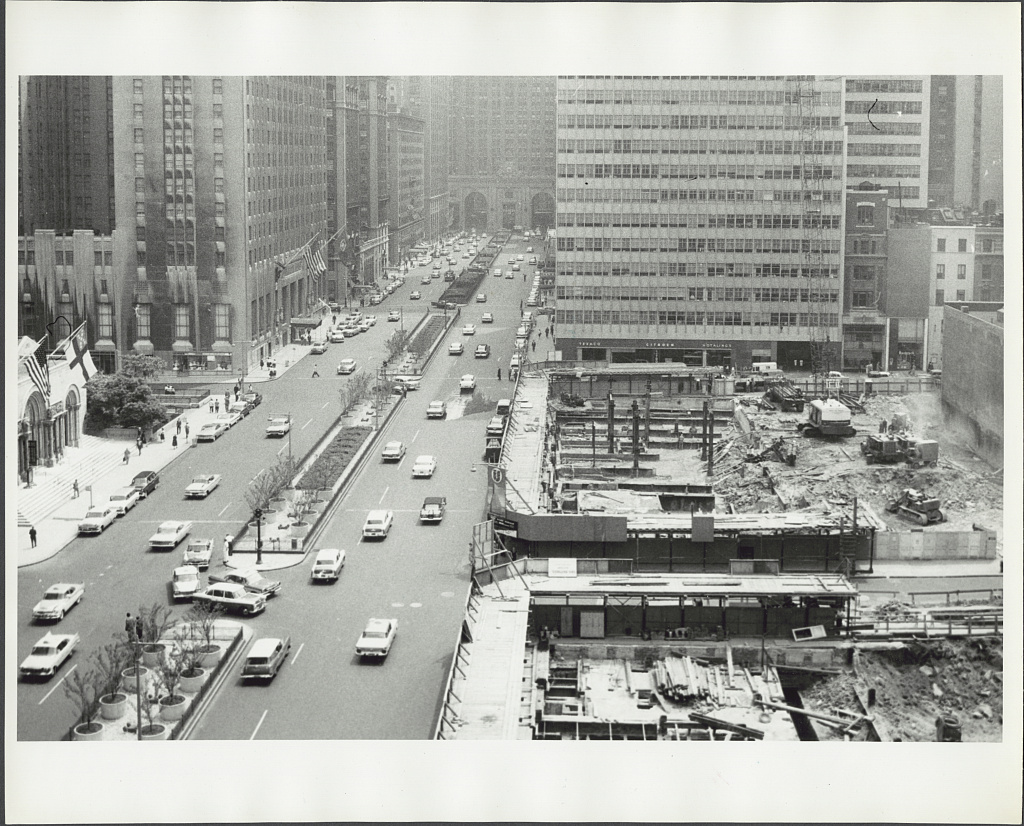
By the 1950s, the avenue was considered the backbone of New York City with corporations setting up glittering new office towers in the International Style — the Lever House, the Seagram Building, even the Pan Am Building.
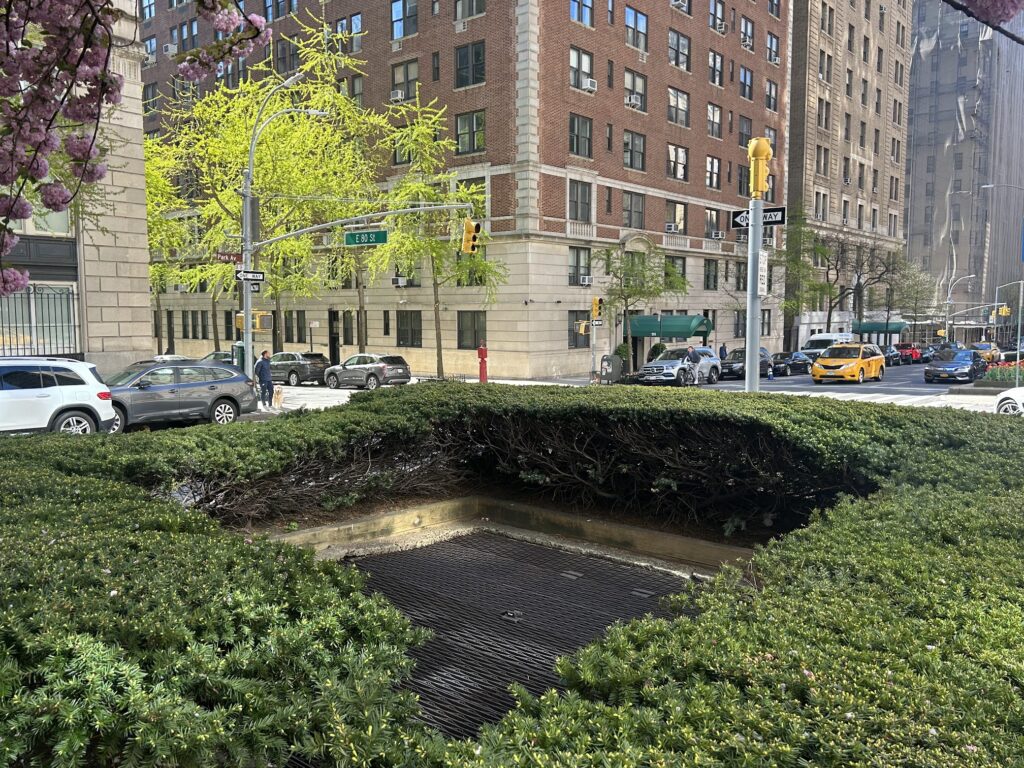
But the foundation for all this wealth and success was, in actually, a train tunnel, originally operated by the New York Central Railroad. This street, formerly known as Fourth Avenue, was (and is) one of New York’s primary traffic thoroughfares. For many decades, steam locomotives dominated life along the avenue, heading into and out of Cornelius Vanderbilt’s Grand Central (first a depot, then a station, eventually a terminal).
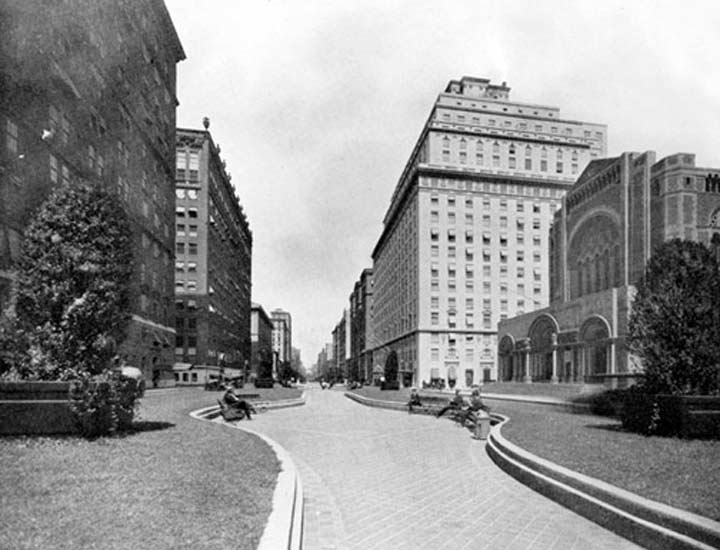
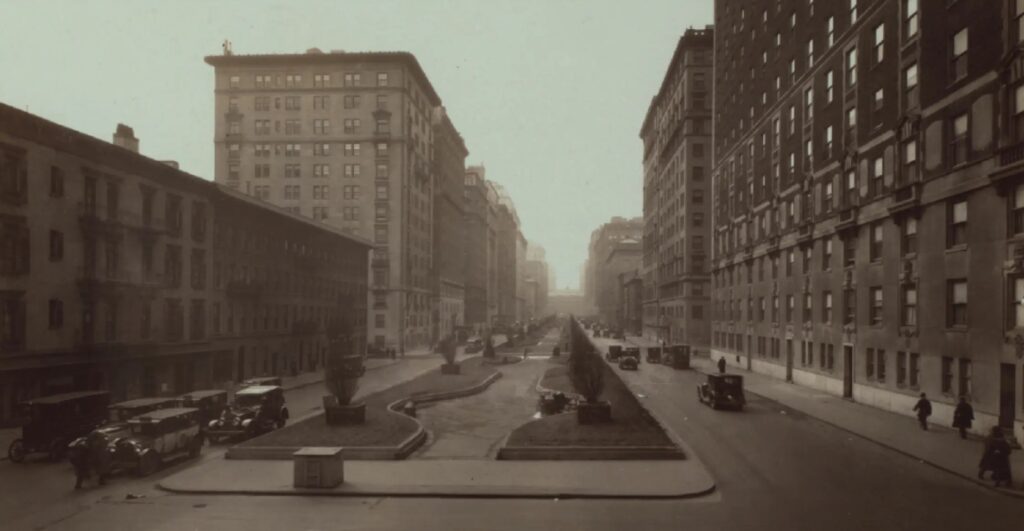
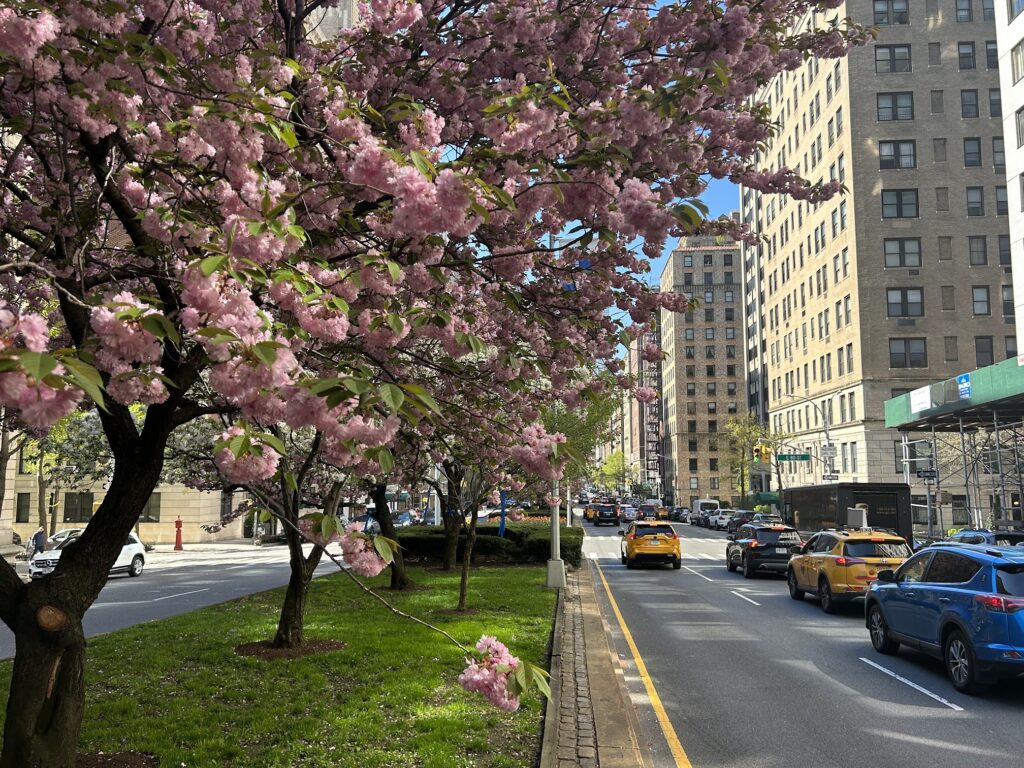
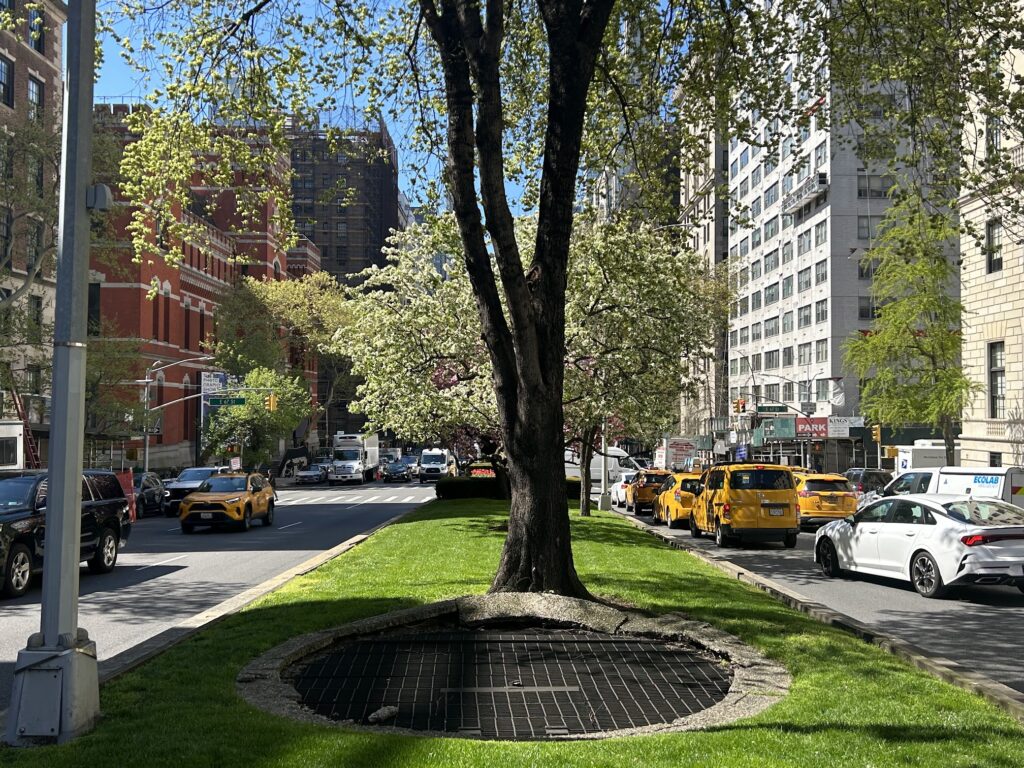
However train tracks running through a quickly growing city are neither safe nor conducive to prosperity. Eventually, the tracks were covered with beautiful flowers and trees, on traffic island malls which have gotten smaller over the years.
By the 1910s this allowed for glamorous apartment buildings to rise, the homes of a new wealthy elite attracted to apartment living in the post-Gilded Age era. But that lifestyle was not quite made available to everyone.
In this episode, Greg and Tom take you on a tour of the tunnels and viaducts that helped New York City to grow, creating billions of dollars of real estate in the process.
LISTEN NOW: UP AND DOWN PARK AVENUE
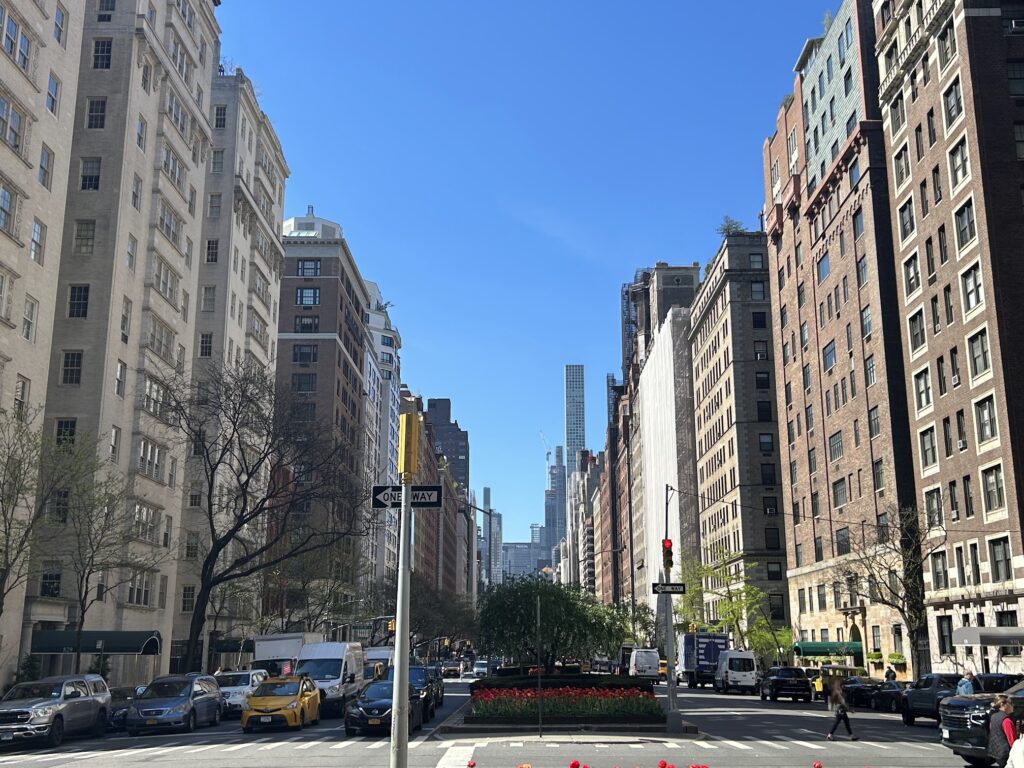
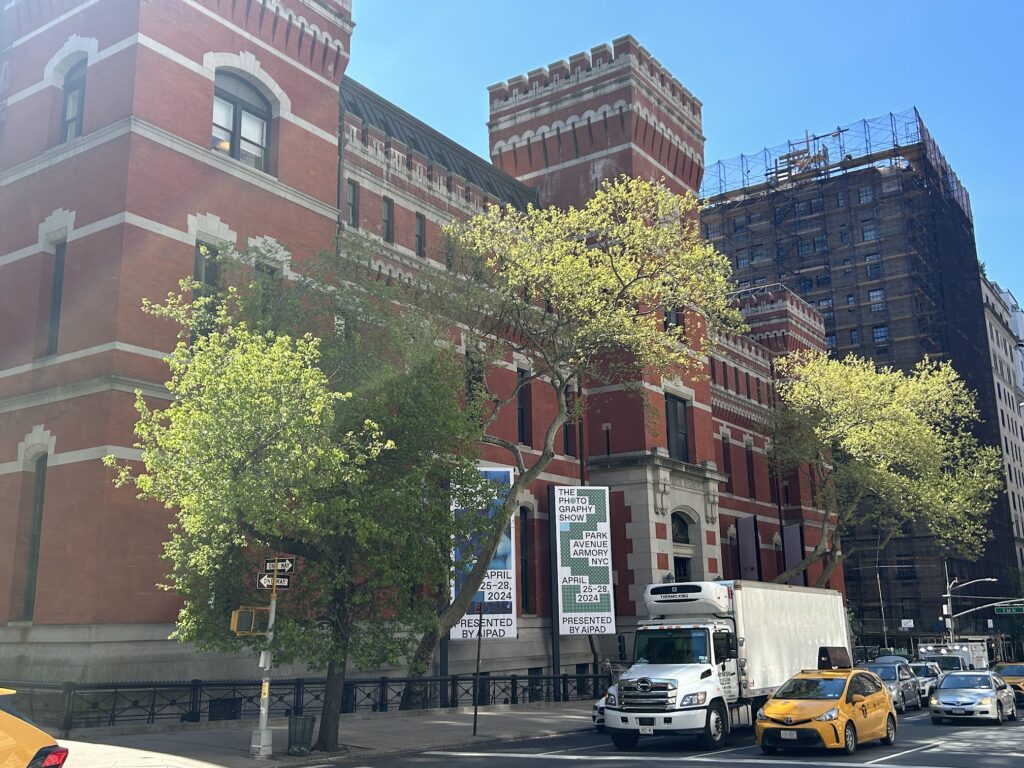
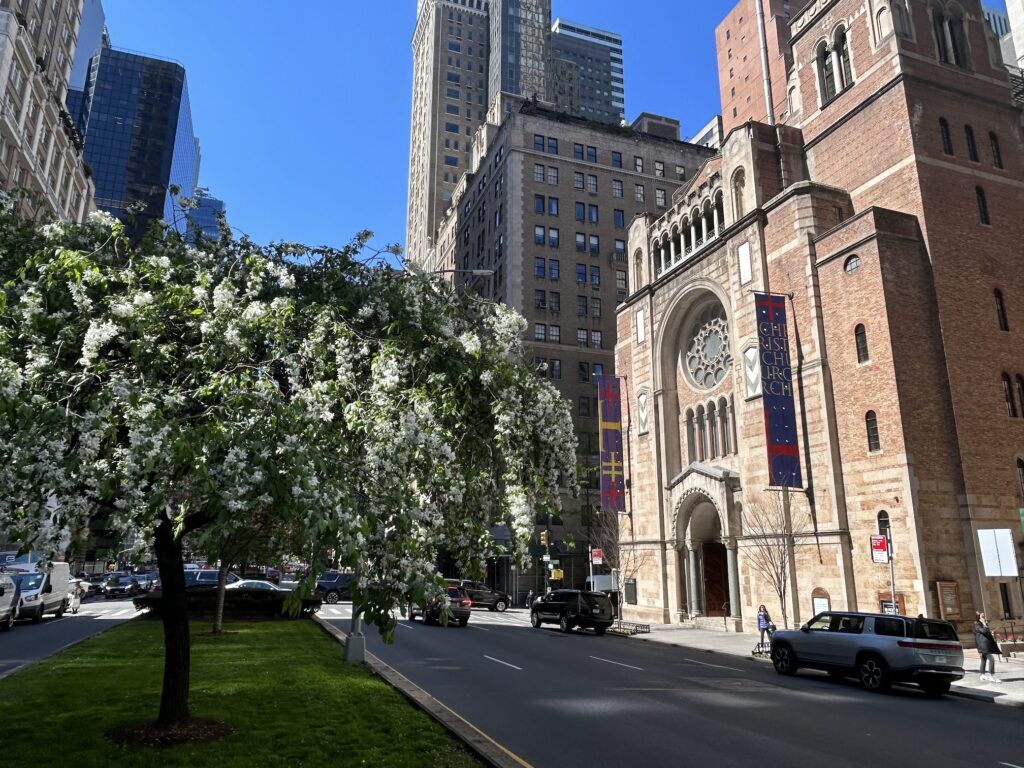
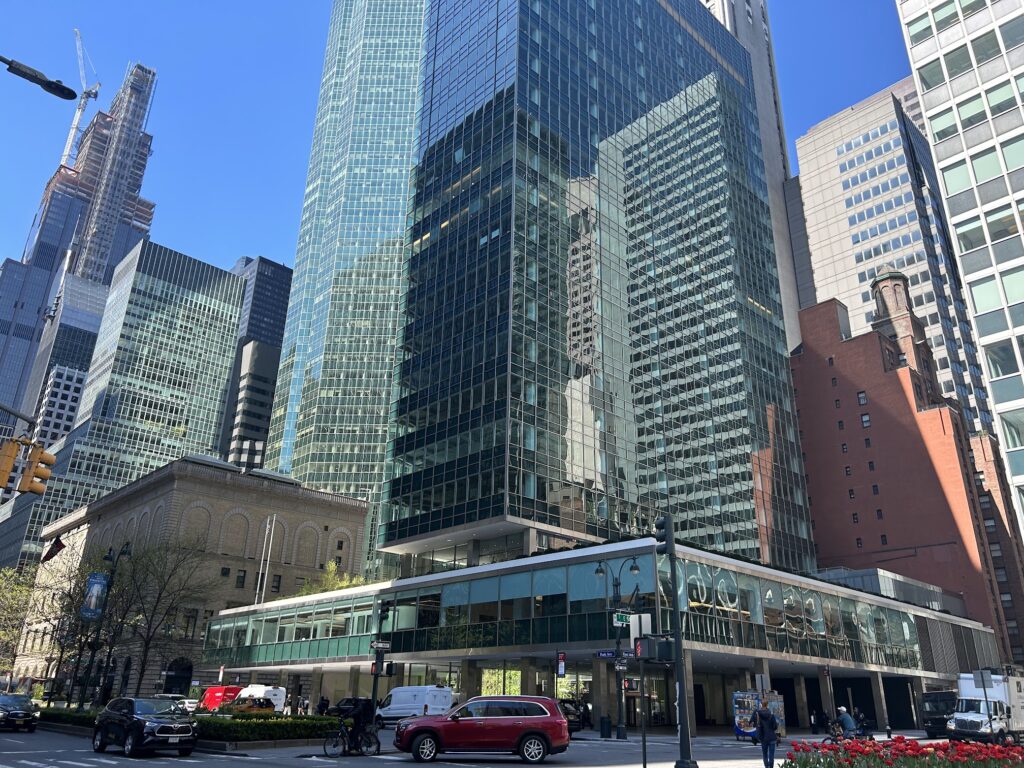
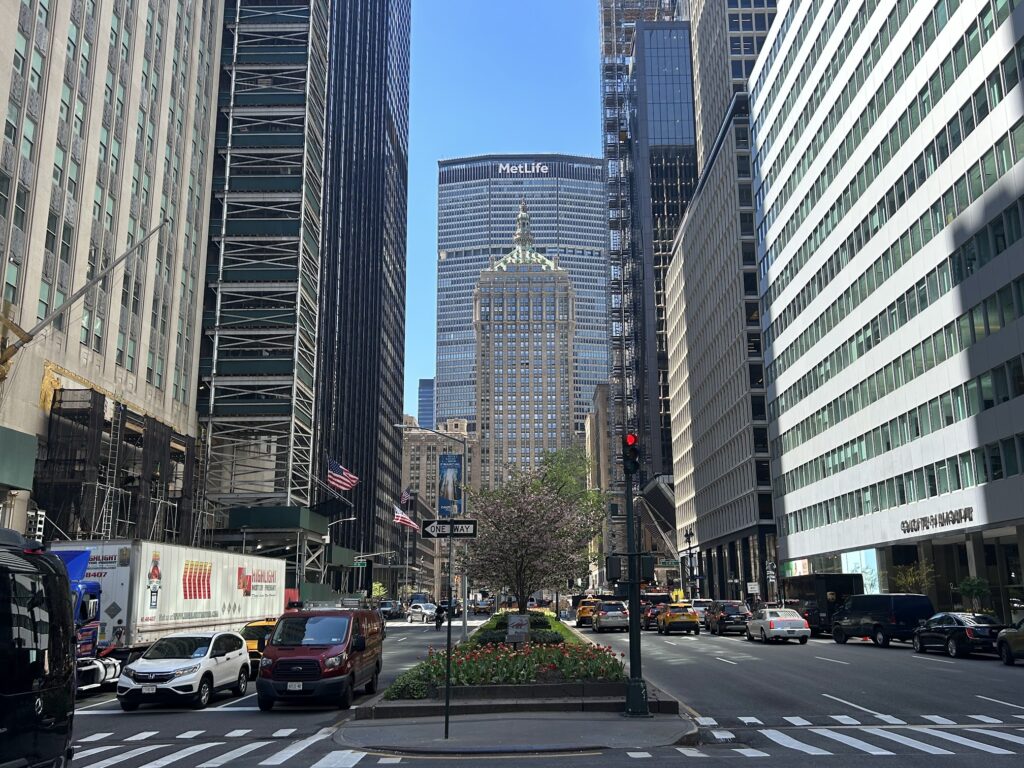
Park Avenue, looking south of 36th Street, 1900-1905 Library of CongressPark Avenue and 94th Street, Library of Congress Park Avenue, late 1800s, Musem of the City of New YorkPark Avenue, after St Bart’s came along in 1918 but before these lovely pedestrian areas were destroyed in the late 1920s. Park Avenue 1927, Department of Transportation“Photograph shows cars moving along Park Avenue as the road heads towards the tunnels of the Helmsley Building, known then as the New York General Building. Building construction visible to the right. St. Bartholomew’s Church slightly visible on left.” Library of Congress, 1959Photo by Greg YoungPhoto by Greg YoungPhoto by Greg YoungPhoto by Greg YoungPhoto by Greg YoungPhoto by Greg YoungPhoto by Greg YoungPhoto by Greg Young
FURTHER LISTENING
Listen to these related Bowery Boys episodes after you’re done listening to the Park Avenue show:
FURTHER READING
This week we’re suggesting a few historic designation reports for you history supergeeks looking for a deep dive into Park Avenue history. Dates indicated are when the structure or historic district was designated
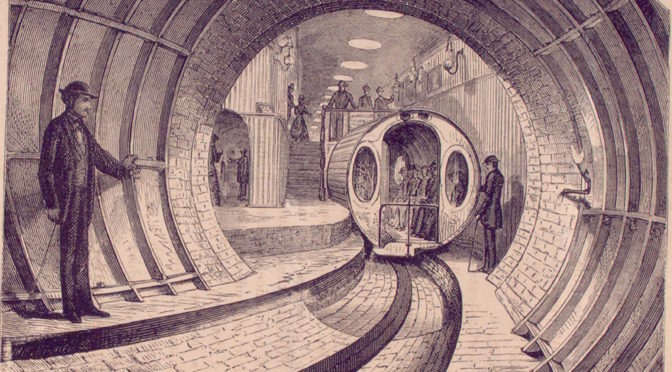
Beach’s pneumatic subway — the first in the United States — opened 150 years ago today. To celebrate this anniversary, we are re-representing our 2016 show on the history of Alfred Ely Beach and his shortlived (but truly marvelous) invention.
PODCASTThe unbelievable story of Alfred Ely Beach’s Pneumatic Transit, a curious solution from 1870 to New York’s growing transporation crisis.
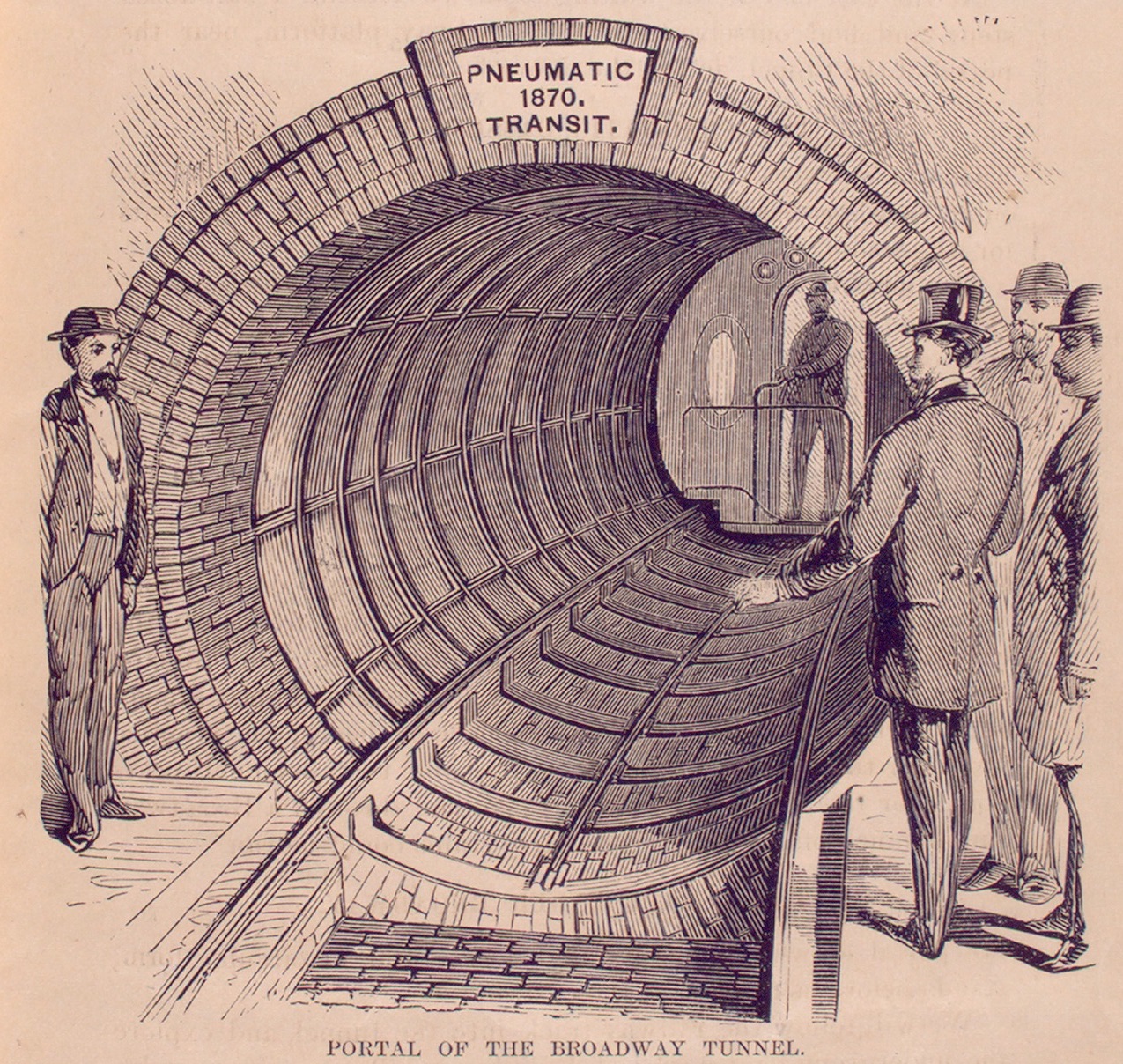
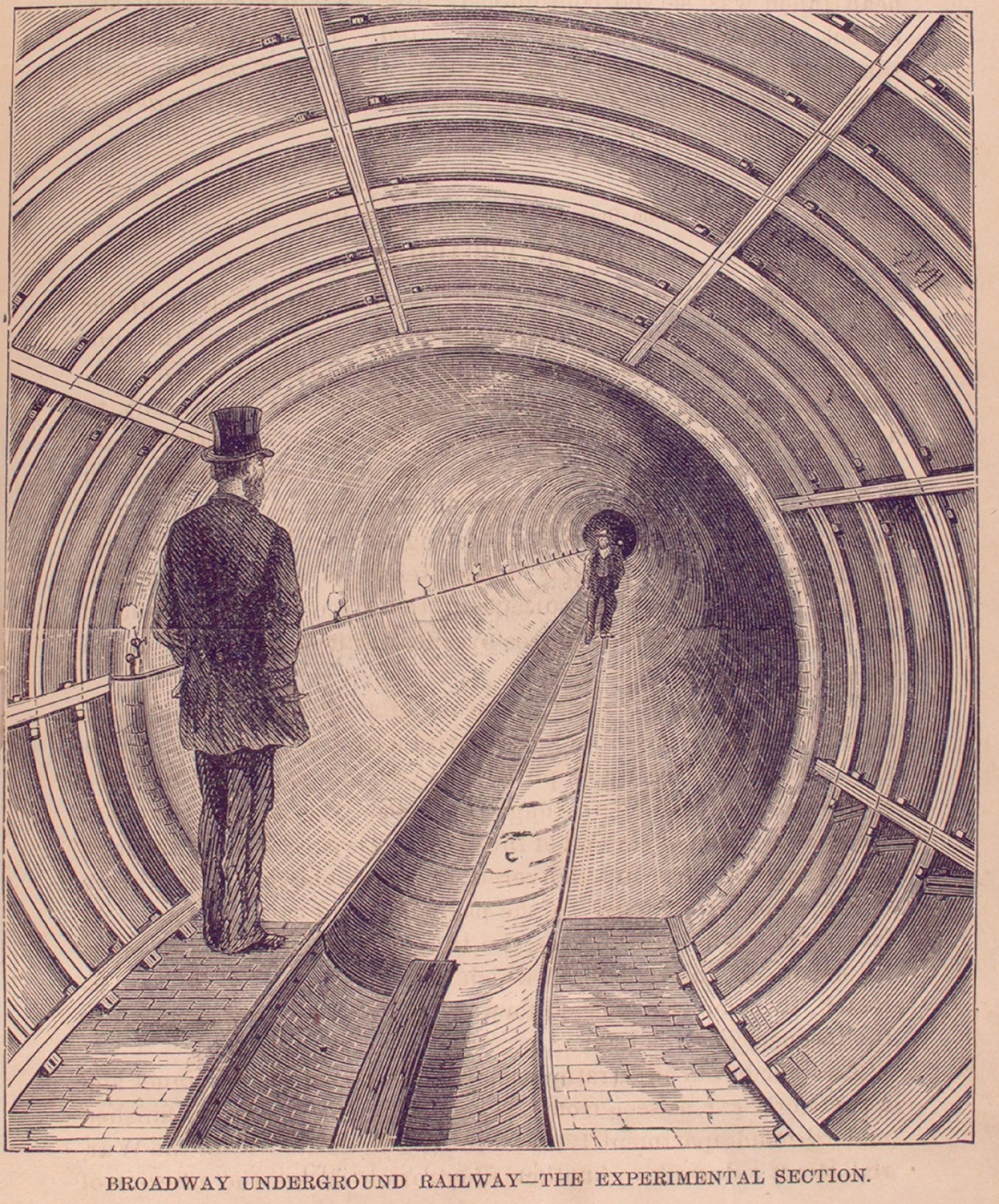
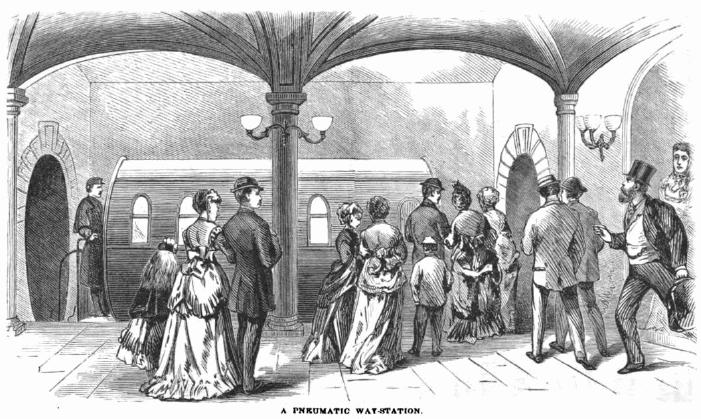
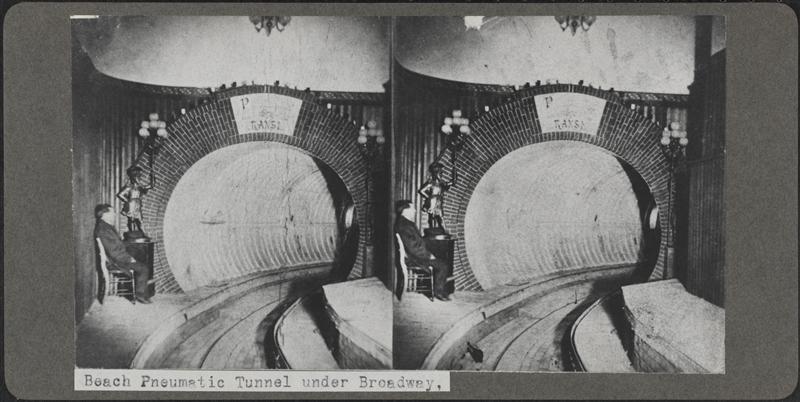
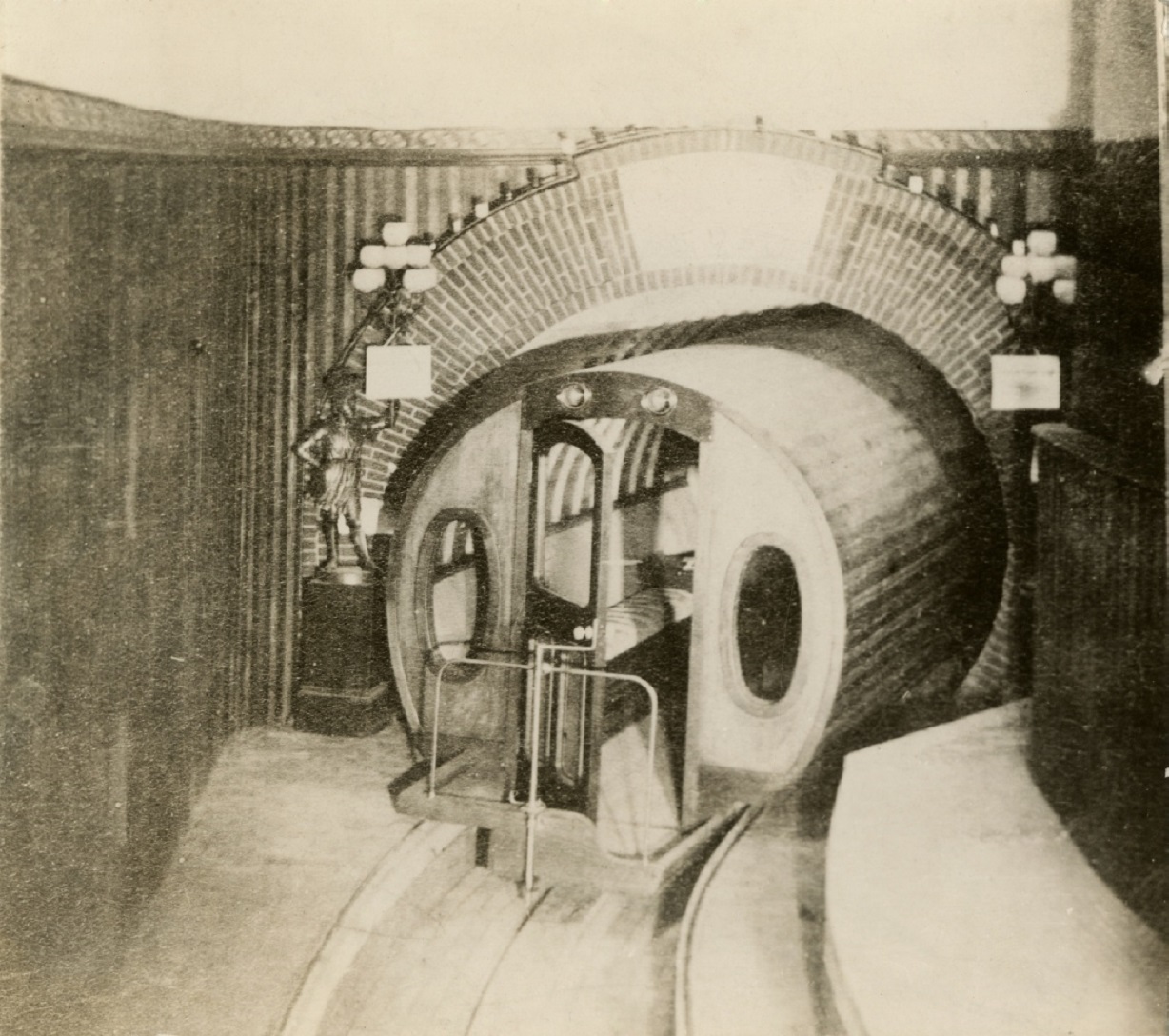
The first subway in New York — the first in the United States! — traveled only a single block and failed to influence the future of transportation. And yet Alfred Ely Beach‘s marvelous pneumatic transit system provides us today with one of the most enchanting stories of New York during the Gilded Age.
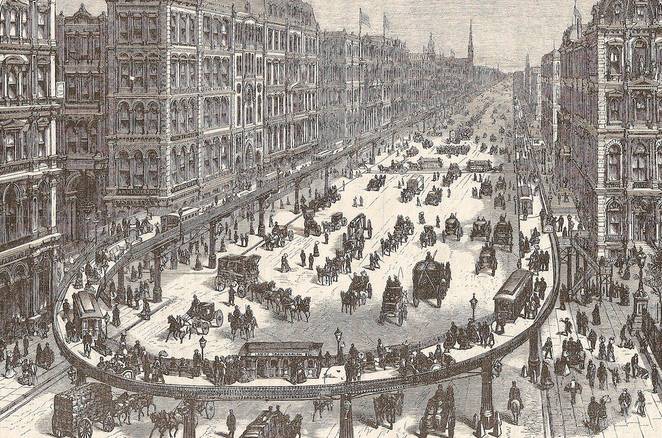
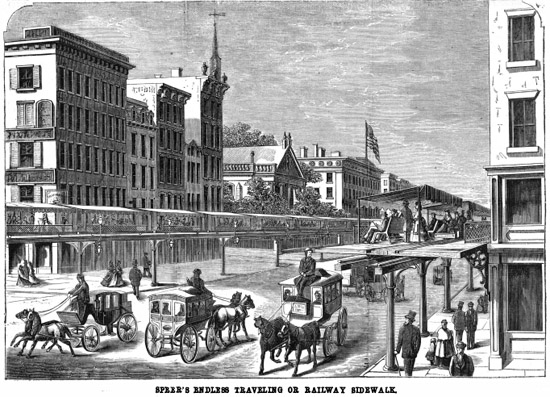
With the growing metropolis still very much confined to below 14th Street by 1850, New Yorkers frantically looked for more efficient ways to transport people out of congested neighborhoods. Elevated railroads? Moving sidewalks? Massive stone viaducts?
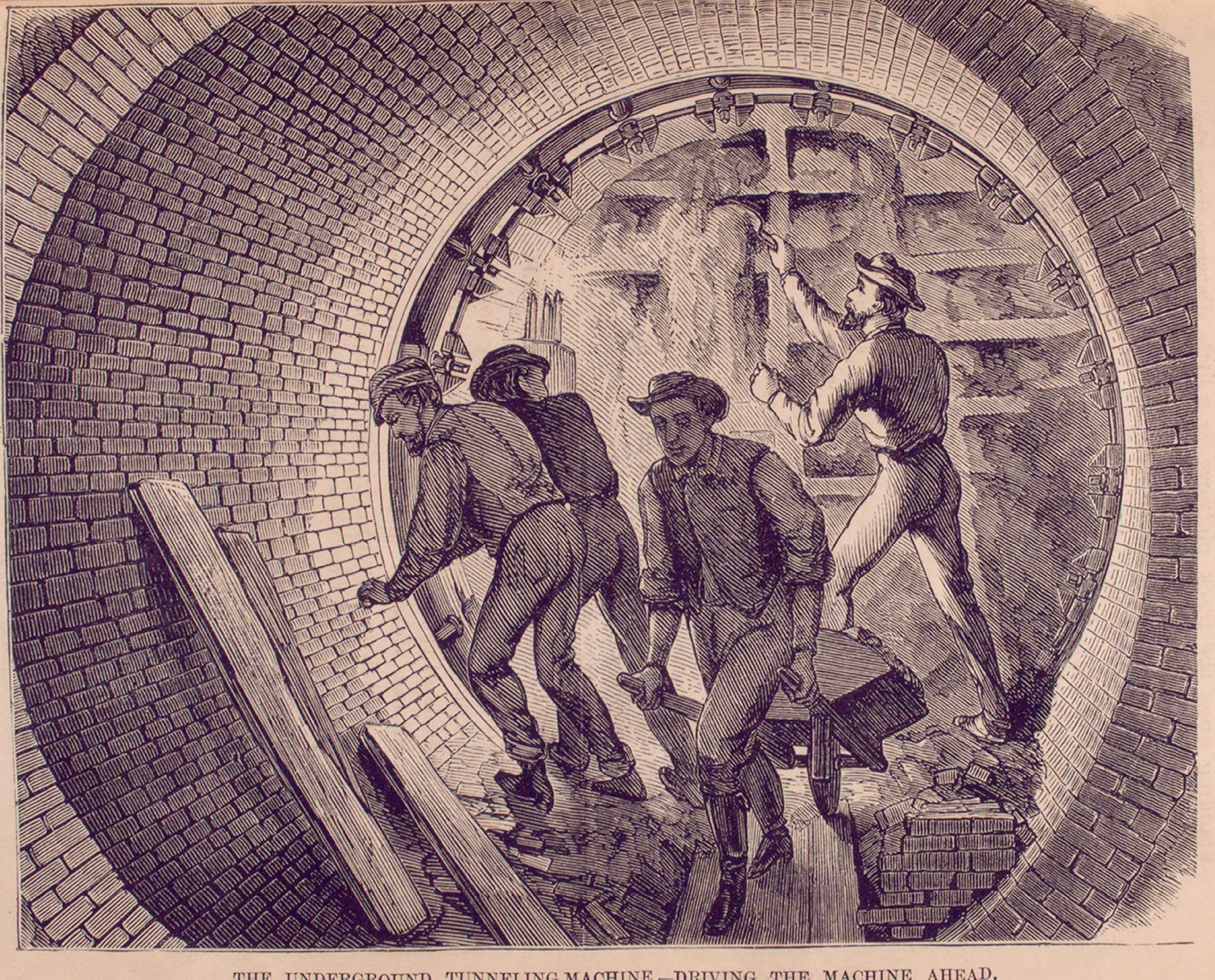
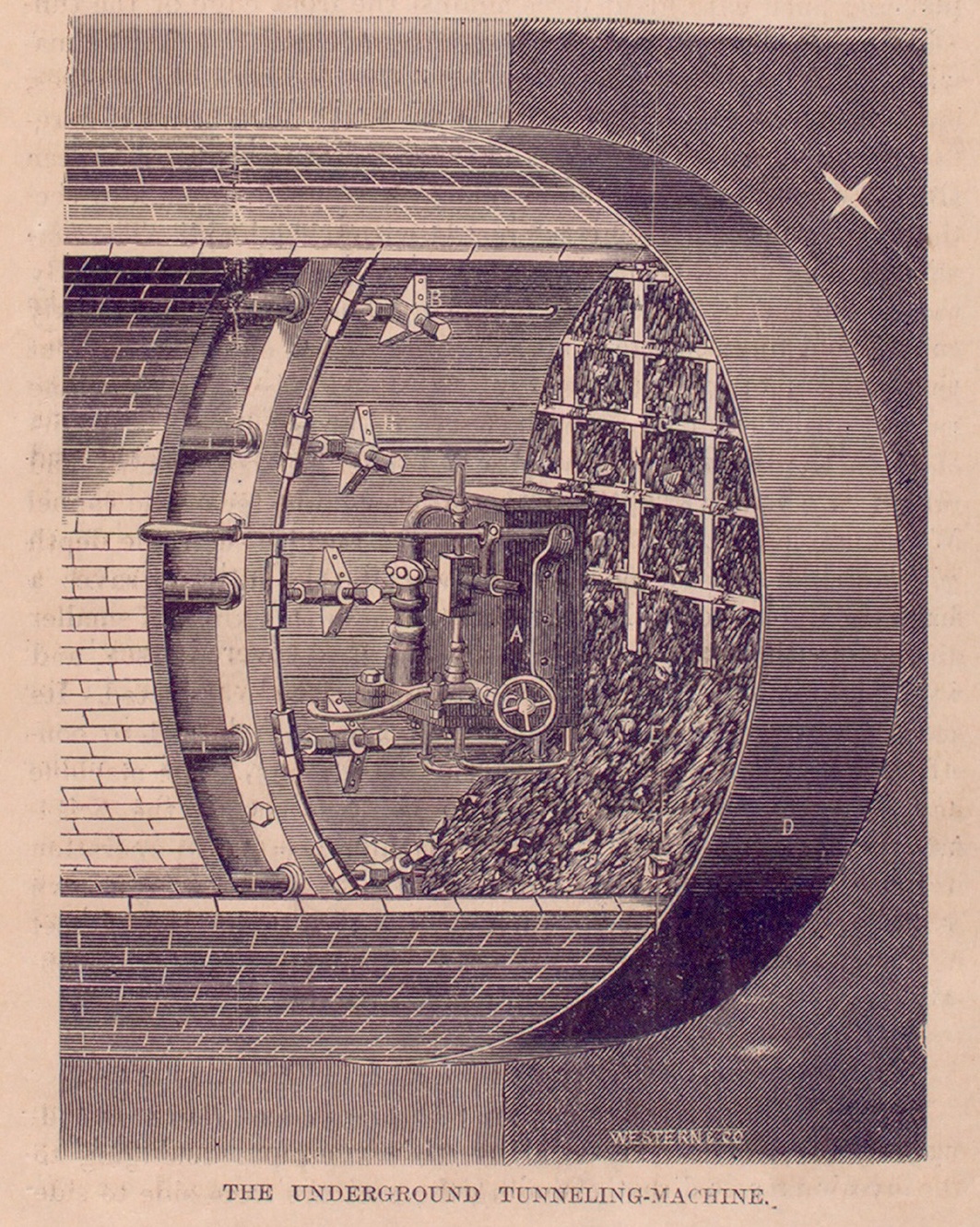
Inventor Beach, publisher of the magazine Scientific American, believed he had the answer, using pneumatic power — i.e. the power of pressurized air! But the state charter only gave him permission to build a pneumatic tube to deliver mail, not people.
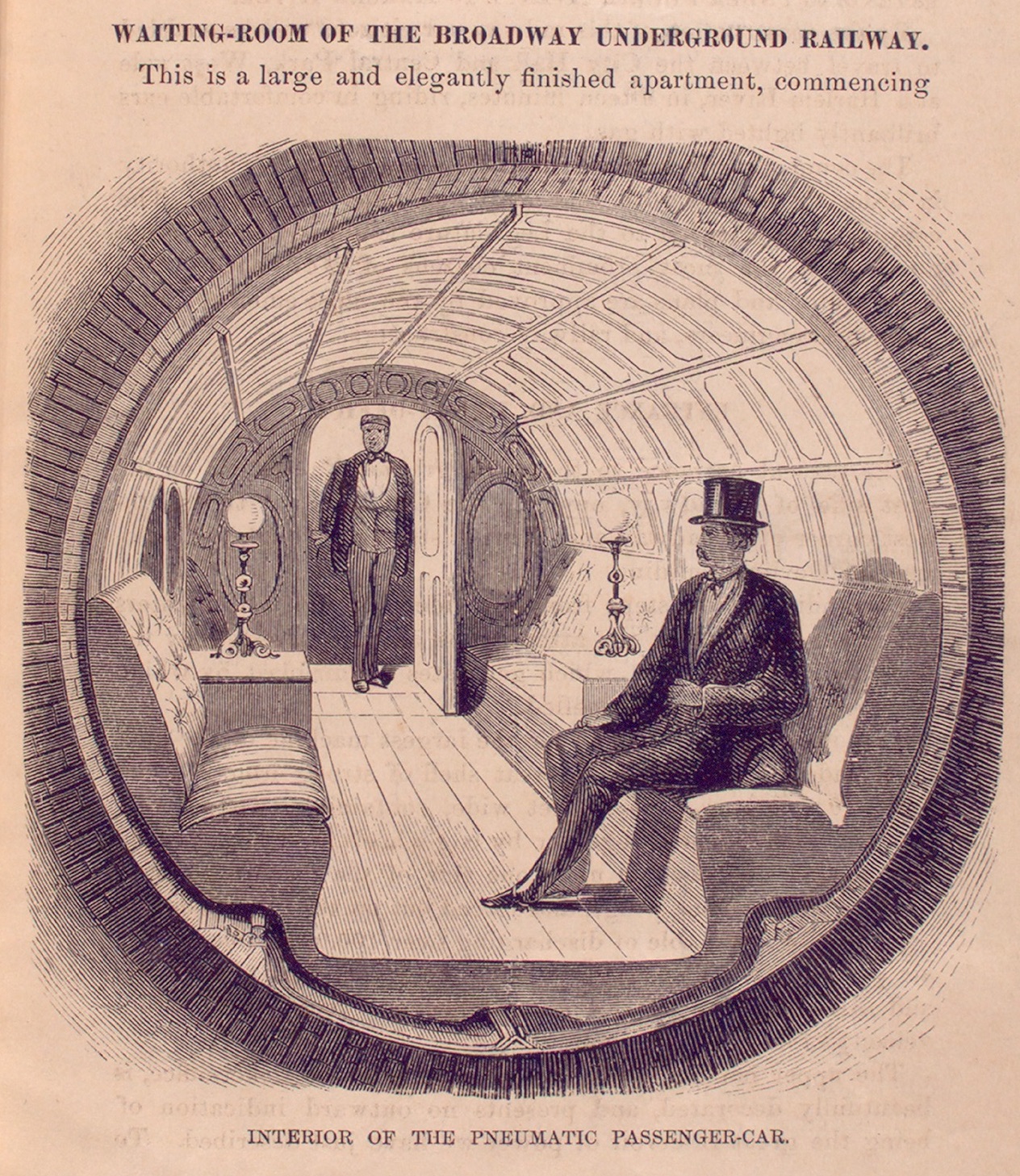
That didn’t stop Beach, who began construction of his extraordinary device literally within sight of City Hall. How did Beach build such an ambitious project under secretive circumstances? What was it like to ride a pneumatic passenger car? And why don’t we have pneumatic power operating our subways today?
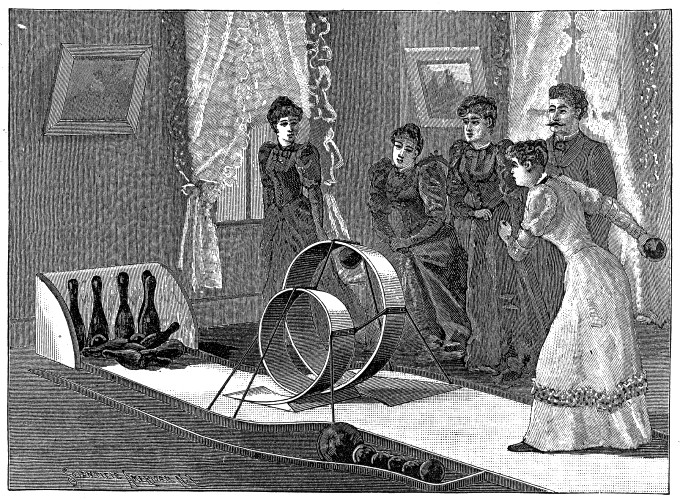
FEATURING: Boss Tweed at his most bossiness, piano tunes under Broadway and something called a centrifugal bowling alley!
To get this week’s episode, simply download or stream it for FREE from iTunes, Stitcher, Spotify or other podcasting services.You can also get it straight from our satellite site.
The Bowery Boys: New York City History podcast is brought to you …. by you!
We are now producing a new Bowery Boys podcast every other week.
We’re also looking to improve and expand the show in other ways —
publishing, social media, live events and other forms of media. But we
can only do this with your help!
We are now a creator on Patreon, a patronage platform where you can support your favorite content creators.
Please visit our page on Patreon
and watch a short video of us recording the show and talking about our
expansion plans. If you’d like to help out, there are six different
pledge levels. Check them out and consider being a sponsor.
ALL patrons at all levels will receive many benefits include the next episode of the Bowery Boys Movie Club,
an exclusive podcast (released every 6-8 weeks) celebrating New York
City in the movies. And patrons at the Five Points ($5) level and up
will get our other exclusive podcast — The Bowery Boys: The Takeout — released every two weeks.
We greatly appreciate our listeners and readers and thank you for joining us on this journey so far.
Alfred Speer’s moving sidewalk concept would have lifted pedestrians off the street and onto a moving ribbon that would have stretched up and down Broadway.
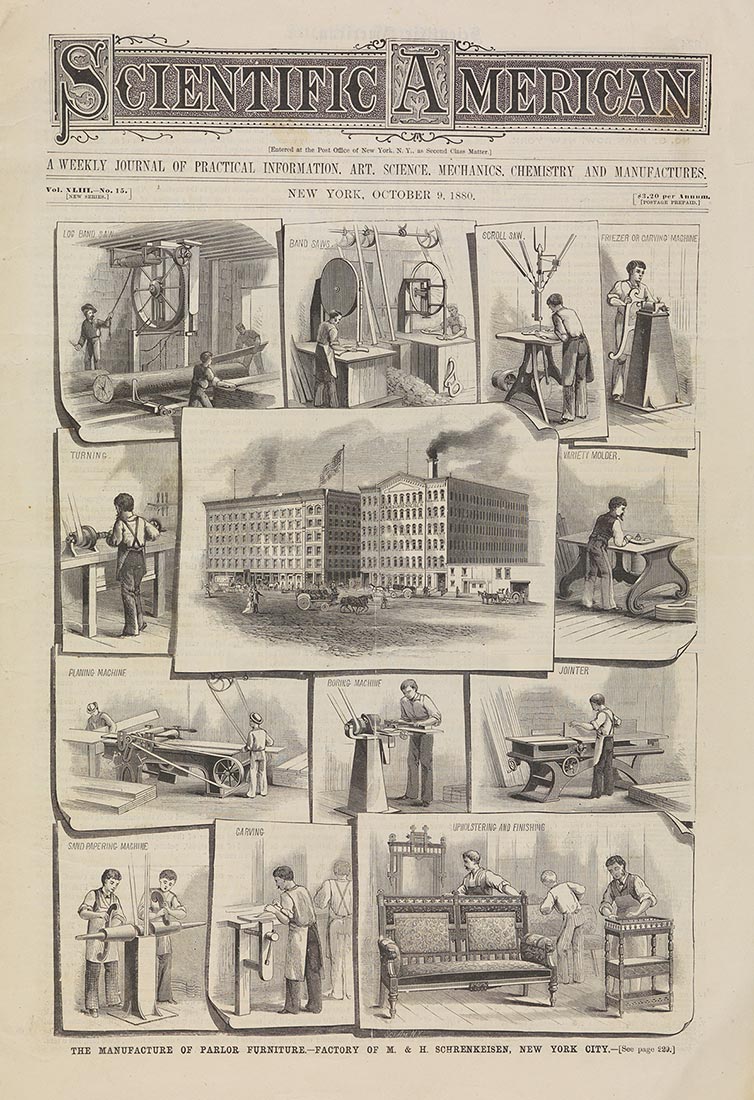
An 1880 issue of Scientific American, the publication owned by Alfred Eli Beach that provided the impetus for many extraordinary inventions during the Gilded Age.
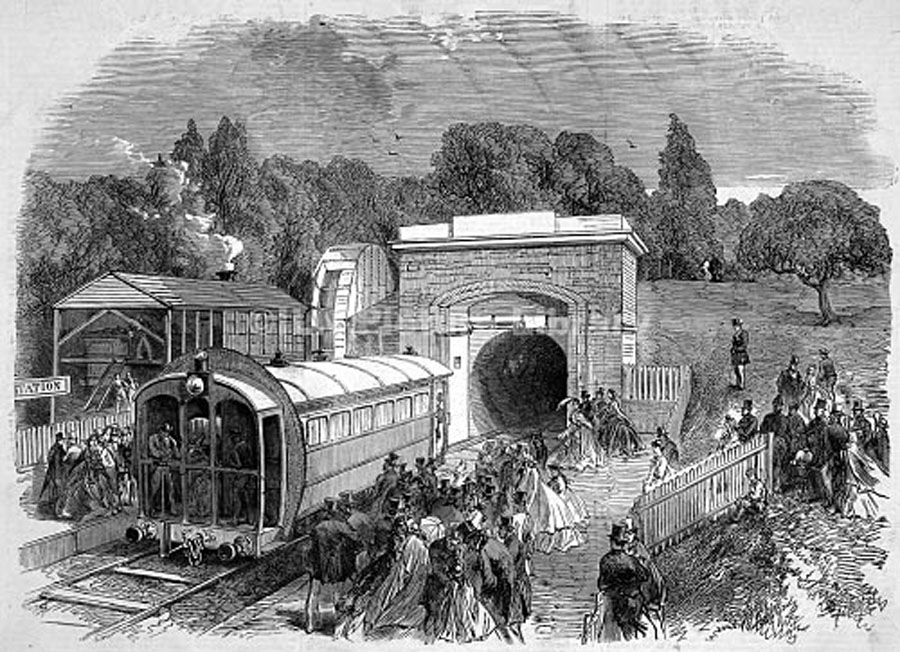
The ‘atmospheric railway’ which ran during London’s Crystal Palace Exhibition in 1864.
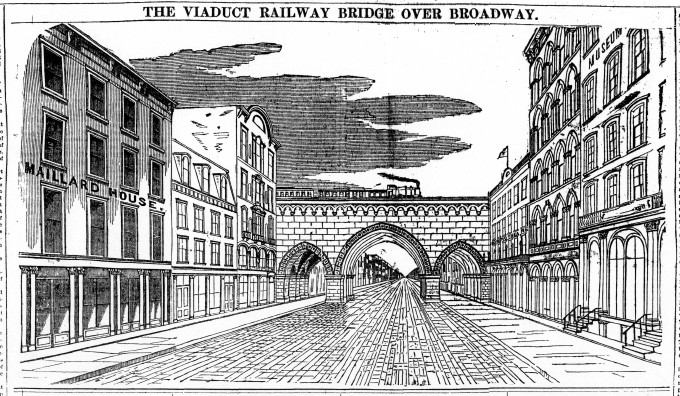
Another idea which transfixed New Yorkers (and in particular Boss Tweed) was the elevated viaduct which would have sliced through dozens of city blocks, creating an epic piece of architecture throughout Manhattan.
From the Tribune, July 8, 1871. Courtesy Columbia University
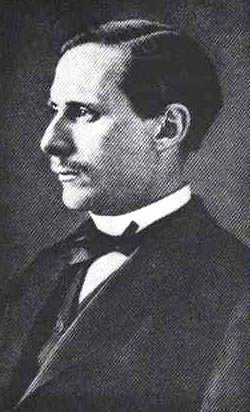
Alfred Ely Beach, mastermind of the Broadway pneumatic tunnel project:
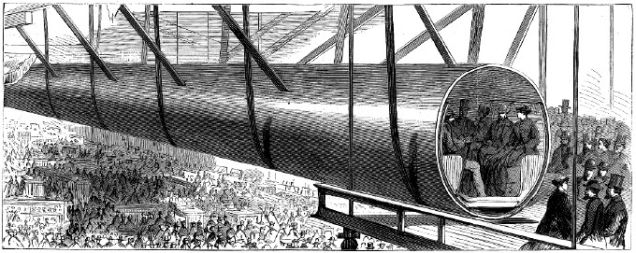
Beach’s ‘passenger tube’ which was displayed to great acclaim at the American Institute Fair in 1867:
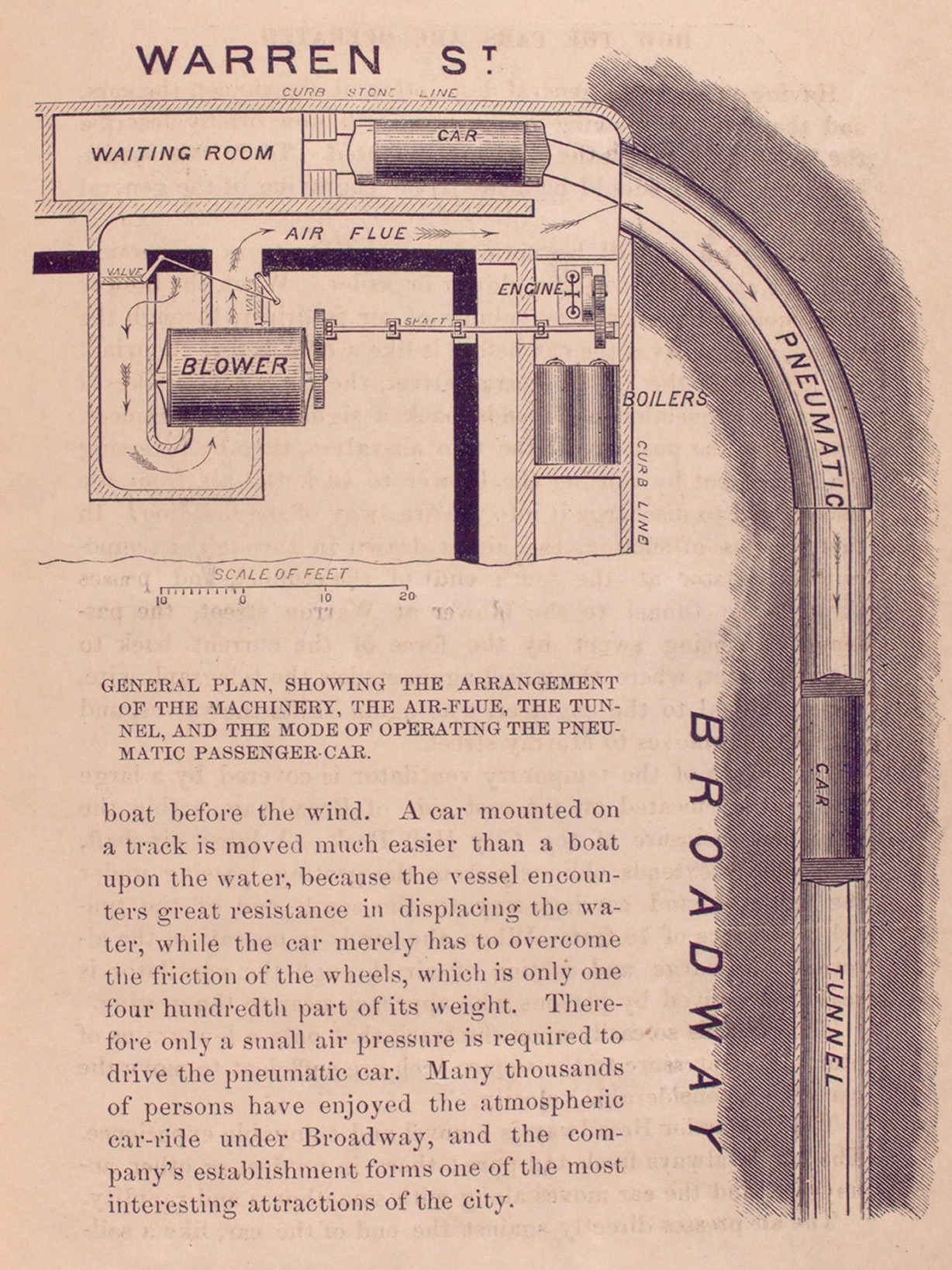
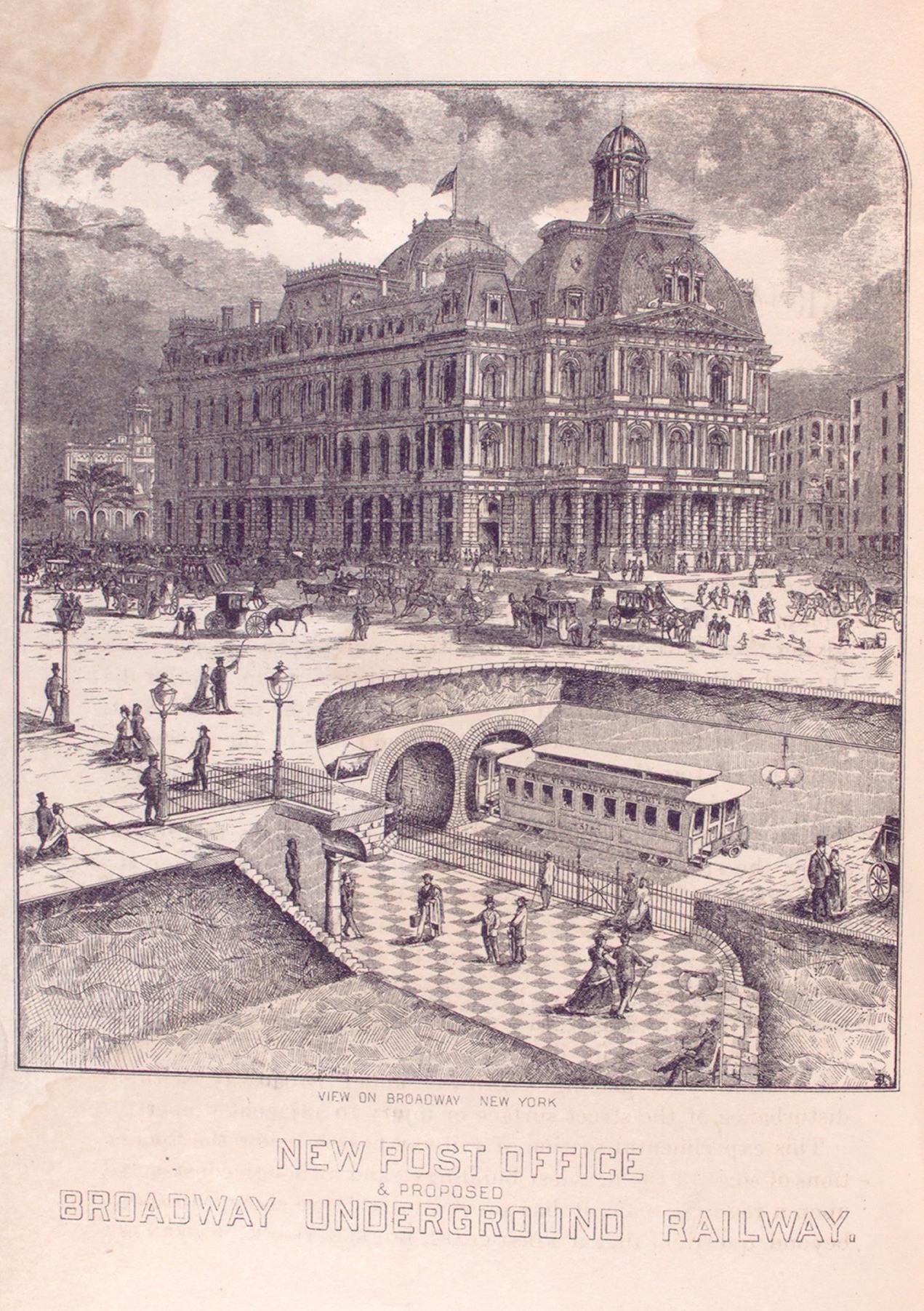
Some images from Beach’s 1870 pamphlet on the pneumatic system:
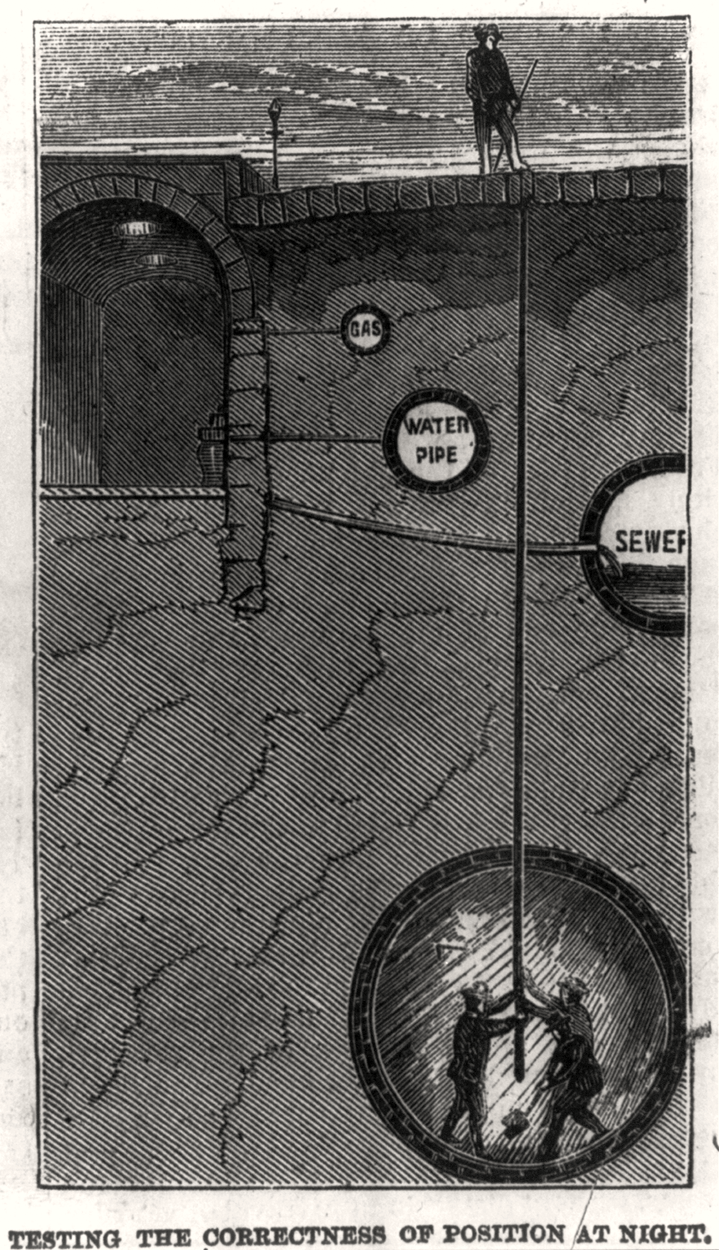
An illustration from a newspaper of Beach’s workers ‘testing the position’ late at night over Broadway:
How an underground pneumatic tunnel would have been situated under Broadway. Â Pictured here in relation to the new post office (which sat at the spot of the southern end of today’s City Hall Park).
Had the Broadway Underground Railway actually been fully developed, here’s what a station would have looked like:
From NYC Subway
Stereopticon images of Beach’s pneumatic transit tunnel under Broadway, taken in 1870:
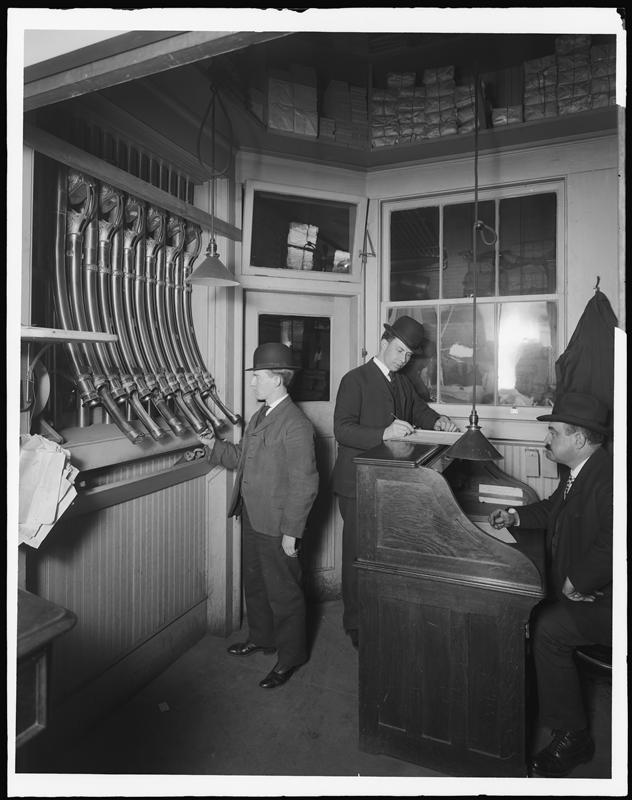
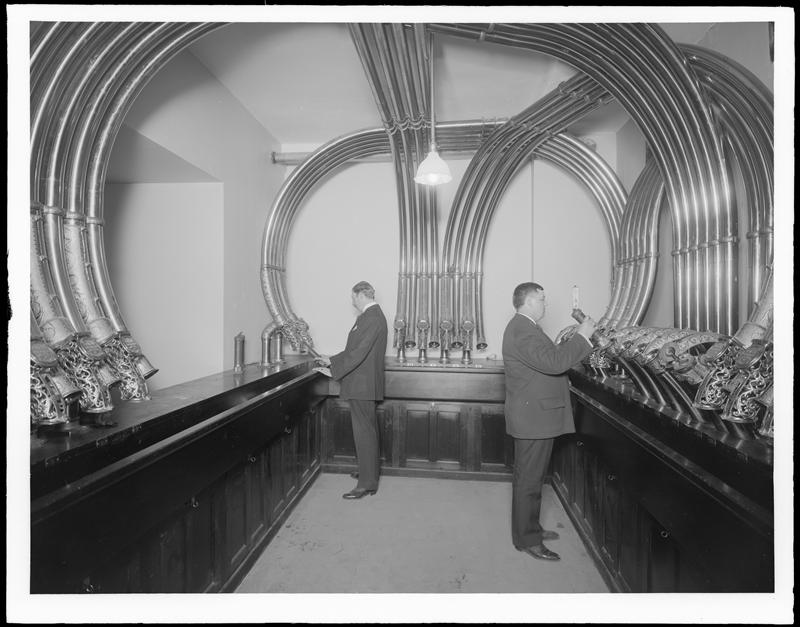
Later application of pneumatic power in New York — shipping office tubes at a location at Franklin and Greenwich Streets (1905) and the series of mail tubes at the National City Bank, 1910.
Courtesy Museum of the City of New York
Courtesy Museum of the City of New York
Start with Joseph Brennan’s excellent research and presentation online. Then jump into one of these great books on the history of New York City transportation — 722 Miles by Clifton Hood, The Race Underground by Doug Most, The Wheels That Drove New York City by Roger P. Roess and Gene Samsone and New York Underground by Julia Solis. There’s even a children’s book on this subject called The Secret Subway by Shana Corey and Red Nose Studio.