Categories
Neighborhoods Planes Trains and Automobiles Podcasts

Up and Down Park Avenue: New York City History with a Penthouse View

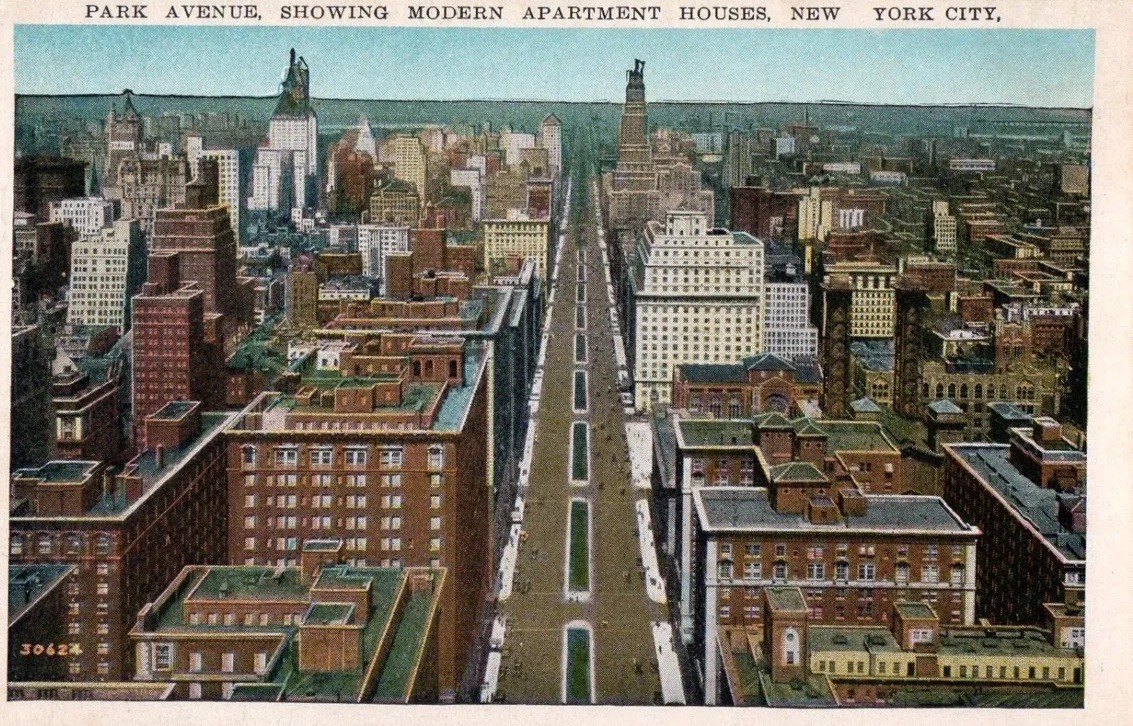
The story of a filthy and dangerous train ditch that became one of the swankiest addresses in the world — Park Avenue. 

For over 100 years, a Park Avenue address meant wealth, glamour and the high life. The Fred Astaire version of the Irving Berlin classic “Puttin’ on the Ritz” revised the lyrics to pay tribute to Park Avenue: “High hats and Arrow collars/White spats and lots of dollars/Spending every dime for a wonderful time.”

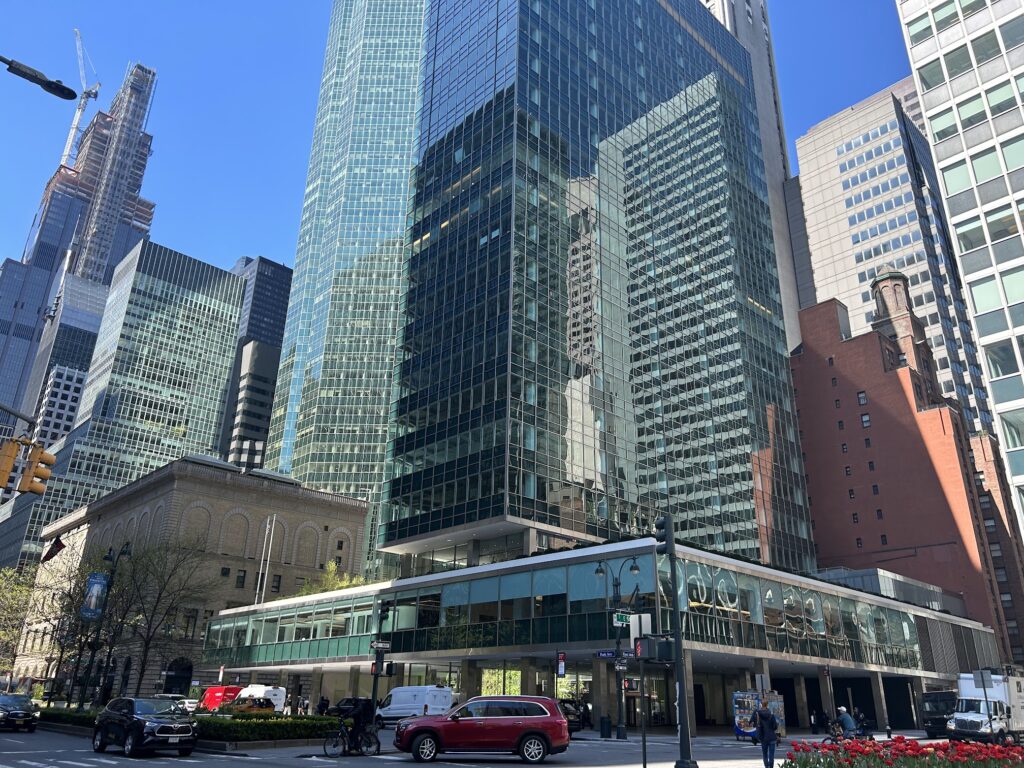
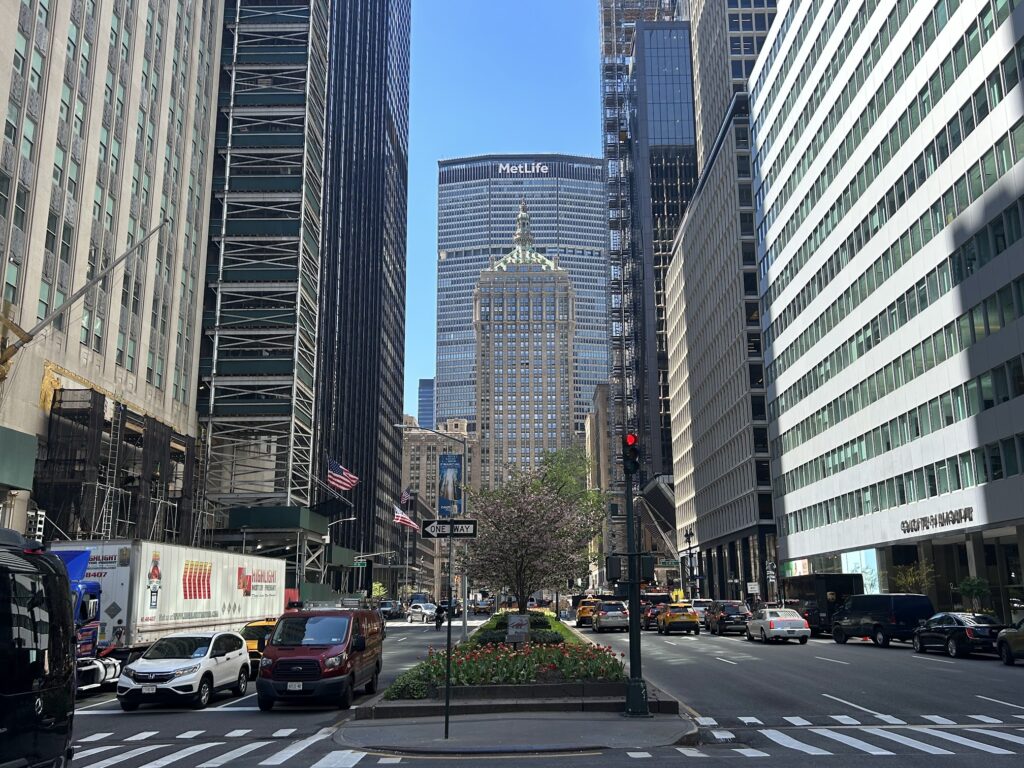
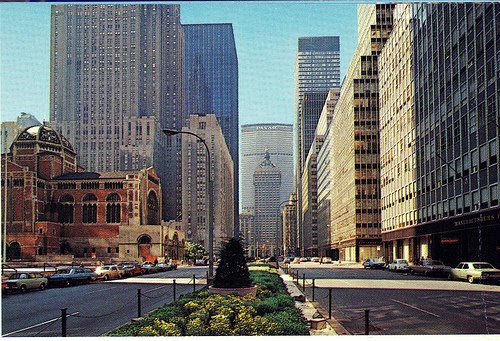
By the 1950s, the avenue was considered the backbone of New York City with corporations setting up glittering new office towers in the International Style — the Lever House, the Seagram Building, even the Pan Am Building. 
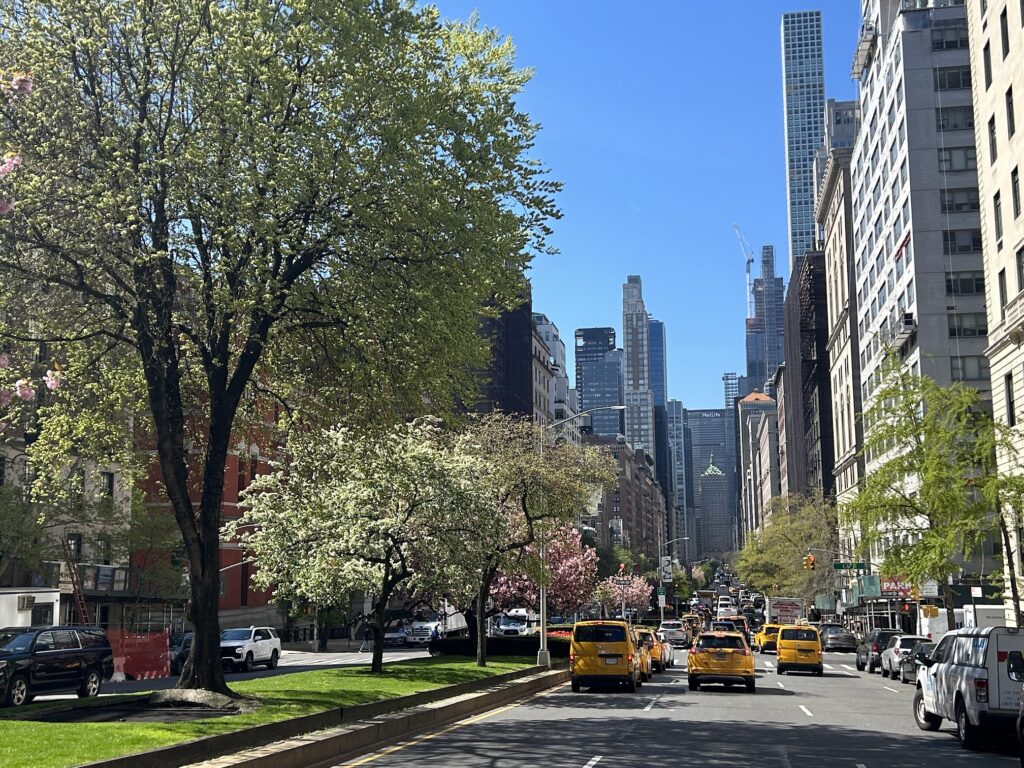
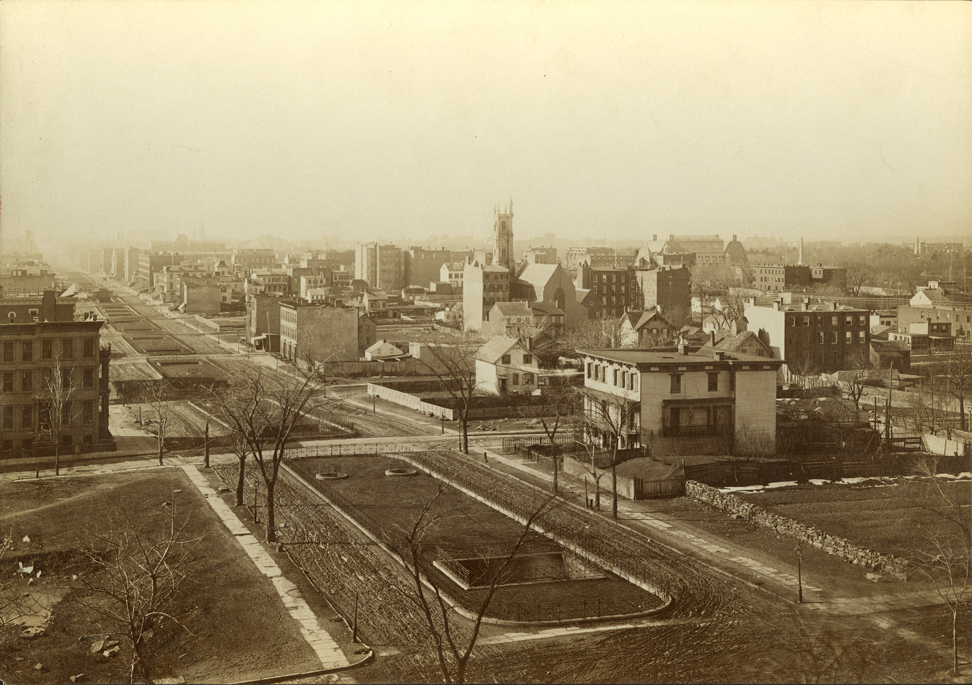
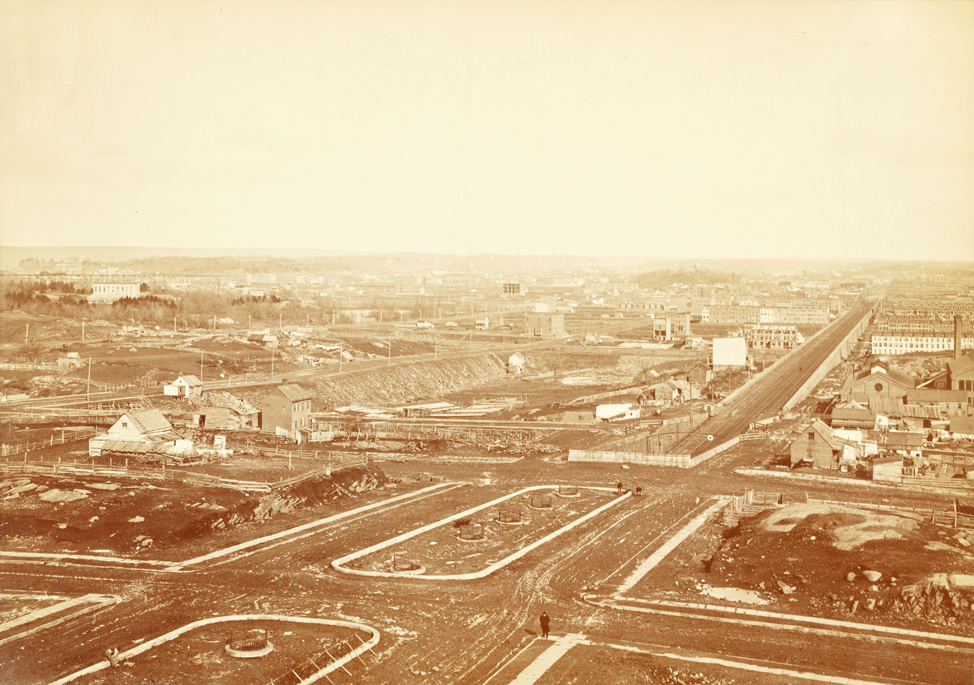
But the foundation for all this wealth and success was, in actually, a train tunnel, originally operated by the New York Central Railroad. This street, formerly known as Fourth Avenue, was (and is) one of New York’s primary traffic thoroughfares. For many decades, steam locomotives dominated life along the avenue, heading into and out of Cornelius Vanderbilt’s Grand Central (first a depot, then a station, eventually a terminal).

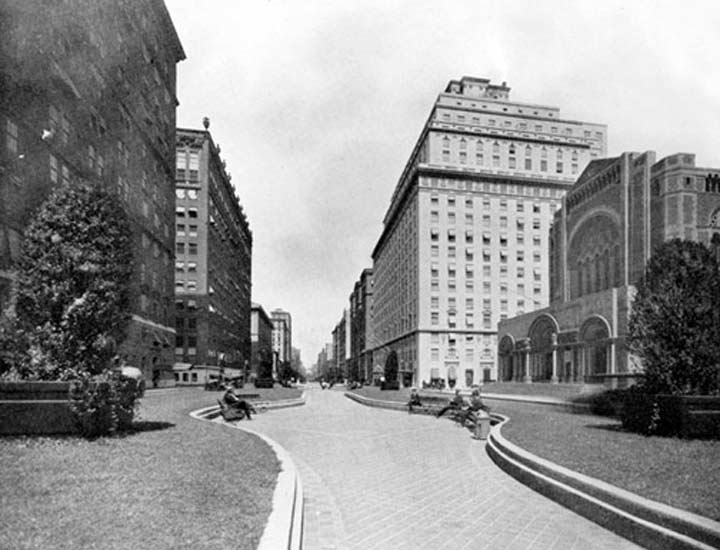
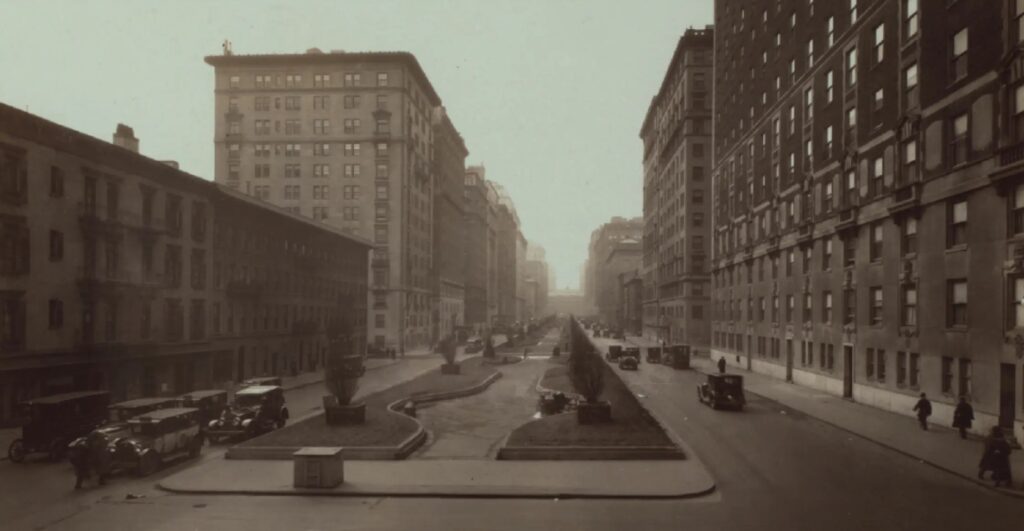
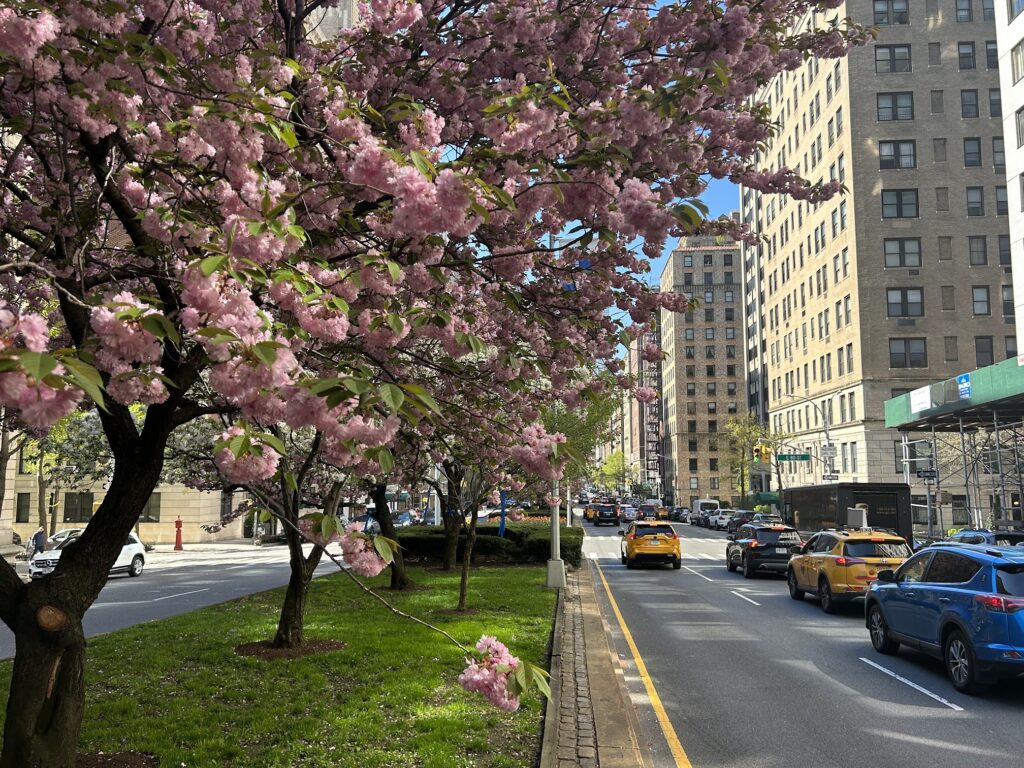
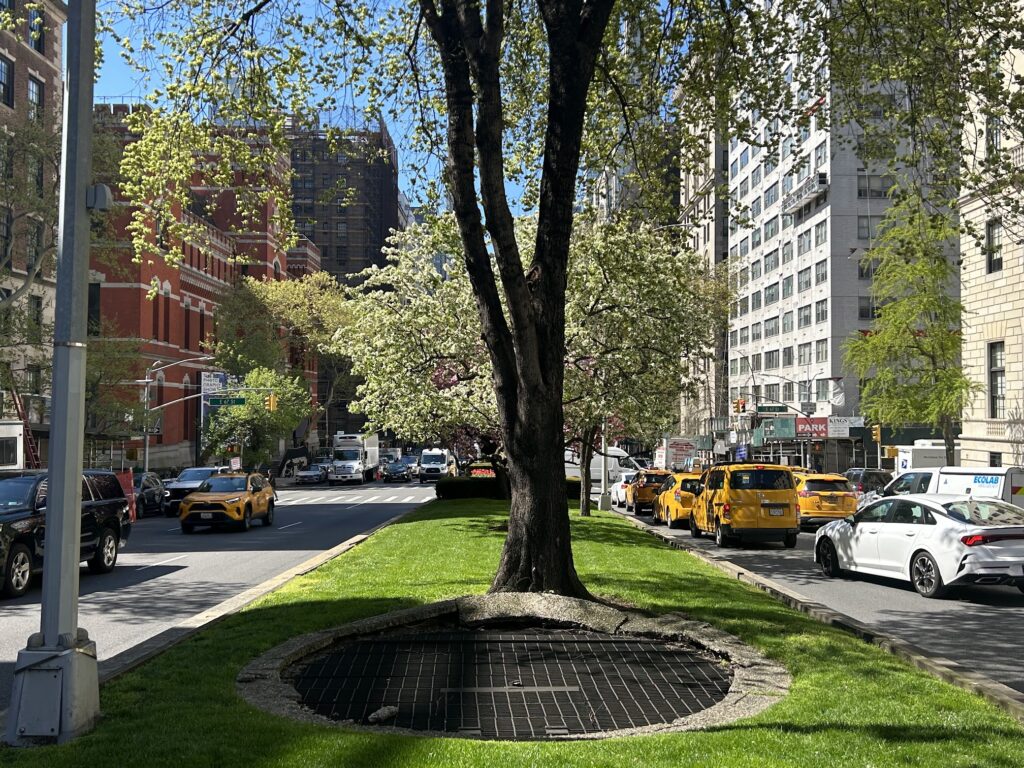
However train tracks running through a quickly growing city are neither safe nor conducive to prosperity. Eventually, the tracks were covered with beautiful flowers and trees, on traffic island malls which have gotten smaller over the years. 

By the 1910s this allowed for glamorous apartment buildings to rise, the homes of a new wealthy elite attracted to apartment living in the post-Gilded Age era. But that lifestyle was not quite made available to everyone. 

In this episode, Greg and Tom take you on a tour of the tunnels and viaducts that helped New York City to grow, creating billions of dollars of real estate in the process. 

LISTEN NOW: UP AND DOWN PARK AVENUE
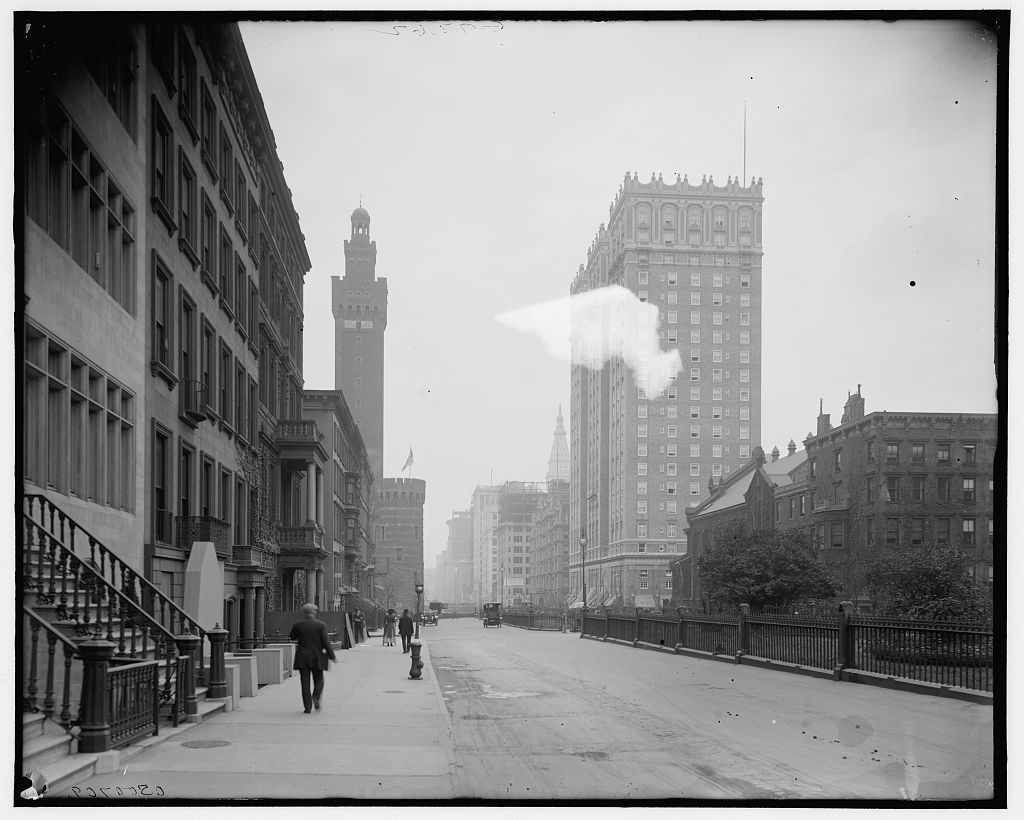

Park Avenue, looking south of 36th Street, 1900-1905 Library of Congress
Park Avenue and 94th Street, Library of Congress
Park Avenue, late 1800s, Musem of the City of New York
Park Avenue, after St Bart’s came along in 1918 but before these lovely pedestrian areas were destroyed in the late 1920s.
Park Avenue 1927, Department of Transportation
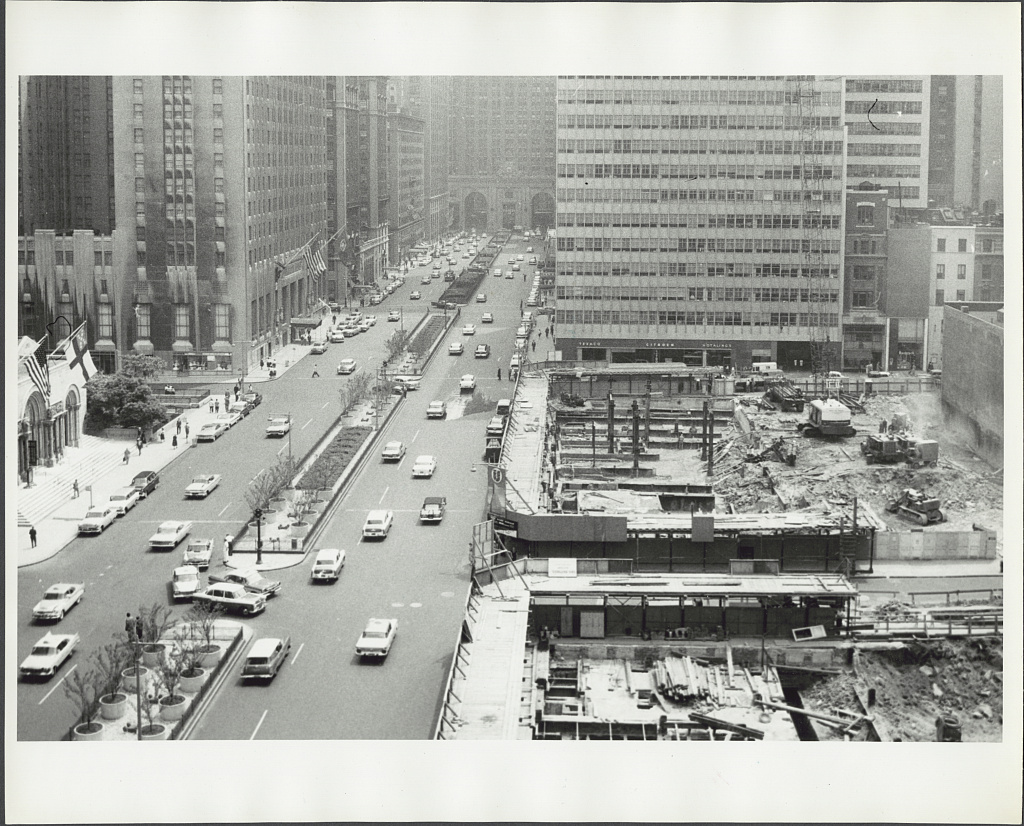
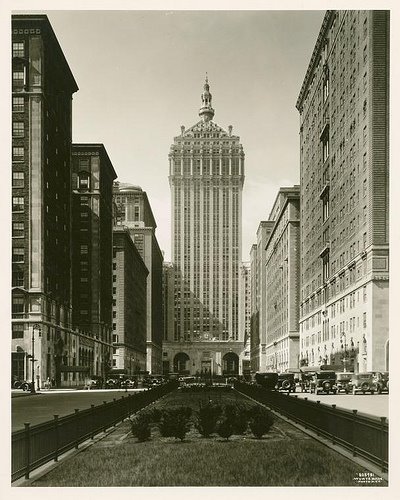
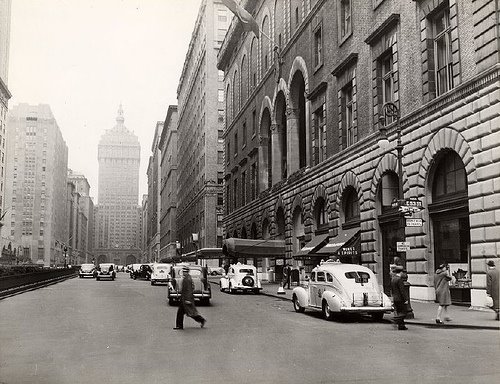
“Photograph shows cars moving along Park Avenue as the road heads towards the tunnels of the Helmsley Building, known then as the New York General Building. Building construction visible to the right. St. Bartholomew’s Church slightly visible on left.” Library of Congress, 1959

Photo by Greg Young
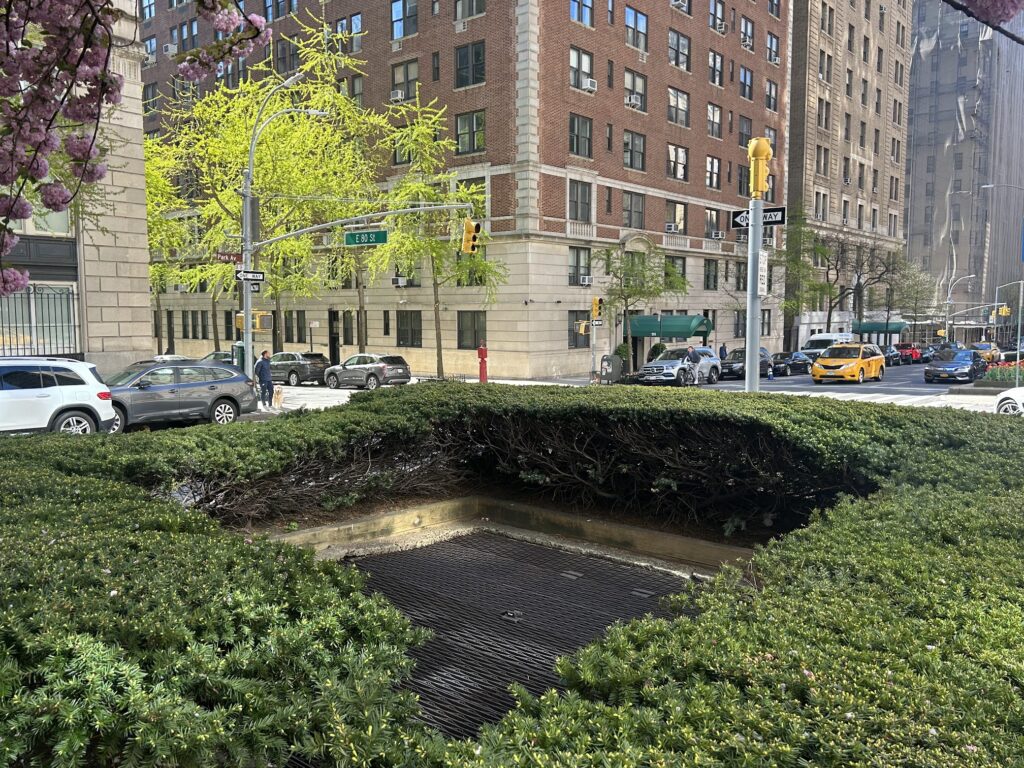
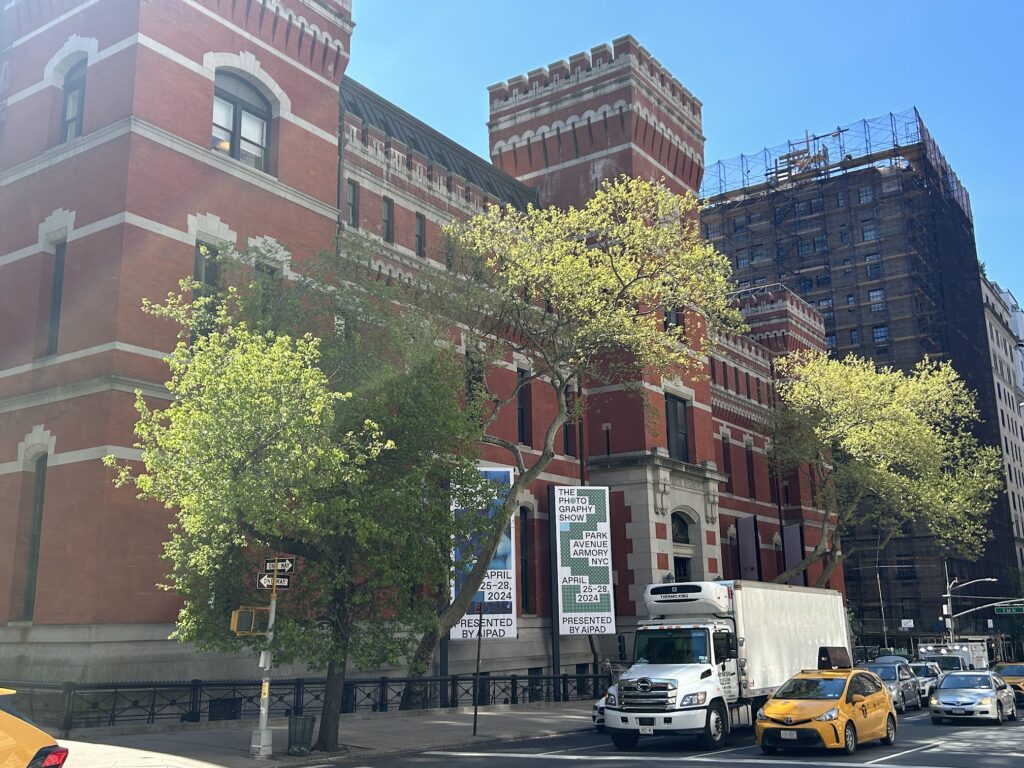
Photo by Greg Young
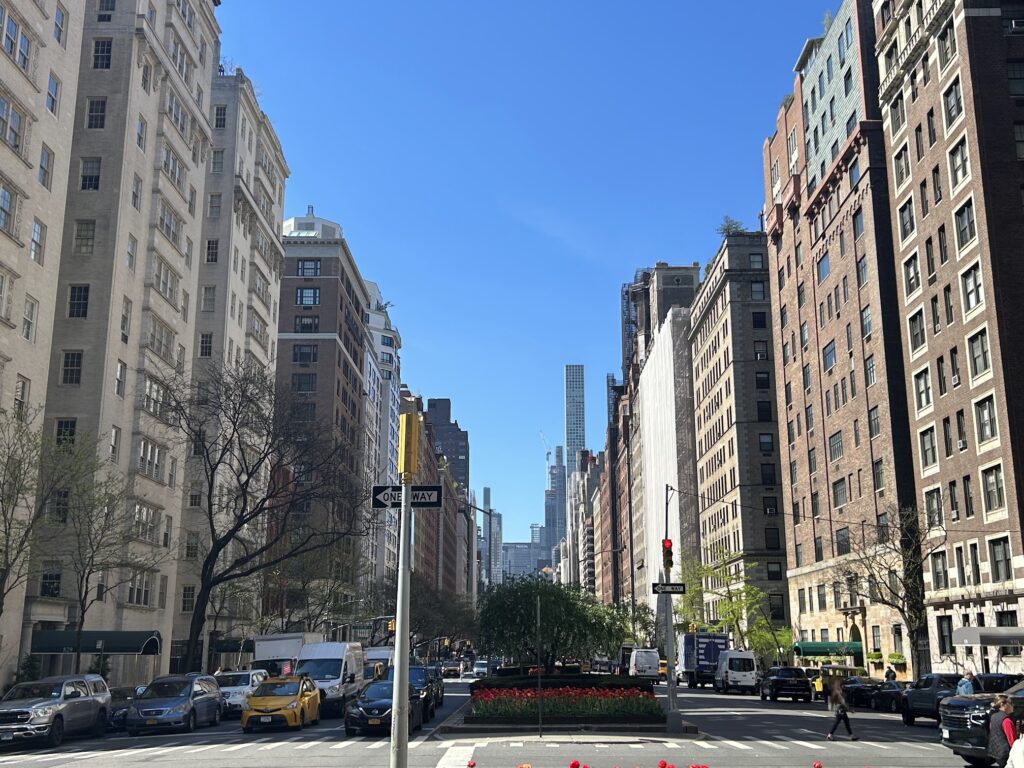
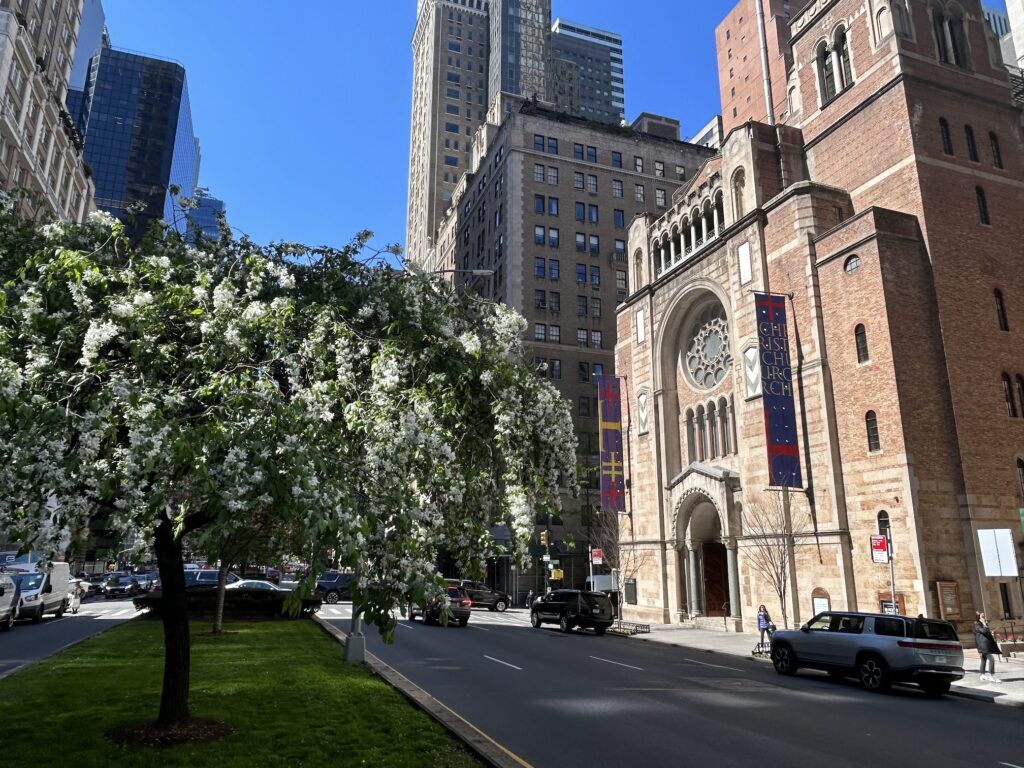
Photo by Greg Young
Photo by Greg Young
Photo by Greg Young
Photo by Greg Young
Photo by Greg Young
Photo by Greg Young

FURTHER LISTENING

Listen to these related Bowery Boys episodes after you’re done listening to the Park Avenue show:


FURTHER READING

This week we’re suggesting a few historic designation reports for you history supergeeks looking for a deep dive into Park Avenue history. Dates indicated are when the structure or historic district was designated

St. Bartholomew’s Church and Community House (1967)

Seventh Regiment Armory/Park Avenue Armory (1967)

Consulate General of Italy (formerly the Henry P. Davison House) (1970)

New World Foundation Building (1973)

Racquet and Tennis Club Building (1979)

Pershing Square Viaduct/Park Avenue Viaduct (1980)

Upper East Side Historic District Designation Report (1981)

Lever House (1982)

1025 Park Avenue Reginald DeKoven House (1986)

New York Central Building (1987)

Seagram Building (1989)

Mount Morris Bank Building (1991)
Expanded Carnegie Hill Historic District Report (1993)
Waldorf-Astoria Hotel (1993)

Pepsi-Cola Building (1995)

Ritz Tower (2002)

2 Park Avenue Building (2006)

Park Avenue Historic District Designation Report (2014)

Categories
Planes Trains and Automobiles

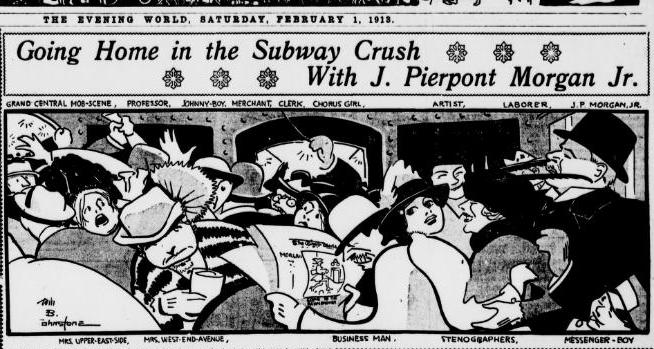
J. P. Morgan Jr. rides the subway and is accosted by a hat

Any of you who ride the 4-5-6 train in rush hour will especially relate to this story.  It takes place, in fact, on that very line, one hundred years ago.

Will B. Johnstone, an artist at the New York Evening World, noticed an interesting sight on his subway ride that morning, February 1, 1913, the day before the opening of Grand Central Terminal.  Crammed up against the wall of the train was J. P. Morgan Jr., son of the famous financier.

Such a sight greatly amused Johnstone. “There stood J. Pierpont Morgan Jr. ignominiously caught in the deadly rush hour!”  Even more remarkable, the writer notes, was the fact that Morgan was a principal financier for the Dual Contracts project, which would greatly expand the subway system and double the length of tracks into the other boroughs.

“I wondered why he was using the subway instead of a diamond-studded limousine? What did he mean by travelling with the common herd and of all times during rush hour?”

At one point, Morgan was accosted by a young woman with “a large velvet hat and the hat had two long stiff quills projecting from it like the horns of a billy goat, and as dangerous. Mr. Morgan’s face was impaled between them.”

The woman hat jostled about during the bumpy ride, and “[t]he quills began to bob around his face and he was busy trying to avoid them.” Others noticed the financier’s dilemma and began laughing with him.

“She’s going to get me yet,” he laughed to another passenger.  “And he was right,” Johnstone noted, “for one side of the quill and then the other jabbed him in the face.”

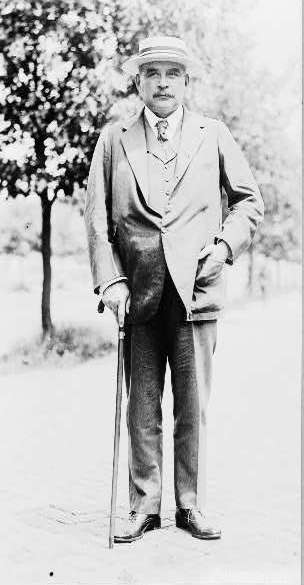
At right: Morgan in 1919

Finally at the Grand Central Station**, he had to push his way through the crowd and barely got of the car before the doors closed.

“This is no way to treat royalty,” Johnstone laments.

Less than two months after this incident, his father Morgan Sr. would die in Rome, leaving him one of the world’s largest business enterprises.  I wonder if he ever rode the subway again after that.

You can read the original article at the Library of Congress.

**The subway station opened in 1904 and rattled away underground throughout the entire construction phase of the terminal above.

Categories
Podcasts

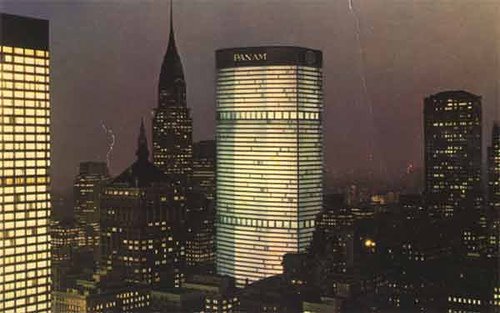
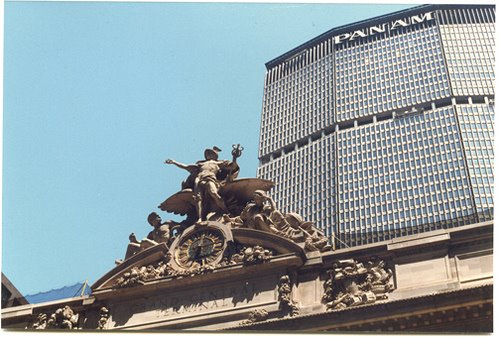
PODCAST: The Pan Am Building

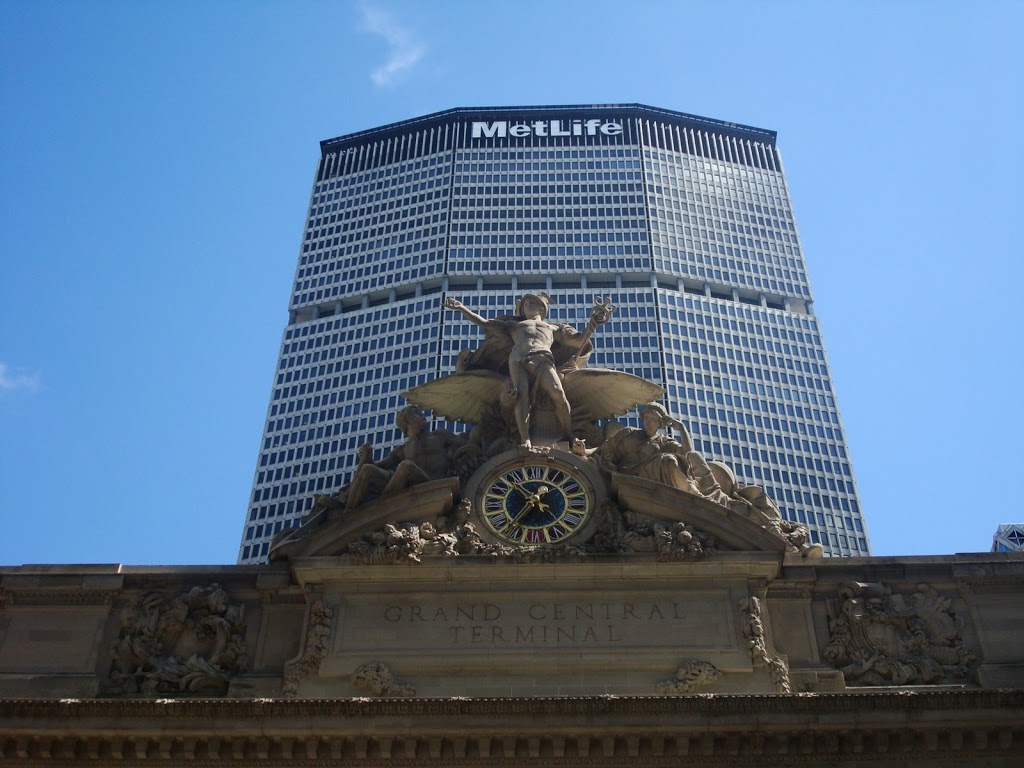
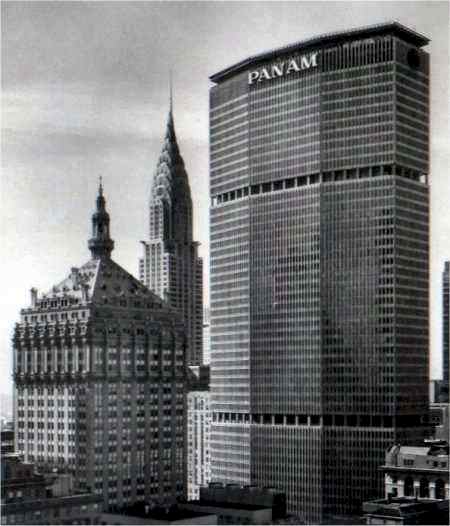
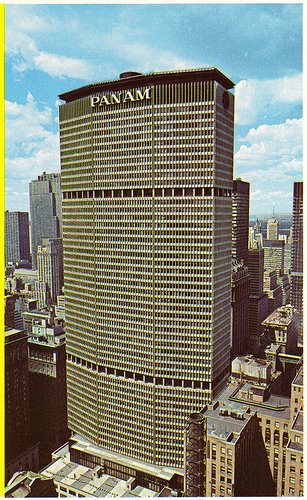
Today it’s the Met Life Building. It’s been called the ugliest building in New York City. It sits like a monolith behind one of the city’s most enduring icons Grand Central Terminal. But it’s got some secrets you may not know about. In this podcast, we scale the heights of this misunderstood marvel of modern architecture.
Listen to it for free on iTunes or other podcasting services. Or you can download or listen to it HERE

In the days before the Pan Am Building, Park Avenue was lorded over by the ‘dowager queen’ of glamour architecture, the New York Central Building (later the New York General Building, and finally — the Helmsley Building)

Another angle, year of photograph unknown.

In this picture, taken in 1962, the monolith is almost complete.

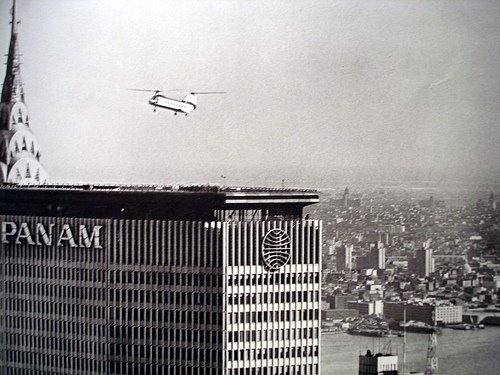
New York Airways once provided helicopter service from the top of the Pan Am in the 1960s. It was briefly revived in 1977, but a tragic accident killing five people ensured it would never be tried again.

One of those killed in the tragic helicopter blade accident of 1977 was film producer Michael Findlay, creator of such sexploitation classics like the Flesh trilogy and the Ultimate Degenerate. (He also made some films with titles that are bitterly ironic considering his untimely death.)

In 1987

Today

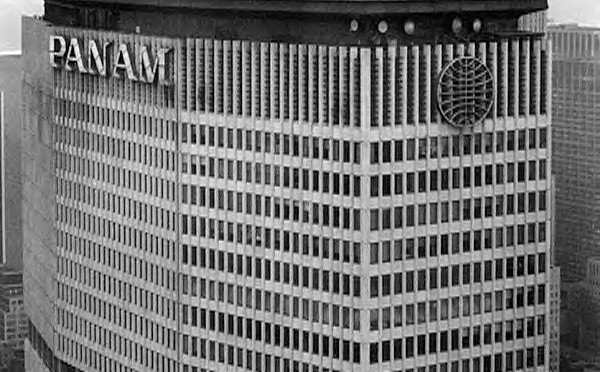
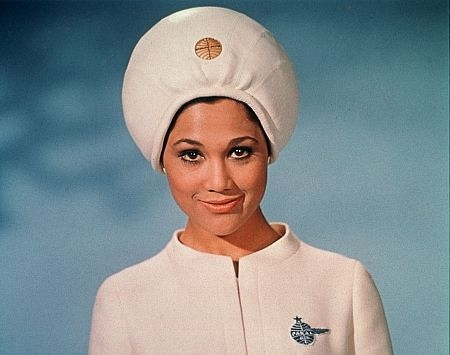
When Pan Am moved into the building in 1962, they were one of the world’s leading airlines, best known for their on-board service and fleet of attentive flight attendants.

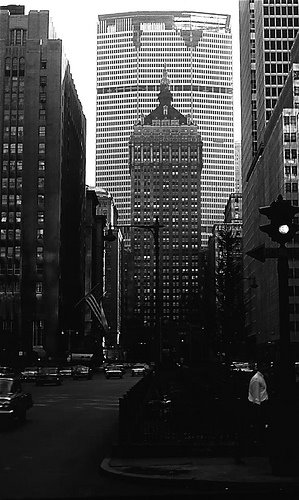
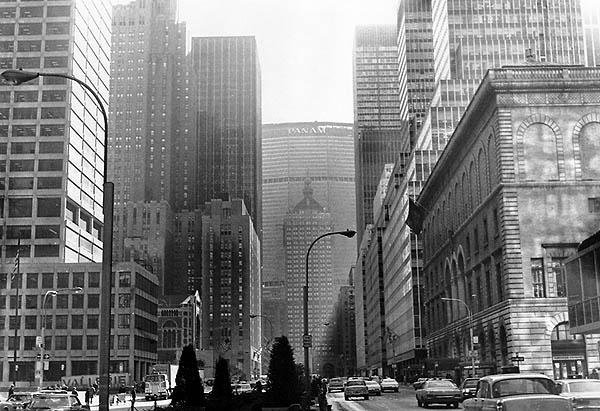
Looking down Park Avenue at the Pan Am in 1970

The same view a few years later

Its relationship to the Helmsley Building has caused great controversy over the years. Some say it’s like hanging a work of art in a cheap frame.

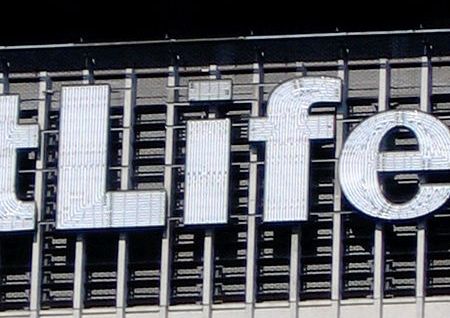
Metropolitan Life replaced the Pan Am logo with its own in 1991

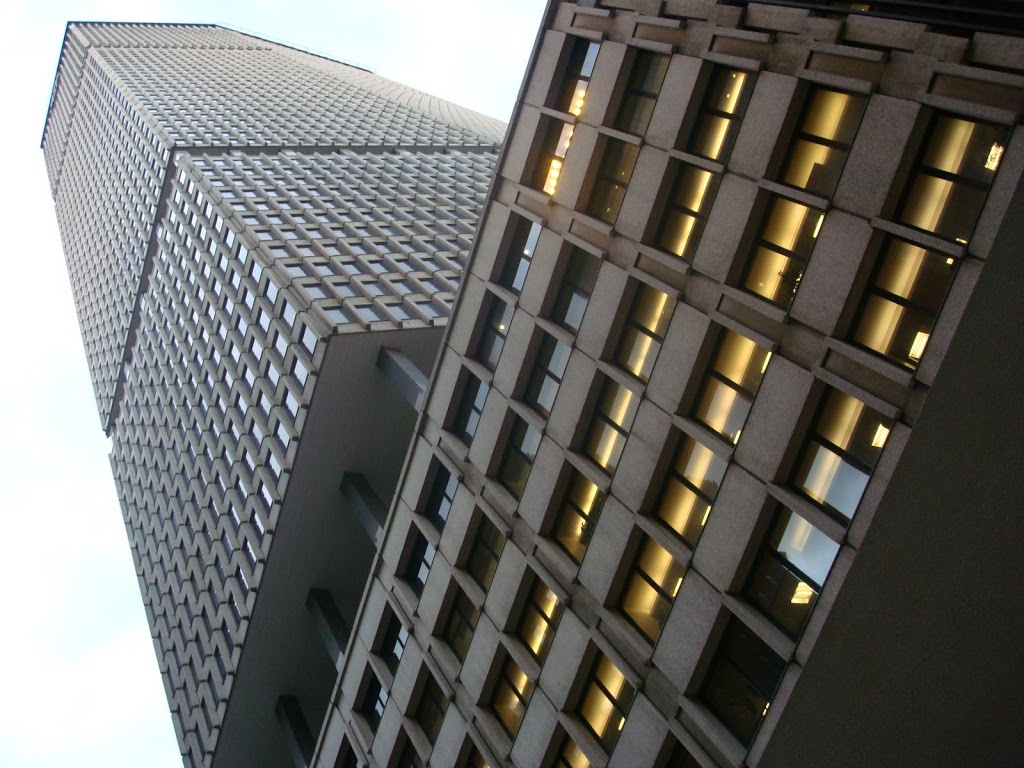
Quite unlike an impressionist painting, the building actually looks more interesting the closer you are to it, revealing some odd angles befitting its imposing proportions and ‘lozenge’ shape

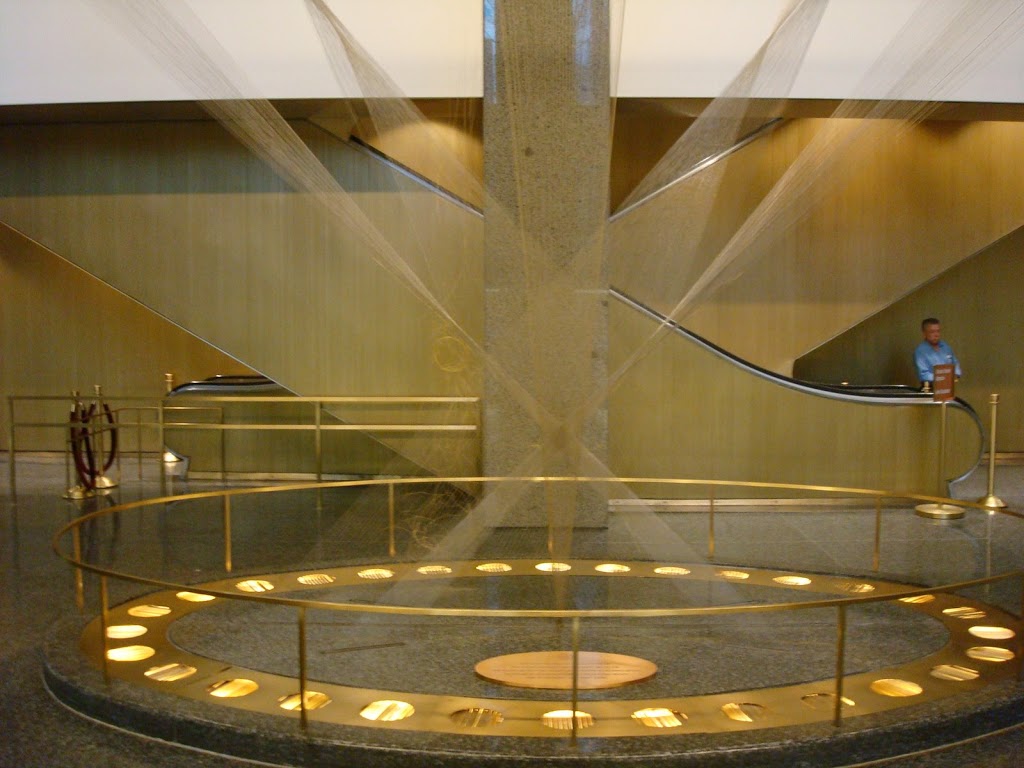
Inside the lobby: Flight, the expressive wire sculpture of Richard Lippold. The lobby once also held a painting by Josef Albers.

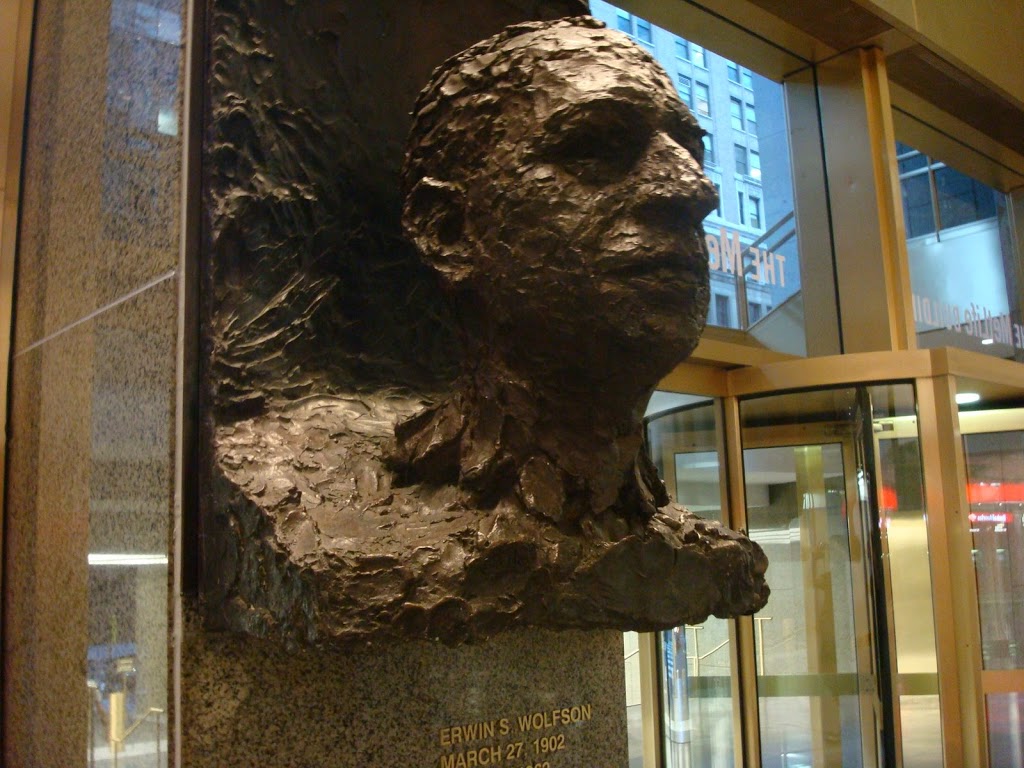
This rather grotesque bronze bust of Erwin Wolfson greets you as you enter the building.

CLARIFICATION: In the podcast, it appears I was a little vague in my description the Metropolitan Life Insurance Tower which is on Madison Square Park. Although the slender clock tower is indeed also topped with gold ornamentation, do not confuse it with Madison Square’s real gold standard — the gilded New York Life Insurance Building

Categories
Podcasts

PODCAST: Grand Central

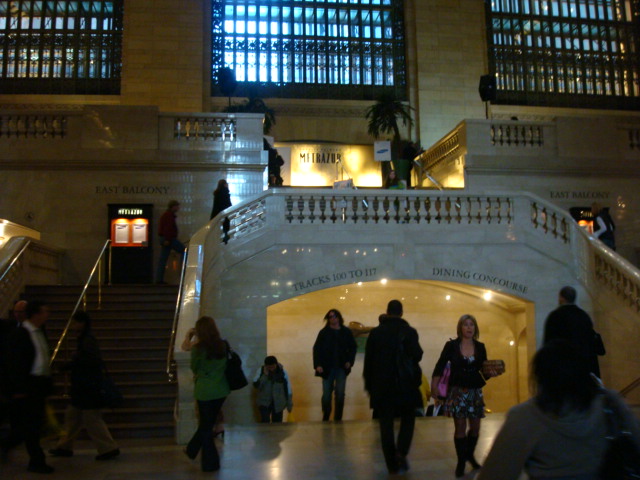
Join the Bowery Boys for a trip through the history of Grand Central — the depot, the station, and the terminal.

Listen to it for free on iTunes or other podcasting services. Or you can download or listen to it HERE

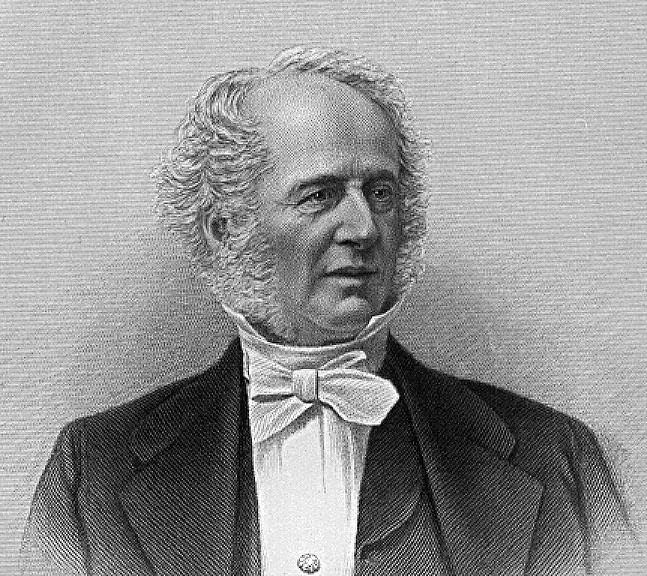
Cornelius Vanderbilt, railroad baron and mastermind of the original Grand Central Depot

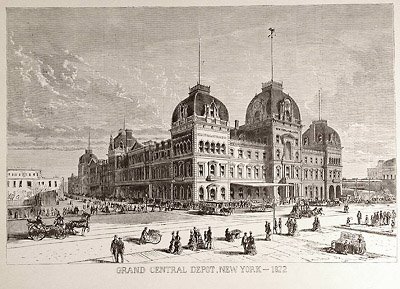
Vanderbilt’s Grand Central Depot in 1873

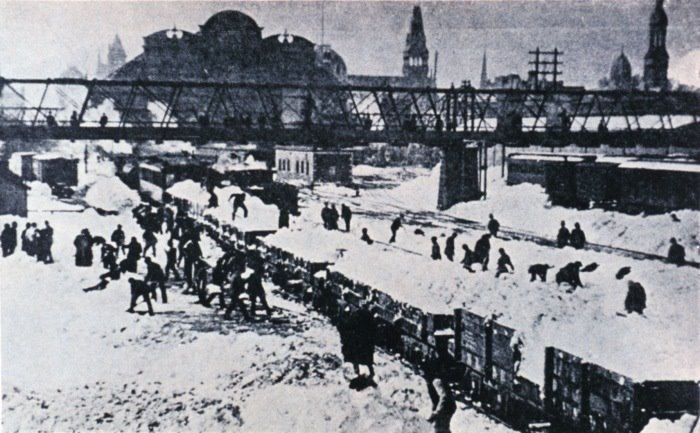
Behind the Depot during the blizzard of 1888. The walkways over the tracks are easily seen from this vantage.

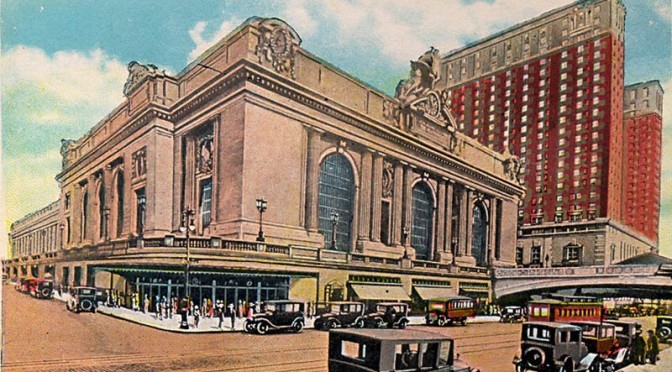
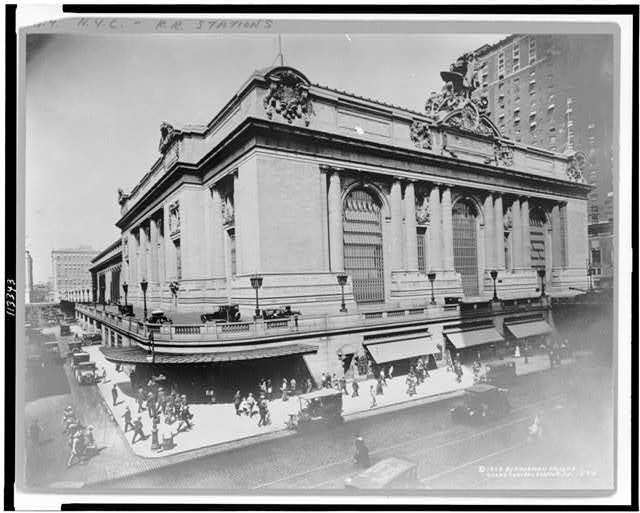
An interesting angle of Grand Central from the 1920s. Notice the big nothing behind it.

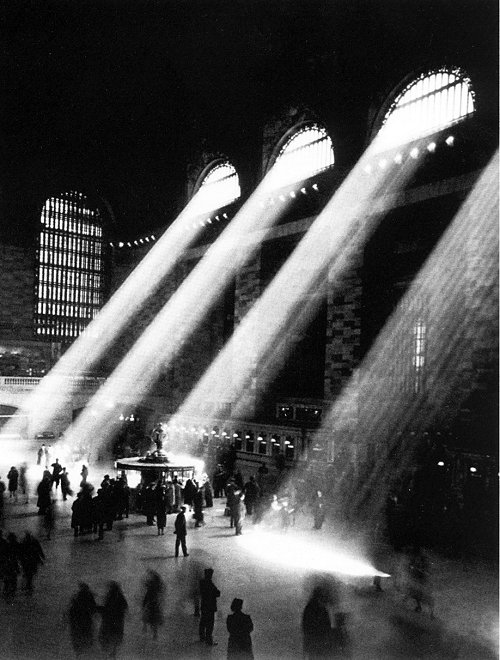
Probably the most famous image of Grand Central Terminal is this one from 1935

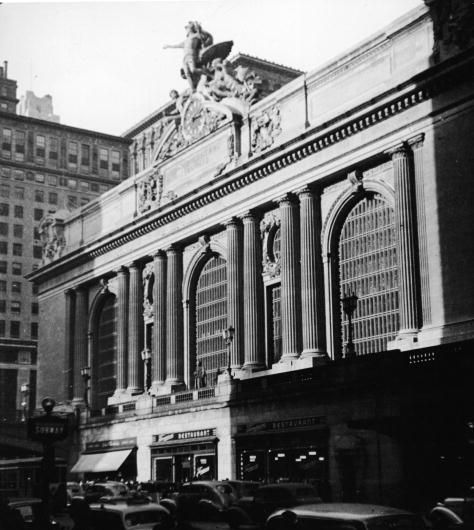
The exterior, from the 1940s

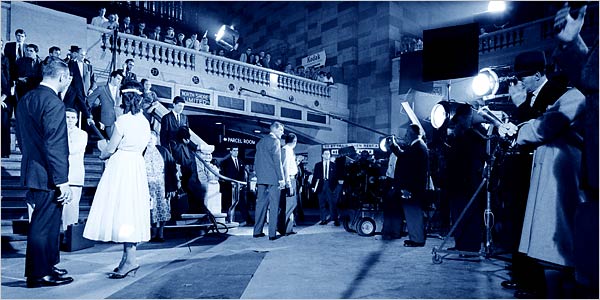
Alfred Hitchcock films Cary Grant in the Main Concourse for his film ‘North By Northwest’

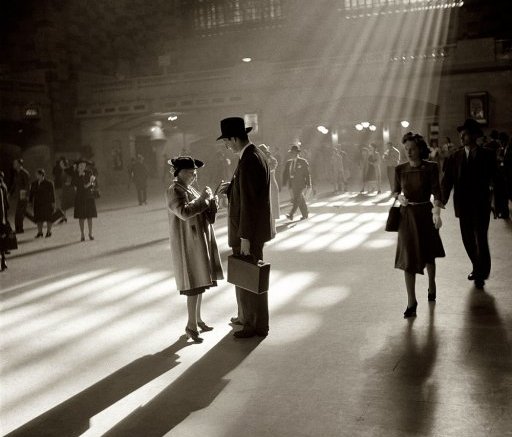
Mid-day, 1941 (Pic courtesy of Shorpy’s)

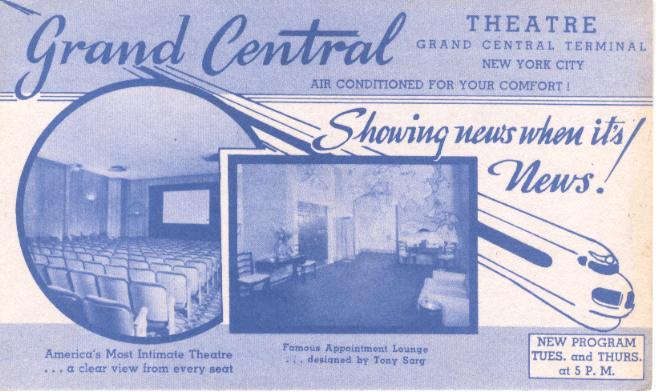
For a short time, Grand Central hosted a movie house

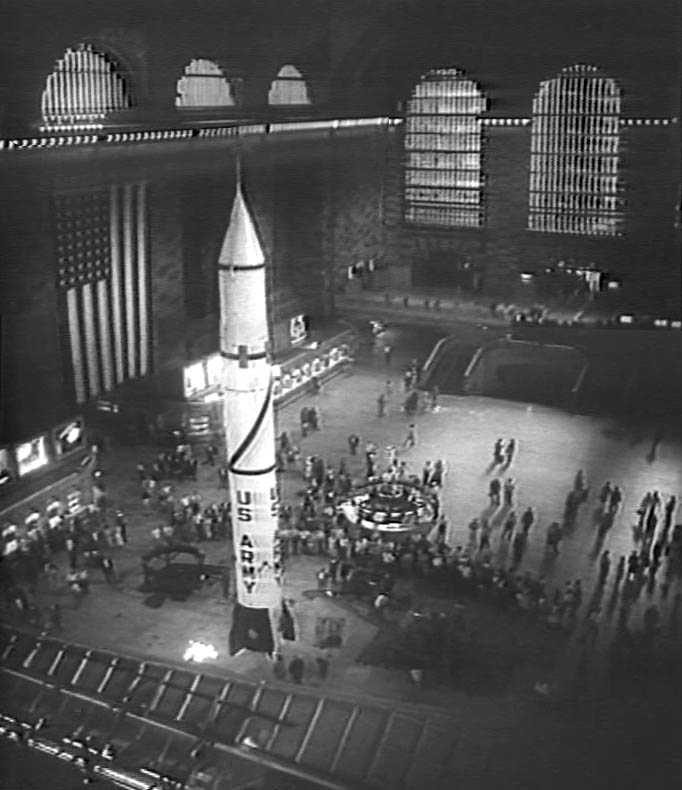
Grand Central becomes a host to a lot of unusual objects, including this Redstone rocket, in an apparent sign of U.S. strength during the Cold War

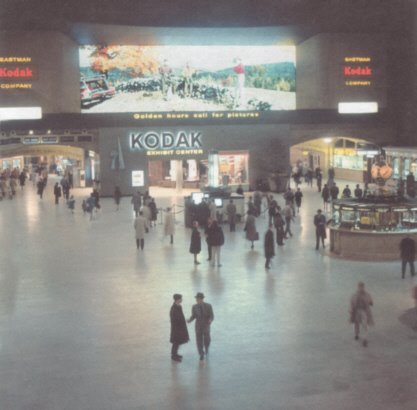
Advertising dominated the main concourse by the 50s, including this well known (and rather garish) Kodak sign

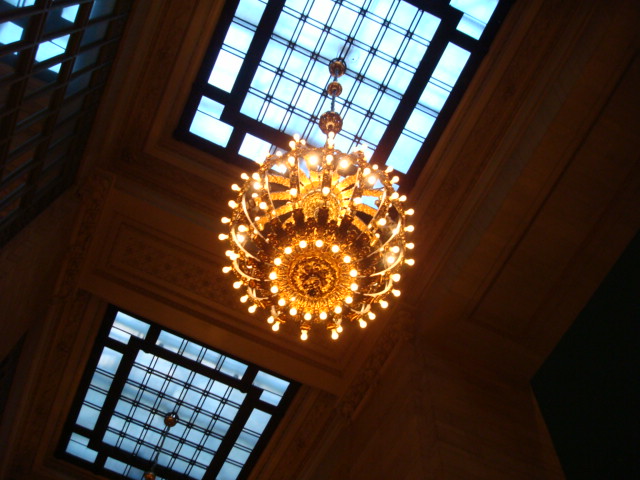
Inside the Terminal today: the glittering spherical chandeliers, their gold lustre rediscovered during the extensive renovation of the 1990s

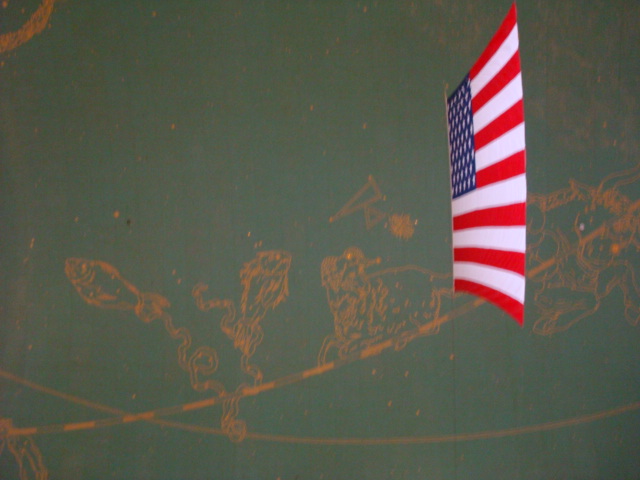
The vast astrological themed ceiling, lit with fiber optics to highlight the constellations

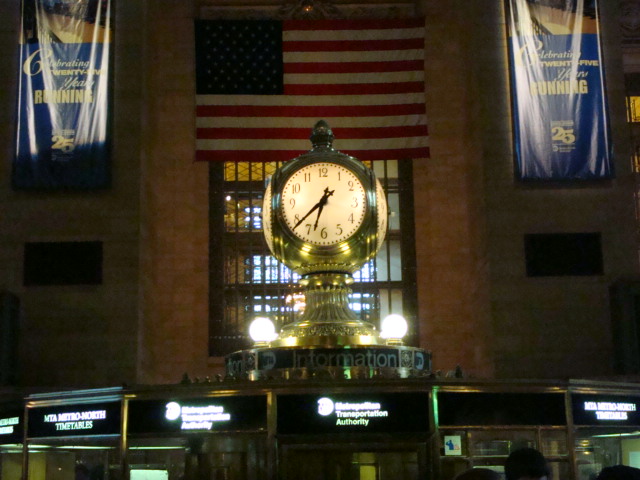
The opal timepiece which sits above the information desk has an estimated worth between $10 and $20 million dollars

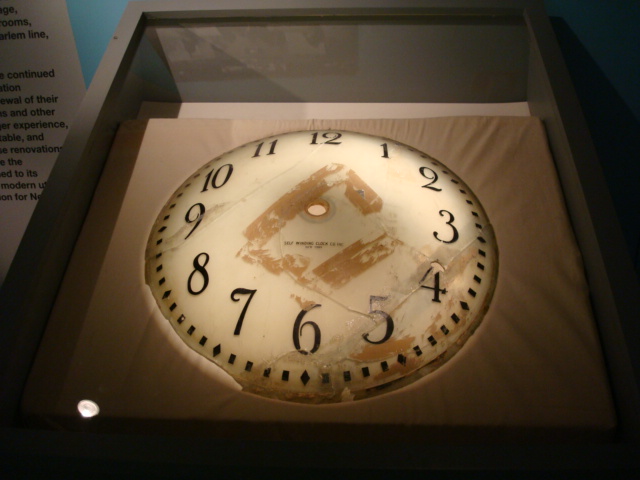
On original face of the opal clock sits in the Grand Central Transit Museum. The hole you see in the face is purported to be a bullet hole!

The eastern staircase, in near perfect symmetry with its older western companion, was actually just built during the renovation. It was in the original plans but was never built, probably because nobody considered there would be much activity on the building’s east side.

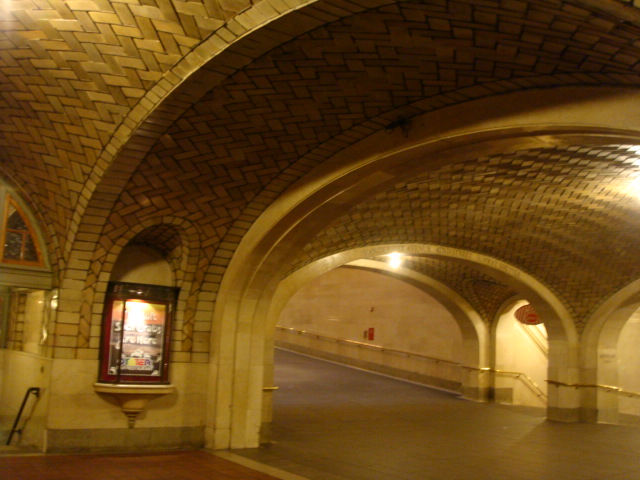
The famous Whispering Gallery

Grand Central’s Other Explosion

Wednesday’s steam explosion disaster at 41st Street and Lexington Avenue, which at ‘press time’ had killed one person and injured 44, gave many people that sinister feeling of déjà vu they felt on Sept. 11. It reminded us almost as much of the New York blackout of 2003, with hundreds of people filling the streets with busy cellphones and sweaty backs, some annoyed, some good humored.

Believe it or not, however, over a hundred years ago, the Grand Central Station environs bore witness to an even more horrifying explosion … just one block away.

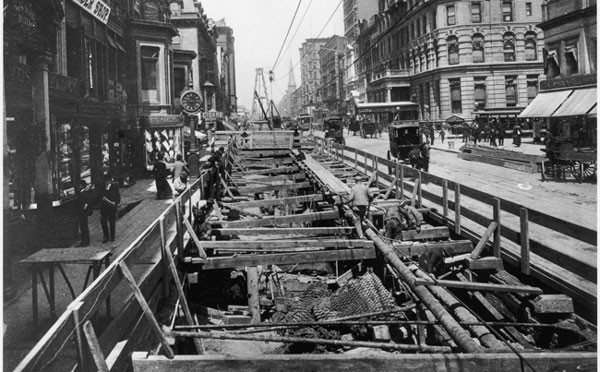
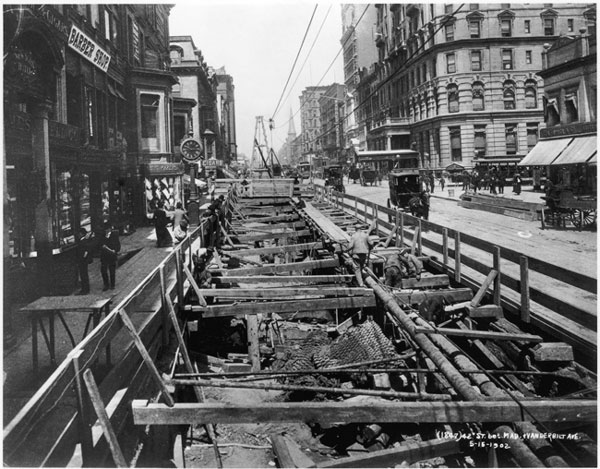
William Barkley Parsons was given the arduous task of installing the first New York City subway system in 1894. After visiting the London Underground, he determined that the best way to drill holes through the varied and sometimes delicate surface of the island was with a method called ‘cut and cover’ –- essentially digging a gigantic, deep trench and sealing it up at street level. This was chosen over the trickier ‘deep tunneling’ which required greater blasting and elaborate subterranean passageways.

One of the subcontractors in Parson’s employ was the unfortunate Ira Shaler, who was in charge of the tunneling of 34th through 42nd Street. This being before the days of union and worker’s protection, Shaler was soon stamped with the mortibund nickname ‘the voodoo contractor’ for a nasty string of deadly accidents along the line.

And so, 105 years after Wednesday’s steam explosion, the greatest of Shaler’s accidents happened a block away at 41st and Park Avenue, on Jan 27, 1902. A wooden shed filled with 200 pounds of dynamite ignited and blew, sending billowing flames high into the sky and glass shards flying for blocks. The nearby Murray Hill Hotel was severely damaged as was the great façade of the Grand Central terminal. Five people were killed and many others seriously injured. The tunnels below, strangely, were barely disturbed.

Shaler continued on, and with him, smaller calamities occured up and down the newly constructed tunnel shaft.

In the end, Shaler’s final unlucky victim was Shaler himself. He died five months later, four blocks down, on 37th and Park, crushed by tumbling rocks while he was demonstating the tunnel’s safety to his boss.

Or to quote professor Clifton Hood, a professor of history at Hobart and William Smith Colleges: “Parsons pointed to a rock and said it looked rotten. Shaler disagreed, stepped out from under a protective cover and tapped the rock with his cane. It all came down on top of him. He died a few days later. It was not a good way of losing an argument.”