Categories
Planes Trains and Automobiles Podcasts

TAXI: A History of the New York Taxi Cab

PODCAST The history of the New York City taxicab, from the handsome hansoms of old to the modern issues facing the modern taxi fleet today.

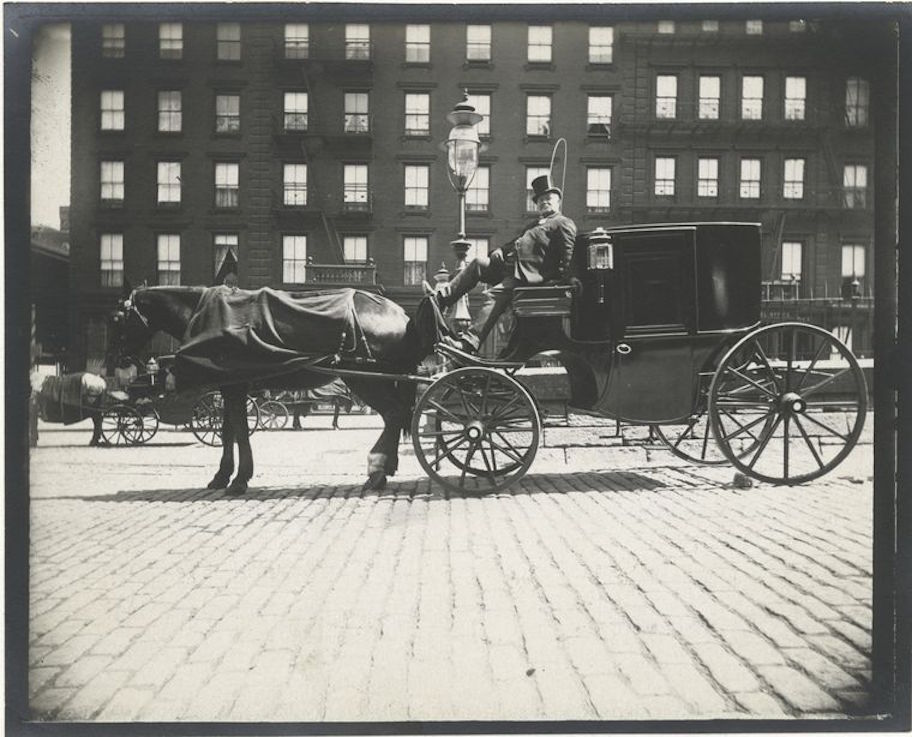
In this episode, we recount almost 175 years of getting around New York in a private ride. The hansom, the romantic rendition of the horse and carriage, took New Yorkers around during the Gilded Age. But unregulated conduct by — nighthawks — and the messy conditions of streets due to horses demanded a solution.

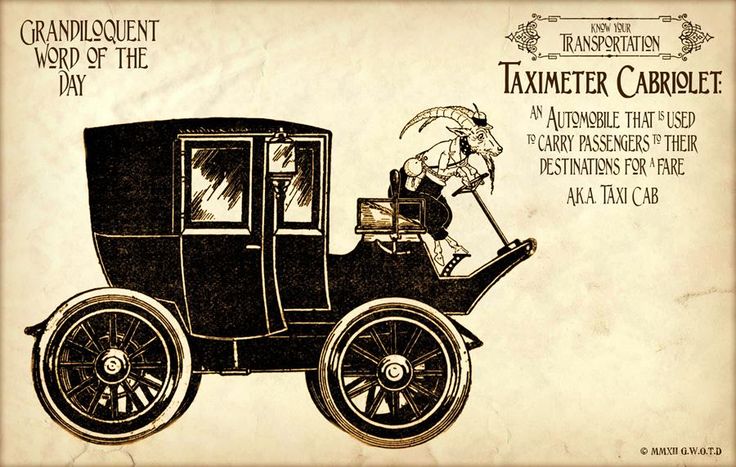
At first it seemed the electric car would save the day but the technology proved inadequate. In 1907 came the first gas-propelled automobile cabs to New York, officially — taxis — due to a French invention installed in the front seat.

By the 1930s the streets were filled with thousands of taxicabs. During the Great Depression, cab drivers fought against plunging fare and even waged a strike in Times Square. In 1937, Mayor Fiorello LaGuardia debuted the medallion system as a way to keep the streets regulated.

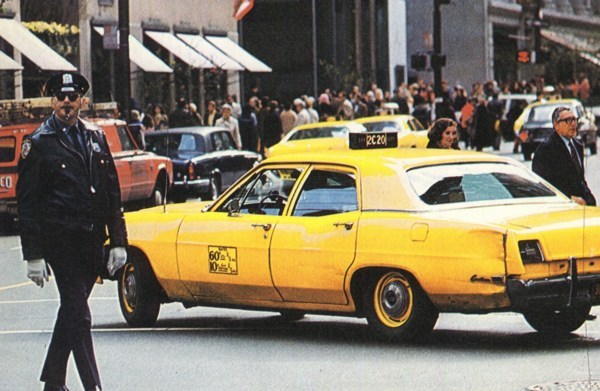
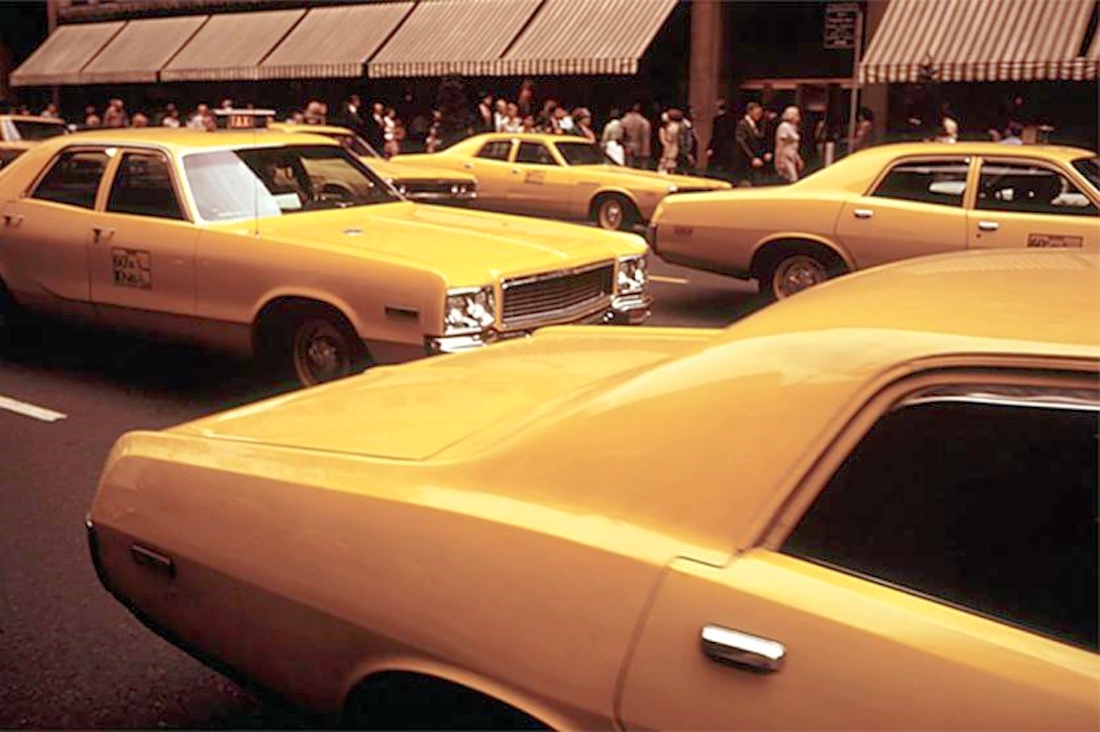
By the 1970s many cabdrivers faced an upswing of crime that made picking up passengers even more dangerous than bad traffic. Drivers began ignoring certain fares — mainly from African-Americans — which gave rise to the neighborhood livery cab system.

Today New York taxicab fleets face a different threat — Uber and the rise of private app-based transportation services. Will the taxi industry rise to the challenge in time for the debut of their taxi of tomorrow.

Listen Today: The Story of the Yellow Taxi Cab
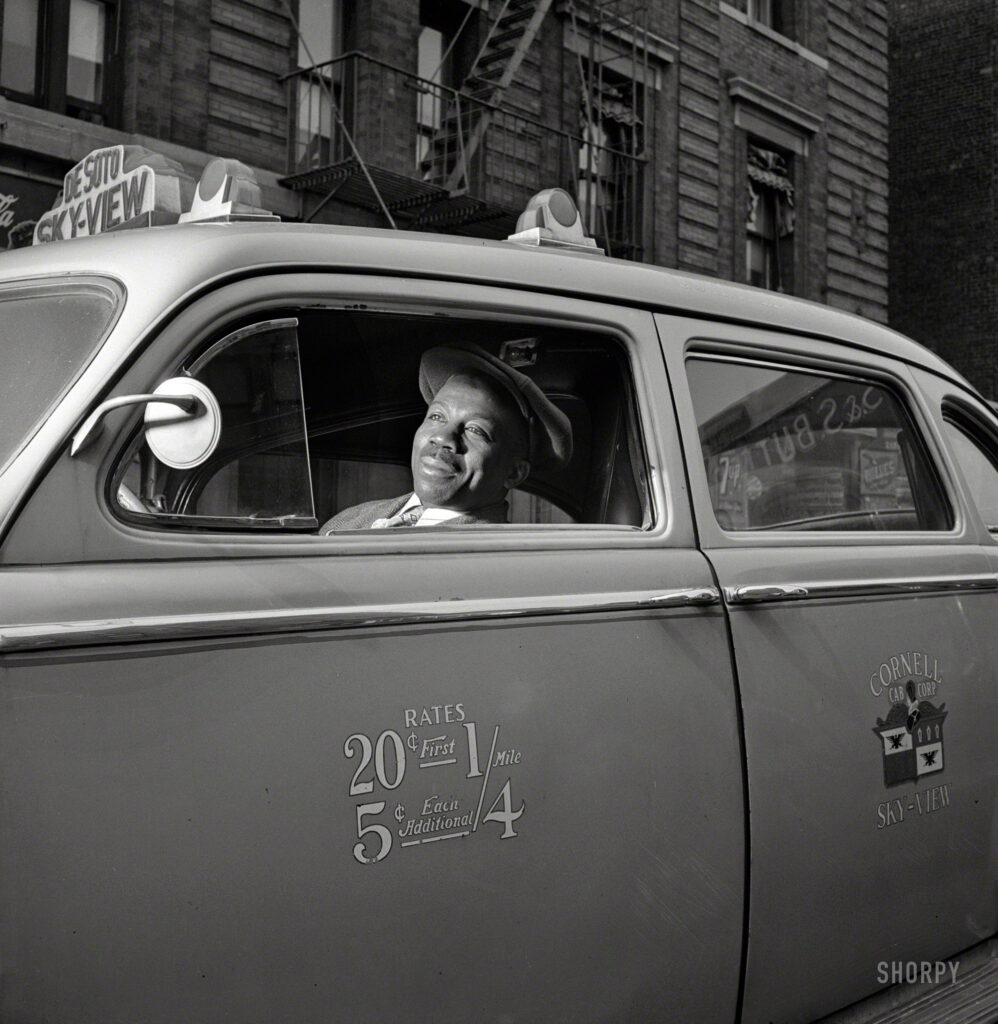

Albert Fenn/Office of War Information, cleaned up image courtesy Shorpy 

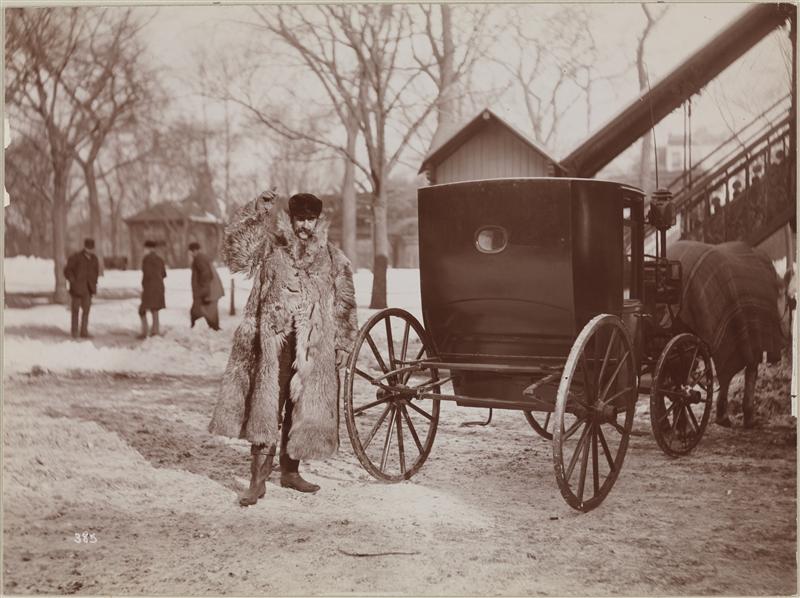
A snugly dressed cabbie awaiting some fares at the Battery Park elevated train station — 1895. Note that the poor horse too is swaddled up for a bad winter.
Courtesy Museum of the City of New  York
Courtesy Museum of the City of New York

A hack from 1896.

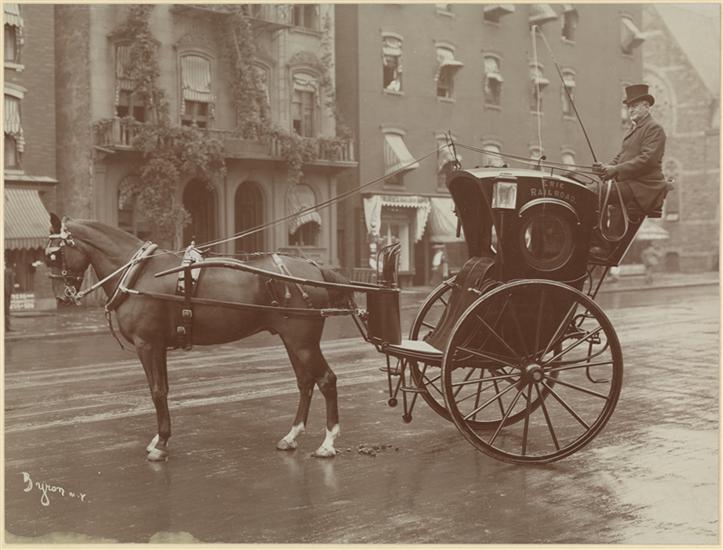
New York Public Library

A hansom cab from 1906. This was still the dominant cab ride in New York during the period despite the introduction of the ‘horseless carriage’ onto the city streets.
Courtesy Museum of the City of New York

A fleet of electric cars in 1896, and a couple Electrobats in action outside the Metropolitan Opera House 1898. Compare these with the picture of the hansom above.
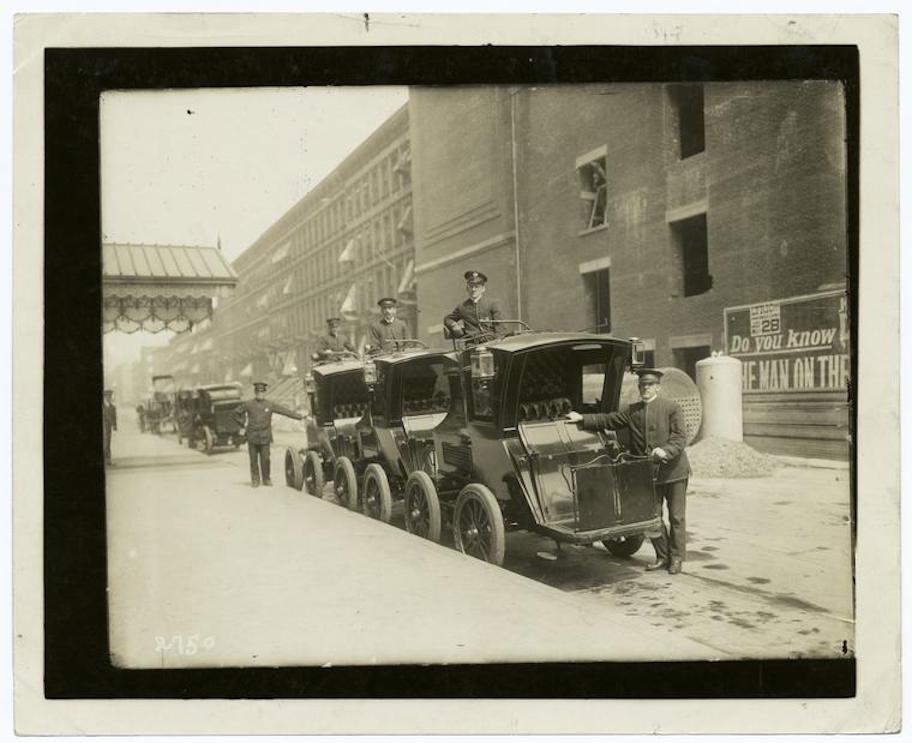
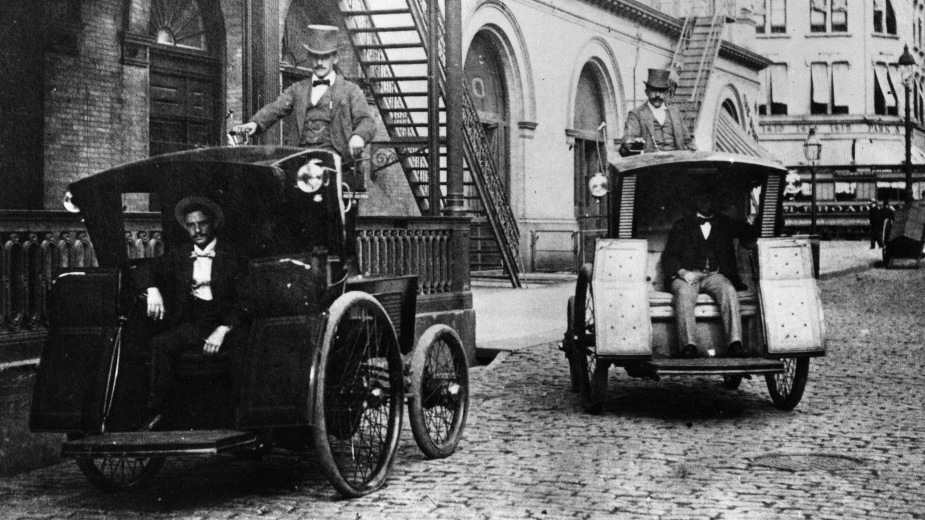
Courtesy New York Public Library
Courtesy Museum of Modern Art
Johanne Marie Rogn/Pinteresst

A taxicab waiting outside Alwyn Court (West 58th Street/7th Avenue)
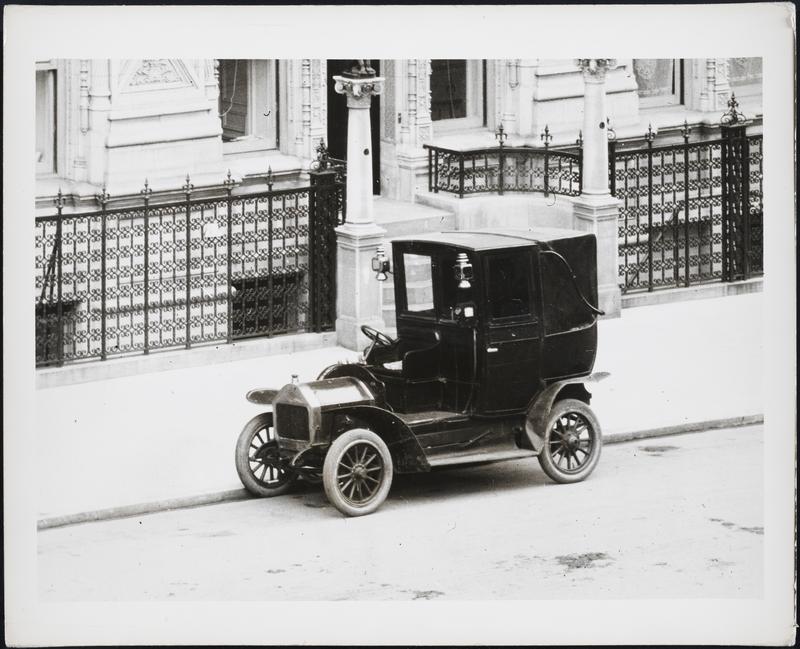
Museum of the City of New York

A cab waiting passengers at West 150th Street.
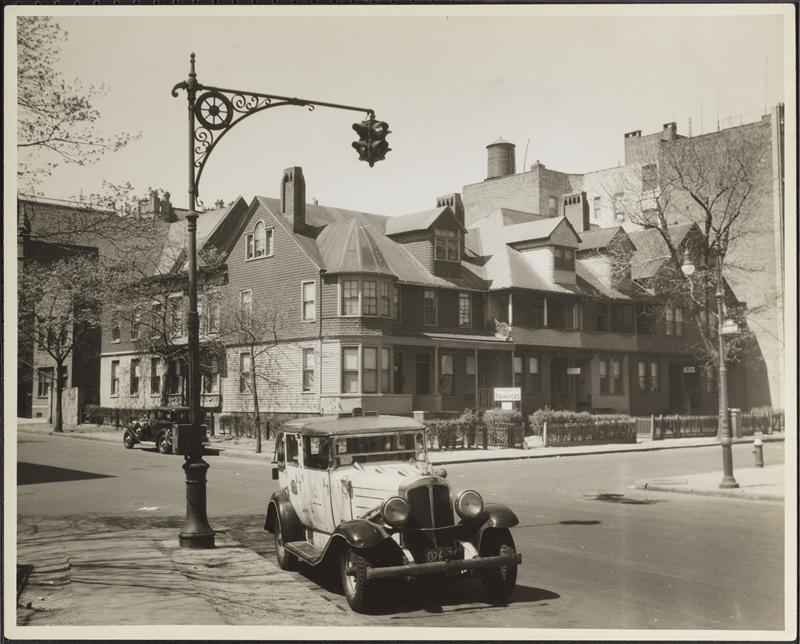
Photography by Charles Von Urban, courtesy Museum of the City of New York

A view of the bustling street life of Herald Square, 1935. The horses are off the street but there are many other kinds of transportation options joining the taxicab.
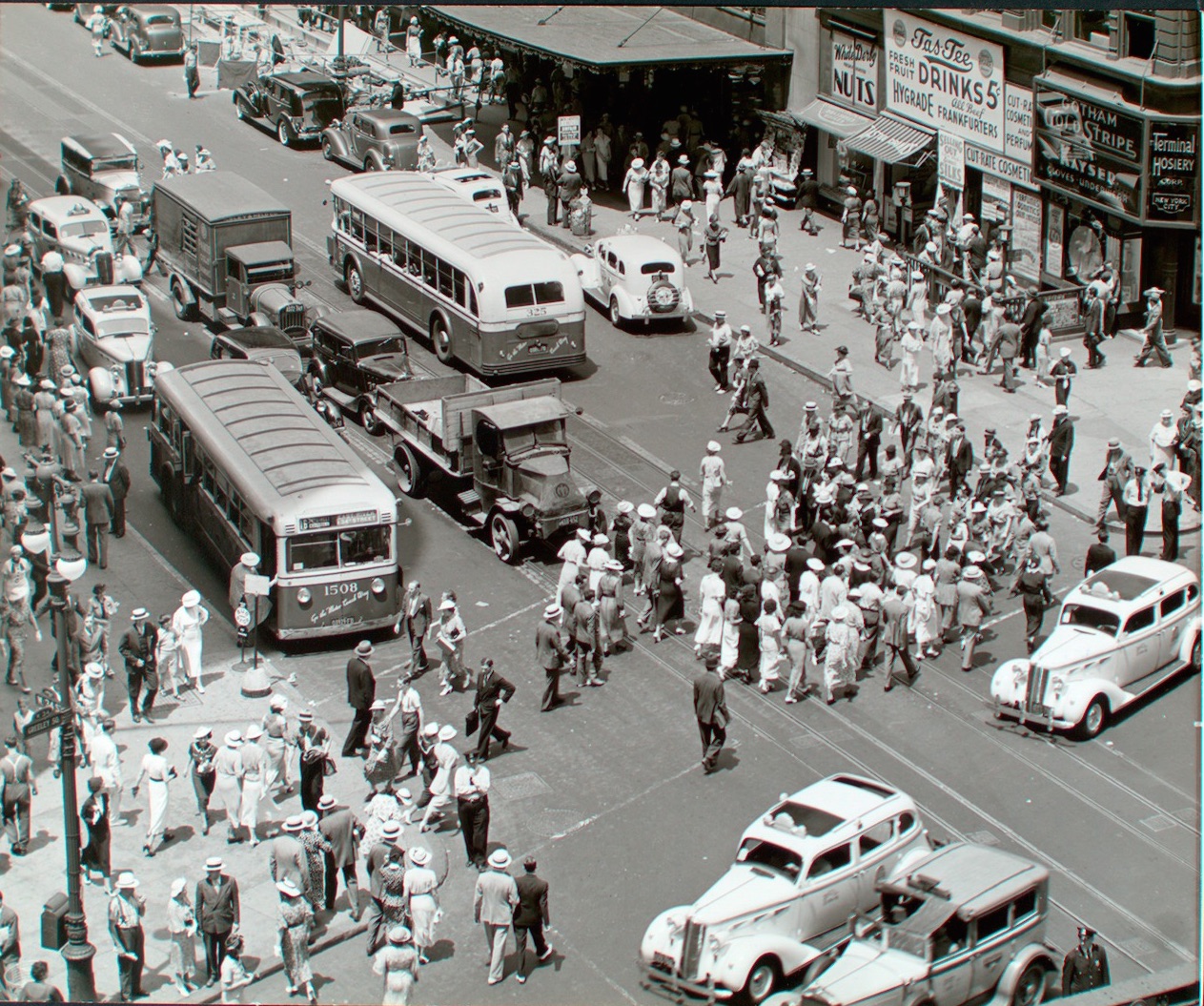
Courtesy New York Public Library

Grabbing a Checker Cab on Park Avenue 1944
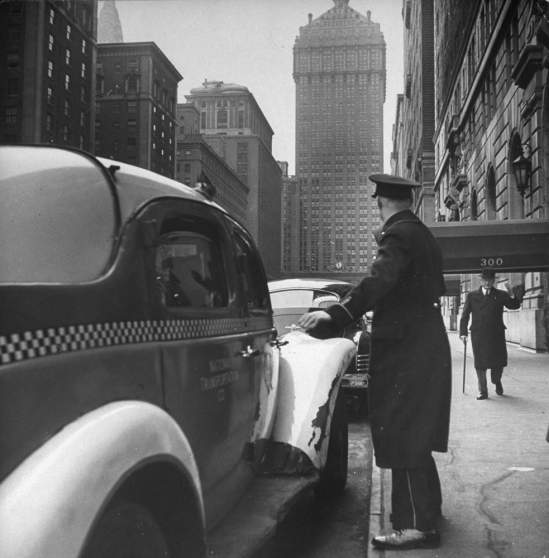
Courtesy Life Magazine/Getty Images

A row of Checker Taxis, sitting idle during a taxicab strike in 1940.
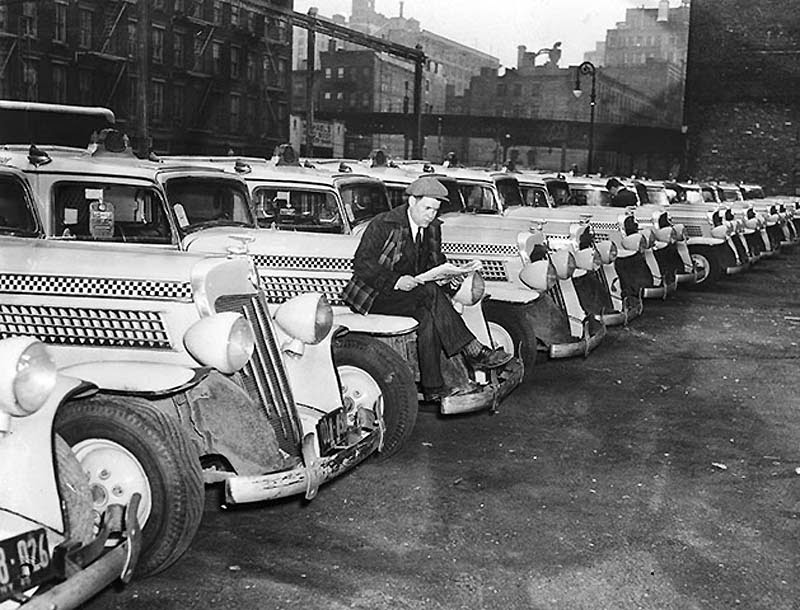
: Keystone/Getty Images)

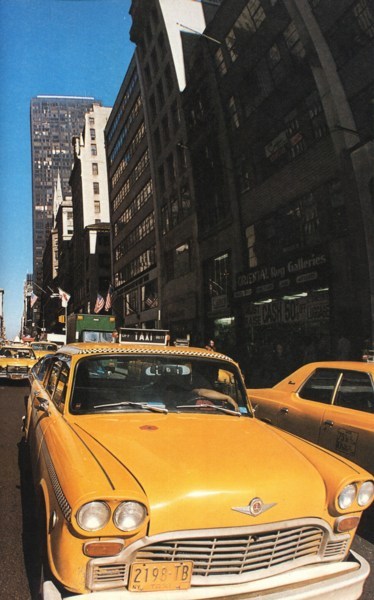
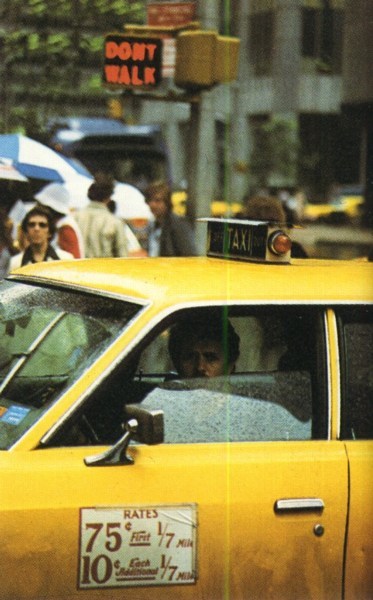
Some vivid 1960s photography by Ernst Haas capturing the mystery and allure of the New York taxi.
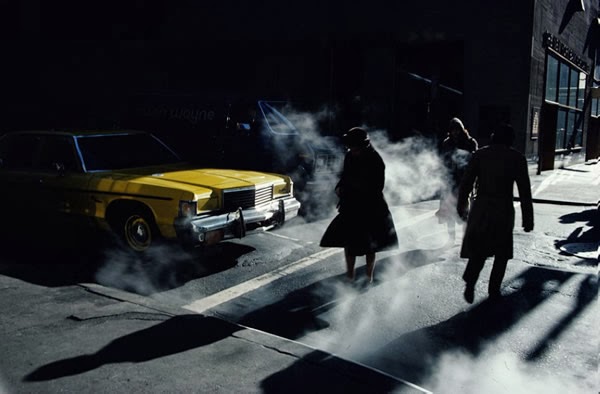
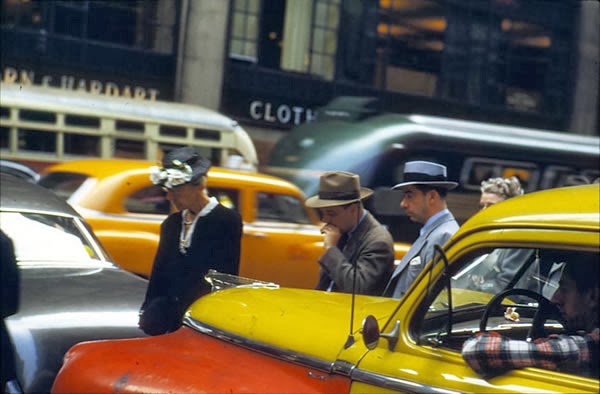
Courtesy Ernst Haas / Getty Images
Ernst Haas (9)

Some scenes from the 1970s…

Courtesy City Noise
Courtesy City Noise
34481
34482

The Bowery Boys: New York City History podcast is brought to you …. by you!

We are producing a new Bowery Boys podcast every other week. We’re also looking to improve and expand the show in other ways — publishing, social media, live events and other forms of media. But we can only do this with your help!

We are creators on Patreon, a patronage platform where you can support your favorite content creators.

Please visit our page on Patreon and watch a short video of us recording the show and talking about our expansion plans. If you’d like to help out, there are several different pledge levels. Check them out and consider being a sponsor.

We greatly appreciate our listeners and readers and thank you for joining us on this journey so far.
Categories
Planes Trains and Automobiles Podcasts

The First Subway: Alfred Ely Beach’s Marvelous Pneumatic Transit

Beach’s pneumatic subway — the first in the United States — opened 150 years ago today. To celebrate this anniversary, we are re-representing our 2016 show on the history of Alfred Ely Beach and his shortlived (but truly marvelous) invention.


PODCAST The unbelievable story of Alfred Ely Beach’s Pneumatic Transit, a curious solution from 1870 to New York’s growing transporation crisis.

The first subway in New York — the first in the United States! — traveled only a single block and failed to influence the future of transportation. And yet Alfred Ely Beach‘s marvelous pneumatic transit system provides us today with one of the most enchanting stories of New York during the Gilded Age.

With the growing metropolis still very much confined to below 14th Street by 1850, New Yorkers frantically looked for more efficient ways to transport people out of congested neighborhoods. Elevated railroads? Moving sidewalks? Massive stone viaducts?

Inventor Beach, publisher of the magazine Scientific American, believed he had the answer, using pneumatic power — i.e. the power of pressurized air! But the state charter only gave him permission to build a pneumatic tube to deliver mail, not people.

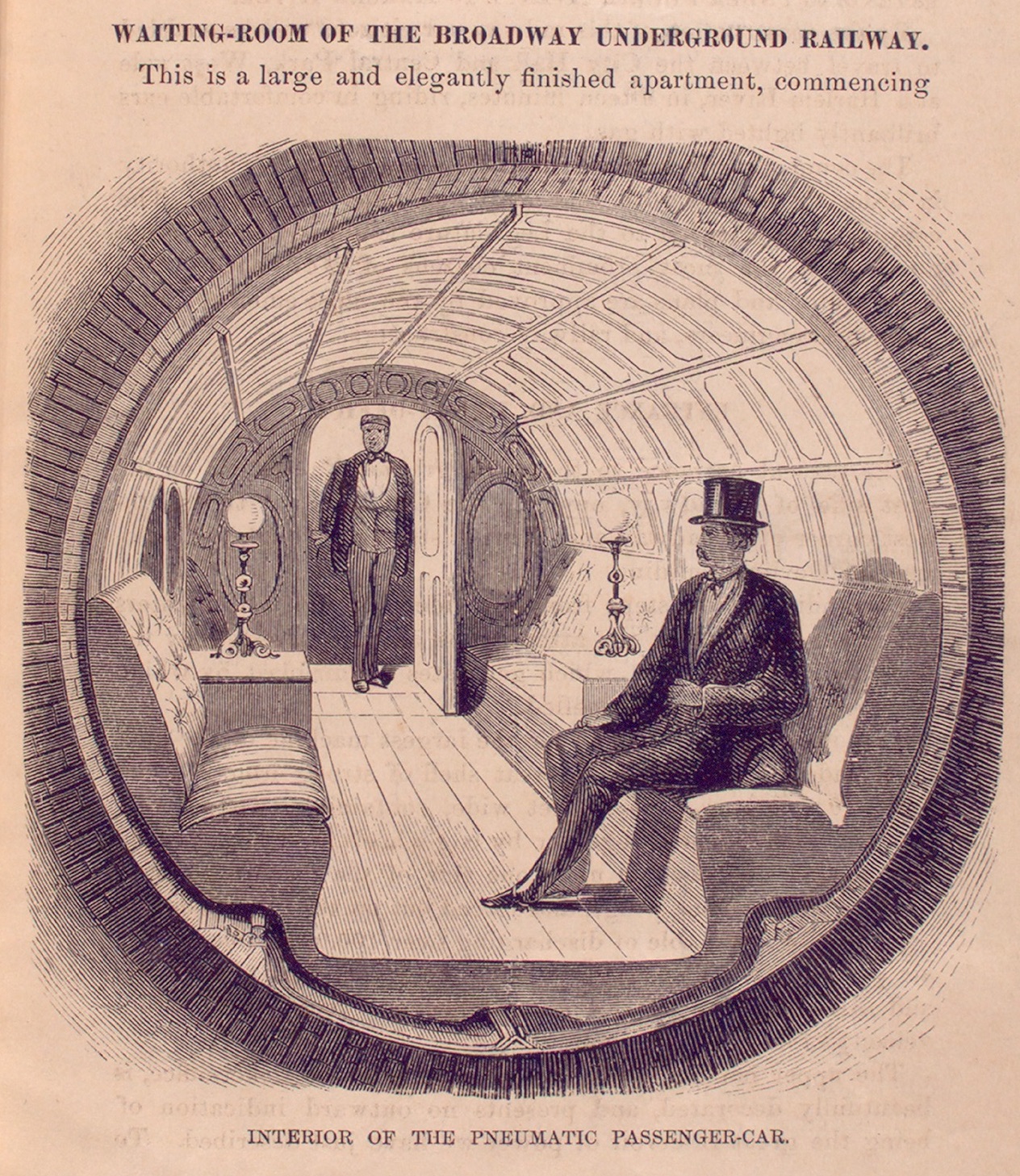
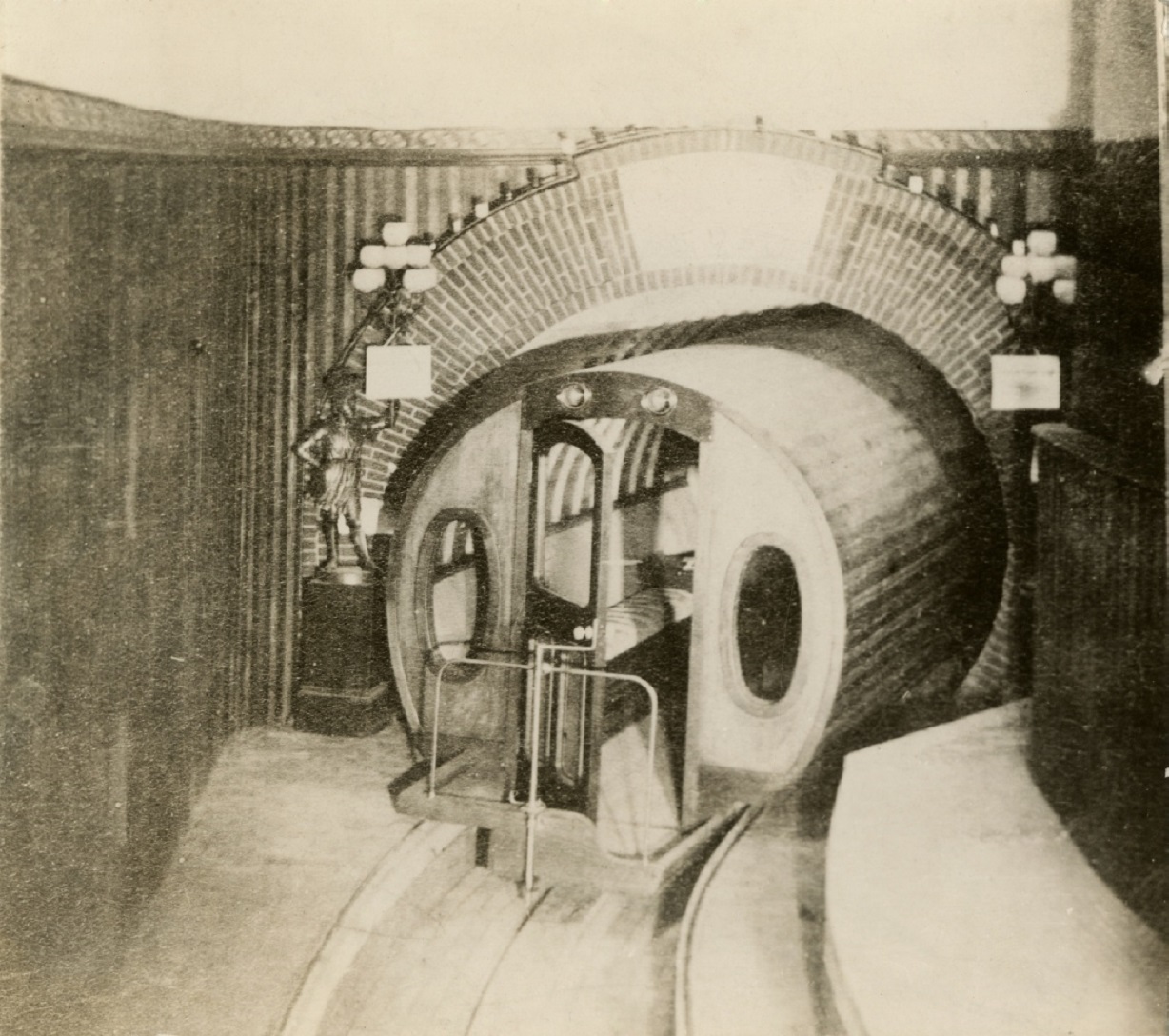
That didn’t stop Beach, who began construction of his extraordinary device literally within sight of City Hall.  How did Beach build such an ambitious project under secretive circumstances? What was it like to ride a pneumatic passenger car? And why don’t we have pneumatic power operating our subways today?

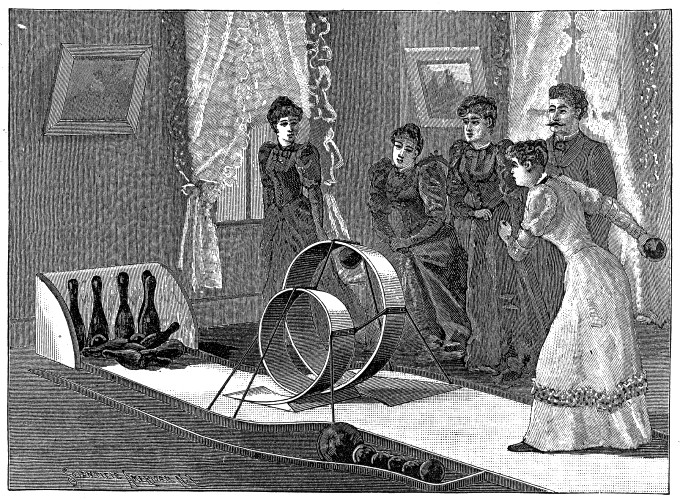
FEATURING: Boss Tweed at his most bossiness, piano tunes under Broadway and something called a centrifugal bowling alley!

To get this week’s episode, simply download it for FREE from iTunes or other podcasting services or get it straight from our satellite site.

To get this week’s episode, simply download or stream it for FREE from iTunes, Stitcher, Spotify or other podcasting services.You can also get it straight from our satellite site.

Or listen to it straight from here:

___________________________________________________________

The Bowery Boys: New York City History podcast is brought to you …. by you!

We are now producing a new Bowery Boys podcast every other week. We’re also looking to improve and expand the show in other ways — publishing, social media, live events and other forms of media. But we can only do this with your help!

We are now a creator on Patreon, a patronage platform where you can support your favorite content creators.

Please visit our page on Patreon and watch a short video of us recording the show and talking about our expansion plans. If you’d like to help out, there are six different pledge levels. Check them out and consider being a sponsor.

ALL patrons at all levels will receive many benefits include the next episode of the Bowery Boys Movie Club, an exclusive podcast (released every 6-8 weeks) celebrating New York City in the movies. And patrons at the Five Points ($5) level and up will get our other exclusive podcast — The Bowery Boys: The Takeout — released every two weeks.

We greatly appreciate our listeners and readers and thank you for joining us on this journey so far.
________________________________________________________________________

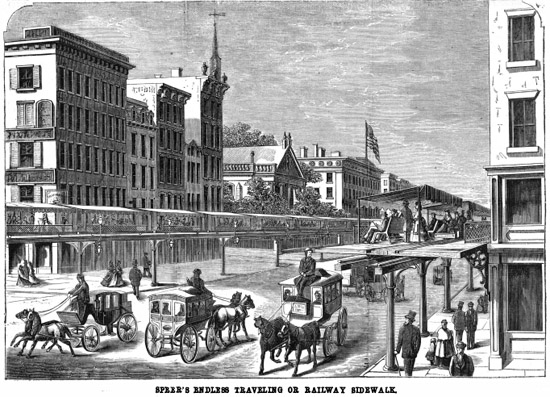
Alfred Speer’s moving sidewalk concept would have lifted pedestrians off the street and onto a moving ribbon that would have stretched up and down Broadway.

Alfred-Speer-Moving-Sidewalk-Main.jpg.662x0_q70_crop-scale

Read more about this curious proposal over at Scientific American.

From Scientific American

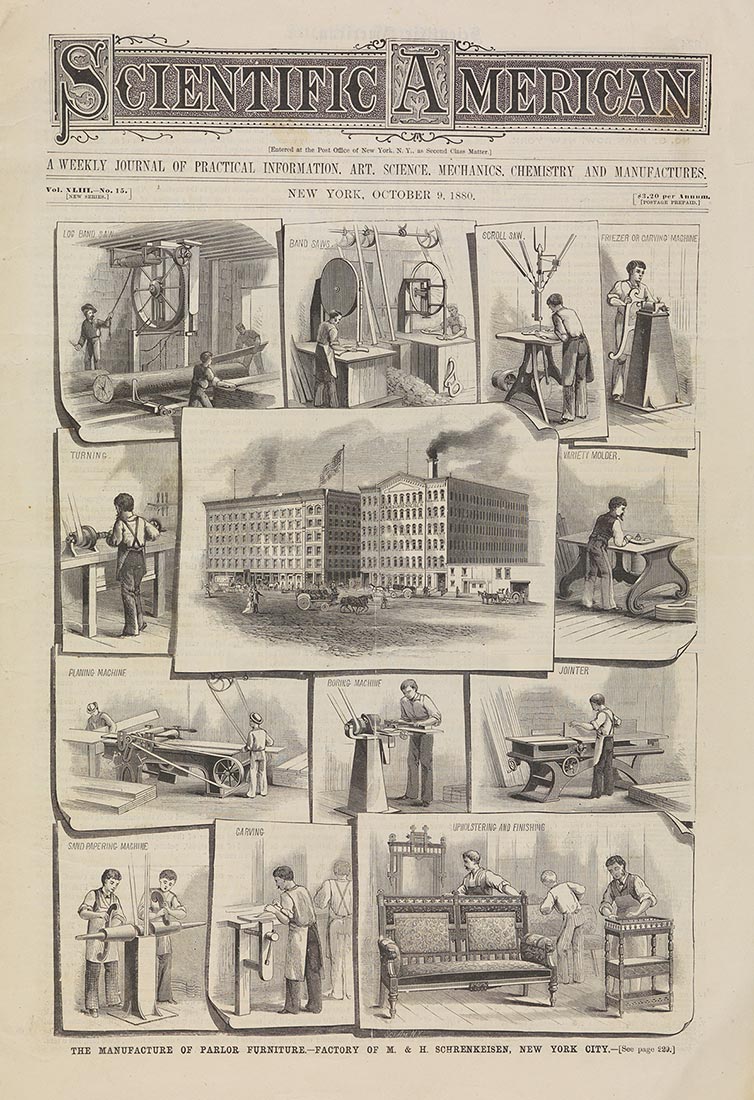
An 1880 issue of Scientific American, the publication owned by Alfred Eli Beach that provided the impetus for many extraordinary inventions during the Gilded Age.

NY-119

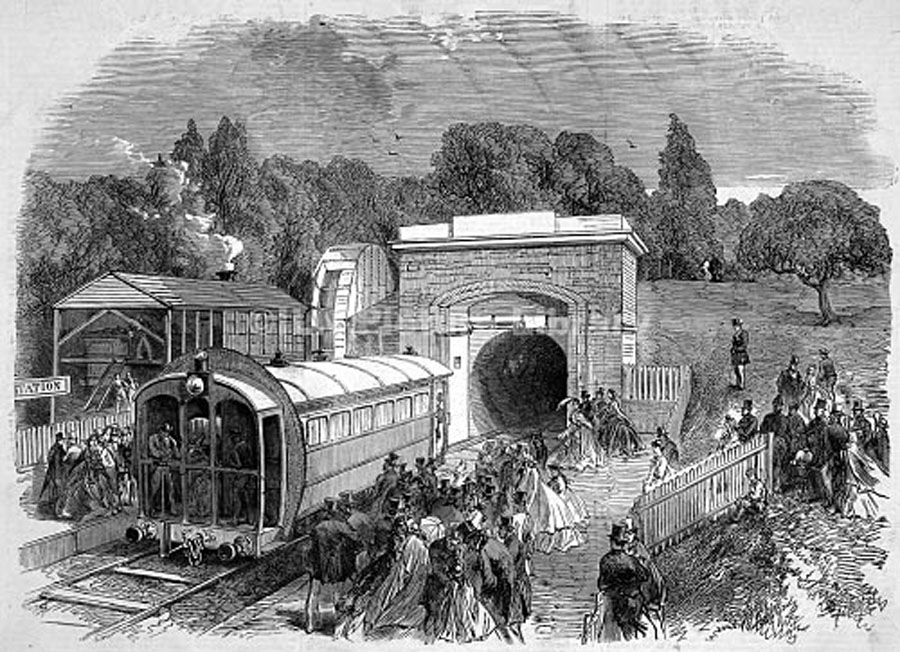
The ‘atmospheric railway’ which ran during London’s Crystal Palace Exhibition in 1864.

Crystal_Palace_Athmosperic_Rly.1864

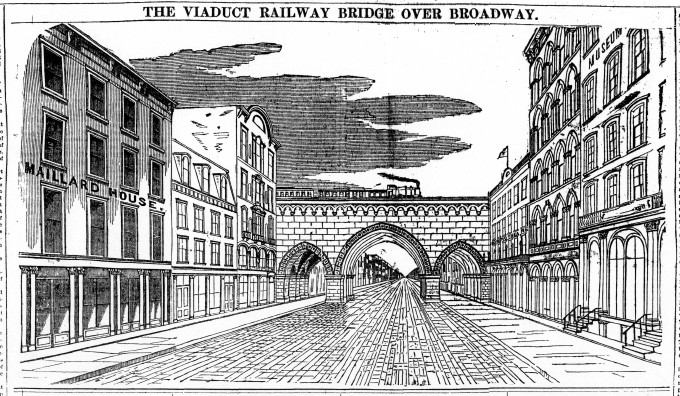
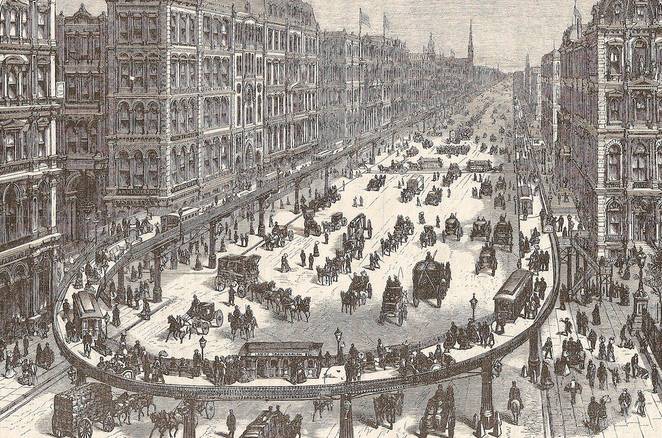
Another idea which transfixed New Yorkers (and in particular Boss Tweed) was the elevated viaduct which would have sliced through dozens of city blocks, creating an epic piece of architecture throughout Manhattan.

From the Tribune, July 8, 1871.  Courtesy Columbia University
From the Tribune, July 8, 1871. Courtesy Columbia University

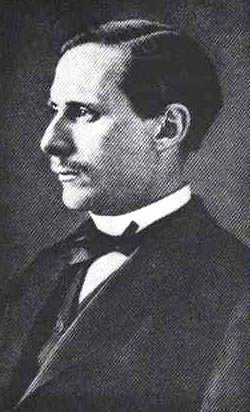
Alfred Ely Beach, mastermind of the Broadway pneumatic tunnel project:

Alfred_Ely_Beach

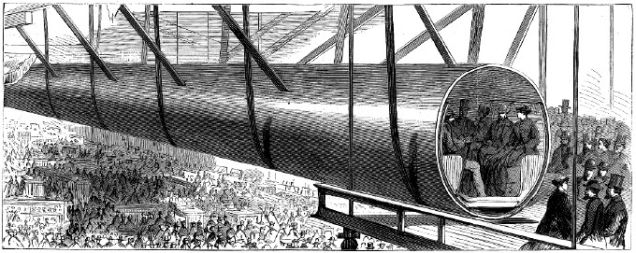
Beach’s ‘passenger tube’ which was displayed to great acclaim at the American Institute Fair in 1867:

18wwjrgv1uilsjpg

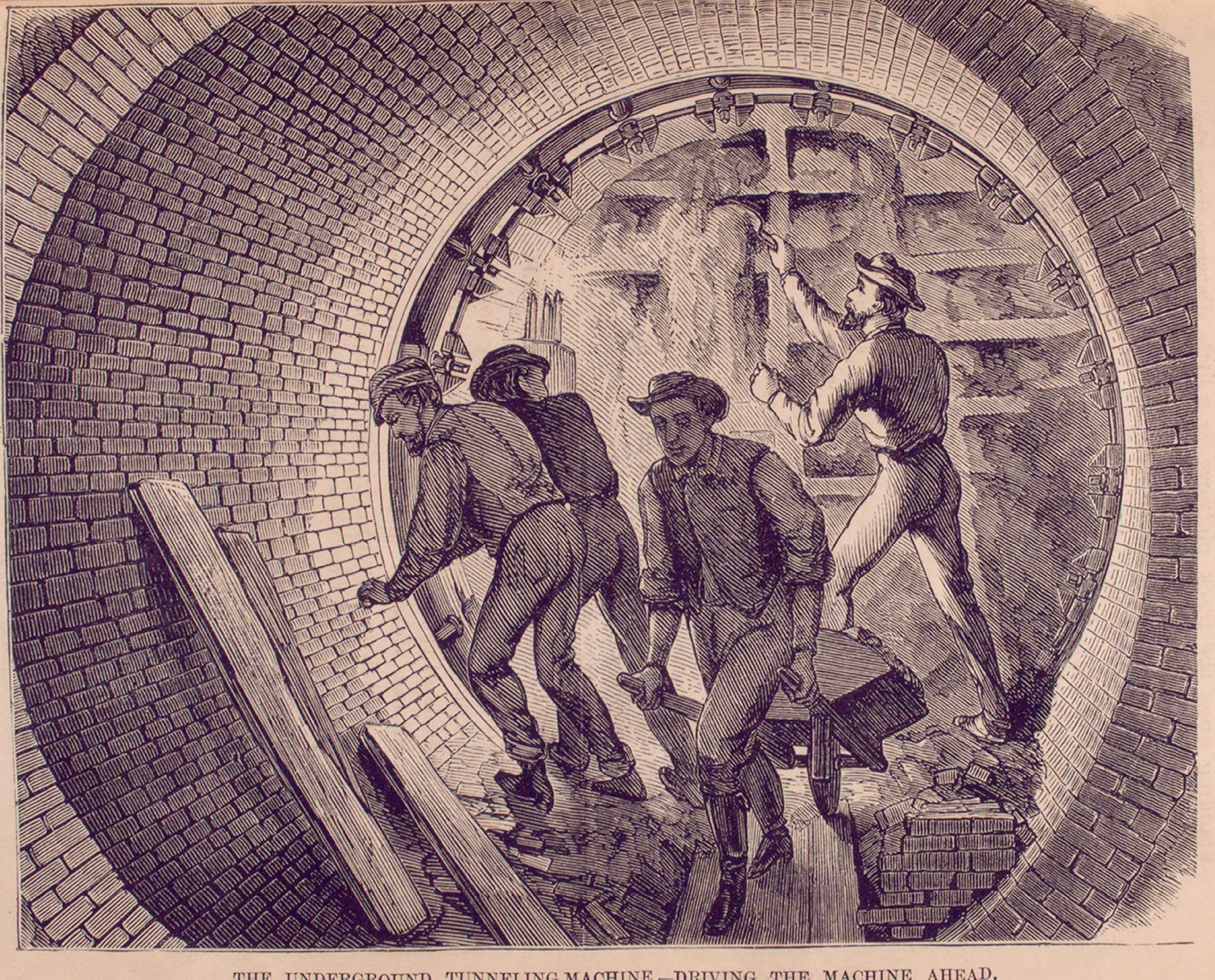
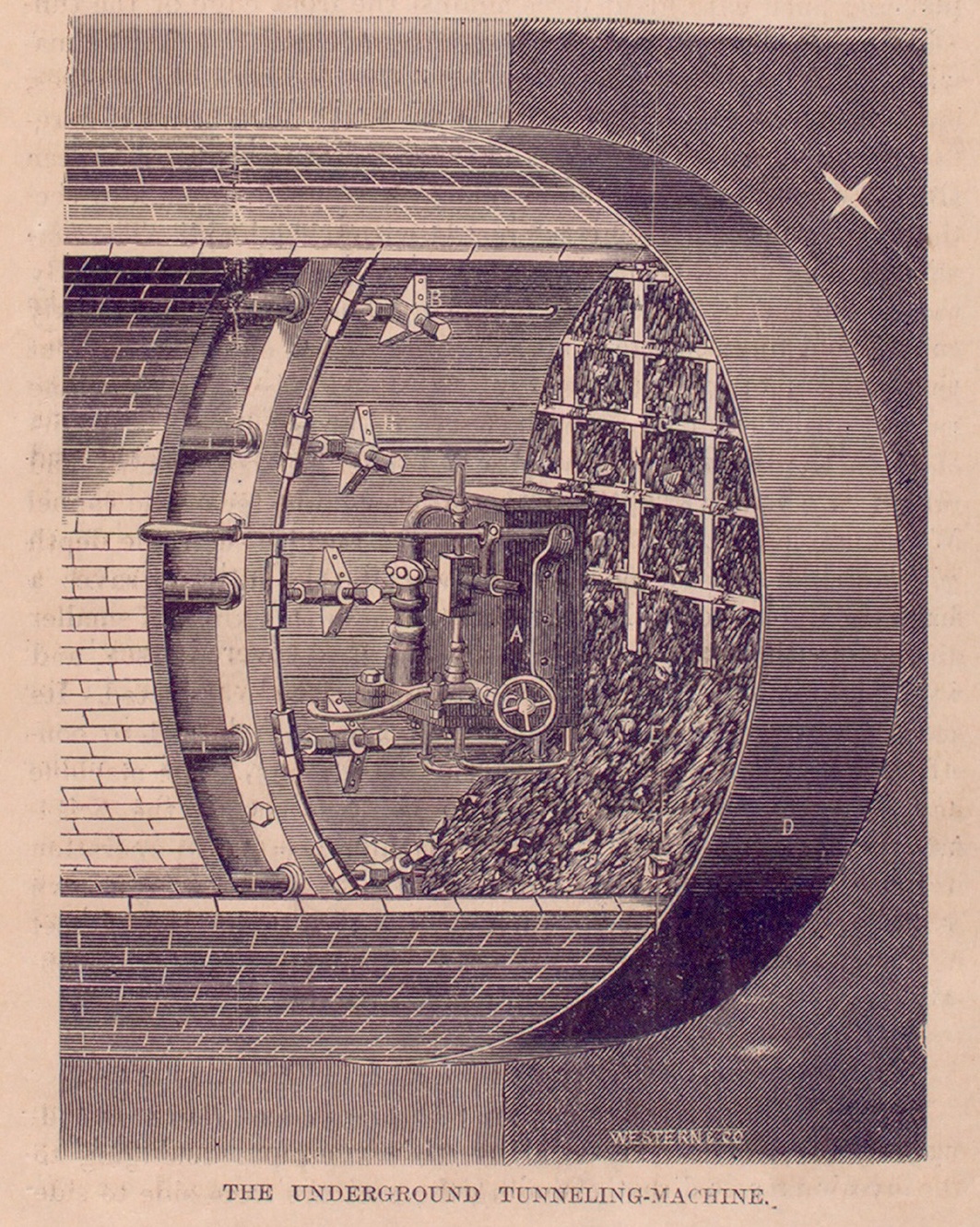
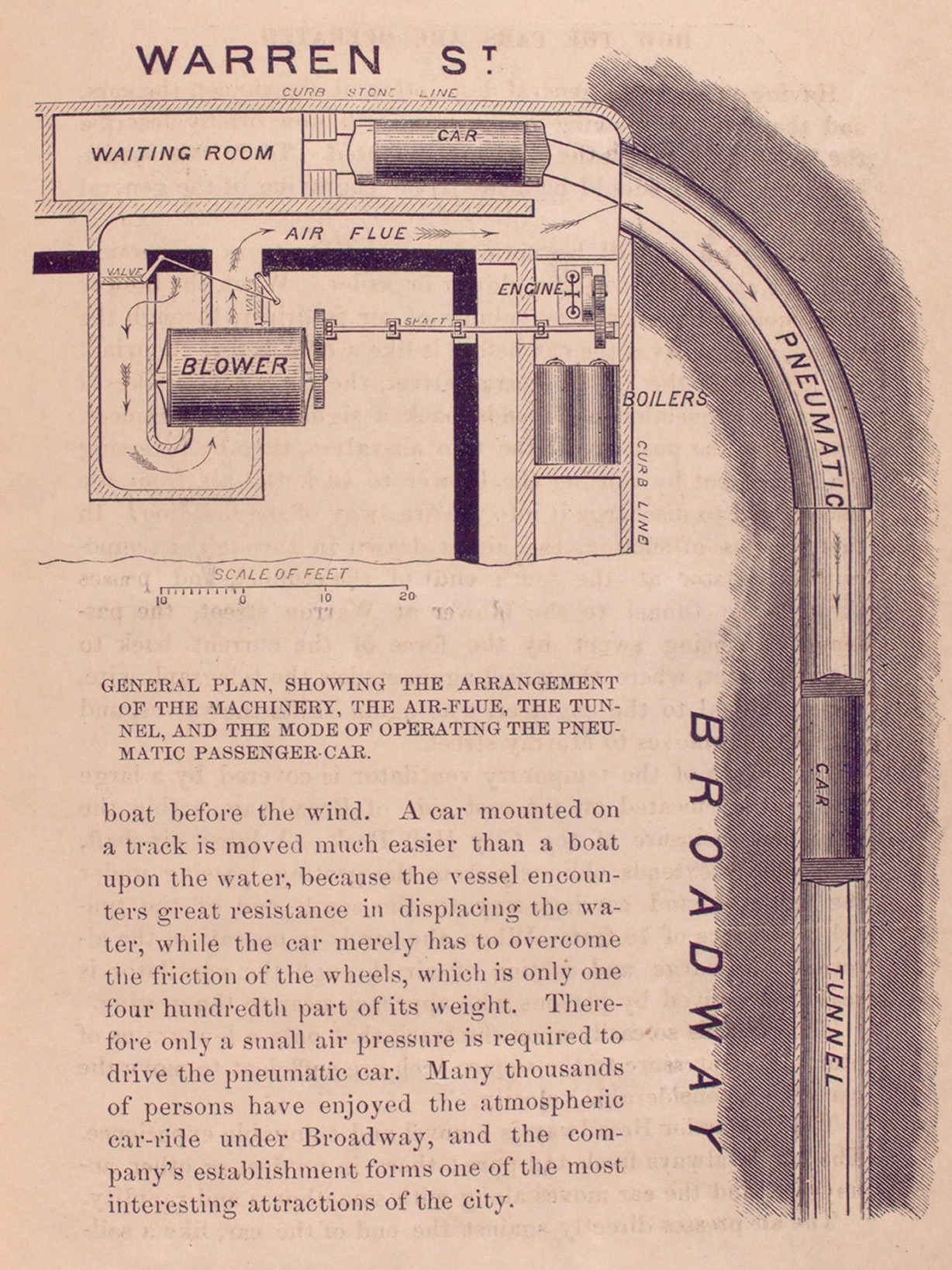
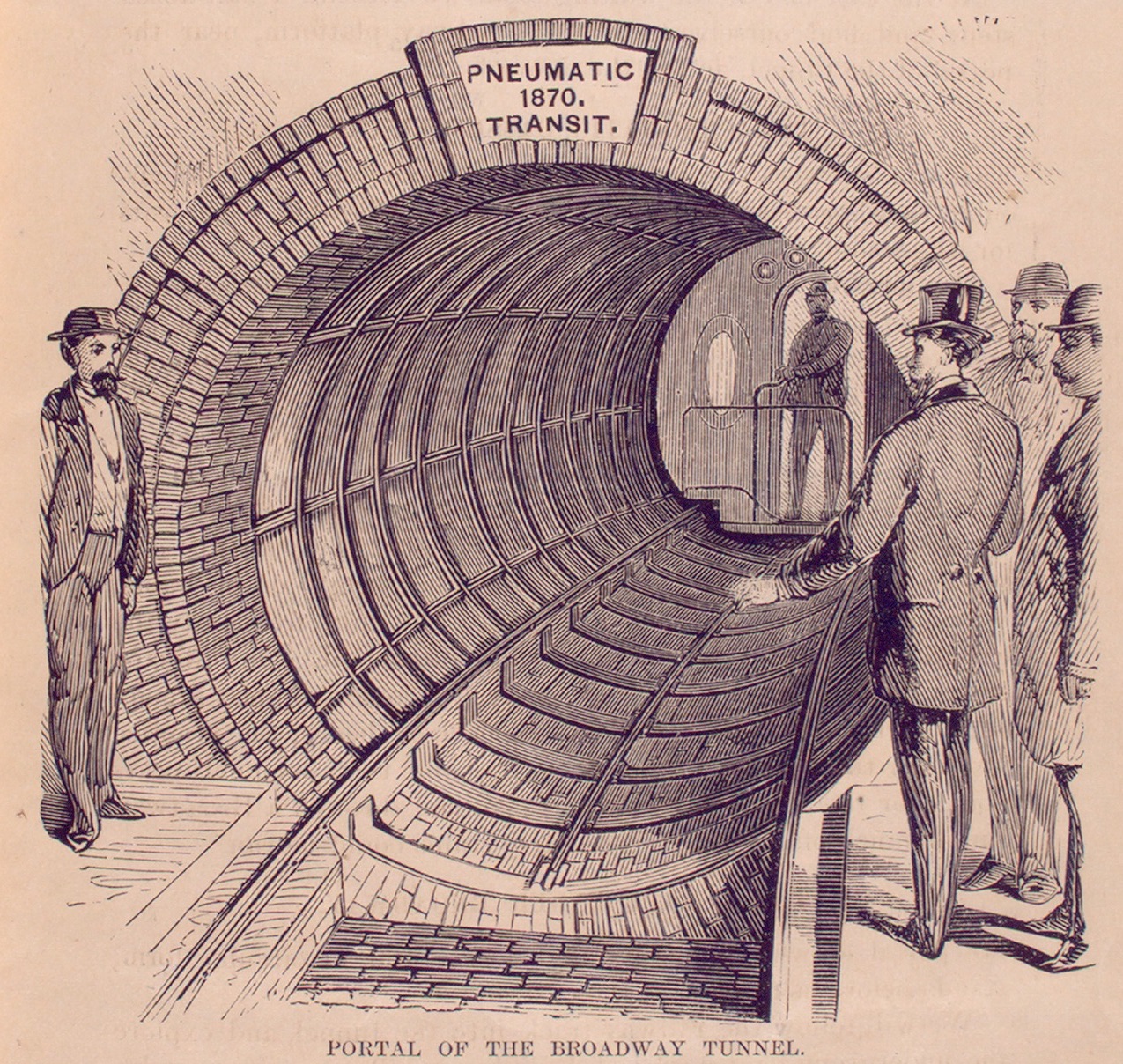
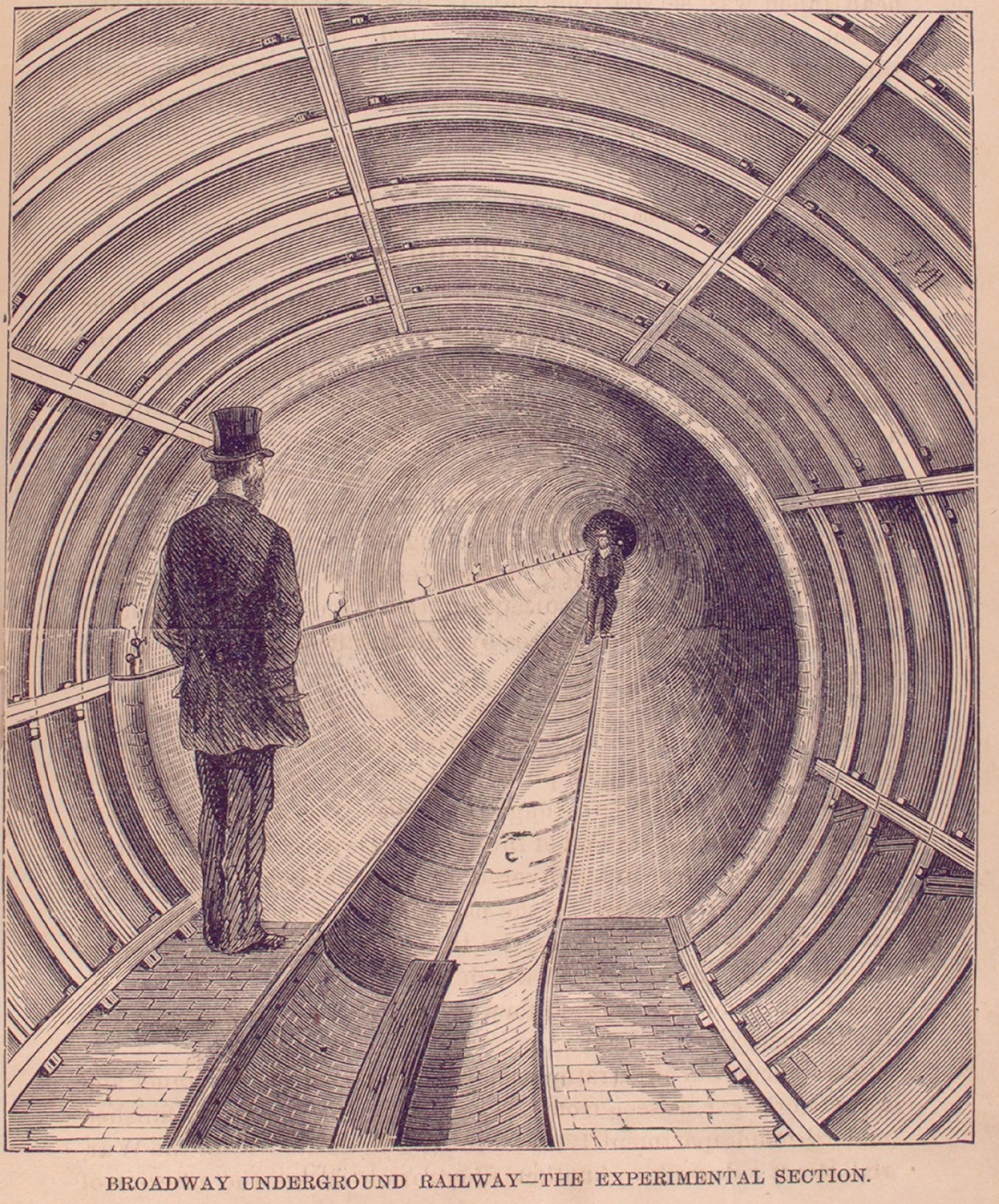
Some images from Beach’s 1870 pamphlet on the pneumatic system:

5
6

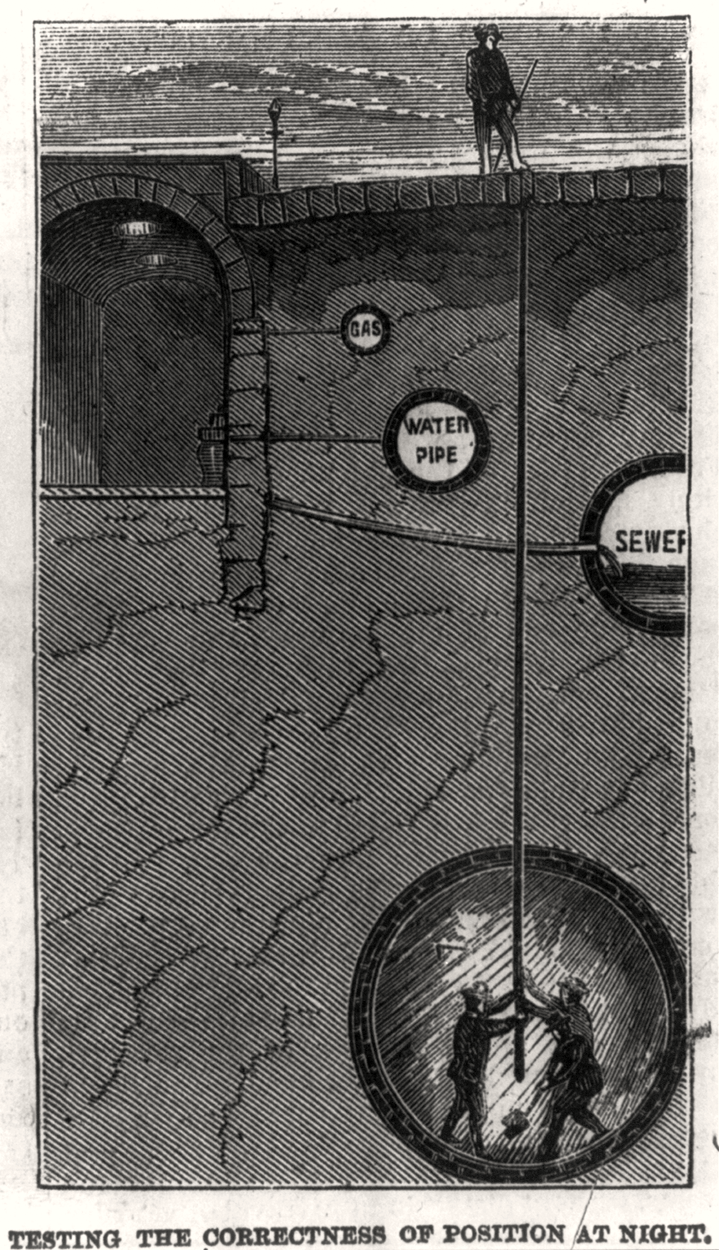
An illustration from a newspaper of Beach’s workers ‘testing the position’ late at night over Broadway:

Testing the correctness of position at night-inkbluesky
2
4
8
1

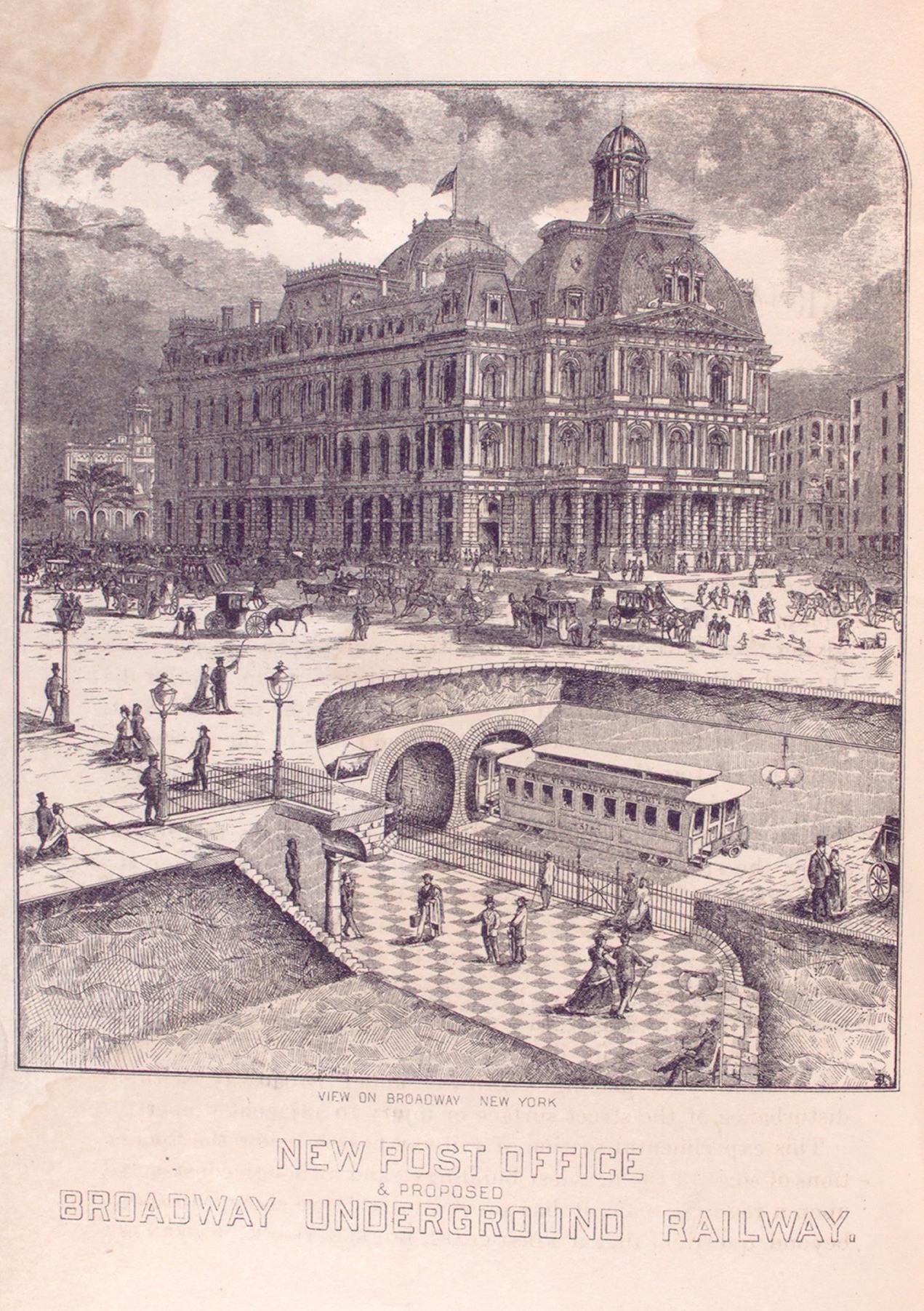
How an underground pneumatic tunnel would have been situated under Broadway.  Pictured here in relation to the new post office (which sat at the spot of the southern end of today’s City Hall Park).

3

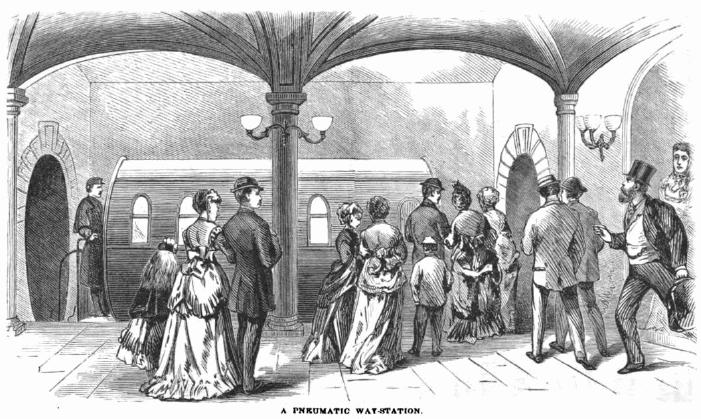
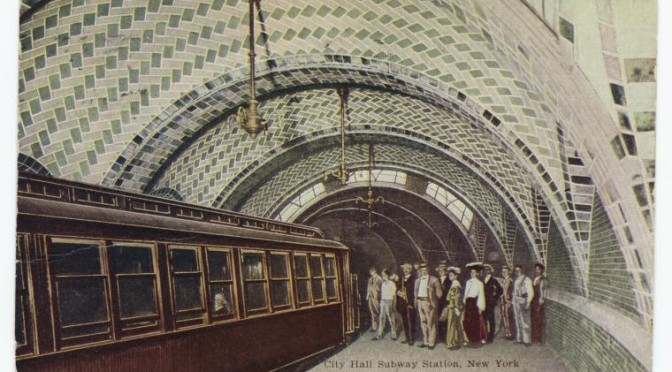
Had the Broadway Underground Railway actually been fully developed, here’s what a station would have looked like:

From NYC Subway
From NYC Subway

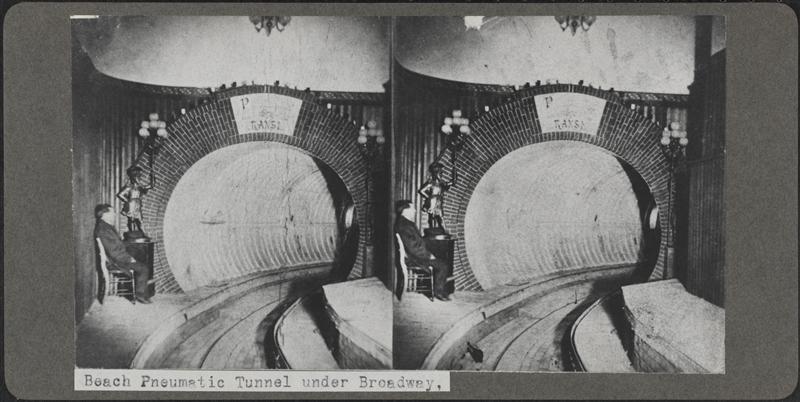
Stereopticon images of Beach’s pneumatic transit tunnel under Broadway, taken in 1870:

M2Y7289
WP_Beach_Pneumatic_Transit
fig24-2

Beach’s later invention — the centrifugal home bowling alley:

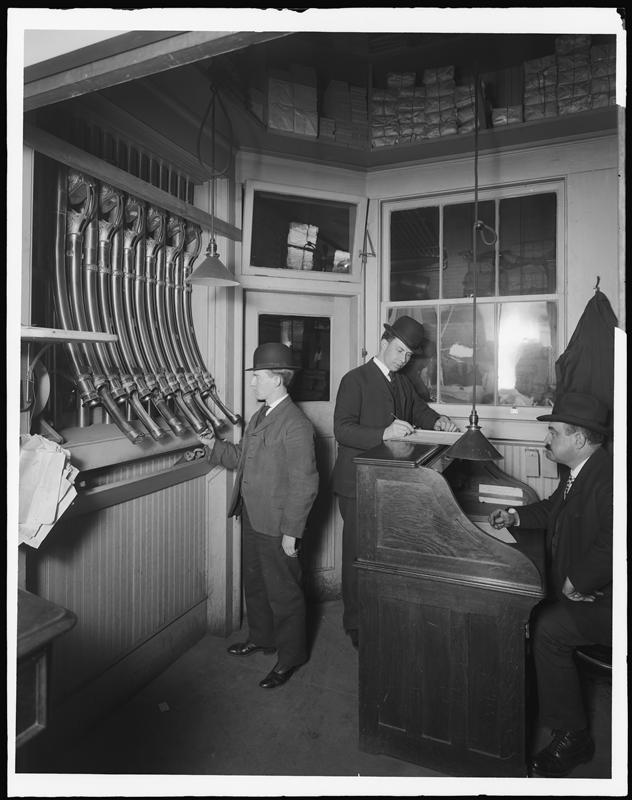
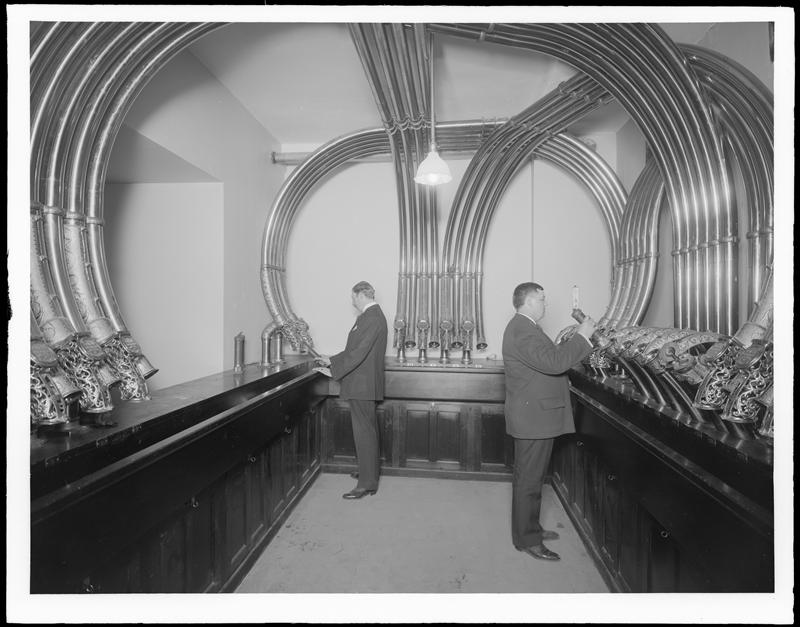
Later application of pneumatic power in New York — shipping office tubes at a location at Franklin and Greenwich Streets (1905) and the series of mail tubes at the National City Bank, 1910.

Courtesy Museum of the City of New York

Start with Joseph Brennan’s excellent research and presentation online.  Then jump into one of these great books on the history of New York City transportation — 722 Miles by Clifton Hood, The Race Underground by Doug Most, The Wheels That Drove New York City by Roger P. Roess and Gene Samsone and New York Underground by Julia Solis. There’s even a children’s book on this subject called The Secret Subway by Shana Corey and Red Nose Studio.

For some original documents from the period, look to an Illustrated Description of the Broadway Pneumatic Underground Railway (which we read from on the show), an 1873 presentation of the Broadway Underground Railway, and a very curious publication by Beach himself called The Pneumatic Dispatch from 1868.

Categories
Bowery Boys Bookshelf

The Amazing Race: In ‘Eighty Days’ Nellie Bly tries to outdo Jules Verne while a New Orleans writer vows to beat both


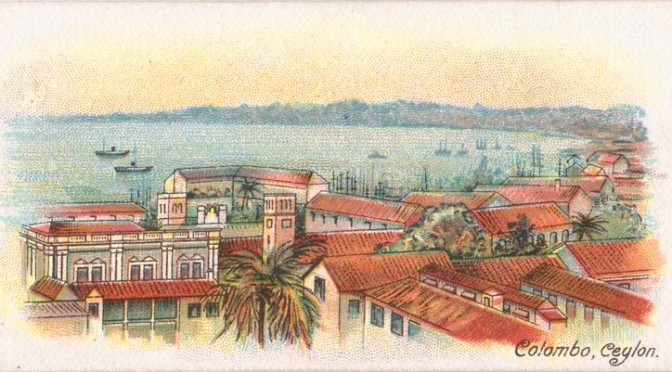
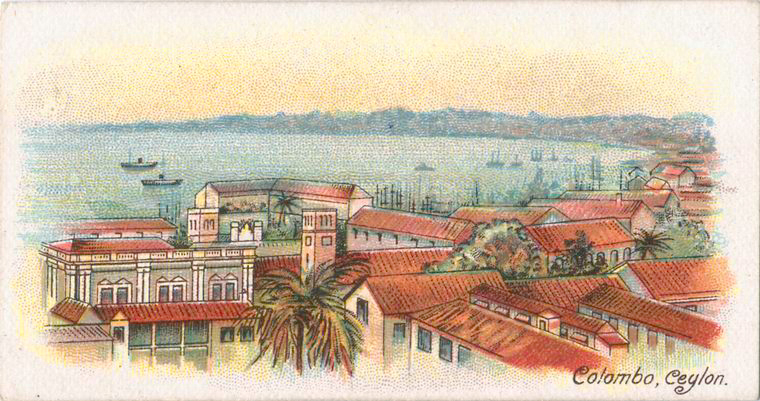
Greetings from Columbo, Ceylon, one of the many glamorous destinations you’ll visit in Matthew Goodman’s new book.

BOWERY BOYS BOOK OF THE MONTH Each month I’ll pick a book — either brand new or old, fiction or non-fiction — that offers an intriguing take on New York City history, something that uses history in a way that’s uniquely unconventional or exposes a previously unseen corner of our city’s complicated past.  Then over the next month, I’ll run an article or two about some of historical themes that are brought up in the selection. 

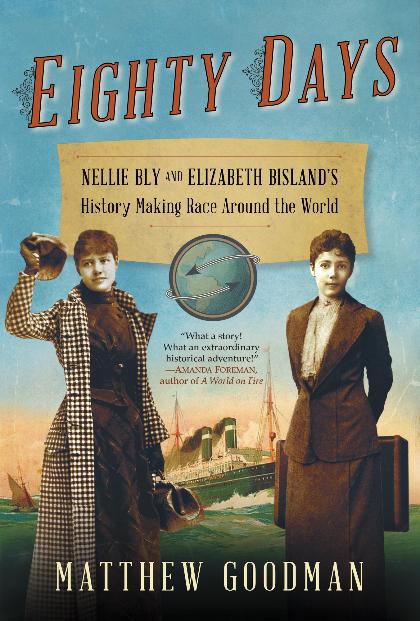
Eighty Days: 
Nellie Bly and Elizabeth Bisland’s History-Making Race Around The World
by Matthew Goodman
Ballantine Books

One under appreciated facet of the Gilded Age is Western civilization’s almost addictive need to push its innovations past their upper limits within the framework of a literal competition — not just in mere quest for improvement, but in a tangible victory over its lessers.  Beauty, in a machine, meant winning.

The value of human life became secondary in the furious race of locomotives crossing vast plains of the United States, or of cross-country automobile competitions over terrain hardly suited for rubber tires, or later the famed air races of early aviation daredevils.

Speed was perfection, but it also came attached with cash prizes (from newspaper moguls or sponsors who benefited from the technology), ticker-tape parades and instant fame.

In 1873, well before the first automobiles and airplanes, one well-noticed gauntlet was thrown by the French writer Jules Verne, who created the character of Phileas Fogg, then sent him “Around the World In Eighty Days.”  The hugely popular novel celebrated both primitive and modern forms of transportation, but a principal theme was the value of speed and modern man’s victory over distance.  The world, already prevailed over by the interests of empire, could now be circumnavigated.

But could this feat be performed by an actual human? And, more daring still, could it be done by a woman?

In Matthew Goodman‘s breathless, exotic new history Eighty Days: Nellie Bly and Elizabeth Bisland’s History-Making Race Around The World, two extraordinary woman attempt to meet Verne’s challenge.  Or rather, challenges made by their New York editors, inspired by Verne’s best-selling novel and dazzled by the possibilities of an impossible quest creating splashy headlines to sell newspapers in 1889.

You are most likely familiar with Bly, the vanguard young journalist best known for her daring exposes for the New York World.  Posing as a patient in Blackwell’s Island’s lunatic asylum in 1887, Bly revealed deep-seeded abuses within the system.  Almost as importantly, Bly helped define investigative journalism along the lines of stunt work.  She was a Victorian era reality star of sorts, fearlessly defying conventions.

On November 14, 1889, Bly began her quest to beat Phileas Fogg, boarding a steamer for England on her way around the globe. What she did not know then is that the race to beat a fictional character had now been joined by somebody quite real — the journalist Elizabeth Bisland (pictured at left).

A native of New Orleans and a habitue of New York literary salons, Bisland was assigned to take a similar journey by her editor at The Cosmopolitan (precursor to today’s Cosmopolitan magazine).  With less than a day’s notice, he sent Bisland on a trip around the world on the same day — and going in the opposite direction.

Eighty Days is a tale of stops and starts, of telegraph offices and train stations, of foreign places narrowly observed by its two competitors.  Luckily, Goodman doesn’t leave you sitting with the two women, who are sometimes too tired, too rushed or too incurious to explore their surroundings.

With beautiful prose, like a craning camera, Goodman provides sumptuous detail to these fantastic and sometimes mysterious worlds — Hong Kong, Brindisi, San Francisco, Yokohama, the towns along the Suez Canal.

It becomes very clear that this is indeed a trip around the world, but along a fairly narrow band anchored by British ports.  Bly cannot stand the British;  Bisland comes to adore them.  Their personalities are reflected in their empathy.  Bisland mourns a nameless Chinese man who has died aboard her ship.  Bly, at times surprisingly unconcerned of certain conditions, buys a rowdy monkey who accompanies her for the last leg of her trip, to the great alarm of baggage handlers.  Bisland seems the more introspective, Bly the more entertaining companion.

I hate to conjure reality television for a second time in this review, but the competition within Eighty Days, so well paced by Goodman, really comes down to making connections, as often illustrated in CBS’s “The Amazing Race.”  Again, it comes down to the alleged speed of certain vessels, whether they arrive on time, and the abilities of Bly and Bisland to maneuver through foreign countries — many times unaccompanied — to arrive at their next destination.

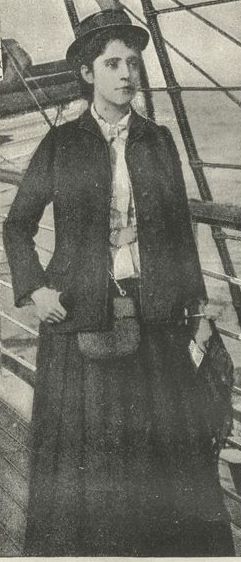
At right: Nellie Bly, ready for action!

Eighty Days is a romp around the planet, but it returns periodically to Park Row in New York, where Bly’s newspaper has turned her journey into a best-selling sensation.  Thousands enter a contest to guess the exact time that she will finish her trip.

Like those many newspaper readers, you’ll be scrambling to guess which competitor will arrive in New York first — and, more importantly, what unfortunate event might prevent the other from victory.

Goodman’s latest tale expands upon themes he conjured up in his last book, The Sun and The Moon, another tale about fantastical journalism, regarding the Great Moon Hoax perpetrated by the New York Sun in 1835.  Newspapers are perhaps more accurate in 1889 but no less sensational.

Jules Verne himself makes an appearance too, hosting one of the competitors at his home in Amiens, France.  “She is trim, energetic, and strong,” remarks Jules’ wife Honorine.  “I believe, Jules, that she will make your heroes look foolish. She will beat your record.”

COMING FRIDAY: An interview with Matthew Goodman, the author of Eighty Days!

Pictures courtesy New York Public Library. Book cover courtesy Ballantine

Categories
Podcasts

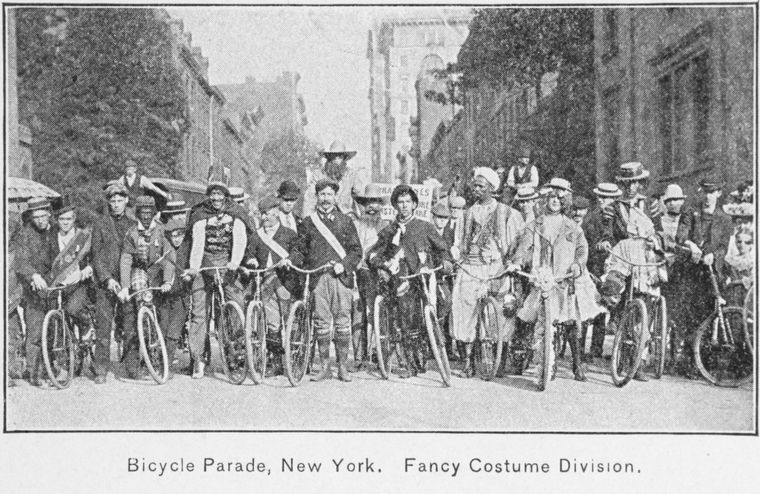
Bicycle Mania! The story of New York on two wheels, from velocipedes to ten-speeds — with women’s liberation in tow


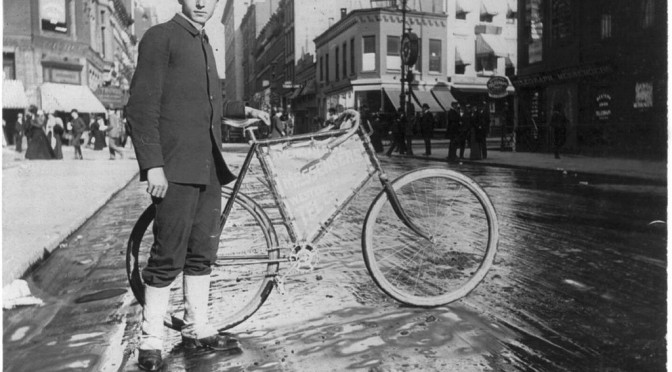
Alice Austen’s iconic photograph of a telegram bike messenger in 1896, a year where many New Yorkers were wild about bikes. Austen even rode one around with her camera. 

PODCAST The bicycle has always seemed like a slightly awkward form of transportation in big cities, but in fact, it’s reliable, convenient, clean and — believe it or not — popular in New York City for almost 200 years.

The original two-wheeled conveyance was the velocipede or dandy horse which debuted in New York in 1819. After the Civil War, an improved velocipede dazzled the likes of Henry Ward Beecher and became a frequent companion of carriages and streetcars on the streets of New York. Sporting men, meanwhile, took to the expensive high-wheeler.
But it was during the 1890s when New Yorkers really pined for the bicycle. It liberated women, inspired music and questioned Victorian morality. Casual riders made Central Park and Riverside Drive their home, while professionals took to the velodrome of Madison Square Garden. And in Brooklyn, riders delighted in New York’s first bike path, built in 1894 to bring people out to Coney Island.
FEATURING:  Robert Moses, Charles Willson Peale, Ed Koch, and New York’s bike thief in bloomers!


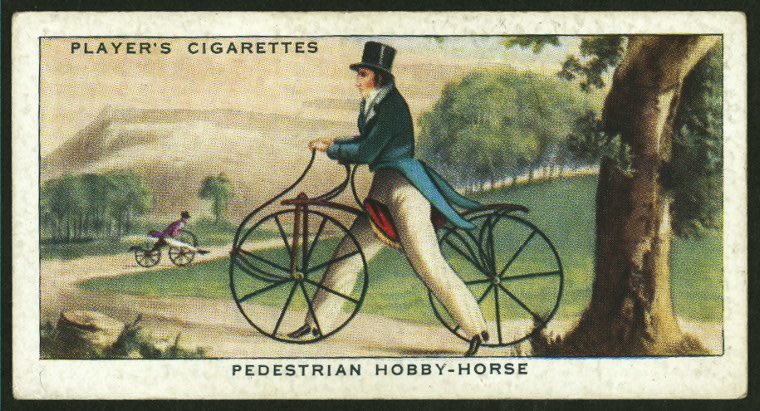
The early velocipede went by several names — the hobby horse, the dandy horse, the draisine. This device made a big splash in 1819 before they were effectively banned from the city. [NYPL]


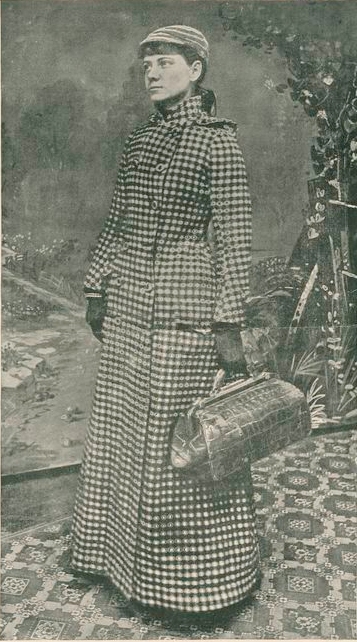
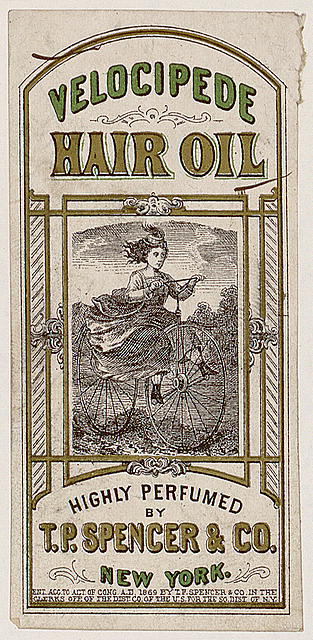
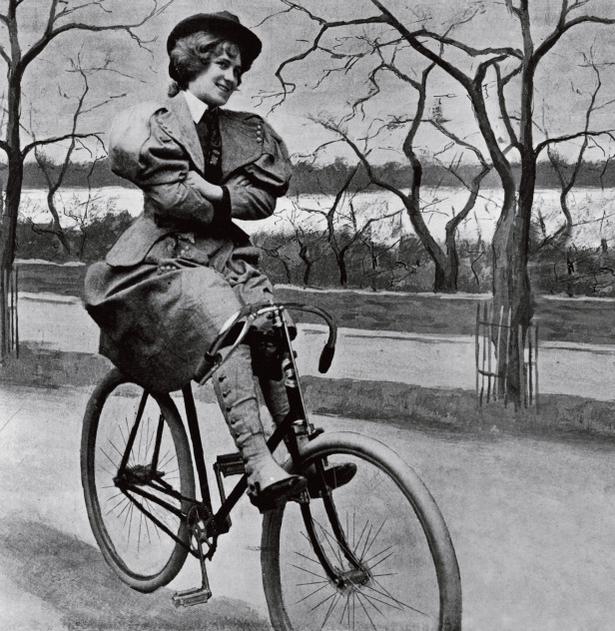
With the velocipede craze of the late 1860s, women attempted to conform to Victorian ideals of fashion with a host of bizarre products to maintain a ladylike presentation. By the 1890s, women riders chucked most of those conformities out the window, introducing more comfortable clothing and embracing the independence offered by the bicycle.

At top: An ad for a hair product, 1869. (LOC) Below: A radical change of costume in a photo illustration from 1890s (courtesy Brain Pickings, accompanying an amusing article of women’s bicycle do’s and don’ts from 1895)

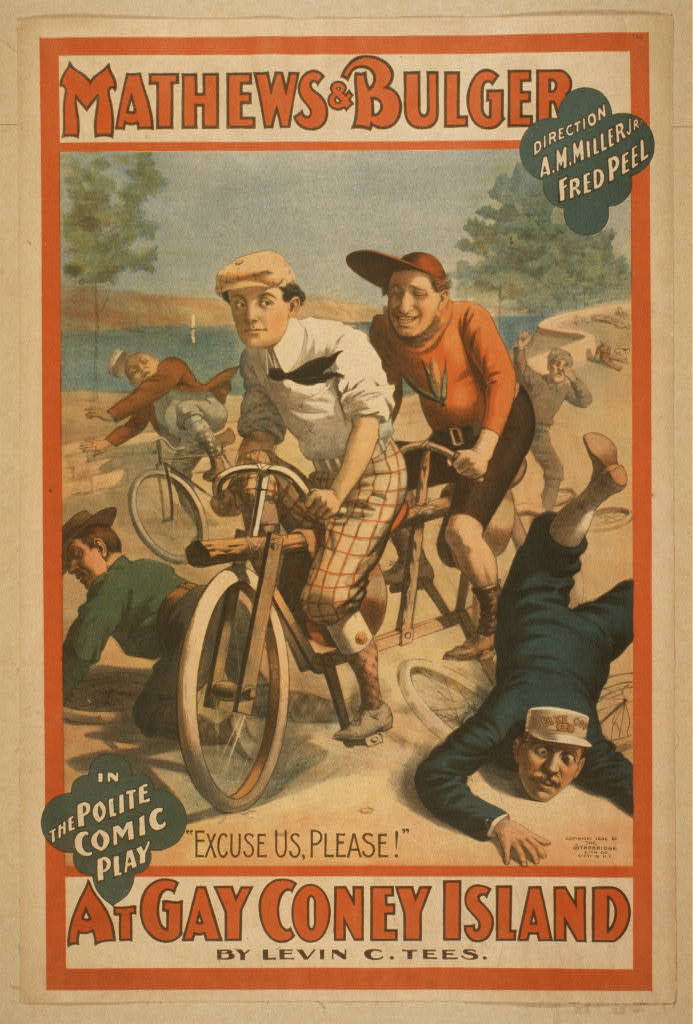
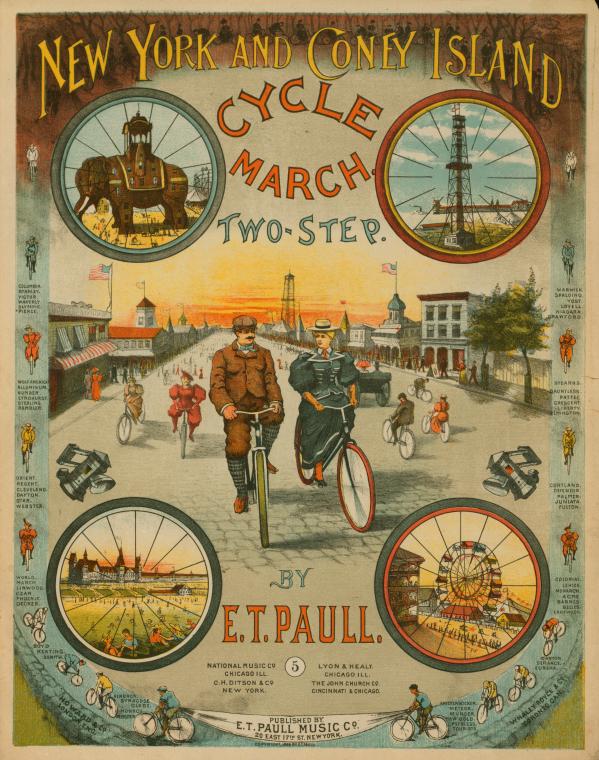
The bicycle didn’t just provide transportation and recreation in the 1890s. It influenced entertainment as well, through the songs of Tin Pan Alley. Below: A ‘comic play’ and a two-steph, both from 1896, and both inspired by the Coney Island Bike Path. (LOC)

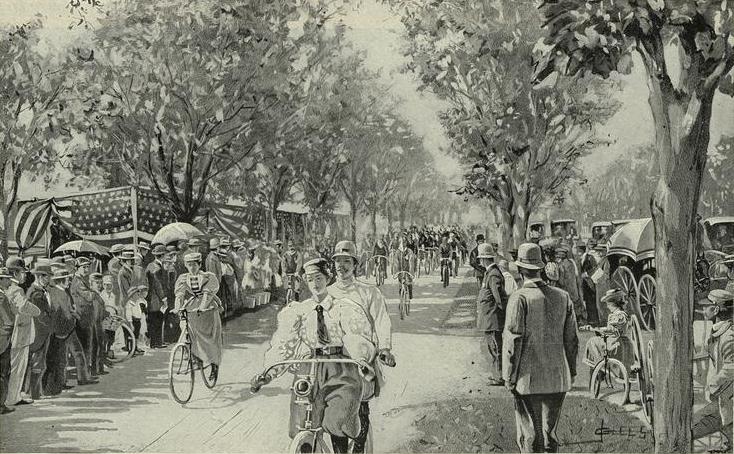
The Coney Island Bike Path in 1896, running up Ocean Parkway to Prospect Park. I believe this illustrates the opening of the return path, as the original path opened in 1894

I have absolutely no context for this image, but I love it. Taken sometime between 1894-1901 [NYPL]

Categories
Podcasts

The New York City Subway and the creation of the IRT

PODCAST In the fourth part of our transportation series BOWERY BOYS ON THE GO, we finally take a look at the birth of the New York City subway. After decades of outright avoiding underground transit as a legitimate option, the city got on track with the help of August Belmont and the newly formed Interborough Rapid Transit.

We’ll tell you about the construction of the first line, traveling miles underground through Manhattan and into the Bronx. How did the city cope with this massive project? And what unfortunate accident nearly ripped apart a city block mere feet from Grand Central Station?

ALSO: What New York City mayor had a little too much fun on opening day?

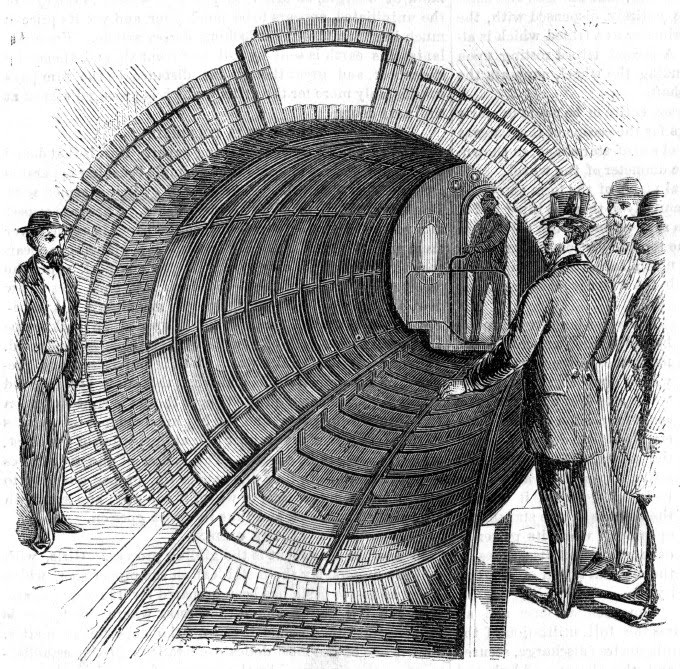
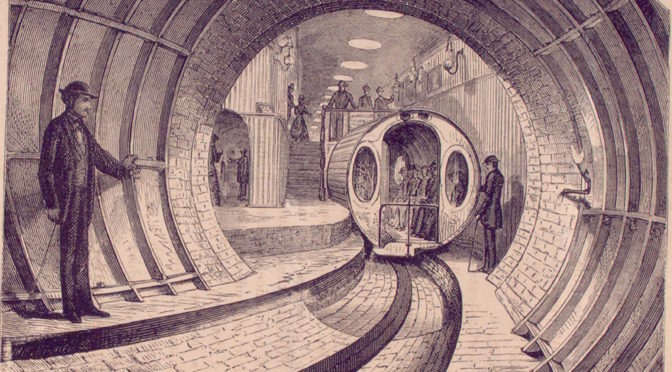
Below: An illustration of Alfred Beach’s pneumatic tube, built in 1870 a short distance from City Hall ran under Broadway from Warren Street to Murray Street. Although it’s little more than a footnote to the history of the New York City subway, it underscores that the technology was always available, even if public and political enthusiasm for such a project was not.

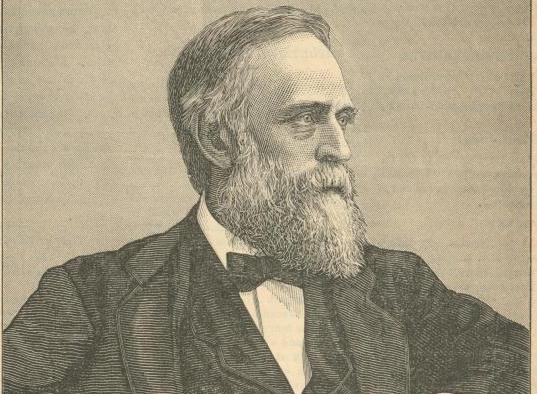
Abram Hewitt, mayor of New York in 1886, and an early proponent for an underground subway. (Pic NYPL)

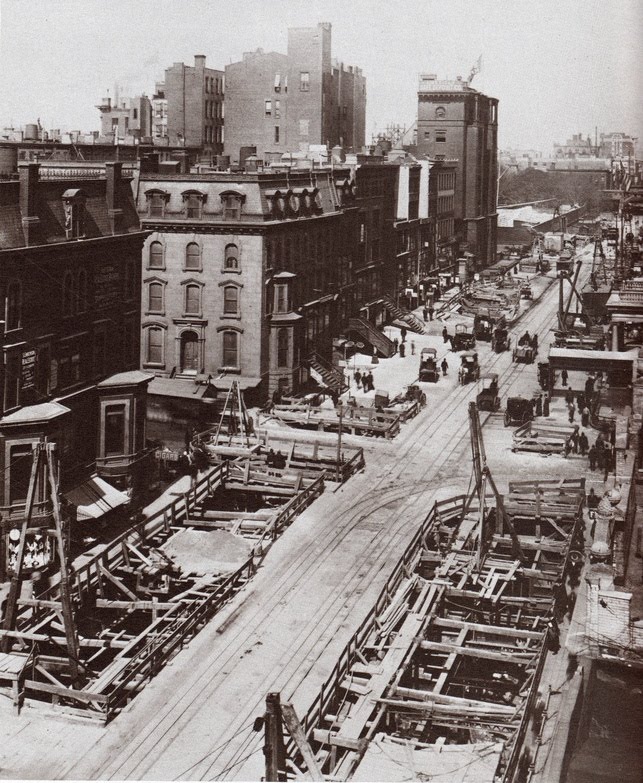
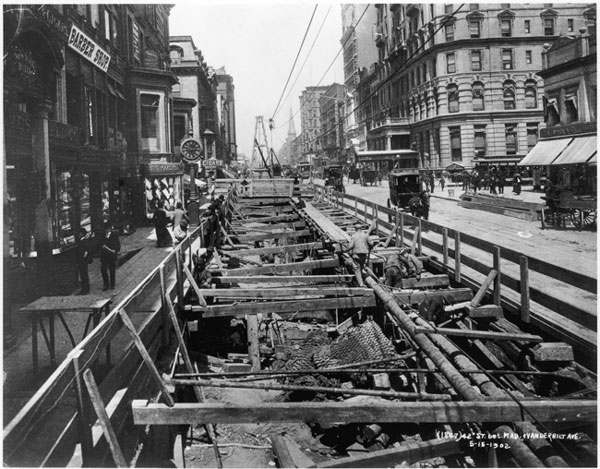
The cut and cover method chosen by subway engineers ensured that New Yorkers would be faced front-and-center with the daily slog of excavation and construction.

Forty-second Street during construction of the subway system, 1901.

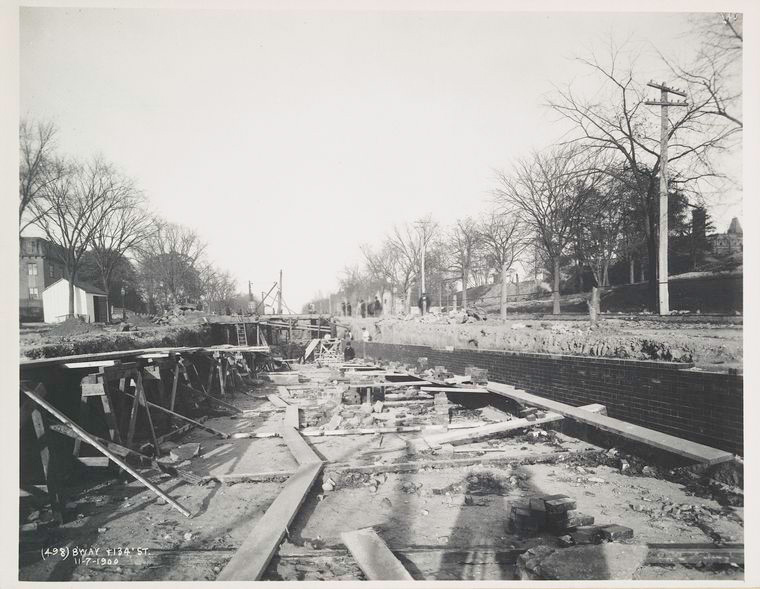
Mayhem during subway construction at Broadway and 134th Street! (NYPL)

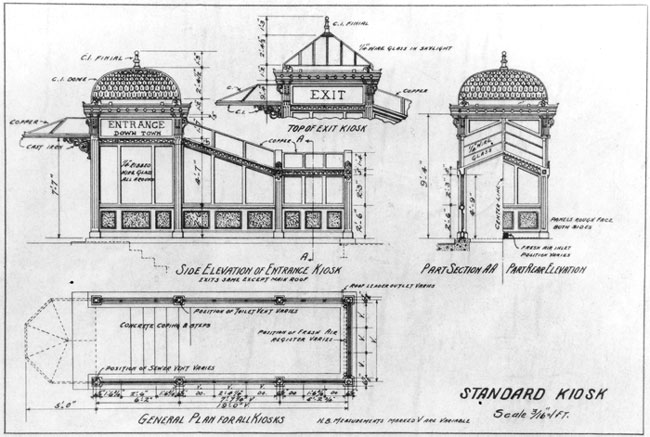
The plan for subway entrances, taking liberally from the design of kiosks in Budapest.

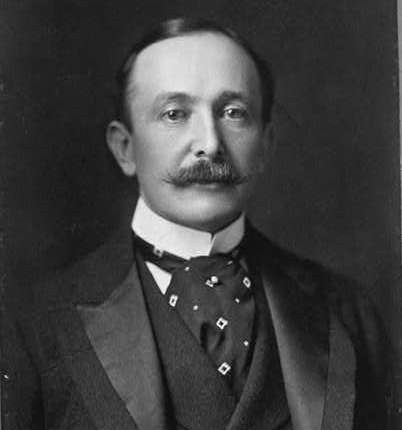
Thank this rich guy for your first subway, New York. August Belmont Jr., later known for his contributions to horse racing, founded the Interborough Rapid Transit Company to help operate the fledgling new subway system. (Pic LOC)

FOR MORE INFO:
We cannot begin to due justice to the birth of the subway in the way the good folks at the website NYSUBWAY.ORG have done. Hundreds of photos, original documents, and a wonderfully exhaustive list of stations, including many no longer in operation. Forgotten New York, of course, has several rich pages devoted to the subject.

And you definitely swing by the New York Transit Museum in Brooklyn, where you can actually sit in one of the original subway cars, among many, many more treasures of the original IRT.

Older Bowery Boys posts on today’s subjects:
Alfred Beach: The Short Lived Thrill of the Windy Subway
Grand Central’s Other Explosion
Know Your Mayors: George B McClellan
Know Your Mayors: Abram Hewitt

Categories
Podcasts

Cable cars, trolleys and monorails: Moving around on New York’s forgotten transit options

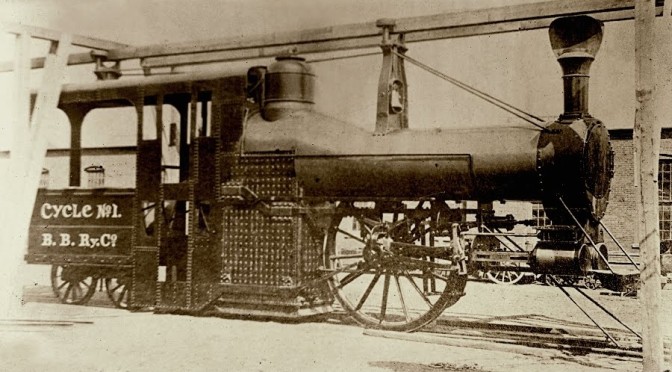
ABOVE: The Boynton Bicycle Railway, combining the best of the locomotive and the spinning wheel. This narrow little hot wheel took riders on a short ride through Coney Island.

For the third part of our Bowery Boys On The Go summer series, looking back at the history of New York City public transportation, it’s a short ride on the long gone, forgotten methods of getting around the city. The streets were mostly dominated by horse-based transport, but this was smelly and slow — not to mention awful on the animals. So the city experimented with new ways of moving the masses: by cable car (exported form San Francisco), the trolley and the monorail.

Along the way, you’ll find out the connection between the cable car and New York’s most famous art-house movie theater, discover the origins behind the name of a classic New York sports team, and hear the contributions of a man known as ‘the black Edison’.

ALSO: Find out about what may be the world’s worst monorail technology!

Click onto photographs for a larger view


Horse Drawn: New York City before the 1870s simply could not have survived without horse power, and the streets were filled with thousands of the animals pulling streetcars, omnibuses, carts and basically everything else that moved. As a result, life for a horse was pretty much appalling. Life span was relatively short. Although the city designated places along the waterfront to dispose of carcasses, it wasn’t unheard of to leave bodies in the street. This classic (but disturbing) photo from 1900, captioned ‘Close of a Career’, illustrates the absurdity. (Courtesy Shorpy)

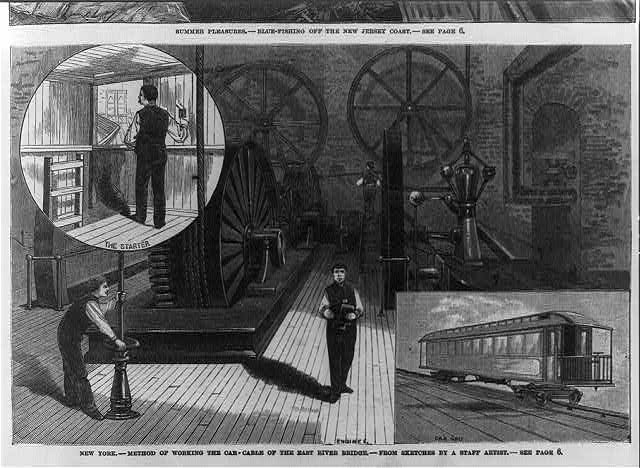
The first cable car system in New York was actually a steam-engine hybrid that ran over the Brooklyn Bridge in 1883. Engineers didn’t believe a regular steam locomotive could travel up an incline to get onto the bridge, so this dual steam/cable method was created. The powerhouses, pictured here, were situated under the approaches. (Read more about it here.)

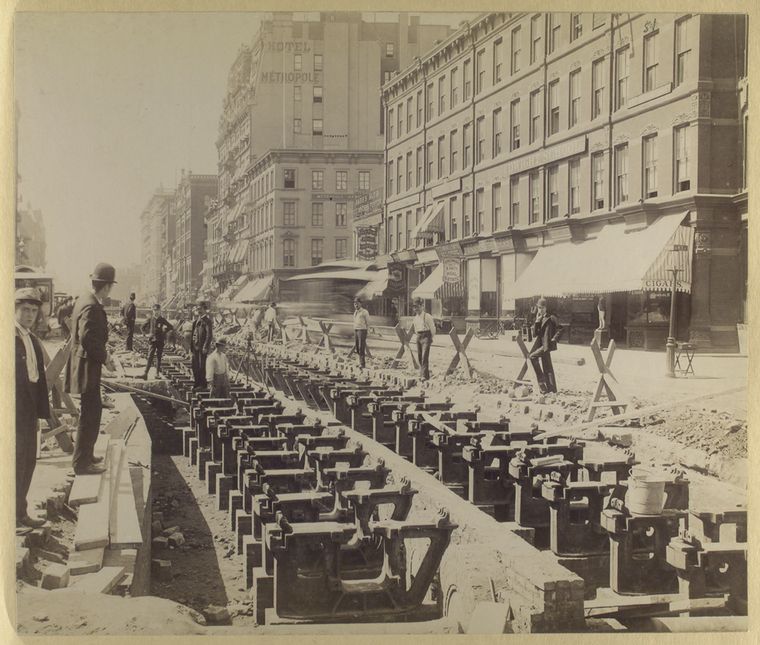
Cable Vision: How many times have the streets around Union Square been dug up? Here’s one of the very first times, in 1891, as workmen install a cable line for New York’s very first cable car system. Notable about this particular stretch is the fact that this would become part of the notorious Dead Man’s Curve, where cars would speed around the northwest corner of the park. (Courtesy NYPL)

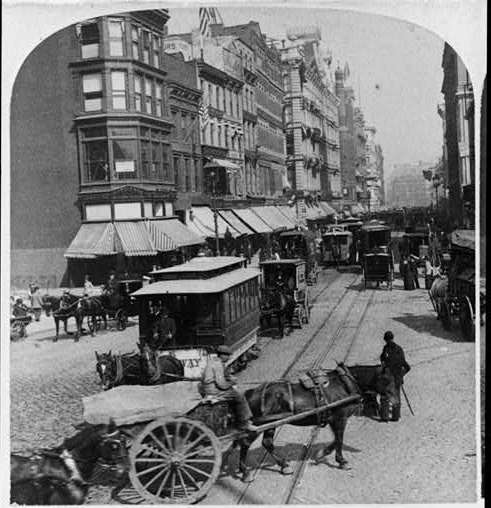
The frequent and frustrating traffic predicament on New York streets, a congested cluster of machines and horses, sometimes at a standstill. This picture, from 1892, depicts Broadway between Union Square and Madison Square.

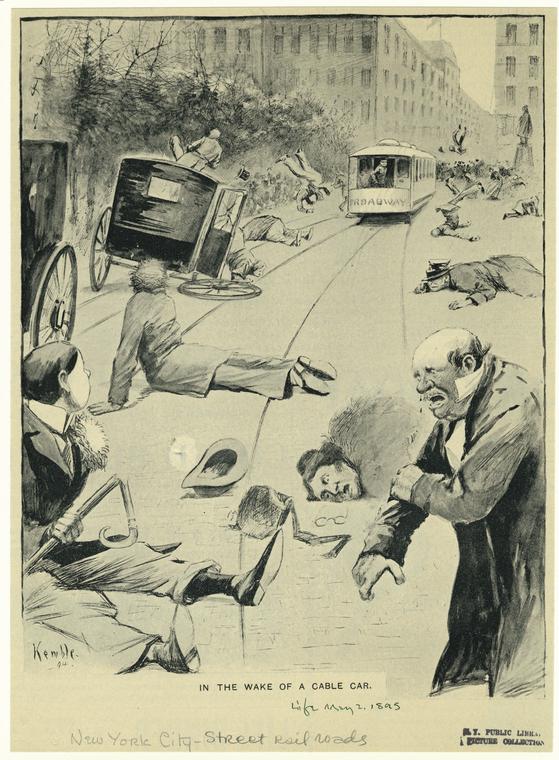
From an 1894 Life Magazine illustration, echoing the public sentiment over New York’s wily, dangerous cable car system. (Courtesy NYPL)

A video look at the Brooklyn trolley system, which by the 1930s had become the standard method of transit for most residents of the borough.

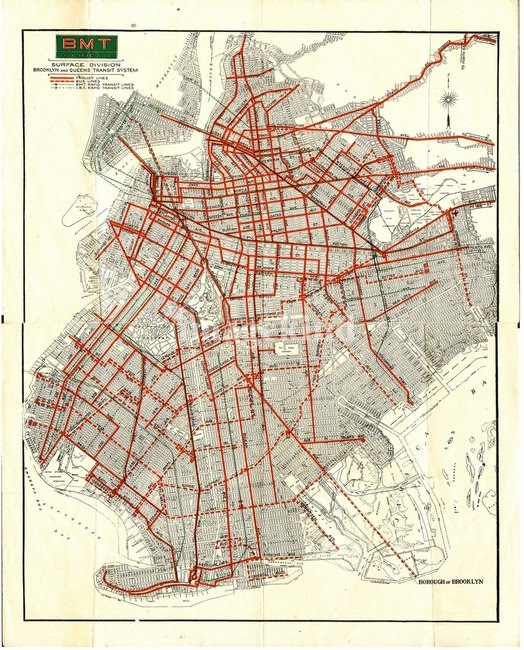
A map detailing the vastness of the Brooklyn trolley system by the 1930s, by this point a component of the Brooklyn-Manhattan Transit Corporation.

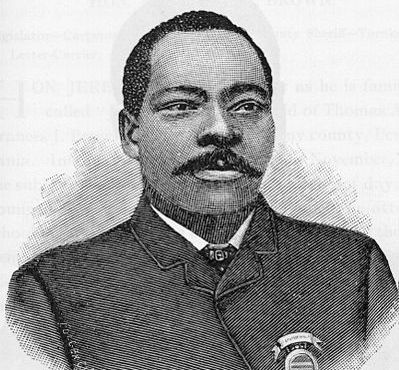
Inventor Granville Woods debuted his ‘multiple distributing station system’ — a sort of ‘wireless’ trolley system using electromagnetic induction — for the American Engineering Company in February 1892. Unfortunately, Woods had to sue the company for any sort of credit. In fact, this article in the Brooklyn Daily Eagle of the trial doesn’t even mention his name.

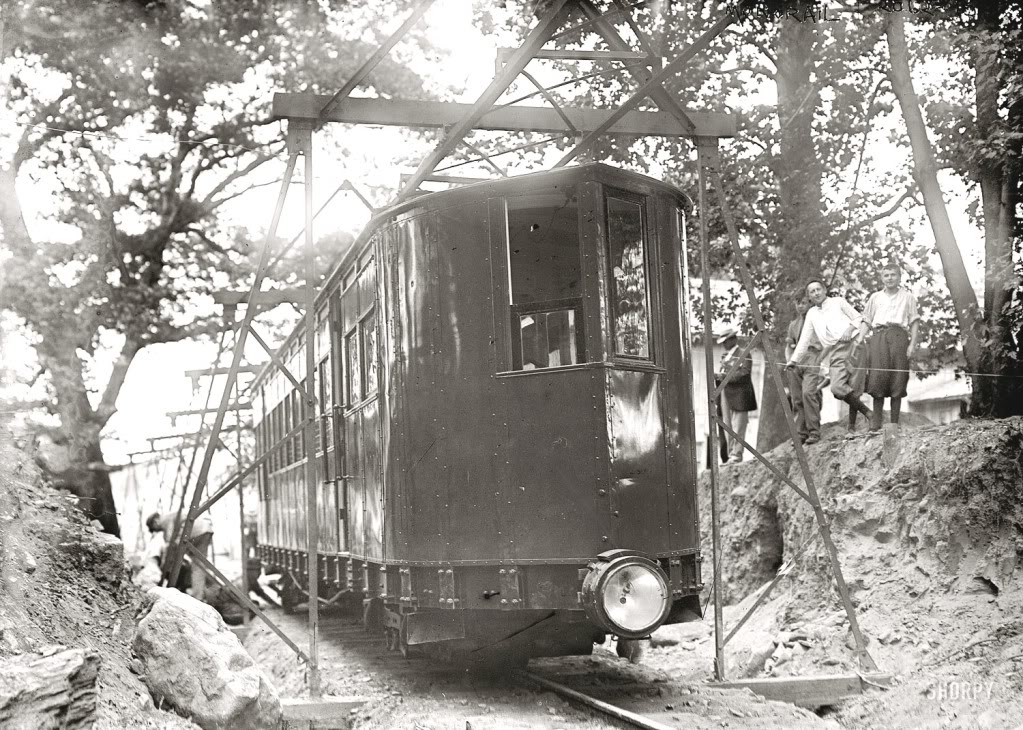
Monofail: The first riders of the monorail system provided by the Pelham Park and City Island Railroad were greeted with a nightmare voyage culminating in the entire car falling over on its side. “Flimsy Structure Supporting It Gives Way and Many Are Badly Hurt,” cries the New York Times. Despite this not insignificant hiccup, the monorail operated for a few years before being replaced with a trolley system.

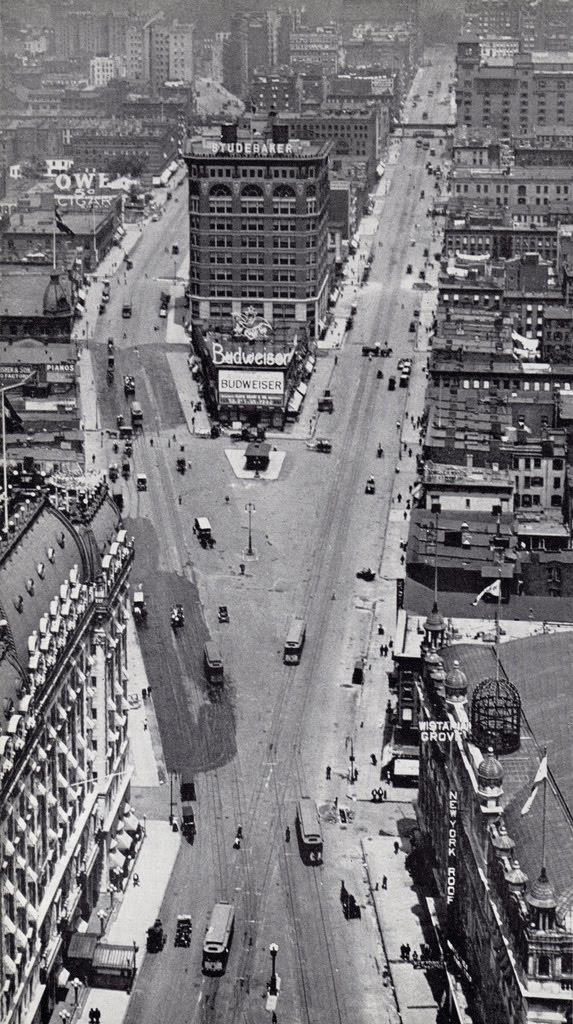
On Track: Looking down on Times Square from 1905, taken from the top of the Times Building. I’m putting this hear for a bird’s eye view on what the streets of New York looked like, grooved with trolley rails. You can still see several horse carts too, although most horses had been taken off of city streets by this time. (Please click on the photo for a close-up view)

Categories
Podcasts

New York City’s Elevated Railroads: Journey to a spectacular world of steam trains along the avenues

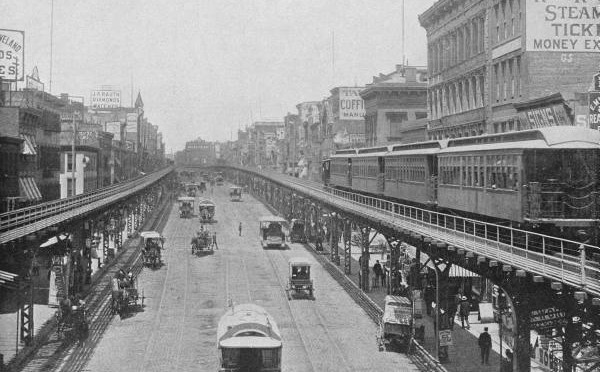
Above: The Third Avenue Line as it looked running along the Bowery, changing the nature of New York street life, even as its innovations helped expand the city.

PODCAST Before there were subways, New York City transported travelers up and down the length of Manhattan by elevated railroad, an almost unreal spectacle to consider today. Steam engines sat high above several avenues in the city, offering passengers not just a faster trek to the northern reaches of Manhattan, but a totally new way to see the city in the 19th century.

Welcome to our second podcast in our series Bowery Boys On The Go, a look at the history of New York City transportation. Before we get to those famous ‘El’ trains, we explore the earliest travel options in the city — the omnibuses and horse-drawn rail cars, the early steam successes of the New York and Harlem Railroad and Hudson River Railroads, and something affectionately nicknamed the one-legged railroad.

What were some of the more peculiar ideas for improving travel? And why was the idea of a subway immediately shot down by the city? Let’s just say — Boss Tweed and Jay Gould are involved.

ALSO: What were the different motivations driving transportation progress in the city of Brooklyn? Well, it has something to do with the beach.


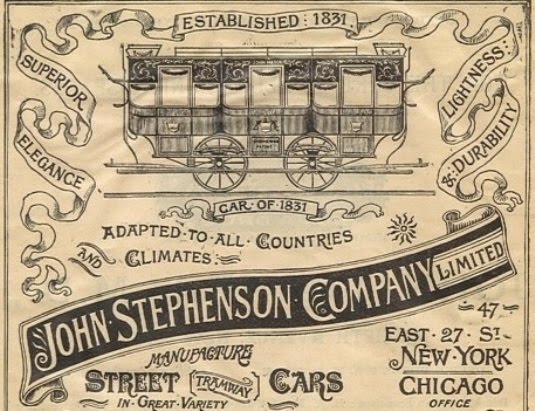
An illustration of the first traincar in the New York and Harlem Railroad system — the John Mason, named for the railroad’s president (Mason was also the president of Chemical Bank). It was designed by master engineer John Stephenson, who customized many of the New York and Harlem’s traincars.

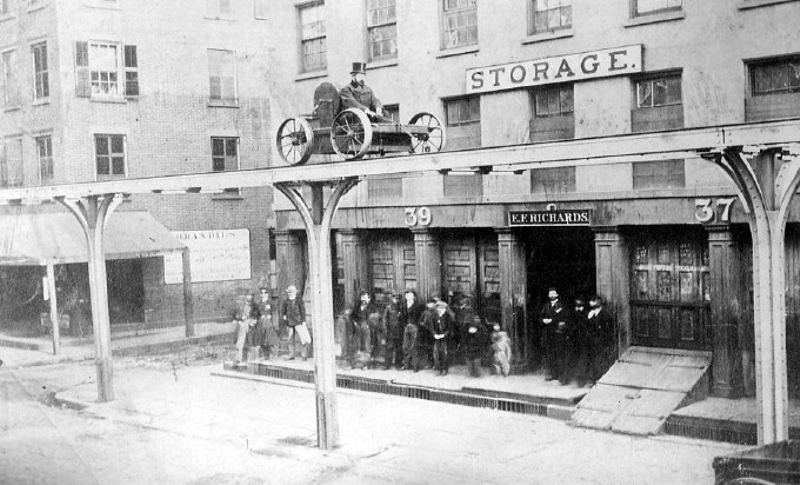
Charles Harvey developed the first elevated system for New York, essentially a cable/pulley system that stretched along the west side from the Battery. Below, Harvey gives his ‘one-legged’ line a tryout in 1867. (Pic courtesy Merritt Island Subway South)

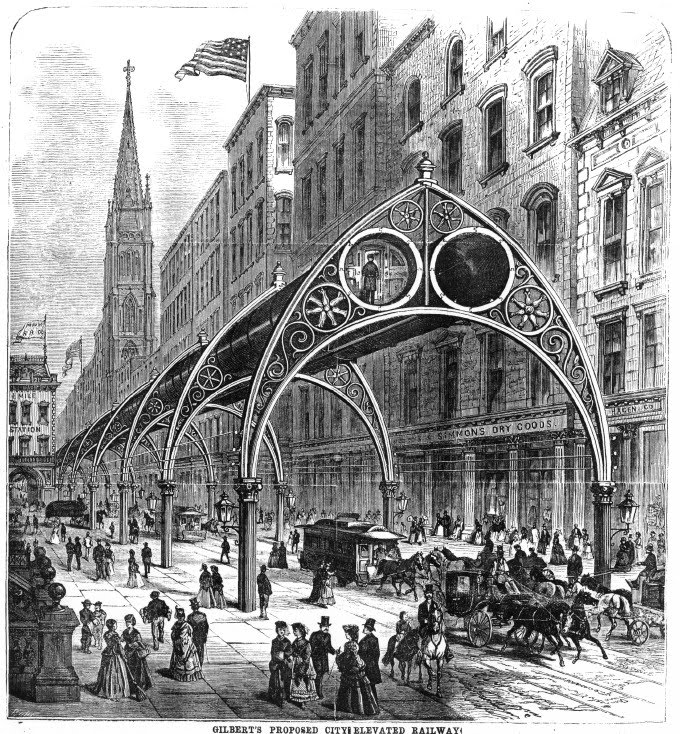
Rufus Gilbert, a Civil War physician, turned to trains after the war and dreamt up an imaginative pneumatic system, to zip passengers above the city in Gothic-themed arches. Gilbert was given the go-ahead to construct this oddity, but the love for steam and a financial crisis transformed the idea into a steam elevated line instead. (Courtesy Columbia U)

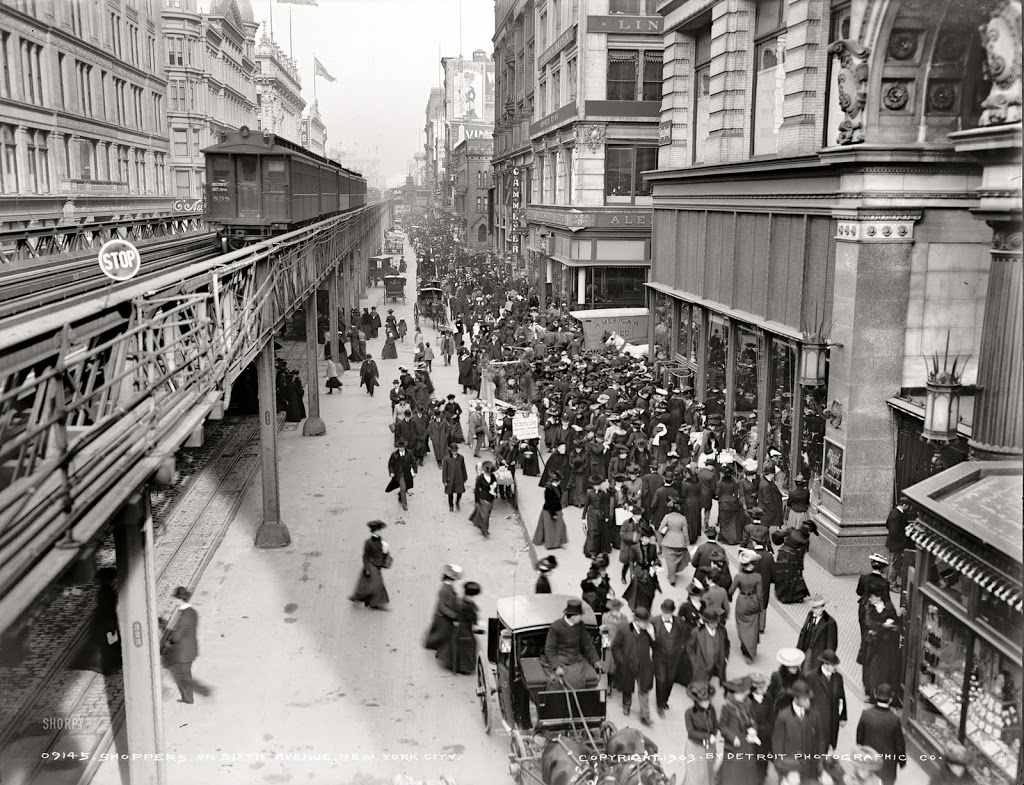
Ladies Mile along the Sixth Avenue elevated line. The trains might have made the city expand outwards, but it also made the streets smaller and darker. (Original pic from Shorpy)

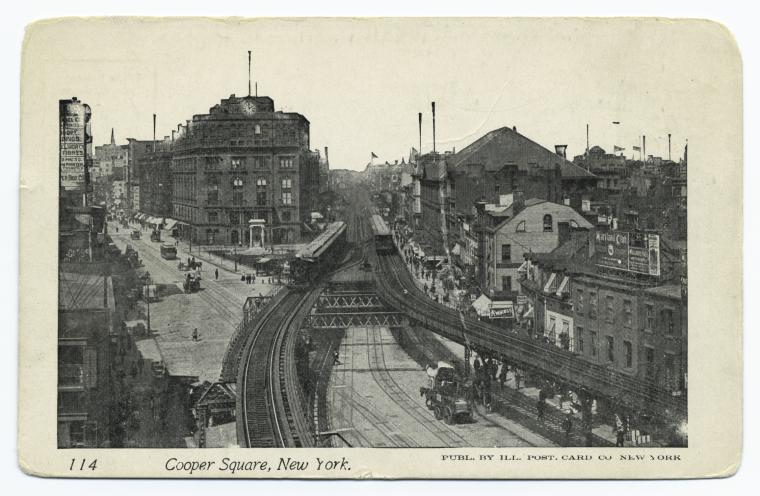
The Third Avenue line, where it ran alongside Cooper Union and traveled south down through the Bowery. This intersectioni today still sits rather wide and empty, a vestige of the days when tracks hovered above the roads. [NYPL]

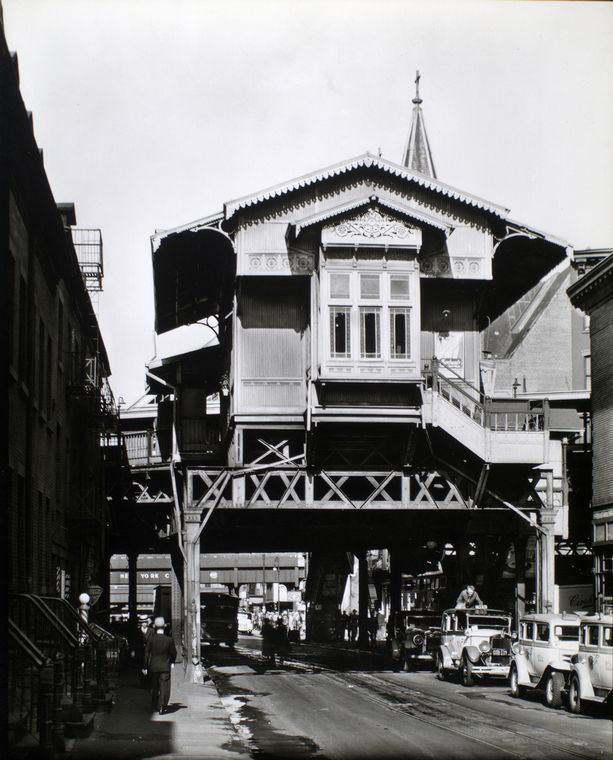
An ornate station for the Ninth Avenue line, at Christopher and Greenwich streets in the West Village.

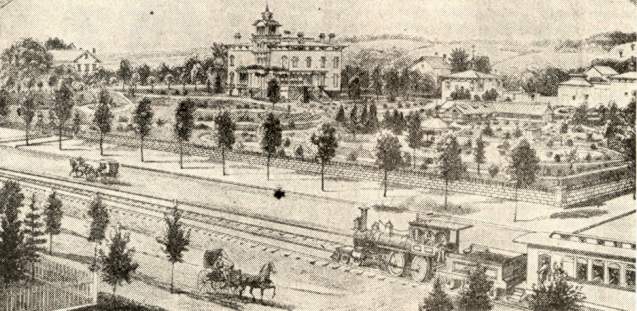
The Brooklyn and Jamaica Railroad, the precursor to the Long Island Railroad. The section illustrated here is along Woodhaven Boulevard, but much of the line went along Atlantic Avenue.