Our book, The Bowery Boys Adventures in Old New York, was just re-released as a 10th-anniversary edition with lots of brand-new entries. So to celebrate, we thought we would highlight three of our all-time favorite stories from the book.
Featuring:
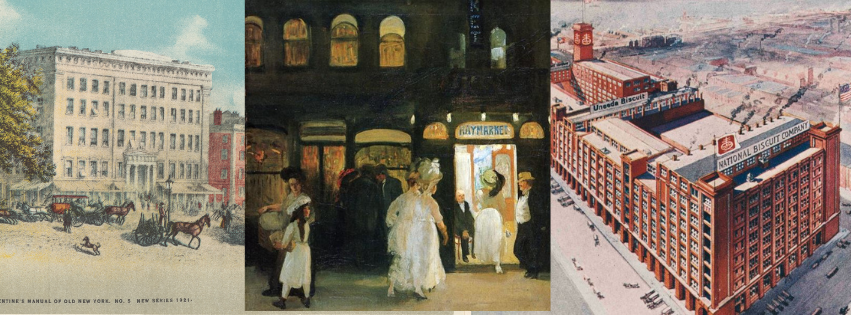
— The Astor House, one of the first luxury hotels in the United States, owned by the original Astor himself — John Jacob Astor. When it opened in 1836, it wrote the rules for how people even stay in hotels in New York City.
Why was it considered so revolutionary during its day, and why did its eventual demolition in the 20th century take almost 13 years?
— The Haymarket, the most scandalous dance hall of the Gilded Age! This lively and bawdy place, where both men and women met (sometimes upstairs, behind the curtains), sat in the heart of New York’s turn-of-the-century entertainment district, the burgeoning theater district.
But the show inside was MUCH more risque. Oh-la-la! Tom gives you a little tour of the joint, so pull up your stockings.
— The Nabisco Factory in the Meatpacking District was New York’s very own Willie Wonka’s chocolate wonderland, the American center of cookie and cracker making for decades. The sweet smells from the National Baking Company’s ovens were a relief in the late 19th-century district of meat processing.
It was here that two of the most important manufactured desserts in American history were born. Visitors to the High Lineand Chelsea Market may not realize they are strolling through a veritable cookie paradise!
LISTEN TODAY: ADVENTURES IN OLD NEW YORK
The 10th anniversary of our book Adventures In Old New York is now available in bookstores.
FURTHER LISTENING:
Some older Bowery Boys episodes related to this episode
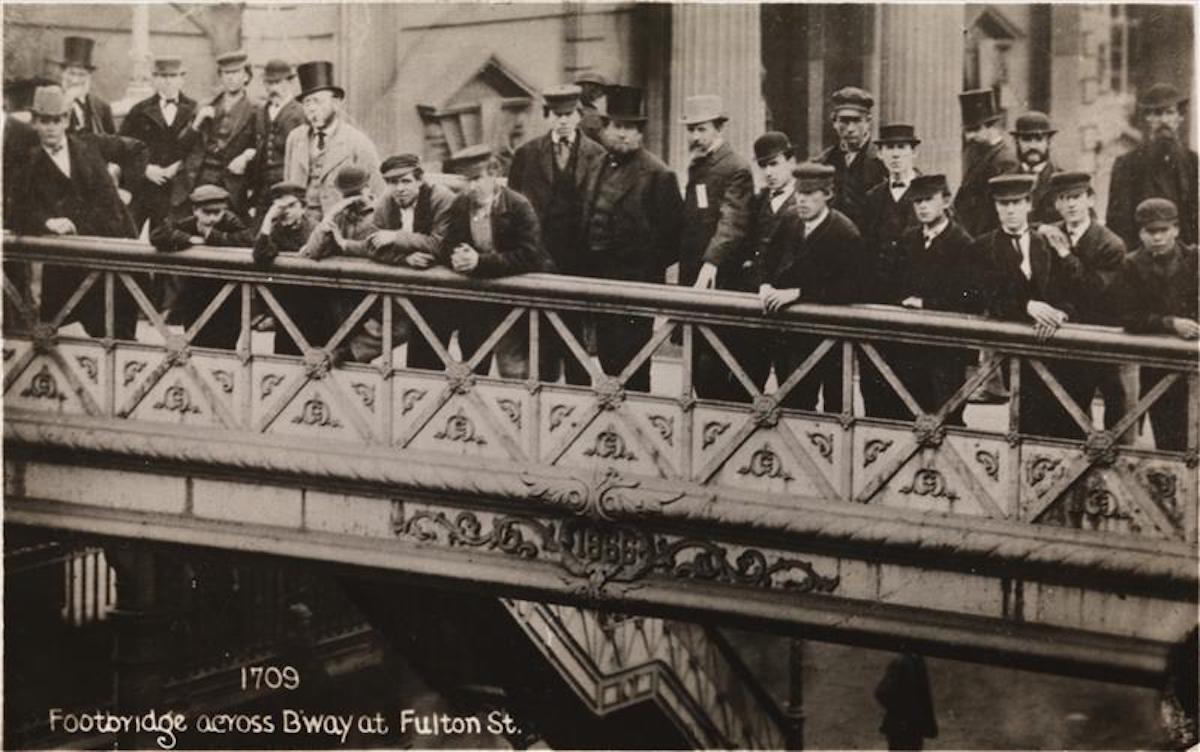
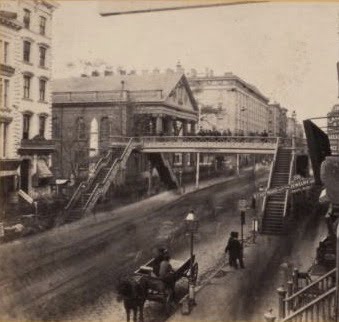
The bulky and yet somewhat elegant contraption above is the short-lived Loew Bridge, which once hung over Broadway at Fulton Street back in 1867 and 1868, an early cast-iron pedestrian bridge at one of the busiest intersections in the city.
It was named not for its architect, but for the comptroller of New York at the time, Charles E. Loew.
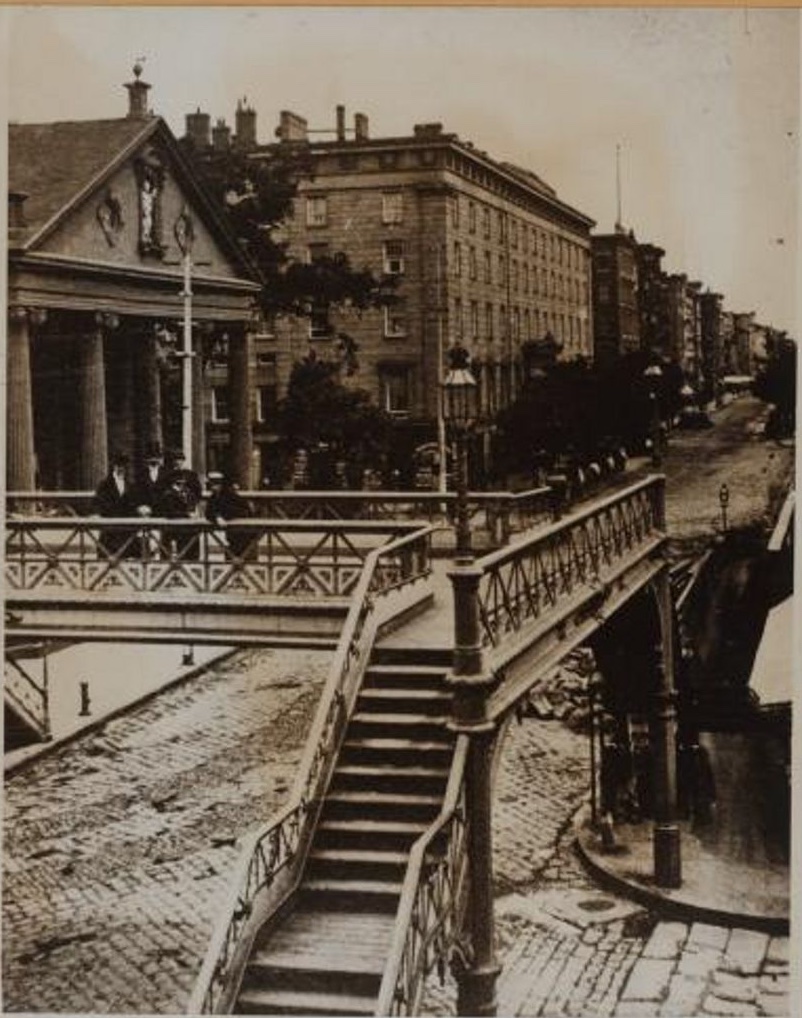
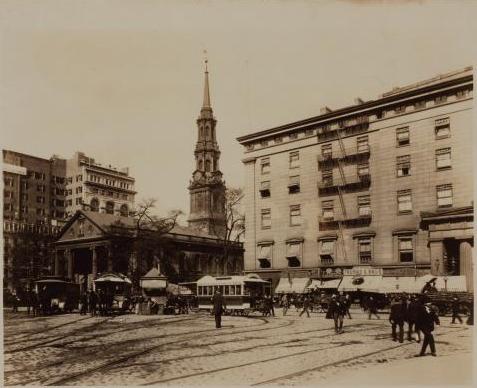
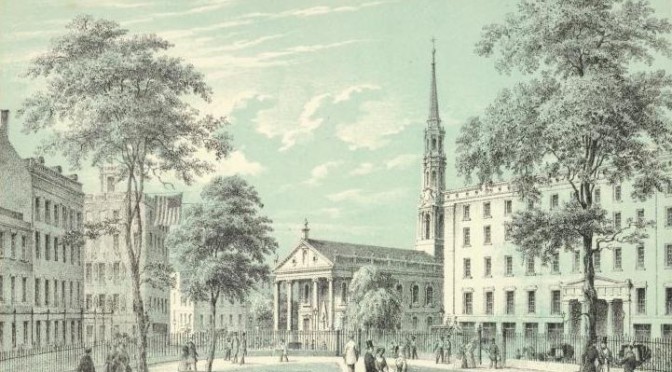
Crossing the street was indeed a challenge then, in an era of no traffic lights and conveyances operated by horses. A couple blocks to the north lay the heart of city government and the publishing industry, not to mention St. Paul’s Church and the Astor House, New York’s finest early hotel. (Both are seen in the photo below.)
New York Public Library
The bridge, which opened in April 1867, provided a respite to New Yorkers frustrated with dirty streets and impossible crossing options for pedestrians. One fanatic was even inspired to pen a lengthy poem to its honor.
Unfortunately, it was not popular with surrounding business owners, particularly the one at 212 Broadway. That storefront, the hatter of one Charles Knox, was obscured by the bridge’s latticework and decreased business opportunities, he alleged.
It seems unusual that one businessman would be able to effectively crumble a new bridge to the ground, but Mr. Knox had the city’s sympathies.
Two years earlier, his original shop had been destroyed in the same fire that incinerated Barnum’s American Museum. However he managed to unite some business owners of the area and eventually “brought suit against the city for $25,000 damages.” [source]
Most likely, Knox was more concerned with the belief that he was losing business to a rival hat shop across the street. (After all, to paraphrase a popular cliche, the hats are always cleaner on the other side.) Thanks to his efforts, the city ripped the bridge down less than two years after first erecting it, and citizens went back to their filthy and treacherous street crossings.
Back to square one, it seems. I think the situation is very well summarized in this letter from ‘B.’ to the New York Times, published on December 20, 1868:
“Taking down the Broadway Bridge appears to cause few remarks from the press, and when they have spoken they have rather been in favor of the removal.
“It appears to me the bridge, at certain periods was a great convenience, notwithstanding its needless height. When the snow slush is a foot thick, and the street blocked up with stages and trucks in a dead lock, it is a great accommodation to have a bridge to cross. It is almost impossible for women and children to cross Broadway, near Fulton Street, at such times; and if men get over it is at the risk of being covered with filth.
“Before the bridge was built, the writer has walked from Liberty Street to near Wall before getting across. At that time the papers were continually talking about ‘relief to Broadway”; but since the bridge was built, that has ceased. I think we shall hear it again on the first thaw after a heavy snowstorm, when crowds will be seen standing at the corners wondering how they will be able to get over the street.
“If the bridge is an injury to private property, the owners should be remunerated for the damage; not that a few shopkeepers, because their business is injured, or they think it is, should be the means of inconveniencing the whole public by having it removed.
“If that were the case with railroads, every farmer would have the power of stopping the road going over its land, because he thought it injured it — and there would not be a railroad in this country.”
Images above from the New York Public Library digital collection
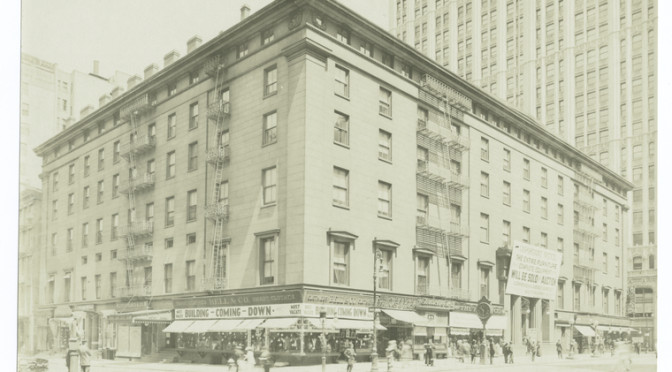
The Astor House was New York City’s first great hotel, opened in 1836 by John Jacob Astor himself, a premier accommodation for the city throughout the 19th century. But by 1913, it was time to tear it down.
It was a symbolic moment for many older New Yorkers. As you can tell from the image above, the ancient hotel had a new neighbor: the Woolworth Building, a symbol of the ‘new’ New York City. As dozens of more modern hotels opened uptown, the old Astor was greatly reduced, with whole sections partitioned for other uses.
For a little comparison, here’s how the building looked in the 1890s, already minimized in its appearance:
Hotels were now flocking to the Times Square area. In fact, so to did the Astor name, with the beautiful Hotel Astoropening there in 1904.
The hotel might have survived a little longer if not for new subway construction in the area, endangering the foundation of the old building. On May 29, 1913, the hotel closed its doors, and over the next few weeks, the southern section of the Astor House was torn down. But not without a bevy of reminiscences from old New Yorkers, and a little teeth-gnashing too of a colder, modern city overtaking the gentle comforts of the old.
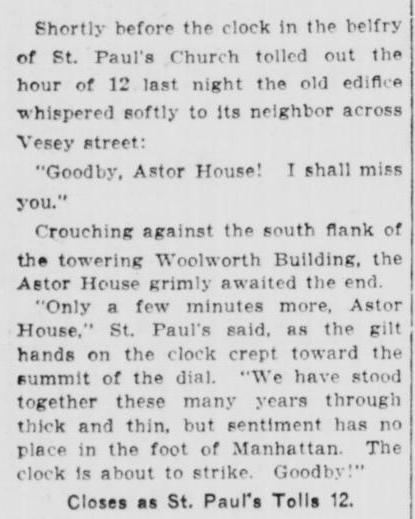
And then, there’s this dramatic article from the New York Tribune, depicting a literal farewell between the Astor and its neighbor to the south, St. Paul’s Church:
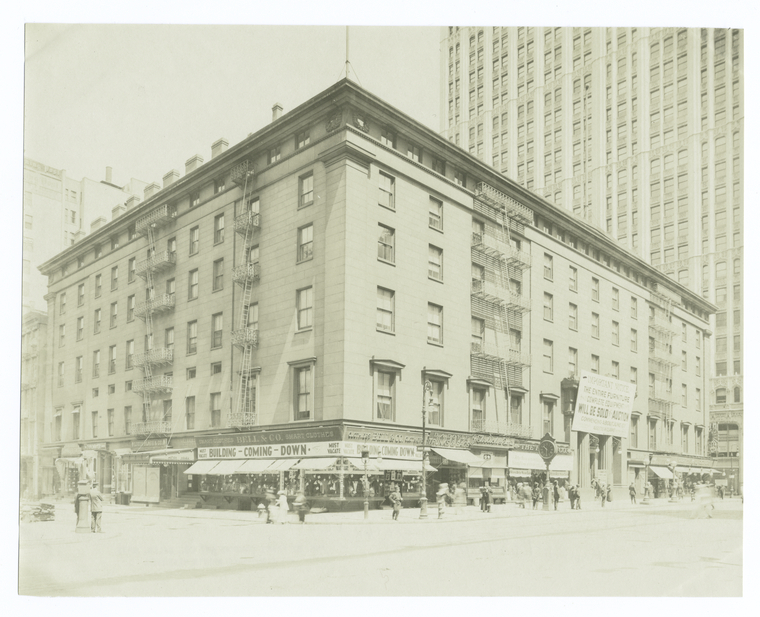
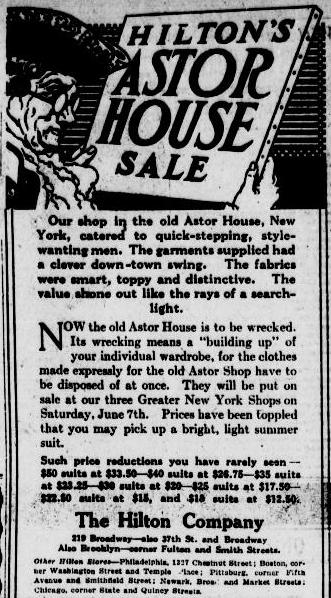
While this spelled doom for a certain memory of New York, those who liked firesales of sorts could take comfort in liquidation sales from famous shops which operated from the old Astor Hotel, such as the Hilton Company:
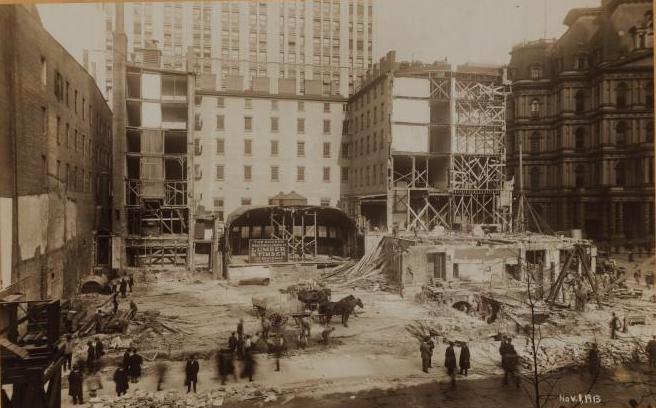
This is what the space looked like within a couple months. By the way, that’s the old Post Office to the right of the picture, a structure that would last another quarter century before it too was demolished in 1939:
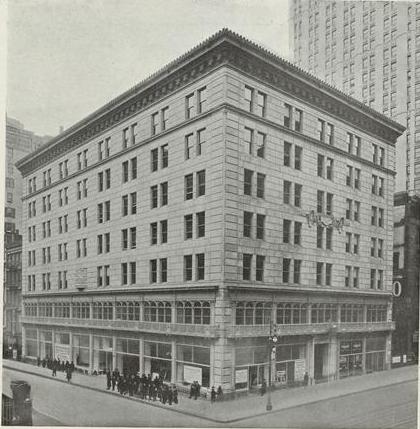
In 1915, it was replaced with the Astor House Building, a small suite of office spaces that remains on that street corner to this day. It’s where the Staples store is
Barnum’s American Museum at left (the building with the flag) and the Astor House at right, from the vantage of City Hall Park, circa 1850. Both buildings were victims of the Confederate plot of 1864 to burn the city.
PODCAST We’re officially subtitling this ‘Strange Tales of 1864’, presenting you with a series of odd, fascinating stories from one pivotal year in New York City history. With the city both fatigued by the length of the Civil War and energized by Union victories, New Yorkers were often at their best — and their worst.
The city unites around an unusual parade — the first regiment of African-American troops — even as it elects a pacifist mayor sympathetic to the Southern cause. A grand and flamboyant fair, uniting the community, offers up a surprising New York tradition — the theme restaurant. Meanwhile, a local newspaper editor devises an elaborate hoax to get rich quick off the gold market.
But with the November re-election of Abraham Lincoln also comes a deadly threat — a Confederate conspiracy aimed at New York’s luxury hotels. Tune in as we recount the botched plot to destroy New York in an conflagration of ‘Greek fire’.
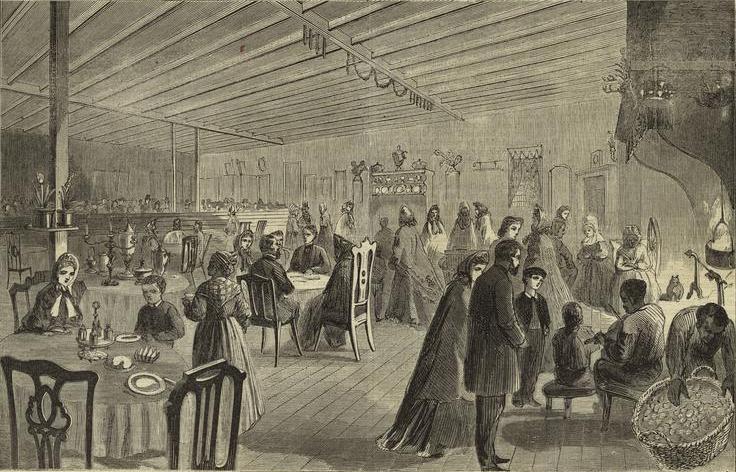
The Knickerbocker Kitchen, a featured restaurant at New York’s Metropolitan Fair. Women dressed in traditional Dutch and Colonial garb and served items believed to be popular with the residents of old New Amsterdam. [NYPL]
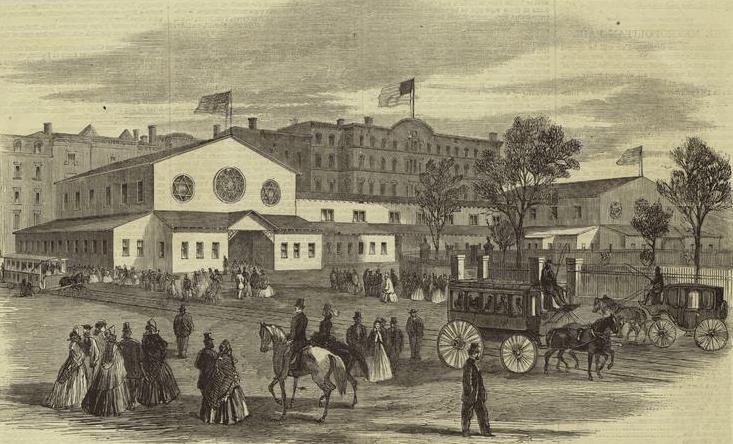
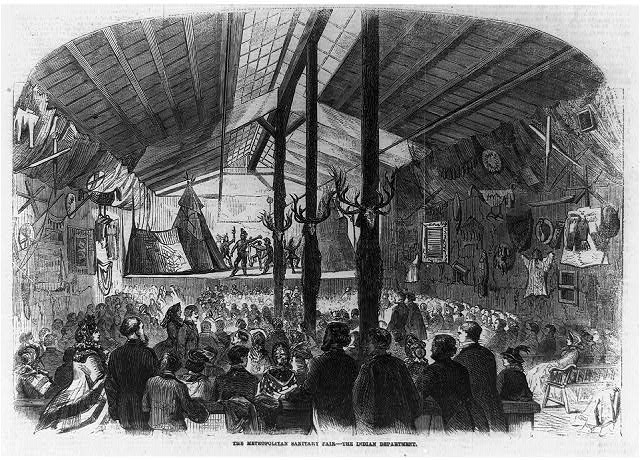
Pavilions were specially constructed around Union Square for the Metropolitan Fair, which raised money for the U.S. Sanitary Commission.
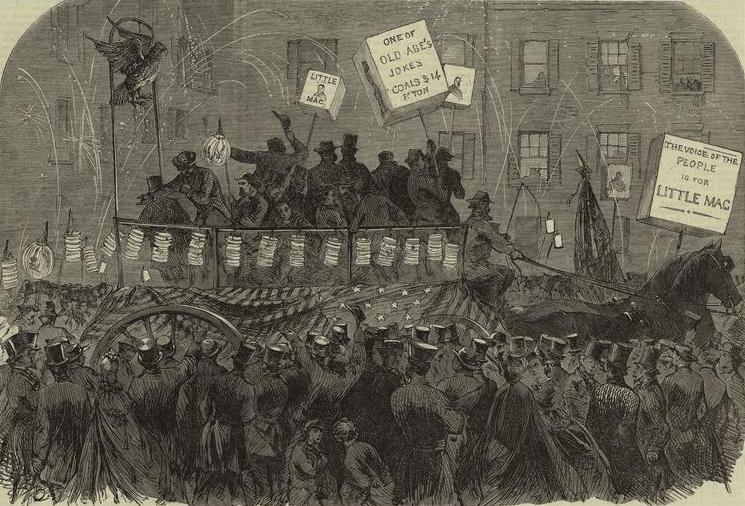
A nighttime ‘torchlight’ rally for presidential candidate George McClellan, the clear choice for New Yorkers in 1864. For a Democratic stronghold like New York, the former general was an especially appealing alternative to Abraham Lincoln. [NYPL]
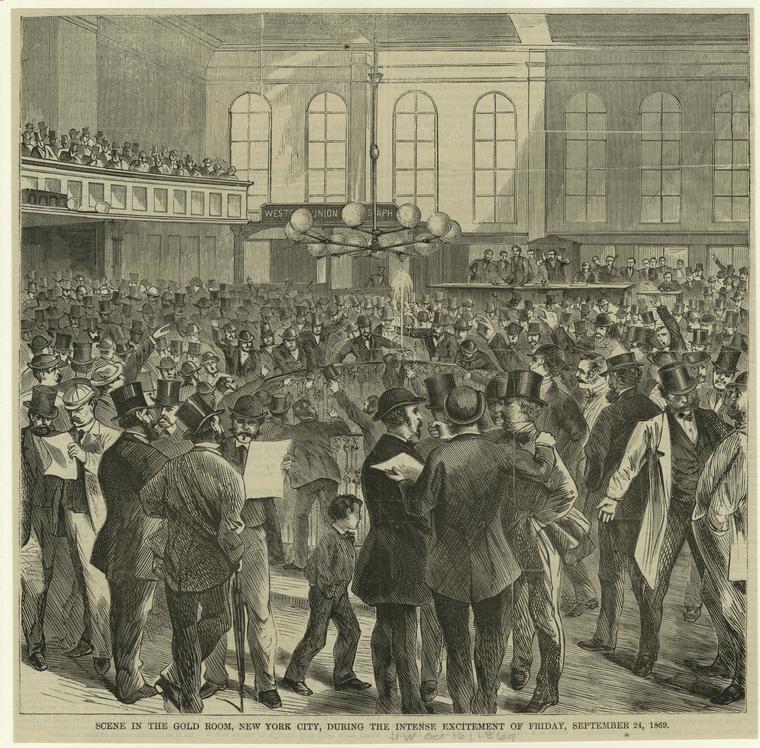
A scene from the New York Gold Room, epicenter of American gold speculation. During the Civil War, traders would buy and sell based upon Union victories and defeats. The trade was also susceptible to false information, such as the events of the Gold Hoax of 1864. (NYPL)
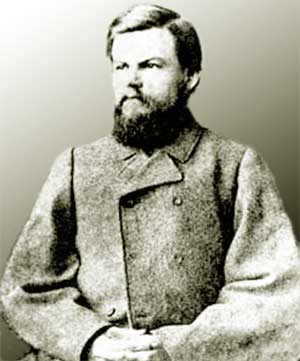
Robert Cobb Kennedy, the only one of the Confederate conspirators to be caught. He was executed at Fort Lafayette in 1865, a couple weeks before the end of the Civil War.