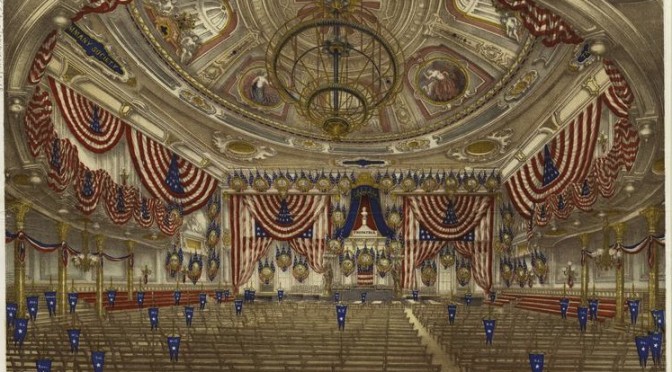
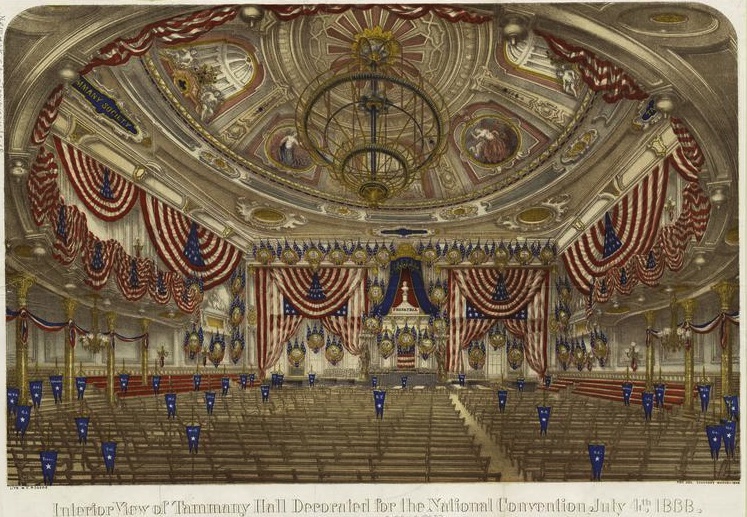
Tammany Hall hosts the city’s first Democratic Convention: Susan B. Anthony, the KKK, and a reluctant nominee

Many of you may remember New York’s sole Republican National Convention, held in 2004 at Madison Square Garden, celebrating the re-election bid of George W. Bush. Some may recall any one of New York’s three recent Democratic National Conventions — two (1976, 1980) for Jimmy Carter, and a rather memorable one in 1992 that placed Bill Clinton on the ticket.

Oh, but that’s modern politics! Conventions of the past — stodgy, contentious, male — are more fascinating artifacts, gentlemanly in tone, chaotic and raw in execution, and dominated by a mix of issues both eternal (war, debt, taxes) and outdated (slavery, territorial expansion).

Of New York’s five Democratic nominating conventions, the most infamous is certainly the 1924 gathering at Madison Square Garden — the old Garden, Stanford White’s palace on 26th Street — distinguished by rancor, the significant influence of an energized Ku Klux Klan and an exhaustive trek through 103 ballots only to settle upon a weak compromise candidate, West Virginian politician John W. Davis, who was crushed in the general election by Republican Calvin Coolidge. Within two years, the Garden would be closed and promptly demolished, as though in embarrassment.

But I find the first national convention, held in 1868, to be the most intriguing and telling of New York life in the mid-19th century, a convention so unusual that the eventual presidential nominee actually recoiled from accepting the nomination.

Four years prior, in 1864, a splintered Democratic Party had tried to replace Abraham Lincoln in the White House with his former Union general George B. McClellan. In New York, former mayor and now-Congressman Fernando Wood led a drive for new national leadership — even though he loathed McClellan — and called for an end to the Civil War with their ‘Southern brethren’. But opposition quickly withered after a series of Union victories, and Lincoln was re-elected.

Flash forward to 1868. Lincoln was dead, the Civil War was over and slavery was abolished. The current president Andrew Johnson aligned with Democrats over Southern inclusion, eventually leading to his impeachment and a serious damaging of the national Democratic brand.

To bring glory back to the White House, the Republicans hoisted forth as their nominee the hero of the war, Ulysses S. Grant. Perhaps the most famous man in America, Grant would eventually prove to be a mediocre president. But his reputation and charm were so great in 1868 that the Democrats knew they stood little chance to defeating him.
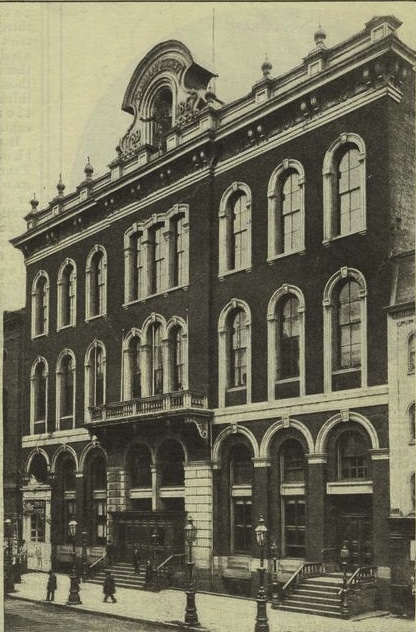
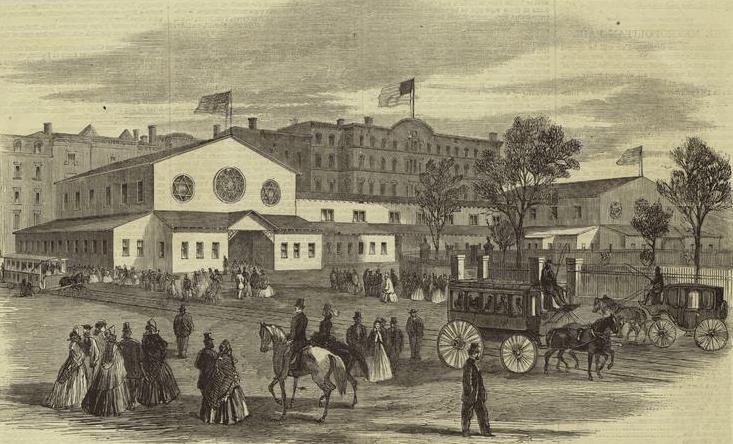
New York’s Democratic contingent — in particular, the political machine Tammany Hall and its leader William ‘Boss’ Tweed — controlled the national committee during this period and steered the convention to New York for the very first time in July 1868.

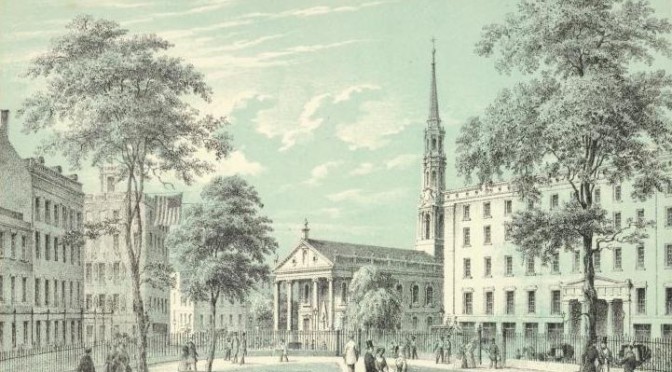
Their headquarters at 141 14th Street (at left) was sparkling new, ‘fresh from the builder’s hands,’ a lush multi-use venue with auditoriums, clubrooms and even a basement cafe, situated next door to New York’s poshest destination, the Academy of Music.

The convention was especially notable as it featured several Democrats from Southern states for the first time since the war.

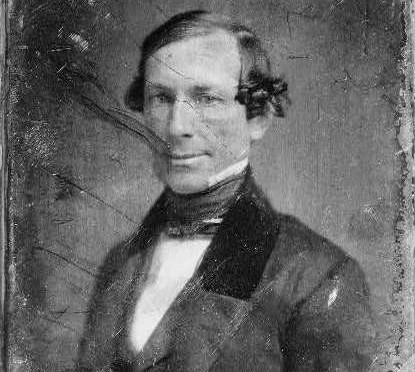
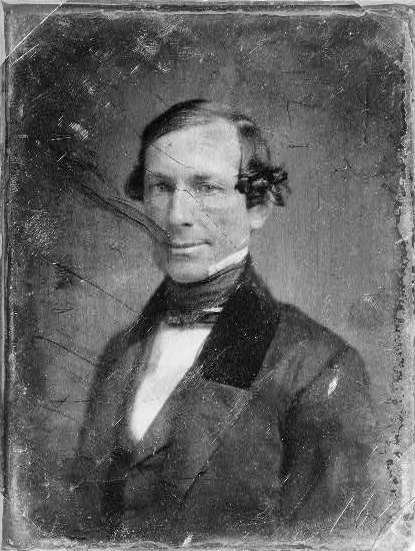
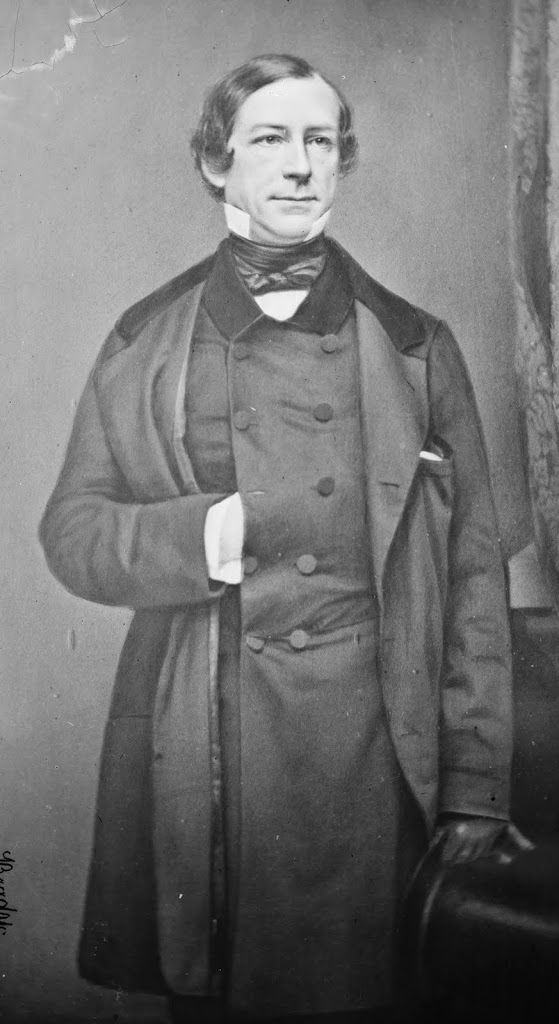
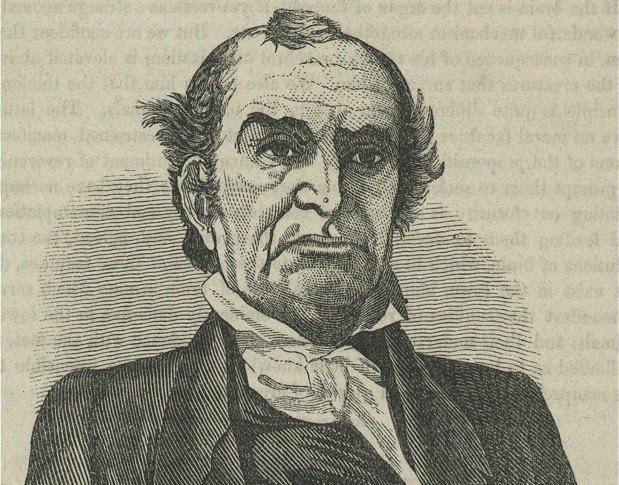
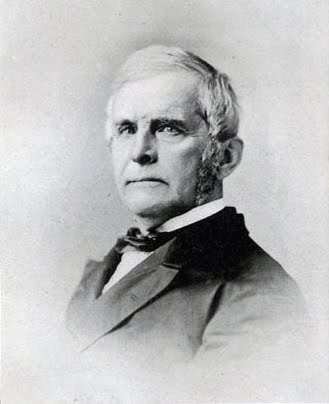
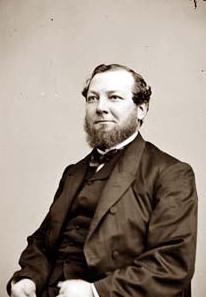
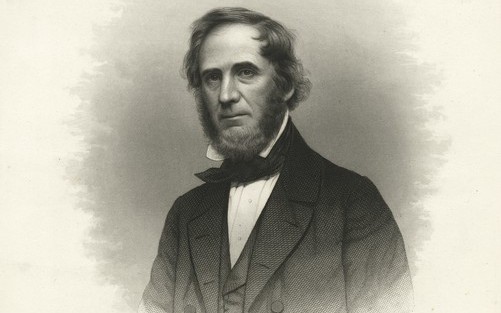
Delegates crowded into the main hall on July 4, and a roar of support greeted Democratic power player (and horse breeder) August Belmont, who gaveled in the proceedings. “I welcome you to this good city of New York,” Belmont declared, “the bulwark of Democracy.”  Nearby smiled former New York governor Horatio Seymour (pictured below), president of the convention. Five days later, there were be far less formality and Seymour, in particular, would not be smiling.

On July 5th, the Democrats unfurled their official platform, embracing the return of the Southern states and harshly criticizing the Republican-dominated Congress:  “Instead of restoring the Union, it has, so far as in its power, dissolved it, and subjected ten States, in time of profound peace, to military despotism and negro supremacy.”  Certainly pleased with this particular inclusion was Tennessee delegate Nathan Bedford Forrest, grand wizard of the Ku Klux Klan.
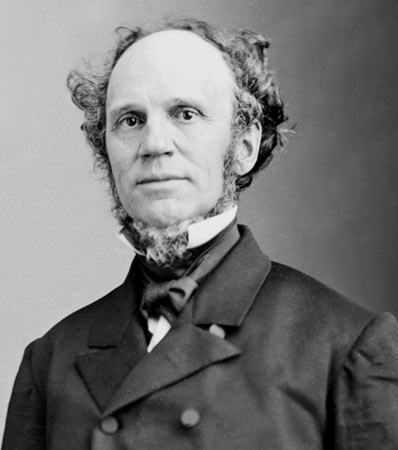
But the Democrats made room for the consideration of progressive causes too, such as a call for women’s suffrage.  Seymour read aloud a plank from the Women’s Suffrage Association written by Susan B. Anthony and co-signed by Elizabeth Cady Stanton.

Anthony appealed to their quest for dominance. “It was the Democratic party that fought most valiantly for the removal of the ‘property qualification’ from all white men, and thereby placed the poorest ditch-digger on a political level with the proudest millionaire. And now you have an opportunity to confer a similar boon on the women of the country … a new talisman that will ensure and perpetuate your political power for decades to come.”

The request was greeted warmly by the room before being respectfully dismissed altogether.

Things grew less harmonious when the balloting for president began.  Several candidates were submitted, even the disgraced Andrew Johnson. For several arduous ballots, the leader was George H. Pendleton, who had been the vice presidential hopeful under General McClellan. But it immediately became clear that the factions within the party were in no mood to settle quickly.

Pendleton’s lead had weakened by the 13th or 14th ballot, leaving two key candidates — Thomas Hendricks, an Indiana politician, and Winfred Scott Hancock, a Union general that seemed an attractive challenger to Grant.  But neither could approach the two-thirds needed to snatch the nomination.

A stalemate called for a third candidate, somebody that all could agree with, while at the same time, an individual that was absolutely nobody’s top choice.  It was at the podium that delegates found their man — Horatio Seymour.
He was horrified. Seymour wanted to retire and had previously rejected calls to run for national office. Privately he must have considered the pitiful chances of running a lengthy campaign against Grant. But delegates greatly respected the former governor, a bastion of cool Democratic leadership who had been an opponent to the federal draft during the war.  He had also been partly responsible for the Draft Riots, emptying the city of federal militia days before the draft was to begin that July.

Still, their were few ready options for the Democrats. When a delegate from Ohio suddenly declared “against his inclination, but no longer against his honor” to put forth Seymour as a suitable compromise, the room followed suit. On the 22nd ballot, Seymour was enthusiastically declared the Democratic nominee for president.

The only one not enthusiastic about it was Seymour. “I said to them that I could not be a candidate [and] I meant it.” [source]  He left the convention in a huff, only to begrudgingly accept the nomination back at Tammany Hall the following day.

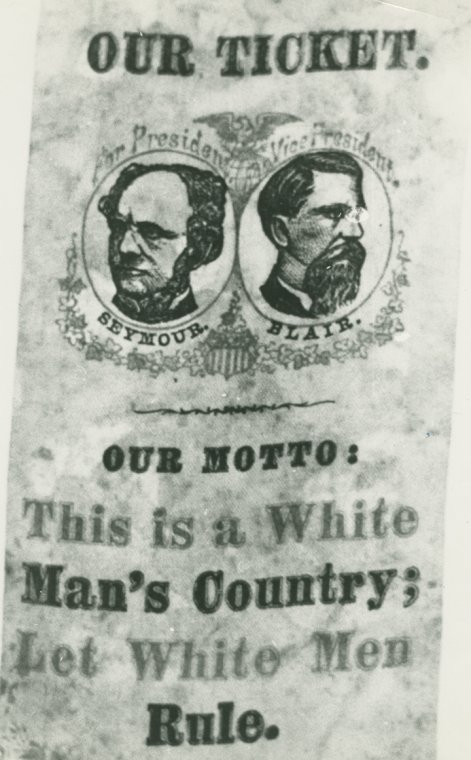
Seymour threw himself into the campaign with vice presidential choice Francis Blair Jr. (whom Seymour barely knew and hardly liked). As evidenced by the campaign poster above, they weren’t afraid to use the Southern racial divide to appeal to voters. But no matter; they lost soundly in the electoral vote to Grant and vice president Schuyler Colfax.

Perhaps the real objective of the convention wasn’t to sway a national crowd, but to energize New Yorkers. Democrats swept into local and state offices, including Boss Tweed’s own choice for governor John T. Hoffman.

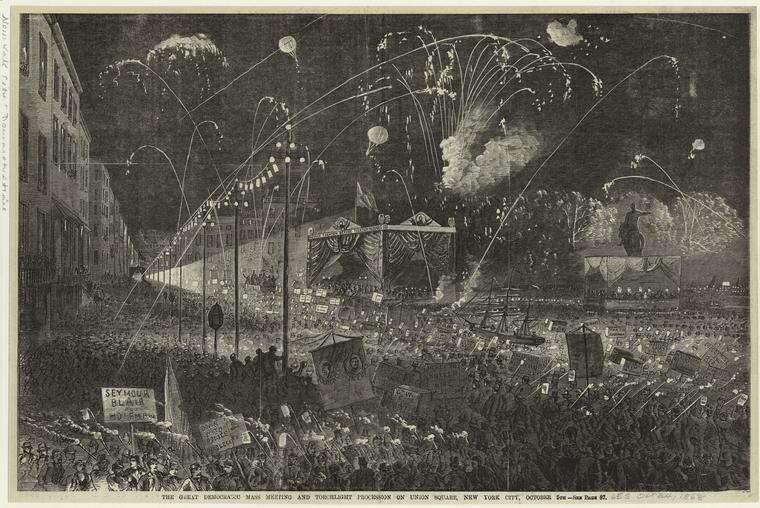
Below: Democrats rally in Union Square in support of Seymour and other local candidates, October 5, 1868
Pictures courtesy of New York Public Library
Categories
Podcasts

Hoaxes and Conspiracies of 1864: The Confederate Plot to Torch New York

Barnum’s American Museum at left (the building with the flag) and the Astor House at right, from the vantage of City Hall Park, circa 1850. Both buildings were victims of the Confederate plot of 1864 to burn the city.

PODCAST We’re officially subtitling this ‘Strange Tales of 1864’, presenting you with a series of odd, fascinating stories from one pivotal year in New York City history. With the city both fatigued by the length of the Civil War and energized by Union victories, New Yorkers were often at their best — and their worst.

The city unites around an unusual parade — the first regiment of African-American troops — even as it elects a pacifist mayor sympathetic to the Southern cause. A grand and flamboyant fair, uniting the community, offers up a surprising New York tradition — the theme restaurant. Meanwhile, a local newspaper editor devises an elaborate hoax to get rich quick off the gold market.

But with the November re-election of Abraham Lincoln also comes a deadly threat — a Confederate conspiracy aimed at New York’s luxury hotels. Tune in as we recount the botched plot to destroy New York in an conflagration of ‘Greek fire’.

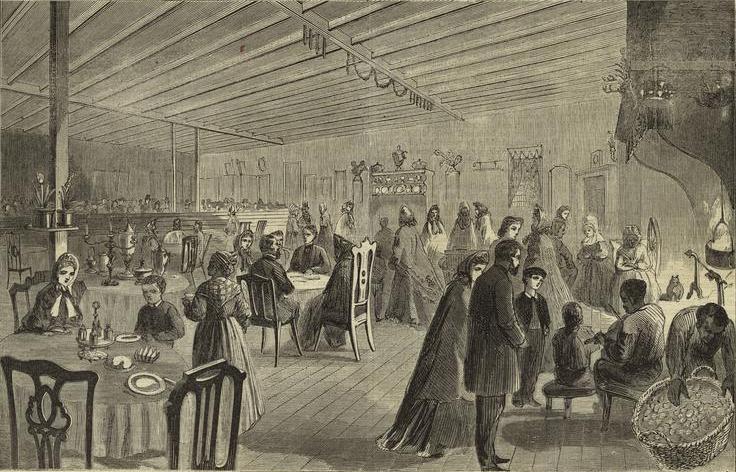
The Knickerbocker Kitchen, a featured restaurant at New York’s Metropolitan Fair. Women dressed in traditional Dutch and Colonial garb and served items believed to be popular with the residents of old New Amsterdam. [NYPL]

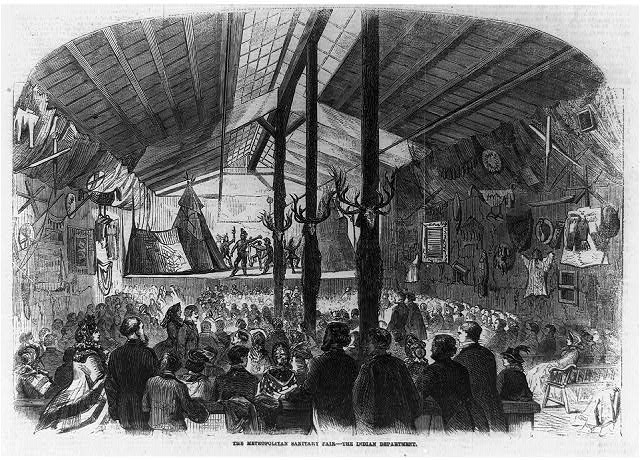
Pavilions were specially constructed around Union Square for the Metropolitan Fair, which raised money for the U.S. Sanitary Commission.

The ‘Indian Department’ at the Metropolitan Fair. [Library of Congress]

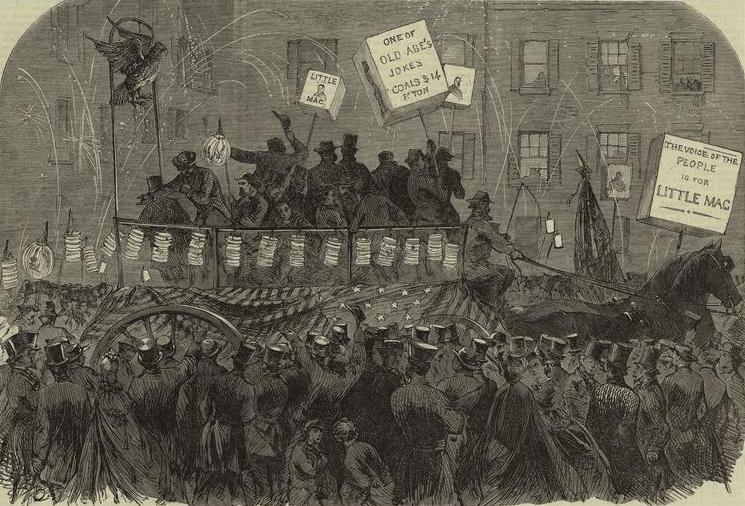
A nighttime ‘torchlight’ rally for presidential candidate George McClellan, the clear choice for New Yorkers in 1864. For a Democratic stronghold like New York, the former general was an especially appealing alternative to Abraham Lincoln. [NYPL]

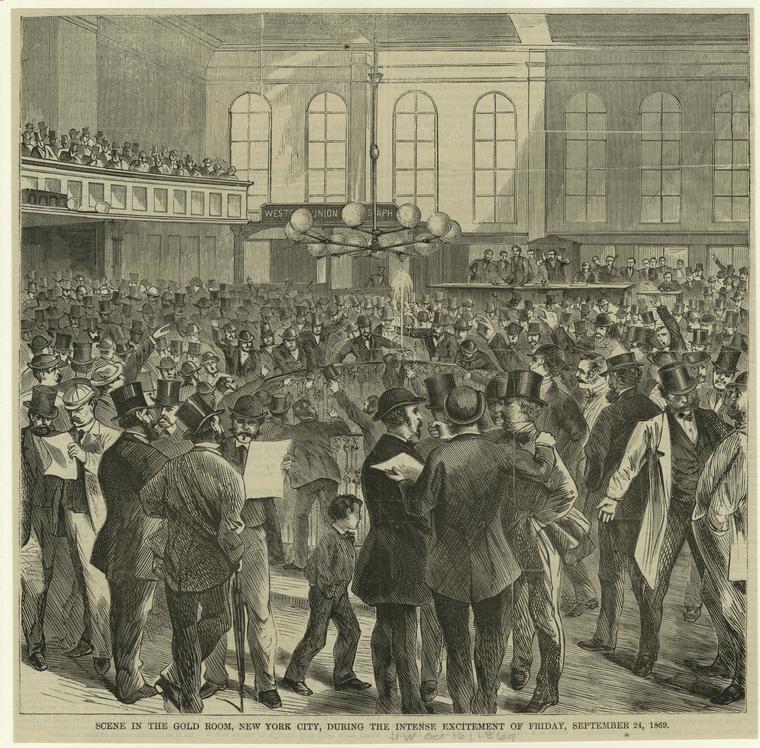
A scene from the New York Gold Room, epicenter of American gold speculation. During the Civil War, traders would buy and sell based upon Union victories and defeats. The trade was also susceptible to false information, such as the events of the Gold Hoax of 1864. (NYPL)

Robert Cobb Kennedy, the only one of the Confederate conspirators to be caught. He was executed at Fort Lafayette in 1865, a couple weeks before the end of the Civil War.

Notes from the Podcast (#126) Fernando Wood

Somebody should make a movie about Fernando Wood, and the role should be played by Johnny Depp. Wood is endlessly fascinating, not only as a shady character of political theater, but as a example of bald tenacity. He was written off as finished at many occasions — and saddled with mounting corruption charges — only to return to ever greater public office.

He was blatantly ambitious as a young man, in an era where such naked power grabbing was frowned upon in proper society. By the end of his career, such ambitions were a requirement of New York politicians. Fernando strengthened Tammany Hall style politics even in those occasions when he was blatantly against them. He perfected every despicable element of New York politics as though he were a craftsman.

This was also the ‘set up’ show for our next two episodes, which Tom and I will record later this summer. There’s a lot of coverage of the Civil War this year, but you might be surprised to see the directions we take with these upcoming shows.

Correction: I stated that the amount of business brought to New York per year by just five Southern states equaled $300 million. I overstated; the amount is actually “at least $200 million” according to author Ernest McKay. However, Southern states are estimated to have owed somewhere between $150 to $200 million in New York creditors. Needless to say, from a financial perspective, it’s easy to understand New York’s sympathies to the seceded states.

Places to Visit: Fernando Wood was a rather saavy real estate investor as well. In fact, he profited handsomely from leasing a building he owned — at 115 and 117 Nassau Street — to the city government! But his most lucrative acquisition was most likely his own estate of Woodlawn. The borders of his property were between Broadway and the waterfront on the west, running north to south from 76th Street  to 78th Street. That’s some pretty lofty acreage today. Part of Wood’s land was acquired for the development of Riverside Park during his lifetime.

What To Read: Fernando pops up in all the great histories of the city, including Herbert Asbury‘s ‘Gangs of New York’. Jerome Mushkat’s ‘Fernando Wood: A Political Biography’ takes you through the intricacies of the man’s politicking. But challenge for biographers is that Wood wrote very little about his private life. What we do know certainly alludes to details as salacious as some of his public shenanigans

Listen In: Wood figures in greatly to two of our prior podcasts. The details of the Police Riot of 1857 were presented in our show Case Files of the NYPD (episode #103). And he makes his first appearance in a Bowery Boys podcast way back in episode #40, in our Union Square show.

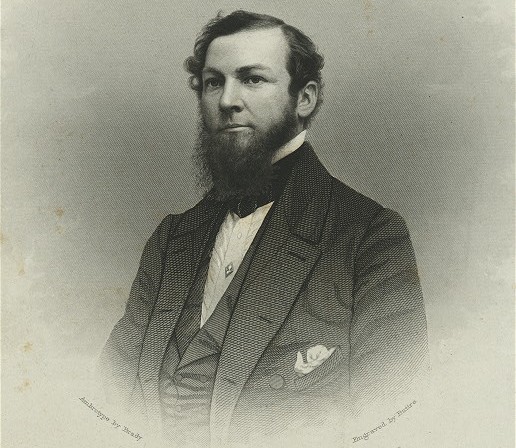
Above: Another portrait of Wood by Matthew Brady, courtesy Library of Congress
Categories
Podcasts Wartime New York

Fernando Wood, the scoundrel mayor during the Civil War: Will New York and Brooklyn secede from the Union?


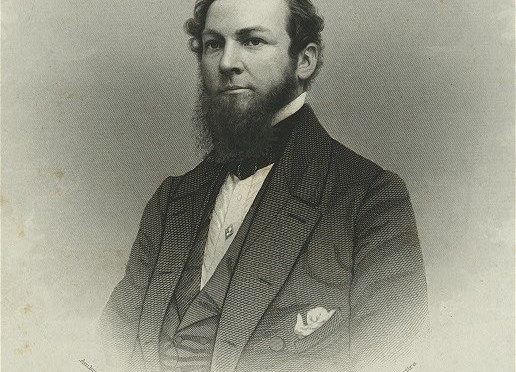
His Honor, one of the most ambitious, most duplicitous leaders of New York in its history — as photographed by no less than Matthew Brady.

PODCAST The first part of our Bowery Boys Go To War! trilogy of podcasts set during the years of the American Civil War.

Fernando Wood, New York’s mayor at the dawning of the war, was the South’s best friend. The rascally politician, famous during his first term for inciting a police riot, drummed up pro-slavery support amongst his Irish and German constituents and even suggested New York secede from the Union itself! But once the war began and public support for the conflict swelled, the nefarious Fernando tried to have it both ways, both leading the Union cry and undermining it.

Click here for notes, corrections and other details on this podcast.

Wood’s ornate mansion at Broadway and 77th Street, called Woodlawn, bought with his newly acquired wealth obtained from the results of a suddenly successful shipping business and advantageous political fortune. (NYPL)

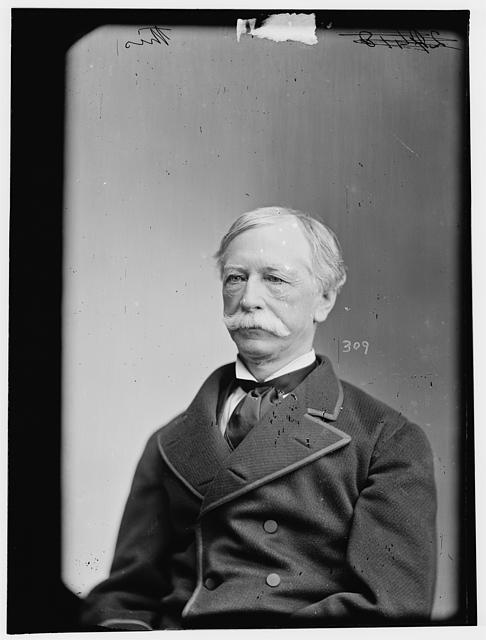
U.S. Representative Wood, near the end of his life, taken sometime in the 1870s.

Categories
Podcasts

Case Files of the New York Police Department 1800-1915

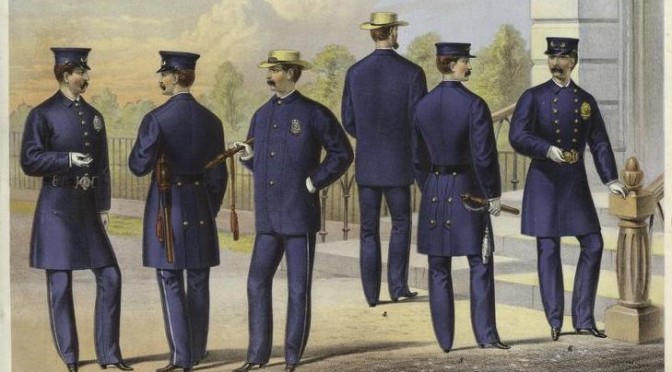
Uniformly chic: Law enforcement officers of the New York Metropolitan Police from 1871 show off their fancy blue threads. Twenty years previous, they weren’t even required to wear standardized apparel. (Courtesy NYPL Digital Library)

PODCAST We’re playing Good Cop / Bad Cop this week, as we take a close look at four events from the early history of the New York Police Department. You’ll meet shining stars of the force like Jacob Hays, who kept the peace in the early 19th century armed with a mean billyclub — and the only man to ever hold the title of High Constable of New York. And then you’ll encounter Joseph Petrosino, the Italian immigrant turned secret weapon in the early battles against organized crime.

Not all the early men in blue were so recommendable. During the Police Riot of 1857, cop turned against cop while the city burned and “Five Points criminals danced in the streets.” And finally there’s the lamentable tale of officer Charles Becker, the only member of the New York Police Department to be executed for criminal misdeed.

But did he really commit the crime — commissioning the murder of a nervous gambler who was prepared to rat him out?

#1 The Saga of High Constable Hays
Imagine encountering this face on a gaslit street at night! Jacob Hays watched over the streets of New York for over 40 years, one of the most dedicated men ever to watch over the city. Hays would become one of New York’s best known — and most feared — men, thanks to his agility with a billy club and his early skills of detection and crime solving. (NYPL)

This is the corner of Broadway and Grand Street in 1818. A wildly bustling street corner today, but quite a different story back in Hays’ day. The constable roamed over a much smaller city — this was at the northern outskirts — and a far different range of crimes. By 1818, he would have only had about a couple dozen officers in his employ, all of whom reported directly to him. (NYPL)

#2 The Police Riot of 1857
New York once had two different — and competing — police forces and boy they just did NOT get along. It all came to blows one June day in 1857, with state-sponsored Metropolitan police officers attacking the renegade men of the Municipal police force.

And it was because of Fernando Wood, the crafty mayor of New York in the 1850s who refused to comply to the state’s authority over city law enforcement. Wood used the police for his own political advantage and hastened its descent into corruption.

#3 Petrosino!
The short Italian immigrant Joseph Petrosino, who become the NYPD’s most potent tool against the growing forces of organized crime during the first years of the 20th century.

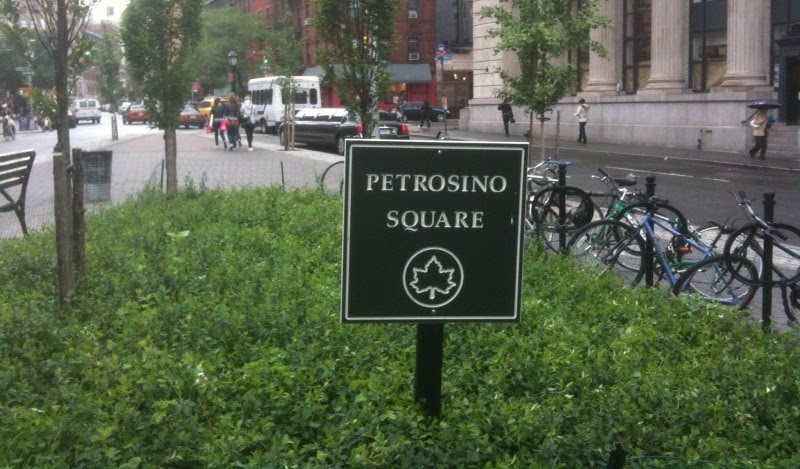
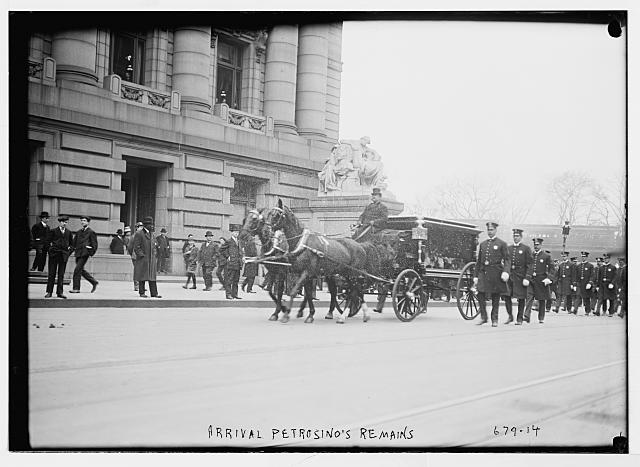
Petrosino was assassinated in Italy by the mob and his funeral procession through the city drew thousands of mourners. Today, you can visit the freshly refurbished Petrosino Square at Lafayette and Kenmare streets and see many artifacts relating to Petrosino at the New York City Police Museum.

Petrosino’s funeral procession passed by the U.S. Custom House, April 9, 1909. (LOC)

#4 Murder At The Metropole
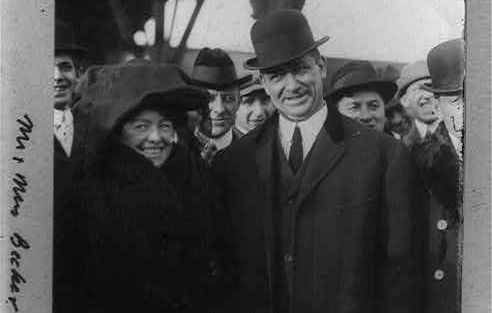
Charles Becker and his wife beaming to the press, although I don’t know what they’re smiling about. Becker was convicted of authorizing the murder of down-and-out gambler Herman Rosenthal. The disgraced cop was eventually sent to the electric chair.

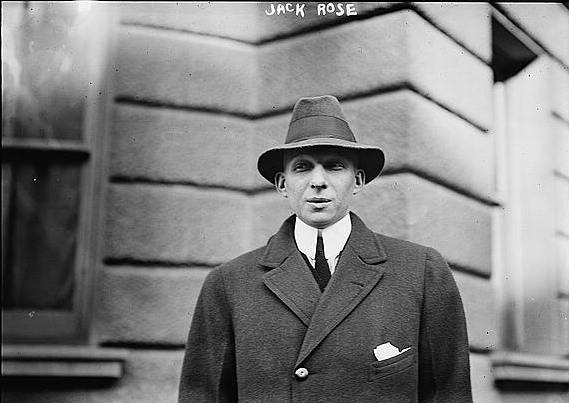
The prime witness against Becker was the otherworldly looking Bald Jack Rose, who claimed to have intimate details linking the officer to the vicious crime, which took place outside the Metropole Hotel in midtown.

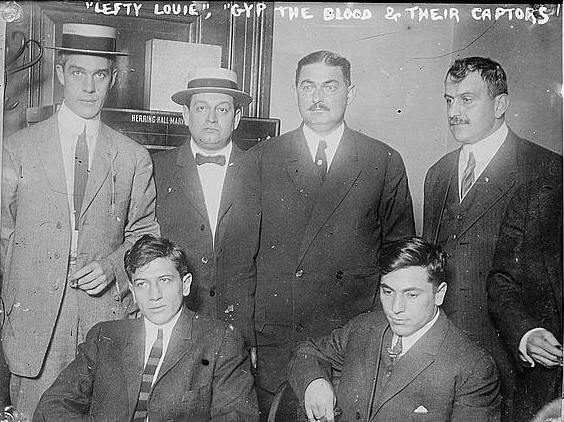
Two of the gunmen in the Rosenthal murder, nicknamed Gyp The Blood and Lefty Louie, pictured here with the men who brought them in.

I wish the first three tales had full-length histories as good as Mike Dash’s Satan’s Circus, which recounts the excrusiating tale of Herman Rosenthal’s murder and Becker’s arrest. The Becker story is actually recounted in several books, including a fairly recent one by Rose Keefe called The Starker: Big Jack Zelig, the Becker-Rosenthal Case, and the Advent of the Jewish Gangster.

CORRECTION: In referring to the new components of the Metropolitan Police, I mention the ‘city of Richmond’ when I meant the ‘county of Richmond’ — aka Staten Island.

Mayor Westervelt: “Police officers must wear uniforms!”


KNOW YOUR MAYORS Our modest little series about some of the greatest, notorious, most important, even most useless, mayors of New York City. Other entrants in our mayoral survey can be found here.

Mayor Jacob Westervelt
In office: 1853-1855

Dutch-blooded Jacob Aaron Westervelt, 24th man to become mayor of New York since the British evacuation of 1783, lived in a two-family home at 308 East Broadway near Grand Street. This seems like a rather odd spot for a mayoral residence today, and perhaps even then. Today there is no 308 East Broadway, there’s only a grim-looking public school and a barren traffic island.

But there are some surviving row houses just down the block — preserved Federal-style buildings at 247-249 East Broadway — so just imagine a fancier version of these on the spot that Westervelt’s residence once stood, many years before this neighborhood would become associated with squalor and overcrowding.

Now image this: an angry mob of 5,000 men with torches, surrounding this very home in the winter of 1853, painting a cross on the doorway and crying for his head. His crime: he sides with Catholics. Scandal! What would a mayor have to do garner that sort of reception today?

Westervelt is better known today for his original profession as master ship-builder. Few men who served as mayor of New York were better regarded internationally as Westervelt, who once received an honor from the king of Spain for making them some of the fastest ships in the sea.

Jacob was born twenty days into the year 1800 in Tenefly, New Jersey, but moved with his family into New York when he was only four years old. His father was a builder and constructed several new homes along Franklin Street, near the area being drained of that marshy, polluted mess known as Collect Pond.

By age 14, Jacob was apprenticing with famed shipbuilder Christian Bergh at his shipyard off Corlear’s Hook — not coincidentally more than a few blocks from Westervelt’s later residence as mayor.

Bergh would spawn one of New York’s wealthiest families, although incongruently his son Henry Bergh would become the best known member — as the founder of the American Society for the Prevention of Cruelty to Animals. Henry is also known for this weird mausoleum at Green-wood Cemetery.

The Berghs would eventually abandon shipbuilding after Christian’s death. His young apprentice Jacob would carry the torch for him, eventually taking over Bergh’s shipyards, expanding with other business partners up and down the East River shore, and using southern American and European connections to soon dominate the shipbuilding business. By 1845, Westervelt had overseen the construction of dozens of clippers, schooners and steamships, among the fastest and most reliable on the Atlantic Ocean.

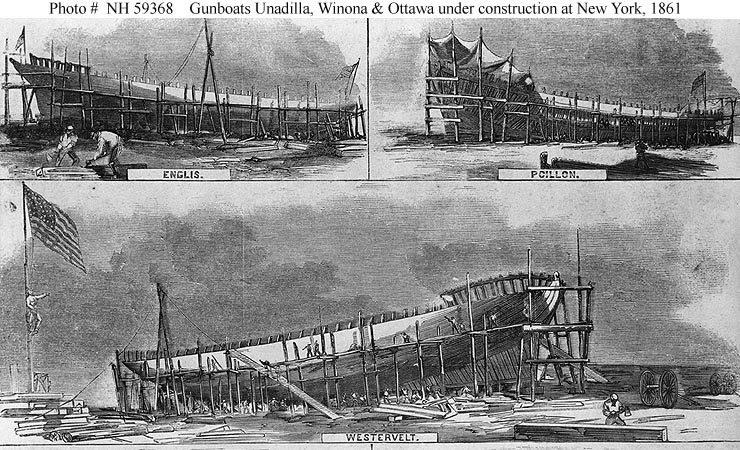
Below: an illustration of various boatbuilders in 1861, including Westervelt at bottom

As a pioneer of reliable and innovative shipping vessels, Westervelt’s influence was felt internationally. In the world of mid-19th century politics, that made him an ideal candidate for public office, and especially to Democratic machine Tammany Hall. As one of Manhattan’s most visible men of industry, Jacob employed hundreds of new Irish immigrants, Tammany’s prime voting bloc. In fact, Westervelt had already briefly served as council alderman for his district in 1840.

In 1852, Tammany could use a man of relatively unblemished character. The stench of corruption was already swirling around the powerful, entrenched Democrats in office — and this was in the years before Boss Tweed! Derisively known as the Forty Thieves**, the Democratic aldermen in City Hall were easily and openly bought, by everyone it seems but the mayor at the time, anti-Tammany reformer Ambrose Kingsland. City expenditures swelled, the elaborate web of political kickbacks and bribery gelling during this period.

But Tammany was looking to start fresh — or at least strike the apperances of doing so — choosing Westervelt as their reform-lite candidate in 1853, a symbol of prosperity in a wobbly New York economy. Westervelt, on the surface, looked like somebody who could quell the city’s massive over-expenditure. On the strength of a surging Democratic national ticket with presidential candidate Franklin Pierce, Westervelt was easily elected by the largest margin yet during a mayoral race, defeating the now-forgotten Whig Morgan Morgans.

Although, this being the 1850s, one can assume that total to be highly suspicious. “No registry law was in force to hinder men from voting…as often as twenty times,” claimed one early history.

Westervelt inherited several massive projects which were bloating the city budgets, including Central Park. Already a done deal when Westervelt entered office, the mayor sought to cut the park space in half due a bloated, overwhelmed city budget. Had Westervelt ruled the day, Central Park would have started on 72nd Street! His plans would be reversed a few years later by Mayor Fernando Wood.

More appropriately, Westervelt became president of a world’s fair in 1853, more specifically called the Great Exhibition of the Industry of All Nations and housed in the glorious Crystal Palace in the area of today’s Bryant Park. Having a man of industry preside over a fair of industry was both fortuous and apt; certainly examples of his own creations were displayed with other technological marvels of the age like the elevator.

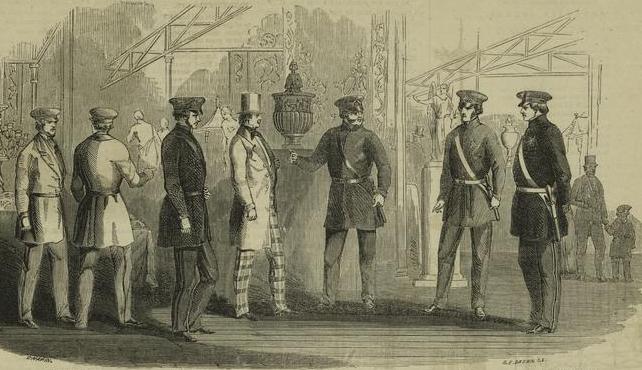
Below: the well-uniformed Crystal Palace police officers (pic courtesy NYPL)

One of the mayor’s lasting contributions was in New York police reform, creating a Board of Police Commissioners with himself in charge to apply a strict code of ethics to an already chaotic, corrupted body. In doing so, he wrangled away from his more corrupt Democratic brethren their ability to buy and sell police jobs as a form of political patronage.

But his most radical idea is today the most obvious: he mandated that every police officer should wear a uniform, an “expensive and fantastical” requirement according to his opponents who believed it “unrepublican to put the servants of the City in livery.”

Westervelt managed to make himself with one very unpopular with one group: the Know-Nothings, a ‘native American’ group who feared the swelling hordes of Irish and Catholic immigrants and the Catholicism they brought with them. The group would reach peak influence across the country in the mid-1850s, and they would actually gain significant political traction in other cities. In New York, they more often showed their moxie in the form of rioting.

The mayor earned their ire on December 11, 1853, when he ordered a street preacher arrested for gathering a group of 10,000 to listen to his frothing Know-Nothing spiel. It probably didn’t help matters that said preacher had organized on Westervelt’s own wharfs on the East River!

At the beginning of this article, I mentioned Jacob’s address — 308 East Broadway. A bit out-of-way of New York’s high society, sure, but Westervelt wished to be close to his ships. In fact, he and his partner Robert Connelly both built adjoining houses on this spot, facing Grand Street. According to Harper’s, “Over the door was a large stone cap on which was carved the representation of a ships taffrail.” (Taffrail is nautical for “the upper part of the ship’s stern“)

Thus, the angered Know-Nothing crowds were scant blocks from the mayors door. A reported 5,000 men gathered outside Westervelt’s home, demanding retribution and the release of the arrested preacher. To remind the mayor what this argument was all about, they painted a gigantic cross upon the door.

This story outlines Westervelt’s uneasy dual role as city leader and businessman. In 1855, the ships won out. Jacob bowed out, allowing Wood to finally ascend to the mayor’s desk for the first time. His best work as a shipbuilder was indeed ahead of him, though he would make brief returns into the political fray, first as a state senator, then in a newly created job in which he was most qualified — the New York commissioner for docks and ferries, from 1870 until his death in 1879. He died at his home on 63 West 48th Street, in the area of Rockefeller Center today.

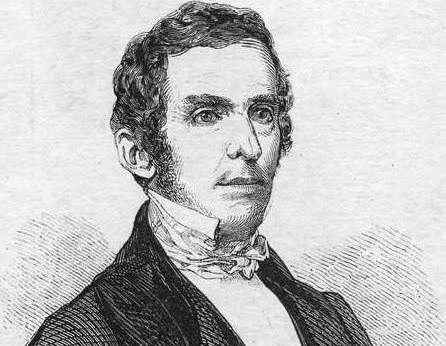
Pictured at right: Westervelt at age 70

** Not to be confused with New York’s first gang, also called The Forty Thieves

Mayor Charles Godfrey Gunther, Coney Island-bound

KNOW YOUR MAYORS Our modest little series about some of the greatest, notorious, most important, even most useless, mayors of New York City. Other entrants in our mayoral survey can be found here.

Mayor C. Godfrey Gunther
In office: 1864-1865

His past glories were built on a mountain of fur pelts, and his future would wash up on the half-developed shores of Coney Island. But in 1961, it was Civil War that nearly derailed the political career of Charles Godfrey Gunther.

The groundwork was laid in 1857 by former mayor Fernando Wood, who rebelled against Tammany Hall, the Democratic machine he formerly led, to form his new political organization called Mozart Hall. This assembledge of working class reformers and Wood devotees elevated him back to City Hall in 1960, returning to the seat of power occupied by German paint mogul Daniel Tiemann, who had unseated Wood back in 1857.

Back in business, Wood heralded a feisty pro-South, anti-abolitionist stance, pitting himself against Albany and threatening to secede Manhattan from the state.

By the election of 1861 however, a swell of national support for the Union cause turned against Wood. The Democrats were in a precarious spot, splintered between rival Democratic groups. It’s here in our story where we introduce Charles Godfrey Gunther, Tammany’s official candidate for mayor in 1861.

Gunther was born at Maiden Lane and Liberty Street, on Feb 7, 1822 — into a German family that had made its fortunes in the fur trade, rivals of the city’s true fur king John Jacob Astor. Charles spent his youth in his father’s tutelage, taking over the family business C.G. Gunther & Co.

Like so many others before him, Charles’ business saavy and wealth caught the attentions of Tammany Hall. The furrier worked his way up through the political lodge, eventually becoming sachem in 1856.

He was Tammany’s candidate for mayor in 1861, against Wood, and it would have made for a fine contest between them. In fact, Gunther would have won. (He scored all of 600 more votes than Wood.)

But of course, there was another contestant, the Republican George Opdyke. With Wood and Gunther appealing to the same constituencies, they split the traditional Democratic vote, and Opdyke ascended to office.

Perhaps Charles should have been grateful. The years 1862 and 1863 were not gracious times to be mayor of a major city. Opdyke’s execution of military conscription upon the city’s immigrants and his fumbled handling of the ensuing draft riots permanently damaged his political reputation.

By the fall of 1863, New Yorkers craving a change in leadership were given a strange buffet of choices. The Republicans, shedding Opdyke and at a serious political disadvantage, brought forth alderman and gun-maker Orison Blunt, inventor of the ‘pepper box gun’. Tammany meanwhile offered up Francis I. A. Boole, a rather corrupt city official notable for heading the street cleaning department.

With these weak choices at such a pivotal period in history, rebels from both parties — and heavily peopled with disenfranchised former Wood supporters — split to form a temporary coalition of working class Irish and Germans.
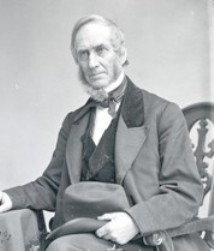
With the strong support of the city’s surging German newspapers, Gunther was chosen as their candidate. That November he swept past Blunt and Boole to become New York’s 77th mayor. Boole took it especially hard; he “became insane and died shortly afterwards.”

Was the German furrier an effective mayor? I can’t quite figure out as original sources seem split. An “honest, pleasant gentleman, with frank and cordial manners,” he’s praised for his penny pinching tactics, at one time even cancelling a celebration of George Washington’s birthday as it was thought to be too extravagant. In 1964, on the verge of a national election, he clamped down on any serious city celebrations of Union victory as being too ‘political’ in nature.

In a parallel to Bloomberg’s recent efforts to relieve traffic congestion, Gunther also strived to clear the streets — with the removal of slaughterhouses and roaming herds of cattle.

However, he was also seen as a rather weak political figure, with little influence over other city offices. Perhaps this was because he was honest and the bureaucracies of city government dreadfully corrupted. Running for re-election in 1865, he was crushed in the polling, with three other candidates out voting him. The victor that year was true-blue Boss Tweed crony John Hoffman.


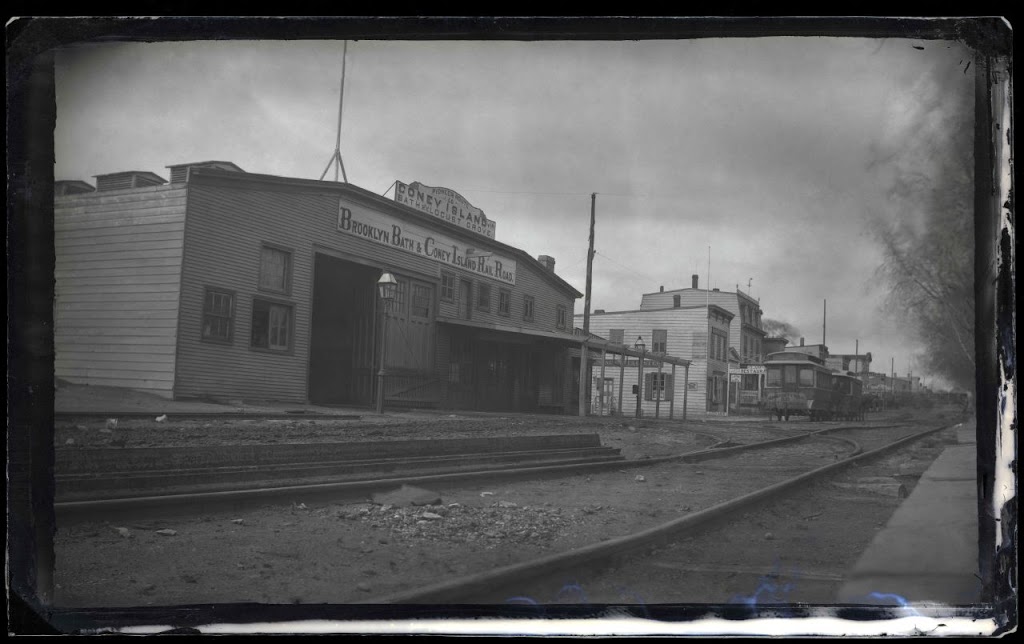
Above: the Coney Island terminal for the Brooklyn, Bath and Coney Island Railroad line

Gunther’s story doesn’t end here. He became a prominent leader in New York volunteer fire department and eventually even a partner in a very lucrative venture — the Brooklyn, Bath and Coney Island Railroad. It was this rail line that allowed thousands of New Yorkers to escape the city, eventually transforming Coney Island into a popular resort and amusement palace.

The train line, nicknamed Gunther’s Road, operated “six steam locomotives and 28 passenger cars” and “carried almost 400,000 passengers” in 1882 alone. Gunther would even own his own resort out on Coney Island, although it burned down a few years later.

And I end with a rather colorful anecdote from a 1906 article about Mr. Gunther and his railroad, from The Third Rail:

“There was one engineer who had served in the war of the rebellion, and who was particularly patriotic, who painted his engine red, white and blue.

Gunther saw it from a distance, on its first trip, tearing across the country, and he was frantic.

“For God’s sake, Drummond,” he said, when he overtook his engineer, “whatever possessed you to paint that engine red, white and blue?’

“You’re a true American, ain’t you?” said Drummond.

“Yes, but-but-“

“Well, so am I.”

“Yes, but that engine looks like a traveling barber shop.”

Gunther could not convince Drummond, however, and the latter quit his job rather than submit to any alterations.

The engine was afterwards painted according to Mr. Gunther’s ideas.

It was painted a flaring yellow.”

Mr. Gunther died on January 22, 1885 and is buried at Green-Wood Cemetery.
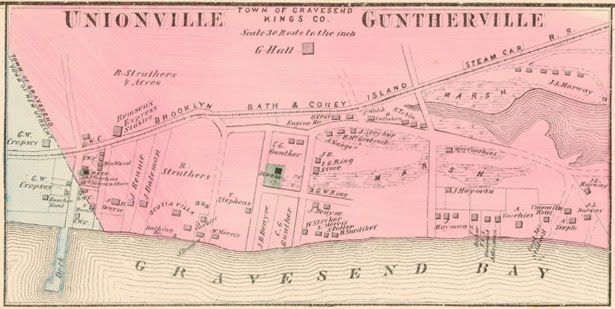
ADDED: One of our Facebook fans reminded me of an even more spectacular fact about Mr. Gunther — there was actually a short-lived Brooklyn neighborhood named after him. Guntherville was actually part of the pre-consolidation town of Gravesend and naturally featured many properties owned by C. Godfrey. The map below from 1873 illustrates its place along the Gravesend shore. Judging from comparing maps, it appears that part of Guntherville would later comprise the fleeting, beach side amusement venture Ulmer Park.

Mayor Daniel Tiemann, colorful man of Manhattanville

KNOW YOUR MAYORS Our modest little series about some of the greatest, notorious, most important, even most useless, mayors of New York City. Other entrants in our mayoral survey can be found here.

Mayor Daniel F. Tiemann

In office: 1858-1859

Once upon a time there was a village called Manhattanville, a small, originally Quaker community that planted itself between a bustling but still bucolic section of Bloomingdale Road (later Broadway) and the Hudson River. A remnant of the old village remains in the small neighborhood that shares its name today, north of Morningside Heights between 122nd and 135th streets on the west side.

Founded in 1806 the village grew due to its proximity to a major artery that led to the city of New York, but its fortunes really multiplied due to a developing port industry along the water. Together with its sister village Harlem, they grew into healthy rural communities.

In 1850s, the most powerful man in Manhattanville was Daniel Fawcett Tiemann. He was actually born down in New York, at a house on Nasssau and Beekman to German immigrants; he would later return to govern the city from City Hall, just two blocks away from his birthplace.

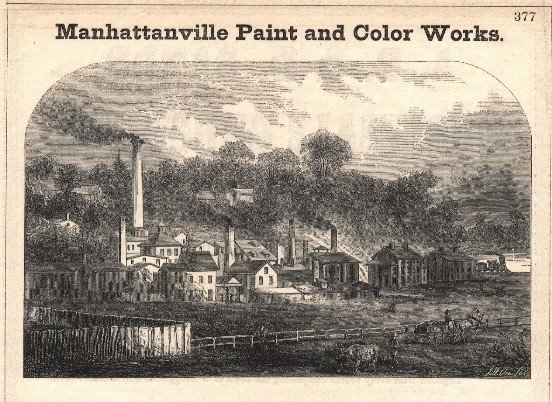
Daniel was the paint king of New York, a trade he learned from his father, working in the original Tiemann paint factory at 23rd and 4th Avenue (today’s Madison Square park). He and his brother Julius eventually inherited the family business and moved it into the rural pastures of Manhattanville. Soon D.F. Tiemann & Company Color Works took up a dozen buildings and dominated the industrial character of the village.

Notably, Edward Leslie Molineux, later to be both a Union general and the father of convicted (and famously acquited) 19th century murderer Roland Molineux, was a clerk in Tiemann’s firm and later a close political associate.

Tiemann had his eyes quite literally set on City Hall even at a early age. “I saw them building the present City Hall and we all thought that it was too far away from the business centre,” he once recollected. Young Tiemann frequently reminsced of his glorious youth, skating on Collect Pond and later fishing in the newly dug canal.

BELOW Color me impressed: the Manhattanville paint empire of New York mayor Tiemann

Luckily he had very strong ties to one of New York’s most prominent families, the clan of Peter Cooper. In fact Tiemann married Cooper’s niece and would eventually became a founding trustee in Peter’s pet project, Cooper Union, in 1859. (Marrying into the Cooper clan is always good for one’s prospects, as Abram Hewitt also found out.)

His family background, business acumen and solid nativist appeal recommended him for public office, particular in the years when corruption and chaos seemed to reign supreme in City Hall, namely the administration of wily Fernando Wood.

In 1857 a coalition of different parties united behind unblemished, teetotaling Tiemann, including the ‘People’s Union Party’ (composed of merchants), the American Party (a nativist, anti-immigrant party) and even Tammany Hall — who had kicked Wood out just the year previous.

That October 1857, Tiemann handily beat Wood by 22,000 votes. It should be noted, however, that Tiemann’s support was as much anti-Wood as it was pro-Tiemann. “If I succeed in the business of the Mayoralty as well as I have in making paint…I should be satisfied,” Daniel proclaimed at his victory.

Tiemann inherited a nearly bankrupt city government, tapped dry with graft and unable to sustain itself. In fact, by October 1858, City Hall itself was actually put up for auction, and the wealthy Tiemman had to personally buy it (for $50,000!) and eventually gave it back to the city.

The new mayor did bring a modicum of reform to city government throwing out a few corrupt officials, including the laughably crooked street commissioner Charles Devlin. But Tiemann was fighting upwind and his political coalition immediately fractured.

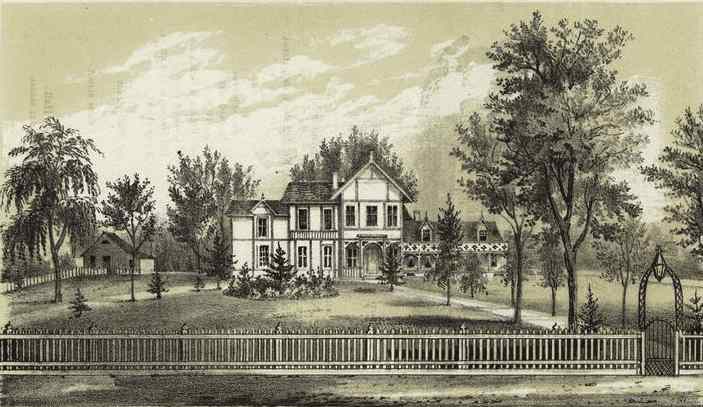
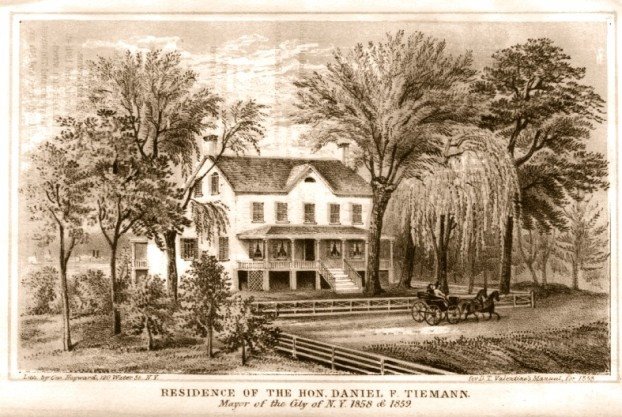
Below: Tiemann’s home in upper Manhattan

Much happened in the city under his watch, including further development of Central Park and the ground-breaking of new St. Patrick’s Cathedral. But his greatest contribution is something we take for granted today. In a burst of common sense one night, Tiemann proposed that street names be attached onto lampposts for better visibility, as opposed to being stuck to the face of corner buildings.

His greatest claim to fame, however, was as one of the first voices that traveled the newly laid Atlantic cable, which connected North America to Europe for the very first time. “Mayor Tiemann to the Lord Mayor of London. Enthusiastic Celebraton of the Event of the Age. A UNIVERSAL JUBILEE. NEW-YORK IN A BLAZE. Grand Exhibition of Fireworks in the Park,” boasted the Times headline.

Wood’s supporters had never warmed to Tiemann and staged a comeback. And the paint king had even expended Tammany’s good graces; in the election of 1859, they backed William Havemeyer who was mayor of New York before and would become mayor of New York again, 13 years later. But he would not become mayor of New York today. After keeping the seat warm for two years, Tiemann was replaced by Fernando Wood. It would be the start of a tumultuous tenure.

Tiemann would later become a state senator but his heart would always be in the family business. He settled for the rest of his days in a beautiful home (pictured above) built near his paint plant. He finally died in 1899 at age 95, a staple of New York life who had seen it from bottom to top grow from a port town into the biggest, most important city in the world.