Categories
Know Your Mayors Podcasts

The Boy Mayor of New York: John Purroy Mitchel and the shocking election of 1913

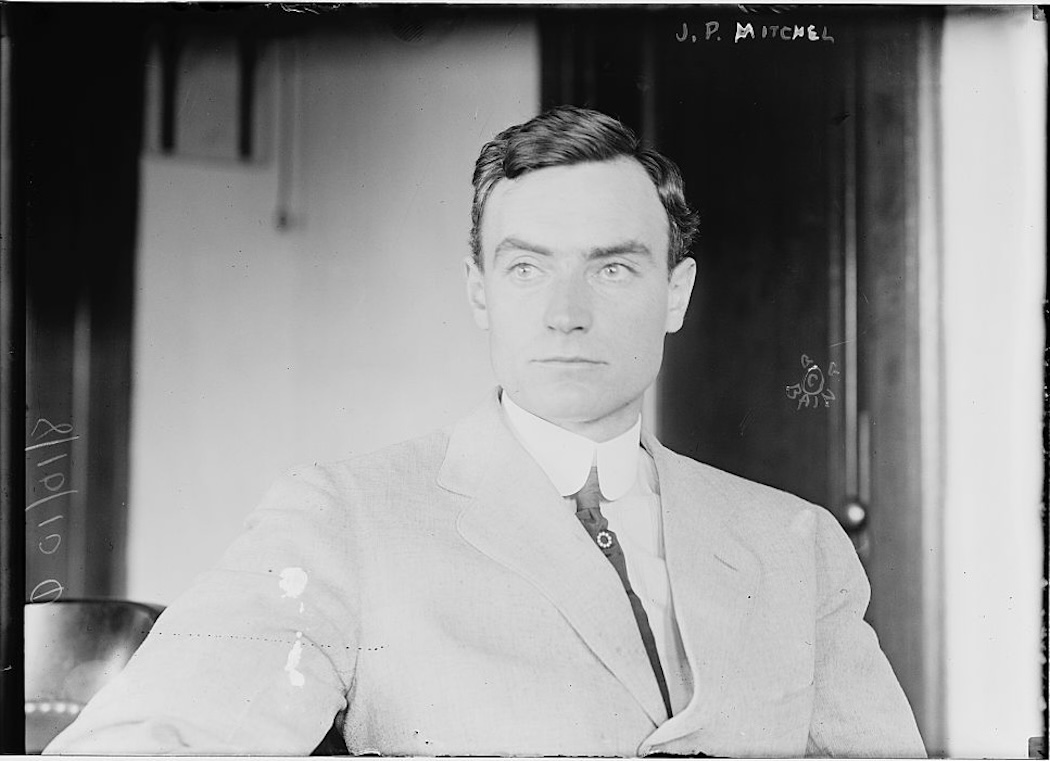
Above: John Purroy Mitchel, the ‘boy mayor’, in 1910

PODCAST
As New York City enters the final stages of this year’s mayoral election, let’s look back on a decidedly more unusual contest 110 years ago, pitting Tammany Hall and their estranged ally (Mayor William Jay Gaynor) up against a baby-faced newcomer, the (second) youngest man to ever become the mayor of New York City.

John Purroy Mitchel, the Bronx-born grandson of an Irish revolutionary, was a rising star in New York City, aggressively sweeping away incompetence and snipping away at government excess.  
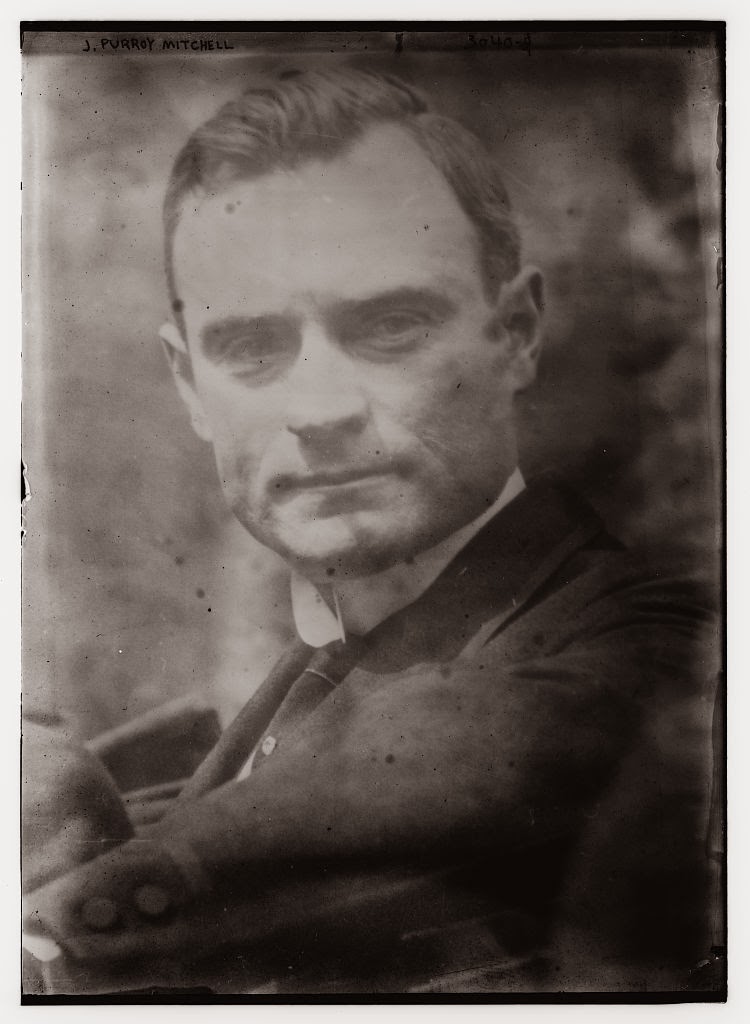
Under his watch, two of New York’s borough presidents were fired, just for being ineffectual!  Mitchel made an ideal candidate for mayor in an era where Tammany Hall cronyism still dominated the nature of New York City.

Nobody could predict the strange events which befell the city during the election of 1913, unfortunate and even bizarre incidents which catapulted this young man to City Hall and gave him the nickname “the Boy Mayor of New York“.

But things did not turn out as planned.  He won his election with the greatest victory margin in New York City history.  He left office four years later with an equally large margin of defeat.  

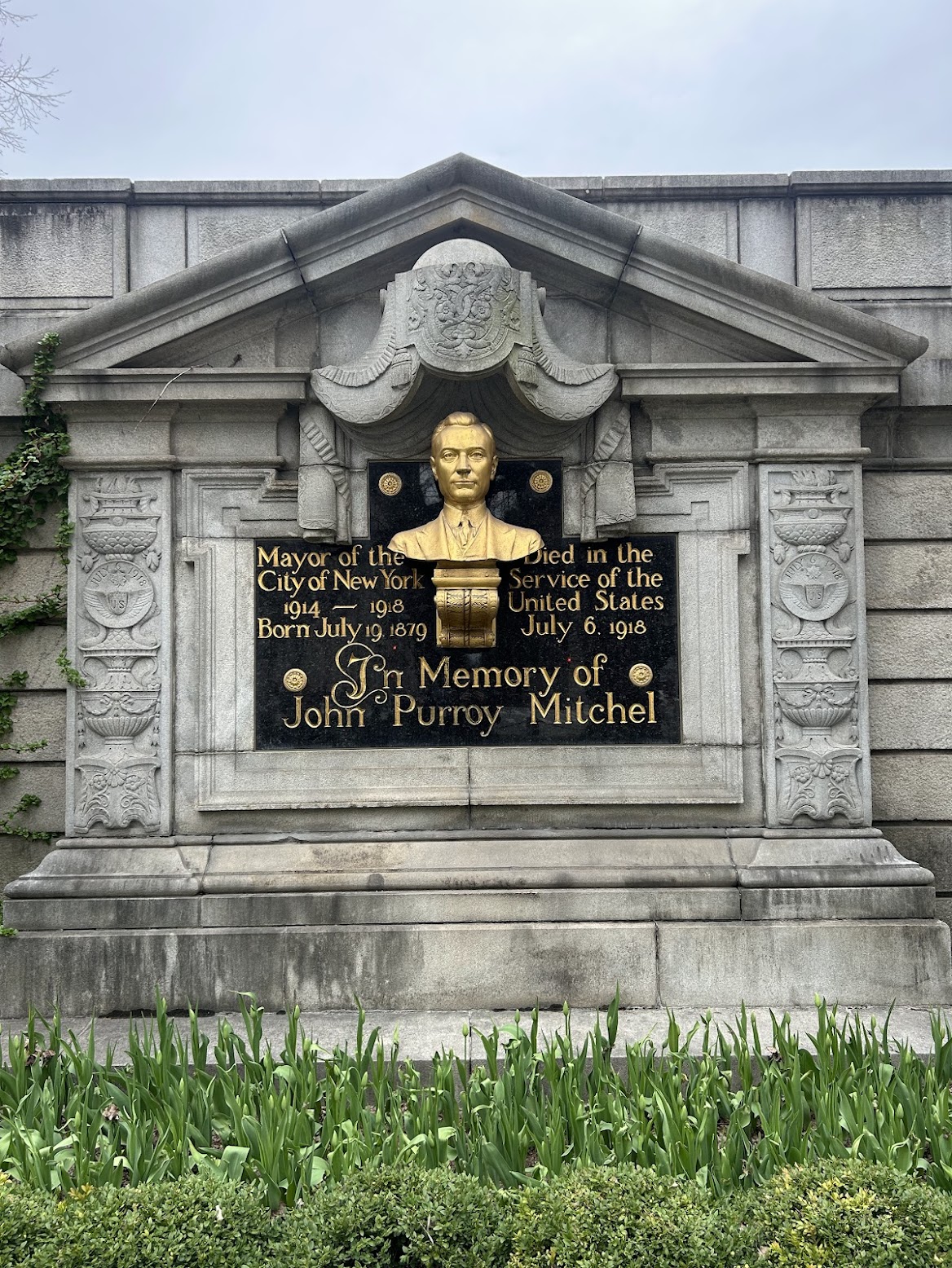
Tune in to our tale of this oft-ignored figure in New York City history, an example of good intentions gone wrong and — due to his tragic end — the only mayor honored with a memorial in Central Park.

PLUS: The totally bizarre death in 1913 of Tammany Hall’s most popular leader


The Bowery Boys Podcast is proud to be sponsored by Founded By NYC, celebrating New York City’s 400th anniversary in 2025 and the 250th anniversary of the United States in 2026.

Read about all the exciting events and world class institutions commemorating the five boroughs legacy of groundbreaking achievements, and find ways to celebrate the city that’s always making history at Founded by NYC.


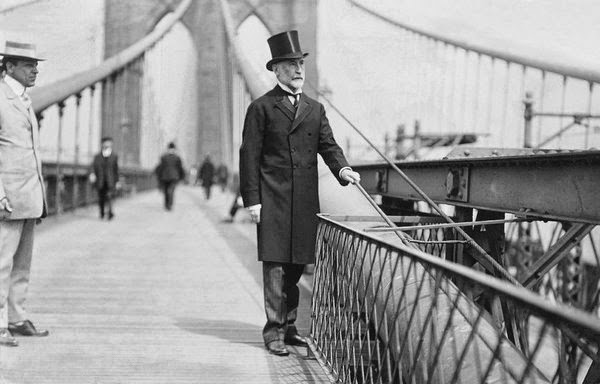
Mayor William Jay Gaynor on his inauguration day in 1909, walking across the Brooklyn Bridge to City Hall, from his home in Park Slope.
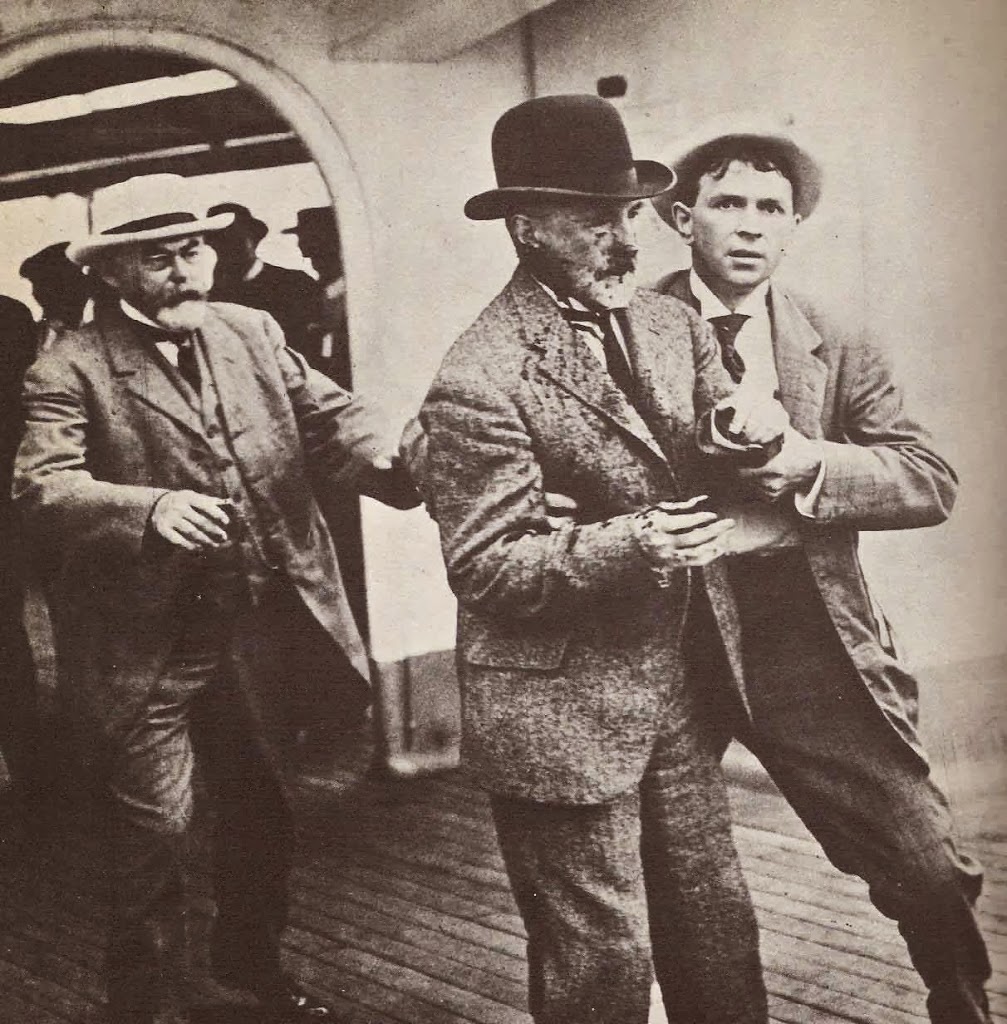
William Jay Gaynor at the very moment he was shot in 1910, on an ocean vessel docked in Hoboken.  This picture was taken by a New York World photographer, one of the most famous works of early journalism photography.
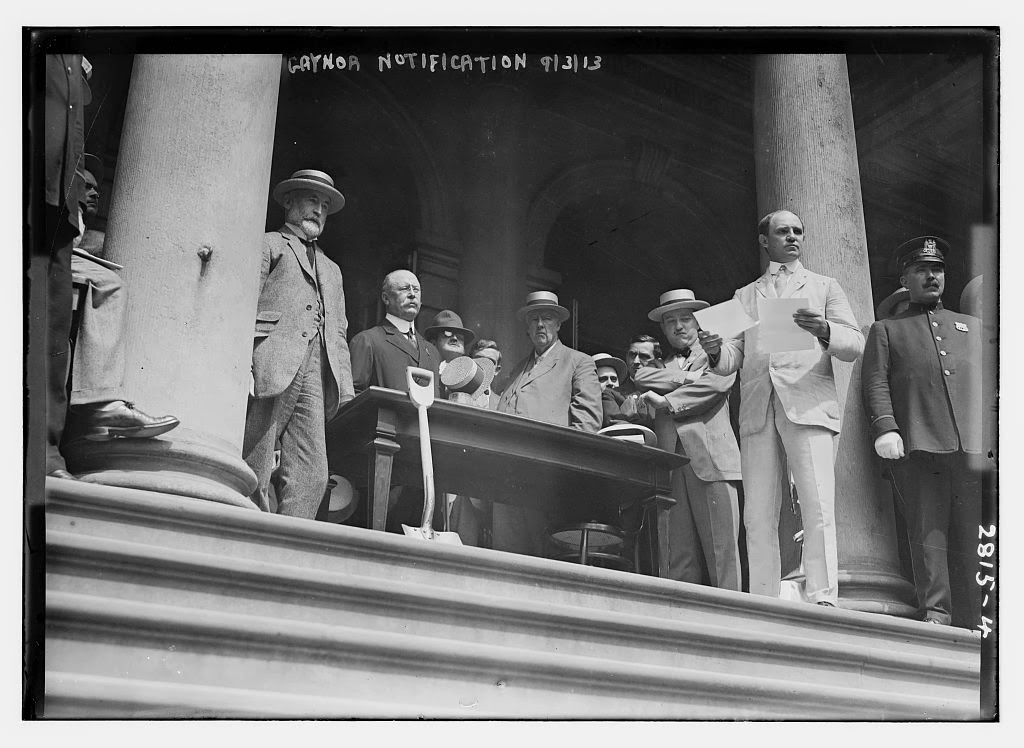
Gaynor (at left) attempted to stage a political comeback (after being by Tammany Hall) at the notification of his independent candidacy at City Hall in September 1913.  The shovel in front of him was his campaign emblem.  

Within a few days, he would be dead of the assassin’s bullet he received three years earlier.
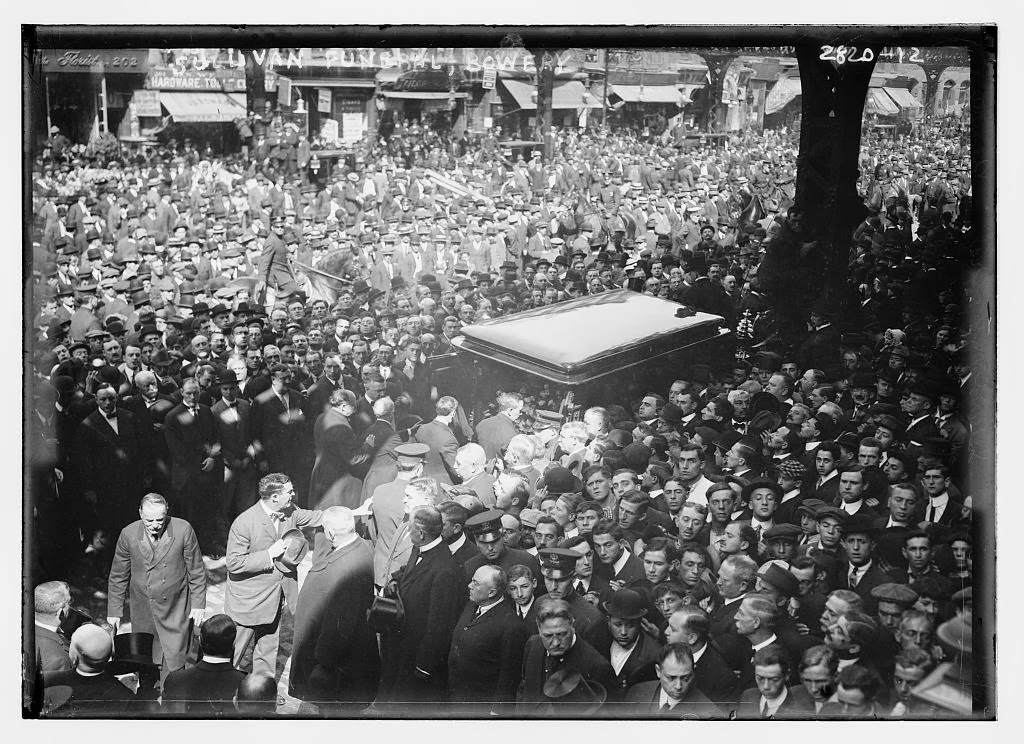
The death of Big Tim Sullivan also caused ripples in the mayoral election of 1913. The picture below is of the Bowery, overflowing with mourners.

While Sullivan was out of politics (and in an asylum) by 1913, his sudden and unusual passing had an effect on Tammany Hall supporters, throwing another strange event into an already tumultuous year.
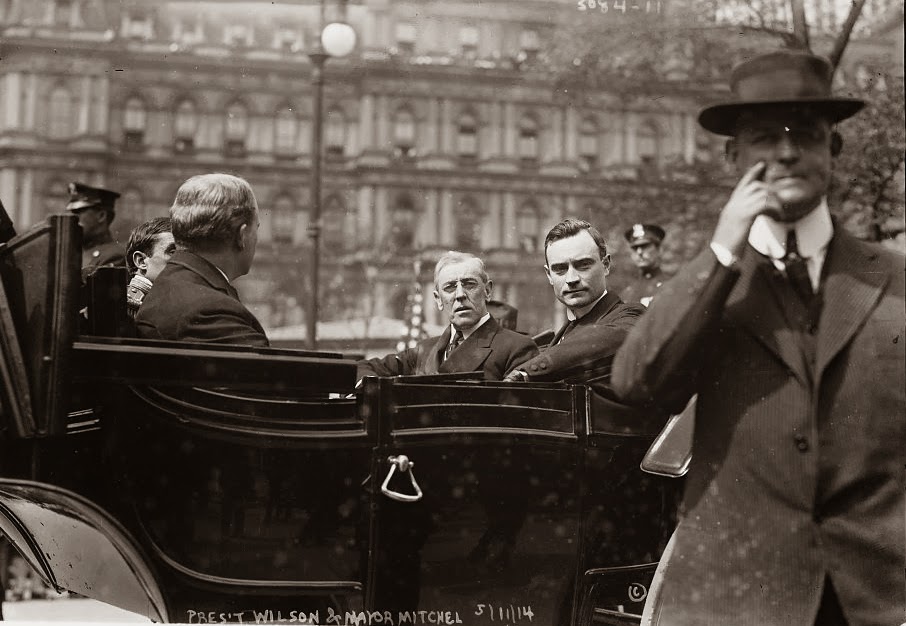
Mayor Mitchel with President Woodrow Wilson in May 1914, at a memorial service for American marines and seamen killed in Veracruz during the Mexican Revolution.
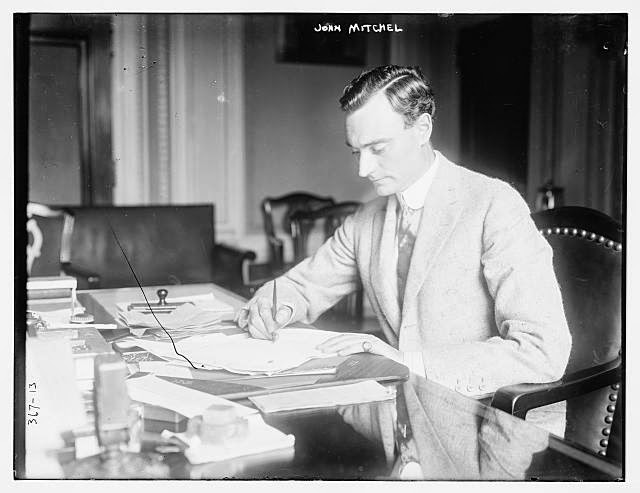
Mitchel at his desk at City Hall, presumably cracking down on some kind of over-expenditure or waste. Or possibly silently suffering from migraine headaches which plagued him during his entire term as mayor.
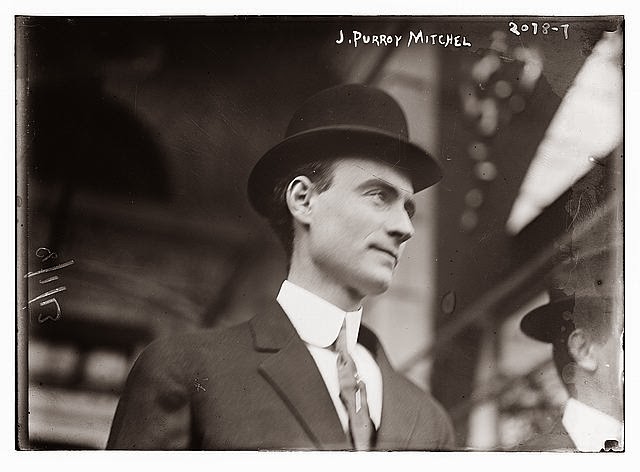
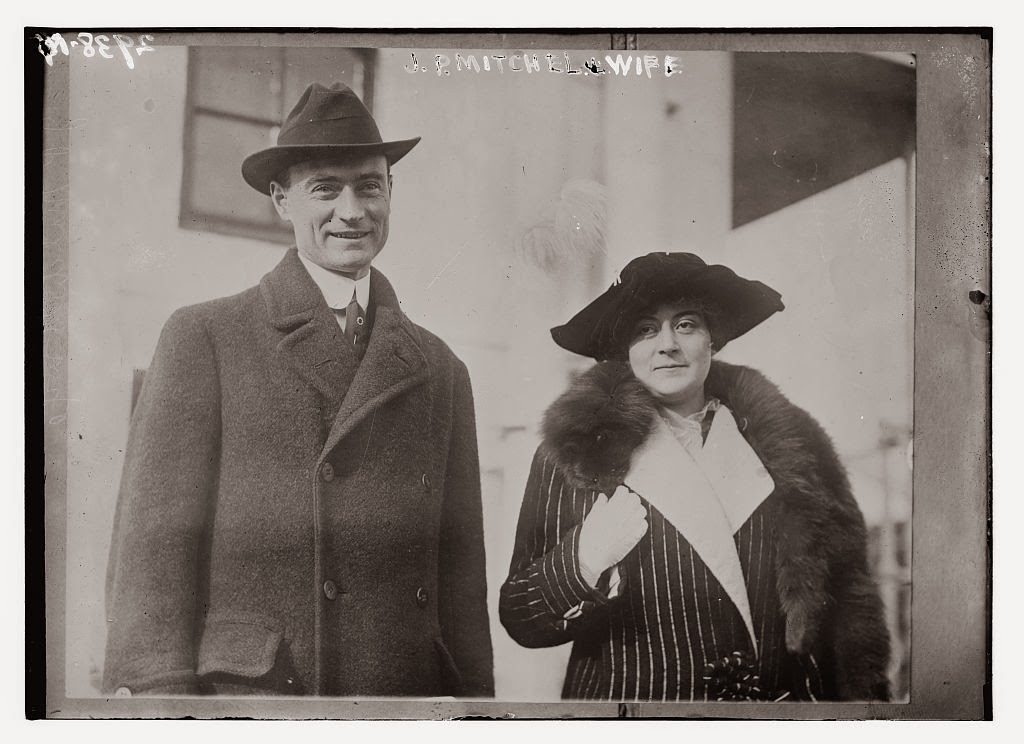
John with his wife Jane.
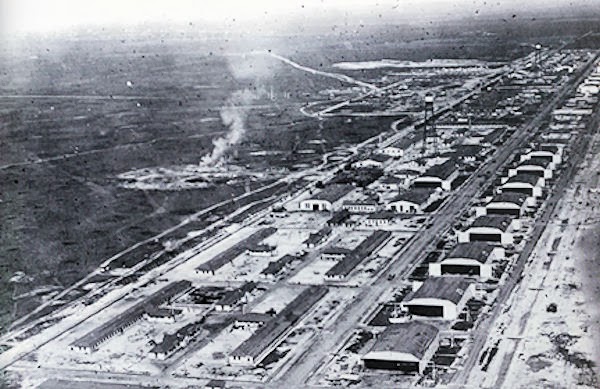
Gerstner Field in Louisiana, where Mitchel had his tragic airplane accident on July 6, 1918.
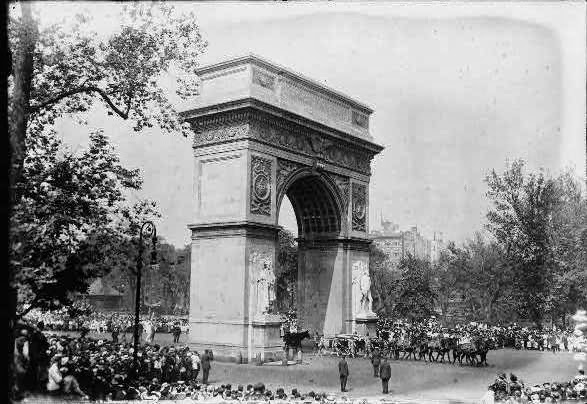
Another New York funeral: The body of John Purroy Mitchel is carried in a procession from City Hall, through the Washington Arch, and up to St. Patrick’s Cathedral.
Theodore Roosevelt, one of the pallbearers at Mitchel’s funeral, leaves St. Patrick’s in this short film by Edison.

The John Purroy Mitchel memorial, near the reservoir in Central Park.
Most pictures above are public domain, courtesy of the Library of Congress
Categories
A Most Violent Year Know Your Mayors Politics and Protest

The Riots of 1834: New York City’s first direct election for mayor

We’re getting a new mayor! So we think it is time that you Know Your Mayors. Become familiar with other men who’ve held the job, from the ultra-powerful to the political puppets, the most effective to the most useless leaders in New York City history.

This longtime feature of this website is being rebooted with new articles and newly researched and refreshed earlier entries in this series. Check back every other week for a new installment. Read past articles here.

Cornelius Van Wyck Lawrence
Term: 1834-1837 (three terms)

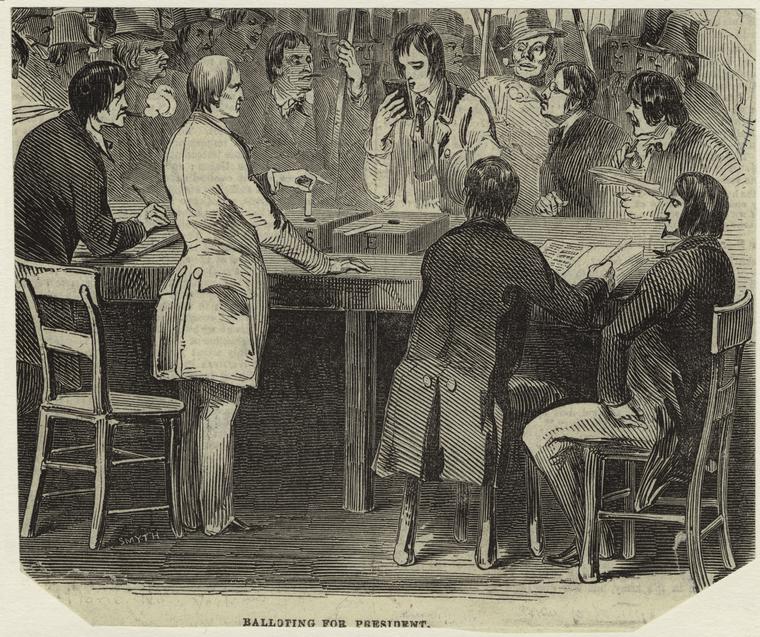
When did New Yorkers first start electing mayors — directly? When did voters first go to the polls and select the new mayor themselves? The year was 1834 — and, oh boy, did it not go smoothly.

In the first few decades following the Revolutionary War, mayors were chosen by the governor and a state-side appointment committee. Then, from 1821 to 1834, the position was appointed by vote of the Common Council, an elected body equivalent today’s City Council.  

The Council often chose prominent businessmen with high profiles — such as the sail-maker Stephen Allen or the well-connected attorney William Paulding.

Courtesy New York Public Library

But the city charter was amended in 1833 to allow the position of mayor — a lucrative post with rising visibility in a growing city — be directly chosen by New Yorkers.

Or rather, directly chosen by those who comprised the voting body — white male New Yorkers. (Black men could vote if they owned property; but as slavery in New York was only abolished in 1827, few men actually did, save for those in places like Seneca Village.)

Today’s modern election process is relatively incorruptible, even tranquil, compared to the riots and ballot stuffing and outright vote forging of yore.  Nobody openly destroys ballots in the street anymore, and that’s a good thing.

But democracy in its purest form relies on a certain degree of faith. The direct election process — the collection and counting of ballots, the integrity of an honest count — has the potential to be quite chaotic.

And no election in New York City has been as chaotic — or as bloody — as that very first mayoral election in 1834.

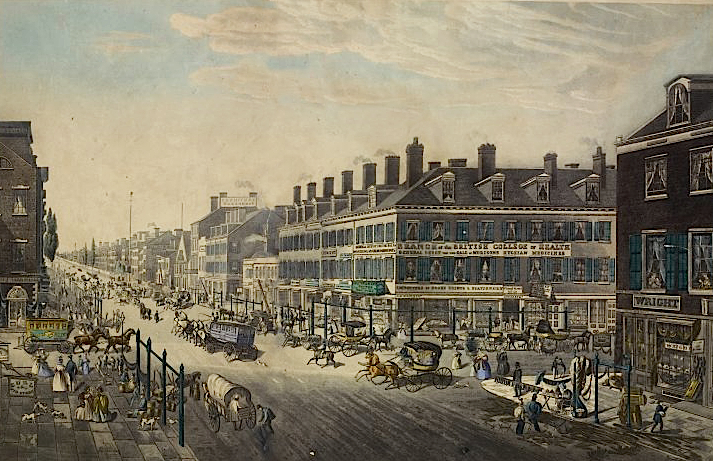
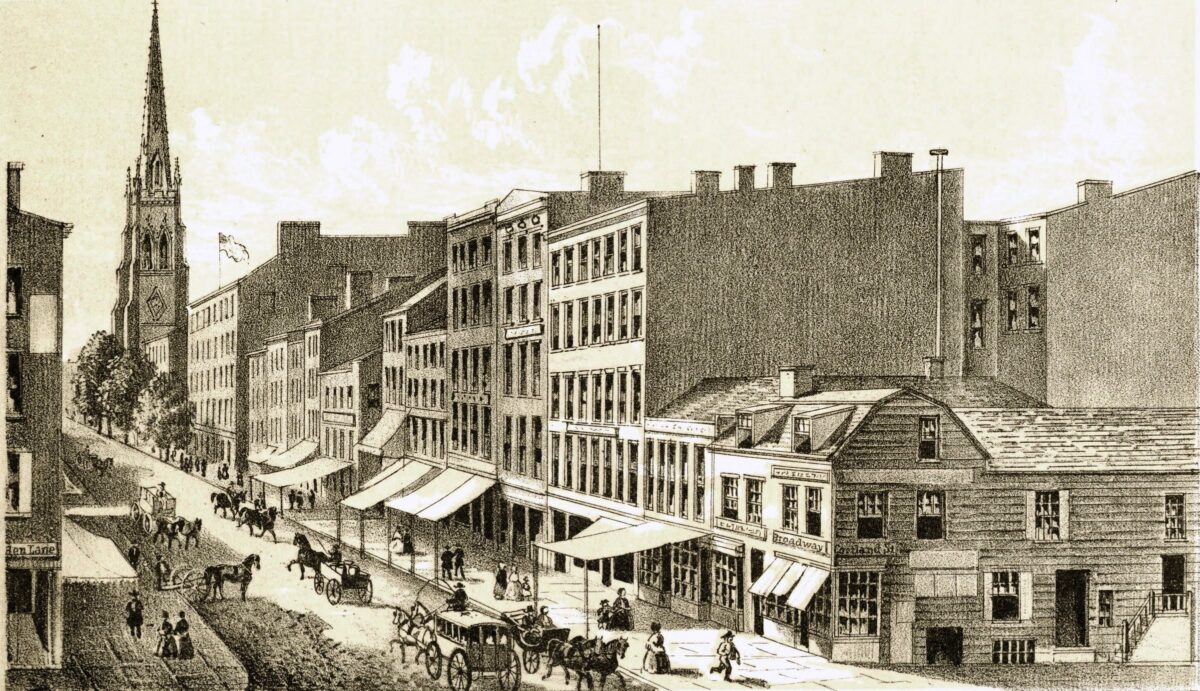
Broadway and Canal Street, 1834. Courtesy Wikimedia Commons

In 1834, New Yorkers were thrilled with the real possibility of a city leader not beholden to the whims of its Council, a membership whose intentions were often deployed straight from the meetings of political machines and did not reflect the will of the people.

But local politics can become overshadowed by national concerns. As a result, direct election for the office may fail to correct this sort of favoritism. In fact, if the conditions are right, the will of the people can be bent to adhere to the most elitist of principles, using the sometimes benign instrument of populism.

Such was the case of the man who would become New York’s first democratically elected mayor in 1834 — Cornelius Van Wyck Lawrence.

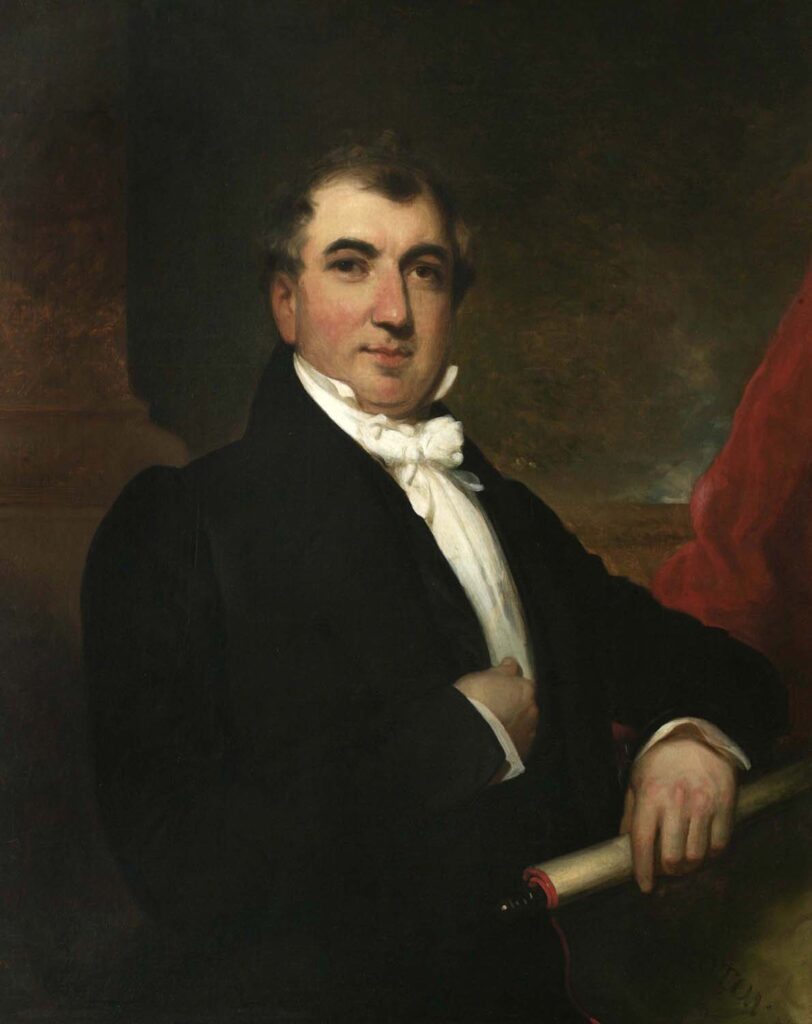
Painting of Lawrence by Henry Inman, 1837

Lawrence, a wealthy New York merchant, was born in 1791 in Flushing, Queens County, a member of the old Dutch Van Wycks. (His ancestor Cornelius Van Wyck built the historic Van Wyck Homestead in Fishkill, New York.)

In 1833, he became a Democratic state congressman known for believing one thing, and voting another, especially if it benefited himself financially.  He was known to cry at the podium as he voted with his party.

From a biography on Martin Van Buren: “[Lawrence], the crying congressman, the weeping stock-jobber could have resigned had he disliked the party drill — but it brought him plunder, and he blubbered and held on, and afterwards he lent his name as a candidate for the mayoralty to uphold the gamblers he voted with in public…”

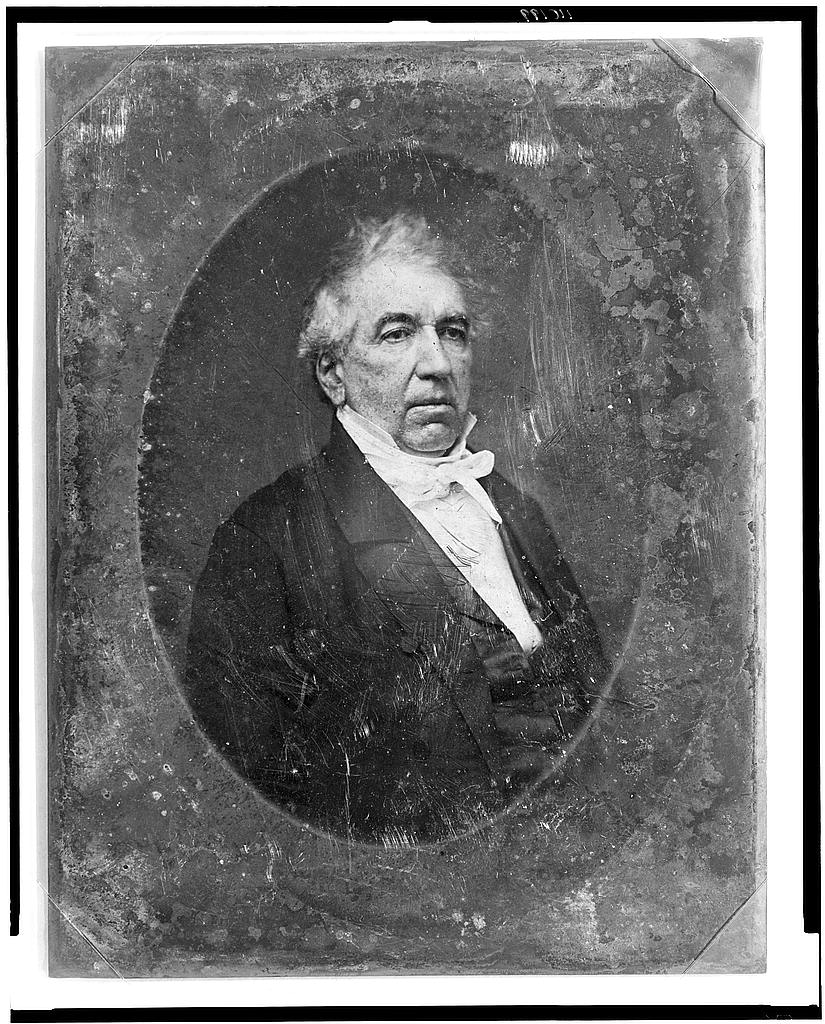
Lawrence was one of the first mayors to be photographed, sitting for Mathew Brady in 1852. Courtesy the Library of Congress
Yet the election was much larger than one man — it was about power at a time when New York was on the cutting edge of great expansion.

And indeed, the contest between Lawrence and Whig candidate Gulian C. Verplanck was a stand-in for disapproval of Democratic president Andrew Jackson — and his dismantling of the Second Bank of the United States.

In fact the Whig Party was primarily formed in protest to Jackson’s policies. And they would make quite a first impression on their very first election ballot in New York.

April 9, 1834, New York Evening Post

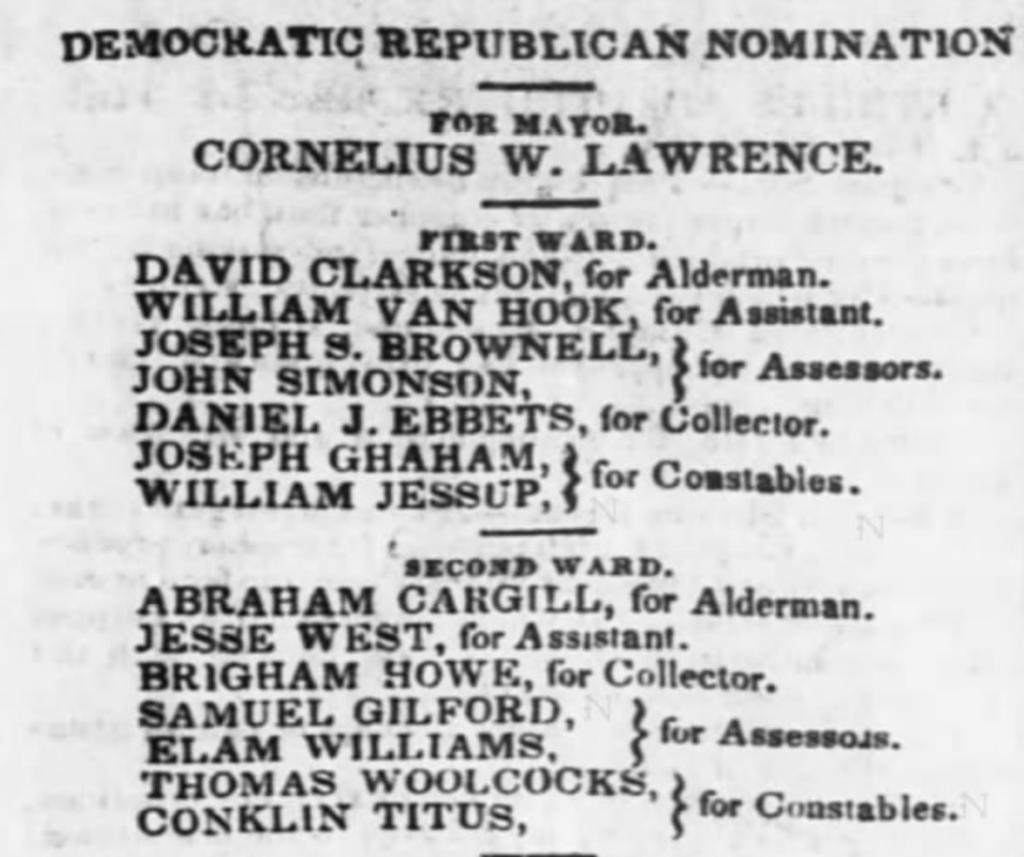
A proud New York tradition returned with that first election — rioting. The first electoral process lasted three days, as Democrats and Whigs attacked each other on the street in front of polling places.  

On April 8, 1834, men fought with knives and clubs, destroying ballots and virtually shutting down the entire process.  One man was killed, twenty others wounded.

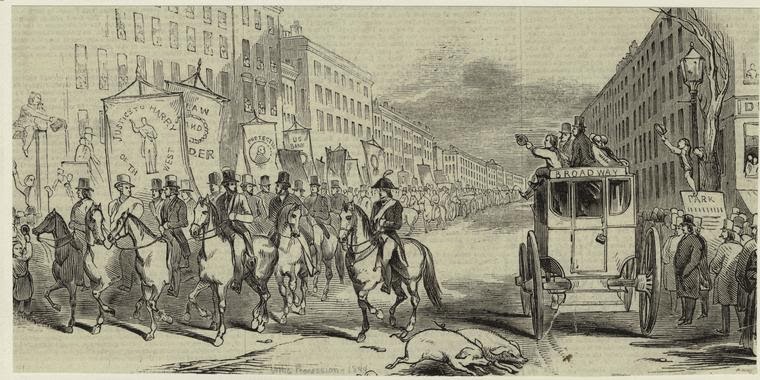
The Whigs were almost war-like in their determination to wrest power from Democrats, actually decorating a frigate with Whig banners, calling it the Constitution, and dragging it up Broadway in a violent and vitriolic parade.

A Whig procession from the. year 1844. Courtesy New York Public Library

Democrats were no better; the following day, acolytes headed down to Wall Street to destroy a pro-Whig newspaper office, its publisher armed and ready to shoot.

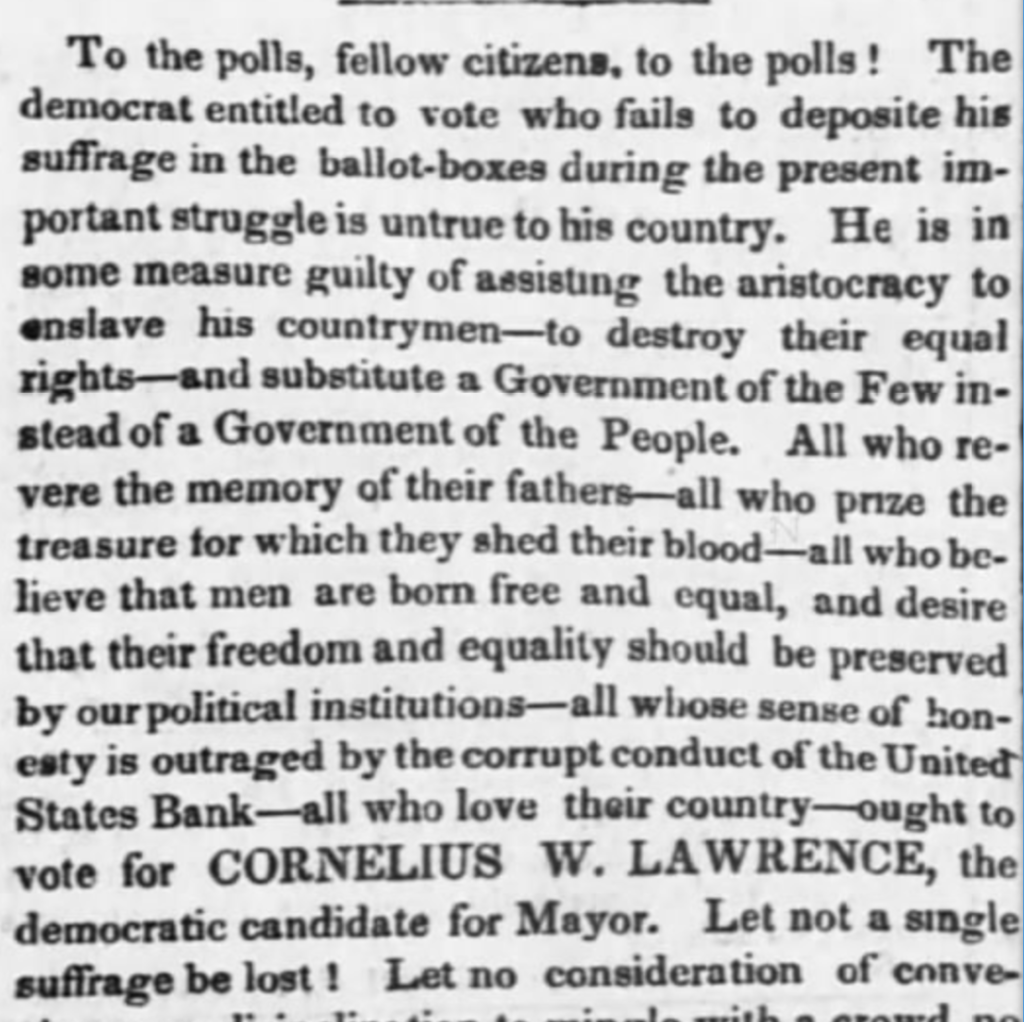
An entreaty to vote for Lawrence, published in the New York Evening Post, April 9, 1834

By April 10, the final day of voting, thousands filled the streets, ransacking gun shops and arsenals, preparing for all-out chaos.

 “With Armageddon in the office, the mayor called out all troops — twelve hundred infantry and calvarymen — and order was restored,” according to Edwin G Burrows and Mike Wallace.  But even that resolution was one-sided;  most of the infantry was faithful to President Jackson — and by extension, Lawrence, the Democratic candidate.

With thousands gathered outside City Hall, the election results were announced — Lawrence had defeated the Whig candidate Guilian Verplanck by less than 200 votes!

New Yorkers had at last exercised their direct right to vote for mayor.  And in the end — after days of riots and tumult, an election process singular in its chaos — New Yorkers voted in “the crying congressman.”

Categories
Know Your Mayors

A short history of New York City mayors who ran for President of the United States

Last week former mayor Michael Bloomberg very unofficially — and somewhat belatedly — entered the 2020 presidential race by filing paperwork for next year’s Alabama primary. This over a month after current New York City Mayor Bill De Blasio entered and dropped out of the race this year, never catching fire with the Democratic electorate.

Is Bloomberg really running? If so, this would make David Dinkins the only previous living mayor of New York City never to have run for the highest office in the land.

And it begs the question — is it even possible for the leader of the biggest city in America to step up to the role of Commander In Chief?

Precedent tells us no. Not one New York City mayor in history who ever actively tried or hinted at being interested in the job ever got it. Indeed it’s difficult — especially in recent years — to even identify any genuine enthusiasm for such presidential runs.

The Road to the Presidency

This is rather unusual as the mayor of New York City has certain responsibilities akin to running an actual country. Our city has a diverse population the size of Austria with immense financial and cultural power. One might expect the job to be a natural stepping stone to the White House.

Mayors of American cities and towns have become president in the past although that biographical detail is usually not a defining aspect of that candidate’s résumé. For instance, Calvin Coolidge tenure as mayor of Northhampton, Massachusetts, was but one of several offices the lawyer achieved on his way to the presidency.

Grover Cleveland was also a mayor (of Buffalo), but it’s his experience as Governor of New York which recommended him for the Office of the President.

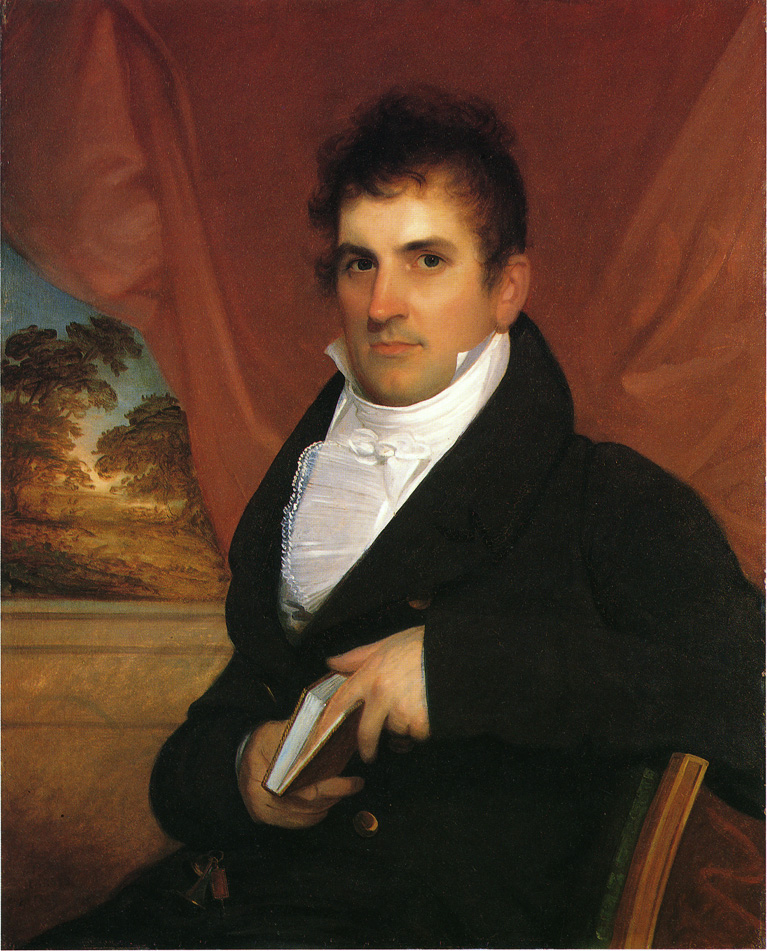
Mayor Philip Hone, in a painting by John Wesley Jarvis, never ran for President but ‘the party mayor’ was close friends with several of them.

Indeed the real road to power is through the office of New York state governor. Four former governors have become president (Cleveland, as well as Martin Van Buren, Theodore and Franklin Delano Roosevelt), four more were vice president (George Clinton, Daniel Tompkins, Levi P. Morton and Nelson Rockefeller) and two have even become chief justice of the Supreme Court (John Jay and Charles Evans Hughes).

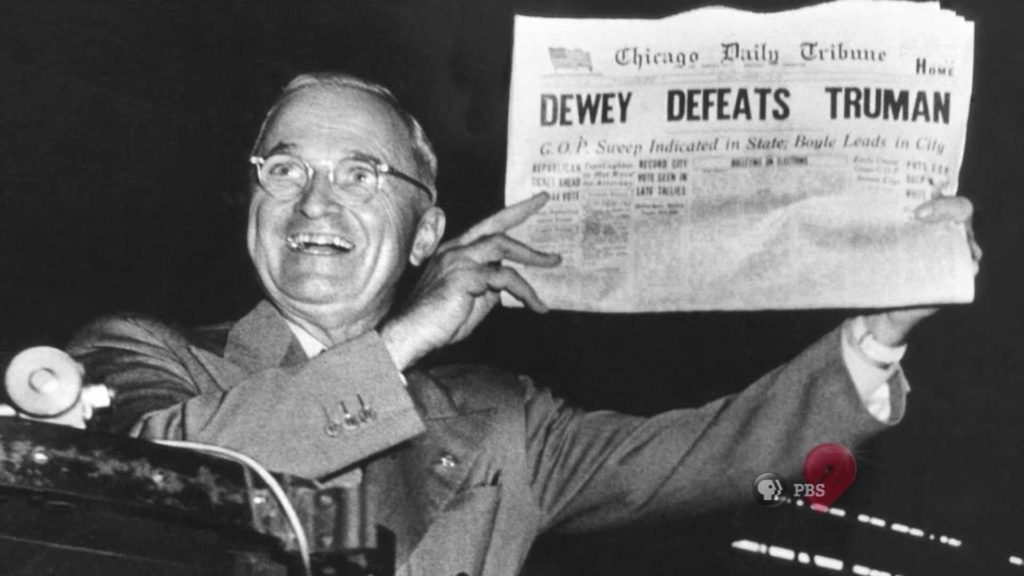
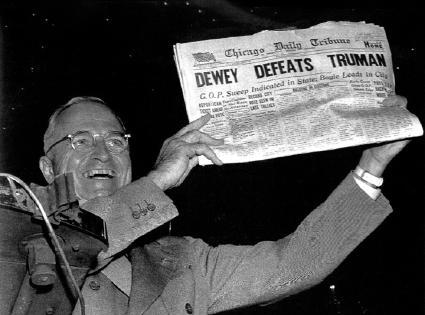
Even those governors who failed to become president did so in a dramatic and historic fashion, such as former governors Al Smith, Samuel Tilden and Thomas Dewey (of the particularly famous photo below).

New York governors often have very interesting failed presidential runs!

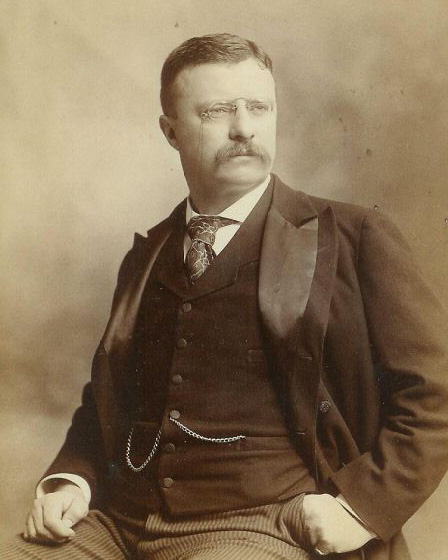
Then you have Theodore Roosevelt who was the New York City police commissioner and eventual New York governor who became the Vice President and then the President of the United States — all in the span of less than seven years.

Courtesy US Navy

But Mayor of New York City? No.

New York City Mayors and the White House

The list of what-ifs and also-rans is long indeed:

Michael Bloomberg — The mayor from 2002-2013 has flirted many times with a presidential run but has never made the leap — until now. Since his first flirtation with a presidential bid, the political world has shifted greatly. The three-term Republican mayor changed his party affiliation to Democrat last year although he seems forever poised to run as a fiscally-minded centrist.

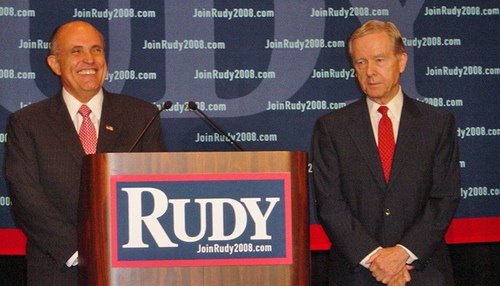
Rudy Giuliani — The mayor from 1994-2001 did run for President in 2008 but stumbled almost immediately after a major Florida miscalculation and never recovered, withdrawing on January 30, 2008.

John Lindsay didn’t fare much better than Rudy in his quest for the 1972 Democratic nomination. Starting out of the gate strong, like Rudy he stalled in Florida and eventually dropped out. Given the catastrophic changes to the city in the 1960s ad 70s, it’s not surprising that having ‘mayor of New York City’ on their political resume proved a stumbling block.

Robert F. Wagner (1954 to 1965) never ran for president but was short-listed to be Adlai Stevenson‘s vice president in 1956. Wagner was eventually beaten in balloting by Al Gore Sr. and John F Kennedy Jr. But, in the end, they were ALL beat for the spot by the clearly more popular, always reliable Estes Kefauver.

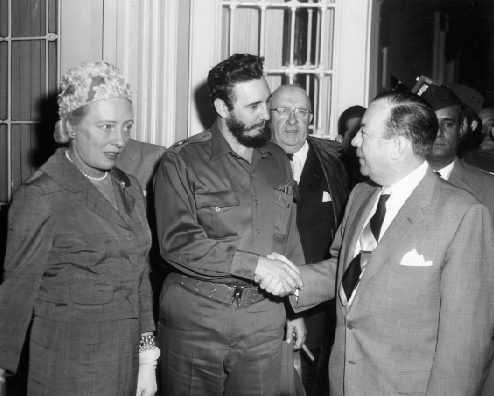
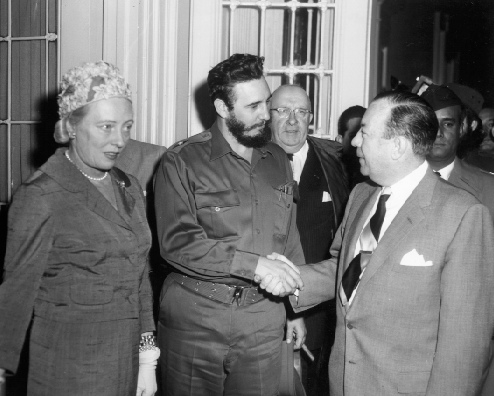
Below: Robert Wagner meets Fidel Castro during his visit to New York in 1959.

Courtesy La Guardia and Wagner Archives

Courtesy La Guardia and Wagner Archives

New York City mayors before World War One were generally considered second tier, even props for political machines. Only a few were politically influential and that was often because of prior connections. You can read all our coverage of past New York City mayors here.

William Jay Gaynor (mayor 1910-1913) was widely considered a potential presidential hopeful, even with an assassin’s bullet lodged in his neck. Had he actually lived through his term as mayor, who knows?

George Brinton McClellan Jr (mayor 1904-1909) was never a presidential candidate but his father and Civil War icon George B. McClellan Sr most certainly was. The Union Army general ran in 1864 against Lincoln during his second term, promising to end the war in the South.

f2012-58-813

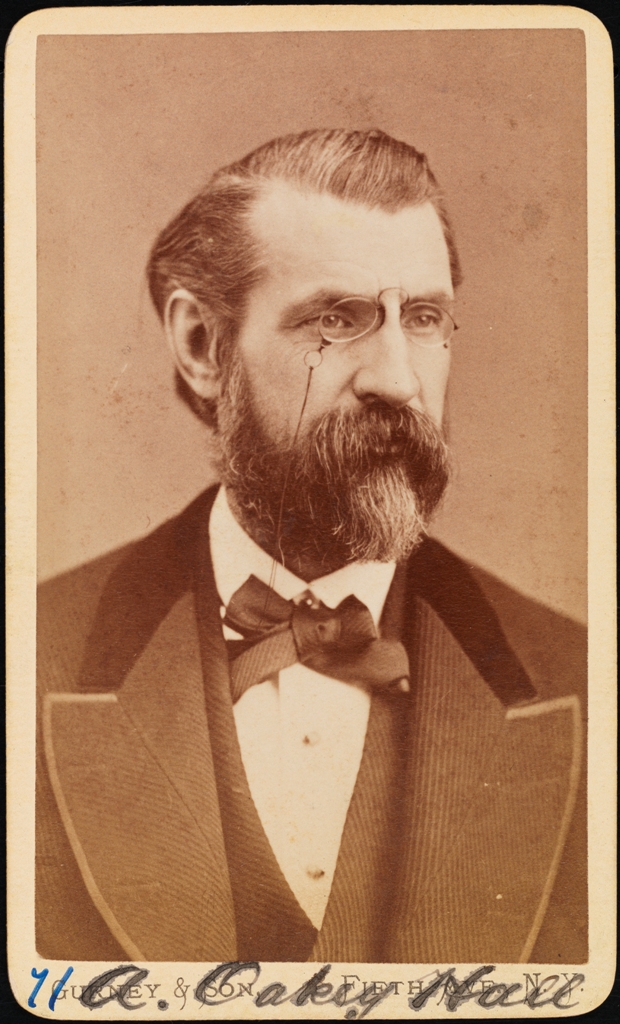
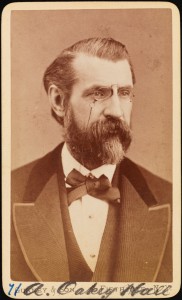
A Oakley Hall (mayor 1869 from 1872) (pictured at left) was as closely tied to the Boss Tweed Ring as a politico could be, but even he harbored presidential hopes. Considering he had to temporarily resign from mayor due to the Tweed scandal, I can’t imagine how much luck he would have had.

DeWitt Clinton (mayor for ten non-consecutive annual terms starting in 1803 ending 1815) collected political positions like postage stamps, but the one he could never lick was the presidency, defeated by incumbent James Madison in 1812. By June, Madison had declared war on England and later fled the White House when the Brits torched it.

How a Mayor gets to the White House

The closest a mayor ever got to a top federal job was Edward Livingston, who became Secretary of State to Andrew Jackson. Which is interesting, as Livingston was literally ran out of Manhattan after his stint as mayor several years previous due to debts and scandals.

For the most part, most politicians who become the mayor of New York City rarely achieve higher elected office. John T. Hoffman is the last individual to be both New York City mayor and then a higher elected position (New York governor in 1869)

John T. Hoffman, a Boss Tweed favorite

This story has been revised from an article which ran on June 25, 2008. Because there’s always a chance, fellow mayors!

Categories
American History

Election Night 1916: With a world war looming, America goes to the polls

One hundred years ago today, Americans went to the polls to vote for the President of the United States — between the Democrat and incumbent President Woodrow Wilson and the Republican Charles Evans Hughes.

The election was held on November 7, 1916, and it’s interesting to peruse the details of the day itself and the headlines from the following days, looking for parallels to our current election.

78318-004-d80c7b0c

Like the current 2016 election, the choice back then sprouted from local political figures, pitting the former governor of New Jersey (Wilson) with the former governor of New York (Hughes).  Imagine Chris Christie running against Andrew Cuomo. (On second thought, don’t!)

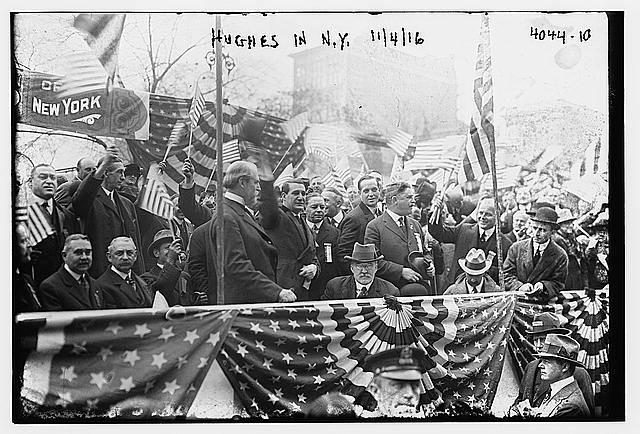
Below: Hughes at a rally in New York a few days before Election Day.

23176r

Of course, technically there was a third candidate on the ballot and one with the deepest New York roots — Theodore Roosevelt. After great entreaties by supporters, the former president was submitted as the Progressive Party candidate, only to withdraw his name late in the process to endorse Hughes.

00462r

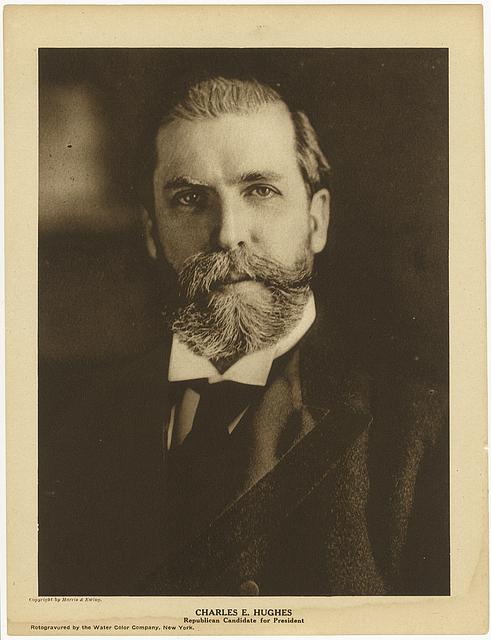
Hughes (pictured above) was a hand-picked recommendation of Charles S. Whitman, the popular New York governor who was himself re-elected that November.

Hughes, who sat on the New York Supreme Court after his tenure as governor, was a popular candidate for President but he was no match for Wilson’s anti-war message. (Literally anti-war. Wilson’s slogan was “He kept us out of war.” President Wilson would eventually enter the war five months after he was elected.)

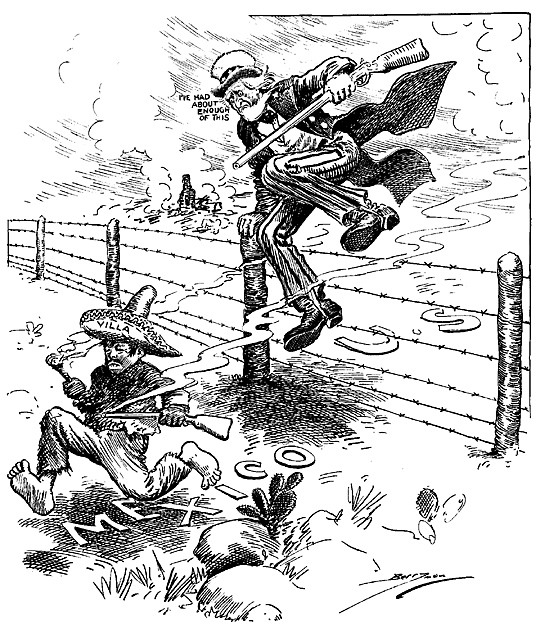
Also on voters’ minds — Mexico. Several Americans had been killed in Mexico and on the border,  and the U.S. was in the middle of a punitive attack against Pancho Villa and his militias which had begun that Spring.

Below: A political cartoon by Clifford Kennedy Berryman from 1916

villaunclesamberrymancartoon

How They Spent The Day

Voting looking quite different than it does today. In New York, there were no designated polling places and no absentee voting for non-military members. Half of today’s electorate was missing as women would not achieve the right to vote on the federal level for another few years. (However they would receive voting rights in New York in 1917.)

Secret ballots and voting machines were relatively new installations to the voting process thanks to the election reforms of the 1890s. It was still a wild and relatively imperfect process but a great improvement over the mid-19th century heyday of voter intimidation and fraud.

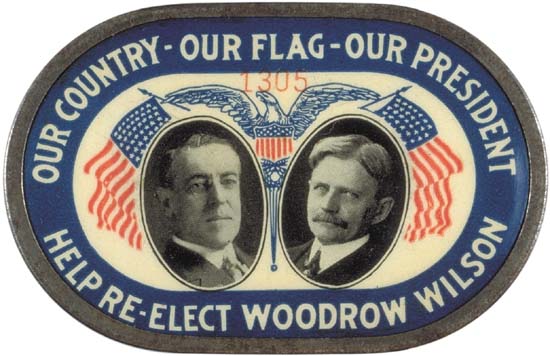
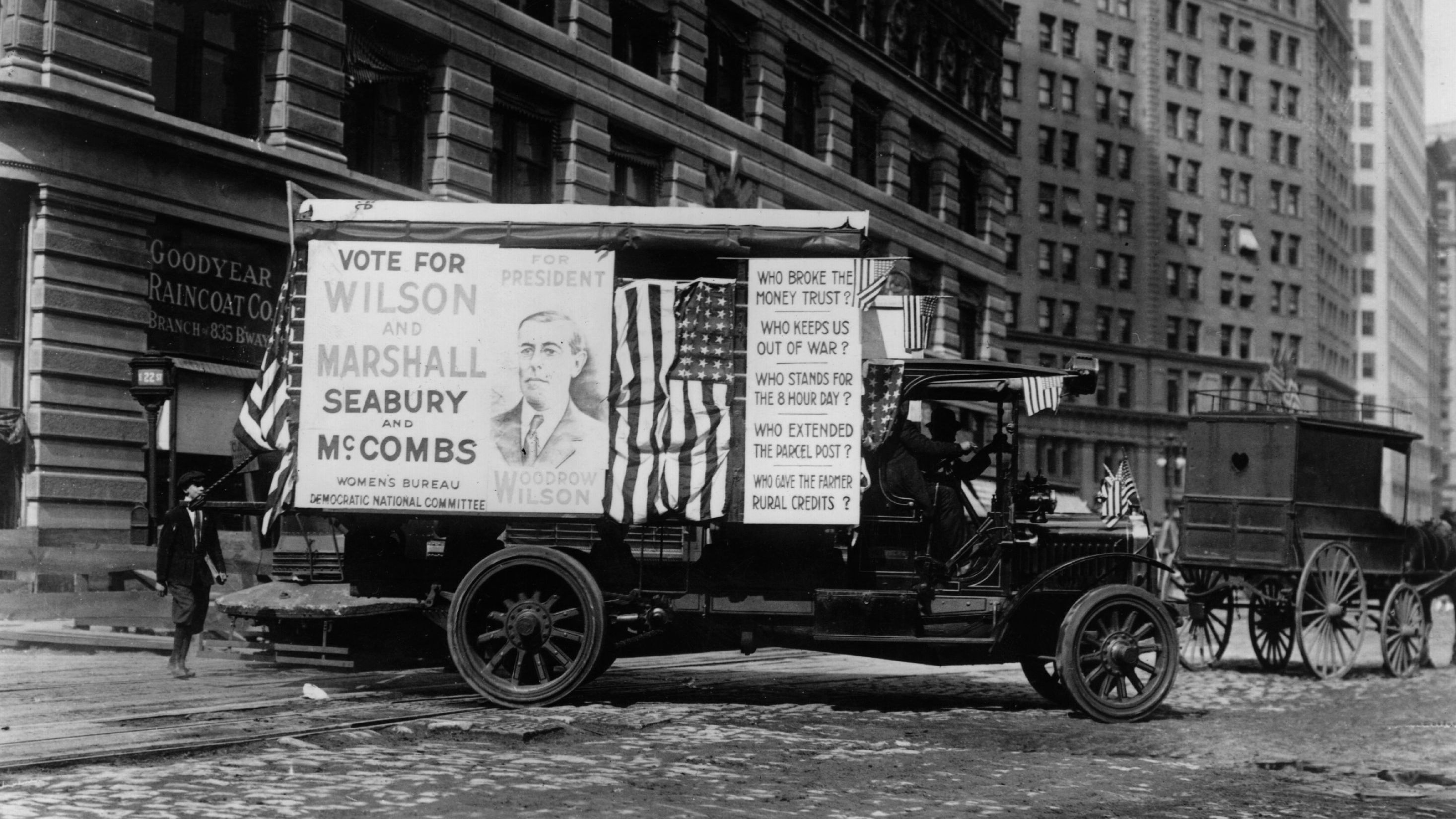
An election campaign car, backing incumbent Woodrow Wilson for president in 1916 in New York.

Of course Hughes was a Republican and at a disadvantage in New York, still considerably controlled by the Democrats and, in particular, the political machine Tammany Hall.  “Tammany leaders did not give out any figures regarding New York City, but it was asserted at Tammany Hall that Charles F. Murphy was confident that the city would roll up a big Democratic plurality, and that New York state would go Democratic.”

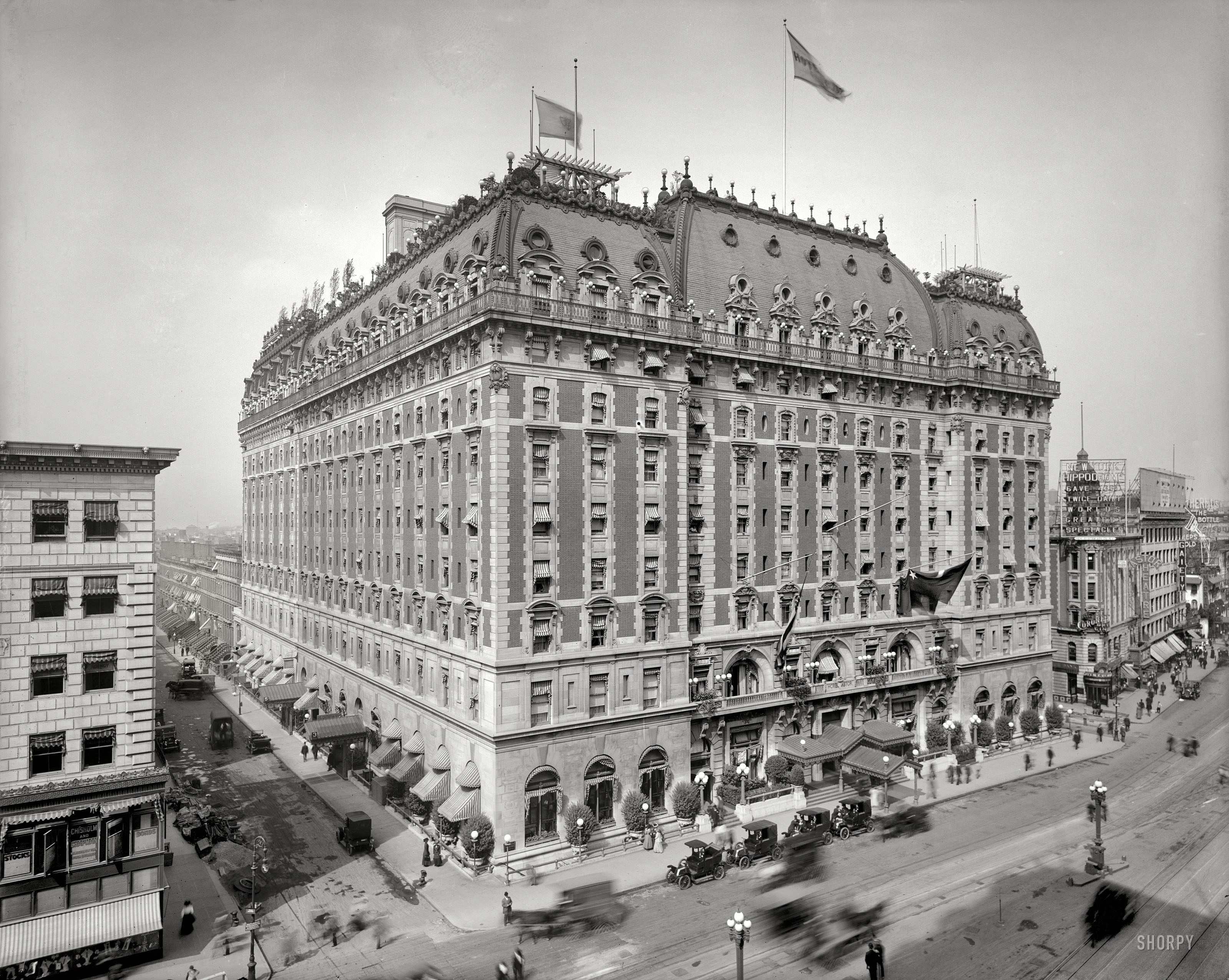
Hughes watched the election results from New York City that day. According to the Times, he voted “in a little laundry in Eighth Avenue between 44th and 45th Streets,” and spent the day at the Hotel Astor in Times Square (pictured below).

dab6f2704b70278aae316f498a7ba767

Despite signs of a contentious election spilling over into altercations at the polls, the day of voting in New York City was relatively free of conflict, with people standing in long lines with “only a negligible number of arrests for disorderly conduct and other causes having been made.”

While influencers supporting specific candidates were not allowed at the polls, suffragists were certainly there, passing out flyers for their cause and in certain cases, providing poll workers with sandwiches and coffee.

How They Watched The Results

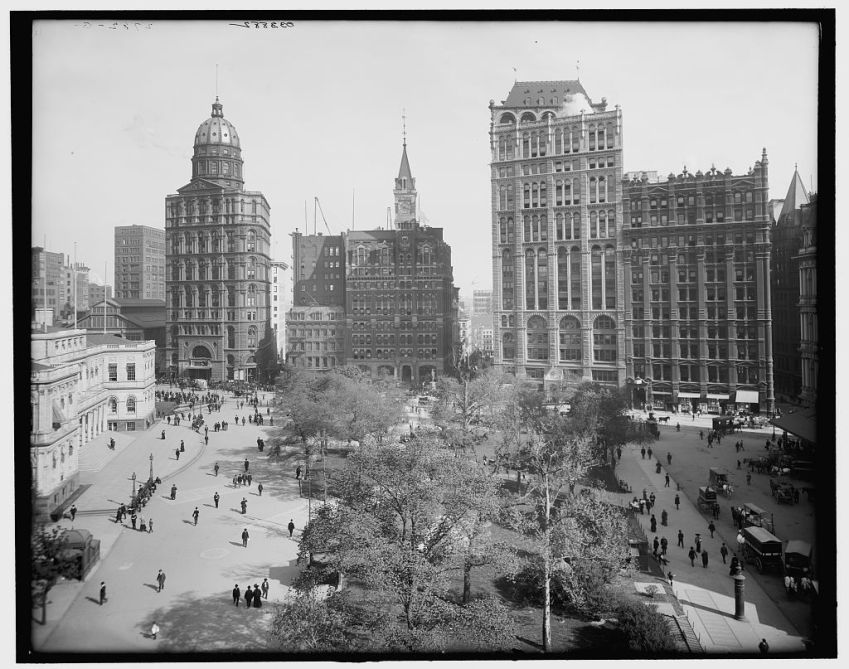
As with many celebrations, there were three gathering points of information, all near newspaper offices — Times Square, Herald Square and City Hall Park.  In midtown, people awaited a gigantic searchlight atop of the New York Times building for signs of victory. Late that evening, a red light filled the sky, and New Yorkers who were Hughes supporters began celebrating. At the Hotel Astor, the name HUGHES lit up in electric lights as thousands celebrated below.

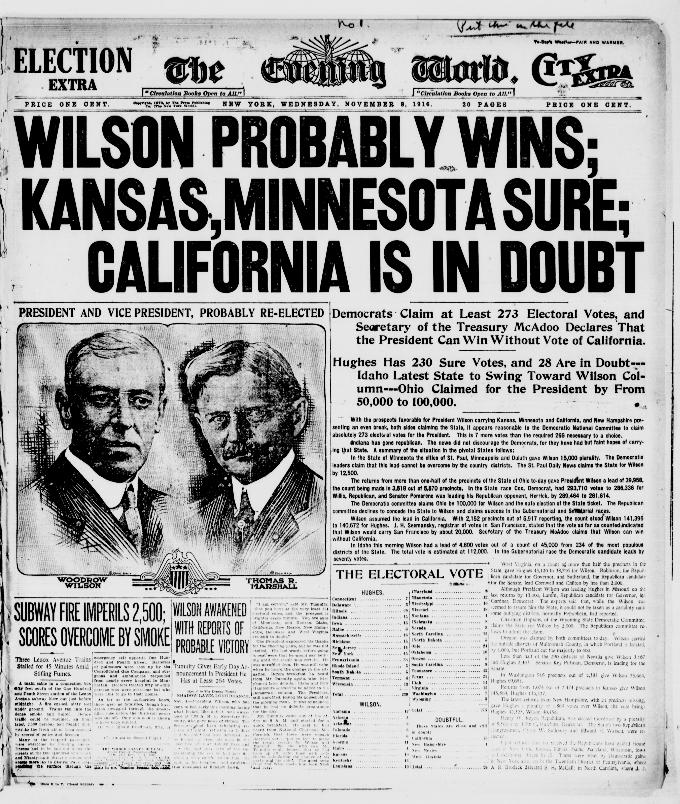
It was a confusing time; downtown at the New York World building (pictured below), a white searchlight announced Wilson as the winner. (It would take days for results from all 48 states to come in.)

image

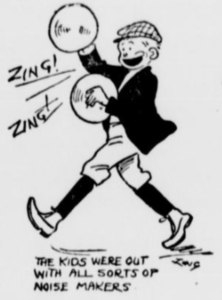
The streets of Times Square were thick with revelers — it was comparable to New Years Eve crowds and, in fact, probably exceeded them — although this was mostly due to the fine weather and the results coming in at around the same time as the Broadway theaters let out.

Earlier in the week, city officials authorized the shutting down Times Square due subway construction but it seems people still managed to gather around the edges, looking “like the exit of the Polo Grounds after a world’s series game.”  The sounds of horns were deafening. Bonfires were set along side streets.

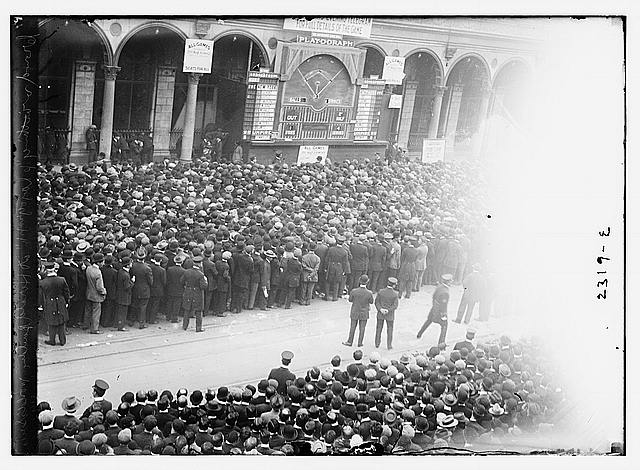
Below: In 1911, in front of the New York Herald building in Herald Square, crowds watch a sporting event via ‘playograph’, a hand-manipulated board. Election results were posted in a similar fashion.

09872r

In Herald Square and in Times Square, information on election tallies was delivered via constantly updated bulletins. “[B]ulletins followed each other every few seconds as reports to The Times were telephoned over to the operators from The Times Annex, and the lofty canvas screen was within the view of probably 100,000 people down Broadway and Seventh Avenue.”

screen-shot-2016-11-07-at-9-54-46-am

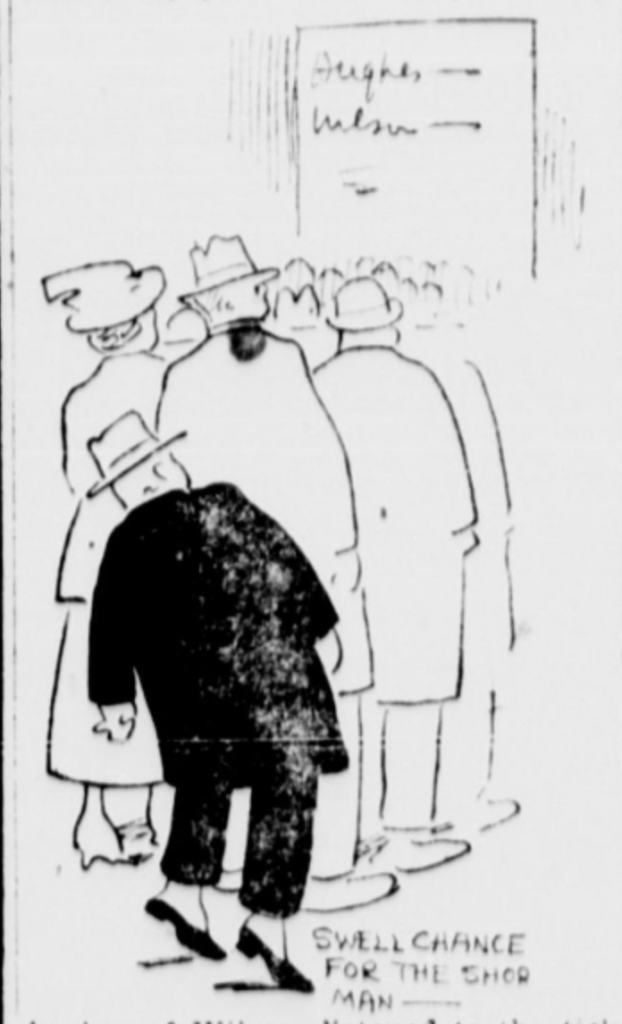
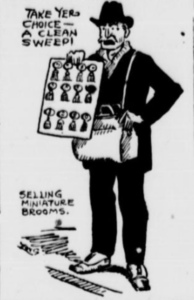
The New York Evening World had a merry go of it, lampooning election enthusiasts on the street. The merry-makers was festively illustrated (see above and below and here for the rest). Yes Election Night used to be fun!

screen-shot-2016-11-07-at-9-56-33-am

screen-shot-2016-11-07-at-9-55-59-am

Bulletins were also posted in Columbus Circle. Due to disliked results or perhaps the trauma of the crowd, one man “drop dead there early in the evening.” [source]

Adding to the chaos — a midnight subway fire in Harlem! [SUBWAY FIRE IMPERILS 2,500; SCORES OVERCOME BY SMOKE]

The Results

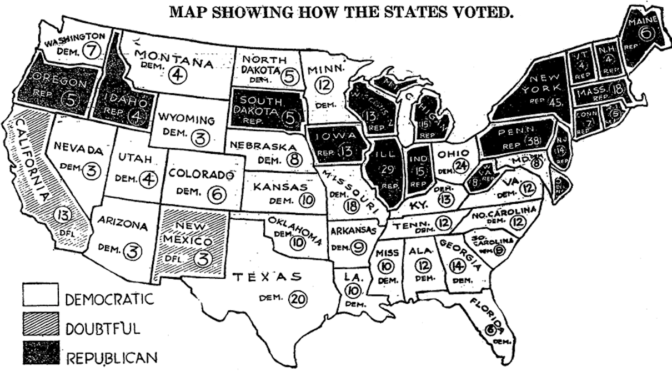
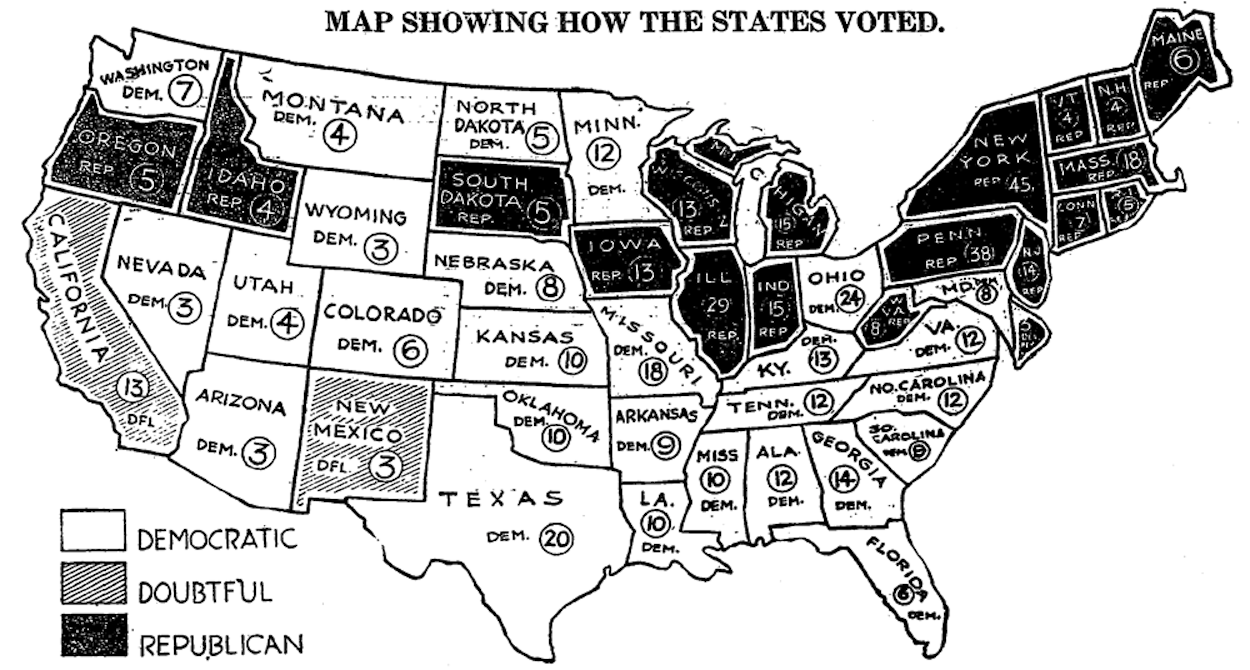
A map of election results which ran in the New York Times on November 8, 1916, is remarkably similar to one which might run in newspapers today. Of course, given the evolution (or de-evolution, depending on you how you choose to look at it) of American politics, the party affiliations have remarkably changed!

1916-map-1000

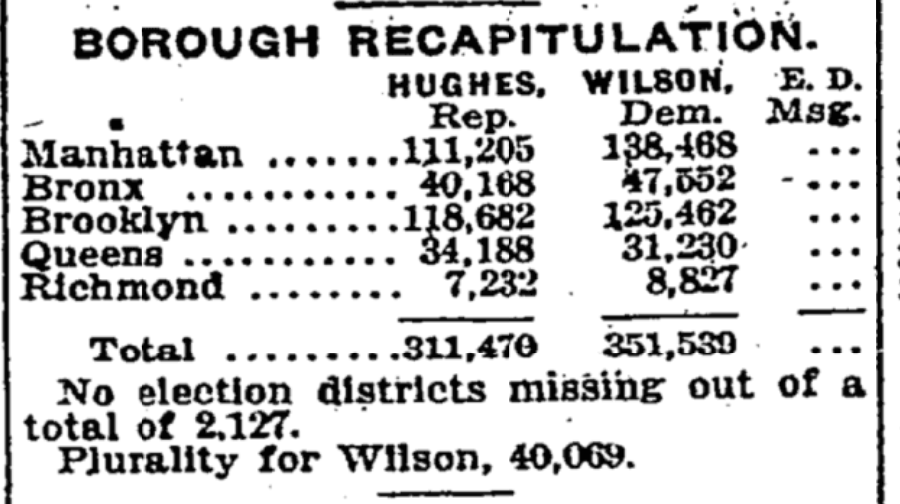
In the end, as with many other elections, New York’s electoral votes went to the Republicans but New York City firmly voted for Wilson. “New York City gave Woodrow Wilson a scant plurality of 40,069 to offset the 186,930 plurality for Charles E. Hughes which the up-State counties sent down to the Bronx line. The city’s vote for Wilson was 351,539, compared with 312,386 which it gave him for President four years ago.”  [source]

screen-shot-2016-11-06-at-2-05-36-pm

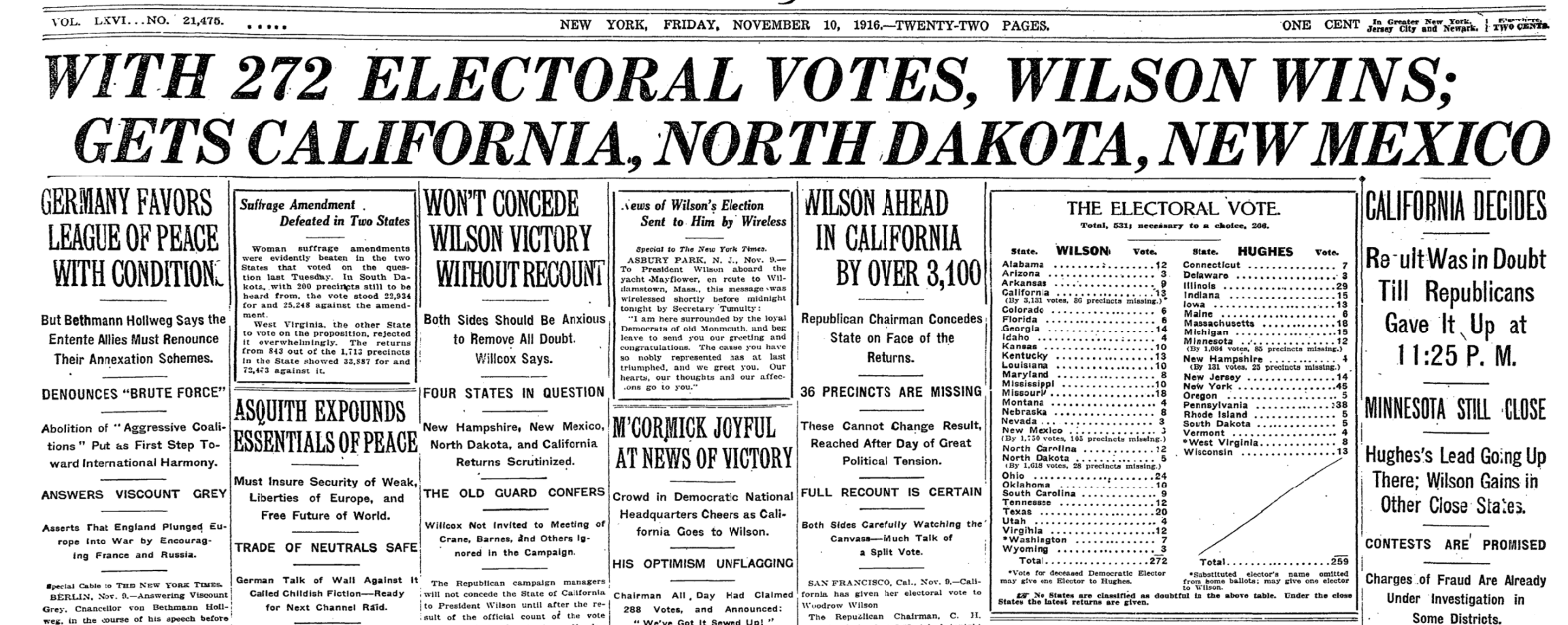
The election was not ultimately determined for a few days. The newspaper front page below is from November 10, four days after Election Day:

screen-shot-2016-11-06-at-1-57-44-pm

Hughes supporters instantly leveled charges of fraud at their opponent but the former governor was too dignified to take the bait.  While not yet conceding on November 11, “Mr. Hughes declared that in the absence of absolutely proof of fraud no such cry should be revised to becloud the title of the next President of the United States.” [source]

image_681x804_from_00_to_54066385

Categories
American History

Fiasco! New York’s first Republican presidential primary

One hundred years ago yesterday, New York hosted its first-ever Republican presidential primary. Not only was it an organizational failure of epic proportions, but the results handed a stunning and rare defeat to one of New York’s most iconic politicians.

Making the 1912 primary a unique contest was that it was between two presidents — the current one, William Howard Taft, and the prior one, Theodore Roosevelt. (Robert La Follette was also on the ticket, serving as a bit of a Ralph Nader-esque outsider.) Dissatisfaction with Taft’s administration had convinced Roosevelt to obtain his party’s nomination once again, having served in the White House for almost eight years already.

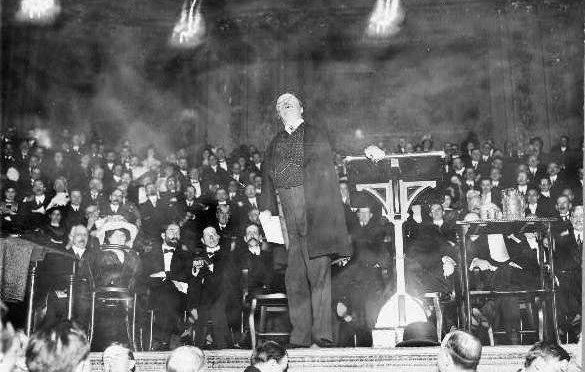
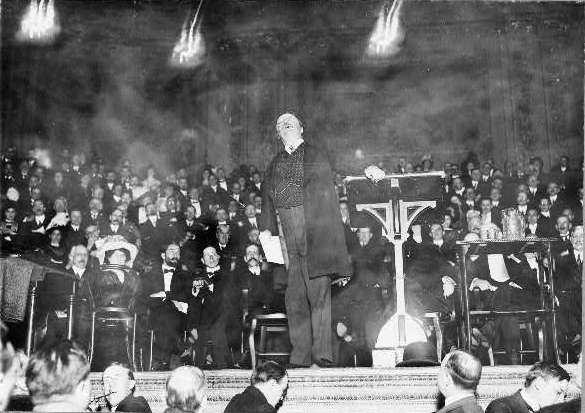
Roosevelt laid out his plank during a memorable speech at Carnegie Hall (pictured above) on March 20, 1912: “THE great fundamental issue now before the Republican party and before our people can be stated briefly. It is: Are the American people fit to govern themselves, to rule themselves, to control themselves? I believe they are. My opponents do not.”

Getting out a powerful incumbent was a difficult task, one that Roosevelt supporters thought could be overcome with the debut of the Republican primary process to the political system. The primary system was considered progressive for its day, putting the delegate process to a popular vote. But New York’s first Republican primary, held on March 26, 1912, quickly dissolved into chaos.

Poll workers were ready to make history that morning, only to arrive at polling stations bereft of ballots. Voting locations throughout the city opened that day with nary a ballot in sight. The outer boroughs suffered greatly, and in over a hundred locations, ballots never arrived. Voters waited in line for hours, only to be told that would not get an opportunity to select a candidate. At some voting locations, ballots arrived a few minutes before the polls closed at 9 p.m.

Kings, Queens and Richmond Largely Disenfranchised,’ proclaimed the New York Sun, while the Tribune found ‘Big Confusion Throughout the City‘. Some clever operators quickly hammered out unofficial ballots on typewriters for anxious voters, hoping they would be accepted.

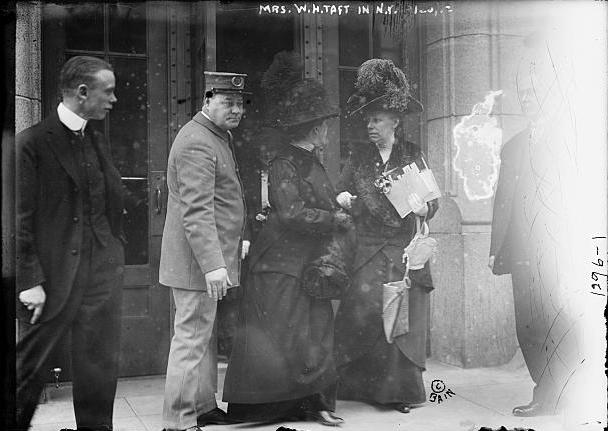
Below: First lady Helen Herron Taft makes greets supporters in New York

Manhattan voters had fewer problems at their polling stations, as moving vans rushed ballots to locations throughout the city. But the result did not help out the former president.

Political machines still held sway in local politics, and New York was now firmly in Taft’s camp. The incumbent easily won the state, although the voting hiccups throughout the other counties allowed Roosevelt supporters to cry foul. A representative of Roosevelt’s election committee wailed to the New York Times that “the primary election here today was not only a farce, but goes beyond that and is an insult to the city.”

Roosevelt came back from this messy defeat to win nine primaries in other states. Unfortunately, most states still chose delegates at state conventions, a system that favored Taft. At the national convention, Taft was chosen again as the Republican candidate. Roosevelt bolted and ran as a progressive third party candidate (the so-called ‘Bull Moose’ party).

While campaigning in Milwaukee, Roosevelt was shot in the chest by an insane saloon keeper, surviving the impact due to his eyeglass case and a voluminous speech absorbing most of the blow.

Both Taft and Roosevelt lost that November to the Democrat Woodrow Wilson.

Pictures courtesy the Library of Congress
New York Election Day traditions no longer celebrated

Today is primary election day in New York! Locals, have you voted yet? Current mayor Michael Bloomberg is not on the ballot yet — he’ll be on the November ballot — but primary races for City Comptroller, Public Advocate, some city council seats, and the Democratic candidate for mayor are included on today’s ballot

In the past, New Yorkers have celebrated election days with some behaviors and traditions that are no longer with us:

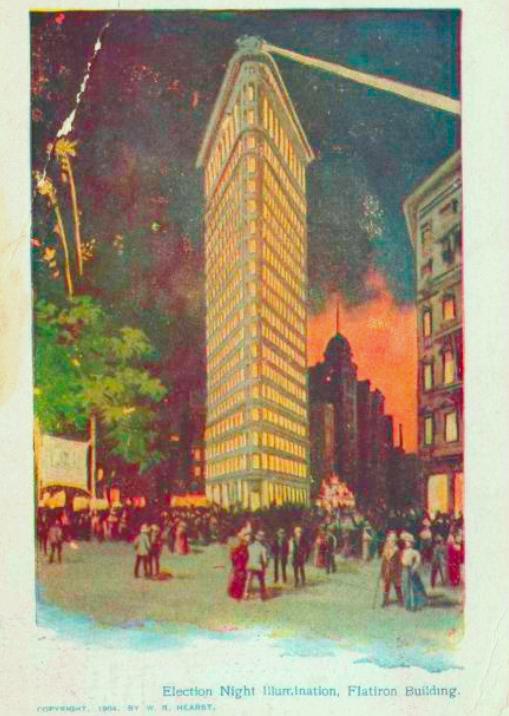
1) Lights and drama at the Flatiron Building
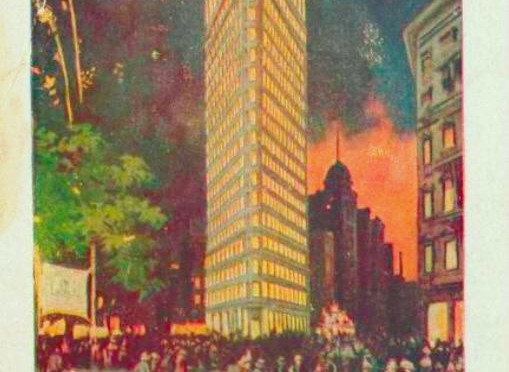
I’m unsure of the date of this postcard, however it’s from a time when the Flatiron was one of the city’s tallest buildings. Today we have the Empire State Building to help us celebrate in lights — but the apparent tradition of a swirling spotlight has alas not been replicated.

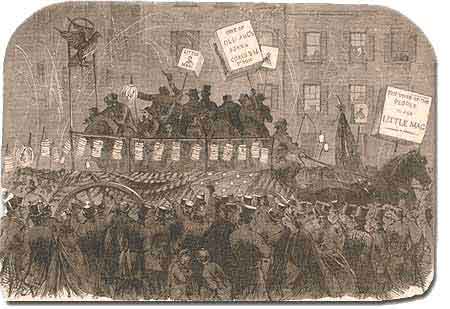
2) Torchlight Parades
This image, of one such procession, gathered supporters of George McClellen who tried to wrest the presidency from Abraham Lincoln in 1864. I’ll bet the swillholes of the Bowery were hoppin’ that night.

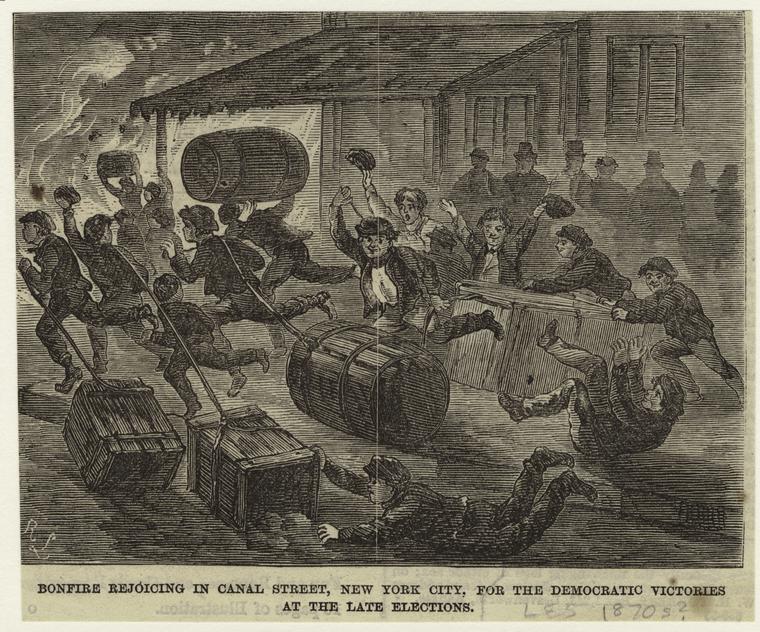
3) Bonfire celebrations on Canal Street
In this illustration from Frank Leslie’s magazine, election victory in the 1870s often spawned open fires in the street. Today, candidates are more likely to have a few drinks at the W Hotel than light open blazes on a busy thoroughfare. (Pic courtesy NYPL)

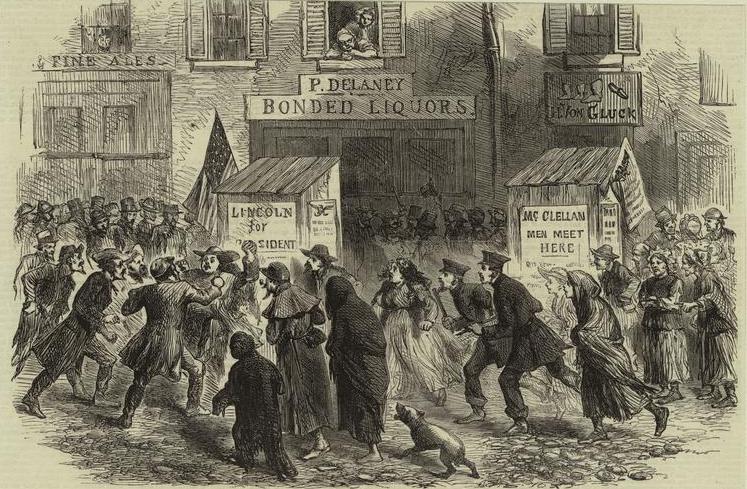
4) Wholesale violence
Repeat voting, destruction to polling places and destruction of unfavorable ballots were common practices during more contested elections of the 19th century. The Bowery Boys and other gangs were recruited to create disruption for political parties and create a hostile environment for potential voters. The image below, from the Illustrated London news, lays out the scene during the Lincoln/McClellan faceoff in 1864.

Today, the most hostility you might face are from children fighting past voters to get to their classrooms. (Pic courtesy NYPL)

5) Aligning mayoral candidates with World War I emperors
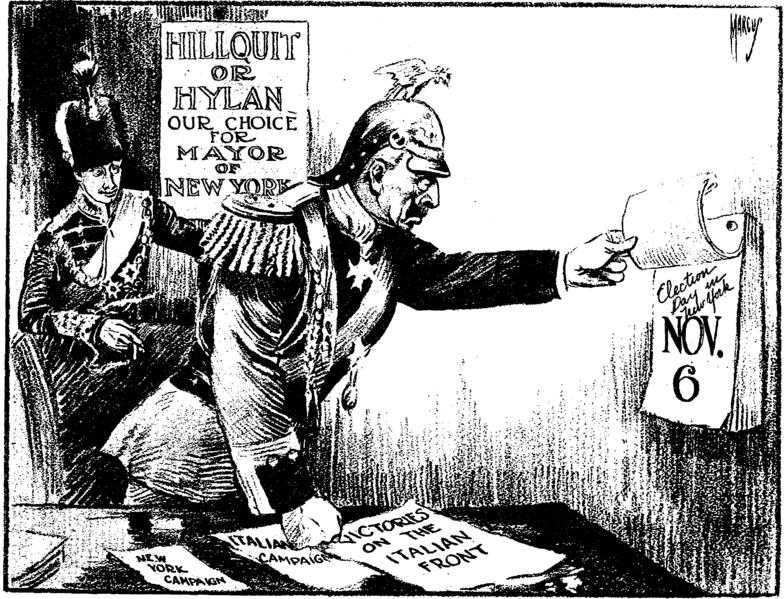
This cartoon from the New York Times implies that Kaiser Wilhelm II seemingly supports Democrat John F. Hylan and the Socialist candidate Morris Hillquist. Shudder if that were the case; Hylan ended up winning that election and held the job of mayor for eight years.

Of course, over-dramatic political cartoons and tying leaders to totalitarian regimes is still rather run of the mill in today’s politics. (Pic courtesy Wikimedia)

Categories
Know Your Mayors

Hey kids! Wanna be president? Don’t be New York mayor.

(This story was originally published in June 25, 2008)

Yesterday was the opening of Campaigning For President at the Museum of the City of New York, a look at the city’s participation in some of the most famous and contentious presidential elections in history. The exhibit will focus on the city’s role in deciding the outcomes, as well as some of the famous New Yorkers who once coveted the White House.

It got me thinking about the recent phantom campaign of Michael Bloomberg and colossally failed one of former mayor Rudy Giuliani. Is it possible for the leader of the biggest city in America to step up to the role of Commander In Chief?

The answer is a big, fat NO, at least so far. Not one New York mayor who ever actively tried or hinted at being interested in the job ever got it. And the list of also-rans is long indeed:

Michael Bloomberg – Excessive hints to the contrary, Bloomberg never officially threw his hat in the ring.

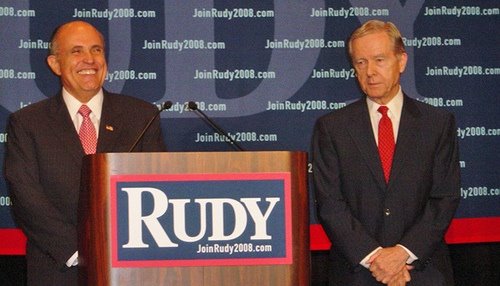
Rudy Giuliani — He did run for President in 2008 but stumbled almost immediately after a major Florida miscalculation and never recovered, withdrawing on January 30, 2008.

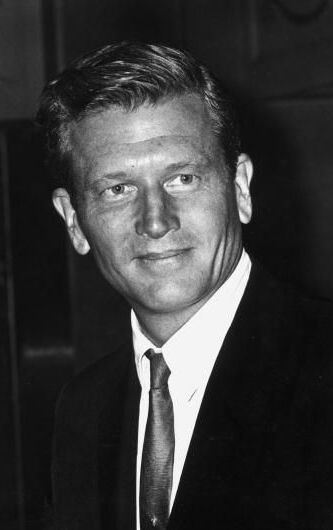
John Lindsay (mayor from 1966 to 1973, pictured at right) didn’t fare much better than Rudy in the quest for the 1972 Democratic nomination. Starting out of the gate strong, like Rudy he stalled in Florida and eventually dropped out. Given the catastrophic changes to the city in the 1970s, I’m surprised anybody thought having ‘mayor of New York’ on their political resume would have garnered national favor.

Robert F. Wagner (1954 to 1965) never ran for president but was short-listed to be Adlai Stevenson’s vice president in 1956. Wagner was eventually beaten in balloting by Al Gore Sr. and John F Kennedy Jr. But, in the end, they were ALL beat for the spot by the clearly more popular, always reliable Estes Kefauver.)

Below: Robert Wagner meets Fidel Castro during his visit to New York in 1959.

Courtesy La Guardia and Wagner Archives

William Jay Gaynor (mayor 1910-1913) was widely considered a potential presidential hopeful, even with an assassin’s bullet lodged in his neck. Had he actually lived through his term as mayor, who knows?

George Brinton McClellan Jr (mayor 1904-1909) was never a presidential candidate but his father and Civil War icon George B. McClellan Sr certainly was. Dad ran in 1864 against Lincoln in his second term, promising to end the war in the South.

f2012-58-813

A Oakley Hall (mayor 1869 from 1872) (pictured at left) was as closely tied to the Boss Tweed Ring as a politico could be, but even he harbored presidential hopes. Considering he had to temporarily resign from mayor due to the Tweed scandal, I can’t imagine how much luck he would have had.
DeWitt Clinton (mayor for ten non-consecutive annual terms starting in 1803 ending 1815) collected political positions like butterflies, but the one he could never catch was the presidency, defeated by incumbent James Madison in 1812. By June, Madison had declared war on England and later fled the White House when the Brits torched it.

The closest a mayor ever got to the top job was Edward Livingston, who became Secretary of State to Andrew Jackson. Which is interesting, as Livingston was literally ran out of Manhattan after his stint as mayor several years previous due to debts and scandals.

The real road to power is through the office of New York state governor. Four former governors have become president (Martin Van Buren, Grover Cleveland, Theodore and Franklin Delano Roosevelt), four more were vice president (George Clinton, Daniel Tompkins, Levi P. Morton and Nelson Rockefeller) and two have even become chief justice of the Supreme Court (John Jay and Charles Evans Hughes).

Heck, even those governors who failed to become president did so in a dramatic and historic fashion, such as former governors Al Smith, Samuel Tilden and Thomas Dewey (of the particularly famous photo below).

“Horrors” of Roosevelt Island: Grampa Al


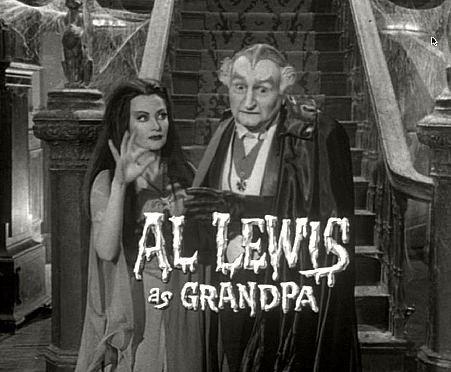
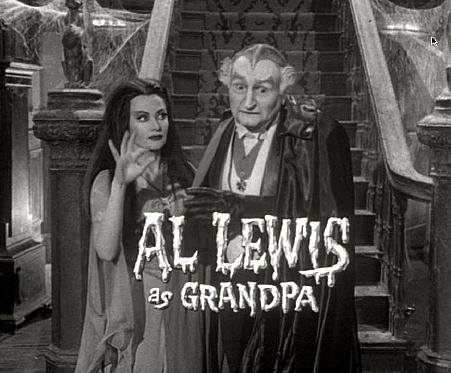
Before going any further, I would be remiss if I didn’t mention its most famous monster man, the godfather of Roosevelt Island and one of the most original New Yorkers who ever lived – Al ‘Grampa Munster’ Lewis.

Perhaps these days it’s difficult to understand a man like Al. He’s a crusty mix of old school vaudevillian and opinionated local celebrity who ingratiated himself with cantankerous and uncommon familiarity. Everybody seems to have an Al Lewis story. I met Grampa Munster only once in the 90s, years after his Greenwich Village restaurant — naturally called Grampa’s Bella Gente, (at 252 Bleecker Street) — had opened in April 1987. He was sitting in a rocking chair, cackling the night away. But how I wished I had taken my friend’s offer a few years later; he was having a drink with Al at Roosevelt Island’s only bar (I believe it was Julie’s Back Page).

Bigger celebrities have certainly lived on Roosevelt Island — Sarah Jessica Parker started her acting career living there — but none as beloved or as representitive of a certain type of true-blue New Yorker.

Lewis was either born here in Brooklyn, or out in Wolcott, NY; in the year 1910 or (more likely) 1923; with the birth name of Alexander or Albert. Depending on who Al was talking to, and when, the details of his life would tranform with the same dexterity that his TV persona Grampa Munster used to change into a cheap rubber bat. He purported to have a doctorate in child psychology at Columbia University, although his occupations were also purported to include a hotdog vendor at Ebbets Field, a store detective a former circus performer, and a Marine in World War II.

His big television break came with two seasons, Car 54, Where Are You?, playing a wacky Bronx police officer, cracking kooky cases with his partner, played by Fred Gwynne. Two years later he would join Gwynne in another series in the role that would define him. Literally. Like another vampirical player Bela Lugosi, Lewis would wear the cloak and mantel of Grampa Munster throughout the rest of his life, to nearly everything. For three campy seasons, “The Munsters” gave us Lewis amidst bubbling beakers and electrified gadgets in the basement of 1313 Mockingbird Lane, hocking sarcastic barbs at his Franken-son-in-law Herman.

Lewis would keep working in television and film but his political leanings would coax him into activism of an often surprising sort. (Mitchel Cohen remembers first meeting him in 1971 at a Black Panthers demonstration!) With his wife Karen, whom he married in 1979, Lewis became closely associated with the Green Party. In 1998 actually ran for New York governor against George Pataki, a rather ambitious challenge for a man well in his 70s. He tried to run as ‘Grampa Al Lewis’ but was rejected by the Board of Elections. He did receive 52,000 votes, of which I believe I was one of them.

He settled with his family in Roosevelt Island and slowly became involved in radio broadcasting. He had a show for many years on WBAI which Karen took over once became ill. One story claims he ‘pestered’ himself into the job by constantly calling with “comments, [to] correct mistakes or complain about what was on the air.” He well known to New Yorkers of the early 90s for being a frequent guest on the Howard Stern, once memorably haranguing the FCC with a flurry of bleepable expletives.

According to a recollection by Cohen, “I remember when Al was already sick, a Reclaim the Streets party/demo had ended up on Roosevelt Island. We marched past Al and Karen’s apartment, and I started the chant: “We love you
Grandpa, we miss you, get better!” and pretty soon the hundreds of us took up the chant, lights came on in the apartments, people looked out the windows, and everyone waved, knowing whom we were chanting about as we snaked by.”

He died at his Roosevelt Island home on February 3, 2006. At his funeral, one friend said,
“Who was Al Lewis? A raconteur. The de facto mayor of Roosevelt Island. The best-dressed man on Roosevelt Island. He held court in front of 546 Main Street, the senior citizens center…” It should be noted that Grampa Munster’s signature ride, the ‘dragula’ gold coffin on wheels, rolled up to the door of the church.