Categories
Know Your Mayors

A short history of New York City mayors who ran for President of the United States

Last week former mayor Michael Bloomberg very unofficially — and somewhat belatedly — entered the 2020 presidential race by filing paperwork for next year’s Alabama primary. This over a month after current New York City Mayor Bill De Blasio entered and dropped out of the race this year, never catching fire with the Democratic electorate.

Is Bloomberg really running? If so, this would make David Dinkins the only previous living mayor of New York City never to have run for the highest office in the land.

And it begs the question — is it even possible for the leader of the biggest city in America to step up to the role of Commander In Chief?

Precedent tells us no. Not one New York City mayor in history who ever actively tried or hinted at being interested in the job ever got it. Indeed it’s difficult — especially in recent years — to even identify any genuine enthusiasm for such presidential runs.

The Road to the Presidency

This is rather unusual as the mayor of New York City has certain responsibilities akin to running an actual country. Our city has a diverse population the size of Austria with immense financial and cultural power. One might expect the job to be a natural stepping stone to the White House.

Mayors of American cities and towns have become president in the past although that biographical detail is usually not a defining aspect of that candidate’s résumé. For instance, Calvin Coolidge tenure as mayor of Northhampton, Massachusetts, was but one of several offices the lawyer achieved on his way to the presidency.

Grover Cleveland was also a mayor (of Buffalo), but it’s his experience as Governor of New York which recommended him for the Office of the President.
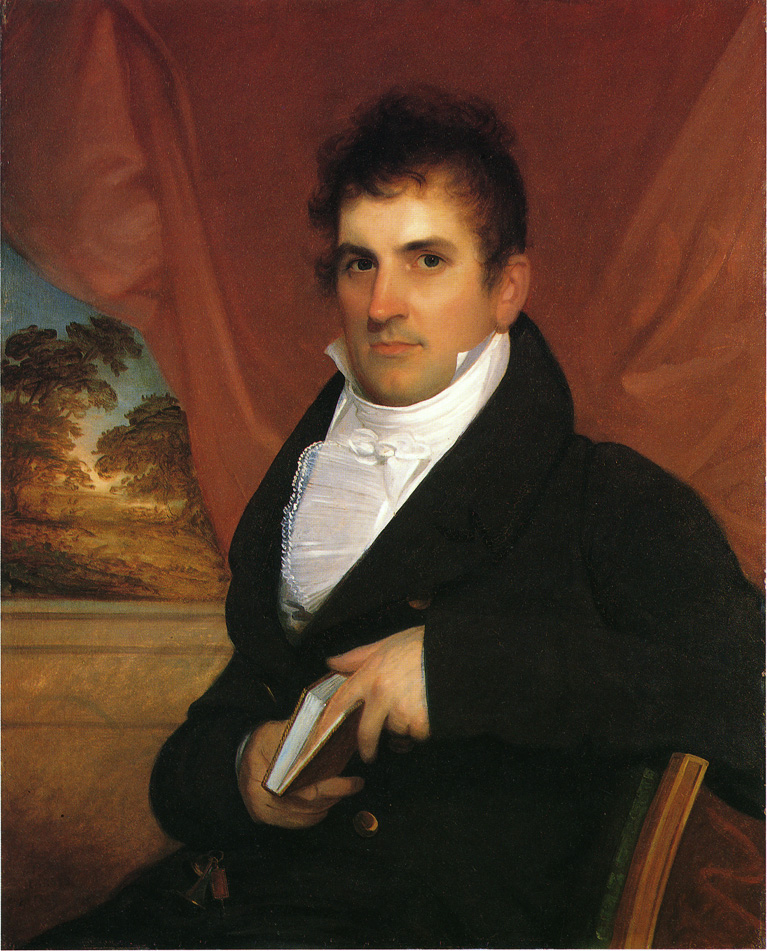
Mayor Philip Hone, in a painting by John Wesley Jarvis, never ran for President but ‘the party mayor’ was close friends with several of them.

Indeed the real road to power is through the office of New York state governor. Four former governors have become president (Cleveland, as well as Martin Van Buren, Theodore and Franklin Delano Roosevelt), four more were vice president (George Clinton, Daniel Tompkins, Levi P. Morton and Nelson Rockefeller) and two have even become chief justice of the Supreme Court (John Jay and Charles Evans Hughes).

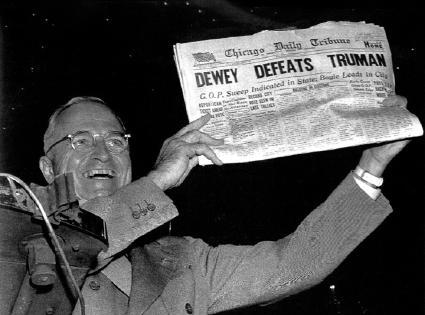
Even those governors who failed to become president did so in a dramatic and historic fashion, such as former governors Al Smith, Samuel Tilden and Thomas Dewey (of the particularly famous photo below).
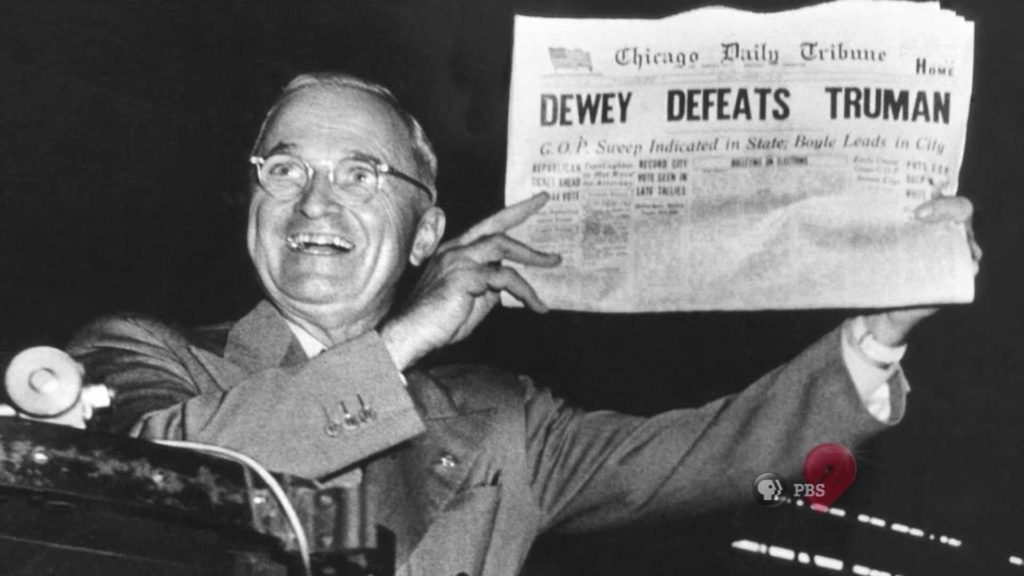
New York governors often have very interesting failed presidential runs!

Then you have Theodore Roosevelt who was the New York City police commissioner and eventual New York governor who became the Vice President and then the President of the United States — all in the span of less than seven years.
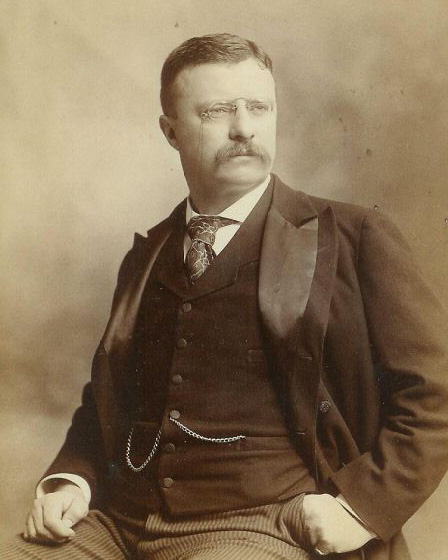
Courtesy US Navy

But Mayor of New York City? No.

New York City Mayors and the White House

The list of what-ifs and also-rans is long indeed:

Michael Bloomberg — The mayor from 2002-2013 has flirted many times with a presidential run but has never made the leap — until now. Since his first flirtation with a presidential bid, the political world has shifted greatly. The three-term Republican mayor changed his party affiliation to Democrat last year although he seems forever poised to run as a fiscally-minded centrist.
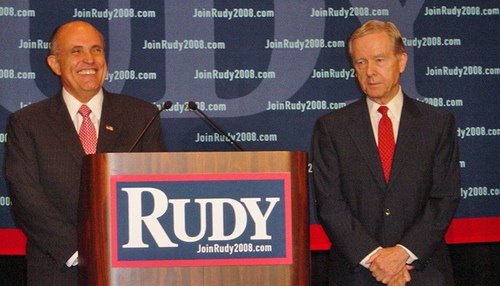
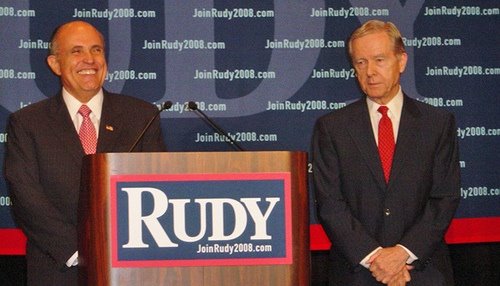
Rudy Giuliani — The mayor from 1994-2001 did run for President in 2008 but stumbled almost immediately after a major Florida miscalculation and never recovered, withdrawing on January 30, 2008.
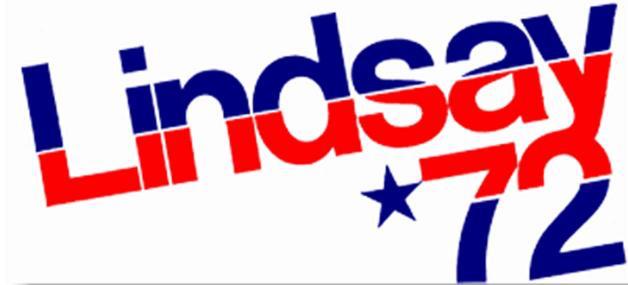
John Lindsay didn’t fare much better than Rudy in his quest for the 1972 Democratic nomination. Starting out of the gate strong, like Rudy he stalled in Florida and eventually dropped out. Given the catastrophic changes to the city in the 1960s ad 70s, it’s not surprising that having ‘mayor of New York City’ on their political resume proved a stumbling block.

Robert F. Wagner (1954 to 1965) never ran for president but was short-listed to be Adlai Stevenson‘s vice president in 1956. Wagner was eventually beaten in balloting by Al Gore Sr. and John F Kennedy Jr. But, in the end, they were ALL beat for the spot by the clearly more popular, always reliable Estes Kefauver.

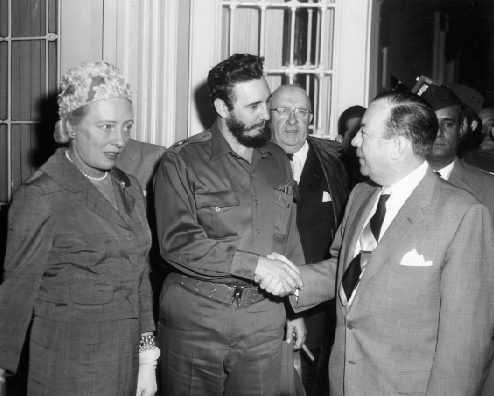
Below: Robert Wagner meets Fidel Castro during his visit to New York in 1959.
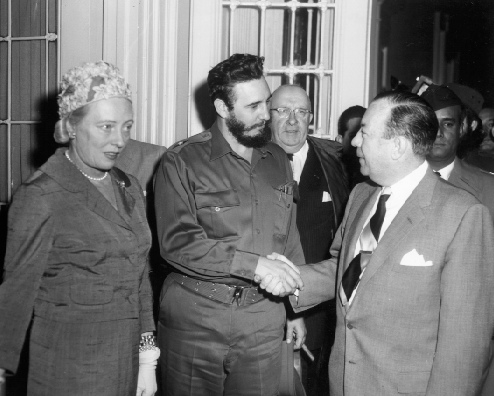
Courtesy La Guardia and Wagner Archives

Courtesy La Guardia and Wagner Archives

New York City mayors before World War One were generally considered second tier, even props for political machines. Only a few were politically influential and that was often because of prior connections. You can read all our coverage of past New York City mayors here.

William Jay Gaynor (mayor 1910-1913) was widely considered a potential presidential hopeful, even with an assassin’s bullet lodged in his neck. Had he actually lived through his term as mayor, who knows?

George Brinton McClellan Jr (mayor 1904-1909) was never a presidential candidate but his father and Civil War icon George B. McClellan Sr most certainly was. The Union Army general ran in 1864 against Lincoln during his second term, promising to end the war in the South.
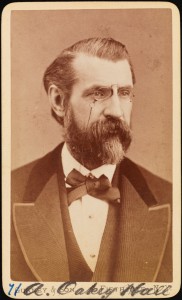
f2012-58-813

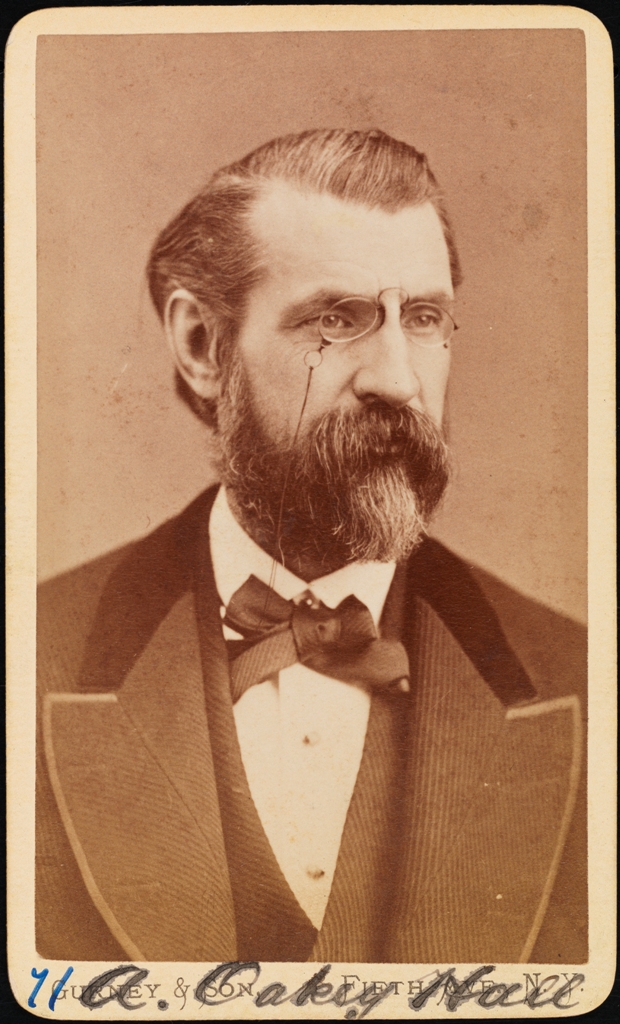
A Oakley Hall (mayor 1869 from 1872) (pictured at left) was as closely tied to the Boss Tweed Ring as a politico could be, but even he harbored presidential hopes. Considering he had to temporarily resign from mayor due to the Tweed scandal, I can’t imagine how much luck he would have had.

DeWitt Clinton (mayor for ten non-consecutive annual terms starting in 1803 ending 1815) collected political positions like postage stamps, but the one he could never lick was the presidency, defeated by incumbent James Madison in 1812. By June, Madison had declared war on England and later fled the White House when the Brits torched it.

How a Mayor gets to the White House

The closest a mayor ever got to a top federal job was Edward Livingston, who became Secretary of State to Andrew Jackson. Which is interesting, as Livingston was literally ran out of Manhattan after his stint as mayor several years previous due to debts and scandals.

For the most part, most politicians who become the mayor of New York City rarely achieve higher elected office. John T. Hoffman is the last individual to be both New York City mayor and then a higher elected position (New York governor in 1869)
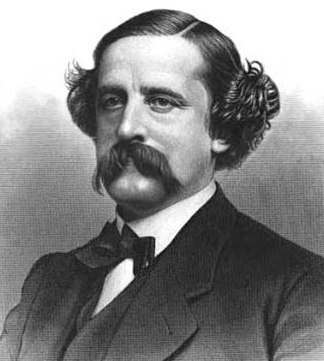
John T. Hoffman, a Boss Tweed favorite

This story has been revised from an article which ran on June 25, 2008. Because there’s always a chance, fellow mayors!
Categories
New Amsterdam

The story of ‘Klein Klassje’, the New World’s first Roosevelt and the surprising origin of Roosevelt Street


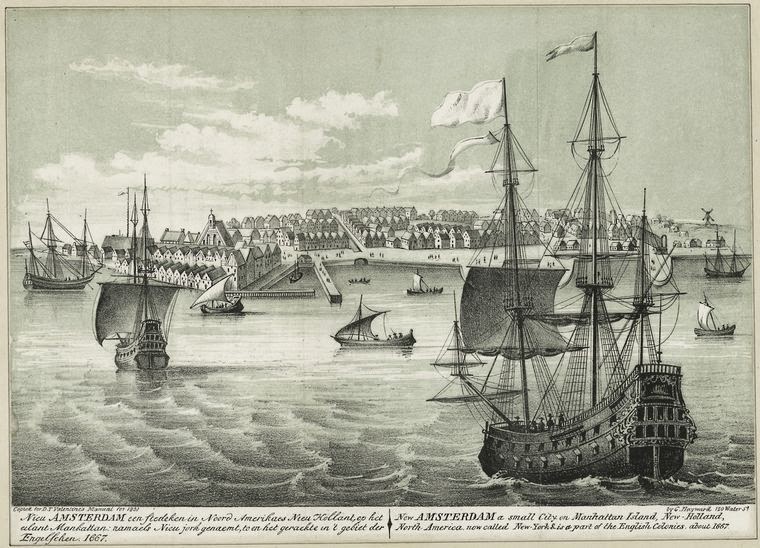
New Amsterdam, the home of Claes Maartenszen van Rosenvelt (by Thomas Addis Emmet, courtesy NYPL)

The new Ken Burns seven-part documentary The Roosevelts: An Intimate History is underway on PBS, a sprawling look at one of New York’s most prominent families.  It began last night with the introduction of young Theodore Roosevelt, the sickly boy turned New York police commissioner. Tonight, in part two, he becomes the President of the United States.

With so many Roosevelts to speak about — and two clans of Roosevelts, named for their summer haunts Hyde Park and Oyster Bay — there wasn’t much time to mention the very first Roosevelt.  That is, the first ancestor to arrive in future North America — Claes Maartenszen van Rosenvelt.

Claes arrived to New Amsterdam sometime around 1649 or 1650, although possibly much earlier (some records say 1638), one of a number of Dutch settlers arriving at this outpost of the Dutch West India Company.  If the earlier dates are true, this puts Rosenvelt in the outpost during the years of William Keift, when New Amsterdam was a ragged company town, with a rudimentary civic structure and in constant fear of attack by the Lenape.

His wife is referred to in records as both Jannetje Samuels and Jannetie Thomas.  Keep in mind that with the paucity of extant records, a company-town’s inefficiencies, basic human error and the “peculiar method of naming people during Dutch times,” it’s incredible that we even have these names at all!

Many histories make note of Claes unusual nickname — Klein Klassje or Cleyn Claesjen (“Little Claes”) — perhaps meaning he was a short man or that there was a much larger Claes in town. It’s not inconceivable to think he was also “short” in social stature, not physical.

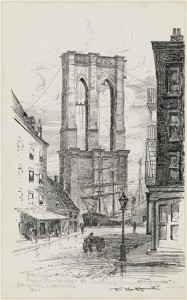
Brooklyn Bridge PierThe colony was whipped into a relatively more livable condition with the arrival of Peter Stuyvesant in 1647, and records list Claes as having a farm “situated back of Stuyvesant’s Bouwery, at present somewhere between Broadway and the East River, in the neighborhood of Tenth Street.” [source]

The couple had four children of which only one (Nicolas) took and kept the name Rosenvelt, which of course was modified over time into Roosevelt.

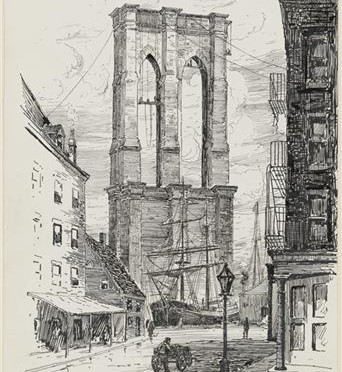
For decades, Manhattan once had a Roosevelt Street, named not for any of the later great leaders who would make the family famous, but (it’s believed) for either Nicolas or his son Jacobus. The family owned a profitable mill on a small stream which ran between the East River and the banks of Collect Pond. [source]

At right: the construction of the Brooklyn Bridge as seen from Roosevelt Street, 1876 (courtesy MCNY)

In the 19th century, Roosevelt Street was a dour place, rife with poverty and the downtrodden culture of South Street piers.  It was entirely erased in the 1950s with the creation of the Alfred E. Smith Houses.

Categories
Museums

Art Insanity: The elegant audacity of the Armory Show of 1913, the daring exhibit that awed and outraged America


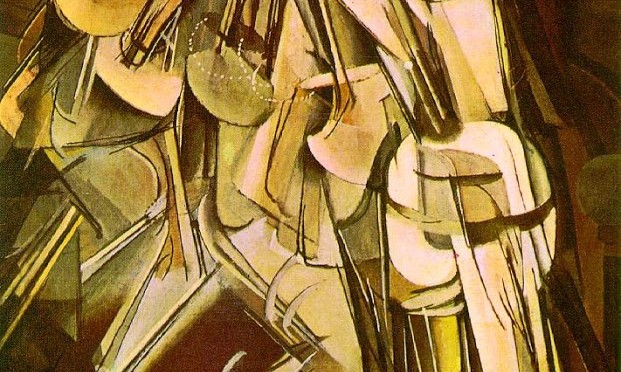
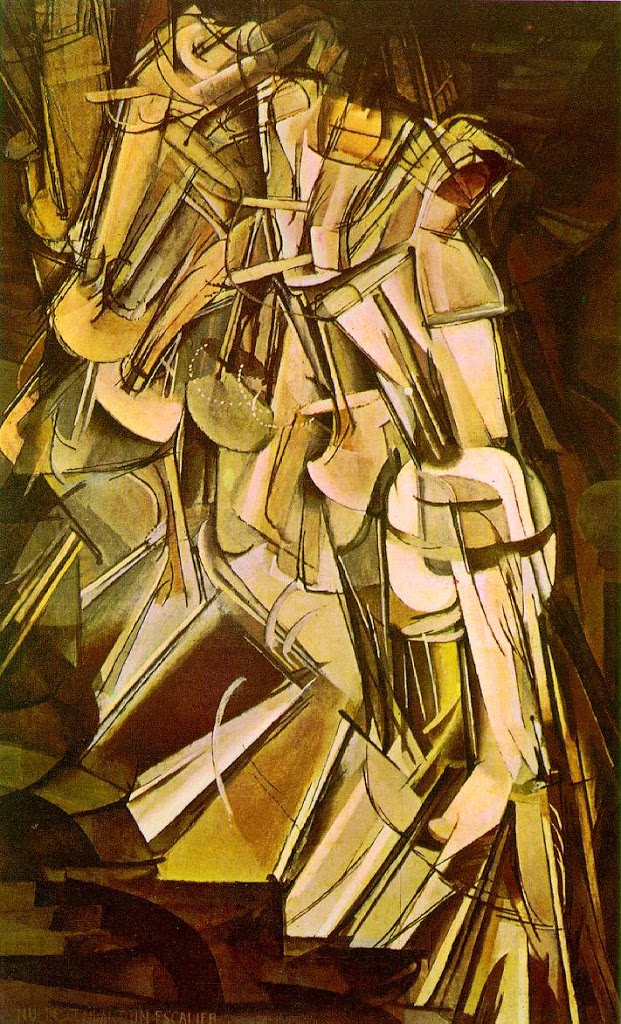
The monster within the Armory’s ‘Chamber of Horrors’: Marcel Duchamp’s ‘Nude Descending A Staircase No. 2


PODCAST The Armory Show of 1913 was the mainstream debut of modernist art — both European and American — to New York City audiences. Galleries had previously devoted themselves to the great European masters, antiquity and American landscapes as a way to influence the taste of a growing city. But even though vanguards like Alfred Stieglitz debuted artists like Pablo Picasso and Paul Cezanne into his Fifth Avenue gallery, those names were still barely known to the average New Yorker.

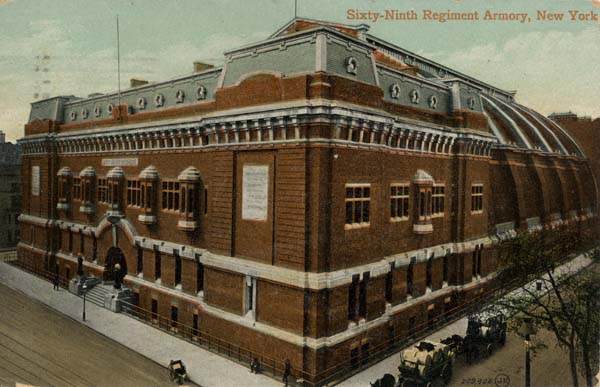
 The Armory Show, located at the 69th Regiment Armory on Lexington Avenue, changed all that, but not without controversy. When the exhibition debuted on February 17, 1913, writers and art critics exploded in shock and outrage. Even a few of the artists were incensed, as people raced by some important American works to get to the scandalous European works in the back.

This is the story of an important moment in American art history, but also a moment in New York City pop culture, an event that shook society and challenged its beliefs about taste and beauty — not a small thing in the waning years of the Gilded Age.

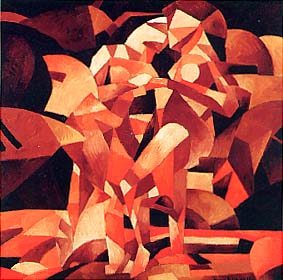
At right: Francis Picabia’s Dances at the Spring

But you don’t need to be fluent in art history to enjoy the wackiness of the Armory Show! This is a tale of one of the biggest and most written-about exhibitions in New York history, a story P.T. Barnum would have found satisfaction in.

STARRING: Pretty much a who’s who of your local modern art gallery, with special focus on Marcel Duchamp, Edward Hopper, Robert Henri and Henri Matisse.

To get this week’s episode, simply download it for FREE from iTunes or other podcasting services, subscribe to our RSS feed or get it straight from our satellite site.

You can also listen to the show on Stitcher streaming radio and Player FM from your mobile devices.

Or listen to straight from here:
The Bowery Boys: The Armory Show of 1913

NOTE: I manage to get all the difficult pronunciations as close to correct as my voice is going to get, but then keep saying HENRY Matisse. (It’s really pronounced EN-RI.) You’d think with all those Starry Night posters in my youth, I would have caught this….
______________________________________________________


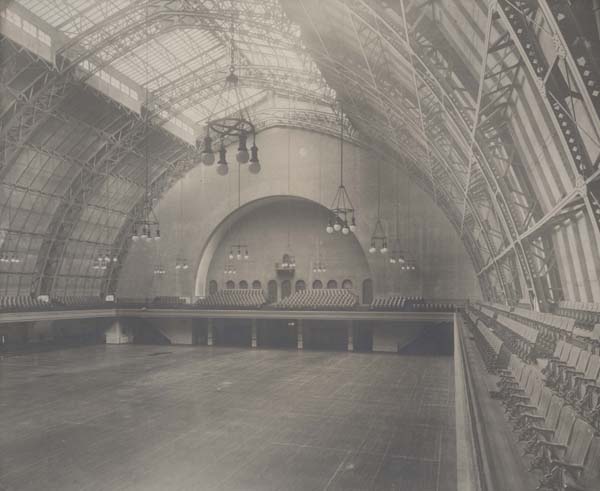
The interior of the 69th Regiment Armory, showing the vastness of its drill hall. The room would play host to marathons, basketball games, concerts and fashion shows, but none were as famous as perhaps the event that makes the strangest fit into a military building — a modern art show. (Courtesy NY State Military Museum)


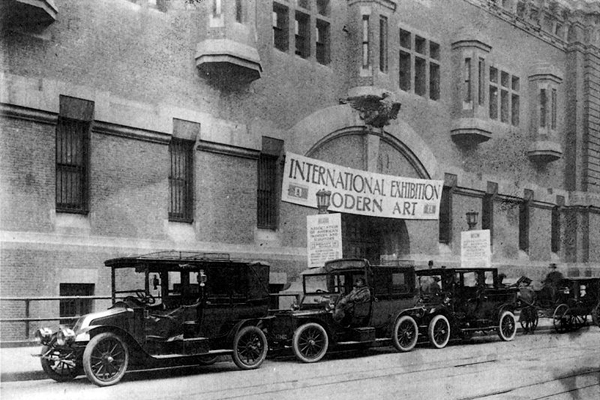
The limousines lined up in front of the Armory Show, certainly carrying away more than a few bewildered (and bemused) visitors. (Pic courtesy Museyon Guides)


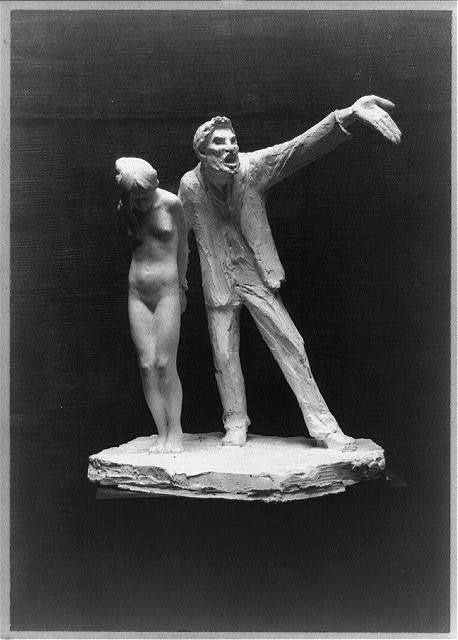
The White Slave, by Abastenia St. Leger Eberle, flummoxing crowds in the very first room. (LOC, from photos taken at the show)

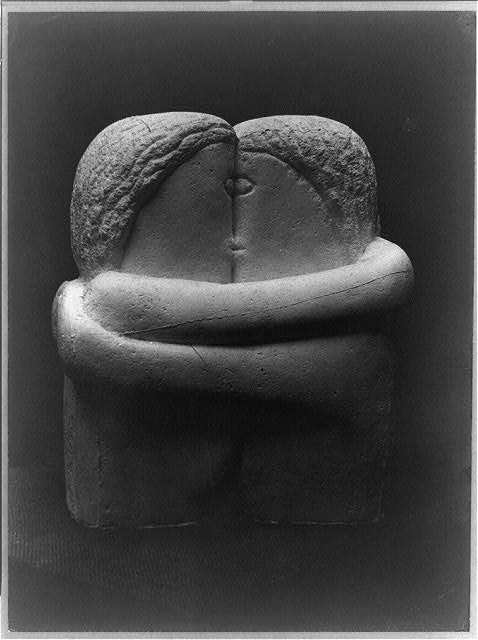
The Kiss by Constantin Brancusi, a primitive insult to many. (LOC, from photos taken at the show)

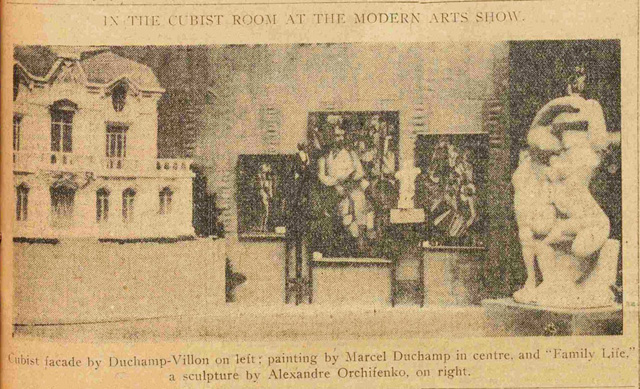
Inside the glorious ‘Gallery I’ with its collection of Cubist works. Duchamp’s eyeopener can be seen in this image. (Courtesy Smithsonian Archive of American Art blog)

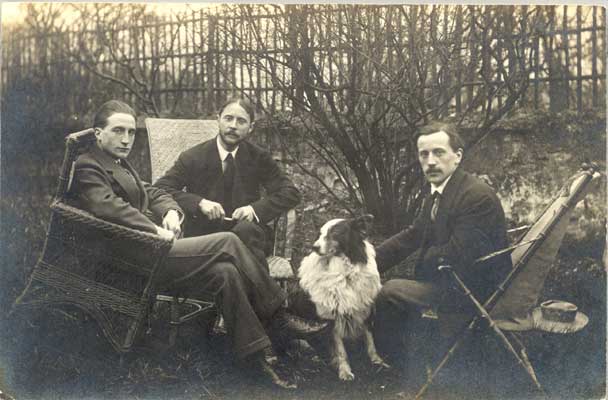
This photo of the Duchamp Brothers was run alongside their works in the so-called ‘chamber of horrors’ Gallery I.  For whatever reason — intrigue, outrage, attraction — people became fascinated by the siblings.   From left to right: Marcel Duchamp, Jacque Villon and Raymond Duchamp-Villon.


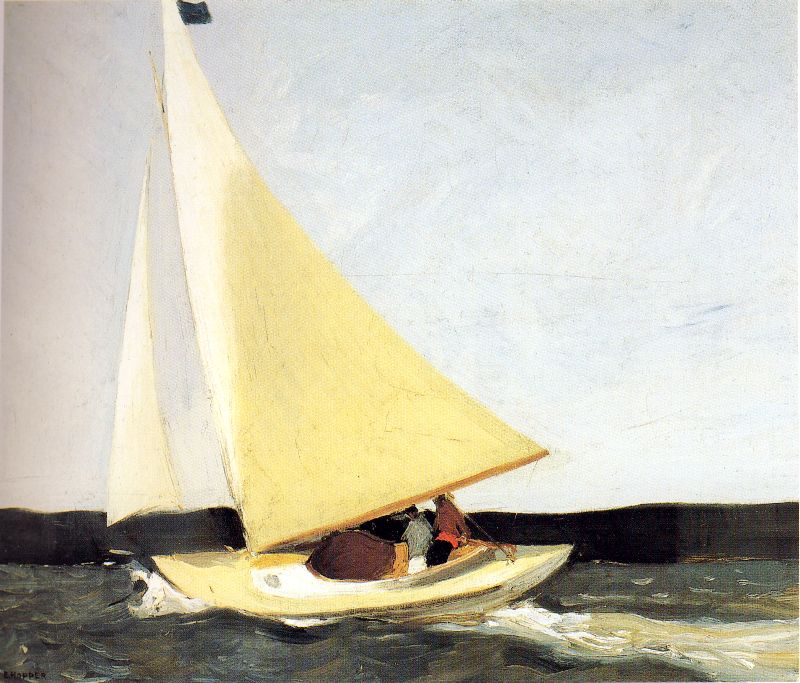
Edward Hopper’s painting of a sailboat was one of a few American paintings sold during the exhibit. It was mostly the European entries that got the attention of art collectors.

MORE INFORMATION
For more in-depth information on the Armory Show, your first stop must be the University of Virginia’s invaluable website on the event, featuring a walkthrough of ever gallery, and some exhaustive but interesting analysis.

There will be a great many shows in museums and gallery throughout the United States and internationally this year, being the 100th anniversary. I will list a few here as I find them. However if you know of any that I haven’t listed, please put them in the notes below:

— The New York Historical Society will host an exhibit on the Armory Show starting in October.
“The 2013 exhibition revisits the Armory Show from an art-historical point of view, shedding new light on the artists represented and how New Yorkers responded. It will also place this now-legendary event within the context of its historical moment in the United States and the milieu of New York City in ca. 1911–1913. To that end, music, literature and early film will be considered, as well as the political and economic climate.”

The Abrons Art Center, part of the Henry Street Settlement, in Manhattan’s Lower East Side, has an intriguing take on the Armory Show debuting on February 17, 2013, the exact anniversary of the original show. Called ‘DECENTER: An Exhibit on the Centenary of the 1913 Armory Show‘, the show will explore the question: “What is the legacy of Cubism in the hundred years since the Armory Show’s radical display of modern European and American art, and especially, how has this become relevant again in our digital age? The show will exhibit a core group of artworks in the gallery, and also feature a corresponding internet component of digital works in an online gallery. ”

The Montclair Art Museum in Montclair, NJ, is also opening its exhibit “The New Spirit: American Art in the Armory Show, 1913” on the exact date of the original — February 17. “The Montclair Art Museum collaborated with the Smithsonian’s Archives of American Art on a gallery that will be devoted to rare and unique primary documents pertaining to the Armory Show. These include personal letters, floor plans, sales records, admission tickets, catalogues, buttons, and invitations, as well as reproductions of the original installation.”

The Art Institute in Chicago will be celebrating the show in March with a lecture focusing on some of Chicago’s private collectors and will undoubted have more information on Chicago’s reception of the exhibition. More information here.

— And of course there’s an annual exhibition called The Armory Show which traces its roots back to the original show. Naturally they’ll be having a centennial celebration as well, from March 7-10, 2013, located at Piers 92 & 94 in Manhattan. More info here.

Theodore Roosevelt and the Case of the Master Mind! Is it the Black Hand or something even stranger?

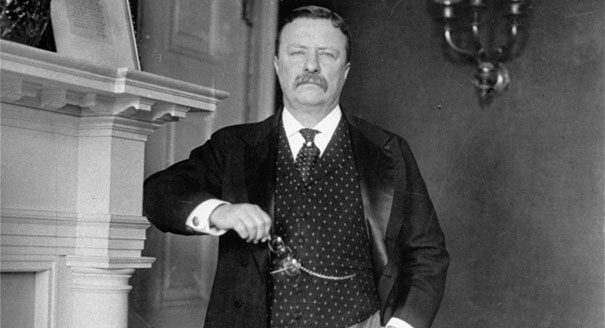
Theodore Roosevelt in 1908, in a rare shot with his pince-nez lowered.

Checking the mailbox was a frightening experience for some New Yorkers almost a century ago.

Some found extortion notes — threatening letters, demanding large sums of money or else — courtesy Italian gangsters collectively referred to in the press as The Black Hand.  Most of the targeted addresses belonged to newly arrived wealthy Italian immigrants, often celebrities or successful business owners.  Famed tenor Enrico Caruso was even a victim of the Black Hand’s extortion in 1920.  “I laugh, ho ho, to show me myself that I fear not,” the singer claimed, although he ended up paying one extortion threat before calling the police after he received a follow-up.

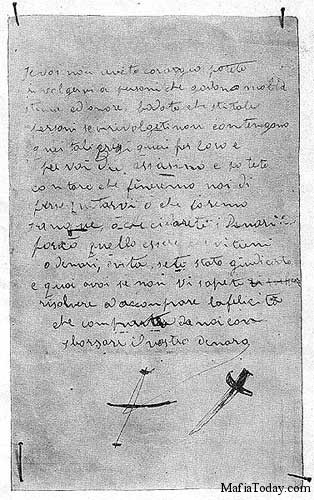
At right: A typical extortion letter attributed to the Black Hand (Courtesy Mafia Today)

The Black Hand was already a frightening and well-publicized threat by 1913, although the number of incidents were probably less than the press would have its readers believe.

It was under this apprehension, on Valentine’s Day 1913, that a Mrs. Douglas Robinson arrived at her husband’s real estate office on the Upper East Side to open his mail.

Inside one envelope was a single ‘blood-red’ card, which very simply stated:

“This is the red card to remind you that I have not forgotten. When you receive a black card, you will know that the end is at hand. The Master Mind”

What Mrs. Robinson did not know is that this threatening note had been sent to thousands of New Yorkers that very day. And that it had been preceded just a few days before with another ominous card:

“This is to remind you of an incident in your past, and of my enmity. When you receive a red card it will mean I am drawing near. The Master Mind.”

According to the New York Tribune, 40,000 New Yorkers had received such cards in the mail that month. Had Mrs. Robinson known this fact, she might have found safety in numbers and cautiously went about her day.  Instead, in a panic, she reached for the telephone and called New York’s police commissioner.

Except not the current commissioner, the ineffectual reformist Rhinelander Waldo.  Instead, she called up New York’s most famous police commissioner (from 1895-97), a man who still lived in New York and, oh yes, had been the President of the United States for a few years — Theodore Roosevelt.

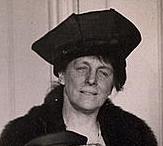
The Colonel was still licking his wounds from an unsuccessful bid the previous year at reacquiring the presidency, as the head of the newly formed Bull Moose Party.  You may wonder how the wife of a real estate broker would have the ready ear of an ex-President, but it is here that I reveal that Mrs. Douglas Robinson (which is how she’s presented in press accounts of this incident) is in fact Corinne Roosevelt Robinson, Theodore’s younger sister. (Pictured at left in 1920, picture courtesy LOC)

“Leave it to me,” he assured his sister and promptly called up detectives Hyams and Hughes to investigate the matter.

Going only upon Roosevelt’s description, the two detectives began scouring the streets for clues.  They were certainly quite proud to be working on a case personally passed to them by Roosevelt — probably the most famous New Yorker in America.  Their only liability was that they were working only off of Roosevelt’s information — and his sister had overlooked one rather big piece of information.

While wandering through midtown Manhattan, the detectives struck up a conversation with Edward Gireaux, a booking agent of John Cort, one of America’s leading theatrical impresarios.  A Seattle entrepreneur enriched by the Klondike gold rich, Cort, unlike his competitors Klaw & Erlanger and the Shuberts, specialized in promoting a national circuit of legitimate theater.  No musicals for the Cort Circuit! (The Cort Theatre, on West 48th Street, is still hammering out dramas to this day.)

The detectives were only too eager to tell Mr. Gireaux of their mysterious case, delivered to them by Roosevelt directly.  It was only when they informed the agent of the details of the crime that Gireaux must have smiled to himself.

He produced a stack of the very same ‘blood-red’ cards from his pocket. Perhaps he was passing them out to passers-by. The detectives now saw the entire printed content of the card:

“This is the red card to remind you that I have not forgotten. When you receive a black card, you will know that the end is at hand. 

I will see you at the Harris Theatre.  — The Master Mind”

‘The Master Mind’, starring Edmund Breese, was a ragged melodrama about “a dominant personality in a band of criminals,” premiering that week at the Harris Theatre at 254 W. 42nd Street.  The cards had been nothing more than a slightly inappropriate bit of viral marketing.

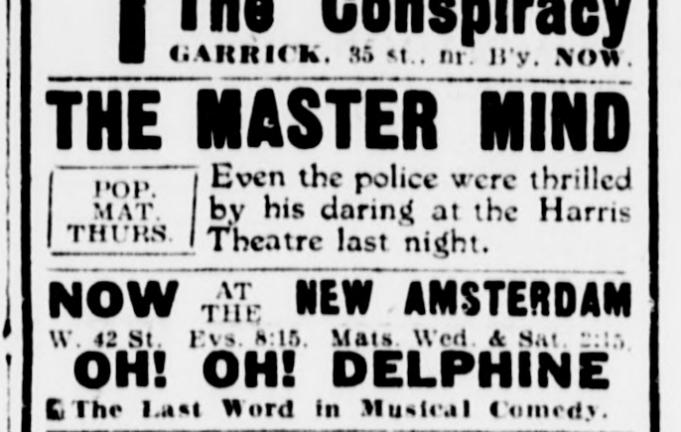
Below: Newspaper advertisement for the Master Mind. ‘Even the police were thrilled!’ 

And it worked!  The Master Mind played for several months despite some tepid reviews (“headachy to follow“) and was later turned into a film starring Lionel Barrymore.  You can read a contemporary novelization of the play here, featuring such delectable bon mots as “You have made your own beds! Now you shall lie in them. Understand that, please! I have said it — I, the Master Mind!”
The star of the play Breese would himself go on to the silent pictures and co-starred in the Oscar-winning All Quiet On The Western Front in 1930.

As for Theodore Roosevelt, he would publish his autobiography in 1913 and by year’s end would embark on a lengthy journey to South America.  Corinne Roosevelt Robinson would later dabble in politics herself, backing Warren G. Harding in 1920 and even recording this radio message in support.

Categories
Mad Men

‘Mad Men’ notes: The 1960s enlightenment of New York’s natural history museum leaves taxidermy in the past


WARNING The article contains a couple spoilers about last night’s ‘Mad Men’ on AMC. If you’re a fan of the show, come back once you’re watched the episode. But these posts are about a specific element of New York history from the 1960s and can be read even by those who don’t watch the show at all. You can find other articles in this series here. 

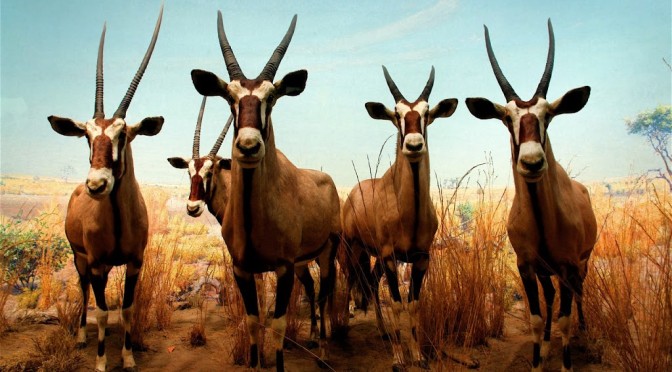
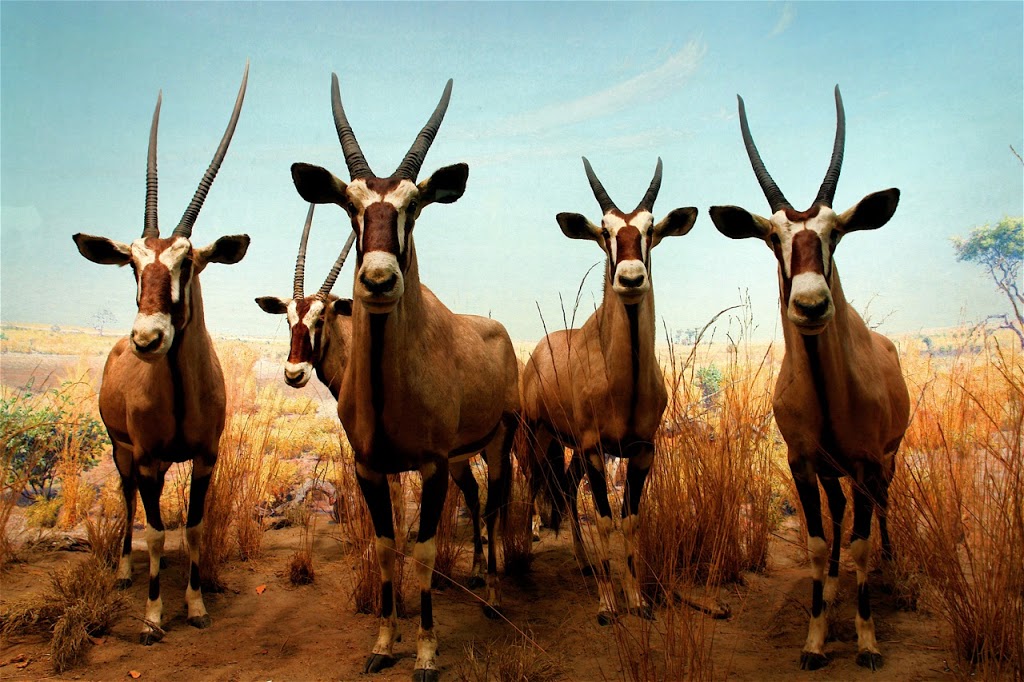
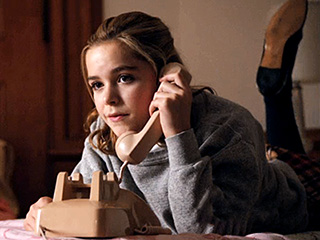
Theodore Roosevelt did not donate all the mounted animals at the American Museum of Natural History, as Glen casually suggested to Sally Draper (below) in last night’s episode. Just a great, great many of them, not least of those prizes from his 1909 post-presidential safari, literally thousands of African specimens captured, killed and presented for display here, at the Smithsonian, and other American museums. New York’s museum even holds the contents of Roosevelt’s ‘natural history cabinet’, his collection of taxonomy which he started at age nine from his home on East 20th Street.

With Roosevelt’s African collection also came expert taxidermist Carl Akeley, who had gone on safari with the former president in 1909 and remained at the Natural History museum to mount and curate its African exhibit. The hall of African mammals is named in his honor and continued to define the museum in the popular imagination.

The early 20th century was a golden era for taxidermy, as greater understanding of natural habitats allowed curators to present their specimens in ‘realistic’ settings and lifelike poses. But such understanding placed a deadline upon classical museum taxidermy; the more one understood the underpinnings of the natural world, the more absurd such displays seemed.

With the 1960s came a greater awareness of the plight of rare animals and their disappearing habitats that rendered the presentation of mounted taxidermic displays into antiquated, often vulgar set pieces. The first federal endangered species act was passed in 1966 and greatly expanded upon with the Endangered Species Act of 1973, ‘the Magna Carta of the environmental movement‘.

The staid animal galleries at the American Museum of Natural History faced other surprising challenges. The museum reached record attendance in 1967, but people weren’t necessarily there for the mounted elephants. The American Apollo missions ignited a public passion for space science, and with the installation of the awe inducing Zeiss projector in 1960, the museum’s Hayden Planetarium easily became its hottest attraction.

Leading up to its centennial in 1969, the museum prepared several new halls (including several of the current anthropology exhibits) and renovated many others; thus Glen and Sally most likely would have seen many ‘Closed for Renovation’ signs during their trip here.  Had Sally not had a certain emergency which sent her from Glen’s side, the pair might have wandered over to the bright, new exhibits in the Hall of the Indians of the Plains, which opened in February 1967.

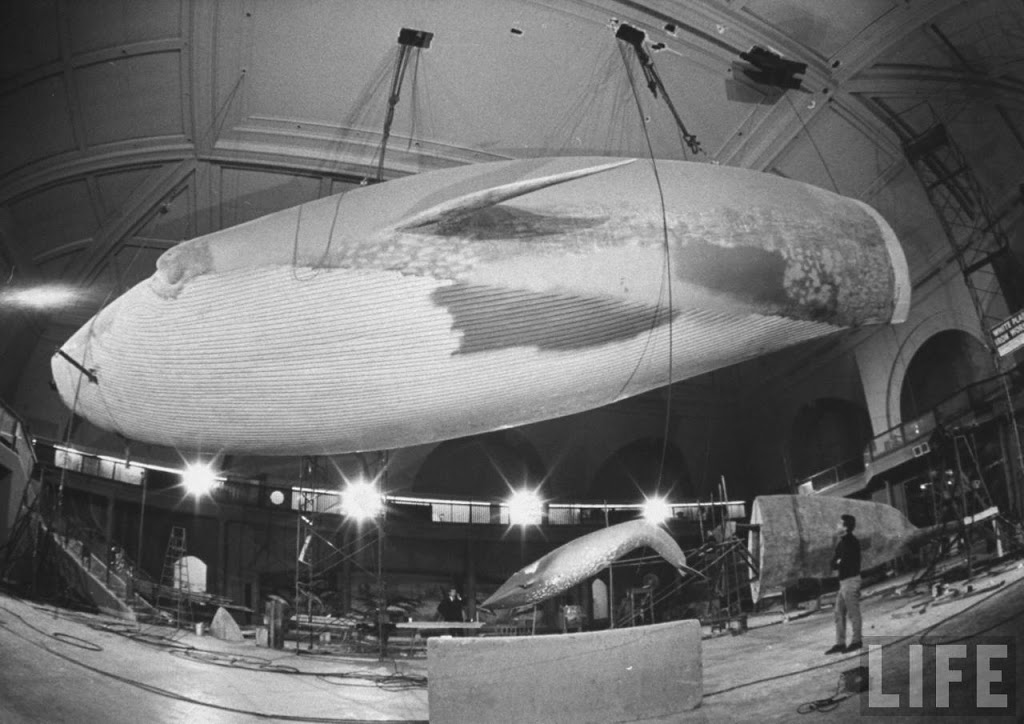
A refreshed Milstein Hall of Ocean Life would dazzle audiences upon its reopening in 1969, and the museum’s trademark blue whale was presented in a new context — the 1966 worldwide ban on hunting the endangered ocean mammal. The extensively revitalized exhibition also presented a new 1960s museum trend — the use of artificial, plastic models over actual animal carcasses.

By 1967, New York’s natural history museum — which once touted a staff of 20 full-time taxidermists — employed only two. “There’s not much left to collect and mount (we don’t say stuff),” lamented staff taxidermist David Schwendeman.

Taxidermy would live on in the worlds of hunting and fishing. One need only take a trip today to the Bass Pro Shops World Headquarters in Springfield, Missouri, to witness a world where the art of taxidermy continues to thrive, as though there was nothing creepy at all about it.

But in the vaunted hallways of the American Museum of Natural History, the elder animal displays serve a new educational purpose — a preservation of science’s evolving views on the natural world.

NOTE: Since ‘Mad Men’ doesn’t film in New York,  Jen Carlson at Gothamist deftly notes that the exhibit displayed in the episode is from Los Angeles’s natural history museum.

Top picture courtesy flickr/Getty Images
Lower picture: Prepping the blue whale in 1968, photo by Yale Joel, Life/Google images

Categories
American History

Fiasco! New York’s first Republican presidential primary

One hundred years ago yesterday, New York hosted its first-ever Republican presidential primary. Not only was it an organizational failure of epic proportions, but the results handed a stunning and rare defeat to one of New York’s most iconic politicians.

Making the 1912 primary a unique contest was that it was between two presidents — the current one, William Howard Taft, and the prior one, Theodore Roosevelt. (Robert La Follette was also on the ticket, serving as a bit of a Ralph Nader-esque outsider.) Dissatisfaction with Taft’s administration had convinced Roosevelt to obtain his party’s nomination once again, having served in the White House for almost eight years already.

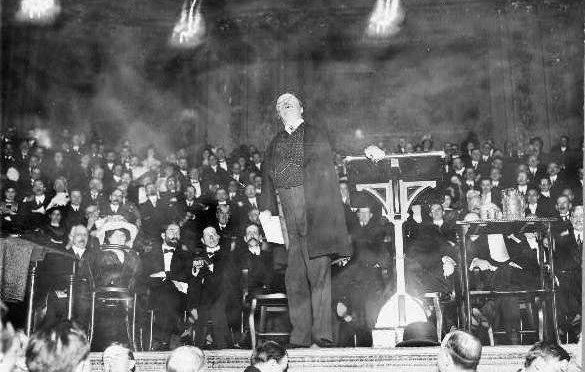
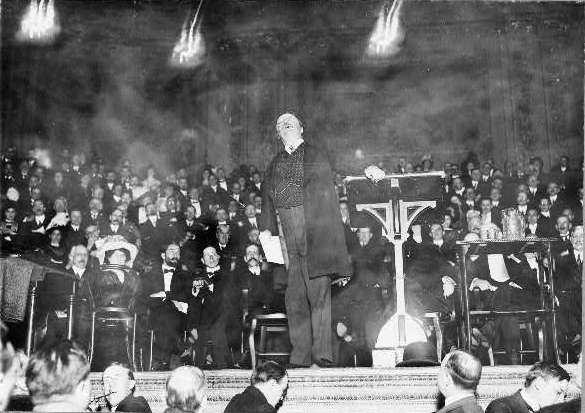
Roosevelt laid out his plank during a memorable speech at Carnegie Hall (pictured above) on March 20, 1912: “THE great fundamental issue now before the Republican party and before our people can be stated briefly. It is: Are the American people fit to govern themselves, to rule themselves, to control themselves? I believe they are. My opponents do not.”

Getting out a powerful incumbent was a difficult task, one that Roosevelt supporters thought could be overcome with the debut of the Republican primary process to the political system. The primary system was considered progressive for its day, putting the delegate process to a popular vote. But New York’s first Republican primary, held on March 26, 1912, quickly dissolved into chaos.

Poll workers were ready to make history that morning, only to arrive at polling stations bereft of ballots. Voting locations throughout the city opened that day with nary a ballot in sight. The outer boroughs suffered greatly, and in over a hundred locations, ballots never arrived. Voters waited in line for hours, only to be told that would not get an opportunity to select a candidate. At some voting locations, ballots arrived a few minutes before the polls closed at 9 p.m.

Kings, Queens and Richmond Largely Disenfranchised,’ proclaimed the New York Sun, while the Tribune found ‘Big Confusion Throughout the City‘. Some clever operators quickly hammered out unofficial ballots on typewriters for anxious voters, hoping they would be accepted.

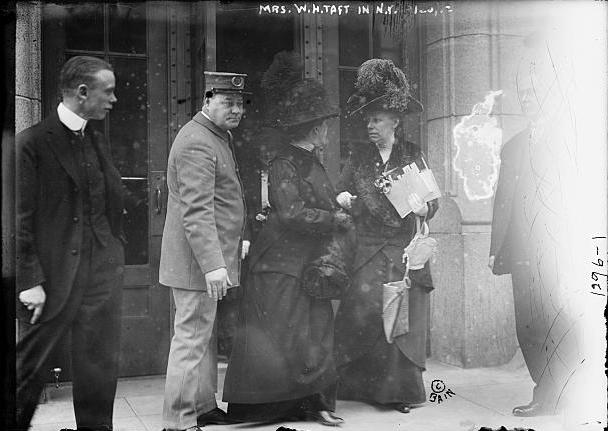
Below: First lady Helen Herron Taft makes greets supporters in New York

Manhattan voters had fewer problems at their polling stations, as moving vans rushed ballots to locations throughout the city. But the result did not help out the former president.

Political machines still held sway in local politics, and New York was now firmly in Taft’s camp. The incumbent easily won the state, although the voting hiccups throughout the other counties allowed Roosevelt supporters to cry foul. A representative of Roosevelt’s election committee wailed to the New York Times that “the primary election here today was not only a farce, but goes beyond that and is an insult to the city.”

Roosevelt came back from this messy defeat to win nine primaries in other states. Unfortunately, most states still chose delegates at state conventions, a system that favored Taft. At the national convention, Taft was chosen again as the Republican candidate. Roosevelt bolted and ran as a progressive third party candidate (the so-called ‘Bull Moose’ party).

While campaigning in Milwaukee, Roosevelt was shot in the chest by an insane saloon keeper, surviving the impact due to his eyeglass case and a voluminous speech absorbing most of the blow.

Both Taft and Roosevelt lost that November to the Democrat Woodrow Wilson.

Pictures courtesy the Library of Congress

Categories
Holidays

Jacob Riis’ Not-so-Rockin’ ‘Sane’ New Years Celebration

Social reformer Jacob Riis is one of the most important men to New York City history, exposing the ghastly living conditions of city tenements and using his connections to enact change that affected thousands of New York’s poorest residents. In spreading the word, he wrote a social history masterpiece ‘How The Other Half Lives’ and innovated multi-media techniques to inform and titillate crowds. But not all of his ideas were inspired.

At the end of his life, Riis railed against corrupting influences like alcohol and their effects on poor communities. So imagine his disgust when the New York Times began sponsoring wild New Years Eve parties outside its new headquarters on 42nd Street. Inaugurated by a lavish firework display during the first seconds of 1905, the Times Square celebration eventually incorporated its famous balldrop in 1907. (Hear all about it in our Midnight In Times Square episode.)


As today, the outdoor celebration encourages revelry, drunkenness and chaos, things Riis did not believe benefited the city. To this extent, and with the help of former president (and good friend) Theodore Roosevelt, Riis proposed a ‘safe and sane New Years Eve’.


According to Riis, the good men of the city “have observed the licentious and riotous conduct of New Years crowds, with their tin horns, ticklers and bags of confetti. Anyone who has seen the crowds of rowdies on Broadway breaking hats and insulting women knows that a saner manner of celebration is desirable.”


The new celebration will feature organized singing at various city plazas throughout the city, including City Hall, Union and Madison squares, with Salvation Army singers, organized bands and bandstands, leading ‘civilized’ public outcries of celebration via “the singing of patriotic songs and New Years ballads,” per Riis.


It would be an uphill battle that evening of December 31, as the somber chorale of hymns and polite exaltation of the downtown rallies would be entirely drowned out by the throngs of cheers and music drifting from downtown. “SANE FESTIVAL SUBMERGED,” shouts a New York Times headline from the next day. “The choral hosts greeted the new year with song last night, but the songs were not heard for the very good reason that in each instance there were just enough horns, rattles and other noise-making apparatuses in the hands of the din-making contingent to render even the ‘Star Spangled Banner’ and ‘America’ unrecognizable.”


Such mass city-organized, end-of-year civility would never seriously be attempted again. And Riis would only live to see one more New Years Eve, dying on May 26, 1914.


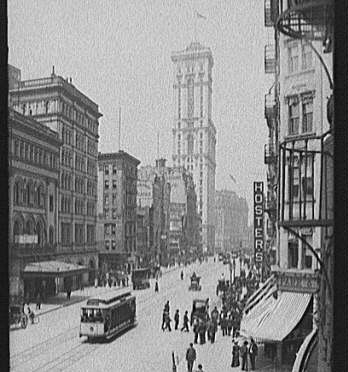
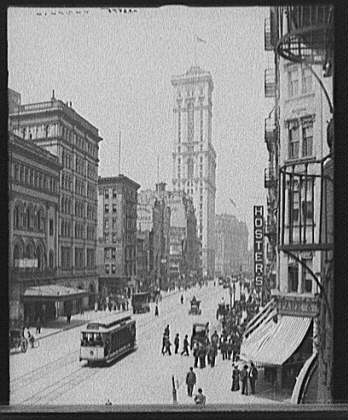
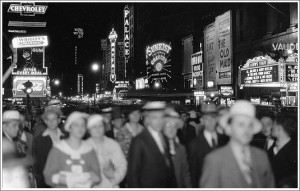
Top picture above: Time Square during the day, taken between 1903 and 1910. Courtesy LOC. Second picture, from the 1930s, courtesy Times Square NYC

Know Your Mayors: William Lafayette Strong

Our modest little series about some of the greatest, notorious, most important, even most useless, mayors of New York City. Other entrants in our mayoral survey can be found here.

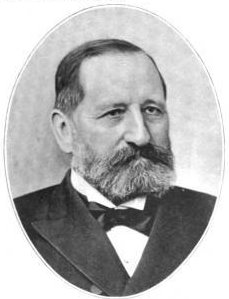
Democrats and Republicans in this year’s election who think they can roll into office on the mantel of “change” may want to look at the example of William Lafayette Strong (mayor 1895-97), a reformer who swept in, cleaned up the city … then watched it all fall apart again.

One of the great narratives of New York City in the late 19th century is the dominance of the Democratic Tammany Hall machine in controlling city politics, often seeped in deep corruption.

At key periods, however, Tammany Hall would be usurped from its perch. In the 1870s came the great reckoning to Boss Tweed and mayor A. Oakley Hall. However by the early 1890s, Tammany had regained control of local government and had installed mayors who exhibited various degrees of independence. (For instance, the topic of our last Know Your Mayors column, Hugh J. Grant, mayor from 1889–1892, was firmly in their pocket.)

By 1894, in the throes of a nationwide fiscal depression, outrage at open corruption in the police department prompted the New York State Senate, Republican-led and frequently at odds with city management, to clamp down. The Lexow Commission, named for its chairman Senator Charles Lexow, exposed deep veins of criminal negligence within the New York police department and issued a now-legendary 10,000 page report outlining the most grievous charges.

Republicans and reform-minded Democrats saw their chance to effectively wipe Tammany from the map. Forming a Committee of Seventy (a Biblical reference, as well as one to the group that helped expose Tweed’s malfeasance), they rallied their support in late 1894 with a fusion ticket backing a political novice, one William Lafayette Strong.

Like another reformer mayor before him (William Russell Grace), Strong was a businessman made good, an Ohio-born dry goods merchant turned banker whose efficiency and clean record (not to mention prominent position on the influential Union League Club) endeared him to those looking for a clean break from Tammany.

Still reeling the Lexow smackdown, Tammany Hall could only watch their ambitions fold. Against Strong they put up Nathan Straus of Macy’s Department Store as their candidate; within two weeks, he resigned, fearing business reprisals. They replaced him with former mayor Grant, but he was no match against the fusion ticket and alliance of German and Jewish voters, which easily swept Strong into office.

Strong went immediately to work, scouring City Hall of bureaucratic buildup and rebooting municipal agencies mired in Tammany cronyism. First on the agenda was a literal cleanup, hiring Civil War vet George Edwin Waring Jr. as the head of street cleaning, an absolutely key element to restoring the city’s psychological health. Within a few months, New York’s streets — clogged with garbage, manure and other detritus — were as clean as they had ever been.

Strong’s most electrifying appointment, however, would put a future president on the road to the Oval Office.

Lexow had exposed the police department’s weaknesses, and Strong sprung on this moment for a radical shakedown, hiring a new police commissioner known for his tenaciousness, an also-ran for mayor with roots in New York City — Theodore Roosevelt.

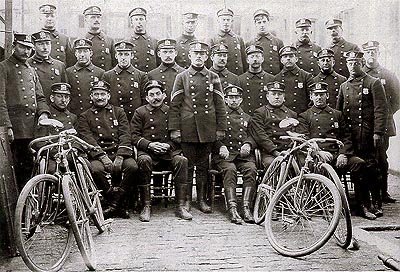
The new commissioner was a dominant force in transforming the city at this time, easily outshining Strong. Roosevelt eliminated anyone associated with prior corruption and installed new programs that would improve efficiency but also confidence among the ranks. Notably he mounted cops on bikes (see below), a quaint notion today, but one that at the time allowed a pervasive presence throughout the city.

Roosevelt’s key ally was not Strong but our old friend Jacob Riis. With Riis’ guidance, loathsome and unsafe police homeless shelters were shut down. It was the influence of Riis, through his close associate Roosevelt, that enabled Strong through recently passed state laws to finally tear down the tenements of Five Points.

The New York school system was also getting a thorough shake. In July 1896, Strong and an emboldened state legislature passed the School Reform Law, which for the first time created a centralized education system in the city. Previously, schools were governed by city wards, a practice allowing for uneven educational opportunities and fertile ground for all manner of dishonesty.

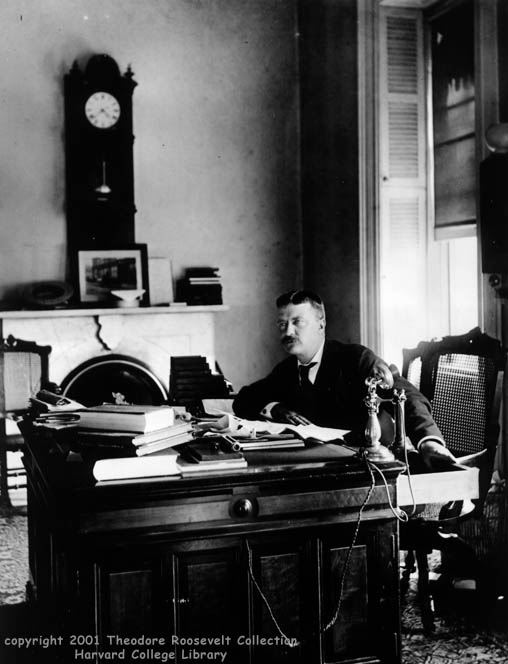
We benefit today from many of the vast reforms initiated under Strong’s administration. The effects on his own political fortunes, however, were far less beneficial. Roosevelt had become unwieldy, shutting down saloons popular with the German New Yorkers who had helped sweep Strong into office. The closures of these working class drinking holes were evidence that Strong spoke only for the rich, claimed activists, whose rallies and protests were harshly dealt with by Roosevelt’s newly determined police force. Above: Commissioner Roosevelt in his office

By the time the backlash began for Strong and Roosevelt, the commissioner had already resigned, on a naval appointment from William McKinley and a few years away from being president of the United States.

Part of the reason for so many pressing reforms through state government is because of the most important event in New York history — the consolidation of the boroughs, slated to take effect on January 1, 1898. William Strong is the last mayor of the unconsolidated borough of Manhattan, passing over the newly created city to new mayor Robert Van Wyck….handpicked and groomed by Tammany Hall.

Strong was vociferously opposed to the consolidation, thinking it a ridiculous burden to the city coffers, vetoing it even up to the very end. By that time, however, Strong was not seeking re-election, but for decidedly personal reasons. In cleaning up the city — getting it ready for the future — his own business had nearly gone bankrupt. He would die just two years later, in 1900.

Strong left a vastly changed city, newly expanded, and now in the hands of the very group whose prior machinations he had tried so very hard to reverse.

That’s politics for you.

Categories
Know Your Mayors

Hey kids! Wanna be president? Don’t be New York mayor.

(This story was originally published in June 25, 2008)

Yesterday was the opening of Campaigning For President at the Museum of the City of New York, a look at the city’s participation in some of the most famous and contentious presidential elections in history. The exhibit will focus on the city’s role in deciding the outcomes, as well as some of the famous New Yorkers who once coveted the White House.

It got me thinking about the recent phantom campaign of Michael Bloomberg and colossally failed one of former mayor Rudy Giuliani. Is it possible for the leader of the biggest city in America to step up to the role of Commander In Chief?

The answer is a big, fat NO, at least so far. Not one New York mayor who ever actively tried or hinted at being interested in the job ever got it. And the list of also-rans is long indeed:

Michael Bloomberg – Excessive hints to the contrary, Bloomberg never officially threw his hat in the ring.

Rudy Giuliani — He did run for President in 2008 but stumbled almost immediately after a major Florida miscalculation and never recovered, withdrawing on January 30, 2008.

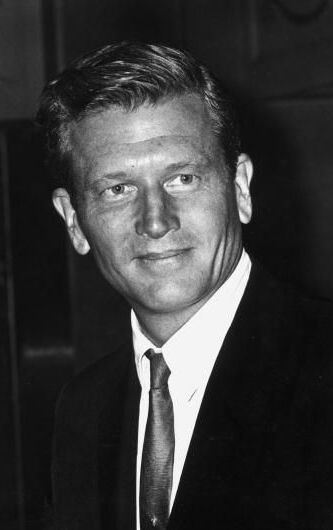
John Lindsay (mayor from 1966 to 1973, pictured at right) didn’t fare much better than Rudy in the quest for the 1972 Democratic nomination. Starting out of the gate strong, like Rudy he stalled in Florida and eventually dropped out. Given the catastrophic changes to the city in the 1970s, I’m surprised anybody thought having ‘mayor of New York’ on their political resume would have garnered national favor.

Robert F. Wagner (1954 to 1965) never ran for president but was short-listed to be Adlai Stevenson’s vice president in 1956. Wagner was eventually beaten in balloting by Al Gore Sr. and John F Kennedy Jr. But, in the end, they were ALL beat for the spot by the clearly more popular, always reliable Estes Kefauver.)

Below: Robert Wagner meets Fidel Castro during his visit to New York in 1959.

Courtesy La Guardia and Wagner Archives

William Jay Gaynor (mayor 1910-1913) was widely considered a potential presidential hopeful, even with an assassin’s bullet lodged in his neck. Had he actually lived through his term as mayor, who knows?

George Brinton McClellan Jr (mayor 1904-1909) was never a presidential candidate but his father and Civil War icon George B. McClellan Sr certainly was. Dad ran in 1864 against Lincoln in his second term, promising to end the war in the South.

f2012-58-813

A Oakley Hall (mayor 1869 from 1872) (pictured at left) was as closely tied to the Boss Tweed Ring as a politico could be, but even he harbored presidential hopes. Considering he had to temporarily resign from mayor due to the Tweed scandal, I can’t imagine how much luck he would have had.

DeWitt Clinton (mayor for ten non-consecutive annual terms starting in 1803 ending 1815) collected political positions like butterflies, but the one he could never catch was the presidency, defeated by incumbent James Madison in 1812. By June, Madison had declared war on England and later fled the White House when the Brits torched it.

The closest a mayor ever got to the top job was Edward Livingston, who became Secretary of State to Andrew Jackson. Which is interesting, as Livingston was literally ran out of Manhattan after his stint as mayor several years previous due to debts and scandals.

The real road to power is through the office of New York state governor. Four former governors have become president (Martin Van Buren, Grover Cleveland, Theodore and Franklin Delano Roosevelt), four more were vice president (George Clinton, Daniel Tompkins, Levi P. Morton and Nelson Rockefeller) and two have even become chief justice of the Supreme Court (John Jay and Charles Evans Hughes).

Heck, even those governors who failed to become president did so in a dramatic and historic fashion, such as former governors Al Smith, Samuel Tilden and Thomas Dewey (of the particularly famous photo below).

UNUSUAL NYC MUSEUMS #3: Teddy on 20th


Our weekly tribute to a severely off-the-beaten-path museum or landmark that you may not know about. Instead of Moma, why not try out one of these places? Past entries in this series can be found here.

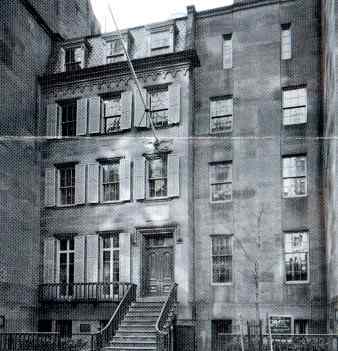
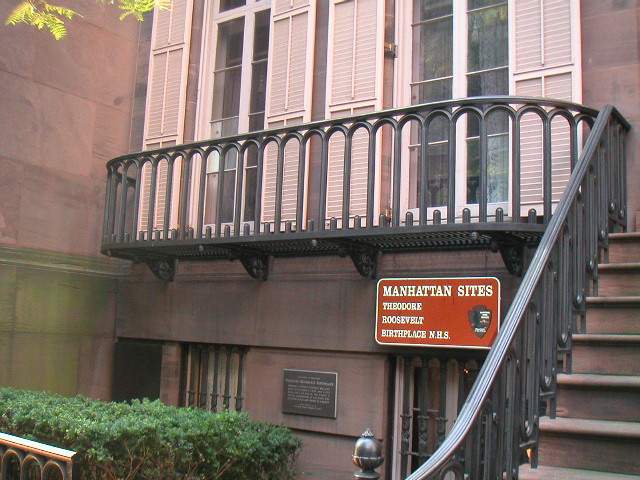
President residences arent what you call ‘unusual’ by any stretch of the imagination. But the Theodore Roosevelt Birthplace Historic Site, on 28 E 20th Street, is unique in that Theodore Roosevelt was never born here — never even lived here — and most of the possessions displayed werent even owned by him.

Once you get by those two teeny little facts, the Site is actually a treat, a wealth of calm and antiquity just steps from busy Broadway and Park Avenue.

The actual brownstone Teddy did live in — being born here in 1858 and residing until 1872 — was in the same location as the present building, but was demolished in 1916 for an office building. However, when he died in 1919, ten years after leaving office, a craze of honorific activities lead to plans to rebuild the original brownstone. It was eventually reconstructed later that year.

And I can see why it was important for not just Roosevelt admirers, but the city of New York. Roosevelt was the only president born in Manhattan, and as a man better known for his adventurous, rugged qualities, its important to remember what an impact the big city had on him as well during his 14 years here.

The lush but suprisingly quiet home features artifacts from Roosevelt’s childhood salvaged by his widow, although most of the furniture is from other family descendents, and the overall effect doesnt speak so much to understanding Roosevelt as it does understanding New York in the mid-1800s.

There are moments where you feel as though youre traipsing through a Henry James novel, imagined ladies sipping tea on those ice blue couches in the parlor. Roosevelt was a rather sickly child, and in the recreation of his room upstairs, you can find a small stairway to the roof — where Teddy’s father set up a gymnasium.

The extra touches continue downstairs to his favorite chair in the library, reupholstered in red fabric to protect Teddy’s knees from scratching. Its quite enlightening actually to see such adoring care for a small child who would later be known as an iconic figure of early 20th Century masculinty and ruggedness.

There’s a pleasant little display on the first floor of mementos and photographs giving a brief portrait into the man’s later career.

As lovely and quaint as the home is, the city’s most dramatic tribute to Teddy Roosevelt is his statue on horseback, outside a building he helped found — the Museum of Natural History.

Details about the Birthplace Historic Site, operated by the National Park Service, can be found here.

By the way, the actual home where he died can also be visited upstate in Sagamore, NY, and as a visitor is a bit ‘sexier’ than the Birthplace, as it was considered the ‘summer White House’ during Teddy’s presidency. Even the site of his inauguration still stands in Buffalo, NY.

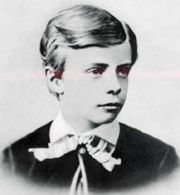
Above is a pic of young Roosevelt, and here’s the current entrance to the museum: