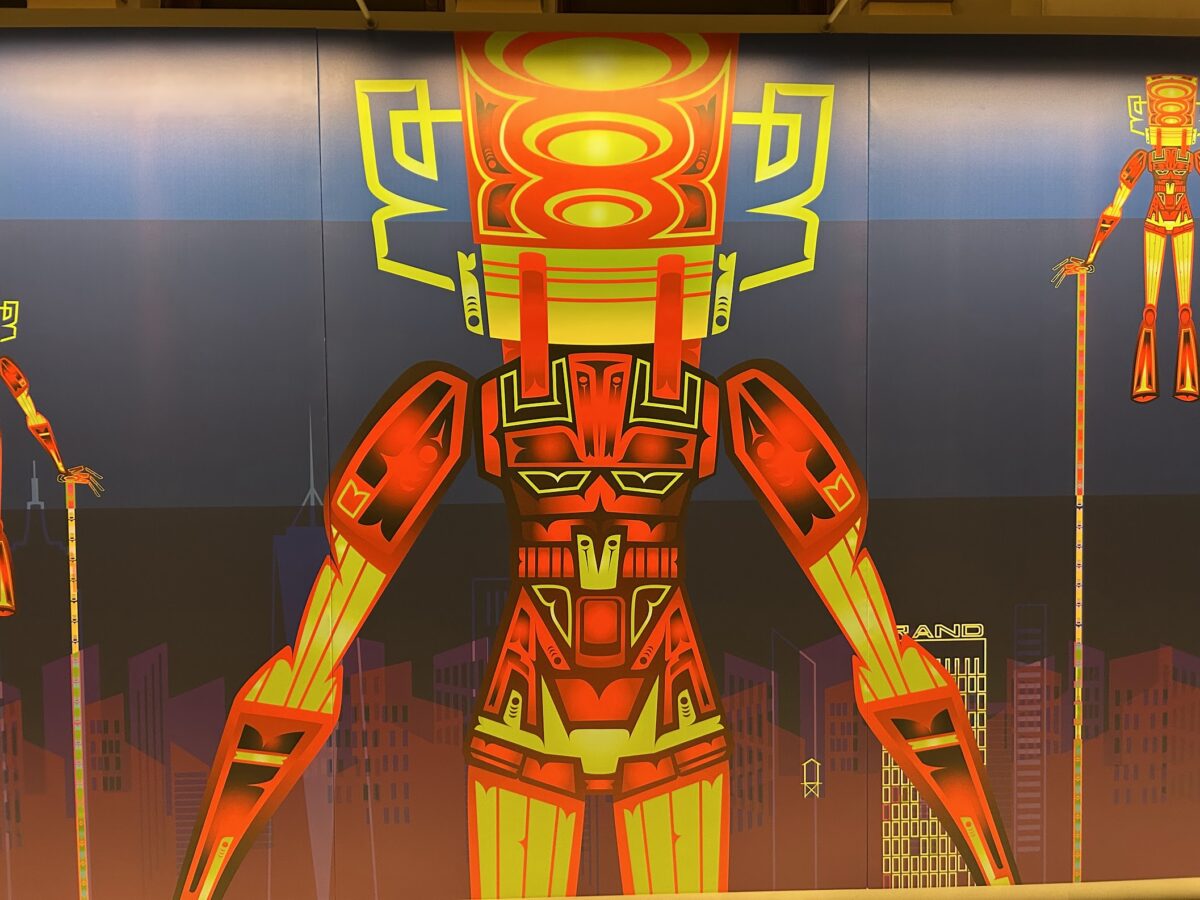
The fascinating art of Jeffrey Veregge, on display at the National Museum of the American Museum in Manhattan
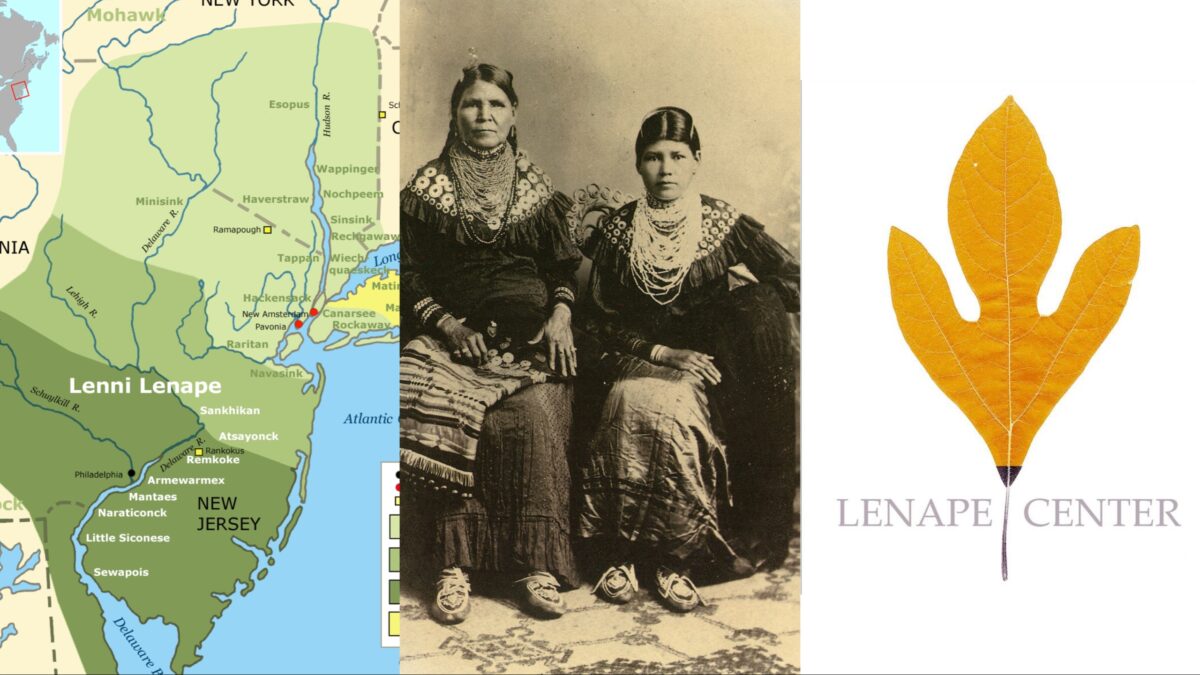
This month we’re celebrating New York City’s rich connections to the indigenous populations of North America, in particular the Lenape.
Overall I think New York City could use more places which mark its indigenous roots. By which I mean, places for New Yorkers to actually visit, landmarks and public art which illustrate the connection between New York’s present and its past (beyond our 400 year celebration of the Dutch arrival in New York.)
Fortunately there are organizations like theLenape Center who are working to improve that visibility. And this month, lots of places are tying programming into National Native American Heritage Month, a nationwide look at the country’s indigeonous roots.
So it’s a great time to tap into these unique stories. Here’s a few places throughout the city that we recommend you visit this month. And tell them the Bowery Boys and NYC Tourism sent you!
Relative Arts, an East Village studio and shop dedicated to the subject,
And of course, there’s always theNational Museum of the American Indian (temporarily closed due to the federal government shutdown) and the American Indian Community House each hold events throughout the year and make sure stories of Indigenous communities are preserved and amplified.
We are huge fans of the lower Manhattan museum, which holds exhibits exploring subjects such as ancestral traditions and New York’s native heritage—there’s even a contemporary art display incorporating Marvel figures and NYC’s streetscape
In addition, there is also special programming being presented at the New York Public Library. Check it out!
National Native American Heritage month runs throughout the month of November. Read about this program and all the other exciting events and world-class institutions commemorating the five boroughs’ legacy of groundbreaking achievements, and find ways to celebrate the city that’s always making history at Founded by NYC.
And for more information on New York City’s Native American history, check out these Bowery Boys podcasts:
Consider the following show an acknowledgment – of people. For the foundations of 400 years of New York City history were built upon the homeland of the Lenni-Lenape, the tribal stewards of a vast natural area stretching from eastern Pennsylvania to western Long Island.
The Lenape were among the first in northeast North America to be displaced by white colonists — the Dutch and the English. By the late 18th century, their way of life had practically vanished upon the island which would be known by some distorted vestige of a name they themselves may have given it – Manahatta, Manahahtáanung or Manhattan.
But the Lenape did not disappear. Through generations of great hardship they have persevered.
In today’s show we’ll be joined by two guests who are working to keep Lenape culture and language alive throughout the United States, including here on the streets of New York
— Joe Baker, enrolled member of the Delaware Tribe of Indians and a co-founder of the Lenape Center, an organization creating and presenting Lenape art, exhibitions and education in New York.
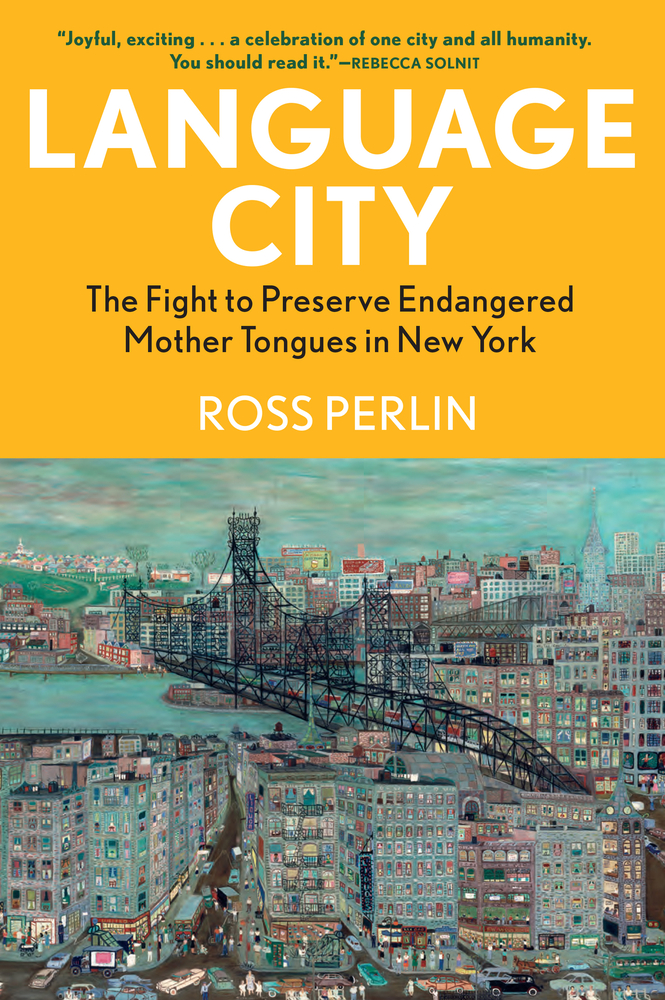
— Ross Perlin, linguist and author of Language City: The Fight to Preserve Endangered Mother Tongues in New York
Joe Baker discusses the cultural significance and history of indigenous seeds and the jewelry they created in this video from the Brooklyn Public Library:
Ross Perlin discussing his book Language City:
FURTHER READING
Ross Perlin/Language City: The Fight To Preserve Endangered Mother Tongues in New York
Ned Blackhawk / The Rediscovery of America: Native Peoples and the Unmaking of U.S. History Pekka Hämäläinen / Indigenous Continent: The Epic Contest for North America Kathleen Duval / Native Nations: A Millennium in North America Roxanne Dunbar-Ortiz/ An Indigenous Peoples’ History of the United States
PODCAST The story of the Lenape, the native people of New York Harbor region, and their experiences with the first European arrivals — the explorers, the fur traders, the residents of New Amsterdam.
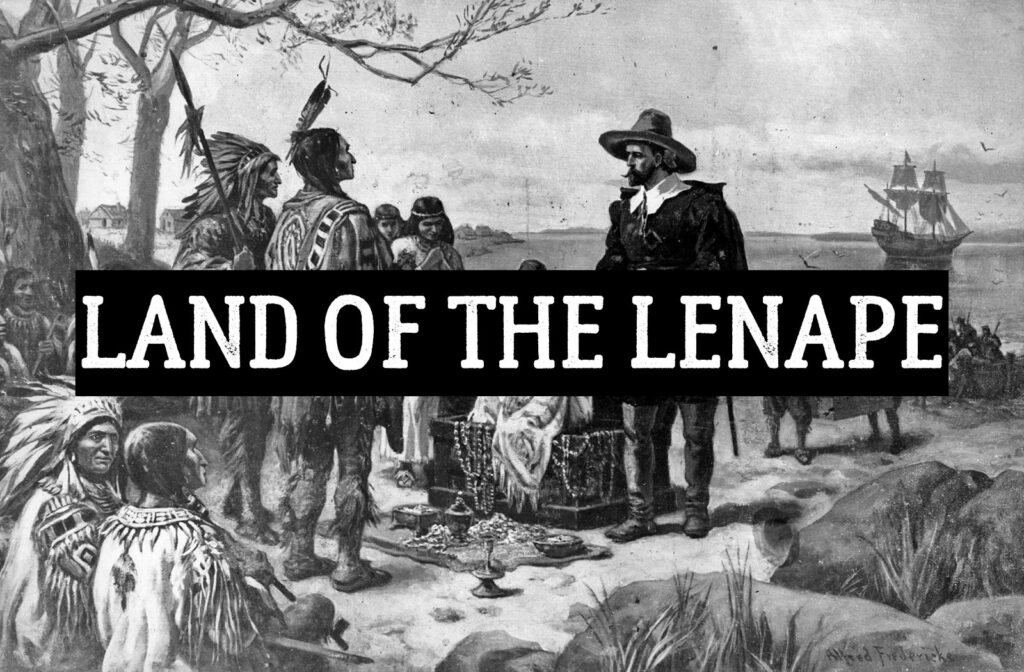
Before New York, before New Amsterdam — there was Lenapehoking, the land of the Lenape, the original inhabitants of the places we call Manhattan, Westchester, northern New Jersey and western Long Island.
This is the story of their first contact with European explorers and settlers and their gradual banishment from their ancestral land.
Fur trading changed the lifestyles of the Lenape well before any permanent European settlers stepped foot in this region. Early explorers had a series of mostly positive experiences with early native people.
With the Dutch settlement of New Amsterdam, the Lenape entered into various land deals, “selling: the land of Manhattan at a location in the area of today’s Inwood Hill Park.
But relations between New Amsterdam and the surrounding native population worsened with the arrival of Director-General William Kieft, leading to bloody attacks and vicious reprisals, killing hundreds of Lenape and colonists alike.
Peter Stuyvesant arrives to salvage the situation, but further attacks threatened any treaties of peace. But the time of English occupation, the Lenape were decimated and without their land.
And yet, descendants of the Lenape live on today in various parts of the United States and Canada. All that and more in this tragic but important tale of New York City history.
The Bowery Boys: New York City History podcast is brought to you …. by you!
We are now producing a new Bowery Boys podcast every two weeks. We’re also looking to improve the show in other ways and expand in other ways as well — through publishing, social media, live events and other forms of media. But we can only do this with your help!
We are now a member of Patreon, a patronage platform where you can support your favorite content creators for as little as a $1 a month.
Please visit our page on Patreon and watch a short video of us recording the show and talking about our expansion plans.
If you’d like to help out, there are five different pledge levels (and with clever names too — Mannahatta, New Amsterdam, Five Points, Gilded Age, Jazz Age and Empire State). Check them out and consider being a sponsor.
We greatly appreciate our listeners and readers and thank you for joining us on this journey so far. And the best is yet to come!
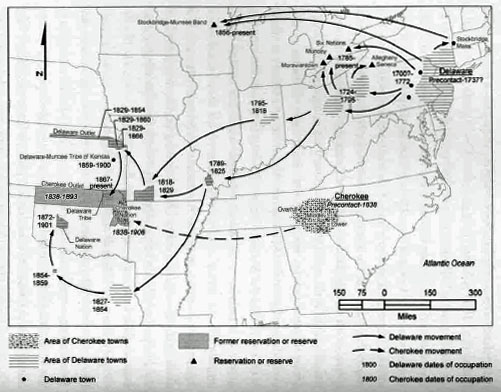
The long road of the Lenape. This 1978 map shows the path of their various relocations across the country in comparison with the relocation path of the Cherokee.
Ives Goddard, “Delaware,†in Handbook of North American Indians, vol. 15: Northeast, ed. Bruce Trigger and William Sturtevant (Washington DC: Smithsonian Institution1 1978)
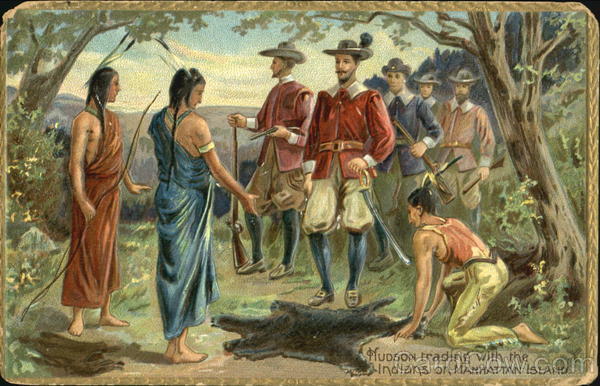
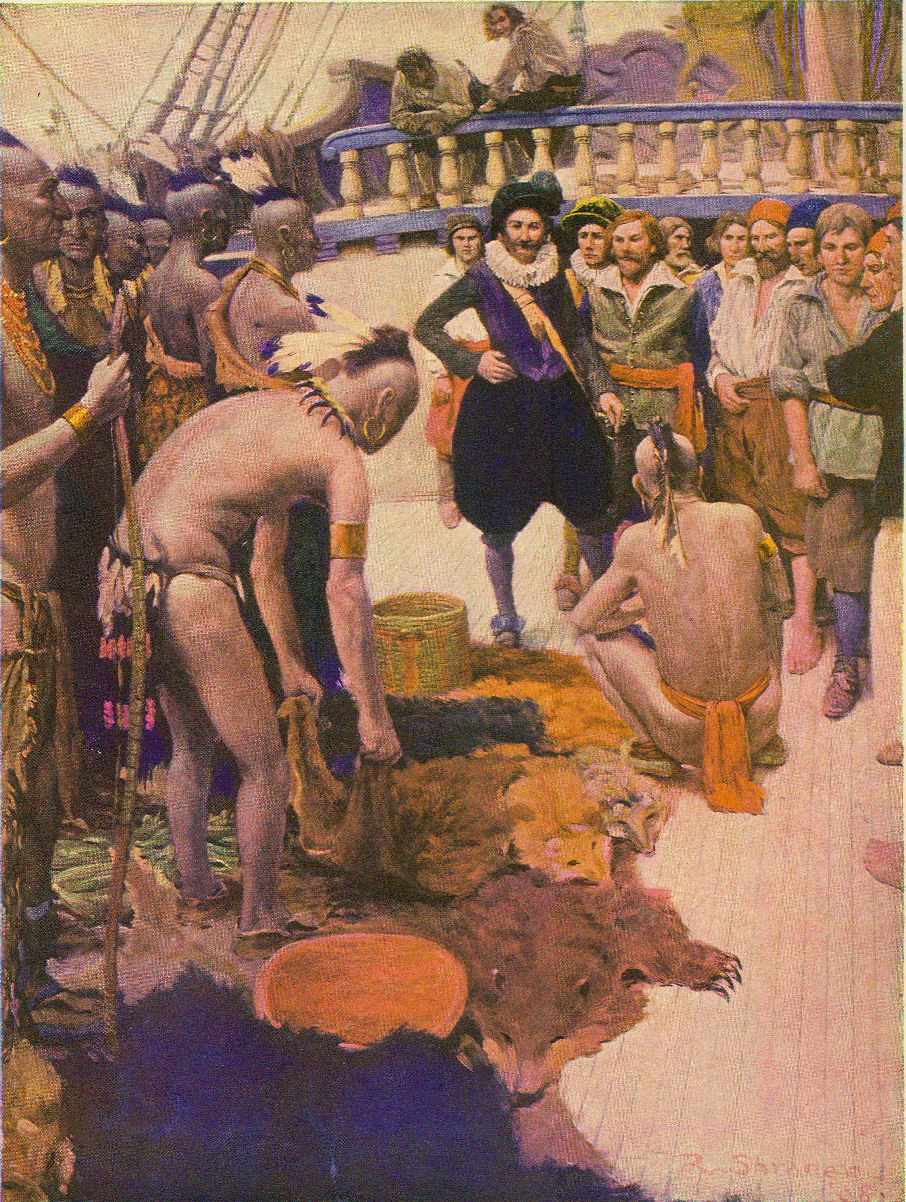
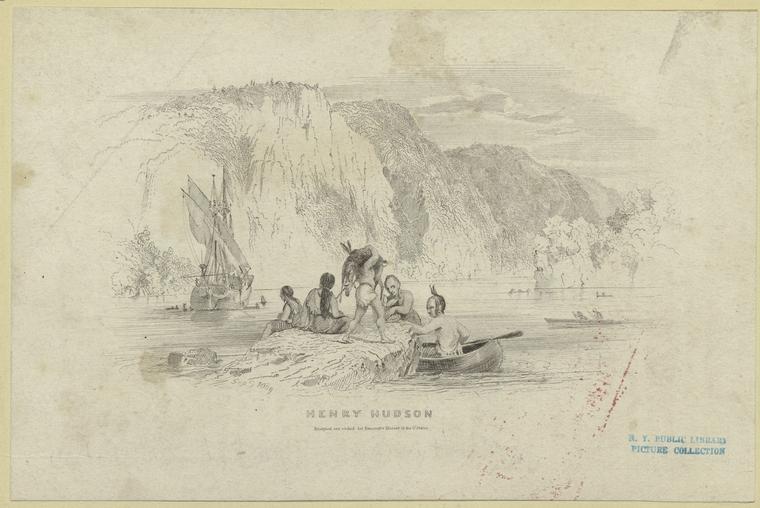
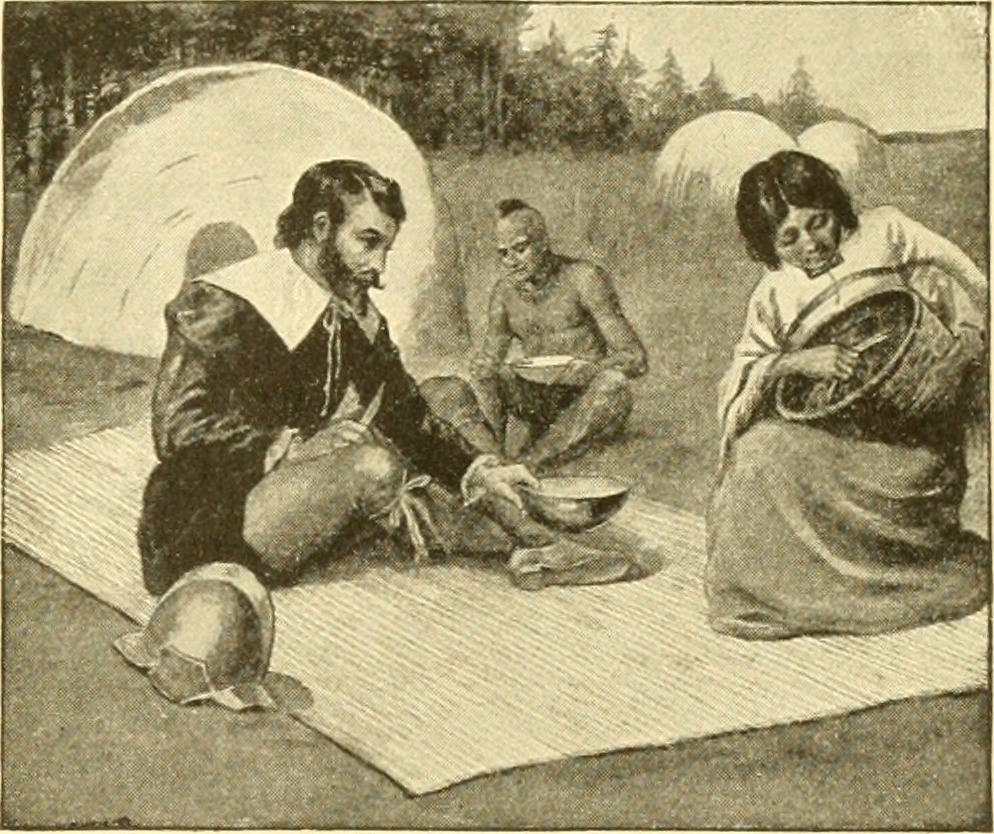
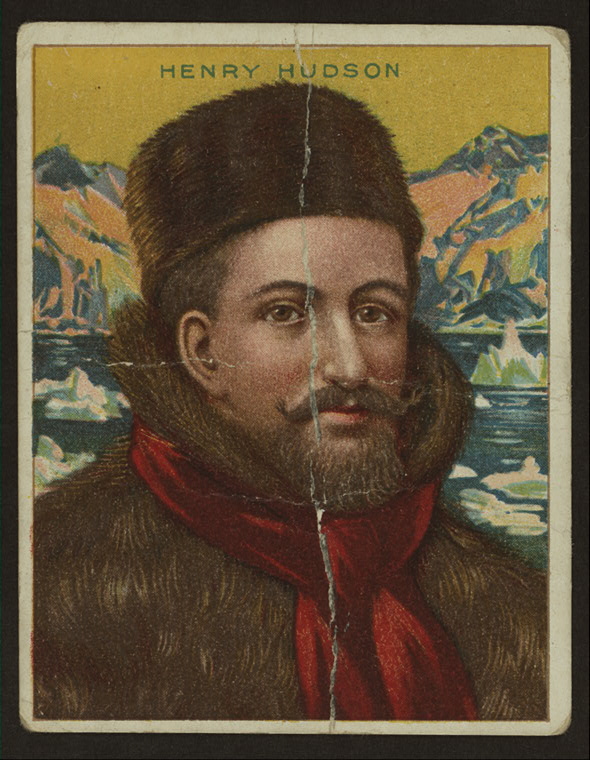
Henry Hudson’s interaction with the native people of the area would much later inspire a host of fanciful depictions.
“‘Designed and etched for Bancroft’s History of the United States’ Written on image: ‘Sept. 7 1609’
Courtesy NYPL
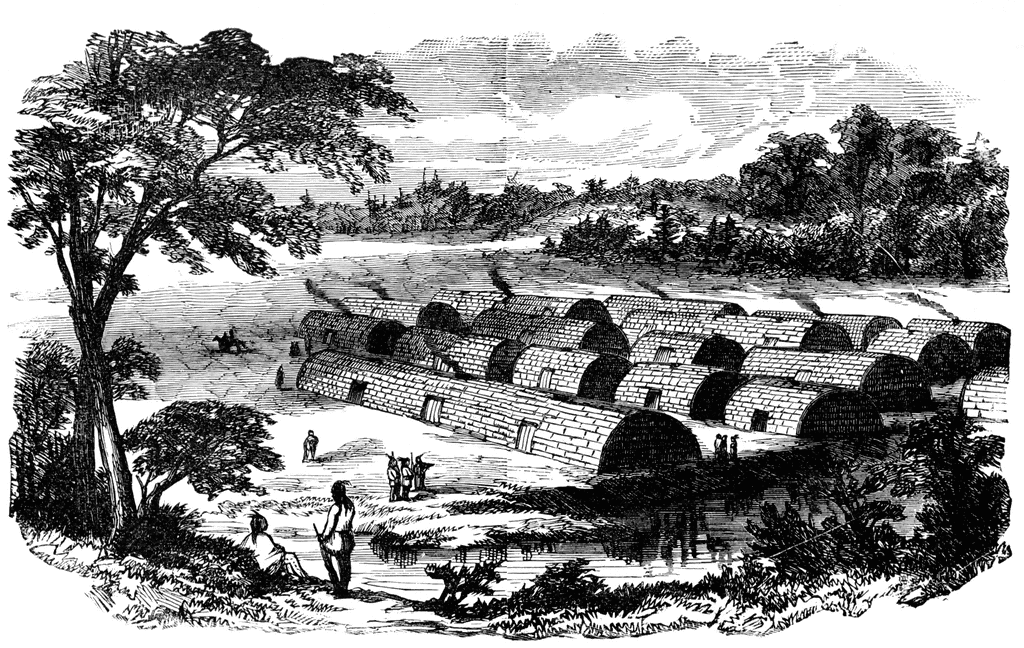
From a 1915 textbook ‘A First Book In American History’ — “Hudson’s ship anchored again opposite the Catskill Mountains, and here he found some very friendly Indians, who brought corn, pumpkins, and to-bacco to sell to the crew. Still farther up the river Hudson visited a tribe onshore, and wondered at their great heaps of corn and beans. The chief lived in around bark house. Captain Hudson wasmade to sit on a mat and eat from a red wooden bowl. The Indians wished him to stay all night; they broke their arrows and threw them into the fire, to show their friendliness.
Internet Archive Book Images
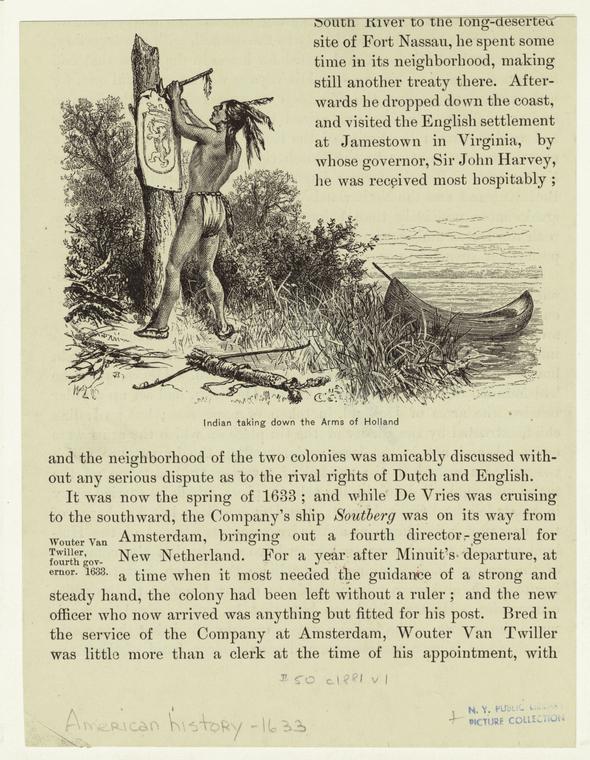
Behold New Amsterdam!
From another text book, this one from 1881:
New York Public Library
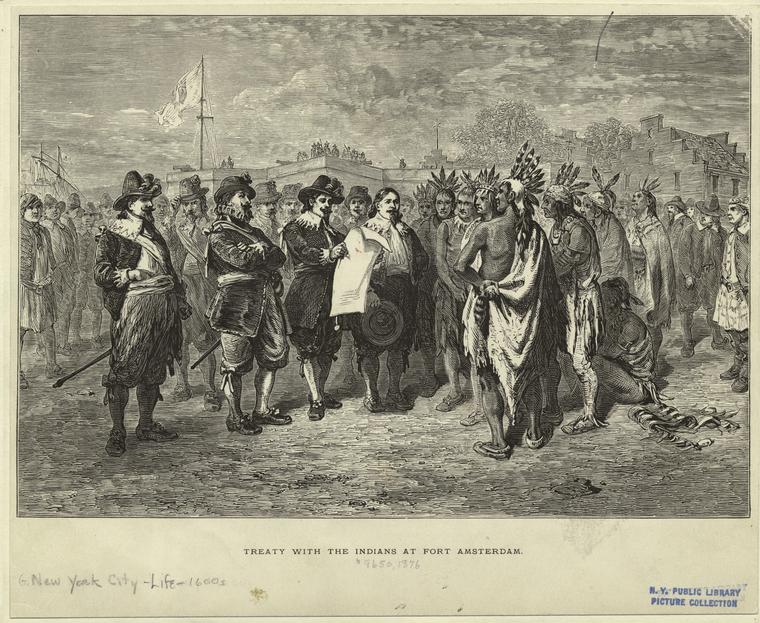
From an 1876 print: ‘Treaty with the Indians at Fort Amsterdam.” Not sure what year this picture depicts but everybody has two legs, so no Peter Stuyvesant!
NYPL
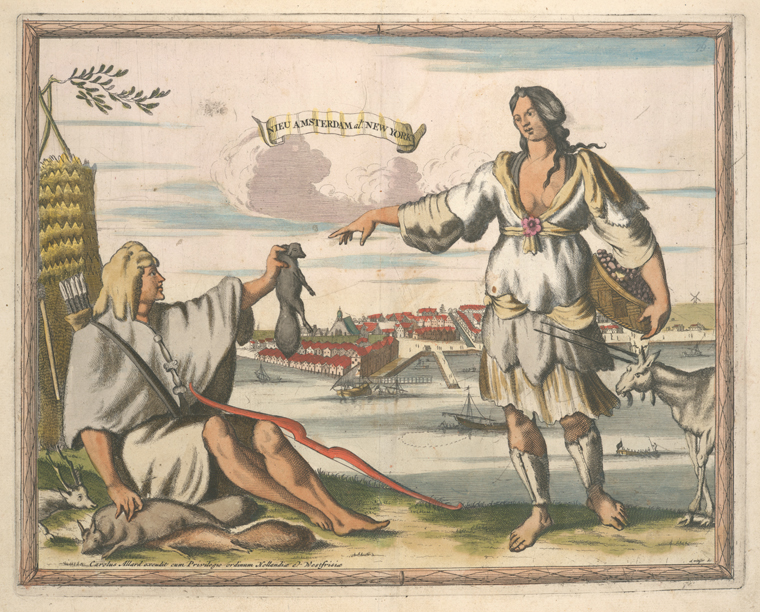
A well-known engraving by Aldert Meijer depicts New Amsterdam as being touched by the hand of providence.
NYPL
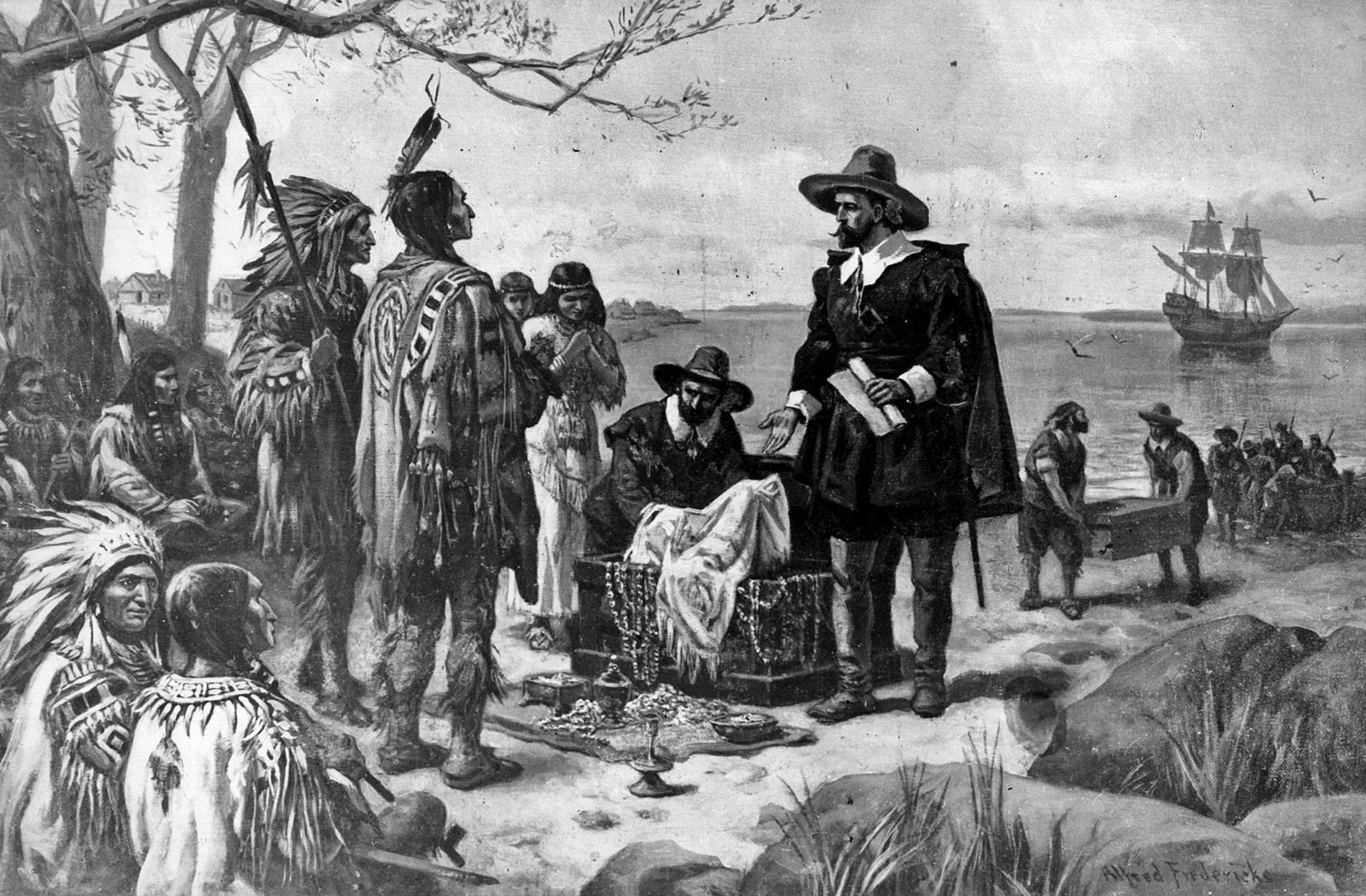
A drawing of the 1926 purchase of Manhattan between the native population and Peter Minuit. Image is from Popular Science Magazine, 1909.
NYPL
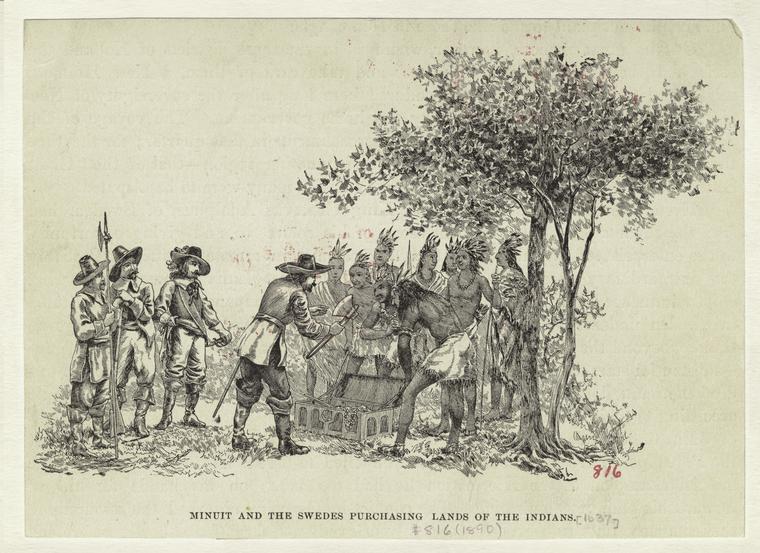
…clearly derived from
“Peter Minuit and the Swedes purchasing lands of the Indians.” Illustration dated 1890
NYPL
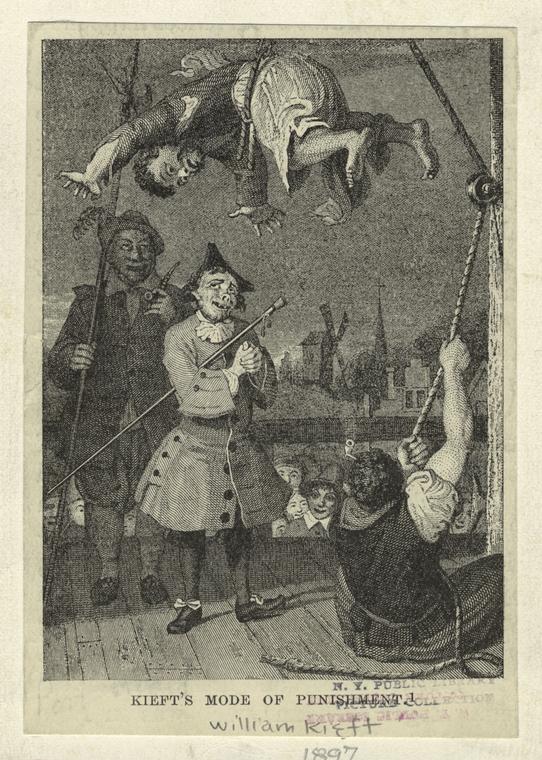
William Kieft’s reputation as a vicious tyrant is made apparent here in this 1897 illustration captioned ‘Kieft’s Mode of Punishment.’
NYPL
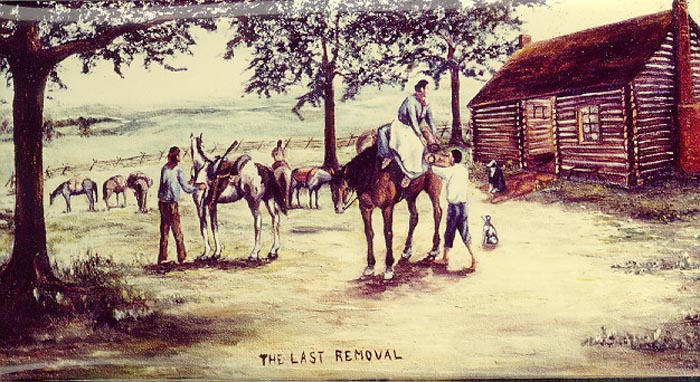
From the Delaware Indians website: “A painting by Lenape artist Jacob Parks (1890-1949), which depicts a Lenape family leaving their home on their reservation in Kansas in 1867. This area had been their home for over thirty-five years, and now the government told them they had to move to Indian Territory (now Oklahoma).”
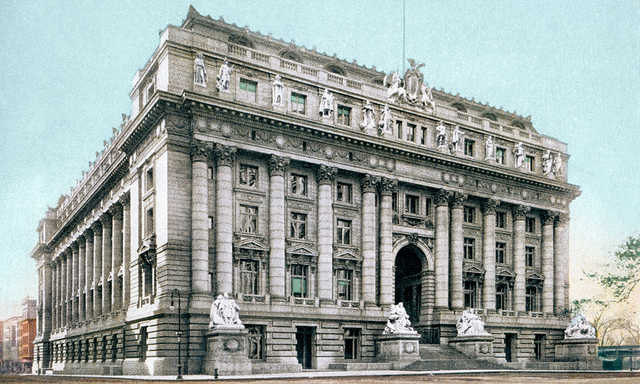
The Smithsonian National Museum of the American Indian is currently living in the Alexander Hamilton U.S. Custom House. It’s a FREE museum so you should stop in anytime you’re in the Battery Park area.
FURTHER READING
The First Manhattans: A History of the Indians of Greater New York by Robert S. Grumet
The Island At The Center Of The World by Russell Shorto
The Delaware Indians: A History by  C.A. Westanger
Native New Yorkers: The Legacy of the Algonquin People of New York by Evan T. Pritchard
PODCAST Back when old New York was once New Amsterdam.
We are turning back the clock to the very beginning of New York City history with this special two-part episode, looking at the very beginnings of European settlement in the area and the first significant Dutch presence on the island known as Manhattan.
The Dutch were drawn to the New World not because of its beauty, but because of its beavers. Beaver pelts were all the rage in European fashion, and European explorers like Henry Hudson reported back that this unexplored land was filled with the animals and their beautiful coats.
Of course, people were already living here — the tribes of the Lenape — and the first settlers sent by the Dutch — French-speaking Walloons — encountered them in the mid 1620s. But relations were relatively good between the two parties at the beginning. Could the native Munsee-speaking people and the first Dutch settlers get along?
In this episode, we walk you through the first two decades of life in the settlement of New Amsterdam, confined to the southern tip of Manhattan. What was the island like back then? How did people live and work in a region so entirely unknown to its European inhabitants?
The Bowery Boys: New York City History podcast is brought to you …. by you!
We are now producing a new Bowery Boys podcast every other week. We’re also looking to improve the show in other ways and expand in other ways as well — through publishing, social media, live events and other forms of media. But we can only do this with your help!
We are now a member of Patreon, a patronage platform where you can support your favorite content creators for as little as a $1 a month.
Please visit our page on Patreon and watch a short video of us recording the show and talking about our expansion plans. If you’d like to help out, there are five different pledge levels (and with clever names too — Mannahatta, New Amsterdam, Five Points, Gilded Age, Jazz Age and Empire State). Check them out and consider being a sponsor.
And join us for the first ever Bowery Boys Movie Club, an exclusive podcast provided to our supporters on Patreon.
We greatly appreciate our listeners and readers and thank you for joining us on this journey so far.
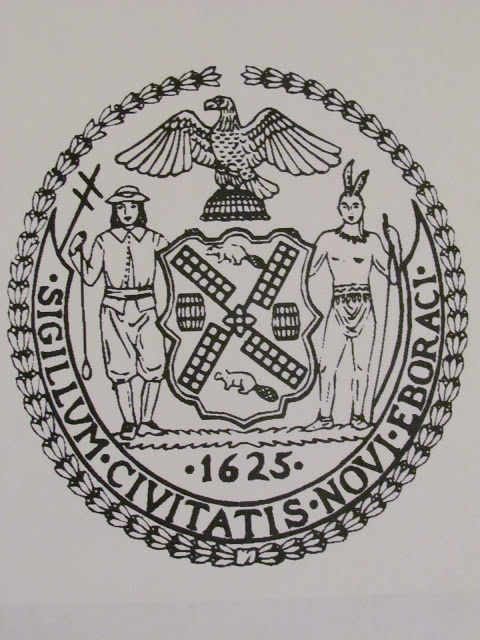
The official seal of New York City contains many clues to the city’s history. It also features not one, but two, beavers.
Manhattan Unlocked
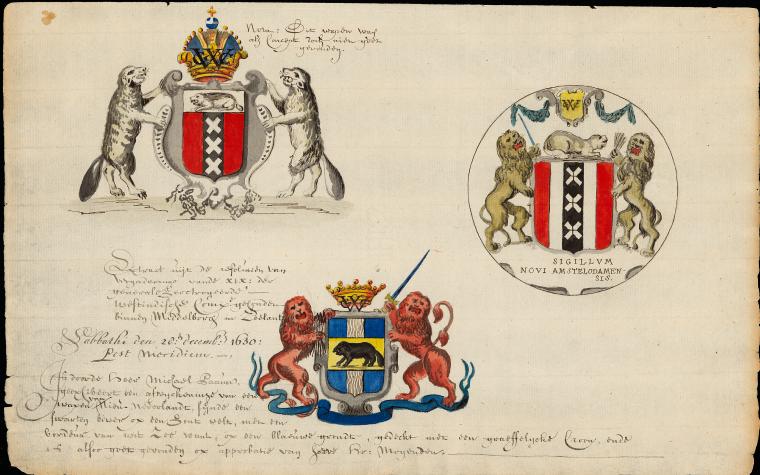
The original coat of arms for New Amsterdam and New Netherland.
New York Public Library
Henry Hudson on a vintage cigarette card.
George Arents Collection/New York Public LIbrary
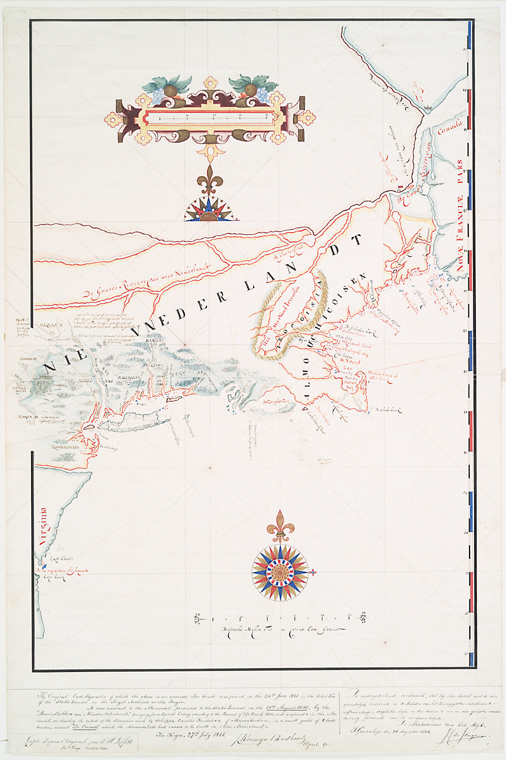
A 1614 map drawn by explorer Adriaen Block, labeling the entire place New Nederlandt!
I. N. Phelps Stokes Collection of American Historical Prints/ New York Public Library
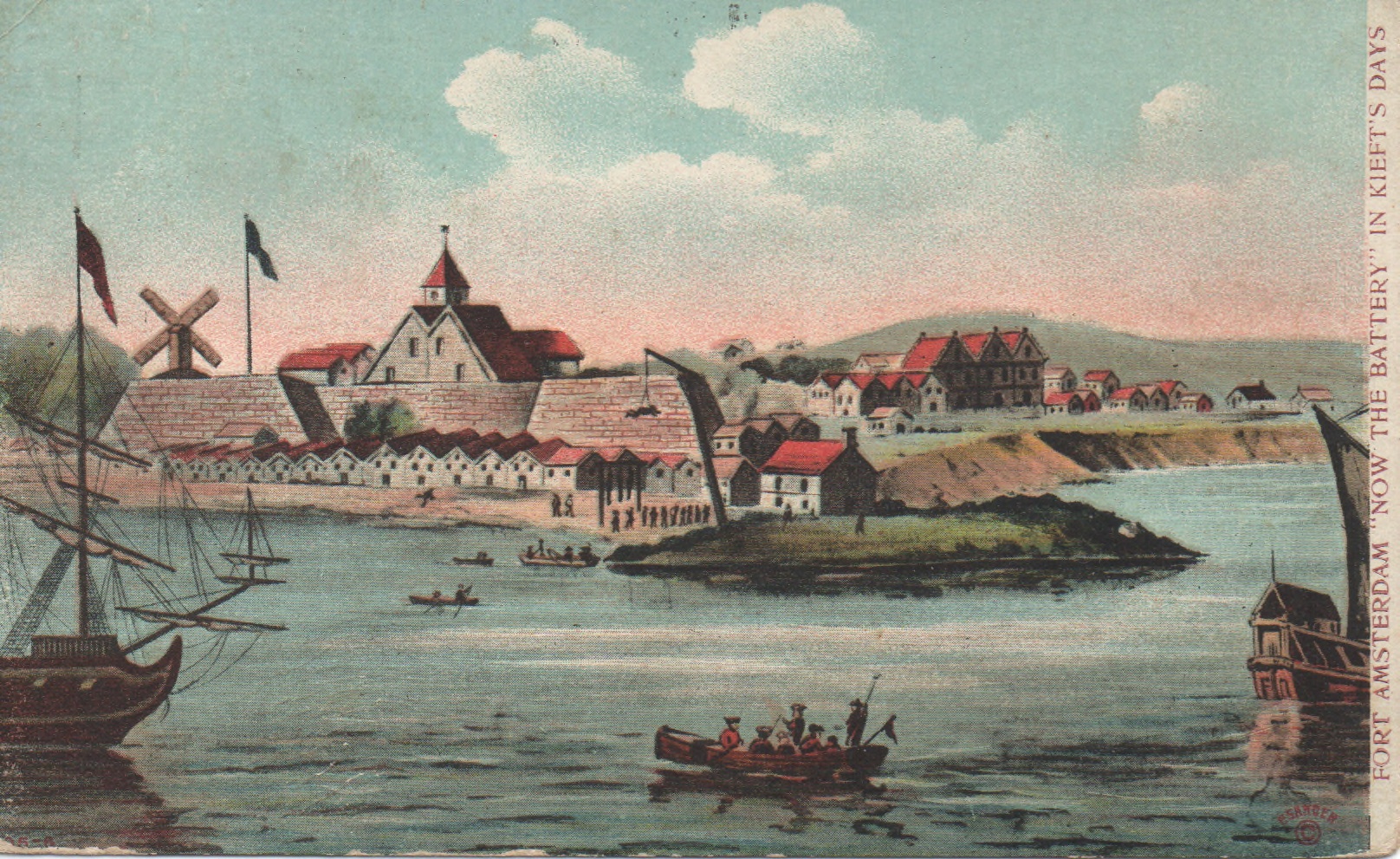
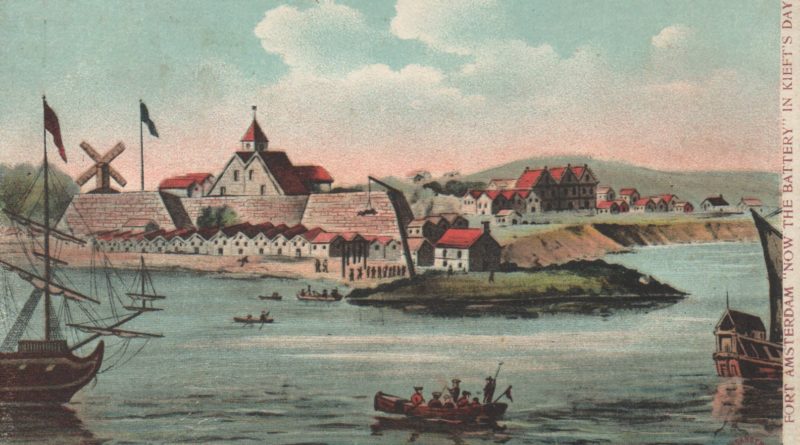
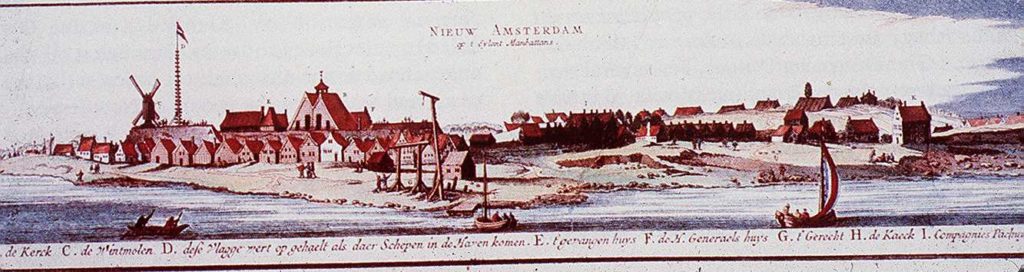
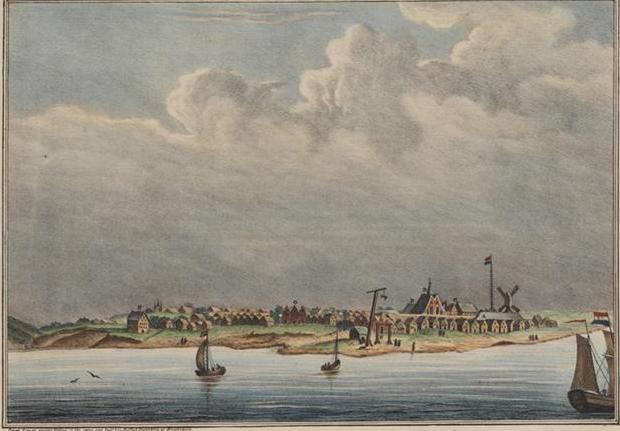
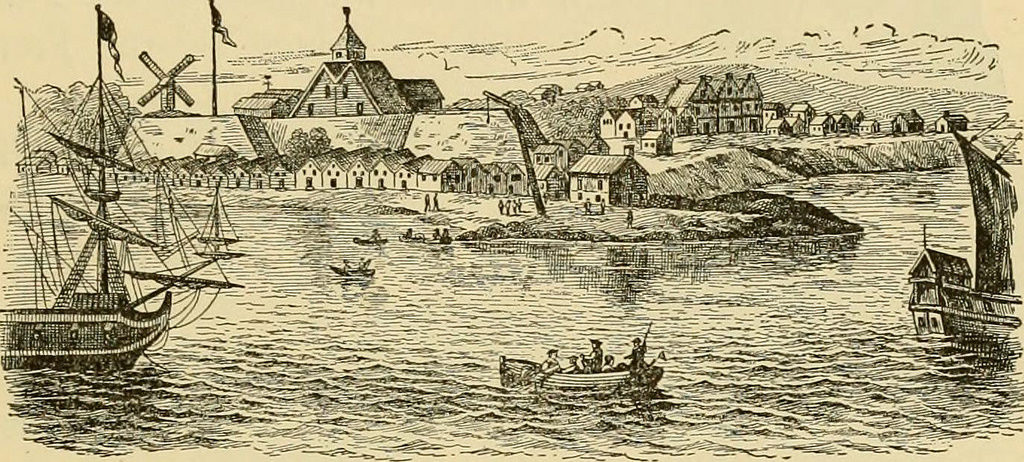
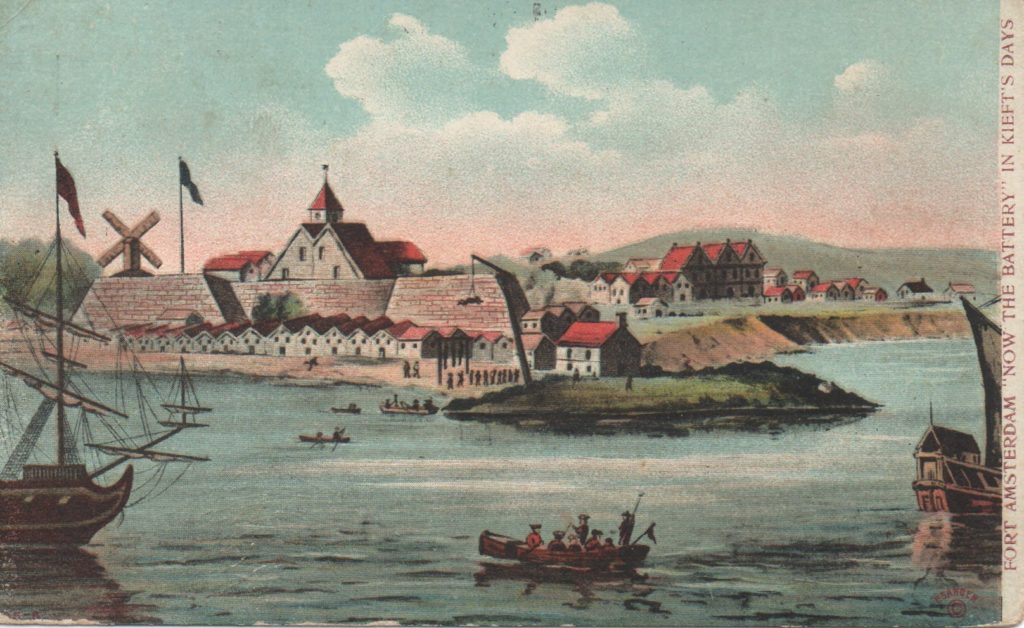
A look at New Amsterdam in it might have looked in 1640. Note the windmill in the background and gallows on Capske Hook!
New-York Historical Society“As it appeared about the year 1640, while under the Dutch Government. Copied from an ancient Etching of the same size Publd. by Justus Danckers, at Amsterdam. Printed and Published by H. R. Robinson, 52 Courtlandt Street New York” Courtesy Museum of the City of New York
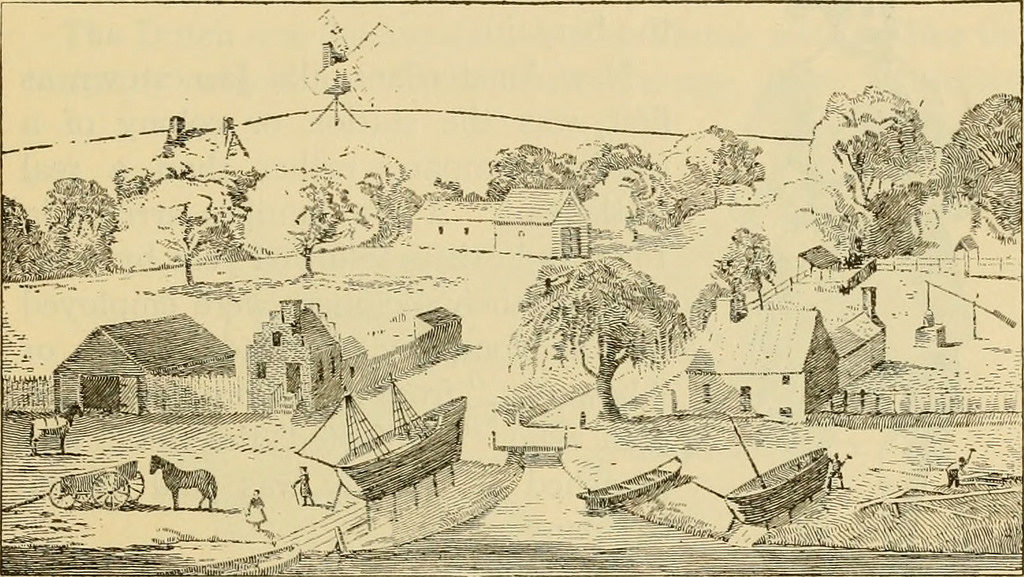
An illustration from the 1921 book A History of the United States by Henry Eldridge Bourne. A Dutch blacksmith shop and a farm scene, Manhattan Island, where a brookside path with the name of Maiden Lane followed a valley to the East River
From the same book — a look at Fort Amsterdam and Capske Hook.
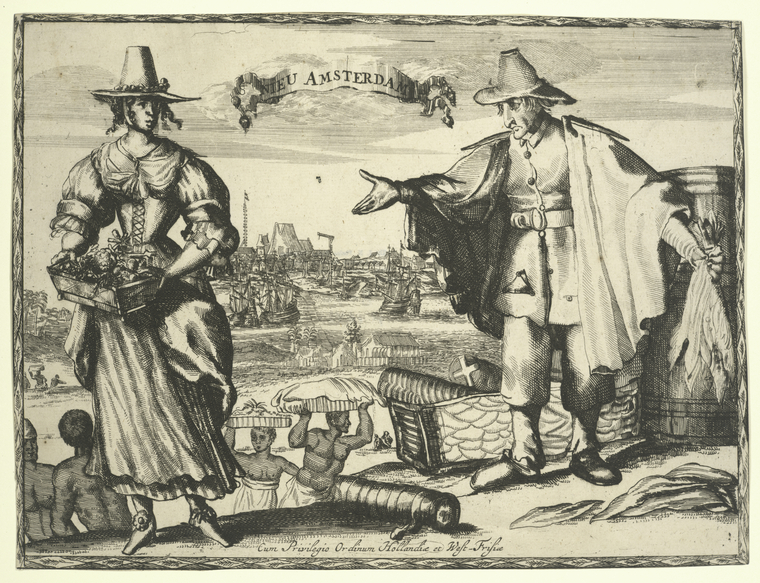
An illustration of New Amsterdam clearly depicts its placement in the larger scheme of the New Netherland territory (and, as the years went by, its increasing prominence as both a tobacco producer and a component of the Dutch transatlantic slave trade).
New York Public Library
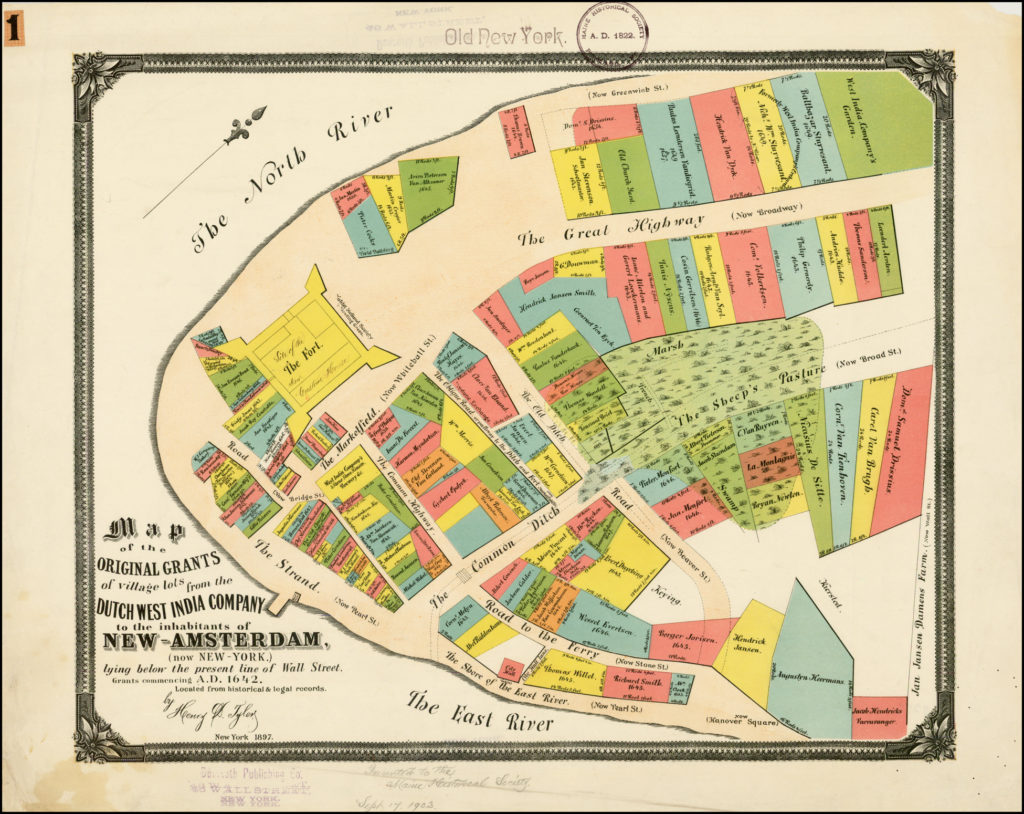
A look at New Amsterdam in the year 1642, dominated by the fort to the south and a sheep’s pasture and various farms to the north.
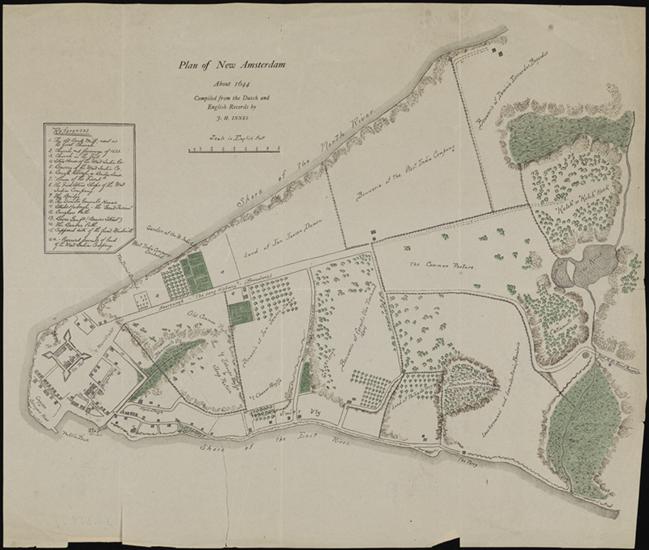
Plan of New Amsterdam About 1644, map dated 1902, compiled from the Dutch and English records by J. H. Innes.
Museum of the City of New York
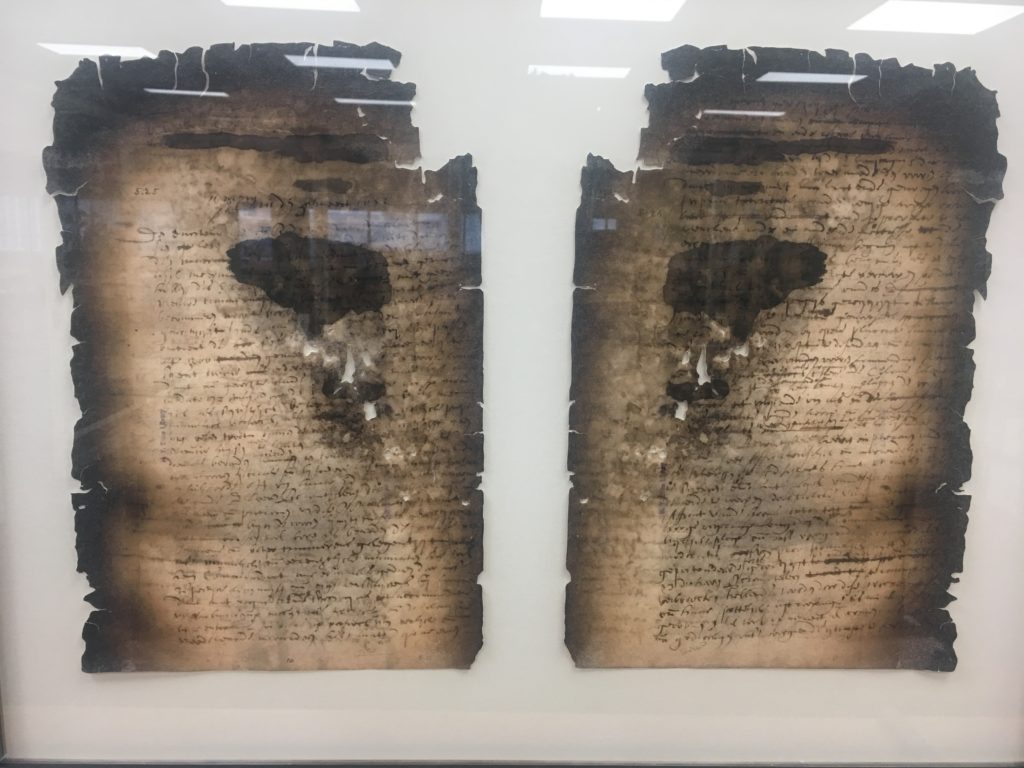
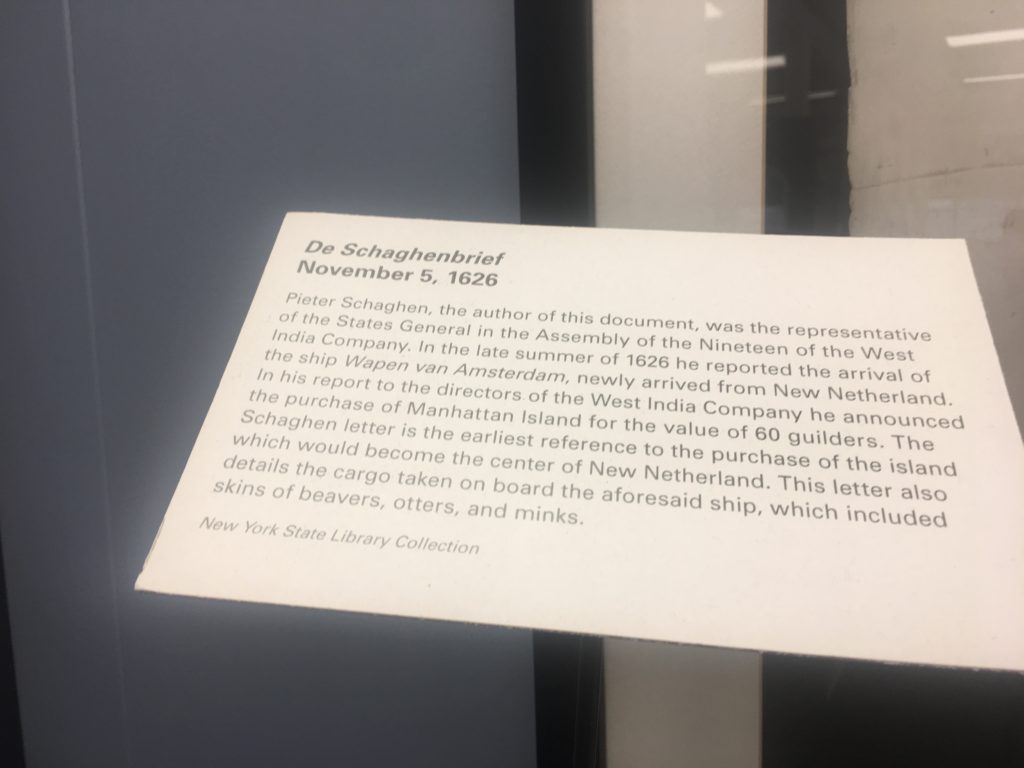
The Pieter Schaghen letter outlining the purchase of the island of Manhattan. This letter is located at the New Netherland Research Center.
Our first-ever Bowery Boys book, “Adventures in Old New York” is now out in bookstores! A time-traveling journey into a past that lives simultaneously besides the modern city.
Bowery Boys Walking Tours
Are you ready to walk through time? We’re excited to announce Bowery Boys Walks, our new walking tours developed around our podcast. Join us in the streets — beginning in October 2018!
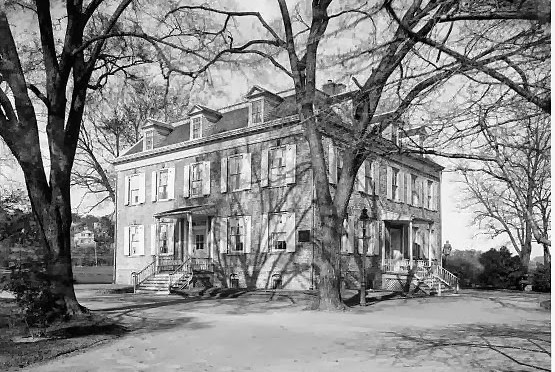
The Van Cortlandt House, 1906 PODCAST This is the Bowery Boys 7th annual Halloween podcast, with four new scary stories to chill your bones and keep you up at night, generously doused with strange and fascinating facts about New York City.
For this episode, we’ve decided to go truly old-school, reaching back to old legends and tales from the years of the Revolutionary War and early 19th century. These ghosts have two things in common — George Washington (directly or indirectly) and ghosts! Although no ghosts of George Washington.
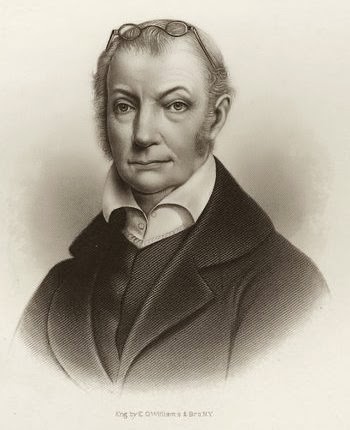
We venture to the haunted woods of Van Cortlandt Park for the tale of an Indian massacre and a forlorn servant girl, looking for her master’s silver. From there, we head to the early days of Greenwich Village and tormented vice president Aaron Burr (at right), waiting for his daughter’s return.
Meanwhile, over in Brooklyn, the ruins of an old Revolutionary War fort in the future neighborhood of Cobble Hill provide the setting for a horrific tale of a late-night booze run gone wrong. And, finally, no Bowery Boys Halloween podcast would be complete without an historic cemetery (in this case, the burial ground at St. Paul’s Chapel) and the ghost of a dramatic actor — in this case, one without his head!
PLUS: How did Westchester County become so rocky? The Devil did it!
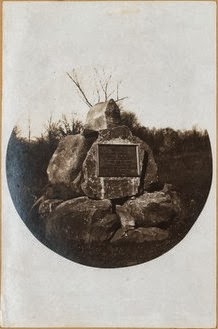
A cairn of stones memorializing Danial Nimham at Indian Field in Van Cortlandt Park, in 1906, the year it was placed here by the Daughters of the American Revolution. The original plaque states that 17 members of the Stockbridge Militia lost their lives, though it’s now believed that up to 40 men may have died during the massacre of August 1778. (NYPL)
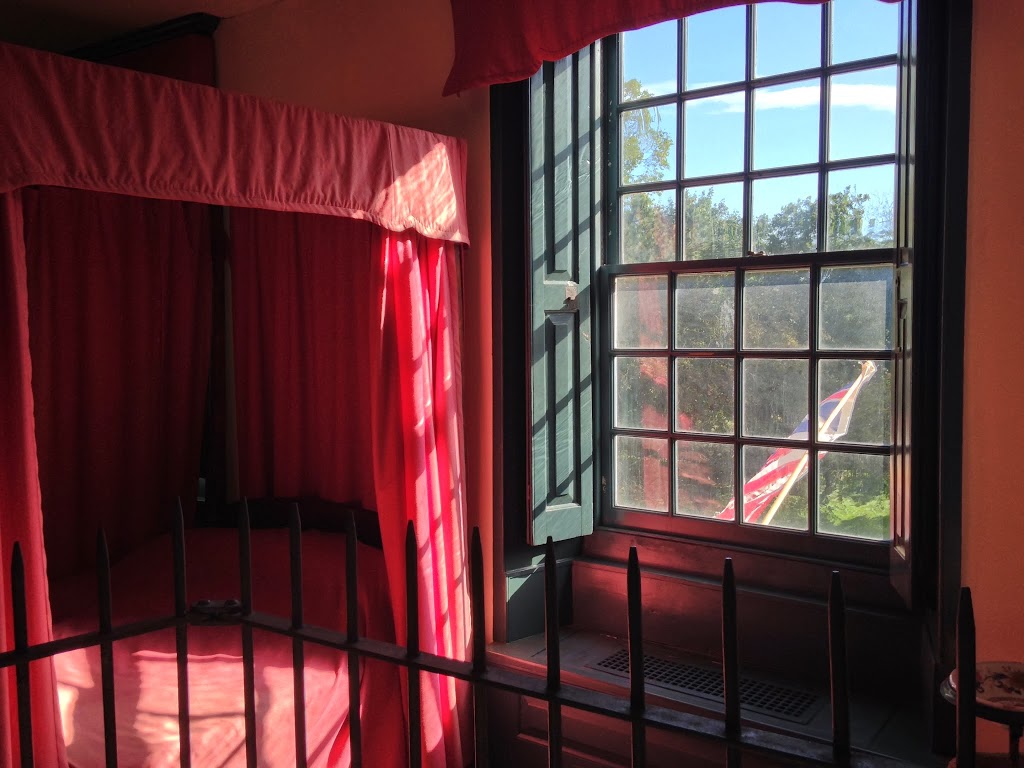
Looking out the upstairs window of the Van Cortlandt House, looking out in the park. The house has seen its share of strife and, if legends can be believed, more than a few spirits.
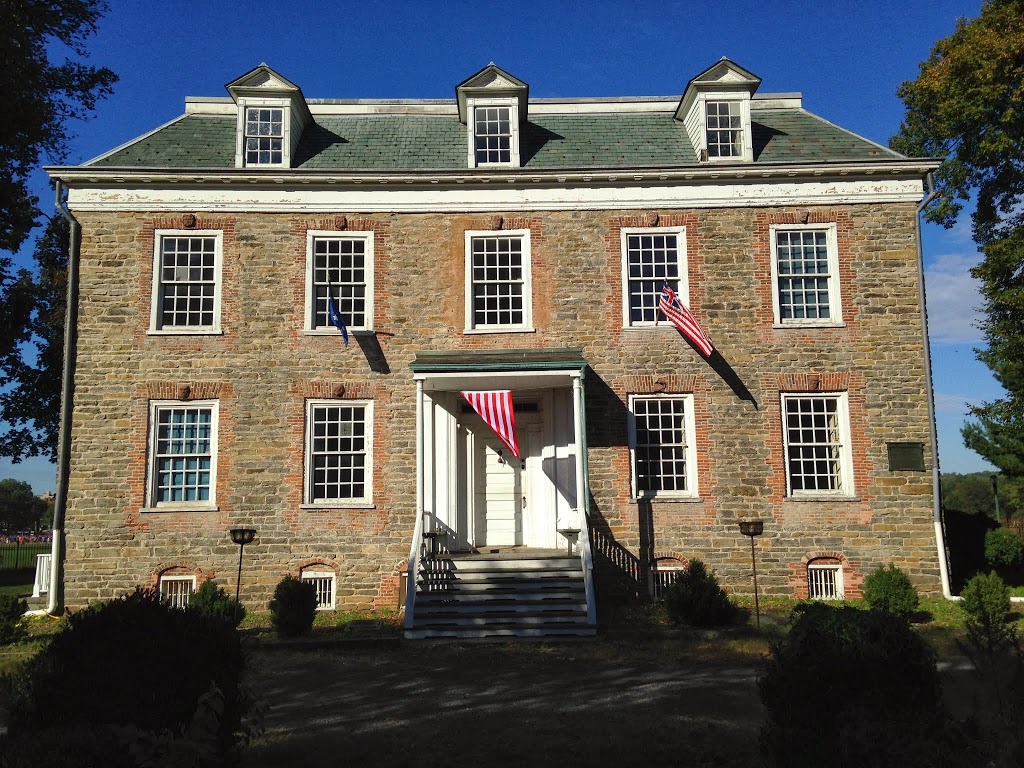
Van Cortlandt House as it looked last weekend. What’s that in the window?
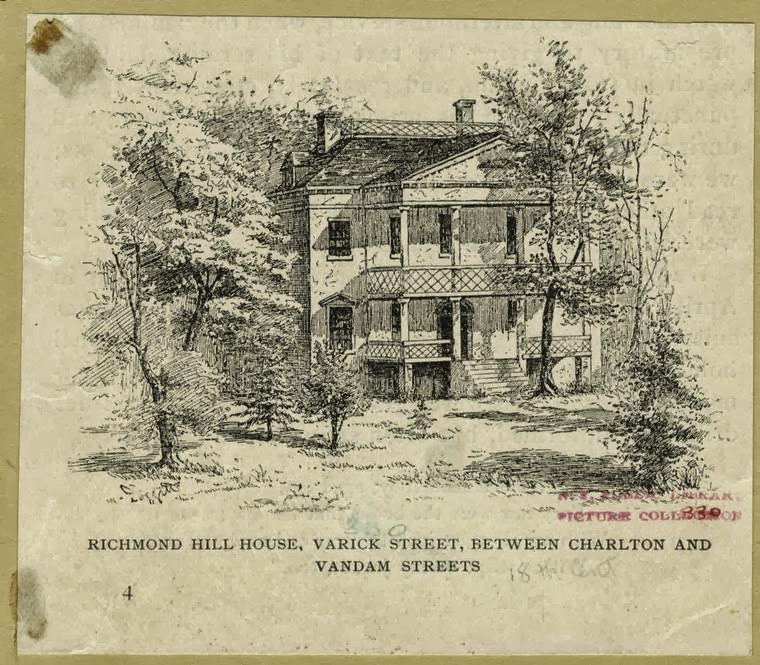
Richmond Hill, the beautiful mansion home of both John Adams and Aaron Burr. The carriage house from this old manor was moved to Barrow Street and is today the restaurant One If By Land, Two If By Sea. (NYPL)
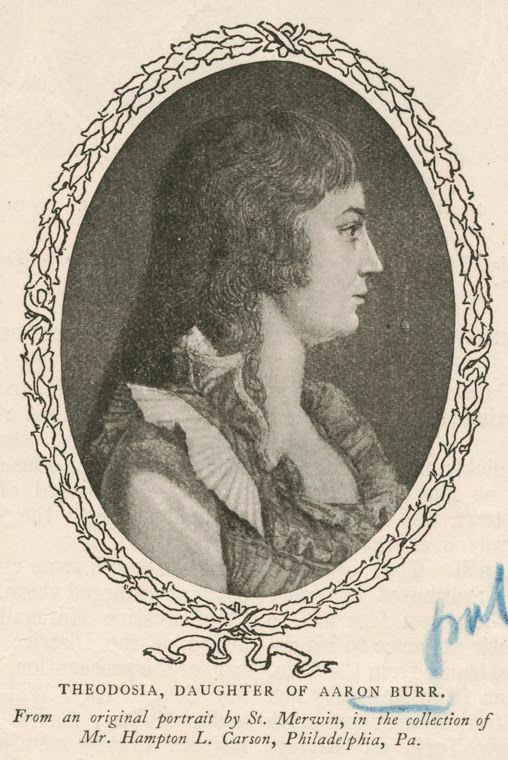
Theodosia Burr, the daughter of Vice President Aaron Burr, who was mysteriously lost at sea. Was she shipwrecked, rescued by an Indian prince, or forced to walk the plank? (Courtesy NYPL)
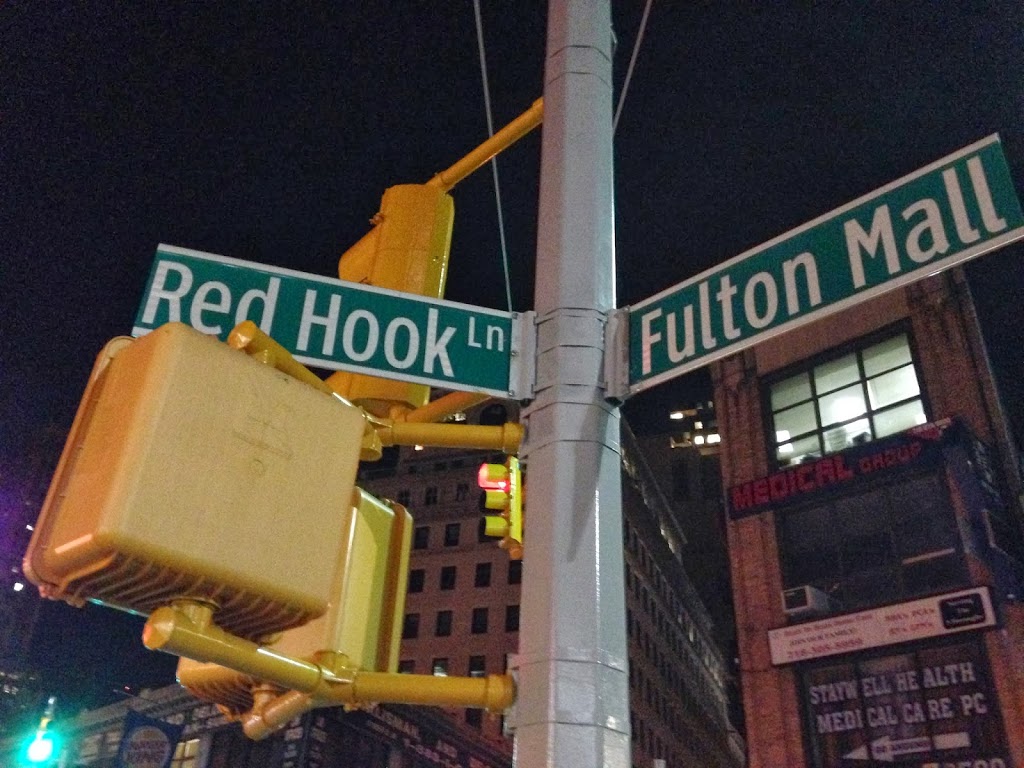
A short remnant of Red Hook Lane still exists in downtown Brooklyn. You are unlikely to find anything too scary at this street corner however.
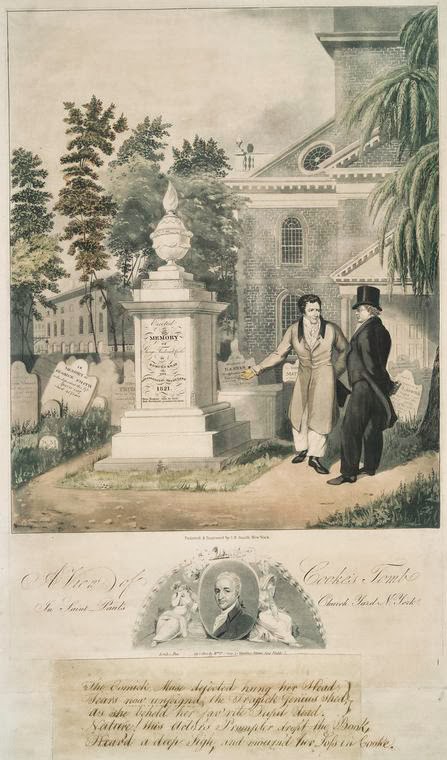
A 1822 illustration of the George Frederick Cooke monument and the man who paid for it, actor Edmund Kean. Kean so admired the late actor that he actually took a very odd portion of his body back with him to England.
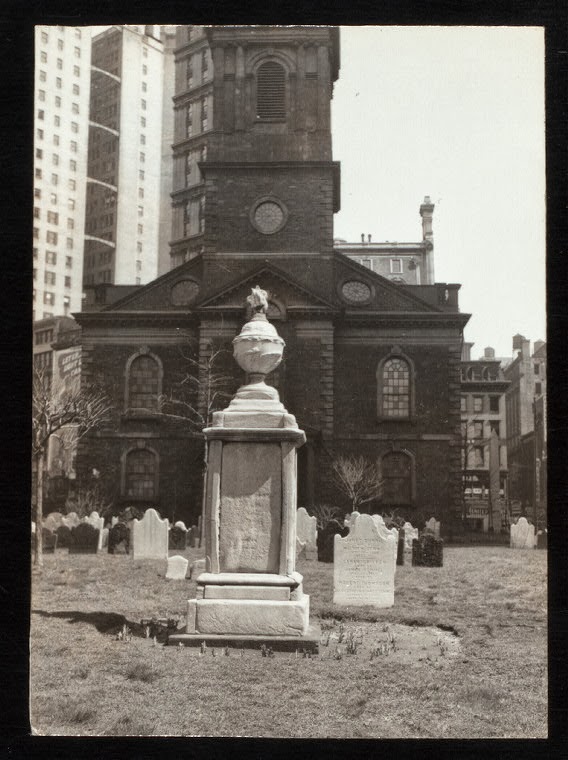
The monument to George Frederick Cooke in the graveyard at St. Paul’s Chapel, pictured here sometime in the 1940s. Does his ghost still linger here? [NYPL]
We had a very chilling event occur as we were recording last weekend. Just as I began to launch into the ghosts of the Stockbridge Militia, our recording equipment went all insane, spewing out a distorted and very disturbing version of our voices. It went on for about 20 minutes. Below is a sampling of the audio. What do you think — otherworldly interference or a faulty mixing board?