Charles Dickens’ guide to New York City low life


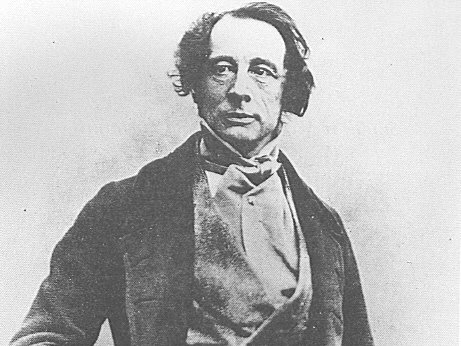
Dickens in 1850

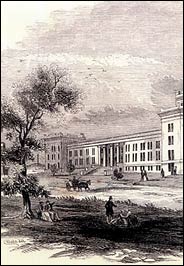
What is this dismal-fronted pile of bastard Egyptian, like an enchanter’s palace in a melodrama! – a famous prison, called The Tombs. Shall we go in?

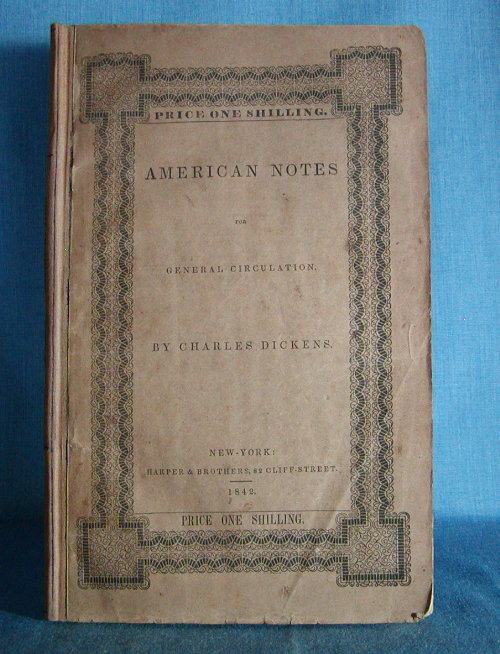
And thus in this voice continues the eager, fey, often condescending but spectacularly written account of Charles Dickens’ New York excursion as captured in his “American Notes for General Circulation,” written in 1842. (Read the entire thing here.)

Dickens’ was among the first published travelogues about America for European audiences, and among his travels through the states he devotes an entire chapter to young New York.

How young precisely? Dickens gives us a yardstick to measure it: “The great promenade and thoroughfare, as most people know, is Broadway; a wide and bustling street, which, from the Battery Gardens to its opposite termination in a country road, may be four miles long.” During the 1840s, the city would have ended at 42nd street, so this sounds accurate.
Dickens’ tone throughout “American Notes” is ebullient but persnickety, as if he’s smiling and curling his nose at the same time as the sights and sounds of the city. In real life, Dickens was treated like royalty, feted in sumptuous celebrations at the Park Theatre and Delmonico’s, courted by literati such as New York Evening Post editor William Cullen Bryant and aging Washington Irving.

Dickens had an ulterior motive to his American journey: to discuss international copyright laws, presently being violated with American reprints of Dickens novels. Surprisingly he turned most Americans off with what they considered to be ungrateful sniping. A bit of that shared animosity seeps through some of Dickens depictions, especially those in New York, which was doing a bulk of the copyright violation.

The book’s most famous descriptions come in his colorful look at Five Points, already a legendary neighborhood of filth and vice by 1842. These passages could have been ripped from any of his most famous novels:

“Ascend these pitch-dark stairs, heedful of a false footing on the trembling boards, and grope your way with me into this wolfish den, where neither ray of light nor breath of air, appears to come….”

“Here too are lanes and alleys, paved with mud knee-deep, underground chambers, where they dance and game; the walls bedecked with rough designs of ships, and forts, and flags, and American eagles out of number: ruined houses, open to the street, whence, through wide gaps in the walls, other ruins loom upon the eye, as though the world of vice and misery had nothing else to show: hideous tenements which take their name from robbery and murder: all that is loathsome, drooping, and decayed is here.”

And as if that wasn’t enough gothic material for him, he ends his New York piece by touring Blackwell’s Island (today’s Roosevelt Island), home of the city’s various asylums for lunatics and criminals:

“…everything had a lounging, listless, madhouse air, which was very painful. The moping idiot, cowering down with long dishevelled hair; the gibbering maniac, with his hideous laugh and pointed finger; the vacant eye, the fierce wild face, the gloomy picking of the hands and lips, and munching of the nails: there they were all, without disguise, in naked ugliness and horror.”

The New York chapter is reprinted in full here.

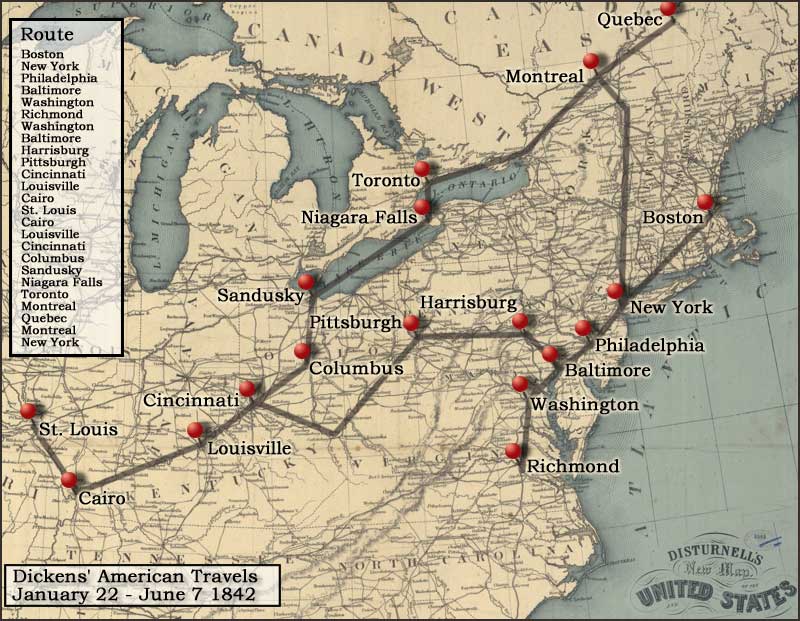
Below from the Charles Dickens Page, a list of all the places he visited during his American stay. They also feature a thorough description of his entire journey.
“Horrors” of Roosevelt Island: Lunacy!

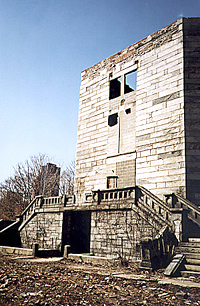
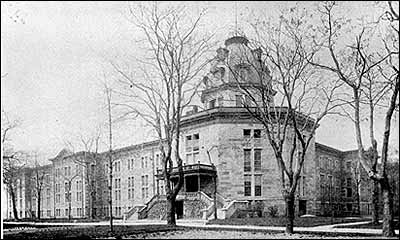
(ABOVE: Metropolitan Hospital, at the turn of the century, the former site of Blackwell Island’s asylum)

Is there anything more frightening than a insane asylum on fire? Nope.

Welcome to America’s first municipal lunatic asylum, its home — you guessed it — on Roosevelt Island in the 19th century. The 1839 facility was designed by Alexander Jackson Davis, one of the most influential architects of his day and best known for decorating the northeast with austere, ornate homes. His best known New York building is Federal Hall (actually the Custom House when it was finished in 1942). The center tower of the asylum with its two L-shaped wings created an internal campus and had more in common structurally with a university or hotel.

The early 19th century was not the best time to be labelled a lunatic. The medical profession was not terribly prepared to treat mental patients; however at the time of the asylum’s construction, attitudes were shifting somewhat. As Blackwell Island, its isolation and relative calm were seen as conducive to the treatment of the mentally ill.

Good intentions were overtaken by reality, overcrowding and rather poor managerial decisions, such as the notion to leave part of the care of the asylum’s patients to the attentions of the inmates at the neighboring penitentiary. (I’ll focus more on the Roosevelt Island’s prison life next week.)

The asylum swiftly entered the public imagination. Charles Dickens, on his tour of America, visited the asylum and found “…everything had a lounging, listless, madhouse air, which was very painful. The moping idiot, cowering down with long disheveled hair; the gibbering maniac, with his hideous laugh and pointed finger; the vacant eye, the fierce wild face, the gloomy picking of the hands and lips, and munching of the nails: there they were all, without disguise, in naked ugliness and horror.”

Part of the asylum was lost in an inferno in 1858. One can only imagine the pandemonium of evacuating mental patients without the modern medications and restraints of today. And the sounds of the blaze mixed with the shouts and howling of the patients.

It was swiftly rebuilt but the conditions were no better. Intrepid reporter Nellie Bly then steps into the story at this time, in a move that would inspire budding Geraldo Rivera’s well into the future. In 1887, already well known for evocative articles on social reform, Bly took an assignment for Joseph Pulitzer’s New York World newspaper to enter the asylum disguised as a patient. (Why some actress like Charleze Theron has not played her in a film is quite beyond me.)

Bly’s reporting of conditions there are as shocking today as they are melodramatic. “From the moment I entered the insane ward on the Island, I made no attempt to keep up the assumed role of insanity. I talked and acted just as I do in ordinary life. Yet strange to say, the more sanely I talked and acted, the crazier I was thought to be by all….” Laughably misdiagnosed, Bly was tormented with rotted food, cruel nurses and cramped and diseased conditions for ten days before released with Pulitzer’s help.

Her reporting did more than shine a light on poor conditions for the mentally ill; it apparently also spelled the end of Blackwell Island’s asylum. By 1893, the patients were transferred further up the East River to Ward’s Island and the building given to more traditional medical services, becoming Metropolitan Hospital. It made the former asylum home for more than fifty years, leaving in 1955 and essentially abandoning Davis building to deteriorate.

For years the only remaining vestige of the asylum was the Octagon, with the entrance tower and once spectacular spiral staircase. Certainly it must has inspired Batman writers to create Arkham Asylum, Gotham City’s home for the mentally insane and frequent home of most of the caped crusader’s rogue gallery.

Hmmm, ancient site of mental and physical horrors? I know, let’s build a condo! That’s exactly what the developers of The Octagon have done, completed last year. They have however preserved the octagonal tower and stairwell, leading me to suspect that at least they’re not hiding from the location’s wild, unsettling history, despite the promises of their website — “a Midtown venue with small-town values.” *shudders*

NEXT WEEK: More on Roosevelt Island’s peculiar and disquieting history