Categories
Friday Night Fever

The tale of the Cotton Club: “The Aristocrat of Harlem”

PODCAST The musical story of the Cotton Club, the most famous (and infamous) nightclub of the Jazz Age.


The Cotton Club, Harlem’s most prominent nightclub during the Prohibiton era, delivered some of the greatest music legends of the Jazz Age — Duke Ellington, Cab Calloway, Fletcher Henderson, Ethel Waters, the Nicolas Brothers. Some of the most iconic songs in the American songbook made their debut at the Cotton Club or were popularized in performances here.

But the story of gangster Owney Madden‘s notorious supper club is hardly one to be celebrated.

That the Cotton Club was owned by Prohibition’s most ruthless mob boss was just the beginning. The club enshrined the segregationist policies of the day, placing black talent on the stage for the pleasure of white patrons alone. Even the club’s flamboyant decor — by Ziegfeld’s scenic designer, no less — made sure to remind people of these ugly admission practices.

This is the tale of Harlem late night — of hot jazz and illegal booze, of great music and very bad mobsters. Featuring some of the greatest tunes of the day by Ellington, Calloway, King Oliver and more.

__________________________________________________________

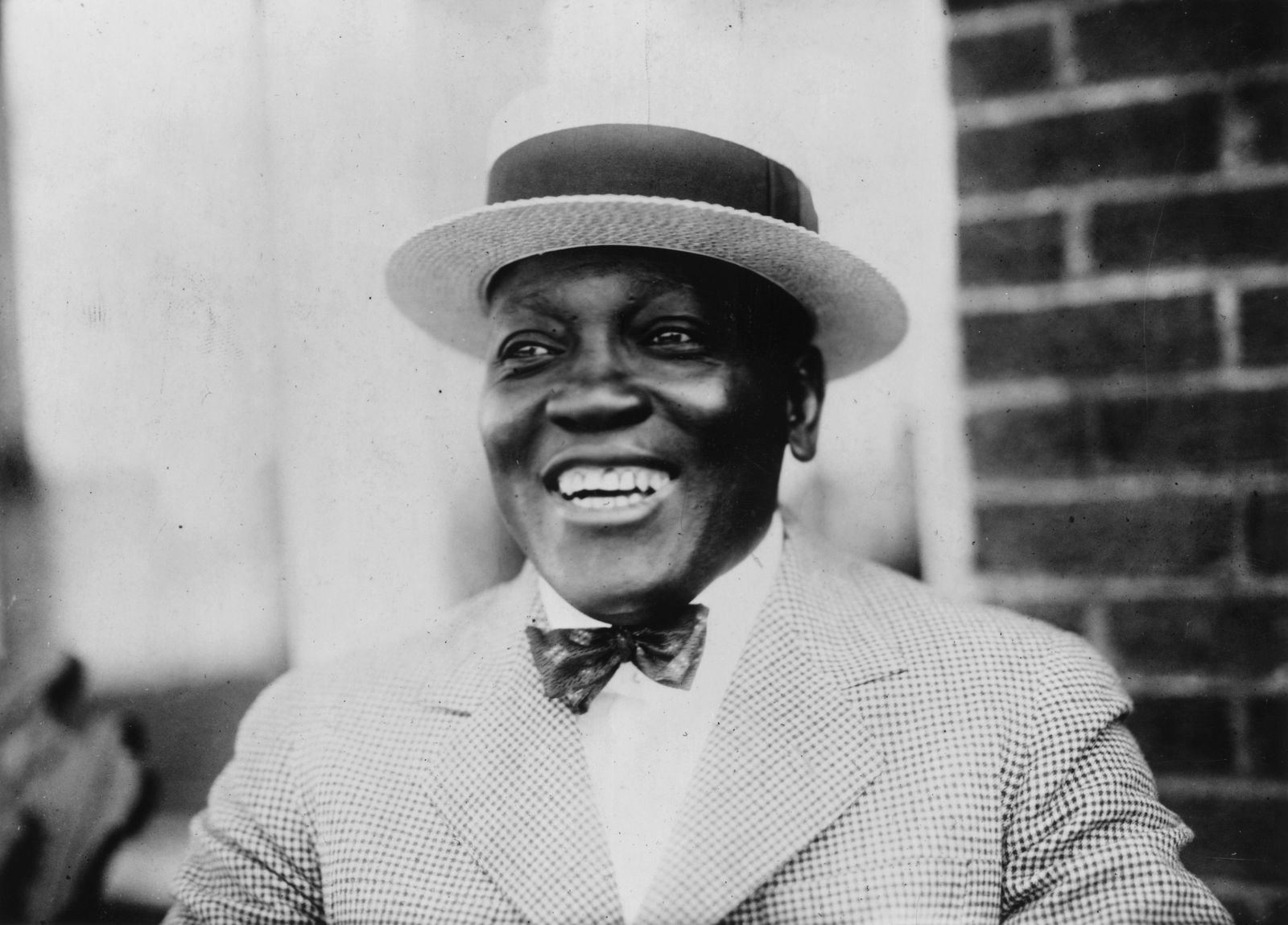
The Cotton Club was spawned from an earlier nightspot called Club Deluxe, owned by boxer Jack Johnson. (Below: Johnson in 1910)
Courtesy Getty Images)

Club Deluxe was renamed The Cotton Club in 1923 by Owney Madden, the mob boss and supplier of illegal booze.
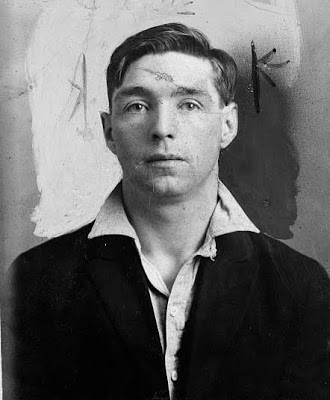
owney

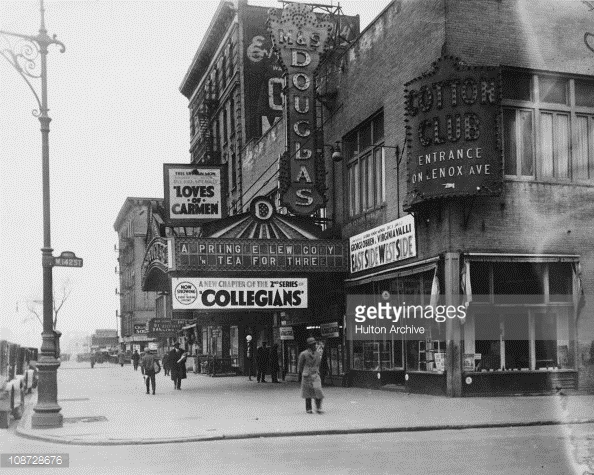
The original Cotton Club at 142nd Street and Lenox Avenue. The Douglas Theater, on the ground floor, is doing much better here, photo taken sometime in 1927:
108728676
Courtesy Getty Images


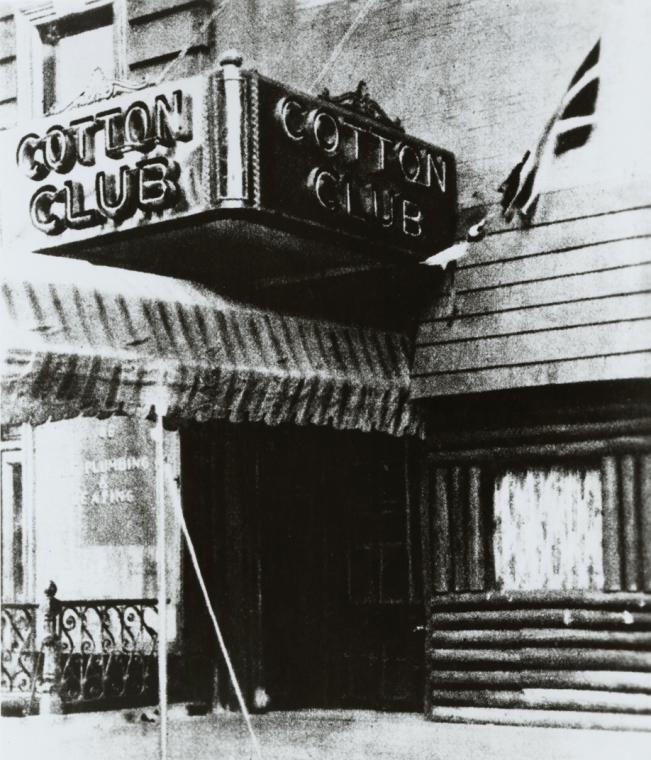
The entrance to the Harlem Cotton Club. Note the log decoration to make it appear like some old rugged shack.
Courtesy New York Public Library

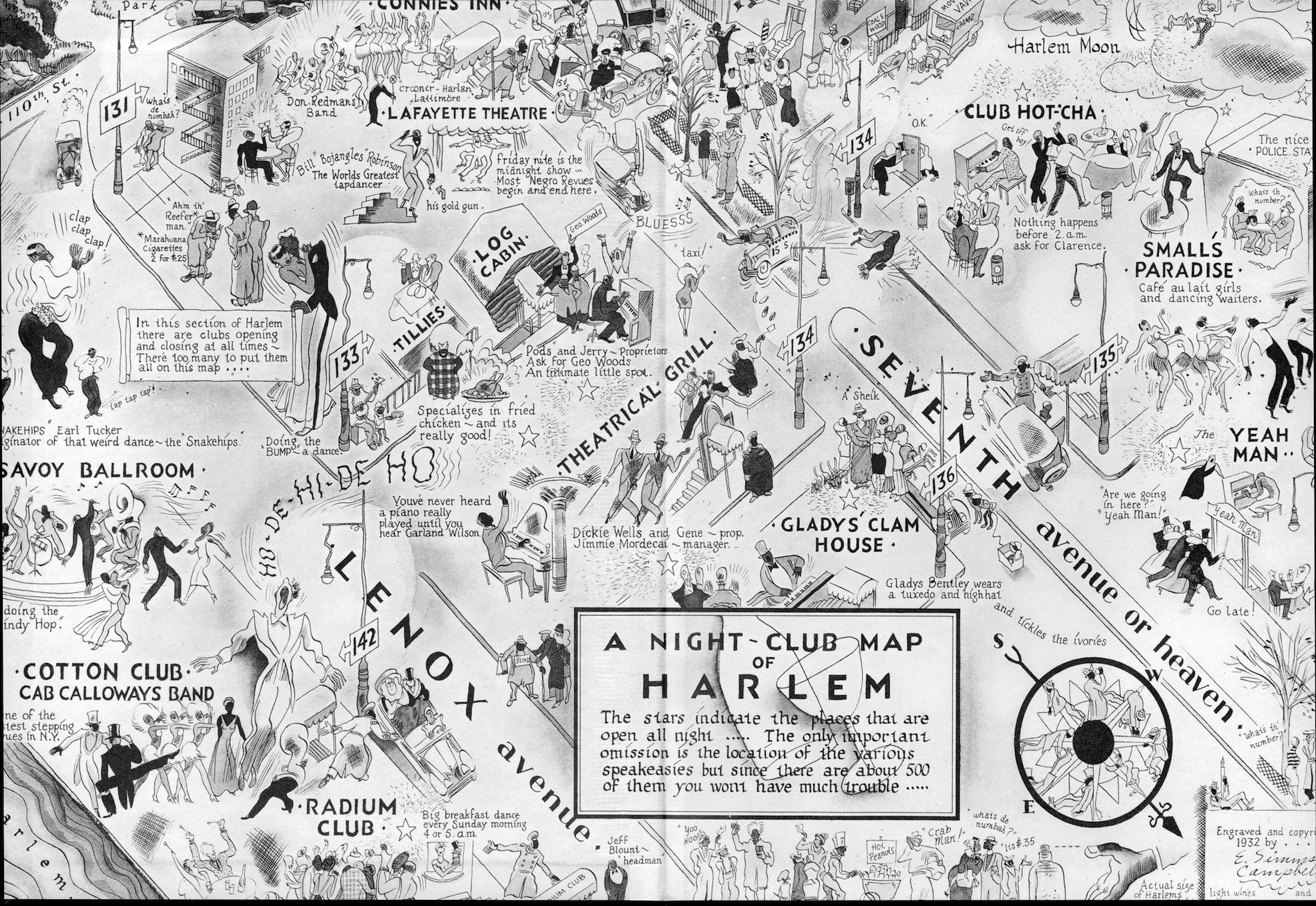
A map from 1932 of the Harlem nightclub scene, featuring the Cotton Club, Small’s Paradise, Connie’s Inn, the Savoy Ballroom and more….
Courtesy Open Culture


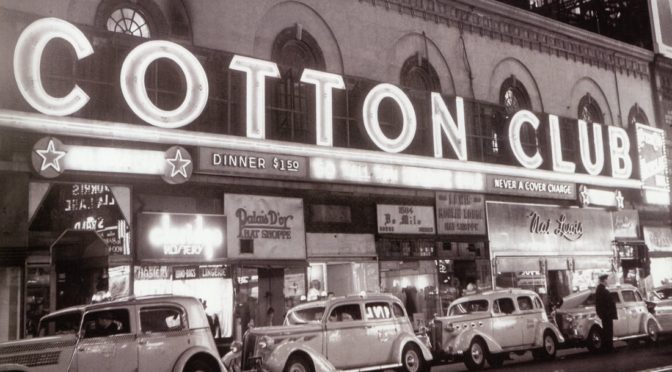
The Broadway Cotton Club as it looked one evening in 1938.
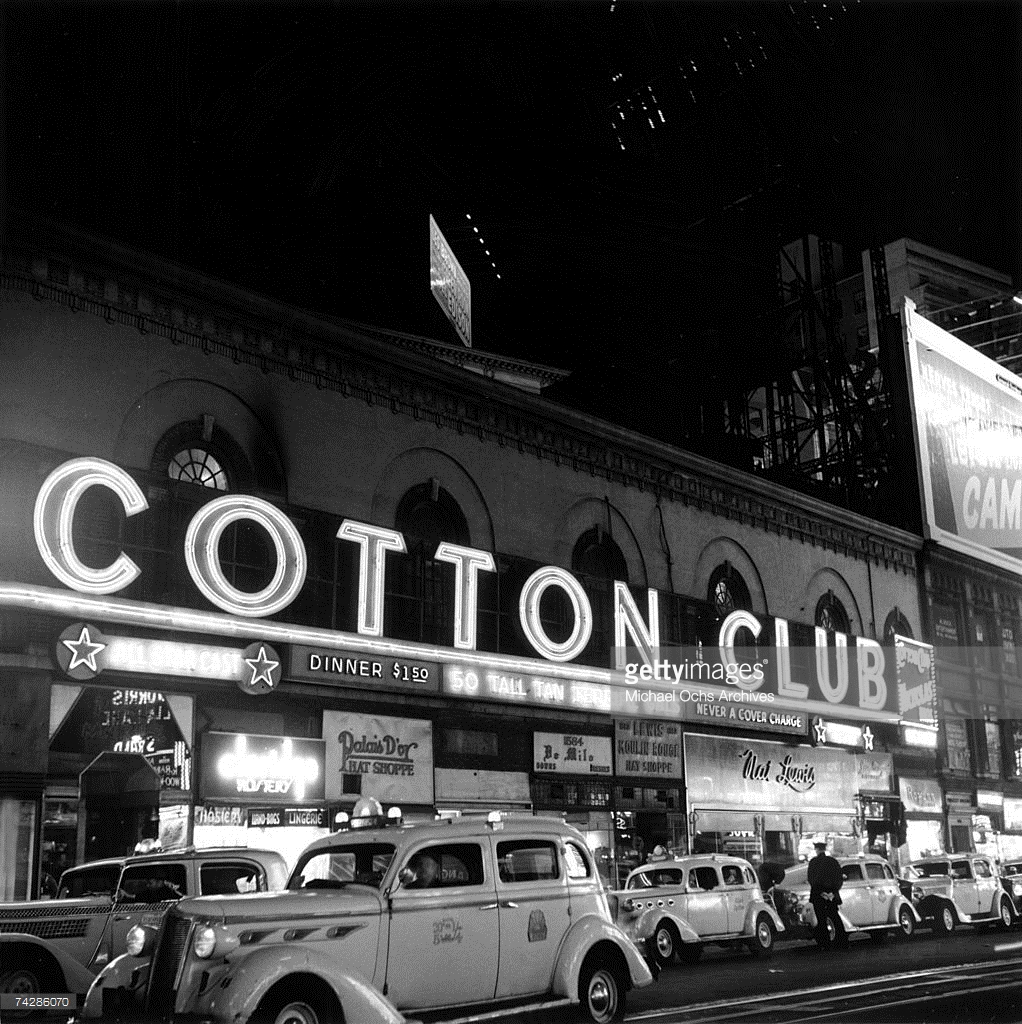
Courtesy Getty Images/ Michael Ochs Archives

A look at the interior of the Broadway Cotton Club circa, during an New Year’s celebration, 1937, with Cab Calloway conducting.
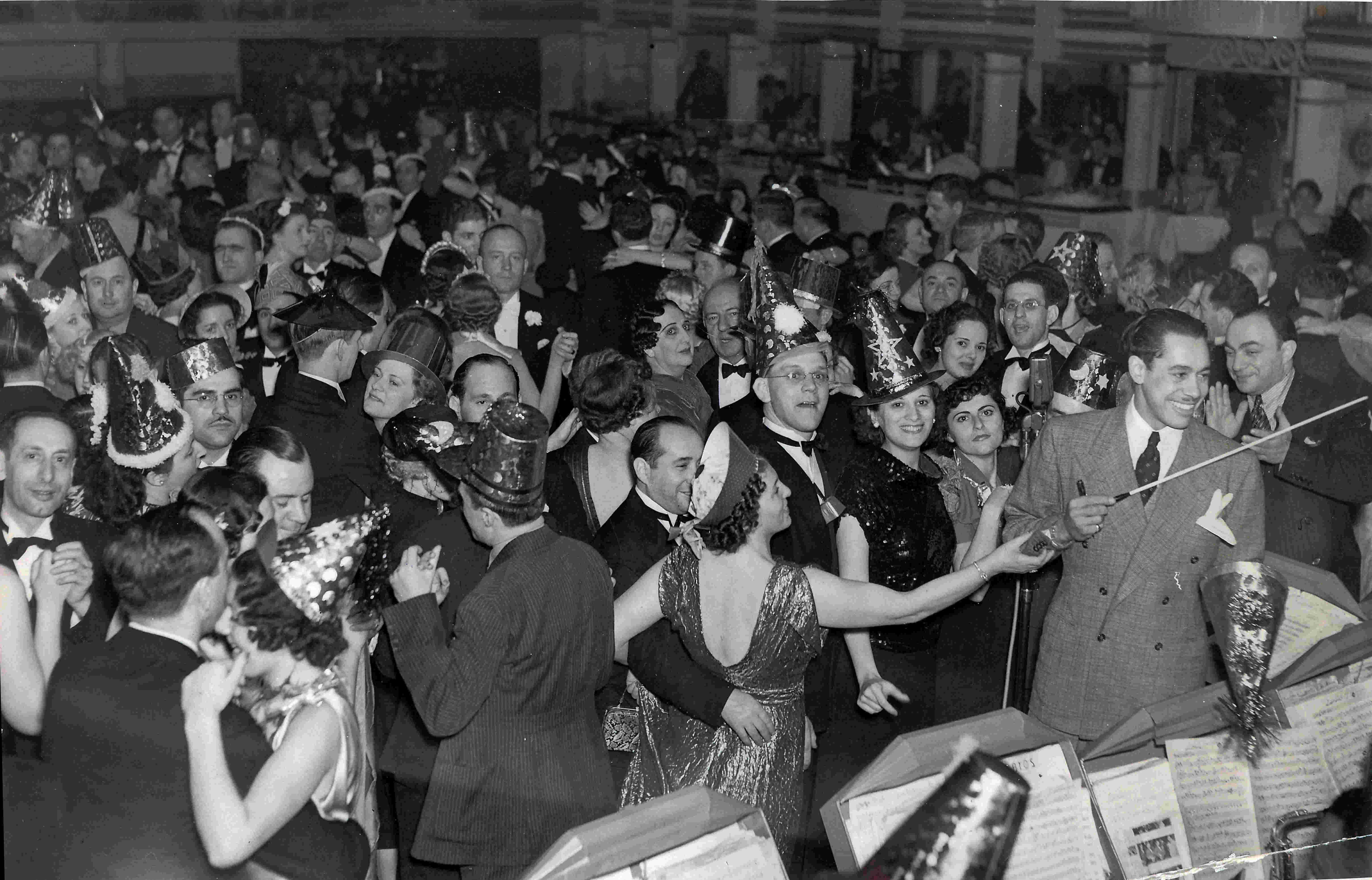
Courtesy the Hi De Ho Blog, devoted to Cab Calloway


An advertisement or program for The Cotton Club. The year 1925 is penciled in at the top, but it has to be from a later date. Calloway had just graduated from high school in 1925!
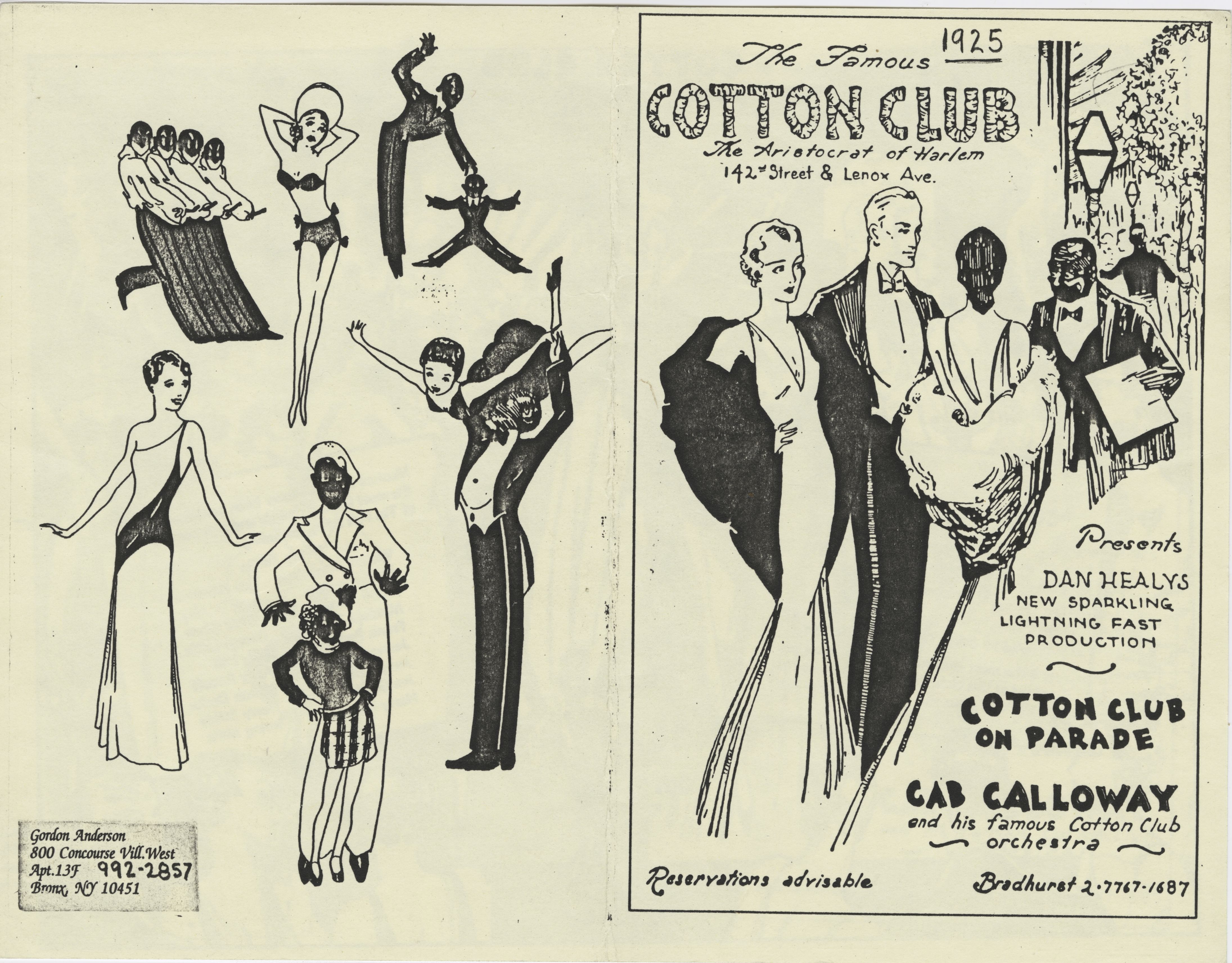
Courtesy New York Public Library

Maude Russel and her Ebony Steppers, performing in the 1929 Cotton Club show called ‘Just A Minute’.
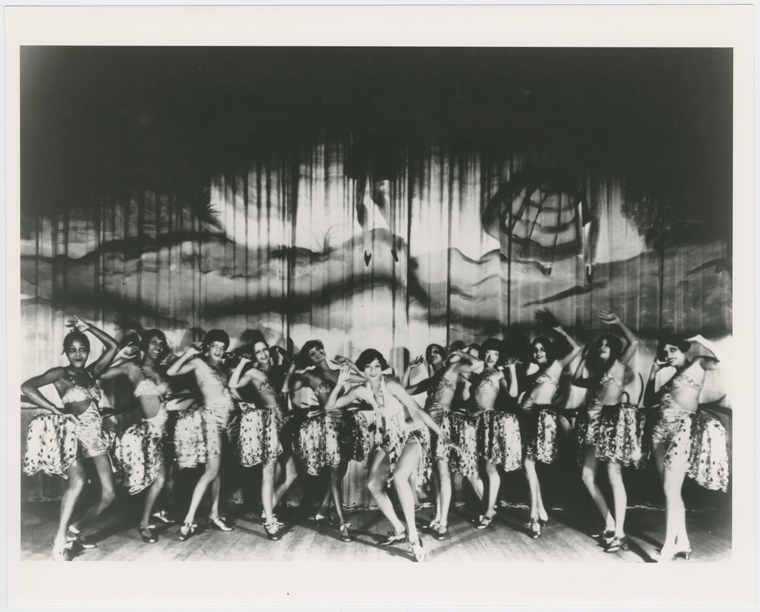
Courtesy New York Public Library

A shot of Jimmy Lunceford and His Orchestra in 1934.
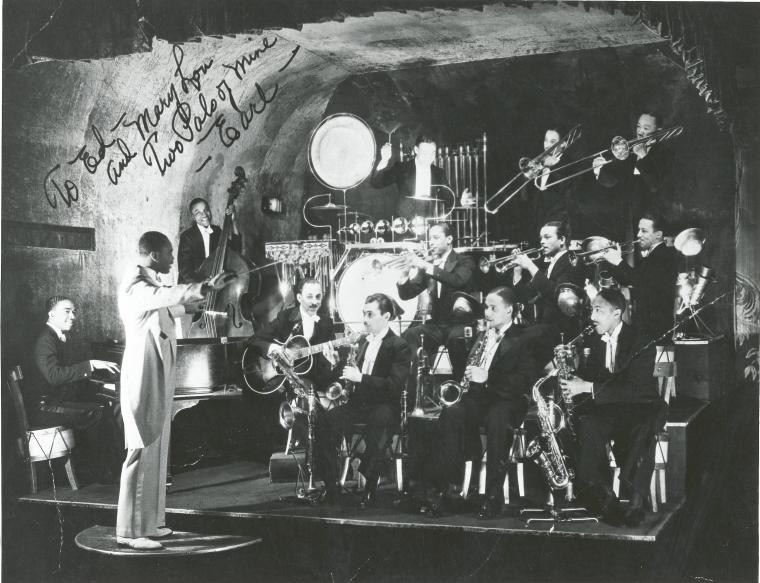
Courtesy New York Public Library


An advertisement for the Nicolas Brothers, for a performance in 1938 at the Broadway Cotton Club.
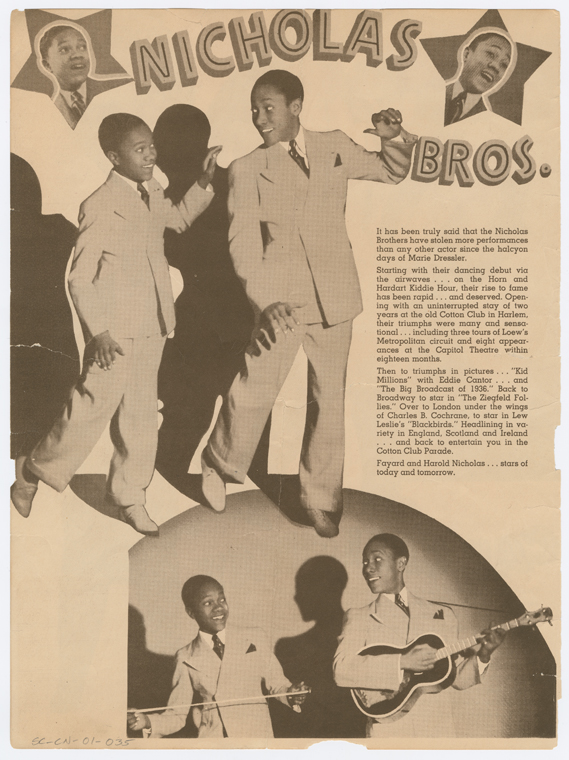
Courtesy New York Public Library


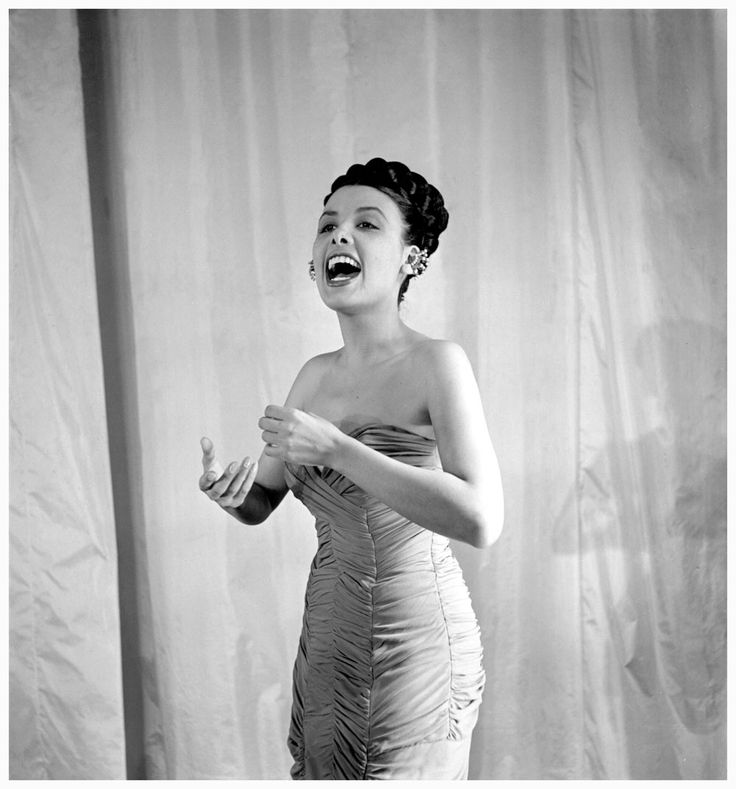
Lena Horne started out in the Cotton Club chorus line but eventually became a headlining star in her own right.
2d60b349c585fc130443fa0412f15ab0

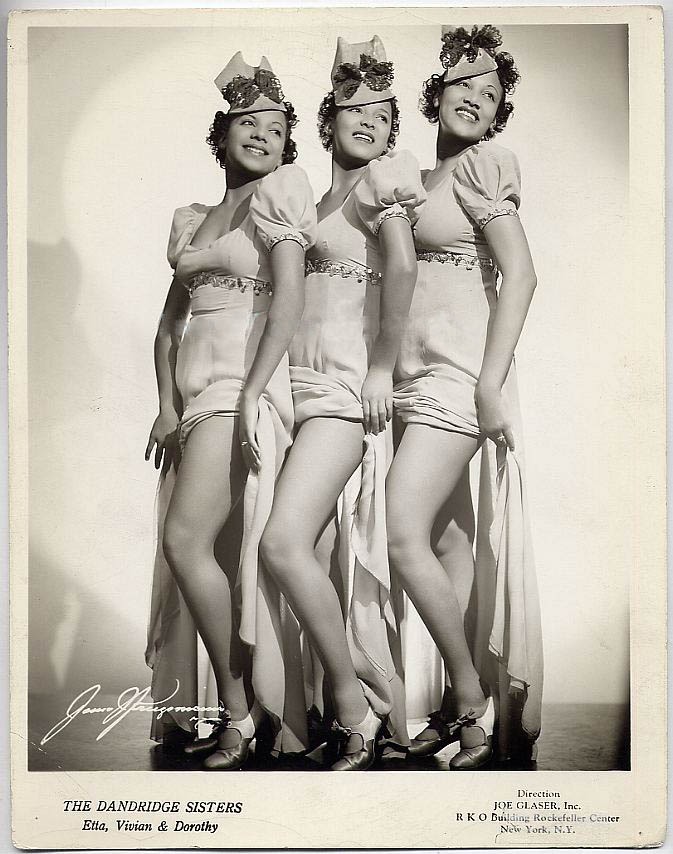
The Dandridge Sisters were notable performers in the final years of the Cotton Club.
tumblr_muku350orP1qlaando1_1280

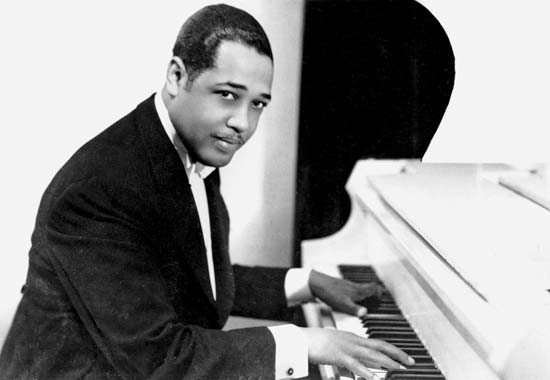
The young and dashing Duke Ellington became a superstar in the years following his Cotton Club residency.
99699-004-9819D54D.jpg.pagespeed.ce.KVug26Qi8L


Duke Ellington and his Cotton Club Band, in a 1930 film appearance:

In 1934, Cab Calloway made this short film featuring his music:


Cab Calloway’s here too, in this clip from the film Stormy Weather, but the real stars are the Nicholas Brothers in a breathtaking dance number:


THIS PODCAST FEATURED MUSICAL SNIPPETS FROM THE FOLLOWING SONGS:

Black and Tan Fantasy – Duke Ellington

Drop Me Off In Harlem – Duke Ellington

Speak Easy Blues – King Oliver Jazz Band

Charleston – Paul Whiteman

Mood Indigo – Duke Ellington

Swing Session – Duke Ellington

If You Were In My Place – Duke Ellington

Minnie the Moocher – Cab Calloway

I’ve Got The World On A String – Duke Ellington

Stormy Weather – Ethel Waters

On The Sunny Side of the Street – Duke Ellington


NOTES ON THIS SHOW:

— I made two amusing flubs in this show 1) Duke Ellington’s nickname is probably inspired by the Duke of Wellington, not (obviously) the Duke of Ellington, 2) the name of the movie with Lena Horne and the Nicholas Brothers is obviously named Stormy Weather, not  Stormy Weathers (which must be the name of a drag queen somewhere)

Jack Johnson‘s story is so much more complex and I wish I had more time to talk about him. For more information, check out the incredible documentary (and the book it’s based on by Geoffrey C Ward) called Unforgivable Blackness: The Rise and Fall of Jack Johnson.
 

Categories
Friday Night Fever

Recalling the opening of Roseland Ballroom at the start of Prohibition, the ‘phantasmal’ atmosphere, the private dancer

The Roseland Ballroom closes its doors next month on April 7th after a round of Lady Gaga concerts.  The storied big band venue — the ‘world’s foremost ballroom cafe’ — originally opened on December 31, 1919 at 1658 Broadway (at 50th/51st Street).  In the 1950s, it moved to its present location on 52nd Street, a former ice and roller-skating rink.

On the surface, opening a dance club a few weeks before the start of Prohibition doesn’t seem to be especially wise.  But New Yorkers ate it up.  After all, there would eventually be hundreds of speakeasies surrounding it!”

From the January 17, 1920 edition of the New York Evening World, headlined ‘Broadway Finds Joy In Roseland‘:

“The shadow of the camel, i.e. the presence of Prohibition, has not robbed Broadway of all its pleasures.  The dancers still find a way to have a good time, as may be attested by the thousands who attend the sessions at Roseland, the new dancing place at Broadway and 51st Street.

During the ’20s, the Roseland was the scene of many dance marathons for prize money.  In 1923, when the city reminded him that state codes authorized only twelve-hour endurance contests, he arranged for competitors to be whisked away on a boat — called the Roseland — to complete the contest.

The Roseland took aim at dismissing the blues at the height of the Great Depression.   “At Roseland Ballroom, ‘Old Man Depression’ will be tried and found guilty of murdering Prosperity and sentenced to death.  A scaffold will be erected for him and his ‘death’ will be a signal for merry-making.” [from the December 31, 1931, New York Times]

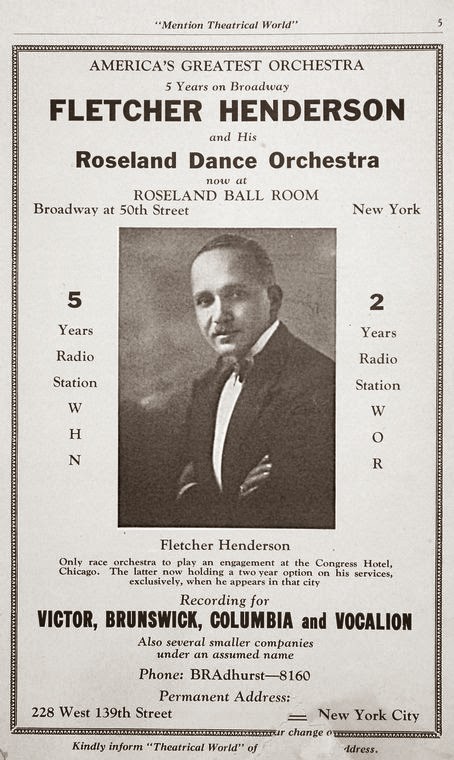
At right: Regular Roseland bandleader Fletcher Henderson (courtesy NYPL)

The Roseland was never the Rainbow Room.  During the 1940s it was nicknamed ‘the poor man’s nightclub’ which apparently didn’t stop it from being “the most famous dance hall in the world,” according to the New Yorker in 1942.  (It was also, back when it opened, a whites-only establishment.)  Always popular, the Roseland of the 1940s was charming and sometimes mysterious, regimental and rarely lewd.  Its owner Louis Brecker always referred to it as “the home of refined dancing.”

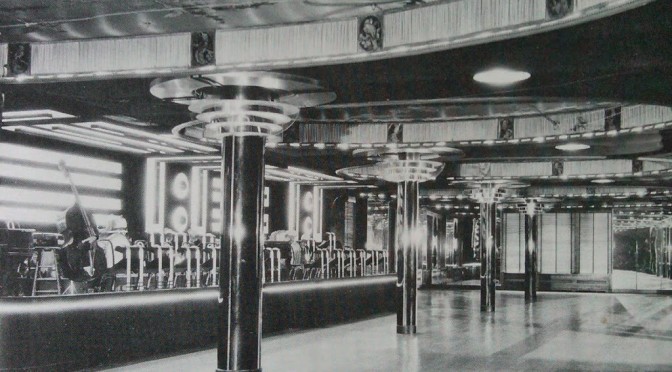
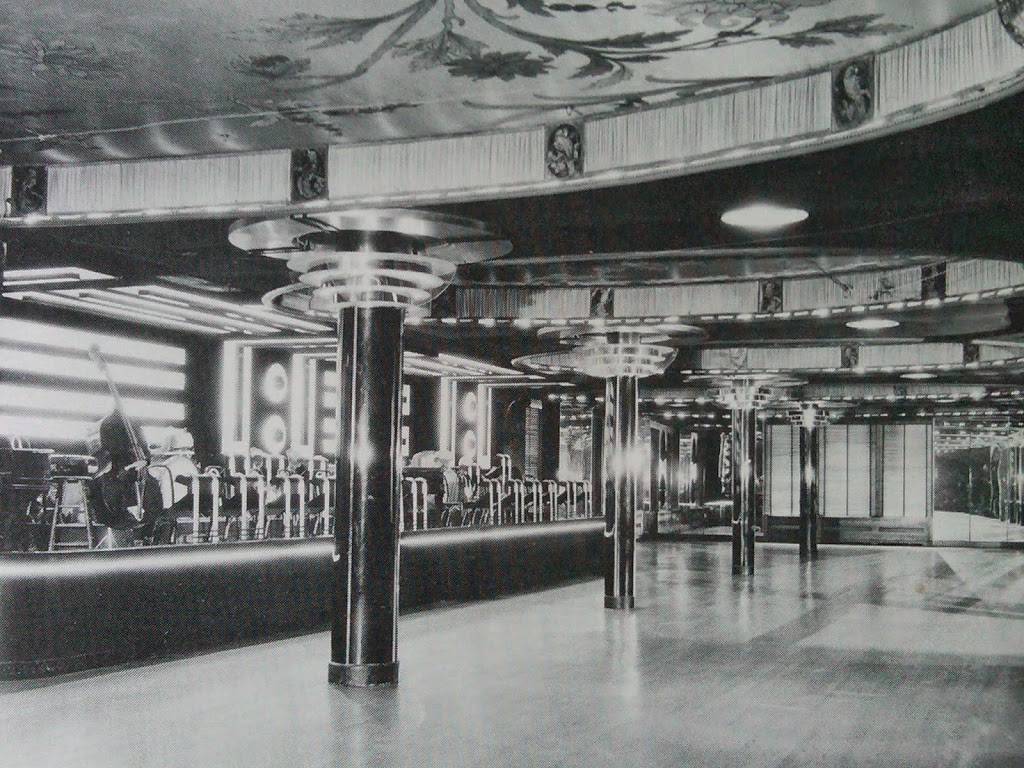
People accustomed to night-club life often find the atmosphere slightly phantasmal. The ceiling is hung with dark-blue muslin studded with tiny electric bulbps give a night-sky effect. The roomis lit by neon lamps, graduating in shade from deep pink to lemon yellow. In their dim rays knots of patrons drift to and from the dance floor with a curiously delicate air, fluorescing a bit as they go.” [New Yorker, 1942]

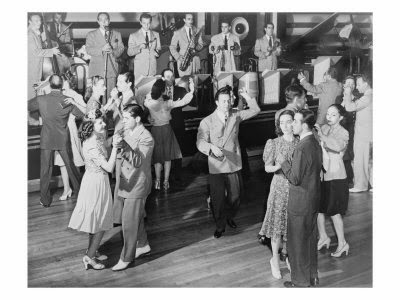
Roseland dancers, 1941 (Library of Congress)

The Roseland was also known for hostesses (or taxi dancers) who would dance with gentlemen for $1.50 per half hour.  They were beautiful and well behaved, never drinking alcohol if their patrons offered. And they never solicited business, sitting politely in a roped-off dias by the dance floor, waiting for an interested man to come along.

“Each hostess tried to build up a clientele by thoughtful attention to masculine interests and hobbies. Many hostesses read books in order to increase their conversational range,” according to the New Yorker. “[E]lderly gentlemen who like to surround themselves with hostesses, sometimes  [bought] out the entire platoon for the evening.”

The hostess/taxi dancer, hugely popular during the World War II era, had mostly faded out by the time the Roseland moved to its present location at 52nd Street.

 Here’s a Henderson tribute to the venue, entitled “Rose Room (In Sunny Roseland)”: