Categories
Podcasts Religious History

The secrets of the Cathedral of St. John the Divine, the unfinished beauty of Morningside Heights

PODCAST The history of the Cathedral of St. John the Divine and a tour of its unique artistic treasures

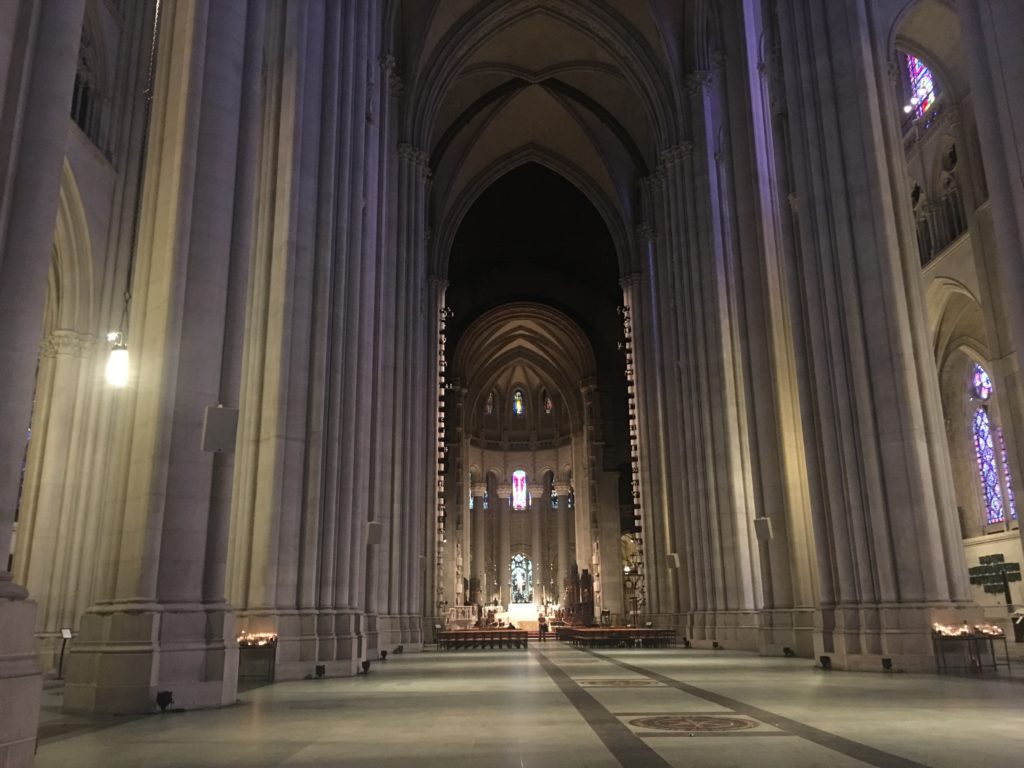
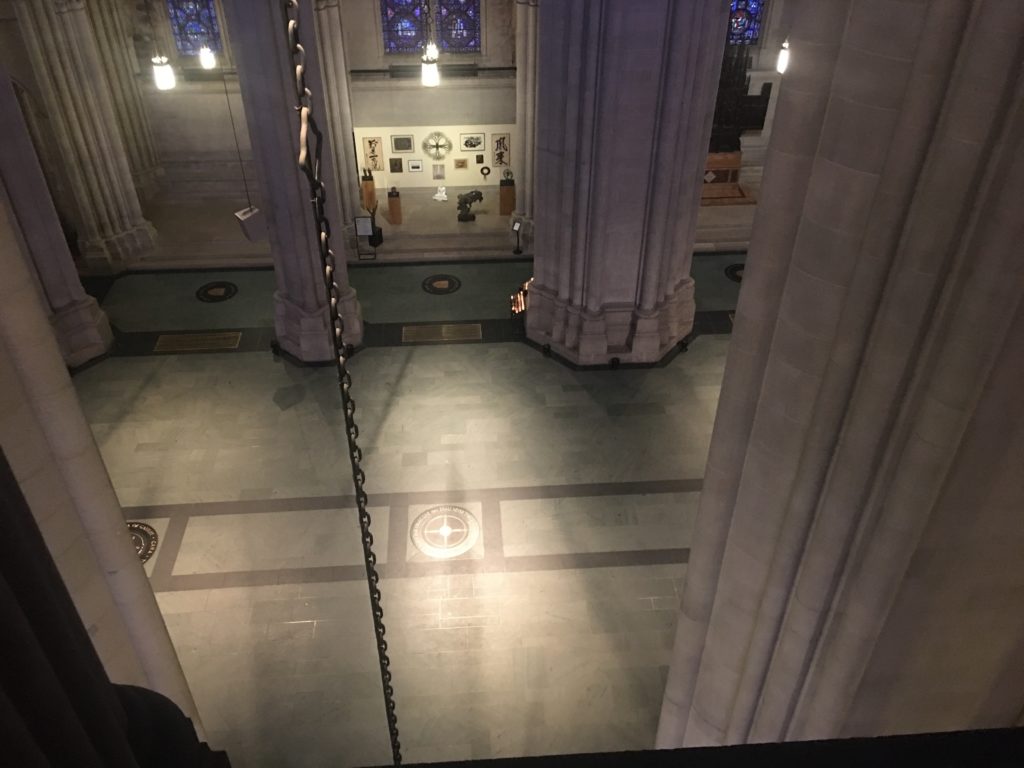
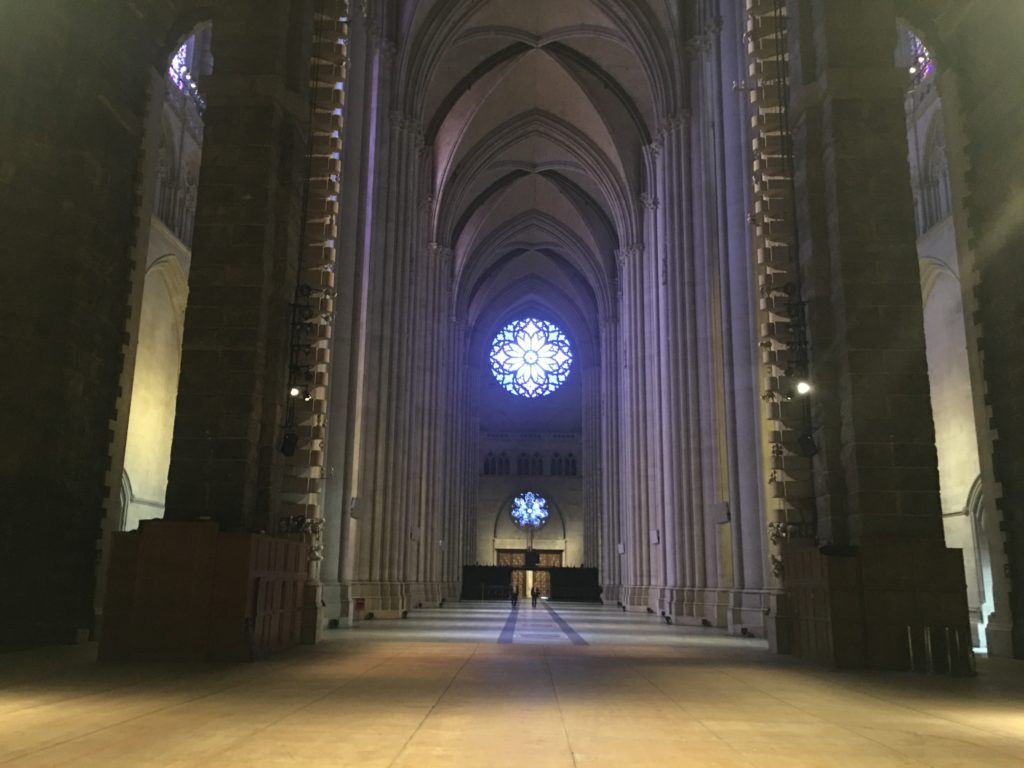
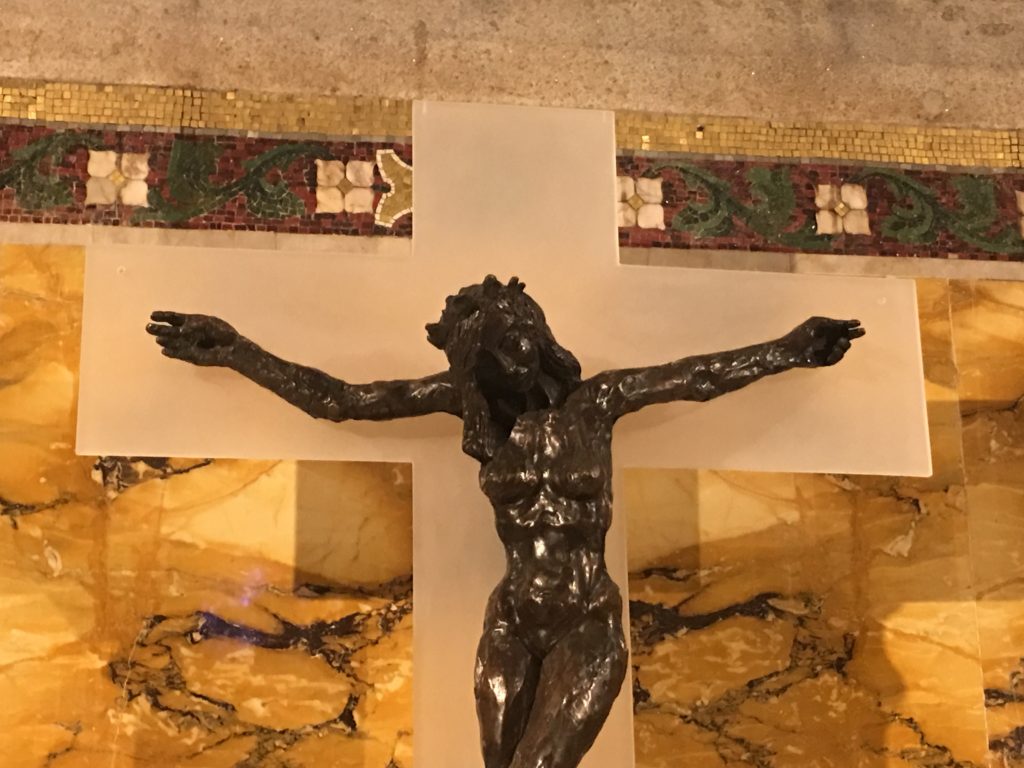
The Bowery Boys have finally made it to one of the most enigmatic and miraculous houses of worship in America – the Cathedral of St John the Divine. This Episcopal cathedral has a story like no other and a collection of eccentric artifacts and allegorical sculpture – both ancient and contemporary – that continues to marvel and confound.

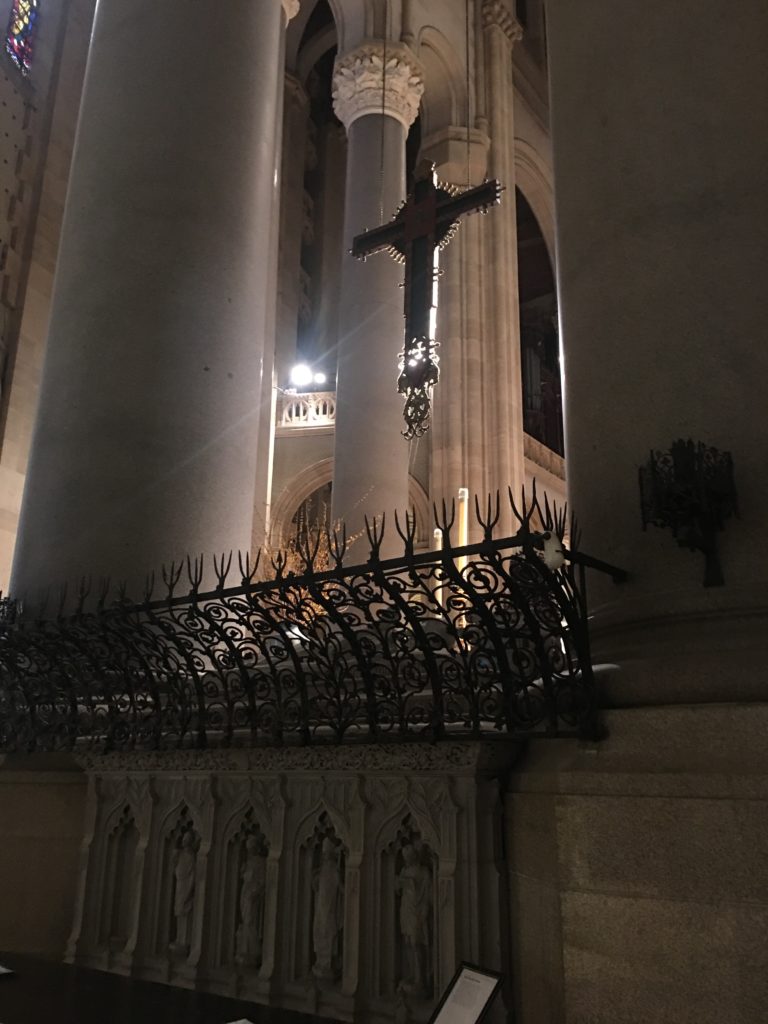
Located in Morningside Heights in Upper Manhattan, St. John the Divine – named for the Apostle and author of the Book of Revelations — is no ordinary cathedral (if such a thing exists). Every corner seems to vibrate on a different frequency from other Christian churches.

Many ideas have gone into creating St. John the Divine’s unique personality – a quirky mix of architectural styles, some outside-the-box ideas about community outreach, its embrace of the unconventional. But one particularly striking detail sets it apart from the rest: the Cathedral remains unfinished.

FEATURING: Franklin Delano Roosevelt, Keith Haring, Duke Ellington, Martin Luther King Jr. and the high-wire antics of Philippe Petit

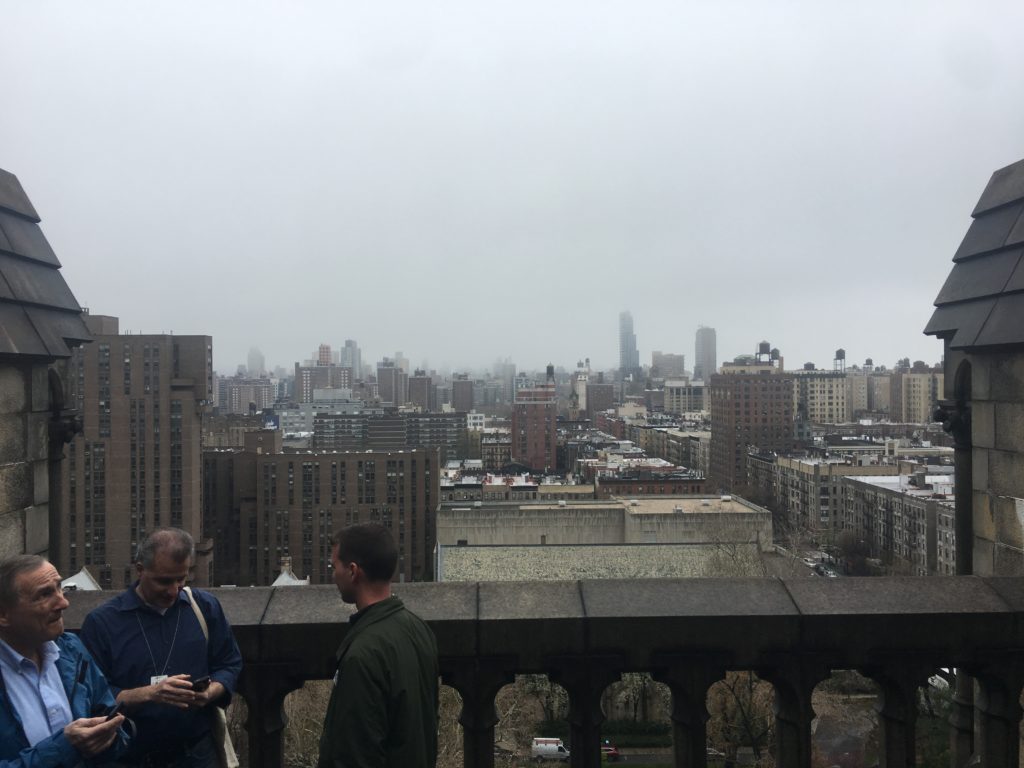
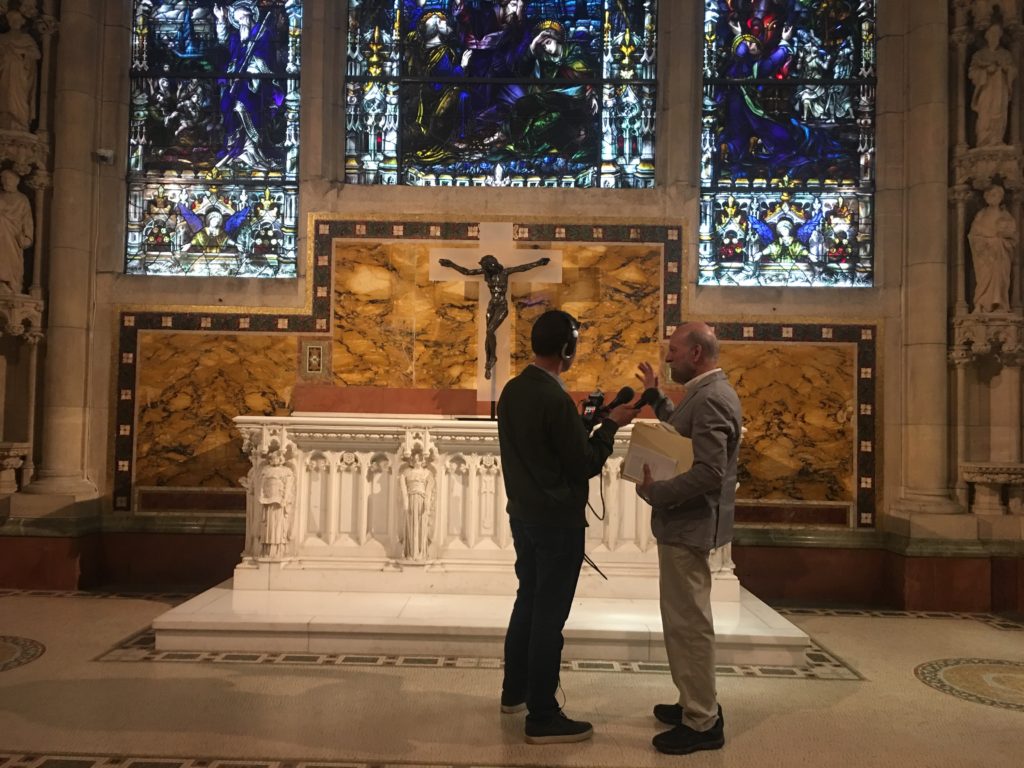
ALSO: Tom and Greg explore the Cathedral — from the crypt to the rooftop – with tour guide Bill Schneberger.

Listen Now: Cathedral of St. John the Divine Podcast

Or listen to it straight from here:

______________________________________________________

The Bowery Boys: New York City History podcast is brought to you …. by you!

We are now producing a new Bowery Boys podcast every other week.  We’re also looking to improve the show in other ways and expand in other ways as well — through publishing, social media, live events and other forms of media.  But we can only do this with your help!

We are now a member of Patreon, a patronage platform where you can support your favorite content creators for as little as a $1 a month.

Please visit our page on Patreon and watch a short video of us recording the show and talking about our expansion plans.  If you’d like to help out, there are five different pledge levels (and with clever names too — Mannahatta, New Amsterdam, Five Points, Gilded Age, Jazz Age and Empire State). Check them out and consider being a sponsor.

We greatly appreciate our listeners and readers and thank you for joining us on this journey so far. 

_______________________________________________________

A postcard from 1902 with only a gigantic arch built. The nearby campus of Columbia University was only a few years old by this time.
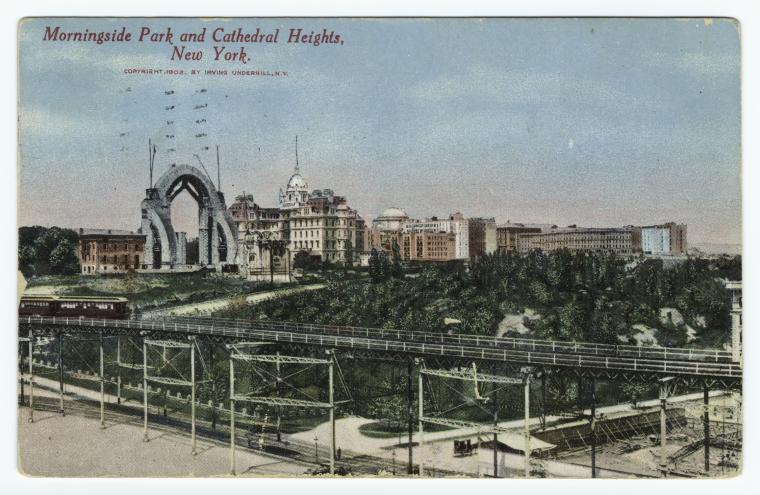
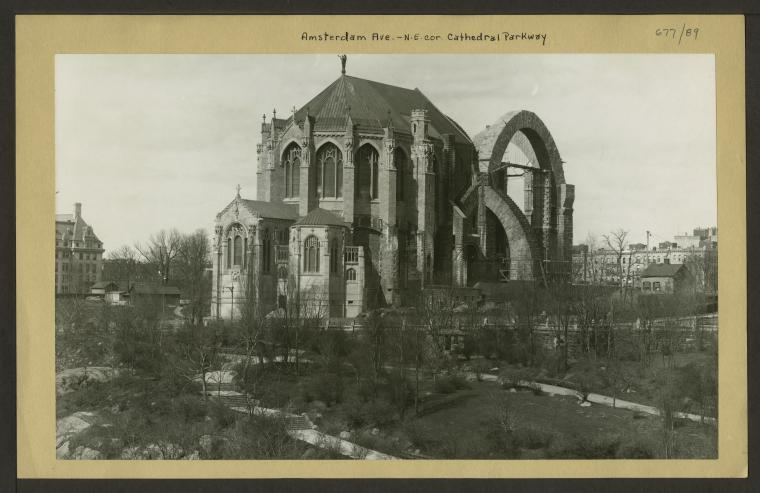
A postcard from 1910. Little did they know that it still would not be finished over a century afterwards.
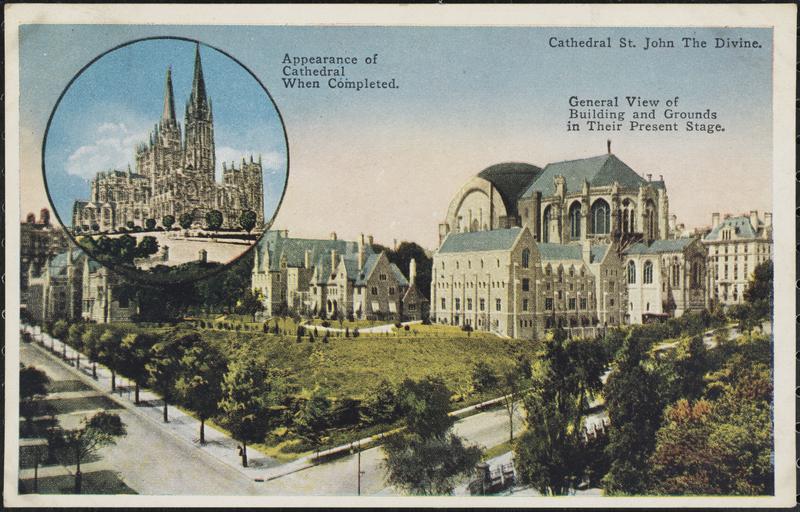
Museum of the City of New York

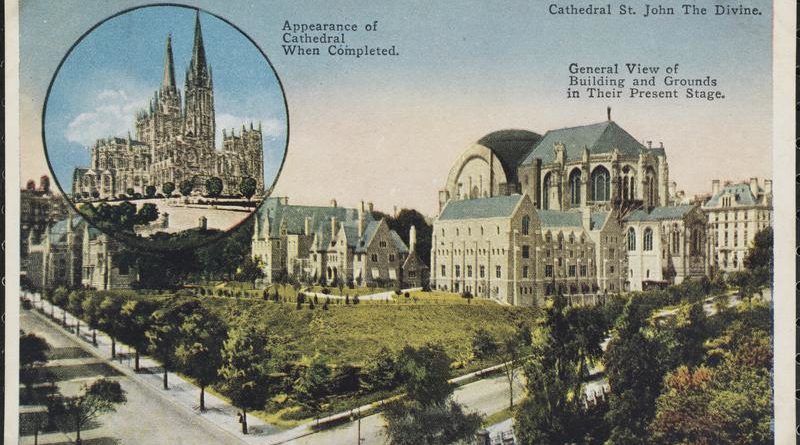
What the church actually looked like in 1910.
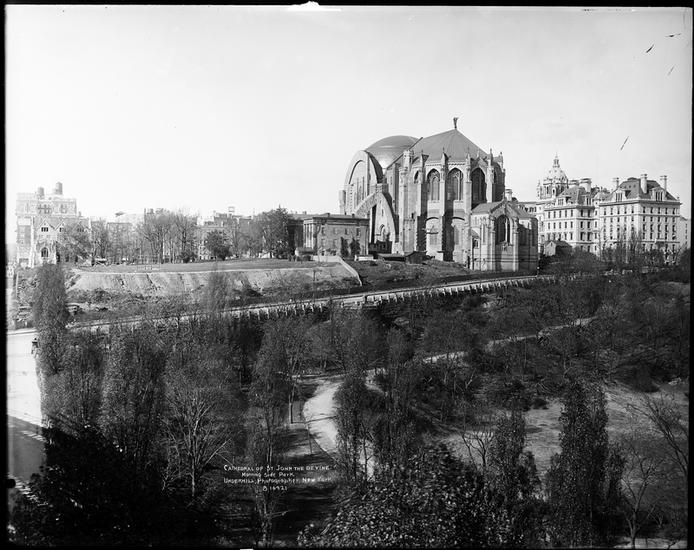
Irving Underhill/Museum of the City of New York
New York Public Library

Bringing the columns into the future nave of the church, 1904.
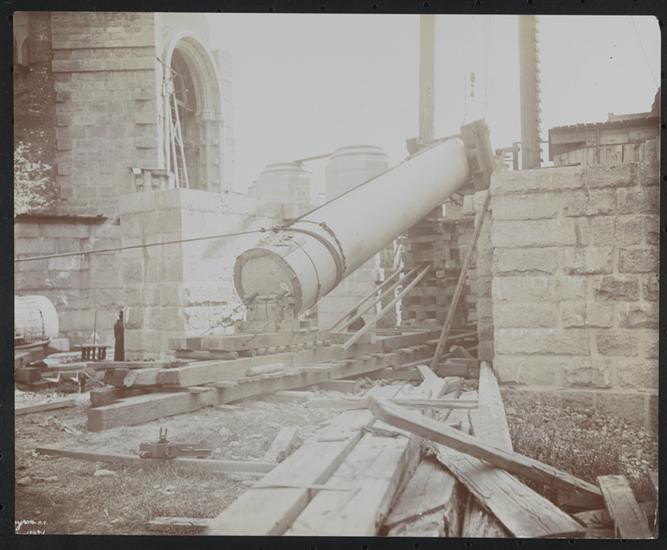
Museum of the City of New York

The first services were actually held in the crypt. Note the beautiful Guastavino tiling on the ceiling.
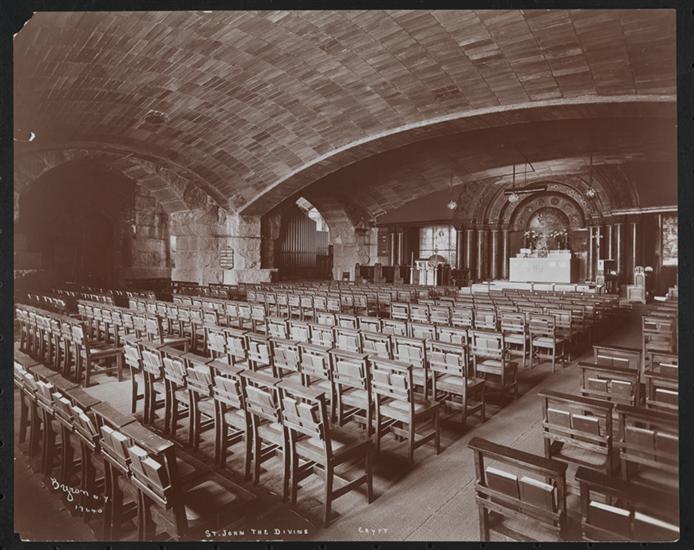
MCNY

Considerably more work has been done by 1934 as shown in this photograph.
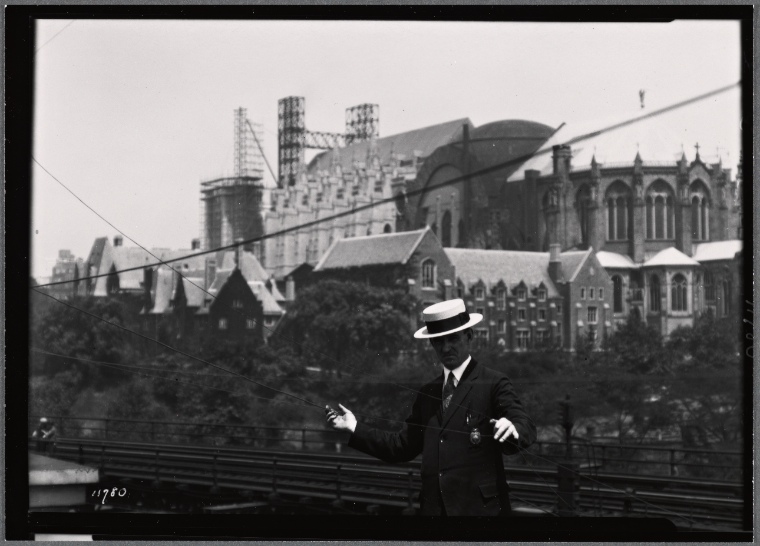
NYPL

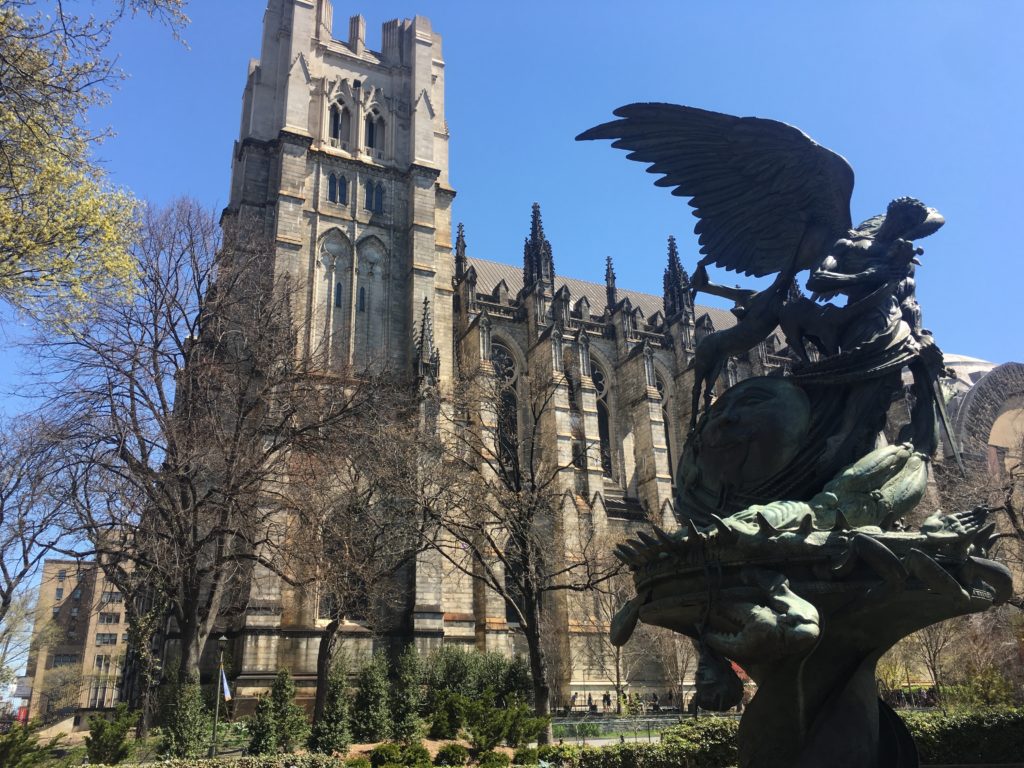
The western end of the cathedral as seen from the children’s garden at the foot of the REALLY weird Peace Fountain by sculptor Greg Wyatt.
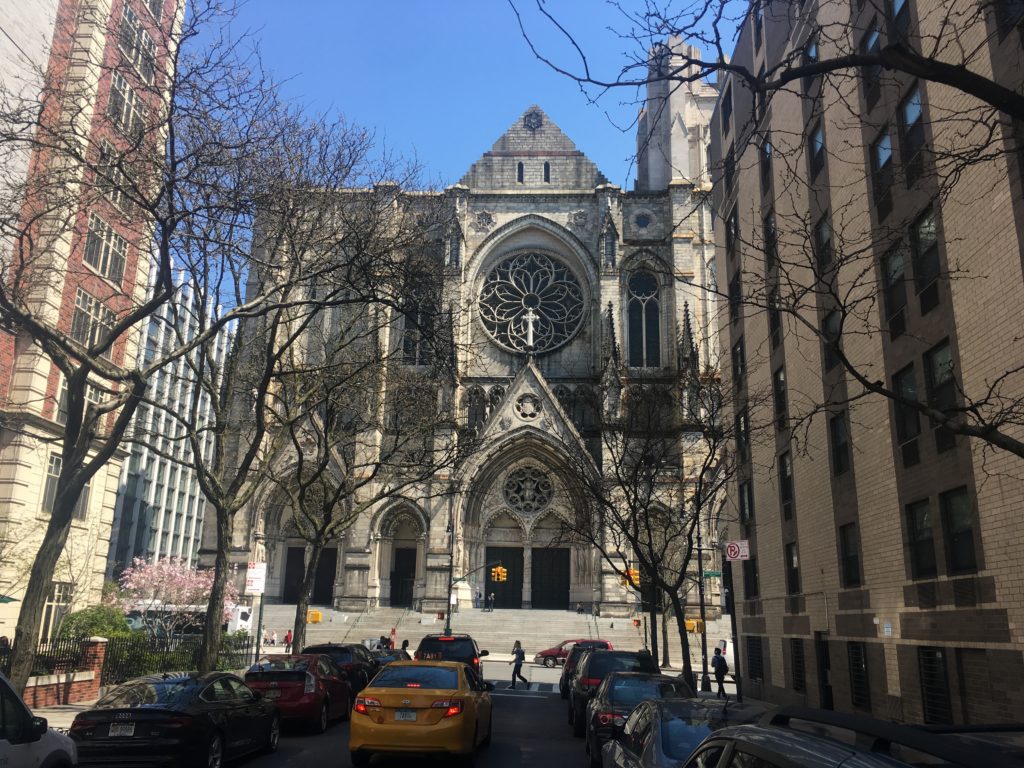
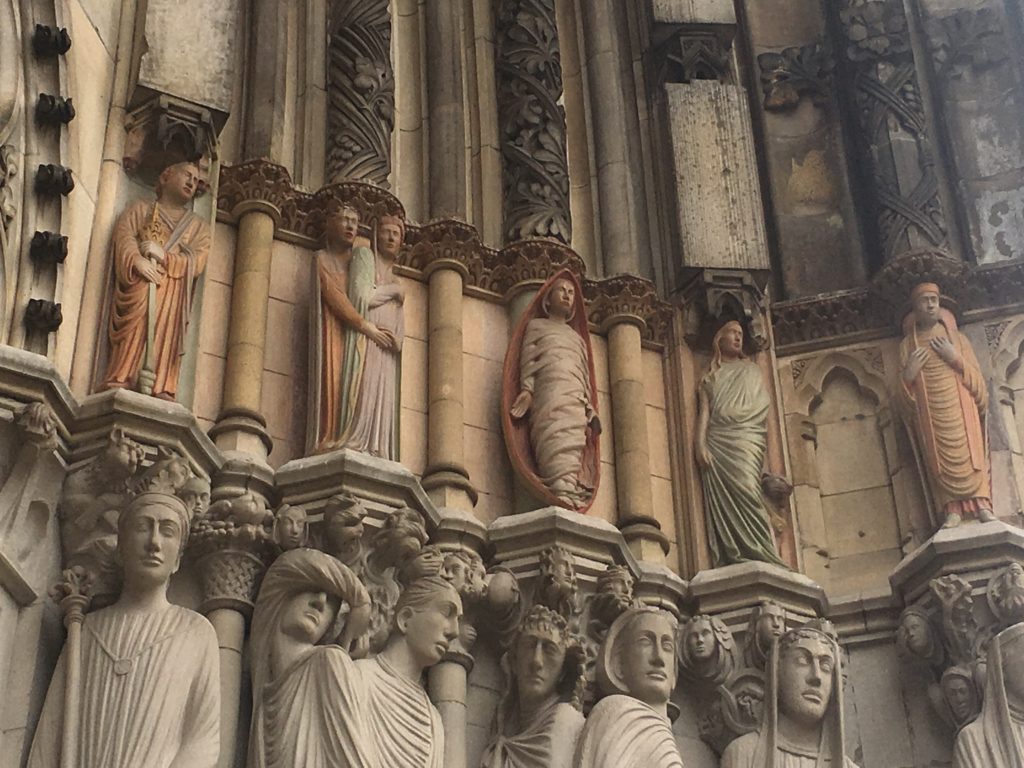
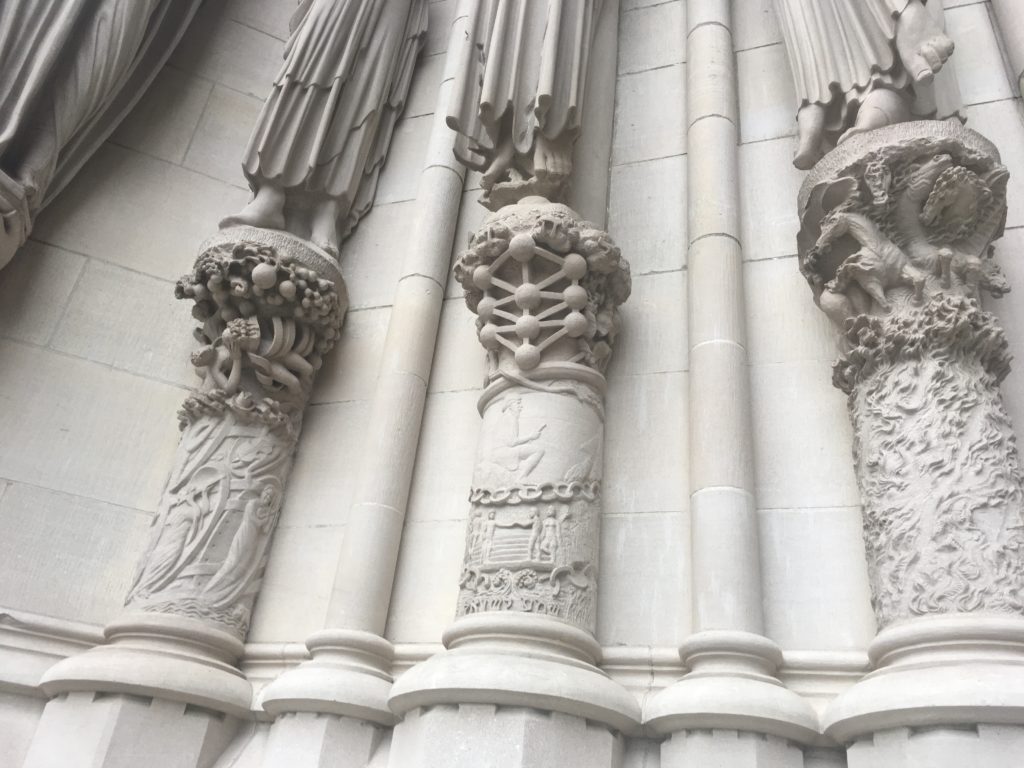
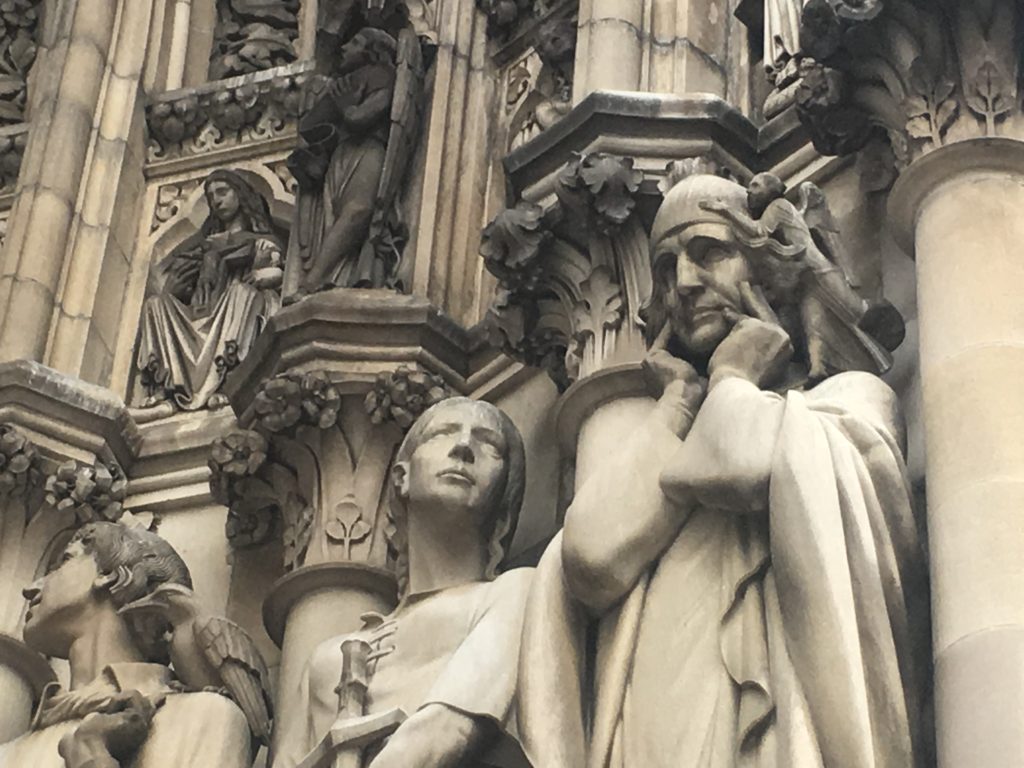
From the western entrance of the church, a collection of curious, strange and even unsettling carvings:
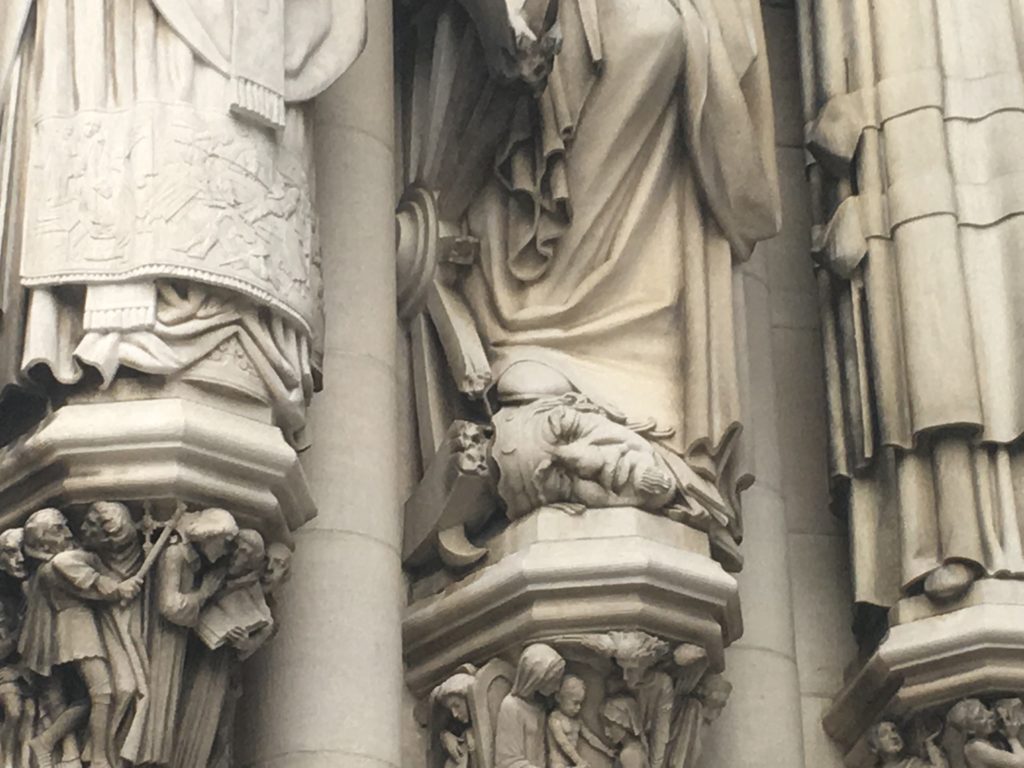
Befitting John’s authorship of the Book of Revelations, a grim depiction of the Apocalypse (and carved well before the events of September 11).
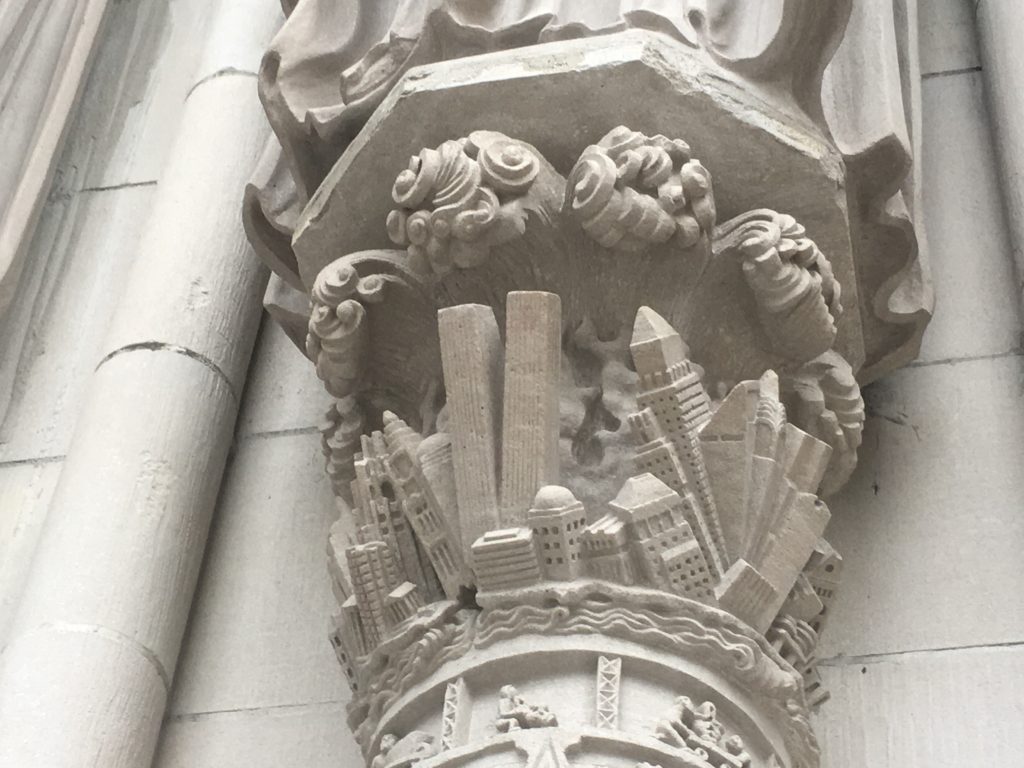
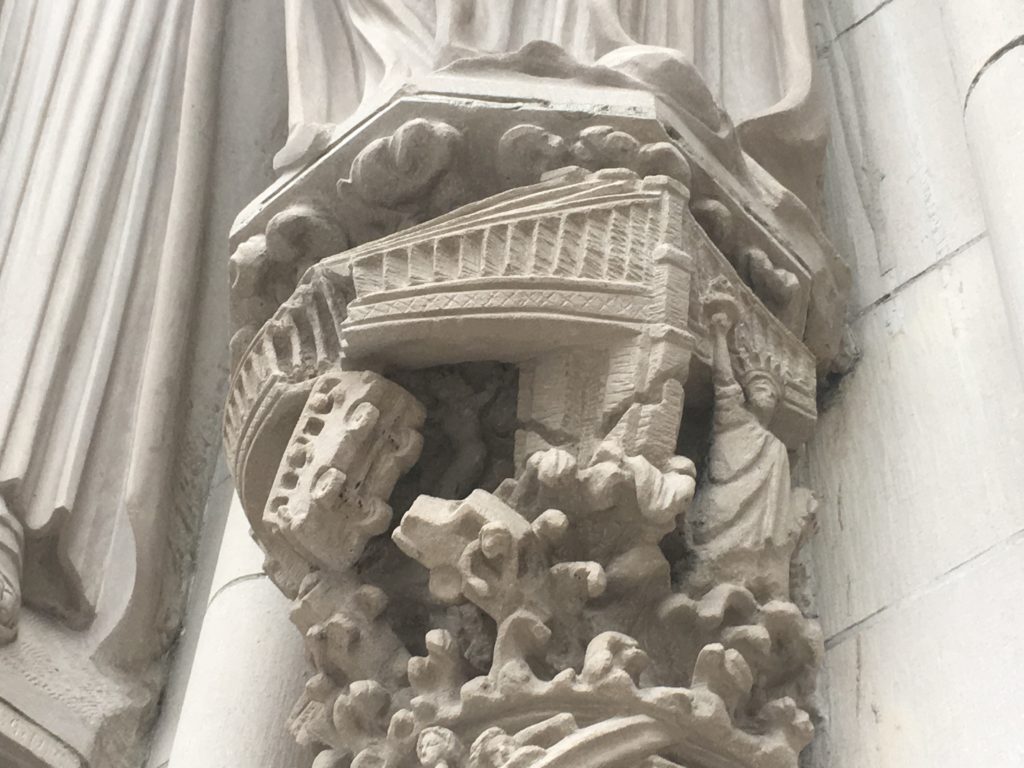
The southern archway had yet to be populated with statues.
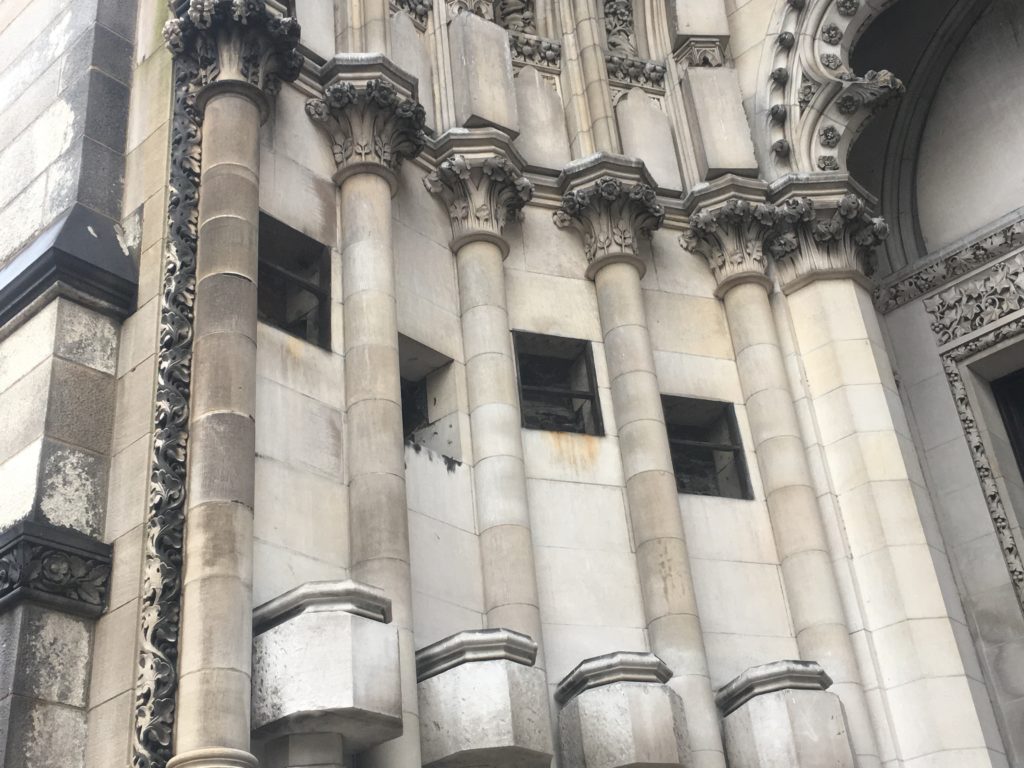
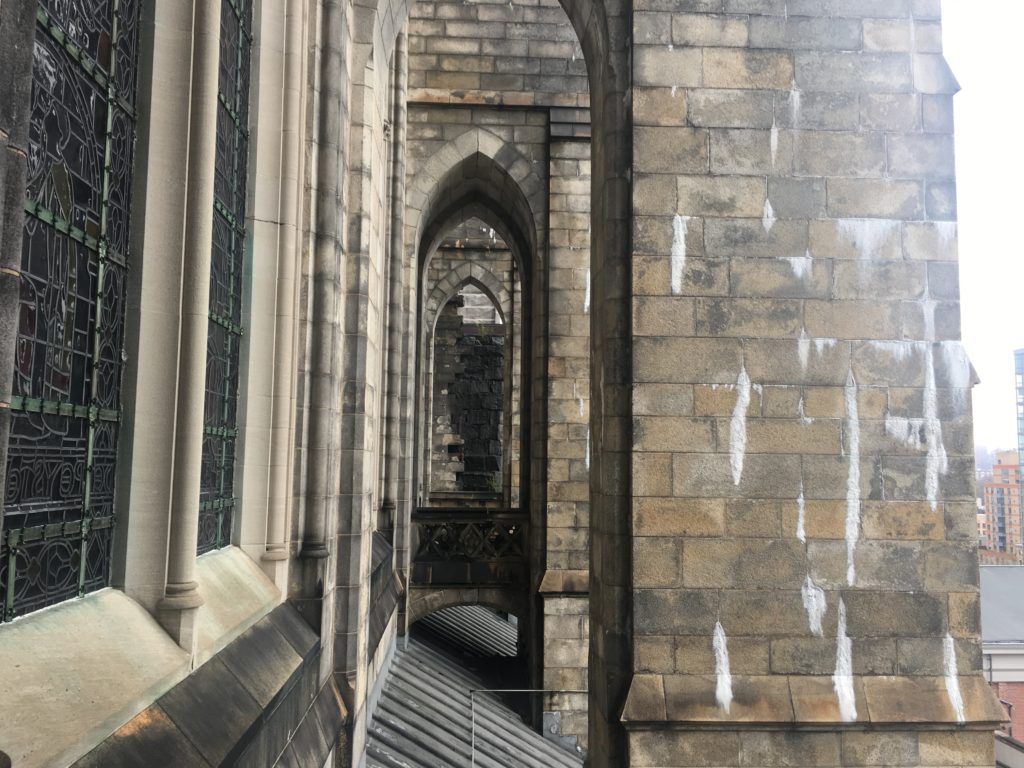
From its northern side, an excellent view of the diverse styles in their unfinished state.
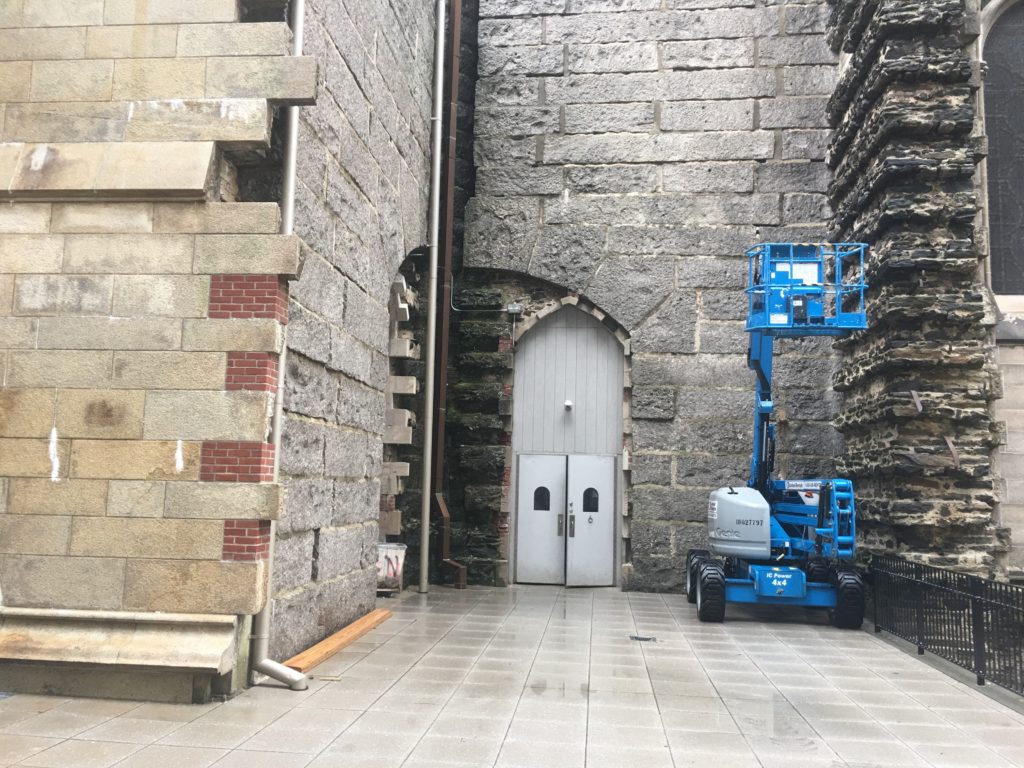
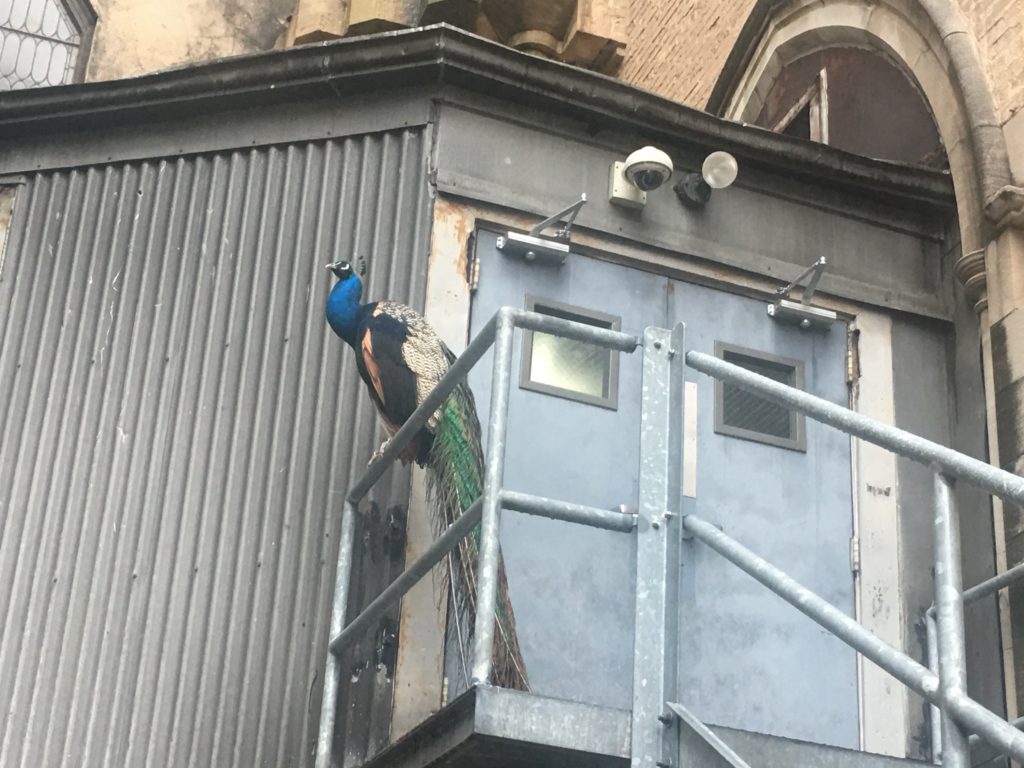
Don’t forget to look and listen for the peacocks which roam the cathedral grounds.

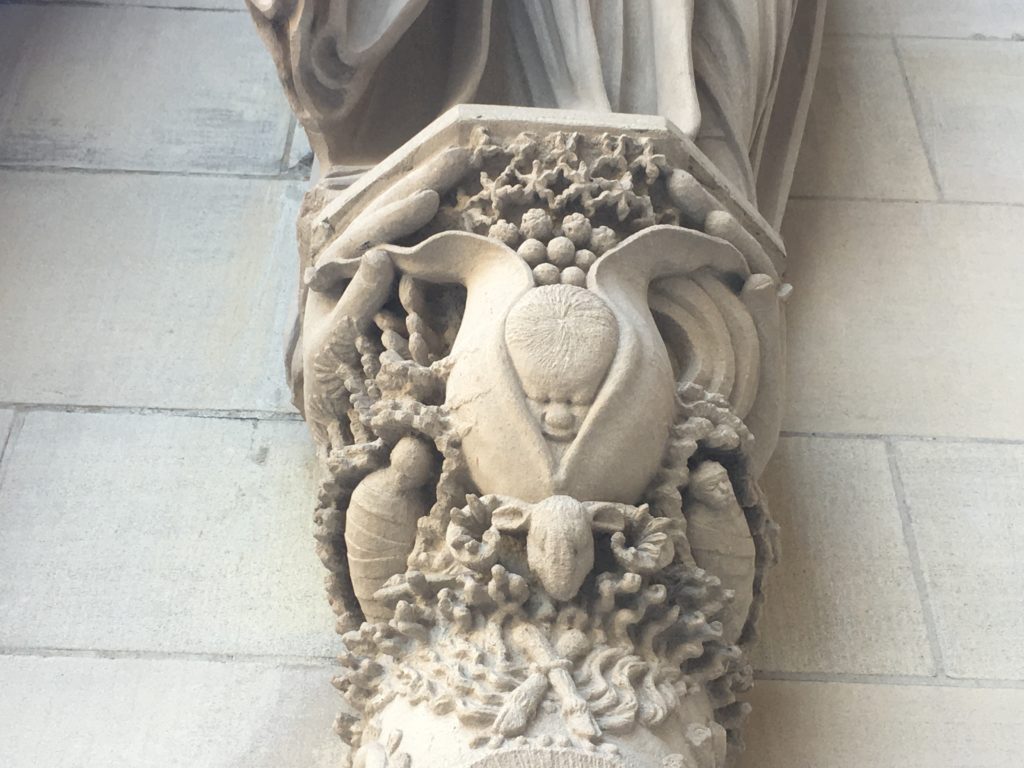
From the triforium, our tour guide Bill Schneberger points out a very bizarre detail, recently revealed. In a sea of flower decorations, one stone carver made the face of a boy. (Video is not great but trust us! It’s there.)Video Player00:0000:14

This video actually shows the very, very top of the church — the ceiling which is enclosed in a separate space, protected from the elements.Video Player00:0000:10

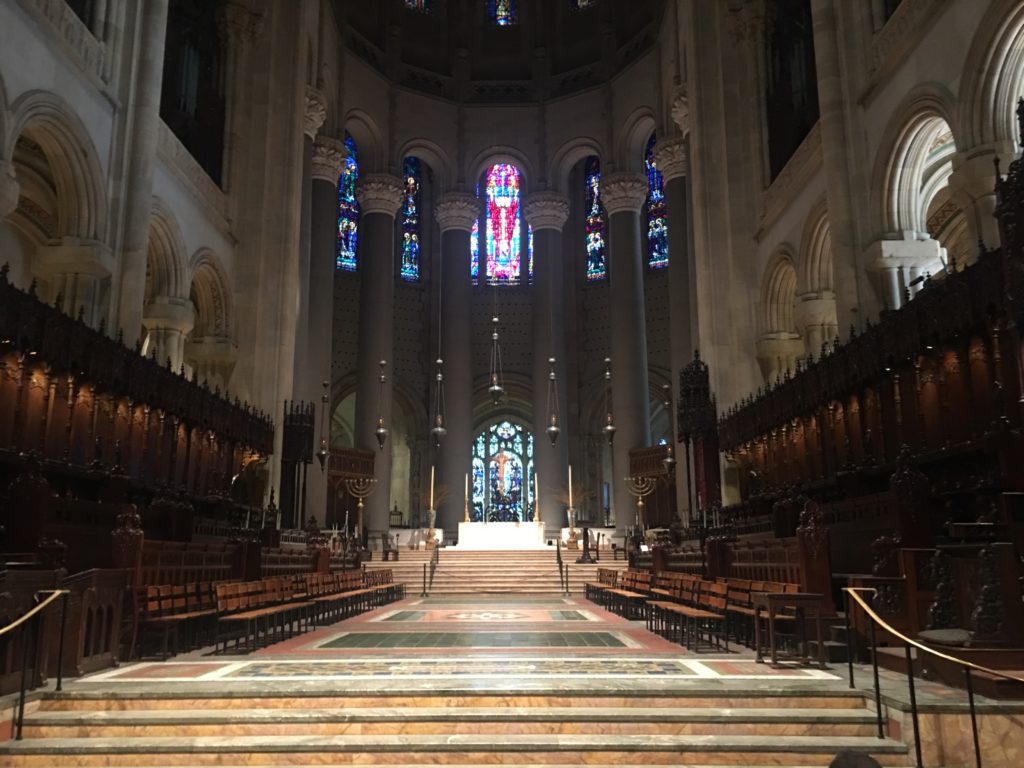
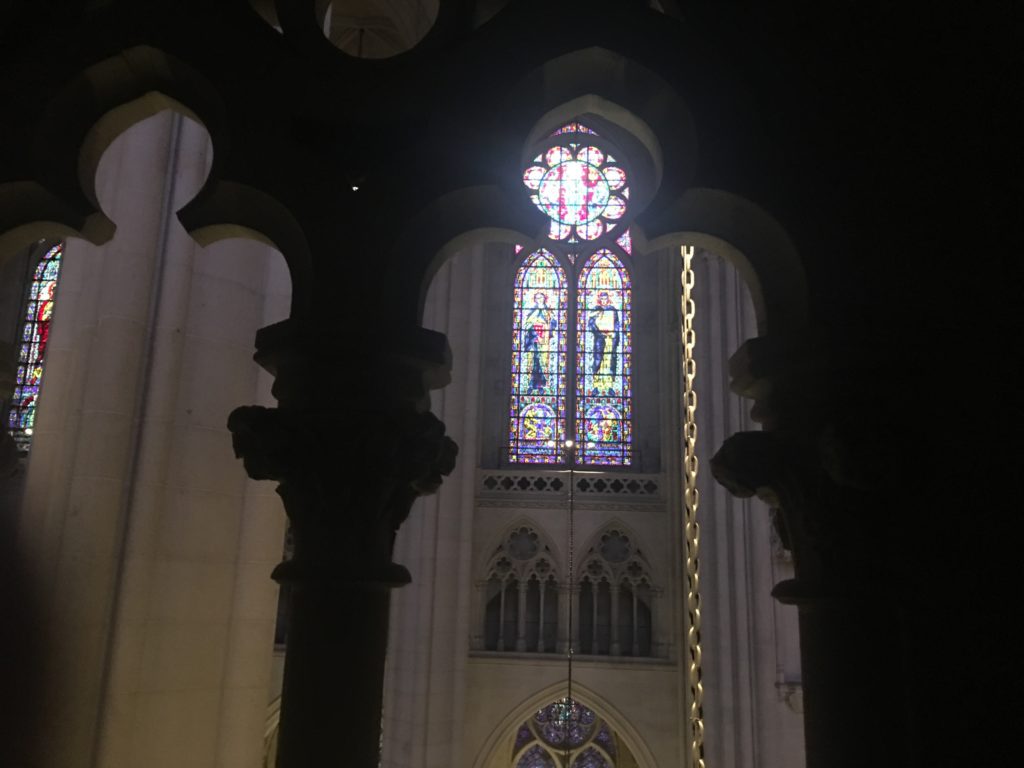
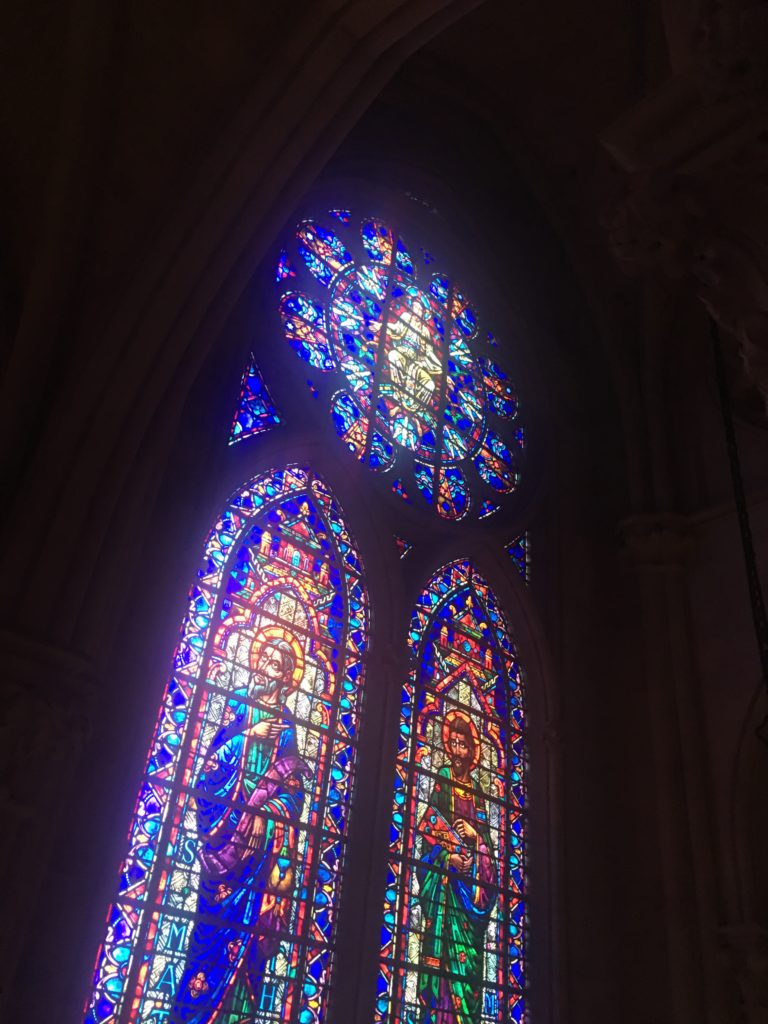
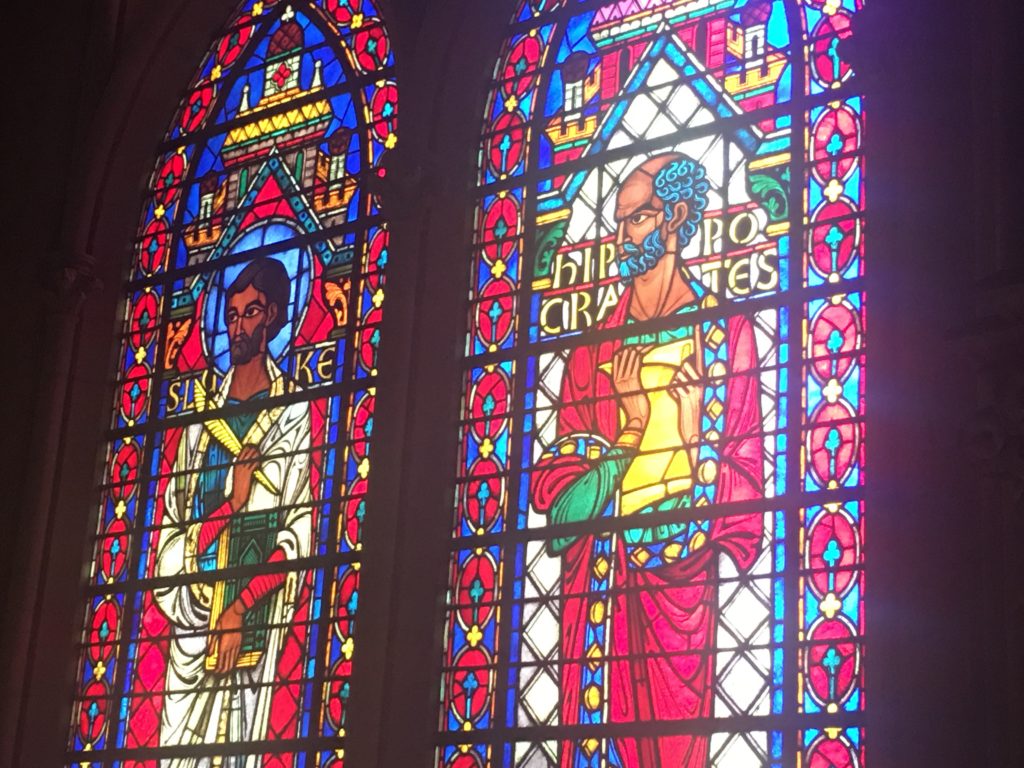
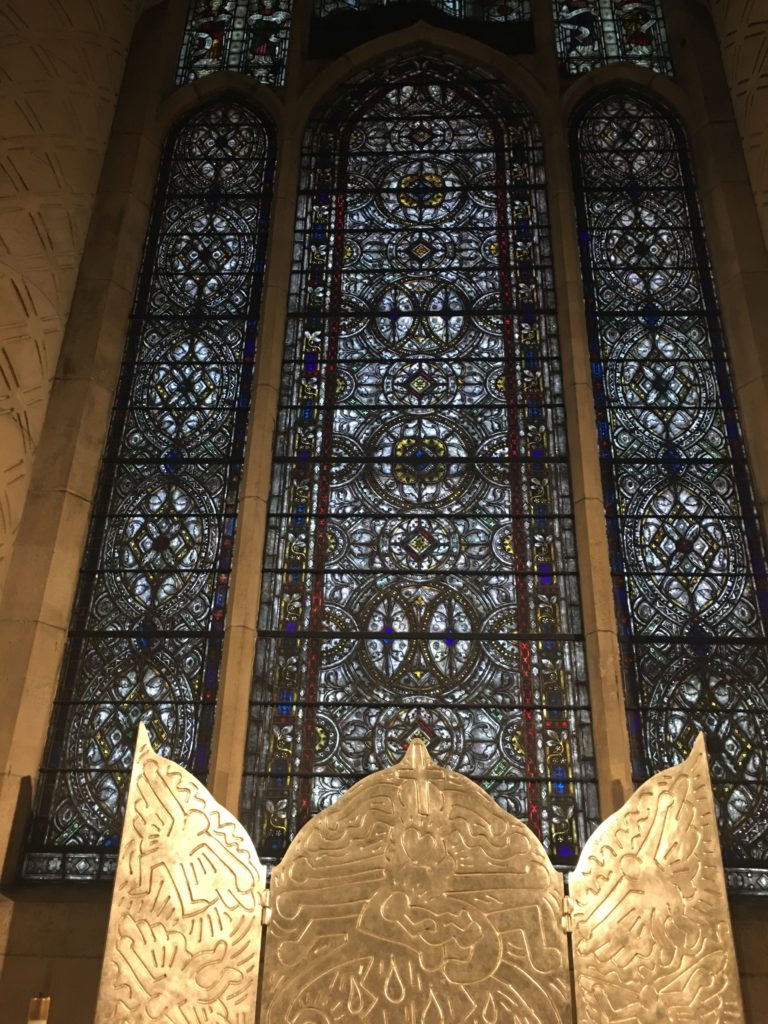
The Keith Haring triptych in contrast to the extraordinary patterned stained-glass window.
Video Player00:0000:41

And finally, we’re pleased to announce that we will emceeing a very special event at the Cathedral later this month — a party for its 125th birthday!

More details here and check this website in the coming days for even more information

The Cathedral Church of Saint John the Divine
invites you to
The 37th Annual Spirit of the City Gala
Celebrating 125 years of this historic landmark!
With a special tribute to José V. Torres and his leadership in the Cathedral’s education programs for children
on Wednesday, May 23rd

Dinner & Party Tickets
An exquisite buffet dinner featuring international foods in the chapels followed by drinks and live music at 6 pm

$1000 Regents Ticket
Includes annual membership in the Cathedral’s Society of Regents, invitations to Cathedral events, and recognition in the evening’s program.

$500 Supporting Ticket
Includes recognition in the evening’s program and invitations to Cathedral events.

After-Party Tickets
Featuring signature cocktails by Highland Park Whiskey along with beer, wine, and desserts and a performance by The Duke Ellington Legacy Band followed by a DJ

Doors open at 7:30 pm
$150 after April 30th

To reserve your ticket online, please click here.

Those who support the Bowery Boys on Patreon will receive a discount code later next week, so check your messages!

Proceeds from the evening benefit the Cathedral.
Categories
Friday Night Fever

The tale of the Cotton Club: “The Aristocrat of Harlem”

PODCAST The musical story of the Cotton Club, the most famous (and infamous) nightclub of the Jazz Age.


The Cotton Club, Harlem’s most prominent nightclub during the Prohibiton era, delivered some of the greatest music legends of the Jazz Age — Duke Ellington, Cab Calloway, Fletcher Henderson, Ethel Waters, the Nicolas Brothers. Some of the most iconic songs in the American songbook made their debut at the Cotton Club or were popularized in performances here.

But the story of gangster Owney Madden‘s notorious supper club is hardly one to be celebrated.

That the Cotton Club was owned by Prohibition’s most ruthless mob boss was just the beginning. The club enshrined the segregationist policies of the day, placing black talent on the stage for the pleasure of white patrons alone. Even the club’s flamboyant decor — by Ziegfeld’s scenic designer, no less — made sure to remind people of these ugly admission practices.

This is the tale of Harlem late night — of hot jazz and illegal booze, of great music and very bad mobsters. Featuring some of the greatest tunes of the day by Ellington, Calloway, King Oliver and more.

__________________________________________________________

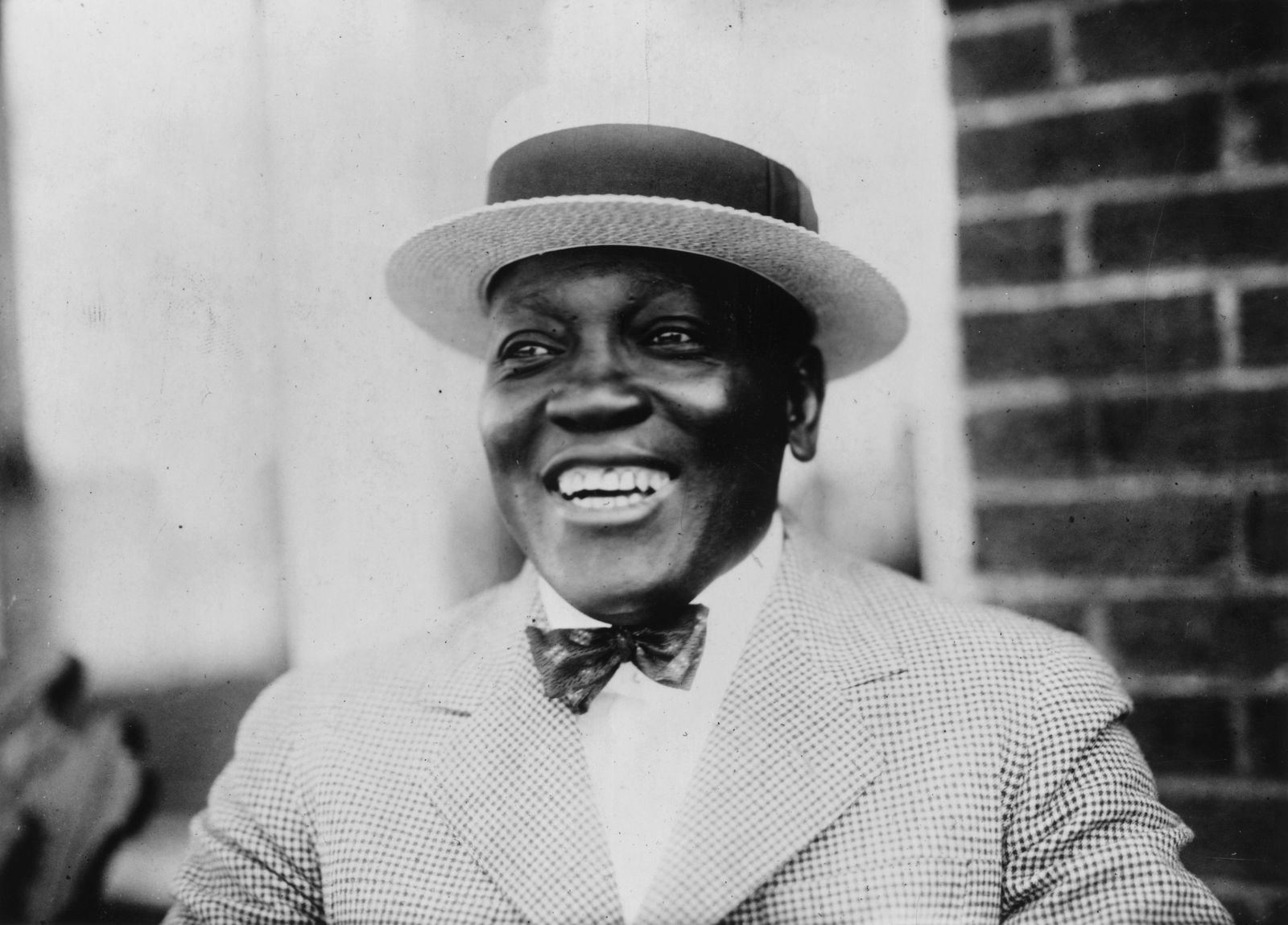
The Cotton Club was spawned from an earlier nightspot called Club Deluxe, owned by boxer Jack Johnson. (Below: Johnson in 1910)

Courtesy Getty Images)

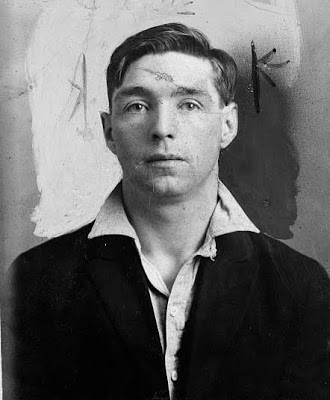
Club Deluxe was renamed The Cotton Club in 1923 by Owney Madden, the mob boss and supplier of illegal booze.

owney

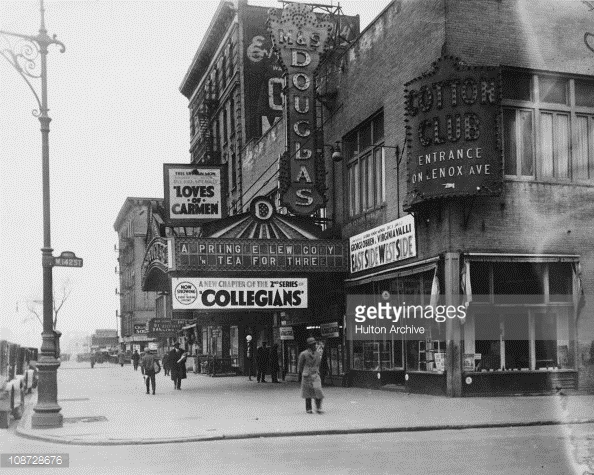
The original Cotton Club at 142nd Street and Lenox Avenue. The Douglas Theater, on the ground floor, is doing much better here, photo taken sometime in 1927:

108728676
Courtesy Getty Images


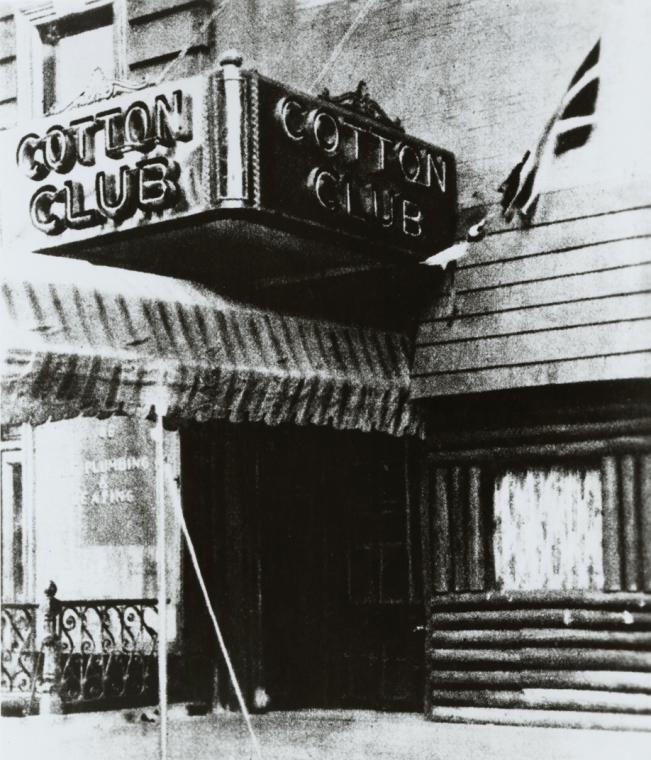
The entrance to the Harlem Cotton Club. Note the log decoration to make it appear like some old rugged shack.

Courtesy New York Public Library

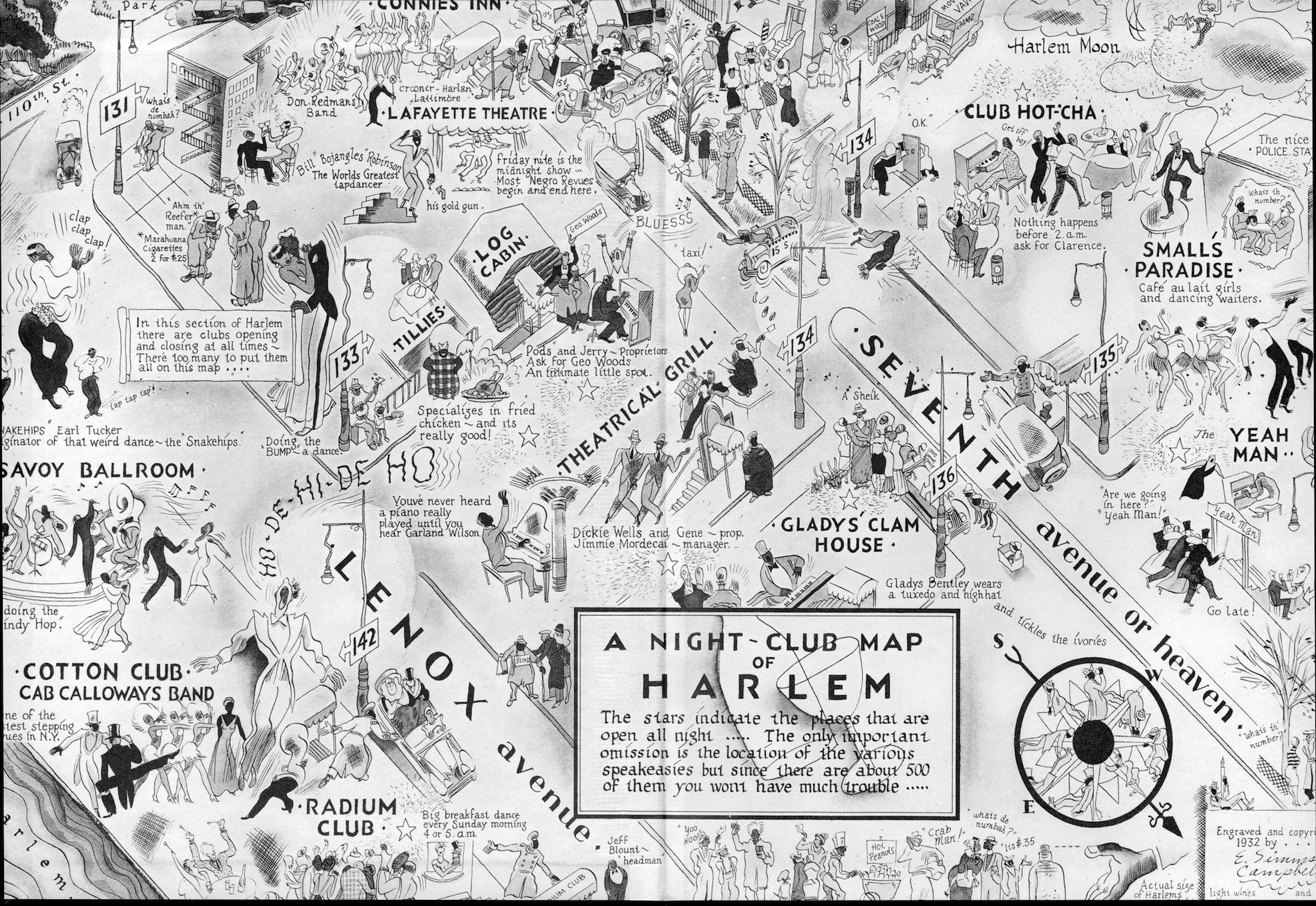
A map from 1932 of the Harlem nightclub scene, featuring the Cotton Club, Small’s Paradise, Connie’s Inn, the Savoy Ballroom and more….

Courtesy Open Culture


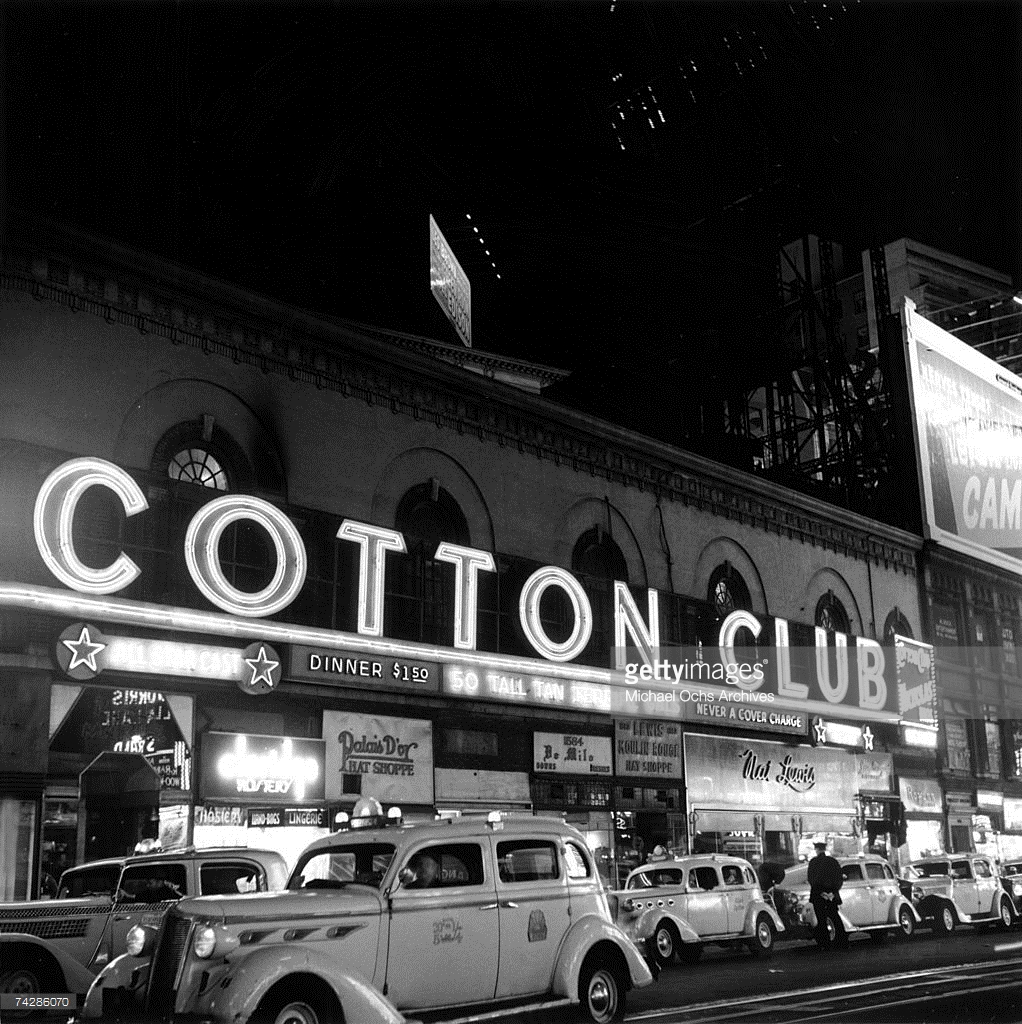
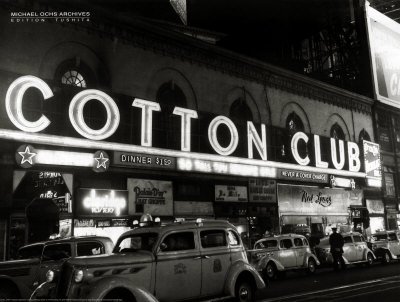
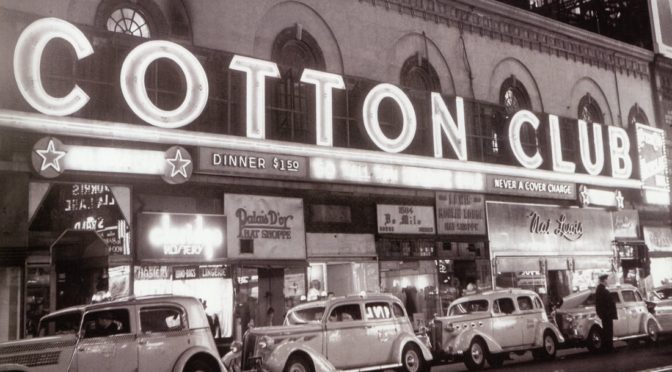
The Broadway Cotton Club as it looked one evening in 1938.

Courtesy Getty Images/ Michael Ochs Archives

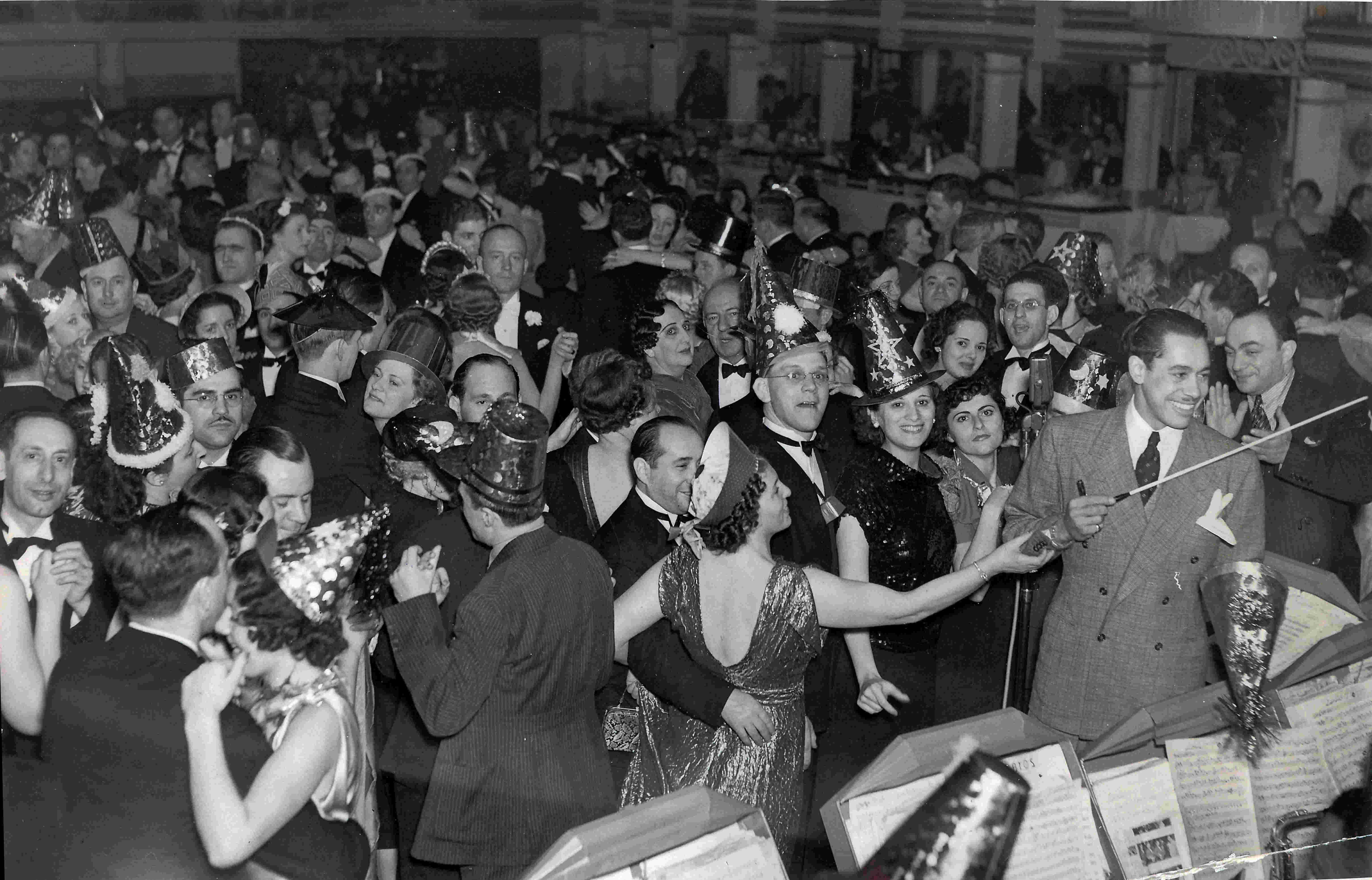
A look at the interior of the Broadway Cotton Club circa, during an New Year’s celebration, 1937, with Cab Calloway conducting.

Courtesy the Hi De Ho Blog, devoted to Cab Calloway


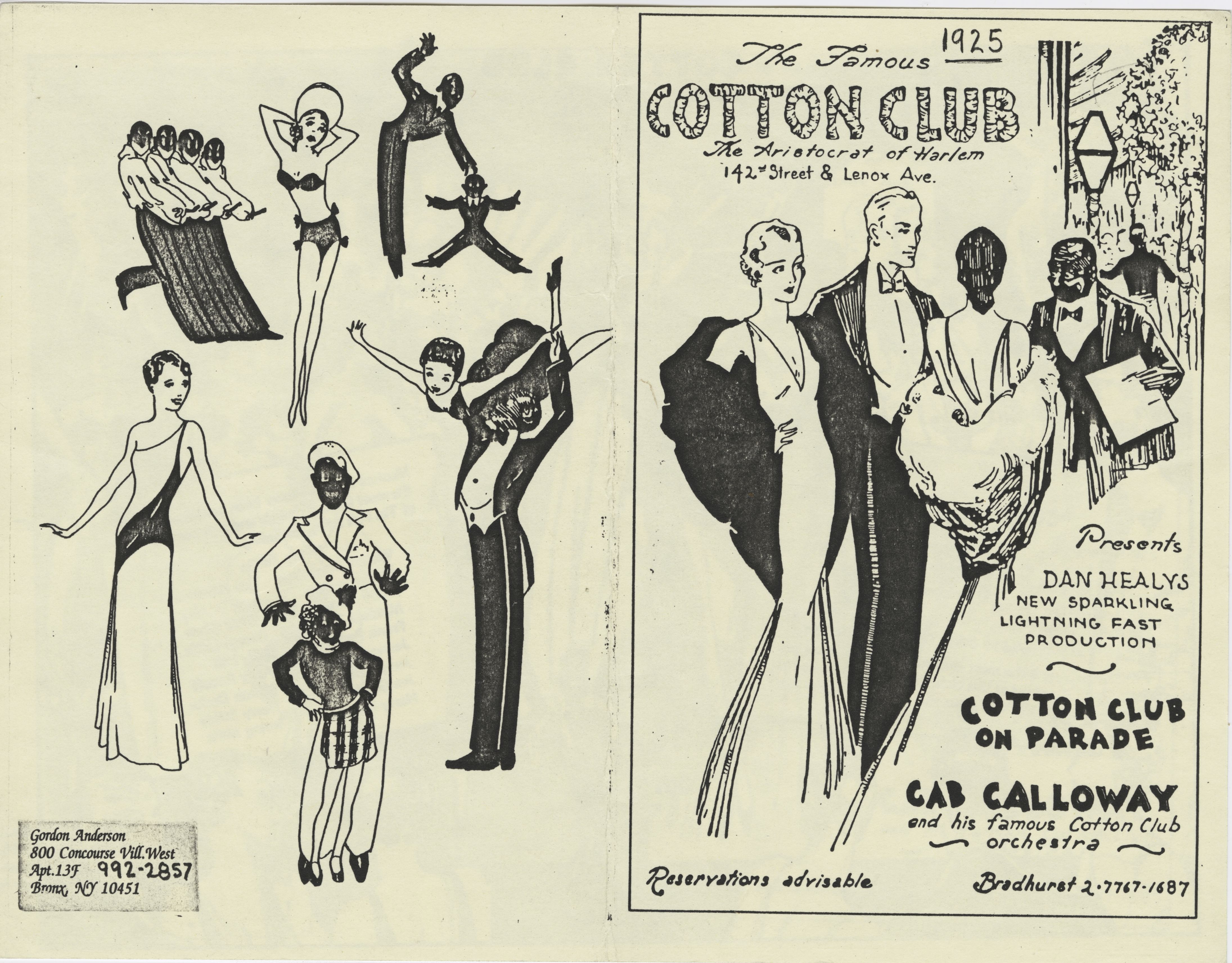
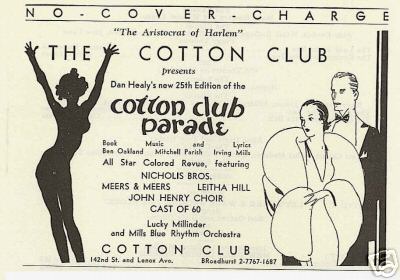
An advertisement or program for The Cotton Club. The year 1925 is penciled in at the top, but it has to be from a later date. Calloway had just graduated from high school in 1925!

Courtesy New York Public Library

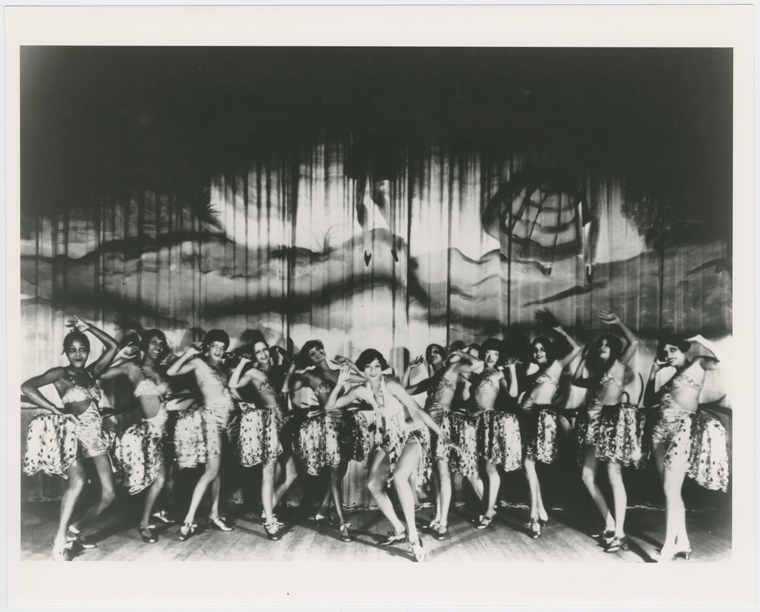
Maude Russel and her Ebony Steppers, performing in the 1929 Cotton Club show called ‘Just A Minute’.

Courtesy New York Public Library

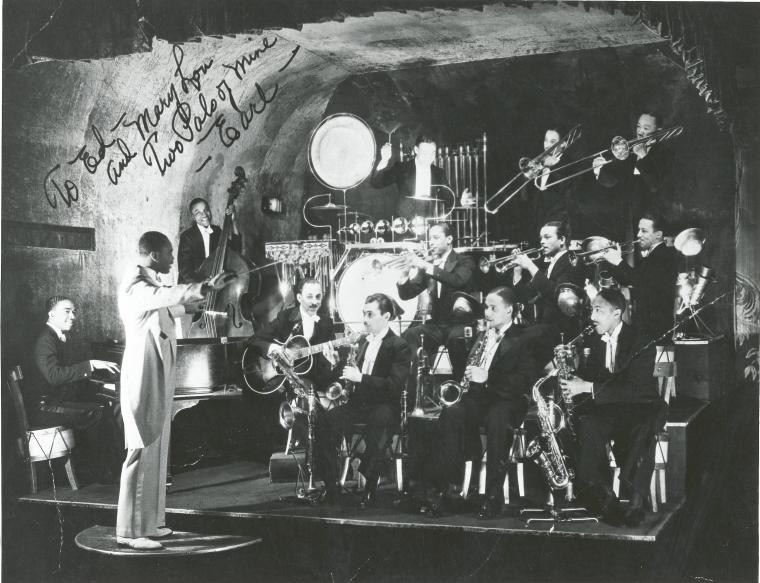
A shot of Jimmy Lunceford and His Orchestra in 1934.

Courtesy New York Public Library


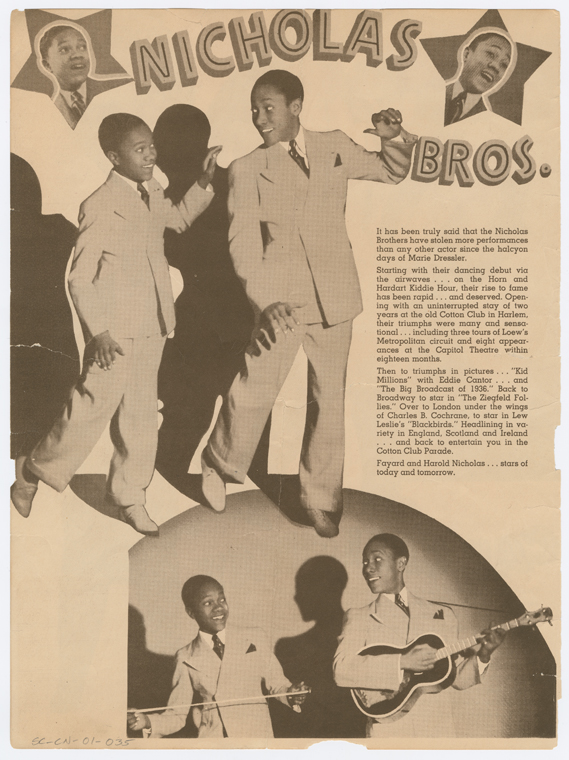
An advertisement for the Nicolas Brothers, for a performance in 1938 at the Broadway Cotton Club.

Courtesy New York Public Library


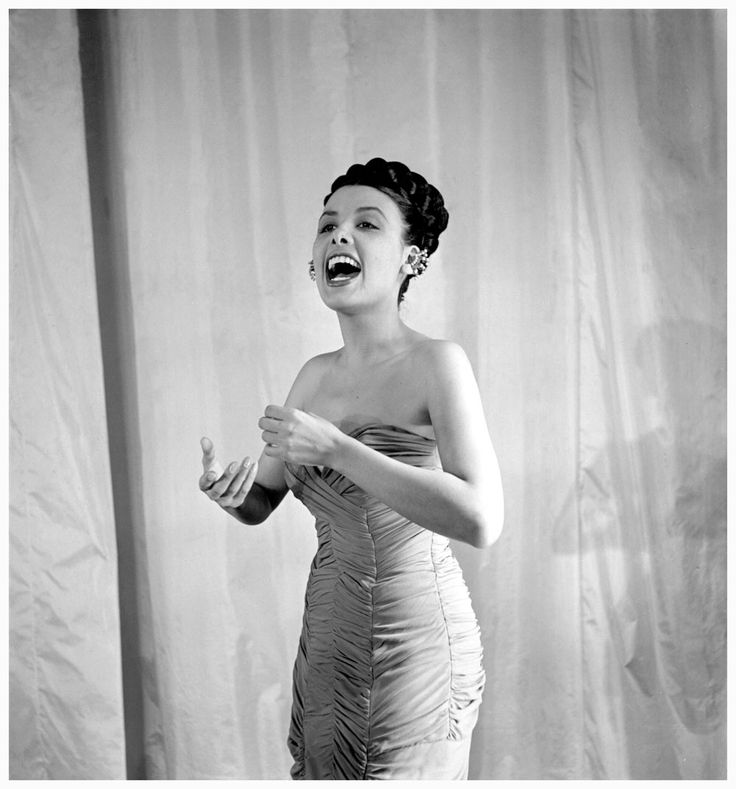
Lena Horne started out in the Cotton Club chorus line but eventually became a headlining star in her own right.

2d60b349c585fc130443fa0412f15ab0

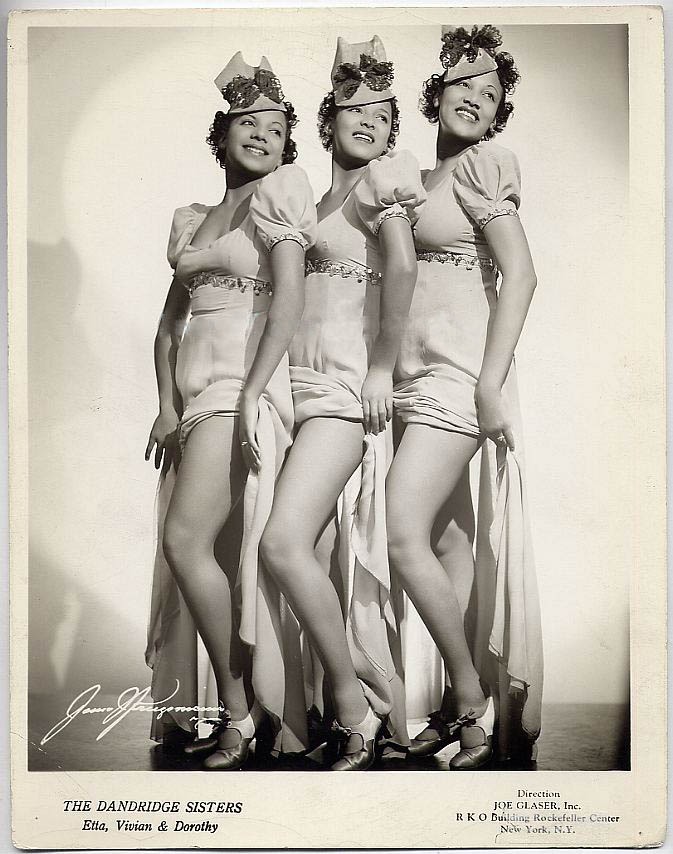
The Dandridge Sisters were notable performers in the final years of the Cotton Club.

tumblr_muku350orP1qlaando1_1280

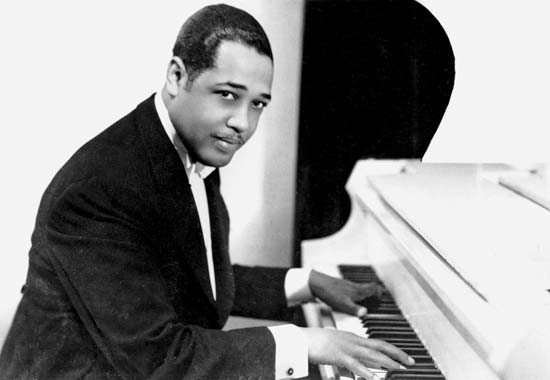
The young and dashing Duke Ellington became a superstar in the years following his Cotton Club residency.

99699-004-9819D54D.jpg.pagespeed.ce.KVug26Qi8L


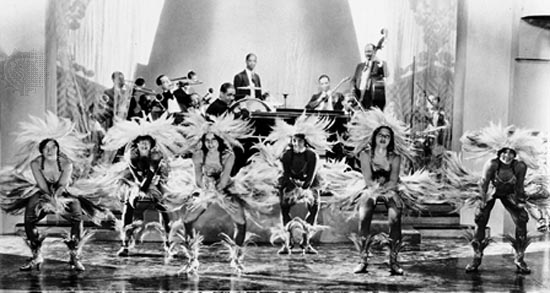
Duke Ellington and his Cotton Club Band, in a 1930 film appearance:

In 1934, Cab Calloway made this short film featuring his music:


Cab Calloway’s here too, in this clip from the film Stormy Weather, but the real stars are the Nicholas Brothers in a breathtaking dance number:


THIS PODCAST FEATURED MUSICAL SNIPPETS FROM THE FOLLOWING SONGS:

Black and Tan Fantasy – Duke Ellington

Drop Me Off In Harlem – Duke Ellington

Speak Easy Blues – King Oliver Jazz Band

Charleston – Paul Whiteman

Mood Indigo – Duke Ellington

Swing Session – Duke Ellington

If You Were In My Place – Duke Ellington

Minnie the Moocher – Cab Calloway

I’ve Got The World On A String – Duke Ellington

Stormy Weather – Ethel Waters

On The Sunny Side of the Street – Duke Ellington


NOTES ON THIS SHOW:

— I made two amusing flubs in this show 1) Duke Ellington’s nickname is probably inspired by the Duke of Wellington, not (obviously) the Duke of Ellington, 2) the name of the movie with Lena Horne and the Nicholas Brothers is obviously named Stormy Weather, not  Stormy Weathers (which must be the name of a drag queen somewhere)

Jack Johnson‘s story is so much more complex and I wish I had more time to talk about him. For more information, check out the incredible documentary (and the book it’s based on by Geoffrey C Ward) called Unforgivable Blackness: The Rise and Fall of Jack Johnson.


FRIDAY NIGHT FEVER: The Cotton Club

To get you in the mood for the weekend, every Friday we’ll be celebrating ‘FRIDAY NIGHT FEVER’, featuring an old New York nightlife haunt, from the dance halls of 19th Century Bowery, to the massive warehouse spaces of the mid-90s. Past entries can be found here

For our second entry, we’d be amiss if we didnt feature the grand-daddy of New York nightclubs, one of the longest (non-contually) operating names in the United States and a place that literally changed music history — The Cotton Club. Formerly at Lenox and 142st, the club was the ‘aristocrat of Harlem’, typifying the very best and very worst parts of African-American life at the beginning of the 20th Century.

Ten years after legendary boxer Jack Johnson stirred up America’s racial tensions by becoming the first black heavyweight champion and victor of the ‘fight of the century’ in 1910, he bought a ramshackle Harlem casino and opened up Club De Lux. It may have had a few successful years and closed quietly had Jack not sold the club then to notorious gangster Owney ‘The Killer’ Madden, who was looking for a venue to sell his beer.

Nobody came to the Cotton Club for the beer though. Madden employed the best young black talent that New York had to offer. His first hire was a young Fletcher Henderson, and the house band was directed by a then-struggling Duke Ellington, who wrote exotic stage shows with wildly dressed chorus girls. One such chorine, Lena Horne, gave her first solo performance there. Other luninaries who shared the stage there included Cab Calloway, Ethyl Waters, and Dorothy Dandrige.

The horrible irony, as with many clubs of the ’30s, is that the performers were mostly black, while the audiences were white-only. The audiences preferred exaggerated “black” shows, and even Ellington was forced to pen spectacles set in jungles or plantations, with performers acting in absurd stereotypes.

As Madden seemed to be directing most of the Cotton’s affairs from his cell in Sing Sing prison, Broadway producer Walter Brooks was brought in to front the place, and managed to bring in a few white songwriters like Harold Arlen and Cole Porter to collaborate with the black entertainment. On Sunday night ‘Celebrity Night’, various New York luminaries like Jimmy Durante and Bing Crosby would leap from their martini-topped tables to the stage to perform impromptu numbers.

The club entered national prominence when the Columbia Broadcasting System (CBS) began broadcasting the club’s entertainment to listeners around the nation.

The club moved downtown to Broadway and 48th Street in 1926, but eventually closed in 1940. A new incarnation opened back up in Harlem in 1978 and still operates today, recapturing as best as possible the excitement and real talent of the original Cotton.

Most people outside New York probably know the club best by the Francis Ford Coppola movie of the same name, however several revues were filmed here during its heyday, and the Cotton Club Orchestra as directed by Cab Calloway or Duke Ellington would clearly make a deeper impression onto vinyl. The recordings would help define the face of jazz music.