Categories
It's Showtime

Harlem on a high note: The grand Harlem Opera House

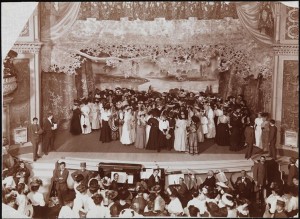
Proctor's Harlem Opera House.

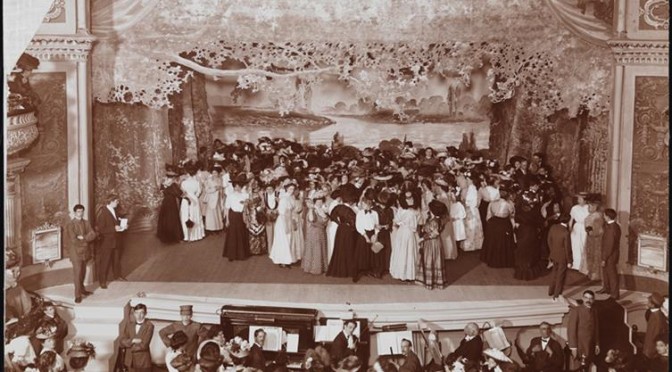
A ton of people on-stage at the Harlem Opera House in 1907. During this period, it was owned by vaudeville impresario Keith Proctor and called Proctor’s Harlem Opera House. Pictures courtesy the Museum of the City of New York 

 The Hotel Theresa, subject of this week’s podcast, had a rather unusual neighbor in its early years.

Harlem is known for a rich musical heritage in a variety of genres, but did you know it also had very old ties to world of opera, from as far back as the 19th century?

Oscar Hammerstein was a wealthy New York cigar maker who decided to dip his toe into real estate ventures, and in a most surprising neighborhood.  Thanks to the construction of the elevated railroads in the 1880s, the once-distant Harlem was now linked to the heart of the city, and thousands began moving there, particularly European Jewish immigrants.
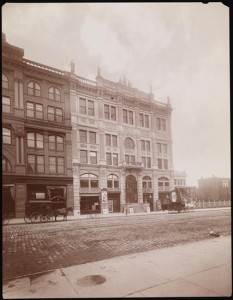
Theatre, Harlem Opera House 125th St. & 8th Ave.Hammerstein built dozens of rowhouses for prospective residents, but his real vision was the Harlem Opera House (at right), constructed in 1889 and located at 207 West 125th Street, on the other side of the street from the Hotel Winthrop (later the Hotel Theresa).

For a time, it really did just showcase operatic productions, of both the severe and light varieties.  According to author Jonathan Gill, “Hammerstein had a broad vision of what uptown theatergoers wanted, and he produced both popular and genteel drama and opera in English translation, an experiment that proved attractive to audiences who were willing to pay up to $2.50 a ticket.”

Famous stars were drawn here from the stages of Herald Square.  For instance, Edwin Booth performed Shakespeare here in 1889, a few years before his death.  Lillian Russell, a favorite of the New York pressperformed the show ‘An American Beauty’ here in March 1897.

The Opera House helped create a miniature theater district here along 125th Street.  Hammerstein himself built the Columbus Theatre the following year, bringing more popular fare — namely, vaudeville.  Soon the street would become one of New York’s great centers of burlesque entertainment.  Many years later, Hurtig & Seamon’s New Burlesque Theater would open a couple doors down from the opera house, later changing its name to the Apollo Theatre.

Hammerstein, however, could not make the Harlem Opera House a financial success, and he was soon lured downtown to build his most renown theaters (and places that would later inspire his grandson Oscar Hammerstein II.)  The Harlem Opera House was sold and transformed into a more traditional vaudeville house.  By the 1930s, to compete with the thriving amateur nights over at the Apollo, the Harlem Opera House had its own amateur nights.  Its most notable discovery is one of the greatest names in music — Ella Fitzgerald.

Below: Another view of the Opera House, here as Proctor’s Opera House, courtesy NYHS.  The balconies to the left belong to the Winthrop Hotel — compare this picture to the Winthrop photo here — to be replaced in a few years by the Theresa.
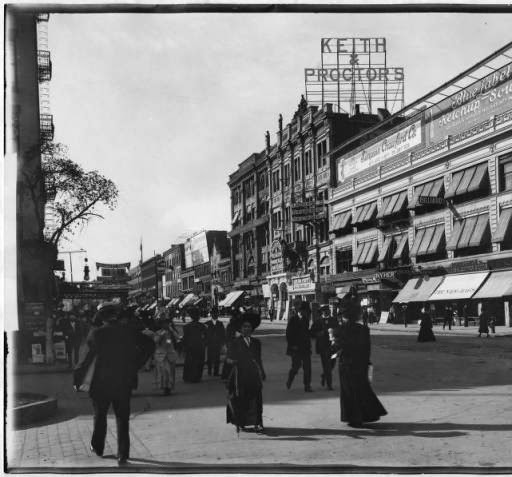


The Opera House was torn down in 1959.  Surprisingly, it appears there was the possibility of a new opera house in Harlem being built in the late 1960s, under the guidance of Gian Carlo Menotti, but that never panned out.  However, the operatic tradition lives on today with the Harlem Opera Theater, founded in 2001.

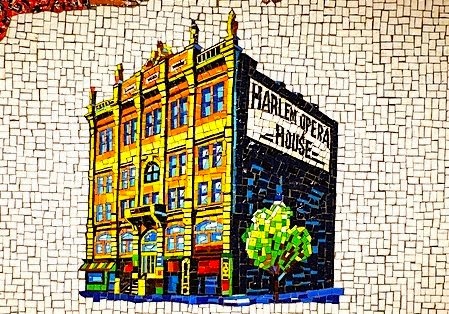
Below: You can still find the Harlem Opera House in Harlem — on the walls of the 125th subway station, in mosaic form!
Categories
Those Were The Days

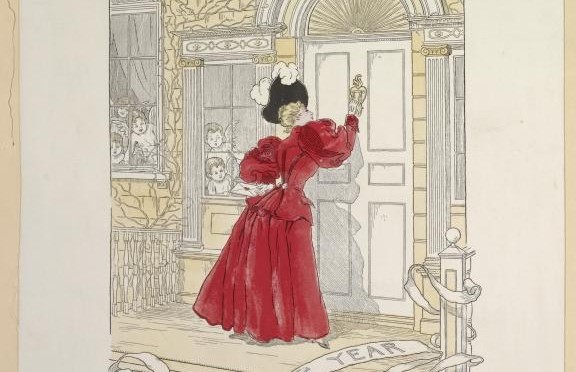
Ladies, it’s your day! A Leap Year tradition, New York style

 â€œWhen a woman has reached the age of thirty there is nothing left for her but to be good. I am going to make clothes for the poor. Hand me down that roll of flannel, Rachel: I mean to begin at once.” 

“If it will be any comfort to you, my dear,” began Rachel, soothingly, if monotonously. “I read the other day that women of thirty were all the fashion, and that girls of twenty were quite out of it.” 


“That was written by a person of forty then, my dear.”

— excerpt from ‘A Woman of Thirty’, New York Times, 1893

Happy Leap Day, single ladies! Put a ring on it! For four years — 1,460 straight days — men have been the initiators in romance. Women were to mildly express interest in a mate, her demure politeness disguising anything possibly resembling passion as she awaited a marriage proposal from the confines of her parents home. But not so on February 29, according to custom. On this day, women get to playfully assert themselves in the parlor, boldly proposing to the men they desire.

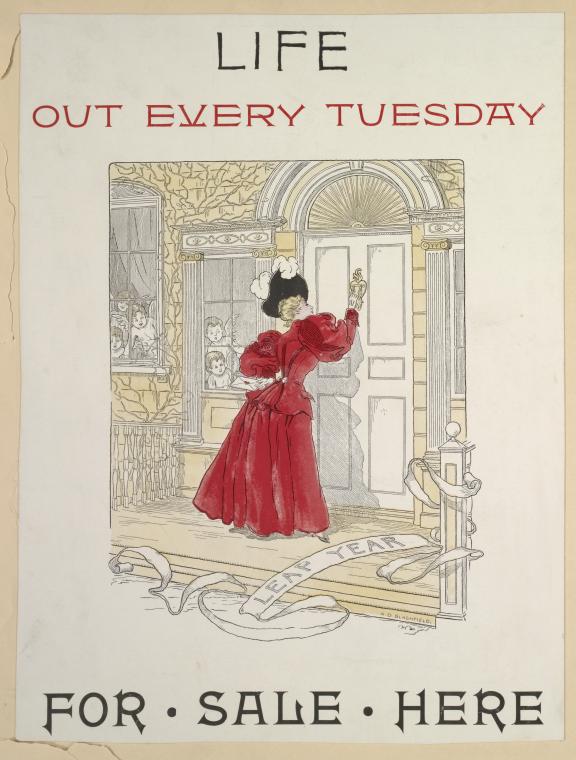
Although this Leap Day tradition allegedly dates back to the Elizabethan era and even further, the proper folk of the Victorian — and within the societal confines of New York — embraced it almost-seriously. But this was no mere pantomime of dating ritual, not simply a crusty poke at female status. Citing ‘common law’, the Independent in 1908 proclaimed, “[A]ny man refusing a woman’s proposal on leap year shall give her a silk dress. Every maiden, widow or divorcee has, therefore, an opportunity this year to replenish her wardrobe even if she fails to satisfy her affections.” (The advertisement at top seems to reference this detail of the ritual.)

The tradition in 19th century New York was recognized enough that an uptick in advertisements from female suitors could be found in newspapers on that particular day. A reporter for the Times peers in on “the ladies of Harlem” in 1856 to discover “the fairer half of the assemblage asserted the prerogatives which Leap Year confers upon them to the fullest extent. They selected their own partners for the dance and very probably some of them exercised their privilege of choosing a party for life.”  There was even a well-received play by J.B. Buckstone which debuted in 1850 called ‘Leap Year – A Ladies Privilege’.

But was this ridiculous tradition ever really taken seriously? There was doubt, even in the Gilded Age. I mean, women proposing marriage? Can you imagine? “It seems almost incredible to us that there was a time when it was considered a humorous thing for a civilized community to assume that women were in the habit of doing what no woman is known ever to have done,” wrote a Times columnist in 1880

As with old customs, this might have been taken more seriously outside of major cities, as evidenced by this letter which ran in the New York Times in 1864: “A remarkable (Leap Year) courtship and marriage came off in our quiet village last week, resulting disastrously to all the parties concerned.”

For New Yorkers, Leap Day does not seem to have been a ‘holiday’ that received serious consideration. Among the upper crust, a woman’s proposal would have been scoffed at, regardless of the season, while it’s doubtful certain lower class women wouldn’t have waited for a calendar anomoly to do what she wished. If anything, the urban legend might have actually deterred potential marriage proposals. According to an 1884 article, “The ladies are afraid to marry this [leap] year because people will say they popped the question.”

Even William Jay Gaynor, mayor of New York 100 years ago, dismissed the custom and the women of New York in a single swoop: “I do not think women care about leap year. They can propose if they want to, but bless them, leap year or no leap year, they would rather have the fellow propose to them.”

Of course, I suppose some are trying to keep this weird custom alive even today.

Illustration at top from the Club Women of New York journal from 1904. Life advertisement courtesy New York Public Library.

Categories
Bowery Boys Bookshelf

Langston Hughes: A few Harlem stops on his birthday


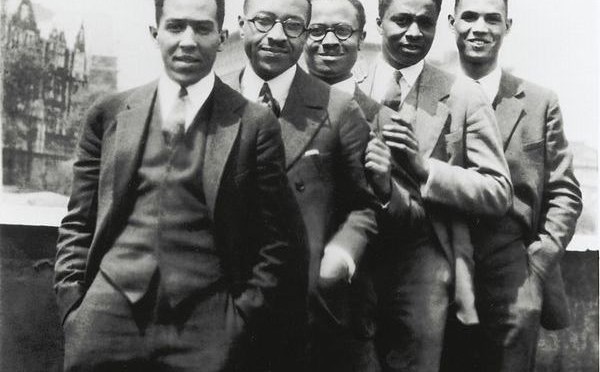
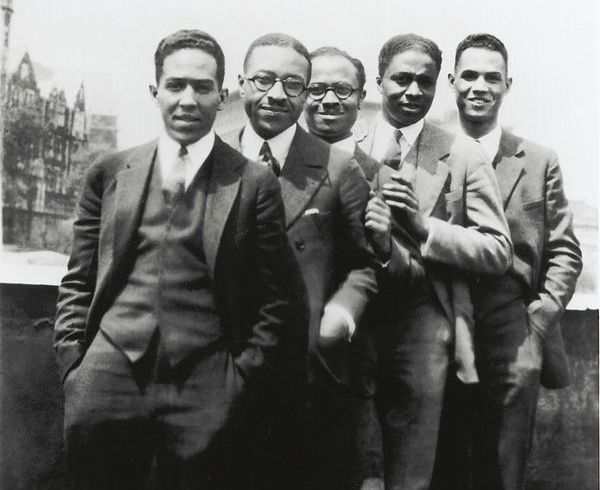
Dapper gentlemen: At a 1924 celebration in Langston’s honor, at the home of Regina Andrews on 580 St. Nicholas Avenue. The author is to the far left, followed by future sociologists Charles S. Johnson and E. Franklin Frazier; novelist and future doctor Rudolph Fisher; and Hubert T. Delany, who would become a New York justice in 1942, appointed by Fiorello LaGuardia.

Since I was a teenager, I’ve had an affinity for writer Langston Hughes, the revolutionary jazz poet who was born 110 years ago today in 1902. I grew up about an hour away from Langston’s birthplace in Joplin, Mo. One of the brightest lights of the Harlem Renaissance grew up here?, I frequently pondered in English class.  In fact, Hughes is considered Joplin’s most famous son.*

But you don’t need to follow Langston’s footprints back to the Ozarks. Celebrate his birthday with a mini-walking tour, four Manhattan addresses that were pivotal to Hughes’ development as an iconic African-American voice and a star of the Harlem literary scene:

181 W. 135th Street (corrected, see note) — Langston’s first exposure to Harlem’s creative energy was as a Columbia University student in 1921, wandering the street, hoping to see “Duke Ellington on the corner of 135th Street, or Bessie Smith passing by, or Bojangles Bill Robinson in front of the Lincoln Theatre, or maybe Paul Robeson or Bert Williams walking down the avenue.” [source] Before moving into Columbia’s Hartley Hall, however, Langston took a room here at the YMCA, known for its live drama productions and art shows. He didn’t need to stroll around to find Robeson; he got his start acting in productions at the YMCA.

NOTE: Thanks to Stephen Robinson for the following correction to the information above: “I’m afraid you’ve got the wrong address for the YMCA at which Langston Hughes would have stayed. From 1919-1933, the YMCA was located across the street from the current building, at 181 West 135th Street. You can see the footprint of this building on the 1930 map we use on our site Digital Harlem: Everyday Life, 1915-1930 , and find more information about it by doing a search for Places, location type=YMCA.

634 St. Nicholas Avenue — Although Langston would rent out a studio in 1938 down the street at 66 St. Nicholas Avenue, he frequently stayed at this address in the Sugar Hill area of Harlem, the home of his friends Toy and Emerson Harper. (He referred to them as ‘aunt’ and ‘uncle’.) Hughes later moved with the couple to another address…

20 East 127th Street For 20 years, Hughes worked out of the top floor, by now an international phenomenon. He was residing here (his own ‘ivory tower’) when he died in 1967. The house was up for sale for most of the year, but was finally sold in December in a Sotheby’s auction.

 515 Malcolm X Boulevard (at W. 135th Street) — The Schomburg Center for Research in Black Culture, a branch of the New York Public Library, is Hughes’ final resting place. His ashes are contained underneath the foyer floor, beneath an inscription: “My soul has grown deep like the rivers.” But the library always had a long association with Hughes. His ‘poetry-play’ ‘Don’t You Want To Be Free‘ played to sold-out crowds in the basement of the library in 1938. The play co-starred Robert Earl Jones, the father of James Earl Jones.

You can find a far more in-depth walking tour of 1920s Harlem here.

 *Another African-American cultural icon, George Washington Carver, was born in the town of Diamond, Mo., fifteen minutes southeast of Joplin. If you’re ever swinging through that area of the world, the George Washington Carver National Monument, where his home was located, is worth a stop.

Jungle Alley and wild nights at Connie’s Inn

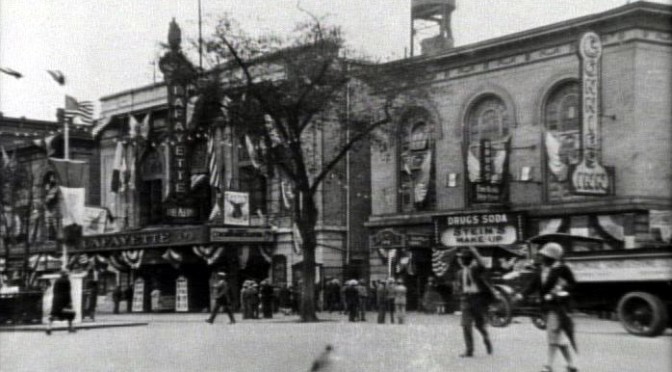
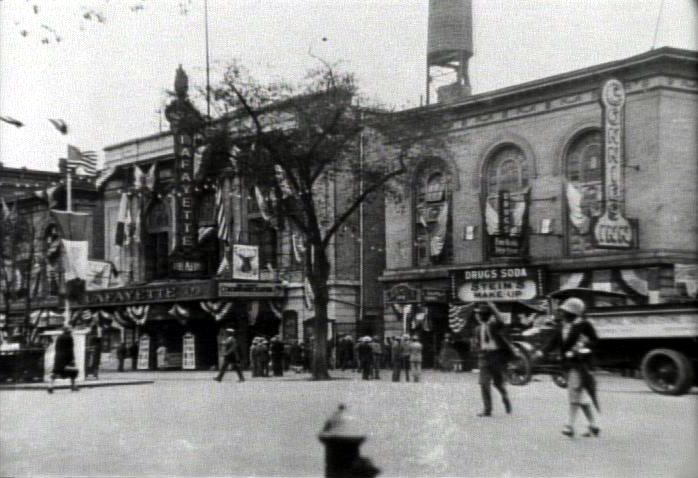
Connie’s during the day, with the Tree of Hope directly in front of it

FRIDAY NIGHT FEVER To get you in the mood for the weekend, every other Friday we’ll be featuring an old New York nightlife haunt, from the dance halls of 19th Century Bowery, to the massive warehouse clubs of the mid-1990s. Past entries can be found here.

NIGHTCLUB Connie’s Inn
In operation: 1923-1933

The strange and sad irony of Harlem nightlife in the 1920s — during the neighborhood’s height of creative powers — is that the biggest clubs featured the world’s top African-American musicians, but only a white audience could go hear them. This ridiculous arrangement, however, did allow many performers a unique forum to launch their careers, for this string of whites-only establishments soon became the hottest spot in Jazz Age New York. A district of these clubs soon took on the moniker Jungle Alley.

Concentrated on 133rd Street between Lenox and Seventh avenues, Jungle Alley was a place for downtown white Manhattanites to dabble in the saucy, ‘dangerous’ sounds of jazz as performed by some of the most talented people in the world. Elegant, new Pontiac and Franklin sedans lined the street delivering partygoers to the likes of The Cotton Club and Small’s Paradise, the two biggest names among virtually dozens of establishments on Jungle Alley. And of course a couple blocks away at 131st and 7th Ave, in a basement near the Lafayette Theatre — there was Connie’s Inn, in no way as plain as its name suggested.

Cotton, Small’s and Connie’s — these were the big three of Jungle Alley.

The Connie in question is Conrad Immerman, a German immigrant who, with his brother George, moved to the neighborhood and opened a chain of delicatessens. (According to lore, a delivery boy at one of those delis was none other than a young Fats Waller.) However, with prohibition, it became far more profitable to alter their business plan to include speakeasies. By 1923, the brothers had opened Connie’s at one of the most prominent corners in Harlem. Right next to it sat the famous Tree of Hope, a large chestnut who the alleged powers of good fortune for those who rubbed it. (A remnant remains on the stage of the Apollo Theatre.)

It certainly worked for Connie. His establishment soon rivaled the Cotton Club as the hotspot for New York’s trendier white crowd.

Why would Immerman exclude blacks? One source suggests this wasn’t Connie’s natural inclination: “Connie was not a bigoted man. Connie’s reason for exclusivity policy is a matter of profit; he assumed his white downtown clientele did not wish to sit, cheek in jowl, with African Americans.” Faint justification today. Connie’s success spawned a virtual industry of whites-only clubs in the neighborhood. He bolstered the segregation by giving in to it passively. Eventually, though, Connie’s would open for black audiences — after hours, when the downtowners had returned to their homes.

Connie’s attracted the best and the worst of the underworld, “a shady clientele of gangsters and molls, rumrunners, and bathtub bootleggers” according to one source. A black newspaper the New York Age says, “Immerman’s is opened to Slummers; Sports; “coke” addicts, and high rollers of the White race who come to Harlem to indulge in illicit and illegal recreations.”

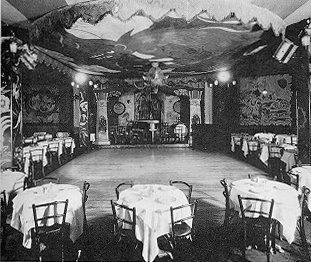
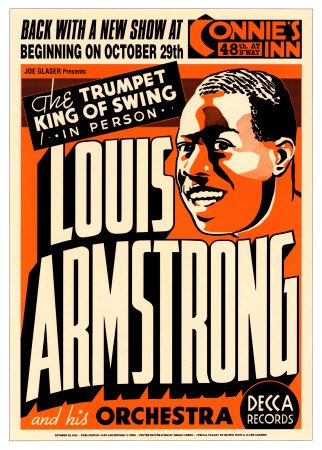
Slummers and sports alike packed into Connie’s 500 seat club, elegantly ornamented, one of the classier looking establishments of Jungle Alley. The stage could fit a couple dozen dancers, a rollicking jazz orchestra and a few prime performers sewn together into a variety of spirited production numbers. Winding across Connie’s stage were artists like Moms Mabley, Fletcher Henderson and Louis Armstrong.

One stage show by Fats Waller, eventually titled Hot Chocolate, was successful enough that it transplanted for a successful run on Broadway. Armstrong would recall racing between the Broadway stage — where he would perform ‘Ain’t Misbehavin’ every night — and Connie’s, where he was a contract performer.

Armstrong was uncomfortable with the mob-controlled world of New York nightlife, and Connie’s place was no exception. One night during a performance in Chicago, he was compelled to return to New York to perform for Connie.

According to an Armstrong bio, Louis claims that a gangster Frankie Foster “was sent over to my place to see that I catch the first train out of New York…I said ‘New York? Why that’s news to me.’ Foster said, Oh yes, you’re leaving tomorrow morning.’ Then he flashed his big ol’ pistol and aimed it straight at me. With my eyes big as saucers and frightened too, I said, ‘Well, maybe I am going to New York.”

Connie’s was a haven for mob activity; Connie’s brother George was even kidnapped for a time during a ‘disagreement’. But then, everybody was acting funny in those desperate final days of Prohibition. By 1933, Connie’s had closed its door, not fit for a world of legal entertainment.

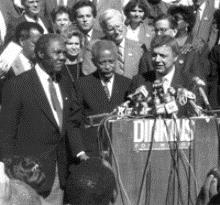
Know Your Mayors: David Dinkins

Our modest little series about some of the greatest, notorious, most important, even most useless, mayors of New York City. Other entrants in our mayoral survey can be found here.

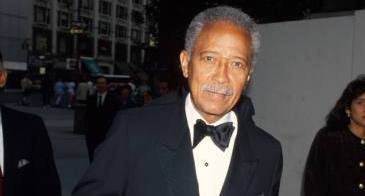
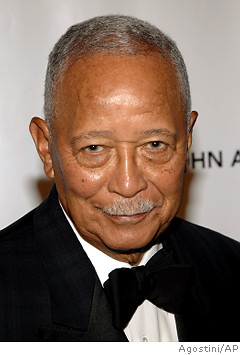
As we cap a historical week for our nation, it seems appropriate to take a brief look at New York City’s own first African-American leader, David Dinkins, mayor of the city from 1990 to 1993, and the last Democrat to hold the office. My only hesitation in bringing this up is that I hope Obama has far better luck than Dinkins, whose tenure was most notable for at least appearing to make almost everything worse. (Appearances, however, can be deceiving.)

Dinkins is one of the most successful products of a Harlem political machine that has been slowly churning since the 1920s, when a huge population influx into the neighborhood bestowed political influence to community leaders and business owners.

Not surprisingly, many of today’s political organizations are spinoffs of Tammany Hall from its last waning days of power, and so came J. Raymond Jones, Tammany Hall’s first black leader in the 1960s.  Jones developed his own political coterie here — known as the ‘Harlem Clubhouse’ — and proceeded to foster some of New York’s saaviest political talents, including New York congressman Charlie Rangel and former deputy New York mayor Basil Patterson, father of our current governor.

Dinkins became a core member of this influential political group. (Rangel actually calls himself, Dinkins, Patterson and Percy Sutton the “Gang of Four.”) Although born in Trenton, New Jersey, David’s family moved to Harlem during the 1930s, just as the neighborhood, once flourishing under a cultural renaissance, begin feeling the pinch of economic depression. After a stint in the Marines, Dinkins returned to New York, became a lawyer and slowly began his ascent into Harlem’s growing political scene.

His close political connections with the Clubhouse granted him access to real opportunity — first in the state assembly in 1966, then City Clerk in 1975 — but it was his work with the city’s lower class that endeared him to constituents. In 1985 he was elected Manhattan Borough President, often a springboard to the mayoralty.

From our vantage today, Dinkins is sandwiched between two great forces in New York City politics — Ed Koch and Rudy Guiliani. Koch however, bore the brunt of New York’s pitiful economic downturn during the 1980s and Dinkins handily defeated him in the Democratic primary. Guiliani, on the Republican side, was a far more formidable foe; fresh from defeating the wealthy Ronald Lauder (son of Estee Lauder), Rudy put up a good fight against Dinkins, although a New York Times opinion piece laments: “voters have heard almost as much about Jackie Mason and Jesse Jackson as about David Dinkins and Rudolph Giuliani. So far, the two candidates haven’t even managed to debate each other.”

Ultimately, in November 1989, Dinkins defeated Guiliani, in the smallest margin of victory in modern times — 47,080 votes.

Dinkins seems almost immediately carried off by events of the city. Although he was initially seen as a potential salve to the city’s uneasy ethnic tensions, he was soon caught up in rocky political scandals, most involving racial violence.

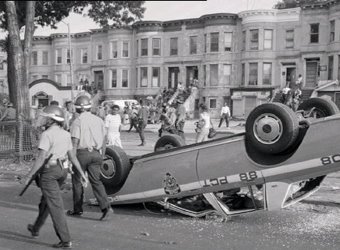
None were as damaging as the Crown Heights riots of 1991. A deadly three days of racially fueled mayhem between West Indian and Jewish residents which left dozens injured, Dinkins was remarkably ineffective in quelling the violence and later was even accused of restraining police and refusing to get involved. It was a political disaster for Dinkins, one he was never able to recover from for the duration of his term.

In fact, the event disguises a surprising fact: Dinkins did successfully lower the city’s crime rate and grow the city’s police force.  It’s widely argued that many of Dinkin’s policies laid the ground work for Guiliani’s many successes in the late 90s.

However, Rudy successfully lobbed Crown Heights back at Dinkins during an electoral rematch in 1993.  Although Dinkins still had great support in Manhattan, Rudy swept past him to officially end the Democratic hold on the mayor’s office.

Dinkins is currently a professor at Columbia University. His term as mayor is still one of the most hotly debated even today.

And because he’s a Bowery Boys fave, I thought you might like to know his thoughts on another controversial New York figure, Robert Moses (quote courtesy PBS.org):

“Robert Moses left a legacy. To be sure, we would not have had the kinds of development that we had, had he not behaved as he did. Which incidentally doesn’t mean that it was necessarily a good thing to so behave. There was a lot of pain in the wake of some of the things that got accomplished and he fought with mayors and governors along the way, but he did achieve a lot of development that would not have occurred otherwise, and that no way could occur today.”

Still ‘Burning’ after all these years

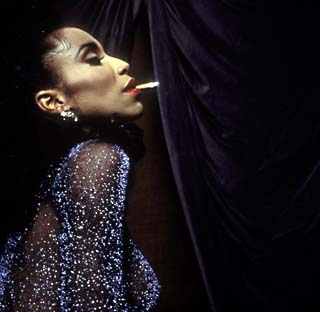
Above: the phenomenal Willi Ninja

BOWERY BOYS RECOMMEND is an occasional feature whereby we find an unusual movie or TV show that — whether by accident or design — uniquely captures an era of New York City better than any reference or history book. Other entrants in this particular film festival can be found HERE.

The Savoy Ballroom in Harlem saw the birth of the Swing-era ‘Lindy hop’ during the late 20s, a hip-swiveling dance named after Charles Lindburgh which became a regular move on dance floors. The Savoy would see a more radical mix of dance styles — and a decidedly more adventurous clientele — in the late 70s with the Harlem drag balls. The rest of the world was let in on this little secret in the cult classic 1990 documentary Paris Is Burning by Jennie Livingston.

‘Paris’ woke up many open-minded Americans — and rankled just about everybody else — to a community even further out of the spotlight than the ‘mainstream’ gay and lesbian community of that time. (Mainstream, of course, being relative in 1990.) Here were groups of primarily young black and Latino gay men and transgenders, with little evidence of stable home environment, enjoying the freedom of glamour and high fashion, elegance and performance on display on dancefloors in late 80s Harlem.

‘Paris Is Burning’ displayed the New York ‘house’ culture, groups of men under the aegis of various fashion houses — featured in the movie are the houses of LaBeija, Ninja and Xtravaganza — that serve practically as unofficial families. They meet on the dancefloor in competitions to emulate feminine and masculine stereotypes with just that extra added component of glamour. Fashion models, banji boys, military. Watching the competitions of ‘realness’ — the ability to pass ones self in the real world as ‘normal’ — has almost amusing relevance filmed as it was before the era of hyper-masculine gay appearances and culture of the ‘down low’.

New York City looks drab next to the colorful and fabulous personalities. You can catch a glimpse of how the West Village piers once looked, but who’s paying attention when Venus Extravaganza is talking? She’s the most heartbreaking character — I won’t spoil why — and has always been my favorite; faced with insurmountable obstacles, you still root for her as she describes her fantasy life to be a kept housewife and a fashion model. Livingston cleverly intercuts with pictures of at-the-time current models, images which are even more strikingly absurd now. Venus might be happy to know she looks more like a model of today than any of those women.

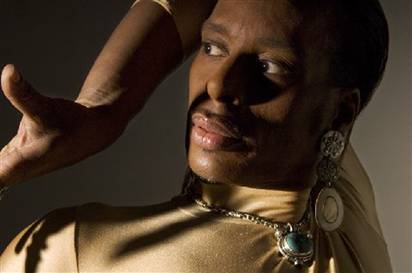
Many of the greatest personalities in ‘Paris’ are no longer with us, giving the movie an even more depressing weight. However, one of the featured stars Octavia St. Laurent (pictured above) is still looking great — although she now calls herself Heavenly Angel Octavia St. Laurent. Like the Lindy hop, another dance borne from the floors of the Savoy, voguing, as infiltrated modern pop music, from Madonna to Britney Spears.

And some members of the houses have gone on to mainstream success. Willi Ninji, who passed away last year, became a recording artist and dance coach, notably to Paris Hilton. Another member of the house of Ninja, Benny Ninja, is a frequent guest on America’s Next Top Model.

And while the visibility of the Harlem ballroom danceoffs may have peeked with ‘Paris Is Burning’, they’re still going strong, particularly in other cities like Atlanta and Los Angeles. The House of Ultra-Omni recently celebrated their 25th anniversary. While the younger generation now ‘perform’ as modern stars like Jay Z, there’s still plenty of glamour and confidence to go around.

If you haven’t seen ‘Paris Is Burning’ in a few years, I highly recommend another viewing and maybe a little private voguing in your living room.

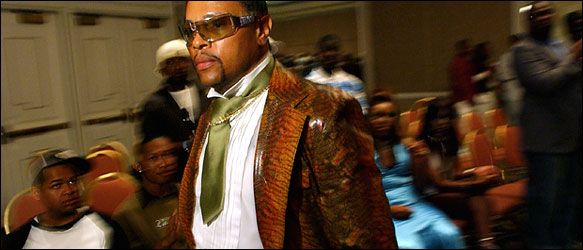
Below: The style of Kevin Ultra-Omni, at his house’s anniversary party

Above photo: Ann Johansson for The New York Times

Categories
Podcasts

PODCAST: The Apollo Theater

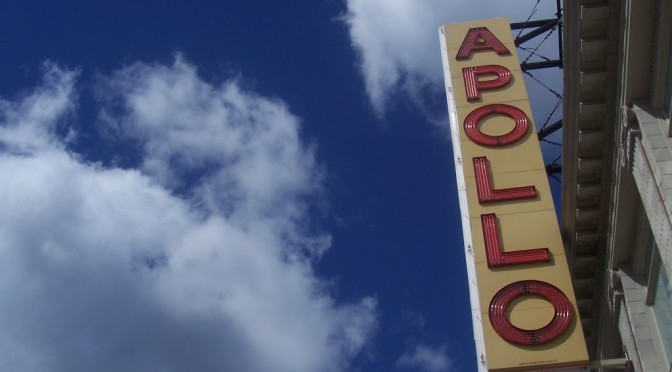
Harlem’s jewel, the Apollo Theater, has more than lived up to its promise as a place “where stars are born and legends are made.” It’s been the cultural centerpiece of New York for more than seven decades, not bad for a former burlesque theater. And find out which icon made his name — and held his funeral — on the same stage.

Listen to it for free on iTunes or other podcasting services. Or you can download or listen to it HERE

First, a clarification from our podcast: the building of the Lenox Avenue line did greatly increase development in the Harlem area, and a great many of Harlem’s most beautiful blocks were developed at or near this time. But this boom did not benefit the increasing African-American members of the neighborhood. In a twist of absurd racism that just seems not only ridiculous but economically short-sighted, owners would let buildings sit vacant, waiting for white tenants, rather than rent them out to black ones.

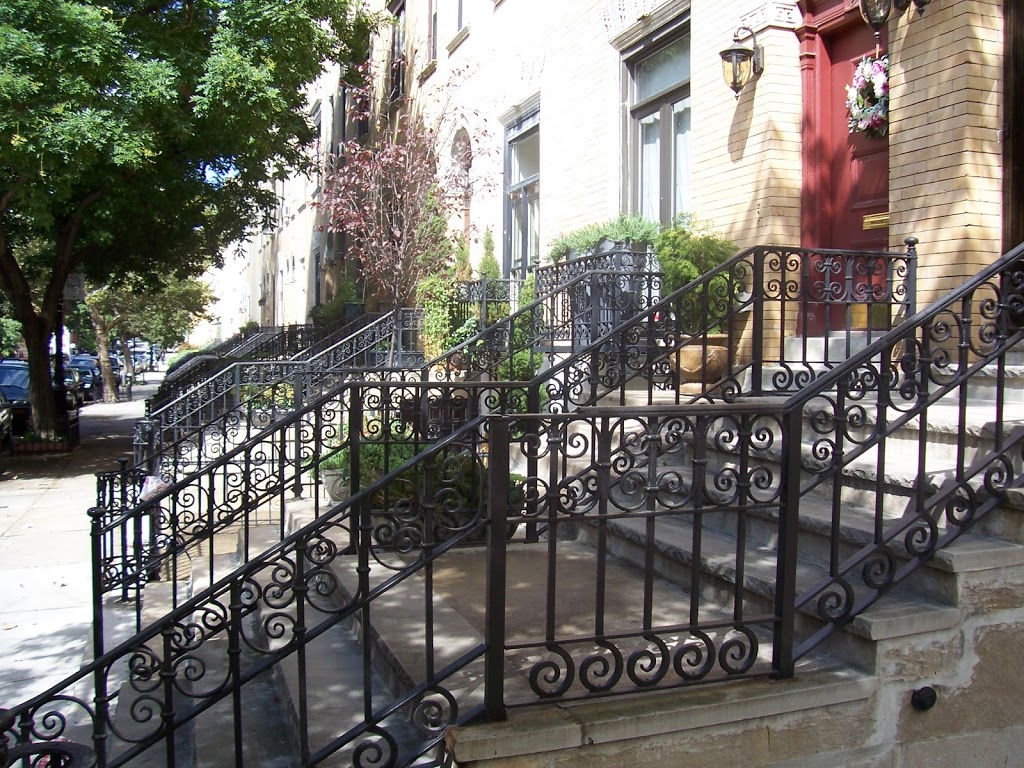
Luckily, areas like Strivers Row (pictured below, located about ten blocks north of the Apollo) soon dissolved that color barrier, and it was in neighborhoods like these that the community flourished.

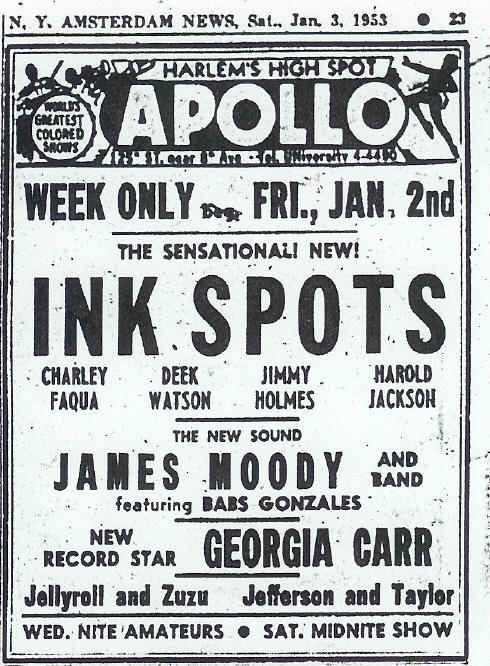
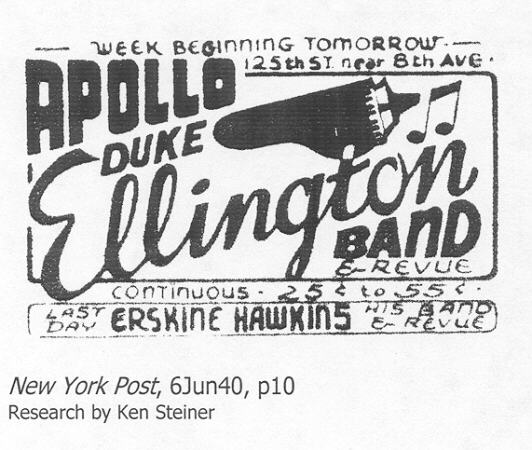
The Apollo would see dozens of major names in R&B, jazz and pop hit its stage in just a few months, as acts would be stacked on top of each other, giving audiences an opportunity to sample lists of artists topping the charts, all at once.

However, what would often set the Apollo apart from other venues was not its talent, but its audiences. I love this quote from Ozzie Davis, about a play that he and his wife Ruby Dee performed on the stage of the Apollo: “The play lasted 15 to 20 minutes longer at the Apollo because the people laughed at everything and their laughter would stop the show. It was like having a show and a prayer meeting at the same time. It was wonderful.”

Near the height of her fame, Aretha Franklin returned to Apollo, a place that had seen many of her early performances. She performed a string of performances in 1971, all of them sold out, to a marquee outside that pronounced ‘She’s Home’. In the 60s, comedians like Bill Cosby, Redd Foxx and Richard Pryor built their stand-up followings at the Apollo. Before them, however it was Moms Mabley, one of the first female comedians to grace the Apollo stage, taking up a virtual residence there that lasted from the late 30s to the 60s. She would perform at the Apollo more than any other performer in its history, making up to $10,000 a week in her heyday. (That’s an awful lot of dough in 1950s money.)

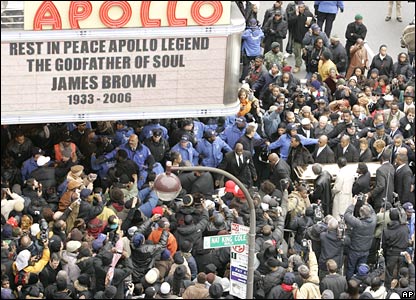
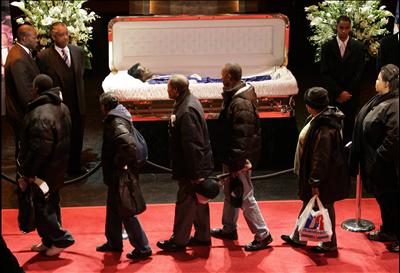
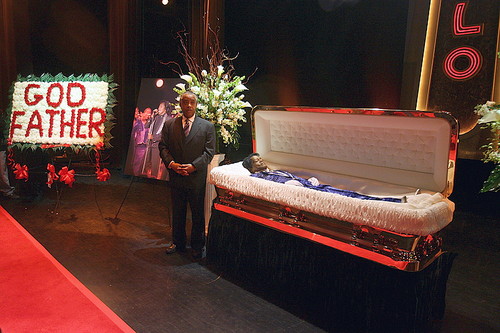
When James Brown died, the Apollo lost its leading light, the man that typified the world-class entertainment it had come to be known for. His funeral was attended by thousands of fans, who traipsed up to the stage to see the King of Soul a final time.


I can’t help but find this picture of Al Sharpton and the body of James Brown on the stage of the Apollo a little strange, however.

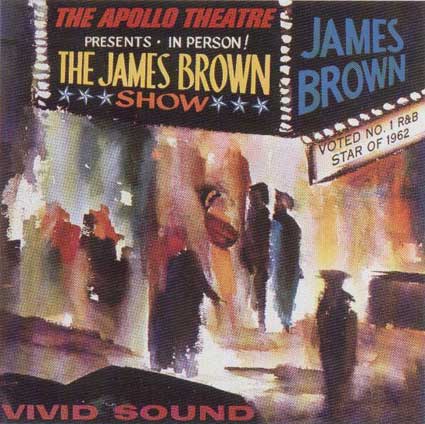
Al Sharpton, a close friend of Brown’s, was quoted as saying, “I don’t think any of us could think James Brown could die. It didn’t seem possible.” James is very much living and breathing on his pivotal recording ‘Live At The Apollo’, which Rolling Stone called the most important live album ever recorded. Listening to this, he does seem to have an air of immortality and boundless talent and energy.

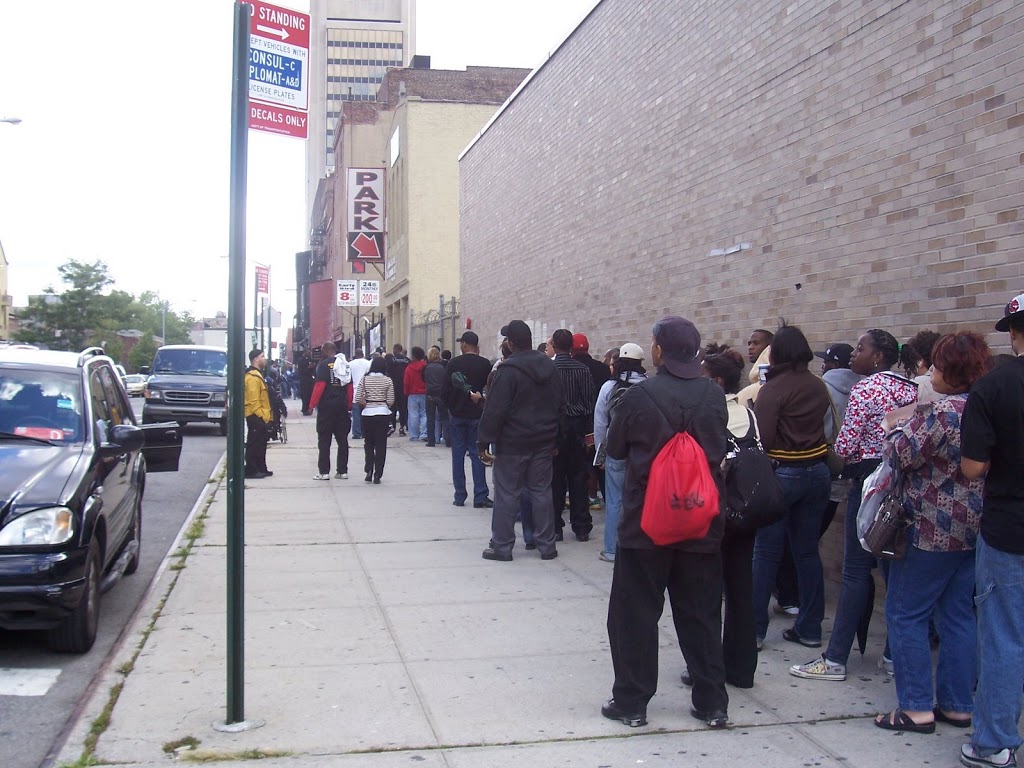
This past Saturday, I happened to be sauntering by the Apollo and caught this line of auditioners for Amateur Night filing into the back of the building to try out. Behold, for the chances are very good that what you are looking at is surely the backside of a major future star!

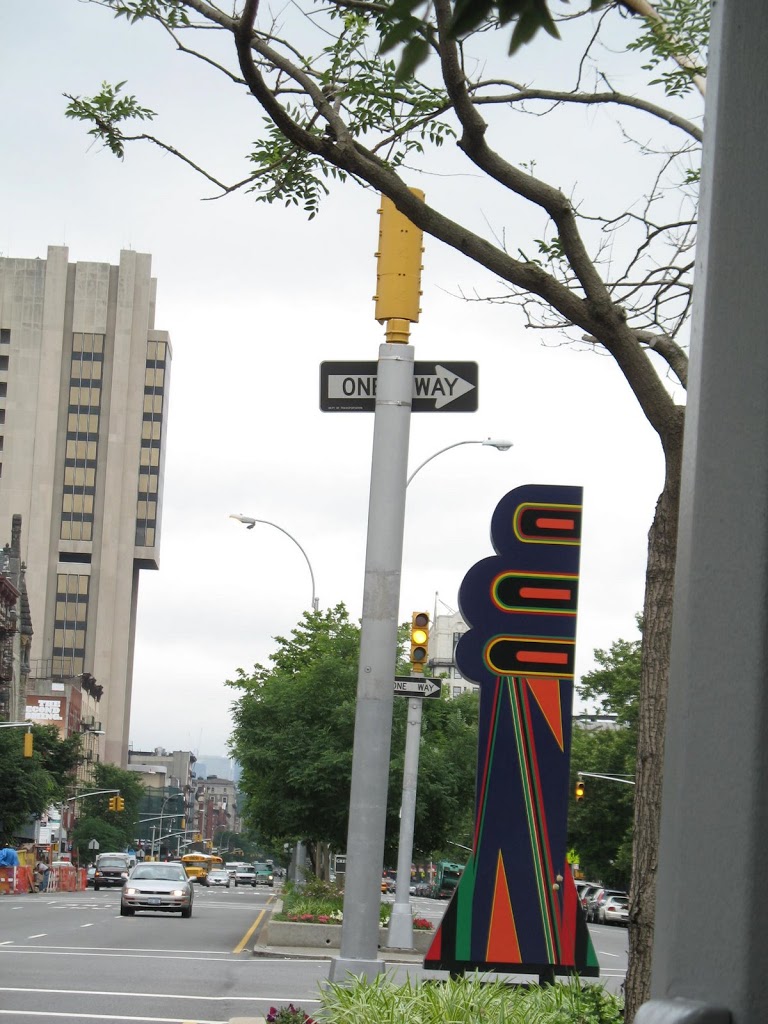
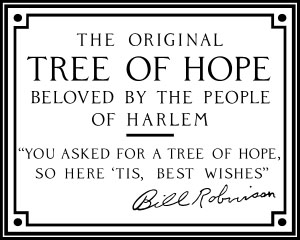
Those who gave a little rub to the sliver of the Tree of Hope have given better performances, at least according to legend. And given the Apollo’s track record, who can balk? Down the street at 131st and Adam Clayton Blvd,, near the original location of the Tree of Hope, you can find a sculpture by Al Miller commemorating the original tree, as well plaque laid in 1941 in a ceremony by mayor Fiorello LaGuardia and entertainer Bill ‘Bojangles’ Robinson. Robinson, naturally, was a frequenter of the stage of the Apollo. Like many performers of his era, he would sometimes perform up to 3 to 5 times a day to soldout shows.

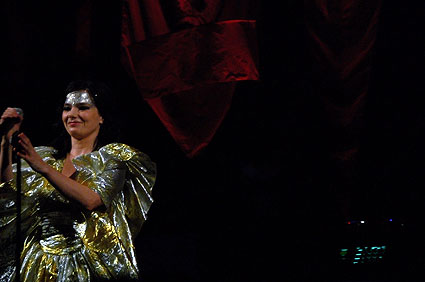
The Apollo is considered one of the most prestigious venues in the city and is host to musicians covering a wide swath of genres — gospel, hip hop, alternative. Below, it’s Bjork that takes the stage:

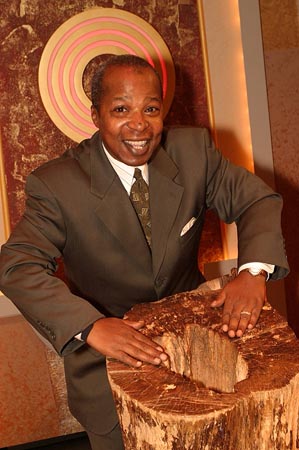
The Apollo Theater currently has tours for groups, led by longtime Apollo employee and ultimate historian Billy Mitchell. You can go to their official website for information, and you can go here for info on getting tickets to Showtime At The Apollo. (Billy and the Apollo’s slice of the Tree of Hope is at right.)

Please go here for some information on another Harlem music icon The Cotton Club, and here for all entries in our Friday Night Fever series.