Categories
Landmarks Podcasts

Harlem Nights at the Hotel Theresa

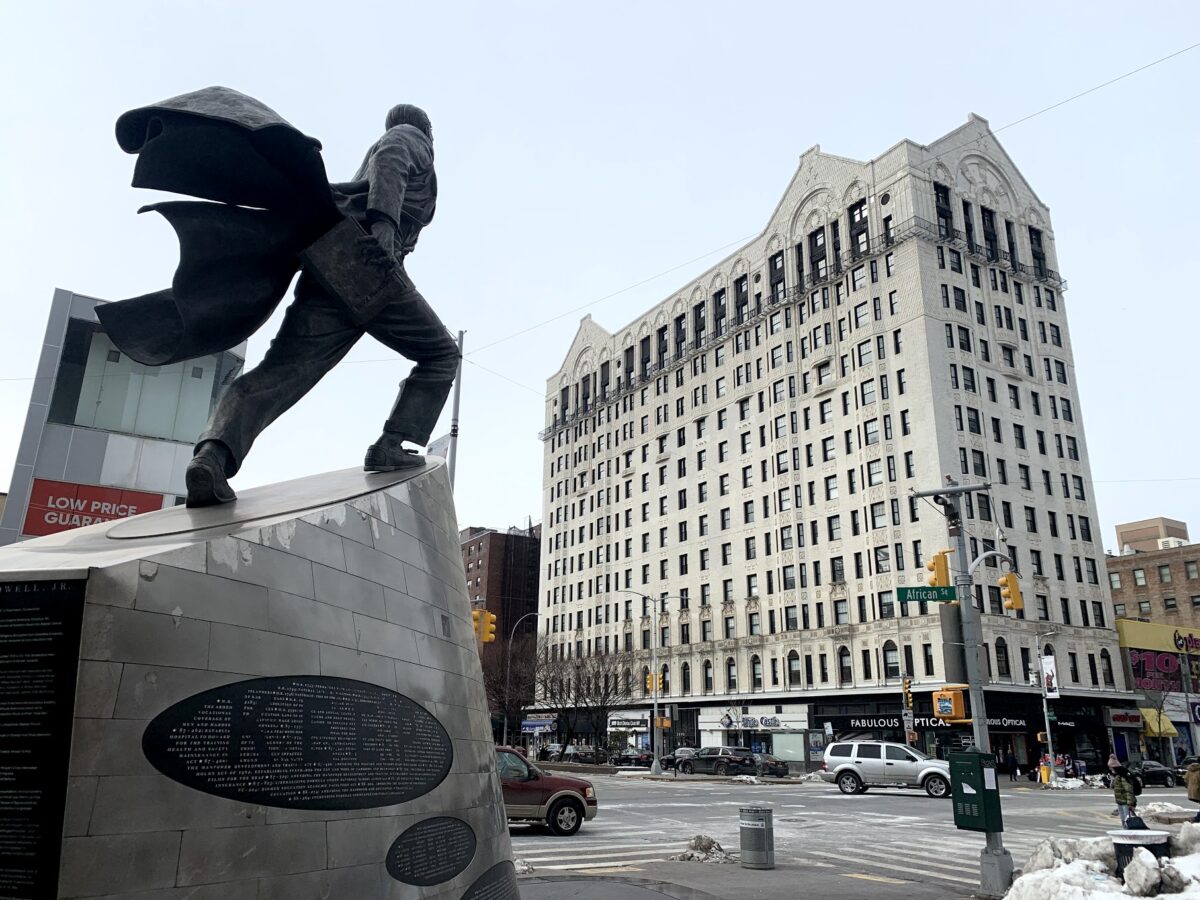
PODCAST The Hotel Theresa was once called the Waldorf of Harlem, a glamorous New York City accommodation known as a hub for Black society and culture in the 1940s and 50s — and for a few eyebrow-raising political moments in the 1960s.

The luxurious apartment hotel was built by a German lace manufacturer to cater to a wealthy white clientele.

But almost as soon as the final brick was laid, Harlem itself changed, thanks to the arrival of thousands of new Black residents from the South.

Harlem, renown the world over for the artists and writers of the Harlem Renaissance and its burgeoning music scene, was soon home to New York’s most thriving Black community.  But many of the businesses here refused to serve Black patrons, or at least certainly made them unwelcome.
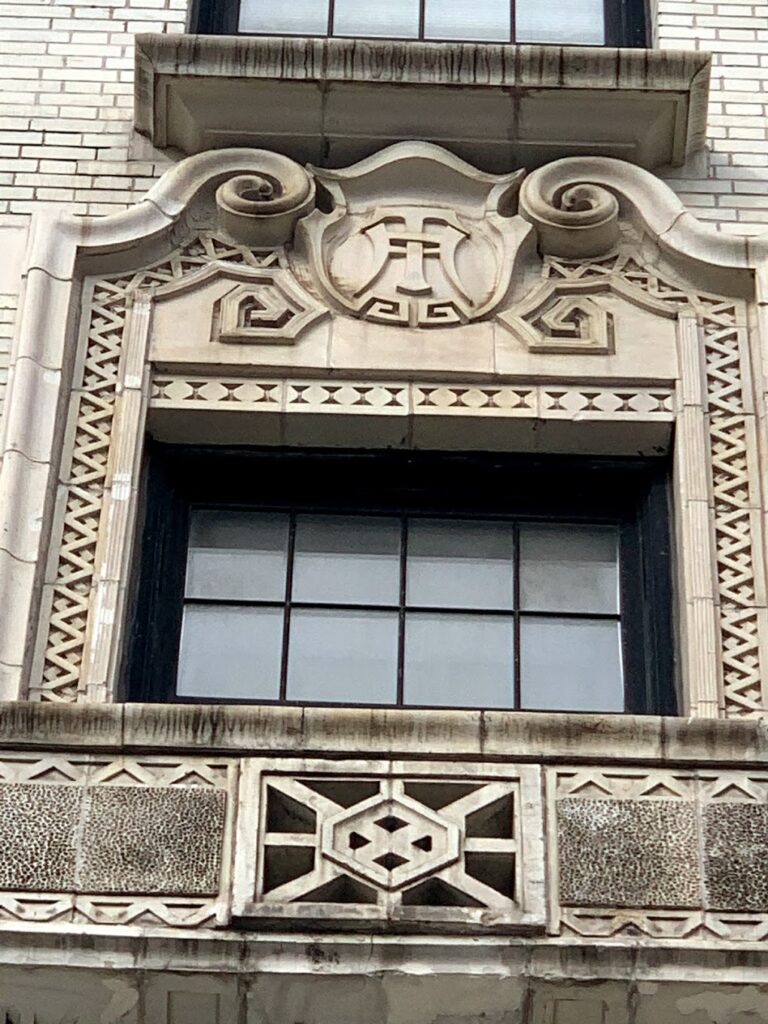
The TH initials over the windows. Photo courtesy Greg Young

The Theresa changed its policy in 1940 and soon its lobby was filled with famous athletes, actresses and politicians, many choosing to live at the Hotel Theresa over other hotels in Manhattan.  

The hotel’s relative small size made it an interesting concentration of America’s most acclaimed Black celebrities. And an almost surreal backdrop for presidents and foreign leaders alike.
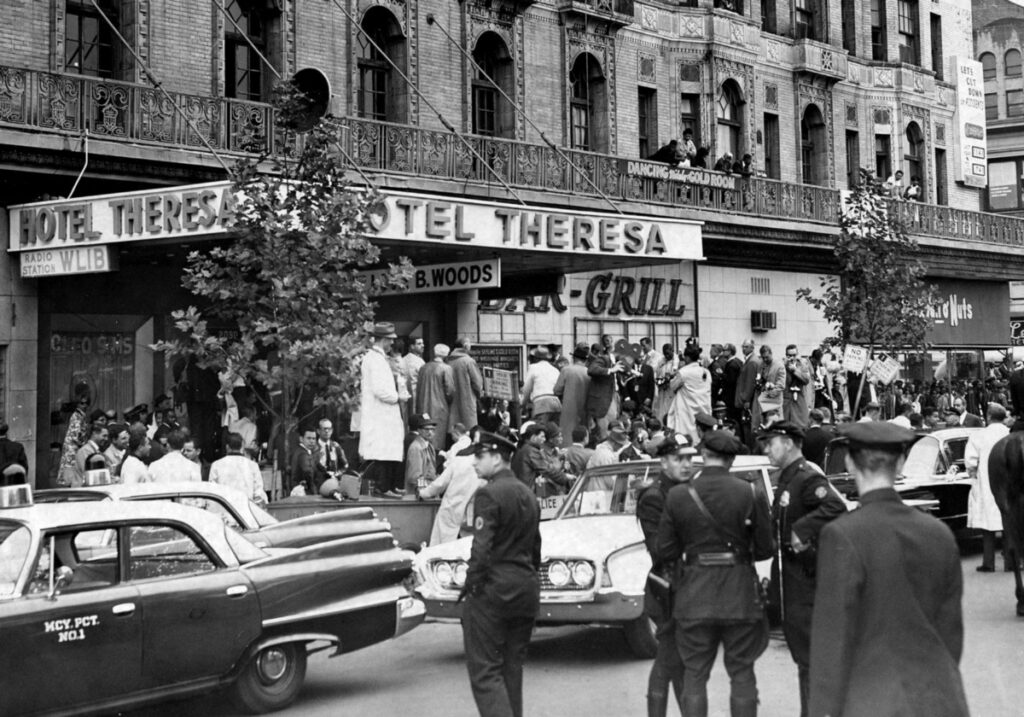
Media frenzy around the Fidel Castro’s stay at the hotel.

In this podcast, Greg gives you a tour of this glamorous scene, from the corner bar to the penthouse, from the late-night coffee shop to the crazy parties of Dinah Washington.

WITH: Martin Luther King Jr, Dwight D. Eisenhower, and Fidel Castro. And music by Sarah Vaughan, Billy Eckstine and Duke Ellington

ALSO: Who is this mysterious Theresa? What current Congressman was a former desk clerk? And what was Joe Louis’ favorite breakfast food?


Listen to Harlem Nights at the Hotel Theresa on your favorite podcast player or from the player below:

The first half of this show was originally released in 2013 (as Episode #158) but has been newly edited for this release. The second half of this show is ALL NEW.

MUSIC FEATURED: “Sophisticated Lady” by Duke Ellington and His Orchestra and “Dedicated To You” by Billy Eckstine and Sarah Vaughan. 

The Hotel Winthrop which sat on the spot of the Theresa before it was torn down in the early 1910s, deemed a bit inadequete for the growing neighborhood.
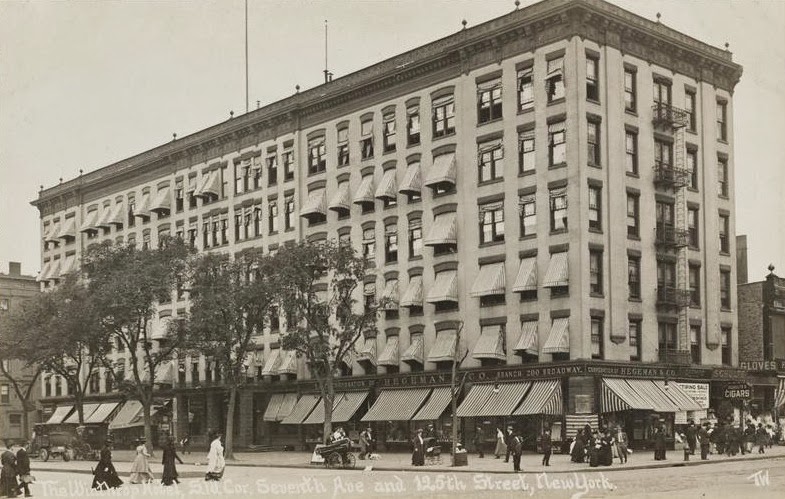
Museum of the City of New York

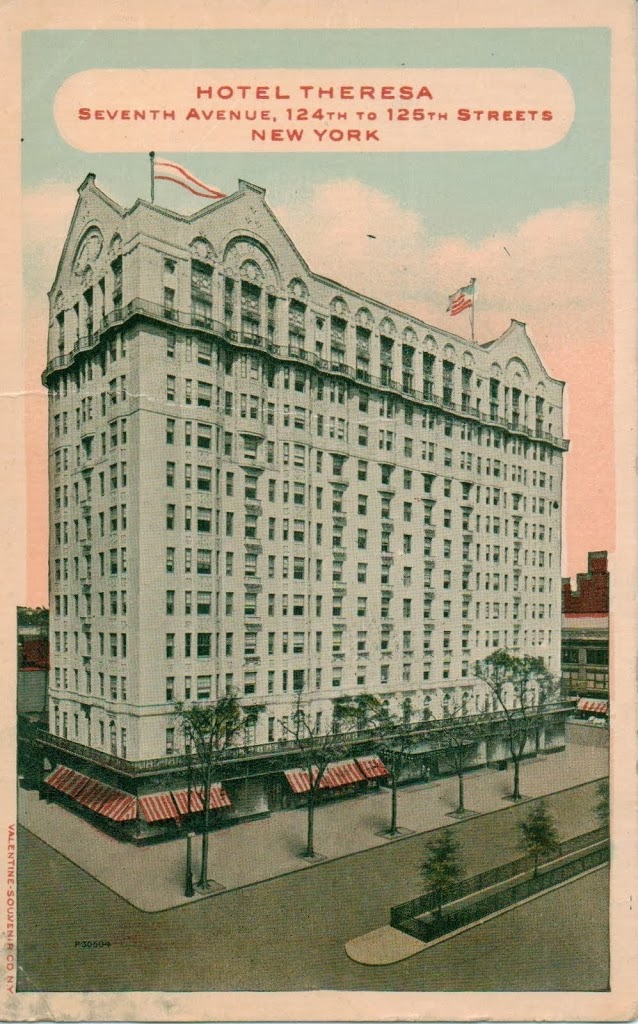
An early glimpse of the Hotel Theresa.
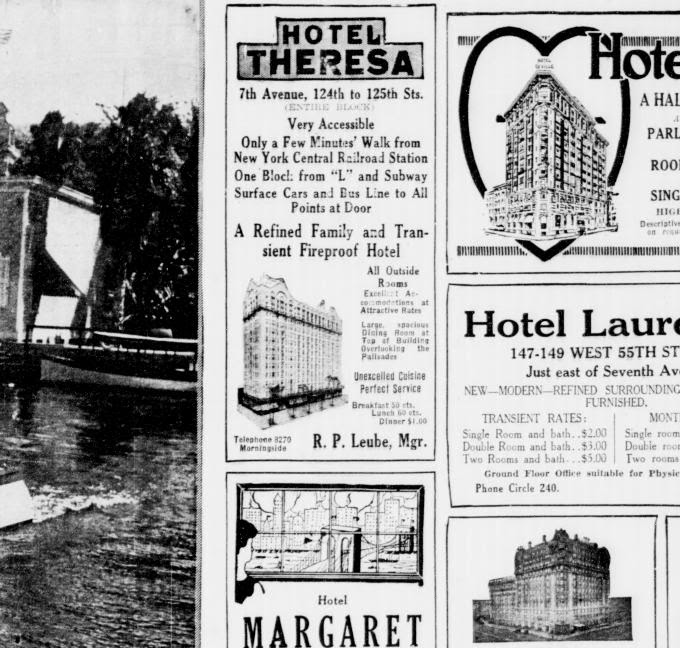
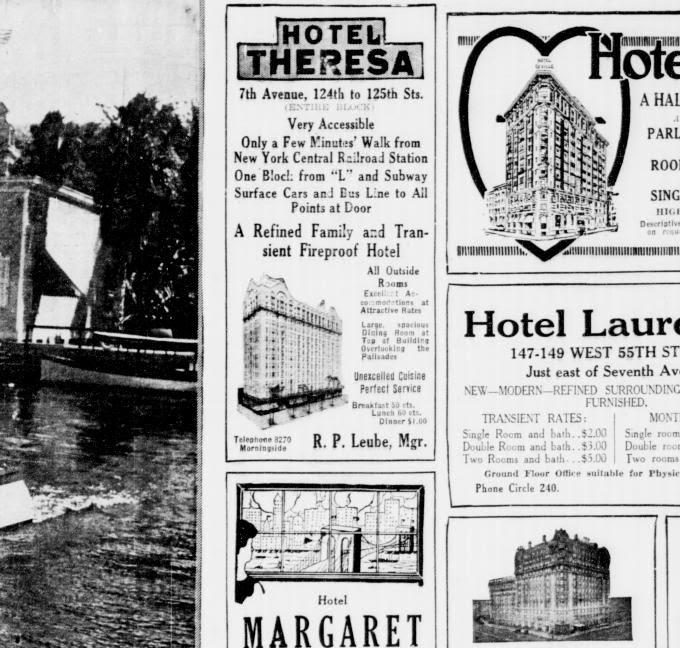
From the February 4, 1917, issue of the New York Tribune, making note of its “large spacious dining room overlooking the Palisades.”
The Hotel Theresa, circa 1915.  Courtesy the Museum of the City of New York
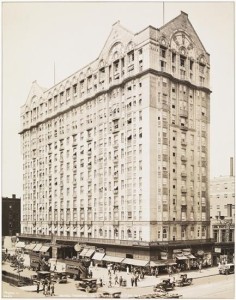
Hotel Theresa, Seventh Ave. & 125th Street.

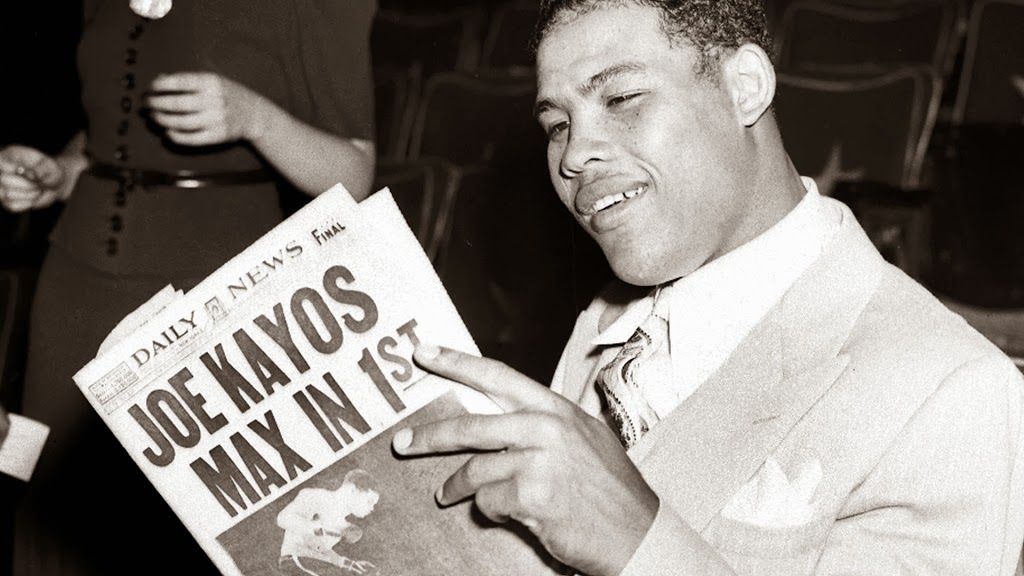
Boxer Joe Louis was one of America’s most famous athletes in the 1940s and a frequent guest at the Teresa.  Joe fought the German boxer Max Schmeling twice, both times at Yankee Stadium.  

Max bested Joe in the first match, but on the second go-around in 1938, Louis knocked out Schmeling in the first round.  

He enjoyed his win that evening at the Theresa, as thousands of fans gathered in front of the hotel and throughout the city in celebration.
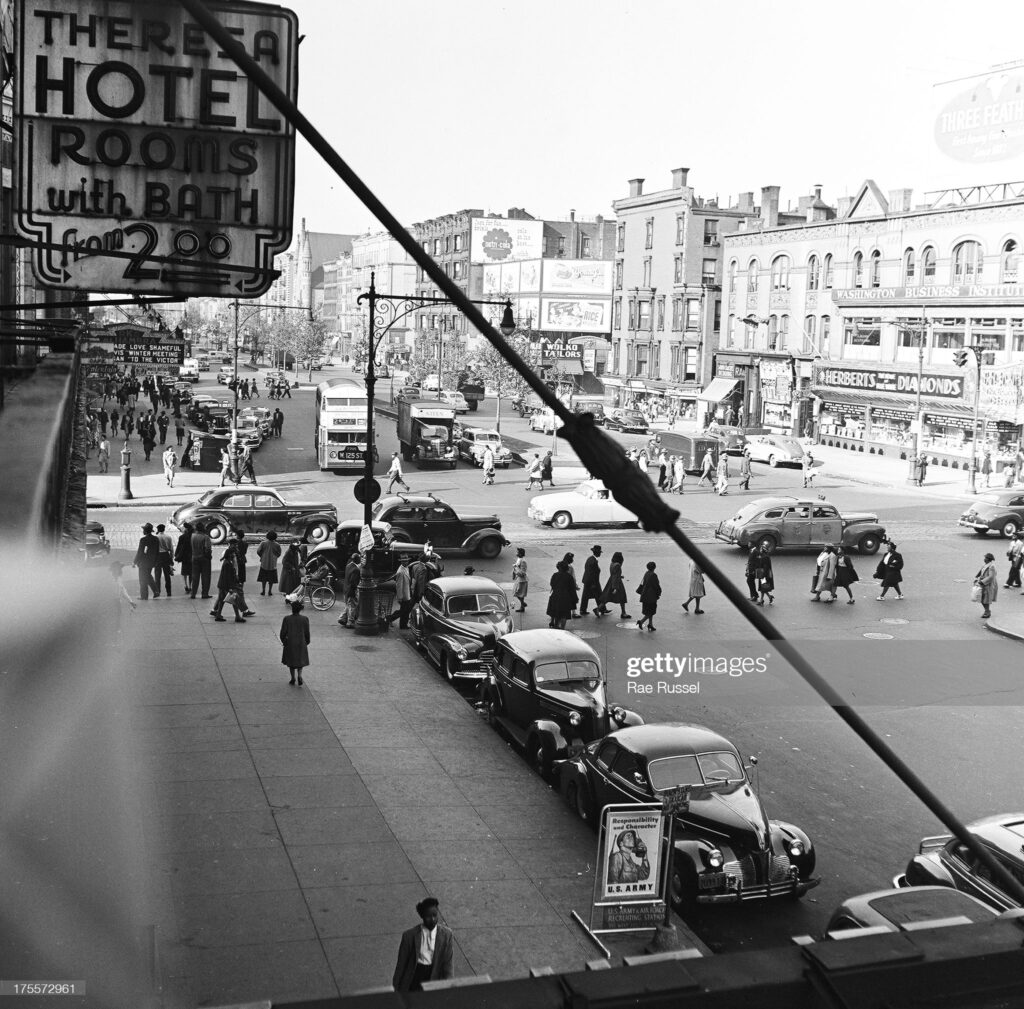
View of pedestrian and vehicular traffic at the corner of 125th Street and 7th Avenue in Harlem, New York, New York, 1948. The sign for the Theresa Hotel is visible on the left. (Photo by Rae Russel/Getty Images)

Malcolm X speaking to crowds in front of the Hotel Theresa — back when there was a Chock Full O Nuts on street level! Malcolm would be very associated with the hotel, headquartering here after his split with the Nation of Islam.  
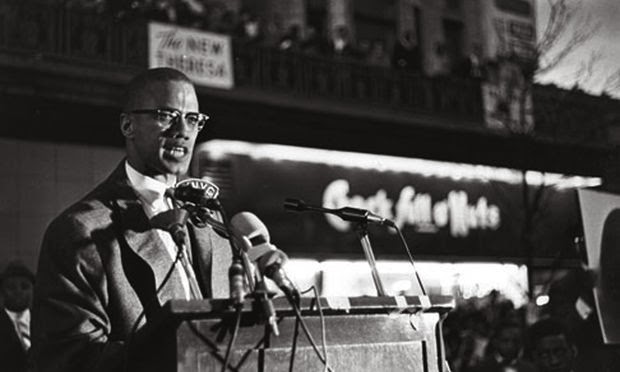
Photo by Larry Fink c/o WNYC
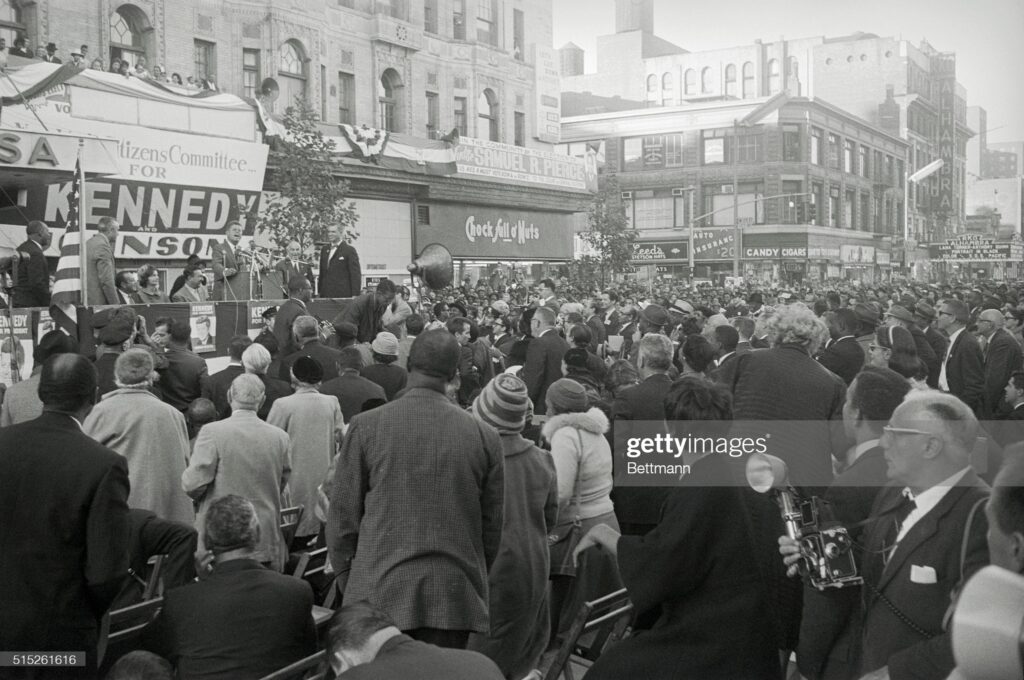
Sen. John F. Kennedy, Democratic presidential nominee, speaks at a rally in front of the hotel Theresa in Harlem. Kennedy made a half dozen speeches or appearances in and around the city during the second of a three-day bid for New York State’s 45 electoral votes. (Getty Images)

Jet Magazine and Ebony Magazine founder John J Johnson conceived the ideas for both magazine at the Hotel Theresa and frequently published articles about the Theresa.
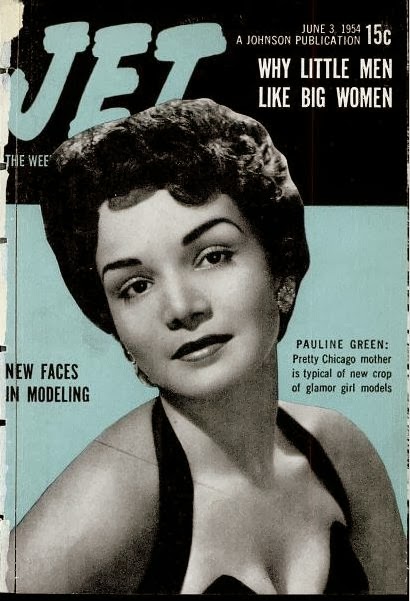
 A notice in a 1954 issue of Jet announcing the opening of the Hotel Theresa ballroom, called the Skyline.
The Bowery Boys: New York City History podcast is brought to you …. by you!

We are now producing a new Bowery Boys podcast every other week. We’re also looking to improve and expand the show in other ways — publishing, social media, live events and other forms of media. But we can only do this with your help!

We are now a creator on Patreon, a patronage platform where you can support your favorite content creators.

Please visit our page on Patreon and watch a short video of us recording the show and talking about our expansion plans. If you’d like to help out, there are six different pledge levels. Check them out and consider being a sponsor.

We greatly appreciate our listeners and readers and thank you for joining us on this journey so far.
Categories
Bowery Boys Movie Club Landmarks

Grand Central Terminal’s Ten Greatest Moments on Film

Grand Central Terminal has seen millions of people rush across its Main Concourse over the past one hundred years, and more than a few movies have captured that commuter ebb and flow.  But while Grand Central is occasionally a backdrop for romance — especially during World War II, when returning soldiers would arrive to meet their loved ones — filmmakers have preferred to capture a darker aspect to the landmark.

The Beaux-Arts train station has become an ideal location for thrillers, mysteries, fantasies and horror films, a backdrop for chases and a metaphor for chaos and disorientation.  In the movies, its concourse feels even more cavernous and mythic, its train tunnels havens for the unknown.

During its first half-century, Grand Central was known mostly for its trains — in particular, the Twentieth Century Limited, the luxurious passenger locomotive that attracted the most famous people in the world. In fact, the most common place to see a celebrity in the 1930s and 40s would probably have been Grand Central. People would sit at the station watching politicians and stars boarding the most famous train in the world.

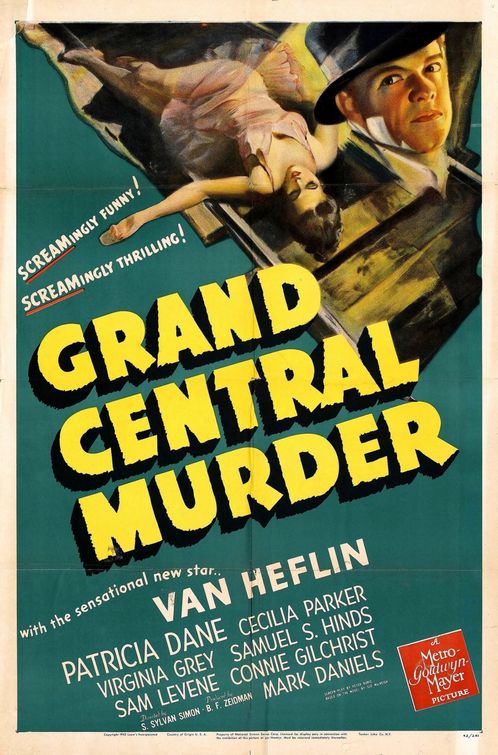
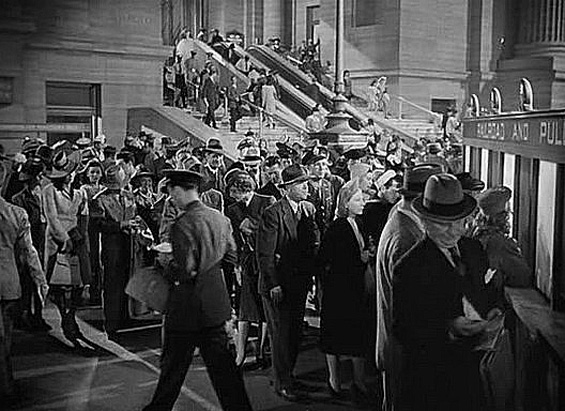
So it’s no surprise that Grand Central’s most notable early film appearances relate to the Twentieth Century, including, of course, Twentieth Century, the ribald 1934 comedy that made Carole Lombard a star.  Other glamorous features of this era — including Grand Central Murder (1942) and The Thin Man Goes Home (1945) — use Hollywood reconstructions of Grand Central as a backdrop.

Below: A phony version of Grand Central Terminal used in the film The Thin Man Goes Home. (Courtesy On The Set of New York)

As the train station deteriorated after the 1950s — as train travel itself fell into disregard — Grand Central became a darker, dangerous place in the movies. The travelers, the commuters, are now a backdrop for chase scenes and violent shootouts, homeless people and even psychos stalking the yellowing, banner-filled concourse of the 1970s and 80s.

Its rehabilitation in the 1990s brought monumentality back to Grand Central and brought it back to the movies as a place of respect and beauty. I would never recommend you watch the remake of Arthur starring Russell Brandexcept for this particular scene which demonstrates the Terminal’s remarkable transformation.

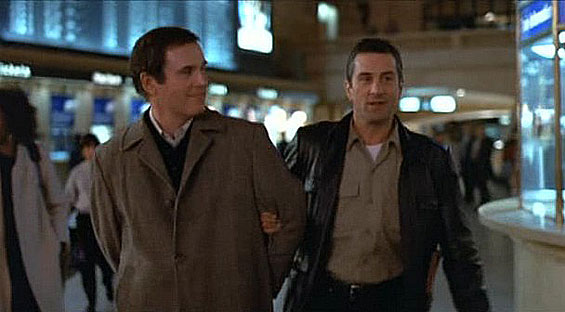
Grand Central makes a brief appearance in the 1988 comedy Midnight Run with Charles Grodin and Robert DeNiro. (Courtesy On The Set of New York)

Here are my personal choices for Grand Central’s top ten moments in cinema.  I’m sure I’m forgetting a few choice ones, so please add them in the comments section if they come to mind:

10 The Avengers (2012)
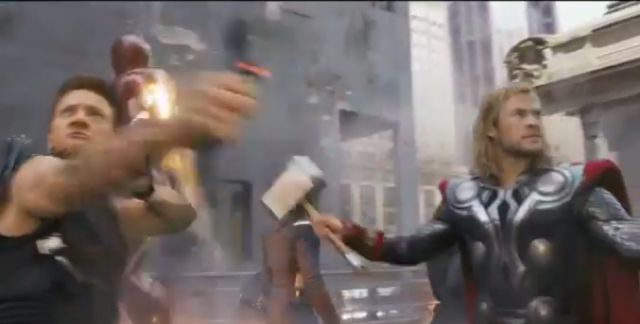
The Terminal as a fortress, a hall of justice.  The MetLife Building behind it is completely dismantled and replaced with Iron Man‘s new headquarters, but nobody would ever think of doing that to Grand Central. In fact, our heroes fight inter-dimensional aliens right in front of it, their phalanx mounted on the overpass below.  As Earth’s finest stand in akimbo waiting for the attack, the statue of Cornelius Vanderbilt stands equally defiant in the background.  (For another sci-fi use of Grand Central’s exterior, see Will Smith in I Am Legend.)

9  Necrology (1971)
The building has inspired the avant-garde as well.  Years after Andy Warhol turned his camera to the Empire State Building, experimental filmmaker Standish Lawder found supernatural inspiration inside Grand Central for this odd little film ostensibly about the afterlife.  Stay for the credits.

8 Spellbound (1945)
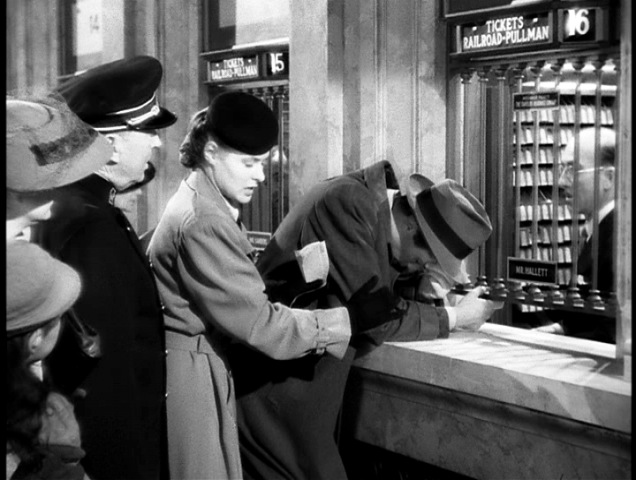
This isn’t even Alfred Hitchcock‘s best film usage of Grand Central (see below), but it’s notable in that both Grand Central and Pennsylvania Station are used in this psychological thriller starring Ingrid Bergman and Gregory Peck.  I can’t recall any other film that would have included both iconic New York landmarks. With this film, Hitchcock also playfully mocks Grand Central’s wartime reputation as a place for departing lovers, even while giving into those romantic impulses.

7 The House on Carroll Street (1988)
This somewhat unsuccessful thriller (with a spectacular cast) is notable for its creativity involving a climactic chase scene up in Grand Central’s inaccessible upper tiers.  You can see a little bit of it in this trailer:

6 Superman (1978)
Lex Luther’s secret lair, eccentrically decorated, is hidden in a forgotten tunnel underneath Grand Central.  His lackey Otis (Ned Beatty) is tracked to the concourse by police officers, but Luther has set a deadly trap for one of them.  Another reason not to roam the tracks by yourself!

Later, the supervillain waxes about the benefits to his Grand Central lair as the trains rumble overhead.

5 A Stranger Is Watching (1982)
Had Lex not been defeated, he would have been sharing the tunnels with the maniacal killer of this schlocky thriller, based on a novel by Mary Higgins Clark.  While this movie is pretty bad, Grand Central is used to superb effect, a veritable haunted house of dark tunnels and abandoned elevators.  There’s even mention of Franklin Delano Roosevelt’s secret elevator!

4 Carlito’s Way (1993)
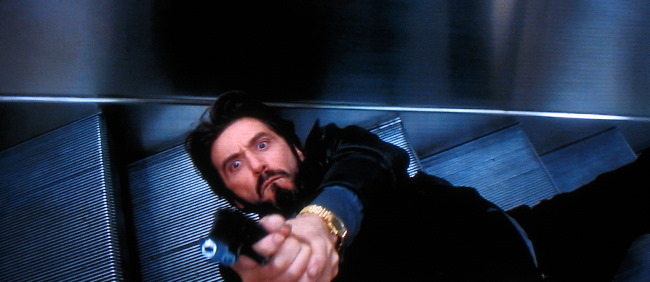
The famous escalator shootout scene (it’s Battleship Potemkin-meets-violent cop show) is probably the goriest scene ever filmed directly in Grand Central, topped by Carlito (Al Pacino) running to meet Penelope Ann Miller.  Let’s just say, he misses his train.  Watch the scene here.

3 Seconds (1966)
This bizarre John Frankenheimer drama starring Rock Hudson uses Grand Central Terminal (and a unique camera angle) to set the film’s off-kilter and twisted perspective.  It becomes the crossroads where opportunities of a second chance are literally handed to you if you dare to take them.

2 The Fisher King (1991)
Having hosted various mentally disturbed escapades in prior films, we now get to look in on an actual Grand Central fantasy in this Robin Williams film, as the deranged hallucinations of his character turn the bustling room into a glorious dance floor.

1 North By Northwest (1959)
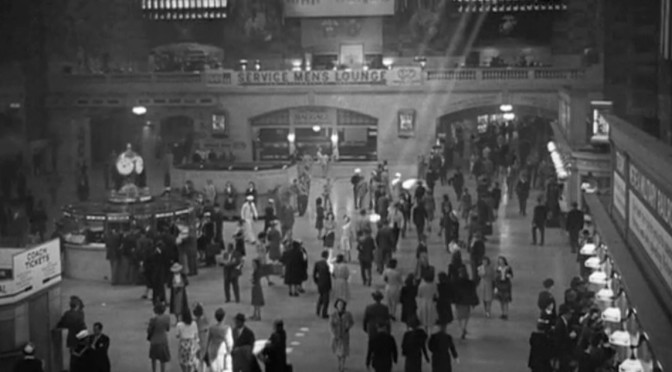
Has Grand Central Terminal ever looked as beautiful as it does in this pivotal scene from Hitchcock’s great 1959 masterpiece?  It gives Cary Grant opportunities to be suave, pensive and fabulous all at once.  It also embodies the tension and danger that would influence other filmmakers in later years to come to Grand Central for inspiration.

For more on the terminal, listen to our podcast episode and read the blog post on The Rescue of Grand Central Terminal.

Categories
Landmarks

Grand Central Terminal’s Ten Greatest Moments on Film

Grand Central Terminal has seen millions of people rush across its Main Concourse over the past one hundred years, and more than a few movies have captured that commuter ebb and flow.  But while Grand Central is occasionally a backdrop for romance — especially during World War II, when returning soldiers would arrive to meet their loved ones — filmmakers have preferred to capture a darker aspect to the landmark.

The Beaux-Arts train station has become an ideal location for thrillers, mysteries, fantasies and horror films, a backdrop for chases and a metaphor for chaos and disorientation.  In the movies, its concourse feels even more cavernous and mythic, its train tunnels havens for the unknown.

During its first half-century, Grand Central was known mostly for its trains — in particular, the Twentieth Century Limited, the luxurious passenger locomotive that attracted the most famous people in the world.  In fact, the most common place to see a celebrity in the 1930s and 40s would probably have been Grand Central, watching politicians and stars boarding the most famous train in the world.

So it’s no surprise that Grand Central’s most notable early film appearances relate to the Twentieth Century, including, of course, Twentieth Century, the ribald 1934 comedy that made Carole Lombard a star.  Other glamorous features of this era — including Grand Central Murder (1942) and The Thin Man Goes Home (1945) — use Hollywood reconstructions of Grand Central as a backdrop.

Below: A phony version of Grand Central Terminal used in the film The Thin Man Goes Home. (Courtesy On The Set of New York)

As the train station deteriorated after the 1950s — as train travel itself fell into disregard — Grand Central became a darker, dangerous place in the movies. The travelers, the commuters, are now a backdrop for chase scenes and violent shootouts, homeless people and even psychos stalking the yellowing, banner-filled concourse of the 1970s and 80s.

Its rehabilitation in the 1990s brought monumentality back to Grand Central and brought it back to the movies as a place of respect and beauty. I would never recommend you watch the remake of Arthur starring Russell Brand except for this particular scene which demonstrates the Terminal’s remarkable transformation.

Grand Central makes a brief appearance in the 1988 comedy Midnight Run with Charles Grodin and Robert DeNiro. (Courtesy On The Set of New York)


Here are my personal choices for Grand Central’s top ten moments in cinema.  I’m sure I’m forgetting a few choice ones, so please add them in the comments section if they come to mind:

10 The Avengers (2012)
The Terminal as a fortress, a hall of justice.  The MetLife Building behind it is completely dismantled and replaced with Iron Man‘s new headquarters, but nobody would ever think of doing that to Grand Central. In fact, our heroes fight inter-dimensional aliens right in front of it, their phalanx mounted on the overpass below.  As Earth’s finest stand in akimbo waiting for the attack, the statue of Cornelius Vanderbilt stands equally defiant in the background.  (For another sci-fi use of Grand Central’s exterior, see Will Smith in I Am Legend.)

9  Necrology (1971)
The building has inspired the avant garde as well.  Years after Andy Warhol turned his camera to the Empire State Building, experimental filmmaker Standish Lawder found supernatural inspiration inside Grand Central for this odd little film ostensibly about the afterlife.  Stay for the credits.

8 Spellbound (1945)
This isn’t even Alfred Hitchcock‘s best film usage of Grand Central (see below), but it’s notable in that both Grand Central and Pennsylvania Station are used in this psychological thriller starring Ingrid Bergman and Gregory Peck.  I can’t recall any other film that would have included both iconic New York landmarks. With this film, Hitchcock also playfully mocks Grand Central’s wartime reputation as a place for departing lovers, even while giving into those romantic impulses.

7 The House on Carroll Street (1988)
This somewhat unsuccessful thriller (with a spectacular cast) is notable for its creativity involving a climactic chase scene up in Grand Central’s inaccessible upper tiers.  You can see a little bit of it in this trailer:

6 Superman (1978)
Lex Luther’s secret lair, eccentrically decorated, is hidden in a forgotten tunnel underneath Grand Central.  His lackey Otis (Ned Beatty) is tracked to the concourse by police officers, but Luther has set a deadly trap for one of them.  Another reason not to roam the tracks by yourself!

Later, the super villain waxes about the benefits to his Grand Central lair as the trains rumble overhead.

5 A Stranger Is Watching (1982)
Had Lex not been defeated, he would have been sharing the tunnels with the maniacal killer of this schlocky thriller, based on a novel by Mary Higgins Clark.  While this movie is pretty bad, Grand Central is used to superb effect, a veritable haunted house of dark tunnels and abandoned elevators.  There’s even mention of Franklin Delano Roosevelt’s secret elevator!

4 Carlito’s Way (1993)
The famous escalator shootout scene (it’s Battleship Potemkin-meets-violent cop show) is probably the goriest scene ever filmed directly in Grand Central, topped by Carlito (Al Pacino) running to meet Penelope Ann Miller.  Let’s just say, he misses his train.  Watch the scene here.

3 Seconds (1966)
This bizarre John Frankenheimer drama starring Rock Hudson uses Grand Central Terminal (and a unique camera angle) to set the film’s off-kilter and twisted perspective.  It becomes the crossroads where opportunities of a second chance are literally handed to you, if you dare to take them.

2 The Fisher King (1991)
Having hosted various mentally disturbed escapades in prior films, we now get to look in on an actual Grand Central fantasy in this Robin Williams film, as the deranged hallucinations of his character turn the bustling room into a glorious dance floor.

1 North By Northwest (1959)
Has Grand Central Terminal ever looked as beautiful as it does in this pivotal scene from Hitchcock’s great 1959 masterpiece?  It gives Cary Grant opportunities to be suave, pensive and fabulous all at once.  It also embodies the tension and danger that would influence other filmmakers in later years to come to Grand Central for inspiration.

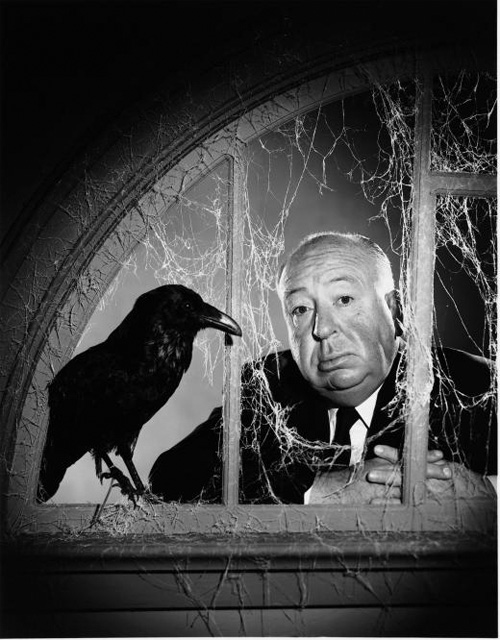
Was New York not haunted enough for Alfred Hitchcock?

A still from ‘The Wrong Man’, a crime drama shot in New York in 1956. (Courtesy Empire Magainze.)

Alfred Hitchcock‘s innovative anthology series ‘Alfred Hitchcock Presents’ debuted on CBS in the fall on 1955. As a filmed dramatic series (vs. the live camera TV hits like ‘I Love Lucy’ and ‘The Honeymooners’), the weekly mystery program brought serious cache to the medium and set the bar high for genre anthology television, to be raised four years later by ‘The Twilight Zone’.

Many episodes were filmed in New York, using Broadway’s rich pool of stars. The city would itself be a star of several Hitchcock films, including one released the next year in 1956. The Henry Fonda crime drama ‘The Wrong Man’, based on real events, concerned a jazz musician from the Stork Club falsely accused of a robbery. Most notable were its scenes shot on location at Queens City Prison in Kew Gardens.

Before beginning production on ‘The Wrong Man’, Hitchcock wanted to wow Warner’s studio executives and reporters with a fabulous New York soiree in March, done up Hitchcock-style. That meant conjuring up many of the mystery and horror themes the director was most famous for. So, on that note, Hitch requested his publicist look for an actual New York haunted house.

Now I can tell you from doing our annual Halloween podcasts that there are no shortage of ‘haunted’ New York locations. But it seems the publicists had a bit of a problem locating a suitable venue — one that could host both ambassadors from the afterworld and a haughty contingent from the film world.

According to reports, Hitchcock loved some ‘abandoned wine cellars’ beneath the Manhattan end of the Brooklyn Bridge. (The article doesn’t clarify where these are. Perhaps they were part of George Washington’s old home?) But costs to install plumbing were prohibitive. Hitchcock “wanted women among his guests in the haunted quarters and women would want washrooms,” according to reports.

He next turned to a very familiar haunted home — the Merchant’s House, allegedly possessed by its former owner Gertrude Tredwell. It was ideal, but the home owners were less than thrilled at hosting a saucy industry party and rebuffed the offer.

Frustrated, Hitchcock’s publicists even put an ad in the paper, looking for ghost-filled venues. After a few disappointing offers — including one in Jackson Heights, Queens, but the master of suspense feared his party guests would never venture that far — he settled on a rustic old townhouse at 7 East 80th Street, right off the park. Not haunted, but plenty ‘cobwebby’, according to the press.

The party went off, with Hitch, without a hitch. The ‘haunted-house’ party included tombstone-shaped ‘Carte de Mort’ menus with a variety of macabre selections, including Corpse Croquette, Vicious-Soisse, Suicide Suzettes, Gibbeted Giblets, Ghoulish Goulash and “Fresh-cut Lady Fingers (in season)”. (Revel in the rest of the menu here.)

Hitchcock received a true fright at the end of the year when ‘The Wrong Man’ was finally released and promptly flopped at the box office. It would be his final film for Warner Bros., whose executives at least got a kooky party out of the deal.