Categories
Planes Trains and Automobiles Podcasts

James H. Williams and the Red Caps of Grand Central Terminal

PODCAST EPISODE #339: An interview with author Eric K. Washington, author of “Boss of the Grips: The Life of James H. Williams and the Red Caps of Grand Central Terminal”. 
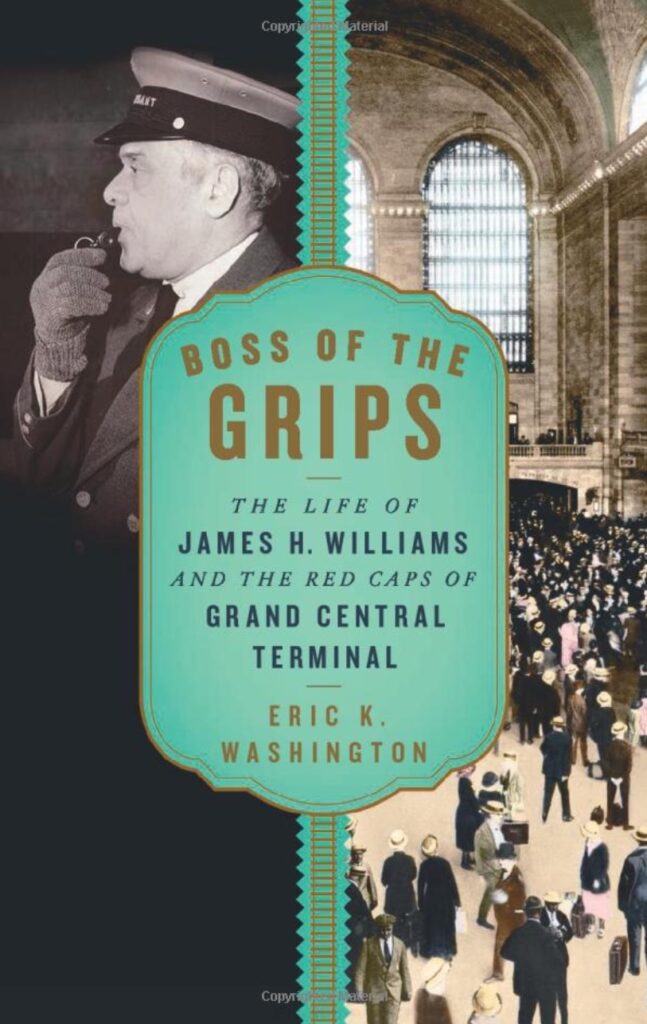

The Red Caps of Grand Central Terminal were a workforce of hundreds of African-American men who were an essential part of the long-distance railroad experience. Passengers relied on Red caps for more than simply grabbing their bags — they were navigators, they helped with taxis, offered advice, and provided a warm greeting.

In his 2019 book, “Boss of the Grips: The Life  of James H. Williams and the Red Caps of Grand Central Terminal”, author Eric K. Washington tells the remarkable story of Williams, “The Chief” of the Grand Central Red Caps. He was a boss to many, a friend to thousands of passengers, and a confidant to celebrities, politicians… even occupants of the White House.

He also tells the story of Grand Central Terminal, and specifically, of the Red Caps who worked here, especially during the Terminal’s heyday in the first half of the 20th century. And along the way, the book chronicles how New York’s African-American enclaves and communities developed and moved around the city. 

That huge story is told through the lens of this one, often underappreciated, and yet instrumental man — James Williams. He was the chief of the Red Caps, but also an under-reported figure in the Harlem Renaissance.
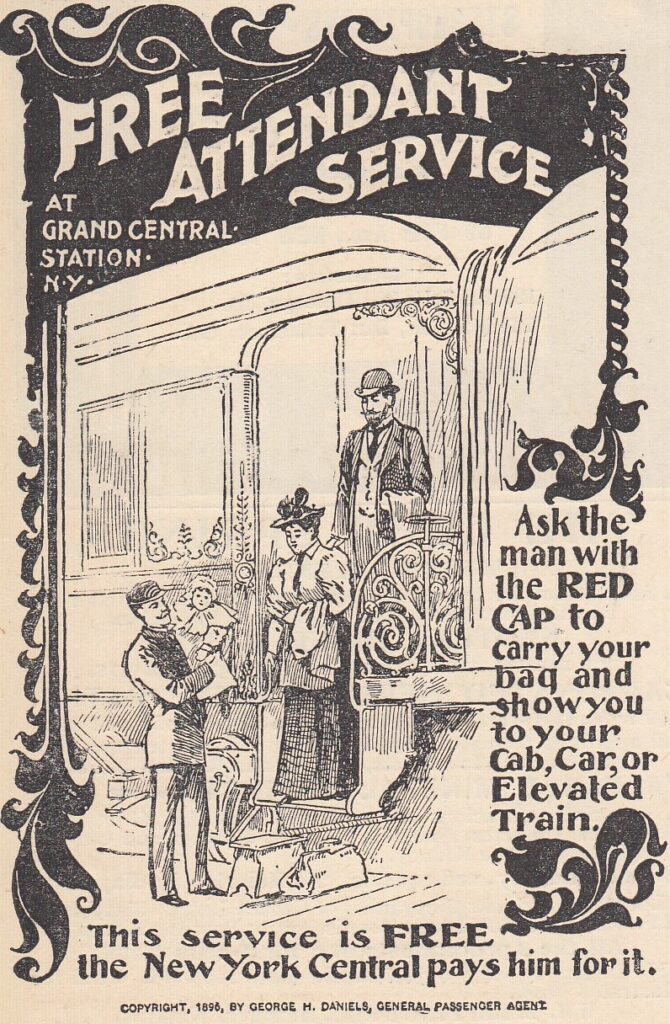
The New York Central launched its free Red Cap service in 1895, and promoted it widely in advertisements like this one, from 1896.
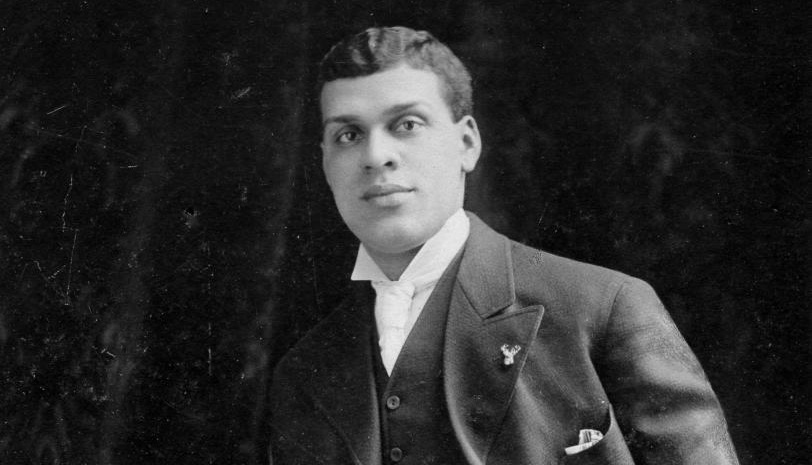
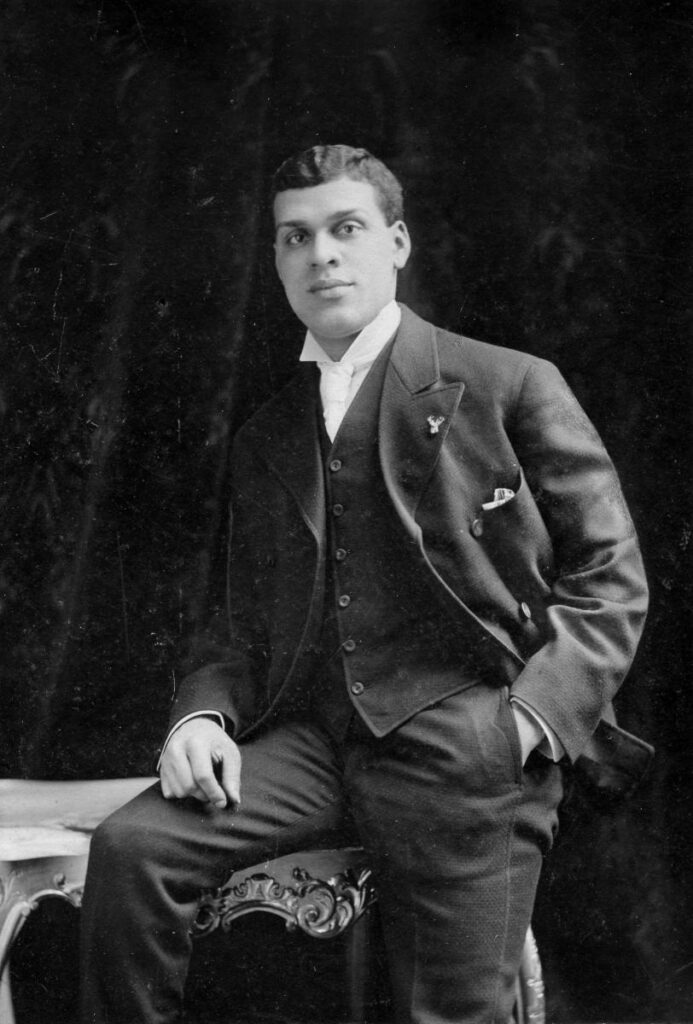
When Williams sat for this portrait in 1905, he was working as a Red Cap, but had not yet been named Red Cap director, or “Chief”.
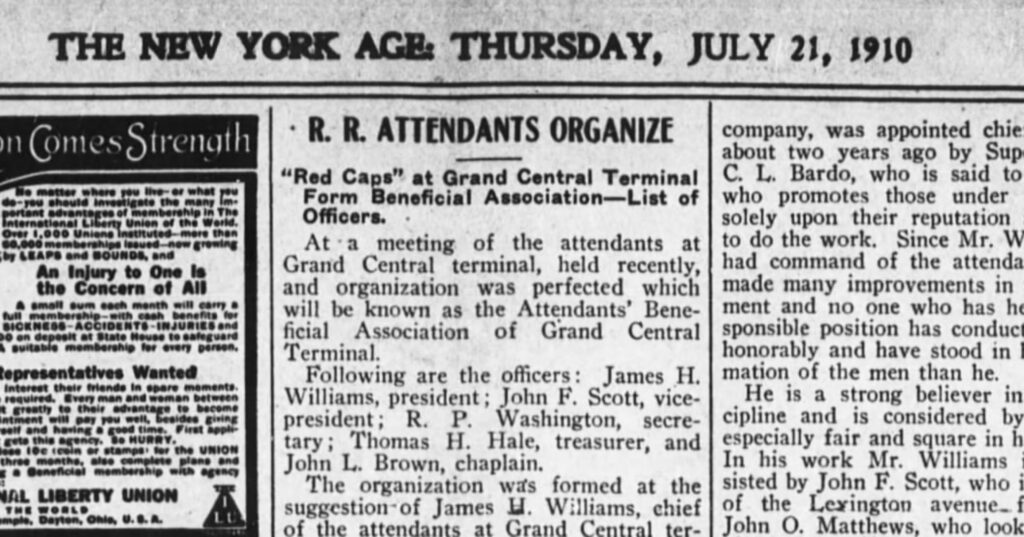
Williams became the “Chief” of the Red Caps in 1909, and immediately got to work organizing a benevolent association for the Red Caps, covered here in the New York Age in 1910.
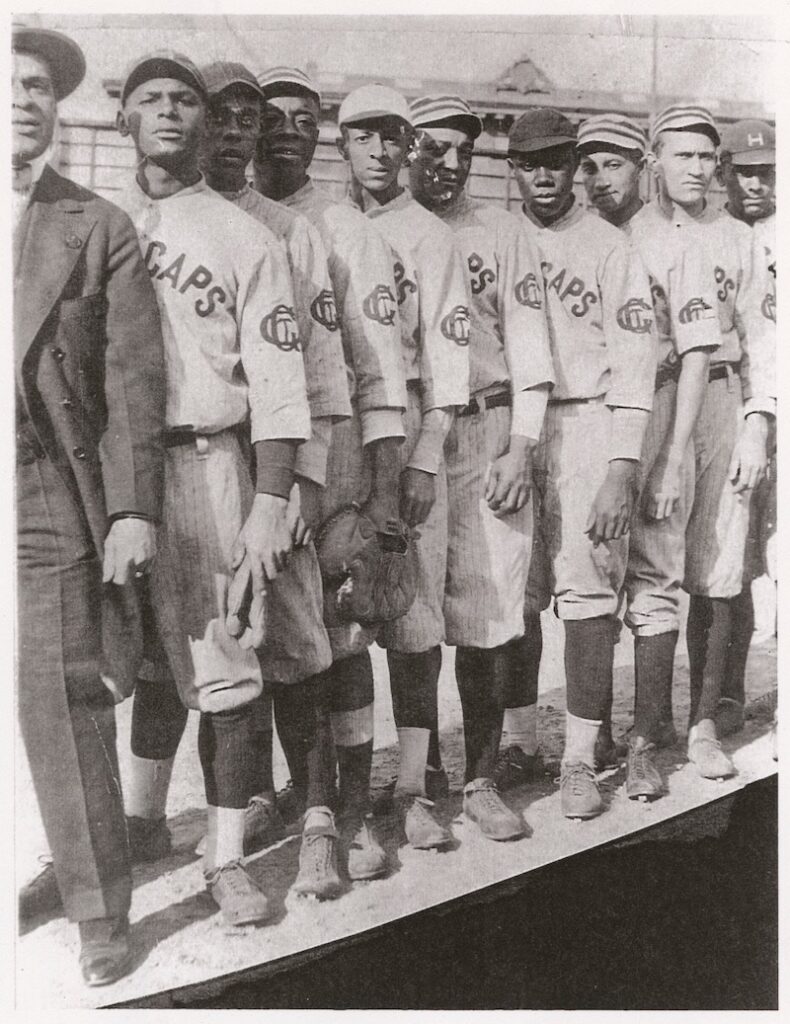
Chief Williams posing with the Grand Central Terminal Red Caps baseball team in 1918.
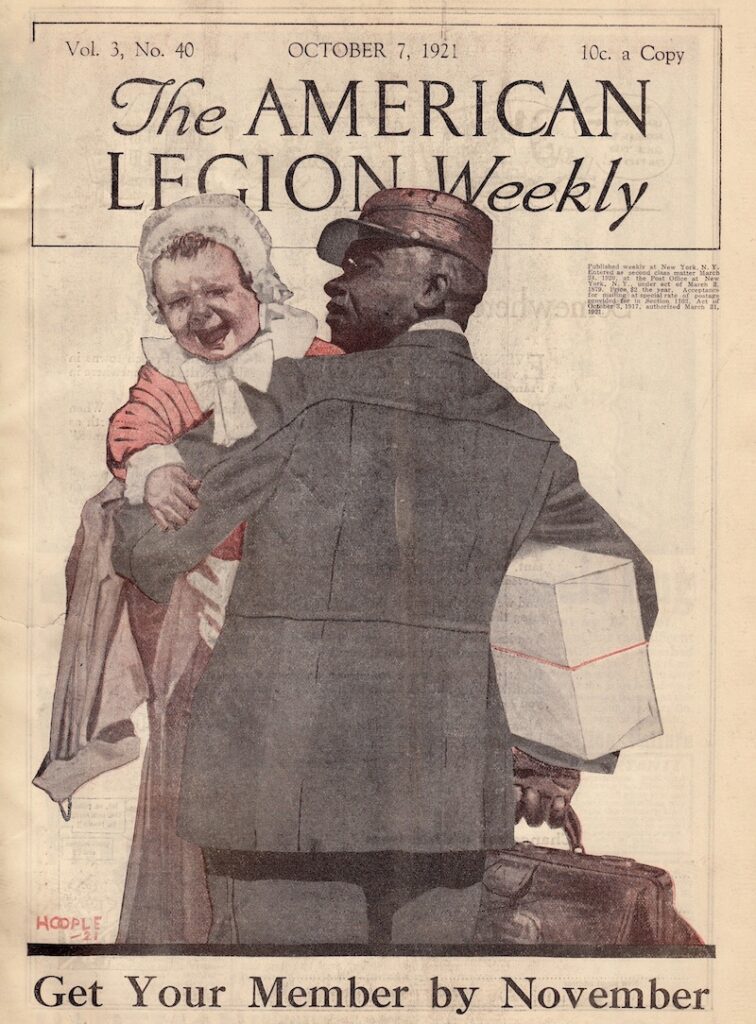
Red Caps carried hat boxes, valises… and sometimes even crying babies, too, as illustrated in this 1921 cover of The American Legion Weekly.
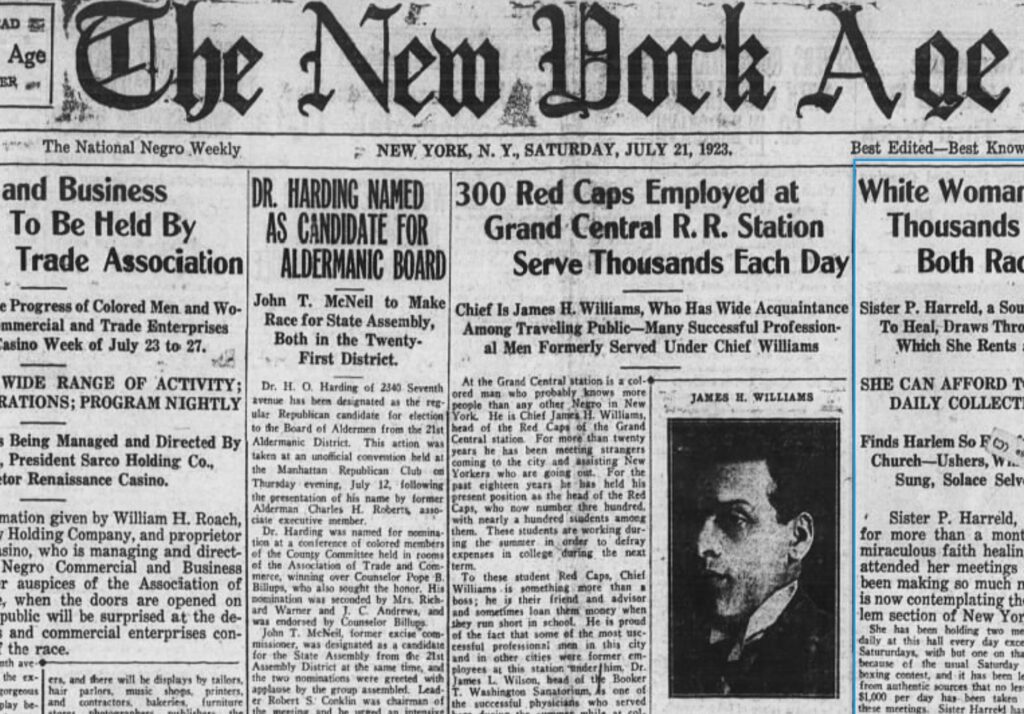
James H. Williams was regularly covered in the local and national press. In 1923, the New York Age published a profile of Williams on its front page.

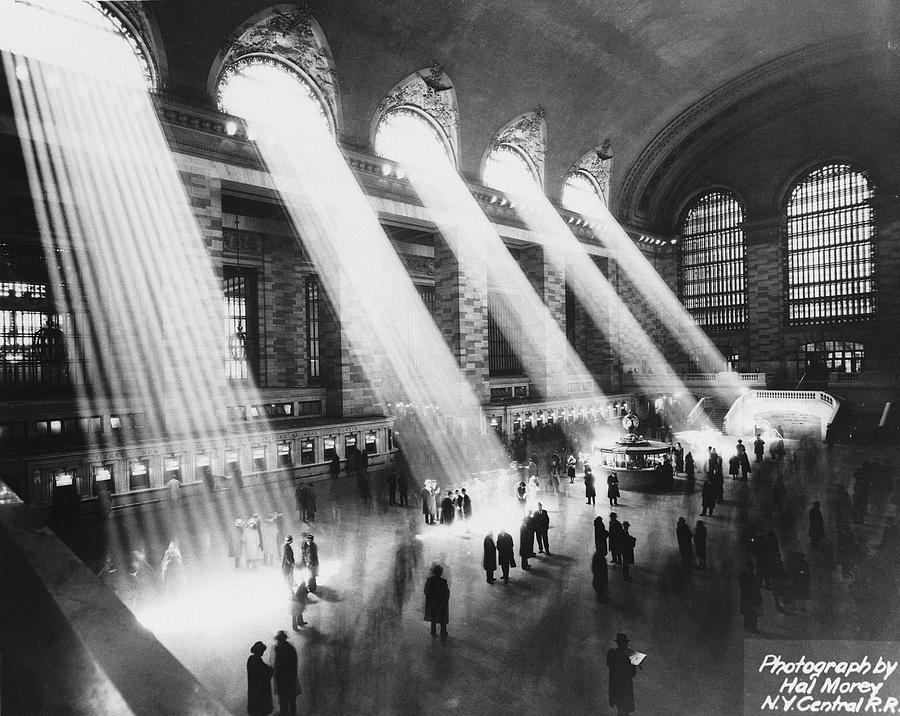
Hal Morey’s iconic shot of Grand Central from 1930 captures a blur of activity in the lower left corner. Could it be a Red Cap carrying a bag, drenched in sun?

The Grand Central Red Caps Orchestra perform “Nina”, under the direction of Russell Wooding, Frank Luther (vocals). RCA Victor, 1931
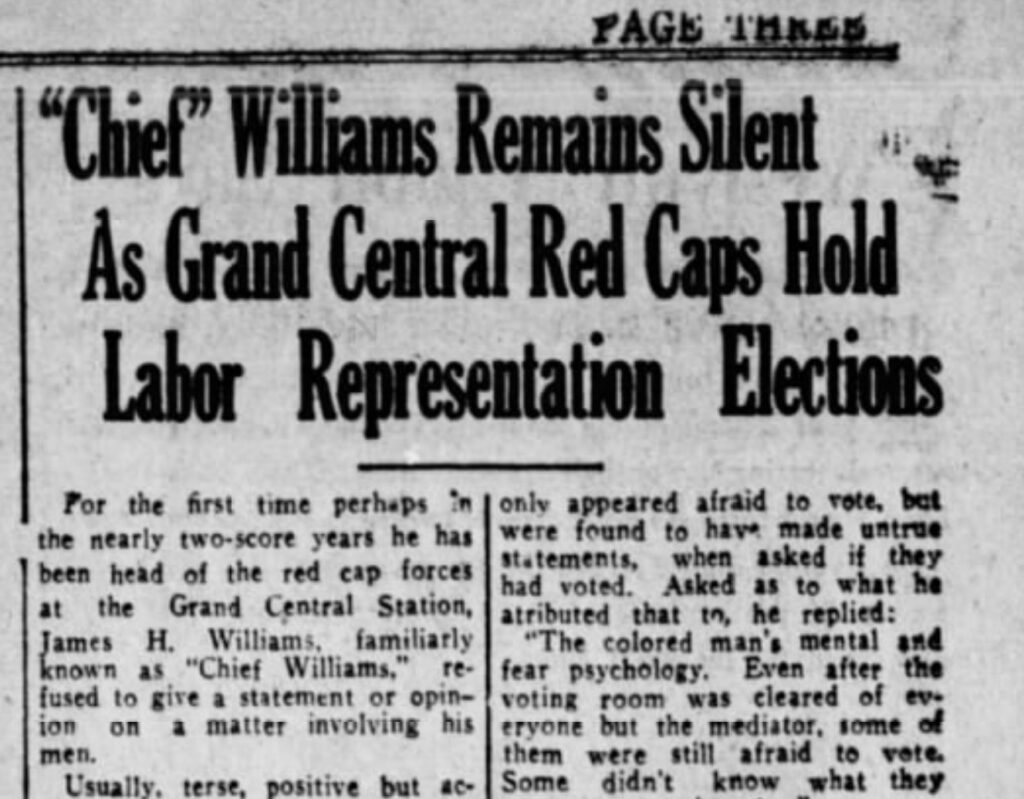
In 1939 as Red Caps around the country started organizing, Chief Williams remained strategically quiet. The formation of a Red Cap union was covered in this piece in the New York Age, September 16, 1939.
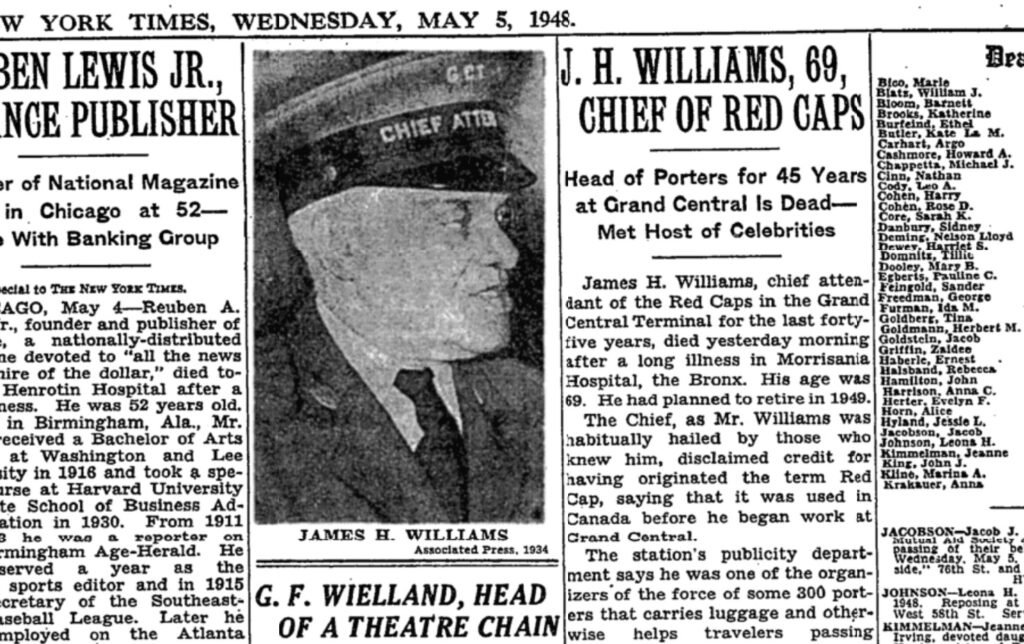
Williams obit in the New York Times, May 5, 1948.

The Bowery Boys: New York City History podcast is brought to you …. by you!

We are now producing a new Bowery Boys podcast every week. We’re also looking to improve and expand the show in other ways — publishing, social media, live events and other forms of media. But we can only do this with your help!

We are now a creator on Patreon, a patronage platform where you can support your favorite content creators.

Please visit our page on Patreon and watch a short video of us recording the show and talking about our expansion plans.

If you’d like to help out, there are six different pledge levels. Check them out and consider being a sponsor.

We greatly appreciate our listeners and readers and thank you for joining us on this journey so far.
Categories
Bowery Boys Bookshelf

Why David Hosack, doctor of Alexander Hamilton, built America’s first public botanic garden

Congratulations to Victoria Johnson for being named a Pulitzer Prize finalist for her book American Eden, one of our favorite from 2018. Here’s our review from a few months ago:

A secluded haven to an age of wonder once sat in mid-Manhattan at the start of the 19th century.

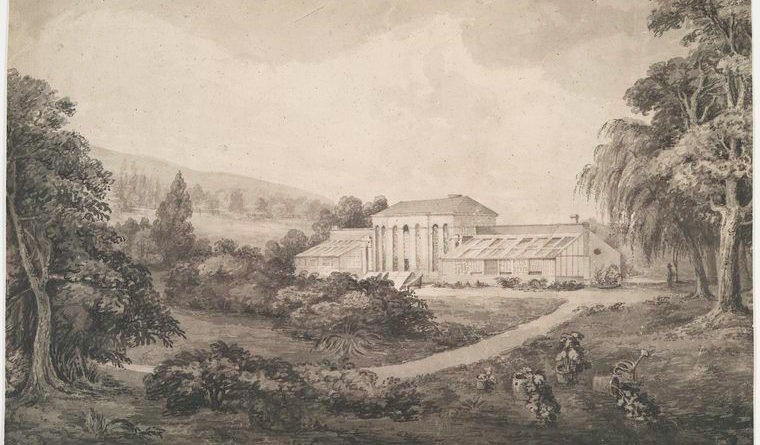
“Few New Yorkers had ever seen anything like it,” writes Victoria Johnson. “Its white facade had seven graceful arches, each stoppered with glass windows. Inside the building, rows of graduated shelves — known as stages — would accommodate dozens of potted plants. Wide walkways would run the length of the greenhouse, allowing access to the plants.”

The greenhouse was only part of a spectacular botanical garden, the first of its kind in America. Beautiful though it certainly may have been, the Elgin Botanic Garden was meant to save lives. Its numerous plant samples held the secrets to 19th century medicine at a moment when epidemics and illnesses ravaged a country without cures.

You may not be familiar with this long-forgotten place. (Rockefeller Center sits on the spot where this treasure once bloomed.) And you may know little about its creator, a prominent New Yorker who has spent far too much time in obscurity — Dr. David Hosack.

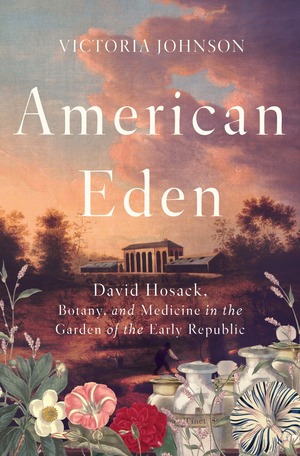
American Eden
David Hosack, Botany, and Medicine in the Garden of the Early Republic
Victoria Johnson
Liveright

If you know Hosack at all, it’s because of his association with Alexander Hamilton and Aaron Burr. He was the doctor of both men and attended to Hamilton after his fateful duel with Burr in the summer of 1804. In fact, Hosack’s garden was constructed at about the same time as Hamilton’s upper Manhattan home Hamilton Grange.

In Johnson’s excellent new biography on Hosack — deservedly singled out on the 2018 National Book Award longlist for non-fiction — this hidden associate of the Founding Fathers comes alive, his contributions to early New York history and American science celebrated at last.

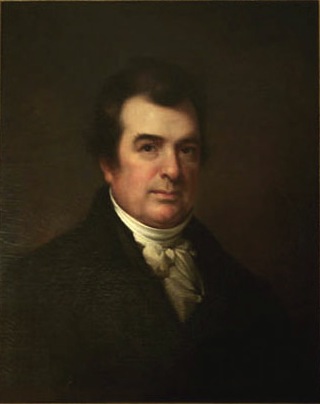
Hosack as painted by Rembrandt Peale

Hosack gained prominence in medicine at a moment when medieval and often barbaric practices were being scrutinized and discarded by more enlightened practitioners. For young Hosack, the secret to health lay not in antiquated procedures such as bloodletting but in the unlocked potential of the natural world. These hidden cures were not necessarily exotic but could be found in the rolling countryside of Manhattan itself.

Few biographies have such an impressive set of supporting players — Hamilton, Burr, Thomas Jefferson, Benjamin Rush, Carl Linneaus, even Lewis and Clark. My favorite moments were those involving a rivalry with Philadelphia renaissance man Charles Willson Peale. While American Eden is truly a celebration of flora and fauna, you’ll be thrilled to discover this conflict between great thinkers happens to involve a prehistoric Mastodon skeleton.

Categories
Bowery Boys Bookshelf Mysterious Stories

Spectropia, or How to Make Ghosts in Your Home

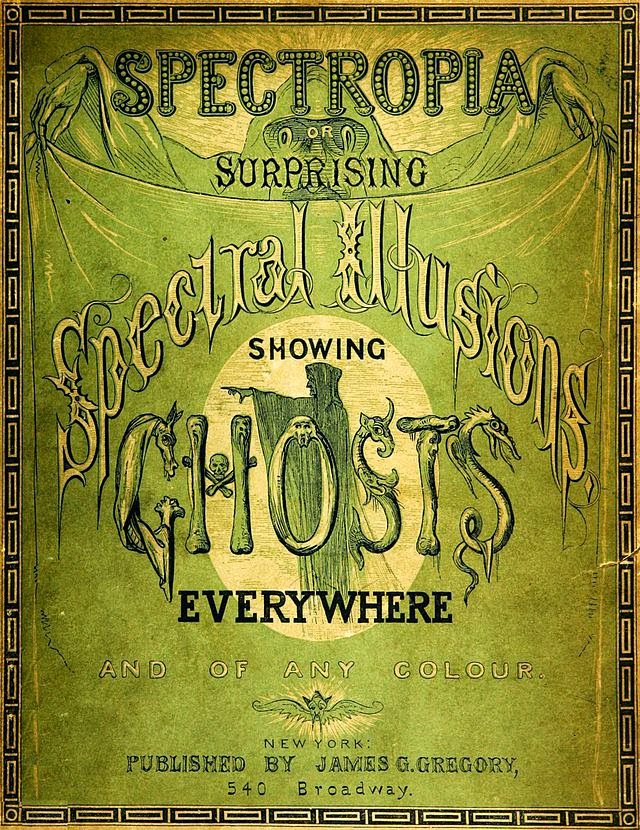
Above: The cover of the New York edition of Brown’s optical illusion book

One of the hottest books in New York City in the fall of 1864 was an optical illusion collection that conjured ghosts through a simple trick of the eye.

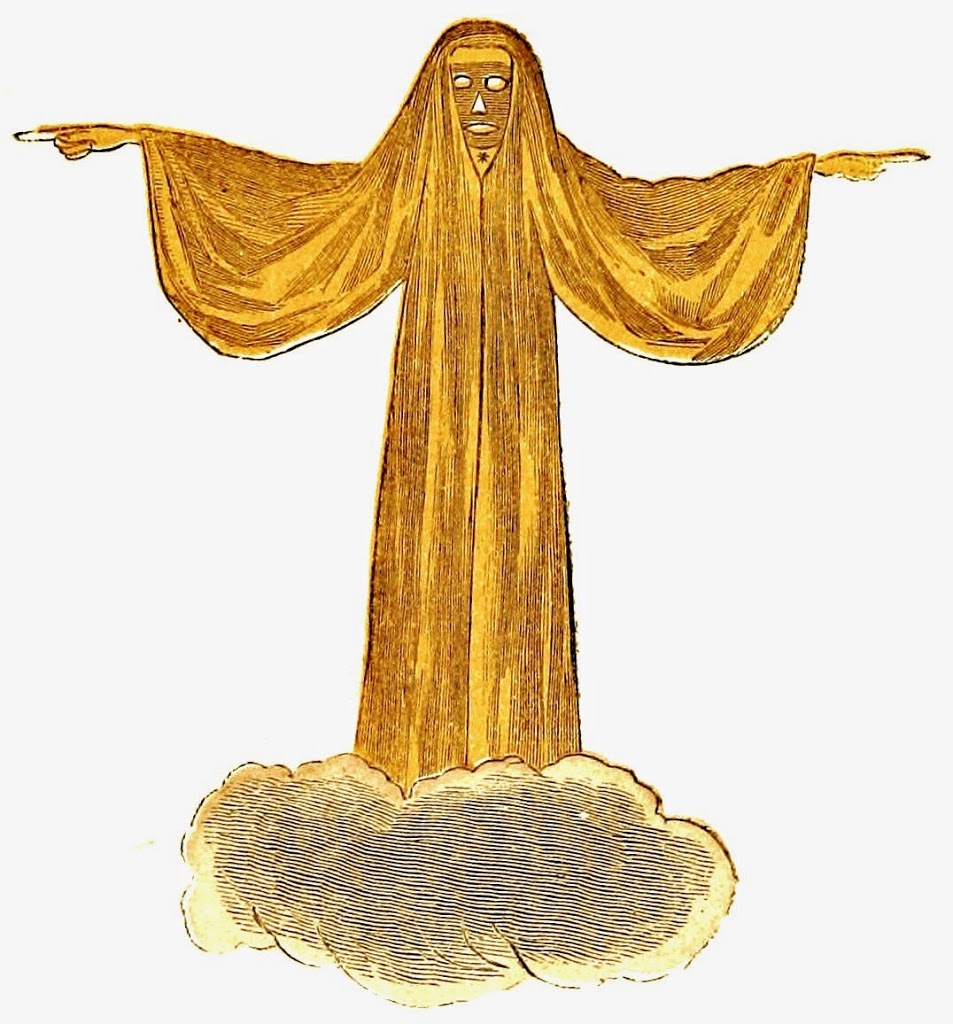
Spectropia, or surprising spectral illusions showing ghosts everywhere and of any colour was both a parlor amusement and picture-filled chapbook written and illustrated by J. H. Brown, an early skeptic of the spiritualism movement.

From the books introduction: “It is a curious fact that, in this age of scientific research, the absurd follies of spiritualism should find an increase in supporters; but mental epidemics seem at certain seasons to affect our minds, and one of the oldest of these mental afflictions — witchcraft — is once more prevalent in this nineteenth century, under the contemptible forms of spirit-rapping and table-turning.”

To counter the phonies, Brown presents readers with a nifty optical illusion that will allow its readers to create their own ghosts at home.

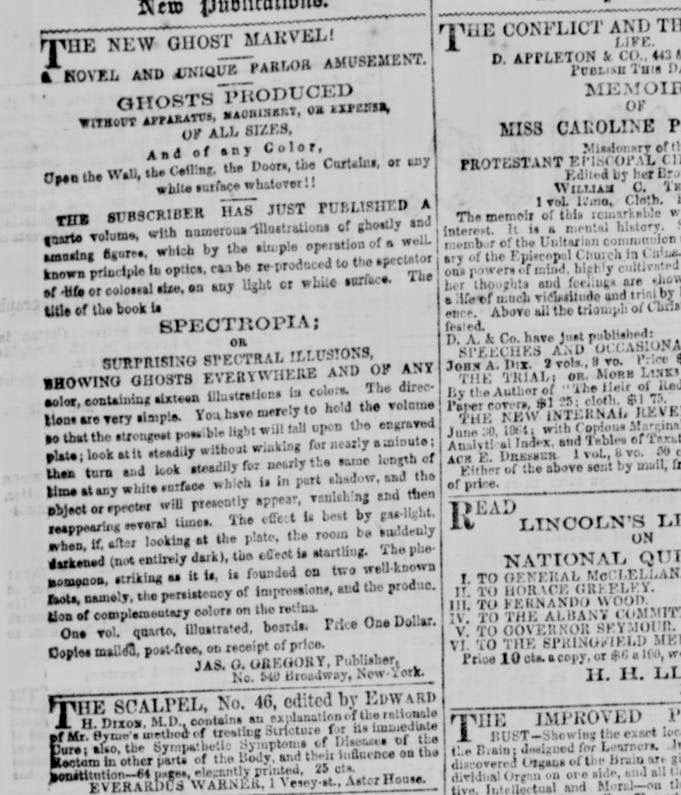
According to advertisements for the book:

The directions are very simple.  You have merely to hold the volume so that the strongest possible light will fall upon the engraved plate; look at it steadily without blinking for nearly a minute; then turn and look steadily for the same length of time at any white surface which is in part shadow, and the object or specter will presently appear.”

“The effect is best by gaslight.” My goodness, what isn’t?

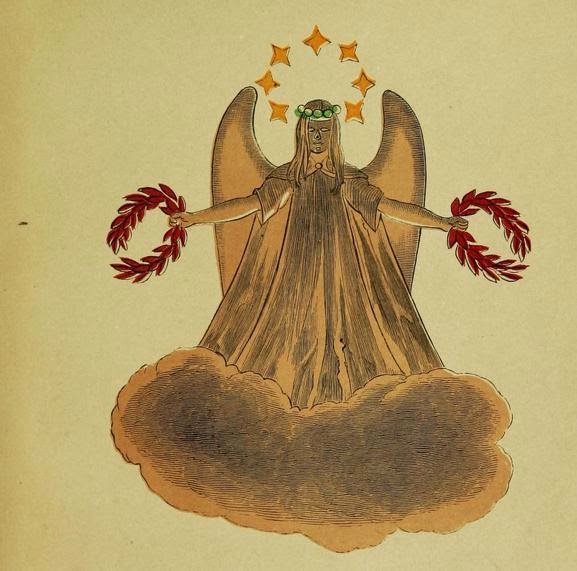
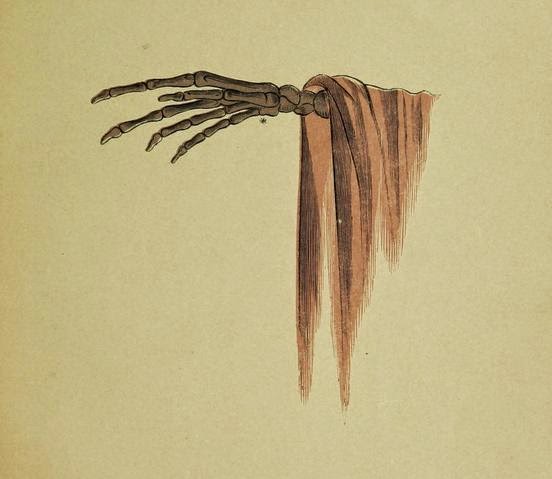
Here’s a sampling of the illustrations.  See if they work for you! And yes, definitely try these out if your home is equipped with gaslight….

The book was produced in New York by publisher James Gregory at 540 Broadway in today’s SoHo area. (It’s the building where the Steve Madden shoe store is today.).

Believe it or not, Spectropia was a hot gift under the tree that Christmas. The New York Times lists it that year in their recommended holiday gift list. “The publications of Mr. JAS. G. GREGORY, of No. 540 Broadway, are characterized by good taste and fine execution.”  Mr. Gregory kept the book in publication for several years afterwards or at least until the novelty wore off.

You can read the book here.  And here’s a PDF.

Below from the New York Daily Tribune, September 13, 1864