Categories
Podcasts

PODCAST: New York Public Library

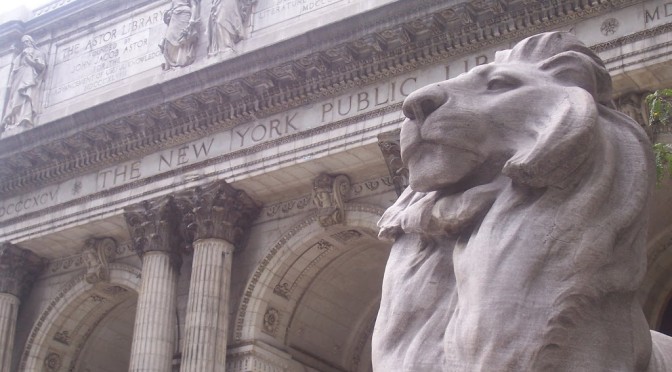
The New York Public Library may be one of the most revered libraries in America, but it took a farflung combination of bookworms, millionaires and do-gooders to make it into the institution it is today. Also: find out why the architectural style of the Beaux Arts sometimes reminds us of an old French prostitute.

Listen to it for free on iTunes or other podcasting services. Or you can download or listen to it HERE

Before the lions of the New York Public Library — now less imposingly called the Humanities and Social Sciences Library — parked themselves at 40th and 6th Ave, the Croton Reservoir stood imposingly there, holding the city’s water supply. As you can tell from this picture, it looked a bit like an Egyptian pyramid, or perhaps a alien spaceship.
This was a distribution reservoir, which received water from a larger ‘receiving reservoir’ in what is now Central Park, but what was then on the outskirts of town.

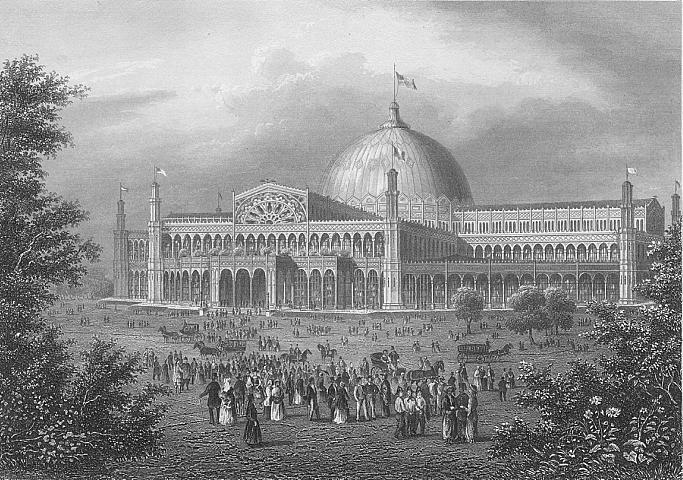
Meanwhile, the space now considered Bryant Park was, in the 1850s, the location of the New York Crystal Palace, home of America’s technological and engineering marvels. Here’s a look at the Crystal Palace in all its glory:
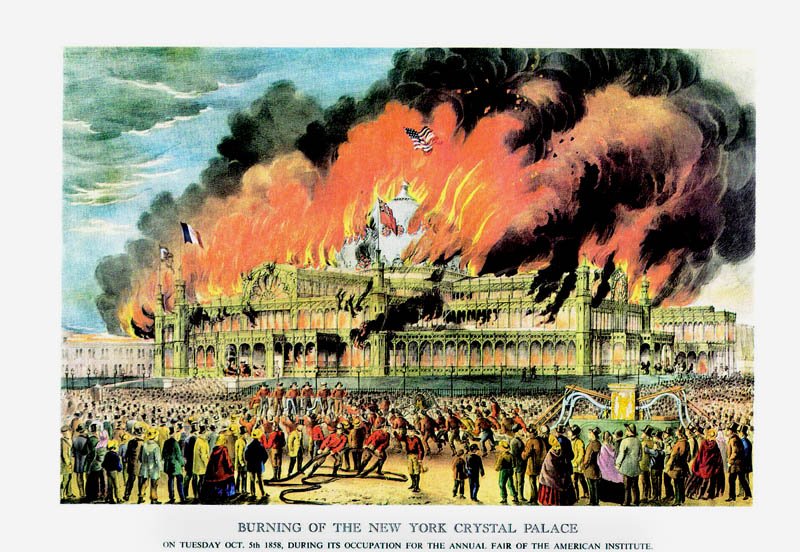
And a dramatic illustration of its final moments, felled in a quick burning fire.
The construction of the library took nine years — sixteen if you consider the time from original design to dedication. The most ambitious marble building of its time, it was covered in Vermont marble so carefully chosen that two-thirds of the shipped stone was rejected for not being refined enough. The marble is at a thickness of almost a foot all around. The net effect even now gives the structure an immovability that makes the modern skyscrapers around it seem light and temporary.
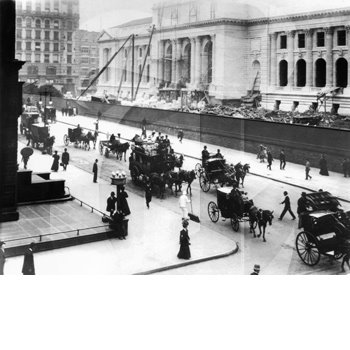
On the frontispiece above the entrance to the library is a tribute to its three creators — millionaire John Jacob Astor, collector James Lenox and former governor Samuel Tilden:
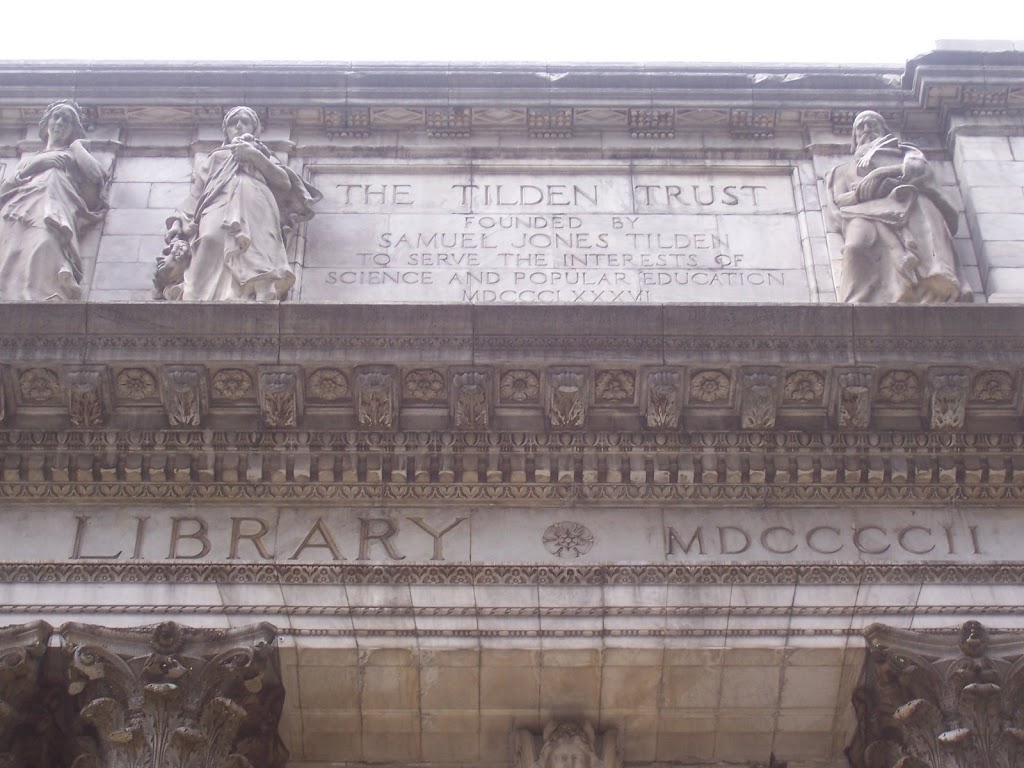
However, the area of 41st street that runs between 5th and 6th Avenue is now called ‘John Bigelow Plaza’, after the man who brought the Astor and Lenox collections together with the Tilden Trust.

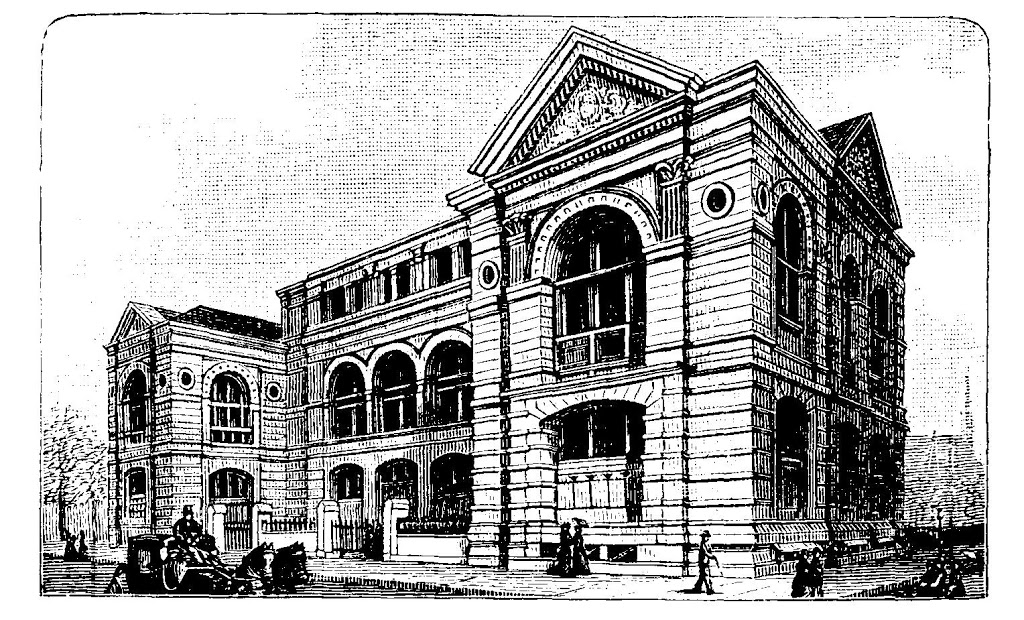
James Lenox has originally kept his collection in his own library on 5th and 70th street. This scratch illustration displays Lenox’s ‘indestructible’ limestone library, which housed most of the items held at the Public Library today, including Lenox’s personal copy of the Gutenberg Bible.
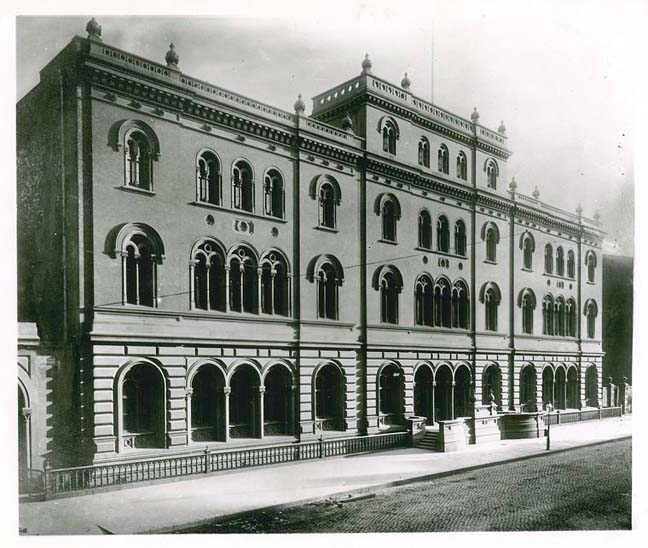
Meanwhile, the rest of the collection came from the Astor Library, constructed with money bequeathed by the millionaire. Thankfully the building remains pretty much intact, thanks to its present occupants, the Public Theatre, whose decades of success on Broadway, off-Broadway, dance, performance art and especially Shakespeare in the Park would have confused but satisfied the building’s original benefactor.
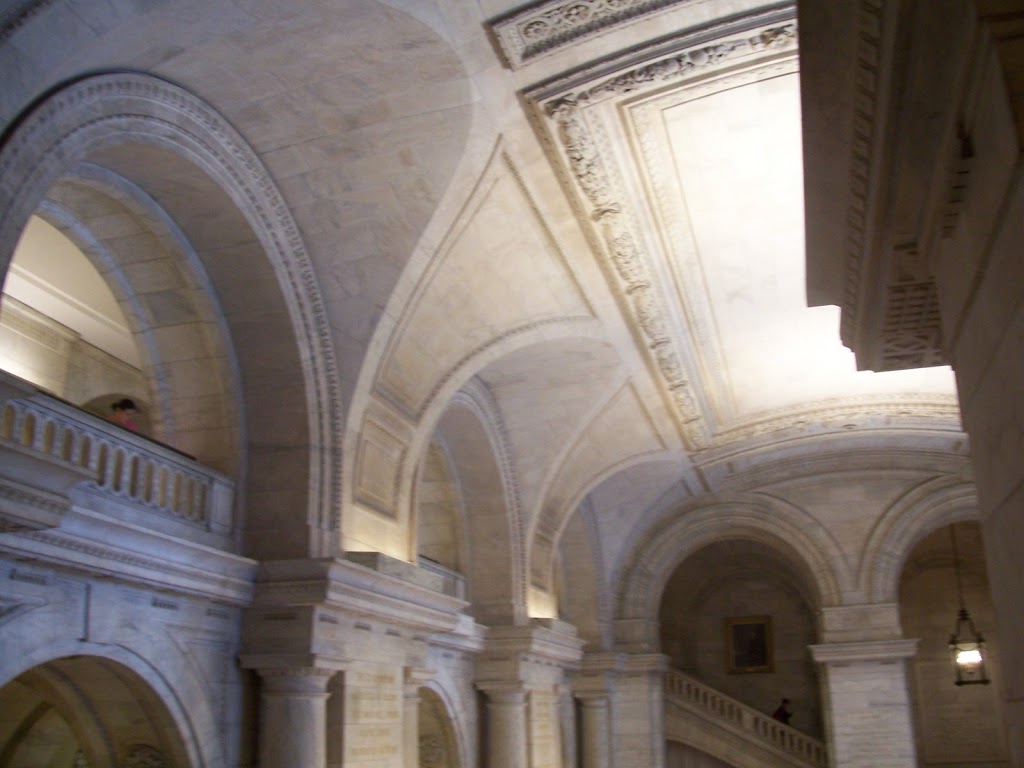
Some pictures from inside the New York Public Library building illustrate some of its more Beaux-Art-ish features. The broad vaulted arches:
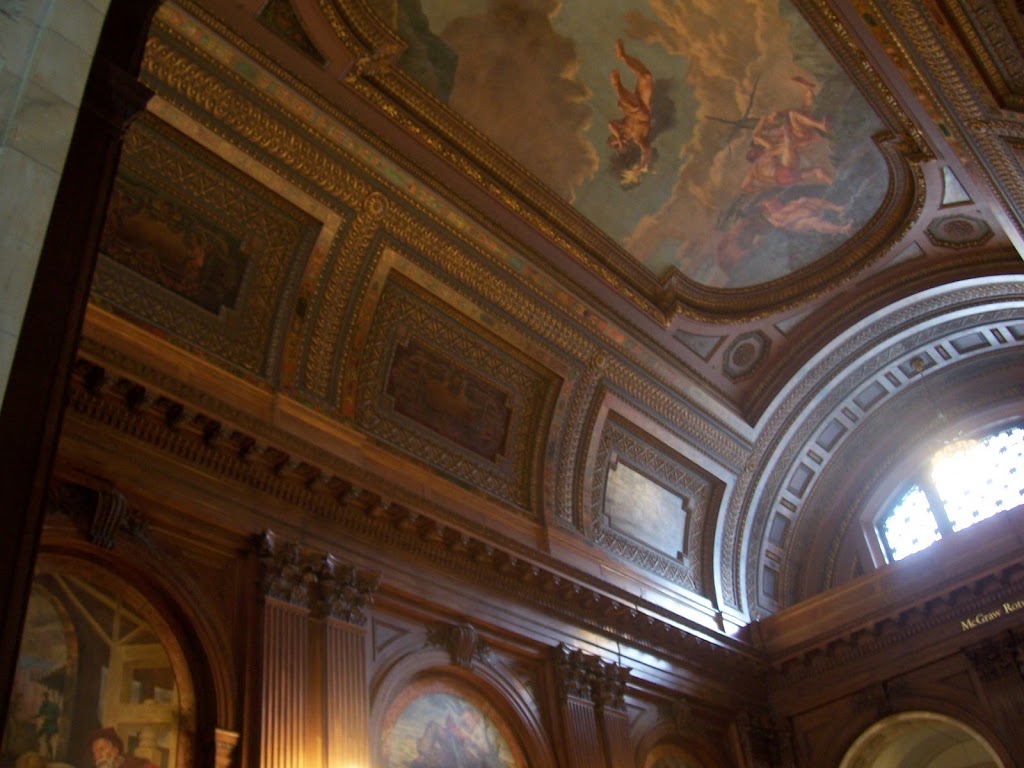
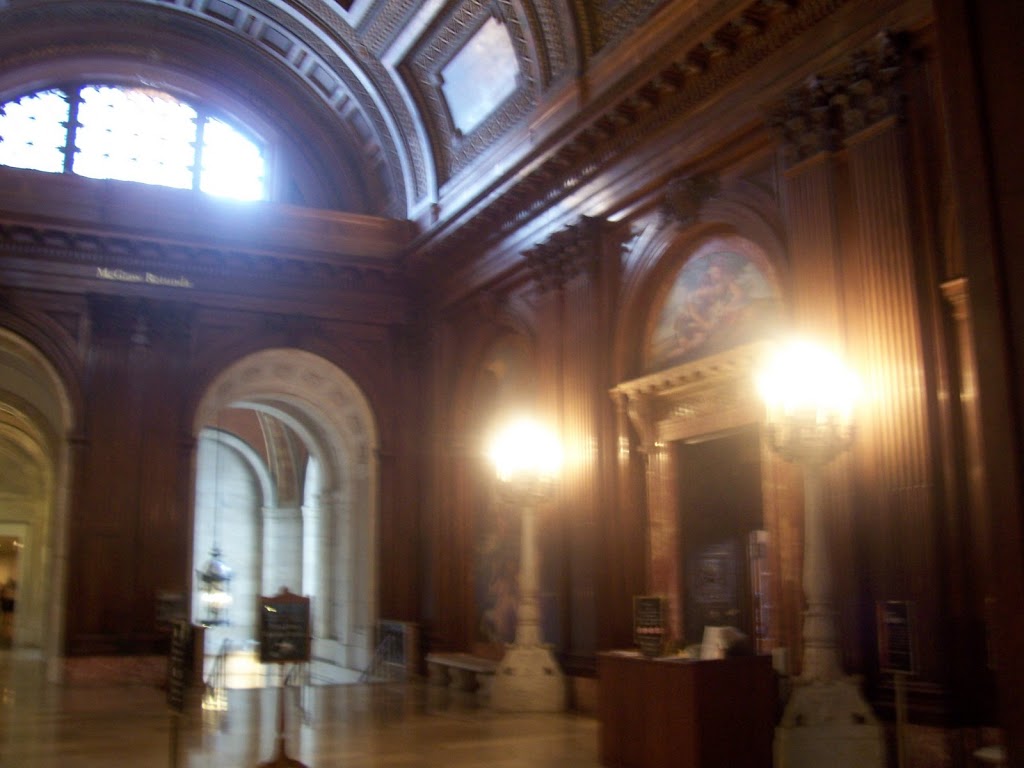
And ornate muralled ceilings in the McGraw Rotunda. The effect is a bit like the Vatican apartments mixed with an old bank:
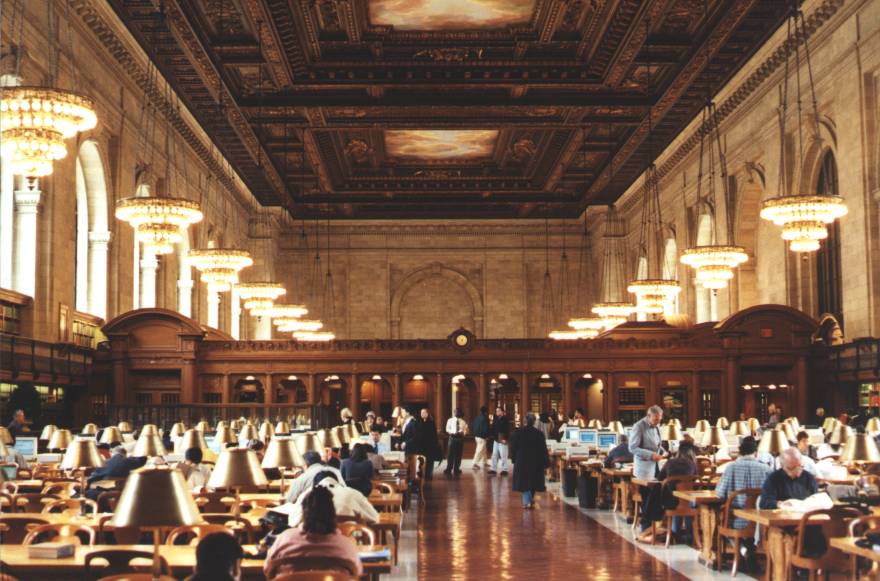
Its all dwarfed, however by the massive Rose Reading Room, whose basic organization came not from the architects but from the library’s first director, Dr. John Shaw Billings, from a sketch he made on a postcard!
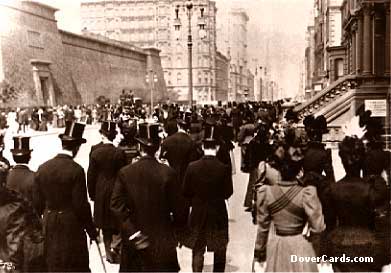
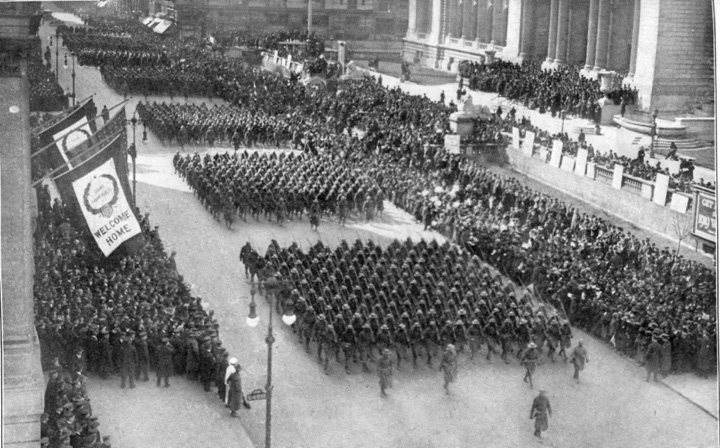
And finally, a beautiful picture I found on a World War I website, showing the fairly new library in all its glory, as New York’s 369th Regiment passes by.
Thanks to the New York Public Library official website for providing us with some of our trivia. And there’s lots more there to intrugue you. Click here for visiting hours and facts about some of the branch libraries.
Categories
Podcasts

PODCAST: Coney Island – The Golden Age

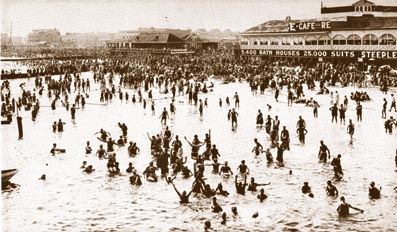
The Coney Island that greeted vacationers and city folk in the years 1904 to 1911 was one of infinite imagination manifested in fantastic but cheaply built extravaganza.

A world of amusement starts here in New York — Coney Island, the world’s oldest and strangest collection of amusement parks, a mishmash of sideshows, concession stands, gambling halls, new-fangled rides and luxury hotels. Take a daytrip with us back to the early days of Coney Island. Hold on to your hat!

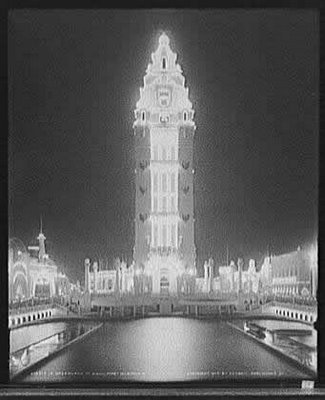
Part of what made the experience of Coney Island’s cheap, often disposable thrills was its meshing of new technology, human invention, and reactions to a strict moral society. It was socially acceptable debauchery, literally plugged in to the experience of a new century. The advent of electricity brought visitors out into the salty air until late at night. Benches were often sent slight electrical charges to make sure people didn’t sit around all day, not spending money! With electricity used more aestheticly as it was in Luna Park (right), they could light up the sky like Oz. The name Luna Park paid homage to A Trip To The Moon, a ride created by its parks owners Frederick Thompson and Elmer “Skip” Dundy, which in turn was certainly a close approximation of the French 1902 silent film classic by Georges Méliès.

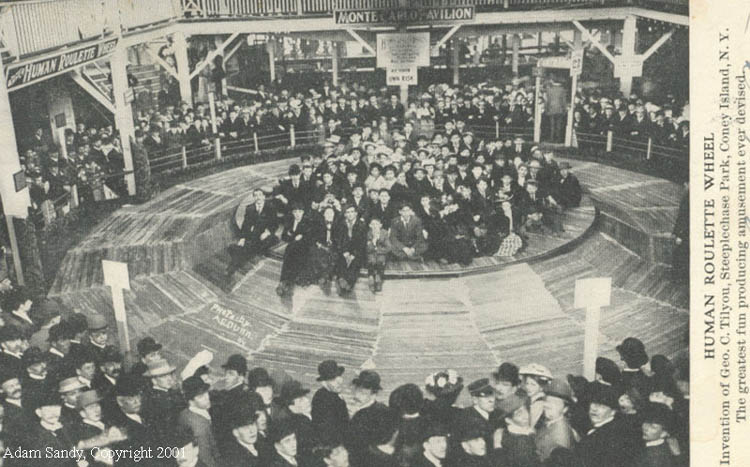
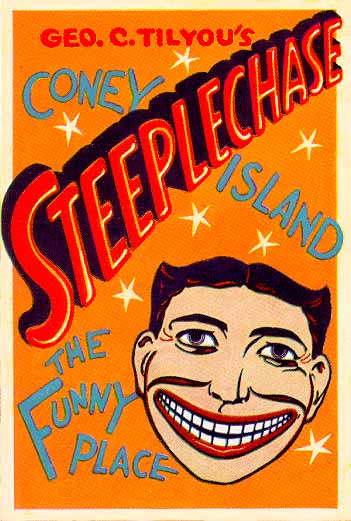
Over at Steeplechase Park, meanwhile, it was more centrifugal and gravitational forces that brought out the crowds, such as the Human Roulette wheel below. I dont know, there’s just something about this that looks profoundly unfun to me:

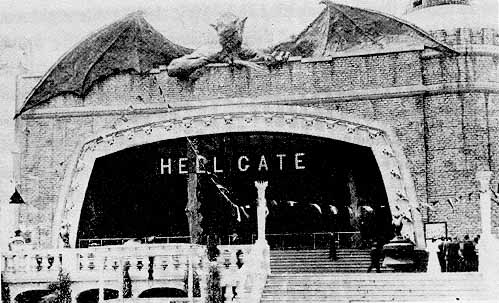
One of the more unusual amusements at Dreamland was Hell’s Gate, which emulated via the guise of starched Victorian morality the possible geography of Biblical Hell. Perhaps unsurpring, it was the combination of a burst lightbulb and a tar bucket inside Hell’s Gate that started the fire that eventually burned all of Dreamland to the ground in 1911, burning for 18 hours.

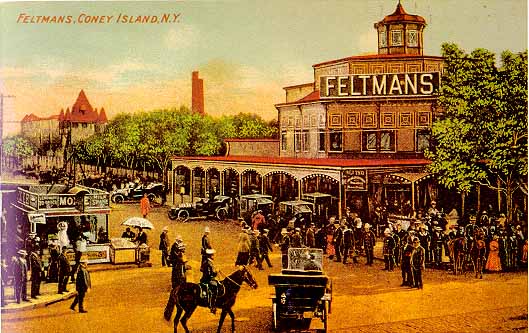
The proper entrepreneur who could maneuver through the early days of Coney Island corruption and make a financial killing. Take the inventer of the hot dog, Charles Feltman, who launched restaurants and hotels from the success of his sausage in a roll carts. This fancy restaurant, a favorite of vacationers of all social classes, sat where modern Astroland sits today:

(Not to spoil anything from our next episode, but in 1915, an employee of Feltman’s Restaurant Nathan Handwerker ate free hot dogs all summer, then devised an idea….)

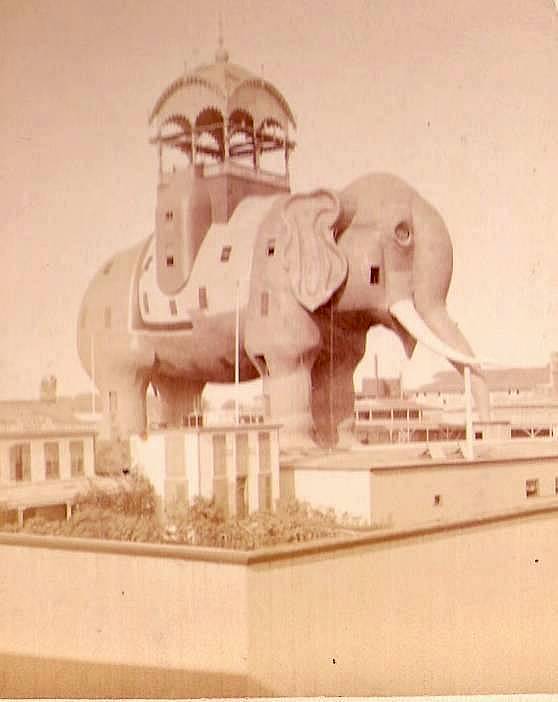
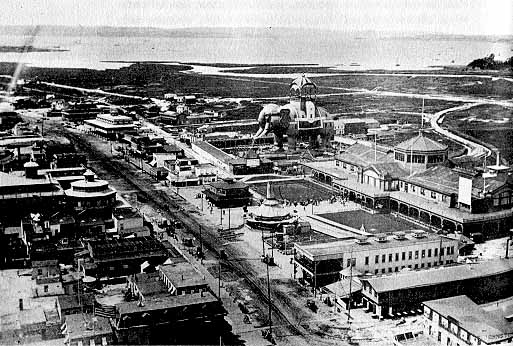
Why stay in a luxury hotel when you can just sleep in a giant elephant? This unusual lodging was built in 1882, just a few steps from the world’s first roller coaster, the Switchback Railway, and you could view the beach revelers via windows that served as the elephant’s eyes. One leg featured a small cigar store, while the back legs had a staircase that led to your room. Perhaps because this doesnt exactly look like the most comfortable revolution in hospitality, the hotel soon became a favorite for prostitues, so that ‘seeing the elephant’ soon became a rather naughty euphemism. Our shabby pachyderm was mercifully put out of its misery in 1896 by fire. I love this aerial view of the area, with the Elephant lording clumsily over the landscape, well before the Island’s peak days a few years later.

Elephants in general didnt fare so well in Coney Island. Then there’s the case of Topsy, the once friendly elephant at Luna Park who went wild and killed three men. Her owners decided to put her down, attempting to poison her with cyanide-laced carrots, to no avail.

Enter Thomas Edison, who was trying to prove the dangers of his rival George Westinghouse’s alternating electrical current to his own ‘safe’ direct current. He did this by going around the country and electricuting dogs and cats as a demonstration. So when he heard that the owners of Luna were trying to off their elephant, he couldnt refuse.

They even made the ‘demonstration’ the topic of a silent film, which you can see here.

By the way, there are so many resources online about early Coney Island history, that I invite you to check a few of these wonderful places out yourself:

Coney Island History Project
Amusement Parks history
Coney Island History Site

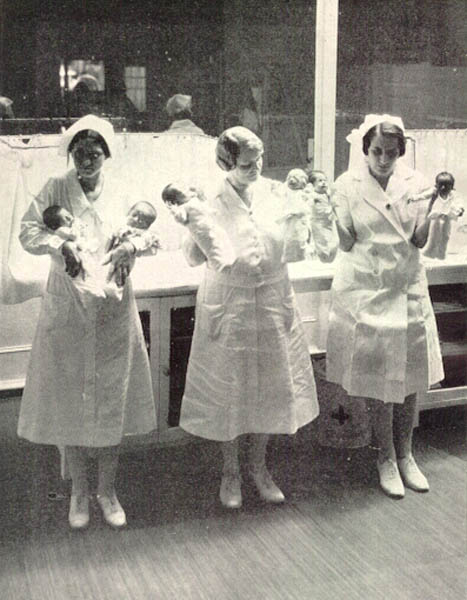
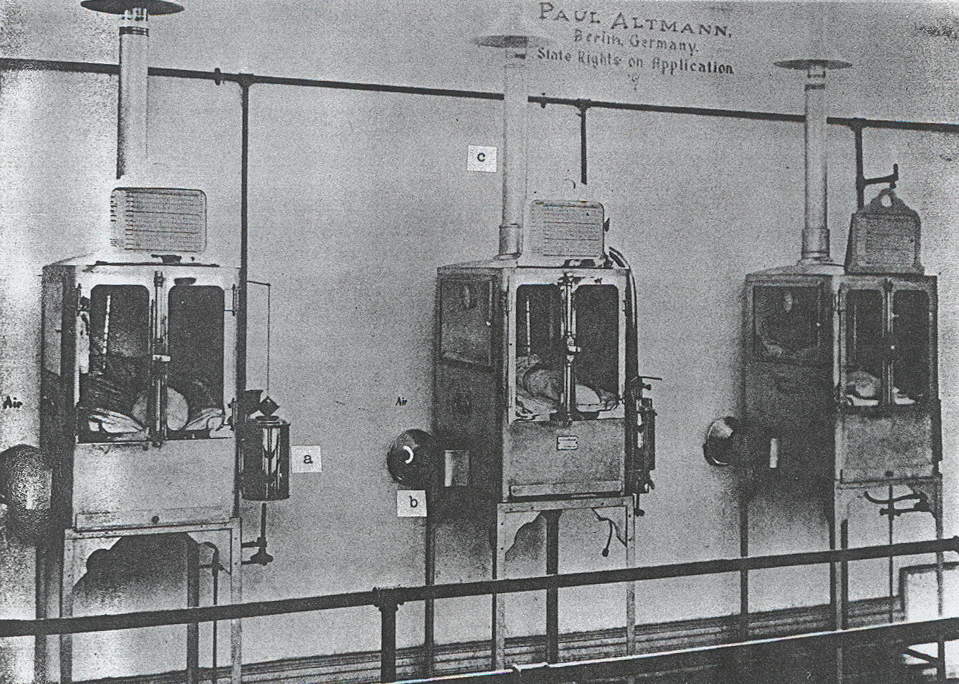
And in case you don’t believe me about that sideshow exhibit involving premie babies in incubators, here’s a shot of some of the nurses displaying the stars of the show, followed by a look at the actual incubators. The exhibit actually ran for decades in Coney Island, until 1945. You know, because there’s nothing more entertaining than watching a newborn infant struggling to survive: