Greenwich Village is one of America’s great music capitals, an extraordinary distinction for an old neighborhood of tenements, townhouses, dive bars and a college campus.
So many musical titans of jazz, folk, pop and rock and roll got their start in the Village’s many small nightclubs and coffeehouses, working alongside artists, writers, actors and comedians to create an American cultural mecca unlike any other.
And it was here, on January 24, 1961, that a nineteen-year-old young man from Minnesota entered the fray — Robert Zimmerman, otherwise known as Bob Dylan.
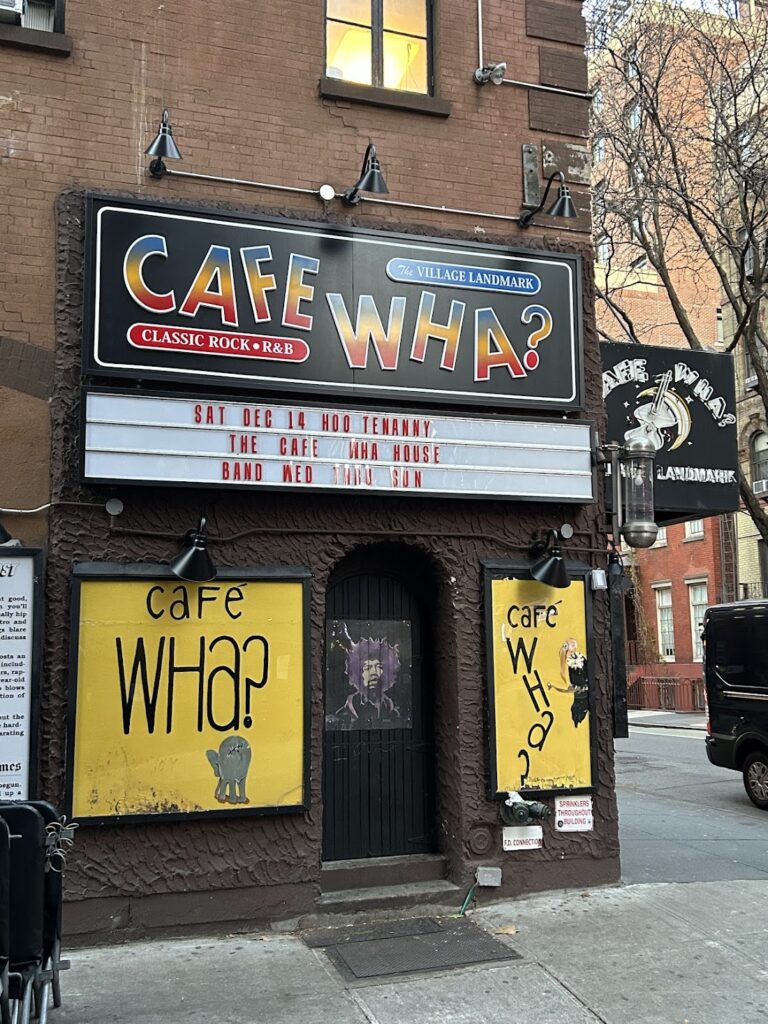
The Village completely transformed the young folk singer into the voice of a generation, working out his transformation on the minuscule stages of the Gaslight, Cafe Wha? and Gerde’s Folk City.
But this show isn’t strictly about Dylan’s ascent to greatness, but the neighborhood — the people, the streets, the basements! — which cultivated artists like Dylan (and Billie Holiday and Nina Simone and Pete Seeger and Barbra Streisand and Joan Baez and so on.)
PLUS: Bob Moses and Jane Jacobs stop by for a hootenanny (and a protest)
LISTEN NOW: BOB DYLAN’S GREENWICH VILLAGE
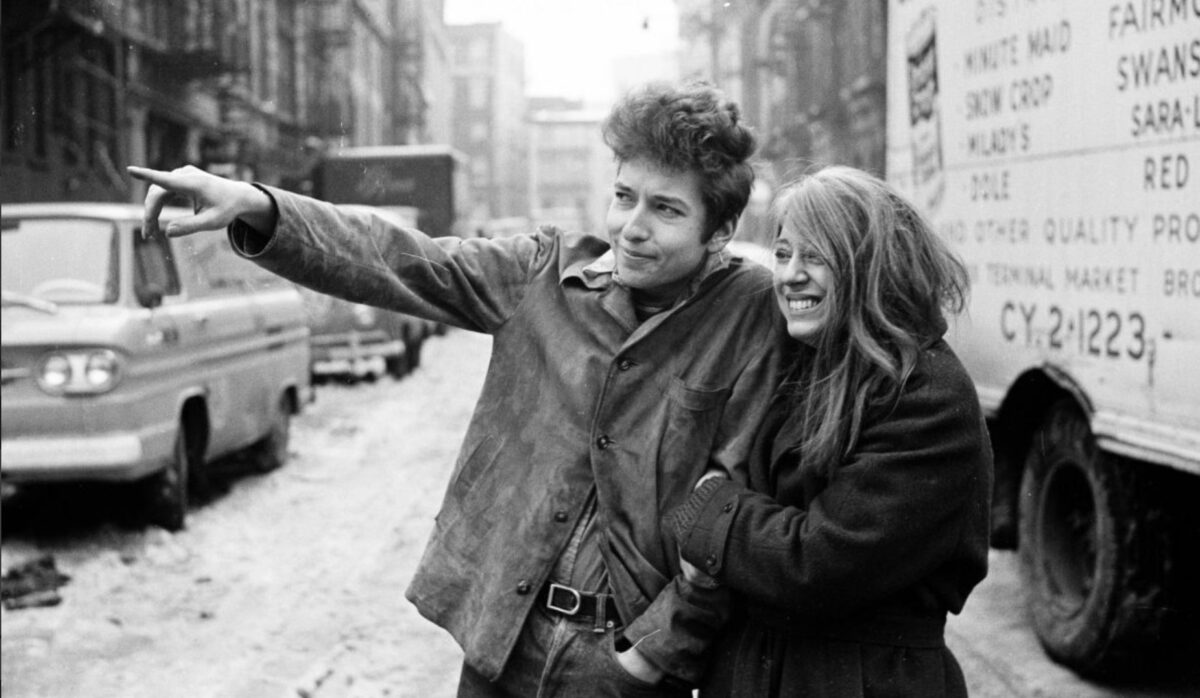
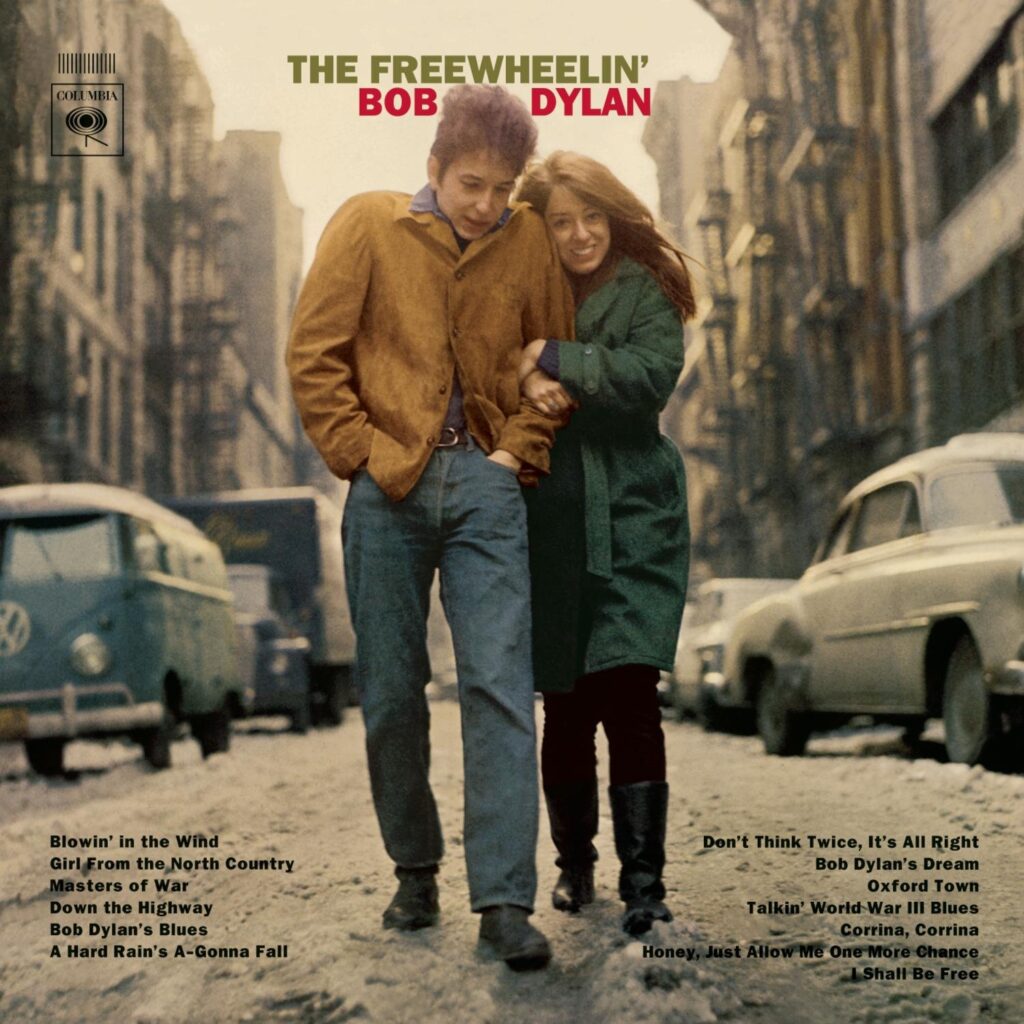
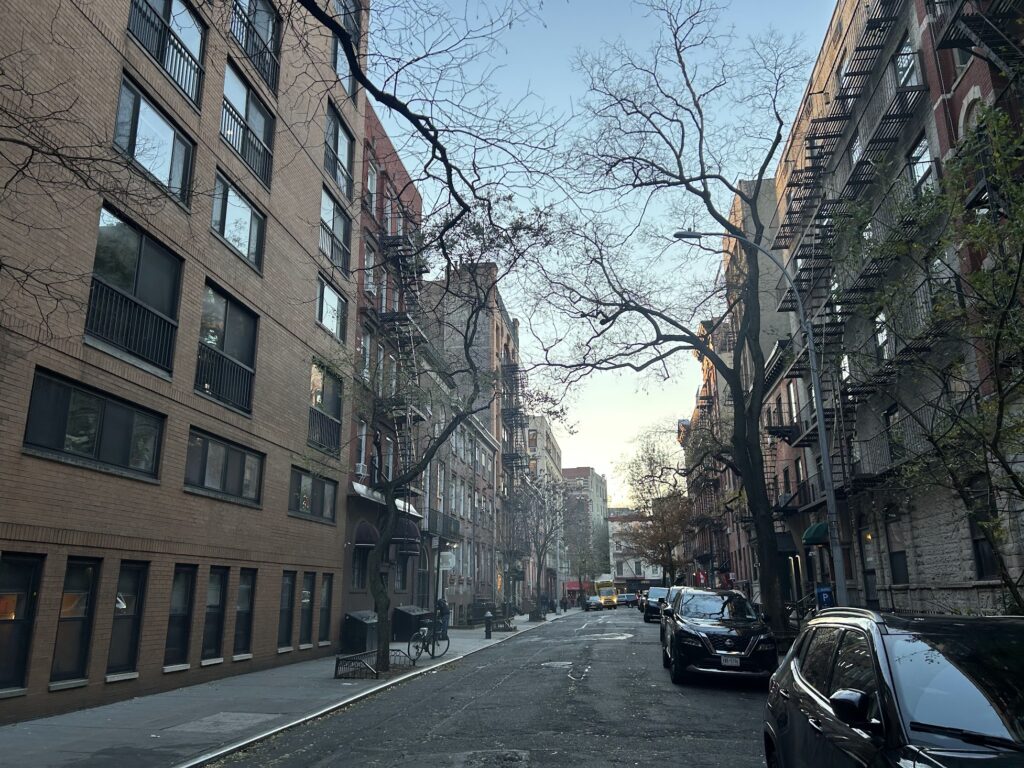
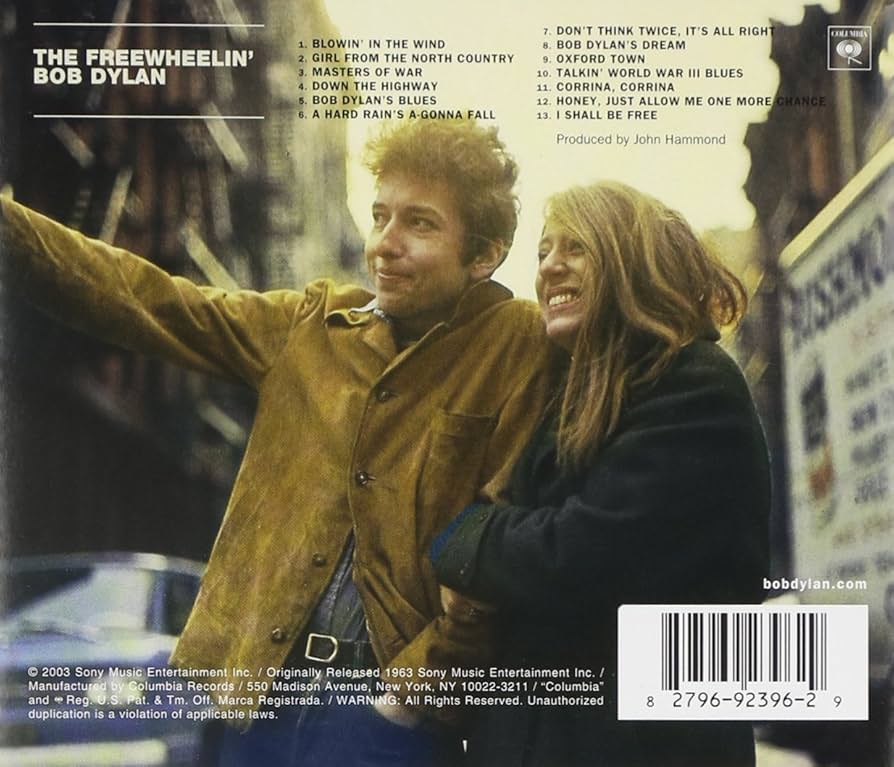
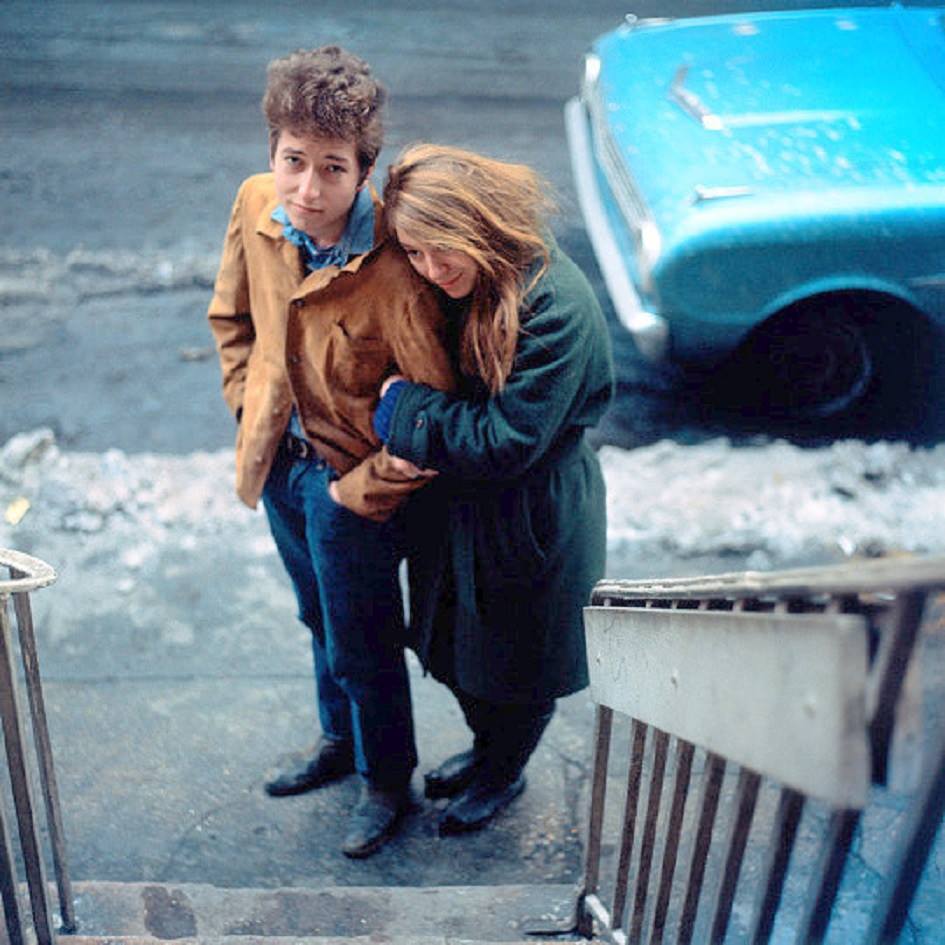
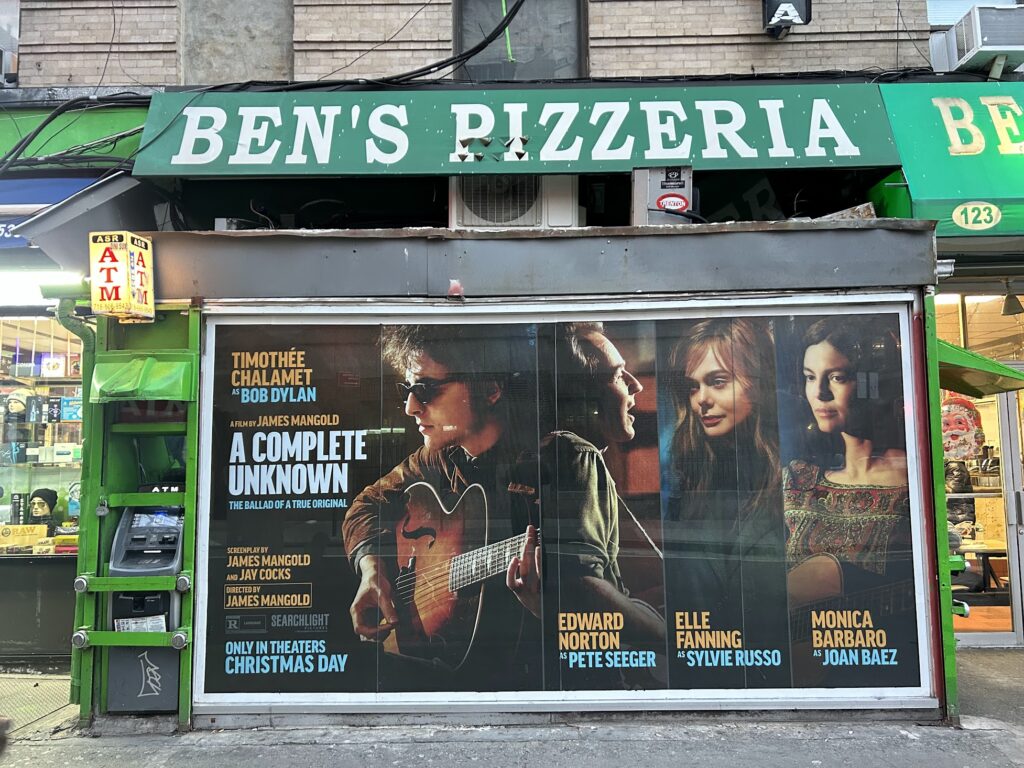
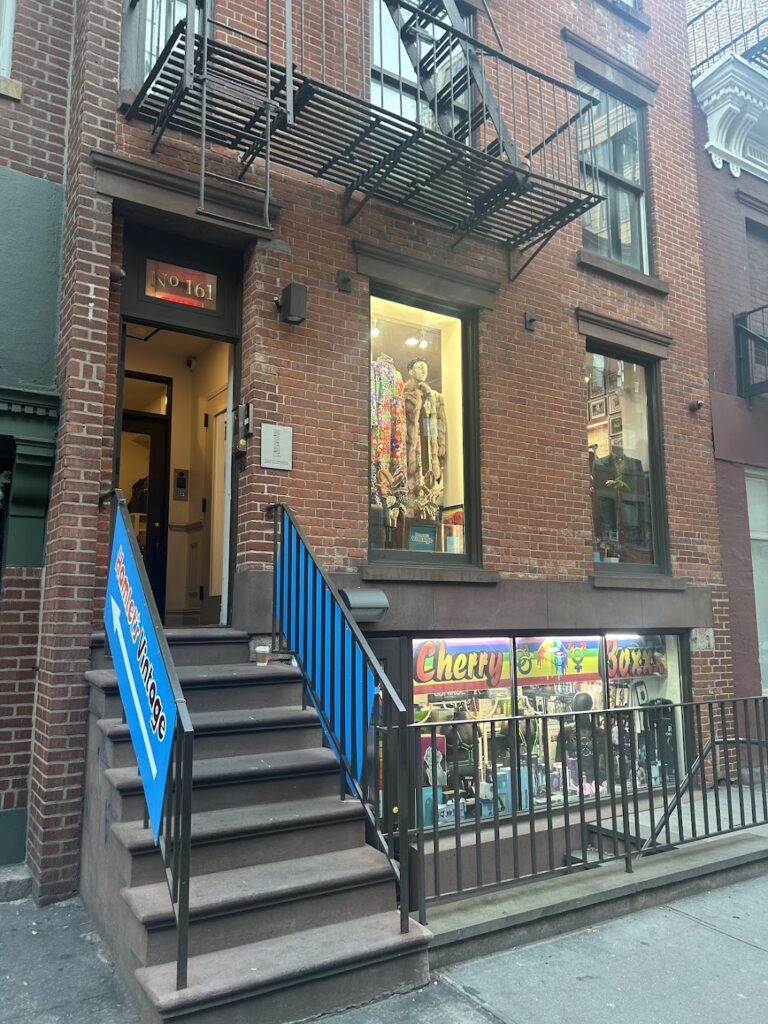
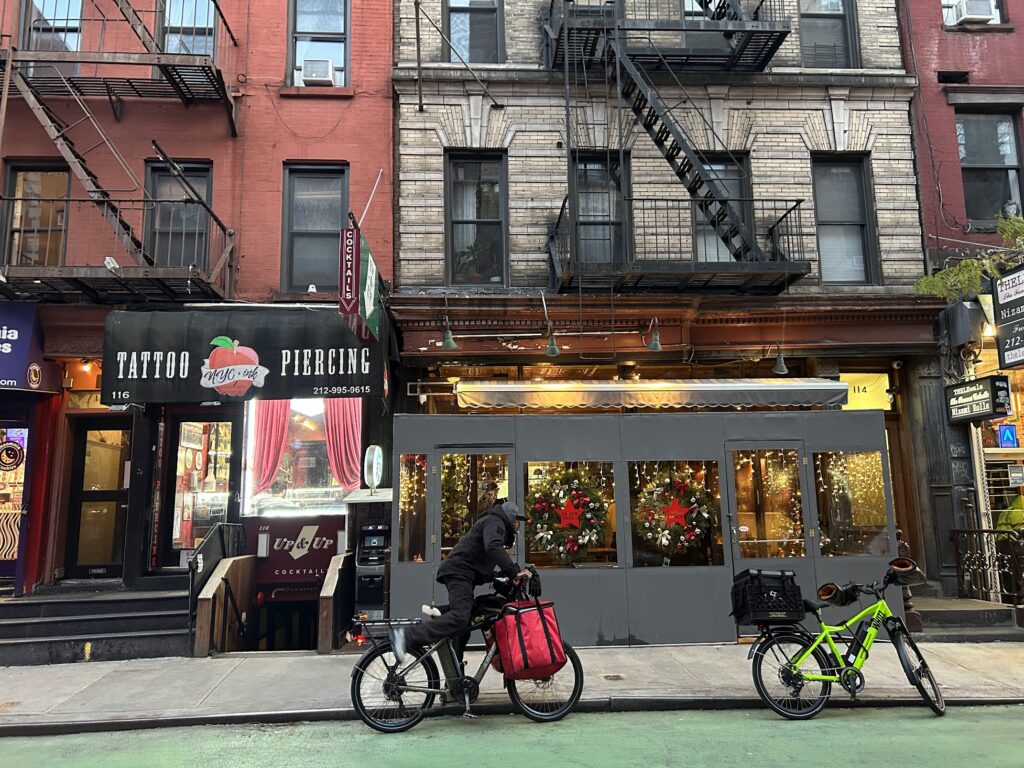
Jones Street, today a popular place for selfies thanks to the album coverPhotography by the legendary music photographer Don HuntsteinBen’s Pizzeria on MacDougal StreetBob and Suze’s apartment on West 4th StreetThe former Gaslight and Kettle of FishStill hosting hootennanies at the Cafe Wha?
FEATURED READING
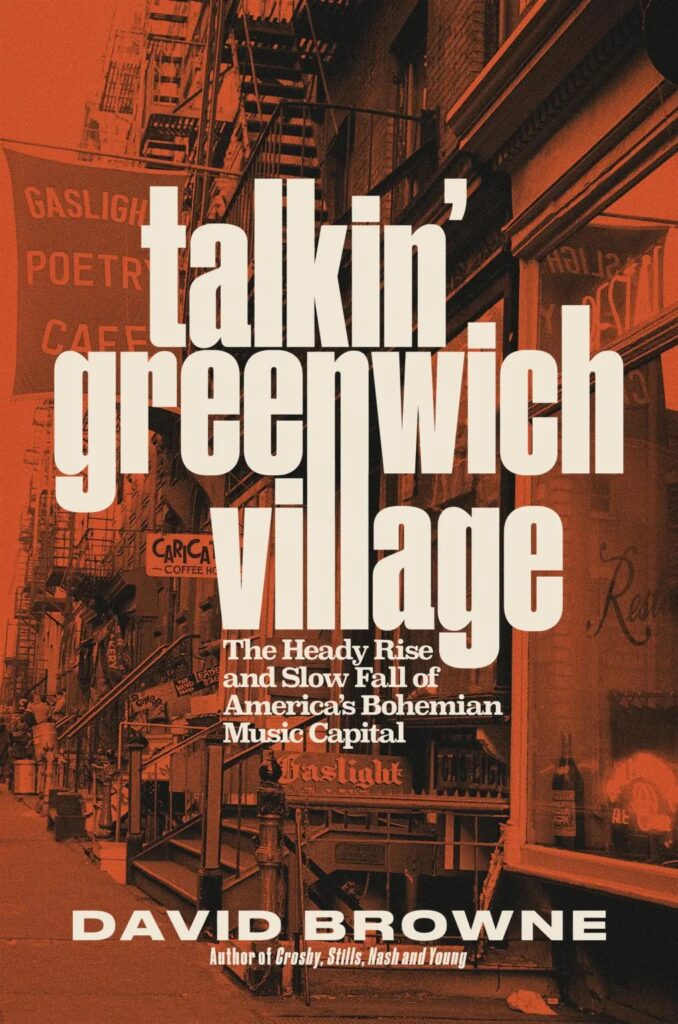
David Browne / Talkin’ Greenwich Village
Bob Dylan / Chronicles Stephen Petrus and Ronald D Cohen / Folk City: New York and the American Folk Music Revival Suze Rotolo / A Freewheelin’ Time: A Memoir of Greenwich Village in the Sixties Howard Sounes/ Down the Highway: The Life of Bob Dylan Sean Wilentz / Bob Dylan in America
FURTHER LISTENING
Music featured on this show:
“Talkin’ New York” by Bob Dylan (from his first album for Columbia Records) Dylan Thomas reciting “Do Not Go Gentle Into That Good Night” from Dylan Thomas Reading A Child’s Christmas in Wales & Five Poems “Strange Fruit” by Billie Holiday (Commodore) “Little Girl Blue” by Nina Simone (Bethlehem/Verve) “A Sleepin’ Bee” by Barbra Streisand (Columbia Records) “Goodnight Irene” by the Weavers (Decca Records) “This Land Is Your Land” by Woody Guthrie “Talkin’ John Birch Paranoid Blues” by Bob Dylan “Blowin’ In The Wind” by Bob Dylan “Don’t Think Twice, It’s All Right” by Bob Dylan “Only A Pawn In Their Game” by Bob Dylan “The Times They Are A-Changin’” by Bob Dylan
There once was a modest basement nightclub in an old West Village building which opened the door to a revolutionary (and now obvious) idea in New York City music and delivered one of the most significant moments in all of music history.
In the 30s Midtown Manhattan clubs were alight with the bourgeoisie, tuxes and evening gowns, tables and banquettes of rich white people drinking champagne, and often entertained by Black performers borrowed from the Harlem music scene.
It was putting on the ritz, it was dancing cheek to cheek.
It was embodied within the phrase ‘cafésociety‘, coined by the one of the scene’s wittier celebrities Claire Booth Luce, playwright of The Women and a darling toast of Broadway.
But there was also something saccharine and square — and segregated — about those Midtown haunts. Things were wound too tightly.
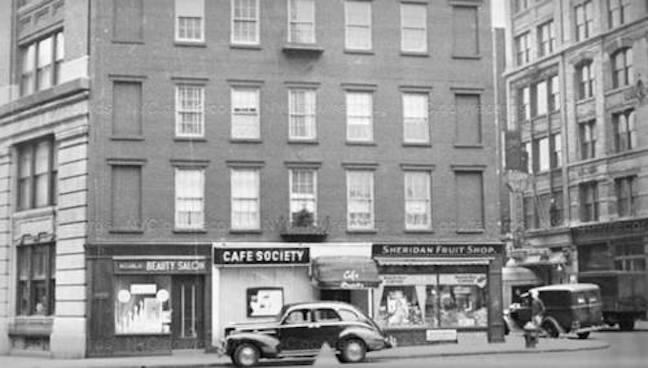
What would become one of the New York music world’s most fertile spots for musical innovation was far, far downtown from the ‘real’ nightlife — at 1 Sheridan Square in the West Village.
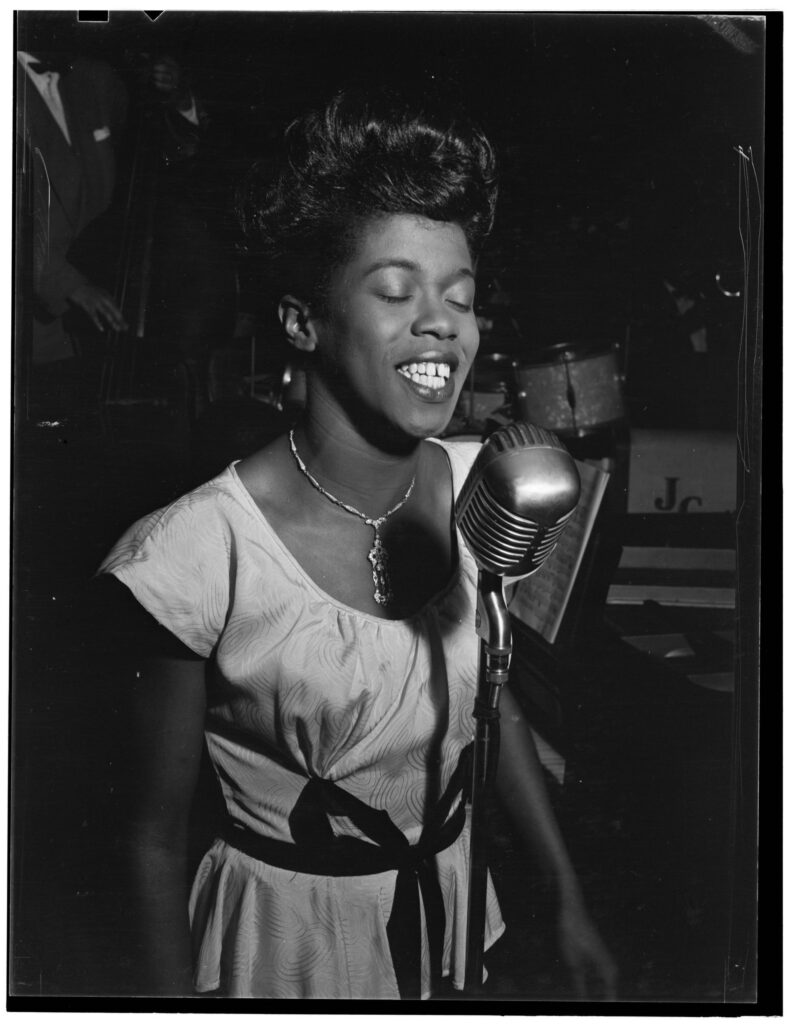
Portrait of Sarah Vaughan, Café Society (Downtown), ca. Aug. 1946], photo by William Gottlieb, courtesy Library of Congress
Café Counter Culture
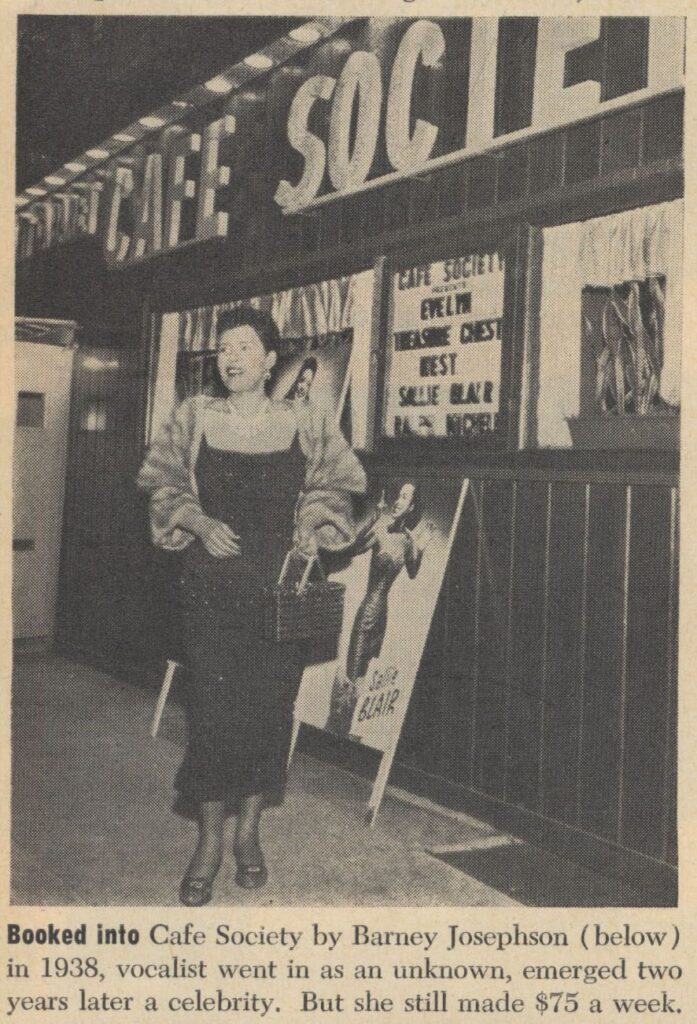
New Jersey shoe salesman Barney Josephson had an affinity for jazz music — partially grown from visiting the bawdy clubs of underground Berlin — but grew irritated at the race segregation, which even occurred in Harlem, at places like The Cotton Club.
Josephson envisioned a venue where musicians of any color could perform — and audiences of any color could enjoy it — but such a notion seemed to fly in the face of modern ‘café society’ culture.
“I wanted a club where blacks and whites worked together behind the footlights and sat together out front. There wasn’t, so far as I know, a place like that in New York or in the whole country.”
So, acquiring his Greenwich Village location, what a better name to call this rather kooky experiment than Café Society?
Luce, knowing good irony when she saw it, even encouraged the bar’s lusty slogan: The wrong place for the right people.
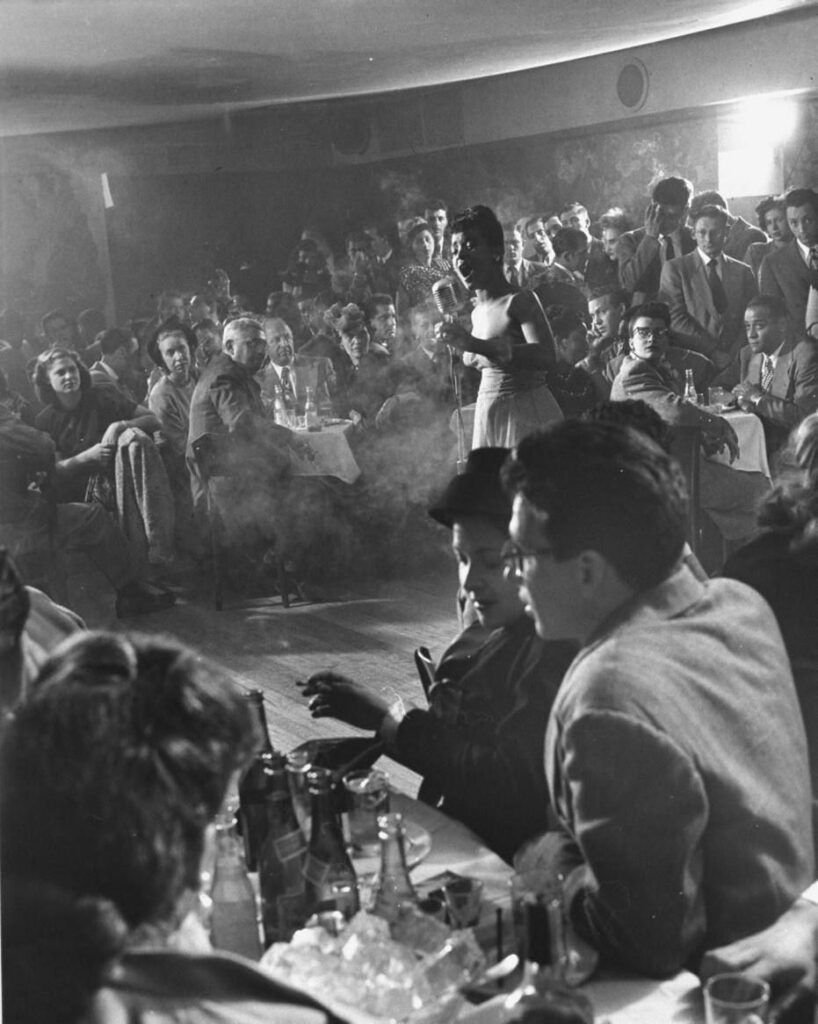
Jon Mili/The LIFE Picture Collection/Getty Images
Open (To All) For Business
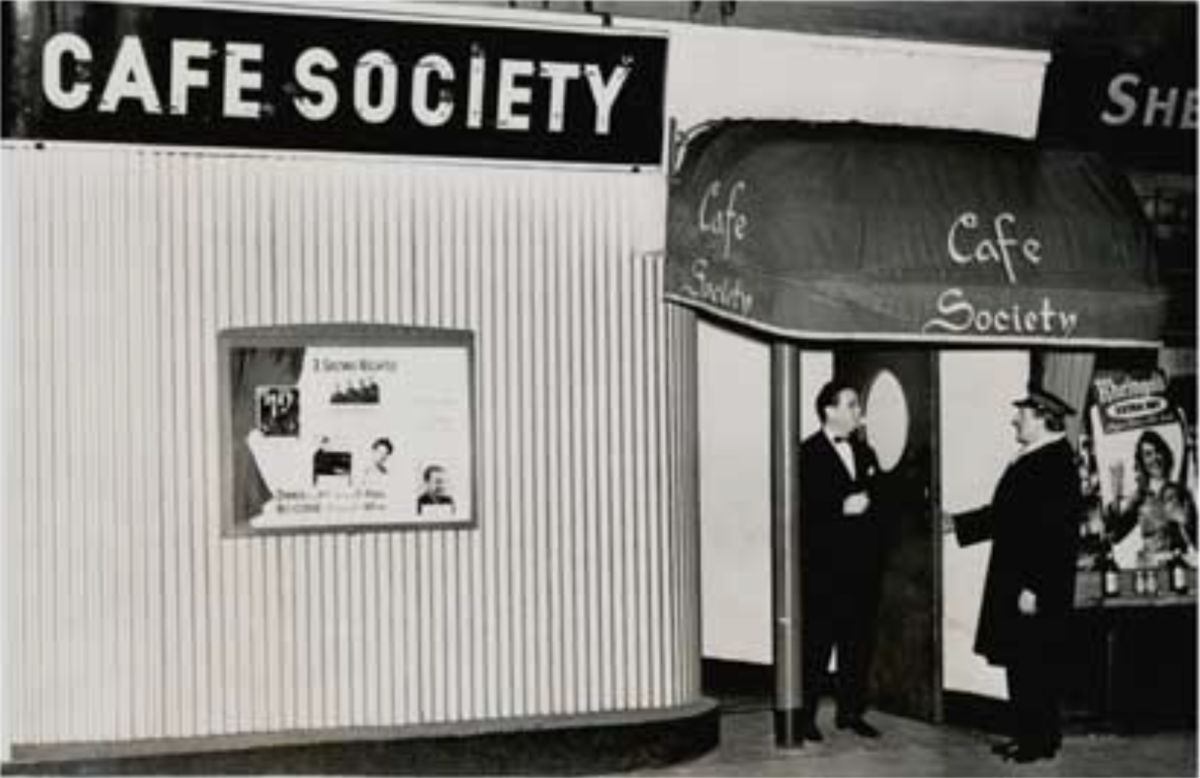
Opening on December 18, 1938,Café Society was festooned in wacky caricatures of music stars, comedians and personalities of the age. Walls were muralled by creations from local artists.
The club doorman played with the notion of informal glamour, wearing a tattered top hat and white gloves with the fingertips ripped off.
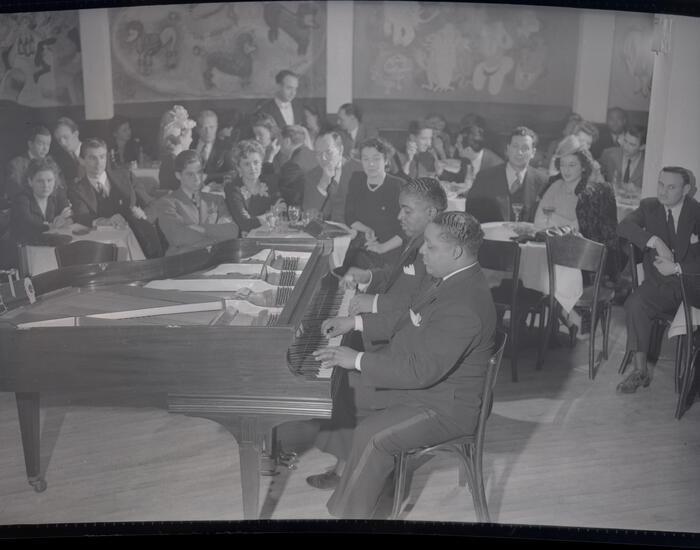
Below: The Boogie Woogie pianists, Cafe Society, 1941. Take note of the murals on the walls.
Frank Bauman/Look Magazine — Courtesy Museum of the City of New York
Josephson began hosting performers of all stripes, many taking to a mixed stage for the first time in their careers.
Over the course of its ten-year run — and that of a second location, coyly placed at 58th and Park — Josephson and his partners would host dozens of soon-to-be jazz stars, in many cases paving the way to their success.
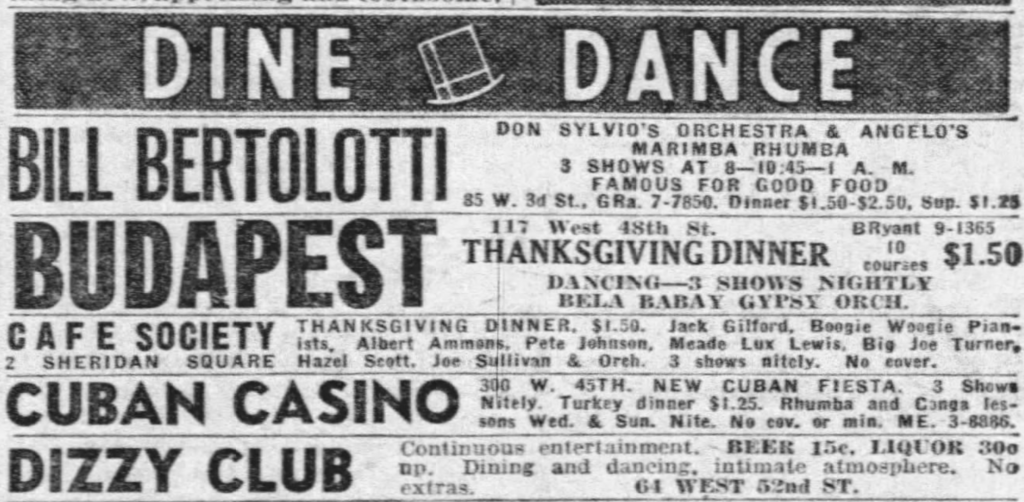
New York Daily News, November 22, 1939 (courtesy Newspapers.com
Art Tatum, Lena Horne, Sarah Vaughn, Mary Lou Williams, Lester Young, Burl Ives, the Golden Gate Quartet, Ella Fitzgerald — in fact its easier to make a list of jazz and pop music icons who didn’t perform there.
But Café Society’s biggest claim was there from the beginning.
On opening night, a young woman took to the microphone. She achieved some success on the New York stage by this point and had even snagged a recording contact with Columbia Records.
But the legend of Billie Holiday would begin here — on opening night.
A Song For Lady Day
To have Holiday as your in-house singer (for nine months!) would have been an honor enough.
To give her — and the world — a defining musical moment, well, that’s New York.
Café Society naturally took on a liberal, left-leaning clientele and with that, a political edge.
Josephson presented a song to Holiday that he had heard at political gatherings, a piercing tune about lynching, one that forcefully reminding listeners that violence and discrimination still very much existed outside the doors of his club.
Billie was originally indifferent to the song, written first as a poem “Bitter Fruit,” by a white Jewish schoolteacher Abel Meeropol; then after contemplating it, considered it too bold.
But she was eventually convinced to sing it, and on three consecutive nights early in 1939, Holliday ended her sets with the song — “Strange Fruit.”
A spotlight tightly focused on her face, she stunned the audience with its searing intensity.
Southern trees bear a strange fruit Blood on the leaves and blood at the root Black bodies swingin’ in the Southern breeze Strange fruit hangin’ from the poplar trees….
And then she left the stage, not returning to hear the thundering applause.
It was theater at its finest; thousands of less talented chanteuses would search to recapture the drama in dozens of Village clubs and cabarets, from then to today.
The Café Society ‘revolution’ would not last long.
Josephson’s brother Leon was being investigated for communist ties, and Barney soon felt the heat of J. Edgar Hoover and his House Un-American Activities Committee.
The FBI even staked out the clubs, photographing patrons, and Hoover soon ‘opened a file’ on Barney himself. Both locations of Café Society were closed by 1950.
But Josephson managed to pick himself up and soon opened another influential downtown jazz club, the Cookery, which stayed opened into the 1980s.
But for a moment, that gritty nightclub became the center of the musical universe.
Most music critics agree that Holiday’s original performances of ‘Strange Fruit’ at Café Society are among the most influential musical moments of 20th century and basically constitute the birth of political activism in popular music.
You can visit the location of the former Café Society simply by taking the subway to Sheridan Square (actually a triangle) and going to its eastern side.