Categories
Music History Podcasts

Scott Joplin in New York: A Ragtime Mystery

PODCAST How did one of the greatest composers of the 20th century end up buried in Queens in a pauper’s grave?
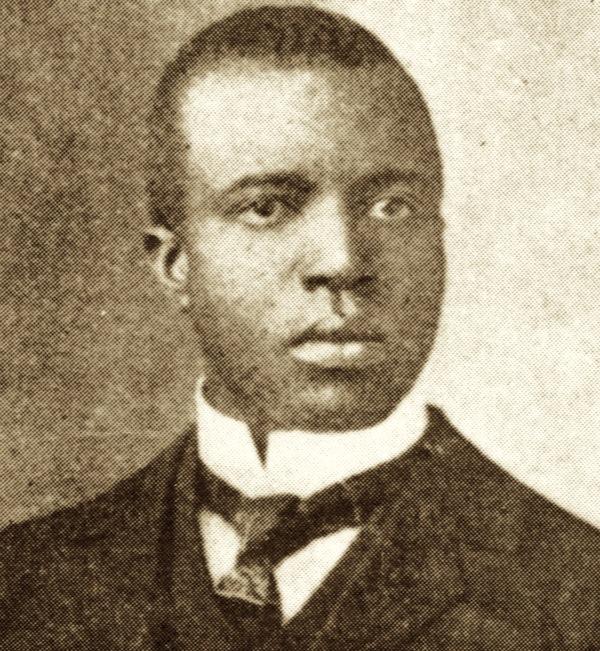
Scott Joplin, the “King of Ragtime”, moved to New York in 1907, at the height of his fame. And yet, he died a decade later, forgotten by the public.

He remained nearly forgotten and buried in a communal grave in Queens, until a resurgence of interest in ragtime music in the 1970s. How did this happen?

In today’s music-packed show, we travel to Missouri, stopping by Sedalia and St. Louis, and interview a range of Ragtime experts to help us understand the mystery of Joplin’s forgotten years in New York City.

Listen Now: Scott Joplin Ragtime Podcast

__________________________________________________________

The Bowery Boys: New York City History podcast is brought to you …. by you!

We are now producing a new Bowery Boys podcast every other week. We’re also looking to improve the show in other ways and expand in other ways as well — through publishing, social media, live events and other forms of media. But we can only do this with your help!

We are now a member of Patreon, a patronage platform where you can support your favorite content creators for as little as a $1 a month.

Please visit our page on Patreon and watch a short video of us recording the show and talking about our expansion plans. If you’d like to help out, there are five different pledge levels (and with clever names too — Mannahatta, New Amsterdam, Five Points, Gilded Age, Jazz Age and Empire State). Check them out and consider being a sponsor.

And join us for the next episode of the Bowery Boys Movie Club, an exclusive podcast provided to our supporters on Patreon.

We greatly appreciate our listeners and readers and thank you for joining us on this journey so far.

________________________________________________________

We’d like to thank the following guests for participating in this week’s show:

— Kathleen Boswell of the Scott Joplin International Ragtime Festival

— Bryan Cather from the Scott Joplin House State Historic Site and the organization Friends of Scott Joplin

— Edward A. Berlin, ragtime scholor and author of King of Ragtime: Scott Joplin and His Era

— Reginald R. Robinson, jazz and ragtime pianist and educator

— Richard Dowling who performed his album The Complete Piano Works of Scott Joplin at Carnegie Hall on the 100th anniversary of Joplin’s birth

Here are Reginald Robinson and Richard Dowling performing Scott Joplin:
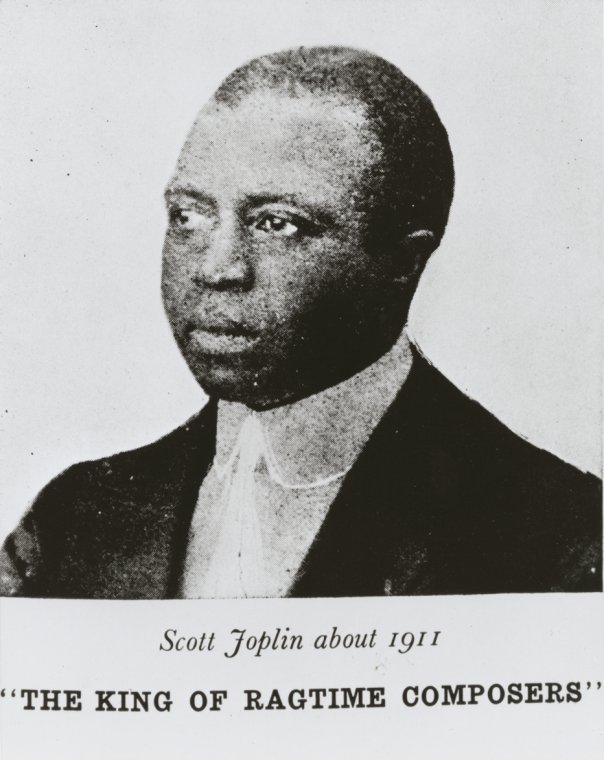
New York Public Library
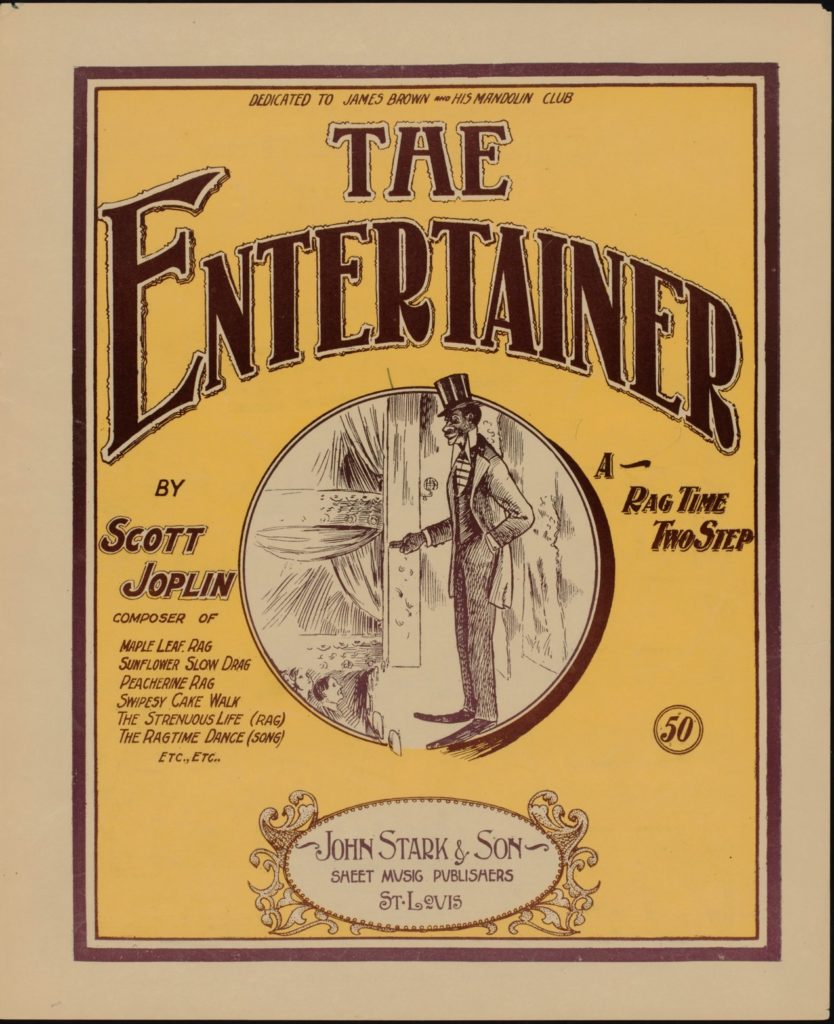
The Entertainer published 1902/New York Public Library


Tom’s images from Sedalia and St. Louis, Missouri:
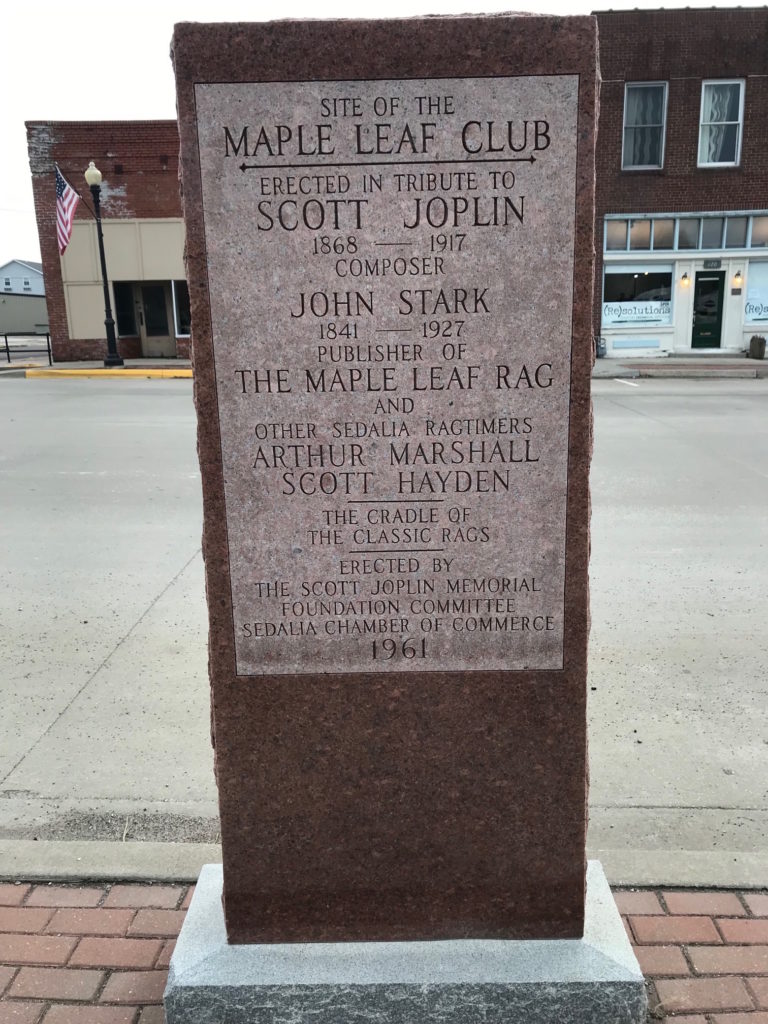
The historic marker outside the site of the Maple Leaf Club in Sedalia, Missouri.
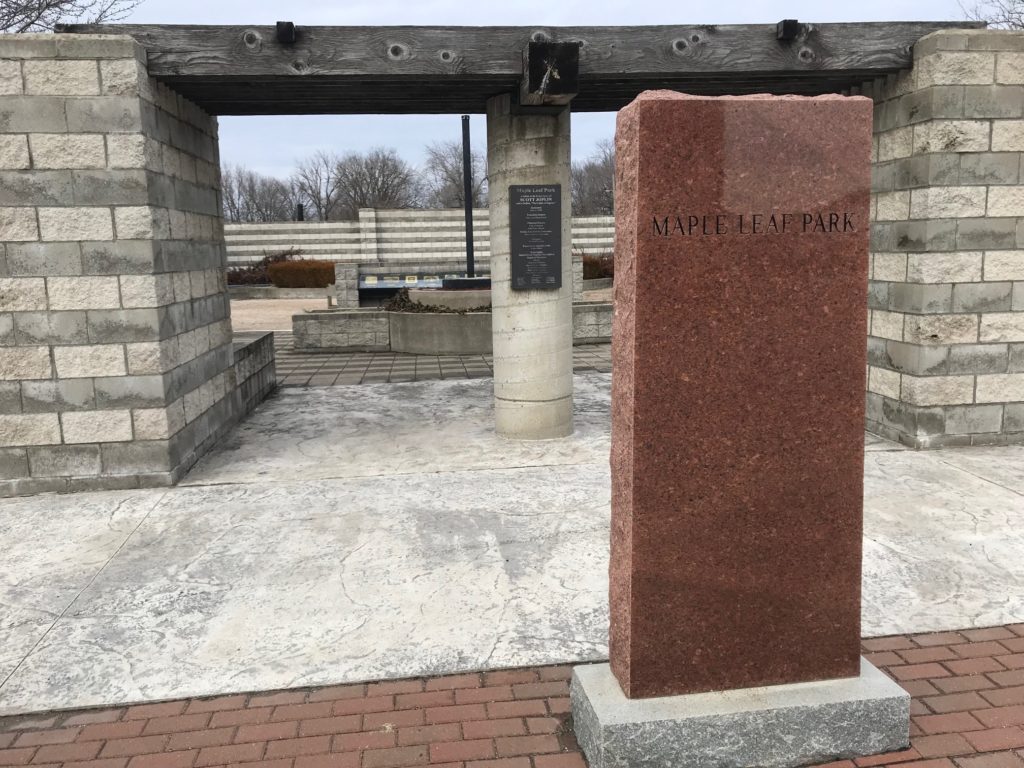
Looking into Maple Leaf Park, on the site of the historic club.
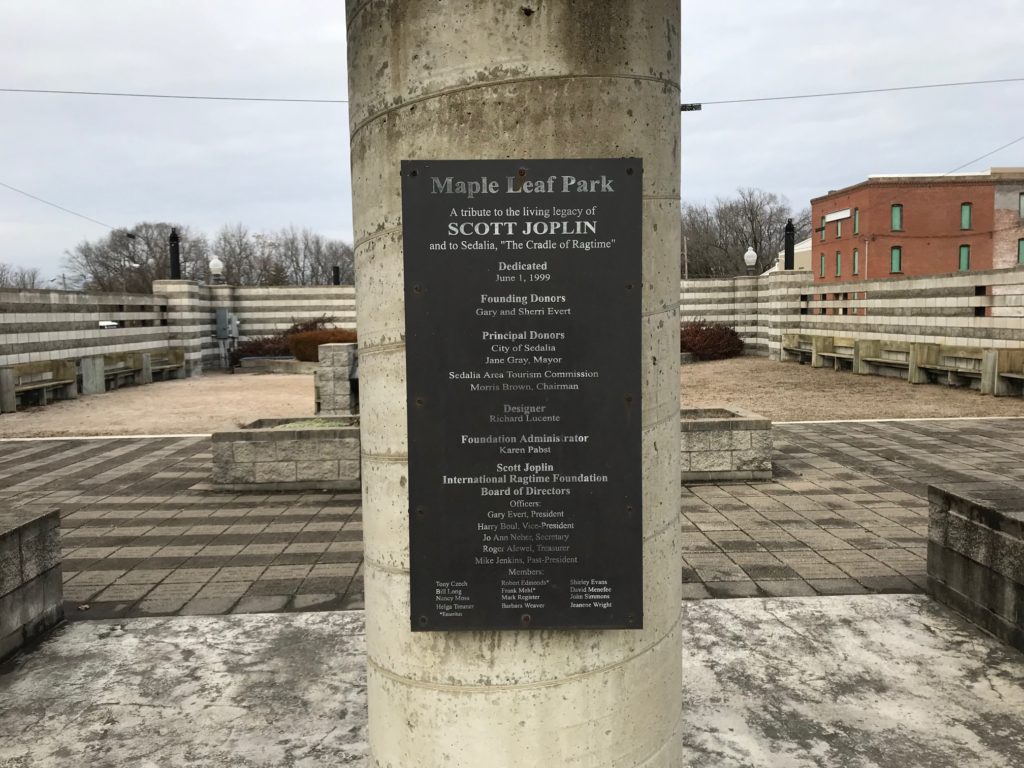
Inside Maple Leaf Park
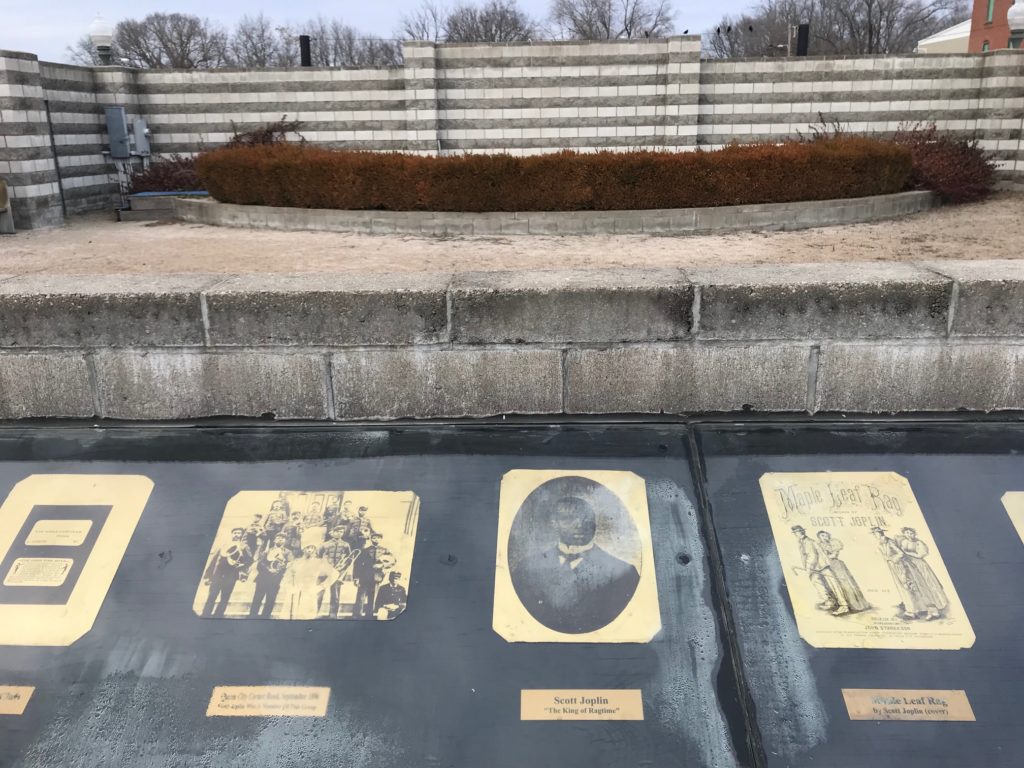
Maple Leaf Park contains a timeline of Joplin, the “Maple Leaf Rag” and the club.
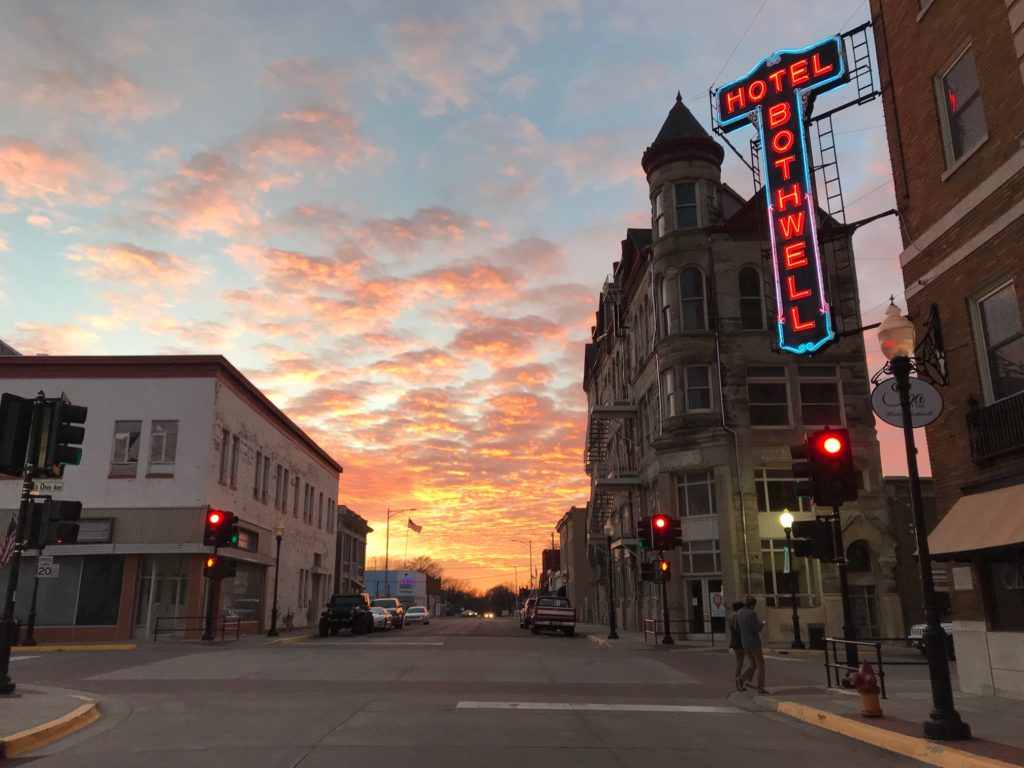
Downtown Sedalia at sunset, with the historic Hotel Bothwell, right.
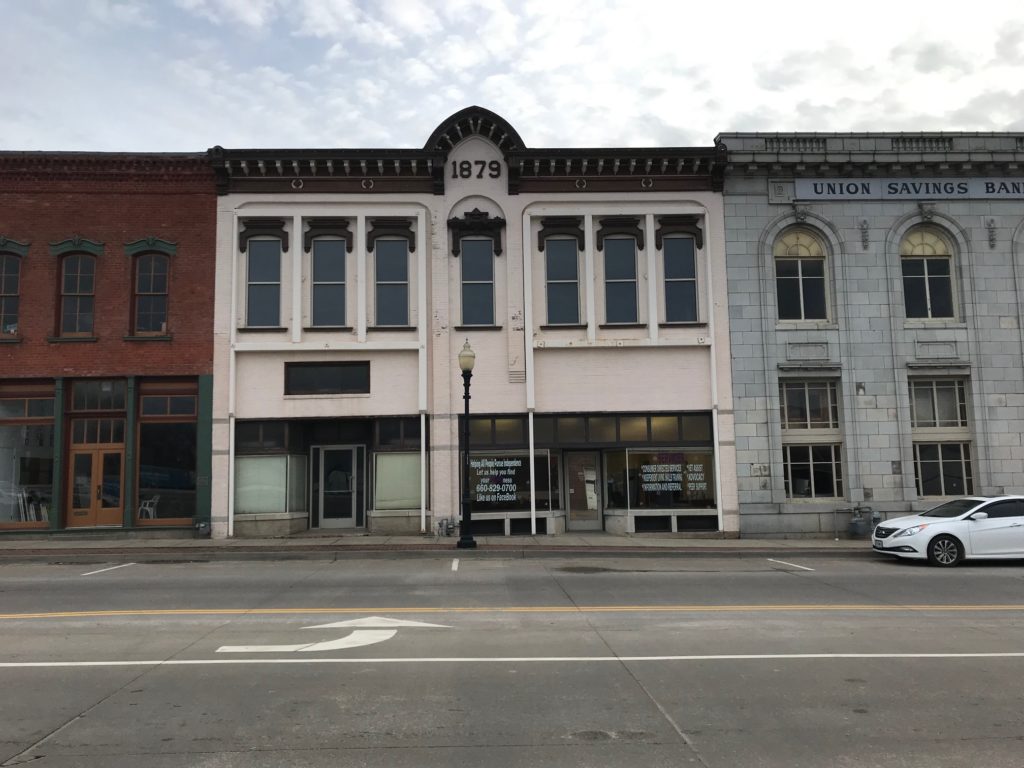
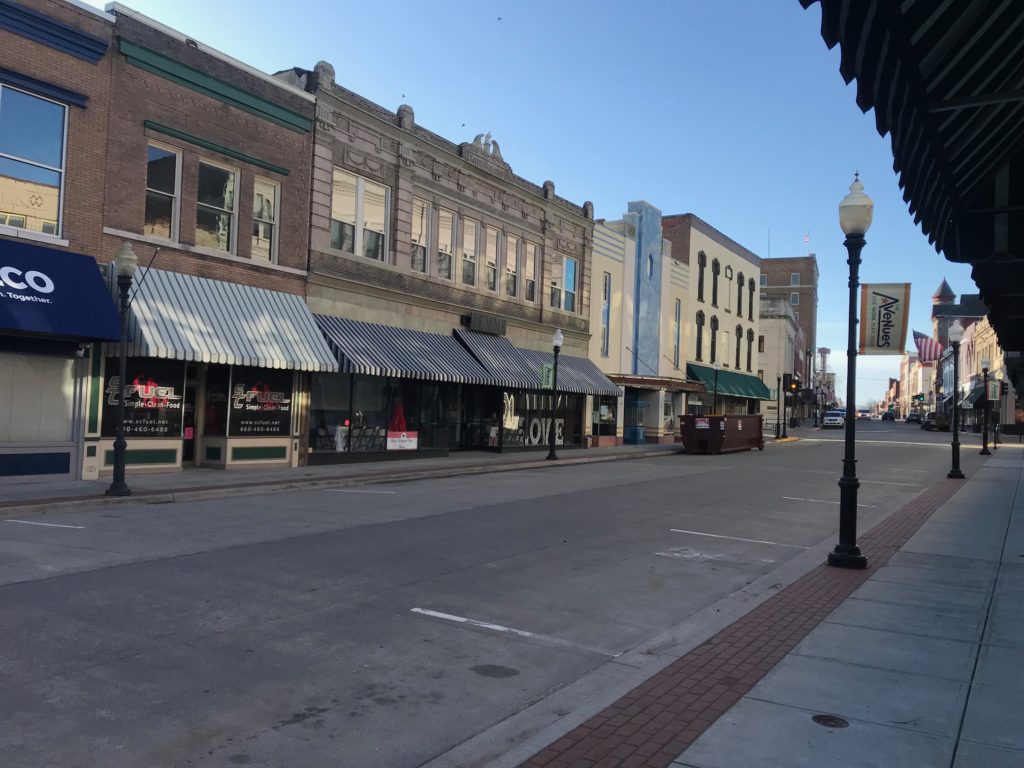
Historic downtown Sedalia. This is a shot on Main Street.
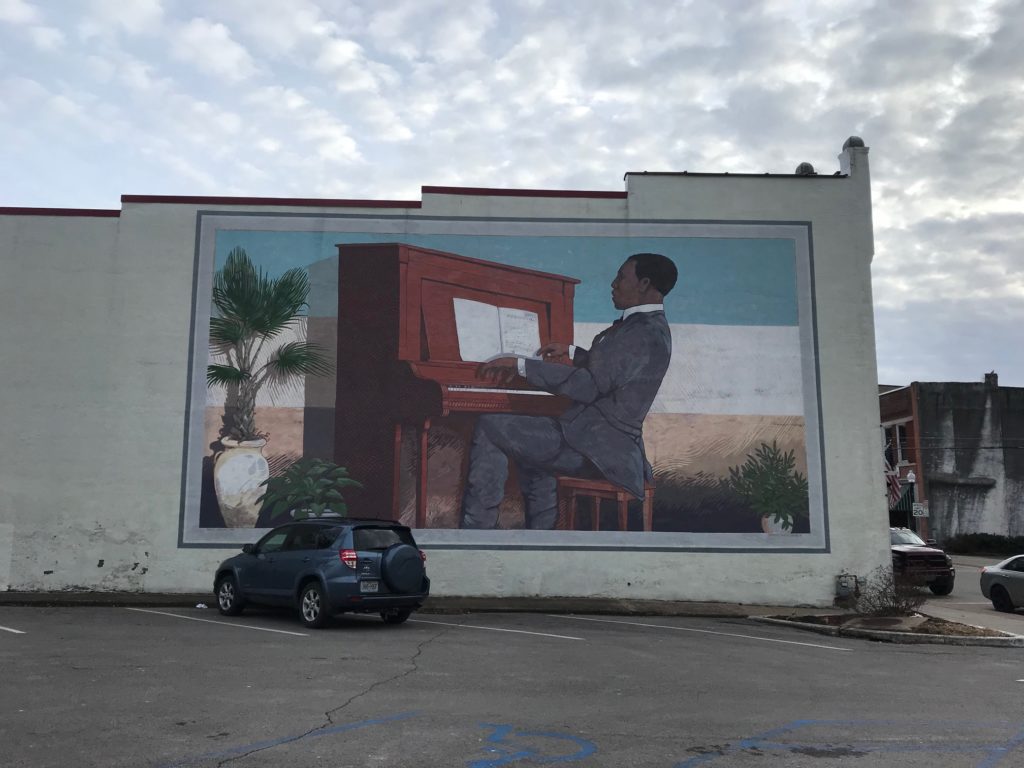
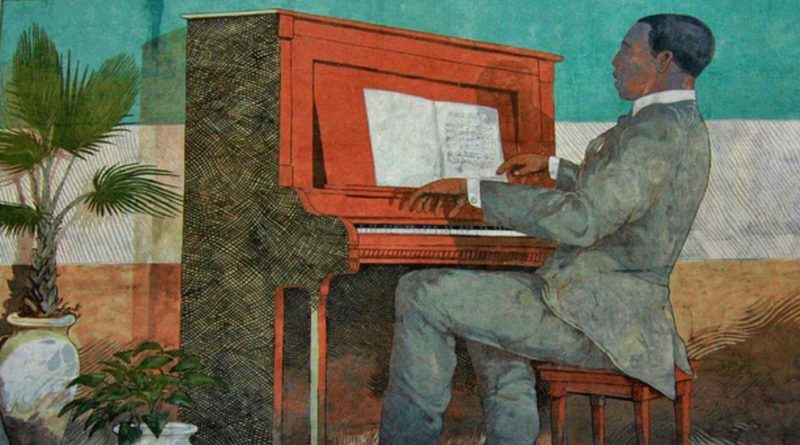
Sedalia’s mural dedicated to Scott Joplin.
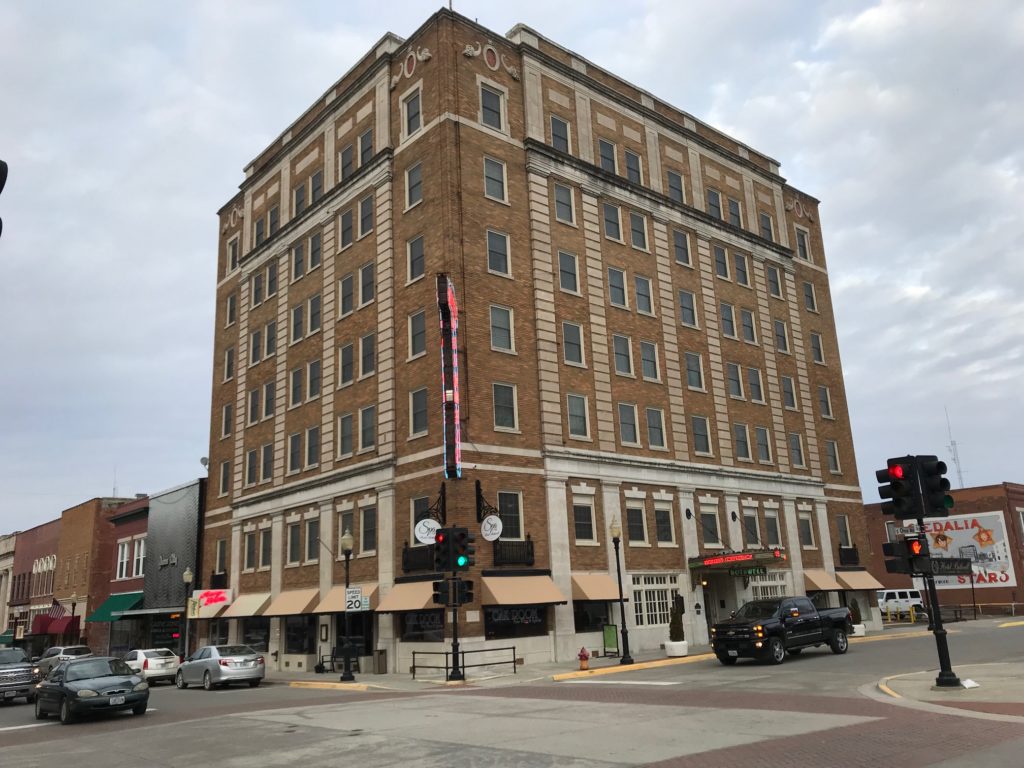
The Hotel Bothwell
Looking up Ohio Avenue in downtown Sedalia.
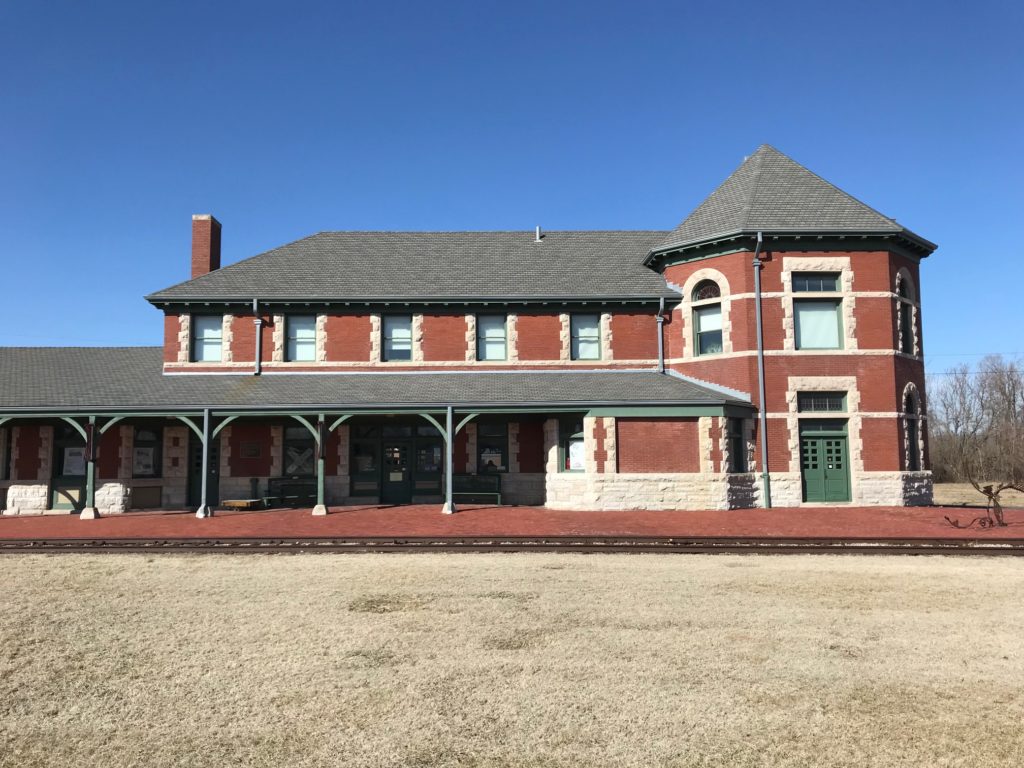
Sedalia’s former train station has been converted into a visitors center, with a museum that covers a lot of Ragtime, and Joplin, history.
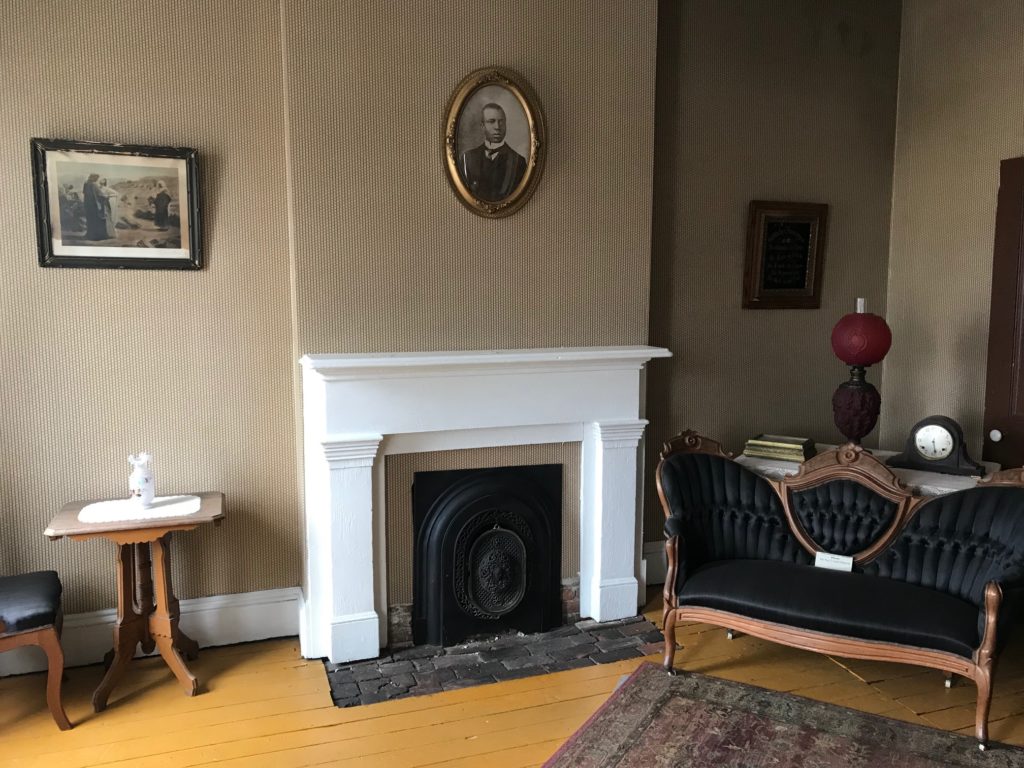
Inside the Scott Joplin House State Historic Site in St. Louis. This is the front apartment, where Joplin may have boarded.
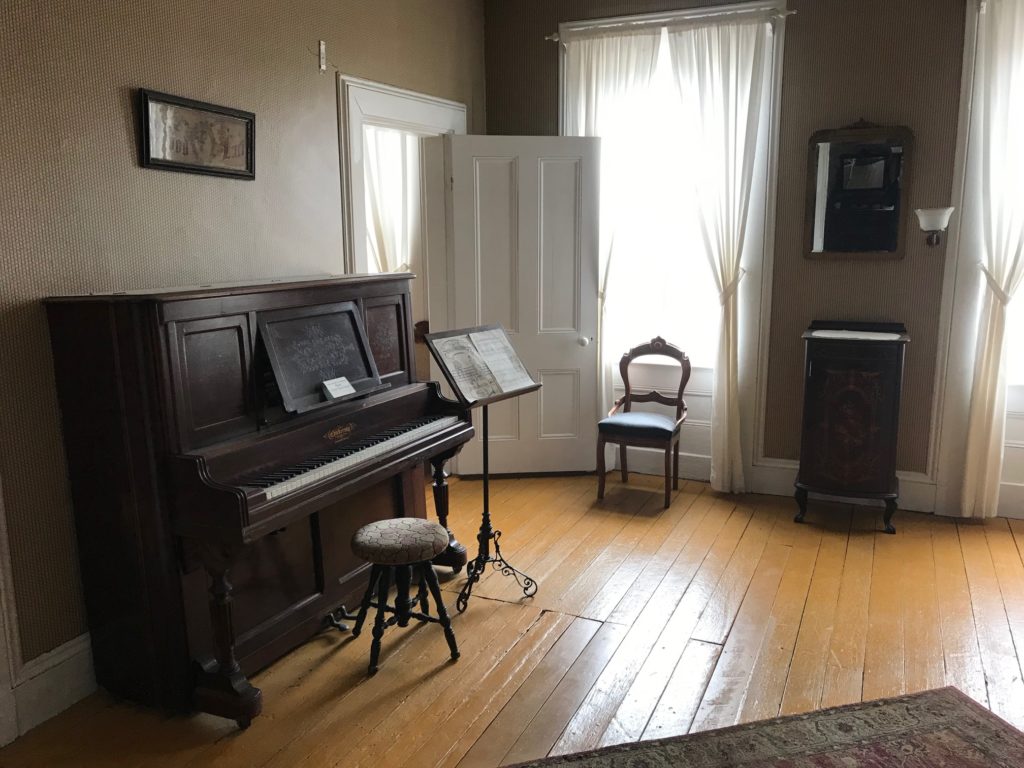
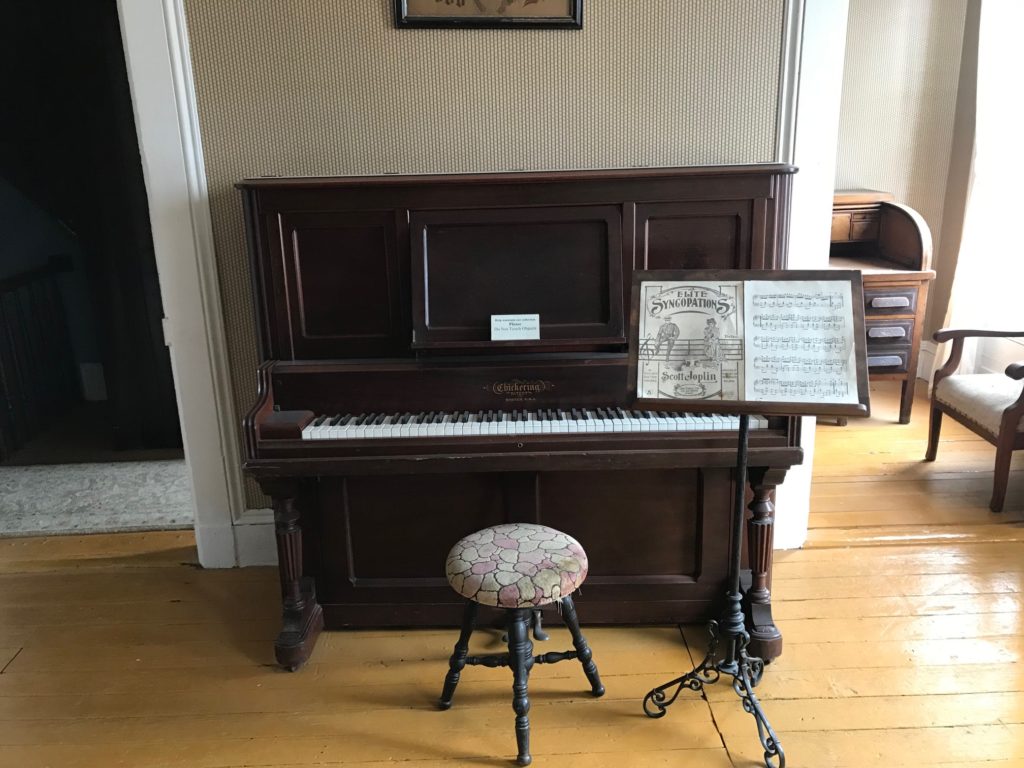
A piano with, of course, Joplin music ready to be played.
Joplin’s portrait hangs on the wall of the Scott Joplin House in St. Louis.
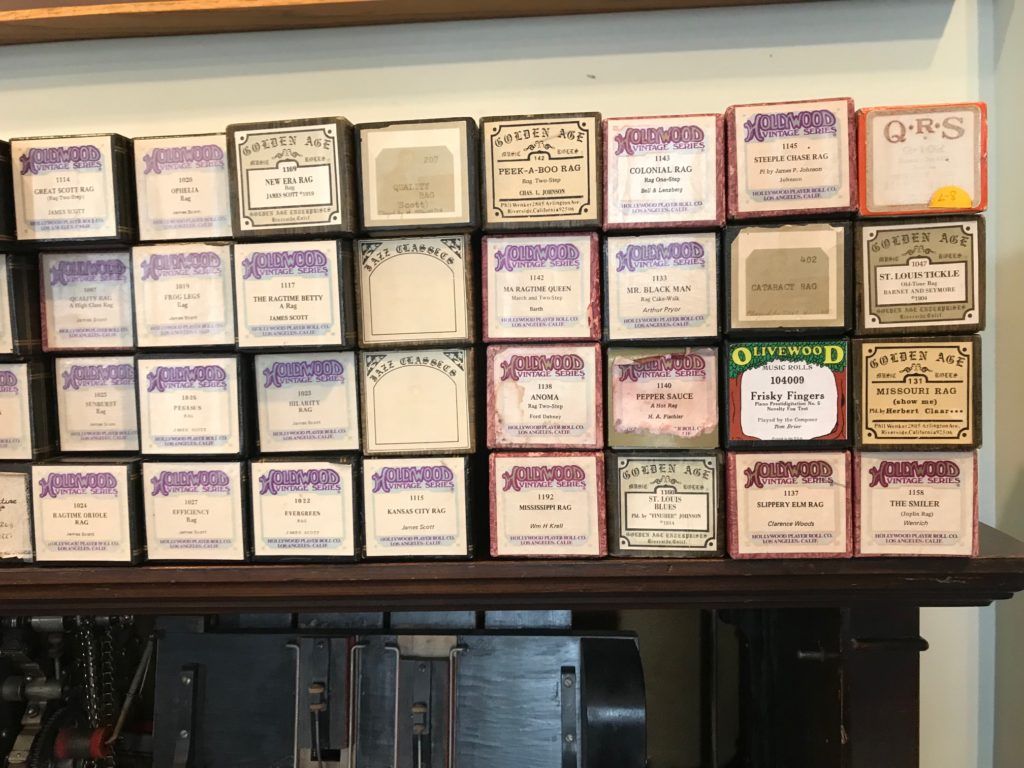
The piano room downstairs at the Scott Joplin House in St. Louis contains many piano rolls of Joplin compositions.
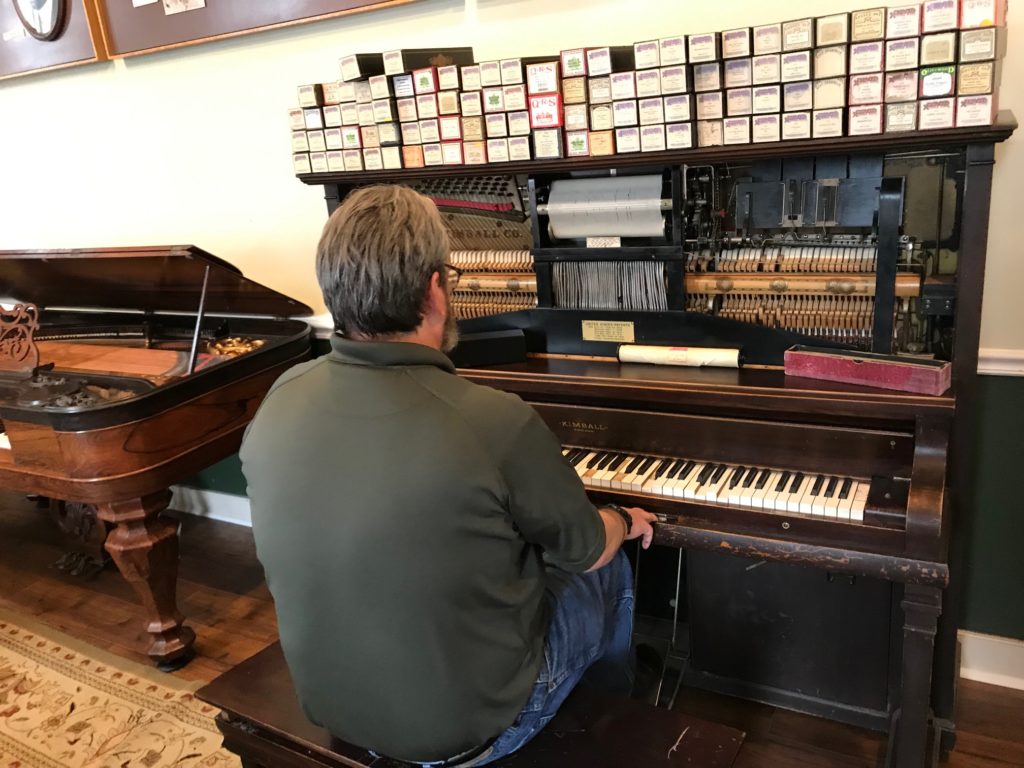
Bryan Cather, interviewed in the show at the Scott Joplin House, pumps away at the player piano.
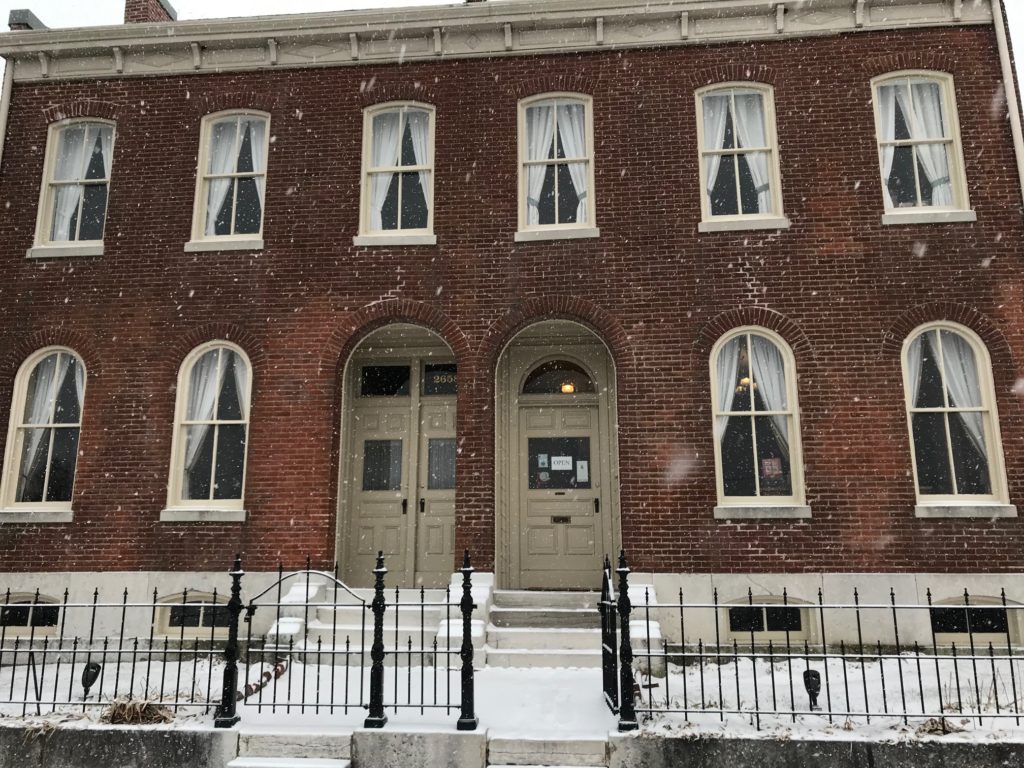
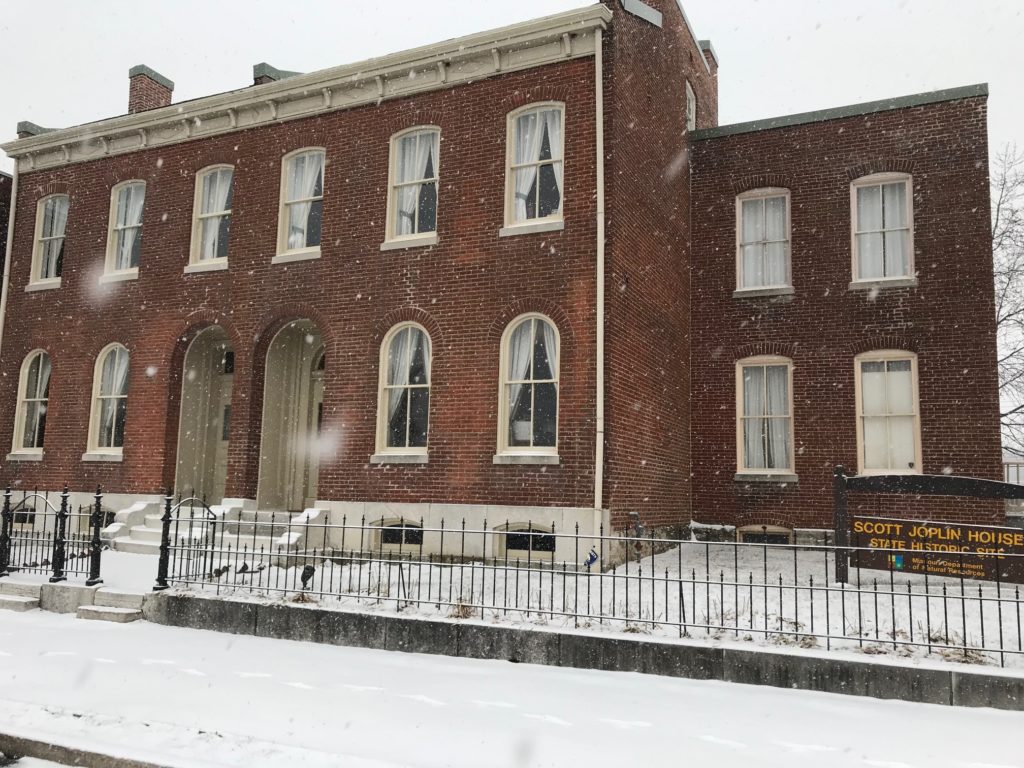
Outside the Scott Joplin House in St. Louis on a snowy February day.
Scott Joplin House, St. Louis.
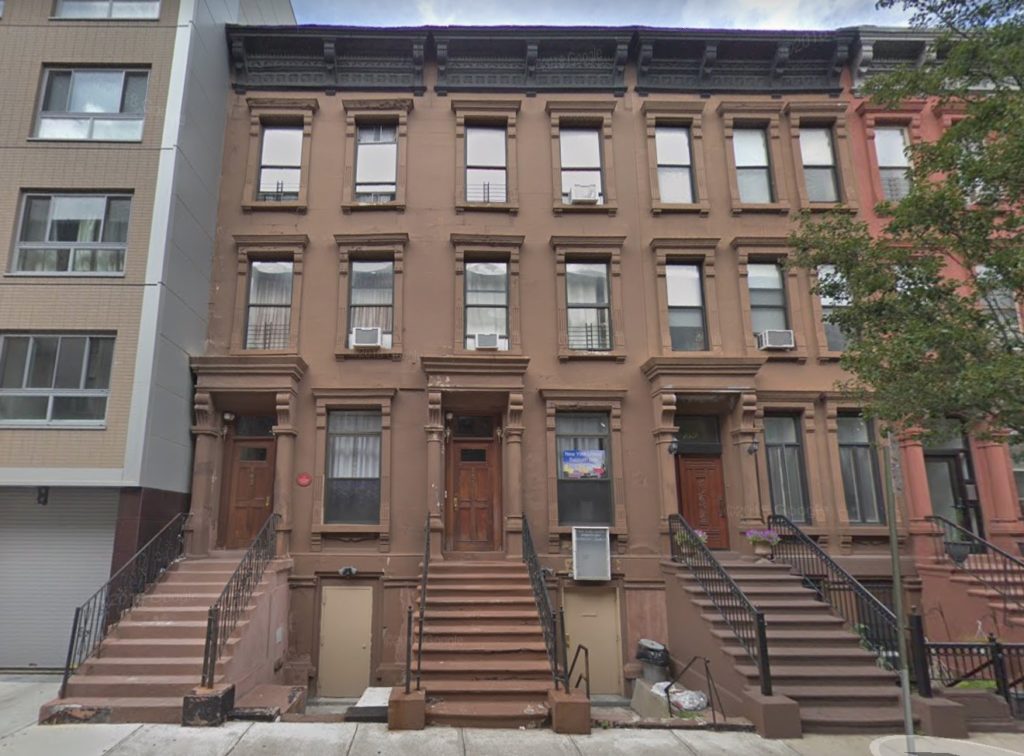
The last home of Scott Joplin at 163 West 131st Street in Harlem. Image courtesy Google Maps
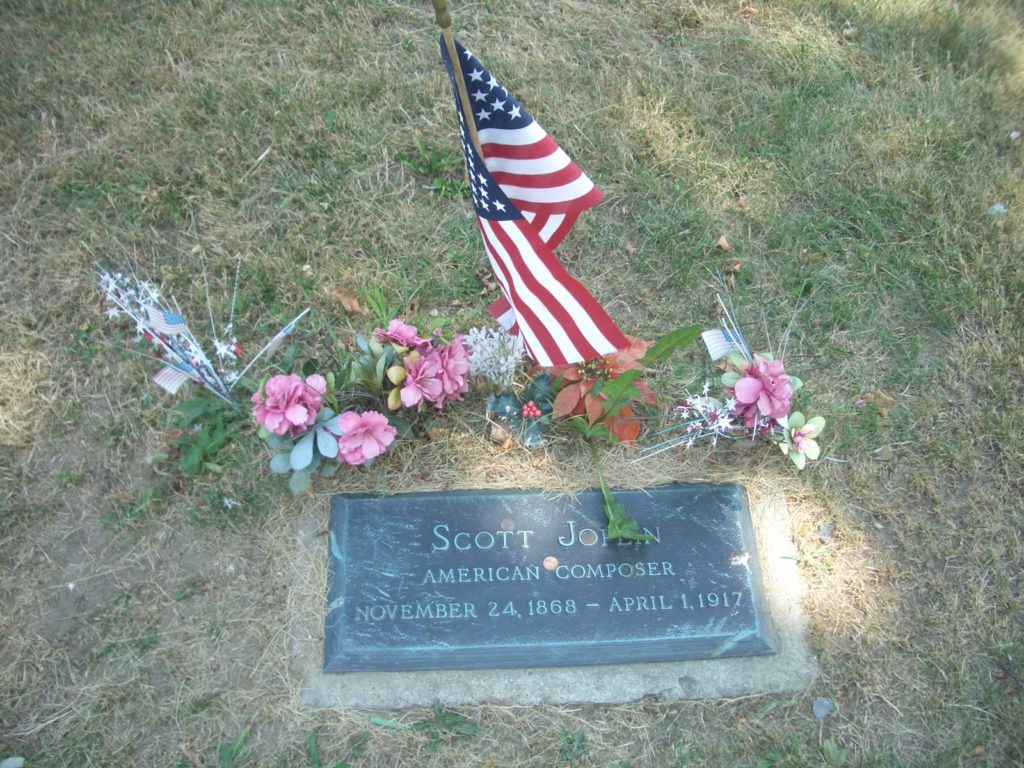
The grave of Scott Joplin at St. Michael’s Cemetery. Image courtesy Gardens of Stone.
The major reason for Scott Joplin’s resurgent popularity in the 1970s was the box office hit The Sting starring Robert Redford and Paul Newman.
The Maple Leaf Rag, Joplin’s most successful song in his lifetime.
A clip of the Houston Grand Opera’s version of Treemonisha, performed in 1976.

FURTHER LISTENING:

Get a background on the music scene of the early 1900s by listening to these two podcasts on New York’s early music heritage:

And for a look at early African-American neighborhoods in New York, check out this episode (with trips to Seneca Village and Weeksville):
Categories
Podcasts

Steinway and Sons: piano men and kings of Queens

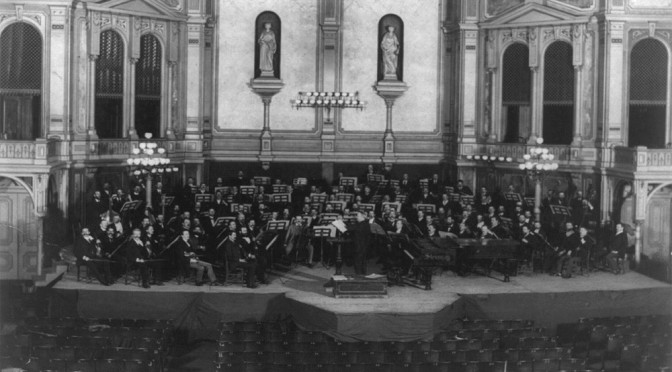
Inside Steinway Hall 1890: the 14th Street concert venue could seat 2,000 and also functioned as a showroom for Steinway pianos

Henry Steinway, a German immigrant who came to New York in 1850, made his name in various showrooms and factories in downtown Manhattan, enticing the wealthy with his award-winning quality pianos. At their grand Steinway Hall on 14th Street, the family turned a popular concert venue into a clever marketing opportunity.

But their ultimate fate would lie outside of Manhattan; the Steinways would graduate from an innovative factory on Park Avenue to their very own company village in Queens, the basis of a neighborhood which still bears their name today. You may not know much about pianos, but you’ve crossed path with this family’s influence in the city. Tune in for this short history of Henry Steinway and his sons.

PODCAST Download this show it for FREE on iTunes or other podcasting services. Click this link to download it directly from our satellite site. Or click below to listen here:

The Bowery Boys: Steinway and Sons

___________________________________
As always, click on pictures for a bigger view

Hello Henry: Heinrich Steinweg made his first piano as a present for his bride. A year later he completed his very first grand piano and began a small manufacturing practice with his sons. They took the show on the road to New York in 1850.

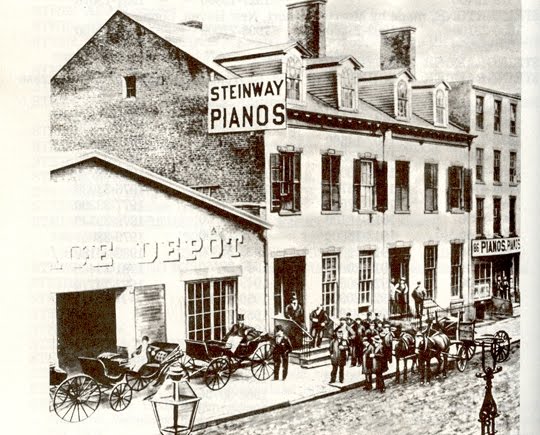
First movement: Within three years of arriving in New York harbor, the Steinways had opened their first workshop on Varick Street, then moved to a larger space on at 82-88 Walker Street (illustrated below).

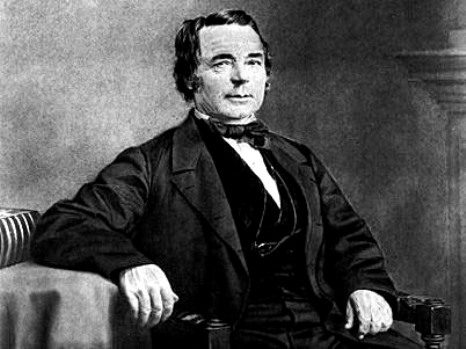
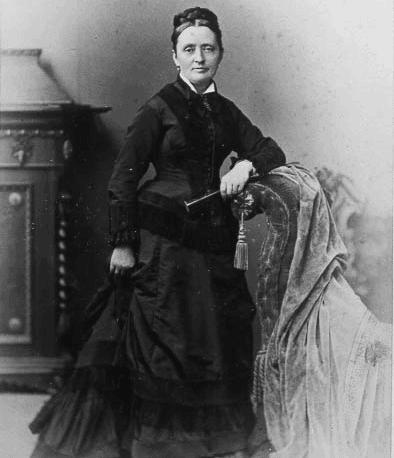
Daughter Doretta Steinway, in her later years. Doretta was key to Steinway’s early success, due to her generous offering of free piano lessons to anyone who purchased an instrument from them.

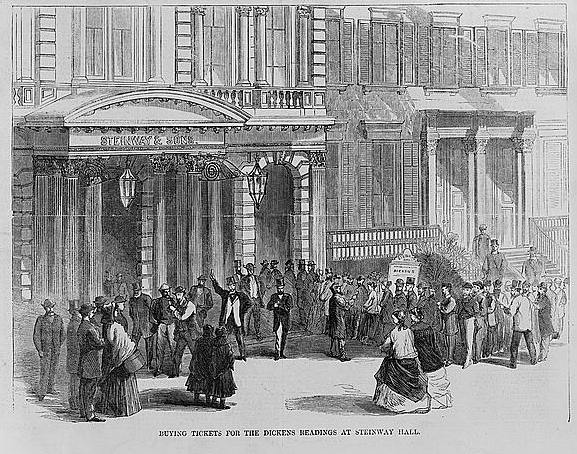
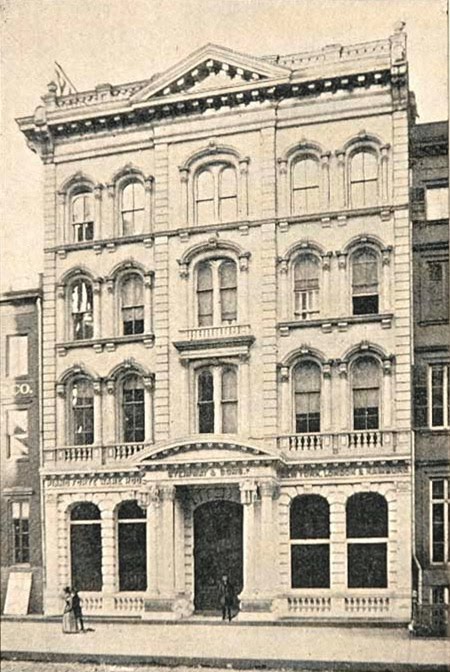
Steinway Hall, built in 1864, was located at 71-73 East 14th Street, right off of fashionable Union Square. The hall hosted a great variety of functions, not just music performances. The illustration below depicts the frenzy outside of a Charles Dickens reading.

The front of the hall, which also featured a showroom of all the latest Steinway products. The venue was such a smashing success that other halls opened around the world.

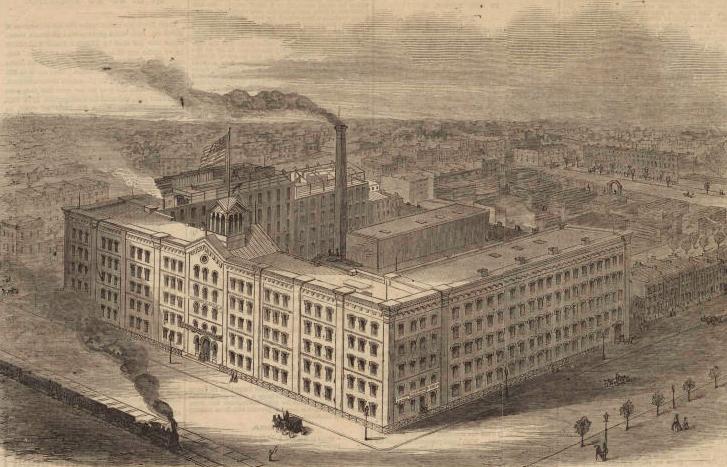
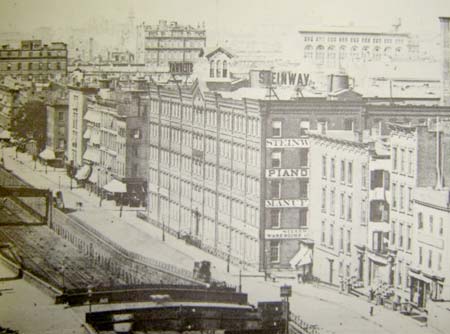
The uptown Manhattan factory opened in 1860 at 52nd and 53rd streets and Fourth Avenue — known as Park Avenue today. The new plant could manufacture up to 1,800 pianos a year. Look what stands there now!

To illustrate how fast the city was moving uptown, this photo shows the same factory just 30 years later. Its dated 1890, although at this time most Steinway operations had moved to their headquarters in Queens. Either they were still doing some work here at this time, or else nobody bothered to rename the building! Note the train tracks in front, rolling their way down to the Grand Central Depot.

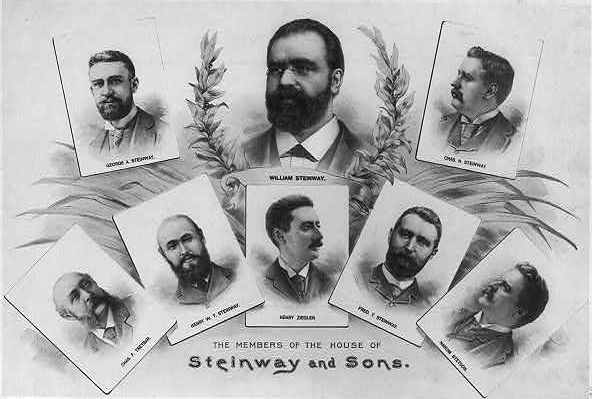
Full house: After Henry’s death in 1871, the Steinway boys would move the company’s operation to Queens. William Steinway would display ambitions far beyond pianos, expanding his pursuits to include public transportation and even automobiles.

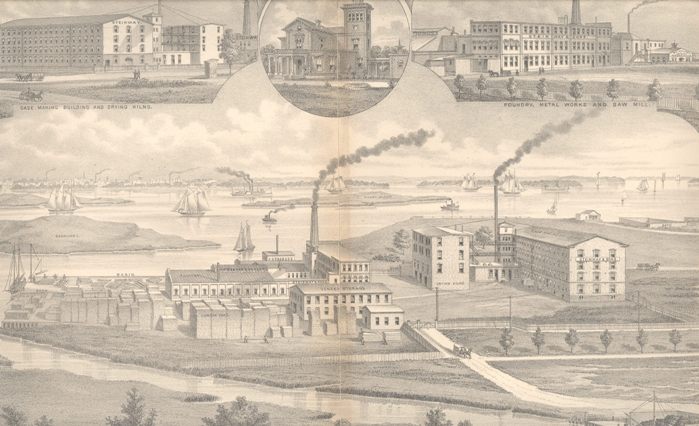
A bucolic illustration of Steinway’s Astoria factory, with river access and company village for their workers. The move allowed the Steinways to expand; it also thwarted labor groups and gave the company more power over its employees.

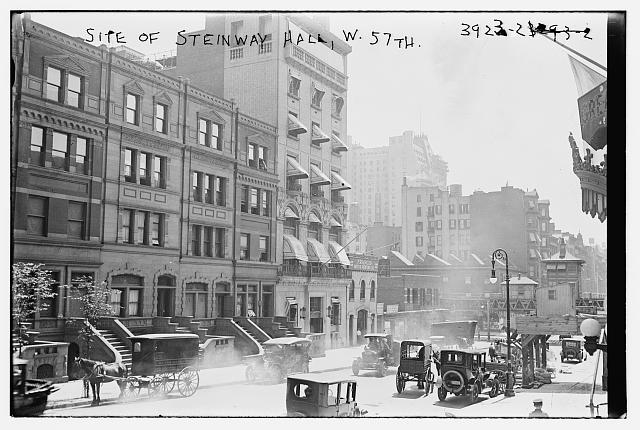
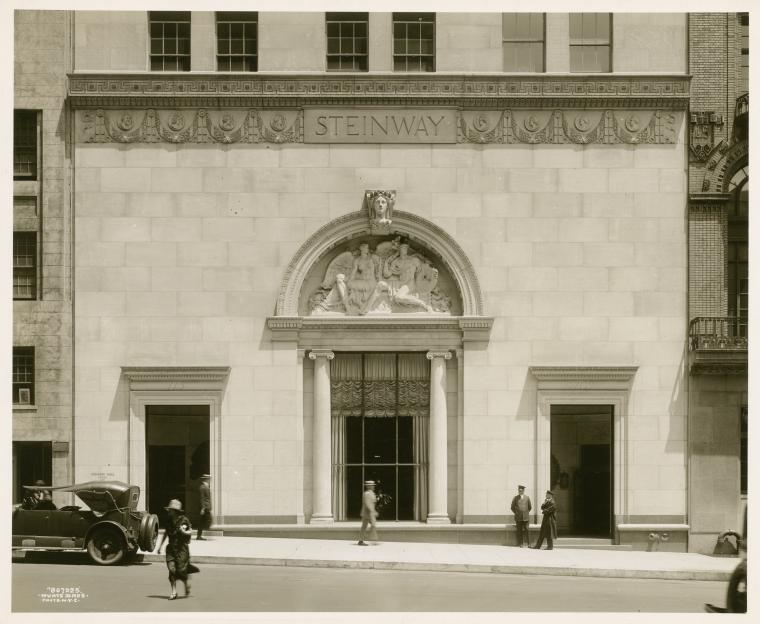
In 1925, Steinway Hall moved uptown to 57th Street, not so terribly far away from their old factory. The sooty, smelly neighborhood had become Park Avenue, and 57th Street was graced with Carnegie Hall. So naturally, the Steinways got out of no-longer-fashionable Union Square and joined the high society ranks accumulating uptown.

The new hall, designed by Warren and Wetmore, was a far smaller venue but still featured a Steinway piano showroom. You can still stroll through it today and peruse their instruments.

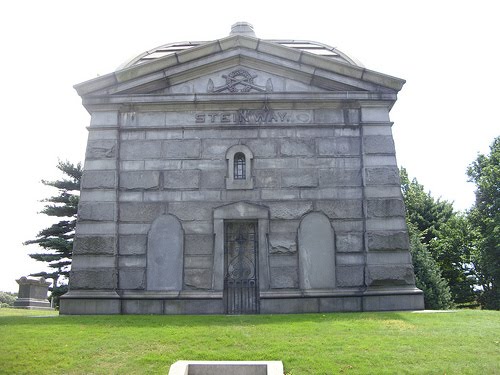
The Steinway vault at Green-Wood Cemetery. I greatly encourage a visit to Green-Wood. And while you’re visiting the Steinway, swing over and say hello to Boss Tweed! He’s buried right nearby.

You can actually tour the Steinway Queens plant. You can find information at their official website.

And did you know that everytime you take the 7 train between Queens and Manhattan, you travel through something called the Steinway Tunnel?

Location of the Steinway factory:

View Larger Map