The other Draft Riots: Brooklyn infernos, Queens bonfires

You probably know something about the Civil War draft riots that kept New York paralyzed during the week of July 13, 1863. But New York only meant Manhattan back then. What about the rest of the future boroughs?

The conscription act initiated draft lotteries throughout the area as, by 1863, the Union struggled to fill its quota of volunteers. Many thought the state of New York had contributed enough; hundreds were already dead after two years of bleak and depressing battle.

Then there was that troublesome little exemption clause. Those chosen in the ‘wheel of misfortune’ could either find a substitute or pay a $300 commutation fee. According to the Inflation Calculator, that’s about $5,250.00 today. Look at your bank account. Could you afford to pay that?

People revolted violently when the drafts were held in New York on July 13. There were also seismic reactions in the surrounding counties as well, chain reactions of the anger quelling in New York. In the surrounding regions, local law enforcement were often better prepared to handle disruptions amongst their less concentrated populations. Even still, the horror of New York’s draft riots did spread.

The homes of many black residents on Staten Island were torched. According to historian Richard Bayles, “From its proximity to New York City this county could not help but feel every pulsation of popular emotion that disturbed the bosom of the city.” Mobs attacked black shopowners in Factoryville, surrounded a black church in Stapleton and threatened parishioners inside, and burned down a railroad station owned by Republican and Union supporter Cornelius Vanderbilt.

Residents from the village of Astoria and the farmlands of Sunnyside and Ravenswood could see New York burning across the water. But Queens County caught the loathsome riot fever when the draft commenced in nearby Jamaica, on July 14. Riled crowds gathered at dusk and nearly torched the village but for the intervention of a few Democratic community leaders.

The draft office in Jamaica was eventually destroyed and number of buildings filled with government property were vandalized. Rioters stormed one building and stole piles of garments intended for the battlefield. According to an 1882 history of Queens County, it was an apparel Armageddon, the rioters “taking out some boxes of clothing which they broke open, piled in heaps and set on fire. The largest pile, which they derisively called ‘Mount Vesuvius’ was about ten feet high.”

In Westchester County, towns along the Bronx River reacted similarly to their own draft lotteries, with rioters in Morrisania and West Farms destroying telegraph offices and yanking railroad ties from the ground. However, other local towns, like Yonkers, were successfully insulated from violence, due to better living conditions and the entreaties of an especially popular local leader, the Rev. Edward Lynch. A mass gathering on July 15th in the village of Tremont eventually snuffed out violence in the region.

Although it was one of the country’s largest metropolises, the independent city of Brooklyn never saw the intensity of violence that New York did. Indeed, some black New Yorkers escaping violence in the city fled to the countryside in Kings County, to places like Weeksville. However the county did see a good share of bloodshed and destruction, particularly in the Eastern District (the areas of Williamsburg and Greenpoint).

The Brooklyn Eagle, solidly Democratic and in quiet support of the anti-draft agitators, had this to say in a July 16th article, “We could fill columns of the Eagle with exciting stories of anti-negro demonstrations, threatened outbreaks, etc.. So far no disturbance has occurred in Brooklyn which two or three policemen could not surprise [sic]. There has been nothing like any attempt to get up a mob, or create a riot.”

This is preposterous, but even through the Eagle’s glossy lens, it’s apparent that violence never fomented to the degree that it did in New York. This, of course, would be of cold comfort to the dozens of black Brooklynites who did have to flee their homes and businesses that week.

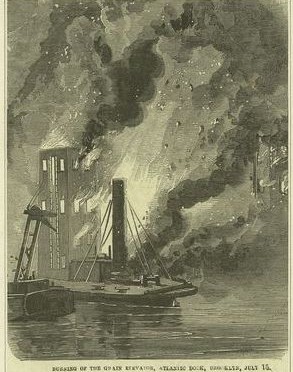
The most dramatic scene in Brooklyn took place before midnight on Wednesday, July 13, with the destruction of two large grain elevators in the Atlantic Basin, in Red Hook. (Pictured at top.)

The Eagle’s reasoning for the blaze demonstrates the reasonless chaos that typified violence in the latter days of the riots. It had nothing to do with racism or with drafts, but rather â€œ[t]he fire was the work of incendiaries, supposed to be grain shovellers who recently had some trouble about a raise on wages, and who have always looked with feelings of animosity on these elevators because they dispensed with a large amount of manual labor.”

The burning elevators, facing into the East River, made a grim bookend to the burning structures across the water in New York. Luckily, within 24 hours, the riots would be calmed throughout the region.
Categories
Current Events Podcasts Queens History

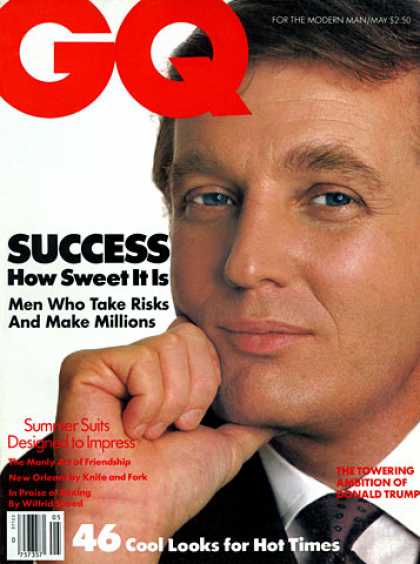
A short history of Trump: the roots of Donald’s wealth, from quiet Queens beginnings to glitzy Midtown excess


PODCAST Sick of Donald Trump yet? (Probably.) Figured him out yet? Is he a financial wizard, reality sideshow, or political distraction? Or all of the above? The solution may be contained in the roots of his fortune — a saga that stretches back to the 1880s and begins with a 16-year-old boy named Drumpf who made his living in a barber shop. The story unfolds during the early days of Queens, a borough once sparsely populated but by the 1920s, a land ripe for growth.

By the 1960s, Donald’s father Fred had built thousands of middle-class homes throughout Queens and Brooklyn and embroiled himself in some controversy regarding the remains of two Coney Island theme parks. The Donald built upon his father’s reputation to become a successful Manhattan developer and a flamboyant celebrity with seemingly bottomless levels of lucre. But of course everyone has their limit.

FEATURING: Trump Tower marbles, a miracle on 34th Street, and the magic that would have been Television City.

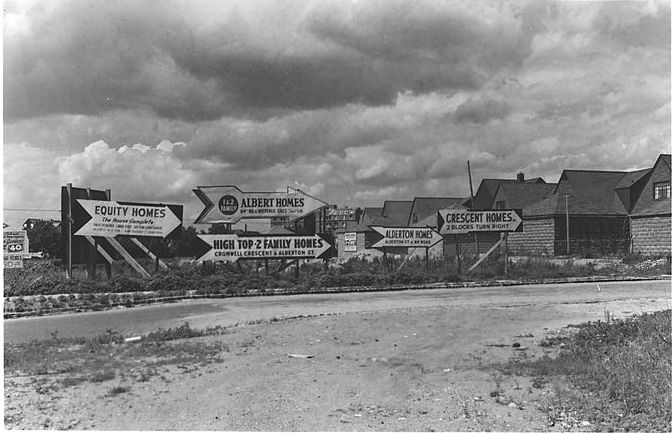
A home building frenzy in Woodhaven, Queens, at the corner of 64th Road and Woodhaven Boulevard. A massive population influx into the borough induced home development at a rapid pace. Fred Trump’s first constructed homes were in the neighborhood in the 1920s.

woodhaven
 

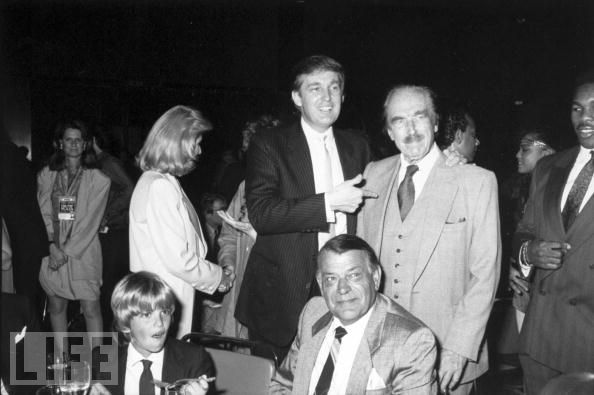
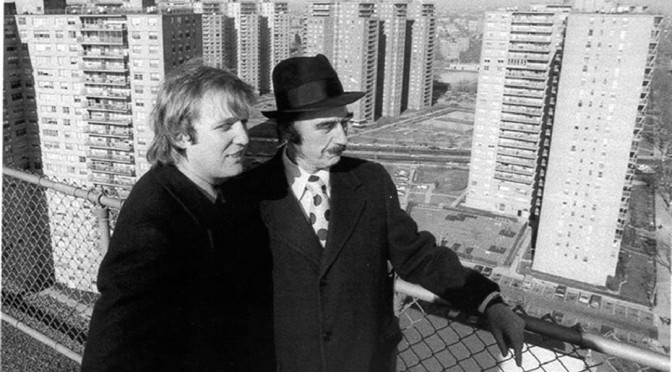
Donald and his father Fred Trump, two of the most powerful developers in the city by the 1970s and 80s. Of course, the elder Trump constructed mostly dwellings for the middle class, while Donald focused on the wealthiest New Yorkers.

50580899
 

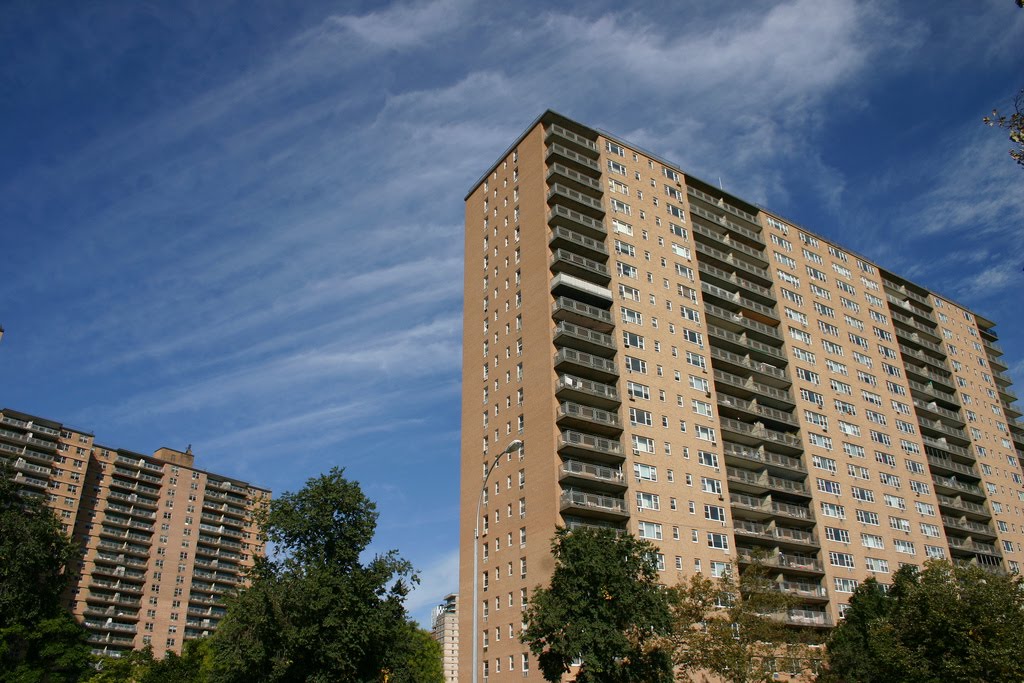
Trump Village, Fred Trump’s largest apartment co-op when it opened in 1964. (Courtesy flickr/TheFadedPast)

village
 

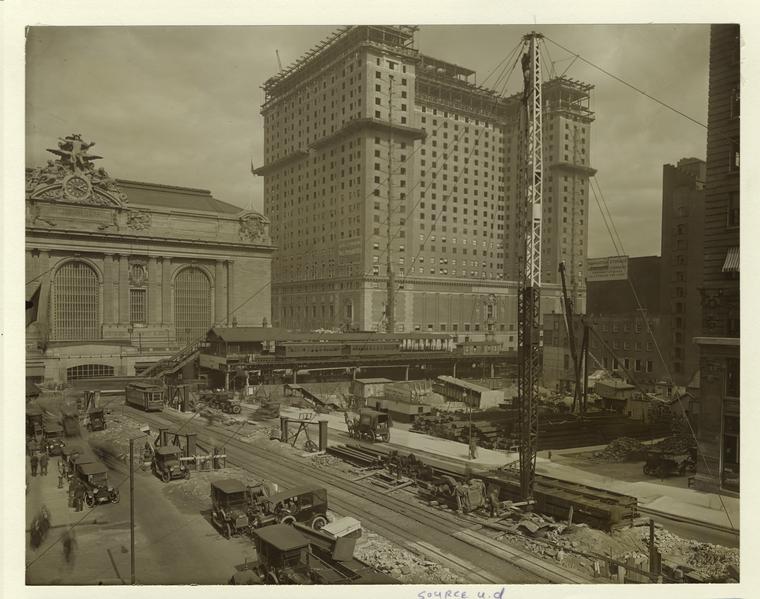
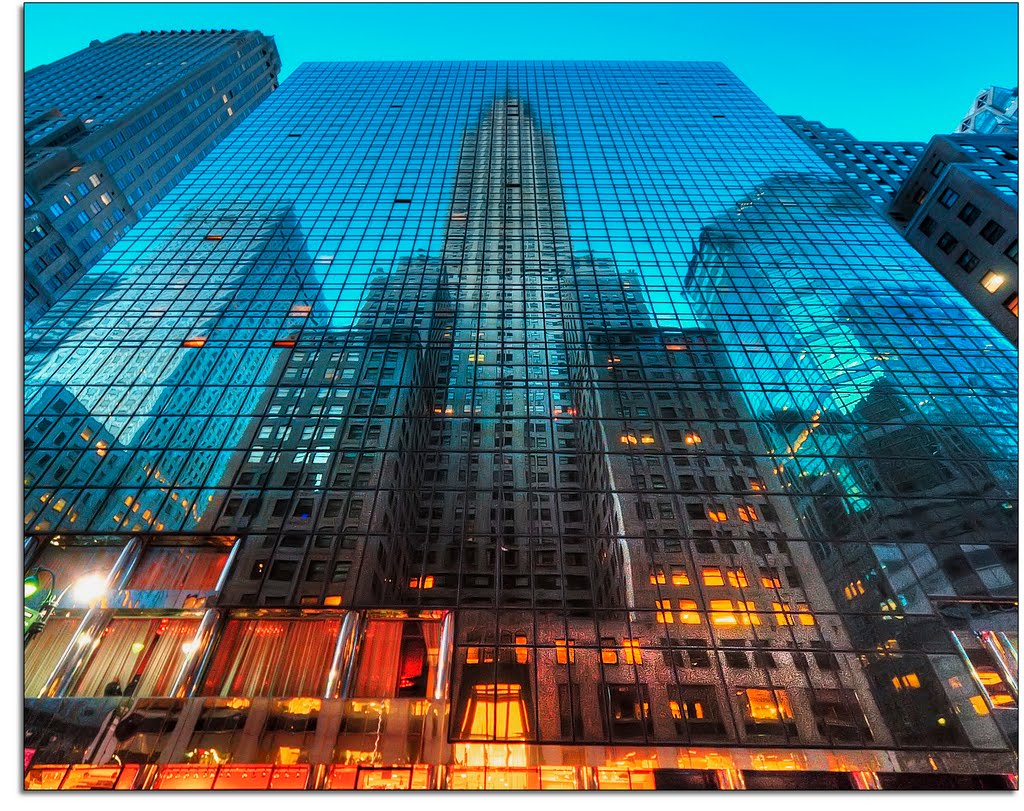
The Hotel Commodore under construction in 1918. Sixty years later, young Donald Trump would redevelop the property to become the Grand Hyatt, encasing the stripped-down hotel in a sleek glass tower that literally reflects Grand Central on one side, and the Chrysler Building on the other (below). (1918 pic courtesy NYPL; modern pic courtesy flickr/kw-ny)

commodore
 
grand-2Bcentral

Trump rode a wave of personal connections, business drive and opportunity to become New York’s hottest developer by the 1980s, fueled by media attention and spectacle to become one of New York’s most ubiquitous celebrities.

241-1
 

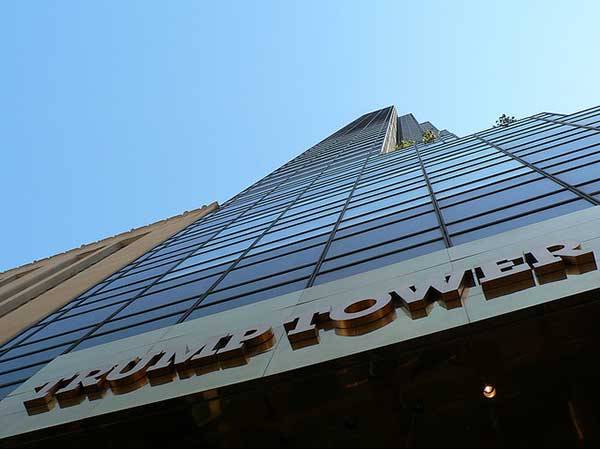
Does anything typify New York in the 1980s more than Trump Tower, that fortress of wealth gleaming with imported marbles, finished in 1983 and offering the most expensive apartments in the city?

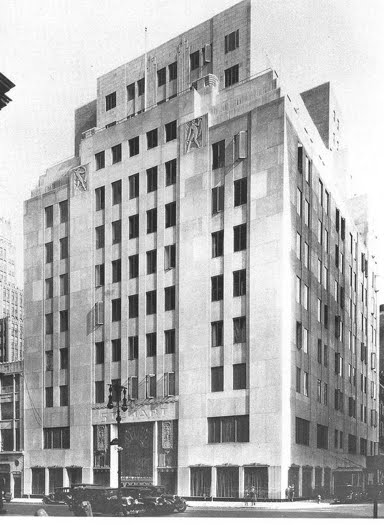
Bonwit Teller, the luxury department store that had the misfortune of having an address that Trump wanted for his Trump Tower.

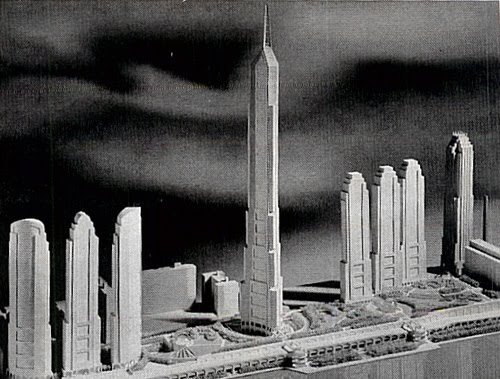
Behold — Television City, the Trump plan for the west side involving a 152-story skyscraper and a studio for NBC, originally at a total of 16 million square feet of space.

Trump the Game! From 1988. “It’s not whether you win or lose. It’s whether you win!”

Photos at Wollman Rink and of Donald/Fred courtesy Google Life images

Categories
Uncategorized

Yes, there really was a FIFTH Madison Square Garden

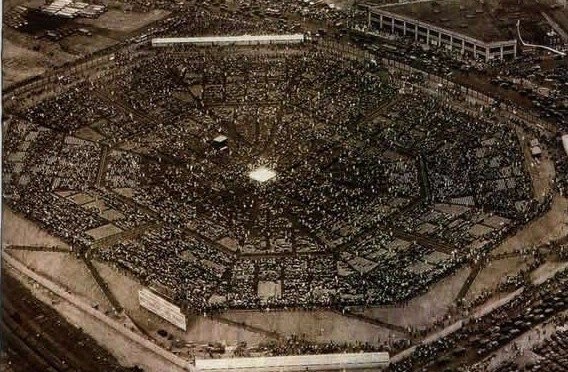
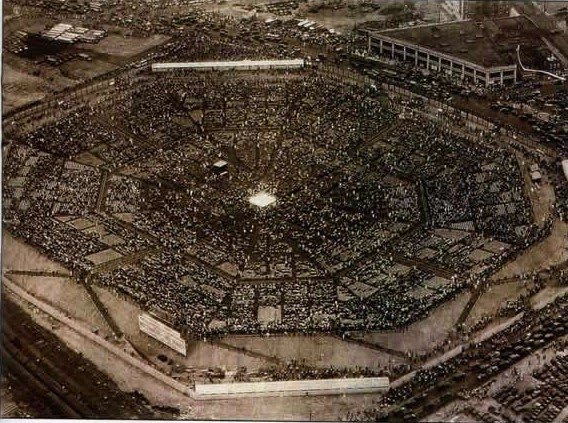
A packed house at MSGBowl on June 21, 1932, turning out for a prizefight between Max Schmeling and Jack Sharkey Picture courtesy Awesome Stories

There was so much to speak about during the Madison Square Garden podcast that we didn’t have time to mention that, for a brief time, the borough of Queens once had its own Madison Square Garden — one that spawned a ‘cinderella’ sports legend.

Situated in Long Island City, the Madison Square Garden Bowl was a roomy Depression-era spinoff of Tex Rickard’s midtown Manhattan branch, built in 1932 at 45th Street and Northern Boulevard, an immense outdoor stadium that could seat up to 72,000 people. It was not a regular venue but instead hosted big-ticket events during the summer. The Bowl cost the Garden only $160,000 to build, designed for high capacity if not longevity.

It may not have exactly been a popular place among name boxing stars. Sometimes referred to as the ‘Jinx Bowl’ or ‘The Graveyard of Champions’, reigning champs who boxed here frequently lost, heavyweight championship titles regularly changing hands here. “It was the arena where champions went to die,” according to author Jeremy Schaap.

People were willing to pay up to $25 for ringside seats because of the talent sparring in the ring, including Max Baer, Joe Louis, Henry Armstrong, and (most famously) James Braddock, aka ‘Cinderella Man’. A depiction of the Bowl naturally pops up in the Russell Crowe film ‘Cinderella Man’ about Braddock.

The Bowl hosted more than boxing, famously hosting several vigorous “midget auto races” (that’s like NASCAR for really small cars). “They had these midget auto races there and a lot of times the fumes of whatever it was they used to keep ’em going would spill through the entire neighborbood,” recalled Yankees legend and neighbor Whitey Ford. “If the wind was blowin’ the right way, we could get asphyxiated in our apartments if we didn’t keep the windows closed.”

During World War II, the arena saw little use, and Garden management soon gave up on it entirely, tearing it down in 1942, to be replaced with a mail depot for the U.S. Army. At some point that too was ripped down. As you can see, the area remains singularly unexciting today.


View Larger Map

100 Years Ago: Beer, tradition and the new Bohemians

Pic by Coney Girl/Flickr

FRIDAY NIGHT FEVER To get you in the mood for the weekend, on occasional Fridays we’ll be featuring an old New York nightlife haunt, from the dance halls of 19th Century Bowery, to the massive warehouse clubs of the mid-1990s. Past entries can be found here.

LOCATION Bohemian Hall
Opened: 1910-still open!
Astoria, Queens

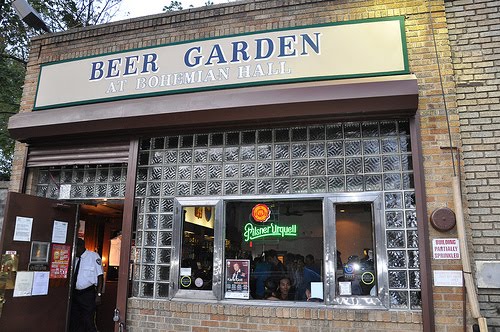
How about a story on the positive effects of alcohol on New Yorkers? This year is the 100th anniversary of the city’s oldest beer garden, Bohemian Hall, an understated, well-worn treasure in Astoria, Queens, which belies its importance to the borough’s Czech community. It may also be the only place in the New York City that sells liquor in the same building as a school.

These aren’t bohemians of the floaty literary 19thCentury (or 60s groovy) stripe, but an actual culture who trace their lineage to the sizable region of Bohemia, located in the modern Czech Republic today. Sandwiched between the Bohemian Forest and the Ore Mountains, this ancient area of Central Europe was part of the Austro-Hungarian empire and would, later in the 20th century, become the heart of the newly formed Czechoslovakia.

In 1910, New York City is at the tail end of the massive immigration boom hurtling through Ellis Island, with 6 million people processed through the center in the prior decade. Bohemians were among the great throng of new Americans, although not at a rate comparable with other nationalities. According to the US Census, by 1910, 200,000 first generation Czechs lived in the United States, up from about 10,000 total in the 1850s.

There was a sizable Czech community in New York during the late 19th century; one source claims that almost 95 percent of Czech working adults and children were employed in the cigar business. “The factories in the regions of Seventieth street, New York, are filled with Bohemian women and girls employed in the making of cigars,” according to Jane Robbins.

Like other national groups, the Czechs and Slovaks of New York had their own support groups and newspapers (the first two: New Yorske Listy, founded in 1879 and Slovak v Amerike, in 1889) and developed small enclaves throughout the city, including the old Czech neighborhood in Manhattan’s Upper East Side in Yorkville and out in Astoria, among others.

It was in Astoria in 1892 that the Bohemian Citizens’ Benevolent Society was formed to help the transition for new immigrants and provide a community bond for everybody else. In fact, the society is still around today, with purposes that certainly sound very similar to old objectives: “to encourage, support and maintain Schools, Dramatics, Lectures and Libraries for Czech and Slovak children …. [and] to maintain a nonprofit making social home for people of Czech and Slovak ancestry, in which the Czech and Slovak culture may be taught and blended with American traditions and culture, thereby tending to make the members better Americans.”

By 1910, the society would raise funds to open a community center and buy up some available lots in Astoria, some on former farmland. The cornerstone for the modest brick Bohemian Hall was laid October 1, 1910, and the original building swiftly constructed by volunteers in the community.

Selling beer was merely one function of the new building; a meeting hall was constructed soon after, hosting political functions and family functions, and by 1919 an outdoor seating area was completed, in the style of many German outdoor drinking and eating located throughout the city for years. The Society’s enthusiasm to capture the beer garden spirit was felled only by the coming of Prohibition. When legal drinking returned, the Hall in 1933 received a new fence to wrap out the vast yard (200-by-125 feet) and some scattered linden trees, the national tree of the Czechs.

The Hall was more than a place to toss back a few Pilsner Urqells. The Hall provided (and, in fact, still provides) Czech and Slovak language courses specifically for children and once even offered Sokol gymnastic courses, essentially an old-school form of calisthenics dating back to 1862.

Time has pretty much stopped at Bohemian Hall; like any bar, televisions have been added and the patrons are young locals and beer lovers, but I imagine that the vibe is almost identical to what it might have been like 70-80 years ago. Like McSorley’s Old Ale House, the focus is beer — all day, every day — but bolstered with a menu of traditional dishes and (during the summer) barbecue.

In a city were beer gardens once flourished — thanks to the millions of Germans and German-Americans who have lived and worked here — Bohemian Hall is now the last remaining vestige. (Obviously there are many brand-new beer gardens scattered throughout today.)

For some more information on Bohemians, Chechs and Slovaks in New York, check out the blog Slavs of New York. Bohemian Hall’s official website has more information about their hours and other services.

Located at 29-19 24th Avenue in Astoria, Queens, right off the Triborough Bridge

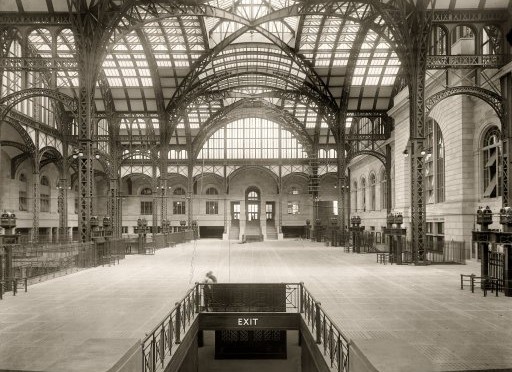
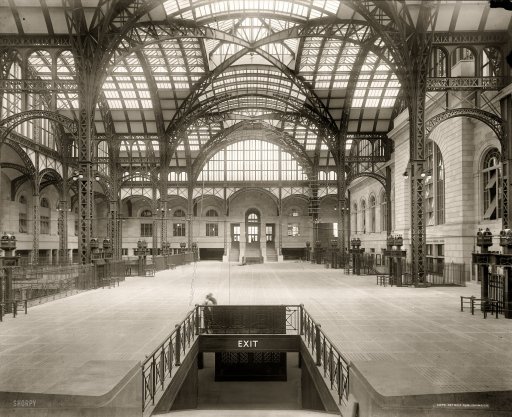
100 Years Ago: Queens and the influence of Penn Station


Pic courtesy Shorpy

Over the next few posts, I’m turning back to exactly one hundred years ago, to contrast the beginning of 2010 with the events of 1910. New York City was in the midst of its Gilded Age, at the beginning of the skyscraper era, more confident as a worldwide center of finance, media and power even as it was still learning to provide for a massive, increasingly multi-cultural population.

One of New York City’s most important historical events of 1910 was the opening of old Pennsylvania Station, the hallmark of Beaux-Arts grandeur and Manhattan’s most impressive building. However its impact would be felt more importantly in a borough it wasn’t even in: Queens.

Queens was brought into New York City with consolidation of the five boroughs in 1898, an assemblage of small towns, village and farmland once united only by county designation. There was certainly no Queens identity, and the population was sparse, the second-least populated after Staten Island. Population numbers in 1900 place 152,999 residents of the borough versus 1,850,093 in Manhattan (or just 8.3% of Manhattan’s total). Today, Queens has a greater population than Manhattan.

The slow beginning of that shift started with two neatly parallel events from 1909 and 1910. First was the opening of the Queensboro Bridge on March 30, 1909. Over a year later came something arguably more significant — the opening of the Penn Station tunnels on September 8, 1910, connecting with the Long Island Railroad, now owned by Penn Central Railroad. Residents of Queens could now commute directly into the city, while the borough became an option for Manhattan residents who wanted to escape the city.

With convenient passage between an over-populated island and its new, sparsely populated sister borough assured by 1910, it’s no surprise that the decade has been referred to Queens’ ‘construction period’, becoming the fastest growing borough of the decade.

Other events in Queens history from the year 1910:

— Presaging the population growth, the Neponsit Realty Company bought a stretch of land on the Rockaway Peninsula in January 1910 and formed the wealthy outpost neighborhood of Neponsit. Today it’s still row upon row of large homes, most dating from the 1920s and 30s.

— In 1910, the descendants of Albon P. Man, whose lavish estate dominated central Queens during the 19th century, began parceling out pieces of the estate to small landowners and developers, having decided to call the area Kew Gardens after London’s botanical garden complex.

As for Penn Station, regularly timed train service was finally initiated in November 27th of that year. According to Jill Jonnes, “By nine o’clock, excited New Yorkers, bundled up against intimations of snow or freezing rain, were converging upon the station’s Doric colonnades,” creating a mob scene on the new platforms. The hottest ticket in town that year was, strangely enough, a ticket outta town.

Penn Station was the most significant but hardly the only opening of 1910. The Madison Avenue Bridge, connecting Manhattan with the Bronx, opens that year, as do the Ritz-Carlton Hotel at 46th and Madison, and Liberty Tower at 55 Liberty Street. Also this year, work begins on the Woolworth Building.

Rockaway Playland: all our toys are gone

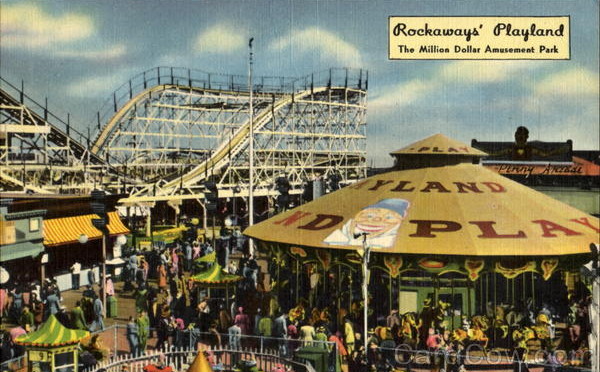
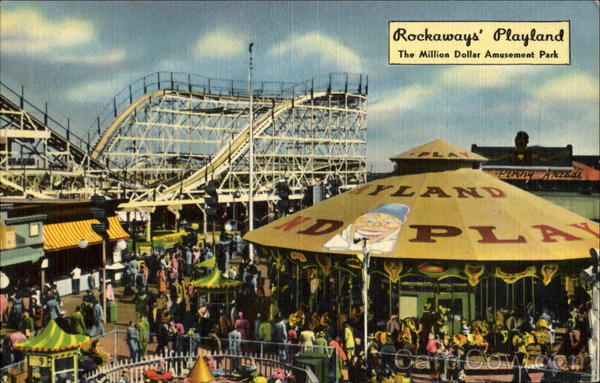
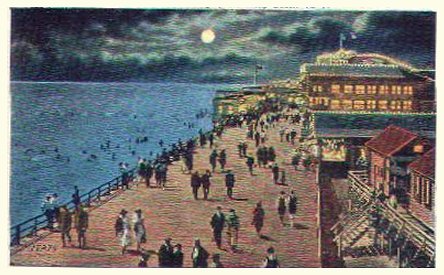
ABOVE: The long-gone Rockaway Playland, Queens answer to Coney Island at Rockaway Beach that was wiped away for condo developments in 1987. A friendly reminder of what could have happened to Coney Island.

Look here for a huge selection of postcards remembering this forgotten Queens amusement park.

Below: Color saturated nighttime, circa 1939

Run DMC and the Revolution: Historic Hollis, Queens

It’s like that: Rap pioneers and proud sons of Queens

NAME THAT NEIGHBORHOOD Some New York neighborhoods are simply named for their location on a map (East Village, Midtown). Others are given prefabricated designations (SoHo, DUMBO). But a few retain names that link them intimately with their pasts. Other entries in this series can be found here.

WHERE: HOLLIS — in the southeastern section of Queens. It’s next to the much larger Jamaica, a neighborhood with an even stranger origin to its name

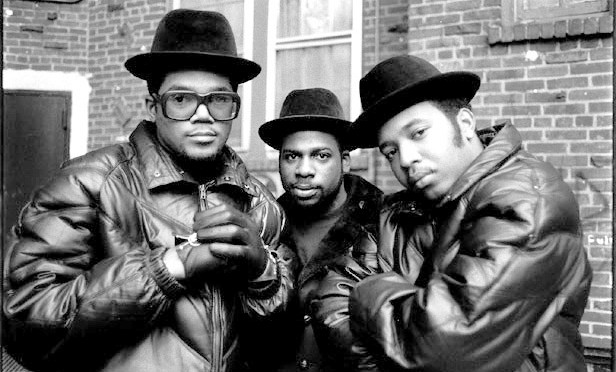
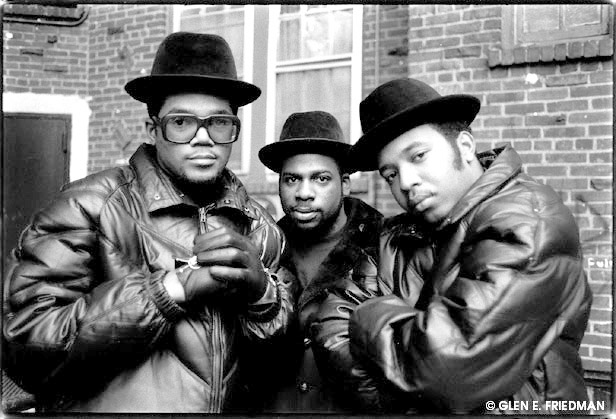
This Saturday the hip hop supergroup Run DMC will be inducted into the Rock And Roll Hall of Fame, representing Queens and specifically the neighborhood of Hollis. What may have been an average neighborhood under normal circumstances has become one of the birthplaces of hip hop, starting with music mogul Russell Simmons and his younger brother Joseph, the Run of Run DMC, and continuing today with current hip hop star, Hollis native Ja Rule.  Run DMC even immortalizes Hollis in their unusual holiday classic “Christmas In Hollis.”

Icons of a major musical movement, emanating from such a saccharine sounding community? But Hollis disguises some rather tragic moments in Queens history, its roots reaching all the way back to a horrifying, bloody moment of the Revolutionary War.

In a story now steeped in legend, it was here along the Jamaica road — back when Hollis was mere uninhabited hillside — that one of the Continental Army’s great generals Nathaniel Woodhull was brutally tortured by British soldiers.

Woodhull was in charge of the Queens and Suffolk county militias when the British invaded Brooklyn, spreading out along the countryside, pushing back Washington’s men, surging towards an invasion of Manhattan island. On that fateful day in August 27, 1776, however, Woodhull and his men were busy herding Brooklyn’s cattle east into Queens, ensuring the British had little to eat when they arrived.

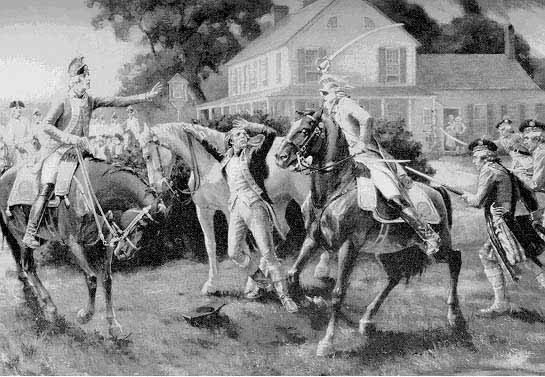
While stranded at a tavern on Jamaica road (today’s Jamaica Avenue) near the center of today’s Hollis, Woodhull was captured and, as legend goes, forced to swear allegiance to England. Instead of “God Save The King” however, Woodhull allegedly cried, “God Save Us All!” For his defiance he was mutilated by British soldiers and died a few days later.

Below: Woodhull receives his mortal blow at Carpenter’s Tavern

This bucolic land outside of the town of Jamaica would not see much excitement for the next 100 years, the quiet hills and farms being referred only as East Jamaica, the memories of Woodhull’s sacrifice its only legacy.

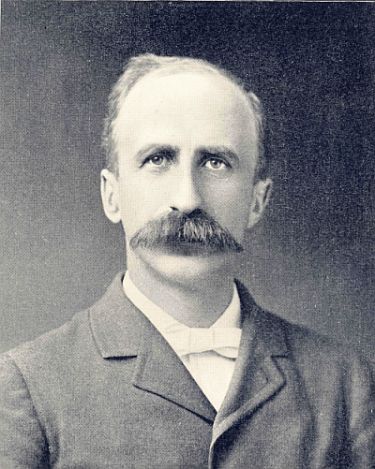
Then came Freddy. That would be Frederick W. Dunton (pictured at right), a young, ambitious and handsomely mustachioed man born with the benefit of calling the president of the Long Island Railroad, during the days of its unprecedented growth, his beloved uncle. 

Dunton was raised in the New Hampshire town of Hollis and obviously thought the most of it. When he went off to pursue his own real estate development in Long Island in 1884, he grew fond of this hilly area outside of Jamaica and, as an ardent history geek himself, most likely reveled at its importance in Revolutionary War history. He built his house here on a hilltop, sold plots to his friends and called the surrounding development Hollis and Holliswood — because there’s no place like home, right?* 

He also bought and named a community after himself — the now-vanished Dunton, which was later absorbed into today’s Richmond Hill neighborhood. (Ken Bausart does some fascinating detective work in digging up the back story.)

Apparently, Frederick is equally as known for something a bit more scandalous — a headline grabbing grand larceny trial in 1896.

The area developed slowly into a comfortable middle-class neighborhood, experiencing a bit of scandal now and then, as when Hollis Hall, Dunton’s old home in Holliswood, allegedly became a speakeasy during Prohibition. (An apartment complex stands in that spot today.) Hollis grew slowly and steadily, from 4,000 people in the 1920s to 31,000 people today.

Russell and Joseph were raised here in the 1960s, soon teaming with Darryl “D.M.C.” Matthews McDaniels (born in Hollis in 1965) and the late Jam Master Jay** (who moved here in the 1970s), performing together for the first time in 1980. Within four years, they would become rap music’s ambassadors to the world, the first rap act played on MTV, selling millions of records and paving the way for mainstream hip hop culture. God save us all.

(Frederick’s picture courtesy Dunton.org)

*  Okay, but if Hollis, Queens, got its name from Hollis, New Hampshire, then where did they get it from? Hollis is a vestige of British occupation of the entire region. British governor Bennign Wentworth gave the settlement the name Hollis in 1746, after one of his more colorful ancestors John Holles, the Earl of Clare. Holles was actually one of England’s wealthiest men ever; in today’s currency, his estate would be worth 5.1 billion pounds.
**Jam Master Jay, aka Jason Mizell, was also shot and killed in Hollis in 2002
Categories
Uncategorized

Name That Neighborhood: Why is Jamaica in Queens?

Some New York neighborhoods are simply named for their location on a map (East Village, Midtown). Others are given prefabricated designations (SoHo, DUMBO). But a few retain names that link them intimately with their pasts. Other entries in this series can be found here.

I have a friend of Jamaican descent that lives in Jamaica, Queens. I used to think that was like a French Parisian moving to Paris, Texas. That’s wrong, actually. Paris, Texas, is actually named for the French capital. Jamaica, Queens, meanwhile, has almost nothing to do with the Carribean nation that shares its name. (Although many of Jamaican island descent do live in the Queens borough today.)

Jamaica is an English distortion of an Algonquin tribe that inhabited this Long Island outpost — the Jameco Indians (also referred to as the Yamecah tribe). They were named after the Algonquin word for beaver.

The Jameco lend their name to various parts of the city, from Jamaica Bay (the body of water in front of JFK airport) to Jamaica Avenue, a prime extension of East New York Avenue through Brooklyn and eastern Queens.

A pathway between Brooklyn and the city of Jamaica, called the Jamaica Pass, was used to the British’s benefit during the war of 1776, sneaking around American forces and chasing them back to Manhattan.

By then, the British were calling the town of Jamaica by its modern name. The Dutch before them, however, had referred to the village there as Rustdorp, settling there in 1656 and officially coined by none other than Peter Stuyvesant. I leave it up to you to determine which of these names sounds like more exciting and vibrant community.

As for the island of Jamaica, it was inhabited by a tribe of Arawak indians, who named their place Xaymaca, which holds the far more flattering translation of “land of wood and water.”

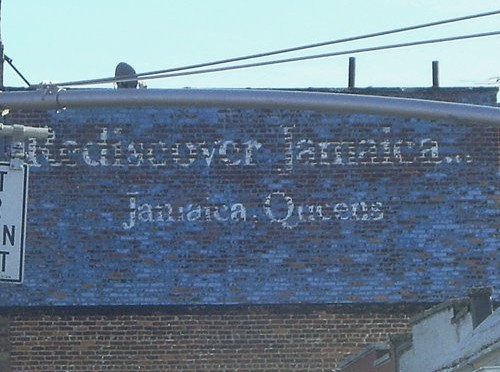
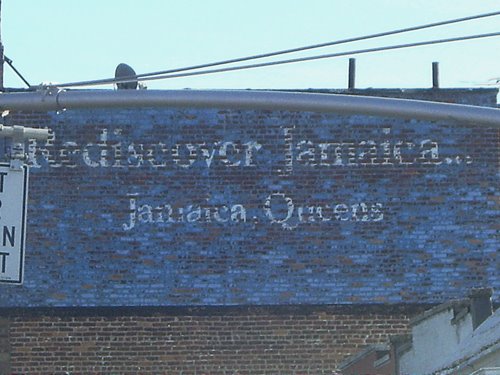
Photograph above is from the Fading Ad Blog.

Dinosaurs of the New York skyline

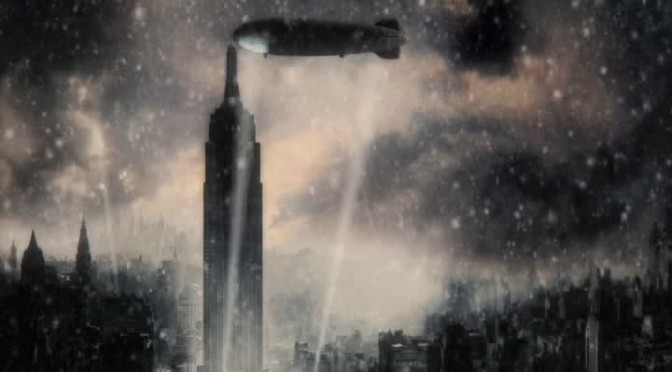
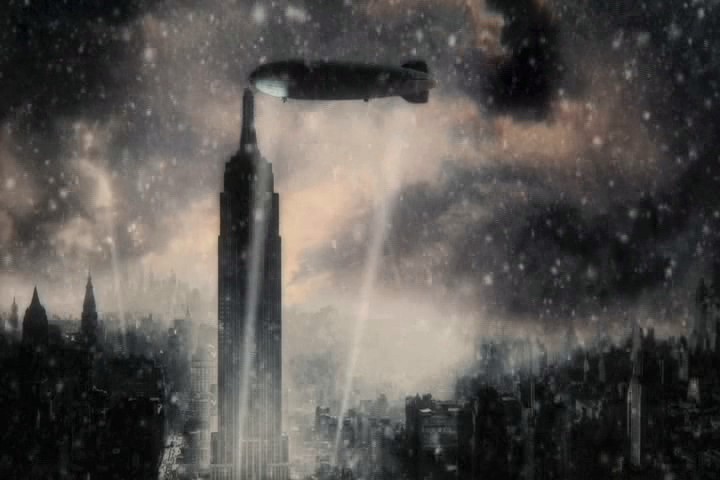
The Empire State Building’s proposed airship dock, as depicted in the movie Sky Captain and the World of Tomorrow

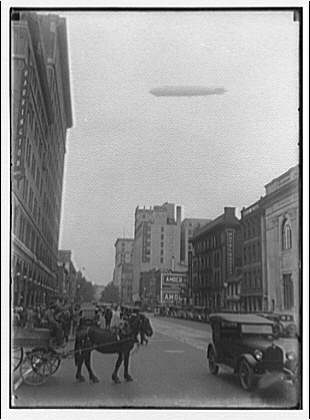
Airships (or dirigibles or Zeppelins, take your pick) were frequent flyers at the start of the century, and naturally many found themselves near or over New York City. In fact this almost defunct form of air travel was nearly (and disastrously) moored to the city’s tallest building.

The air above the city wasn’t as loaded with these flying conveyanes as our run-amok retro-futuristic notions of the city might like to envision. Even in 1911 during what’s considered the “Golden Age of Airships” a single airship above Times Square was enough to make headlines. “250 feet above the lights of Broadway,” proclaims the New York Times, “Frank W. Goodale, a boy aeronaut, in a new dirigible balloon made his third annual night trip to the Times Building through the air last night from the Palaisades Amusement Park, over on the Jersey side.”
And although they look cool in old photographs today, even then they were seen as mostly curiousities, elephants in the sky, compared to the smaller, more extraordinary aeroplanes of Glenn Curtiss and Wilbur Wright, which made their debut on Governor’s Island during the citywide 1909 Hudson-Fulton Celebration. “Aeroplanes fly, Dirigibles fail, in City’s Celebration,” proclaims the New York Press.
In 1924, the Graf Zeppelin, Germany’s rigid-balloon passenger air liner, made such a splash when it arrived over New York at the end of a 12-day voyage that the Graf’s tenacious commander Dr. Hugo Eckener — “the Magellan of the Air” — received his own personal ticker tape parade through downtown Manhattan in celebration.
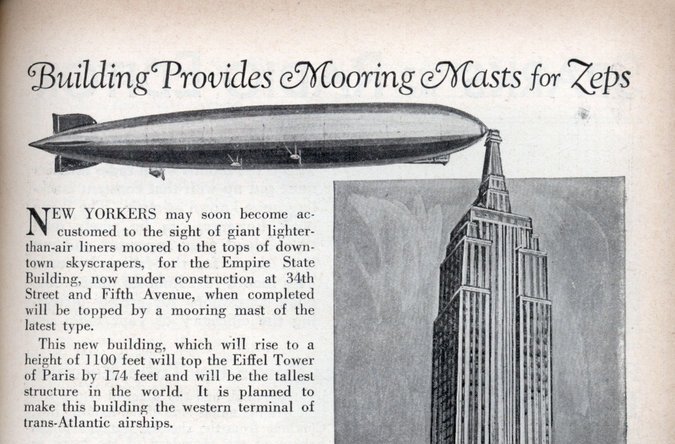
The most popular docking station for these massive vessls was the port in Lakehurst, New Jersey. However, in one of the more romantic anecdotes of our most famous landmark, the Empire State Building’s majestic spire was originally designed to dock airships.
With the enthusiastic support of former governor Al Smith, the Empire State opened in 1931 installed with wench and docking equipment and fortified to hold large aircraft in place. He even called in the Navy to assist in the high-profile project.

Modern Mechanix extoled the virtues of this aerial midtown terminal.

But the Navy was naturally sceptical, as was Eckener, whose Zeppelins would have used the Empire’s mast. The reason, of course, was the massive windgust created by the buildling canyons from so high up, the release of water ballast onto city streets and the deathdefying route in which passengers would have to disembark.

Eventually no more than a couple airships ever docked at the Empire State Building, and those delivered no human cargo, only newspapers, thrown from the dirigible window.

Had things gone Smith’s way, Eckener’s great Hindenberg might have attempted to dock high above the city on May 6, 1937.

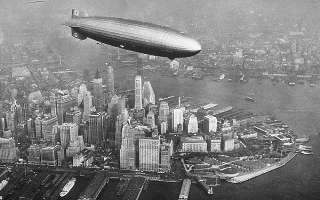
Instead, the destruction of the Hindenberg in Lakehurst, New Jersey, on that day drew a curtain on commercial airship service. Most of us remember the extremely dramatic footage of the Hindenberg melting into flame, and that emotional newscaster. What most don’t know is that the Hindenberg was cruising over Manhattan moments before the terrible explosion (below).

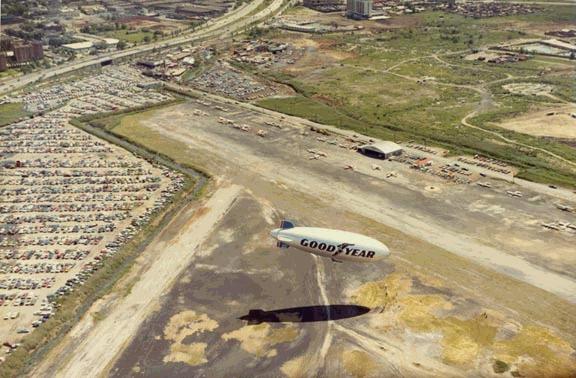
Blimps are still very much an occasional feature of the skies over the city today, mostly over the sports stadiums. The era of the airship is far from over. In fact, out in the Queens neighborhood College Point, location of one of New York’s first airports Flushing Airport, a blimp company is proposing to built the world’s first blimp port.

A spectacular shot of the Goodyear Blimp hovering over Flushing Airport, from 1976. Goodyear still makes blimps, but Flushing Airport has long since closed:

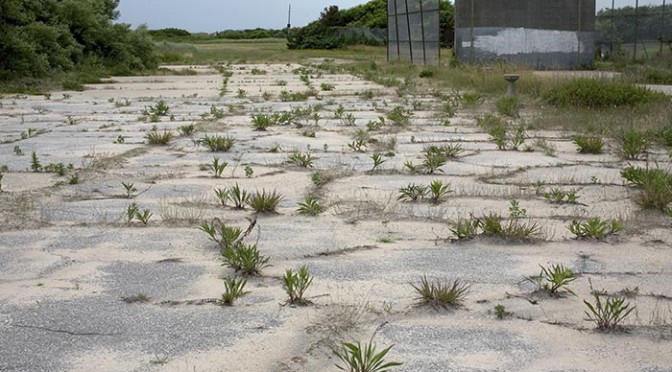
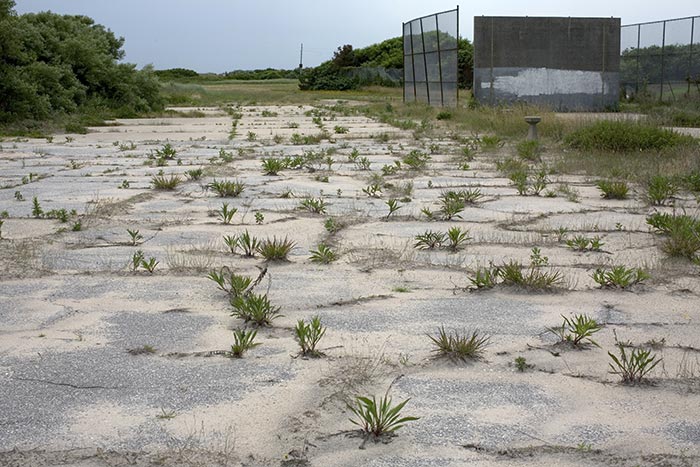
Robert Moses’ ridiculously large parking lot

Photo:Claudio Papapietro for http://ontheinside.info

Starting Monday, May 12, New Yorkers will have another way to transport themselves between boroughs with a new ferry service shuttling between Queens, Brooklyn and Manhattan.

You’re probably familiar with at least one of its three stops: Pier 11’s sleek Wall Street Ferry Terminal, just a few steps away from Staten Island Ferry Terminal and the Battery Maritime Building. Between Queens and Manhattan it will pick up Brooklyn passengers at the Brooklyn Army Terminal in Sunset Park, already one port of the New York Water Taxi.

The new ferry will begin by loading up Queens commuters at Riis Landing in Far Rockaway, Queens.

As a part of the Gateway National Recreation Area in the most remote area of Queens (if not arguably the whole city), Riis Landing is best known for its Colonial style Coast Guard station, built in 1937. It sits in the middle of Breezy Point peninsula, a residential area once dotted with shipwreck rescue stations. Now owned by the National Park Service, the ferry terminal was recently upgraded in anticipation of the mayor’s announcement; however it’s still surrounded by many unused buildings.

More important to many New Yorkers, it’s also close to Jacob Riis beach, a hidden treasure of the Breezy Point peninsula and often referred to as ‘the people’s beach’. Riis Beach is a relic of the Robert Moses era, who created the beachfront in the 1930s by destroying a historic World War I Naval Air station (liftoff point of the very first transatlantic flight in 1919) and intending the artificial getaway specifically for locals with cars, an alternative to Jones Beach.

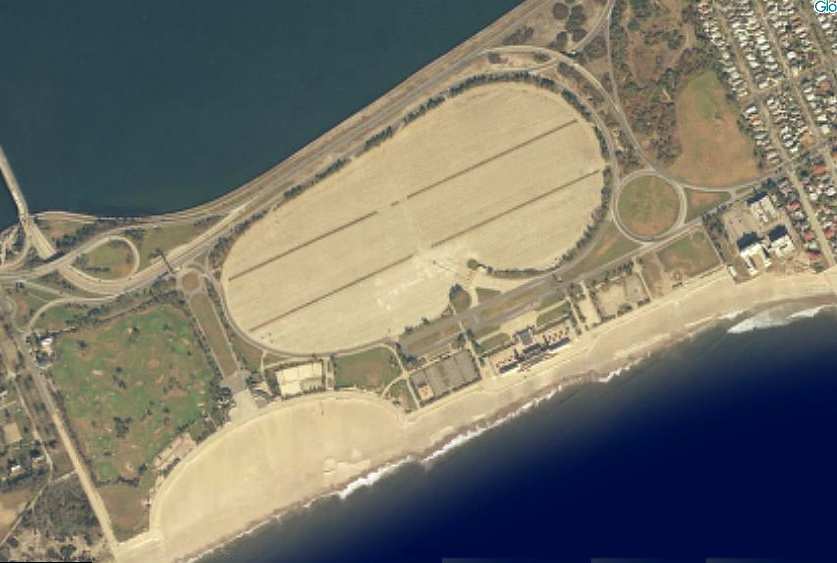
To that end, in addition to constructing public beach and park space, he also commissioned a gigantic parking lot, at the time the largest parking lot in the world. Many sources call it a 5,000-car lot; Riis Landing’s own site claims room for 9,000 cars!

Here’s an aerial view. Beautiful, is it not?

While the, er, rustic Jacob Riis beach is popular in the summer months mostly with locals, that parking lot is never, ever full. The new ferry service which begins here will presumably put that abandoned slab of pavement to better use.

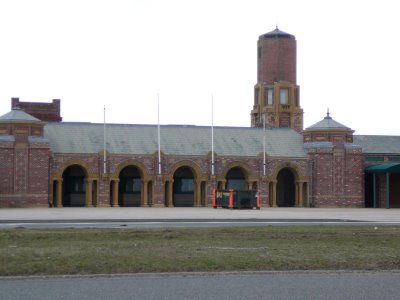
With new attention now being brought to the area, now maybe they can fix up the beach, which features a gem of an art-deco bathhouse.

Riis Landing’s official website is an outstanding layout of proposed improvements of the area, many interesting, a couple downright left-field. (Their recommended proposal is to develop a dorm-style budget hostel!)

R.I.P. St. Saviour’s?

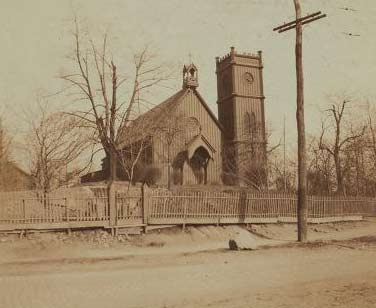
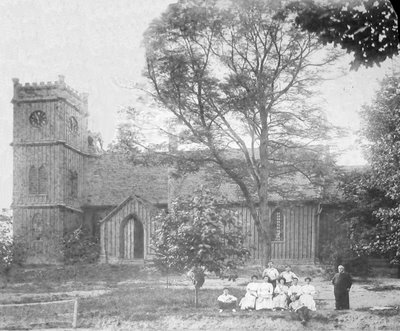
St. Saviour’s Church, an historic cathedral in Maspeth, Queens, is being torn down by the city, but not without a fight. The website Queens Crap has been doing an excellent job detailing the futile efforts of preservationists, their battles with the city and, this week, the recent dramas as the city prepares to demolish it.

Today, protesters delay the demolition, as does the fear of asbestos. An eleventh-hour grant may save part of the building, but its old tower bell has mysteriously vanished.

The church was built in 1847 by Richard Upjohn and features artifacts — possibly even burials — tying back to the Revolutionary War.

It’s rare to see a ‘city vs. history’ battle play out quite so vividly these days. Thanks to Queens Crap and Forgotten NY for keeping it front and center.

Categories
Amusements and Thrills Podcasts

PODCAST: The New York World’s Fair of 1964-65

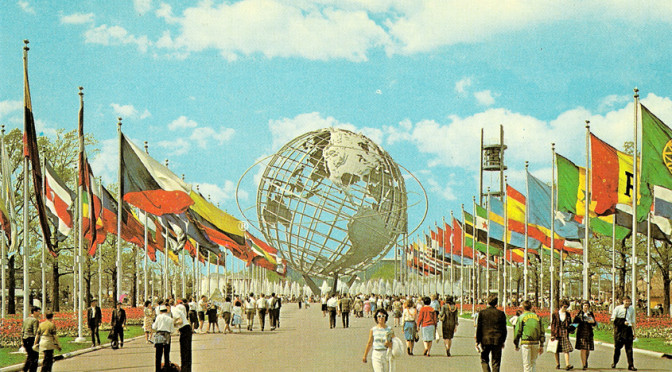
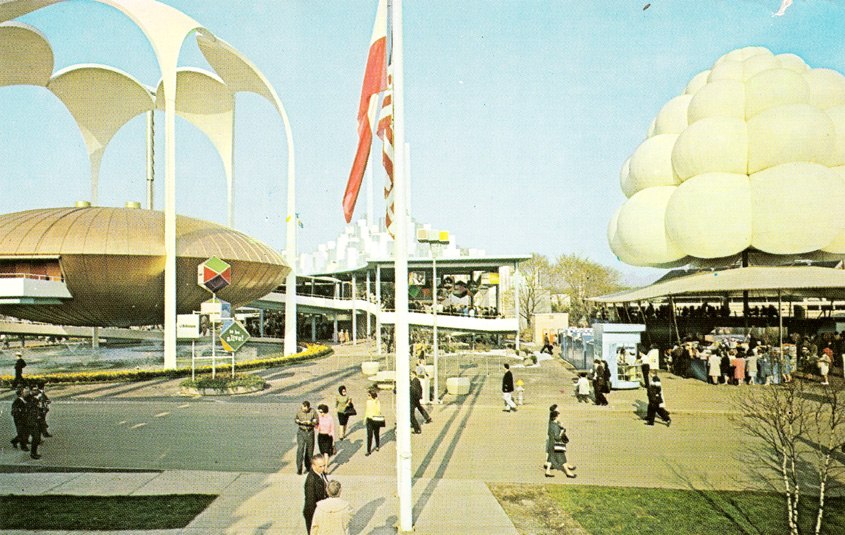
Come with us as we jettison ourselves into the future as it was seen in the past — namely the 1964-65 World’s Fair in Flushing Meadows, Queens. Fans of Robert Moses, 1960s space-age optimism and really, really large tires should take special note to listen.

Listen to it HERE:

The Johnson Wax Pavilion, surrounded in examples of ’64 loopy, futuristic architecture.

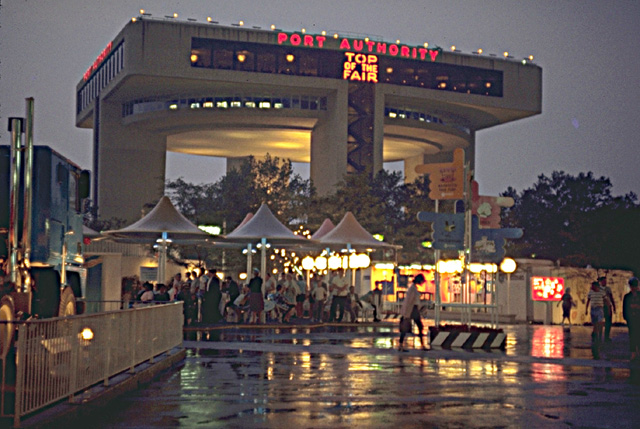
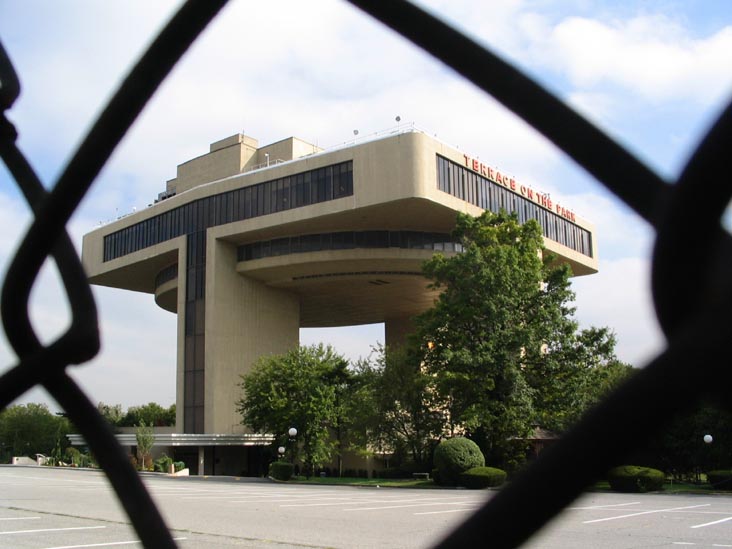
The Port Authority Heliport, where guest could fly in via helicopter from Manhattan, is one of the few buildings still standing today. It is now Terrace On The Park. (Courtesy here).

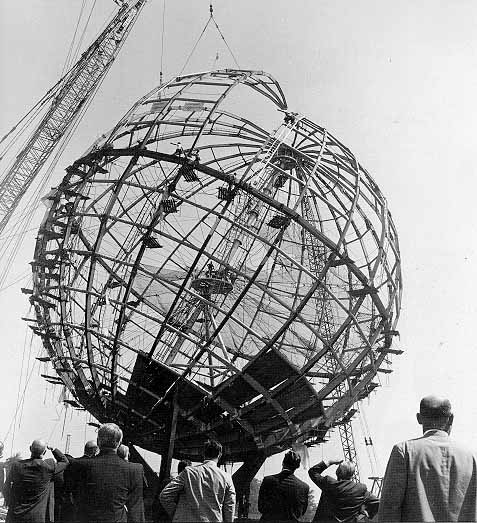
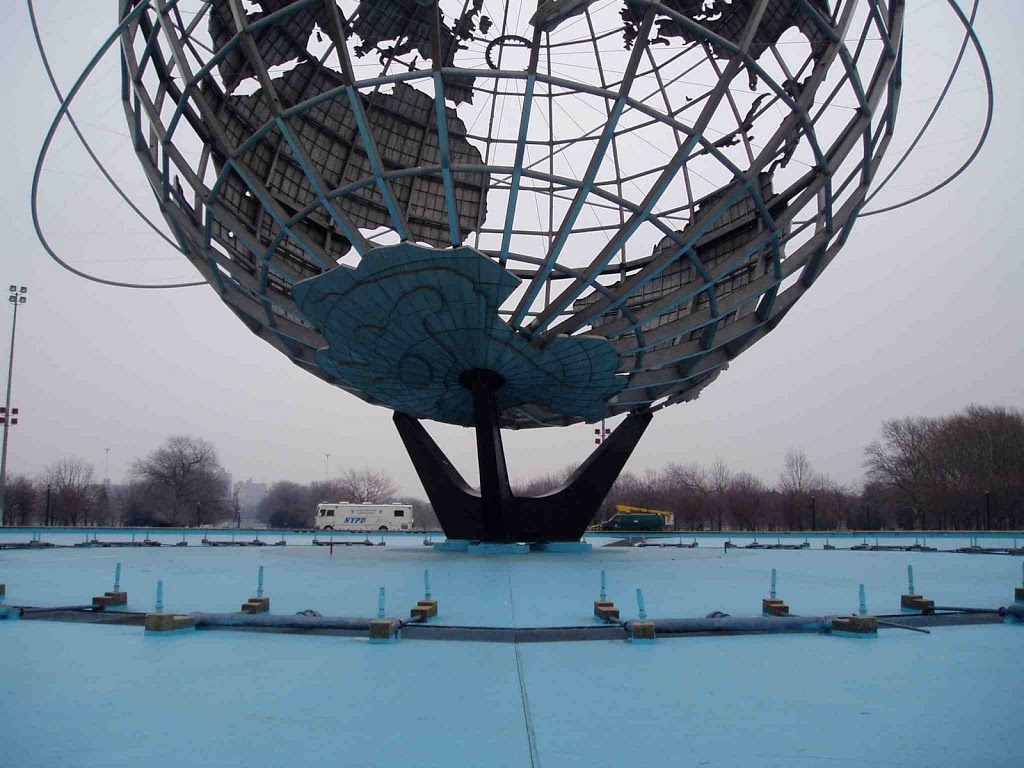
Piecing together the heavy US Steel-created Unisphere.

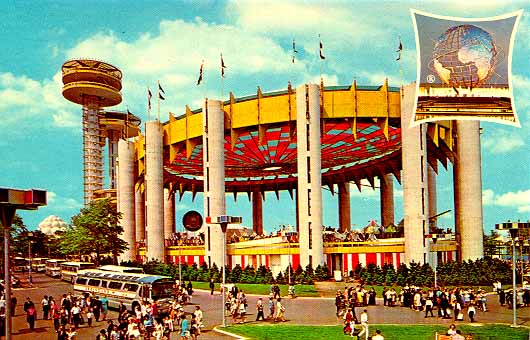
The New York State pavilion — Tent of Tomorrow! — as it looked then:

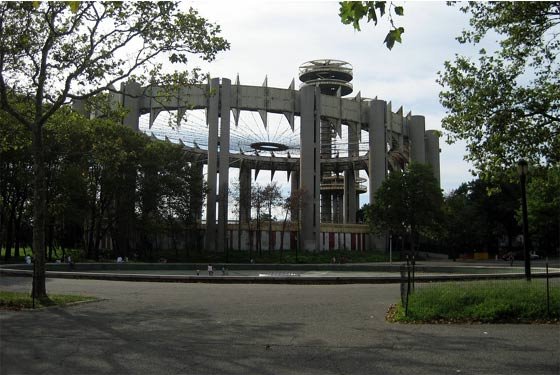
And today.

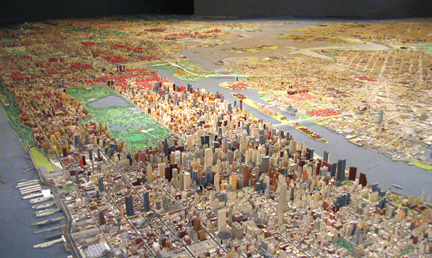
The New York City Pavilion featured the city of New York in miniature. Called the Panorama, it’s still thriving at the Queens Museum and is regularly updated to reflect the changing city. One significant difference: as a memorial, the World Trade Center remains standing in downtown Manhattan.

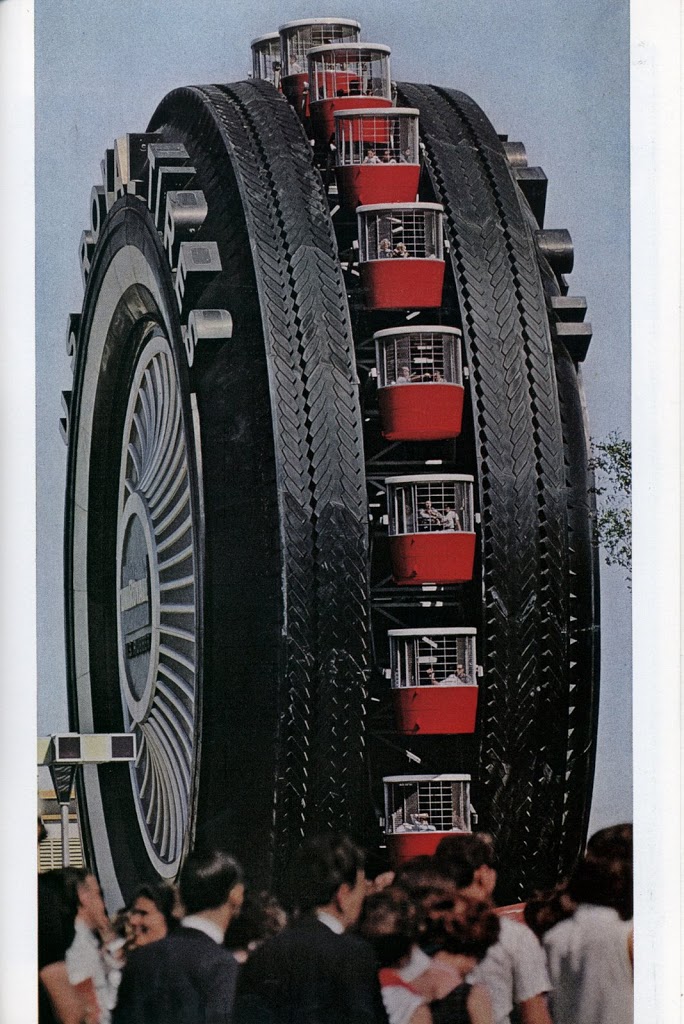
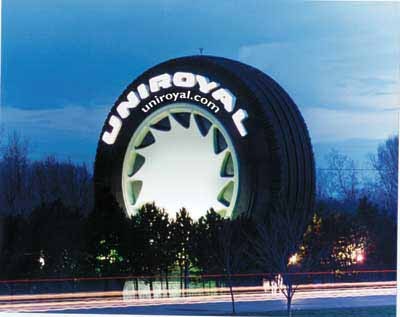
Many attractions from the World’s Fair now make their home in other parts of the world. The Uniroyal tire ferris wheel, for instance, now sits in Allen Park, Michigan, without its seats.

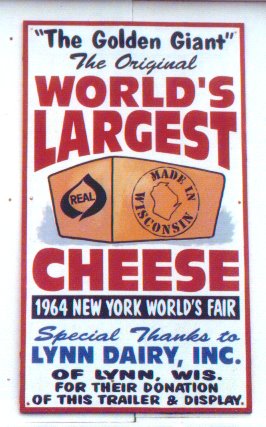
Another favorite, the world’s largest cheese, naturally still makes its home in its home state of Wisconsin.

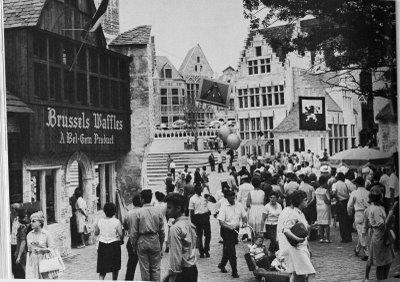
The famous Belgian Village, with the park’s defining snack being sold just the left of the picture (i.e. the Bel Gem Waffle).

Dupont’s zippy musical ‘The World of Chemistry’ didn’t quite make it to Broadway.

I highly, highly recommend a few website for some further information about the World’s Fair. NYWF64 has a exhaustive description of almost every pavilion, including a great many we didnt mention, like The Underground Home, Sinclair’s Dinoland, and the Lunar Fountain.

Jeffrey Stanton has an excellent site about it as well.

The World’s Fair tire pic is from a great page by Modern Mechanix featuring magazine photos from the beginnings of the fair.

A few months ago we wrote about the Singer Bowl, a World’s Fair auditorium that later become the Billie Jean King Tennis Center, home of the U.S. Open.

Find all of our Robert Moses coverage here.

History in the making – 1/5

Pizza in Park Slope

Jeremiah gives us a (wonderful but depressing) rundown of all the New York history destroyed by redevelopment in 2007. [Vanishing New York]

Roosevelt Island’s super-spooky Renwick Ruin, New York’s former smallpox hospital turned haunted mansion, is falling apart. [City Room]

Corona, Queens’ Jewish community may get landmark status bestowed on its 97 year old synagogue. [Queens Crap]

Thomas Edison electrocutes an elephant on Coney Island 105 years and one day ago [Gothamist] and watch the bizarre video [Kinetic Carnival]

Are the days of chain stores and coffee shops finally numbered in the East Village? [The Villager]

UNUSUAL NYC MUSEUMS #1: Satchmo’s Place

In the first part of our nth part series on unusual New York City museums, we turn your attention to Corona, Queens (several stations out on the 7 train) where lies a non-descript and not seemingly attractive red-brick house.

It was the home of Louis Armstrong and his wife Vivian and as of 2003 has opened to the public. But dont expect some extravagent tacky Graceland-like abode.

Armstrong actually preferred the calm and quiet of the neighborhood and the decor reflects his cool. His wife actually picked out the home and Armstrong, upon first seeing it in the at-the-time mostly white neighborhood, thought the cab driver had taken him to the wrong address.

You should definitely do as Satchmo did and sit on the stoop, where he would hang with the neighborhood kids and sign autographs, and then to the den, the scene of many jam sessions. The house also has an inordinate amount of wallpapers on the wall. Other cool things to check out: the Japanese style garden outback, the Louis portrait painted by no less than Tony Bennett, and a crucifix designed by Salvador Dali.

Two pieces of amusing trivia:
At the excellent museum gift shop, you can buy Armstrong’s favorite laxative Swiss Kriss!

The Armstrong house was purchased by the couple for $3,500, but benefited years later with the the museum opened after a $1.3 million renovation. How’s that for an price uptick?

Check out the official website for times and directions.

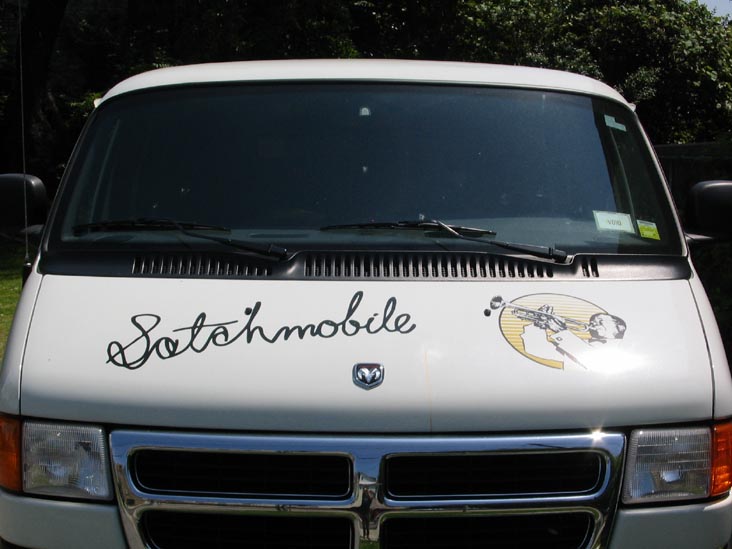
And if you’re lucky, maybe you’ll see the Satchmobile: