Categories
Mysterious Stories Queens History

MYSTERY! “Doctor Busted” and the skeleton of College Point

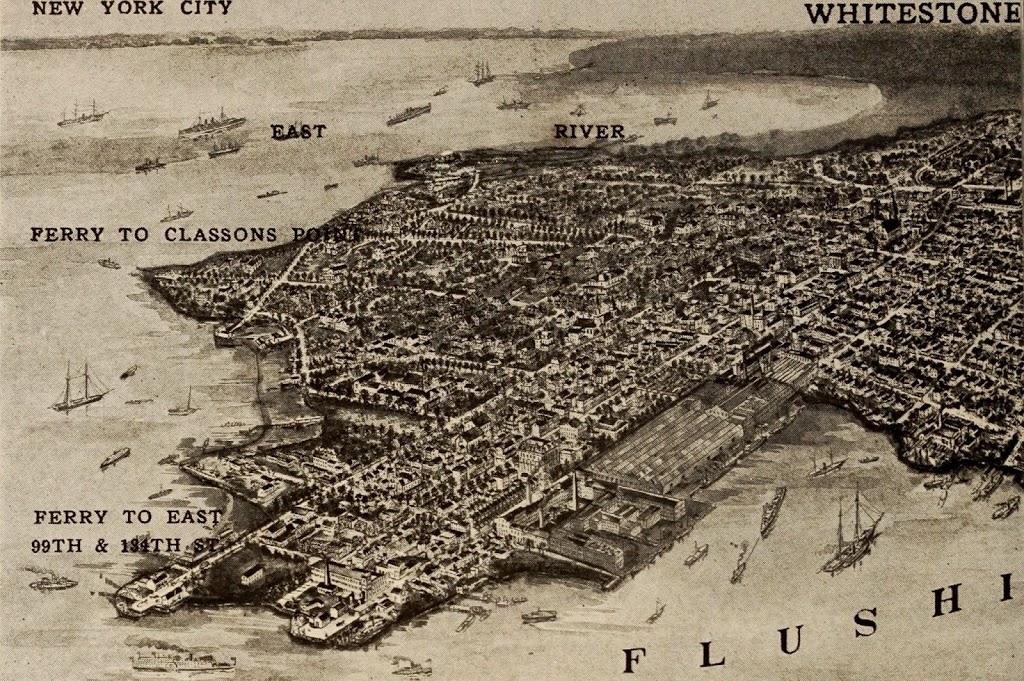
Above is an illustrated bird’s eye view of College Point, Queens, from a 1917 guidebook “Illustrated Flushing and vicinity.”

As that book goes on to describe, “COLLEGE POINT is essentially a manufacturing town—the industrial center of the Flushing District.  It is an old settlement like Flushing and Whitestone, both of which it immediately adjoins on Flushing Bay, and like both, it is rich in its possession of old trees and old houses. It has many fine modern residences, too; and even the proximity of its scores of factories doesn’t seem to spoil its charm as one of New York City’s pretty home suburbs.”

But for a ‘pretty home suburb’, you never know what you’re going to find as you’re digging up out in your yard.  I found the following disturbing notice in the Brooklyn Daily Eagle, October 7, 1914:
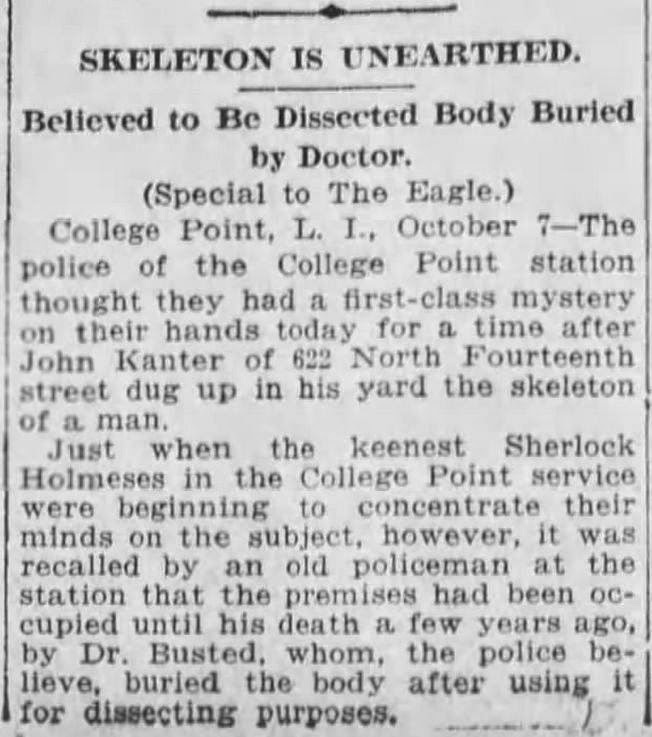
“College Point, LI, October 7 — The police of the College Point station thought they had a first-class mystery on their hands today for a time after John Kanter of 622 North Fourteenth Street [sic] dug up in his yard the skeleton of a man.

Just when the keenest Sherlock Holmeses in the College Point service were beginning to concentrate their minds on the subject, however, it was recalled by an old policeman at the station that the premises had been occupied until his death a few years ago by Dr. Busted whom, the police believe, buried the body after using it for dissecting purposes.”

It’s more likely the doctor’s name was Busteed.  Dr. Busted sounds like a character from a 1980s horror film.

Here’s a proper mystery: Would somebody like to figure out where 622 North 14th Street in College Point, Queens, is today?  Many streets and roads in Queens were renumbered in the 1920s.  I believe the house mentioned in the article above is on today’s 14th Avenue, but there’s also a 14th Road.  And neither of them is numbered in the 600s.

If there was one skeleton in the yard, might there still be others?

Below: A College Point home from the brochure described at top, belonging to a silk manufacturer.  From the brochure:
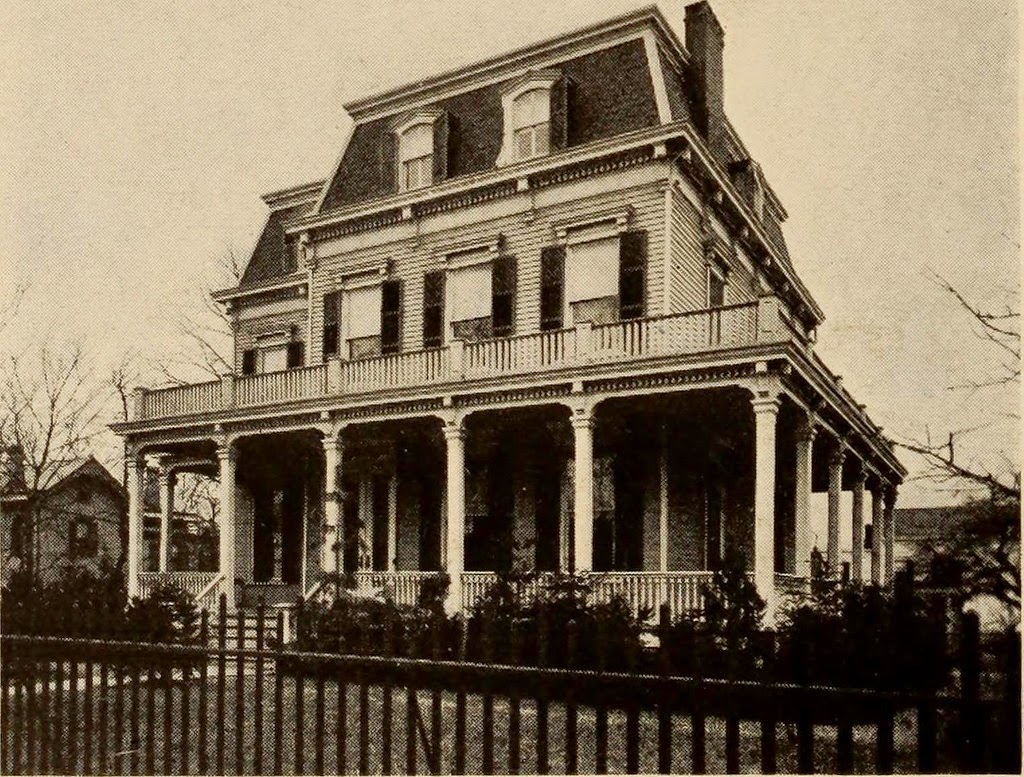
“As a bit of prophecy, the reader is asked to lay aside this book for ten years and then compare this portrayal of College Point-Flushing conditions as they now exist with those of a decade hence. It is pretty safe to say that the two old mansions, pictures of which are printed with this article—the Stratton and Graham homesteads — that today stand as landmarks on the trolley line between College Point and Flushing will long since have disappeared, and in their places and on their surrounding acre swill have risen many beautiful, modern residences and apartment  houses, and that the meadows some distance away will have been covered with manufacturing plants all th eway from the hills to the waters of Flushing Bay.”
Notes from the podcast: (#141) New York Beer History

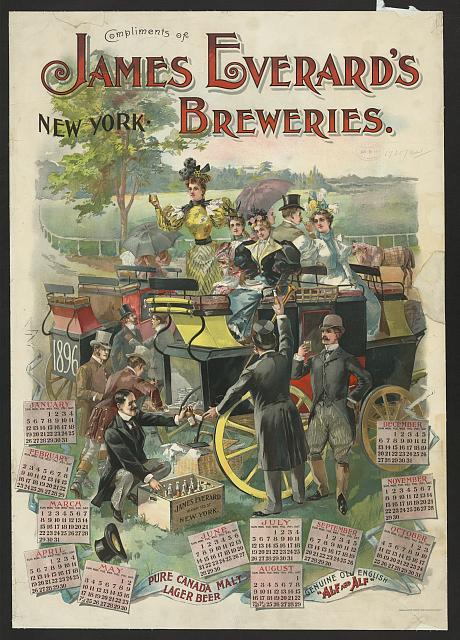
Year-Round Brews: This calendar from 1895 celebrates the Harlem breweries of James Everard. An older Everard brewery building on W. 28th Street was converted into a Turkish bathhouse in 1888. It became the location of a variety of notorious activities during the 20th century. Everard’s breweries became the plaintiff in a Prohibition-era Supreme Court case regarding the use of alcoholic beverages for medicinal purposes. (Pic courtesy the Library of Congress)

Piels:  We completely skipped one major New York brewer, one that still maintains a presence in New York, if in name only. Three German brothers opened the Piels Brewery in East New York, on the same day as the opening of the Brooklyn Bridge— May 24, 1883. They too had their own beer garden to enjoy the brews manufactured inside. Called the Summer Garden, this festive place adorned with electric lights and a shaded seating area was known for its determined wait staff.

From the Brooklyn Daily Eagle: “The waiters in the summer garden competed to see who could carry the most seidels of Piels Beer from the bar to their customers tables. In 1904 one waiter carried 16 seidels (eight in each hand).” [source]

Piels is still manufactured in Milwaukee by the Pabst Brewing Company.

Five-Borough Beer: In its heyday, you could find breweries in all five boroughs. Brewers were particularly attracted to Staten Island thanks to its spring water. In Stapleton, near the ferry piers, sat two of the largest — George Bechtel‘s brewery (which opened in 1853) and Rubsam & Hormann’s Atlantic Brewing Co.

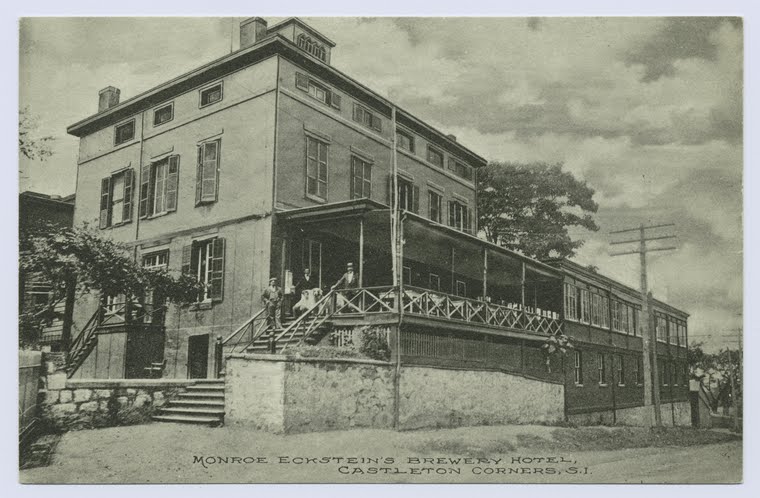
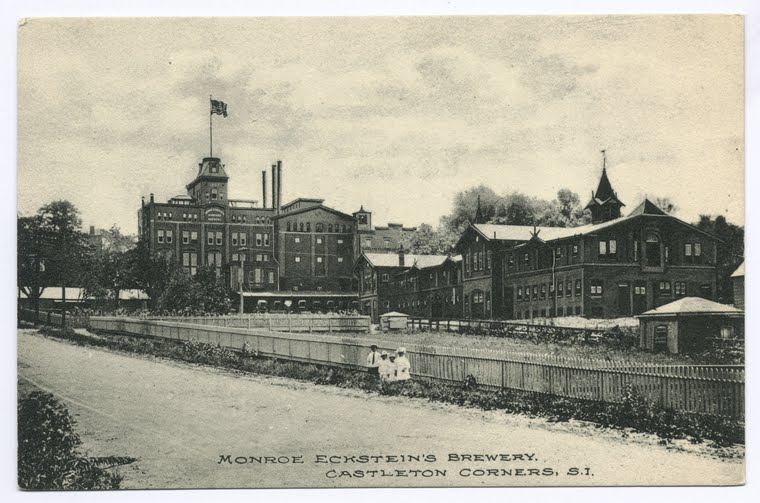
And then, of course, there’s a place we all want to stay — Monroe Echstein’s Brewery Hotel and adjoining brewery on Manor Road in Castleton Corners. (Pics courtesy NYPL)

College Point in Queens County attracted a large German population, thanks in part to rubber industrialist Conrad Poppenhausen, who set up his factories here in the 1850s. His workers and daytrippers to the region enjoyed a line of small breweries and beer gardens here. A couple decades later, Henry Steinway would set up his own factory town to the west and with it an assortment of beer gardens and even an outdoor amusement park called North Beach.

Today’s Bohemian Hall in Astoria is not far from Steinway’s factory. Read about the history of one of Queens’ oldest drinking establishments here.

For More Information: The New-York Historical Society exhibit ‘Beer Here: Brewing New York’s History is on display until September 2, 2012. I was particularly interested in the Society’s collection of ice carving equipment used by early brewers and the very cheeky collection of mid-20th century advertising and media.

For a general history on American beer, I recommend Maureen Ogle’s ‘Ambitious Brew: The Story of American Beer’ and also Gregg Smith’s ‘Beer In America: The Early Years’. And there is no shortage of History-Channel style documentaries on the subject. Also, for some general information on Bushwick, I highly recommend exploring the Bushwiki, with lots of history about the neighborhood.

There’s now a New York Beer and Brewery Tour with stops at brewers in three different boroughs. And it takes you down ‘Brewer’s Row’ after having a couple rounds of beer elsewhere. You can catch a tour of the Brooklyn Brewery of course; visit their website for more information.

Thanks again to Scott Nyerges for helping me out with this one! Please visit his website for more information on his upcoming gallery show in Bushwick. And also my thanks to the Bodega Bar in Bushwick where I was going to pull together the Bowery Boys’ very first real ‘on location’ recording at a bar. Unfortunately I was not able to work that out, but I thank them for opening their door to the show anyway.