Categories
Food History Founded by NYC Health and Living Podcasts

New York used to be the City of Oysters. Can it be again?

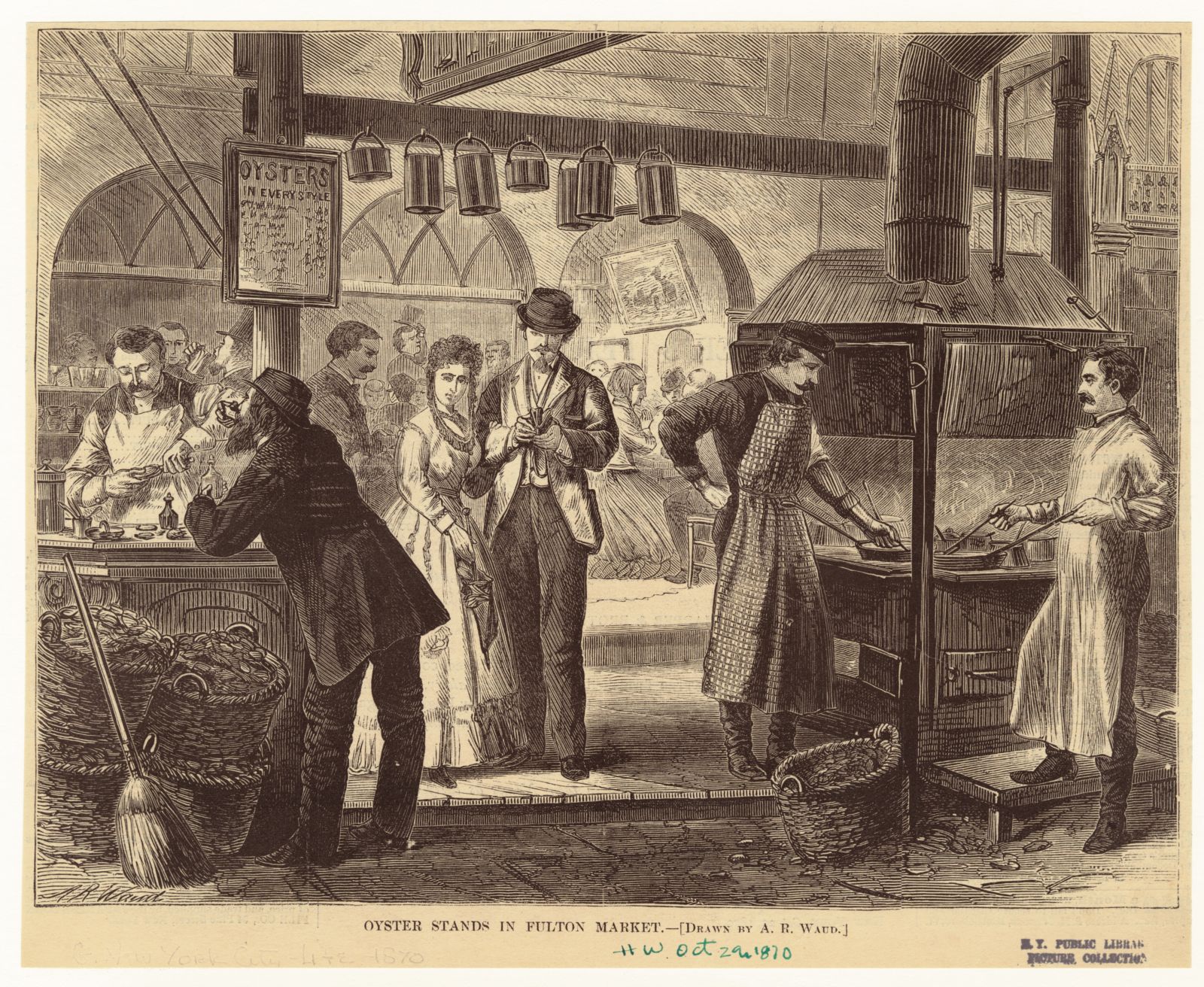
Oyster stands in Fulton Market, 1870, courtesy New York Public Library

Once upon a time New York City oysters were not only plentiful and healthy in the harbor, they were an everyday, common food source. The original fast food!

For that reason, the oyster could be an official New York City mascot. Oyster farming was a major occupation. Oyster houses were an incredibly common place for people to eat. The greatest restaurants in the city served oysters, as did the small basement dives.

In many ways, they united all New Yorkers, not just from the Lower East Side to Fifth Avenue, but even with those people who came before – the Lenape indigenous tribes, the original Dutch settlers and even the colonial English. 
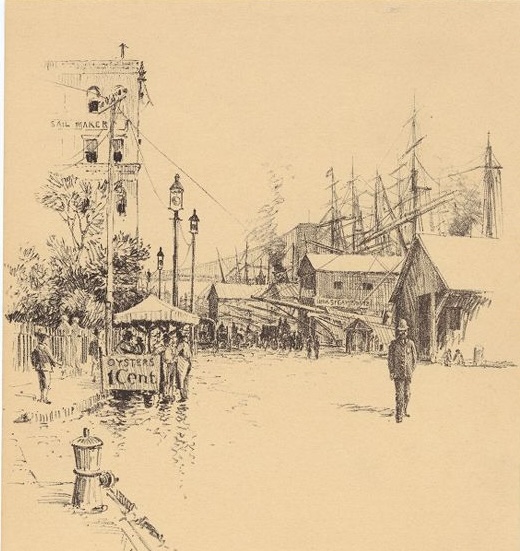
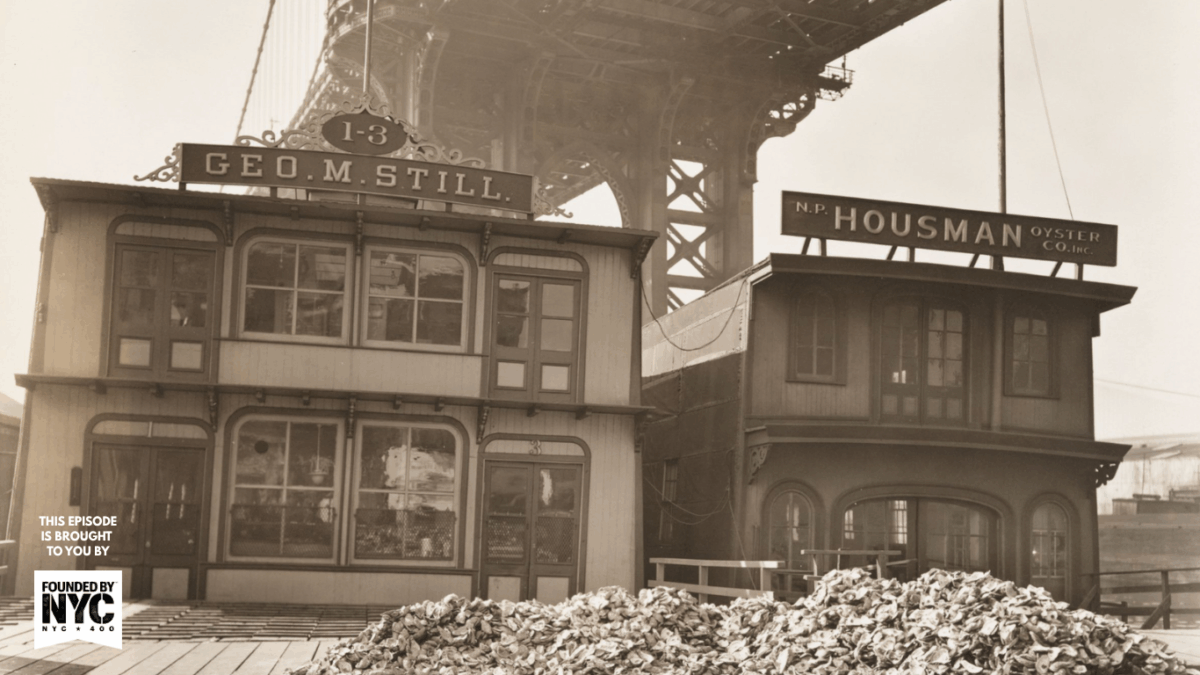
South Street from Coenties Slip, 1898. Today the elevated FDR blocks this view. Courtesy New York Public Library

Oysters defined the New York City palate by the early 19th century. Businessmen like Thomas Downing (one of New York’s first successful Black restaurateurs) fed the stock brokers on Wall Street while the Delmonico Brothers served them on the half-shell in their new French inspired eatery.

But today — New York City oysters are inedible. And for most of the 20th century, they were functionally extinct thanks to the harbor’s notoriously poor water quality.

Thanks to organizations like the Billion Oyster Project, however, the oyster has returned to the harbor. And soon we may see a billion oysters — and more! Brian Reagor, director of development and communications at the Billion Oyster Project, joins Tom and Greg to discuss the fascinating process of reintroducing the oyster to its old home in New York harbor.

LISTEN NOW — NEW YORK: THE CITY OF OYSTERS
The Bowery Boys Podcast is proud to be sponsored by Founded By NYC, celebrating New York City’s 400th anniversary in 2025 and the 250th anniversary of the United States in 2026.

Read about all the exciting events and world class institutions commemorating the five boroughs legacy of groundbreaking achievements, and find ways to celebrate the city that’s always making history at Founded by NYC.


Oysters for days! An oyster shop in 1867, according to Frank Leslie’s Illustrated Newspaper.

Billion Oyster Project was founded in 2014 by Murray Fisher and Pete Malinowski who envisioned a healthy, biodiverse New York Harbor — and who shared the belief that restoration without education is temporary. 

For more information and to look for ways to volunteer, visit their website.
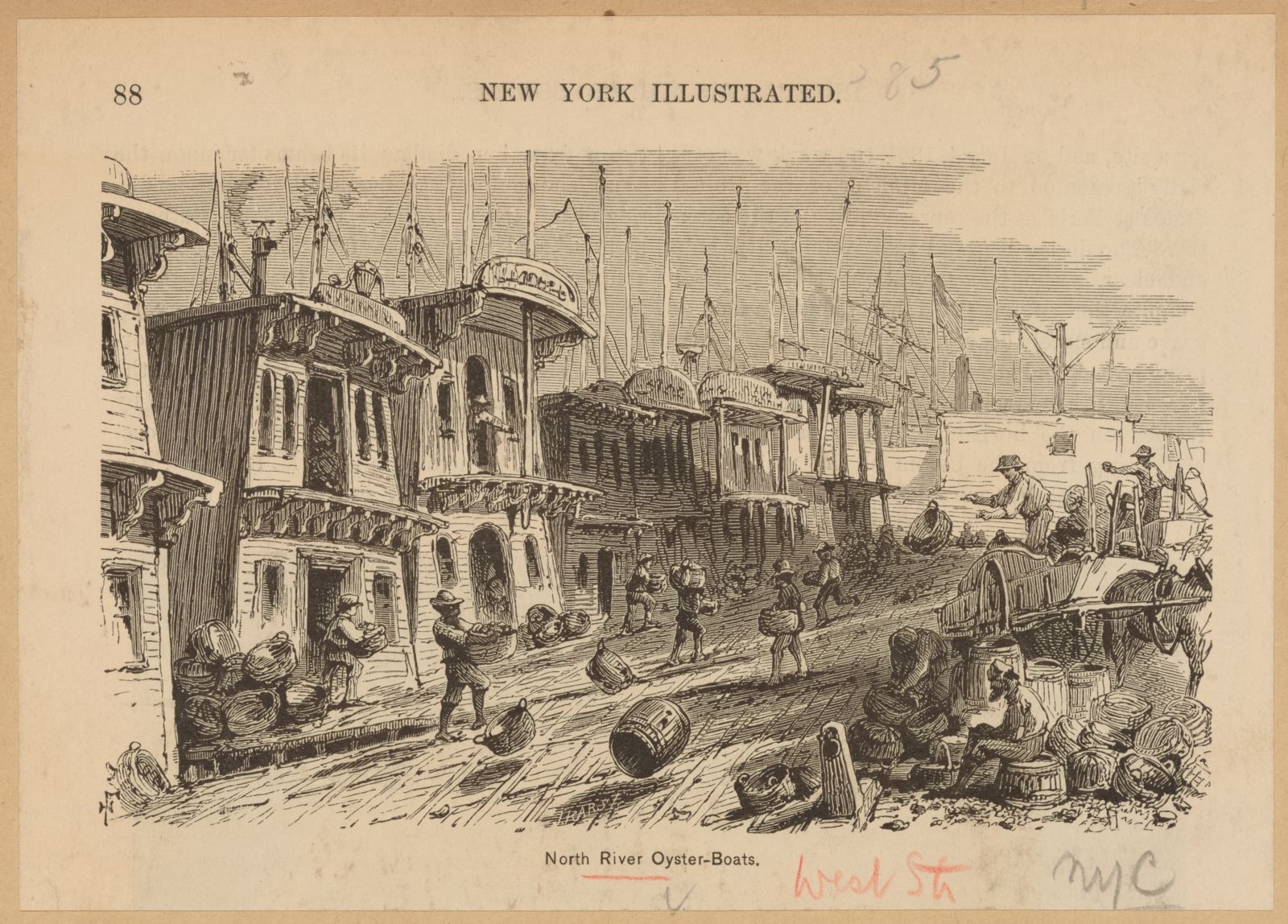

A fascinating view of the ‘North River’ (Hudson River) oyster boats, 1885. [link]
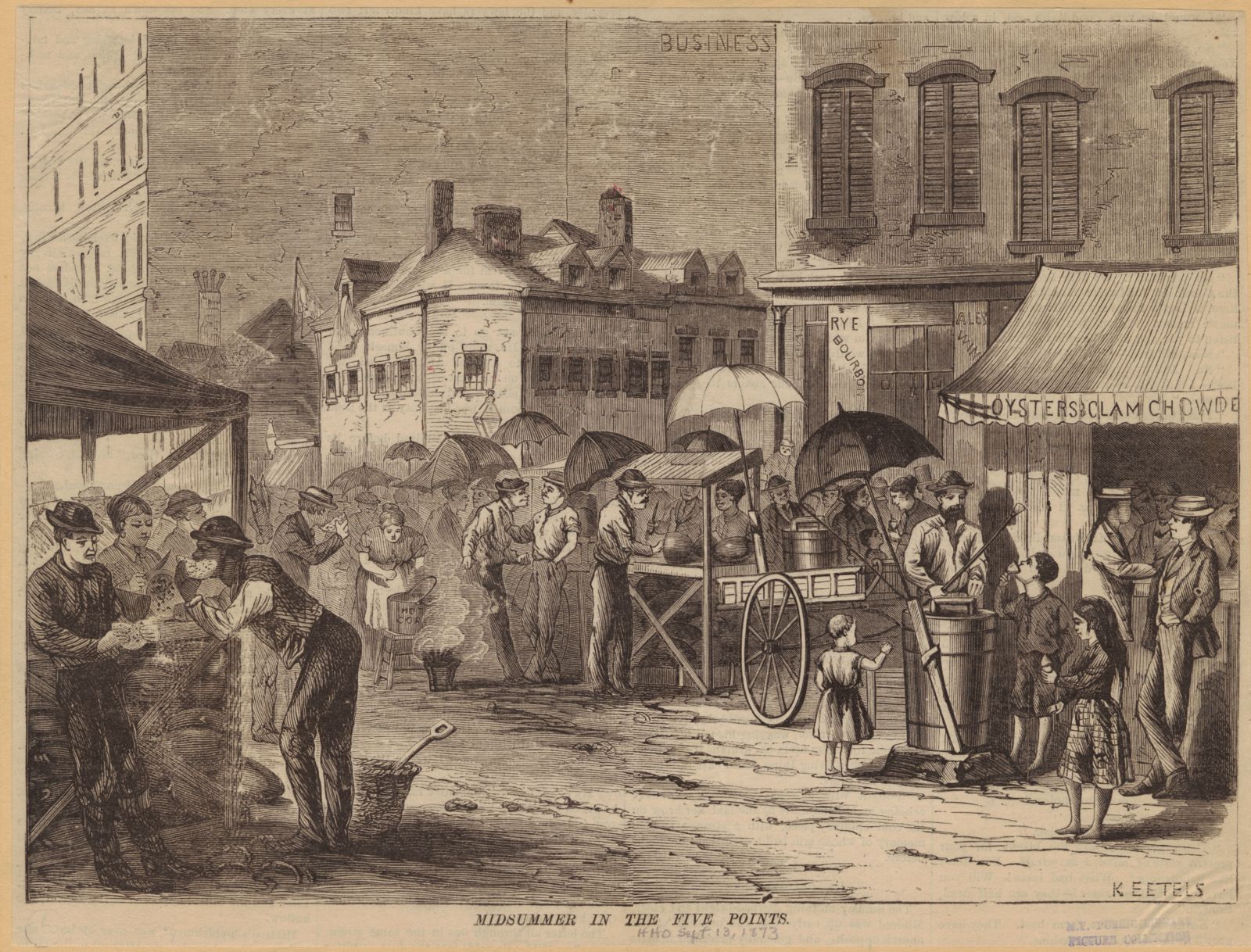
Midsummer in the Five Points, 1873, from Hearth and Home magazine, courtesy New York Public Library
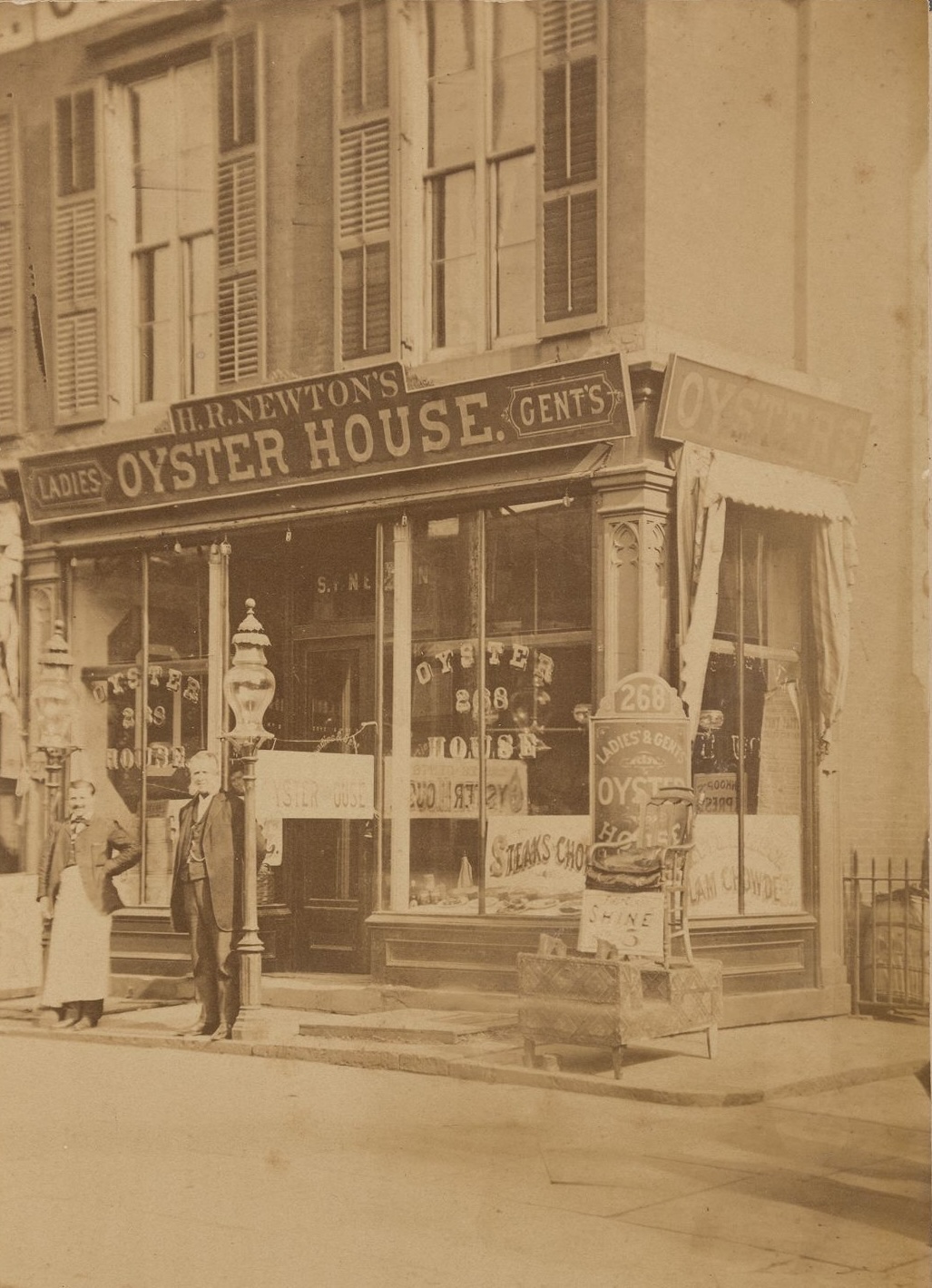
Hannah R. Newton’s Oyster House, photo taken 1890-94, courtesy New York Public Library. It was located at 268 Sixth Avenue, corner of 17th Street. “Her husband, Richard W. Newton (1834-1907), an oyster dealer, also farmed in Ronkonkoma, Long Island.” [link]

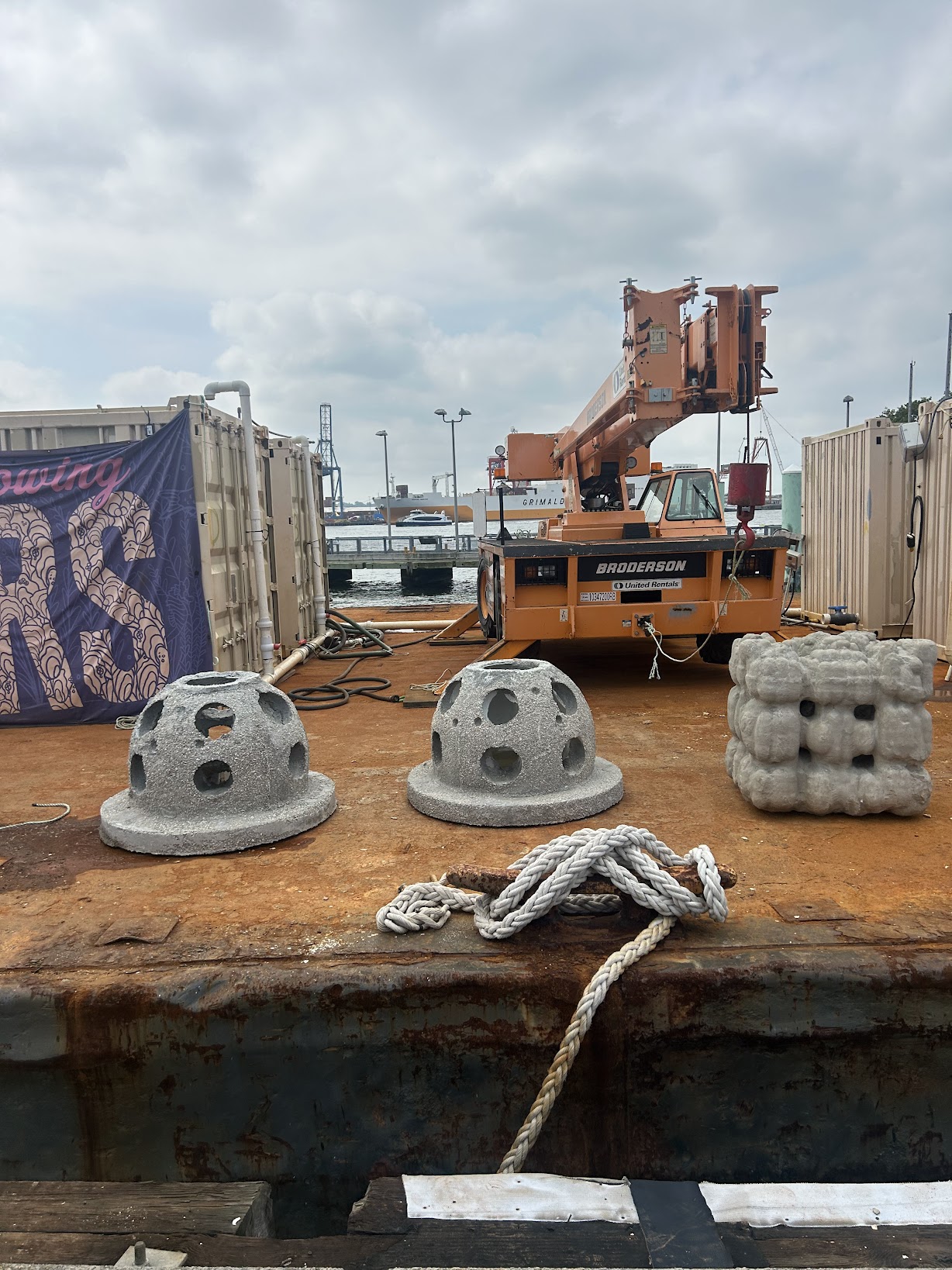
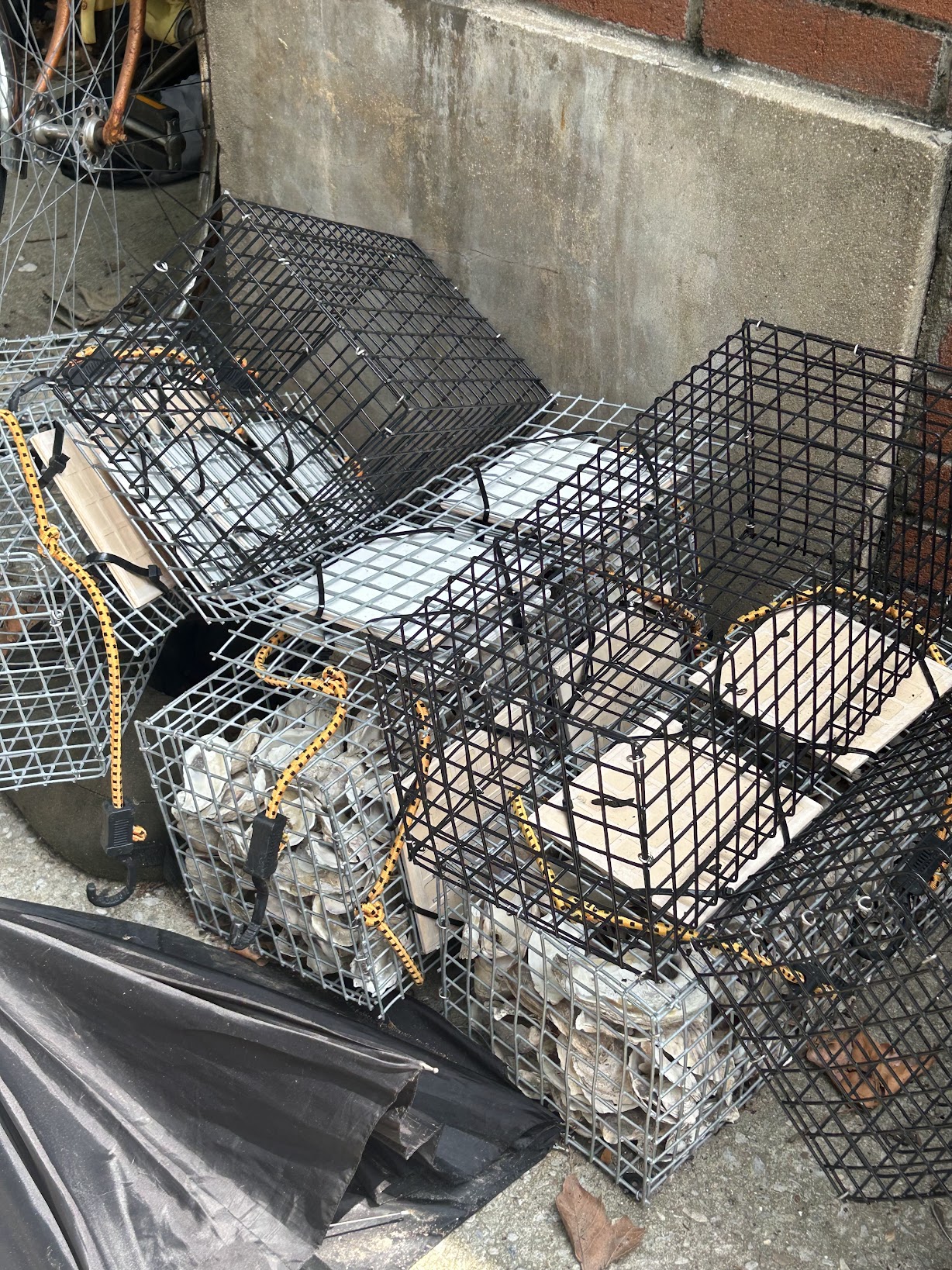
At the Billion Oyster Project on Governors Island

As we celebrate events in New York City through Founded by NYC, his week we’re celebrating Hamilton: An American Musical which is marking its 10th anniversary this year – can you believe it, ten years since its debut at the Public Theater.

And Lin-Manuel Miranda and the rest of the production are celebrating with a special 10th anniversary production on August 6, 2025, at the Richard Rodgers Theater. 

PLUS Leslie Odom Jr will soon be reprising his role as Aaron Burr, a role which earned him a Tony Award for Best Actor. Odom’s back in the show starting on Sept 9 for a limited run through November. 

Read about Hamilton :An American Musical and all the other exciting events and world-class institutions commemorating the five boroughs’ legacy of groundbreaking achievements, and find ways to celebrate the city that’s always making history at Founded by NYC.


FURTHER LISTENING:

Shows with similar themes from our back catalog.
Categories
Neighborhoods Podcasts

Welcome to Yorkville: German life on the Upper East Side

EPISODE 332 The Manhattan neighborhood of Yorkville has a rich immigrant history that often gets overlooked because of its location on the Upper East Side, a destination usually associated with wealth and high society.

But Yorkville, for over 170 years, has been defined by waves of immigrant communities which have settled here, particular those cultures from Central and Eastern Europe — Germans, Austrians, Hungarians, Czechs and Slovaks. 

The neighborhood developed thanks to its location to various streetcar and train lines, but that proximity insured that Yorkville would evolve in quite a different way from the more luxurious Fifth Avenue just a few blocks away.

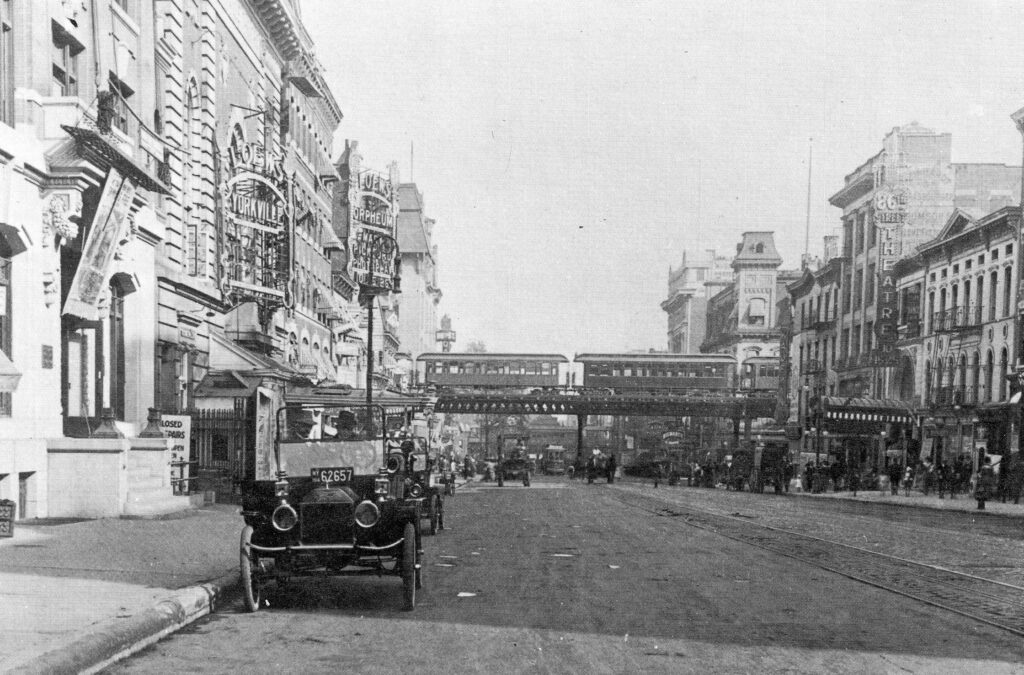
The corner of 86th Street and Second Avenue, 1916 — Library of Congress/Bain Collection

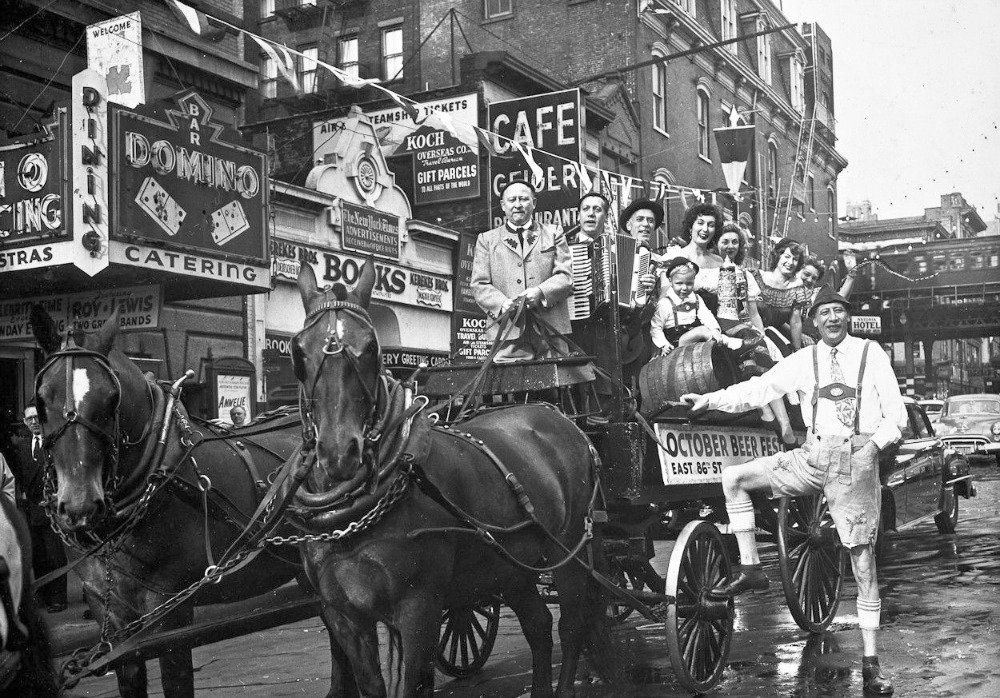
Yorkville’s German cultural identity was centered around East 86th Street — aka Sauerkraut Boulevard — where cafes and dance halls catered to the amusements of German Americans. The Yorkville Casino was a ‘German Madison Square Garden’, catering to those seeking cabaret, film and ballroom dancing.
Does the spirit of old Yorkville still exist today? While events in the early 20th century brought dramatic change to this ethnic enclave, those events didn’t entirely erase the German spirit from the city streets.
In this show, we tell you where can still find the most interesting cultural artifacts of this often overlooked historical gem.

This episode is brought to you by the Historic Districts Council. Funding for this episode is provided by public funds from the New York City Department of Cultural Affairs in partnership with the City Council and Council Member Benjamin Kallos.

This episode features an interview with Historic Districts Council executive director Simeon Bankoff and with Council Member Benjamin Kallos sharing his experiences in the neighborhood.


Listen to our podcast on the history of Yorkville here:

To get this episode, simply stream on Stitcher or your favorite podcast player

Or listen to it straight from here: WELCOME TO YORKVILLE: GERMAN LIFE ON THE UPPER EAST SIDE


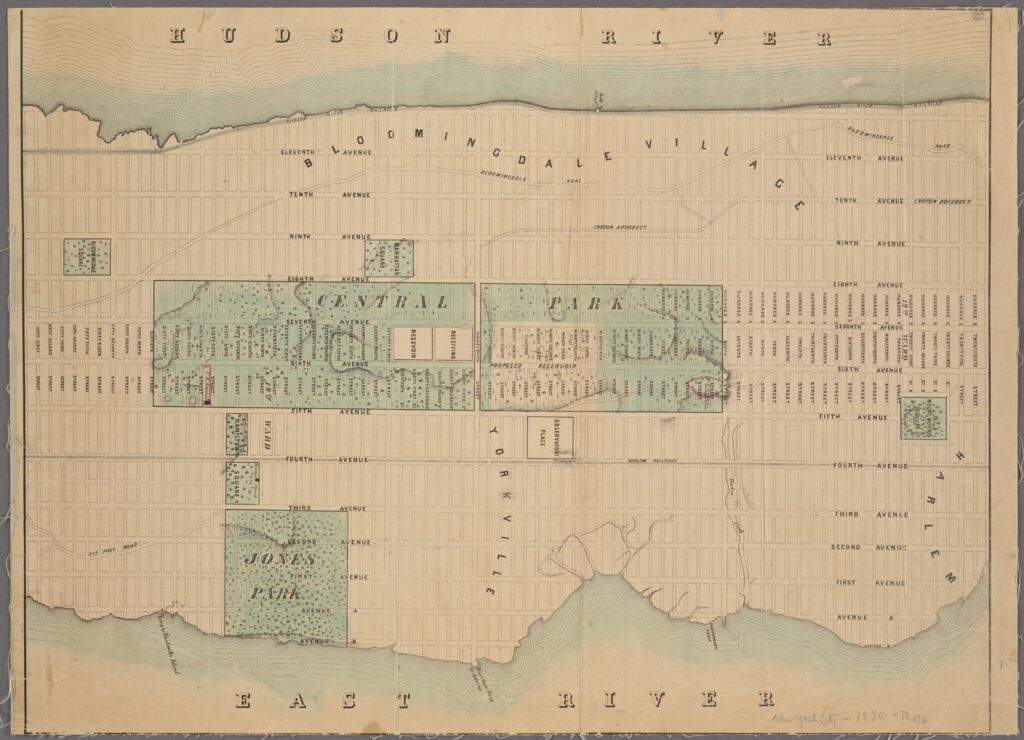
A map from 1870, showing Yorkville officially on the map. Interestingly this is a bit of a ‘ghost map’ as Jones Wood (pictured here as Jones Park) was never really developed as an official park.

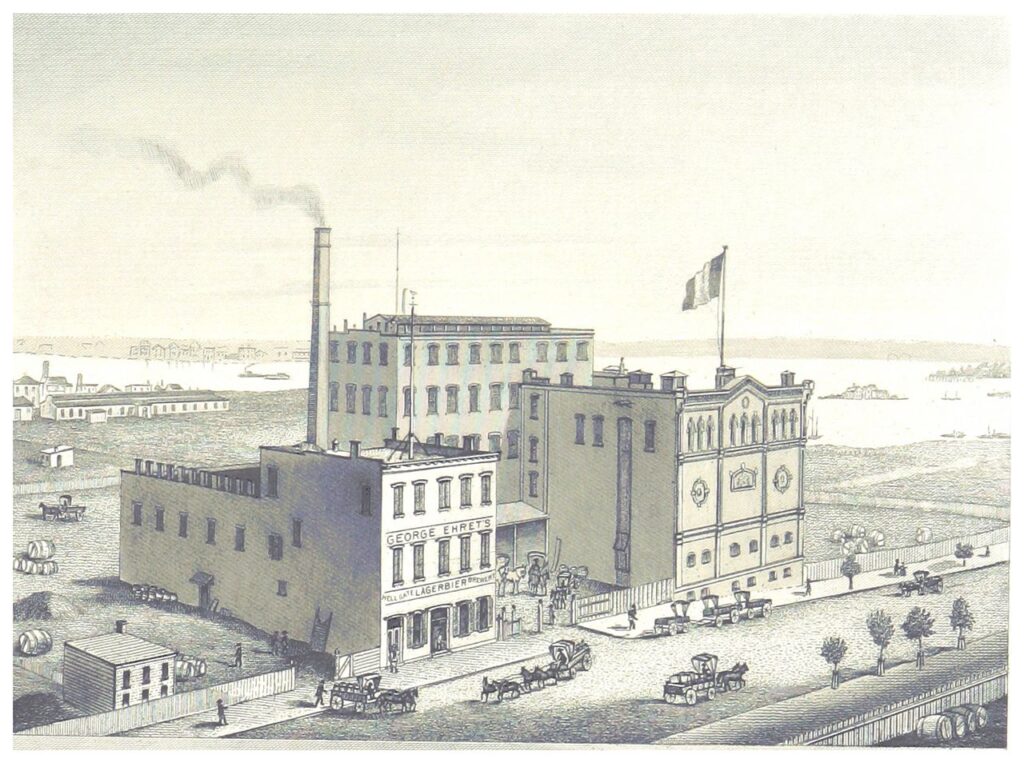
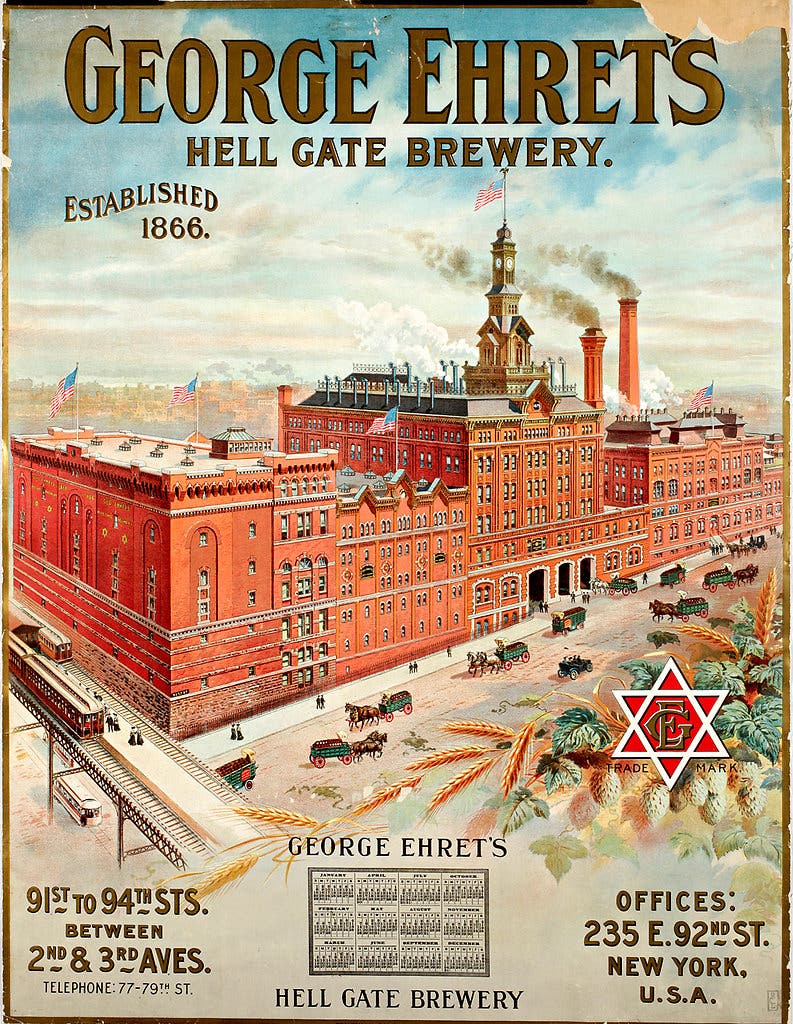
Ehret’s brewery in its early years, then in its grander days:

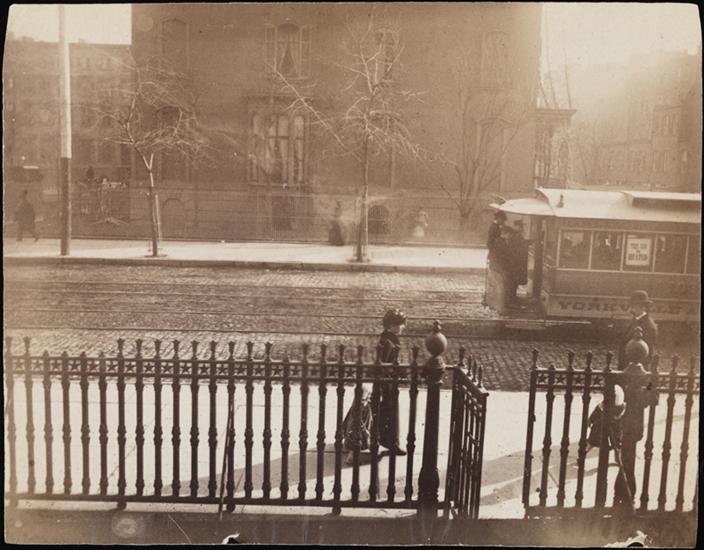
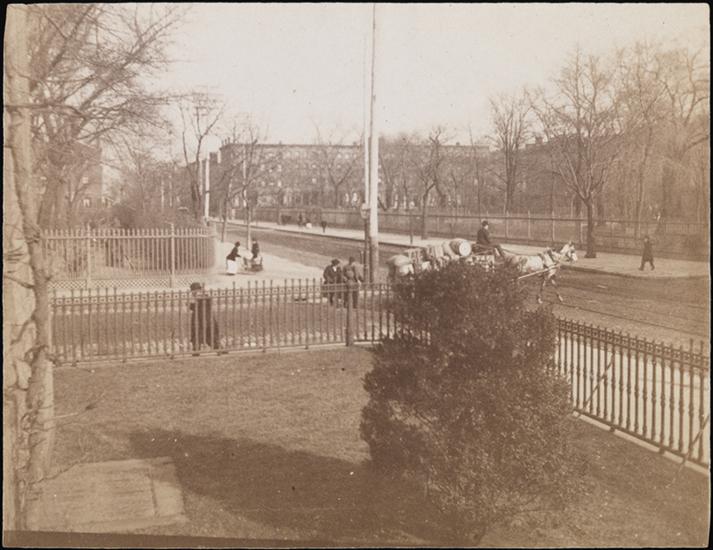
A couple interesting streetscapes of Yorkville from 1885 (courtesy the Museum of the City of New York) showing homes with large yards along a streetcar route:

Museum of the City of New York
East 86th Street in 1914 — Ephemeral New York
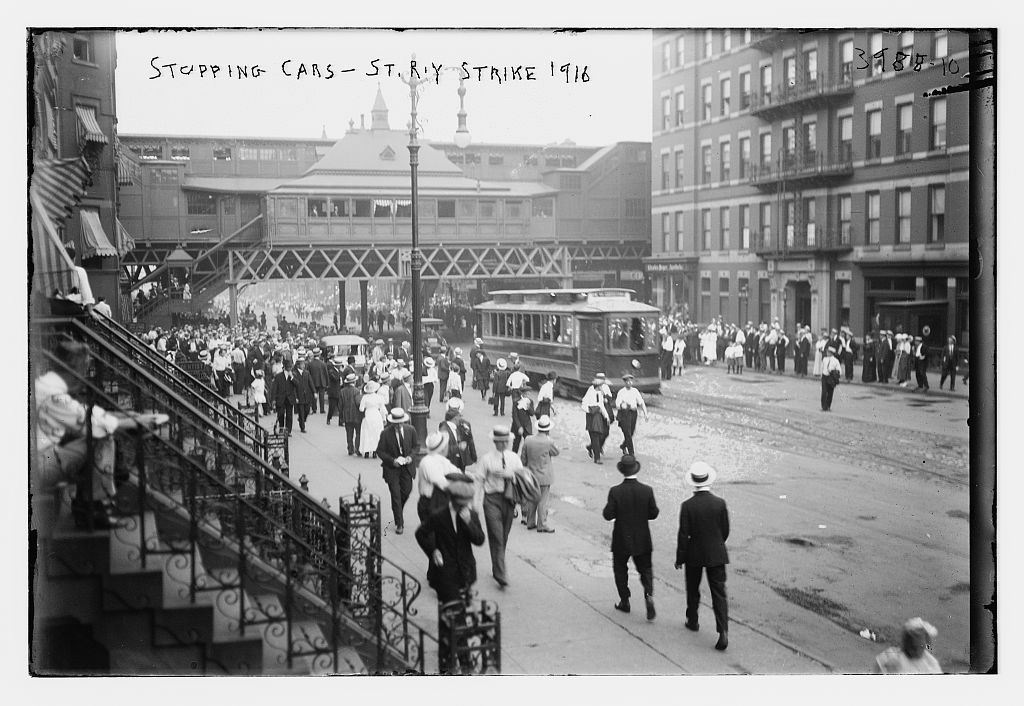
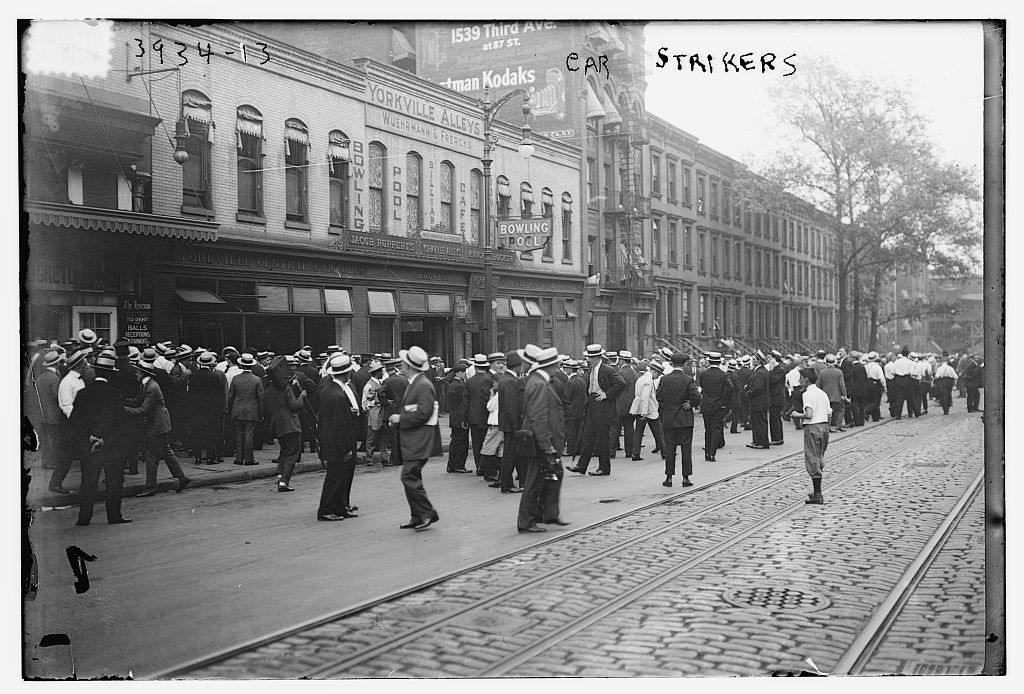
Gathering for a streetcar conductor’s strike in Yorkville on East 86th Street — Library of Congress/Bain Collection

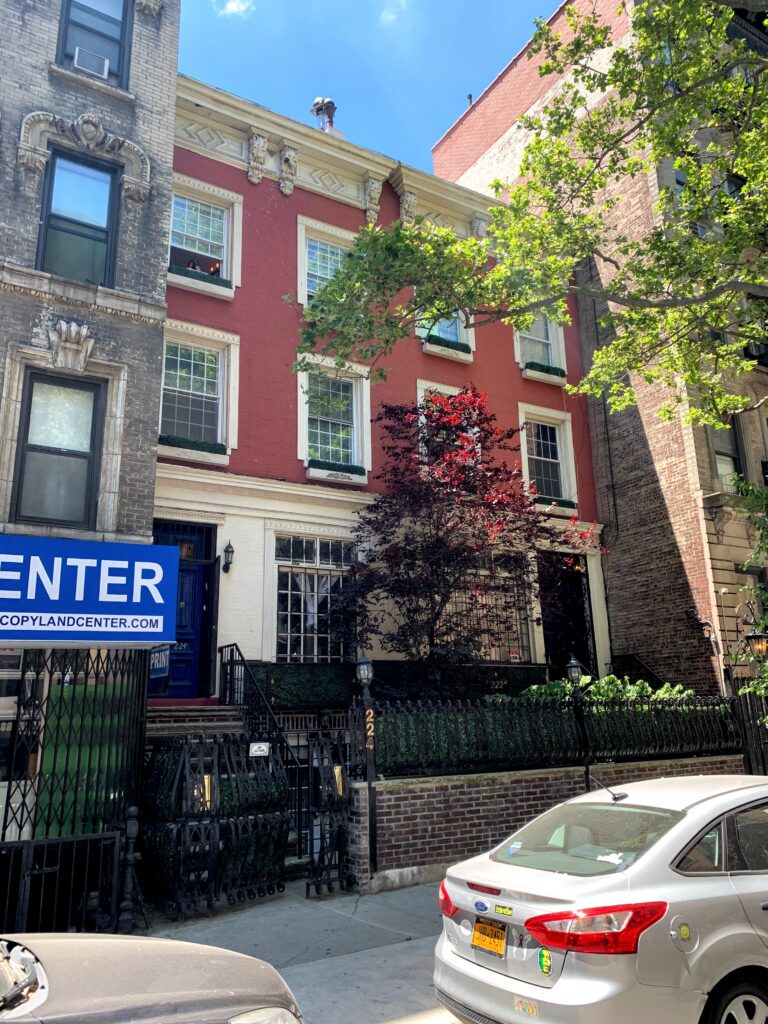
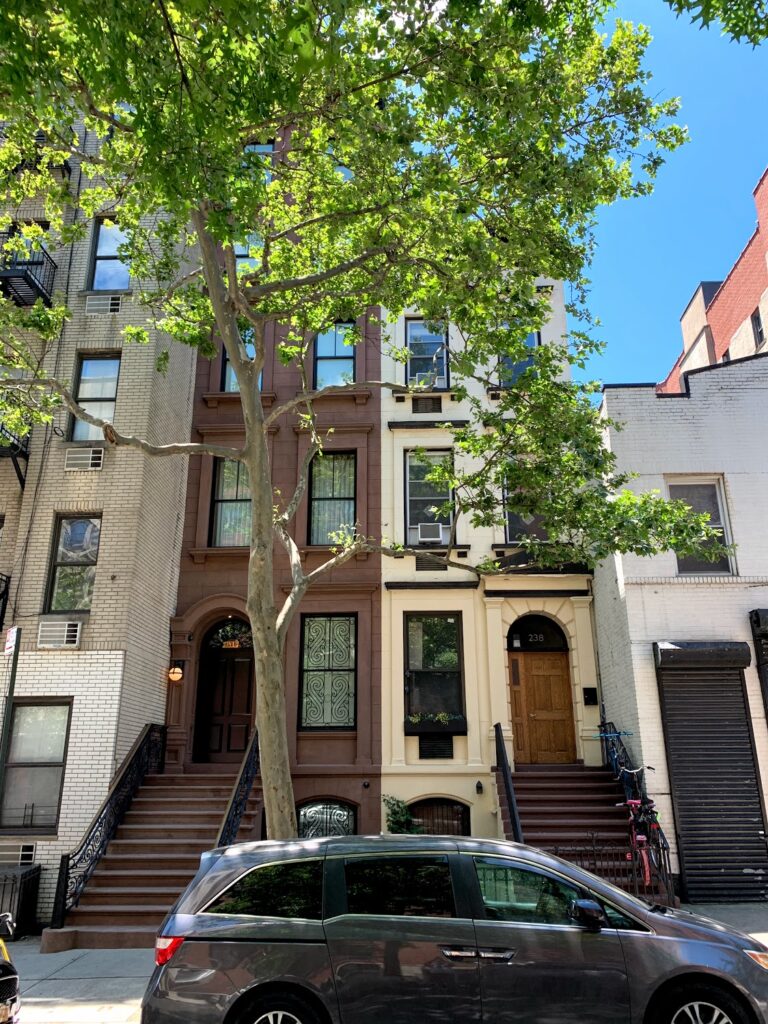
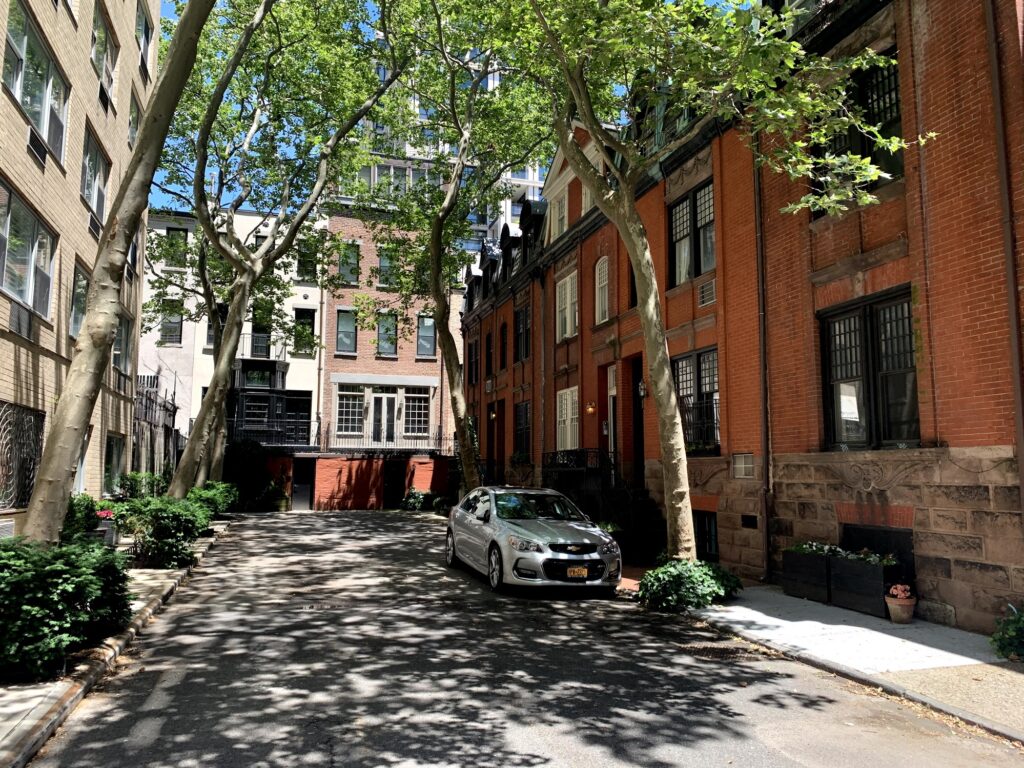
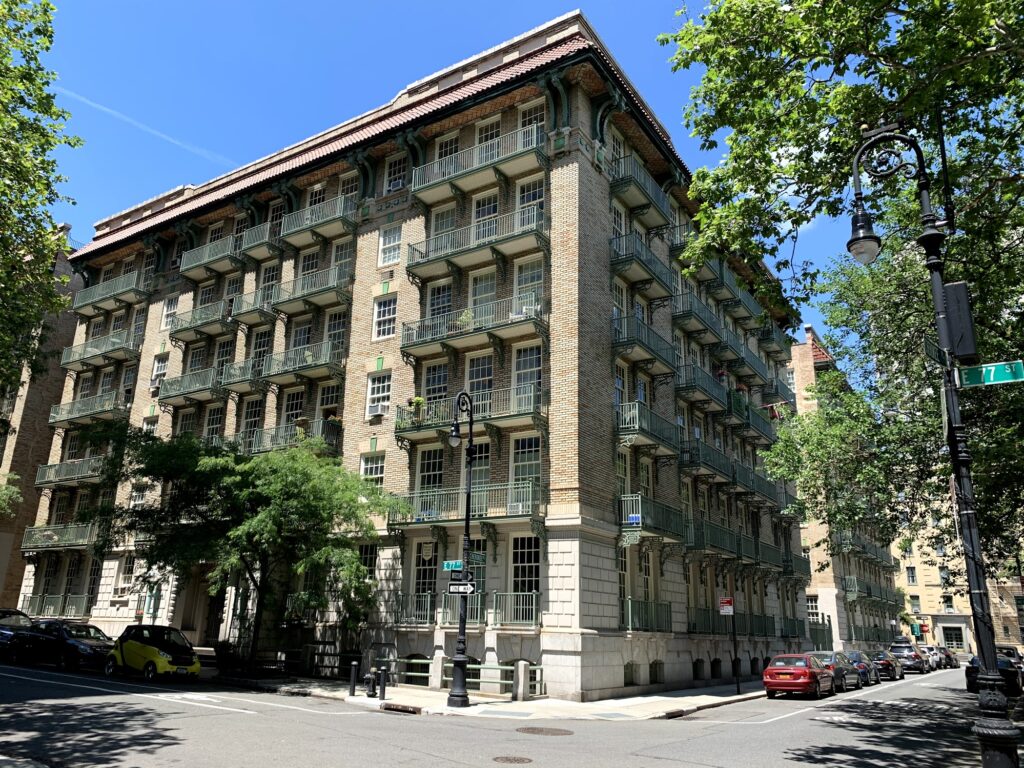
A diversity of housing in just a few blocks (photos by Greg Young):

Beautiful Henderson Place!
The Cherokee Apartments

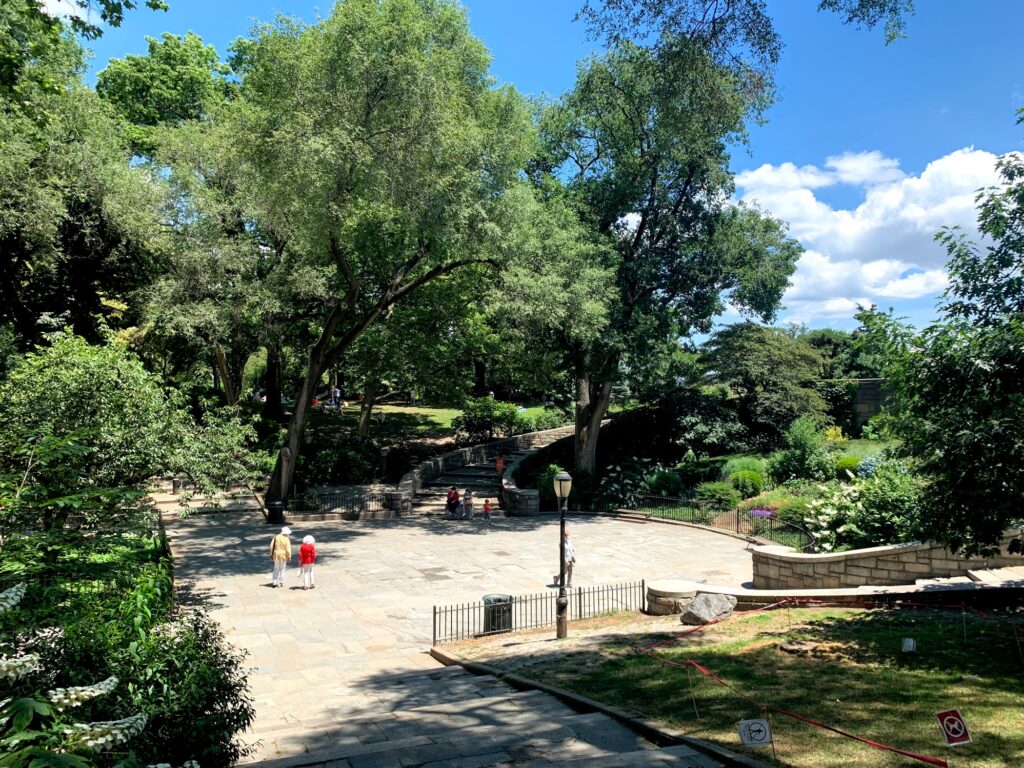
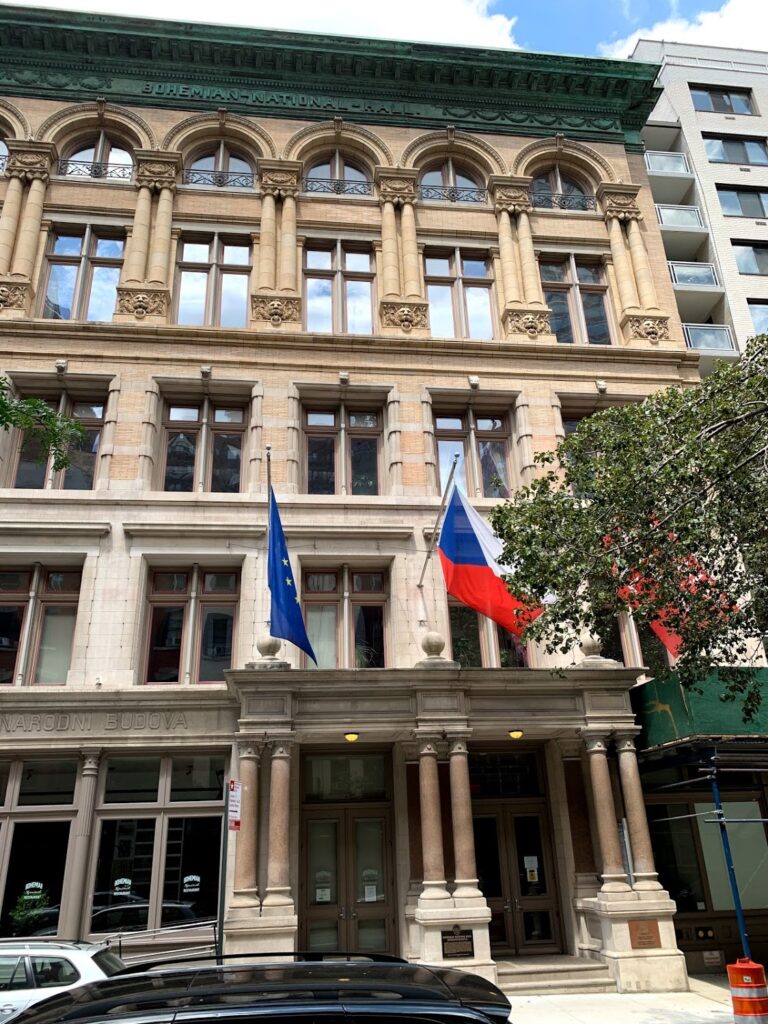
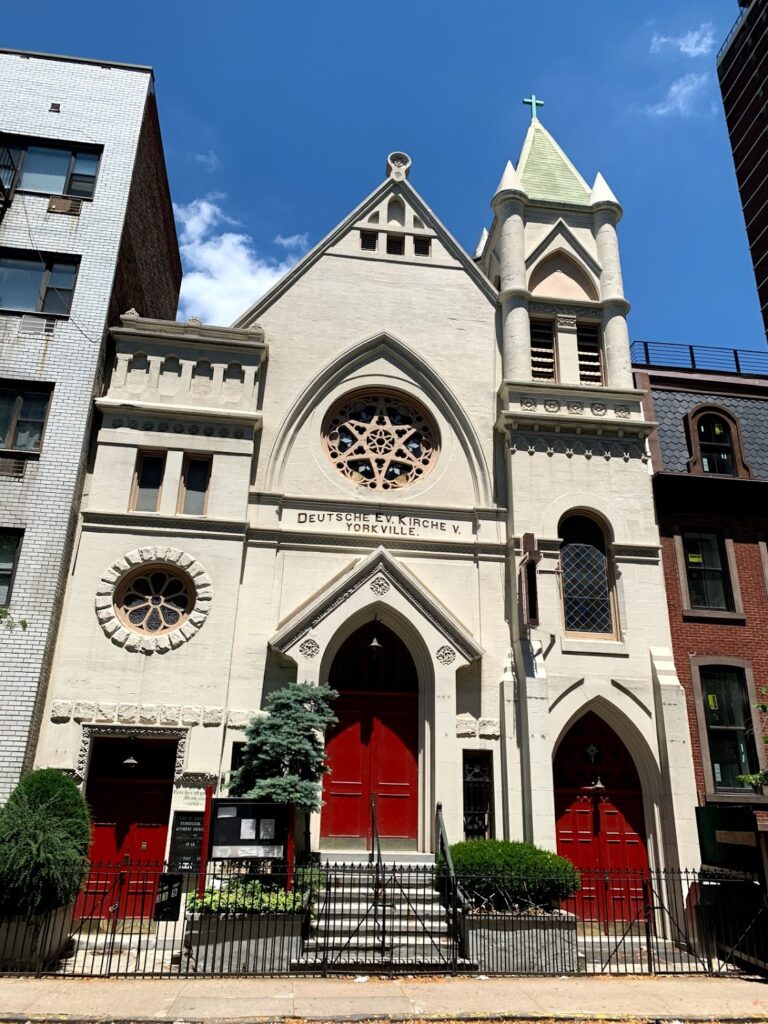
Some other sites of Yorkville (photos by Greg Young)

Carl Schurz Park
Bohemian National Hall
Zion-St. Mark’s Evangelical Lutheran Church ( 339—341 East 84th Street) which traces its congregation from the Lower East Side.

FURTHER VIEWING


An excellent short film about the history of Yorkville from the Friends of the Upper East Side

And a short introduction to Schaller & Weber:


FURTHER LISTENING

After listening to this show on the history of Yorkville, dive into our back catalog to check out shows on subjects mentioned in this show:

The East Side Elevated: Life Under the Tracks

The General Slocum Disaster 1904

Danger In The Harbor: The Black Tom Explosion

Archibald Gracie and His Mansion

Notes from the podcast: (#141) New York Beer History

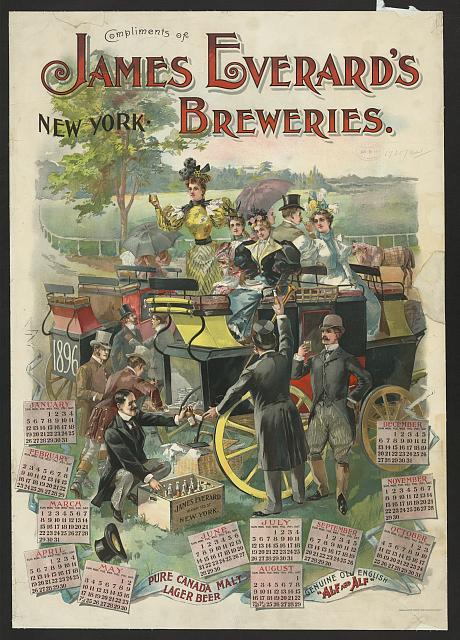
Year-Round Brews: This calendar from 1895 celebrates the Harlem breweries of James Everard. An older Everard brewery building on W. 28th Street was converted into a Turkish bathhouse in 1888. It became the location of a variety of notorious activities during the 20th century. Everard’s breweries became the plaintiff in a Prohibition-era Supreme Court case regarding the use of alcoholic beverages for medicinal purposes. (Pic courtesy the Library of Congress)

Piels:  We completely skipped one major New York brewer, one that still maintains a presence in New York, if in name only. Three German brothers opened the Piels Brewery in East New York, on the same day as the opening of the Brooklyn Bridge— May 24, 1883. They too had their own beer garden to enjoy the brews manufactured inside. Called the Summer Garden, this festive place adorned with electric lights and a shaded seating area was known for its determined wait staff.

From the Brooklyn Daily Eagle: “The waiters in the summer garden competed to see who could carry the most seidels of Piels Beer from the bar to their customers tables. In 1904 one waiter carried 16 seidels (eight in each hand).” [source]

Piels is still manufactured in Milwaukee by the Pabst Brewing Company.

Five-Borough Beer: In its heyday, you could find breweries in all five boroughs. Brewers were particularly attracted to Staten Island thanks to its spring water. In Stapleton, near the ferry piers, sat two of the largest — George Bechtel‘s brewery (which opened in 1853) and Rubsam & Hormann’s Atlantic Brewing Co.

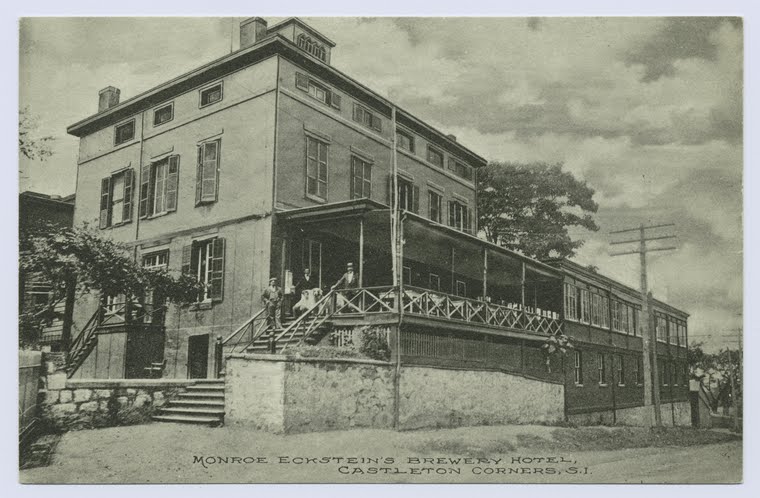
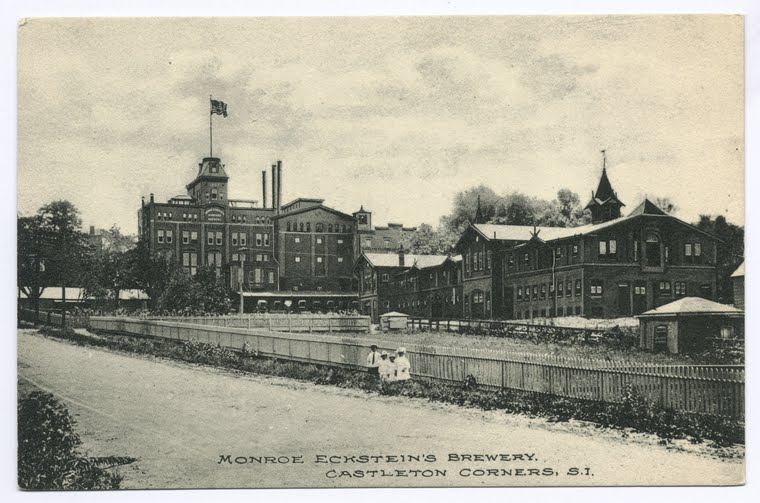
And then, of course, there’s a place we all want to stay — Monroe Echstein’s Brewery Hotel and adjoining brewery on Manor Road in Castleton Corners. (Pics courtesy NYPL)

College Point in Queens County attracted a large German population, thanks in part to rubber industrialist Conrad Poppenhausen, who set up his factories here in the 1850s. His workers and daytrippers to the region enjoyed a line of small breweries and beer gardens here. A couple decades later, Henry Steinway would set up his own factory town to the west and with it an assortment of beer gardens and even an outdoor amusement park called North Beach.

Today’s Bohemian Hall in Astoria is not far from Steinway’s factory. Read about the history of one of Queens’ oldest drinking establishments here.

For More Information: The New-York Historical Society exhibit ‘Beer Here: Brewing New York’s History is on display until September 2, 2012. I was particularly interested in the Society’s collection of ice carving equipment used by early brewers and the very cheeky collection of mid-20th century advertising and media.

For a general history on American beer, I recommend Maureen Ogle’s ‘Ambitious Brew: The Story of American Beer’ and also Gregg Smith’s ‘Beer In America: The Early Years’. And there is no shortage of History-Channel style documentaries on the subject. Also, for some general information on Bushwick, I highly recommend exploring the Bushwiki, with lots of history about the neighborhood.

There’s now a New York Beer and Brewery Tour with stops at brewers in three different boroughs. And it takes you down ‘Brewer’s Row’ after having a couple rounds of beer elsewhere. You can catch a tour of the Brooklyn Brewery of course; visit their website for more information.

Thanks again to Scott Nyerges for helping me out with this one! Please visit his website for more information on his upcoming gallery show in Bushwick. And also my thanks to the Bodega Bar in Bushwick where I was going to pull together the Bowery Boys’ very first real ‘on location’ recording at a bar. Unfortunately I was not able to work that out, but I thank them for opening their door to the show anyway.

Categories
Podcasts

On The House: A history of New York City beer brewing

Behold the lager: A German variety of beer revolutionized American drinking, inspiring a new kind of drinking establishment (Courtesy the New-York Historical Society

Inspired by ‘Beer Here: Brewing New York’s History‘, the terrific summer show at the New-York Historical Society, the latest Bowery Boys podcast explores the story of one of America’s greatest, most treasured products– beer.

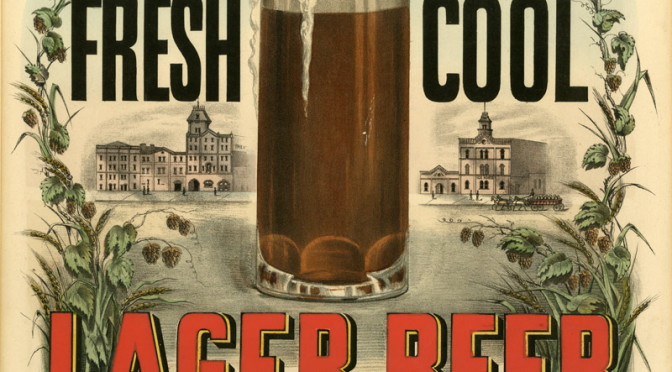
PODCAST New York City’s thriving craft brewing industry today hearkens to a time over a century ago when the city was one of America’s great beer-making capitals, the home to a robust industry of breweries and beer halls. In the 19th century, German immigrants introduced the lager to thirsty crowds, manufacturing thousands of barrels per year from breweries in Manhattan and Brooklyn’s ‘Eastern District’ (primarily Bushwick and Williamsburg). 

The top Manhattan brewers were Hell Gate Brewery and the Jacob Ruppert Brewing Company, situated right next to each other in the old German neighborhood of Yorkville. Both Ruppert and Hell Gate’s founder George Ehret rode the beer craze to become two of New York’s wealthiest businessmen. Meanwhile, out in Brooklyn, a phalanx of brewers clustered along Bushwick Avenue in fine red-brick factories.

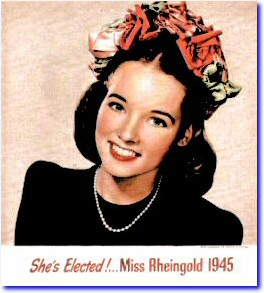
Following World War I and Prohibition, New York lost its hold over beer manufacturing to more savvy Midwestern beer makers. But a few local brands weathered the century with unusual marketing ploys — from sports sponsorships to the Miss Rheingold beauty pageant.

By the late 1970s, significant brewing had vanished from New York entirely. But somewhere in SoHo in the 1980s, a renaissance was about to begin…..

For a little extra ambiance, the show is recorded on location, live in Bushwick, Brooklyn, within a couple blocks of the original Brewers Row.


NOTE: It wouldn’t be a show without my vocal slipup o’ the month. Perhaps  I watched too much Buffy The Vampire Slayer when I was younger. I keep referring to Hell Gate as Hell’s Gate. Scott says it correctly. Both the turbulent confluence of waters and the brewery are called Hell Gate.  

Next Week: Some books, additional resources, a few more pictures and some more stories left out of this week’s podcast.

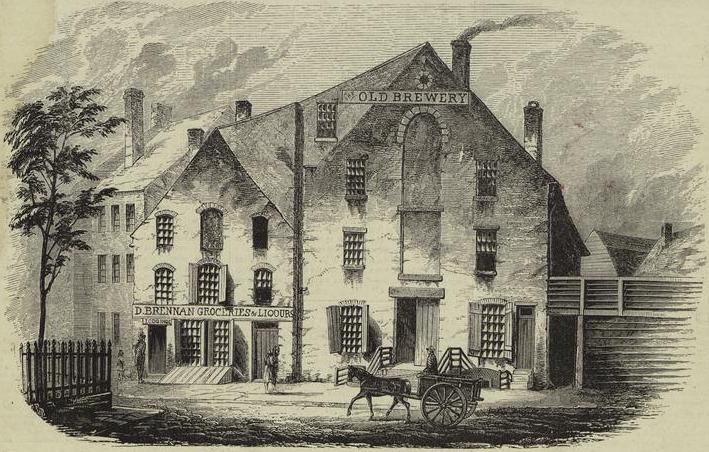
Perhaps the most notorious example of an early New York brewery was the Coulthard’s Brewery situated on the banks of Collect Pond. It survived the draining of that polluted body of water, only to survive as the center of the most disreputable elements of the Five Points neighborhood.  It was eventually demolished in 1853, replaced with a mission house.

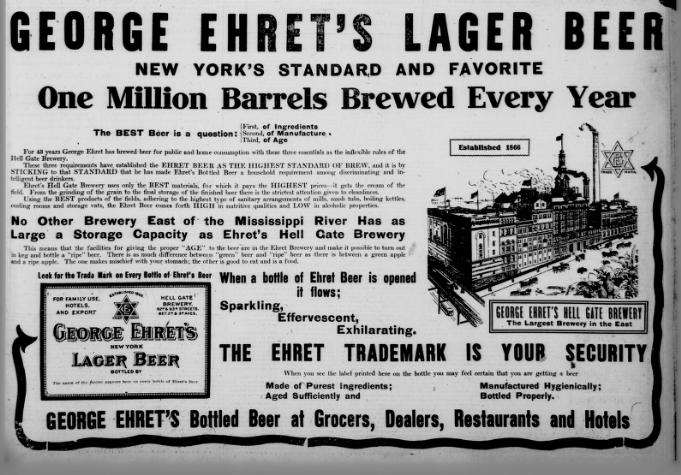
George Ehret was New York’s most successful brewer of the late 19th century. His assertion that ‘no other brewery east of the Mississippi River has as large a storage capacity as Ehret’s Hell Gate Brewery‘ was certainly accurate.  This ad from 1909 presents a company still at the top of its game. However Ehret would encounter serious opposition in the coming years, with both World War I and Prohibition cutting short the brewery’s meteoric success.

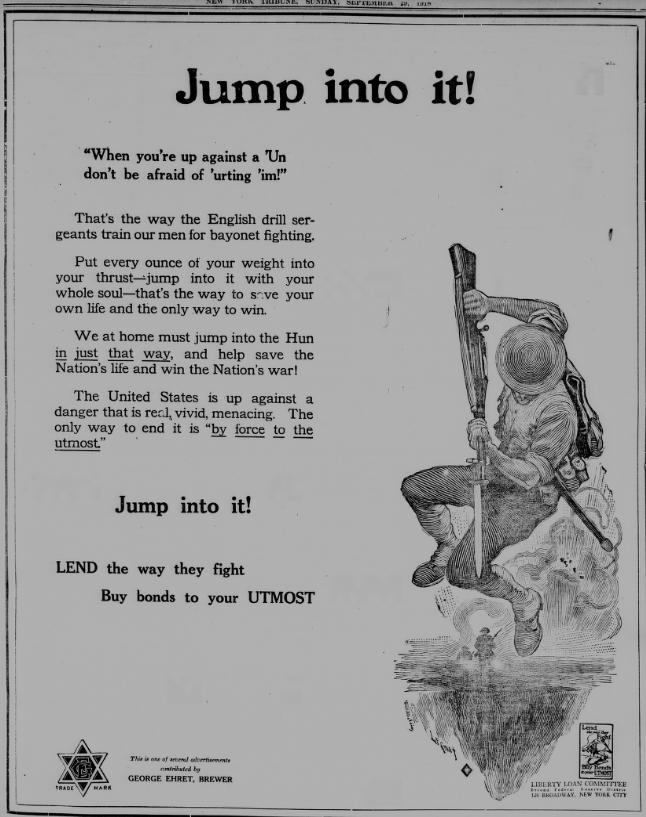
Ehret was stuck in Germany during World War I due to illness, not a great place to be during a war. His entire estate was seized by the government while he was away. When he finally returned, he threw his weight behind pro-American causes to banish any suspicions. This U.S bonds ad from 1918, the year Ehret returned to New York was one of many placed by the brewery.

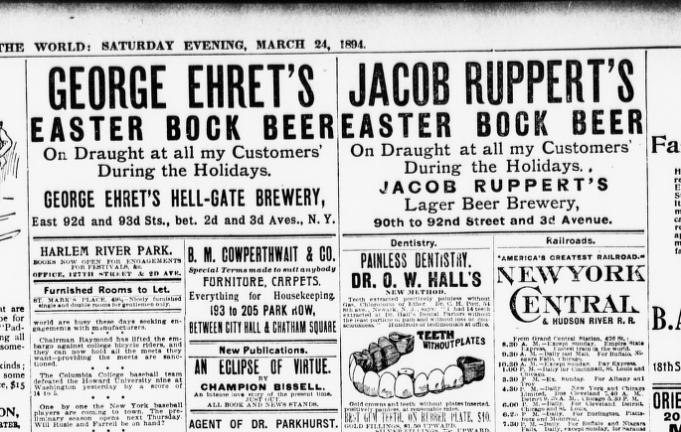
The brewery of Jacob Ruppert wasn’t just situated next to Ehret’s in this 1894 New York World newspaper; the buildings themselves were near one another, in the burgeoning neighborhood of Yorkville on the Upper East Side.  (Newspaper clippings courtesy the Library of Congress.)

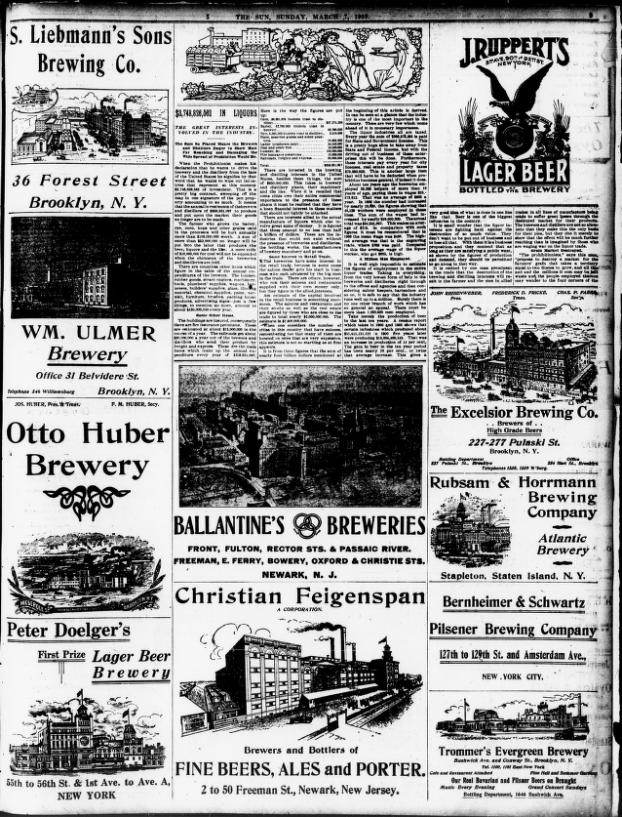
A sample page from a 1909 New York Sun newspaper illustrating some of the many breweries in the region.   Included here are the Liebmanns (who produced Rheingold Beer), the Otto Huber Brewery, William Ulmer, Trommer’s and the Excelsior Brewing Company — Brooklyn most prominent lager brewers.

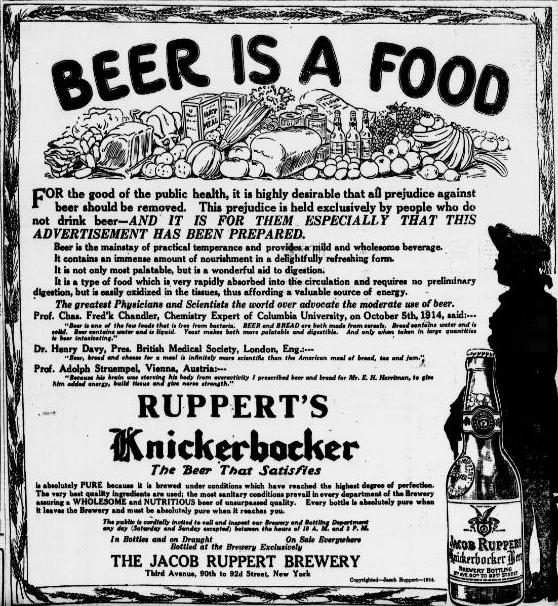
Temperance causes were greatly beginning to clamp down on the brewing industry, so beer makers attempted to market their product as true American beverages — with links to the Founding Fathers — or as products important to a person’s health. This Knickerbocker Beer ad from 1914 gamely attempts both.

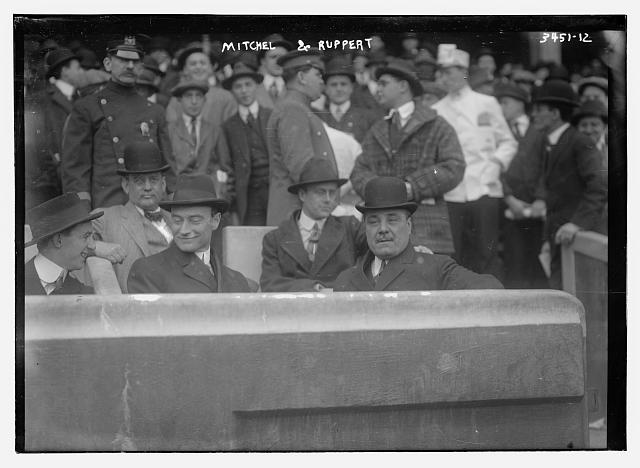
New York’s ‘boy mayor’ John Purroy Mitchell sits with Jacob Ruppert at the Polo Grounds in anticipation of a game by the team owned by the brew man, the New York Yankees. The Yankees would play at the Polo Grounds until 1923, when they moved to the newly built Yankee Stadium.

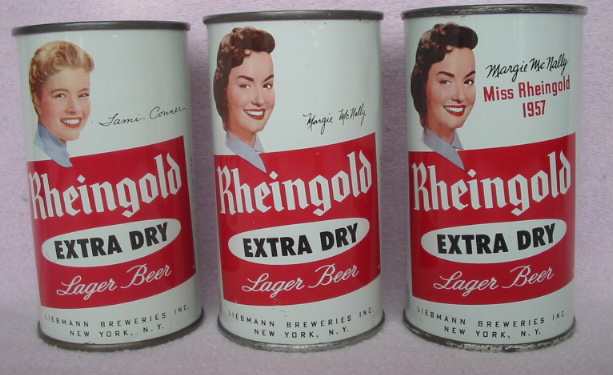
Rheingold Beer was one of the few remaining locally-based brewers to survive by the mid 20th Century, partially thanks to their annual Miss Rheingold beauty competition. [source]

This jingle, with true New York flavor, was featured in our podcast, but it really works better as a vintage television commercial!

And this Schaefer’s advertisement visualizes a world where robots are all-in-one bartenders.


I want to especially thank my guest host this week, Scott Nyerges, photographer, filmmaker and my old college friend! 

Oh, and do you need another reason to have a beer today? Well, it’s the birthday of Joseph Mitchell, born in 1908, the author of a great many profiles for The New Yorker. One of his best known collections is ‘McSorley’s Wonderful Saloon‘ from 1943, featuring a classic New York profile of the old ale house on East 7th Street.

Salute to Ulmer Park, short-lived Brooklyn beer getaway

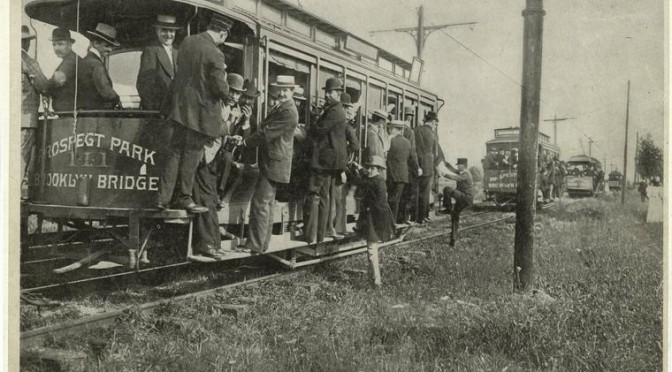
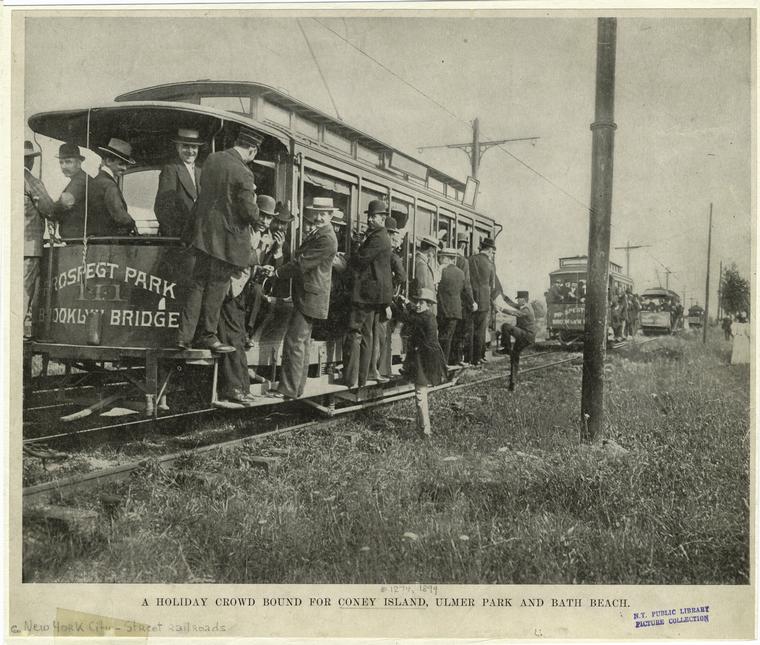
All aboard the train to Coney Island, Ulmer Park and Bath Beach Above pic courtesy NYPL

Next weekend on Coney Island is the annual Siren Festival, sponsored by the Village Voice. Are you going? Believe it or not, over a 100 years ago, there was once a time you could get your beer, music and mayhem at a Brooklyn ‘pleasure park’ just a few stops short of Coney Island — near today’s Bensonhurst neighborhood.

Ulmer Park was the lark of William Ulmer, one of Brooklyn’s most successful brewers in an age where much of the nation’s finest beer was coming from the future borough. The German-born son of a wine merchant who learned the trade from his uncle, Ulmer opened his eponymous brewery in the 1870s at Belvedere Street and soon came upon the idea of opening a park as a way of selling more beer. (Not a bad idea. Jacob Ruppert would have similar designs in mind when he bought the New York Yankees in 1915).

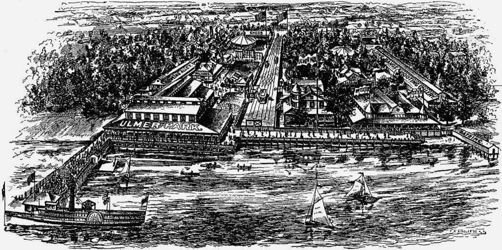
The park would open in 1893 in Gravesend Bay along the southern shore of Brooklyn — back when there was an actual shore — between Coney Island farther south and the more conservative Bath Beach resort community to its west. Ulmer Park seemed to have more in common with Bath Beach — clean, family friendly (keep Dad happy so he keeps drinking!) with a beer garden, carousels and swings, rifle ranges, a dance pavilion and of course plenty of beachfront property.

The park seemed to be particular popular with Germans — Ulmer after all was German, and this was a beer garden — and particularly the annual ‘Saengerfest’ festival. A Times article even claims that 100,000 gathered at Ulmer Park for the end of one such festival.

Below: an illustration of Ulmer Park. Note the grand pier which stuck out into into the bay

We can get a good idea of Ulmer’s intentions for the park by looking at his failure at obtaining a “liquor tax certificate” (or license) in a report from 1900. “A picnic ground, or open air pleasure resort, of about two acres” between Harway Avenue and the shore, the park had a bowling alley, a pier with canopied bar at the end, two or three other beer pavilions scattered throughout the property and a hotel.

Ultimately, neither the resort at Bath Beach nor amusements at Ulmer Park could compete with Coney Island which was about to enter its golden age in the early 1900s; apparently, it was grit and decadence people wanted in their summertime Brooklyn getaways. Ulmer closed in 1899.

The land remained a public space hosting baseball, cricket and track and field events. Eventually it was wiped away and redeveloped. It remains in name only, at the Ulmer Park branch of the Brooklyn Public Library and the name of the neighborhood bus depot.

For your frame of reference, the park was located a couple blocks west of today’s bus depot, located here:

View Larger Map

FYI, did you know that Central Park and Prospect Park designer Calvert Vaux drowned “under mysterious circumstances” in 1895 and that his body washed up on shore not too far away from Ulmer Park?

Categories
Podcasts

PODCAST: Williamsburg(h), Brooklyn

Williamsburg used to have an H at the end of its name, not to mention dozens of major industries that once made it the tenth wealthiest place in the world. How did Williamsburgh become a haven for New York’s most well-known factories and then become Williamsburg, home to such wildly diverse communities — Hispanic, Hasidic and hipster? Find out how its history connects with whalebones, baseball, beer, and medicine for intestinal worms.

Listen to it for FREE on iTunes or other podcasting services. Or click this link to listen to the show or download it directly from our satellite site.

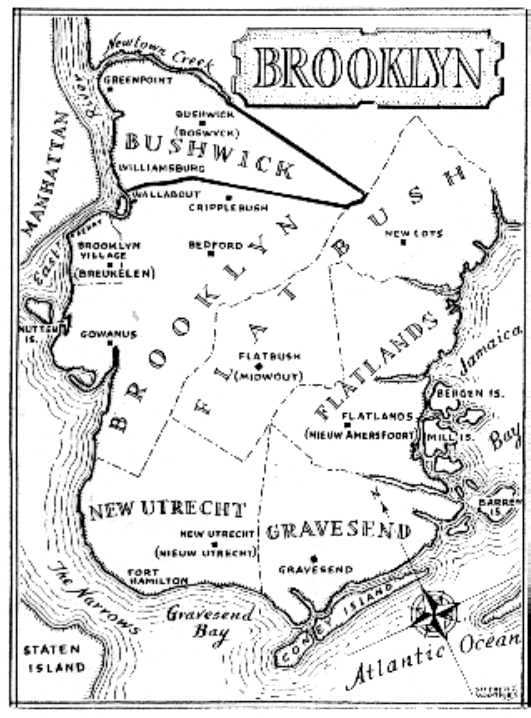
A modern map of the townships of Kings County. Cripplebush is listed here as a settlement in Brooklyn. The dense undergrowth that gave Cripplebush its name stretched well into the jurisdiction of Bushwick, which the Dutch actually called Boswijck.

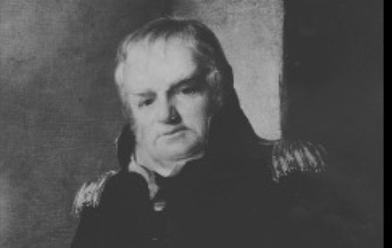
The esteemed Lt Col. Jonathan Williams, who surveyed the land along the Bushwick shore and eventually gave Williamsburg its name. You can also find his handywork at Castle Clinton and Castle Williams (also named after him).

Another father of Williamsburg, David Dunham, can still be found today on a very tiny street near the bridge called Dunham Place. (Forgotten New York has a great look at this odd little side street.)

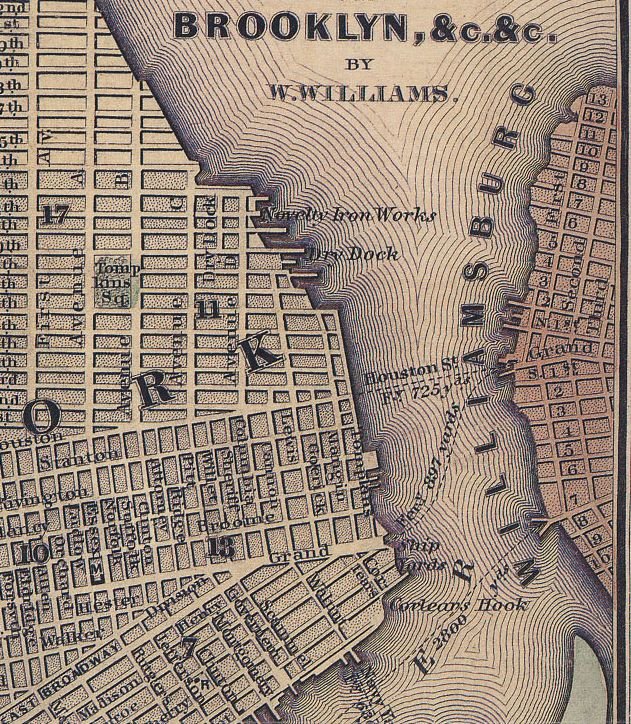
A detail from this mid-19th century map of New York and Brooklyn indicates the two ferry paths across the East River from the Grand Street dock in Williamsburg.

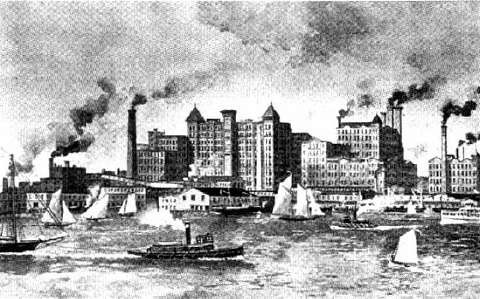
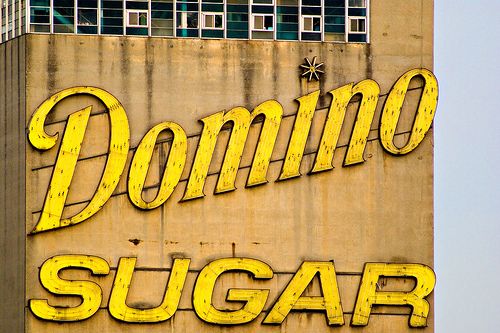
The Williamsburg waterfront during the 1880s. Havemeyer’s sugar refinery became one of the most profitable businesses along the East River. It became Domino Sugar in 1900.

While Havemeyer’s factory, closed in 2004, has been landmarked, its future could include a vast complex of condominiums — but with community opposition and a $1.3 billion dollar price tag, is it viable?

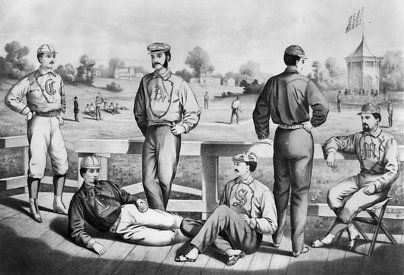
These fancy guys are relaxing after a vigorous game of baseball at the Union Grounds, the first to fence in the playing field and charge spectators. Check out our previous article on this historic place and where you can find its location today.

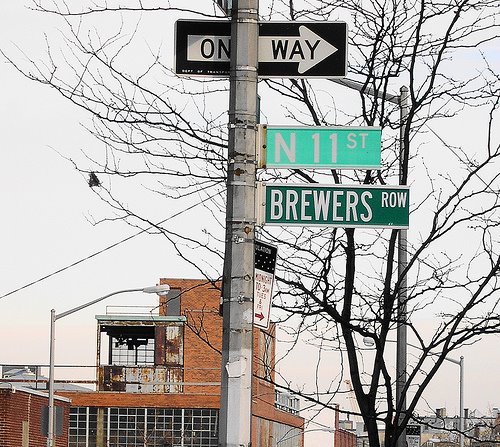
There are no more breweries along Brewer’s Row, but the once grand boulevard of beer makers that stretched from Williamsburg to Bushwick is still recognized on street signs.

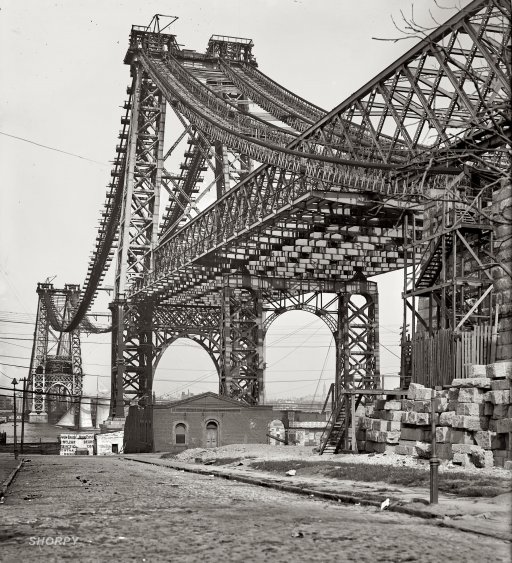
The East River Bridge (today the Williamsburg Bridge) in 1902. It would be opened a year later, opening the neighborhood to thousands of new residents fleeing overcrowded Lower East Side (pic courtesy Shorpy)

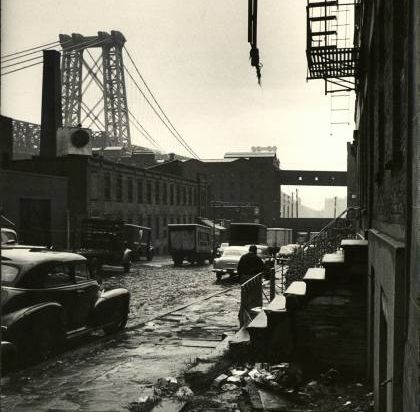
Williamsburg in 1954, not the sunniest place ever. Photo by Alfred Eisenstaedt (LIFE archives)

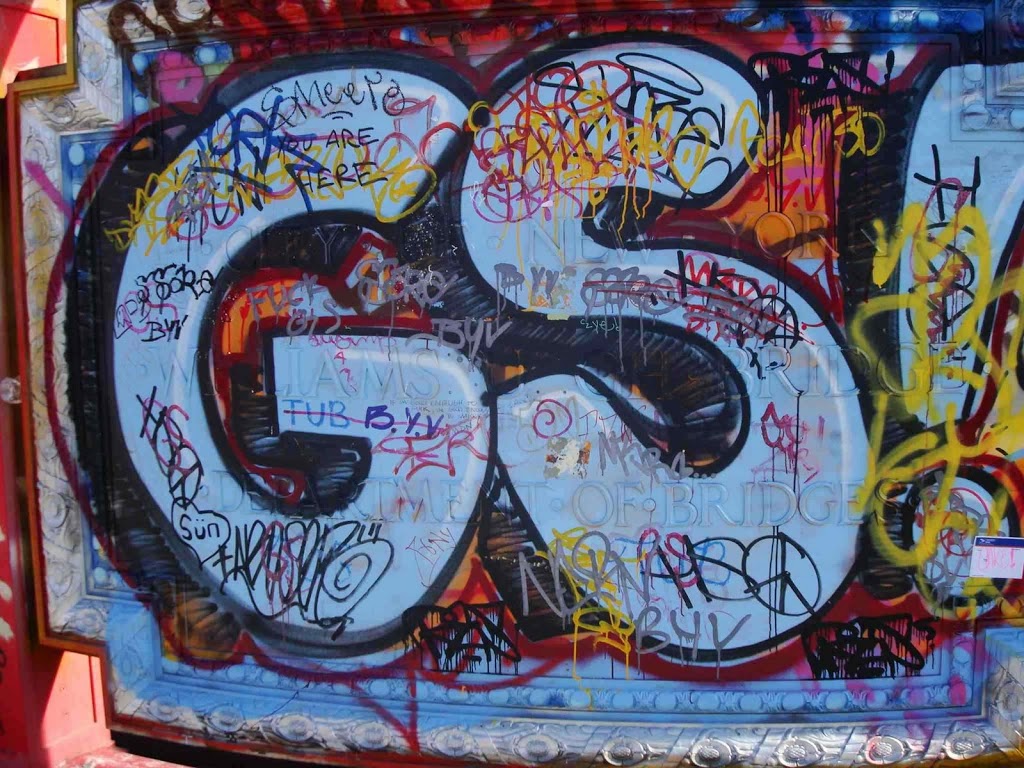
Look really closely at this dedication found at the pedestrian fork on the Williamsburg Bridge. If you scrape away the graffiti, you’ll see Williamsburg with an H on the end. (Click it to get a closer look.)

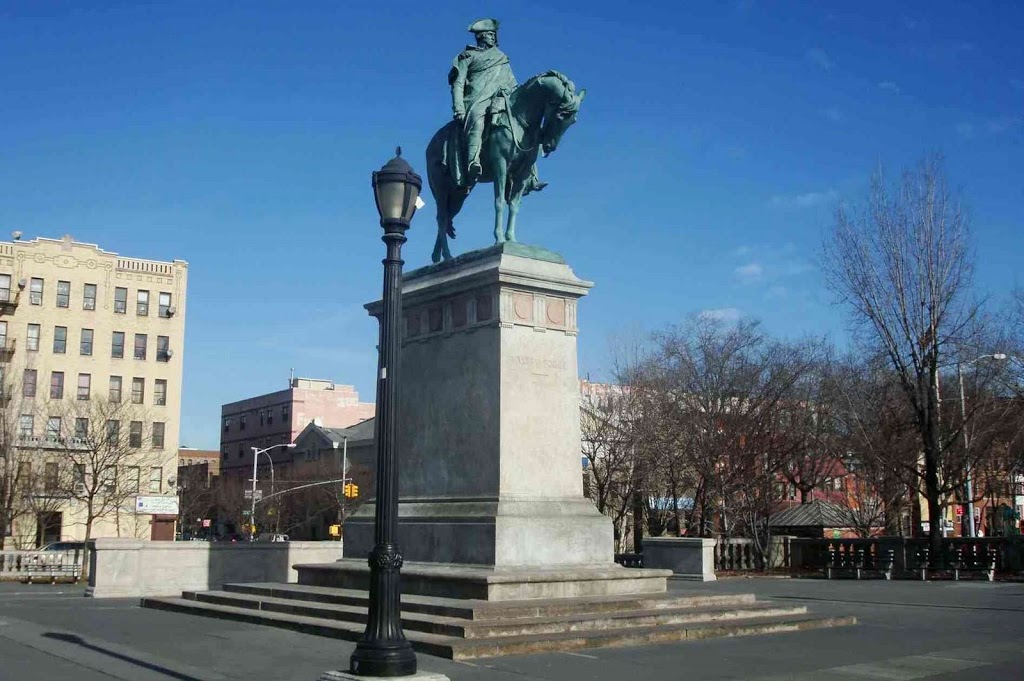
Continental Army Plaza, now overlooking the entrance and exit ramps of the Williamsburg Bridge. An engraving in the sidewalk points towards Valley Forge. The statue and the plaza were installed shortly after the opening of the bridge. So, in fact, this has pretty much always been George’s view.

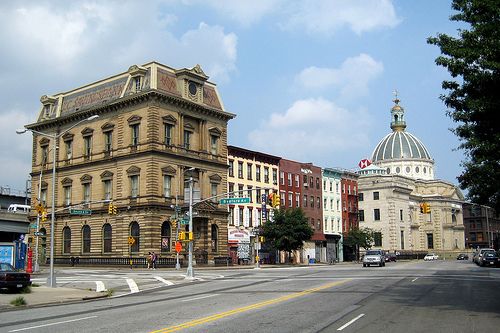
Two gorgeous examples of Williamsburg’s opulent past — the Kings County Savings Bank (built in 1868!) in the foreground, and the George Post’s domed Williamsburgh Savings Bank in the distance. (pic courtesy Flickr)

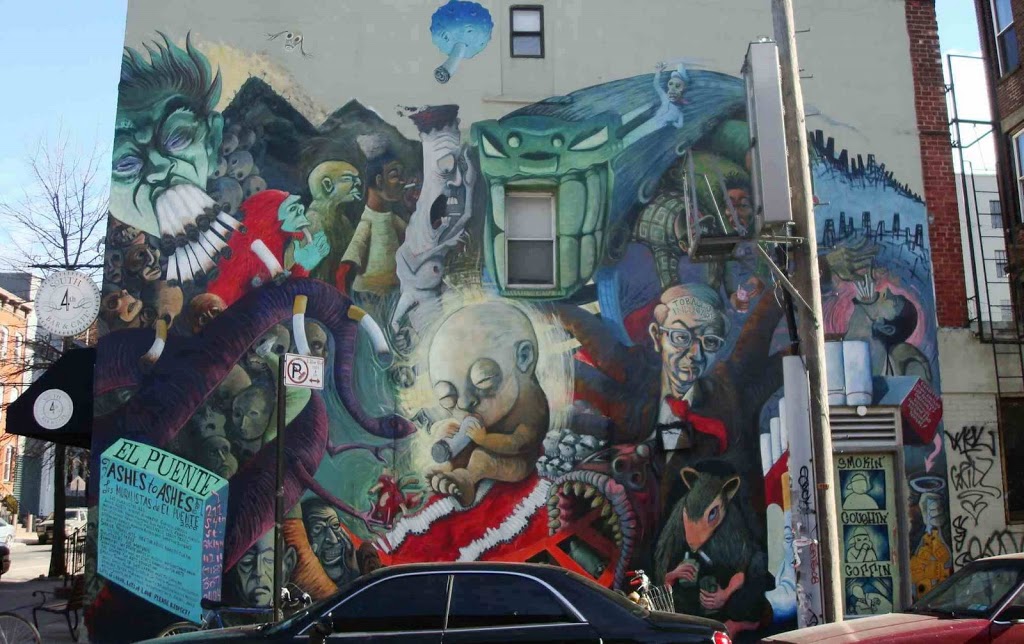
A mural just north of the bridge. Don’t smoke, kids!