Categories
Bridges Brooklyn History Landmarks

Deadly Rumor: The Brooklyn Bridge Collapse That Didn’t Happen

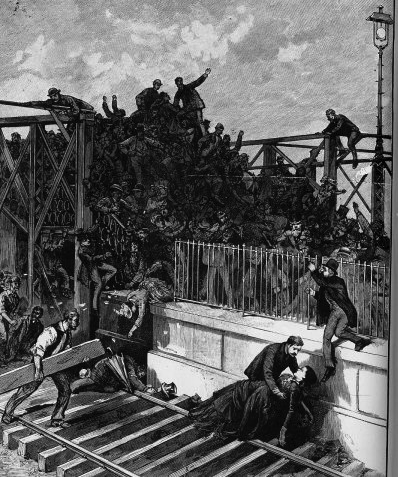
On May 30, 1883 — one week after it officially opened — 12 people were killed in a horrifying trample caused by the collapse of the Brooklyn Bridge.

Except of course, the Bridge didn’t actually collapse.

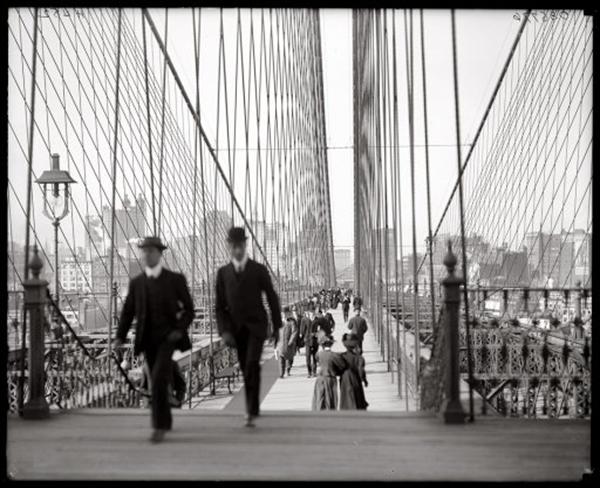
Photo_957

The prior week, the Brooklyn Bridge opened to terrific fanfare, with almost 14,000 people invited to cross this architectural behemoth which had sat in their harbor under construction for years.

The experience of crossing for the first time — to experience the sprawling city from a vantage in the harbor and at equal height of the tallest buildings of the time — must have been immense. And rather frightening.

One week later, on May 30th (Memorial Day that year), the path was still clogged with curiosity seekers.

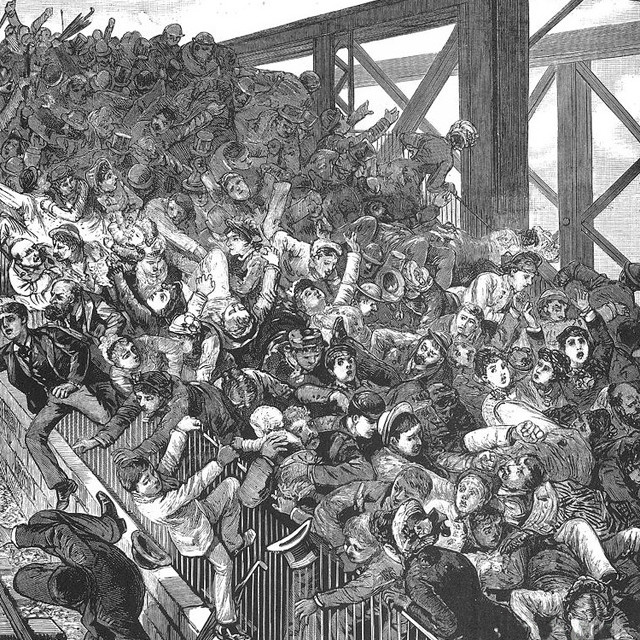
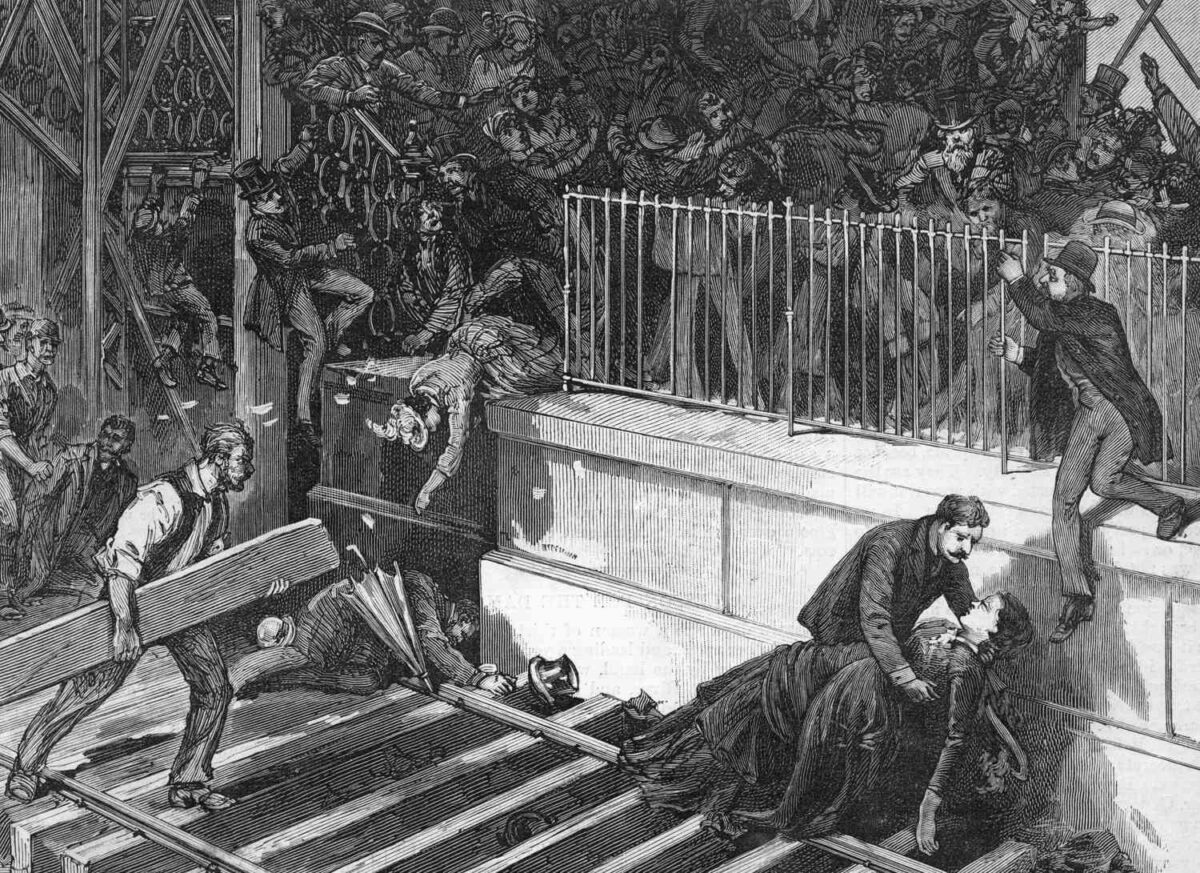
Suddenly a woman fell on the stairs walking up on the Manhattan side, and her friend screamed.

Just this unnerving act alone created a rumor that the new bridge was about to collapse, that it couldn’t take the weight of all these people.

Panic ensued and people stampeded in every means possible to escape off the bridge. I feel the editorial from the Brooklyn Daily Eagle says it best:

“Two men tried to raise the prostrate woman and were instantly trampled and paid forfeit with their lives. In a few seconds human beings were piled four deep at the foot of the steps, and the crowd was hurried over them.”

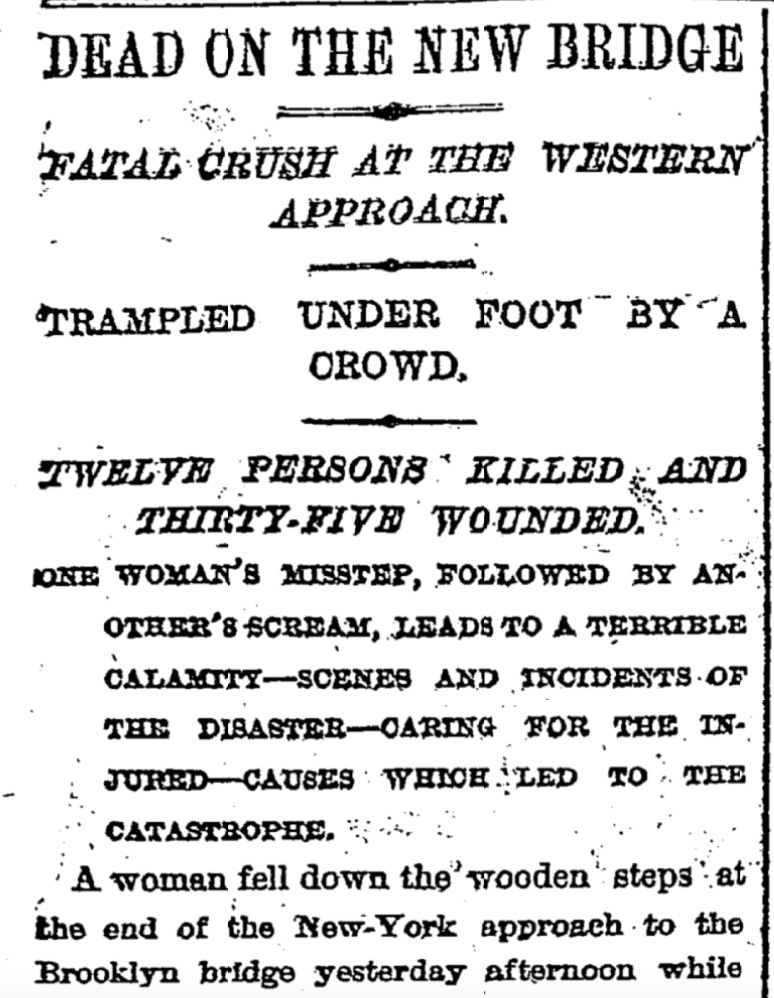
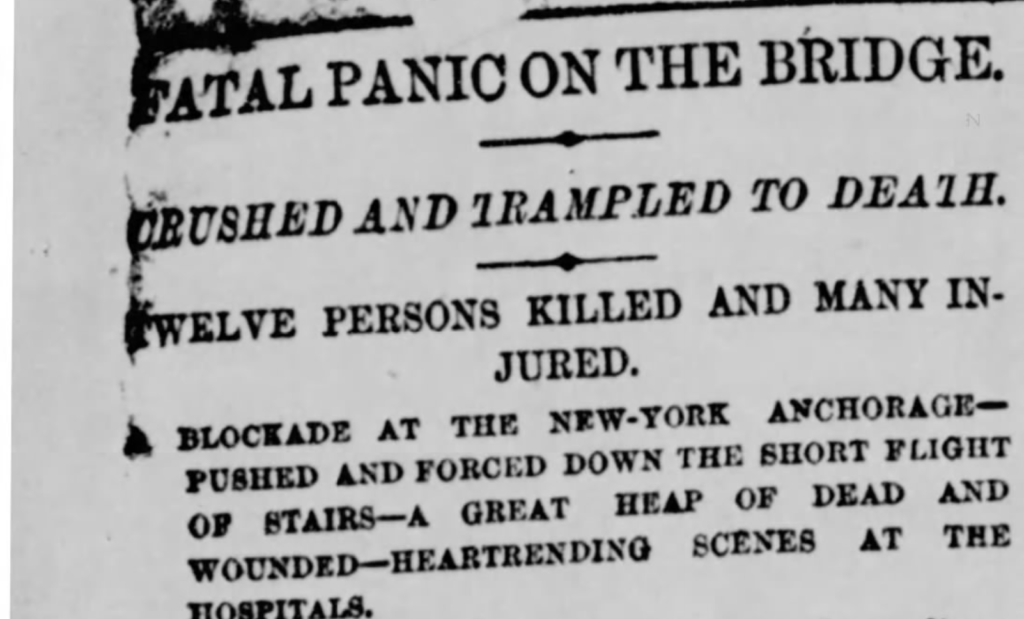
Top story of the New York Times, May 31, 1883

From the report of a police officer on the bridge:

I was just above the stairs, at the side of the promenade. There was a crowd going in each direction and I was trying to keep them moving. A woman stumbled on the stairway below the landing and fell. Another woman at the head of the stairway saw her fall, and she screamed. The whole thing was caused by that woman screaming.”

“Then came the rush and the panic. I succeeded in getting up the woman who had fallen, but my hands were stepped on and my head kicked. I tried to drive back the crowd but could do nothing. It seemed as though the people didn’t see the stairs till they were pushed headlong down them by the rushing crowd behind.

1

Under a grim heading ‘The Pile of Dead’ in the New York Sun sits some frightful descriptions by survivors:

I felt the pulse of a number of those who were taken out. The first was a woman, who lay on her back just below the steps, with one arm twisted under her and the other hand clenching the reman of a child’s shawl. She had gray hair. Her forehead had been cut by the fall and her face was stained with blood. I believe she died before they got her off the bridge.”

New York Tribune

In the bloody tussle, 12 people died and over 36 were seriously injured. The victims ranged in age from 15 to 60, according to the Tribune.

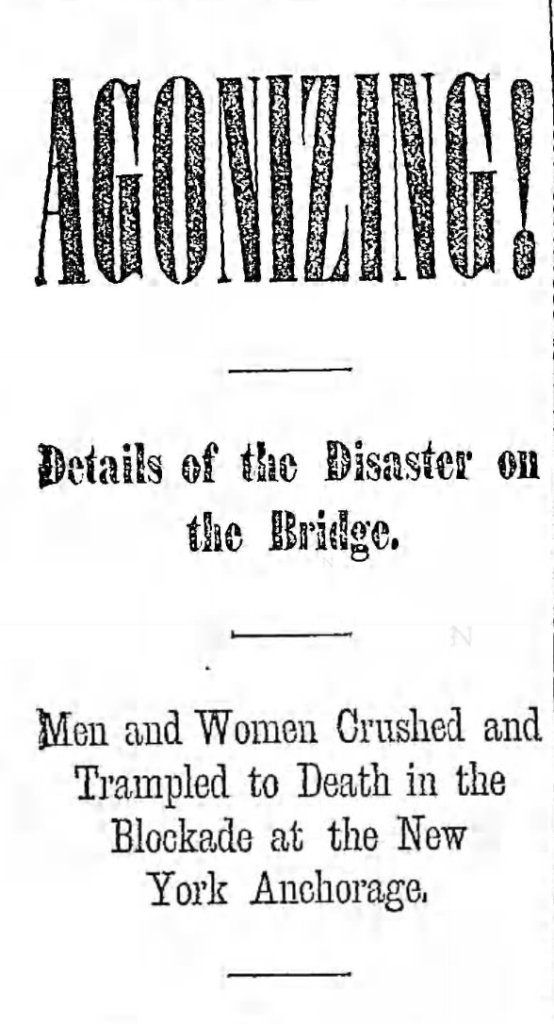
Brooklyn Daily Eagle, May 31, 1883

The bridge, of course, wasn’t in any danger of collapsing. But few who walked upon it had ever stepped upon such a thing and it must have been a disorienting experience for the uninitiated.

And newspapers were periodically filled with the news of collapsing bridges. Only a few years before, on December 28, 1879, seventy-five people were killed when Scotland’s Tay Bridge collapsed during a storm.

Closer to home, a railway accident upon a bridge in Little Silver, New Jersey, killed three and injured dozens. (One of the survivors was former president Ulysses S. Grant.)

Following this unfortunate disaster upon the bridge, Brooklyn beefed up the police presence upon the bridge. “The order had evidently gone forth to keep everything moving for officers were stationed on the broad platforms circling the middle pier of each tower — favorite resorts hitherto for loungers and for others who want a shady spot in which to rest.” [source]

A variation of this article originally ran in 2007.

Categories
Brooklyn History Podcasts

Treasures of Downtown Brooklyn: Remnants of the former independent city, hidden in plain sight

PODCAST The fascinating history of Brooklyn’s most bustling — and most frequently misunderstood — neighborhood.

Downtown Brooklyn has a history that is often overlooked by New Yorkers. You’d be forgiven if you thought Brooklyn’s civic center — with a bustling shopping district and even an industrial tech campus — seemed to lack significant remnants of Brooklyn’s past; many areas have been radically altered and hundreds of old structures have been cleared over the decades.

But, in fact, Downtown Brooklyn is one of the few areas to still hold evidence of the borough’s glorious past — its days as an independent city and one of the largest urban centers in 19th century America.

Around Brooklyn City Hall (now Borough Hall) swirled all aspects of Brooklyn’s Gilded Age society. With the construction of the Brooklyn Bridge and a network of elevated railroad lines, Downtown Brooklyn became a major destination with premier department stores on Fulton Street, entertainment venues like the Brooklyn Academy of Music and exclusive restaurants like Gage & Tollners.

The 20th century brought a new designation for Brooklyn — a borough of Greater New  York — and a series of major developments that attempted to modernize the district — from the creation of Cadman Plaza to New York’s very own ‘tech hub’. In 2004 a major zoning change brought a new addition to the multi-purpose neighborhood — high-end residential towers. What will the future hold for the original heart of the City of Brooklyn?

LISTEN HERE:

_________________________________________________________

The Bowery Boys: New York City History podcast is brought to you …. by you!

We are now producing a new Bowery Boys podcast every other week. We’re also looking to improve the show in other ways and expand in other ways as well — through publishing, social media, live events and other forms of media. But we can only do this with your help!

We are now a member of Patreon, a patronage platform where you can support your favorite content creators for as little as a $1 a month.

Please visit our page on Patreon and watch a short video of us recording the show and talking about our expansion plans. If you’d like to help out, there are five different pledge levels (and with clever names too — Mannahatta, New Amsterdam, Five Points, Gilded Age, Jazz Age and Empire State). Check them out and consider being a sponsor.

And join us for the next episode of the Bowery Boys Movie Club, an exclusive podcast provided to our supporters on Patreon.

We greatly appreciate our listeners and readers and thank you for joining us on this journey so far.

__________________________________________________________

And a video about the history of MetroTech Center from NYU Polytechnic

The scene just north of Brooklyn Borough Hall, in a photo taken in the early 1900s. The Henry Ward Beecher monument would be moved further north with the creation of Cadman Plaza.
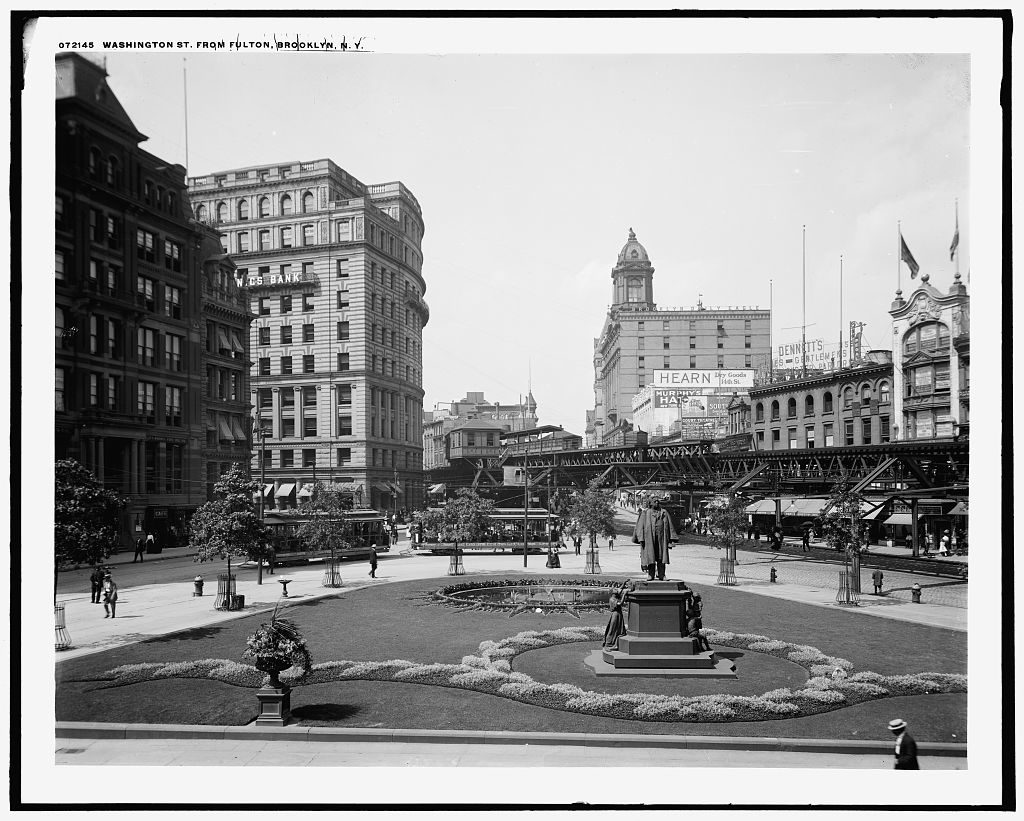
Detroit Publishing Company / Library of Congress

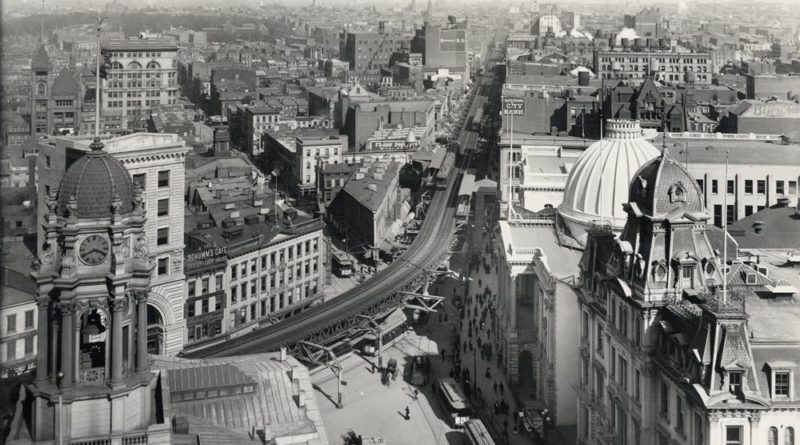
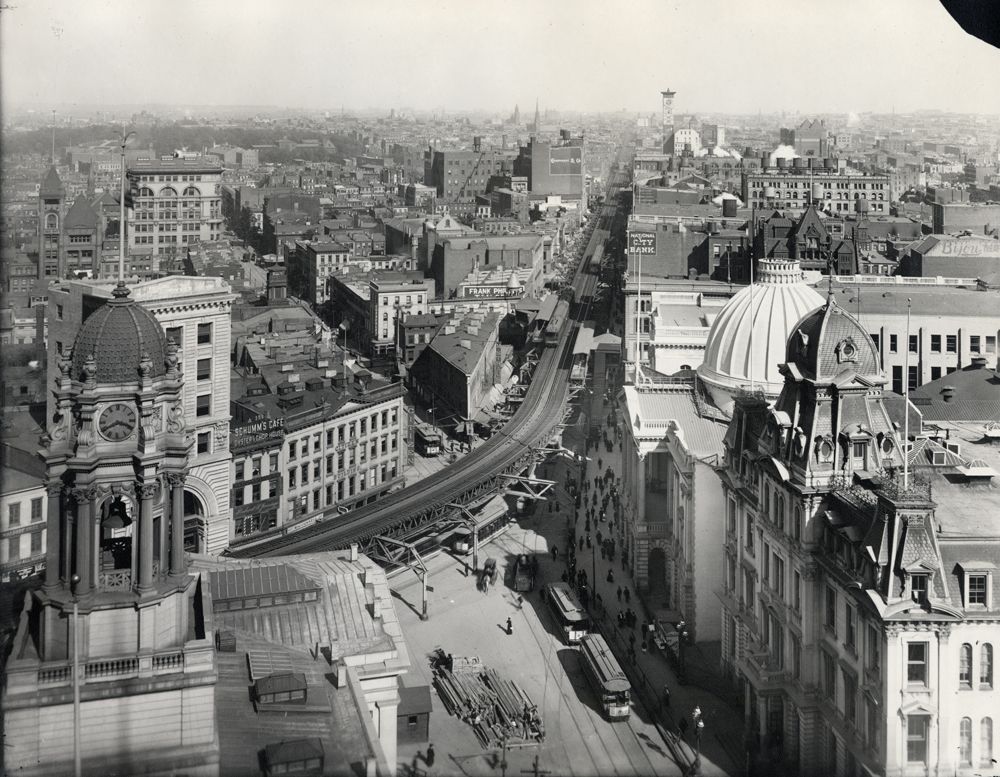
Downtown Brooklyn in 1892, a year of momentous change for the neighborhood. Here you see the elevated railroad snaking up Fulton Street with Brooklyn City Hall on the far left.
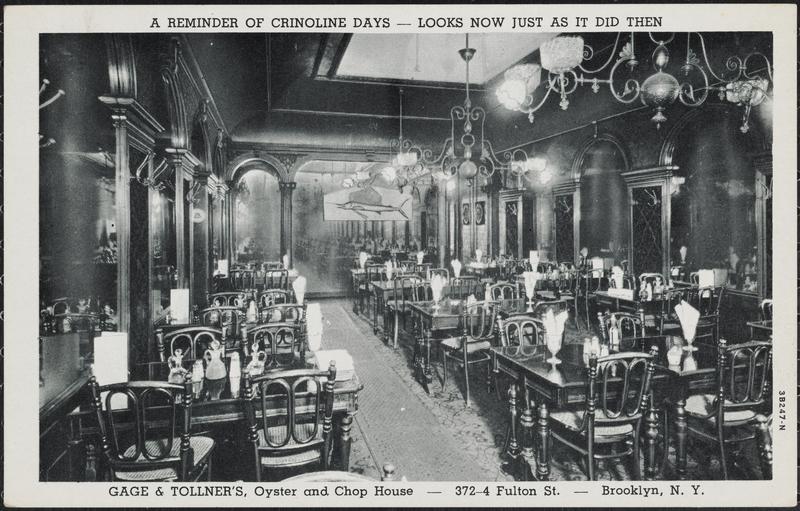
The classic interiors of Gage & Tollner’s exclusive restaurant on Fulton Street. The interiors are landmarks and you can actually peer into the storefront on Fulton Street to see them (although no business currently occupies the space.)
Museum of the City of New York
Susan De Vries/Brownstoner

Flatbush Avenue Extension from Fulton Street, 1914 (a few years after the opening of the Manhattan Bridge). Note the Crescent Theatre to the far right. It opened as a vaudeville/burlesque house and transitioned to silent films.
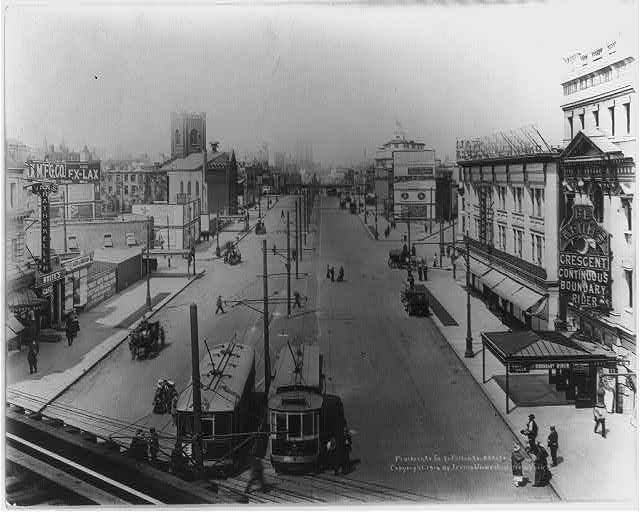
Library of Congress

Brooklyn Borough Hall in 1908 with its new neighbor, the Temple Court Building (constructed 1901).
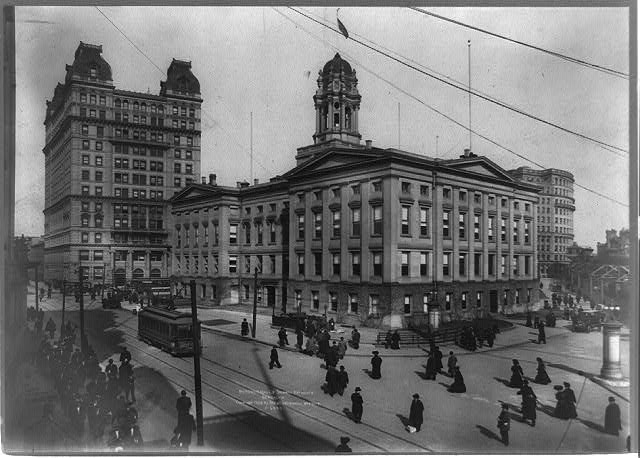
Irving Underhill/Library of Congress/ 1908

The post office was once next to the Brooklyn Daily Eagle offices. The Eagle building was demolished, as was Washington Street. (It became Cadman Plaza East.)
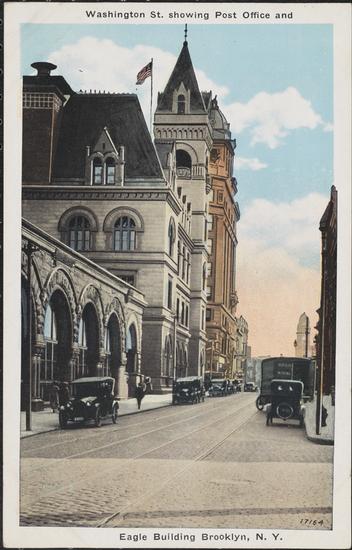
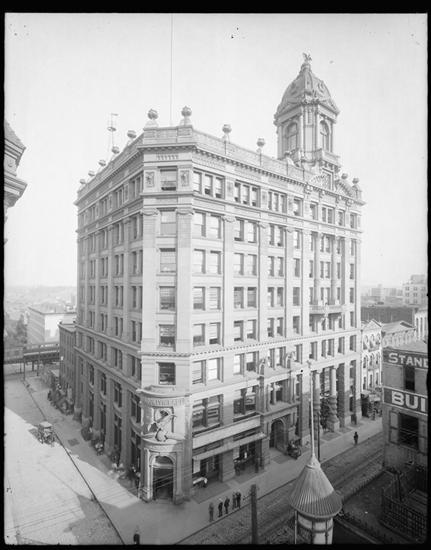
Museum of the City of New York

The post office building on Cadman Plaza in 1976, with the newly situated Henry Ward Beecher monument.
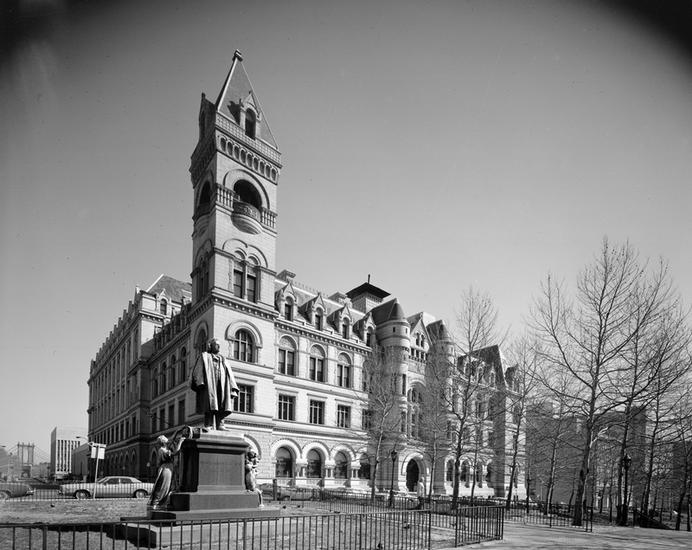
Edmund Vincent Gillon, Museum of the City of New York

A 1963 photo of Abe Stark, Brooklyn borough president, hovering over a model of the ‘new’ civic center plan for downtown Brooklyn.
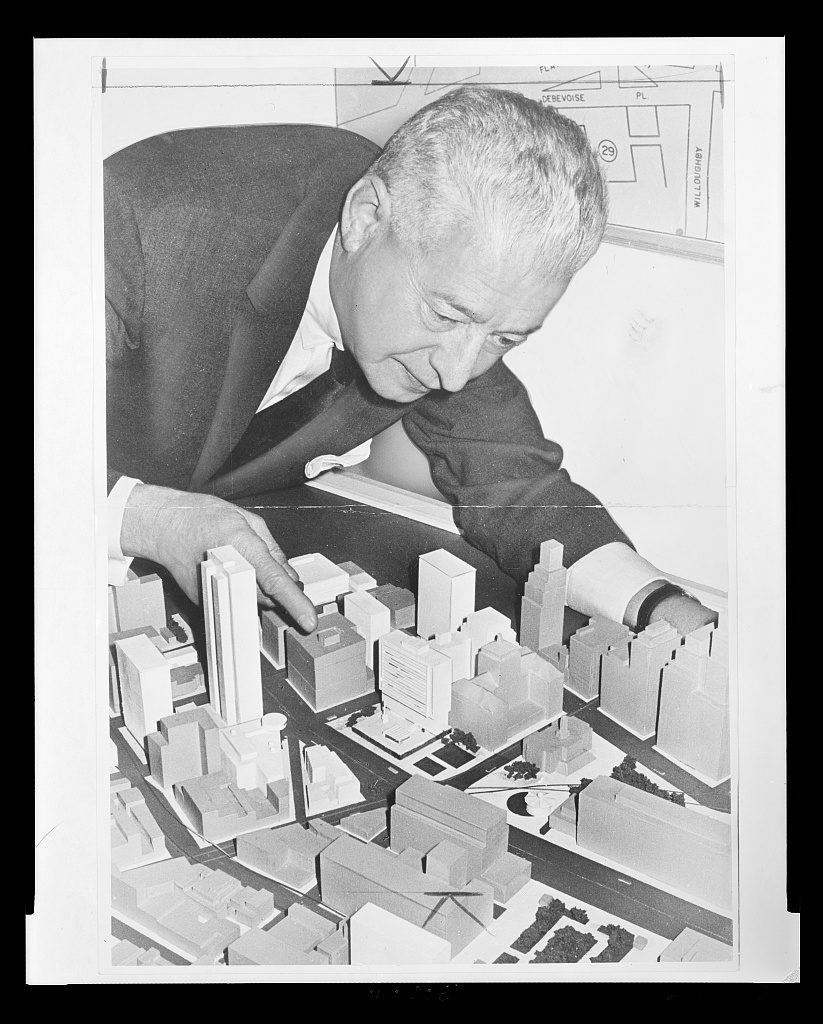
Higgins, Roger, photographer/Library of Congress

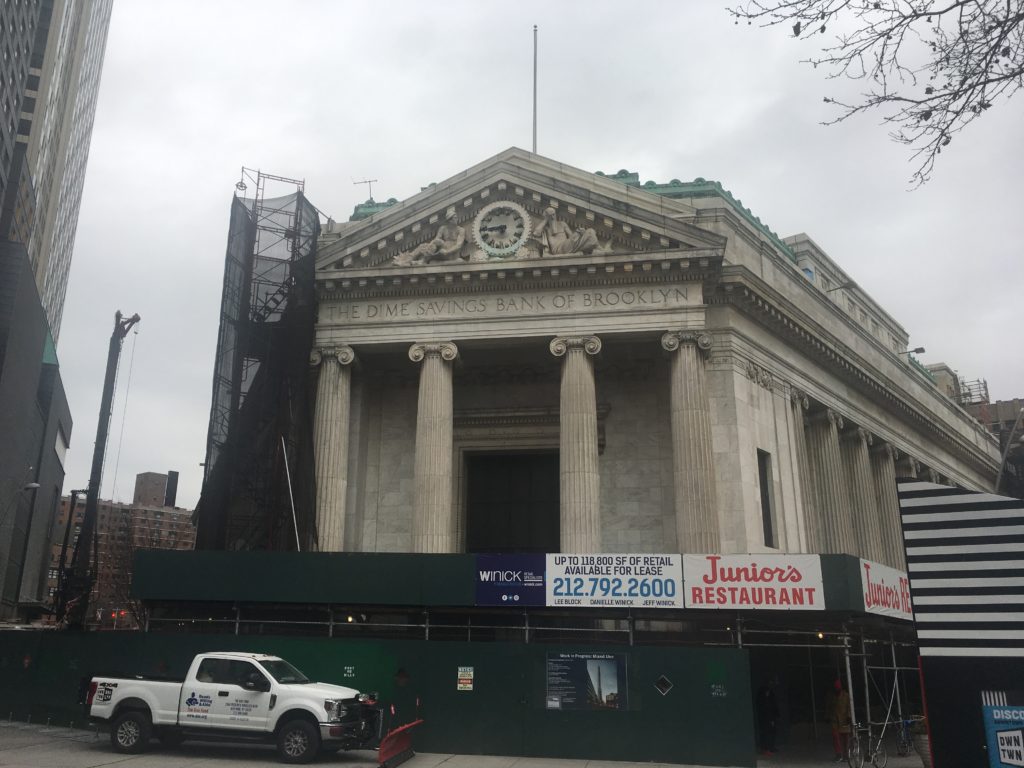
The Dime Savings Bank of Brooklyn is an oddity among the old retail shops of Fulton Street but its classical architecture has helped it survive the wrecking ball.
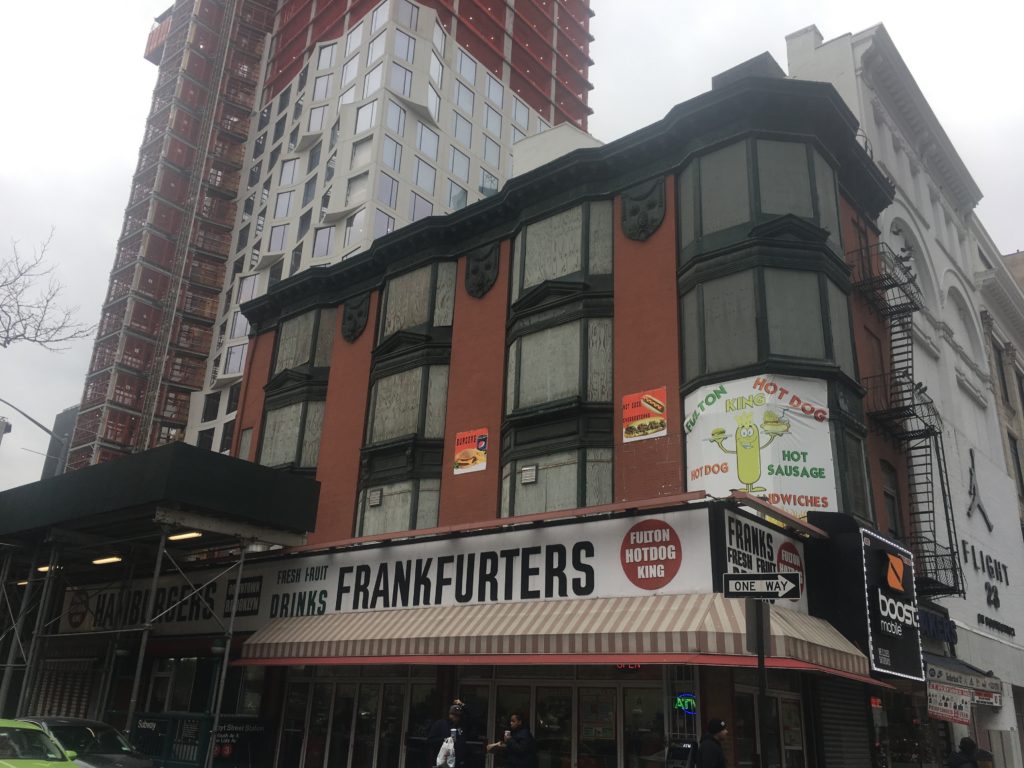
Look above the first or second floors on Fulton Street and you’ll find some curious and spectacular architectural finery.
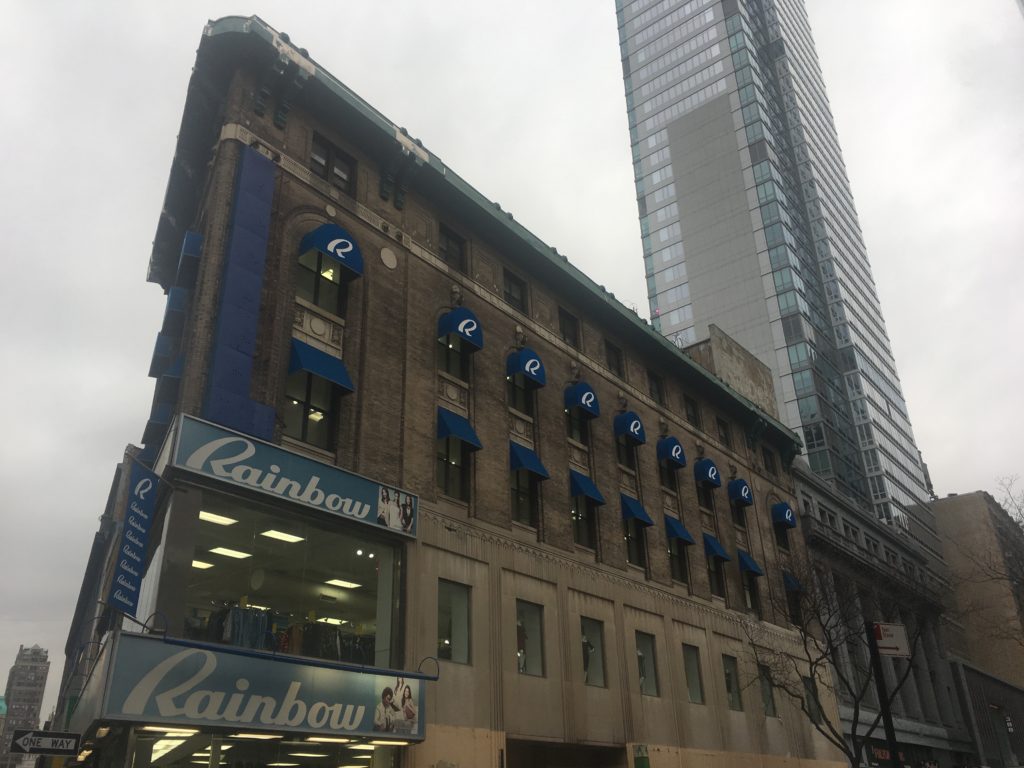
The landmarked Offerman Building, the most beautiful former department store on Fulton Street.
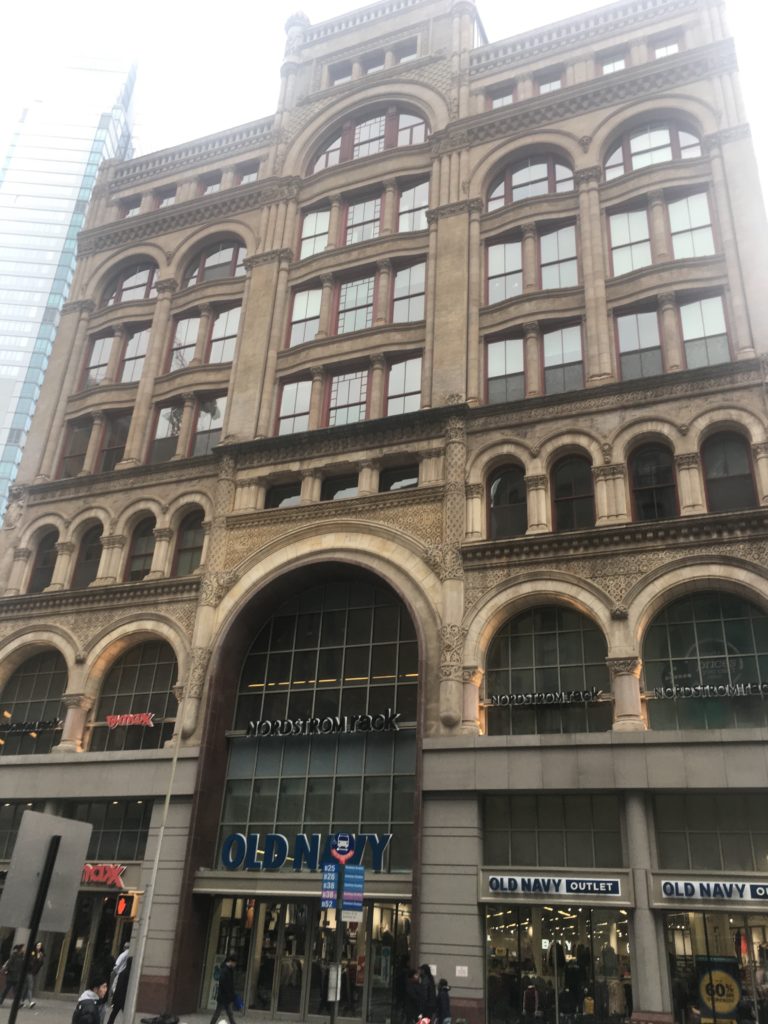
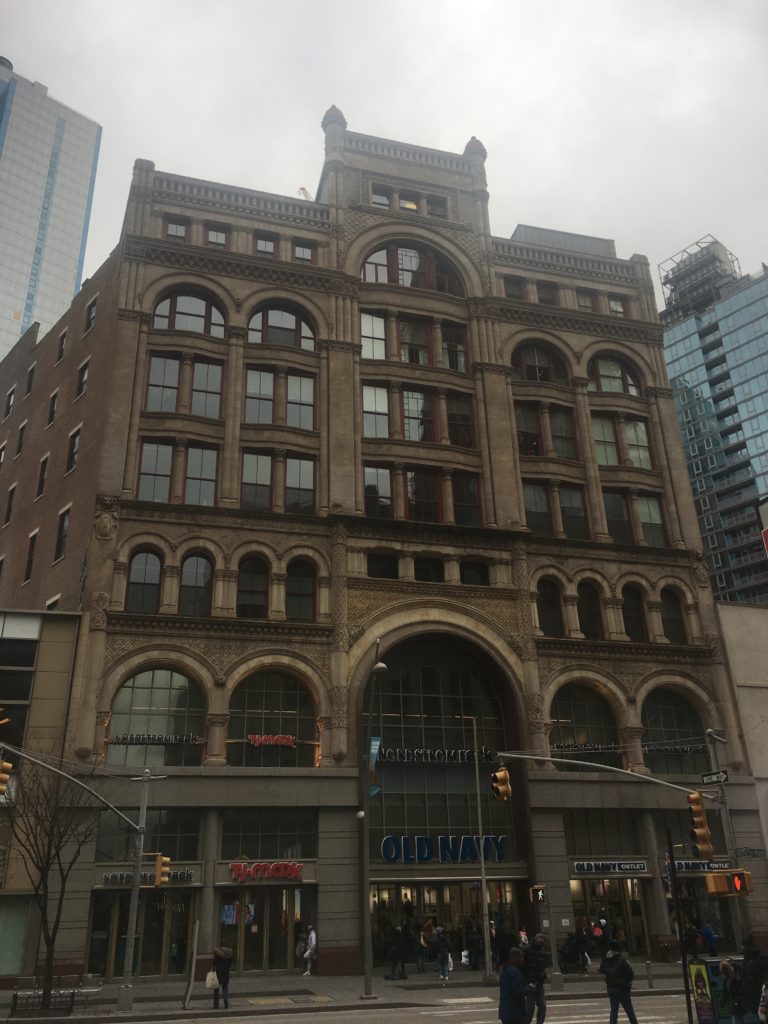
More department store richness:
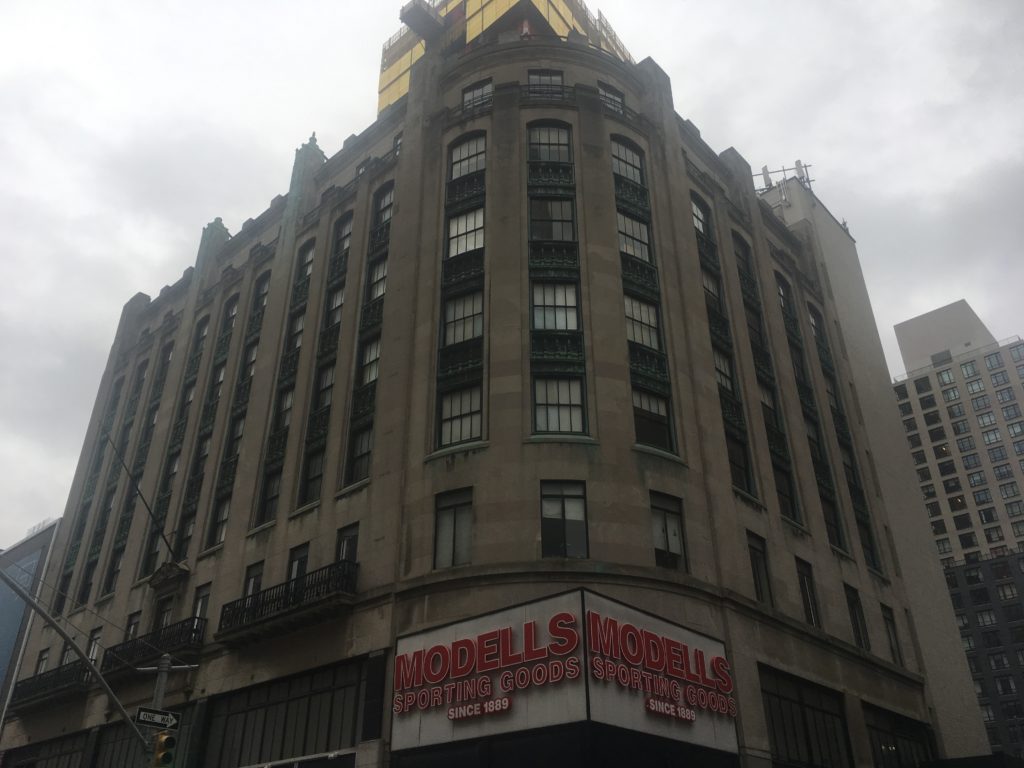
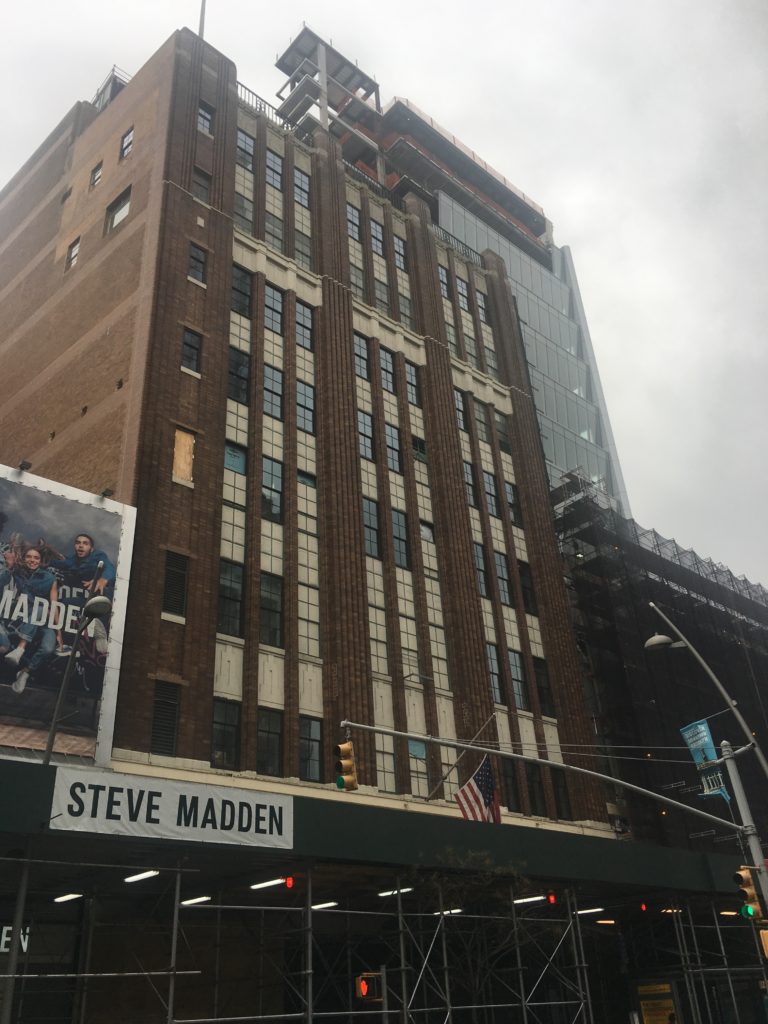
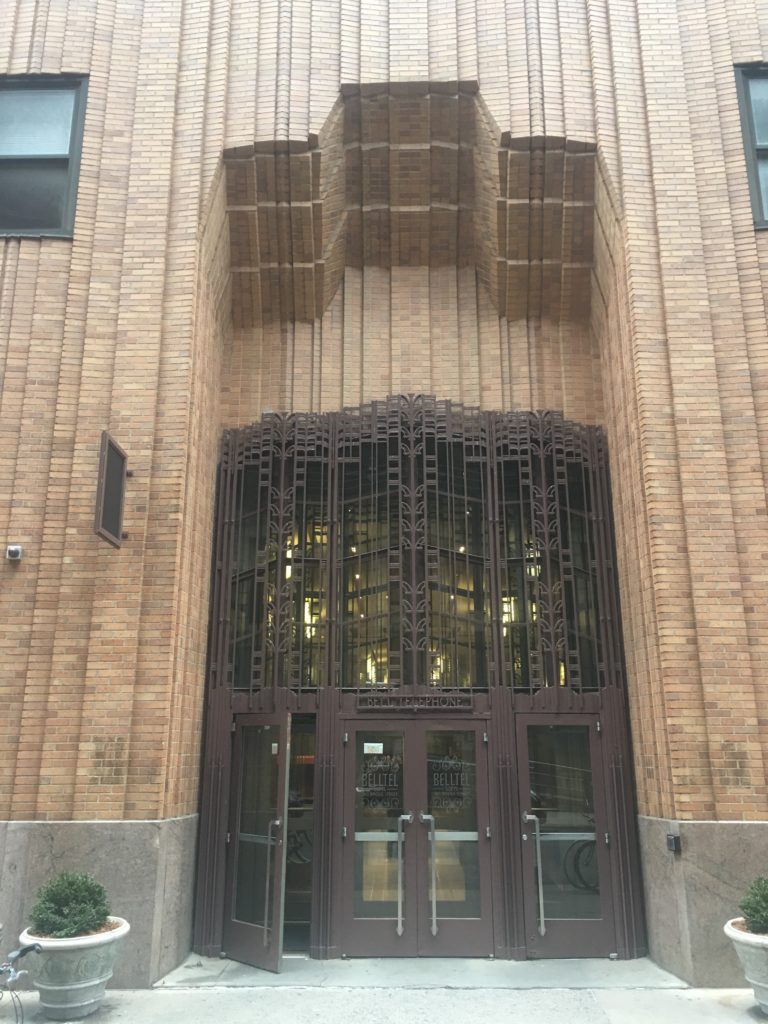
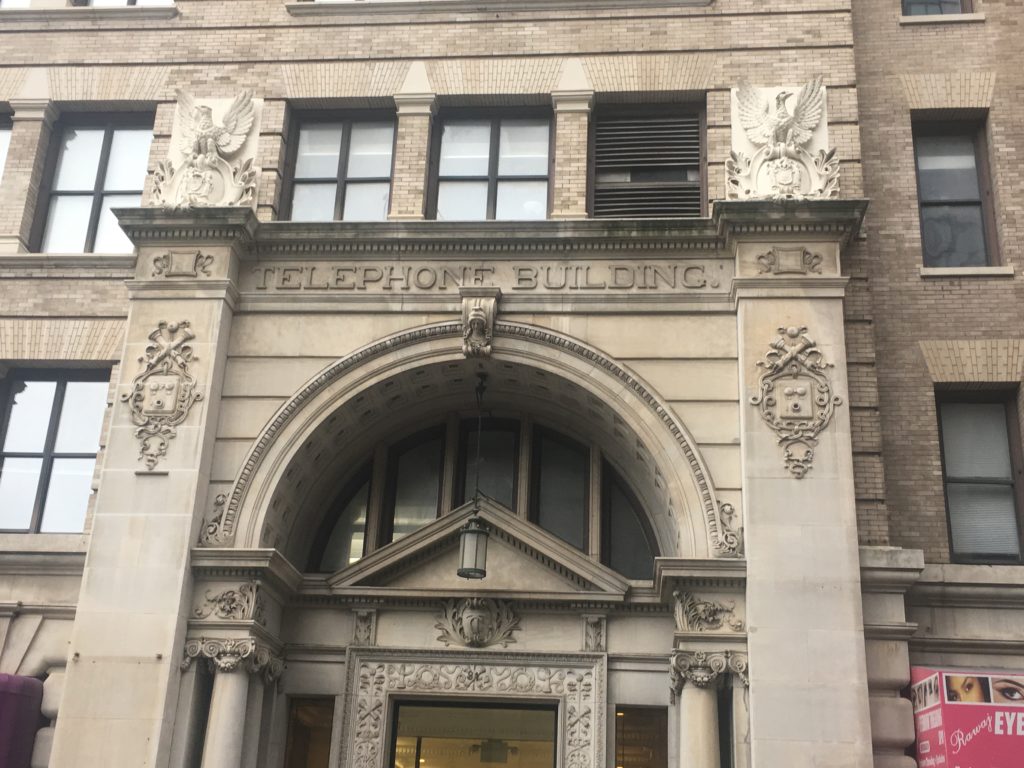
The New York Telephone Company Building and the NY and NJ Telephone and Telegraph Building both remain standing amid a sea of new supertall residential construction.
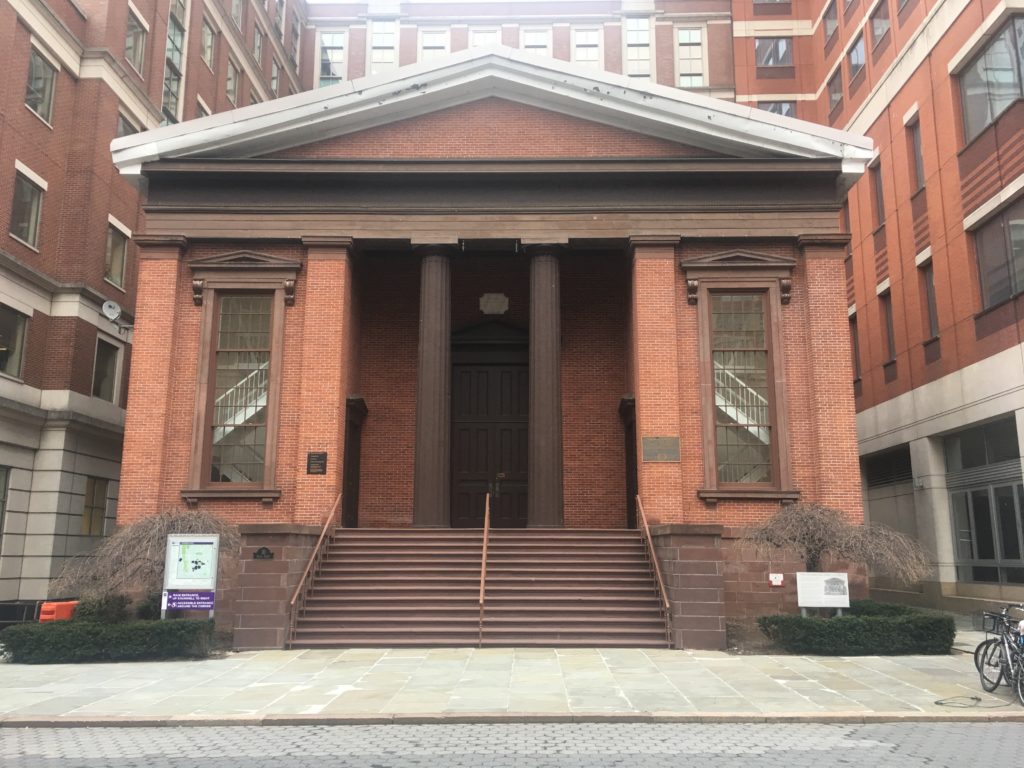
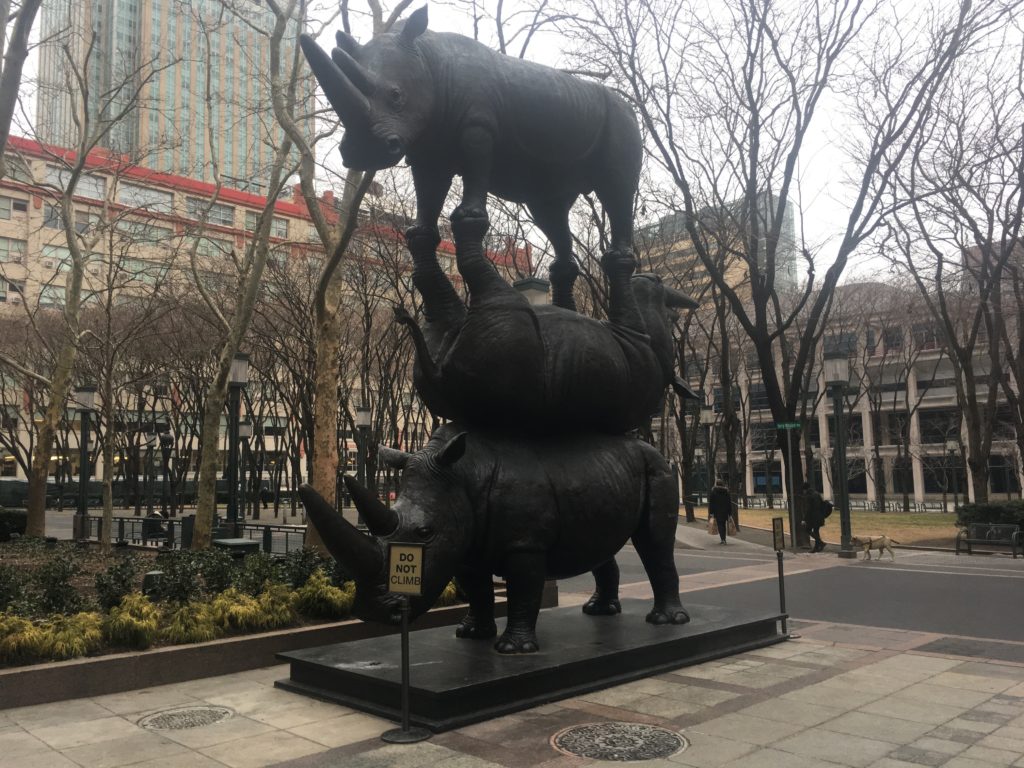
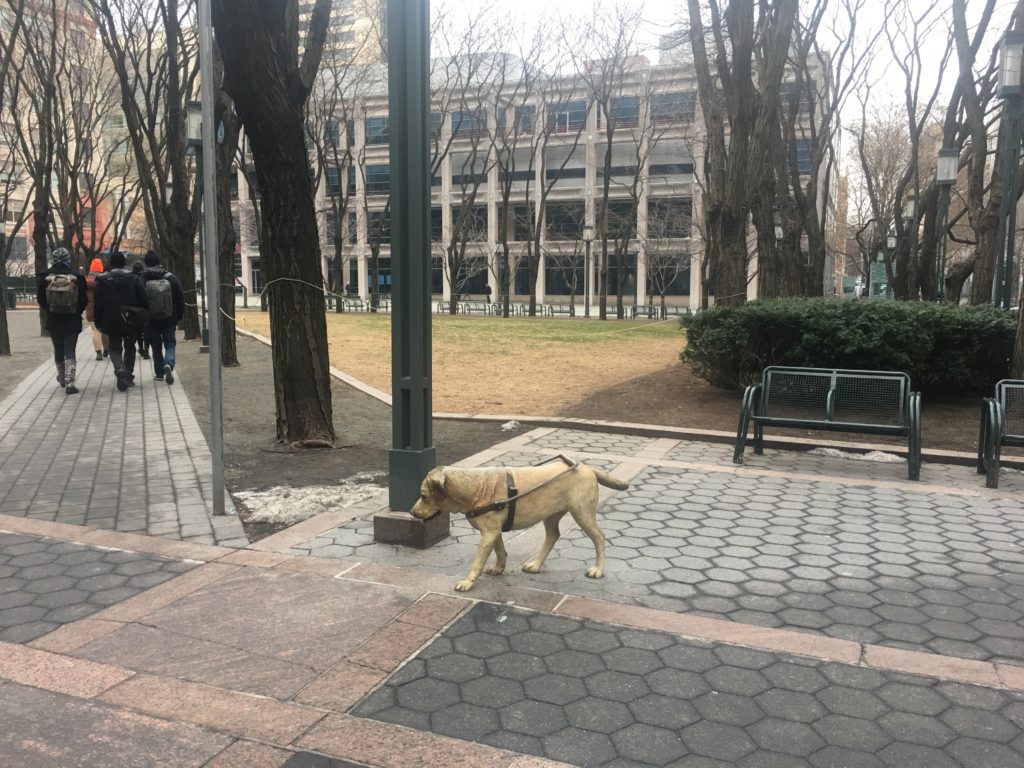
Some curious features of MetroTech Commons — two whimsical animal-themed sculptures and the Bridge Street Church, a historical landmark associated with the Underground Railroad.
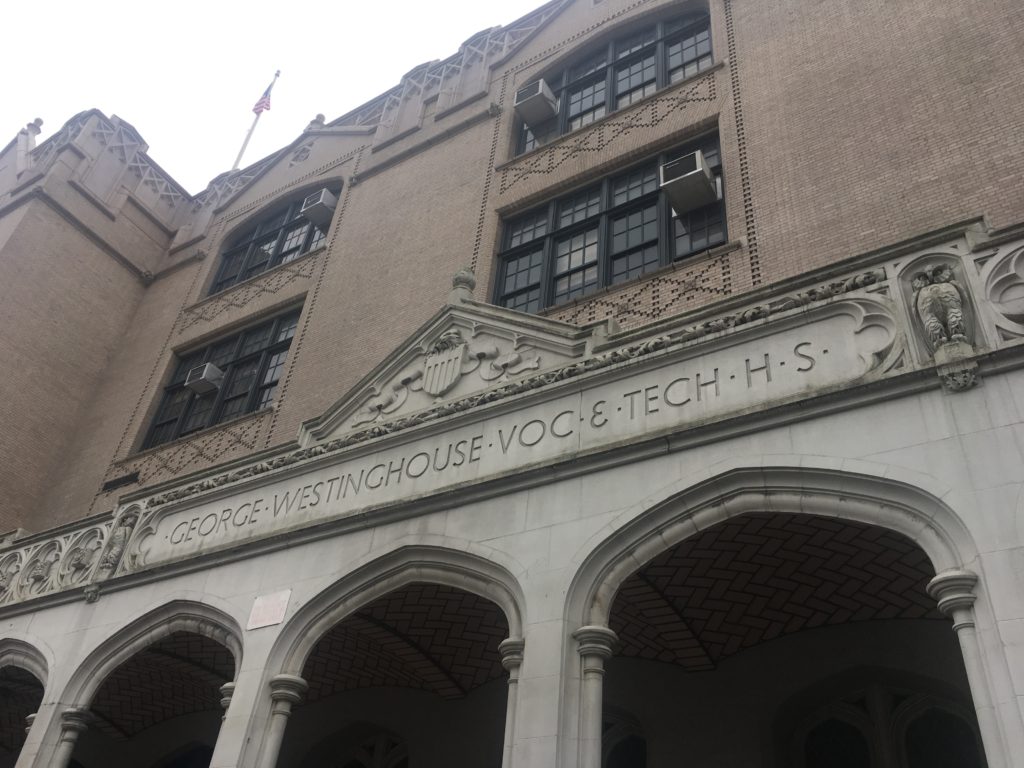
A block north of MetroTech Commons, you’ll find the historic George Westinghouse High School.
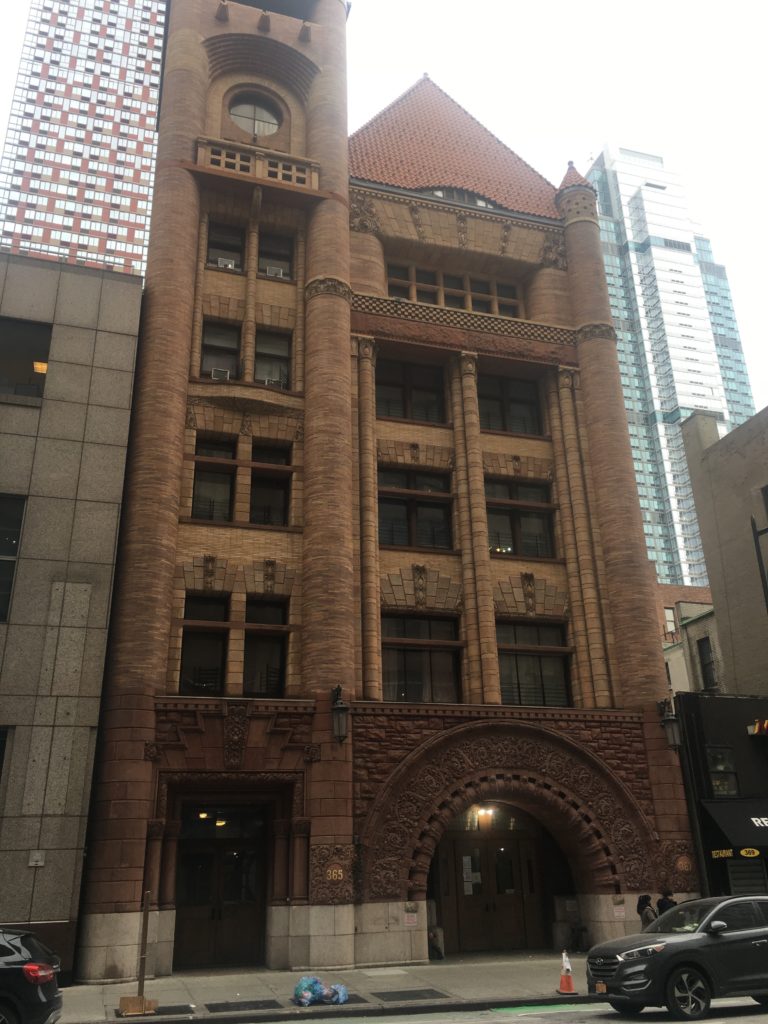
The old Brooklyn Fire Headquarters on Jay Street, built in 1892 in a style most unusual for the neighborhood — Richardsonian Romanesque Revival.
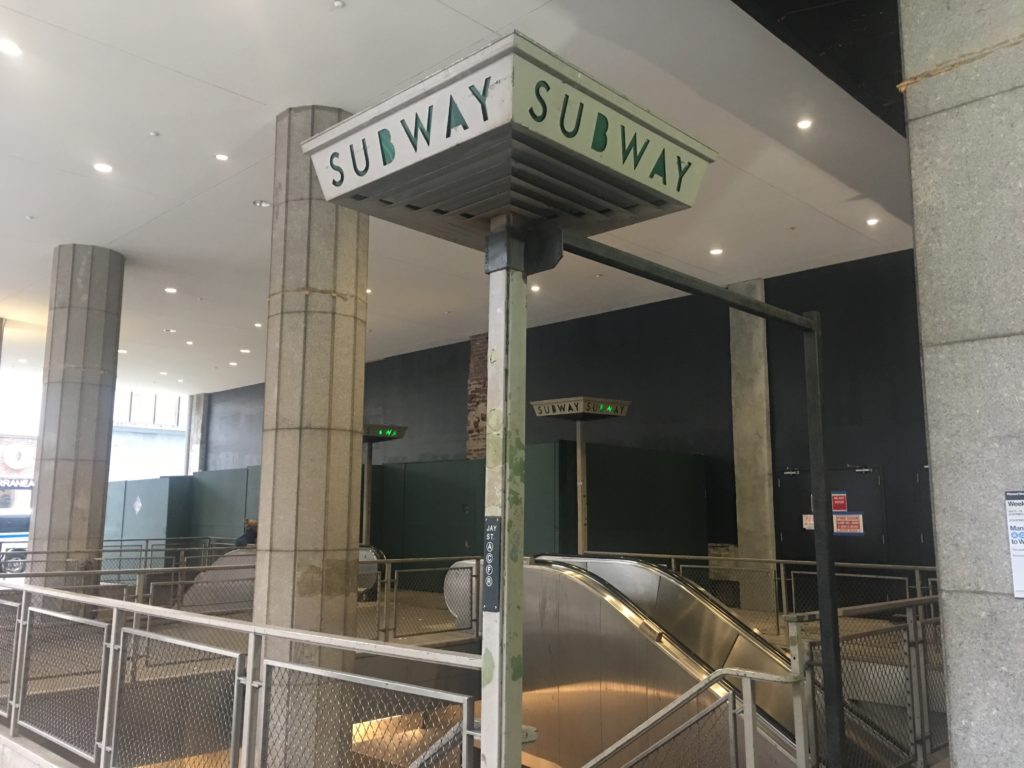
The Jay Street-MetroTech station still contains some quirky details from the past.
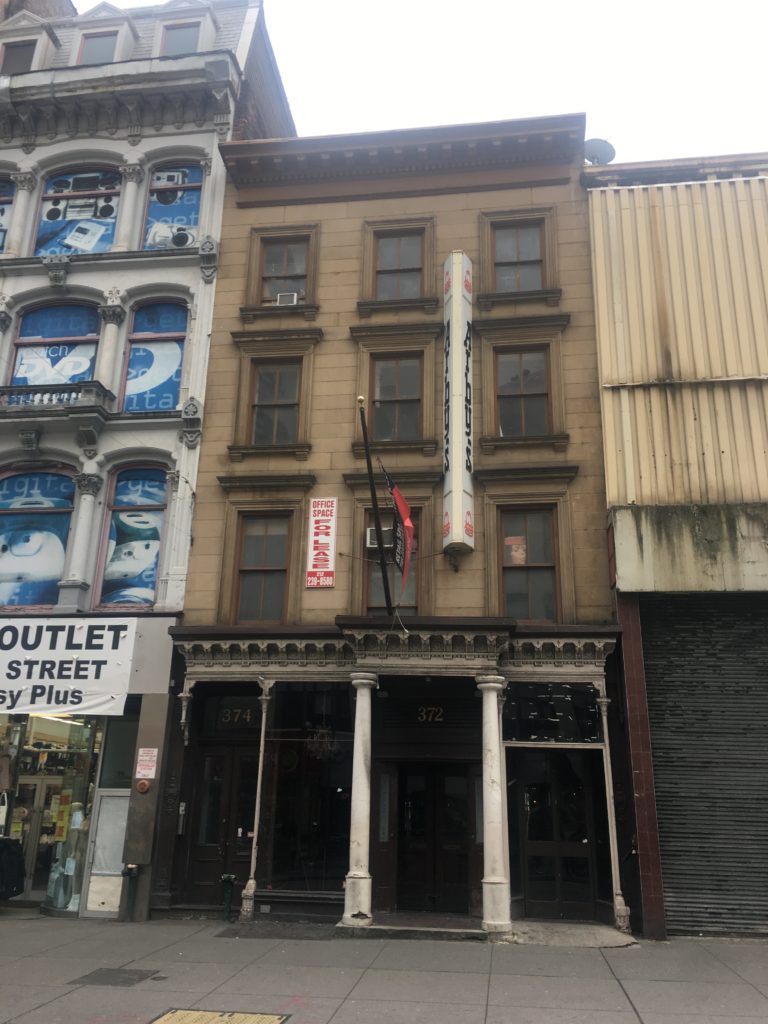
This undistinguished old building was once the home of Gage & Tollner’s, the most exclusive restaurant in Brooklyn.
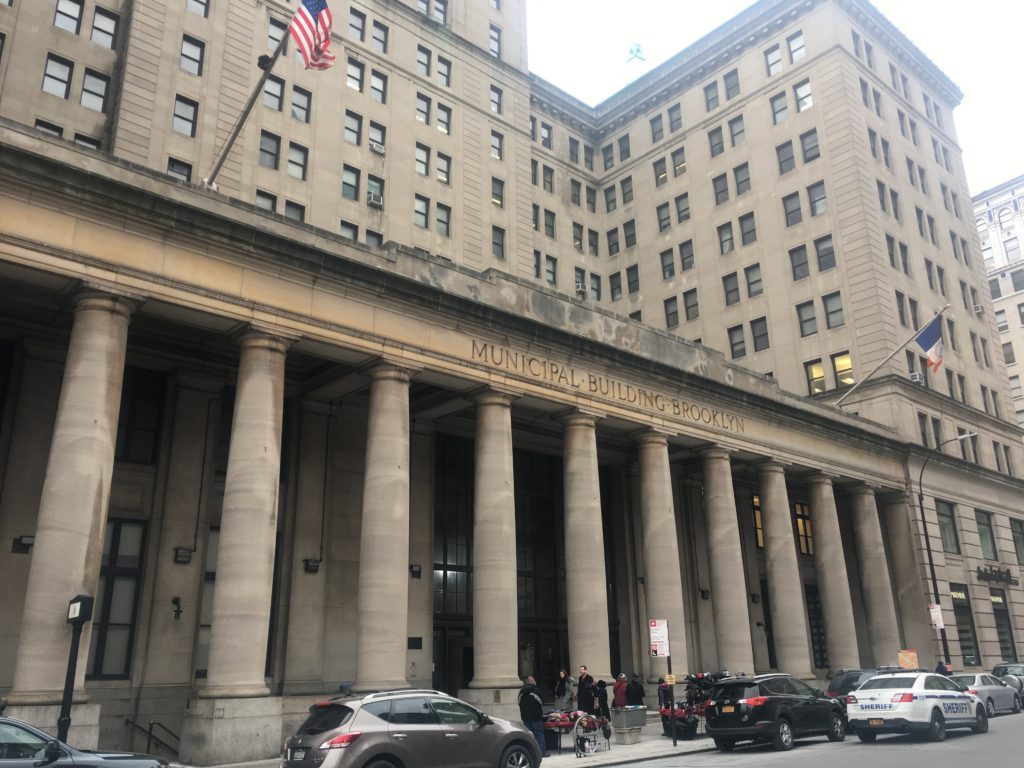
The austere Municipal Building was constructed in 1924 and the skyscrapers which surround it also joined the neighborhood in the same decade.
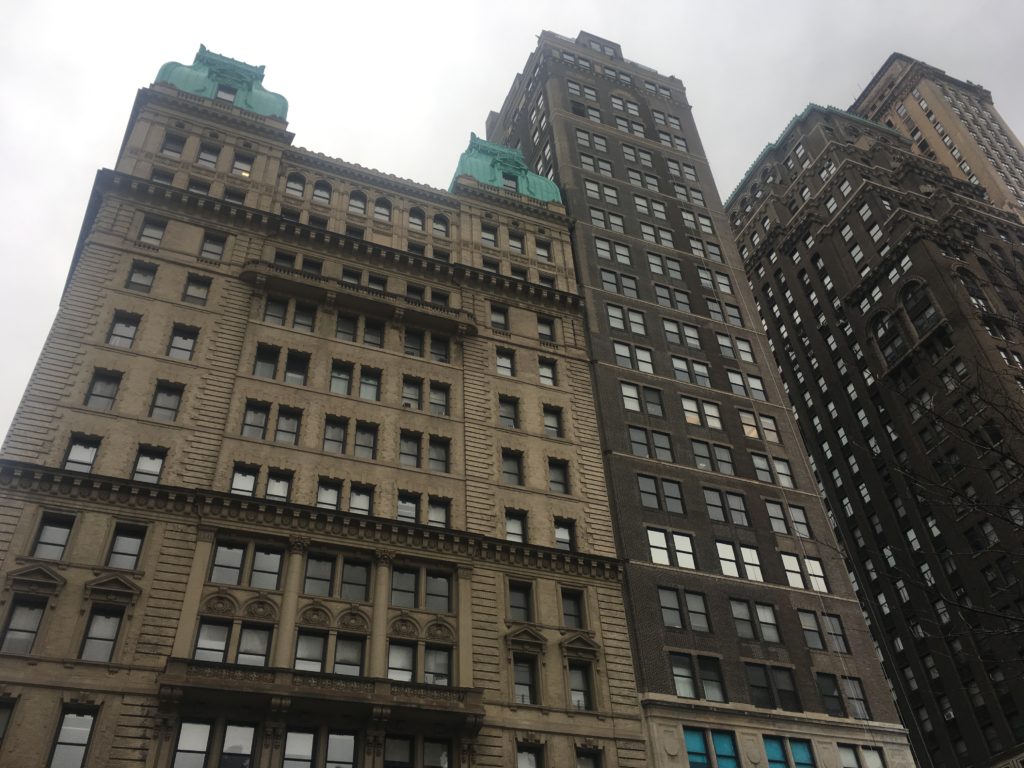
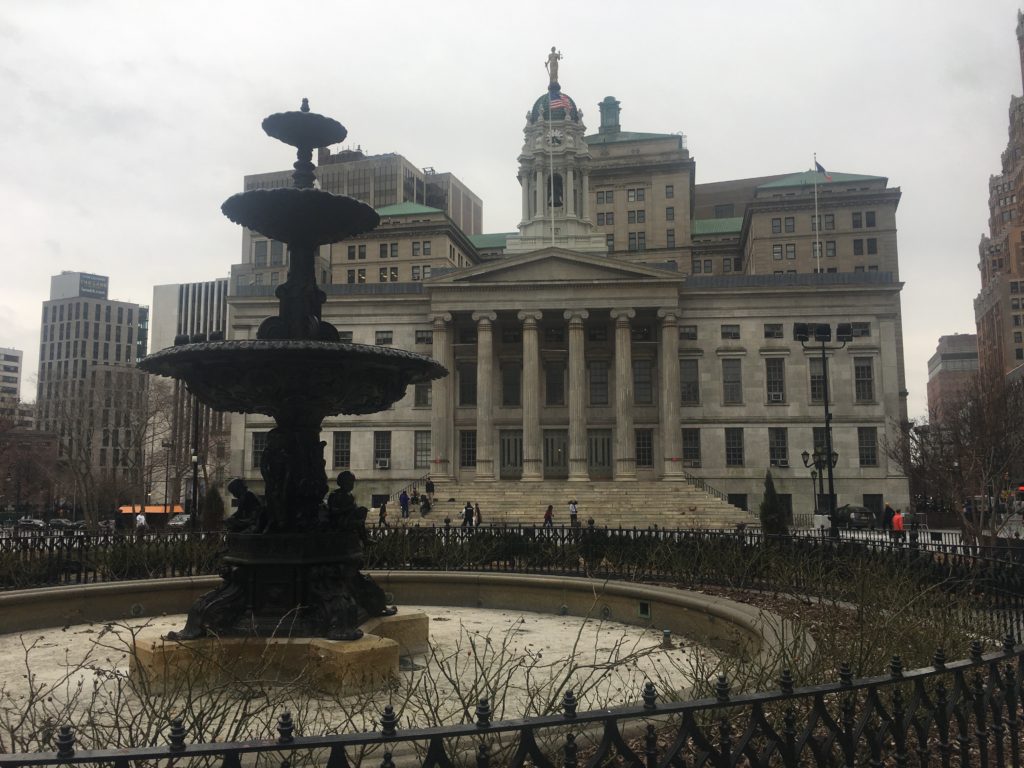
Brooklyn Borough Hall and Columbus Park:
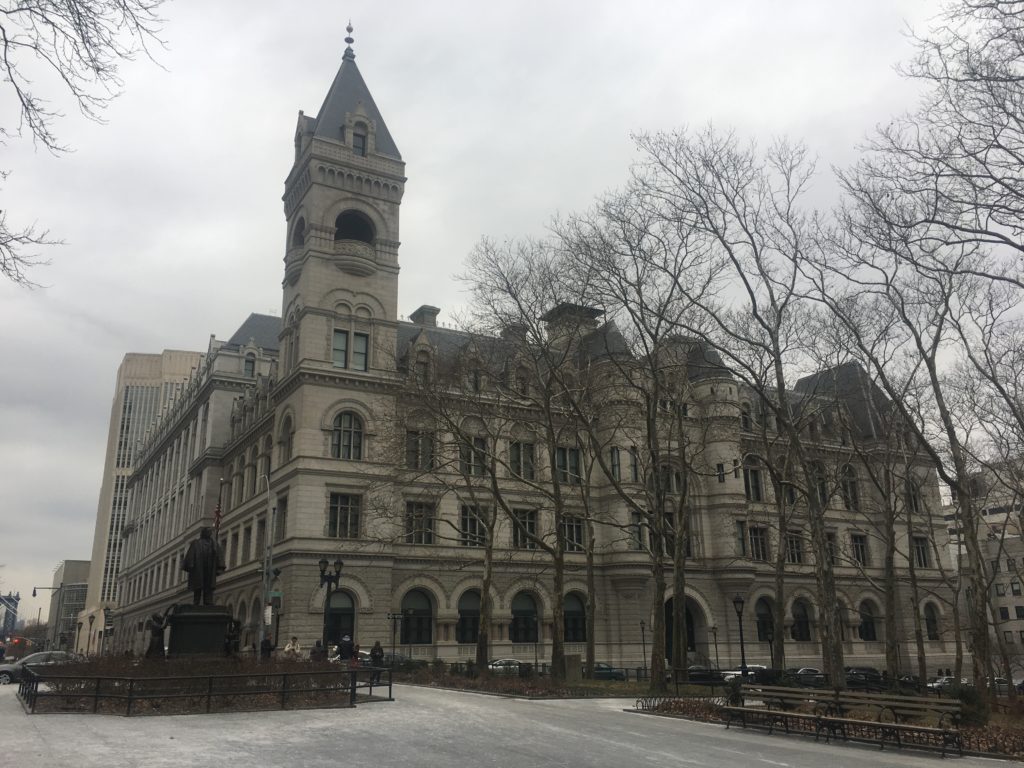
The 1892 Federal Building and Post Office with a tribute to Henry Ward Beecher (which once sat closer to Brooklyn Borough Hall).
Further Listening:

If you like Brooklyn history, check out these episodes from our back catalog that are referenced in this week’s show.
Categories
Newspapers and Newsies

Before ‘Newsies’: The Brooklyn Newsboys Strike of 1886

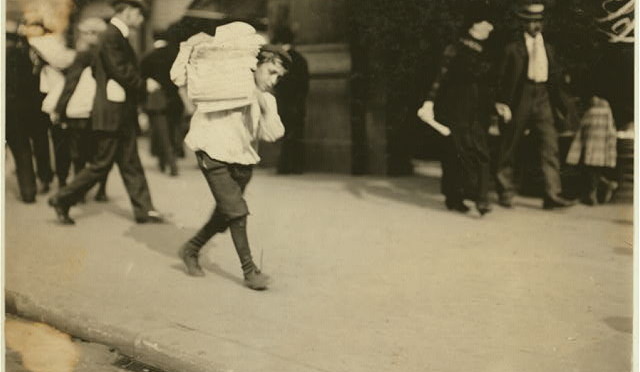
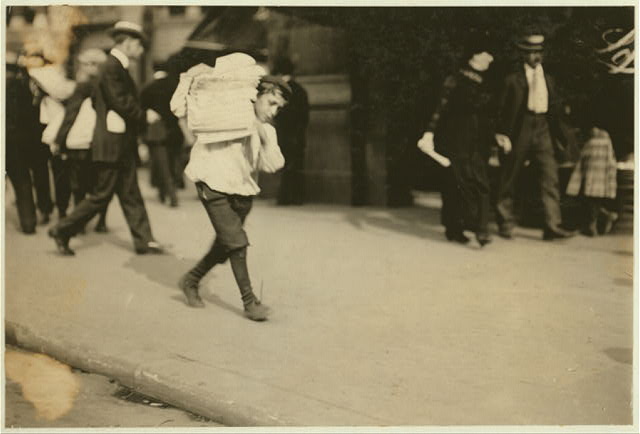
The grueling life of a Brooklyn newsboy, taken by Lewis Hine, 1910 (Library of Congress)

The new Disney-produced Broadway musical ‘Newsies‘ puts melody to the events surrounding the Newsboys Strike of 1899. For one week that summer, young newspaper sellers fought back against their employers’ unfair pricing schemes, turning their former street corners into places of mass protest. [You can hear all about in our 2010 podcast on The Newsboys Strike of 1899.]

But did the producers of the Broadway show realize they’re opening their new musical on the anniversary of another significant strike?

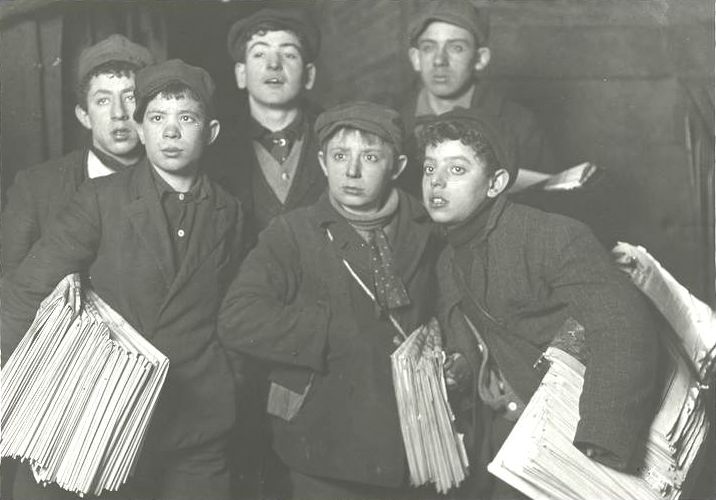
The organized disobedience of 1899 was only the grandest of New York’s newsboy strikes. Despite their youth and inexperience, newsies fought back on several occasions throughout the late 19th century. While the image of the street-smart, scrappy whelp was a stereotype often relayed by the newspapers themselves, in some cases, journalism’s youngest workforce used its hot-blooded pluck to great advantage.

With the growth of New York after the 1850s came a fierce competition among its many dozens of newspapers, leading to lamentable and unfair business practices aimed at those who actually sold their product. After all, selling newspapers was a grueling job with low financial reward. Adults looked elsewhere for higher paying work, so in the era before substantial child labor laws,  newspapers often employed younger New Yorkers, mostly boys. And children, cynical publishers believed, were a pliable workforce.

The independence the job required initially appeared to discourage any kind of organization, and newspapers felt they could systematically underpay their ‘freelance’ sellers, often pitting groups of newsboys against each other. A newspaper across the East River, in the pre-consolidation city of Brooklyn, made just such a mistake in March of 1886.

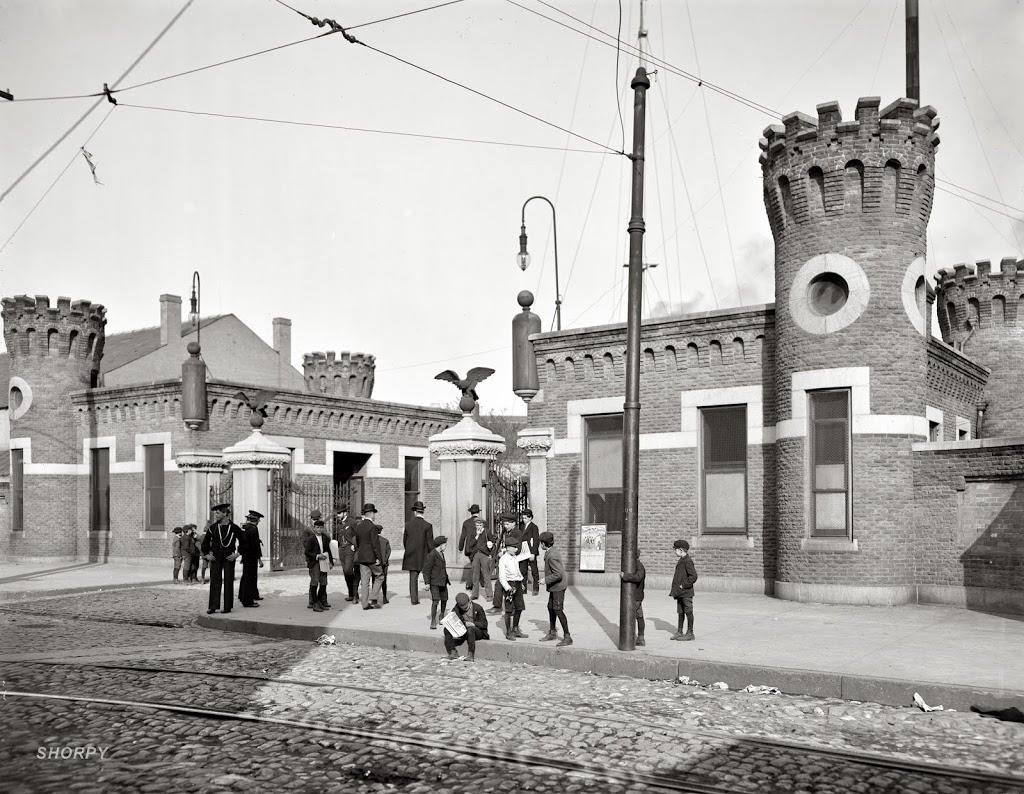
Above: Determined Brooklyn newsies hang around the Brooklyn Navy Yard (at Sands Street) looking for potential buyers. 1903 Picture courtesy Shorpy 

Brooklyn Takes Sides
The Brooklyn Times employed newsboys all throughout the city of Brooklyn, a fast expanding metropolis by the mid-1800s. Originally just the area we consider Brooklyn Heights and the Fulton Ferry, the burgeoning city grew to absorb many Long Island towns along the bay. In 1854, it also expanded to include the independent city of Williamsburgh (today’s neighborhood drops the -h) and Bushwick. These new additions were often referred to as the Eastern District.

However, the city of Brooklyn had a good deal more expansion ahead of it and would eventually swell to include many towns south and southeast of its original borders, an area referred to back then as the Western District, including areas like Bay Ridge, Red Hook, and many others. (This is a tad confusing today as many of these areas were later called South Brooklyn; the Eastern/Western distinction makes sense of you orient it with ‘true north’.)

In an effort to expand sales into the newer regions of Brooklyn, the Times made a unique deal to Western District newsboys. They would receive stacks of newspapers at a lower cost (one cent per paper) than those sold to Eastern District newsboys (one-and-a-fifth cent per paper). The Times publishers believed this would boost sales by encouraging the Western District newsies to “push sales vigorously in new directions.”

Above: Newsies gathered near the Brooklyn Bridge. Courtesy NYPL

Riot on South Eighth Street!
Oh, but when the Eastern District newsboys found this out the following day! On March 29th, according to a report by the Brooklyn Daily Eagle, a hundred newsboys, armed with sticks and stones, stormed the Times distribution offices at South Eighth Street and tried to prevent two wagons of newspapers from heading to the Western District. A whip-wielding wagon driver and arriving police officers thwarted the boys, but one of the trucks was later overturned at the area around today’s Brooklyn Navy Yard.

Many Williamsburg newsies refused to sell the Times, even defying orders of older, more compliant newsboys. Wagons filled with papers were continually attacked on their way south. Any regular newsboy caught selling the Times was set upon by other boys, often roving bands “backed by a number of roughs.” The Daily Eagle reports of some young newsies hiding newspapers in their jackets, selling them to customers in secret, for fear of reprisal.

The Brooklyn newsboy strike lasted for a couple days. Like the later newsboys strike of 1899, the key to success came from adult newspaper sellers at regular newsstands. Once a few of them joined the boycott, the Times agreed to lower their wholesale cost to just one cent per paper for newsboys in both areas of Brooklyn.

By April 1, 1886, newsies returned to their street corners, their hands stained with the ink of the Times and glowing with the satisfaction that their efforts might reward them with a little extra money that day.

SIDE NOTE: It’s probably a good guess to say that many of these young workers lived at the Brooklyn Newsboys Lodging House at 61 Poplar Street, which opened its doors in 1884, one year before the opening of the Brooklyn Bridge.