Categories
Podcasts Queens History

Ruins of the World’s Fair: The New York State Pavilion, or how Philip Johnson’s futuristic architecture was almost forgotten


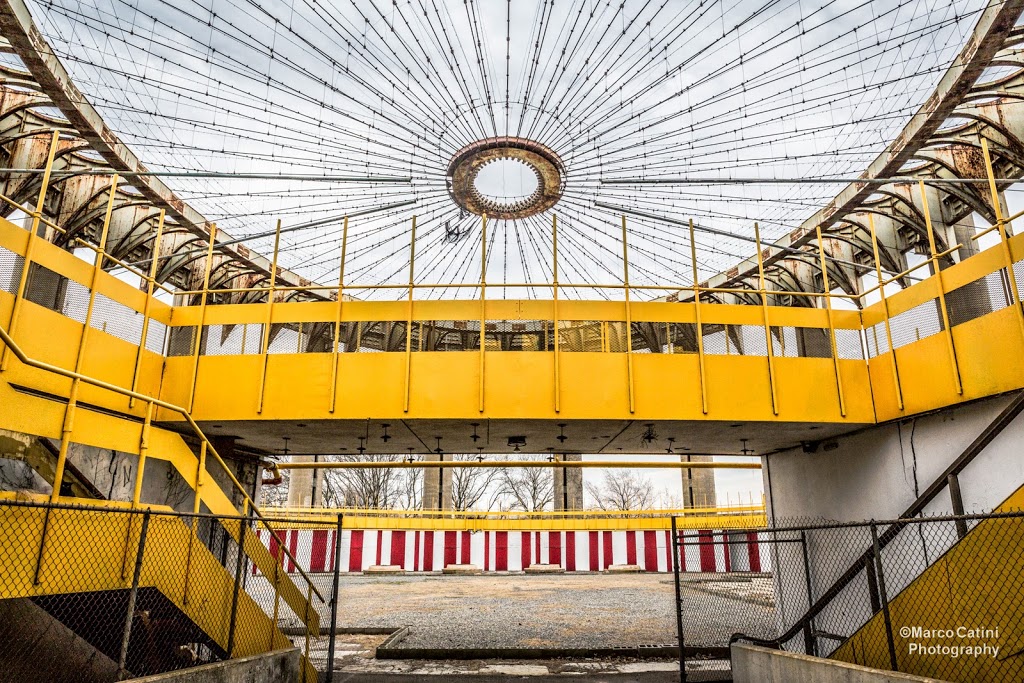
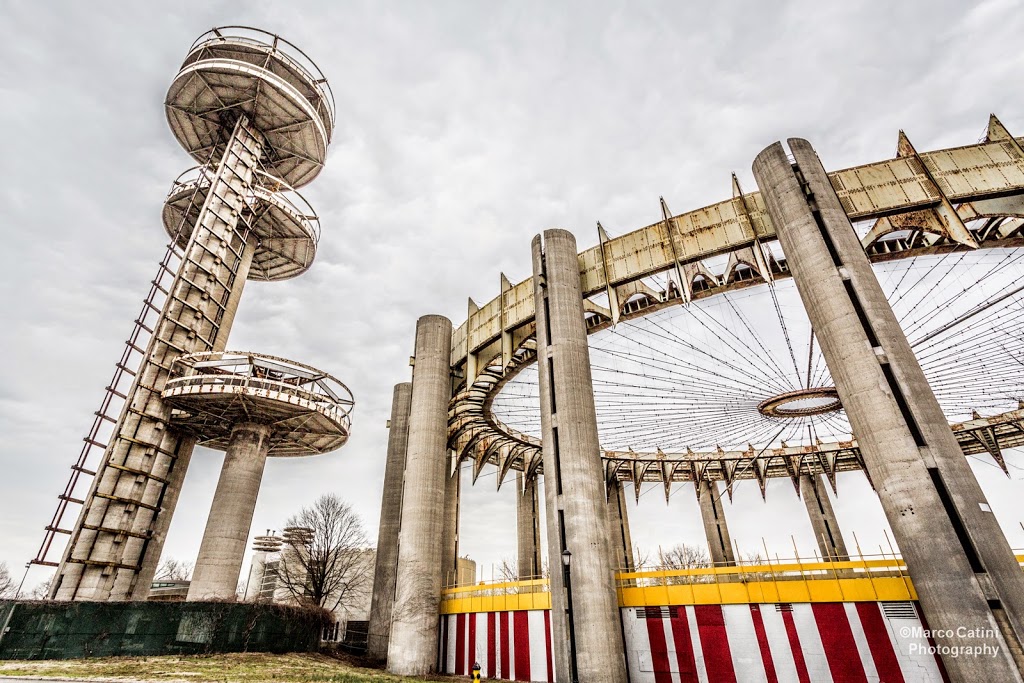
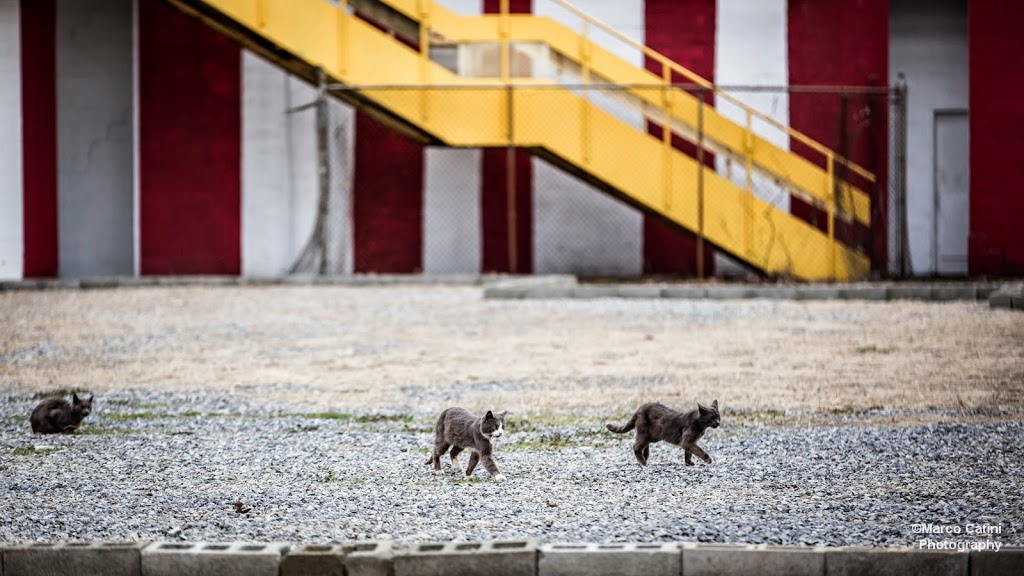
A little bit Jetsons, a little bit Gladiator, a little bit P.T Barnum. Photo/Marco Catini

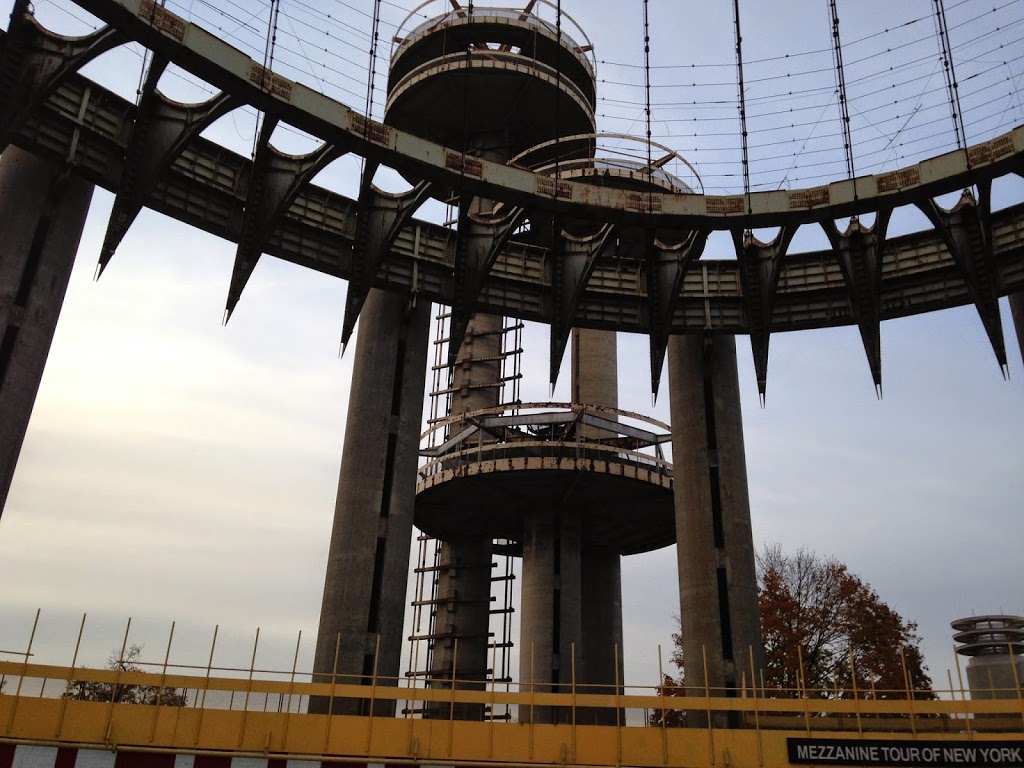
PODCAST The ruins of the New York State Pavilion, highlight of the 1964-65 World’s Fair in Flushing Meadows-Corona Park, have become a kind of unofficial Statue of Liberty of Queens, greeting people as they head to and from LaGuardia and JFK airports. Its abandoned saucer-like observation decks and steel arena have inspired generations of New Yorkers who have grown up with this oddity on the horizon.
 

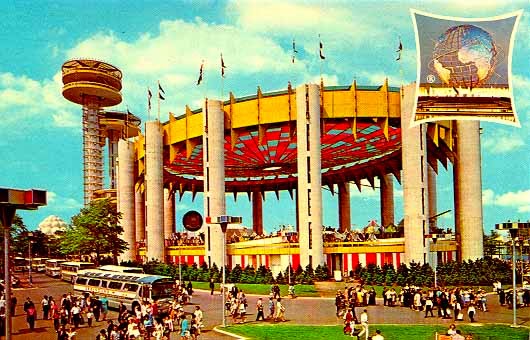
The Pavilion holds a great many surprises, and its best days may be yet to come. Designed by modernist icon Philip Johnson, the Pavilion was saved from the fate of many of the venues in the World’s Fair. But it’s only been used sporadically over the past 50 or so years, and the fear of further deterioration is always present.

For the first part of this very special episode of the Bowery Boys, I take you through the pavilion’s presence in the World’s Fair, a kaleidoscopic attraction that extolled the greatness of the state of New York. In its first year, however, a battle over controversial artwork was waged, pitting Robert Moses and Nelson Rockefeller against the hottest artist of the day — Andy Warhol. Other controversies at the Fair threatened to derail the message behind its slogan ‘Peace Through Understanding.’

In the show’s second half, I head out to record at the Queens Theater — the only part of the New York State Pavilion that’s been rehabilitated — to explore the venue’s ‘lonely years’ with filmmaker Matthew Silva, a co-founder of People For The Pavilion, an organization that’s successfully bringing attention to this weird little treasure. Matthew gives us the scoop of the pavilion’s later years, culled from some of his interviews in the film Modern Ruin: A World’s Fair Pavilion.

This is crucial time in the history of this spectacular relic. With public attention at an all time high, we may now be at the right time to re-purpose the Pavilion into a new destination for New Yorkers. What do you think should be done with the New York State Pavilion?

An airplane passes over the park, its shadow captured inside the Pavilion. (Photo by George Garrigues)


And we would like to thank our sponsors:

Audible, the premier provider of digital audiobooks. Get a FREE audiobook download and 30 day free trial at www.audibletrial.com/boweryboys. Over 150,000 titles to choose from for your iPhone, Android, Kindle or mp3 player Audible titles play on iPhone, Kindle, Android and more than 500 devices for listening anytime, anywhere.


Here’s the trailer to Matthew’s film Modern Ruin: A World’s Fair Pavilion:


Modern Ruin: A World’s Fair Pavilion – Promo I from Matthew Silva on Vimeo.

Thank you Matthew for helping out with the show this week! He’s finishing his film. If you would like to help out, go over to the Modern Ruin GoFundMe page and donate. You just be helping out the film, but the Pavilion itself. The film will probably be the first time many people ever hear of the New York State Pavilion.

And for a different (fictional) film take on the Pavilion, try out these appearances from The Wiz, Men In Black and Iron Man 2:

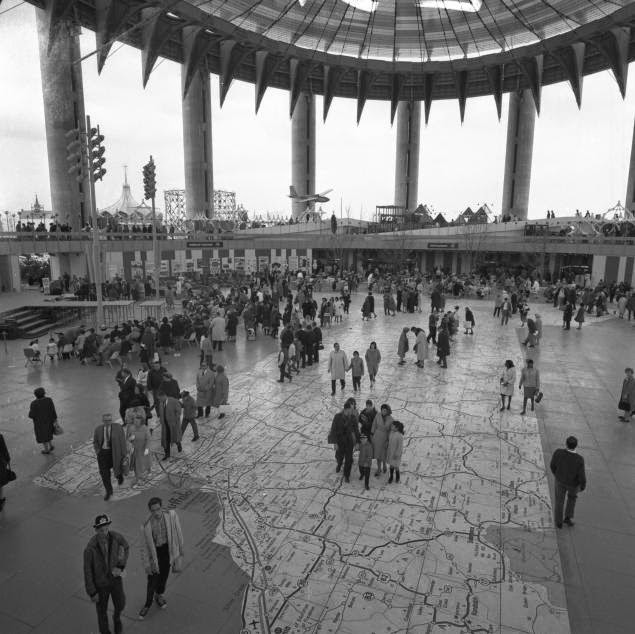
And thank you to commenter Signed D.C. who points out that the venue was featured in an music video by They Might Be Giants who, generally speaking, who a bit obsessed with the World’s Fair. (It pops up in several of their songs, including a lyric to their song “Ana Ng.“) At one point, the lead singer floats over the Texaco map.

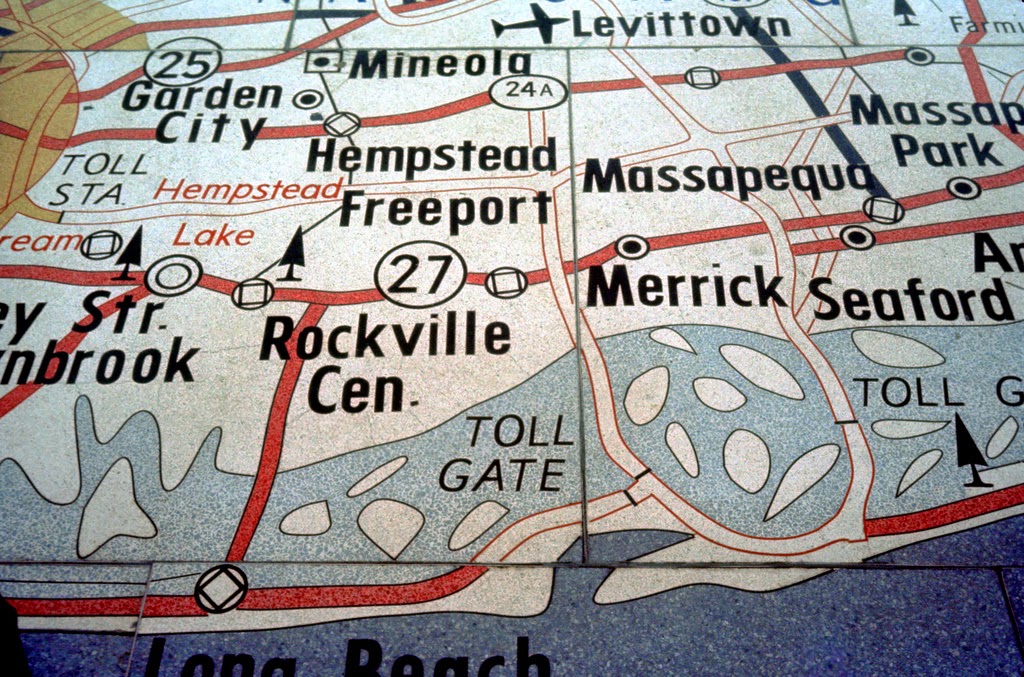
Looking down at the Texaco map of New York state. (Courtesy New York Daily News)
 

A close up of Long Island, photo taken in 1964. (Courtesy Flickr/Susan DeMark)
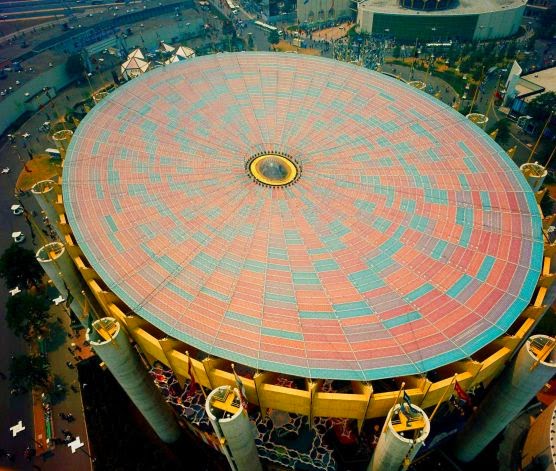
An overhead shot of Philip Johnson’s extraordinary rooftop, a stunning colorful ovoid that projected a rainbow of colors down upon fair-goers. (Courtesy AP)
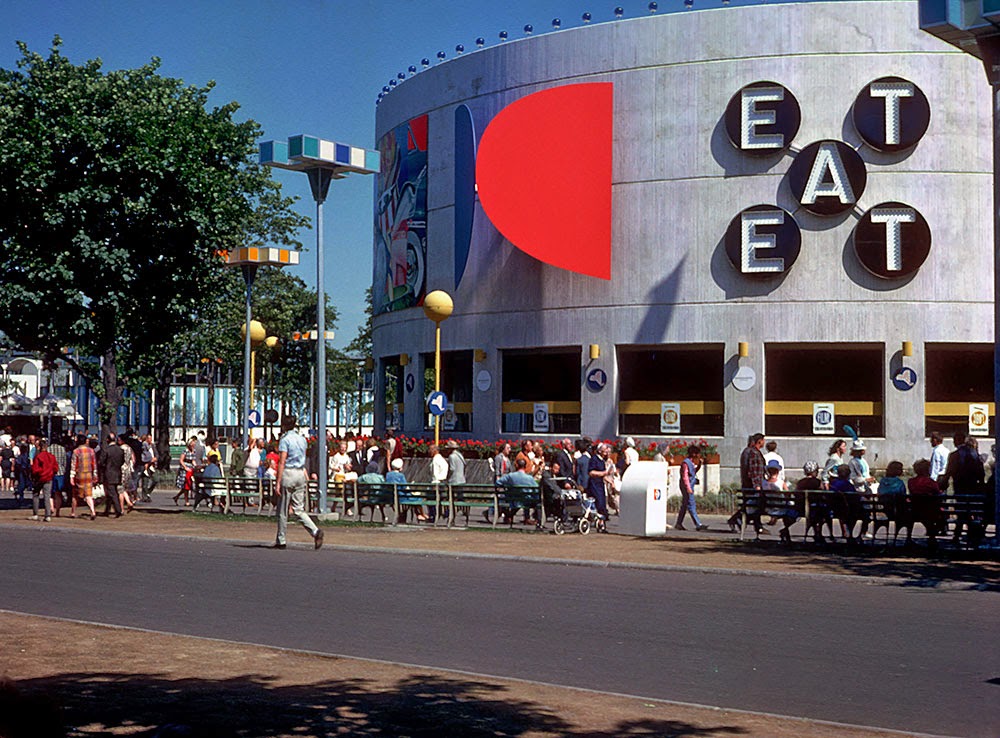
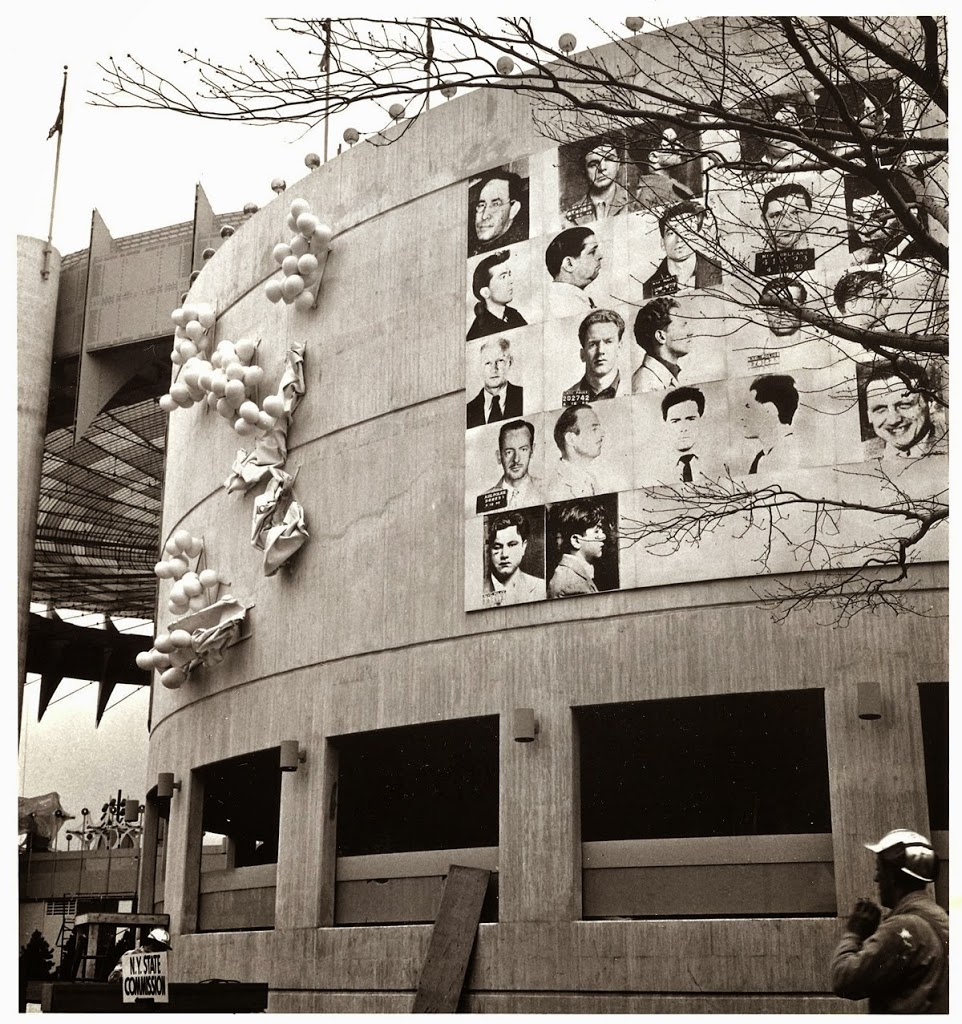
Theaterama, part of the New York State Pavilion, is today’s Queens Theater. Johnson commissioned the work of several pop artists to hang along the walls of the pavilion. (Courtesy Bill Cotter/World’s Fair Community)
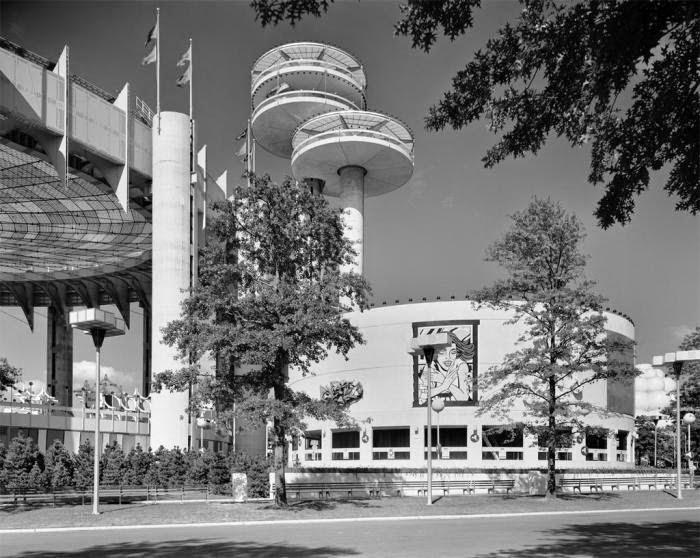
A view of Theaterama showing the Roy Lichtenstein mural upon its side (Courtesy Jon Buono):
Andy Warhol‘s Ten Wanted Men on the side of Theaterama, with the Tent of Tomorrow in the background. Although we can almost guarantee that it was not beloved by Robert Moses, it’s believed it was taken down because of Governor Rockefeller.
Robert Moses beams from the sidewalk of Flushing Meadows-Corona Park. The mosaic is based on the work of Andy Warhol.

The Federal Pavilion — “the square donut on stilts” — was designed by Charles Luckman, who also designed the current Madison Square Garden.

The photographer Marco Catini has taken some recent images of the Pavilion. You can find much more of his work here. Thanks Marco for letting me use your work here!

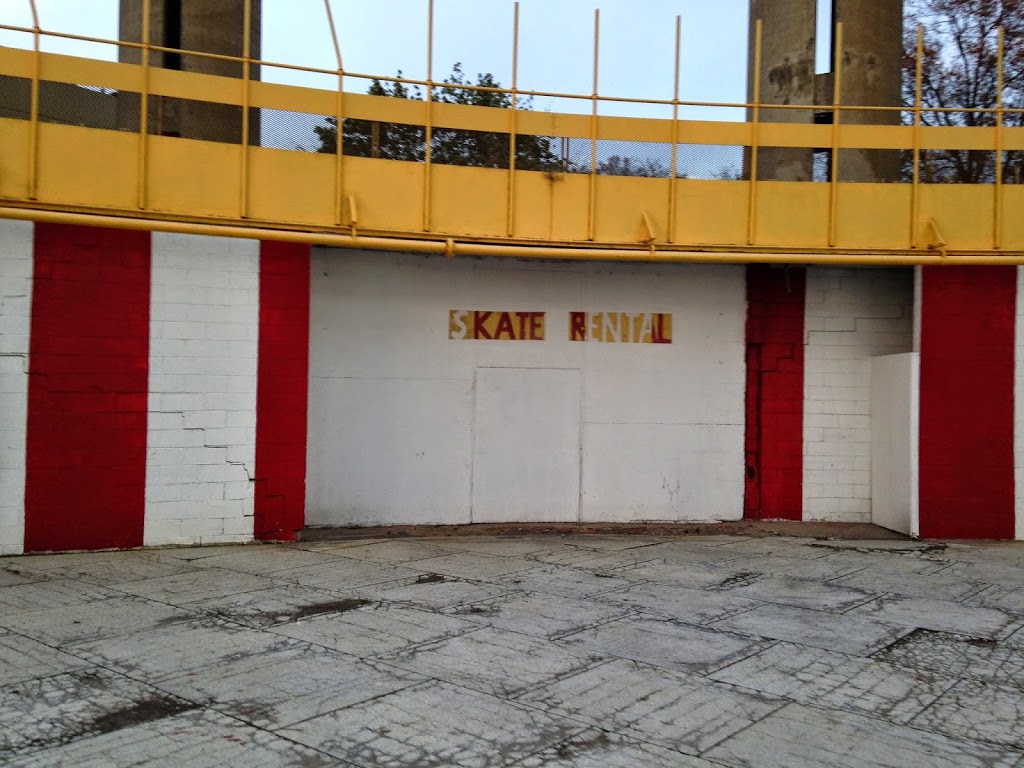
Here are a few of my photos taken on the afternoon of recording. The New York State Pavilion Paint Project is responsible for keeping the place is festive shape. The candy stripes are similar to the look of the 1964 pavilion.
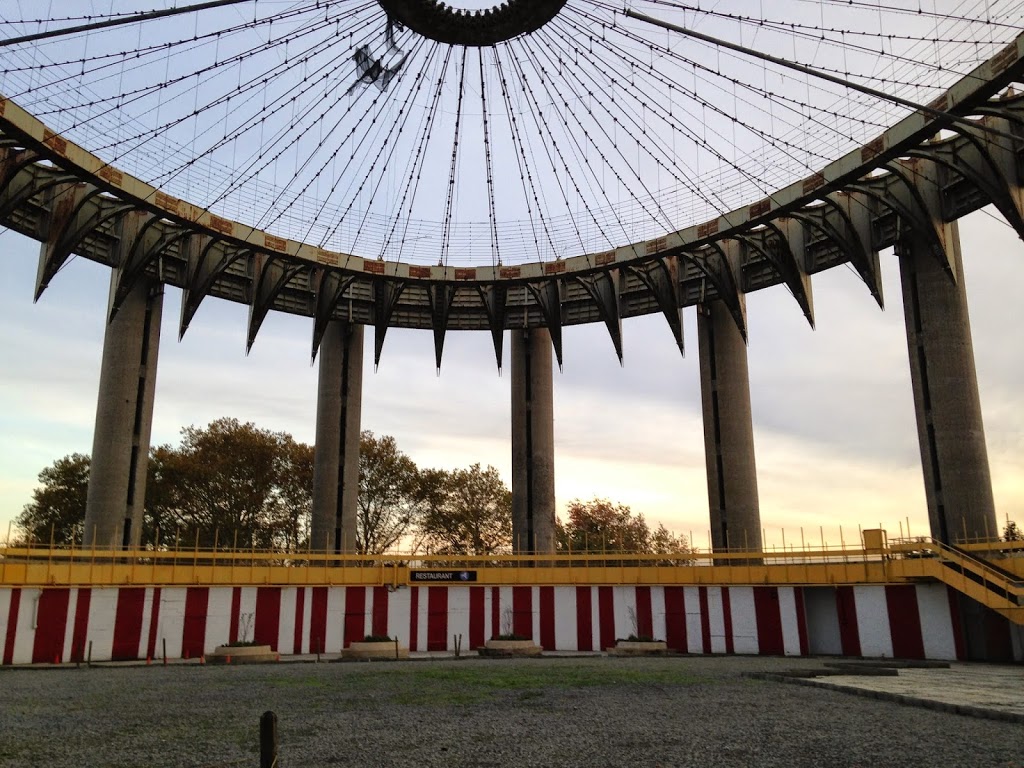
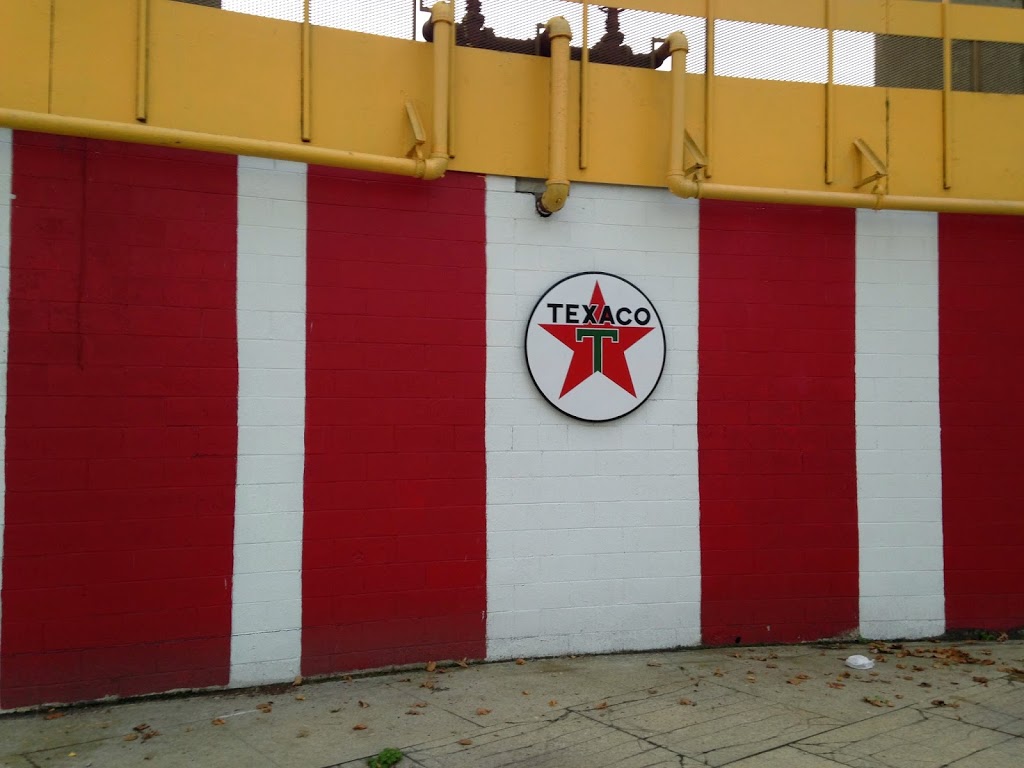
MY THANKS AND GRATITUDE to the Queens Theatre in The Park for allowing us to record in the cabaret room! I know we went on and on about the observation desks and the Tent of Tomorrow, but you should really check out a show within the greatly renovated theater. Coming in December: Charles Dickens’ A Christmas Carol!

Visit the People For The Pavilion website for more information on upcoming events, news and fund-raisers. And a shout-out to the organization’s co-founder Salmaan Khan!

The New York Daily News just yesterday published an article about People For the Pavilion and its co-founder Christian Doran who passed away in February. There’s a fund-raiser tomorrow in his honor. [More info here]

ALSO: I didn’t get to plug this on the show, but historian Christian Kellberg has just released a book of photography of the New York State Pavilion, part of the Images of America series. Most of the pictures are exclusive to this book including some extraordinary shots of the pavilion construction.

And of course there’s Joseph Tirella‘s terrific book Tomorrow-Land: The 1964-65 World’s Fair and the Transformation of America, putting the entire fair within context of the rapidly changing America of the 1960s.

And since I mentioned it on the show, here’s a link for Robert Caro‘s The Power Broker as well!
Categories
Queens History Robert Moses

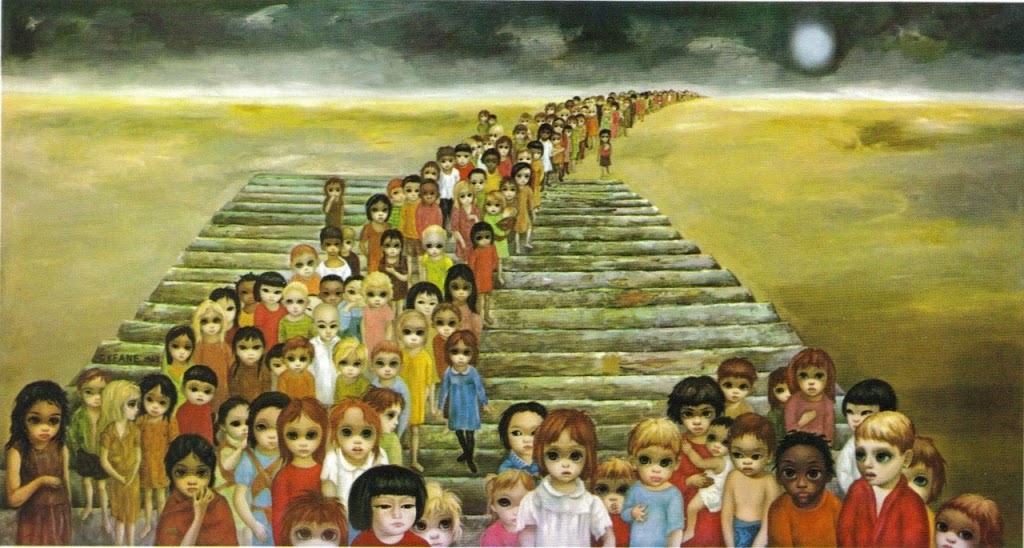
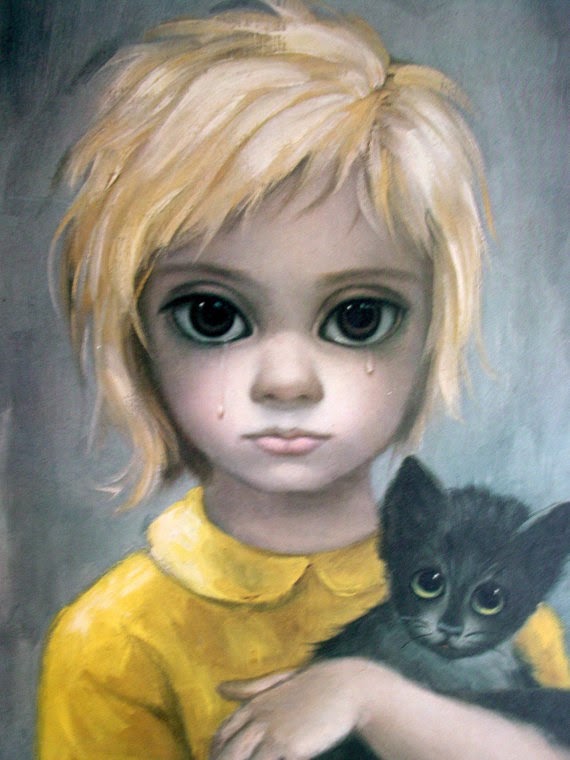
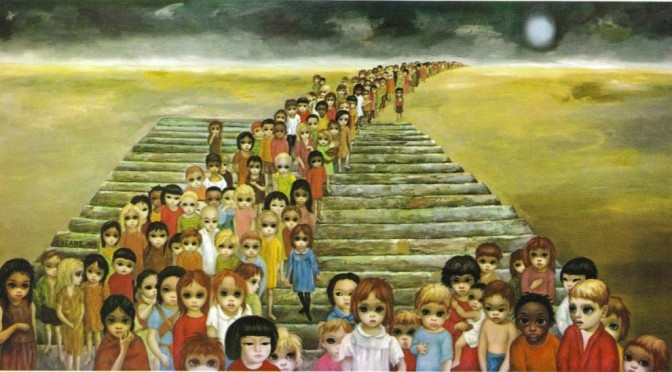
Robert Moses rejected this terrifying Margaret Keane painting from hanging at the 1964-65 World’s Fair

The World’s Fair of 1964-65 at Flushing Meadows-Corona Park was a major American event forward-looking in its intent and, in many ways, backwards in its practice.  In particular, Robert Moses did not care for cheap carnival amusements, nor did he care for music or art that was particular edgy or controversial. Moses’ tastes ruled supreme over the Fair as he held veto power over any works that were in “extreme bad taste or low standard.”

There was no pavilion dedicated to art although several independent partners funded their own art displays.  The New York State Pavilion presented the work of brand-new pop artists; an objectionable piece by Andy Warhol entitled Thirteen Wanted Men was eventually painted over (although it was the governor Nelson Rockefeller who objected in this case).

Moses did eventually throw out one surprising piece of artwork — Tomorrow Forever by Margaret Keane.

The Keane painting was to have been displayed in this building at the fair.**

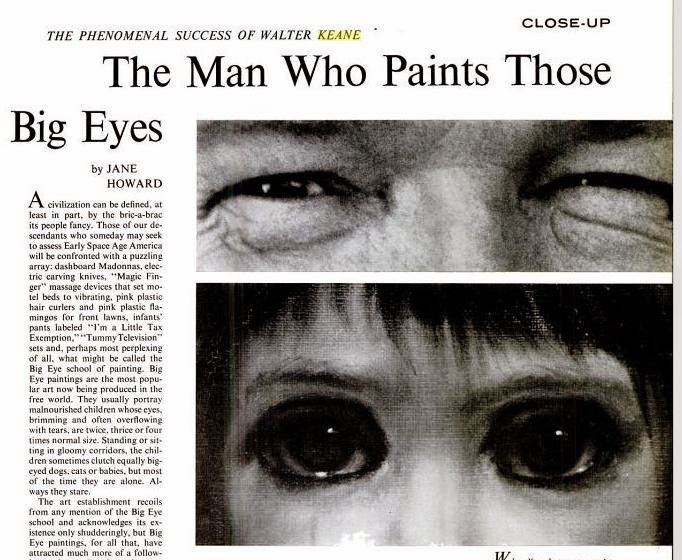
Keane was known for her bizarre and haunting images of children and animals with large empty eyes.  During the 1960s, her husband Walter Keane claimed to be the creator of her paintings.  It was he who was announced as the painter of this macabre work, chosen in February 1964 to grace the Fair’s Hall of Education.   The venue devoted to the future of schools would feature a scale model of an elementary school from the year 2000, a playground with “futuristic climbing structures,” and from the entrance way, the terrifying painting you see above.

The work by Keane, representing “something which would be symbolic for the aspiration of children,” was not exactly heralded as the pinnacle of artistic expression in 1964.

The New York Times’ art critic John Canaday could barely conceal his disgust at this “grotesque announcement,” adding, “Mr. Keane is the painter who enjoys international cele­bration for grinding out form­ula pictures of wide‐eyed children of such appalling sentimentality that his product has become synonymous among critics with the very definition of tasteless hack work.”   [source]

To be fair, Canaday had only seen a photograph of the painting, which depicts an endless sea of soul-crushing zombie children, rising out of a morose and barren wasteland. “That’s true,” he confessed to a Life Magazine reporter. “It’s normally a principle of mine never to judge just by a photograph, but in this case it didn’t matter.”

Moses seemed to agree with Canaday, demanding the Hall of Education cancel the planned installation before it was even mounted.  Thanks to Canaday’s protest, Moses’ office was inundated with letters from angry intellectuals and aesthetes. “[T]he perpetrators of this art burlesque,” wrote Joseph James Akston, “expose us to veritable scandal sure to incur ridicule and laughter of the whole civilized world with possible exception of Russians.” [source]

Keane, who of course didn’t paint the artwork attributed to him, nonetheless seemed to revel in the critical potshots.  The following year, he issued a press releases from San Francisco and Tahiti, declaring himself “the American Gauguin.”  Canaday would continue to take aim at Keane’s kitschy work.  Imagine how Canaday felt when he discovered that Walter hadn’t even painted the works he so deliciously despised?

Margaret eventually left her husband and sued for rightful ownership of her artwork.

Below: From a Life Magazine profile in August 1965:

NOTE: I’m being a little irreverent in calling the painting “terrifying” as the artist clearly intended the subjects to be starving, sad children.  However, the passage of time has been a little strange to Keane’s legacy.  She is perhaps more beloved than ever — there’s a new Tim Burton film coming out this year — but the flagrant sentimentality of the work has given way to their spectacular kitsch value.

** The Hall of Education picture courtesy the blog Little Owl Ski which has a few other nifty World’s Fair pictures.


Categories
Queens History

The religious controversy behind a lonely Roman column just standing around by itself in Flushing Meadows Park

.

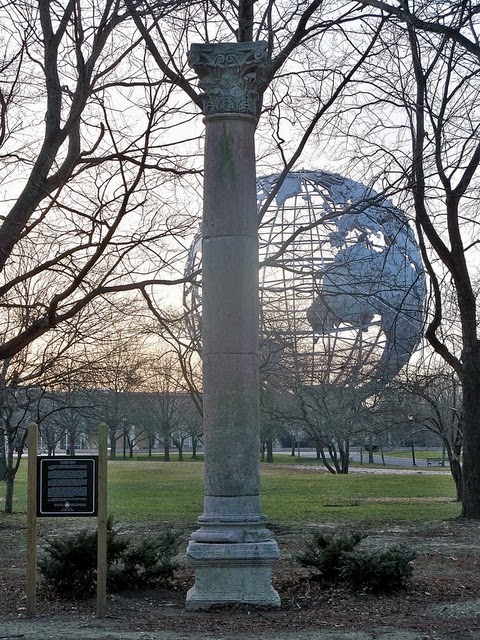
The second oldest manmade object in New York City — outside, that is, not in a museum or private collection — is a solitary little Roman column built in 120 AD for the Temple of Artemis in the ancient city of Jerash.  It once stood among a chorus of ‘whispering columns’, creating an effect in the temple which would magnify the human voice.

So why is it standing all alone in Flushing Meadows Park in Queens?

At right: The column stands alone, with the Unisphere in the background. Courtesy Flickr/Christoslilu

It was a gift of the Kingdom of Jordan for the New York World’s Fair of 1964-65, presented on April 22, 1964, by the young King Hussein to none other than Robert Moses. What did those two have to talk about?

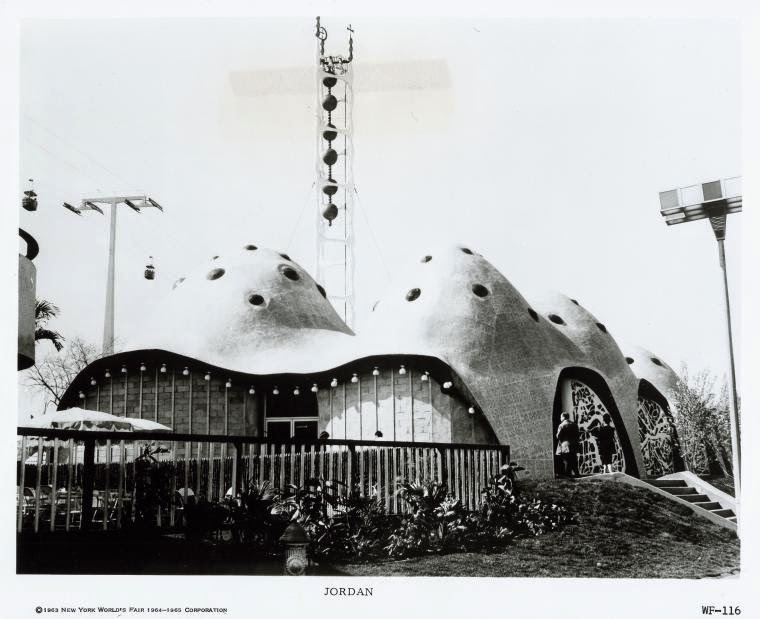
The Jordanian Pavilion at the World’s Fair was a particularly unusual addition to the unofficial (and incomplete) league of nations at the fair. Despite its almost alien appearance — curved and encrusted with gold mosaics — it was one of the most religious buildings there, embodying imagery of both the Christian and Muslim faiths.

Sculptural displays of Stations of the Cross by Antonio Saura decorated the exterior, and bright stained glass windows lit up spectacularly at night.  The Dead Sea Scrolls were displayed alongside a replica of the Dome of the Rock, and visitors could shop at a jewelry bazaar or eat traditional Middle Eastern food in the snack shop.

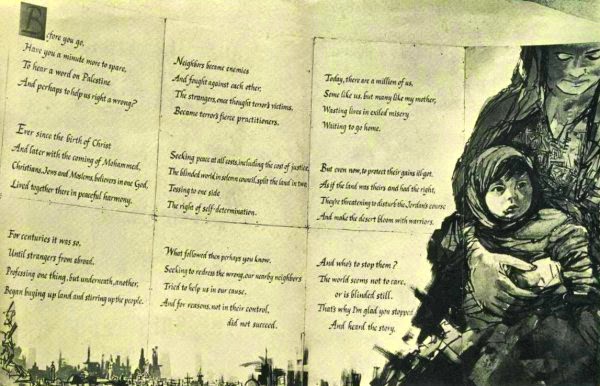
But despite the many artifacts of great historical provenance, the most controversial thing in this odd building were a set of newly painted murals.

Some Jewish visitors to the pavilion were immediately offended by one particular mural depicting a young refugee expounding in a lengthy text about the Israeli-Palestinian situation at the Jordanian border.  “The strangers, once thought terror’s victims, became terror’s practitioners,” it said, implicating the Israelis (but never mentioning them by name).

“But even now, to protect their gains, illgot, as if the lands were theirs and had the right,” went the mural, “they’re threatening to disturb the Jordan’s course and make the desert bloom with warriors.”

Below:  The controversial Jordanian mural (Courtesy the excellent tribute site NYWF64 )

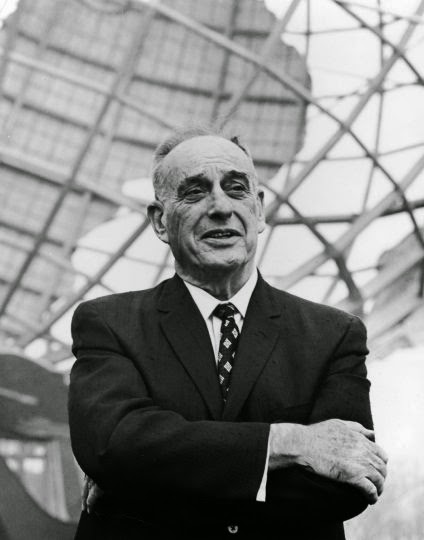
Organizers at the American-Israeli Pavilion wrote Moses to complain, saying the murals were not in keeping with the fair’s theme of “Peace Through Understanding.”  Moses (pictured below) initially rejected the request, but Mayor Robert Wagner, perhaps in an intentional slight to the former parks commissioner, promised to have the murals removed.

Members of the City Council even proposed a bill forcing the fair to remove the mural.  The Jordanians replied that they would rather close the pavilion than tear down the murals under pressure.  Israeli protesters picketed the pavilion;  at one point, the Jordanian flag was taken and temporarily replaced by the Israeli flag by a protester.

Of course, as a result, the Jordanian Pavilion became hugely popular in the early days of the fair, with thousands of visitors streaming in to see what the fuss was about.

The Isaeli pavilion then unveiled its own mural as a response to the Jordanian mural.  Further lawsuits, even fistfights, ensued over the controversy. In the end, none of the murals were removed.

What got sadly overshadowed in all this, of course, was the Column of Jerash, which could have been made of plaster for all the attention it received.

After the fair ended in 1965, the pavilions were mostly all torn down, but the column stayed behind, making the park its home for several decades now.  Today you can find it near the Unisphere next to a plaque which reads:

THIS COLUMN WAS PRESENTED TO/ THE NEW YORK WORLDS FAIR AND THE CITY OF NEW YORK BY/ HIS MAJESTY KING HUSSEIN / OF THE HASHEMITE KINGDOM OF JORDAN/ ON THE OCCASION / OF JORDAN’S PARTICIPATION IN THE FAIR./ THE COLUMN WAS RECEIVED BY THE HONORABLE ROBERT MOSES, PRESIDENT, / NEW YORK WORLD’S FAIR 1964-1965 CORPORATION./ THIS IS ONE OF MANY COLUMNS IN A TEMPLE ERECTED BY THE ROMANS/IN 120 A.D./ THAT STOOD IN THE ROMAN CITY OF JERASH, JORDAN./ THE COLUMNS ARE KNOWN AS THE WHISPERING COLUMNS OF JERASH.

——————————

Okay, so that’s the second oldest large manmade object in New York City?  What’s the oldest?

That’s the subject of our new podcast tomorrow so stay tuned!

Categories
Queens History Robert Moses

Assorted mishaps from the 1964 New York World’s Fair — in its first month and before it even opened

Certainly Robert Moses expected there to be a few little problems to arise at the opening of the 1964 World’s Fair on April 22, 1964.  And for the most part, the most popular attractions launched without a hitch.  But a host of bad press on opening day and a litter of minor issues created a sense of unease among some organizers.

The fair was already a controversial venture by Moses — unsanctioned by the official World’s Fair organizers and sold wholesale to a bevy of corporations as a way to fund the hugely expensive endeavor.  Moses’ own reputation was on the wane by 1964; the fair would further tarnish it.

Whatever enthusiasm New Yorkers had for the fair in 1964 evaporated with its completion in the fall of 1965, with reports of ludicrous financial mismanagement and a gradual indifference by fair-goers to its line-up of generally un-amusing amusements.

So these first few mishaps from the months before and after opening, in retrospect, seem to be a harbinger for the greater fiascoes which followed.

Money issues, faulty machinery, injuries, lack of planning — welcome to the World’s Fair of 1964!

1) The World of Food never opens
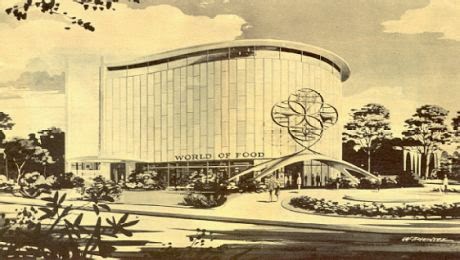
With hundreds of new temporary structures going up, you wouldn’t think that a single building lagging behind would be much of an issue.  But the prominently placed World of Food  — standing 75 feet from the fair’s entrance — was one of the largest pavilions on the fair, and little work had been done on it since ground-breaking in January.

The building was to celebrate cooking and gardening, with weekly festivals devoted to a particular food (shrimp, apples), a rooftop ‘edible garden’ and a model kitchen with the most innovative home appliances.  A teen center on the ground floor would host cook-outs and clam-bakes with appearances by the hottest young stars of film and television.

It would have, that is, except the organizers ran out of money, and a large gaping construction site sat like an open sore marring the fairgrounds.

Moses and fair organizers wanted to level the site immediately, fighting it out in court with the World of Food organizers.  Finally, two weeks before the opening, the uncompleted venue was finally torn down.

But there was no time to fill the lot, so on opening day, an odd gap in an otherwise tightly organized grounds greeted visitors.  Gift shops sold World of Food souvenirs anyway.  Meanwhile, the fair paid thousands of dollars to store the unused construction materials off site. [More information at Bill Young’s excellent World’s Fair site. Image above is also from there.]

2) Ceramic catastrophe
The most spectacular displays were often at the pavilions hosted by foreign countries. The Pieta at the Vatican Pavilion, for instance, would become one of the most popular attractions.

The organizers from Spain, however, would have to scramble when they opened crates containing a 50-foot ceramic relief by Antonio Cumella called ‘Homage to Gaudi,” only to discover that much of it had been crushed in transport.

Welders furiously labored to repair the work before the fair opened. Some semblance of the work was eventually displayed.

Courtesy New York Daily News

3) Rain on Opening Day
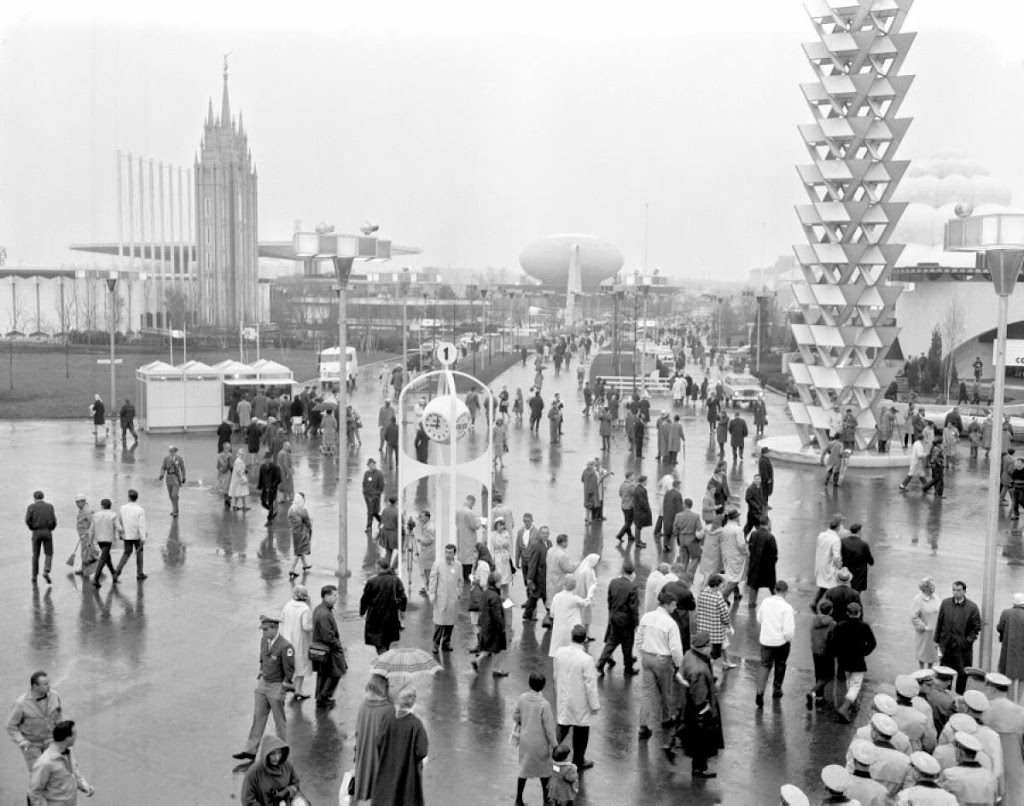
The April 22nd opening was to be one of the greatest events in New York City history, and in volume, it certainly was. Ten of thousands clogged the highways in one of New York’s ugliest traffic days. Over 90,000 made it to the fairgrounds to witness opening ceremonies that included a speech by president Lyndon B. Johnson, president for only a few months after the assassination of John F. Kennedy.

But fair organized had planned for 250,000 attendees. Â Keeping people away was the “November-like weather,” torrential morning rain and a chilly, cloudy afternoon.

The New York Times reported: “The World’s Fair opened yesterday morning with a parade that had everything. But mostly it had rain, and 4,000 sodden marchers outnumbered the hundreds of sodden bystanders.”

4) Protesters and arrests
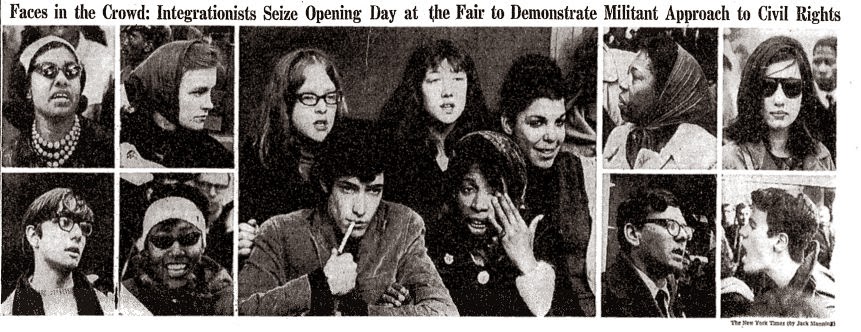
President Johnson and fair organizers were met with picketers and sit-ins, mostly civil rights organizers. They managed to heckle Johnson through his entire speech at the Federal Pavilion and sit in at several fair venues.

In particular, protesters camped out in shrubbery outside the pavilion and had to be forcibly removed. Â “It was dreadful, dreadful,” said one state official.

By the end of the day, over 300 people had been arrested by police. What had particularly incensed protesters was a variety show at the fair called “America, Be Seated,” a “minstrel-style” show that meant to turn the derogatory stereotypes of old into something fun and jazzy for the 1960s.

“I think we’ll start a whole new wave of minstrel shows,” hoped producer Michael Todd Jr, (stepson of Elizabeth Taylor), promising no “burnt cork” and that every performer in the integrated cast would be wearing “his own face.”

It was still deemed too offensive for many and quickly closed within two days, raking in a grand total of $300.

Below: From the New York Times, April 23, 1964

5) City locked down
If you weren’t at the fair, you were probably cursing it out. Â A planned “stall-in” by demonstrators to stop traffic throughout the city failed to materialize, but the city planned for it anyway, created a veritable police state that day.  “Police cars and tow trucks waited sometimes as close as every half mile along Grand Central Parkway.”

This tension led to a near-disaster at one subway station, when four protesters and three police officers were injured “when a crowd tried to stop one morning subway train.” [source]

6) No hospital
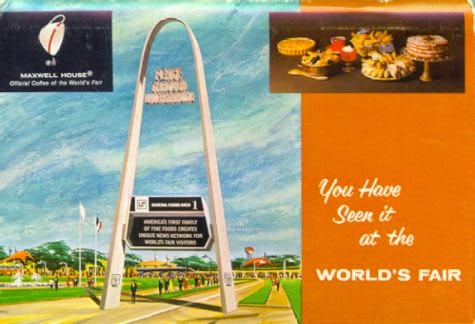
Five days after opening, seven fair goers were injured inside fair transportation sponsored by Greyhound Bus Lines. One of these “Glide-a-Ride” vehicles hit one of the eleven General Foods arches (pictured above), causing minor injuries.

But there was no hospital facility on the fairgrounds — “[T]he hospital was expected to open late next month” — so the injured were treated at the employee’s dispensary and advised to see their own doctors at once. [source]

Leonidoff’s Wonder World. Pic courtesy Randy Treadway at World Fair Community. There are many more rare photos of this event there.)

7) Water and Ice Catastrophes
Two big-name entertainments at the fair were plagued with constant accidents and delays before they opened.  Leon Leonidoff, famed producer at Radio City Music Hall, watched as his “Leonidoff’s Wonder World” befell perpetual mishaps, mostly associated with a faulty mechanical swimming pool.  The show was hugely expensive and not a big draw (see photo above).  It closed within two months.

Meanwhile, Olympic champion Dick Button was having similar issues over at Dick Button’s Ice-Travaganza. His woes involved transportation costs and salaries associated with his mostly European cast. This show, too, was considered a failure, closing a few weeks after its opening opening.

However it did have a skating chimpanzee in a dress, so that’s something to celebrate.

8) Elephant Attack
Six days after the fair opened, a trainer was “stepped on” by a chained elephant named Anna Mae.  Again, as no fair hospital had been opened, the trainer was rushed to Elmhurst Hospital.

You can imagine what the conditions for this poor animal were probably like.  The animal, known for “her erratic temperament,” was chained to two other elephants at the time of the attack.

Above: the Ford Pavilion (NYPL)

9) Ford Pavilion Smoked Out
Nine days after it opened, a transformer at the Ford Pavilion — featuring Walt Disney’s Magic Skyway — caught fire, issuing smoke into the attraction and causing 2,000 people to be evacuated.  The conveyor belt Skyway was also prone in its early days to malfunctions, leaving fair-goers trapped in late-model Ford vehicles in front of caveman and space-age dioramas. [source]

10) The World’s Fair Bus “Riot”
May 16 was a day of record attendance at the fair, so it should be assumed that it was also a day of high tensions and long lines.

People were especially impatient that evening while waiting to board shuttles back to the parking lot.

“A shoving, yelling crowd of 15,000 persons went into near panic,” creating four blocks of mayhem as people attempted to squeeze into an inadequete number of vehicles. A “riot call” was made on the fairgrounds, with additional police and several ambulances called to treat minor injuries and several women who had fainted.

“They acted like animals,” commented one bus inspector. Said another, who had been grabbed and lifted by his tie:  “If we lived through [Saturday] night, we can live through anything.” [source]

Top image courtesy Flickr Marsmett Tallahassee