Categories
Neighborhoods Podcasts

The Astor Place Riot of 1849: Bloodshed and Shakespeare splits New York at a busy crossroads

“By the pricking of my thumbs / something wicked this way comes” — Macbeth

PODCAST In old New York, one hundred and seventy years ago, a theatrical rivalry between two leading actors of the day sparked a terrible night of violence — one of the most horrible moments in New York City history.

England’s great thespian William Macready mounted the stage of the Astor Place Opera House on May 10, 1849, to perform Shakespeare’s Macbeth, just as he had done hundreds of times before.  But this performance would become infamous in later years as the trigger for one of New York City’s most violent events — the Astor Place Riot.

The theater, being America’s prime form of public entertainment in the early 19th century, was often home to great disturbances and riots.  It was still seen as a British import and often suffered anti-British sentiments that often vexed early New Yorkers.

Macready, known as one of the world’s greatest Shakespearean stars, was soon rivaled by American actor Edwin Forrest, whose brawny, ragged style of performance endeared the audiences of the Bowery.  To many, these two actors embodied many of America’s deepest divides — rich vs. poor, British vs. American, Whig vs. Democrat.

On May 10th, these emotions overflowed into an evening of stark, horrifying violence as armed militia shot indiscriminately into an angry mob gathering outside theater at Astor Place.  By the end of this story, over two dozen New Yorkers would be murdered, dozens more wounded, and the culture of the city irrevocably changed.

Listen Now: The Astor Place Riot Podcast


______________________________________________________
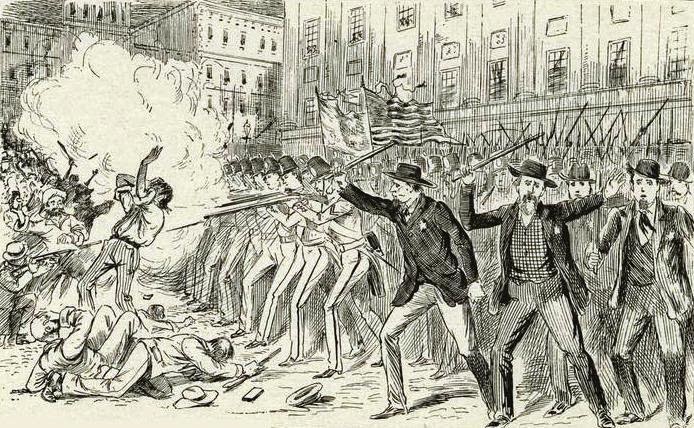
RIOT OR RIOTS?  You may have noticed in our podcast that we go from calling it the Astor Place Riot and the Astor Place Riots.  We both saw primary references to both the singular and the plural.  Though it was just one riot which occurred on May 10, the incidents on May 7 and May 11 constitute smaller riots or disturbances that lead up or were the result of the May 10 event.  The word ‘riot’ is not perfect either as it starts as a riot and ends as a massacre.

CORRECTION: In the podcast, I mention that John Jacob Astor lived in the line of stately buildings today known as Colonnade Row.  Although he built them, he never lived here.  However he moved his family into them, including his grandson John Jacob Astor III.  Cornelius Vanderbilt and Washington Irving also lived here.
__________________________________________________________

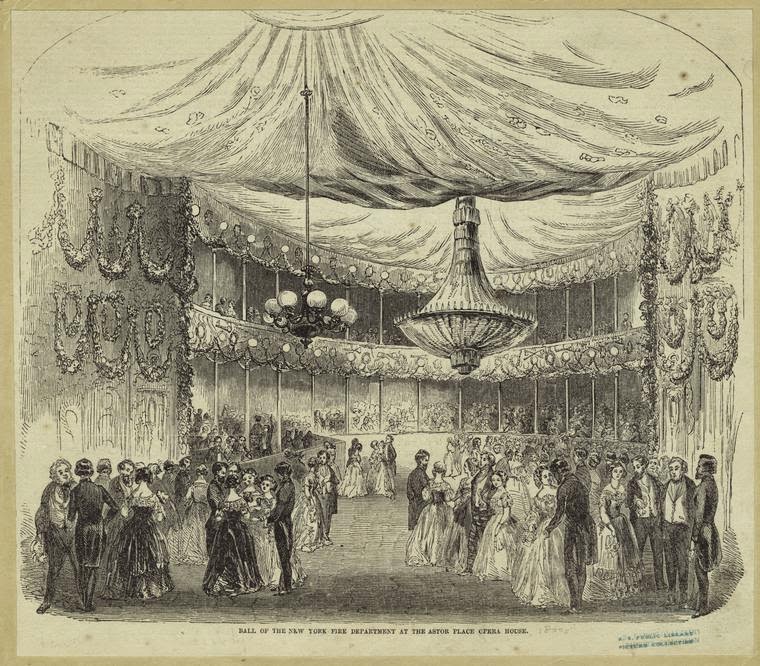
The Astor Place Opera House in 1850:
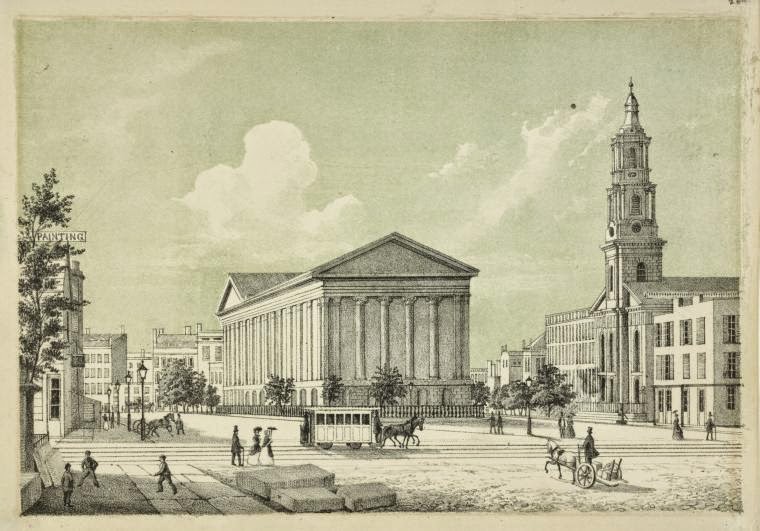
Inside the Astor Opera House, one of the most lavish spaces in all of New York in the 1840s.  Curiously, this illustration depicts a ball for the New York Fire Department.  Many members of the volunteer fire departments  actually set upon the opera house as part of the angry mob.
After the riots, the opera house quickly lost its cache. High society moved uptown to the Academy of Music (not so far away actually, on 14th Street, near Union Square).  The interior of the theater was eventually demolished and sold to the New York Mercantile Library and renamed Clinton Hall.
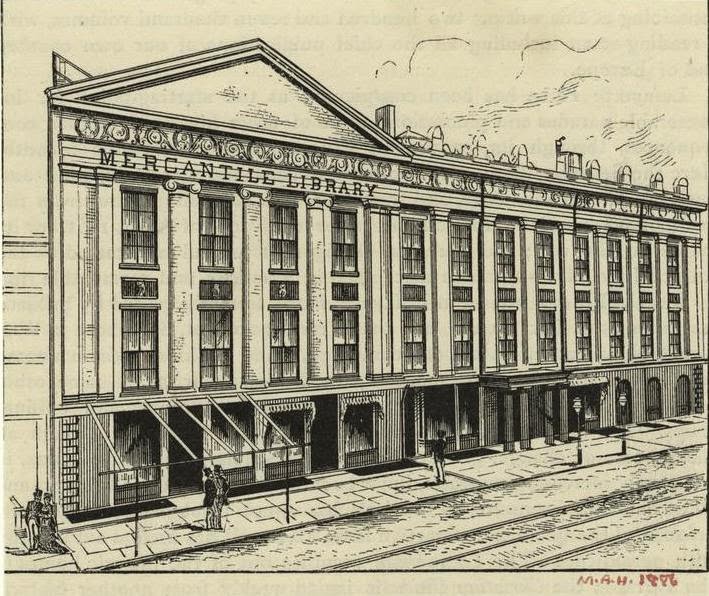
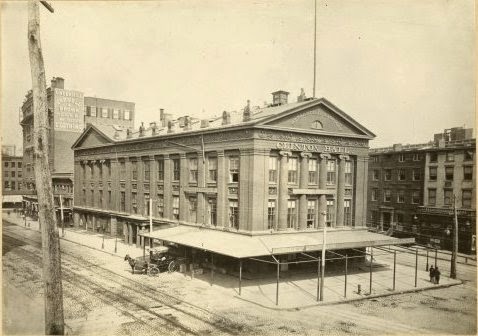
This was torn down in 1890 and replaced with the 11-story structure that stands there today.

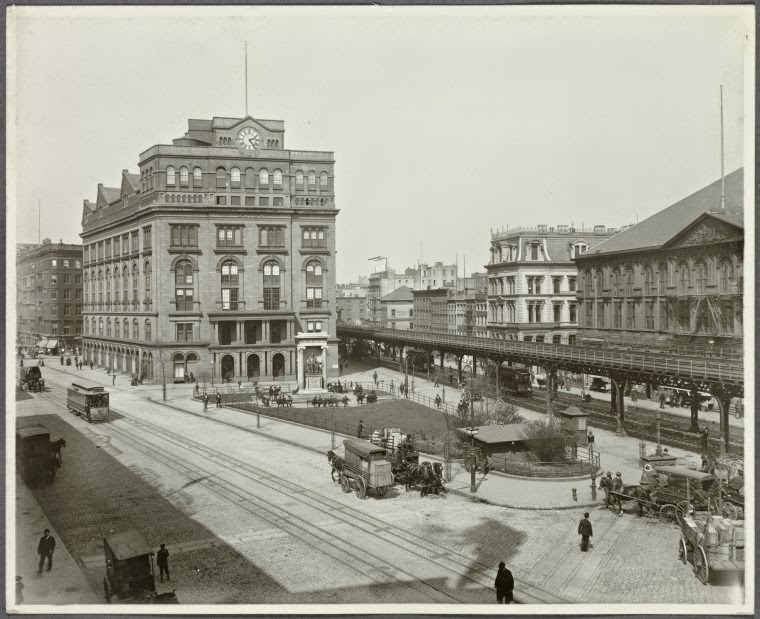
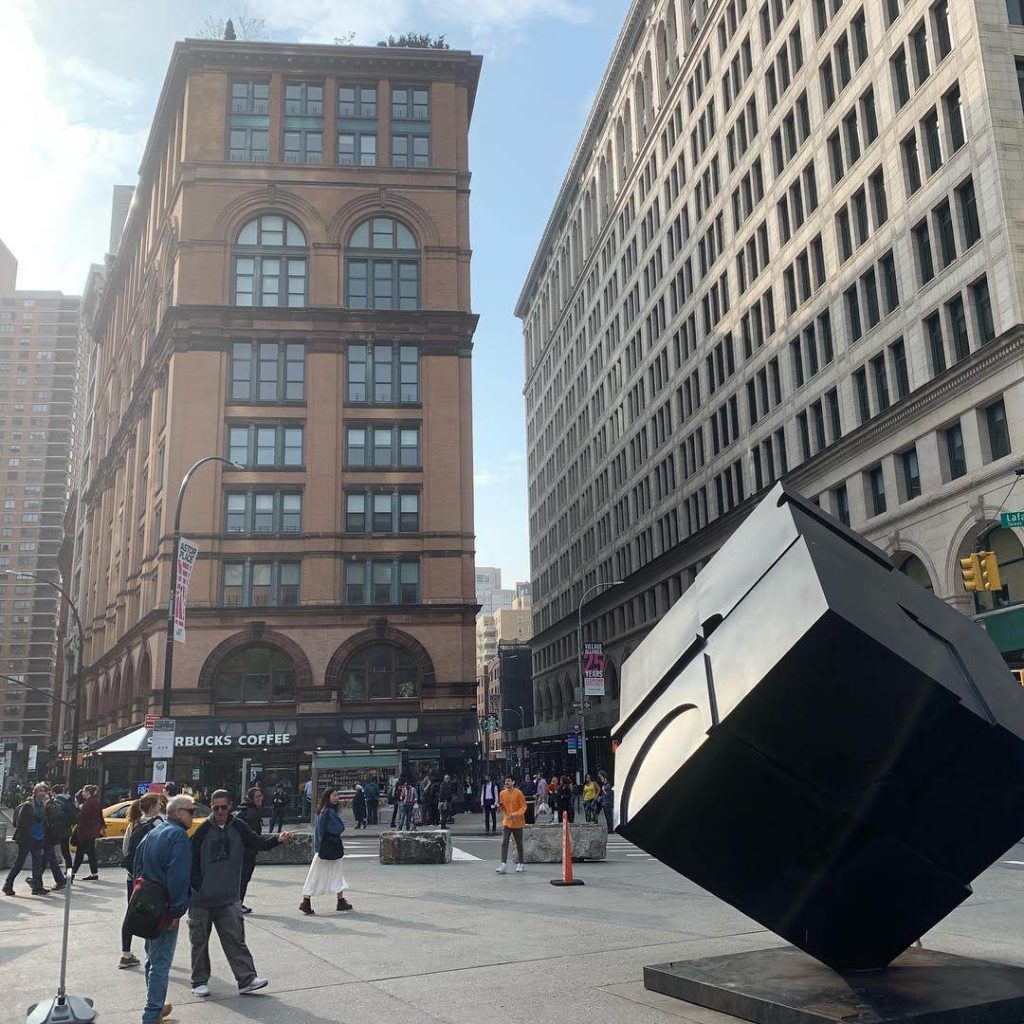
Many considered the demons of Astor Place purged when Cooper Union was finally constructed in 1859, a decade after the riots.  In this image, we’re looking up Third Avenue and the final remnant of the Bowery.  The Third Avenue Elevated has already been built here:
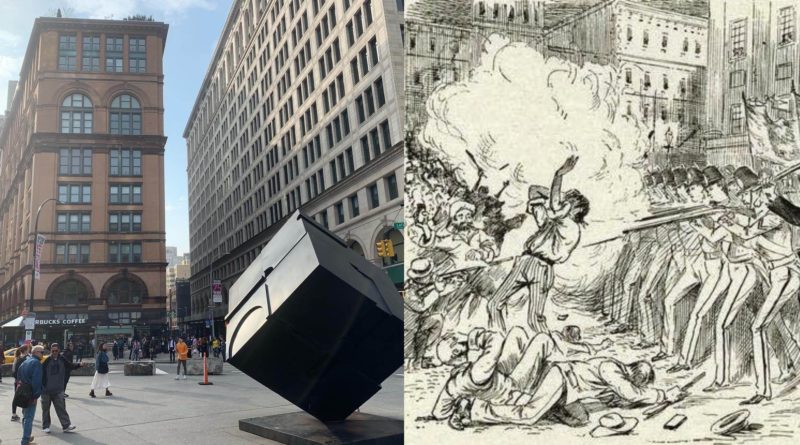
Astor Place in 2019:
William Macready:

From the New York Evening Post, May 1, 1849, advertising his May 7th show (which was interrupted by protesters).

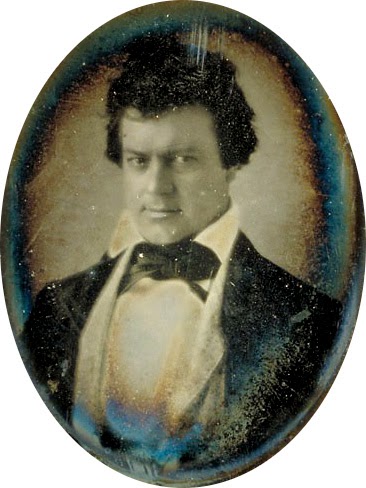
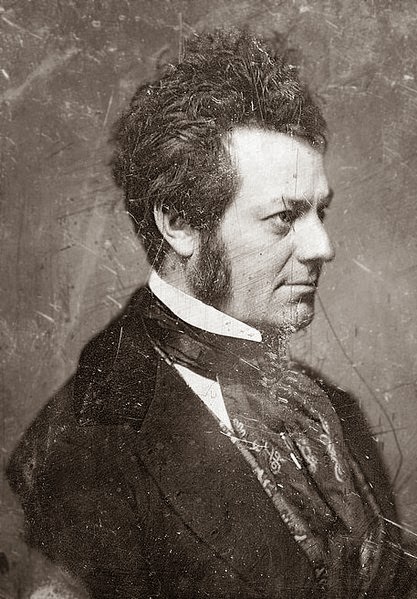
Edwin Forrest: In portrait and in daguerreotype
Images above courtesy the New York Public Library (except where otherwise noted).

FURTHER LISTENING:

We’ve been doing this for so long that we have MANY podcasts about historical landmarks in and around Astor Place. After you listen to this show, check out these older shows from our catalog:
Categories
Amusements and Thrills

Wanamaker’s Airship: That one time in 1911 they launched a hydrogen balloon from Astor Place

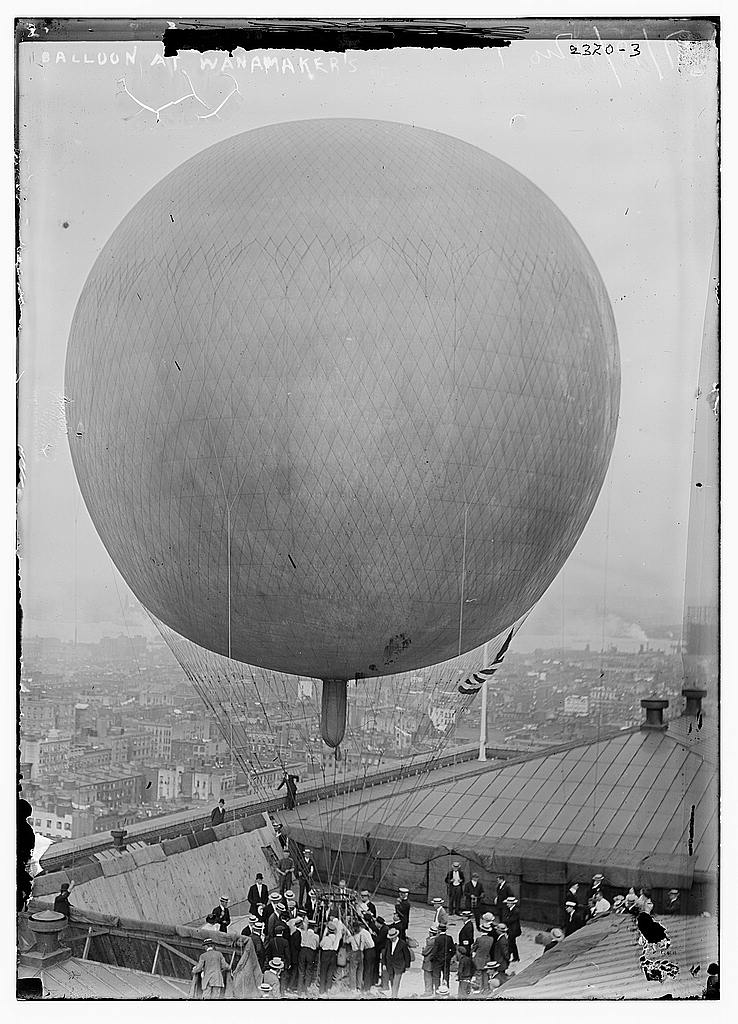
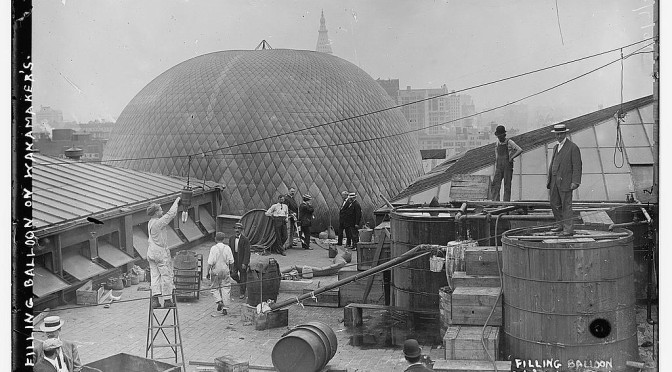
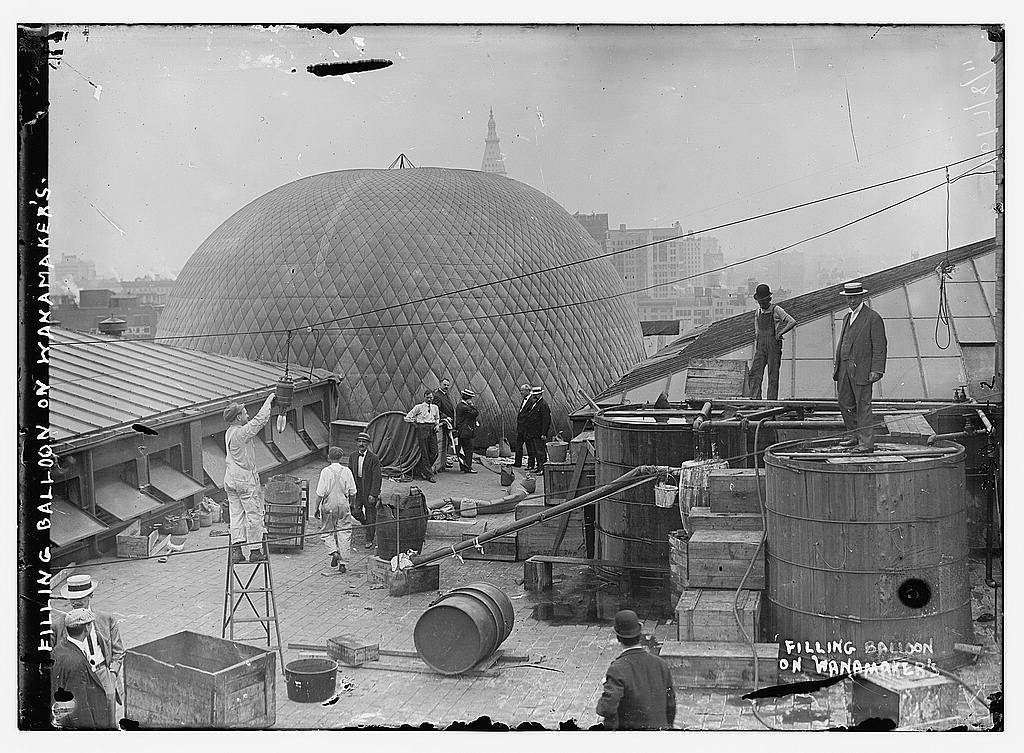
A view of the balloon launch, looking north towards the Metropolitan Life Tower, which can be seen jutting up in the background. The Met Tower was the world’s tallest building in 1911.

Philadelphia retailer John Wanamaker turned an abandoned train station in Philadelphia into the lavish department bearing his name in 1876, just in time for America’s 100th anniversary.  He would become one of Philadelphia’s largest employers, with 5,000 people working in the store, “the most valuable piece of property of its size in the city.” [source]

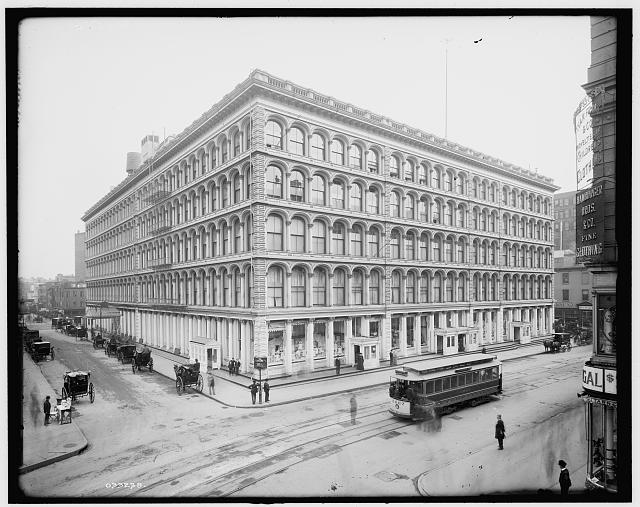
Meanwhile, in New York City, when shoppers weren’t flocking to Ladies Mile, they headed to A.T Stewart‘s equally grand ‘Iron Palace’ department store in Astor Place, with over thirty departments specializing in every sort of modern necessity, making it one of the largest stores of any kind in America.

Stewart’s store was located on Fourth Avenue between 9th and 10th Streets and was called the ‘Iron Palace’ as it was New York’s largest cast-iron building at the time.  (But not the first; that title goes to its neighbor, the American Bible Society building, at 51 Astor Place.)

Below: The original Wanamaker’s between 9th and 10th Streets. The building no longer exists.

It would take two decades for Wanamaker to make his way to New York, eventually buying up an old Iron Palace in 1896 and reopening it as New York’s first Wanamakers.

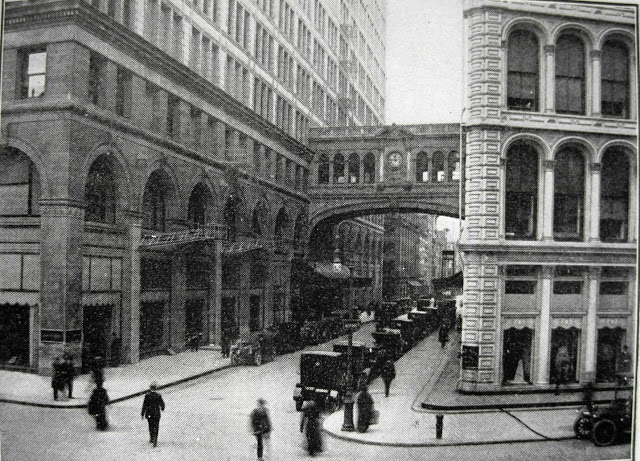
But a man who had filled an entire train station in Philadelphia would not simply be content with one lavish store; across the street, between 8th and 9th, he built another in 1902, using one of the world’s most revered architects — Daniel Burnham, who had just completed work on the Flatiron Building.  Customers could go between the buildings using a fanciful ‘bridge of progress’.

That is all, of course, to set this scene for the curious publicity stunt which occurred on the rooftop of Wanamaker’s on July 8, 1911.  For three days, a large hydrogen balloon (48 feet in diameter) sat tethered upon the rooftop of the new building, filling up with copious amounts of gas for a journey to Philadelphia — with a planned landing near Wanamaker’s other store.

In 1911, that old train-station store would be replaced with a new Wanamaker’s in Philadelphia’s Center City, also built by Burnham.  No better way to grab headlines for his new store in Philadelphia than to float a gigantic eye-catching object from one store to the other!

The balloon (called the Wanamaker No. 1), imported from Paris, was launched at 6 pm and gracefully floated over the city, across the Hudson, fadeing into the mists of Weehawken.

Unfortunately for the balloon’s two pilots, things went immediately awry, the balloon being a tricky one to control.  Instead of floating southwest, it headed due north.  After an hour and a half of wandering blindly through the clouds, the balloon ungraciously came down — in Nyack, New York.

But it wasn’t considered a failure by any means. Wanamaker’s wanted a publicity stunt and got one.  The launch made the front page of newspapers.  For a moment, the whole region seemed transfixed.  “Crowds turned out to gaze at the big airship as it passed over the Hudson River villages,” crowed the New York Times.

Some even claimed this was the beginning of a new phase in New York travel.  Rooftops could regularly be used to launch airships of all sorts.  “This is the first step towards making the roofs of the Wanamaker buildings in New York and Philadelphia into permanent aerial stations,” claimed the Evening World.  “Landing platforms and hangars for balloons and aeroplanes are to be built on the roofs of the department stores in both cities.”

Not to be outdone, the following month, Gimbels Department Store would stage a marvelous airplane race over the streets of Manhattan.

By the way, Mr. Wanamaker wasn’t even in the country when all this happened.  He rolled into town the following week aboard the White Star liner Oceanic, having celebrated his 73rd birthday in style by traveling to England and meeting King George and Queen Mary.

The original Wanamaker’s building is no longer there, but the south building, the one designed by Burnham and the one from which the balloon was launched, still exists today as the home of K-Mart.

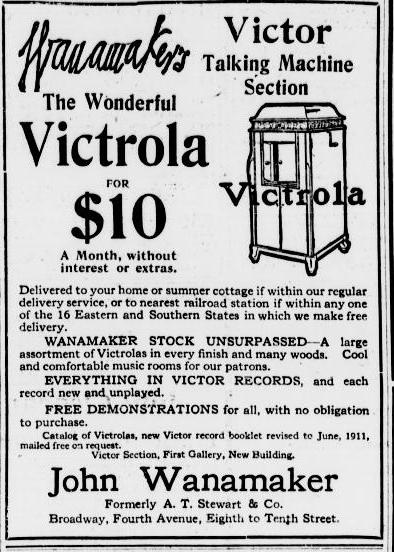
Below: That same week, one could run into the store below the balloon and purchase this swell Victrola. This ad is from the July 10, 1911 issue of the Evening World

Pictures courtesy the Library of Congress.

Categories
Neighborhoods

This woman’s work: Exhausting images of Astor Place and Lafayette Street

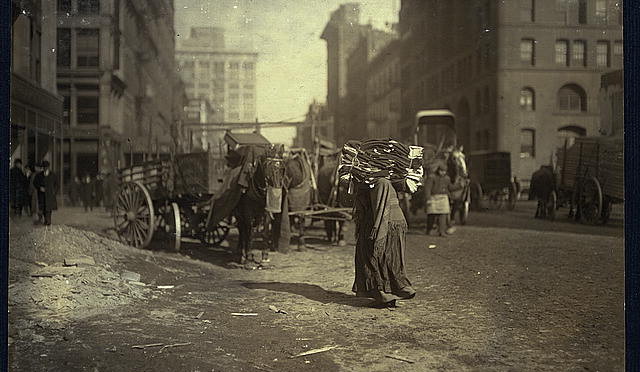
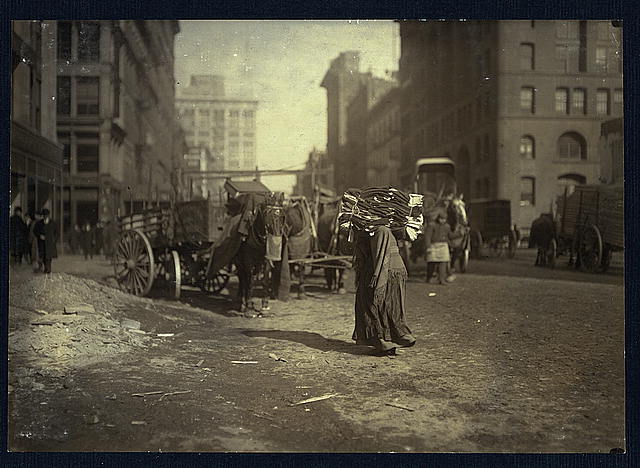
Gritty streets, circa 1912. Looking up Lafayette Street, below Astor Place. “The breaking point. A heavy load for an old woman.” The building to the right is the DeVinne Press Building, built in the 1880s, and today home to Astor Center Wine & Spirits. In the distance: the Wanamaker Department Store building, today the home to K-Mart! Look here and turn the angle north for the present view of this street. [Source: LOC]


Lewis Hine hit the streets of New York in 1912 looking for dirt. And he found it. The teacher-turned-social activist and photographer had found the camera a useful tool in illustrating poverty and had already drawn attention to deplorable child labor conditions. In the wake of early social crusaders like Jacob Riis, Hine’s photos helped the poorest New Yorkers by showcasing their daily toil in a landscape of decrepit quality.

Beyond the social commentary, however, these are still fascinating portraits of New York. None are more striking to me personally than his images taken one hundred years ago this month from Astor Place and along Lafayette Street. Many New Yorkers marveled that month at the exploits of daredevil pilot Frank Coffyn over New York harbor, but after the fun was over, many came home to this.

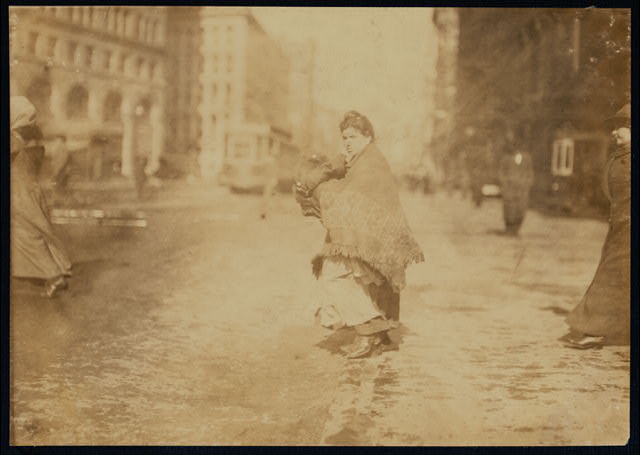
A highly energetic crossroads today, the destination of college students, shoppers, and theater goers, Astor Place has clearly cleaned up its act since Hine sat his tripod here a century ago. With these particular images, Hines was specifically commenting on ‘home-work’, poor women and children taking raw materials or clothing to mend back to their tenements, turning their confined living quarters into personal sweatshops.

They say other things to us today. The street conditions speak for themselves. But see if you can identify some of these street corners!

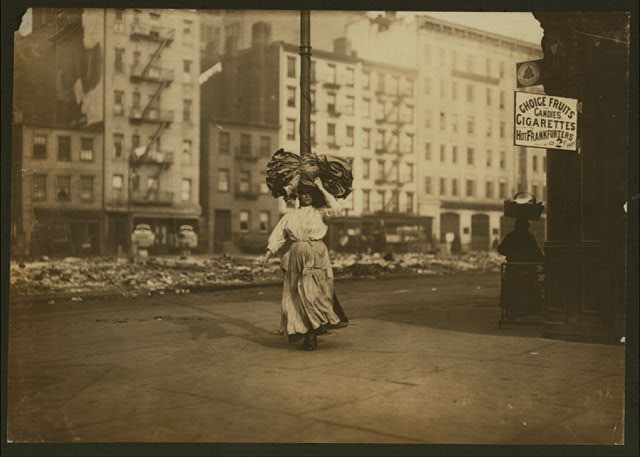
Caption “Woman crossing Astor Place with home-work”: Looking up Fourth Avenue, with the Wanamaker department store building (designed by the great Daniel Burnham in 1904) to the left.

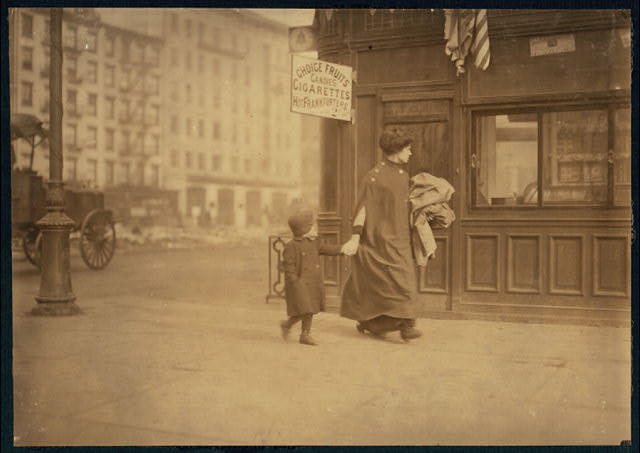
Two pictures on the same street corner. Notice the condition of the street in the background. The shop sign advertises ‘Choice Fruits, Candies, Cigarettes, Hot Frankfurters’. They also have a public AT&T telephone.

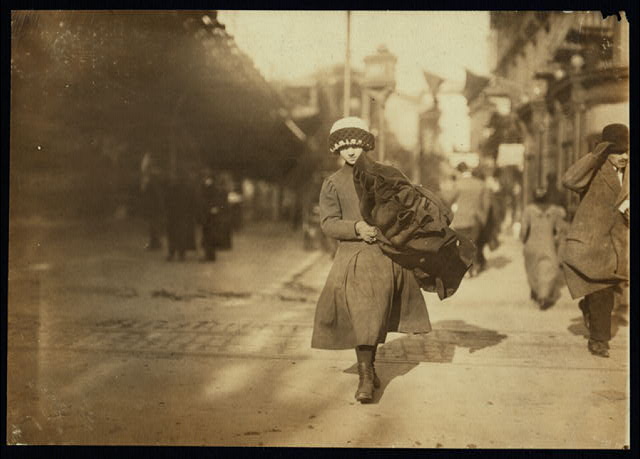
I find this one the most intriguing. “Young girl carrying bundle of coats home to be finished.” She’s clearly walking up (or down?) along the Third Avenue elevated train. Keep in mind, in context to last week’s post on the Coffyn flight, that it’s so cold in New York at this time that the East River has frozen over in many places.

Pictures courtesy of the Library of Congress. You can check out their digital archives for hundreds of other Hine photographs from this era.

When Jupiter aligned with Mars: Hair on Broadway


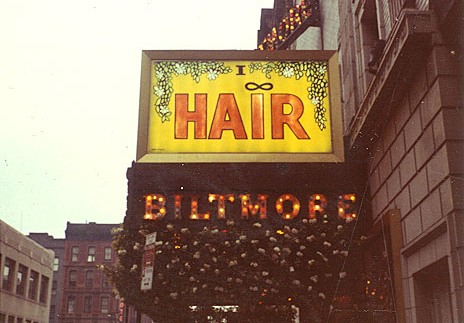
Forty years ago today, April 29, 1968, the musical Hair debuted on Broadway and basically changed New York’s theater industry — where shows come from, how they’re staged, what you can even doon stage.

Here’s ten reasons why Broadway’s first rock musical is so important, and why today you should probably fish out your Fifth Dimension CD or original cast album in tribute to this one of a kind groovy show:

1) Hair made the Public Theater. The show made its debut on October 17, 1967 at the Public, which was itself making its debut. In fact, the theater in which is was being performed — in the former Astor Library — wasn’t even finished yet! The Public Theater would have course to go on to become off-Broadway’s leading theatrical producer.

2) After six weeks, Hair would foreshadow Studio 54’s own transformation into a Broadway house by moving the remainder of its off-Broadway run into the Cheetah discotheque.

3) Hair is the very first musical to be transferred from off-Broadway. At the time an extremely risky proposition, it’s today considered a logical move for the most critically popular of shows. Rent, Avenue Q and Spring Awakening — like Hair, all off-center shows with sexuality and rebellion at their core — also made the jump to the big stage and all won Tonys for Best Musical.

4) Hair brings Tom O’Horgan to Broadway. A regular at the off-off-Broadway La Mama — the East Village’s most venerated experimental theater — O’Horgan brought an uncompromising edge to his staging that was entirely shocking to mainstream theatrical audiences. O’Horgan would stay on Broadway throughout the 70s with pivotal work in Jesus Christ Superstar, Futz!, and Lenny.

5) Hair doubles the number of songs ‘allowed’ in a musical. The sheer number of songs in Broadway restaging made it unique, over thirty. The big musical from the previous year, Cabaret, barely featured half that number

6) O’Horgan also brings the nudity. The uptown redux features one of the most influential scenes in all of Broadway history — at the end of the first act, when the entire cast, in low lights, appear completely unclothed, the first stage nudity to hit the Great White Way.

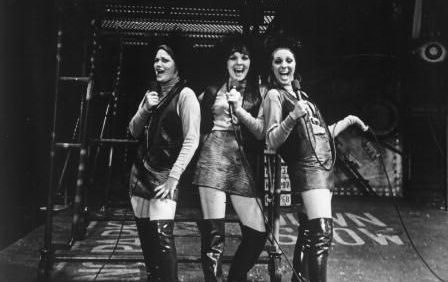
7) A New York icon debuts. Diane Keaton (above, in the middle) becomes an understudy in the show but refuses to do the nude scenes. After several months with the cast, Keaton goes on to her next show — Play It Again, Sam — where she makes the acquaintance of a young director, Woody Allen.

8) Up for two awards (Best Director and Best Musical) at the 1969 Tony Awards, it lost both to the musical 1776. Interestingly, Diane Keaton is up for her Tony that year for Play It Again Sam and also lost.

9) Hair closes July 1, 1972 after 1,750 performances. It is the 38th longest running musical in Broadway history, between La Cage Au Folles (at 37) and The Wiz (at 39).

10) An unbelievable one-night revival of Hair, in 2004, for an Actors Fund benefit, mounted at the New Amsterdam and featured the following cast: JM J. Bullock, Harvey Fierstein, Ana Gasteyer, Annie Golden, Jai Rodriguez, RuPaul, Michael McKean, Laura Benanti, Adam Pascal and future Oscar winner Jennifer Hudson

Here’s about a comprehensive list of some of Hair ‘s original review. Both the New York Post and the New York Times gives the original off-Broadway production a condescendingly mixed review.

The Village Voice? Hated it. “As for Hair, I loathed and despised it. Described as ‘an American tribal love-rock musical’ it turned out to be all phony.” Wow, some things never change!

We’ll see how the critics like it this summer when the Public Theatre restages Hair for its Shakespeare In The Park program at Delacorte Theatre, from July 22 to August 17. Diane Keaton won’t be in it, but will there be nudity?

Time’s up for Astor Place’s famous clock

Before we leave Cooper Union, I thought I was draw your attention a rather controversial decision they’ve made in the past few years that has marred an institution of Astor Place — the Carl Fischer note clock.

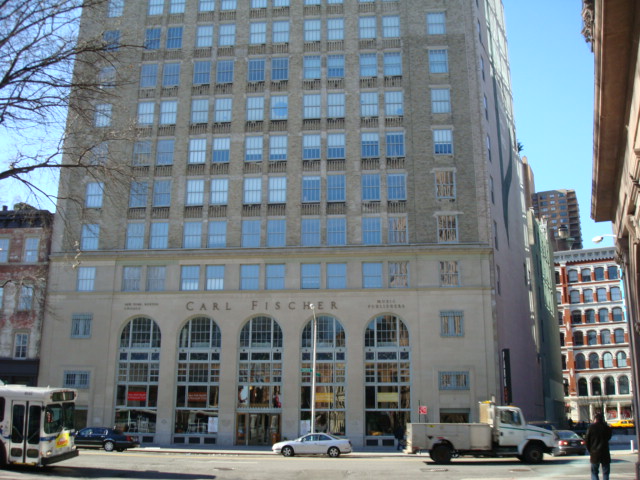
Carl Fischer, still a leader in printed sheet music, began as a tiny musical instrument store on East 4th Street in 1872, successfully incorporating printed music by the end of the century. Carl’s son Walter carried on the business into the next century, moving the enterprise into a new beige 12-story building at 62 Cooper Square, right off Astor Place in 1923.

Throughout the years, it was the place in downtown New York to grab the sheet music for any occasion and even into the 1990s held on to its old-school charm, with uniformed attendants in the elevators and little evidence of modern technical organization. In 1999, the company moved out of the building, which now houses 26 loft apartments. Their new location is at 65 Bleeker Street.

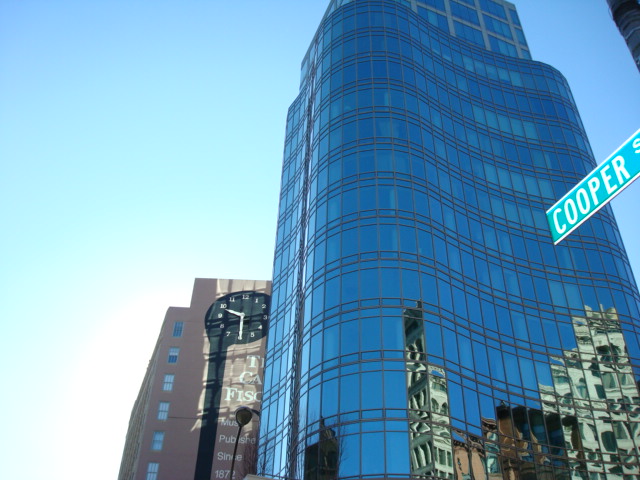
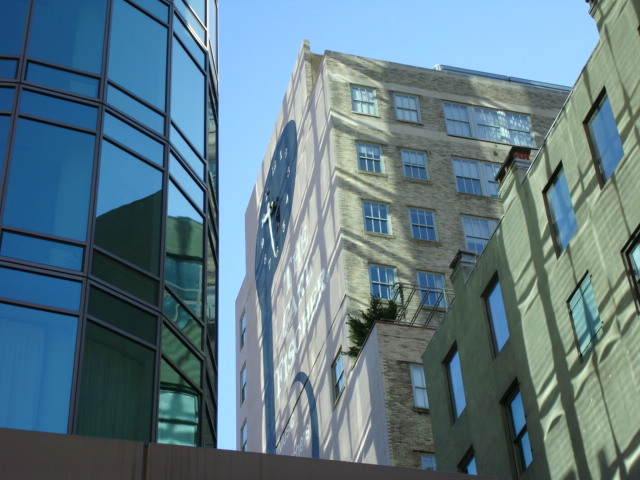
Even if you never bought sheet music, the store was a fixture of Astor Place due to the charming clock, blooming from a gigantic eighth note, that stretched down the side of the building, hovering over a small parking lot below. There has always been a clock alongside the building as long as Fischer was in the building, though it the past it was incorporated into murals featuring a boy scout with a drum, an art-deco sun pattern, and a marching band.

The parking lot has always been owned by Cooper Union, and it’s no surprise given the condo frenzy that has possessed New York that in 1999, the same year that Carl Fischer vacated the premises, they decided to lease to Gwathmey Siegel & Associates for a new condominium.

That parking lot has a bit of a storied history of its own, a frequent spot for people to sell a mix of unusual wares along the street. Author Michael Galinsky wrote about this curious intersection several years ago and kindly forwarded me a link to Flickr that featured some pictures from the book which I highly recommend you check out, especially if you’re a fan of 80s New York street scenes.

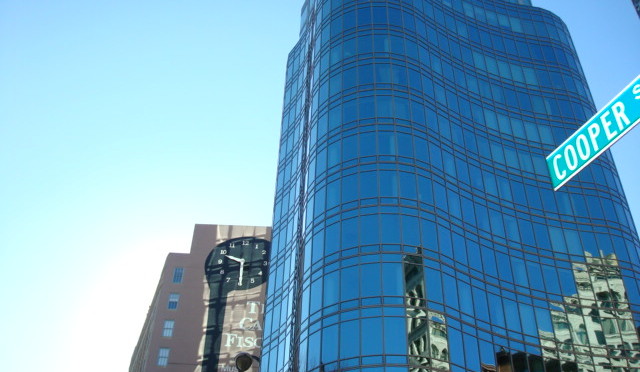
However, that parking lot is gone, replaced with the Astor Place Tower, a sleek 21 story glass tower. I leave it to you to form your own opinions about this building. What is has done, however, is completely dwarf the famous old clock, completely obscuring it at many times of the day with a glare and creating an awkward canyon between the Tower and the Fischer building that can’t be creating a very attractive view from certain windows.