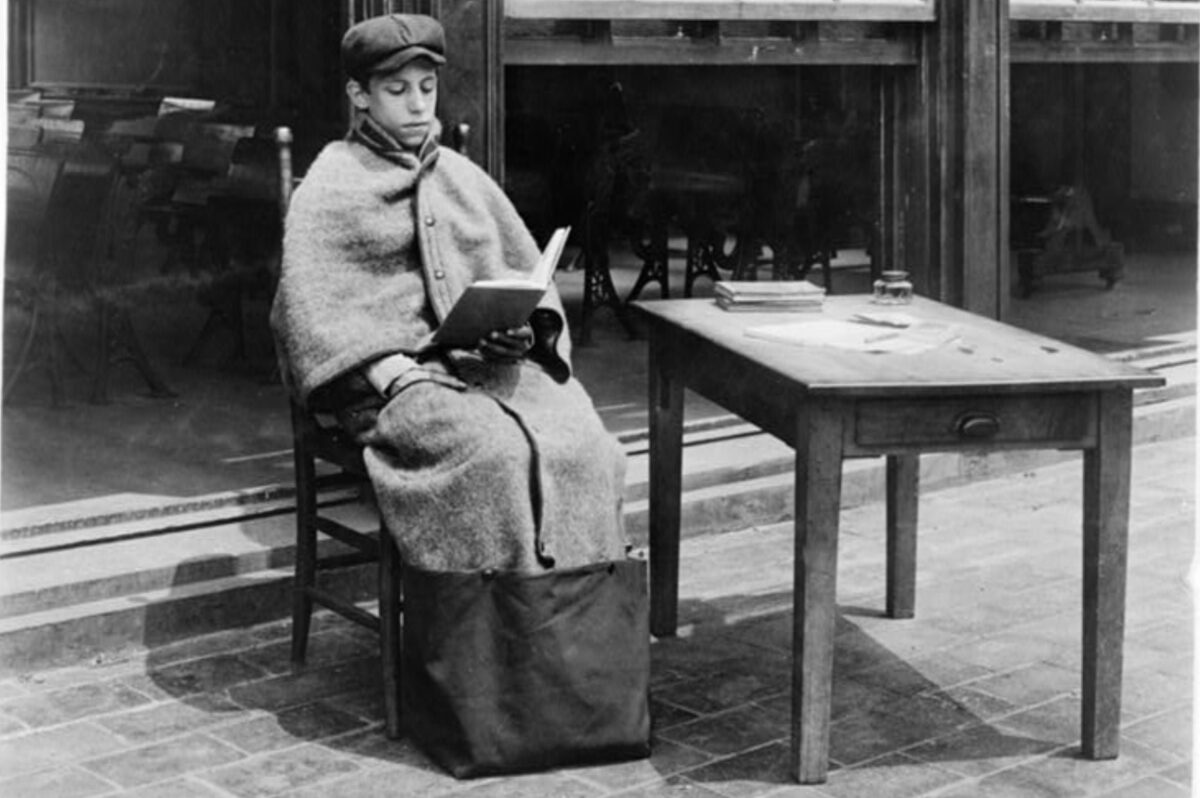
This is a sitting-out bag. No child ever wore one because he wanted to impress his friends.
But this awkward example of outdoor wear was created to save lives and keep students educated during one very concerning health crisis.
Teaching children during perilous moments of disease spread had been a challenge since the invention of public schooling. The educators of the past did not have the option of remote learning. And sometimes the epidemics faced during these moments seemed to specifically target children.
Such was the case of tuberculosis (TB), a constant specter over life in big cities for centuries. Like COVID-19, tuberculosis is spread through aerosol droplets. And like COVID-19, TB is spread through close and continued exposure to an afflicted person.
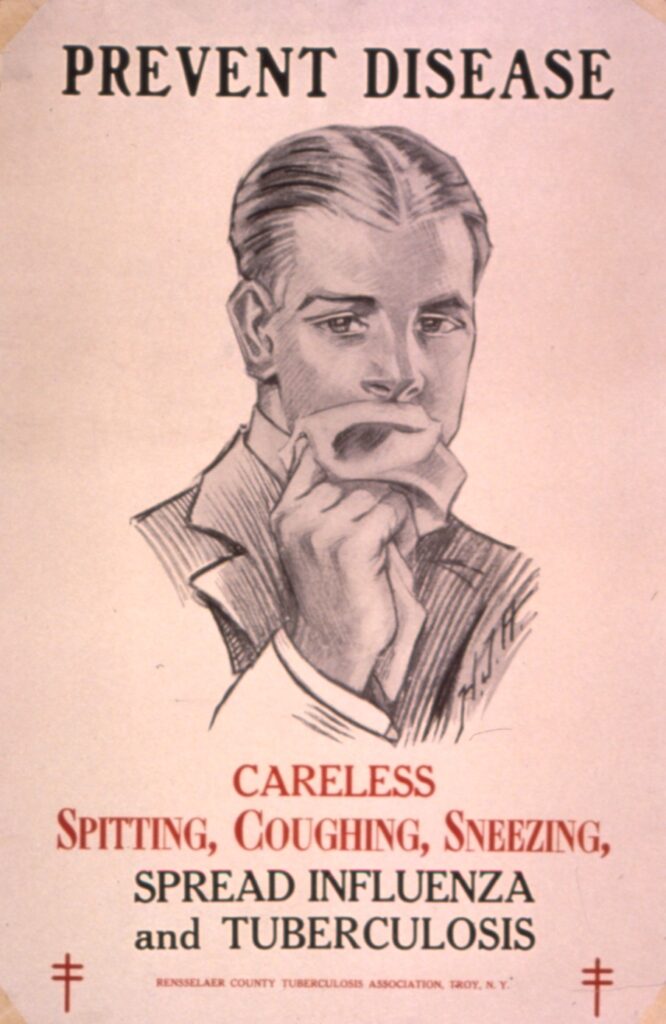
Tuberculosis was one of the leading causes of death worldwide in the 19th century and would not fully be controlled until the widespread acceptance of vaccines after World War II.
But in densely populated neighborhoods like the Lower East Side, combatting the disease was an uphill battle. Not only were people packed into small spaces, but those spaces were hardly well ventilated.
Where possible, educators chose to heed the advice of experts and hold classes outdoors.
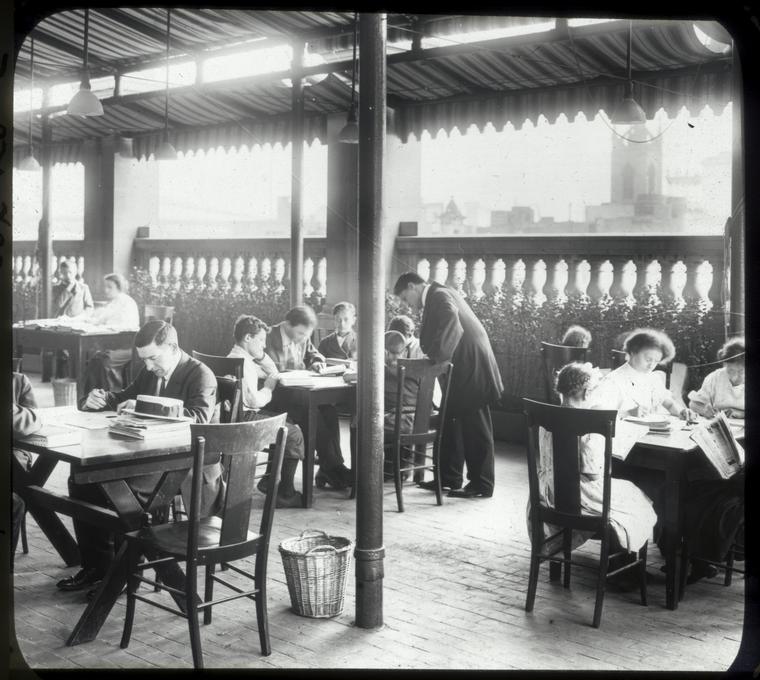
The so-called ‘open air schools’ instructed students in environments with ample ventilation, often on building rooftops or lawns.
According to a 1916 analysis of the movement, an open-air schoolroom was “fully exposed to the air on one or more sides, providing merely shelter from wind and rain. There is no artificial heating, the temperature of the room always being that of the open air.”
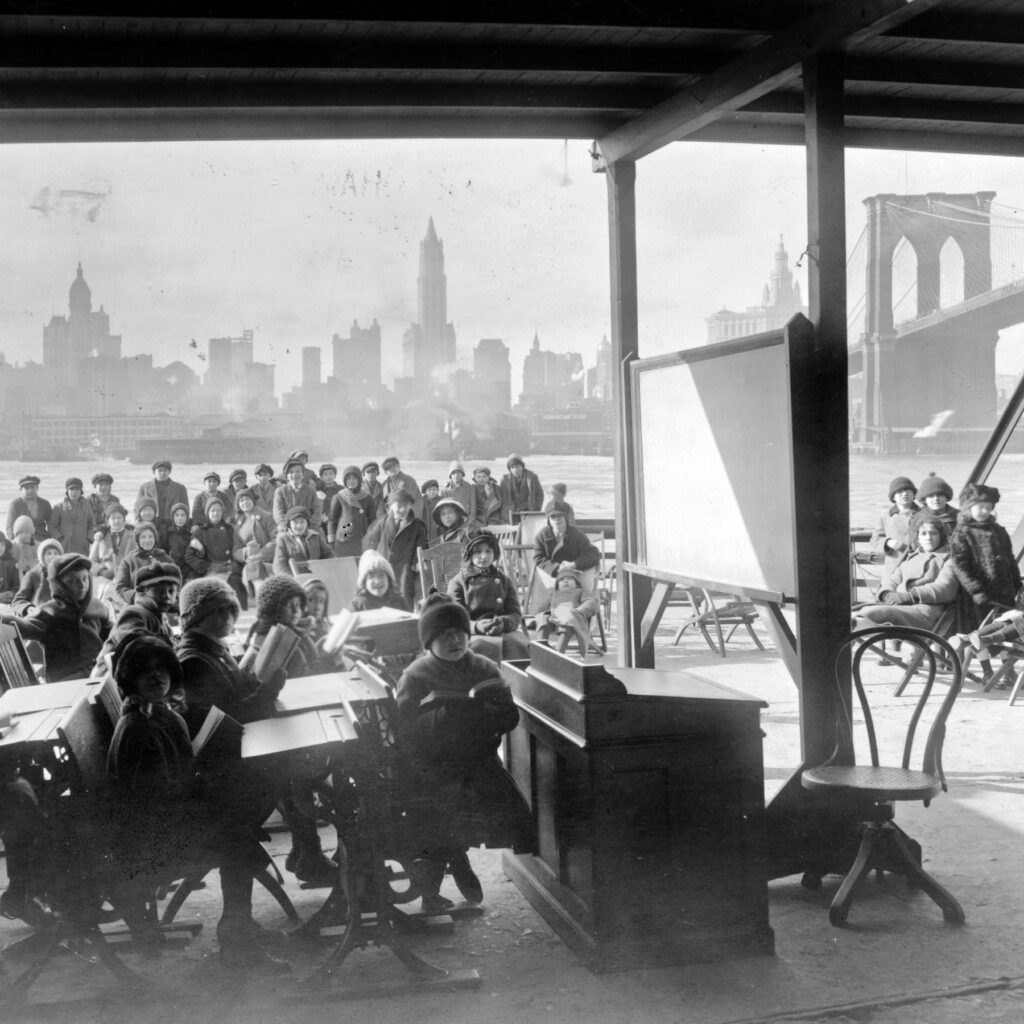
The first open-air school in New York opened in 1908 on an “abandoned ferryboat.” Easily the most notable of New York’s open-air schools — and a model of this unusual form of education — was the Horace Mann School, operated by the Teachers College at Columbia University.
Horace Mann’s students had to meet a certain unfortunate criteria. “The children who make up the classes were chosen because they were nervous, or irritable, or anaemic, or undernourished.” [source]
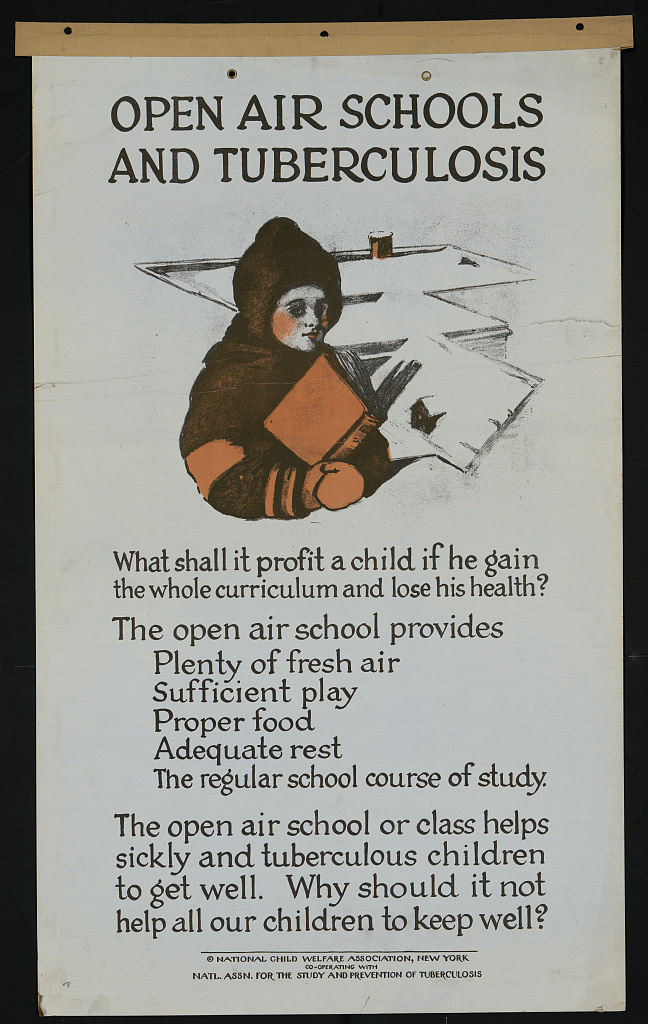
But while the open-air school was created for the prevention of one illness, it most likely encouraged another — pneumonia.
And that’s where the sitting-out bag comes in.
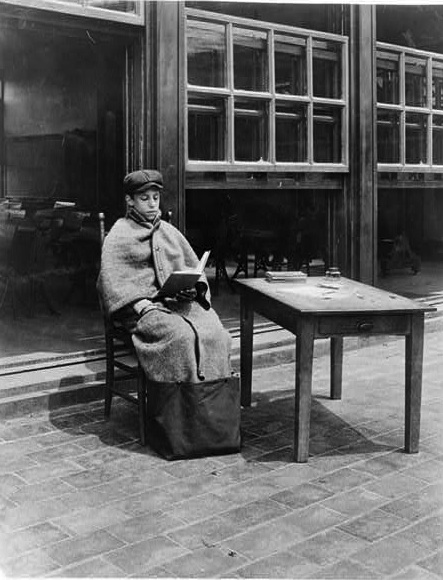
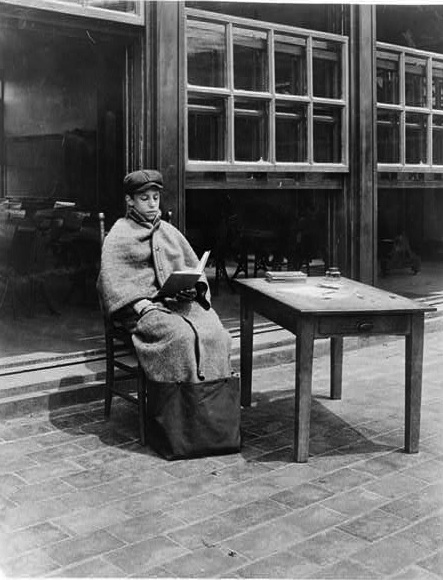
The sitting out bag was like a potato sack, a thick sheath of material that allowed the student to study even in freezing temperatures.
The device was basically the sleeping bag for daytime, used to warm the body and keep students alert during open-air classrooms.
Below: An advertisement promoting “fresh air in abundance” featuring the same boy as above
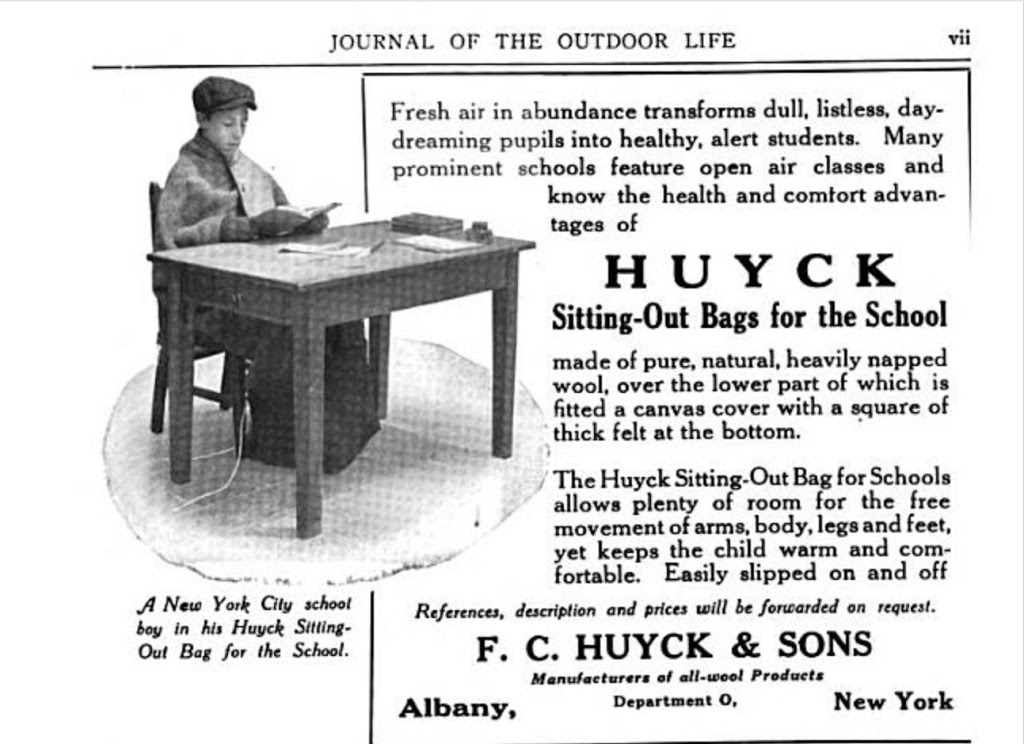
It was by no means a pleasant ensemble. One guide to open-air schools described the sitting-out bags as “made of a brown, pliable, hairy, felt-like cloth bound with tape and fitted with snap fasteners.”
Because the sitting-out bags were often used by several students — and reused, over many years — parents were encouraged to make their own sitting-out bags at home for their children.
As with masks today, parents were encouraged to make their own. An article in a 1910 Survey Magazine offered tips to adults on how to make homemade sitting-out bags. (If you’d like to make your own sitting-out bag, find the instructions here, but you’ll need lots of braid and cotton batting.)
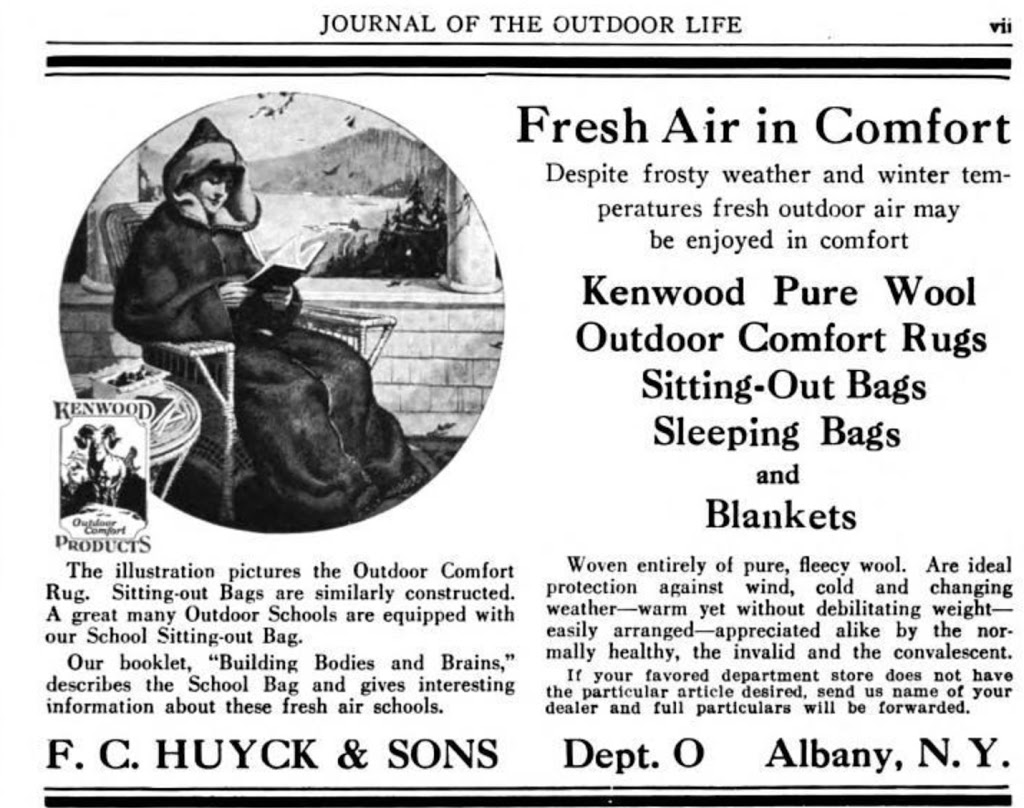
Many sitting-out bags came with hoods, leading to the alarming sight of an entire classroom of hooded children in stiff uncomfortable cocoons.
Below is pictured a hooded version, advertised in the Journal of the Outdoor Life in 1922. A sporting magazine? Sadly, no. The publisher of this guide to open-air living was the National Tuberculosis Association.
But the sitting-out bag played a small part in keeping children safe during this moment of crisis. Better understanding of the disease and the invention of an effective vaccine would lower the infection rate by mid-century:
“Rates of death from tuberculosis in the United States decreased from 194 per 100,000 persons in 1900 to 40 per 100,000 persons in 1945, in part because the epidemic of tuberculosis in the western world was running its course and in part because of public health initiatives and improved socioeconomic conditions.” [source]