The Broadway Musical is one of New York City’s greatest inventions, over 150 years in the making! It’s one of the truly American art forms, fueling one of the city’s most vibrant entertainment businesses and defining its most popular tourist attraction — Times Square.
But why Broadway, exactly? Why not the Bowery or Fifth Avenue? And how did our fair city go from simple vaudeville and minstrel shows to Shuffle Along, Irene and Show Boat, surely the most influential musical of the Jazz Age?
This podcast is an epic, a wild musical adventure in itself, full of musical interludes, zipping through the evolution of musical entertainment in New York City, as it races up the ‘main seam’ of Manhattan — the avenue of Broadway.
We are proud to present a tour up New York City’s most famous street, past some of the greatest theaters and shows that have ever won acclaim here, from the wacky (and highly copied) imports of Gilbert & Sullivan to the dancing girls and singing sensations of the Ziegfeld revue tradition.
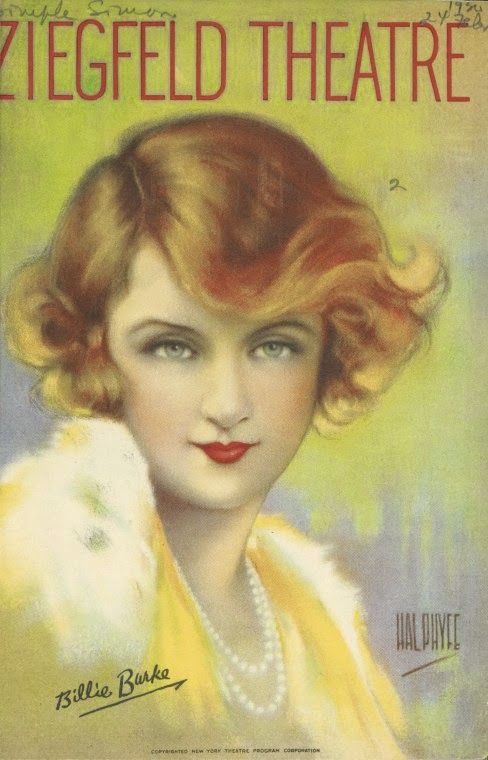
CO-STARRING: Well, some of the biggest names in songwriting, composing and singing. And even a dog who talks in German! At right: Billie Burke from a latter-year Follies. (NYPL)
This show, originally recorded in 2013, has been re-edited, remastered and even includes extra material which was cut from the original episode.
LISTEN NOW: THE BIRTH OF THE BROADWAY MUSICAL
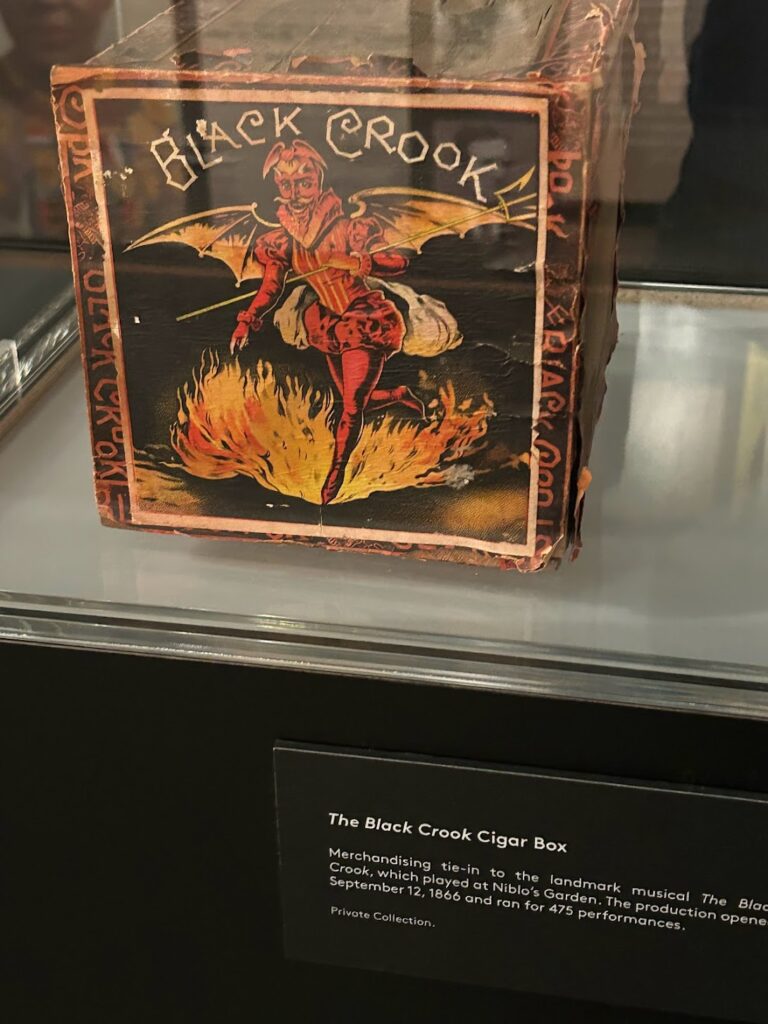
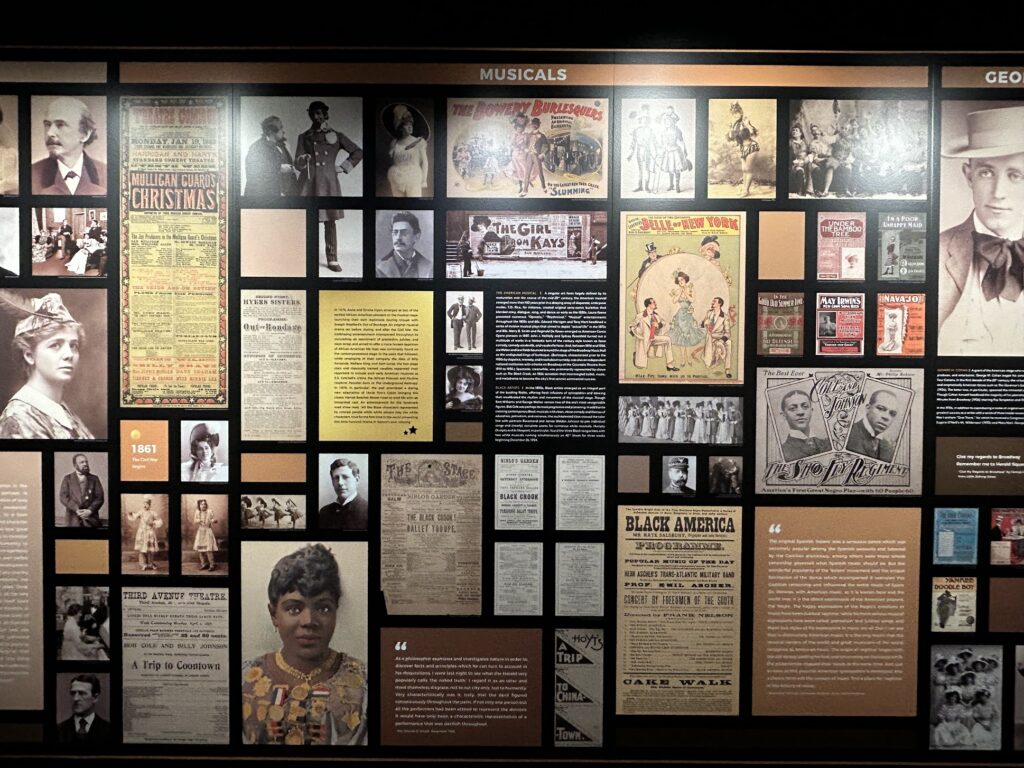
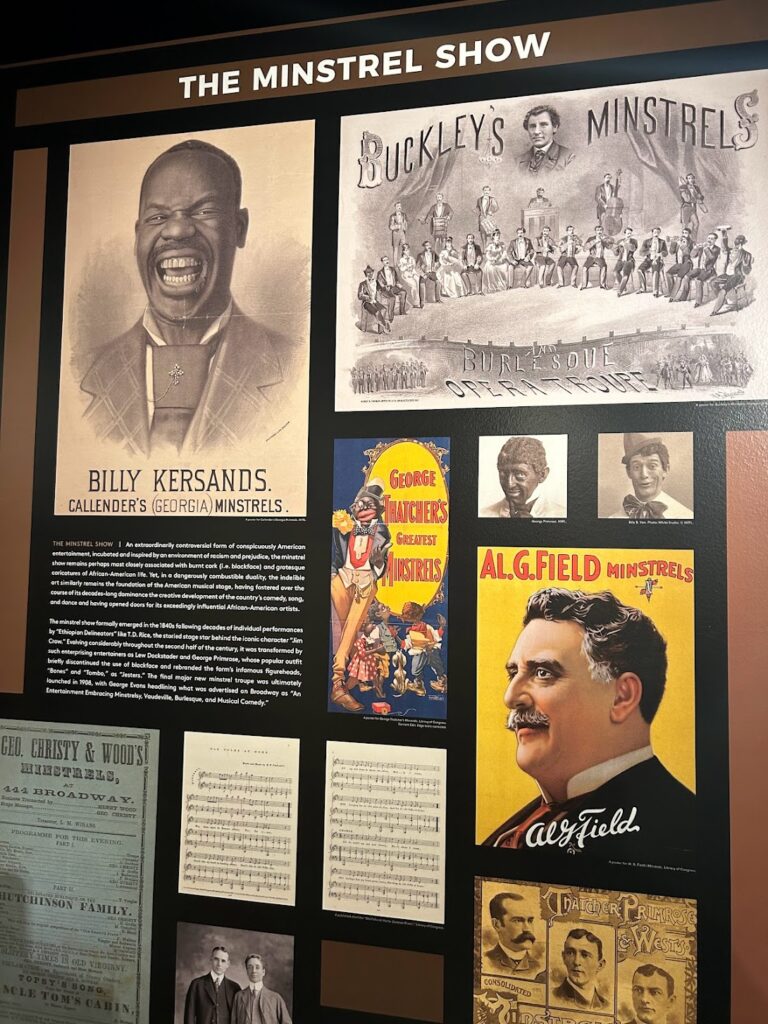
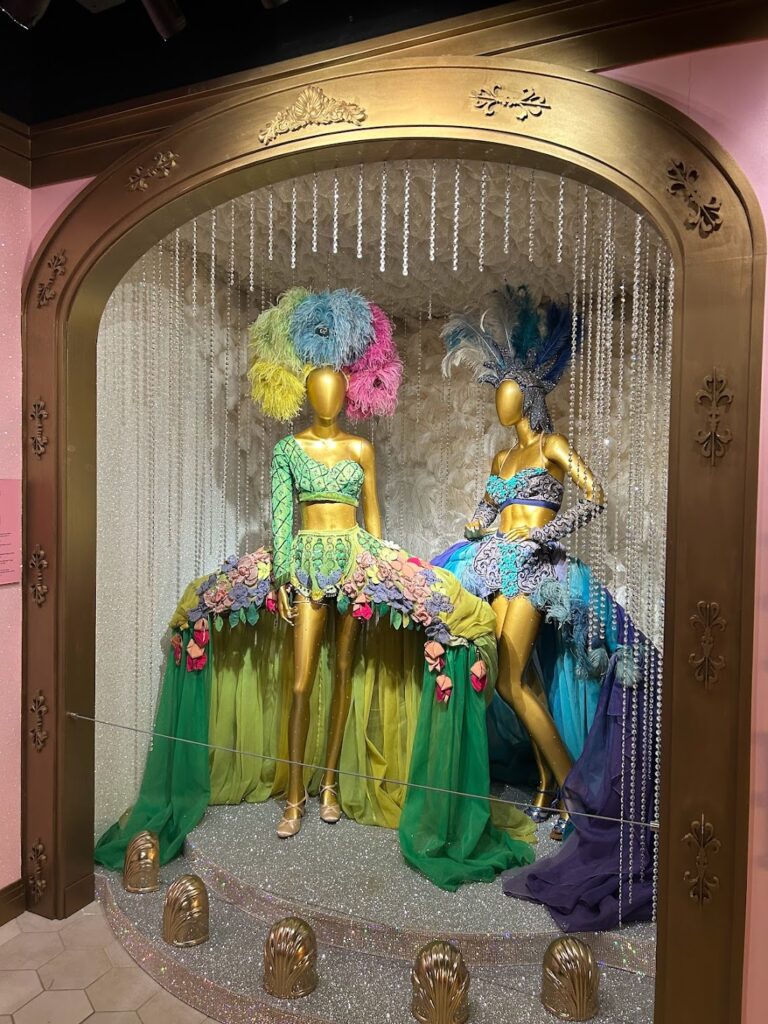
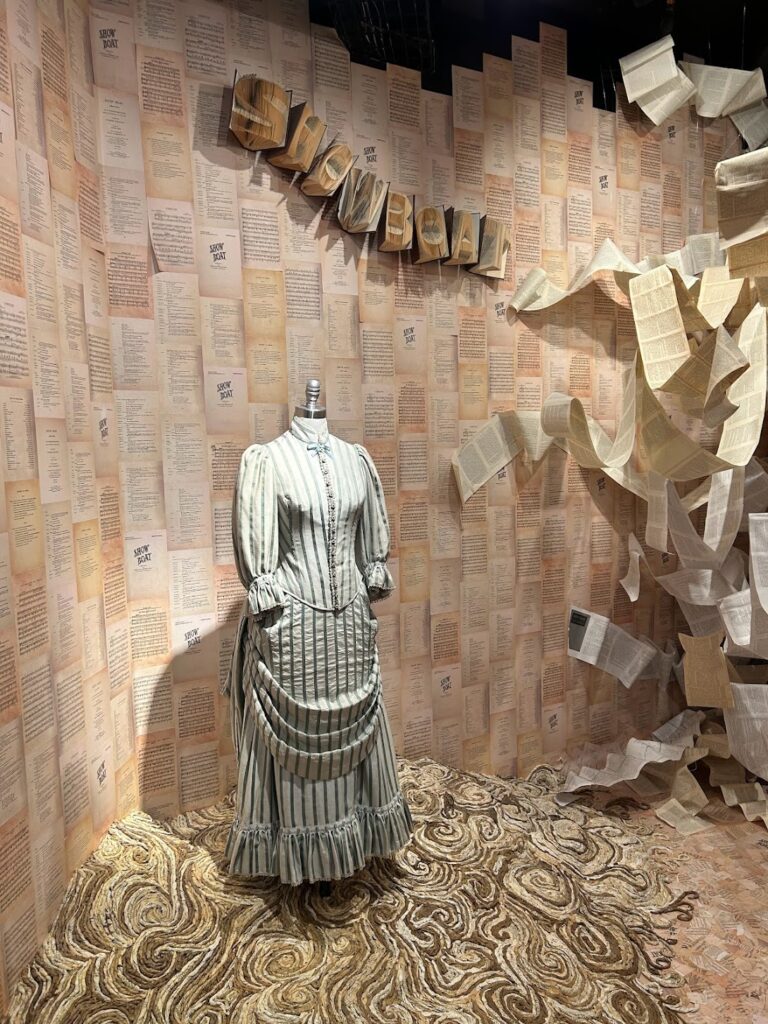
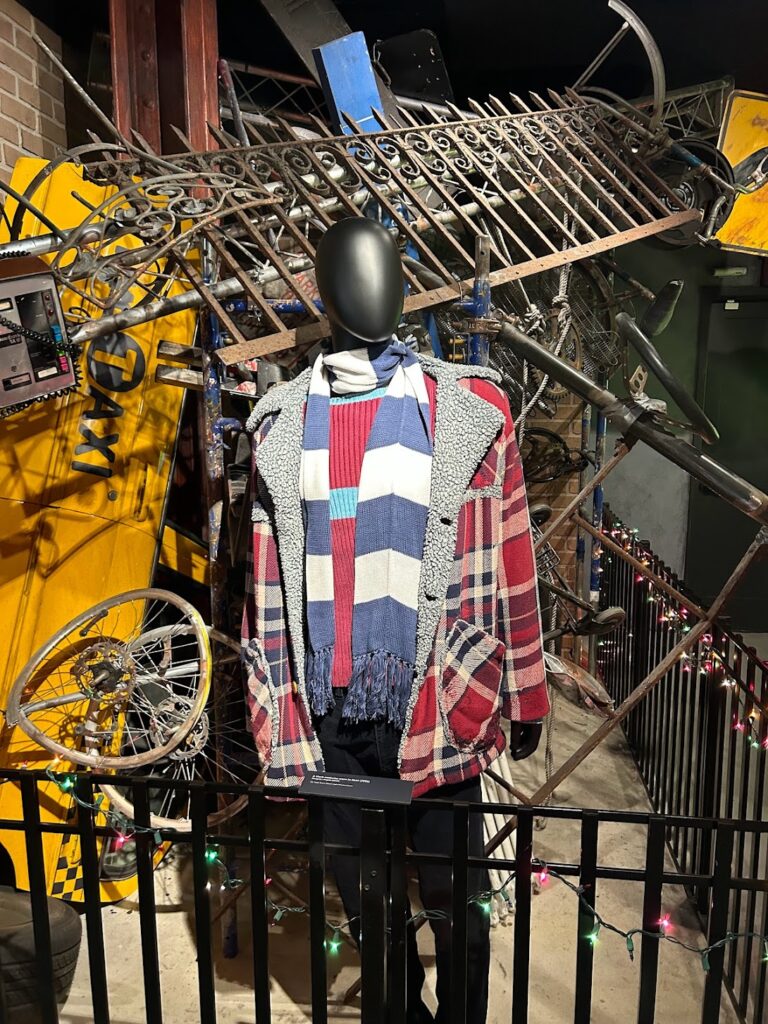
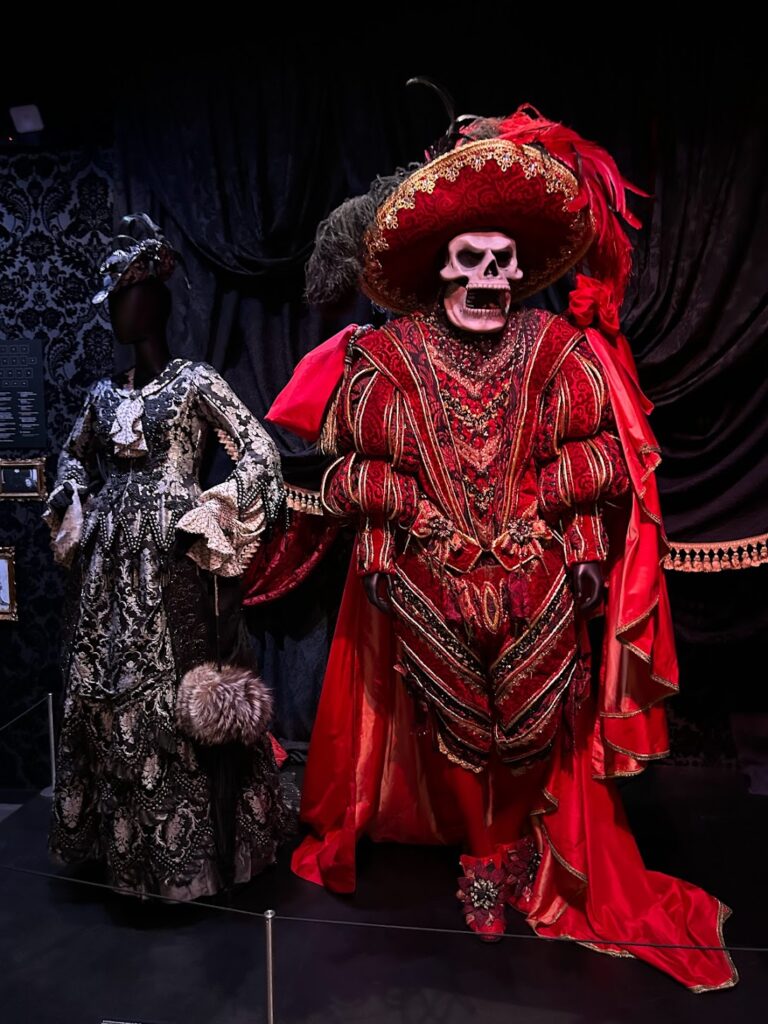
A few images from Greg’s trip to the Museum of Broadway at 145 West 45th Street.
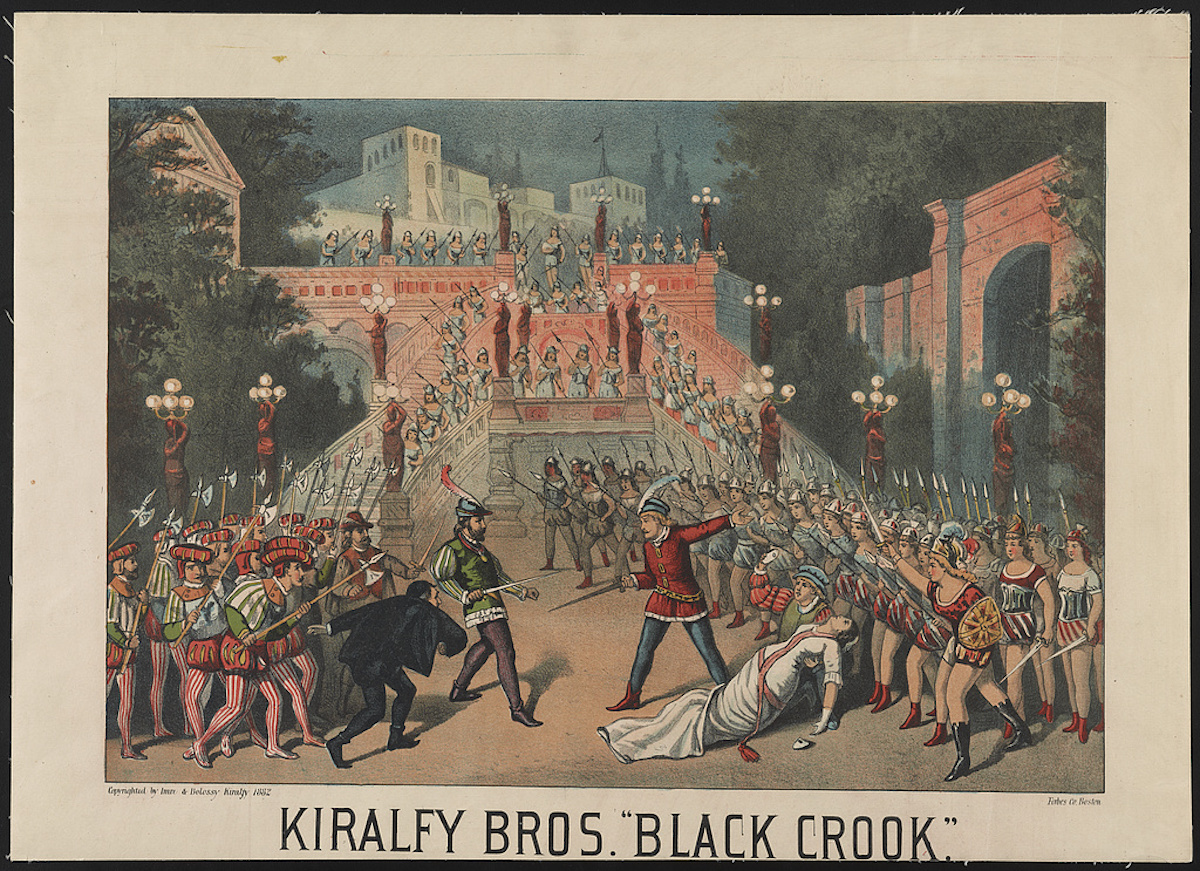
The Black CrookZiegfeld FolliesShowboatRentThe Phantom of the Opera
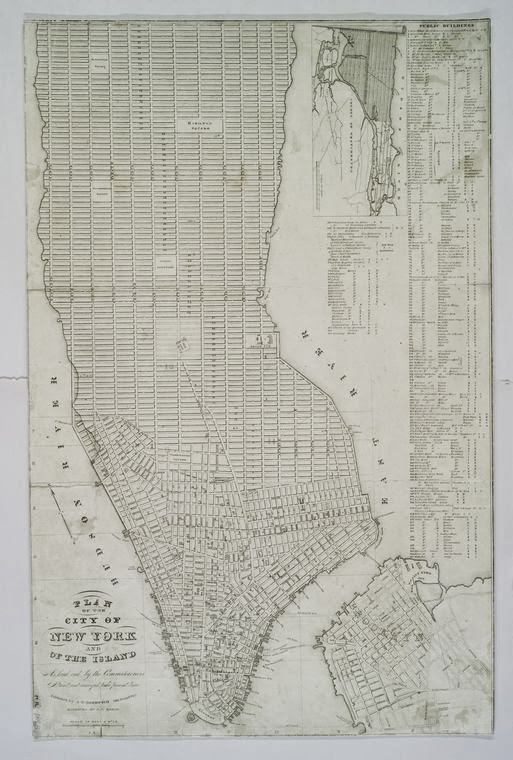
The original grid plan from 1811. As you can see, Broadway was not meant to extend further than the Parade Ground, the largest planned plaza from the Commissioner’s Plan. Years later, the Parade Ground was reduced (becoming Madison Square) and Broadway was allowed to break the grid, creating plazas conducive for transportation and public gathering. (NYPL)
New York Public Library
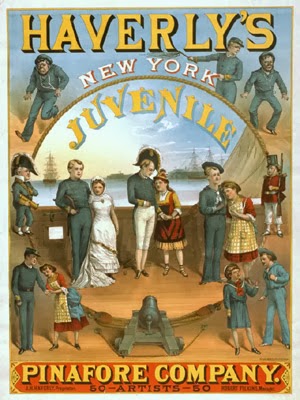
One of dozens of knock-off productions of HMS Pinafore, this one featuring children:
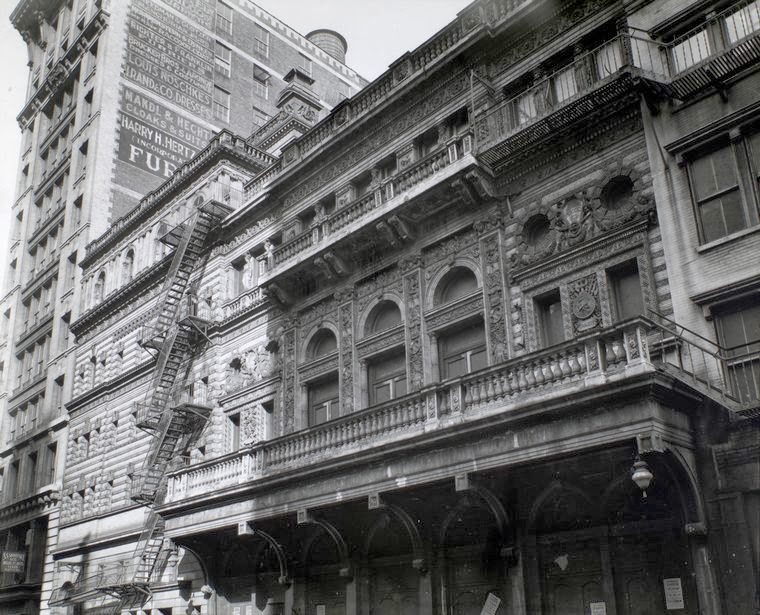
The facade of the Fifth Avenue Theater, once located at 1185 Broadway. Why was it called the Fifth Avenue Theater then? Possibly to just make the society ladies feel at home here! This was home to three Gilbert & Sullivan original productions, including the premiere of The Pirates of Penzance.
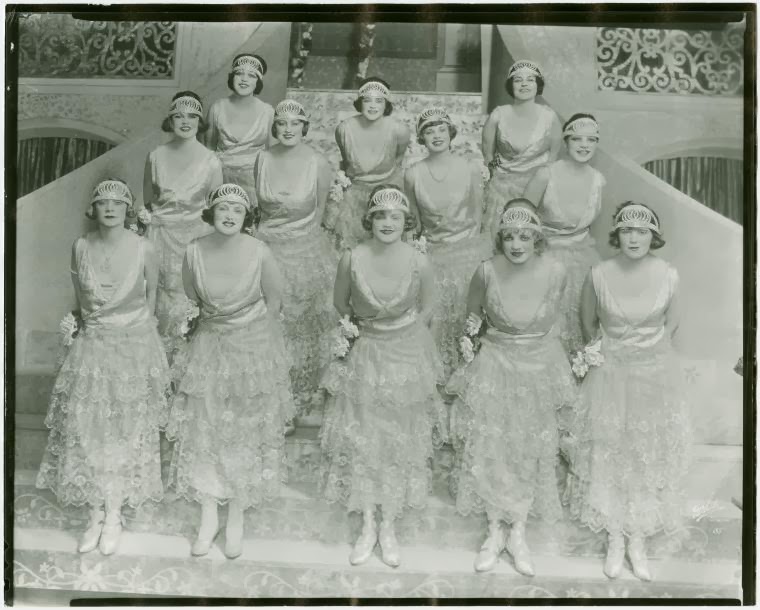
The Florodora girls, from the hugely successful 1900 musical comedy which debuted at the Casino Theater. (NYPL)
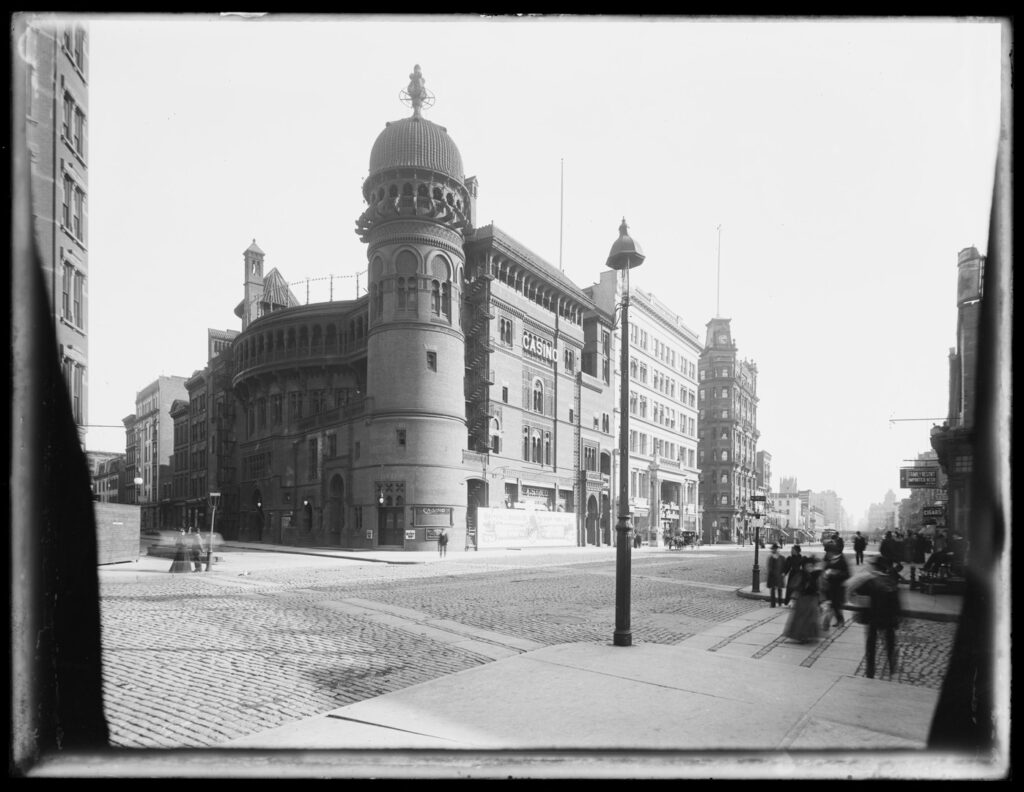
The Casino Theatre at West 39th Street and Broadway.
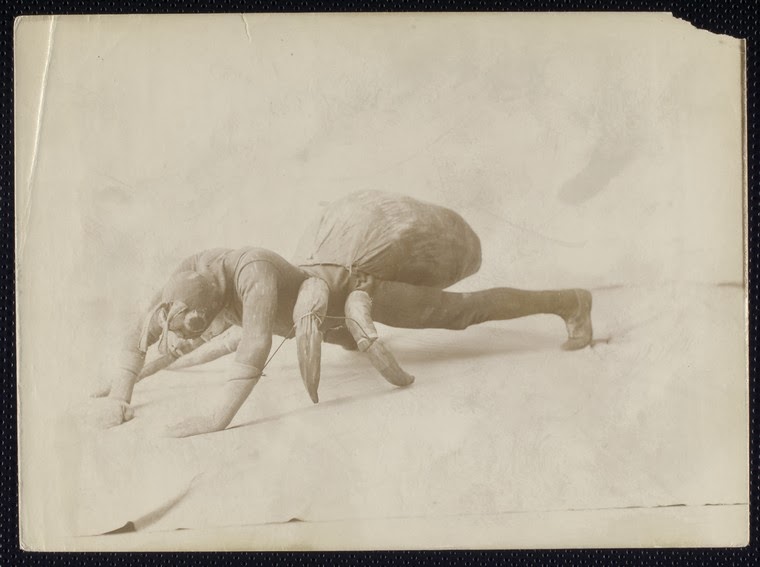
One of the more fantastic creatures from Victor Herbert’s Babes In Toyland, which made its debut in Columbus Circle’s Majectic Theater. You can read my article here on the musical which inspired Herbert’s show, the musical version of The Wizard of Oz. (NYPL)
New York Public Library
George M Cohan singing “Over There”
Video of a Ziegfeld Follies from 1929, a bit past their heyday, actually. They would only last until 1931:
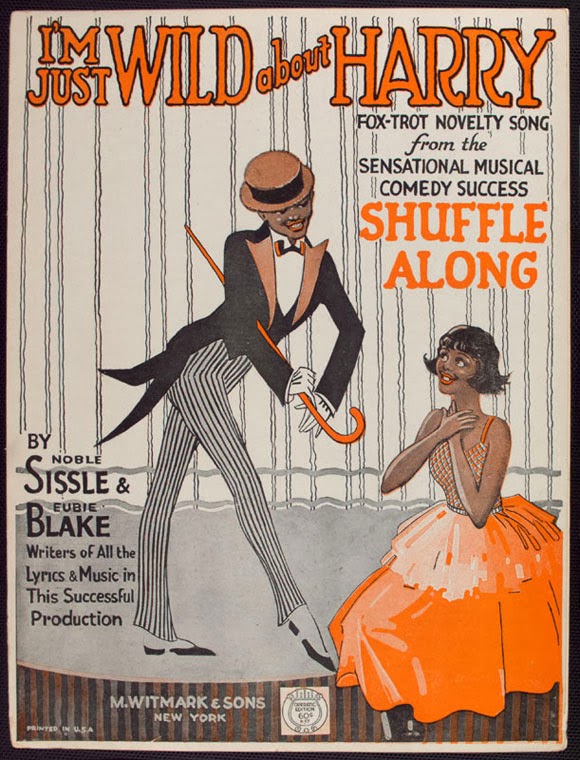
Sheet music from 1921 of one of the most famous songs from Shuffle Along (NYPL):
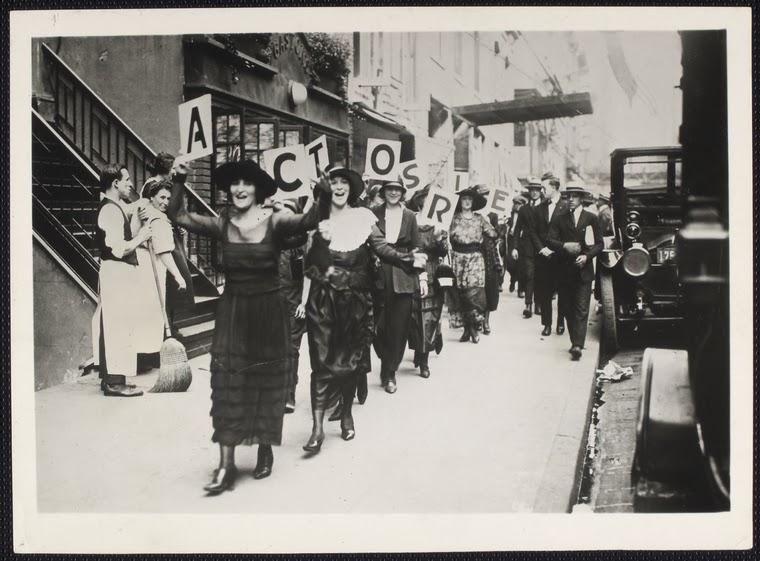
Dancing girls during the Actors Strike of 1919, which galvanized the industry and gave regular New Yorkers a window into the tough conditions faced by many background performers. (NYPL)
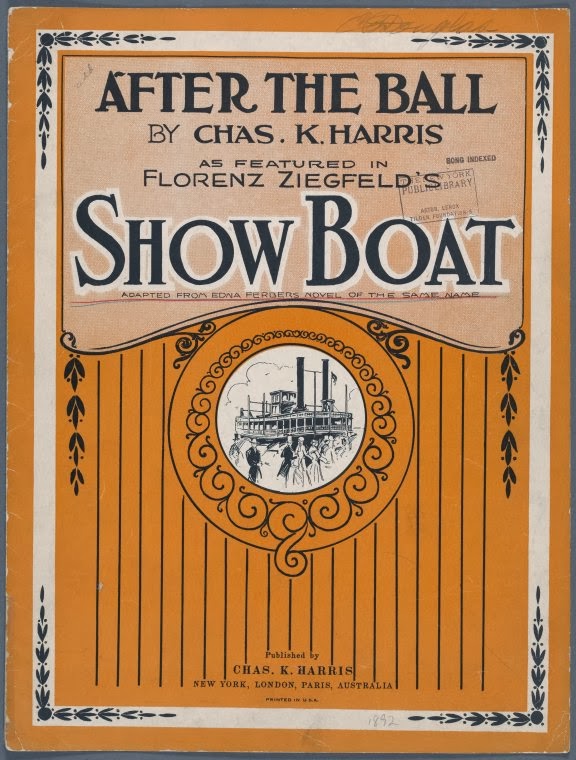
So the number ‘After The Ball’ — a huge hit song that made its stage debut in A Trip To Chinatown — made a return appearance to Broadway in 1927’s Show Boat!
Musical cues from this week’s show: Give My Regards To Broadway and After the Ball performed by Billy Murray A version of Make Believe recorded by Bing Crosby, and Ol Man River, performed by Paul Robeson, from a 1932 cast recording, featuring Victor Young and His Orchestra Love Will Find A Way, from a 1921 recording by Eubie Blake Selection from HMS Pinafore, from a 1914 recording by the Victory Light Opera Chorus
And finally, a clip from the film version of ‘Show Boat’, featuring an iconic performance by Paul Robeson.
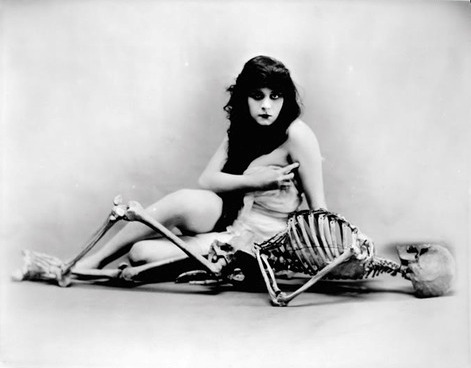
Maneater: Theda Bara in an unconventional portrait. Her publicist claimed it was her lover and that ‘not even the grave could separate them’.
“A vampire is a good woman with a bad reputation, or rather a good woman who has had possibilities and wasted them” — Florenz Ziegfeld
Progressive, liberated women were clearly so frightening one hundred years agothat equating them to undead, bloodthirsty creatures borne of Satan didn’t seem so unusual.
In the late 1910s, women were on the verge of winning the right for equal representation in the voting booth. Women were asserting power in unions, and, in the wake of disasters like the Triangle Factory Fire, those unions were influencing government policy. They were taking control of their destinies, their fortunes, even their sexuality (Margaret Sanger‘s first birth control clinic opened in 1916).
This surging independence came just as the entertainment industry heralded the female form as one of its primary attractions. Ziegfeld’s sassy, flesh-filled Follies — and its many imitators — defined the Broadway stage, mixing music, sex and glamour with a morality-shattering frankness.
But it was the birth of motion pictures that gave the allure of female bodies an unearthly, flickering glow, as nickelodeon shorts became feature-length films, and the first era of the movie siren was born.
Combine the power of liberation with the erotic potential of cinema, and in the late 1910s, you got the vampire (or as we would come to know, the ‘vamp’).
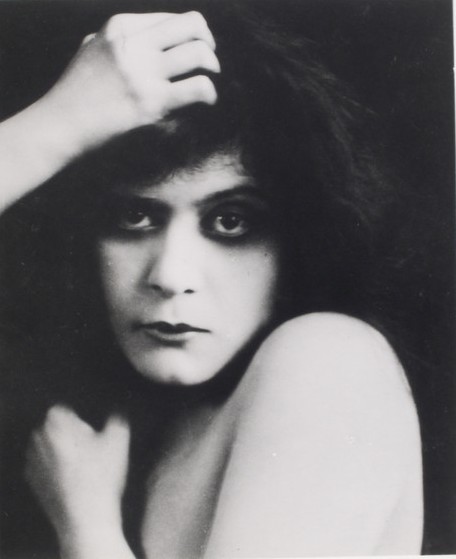
The queen of the vamps was one of America’s most mysterious movie stars — Theda Bara (at left). The magnetic actress, with her steely gaze and jetblack hair, was the prototype for a movie bad girl. She shook convention so dramatically that a critic called her a “flaming comet of the cinema firmament.”
From 1915-1919, she made over three dozen films, most in movie studios located in Fort Lee, New Jersey. It were here that she acquired her famous nickname, based upon her role as a home wrecker in a film inspired by Rudyard Kipling’s ‘The Vampire’. During this period, Bara lived in Manhattan’s Gramercy Park with her family — at 132 E. 19th Street.
She put a face to a new sort of young lady. These were the spiritual children of the prior generation of newly empowered women who fought against the constraints of Victorian society. A few years later, as another vein of female power (the temperance movement) helped bring about Prohibition, these young women would be called flappers, carefree and fueled on the powers of jazz and illegal alcohol.
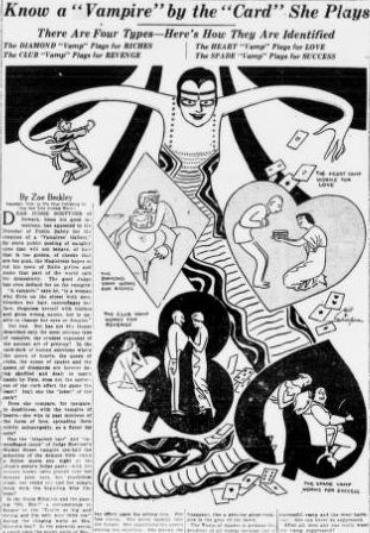
But to the established class, these ladies weren’t trend-setters. They were devils in black gowns. ‘Know a ‘Vampire’ by the Card She Plays‘, warned a New York Evening World article from March 1919, accompanied by a Theda Bara-like illustration of a snake-like monster.
The article recounts the efforts of a Newark judge attempting the rid the streets of “flirty girlies,” as he called them. “A vampire is a woman who flirts on the street with men, bleaches her hair, camouflages her face, disguises herself with clothes and gives wrong names, but is unable to change her eyes or dimples.” The article laughs off his puny efforts. “Can vamps, of whatever sort, BE suppressed?”
Vampires were of course more readily seen in Times Square, dancers, actresses or cabaret stars. But even your stenographer could be one!, warned one article.
Unlike Bara’s iconic identity as a raven-locked seductress, most ‘real’ vampires were blondes. “[T]he vampire of real life hath the golden hair of an angel, which is never disarranged, same when she letteth it down, to DISPLAY it, on the beach,” warned columnist Helen Rowland, with a little tongue in cheek. (Ms. Rowland was famous for her writings as a ‘bachelor girl’.)
“No one ever saw a vampire in a high neck dress,” said an Evening World advice columnist in 1918. “All vampires must reveal their collar-bones and the contiguous territory.”
The woman vampire was an urban creature, up all night, sleeping all the day. The city was partial cause for her condition. As the New York Times suggested in 1920, “The idea of New York as a vampire to the rest of the country is one which a number of persons have entertained and expressed. To some of them the vampire is Wall Street, to others it is the region of white lights [Broadway].”
Many actress got stuck with the term ‘vamp’ or ‘baby vampire’ — or else, embraced the coy terminology. Juliette Day was a known ‘baby vampire’ for her role in the scandalous 1916 play ‘Upstairs and Down’. It’s no surprise that in the film version from 1919, the role is reprised by the notorious Olive Thomas, a Ziegfeld girl who met a bitter end the following year.
Some actress fought against the alleged stigma. Actress Clara Joel, playing a vampire-type role in a 1918 film, made it known in the Tribune that “she is not a vampire and that she was born in Jersey City.”
The irony of stage actresses trying to shed a vampire image is that Theda Bara, the original vampire, in her first stage attempt in 1920, flopped. The play was supernatural-themed ‘The Blue Flame‘ which opened at the Shubert Theater to cavalcades of unintentional laughter.(A ‘terrible thing’, according to the Times critic.) Bara, who had to deliver such lines as “Did you remember to bring the cocaine?” was roundly trashed.
Shortly thereafter, the vampire moved to Los Angeles. Her film career lasted a few more years, but sound pictures and a strict Hollywood production code pretty much eradicated the existence of vamps on the screen. In New York, meanwhile, her sultry spawn morphed into flappers, populating the speakeasies and cabaret nightclubs of the city.
Below: A 1919 romp called ‘The Vamp’ performed by the Waldorf-Astoria Orchestra
Every Monday I’ll try and check in with the Mad Men episode from the night before and focus in on one or two historical references made on the show. Spoilers aplenty, so read no further if you don’t want to know….
It’s Christmastime, December 1964, and our favorite upstart ad agency, in order to impress their primary client Lucky Strike, throw a wild, boozy office party which, being Mad Men, naturally leads to all sorts of inappropriate work behavior.
Meanwhile, down at Don’s Waverly Place bachelor pad, he meets his neighbor, a nurse from nearby St. Vincents Hospital — a bittersweet mention, as the hospital shut its doors earlier this year.
But it was one of the very first lines of dialogue that caught my attention last night, as Don’s secretary Allison brings in a resume from a young woman (named Violet) whom Don had met — had flirted with, assumably — at the Ziegfeld Theatre. The line is probably a throwaway to set up a shocking hookup between Don and Allison later in the show, but it’s a casual nod to an old theatrical treasure.
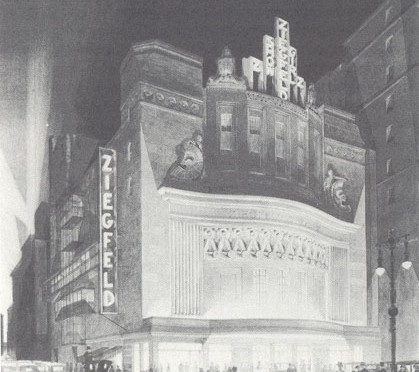
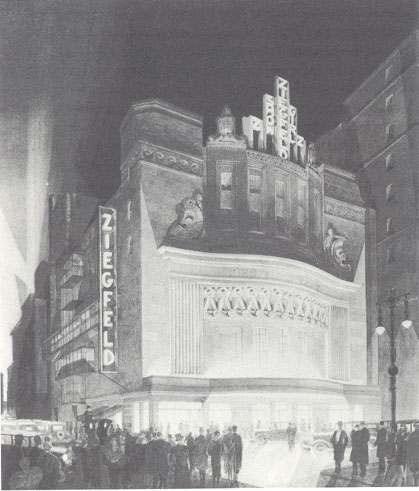
This isn’t the lavish Ziegfeld movie theater at West 54th Street, because that wasn’t built until 1969. Rather, this is a reference to the original Ziegfeld, built by Florenz Ziegfeld himself back in 1927.
The first Ziegfeld was just slightly down the street from today’s Ziegfeld, at Sixth Avenue at W. 54th St. (That would place it just a couple blocks north of Sterling Cooper Draper Price’s offices at the Time & Life Building.) A dazzling palace financed by William Randolph Hearst, the theater was hoisted upon the reputation of one of Broadway’s most successful producers, the creator of the sexy spectacular Ziegfeld Follies. Unfortunately, with the Great Depression around the corner, the theater had few successes under Ziegfeld’s personal direction (Showboat being one) before it transitioned into a movie house in 1933.
It returned to a legitimate Broadway stage in the 1940s, then became a recording studio for NBC’s upstart television operations in the 1950s. However, by 1964, the Ziegfeld was back in a musical state of mind, in the throes of one final attempt to capture the glories of live theater.
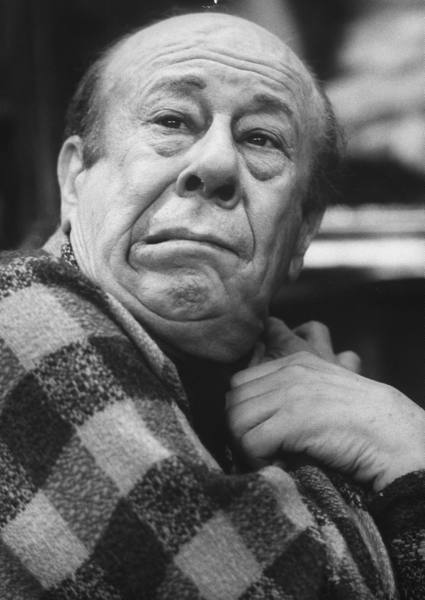
That February, producers dusted off the footlights and reopened with a vehicle for one of the old kings of vaudeville Bert Lahr (best known to film buff, naturally, as the Cowardly Lion of ‘The Wizard of Oz’.) In ‘Foxy’, Lahr sang and generally hammed his way through a light musical (by Robert Emmett Dolan and Johnny Mercer) about gold prospectors in the Yukon. Critics loved it, and Lahr went on to grab the Tony Award for Best Actor, his final theatrical award before his death in 1967. Audiences, however, were less enamored; the show closed in April 1964.
I’m not sure if Don Draper would have actually met anybody at the Ziegfeld in December 1964, as there were no shows running. Although perhaps NBC was still using it at this time as a soundstage; certainly Don might latch onto a script girl or production assistant while visiting a client filming a commercial.
The Ziegfeld tried one final time for glory the following year, in November 1965, with Anya, a musical variant of the story of Anastacia, the alleged last surviving member of the Russian royal family. The dowdy show was put out of its misery with a couple weeks, and the theater itself, sadly, was demolished the following year and replaced with s 50-story skyscraper, currently the home of international finance firm Alliance Bernstein.
And speaking of coy New York City history references, I hope you caught a remark made on the AMC show ‘Rubicon’ following ‘Mad Men’. Standing on one of the piers south of the Seaport, looking out at the East River, a character remarks: “My great-grandfather Horace started a ferry line between here and Brooklyn. It expanded to New London and south of Baltimore. Did pretty well for himself, until he was gobbled up by that prick [Cornelius] Vanderbilt.”
FRIDAY NIGHT FEVERTo get you in the mood for the weekend, on occasional Fridays we’ll be featuring an old New York nightlife haunt, from the dance halls of 19th Century Bowery, to the massive warehouse clubs of the mid-1990s. Past entries can be found here.
LOCATIONReisenweber’s Cafe
Columbus Circle, 58th Street and 8th Avenue, Manhattan ERA1856 (as a tavern)-1922
On this day in history, February 26, 1917, the instrumental ensemble Original Dixieland Jass Band recorded the very first usable* jazz recordings in a Victor studio here in New York. I can’t confirm exactly where that studio was, but according to here, Victor’s studios in 1917 were at 46 West 38th Street.
The thick 78 record “Livery Stable Blues” and B-side “Dixie Jass Band One Step” was pressed and released one week later March 6.
And yes, that’s Jass. They changed it to Jazz a year later. (The term was still coming into its own back then.) And though they started in New Orleans in the Dixieland jazz scene, they made their name in Chicago and moved on to New York in 1916. Oh right, and they were a white ensemble who popularized for white audiences a genre created and performed mostly by black musicians.
They were possibly the first white musicians to make jazz fashionable to New York nightlife; as a result, we can thankfully hold them partially responsible for the coinage of the Jazz Age. For from the moment of that first recording, the youth of the late ’10s went wild for the naughty sound of jazz.
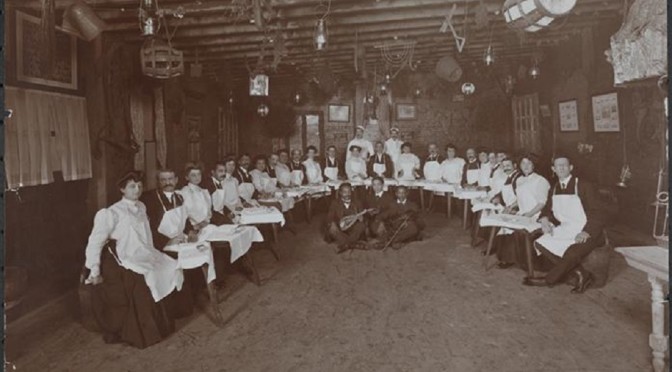
Before the release of this recording, the only way to hear the ensemble was live, and the place to hear them live in New York was Reisenweber’s Cafe, one of the most fashionable clubs of the 1910s.
The restaurant/nightclub hybrid — one of the first true ‘entertainment complexes’ –was owned by John Reisenweber, whose father had owned a small tavern at this very corner in 1856. Needless to say, John was far more ambitious plans.
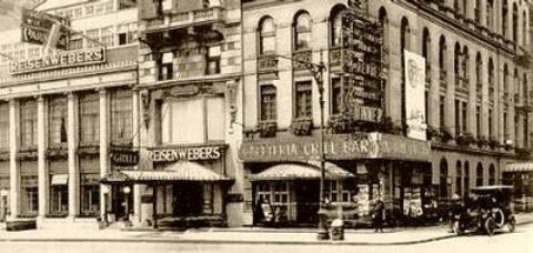
Below: Columbus Circle in the 1900’s. You can see the Reisenweber’s marquee to the left of the picture, on 58th Street.
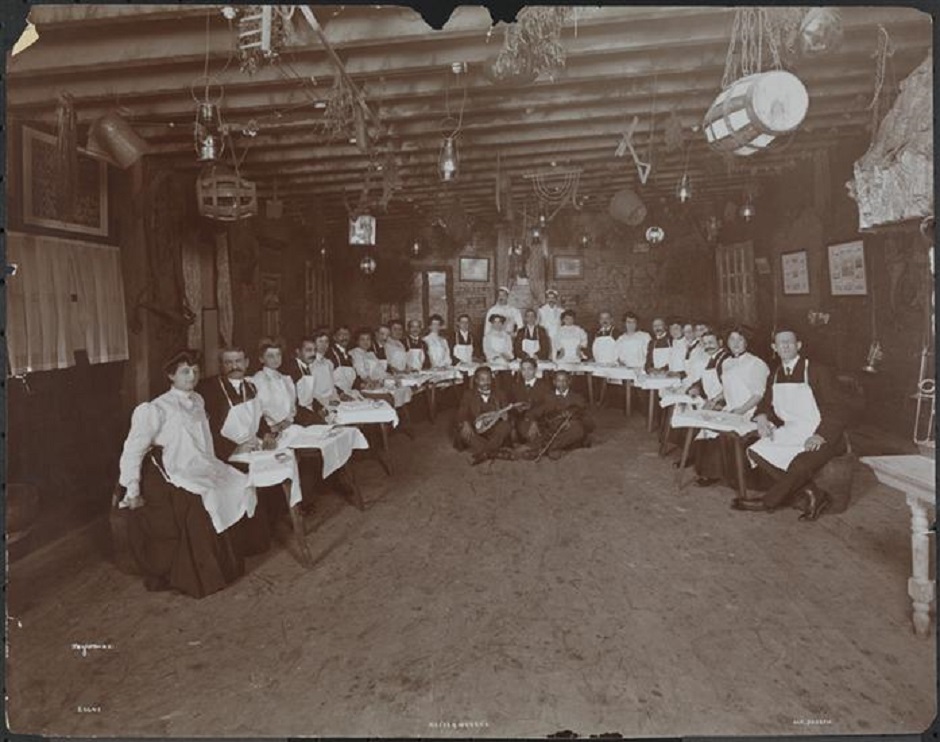
Reisenweber’s was truly a product of the decade, expanding in 1910, closed by 1922. It held court in Columbus Circle at 58th Street and Eighth Avenue during a time when this corner of Central Park was a popular destination for theater goers, of both the high and low brow varieties. The most famous — and respectable — stage in the neighborhood was the Park Theatre (formerly the Majestic) featuring the hottest names in drama and musical comedy. So, naturally, Reisenweber’s became a magnet for theater stars and their champagne entourages.
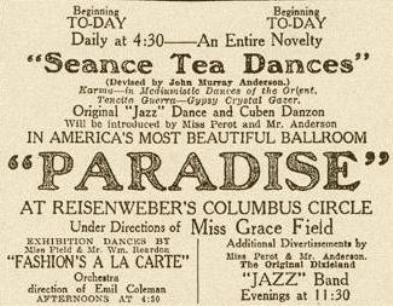
Producers would fete their leading ladies here, in festivities that would begin in the downstairs restaurant, move to the second floor 400 Club cabaret, pause for a dance in the elegant third-floor Paradise Supper Club (featuring the first dancefloor within a restaurant), and settle in either the cheeky Hawaiian Room on the fourth floor or up at the rooftop garden.
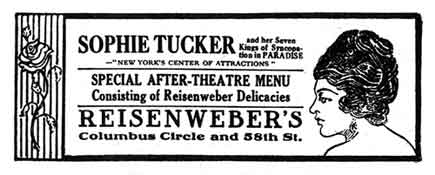
Below: From an advertisement dated March 1917 (thanks to Mule Walk & Talk blog, where there are many more examples)
The Dixieland ensemble hit Reisenweber’s 400 Club in January 1917 (thanks in part to a recommendation from Al Jolson) and were an immediate hit, combining furious, syncopated sound with a comedic touch, perfect for a smoky cafe full of trendy New Yorkers.
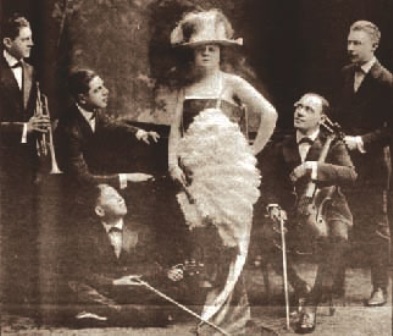
But they weren’t the biggest star at Reisenweber’s. The lady that drew them in 1918 was one of the era’s biggest celebrities and the first star of the Ziegfeld Follies — Sophie Tucker (pictured above).
Tucker was a sassy, vibrant, bawdy performer, hammering out hits loaded with double entendre, inviting starlet pals and even regular cafe patrons on stage to perform with her. Her escapades upstairs to sellout crowds in the 400 room, during her so-called ‘Bohemian Nights’, were so popular that Reisenweber shrugged and remained it The Sophie Tucker Room in 1919.
In fact, Tucker’s regular engagements helped popularize the cabaret form in New York. According the Musicals 101, “Delmonico’s, Reisenweber’s, Palaise Royale and Shanley’s all became legendary night spots. Within a few years, dance floors became a required part of the cabaret environment.”
Reisenweber’s fused together elements that now seem quite commonplace together — music, food, dancing, celebrity, performance — in a way that was both respectable and yet edgy and scandalous for its day. It also introduced a staple of New York nightlife: the cover charge (25 cents).
At its height, Reisenweber’s was one of Manhattan’s best known restaurants, “hous[ing] a dozen dining rooms, employed more than 1,000 in help and seated 5,000 diners at one time” according to the owner’s obituary.
In a way, it mirrored the most appealing elements of its neighborhood: the glamour of the theater, the abandon of the taverns, the glitz of the rich, the abandon of the working class. This mix would perfect itself by 1920, the time of Prohibition, when it would go underground.
The modern nightclub would be born there in the shadows; unfortunately Reisenweber’s would not join it. It was an easy target for temperance groups; screamed the headlines in 1922, “CLOSE REISENWEBER’S, DRY OFFICIALS DEMAND“. Crippled by constant police raids — including a bummer of a raid on New Years Eve 1922 — it was closed for good that year.
By 1925, the Original Dixieland Jazz Band would break up. But Sophie Tucker would thrive during the Roaring 20’s, moving on to movies and radio.
Finally, for your listening pleasure, that recording of the “Livery Stable Blues,” a tune which certainly lit up the floors of Reisenweber’s as the champagne flowed….
*A month earlier, they apparently performed for management of the Columbia Gramophone Company and may have recorded for them, but nothing was ever released.
KNOW YOUR MAYORSOur modest little series about some of the greatest, notorious, most important, even most useless, mayors of New York City. Other entrants in our mayoral survey can be found here.
MayorJimmy Walker
In office: 1926-1932
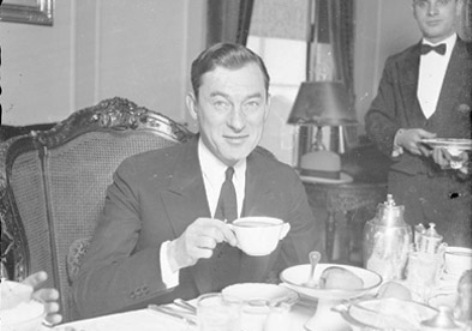
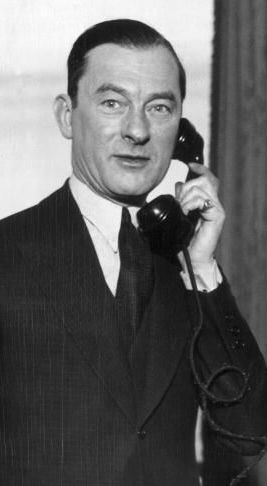
Has a New York mayor ever reflected the decade he governed more perfectly than Jimmy Walker? Although John Hylan was actually the 1920s more effective mayor, it was Walker who embodied the Jazz Age spirit in his style, and the tragic Depression-era change of fortune in his downfall. He glamours us today because he’s both movie star and rebel; but the corruption of his regime is equally as striking and even disturbing in its grandiosity.
Walker is easily one of the most notorious mayors of New York, but today we can appreciate his brashness, his independence and class, just as we can lament his subservience to diabolic Tammany-era politics. He wasn’t the last disgraced mayor the city would see in the 20th century, but his abdication neatly defines the modern era’s defining fall from grace.
Jimmy, born June 19, 1881, was a New York boy and a golden one at that, raised in Greenwich Village among the bohemians, the son of an Irish immigrant who became a well connected Democratic assemblyman. Walker’s first passion seems to be music; in 1905 he stormed Tin Pan Alley writing songs such as “There’s Music In The Rustle Of A Skirt” and “Will You Love Me in December As You Do in May?” with its melancholy refrain:
Will you love me in December as do in May, Will you love in the good old fashioned way? When my hair has all turned gray, Will you kiss me then, and say, That you love me in December as do in May?
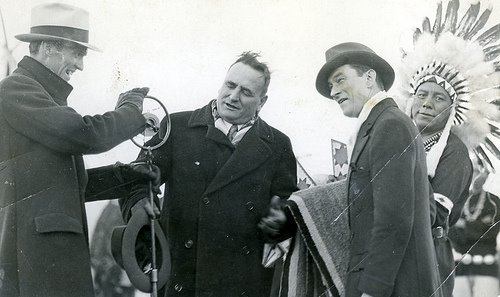
Below: In an odd ceremony with the mayor of Albuquerque
He had even less hesitation in announcing a political career, especially as Father had connections to a certain Al Smith, governor of New York. An adopted son of Tammany Hall, elected first to the state assembly in 1910 then to the state senate in 1914, young Walker sought Smith’s guidance and the governor soon took a fancy to the smooth, impeccably dressed young man, who shone like a new penny on the Senate floor. As he was described by Robert Caro:
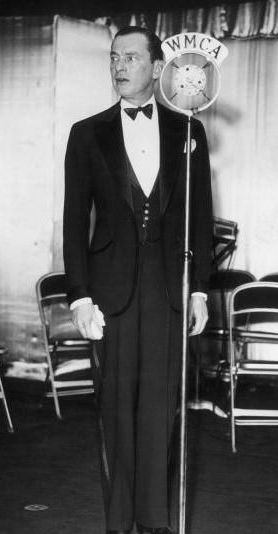
“Pinch-waisted, one-button suit, slenderest of cravats, a shirt from a collection of hundreds, pearl-gray spats buttoned around silk-hosed ankles, toes of the toothpick shoes peeking out from the spats polished to a gleam. Pixie smile, the ‘vivacity of a song and dance man,’ a charm that made him arrive n the Senate Chamber like a glad breeze’ The Prince Charming of Politics…..slicing through the ponderous arguments of the ponderous men who sat around him with a wit that flashed like a rapier. Beau James.”
Smith took him under wing, maneuvering him through the entanglements of state politics, shielding Walker when his excesses got the better of him. He was a philandering cad and a boozer, even then. When opportunity arose to challenge the successful John Hylan for mayor of New York, Smith wanted Walker to run, but only if he would change his ways. Walker changed them all right; instead of partying out at speakeasies with chorus girls, he moved the whole production to a private penthouse funded by Tammany favors.
That election in 1925 was fierce. First, Smith had to dispense of Hylan in the Democratic primary — and in the halls of Tammany. The two split the storied political machine, but eventually Walker won out. Next, he faced the Republican-Fusion candidate Frank Waterman in the general election, who cried of potential Tammany corruption to the new subway system if Walker were elected. (Waterman would, of course, be right.) Beau James, however, went unabated. He ran as a people’s mayor, somebody who enjoys and the same pleasures as those voting for him:
“I like the company of my fellow human beings. I like the theatre and am devoted to healthy outdoor sports. Because I like these things, I have reflected my attitude in some of my legislation I have sponsored — 2.75 percent beer, Sunday baseball, Sunday movies, and legalized boxing. But let me allay any fear there may be that, because I believe in personal liberty, wholesome amusement and healthy professional sport, I will countenance for a moment any indecency or vice in New York.”
Right! Walker was one of the people. Everybody bought it but nobody believed it. He swept into office because New York, in 1925, was prosperous, a Jazz Age mayor for a Jazz Age city.
Once elected, of course, Walker countenanced all sorts of indecency and vice. He was frequently in Europe on vacation. When he was in town, it was rarely at City Hall. The lavish new Casino nightclub in Central Park became his unofficial headquarters, with Ziegfield dancer Betty Compton at his side. (Walker’s wife was out of town, frequently.) City business was often discussed with the pop of champagne cork.
Some things got done that first term: the New York hospital system was consolidated on his watch, he purchased thousands of acres for park land (including Great Kills in Staten Island), and grew the municipal bus system — greatly benefiting more than a few friends who happened to own the bus company given the exclusive franchise.
He managed to turn on his old ally the governor, scrubbing City Hall of any Smith loyalists, granting more jobs to his type of Tammany men, filling their own pockets but allied to the charming man in charge.
How did he stay so popular? This was the late ’20s and people wanted the mayor to reflect prosperity and confidence. He also gave back, in symbolic gestures. Even as the new subway system became clogged with corruption, he staved off a strike while keeping the fare at five cents, thought at the time to be an incredible concession.
He easily won election in 1929 against a largely outmatched Fiorello LaGuardia. Tammany was in place and unstoppable; but the voters still chose not to look askance at Walker’s dalliances, and even the newspapers were charmed. The New York Times wrote of his “great personal charm, his talent for friendship, his broad sympathies embracing all sorts of conditions of men,” then recommended him under the guise that “the Mayor that he has been gives only a hint of the Mayor that he might be.”
That hinted-at mayor never materialized, because the Stock Market crash did, plunging the city’s fortunes into ruin and exposing the weaknesses of a government consumed with greed. Suddenly, having an extravagant, indecent mayor didn’t seem like such a good idea.
Archbishop of New York Cardinal Hayes, once dazzled, now condemned the mayor’s amoral ways, opening the flood doors for others to lay the city’s problems was Walker’s feet. Eventually the accusations reached the ear of governor Franklin D. Roosevelt.
A commission lead by Justice Samuel Seabury exposed deep veins of corruption throughout the city’s legal system and police force. Innocent citizens, often women, would be charged with crimes and forced to pay steep fines to get out of jail time. (Many times they couldn’t pay, and off they went, dozens at a time.) Neighborhoods, most often Harlem, would be routinely raided and its residents taken in, wild charges conjured for maximum penalty.
This would line the pockets of dozens of judges and vice squad officers. Newspapers dubbed it the Tin Box Parade, “after one testified that he had found $360,000 in his home in a ‘tin box…a wonderful tin box'” (Caro).
Walker himself was brought to the stand to testify, the judge warning those in the court room not to look the mayor in the eye, lest they succumb to Walker’s sensational charm.
After months of epic battles on the stand — Walker eluding hot button questions about his personal bank accounts, delaying appearances until after Roosevelt’s nomination for president was assured — the embattled mayor could fight no longer. With Roosevelt mere months from his national election, he needed to be rid of Walker. Walker obliged in the classiest way possible: he resigned on September 1, 1932, and went on a grand tour of Europe with his Ziegfeld girl.
He was never charged with a crime. He was barely even held accountable for anything. Back in New York three years later, he held a series of smaller posts, including one for the New York garment industry that was assigned to him by new mayor LaGuardia, his former rival.
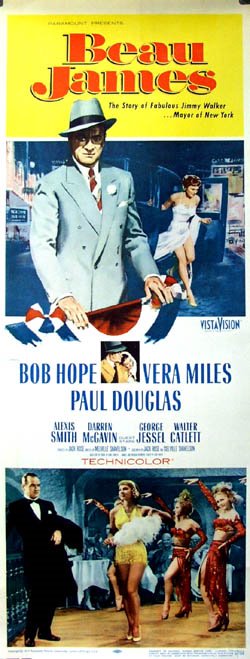
Nothing stuck to him. He died in November 1946 of a brain hemorrhage, just two years after returning to his first love as the head of a big-band record label with a stable of artists that included Louis Prima and Bud Freeman. Ten years later, Hollywood decided to do something very redundant and make a movie of his life, starring Bob Hope as Beau James. It would follow a screenplay only slightly less glamorous than the real thing.