Categories
Know Your Mayors Writers and Artists

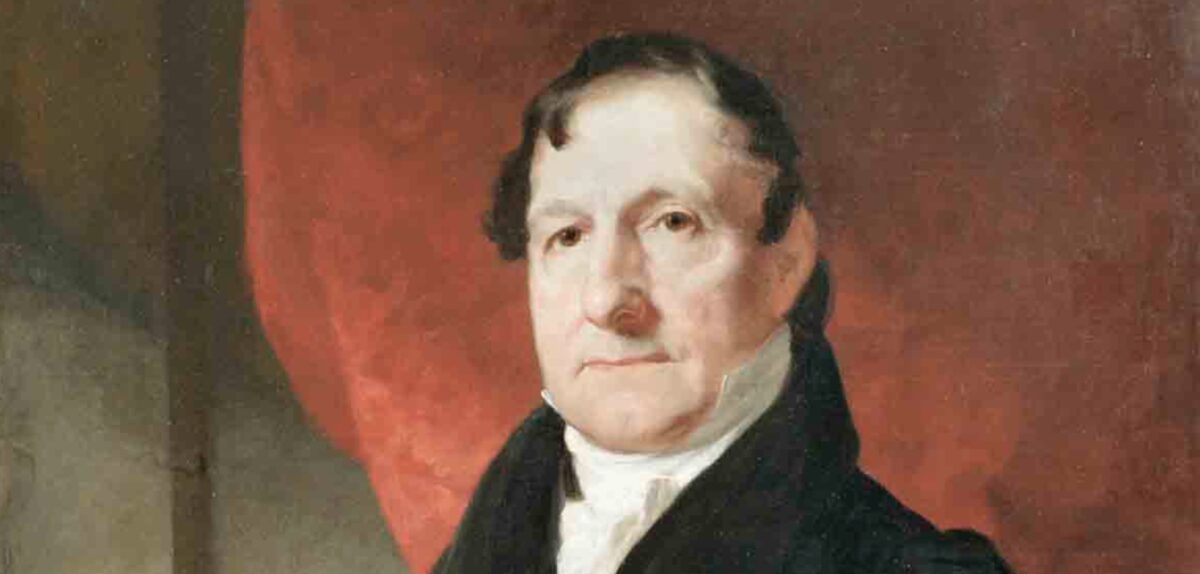
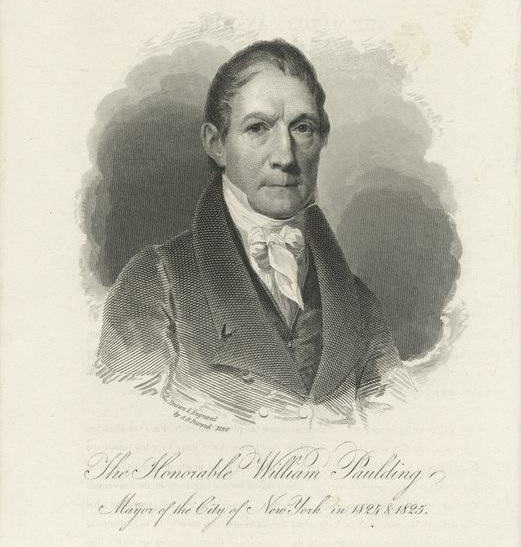
Mayor William Paulding, the very respectable brother

We’re just a couple months away from a new mayor in New York City so we think it is time that you Know Your Mayors! Become familiar with other men who’ve held the job, from the ultra-powerful to the political puppets, the most effective to the most useless leaders in New York City history.

This longtime feature of this website is being rebooted with new articles and newly researched and refreshed earlier entries in this series. Check back every other week for a new installment. Read past articles here.
William Paulding
Terms: 1824-1825; 1827-29

Despite the success of the occasional vanguard in early American politics — Alexander Hamilton, for instance — most leaders came from the most prominent families. The ‘elites’, if you will, the powerful and wealthy individuals who benefit most from the close connections to government.

In local politics, this is to be expected. In an age where mayors were appointed, not popularly elected (and thus influenced more by individualism and personal style), it would be family connections and reputation that would put them in position for such a post.

And yet, if they were truly of a distinguished character, they probably wouldn’t want to be mayor, a position that before 1834, was entirely beholden to city aldermen. You were merely a figurehead — albeit one that paid pretty well.

That’s not to say that Mayor William Paulding wasn’t a most respectable gentleman in many ways. It’s just that he’s somewhat forgettable compared to his younger brother.

The Paulding Story

The star of the Paulding family was his younger brother James Kirke Paulding. If you love New York City history, then you already admire James Paulding, even though you may not know his name.

William (born 1770) and James (born 1778) were from a litter of eight Paulding children, many born in New York City before the family permanently settled in Tarrytown.

Their father, once a wealthy shop owner, had been bankrupted by the Revolutionary War. However, even in misfortune, the Pauldings managed to raise a well-read lot of children.

James and William were quote close. When William moved to New York to become a lawyer, he secured James a job in “public office” (James’ bio is not forthcoming as to what kind), date uncertain, but probably by 1796-7.

The two would seek different paths. William would become a prominent attorney and mix with the learned men of New York. By 1811, he would be elected to the still-young House of Representatives and would even see action on the battlefield in the War of 1812. He returned with great reputation, achieving a level of respectability reserved for those of higher classes.
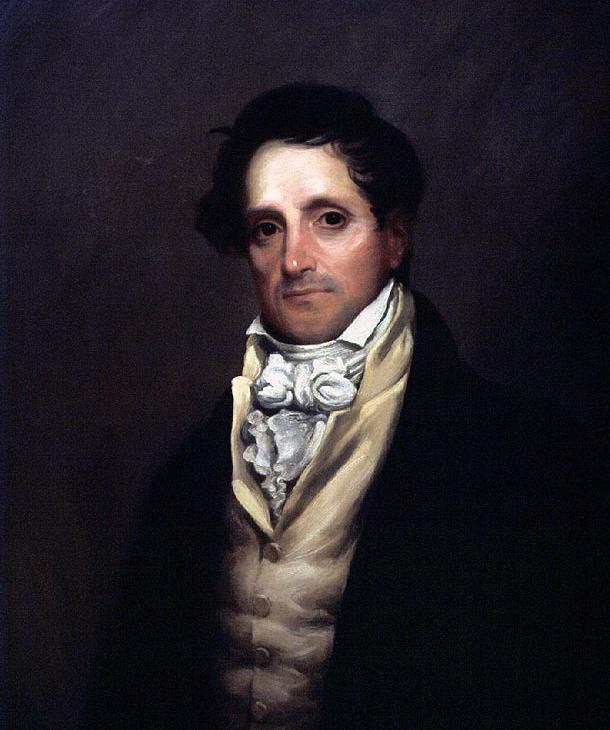
His More Famous Brother

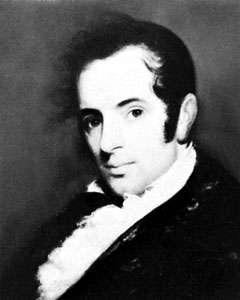
Young James (above), however, would go an alternative route to fame.

Their sister married William Irving, and James became quite close to William’s brother Washington Irving. In James’ own words: “Thus I fell, as it were, among the Philistines; for the circle in which I moved … was composed of young men, many of whom have since made no inconsiderable figure in the world.”

Washington Irving and James Paulding grew close; their correspondence is among the boldest writing of the day. In 1807 the pair of writers created a wry, satirical experiment called Salmagundi — poking fun at the city politics of the day. (It was in Salmagundi that New York is first referred by the nickname ‘Gotham’.)

Along the way, the pair bolstered their reputations as superior wits and soon assembled a group of other young writers, creating one of New York’s first literary salons, unofficially called the Knickerbocker Group.

They would even attend their own version of the Algonquin Round Table, called the Bread and Cheese Club, founded by fellow penman James Fenimore Cooper (Last of the Mohicans). James Paulding would go on to be one of America’s most adventurous novelists of the early 19th century.
Brother as Mayor

Ah, but we’re here for William! If James was busy securing the family reputation for posterity, William was doing so for present high society.

As a brigadier-general of the war and a former member of Congress, William’s ascent into New York politics was an easy one, first as the governor-appointed Adjutant General (or leader of the state militia) then finally as mayor in 1824, replacing Stephen Allen. (See the last installment of Know Your Mayors for his story.)

Paulding would be only the second mayor appointed by Common Council (today’s City Council); they had previously been appointments by the governor.

Tied as he was to the favoritism of council members, it’s no surprise that Paulding had few official powers. He served mostly as an ambassador of New York, rolling out the welcome mat, even as many of the city’s most pressing decisions were left to others.

But during his non-consecutive years as mayor, New York witnessed some significant events.

In 1824, a house on Water Street becomes the first to be lit by gas power, and Paulding would see the entire city lit up by gaslight by the end of his mayoralty.
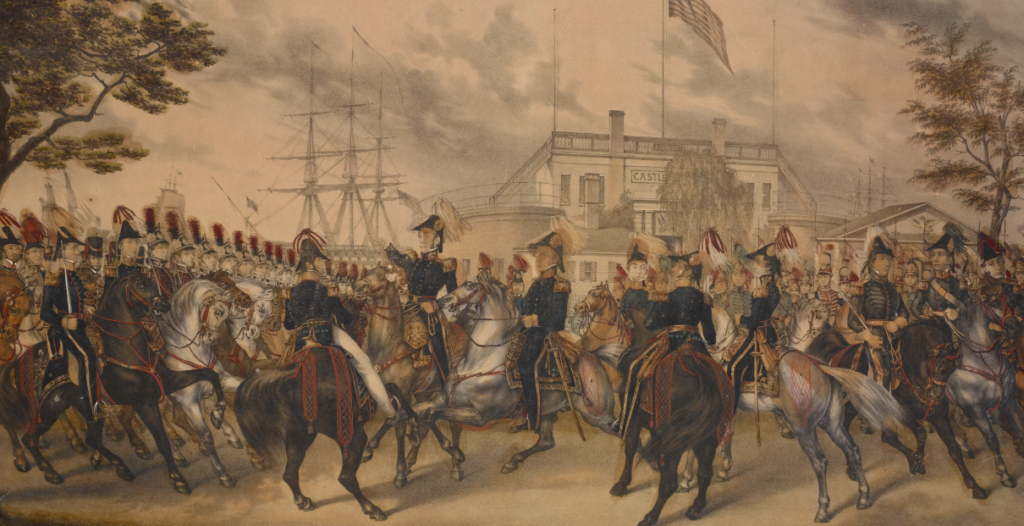
The military escort forms at Castle Clinton to await the arrival of Lafayette. From a painting by FJ Fritsch.
Welcoming the Marquis

Perhaps his most notable moment came early, and it was purely honorary. Paulding’s crisp appearance and military credential — “handsome, courtly” — made him a fine representative for the city in August when the Marquis de Lafayette made his triumphal tour of the United States in 1824.

The Marquis, a French general in the Continental Army and close confidante of George Washington, was a symbolic link to the country’s first president, who had died a quarter century previous.

Lafayette arrived on the ship Cadmus, greeted in Staten Island by a procession led by Paulding and accompanied by a no-holds-barred display of artillary bombast.

The next day, Lafayette, Paulding and a gathering of thousands made their way to City Hall for an official welcoming. The revered French ally would be in New York a number of times during his 13-month visit, and the mayor would be on hand for most events, including what may possibly be the greatest party ever thrown in New York — the September reception for Lafayette at Castle Garden.

New York City became a fundamentally different city under Paulding’s tenure, although he had little to do with the most important event — the opening of the Erie Canal, a project once overseen by former mayor Dewitt Clinton.

Once a cemetery, the area later to become Washington Square Park was bought as a military parade ground in 1827, and the celebrated homes of the elite soon crowded along its north end.
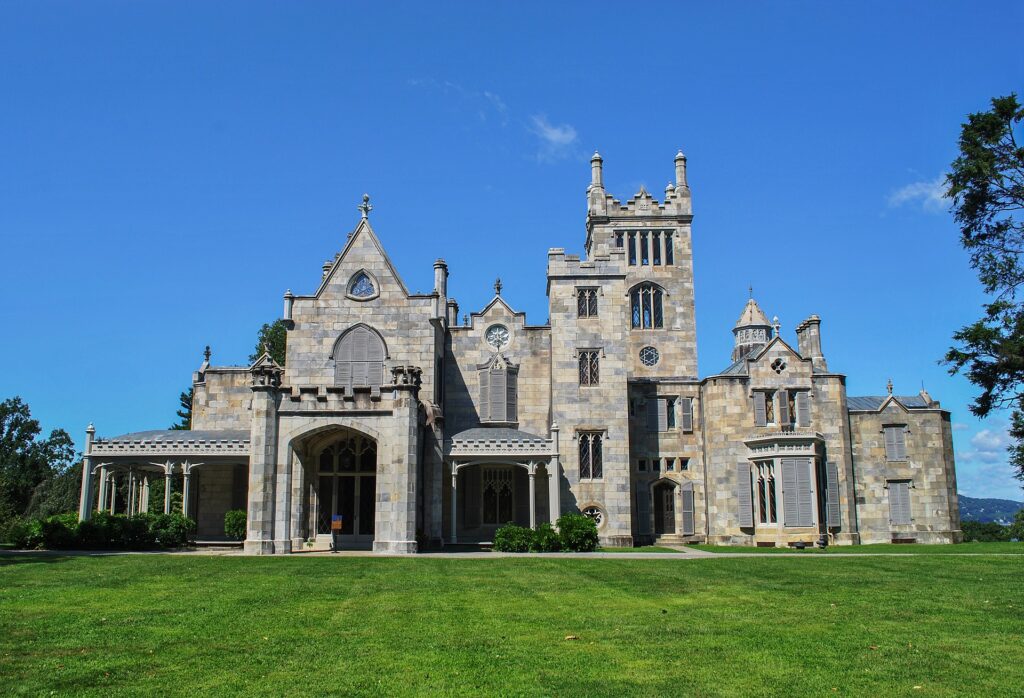
Lyndhurst today. Photo by Elisa Rolle/Wikimedia Commons
Lyndhurst

After leaving office, Paulding (and more importantly, Paulding’s son Phillip) would influence the fortunes of his hometown of Tarrytown, namely through the construction of a lavish mansion (above) as summer retirement villa, which would eventually be called Lyndhurst.

William was of such name and connection by this time (1838) that he was able to enlist noted architect Alexander Jackson Davis in its construction. (Davis designed Federal Hall, among other notable structures.)

Originally called the Knoll, the lavish home was roundly criticized for its outdated Gothic design, including by Philip Hone (who would become mayor), who referred to it as ‘Paulding’s folly.’

No folly, it turns out. The home would take on a life of its own in future generations, grandly expanded by later owner George Merritt. The railroad ‘robber baron’ Jay Gould also lived here. Today, Paulding’s old home is one of the most celebrated structures along the Hudson River and can be visited today.

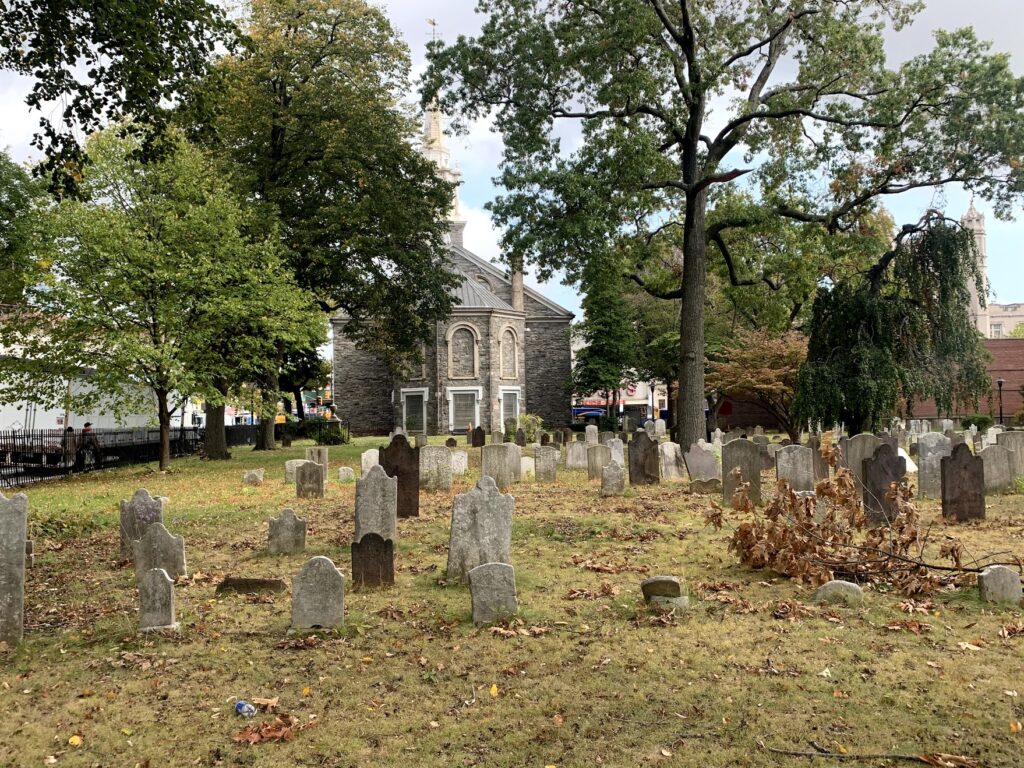
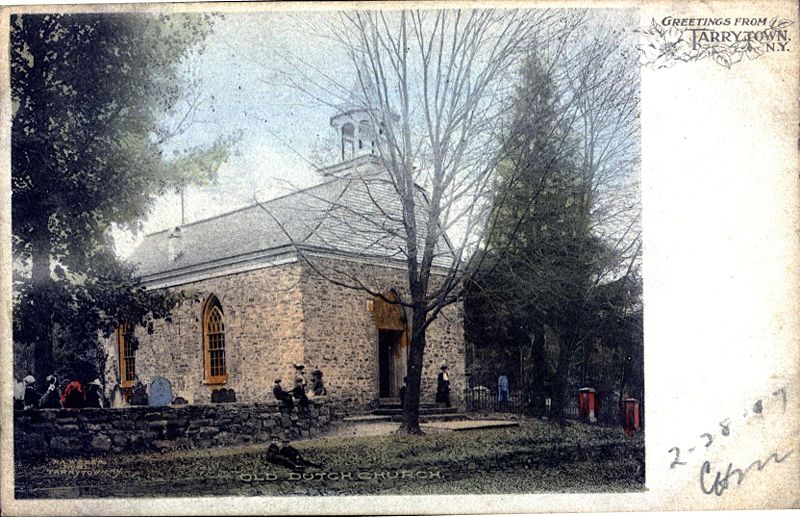
William is currently buried in one of the most famous graveyard in all the Hudson River Valley — the Old Dutch Burying Ground in Sleepy Hollow. Washington Irving, incidentally, is buried nearby, in the Sleepy Hollow Cemetery.

James Kirke Paulding, however, is not buried near his brother nor his great literary friend. He died in 1860 and is interred at Green-Wood Cemetery.

The cemetery’s website provides this amazing piece of trivia —  James Paulding coined the tongue-twister “Peter Piper picked a peck of pickled peppers.” 
Categories
Mysterious Stories Podcasts

Literary Horrors of New York City: Scary Stories from Lovecraft, Irving, Highsmith and Ripley

EPISODE 343 In the 14th annual Bowery Boys Podcast Halloween special, we celebrate some classic tales of the strange and supernatural written by the most famous horror writers in New York City history.


Since 2020 is already a year full of ridiculous twists and frights, we thought we’d celebrate the season in a slightly different way. But don’t worry! Tom and Greg are still delivering a new batch of frightening stories.

This time however the selected stories have been made famous by great writers who have lived and worked in New York City.

Flatbush Reformed Dutch Church, photo by Greg Young

Included in this year’s terrors:

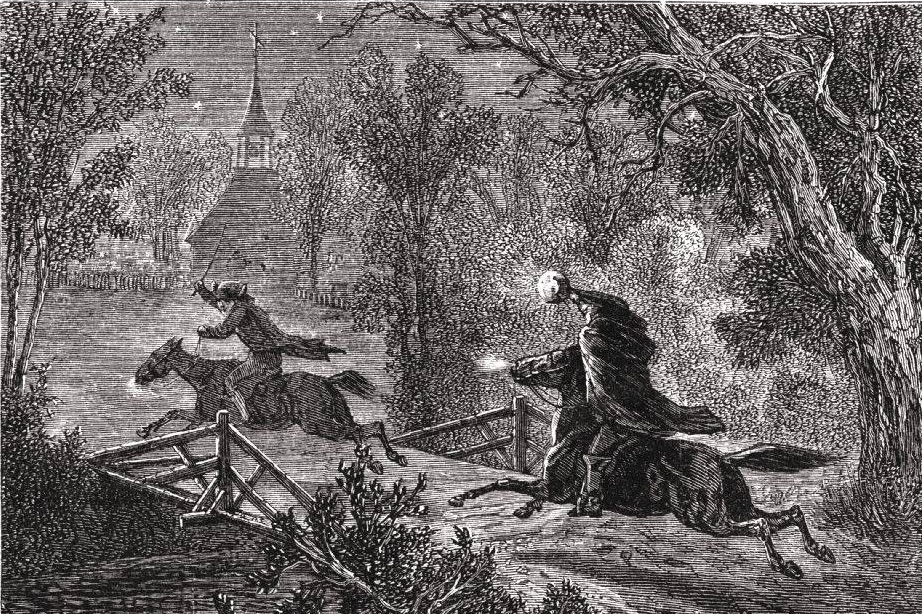
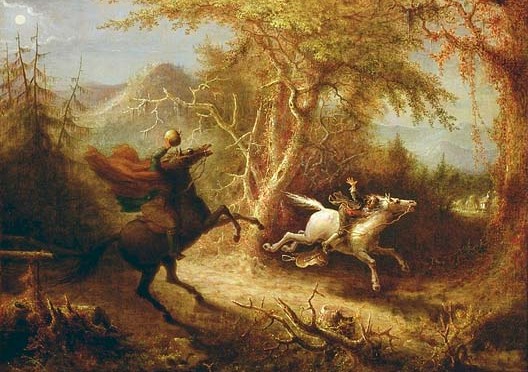
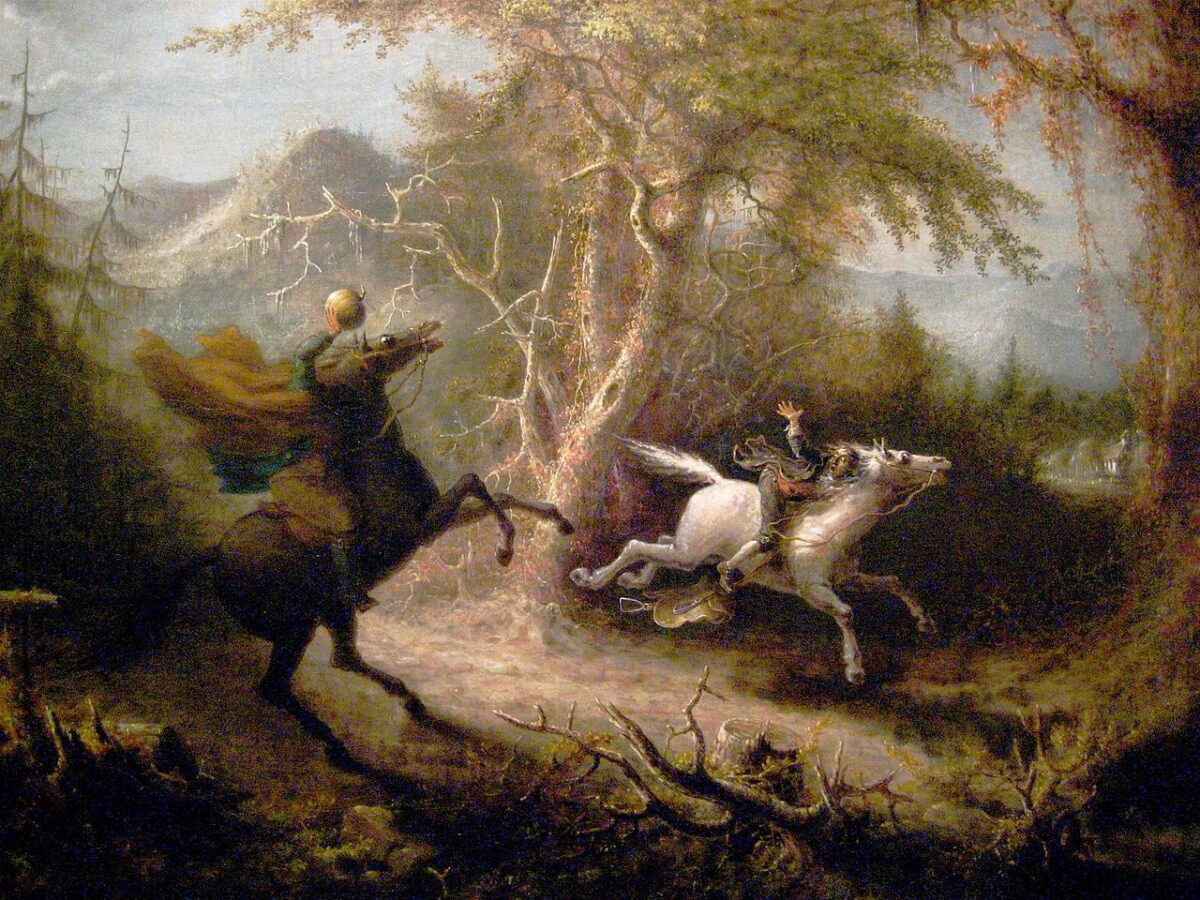
— A celebration of the 200th anniversary of Washington Irving‘s “The Legend of Sleepy Hollow,” featuring the Headless Horseman and the backstory of this classic story’s creation;

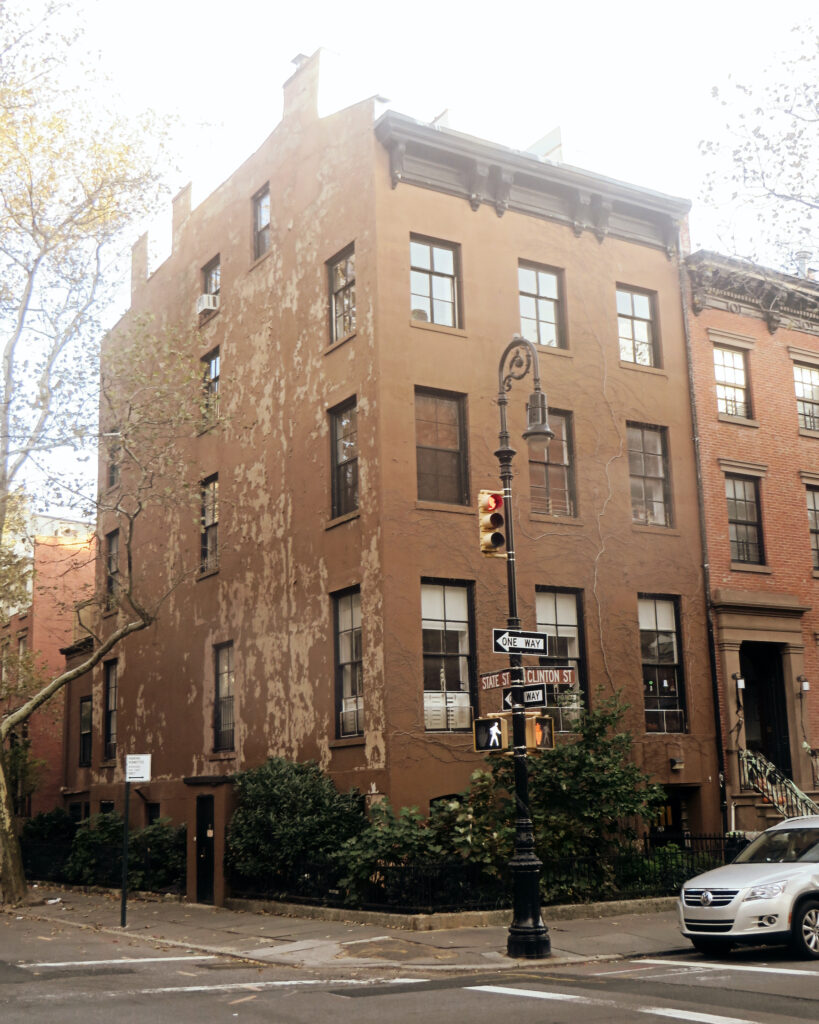
— The unsettling nights of H.P. Lovecraft in Brooklyn where his xenophobia, racism and anxiety manifest into a pair of dark, claustrophobic tales, plucked from the waterfront and the West Village;

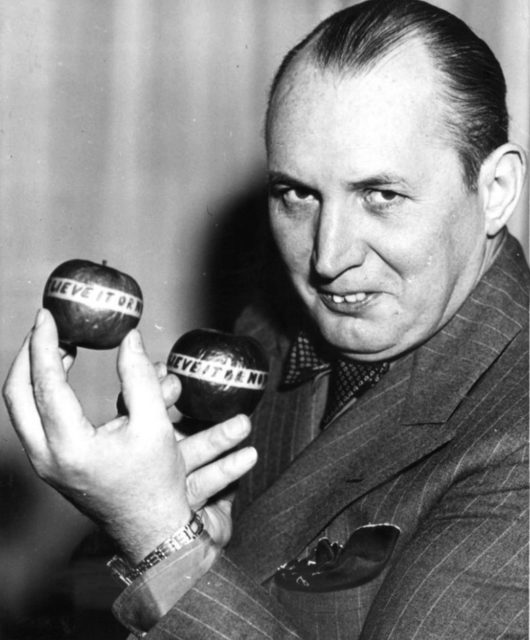
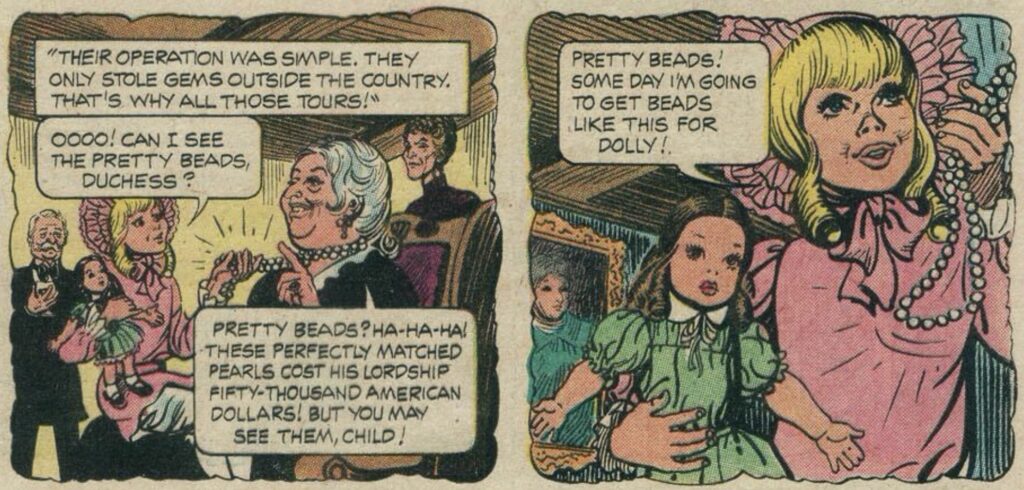
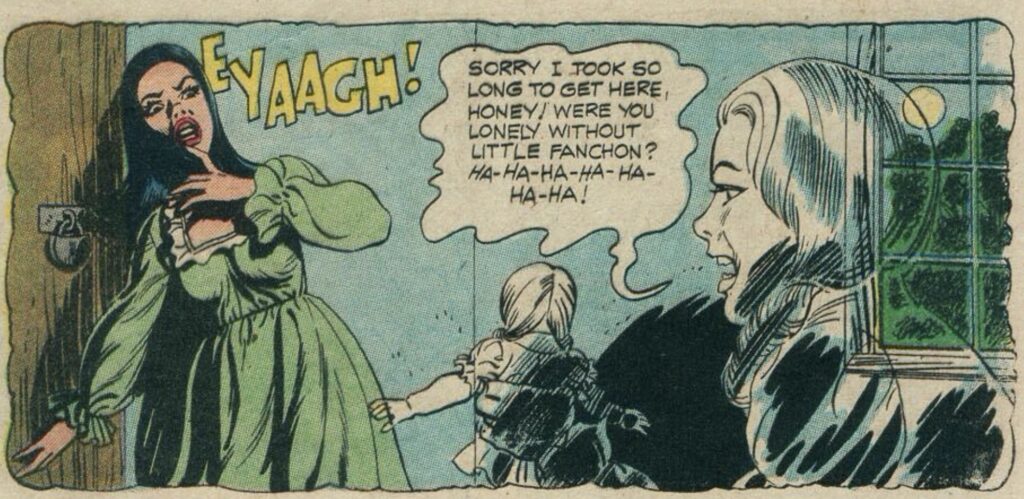
— A bizarre and allegedly true story (or is it an urban legend?) of an unconventional jewel thief named Fanchon Moncare, made famous by that 20th century purveyor of all things unbelievable — Robert Ripley;

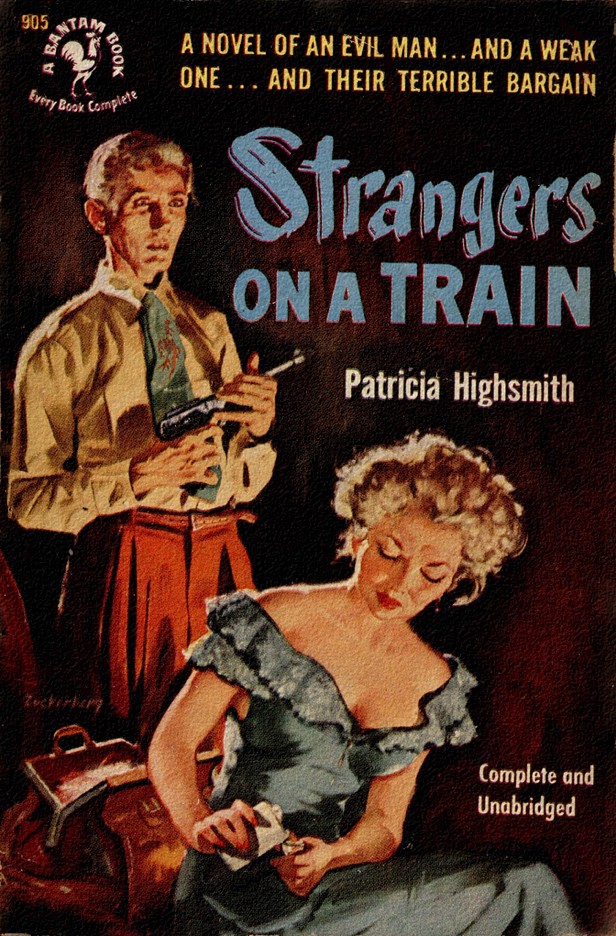
— And a look at the life of Patricia Highsmith — celebrating the 100th anniversary of her birth a bit early — whose nasty little tales of mad murderers have inspired Hollywood and unsettled a new generation of suspense lovers.

Listen today on your favorite podcast player:


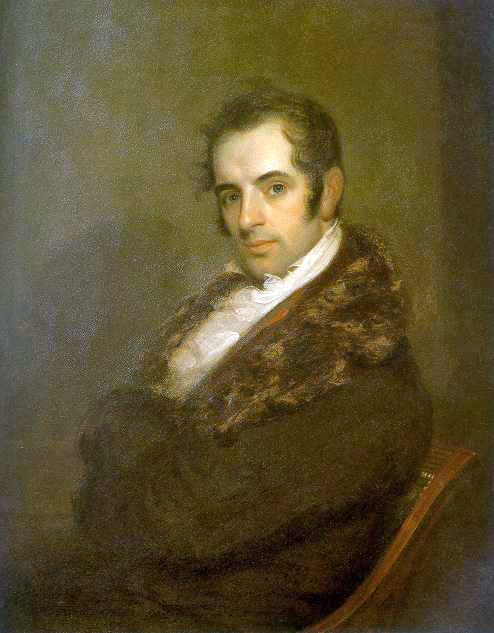
Portrait of Washington Irving, by John Wesley Jarvis, 1809


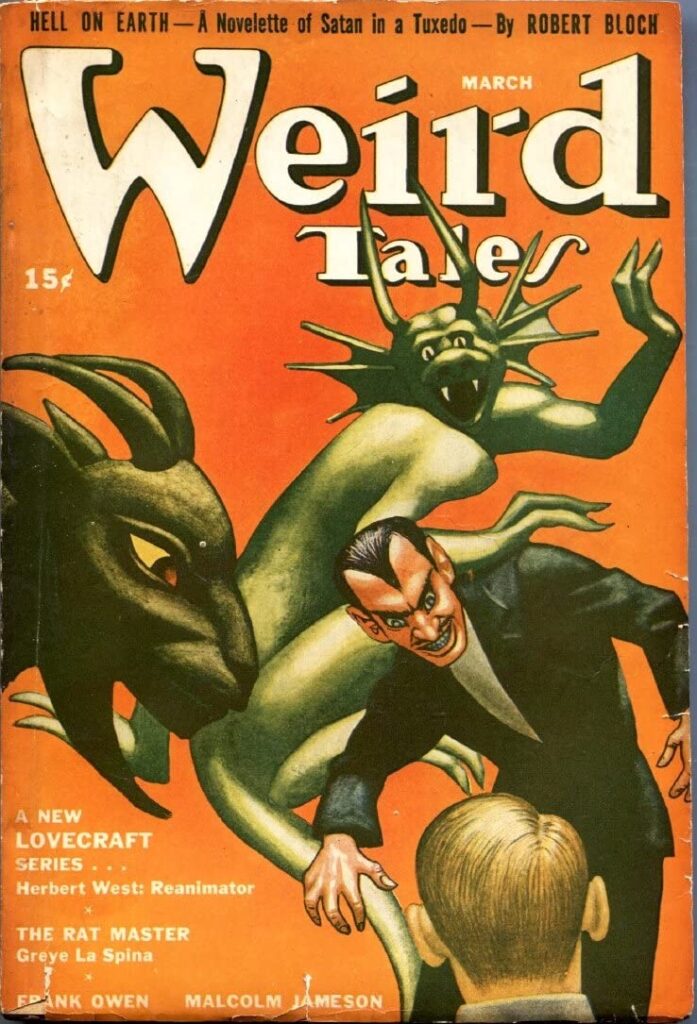
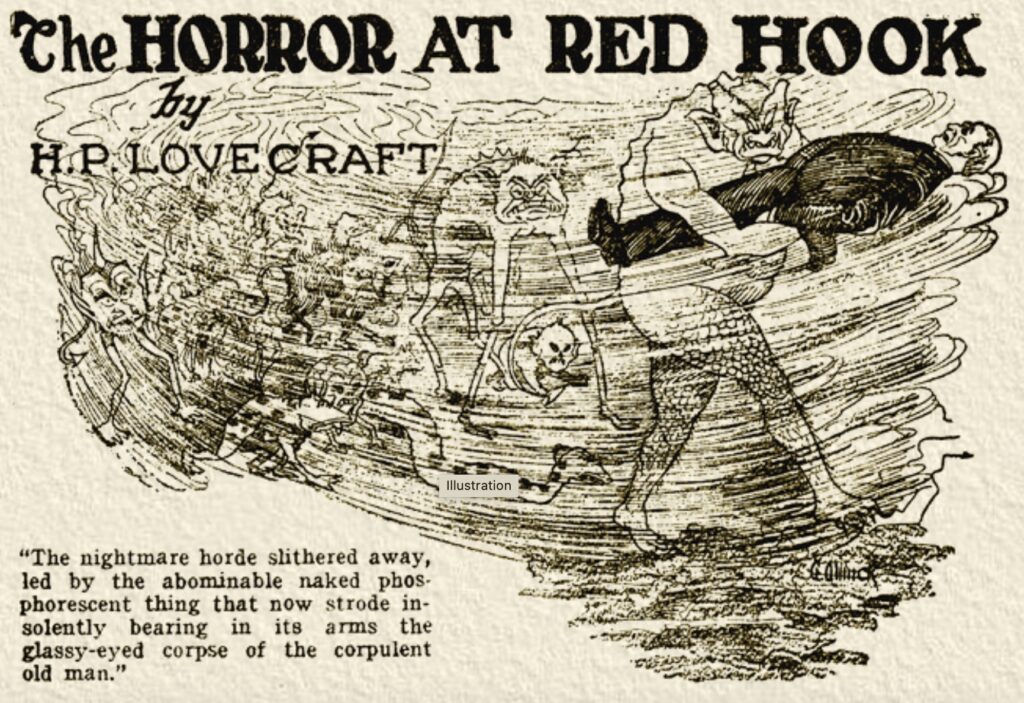
Weird Tales, the pulp magazine started in 1923 which gave Lovecraft (and many other budding fantasy writers) their start.

The former Brooklyn Heights home of HP Lovecraft. WIkicommons/Flickr/Eden, Janine and Jim

Robert Ripley of Ripley’s Believe It or Not.

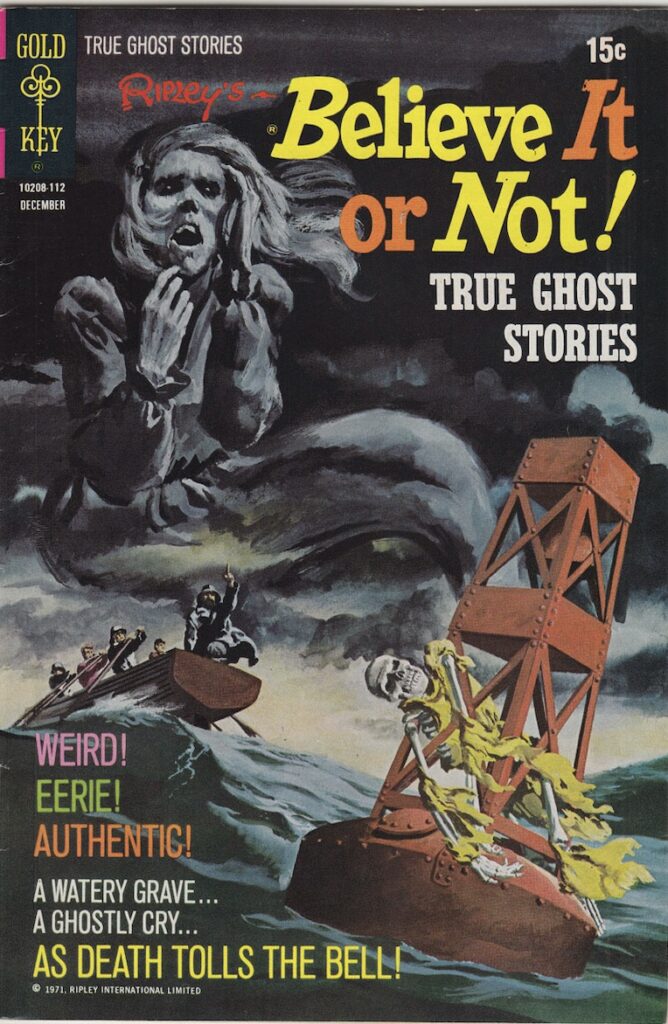
You can read the entire story from the Gold Key comic book here.


Photograph by Ruth Bernhard / Princeton University Art Museum / Art Resource

FURTHER READING

Sections of the following works were read in this episode:

Washington Irving “The Legend of Sleepy Hollow”
HP Lovecraft “The Horror at Red Hook”
HP Lovecraft “He
Ripley’s Believe it Or Not/Gold Key Comics “The Devil’s Midget”
Patricia Highsmith Strangers On A Train
Patricia Highsmith “The Terrapin”

In addition, seek out these additional sources:
S.T. Joshi / HP Lovecraft: I Am Providence
W. Scott Poole / In the Mountains of Madness: The Life, Death and Extraordinary Afterlife of HP Lovecraft
Joan Schenkar / The Talented Miss Highsmith
Andrew Wilson / Beautiful Shadows: A Life of Patricia Highsmith


The Bowery Boys: New York City History podcast is brought to you …. by you!

We are now producing a new Bowery Boys podcast every week. We’re also looking to improve and expand the show in other ways — publishing, social media, live events and other forms of media. But we can only do this with your help!

We are now a creator on Patreon, a patronage platform where you can support your favorite content creators.

Please visit our page on Patreon and watch a short video of us recording the show and talking about our expansion plans.

If you’d like to help out, there are six different pledge levels.Check them out and consider being a sponsor.

We greatly appreciate our listeners and readers and thank you for joining us on this journey so far.

Categories
Podcasts

PODCAST: Washington Irving

In this mini-podcast, we bring you New York’s first famous writer Washington Irving and his creepy tale of the Headless Horseman. We’ll tell you where you can go to celebrate his life and work, and what famous Irving landmark has nothing really to do with him at all.

Listen to it for free on iTunes or other podcasting services. Or you can download or listen to it HERE

Washington Irving was one of the first New Yorkers to make a name for himself in the international literary world. But it was a very narrow set of circumstances that allowed him to make it out of New York at all. The runt of eleven children, was ill for most of his youth; in fact, sickness would later prevent him going to Columbia University like his brothers. Under different situations a sick child growing up in downtown Manhattan might not have survived; he was, after all, born in the most volatile city in the nation, in the year the British finally relinquished New York to the new American army.

However, Washington’s father William had grown quite wealthy under the British as a mercantilist. His family could more than afford the proper care; as the baby, and one needing so much care, they spoiled him. Frequently bedridden, Washington was able to read more than the other kids, sparking his imagination with such favorites of his as Robinson Crusoe and Sinbad, devouring adventure tales, fictional and true. He half-heartedly studied law, but as his older brothers took over the family business, they actually encouraged him to indulge in story-telling. Keep in mind that fiction writing was not a popular endeavor at the time; writers documented and observed, but they very rarely imagined.

Writing as elderly Jonathan Oldstyle, his penname at 19, he frequently wrote to the newspapers reviewing theatricals and sometimes the people in the audience as well: “The noise in this part of the house is similar to that which prevailed in Noah’s ark; for we have an imitation of the whistles and yells of every kind of animal… Somehow or another, the anger of the gods seemed to be aroused all of a sudden, and they commenced a discharge of apples, nuts, and gingerbread, on the heads of the honest folks in the pit… I can’t say but I was a little irritated at being saluted aside of my head with a rotten pippin.

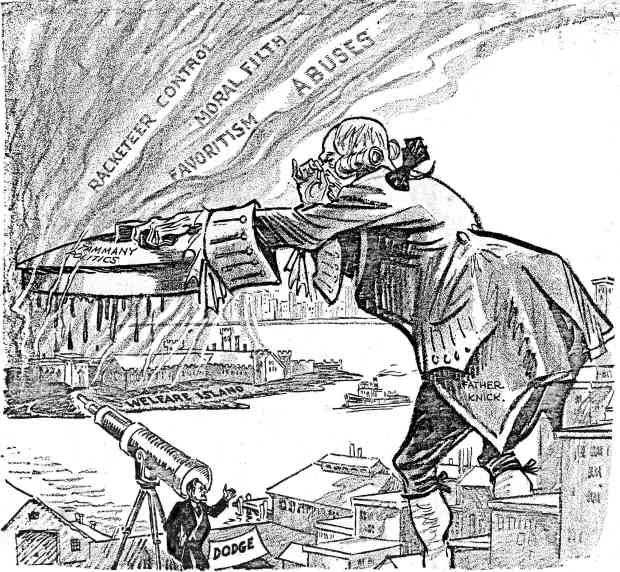
Later in life he would disavow these early writings as sloppy and lazy. He was much prouder of his later works the Salmagundi (a blistering criticism of New York’s upper class) and Deitrich Knickerbocker’s History of New York. As mentioned in the podcast, the name ‘Knickerbocker’ evolved to represent the first (if fictional) clan of the city. A character called ‘Father Knickerbocker’ would come to represent New Yorkers in political cartoons throughout the 19th century and early 20th.

To tie today’s topic with yesterday, here’s a political cartoon from the 1930s featuring Father Knickerbocker (his name embroidered on his coat) lifting the lid on the festering problem of Welfare/Roosevelt Island

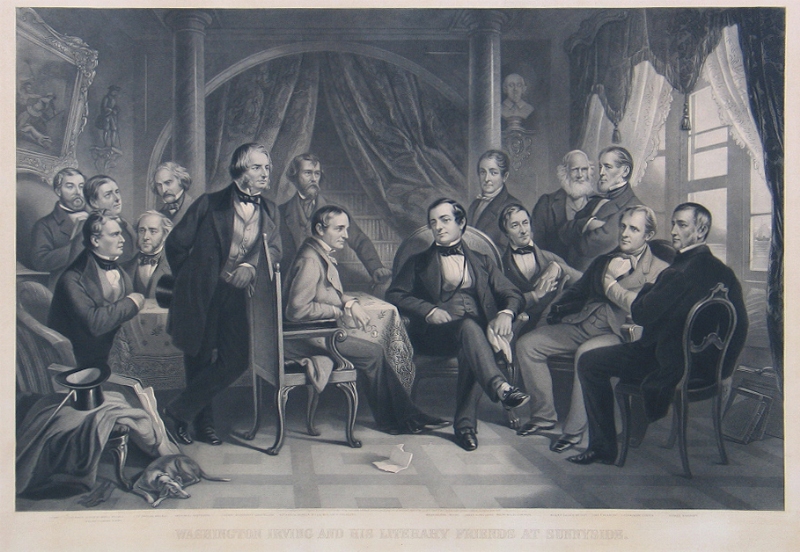
In the later part of his life, Irving made a home on the Hudson river which he called Sunnyside, living there with many members of his extended family.

It also became quite the literary parlor, and was frequented by the likes of John Jacob Astor, whose exploits in the western United States Irving would immortalize in his work Astoria. Here’s a rare engraving from 1866 of Washington Irving entertaining a group of extremely similar looking men in his parlor.

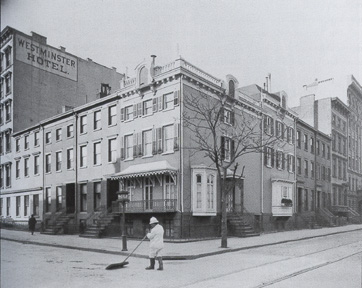
We can say with fair certainty, however, that Irving did NOT live here, 49 Irving Place (seen here in an old photograph):

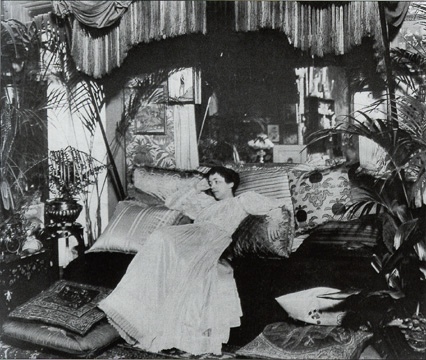
Who did live here, however might be more interesting. Elsie de Wolfe, a well known actress and soon to become New York’s first professional interior decorate, resided here from 1892 to 1912 with Elizabeth Murray, a literary agent to George Bernard Shaw and Oscar Wilde. (Curiously a few years earlier Oscar ended up next door at 47 Irving Place, as he saw his latest play Vera being savaged by the critics in a nearby theater.) They were quite open romantically and their house became a high-class salon for the artistic rich and famous. Its amazing to consider these two powerful lesbians stirring up social circles at the time.

Here’s Elsie reclining in her Irving-less home at 47 Irving Place. (This and the exterior shot above are courtesy the City Review from the Christopher Gray book New York Cityscapes.)

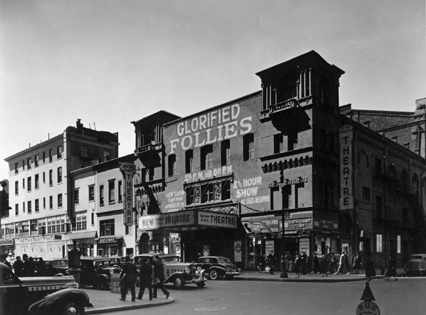
Just down a block away once stood the Irving Place Theatre, a former burlesque house and art film theater:

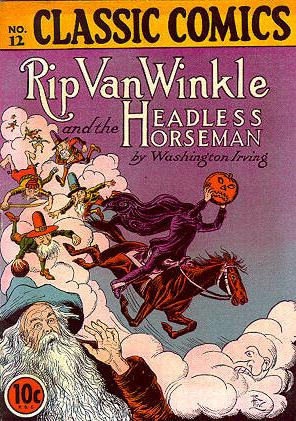
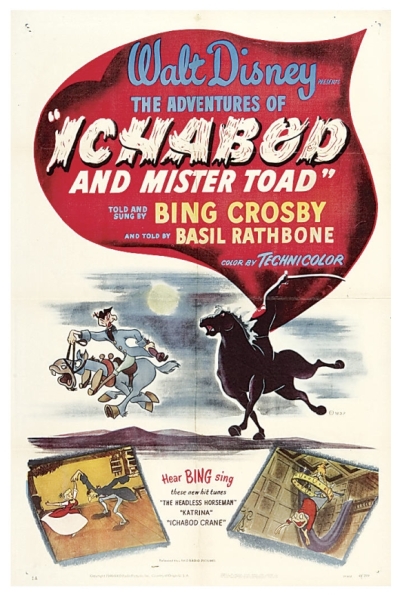
(I love how the illustrators of the comic on the left manage to combine Irving’s two most famous tales, and somehow stage the whole thing in intestine-shaped clouds.)
As for the story of ‘Sleepy Hollow’, it was one of many short tales gathered in ‘The Sketch Book of Geoffrey Crayon’ that cemented Irving’s status as the pre-eminent American writer. The story has been adapted in dozens of curious ways in the 20th century. A few silent film versions are known to exist, including one from 1922 starring Will Rogers as the terrified Ichabod Crane! For some reason, in 1949 the story was combined as a double feature with ‘The Wind In The Willows’ in a Disney animated adventure known as “The Adventures of Ichabod and Mr. Toad.” Bing Crosby provides the spooky narration and the best part of the story — the chase between Crane and the Horseman — is greatly extended. The Sleepy Hollow portion proved so much more popular that Disney split it off into its own film in the 50s.

Then of course then there’s the Tim Burton version with Johnny Depp as Crane, Christina Ricci as Katrina van Tassel, and as rival suitor Brom Van Brunt, an actor whose name could have very well placed him in the tale when it was first written, Casper van Dein. Burton, God bless him, completely re-writes the tale to flesh out a grim mythology. However he pays homage to the original story — as well as the Disney animated version — in a sequence where Crane is pursued by the Horseman and hid with a flaming pumpkin hurled by a costumed Van Brunt.

And finally, we end our look at Irving with an old crusty postcard image of Sleepy Hollow’s greatest landmark and the central location of Irving’s tale: the Old Dutch Church and its adjoining burial ground. Irving — as well as a great many other luminaries — are buried in the adjacent Sleepy Hollow cemetery. Look here to see what we wrote about the cemetery back when Leona Helmsley died.