Categories
Know Your Mayors Politics and Protest

Meet Mayor Richard Varick, New York’s ‘forgotten Founding Father’

With a new mayoral race on the horizon in New York City we think its time that you Know Your Mayors! Become familiar with other men who’ve held the job, from the ultra-powerful to the political puppets, the most effective to the most useless leaders in New York City history.

This longtime feature of this website is being rebooted with new articles and newly researched and refreshed earlier entries in this series. Check back each week for a new installment.

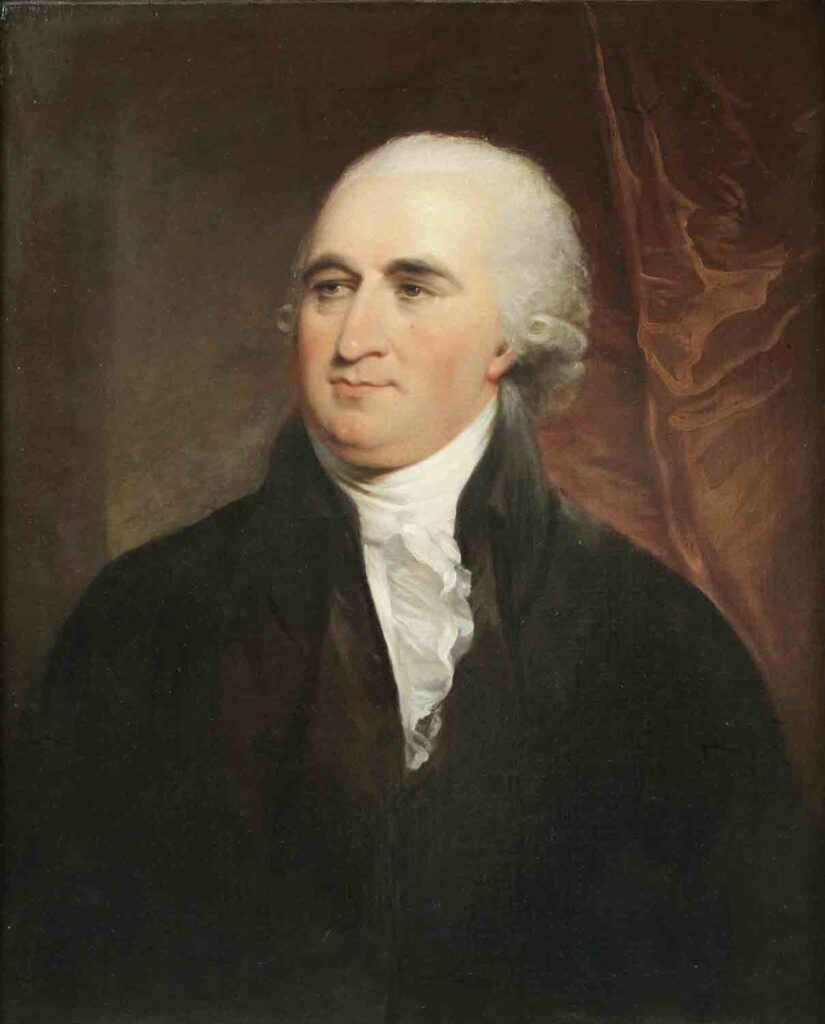
Richard Varick
Term: 1789-1801
The Federalist Mayor

La Guardia Airport. Van Wyck Expressway. The Ed Koch Queensboro Bridge. Duane Street.

While most old mayors of New York City fade into obscurity, a few leave their legacies on landmarks and street names.

In Lower Manhattan lies little Varick Street, linking the West Village to Tribeca. Drivers entering the Holland Tunnel are very familiar with Varick Street. It’s named for the man who once owned property here — Richard Varick.

He served as mayor of New York City for eleven consecutive terms — one year terms, from the fall of 1789 to 1801, making him the first New York mayor of the 19th century.

Biographer Paul Cushman calls Varick a “forgotten Founding Father” of the United States, an officer in the Continental Army and confidante of George Washington.

But perhaps his legacy had been slightly tarnished by another close association — with Benedict Arnold.

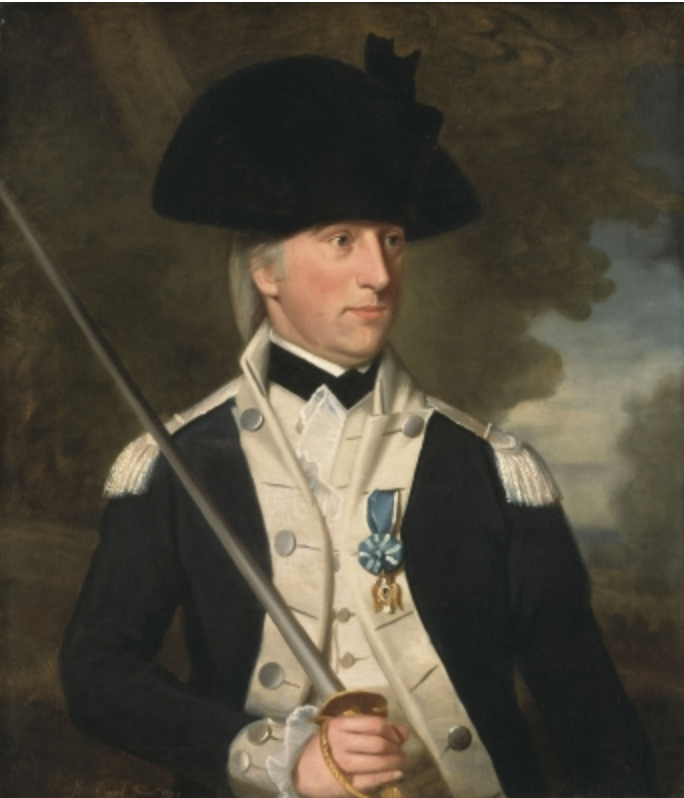
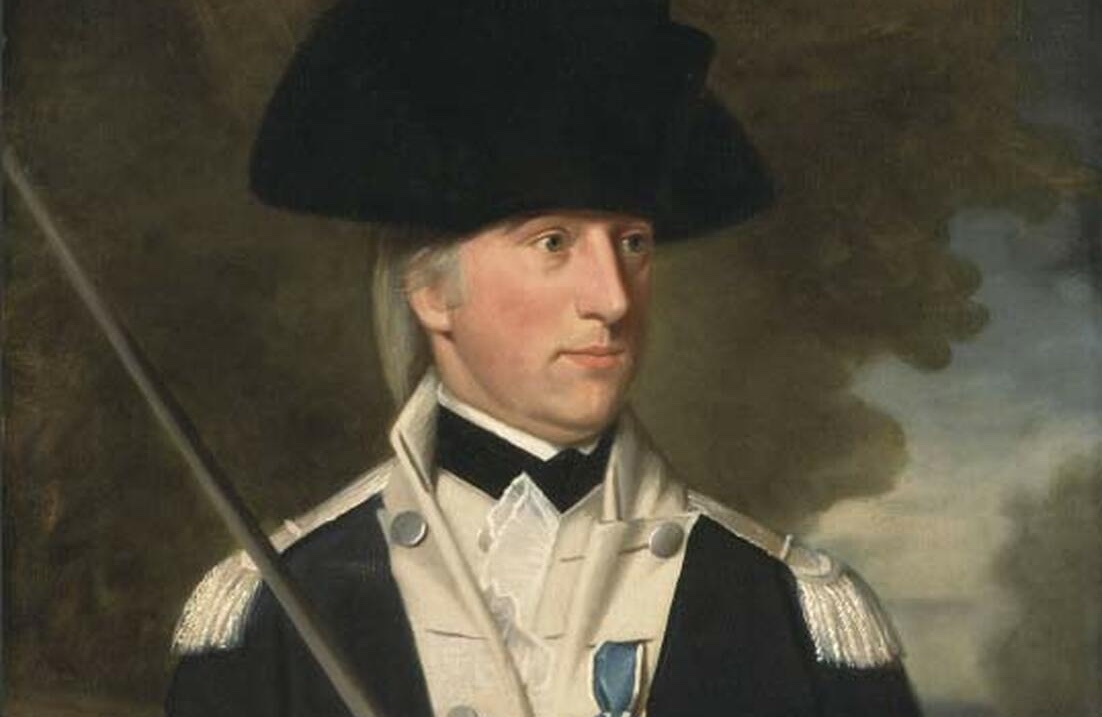
Richard Varick, painted in 1787 by Ralph Earl
Associations with a Traitor

Richard Varick, born in Hackensack, NJ, on March 15, 1753, was the descendent of Dutch settlers, and his family history is deeply intertwined with that of early colonial New Jersey.

Richard’s fate would lie in New York where he would get his law degree in 1774 at King’s College (Columbia University), naturally becoming compatriots with those who would become revolutionaries against the British Crown.

Varick had a virtually unblemished military record during the Revolutionary War but for one unfortunate association.

During the early days of battle he served as secretary to General Philip Schuyler, later father-in-law to Varick’s friend Alexander Hamilton. He swiftly moved on as inspector-general of the newly formed military base at West Point (it wouldn’t become a military academy until 1802) where he would become entangled with a potential political albatross — Benedict Arnold.

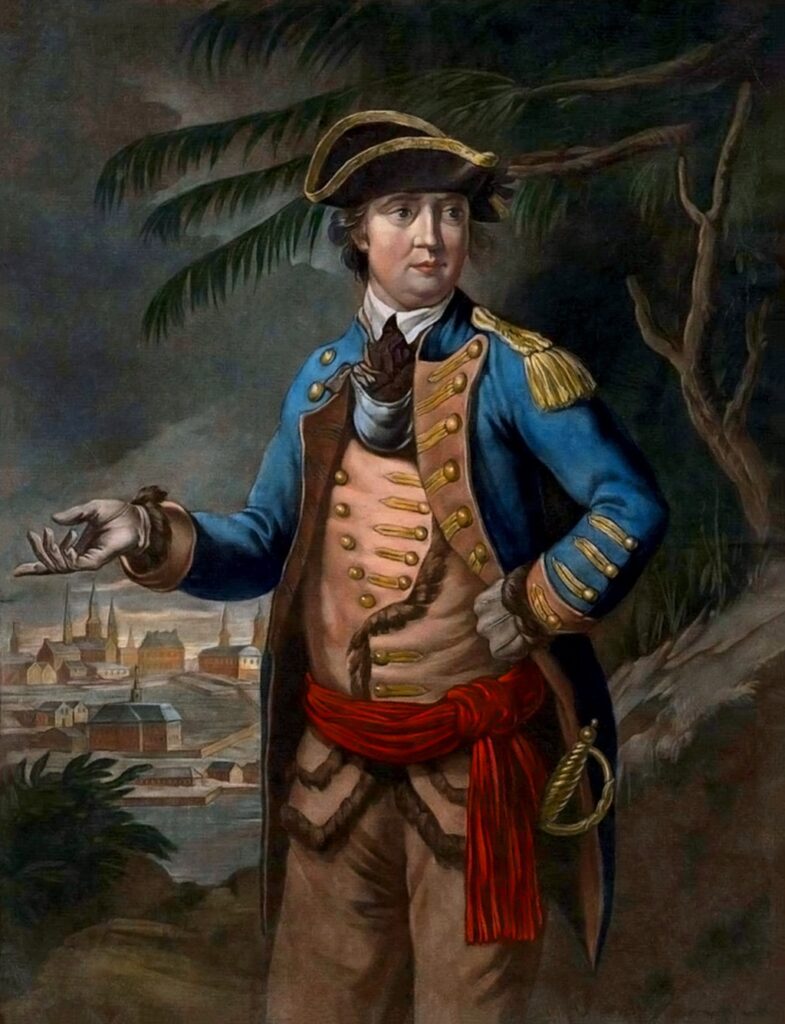
Arnold in a 1776 painting by Thomas Hart

Serving as Arnold’s loyal aide-de-camp, he was unaware that his friend was selling West Point — and the American cause — down the river, plotting to trade the base’s secrets to the British.

Arnold’s treachery was found out, and it comes as no surprise that Varick too was suspected of treason, but was later exonerated. The stench of rumored betrayal was alleviated when Varick was appointed Washington’s personal secretary in the later days of the Revolutionary War.

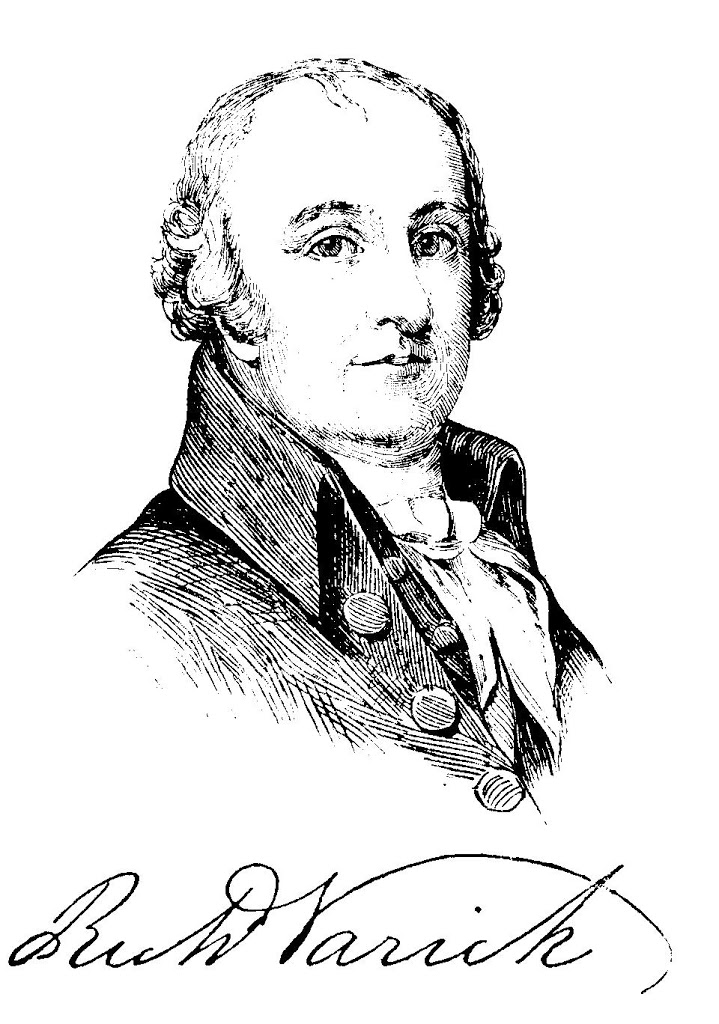
Varick and his signature
The Ultimate Multi-tasker

Not one to let one sticky political association bog him down, Varick was appointed a recorder of New York City once the British were swept out of town. But that’s not all.

In those days, with so many positions in the newly formed government and so few men with experience, Varick soon held other jobs concurrently — including speaker of the New York State assembly and even the state attorney general!

A simple explanation of the prevalence of a few public-spirited civic servants holding multiple offices in these times,” writes Paul Cushman, “might relate to the fact that these were unusual and non-recurring moments in the development of government. The offices in the evolving government were still quite malleable.

The amount of ink and parchment used by Varick in these various jobs — not to mention his wartime correspondence — must have been astounding. Indeed forty-four folio volumes known as the Varick Transcripts, collecting his various papers from 1775 to 1785 (including his correspondence with Washington), are housed at the Library of Congress.

But in 1789 came his most intriguing government appointment — mayor of New York, a role in which he was appointed eleven consecutive times by the Council of Appointment. (Previous mayor James Duane stepped down to become a judge. See the previous article of Duane for a breakdown on the appointment process.)

How could one man with so many jobs take on this responsibility as well? Cushman explains: “A part-time occupant as mayor, not yet burdened with a host of defined civic duties or a subordinate staff to manage, could carry out several tasks simultaneously, with the mayoral duties being just one of many.

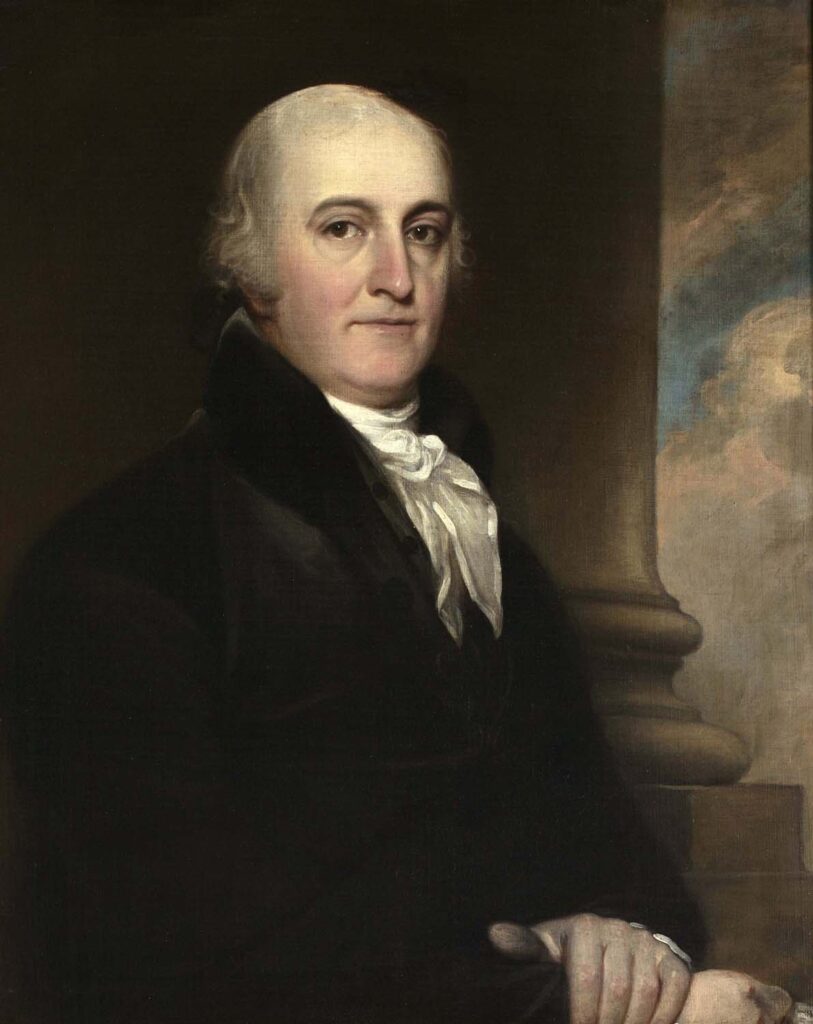
Richard Varick, in an 1805 painting by John Trumbull
A City In Crisis

The city population doubled under his administration, so naturally basic civic neccessities like water and disease control became the focus of his attentions. So what were his governing views?

Like Hamilton and John Jay, Varick was a staunch Federalist, believing in a strong centralized government and a robust national banking system. Federalists were also aristocratic and often elitist, and Varick was frequently at odds with the city’s rising artisan class who favored the more democratic leanings of national politicians like Thomas Jefferson and James Madison.

Varick used his position to punish anti-Federalist New Yorkers. In 1791 he threatened to revoke the licenses of any cartmen who voted against Federalist candidates in future elections.

In fact, due to his support of the quite unpopular Jay Treaty in 1794, the “arrogant and elitist” Varick was almost literally driven out of City Hall by a mad riot.

His political posturing insured that New Yorkers would never really like Varick. Still he continued to be appointed to the job year after year — by both Republican governors (George Clinton) and Federal ones (John Jay), most likely based on his reputation during the war.

The political bickering between factions failed to stunt the growth of the city, both in terms of its physical size and its prominence as the financial center of the new nation, of which Varick played no small part. (He was the director of a few small fledgling banks, including Alexander Hamilton’s special project the Bank of New York.)

Another change during Varick’s term would alter the course of New York politics forever.

In 1797, New York state government responsibilities moved out of the city to Albany, allowing the city bureaucracy to grow but setting the stage for future animosities between state and local leaders. In other words, the roots of Andrew Cuomo vs. Bill De Blasio begin here.

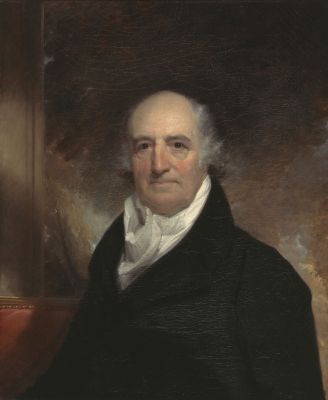
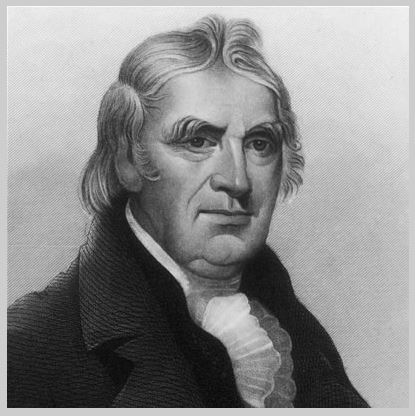
Painting by Henry Inman
Founding Father of Jersey City

With the ascent of the Democratic-Republican Thomas Jefferson to nationwide office, Federalists were on the wane, and Varick was replaced by the more amenable Edward Livingston.

Varick, on the outs in New York, returned to New Jersey where he helped found Jersey City. Varick died there on July 30, 1831. For the residents of NJ’s second-largest city, Varick is most certainly not forgotten.

And thousands everyday take lower Manhattan’s Varick Street to the Holland Tunnel which arrives on its New Jersey side into the city which Varick founded.

This article is newly written and expanded from an earlier version published in 2007.

Categories
Know Your Mayors Revolutionary History

Meet James Duane, New York’s first mayor after the American Revolution

With a new mayoral race on the horizon in New York City we think its time that you Know Your Mayors! Become familiar with other men who’ve held the job, from the ultra-powerful to the political puppets, the most effective to the most useless leaders in New York City history.

This longtime feature of this website is being rebooted with new articles and newly researched and refreshed earlier entries in this series. Check back each week for a new installment.
James Duane
Term: 1784-1789
The First Post-War Mayor

New York officially had 44 men prior to James Duane filling the seat of city mayor in 1784. So why do I consider Duane New York City’s official first mayor?

Although America declared its independence from England in 1776, England did not declare its independence from New York City until 1783, when they were driven out at the end of the Revolutionary War.

British appointed mayor David Mathews governed Manhattan throughout the entire war until he and other Loyalists fled to Canada in the conflict’s waning days. Which is probably a good thing since he was implicated in a specific attempt to kidnap and murder the commander of the Continental Army George Washington.

Duane is the first American New York mayor, the first to lead the city newly broken from its colonial shackles.

However, it should be noted that he is not New York’s first elected mayor. Like the many mayors of the Colonial era before him — and the many men who would hold this office well into the 19th century — James Duane was appointed to the job.


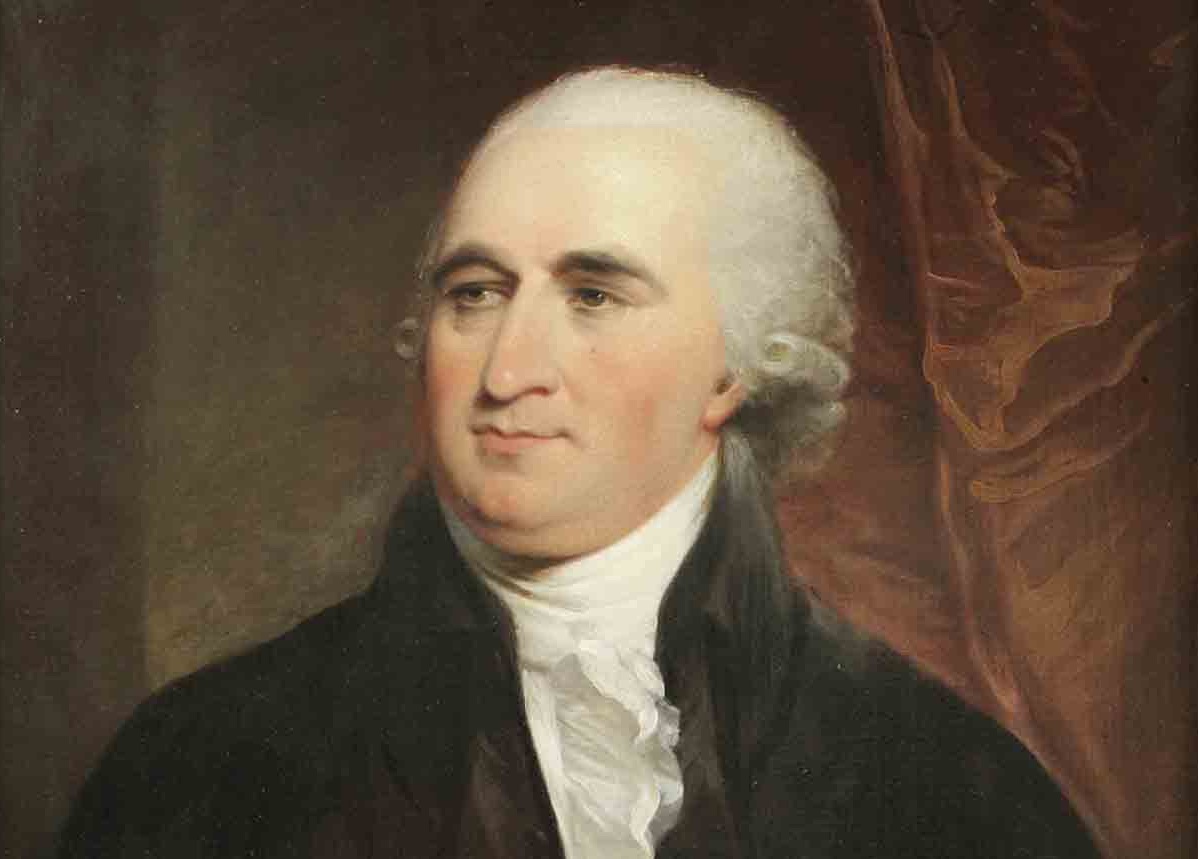
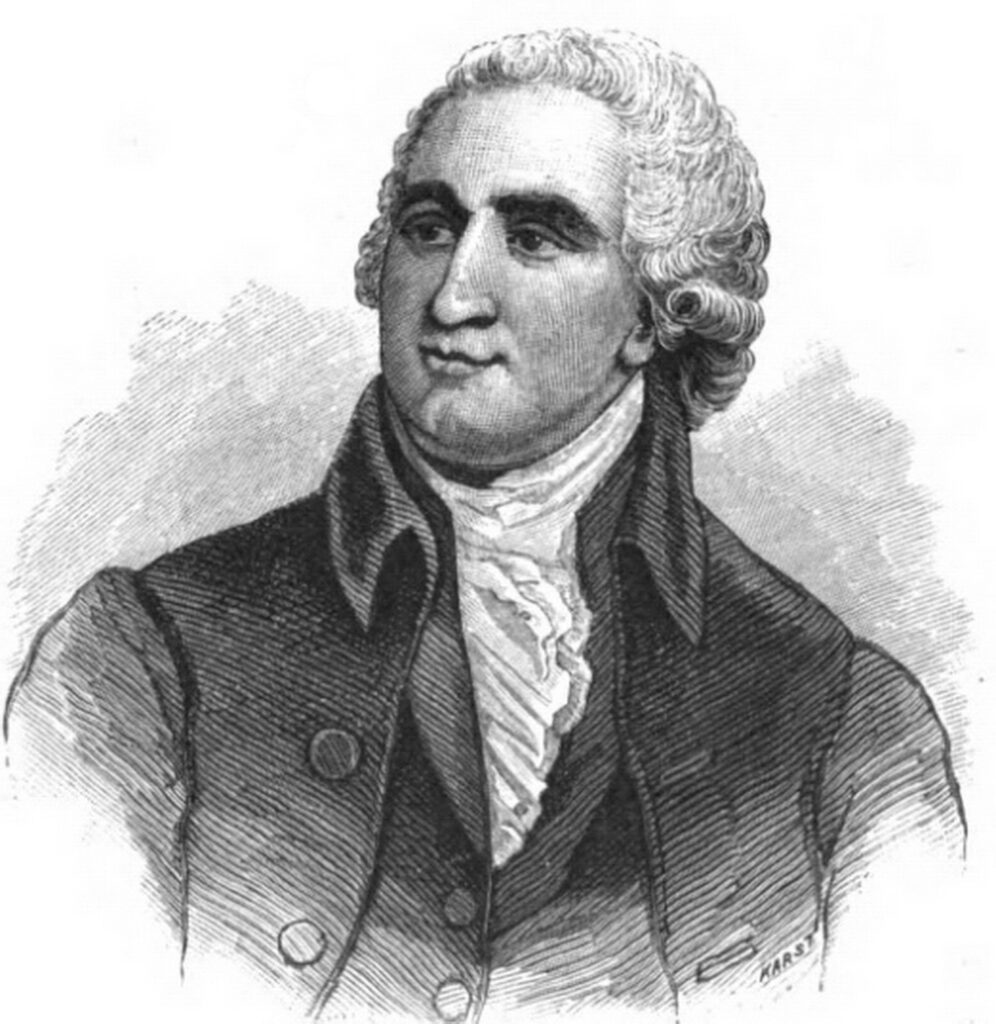
As painted by John Trumbull in 1805, long after his death.

James Duane, born in New York in 1733, was destined for great things, a respected attorney and statesman who would become what we might call a minor Founding Father.

Orphaned as a teen, young Duane became the charge of Robert Livingston, a prominent lawyer in a socially important New York family. Naturally he pursued a career in law as well, his natural skills bolstered by his social privilege.

In 1759 Duane married Robert’s daughter Mary Livingston and would grow up alongside Robert Jr. who would go on to draft the Declaration of Independence. Through tenacity, family wealth and de facto family influence through the Livingstons, Duane became New York state attorney general at age 34.

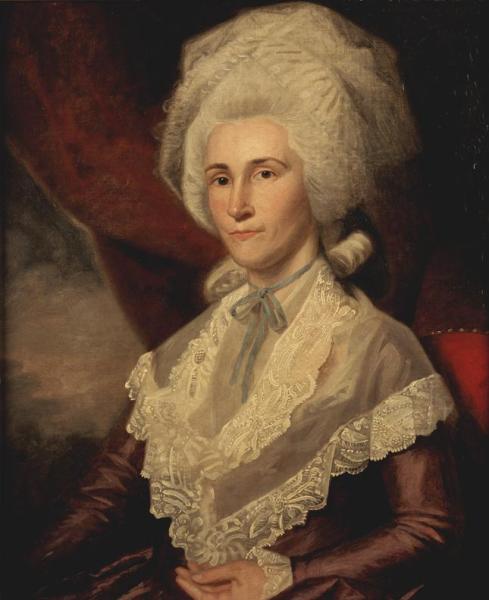
Mary Livingston in a painting by Ralph Earl. Original image courtesy the New-York Historical Society

Duane was also part of New York’s delegation to the First Congressional Congress in 1774, alongside John Jay and another Livingston, Philip, who would eventually sign the Declaration of Independence. (Duane, alas, was serving in New York’s Provincial Congress in the summer of 1776 or else he too would have John Hancock’d the founding document.)

Duane had originally agreed with general notions of appeasement with the British, not favoring a separation from England.

In fact author Edward P. Alexander calls him a ‘moderate rebel‘. “Duane strove with common sense and moderation to cling to the golden mean which would protect gentlemen of his station from both British taxation and domestic social upheaval.”

In other words he was for the cause of American liberty but not all that rabblerousing.

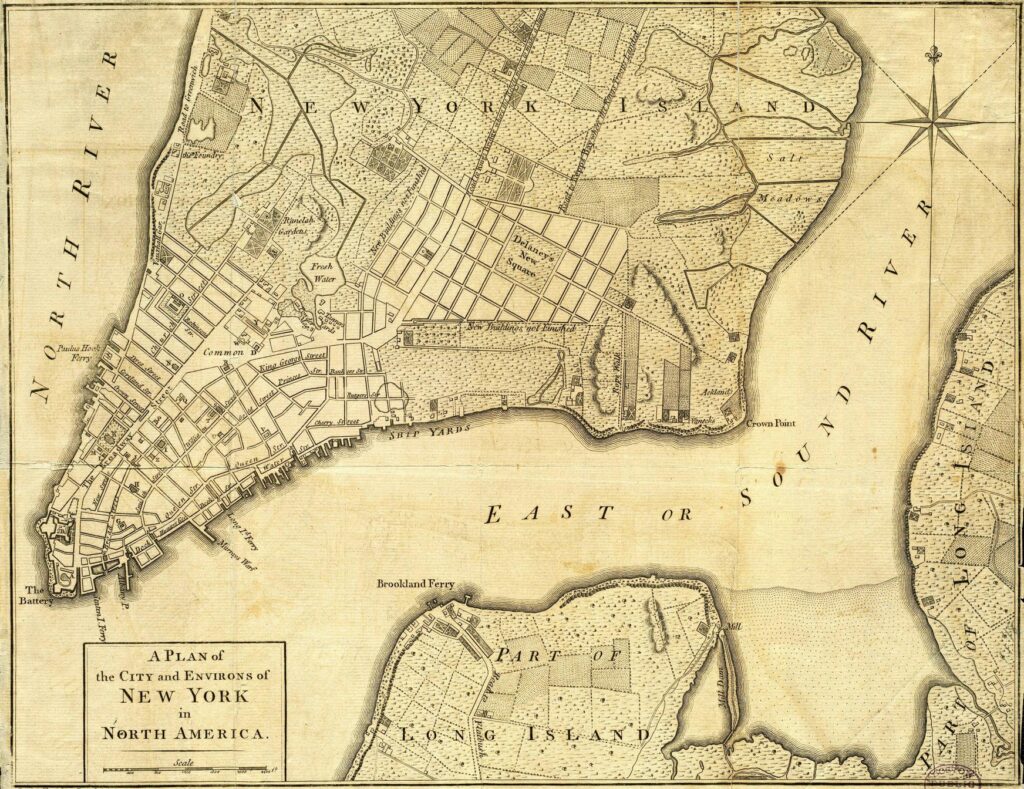
James Duane’s New York City, 1776

Regardless, he would be a member of Second Continental Congress all the way through the end of the war and on behalf of New York would even be a signer of the Articles of Confederation, precursor to the Constitution.

During the British occupation of New York, Duane lived at Livingston Manor, a vast estate which today includes modern-day Livingston, New York.


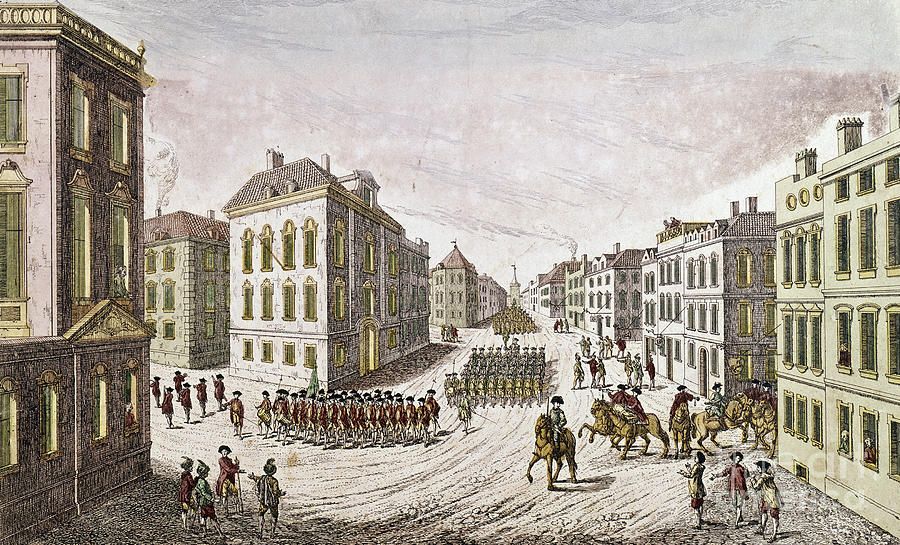
New York during British occupation 1776

Its Loyalists freshly evacuated, the city needed a new leader.

In 1784 Duane was appointed Mayor of New York by a slate of state officials called the Council of Appointment, led by Governor George Clinton.

This council didn’t just select the city’s mayors; it selected every office in the state. It would be decades before mayors were actually elected into office by the people.

Duane moved his family to a family estate right outside the city — a farm that would become Gramercy Park thirty years after his death.

According to A Godchild of Washington by Katherine Schuyler Baxter (written in 1897):

In a letter of James Duane to his wife, after the Revolution, he alludes to this farm and the beautiful grounds with the fish pond and fountains. The house having been occupied by British officers during the War the letter says ‘you will find the cellars in most excellent condition and the wine bins in good repair, the house has suffered but little.’

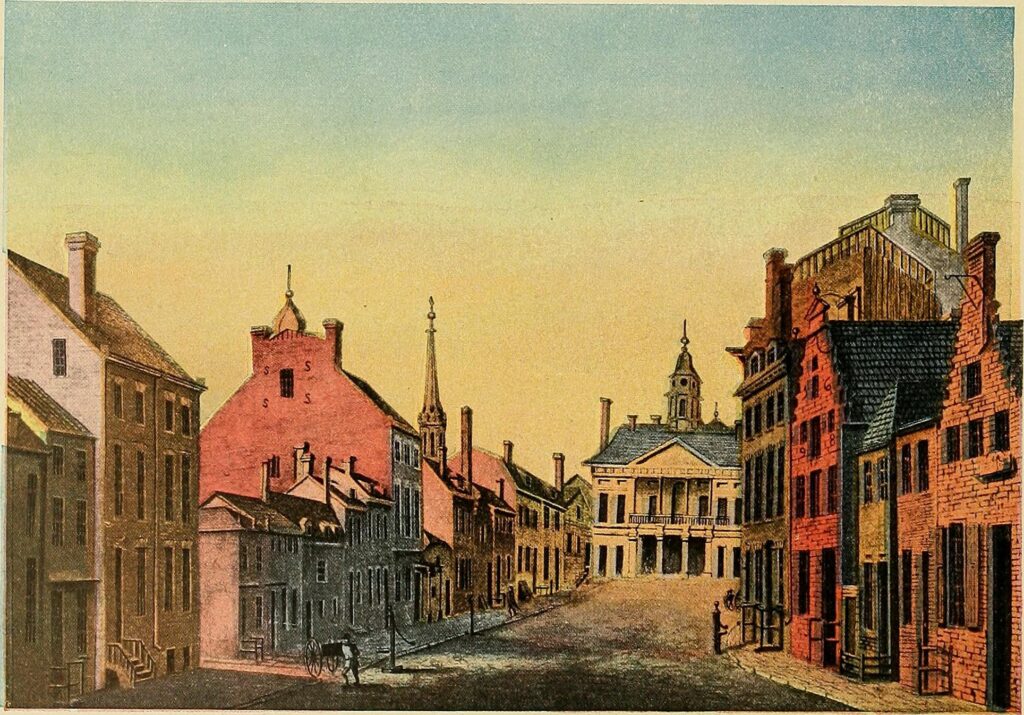
City Hall became Federal Hall.

The new mayor oversaw a massive shift in Manhattan’s well-being; while the evacuation of the British and their sympathizers left a serious economic vacuum, the city also took its first steps win defining its urban character.

For Duane’s entire tenure, New York would be the new country’s seat of federal government — first as home of the Confederation Congress, then as the location of the new government under the U.S. Constitution.

In fact Duane’s legacy as mayor would be largely overshadowed as the foundations of the United States were built around him.

City Hall would become Federal Hall in these years and the overcrowded government building — over 75 years old already by the time Duane took office — was hastily enlarged in 1788 to accommodate these extra politicians.

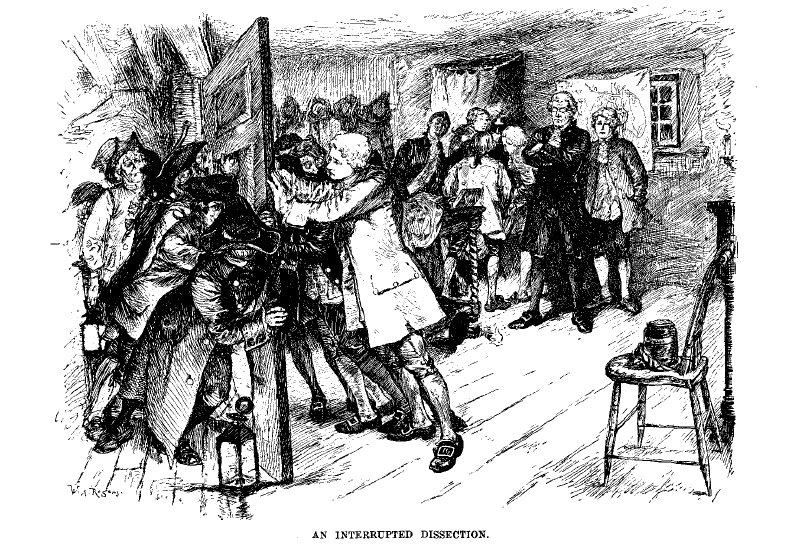
Angry New Yorkers storm the hospital. Wood engraving by William Allen Rogers

Meanwhile in the spring of that year, Duane intervened in one chilling incident involving grave robbers and medical students at New York Hospital, an incident today known as the Doctor’s Riot.

An angry mob, enraged that the local cemetery had been pillaged for cadavers, stormed the hospital and, eventually, Columbia College. Several officials, including Duane, urged restraint. When the mob attacked the officials — injuring John Jay in the process — Duane took action.

According to Gotham by Edwin G. Burrows and Mike Wallace, “Duane summoned a troop of militia to disperse the crowd and was met with another shower of missiles. Baron von Steuben, also struck in the head and bleeding profusely, shouted, ‘Fire, Duane! Fire!’ Duane, or perhaps [Governor] Clinton, gave the order. The first volley killed three rioters outright and wounded many others. Before a second could be fired, the crowd had scattered.

Governor George Clinton who possessed most of the power in post-Colonial New York.

While Duane threw himself into the job — he was praised by his critics for his charity and “good judgement” — his power was limited. Governor Clinton and his Common Council (an early version of City Council) controlled his salary and could veto his decisions on a whim.

In 1785 he was also a founding member of the New-York Manumission Society, an abolition organization headed by John Jay that eventually included Alexander Hamilton and Governor Clinton.

This despite the fact that Duane would own at least one enslaved person after this date:

His 1790 census record, in New York City, shows his family consisting of 2 Free White Males aged 16 and older, 2 FWM under 16, 6 Free White Females, and 1 slave.” [wiki]

(Most of the members were slaveholders including Jay and Clinton. In 1799, Jay, as governor of New York, would sign the Act for the Gradual Abolition of Slavery into law.)

James Duane — February 6, 1773 – February 1, 1797

By the end of administration in 1789, Duane was governing over a city of 25,000 citizens. After the wounds of war, New York was at last recovering.

After Duane’s five one-year terms, the mayor’s seat went to another attorney with even greater ties to the Revolutionary War — Richard Varick.

Duane’s next appointment was more prestigious — one of the nation’s first federal judges on US Circuit Court in New York, nominated for the position by President George Washington himself. (It helped to rub elbows with the new president in the cramped quarters of Federal Hall.)

Duane died on February 1, 1797, on an inherited land grant in upstate New York that he had developed into a township and where he spent his final years. Its name, appropriately, is Duanesburg.

Most New Yorkers are familiar with James Duane today — not for his accomplishments but for the street named after him. Duane Street runs through lower Manhattan today just a couple blocks north of today’s City Hall.

The drug store Duane Reade takes its name from Duane Street.

This article is based on an original post from December 2007.