Categories
Friday Night Fever Podcasts

The Oldest Bars in New York City: The Ultimate History Bar Crawl Begins Here

The history of New York City — as told through the stories of its oldest bars.

We’ve put together the ultimate New York City historic bar crawl, a celebration of the city’s old taverns, pubs, and ale houses with 18th- and 19th-century connections. And throughout this two-part mini-series, you’ll learn so much about the city’s overall history — from its changing shoreline to the everyday lives of its working-class immigrant populations.

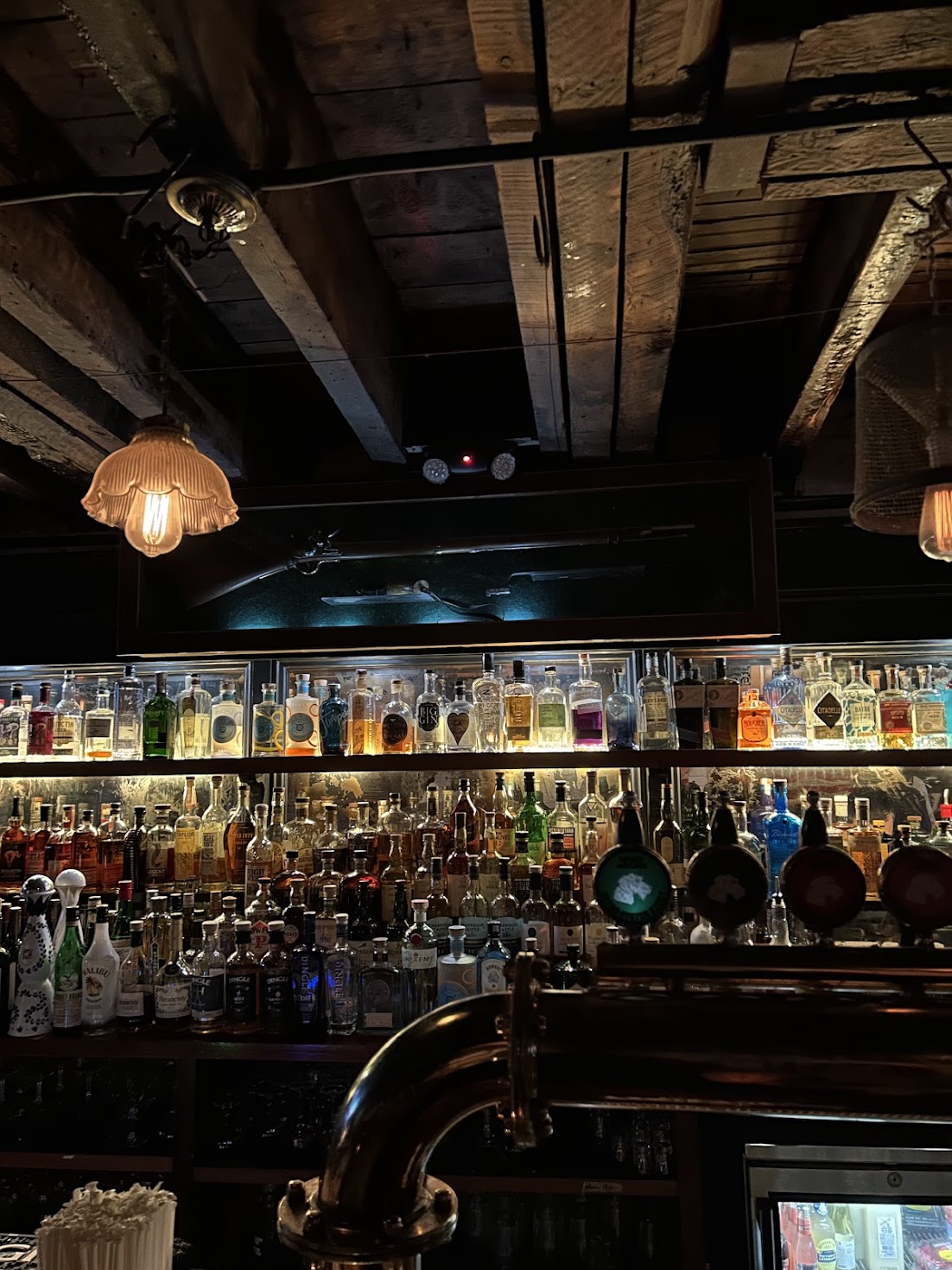
Being an old historic bar isn’t just a novel curiosity for history lovers. It can be good for business and many of the most popular landmark pubs literally wear their stories on the walls — framed newspapers and photographs, memorabilia, old clocks, sailors’ caps and fedoras.
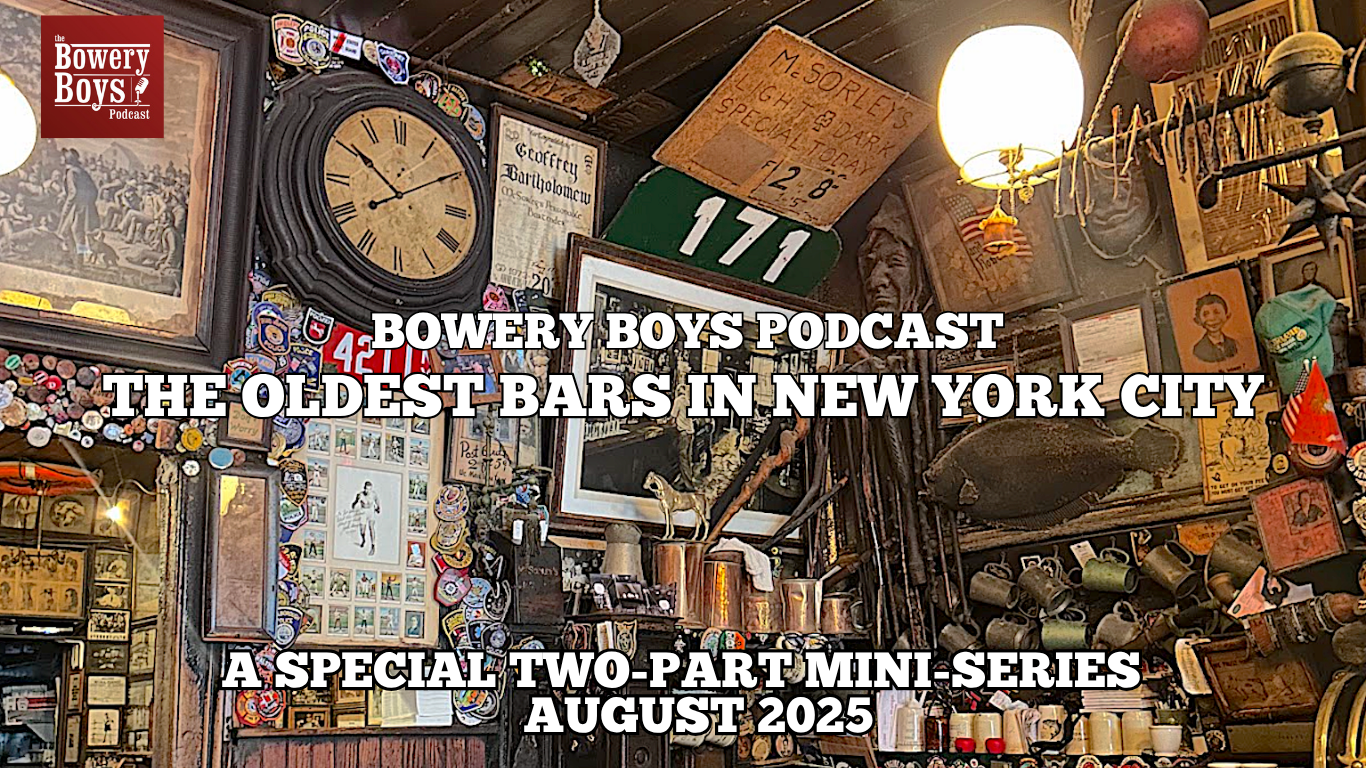
The history of old bars is a little like a ghost story, where a legend has grown up around a historic place, and decades or centuries later, it can be hard to determine the pure truth. In many ways, the myths are as powerful and as interesting as the actual history itself.

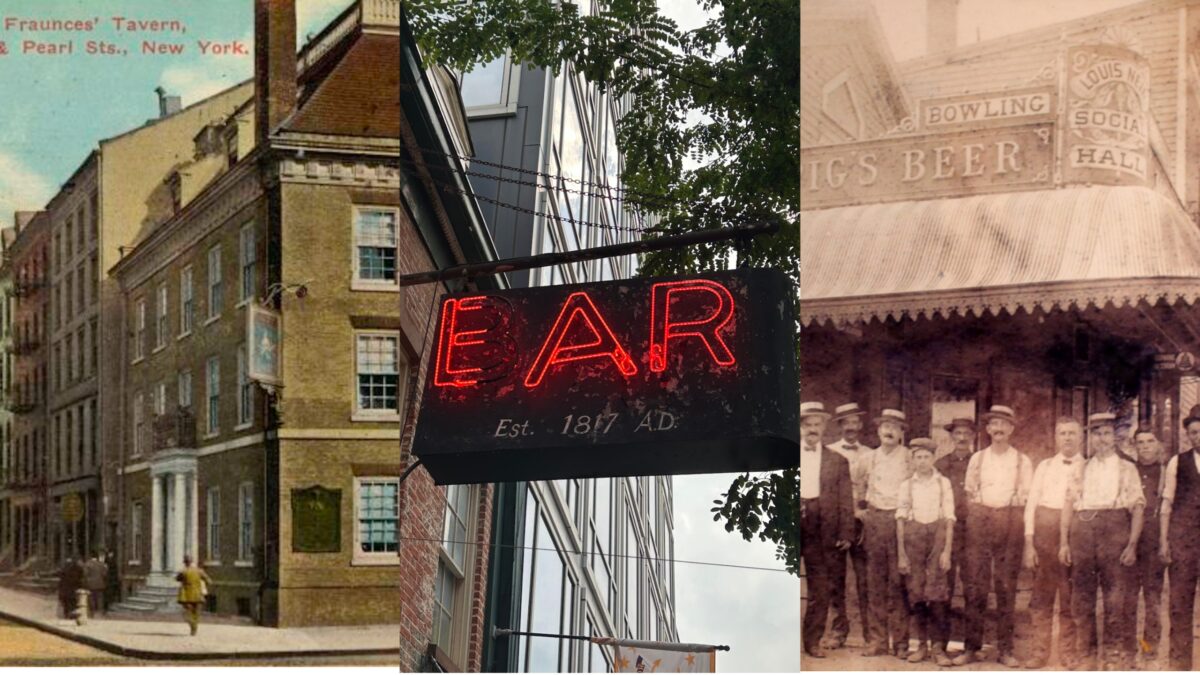
In this episode, the first of two parts, Greg and Kieran visit two very different establishments representing the colonial and rustic world of Old New York:
Screenshot

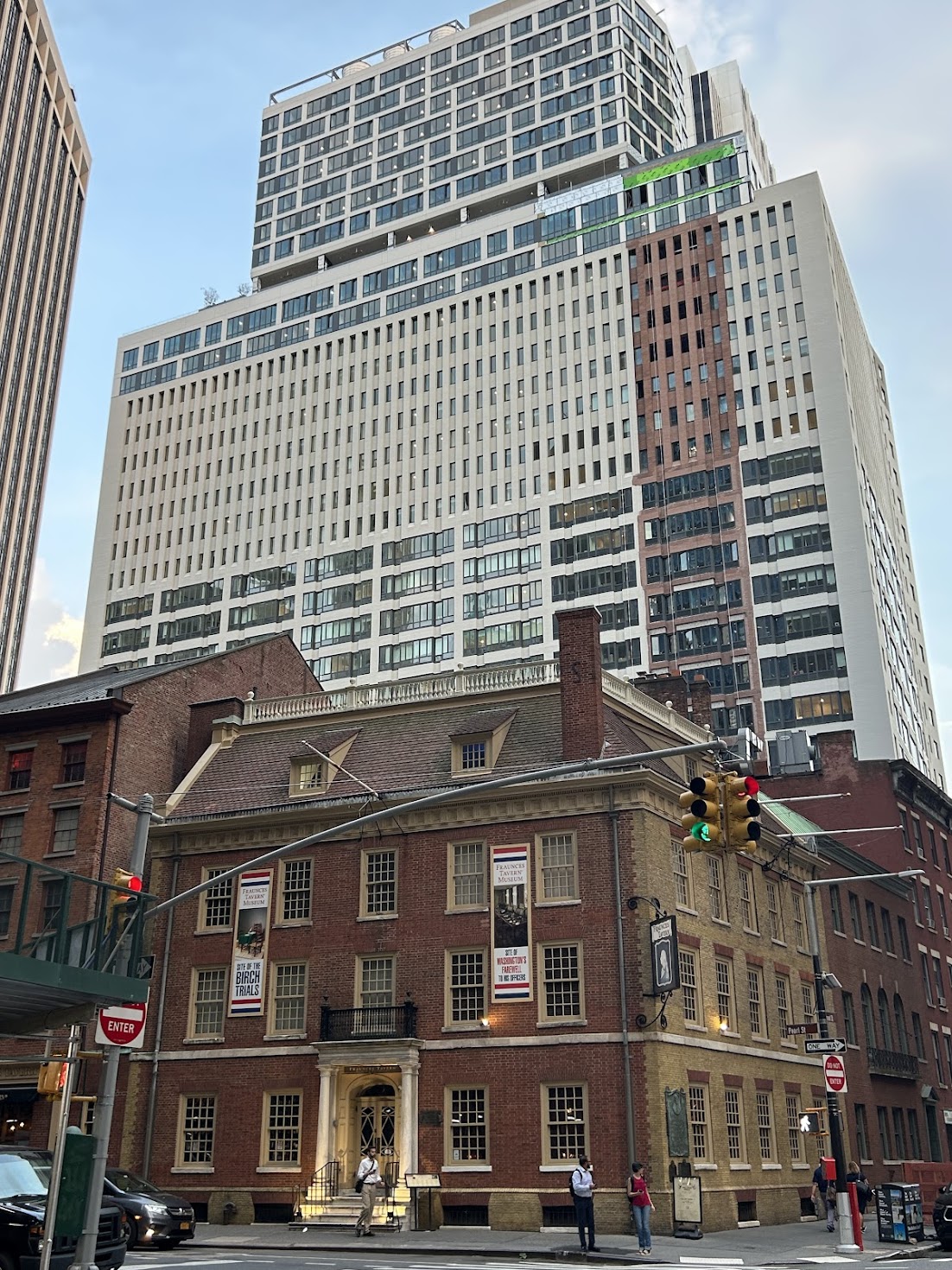
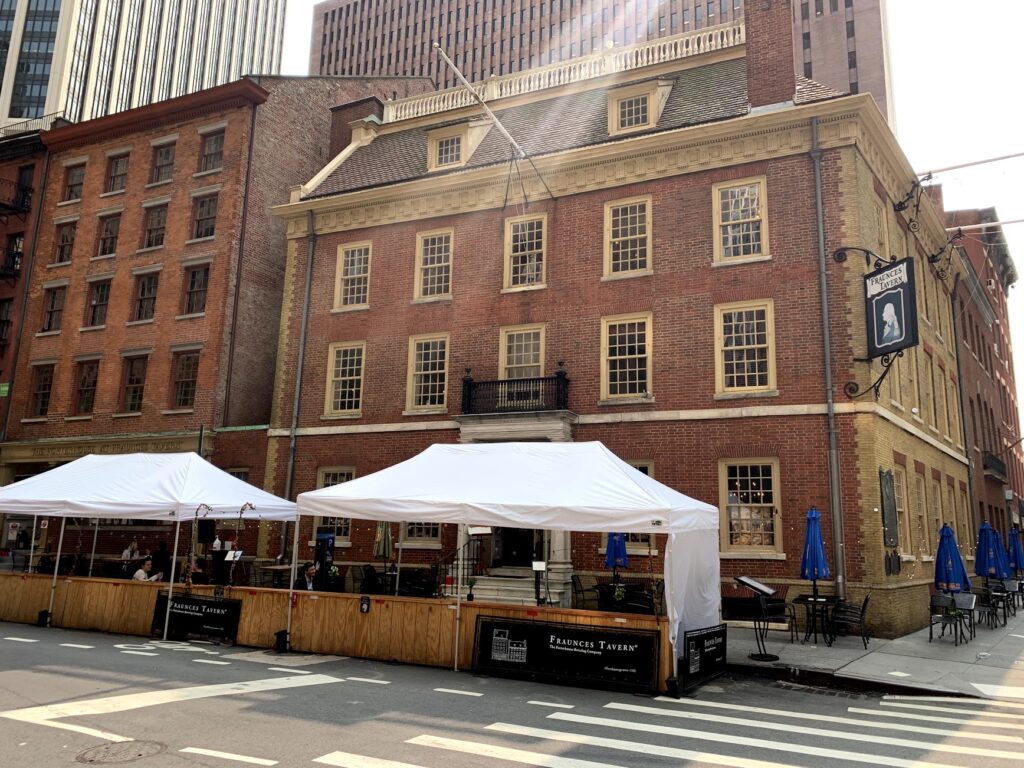
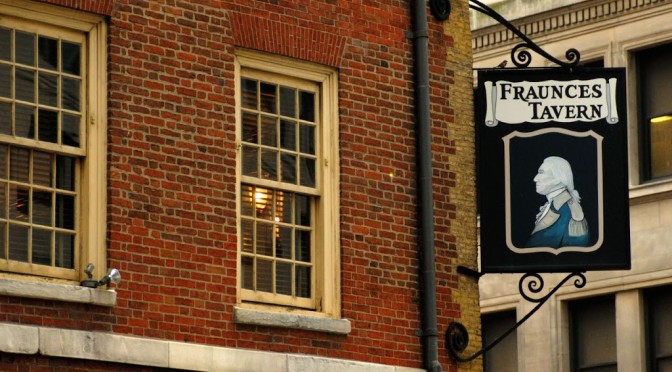
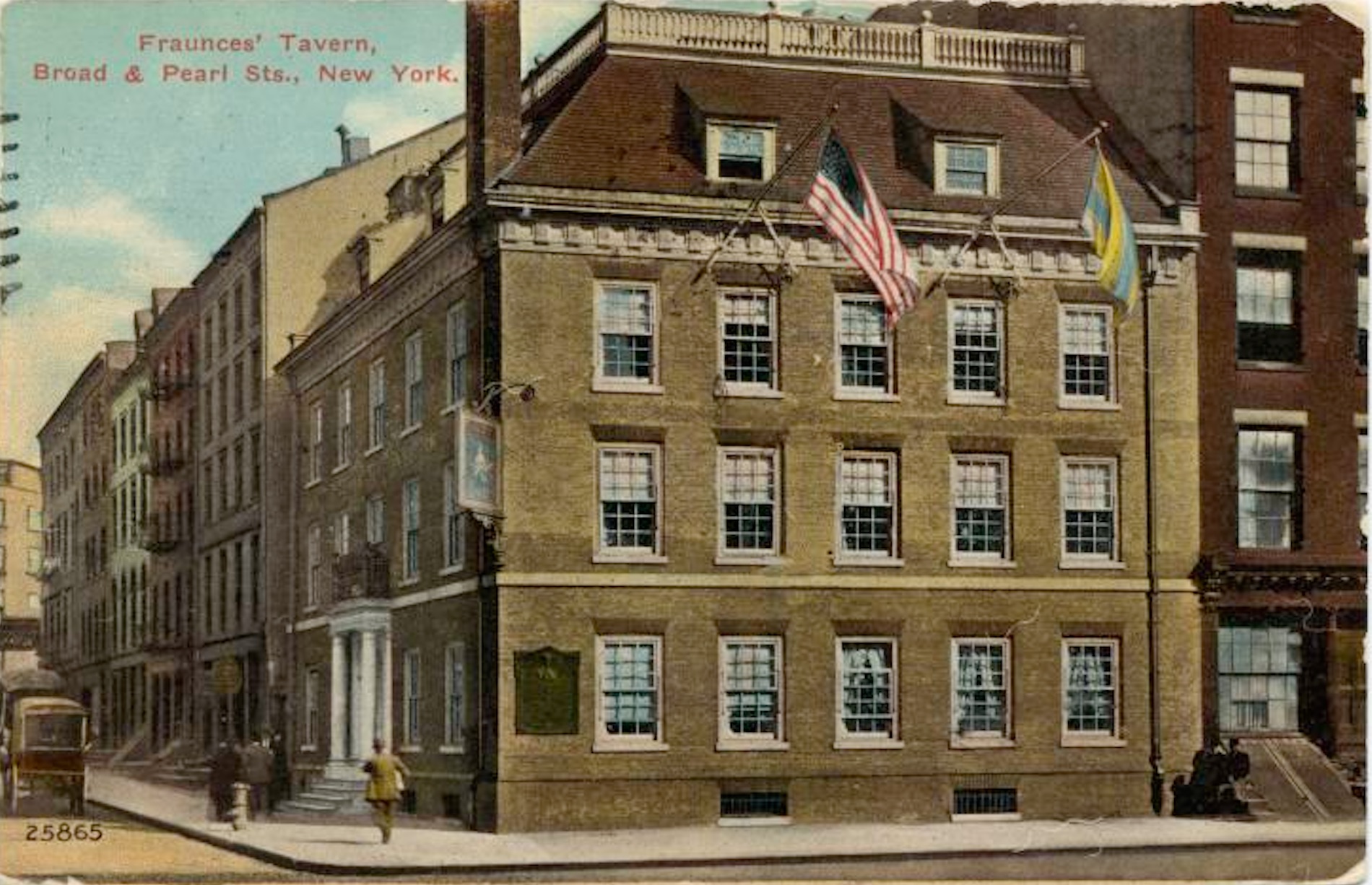
Fraunces Tavern, one of the most important American landmarks of the Revolutionary War, remains a vibrant spot over 250 years after its stools and tables were occupied with rebellious colonists.

Today, its history lovers and workers from the Financial District who enjoy its labyrinthine bar and dining rooms, while upstairs an impressive museum celebrates the tavern’s many eras of greatness.
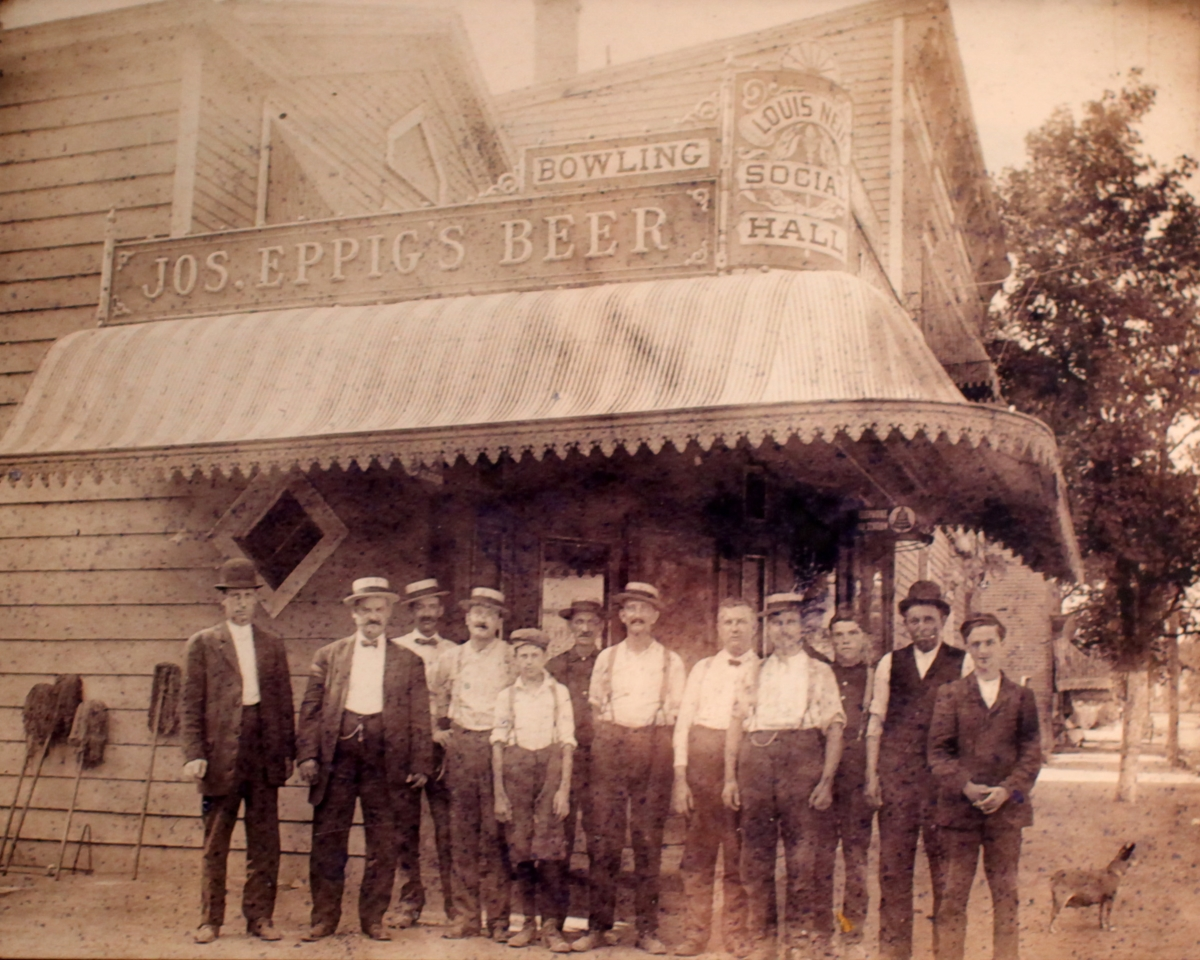
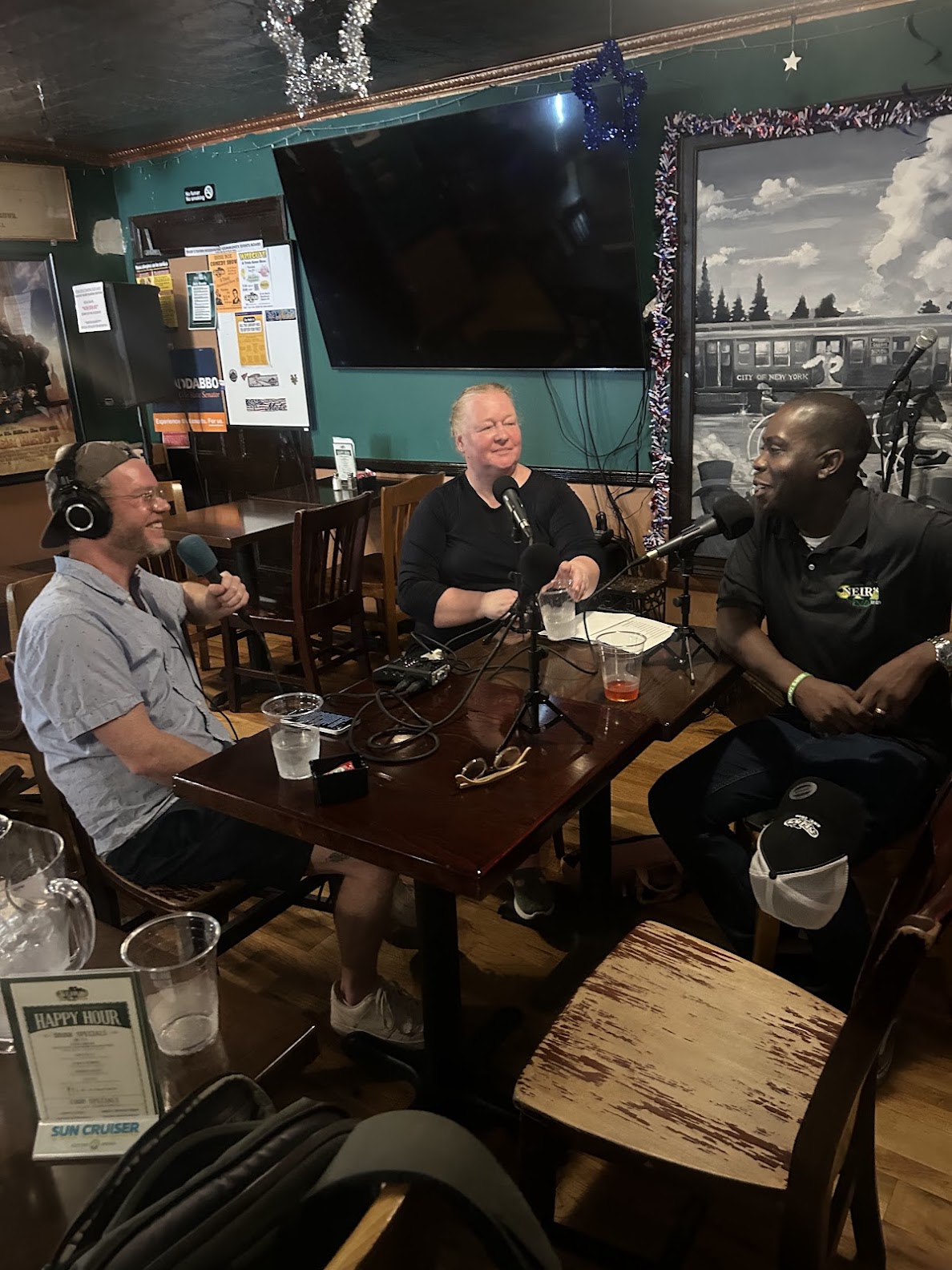
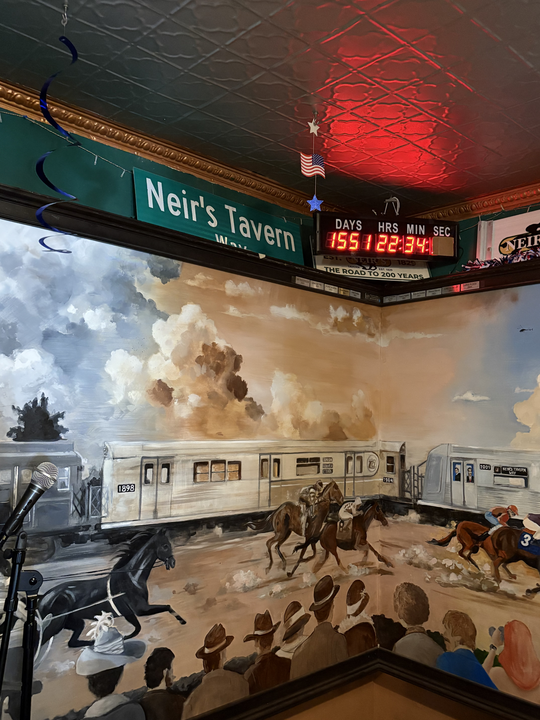
Neir’s Tavern, in the quiet residential neighborhood of Woodhaven, Queens, once sat next to the popular Union Race Course, one of the key American sports venues of the early 19th century. Horse-racing remains in the bar’s DNA — in its insignia and on its walls.

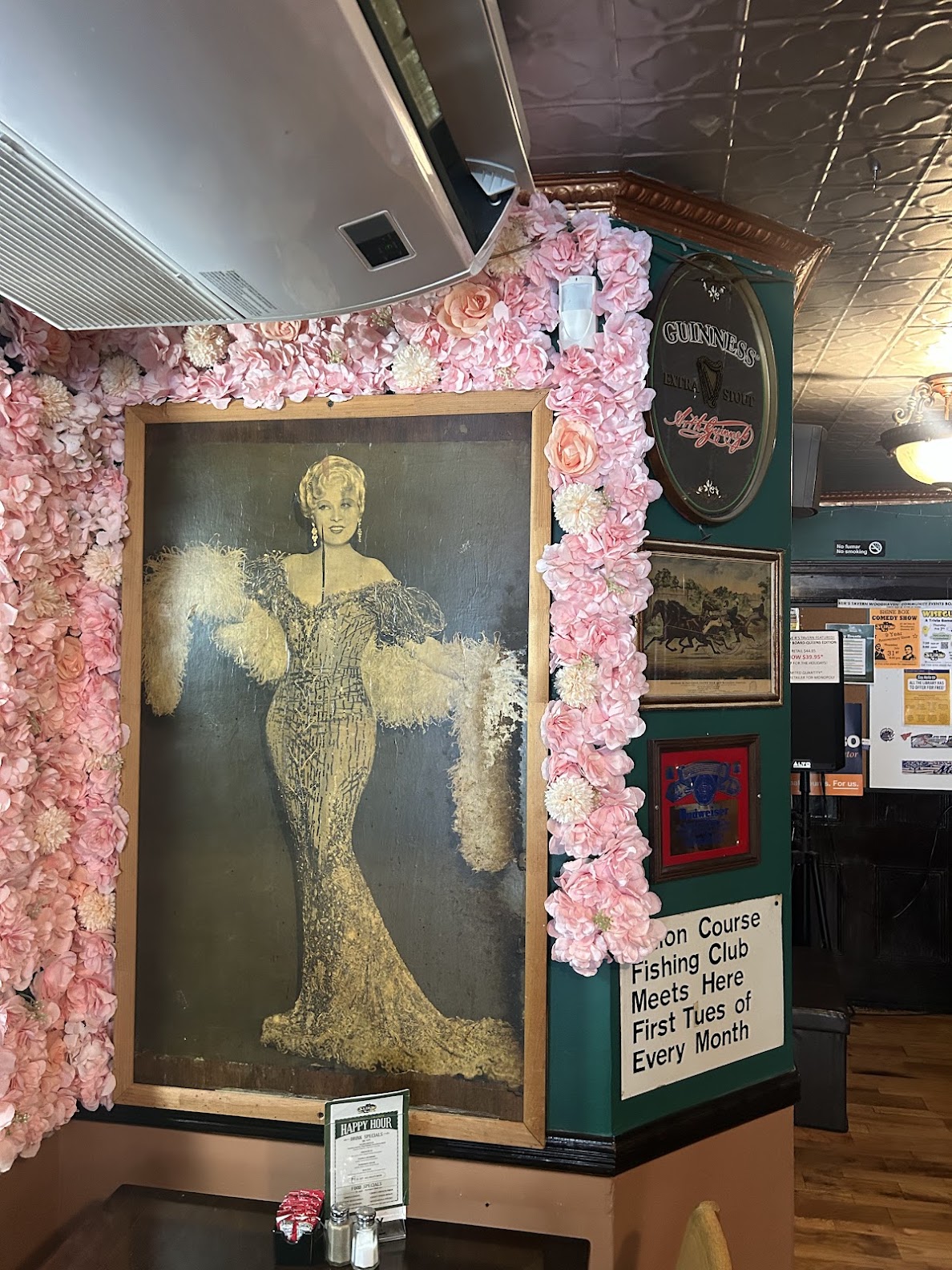
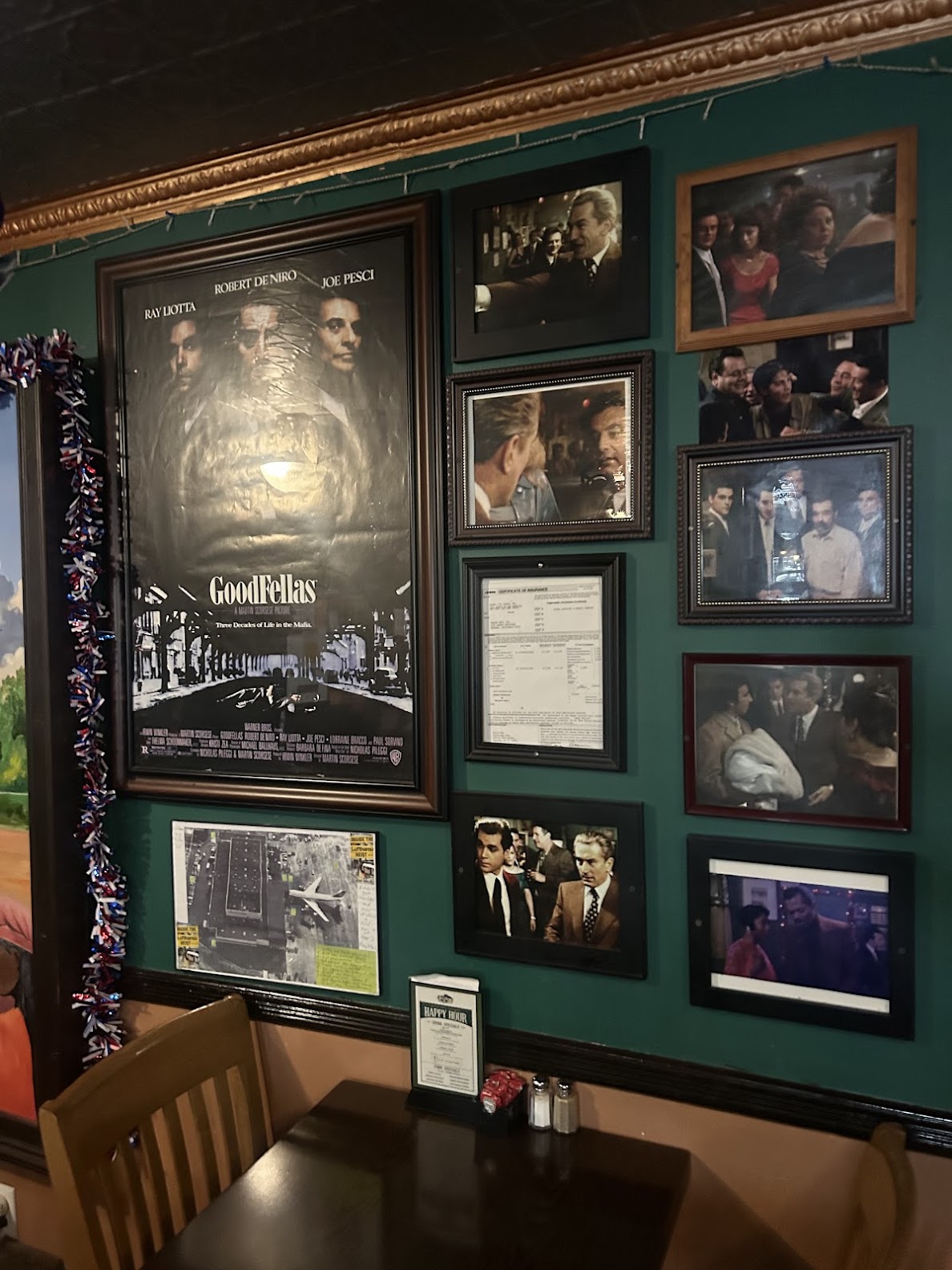
But this surprising spot may be better known for its connections to sassy queen of comedy Mae West and to the iconic Martin Scorsese film Goodfellas, which was filmed here.

PLUS: One of our favorites — the Ear Inn! AND we tell you with absolute certainty the location of the oldest tavern structure in New York City. You can’t drink beer there anymore, but next to it, you can grab a coffee and a croissant.

LISTEN NOW: THE OLDEST BARS IN NEW YORK CITY PART ONE

COMING UP NEXT WEEK: Part Two featuring two mid 19th century drinking establishments beloved by writers. And we fill out the entire list of the oldest bars in New York City


The Bowery Boys Podcast is proud to be sponsored by Founded By NYC, celebrating New York City’s 400th anniversary in 2025 and the 250th anniversary of the United States in 2026.

Read about all the exciting events and world class institutions commemorating the five boroughs legacy of groundbreaking achievements, and find ways to celebrate the city that’s always making history at Founded by NYC.
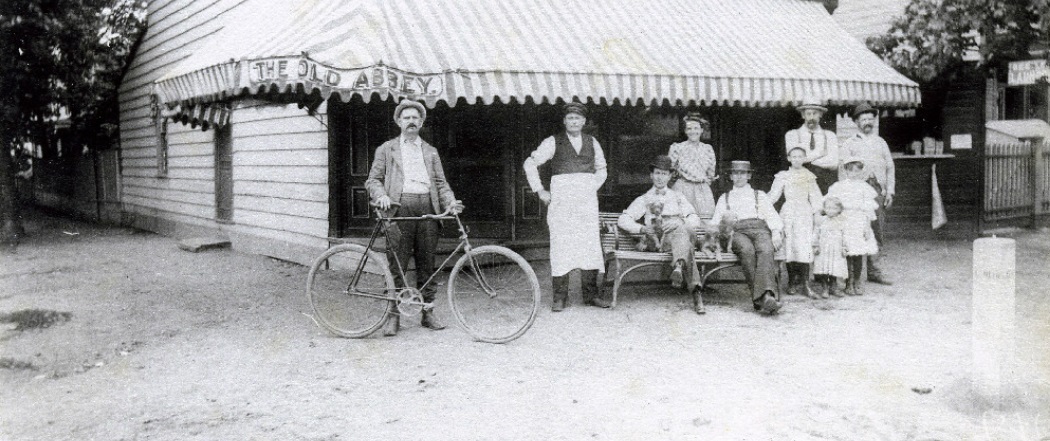

Neir’s, back when it was called the Old Abbey — and back before many streets were paved!
Kieran Gannon, Ina Henderson and Loycent Gordon

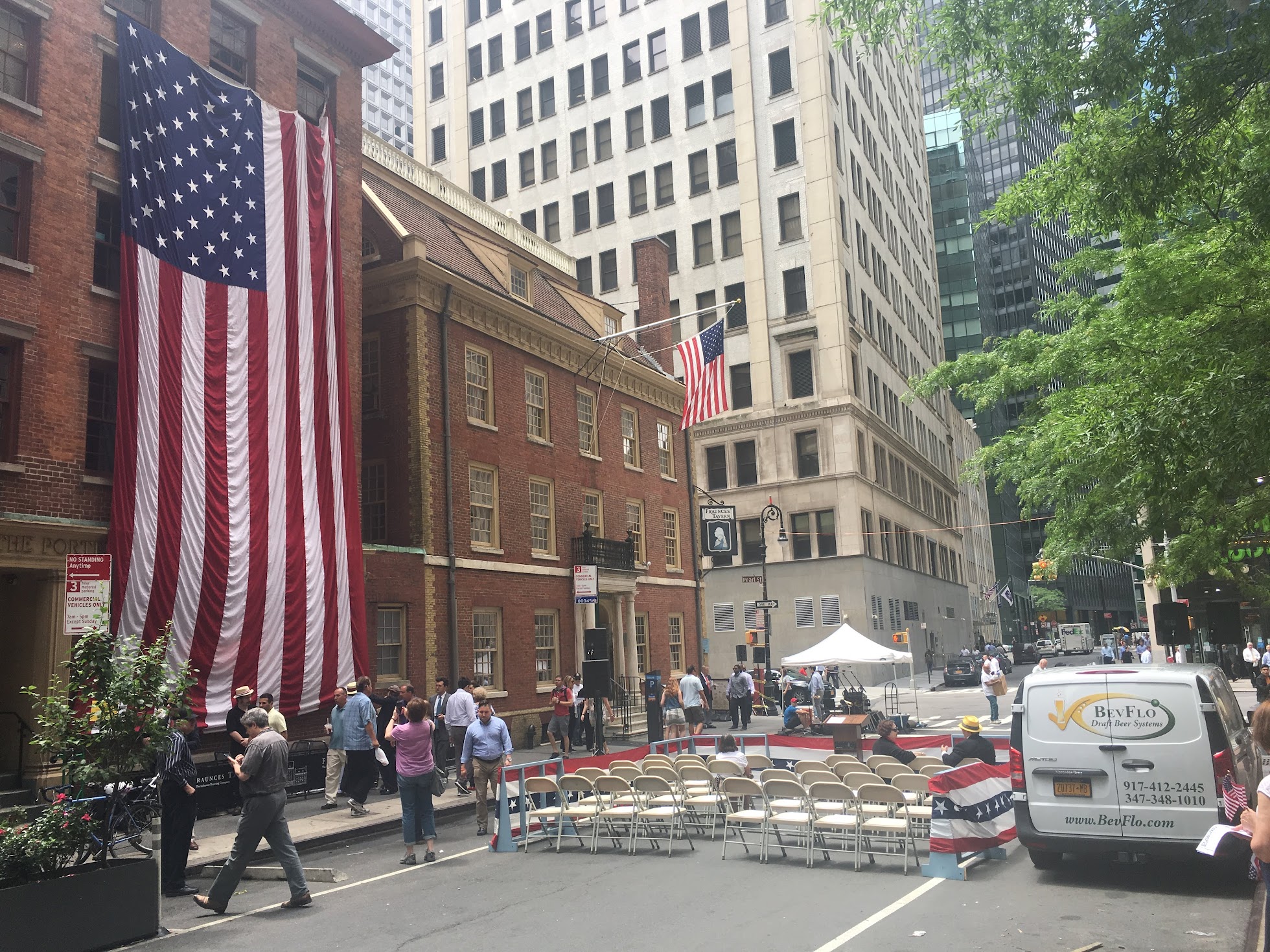
They bring out the big flag for special occasions.
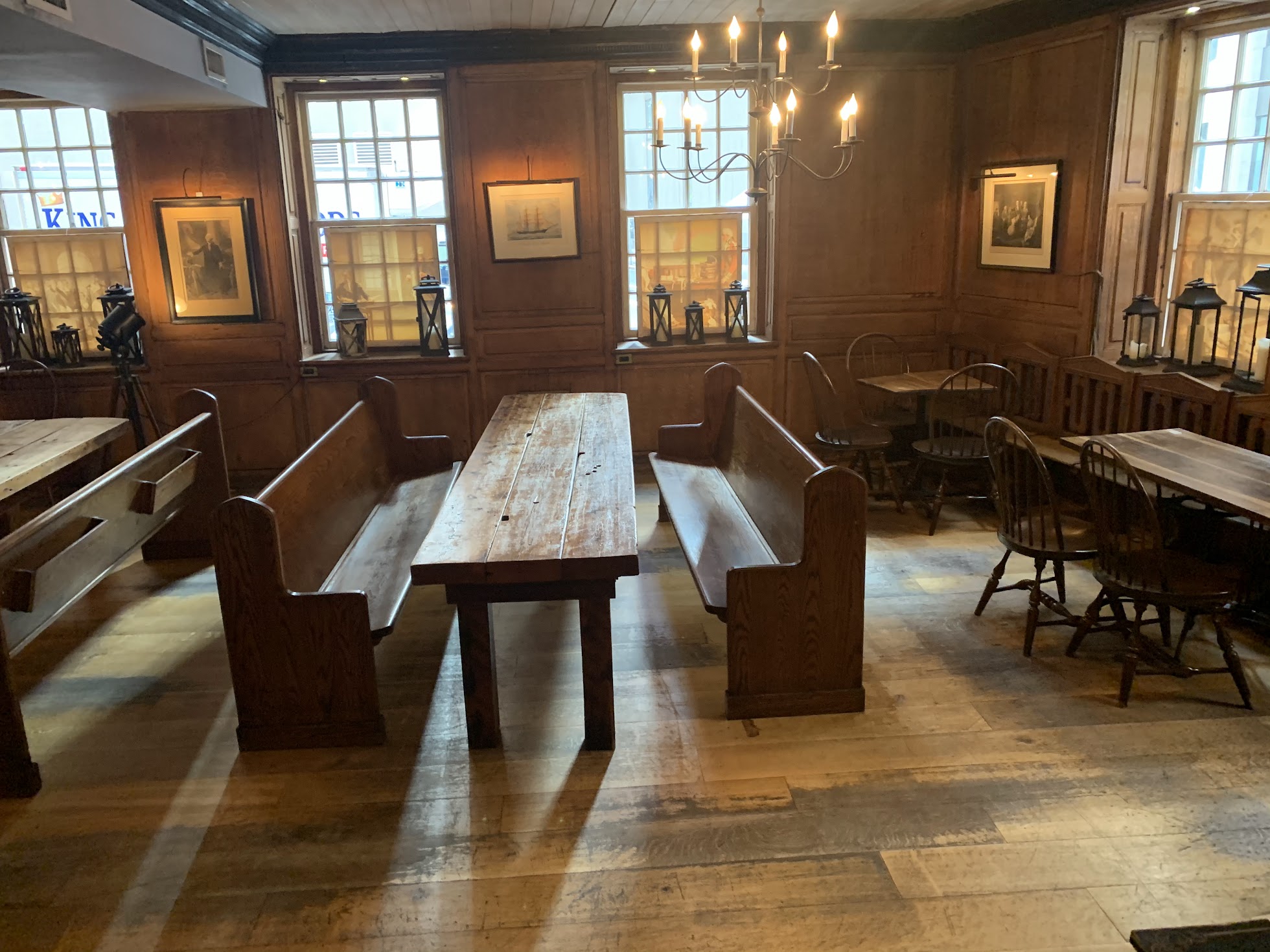
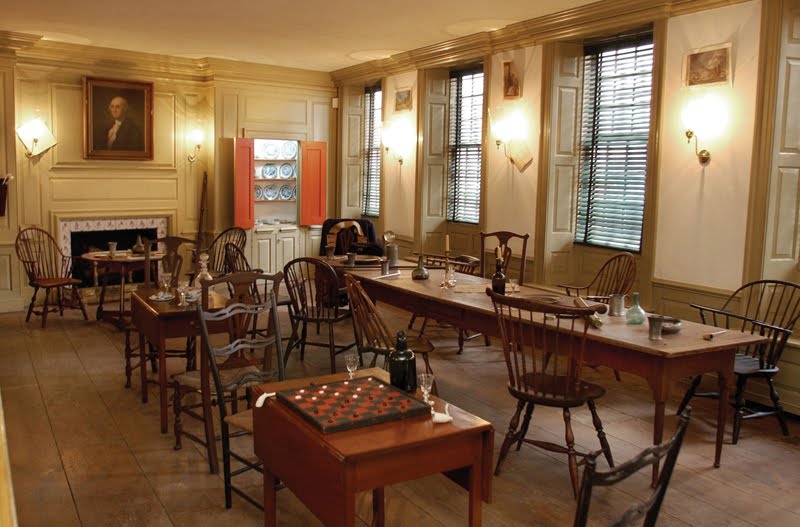
The famous Long Room, where Washington gave his farewell speech.

Categories
Podcasts Revolutionary History

Fraunces Tavern: Raise your glass to the Revolution!

PODCAST Fraunces Tavern is one of America’s most important historical sites of the Revolutionary War and a reminder of the great importance of taverns on the New York way of life during the Colonial era.

This revered building at the corner of Pearl and Broad Street was the location of George Washington‘s farewell address to his Continental Army officers and one of the first government buildings of the young United States of America.

John Jay and Alexander Hamilton both used Fraunces as an office in their first official capacities with the new federal government.

As with many places connected to the country’s birth — where fact and legend intermingle — many mysteries still remain.

Was the tavern owner Samuel Fraunces one of America’s first great black patriots? Did Samuel use his position here to spy upon the British during the years of occupation between 1776 and 1783?

Was his daughter on hand to prevent an assassination attempt on the life of Washington? And is it possible that the basement of Fraunces Tavern could have once housed … a dungeon?

Fraunces Tavern in 2020

ALSO: Learn about the two deadly attacks on Fraunces Tavern — one by a British war vessel in the 1770s, and another, more violent act of terror that occurred in its doorway 200 years later!

PLUS: Where to find the ruins of Lovelace’s Tavern, dating back to the days of New Amsterdam.

This is a re-presentation of a show originally released on March 18, 2011 with bonus material recorded in 2020. 

Listen today on your favorite podcast player or just press play here:


  • Celebrate Tavern Week this weekend!
  • Listen to Fraunces Tavern’s new podcast Tavern Talks, hosted by Allie Delyanis and Mary Tsaltas-Ottomanelli. This week’s episode come features the Queens classic Neirs Tavern, in honor of Tavern Week.
Tavern Talks · Neirs Tavern
  • The museum also has special virtual lecture coming up in October called Preserving the Past: The Restoration of Fraunces Tavern, in conjunction with Archtober. The presentation will feature rarely seen artifacts from the collection. Get your tickets here!

Hours & Admissions policieshttps://www.frauncestavernmuseum.org/admissions

  • The museum encourage visitors to make reservations online, however they will accept walk-ins if not at capacity.

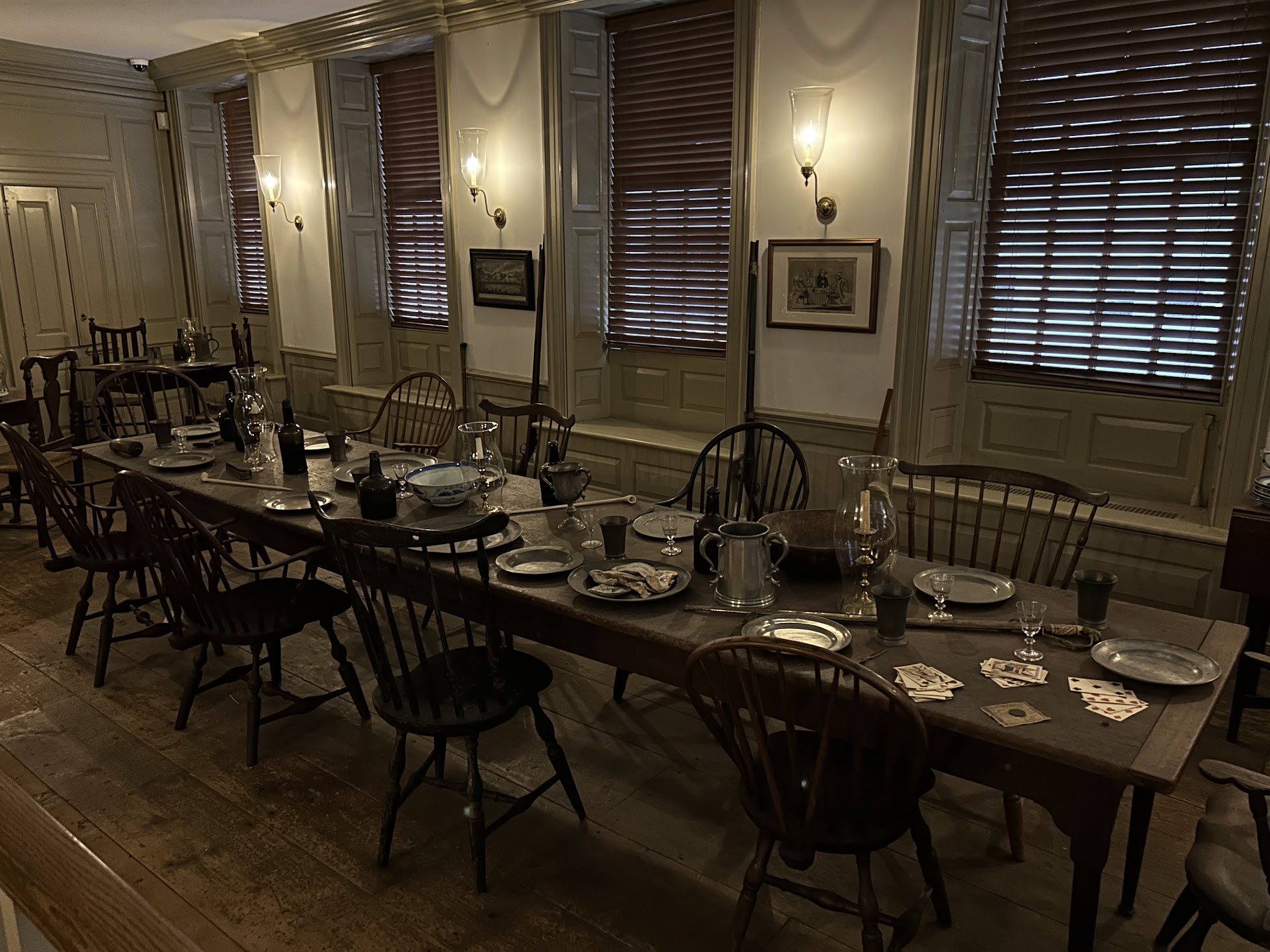
One of the oldest, diverse and historic rooms in New York City, the Long Room played host to Colonial Era dance classes, George Washington’s farewell speech (pictured below), decades of guests as a boardinghouse, and now a replica of tavern life in early America. [Columbia U]

How the interior may have looked in the 19th century, as Fraunces became more a lodging house frequented by longshoremen, sailors and dock workers. [NYPL]

NYPL

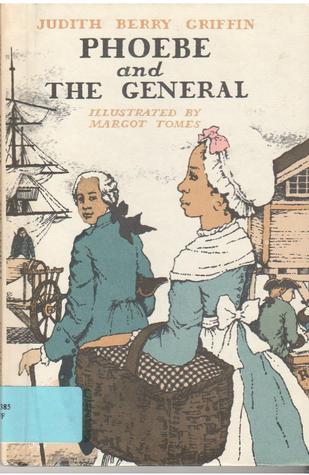
A 1977 children’s book about Phoebe Fraunces, furthering the popularity of this intriguing story.

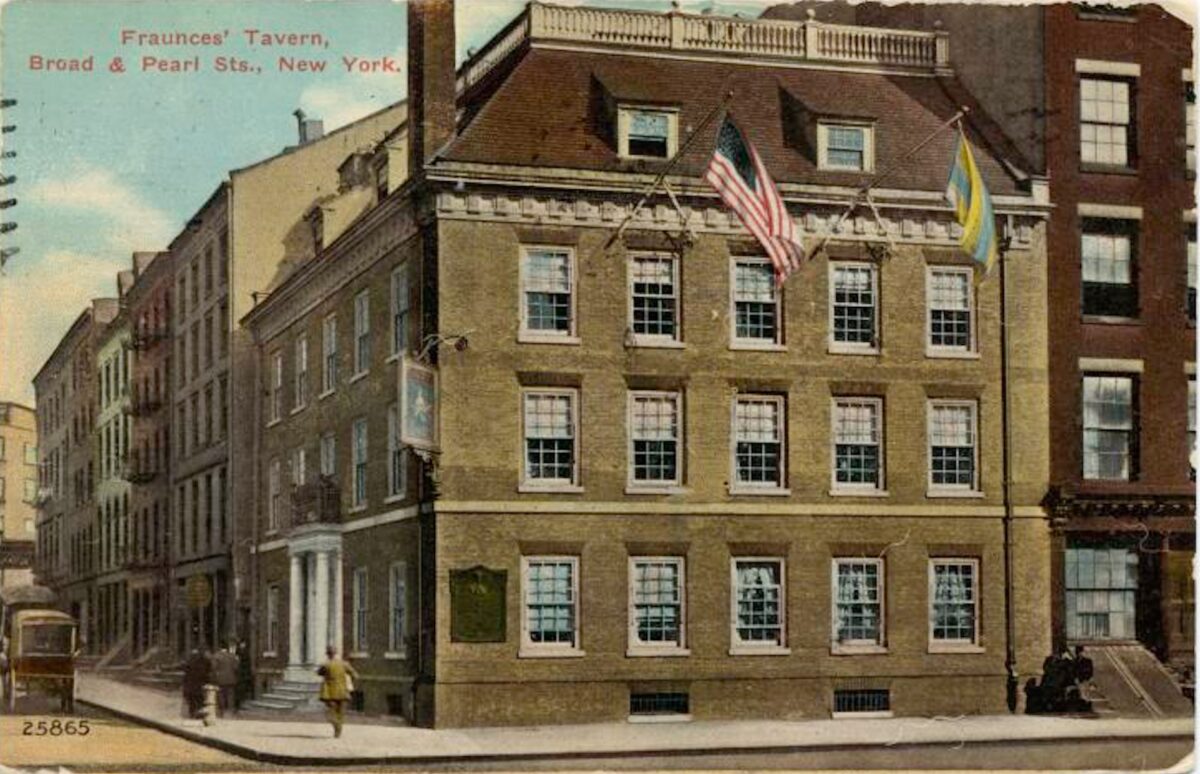
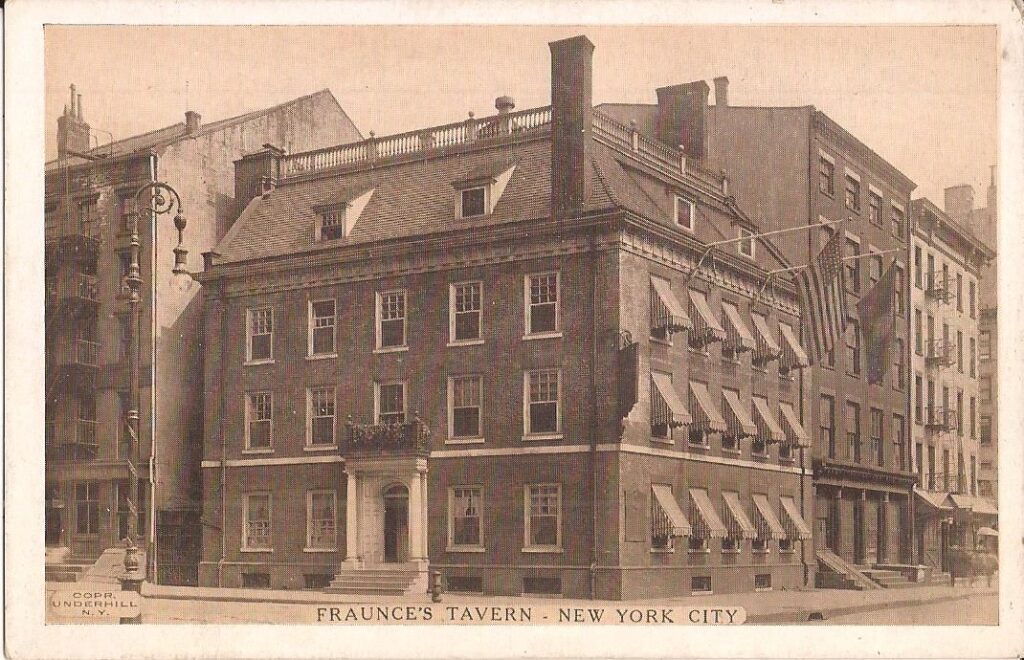
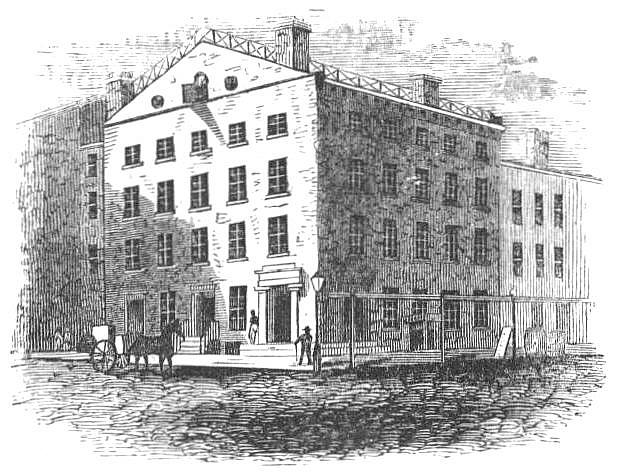
The changing facades of Fraunces: this sketch is from some point in the 19th century, when additional floors were added to the original structure. You can see the difficulty architect William Merserau might have faced in the 1900s when trying to reconstruct the building to reflect its original condition.

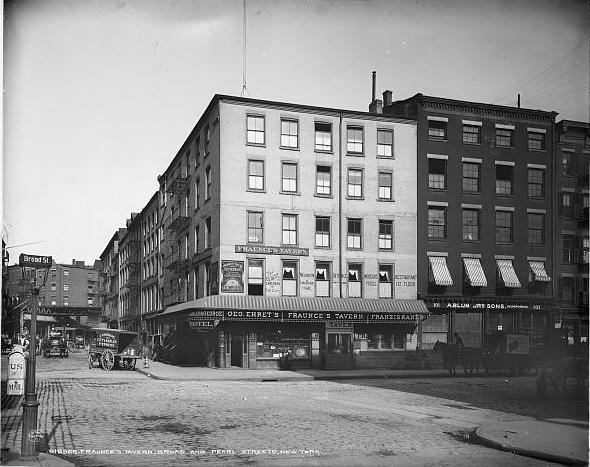
This doesn’t seem like it could even be the same building, and yet, there’s the sign for the tavern hanging over the second floor and a street sign for Broad Street to the left. This picture is between 1890 and 1904, before the structural changes. [LOC]

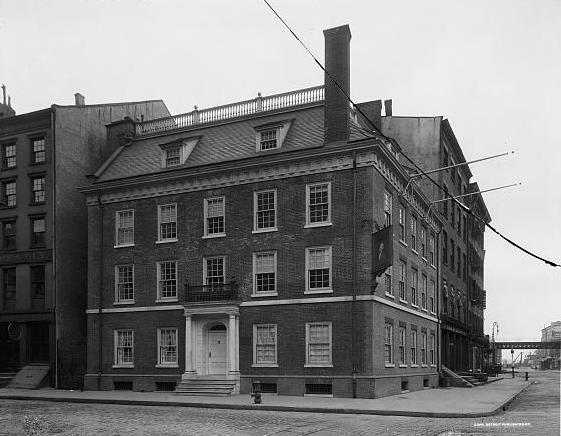
After reconstruction, somewhere between 1910-1920, looking almost as it does today. In the distance to the right you’ll see a bit of the elevated train line. [LOC]

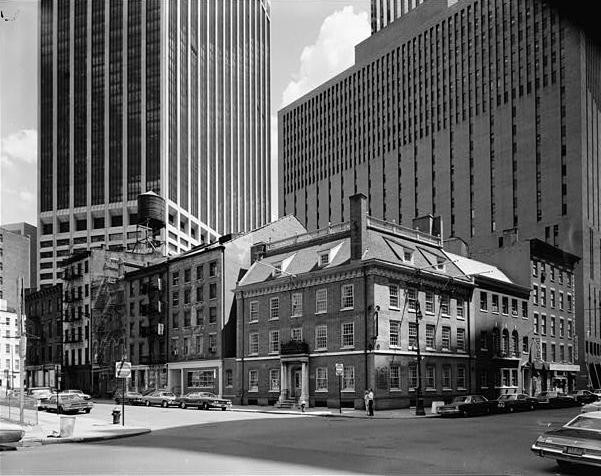
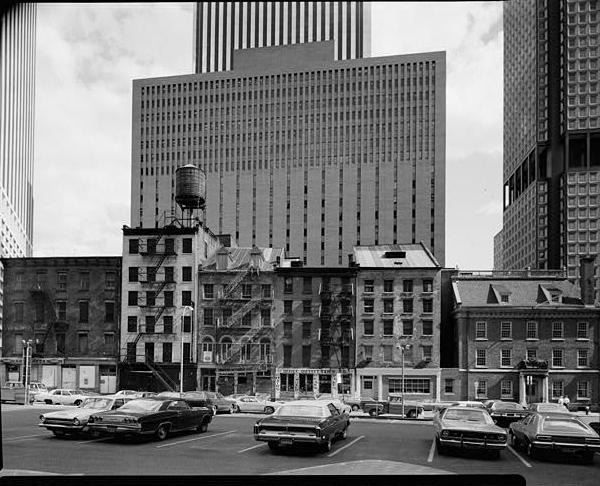
By the 1970s, modern skyscrapers permanently change the feel of the Financial District, but Fraunces holds firm.

The parking lot across the street would soon be replaced by the towering 85 Broad Street (the former Goldman Sachs building). Interestingly, underneath these cars lies the remnants of Dutch New Amsterdam, including the earlier Lovelace’s Tavern. [LOC]

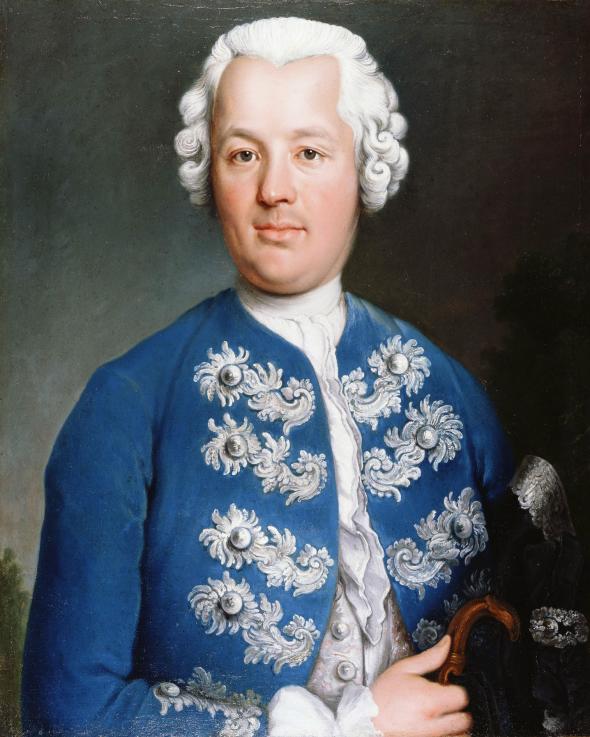
Samuel Fraunces, in a portrait of the tavern owner painted between 1770-1785, giving little clue to what many consider to be his real racial identity. The lineage of the man nicknamed ‘Black Sam’ continues to be debated to this day.

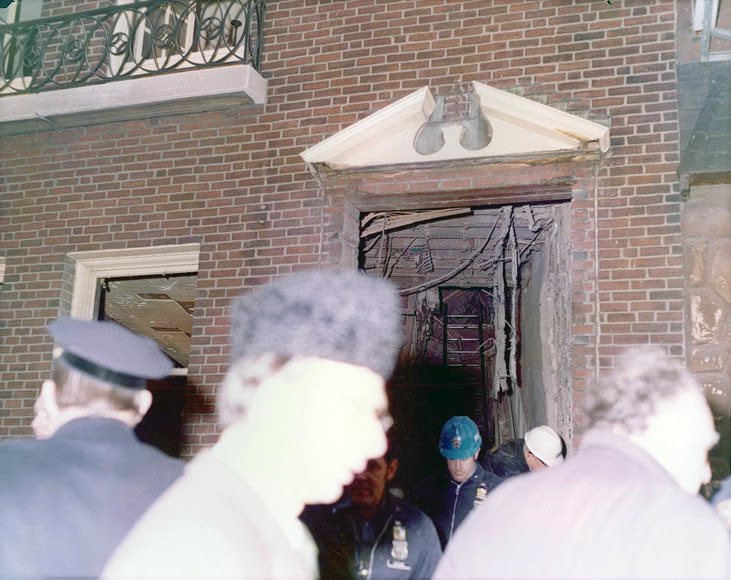
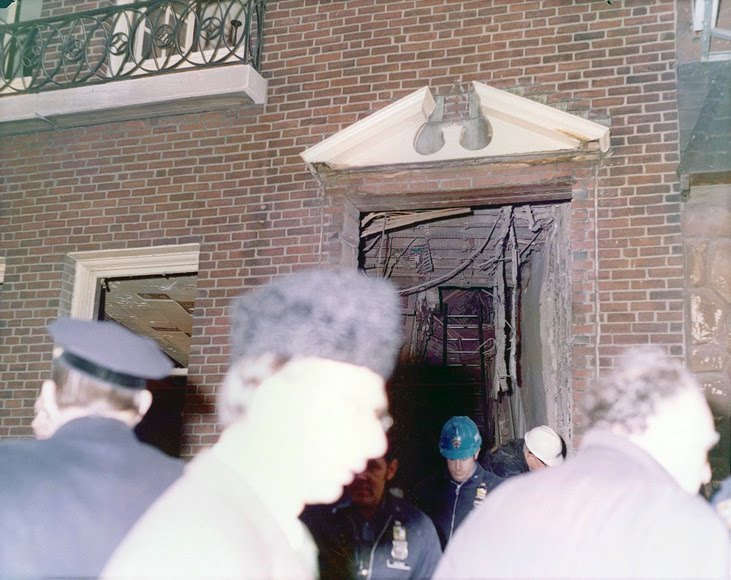
Fraunces was the scene of a relatively recent attack in 1975 when members of the Puerto Rican nationalist group Fuerzas Armadas de Liberación Nacional Puertorriqueña (FALN) placed a bomb in one of the tavern’s doorways, killing 4 people and seriously injuring many others.

You can find the picture below and many others — including the note left at the scene taking responsibility for the attack — at this Latin American studies website.


The Bowery Boys: New York City History podcast is brought to you …. by you!

We are now producing a new Bowery Boys podcast every week. We’re also looking to improve and expand the show in other ways — publishing, social media, live events and other forms of media. But we can only do this with your help!

We are now a creator on Patreon, a patronage platform where you can support your favorite content creators.

Please visit our page on Patreon and watch a short video of us recording the show and talking about our expansion plans.

If you’d like to help out, there are six different pledge levels. Check them out and consider being a sponsor.

We greatly appreciate our listeners and readers and thank you for joining us on this journey so far.

Categories
True Crime

‘Days of Rage’ and Nights of Terror

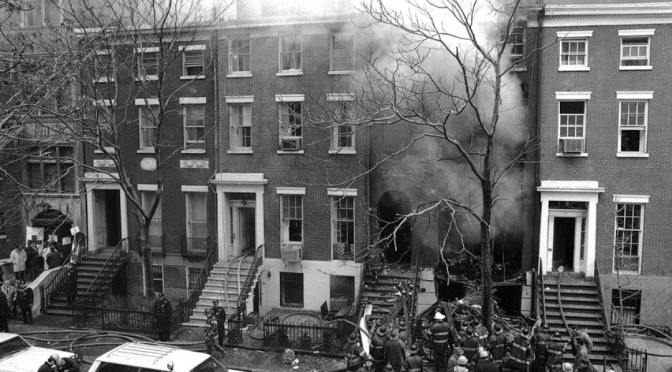
Right before noon on March 6, 1970, an explosion tore open a lovely Greenwich Village townhouse at 18 West 11th Street and awoke New York City to a violent new threat.

The remains of three bodies were discovered in the smoking debris but they weren’t residents of this quiet neighborhood. They were members of The Weather Underground, a radical underground unit absorbing the counter-culture spirit of the 1960s and unleashing it — oftentimes randomly and irrationally —  onto a new decade.

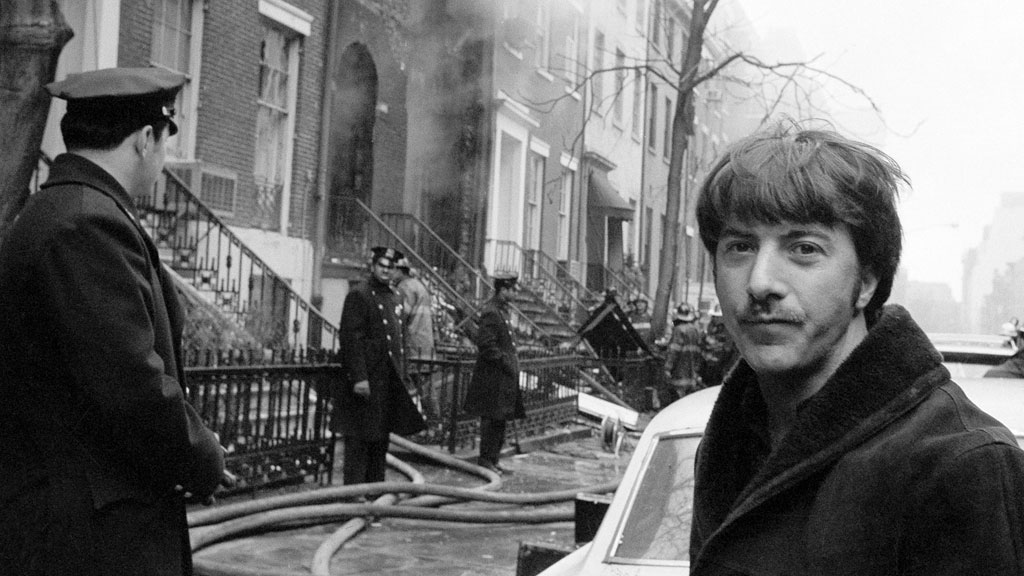
Below: Oddly enough, the townhouse explosion occurred next door to the home of Dustin Hoffman and his wife.

Courtesy AP file photo

Less than two years later, two New York police officers were brutally assassinated in the East Village, among the most brutal and shocking crimes against the NYPD in its history.  This wasn’t a random crime but a hit placed upon the officers by members of the Black Liberation Army, wielding some of the philosophies of the Black Panthers to dangerous ends.

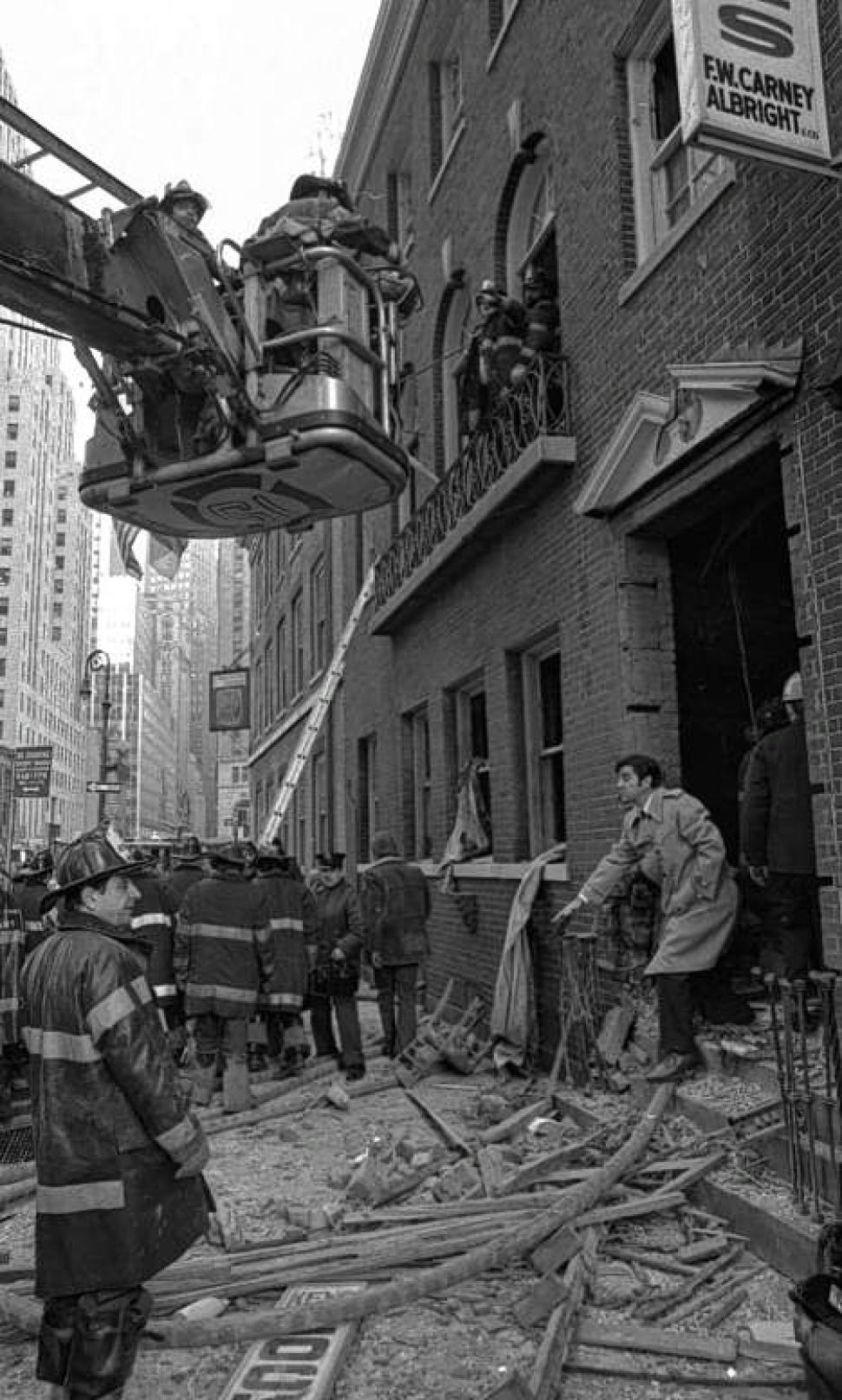
Almost three years later, a bomb exploded inside the historic Fraunces Tavern during in the middle of a busy weekday lunch. Four men were killed in the sudden attack, made by the Armed Forces of Puerto Rican National Liberation (or FALN).

Below: Aftermath of the explosion at Fraunces Tavern (courtesy New York Daily News)

faln

In between these terrible disasters were several other bombings of other significant buildings, here in New York and in other cities through the United States.  All of them indicative of a violent (and ultimately failed) form of protest, as turbulently described by Bryan Burrough in his new book Days of Rage: America’s Radical Underground, The FBI, and the Forgotten Age of Revolutionary Violence.

This is probably one of the most frightening non-fiction books I’ve read in recent memory, a broad and exquisitely told tale that loosely links together a variety of American revolutionary action groups from the 1970s.

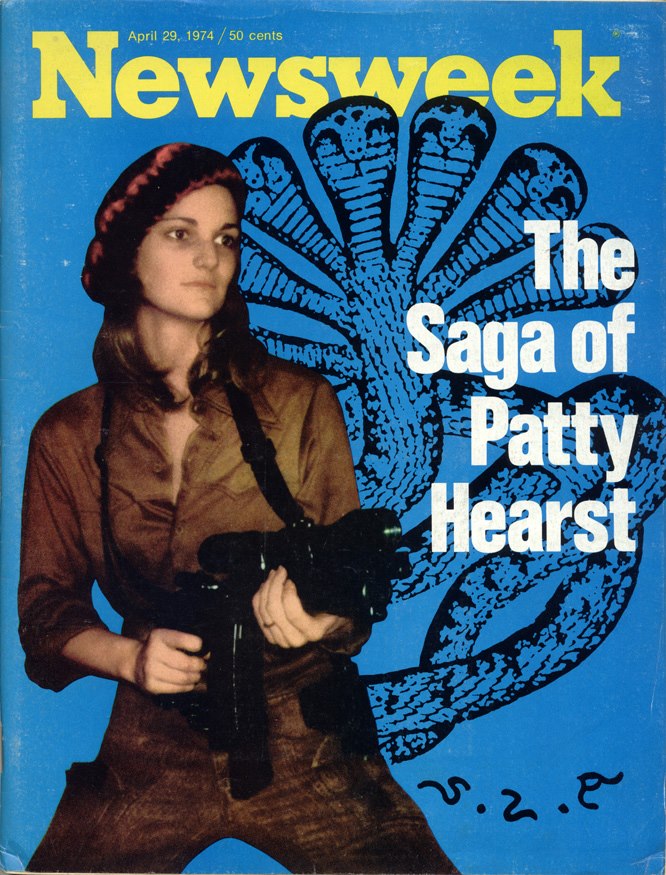
Some of the principal players of these groups are recognizable (Bill Ayers and Bernadine Dohrn,  Patty Hearst), but the breadths of their actions has been seldom studied. Through interviews with members who’ve never spoken, Burroughs patches together connections among these disparate groups — even if those connections are more philosophical than physical.

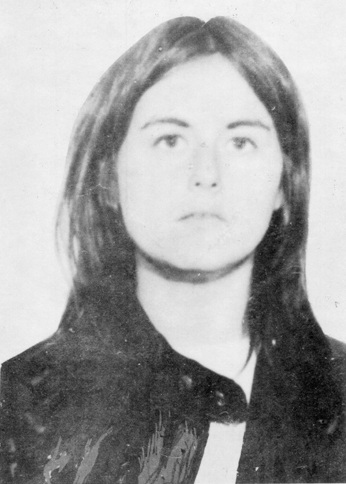
Below: The mugshot of Bernadine Dohrn, 1970

Bernardine_Dohrn_published_1970


Most shared the belief that violence, disruption and chaos would lead America to a new revolutionary age. As Burrough points out, most were inspired by civil rights movement and the plight of black Americans, taking their anger and frustration into far more radical directions than the mainstream leaders who advocated non-violence and change through the law.

While the vulgar and gut-wrenching violence was often doused with machismo, many of these groups were led or operated by women.

The title comes from a series of demonstrations that occurred in Chicago in the fall of 1969, seen as a sort of kick off to this festering revolutionary movement.  Much of the book details the ‘underground’ hideouts and escape routes of these organization, whether holed up in Manhattan’s Chinatown or San Francisco (as the Weathermen were, often dressed in silly disguises) or running from capture through rural Georgia.

Burrough does not flinch from the horror, graphically describing the aftermath of many of the more loathsome crimes.  The 1972 deaths of two NYPD officers in the East Village is especially grim. (You can read news of the original account here.)

patty

In particular, I found the tale of the Symbionese Liberation Army especially gripping, notable less for their violent actions (although there certainly was some) than for the somewhat random notion to kidnap the granddaughter of William Randolph Hearst.  Many of these stories will replay in your memory as a reel of black-and-white news footage or a set of iconic photographs (such as the one above of Hearst).  Days of Rage offers a vivid and refreshing new context.

Burrough — a Vanity Fair writer perhaps best known for Barbarians At The Gate — is a thorough story-teller, conjuring fully blown narratives from the sometimes untrustworthy recollections of the surviving participants.  He’s often too thorough, sometimes including superfluous details because they’ve “never before been told.”

Chaos was an organizing principal for these groups which is partially way they were ultimately unsuccessful. As shocking as some of these horrifying attacks seem today, it’s a wonder many of them were successful orchestrated at all, given the tentative organizational structure and often incompetent leadership of these groups.


Top photograph courtesy Marty Lederhandler/AP Images.

Categories
Pop Culture

AMC’s ‘Turn’: The next great New York history TV show?

BBC America’s Copper, depicting the grit and crime of 1860s New York, was recently cancelled (although petitions are currently circulating, demanding a Season Three).

But the void of history-related television will soon be filled again with Turn, AMC’s Revolutionary War-era drama on George Washington’s spy network, called The Culper Ring.  What do you think?

Although this clearly depicts a variety of locations pivotal to the American Revolution, much of Washington’s spy ring was located near British headquarters — namely New York and the surrounding area.  So the show should eventually turn its attention to the city in the Revolutionary era.

We’re sure to see not only the bustling, over-crowded streets around St. Paul’s Church and Bowling Green — possibly even the ruins from the 1776 fire which incinerated almost a fourth of the city — but imagined locations in Long Island and Westchester.

You’re not seeing things — that’s Jamie Bell (aka Billy Elliott) as the leader of the spy ring Abraham Woodhull (aka Samuel Culper).

They’ll certainly take a lot of liberties given the secrecy of the Culper Ring.  I can’t wait to see how they depict the most intriguing alleged member of the gang — Agent 355.  The show is set to air in early 2014.

And although though it’s not set in New York, if you like history and mobsters, check out Mob City tonight on TNT, set in Los Angeles in the 1940s and based on John Buntin’s excellent book L.A. Noir: The Struggle for the Soul of America’s Most Seductive City.

——
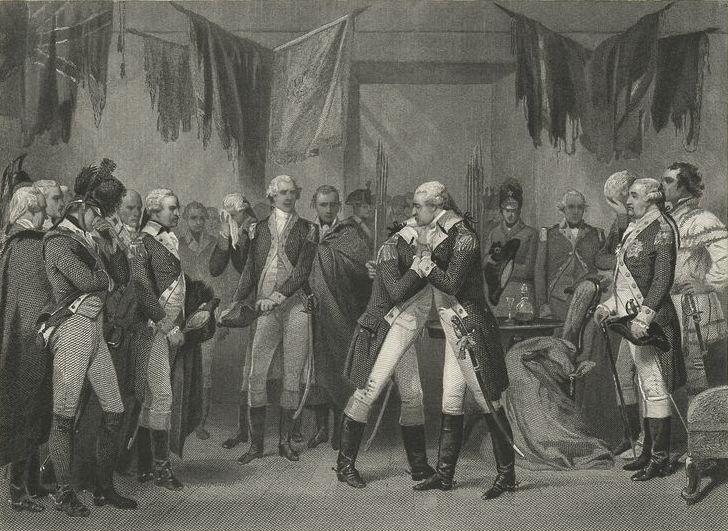
And speaking of George Washington, today marks the 230th anniversary of the General’s farewell speech to the officers of the Continental Army, given at Fraunces Tavern just days after the British were permanently expelled from New York in 1783.

His toast to his men: “With a heart full of love and gratitude, I now take leave of you. I most devoutly wish that your latter days may be as prosperous and happy as your former ones have been glorious and honorable.”

There was not a dry eye in the house.

For more information, give our podcast on Fraunces Tavern a listen. The building has a fascinating, even dizzying history.

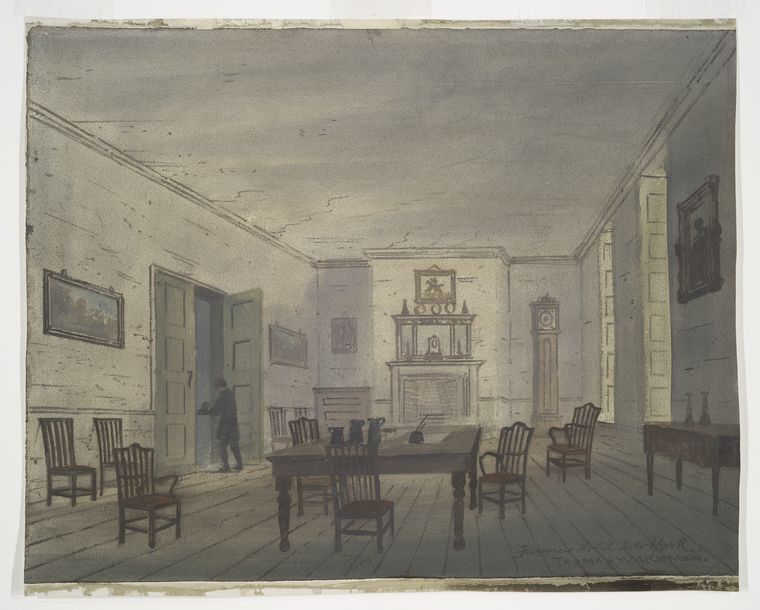
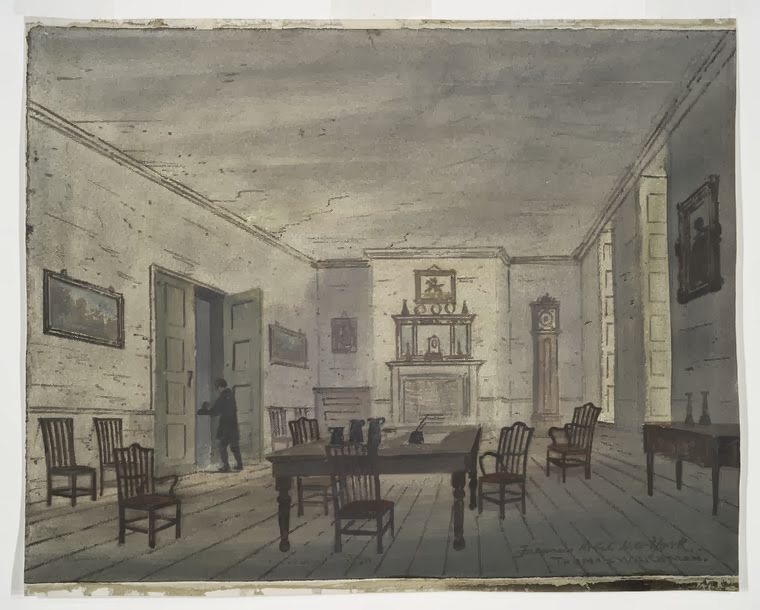
Below: Fraunces Tavern’s lonely dining hall, deputed by artist Thomas Wakeman in 1850.


Notes from the Podcast (#121) Fraunces Tavern

Courtesy Flickr/Harry J. Bizzarro

A slight correction:
I inferred in this week’s show that the very first Supreme Court — with Chief Justice John Jay — met in Federal Hall. They actually first convened on February 2, 1790, in a building very close by to Fraunces — the Royal Exchange Building. Also called the Merchant Exchange, the Court’s first home was located at Broad and Water streets, making it practically Fraunces’ neighbor. At the time there were only six justices that served on the court.

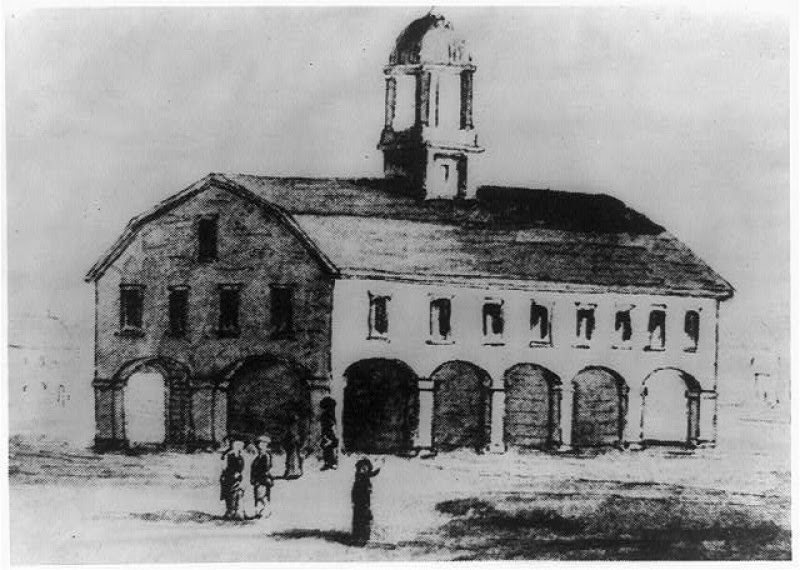
It was completely unsuited for such important work. According to writings from 1920 by Joseph Bucklin Bishop, the Exchange was “a very curious structure, for its ground floor was open on all sides, and in tempestuous weather the merchants who gathered there for business found it extremely uncomfortable. It had a second story which was enclosed and consisted of a single room” [source] Here’s an illustration of this odd building:


By 1791, the court moved to Philadelphia. A more dignified Merchants Exchange was later built in New York and featured a well-regarded statue of Alexander Hamilton in its rotunda. Unfortunately this building was promptly burned down in the Great Fire of 1835.

Oldest Building?
So, is Fraunces Tavern really the oldest building in Manhattan? It really depends on how much leeway you’re willing to give it. There’s been a continually standing structure there since 1719, easily outdistancing two other Manhattan buildings, St. Paul’s Church on Broadway and Fulton streets (1766) , and the Morris-Jumel Mansion in Washington Heights (1765).

Fraunces, however, has gone through a host of radical changes to its appearance, with floors added and removed, its rooms reconfigured and its exterior entirely altered as to render it almost unrecognizable. A renovation in the 1900s by architect William Mersereau did bring it closer to its original state. There are certainly elements from the original structure that remain. Is that enough to bestow it the title Manhattan’s oldest building?

There are several buildings in Staten Island, Brooklyn and Queens that lay claim to being much older. You can read about some of them here.

Downstairs at Fraunces:
You can read the story about the alleged ‘dungeon’ underneath Fraunces Tavern here: MAY HIDE DARK SECRET OF FRAUNCES’S TAVERN; Proprietor Likely to Conceal Noisome Dungeon from “Blisters.” SO HE TERMS THE BUYERS

Places to Visit:
You can find directions and hours to the Fraunces Tavern Museum here. We recommend hanging a right at the second floor and watching the short introductory video before exploring the room.

When you’re done with the museum, head on up Pearl Street one block north to see some curious ruins under foot, the remnants of old Lovelace’s Tavern. Bricks embedded in the sidewalk also indicate where the Stadt Huys (or New Amsterdam’s city hall building) once stood.

Learn more:
Pearl Street sat along the edge of Manhattan in the 1660s, meaning the land Fraunces sits upon today would have been water and docks. This interactive map from PBS’s Dutch New York display illustrates this pretty effectively.

Curious to learn more about New York during the Revolution? Check our two-part podcast series from 2008: The British Invasion: New York 1776 and Life In British New York 1776-1783.

There’s not any real contemporary books on Fraunces Tavern history, but you might find this artifact from 1919 of interest — A Sketch of Fraunces Tavern and Those Connected With Its History, a short ‘official’ history by Henry Russell Drowne, a member of the Sons of the Revolution.

Drowne was best known as a collector of coins and printed money but was active in New York historical preservation as well. In stark contrast to his name, Drowne died in a house fire on the Upper West Side in 1934.