Categories
Podcasts

Henry Hudson and the European Discovery of Mannahatta

We turn the clock back to the very beginnings of New York history — to the European discovery of Manahatta and the voyages of Henry Hudson.

Originally looking for a passage to Asia, Hudson fell upon New York harbor and the Lenape inhabitants of lands that would later make up New York City. The river that was eventually named after Hudson may not have provided access to Asia, but it did offer something else (hint: PETA won’t be happy) that attracted the Dutch and eventually their very first settlement — New Amsterdam.

LISTEN NOW: Henry Hudson
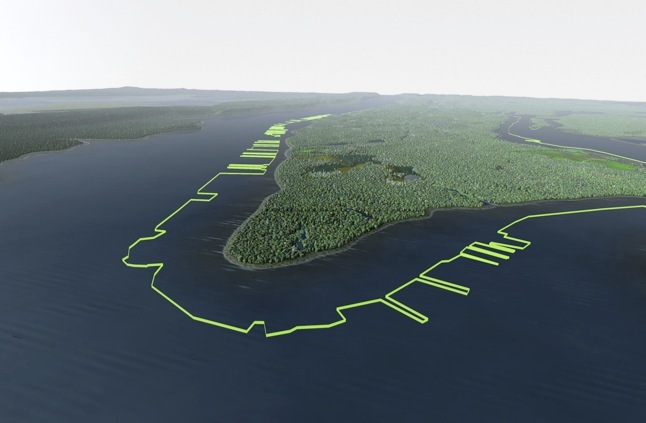
The island of Mannahatta in the days before the Dutch (courtesy the Mannahatta Project). Hudson would have anchored off the tip on the western side, his eyes on the river that stretched north.

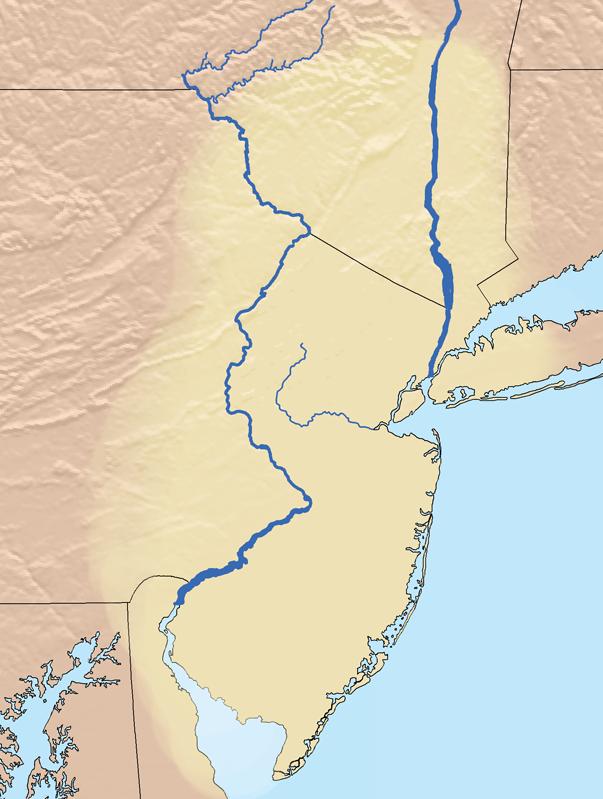
Lenapehoking: that’s what the original inhabitants of the area called the land that comprised the New York City metro area, New Jersey, western Long Island and surrounding areas (map courtesy wikimedia)

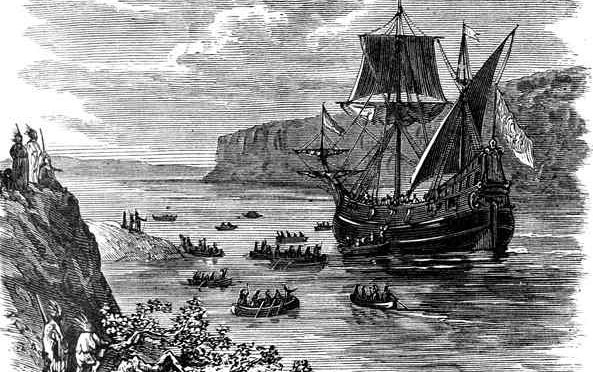
The first guy to arrive, Giovanni da Verrazano (or Verrazzano, depending on where you look), was greeted by the Lenape at the mouth of New York harbor. He touched down on today’s Staten Island but never ventured further into the harbor.
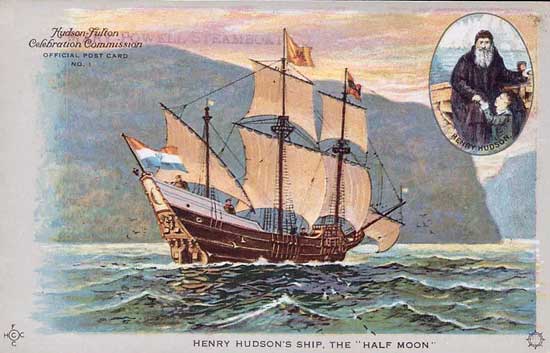
Hudson’s ship the Half Moon — or rather a replica that was launched for the 1909 Hudson-Fulton Celebration
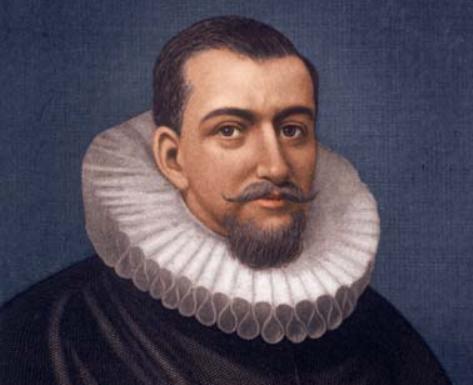
Henry Hudson, an Englishman who tried twice for his country to find a northern route to Asia before being enlisted by the Dutch East India Company. He never found a passage for them either, but he did find the river that today bares his name.

Hudson’s voyage up the Muhheakantuck (the Lenape name for the Hudson River) brought him into contact with several tribes, with encounters growing increasingly unfriendly. By the time he sailed back down the river to Mannahatta, they were flat out attacked by natives in canoes.
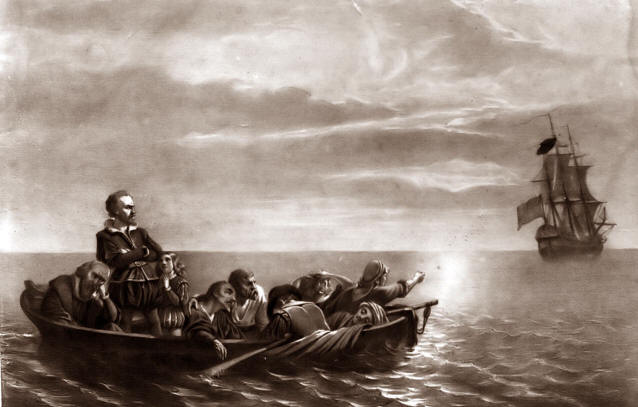
On his last voyage, Hudson’s crew mutinied, throwing the captain, his son and a few remaining loyal crewmen into a boat and setting it adrift in the Arctic.

With no alternate route to Asia, the map below illustrates the trade routes the Dutch East India Company had to eventually travel to build their empire. (map courtesy Hofstra)

There are lots of events planned to celebrate the 400th anniversary of Hudson’s discovery. NY400: Holland on the Hudson celebrates New York’s Dutch heritage. Hudson 400 focuses on the explorer himself, with a timeline of events. Meanwhile Explore NY 400 lists statewide celebration.

I wrote about some of the more curious events of the Hudson-Fulton Celebration in a prior blog posting.

And for your immediate gratification, check out Amsterdam/New Amsterdam, the well reviewed show at the Museum of the City of New York

Apparently, the replica of the Half Moon was in Poughkeepsie just yesterday!
Categories
Podcasts Sports

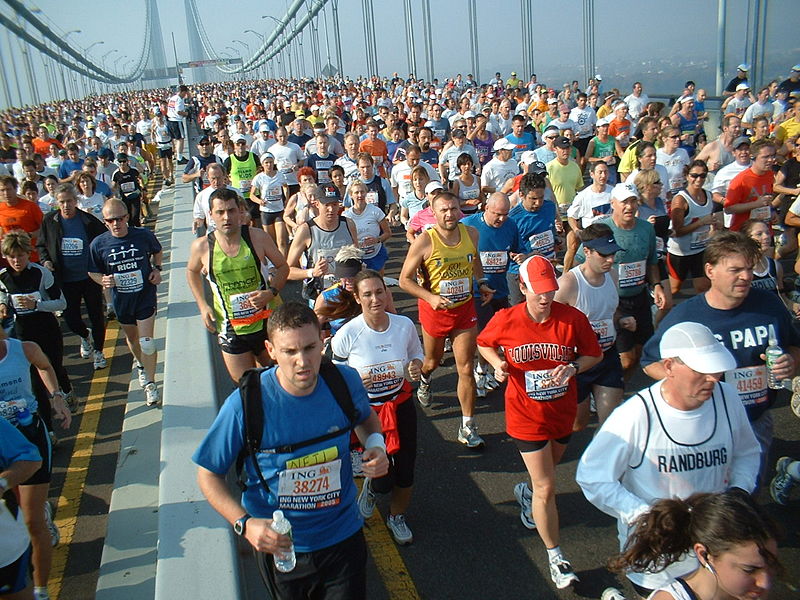
The race is on! A history of the New York City Marathon

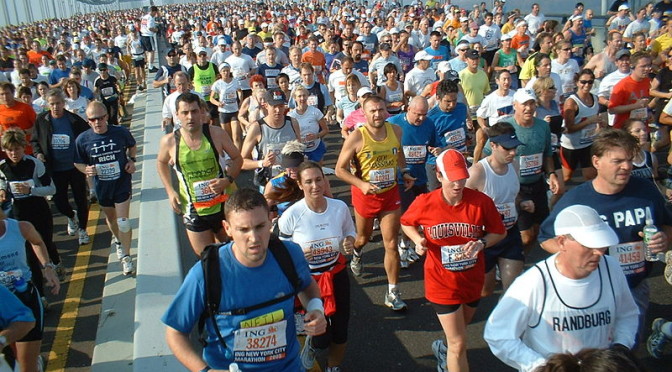
Photo from Flickr

A true five-borough episode! The New York City Marathon hosts thousands of runners from all over the world, the dream project of the New York Road Runners and in particular one Fred Lebow, an employee of the Fashion District turned athletic icon. Find out how he launched a massive race in the midst of bankrupt New York.

Also — our guest host Tanya Bielski-Braham takes us on a speedy tour of the course, from the Verrazzano-Narrows Bridge to Tavern on the Green.

Listen to it for free on iTunes or other podcasting services. Or you can download or listen to it HERE


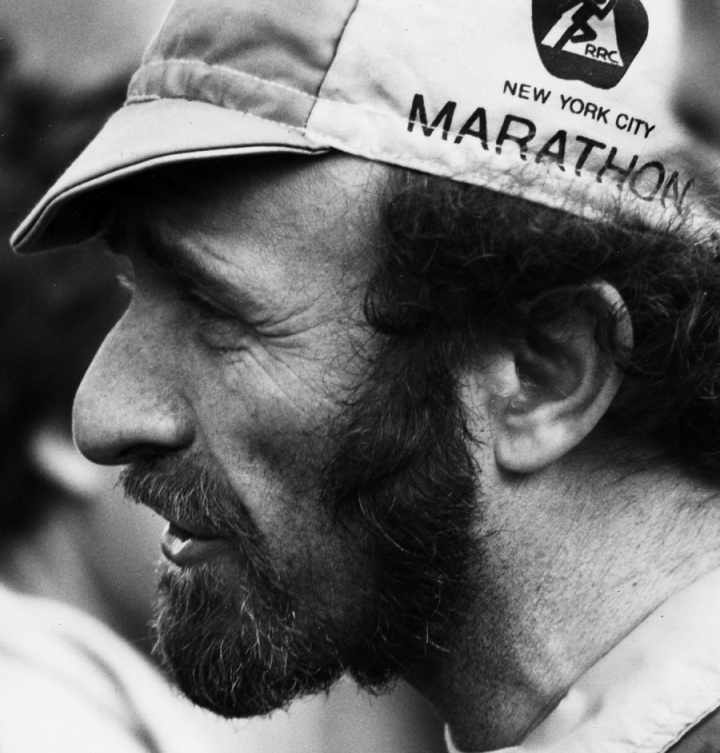
Fred Lebow joined the New York Road Runners in 1969 and helped turn the marathon into a premier event for New York.

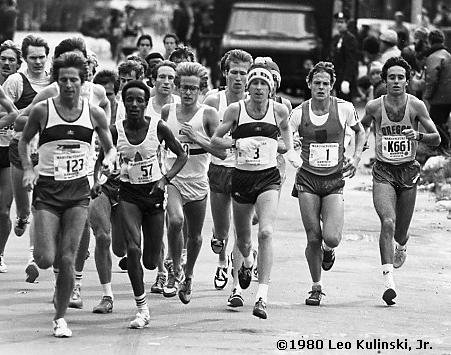
One of the marathon’s true superstars, Bill Rodgers (that’s him wearing number 3) won the marathon the first four years of its existence as a tri-borough event, from 1976-79. In 1980, he placed 5th, handing the mantle to rising star Alberto Salazar.

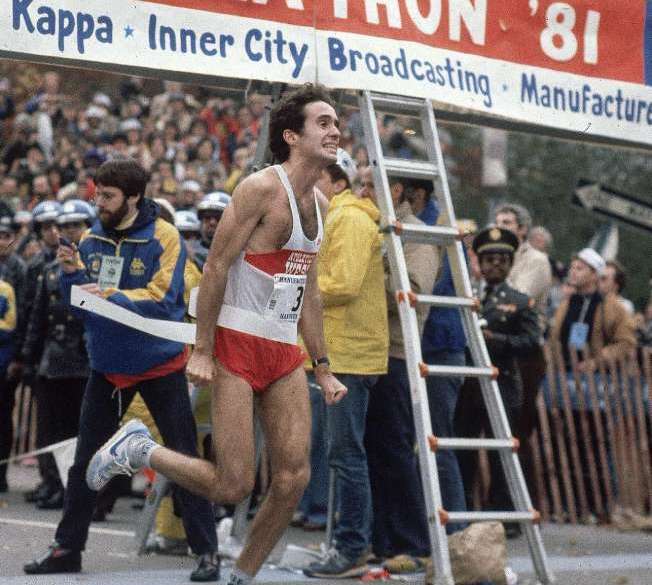
A clearly pained Salazar fights his way to the finish line during the 1981 race, on his way to setting a world’s record.

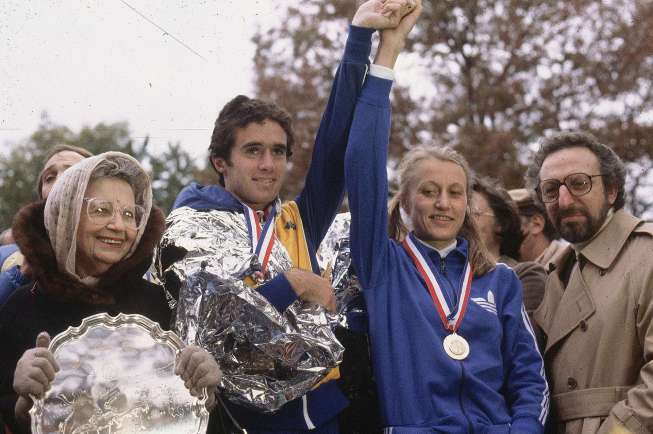
Sure, Salazar’s good, but his co-winner in 1980, Grete Waitz, would be the all-time New York City Marathon champ, winning nine times. (Pic courtesy Sports Illustrated.)

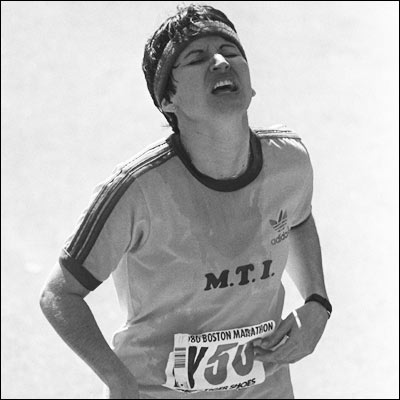
Rosie Ruiz, looking totally exhausted form feigning her completion of the Boston Marathon. It was later discovered that she had also faked her run in the New York marathon.

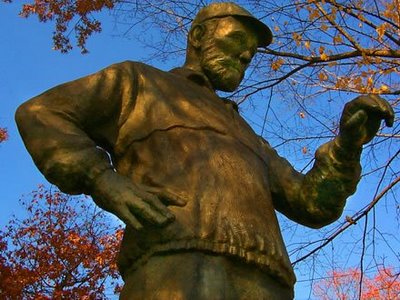
The statue of Fred Lebow stands watch for every finisher of the marathon. For the rest of the year, this tribute stands at the Engineer’s Gate in Central Park.

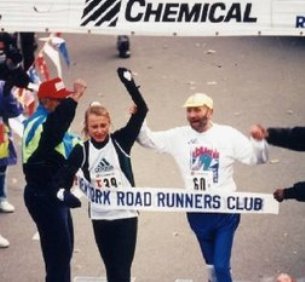
Fred and Grete triumphantly cross the finish line in 1992.

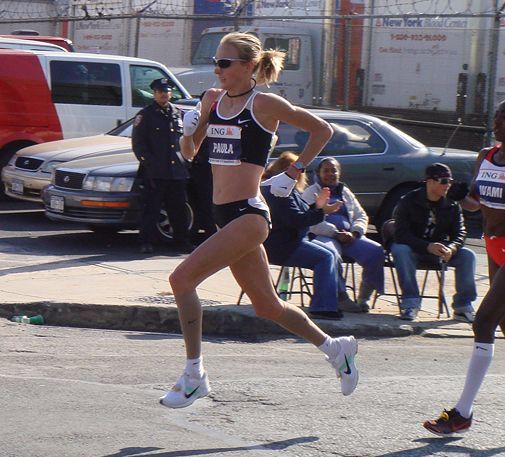
A few months after giving birth, British runner Paula Radcliffe ran away with the victory at last year’s race. (Courtesy Ed Costello Flickr)

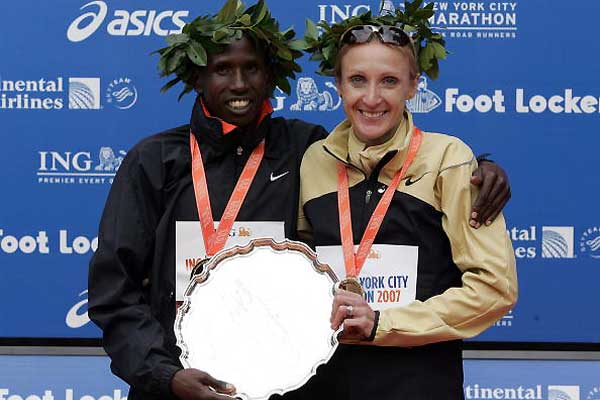
Paula with the men’s winner Martin Lel from Kenya (Pic courtesy iaff.org)

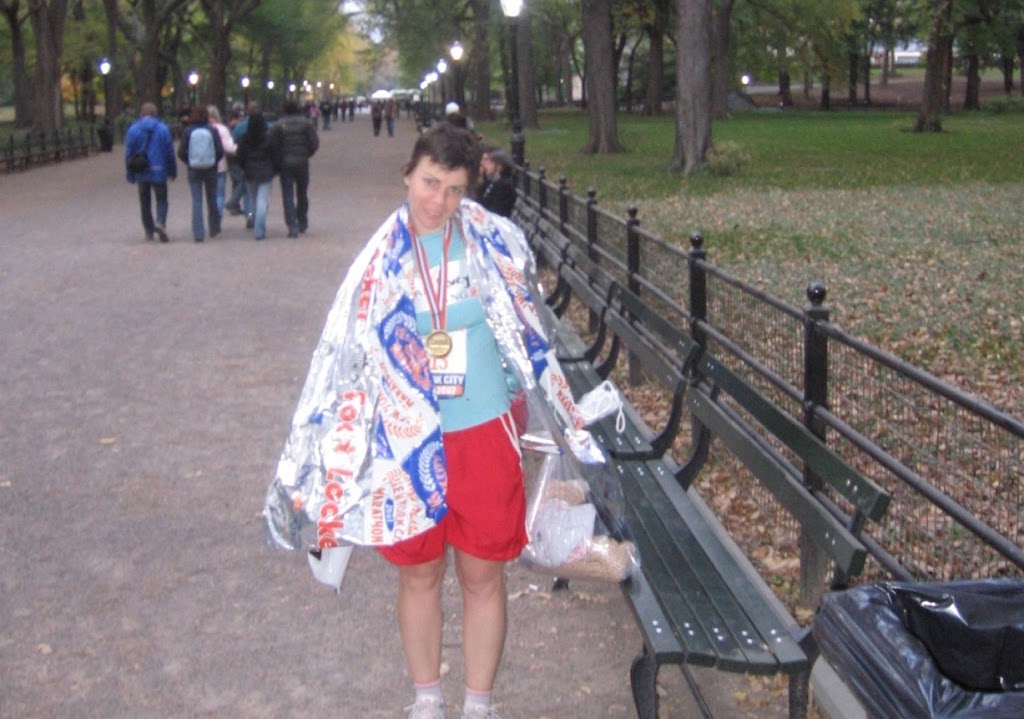
Our guest host, Tanya Bielski-Braham, at the completion of the race last year, swathed in a “space blanket”

Go to the New York Road Runners website for information on this Sunday’s race, including places to watch it from the sidelines.

I highly recommend two recent releases about the marathon: the book “A Race Like No Other” by Liz Robbins, a great profile on the 2007 race with lots of history nuggets thrown in; and the new documentary Run For Your Life about Fred Lebow, new to DVD this week. You seriously have to check out all the great footage from the 1970s, particularly the shots of the Playboy Bunnies posing for pictures for the 1972 “Crazylegs” race.

Know Your Mayors: John F. Hylan

Our modest little series about some of the greatest, notorious, most important, even most useless, mayors of New York City. Other entrants in our mayoral survey can be found here.

Fiorello Laguardia has his airport. James Duane has a drug store. Abram Hewitt is immortalized by the Cooper-Hewitt Museum. Robert Van Wyck has an expressway named after him.

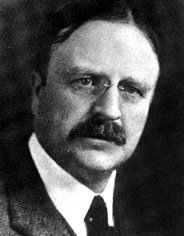
But the former mayors of New York City are not always lionized in monuments or objects they would necessarily be proud of. Take John F. Hylan, the mayor of New York from 1918—1925. He may be the only mayor on planet Earth to have a gigantic hole named after him. Two holes, actually.

When Hylan stepped into the mayors seat in 1918, he brought the Democratic machine Tammany Hall back into city government after four years of Tammany-free leadership by idealistic ‘boy mayor’ John Purroy Mitchel. But Hylan would surprise many by devoting his two terms in office with a single-minded goal — the New York subway.

Hylan was a product of New York locomotive culture. Moving to Brooklyn from upstate New York at an early age, he became a train conductor with the Brooklyn Union Elevated Railroad (later the Brooklyn Rapid Transit Company, or BRT) which operated streetcars trains in Brooklyn and Queens, including the storied Coney Island trains, carrying thousands of passengers out to the beach each summer. Later the BRT would team with the early subway system of Manhattan’s Interborough Rapid Transit System to create a “dual contract” system of unregulated, privately-controlled transportation.

It should be noted that Hylan was fired from the train company after almost accidentally running down his supervisor. His bitterness towards the privately-owned BRT clearly fueled his later actions.

Hylan then became a lawyer and, after initially fighting the advances of Tammany Hall, eventually became one of their loyal candidates. His victory over Mitchel in the 1918 election was partially helped by the powerful William Randolph Hearst.

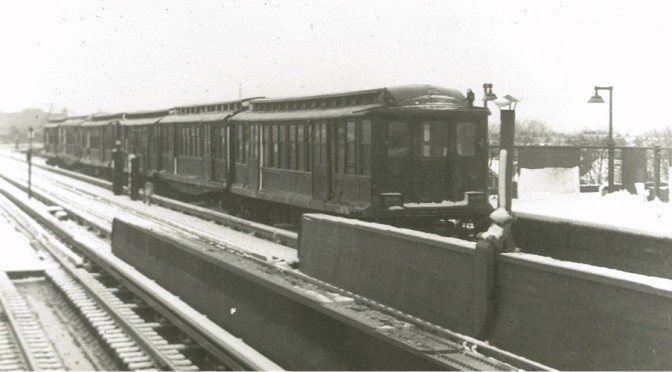
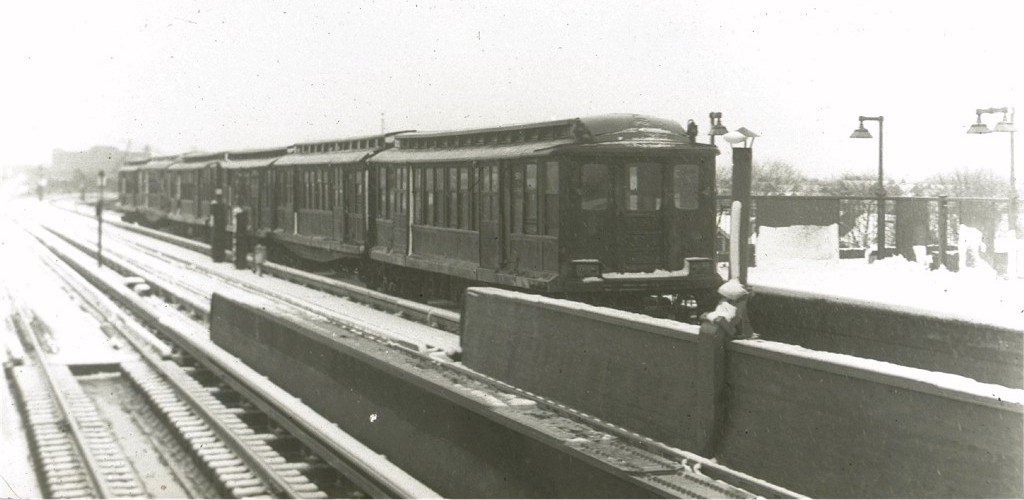
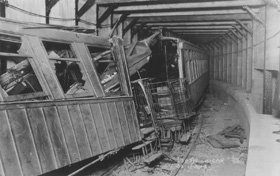
In the first year of Hylan’s term, a BRT train on the Brighton Beach line derailed at Malbone Street (today’s Empire Boulevard) near Prospect Park. The horrific accident (seen below) left 93 passengers dead and virtually destroyed the BRT system overnight.


Meanwhile, the IRT was planning on raising its fares. Uniting the city required miles of more tracks, and it was leasing land from the city. So they decided it needed to bump up the astronomical five cents that customers currently paid.

Hylan had quite enough. Already an advocate against private interests, he often decried organized private power. Here’s an example of his wrath against private banking, a crusade that went unfulfilled: “The real menace of our Republic is the invisible government which like a giant octopus sprawls its slimy legs over our cities states and nation. At the head is a small group of banking houses generally referred to as ‘international bankers.'”

Of course, Hylan is one to speak; he was in Hearst’s back pocket throughout his entire tenure and never swayed from the calls of dear ole Tammany.

Hylan battled the train companies for most of his two terms. He was re-elected in 1921 by effectively thwarting the fare increase and creating a transit commission to refigure a transportation system under city control. By the end Hylan had effectively retooled New York’s transportation industry by creating his own city-run operation, christening the new Independent Subway System (ISS), in his last year of office, on March 14, 1925.

That November however he was swept out of office by Jimmy Walker, who would guide New York as one of its most powerful and influential leaders, leaving Hylan’s legacy virtually forgotten. Hylan died eleven years later of a heart attack. Four years after that, his dream was fully realized; the ISS merged with the other subway lines to create one complete city-run subway system.

But what about that hole? Well, Hylan had another bright idea: a tunnel between Brooklyn and Staten Island. The project began in 1923, with holes began on both sides of the Narrows, at Fort Wadsworth on the Staten side, and Bay Ridge on the Brooklyn side. The project, however, was abandoned. What remains on both sides is affectionately known as ‘Hylan’s Holes’.

The whereabouts of these abandoned holes, as far as I can tell however, remains a mystery.

Categories
Podcasts

PODCAST: Staten Island: A Brief History

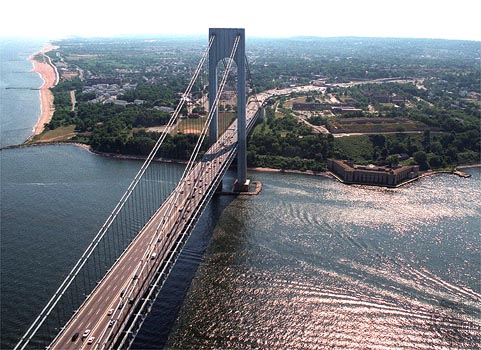
(flying over the Verrazano-Narrows Bridge)

The Bowery Boys take on the history of New York City’s most ‘forgotten’ borough, from its beginnings as a British outpost during the Revolutionary War to the controversy over that big stinky landfill. And we do it all in exactly the time it takes the Staten Island ferry to take you across the New York harbor! (No really, try it!)

Listen to it for free on iTunes or other podcasting services. Or you can download or listen to it HERE

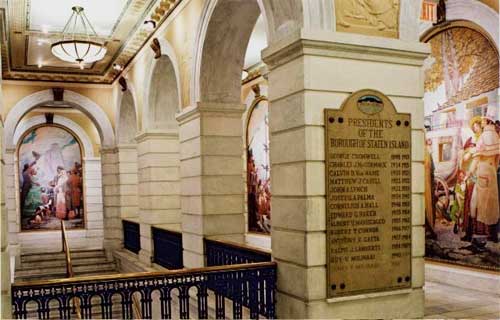
Take a look at the list of top 100 historical moments in Staten Island history that we mention in our podcast. By the way, here’s a peek inside Staten Island Borough Hall, which we mentioned was designed by Carrere & Hastings, best known for the New York Public Library.

And on to the final part in our Staten Island Snug Harbor series (other parts can be found here):

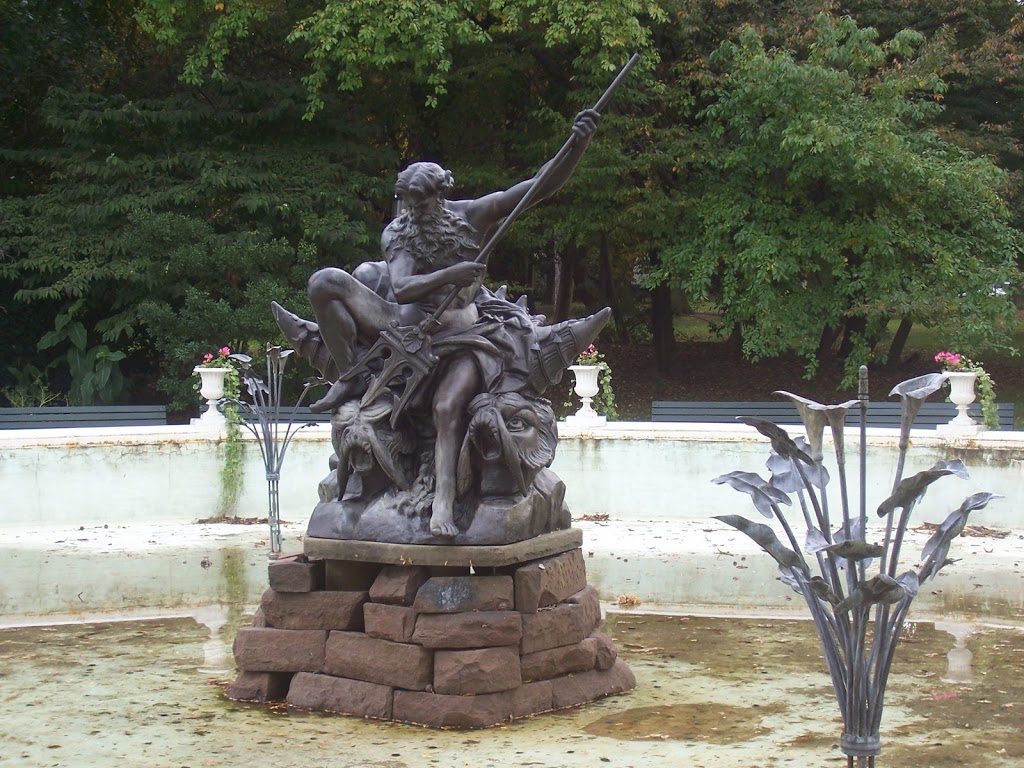
(A Neptune fountain on the front lawn, which would not look out of place in Rome)

Modern Snug Harbor offers the community a wide variety of cultural functions. In fact, the afternoon I was there, Snug Harbor was host to a regional American Girl Fashion Show. I would have taken some photographs of this unusual event — you can get the general idea of what an American Girl Fashion Show is like here — however it might have been a bit odd for a single man with a camera to be walking around taking pictures of young girls with their dolls.

The most dynamic of Snug’s new additions is the Staten Island Botanical Garden, sprouting up on the vast Snug Harbor campus in 1977, first as a traditional English garden, but quickly diversifying. I took a stroll last weekend, which was an odd time for a garden. Most of the budding flowers had disappeared, and the leaves were only beginning to change. I would recommend hitting Snug Harbor over the next couple weekends to experience the fall colors.

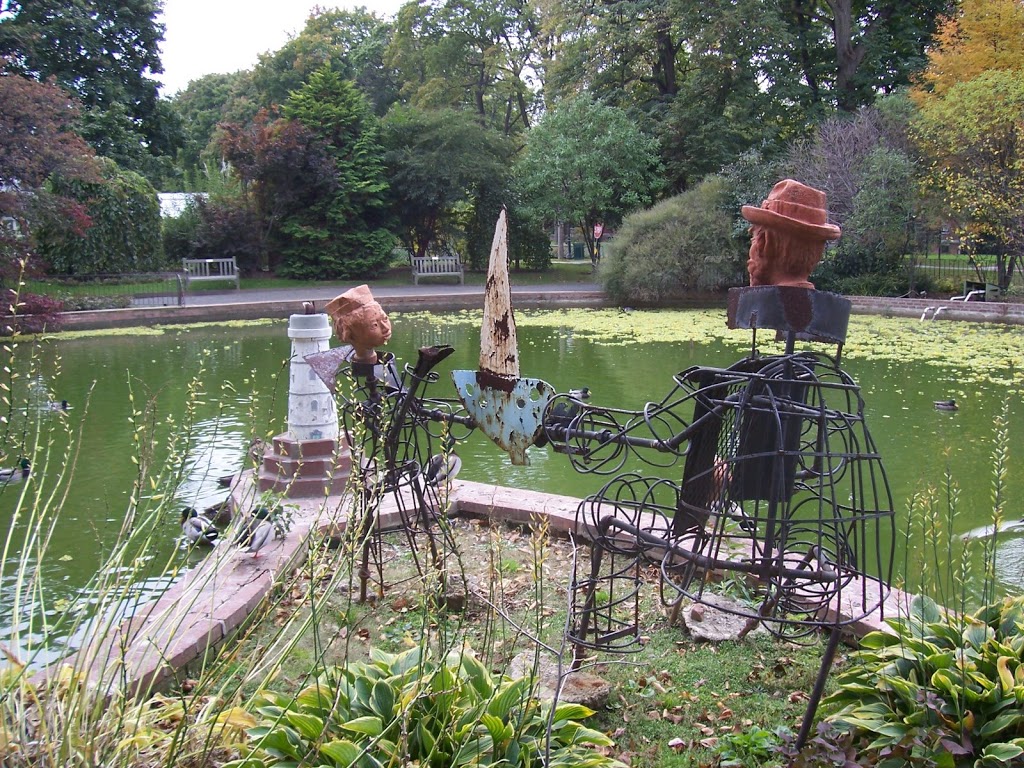
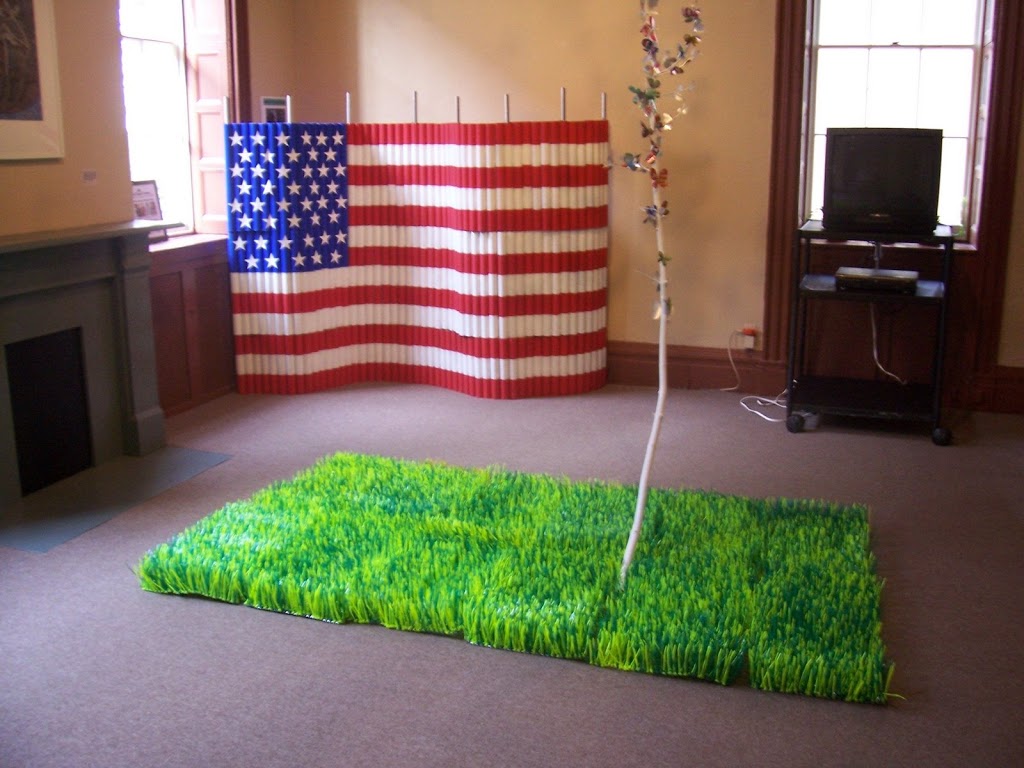
The Pond Garden was actually overrun with ducks, more than I could count actually, all encircling this curious sculpture:

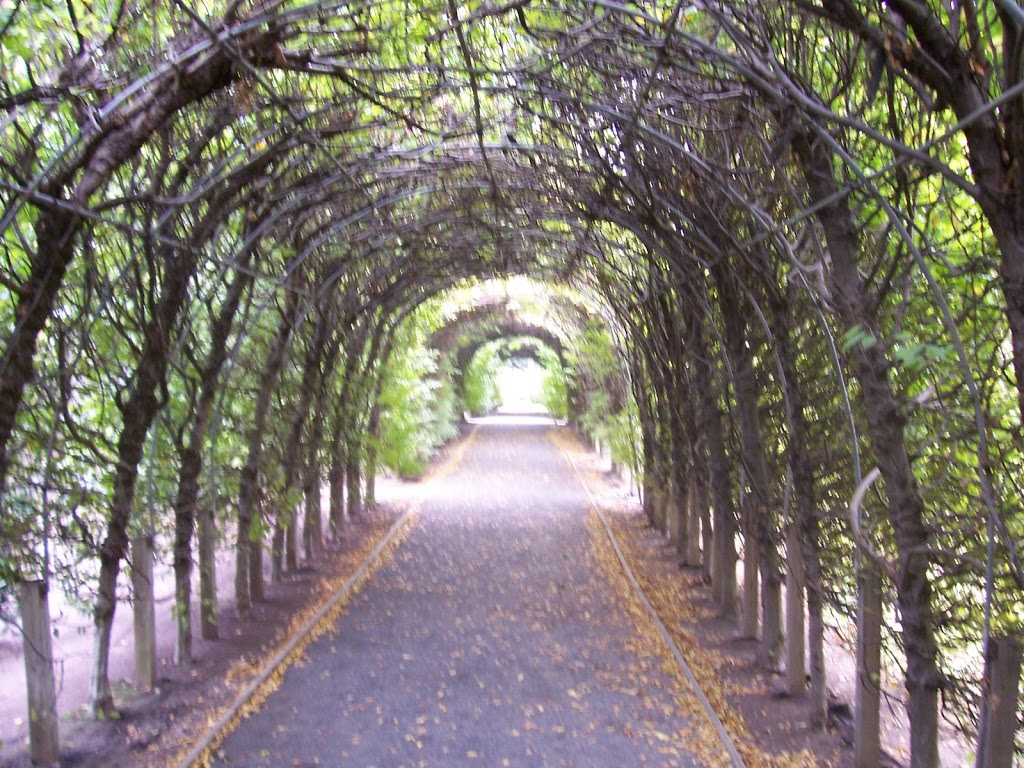
The canopied allie, planted in 1997, is created by the conjoining 120 European hornbeams, creating a disorienting path.

The path leads to the most sobering part of the entire center, the World Trade Center Educational Tribute. Created in 2003 to honor the residents of Staten Island killed in the 9/11 attacks, this small museum features a wall of victims and biographies, some eyeopening photos and artifacts from the tragedy. A very kind member of the fire department awaits inside to answer your questions. Its very intense inside, as you can imagine.

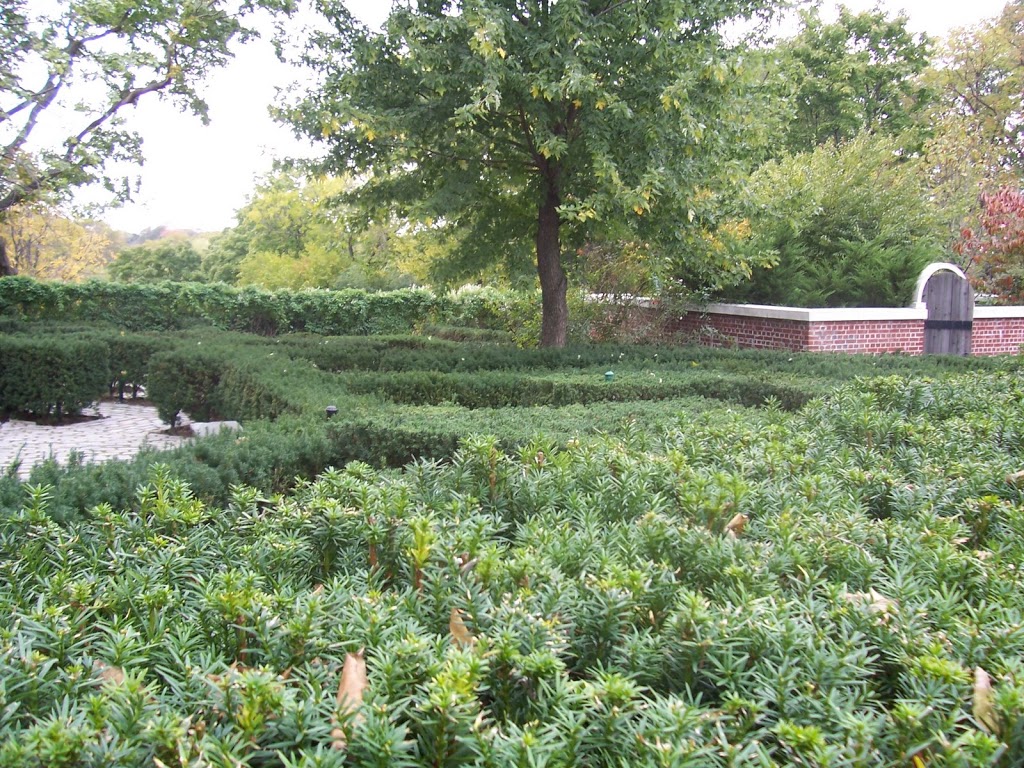
You might need to weave yourself through this hedge maze to take your mind off of some of the disrupting images. Although clearly designed for children — i.e. I didnt exactly get lost through it — it’s apparently the only maze of its type in New England. Who knew?

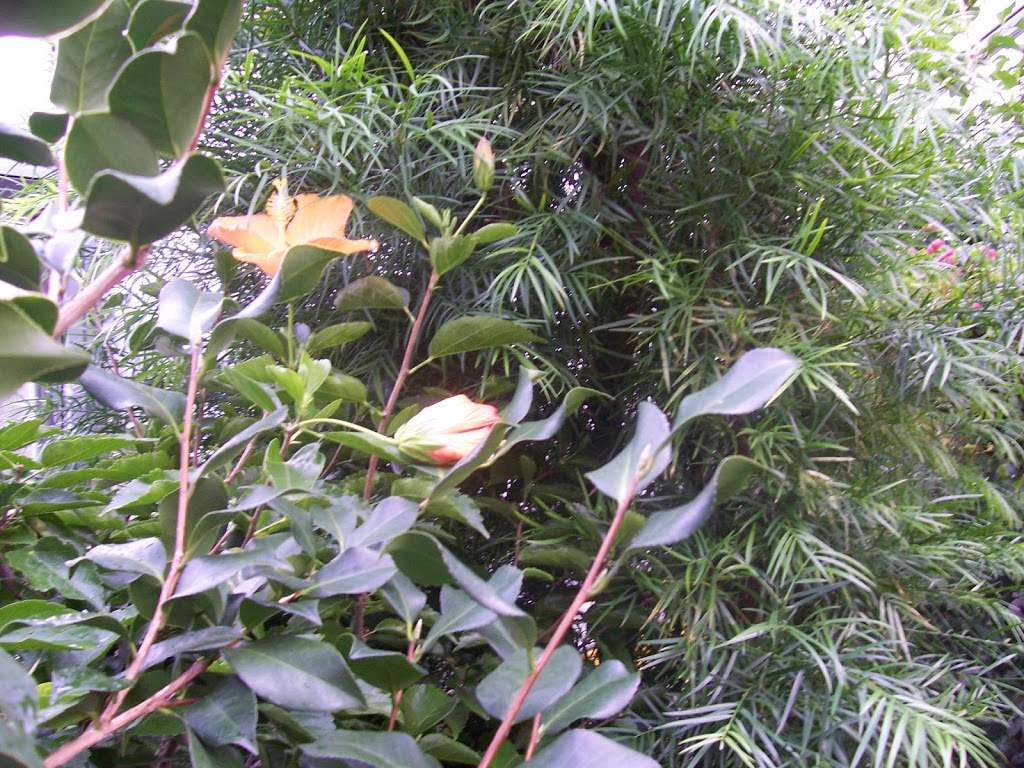
As it was slightly chilly when I strolled around, I obviously welcomed the Carl Grillo Glass House, with its three heated zones for arid, tropical and temperate vegetation, as well as a healthy selection of orchids.

Some of the more modern additions include a childrens museum, guarded by this startling creature:

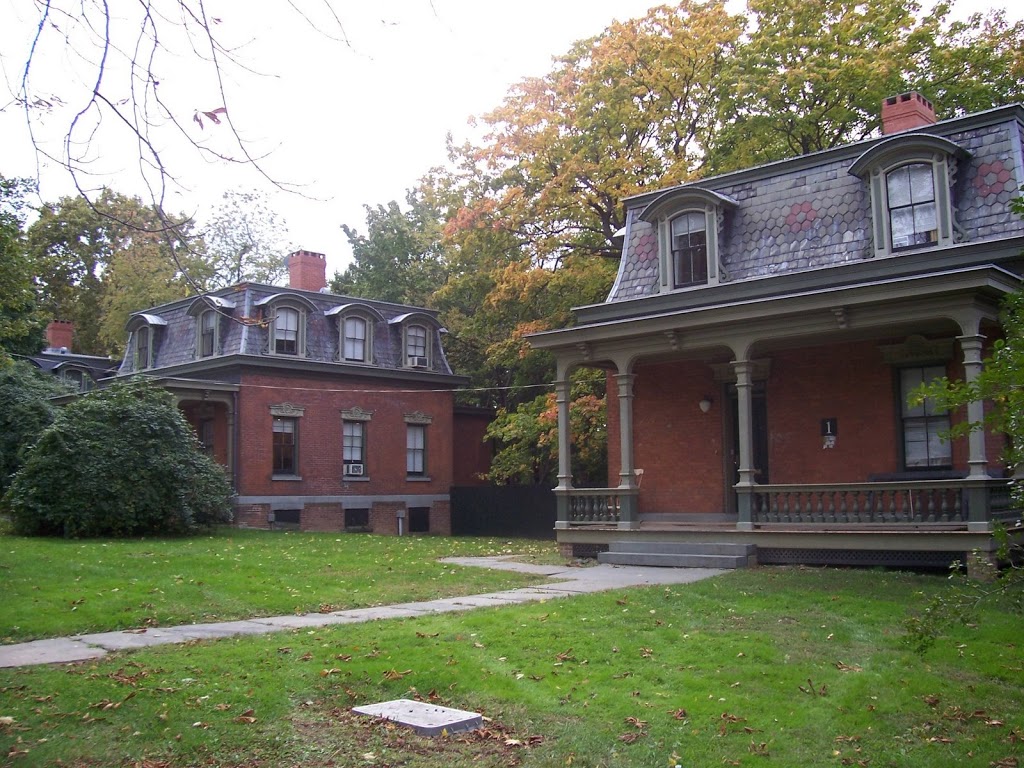
Along the eastern end are a row of identical former homes, one of which serves as the entrance to the newly built Chinese Scholar Garden. (Unfortunately I was not able to enter this on my visit; however you can view a map of its particular grounds.)

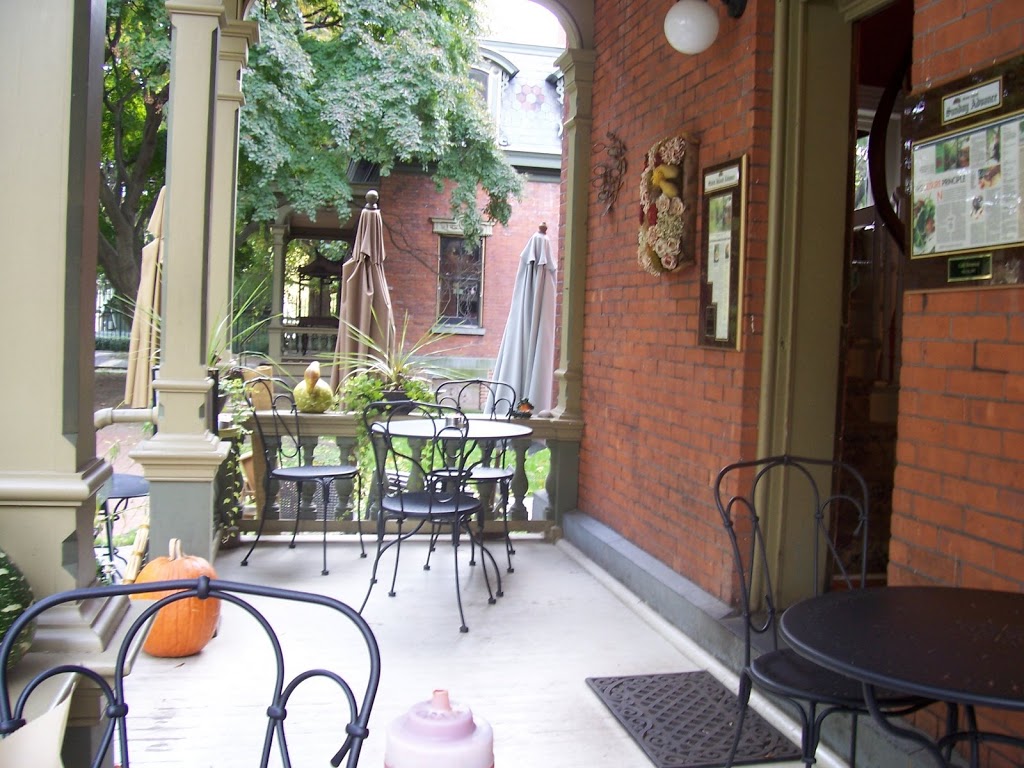
Another of the houses has been converted into a restaurant, Cafe Botanica. Its surreal to eat brunch on a big friendly porch. Inside there’s dining by a cozy fireplace:

Some parts of Snug Harbor are not currently open, including the healing garden, which is going through an extensive renovation, as is the Italian garden and vineyard. That’s right, a virtual vineyard is on the way!
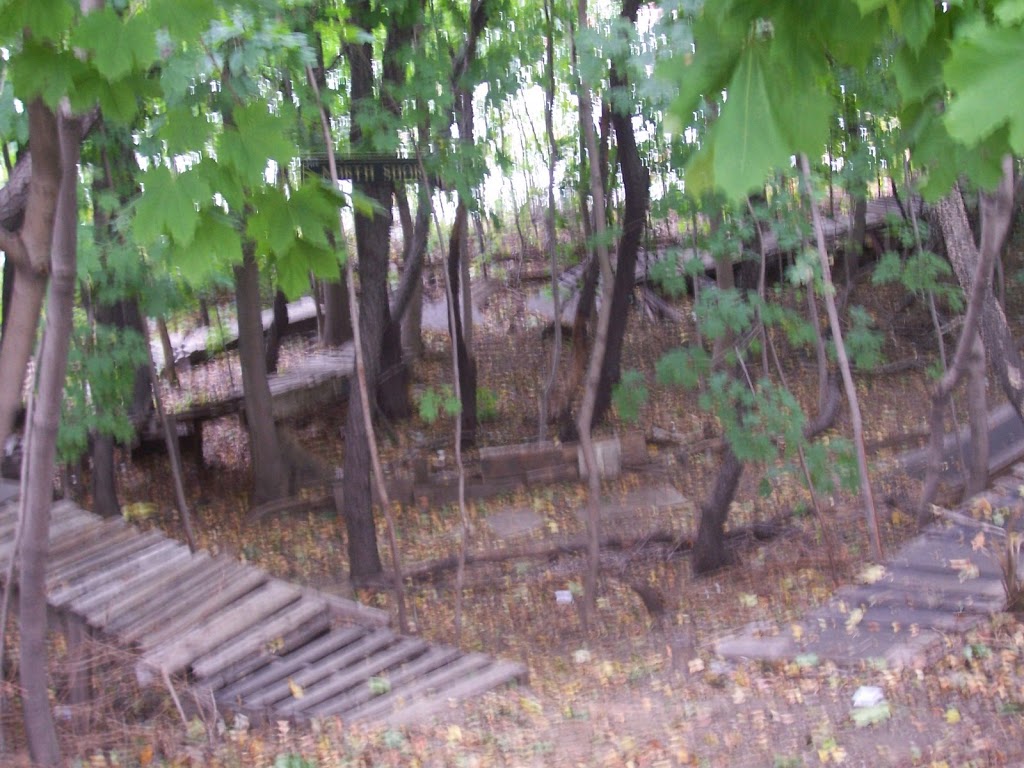
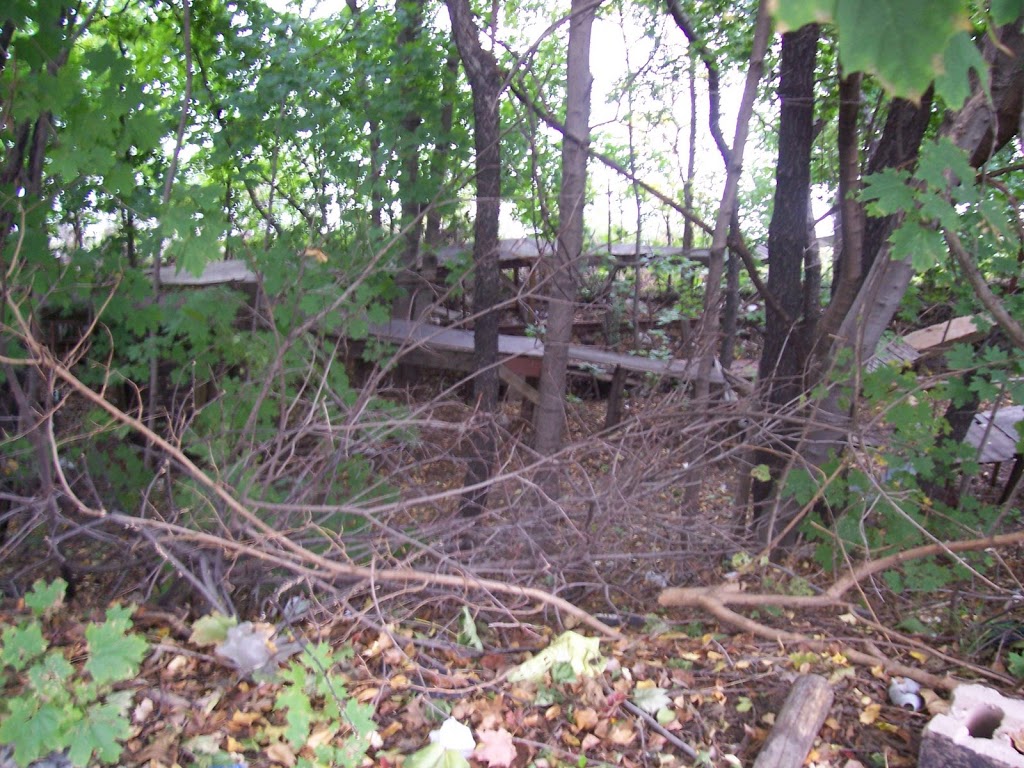
Extra: when leaving Snug Harbor, just take a look in the trees across the street, right in front of the Kill Van Kull. What’s this mysterious thatch of boardwalks that runs along the side of the waterfront?

Snug Harbor: a port in the storm (Part 2)


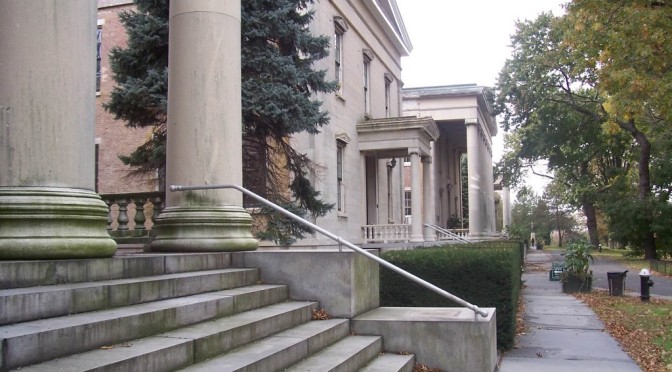
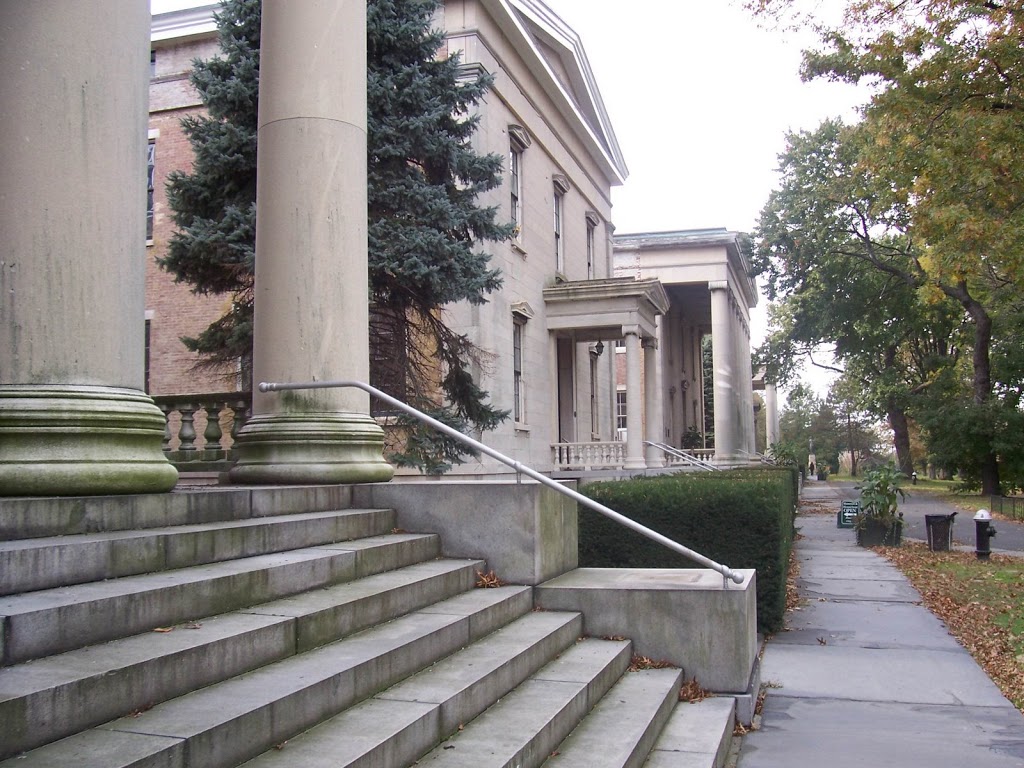
(The imposing Front Five, a wall of Greek revival madness, faces the Kill van Kull and Richmond Terrace almost like a fort.)

Although the sailors home that eventually became Snug Harbor was not in the location its founder Robert Richard Randall would have preferred, it quickly became as tranquil and as restful a place as any rest home might in the 19th century. Fortunately many of the buildings have been completely restored to their original charm, and in some cases (see below) even more so.

You might be asking about now — why would I want to walk around an old rest home? Its all about that mix between careful preservation and vibrancy. Snug Harbor is both a throwback and a modern facility that very rarely feels stodgy. Many similar landmarks would do well to take some lessons from here.

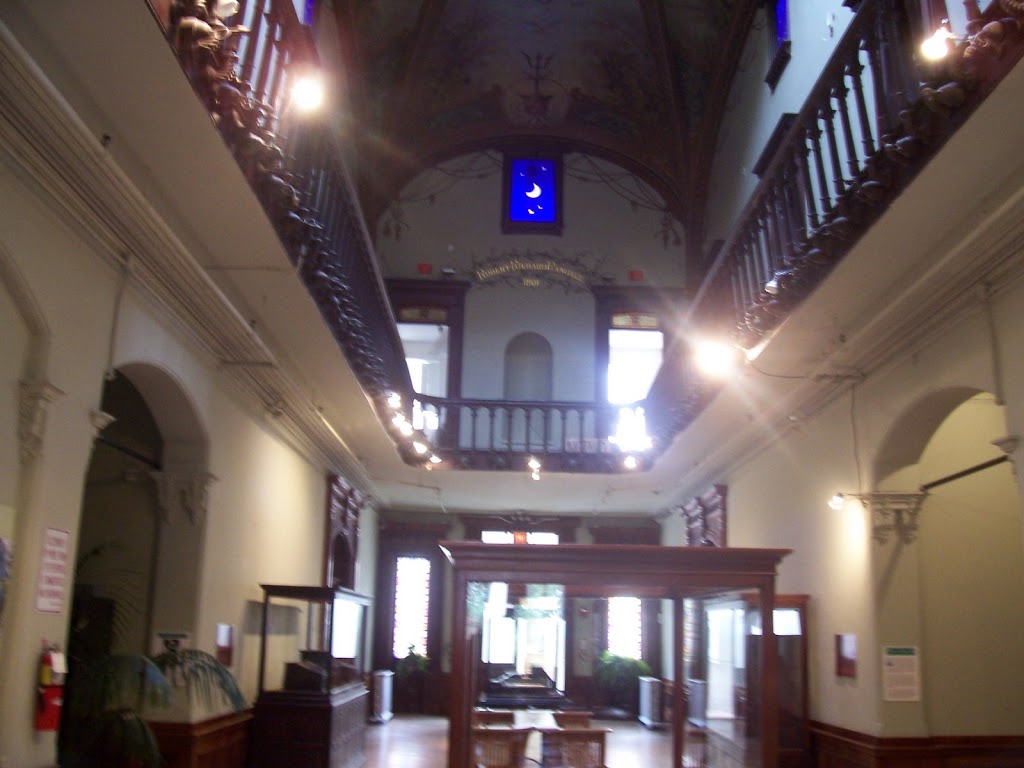
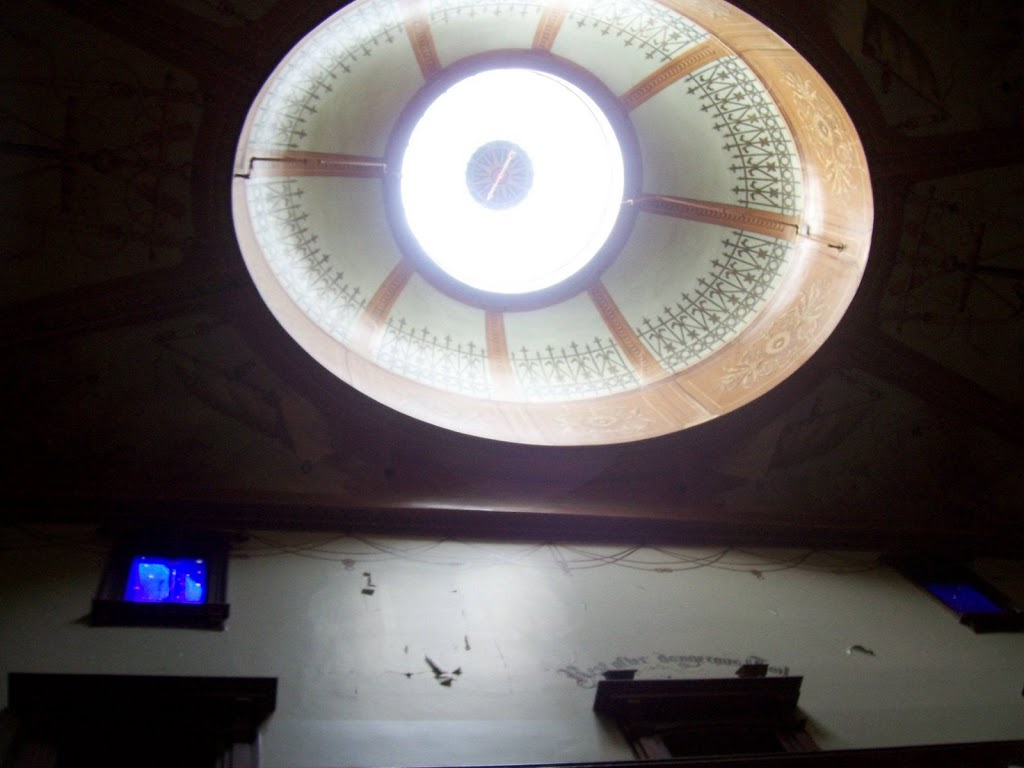
The Minard Lafever-designed hall “Building C”, housed in the the center structure of the Front Five, is the most dazzling architecturally, built in 1830-1, with a wide Victorian entrance way and blue glass windows on the second floor. Building C is generally considered Lafever’s greatest still-existent building.

Unfortunately the building is darker than the rest, so my sad little digital cam can’t begin to capture the beauty. On top of well preserved rooms with historical displays, the building also hosts the Newhouse Gallery, featuring contemporary art displays.

(You can click on any photo to see detailing)


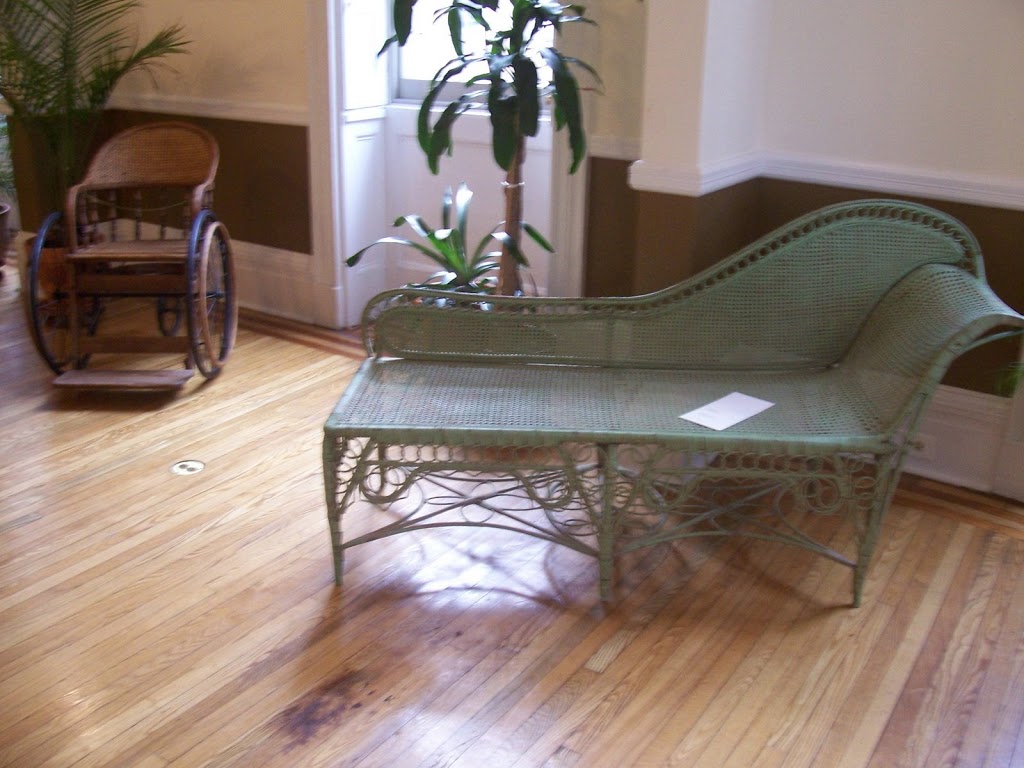
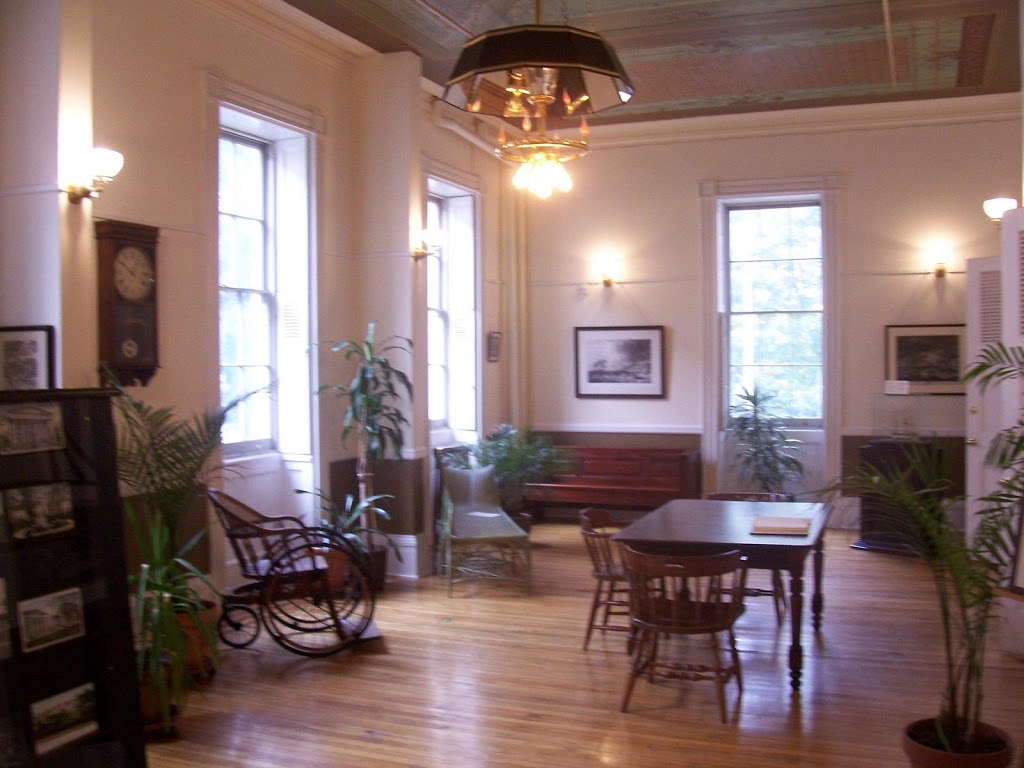
The smaller but no less impressive Building D (can’t they come up with more nautical names?) next door is of more interest to history lovers. With its white wood floors and flawless well-lit restorations of rooms and stairwells, the building is virtually laminated. It’s here that you can get a taste of what living at Snug Harbor might have been like.

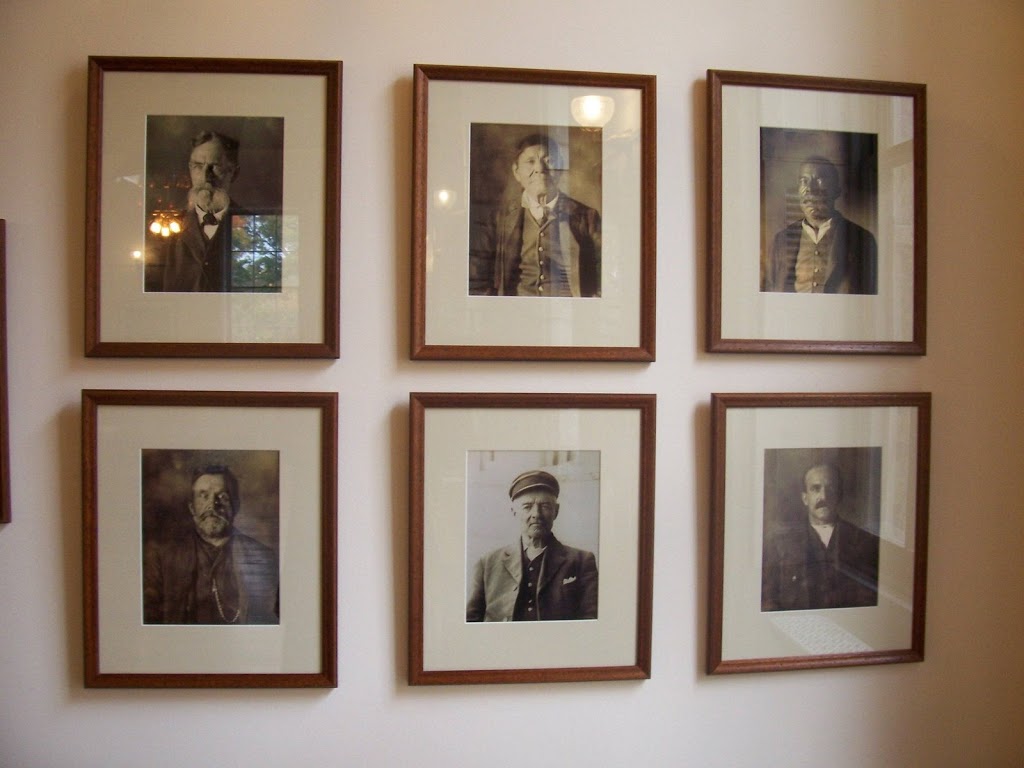
Here were some of the former residents of Sailors Snug Harbor, world weary faces that survived decades at sea to spend their final days at Snug Harbor. One of the earliest governors of Snug Harbor was no less than Herman Melville’s brother Thomas, who was reputed to be a bit of a hardass with his aged charges.

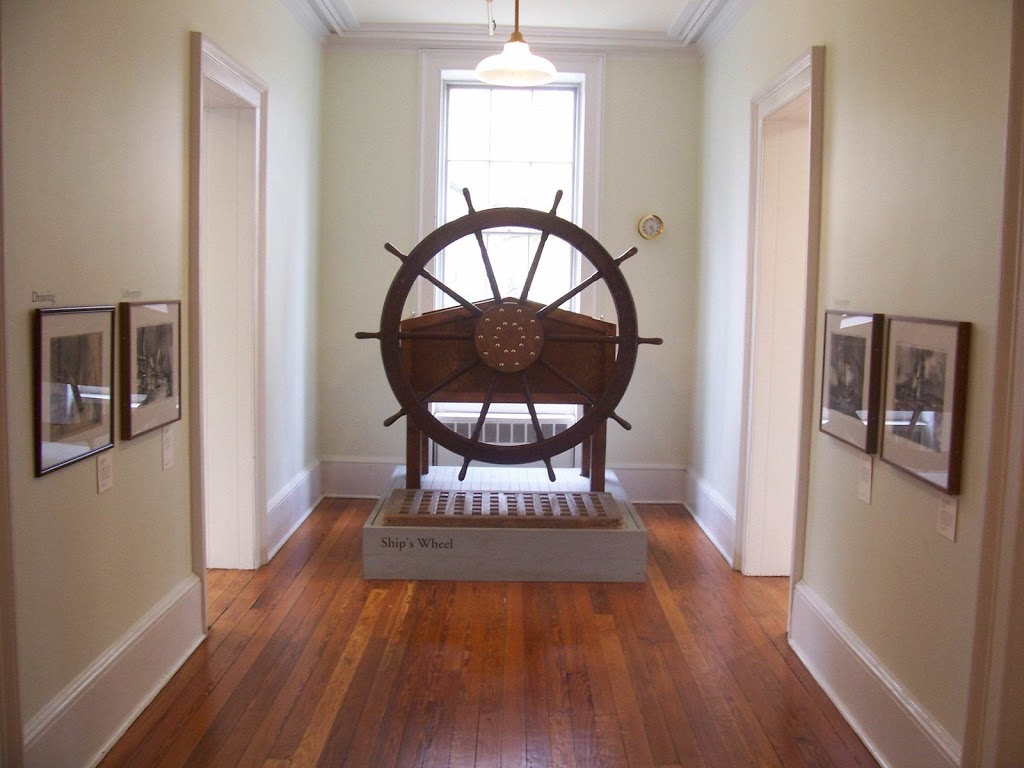
Building D, built in 1841, serves as the Noble Maritime Collection as well and features artifacts from ships that frequented New York harbor and Staten Island.

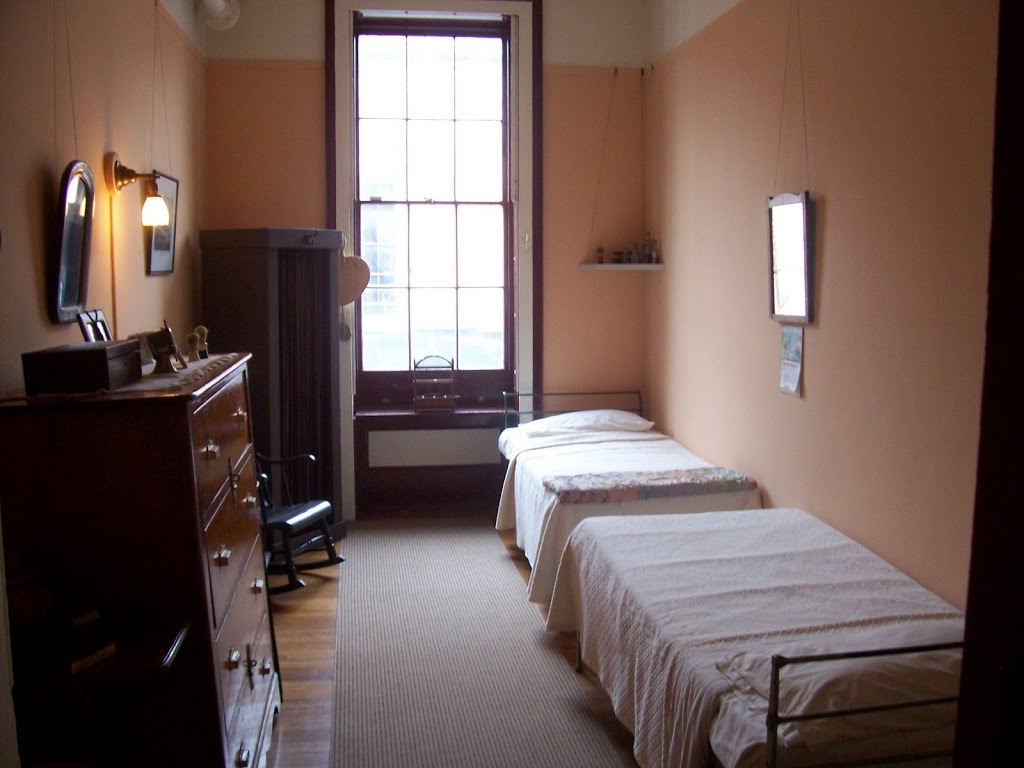
Okay, so its not exactly four star accommodations, but given that the men housed here were used to cramped sea quarters for most of their lives, rooms like this must have looked spacious. The skillful design of the building allows for natural light to spill in everywhere.

The Maritime collection is named for John Alexander Noble, one of America’s foremost nautical painters. It was in part to his efforts that Snug Harbor was saved from the wrecking ball in the early 70s. Restoration of the building actually started as a space for his artwork.

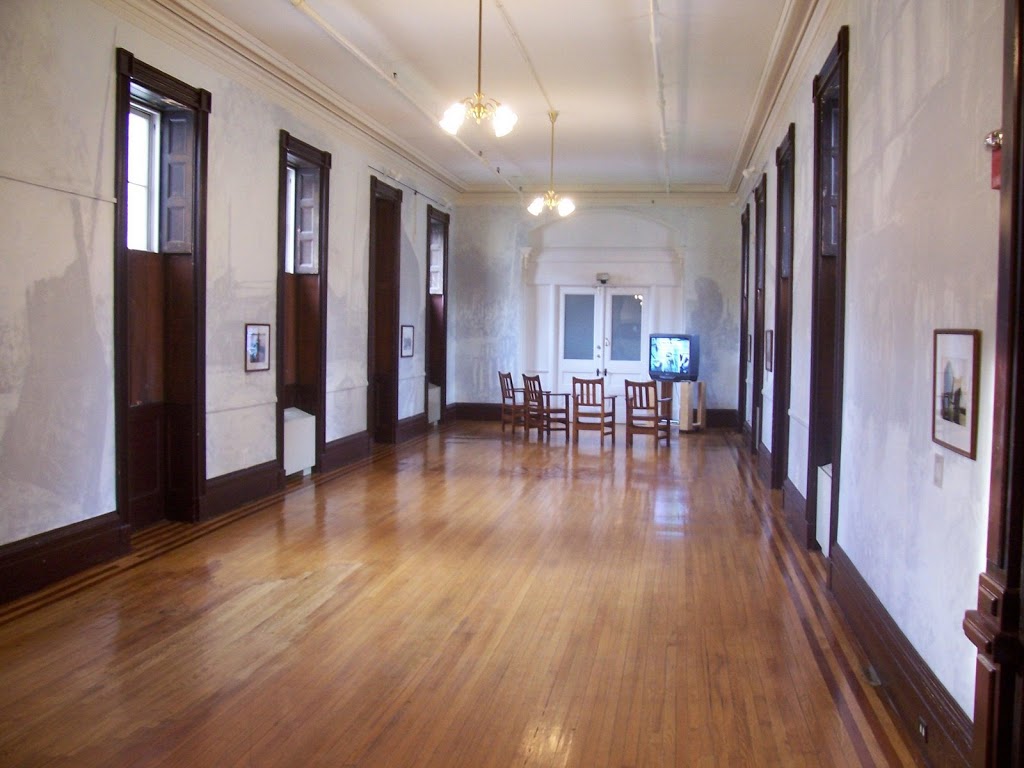
Down this beautiful (and, let’s face it, Shining-like) hallway lay a presentation of Noble’s life and work:

Born in Paris in 1913, Noble spent his life in New York working on schooners, and became particularly entranced with a boatyard of docked and abandoned vessels at Port Johnston, at Bergen Point, New Jersey. His father was an accomplished painter and apparently passed on his talents to his curious and contemplative son. Enamored of sea life and particularly those used, beaten ships, Noble built a houseboat out of salvaged pieces and made himself an artists studio there, become a full time artist in 1946.

Many of the works displayed in Building D are Noble’s inspirations from taking a rowboat and touring the shores of Staten Island, taking in the activity of the ports and visiting ships.

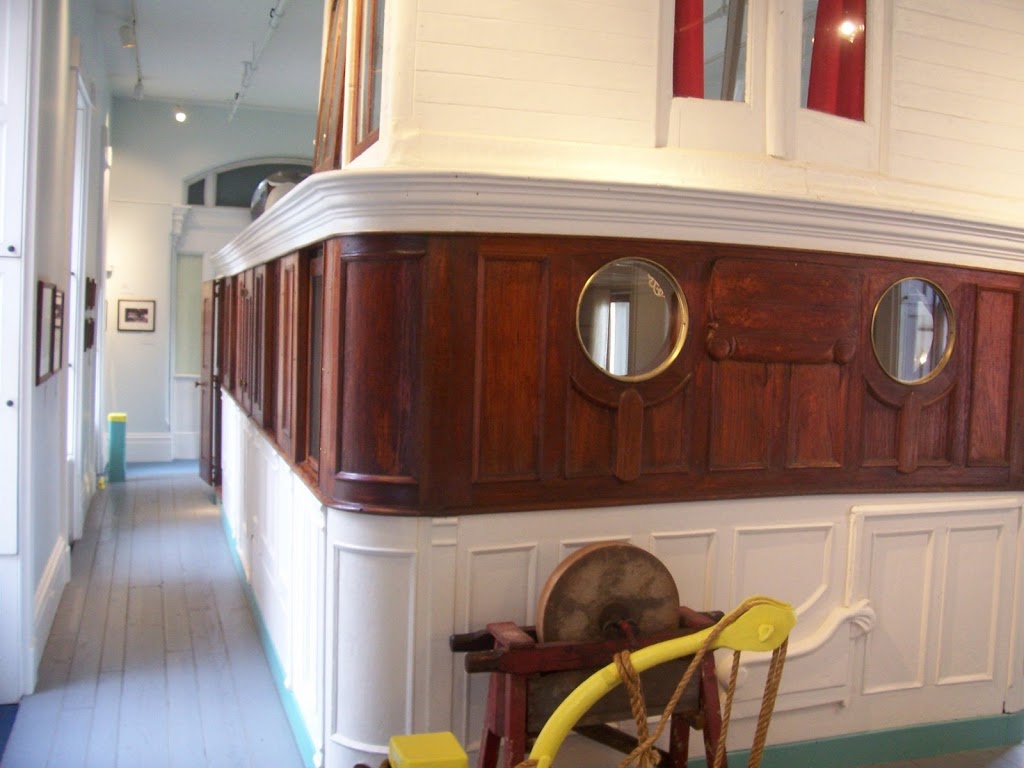
Snug Harbor is as complete a monument to a single artist as you’ll be likely to find. Noble’s houseboat has been meticulously transferred to one of the building’s hallways:

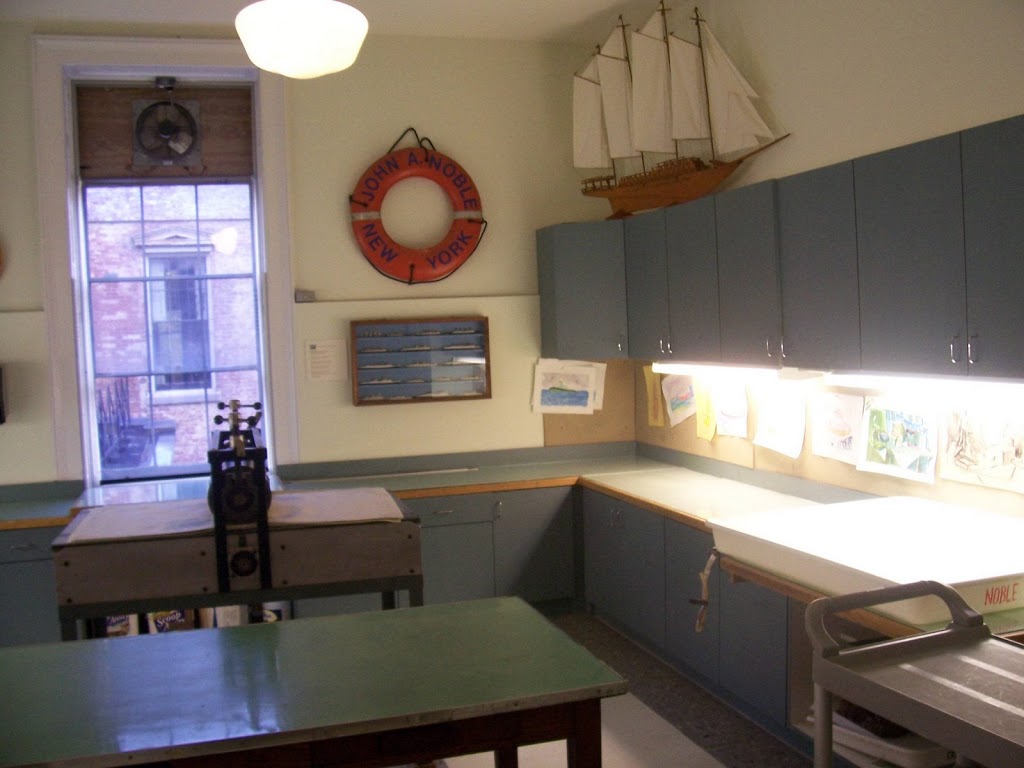
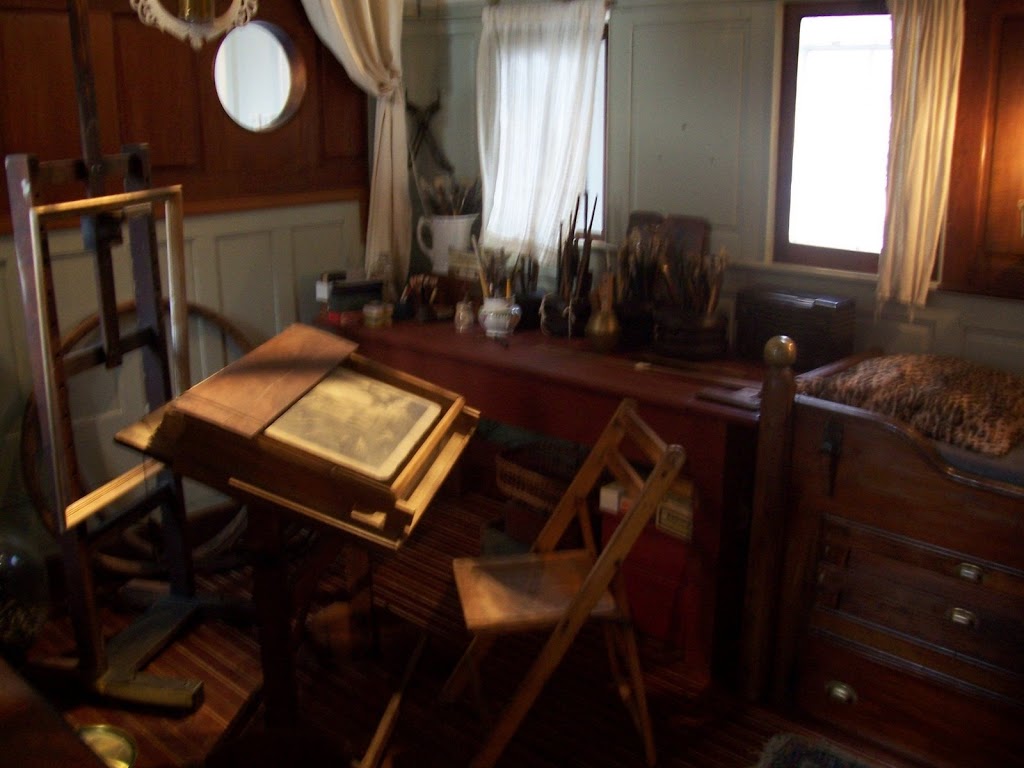
Inside the houseboat, his studio has been dutifully recreated:

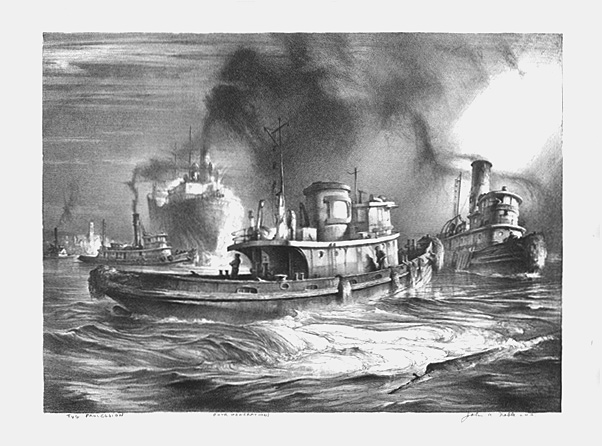
A haunting example of Noble’s work:

The 20th century saw a drastic improvement in social security and health benefits for the elderly, opening options for retired seamen. Enrollment into the home fell from 1,000 men in 1900 to just 110 by the 70s. The firm in Washington DC has actually proposed demolishing all of Snug Harbor’s “obsolete” buildings but Building C. Vicious battled ensued between the city and trustees (who wished to demolish and build new facilities) before landmark status was finally granted in 1976. The sailors (and St Gauden’s statue of Robert Randal) were shipped to North Carolina, and Snug Harbor Cultural Center was opened to the public in 1976.

Modern Snug Harbor can give some thanks to an unlikely source: Jacqueline Kennedy Onassis, who became an early supporter of preserving the grounds as is. “Attention should be brought to a place like this. There’s no place in all the five boroughs where there is such a sanctuary as this…it must be preserved.” She would certainly be pleased with its modern incarnation.

Tomorrow: modern Snug Harbor, home of art, gardens, massively gigantic bugs and, yes, that killer brunch