Categories
Parks and Recreation Podcasts

Who was Andrew Haswell Green? Say hello to “the most important leader in Gotham’s long history.”

PODCAST EPISODE 300Andrew Haswell Green helped build Central Park and much of upper Manhattan, oversaw the formation of the New York Public Library, assisted in the foundation of great institutions such as the American Museum of Natural History and the Bronx Zoo, and even organized the city’s first significant historical preservation group, saving New York City Hall from demolition.

This smart, frugal and unassuming bachelor, an attorney and financial whiz, was critical in taking down William Tweedand the Tweed Ring during the early 1870s, helping to bail out a financially strapped government.

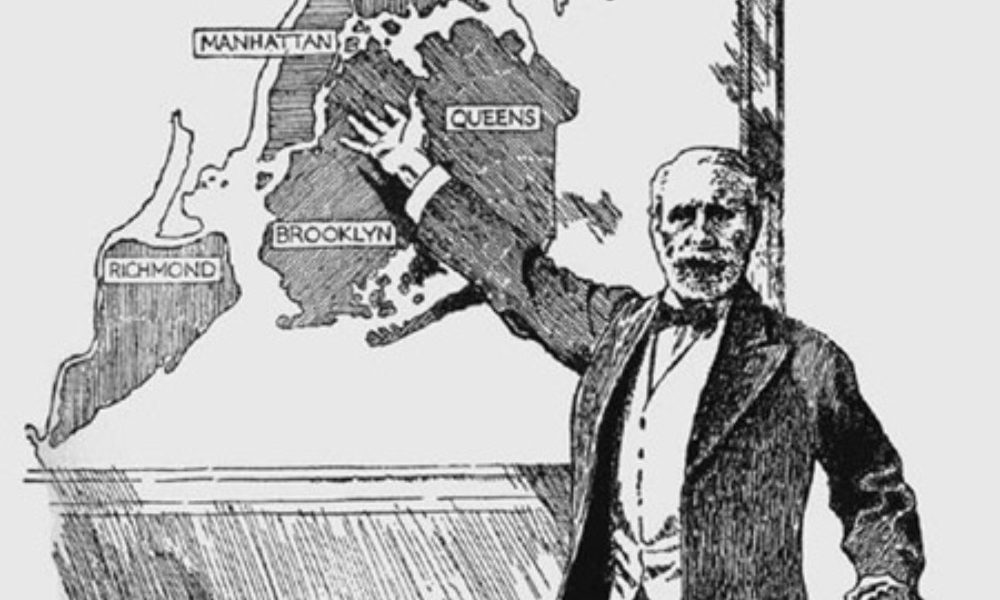
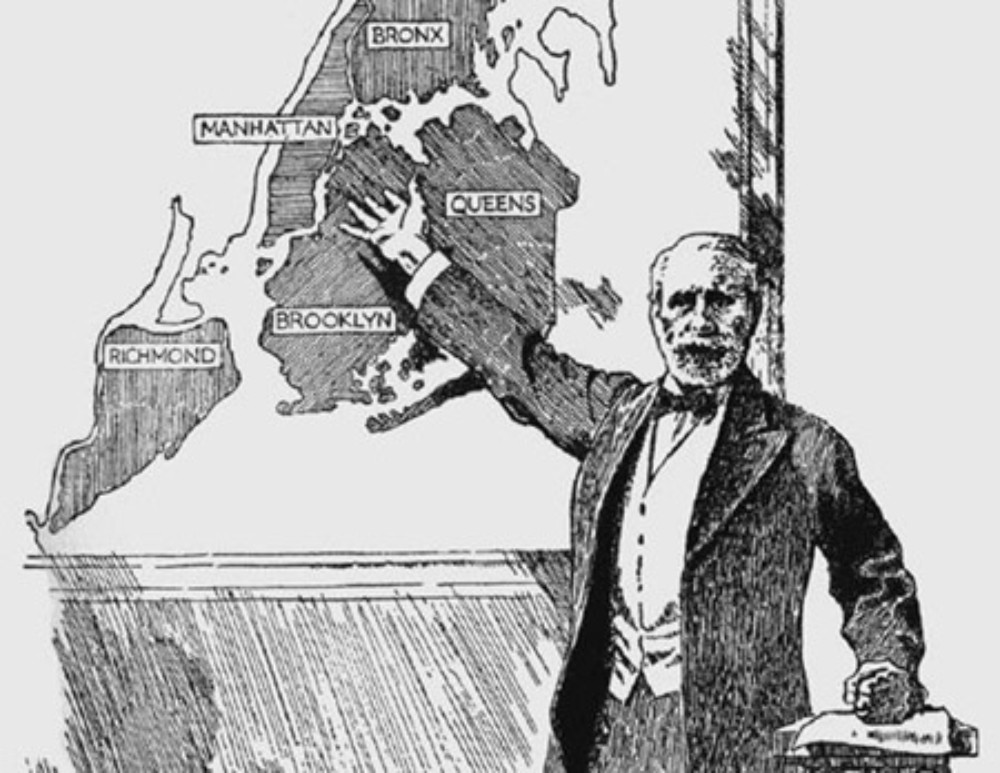
But Green’s greatest achievement — championing the consolidation of the cities of New York and Brooklyn with communities in Richmond County (Staten Island), Westchester County (the Bronx) and Queens County (Queens) — would create the City of Greater New York, just in time for the dawn of the 20th century.
Kenneth T. Jackson, editor of the Encyclopedia of New York, called Green “arguably the most important leader in Gotham’s long history, more important than Peter Stuyvesant, Alexander Hamilton, Frederick Law Olmsted, Robert Moses and Fiorello La Guardia.”

So why is he virtually forgotten today?

“Today not one New York in 10,000 has heard of Andrew Haswell Green,” wrote the New York Daily News in 2003.

In our 300th episode, we’re delighted to bring you the story of Mr. Green, a public servant who worked to improve the city for over five decades. And we’ll be joined by an ardent Green advocate — former Manhattan Borough Historian Michael Miscione.

LISTEN NOW — THE FORGOTTEN FATHER OF NEW YORK CITY
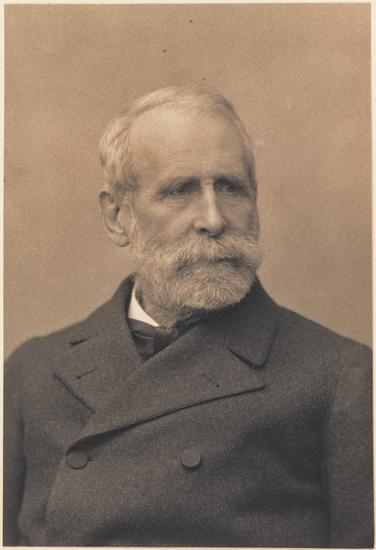

Museum of the City of New York

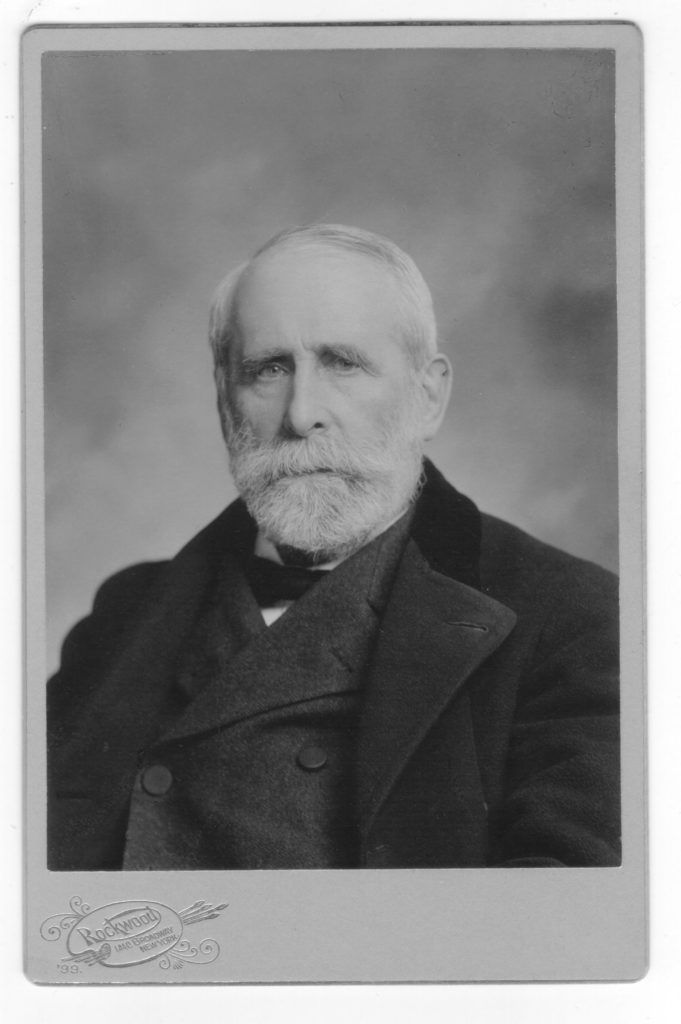
Andrew H. Green sits for a family photo, 1873. He would remain a bachelor his entire life.
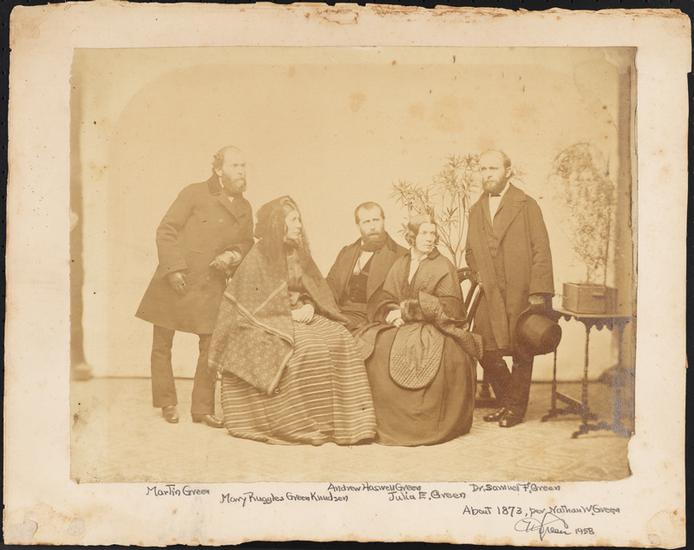
Martin Green, Mary Ruggles Green Knudsen, Andrew Haswell Green, Julia E. Green, Dr. Samuel F. Green — courtesy Museum of the City of New York

The Greensward plan, by Frederick Law Olmsted and Calvert Vaux, was chosen as the winning design for the new ‘central park’ in 1857
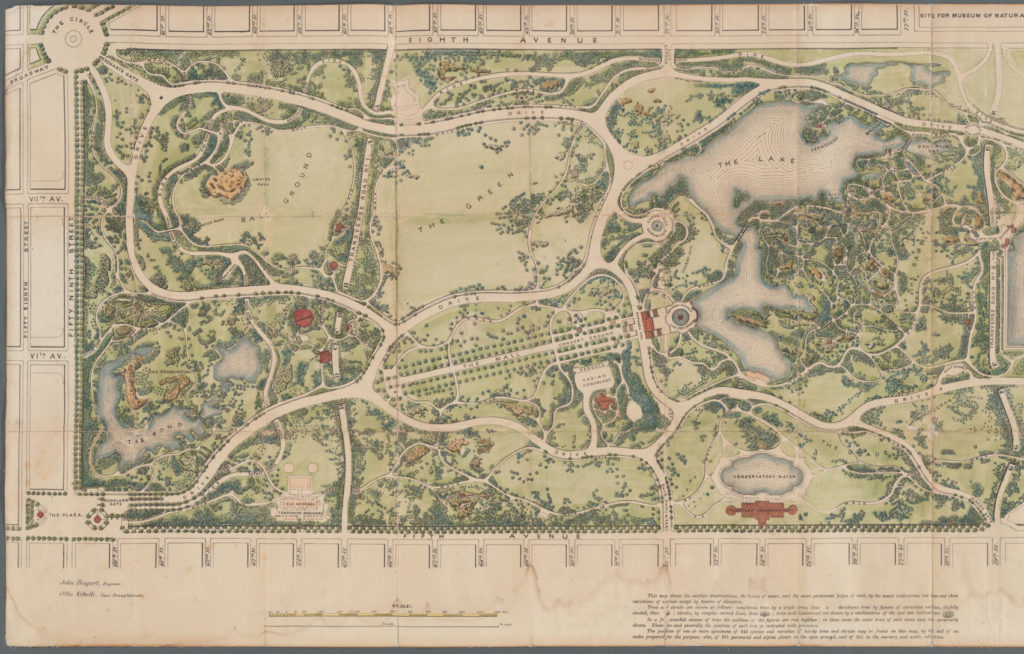
New York Public Library

From the late 1870s, the solitary American Museum of Natural History building sits on the spot of Manhattan Square (land just to the west of Central Park granted to Green and the Central Park Commission).
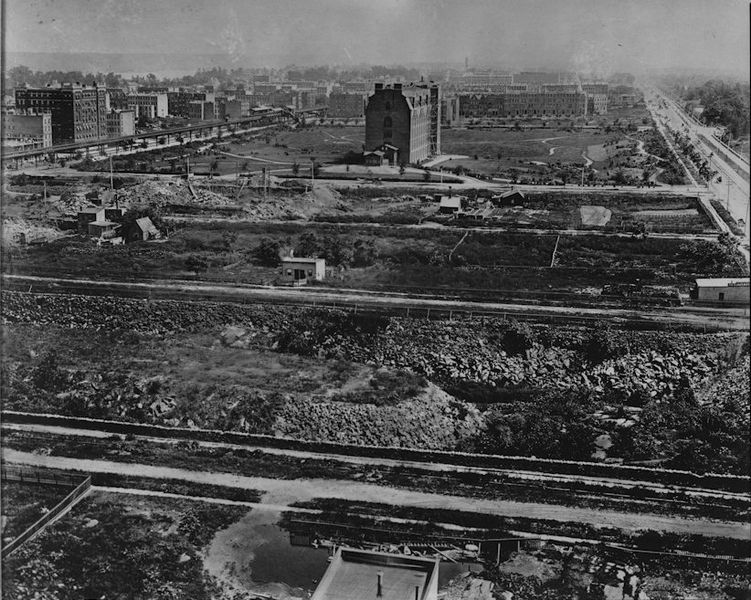
Green in a couple 1870s political cartoon, lampooning his honesty and austerity — in comparison to Boss Tweed and his Tammany Hall cronies.
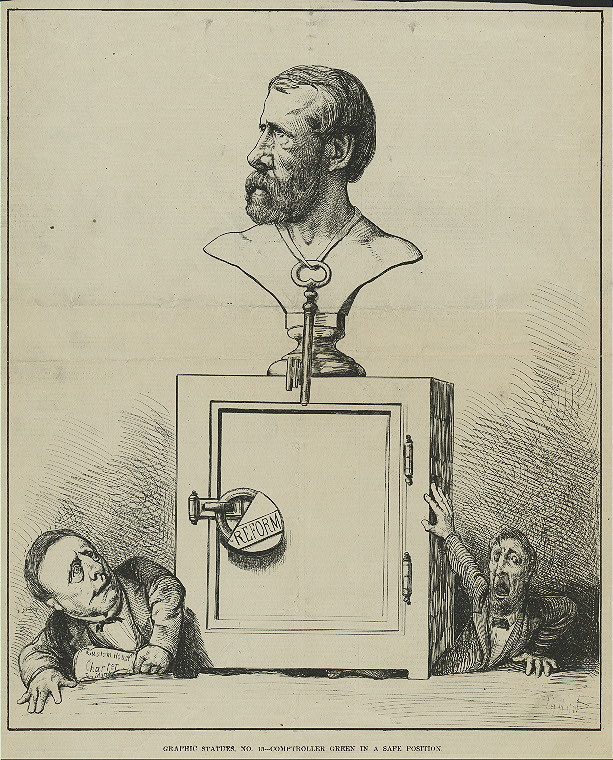
New York Public Library

“Not a dollar, not a cent, is got from under his paw that is not wet with his blood and sweat.” — Olmstead on Green’s legendary money-managing reputation.
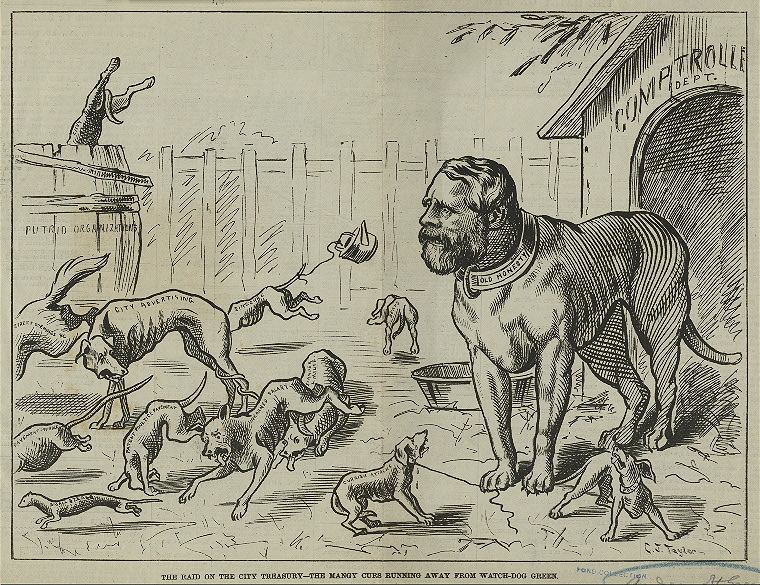
New York Public Library

Green, the ardent salesman of a consolidated metropolis.
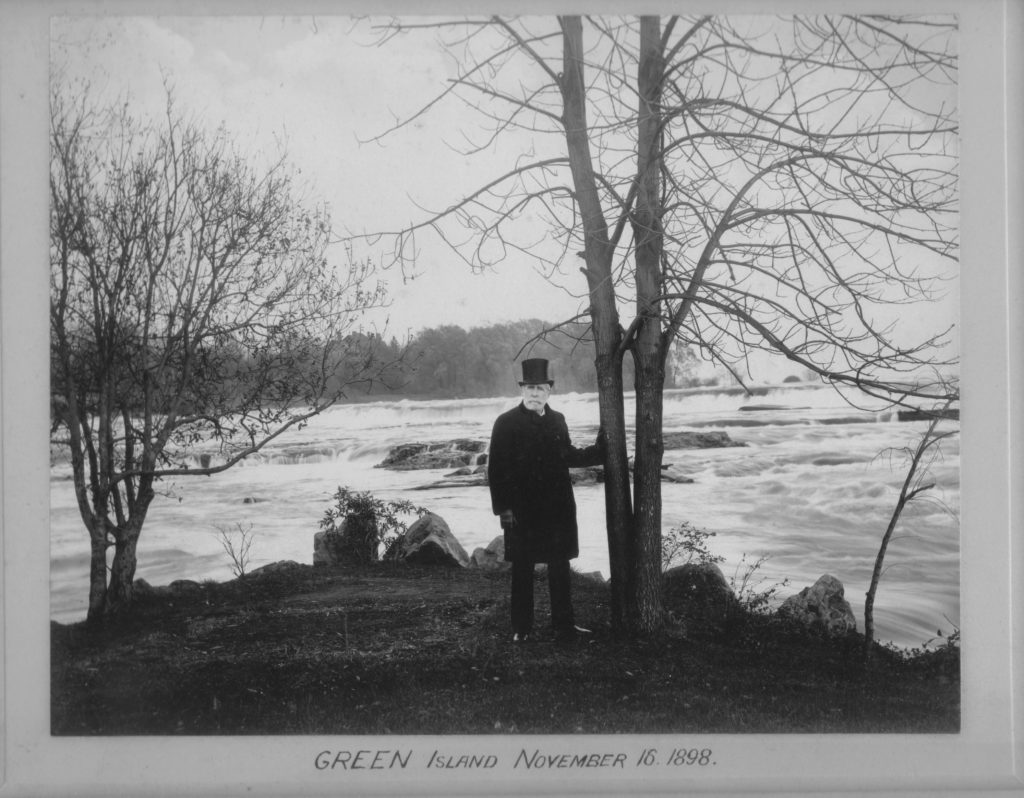
Green on the island that was named for him near Niagara Falls in 1898. He chaired the Niagara Falls State Reservation Commission for decades, helping to create the park and preserve the falls.
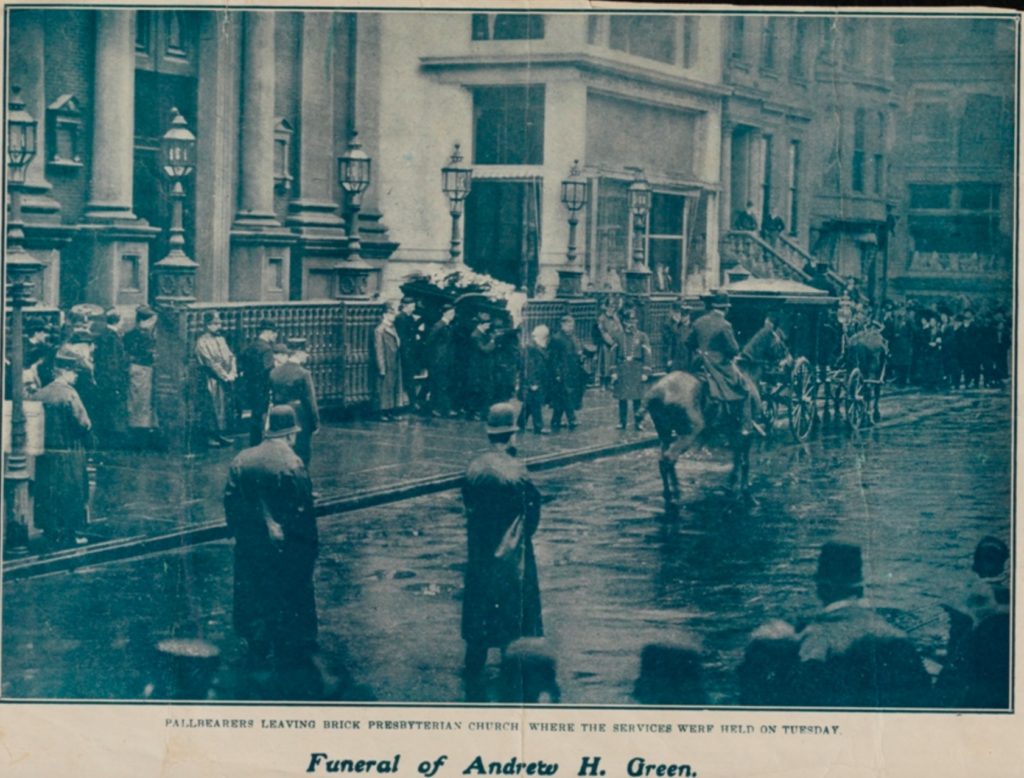
Andrew Haswell Green’s funeral procession leaving Brick Presbyterian Church, 1903
Museum of the City of New York

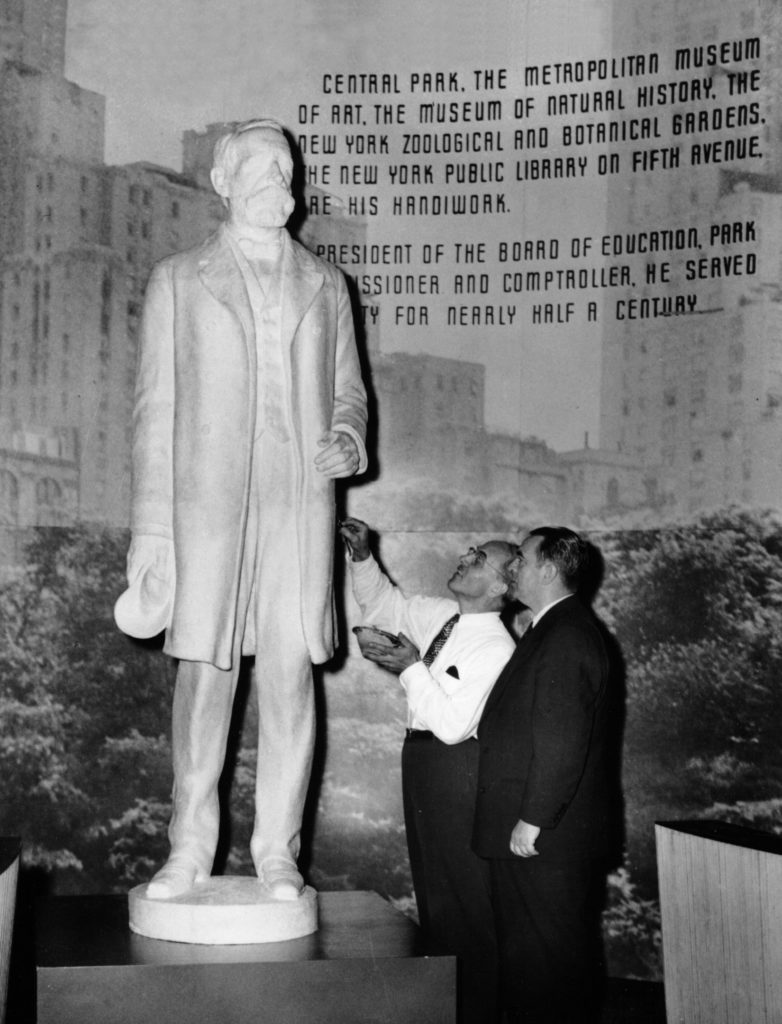
Temporary statue of Green created for the city’s Golden Jubilee celebration in 1948, marking the 50-year anniversary of the consolidated city. The men are sculptor Karl Gruppe and NYC Mayor William O’Dwyer.
Michael Miscione

Michael Miscione, Parks Commissioner Henry Stern, Pulitzer Prize-winning historian Mike Wallace, and MCNY President Robert Macdonald (left to right) planting five new symbolic trees — representing the boroughs — at the AHG Memorial Bench in Central park in 1998 to replace the original ones that had died decades years earlier.
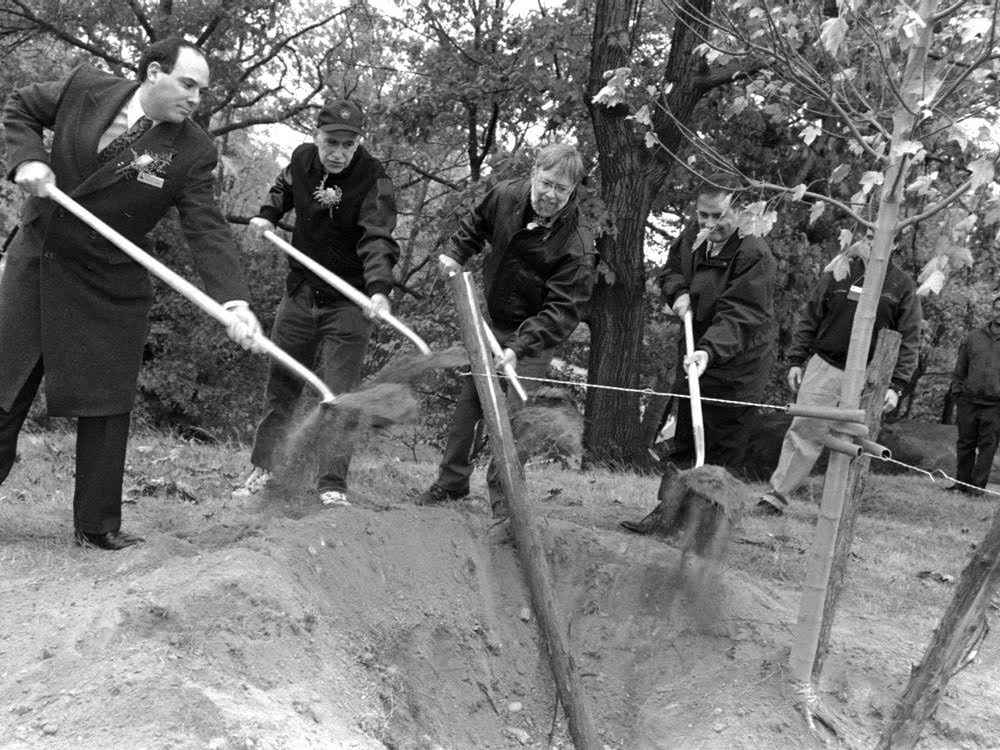
Michael Miscione

Tom and Greg with Michael Miscione at the Andrew Haswell Green Bench.
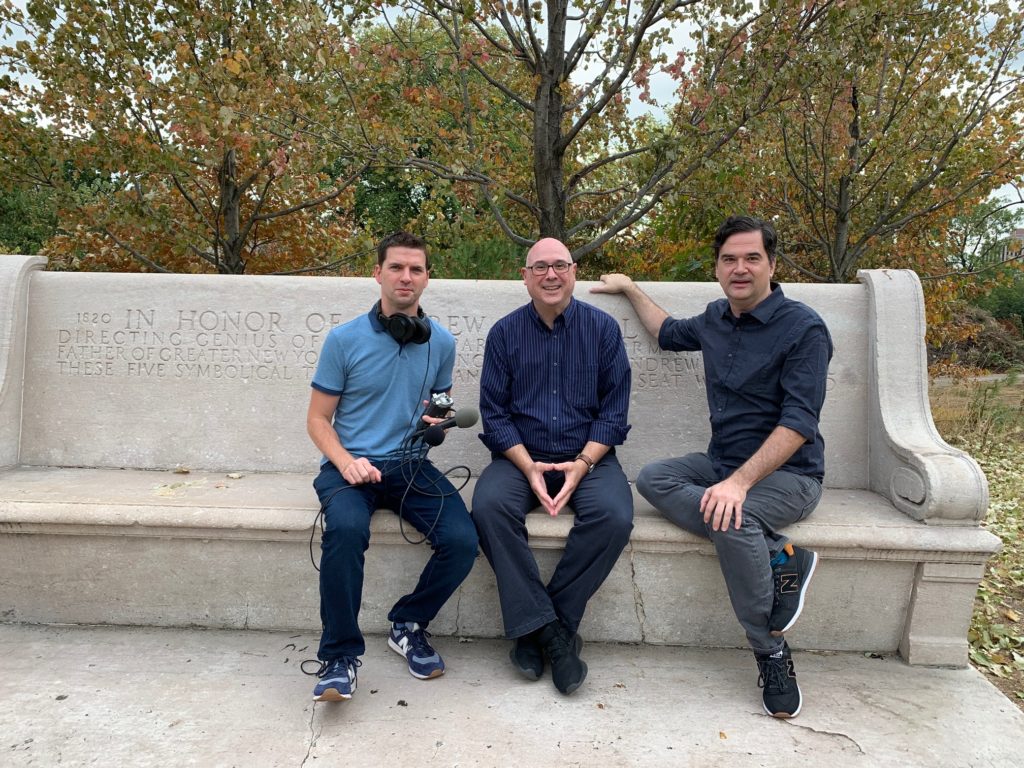
Courtesy Michael Miscione

FURTHER LISTENING:

So many of our past 299 shows touch upon landmarks and institutions mentioned in the show, but start with these five:

Andrew Haswell Green and Dorothy Catherine Draper courted for just a few months and both would remain unmarried for their entire lives. Yet both are critical figures in American history:

The Consolidation of Greater New York was Green’s grand vision, conceived of during his years on the Central Park Commission.

From way, way back in our back catalog, a two part show on the history of Central Park:

The Bronx Is Born: The magnificent idea of consolidation was conceived from Green’s ideas of expansion into Westchester County, into districts that would become known as the Annexed District

FURTHER READING:

The American Museum of Natural History and How It Got That Way by Colin Davey

The Life and Public Services of Andrew Haswell Green by John Foord

The Greater New York Charter by Andrew Haswell Green

Capital City: New York City and the Men Behind America’s Rise to Economic Dominance, 1860-1900 by Thomas Kessner

The Once and Future New York: Historic Preservation and the Modern City by Randall Mason

Two Centuries of American Planning by Daniel Schaffer

The Father of Greater New York: Official Report of the Presentation to Andrew Haswell Green of a Gold Medal Commemorating the Creation of the Greater City of New York: with a Brief Biographical Sketch

__________________________________________________________________________

The Bowery Boys: New York City History podcast is brought to you …. by you!

We are now producing a new Bowery Boys podcast every other week. We’re also looking to improve and expand the show in other ways — publishing, social media, live events and other forms of media. But we can only do this with your help!

We are now a member of Patreon, a patronage platform where you can support your favorite content creators.

Please visit our page on Patreon and watch a short video of us recording the show and talking about our expansion plans. If you’d like to help out, there are six different pledge levels. Check them out and consider being a sponsor.

And join us for the next episode of the Bowery Boys Movie Club, an exclusive podcast provided to our supporters on Patreon.

We greatly appreciate our listeners and readers and thank you for joining us on this journey so far.

________________________________________________________________________
Categories
Gilded Age New York Podcasts

The Fall of the Fifth Avenue Mansions: Where to find the remnants of an opulent past

PODCAST The story of how Fifth Avenue, once the ritziest residential address in America, became an upscale retail strip and the home of some of New York’s finest cultural institutions.

LISTEN HERE:

In this episode, the symbols of the Gilded Age are dismantled.

During the late 19th century, New York’s most esteemed families built extravagant mansions along Fifth Avenue, turning it into one of the most desired residential streets in the United States. The ‘well-connected’ families, along with the nouveau riche, planted their homes here, even as the realities of the city encroached around them.

By 1925 most of the mansions below 59th Street were gone, victims of changing tastes and alterations to the city landscape. Clothing manufacturing plants swept through Greenwich Village, and such ‘common’ purposes threatened the identity of Fifth Avenue. To the west, the dazzling delights of Times Square seemed certain to wring any respectability out of Midtown Manhattan’s reputation.

But near Central Park, families of newer wealth filled Fifth Avenue with their own opulent homes — Carnegies, Dukes, Fricks — as though oblivious to the changes occurring down south.

Most of these habitats of old wealth are gone today. There’s no place for a 100-room mansion on one of New York City’s busiest streets. Yet a few of these mansions managed to survive by taking on very different identities — from clothing boutiques to museums.

PLUS: The building that was bought for a necklace!

To download this episode and subscribe to our show for free, visit iTunes or other podcasting services or get it straight from our satellite site.

You can also listen to the show on Google Music, Stitcher streaming radio and TuneIn streaming radio from your mobile devices.

___________________________________________________________________________

The Bowery Boys: New York City History podcast is brought to you …. by you!

We are now producing a new Bowery Boys podcast every week.  We’re also looking to improve the show in other ways and expand in other ways as well — through publishing, social media, live events and other forms of media.  But we can only do this with your help!

We are now a member of Patreon, a patronage platform where you can support your favorite content creators for as little as a $1 a month.

Please visit our page on Patreon and watch a short video of us recording the show and talking about our expansion plans.  If you’d like to help out, there are five different pledge levels (and with clever names too — Mannahatta, New Amsterdam, Five Points, Gilded Age, Jazz Age and Empire State). Check them out and consider being a sponsor.

We greatly appreciate our listeners and readers and thank you for joining us on this journey so far. 

________________________________________________________________________
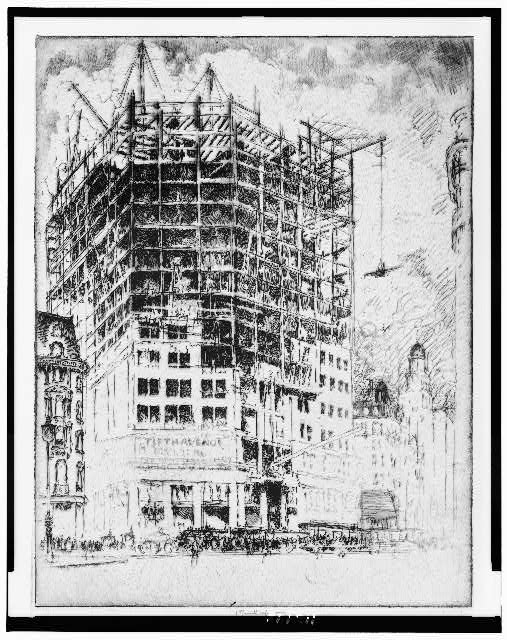
Artistic representations of a changing Fifth Avenue —

A 1908 illustration by Joseph Pennell titled Rebuilding Fifth Avenue.

Library of Congress

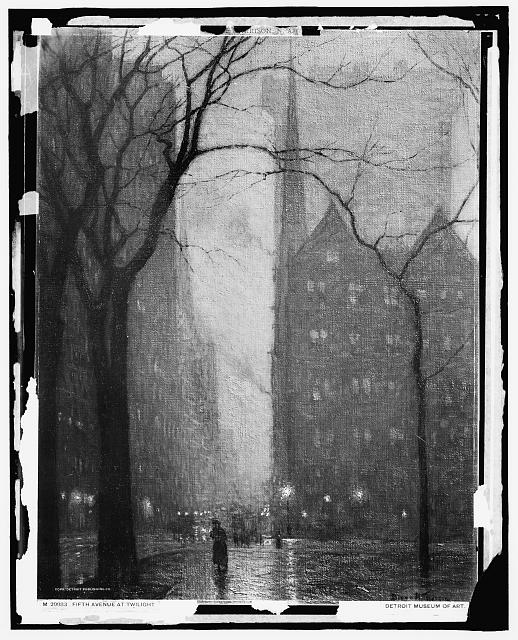
Fifth Avenue at Twilight, an illustration (c. 1910) by artist Birge Harrison, depicting Grand Army Plaza and Vanderbilt’s mansion, with Fifth Avenue Presbyterian and the Gotham Hotel behind it.

Library of Congress

By 1932, the transition to a retail district was virtually complete. Almost no single-family houses remained on Fifth Avenue below 59th Street.

Latham Litho. & Ptg. Co., 1932, Library of Congress

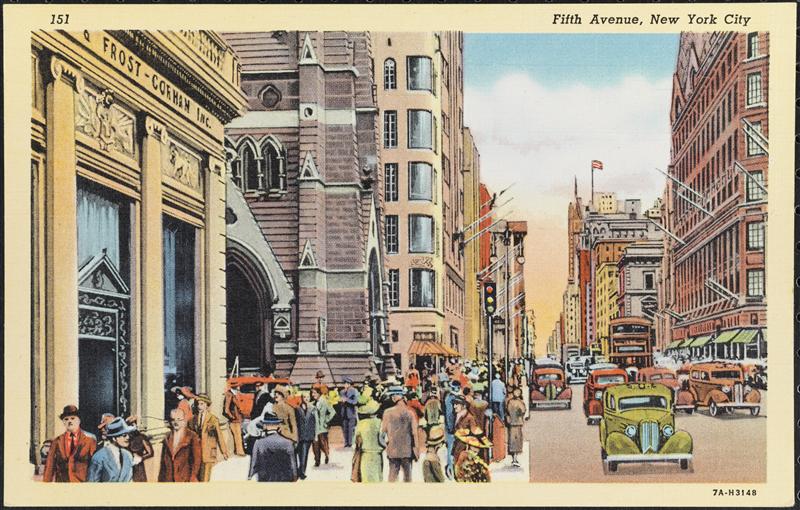
Postcard caption (from 1935): “A view of Fifth Avenue, the parade ground of the nation, looking south from 48th St., famous for its smart shops and double-decked buses.”


The New Century —

The corner of 59th Street and Fifth Avenue. Within 30 years this view would be completely transformed.

Museum of the City of New York


The new mansion ‘bonanza’ sprouted above 59th Street, a row of fine single-family palaces that would help create the ritzy reputation of the Upper East Side.

The home of W.C. Whitney (68th Street), 1900:

Museum of the City of New York


The home of George Gould (son of Jay), at Fifth Avenue and 89th Street

New York Public Library


The mansion of William Clark at E. 77th Street — in 1918 and 1927 (note the boarded up windows).

Wurts Brothers/Museum of the City of New York

Phillip Bartlett/Museum of the City of New York


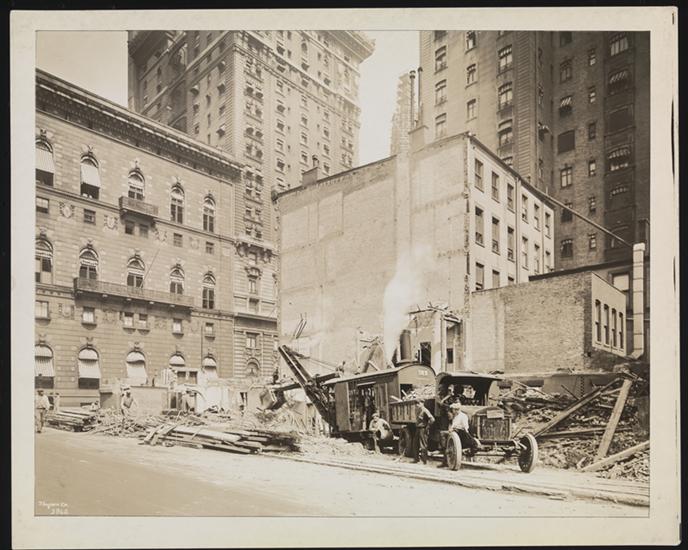
Demolition on Fifth Avenue was an extraordinarily common site in the first quarter of the 20th century.  This is the northeast corner of Fifth Avenue and 54th Street in 1925.

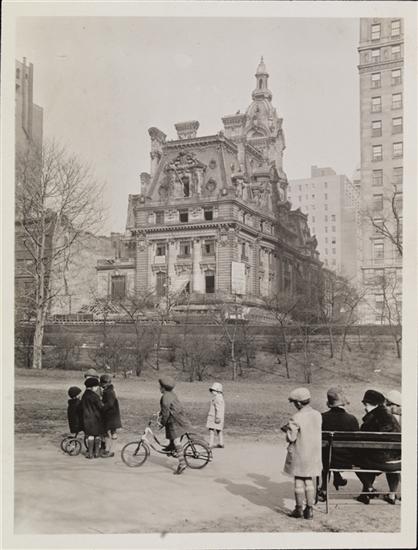
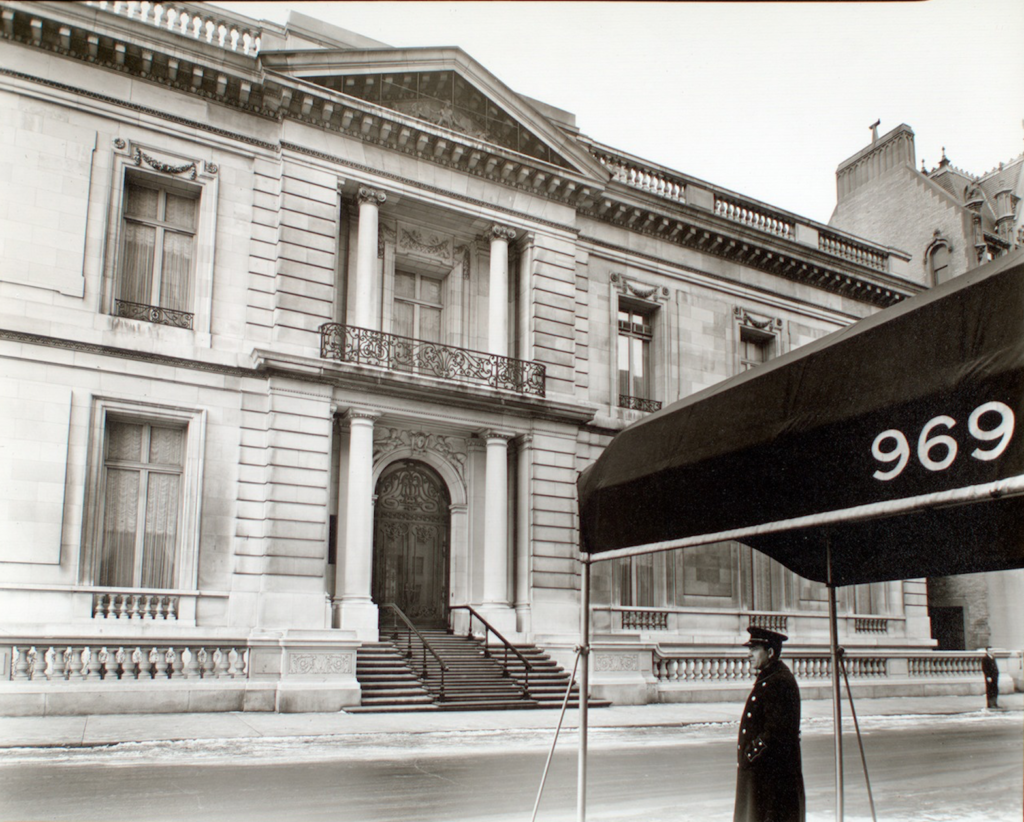
The mansion of James B Duke, 1938. The house still exists, as does the apartment complex (and its awning) across the street.


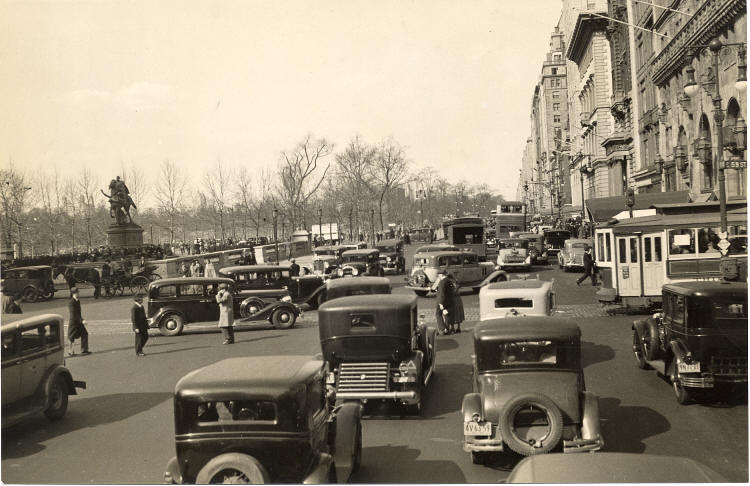
A confusion of automobile traffic along Grand Army Plaza, 1930

The new Bergdorf Goodman in 1930, replacing the old Vanderbilt mansion.


OTHER PODCAST LISTENING related to this show:

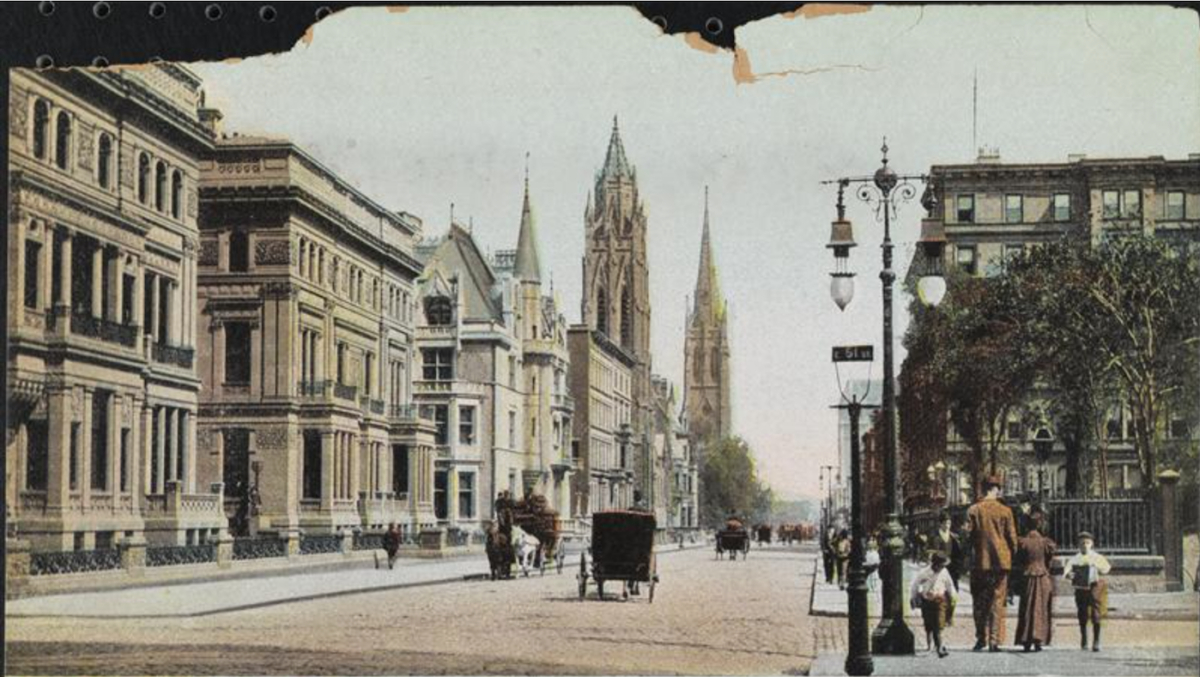
At top: A colorized image of Fifth Avenue from 1908 from Shorpy. Click here to see the original in deeper detail

Categories
Podcasts The Jazz Age

The Wall Street Crash of 1929: The sobering end of New York’s Jazz Age

This is the final part of our three-part NEW YORK IN THE JAZZ AGE podcast series. Check out our two prior episode #233 The Roaring ’20s: The King of the Jazz Age and #234 Queen of the Speakeasies: A Tale of Prohibition New York


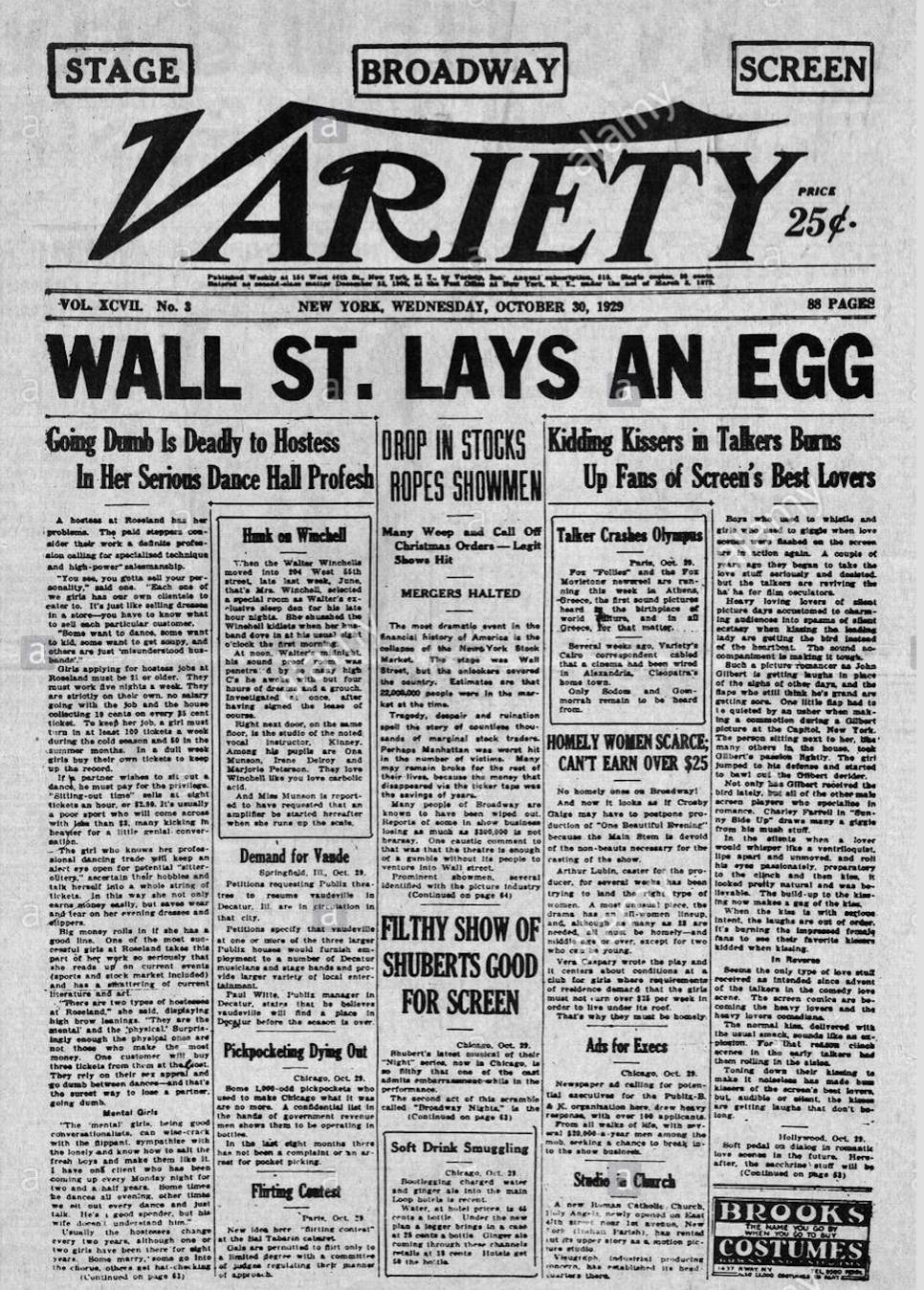
Something so giddy and wild as New York City in the Jazz Age would have to burn out at some point. But nobody expected the double catastrophe of a paralyzing financial crash and a wide-ranging government corruption scandal.

Mayor Jimmy Walker, in a race for a second term against a rising congressman named Fiorello La Guardia, might have had a few cocktails at the Central Park Casino after hearing of the pandemonium on Wall Street in late October 1929.

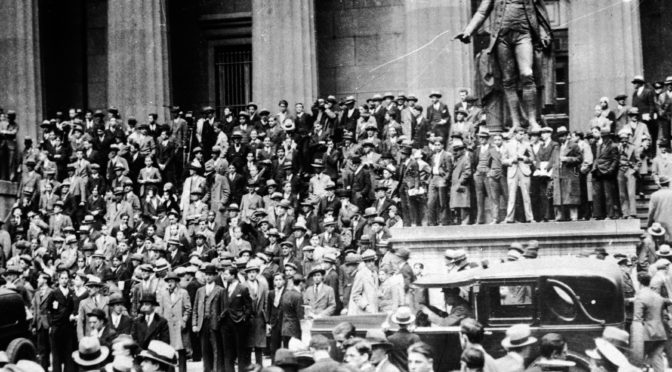
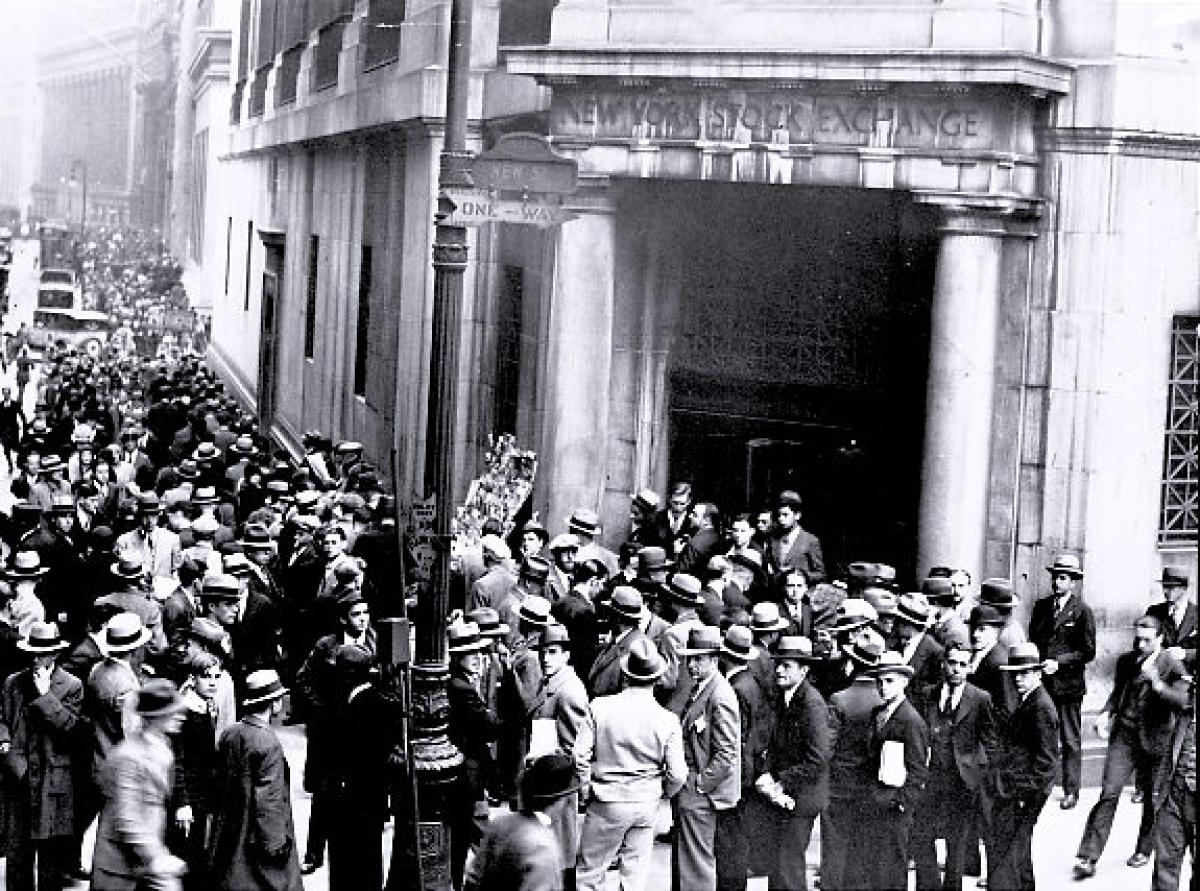
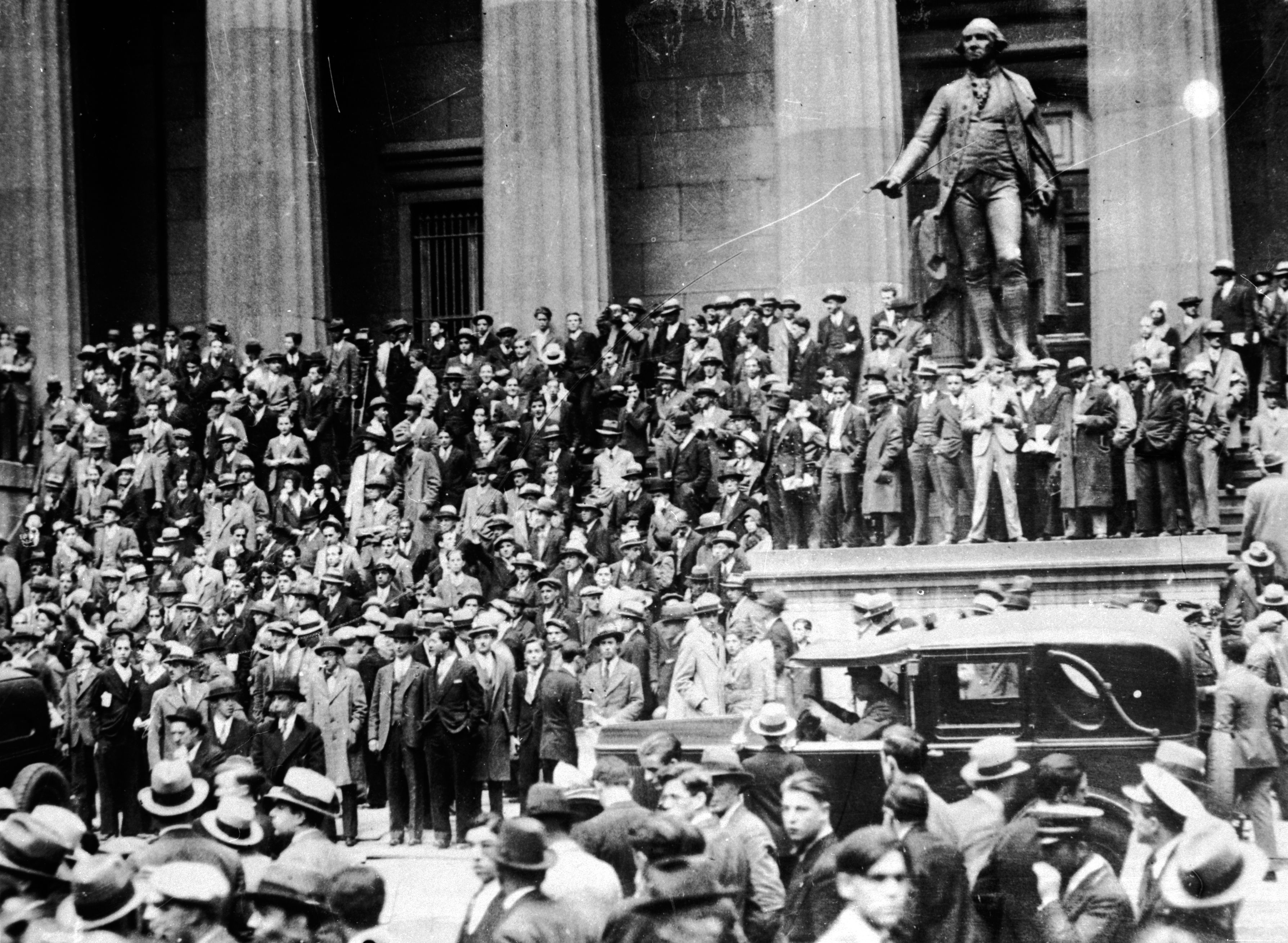
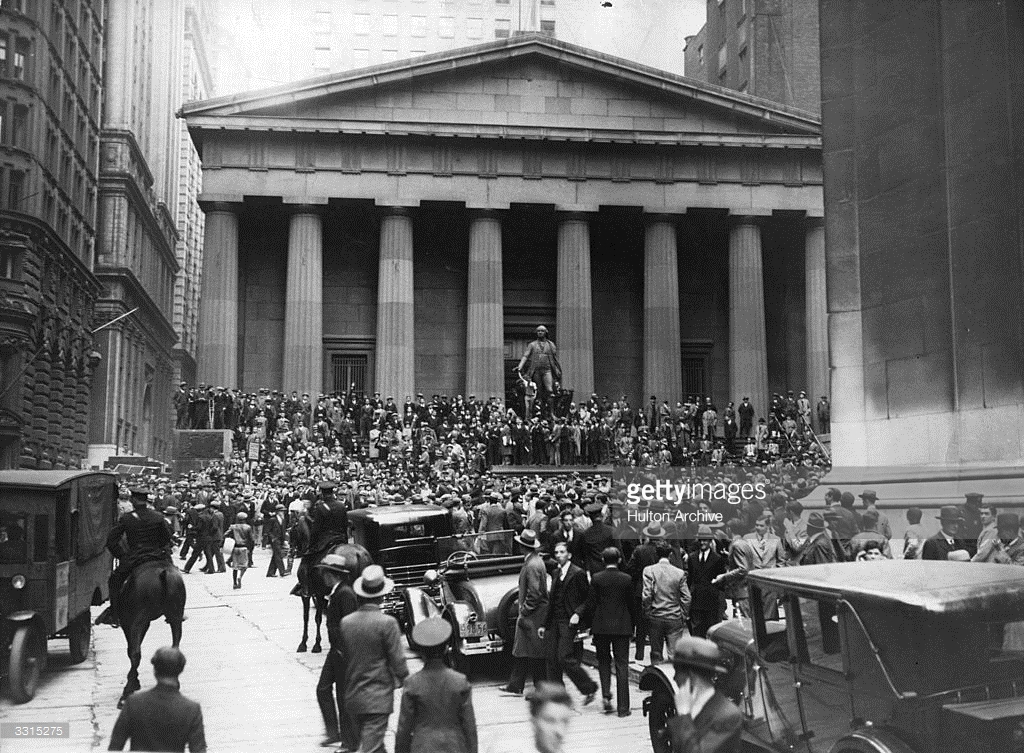
The irresponsible speculation fueling the stock market of the Roaring 20’s suddenly fell apart, turning princes into paupers overnight. Rumors spread among gathering crowds in front of the New York Stock Exchange of distraught traders throwing themselves out windows.

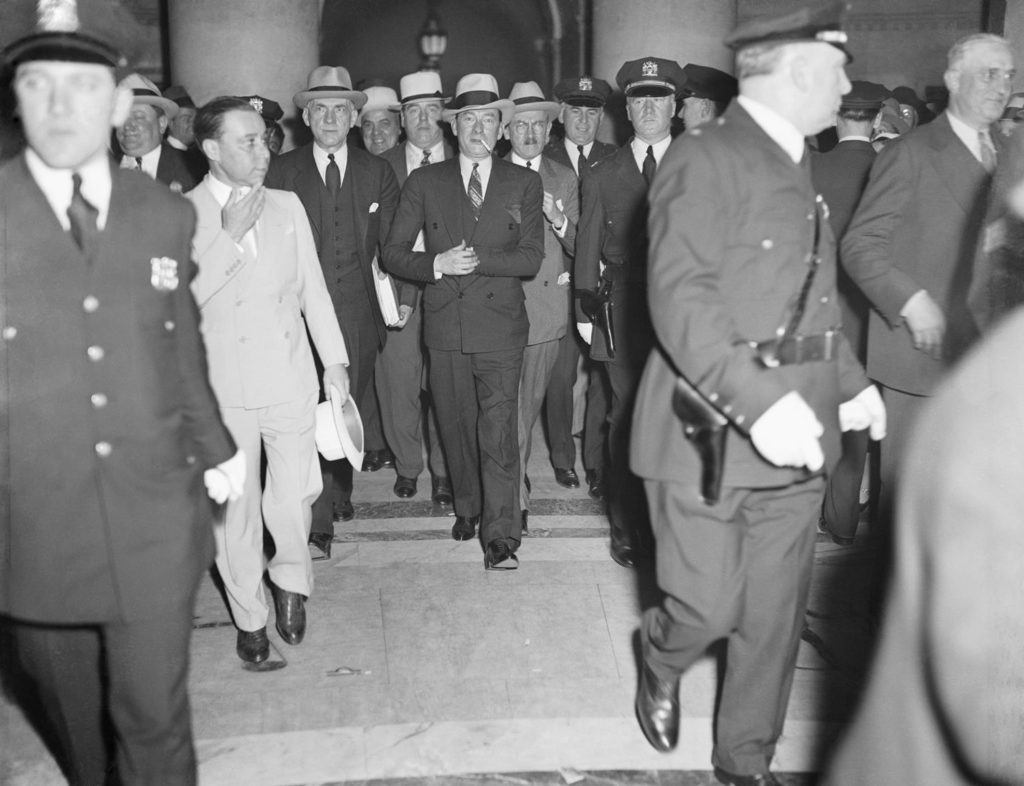
And yet a more immediate crisis was awaiting the Night Mayor of New York — the investigations of Judge Samuel Seabury, steering a crackdown authorized by governor Franklin Delano Roosevelt to rid New York City of its deeply embedded, Tammany Hall-fueled corruption.

With the American economy in free fall and hundreds of New York politicians, police officers and judges falling to corruption revelations, the world needed a drink! Counting down to the last days of Prohibition….

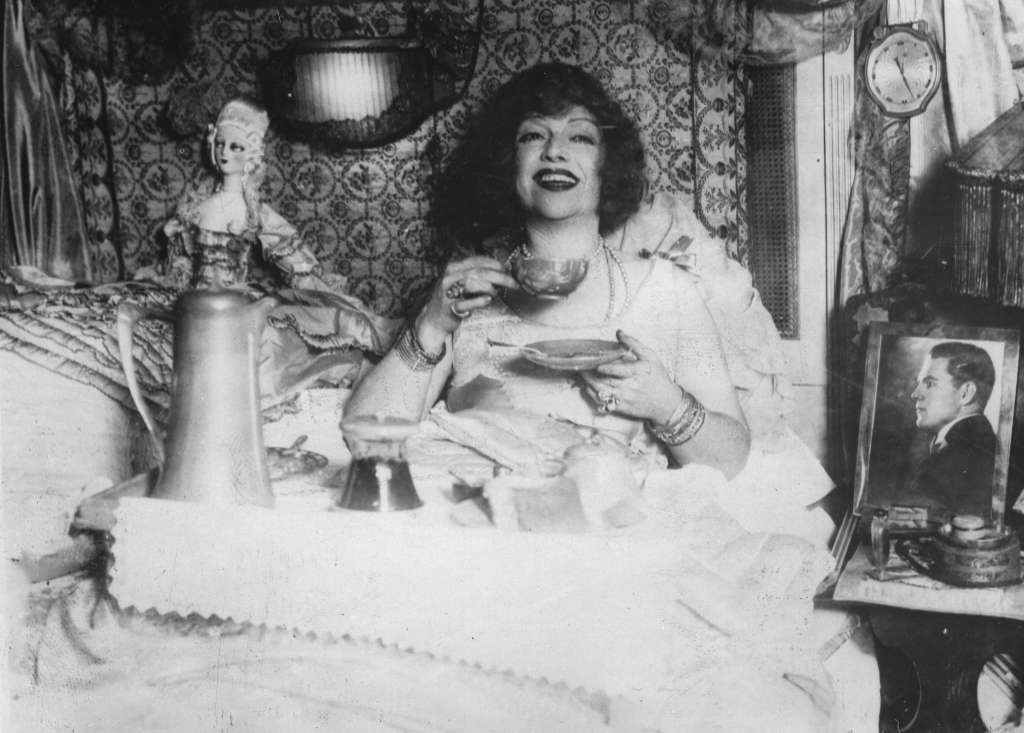
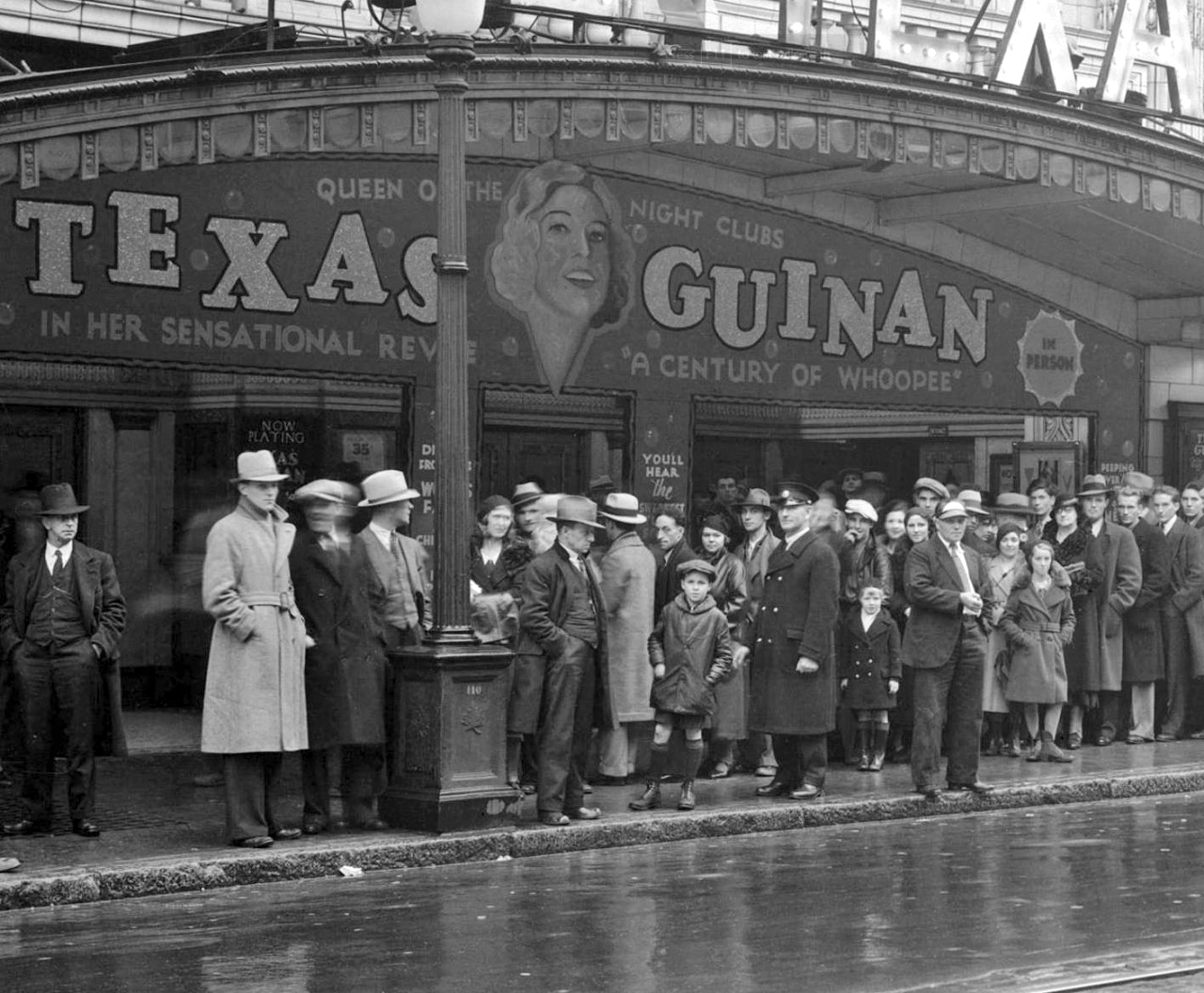
PLUS: The fate of Texas Guinan, the movie star turned Prohibition hostess who hit the road with a bawdy new burlesque — that led to a tragic end.

The song featured in this week’s episode was Bessie Smith’s “Nobody Knows You When You’re Down and Out”


The Bowery Boys: New York City History podcast is brought to you …. by you!

We are now producing a new Bowery Boys podcast every two weeks. We’re also looking to improve the show in other ways and expand in other ways as well — through publishing, social media, live events and other forms of media. But we can only do this with your help!

We are now a member of Patreon, a patronage platform where you can support your favorite content creators for as little as a $1 a month.

Please visit our page on Patreon and watch a short video of us recording the show and talking about our expansion plans.If you’d like to help out, there are five different pledge levels (and with clever names too — Mannahatta, New Amsterdam, Five Points, Gilded Age, Jazz Age and Empire State). Check them out and consider being a sponsor.

We greatly appreciate our listeners and readers and thank you for joining us on this journey so far. And the best is yet to come!


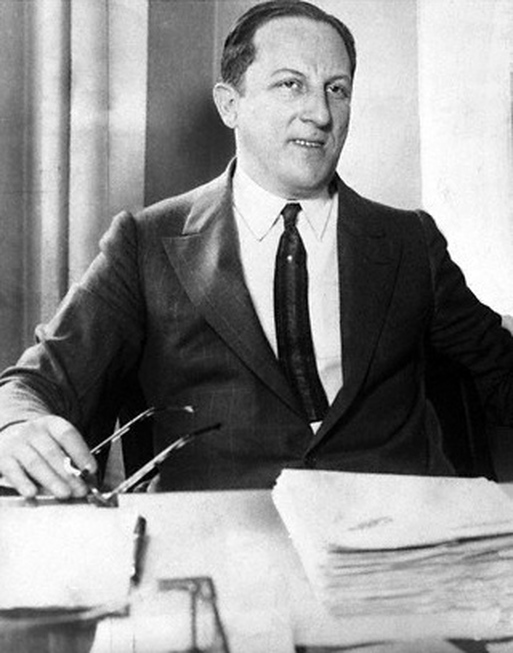
Arnold Rothstein — His murder would kick off a frenzy in New York’s organized crime syndicates and lead to an in-depth investigation into the police and local government

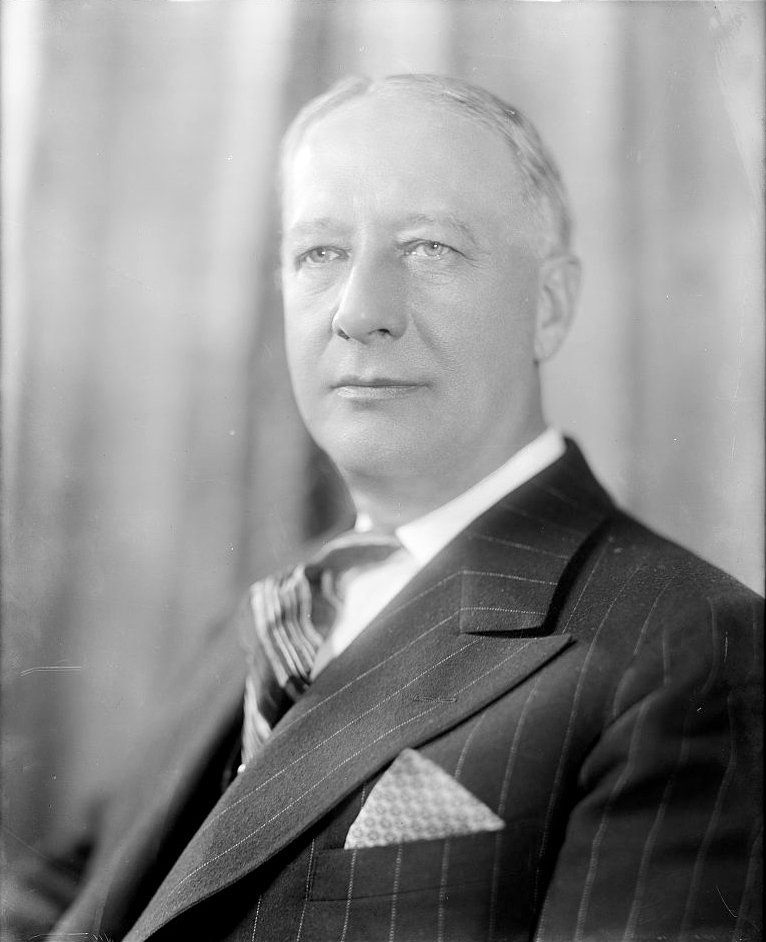
Al Smith — His unsuccessful bid for the presidency in 1928 led him to pursue more business-related projects, including the construction of the Empire State Building.

Harris & Ewing collection at the Library of Congress.

Mayor Jimmy Walker felt invincible at the start of his second term

Texas Guinan eventually left the nightclub scene and returned to film and stage work. She’s pictured here in 1931 in Paris. She would later be denied entry into the country for her bawdy performances (at least, that’s what she claimed).

Getty Images

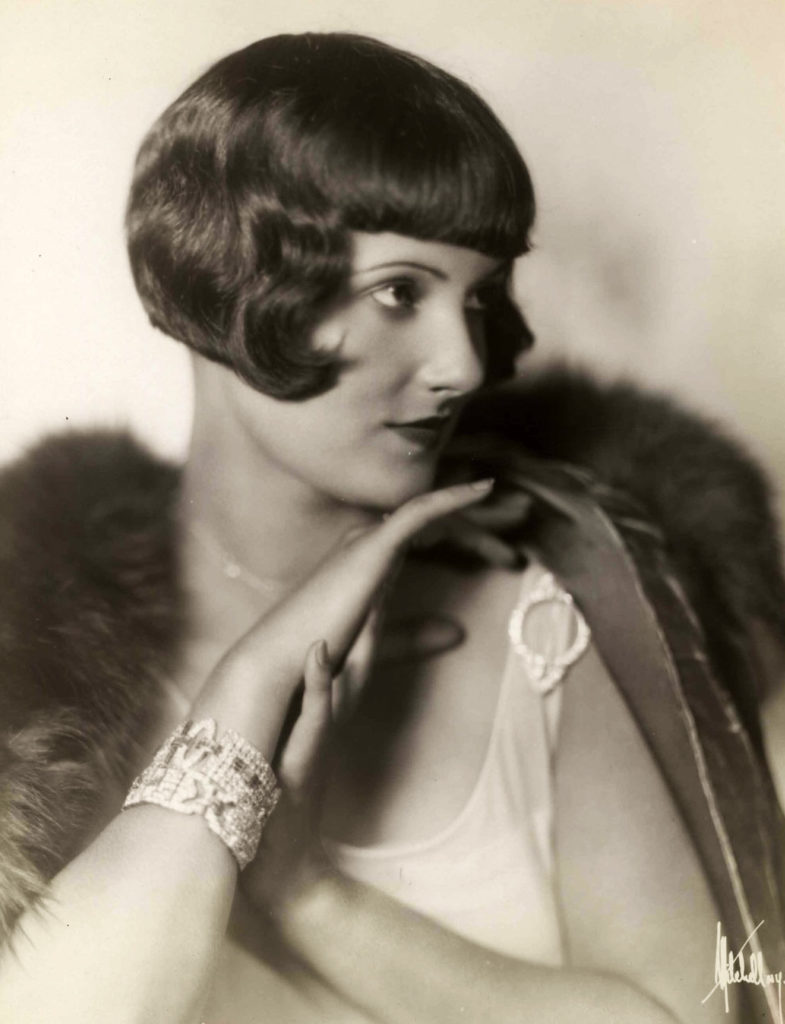
Betty Compton waited patiently for Walker from the sidelines, watching as his political fortunes collapsed in 1932.

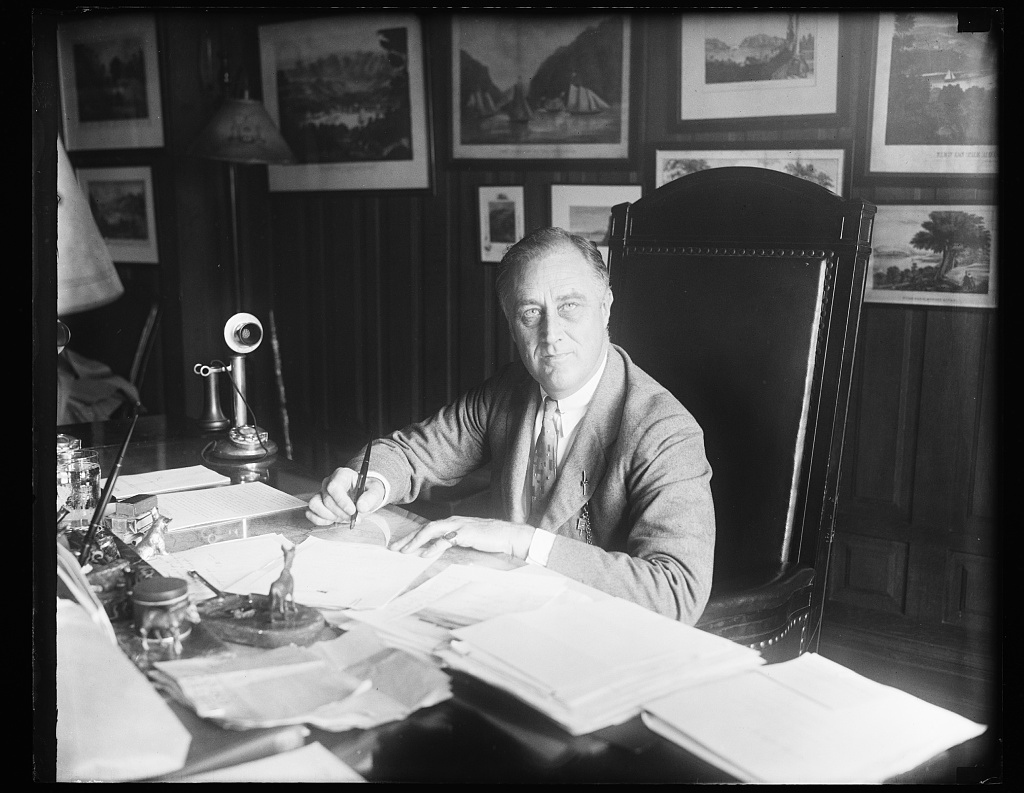
Franklin Delano Roosevelt — The governor of New York (and soon president of the United States) went after corruption during a busy campaign season.

Library of Congress

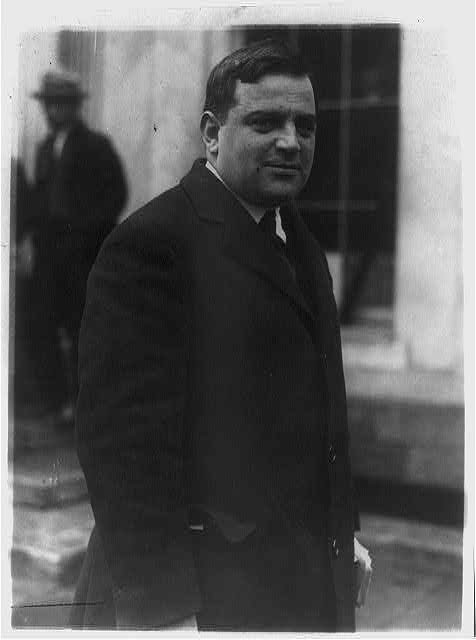
Fiorello La Guardia (pictured here in 1929) was an early supporter of Prohibition repeal and ran for mayor in 1929, losing to Walker.

Library of Congress

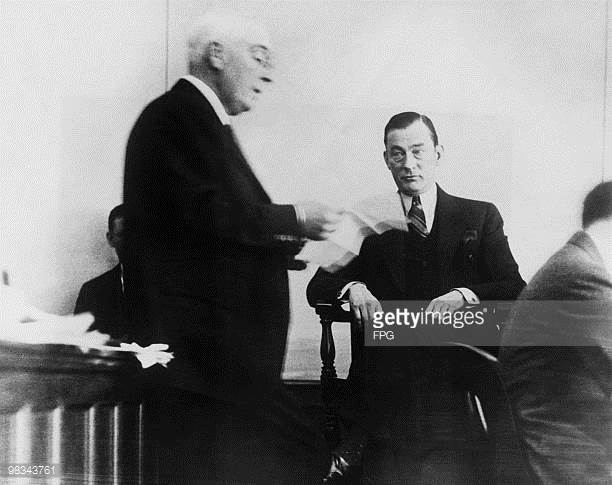
Samuel Seabury, questioning a nonplussed Jimmy Walker on the stand, succeeded in rooting out corrupt officials in public offices. With Roosevelt’s help, he even brought down the Night Mayor himself.

Getty Images

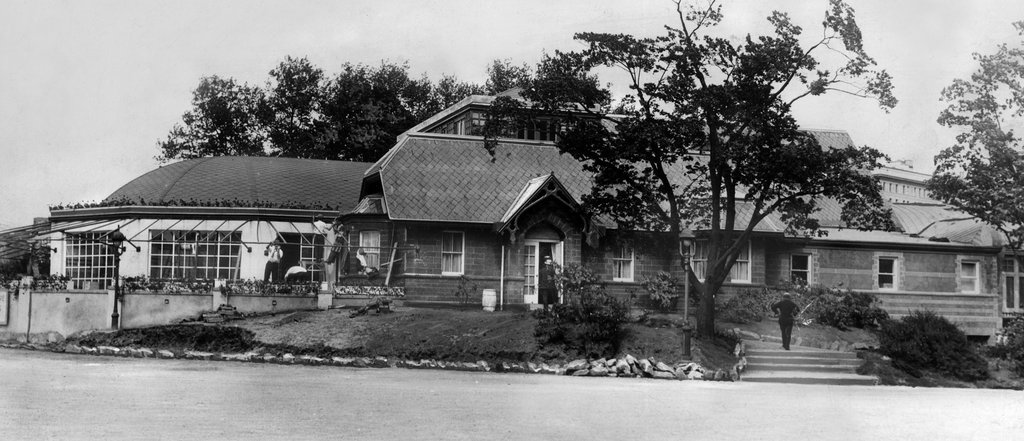
The Central Park Casino transformed into a swanky nightclub in 1929, a favored spot for Jimmy Walker

Courtesy New York Times

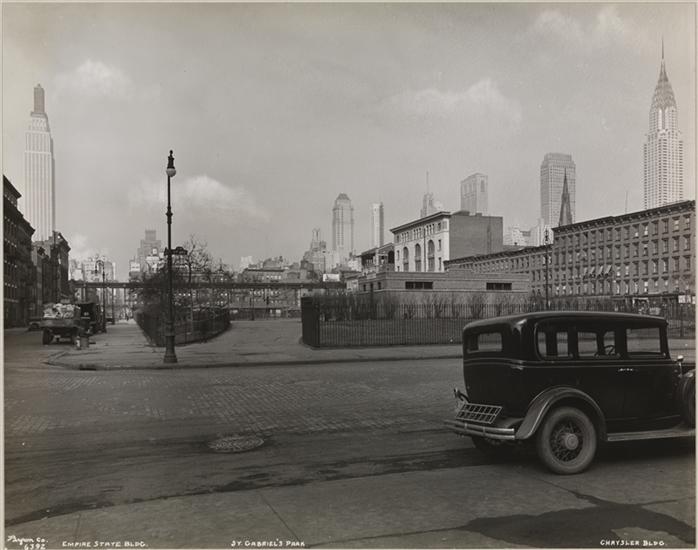
An interesting view of mid-Manhattan in 1931 (from St. Gabriel’s Park at First Avenue and 35th Street) with the newly completed Chrysler Building and the Empire State Building nearly completed.

MCNY/Byron Company

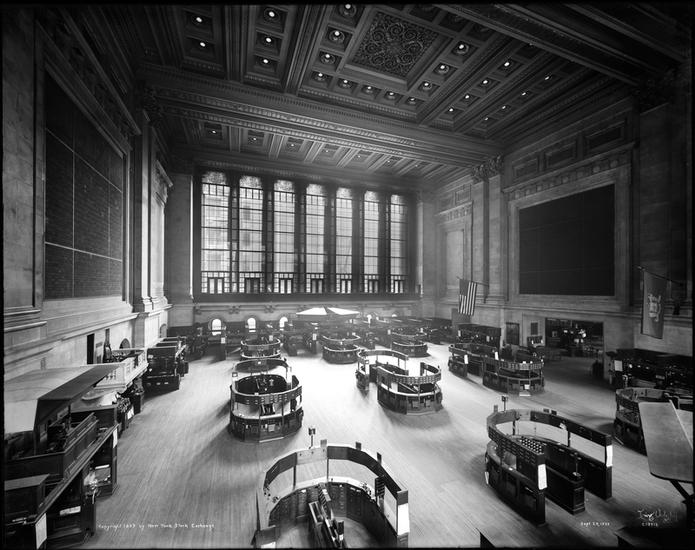
An ominous image of the New York Stock Exchange from September 1929, weeks before the crash.

Irving Underhill/MCNY

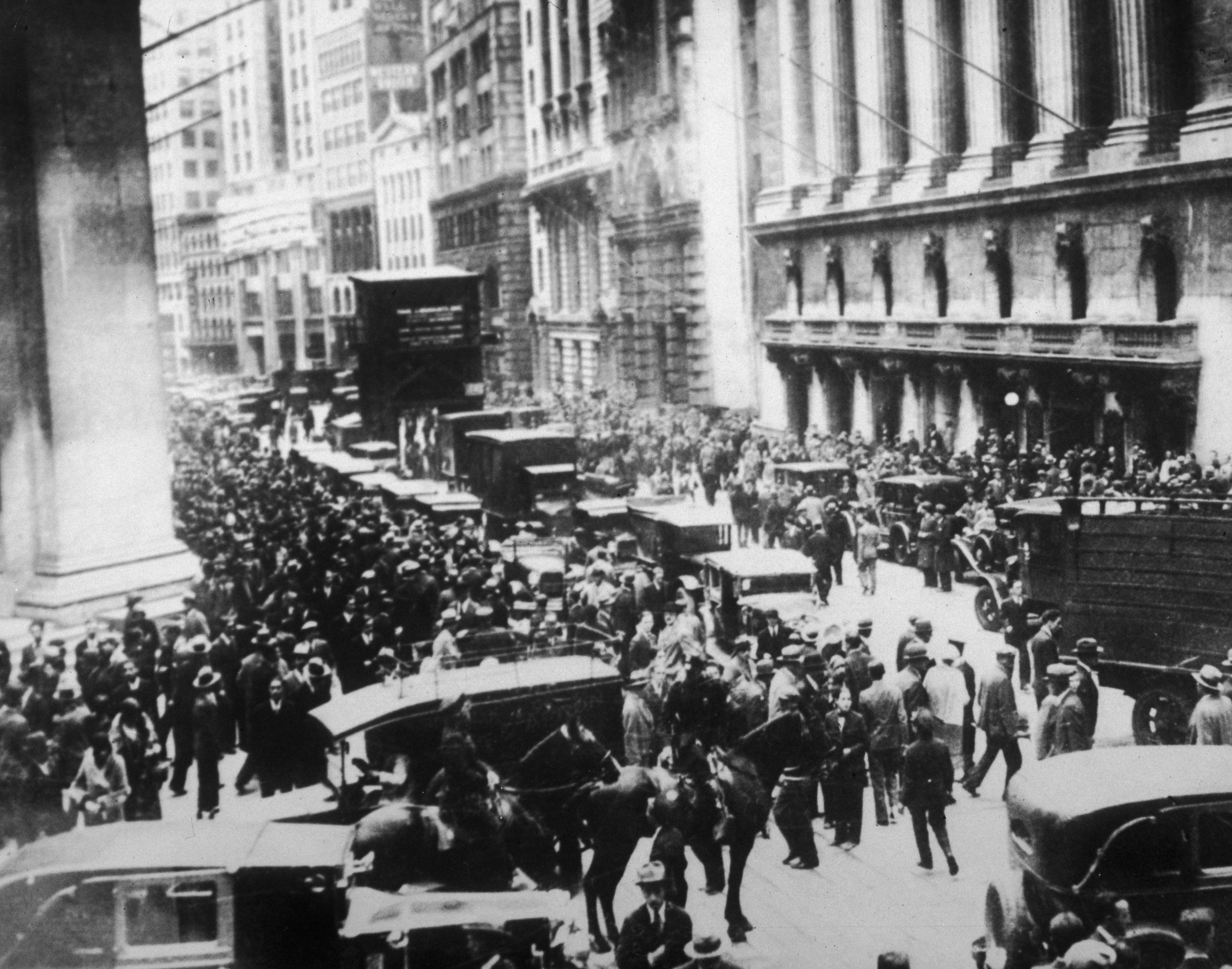
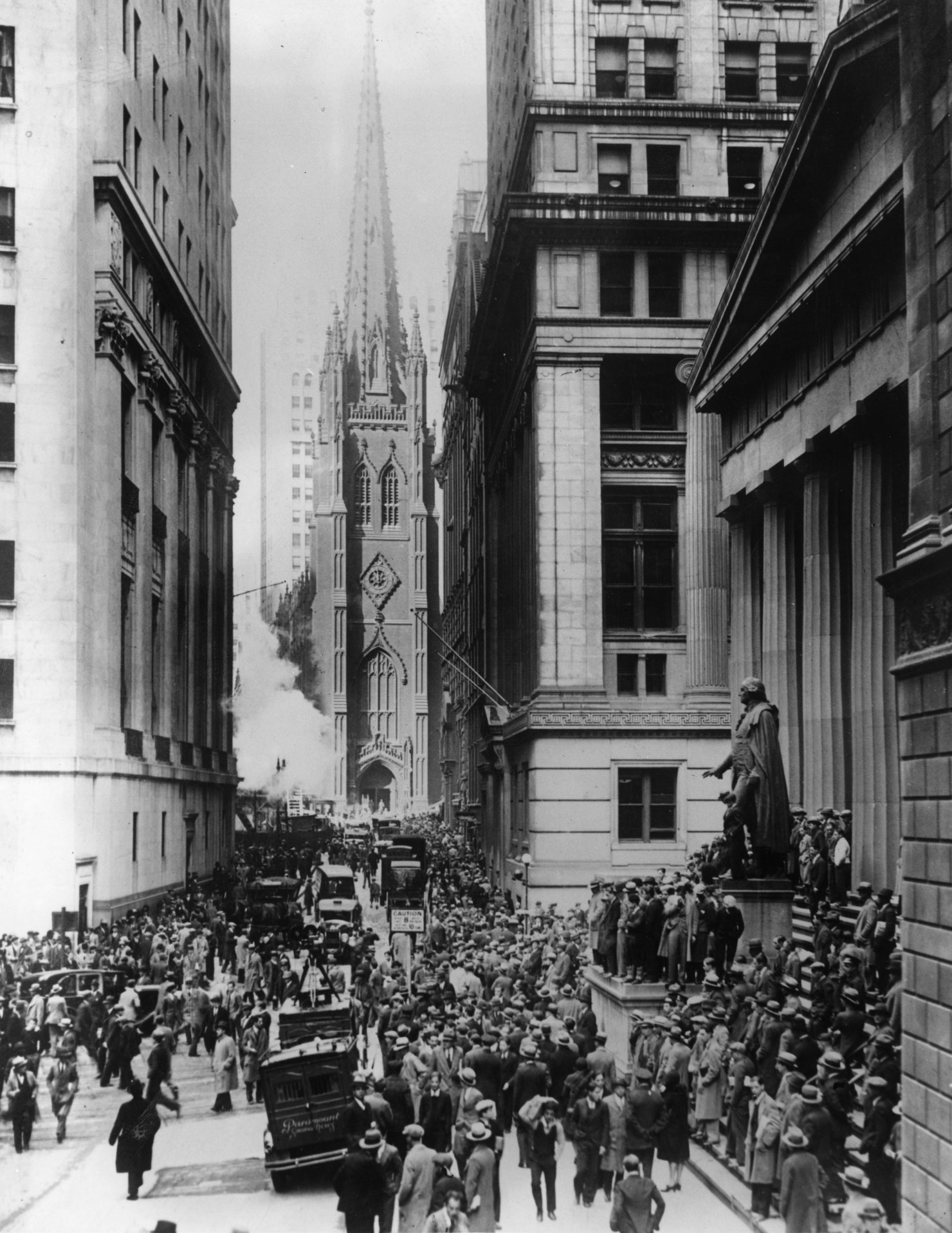
The streets outside the New York Stock Exchange were clogged with people for days, frantic scenes of anger, panic and heartbreak.

29th October 1929. (Photo by Hulton Archive/Getty Images)
New York Daily News
(Photo by Keystone/Getty Images)

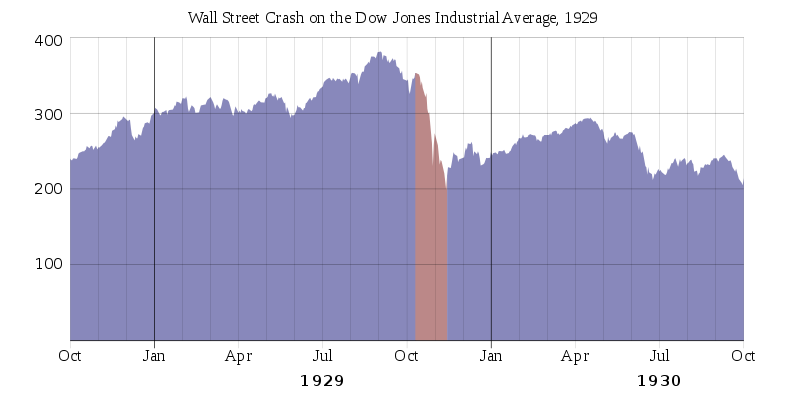
A graphic look at the Wall Street Crash of 1929.

Wikicommons

Outside Vancouver’s Beacon Theatre on October 28, 1933, just a week before her death here in this city.


CORRECTION: Jimmy Walker’s second term began on January 1, not January 3.

For more information, check out the following books:

Dry Manhattan: Prohibition in New York City by Michael A. Lerner

The Great Crash by John Kenneth Galbraith

Once Upon A Time In New York by Herbert Mitgang

The Man Who Rode The Tiger: The Life and Times of Judge Samuel Seabury by Herbert Mitgang

Rothstein: The Life, Times, and Murder of the Criminal Genius Who Fixed the 1919 World Series by David Pietrusza

Other Bowery Boys podcasts related to this one:

The Tallest Building In New York: A Short History (#169)

Battle For The Skyline: How High Can It Go? (#199)

The Chrysler Building (#11)

Robert Moses (#100)

Categories
Mysterious Stories Podcasts

Haunted Landmarks of New York : Tourist Terrors in the Big Apple

PODCAST It’s the ninth annual Bowery Boys ghost stories podcast, our seasonal twist on history, focusing on famous tales of the weird and the disturbing at some of New York’s most recognizable locations.

Don’t be frightened! We’re here to guide you through the back alleys … OF TERROR!

In this installment, we take a look at the spectral lore behind some of New York City’s most famous landmarks, buildings with great reputations as iconic architectural marvels and locations for great creativity.

But they’re also filled with ghost stories:

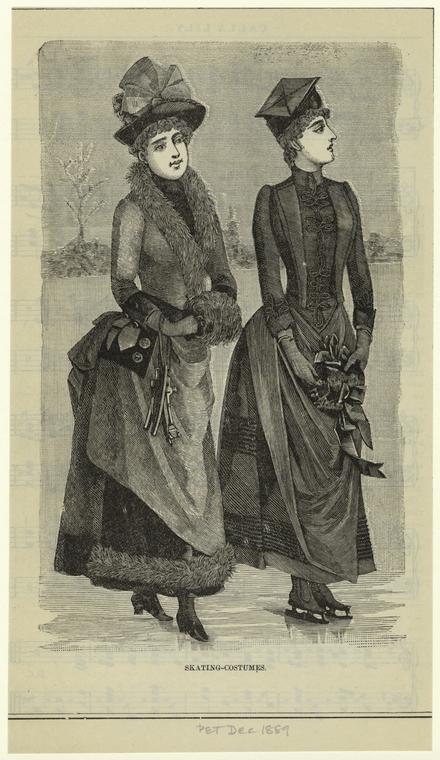
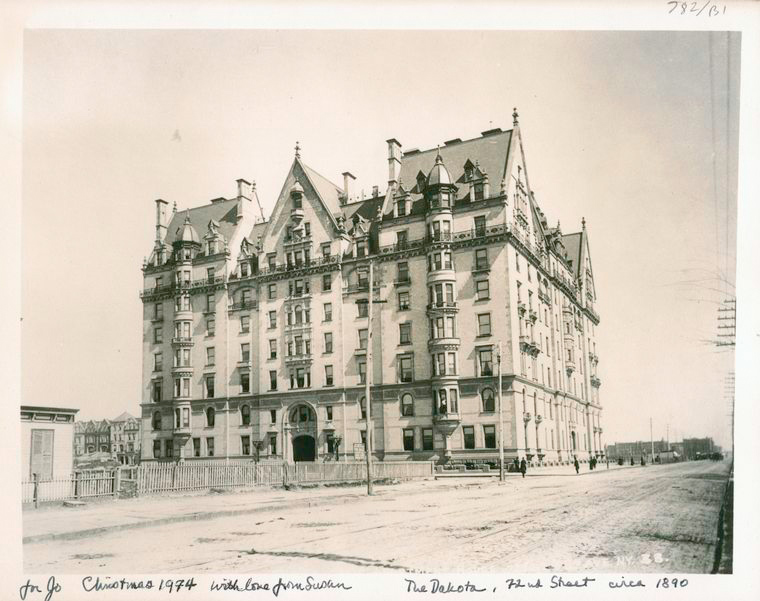
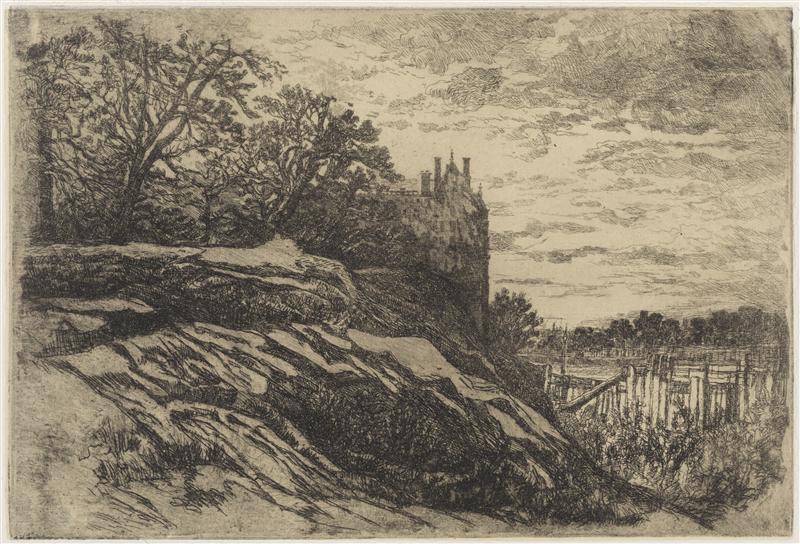
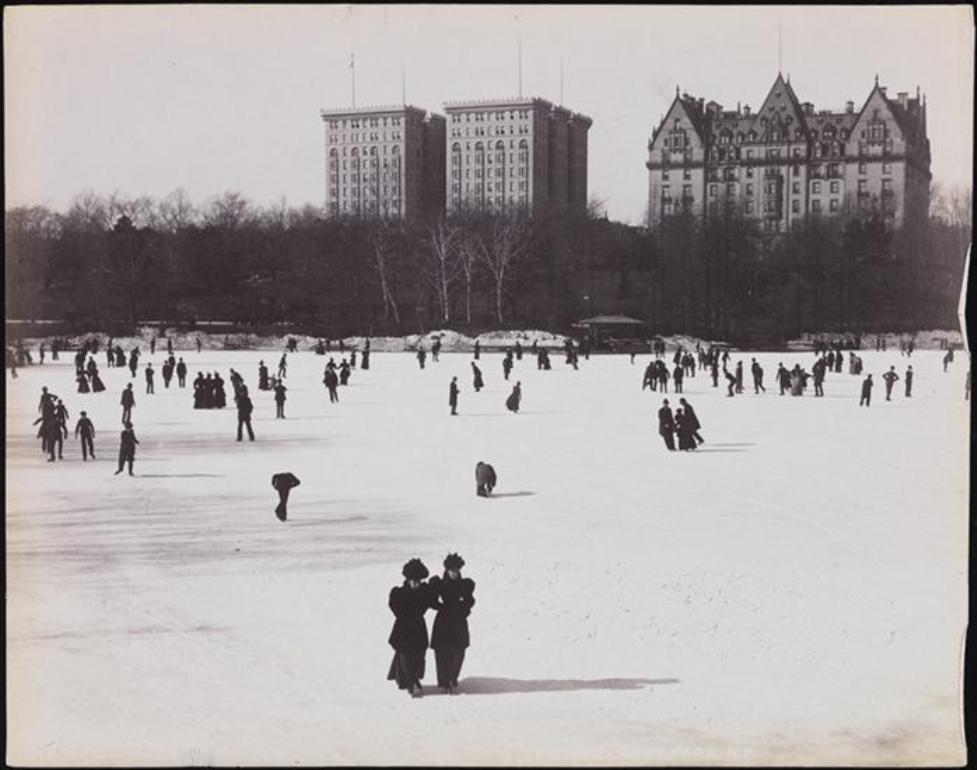
Who are the mysterious sisters in colorful outerwear skating on the icy pond in Central Park? And why are there so many uninvited guests at the Dakota Apartments, one of the first and finest buildings on the Upper West Side?

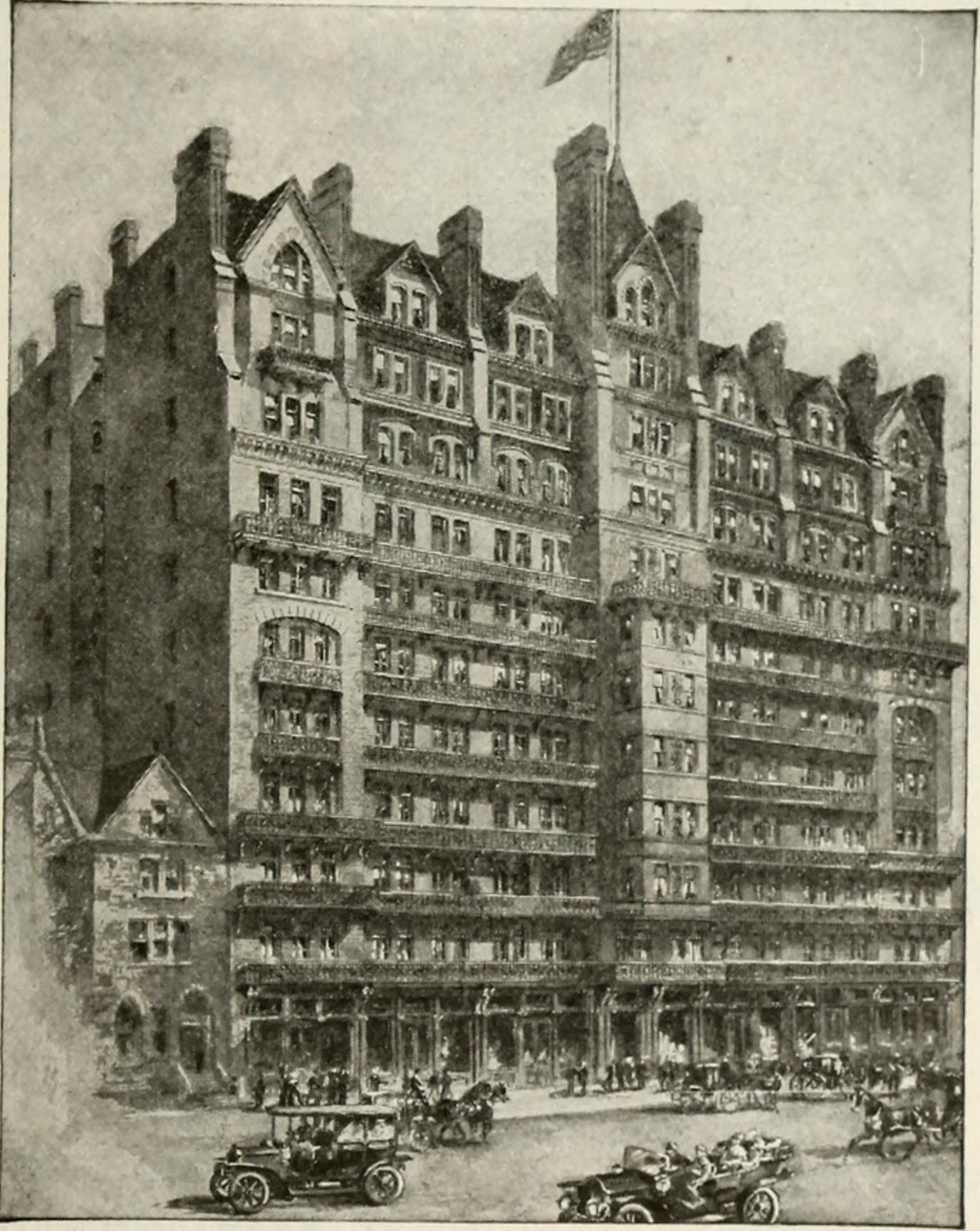
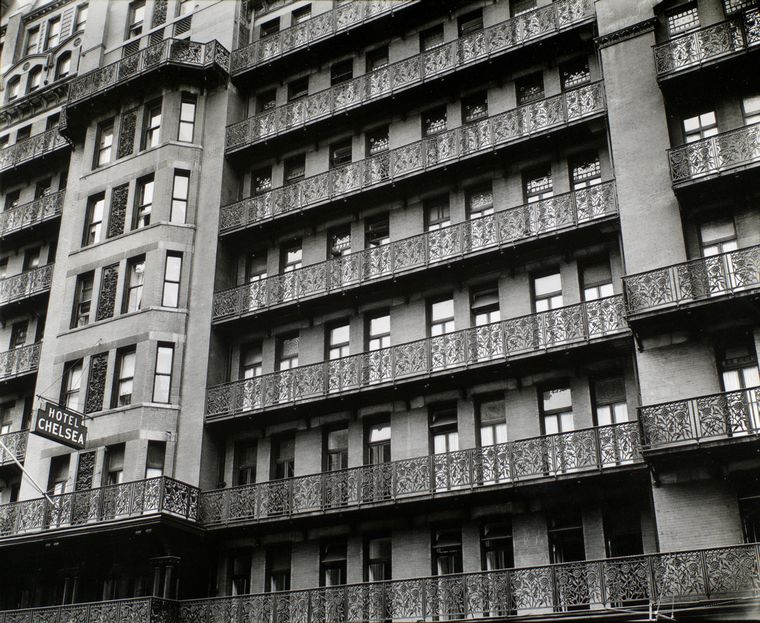
Meanwhile, at the Chelsea Hotel, all the intense creativity that is associated with this great and important location seems to have left an imprint of the afterworld upon its hallways.

Over at Grand Central Terminal, the Campbell Apartment serves up some cocktails — and a few unnatural encounters with Jazz Age spirits.

Finally, on the Brooklyn Bridge, a tragedy during its construction has left its shadow upon the modern tourist attraction. Who’s that up ahead on the pedestrian pathway?

A little spooky fun — mixed with a lot of interesting history — and a few cheesy sound effects!


The Bowery Boys: New York City History podcast is brought to you …. by you!

We are now producing a new Bowery Boys podcast every two weeks. We’re also looking to improve the show in other ways and expand in other ways as well — through publishing, social media, live events and other forms of media. But we can only do this with your help!

We are now a member of Patreon, a patronage platform where you can support your favorite content creators for as little as a $1 a month.

Please visit our page on Patreon and watch a short video of us recording the show and talking about our expansion plans. If you’d like to help out, there are five different pledge levels (and with clever names too — Mannahatta, New Amsterdam, Five Points, Gilded Age, Jazz Age and Empire State). Check them out and consider being a sponsor.

We greatly appreciate our listeners and readers and thank you for joining us on this journey so far. And the best is yet to come!


Two women in fashionable skating garments 1889. Perhaps similar to the ensembles worn by Janet and Rosette Van Der Voort during their ghostly figure eights in Central Park.

New York Public Library


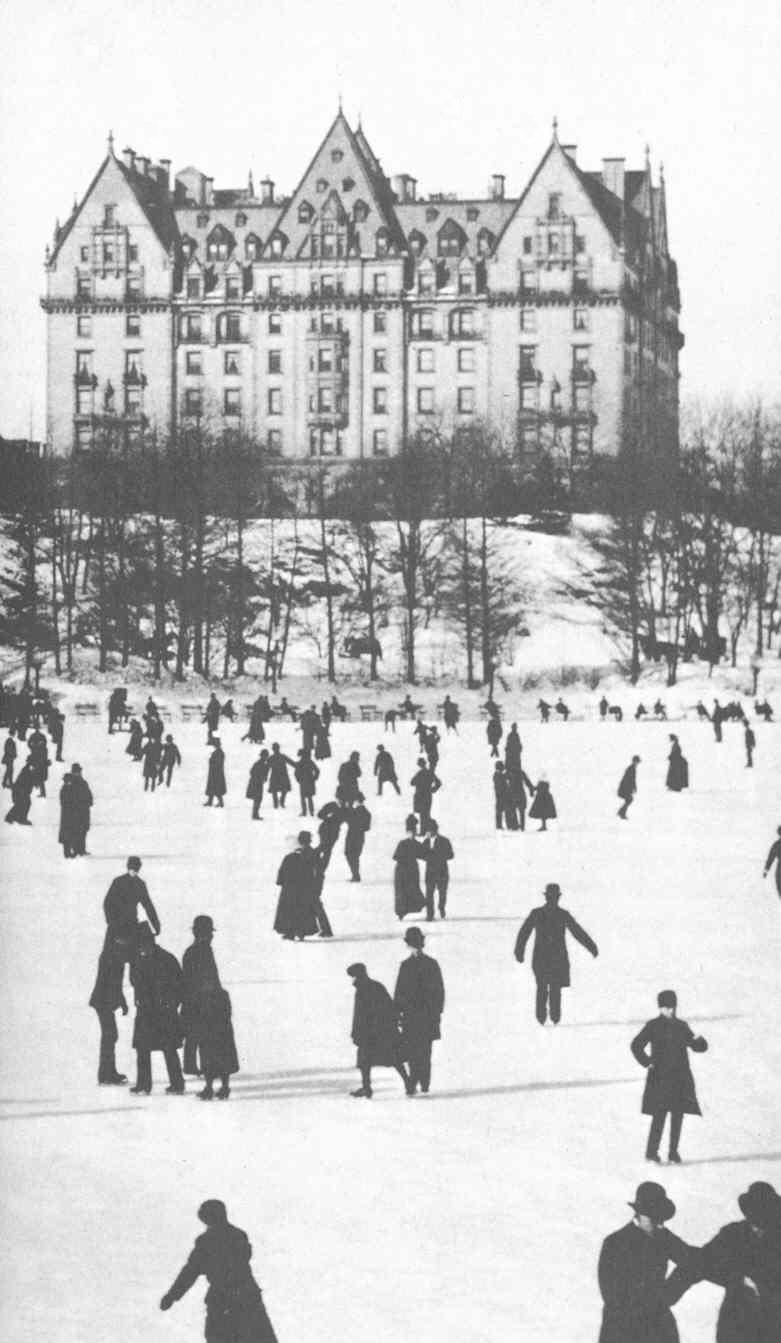
A famous image of the Dakota Apartment — all alone on the Upper West Side landscape — with skaters enjoying the frozen pond on a cold winter’s day.
The_Dakota_1880s

The Dakota photographed in 1890/

Courtesy New York Public Library


A haunting illustration by Eliza Greatorex from 1885 showing “The Dakota behind a rock at 72nd Street and Bloomingdale Road.”

1
Courtesy Museum of the City of New York


The Chelsea Hotel in 1903, one of the premier apartment houses in New York City which eventually became a destination (both short and long-term) for the city’s artistic circles. It also attracted its share of eccentric and even disturbed individuals over the decades.

Internet Book Archvies

Oh what these floors have seen! The Chelsea in 1936.

Courtesy Berenice Abbott

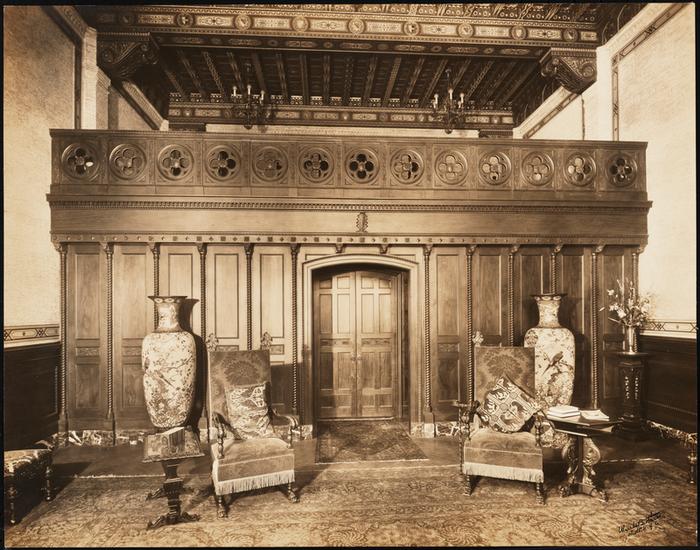
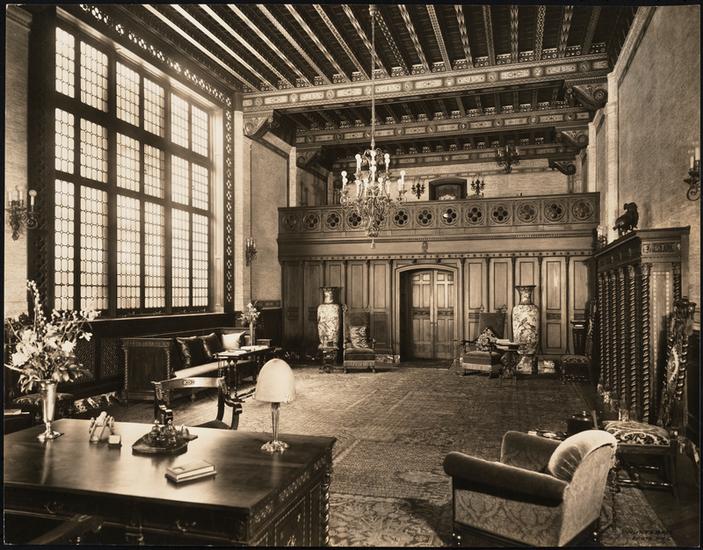
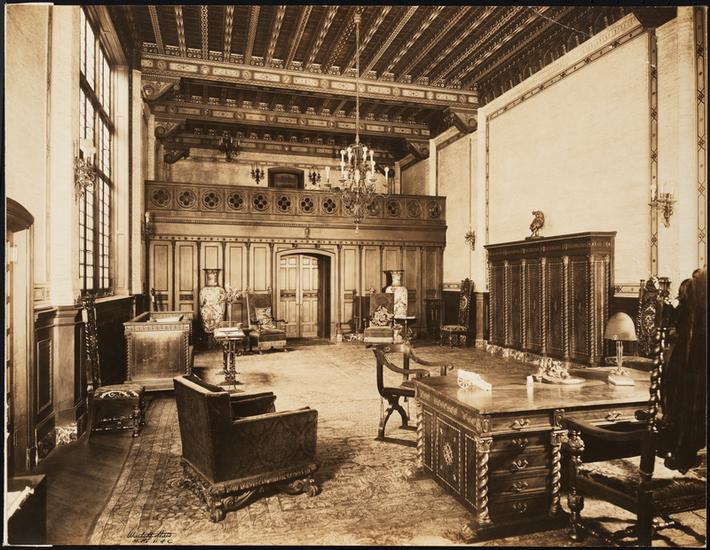
The interiors of the Campbell Apartment, back when it was an actual office. Are the ghosts of former party guests still enjoying the room’s luxurious trappings? More information at this blog post at the Museum of the City of New York. All photos, taking in 1923, by the Wurts Brothers.

Courtesy Museum of City of New York


2
Courtesy Museum of City of New York


Courtesy Museum of the City of New York

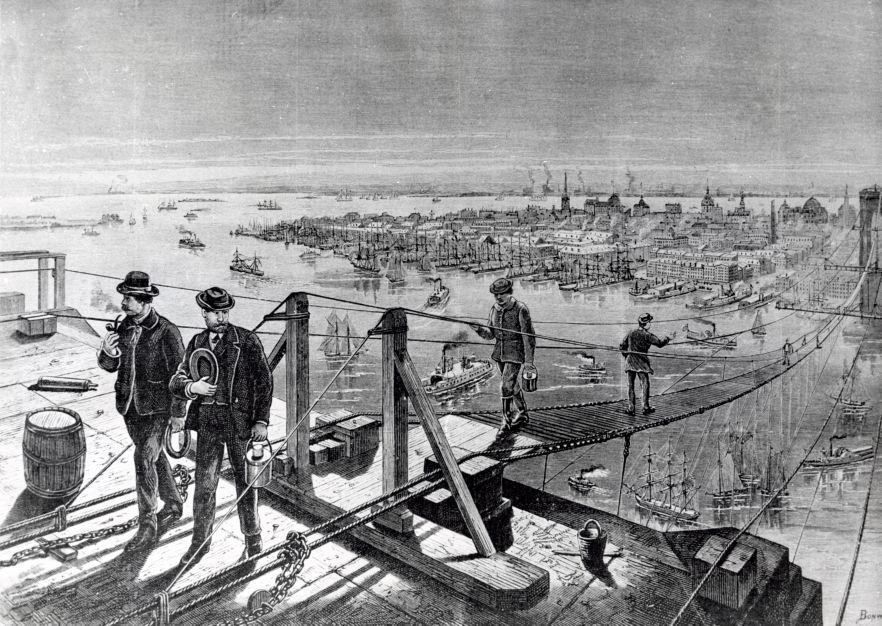
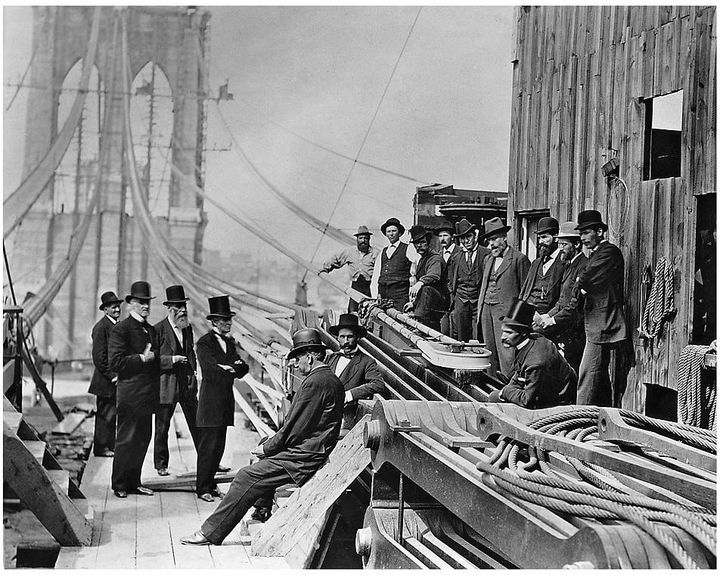
Workers upon the Brooklyn Bridge, a dangerous work environment where dozens of men were injured over the course of its construction.

1

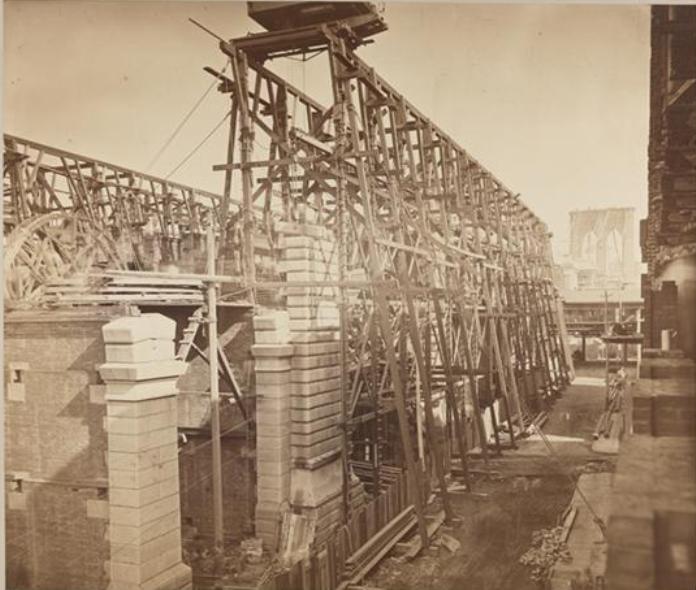
Construction of the approach to the bridge on the New  York side.

MNY146544
Courtesy Museum of the City of New York


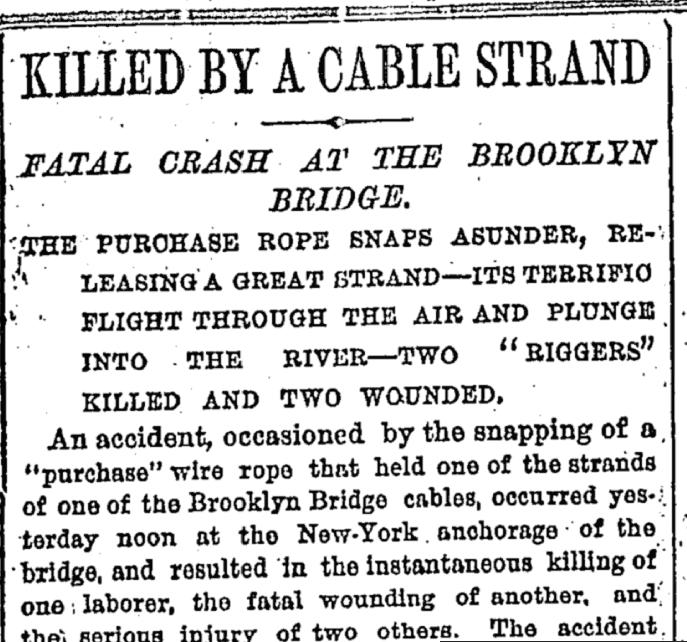
From the New York Times article regarding the unfortunate tragedy on the Brooklyn Bridge. Read the whole article here.

Courtesy New York Times

The scene at the bridge a few months after the accident — October 1878.

Courtesy New York Times


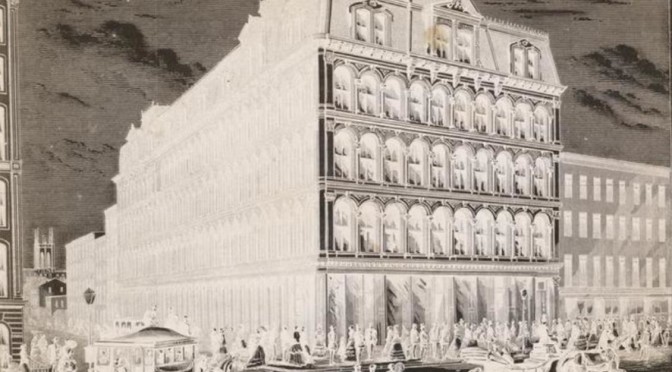
The picture at top is a reversed negative of the Methodist publishing and mission buildings, corner of Broadway and 11th Street, New York. [source]

Categories
Religious History

Happy Pope Day! A history of the holiest of New York tourists

Pope Francis arrives in New York City today — part of his first-ever trip to the United States — and the city is rolling out the red carpet. In fact, all available carpets are being rolled out and even some throw rugs.

New York loves Popes. (Not always of course.) Only the Marquis de Lafayette and the Beatles have been treated to more rapturous displays of welcome by New York City residents.

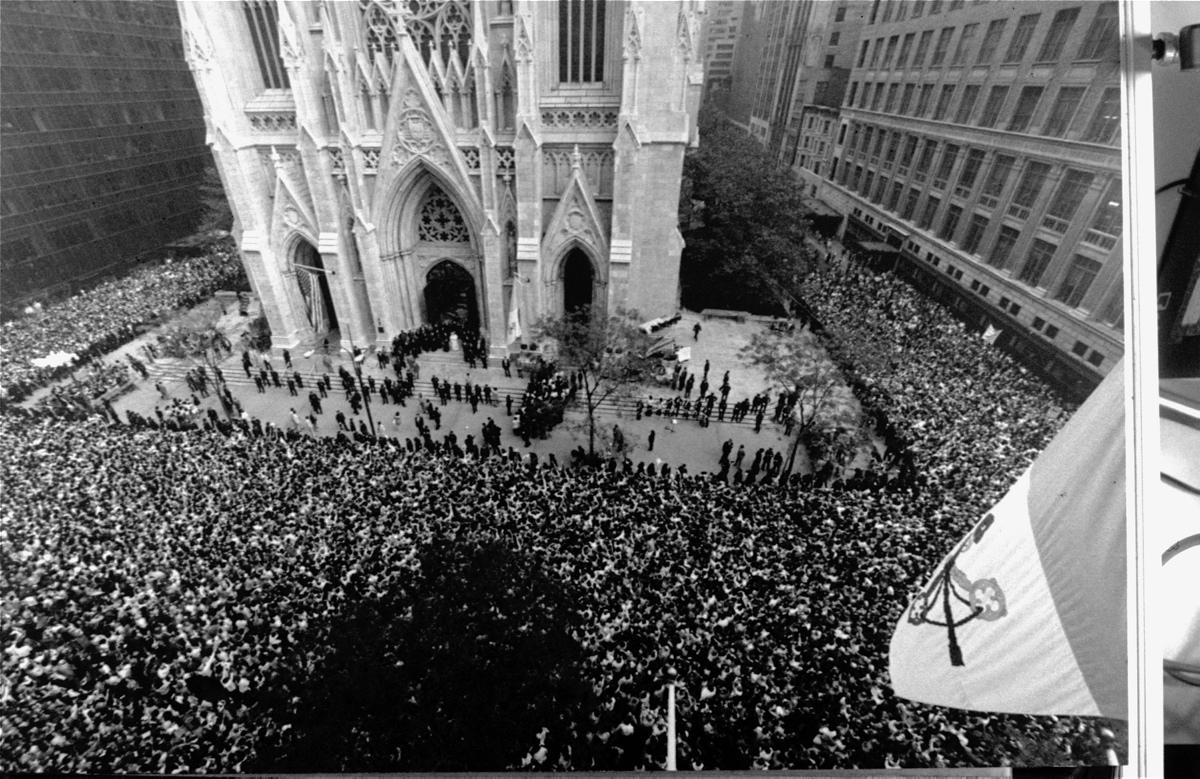
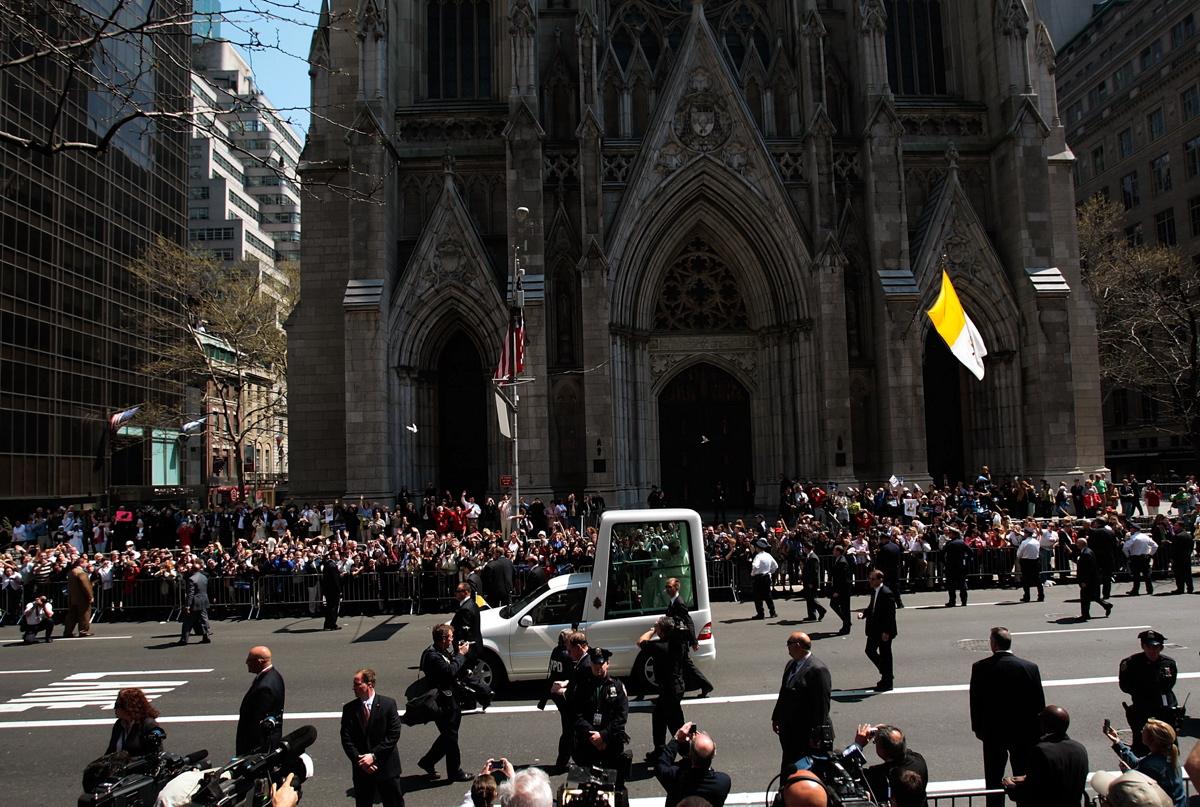
The city has been host to four previous papal visits, and in each case, Saint Patrick’s Cathedral has naturally been the manic center of activity. In fact three such visits have been immortalized on plaques in front of the cathedral.

But with each trip, the pope in question managed to find a couple other unique corners of the city to visit as well.

THE FIRST POPE

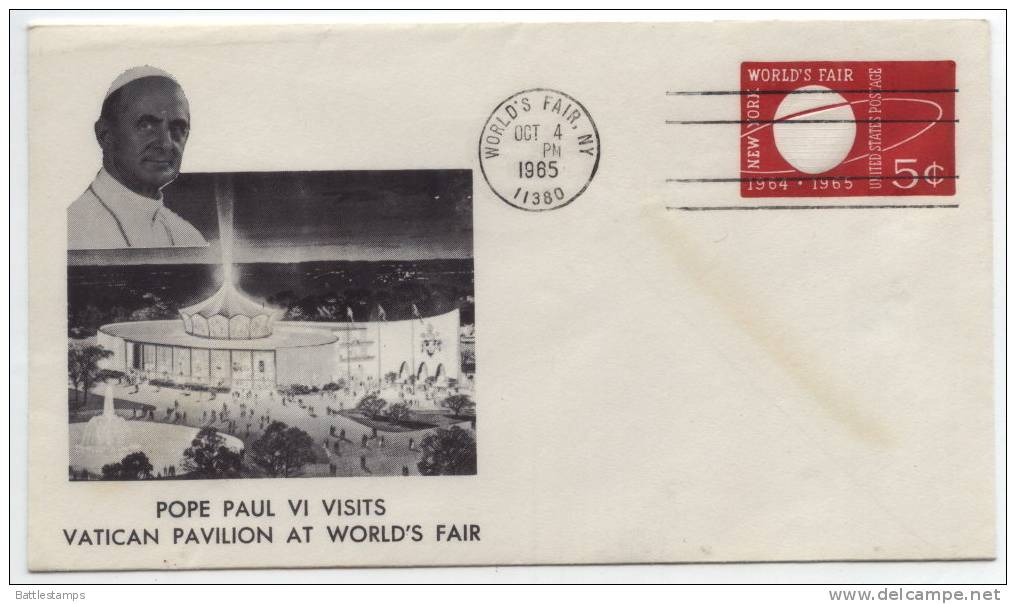
Perhaps the strangest visit of all was the very first — Pope Paul VI, the controversial leader who presided over the Second Vatican Council and made a name for himself traveling all over the world. Finally in an era where a man could be both pope and jetsetter, Pope Paul arrived in New York in October of 1965 and promptly went to visit his old roommate, who was performing in a fair.

Courtesy Delcampe.net

That roommate would be Michelangelo’s Pieta, on loan from St. Peter’s hallways to the Vatican pavilion at the 1964-65 World’s Fair.

The Pope visited the Fair on October 4, 1965, on a busy day that also included mass at Yankee Stadium (the first papal mass ever in the United States), an address to the United Nations, and a meeting in the city with president Lyndon Johnson at the Waldorf-Astoria.

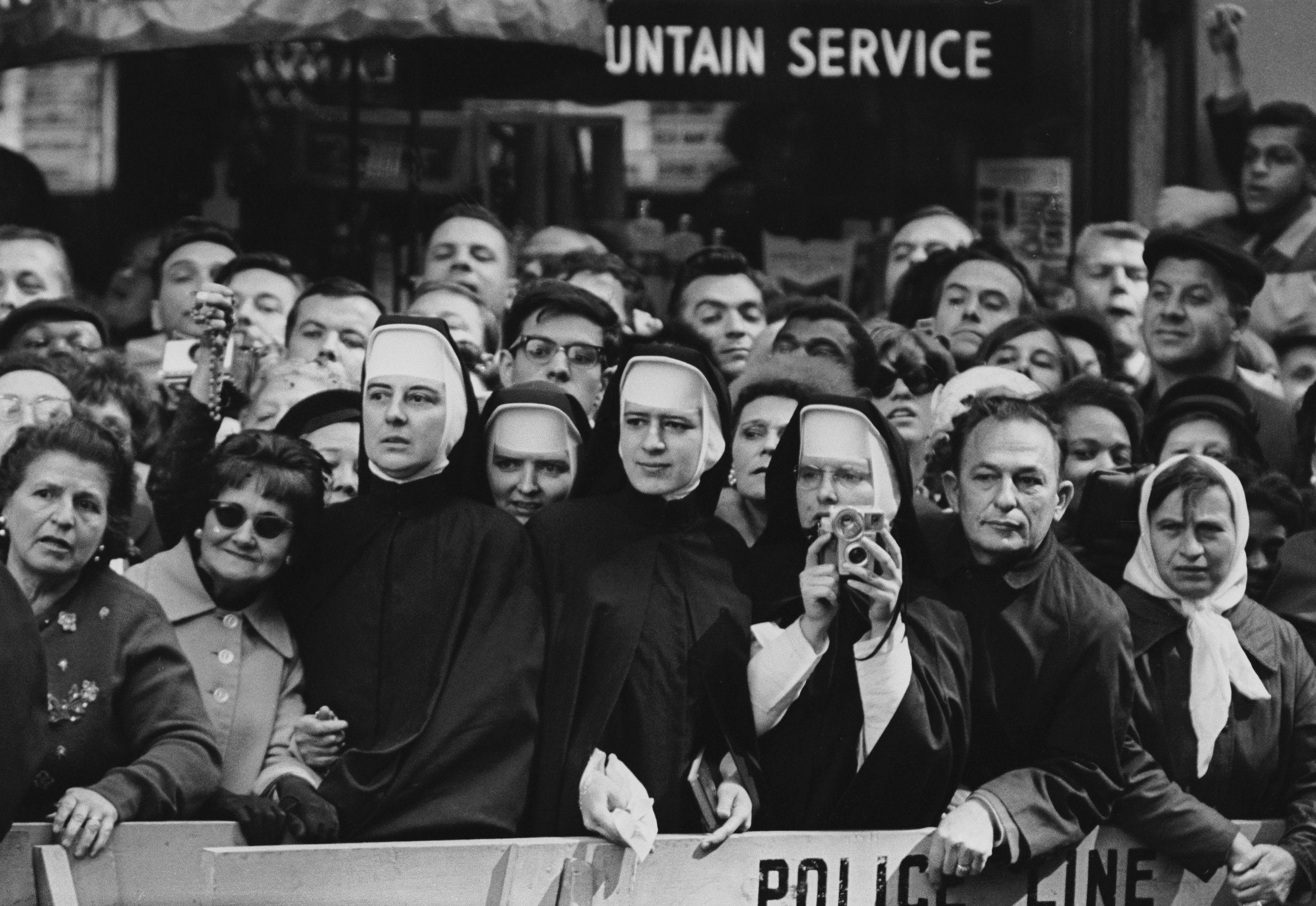
5th October 1965: Photo by Harry Benson/Express/Getty Images

Many will remember the thousands of people who greeted the Pope in the original Pope-mobile (“a closed, bubble-top limousine”) during its 25-mile procession through the city. Here’s a fact to delight your friends and neighbors — the first American bridge ever crossed by a Pope in all of history was the Queensboro Bridge.

Today a rounded bench, or exedra, sits in Flushing Meadows park honoring the moment Pope Paul visited the Pavilion. (It seems that whenever a Pope hovers in a place for more than a few minutes, a plaque or monument springs up in its place.)

By the way, I found this extraordinary page full of great photos about that first Pope-mobile.

Length of his visit: 13 1/2 hours

AP Photo/Courtesy New York Daily News

THE SECOND POPE — FIRST VISIT

But it’s Pope John Paul who’s the real New York favorite; he held the papal throne for so long that he managed two trips to Gotham City — in 1979 and 1995.

His October 1979 trip was like a rock concert tour, also swinging through Philadelphia, Boston, D.C., Chicago and Des Moines. Part of the enthusiasm was because John Paul, at 58 years old, had just been appointed the year before.

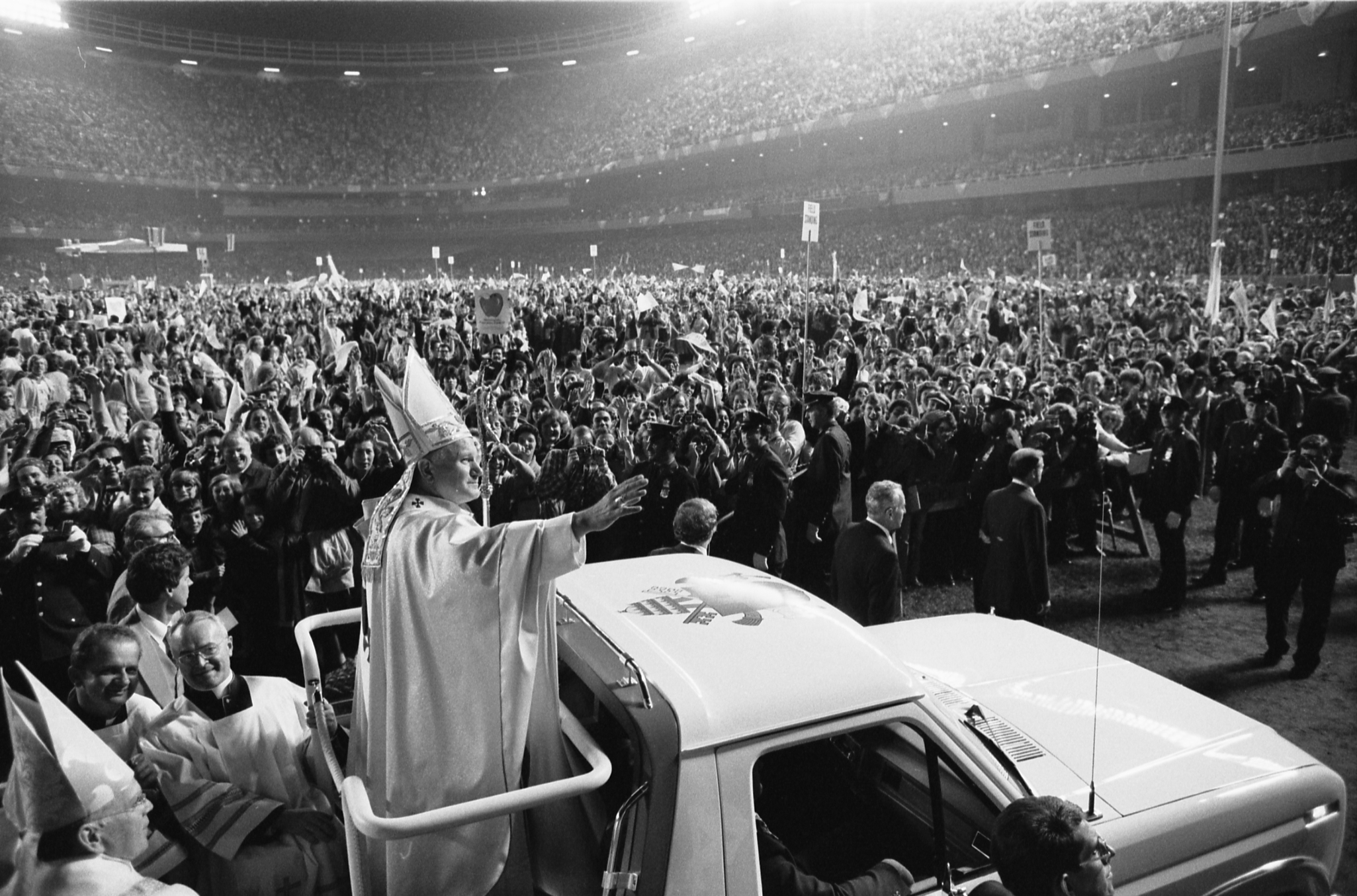
In 1969, as a cardinal, he had held mass at Yankee Stadium, so by the time he did it again on October 2, 1979 — as the Pope — he was as much a fixture as Reggie Jackson. Rain greeted over 9,000 cheering worshippers — or fans — and, according to legend, when the Pope mounted the ballfield to address the crowd, the rain showers stopped. And as a blessing for Mets fans, the next day the Pope also held rapt an audience of 52,000 at Shea Stadium.

Below: the Pope at Yankee Stadium

Courtesy US News and World Report

But like all rock stars, the Pope couldn’t complete his New York odyssey without a performance at Madison Square Garden. Although John Paul also addressed the U.N. and a Saint Patrick’s audience during that trip, he’s best remembered by many for his inspirational address on October 3rd to 19,000 city children.

Saint Patrick’s honored his Holiness’s visit in 1979 by installing a bust. But he would be back. On almost exactly the same day, sixteen years later.

Length of his visit: Almost 48 hours

THE SECOND POPE — THE SECOND VISIT

New York City in 1995 was a vastly different city and John Paul returned for a longer visit — four days in total in the entire New York area — on October 4th. This time, instead of just delivering messages to the clergy gathered at Saint Patrick’s, he spontaneously decided he wanted to walk around the block. And why not? You’ve got shopping, Saks, street vendors selling Pope souvenirs!

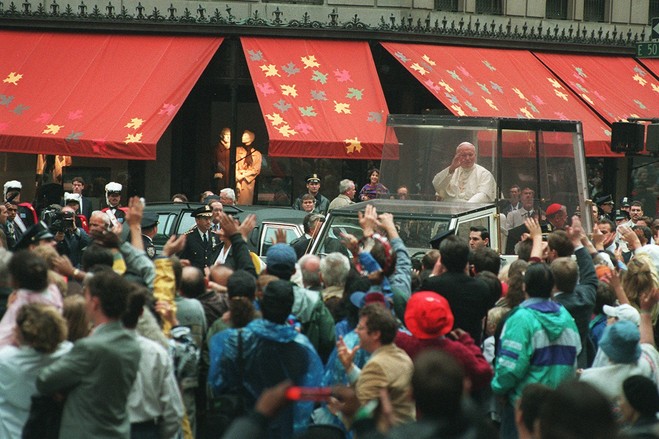
Below: In the Pope-mobile, riding by Saks Fifth Avenue

Courtesy Wall Street Journal

The Pope also finished off his collection of performing in gigantic venues for mass — holding court in Giants Stadium, the Aquaduct Racetrack in Ozone Park and eventually to 100,000 people on the great lawn in Central Park.

From there, the elderly leader of the Catholic Church gave the city the ultimate shout-out: “This is New York! The great New York! This is Central Park. The beautiful surroundings of Central Park invite us to reflect on a more sublime beauty: the beauty of every human being, made in the image and likeness of God. Then you can tell the whole world that you gave the pope his Christmas present in October, in New York, in Central Park.”

Length of his visit: Almost four days! He couldn’t get enough.

Courtesy Chris Hondros/Getty Images./New York Daily News

THE THIRD POPE

Pope Benedict XVI came to New York for three days, two nights (April 18-20), arriving in Manhattan on a military helicopter and breaking the apparently holy tradition of visiting New York in the early Fall.  (Still would have needed a light sweater or vestment.)  But Benedict, as the cardinal formerly known as Joseph Ratzinger, actually visited the city in that lesser role in 1988, where apparently he was met with protest from gay activists and shunned by some prominent Jewish leaders.

He hit all the “usual” Pope spots — Saint Patricks, the United Nations, Yankee Stadium — but added a couple interesting detours: Park East Synagogue, St Joseph’s Seminary in Yonkers, and the World Trade Center site.

Below: The Pope viewing the World Trade Center site

 April 20, 2008 Courtesy MSNBC
April 20, 2008 Courtesy MSNBC

Length of his visit: Almost 72 hours

THE FOURTH POPE

Pope Francis’ exhausting itinerary can be found here.  He’ll make stops first for evening prayer at Saint Patrick’s Cathedral, then to the residence of the Apostolic nuncio at the United Nations to sleep.

He speaks to the U.N. Assembly in the morning, then down to the National September 11 Memorial & Museum by lunchtime.

Perhaps the most intriguing stop will come in the afternoon, meeting with students from Our Lady Queen of Angels School in East Harlem. Whereas the first Pope to come New York fifty years rode through East Harlem in his covered Pope-mobile, Pope Francis will chat with a third-grade class filled with children who will have quite a story to tell their grandkids.

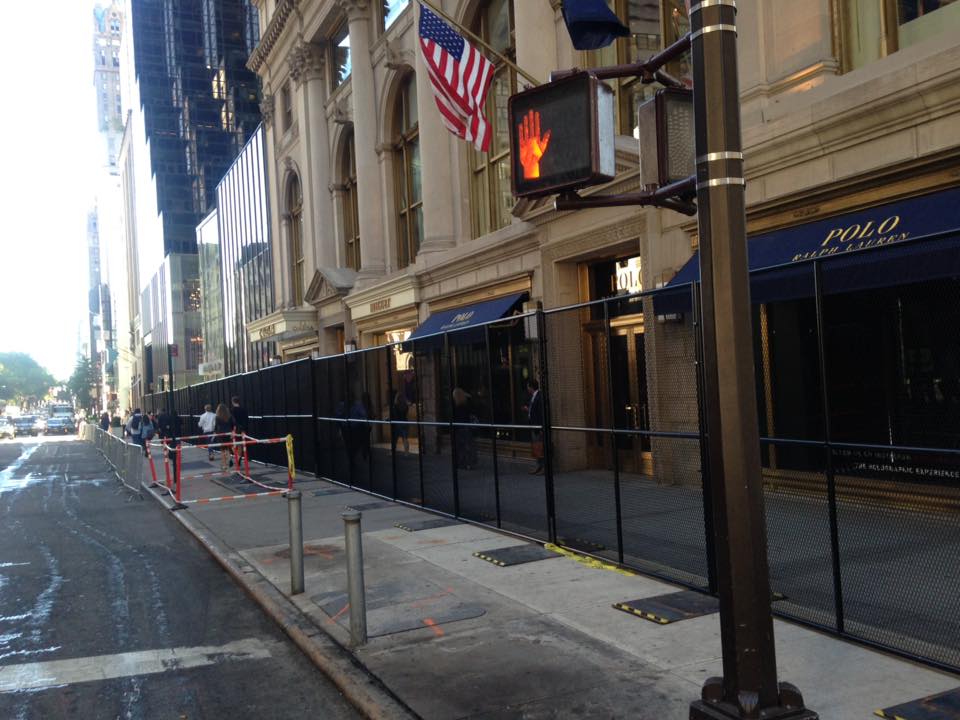
Afterwards he will travel through Central Park and arrive at Madison Square Garden for Mass. At rush hour! Oh right, all the streets are closed. In fact, Fifth Avenue right now is contained in a large fence, easily the tightest security I’ve ever seen here.

12042997_10154366542979852_7760758446010311988_n

But Pope Francis is a man of many surprises. Could he decide that he wants to walk the High Line? And how can he visit New York and not even visit Brooklyn? Is the Pope a Girls fan?

This is a heavily revised version of an article that originally ran in 2008 when Pope Benedict visited New York City.
Categories
Wartime New York

New York: The City of Forts

The vestiges of America’s oldest wars surround us to this day.

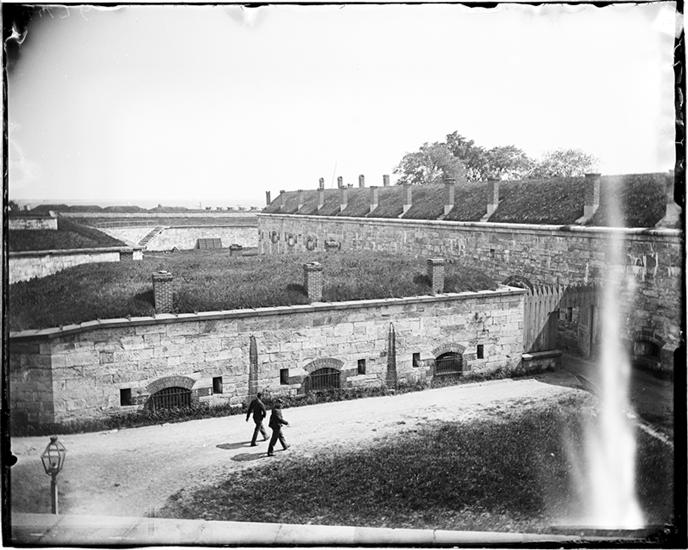
New York City has had more military fortifications contained within it than perhaps any other major American city. Part of this has to do with its roots in the American Revolution and the subsequent fears of a return invasion in the early 19th century.

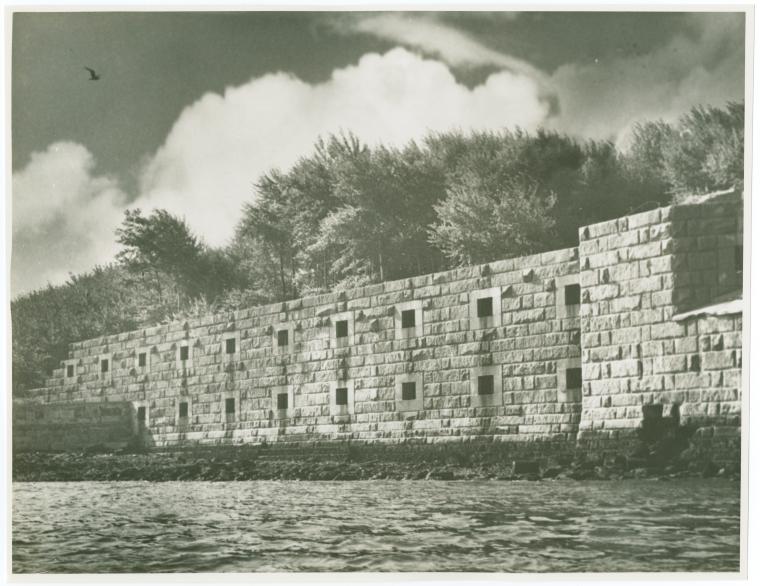
Today’s existing forts — and those that remain in part or in ruin — make for a stark architectural contrast to the modern city. Their walls of stone and brick may conjure up a history far older than New York’s or images of a made-up fantasy world. You could pretend, for a few moments, to be a character on Game of Thrones while exploring places like Fort Wadsworth or Castle Williams on Governors Island

Here’s a list of some of the best known forts in the New York City area. Most are still around in some form. Some exist only in commemorative markers.  Others are completely gone but they leave their names as a reminder of their existence.  How many of these have you seen in person?

1 Fort Wadsworth
Location: Staten Island
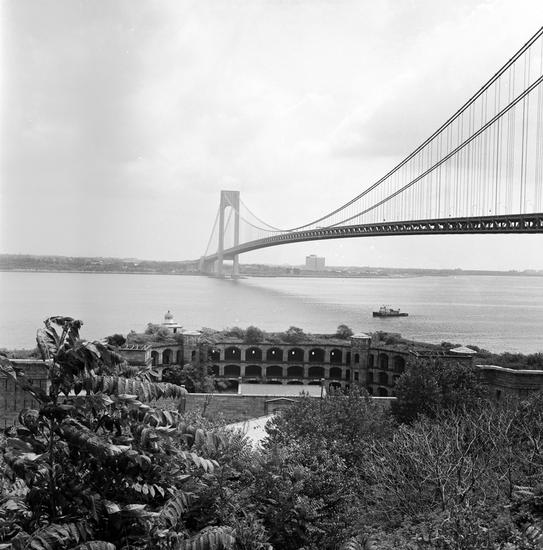
Placed at a strategic site on the Narrows, Wadsworth and its associated defense buildings are perhaps the most dramatic military remains in New York City. It traces to an old Revolutionary War-era fort called Flagstaff Fort.  While it serves minor military functions to this day, Wadsworth has become a popular Staten Island attraction.

1979, photographed by Edmund V. Gillon, Museum of the City of New York


2 Fort Jay (formerly Fort Columbus) 
Location: Governor Island
A star fort constructed from an original 1776 earthen defense. In 1806 its name was changed to Fort Columbus and changed back in the 20th century.

1


3 Castle Williams
Location: Governors Island
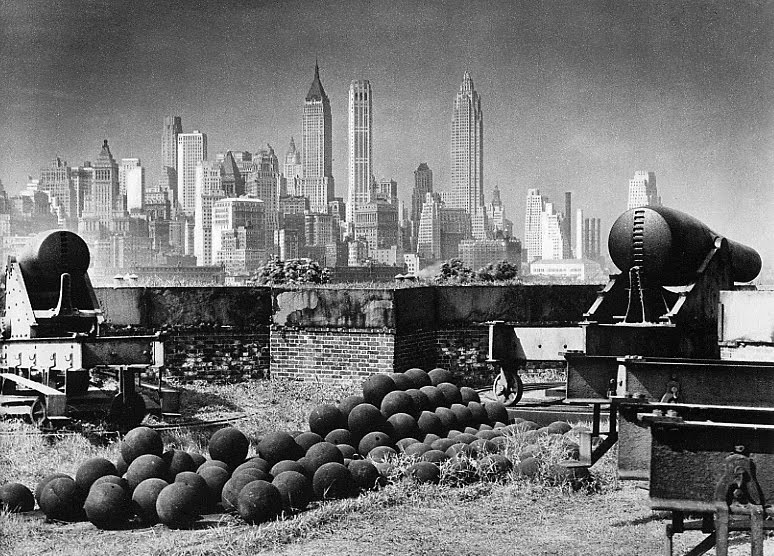
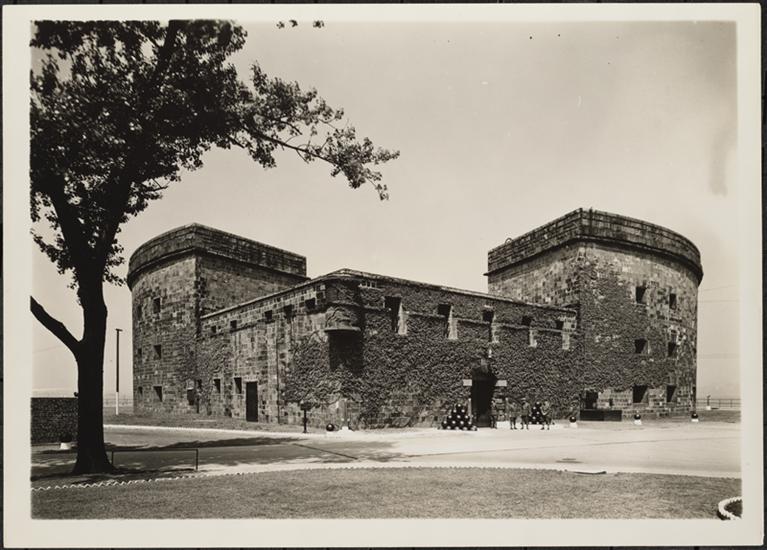
Specifically designed in 1807-1811 to defend the harbor from probable British invasion. While the British did invade America during the battles of the War of 1812, New York was spared. Today, its maintained by the National Park Service, as is Fort Jay.

1936, by Samuel Gottscho, courtesy Museum of the City of New York


4 Fort Gibson (or Crown Fort)
Location: Ellis Island
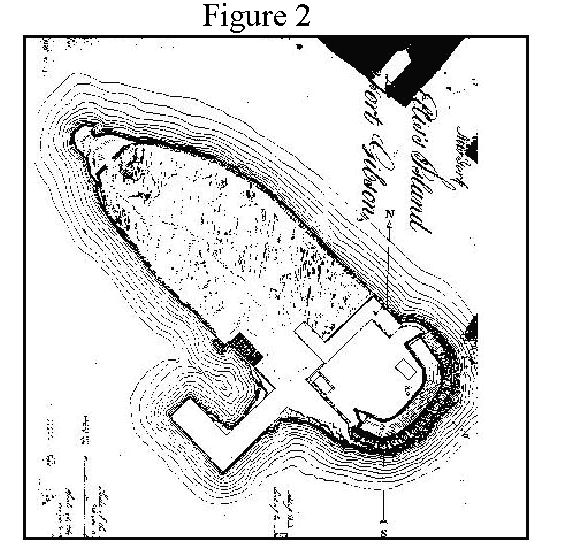
Built by the Army in 1795 and greatly upgraded in 1809 as part of the beefing up of harbor defenses. It was dismantled by the 1860s although the island was used to hold naval munitions for decades before its transformation into Ellis Island Immigration Station.  Today you can find exposed ruins outside the main building.

Courtesy NPS
Courtesy NPS

5 Fort Wood
Location: Liberty Island
This too was completed during the 1810s and was later named for Eleazer Derby Wood, an officer killed at a battle at the Battle of Lake Erie in 1814. Today the Statue of Liberty and her pedestal are affixed atop of the old fort. You can see a trace of the original brickwork on an exposed wall near the exit.

New York Public Library


6 Castle Clinton
Location: Manhattan (Battery Park)
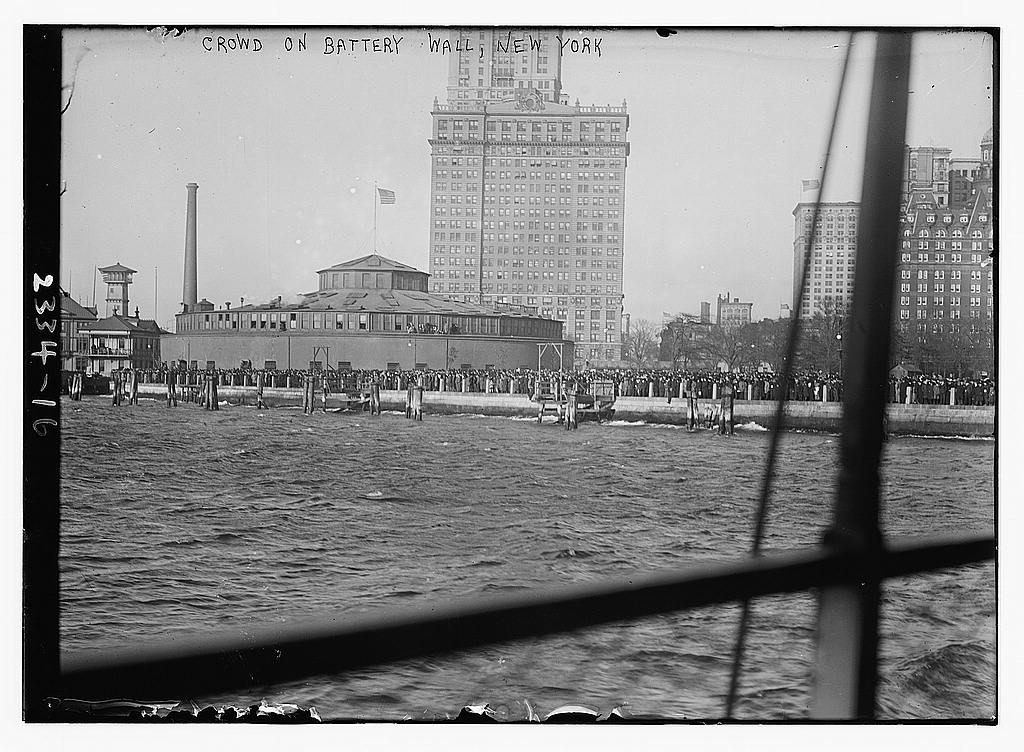
Lower Manhattan was formerly guarded by Fort Amsterdam/Fort George, but that had been dismantled in 1790. (It stood where the Alexander Hamilton U.S. Custom House is today.) Castle Clinton — named for Governor DeWitt Clinton — was built in 1808-1811 to protect lower Manhattan.  It was originally set into the water and connected with a footbridge.  After stints as the performance hall Castle Garden, New York’s pre-Ellis Island immigration station and New  York Aquarium, it sits today as a national monument in its own right.

Library of Congress
Library of Congress


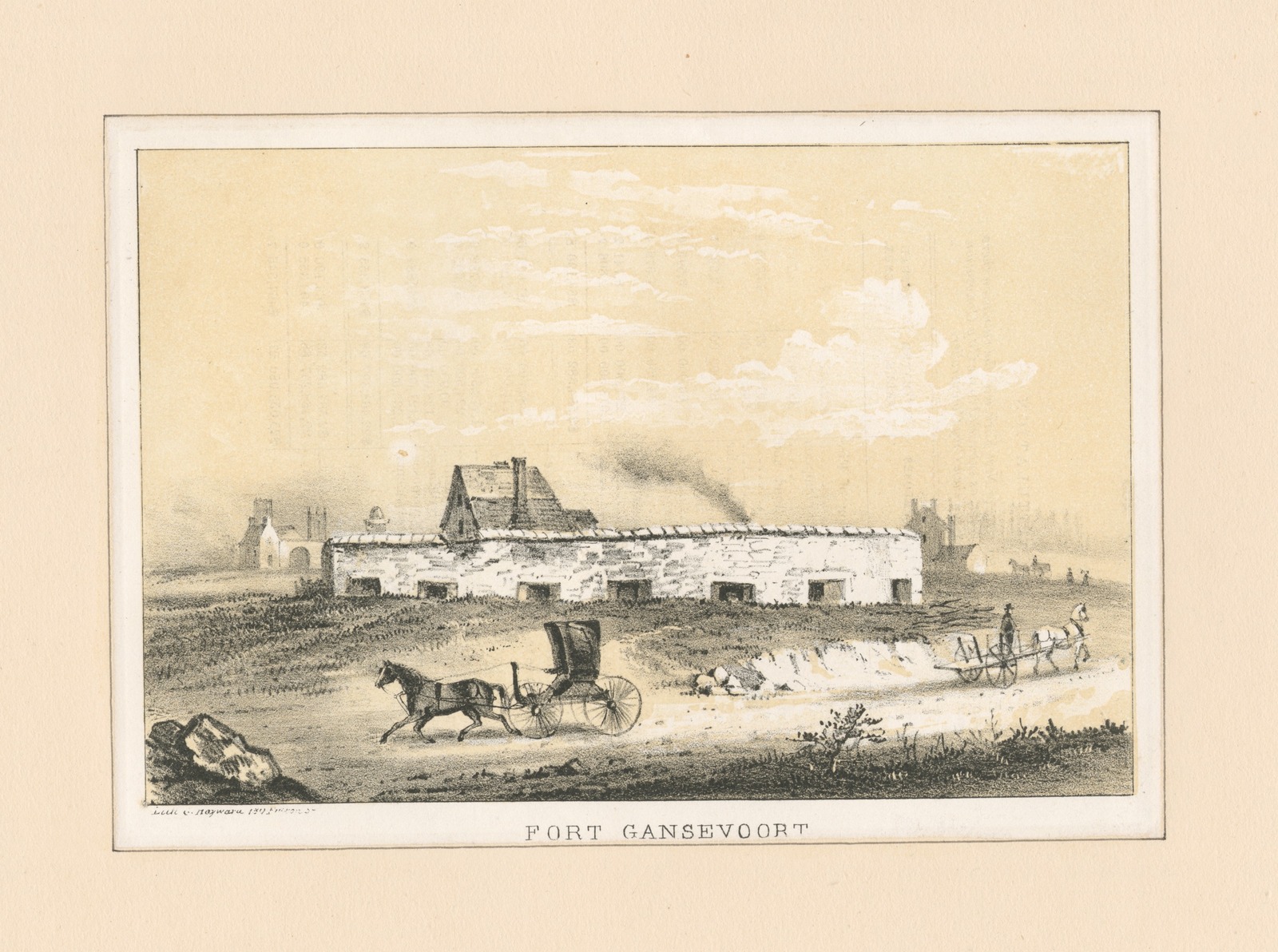
7 Fort Gansevoort
Location: Manhattan (Meat-Packing District)
Also called the White Fort, this forgotten redoubt once flanked the western waterfront, built at the same time as the harbor forts. It was named for General Peter Gansevoort (the grandfather of Herman Melville) and stood here until the 1850s. Nothing remains of this fort today but its name, found on the street which cuts through that area — Gansevoort Street.

New York Public Library


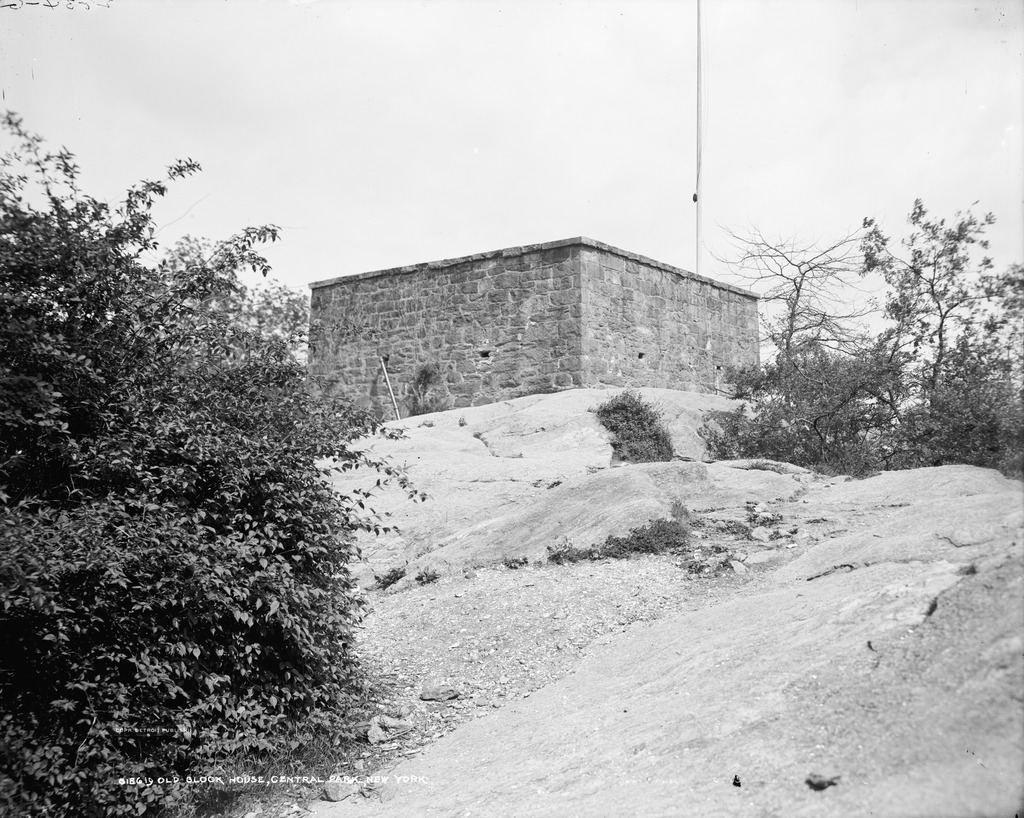
8 Blockhouse No. 1
Location: Manhattan (Central Park)
This curious little structure stands on the northern end of Central Park, a fortification almost two hundred years old.  Its the oldest structure contained within Central Park (although obviously Cleopatra’s Needle, which was moved here, is much, much older.)

Library of Congress
Library of Congress

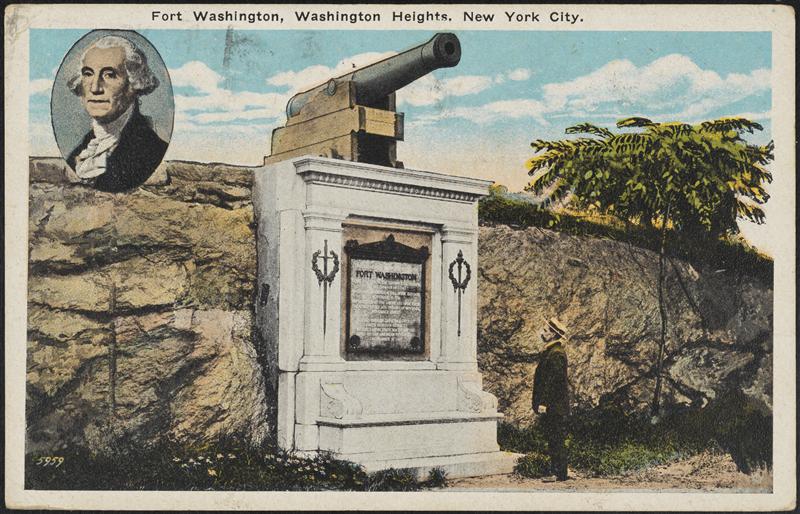
9 Fort Washington
Location: Manhattan (Washington Heights)
This fort predates most of the rest, built as a companion for Fort Lee on the New Jersey side. It was here that the Battle of Washington Heights was fought on November 16, 1776, and the fort was captured by the British. While this particular fort is no longer there, some stone walls and a plaque mark its former location. Fort Washington Avenue also pays tribute.

7

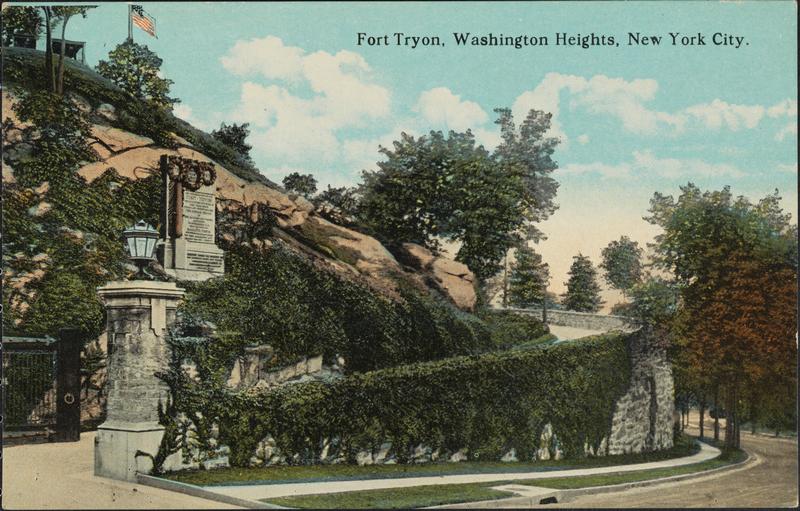
10 Fort Tryon
Location: Washington Heights
This was actually a northern redoubt that was an extension of Fort Washington. When the British took it over, they renamed it for William Tryon, New York’s last British governor. For some reason, the name just stuck! Its location in preserved in the breathtaking Fort Tryon Park, completed in 1935 and designed by the son of Frederick Law Olmsted.

1


11 Fort Sterling
Location: Brooklyn (Brooklyn Heights)
This fort, tracing to the Revolutionary Era, is unique it that it was almost immediately dismantled once the British left.  There was another fort nearby called Fort Brooklyn that lasted a bit longer,demolished by the 1820s to allow for the growth of Brooklyn’s first wealthy neighborhood. Today, near the Brooklyn Heights Promenade, stands small Fort Sterling Park, with a plaque and a flagpole commemorating the location of this critical defense.

12 Cobble Hill Fort
Location: Brooklyn (Cobble Hill neighborhood)
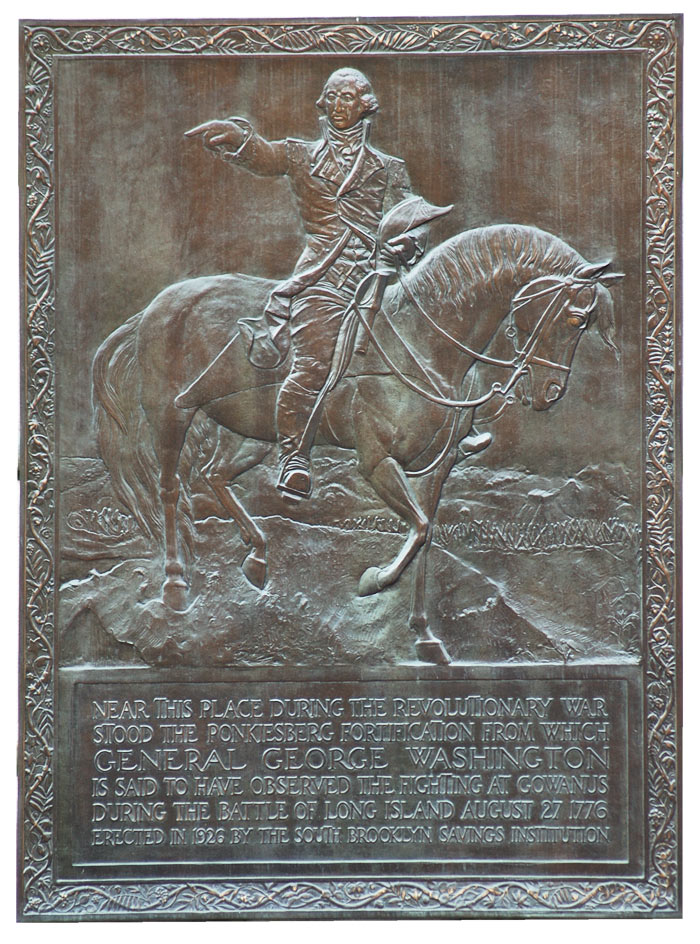
This unusual corkscrew shaped fort — which we talked about in one of our previous ghost story podcasts — is notable for receiving George Washington as he observed his troops during the Battle of Long Island in 1776.  A handsome plaque on the old bank-turned-Trader-Joe’s at Atlantic Avenue and Court Street marks the location of this forgotten fortification.

Courtesy the blog South Brooklyn

13 Fort Greene
Location: Brooklyn (Fort Greene neighborhood)
There really was a fort here in the area of Fort Greene Park today, on the highest point of the hill, a traditional five-point fortification similar to that on Governors Island. In the 1840s it was torn down to construct one of Brooklyn’s oldest parks — called Washington Park. Oddly enough, the original fort here was called Fort Putnam. There was a Fort Greene (named for Nathaniel Greene) but it was in another area of Brooklyn, closer to today’s area of Boerum Hill.

Museum of the City of New York

14 Fort Hamilton
Location: Brooklyn (Bay Ridge)
This is the last active military headquarters in the New York City area. Built in the late 1820s-30s, it was named for Alexander Hamilton who was an officer in the Revolutionary War. Although an active site, you can visit the Harbor Defense Museum which is housed here.

Robert Bracklow, Museum of the City of New York


15 Fort Lafayette

Location: Off the coast of Brooklyn (Bay Ridge)
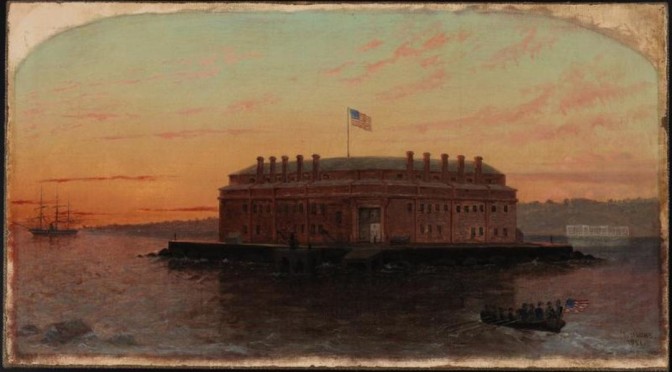
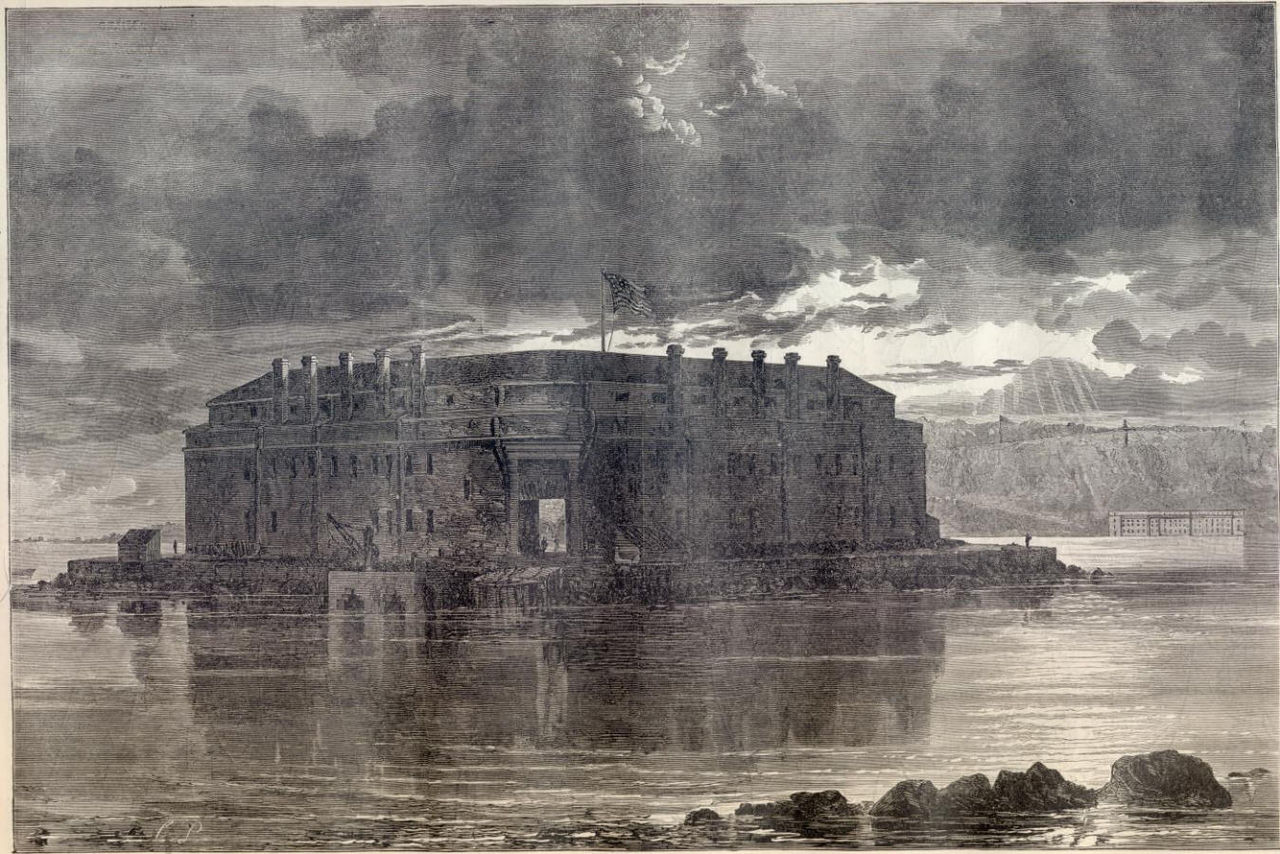
This imposing island fort was built in the 1810s and named for the Marquis De Lafayette. Like many of New York’s forts, it held Confederate and enemy prisoners during the Civil War. The fort was later dismantled for the construction of the Verrazano-Narrows Bridge. You can see where it would have stood as the bridge’s Brooklyn-side tower stands on the location today.

Fort-layafette


16 Fort Tilden
Location: Brooklyn (Rockaway Beach)
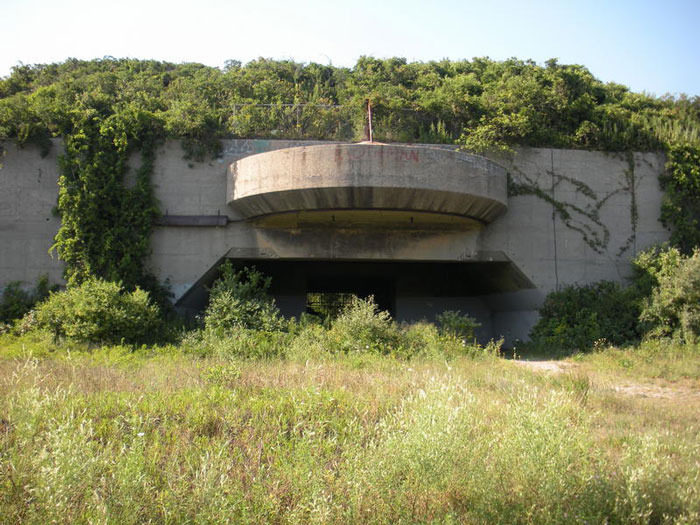
While defenses of various kinds have sat out on Rockaway Beach since the early 19th century, Fort Tilden was fully built up during World War I, named for Samuel J. Tilden. Today its ruins peering through overgrowth can be found near the beach as part of the Gateway National Recreation Area.

tilden


17 Fort Schuyler

Location: Bronx
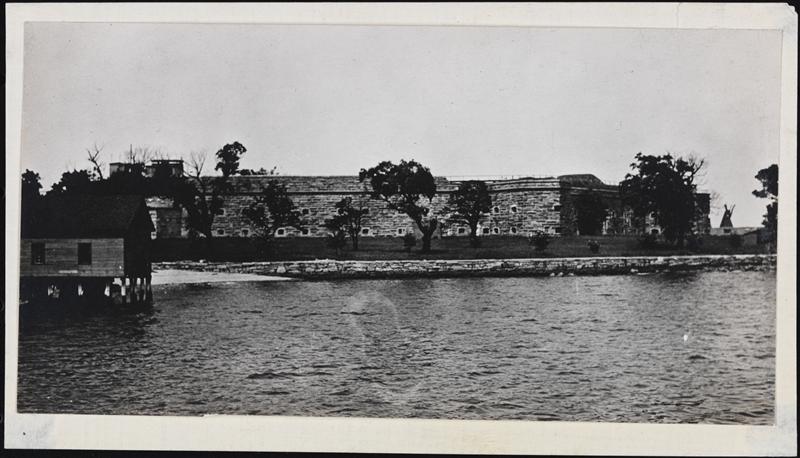
Completed in the 1850s, this unique fortification protected New York for any possible attack from enemies approaching along the Long Island Sound. Abandoned for strictly military use in the 1920s, today it houses the State University of New York Maritime College and a maritime museum.

Museum of the City of New York


18 Fort Totten

Location: Queens
This fortification traces to worries relating to the Civil War. It was constructed in 1862 to protect the East River with its companion across the water Fort Schuyler.  You can still visit Fort Totten today as the area has been opened up as a public park with regular tours of the old buildings.

New York Public Library


At top: Fort Lafayette in a painting by Thomas Hicks (1861)

Categories
Parks and Recreation

Never Too Cold: Crazy kids conquer Central Park on sleds

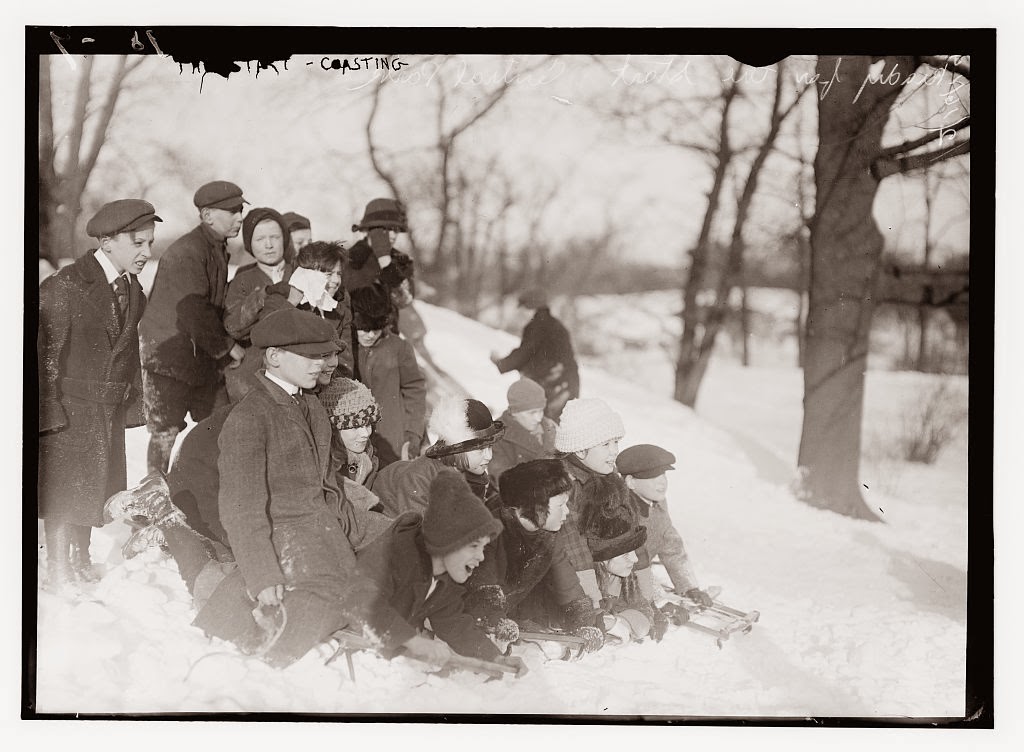
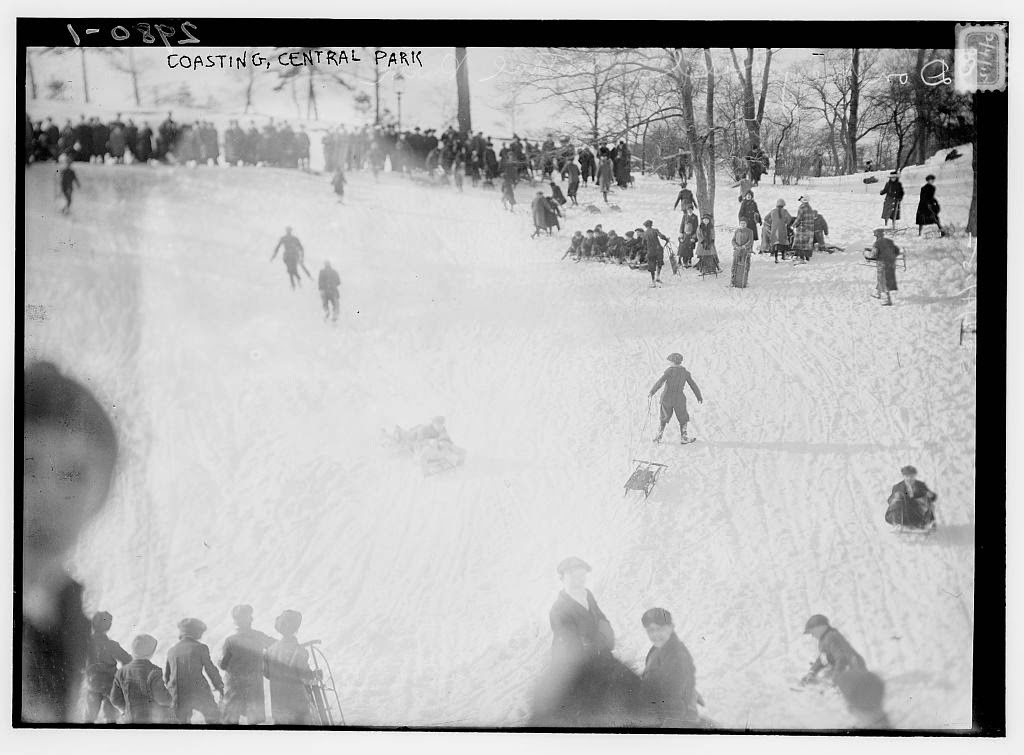
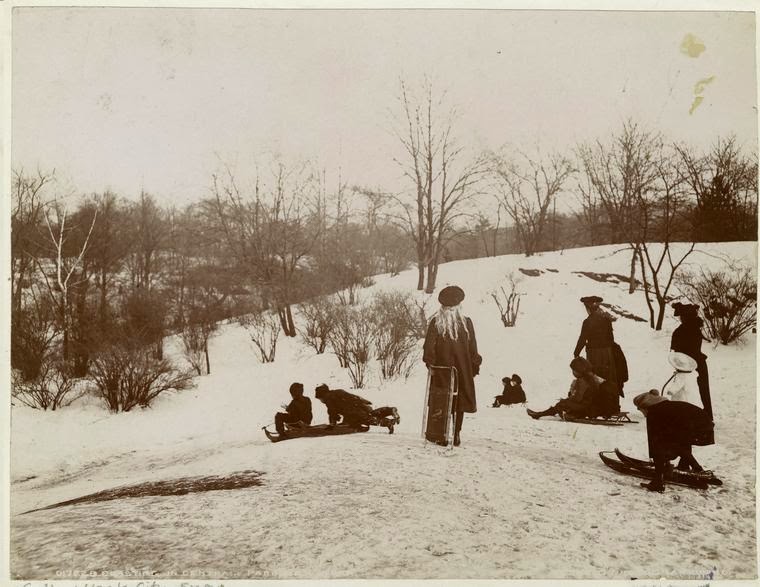
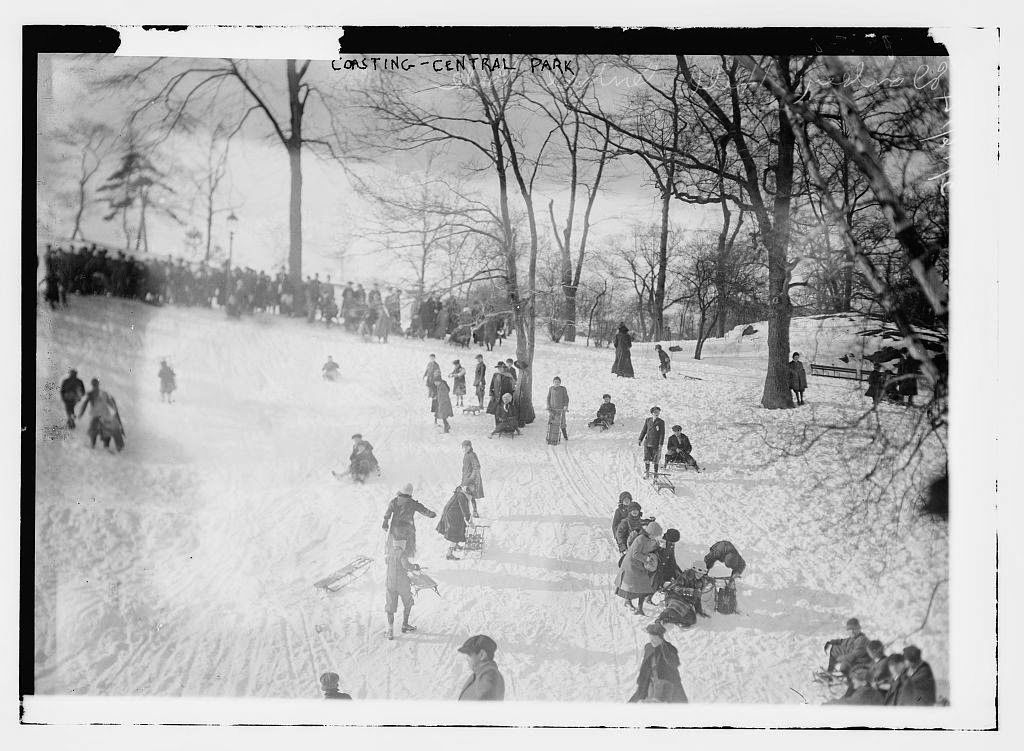
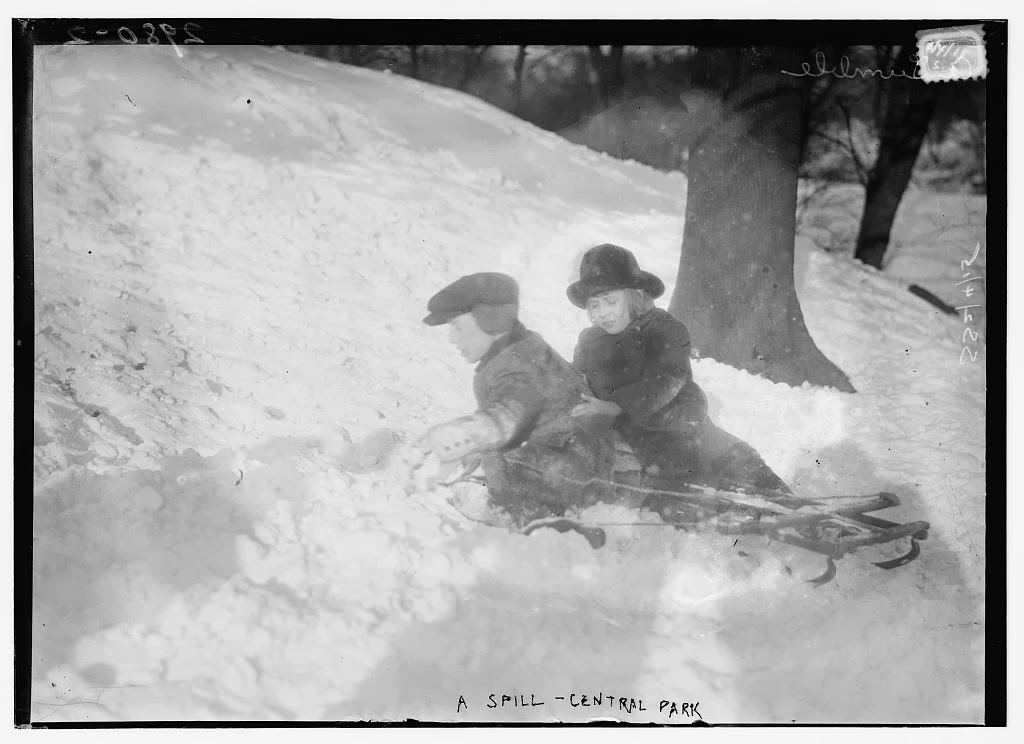
During one particular winter in the early 1910s, Central Park was invaded by an army of young sledders, tearing over the snow-covered terrain without thought to temperatures or bodily injury.

Believe it or not, the city encouraged children to use the city parks for sledding, especially given that the alternatives were slicked-up city streets.  In fact, New York did everything possible to make parks an ideal sledding destination.

“Snow from the sidewalks around Hamilton Fish, DeWitt Clinton and East River parks has been thrown over the fences to form an embankment from which the youngsters can coast.” reported the New York Tribune in 1910.  In Central Park, “never before were so many coasters in evidence.”

Indeed, automobiles posed a grim and dangerous threat to children sledders. The newspapers between 1909-1919 are filled with sad stories of children killed in sledding accidents, with autos frequently involved.  Vehicles from the early days (not to mention, their novice drivers) were simply ill-equipped for icy conditions.

While some in the community lamented the mess made in public parks, most preferred keeping children safe.  These pictures kind of make you want to make a go of it, don’t you think?

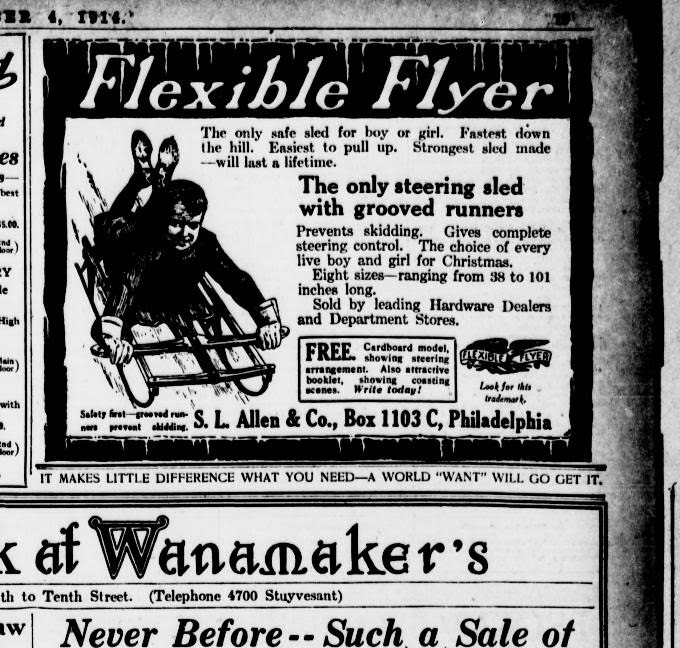
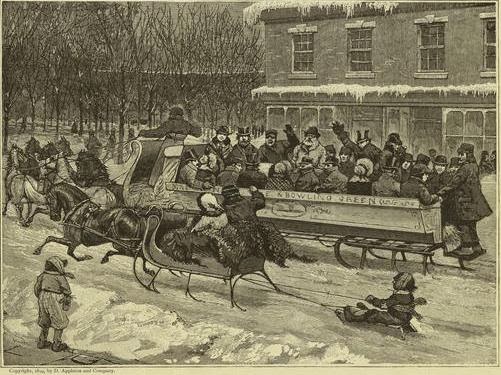
Of course, wealthy people could always go on a sleigh ride in the park, but the mass production of individual flyers (like the one advertised below) and homemade facsimiles soon brought middle and working class into the park for fun.  I would like to think this sled model (advertised in a Dec. 4, 1914 edition of the Evening World) was used by some of those intrepid spirits pictured above:
And you think that all looks a little dangerous, here’s some adventurers from 1860, using Broadway as their personal ice sheet, with a child tied to the back!
Images courtesy Library of Congress and New York Public Library
Categories
Bowery Boys Bookshelf

The Great Gatsby’s New York City, in ten different scenes, from the Queensboro Bridge to the Plaza Hotel

BOWERY BOYS BOOK OF THE MONTH Each month I’ll pick a book — either brand new or old, fiction or non-fiction — that offers an intriguing take on New York City history, something that uses history in a way that’s uniquely unconventional or exposes a previously unseen corner of our city’s complicated past.  Then over the next month, I’ll run an article or two about some of the historical themes that are brought up in the selection. 

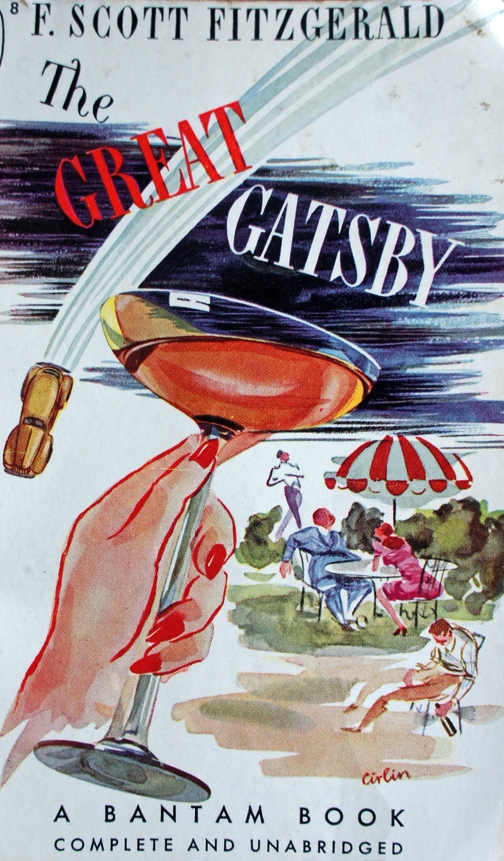
The Great Gatsby
by F. Scott Fitzgerald

I re-read The Great Gatsby a few weeks ago on purpose, not because I had a school assignment. Unlike my first experience with Gatsby at age 14, I actually read it, without the signposts of Cliff’s Notes to tell me what I was supposed to be getting from it.

Of course the impetus for re-discovering F. Scott Fitzgerald‘s masterpiece is the flashy new Baz Luhrmann film coming out this weekend, which uses the text as an excuse to throw an expensive 3-D party, starring Leonardo DiCaprio, Beyonce, large champagne bottles, fifty shades of pink, the ghost of Mae West and a whole host of other drunk guests.

Few works of American literature have been as comprehensively analyzed as The Great Gatsby, by which I mean, of course, over-analyzed.  One reason I’m excited about the film, with all its superficial decadence on display, is that it seems to discard several decades of nine-dimensional analyses that have settled upon the book like a thick shroud of dust.  Maybe that’s wearing white to a funeral, so to speak, but true masterpieces can weather an occasional glare.

The Great Gatsby deserves to be savored for many reasons that I had forgotten or never noticed through the filter of creating a B+ term paper in my teenage years.  It’s one of the most economic stories of the 20th century, an exercise of graceful control, an epic with powerful restraint.  In comparison, try reading Fitzgerald’s The Beautiful and the Damned — an embittered New York book twice as long with half as much to say– to appreciate the brevity of Gatsby.

Fitzgerald uses the locales of 1922 New York City so precisely — jetting around Long Island and over the bridge to Manhattan — that it seems almost possible to map the characters’ every move.

There are three principal types of locations in The Great Gatsby.  About half the novel’s actions take place on either East Egg or West Egg, fictional northern Long Island villages still graced with the mansions of Gilded Age millionaires.  Characters escape to Manhattan, big and glittering, either to entertain their mistresses or to dine with gentlemen of suspicious occupation.  And then, of course, there’s the wasteland in between, where secrets are laid bare and burnt to ash.  Welcome to Queens!

Fitzgerald paints a very lush, cockeyed view of New York City in the early 1920s.  Here are some of the more interesting city locations you’ll visit as you read along, and some of the words he used to describe them:

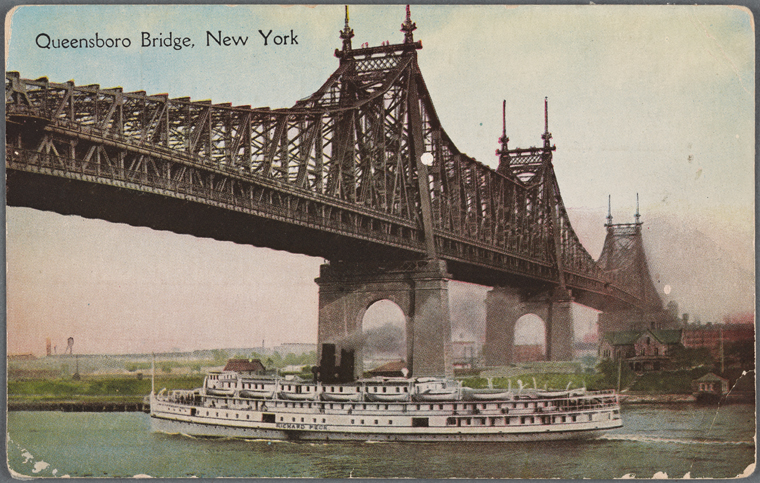
Queensboro Bridge
“The city seen from the Queensboro Bridge is always the city seen for the first time, in its first wild promise of all the mystery and the beauty of the world.”
‘Anything can happen now that we’ve slid over this bridge,’ I thought; ‘anything at all….’  
Even Gatsby could happen, without any particular wonder.”
The 1920s were more than just a decade of speakeasies and spendthrifts. It was the decade of immense growth for Manhattan’s outer boroughs, none more so than Queens, thanks mostly to the opening of the Queensboro Bridge in 1909 and a connection to New York’s new subway system.

The IRT Astoria line
“[W]e sped along toward Astoria at fifty miles an hour, until, among the spidery girders of the elevated, we came in sight of the easy-going blue coupe.”

Astoria’s elevated subway train opened in 1917, at the time servicing only cars from the IRT. (The trains of the BMT are a little too wide to use the stations.)  So as Gatsby, Nick Carraway and the gang race underneath it to get onto the Queensboro, they’re really experiencing something quite new, a symbol of New York’s expansion into Queens.

Corona Ash Dumps
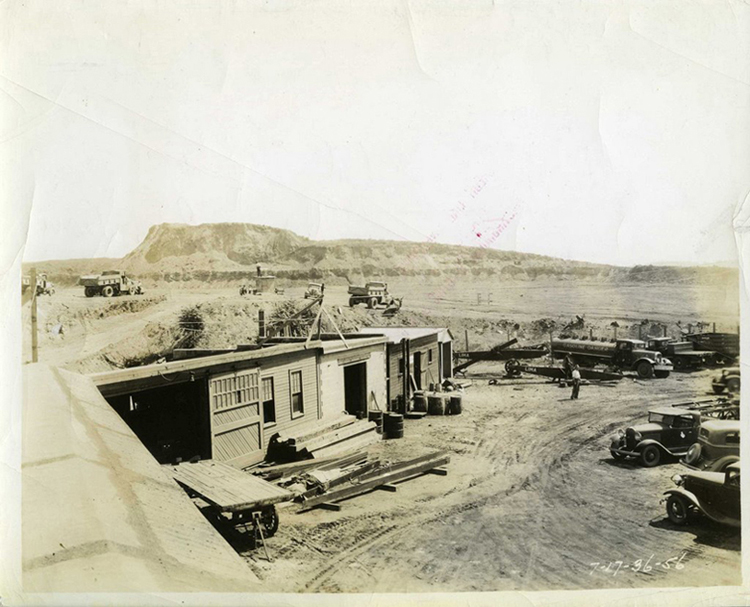
“We passed Port Roosevelt, where there was a glimpse of red-belted ocean-going ships, and sped along a cobbled slum lined with the dark, undeserved saloons of the faded-gilt nineteen-hundreds.  Then the valley of ashes opened out on both sides of us.”

Once the place where New York and Brooklyn dumped their ash from coal-burning furnaces, the old ash dumps of Corona turned a bit of Queens into a gloomy and unpleasant landscape.  It would take Robert Moses and dreams of a World’s Fair to transform the ashen landscape into Flushing Meadows-Corona Park in the 1930s. (Picture courtesy the Queens Museum)

3

Automobile parade on Fifth Avenue, approx. 1915 (Courtesy LOC)

Upper Fifth Avenue
“We drove over to Fifth Avenue, so warm and soft, almost pastoral, on the summer Sunday afternoon that I wouldn’t have been surprised to see a great flock of white sheep turn the corner.”
This was not as bizarre as it sounds, for nearby Central Park actually had sheep grazing in it until 1934.  Granted, they would have been on the other side of the park, in today’s aptly named Sheep Meadow.

Above 158th Street and Riverside Drive, 1921 (NYPL)

Washington Heights
“We went on, cutting back again over the Park towards the West Hundreds. At 158th Street the cab stopped at one slice in a long white cake of apartment-houses.  Throwing a regal homecoming glance around the neighborhood, Mrs. Wilson gathered up her dog and her other purchases, and went haughtily in.”

Once the respite of wealthy manors in the 19th century, the upper reaches of Manhattan gave way to middle-class housing at the start of the new century.  Myrtle’s perch here in Washington Heights would have been appropriately out of the way in the 1920s.

1a

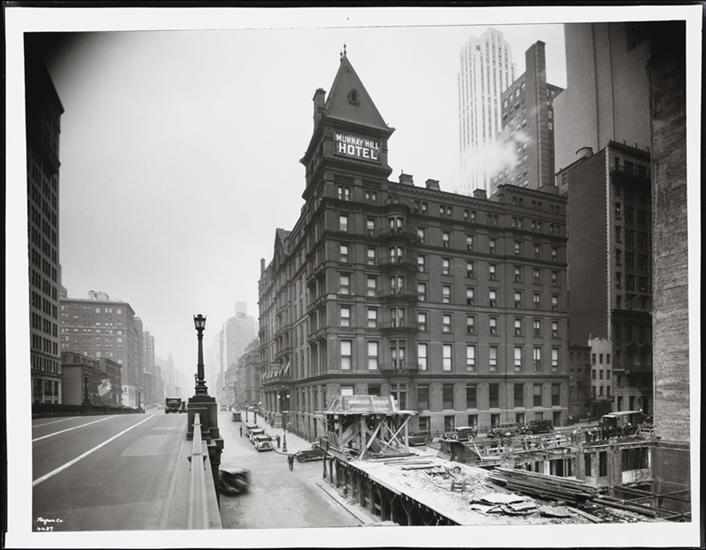
The Murray Hill Hotel on Park Avenue, 1931, courtesy Museum of the City of New York

The Murray Hill Hotel

“After that, if the night was mellow, I strolled down Madison Avenue past the old Murray Hill Hotel and over 33d Street to the Pennsylvania Station….I liked to walk up Fifth Avenue and pick out romantic women from the crowd and imagine that in a few minutes I was going to enter into their lives, and no one would ever know or disapprove.

Opening in 1884 to serve the needs of those arriving from Grand Central Depot, the Murray Hill Hotel kept its halls fully occupied until its demolition in 1946.  The Daytonian In Manhattan blog has a wonderful tale of the hotel’s colorful history.

Above: 42nd Street in 1926 (Courtesy Kings Academy)Forty-Second Street

“Roaring noon. In a well-fanned Forty-second Street cellar, I met Gatsby for lunch.  Blinking away the brightness of the street outside, my eyes picked him out obscurely in the anteroom, talking to another man.”


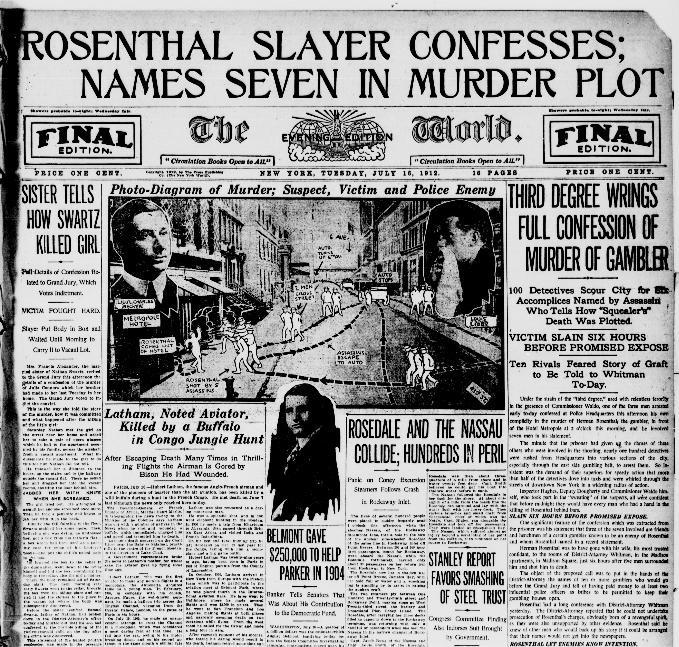
From the July 16, 1912 edition of the New York Evening World
Hotel Metropole
“The old Metropole,” brooded Mr. Wolfsheim gloomily.  “Filled with faces dead and gone. Filled with friends gone now forever. I can’t forget so long as I live the night they shot Rosy Rosenthal there.”

The Hotel Metropole was a swanky Times Square hotspot located at 147 W. 43rd Street.  Mr. Wolfsheim (himself a stand-in for gangster Arnold Rothstein) spends a moment recounting the assassination of Herman Rosenthal, gunned down by the mob.  Charles Becker, who was accused of orchestrating the murder, became the first police officer to ever be given the death penalty.

We talk about the Rosenthal assassination in our podcast Case Files of the New York Police Department.

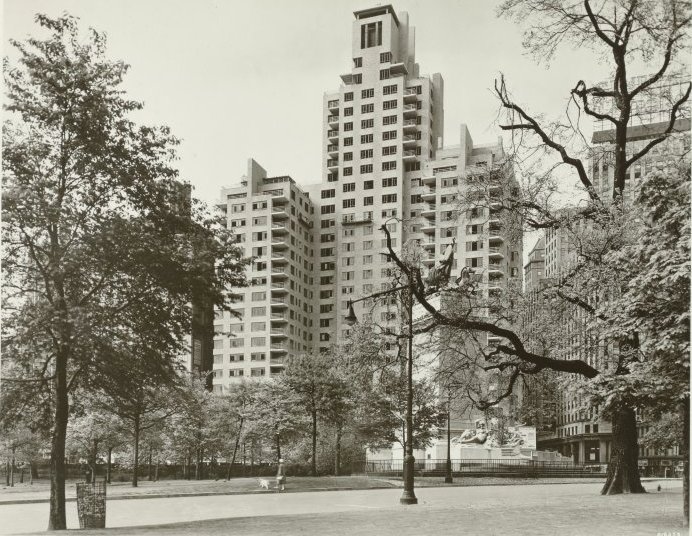
Above: The southwest corner of Central Park, photo by the Wurts Brothers (NYPL)

Central Park
“When Jordan Baker had finished telling all this we had left the Plaza for half an hour and were driving in a victoria through Central Park.  The sun had gone down behind the tall apartments of the movie stars in the West Fifties, and the clear voices of little girls, already gathered like crickets on the grass, rose through the hot twilight.
We passed a barrier of dark trees, and then the facade of Fifth-ninth Street, a block of delicate pale light, beamed down into the park.”

3

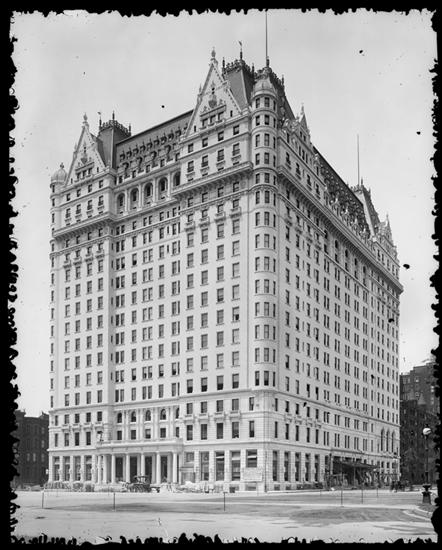
The Plaza, photo by the Wurts Brothers (NYPL)

“And we all took the less explicable step of engaging the parlor of a suite in the Plaza Hotel.
The room was large and stifling, and, though it was already four o’clock, opening the windows admitted only a gust of hot shrubbery from the Park.”

The Plaza Hotel
The beginning of a string of violent acts in the book begins here at The Plaza, at perhaps the epitome of class in the early 1920s. It was only open about 15 years when the events of the book take place here.

Check out our podcast history of the Plaza Hotel and some more glamorous pictures of the hotel here.

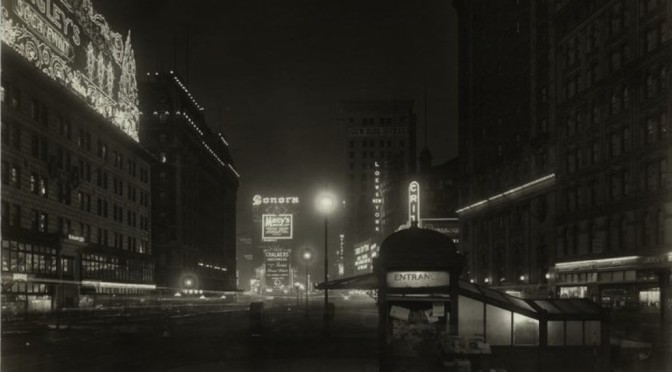
Top picture: Times Square at night, 1921 (NYPL)

Categories
Bowery Boys Bookshelf

The Great Gatsby’s New York City, in ten different scenes, from the Queensboro Bridge to the Plaza Hotel

BOWERY BOYS BOOK OF THE MONTH

The Great Gatsby
by F. Scott Fitzgerald

I re-read The Great Gatsby a few weeks ago on purpose, not because I had a school assignment. Unlike my first experience with Gatsby at age 14, I actually read it, without the signposts of a Cliff’s Notes to tell me what I was supposed to be getting from it.

Of course the impetus for re-discovering F. Scott Fitzgerald‘s masterpiece is the flashy new Baz Luhrmann film coming out this weekend, which uses the text as an excuse to throw an expensive 3-D party, starring Leonardo DiCaprio, Beyonce, large champagne bottles, fifty shades of pink, the ghost of Mae West and a whole host of other drunk guests.

Few works of American literature have been as comprehensively analyzed as The Great Gatsby, by which I mean, of course, over-analyzed. One reason I’m excited about the film, with all its superficial decadence on display, is that it seems to discard several decades of nine-dimensional analyses that have settled upon the book like a thick shroud of dust. Maybe that’s wearing white to a funeral, so to speak, but true masterpieces can weather an occasional glare.

The Great Gatsby deserves to be savored for many reasons that I had forgotten or never noticed through the filter of creating a B+ term paper in my teenage years.  It’s one of the most economic stories of the 20th century, an exercise of graceful control, an epic with powerful restraint.  In comparison, try reading Fitzgerald’s The Beautiful and the Damned — an embittered New York book twice as long with half as much to say– to appreciate the brevity of Gatsby.

Fitzgerald uses the locales of 1922 New York City so precisely — jetting around Long Island and over the bridge to Manhattan — that it seems almost possible to map the characters’ every move.

There are three principal types of locations in The Great Gatsby.  About half the novel’s actions take place on either East Egg or West Egg, fictional northern Long Island villages still graced with the mansions of Gilded Age millionaires.

Characters escape to Manhattan, big and glittering, either to entertain their mistresses or to dine with gentlemen of suspicious occupation.

And then, of course, there’s the wasteland in between, where secrets are laid bare and burnt to ash.  Welcome to Queens!

Fitzgerald paints a very lush, cockeyed view of New York City in the early 1920s. Here are some of the more interesting city locations you’ll visit as you read along, and some of the words he used to describe them:

Queensboro Bridge
“The city seen from the Queensboro Bridge is always the city seen for the first time, in its first wild promise of all the mystery and the beauty of the world.”

‘Anything can happen now that we’ve slid over this bridge,’ I thought; ‘anything at all….’ 

Even Gatsby could happen, without any particular wonder.”

The 1920s were more than just a decade of speakeasies and spendthrifts. It was the decade of immense growth for Manhattan’s outer boroughs, none more so than Queens, thanks mostly to the opening of the Queensboro Bridge in 1909 and a connection to New York’s new subway system.

The IRT Astoria line
“[W]e sped along toward Astoria at fifty miles an hour, until, among the spidery girders of the elevated, we came in sight of the easy-going blue coupe.”

Astoria’s elevated subway train opened in 1917, at the time servicing only cars from the IRT. (The trains of the BMT are a little too wide to use the stations.)  So as Gatsby, Nick Carraway and the gang race underneath it to get onto the Queensboro, they’re really experiencing something quite new, a symbol of New York’s expansion into Queens.

Corona Ash Dumps
“We passed Port Roosevelt, where there was a glimpse of red-belted ocean-going ships, and sped along a cobbled slum lined with the dark, undeserved saloons of the faded-gilt nineteen-hundreds.  Then the valley of ashes opened out on both sides of us.”

Once the place where New York and Brooklyn dumped their ash from coal-burning furnaces, the old ash dumps of Corona turned a bit of Queens into a gloomy and unpleasant landscape.  It would take Robert Moses and dreams of a World’s Fair to transform the ashen landscape into Flushing Meadows-Corona Park in the 1930s. (Picture courtesy the Queens Museum)

3

Automobile parade on Fifth Avenue, approx. 1915 (Courtesy LOC)

Upper Fifth Avenue
“We drove over to Fifth Avenue, so warm and soft, almost pastoral, on the summer Sunday afternoon that I wouldn’t have been surprised to see a great flock of white sheep turn the corner.”

This was not as bizarre as it sounds, for nearby Central Park actually had sheep grazing in it until 1934.  Granted, they would have been on the other side of the park, in today’s aptly named Sheep Meadow.

Above 158th Street and Riverside Drive, 1921 (NYPL)

Washington Heights
“We went on, cutting back again over the Park towards the West Hundreds. At 158th Street the cab stopped at one slice in a long white cake of apartment-houses. Throwing a regal homecoming glance around the neighborhood, Mrs. Wilson gathered up her dog and her other purchases, and went haughtily in.”

Once the respite of wealthy manors in the 19th century, the upper reaches of Manhattan gave way to middle-class housing at the start of the new century.  Myrtle’s perch here in Washington Heights would have been appropriately out of the way in the 1920s.

1a
The Murray Hill Hotel on Park Avenue, 1931, courtesy Museum of the City of New York

The Murray Hill Hotel

“After that, if the night was mellow, I strolled down Madison Avenue past the old Murray Hill Hotel and over 33d Street to the Pennsylvania Station….I liked to walk up Fifth Avenue and pick out romantic women from the crowd and imagine that in a few minutes I was going to enter into their lives, and no one would ever know or disapprove.

Opening in 1884 to serve the needs of those arriving from Grand Central Depot, the Murray Hill Hotel kept its halls fully occupied until its demolition in 1946.  The Daytonian In Manhattan blog has a wonderful tale of the hotel’s colorful history.

Above: 42nd Street in 1926 (Courtesy Kings Academy)

Forty-Second Street

“Roaring noon. In a well-fanned Forty-second Street cellar I met Gatsby for lunch. Blinking away the brightness of the street outside, my eyes picked him out obscurely in the anteroom, talking to another man.”


From the July 16, 1912 edition of the New York Evening World

Hotel Metropole
“The old Metropole,” brooded Mr. Wolfsheim gloomily.  “Filled with faces dead and gone. Filled with friends gone now forever. I can’t forget so long as I live the night they shot Rosy Rosenthal there.”

The Hotel Metropole was a swanky Times Square hotspot located at 147 W. 43rd Street.  Mr. Wolfsheim (himself a stand-in for gangster Arnold Rothstein) spends a moment recounting the assassination of Herman Rosenthal, gunned down by the mob.  Charles Becker, who was accused of orchestrating the murder, became the first police officer to ever be given the death penalty.

We talk about the Rosenthal assassination in our podcast Case Files of the New York Police Department.

Above: The southwest corner of Central Park, photo by the Wurts Brothers (NYPL)

Central Park
“When Jordan Baker had finished telling all this we had left the Plaza for half an hour and were driving in a victoria through Central Park. The sun had gone down behind the tall apartments of the movie stars in the West Fifties, and the clear voices of little girls, already gathered like crickets on the grass, rose through the hot twilight.

We passed a barrier of dark streets, and then the facade of Fifth-ninth Street, a block of delicate pale light, beamed down into the park.”

3

The Plaza, photo by the Wurts Brothers (NYPL)

“And we all took the less explicable step of engaging the parlor of a suite in the Plaza Hotel.

The room was large and stifling, and, though it was already four o’clock, opening the windows admitted only a gust of hot shrubbery from the Park.”

The Plaza Hotel
The beginning of a string of violent acts in the book begins here at The Plaza, at perhaps the epitome of class in the early 1920s. It was only open about 15 years when the events of the book take place here.

Check out our podcast history of the Plaza Hotel and some more glamorous pictures of the hotel here.

Top picture: Times Square at night, 1921 (NYPL)

Categories
Mad Men

In Central Park, heated reactions to the assassination of Martin Luther King, while business booms at movie theaters

WARNING The article contains a couple light spoilers about last night’s ‘Mad Men’ on AMC.  If you’re a fan of the show, come back once you’re watched the episode.  But these posts are about a specific element of New York history from the 1960s and can be read even by those who don’t watch the show at all.  You can find other articles in this series here

The 1960s were obviously momentous for American culture and for New York specifically. But that decade was especially strange for Central Park.

Olmsted and Vaux’s urban oasis was a well-trodden destination for protest in the 1960s, a haven for “be-ins” and demonstration (with a little free love thrown in, I imagine).  In December 1967, agitated anti-war protesters even burned a Christmas tree.  Two years later, the first gay pride parade would also culminate here. (Here’s some video of the second pride celebration in Central Park the following year.)

Almost 24 hours after DrMartin Luther King Jr was assassinated in Memphis on April 4, 1968, angered New Yorkers — mostly students — gathered for a rally in Central Park at the Naumberg Bandshell to honor the man’s extraordinary life and to cope with the sudden, inconceivable loss.

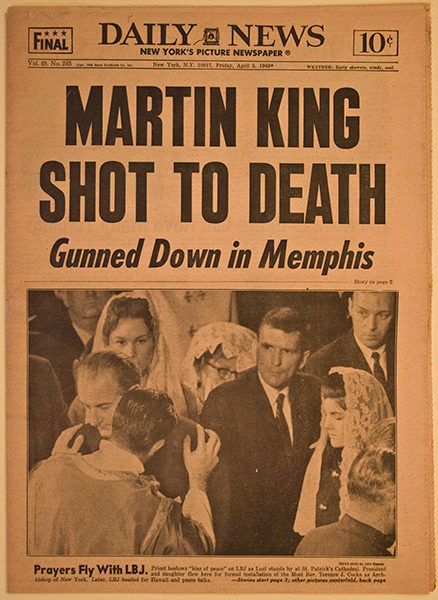
At right: The unusual headline from the New York Daily News. This particular front page popped up on last night’s show. Did you catch it?

The city was in a veritable lock down throughout the day, with many businesses and schools closing early on April 5.  In case you couldn’t make it into the city that evening — and given reports of rioting, many chose to stay home — the ceremonies were actually broadcast by WBAI.  (You can download a recording of the broadcast here, courtesy Pacifica Radio Archives.)

Those invited to speak at the gathering were friends and admirers from a variety of fields.  Looking at the list of speakers, perhaps the most unusual one that jumps out is Dr. Benjamin Spock, the famed pediatrician and best-selling novelist. Spock was an ardent, high-profile protester of the Vietnam War and a friend of Dr. King’s, frequently seen at his side in 1967 at war protest events.

Others who spoke at the rally included actor Ossie Davis and activists Florynce Kennedy and James Forman.  Perhaps the most damning words were spoken by Jarvis Tyner, chairman of the DeBois Clubs of America, who declared that Mayor John Lindsay was poised to send armored tanks to Harlem.

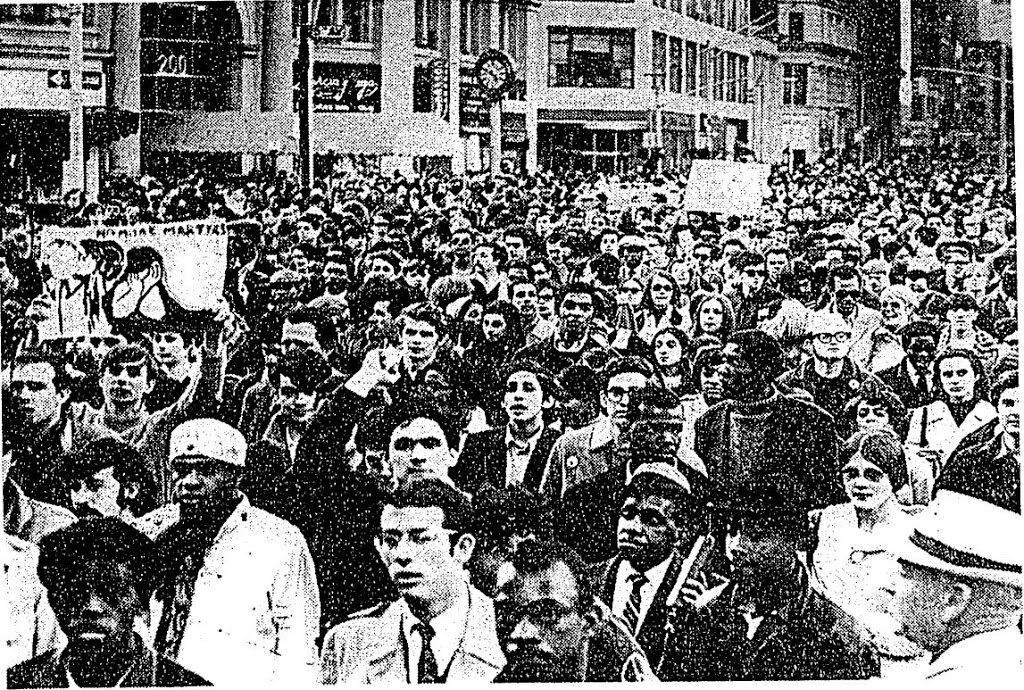
Below: Crowds cross 23rd Street on their way to City Hall. Picture courtesy NYT

Things got rather out of hand once the rally turned into a march down Broadway to City Hall.  According to the New York Times, throngs of students filtered down the streets, occasionally breaking windows along the way.  Trying to stem the violence among their number, others were heard shouting. “Let’s keep order for Martin Luther King.”

The following day, mourners marched from Harlem to an all-faith rally held by local religious leaders in the park.. (It seems likelier that this was the event attended by Megan and her step-children!)

On last night’s episode of ‘Mad Men’, we see Don’s own reaction to the tragedy — going to see ‘Planet of the Apes’ with his son!  According to the same article, this was not an unusual reaction after the tragedy.  While other forms of entertainment saw a notable decrease in attendance, movie theaters saw no such effect, even with fears of a possible riot awaiting moviegoers when they left the theater.  “Times Square movie theaters reported either normal or better than usual crowds and both the Baronet and Coronet Theaters on Third Avenue at 59th Street said they had long lines of people waiting to buy tickets for the early evening shows.”

The April 5th rally for Martin Luther King wasn’t even the most unusual thing to happen in Central Park that day.  That distinction would go President Lyndon B. Johnson, who planned a surprise trip to the United Nations that day and touched down his helicopter in the park!

Categories
Parks and Recreation

Marks of the grid: A remarkable find in Central Park

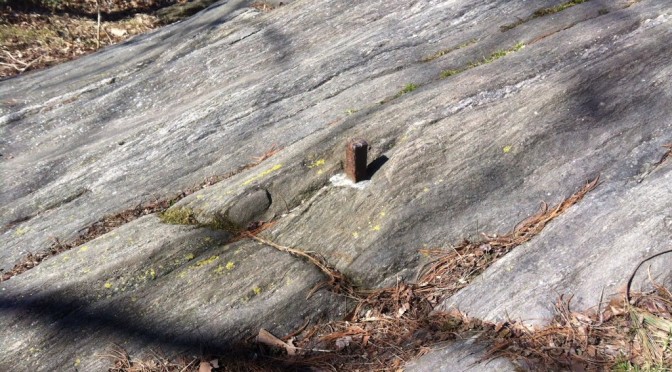
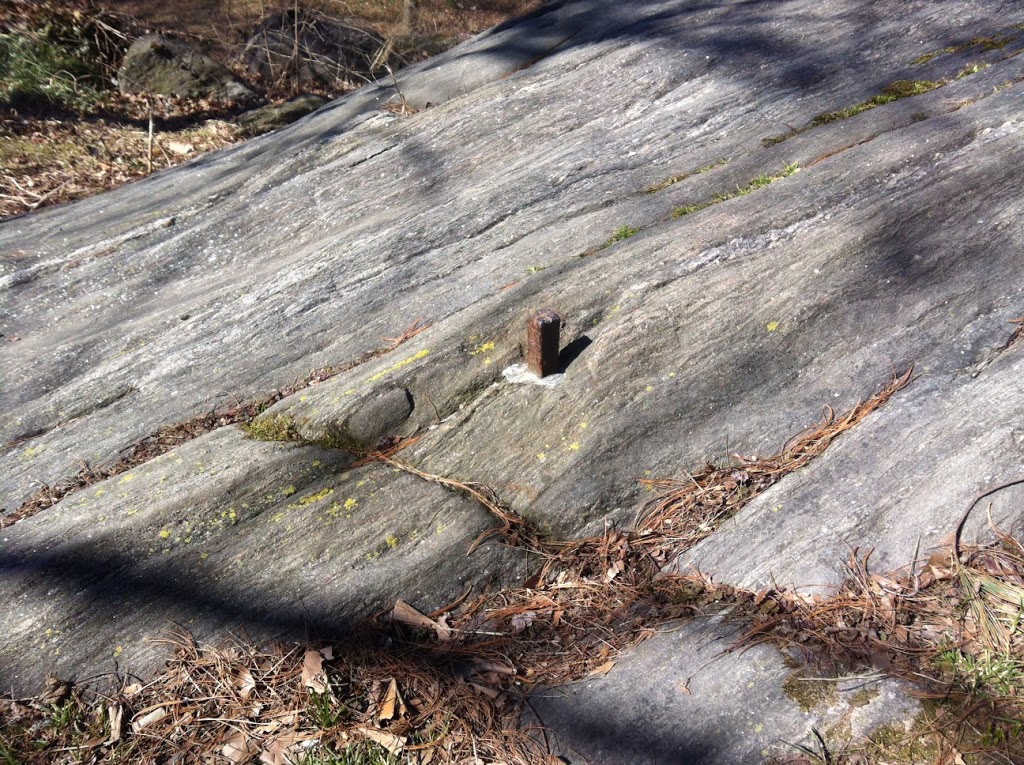
So this random little bolt in a rock may not look like much, but it could be the last remaining on-site evidence of the creation of New York City’s grid plan.

Inspired by Marguerite Holloway’s book ‘The Measure of Manhattan‘, I went looking for this unusual object hidden in Central Park, discovered by geographers several years ago and believed to be a bolt used in the original survey of Manhattan by John Randel Jr. in the 1810s.

Randel and his team poured over the island, marking spots along a delineated grid that would become the intersection of streets and avenues.  Reuben Sky Rose-Redwood, one of the researchers who discovered the odd bolt, believes it’s from Randel’s original survey due to its placement.

Indeed this would have be the exact location of an upper Manhattan intersection had Central Park not been carved out in the 1850s.  If this random little bolt is indeed part of that original survey, then it’s truly an extraordinary link to New York City history.

I’m not going to reveal the location of the bolt, but you can search around the web for clues to its whereabouts.  Needless to say, if you do go on a hunt for this potential key to the Manhattan grid plan, please leave it be if you find it.  (Also, this means you’re a bonafide history geek like me. Congratulations!)

If it’s ever definitively confirmed to be a tool of Randel’s, hopefully the park will provide some kind of protection.  Rarely does one find historical objects in situ.

Categories
Museums

The Metropolitan Museum of Art, when it was smaller

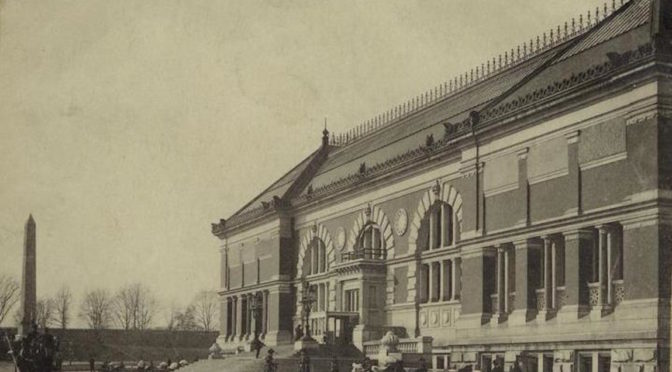
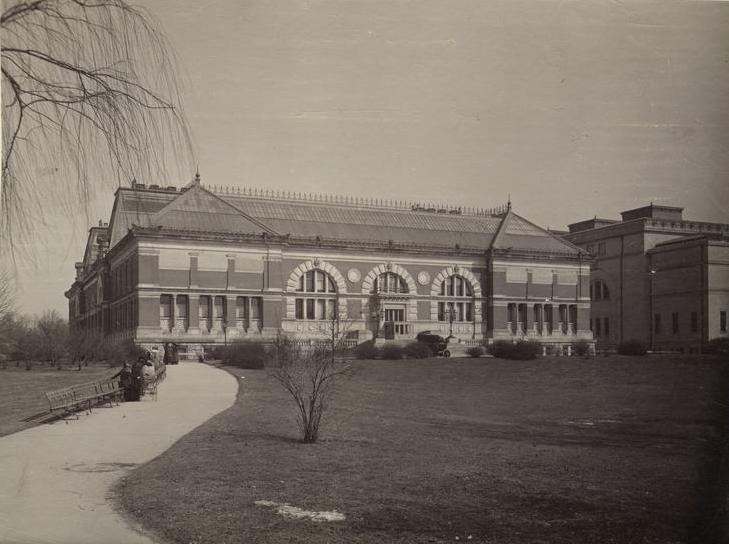
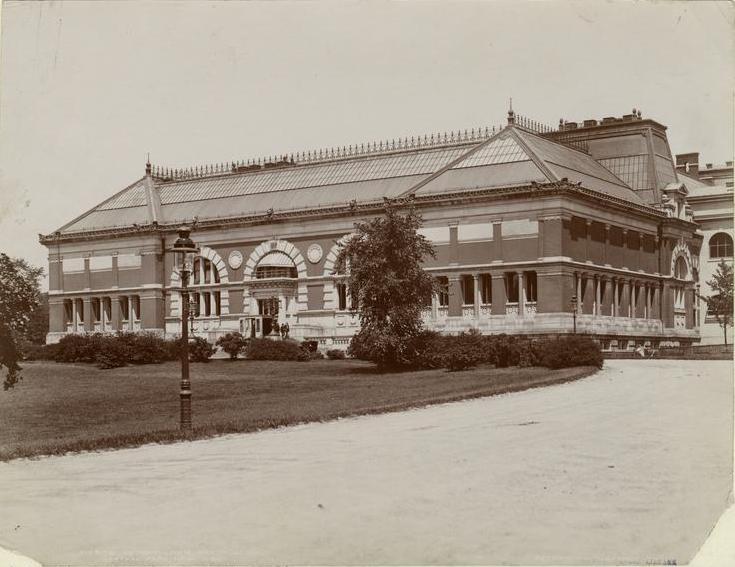
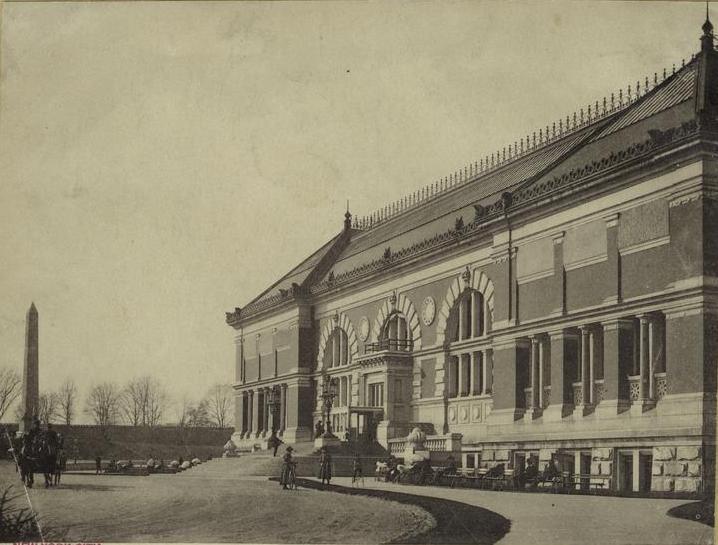
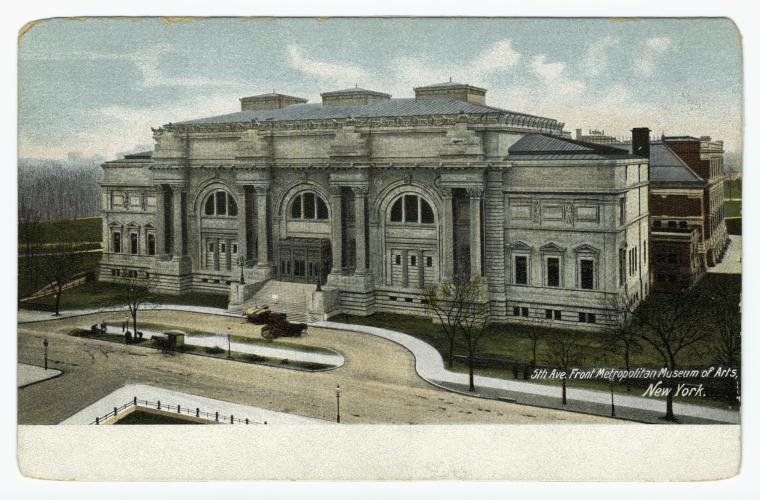
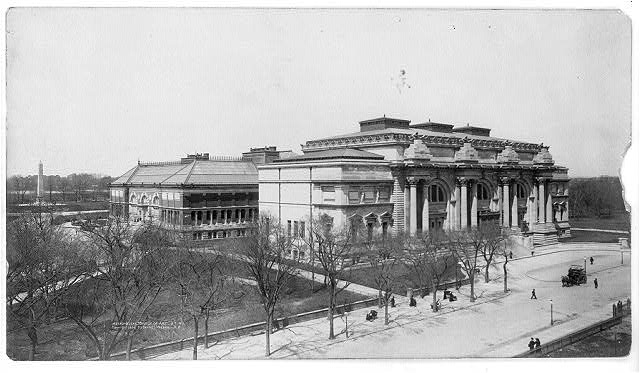
I’m working on a very art-themed podcast which should be ready for release this Friday.  The Metropolitan Museum of Art will be a supporting player in this week’s show, so please enjoy these early photos of the original building, opened in 1880 and designed by Calvert Vaux (to better accentuate his park) and Jacob Wray Mould, of Belvedere Castle fame.

The building was considered out-of-fashion almost as soon as it was finished, and within a couple decades Richard Morris Hunt had created the museum’s more expansive Beaux-Arts facade and wings. What you see here is the old building, next to the new facade, before it was fully consumed by additions.

The postcard and the photo below it gives you a good idea of where the new additions sat in relation to the old building. And this is before the wings were added.

The top four images are courtesy New York Public Library. The last is courtesy Library of Congress.

Categories
Podcasts

Bicycle Mania! The story of New York on two wheels, from velocipedes to ten-speeds — with women’s liberation in tow


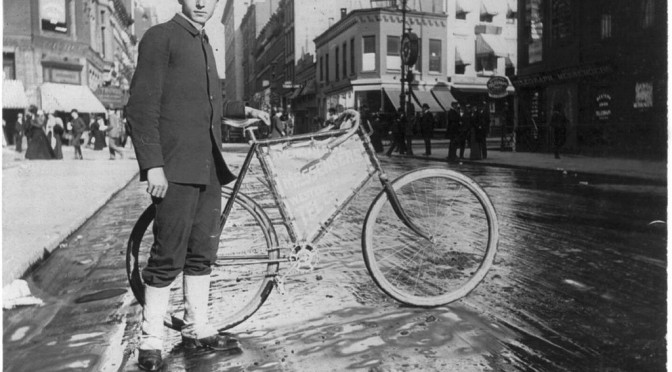
Alice Austen’s iconic photograph of a telegram bike messenger in 1896, a year where many New Yorkers were wild about bikes. Austen even rode one around with her camera. 

PODCAST The bicycle has always seemed like a slightly awkward form of transportation in big cities, but in fact, it’s reliable, convenient, clean and — believe it or not — popular in New York City for almost 200 years.

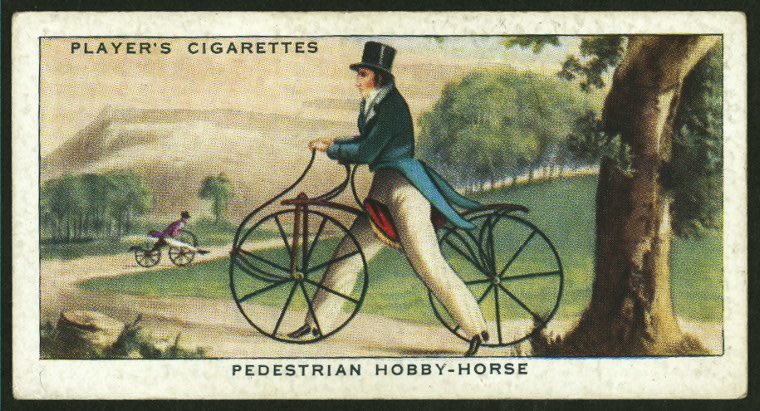
The original two-wheeled conveyance was the velocipede or dandy horse which debuted in New York in 1819. After the Civil War, an improved velocipede dazzled the likes of Henry Ward Beecher and became a frequent companion of carriages and streetcars on the streets of New York. Sporting men, meanwhile, took to the expensive high-wheeler.

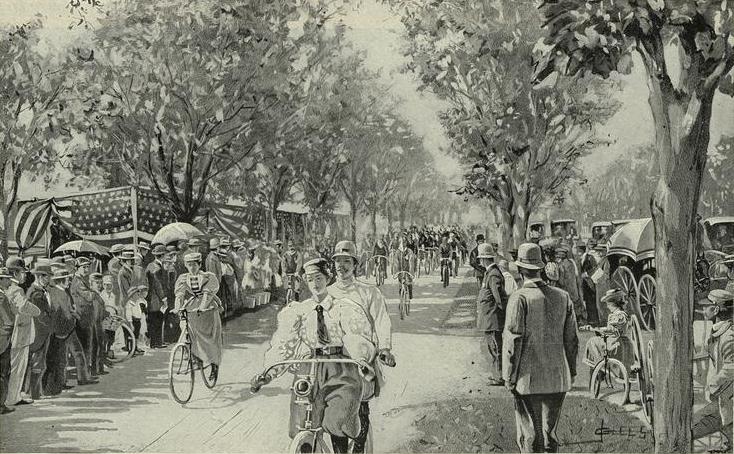
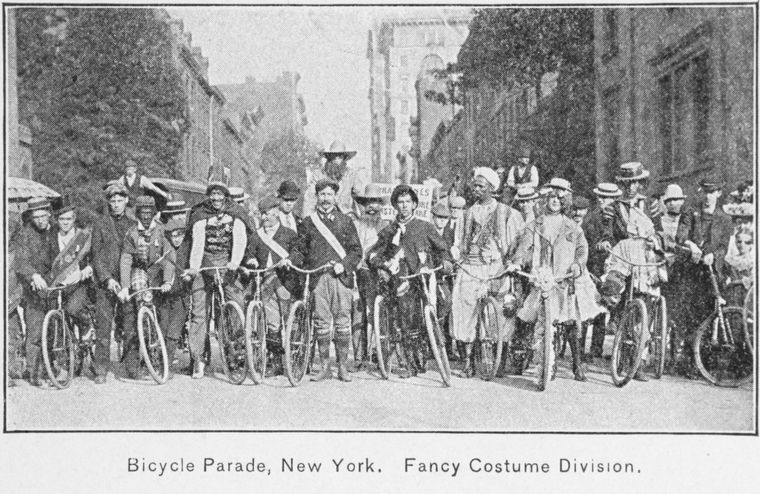
But it was during the 1890s when New Yorkers really pined for the bicycle. It liberated women, inspired music and questioned Victorian morality. Casual riders made Central Park and Riverside Drive their home, while professionals took to the velodrome of Madison Square Garden. And in Brooklyn, riders delighted in New York’s first bike path, built in 1894 to bring people out to Coney Island.

FEATURING:  Robert Moses, Charles Willson Peale, Ed Koch, and New York’s bike thief in bloomers!


The early velocipede went by several names — the hobby horse, the dandy horse, the draisine. This device made a big splash in 1819 before they were effectively banned from the city. [NYPL]


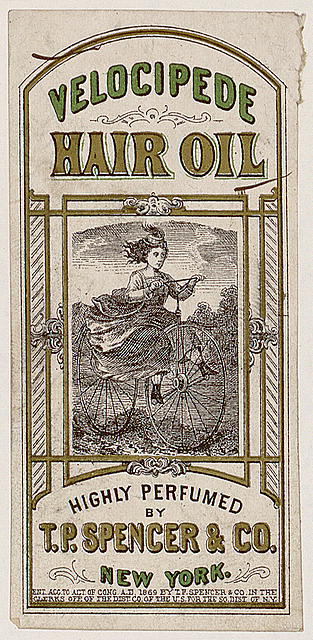
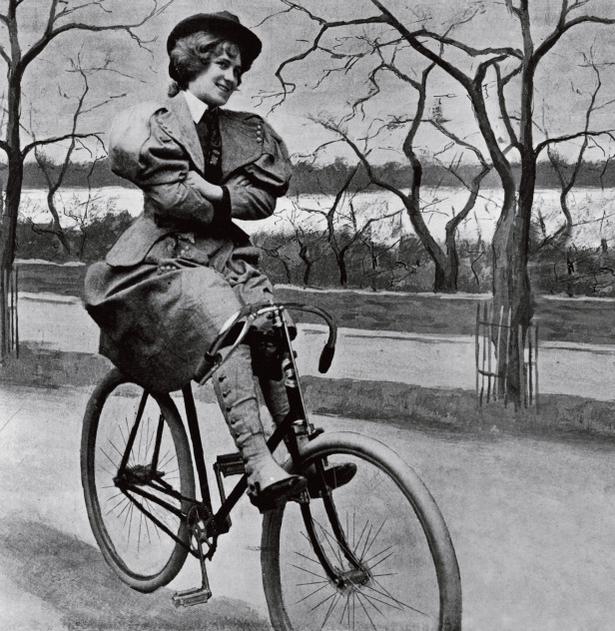
With the velocipede craze of the late 1860s, women attempted to conform to Victorian ideals of fashion with a host of bizarre products to maintain a ladylike presentation. By the 1890s, women riders chucked most of those conformities out the window, introducing more comfortable clothing and embracing the independence offered by the bicycle.

At top: An ad for a hair product, 1869. (LOC) Below: A radical change of costume in a photo illustration from 1890s (courtesy Brain Pickings, accompanying an amusing article of women’s bicycle do’s and don’ts from 1895)

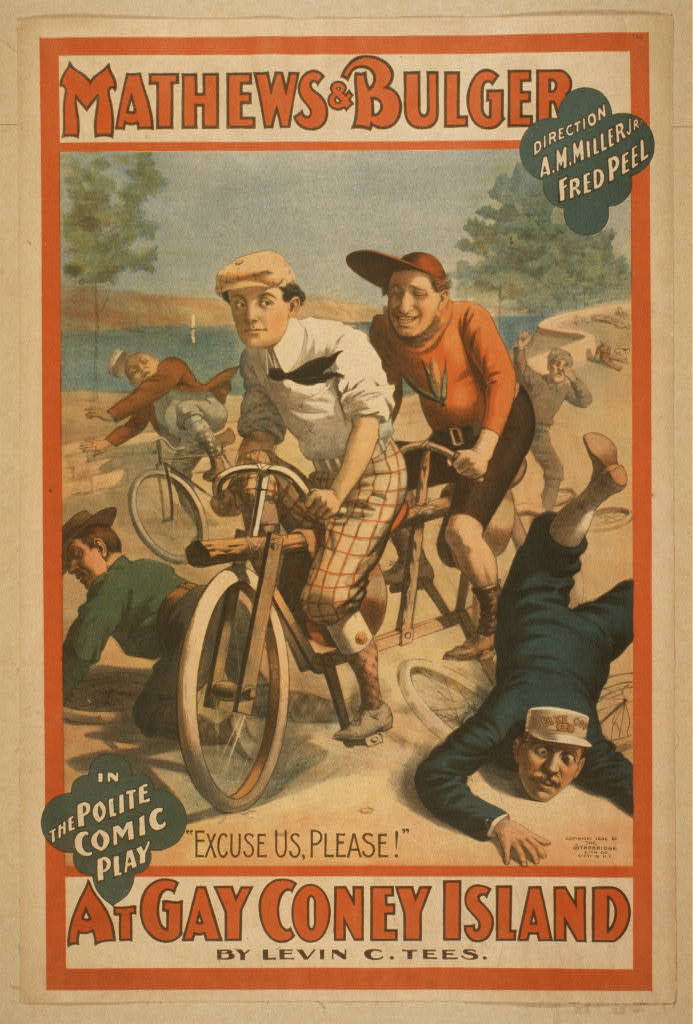
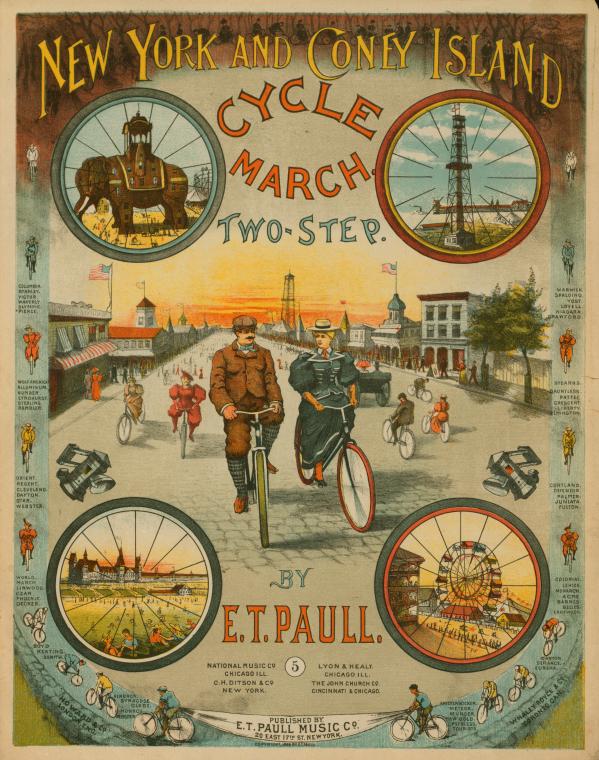
The bicycle didn’t just provide transportation and recreation in the 1890s. It influenced entertainment as well, through the songs of Tin Pan Alley. Below: A ‘comic play’ and a two-steph, both from 1896, and both inspired by the Coney Island Bike Path. (LOC)

The Coney Island Bike Path in 1896, running up Ocean Parkway to Prospect Park. I believe this illustrates the opening of the return path, as the original path opened in 1894

I have absolutely no context for this image, but I love it. Taken sometime between 1894-1901 [NYPL]

Categories
Podcasts

The Croton Aqueduct: How New York got its drinking water

Above: The Croton Reservoir in 1850, in what would soon become Central Park. (NYPL)

PODCAST One of the great challenges faced by a growing, 19th-century New York City was the need for a viable, clean water supply.

We take water for granted today. But before the 1830s, citizens relied on cisterns to collect rainwater, a series of city wells drilled down to bubbling, underground springs, and, of course, the infamously polluted Collect Pond. But these sources were spreading disease and clearly inadequate for a city whose international profile was raising thanks to the Erie Canal.

The solution lay miles north of the city in the Croton River. New York engineers embarked on one of the most ambitious projects in the city’s history — to tame the Croton, funnelling millions of gallons of waters through an aqueduct down to Manhattan, where it would be collected and stored in grand, Egyptian-style reservoirs to serve the city’s needs.

This is the story of both the old and new Croton Aqueducts, and of the many landmarks that are still with us — from New York’s oldest surviving bridge to a former Bronx racetrack that was turned into a gigantic reservoir.

FEATURING: An entire town moved on logs, a famous writer’s strange musings on Irish laborers, the birth of a banking titan, and guest appearances by Isaac Newton, DeWitt Clinton, and Gouverneur Morris (or, at least, men who share those names).


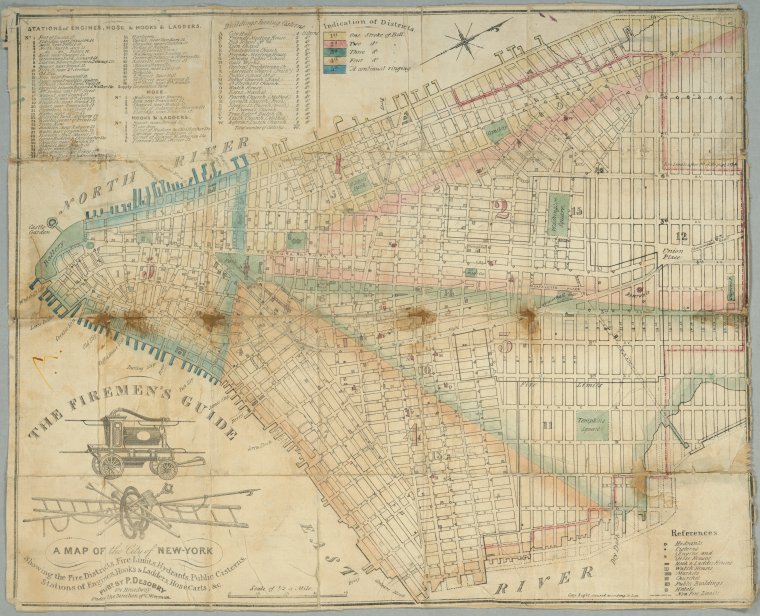
A fireman’s map of New York in 1834, detailing the location of the city water supply, in cisterns and hydrants fueled by the 13th Street Reservoir. (NYPL)

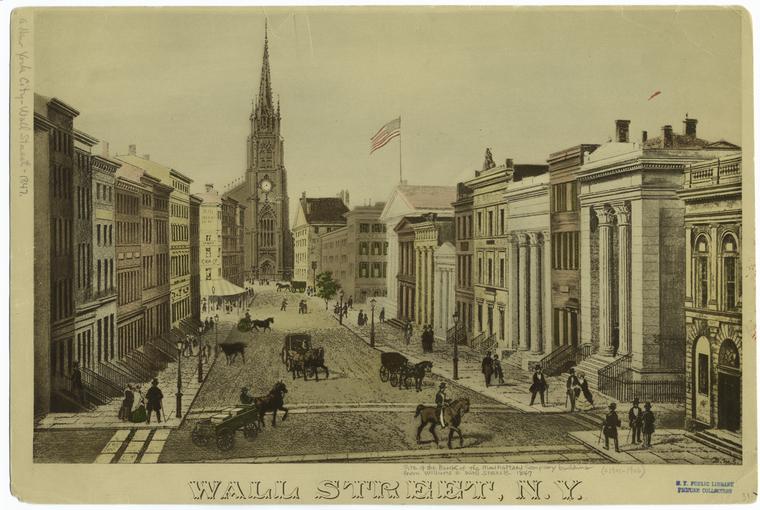
Wall Street in 1847. The Manhattan Company is at 40 Wall Street. Founded by Aaron Burr ostensibly as a public works to distribute water, the Company soon shed its water responsibilities to become a full-fledged financial institution.

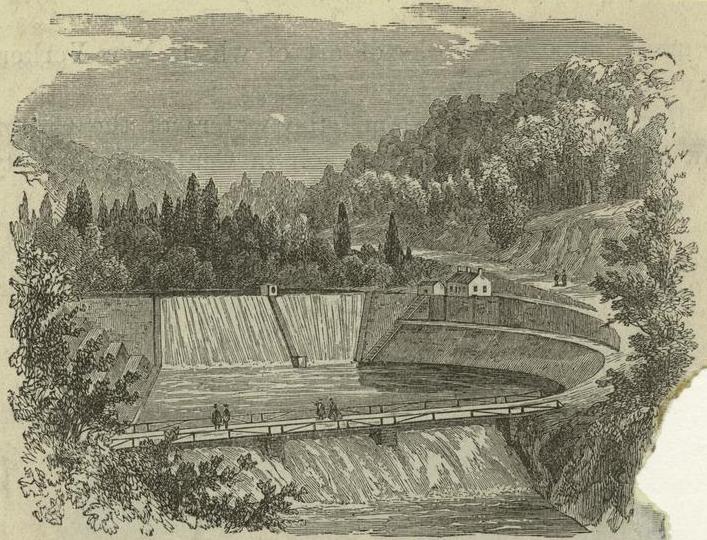
The Croton Dam and the start of the aqueduct system. After a partial collapse in 1841, the dam was quickly rebuilt for the opening of the entire system the following year. Today, the location of this dam is submerged under the current Croton. (NYPL)

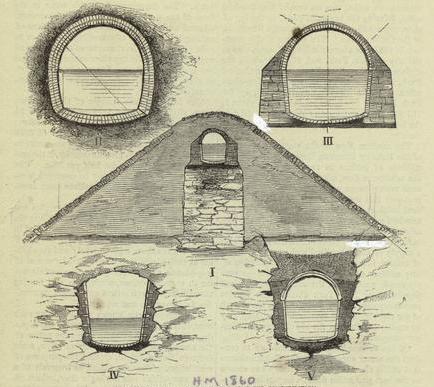
Examples of the various tunnels created to accommodate the various topographical challenges encountered during construction. Miles of these water tunnels were constructed by a team mostly comprised of Irish laborers. (NYPL)

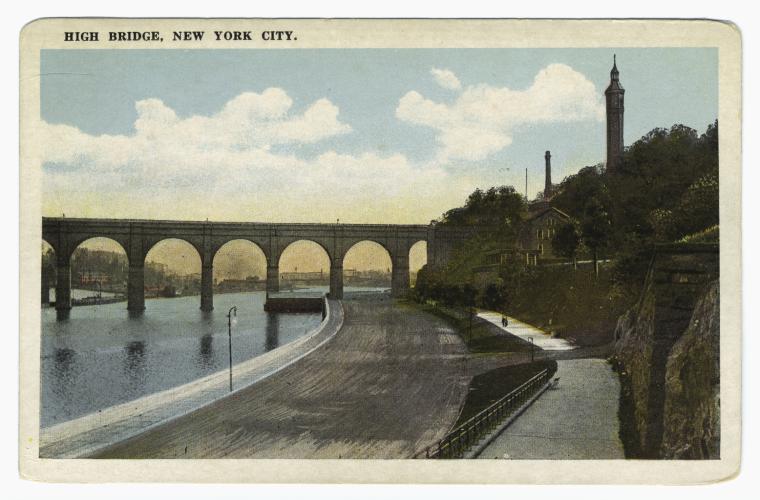
The glorious High Bridge, the oldest surviving bridge in New York — although much of it has been replaced and quite altered. (NYPL)

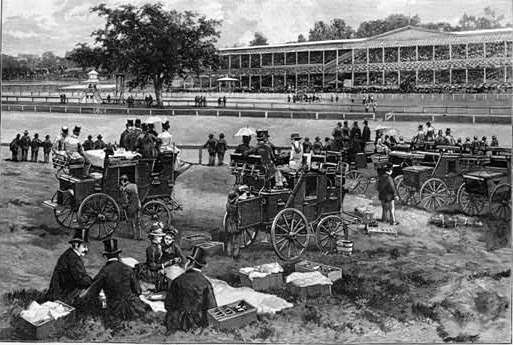
High society flocked to Jerome Park Racetrack on the weekends in the 19th century. But the park was turned into a reservoir at the beginning of the 1900s. (NYPL)

Also: please see my post from yesterday The Art of the Reservoir for pictures of some of the receiving and distributing reservoirs used in the Croton system and others through the New York region.

The art of the reservoir, New York’s forgotten architecture

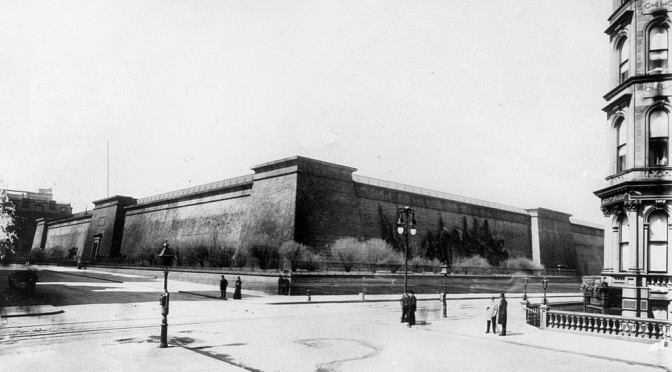
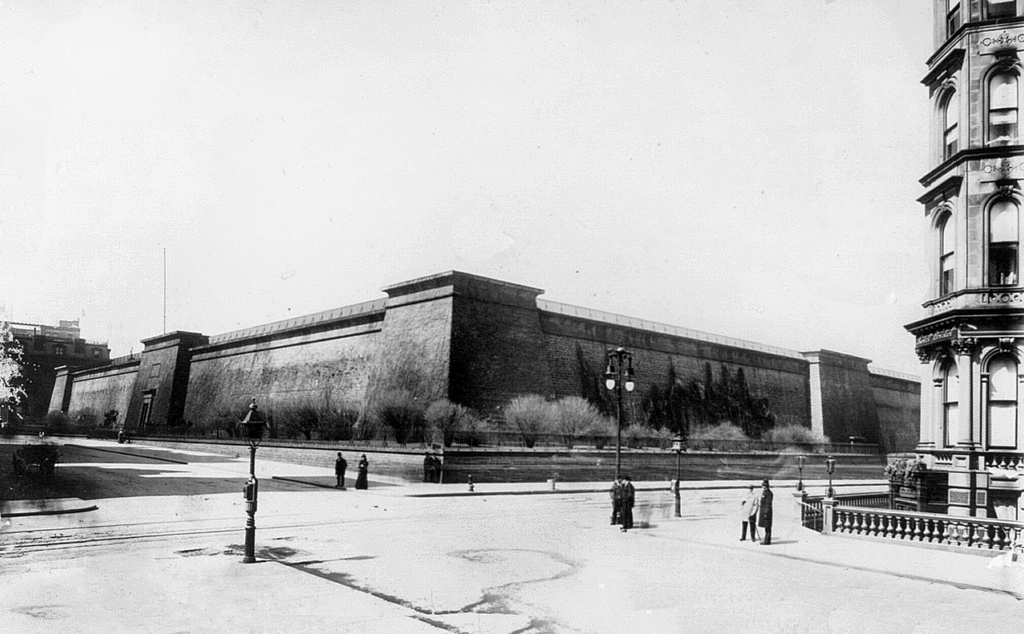
The Fortress of Fifth Avenue: the Murray Hill Reservoir

We share a lot of the same needs as New Yorkers of the past, but we’ve just gotten better at hiding the unpleasant ones.  There are a great many mental institutions and specialized medical facilities in the city; they just aren’t in creepy, old Gothic buildings anymore. Prisons are out on islands or in nondescript beige towers flaunting only the barest hint of iron bars. We don’t dress them up in Egyptian morbidity like the famous Tombs prison of Five Points.

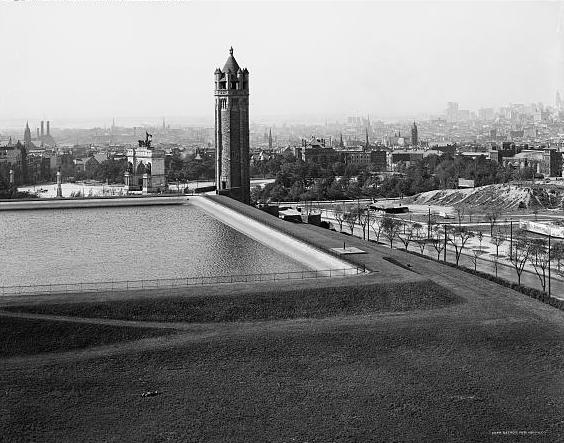
Our trains and our electricity reside underground, and so does our water, mostly. There are only a few places that seem to suggest that New York City’s water supply doesn’t just magically appear. Water towers dot the skyline, recalling romantic comic book landscapes, while water treatment plants, spread mostly through the outer boroughs, obviously do not. Then there are the reservoirs, the grandest of these, the Jerome Park Reservoir in the Bronx, is a landmarked structure of enormous, albeit hidden, beauty. It’s currently drained and sitting like the Earth’s largest off-season swimming pool.

But New Yorkers used to live with their water, contained in reservoirs meant to evoke might, sophistication and security. After all, New York only got fresh water from the Croton Aqueduct in 1842; before that, it was mostly obtained from wells, cisterns, and that nasty old Collect Pond. People were proud of their new water system, so why not show it off?

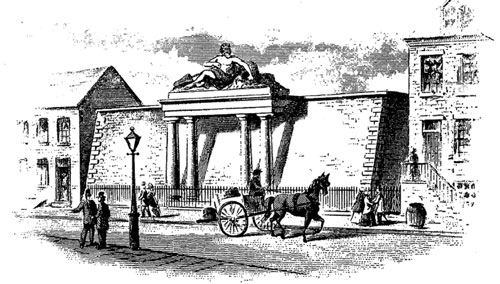
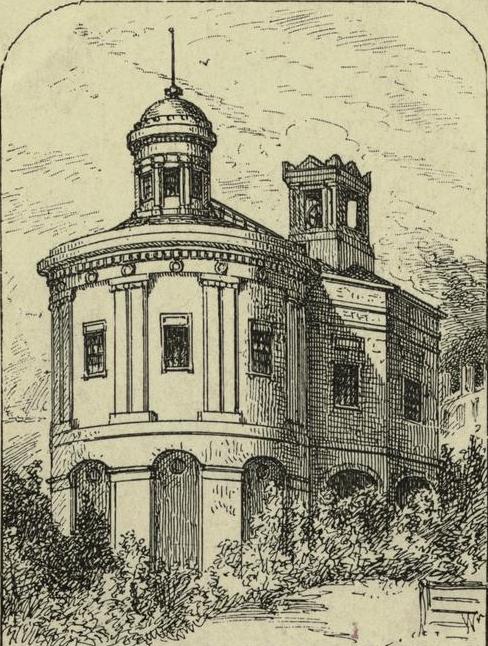
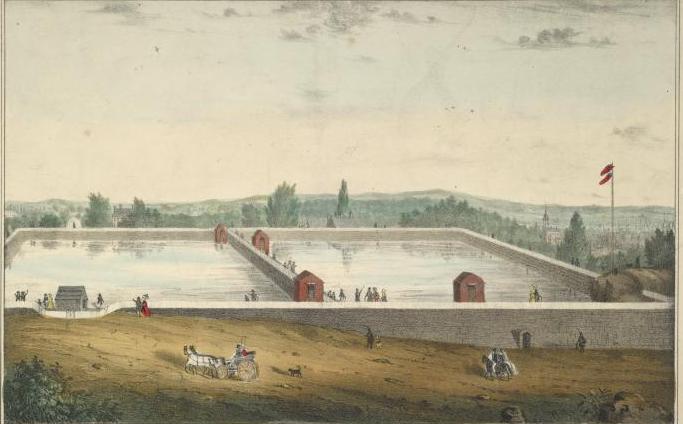
Here’s a gallery of New York’s old 19th century reservoirs. In tomorrow’s podcast, we’ll elaborate on the marvelous story on how the city got its water:

The Manhattan Company reservoir on Chambers Street was opened in 1801 and was quickly deemed inadequate. Looks lovely though. If it were still around — it was demolished in the early 1900’s — it would probably be a nightclub today.

13th Street ReservoirOpened in 1830 as a water-pooling resource for fire fighting, it pumped water to hydrants on Broadway, the Bowery and other streets, but was little help in stopping the blazes of the Great Fire of 1835.

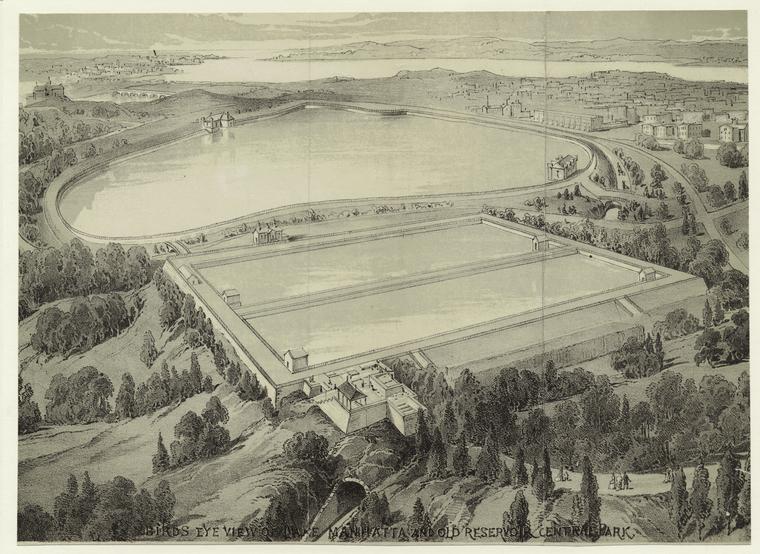
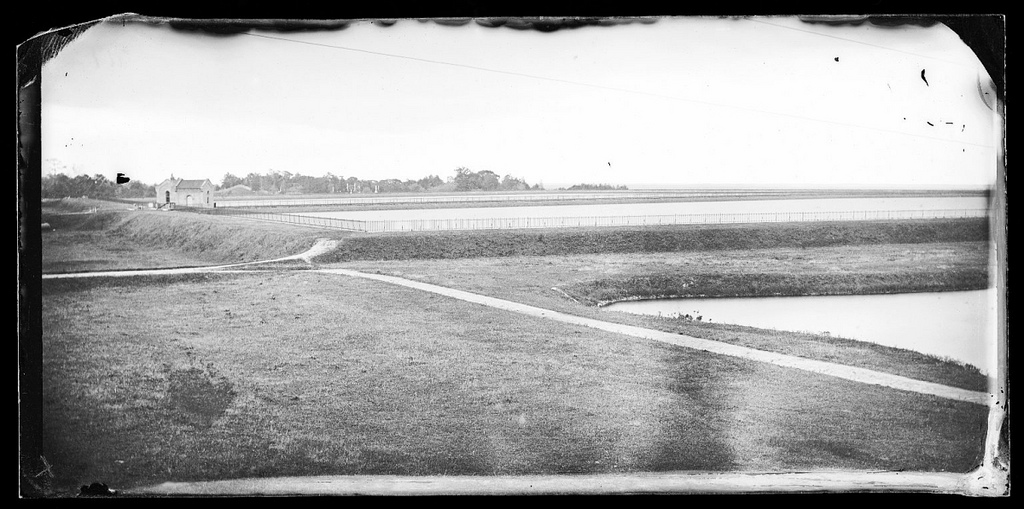
The Yorkville reservoir, how it looked on its opening in 1842. It was located between 79th and 86th Streets and between Sixth and Seventh Avenues. Many years later, was surrounded by Central Park and was later torn down to become the park’s Great Lawn. What does remain, however, is….

…the Central Park receiving reservoir, built in the 1850s and, unlike the Yorkville, incorporated into the park’s designs. Today it’s named for Jacqueline Kennedy Onassis, who lived nearby and frequently jogged around it.

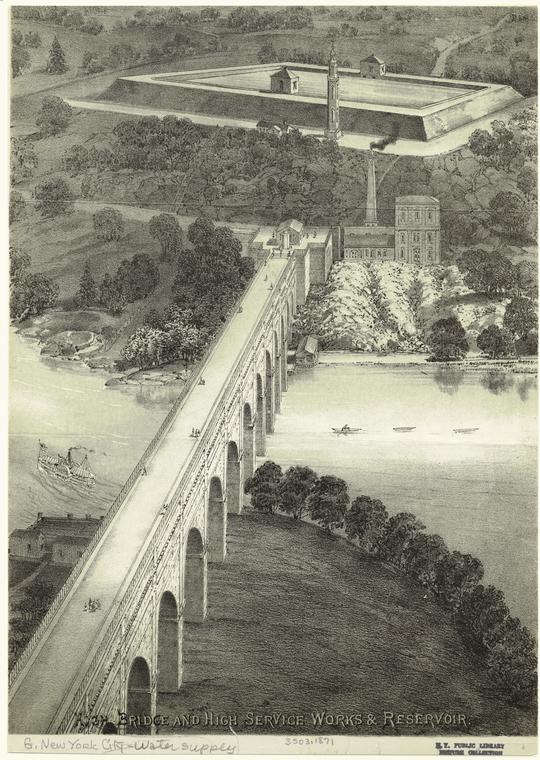
The spectacular High Bridge, part of the Croton system, with its adjoining smaller reservoir and water tower, serving the needs of residents of Manhattan’s higher elevations.

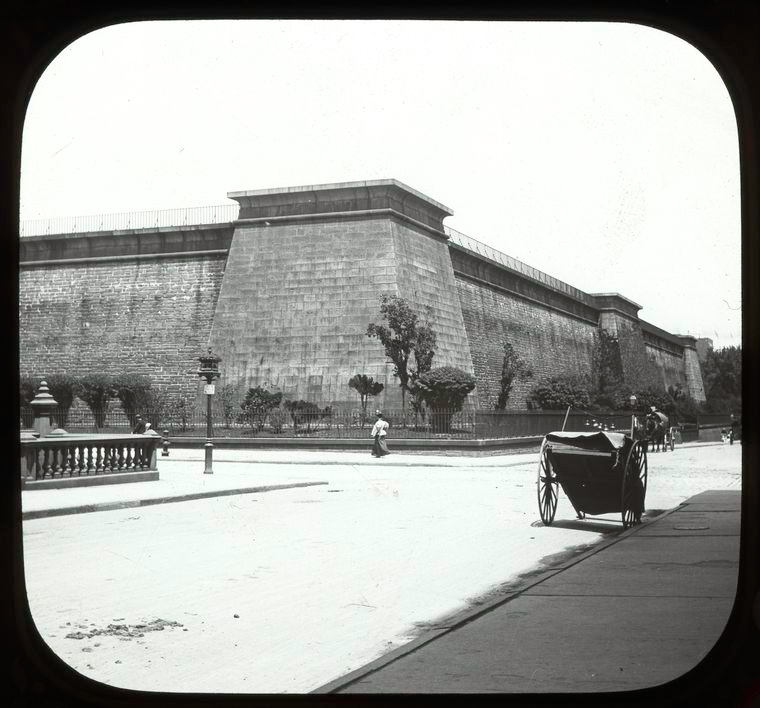
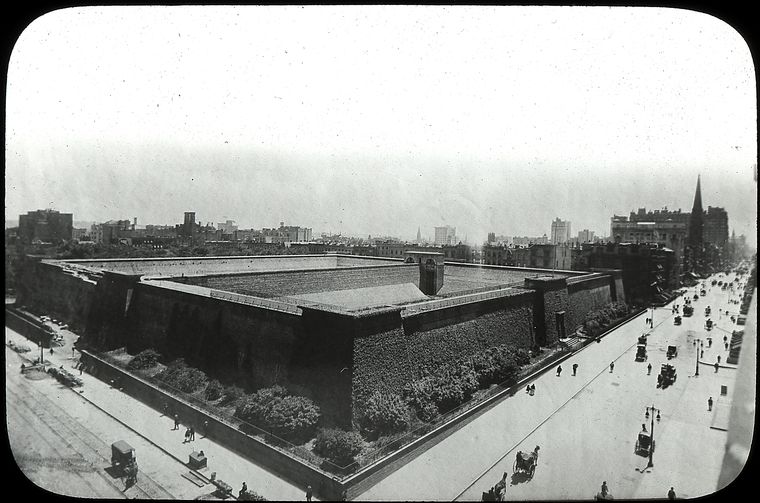
The grand Murray Hill Reservoir, probably the most popular of the reservoirs with 19th century tourists. Situated on land that had held the fabulous Crystal Palace (destroyed by fire in 1858), the reservoir was demolished in the 1890s to make room for Bryant Park and the New York Public Library.

Brooklyn was maintained in the 19th century in two reservoirs, one in Ridgewood and the other high atop Mount Prospect, although the ultimate source of the water came from a variety of places.

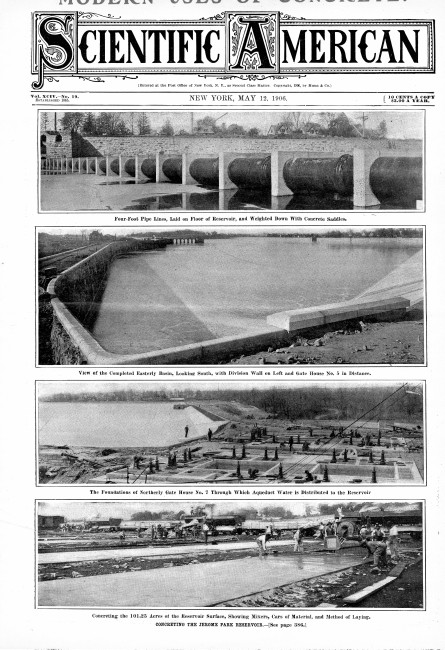
An issue of Scientific American in 1906, celebrating ‘the concreting’ of the Bronx’s Jerome Park Reservoir which opened that year and contained portions of both the old and new Croton Aqueduct systems.

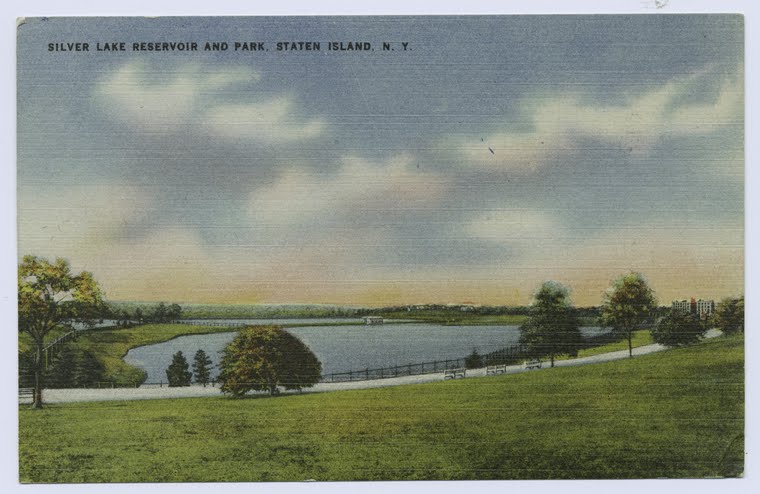
The 1917 Silver Lake reservoir in Staten Island was constructed, like the Central Park reservoir, to be a functional feature of a park setting.

Pictures courtesy the New York Public Library, the Brooklyn Museum and the Library of Congress. Thanks as always to these institutions. The Scientific American can be found here.