Notes from the podcast (#128): The Conspiracy of 1864

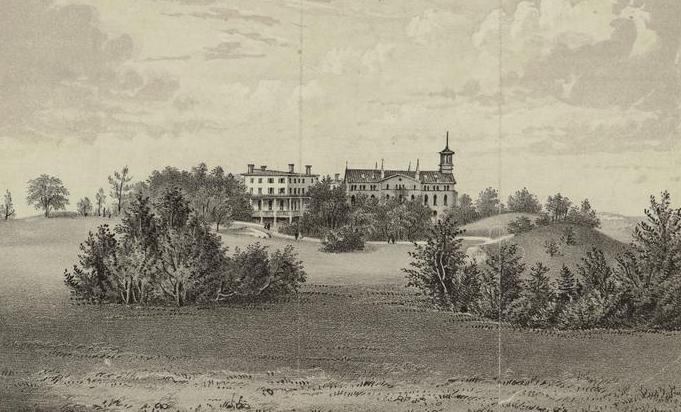
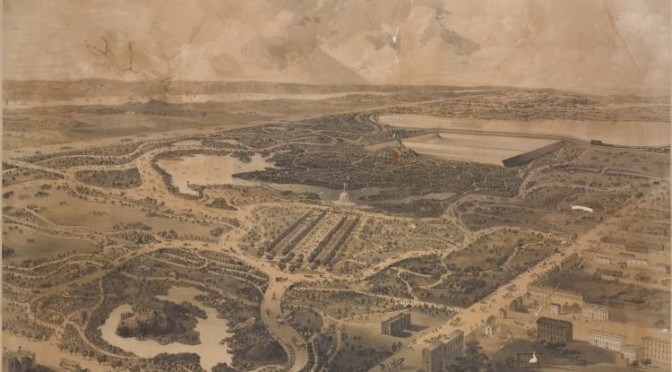
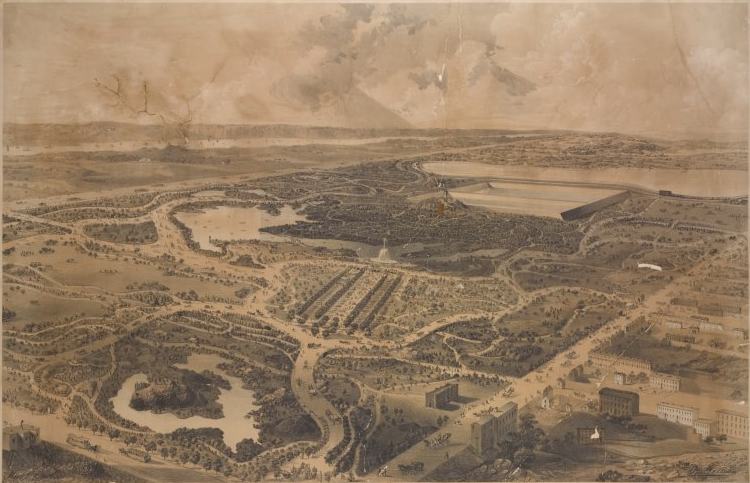
A depiction of Central Park from 1864. The conspirator’s cottage hideout would have been near the southeast corner. (Courtesy NYPL)

The year 1864 wasn’t as pivotal to New York City as 1863 (with the Draft Riots), but it is one of the stranger years I’ve ever come across in studying the city’s history, culminating in the failed attempt by Confederate spies to burn Manhattan’s hotels.

There is one important context about the attempted burning that we failed to mention. You couldn’t just walk around New York City in late fall 1864 if you were a Southerner. Because if intelligence claiming a potential attack on the city, any resident of the South had to register with the city. Our eight Confederate spies, of course, neglected to do this, and although they did indeed wear disguises and shuffle among different hotels to avoid detection, there is no evidence to suggest they disguised their voices.

A few other non-war events from 1864 that were not mentioned in the show:

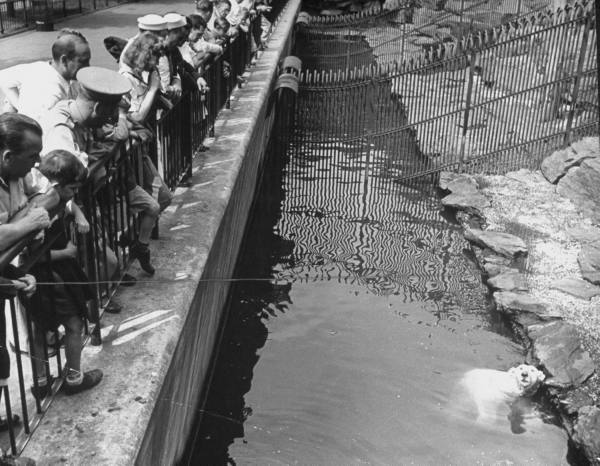
Central Park was open to visitors but was far from completion. The new public space still felt remote to some New Yorkers — of the human kind, that is. People had begun abandoning unwieldy pets or livestock by securing them in one particular area of the park, in the southeast corner. In 1864, it became an officially chartered menagerie of animals, one of the first official American zoos.

Also that year — and quite against the original designs of Olmsted and Vaux — Central Park received its first statue. The honoree? William Shakespeare.

The area surrounding Gramercy Park was well established by Manhattan’s elite. Years after the disgrace of having a brother by the name of John Wilkes Booth, famed actor Edwin Booth would open his Player’s Club here. But further down on Irving Place, on 18th Street, a modest grog shop opened in 1864 on the ground floor of a building called the Portman Hotel. Drinkers there were certainly gossiping about the war and the Confederate attack on New York. The tavern has survived through various name changes and more than a few drunken artists and writers (including, most notably, O. Henry). You may know better today as Pete’s Tavern.

Some young men spend 1864 holding baseball bats, not rifles. The Brooklyn Atlantics were certainly one of the most well-known ball teams of the mid-19th century and one of the founding members of America’s first baseball league. And in 1864, the team played an undefeated season to capture national championship. (To be fair, to the team they bested was Eckford, also a Brooklyn team.)

For More Information: For a nice overview of New York City during the Civil War, seek out the out-of-print The Civil War and New York City by Ernest A. McKay. Nat Brandt’s The Man Who Tried To Burn New York takes a closer look at Robert Cobb Kennedy, one of the Evacuation Day conspirators. For a look at the conspiracy from the larger context of the war, check out Clint Johnson’s A Vast And Fiendish Plot. And of course, the excellent website Abraham Lincoln and New York, presented by the Lincoln Institute, is worth a look.

The Show Must Go On: And finally, in full, here is P.T. Barnum’s letter to the New York Times regarding the attempt by Robert Cobb Kennedy to burn down his American Museum.

“To the Editor of the New York Times:

In view of the announcement in the morning papers of the attempt to fire my Museum last night, as well as other public buildings, I wish to state the following facts:

Everyday from sunrise until ten o’clock P.M., I have eleven persons continually on the different floors of the Museum, looking to the comfort of visitors, and ready at a moment’s warning to extinguish any fire that might appear. From 10 o’clock at night until sunrise, I have from six to twelve persons in the Museum engaged as watchmen, sweepers, painters, &c.

I always have a large number of buckets filled with water on and under the stage, and a large firehose always screwed on to be used at a second’s notice. I never allow an uncovered light in the Museum, and I heat by steam from a furnace in the cellar.

As a proof of the efficiency against fire, I submit the fact that instead of “slight damage” being done to the Museum last night, as reported by a morning paper, so speedy was the extinguishment of the flames arising from the liquid ignited on the stairs, that not even a scorch is visible.

My own sense of security is proved by the fact that I never insure for one-third the value of the Museum property.

For the safety of visitors in the lecture-room, I long ago opened nine different places of egress, so that the lecture-room, if filled with visitors, could be emptied in from three to five minutes, and the spacious openings to the street in Broadway and Ann street, render mine, I think, as safe a place of amusement as can be found in the world. The Fire Marshal and insurance agents will corroborate this statement.

Very Respectfully,

P. T. BARNUM
AMERICAN MUSEUM, Nov. 26, 1864″
The mysterious Central Park convent: Mount Saint Vincent

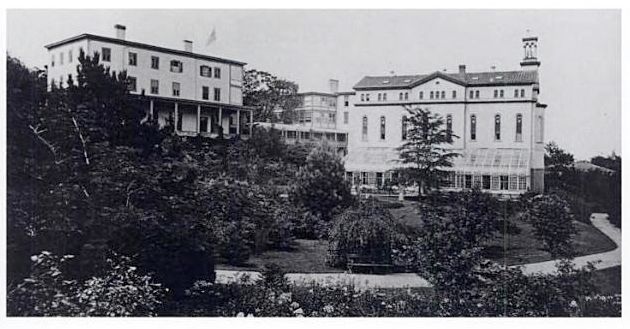
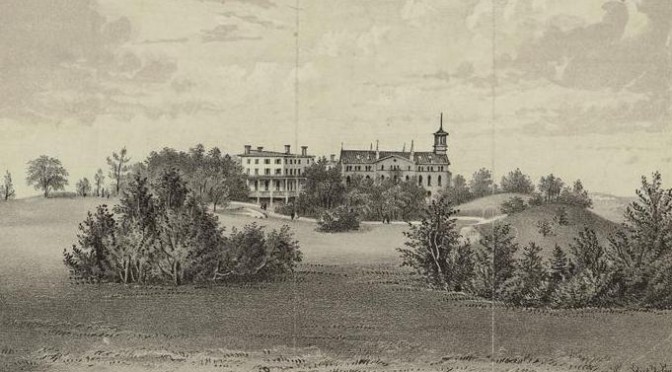
House on the hill: the stark and mysterious convent of Central Park, 1861

In tomorrow’s podcast, I’ll be spending a bit of time in 1861 and will be briefly mentioning Central Park. So I thought I’d give you a look at what it looked like then. Pictured above is a structure that once dominated the scenery — the Academy of Saint Vincent — on a hill that bore its name.

Located on the northern portion of the park, next to the charming Harlem Meer (and nearest 103rd Street), the Academy sat nestled amid a collection of hills and bluffs left over from its original topography.

A narrow passage between the hills was named McGown’s Pass after Andrew McGown, owner of a popular tavern that sat alongside here called the Black Horse Tavern**.

It was through McGown’s Pass that George Washington traveled on September 15, 1776. He and a portion of the Continental Army had escaped up to today’s Washington Heights area; when hearing that part of his army had been stopped by the British, Washington rode down the pass and led the remaining troops back up to their fortification in the Heights. He rode back through the pass again seven years later, this time as the victor.

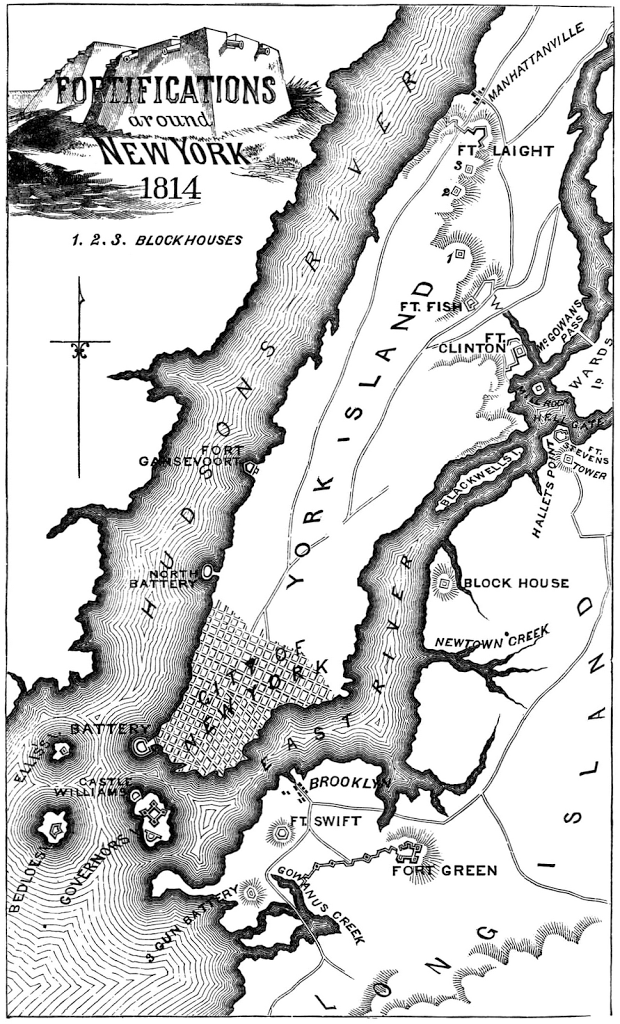
The British and their Hessian mercenaries built forts here to cut Manhattan off from the mainland. Later New Yorkers would seize upon this idea during the early days of the War of 1812. Not willing to become property of the British once again, Manhattan mobilized for any potential battles, building forts all over the island and throughout the harbor. It was here at McGown’s Pass a couple fortifications were built, including Fort Clinton (not to be confused with the fort in Battery Park, although both were named for DeWitt Clinton) and Fort Fish, named after Major Nicholas Fish, father of the New York senator Hamilton Fish.

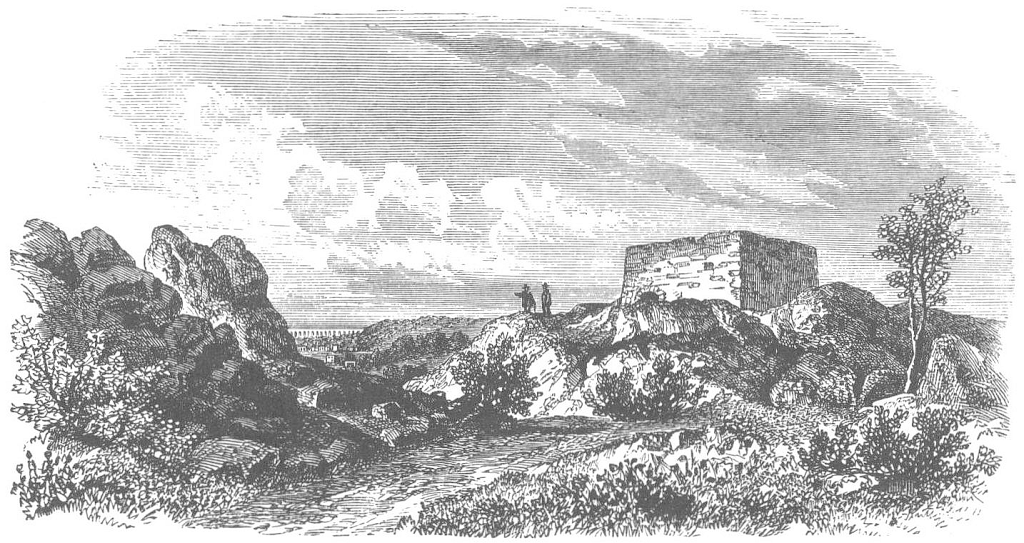
Nothing much remains of these two old forts, which were never used as the war thankfully never made its way to the city. There are, however, two remaining structures from the early days. A stone ledge overlooking the meer is all that remains of Nutter’s Battery, named after a farmer who owned the property. And nearby stands the Block House, its stone face still fairly solid, once armed with cannons and used to hold ammunition — that were, of course, never needed. The Block House was fairly intact when Frederick Law Olmstead and Calvert Vaux included it in their plans for the new park, incorporating the existing building as a ‘picturesque ruin’ covered in vines.

Here’s an illustration of how the Block House looked in 1860:

Before there was a park, however, there were nuns. In 1847 the Sisters of Charity of St. Vincent de Paul arrived at the still-bucolic region of Manhattan and opened the Academy of St. Vincent, a school and convent. The nuns left when the area was incorportated into the park, however the building remained standing and utilized for several purposes. During the Civil War, it was briefly used as a hospital; later, it was a “restaurant and hostelry,” with some certainly spectacular views for guests. The stone chapel was even refashioned as an gallery for artwork and “stuffed specimens of animals of considerable value.” Unfortunately, the structures were destroyed in a fire in 1881. (This site has some great pictures of where the convent once stood.)

Below: The buildings on the hill, circa 1863. By this time, the Catholic sisters had moved onto a new location in the Bronx (from Wikimedia)

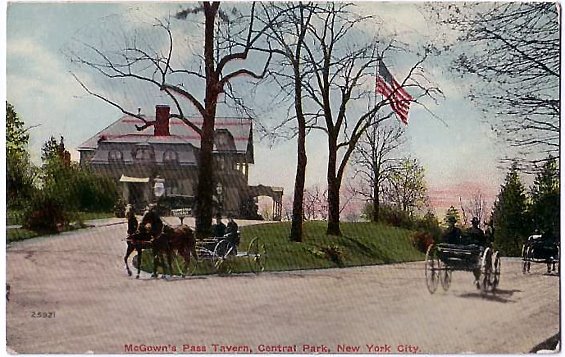
It seems, however, that the area was not through with McGown or his old tavern. Although the Black Horse Tavern had been torn down decades earlier, a two-story refreshment pavilion was constructed at this site — “heated throughout by steam and lighted with Edison’s incandescent lights” — and later renamed McGown’s Pass Tavern.

In 1895, McGown’s was strangely granted its own election district as, being inside the park, it lay outside normal district boundaries. “There were four voters in this territory last year,” declared the New York Times. “They are four men employed at McGown’s Pass Tavern.” The tavern was eventually torn down in the late 1910s.

Below: McGown’s Pass Tavern (date unknown, but possibly around the early 1910s)

This is a bit tangental, but I love this story. A plaque was erected at the old site of Fort Clinton in 1906 and unveiled in a publicized community event for children. It was apparently difficult for some people to find the location and “several chivalrous lads” guided people through the park to the unveiling.

However, the Times reports an incident that might be the only real battle that ever occured at this storied historical spot:

“Among the boys interested in the tablet unveiling were several whose spirit of mischief overcame their sense of the proprieties. These made misleading arrow signs …. and caused a number of persons to go far afield and arrive at the exercises late and angry. These mischievous youngsters were caught at their annoying trick by boys who were more sober and serious. Then there was a short scrimmage, and the mischievous lads scurried away through the Park.”

Finally, from a 19th century book on the War of 1812 comes this spectacular map of the various fortifications built in anticipation of battle. Its dimensions are greatly distorted of course, but it lists the forts and blockhouses that stood in this area as well as those such as Fort Gansevoort and Fort Greene (click on the image to look at it more closely):

**This story is a revision of one I wrote back in July of 2008. (Here’s the original article.) Thanks to commenter sallieparker from original posting in 2008 for this tidbit! All pictures courtesy the New York Public Library except where otherwise noted

Categories
Parks and Recreation

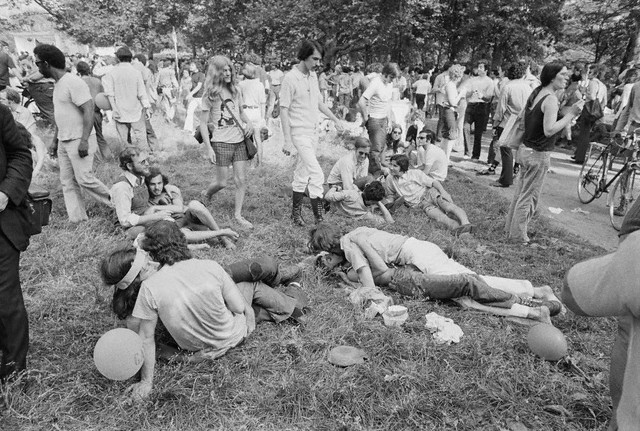
Time Capsule: Gay Hippies vs the Nudists in Central Park!

Above: From a great photo stream of images from the 1971 parade by Me In San Fran/Flickr (check them out here)

I happened across some rather extraordinary archival videos on YouTube posted by Randolfe Wicker, recorded in 1971 at New York’s second Gay Pride festivities ever, initially called the Christopher Street Gay Liberation Day. In those days, the march headed north (almost all New York parades head downtown), terminating in a rally at Central Park.

Mr. Wicker’s video features interviews with parade participants and focuses on a controversy involving a ‘nude-in’ that spontaneously erupts at the rally. Hey, it’s 1971 after all! (The nudists in the third video are blurred by the condition of the footage, so this is probably SFW).

Many of these interviews are hilarious, a few quite engaging, others rather awkward. This event took place two years after the Stonewall riots and just one year after the very first activists courageously took to the streets in New York’s first true gay pride parade. So this footage is very valuable indeed, for members of the LGBT community, and for New York history lovers in general.

Wicker also has some videos relating to a gay marriage battle — from forty years ago! Watch them here.

If you want a bit more context to the videos above, check out our podcast on the history of the Stonewall Riots, recorded back in 2008, which you can download directly from here.

Categories
Health and Living Podcasts

Building Blocks: The Commissioners Plan of 1811, inventing a New York grid of streets and avenues

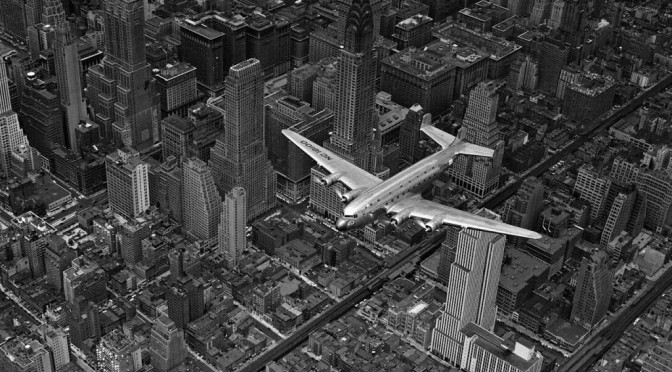
The simplicity of the New York grid system, seen overhead in a 1939 classic photo by Margaret Bourke-White.

PODCAST The Commissioners Plan of 1811 How did Manhattan get its orderly rows of numbered streets and avenues? In the early 19th century, New York was growing rapidly, but the new development was confined on an island, giving city planners a rare opportunity to mold a modern city that was orderly, sophisticated and even (they thought at the time) healthy. With the Commissioners Plan of 1811, uniform blocks were created without regards to hills and streams or even to the owners of the property!

Join us as we recount this monumental event in New York’s history — how land above Houston Street was radically transformed and also how the city revolted in many places. What about those avenues A, B, C and D? Why doesn’t the West Village snap to the grid? And why on earth did the early planners not arrange for any major parks?!

ALSO: A podcast within a podcast as we focus on the biography of one of those commissioners. Give it up for Gouverneur Morris, the casanova with Constitutional connections, a Bronx estate and a wooden pegleg.


CORRECTION: Due to my complete misreading of my own handwritten notes and in the flurry of wrapping up the show, I said that Manhattanhenge occurs on March 28 and July 12 or July 13. I meant MAY 28, not March 28. Chalk this one up to my senility. I apologize for the error.

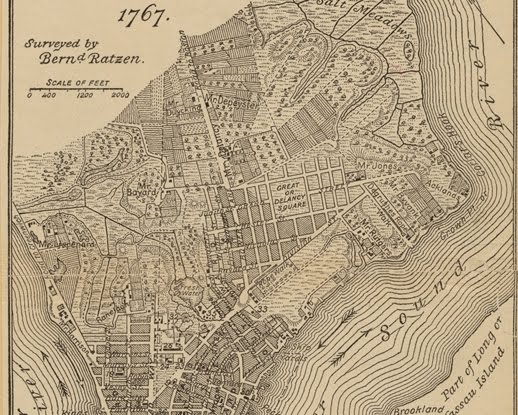
An early view of the area that would one day become the Lower East Side, SoHo and Chinatown: a network of farms and jagged roads, with some organization on individual properties. This map features details of James DeLancey’s farm. That property would be carved up after the war. (You can check out the whole 1767 map here.)

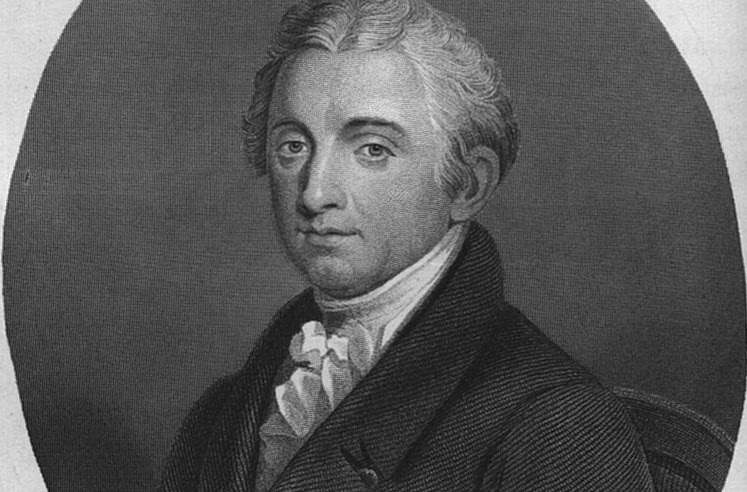
Gouverneur Morris, the Founding Father who led the commission to plan New York’s future streets and avenue.

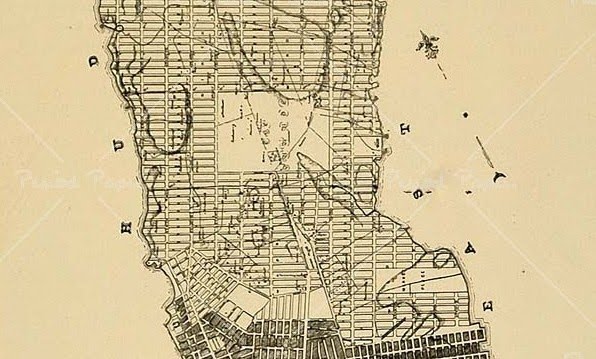
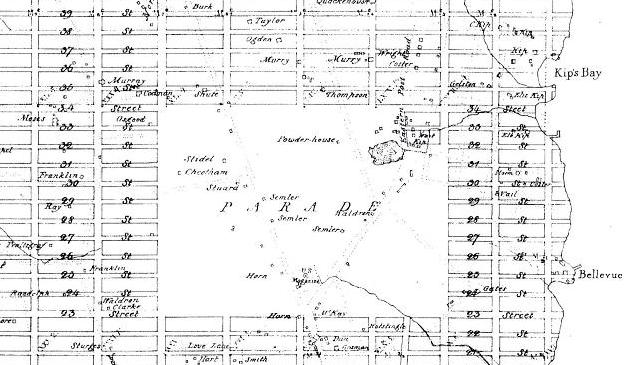
A detail from the original 1811 grid plan map of John Randel. The grid starts at irregular intervals due to keeping Greenwich Village intact, but begins right about Houston Street to the east. As it heads north, two big interupptions were planned — a market place in east around 10th-11th Street and a ‘parade ground’ about 23rd Street.

A close-up on the parade ground.

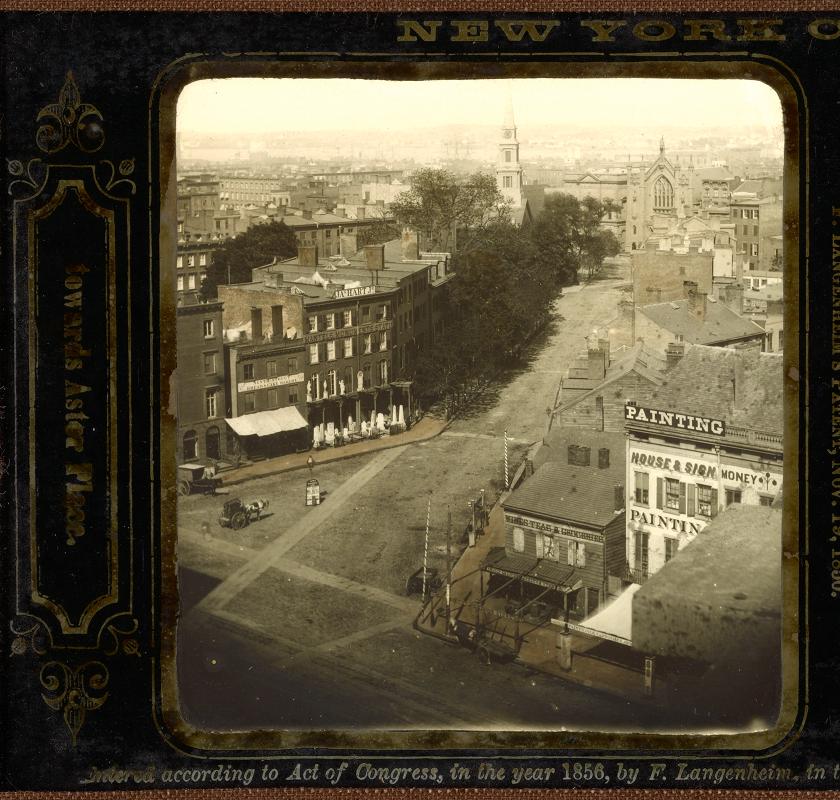
Not everything conforms to the original plan. Take Stuyvestant Street in the East Village. A main thoroughfare into the original estate of the Stuyvesant family, the small road was allowed to break the block between 9th and 10th streets. The street is hardly recognizable in this extraordinary photo from 1856, but the top of St. Mark’s Church gives away the location. (Courtesy East Village Transitions)

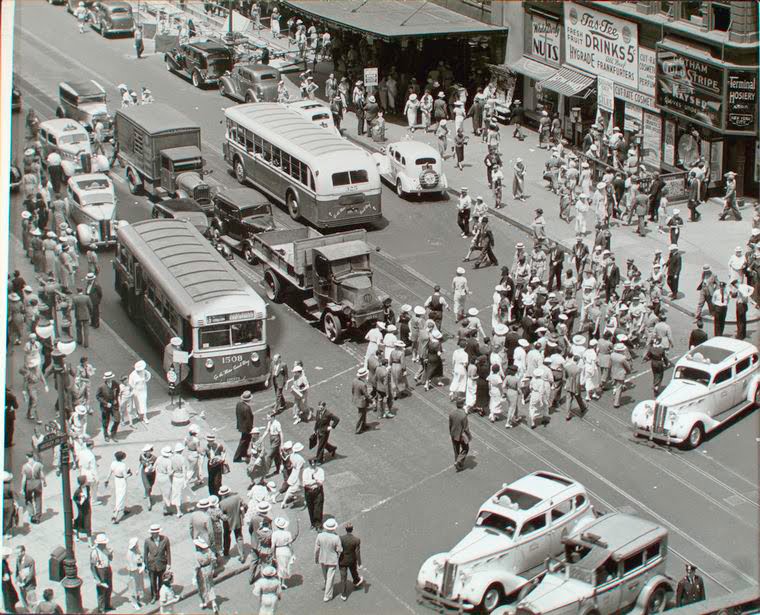
Crossroads: Herald Square, on a hot summers day in 1936. The intersection was partially created by the grid plan (the intersection of 34th Street and Sixth Avenue) and by one feature that later city planners ignored: Broadway which, according to the plan, was never supposed to extend past 23rd Street. (NYPL)

Here’s a look at the entire Randel map in color.

Check out the New York Times wonderful interactive map, overlaying the original plan on top of modern changes to the city.

You’ve come a long way, baby! But now it’s over. Extinguishing 102 years of women’s public smoking rights

Write that man a ticket! This rebel might have had a different cause had he been at yesterday’s New York city council meeting.

The big news in the city yesterday was the massive smoking ban passed by the City Council that prohibits smoking in public places like Times Square and Central Park, a total of “1,700 parks and 14 miles of public beaches plus boardwalks, marinas and pedestrian plazas” in the city. [source]

Mark Twain, Humphrey Bogart and Fiorello La Guardia must surely be rolling in their graves today. This represents the most far-reaching ban on smoking that New York gentlemen have ever had to face.

New York ladies who smoke, on the other hand, have been down this path before. In fact, the new ban caps a period of roughly over 100 years of public smoking freedoms. Women who light up have been punished for it before.

Men have been legally allowed to smoke mostly where they like for much of the city’s history, and anybody who tried to stop them was met with resistance. Director-general Williem Kieft tried to outlaw the practice in New Amsterdam in the 1640s. As Washington Irving once colorfully described it: “He began forthwith to rail at tobacco as a noxious, nauseous weed, filthy in all its uses; and as to smoking, he denounced it as a heavy tax upon the public pocket, a vast consumer of time, a great encourager of idleness, and a deadly bane to the prosperity and morals of the people.” But nobody was going to give up their tobacco, and Kieft backed off.

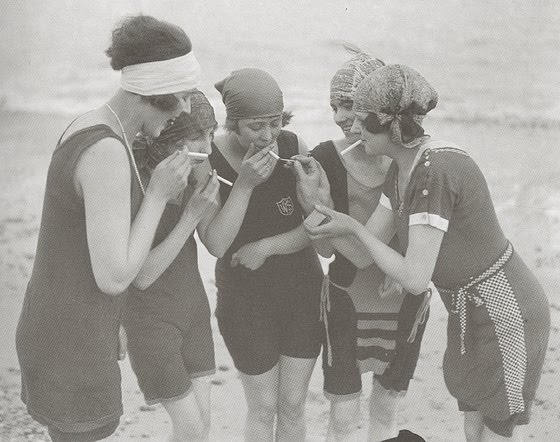
Below: Smoking in some sizzling swimwear, on a public beach, which in New York, will now get them arrested.

Smoking was a sign of prosperity in Gilded Age New York, the most common activity within the corridors of New York’s finest social clubs. Public transport was off limits, of course, but that didn’t stop everybody. (Lighting up a cigar in a streetcar, for instance, would earn you a hefty fine.) Posh restaurants in the late 19th century often required men to smoke in separate rooms. But with the rise of lobster palaces like Rector’s — rollicking, casual restaurants with a festive atmosphere — older restaurants like Delmonico’s had to loosen their policies.

Eventually men were allowed to smoke in the dining rooms. And sometimes, women would light up too, though such flagrant social rebellion was often met with polite shock. Places like the Plaza Hotel and Delmonico’s would put folding screens in front of tables that sat such bold women. It wasn’t the smoke itself that scandalized patrons. It was the sight of ladies enjoying such a male pastime. (Perhaps they should have done more; at least two members of the Delmonico clan died of smoking related illnesses.)

The sight of a woman enjoying a good cigarette flew in the face of proper etiquette, thus becoming a handy display of rebellion in a age when women were fighting for other rights, most notably the right to vote. From Meta Lander’s 1888 book-length tirade called ‘The Tobacco Problem’ :”On a crowded boat, between New York and Boston, a lady (?) passenger, unable to sleep, rose at three, virtuously mended her gloves, and then, O shade of Minerva! leaning back in her arm-chair, gave herself up to a cigarette; while, stretched on mattresses around her, many looked on with undisguised amazement and disgust.”

Indecent? Or independence? The debate came to a head in 1908 when, for two weeks at least, it was actually illegal for women to smoke in public. ‘NO PUBLIC SMOKING BY WOMEN NOW’ read the New York Times on January 21, 1908. “Will the Ladies Rebel? As the Ladies of New Amsterdam Did When Peter Stuyvesant Ordered Them To Wear Broad Flounces?”

The mayor, George McClellan, quickly revoked the unpopular law. Twelve years later, women would have the right to vote and the freedom to smoke. (But not to raise a toast; alcohol was prohibited by 1920.)

Smoking went relatively unabated until the 1989 Clean Indoor Air Act dictated that restaurants set aside “70 percent of the seating capacity as a nonsmoking area” and to designate a smoking section. Further restriction, such as the statewide ban from March 2003, eliminated smoking from restaurants and bars entirely.

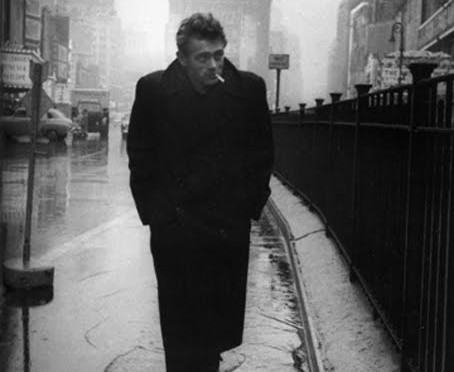
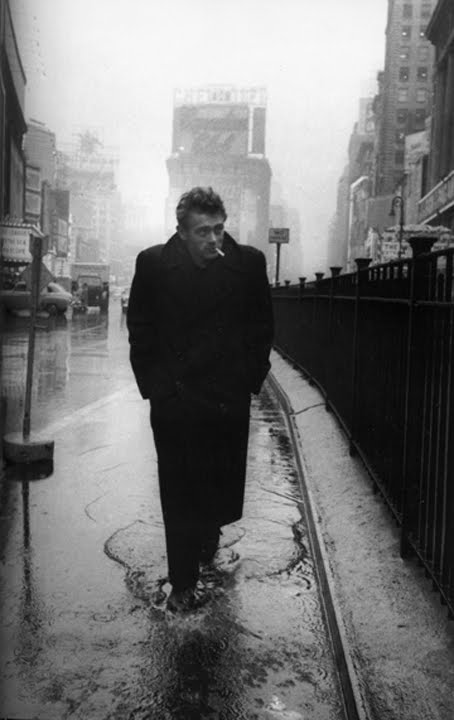
This new law seriously undermines decades of accomplishments by beatniks, poets, film noir icons, jazz musicians and gang members who have worked tirelessly to make smoking cool.** James Dean, we have betrayed you!

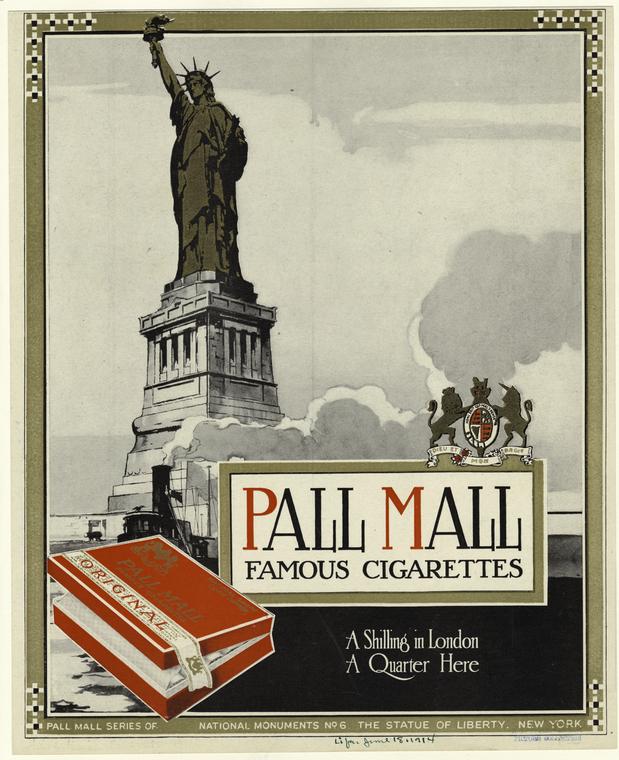
Above: a 1914 Pall Mall advetisement, using Lady Liberty to exemplify the American freedoms that smoking brings!

**Of course, many of them died of lung cancer.

Categories
It's Showtime

D.W. Griffith turns Central Park into a silent screen star

In honor of the grand re-opening of the Museum of the Moving Image this Saturday, we’re going all New York film and media here on the blog, posting some new stuff and re-printing some older ones pertinent to the city’s filmmaking history.

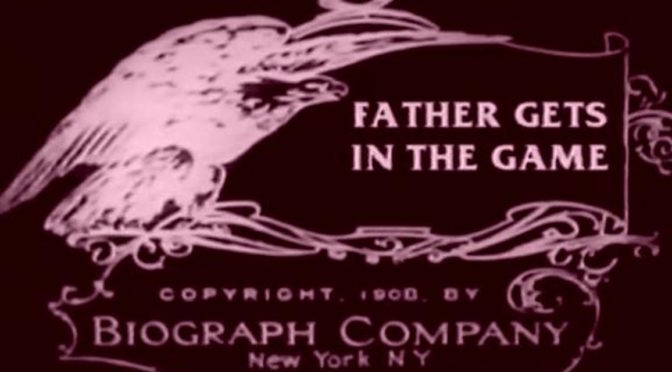
Above, you can watch ‘Father Gets In The Game’, a cheeky short from 1908 that is most likely the very first fictional movie ever filmed in Central Park. ‘Father’, a lark involving a lecherous old timer who hits the park to pick up ladies, is directed by D.W. Griffith, who would expand into feature length projects several years later, notoriously so with ‘The Birth of a Nation’ in 1916.

The crudely rendered ‘old man’ in the picture is played by Mack Sennett, himself a director of early comedies and founder of Keystone Studios. Charles Avery, who plays the butler here, will later become of the Keystone Kops.

(The movie only 8 minutes long. It’s followed in the YouTube clip above by another feature from the same year called ‘Romance Of A Jewess’, also directed by Griffith and starring Sennett.)
______________________

By the way, the first new Bowery Boys: New York City History podcast of 2011 will be available on January 21.

Mayor Westervelt: “Police officers must wear uniforms!”


KNOW YOUR MAYORS Our modest little series about some of the greatest, notorious, most important, even most useless, mayors of New York City. Other entrants in our mayoral survey can be found here.

Mayor Jacob Westervelt
In office: 1853-1855

Dutch-blooded Jacob Aaron Westervelt, 24th man to become mayor of New York since the British evacuation of 1783, lived in a two-family home at 308 East Broadway near Grand Street. This seems like a rather odd spot for a mayoral residence today, and perhaps even then. Today there is no 308 East Broadway, there’s only a grim-looking public school and a barren traffic island.

But there are some surviving row houses just down the block — preserved Federal-style buildings at 247-249 East Broadway — so just imagine a fancier version of these on the spot that Westervelt’s residence once stood, many years before this neighborhood would become associated with squalor and overcrowding.

Now image this: an angry mob of 5,000 men with torches, surrounding this very home in the winter of 1853, painting a cross on the doorway and crying for his head. His crime: he sides with Catholics. Scandal! What would a mayor have to do garner that sort of reception today?

Westervelt is better known today for his original profession as master ship-builder. Few men who served as mayor of New York were better regarded internationally as Westervelt, who once received an honor from the king of Spain for making them some of the fastest ships in the sea.

Jacob was born twenty days into the year 1800 in Tenefly, New Jersey, but moved with his family into New York when he was only four years old. His father was a builder and constructed several new homes along Franklin Street, near the area being drained of that marshy, polluted mess known as Collect Pond.

By age 14, Jacob was apprenticing with famed shipbuilder Christian Bergh at his shipyard off Corlear’s Hook — not coincidentally more than a few blocks from Westervelt’s later residence as mayor.

Bergh would spawn one of New York’s wealthiest families, although incongruently his son Henry Bergh would become the best known member — as the founder of the American Society for the Prevention of Cruelty to Animals. Henry is also known for this weird mausoleum at Green-wood Cemetery.

The Berghs would eventually abandon shipbuilding after Christian’s death. His young apprentice Jacob would carry the torch for him, eventually taking over Bergh’s shipyards, expanding with other business partners up and down the East River shore, and using southern American and European connections to soon dominate the shipbuilding business. By 1845, Westervelt had overseen the construction of dozens of clippers, schooners and steamships, among the fastest and most reliable on the Atlantic Ocean.

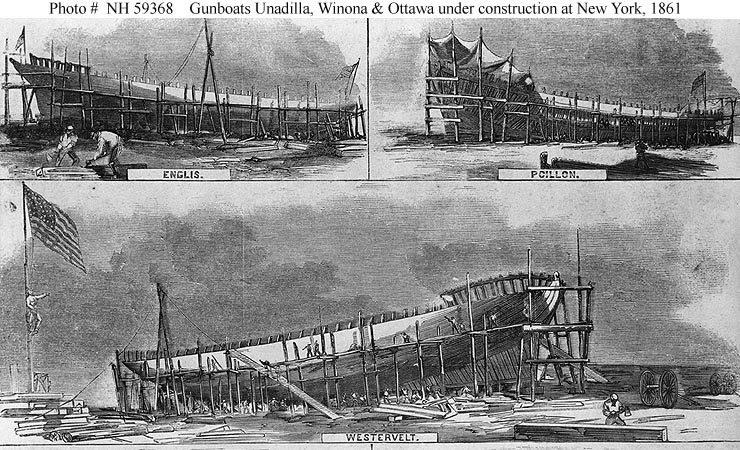
Below: an illustration of various boatbuilders in 1861, including Westervelt at bottom

As a pioneer of reliable and innovative shipping vessels, Westervelt’s influence was felt internationally. In the world of mid-19th century politics, that made him an ideal candidate for public office, and especially to Democratic machine Tammany Hall. As one of Manhattan’s most visible men of industry, Jacob employed hundreds of new Irish immigrants, Tammany’s prime voting bloc. In fact, Westervelt had already briefly served as council alderman for his district in 1840.

In 1852, Tammany could use a man of relatively unblemished character. The stench of corruption was already swirling around the powerful, entrenched Democrats in office — and this was in the years before Boss Tweed! Derisively known as the Forty Thieves**, the Democratic aldermen in City Hall were easily and openly bought, by everyone it seems but the mayor at the time, anti-Tammany reformer Ambrose Kingsland. City expenditures swelled, the elaborate web of political kickbacks and bribery gelling during this period.

But Tammany was looking to start fresh — or at least strike the apperances of doing so — choosing Westervelt as their reform-lite candidate in 1853, a symbol of prosperity in a wobbly New York economy. Westervelt, on the surface, looked like somebody who could quell the city’s massive over-expenditure. On the strength of a surging Democratic national ticket with presidential candidate Franklin Pierce, Westervelt was easily elected by the largest margin yet during a mayoral race, defeating the now-forgotten Whig Morgan Morgans.

Although, this being the 1850s, one can assume that total to be highly suspicious. “No registry law was in force to hinder men from voting…as often as twenty times,” claimed one early history.

Westervelt inherited several massive projects which were bloating the city budgets, including Central Park. Already a done deal when Westervelt entered office, the mayor sought to cut the park space in half due a bloated, overwhelmed city budget. Had Westervelt ruled the day, Central Park would have started on 72nd Street! His plans would be reversed a few years later by Mayor Fernando Wood.

More appropriately, Westervelt became president of a world’s fair in 1853, more specifically called the Great Exhibition of the Industry of All Nations and housed in the glorious Crystal Palace in the area of today’s Bryant Park. Having a man of industry preside over a fair of industry was both fortuous and apt; certainly examples of his own creations were displayed with other technological marvels of the age like the elevator.

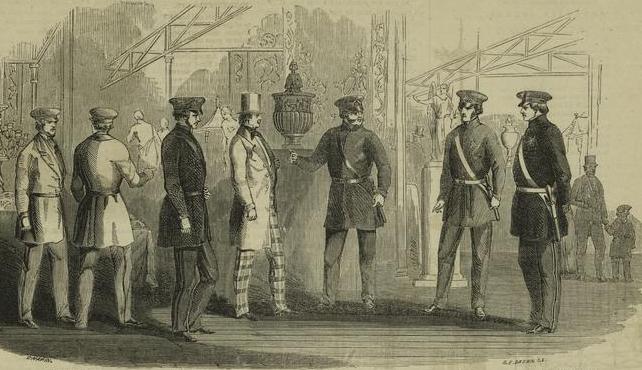
Below: the well-uniformed Crystal Palace police officers (pic courtesy NYPL)

One of the mayor’s lasting contributions was in New York police reform, creating a Board of Police Commissioners with himself in charge to apply a strict code of ethics to an already chaotic, corrupted body. In doing so, he wrangled away from his more corrupt Democratic brethren their ability to buy and sell police jobs as a form of political patronage.

But his most radical idea is today the most obvious: he mandated that every police officer should wear a uniform, an “expensive and fantastical” requirement according to his opponents who believed it “unrepublican to put the servants of the City in livery.”

Westervelt managed to make himself with one very unpopular with one group: the Know-Nothings, a ‘native American’ group who feared the swelling hordes of Irish and Catholic immigrants and the Catholicism they brought with them. The group would reach peak influence across the country in the mid-1850s, and they would actually gain significant political traction in other cities. In New York, they more often showed their moxie in the form of rioting.

The mayor earned their ire on December 11, 1853, when he ordered a street preacher arrested for gathering a group of 10,000 to listen to his frothing Know-Nothing spiel. It probably didn’t help matters that said preacher had organized on Westervelt’s own wharfs on the East River!

At the beginning of this article, I mentioned Jacob’s address — 308 East Broadway. A bit out-of-way of New York’s high society, sure, but Westervelt wished to be close to his ships. In fact, he and his partner Robert Connelly both built adjoining houses on this spot, facing Grand Street. According to Harper’s, “Over the door was a large stone cap on which was carved the representation of a ships taffrail.” (Taffrail is nautical for “the upper part of the ship’s stern“)

Thus, the angered Know-Nothing crowds were scant blocks from the mayors door. A reported 5,000 men gathered outside Westervelt’s home, demanding retribution and the release of the arrested preacher. To remind the mayor what this argument was all about, they painted a gigantic cross upon the door.

This story outlines Westervelt’s uneasy dual role as city leader and businessman. In 1855, the ships won out. Jacob bowed out, allowing Wood to finally ascend to the mayor’s desk for the first time. His best work as a shipbuilder was indeed ahead of him, though he would make brief returns into the political fray, first as a state senator, then in a newly created job in which he was most qualified — the New York commissioner for docks and ferries, from 1870 until his death in 1879. He died at his home on 63 West 48th Street, in the area of Rockefeller Center today.

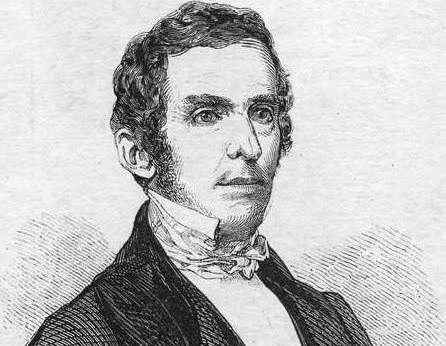
Pictured at right: Westervelt at age 70

** Not to be confused with New York’s first gang, also called The Forty Thieves

Yosemite’s loss: Olmstead between the parks

Hopefully some of you are watching the Ken Burns multi-hour epic documentary The National Parks: America’s Great Idea, a fascinating but rather languid celebration of American preservation of its greatest natural treasures.

I’m assuming that by Wednesday, Burns should get here to New York with discussion of two national monuments (the Statue of Liberty and Castle Clinton) protected through Theodore Roosevelt’s Antiquities Act. And later with the 1966 establishment of the National Register of Historic Places, as well as the 1972 formation of the Gateway National Recreational Area, scattered through Queens, Staten Island and New Jersey.

I was pleasantly pleased to hear the name Frederick Law Olmsted dropped during the first episode. Olmsted was a commissioner for the State of California in 1865, assigned to formulate a plan for Yosemite Valley, America’s first natural area granted money by the United States government.

From our perspective, Olmsted was between his two great New York masterpieces. The creation of Central Park had begun in 1857, but by 1960, Olmsted’s rocky relationship with the city and Tammany Hall got him replaced as superintendent. He fled to Civil War battlefields as secretary of the U.S. Sanitation Commission (prototype of the Red Cross) and eventually made his way to California as the operator of an unsuccessful mining company.

His attempts in Yosemite were not well received. His report to the state of California in 1865 is seen today as a far-sighted explication of the responsibility of government to preserve their natural gifts for the health and well-being of its citizenry. (You can read the entire proposal here.)

California just shrugged. It was their loss, frankly. Faced with this rejection and the failure of his mining practice, Olmsted came back to New York to work once again with his partner Calvert Vaux. A year after Olmsted’s Yosemite rejection, work was underway on their second masterpiece — Prospect Park.

Rewind: The Evolution of Central Park

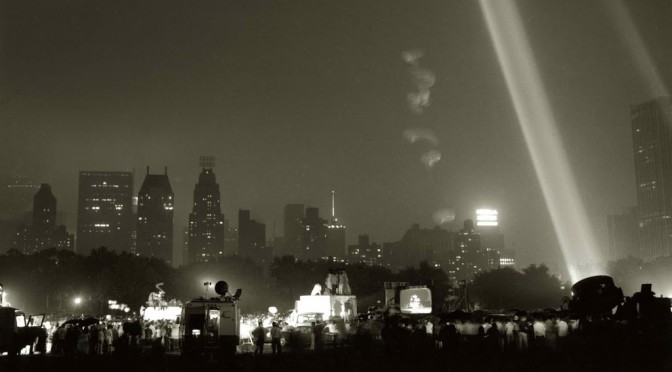
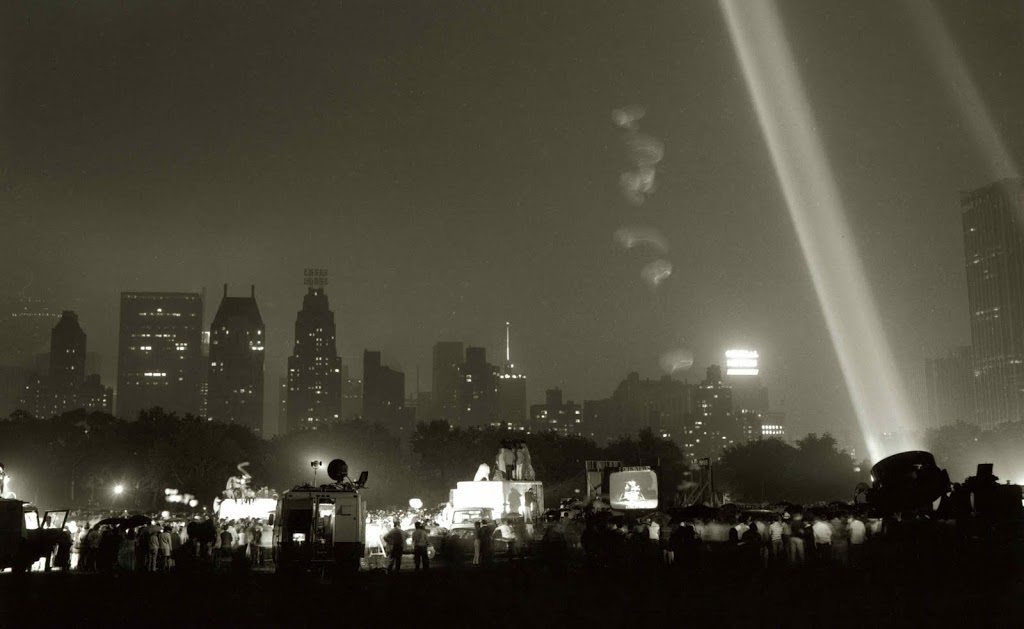
ABOVE: 1969 — Central Park’s Sheep Meadow was transformed into ‘Moon Meadow’, a celebration for people watching the Apollo 11 moon landing.

We don’t have any regular podcast this week; however I am reposting the second part our Central Park show called ‘The Evolution of Central Park, re-launching it in our secondary feed NYC History: Bowery Boys Archive. Images of some of the things we talk about now pop up on your media player while you listen. So if you’ve heard this one already, you might want to give it another go.

When last we left the Central Park, it was the embodiment of Olmstead and Vaux’s naturalistic Greensward Plan. Then the skyscrapers came. Also, how did all those playgrounds, a swanky nightclub, a theater troupe and all those hippies get here?

PODCAST Download this show it for FREE on iTunes or other podcasting services. Click this link to download it directly from our satellite site. You can also still download the old, non-imaged version here.

Categories
Podcasts

Shakespeare in the Park: the drama behind the drama

What started in a tiny East Village basement grew to become one of New York’s most enduring summer traditions, Shakespeare in the Park, featuring world class actors performing the greatest dramas of the age. But another drama was brewing just as things were getting started. It’s Robert Moses vs. Shakespeare! Joseph Papp vs. the city! ALSO: Learn how the Public Theater got off the ground and helped save an Astor landmark in the process

PODCAST Listen to it for FREE on iTunes or other podcasting services. Or click this link to listen to the show or download it directly from our satellite site

___________________________________

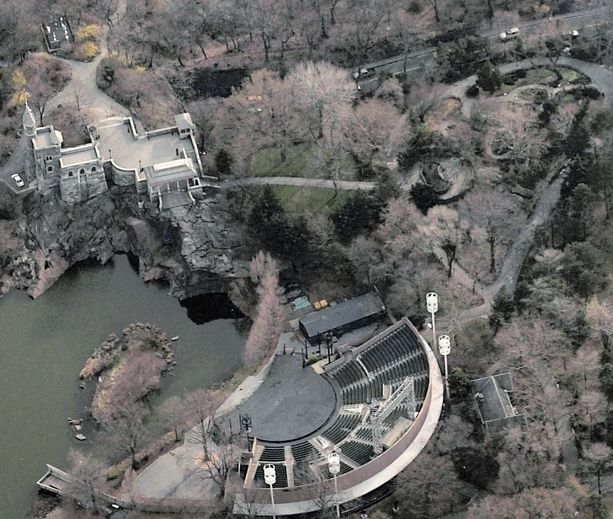
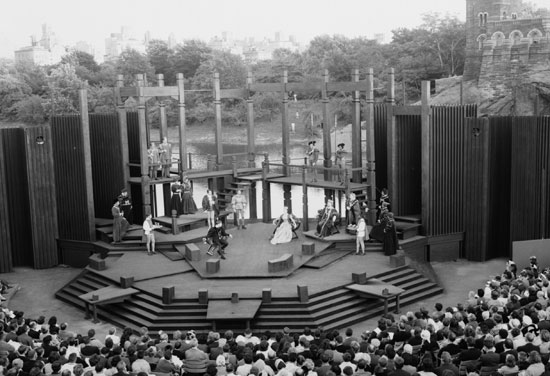
Looking down over both Delacorte Theater and Belvedere Castle. Joseph Papp didn’t have much say in the construction of the theater, but he probably couldn’t have asked for a more picturesque, more perfectly situation location.

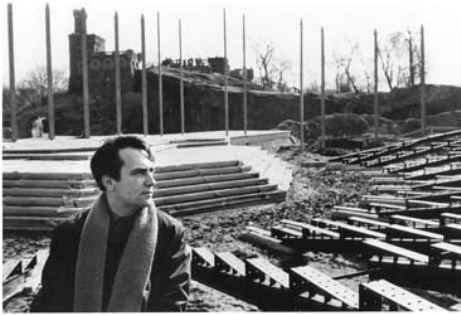
Papp at the Delacorte: within a handful of years, he was able to tranport his vision from a basement in an East Village church to the world’s most famous park. Not without a few speedbumps, however…. (pic courtesy New York Public Library)

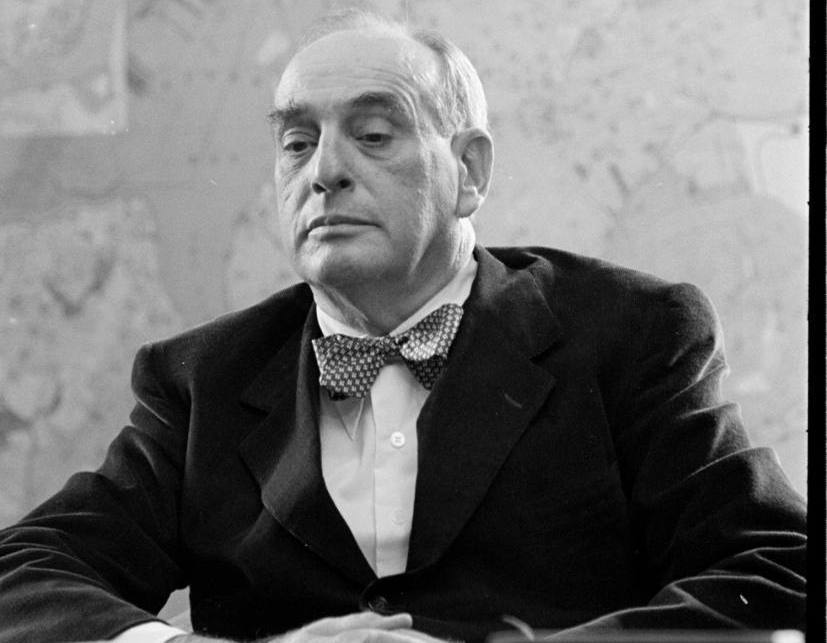
Robert Moses had been one of New York’s most powerful men for almost 30 years by the time he confronted the Shakespeare Festival. At first a supporter of the outdoor program, he soon turned on Papp and refused his permit to perform in Central Park.

One of several performances of Hamlet, this one from 1964, starring Julie Harris and Stacy Keach.

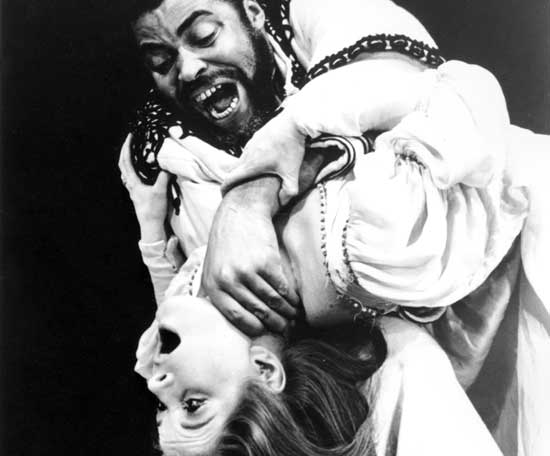
If I could take a time machine back to see one show, it would probably be the 1964 version of Othello with a spry James Earl Jones in the title role.

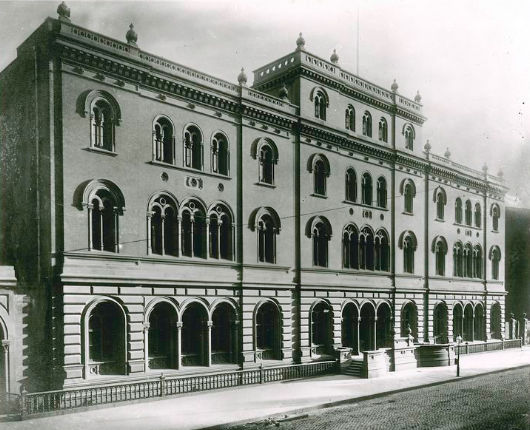
The old Astor Library, built over a hundred years before the Public Theater made it home. Our New York Public Library podcast details how the volumes once stored at this Astor institution were used to build the collection for the new public system.

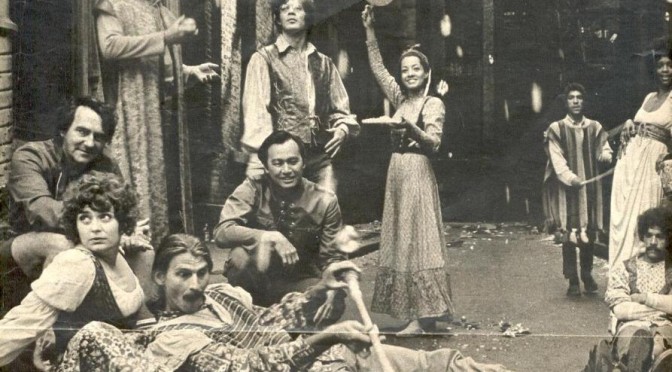
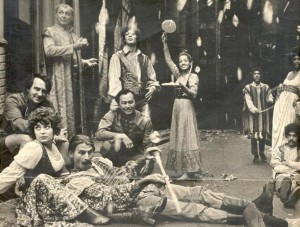
From the 1972 production of the musical version of Two Gentlemen Of Verona, starring Public Theater regular Raul Julia. Like many Delacorte productions, Verona went on to play Broadway and win Tony Awards. Papp is kneeling far left. (Pic courtesy

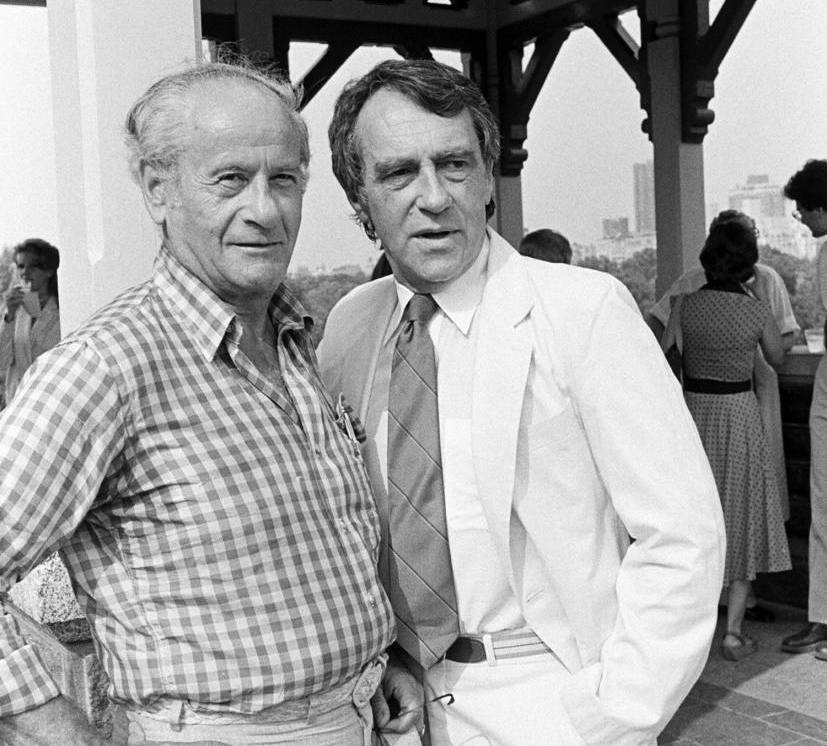
Papp with actor Eli Wallach in 1983. With the Shakespeare festival and later with regular programming at the Public Theater, Papp was able to draw New York’s finest actors and cultivate new stars in the process.

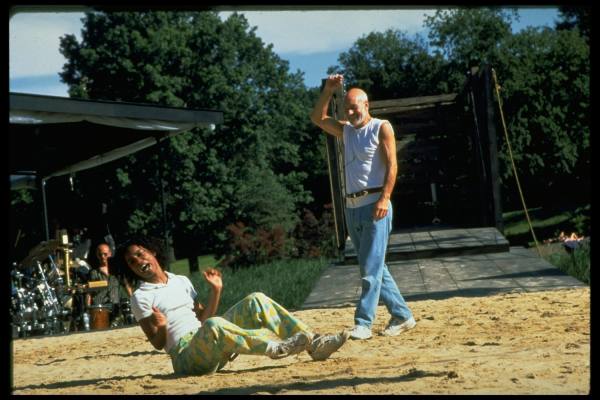
Patrick Stewart rehearses for the 1995 version of The Tempest.

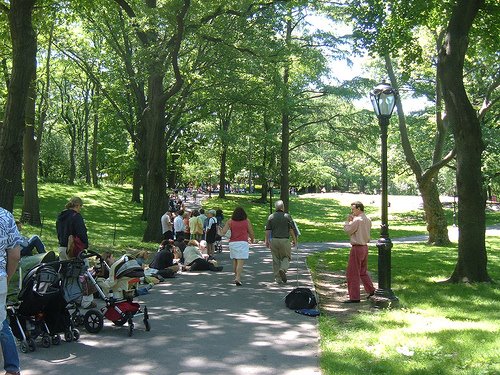
The winding ticket line, quite a treat on a lovely day (and less so when it’s not). These days, for those who can’t or don’t wish to wait, there’s a limited virtual line as well. (Pic courtesy Flickr)

Visit the Public Theater website for more information about upcoming shows and how to get tickets. They also have a nicely detailed section on all their past productions.

Categories
Podcasts

Prospect Park and the return of Olmsted and Vaux

Prospect Park, Brooklyn’s biggest public space and home to the borough’s only natural forest, was a sequel for Olmsted and Vaux after their revolutionary creation Central Park. But can these two landscape architects still work together or will their egos get in the way? And what happens to their dream when McKim, Mead and White and Robert Moses get to it?

PODCAST Listen to it for FREE on iTunes or other podcasting services. Or click this link to listen to the show or download it directly from our satellite site

The area of Prospect Park in 1776. This spot, called Flatbush Pass (and later Battle Pass), was the scene of a violent clash between Continental Army soldiers and Hessians employed by the British army. Part of the reason the park was located here was to preserve this hallowed historical war spot.

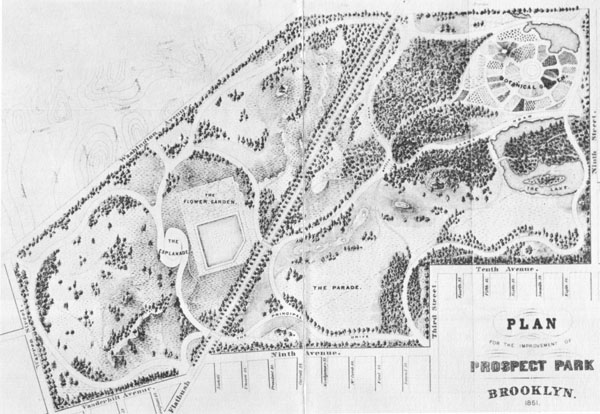
Egbert Viele’s proposed ‘Mount Prospect Park’ blossomed around Flatbush Avenue, which would be arched with pedestrian bridges. This plan would have retained Mount Prospect. But what kind of a park has a major thoroughfare cutting right through it.

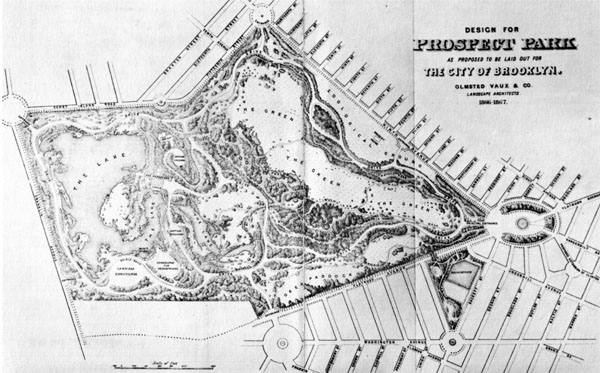
Olmstead and Vaux, meanwhile, opted to eliminate one side of Viele’s plan entirely, expanding it south and west with newly acquired land.

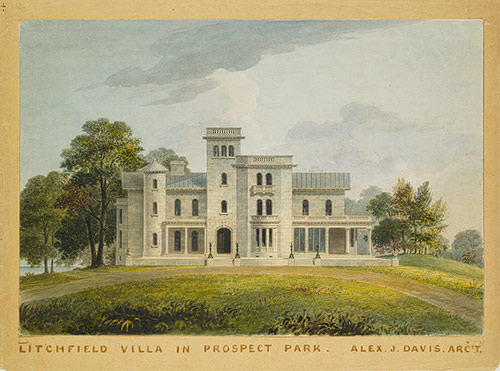
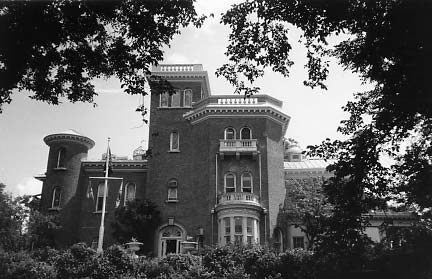
The home of Edwin Litchfield, as it looked back in the day…

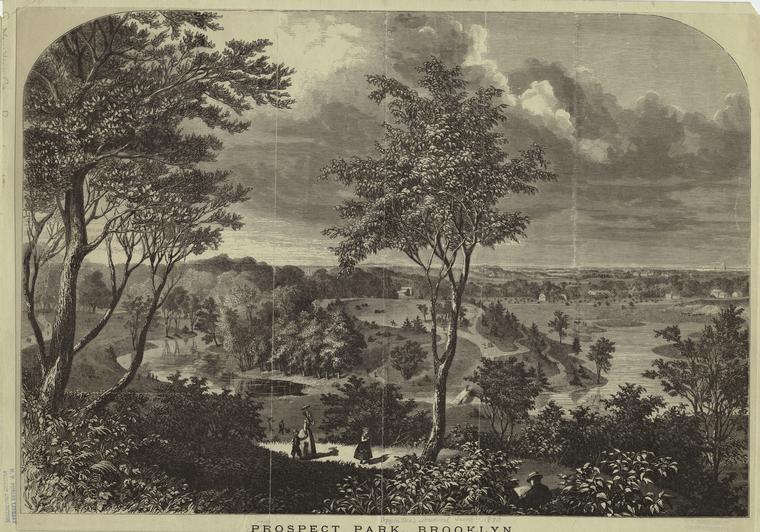
An artist’s depiction of Prospect’s tableaux-style natural foliage. The landscape architects wanted to ‘augment’ the natural beauty of the area. That augmentation included over 70,000 new trees and shrubs.

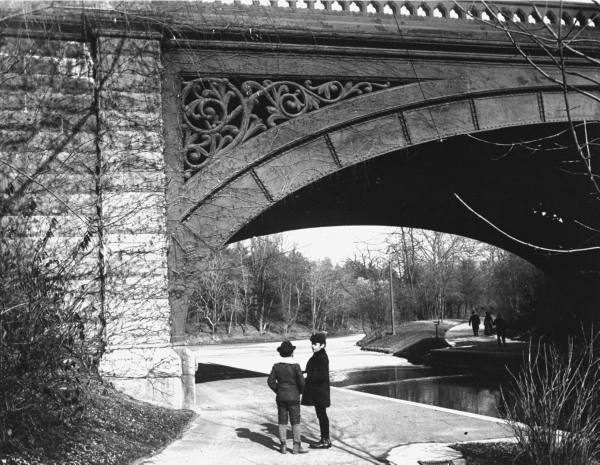
Arches, bridges and overpasses weave throughout the park, often creating fairytale like settings. Photo, taken in 1887 by Wallace G. Levison

Grand Army Plaza in 1894. More would be added to the plaza, giving it that ornate, triumphal feel — not exactly what Olmsted and Vaux had really intended.

Young adults hangin’ around the park, circa the 1910s

One of Robert Moses’ more beneficial additions: the Prospect Park Zoo (as it looked in 1943)

The old Leffert’s homestead did not start out in Prospect Park. It moved there when it was sold to the city in 1918

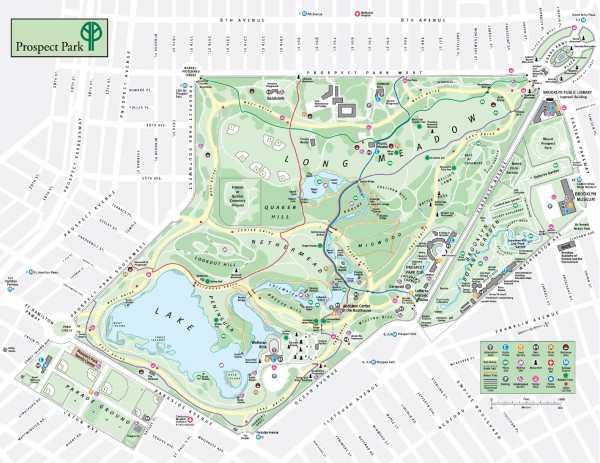
A current map of the park.

Categories
Uncategorized

Mayor Jimmy Walker: a finer class of corruption

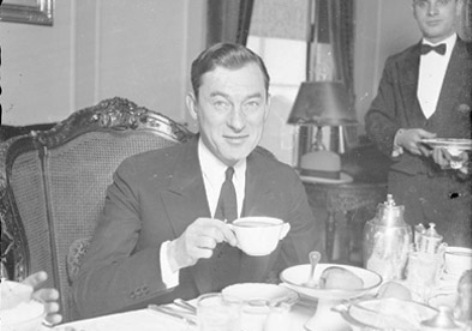
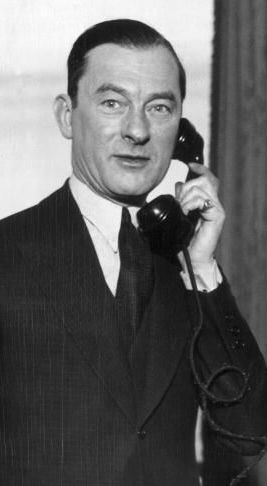
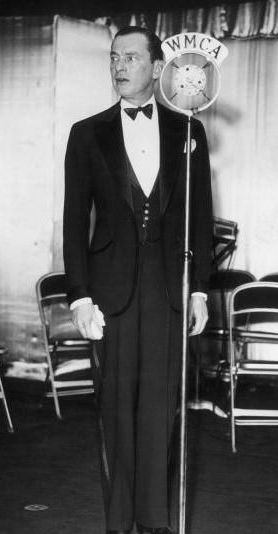
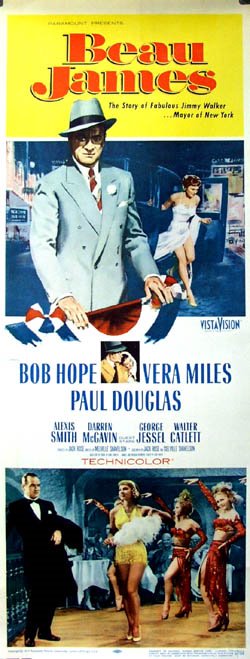
Jimmy Walker, Hollywood version of a mayor

KNOW YOUR MAYORS Our modest little series about some of the greatest, notorious, most important, even most useless, mayors of New York City. Other entrants in our mayoral survey can be found here.

MayorJimmy Walker

In office: 1926-1932

Has a New York mayor ever reflected the decade he governed more perfectly than Jimmy Walker? Although John Hylan was actually the 1920s more effective mayor, it was Walker who embodied the Jazz Age spirit in his style, and the tragic Depression-era change of fortune in his downfall. He glamours us today because he’s both movie star and rebel; but the corruption of his regime is equally as striking and even disturbing in its grandiosity.

Walker is easily one of the most notorious mayors of New York, but today we can appreciate his brashness, his independence and class, just as we can lament his subservience to diabolic Tammany-era politics. He wasn’t the last disgraced mayor the city would see in the 20th century, but his abdication neatly defines the modern era’s defining fall from grace.

Jimmy, born June 19, 1881, was a New York boy and a golden one at that, raised in Greenwich Village among the bohemians, the son of an Irish immigrant who became a well connected Democratic assemblyman. Walker’s first passion seems to be music; in 1905 he stormed Tin Pan Alley writing songs such as “There’s Music In The Rustle Of A Skirt” and “Will You Love Me in December As You Do in May?” with its melancholy refrain:

Will you love me in December as do in May,
Will you love in the good old fashioned way?
When my hair has all turned gray,
Will you kiss me then, and say,
That you love me in December as do in May?

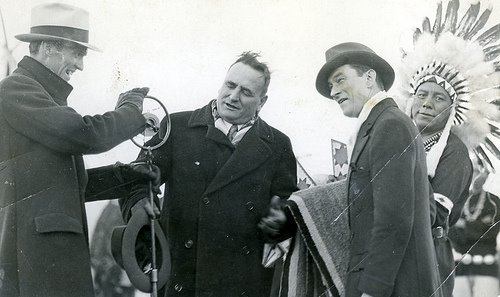
Below: In an odd ceremony with the mayor of Albuquerque

He had even less hesitation in announcing a political career, especially as Father had connections to a certain Al Smith, governor of New York. An adopted son of Tammany Hall, elected first to the state assembly in 1910 then to the state senate in 1914, young Walker sought Smith’s guidance and the governor soon took a fancy to the smooth, impeccably dressed young man, who shone like a new penny on the Senate floor. As he was described by Robert Caro:

“Pinch-waisted, one-button suit, slenderest of cravats, a shirt from a collection of hundreds, pearl-gray spats buttoned around silk-hosed ankles, toes of the toothpick shoes peeking out from the spats polished to a gleam. Pixie smile, the ‘vivacity of a song and dance man,’ a charm that made him arrive n the Senate Chamber like a glad breeze’ The Prince Charming of Politics…..slicing through the ponderous arguments of the ponderous men who sat around him with a wit that flashed like a rapier. Beau James.”

Smith took him under wing, maneuvering him through the entanglements of state politics, shielding Walker when his excesses got the better of him. He was a philandering cad and a boozer, even then. When opportunity arose to challenge the successful John Hylan for mayor of New York, Smith wanted Walker to run, but only if he would change his ways. Walker changed them all right; instead of partying out at speakeasies with chorus girls, he moved the whole production to a private penthouse funded by Tammany favors.

That election in 1925 was fierce. First, Smith had to dispense of Hylan in the Democratic primary — and in the halls of Tammany. The two split the storied political machine, but eventually Walker won out. Next, he faced the Republican-Fusion candidate Frank Waterman in the general election, who cried of potential Tammany corruption to the new subway system if Walker were elected. (Waterman would, of course, be right.) Beau James, however, went unabated. He ran as a people’s mayor, somebody who enjoys and the same pleasures as those voting for him:

“I like the company of my fellow human beings. I like the theatre and am devoted to healthy outdoor sports. Because I like these things, I have reflected my attitude in some of my legislation I have sponsored — 2.75 percent beer, Sunday baseball, Sunday movies, and legalized boxing. But let me allay any fear there may be that, because I believe in personal liberty, wholesome amusement and healthy professional sport, I will countenance for a moment any indecency or vice in New York.”

Right! Walker was one of the people. Everybody bought it but nobody believed it. He swept into office because New York, in 1925, was prosperous, a Jazz Age mayor for a Jazz Age city.

Once elected, of course, Walker countenanced all sorts of indecency and vice. He was frequently in Europe on vacation. When he was in town, it was rarely at City Hall. The lavish new Casino nightclub in Central Park became his unofficial headquarters, with Ziegfield dancer Betty Compton at his side. (Walker’s wife was out of town, frequently.) City business was often discussed with the pop of champagne cork.


Some things got done that first term: the New York hospital system was consolidated on his watch, he purchased thousands of acres for park land (including Great Kills in Staten Island), and grew the municipal bus system — greatly benefiting more than a few friends who happened to own the bus company given the exclusive franchise.

He managed to turn on his old ally the governor, scrubbing City Hall of any Smith loyalists, granting more jobs to his type of Tammany men, filling their own pockets but allied to the charming man in charge.

How did he stay so popular? This was the late ’20s and people wanted the mayor to reflect prosperity and confidence. He also gave back, in symbolic gestures. Even as the new subway system became clogged with corruption, he staved off a strike while keeping the fare at five cents, thought at the time to be an incredible concession.

He easily won election in 1929 against a largely outmatched Fiorello LaGuardia. Tammany was in place and unstoppable; but the voters still chose not to look askance at Walker’s dalliances, and even the newspapers were charmed. The New York Times wrote of his “great personal charm, his talent for friendship, his broad sympathies embracing all sorts of conditions of men,” then recommended him under the guise that “the Mayor that he has been gives only a hint of the Mayor that he might be.”

That hinted-at mayor never materialized, because the Stock Market crash did, plunging the city’s fortunes into ruin and exposing the weaknesses of a government consumed with greed. Suddenly, having an extravagant, indecent mayor didn’t seem like such a good idea.

Archbishop of New York Cardinal Hayes, once dazzled, now condemned the mayor’s amoral ways, opening the flood doors for others to lay the city’s problems was Walker’s feet. Eventually the accusations reached the ear of governor Franklin D. Roosevelt.

A commission lead by Justice Samuel Seabury exposed deep veins of corruption throughout the city’s legal system and police force. Innocent citizens, often women, would be charged with crimes and forced to pay steep fines to get out of jail time. (Many times they couldn’t pay, and off they went, dozens at a time.) Neighborhoods, most often Harlem, would be routinely raided and its residents taken in, wild charges conjured for maximum penalty.

This would line the pockets of dozens of judges and vice squad officers. Newspapers dubbed it the Tin Box Parade, “after one testified that he had found $360,000 in his home in a ‘tin box…a wonderful tin box'” (Caro).

Walker himself was brought to the stand to testify, the judge warning those in the court room not to look the mayor in the eye, lest they succumb to Walker’s sensational charm.

After months of epic battles on the stand — Walker eluding hot button questions about his personal bank accounts, delaying appearances until after Roosevelt’s nomination for president was assured — the embattled mayor could fight no longer. With Roosevelt mere months from his national election, he needed to be rid of Walker. Walker obliged in the classiest way possible: he resigned on September 1, 1932, and went on a grand tour of Europe with his Ziegfeld girl.

He was never charged with a crime. He was barely even held accountable for anything. Back in New York three years later, he held a series of smaller posts, including one for the New York garment industry that was assigned to him by new mayor LaGuardia, his former rival.

Nothing stuck to him. He died in November 1946 of a brain hemorrhage, just two years after returning to his first love as the head of a big-band record label with a stable of artists that included Louis Prima and Bud Freeman. Ten years later, Hollywood decided to do something very redundant and make a movie of his life, starring Bob Hope as Beau James. It would follow a screenplay only slightly less glamorous than the real thing.

Pilgrims progress in Central Park


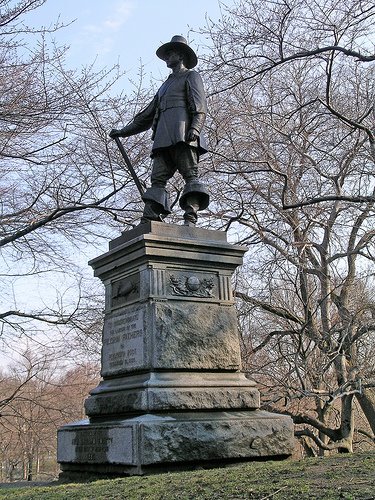
For one Pilgrim, Thanksgiving never ends. Standing near the Bethesda Fountain in Central Park is Manhattan’s tribute to the original European settlers, a solitary pilgrim upon a hill (Pilgrim’s Hill, to be exact) looking as though he’s made a wrong turn.

The Pilgrim made its debut in Central Park in 1885, long after Frederick Law Olmstead’s original vision of a monument-free park had gone unheeded. (The statue of Shakepeare was the first violator, in 1875.) The Pilgrim was a gift of the New England Society of New York, a charity organization that formed in 1805 to honor the events of Plymouth Rock and whose members are all directly related to Mayflower passengers.

As it seems with any type of unveiling in the late 19th century, the new addition was greeted with great fanfare, an ostentatious procession that marched up Madison Avenue, stopped to salute ex-president General Ulysses S. Grant at his residence on 66th Street, before turning into the park and greeting a group of 2,500 spectators and officiators, including Brooklyn mayor Seth Low and another ex-president Chester A. Arthur.

A choir sang a pilgrim-related hymn before the statue’s designer John Quincy Adams Ward, the ‘hottest’ monument maker in town, pulled the cord and unveiled his masterpiece for all to see. Now forgotten orator George William Curtis then mounted the stage to talk about the virtues of Puritanism, a meandering speech that the New York Times felt the need to reprint in its entirety.

Today, the statue holds a special place in the park, being the first monument to receive restoration, in 1979, at the beginning of Central Park’s dramatic transformation. It also shares a very lofty distinction; like the Statue of Liberty, it stands on a pedestal designed by Richard Morris Hunt.

If you’re in the least bit adventurous this winter, you’ll have plenty of times to see this charming fellow. The hill named after him is the go-to place for sledding in Central Park.

Picture courtesy of www.museumplanet.com.

Categories
Podcasts Sports

The race is on! A history of the New York City Marathon

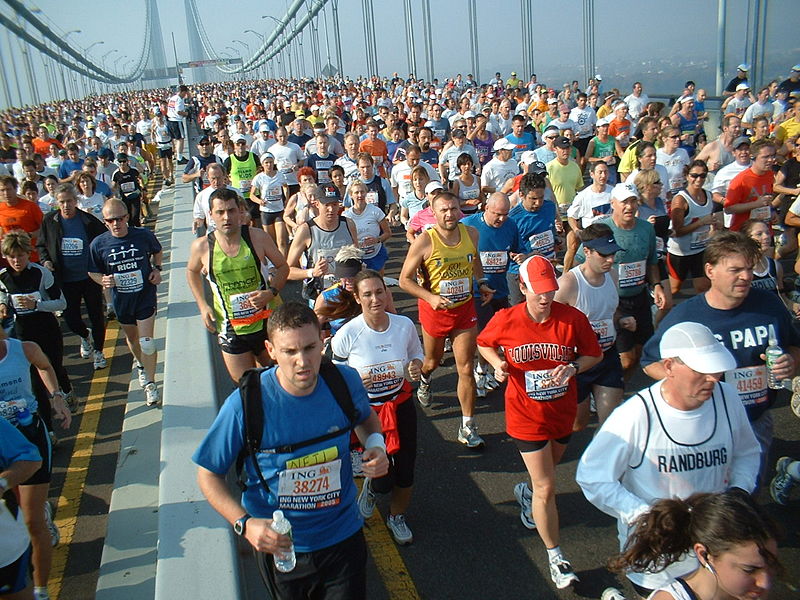
Photo from Flickr

A true five-borough episode! The New York City Marathon hosts thousands of runners from all over the world, the dream project of the New York Road Runners and in particular one Fred Lebow, an employee of the Fashion District turned athletic icon. Find out how he launched a massive race in the midst of bankrupt New York.

Also — our guest host Tanya Bielski-Braham takes us on a speedy tour of the course, from the Verrazzano-Narrows Bridge to Tavern on the Green.

Listen to it for free on iTunes or other podcasting services. Or you can download or listen to it HERE


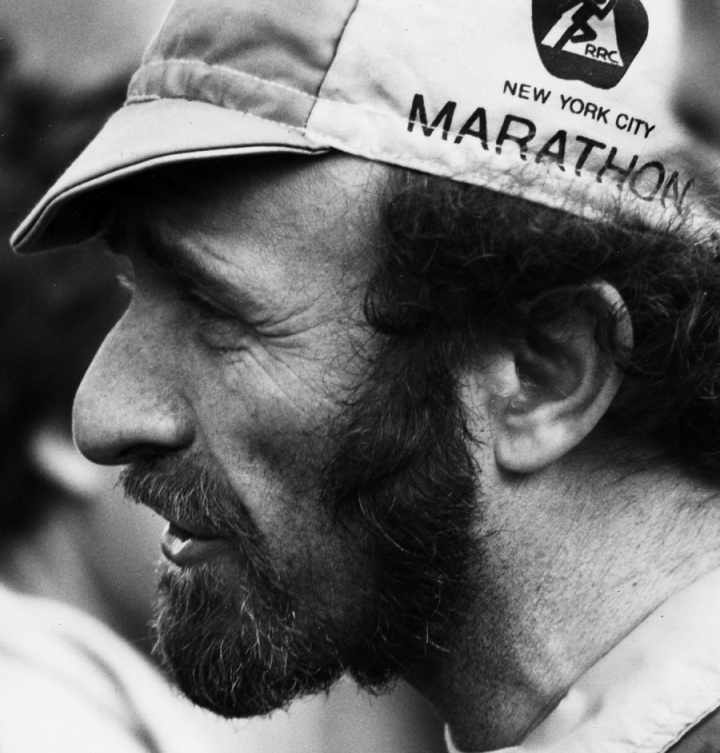
Fred Lebow joined the New York Road Runners in 1969 and helped turn the marathon into a premier event for New York.

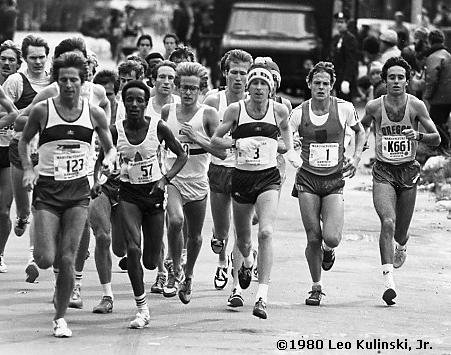
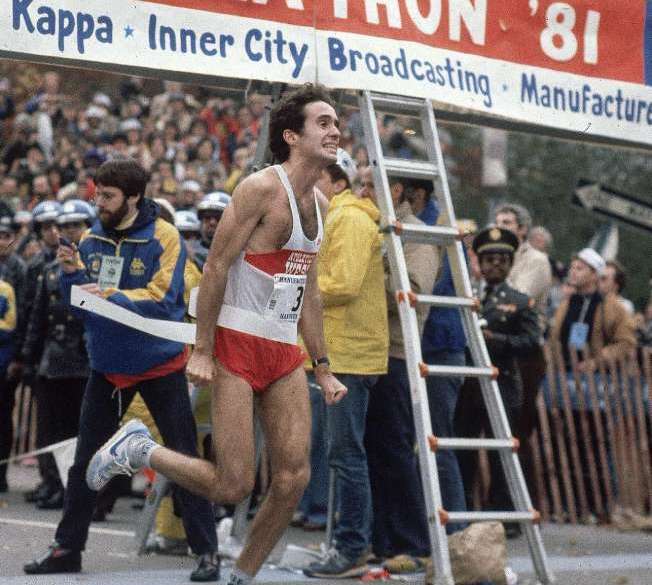
One of the marathon’s true superstars, Bill Rodgers (that’s him wearing number 3) won the marathon the first four years of its existence as a tri-borough event, from 1976-79. In 1980, he placed 5th, handing the mantle to rising star Alberto Salazar.

A clearly pained Salazar fights his way to the finish line during the 1981 race, on his way to setting a world’s record.

Sure, Salazar’s good, but his co-winner in 1980, Grete Waitz, would be the all-time New York City Marathon champ, winning nine times. (Pic courtesy Sports Illustrated.)

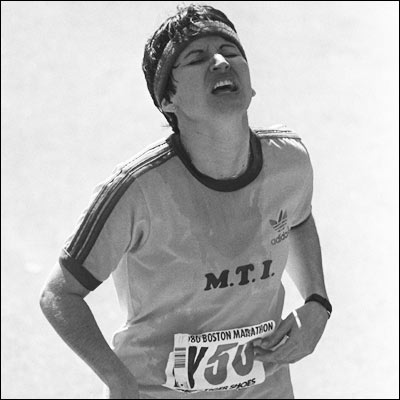
Rosie Ruiz, looking totally exhausted form feigning her completion of the Boston Marathon. It was later discovered that she had also faked her run in the New York marathon.

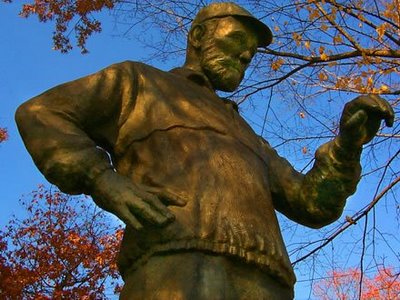
The statue of Fred Lebow stands watch for every finisher of the marathon. For the rest of the year, this tribute stands at the Engineer’s Gate in Central Park.

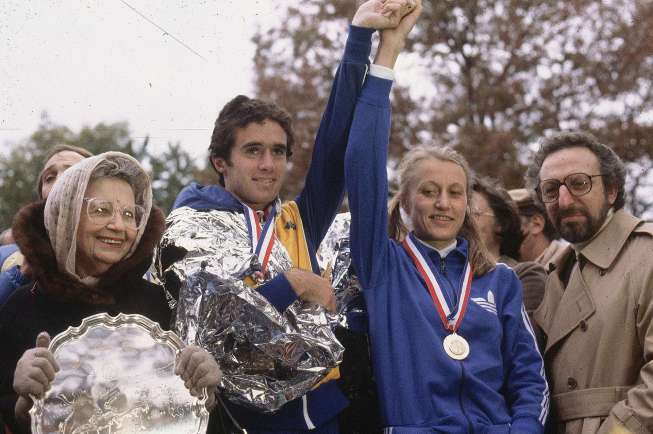
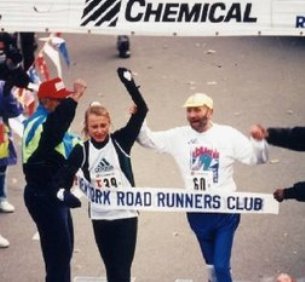
Fred and Grete triumphantly cross the finish line in 1992.

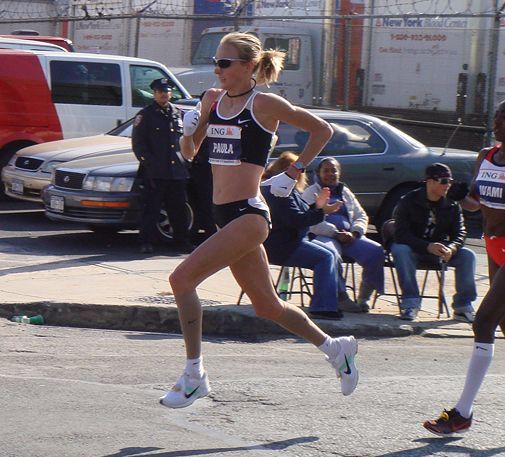
A few months after giving birth, British runner Paula Radcliffe ran away with the victory at last year’s race. (Courtesy Ed Costello Flickr)

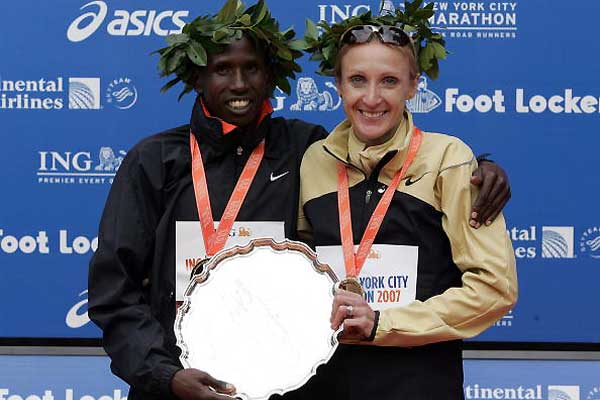
Paula with the men’s winner Martin Lel from Kenya (Pic courtesy iaff.org)

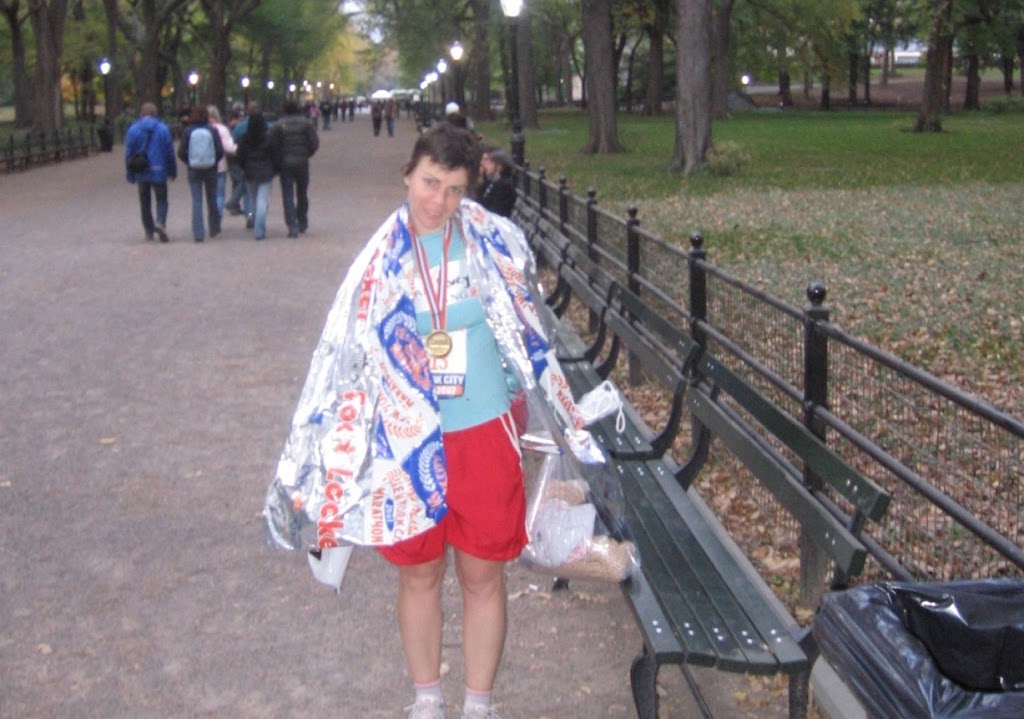
Our guest host, Tanya Bielski-Braham, at the completion of the race last year, swathed in a “space blanket”

Go to the New York Road Runners website for information on this Sunday’s race, including places to watch it from the sidelines.

I highly recommend two recent releases about the marathon: the book “A Race Like No Other” by Liz Robbins, a great profile on the 2007 race with lots of history nuggets thrown in; and the new documentary Run For Your Life about Fred Lebow, new to DVD this week. You seriously have to check out all the great footage from the 1970s, particularly the shots of the Playboy Bunnies posing for pictures for the 1972 “Crazylegs” race.

Know Your Mayors: Hugh Grant, our youngest mayor

Our modest little series about some of the greatest, notorious, most important, even most useless, mayors of New York City. Other entrants in our mayoral survey can be found here.

The year Carnegie opened his illustrious Music Hall to the delight of New York’s cultured class, the city’s fate was in the hands of the youngest man ever elected to the office of mayor — Hugh J. Grant.

Although there would later be a man elected to job unofficially called ‘The Boy Mayor of New York’, Grant would be 31 years old when he finally stepped into the job. A stalwart of the Tammany Hall machine, the young Irish-Catholic worked his way through the ranks, from alderman in 1882 to sheriff in 1885 and graduated from there to mayor in 1889, where he stayed in office for two two-yera terms until 1892.

Grant was defeated in earlier attempts for mayor by businessman and reform Democrat William Grace. When Grant ran again in late ’88, he successfully defeated Abram Hewitt, thanks to the machinations of new Tammany ‘Boss’ Richard Crocker, who had personally grown weary of Hewitt’s independence. Grant would be a far less wily pawn.

At this point, I should quote at length the unreliable and heavily biased but enjoyable description of Grant, according to a 1922 chronicle: “Unfortunately in 1888 Hewitt was defeated by the old Tammany favorite, “Hughie” Grant, and corruptions returned to their former power and spoils. Worst of all, Grant’s election was accepted without alarm, and even with satisfaction, by the educated classes.

“The new Mayor, an ignorant and unprincipled son of a saloon-keeper, was given ‘social recognition,’ asked to dinner in the best circles, and opened a ball with Mrs. Astor. When he said, “If I don’t prove a good Mayor, it will be because I don’t know how,” this remark was repeated as if it were a gem of aphoristic wisdom.”

Grant was a Tammany loyalist, and enemies sniped that his administration hemmed in spirit to the corruption of the Tweed Ring, which had been taken apart twenty years earlier. It is true that the ‘tacit alliance of Tammany, business and underworld went unchallenged‘ under Grant’s hardly watchful eye; however, great city improvements developed rapidly under his administration.

Despite a state legislature probe into rampant city corruption, Grant was easily reelected in 1890.

Grant most notably attempted — and failed — to snag the 1892 World’s Fair for New York which he would have planted on the northern edge of Central Park. Instead, the fair was awarded to Chicago, to become the legendary 1893 World’s Columbian Exposition, or the fair of the White City.

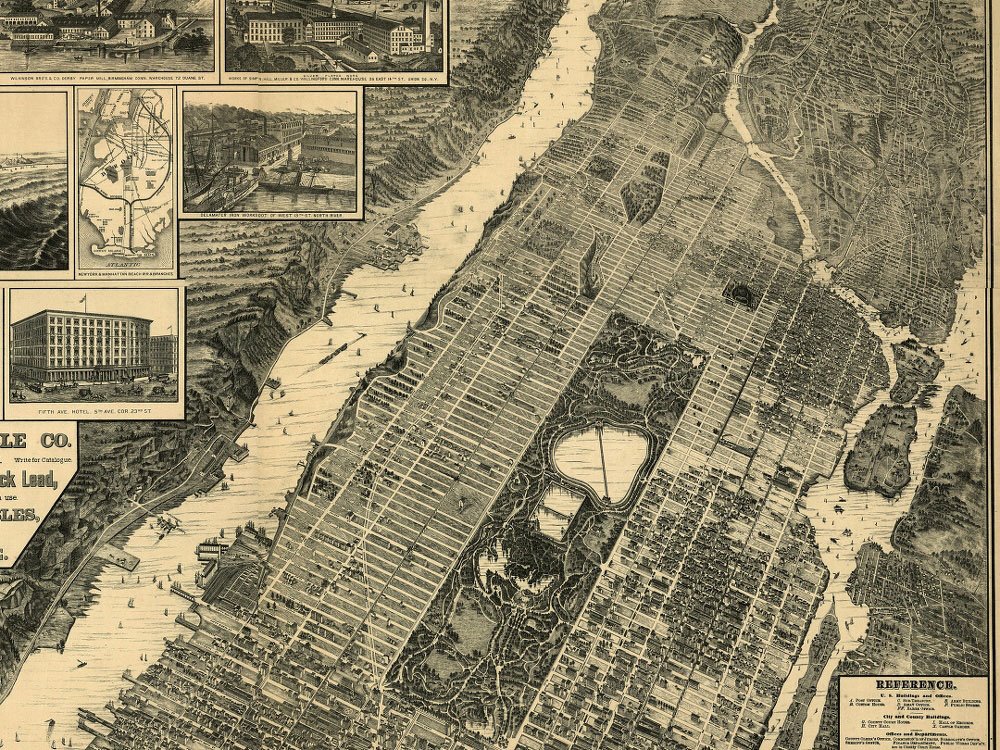
Below: an illustration of northern Manhattan, 1879 (Pic courtesy Times Up)

The city’s decisions regarding lands that would become the Bronx would also stir up a controversy. Despite technically being outside New York’s jurisdiction, development of the Bronx flourished in the 1870s. New York was powerful enough to exert its influence here, acquiring some areas as early as 1873. By 1895, most of the Bronx would belong to New York.

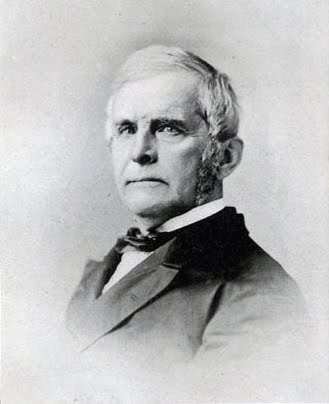
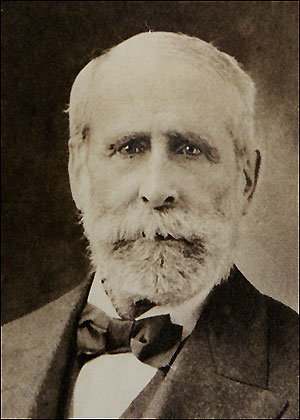
Andrew Haswell Green (pictured right), the influential parks commissioner and proto-Robert Moses who had once bunted Fredrick Law Olmstead from his own Central Park project, exerted great powers in developing outlying regions of Manhattan and had even proposed New York consolidation with the future boroughs long before 1898. Green would grow to become one of the most influential men in 19th century New York. In fact, Green had assisted close friend Samuel Tilden in taking down the Tweed Ring.

Grant was skeptical of these expansion plans, seeing developments of these outlying regions as pointless costly money pits. Like many under the thumb of Tammany Hall, he also disdained the state’s involvement in city affairs. Regardless, areas which became Van Cortlandt Park and Pelham Bay Park were bought during his tenure and today a small park in the Bronx is named in his honor. As New York Parks Department cheekily notes “Grant may be the only person who fought against parks who nonetheless has a park named after him.”

He didn’t resist another innovation that would soon change the fate of New York. Grant would be the first mayor to appoint a “rapid transit commission” in 1890 to develop a subway system.

Grant would pass off the mayor’s seat to another Tammany man, Thomas Gilroy, in 1892.

USELESS TRIVIA OF THE DAY: Hugh Grant isn’t the only New York mayor who shares his name with well-known 20th Century pop culture figures. Joining him in this lofty honor is Robert Wagner, James (Jimmy) Walker and David (Dave) Matthews.